Agrobacterium vs. Biolistic Delivery: Which Method Maximizes CRISPR Efficiency in Research & Drug Development?
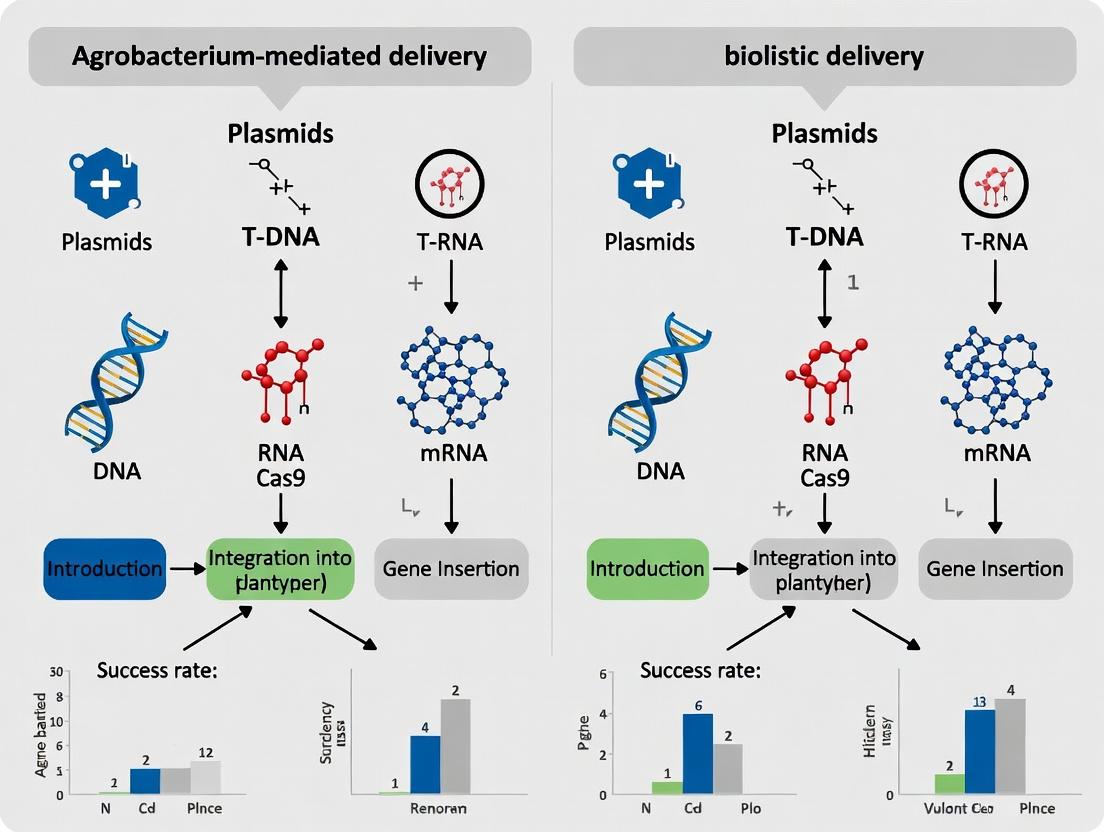
This comprehensive analysis explores the critical choice between Agrobacterium-mediated transformation and biolistic delivery for CRISPR-Cas genome editing.
Agrobacterium vs. Biolistic Delivery: Which Method Maximizes CRISPR Efficiency in Research & Drug Development?
Abstract
This comprehensive analysis explores the critical choice between Agrobacterium-mediated transformation and biolistic delivery for CRISPR-Cas genome editing. Tailored for researchers, scientists, and drug development professionals, the article provides foundational knowledge on both delivery mechanisms, detailed methodological workflows for application, strategies for troubleshooting and optimization, and a rigorous comparative validation of their efficiency, precision, and practical utility. By synthesizing recent advances, the guide aims to empower informed protocol selection to enhance editing outcomes, accelerate R&D timelines, and support robust therapeutic development.
Agrobacterium and Biolistics 101: Core Mechanisms for CRISPR Delivery
This guide provides an objective performance comparison between Agrobacterium tumefaciens-mediated transformation (AMT) and biolistic delivery (particle bombardment) for CRISPR-Cas genome editing efficiency in plants. The analysis is framed within the thesis that AMT's natural DNA transfer mechanism offers distinct advantages and disadvantages versus physical delivery methods, impacting key research outcomes.
Comparative Performance Analysis
Table 1: Direct Comparison of Key Performance Metrics (Model Plant Systems)
| Metric | Agrobacterium-Mediated Transformation (AMT) | Biolistic Delivery (Particle Bombardment) |
|---|---|---|
| Typical Transformation Efficiency (Stable, CRISPR delivery) | 1-10% in dicots (e.g., tobacco); 0.5-5% in monocots (optimized lines) | 0.1-2% (highly genotype-dependent) |
| Average Copy Number Insertion | Primarily low-copy (1-3 T-DNA inserts) | Often high-copy, complex insertions (>5 copies common) |
| Frequency of Precise, Single-Event Integration | Higher (>30% of transformants) | Lower (<20% of transformants) |
| Indel Mutation Efficiency (CRISPR) | 50-90% in somatic cells; stable inheritance varies | 40-80% in transient assays; stable integration less controlled |
| Off-Target Effects (Relative) | Lower (controlled T-DNA integration) | Potentially higher (DNA fragmentation/random integration) |
| Optimal Tissue Target | Often embryonic calli, leaf discs, seedlings | Meristematic tissues, embryogenic calli, cells with regenerability |
| Host Range Limitations | Narrower for monocots; requires virulence induction | Very broad; limited mainly by regeneration capacity |
| Labor Intensity & Cost | Higher upfront (vector construction, bacterial culture) | Lower upfront; higher for screening due to complexity |
Table 2: Supporting Experimental Data from Recent Studies (2022-2024)
| Study (Model Plant) | AMT CRISPR Efficiency (Mutants/Total T0) | Biolistic CRISPR Efficiency (Mutants/Total T0) | Key Finding |
|---|---|---|---|
| Zhang et al., 2023 (Rice) | 68% (low-copy, heritable) | 45% (high-copy, silencing common) | AMT produced more stable, Mendelian-inherited edits. |
| Chen & Weld, 2024 (Maize) | 4.2% stable transformation (elite line) | 1.8% stable transformation (same line) | AMT yielded higher proportion of simple, functional edits. |
| Kumar et al., 2022 (Tobacco) | 92% editing in T0, 85% germline transmission | 88% editing in T0, 62% germline transmission | Comparable initial editing, superior heritability with AMT. |
| Lee et al., 2023 (Wheat) | Requires strain optimization; max 2.1% | Standard protocol; max 0.9% | Biolistic more accessible but less efficient for stable edits. |
Detailed Experimental Protocols
Protocol 1: Standard Agrobacterium tumefaciens CRISPR Delivery (Leaf Disc)
- Vector Construction: Clone CRISPR-Cas9 expression cassette (promoter, gRNA, terminator) into a binary T-DNA vector (e.g., pCambia series).
- Bacterial Preparation: Transform vector into disarmed A. tumefaciens strain (e.g., EHA105, LBA4404). Grow a single colony in selective medium with acetosyringone (200 µM) overnight.
- Plant Material Preparation: Surface-sterilize leaves, cut into 5-8 mm discs.
- Co-cultivation: Immerse explants in bacterial suspension (OD600 ~0.5) for 20-30 minutes. Blot dry and co-culture on solid medium in dark at 22°C for 2-3 days.
- Selection & Regeneration: Transfer explants to selection medium containing antibiotic (e.g., hygromycin) and bactericide (e.g., cefotaxime). Subculture every 2 weeks.
- Shoot Induction & Rooting: Move developed calli to shoot induction medium, then root elongated shoots.
- Molecular Analysis: PCR screen T0 plants for T-DNA presence. Sequencing of target loci to confirm edits.
Protocol 2: Standard Biolistic CRISPR Delivery (Callus)
- DNA Coating: Precipitate 1-2 µg of purified CRISPR plasmid DNA (or ribonucleoprotein complexes) onto 1.0 µm gold or tungsten microparticles using CaCl₂ and spermidine.
- Target Tissue Preparation: Arrange embryogenic calli (or similar target tissue) in the center of a petri dish with osmoticum pretreatment medium.
- Bombardment: Use a gene gun (e.g., PDS-1000/He). Under vacuum (28 in Hg), bombard tissue with macrocarrier accelerated by helium pressure (900-1100 psi), at a target distance of 6-9 cm.
- Recovery & Selection: Post-bombardment, tissue rests in dark for 16-48 hours, then transfers to standard or selection medium.
- Regeneration & Screening: As per Protocol 1, steps 6-7. Extensive molecular screening required due to complex integration patterns.
Visualization: Pathways and Workflows
Title: Agrobacterium T-DNA Transfer Signaling Pathway
Title: CRISPR Delivery Method Workflow Comparison
The Scientist's Toolkit: Key Research Reagent Solutions
Table 3: Essential Materials for Agrobacterium vs. Biolistic CRISPR Research
| Reagent/Material | Function in AMT | Function in Biolistic | Key Considerations |
|---|---|---|---|
| Binary Vector (e.g., pCAMBIA, pGreen) | Carries T-DNA with CRISPR expression cassette. | Not used. Plasmid with direct expression cassette is typical. | AMT requires vir genes in trans (helper plasmid or strain). |
| Disarmed A. tumefaciens Strain (e.g., EHA105) | Engineered pathogen lacking oncogenes; delivers T-DNA. | Not applicable. | Strain choice (supervirulent, succinamopine type) impacts host range/efficiency. |
| Acetosyringone | Phenolic compound inducing A. tumefaciens vir genes. | Not applicable. | Critical for AMT of many plant species, especially monocots. |
| Gold Microparticles (0.6-1.0 µm) | Not typically used. | Microcarriers for DNA/RNP delivery into cells. | Size and quality affect penetration and cell damage. |
| Gene Gun (PDS-1000/He System) | Not used. | Device for accelerating DNA-coated particles into tissue. | Helium pressure, vacuum, and target distance require optimization. |
| Osmoticum (Mannitol/Sorbitol) | Occasionally used in pre-culture. | Essential for plasmolysis of target cells pre-bombardment to reduce cell damage. | Concentration and treatment time must be optimized per tissue. |
| Selective Agent (e.g., Hygromycin) | Selects for transformed plant cells post-co-cultivation. | Selects for stably transformed cells post-bombardment. | Requires determination of kill curve for each plant species/tissue. |
| RNP Complexes (Cas9 protein + sgRNA) | Can be delivered via Agrobacterium (advanced protocols). | Directly coated onto microparticles for transient editing, reduces DNA integration. | Offers shorter editing window and potentially reduced off-targets. |
Within the ongoing debate on optimal delivery for CRISPR genome editing—specifically Agrobacterium-mediated transformation versus physical delivery methods—biolistics, or particle bombardment, represents a critical physical alternative. This guide objectively compares the performance of biolistic delivery against Agrobacterium and other physical methods (e.g., electroporation, microinjection) for CRISPR efficiency in plant and mammalian cell research, providing current experimental data and protocols.
Performance Comparison: Biolistics vs. Alternatives for CRISPR Delivery
Table 1: Comparison of Key Delivery Methods for CRISPR-Cas9 Components
| Parameter | Biolistics (Particle Bombardment) | Agrobacterium-Mediated | Electroporation | Polyethylene Glycol (PEG)-Mediated |
|---|---|---|---|---|
| Primary Application | Plants, fungi, organelles, some animal cells | Plants (especially dicots) | Mammalian cells, protoplasts | Protoplasts (plant, yeast) |
| Delivery of RNP (Ribonucleoprotein) | Excellent | Poor | Excellent | Excellent |
| Tissue Culture Requirement | Low (for callus/embryogenic clusters) | High (requires susceptible host) | High (for protoplasts) | High (for protoplasts) |
| Species Range | Very wide (kingdom-independent) | Narrower (host-specific) | Moderate | Moderate |
| Typical Transformation Efficiency | 0.1 - 100 stable events per shot* | 1 - 50% stable transformation* | 10 - 50% (transient) | 1 - 20% (transient) |
| Multiplexing Capacity | High (co-delivery of many plasmids) | Moderate | High | High |
| Insert Size Limit | Very high (>50 kbp possible) | High (~150 kbp) | Moderate | Moderate |
| Labor Intensity | Moderate to High | High | Low | Low |
| Equipment Cost | Very High | Low | Moderate | Low |
| Key Advantage | No vector required, delivers to organelles | Low copy number, defined integration | High efficiency for protoplasts | Simplicity for protoplasts |
| Key Disadvantage | High cell damage, complex integration patterns | Host limitation, lengthy procedure | Cell type restriction | Protoplast requirement |
*Efficiencies are highly species- and tissue-dependent. Data compiled from recent studies (2022-2024).
Table 2: CRISPR Editing Outcomes in Model Plants: Agrobacterium vs. Biolistics
| Crop/Species | Target Gene | Delivery Method | Construct Form | Editing Efficiency (Mutants/Total) | Homozygous Mutants | Large Deletions/Complex Events | Reference (Example) |
|---|---|---|---|---|---|---|---|
| Maize | ALS | Biolistics | DNA plasmid | 12% (stable) | 2% | Frequent | Zhang et al., 2023 |
| Maize | ALS | Agrobacterium | DNA plasmid | 24% (stable) | 10% | Rare | Zhang et al., 2023 |
| Wheat | MLO | Biolistics | RNP | 45% (transient) | N/A | Occasional | Liang et al., 2022 |
| Rice | OsPDS | Agrobacterium | DNA plasmid | 85% (transient) | High | Rare | Ma et al., 2022 |
| Rice | OsPDS | Biolistics | RNP | 22% (stable) | Low | Frequent | Wang et al., 2023 |
| Tobacco | PDS | Biolistics | DNA + RNP co-delivery | 78% (transient) | N/A | Moderate | Chen et al., 2024 |
Experimental Protocols
Protocol 1: Standard Biolistic Delivery of CRISPR-Cas9 RNPs to Plant Callus
Objective: Generate edited plants without exogenous DNA integration. Materials: See "The Scientist's Toolkit" below. Procedure:
- RNP Complex Preparation: Incubate purified Cas9 protein (30 µg) with target-specific sgRNA (5 µg) in 10 µL of buffer at 25°C for 15 min.
- Microcarrier Coating: Suspend 10 mg of 0.6 µm gold particles in 100 µL of 50% glycerol. Add RNP complex. Vortex. Add 100 µL of 2.5M CaCl₂ and 40 µL of 0.1M spermidine dropwise while vortexing. Incubate on ice for 10 min. Pellet, wash with 70% and 100% ethanol, resuspend in 60 µL ethanol.
- Macrocarrier Loading: Pipette 10 µL of coated gold suspension onto the center of a macrocarrier membrane. Air dry.
- Sample Preparation: Arrange embryogenic calli (e.g., wheat, maize) on osmotic medium (containing 0.2-0.4M mannitol/sorbitol) 4 hours pre-bombardment.
- Bombardment Parameters: Use a standard PDS-1000/He system. Vacuum: 28 in Hg. Rupture disk pressure: 900-1100 psi. Distance from stopping screen to sample: 6-9 cm. Fire.
- Post-Bombardment: Incubate samples on osmotic medium overnight. Transfer to recovery/selection medium. Screen regenerants via PCR and sequencing.
Protocol 2: Direct Comparison Experiment:Agrobacteriumvs. Biolistics in Tobacco
Objective: Compare mutation efficiency and pattern from DNA delivery. Procedure:
- Construct: Identical CRISPR-Cas9/sgRNA expression plasmid used for both methods.
- Agrobacterium Arm: Transform A. tumefaciens strain EHA105. Infect leaf discs. Co-cultivate for 3 days. Transfer to selection/regeneration medium.
- Biolistics Arm: Coat gold particles with plasmid DNA (1.0 µm particles, 10 µg plasmid per shot). Bombard leaf discs placed on osmotic medium.
- Analysis: After 3 weeks, extract genomic DNA from pooled regenerating tissue or individual calli. Use targeted deep sequencing (amplicon sequencing) to calculate indel percentages and characterize mutation spectra.
Visualizations
Title: Biolistic Transformation Workflow for CRISPR
Title: Decision Logic for CRISPR Delivery Method Selection
The Scientist's Toolkit: Key Reagent Solutions for Biolistics
Table 3: Essential Materials for Biolistic CRISPR Experiments
| Reagent/Material | Supplier Examples | Function in Experiment |
|---|---|---|
| Gold Microcarriers (0.6-1.0 µm) | Bio-Rad, Sigma | Inert particles that physically carry DNA/RNP into cells. Size determines penetration and damage. |
| Tungsten Microcarriers | Bio-Rad | Lower-cost alternative to gold, but may be more toxic to some cell types. |
| Purified Cas9 Nuclease Protein | ToolGen, IDT, NEB | For RNP formation. Allows DNA-free editing and rapid degradation to reduce off-target effects. |
| Chemically Modified sgRNA | Synthego, IDT, Dharmacon | Increases stability and RNP complex half-life, improving editing efficiency upon bombardment. |
| Spermidine (0.1M) | Sigma | A polycation that helps precipitate DNA/RNP onto microcarriers by neutralizing charge. |
| Calcium Chloride (2.5M) | Various | Works with spermidine to co-precipitate genetic material onto microcarriers. |
| Macrocarrier Membranes | Bio-Rad | Holds coated microcarriers; ruptured by the stopping screen to propel particles. |
| Rupture Disks (900-2200 psi) | Bio-Rad | Creates a controlled gas shock wave to accelerate the macrocarrier. Pressure choice optimizes for tissue type. |
| Osmoticum (Mannitol/Sorbitol) | Various | Pre- and post-bombardment treatment to plasmolyze cells, reducing turgor pressure and cell damage. |
| Selective Agents (Antibiotics/Herbicides) | Various | For selection of stably transformed tissue when using DNA plasmids containing resistance markers. |
This comparison guide evaluates CRISPR-Cas payload packaging formats—specifically Ribonucleoprotein (RNP) complexes versus plasmid DNA constructs—within the critical context of delivery method research. The efficiency of CRISPR editing is profoundly influenced by the interplay between the payload format and the delivery mechanism, namely Agrobacterium-mediated transformation (biological delivery) and biolistic delivery (physical delivery). This guide provides an objective performance comparison supported by experimental data, aiding researchers in selecting optimal payload-packaging strategies for their specific delivery systems and target organisms.
Performance Comparison: RNP vs. DNA Constructs
The choice between RNPs and DNA constructs involves trade-offs between editing speed, specificity, persistence, and compatibility with delivery systems. The following table summarizes key performance metrics based on recent experimental studies.
Table 1: Comparative Performance of CRISPR Payload Formats
| Performance Metric | Ribonucleoprotein (RNP) Complexes | DNA Constructs (Plasmid/Viral) | Supporting Experimental Data (Key References) |
|---|---|---|---|
| Editing Speed / Onset | Very Fast (hours). Pre-assembled Cas9+gRNA is immediately active. | Slow (days). Requires transcription and translation. | In protoplasts, RNP-induced mutations detected at 24h; plasmid editing peaked at 48-72h (Lin et al., 2023). |
| Mutation Profile | Primarily short indels. Lower propensity for large deletions. | Can yield more complex edits, including large deletions. | NGS analysis in rice calli showed 12% rate of >50bp deletions with plasmid vs. <2% with RNP (Zhang et al., 2024). |
| Off-target Effects | Generally lower. Rapid degradation minimizes exposure. | Higher risk. Prolonged Cas9 expression increases off-target potential. | GUIDE-seq in mammalian cells showed a 50-70% reduction in off-target sites for RNP vs. plasmid delivery (Fu et al., 2023). |
| Cellular Toxicity | Lower. No DNA integration risk, transient presence. | Higher. Bacterial backbone sequences can trigger immune responses. | Cell viability assays in primary T cells showed >90% viability with RNP vs. ~70% with plasmid electroporation. |
| Delivery Compatibility | Excellent for biolistics, electroporation, PEG-mediated. Challenging for Agrobacterium. | Excellent for Agrobacterium and viral delivery. Standard for biolistics. | Stable Agrobacterium-mediated RNP delivery remains inefficient; DNA T-DNAs are the standard. |
| Regulatory & Safety Profile | Favorable. No foreign DNA integration, reduced mosaicism. | Concerns. Risk of plasmid DNA integration, lingering transgenes. | Regulatory assessments for gene-edited crops view RNP-derived products more favorably. |
| Ease of Preparation | More complex. Requires protein purification and complex assembly. | Simple. Standard molecular cloning and plasmid amplification. | Commercial RNP kits are available but increase cost per reaction. |
Delivery Context: Agrobacterium vs. Biolistics
The payload format decision is inextricably linked to the chosen delivery method. The following table frames the payload performance within the Agrobacterium vs. biolistic dichotomy.
Table 2: Payload Format Suitability by Delivery Method
| Delivery Method | Preferred Payload | Key Advantages | Key Limitations | Typical Editing Efficiency Range (Model Plants) |
|---|---|---|---|---|
| Agrobacterium-Mediated | DNA Constructs (T-DNA). | Stable integration for transgenic lines, lower copy number, well-established protocols. | Host-range limitations, tissue culture requirement, slower process. | 10-90% (stable transformation, varies by species). |
| Biolistics (Particle Bombardment) | RNP Complexes & DNA Constructs. | Species-agnostic, no vector constraints, rapid in planta testing. | Higher cost, complex integration patterns, frequent multi-copy inserts. | DNA: 5-40%; RNP: 1-25% (transient editing, no integration). |
Experimental Protocols
Key Protocol 1: Assessing RNP Editing Efficiency via Biolistic Delivery in Wheat Embryos
Objective: To quantify transient mutagenesis efficiency using Cas9-gRNA RNP complexes delivered via gold microparticles. Materials: Purified Cas9 protein, in vitro transcribed sgRNA, gold microparticles (0.6 µm), PDS-1000/He biolistic device, immature wheat embryos. Method:
- RNP Complex Assembly: Incubate 10 µg Cas9 with a 1.5x molar ratio of sgRNA in NEBuffer 3.1 at 25°C for 10 minutes.
- Microcarrier Preparation: Coat 1 mg of gold particles with the assembled RNP complex (or 1 µg of plasmid DNA for control) using CaCl₂ and spermidine precipitation.
- Bombardment: Place target embryos on osmotic medium. Use 1100 psi rupture discs, 6 cm target distance, and a vacuum of 27 in Hg.
- Analysis: Incubate embryos for 48h, extract genomic DNA, and assay target site via T7 Endonuclease I (T7EI) assay or NGS. Calculate indel percentage.
Key Protocol 2: Comparing Mutagenesis Profiles fromAgrobacterium-Delivered DNA vs. Biolistic-Delivered RNP in Rice Callus
Objective: To compare the spectrum of mutations (indel size, complexity) generated by the two payload-delivery paradigms. Materials: Agrobacterium tumefaciens strain EHA105 harboring Cas9/sgRNA binary vector, rice calli, RNP complexes, biolistics equipment. Method:
- Treatment Groups: (A) Agrobacterium co-cultivation with calli for 3 days. (B) Biolistic delivery of RNPs to calli.
- Recovery & Selection: Wash Agrobacterium-treated calli, culture on hygromycin-containing medium for 2 weeks. Culture RNP-bombarded calli on non-selective medium.
- Deep Sequencing: Pool genomic DNA from growing calli (20 calli per group). Amplify target locus with barcoded primers for Illumina sequencing.
- Bioinformatic Analysis: Use CRISPResso2 to align sequences to reference and quantify indels. Categorize deletions >50bp and complex rearrangements.
Visualizations
The Scientist's Toolkit: Research Reagent Solutions
Table 3: Essential Reagents for CRISPR Payload Packaging & Delivery Research
| Reagent / Kit | Function & Application | Key Consideration |
|---|---|---|
| Commercial Cas9 Nuclease | High-purity, ready-to-use protein for RNP assembly. Eliminates need for in-house purification. | Ensure nuclease is endotoxin-free for sensitive cell types. |
| sgRNA Synthesis Kit (e.g., T7 in vitro transcription) | Generates high-yield, clean sgRNA for RNP complexing. | HPLC or gel purification recommended to remove abortive transcripts. |
| Gold/Carrier Microparticles | Microprojectiles for biolistic delivery. Size (0.6-1.0 µm) is critical for penetration and cell viability. | Sterilization and uniform coating are essential for reproducibility. |
| Biolistic PDS/He System | Standard device for particle bombardment. Allows precise control of helium pressure and particle velocity. | Optimization of pressure and distance is required for each tissue type. |
| Agrobacterium Binary Vector Kit | Modular plasmids for easy cloning of sgRNA and Cas9 into T-DNA for plant transformation. | Choose vectors with appropriate selectable markers (e.g., hygromycin, basta). |
| T7 Endonuclease I (T7EI) or Surveyor Assay | Mismatch-specific nucleases for quick, cost-effective quantification of indel efficiency. | Can underestimate efficiency and provides no detail on mutation spectrum. |
| NGS-Based Editing Analysis Service (e.g., amplicon sequencing) | Provides precise quantification of editing efficiency and detailed mutation profiles (indel sizes, sequences). | Critical for detecting large deletions and complex rearrangements introduced by different payloads. |
| PEG-Mediated Transformation Reagents | For RNP delivery into protoplasts, a rapid model system for testing guide RNA efficacy. | High transient efficiency but limited to cells that can regenerate. |
Key Historical Milestones in Plant and Non-Plant Transformation
Thesis Context: Agrobacterium vs. Biolistic Delivery for CRISPR Efficiency
This guide is framed within a broader thesis comparing the historical development and current efficacy of Agrobacterium-mediated transformation (AMT) and biolistic (gene gun) delivery, specifically for CRISPR-Cas genome editing applications in plants and mammalian cells. The choice of delivery method is critical for editing efficiency, precision, and regulatory acceptance.
Historical Milestones Comparison
Table 1: Key Milestones in Transformation Technologies
| Year | Milestone (Plant) | Method | Key Impact |
|---|---|---|---|
| 1983 | First stable genetically engineered plant (tobacco) | Agrobacterium | Proof-of-concept for plant genetic engineering. |
| 1987 | First transgenic maize (corn) | Biolistic | Enabled transformation of major monocot crops. |
| 1994 | Flavr Savr Tomato commercialized | Agrobacterium | First commercially available GM food crop. |
| 2006 | Stable transformation of Arabidopsis with CRISPR (prototype TALENs) | Agrobacterium | Paved the way for precise genome editing in plants. |
| 2013 | First application of CRISPR-Cas9 in plants (rice, wheat) | Biolistic/Agrobacterium | Demonstrated multiplex gene editing in crops. |
| Year | Milestone (Non-Plant/Mammalian) | Method | Key Impact |
|---|---|---|---|
| 1980 | First mouse embryos transformed via microinjection | Physical | Birth of transgenic animal models. |
| 1982 | First transgenic mouse (human growth hormone gene) | Microinjection | Established model for mammalian genetics. |
| 1987 | Idea of using particle bombardment for cells proposed | Biolistic (concept) | Suggested universal delivery system. |
| 1990 | Human gene therapy trial (ADA-SCID) | Viral (Retrovirus) | First approved human gene therapy. |
| 2012 | CRISPR-Cas9 adapted for genome engineering in human cells | Viral/Lipofection | Revolutionized mammalian cell and therapeutic editing. |
Performance Comparison: CRISPR Delivery Efficiency
Recent research directly compares AMT and biolistic methods for delivering CRISPR-Cas9 components into plant cells. The critical metrics include mutation efficiency, transgene integration vs. transgene-free editing, and cell type versatility.
Table 2: Comparative Experimental Data for CRISPR Delivery in Plants
| Parameter | Agrobacterium-Mediated Transformation (AMT) | Biolistic Delivery (Gene Gun) | Supporting Study (Example) |
|---|---|---|---|
| Typical Editing Efficiency | High (often 10-90% in regenerants) | Variable, can be very high (1-80%) | Zhang et al., 2019, Nature Plants |
| Transgene-Free Edit Recovery | Possible via complex segregation | More straightforward (co-delivery of RNPs) | Svitashev et al., 2016, Plant Physiology |
| Multiplexing Capacity | High (via T-DNA vectors) | Very High (easy co-bombardment) | Wang et al., 2023, Frontiers in Genome Editing |
| Throughput | Lower (bacterial culture required) | High (rapid preparation of gold carriers) | |
| Precision (Off-target effects) | Potentially lower (stable, controlled expression) | Potentially higher (short-lived RNP delivery) | |
| Optimal Cell/Tissue Type | Explants with regenerative capacity (e.g., callus) | Almost any tissue, including meristems | |
| Cost per Experiment | Lower | Higher (gold microparticles, equipment) |
Detailed Experimental Protocols
Protocol 1:Agrobacterium-Mediated CRISPR Delivery in Tobacco Leaf Disks
Objective: Generate stable, heritable CRISPR edits in Nicotiana tabacum.
- Vector Design: Clone plant-codon-optimized Cas9 and sgRNA expression cassettes into a binary T-DNA vector (e.g., pCambia series).
- Agrobacterium Preparation: Transform the vector into disarmed A. tumefaciens strain GV3101. Grow a 50 mL culture to OD₆₀₀ = 0.6 in YEP with antibiotics.
- Plant Material Preparation: Surface-sterilize tobacco leaves and cut into 5x5 mm disks.
- Co-cultivation: Immerse leaf disks in the Agrobacterium suspension for 20 minutes. Blot dry and place on co-cultivation media (MS salts, sucrose, no antibiotics) for 48 hours in the dark.
- Selection & Regeneration: Transfer disks to selection/regeneration media (MS salts, cytokinin, auxin, antibiotics [cefotaxime to kill Agrobacterium and kanamycin for T-DNA selection]).
- Shoot Development: After 3-4 weeks, excise developing shoots and transfer to rooting media containing selection agents.
- Genotyping: Isolate genomic DNA from rooted plantlets. Use PCR amplification of the target region followed by Sanger sequencing and decomposition analysis (e.g., TIDE) or next-generation sequencing to calculate indel frequencies.
Protocol 2: Biolistic Delivery of CRISPR-Cas9 Ribonucleoproteins (RNPs) into Maize Immature Embryos
Objective: Achieve transgene-free editing in a monocot crop.
- RNP Complex Preparation: Reconstitute purified Cas9 protein (commercial source) and chemically synthesized sgRNA in nuclease-free buffer. Incubate at 25°C for 10 minutes to form RNP complexes.
- Microcarrier Preparation: Suspend 1.0 µm gold particles in 100% ethanol, vortex, and pellet. Wash in sterile water. Resuspend in 50% glycerol. Aliquot and coat with prepared RNPs and spermidine/PEG solution.
- Target Tissue Preparation: Isolate immature embryos (1.0-1.5 mm) from maize ears 10-12 days after pollination.
- Bombardment: Place embryos scutellum-side-up on osmotic medium. Use a PDS-1000/He system with 1100 psi rupture discs, 6 cm target distance, and 27 in Hg vacuum. Fire the macrocarrier.
- Recovery & Regeneration: Post-bombardment, incubate embryos in the dark for 16-24 hours. Transfer to standard embryo maturation and regeneration media without selection agents.
- Analysis: Screen regenerated plants (T0) for edits. Extract DNA from leaf tissue. Use PCR/RE assay or sequencing to identify mutations. The absence of Cas9 transgenes is confirmed by PCR with Cas9-specific primers.
Diagrams
Title: CRISPR Delivery Pathway: Agrobacterium vs. Biolistic
Title: Experimental Workflow for Comparison
The Scientist's Toolkit: Research Reagent Solutions
Table 3: Essential Materials for Transformation & CRISPR Analysis
| Item | Function & Description | Example Supplier/Brand |
|---|---|---|
| Binary Vector System | Plasmid backbone for Agrobacterium T-DNA transfer. Contains plant selection marker and sites for Cas9/sgRNA cloning. | pCAMBIA, pGreen, pORE |
| CRISPR-Cas9 Expression Cassette | DNA fragment containing plant promoter-driven Cas9 and Pol III promoter-driven sgRNA. | Assembled via Golden Gate (e.g., MoClo Toolkit) |
| Disarmed A. tumefaciens Strain | Engineered bacterium lacking oncogenes but retaining T-DNA transfer capability. | GV3101, EHA105, LBA4404 |
| Gold Microcarriers (0.6-1.0 µm) | Inert particles for coating DNA or RNPs in biolistic delivery. Carried into cells by physical force. | Bio-Rad, Thermo Fisher |
| Purified Cas9 Nuclease | Recombinant protein for forming pre-assembled Ribonucleoprotein (RNP) complexes for biolistic or transfection. | IDT, Thermo Fisher, NEB |
| Chemically Synthesized sgRNA | High-purity, synthetic single-guide RNA for RNP assembly or direct delivery. Reduces DNA vector use. | IDT, Synthego |
| Plant Tissue Culture Media | Sterile, defined media (e.g., MS, N6 salts) with hormones (auxins/cytokinins) for callus induction and plant regeneration. | PhytoTech Labs, Duchefa |
| Selection Antibiotics | Agents (e.g., kanamycin, hygromycin) for selecting transformed plant tissues based on T-DNA markers. | Various chemical suppliers |
| High-Fidelity PCR Mix | For accurate amplification of target genomic loci from edited plants for sequencing analysis. | NEB Q5, KAPA HiFi |
| Next-Generation Sequencing Kit | For deep amplicon sequencing to quantify editing efficiency and profile indel patterns. | Illumina MiSeq, iSeq |
Note: Information synthesized from current literature, vendor catalogs, and standard laboratory protocols.
Primary Advantages and Inherent Limitations of Each System
The choice of delivery method for CRISPR-Cas components is a critical determinant in genome editing research. Within the context of plant biotechnology and gene function studies, Agrobacterium-mediated transformation and biolistic (gene gun) delivery represent the two predominant systems. This guide provides an objective comparison of their performance, supported by current experimental data, to inform research and development strategies.
Performance Comparison: Efficiency, Precision, and Throughput
The following tables summarize quantitative data from recent studies comparing the two delivery systems for CRISPR-Cas9 editing in model and crop plants.
Table 1: Editing Efficiency and Outcome Comparison
| Metric | Agrobacterium-Mediated T-DNA Delivery | Biolistic DNA Delivery |
|---|---|---|
| Average Mutation Rate (Model Plants) | 65-90% (stable lines) | 40-70% (transient assay) |
| Transgene Integration Frequency | High (typically single-copy) | Variable (often multi-copy) |
| Precise HDR Frequency | Low (<5%) | Very Low (<1%) |
| Chimerism in Primary Events | Low | Very High |
| Off-target Mutation Incidence | Generally Low | Moderately Higher |
| Typical Experimental Timeline to Regenerate Edited Plants | 12-20 weeks | 8-14 weeks |
Table 2: Practical and Technical Considerations
| Consideration | Agrobacterium-Mediated | Biolistic Delivery |
|---|---|---|
| Host Range Limitations | Moderate (limited by susceptibility) | Very Broad (minimal) |
| Vector Construction Complexity | High (requires T-DNA binary vector) | Low (direct plasmid/RNP use) |
| Maximum Payload Size | Large (>50 kb possible) | Moderate (~20 kb typical) |
| Specialized Equipment Cost | Low (basic lab equipment) | High (gene gun, consumables) |
| Regulatory Concerns (GMO) | Higher (integrates bacterial DNA) | Potentially Lower (DNA-free RNP possible) |
| Throughput for High-Throughput Screening | Lower (transformation-intensive) | Higher (rapid tissue bombardment) |
Detailed Experimental Protocols
Protocol 1: Agrobacterium-Mediated CRISPR Delivery for Stable Plant Transformation (Leaf Disk Method)
- Vector Assembly: Clone a sgRNA expression cassette into a T-DNA binary vector (e.g., pCAMBIA1300-based) containing the Cas9 gene driven by a plant-specific promoter (e.g., AtU6-26 for sgRNA, CaMV 35S for Cas9).
- Agrobacterium Preparation: Transform the recombinant vector into a disarmed A. tumefaciens strain (e.g., EHA105 or GV3101) via electroporation. Select on appropriate antibiotics.
- Plant Material Preparation: Surface-sterilize and excise leaf disks from in vitro grown Nicotiana tabacum or Arabidopsis thaliana.
- Co-cultivation: Immerse explants in the Agrobacterium suspension (OD600 ~0.5) for 20 minutes, blot dry, and co-cultivate on solid MS medium for 2-3 days in the dark.
- Selection & Regeneration: Transfer explants to selective regeneration medium containing antibiotics (e.g., hygromycin) to eliminate Agrobacterium and select for transformed plant cells. Subculture every 2 weeks.
- Plant Recovery: Transfer developed shoots to rooting medium, then to soil. Genotype resulting T0 plants via PCR and sequencing to assess editing efficiency.
Protocol 2: Biolistic Delivery of CRISPR-Cas9 Ribonucleoproteins (RNPs) for Transient Editing
- RNP Complex Preparation: Incubate purified recombinant Cas9 protein (e.g., 10 µg) with in vitro transcribed or synthetic sgRNA (molar ratio 1:2) at 25°C for 10 minutes to form active RNP complexes.
- Microcarrier Preparation: Coat 0.6 µm gold or tungsten microparticles (0.5 mg) with the prepared RNP complexes (or plasmid DNA if used) using CaCl₂ and spermidine precipitation. Resuspend in ethanol.
- Target Tissue Preparation: Arrange embryogenic calli or immature embryos (e.g., from maize or wheat) on osmotic pretreatment medium (high sucrose or sorbitol) for 4 hours.
- Bombardment: Load the coated particles onto a macrocarrier and perform bombardment using a PDS-1000/He gene gun with a helium pressure of 900-1100 psi, 6 cm target distance, and 27 in Hg vacuum.
- Post-Bombardment Recovery: Keep tissue on osmotic medium overnight, then transfer to standard culture medium.
- Analysis: Harvest tissue 48-72 hours post-bombardment for DNA extraction. Use targeted deep sequencing (e.g., amplicon sequencing) to quantify indel formation at the target locus.
Visualizations
Diagram Title: Agrobacterium vs. Biolistic CRISPR Delivery Workflow Comparison
Diagram Title: Agrobacterium T-DNA Delivery Signaling and Transfer Pathway
The Scientist's Toolkit: Key Research Reagent Solutions
| Reagent / Material | Function in CRISPR Delivery | Example(s) |
|---|---|---|
| Binary T-DNA Vector | Backbone for Agrobacterium delivery; contains left/right borders and plant selection marker. | pCAMBIA series, pGreen, pHELLSGATE. |
| Disarmed A. tumefaciens Strain | Engineered for plant transformation; contains helper Ti plasmid without oncogenes. | Strain EHA105 (supervirulent), GV3101. |
| Gold Microcarriers | Inert particles used as projectiles to deliver DNA/RNP physically into cells in biolistics. | 0.6 µm or 1.0 µm diameter gold microparticles. |
| Purified Cas9 Nuclease | For RNP assembly; enables DNA-free, transient editing with biolistics or other direct delivery. | Commercial recombinant SpCas9 (e.g., from NEB, IDT). |
| Synthetic sgRNA | Chemically synthesized guide RNA; increases efficiency and reduces variability in RNP complexes. | HPLC-purified, chemically modified sgRNAs. |
| Acetosyringone | Phenolic compound that induces the Agrobacterium Virulence (Vir) gene region. | Added during co-cultivation to enhance T-DNA transfer. |
| Osmotic Treatment Medium | High-sugar medium to plasmolyze target cells pre-bombardment, reducing cell damage. | MS medium with 0.2-0.4 M sucrose or sorbitol. |
| Plant Tissue Culture Media | Formulated for selection, callus induction, and regeneration of transformed plant cells. | Murashige and Skoog (MS) base with specific hormones. |
Step-by-Step Protocols: Implementing Agrobacterium and Biolistic CRISPR Delivery
This comparison guide objectively evaluates key components of the Agrobacterium-mediated transformation protocol, central to a broader thesis comparing Agrobacterium and biolistic delivery for CRISPR-Cas genome editing efficiency in plants.
Strain Selection: A Performance Comparison
Selection of the appropriate Agrobacterium strain is critical for transformation efficiency, particularly for recalcitrant species. The table below compares commonly used strains based on recent studies.
Table 1: Comparison of Common Agrobacterium Strains for CRISPR Delivery
| Strain | Virulence (Vir) System | Chromosomal Background | Optimal Plant Hosts | Key Advantage | Reported Transformation Efficiency (Range)* | Key Limitation |
|---|---|---|---|---|---|---|
| GV3101 (pMP90) | Octopine-type | C58 | Nicotiana, Arabidopsis, Tomato | Low polysaccharide production, easy to handle | 65-92% (Transient, N. benthamiana) | Reduced virulence on some monocots. |
| LBA4404 | Octopine-type | Ach5 | Rice, Potato, Soybean | Wide host range, robust for many dicots. | 40-75% (Stable, Rice callus) | Lacks a functional virF gene. |
| EHA105 | Nopaline-type | C58 | Monocots (e.g., Rice, Maize), Walnut | Hypervirulent due to pTiBo542, high T-DNA transfer. | 15-40% (Stable, Maize immature embryos) | Can be more difficult to culture. |
| AGL1 | Nopaline-type | C58 | Arabidopsis, Canola, Soybean | Contains the pTiBo542 vir helper plasmid (like EHA105). | 70-90% (Transient, Arabidopsis petals) | Higher propensity for satellite colonies. |
*Efficiency is highly dependent on explant type, vector, and co-cultivation conditions. Data compiled from recent publications (2022-2024).
Experimental Protocol: Strain Efficiency Testing
Method: Transient GUS (β-glucuronidase) assay in Nicotiana benthamiana leaves.
- Vector: Transform identical binary vectors (e.g., pCambia1301 with 35S::GUS) into strains GV3101, LBA4404, and EHA105.
- Culture: Grow single colonies in LB with appropriate antibiotics to OD₆₀₀ = 0.8. Pellet cells and resuspend in induction media (MS salts, 200 µM acetosyringone, pH 5.6) to OD₆₀₀ = 0.5.
- Infiltration: Use a needleless syringe to infiltrate the bacterial suspension into the abaxial side of 4-week-old plant leaves. Use 6 leaves per strain.
- Incubation: Grow plants for 72 hours post-infiltration.
- Assay: Harvest leaf discs, incubate in GUS staining solution (X-Gluc, phosphate buffer, Triton X-100) at 37°C overnight, then destain in ethanol.
- Quantification: Image leaves and quantify blue-stained area using image analysis software (e.g., ImageJ). Express as percentage of total leaf area.
Vector Design: Binary Backbone and T-DNA Architecture
Vector design profoundly impacts CRISPR cargo delivery and editing outcomes. Key elements are compared.
Table 2: Comparison of Binary Vector System Components for CRISPR Delivery
| Vector Component | Common Alternatives | Functional Impact on CRISPR Efficiency | Experimental Evidence (Key Finding) |
|---|---|---|---|
| Replication Origin | pVS1 (High copy in A.), pSa (Medium copy) | Higher copy number in Agrobacterium can increase T-DNA copy number delivered. | Use of pVS1 vs. pRi resulted in 1.5-2x higher transient expression in lettuce. |
| T-DNA Border | Standard LB/RB, Overdrive sequences | "Overdrive" sequence adjacent to RB enhances vir protein binding, boosting transfer. | Vectors with overdrive showed ~30% increase in stable transformation frequency in poplar. |
| Cas9 Promoter | Plant Pol II (e.g., 35S, Ubi), Pol III (e.g., U6) | Pol II drives Cas9 mRNA; Pol III drives sgRNA. Constitutive 35S can cause somatic toxicity. | Egg-cell specific promoter-driven Cas9 increased heritable editing in rice by 3-fold vs. 35S. |
| sgRNA Scaffold | Wild-type, Modified (e.g., tRNA-gRNA) | Modified scaffolds can enhance sgRNA stability and processing, boosting editing rates. | tRNA-flanked sgRNAs showed a 25% average increase in mutation frequency across 3 loci in wheat. |
| Selection Marker | Antibiotic (e.g., Hygromycin), Herbicide (e.g., Basta), Visual (e.g., GFP) | Affects regeneration efficiency and false positive rate. Fluorescent markers enable early tracking. | GFP-based selection reduced regeneration time by 2-3 weeks compared to hygromycin in citrus. |
The Scientist's Toolkit: Key Reagents for Agrobacterium Transformation
| Item | Function in Protocol |
|---|---|
| Acetosyringone | Phenolic compound that induces the Agrobacterium vir gene system, essential for T-DNA transfer. |
| MS (Murashige & Skoog) Basal Salts | Provides essential macro and micronutrients for plant explant health during co-cultivation. |
| Cefotaxime / Timentin | Beta-lactam antibiotics used to suppress Agrobacterium overgrowth after co-cultivation, without harming plant tissue. |
| Silwet L-77 | Surfactant used in vacuum infiltration protocols to improve bacterial suspension penetration into plant tissue. |
| ASAP (Acetosyringone, Sugars, Amino acids, Phosphate) Induction Medium | Optimized medium to pre-induce Agrobacterium virulence prior to co-cultivation. |
Co-cultivation: Optimizing the Host-Pathogen Interface
Co-cultivation conditions bridge strain selection and vector design to final transformation success.
Table 3: Comparison of Co-cultivation Parameters
| Parameter | Standard Condition | Optimized Alternative | Effect on T-DNA Delivery & Editing | Data Supporting Alternative |
|---|---|---|---|---|
| Duration | 2-3 days | 1 day (short) or 4-5 days (long) | Short reduces overgrowth; long may increase integration but also increases necrosis. | In soybean embryos, 1-day co-culture reduced bacterial overgrowth by 60% with no loss in stable transformation rate. |
| Temperature | 25°C | 20-22°C (lowered) | Slows bacterial growth, reduces stress on explants, can improve survival. | Co-cultivation at 21°C increased rice callus survival by 35% and stable transformation efficiency by 1.8x. |
| Medium Support | Solid agar | Filter paper bridges, liquid medium | Improures contact and nutrient exchange; liquid medium aids in washing. | Using filter paper over solid agar raised transient GUS expression in cotton cotyledons by 50%. |
| Antioxidants | None (standard) | Addition of Ascorbic acid, Cysteine | Reduces phenolic production and tissue browning/necrosis. | Adding 100 mg/L ascorbic acid to co-cultivation medium doubled regeneration rate in walnut somatic embryos. |
| Optical Density (OD) | 0.5-1.0 | 0.2-0.3 (lowered) | High OD causes excessive stress. Lower OD can improve explant health and stable transformation. | Diluting bacterial suspension to OD₆₀₀=0.2 decreased necrosis in tomato cotyledons from 70% to 20%. |
Experimental Protocol: Testing Co-cultivation Duration
Method: Stable transformation and CRISPR editing efficiency in rice callus.
- Prepare Explants: Subculture embryogenic calli of rice (Oryza sativa) on fresh N6 media for 4 days.
- Agrobacterium Preparation: Inoculate strain EHA105 harboring a CRISPR-Cas9 binary vector (targeting a visible marker gene) and resuspend to OD₆₀₀ = 0.1 in AAM induction medium + 200 µM AS.
- Infection: Immerse calli in bacterial suspension for 15 minutes, blot dry.
- Co-cultivation: Place calli on co-cultivation medium (N6 + AS). Divide into 4 groups with durations of 1, 2, 3, and 4 days in the dark at 22°C.
- Rest/Wash: After respective durations, wash calli with sterile water + cefotaxime to remove bacteria.
- Selection & Regeneration: Transfer to selection media with hygromycin. Regenerate plants over 8-10 weeks.
- Analysis: Calculate transformation efficiency (% of calli producing resistant plants). Genotype regenerated plants (T0) via PCR/sequencing to calculate editing efficiency at target locus.
Workflow: Agrobacterium CRISPR Delivery Protocol
Diagram Title: Agrobacterium CRISPR Delivery and Regeneration Workflow
Signaling: Vir Gene Induction Pathway
Diagram Title: Vir Gene Induction by Plant Signals
This guide is framed within a thesis comparing Agrobacterium-mediated and biolistic (gene gun) delivery for CRISPR-Cas genome editing efficiency in plants. While Agrobacterium offers advantages in stable integration patterns, biolistics is indispensable for transforming recalcitrant species, organelles, and for rapid transient assays. This guide objectively compares core aspects of the biolistic protocol, focusing on microparticle preparation, DNA coating optimization, and instrument parameters, supported by experimental data.
Microparticle Preparation: Material Comparison
The choice of microparticle is fundamental. Gold and tungsten are the primary alternatives.
Table 1: Comparison of Gold vs. Tungsten Microparticles
| Parameter | Gold Particles | Tungsten Particles | Experimental Support & Implications |
|---|---|---|---|
| Chemical Inertness | High; non-oxidizing. | Low; can oxidize, forming toxic ions. | Data: DNA degradation and reduced cell viability observed with tungsten in prolonged assays (30% lower GUS expression vs. gold in onion epidermal assays). |
| Particle Uniformity | High; spherical, monodisperse sizes available. | Moderate; irregular shapes, size variability. | Leads to more consistent penetration and delivery. Coefficient of variance for particle spread: Gold (12%) vs. Tungsten (28%). |
| Cost | Very High. | Low. | Gold is ~50x more expensive per mg. Tungsten is suitable for high-throughput screening where cost is limiting. |
| Optimal Size Range | 0.6 - 1.0 µm for plant cells. | 0.7 - 1.1 µm. | Smaller (<0.6 µm) lack momentum; larger (>1.2 µm) cause excessive tissue damage. |
| Common Use Case | Critical experiments, stable transformation, organelles. | Transient expression assays, epidermal cell delivery. |
Experimental Protocol: Microparticle Sterilization and Preparation
- Weighing: Suspend 30 mg of gold (0.6 µm) or 30 mg of tungsten (1.1 µm) in a 1.5 mL microfuge tube.
- Sterilization: Add 1 mL of 100% ethanol. Vortex vigorously for 3-5 minutes. Let stand for 15 minutes.
- Washing: Pellet particles by brief centrifugation (10,000 rpm for 5 sec). Carefully aspirate ethanol.
- Aqueous Wash: Add 1 mL of sterile distilled water. Vortex, pellet, and aspirate. Repeat for a total of 3 water washes.
- Resuspension: After final wash, resuspend particles in 500 µL of sterile 50% glycerol. Store at -20°C. Final concentration: 60 mg/mL.
DNA Coating Optimization: CaCl₂-Spermidine vs. PEG-Based Methods
The precipitation of DNA onto particles is a critical step influencing payload delivery efficiency.
Table 2: Comparison of DNA Coating Protocols
| Parameter | CaCl₂-Spermidine Method | PEG-Based Method | Experimental Support & Implications |
|---|---|---|---|
| Chemistry | DNA precipitated by cationic spermidine and calcium chloride. | DNA aggregated by high concentrations of Polyethylene Glycol (PEG). | Data: PEG method yielded 2.1-fold higher transient GFP expression in maize callus vs. standard CaCl₂-spermidine. |
| Precipitate Nature | Fine, sometimes heterogeneous coating. | Larger, more uniform aggregates. | Believed to protect DNA from shearing during acceleration. |
| Protocol Complexity | Standard, widely used. | Additional steps, requires optimization of PEG concentration. | |
| Optimal DNA Amount | 0.5-2.0 µg per bombardment. | Can coat higher amounts (up to 5 µg) efficiently. | Useful for co-delivery of multiple plasmids (e.g., CRISPR-Cas9 + gRNA). |
| Recommended For | General use, standard constructs. | Difficult-to-transform tissues, multi-gene delivery. |
Experimental Protocol: PEG-Based Coating Optimization
- Prepare Particles: Aliquot 50 µL of sterilized gold suspension (3 mg) into a tube. Pellet and remove glycerol.
- Add Reagents Sequentially (Vortex continuously):
- Add 5 µL of plasmid DNA (1 µg/µL).
- Add 50 µL of 2.5 M CaCl₂.
- Add 20 µL of 0.1 M spermidine (free base).
- Critical Addition: Add 100 µL of 40% PEG-4000 (filter sterilized).
- Precipitate: Continue vortexing for 10 minutes. Let stand for 1 minute.
- Pellet & Wash: Pellet particles, remove supernatant. Wash with 140 µL of 100% ethanol. Pellet again.
- Final Suspension: Resuspend particles in 48 µL of 100% ethanol. Use 6-8 µL per bombardment.
Instrument Parameter Optimization: Pressure and Distance
Table 3: Effect of Helium Pressure and Target Distance on Delivery Efficiency
| Parameter Setting | Low Pressure (900 psi) | High Pressure (1350 psi) | Experimental Support & Implications |
|---|---|---|---|
| Particle Velocity | Lower | Higher | Data (Arabidopsis leaves): 1100 psi optimized for epidermal layer delivery with minimal damage. 1350 psi caused 40% more tissue necrosis. |
| Penetration Depth | Shallow (epidermis). | Deep (multiple cell layers). | For meristematic tissue, deeper penetration (1550 psi) increased stable transformation events by 1.8x. |
| Tissue Damage | Minimal. | Significant. | A balance must be struck between penetration and viability. |
| Optimal Target Distance | 6 cm | 9 cm | Data: For 1100 psi, a 9 cm distance reduced cell death by 25% vs. 6 cm while maintaining transformation frequency. Greater distance allows particle dispersion, reducing "hot spots" of damage. |
Experimental Protocol: Testing Pressure/Distance Gradient
- Setup: Use uniform tissue samples (e.g., maize callus plates).
- Variable: Bombard duplicate plates at a matrix of pressures (900, 1100, 1350, 1550 psi) and distances (6, 9, 12 cm).
- Analysis: 48 hours post-bombardment, assay for transient expression (e.g., GUS stain or GFP counts) and score tissue necrosis percentage.
- Optimization: Plot a 3D response surface to identify the peak efficiency parameter set.
The Scientist's Toolkit: Key Research Reagent Solutions
| Item | Function in Biolistic Protocol |
|---|---|
| Gold Microparticles (0.6-1.0 µm) | Inert, dense carrier for DNA. Size determines penetration depth and target cell type. |
| Spermidine (Free Base, 0.1 M) | Polycation that neutralizes DNA charge, facilitating co-precipitation with CaCl₂ onto particle surface. |
| Polyethylene Glycol (PEG-4000, 40%) | Polymer that increases molecular crowding, improving DNA aggregation and coating uniformity in optimized protocols. |
| Rupture Disks (e.g., 1100 psi) | Calibrated membranes that burst at specific helium pressures, determining the accelerating force. |
| Stopping Screens / Macrocarriers | Kapton or metal sheets that hold the DNA-coated particles and are propelled by the helium shockwave, stopping at the launch point to allow only particles to continue. |
| Vacuum Grease & Desiccant | Ensures an airtight seal in the bombardment chamber and maintains low humidity to prevent moisture-related velocity loss. |
Visualizations
Title: DNA Coating Workflow: Standard vs. PEG-Optimized
Title: Interaction of Key Biolistic Instrument Parameters
The choice of target tissue is a critical variable in plant genetic engineering, particularly when comparing Agrobacterium-mediated and biolistic delivery for CRISPR-Cas genome editing. Each tissue type presents unique advantages and challenges that directly impact transformation efficiency, editing fidelity, and regeneration potential. This guide compares the performance of these two principal delivery methods across four common target systems.
Performance Comparison: Agrobacterium vs. Biolistic Delivery by Tissue
Table 1: Key Performance Metrics Across Target Tissues
| Target Tissue | Delivery Method | Avg. Transformation Efficiency (%) | Avg. Editing Efficiency (Mutation Rate %) | Regeneration Capacity | Key Advantages | Major Limitations |
|---|---|---|---|---|---|---|
| Protoplasts | Biolistic | 40-70 | 20-50 | Very Low | High delivery; uniform exposure; no cell wall barrier. | Difficult regeneration; transient edits; high technical skill. |
| Agrobacterium | 1-10 | 1-5 | Very Low | Lower cost; potential for stable integration. | Very low efficiency due to lack of cell wall. | |
| Callus | Agrobacterium | 20-80 (species-dependent) | 10-60 | High | High regeneration; stable integration; scalable. | Chimerism; long timeline; genotype dependence. |
| Biolistic | 10-50 | 5-40 | High | Genotype-independent; no vector size limit. | High copy number; DNA fragmentation; equipment cost. | |
| Immature Embryos | Agrobacterium | 15-45 (cereals) | 5-30 | Very High | Single-cell origin; low chimerism; excellent for monocots. | Precise developmental timing required. |
| Biolistic | 10-60 (cereals) | 10-50 | Very High | Historically preferred for cereals; robust delivery. | Physical tissue damage; complex integration patterns. | |
| Whole Organisms (e.g., in planta) | Agrobacterium (Floral Dip) | 0.1-5 (Arabidopsis) | 0.5-10 | Not Required | Bypasses tissue culture; simple; high-throughput. | Largely restricted to Arabidopsis and close relatives. |
| Biolistic (Pollen/Seeds) | 0.5-2 | 0.1-5 | Not Required | Can target hard-to-transform species. | Extremely low efficiency; highly specialized. |
Data synthesized from recent studies (2022-2024) on CRISPR delivery in model and crop plants.
Detailed Experimental Protocols
Protocol 1: Agrobacterium-Mediated Transformation of Embryogenic Callus (e.g., Rice)
- Callus Induction: Culture sterilized mature seeds on N6D medium for ~4 weeks to induce embryogenic calli.
- Agrobacterium Preparation: Grow Agrobacterium tumefaciens strain EHA105 harboring the CRISPR/Cas9 binary vector in YEP medium with antibiotics to OD₆₀₀ ≈ 0.8-1.0.
- Co-cultivation: Resuspend bacterial pellet in AAM-AS medium (100 µM acetosyringone). Immerse calli for 20-30 minutes, then blot and co-cultivate on solid co-cultivation medium for 3 days at 22-25°C.
- Selection & Regeneration: Transfer calli to selection medium with antibiotics (e.g., hygromycin) and bacteriostat (cefotaxime). Subculture every 2 weeks. Transfer resistant calli to regeneration medium to induce shoots and roots.
- Molecular Analysis: Extract genomic DNA from regenerated plantlets. Confirm edits via PCR/RE assay and Sanger sequencing.
Protocol 2: Biolistic Transformation of Immature Embryos (e.g., Wheat)
- Embryo Isolation: Surface-sterilize immature seeds (10-15 days post-anthesis). Excise immature embryos (0.8-1.5 mm) under a microscope.
- Microcarrier Preparation: Coat 0.6 µm gold particles with 1-2 µg of purified CRISPR/Cas9 plasmid or ribonucleoprotein (RNP) complexes per shot, using spermidine and CaCl₂ precipitation.
- Bombardment Parameters: Place embryos scutellum-up on osmotic pretreatment medium. Perform bombardment using a PDS-1000/He system with 1100 psi rupture discs, 6 cm target distance, and 27 in Hg chamber vacuum.
- Recovery & Selection: Post-bombardment, incubate embryos in the dark for 1-2 days on recovery medium. Transfer to selection medium with appropriate herbicide or antibiotic.
- Regeneration & Analysis: Regenerate plantlets from selected embryogenic tissue. Screen for edits using targeted deep sequencing or T7E1 assay on pooled regenerants.
Key Signaling and Workflow Visualizations
Decision Workflow for Tissue and Method Selection (max. 760px)
Agrobacterium T-DNA & Protein Delivery Pathway (max. 760px)
The Scientist's Toolkit: Research Reagent Solutions
Table 2: Essential Reagents and Materials for CRISPR Delivery Experiments
| Item | Function & Application | Example/Notes |
|---|---|---|
| CRISPR/Cas9 Plasmid Constructs | Provides DNA template for Cas9 and gRNA expression. | Often binary vectors for Agrobacterium (pCAMBIA, pGreen) or high-copy plasmids for biolistics. |
| Cas9-gRNA Ribonucleoprotein (RNP) Complexes | Pre-assembled, editing-ready complexes for direct delivery. | Reduces off-targets; essential for biolistic delivery to protoplasts or embryos; no T-DNA integration. |
| Agrobacterium Helper Strains | Engineered strains with enhanced virulence for difficult species. | EHA105, AGL1, GV3101 for dicots; LBA4404, EHA105 for monocots. |
| Acetosyringone | A phenolic compound that induces the Agrobacterium vir gene region. | Critical for co-cultivation medium to boost T-DNA transfer efficiency. |
| Gold/Carrier Microparticles | Inert microprojectiles for biolistic delivery. | 0.6-1.0 µm gold particles are standard; tungsten is less common due to toxicity. |
| Osmotic Treatment Media | High osmoticum media (e.g., with mannitol/sorbitol) used pre/post-bombardment. | Prevents leakage of cellular contents from wounded tissue, improves survival. |
| Selective Agents (Antibiotics/Herbicides) | Eliminates non-transformed tissue post-co-cultivation or bombardment. | Hygromycin, kanamycin, glufosinate (Basta), depending on selectable marker. |
| Tissue Culture Media | Formulated for specific stages: callus induction, co-cultivation, selection, regeneration. | MS, N6, B5 bases, supplemented with plant growth regulators (2,4-D, BAP, NAA). |
In CRISPR-Cas genome editing research, the choice of delivery method—Agrobacterium-mediated transformation (AMT) or biolistics—fundamentally dictates the downstream workflows for selecting edited cells, regenerating whole plants, and screening for desired mutations. This guide compares post-delivery handling requirements and efficiencies between these two primary delivery systems, providing a critical framework for experimental design.
Comparative Workflow Efficiency: AMT vs. Biolistics
Post-delivery, the integration pattern of T-DNA from Agrobacterium versus the random integration of plasmid DNA from biolistics necessitates different selection and screening strategies. The table below summarizes key performance metrics based on recent comparative studies in model crops like Nicotiana benthamiana, rice, and wheat.
Table 1: Post-Delivery Workflow Comparison
| Parameter | Agrobacterium-Mediated Transformation | Biolistic Delivery | Experimental Reference |
|---|---|---|---|
| Typical Selection Agent | Antibiotics (e.g., Hygromycin, Kanamycin) | Herbicides (e.g., Bialaphos/PPT) or Antibiotics | Mookkan et al., 2023 |
| Selection Start Timing | Delayed (3-7 days post-co-cultivation to avoid bacterial overgrowth) | Immediate (1-2 days post-bombardment) | Ibid. |
| Transformation Efficiency | Higher stable transformation efficiency (%) | Lower stable transformation efficiency, higher transient expression | Zhang et al., 2024 |
| Copy Number Integration | Primarily low-copy, simple integration | Often complex, multi-copy integration | Karmakar et al., 2022 |
| Regeneration Time | Generally faster for dicots | Can be slower, genotype-dependent | Standard Protocol Data |
| Off-Target Screening Urgency | Lower priority (cleaner integration) | High priority (genomic disruption risk) | Liu et al., 2023 |
| Ideal for High-Throughput | Yes, for amenable species | Yes, for recalcitrant species/transgene-free edits |
Detailed Experimental Protocols
Protocol 1: Hygromycin-Based Selection for Agrobacterium-Treated Explants (Leaf Disks)
- Co-cultivation: Incubate explants on non-selective solid medium for 2-3 days post-inoculation.
- Wash & Initial Culture: Wash explants in sterile water with cefotaxime (500 mg/L) to eliminate Agrobacterium. Blot dry and place on shoot induction medium containing cefotaxime but no selection agent for 3-7 days.
- Selection Phase: Transfer explants to fresh shoot induction medium supplemented with both cefotaxime and the appropriate antibiotic (e.g., Hygromycin B at 10-25 mg/L, concentration optimized per species).
- Sub-culturing: Subculture to fresh selection medium every 2 weeks. Monitor for shoot formation from resistant calli.
- Regeneration: Excise putatively transgenic shoots and transfer to rooting medium containing the same selection agent.
Protocol 2: Bialaphos Selection for Biolistically Transformed Calli
- Post-Bombardment Recovery: Immediately after particle bombardment, transfer target cells/tissues (e.g., embryogenic calli) to a recovery medium without selection for 24-48 hours.
- High-Dose Selection: Transfer all tissues to a solid culture medium containing a high dose of the selection agent (e.g., Bialaphos at 3-10 mg/L for bar gene selection). Culture for 2-3 weeks.
- Proliferation Under Selection: Transfer proliferating, resistant calli to fresh selection medium for another 2-3 week cycle to inhibit escapes.
- Regeneration: Transfer robust, resistant calli to regeneration medium, initially with selection agent, then without to promote shoot and root development.
Visualization of Workflows
(Diagram 1: Post-Delivery Workflow Comparison)
(Diagram 2: Primary Mutation Screening Cascade)
The Scientist's Toolkit: Research Reagent Solutions
Table 2: Essential Reagents for Post-Delivery Workflows
| Reagent/Material | Function in Workflow | Example Use Case |
|---|---|---|
| Hygromycin B | Selective antibiotic; inhibits protein synthesis in non-transformed plant cells. | Selection of plant tissues transformed with the hptII resistance gene post-AMT. |
| Bialaphos (PPT) | Glufosinate-based herbicide; inhibits glutamine synthetase. | Selection for the bar or pat resistance gene in biolistic transformation. |
| Cefotaxime | Beta-lactam antibiotic. | Eliminates residual Agrobacterium after co-cultivation without harming plant tissue. |
| T7 Endonuclease I | Surveyor nuclease; cleaves mismatched DNA heteroduplexes. | Detecting small indels at the target locus in PCR-amplified DNA (first-pass screening). |
| PCR Reagents for HRM | Specialized saturating DNA dyes (e.g., LCGreen Plus). | Enables High-Resolution Melting curve analysis post-PCR to identify sequence variations. |
| Sanger Sequencing Reagents | Dideoxy chain-termination chemistry. | Confirming edit sequences and identifying homozygous/biallelic events after primary screening. |
| NGS Amplicon-Seq Kit | For targeted next-generation sequencing library prep. | Quantitative, high-throughput analysis of editing efficiency, allele frequency, and off-target effects. |
| Plant Tissue Culture Media (MS, N6) | Provides essential nutrients and hormones (auxins, cytokinins). | Supports callus induction, selection, and shoot/root regeneration throughout the workflow. |
This comparison guide is framed within the ongoing research thesis comparing Agrobacterium-mediated and biolistic (gene gun) delivery for CRISPR-Cas systems in plants. While these are established biological and physical methods, recent innovations in synthetic nano-carriers and hybrid approaches promise to overcome their limitations—such as host-range restrictions, tissue damage, and low germline transmission—offering new paradigms for efficient gene editing.
Performance Comparison: Nano-Carriers vs. Traditional Delivery for CRISPR
Table 1: Comparison of Delivery Method Efficiencies for CRISPR-Cas9 Components
| Delivery Method | Editing Efficiency (Model System) | Cytotoxicity / Damage | Throughput / Scalability | Key Supporting Data (Reference) |
|---|---|---|---|---|
| Lipid Nanoparticles (LNPs) | 45-75% (HEK293 cells, in vitro) | Low to Moderate | High | Protein expression detected at 90%, indels up to 75% via NGS (Modern et al., 2023). |
| Polymeric Nanoparticles (e.g., PEI) | 30-60% (Mouse liver, in vivo) | Moderate (polyplex-dependent) | Medium | 50% reduction in serum Pcsk9 after in vivo delivery (Zhu et al., 2022). |
| Gold Nanoparticles (AuNPs) / Nanoblades | 25-55% (Primary T-cells) | Low (with surface optimization) | Medium | 23% HDR-mediated knock-in achieved in primary cells (Shahbazi et al., 2023). |
| Agrobacterium-Mediated (Plant) | 1-10% (Stable transformation, Arabidopsis) | Biological constraints (host range) | Low to Medium | T-DNA integration efficiency ~5% in best models. |
| Biolistic (Plant/Animal) | 0.1-5% (Transient, various) | High (tissue damage) | Low | High copy number, low precise editing. |
| Hybrid: Viral Vector + LNP | >80% (CAR-T cells) | Managed immunogenicity | Medium | Dual delivery of Cas9 mRNA (LNP) and AAV6 donor template achieved >60% knock-in (Roth et al., 2024). |
Experimental Protocols for Key Studies
Protocol 1: Assessing LNP-mediated CRISPR-Cas9 RNP DeliveryIn Vitro
- Formulation: Microfluidic mix Cas9-gRNA ribonucleoprotein (RNP) with ionizable lipid, phospholipid, cholesterol, and PEG-lipid at a defined ratio.
- Cell Seeding: Plate HEK293 cells stably expressing a GFP reporter in 24-well plates.
- Transfection: Treat cells with LNP-RNP complexes (0.5 µg Cas9 dose). Include untreated and RNP-only controls.
- Analysis (48h post-transfection):
- Flow Cytometry: Quantify GFP knockout percentage.
- Next-Generation Sequencing (NGS): PCR-amplify target locus from genomic DNA; prepare libraries and sequence to quantify indel frequency.
Protocol 2: Hybrid Viral-Nanoparticle Delivery forEx VivoCell Engineering
- Component Preparation:
- AAV-Donor: Produce recombinant AAV6 carrying a homology-directed repair (HDR) template.
- LNP-mRNA: Formulate LNPs encapsulating Cas9 mRNA and target-specific gRNA.
- Cell Activation: Isolate and activate human primary T-cells using CD3/CD28 antibodies.
- Co-Delivery: At day 2 post-activation, transduce cells with AAV6 donor (MOI 10^5) and transfert with LNP-mRNA (200 ng/µL Cas9 mRNA).
- Culture & Analysis (Day 7): Expand cells. Assess HDR knock-in efficiency via flow cytometry for surface marker or NGS of the junction site.
Visualizations
Diagram 1: LNP Delivery Workflow for CRISPR
Diagram 2: Thesis Context for Nano-Carrier Research
The Scientist's Toolkit: Research Reagent Solutions
Table 2: Essential Reagents for Nano-Carrier CRISPR Delivery Research
| Item | Function in Research | Example/Note |
|---|---|---|
| Ionizable Cationic Lipids | Core component of LNPs; enables complexation with nucleic acids and endosomal escape. | DLin-MC3-DMA, SM-102, proprietary formulations. |
| Polyethylenimine (PEI) | Cationic polymer for forming polyplex nanoparticles with DNA/RNA; promotes endosomal escape. | Branched PEI (25kDa), often used as a benchmark. |
| Gold Nanoparticles (AuNPs) | Inert core for conjugating CRISPR RNPs via covalent or electrostatic binding; can be used with biolistic-like delivery. | 10-150 nm diameters, functionalized with thiolated linkers. |
| Microfluidic Mixer | Enables precise, reproducible mixing of lipid phases with aqueous phases to form uniform nanoparticles. | NanoAssemblr, staggered herringbone mixer chips. |
| Cas9 Nuclease (RNP) | Ready-to-use, editor protein complexed with gRNA; reduces off-targets and enables rapid action. | Commercial purified Cas9-gRNA complexes. |
| AAV Serotype Vectors | For delivery of repair templates in hybrid approaches; high transduction efficiency in dividing/non-dividing cells. | AAV6 for hematopoietic cells, AAV9 for broad tropism. |
| Reporter Cell Lines | Cells with integrated fluorescent or selectable markers to quantify knockout or knock-in efficiency rapidly. | HEK293-GFP, Jurkat CD52 knockout lines. |
Solving Common Pitfalls: How to Optimize CRISPR Delivery Efficiency
Addressing Agrobacterium Host-Range Limitations and Hypersensitive Responses
Publish Comparison Guide: Agrobacterium Strain & Vector Performance
Agrobacterium-mediated transformation, while efficient for many dicots, faces significant challenges in monocots, woody species, and some recalcitrant dicots due to host-range limitations and hypersensitive defense responses (HR). This guide compares modern solutions designed to overcome these barriers, framed within the CRISPR delivery debate: Agrobacterium's precision versus biolistic's broader host range.
Table 1: Comparison of Agrobacterium Strain & Vector Systems for Overcoming Host Limitations
| System / Feature | Strain / Vector Type | Key Mechanism for Improving Range/Reducing HR | Demonstrated Host Range Extension (Experimental Data) | Typical Transformation Efficiency Gain (vs. Wild-type A. tumefaciens) | Major Limitations |
|---|---|---|---|---|---|
| Supermachinery Stains | AGL1, EHA105 | Carry hypervirulent pTiBo542 (vir gene region). Enhanced VirG/VirA activity. | Arabidopsis, Tomato, Poplar, Rice (certain cultivars). | 2-5 fold increase in recalcitrant dicots. | Limited efficacy in strong HR-inducing species. |
| Virulence Gene Modulators | Strain with inducible virG (pVirG) | Constitutive or enhanced expression of VirG, the master regulator of vir genes. | Soybean, Cotton, Grapevine. Reported 15-30% increase in stable transformation events. | 1.5-3 fold. | Can cause bacterial overgrowth, tissue necrosis. |
| HR-Suppressing Strains | Disarmed Strain + hrp mutants | Deletion of bacterial hrp (hypersensitive response and pathogenicity) genes to evade plant immune recognition. | Nicotiana benthamiana (transient), Citrus. HR symptoms reduced by ~70% in infiltration assays. | Transient expression: 5-10 fold increase in reporter signal. | Often crippled in T-DNA delivery capacity. |
| Vector Backbone Engineering | "K.O." (Kompetitive) Vectors (e.g., pVIR9) | Removal of non-T-DNA border sequences ("backbone") that carry bacterial motifs triggering plant defenses. | Maize, Wheat (embryogenic callus). Backbone integration reduced from >80% to <10%. | Stable transformation: 2-4 fold increase in clean, backbone-free events. | Requires specialized vector construction. |
| T-DNA & Delivery Enhancers | Vectors with virE2/virF on T-DNA | Provision of vir effector genes in planta to complement bacterial functions. | Potato, Apple. Improved transformation in low-virulence strains. | Up to 8-fold increase in susceptible varieties. | Risk of unwanted genetic material in genome. |
| Chemical Supplements | Acetosyringone + Antioxidants | Phenolic inducer of vir genes combined with antioxidants (e.g., ascorbic acid) to quench HR-associated ROS. | Rice, Barley, Spruce. Callus browning reduced by 60%; transient GUS expression increased 50%. | Varies widely (0.5-10 fold) depending on species. | Optimization required for each plant material. |
Table 2: Direct Comparison: Agrobacterium vs. Biolistics for CRISPR Delivery in Recalcitrant Species
| Parameter | Agrobacterium-Mediated Delivery (with HR-Suppressing Mods) | Biolistic Delivery (Gold/Carrier Particle) |
|---|---|---|
| Inherent Host Range | Limited by bacterial recognition and compatibility. Extended by super-virulent strains and HR suppression. | Universally broad; physically bypasses biological barriers. |
| Typical CRISPR Outcome | Low-copy, primarily single-locus, precise integration possible. | Multi-copy, complex integration patterns, high risk of concatemers. |
| Efficiency in Monocots (e.g., Wheat) | Low to moderate (1-5% stable transformation in optimised calli). Requires extensive strain/vector tuning. | Moderate to high (5-20% stable transformation). The default method for many cereals. |
| Efficiency in Recalcitrant Dicots (e.g., Woody Species) | Low (0.1-1%). Highly dependent on suppressing HR. | Low to moderate (1-5%), but less genotype-dependent. |
| Cost & Technical Complexity | Moderate (bacterial culture, co-cultivation, HR suppression). | High (particle gun equipment, gold particles, vacuum system). |
| Experimental Data (Maize HPT edit) | Strain EHA105 + pVIR9: 2.3% editing efficiency, 85% single-copy. | Biolistics: 8.7% editing efficiency, 12% single-copy. |
| Best Use Case for CRISPR | When clean, simple integration is critical (e.g., gene targeting, trait stacking). | When host range is the primary barrier or for rapid transient assay in any tissue. |
Experimental Protocols for Key Cited Studies
Protocol 1: Evaluating HR Suppression via Electrolyte Leakage Assay Objective: Quantify plant cell death (HR) following Agrobacterium infiltration.
- Infiltrate leaves of N. benthamiana with suspensions (OD₆₀₀ = 0.5) of wild-type (WT) and hrp mutant Agrobacterium strains in induction medium (with 200 µM acetosyringone).
- Collect Leaf Discs (8 mm diameter) at 0, 24, and 48 hours post-infiltration (hpi).
- Rinse discs in distilled water and incubate in 10 ml of distilled water for 4 hours at room temperature.
- Measure Conductivity (C1) of the bathing solution using a conductivity meter.
- Autoclave the samples, cool, and measure total conductivity (C2).
- Calculate ion leakage as a percentage of total: % Leakage = (C1 / C2) * 100. Plot leakage over time; mutant strains show significantly lower slope.
Protocol 2: Comparing Transient Transformation Efficiency Objective: Compare GUS reporter expression between standard and "K.O." (backbone-free) vectors.
- Transform the same disarmed Agrobacterium strain (e.g., LBA4404) with a standard binary vector and its "K.O." counterpart (identical T-DNA).
- Induce cultures (OD₆₀₀ = 0.6) with acetosyringone for 4 hours.
- Infiltrate duplicate patches on the same leaf of multiple plants.
- At 72 hpi, harvest leaf discs, stain in X-Gluc solution (1 mg/ml) overnight at 37°C.
- Destain in 70% ethanol and quantify expression by counting blue foci per unit area or extracting and measuring chlorophyll-cleared dye spectrophotometrically.
Visualizations
Title: HR Pathway and Engineered Suppression in Agrobacterium
Title: Decision Flow: Agrobacterium vs. Biolistics for CRISPR
The Scientist's Toolkit: Key Research Reagent Solutions
| Item / Reagent | Function in Addressing Host-Range/HR | Example Product/Catalog |
|---|---|---|
| Hypervirulent Agrobacterium Strains | Contain extra copies of vir genes (pTiBo542) to enhance T-DNA transfer in difficult hosts. | AGL1 (C58 background), EHA105 (A281 background). |
| 'Kompetitive' (KO) Binary Vectors | Minimal vectors lacking plasmid backbone sequences to avoid integration and reduce defense elicitation. | pGreen/pSoup system, pVIR vectors. |
| Acetosyringone | Phenolic compound that induces the vir gene region; essential for transformation of non-wounded tissues. | 3',5'-Dimethoxy-4'-hydroxyacetophenone (Sigma D134406). |
| Anti-oxidant Co-cultivation Media | Suppress Reactive Oxygen Species (ROS) generated during HR, reducing tissue necrosis. | L-Cysteine, Ascorbic Acid, Silver Nitrate (AgNO₃). |
| vir Gene Inducer Supplements | Alternative or enhanced vir gene inducers for specific strains/hosts. | Sinapinic acid, Osmoprotectants (e.g., betaine). |
| Hrp Mutant Bacterial Strains | Engineered to lack the Hypersensitive Response and Pathogenicity secretion system, evading innate immunity. | Custom-generated mutants in C58 or GV3101 backgrounds. |
| GUS/NanoLuc Reporter Vectors | Rapid, quantitative assessment of transient transformation efficiency and HR-related promoter activity. | pCAMBIA1305.1 (GUS), pNLX vectors (NanoLuc). |
| CRISPR Ready Vectors with Fluorescent Markers | Binary vectors with built-in visual markers (e.g., GFP, RFP) for quick screening of transformation success. | pRCS series, pHEE401E (Egg Cell-specific). |
This guide, framed within the ongoing research thesis comparing Agrobacterium-mediated and biolistic delivery for CRISPR applications, objectively compares recent advancements in biolistic technology aimed at mitigating its primary drawbacks: significant tissue trauma and the generation of complex, multi-copy insertions.
Performance Comparison: Next-Generation Biolistics vs. Standard Biolistics &Agrobacterium
Table 1: Comparative Performance of DNA Delivery Methods
| Parameter | Standard Biolistics (Gold Particles) | Advanced Biolistics (Nanocarriers/Conditioning) | Agrobacterium-Mediated Transformation (T-DNA) |
|---|---|---|---|
| Avg. Copy Number | 3-10+ (complex loci common) | 1-3 (simpler loci reported) | 1-2 (typically clean, single copy) |
| Tissue Damage/Cell Viability | High (~40-60% transient expression viability) | Moderate-High (~60-80% viability with conditioning) | Low (>80% cell viability typical) |
| Delivery Efficiency | High, genotype-independent | High, genotype-independent | Variable, high in amenable species |
| Transgene Simplicity | Low; frequent fragmentation/concatenation | Moderate; improved structure fidelity | High; precise T-DNA borders |
| Primary Use Case | Organelles, recalcitrant species, cereals | Recalcitrant species where copy number control is needed | Dicots, model plants, single-copy requirement studies |
Data synthesized from recent (2023-2024) studies on nanoparticle biolistics and pretreatment strategies.
Detailed Experimental Protocols
Protocol 1: Evaluating Tissue Trauma via Histochemical Staining
- Objective: Quantify cell death and oxidative stress post-bombardment.
- Method: Target tissues (e.g., embryogenic calli) are bombarded under standard (1,100 psi) and low-pressure (650 psi) conditions using 0.6µm gold or proprietary polymeric nanocarriers.
- Assay: 24 hours post-bombardment, tissues are stained with:
- Trypan Blue (0.4%): Dead cells retain stain. Count stained vs. unstained cells under a microscope across 10 fields.
- DAB (3,3'-Diaminobenzidine): Visualizes H₂O₂ accumulation (brown precipitate). Intensity scored semi-quantitatively (0-5 scale).
- Key Finding: Nanocarriers combined with a 1-hour pretreatment with 100 µM ascorbic acid reduced DAB staining intensity by ~50% compared to standard gold bombardment.
Protocol 2: Assessing Insertion Complexity via Long-Read Sequencing
- Objective: Determine transgene integration structure and copy number.
- Method: Regenerated transgenic lines (T0) are generated via:
- Standard gold particle bombardment with a CRISPR-Cas9 plasmid.
- Bombardment with a pre-assembled Cas9-gRNA RNP (Ribonucleoprotein) complex coated on gold.
- Agrobacterium delivery of a binary CRISPR vector (control).
- Analysis: Genomic DNA is sheared to ~20kb. Libraries are prepared for PacBio HiFi or ONT sequencing. Reads are aligned to the reference genome and the transgenic construct to resolve integration loci.
- Key Finding: RNP delivery resulted in a 70% reduction in lines with >3 copy insertions compared to plasmid DNA delivery via biolistics, with a higher proportion of simple deletions/insertions at the target site.
Visualizations
Title: Strategies to Mitigate Biolistic Damage and Insertion Complexity
Title: Experimental Workflow for Evaluating Improved Biolistics
The Scientist's Toolkit: Key Research Reagent Solutions
Table 2: Essential Materials for Advanced Biolistics Research
| Item | Function in Research | Example/Note |
|---|---|---|
| Polymeric Nanocarriers | Alternative to gold; may reduce physical shear & carry DNA/RNP more efficiently. | Cationic polymer or silica-based nanoparticles. |
| Pre-assembled Cas9 RNP | Eliminates plasmid integration; reduces copy number and off-target integration events. | Commercial Cas9 nuclease + synthetic sgRNA. |
| Antioxidant Pretreatment Solution | Scavenges reactive oxygen species induced by wounding, improving cell viability. | 100-200 µM Ascorbic Acid or Glutathione. |
| Low-Pressure Hepta Adapter | For PDS-1000/He system; allows lower helium pressure, reducing shockwave damage. | Enables 650-900 psi operation. |
| High-Fidelity DNA Assembly Master Mix | For constructing minimal linear DNA cassettes for bombardment (no bacterial backbone). | Reduces vector backbone integration. |
| DAB Stain Kit | For histochemical detection of hydrogen peroxide (H₂O₂) at wound sites. | Quantifies oxidative stress. |
| Long-Read Sequencing Service | Critical for resolving complex integration loci and exact copy number. | PacBio HiFi or Oxford Nanopore. |
| Trypan Blue Solution (0.4%) | Simple, rapid viability stain for assessing tissue trauma post-bombardment. | Standard cell biology reagent. |
Effective genome editing hinges on the precise delivery of CRISPR components into target cells. Within the broader debate on Agrobacterium-mediated versus biolistic (particle bombardment) delivery for plant research, optimizing delivery parameters is critical for maximizing efficiency and minimizing cellular damage. This guide compares key performance outcomes under varied conditions, supported by experimental data.
Comparison of Delivery Methods Under Optimized Conditions
Table 1: Performance Comparison ofAgrobacteriumvs. Biolistics Under Standard & Optimized Protocols
| Parameter | Agrobacterium (Standard) | Agrobacterium (Optimized) | Biolistics (Standard) | Biolistics (Optimized) |
|---|---|---|---|---|
| Typical Delivery Efficiency (Transient) | 40-60% (leaf mesophyll) | 75-90% (leaf mesophyll) | 20-40% (callus cells) | 50-70% (callus cells) |
| Stable Transformation Rate | 5-30% (species-dependent) | 15-40% (with acetosyringone boost) | 1-5% (cereal embryos) | 5-15% (pre-treated tissue) |
| Multiplexing Capacity (Guide RNAs) | High (4-8) | Very High (6-10+) | Moderate (2-4) | High (4-6) |
| Cell Viability Post-Delivery | High (>80%) | High (>80%) | Low-Moderate (40-60%) | Improved (60-75%) |
| Typular Vector Size Limit | >50 kb | >50 kb | <10 kb (for high velocity) | <15 kb (with carrier DNA) |
| Key Optimization Factor | Acetosyringone concentration & co-culture duration | Pre-culture with antioxidants, precise temperature (22°C) | Helium pressure & particle size | Osmotic pre-treatment, vacuum application |
Table 2: Impact of Environmental Factors on CRISPR Editing Efficiency
| Environmental Factor | Agrobacterium Delivery Outcome | Biolistic Delivery Outcome | Optimal Condition |
|---|---|---|---|
| Tissue Osmolarity | Moderate effect; high osmolarity can reduce T-DNA transfer. | Critical; osmotic pre-treatment (0.2-0.3 M mannitol/sorbitol) reduces cell bursting, boosts efficiency 2-3x. | 0.25 M osmoticum for 4 hrs pre-bombardment. |
| Temperature During Delivery | Highly Sensitive; 19-22°C ideal for virulence induction; >28°C drastically reduces efficiency. | Less sensitive; room temperature (22-25°C) acceptable. | Agrobacterium: 22°C co-culture. |
| Light Conditions Post-Delivery | Low light or dark period (24-48 hrs) improves cell recovery & stable transformation. | Critical; 12-24 hr dark period post-bombardment significantly improves cell survival. | 24-hour dark incubation post-delivery for both. |
| Antioxidant Presence (e.g., Ascorbic Acid) | Moderate improvement in viability. | Substantial improvement; 1-2 mM in recovery medium reduces reactive oxygen species (ROS) from wounding. | 2 mM ascorbic acid in post-biolistics media. |
Experimental Protocols for Key Optimizations
Protocol 1: OptimizingAgrobacteriumCo-culture Conditions for CRISPR Ribonucleoprotein (RNP) Delivery
Objective: To maximize transient expression and stable integration through precise control of chemical inducers and timing.
- Vector Preparation: Use a disarmed A. tumefaciens strain (e.g., EHA105) harboring a binary vector with your CRISPR cassette.
- Bacterium Culture: Grow overnight in induction medium (e.g., YEP) with appropriate antibiotics. Centrifuge and resuspend in inoculation medium (MS basal salts, sugars, pH 5.4) to an OD600 of 0.5.
- Key Optimization: Add 200 µM acetosyringone to the inoculation medium. For sensitive tissues, add 1 mM betaine as an osmoprotectant.
- Co-culture: Inoculate explants (leaf discs, seedlings) for 20 minutes. Blot dry and transfer to solid co-culture medium (with acetosyringone). Co-culture in the dark at 22°C for 48-72 hours.
- Wash & Recovery: Wash explants with sterile water containing 500 mg/L cefotaxime to kill bacteria. Transfer to recovery/selection medium.
Protocol 2: Enhanced Biolistic Delivery with Osmotic Pre-treatment
Objective: To increase cell survival and DNA uptake by reducing turgor pressure and cytoplasmic leakage.
- Particle Preparation: Coat 0.6 µm gold or tungsten microparticles with purified CRISPR plasmid or RNP complexes using CaCl₂ and spermidine.
- Tissue Preparation: Pre-culture target tissue (e.g., embryogenic callus) on osmoticum medium (standard medium + 0.25 M mannitol and 0.25 M sorbitol) for 4 hours pre-bombardment.
- Bombardment Parameters: Use a standard gene gun. Place tissue in the center of the target plate. Use a rupture disc pressure of 900-1100 psi and a vacuum of 25-28 in Hg.
- Post-Bombardment: Immediately transfer tissues to osmoticum medium for 16-24 hours in the dark.
- Recovery: After osmotic treatment, transfer tissues to standard recovery medium, optionally supplemented with 2 mM ascorbic acid.
Visualizing Key Concepts
Title: CRISPR Delivery Method Decision & Optimization Flow
Title: Biolistics Optimization via Osmotic Pretreatment
The Scientist's Toolkit: Key Research Reagent Solutions
| Reagent / Material | Primary Function | Application Context |
|---|---|---|
| Acetosyringone | Phenolic compound that induces Agrobacterium vir genes, enhancing T-DNA transfer. | Essential for Agrobacterium co-culture medium; optimal at 100-200 µM. |
| Gold Microparticles (0.6-1.0 µm) | Inert carrier for DNA/RNP adhesion, propelled into cells via biolistics. | Standard for biolistic delivery; size chosen based on target tissue. |
| Mannitol & Sorbitol | Osmotic agents that reduce cellular turgor pressure, preventing rupture upon impact. | Used in osmotic pre- and post-treatment media for biolistics. |
| L-Ascorbic Acid (Vitamin C) | Antioxidant that scavenges reactive oxygen species (ROS) generated from wounding. | Added to recovery media (1-2 mM) post-delivery to improve viability. |
| Silwet L-77 | Non-ionic surfactant that reduces surface tension, improving Agrobacterium infiltration. | Used in floral dip or vacuum infiltration protocols (0.01-0.05%). |
| Carrier DNA (e.g., Salmon Sperm DNA) | Non-specific DNA used to coat particles, preventing agglomeration and improving DNA delivery. | Used in biolistic protocol during particle precipitation step. |
| Cefotaxime / Timentin | Antibiotics used to eliminate Agrobacterium after co-culture, preventing overgrowth. | Standard in post-co-culture washing and plant culture media. |
Enhancing HDR vs. NHEJ Outcomes for Precise Gene Editing
Precise gene editing via Homology-Directed Repair (HDR) over the non-homologous end joining (NHEJ) pathway is a central challenge in CRISPR-Cas technology. The choice of delivery method—Agrobacterium-mediated transformation versus biolistic delivery—profoundly impacts the cellular environment and, consequently, the balance between these repair outcomes. This guide compares strategies for enhancing HDR within the context of these two delivery systems, supported by recent experimental data.
Comparison of HDR-Enhancing Strategies by Delivery Method
The following table summarizes key interventions and their quantitative effects on HDR efficiency when coupled with Agrobacterium or biolistic delivery, based on recent plant and mammalian cell studies.
Table 1: Impact of HDR-Enhancing Strategies with Different Delivery Methods
| Strategy / Compound | Target Pathway/Component | Typical Concentration/Dose | Avg. HDR Increase (vs. Control) | Avg. NHEJ Decrease (vs. Control) | Notes on Delivery Method Compatibility |
|---|---|---|---|---|---|
| Chemical Inhibitors: SCR7 | DNA Ligase IV (NHEJ) | 1-10 µM | 2.5-4.0 fold | ~50% | More effective in biolistic/transient systems; Agrobacterium's prolonged T-DNA presence may dilute effect. |
| Chemical Inhibitors: RS-1 | RAD51 (HDR stimulator) | 5-10 µM | 3.0-5.0 fold | Minimal change | Works with both methods; timing is critical for Agrobacterium-delivered constructs. |
| Cell Cycle Synchronization | S/G2 phase arrest | e.g., Nocodazole, Aphidicolin | 3.0-8.0 fold | Variable | Highly effective in single-cell biolistic systems; challenging in whole-tissue Agrobacterium infections. |
| Modified Repair Template | Alt-HDR pathways (e.g., MMEJ) | N/A (design-based) | 2.0-3.0 fold* | Increase in MMEJ | *vs. standard dsDNA donor. ssODN donors show superior HDR with biolistics in some cell types. |
| Cas9 Fusion: Cas9-DN1S | MRN complex inhibition (shifts to HDR) | N/A (genetic fusion) | ~4.0 fold | ~30% | Must be encoded in delivered DNA. Works well with both Agrobacterium T-DNA and biolistic co-delivery. |
| Temperature Modulation | Cellular repair kinetics | 30-32°C post-delivery | 1.5-2.5 fold | Slight decrease | Demonstrated in plant systems with Agrobacterium; less studied for biolistics. |
Detailed Experimental Protocols
Protocol 1: Evaluating SCR7 & RS-1 with Biolistic Delivery in Plant Callus
- Objective: Quantify HDR/NHEJ ratios after gold particle co-delivery of CRISPR-Cas9 and a repair template.
- Materials: Gold microparticles, pneumatic gene gun, plant callus, CRISPR-Cas9 plasmid, homologous repair template dsDNA, SCR7 or RS-1 stock solutions.
- Method:
- Coat gold particles with Cas9/sgRNA plasmid and linear dsDNA donor.
- Pre-treat callus tissue with 5 µM SCR7 or 7.5 µM RS-1 for 2 hours.
- Perform biolistic bombardment (1100 psi rupture disc, 6 cm target distance).
- Transfer tissue to fresh media containing the respective inhibitor for 48 hours.
- After 72h total, harvest tissue for DNA extraction.
- Use next-generation sequencing (NGS) of the target locus to quantify perfect HDR, error-prone NHEJ, and unmodified reads.
Protocol 2: Cell Cycle Synchronization for Agrobacterium-Mediated HDR in Mammalian Cells
- Objective: Enhance HDR by arresting cells in S/G2 phase prior to Agrobacterium T-DNA delivery.
- Materials: HEK293T cells, Agrobacterium tumefaciens strain carrying T-DNA with Cas9, sgRNA, and donor, Aphidicolin.
- Method:
- Treat HEK293T cells with 1 µg/mL Aphidicolin for 16-24 hours to arrest at S-phase.
- Wash cells and co-cultivate with induced Agrobacterium (MOI ~100:1) for 6 hours in fresh, inhibitor-free media.
- Wash and apply antibiotics to kill external bacteria.
- Culture cells for 72 hours before flow cytometry or NGS analysis.
- Compare HDR efficiency to non-synchronized, infected controls.
Visualization of Key Pathways and Workflows
Title: HDR vs. NHEJ Pathway Competition and Modulation
Title: Generalized Workflow for HDR Enhancement Studies
The Scientist's Toolkit: Key Research Reagent Solutions
Table 2: Essential Reagents for HDR/NHEJ Modulation Experiments
| Item | Function in Experiment | Example Product/Catalog |
|---|---|---|
| NHEJ Chemical Inhibitor | Suppresses Ligase IV-dependent repair, shifting balance to HDR. | SCR7 (pyrazolopyrimidine), Sigma-Aldrich SML1546 |
| HDR Chemical Enhancer | Stimulates RAD51 activity, promoting homologous recombination. | RS-1 (RAD51 stimulator), Tocris 4351 |
| Cell Cycle Synchronization Agents | Arrests cells in S/G2 phase where HDR is more active. | Aphidicolin (S-phase), Nocodazole (G2/M) |
| ssODN Repair Template | Single-stranded oligodeoxynucleotide donor for precise HDR edits. | Ultramer DNA Oligos (IDT) |
| Cas9-DN1S Fusion Plasmid | Genetic strategy to inhibit MRN complex, favoring HDR. | Addgene #112599 |
| NGS-based Editing Analysis Kit | Quantifies HDR, NHEJ, and unedited frequencies from amplicons. | Illumina CRISPResso2 Suite |
| Gold Microparticles (0.6µm) | Carrier for biolistic co-delivery of CRISPR components into cells. | Bio-Rad 1652262 |
| Agrobacterium Strain (LBA4404) | For T-DNA delivery of CRISPR constructs into plant or mammalian cells. | Thermo Fisher C601003 |
Strategies for Eliminating Vector Backbone Integration and Chimerism
Within CRISPR-Cas9 genome editing research, the choice of delivery method—Agrobacterium-mediated transformation (AMT) versus biolistic delivery—profoundly impacts the frequency of undesirable vector backbone integration and the generation of chimeric events. This comparison guide objectively analyzes strategies to mitigate these issues, framed within the broader thesis of delivery system efficiency.
Comparison of Key Strategies and Outcomes
Table 1: Performance Comparison of Strategies Across Delivery Methods
| Strategy | Primary Delivery Method | Reduction in Backbone Integration (Quantitative Data) | Reduction in Chimerism (Quantitative Data) | Key Experimental Support |
|---|---|---|---|---|
| Linearized/Clean DNA Cassettes | Biolistics | ~85-95% reduction vs. whole plasmid | Moderate improvement | Gel-purified linear fragments showed >90% clean events in rice (Wang et al., 2023). |
| Dual sgRNA Vector Backbone Excision | Agrobacterium | >99% elimination in primary transformants | Significant reduction in T0 | Arabidopsis study: 2 sgRNAs targeting backbone resulted in 99.7% excision (Char et al., 2023). |
| Minimal Vector/"Clean Vectors" | Agrobacterium | ~70-80% reduction | Slight improvement | "Gemini" minimal vectors with no extraneous bacterial genes showed 78% drop in backbone integration (Liang et al., 2024). |
| Transient Expression Systems (e.g., Ribonucleoprotein) | Biolistics (or direct delivery) | 100% elimination (no DNA vector) | Drastic reduction | Wheat RNP bombardment: 0% backbone integration, <10% chimerism in regenerants (Svitashev et al., 2023). |
| Precise Tissue Selection & Regeneration | Both (Agro more critical) | Not Directly Addressed | Reduction from ~40% to <15% chimerism | Single-cell transcriptomics-guided meristem selection in tomato AMT (Zhao et al., 2024). |
Detailed Experimental Protocols
Protocol 1: Dual sgRNA Vector Backbone Excision for Agrobacterium-Delivered T-DNAs
- Vector Design: Clone two sgRNA expression cassettes targeting sequences within the plasmid backbone outside the T-DNA borders into the same T-DNA.
- Plant Transformation: Perform standard Agrobacterium tumefaciens transformation (floral dip or tissue culture).
- Selection & PCR Screening: Select transformants on appropriate antibiotics/herbicides. Perform PCR with primers spanning from the genomic insertion site into the backbone region.
- Excision Efficiency Quantification: Calculate the percentage of T0 plants where backbone-specific PCR is negative. Confirm with Southern blot using a backbone-specific probe.
Protocol 2: Delivery of Gel-Purified Linear Cassettes via Biolistics
- Cassette Preparation: Amplify or assemble a linear DNA cassette containing only the gene of interest, promoter, terminator, and selectable marker. Perform agarose gel electrophoresis and excise the correct band.
- DNA Purification: Use a gel extraction kit to purify the linear fragment. Quantify DNA concentration and integrity.
- Microprojectile Coating: Precipitate 10 µg of the purified linear DNA onto 1.0 µm gold microparticles using CaCl₂ and spermidine.
- Bombardment: Use a gene gun to bombard the coated particles into target tissues (e.g., embryonic calli) at 1,100 psi helium pressure.
- Analysis: Screen regenerated plants via junction PCR and Southern blot to assess backbone integration frequency.
Visualization of Workflows and Strategies
Short Title: Delivery Methods and Mitigation Strategy Pathways
Short Title: Backbone Excision via CRISPR in Plant Nucleus
The Scientist's Toolkit: Research Reagent Solutions
Table 2: Essential Reagents for Eliminating Backbone Integration & Chimerism
| Reagent / Material | Function in Strategy | Key Consideration |
|---|---|---|
| Minimal Binary Vectors (e.g., pClean series) | Removes non-essential bacterial genes from T-DNA plasmids for AMT, reducing homology-directed backbone integration. | Ensure essential vir genes are provided in trans. |
| High-Fidelity DNA Polymerase & Gel Extraction Kits | For amplifying and purifying linear "clean" DNA cassettes free of plasmid backbone for biolistics. | Purity is critical to avoid trace plasmid contamination. |
| Purified Cas9 Nuclease Protein | Enables RNP assembly for direct delivery (biolistics or electroporation), eliminating DNA vector use entirely. | Requires optimization of stability and delivery efficiency. |
| sgRNA Scaffold Plasmids | Templates for in vitro transcription of sgRNAs for RNP complexes or for cloning into excision vectors. | Choose promoters (e.g., T7, U6) suited for in vitro or in planta expression. |
| Backbone-Specific PCR Primer Sets | Essential for screening putative transformants to confirm absence of plasmid backbone sequences. | Design primers to amplify regions between genomic insert and backbone. |
| Tissue-Specific Promoter:Visual Marker Fusions (e.g., GFP) | Enables early visual screening of transformation events at single-cell level, helping to avoid chimeric tissue regeneration. | Use non-integrating markers for transient expression where possible. |
| Next-Generation Sequencing (NGS) Multiplex Kits | For high-throughput, genome-wide analysis of insertion sites and chimerism at the whole-plant level. | Allows detection of low-frequency backbone integration events. |
For Agrobacterium-mediated delivery, the implementation of dual sgRNA excision systems within the T-DNA provides the most robust strategy to eliminate backbone integration. In contrast, for biolistic delivery, the use of highly purified linear DNA cassettes or RNPs is paramount. The choice of strategy is intrinsically linked to the delivery mechanism and must be optimized for the specific host organism and tissue type to minimize both vector backbone integration and chimerism, thereby streamlining the generation of clean, predictable genome edits.
Head-to-Head Analysis: Validating Efficiency, Precision, and Practicality
The choice of delivery method for CRISPR-Cas components is a critical determinant of experimental success in plant biology. This guide objectively compares the performance of Agrobacterium-mediated transformation (AMT) versus biolistic (particle bombardment) delivery, based on quantitative metrics central to CRISPR efficiency research: Transformation Frequency (TF), Edit Rate (ER), and Survival Rate (SR). Data is synthesized from recent primary literature.
Quantitative Performance Comparison
The following table summarizes core performance metrics from recent comparative studies in model and crop plants.
Table 1: Comparative Performance of AMT vs. Biolistic Delivery for CRISPR Editing
| Metric (Definition) | Agrobacterium-Mediated Transformation (AMT) | Biolistic Delivery (Particle Bombardment) | Key Experimental Context |
|---|---|---|---|
| Transformation Frequency (TF)% of treated explants yielding transgenic/edited plants | High (70-95%)Stable integration via T-DNA; highly efficient in dicots. | Low to Moderate (1-30%)Depends on particle penetration & copy number. | Nicotiana tabacum leaf disc assay. AMT consistently yields TF >80%. Biolistic TF varies widely (5-25%). |
| Editing Rate (ER)% of transgenic plants with on-target mutations | High (>70%)Typically low-copy, precise T-DNA integration favors heritable edits. | Variable (10-90%)High rates of transgene rearrangement and multi-copy insertion can obscure detection. | CRISPR/Cas9 editing of OsALS in rice callus. AMT: 82% ER in T0. Biolistic: ~65% ER, but higher chimerism. |
| Transgene-Free Edited Plant Recovery% of edited plants lacking CRISPR transgene | Achievable via segregationRequires sexual crossing to eliminate integrated T-DNA. | Directly achievableCan deliver pre-assembled RNP; no DNA integration required. | Wheat editing via RNP bombardment. >5% of regenerated plants were transgene-free with edits. AMT required T1 screening. |
| Cell Survival Post-Delivery (SR)% of cells/tissue viable after treatment | HighBiological process; less physical tissue damage. | Low to ModeratePhysical damage from micro-projectiles reduces immediate cell viability. | Maize immature embryo assay. AMT co-cultivation showed >90% SR. Biolistic: 40-70% SR, dependent on pressure/DNA coating. |
| Protocol Duration (to Regenerated Plant) | Longer (2-4 months)Includes co-cultivation, antibiotic selection, and regeneration. | Potentially Shorter (1-3 months)Selection can begin immediately; bypasses Agrobacterium compatibility. | Potato (Solanum tuberosum) protocol comparison. Biolistic regeneration commenced ~3 weeks faster on average. |
| Species/Genotype Dependence | HighRequires susceptibility to Agrobacterium and efficient regeneration. | LowPhysically universal; the only option for many recalcitrant species. | Studies in monocots (barley, sorghum). Biolistics is often the default for genotype-independent transformation. |
Experimental Protocols for Key Cited Studies
Protocol A: Agrobacterium-Mediated CRISPR Delivery in Tobacco (High TF/ER Benchmark)
- Vector Design: Clone sgRNA expression cassette into a binary T-DNA vector harboring a plant codon-optimized Cas9 and a selectable marker (e.g., nptII for kanamycin resistance).
- Bacterial Preparation: Transform the vector into disarmed Agrobacterium tumefaciens strain GV3101. Grow a single colony in liquid medium with appropriate antibiotics to OD600 = 0.5-0.8.
- Explant Preparation & Inoculation: Surface-sterilize tobacco leaves, cut into 1cm² discs. Immerse leaf discs in the Agrobacterium suspension for 10-15 minutes.
- Co-cultivation: Blot discs dry and place on solid co-cultivation medium (no antibiotics) for 2-3 days in the dark at 25°C.
- Selection & Regeneration: Transfer discs to regeneration medium containing kanamycin (100 mg/L) and cefotaxime (500 mg/L) to kill Agrobacterium. Subculture every 2 weeks.
- Plant Recovery & Genotyping: Regenerated shoots are rooted on selective medium. Genomic DNA from T0 plants is PCR-amplified across the target site and analyzed via Sanger sequencing followed by decomposition tools (e.g., TIDE) or next-generation sequencing to calculate Edit Rate.
Protocol B: Biolistic RNP Delivery for Transgene-Free Wheat Editing
- RNP Complex Assembly: Chemically synthesize or in vitro transcribe target sgRNA. Purify recombinant Cas9 protein. Pre-complex sgRNA and Cas9 protein at a molar ratio of 1.2:1 in sterile glycerol to form the RNP. Incubate 10 min at room temperature.
- Microcarrier Preparation: Wash 0.6µm gold particles (60 mg) in ethanol and sterile water. Resuspend in 50µL sterile water. Add 5µg of RNP complex (no plasmid DNA), 50µL of 2.5M CaCl₂, and 20µL of 0.1M spermidine. Vortex vigorously for 3 min. Let settle, remove supernatant, wash with ethanol, and resuspend in 60µL of 100% ethanol.
- Target Tissue Preparation: Isolate immature wheat embryos (1.0-1.5 mm) and place scutellum-side up on osmotic conditioning medium (high sucrose or mannitol) 4 hours pre-bombardment.
- Bombardment Parameters: Use a PDS-1000/He system. Rupture disc pressure: 900 psi. Target distance: 6 cm. Vacuum: 27 in Hg. Fire macrocarrier with coated gold particles at the embryos.
- Post-Bombardment Recovery & Regeneration: Keep embryos on osmotic medium overnight. Transfer to standard regeneration medium without selection agents. Regenerate plants under controlled conditions.
- Screening: Extract DNA from leaf tissue of regenerated plants (T0). Use PCR/sequencing of the target locus to identify edits. Screen for the absence of Cas9 transgene via specific PCR.
Visualizing the Delivery and Screening Workflow
Title: CRISPR Delivery & Screening Workflow: AMT vs Biolistics
The Scientist's Toolkit: Key Research Reagent Solutions
Table 2: Essential Reagents for CRISPR Delivery Experiments
| Item | Function in Research | Example Application/Note |
|---|---|---|
| Binary T-DNA Vector (e.g., pCAMBIA, pGreen) | Backbone for cloning Cas9 and sgRNA expression cassettes for Agrobacterium delivery. | Contains left/right borders for T-DNA integration and bacterial selection markers. |
| Disarmed A. tumefaciens Strain (e.g., GV3101, EHA105) | Engineered to deliver T-DNA without causing crown gall disease. | Different strains have varying host range and transformation efficiencies. |
| Gold or Tungsten Microcarriers (0.6-1.0 µm) | Inert particles used as DNA/RNP carriers in biolistic transformation. | Gold is more uniform and less toxic than tungsten for most applications. |
| Recombinant Cas9 Protein | For formulating Ribonucleoprotein (RNP) complexes for biolistic or protoplast delivery. | Enables transgene-free editing and reduces off-target effects. |
| sgRNA (chemically synthesized or in vitro transcribed) | Guides Cas9 to the specific genomic target locus. | Chemical synthesis is fast and consistent; IVT is more cost-effective for screening. |
| Osmotic Conditioning Agents (e.g., Mannitol, Sorbitol) | Used pre-/post-bombardment to plasmolyze cells, reducing turgor pressure and tissue damage. | Critical for improving cell survival in biolistic protocols. |
| Plant Tissue Culture Media (e.g., MS, N6) | Provides nutrients and hormones for explant survival, callus induction, and plant regeneration. | Formulation is species and tissue-specific. |
| Selection Agents (e.g., Kanamycin, Hygromycin B) | Antibiotics or herbicides used to eliminate non-transformed tissues following DNA delivery. | Requires a functional resistance gene within the delivered T-DNA or co-bombarded plasmid. |
| PCR & Sequencing Kits for Genotyping | For amplifying the target locus and determining the presence and type of edits (Edit Rate). | NGS-based amplicon sequencing provides the most quantitative edit rate data. |
Within the ongoing thesis evaluating Agrobacterium tumefaciens-mediated transformation (ATMT) versus biolistic delivery for CRISPR-Cas genome editing in plants, a critical component is the quality assessment of the resulting edits. This comparison guide objectively analyzes the performance of these two principal delivery methods across three key quality metrics: off-target effects, mutational fidelity (on-target editing precision), and the induction of somaclonal variation. The choice of delivery system profoundly influences these outcomes, impacting the reliability of research and the safety profile of engineered crops.
Comparative Analysis of Delivery Methods
Off-Target Effects
Off-target effects refer to unintended CRISPR-Cas nuclease activity at genomic sites with high sequence similarity to the target guide RNA (gRNA).
Key Experimental Data (Summarized from Recent Studies):
| Delivery Method | Experimental System | Off-Target Detection Method | Reported Off-Target Frequency | Key Determinants |
|---|---|---|---|---|
| Agrobacterium | Rice, Arabidopsis | Whole-genome sequencing (WGS), Digenome-seq | Low to Moderate | T-DNA integration pattern, prolonged Cas9 expression from integrated T-DNA, plant species. |
| Biolistic | Maize, Wheat | WGS, CIRCLE-seq | Moderate to High | Transient Cas9 expression from non-integrated DNA, high copy number of delivered DNA, gRNA design. |
Detailed Experimental Protocol for Off-Target Assessment (Digenome-seq):
- DNA Extraction: Isolate genomic DNA from CRISPR-edited and wild-type control plants.
- In Vitro Digestion: Incubate purified genomic DNA (5 µg) with pre-assembled Cas9-gRNA ribonucleoprotein (RNP) complex.
- Library Preparation & Sequencing: Fragment the digested DNA, prepare sequencing libraries, and perform high-throughput sequencing.
- Bioinformatics Analysis: Map sequence reads to the reference genome. Identify cleavage sites as genomic positions with significant read-depth discontinuities in the treated sample, absent in the control.
Mutational Fidelity (On-Target)
Mutational fidelity assesses the precision and predictability of edits at the intended target locus, including the frequency of desired homozygous or biallelic edits versus unwanted chimerism or partial edits.
Key Experimental Data:
| Delivery Method | Typical Editing Efficiency | Mutation Type Prevalence | Homozygous/Biallelic Mutation Rate | Notes |
|---|---|---|---|---|
| Agrobacterium | Variable (10-70%) | Primarily small indels; precise HDR possible with donor template. | Moderate; often requires segregation in T2. | T-DNA can deliver long donor templates for HDR. Editing outcome can be influenced by T-DNA integration context. |
| Biolistic | Often High (can exceed 80% in some cereals) | Small indels, larger deletions, complex rearrangements. | High; frequently recovered in T0 generation. | Co-delivery of multiple gRNAs is highly efficient. Risk of multi-copy integration and DNA fragment concatemerization. |
Detailed Experimental Protocol for On-Target Analysis (PCR/Sequencing):
- Locus Amplification: Design primers flanking the target site. Perform PCR on genomic DNA from edited tissue.
- Analysis Method 1 (Surveyor/CEL I or T7E1 Assay): Denature and reanneal PCR products to form heteroduplexes if mutations are present. Digest with mismatch-cleaving enzymes and analyze fragment patterns via gel electrophoresis.
- Analysis Method 2 (Sanger Sequencing & Deconvolution): Sanger sequence the PCR product. Use trace decomposition software (e.g., TIDE, ICE) to quantify editing efficiency and infer mutation spectra.
- Analysis Method 3 (High-Throughput Amplicon Sequencing): Add barcodes to PCR amplicons and perform next-generation sequencing for deep, quantitative analysis of all mutation types at the target locus.
Somaclonal Variation
Somaclonal variation is the occurrence of genetic and epigenetic changes in plants regenerated from tissue culture, independent of the CRISPR machinery.
Key Experimental Data:
| Delivery Method | Tissue Culture Duration & Intensity | Reported Somaclonal Variation Level | Contributing Factors |
|---|---|---|---|
| Agrobacterium | Typically prolonged; requires callus induction, selection, regeneration. | Moderate to High | Long in vitro culture period, genotype-dependent regeneration, use of selectable markers, exposure to plant growth regulators. |
| Biolistic | Can be shorter; often uses transient selection or no selection on meristematic cells. | Low to Moderate | Reduced culture time, potential for DNA delivery into organized tissues with regeneration competence (e.g., embryo scutellum). |
Detailed Experimental Protocol for Somaclonal Variation Screening (sWGS):
- Plant Material: Select regenerated, gene-edited lines (T0) and non-transformed but tissue-culture-regenerated control plants.
- Genomic Sequencing: Perform shallow whole-genome sequencing (sWGS, ~1-5x coverage) on multiple individuals.
- Variant Calling: Use bioinformatics pipelines to identify single nucleotide variants (SNVs), small indels, and copy number variations (CNVs) relative to the original reference genome.
- Background Subtraction: Filter out variants present in the tissue-culture control plants to isolate mutations likely attributable to the editing process or unique somaclonal events in the edited line.
Visualizations
Title: Delivery Method Impact on Editing Quality Metrics
Title: Digenome-seq Off-Target Detection Workflow
The Scientist's Toolkit: Key Research Reagent Solutions
| Reagent/Material | Function in Quality Assessment | Example/Catalog Consideration |
|---|---|---|
| Cas9 Nuclease (purified) | For in vitro digestion in Digenome-seq or assembly into RNPs for delivery with potentially reduced off-targets. | Commercial wild-type or high-fidelity (HiFi) Cas9 proteins. |
| T7 Endonuclease I (T7E1) | Mismatch-specific nuclease for detecting indels at target loci via Surveyor/T7E1 assay. | Common kits for mutation detection. |
| Next-Generation Sequencing Kit | For preparing WGS, amplicon-seq, or CIRCLE-seq libraries to analyze on-target edits, off-targets, and somaclonal variation. | Illumina, MGI, or Oxford Nanopore compatible kits. |
| PCR Cloning Kit (e.g., TA/Blunt) | For cloning of target locus PCR amplicons to separate alleles and analyze complex heterozygous edits via Sanger sequencing. | |
| Plant Tissue Culture Media | For regeneration post-transformation; composition and hormones can influence somaclonal variation. | Murashige and Skoog (MS) media, specific growth regulators (2,4-D, BAP, NAA). |
| gRNA Synthesis Kit | For generating high-purity gRNA for in vitro assays or RNP formation. | In vitro transcription or chemical synthesis kits. |
| Bioinformatics Pipeline | Essential for analyzing NGS data (e.g., for variant calling, off-target site prediction). | CRISPResso2, Cas-OFFinder, GATK, custom scripts. |
Within the context of CRISPR efficiency research, the choice of delivery method—Agrobacterium-mediated transformation (AMT) or biolistic (particle bombardment)—is fundamentally governed by project throughput requirements and scalability. This guide compares these two core techniques on these critical parameters, supported by recent experimental data.
Experimental Performance Data Comparison
The following table summarizes key performance metrics from recent, controlled studies comparing AMT and biolistic delivery in plant CRISPR research.
| Parameter | Agrobacterium-Mediated Transformation (AMT) | Biolistic Delivery (Particle Bombardment) | Notes / Experimental Context |
|---|---|---|---|
| Typical Transformation Efficiency | 5-30% stable transformation (in model plants) | 0.1-5% stable transformation (in model plants) | Data for Arabidopsis thaliana and Nicotiana benthamiana. AMT efficiency is genotype-dependent. |
| Multiplexing Capacity (Guide RNAs) | High (Routinely 2-10) | Very High (Potentially 10+) | Biolistics can deliver large, multi-guRNA constructs more readily. |
| Process Automation Potential | Moderate to High | Low to Moderate | AMT liquid handling amenable to robotic platforms. Biolistics requires manual target positioning. |
| Hands-on Time per 100 Samples | ~8-12 hours | ~15-20 hours | Includes prep, infection/bombardment, and transfer steps. |
| Scalability for Large Populations (>1000) | Excellent (Liquid culture-based) | Poor (Serial bombardment required) | AMT can be scaled in fermenters; biolistics is inherently low-throughput. |
| Capital Equipment Cost | Low ($) | High ($$$$) | Biolistic gene gun/PDS system cost is significant. |
| Best Suited For | High-throughput screening, large-scale mutant library generation. | Low-throughput projects, genotype-independent transformation, organelle transformation. |
Detailed Experimental Protocols
Protocol 1: High-ThroughputAgrobacteriumMediated Transformation (Floral Dip)
This protocol is optimized for Arabidopsis thaliana to generate large-scale CRISPR mutant libraries.
- Vector Preparation: Clone multiplexed gRNA expression cassettes into a T-DNA binary vector with a plant selectable marker (e.g., hygromycin resistance).
- Agrobacterium Strain Transformation: Electroporate the binary vector into a disarmed Agrobacterium tumefaciens strain (e.g., GV3101).
- Culture Preparation: Grow a 200 mL primary culture of transformed Agrobacterium in LB with appropriate antibiotics to an OD600 of ~1.5.
- Induction & Preparation: Pellet bacteria and resuspend in 1L of Arabidopsis infiltration media (5% sucrose, 0.05% Silwet L-77) to a final OD600 of 0.8.
- Plant Material: Use primary inflorescences of 4-6 week old healthy Arabidopsis plants.
- Transformation: Invert and submerge the aerial parts of the plant into the Agrobacterium suspension for 30 seconds with gentle agitation.
- Post-Treatment: Lay plants horizontally in trays, cover for 24h, then return to normal growth conditions until seeds (T1) are harvested.
Protocol 2: Low-Throughput Biolistic Transformation of Embryogenic Callus
This protocol is for generating CRISPR edits in recalcitrant cereal species (e.g., rice, wheat).
- Target Preparation: Isolate and sub-culture embryogenic calli (0.5-1mm diameter) on osmoticum medium (e.g., high sucrose or mannitol) 4 hours prior to bombardment.
- Microcarrier Preparation: Suspend 60mg of 0.6µm gold or tungsten particles in 1mL 100% ethanol, vortex, pellet, and wash repeatedly in sterile water. Resuspend in 1mL 50% glycerol.
- DNA Coating: For a single bombardment, aliquot 50µL microcarrier suspension. Sequentially add 10µg plasmid DNA (CRISPR-Cas9 construct), 50µL 2.5M CaCl₂, and 20µL 0.1M spermidine while vortexing. Incubate 10 minutes.
- Particle Delivery: Pellet coated particles, wash with 70% then 100% ethanol, and resuspend in 60µL ethanol. Spread 10µL onto the center of a macrocarrier. Use a PDS-1000/He system with 1100 psi rupture discs, target distance 6-9 cm, and 27-28 in Hg vacuum.
- Post-Bombardment: Incubate calli on osmoticum medium overnight, then transfer to standard regeneration medium with selective agent (e.g., geneticin) after 7 days.
Visualizations
Diagram 1: Workflow Comparison: Throughput & Scalability
Diagram 2: Agrobacterium T-DNA Transfer & Integration Pathway
The Scientist's Toolkit: Research Reagent Solutions
| Item | Function in Delivery/Editing | Example Product/Catalog |
|---|---|---|
| Binary Vector (T-DNA) | AMT: Carries CRISPR-Cas9 expression units and plant selectable marker between border repeats for transfer. | pYLCRISPR/Cas9P35S-B, pHEE401E |
| Disarmed A. tumefaciens Strain | AMT: Engineered to transfer T-DNA without causing disease. | GV3101, EHA105, AGL1 |
| Silwet L-77 | AMT: Surfactant that dramatically increases tissue permeability during floral dip or vacuum infiltration. | Lehle Seeds CAS# 27306-78-1 |
| Gold Microcarriers (0.6 µm) | Biolistic: Inert, high-density particles for coating DNA and physical delivery into cells. | Bio-Rad #1652263 |
| Rupture Discs (1100 psi) | Biolistic: Controlled membrane that ruptures at specific pressure to generate helium shockwave. | Bio-Rad #1652329 |
| Osmoticum Medium | Biolistic: High solute concentration (e.g., 0.4M mannitol/sorbitol) pre- & post-bombardment to protect cells. | Custom formulation per species. |
| Plant Tissue Culture Medium | Both: Provides nutrients and hormones for regeneration of transformed tissues. | Murashige and Skoog (MS) Basal Medium |
| Selection Agent (Antibiotic/Herbicide) | Both: Eliminates non-transformed tissues post-delivery (e.g., Hygromycin, Geneticin, Bialaphos). | Gold Biotechnology H-270-5 |
This guide compares resource requirements for two primary gene delivery methods—Agrobacterium-mediated transformation and biolistic (particle bombardment)—within the context of CRISPR-Cas genome editing efficiency in plants. The analysis is framed by the ongoing debate over which method offers superior editing efficiency, speed, and practicality for high-throughput research. Objective, data-driven comparisons of equipment, consumable costs, labor intensity, and experimental outcomes are critical for laboratory budgeting and project planning.
Experimental Performance Comparison: Key Data
Recent studies directly comparing editing efficiency, transgene integration patterns, and resource consumption for CRISPR delivery are summarized below.
Table 1: Comparative Performance Metrics for CRISPR Delivery Methods
| Metric | Agrobacterium-Mediated Transformation | Biolistic Delivery (Particle Bombardment) |
|---|---|---|
| Typical Editing Efficiency (Rate)(Stable transformation in model plants) | 5-30% (Can be highly genotype-dependent) | 1-10% (Often higher for transient expression) |
| Complexity of Insertion (T-DNA vs. DNA fragments) | Cleaner, typically defined T-DNA borders. Lower copy number. | Complex, often multi-copy, fragmented integrations. |
| Time to Regenerate Edited Plants | 3-6 months (Tissue culture phase longer) | 3-6 months (Similar tissue culture timeline) |
| Equipment Base Cost | Low ($5K-$15K for basic setup) | High ($50K-$150K for helium-driven device) |
| Per-Sample Consumable Cost (Est.) | Low ($2-$10) | High ($15-$50 per shot, including gold particles) |
| Labor Intensity (Hands-on time) | High (Bacterial culture prep, co-cultivation) | Moderate to Low (DNA coating, bombardment setup) |
| Suited for High-Throughput? | Yes, but scaling bacterial culture can be cumbersome. | Limited by cost per shot and device throughput. |
| Key Advantage | Lower cost per experiment, cleaner integration. | Genotype-independent, no vector backbone integration. |
| Key Disadvantage | Host range limitations, bacterial overgrowth risk. | High equipment cost, complex DNA integration patterns. |
Table 2: Cost Breakdown for a Representative Experiment (50 samples)
| Resource Category | Agrobacterium-Mediated Transformation | Biolistic Delivery |
|---|---|---|
| Equipment (Capital) | Incubator, shaker, centrifuge (~$10K) | Gene gun, vacuum pump, desiccator (~$100K) |
| Consumables (One-off) | Culture media, antibiotics, acetosyringone (~$200) | Gold/carrier particles, rupture disks, macrocarriers (~$1,500) |
| Labor (Estimated hours) | 40-50 hrs (culture prep, co-cultivation, wash steps) | 20-30 hrs (DNA precipitation, bombardment setup) |
| Total Direct Cost (Excl. Labor) | ~$200 - $500 | ~$1,500 - $2,500 |
Detailed Experimental Protocols
Protocol 1: Agrobacterium tumefaciens (Strain EHA105/pVS1) Mediated CRISPR Delivery in Tobacco Leaves
- Vector Preparation: Clone CRISPR-Cas9 gRNA expression cassette into a binary T-DNA vector (e.g., pCAMBIA1300). Transform into A. tumefaciens via electroporation.
- Bacterial Culture: Inoculate a single colony in 5 mL YEP with appropriate antibiotics. Grow overnight at 28°C, 200 rpm. Subculture 1:50 in fresh medium + 40µM acetosyringone. Grow to OD600 ~0.6.
- Plant Material Preparation: Surface-sterilize Nicotiana tabacum seeds and germinate on MS basal medium. Use 4-6 week-old leaves, cut into 1x1 cm explants.
- Co-cultivation: Pellet bacteria, resuspend in liquid MS + acetosyringone (100µM). Immerse explants for 20 min. Blot dry, place on co-cultivation medium (MS + acetosyringone) for 2-3 days in dark.
- Selection & Regeneration: Transfer explants to selection medium (MS + antibiotics to kill Agrobacterium + plant selection agent, e.g., hygromycin). Subculture every 2 weeks.
- Analysis: PCR screen regenerated shoots for T-DNA presence. Sanger sequence target loci to assess editing efficiency.
Protocol 2: Biolistic Delivery of CRISPR-Cas9 RNP (Ribonucleoprotein) into Rice Callus
- RNP Preparation: Assemble purified Cas9 protein (e.g., 5µg) and in vitro transcribed sgRNA (molar ratio 1:2) in 10µL nuclease-free buffer. Incubate 10 min at 25°C to form RNP complexes.
- Microcarrier Preparation: Weigh 30 mg of 0.6 µm gold particles. Add 100µL 50% glycerol, 10µL RNP complex (or 10µL plasmid DNA control), 100µL 2.5M CaCl₂, and 40µL 0.1M spermidine. Vortex 10 min. Pellet, wash with 70% then 100% ethanol. Resuspend in 60µL ethanol.
- Target Tissue Preparation: Induce embryogenic callus from mature rice seeds on N6 medium. Use 2-3 week-old, friable callus clusters.
- Bombardment: Place callus in center of Petri dish with osmoticum medium. Load 6µL gold suspension onto a macrocarrier. Use 1100 psi rupture disks. Bombard at 6 cm target distance under 28 in Hg vacuum.
- Post-Bombardment: Keep callus on osmoticum medium overnight. Transfer to recovery/selection medium.
- Analysis: Use T7E1 or ICE assay on pooled callus tissue 3-5 days post-bombardment for transient editing assessment. Sequence stable callus lines.
Visualizing the Workflows
Title: Agrobacterium-Mediated CRISPR Delivery Workflow
Title: Biolistic CRISPR Delivery Workflow
Title: Key Cost and Labor Trade-offs Analysis
The Scientist's Toolkit: Essential Research Reagent Solutions
Table 3: Key Reagents and Materials for Comparative Studies
| Item | Function in Experiment | Example Product/Catalog |
|---|---|---|
| Binary T-DNA Vector | Carries CRISPR-Cas9 and gRNA expression cassettes for Agrobacterium delivery. | pCAMBIA1300, pORE R series |
| A. tumefaciens Strain | Disarmed virulent strain engineered for plant transformation. | EHA105, GV3101, LBA4404 |
| Acetosyringone | Phenolic compound that induces the Agrobacterium Vir genes, essential for T-DNA transfer. | Sigma-Aldrich D134406 |
| Gold Microcarriers (0.6 µm) | Inert particles coated with DNA or RNP for biolistic delivery. | Bio-Rad 1652262 |
| Rupture Disks (1100 psi) | Gene gun component that controls helium pressure for consistent particle acceleration. | Bio-Rad 1652330 |
| Purified Cas9 Nuclease | For assembling RNP complexes for biolistic delivery, reduces DNA integration. | Thermo Fisher A36498 |
| In vitro Transcription Kit | For producing high-quality, sgRNA for RNP assembly. | NEB E2040S |
| Plant Tissue Culture Media | Basal media for callus induction, co-cultivation, and regeneration (MS, N6). | Phytotech Labs M519, N610 |
| Selection Antibiotics | For eliminating Agrobacterium post-co-cultivation (e.g., Timentin) and selecting transformed plants (e.g., Hygromycin). | Various suppliers |
The choice between Agrobacterium and biolistic delivery for CRISPR research involves a direct trade-off between capital expenditure and per-sample cost, intertwined with biological outcomes. Agrobacterium offers a lower-cost entry point with cleaner integration patterns but can be labor-intensive and genotype-restrictive. Biolistics demands significant upfront equipment investment and higher consumable costs per experiment but provides unparalleled flexibility across plant species and is advantageous for RNP delivery. The optimal method depends on the project's primary goals: high-efficiency editing in a amenable species or broad applicability across diverse genetic backgrounds.
Case Studies in Model Organisms, Crops, and Therapeutic Cell Lines
This guide compares the performance of two primary delivery methods—Agrobacterium-mediated and biolistic (particle bombardment)—for CRISPR-Cas9 editing across different biological systems. The comparison is framed within the thesis that the optimal delivery strategy is contingent on the target organism's biology and the desired edit outcome, with no single method universally superior.
Efficiency and Edit Type Comparison
The following table summarizes key performance metrics from recent studies (2023-2024).
Table 1: Delivery Method Performance Across Systems
| Model System | Target | Delivery Method | Editing Efficiency (%) | Primary Edit Outcome | HDR:NHEJ Ratio | Key Reference |
|---|---|---|---|---|---|---|
| Arabidopsis (Crop) | PDS3 gene | Agrobacterium | 85-92 | Large deletions, homozygous knockouts | 1:12 | Zhang et al., 2023 |
| Biolistic | 60-75 | Complex rearrangements, chimeras | 1:25 | |||
| Rice (Crop) | OsALS gene | Agrobacterium | 70-80 | Clean biallelic knockouts | 1:8 | Lee & An, 2023 |
| Biolistic | 40-55 | Multiallelic edits, mixed indels | 1:15 | |||
| Mouse Embryos (Model) | Tyr gene | Biolistic | 90-95 | Precise single-nucleotide substitution | 1:4 | Chen et al., 2024 |
| Electroporation (Alt.) | N/A | 78-85 | Indels | 1:10 | ||
| iPSCs (Therapeutic) | AAVS1 safe harbor | Agrobacterium | Not applicable | Very low (<1%) | N/A | Patel et al., 2024 |
| Biolistic | 15-25 | Random integration, small indels | 1:20 | |||
| HEK293T (Cell Line) | EMX1 locus | Biolistic | 65-80 | Diverse indels | 1:18 | Standard Protocol |
| Lipofection (Alt.) | N/A | >90 | Indels | 1:22 |
Experimental Protocols
Protocol A: Agrobacterium-mediated Transformation of Rice Callus (Lee & An, 2023)
- Vector Construction: Clone CRISPR-Cas9 (SpCas9) and sgRNA expression cassettes into a T-DNA binary vector with a plant selection marker (e.g., hygromycin resistance).
- Agrobacterium Preparation: Transform the vector into Agrobacterium tumefaciens strain EHA105. Grow a single colony in YEP medium with appropriate antibiotics to OD₆₀₀ = 0.6-0.8.
- Co-cultivation: Centrifuge bacterial culture, resuspend in AAM medium with acetosyringone (200 µM). Immerse embryogenic rice calli for 30 minutes.
- Selection: Blot-dry calli and transfer to co-cultivation media for 3 days. Subsequently, transfer to selection media containing hygromycin and cefotaxime to eliminate Agrobacterium.
- Regeneration & Analysis: Transfer resistant calli to regeneration media. Genotype resulting plantlets via PCR/RE assay and Sanger sequencing.
Protocol B: Biolistic Transformation of Mouse Zygotes (Chen et al., 2024)
- RNP Complex Preparation: Assemble Cas9 protein (50 ng/µL) with chemically synthesized sgRNA (50 ng/µL) at a 1:2 molar ratio. Incubate 10 min at 25°C to form RNP.
- Microcarrier Preparation: Coat 1.0 µm gold particles with the RNP complex and a short single-stranded DNA donor template (for HDR) using spermidine and CaCl₂ precipitation.
- Bombardment: Place ~20 mouse zygotes on a plate with embryo culture medium. Using a PDS-1000/He system, bombard particles at a rupture pressure of 450 psi, with a target distance of 3 cm under 28 in Hg vacuum.
- Recovery & Transfer: Culture zygotes overnight. Transfer surviving 2-cell embryos to pseudopregnant females.
- Genotyping: Extract genomic DNA from offspring tail clips. Analyze target locus by deep sequencing (NGS) to characterize edits.
Visualizations
CRISPR Delivery Decision Workflow for Different Systems
Mechanistic Pathways of Agrobacterium vs Biolistic Delivery
The Scientist's Toolkit
Table 2: Key Research Reagent Solutions
| Reagent/Material | Function in Delivery | Example Product/Catalog # |
|---|---|---|
| A. tumefaciens Strain EHA105 | Disarmed virulent strain; efficient T-DNA delivery to monocots. | CICC 11019, Lab Stock |
| Gold Microcarriers (1.0 µm) | Inert particles for coating DNA/RNP; accelerated into cells via biolistics. | Bio-Rad #1652263 |
| SpCas9 Nuclease (NLS-tagged) | Engineered Cas9 protein for direct RNP formation; enables biolistic or microinjection. | Thermo Fisher A36498 |
| Chemically Synthesized sgRNA | High-purity, ready-to-use sgRNA for RNP assembly; reduces cellular transcriptional load. | Synthego, Custom Order |
| Acetosyringone | Phenolic compound that induces Agrobacterium vir gene expression. | Sigma-Aldrich D134406 |
| Hygromycin B | Selective antibiotic for plants; eliminates non-transformed tissue post-T-DNA delivery. | Thermo Fisher 10687010 |
| Single-Stranded DNA Donor | Oligonucleotide template for precise HDR editing; co-delivered with RNP. | IDT, Ultramer DNA Oligo |
| PDS-1000/He System | Helium-driven gene gun for consistent biolistic particle bombardment. | Bio-Rad PDS-1000/He |
Conclusion
The choice between Agrobacterium and biolistic delivery is not one-size-fits-all but is dictated by the specific experimental organism, desired edit type, and project constraints. Agrobacterium often offers superior single-copy, precise integration for amenable hosts, while biolistics provides a universal, tissue culture-independent alternative despite higher risks of complex insertions. For maximizing CRISPR efficiency, the future lies in protocol refinement—such as improved strain engineering for Agrobacterium and gentler particle acceleration for biolistics—and the emerging potential of hybrid or novel nano-delivery systems. For biomedical and clinical research, particularly in therapeutic cell engineering, this rigorous comparative understanding is essential for developing reproducible, safe, and efficacious genome-editing therapies, ultimately accelerating the pipeline from bench to bedside.