Agrobacterium-Mediated CRISPR-Cas9 Delivery: A Comprehensive Guide for Genome Editing in Plants and Beyond
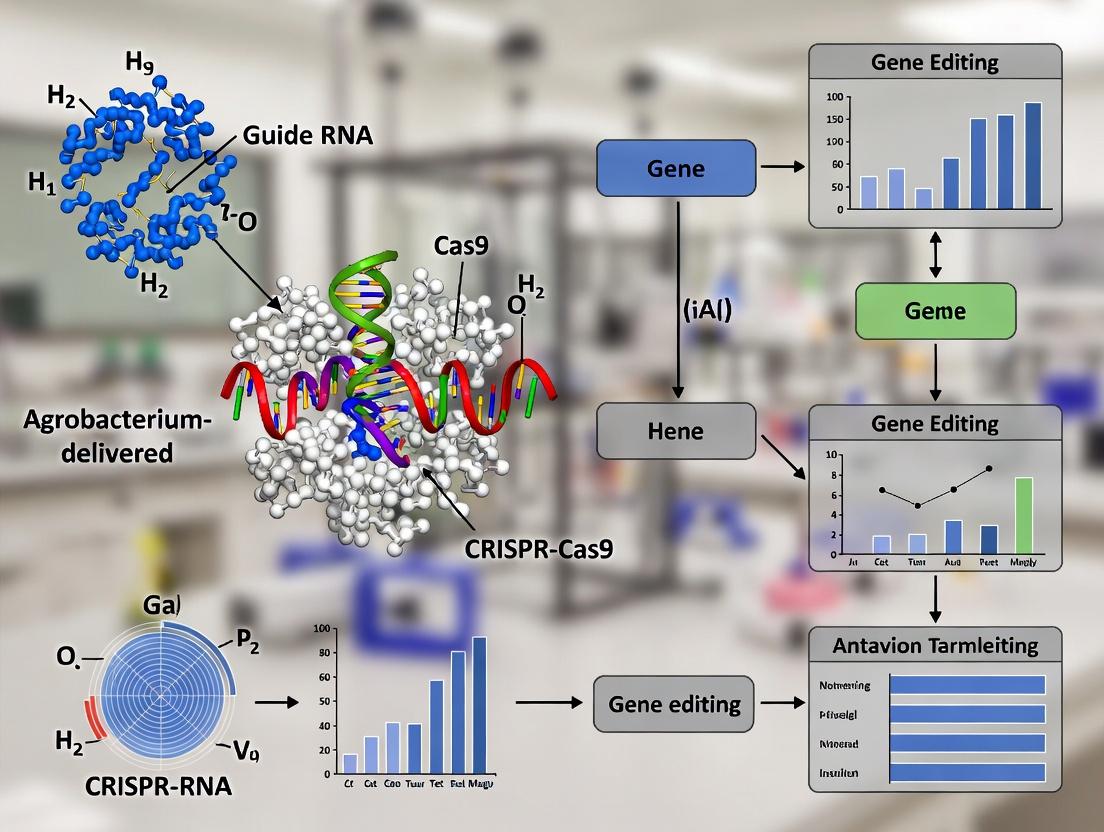
This article provides a detailed guide for researchers and biotechnologists on utilizing Agrobacterium tumefaciens as a vector for CRISPR-Cas9 genome editing.
Agrobacterium-Mediated CRISPR-Cas9 Delivery: A Comprehensive Guide for Genome Editing in Plants and Beyond
Abstract
This article provides a detailed guide for researchers and biotechnologists on utilizing Agrobacterium tumefaciens as a vector for CRISPR-Cas9 genome editing. It explores the foundational biology of Agrobacterium's natural gene transfer mechanism, details step-by-step protocols for vector design and plant transformation, addresses common troubleshooting and optimization challenges, and compares this method to alternative delivery systems. The focus is on practical application and achieving high-efficiency, heritable edits in plants, with implications for crop improvement and foundational research.
Agrobacterium and CRISPR-Cas9: Understanding the Synergy for Plant Genome Engineering
Agrobacterium tumefaciens, the causative agent of crown gall disease, has been repurposed as a premier vector for plant transformation. Its tumor-inducing (Ti) plasmid-derived T-DNA transfer mechanism represents a natural genetic engineering process. This whitepaper deconstructs this mechanism in depth, framing it within the context of delivering CRISPR-Cas9 components for advanced genome editing research. Understanding this natural process is critical for optimizing its application in creating precise genetic modifications in plants and other eukaryotic cells, with direct implications for agricultural biotechnology and drug development.
The T-DNA transfer system is a highly sophisticated interkingdom DNA delivery mechanism. For contemporary researchers, it provides a proven chassis for delivering multiplex CRISPR-Cas9 constructs, base editors, and prime editors into plant cells. The system’s ability to transfer a defined DNA segment (T-DNA) from the bacterium into the host nucleus, where it integrates into the genome, mirrors the desired outcome of modern genome editing. This guide details the molecular machinery behind this process to empower its exploitation for next-generation editing tools.
Molecular Machinery of T-DNA Transfer
The transfer process is mediated by genes within the Virulence (Vir) region of the Ti plasmid and chromosomal genes, activated by plant-derived signals.
Key Virulence Proteins and Their Functions
The following table summarizes the core Vir proteins involved in T-DNA processing and transfer.
Table 1: Core Virulence (Vir) Proteins and Functions
| Protein | Primary Function | Quantitative Notes |
|---|---|---|
| VirA/VirG | Two-component signal transduction system. VirA (sensor kinase) perceives signals (e.g., phenolics, sugars, low pH) and phosphorylates VirG (response regulator), which activates transcription of other vir genes. | VirA detects acetosyringone at nanomolar concentrations (≈50 nM). Optimal induction occurs at pH 5.0–5.5. |
| VirD1/VirD2 | Endonuclease complex. VirD2 introduces site-specific nicks at the 25-bp T-DNA border sequences. VirD1 is a topoisomerase-like accessory protein. | Nicking occurs at the bottom strand of each border repeat. VirD2 remains covalently bound to the 5' end of the single-stranded T-DNA (T-strand) via a tyrosine residue. |
| VirE2 | Single-stranded DNA-binding protein. Coats the T-strand in the plant cytoplasm, protecting it from nucleases and facilitating nuclear import. | VirE2 binds ssDNA non-specifically and cooperatively. A single VirE2 monomer covers ≈30 nucleotides. |
| VirE1 | Chaperone for VirE2. Keeps VirE2 inactive in the bacterial cell, preventing premature binding to ssDNA. | VirE1-VirE2 complex formation is essential for VirE2 stability and transport. |
| VirB1-VirB11, VirD4 | Form the Type IV Secretion System (T4SS), a transmembrane pilus structure that transports the T-strand/VirD2/VirE2 complex into the host cell. | The T4SS is an 11-component (VirB1-B11, VirD4) ATP-dependent transporter. VirD4 is the "coupling protein" that recruits the T-complex. |
| VirF | Host-range factor. Ubiquitin ligase that targets host proteins for degradation, facilitating T-DNA integration. | More critical for transformation of certain plant families (e.g., Nicotiana). |
T-Complex Formation and Transport
The process initiates with VirD1/D2-mediated nicking at the right border (RB) and left border (LB), generating a single-stranded T-DNA molecule (T-strand). The VirD2 protein remains attached to its 5' end. The T-strand-VirD2 complex, along with VirE2 (exported separately), forms the mature T-complex within the plant cell.
Diagram 1: Induction and T-complex Formation
Experimental Protocols for Studying T-DNA Transfer
These protocols are foundational for researchers validating and optimizing the system for CRISPR delivery.
Protocol: β-Glucuronidase (GUS) Reporter Assay forvirGene Induction
Purpose: To quantitatively measure the induction of the vir genes in response to specific plant signals. Materials: A. tumefaciens strain carrying a vir promoter (e.g., virB or virE) fused to the uidA (GUS) reporter gene, induction medium (e.g., AB minimal medium at pH 5.5), acetosyringone stock solution (100 mM in DMSO), X-Gluc (5-bromo-4-chloro-3-indolyl-β-D-glucuronic acid) substrate buffer. Procedure:
- Grow Agrobacterium to mid-log phase (OD600 ≈ 0.5-0.8) in rich medium.
- Wash cells twice with induction medium to remove nutrients.
- Resuspend to OD600 = 0.5 in induction medium ± inducer (e.g., 100 µM acetosyringone).
- Incubate with shaking (200 rpm) at 20-25°C (optimal for vir induction) for 12-24 hours.
- Harvest cells. Perform GUS assay: Add cells to substrate buffer containing 1 mM X-Gluc. Incubate at 37°C for 1-4 hours or until blue color develops.
- Quantify: Visually assess blue color intensity or quantify enzymatically using a spectrophotometer (measure A415 after cleavage of p-nitrophenyl β-D-glucuronide). Key Controls: Include a non-induced control (-AS) and a strain with a constitutive promoter driving GUS.
Protocol: T-DNA Border Nicking Assay (In Vitro)
Purpose: To demonstrate the specific endonuclease activity of the VirD1/VirD2 complex on T-DNA border sequences. Materials: Purified His-tagged VirD1 and VirD2 proteins, supercoiled plasmid DNA containing a T-DNA border repeat (25 bp consensus), reaction buffer (e.g., 50 mM Tris-HCl pH 7.5, 10 mM MgCl2, 5 mM DTT), Proteinase K, agarose gel electrophoresis equipment. Procedure:
- Set up a 20 µL reaction containing 500 ng of supercoiled plasmid, 50-100 nM each VirD1/VirD2, and 1x reaction buffer.
- Incubate at 30°C for 30-60 minutes.
- Stop the reaction by adding Proteinase K (0.1 mg/mL) and SDS (0.1%) and incubating at 55°C for 15 min to remove proteins.
- Analyze DNA products by 1% agarose gel electrophoresis.
- Expected Result: Supercoiled plasmid (fastest migrating) will be converted to nicked open circular (slower migrating) and possibly linear form if two nicks occur. A control plasmid without the border sequence should remain supercoiled.
Diagram 2: vir Gene Induction Assay Workflow
Integration with CRISPR-Cas9 Delivery Systems
The modern "agroinfiltration" and stable transformation protocols rely entirely on the native T-DNA transfer mechanism.
Table 2: Key Components of a CRISPR-Cas9 Binary Vector for Agrobacterium
| Component | Function in Editing | Replacement/Use of Native T-DNA System |
|---|---|---|
| T-DNA Borders (RB/LB) | Define the DNA segment to be transferred. | Directly uses the native 25-bp border sequences. |
| Cas9 Gene | Encodes the DNA endonuclease. | Inserted between T-DNA borders. Often codon-optimized for plants and driven by a plant promoter (e.g., 35S, Ubi). |
| sgRNA(s) | Guides Cas9 to target genomic locus. | Inserted between borders. Driven by Pol III promoter (e.g., U6, U3). |
| Plant Selectable Marker | Selects transformed plant cells (e.g., hygromycin, kanamycin resistance). | Inserted between borders. Replaces the oncogenes of the native T-DNA. |
| Vir Helper Plasmid | Provides Vir proteins in trans for T-DNA transfer. | A "disarmed" Ti plasmid (lacking T-DNA but with entire vir region) or a smaller "vir helper" plasmid is used in the Agrobacterium strain. |
Protocol: Agrobacterium-mediated Stable Plant Transformation (Leaf Disk) for CRISPR-Cas9 Purpose: To generate stably transgenic and edited plants.
- Vector Construction: Clone CRISPR-Cas9 expression cassette(s) into a binary vector between T-DNA borders.
- Agrobacterium Preparation: Transform the binary vector into a disarmed A. tumefaciens strain (e.g., LBA4404, GV3101). Grow a colony in selective medium, then subculture in induction medium with acetosyringone.
- Plant Material: Surface-sterilize and prepare leaf disks or explants from the target plant species.
- Co-cultivation: Immerse explants in the Agrobacterium suspension for 10-30 minutes, blot dry, and co-cultivate on solid medium for 2-3 days in the dark.
- Selection & Regeneration: Transfer explants to selection medium containing antibiotics to kill Agrobacterium and select for transformed plant cells (based on the T-DNA marker) and hormones to induce shoot formation.
- Rooting & Screening: Regenerated shoots are transferred to rooting medium. Genomic DNA from resulting plants is PCR-screened for T-DNA presence and sequenced for target site edits.
The Scientist's Toolkit: Research Reagent Solutions
Table 3: Essential Reagents for T-DNA/CRISPR-Agrobacterium Research
| Reagent/Material | Supplier Examples | Function in Research |
|---|---|---|
| Disarmed Agrobacterium Strains (e.g., LBA4404, GV3101, EHA105) | Various culture collections (e.g., NCPPB, lab stocks). | Provide the Vir machinery in trans for T-DNA transfer from binary vectors. Different strains have varying host ranges and transformation efficiencies. |
| Binary Vector Systems (e.g., pCAMBIA, pGreen, pCAS series) | Addgene, CAMBIA, commercial suppliers. | Modular plasmids containing T-DNA borders, multiple cloning sites, and selection markers for plants and bacteria. Essential for building CRISPR constructs. |
| Acetosyringone | Sigma-Aldrich, Thermo Fisher, Cayman Chemical. | Phenolic compound used to induce the vir gene region, critical for maximizing T-DNA transfer efficiency during co-cultivation. |
| Plant Tissue Culture Media (MS, B5 basal salts) | PhytoTechnology Labs, Duchefa Biochemie, Sigma-Aldrich. | Formulated media for growth, co-cultivation, selection, and regeneration of plant explants during transformation. |
| Selection Antibiotics (e.g., Kanamycin, Hygromycin B) | Various life science suppliers. | Used in plant culture media to select cells that have integrated the T-DNA (carrying the resistance gene). |
| GUS/Luciferase Reporter Assay Kits | Thermo Fisher, Promega, GoldBio. | For quantifying vir gene induction or transient/stable transformation efficiency via reporter genes encoded within the T-DNA. |
| T-DNA Border Oligonucleotides & Cloning Kits | Integrated DNA Technologies (IDT), NEB. | For constructing and verifying binary vectors. Kits for Golden Gate or Gibson assembly are crucial for modular CRISPR multiplexing. |
| Cas9-specific Antibodies & PCR-based Edit Detection Kits | Various suppliers (e.g., Diagenode, NEB for antibodies; Tracking of Indels by DEcomposition - TIDE analysis web tool). | For verifying Cas9 protein expression in transformed tissues and characterizing the mutation profiles at target genomic loci. |
Within the framework of developing robust Agrobacterium-delivered CRISPR-Cas9 systems for plant genome editing research, the selection and optimization of molecular components are paramount. This technical guide details the core considerations for designing single-guide RNAs (sgRNAs) and selecting appropriate Cas9 variants for delivery via Agrobacterium tumefaciens T-DNA. The integration of these components into binary vectors, followed by stable transformation, enables precise genomic modifications for both fundamental research and trait development.
gRNA Design for Plant Genome Editing
Effective sgRNA design maximizes on-target activity and minimizes off-target effects. The process involves both sequence selection and expression cassette engineering suitable for Agrobacterium T-DNA integration.
Key Design Parameters
Target Sequence Selection:
- Protospacer Adjacent Motif (PAM): For standard Streptococcus pyogenes Cas9 (SpCas9), the PAM sequence is 5'-NGG-3', located immediately 3' of the target DNA strand.
- Protospacer Length: Typically 20 nucleotides upstream of the PAM.
- GC Content: Optimal between 40-60%. Higher GC content can increase stability but may reduce efficiency if too high.
- Specificity: The seed region (8-12 bases proximal to the PAM) must be unique within the genome to minimize off-target cleavage.
- Positioning: For gene knockouts, target exons near the 5' end of the coding sequence to promote frameshifts and early stop codons.
sgRNA Expression Architecture: In plants, sgRNAs are commonly expressed via RNA polymerase III promoters (e.g., AtU6, OsU6) due to their precise transcription initiation and termination. The sgRNA scaffold must maintain the correct secondary structure for Cas9 binding.
Quantitative Guidelines for gRNA Design
Table 1: Quantitative Parameters for Optimal Plant gRNA Design
| Parameter | Optimal Range/Value | Rationale |
|---|---|---|
| Protospacer Length | 20 bp | Standard length for SpCas9 recognition and binding. |
| GC Content | 40% - 60% | Balances stability and efficiency; <20% or >80% often reduces activity. |
| Off-target Mismatch Tolerance | ≤3 mismatches in seed region | Predicts high specificity; tools like CRISPR-P or CHOPCHOP assess this. |
| Target Site Position (for KO) | Within first 50-75% of coding sequence | Maximizes probability of disruptive frameshift mutation. |
| Poly-T Tracts | Avoid 4+ consecutive T's | Can act as premature termination signal for Pol III promoters. |
Experimental Protocol: In Silico gRNA Design and Selection
Methodology:
- Sequence Retrieval: Obtain the FASTA format genomic sequence of the target gene from databases like Phytozome or Ensembl Plants.
- PAM Identification: Scan both DNA strands for all 5'-NGG-3' sequences within the target region.
- Candidate Listing: Extract 20 nucleotides immediately 5' of each PAM as candidate protospacers.
- Specificity Check: Input each candidate into a plant-specific gRNA design tool (e.g., CRISPR-P 2.0, CHOPCHOP). Use the tool’s genome-wide alignment to identify potential off-target sites. Rank candidates by the number of off-targets, prioritizing those with zero or minimal off-targets, especially in coding regions.
- Efficiency Prediction: Use the tool's scoring algorithm (which factors in GC content, sequence features, etc.) to predict on-target efficiency. Select the top 2-3 candidates with high predicted efficiency and high specificity.
- Final Selection: Verify the uniqueness of the selected sequence by performing a BLASTN search against the host plant genome.
Cas9 Variants for Agrobacterium Delivery
The choice of Cas9 variant influences editing efficiency, specificity, and compatibility with Agrobacterium delivery. The coding sequence must be codon-optimized for the host plant and placed under a strong constitutive or tissue-specific plant promoter (e.g., CaMV 35S, Ubiquitin).
Commonly Used Variants
- Standard SpCas9: The wild-type nuclease, effective but with potential for off-target effects. Size (~4.2 kb) is a consideration for vector capacity.
- High-Fidelity Variants (e.g., SpCas9-HF1, eSpCas9(1.1)): Engineered to reduce non-specific DNA binding, significantly lowering off-target activity while retaining robust on-target cleavage.
- Cas9 Nickases (D10A or H840A): Generate single-strand breaks (nicks). Paired nickases with offset sgRNAs create staggered double-strand breaks, dramatically increasing specificity.
- Base Editors (BE, e.g., BE3): Fusions of catalytically impaired Cas9 (nCas9, D10A) with a deaminase enzyme. Enable direct, template-free conversion of C•G to T•A (or A•T to G•C) without creating double-strand breaks, ideal for precise point mutations.
- VirD2-Cas9 Fusions: Experimental fusions of Cas9 to Agrobacterium VirD2 protein. Exploits the natural T-DNA integration machinery, potentially guiding Cas9 to the T-DNA integration complex to edit at the site of insertion.
Quantitative Comparison of Cas9 Variants
Table 2: Comparison of Key Cas9 Variants for Plant Editing via Agrobacterium
| Variant | Key Feature | Typical On-Target Efficiency | Relative Specificity | Primary Application | Size Consideration |
|---|---|---|---|---|---|
| SpCas9 (WT) | Double-strand break (DSB) inducer | High (Varies by target) | Standard | Gene knockouts, large deletions | ~4.2 kb (Reference) |
| SpCas9-HF1 | Reduced non-specific binding | Slightly reduced vs. WT | Very High | High-fidelity knockouts | Similar to WT |
| nCas9 (D10A) | Single-strand break (nick) inducer | N/A (paired use) | Extremely High (paired) | Paired nicking for precise deletions | Similar to WT |
| BE3 (nCas9-D10A-cytidine deaminase) | C•G to T•A base editing | Moderate to High (for conversion) | High (no DSB) | Point mutations, precise amino acid changes | Larger (~5.6 kb) |
| VirD2-Cas9 Fusion | Targeted to T-DNA complex | Under investigation | Potentially high at T-DNA locus | Editing at site of T-DNA integration | Larger than WT |
Experimental Protocol: Assembling CRISPR-Cas9 Constructs in a Binary Vector
Objective: Clone selected sgRNA(s) and Cas9 variant expression cassettes into a T-DNA binary vector for Agrobacterium transformation.
Materials: See "The Scientist's Toolkit" below. Methodology:
- sgRNA Oligo Annealing: Design forward and reverse oligonucleotides corresponding to the 20-nt protospacer, with 5' overhangs compatible with your chosen cloning site (e.g., BsaI for Golden Gate).
- Resuspend oligos to 100 µM. Mix 1 µL of each, 1 µL of 10x T4 Ligation Buffer, and 7 µL nuclease-free water.
- Heat to 95°C for 5 minutes, then cool slowly to 25°C (ramp rate 0.1°C/sec) in a thermocycler.
- Golden Gate Assembly (Example):
- Set up a reaction: 50 ng linearized destination binary vector, 1 µL annealed oligo duplex (diluted 1:10), 1 µL Cas9 expression module entry vector, 1 µL of BsaI-HFv2, 1 µL T4 DNA Ligase, 2 µL 10x T4 Ligase Buffer, nuclease-free water to 20 µL.
- Cycle in a thermocycler: (37°C for 2 min, 16°C for 5 min) x 30 cycles, then 50°C for 5 min, 80°C for 5 min.
- Transformation and Verification:
- Transform 2 µL of assembly reaction into competent E. coli cells via heat shock or electroporation. Plate on appropriate antibiotics.
- Screen colonies by colony PCR or restriction digest. Validate final plasmid by Sanger sequencing across all cloned junctions.
- Agrobacterium Transformation:
- Introduce the verified binary vector into disarmed Agrobacterium tumefaciens strain (e.g., GV3101, EHA105) via electroporation or freeze-thaw method.
- Select on plates with antibiotics specific for the bacterial strain and the binary vector.
Visualizations
Diagram 1: gRNA Design and Selection Workflow
Diagram 2: Generic Binary Vector Map for Agrobacterium Delivery
The Scientist's Toolkit
Table 3: Essential Research Reagents and Materials
| Item | Function/Description |
|---|---|
| Plant-Specific gRNA Design Tool (CRISPR-P 2.0) | Web tool for designing and scoring sgRNAs with plant genome databases. |
| Binary Vector System (e.g., pCambia, pCAMBIA1300, pHSE401) | Contains T-DNA borders, plant and bacterial selectable markers, and multiple cloning sites. |
| Golden Gate MoClo-Compatible Vectors | Modular cloning system for efficient, one-pot assembly of multiple expression cassettes. |
| BsaI-HFv2 Restriction Enzyme | Type IIS enzyme used in Golden Gate assembly to create unique, non-palindromic overhangs. |
| T4 DNA Ligase | Joins DNA fragments with compatible cohesive ends during assembly. |
| Chemically Competent E. coli (DH5α, TOP10) | For plasmid propagation and cloning intermediate steps. |
| Electrocompetent Agrobacterium tumefaciens (GV3101) | Strain for transforming plant cells via floral dip or tissue culture. |
| Plant Codon-Optimized Cas9 Gene | Synthetic gene with altered codon usage to maximize expression in plants (e.g., Arabidopsis, rice). |
| U6 snRNA Promoter Clones (AtU6-26, OsU6) | Source of Pol III promoters for driving sgRNA expression in dicots or monocots. |
| Sanger Sequencing Primers (e.g., 35S-F, T7 Term-R) | Verify sequence integrity of assembled T-DNA constructs. |
The development of efficient plant genome editing tools is a cornerstone of modern agricultural and pharmaceutical research. Within the framework of a broader thesis on Agrobacterium-delivered CRISPR-Cas9 systems, the choice of binary vector backbone is critical. This guide provides an in-depth analysis of the two primary plasmid systems derived from Agrobacterium tumefaciens and A. rhizogenes—the Ti (Tumor-inducing) and Ri (Root-inducing) plasmids. We dissect their anatomy, compare their functional components, and detail protocols for engineering them into effective binary vectors for delivering CRISPR-Cas9 constructs into plant genomes.
Anatomical Comparison: Disarmed Ti vs. Ri Plasmid Backbones
The native Ti and Ri plasmids cause crown gall and hairy root diseases, respectively. For safe plant biotech use, they are "disarmed" by removing oncogenes (iaaM, iaaH, ipt for Ti; rol genes for Ri) while retaining essential DNA transfer functions.
Table 1: Core Components of Disarmed Binary Vector Systems
| Component | Function in T-DNA Transfer | Ti Plasmid (e.g., pTiBo542) | Ri Plasmid (e.g., pRiA4) |
|---|---|---|---|
| Virulence (Vir) Region | cis-acting proteins for T-DNA processing/transfer | ~25 kb, 7 essential operons (virA-G) | Homologous, functional compatibility with Ti Vir |
| T-DNA Borders | 25-bp direct repeats; recognition site for VirD2 | Left Border (LB), Right Border (RB) | LB, RB (often multiple in native Ri) |
| Origin of Replication (ori) | Plasmid maintenance in Agrobacterium | oriV (often RK2-based for broad host) | oriV (often pRi-specific) |
| Conjugative Transfer (tra) Region | Plasmid conjugation | Often present, can be removed | Often present |
| Selectable Marker | Bacterial selection | Spectinomycin, Kanamycin resistance | Kanamycin, Tetracycline resistance |
| Disarmed T-DNA Region | Replaced with MCS for gene of interest | Oncogenes removed, "empty" for user insert | rol genes removed, "empty" for user insert |
| Overdrive Sequence | Enhances VirD2 binding, increases transfer | Present adjacent to RB | Often absent or less effective |
Table 2: Quantitative Comparison for CRISPR Assembly Applications
| Parameter | Ti-based Binary Vector | Ri-based Binary Vector | Implication for CRISPR |
|---|---|---|---|
| Typical T-DNA Insert Size Limit | ~40 kb | ~20 kb | Both sufficient for Cas9+gRNA(s). Ti preferred for large multiplex arrays. |
| Transformation Efficiency (Model Plants) | High (e.g., 80-90% in Nicotiana) | Moderate to High | Ti often yields higher primary transformants. |
| Regeneration Ease | Standard, from callus | Can be challenging; prone to hairy root morphology | Ti vectors preferred for stable transformants. |
| Expression Stability | High | Can exhibit gene silencing | Ti offers more predictable CRISPR component expression. |
| Typical Cloning Strategy | Gateway, Golden Gate, standard MCS | Standard MCS | Both compatible with modular CRISPR assembly kits. |
Protocol: Engineering a CRISPR-Cas9 Construct into a Binary Vector
This protocol assumes a disarmed binary vector (e.g., pCAMBIA1300 from Ti or pRiA4::GUS) and an assembled CRISPR expression cassette (Plant promoter::Cas9, U6/Pol III promoter::gRNA).
Materials & Reagents:
- Disarmed binary vector (50 ng/µL)
- Purified CRISPR insert fragment
- Restriction enzymes (e.g., AscI, PacI) or Gateway BP/LR Clonase II
- T4 DNA Ligase
- Chemically competent E. coli (e.g., DH5α)
- Electrocompetent Agrobacterium tumefaciens (e.g., strain LBA4404, GV3101)
- Selection antibiotics (Kanamycin, Spectinomycin, Rifampicin)
Procedure:
- Linearization: Digest 2 µg of binary vector with appropriate enzymes to remove the placeholder fragment in the T-DNA region. Purify using a gel extraction kit.
- Ligation: Mix the linearized vector with a 3:1 molar ratio of the CRISPR insert fragment. Use T4 DNA Ligase (1 hour, 25°C). For Gateway cloning, follow the manufacturer's protocol for the LR reaction.
- E. coli Transformation: Transform ligation mix into competent E. coli. Select on LB agar with the appropriate antibiotic (e.g., Kanamycin 50 mg/L). Isolate plasmid DNA from colonies and confirm by colony PCR and Sanger sequencing.
- Agrobacterium Transformation (Freeze-Thaw Method): a. Aliquot 100 µL of electrocompetent Agrobacterium (e.g., GV3101) on ice. b. Add ~100 ng of verified plasmid DNA. Mix gently. c. Freeze in liquid nitrogen for 1 minute, then thaw at 37°C for 5 minutes. d. Add 1 mL of YEP broth and incubate at 28°C with shaking (200 rpm) for 2-3 hours. e. Plate on YEP agar with vector-specific antibiotics and Agrobacterium strain-specific Rifampicin (often 50 mg/L). Incubate at 28°C for 2 days.
- Validation: Ispect colonies and perform PCR to confirm the presence of the binary vector.
Protocol: Plant Transformation viaAgrobacterium(Leaf Disc -Nicotiana tabacum)
Materials: Sterilized leaf discs, Agrobacterium culture carrying CRISPR binary vector, Co-cultivation media (MS + 2 mg/L BAP + 0.1 mg/L NAA), Selection media (MS + antibiotics + 250 mg/L Cefotaxime), Regeneration media.
Procedure:
- Grow Agrobacterium overnight in YEP with antibiotics to OD600 ~0.8. Centrifuge and resuspend in MS liquid medium.
- Dip sterilized leaf discs into bacterial suspension for 10 minutes. Blot dry and place on co-cultivation media in the dark at 25°C for 48 hours.
- Transfer discs to selection media containing antibiotics to kill Agrobacterium (Cefotaxime) and select for transformed plant cells (e.g., Hygromycin). Subculture every 2 weeks.
- Once shoots develop (3-4 weeks), transfer to rooting media.
- After root development, transfer plantlets to soil and genotype by PCR and sequencing to confirm CRISPR-induced edits.
Visualization: Binary Vector System & T-DNA Transfer Workflow
Diagram 1: CRISPR binary vector assembly and T-DNA delivery path.
Diagram 2: Vir gene activation and T-strand production pathway.
The Scientist's Toolkit: Key Research Reagents & Materials
Table 3: Essential Reagents for Binary Vector CRISPR Workflows
| Reagent/Material | Supplier Examples | Function in Experiment |
|---|---|---|
| Disarmed Binary Vectors (pCAMBIA, pGreen, pMDC) | Addgene, Cambia, TAIR | Backbone providing T-DNA borders, plant selection marker, and bacterial replication origin. |
| Modular CRISPR Assembly Kits (Golden Gate MoClo) | Addgene, Kit #1000000044 | Enables rapid, standardized assembly of multiple gRNA expression cassettes into binary vectors. |
| Agrobacterium Strains (LBA4404, GV3101, EHA105) | Various Culture Collections | Engineered disarmed strains harboring a helper Ti plasmid (with vir genes) for T-DNA transfer. |
| Plant Tissue Culture Media (MS Basal Salts) | PhytoTech Labs, Sigma-Aldrich | Provides nutrients and hormones for in vitro plant growth, selection, and regeneration. |
| Selection Antibiotics (Hygromycin, Kanamycin) | Thermo Fisher, GoldBio | Selective agents in media to eliminate non-transformed plant tissues or bacteria. |
| PCR Enzymes for Genotyping (Phire, GoTaq) | NEB, Promega | Amplifies genomic regions flanking CRISPR target sites to screen for edits via sequencing or assay. |
| Restriction Enzymes (Type IIs, e.g., BsaI) | NEB, Thermo Scientific | Essential for Golden Gate assembly and linearization of vector backbones. |
Agrobacterium-mediated transformation remains the preferred method for delivering CRISPR-Cas9 components for plant genome editing due to its ability to generate stable, low-copy-number integration events. Understanding host range specificity is critical for designing effective transformation strategies. This whitepaper, framed within the broader thesis of deploying Agrobacterium-delivered CRISPR-Cas9 systems, details the plant species amenable to this transformation and the underlying molecular mechanisms.
The Molecular Basis of Host Range
Agrobacterium tumefaciens transfers a segment of DNA (T-DNA) from its tumor-inducing (Ti) plasmid into the plant genome. This process is governed by a series of molecular signals and virulence (vir) genes. Host specificity is determined by:
- Chemoattraction and Attachment: Recognition of specific phenolic compounds (e.g., acetosyringone) released by wounded plants via the VirA/VirG two-component system.
- T-DNA Processing: The virD1/virD2 genes excise the T-DNA.
- Effector Protein Function: VirE2, VirF, and others interact with host proteins to facilitate T-DNA nuclear import and integration.
- Plant Defense Response: The plant's innate immune system can limit transformation success.
Spectrum of Amenable Plant Species
Based on recent literature and databases, amenable species are categorized below. Success is often genotype-dependent within a species.
Table 1: Model and Major Crop Species with Established Agrobacterium Transformation Protocols
| Species | Common Name | Family | Typical Efficiency (T0) | Key Genotype/Variety | CRISPR-Cas9 Demonstrated? |
|---|---|---|---|---|---|
| Nicotiana tabacum | Tobacco | Solanaceae | >80% (leaf disc) | SR1, Petit Havana | Yes (Extensively) |
| Arabidopsis thaliana | Thale Cress | Brassicaceae | ~2-5% (floral dip) | Col-0 | Yes (Standard) |
| Oryza sativa | Rice | Poaceae | 20-40% (callus) | Nipponbare, Kitake | Yes (Routine) |
| Solanum lycopersicum | Tomato | Solanaceae | 15-30% (cotyledon) | Micro-Tom, Moneymaker | Yes |
| Solanum tuberosum | Potato | Solanaceae | 10-25% (internode) | Desiree, Russet | Yes |
| Zea mays | Maize | Poaceae | 5-15% (immature embryo) | B104, Hi-II | Yes |
| Glycine max | Soybean | Fabaceae | 5-20% (cotyledonary node) | Williams 82 | Yes |
| Triticum aestivum | Wheat | Poaceae | 5-15% (immature embryo) | Fielder, Bobwhite | Yes |
Table 2: Recalcitrant and Emerging Species
| Species | Common Name | Family | Status & Key Challenges |
|---|---|---|---|
| Pinus taeda | Loblolly Pine | Pinaceae | Highly recalcitrant. Poor T-DNA integration, strong defense response. |
| Vitis vinifera | Grapevine | Vitaceae | Possible but inefficient. Genotype-dependent, requires vir gene inducers. |
| Coffea arabica | Coffee | Rubiaceae | Emerging protocols. Low regeneration efficiency post-transformation. |
| Many Monocots (e.g., Barley, Oat) | - | Poaceae | Historically difficult; improved using super-virulent strains (e.g., AGL1) and additives. |
Key Experimental Protocol: Agrobacterium-mediated Transformation of Rice for CRISPR-Cas9
This detailed protocol exemplifies the workflow for a major monocot crop.
1. Vector Construction:
- Clone a gRNA expression cassette (driven by a U3/U6 pol III promoter) and a Cas9 expression cassette (driven by a maize Ubi promoter) into the T-DNA region of a binary vector (e.g., pCAMBIA1300).
- Transform the recombinant binary vector into an Agrobacterium strain (e.g., EHA105, LBA4404).
2. Preparation of Explant:
- Surface sterilize mature rice seeds.
- Induce callus formation on N6D medium (N6 salts, 2,4-D) for 3-4 weeks. Select embryogenic, type I calli.
3. Co-cultivation:
- Suspend log-phase Agrobacterium (OD600 ~0.8-1.0) in AAM or MS liquid medium with 100 µM acetosyringone.
- Immerse calli in the suspension for 30 minutes. Blot dry and co-cultivate on filter paper overlaid on co-cultivation medium (with acetosyringone) for 2-3 days in the dark at 22-25°C.
4. Selection & Regeneration:
- Transfer calli to resting medium (with antibiotics to suppress Agrobacterium, no selection) for 5-7 days.
- Transfer to selection medium (containing hygromycin or bialaphos) for 2-3 weeks. Subculture surviving calli every 2 weeks.
- Move antibiotic-resistant calli to pre-regeneration and then regeneration medium to induce shoot and root development.
5. Molecular Analysis:
- Perform PCR on genomic DNA from putative transgenic plants (T0) to confirm the presence of cas9 and hpt transgenes.
- Use T7E1 or SURVEYOR assay, followed by Sanger sequencing, to verify target site mutations.
Key Signaling Pathway in Host Recognition
The initial step determining host compatibility is the sensing of wound signals by Agrobacterium.
The Scientist's Toolkit: Key Research Reagent Solutions
Table 3: Essential Materials for Agrobacterium-Mediated CRISPR Delivery
| Item | Function & Rationale | Example Product/Source |
|---|---|---|
| Super-virulent A. tumefaciens Strain | Contains a Ti plasmid with a constitutively active virG gene (e.g., virGN54D), enhancing T-DNA transfer in recalcitrant plants. | Strain AGL1, EHA105 |
| Binary Vector System | A T-DNA vector with plant selection marker, CRISPR-Cas9 expression units, and borders compatible with the strain. | pCambia, pGreen, pDIRECT vectors |
| Acetosyringone | Phenolic compound that induces the vir gene region. Critical for co-cultivation, especially for monocots. | Sigma-Aldrich, D134406 |
| Plant Tissue Culture Media | Basal salts and vitamins for explant growth, callus induction, and regeneration (e.g., MS, N6). | PhytoTech Labs |
| Selection Agent | Herbicide or antibiotic for selecting transformed tissue (e.g., hygromycin, glufosinate). | Gold Biotechnology |
| PCR Mix for Plant Genotyping | High-fidelity polymerase capable of amplifying GC-rich plant genomic DNA. | NEB Q5 Hot Start, Phire Plant Direct PCR Kit |
| Mutation Detection Kit | For initial screening of CRISPR-induced indels. | IDT Alt-R Genome Editing Detection Kit (T7E1) |
| Silwet L-77 | Surfactant used in floral dip transformation of Arabidopsis and to enhance infiltration in other species. | Lehle Seeds |
Strategies for Expanding Host Range
To extend transformation to non-host or recalcitrant species within a CRISPR research paradigm:
- Use of Hyper-virulent Strains: Employ strains like AGL1 (pTiBo542) or LBA4404 harboring a "super-virulent" helper plasmid.
- Chemical Enhancement: Addition of acetosyringone, cytokinins, or antioxidants (e.g., ascorbic acid) during co-cultivation.
- Host Gene Co-transformation: Transiently express Arabidopsis genes known to facilitate transformation (e.g., VIP1, histones) alongside CRISPR components.
- Nanoparticle-Assisted Delivery: Pre-treat tissue with pectinase or cellulose-degrading nanoparticles to weaken cell walls prior to Agrobacterium infection.
Agrobacterium tumefaciens, a soil-borne phytopathogen, has evolved to transfer a segment of its tumor-inducing (Ti) plasmid DNA (T-DNA) into plant cells, causing crown gall disease. The molecular dissection of this natural genetic engineering system revealed the essential components: the vir (virulence) region, the T-DNA borders (left and right repeats), and the chromosomal chv genes. Disarming this pathogen by deleting oncogenes from the T-DNA while retaining its DNA transfer machinery forms the cornerstone of its biotechnological application. This foundational technology is now pivotal for the precise delivery of CRISPR-Cas9 components for advanced genome editing research.
Core Molecular Machinery and Signaling Pathways
The transformation process is a sophisticated, multi-step signaling cascade.
Diagram 1: Agrobacterium Transformation Signaling & Transfer Pathway
Evolution of Vector Systems: From Plasmids to Binary Vectors
The development of transformation vectors progressed from large, intact Ti plasmids to streamlined binary and superbinary systems.
Table 1: Evolution of Agrobacterium Vector Systems
| Vector Type | Key Components (Plasmids) | T-DNA Size Limit | Advantage | Disadvantage |
|---|---|---|---|---|
| Co-integrate | Disarmed Ti plasmid + Intermediate vector | ~50 kb | Stable integration | Complex recombination, lower efficiency |
| Binary | Helper Ti plasmid (Vir genes) + Binary vector (T-DNA) | ~150 kb* | Simple, versatile, high copy in E. coli | Vir gene efficacy strain-dependent |
| Superbinary | Helper with extra vir genes (e.g., pTiBo542 virB, virC, virG) + Binary vector | ~150 kb* | Enhanced T-DNA transfer, broad host range | More complex helper plasmid |
| Miniature | Helper + Binary with minimal backbone ("Micro-T") | N/A | Reduced extraneous DNA, higher efficiency for large constructs | Specialized cloning required |
*Practical limit; theoretical limit is higher.
Agrobacterium-Delivered CRISPR-Cas9 Systems: Experimental Protocols
Protocol: Construction of a Binary Vector for CRISPR-Cas9 Expression in Plants
Objective: Assemble a T-DNA containing a plant codon-optimized Cas9 nuclease and a single guide RNA (sgRNA) expression unit.
Materials: See "The Scientist's Toolkit" below.
Method:
- sgRNA Cloning:
- Design a 20-nt target sequence complementary to your genomic target, preceding a 5'-NGG-3' PAM.
- Synthesize two complementary oligonucleotides containing the target sequence with 5' overhangs compatible with your chosen sgRNA scaffold cloning site (e.g., BsaI sites for Golden Gate assembly into pU6 or pU3 promoter vectors).
- Anneal oligos and perform a Golden Gate assembly or standard restriction-ligation into the pre-digested sgRNA expression cassette vector.
Binary Vector Assembly:
- Using a multisite Gateway LR reaction or a advanced Golden Gate assembly (e.g., MoClo system): a. Mix the entry clones: pENTR-Cas9 (e.g., SpCas9 with plant nuclear localization signals), pENTR-sgRNA (from step 1), and pENTR-PlantSelectableMarker (e.g., bar or hptII). b. Add the destination binary vector (e.g., pB7m34GW, pCAMBIA series) and LR Clonase II enzyme mix. c. Incubate at 25°C for 1-16 hours. d. Transform the reaction into chemically competent E. coli, select on appropriate antibiotics.
Validation:
- Isolate plasmid DNA from colonies.
- Verify assembly by colony PCR and diagnostic restriction digest.
- Confirm the final T-DNA sequence by Sanger sequencing across all junctions.
Protocol: Agrobacterium Transformation and Plant Transformation (Floral Dip)
Objective: Introduce the binary vector into Agrobacterium and transform Arabidopsis thaliana.
Method:
- Agrobacterium Electroporation:
- Thaw electrocompetent cells of a suitable Agrobacterium strain (e.g., GV3101::pMP90) on ice.
- Add 50-100 ng of the validated binary vector plasmid to 50 µL of cells in a pre-chilled electroporation cuvette (1 mm gap).
- Electroporate at 1.8 kV, 200 Ω, 25 µF.
- Immediately add 950 µL of SOC or LB medium and incubate at 28°C with shaking (220 rpm) for 2-3 hours.
- Plate on LB agar with selective antibiotics for both the Agrobacterium chromosomal marker and the binary vector (e.g., rifampicin + spectinomycin). Incubate at 28°C for 2 days.
Preparation for Floral Dip:
- Inoculate a single colony into 5 mL of LB with antibiotics. Grow overnight at 28°C, shaking.
- Subculture 1 mL into 500 mL of fresh transformation medium (5% sucrose, 1/2x Murashige and Skoog salts, 0.044 µM benzylaminopurine, pH 5.7) with antibiotics and 200 µM acetosyringone. Grow to an OD600 of ~1.5.
- Centrifuge cells at 5000 x g for 15 min at room temperature. Resuspend pellet in 500 mL of dipping medium (5% sucrose, 0.05% Silwet L-77).
Arabidopsis Floral Dip:
- Immerse the inflorescences of healthy, 4-6 week old Arabidopsis plants into the Agrobacterium suspension for 30 seconds, with gentle agitation.
- Lay plants horizontally in a tray, cover with transparent film to maintain humidity for 24 hours.
- Return plants to upright position and grow normally until seeds mature (~6 weeks).
Selection of Transformants:
- Harvest seeds (T1 generation). Surface sterilize and sow on plates or soil saturated with the appropriate selection agent (e.g., glufosinate ammonium or hygromycin B).
- Resistant seedlings (T1 transformants) are screened by PCR for the presence of the transgene and later analyzed for CRISPR-Cas9 editing efficiency via T7 Endonuclease I assay or sequencing of the target locus.
Quantitative Data: Efficiency and Applications
Table 2: Performance Metrics of Agrobacterium-Delivered CRISPR-Cas9 in Model Plants
| Plant Species | Transformation Method | Typical T1 Transformation Efficiency* | Reported Mutation Efficiency (Biallelic/Homozygous) | Key References (Recent) |
|---|---|---|---|---|
| Arabidopsis thaliana | Floral Dip | 1-5% | 10-60% | Tsutsui & Higashiyama (2017), Nature Protocols |
| Nicotiana benthamiana | Leaf Disk Infiltration | ~90% (transient) | 70-95% (transient) | LeBlanc et al. (2018), Plant Physiol |
| Rice (Oryza sativa) | Callus Cocultivation | 30-80% (stable calli) | 20-90% | Minkenberg et al. (2017), Nucleic Acids Res |
| Tomato (Solanum lycop.) | Cotyledon Cocultivation | 20-60% | 50-80% | Van Eck et al. (2019), Plant Cell Tiss Org Cult |
| Maize (Zea mays) | Immature Embryo | 5-40% | 10-50% | Char et al. (2020), Plant Biotechnol J |
Efficiency defined as percentage of treated explants/plants yielding resistant transformants. *Varies significantly by target locus, guide RNA design, and Cas9 expression level.
The Scientist's Toolkit: Key Research Reagent Solutions
| Reagent/Material | Function/Description | Example Product/Catalog |
|---|---|---|
| Binary Vector System | Backbone for T-DNA cloning; contains LB/RB, plant selectable marker, bacterial origin. | pCAMBIA1300, pB7m34GW, pGreenII, pYLCRISPR/Cas9 series |
| Helper Ti Plasmid | Provides vir genes in trans for T-DNA processing/transfer. | pMP90 (in GV3101), pEHA105 (in EHA105), pTiBo542 (in AGL1) |
| Agrobacterium Strain | Disarmed, helper plasmid-containing strain for plant transformation. | GV3101, LBA4404, EHA105, AGL1 |
| Plant Codon-Optimized SpCas9 | Nuclease for creating double-strand breaks; entry clone for assembly. | pHEE401, pCBC-DT1T2, Addgene #72200 series |
| sgRNA Cloning Vector | Contains Pol III promoter (U6, U3) and sgRNA scaffold for easy oligo insertion. | pAtU6-sgRNA, pOsU3-sgRNA, pBUN-sgRNA |
| Gateway LR Clonase II | Enzyme mix for efficient, multi-fragment assembly into binary vectors. | Thermo Fisher, 11791020 |
| Acetosyringone | Phenolic compound that induces the vir gene expression cascade. | Sigma-Aldrich, D134406 |
| Silwet L-77 | Surfactant that lowers surface tension for effective tissue infiltration during floral dip. | Lehle Seeds, VIS-30 |
| Selection Antibiotics (Plant) | For in vitro selection of transformants (e.g., Hygromycin B, Glufosinate-ammonium). | Various suppliers |
| T7 Endonuclease I | Enzyme for detecting CRISPR-induced indels via mismatch cleavage assay. | NEB, M0302S |
Step-by-Step Protocol: Delivering CRISPR-Cas9 via Agrobacterium for Stable Plant Transformation
This technical guide details the construction of plant transformation vectors for Agrobacterium-delivered CRISPR-Cas9 genome editing. The process involves assembling two core components—the guide RNA (gRNA) expression cassette and the Cas9 endonuclease gene—into a binary vector backbone suitable for Agrobacterium tumefaciens-mediated transformation. This work is central to a thesis focused on developing efficient, multiplexed genome editing systems for crop improvement and functional genomics research.
Core Components and Their Quantitative Specifications
The selection of promoters, terminators, and resistance markers is critical for efficient expression in plant cells. The following tables summarize key quantitative data for common components.
Table 1: Promoter Efficacy for gRNA Expression in Monocots and Dicots
| Promoter | Origin | Plant Type | Relative Expression Strength* | Primary Use |
|---|---|---|---|---|
| AtU6-26 | A. thaliana | Dicots | 100% (Baseline) | gRNA expression |
| OsU3 | O. sativa | Monocots | ~95-110% | gRNA expression |
| 35S | Cauliflower Mosaic Virus | Broad | Very High | Cas9 expression |
| ZmUbi1 | Z. mays | Monocots | High, Constitutive | Cas9 expression |
*Expression strength normalized to common baseline; data derived from recent comparative studies (2023-2024).
Table 2: Common Binary Vector Backbones and Key Features
| Binary Vector | Size (kb) | Bacterial Resistance | Plant Selection | Replicon | Key Feature |
|---|---|---|---|---|---|
| pCAMBIA1300 | ~9.2 | Kanamycin | Hygromycin | pVS1 | High copy in E. coli |
| pGreenII | ~3.8 | Kanamycin | Variable | pSa | Small size, versatile |
| pBIN19 | ~11.8 | Kanamycin | Kanamycin | pVS1 | Classic, widely used |
| pCAS9-TPC | ~12.5 | Spectinomycin | Hygromycin | pVS1 | Pre-assembled T-DNA) |
Experimental Protocol: Golden Gate Assembly-Based Construction
This protocol describes a modular, restriction-ligation based method for assembling multiple gRNA cassettes and Cas9 into a binary vector.
Materials and Reagents
The Scientist's Toolkit: Research Reagent Solutions
| Item | Function/Benefit |
|---|---|
| Type IIS Restriction Enzymes (BsaI, BbsI) | Enable scarless, directional assembly of multiple DNA fragments. |
| T4 DNA Ligase | Ligates cohesive ends generated by Type IIS enzymes. |
| High-Efficiency Competent Cells (E. coli) | Essential for transforming large (>10 kb) plasmid assemblies. |
| Chemically Competent Agrobacterium (e.g., GV3101) | For final vector mobilization and plant transformation. |
| Plant Tissue Culture Media | Selective media containing appropriate antibiotics for transgenic tissue. |
| Gibson Assembly Master Mix | Alternative cloning method for larger fragments or simple fusions. |
| Plasmid Miniprep/Midiprep Kits | For reliable purification of plasmid DNA at various scales. |
| Sanger Sequencing Primers (e.g., pVS1 rev) | For verifying the integrity of the T-DNA region in the binary vector. |
Detailed Stepwise Protocol
Part A: Preparation of Modules
- Design gRNA Sequences: Identify 20-nt target sequences preceding a 5'-NGG-3' PAM. Avoid off-targets using tools like CRISPR-P or CHOPCHOP.
- Oligonucleotide Annealing: Synthesize complementary oligos for each target, anneal them, and clone into a Level 0 gRNA entry vector (e.g., pEN-Chimera) containing a Pol III promoter (U6/U3) and terminator, flanked by BsaI sites.
- Prepare Cas9 Expression Cassette: Obtain a plant codon-optimized Cas9 gene (with intron) under a strong Pol II promoter (e.g., 2x35S or ZmUbi1) and a polyA terminator in a Level 0 vector.
Part B: Golden Gate Assembly into Binary Vector
- Set Up Reaction Mix:
- Binary vector backbone (Level 1 destination, ~50 ng)
- Level 0 gRNA module(s) (each ~20 ng)
- Level 0 Cas9 module (~30 ng)
- T4 DNA Ligase Buffer (1X final)
- ATP (1 mM final)
- BsaI-HF v2 (10 U)
- T4 DNA Ligase (400 U)
- Nuclease-free water to 20 µL.
- Run Thermocycler Program:
- (37°C for 5 min → 16°C for 5 min) x 25-30 cycles
- 50°C for 5 min (final digestion)
- 80°C for 5 min (enzyme heat inactivation).
- Transformation and Screening: Transform 5 µL of the reaction into competent E. coli. Screen colonies by colony PCR and restriction digest. Confirm final plasmid by sequencing across all assembly junctions and gRNA scaffolds.
Part C: Mobilization into Agrobacterium
- Introduce the verified binary plasmid into disarmed A. tumefaciens strain (e.g., LBA4404, GV3101) via freeze-thaw or electroporation.
- Select on plates containing appropriate antibiotics for both the binary vector and the Agrobacterium strain (e.g., rifampicin, gentamicin).
- Verify the plasmid's presence in Agrobacterium by PCR before use in plant transformation.
Visualization of Workflows and Construct Design
Diagram 1: Modular Cloning Workflow from Oligos to Binary Vector
Diagram 2: Final T-DNA Structure in Binary Vector
Within the framework of developing an Agrobacterium-delivered CRISPR-Cas9 system for plant genome editing, selecting the optimal strain is a critical determinant of transformation efficiency and transgenic event quality. The disarmed helper strains LBA4404, GV3101, and EHA105 are among the most widely utilized, each with distinct genetic backgrounds and characteristics that influence T-DNA delivery. This guide provides a technical comparison to inform strain selection for modern CRISPR-Cas9 research.
Genetic Background and Virulence Characteristics
The efficacy of an Agrobacterium strain is primarily governed by its chromosomal background and the type of Ti plasmid it harbors.
Table 1: Core Genetic and Virulence Features
| Feature | LBA4404 | GV3101 | EHA105 |
|---|---|---|---|
| Parent Strain | Ach5 | C58 | A281 |
| Ti Plasmid | pAL4404 (disarmed pTiAch5) | pMP90 (disarmed pTiC58) | pEHA105 (disarmed pTiBo542) |
| Virulence System | Octopine-type | Nopaline-type | Succinamopine-type (pTiBo542) |
| Chromosomal Background | Ach5 | C58 | C58 |
| Key Virulence Trait | Standard virulence | Robust, C58 background | Contains virG (N54D) mutation ("super-virulent") |
| Common Plant Applications | Monocots (rice), Dicots (tomato, tobacco) | Arabidopsis (floral dip), Dicots (tobacco, Nicotiana spp.) | "Refractory" Dicots (soybean, cotton), some Monocots |
The virG (N54D) mutation in EHA105's pTiBo542 plasmid enhances the expression of other vir genes, leading to its characterization as "super-virulent," particularly useful for difficult-to-transform species.
Quantitative Performance Data in CRISPR-Cas9 Delivery
Recent studies comparing transformation efficiency (typically measured as % of explants producing stable transgenic events or transient expression rates) highlight performance differences.
Table 2: Comparative Transformation Efficiency Data
| Strain | Target Plant Species | Efficiency Metric (CRISPR-Cas9 Context) | Key Finding (vs. Others) |
|---|---|---|---|
| LBA4404 | Rice (Oryza sativa) | ~15-25% stable transformation frequency | Reliable for standard japonica varieties. |
| GV3101 | Arabidopsis thaliana | >3% T1 positive edit rate (floral dip) | Gold standard for Arabidopsis; high transient expression in tobacco. |
| GV3101 | Tobacco (Nicotiana benthamiana) | High transient GUS/GFP expression | Often superior for leaf disc assays. |
| EHA105 | Soybean (Glycine max) | 2-5% stable transformation frequency | Consistently outperforms LBA4404/GV3101 in "recalcitrant" crops. |
| EHA105 | Cotton (Gossypium hirsutum) | 1-3% embryogenic callus transformation | Essential for achieving any edits in elite cultivars. |
Detailed Experimental Protocol: Comparative Strain Testing
This protocol outlines a standardized leaf disc assay for Nicotiana benthamiana to compare transient transformation efficiency between strains, a common precursor to stable transformation studies.
Materials:
- N. benthamiana plants (4-5 weeks old)
- CRISPR-Cas9 binary vectors (identical for all strains)
- Agrobacterium strains LBA4404, GV3101, EHA105
- YEP or LB media with appropriate antibiotics (e.g., Rifampicin, Kanamycin)
- Infiltration buffer (10 mM MES, 10 mM MgCl₂, 150 µM Acetosyringone, pH 5.6)
- Sterile Petri dishes, co-cultivation media (MS basal)
Procedure:
- Vector Transformation: Introduce the same CRISPR-Cas9 binary vector (e.g., pCambia-based with gRNA expression cassette) into each Agrobacterium strain via electroporation or freeze-thaw. Confirm by colony PCR.
- Culture Initiation: Inoculate a single colony for each strain into 5 mL liquid YEP with antibiotics. Grow overnight at 28°C, 220 rpm.
- Culture Induction: Dilute the overnight culture 1:50 in fresh YEP with antibiotics and grow to an OD₆₀₀ of 0.6-0.8. Pellet cells at 5000 g for 10 min.
- Resuspension: Gently resuspend the pellet in infiltration buffer to a final OD₆₀₀ of 0.5. Incubate the suspension at room temperature for 1-3 hours.
- Plant Infiltration: Using a 1 mL needleless syringe, infiltrate the bacterial suspensions into the abaxial side of fully expanded N. benthamiana leaves. Mark infiltration zones. Include infiltration buffer only as a negative control.
- Sampling & Analysis: Harvest leaf discs from infiltrated zones at 3-4 days post-infiltration (dpi).
- For transient GUS (β-glucuronidase) assay: Stain discs with X-Gluc solution and quantify blue foci.
- For transient GFP expression: Visualize under a fluorescence microscope and quantify fluorescent spots.
- For CRISPR activity: Extract genomic DNA and perform T7 Endonuclease I (T7EI) or RFLP assay on the target site to measure indel formation frequency.
The Scientist's Toolkit: Key Research Reagent Solutions
Table 3: Essential Materials for Agrobacterium-CRISPR Work
| Item | Function in Experiment | Critical Note |
|---|---|---|
| Binary Vector System (e.g., pCAMBIA, pGreen) | Carries T-DNA with CRISPR-Cas9 expression cassettes (Cas9, gRNA, plant selectable marker). | Must be compatible with Agrobacterium strains (have proper ori and virulence region). |
| Acetosyringone | Phenolic compound that induces the vir gene region on the Ti plasmid, activating the T-DNA transfer machinery. | Essential for transformation of most plants except Arabidopsis floral dip. |
| Antibiotics (Rifampicin, Kanamycin, Spectinomycin) | Selective agents to maintain the Agrobacterium strain (chromosomal) and the binary vector (plasmid). | Verify strain-specific resistance (e.g., GV3101 is Rif⁺, Gent⁺; EHA105 is Rif⁺). |
| Silwet L-77 (for Floral Dip) | Surfactant that lowers surface tension, enabling Agrobacterium (GV3101) suspension to infiltrate Arabidopsis floral tissues. | Used at ~0.02-0.05% for optimal efficiency without phytotoxicity. |
| T7 Endonuclease I (T7EI) / RFLP Assay Kit | Enzymatic mismatch cleavage tool to detect and quantify indel mutations introduced by CRISPR-Cas9 before selection. | Key for early efficiency validation in transient assays. |
| Plant Tissue Culture Media (MS, B5) | Provides nutrients and hormones for the regeneration of transformed plant cells after co-cultivation with Agrobacterium. | Composition is highly species- and explant-specific. |
Visualizing Strain Selection and T-DNA Delivery Workflow
Diagram 1: Agrobacterium Strain Selection and T-DNA Delivery Logic Flow
Diagram 2: Vir Gene Induction Pathway and Strain Differences
For an Agrobacterium-delivered CRISPR-Cas9 system:
- GV3101 is the unequivocal choice for Arabidopsis thaliana and excels in many dicot leaf disc transient assays due to its robust C58 background.
- EHA105, with its "super-virulent" pTiBo542 plasmid, is frequently necessary to achieve any transformation in recalcitrant dicot crops (soybean, cotton, tree species) and should be prioritized for such challenging systems.
- LBA4404 remains a standard for specific protocols, particularly in rice transformation and some established tomato/tobacco protocols, though it is often surpassed in efficiency by GV3101 or EHA105 in direct comparisons.
A systematic preliminary experiment comparing strains in a transient assay, as outlined, is highly recommended to empirically determine the optimal strain for a novel plant system or genetic construct.
Within the research framework of Agrobacterium-delivered CRISPR-Cas9 systems for genome editing, the choice of plant transformation technique is critical for successful gene delivery, editing efficiency, and recovery of modified progeny. This technical guide details three Agrobacterium tumefaciens-mediated in planta transformation methods, comparing their applications in CRISPR-Cas9 research for generating edited lines without the need for tissue culture.
Core Techniques: Principles and Applications
Floral Dip
This method involves the direct infiltration of developing floral tissues with an Agrobacterium suspension. It is primarily used for Arabidopsis thaliana and some related Brassicaceae species. The bacterium transforms the female gametophyte (ovule) cells, leading to the generation of transformed seeds in the dipped plants.
Leaf Disc
A classical tissue culture-based method where explants (often leaf discs) are co-cultivated with Agrobacterium, followed by selection and regeneration on media containing antibiotics and hormones to produce whole, transgenic plants.
Seedling Infiltration (Vacuum Infiltration)
Young, whole seedlings are submerged in an Agrobacterium suspension and subjected to a vacuum to force the bacterial cells into intercellular spaces, potentially transforming vegetative meristematic cells that can give rise to edited sectors.
Quantitative Comparison of Techniques
Table 1: Comparative Analysis of Transformation Techniques for CRISPR-Cas9 Delivery
| Parameter | Floral Dip | Leaf Disc | Seedling Infiltration |
|---|---|---|---|
| Primary Species | Arabidopsis thaliana, some Brassicas | Broad (Tomato, Tobacco, Potato, Lettuce) | Arabidopsis, Medicago, Soybean (young) |
| Typical Efficiency (T1) | 0.5% - 5% | 1% - 30% (species-dependent) | 0.1% - 2% |
| Tissue Culture Required | No | Yes | No |
| Time to T1 Seed | ~8-12 weeks | 3-6 months (highly variable) | ~8-12 weeks |
| Chimerism in T1 | Low (transformation of female gametophyte) | Typically low (single-cell origin) | High (vegetative meristem transformation) |
| CRISPR-Cas9 Suitability | Excellent for Arabidopsis knockout/mutant libraries. | Ideal for species with robust regeneration; allows selection of editing events in vitro. | Useful for species recalcitrant to floral dip; requires careful screening for germline edits. |
| Key Advantage | Simplicity, no tissue culture, high-throughput. | Applicable to many species, selection possible. | Avoids tissue culture, applicable to some recalcitrant plants. |
| Key Limitation | Mostly limited to Brassicaceae. | Labor-intensive, genotype-dependent regeneration. | High chimerism, lower efficiency, optimization intensive. |
Table 2: Typical Agrobacterium Strain and Vector Components for CRISPR Delivery
| Component | Example | Function in CRISPR Context |
|---|---|---|
| Strain | GV3101 (pMP90), LBA4404, AGL1 | Disarmed vir helper plasmid for T-DNA transfer. |
| Binary Vector Backbone | pCAMBIA, pGreen, pHELLSGATE | Contains T-DNA borders and plant selection marker. |
| Cas9 Expression | CaMV 35S promoter, AtUbi10 promoter | Drives expression of Cas9 nuclease. |
| gRNA Expression | AtU6, OsU3, tRNA-sgRNA polycistron | Polymerase III promoter for guide RNA transcription. |
| Selection Marker | bar (glufosinate), hptII (hygromycin), npII (kanamycin) | Selects for T-DNA integration in tissue culture (Leaf Disc) or in soil (Floral Dip/Seedling). |
| Reporter | GFP, DsRed, GUS | Visual screening of transformation/editing events. |
Detailed Experimental Protocols
Protocol 1: Floral Dip forArabidopsis thaliana(CRISPR-Cas9)
Objective: Generate genome-edited T1 seeds via Agrobacterium-mediated transformation of the female gametophyte. Key Reagents: Agrobacterium strain GV3101 (pMP90) carrying CRISPR binary vector, 5% sucrose solution, Silwet L-77 surfactant.
- Bacterial Culture: Inoculate Agrobacterium from a single colony in LB with appropriate antibiotics. Grow overnight at 28°C. Pellet and resuspend in 5% sucrose solution to OD₆₀₀ ~0.8.
- Add Surfactant: Add Silwet L-77 to a final concentration of 0.02-0.05% (v/v) to the suspension immediately before dipping.
- Plant Material: Use primary bolts of 4-6 week old plants. Clip off any fully developed siliques to encourage transformation of newly opened flowers.
- Dip: Invert the above-ground plant parts into the bacterial suspension for 15-30 seconds with gentle agitation.
- Post-Dip: Lay plants horizontally in a tray, cover with transparent film to maintain humidity for 18-24 hours. Return to normal growth conditions.
- Seed Harvest: Harvest seeds from dipped bolts when fully dried (approximately 4-6 weeks post-dip). These are the T1 generation.
Protocol 2: Leaf Disc Transformation (for Tomato,Nicotiana benthamiana)
Objective: Regenerate genome-edited plants from co-cultivated leaf explants via tissue culture. Key Reagents: MS media, Acetosyringone, Cytokinin (BAP), Auxin (IAA), appropriate antibiotics for selection (e.g., kanamycin).
- Explants: Surface-sterilize young leaves, cut into 0.5-1 cm² discs.
- Bacterial Preparation: Grow Agrobacterium (e.g., LBA4404) to OD₆₀₀ ~0.5-1.0. Resuspend in MS liquid medium containing 100-200 µM acetosyringone.
- Co-cultivation: Immerse leaf discs in bacterial suspension for 5-10 minutes. Blot dry and place on co-cultivation media (MS + acetosyringone) for 2-3 days in the dark.
- Selection & Regeneration: Transfer discs to regeneration media (MS + BAP + IAA) containing antibiotics (e.g., cefotaxime to kill Agrobacterium and kanamycin to select transformed plant cells). Subculture every 2 weeks.
- Shoot Development: Emerging shoots are transferred to shoot elongation media, then to rooting media containing selection agents.
- Acclimatization: Plantlets with established roots are transferred to soil.
Protocol 3: Seedling Vacuum Infiltration
Objective: Introduce CRISPR-Cas9 T-DNA into vegetative meristems of young seedlings. Key Reagents: Agrobacterium suspension, half-strength MS liquid medium, vacuum apparatus.
- Seedling Growth: Surface-sterilize seeds and germinate on agar plates. Grow seedlings for 3-7 days (until radicle and cotyledons emerge).
- Bacterial Preparation: Prepare as for Floral Dip, resuspending in half-strength MS medium + sucrose + Silwet L-77 (~0.005%).
- Infiltration: Place seedlings in bacterial suspension in a suitable container. Apply vacuum (25-30 in. Hg) for 2-5 minutes. Rapidly release the vacuum.
- Recovery: Blot seedlings and place on sterile filter paper or agar plates for 1-2 days.
- Transfer to Soil: Transplant recovered seedlings to soil and grow to maturity.
- Screening: Harvest T1 seeds from individual branches. Screen for edits, acknowledging high chimerism.
The Scientist's Toolkit: Key Research Reagent Solutions
Table 3: Essential Materials for Agrobacterium-Mediated CRISPR Plant Transformation
| Item | Function & Relevance |
|---|---|
| Binary Vector System (e.g., pCAMBIA-CRISPR) | Carries T-DNA with Cas9, gRNA(s), and plant selection marker for Agrobacterium delivery. |
| Agrobacterium tumefaciens Strain (e.g., GV3101) | Disarmed strain engineered for efficient plant transformation; helper plasmids provide vir genes in trans. |
| Acetosyringone | Phenolic compound that induces the Agrobacterium vir gene region, enhancing T-DNA transfer efficiency. |
| Silwet L-77 | Non-ionic surfactant that reduces surface tension, enabling Agrobacterium suspension to infiltrate plant tissues. |
| Plant Tissue Culture Media (MS Basal Salts) | Provides essential nutrients for explant survival, co-cultivation, and regeneration in the leaf disc method. |
| Selection Agents (e.g., Kanamycin, Glufosinate) | Antibiotics or herbicides used to selectively eliminate non-transformed tissues or plants, identifying potential editing events. |
| PCR & Sequencing Primers for Target Locus | For genotyping putative edited lines to identify insertion/deletion (indel) mutations or precise edits. |
Visualized Workflows and Pathways
Diagram 1: CRISPR Plant Transformation Technique Selection Logic
Diagram 2: Agrobacterium T-DNA Transfer & CRISPR Action Pathway
Within the framework of a thesis on Agrobacterium-delivered CRISPR-Cas9 systems for plant genome editing, the efficient recovery of stable transgenic events is a critical, rate-limiting step. The CRISPR-Cas9 machinery, delivered via Agrobacterium tumefaciens-mediated transformation (ATMT), creates precise genomic edits. However, only a small fraction of treated explants successfully integrate the T-DNA. Selection agents—primarily antibiotics and herbicides—are therefore indispensable for isolating these rare transformation events. This guide details the technical application of these markers for the selection and regeneration of edited plants, focusing on current methodologies and quantitative benchmarks.
The Role of Selection Markers in CRISPR-Cas9 Workflows
In an editing pipeline, the T-DNA typically carries both the CRISPR-Cas9 components (Cas9, gRNA) and a selectable marker gene. The marker confers resistance to a toxic compound present in the culture media. Non-transformed cells die or are severely inhibited, while transformed cells proliferate and regenerate into whole plants. For research, the marker is often excised in subsequent generations using genetic strategies (e.g., Cre-lox) to produce marker-free edited plants.
Quantitative Comparison of Common Selection Agents
The efficacy of a selection agent depends on the plant species, explant type, and transformation protocol. The table below summarizes key performance data for widely used agents.
Table 1: Performance Metrics of Common Antibiotic and Herbicide Selection Agents
| Selection Agent | Typical Working Concentration (mg/L) | Mode of Action | Common Resistance Gene | Average Selection Efficiency (% PCR+ Events) | Average Escape Rate (%) | Phytotoxicity Concerns |
|---|---|---|---|---|---|---|
| Kanamycin | 50-100 (dicots) 100-200 (monocots) | Inhibits protein synthesis (30S ribosomal subunit) | nptII (neomycin phosphotransferase II) | 60-80% | 10-25% | Moderate-High (can bleach shoots) |
| Hygromycin B | 10-50 | Inhibits protein synthesis (ribosome translocation) | hpt (hygromycin phosphotransferase) | 70-90% | 5-15% | High (rapid browning/death) |
| Glufosinate (Basta) | 1-5 (in vitro) 0.1-0.3% (spray) | Inhibits glutamine synthetase (ammonia accumulation) | bar or pat (phosphinothricin acetyltransferase) | 75-95% | 1-10% | Low-Moderate (species-dependent) |
| Glyphosate | 1-10 (in vitro) | Inhibits EPSPS enzyme in shikimate pathway | cp4 epsps (aroA) | 65-85% | 5-20% | Variable (can cause callus necrosis) |
Data compiled from recent literature (2022-2024). Efficiency and escape rates are species- and protocol-dependent ranges.
Detailed Experimental Protocols
Protocol: Determination of Minimum Lethal Concentration (MLC) for Explants
Objective: To establish the optimal selection pressure that kills 100% of non-transformed explants with minimal impact on transgenic cell viability. Materials: Sterile explants (e.g., leaf discs, hypocotyls), basal culture media, stock solutions of selection agent. Procedure:
- Prepare media plates with a logarithmic series of the selection agent (e.g., 0, 1, 2, 5, 10, 20, 50 mg/L for hygromycin).
- Plate 20-30 explants per concentration, ensuring even contact with the media.
- Incubate under standard growth conditions (e.g., 25°C, 16/8h light/dark).
- Monitor weekly for 4 weeks. Score explants for signs of necrosis, bleaching, or complete death.
- The MLC is the lowest concentration that causes 100% death or complete inhibition of growth/regeneration of all control explants by week 4.
- The optimal selection concentration is typically 1.2x to 1.5x the MLC.
Protocol:Agrobacterium-Mediated Transformation with Dual Selection (Cas9 + Marker)
Objective: To deliver CRISPR-Cas9 T-DNA and select putative transgenic events. Materials: Agrobacterium strain (e.g., LBA4404, GV3101) harboring binary vector with Cas9, gRNA, and hpt gene; explants; co-cultivation media; selection media containing antibiotic (for plant selection) and cefotaxime/timentin (for Agrobacterium elimination). Procedure:
- Pre-culture: Incubate explants on pre-culture media for 24-48h.
- Bacterial Preparation: Grow Agrobacterium to mid-log phase (OD600 ~0.5-0.8). Pellet and resuspend in liquid co-cultivation media to OD600 0.05-0.2.
- Inoculation: Immerse explants in bacterial suspension for 10-30 minutes. Blot dry on sterile filter paper.
- Co-cultivation: Transfer explants to solid co-cultivation media. Incubate in dark at 22-25°C for 2-3 days.
- Selection & Regeneration: Transfer explants to selection/regeneration media containing the determined concentration of the selection agent (e.g., hygromycin B) and 250-500 mg/L cefotaxime.
- Subculture: Transfer surviving explants or emerging shoots to fresh selection media every 2-3 weeks.
- Elongation & Rooting: Once shoots develop, transfer to selection media for elongation, then to rooting media (often with a lower selection agent concentration).
- Molecular Confirmation: Perform PCR on genomic DNA from putative events to confirm presence of transgene (Cas9, marker) and desired edit via sequencing.
Visualizing the Selection Workflow and Molecular Pathways
Diagram Title: Workflow for Transgenic Event Selection & Regeneration
Diagram Title: Molecular Mechanism of Antibiotic vs. Herbicide Selection
The Scientist's Toolkit: Key Research Reagent Solutions
Table 2: Essential Materials for Selection and Regeneration Experiments
| Reagent/Material | Function/Description | Key Considerations |
|---|---|---|
| Binary Vector System (e.g., pCAMBIA, pGreen) | Carries T-DNA with CRISPR-Cas9 cassette and selectable marker gene. | Ensure compatible with Agrobacterium strain. Use modular systems for easy gRNA cloning. |
| Agrobacterium Strain (e.g., LBA4404, EHA105, GV3101) | Mediates T-DNA transfer into plant genome. | Strains vary in virulence. EHA105 is often more efficient for monocots. |
| Plant Tissue Culture Media (MS, B5, N6 basal salts) | Provides nutrients and hormones for explant survival and regeneration. | Optimize sucrose concentration and pH (5.7-5.8). Add hormones (auxins/cytokinins) for callus/shoot induction. |
| Selection Agent Stock Solutions | High-purity, filter-sterilized stocks (e.g., 50 mg/mL hygromycin in H2O). | Store at -20°C. Avoid repeated freeze-thaw. Verify bioactivity for critical experiments. |
| β-lactam Antibiotics (Cefotaxime, Timentin) | Eliminate Agrobacterium after co-cultivation without harming plant tissue. | Timentin is often more effective against persistent strains and less phytotoxic. |
| Plant Growth Regulators (e.g., 2,4-D, BAP, NAA) | Direct cell fate (callus, shoot, root formation). | Concentration is critical; slight changes can alter regeneration outcome. |
| gDNA Isolation Kit (Plant-specific) | Extract PCR-quality DNA from regenerated shoots for genotyping. | Must handle polysaccharide- and polyphenol-rich tissues. |
| PCR Reagents & Sanger Sequencing | Confirm transgene integration and analyze CRISPR-induced edits. | Use high-fidelity polymerases for cloning. Design primers flanking target site. |
The deployment of an Agrobacterium tumefaciens-delivered CRISPR-Cas9 system is a cornerstone of modern plant genome editing research. Following transformation and regeneration, the initial regenerated plants are termed primary transformants (T0). These individuals represent a genetically heterogeneous population due to variable transgene integration, copy number, and editing efficiency. Rigorous screening of T0 plants is therefore critical to identify those with desired, heritable edits before progressing to the next generation (T1). This guide details three essential and complementary techniques for initial T0 screening: PCR for transgene detection, Sanger sequencing for initial edit confirmation, and the T7 Endonuclease I (T7E1) assay for assessing editing efficiency and identifying heterozygotes.
Detailed Methodologies
Genomic DNA (gDNA) Isolation (Prerequisite)
- Protocol: Use a reliable plant DNA extraction kit or a modified CTAB method. For quick screening, a rapid alkaline lysis method can be used: excise a small leaf disc (~3 mm), grind in 50 µL of 0.25 M NaOH, heat at 95°C for 30 sec, add 50 µL of 0.25 M HCl and 100 µL of 100 mM Tris-HCl (pH 7.5), vortex, and use 1-2 µL of supernatant as PCR template.
- Quality Check: Assess gDNA purity and concentration via spectrophotometry (A260/A280 ~1.8).
Polymerase Chain Reaction (PCR) for Transgene Detection
- Purpose: Confirm the presence of the T-DNA, specifically the Cas9 and/or selectable marker genes.
- Protocol:
- Primer Design: Design gene-specific primers (18-22 bp, Tm ~60°C) for a 150-300 bp fragment of the Cas9 gene and the plant selectable marker (e.g., NPTII, HPT).
- Reaction Setup (20 µL):
- 10-50 ng gDNA template
- 0.2 µM each forward and reverse primer
- 1X PCR master mix (containing DNA polymerase, dNTPs, MgCl₂)
- Cycling Conditions:
- Initial Denaturation: 95°C for 3 min.
- 35 Cycles: 95°C for 30 sec, 58-60°C for 30 sec, 72°C for 30 sec/kb.
- Final Extension: 72°C for 5 min.
- Analysis: Run PCR products on a 1-1.5% agarose gel. A clear band of expected size indicates transgene presence.
Sanger Sequencing of the Target Locus
- Purpose: Directly read the nucleotide sequence around the target site to confirm the presence and nature of indels (insertions/deletions).
- Protocol:
- Amplification: Perform a high-fidelity PCR (using primers 200-300 bp flanking the target site) to generate a clean amplicon for sequencing.
- Purification: Purify the PCR product using a spin column or enzymatic cleanup.
- Sequencing Reaction: Submit purified amplicon for Sanger sequencing with one of the PCR primers.
- Analysis: Visualize chromatograms using software (e.g., SnapGene, 4Peaks). A clean, single sequence indicates a homozygous or biallelic edit. Overlapping peaks downstream of the cut site indicate a heterozygous or mosaic edit.
T7 Endonuclease I (T7E1) Assay
- Purpose: Detect mismatches in heteroduplex DNA formed by annealing wild-type and mutant alleles, providing a semi-quantitative measure of editing efficiency.
- Protocol:
- Amplification: Perform a high-fidelity PCR on the target region (as in 2.3).
- Heteroduplex Formation: Purify the PCR product. Use a thermocycler: 95°C for 5 min, ramp down to 85°C at -2°C/sec, then to 25°C at -0.1°C/sec. Hold at 4°C.
- Digestion: Assemble a 20 µL reaction: 200 ng re-annealed PCR product, 1X NEBuffer 2.1, 0.5 µL T7 Endonuclease I (NEB #M0302). Incubate at 37°C for 30-60 min.
- Analysis: Run digested products on a 2-2.5% agarose gel. Cleavage into two or more fragments indicates the presence of edits. Calculate approximate editing efficiency using band intensity densitometry: % Indel = [1 - √(1 - (b+c)/(a+b+c))] × 100, where a is the integrated intensity of the undigested band, and b & c are the digested bands.
Data Presentation
Table 1: Comparative Analysis of T0 Screening Methods
| Method | Primary Purpose | Detection Limit | Time Required | Key Outcome | Best For |
|---|---|---|---|---|---|
| PCR | Transgene presence | Single copy | ~3 hours | Binary (Yes/No) | Initial transformant confirmation |
| Sanger Sequencing | Sequence confirmation | ~15-20% allele fraction | 1-2 days | Exact nucleotide change | Identifying homozygous/biallelic edits |
| T7E1 Assay | Edit efficiency & heterozygosity | ~1-5% indel frequency | 1 day | Semi-quantitative % indels | Rapid screening of heterozygous/mosaic edits |
Visualization of the T0 Screening Workflow
T0 Plant Screening Decision & Analysis Workflow
The Scientist's Toolkit: Research Reagent Solutions
Table 2: Essential Reagents for T0 Screening
| Item | Function & Brief Explanation |
|---|---|
| Plant DNA Extraction Kit | Standardized silica-column or magnetic-bead based system for high-quality, PCR-ready gDNA. |
| Rapid Alkaline Lysis Buffer | Quick, inexpensive solution for direct PCR from leaf tissue, ideal for high-throughput screening. |
| High-Fidelity DNA Polymerase | Enzyme with proofreading activity to minimize PCR errors crucial for sequencing and T7E1 assays. |
| Standard Taq Polymerase Mix | Reliable, cost-effective enzyme for routine transgene detection PCR. |
| T7 Endonuclease I | Surveyor nuclease family enzyme that cleaves mismatches in heteroduplex DNA at CRISPR target sites. |
| Agarose & Gel Electrophoresis System | For size-based separation and visualization of PCR and digested DNA fragments. |
| DNA Gel Stain (Safe/EtBr) | Intercalating dye for visualizing DNA bands under UV/blue light. |
| PCR Product Purification Kit | Removes primers, dNTPs, and enzymes to prepare clean DNA for sequencing or T7E1 assay. |
| Sanger Sequencing Service | External or in-house capillary electrophoresis service for definitive sequence determination. |
| Chromatogram Analysis Software | Tool for visualizing and interpreting sequencing traces to identify indels. |
Maximizing Editing Efficiency: Troubleshooting Common Pitfalls in Agrobacterium CRISPR Delivery
Within the research framework of an Agrobacterium-delivered CRISPR-Cas9 system for plant genome editing, transformation efficiency is a critical bottleneck. This guide details optimization strategies for three core parameters: Agrobacterium culture optical density (OD), acetosyringone concentration, and co-culture conditions, to maximize T-DNA delivery and stable integration.
OptimizingAgrobacteriumCulture Optical Density (OD)
The physiological state of the Agrobacterium culture at the time of co-culture is paramount. An OD that is too low yields insufficient bacterial cells, while an overly high OD leads to stationary-phase cells with reduced virulence gene activity and excessive plant tissue stress.
Experimental Protocol: OD600 Titration
- Transform your chosen Agrobacterium strain (e.g., EHA105, GV3101) with the CRISPR-Cas9 binary vector.
- Inoculate a single colony into liquid induction medium (e.g., YEP or LB with appropriate antibiotics) and grow overnight at 28°C with shaking (220 rpm).
- Sub-culture the overnight culture into fresh induction medium supplemented with acetosyringone (typically 40-200 µM) to a starting OD600 of ~0.1.
- Grow the sub-culture to various target OD600 values (e.g., 0.3, 0.5, 0.8, 1.0, 1.2). Harvest cells by gentle centrifugation.
- Resuspend the bacterial pellet in an equal volume of fresh inoculation medium (liquid co-culture) or an appropriate density in solid co-culture medium.
- Infect explants (e.g., leaf discs, cotyledons) for a standardized duration (e.g., 10-30 minutes).
- Blot dry and transfer to co-culture medium. After co-culture, transfer explants to selection/regeneration medium.
- Score stable transformation events (e.g., GFP-positive foci, antibiotic-resistant calli) after 3-4 weeks.
Table 1: Impact of Agrobacterium Culture OD600 on Transformation Efficiency
| Agrobacterium Strain | Target Plant Tissue | Optimal OD600 Range | Reported Transformation Efficiency (%) | Key Findings |
|---|---|---|---|---|
| EHA105 (pTiBo542) | Tobacco Leaf Discs | 0.5 - 0.8 | 75-85% (Transient) | Higher OD (>1.0) caused tissue necrosis. |
| GV3101 (pMP90) | Arabidopsis Flowers | 0.8 - 1.2 | 2-3% (Stable) | Floral dip required higher cell density. |
| LBA4404 | Rice Calli | 0.3 - 0.6 | 25-40% (Stable) | Lower OD preserved callus viability. |
| AGL1 | Tomato Cotyledons | 0.6 - 1.0 | 15-22% (Stable) | Broad optimum; culture phase more critical than exact OD. |
Titrating Acetosyringone Concentration
Acetosyringone is a phenolic compound that induces the expression of Agrobacterium vir genes, essential for T-DNA processing and transfer. Its concentration must be optimized for both bacterial pre-induction and the co-culture medium.
Experimental Protocol: Acetosyringone Titration
- Prepare a 100 mM stock solution of acetosyringone in DMSO or ethanol. Filter-sterilize.
- During Agrobacterium sub-culture (Step 3 of OD protocol), add acetosyringone to achieve a final concentration series (e.g., 0, 20, 50, 100, 150, 200 µM).
- Grow all cultures to the predetermined optimal OD600.
- Prepare co-culture media plates supplemented with the same concentration series of acetosyringone.
- Infect and co-culture explants using bacteria induced at the matching acetosyringone concentration.
- Assess transformation efficiency via transient GUS or GFP expression after 2-3 days of co-culture, and stable events later.
Table 2: Effect of Acetosyringone Concentration on Vir Gene Induction and Transformation
| Application Stage | Typical Concentration Range | Optimal Concentration (Example) | Functional Role | Notes |
|---|---|---|---|---|
| Bacterial Pre-induction | 20 - 200 µM | 100 µM for Nicotiana benthamiana | Activates virA/G two-component system, inducing vir region expression. | Essential for most non-host plants; can be omitted for some susceptible hosts. |
| Co-culture Medium | 50 - 300 µM | 200 µM for cereal calli | Maintains vir gene activity during plant-bacterium contact. | Higher concentrations can be phytotoxic; requires empirical testing. |
| Inoculation Suspension | 50 - 150 µM | 100 µM for leaf disc protocols | Ensures immediate vir gene activity during infection. | Often used in combination with pre-induction. |
Engineering Co-culture Conditions
Co-culture is the period where T-DNA transfer and integration occur. Temperature, duration, and medium composition are critical.
Experimental Protocol: Co-culture Optimization
- Duration: After infection, co-culture explants on medium in the dark for 1, 2, 3, 4, or 5 days.
- Temperature: Incubate co-culture plates at different temperatures (e.g., 19°C, 22°C, 25°C, 28°C) for the optimal duration.
- Medium Additives: Test co-culture media containing: a. Standard concentration of acetosyringone (control). b. Additional phenolic inducers (e.g., sinapinic acid, 100 µM). c. Anti-oxidants (e.g., ascorbic acid, 50-100 mg/L) to reduce tissue browning. d. Silver nitrate (AgNO3, 1-10 mg/L) as an ethylene inhibitor.
- After co-culture, thoroughly wash explants with sterile water containing antibiotics (e.g., cefotaxime, 500 mg/L) to kill Agrobacterium.
- Transfer to selection/regeneration medium and score transformation events.
Table 3: Optimization of Co-culture Parameters for Stable Transformation
| Parameter | Typical Test Range | Recommended Optimal | Physiological Rationale |
|---|---|---|---|
| Duration | 24 - 96 hours | 48 - 72 hours | Sufficient time for T-DNA transfer and integration; longer periods cause bacterial overgrowth. |
| Temperature | 19 - 25°C | 22 - 25°C | Lower temperatures (19-22°C) reduce bacterial overgrowth and plant tissue stress, enhancing viability. |
| Light Conditions | Darkness | Darkness | Prevents phenolic degradation, reduces explant oxidative stress. |
| Additives (Example) | -- | Acetosyringone (100 µM) + Ascorbic Acid (50 mg/L) | Maintains vir induction while mitigating reactive oxygen species (ROS)-induced cell death. |
Visualizing Key Signaling and Workflow Pathways
Title: Acetosyringone-Induced Agrobacterium Virulence Pathway
Title: Workflow for Agro-Mediated CRISPR Delivery Optimization
The Scientist's Toolkit: Research Reagent Solutions
| Reagent / Material | Function & Role in Optimization | Key Considerations |
|---|---|---|
| Acetosyringone | Phenolic inducer of Agrobacterium vir genes. Critical for enhancing T-DNA transfer, especially in recalcitrant species. | Use high-purity grade (>98%). Prepare fresh stock in DMSO or EtOH; filter sterilize. Store at -20°C in aliquots. |
| Agrobacterium Strains (EHA105, GV3101, LBA4404, AGL1) | Disarmed Ti-plasmid harboring strains for gene delivery. Different strains have varied host ranges and virulence efficiencies. | Choose based on plant species. AGL1 often has higher transformation efficiency due to hypervirulent pTiBo542 backbone. |
| Induction Medium (e.g., YEP, LB with MES, pH 5.4-5.6) | Culturing medium for Agrobacterium prior to infection. Acidic pH and acetosyringone together optimize vir gene induction. | Adjust pH with MES buffer. Include appropriate antibiotics for plasmid selection. |
| Co-culture Medium (Solidified Plant Medium) | Supports plant tissue viability and Agrobacterium attachment/invasion during T-DNA transfer. | Often contains high sucrose (3%), acetosyringone, and may lack antibiotics. Texture (solid/gel) affects contact. |
| Antioxidants (Ascorbic Acid, Cysteine) | Reduce phenolic oxidation and tissue browning/necrosis during co-culture, improving explant survival. | Filter-sterilize and add to cooled medium (<50°C). Can be light-sensitive. |
| Ethylene Inhibitors (Silver Nitrate, AgNO3) | Suppresses ethylene production and action, which can inhibit morphogenesis and promote senescence. | Handle with care (toxic, light-sensitive). Low concentrations (1-5 mg/L) are typically used. |
| Washing Antibiotics (Cefotaxime, Timentin) | Eliminate Agrobacterium after co-culture to prevent overgrowth. Non-toxic to most plant tissues at appropriate concentrations. | Use after co-culture, not during (inhibits T-DNA transfer). Test for phytotoxicity on your tissue. |
| Optical Density (OD) Spectrophotometer | Precisely measure bacterial culture density at 600 nm to ensure optimal physiological state for infection. | Calibrate with blank medium. Use a consistent culture vessel for measurements. |
1. Introduction
The development of Agrobacterium-delivered CRISPR-Cas9 systems has revolutionized plant genome editing and holds significant promise for therapeutic applications. However, a persistent technical hurdle is the frequent rearrangement—including truncation, deletion, and recombination—of complex T-DNAs during vector construction, Agrobacterium transformation, and subsequent plant transformation. This is particularly acute when T-DNAs exceed 20 kb or contain repetitive sequences (e.g., tandem gene arrays, long homology arms for gene targeting, or multiple gRNA expression cassettes). These rearrangements compromise experimental fidelity and efficiency. This whitepaper, framed within the context of optimizing Agrobacterium-delivered CRISPR systems, details current strategies to maintain vector and T-DNA integrity.
2. Key Factors Contributing to Rearrangement
The primary drivers of instability are:
- Size: Larger T-DNAs experience increased shear stress and are more prone to homologous recombination (HR) in E. coli and Agrobacterium.
- Repetitive Sequences: Direct repeats, even as short as 50 bp, serve as substrates for RecA-mediated homologous recombination in bacterial hosts.
- Toxic Elements: Certain plant genomic sequences or strong promoters can inhibit bacterial growth, imposing a selective pressure for deletions.
- Cloning Stress: Standard restriction enzyme/ligation cloning and PCR amplification can introduce errors exacerbated in large constructs.
3. Strategic Solutions and Experimental Protocols
3.1. Host Strain Engineering Using recombination-deficient bacterial strains is the first line of defense.
Protocol 3.1.1: Transforming Large Vectors into Engineered Strains
- Strains: Use E. coli strains such as Stbl3 (recA13, endA1) or NEB Stable (recA endA). For Agrobacterium tumefaciens, employ recA- strains (e.g., AGL-1 derivative with recA deletion).
- Transformation: For electroporation of Agrobacterium, use a high-voltage protocol (2.5 kV, 5 ms pulse) with 50-100 ng of purified vector DNA.
- Culture Conditions: Grow transformed bacteria at lower temperatures (30-32°C) to further reduce recombination rates.
- Validation: Always screen multiple colonies (≥10) by restriction digest with rare-cutting enzymes (e.g., PacI, AscI) and confirm by long-range PCR across junctions.
3.2. Vector Architecture and Cloning Methodology Optimizing backbone design and employing advanced cloning techniques is critical.
Protocol 3.2.1: Gibson Assembly for Large, Repetitive Constructs
- Design: Fragment the large T-DNA into 5-10 kb segments with 40-80 bp unique overlapping ends. Avoid repeating overlap sequences.
- Preparation: Generate fragments via PCR (using high-fidelity polymerase like Q5) or synthesis. Purify fragments using silica-column or gel extraction.
- Assembly Reaction: Use a commercial Gibson Assembly Master Mix. Mix equimolar ratios (0.02-0.5 pmol each) of fragments and linearized vector backbone in a 20 µL reaction.
- Incubation: Incubate at 50°C for 60 minutes.
- Transformation: Transform 5 µL of the assembly reaction into a competent recombination-deficient E. coli strain (see 3.1). Plate and incubate at 30°C.
Protocol 3.2.2: Use of Bacterial Artificial Chromosome (BAC) Vectors For T-DNAs >40 kb, switch from binary vectors to BAC-based vectors (e.g., pCLD or pYLTAC vectors).
- Cloning: Use homologous recombination in E. coli (e.g., Red/ET recombineering) directly on the BAC.
- Mobilization: The BAC is mobilized into Agrobacterium via tri-parental mating or electroporation.
- Verification: Analyze constructs by pulsed-field gel electrophoresis (PFGE) after rare-cutting digest to confirm integrity.
3.3. Sequence Diversification For repetitive elements (e.g., multiple Pol III gRNA units), introduce silent nucleotide changes to break sequence homogeneity.
Protocol 3.3.1: Codon Optimization of Repetitive Elements
- Design: Use software to recode each repeated unit (e.g., gRNA scaffold, promoter) with altered codon usage or synonymous base changes while maintaining amino acid or functional sequence.
- Synthesis: Order gene fragments or units as synthetic DNA strings.
- Assembly: Assemble diversified units using Golden Gate or Gibson Assembly. This prevents homologous recombination while preserving functional identity.
4. Data Summary
Table 1: Comparison of Host Strains for Large/Repetitive Vector Maintenance
| Host Strain | Genotype | Recommended Max Insert Size | Key Advantage | Key Limitation |
|---|---|---|---|---|
| E. coli DH5α | recA1 | < 20 kb | Standard, high efficiency | Prone to rearrange repeats |
| E. coli Stbl3 | recA13, endA1 | 30-40 kb | Suppresses recombination of repeats | Lower transformation efficiency |
| E. coli NEB Stable | recA, endA, mcr- | > 40 kb | Optimized for large, unstable inserts | Specialized, more expensive |
| Agro. EHA105 | recA+ (Wild-type) | < 20 kb | Virulent, common | High rearrangement rate |
| Agro. AGL-1 | recA- (derivative) | 30-50 kb | Significantly improves BAC stability | Slightly reduced virulence |
Table 2: Efficiency of Cloning Methods for Complex T-DNAs
| Cloning Method | Optimal Fragment Size | Handles Repeats? | Typical Success Rate for >30 kb | Throughput |
|---|---|---|---|---|
| Restriction/Ligation | < 10 kb | Poor | < 5% | Low |
| Gibson Assembly | 2-10 kb per fragment | Good (with design) | 20-40% | Medium |
| Golden Gate | 1-3 kb per module | Excellent (with leveling) | 50-80% | High |
| Recombineering (BAC) | > 20 kb inserts | Excellent | 60-90% | Low/Medium |
| In Vivo Assembly (Yeast) | 50-100 kb+ | Moderate | 30-60% | Low |
5. The Scientist's Toolkit: Research Reagent Solutions
| Item | Function | Example Product/Catalog |
|---|---|---|
| Recombination-Deficient E. coli | Host for stable propagation of repetitive DNA. | NEB Stable Competent E. coli (C3040H) |
| RecA- Agrobacterium Strain | Host for stable maintenance of large T-DNA in Agro. | AGL-1 Competent Cells (e.g., Thermo Fisher) |
| High-Fidelity DNA Polymerase | Error-free amplification of large fragments for assembly. | Q5 High-Fidelity DNA Polymerase (NEB M0491) |
| Gibson Assembly Master Mix | One-step, isothermal assembly of multiple DNA fragments. | Gibson Assembly HiFi Master Mix (NEB E2621) |
| Golden Gate Assembly Kit | Type IIS restriction enzyme-based modular assembly. | MoClo Toolkit (Addgene Kit #1000000044) |
| BAC Vector System | Low-copy vector for maintaining very large DNA inserts. | pCLD04541 Binary BAC (Addgene #52252) |
| Pulsed-Field Gel Electrophoresis System | Analytical tool for separating large DNA to verify integrity. | CHEF-DR II System (Bio-Rad) |
| Plant in vivo Assembly (PIA) Kit | Direct assembly of T-DNA in plants, bypassing bacterial hosts. | Commercial kits emerging (e.g., based on Cas9 & T4 DNA ligase) |
6. Visualized Workflows and Pathways
Title: Problem and solution flow for vector stability.
Title: Workflow for assembling large T-DNA using Gibson Assembly.
Within the broader thesis on the use of Agrobacterium-delivered CRISPR-Cas9 for plant genome editing, a primary challenge is ensuring that edits are not only introduced into somatic cells but are also stably transmitted to the next generation through the germline. High rates of chimerism, where edited and unedited cells coexist in the T0 plant, and low frequencies of biallelic editing significantly hinder the efficiency of obtaining non-chimeric, homozygous edited lines in the T1 generation. This whitepaper details advanced strategies to mitigate chimerism and enhance biallelic editing rates, thereby improving germline transmission in plants.
The Chimerism Challenge inAgrobacterium-Mediated Transformation
Chimerism arises because editing events initiated by Agrobacterium T-DNA delivery typically occur after the first zygotic division. The resulting T0 plant is a mosaic of edited and unedited cell lineages. Only edits present in the cells that give rise to the germline (the L2 layer in shoot apical meristems) will be transmitted to progeny.
Key Quantitative Data on Factors Influencing Chimerism:
Table 1: Factors Affecting Chimerism and Germline Transmission Rates
| Factor | Typical Range/Value | Impact on Germline Transmission | Key Reference Approach |
|---|---|---|---|
| Developmental Stage of Explant | Early globular embryo vs. mature seed | Earlier stage → Less chimerism | Use of immature embryos |
| CRISPR-Cas9 Expression Timing | Constitutive (35S) vs. Germline-Specific | Germline-specific promoters → Higher transmission | Use of DD45, RPS5A, EC1.2 promoters |
| Editing Efficiency (Indel %) in T0 | 10-90% (varies by target) | Higher somatic efficiency correlates with better transmission | Optimization of sgRNA design & Cas9 version |
| Average Germline Transmission Rate | 1-50% of T0 plants yield uniform T1 edits | Highly variable; target and species-dependent | Selection based on deep sequencing of T0 leaf vs. pollen |
Strategies to Enhance Biallelic Editing and Reduce Chimerism
Promoter Selection for Precise Expression Timing
Using germline- or early embryo-specific promoters to drive Cas9/sgRNA expression confines editing to the cells that contribute to the gametes, reducing somatic mosaicism.
Table 2: Promoters for Improving Germline Transmission
| Promoter | Species Origin | Expression Specificity | Reported Germline Transmission Efficiency |
|---|---|---|---|
| DD45 (Egg cell-specific) | Arabidopsis | Egg cell & early embryo | Up to 100% transmission in Arabidopsis |
| EC1.2 (Egg cell-specific) | Arabidopsis | Egg cell | High-frequency maternal transmission |
| RPS5A | Arabidopsis | Shoot apical meristem (L2 layer) | Significant reduction in chimerism |
| pZmUBI + INTRO (Intron) | Maize | Constitutive but enhanced in meristems | Improved biallelic frequency in callus |
Experimental Protocol 3.1: Testing Germline-Specific Promoters
- Construct Design: Clone your target sgRNA sequence into a T-DNA binary vector. Replace the constitutive CaMV 35S promoter driving Cas9 with your chosen germline-specific promoter (e.g., DD45).
- Agrobacterium Transformation: Transform the vector into Agrobacterium tumefaciens strain EHA105 or GV3101.
- Plant Transformation: Transform target plants (e.g., Arabidopsis via floral dip, tomato via cotyledon explants) using standard protocols for your species.
- T0 Analysis: Genotype multiple independent T0 lines by sequencing the target locus from pooled leaf tissue to assess somatic editing efficiency.
- T1 Analysis: Harvest seeds from individual T0 plants. Genotype 20-30 individual T1 seedlings per T0 parent by PCR and sequencing. Calculate germline transmission frequency as (Number of T1 seedlings with edit / Total T1 seedlings) for each T0 line. Compare transmission rates between constitutive and germline-specific promoter-driven constructs.
Employing Fluorescent Seed/Embryo Markers for Early Selection
Visual markers enable non-destructive, early selection of T1 seeds that likely harbor heritable edits.
Experimental Protocol 3.2: Using DsRed as a Linked Visual Marker
- Vector Assembly: Construct a T-DNA where the expression cassette for a fluorescent protein (e.g., DsRed) is linked to the CRISPR-Cas9 cassette, both within the same T-DNA borders.
- Transformation & T0 Selection: Generate T0 plants. Visual screening for DsRed fluorescence (in tissues like roots or embryos) confirms T-DNA presence.
- T1 Seed Screening: Collect T1 seeds. Use a stereomicroscope with appropriate filters to identify seeds expressing DsRed in the embryo (indicating potential germline transmission of the T-DNA).
- Genotype-Phenotype Correlation: Germinate only DsRed-positive seeds. Perform genotyping to correlate the presence of the fluorescent marker with the inheritance of the desired genomic edit. This rapidly enriches for heritable events.
Optimizing for High-Efficiency Somatic Editing
Higher somatic editing in T0 plants statistically increases the chance an edit is present in the germline lineage.
- Use of Dual sgRNAs: Targeting a single locus with two sgRNAs increases the chance of a deletion event, which is more readily detectable and often leads to higher knockout efficiency.
- Pol III Promoter Choice for sgRNA: For plants, the AtU6 or OsU6 promoters are highly effective.
- Cas9 Variants: Use high-fidelity or enhanced specificity variants (e.g., SpCas9-HF1) to reduce off-targets without sacrificing on-target efficiency in your species.
The Scientist's Toolkit: Research Reagent Solutions
Table 3: Essential Reagents for Optimizing Germline Transmission
| Item | Function/Application | Example Product/Source |
|---|---|---|
| Germline-Specific Promoter Clones | Drive Cas9 expression in reproductive cells to reduce chimerism. | DD45, EC1.2, RPS5A clones (Addgene, TAIR). |
| Binary Vectors with Fluorescent Markers | Visual tracking of T-DNA and early selection of progeny. | pCambia vectors with DsRed2/mCherry/GFP. |
| High-Efficiency Agrobacterium Strains | Robust T-DNA delivery for difficult-to-transform species. | A. tumefaciens EHA105 (super-virulent), AGL1. |
| Next-Generation Sequencing (NGS) Kits | Deep sequencing to quantify editing efficiency in somatic vs. germline tissues. | Illumina MiSeq Reagent Kit v3. |
| Homozygosity/DsRed Fluorescence Stereo Microscope | For visual screening of fluorescent markers in seeds and embryos. | Leica M165 FC with GFP/RFP filters. |
| Plant Tissue Culture Media | For regeneration of transformed explants under selection. | Murashige and Skoog (MS) basal medium, Phytagel. |
Experimental Workflow and Logical Pathways
Diagram 1: Strategy Workflow to Improve Germline Transmission
Diagram 2: Logic of Resolving Chimerism for Germline Transmission
This technical guide explores a critical design parameter within the context of an Agrobacterium-delivered CRISPR-Cas9 system for plant genome editing research: the choice of promoter for driving expression of the Cas9 nuclease and guide RNA (gRNA). The selection between a strong constitutive promoter and a tissue-specific promoter directly influences editing efficiency, specificity, and the potential for silencing or low expression—a common hurdle in stable transformation. This decision impacts the success of generating targeted mutations while minimizing off-target effects and cellular toxicity.
Promoter Types: Mechanisms and Implications
Strong Constitutive Promoters
These promoters, such as the Cauliflower Mosaic Virus 35S (CaMV 35S) for dicots or Maize Ubiquitin 1 (Ubi-1) for monocots, drive high-level, continuous expression in most plant tissues. They are favored for maximizing the probability of editing in primary transformations.
Risks: Persistent high-level expression of bacterial-derived Cas9 can trigger host plant defense mechanisms, leading to transgene silencing via RNA-directed DNA methylation (RdDM) or post-transcriptional gene silencing (PTGS). This can result in low or unstable editing efficiency in subsequent generations. Continuous expression also increases the window for potential off-target effects.
Tissue-Specific or Inducible Promoters
Promoters like EC1.2 (egg cell-specific) for early embryo editing or RPS5A (root-specific) confine Cas9/gRNA expression to specific cells or developmental stages. Inducible promoters (e.g., ethanol- or heat-shock inducible) allow temporal control.
Advantages: They limit Cas9 exposure, reducing cellular toxicity and the likelihood of silencing. They can enhance the recovery of edits in germline or target tissues while minimizing somatic mosaicism. This approach improves biological safety and can generate non-transgenic edited plants if the Cas9/gRNA cassette is segregated away.
Quantitative Data Comparison
Table 1: Comparison of Promoter Strategies in Agrobacterium-Mediated CRISPR Delivery
| Parameter | Strong Constitutive Promoter (e.g., 35S) | Tissue-Specific Promoter (e.g., EC1.2) | Measurement Method / Notes |
|---|---|---|---|
| Avg. Editing Efficiency (T1) | 65-90% | 30-70% (in target tissue) | Sequencing of target locus in pooled T1 plants |
| Germline Transmission Rate | Moderate-High, but variable | High (when targeting germline precursors) | % of T2 progeny inheriting the edit |
| Silencing Incidence (T2/T3) | 25-40% | 5-15% | Loss of Cas9 protein detection or editing capability |
| Off-target Mutation Frequency | 1.5-3.0x background | ~1.0-1.5x background | Whole-genome sequencing or targeted deep-seq |
| Toxicity/Phenotypic Abnormalities | More common | Rare | Stunting, chlorosis in primary transformants |
| Generation of Transgene-Free Edited Plants | Difficult (frequent linkage) | Efficient (easy segregation) | % of edited T2 plants without Cas9/gRNA transgene |
Experimental Protocol: Assessing Promoter Performance
Protocol 4.1: Agrobacterium Transformation and Editing Efficiency Analysis
Objective: To compare editing efficiency and silencing between constructs harboring 35S::Cas9/U6::gRNA and EC1.2::Cas9/U6::gRNA.
Materials: See "Research Reagent Solutions" below.
Steps:
- Vector Construction: Clone your target gRNA sequence into a binary vector backbone containing either a 35S or EC1. promoter driving Streptococcus pyogenes Cas9 (SpCas9). The gRNA is driven by a Pol III promoter (e.g., AtU6).
- Agrobacterium Transformation: Introduce the binary vectors into Agrobacterium tumefaciens strain EHA105 via electroporation.
- Plant Transformation: Transform your target plant species (e.g., Arabidopsis, tobacco, rice) using standard floral dip, leaf disc, or callus co-cultivation methods appropriate for the species.
- Selection & Regeneration: Select transformed plants on appropriate antibiotics and regenerate whole plants.
- Genomic DNA Extraction (T0): Harvest leaf tissue (for 35S) or specific tissue (e.g., immature seeds for EC1.2) from primary transformants.
- Editing Analysis: Amplify the target genomic region by PCR. Assess editing via:
- Restriction Fragment Length Polymorphism (RFLP): If the edit disrupts a restriction site.
- T7 Endonuclease I (T7EI) or Cel-I Assay: To detect heteroduplex mismatches.
- Sanger Sequencing & Deconvolution: Sequence PCR products and use trace decomposition software (e.g., TIDE, ICE).
- High-Throughput Sequencing: For accurate quantification of editing rates and off-target screening.
- Protein Detection (T0, T1): Perform Western blot on plant extracts using anti-Cas9 antibodies to confirm expression levels and initial silencing.
- Generational Advancement (T1, T2): Self-pollinate T0 plants. Analyze editing inheritance and Cas9 expression in subsequent generations to monitor the onset of silencing.
Protocol 4.2: Detection of DNA Methylation and Silencing
Objective: To correlate loss of Cas9 expression with promoter methylation.
- Bisulfite Sequencing: Treat genomic DNA from T1/T2 plant leaves with sodium bisulfite, which converts unmethylated cytosines to uracil (then thymine in PCR), but leaves 5-methylcytosine unchanged.
- PCR Amplification: Amplify the promoter region (35S or EC1.2) of the integrated T-DNA using primers specific for bisulfite-converted DNA.
- Cloning & Sequencing: Clone the PCR products and sequence multiple clones to map methylated cytosines, particularly in CpG, CHG, and CHH contexts.
- Correlation: Correlate high methylation levels with loss of Cas9 protein (Western blot) and reduced editing efficiency in progeny.
Visualizing Key Concepts and Workflows
The Scientist's Toolkit: Research Reagent Solutions
Table 2: Essential Materials for Promoter-Cas9 Studies
| Item | Function/Description | Example/Supplier (Note: For Illustration) |
|---|---|---|
| Binary Vectors | T-DNA plasmids for Agrobacterium transformation, with MCS for promoter/gRNA cloning. | pCAMBIA1300, pGreenII, pHEE401E (Egg-cell specific toolkit). |
| Constitutive Promoters | Drive high-level expression in most tissues. | CaMV 35S (dicots), ZmUbi1 (monocots), AtACT7. |
| Tissue-Specific Promoters | Limit expression to target cells (germline, root, etc.). | EC1.2 (egg cell), DD45 (egg cell), RPS5A (root), API (meristem). |
| Agrobacterium Strain | Disarmed strain for plant transformation. | EHA105, GV3101, LBA4404 (strain choice depends on plant species). |
| Cas9 Antibodies | Detect Cas9 protein expression levels via Western blot. | Anti-Cas9 (7A9-3A3), Anti-FLAG (if tagged). |
| T7 Endonuclease I | Enzyme for detecting mismatches in heteroduplex DNA (indel detection). | NEB #M0302L. |
| Bisulfite Conversion Kit | For DNA methylation analysis of promoter regions. | EZ DNA Methylation-Gold Kit (Zymo Research). |
| High-Fidelity Polymerase | Accurate PCR amplification for sequencing and cloning. | Phusion or Q5 DNA Polymerase. |
| Next-Gen Sequencing Service | For deep sequencing of target sites to quantify editing efficiency and off-targets. | Illumina MiSeq platform. |
The application of CRISPR-Cas9 systems delivered via Agrobacterium for plant genome editing presents a transformative approach for crop improvement. However, a central challenge to its reliability and safety is the potential for off-target mutagenesis, where the Cas9 nuclease introduces double-strand breaks at genomic sites with significant homology to the intended single guide RNA (sgRNA). This technical guide examines two synergistic strategies for mitigating this risk: the development and deployment of high-fidelity (HiFi) Cas9 protein variants and the rigorous computational design of sgRNAs. Within the context of Agrobacterium-mediated delivery, minimizing off-target effects is paramount to ensuring clean, interpretable edits and preventing unintended phenotypic consequences in genetically modified plants.
High-Fidelity Cas9 Variants: Mechanisms and Comparative Performance
Wild-type SpCas9 can tolerate mismatches, particularly in the PAM-distal region of the sgRNA. High-fidelity variants are engineered through structure-guided mutagenesis to destabilize non-specific DNA binding while maintaining robust on-target activity.
Core Mechanistic Strategies:
- Reduced Non-Specific Electrostatic Interactions: Mutations (e.g., K848A, K1003A) reduce positive surface charge, weakening non-sequence-specific interactions with the DNA phosphate backbone.
- Enhanced Proofreading via REC3 Domain: Mutations (e.g., N497A, R661A, Q695A, Q926A) in the Recognition (REC) lobe increase dependency on precise sgRNA-DNA complementarity.
Comparative Analysis of Key SpCas9 Variants:
Table 1: Characteristics of High-Fidelity SpCas9 Variants
| Variant Name | Key Mutations (vs. WT-SpCas9) | Proposed Mechanism | Reported On-Target Efficiency (Relative to WT) | Reported Off-Target Reduction (Fold vs. WT) | Key Primary Reference |
|---|---|---|---|---|---|
| eSpCas9(1.1) | K848A, K1003A, R1060A | Weaken non-specific DNA backbone binding | ~70-100% | 10- to 100-fold | Slaymaker et al., Science (2016) |
| SpCas9-HF1 | N497A, R661A, Q695A, Q926A | Destabilize mismatched sgRNA-DNA binding | ~40-70% | >85% reduction | Kleinstiver et al., Nature (2016) |
| HypaCas9 | N692A, M694A, Q695A, H698A | Enhance REC3 domain proofreading | ~50-80% | ~4,000-fold (for certain sites) | Chen et al., Nature (2017) |
| evoCas9 | M495V, Y515N, K526E, R661Q | Directed evolution for fidelity | ~60-90% | >100-fold | Casini et al., Nat Biotechnol (2018) |
| Sniper-Cas9 | F539S, M763I, K890N | Improves fidelity while maintaining activity | ~80-110% | >10-fold | Lee et al., Cell Reports (2018) |
| HiFi Cas9 | R691A | Single mutation in REC3 domain | ~70-100% in plants | Undetectable in many assays | Vakulskas et al., Nat Med (2018) |
Computational gRNA Design Tools: Principles and Features
Predictive algorithms are critical for selecting sgRNAs with maximal on-target activity and minimal off-target potential. These tools score candidate sgRNAs based on sequence features and genome-wide mismatch searches.
Table 2: Features of Prominent gRNA Design Tools
| Tool Name | Access | Core Scoring Algorithm | Key Features for Off-Target Analysis | Recommended for Plant Genomes? |
|---|---|---|---|---|
| CHOPCHOP | Web, Standalone | Rule-based, efficiency & specificity scores | Searches for off-targets with up to 4-5 mismatches; visualizes in browser. | Yes (multiple species) |
| CRISPR-P 2.0 | Web | Integrates multiple on-target models (e.g., CROP, DeepSpCas9) | Genome-wide off-target search with detailed mismatch reporting. | Yes (specialized for plants) |
| Cas-OFFinder | Web, Standalone | Pattern matching | Searches for potential off-targets for any PAM, allowing bulges and mismatches. | Yes (genome-agnostic) |
| CRISPOR | Web | MIT and Doench '16 on-target scores | Integrates multiple off-target databases (e.g., GuideScan); provides comprehensive report. | Yes (if genome is available) |
| CRISPR-GE | Web | Plant-specific parameters | Dedicated toolkit for plants; includes off-target search and primer design. | Yes (primary focus) |
Integrated Experimental Protocol for High-Fidelity Editing in Plants
This protocol outlines a complete workflow for designing and testing a high-fidelity CRISPR-Cas9 system for Agrobacterium-mediated plant transformation.
Part A: gRNA Design and Vector Construction
- Target Gene Identification: Define the genomic locus (e.g., exon of a biosynthetic gene).
- gRNA Candidate Identification: Use CRISPR-P 2.0 with the appropriate plant genome (e.g., Arabidopsis thaliana TAIR10, Oryza sativa IRGSP-1.0). Input the target sequence (300-500 bp flanking the site).
- Off-Target Analysis: For each top 5 candidate sgRNA (ranked by on-target score), perform a genome-wide search using Cas-OFFinder.
- Settings: Allow up to 3 nucleotide mismatches, DNA bulge size 0, RNA bulge size 0.
- Exclusion Criteria: Discard any sgRNA with a predicted off-target site having ≤2 mismatches in the seed region (PAM-proximal 12 nt).
- Vector Assembly: Clone the selected sgRNA sequence into a plant binary vector (e.g., pYLCRISPR/Cas9 system) harboring the HiFi Cas9 or evoCas9 gene, driven by a plant promoter (e.g., AtU6 for sgRNA, CaMV 35S for Cas9). Transform into Agrobacterium tumefaciens strain GV3101.
Part B: Plant Transformation and Genotype Analysis
- Plant Transformation: Perform standard Agrobacterium-mediated transformation (e.g., floral dip for Arabidopsis, callus infection for rice).
- Primary Transformant (T0) Screening: Isolate genomic DNA from putative transformants. Perform PCR on the target locus.
- On-Target Efficiency Assessment: Sanger sequence the PCR products. Use decomposition tools (e.g., TIDE, ICE) to quantify insertion/deletion (indel) frequencies.
- Off-Target Validation (Critical Step): a. Predicted Site Analysis: From the in silico list (Step A3), select the top 3-5 potential off-target sites (even those with 3 mismatches). b. PCR Amplification: Design primers to amplify ~500 bp fragments encompassing each predicted off-target locus from edited and wild-type control plants. c. Deep Sequencing: Prepare amplicon libraries and perform high-throughput sequencing (Illumina MiSeq). Analyze reads for indels at each site. d. Data Interpretation: Compare indel frequencies at off-target sites in edited lines versus wild-type. True off-target effects will show statistically significant, higher indel rates in edited lines.
Diagrams
Diagram 1: Integrated workflow for high-fidelity plant genome editing.
Diagram 2: Mechanisms of action for high-fidelity Cas9 variants.
The Scientist's Toolkit: Research Reagent Solutions
Table 3: Essential Reagents for Developing Agrobacterium-Delivered HiFi CRISPR Systems
| Item | Function/Description | Example/Supplier Consideration |
|---|---|---|
| High-Fidelity Cas9 Expression Vector | Plant-optimized codon sequence of HiFi variant (e.g., HiFi Cas9, evoCas9) under a strong constitutive or tissue-specific promoter. | Available from Addgene (e.g., pRGEB32-HFiCas9, pYLCRISPR-evoCas9). |
| Modular sgRNA Cloning Kit | Enables efficient Golden Gate or BsaI-based assembly of multiple sgRNAs into the binary vector. | pYLCRISPR/Cas9 multiplex system (Yan Lab), MoClo Toolkit. |
| Agrobacterium tumefaciens Strain | Disarmed helper strain for plant transformation. Optimized for virulence and lacking antibiotic resistance for plant selection. | GV3101 (pMP90), EHA105, LBA4404. |
| Plant Binary Vector Backbone | T-DNA vector with plant selection marker (e.g., hygromycin, BASTA) and bacterial selection marker. | pCAMBIA1300, pGreenII, pMDC32. |
| Deep Sequencing Validation Kit | Library preparation kit for targeted amplicon sequencing of on- and off-target loci. | Illumina TruSeq Custom Amplicon, Nextera XT. |
| Genomic DNA Isolation Kit (Plant) | For high-yield, PCR-quality DNA from tough plant tissues (e.g., leaves, callus). | CTAB-based methods or commercial kits (e.g., from Qiagen, Macherey-Nagel). |
| Indel Analysis Software | Web-based or standalone tool for quantifying editing efficiency from Sanger or NGS data. | TIDE (trackindels.nl), ICE Synthego, CRISPResso2. |
| Positive Control gRNA Plasmid | A well-validated sgRNA with known high efficiency (e.g., for PDS gene causing albino phenotype) to test system functionality. |
Agrobacterium CRISPR vs. Alternative Methods: Validation, Pros, Cons, and Best Use Cases
1. Introduction Within the paradigm of deploying CRISPR-Cas9 for plant genome editing and therapeutic cell engineering, the choice of delivery vector is a primary determinant of experimental success. This technical guide provides a comparative analysis of four core delivery modalities—Agrobacterium-mediated transformation (AMT), Biolistics (particle bombardment), PEG-mediated protoplast transfection, and Viral Vectors (e.g., Lentivirus, AAV)—framed specifically within the research context of developing and optimizing Agrobacterium-delivered CRISPR-Cas9 systems. The evaluation focuses on efficacy metrics, including transformation efficiency, cargo capacity, and mutational fidelity, crucial for researchers and drug development professionals.
2. Quantitative Efficacy Benchmarking The following tables synthesize key performance indicators from recent literature.
Table 1: Comparative Overview of Delivery Methods
| Parameter | Agrobacterium | Biolistics | PEG-Protoplast | Viral Vectors (Lentivirus) |
|---|---|---|---|---|
| Typical Delivery Efficiency | 1-50% (plant tissue) | 0.1-10% (cells) | 40-80% (protoplasts) | >90% (susceptible cells) |
| Cargo Capacity | >50 kb (T-DNA) | Unlimited (theoretical) | Limited by transfection | ~8 kb (Lentivirus) |
| Genomic Integration | Low-copy, defined T-DNA borders | Multicopy, random | Mostly transient | Random (LV) or episomal (AAV) |
| Cell Type Range | Plants, some fungi | Universal | Cells lacking wall | Mammalian cells, in vivo |
| Cost & Technical Demand | Moderate | High (equipment) | Low-Moderate | High (biosafety, production) |
| Primary Use Case | Stable plant transformation | Recalcitrant species, organelles | Rapid screening, editing | High-efficiency mammalian delivery |
Table 2: Performance Metrics in CRISPR-Cas9 Editing (Model Systems)
| Method | Model System | Editing Efficiency (Indels) | HDR Efficiency | Key Advantage | Key Limitation |
|---|---|---|---|---|---|
| Agrobacterium | Arabidopsis leaf disc | 5-30% (T1) | <1% | Low copy, stable inheritance | Somatic cell variability |
| Biolistics | Rice callus | 10-60% (callus) | 1-5% | No vector DNA sequence limits | High off-target, tissue damage |
| PEG-Protoplast | Arabidopsis protoplast | 20-50% (transfected) | Up to 10%* | High throughput, quantitative | Regeneration bottleneck |
| Viral (AAV) | Human iPSCs | 40-70% | <5% | High tropism, in vivo delivery | Cargo size constraint |
*Highly dependent on donor template design and concentration.
3. Detailed Methodological Protocols
3.1. Agrobacterium-mediated CRISPR Delivery (Floral Dip)
- Reagents: Agrobacterium tumefaciens strain GV3101, binary vector carrying Cas9 and sgRNA expression cassettes, Arabidopsis thaliana plants at early bolting stage, 5% sucrose, 0.05% Silwet L-77.
- Protocol:
- Transform the binary vector into Agrobacterium via electroporation.
- Inoculate a single colony in 2 mL LB with appropriate antibiotics, grow overnight at 28°C.
- Sub-culture into 500 mL of induction medium (10 mM MES, 20 μM Acetosyringone), grow to OD600 ~1.5.
- Pellet cells at 5000 x g for 10 min, resuspend in infiltration medium (5% sucrose, 0.05% Silwet L-77).
- Invert flowering Arabidopsis plants and submerge inflorescences in the suspension for 30 seconds.
- Place plants horizontally in a dark tray for 24h, then return to normal growth conditions.
- Harvest T1 seeds after 4-6 weeks for screening.
3.2. Biolistic Delivery for Plant Callus
- Reagents: Gold or tungsten microparticles (0.6-1.0 μm), plasmid DNA (Cas9/sgRNA), rupture disks (650-1100 psi), stopping screens, embryogenic callus.
- Protocol:
- Coat microparticles: Mix 50 μL particle suspension (60 mg/mL), 5-10 μg plasmid DNA, 50 μL 2.5M CaCl₂, and 20 μL 0.1M spermidine. Vortex for 10 min.
- Pellet particles, wash with 70% and 100% ethanol, resuspend in 50 μL ethanol.
- Aliquot 10 μL onto the center of a macrocarrier and air dry.
- Place rupture disk, macrocarrier with DNA, stopping screen, and target sample (callus on osmotic medium) in the bombardment chamber at the correct distance.
- Perform bombardment under vacuum according to manufacturer specifications (e.g., 900 psi rupture disk).
- Transfer callus to recovery medium for 24-48h, then to selection medium.
3.3. PEG-mediated Transfection of Plant Protoplasts
- Reagents: Leaf mesophyll protoplasts, PEG solution (40% PEG-4000, 0.2M mannitol, 0.1M CaCl₂), plasmid or RNP (ribonucleoprotein) complex, W5 solution (154 mM NaCl, 125 mM CaCl₂, 5 mM KCl, 5 mM glucose, pH 5.8).
- Protocol:
- Isolate protoplasts via enzymatic digestion (e.g., Cellulase R10, Macerozyme).
- Purify protoplasts by filtering and centrifugation in W5 solution. Count and adjust density to 2x10⁵ cells/mL.
- Aliquot 100 μL protoplasts into a 2 mL tube. Add 10-20 μg plasmid DNA or 10-20 pmol Cas9 RNP.
- Add an equal volume (110 μL) of PEG solution, mix gently by inverting.
- Incubate at room temperature for 15-30 min.
- Dilute the mixture stepwise with W5 solution (e.g., 0.5 mL, then 1 mL), gently swirling.
- Pellet protoplasts at 100 x g for 3 min, resuspend in culture medium. Harvest after 24-72h for DNA extraction and analysis.
4. Visualizations of Workflows and Pathways
Title: Agrobacterium CRISPR Delivery Workflow
Title: Method Selection Logic Based on Experimental Goal
5. The Scientist's Toolkit: Key Research Reagent Solutions
| Reagent/Material | Provider Examples | Primary Function in Delivery |
|---|---|---|
| Binary Vector System (e.g., pCAMBIA, pGreen) | Addgene, CAMBIA | Harbors T-DNA with Cas9/sgRNA for Agrobacterium delivery. |
| A. tumefaciens Strains (GV3101, EHA105) | Lab Stocks, CICC | Engineered disarmed strains for plant transformation. |
| Silwet L-77 | Lehle Seeds, Sigma | Surfactant that reduces surface tension for effective floral dip. |
| Gold Microparticles (0.6 μm) | Bio-Rad, Seajet | Inert carriers for coating DNA in biolistics. |
| Cellulase R10 / Macerozyme R10 | Yakult Pharmaceutical | Enzymes for digesting plant cell walls to generate protoplasts. |
| Polyethylene Glycol (PEG) 4000 | Sigma-Aldrich | Induces membrane fusion and DNA uptake in protoplasts. |
| Lentiviral Packaging Mix (2nd/3rd Gen) | Takara, Addgene | Plasmids for producing replication-incompetent lentiviral particles. |
| Polybrene | Sigma-Aldrich | Cationic polymer that enhances viral transduction efficiency. |
| Cas9 Nuclease (WT or HiFi) | IDT, Thermo Fisher | Purified protein for forming RNP complexes with sgRNA. |
| Guide RNA (synthesized or in vitro transcribed) | Synthego, IDT, NEB | Targets Cas9 nuclease to specific genomic loci. |
6. Conclusion The selection of a delivery method for CRISPR-Cas9 is contingent on the target organism, desired outcome (transient vs. stable editing), and experimental throughput. While viral vectors offer unparalleled efficiency in mammalian systems, and PEG-protoplast transfection enables rapid screening, Agrobacterium-mediated delivery remains the gold standard for generating stable, low-copy transgenic plants with defined integration borders. Continuous optimization of Agrobacterium strains, T-DNA vector design, and tissue culture protocols is essential to maximize its efficacy as a premier delivery vehicle for plant genome engineering research.
Within the broader thesis on the development of a high-efficiency Agrobacterium-delivered CRISPR-Cas9 system for plant genome editing, a critical analysis of edit outcomes is paramount. The fundamental goal of precision editing often contends with the cell's endogenous DNA repair machinery, predominantly yielding two distinct pathways: error-prone Non-Homologous End Joining (NHEJ) and precise Homology-Directed Repair (HDR). Furthermore, the delivery method itself can lead to the integration of transfer DNA (T-DNA) containing the editing cassette as a transgene. This whitepaper provides an in-depth technical guide for researchers to analyze and quantify the patterns of NHEJ-induced mutations, HDR-mediated gene correction, and random transgene integration, which is a key consideration for regulatory and commercial application.
DNA Repair Pathways: NHEJ and HDR
Upon Cas9-induced double-strand break (DSB), the predominant cellular repair pathway in plants is NHEJ, which operates throughout the cell cycle. HDR is less frequent and requires a donor DNA template and is active primarily in the S/G2 phases.
Diagram 1: CRISPR-Cas9 DSB Repair Pathways
Experimental Protocol for Edit Outcome Analysis
A robust analysis pipeline is required to deconvolute complex edit outcomes.
Protocol: Molecular Analysis of Edited Plant Tissue
- Genomic DNA Extraction: Use a CTAB-based method from pooled or individual T0 plant leaves.
- Primary PCR: Amplify the target region using high-fidelity polymerase. Include primer sets for both the genomic target and any potential T-DNA integration (e.g., using a primer within the Cas9 gene and one in the plant genome).
- Amplicon Deep Sequencing:
- Purify PCR products and prepare sequencing libraries (e.g., Illumina).
- Sequence to high coverage (>10,000x).
- Data Analysis Pipeline:
- NHEJ Quantification: Use tools like CRISPResso2 to align reads to the reference sequence and quantify the percentage of reads containing indels at the cut site.
- HDR Quantification: Using the same tool, specify the donor template sequence to quantify the percentage of reads with precise incorporation of the desired edit.
- Transgene Detection: Map sequencing reads to both the plant genome and the T-DNA vector sequence. PCR-positive samples for T-DNA-specific amplicons should be Sanger-sequenced to confirm integration junctions.
Quantitative Patterns of Edit Outcomes
Data from a model study editing the PDS gene in tobacco via Agrobacterium T-DNA delivery are summarized below. These values are illustrative and subject to variability based on target, tissue, and system optimization.
Table 1: Quantitative Analysis of Editing Outcomes in T0 Plants
| Outcome Category | Sub-Type | Average Frequency (%) | Key Characteristics | Detection Method |
|---|---|---|---|---|
| NHEJ | Small Deletions (<20 bp) | 45% | Most common; causes frameshifts | Amplicon Seq |
| Small Insertions (1-5 bp) | 15% | Often microhomology-mediated | Amplicon Seq | |
| Large Deletions (>20 bp) | 5% | Can delete screening primer sites | Long-range PCR | |
| HDR | Precise Knock-in | 1-5% | Requires donor; rare in plants | Donor-specific Seq |
| Transgene Integration | Random T-DNA Insertion | >90% | Independent of DSB repair | PCR, Southern Blot |
| Complex Outcomes | NHEJ+HDR+Transgene | Variable | Contains desired edit and full T-DNA | Amplicon Seq, PCR |
Diagram 2: Edit Outcome Analysis Workflow
The Scientist's Toolkit: Key Research Reagent Solutions
Table 2: Essential Reagents for Analyzing Edit Outcomes
| Item | Function in Analysis | Example/Note |
|---|---|---|
| High-Fidelity DNA Polymerase | Accurate amplification of target locus for sequencing. Critical for minimizing PCR errors. | Q5 (NEB), KAPA HiFi |
| CTAB Extraction Buffer | Robust isolation of high-quality gDNA from polysaccharide-rich plant tissue. | Traditional plant molecular biology reagent. |
| Illumina Sequencing Kit | Preparation of amplicon libraries for deep sequencing to quantify mutation spectra. | Nextera XT, Illumina DNA Prep |
| CRISPResso2 Software | Core bioinformatics tool for quantifying NHEJ and HDR frequencies from NGS data. | Open-source, command-line tool. |
| T-DNA Border-Specific Primers | PCR detection of random T-DNA integration events (e.g., LB/RB primers with genomic primers). | Essential for tracking the Agrobacterium delivery vector. |
| Digital PCR Assay | Absolute quantification of transgene copy number and HDR allele frequency. | More precise than qPCR for copy number variation. |
| Southern Blot Kit | Gold-standard for confirming transgene integration pattern and copy number. | Time-consuming but definitive. |
| Sanger Sequencing Reagents | Validation of specific edits and transgene integration junctions. | Required for final confirmation of edits. |
Strategies for Favoring HDR and Minimizing Transgene Integration
Achieving transgene-free, precisely edited plants requires strategic design.
- Donor Template Design: Use optimized donor templates with long homology arms (>800 bp) and consider geminivirus-based replicons for increased HDR.
- Regulatory Element Choice: Employ developmental or tissue-specific promoters (e.g., EC1.2 for egg cell) to drive Cas9 expression, limiting its persistence.
- Segregation: Genetically crossing T0 plants and screening progeny allows for the segregation away of the integrated T-DNA from the desired genomic edit.
Diagram 3: Path to Transgene-Free Edited Plant
For researchers employing Agrobacterium-delivered CRISPR-Cas9, a detailed understanding of the competitive dynamics between NHEJ, HDR, and transgene integration is non-negotiable for interpreting experimental results and advancing toward commercial applications. The quantitative patterns favor NHEJ and random integration, necessitating rigorous molecular screening. By implementing the analytical protocols and strategies outlined here, scientists can accurately characterize editing events, isolate precisely edited lines, and move toward the generation of transgene-free engineered plants.
The deployment of Agrobacterium tumefaciens-delivered CRISPR-Cas9 for plant genome editing presents a critical operational dichotomy. "Throughput" here refers to the number of independent genetic events (e.g., transformed lines, unique guide RNA targets) processed per unit time and resource. High-throughput (HT) workflows aim for multiplexed, large-scale functional genomics or trait screening, while low-throughput (LT) applications focus on precise, detailed characterization of a few gene targets. Scalability—the ability to maintain efficiency and consistency when increasing throughput—is paramount. This guide assesses the workflow divergences, providing a framework for researchers to design and optimize their experimental pipelines.
Quantitative Comparison: HT vs. LT Workflow Parameters
Table 1: Core Quantitative Comparison of HT vs. LT Workflows
| Parameter | High-Throughput (HT) Workflow | Low-Throughput (LT) Workflow |
|---|---|---|
| Primary Goal | Screening (e.g., mutant libraries, sgRNA efficacy) | In-depth functional analysis of known targets |
| Scale (Targets/Experiment) | 10² - 10⁵ sgRNAs | 1 - 10 sgRNAs |
| Plant Hosts | Often model systems (e.g., N. benthamiana, rice protoplasts) | Diverse, including recalcitrant crops |
| Transformation Method | Bulk Agrobacterium co-culture, pooled sgRNA libraries | Individual Agrobacterium strains, single construct infiltration |
| Selection Strategy | Bulk antibiotic/herbicide selection, barcode sequencing | Individual plant selection, PCR genotyping |
| Phenotyping | Automated imaging, pooled biomass analysis | Manual, multi-parameter detailed assessment |
| Data Output | Next-Generation Sequencing (NGS) read counts, statistical hits | Sanger sequencing chromatograms, Mendelian ratios |
| Typical Timeline to Data | 3-6 months (library to hit identification) | 6-12 months (clone to homozygous line characterization) |
Table 2: Key Scalability Metrics and Bottlenecks
| Workflow Stage | HT Bottleneck & Solutions | LT Bottleneck & Solutions |
|---|---|---|
| Vector Construction | Bottleneck: Cloning thousands of sgRNAs. Solution: Golden Gate or TA cloning for pooled libraries. | Bottleneck: Ensuring high-fidelity sequence for few targets. Solution: Individual Sanger verification of final construct. |
| Agrobacterium Prep | Bottleneck: Managing hundreds of strains. Solution: Use of pooled libraries in a single strain mixture. | Bottleneck: Strain viability & plasmid stability. Solution: Individual colony PCR and re-streaking before use. |
| Plant Transformation | Bottleneck: Achieving uniform delivery at scale. Solution: Standardized liquid co-culture for many explants. | Bottleneck: Regeneration efficiency. Solution: Optimized media, careful handling of individual explants. |
| Genotype Screening | Bottleneck: Cost of deep sequencing. Solution: Barcode-based amplicon sequencing. | Bottleneck: Manual DNA extraction & PCR. Solution: Small-scale rapid extraction kits, capillary electrophoresis. |
| Data Analysis | Bottleneck: Computational bioinformatics pipeline. Solution: Automated pipelines for NGS alignment & statistical analysis (e.g., MAGeCK). | Bottleneck: Data organization & interpretation. Solution: Curated spreadsheets, Sanger trace analysis software. |
Experimental Protocols for Key Scenarios
Protocol 3.1: HT Protocol for Pooled sgRNA Library Screening in Rice Callus
- Objective: Identify sgRNAs affecting herbicide resistance.
- Materials: Pooled sgRNA library in Agrobacterium (e.g., strain EHA105), rice calli, co-culture media, selection media containing herbicide.
- Method:
- Library Transformation: Incubate Agrobacterium library with rice calli in liquid co-culture for 30 minutes.
- Co-culture & Selection: Transfer calli to solid co-culture media for 3 days. Then, transfer to selection media containing both antibiotics (for bacteria) and the target herbicide. Culture for 4 weeks.
- Genomic DNA (gDNA) Extraction: Pool surviving calli from selection plates. Extract high-quality gDNA using a CTAB-based method.
- NGS Library Prep: Amplify the integrated sgRNA cassette from pooled gDNA using PCR with primers containing Illumina adapters and sample barcodes. Use a two-step PCR protocol to minimize bias.
- Sequencing & Analysis: Sequence on an Illumina MiSeq (≥ 50,000 reads per sample). Align reads to the sgRNA library reference. Use statistical tools (e.g., edgeR) to compare sgRNA abundance pre- and post-selection to identify enriched/depleted guides.
Protocol 3.2: LT Protocol for Precise Gene Knockout in Tomato
- Objective: Generate and characterize a knockout mutant in a fruit ripening gene.
- Materials: Agrobacterium (strain GV3101) with a single sgRNA/Cas9 binary vector, tomato cotyledon explants, regeneration media, specific PCR primers.
- Method:
- Strain Preparation: Grow a single colony of the Agrobacterium construct in liquid culture to OD₆₀₀ ~0.8. Pellet and resuspend in inoculation medium.
- Explant Transformation: Immerse tomato cotyledon explants in the bacterial suspension for 15 minutes. Blot dry and place on co-culture media for 48 hours.
- Regeneration & Selection: Transfer explants to regeneration media containing kanamycin (plant selection) and cefotaxime (to kill Agrobacterium). Subculture every 2 weeks until shoots develop.
- Primary Genotyping (T0): Extract DNA from a small leaf segment of regenerated shoots. Perform PCR amplifying the target genomic region. Send amplicons for Sanger sequencing. Use sequence trace decomposition tools (e.g., TIDE or ICE) to calculate editing efficiency.
- Plant Advancement & Homozygote Selection: Grow T0 plants to maturity, self-pollinate, and collect T1 seeds. Screen T1 seedlings by PCR and sequence individual clones to identify homozygous mutant lines lacking the Cas9 transgene (via segregation).
Visualizing Workflows and Biological Pathways
Title: High-Throughput Functional Genomics Screening Pipeline
Title: Low-Throughput Detailed Gene Characterization Pipeline
Title: Agrobacterium T-DNA Delivery and CRISPR Action Pathway
The Scientist's Toolkit: Key Research Reagent Solutions
Table 3: Essential Materials for Agrobacterium CRISPR Workflows
| Item | Function & Application | Example/Catalog Consideration |
|---|---|---|
| Binary Vector System | Carries expression cassettes for Cas9, sgRNA(s), and plant selectable marker between E. coli and Agrobacterium. | pCambia, pGreen, or modular systems like pYLCRISPR/Cas9. |
| Modular sgRNA Cloning Kit | Enables rapid, high-fidelity assembly of single or multiple sgRNA expression units. | Golden Gate MoClo toolkit (e.g., Plant CRISPR ToolKit). |
| Agrobacterium Strain | Engineered for plant transformation; disarmed, high transformation efficiency. | GV3101 (pMP90), EHA105, AGL1. |
| Acetosyringone | Phenolic compound that induces the Agrobacterium vir gene system, critical for T-DNA transfer. | Required in co-culture media; stock solution in DMSO. |
| Plant Selection Agent | Antibiotic or herbicide matching the resistance gene on the binary vector to select transformed tissue. | Kanamycin, Hygromycin B, Glufosinate (Basta). |
| High-Fidelity Polymerase | For accurate amplification of sgRNA libraries or genotyping targets from plant DNA. | Q5 High-Fidelity DNA Polymerase, KAPA HiFi. |
| NGS Amplicon Kit | For preparing sequencing libraries from amplified sgRNA loci in pooled screens. | Illumina TruSeq DNA PCR-Free, NEBNext Ultra II. |
| Genotype Analysis Software | For interpreting Sanger (LT) or NGS (HT) data to quantify editing efficiency and outcomes. | LT: TIDE, ICE. HT: MAGeCK, CRISPResso2. |
| Callus Induction Media | For generating transformable tissue in monocots (e.g., rice, maize) for HT protocols. | N6 or MS-based media with 2,4-D and cytokinin. |
This whitepaper examines the critical regulatory and technical distinctions between stable integration and transient editing approaches within the framework of research utilizing Agrobacterium-delivered CRISPR-Cas9 systems for plant genome editing. The central thesis posits that the choice of delivery and expression methodology (stable vs. transient) directly dictates the regulatory status of the edited organism under evolving global frameworks, thereby influencing research pathways, commercialization timelines, and product development strategies. Understanding these nuances is paramount for researchers and developers navigating the complex intersection of advanced genetic techniques and biotechnology governance.
Fundamental Mechanisms & Regulatory Triggers
Stable Integration involves the permanent incorporation of the CRISPR-Cas9 construct (T-DNA) into the plant genome. This results in not only the desired edit but also the persistent presence of foreign genetic material (e.g., Cas9, gRNA genes, selectable markers). This process classically aligns with definitions of a Genetically Modified Organism (GMO) or Living Modified Organism (LMO) under regulations like the EU's Directive 2001/18/EC and the Cartagena Protocol, triggering a pre-market authorization process requiring extensive molecular characterization, environmental risk assessment, and food/feed safety evaluation.
Transient Editing aims to deliver the CRISPR-Cas9 machinery (as DNA, RNA, or ribonucleoprotein complexes) to effect genome editing without the integration of the editing construct into the host genome. The machinery is degraded over time, leaving behind only the intended mutation. Regulatory agencies in several countries (e.g., US, Japan, Argentina, Australia) have issued guidance stating that plants lacking foreign DNA and indistinguishable from those developed through conventional breeding may not be regulated as GMOs.
Table 1: Key Regulatory Distinctions Between Approaches
| Feature | Stable Integration (GMO-Trait) | Transient Editing (SDN-1/SED) |
|---|---|---|
| Foreign DNA in Final Product | Yes, integrated construct. | No, only intended edit. |
| Regulatory Trigger (Typical) | GMO/LMO regulations apply. | Often exempt from GMO rules, case-by-case assessment. |
| Molecular Characterization | Required: integration site, copy number, vector backbone. | Required: sequence confirmation of edit, absence of vector. |
| Risk Assessment Focus | Insertional effects, gene expression, environmental impact. | Off-target edits, phenotypic stability. |
| Approval Timeline/Cost | Long (5-10+ years), High (>$35M). | Shorter (varies), Significantly Lower. |
Technical Guide:Agrobacterium-Mediated Delivery for Both Paradigms
Core Protocol:Agrobacterium tumefaciensPreparation and Plant Transformation
- Strain & Vector: Use disarmed A. tumefaciens strain (e.g., EHA105, GV3101) harboring a binary vector with CRISPR-Cas9 expression cassette within T-DNA borders.
- Culture: Inoculate from glycerol stock into YEP/LB medium with appropriate antibiotics (e.g., rifampicin, spectinomycin). Grow overnight at 28°C, 200 rpm.
- Induction: Dilute culture to OD600 ~0.5 in fresh, induction medium (e.g., with acetosyringone, 100-200 µM). Incubate 4-6 hours at 28°C.
- Plant Material: Prepare explants (e.g., leaf discs, cotyledons, embryogenic callus) from sterile seedlings.
- Co-cultivation: Immerse explants in the induced Agrobacterium suspension for 10-30 minutes. Blot dry and co-cultivate on solid medium for 2-3 days in the dark.
- Wash & Selection: Wash explants with sterile water/antibiotic solution (e.g., cefotaxime, timentin) to eliminate Agrobacterium. Transfer to selection/regeneration medium containing appropriate plant selective agent (e.g., kanamycin, hygromycin) and antibiotics.
Diverging Pathways: Achieving Stable vs. Transient Outcomes
Protocol A: Selecting for Stable Integration
- Key: Maintain continuous selection pressure on antibiotics/herbicides over multiple weeks during shoot regeneration and rooting.
- Validation: Perform PCR on regenerated plants (T0) for presence of Cas9/selectable marker. Confirm integration via Southern blot or long-read sequencing (e.g., PacBio). Segregation analysis in T1 progeny to identify transgene-free, edited lines.
Protocol B: Engineering for Transient Expression
- Vectors: Use "all-in-one" T-DNA vectors but aim for rapid, high-level expression (e.g., strong constitutive promoters).
- Co-cultivation Duration: Optimize to a short window (24-48 hrs) to maximize DNA transfer but minimize integration events.
- Selection Omission: Do not use a selectable marker for plant cells. Alternatively, use a visual marker (e.g., GFP) to transiently identify transformed tissue, then regenerate plants from non-transgenic sectors.
- Screening Strategy: Genotype regenerated (non-selected) plants extensively via PCR/sequencing to identify those with the desired edit but lacking the Cas9 transgene. Deep sequencing of pooled tissue shortly after co-cultivation can assess editing efficiency before regeneration.
Table 2: Quantitative Comparison of Typical Outcomes
| Parameter | Stable Integration Approach | Transient Editing Approach |
|---|---|---|
| Transformation Efficiency | 0.5-5% (based on selection-resistant events) | 1-20% of treated explants yield edited cells (varies widely) |
| Editing Efficiency (in regenerants) | Often high in selected lines. | Lower, requires high-throughput screening. |
| Transgene-Free Edited Plants | 1-30% in T1 progeny after segregation. | >70% in T0 regenerants (if no selection applied). |
| Time to Edited, DNA-Free Plant | ~12-24 months (through T1 seed). | ~6-12 months (direct from T0). |
| Off-Target Risk (Theoretical) | Prolonged Cas9 expression may increase risk. | Limited Cas9 presence may reduce risk. |
The Scientist's Toolkit: Key Research Reagent Solutions
Table 3: Essential Materials for Agrobacterium-CRISPR Research
| Item | Function & Rationale |
|---|---|
| Binary Vector System (e.g., pCambia, pGreen, pHEE401E) | Harbors T-DNA with gRNA(s) and Cas9 (and often a selectable marker) between borders for Agrobacterium transfer. |
| Agrobacterium Strain (e.g., EHA105) | Disarmed, virulent helper strain capable of efficient T-DNA transfer to plant cells. |
| Acetosringone | Phenolic compound that induces the Agrobacterium vir gene region, essential for T-DNA transfer. |
| Plant Tissue Culture Media (MS, B5 bases) | Provides nutrients and hormones for explant survival, cell division, and shoot/root regeneration. |
| Selective Agents (e.g., Kanamycin, Hygromycin B) | Antibiotics that eliminate non-transformed plant tissue, crucial for isolating stable integration events. |
| Agrobacterium Killers (e.g., Cefotaxime, Timentin) | Beta-lactam antibiotics that suppress Agrobacterium overgrowth post-co-cultivation without harming plant tissue. |
| High-Fidelity DNA Polymerase (e.g., Phusion) | For accurate amplification of genomic target sites for Sanger or NGS analysis of edits. |
| Next-Generation Sequencing (NGS) Platform | For comprehensive analysis of on-target editing efficiency, off-target effects, and confirmation of transgene absence. |
Decision Pathways & Visual Workflows
Title: Decision Tree for Agrobacterium CRISPR Editing Approaches
Title: Regulatory Logic Flow from Editing Method to GMO Status
The strategic choice between stable integration and transient editing using Agrobacterium-CRISPR is fundamentally a decision between a well-defined but arduous regulatory pathway and a nascent, streamlined one with significant potential for deregulation. For drug development professionals leveraging plants as bioreactors, or for crop researchers aiming for market deployment, transient approaches offer a compelling route to edited organisms with simpler regulatory profiles. However, for foundational gene function research requiring stable lines, traditional integration remains essential. Researchers must align their experimental design with the ultimate application, embedding regulatory foresight into the earliest stages of project planning.
This whitepaper presents case studies of successful applications of the Agrobacterium-delivered CRISPR-Cas9 system for genome editing in both model and crop plants, framed within a broader thesis on advancing plant biotechnology research. Agrobacterium-mediated transformation remains a cornerstone for stable integration of CRISPR components, enabling targeted mutagenesis, gene knock-ins, and transcriptional regulation. The system's versatility is demonstrated here through foundational work in the dicot model Arabidopsis thaliana and the solanaceous model Nicotiana tabacum, followed by translational applications in the monocot staple crop Oryza sativa (rice) and the dicot fruit crop Solanum lycopersicum (tomato). This guide provides detailed experimental protocols, quantitative outcomes, and essential resources for researchers aiming to implement these techniques.
Case Study 1:Arabidopsis thaliana- High-Efficiency Multiplexed Gene Knockout
Objective: To demonstrate high-efficiency, heritable multiplex gene editing in the model dicot using a single Agrobacterium tumefaciens T-DNA vector harboring a CRISPR-Cas9 expression cassette.
Experimental Protocol:
- Vector Design: The binary vector pHEE401E (or similar) is used. It contains a Cas9 gene driven by the Arabidopsis UBQ10 promoter and a tRNA-gRNA multiplexing system. Target sequences (20 bp) for genes of interest (e.g., PDS3, RABA2a, RABA2b) are designed using online tools (e.g., CRISPR-P 2.0) and cloned into the tRNA-gRNA scaffold array.
- Agrobacterium Strain & Preparation: The vector is transformed into A. tumefaciens strain GV3101 (pSoup). A single colony is inoculated in liquid YEP medium with appropriate antibiotics and grown to OD600 ~1.0. Cells are pelleted and resuspended in infiltration medium (5% sucrose, 0.05% Silwet L-77 in 1/2x MS salts).
- Plant Transformation (Floral Dip): Primary inflorescences of 4-6 week old Arabidopsis (ecotype Col-0) are submerged in the Agrobacterium suspension for 30 seconds with gentle agitation. Treated plants are kept in the dark for 24 hours, then returned to standard growth conditions.
- Selection and Screening: T1 seeds are surface sterilized and sown on soil or medium containing the appropriate selective agent (e.g., Basta for pHEE401E). Resistant seedlings (T1) are genotyped by PCR amplification of target loci followed by Sanger sequencing or next-generation sequencing (NGS) to detect indels.
- Analysis of Heritability: Selected T1 plants are self-pollinated. The segregation of the transgene and the edited alleles is analyzed in the T2 generation to identify transgene-free, homozygous mutant lines.
Key Quantitative Data:
Table 1: Editing Efficiency in Arabidopsis T1 Transformants (Representative Study)
| Target Gene(s) | Number of Target Sites | Transformation Efficiency (T1 Resistant Plants/Dip) | Mutation Frequency in T1 (%) | Homozygous/Biallelic Mutants in T1 (%) | Transgene-Free Homozygous Mutants in T2 |
|---|---|---|---|---|---|
| PDS3 (Single) | 1 | ~1-3% of total seeds | 85-95% | 70-80% | Readily Obtained |
| RABA2a/b (Dual) | 2 | ~1-3% of total seeds | 65-80% (both loci) | 40-60% (both loci) | Readily Obtained |
Title: Agrobacterium CRISPR Workflow for Arabidopsis
Case Study 2:Nicotiana benthamiana/tabacum- Rapid Transient Expression & Gene Knockout
Objective: To utilize Agrobacterium-mediated transient transformation (agroinfiltration) for rapid functional validation of CRISPR-Cas9 constructs and to generate stable knockout lines in tobacco.
Experimental Protocol (Transient Assay):
- Vector & Strain: A binary vector with 35S-driven Cas9 and U6-driven gRNA is transformed into A. tumefaciens strain GV3101.
- Agrobacterium Culture Preparation: Cultures are grown, pelleted, and resuspended in MMA infiltration buffer (10 mM MES, 10 mM MgCl2, 100 µM acetosyringone, pH 5.6) to a final OD600 of 0.3-0.5 for each strain. Strains carrying Cas9 and gRNA are mixed equally.
- Leaf Infiltration: The bacterial suspension is pressure-infiltrated into the abaxial side of young, fully expanded leaves of 4-5 week old N. benthamiana plants using a needleless syringe.
- Rapid Analysis: Leaf discs are harvested 3-5 days post-infiltration (dpi). Genomic DNA is extracted and the target locus is analyzed by restriction fragment length polymorphism (RFLP) or T7 Endonuclease I (T7EI) assay to detect editing, or by deep sequencing for quantitative efficiency.
Key Quantitative Data:
Table 2: Transient Editing Efficiency in N. benthamiana Leaves (3-5 dpi)
| Target Gene | Delivery Method | Assay | Average Indel Frequency | Notes |
|---|---|---|---|---|
| PDS | Agrobacterium Infiltration (OD600=0.4) | NGS | 15-30% | Efficiency varies with leaf age and bacterial density. |
| GFP (Transgenic Target) | Co-infiltration with Cas9/gRNA & GFP | Fluorescence Loss | Up to 60% (visual) | Qualitative but rapid visual screen. |
Case Study 3:Oryza sativa(Rice) - Targeted Trait Improvement in a Monocot
Objective: To generate stable, heritable edits in rice for agronomic trait improvement, demonstrating the adaptation of Agrobacterium-CRISPR to a major monocot crop.
Experimental Protocol (Rice Transformation):
- Explants: Embryogenic calli induced from mature seeds or immature embryos of japonica (e.g., Nipponbare) or amenable indica varieties.
- Vector & Strain: A binary vector with a maize ubiquitin (Ubi) promoter-driven Cas9 and rice U6 promoter-driven gRNA is used. Vector is transformed into A. tumefaciens strain EHA105 or LBA4404.
- Co-cultivation: Agrobacterium culture (OD600 0.8-1.0) is co-cultivated with embryogenic calli on solid co-cultivation medium containing acetosyringone for 2-3 days.
- Selection & Regeneration: Calli are washed and transferred to selection medium containing hygromycin or bialaphos and a bacteriostatic agent (e.g., cefotaxime) to kill Agrobacterium. Resistant calli are transferred to regeneration medium to induce shoots and roots.
- Molecular Analysis: Regenerated T0 plants are genotyped. Stable transmission of edits is confirmed in the T1 generation.
Key Quantitative Data & Application Examples:
Table 3: CRISPR Editing Outcomes in Rice for Trait Improvement
| Target Trait | Target Gene(s) | Edit Type | Editing Efficiency in T0 (%) | Observed Phenotype |
|---|---|---|---|---|
| Semi-dwarfism | SD1 (Gibberellin Biosynthesis) | Knockout | 40-60% | Reduced plant height, improved lodging resistance. |
| Grain Size/Weight | GS3, GW2, GW5 | Knockout | 20-50% (per locus) | Increased grain length, width, and/or weight. |
| Blast Resistance | OsERF922 | Knockout | ~50% | Enhanced resistance to Magnaporthe oryzae. |
Title: Rice Agrobacterium CRISPR Transformation Pipeline
Case Study 4:Solanum lycopersicum(Tomato) - Fruit Quality and Development
Objective: To engineer tomato fruit quality and plant architecture traits through precise knockout of developmental regulator genes.
Experimental Protocol (Tomato Transformation):
- Explants: Cotyledons or hypocotyls from 7-10 day old sterile seedlings of model cultivars (e.g., Micro-Tom, M82).
- Vector & Strain: A binary vector with 35S or SlEF1α promoter-driven Cas9 and AtU6 or SlU6 promoter-driven gRNA. Transformed into A. tumefaciens strain GV3101 or LBA4404.
- Co-cultivation: Explants are wounded, immersed in Agrobacterium suspension (OD600 ~0.5), and co-cultured on medium with acetosyringone for 2 days.
- Selection & Regeneration: Explants are transferred to shoot induction medium with kanamycin (or other selectable marker) and timentin/carbenicillin. Developing shoots are transferred to rooting medium.
- Screening: Genomic DNA from regenerated T0 plantlets is screened via PCR/sequencing. Stable, homozygous lines are identified in the T1 or T2 generation.
Key Quantitative Data & Application Examples:
Table 4: Targeted Gene Editing in Tomato for Trait Modulation
| Target Trait | Target Gene | Edit Type | Efficiency in T0 (%) | Phenotypic Outcome |
|---|---|---|---|---|
| Fruit Size | FW2.2 (Cell Division Regulator) | Knockout | 30-70% | Significant increase in fruit mass and size. |
| Leaf/Plant Architecture | SP (SELF-PRUNING) | Knockout | 50-90% | Conversion from determinate to indeterminate growth. |
| Fruit Ripening | RIN (Ripening Inhibitor) | Knockout | ~20-40% | Non-ripening fruits, extended shelf-life. |
The Scientist's Toolkit: Research Reagent Solutions
Table 5: Essential Materials for Agrobacterium CRISPR Plant Experiments
| Item | Function/Description | Example/Supplier |
|---|---|---|
| Binary Vectors | T-DNA vectors for plant expression of Cas9 and gRNA(s). | pHEE401E (Arabidopsis multiplex), pRGEB32 (rice), pKIR1.1 (tomato), pCambia backbones. |
| Agrobacterium Strains | Engineered strains for plant transformation. | GV3101 (pSoup), EHA105 (super-virulent), LBA4404. |
| Plant Growth Regulators | Hormones for callus induction and shoot/root regeneration. | 2,4-D (callus), NAA (rooting), BAP/TDZ (shoot induction). |
| Selection Agents | Antibiotics/herbicides for selecting transformed tissue. | Kanamycin, Hygromycin B, Bialaphos (PPT), Basta (glufosinate). |
| Agrobacterium Suppressors | Antibiotics to eliminate Agrobacterium post-co-cultivation. | Cefotaxime, Timentin, Carbenicillin. |
| Assay Kits | For genotyping and efficiency analysis. | T7 Endonuclease I Kit (mismatch detection), DNeasy Plant Kits (Qiagen), NGS library prep kits. |
| gRNA Design Tools | Web-based platforms for target selection and off-target prediction. | CRISPR-P 2.0, CRISPOR, CHOPCHOP. |
| Delivery Aid | Surfactant for Arabidopsis floral dip. | Silwet L-77. |
Conclusion
Agrobacterium-delivered CRISPR-Cas9 remains a cornerstone technology for precise, heritable genome editing in plants, uniquely combining the stability of T-DNA integration with the programmability of CRISPR. While challenges in efficiency, species range, and regulatory scrutiny persist, optimized protocols and next-generation vector systems continue to broaden its utility. The method's primary strength lies in generating stable, non-chimeric transgenic lines for functional genomics and trait development. Future directions will focus on developing transgene-free editing systems using Agrobacterium, expanding host range to recalcitrant species, and integrating base or prime editing cassettes. For biomedical researchers, the principles of this plant-focused system offer a conceptual bridge to developing advanced delivery mechanisms in mammalian cells, underscoring the versatile legacy of Agrobacterium as a genetic tool.