AiCErec: How AI is Revolutionizing Recombinase Engineering for Next-Gen Therapeutics
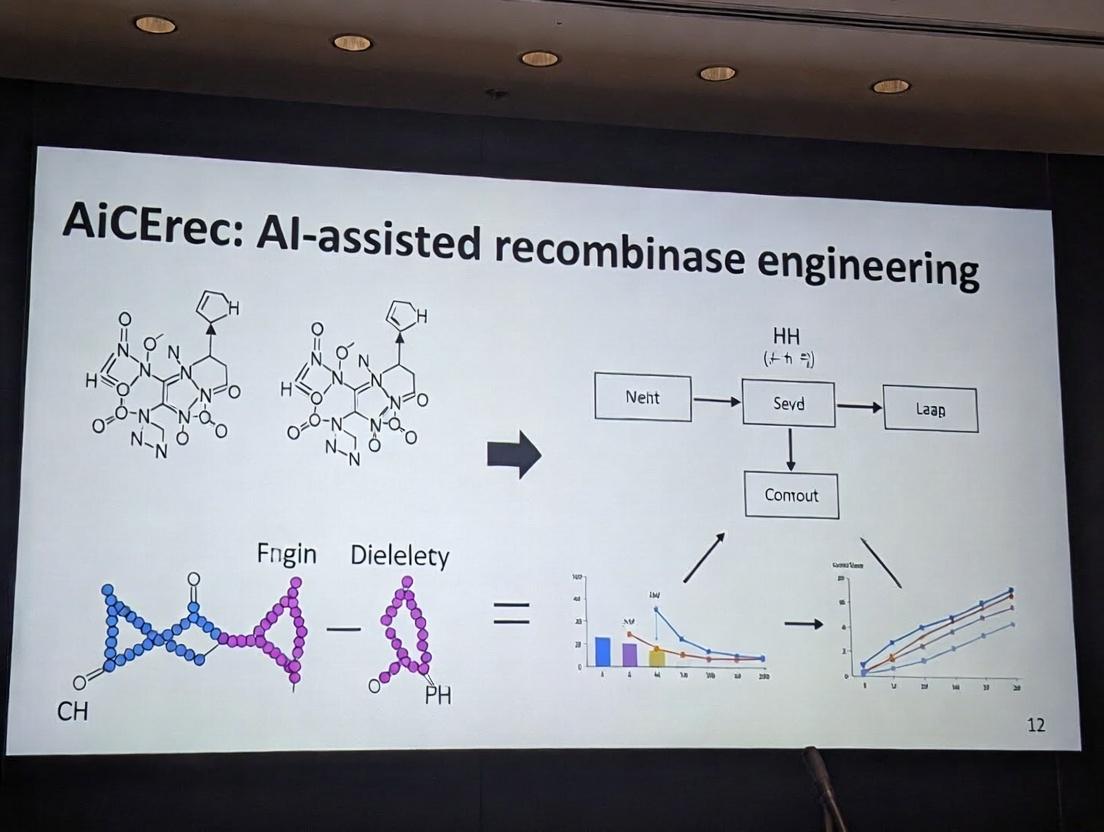
This article explores AiCErec, a cutting-edge AI-assisted platform for recombinase engineering, tailored for researchers and drug development professionals.
AiCErec: How AI is Revolutionizing Recombinase Engineering for Next-Gen Therapeutics
Abstract
This article explores AiCErec, a cutting-edge AI-assisted platform for recombinase engineering, tailored for researchers and drug development professionals. It provides a foundational understanding of recombinase function and the limitations of traditional engineering methods. The piece details the AiCErec workflow, from AI-driven design to experimental validation, and offers practical guidance for troubleshooting and optimizing the platform's use. Finally, it presents validation data and comparative analyses against other protein engineering techniques, concluding with the transformative potential of AI-accelerated recombinase design for gene therapy, synthetic biology, and precise genomic medicine.
Recombinase Engineering 101: From Natural Systems to AI-Driven Design (AiCErec)
What are Recombinases? Defining Serine and Tyrosine Families for Genome Editing
Site-specific recombinases (SSRs) are powerful enzymes that catalyze the precise rearrangement, integration, or excision of DNA between specific recognition sites. Unlike nucleases (e.g., CRISPR-Cas9) that create double-strand breaks and rely on error-prone repair pathways, recombinases enable predictable, clean, and scarless editing outcomes. This makes them uniquely valuable for therapeutic applications requiring high-fidelity genomic modifications, such as gene therapy, cell engineering, and synthetic biology. Within the emerging paradigm of AiCErec (AI-assisted Combinatorial Engineering of Recombinases), understanding the fundamental biochemistry and engineering of serine and tyrosine recombinase families is paramount for developing next-generation, AI-designed editing tools.
Core Mechanism and Classification of Recombinases
All SSRs recognize specific DNA sequences (typically 30-50 bp), bring them into synaptic complexes, and catalyze DNA cleavage and strand exchange. The defining difference between the two primary families lies in their catalytic residue and reaction mechanism.
- Tyrosine Recombinases: Utilize an active-site tyrosine nucleophile to form a transient 3'-phosphotyrosine covalent linkage with the DNA backbone. Strand exchange occurs through a Holliday junction intermediate via sequential, single-strand exchanges.
- Serine Recombinases: Utilize an active-site serine nucleophile to form a transient 5'-phosphoserine linkage. They execute a concerted, double-strand cleavage and 180° subunit rotation mechanism for strand exchange.
In-Depth Analysis: The Serine Recombinase Family
Serine recombinases, such as the canonical ϕC31 integrase and large serine recombinases (LSRs) like Bxb1, are characterized by their modular domain structure and high specificity.
Catalytic Mechanism & Experimental Validation Protocol: The hallmark in vitro assay to confirm serine recombinase activity and directionality (integration vs. excision) is the Plasmid Substrate Recombination Assay.
- Protocol:
- Substrate Preparation: Generate two plasmid substrates: one containing the attB site and another containing the attP site. Each plasmid should harbor a different antibiotic resistance gene.
- Reaction Setup: Combine purified recombinase (e.g., Bxb1), attB-plasmid, attP-plasmid, reaction buffer (e.g., 50 mM Tris-HCl pH 7.5, 10 mM MgCl2, 1 mM DTT, 50 mM NaCl), and an inert carrier protein (BSA).
- Incubation: Incubate at 30°C for 1-2 hours.
- Analysis: Transform the reaction products into E. coli and plate on media containing both antibiotics. Colony growth indicates successful co-integration of both plasmids via recombination, generating a single plasmid with attL and attR sites and both resistance markers.
- Control: A parallel reaction with a catalytically dead mutant (Serine→Alanine mutation) should yield no double-resistant colonies.
Key Applications in AiCErec: The modular catalytic domain of serine recombinases makes them prime candidates for de novo engineering. AiCErec platforms leverage deep learning to predict mutations in the DNA-binding domain that re-target the enzyme to novel att sites, a process historically achieved through laborious directed evolution.
In-Depth Analysis: The Tyrosine Recombinase Family
This family includes Cre and Flp, workhorses of genetic research for conditional knockout and lineage tracing. Their sequential mechanism allows for reversible reactions.
Catalytic Mechanism & Experimental Validation Protocol: A standard assay to quantify tyrosine recombinase efficiency in vivo is the Fluorescent Reporter Cassette Excision/Inversion Assay in mammalian cells.
- Protocol:
- Reporter Construct Design: Create a plasmid where a "STOP" cassette (e.g., a polyadenylation signal), flanked by directly oriented recombinase target sites (e.g., loxP for Cre), is placed between a constitutive promoter and a fluorescent protein (e.g., EGFP) coding sequence. The STOP cassette prevents GFP expression.
- Transfection: Co-transfect mammalian cells (e.g., HEK293T) with the reporter plasmid and a plasmid expressing the recombinase (e.g., Cre).
- Analysis: After 48-72 hours, analyze cells by flow cytometry. Successful recombination excises the STOP cassette, leading to GFP expression. The percentage of GFP+ cells quantifies recombination efficiency.
- Control: Transfect reporter plasmid alone to establish baseline fluorescence.
Key Applications in AiCErec: While Cre is highly specific, its utility is limited to pre-engineered lox sites. AiCErec research focuses on evolving tyrosine recombinases with novel specificities and altered directionality (irreversibility) by modeling the complex protein-DNA interactions and energetics of the Holliday junction intermediate.
Quantitative Comparison: Serine vs. Tyrosine Recombinases
Table 1: Functional and Application-Based Comparison of Recombinase Families
| Feature | Serine Recombinases (e.g., Bxb1, ϕC31) | Tyrosine Recombinases (e.g., Cre, Flp) |
|---|---|---|
| Catalytic Residue | Serine | Tyrosine |
| DNA Linkage | 5'-Phosphoserine | 3'-Phosphotyrosine |
| Mechanism | Concerted, double-strand break, subunit rotation | Sequential, single-strand exchanges via Holliday junction |
| Typical Site Length | ~50 bp (asymmetric) | ~34 bp (symmetric, e.g., loxP) |
| Directionality | Often unidirectional (integrases) | Generally reversible (integrases/excisases) |
| Primary Application | Genomic Integration: Large, irreversible insertion of transgenes into pseudo-att sites in mammalian genomes. | Excision/Inversion: Conditional gene knockout, lineage tracing, excising selectable markers. |
| Ease of Re-targeting | Moderate-High (DNA-binding domain is separable) | Low (DNA recognition is intertwined with catalysis) |
| Key AiCErec Focus | De novo DNA-binding specificity prediction. | Engineering irreversible mutants & novel specificities. |
Table 2: Experimentally Determined Kinetic and Efficiency Parameters (Data compiled from recent literature via live search)
| Recombinase | Target Site | Experimental System | Reported Efficiency | Key Measurement |
|---|---|---|---|---|
| Bxb1 | attB/attP | HEK293T integration | ~40-60% (transfection) | % of cells with stable GFP integration (NGS) |
| ϕC31 | attB/attP | Mouse liver (hydrodynamic) | ~5-15% | % of hepatocytes with reporter gene expression |
| Cre | loxP | Reporter HEK293T (excision) | >90% | % GFP+ cells by flow cytometry |
| Evolved Cre (Cre-R32) | Novel lox variant | E. coli selection | ~10^5-fold improvement | Fold-change over background in survival assay |
The Scientist's Toolkit: Research Reagent Solutions
Table 3: Essential Reagents for Recombinase Research and AiCErec Workflows
| Reagent / Material | Function in Research | Example Product / Note |
|---|---|---|
| Purified Recombinase Protein | In vitro biochemical assays, mechanism studies, in vitro DNA assembly. | Commercial Bxb1, Cre (NEB); or lab-purified his-tagged variants. |
| Reporter Plasmid Kits | Rapid, sensitive assessment of recombination efficiency in cellulo. | pCAG-loxP-STOP-loxP-EGFP (Cre); attB/attP-GFP/dsRed exchange (Bxb1). |
| Engineered Cell Lines | Stable, reproducible platforms for testing recombinase activity. | HEK293 Flp-In T-REx (Thermo Fisher); CHO cells with genomic attP landing pad. |
| In vitro Transcription/Translation Kit | Rapid expression of AiCErec-designed mutant libraries for screening. | PURExpress (NEB) or similar cell-free systems. |
| High-Throughput Sequencing Library Prep Kit | Deep sequencing of evolved or selected recombinase variants and their target sites. | Illumina Nextera or Swift 2S kits for amplicon sequencing. |
| Directed Evolution Selection System | Bacterial two-hybrid or survival-based selection for novel specificity. | Custom E. coli strains where survival is linked to recombination (positive/negative selection). |
| AI/ML Modeling Software | Predicting protein-DNA interaction energies and guiding mutagenesis. | Rosetta, AlphaFold2/3, custom-trained protein language models. |
The distinct yet complementary mechanisms of serine and tyrosine recombinases provide a versatile toolkit for genome engineering. The primary limitation—their restrictive natural specificity—is now being overcome by the integration of artificial intelligence. The AiCErec framework synergizes high-throughput experimental data (from protocols like those described) with machine learning models to predict functional protein-DNA pairings at an unprecedented scale. This paradigm shift moves beyond random mutagenesis towards the rational, combinatorial design of recombinases with tailored properties: novel target sites, enhanced activity, and controlled directionality. For researchers and drug developers, this heralds an era of "designer" recombinases capable of executing complex, therapeutic genomic edits with surgical precision, minimal off-target effects, and clinical-grade reliability.
Within the broader thesis of AiCErec (AI-assisted Combinatorial Engineering of Recombinases), this whitepaper deconstructs the fundamental bottlenecks inherent to traditional recombinase engineering. Despite their immense promise as precise genome editing tools, the development of novel recombinase specificity and function remains a slow, iterative, and resource-intensive process. This document details the technical hurdles, quantifies the experimental burden, and outlines how AiCErec methodologies aim to disrupt this paradigm.
Core Technical Hurdles in Traditional Engineering
The Screening Bottleneck
The primary method for engineering recombinases involves creating vast mutant libraries and screening for rare variants with desired activity on new target sites (lox, FRT, attP/attB variants). The scale required is monumental.
Table 1: Quantitative Burden of Traditional Library Screening
| Parameter | Typical Scale | Time Investment | Success Rate |
|---|---|---|---|
| Library Size | 10^6 - 10^9 variants | 2-4 weeks (construction) | <0.01% |
| Primary Screen (Survival/Selection) | 10^7 - 10^9 cells | 1-2 weeks | 0.1-1% of library |
| Secondary Validation (Colony PCR) | 500-5000 colonies | 1-2 weeks | 10-50% of picked colonies |
| Functional Characterization | 10-100 hits | 4-8 weeks | ~1-5 final candidates |
Structural and Mechanistic Complexity
Recombinases (e.g., Cre, Flp, phiC31) function as oligomers, engaging in complex DNA recognition, cleavage, strand exchange, and religation. Engineering requires maintaining this intricate catalytic machinery while altering specificity.
Diagram Title: Core Recombinase Catalytic Mechanism
Interdependent Recognition
Amino acid residues within the DNA-binding domain (e.g., helix-turn-helix motifs) interact with nucleotide bases in a non-additive, context-dependent manner. Changing one residue to alter base preference often disrupts interactions with neighboring bases or the protein backbone, requiring compensatory mutations.
Detailed Experimental Protocol: A Standard Directed Evolution Cycle
Protocol: Yeast Surface Display-Based Evolution of Cre Recombinase Variants
Objective: Isolate Cre variants that recognize a novel loxM3 sequence.
Materials (Research Reagent Solutions):
- Mutagenic PCR Reagents: Polymerase with inherent error-rate (e.g., Taq), unbalanced dNTP mix to introduce random mutations.
- Yeast Display Vector: pYD1 or similar, with Aga2p fusion system for recombinase surface expression.
- Fluorescent DNA Substrate: Biotinylated loxM3 duplex DNA. Function: Binds to surface-displayed recombinase variants.
- Detection Reagents: Streptavidin conjugated to PE (Phycoerythrin), anti-c-Myc antibody conjugated to FITC. Function: Dual-labeling for expression (FITC) and binding (PE).
- Magnetic/Affinity Beads: Anti-FITC or anti-PE magnetic beads for crude enrichment.
- FACS Equipment: Fluorescence-Activated Cell Sorter for high-resolution selection of double-positive (FITC+PE+) yeast cells.
- Recovery & Cloning Media: SD/-Trp, -Ura media for yeast selection; E. coli cloning strains and LB+ampicillin plates.
- Functional Validation Plasmid: E. coli reporter with ccdB toxin gene flanked by loxM3 sites, transformed with recovered recombinase variants.
Method:
- Library Construction: Perform error-prone PCR on the Cre recombinase gene. Clone the mutated pool into the yeast display vector, transform into Saccharomyces cerevisiae EBY100, and induce expression with galactose.
- Primary Enrichment: Incubate induced yeast with biotinylated loxM3 substrate. Label with Streptavidin-PE and anti-c-Myc-FITC. Use anti-PE magnetic beads to enrich binding-positive cells.
- High-Stringency FACS: Sort the enriched population for cells displaying high FITC (expression) and high PE (binding) signals. Collect the top 0.1% of the population.
- Plasmid Recovery: Isolve plasmids from sorted yeast, shuttle into E. coli, and miniprep.
- Functional Screening: Clone recovered variants into the functional validation plasmid and transform into reporter E. coli. Plate on LB+ampicillin+IPTG. Active recombinase excises the ccdB toxin, allowing colony formation.
- Sequencing & Characterization: Sequence plasmids from surviving colonies. Purify protein from positive hits for in vitro kinetic assays (kcat, KM).
Time Estimate: 10-12 weeks per complete evolution cycle.
Diagram Title: Traditional Recombinase Directed Evolution Workflow
The AiCErec Paradigm: A Contrast
AiCErec integrates high-throughput functional data with machine learning to predict functional variants, dramatically narrowing the search space.
Table 2: Traditional vs. AiCErec-Enhanced Engineering
| Aspect | Traditional Approach | AiCErec-Enhanced Approach |
|---|---|---|
| Design Phase | Random mutagenesis or semi-rational design based on limited structures. | ML models predict mutation fitness, prioritizing libraries of 10^2-10^3 high-probability variants. |
| Screening Scale | Must screen 10^7+ variants to find hits. | Screen a focused, intelligent library of 10^4-10^5 variants. |
| Iteration Cycle | 10-12 weeks per evolution round. | 3-5 weeks per design-build-test-learn cycle. |
| Data Utilization | Limited to sequences of final hits; most data (negative variants) discarded. | All variant data (activity, binding, expression) feeds back into ML model for improved predictions. |
| Key Limitation Addressed | Blind search in vast sequence space. | Predictive navigation of sequence space, modeling epistasis. |
Traditional recombinase engineering is bottlenecked by the necessity for brute-force screening of hyper-astronomical sequence spaces and the biophysical complexity of specificity determination. These pitfalls render the process slow and labor-intensive. The AiCErec framework directly addresses these challenges by leveraging artificial intelligence to convert high-throughput experimental data into predictive models, transforming recombinase engineering from a stochastic screening process into a principled design endeavor. This shift promises to accelerate the development of precision genetic medicines and research tools.
The AiCErec (AI-assisted Cre Recombinase Engineering) research initiative aims to overcome the limitations of natural Cre recombinase, including off-target activity, low thermostability, and large size. This endeavor epitomizes the modern protein engineering challenge: navigating a vast, high-dimensional sequence space to identify variants with multiple, enhanced properties. Traditional methods are slow and resource-intensive. The integration of machine learning (ML) models, particularly structure prediction networks like AlphaFold and sequence design models like ProteinMPNN, has created a disruptive, iterative pipeline that dramatically accelerates the design-build-test-learn cycle for recombinase engineering and beyond.
Core AI Models: Technical Foundations
AlphaFold2: From Sequence to Structure
AlphaFold2, developed by DeepMind, is a deep learning system that predicts a protein's 3D structure from its amino acid sequence with atomic accuracy. Its architecture is a complex neural network that uses evolutionary, physical, and geometric constraints.
Key Technical Components:
- Evoformer: A novel attention-based module that processes multiple sequence alignments (MSAs) and pairwise representations, building an understanding of evolutionary and co-evolutionary relationships.
- Structure Module: A recurrent network that translates the refined representations from the Evoformer into 3D atomic coordinates (specifically, rotations and translations for each residue backbone).
- End-to-End Learning: The entire system is trained end-to-end, directly minimizing the error between predicted and actual atomic coordinates.
For AiCErec: AlphaFold2 can predict the structure of designed Cre variants in silico, enabling rapid assessment of folding integrity and the spatial arrangement of catalytic residues (e.g., the R173, W315, H289, R292, Y324 tetrad) and DNA-binding loops before any wet-lab experiment.
ProteinMPNN: From Structure to Sequence
ProteinMPNN, developed by Baker and colleagues, is a message-passing neural network that performs the inverse task: given a protein backbone structure, it designs optimal amino acid sequences that will fold into that structure. It excels in generating diverse, soluble, and functional sequences.
Key Technical Components:
- Encoder: A graph neural network where nodes are residues and edges represent spatial neighbors. It encodes the backbone geometry and optional constraints.
- Decoder: An autoregressive transformer that predicts amino acid identities one by one, conditioned on the encoded graph and previously predicted residues. It can be guided by fixing specific positions (e.g., catalytic sites).
- Efficiency: It operates orders of magnitude faster than prior physics-based methods like Rosetta.
For AiCErec: Starting from a target backbone (e.g., a wild-type Cre structure or a computationally stabilized version), ProteinMPNN can generate thousands of novel sequences that are predicted to fold into a functional recombinase scaffold, exploring mutations for stability and specificity.
The Integrated AI-Driven Engineering Pipeline: A Detailed Protocol
The synergy of these models creates a powerful closed-loop pipeline. Below is a detailed experimental methodology for an AiCErec design cycle.
Protocol: Iterative AI-Driven Cre Recombinase Engineering
Aim: To design a Cre variant with enhanced thermostability (>65°C) and maintained catalytic activity.
Step 1: Problem Framing & Seed Generation
- Define design objectives (e.g., stabilize loops 40-60, 130-150; keep catalytic tetrad fixed).
- Input: Wild-type Cre structure (PDB: 3CRX) or an AlphaFold2-predicted structure of a known variant.
- Method: Use ProteinMPNN with positional constraints.
- Fix residues R173, W315, H289, R292, Y324 as "native" (wild-type).
- Specify "redesignable" regions (e.g., surface loops, non-conserved helical surfaces).
- Run 5,000-10,000 designs. Output: A FASTA file of novel sequences.
Step 2: In Silico Screening & Filtering
- Method 1: Folding Validation.
- Input each designed sequence from Step 1 into a local AlphaFold2 (or ColabFold) instance.
- Predict 3D structures (5 models per sequence). Compute predicted local distance difference test (pLDDT) score and predicted aligned error (PAE).
- Filter: Retain sequences where the pLDDT for the core catalytic domain is >85 and the predicted structure aligns with the target backbone (RMSD < 2.0 Å).
- Method 2: Stability & Affinity Prediction.
- Use tools like FoldX or RosettaDDGPrediction to calculate the change in folding free energy (ΔΔG) relative to wild-type. Filter for ΔΔG < 0 (more stable).
- (Optional) Use docking or a simplified affinity scoring function to assess predicted DNA-binding interface integrity.
- Output: A shortlist of 50-100 candidate sequences for synthesis.
Step 3: In Vitro Experimental Validation
- Gene Synthesis & Cloning: Synthesize and clone candidate genes into an expression vector (e.g., pET-28a(+)).
- Protein Expression & Purification: Follow standard E. coli BL21(DE3) protocols: induction with 0.5-1 mM IPTG at 16-18°C overnight, Ni-NTA affinity purification, size-exclusion chromatography.
- Assay 1: Thermostability Analysis.
- Protocol: Use differential scanning fluorimetry (nanoDSF). Dilute purified protein to 0.5 mg/mL in assay buffer.
- Load into capillary tubes, heat from 20°C to 95°C at 1°C/min in a Prometheus NT.48.
- Data Analysis: Determine melting temperature (Tm) from the inflection point of the tryptophan fluorescence ratio (350nm/330nm) curve.
- Assay 2: Catalytic Activity Assay.
- Protocol: Use a fluorogenic reporter assay. Prepare reaction with 100 nM Cre variant, 50 nM DNA substrate containing loxP sites flanking a quencher-fluorophore pair, in reaction buffer (50 mM Tris-HCl, 33 mM NaCl, 10 mM MgCl2, pH 7.5).
- Monitor fluorescence (ex/em: 485/535 nm) in a plate reader at 37°C for 60 minutes.
- Data Analysis: Calculate initial velocity (V0) and compare to wild-type Cre control.
- Assay 3: Specificity Profiling (NGS-based).
- Protocol: Use SELEX-seq or HT-SELEX. Incubate Cre variant with a randomized DNA oligonucleotide library. Bind, pull down protein-DNA complexes, and deep-sequence bound oligonucleotides.
- Data Analysis: Identify enriched sequence motifs and compare to the canonical loxP sequence (ATAACTTCGTATA GCATACAT TATACGAAGTTAT).
Step 4: Data Feedback & Model Retraining (Closing the Loop)
- Assemble experimental results (Sequence -> Measured Tm, Activity, Specificity score) into a labeled dataset.
- Fine-tune or train a new ML model (e.g., a convolutional neural network or transformer) on this dataset to predict experimental outcomes directly from sequence or AlphaFold2-derived features.
- Use this improved model to perform a more informed virtual screen in the next design cycle (Step 1).
Table 1: Performance Comparison of AI Protein Design Tools
| Model | Primary Function | Key Metric | Typical Performance | Time per Prediction |
|---|---|---|---|---|
| AlphaFold2 | Structure Prediction | RMSD (Å) to ground truth | ~0.5-1.0 Å (on CASP14 targets) | Minutes to hours* |
| ProteinMPNN | Sequence Design | Recovery of native sequence | ~52% (on native protein benchmarks) | Seconds |
| ESMFold | Structure Prediction (MSA-free) | RMSD (Å) to ground truth | ~0.7-1.5 Å | Seconds to minutes |
| Rosetta | Physics-based Design | ΔΔG (kcal/mol) | High accuracy, low throughput | Hours to days |
* Using ColabFold (AlphaFold2 accelerated) can reduce time to minutes.
Table 2: Hypothetical AiCErec Design Cycle Results
| Design Cycle | Candidates Tested | Variants with Tm >65°C | Variants with >80% WT Activity | Lead Candidate ID | Lead Tm (°C) |
|---|---|---|---|---|---|
| Traditional (Random) | 100 | 2 | 1 | Cre-Rand01 | 66.2 |
| AI-Round 1 | 100 | 15 | 12 | Cre-AI01_v1 | 68.5 |
| AI-Round 2 (with feedback) | 50 | 22 | 20 | Cre-AI02_v7 | 71.3 |
Visualizing the Workflow and Molecular Process
AI-Driven Protein Engineering Closed Loop
Cre Recombinase Catalytic Mechanism
The Scientist's Toolkit: Research Reagent Solutions
Table 3: Essential Materials for AiCErec Validation Workflow
| Item | Supplier Examples | Function in AiCErec Context |
|---|---|---|
| Gene Fragments (clonal genes) | Twist Bioscience, IDT, GenScript | Rapid synthesis of AI-designed Cre variant sequences for cloning. |
| pET-28a(+) Vector | Novagen (MilliporeSigma) | Standard E. coli expression vector with His-tag for simplified purification. |
| Ni-NTA Superflow Resin | Qiagen | Immobilized metal affinity chromatography (IMAC) resin for His-tagged protein purification. |
| NanoDSF Grade Capillaries | NanoTemper | For high-sensitivity, label-free thermostability (Tm) measurements using Prometheus. |
| Fluorogenic loxP Reporter Oligo | Custom order (IDT) | Dual-labeled (FAM/Quencher) DNA substrate for real-time, high-throughput kinetic activity assays. |
| Crystal Screen HT Kits | Hampton Research | For initial crystallization trials of successful variants to validate AI-predicted structures. |
| NEBNext Ultra II DNA Library Prep Kit | New England Biolabs | For preparation of sequencing libraries in NGS-based specificity profiling (SELEX-seq). |
This whitepaper details the core architecture and design philosophy of AiCErec (AI-assisted Cre Recombinase Engineering), a specialized platform within the broader AiCErec research thesis. This thesis posits that the intelligent recombination of functional protein modules, guided by AI, represents a paradigm shift in the design of next-generation recombinases for targeted genomic medicine. AiCErec operationalizes this thesis by integrating predictive AI models with high-throughput experimental validation cycles, specifically targeting the engineering of enhanced Cre recombinase variants for advanced therapeutic applications.
Core Architecture of the AiCErec Platform
The AiCErec architecture is a closed-loop, iterative system designed for continuous learning and optimization. Its modular design ensures adaptability and scalability.
Diagram 1: AiCErec Closed-Loop System Architecture
Key Components:
- AI/ML Prediction Module: Utilizes ensemble models (e.g., protein language models, structure-prediction networks) to predict the functional impact of mutations on recombinase activity, specificity, and stability.
- Design of Experiments (DoE) Engine: Translates model predictions into optimized variant libraries, maximizing information gain per experimental cycle.
- Wet-Lab High-Throughput Pipeline: An automated experimental platform for synthesizing, expressing, and assaying designed variant libraries.
- Knowledge Graph: A structured database integrating sequence, predicted structure, experimental phenotypic data (kinetics, specificity), and external biological context (e.g., chromatin states).
- Model Retraining Loop: New experimental data feeds back to continuously retrain and improve the accuracy of the AI prediction models.
Design Philosophy: Intelligence-Guided Recombination
AiCErec's design philosophy is built on three pillars:
- Predictive, Not Just Descriptive: The platform moves beyond analyzing historical data to actively predict the fitness landscape of chimeric or mutated recombinases before synthesis.
- Context-Aware Engineering: Models are trained on data that includes genomic context (e.g., target site chromatin accessibility) to design recombinases that function in biologically relevant environments.
- Closed-Loop Validation: Every AI prediction is ultimately validated through quantitative biological assays, ensuring empirical grounding and generating high-quality data for subsequent learning cycles.
Key Experimental Protocols & Data
Protocol: High-ThroughputIn VivoSpecificity Screening
This protocol assesses the off-target activity of engineered Cre variants.
Methodology:
- Library Cloning: Predicted variant sequences are cloned into a mammalian expression vector via golden gate assembly.
- Reporter Cell Line Transfection: A stable HEK293T cell line harboring a dual-fluorescent reporter system (GFP for on-target recombination, RFP for off-target recombination at known genomic pseudo-loxP sites) is transfected in a 384-well format using the variant library.
- Flow Cytometry Analysis: 72 hours post-transfection, cells are analyzed by high-throughput flow cytometry. The ratio of GFP+/RFP- to GFP+/RFP+ cells quantifies specificity.
- Data Processing: Events are gated for single, live, transfected cells. Specificity Index (SI) is calculated as:
SI = log2( (%GFP+%RFP-) / (%GFP+%RFP+) ).
Table 1: Performance Data for AiCErec-Generated Cre Variants (Representative Set)
| Variant ID | Mutations (vs. Wild-Type Cre) | On-Target Efficiency (% GFP+) | Specificity Index (SI) | Thermal Stability (Tm, °C) |
|---|---|---|---|---|
| WT-Cre | - | 95.2 ± 3.1 | 4.1 ± 0.5 | 58.2 |
| AiCE-101 | K90A, R259V, N312S | 91.5 ± 2.8 | 6.8 ± 0.4 | 59.7 |
| AiCE-205 | E82R, R173M, V325L | 98.1 ± 1.5 | 5.2 ± 0.6 | 63.4 |
| AiCE-312 | H289F, Q292R, I323T | 87.3 ± 4.2 | 7.2 ± 0.3 | 57.9 |
Protocol:In VitroKinetic Characterization
This protocol provides quantitative kinetics for top-performing variants.
Methodology:
- Protein Purification: Variants are expressed in E. coli and purified via affinity (Ni-NTA) and size-exclusion chromatography.
- Fluorogenic Recombination Assay: Purified protein is incubated with a dual-fluorophore quenched DNA substrate containing a loxP site. Cleavage/recombination separates fluorophore from quencher, generating a fluorescence increase.
- Data Acquisition: Fluorescence (ex/em 485/535 nm) is monitored in real-time using a plate reader at 37°C.
- Kinetic Analysis: Initial velocity (Vo) is calculated from the linear phase.
k_cat/K_Mis derived from Vo vs. [enzyme] plots under substrate-saturating conditions.
Table 2: Kinetic Parameters of Purified Cre Variants
| Variant ID | k_cat (min⁻¹) | K_M (nM) | kcat / KM (min⁻¹ nM⁻¹) | Relative Catalytic Efficiency (%) |
|---|---|---|---|---|
| WT-Cre | 0.42 ± 0.03 | 15.2 ± 2.1 | 0.0276 | 100 |
| AiCE-101 | 0.38 ± 0.04 | 9.8 ± 1.7 | 0.0388 | 141 |
| AiCE-205 | 0.51 ± 0.05 | 12.3 ± 1.9 | 0.0415 | 150 |
| AiCE-312 | 0.31 ± 0.02 | 7.5 ± 1.2 | 0.0413 | 150 |
The Scientist's Toolkit: Research Reagent Solutions
Table 3: Essential Reagents for AiCErec Workflow Validation
| Item | Function in AiCErec Context |
|---|---|
| HEK293T Dual-Reporter Cell Line | Stable cell line for simultaneous in vivo measurement of on-target (GFP) and off-target (RFP) recombinase activity. |
| Fluorogenic loxP Substrate (FAM/QXL) | Double-quenched oligonucleotide substrate for real-time, quantitative kinetic analysis of recombination in vitro. |
| High-Throughput Protein Purification Kit (Ni-IMAC) | Enables rapid, parallel purification of multiple Cre variant proteins for biochemical characterization. |
| Saturation Mutagenesis Library Cloning Kit | Facilitates the rapid construction of focused variant libraries around targeted residues as directed by the DoE engine. |
| Chromatinized Target Plasmid Assay | In vitro nucleosome-assembled target DNA to test recombinase activity in a chromatin context, informing context-aware design. |
Signaling Pathway & Design Logic
The following diagram illustrates the core bioinformatic and experimental logic flow for variant prioritization within AiCErec.
Diagram 2: AiCErec Variant Prioritization Workflow
The AiCErec Workflow: A Step-by-Step Guide to AI-Driven Recombinase Design
Thesis Context: This document constitutes the foundational technical guide for the initial phase of AiCErec (AI-assisted Combinatorial Enzyme recombinase engineering) research. Effective engineering of serine or tyrosine recombinases for precise genomic integration—a critical tool for gene therapy and synthetic biology—begins with the meticulous definition of the target recombination site and its desired biochemical properties.
Recognition Site Fundamentals
Site-specific recombinases, such as Cre, Flp, and PhiC31, catalyze recombination between two specific DNA sequences (e.g., loxP, FRT, attP/attB). In AiCErec, the engineering goal is often to re-target a recombinase to a novel "target site" present in the host genome, while maintaining efficient recombination with a matched "donor site" on the therapeutic vector.
- Prototype System: PhiC31 Integrase
- Native Sites: attP (phage attachment site) and attB (bacterial attachment site).
- Recombination Product: Hybrid attL and attR sites, which are not substrates for further recombination under standard conditions, making the reaction irreversible.
- Core Region: The central dinucleotide (e.g., 'TT' in wild-type attP) where strand cleavage and exchange occurs. This is a primary determinant of specificity.
Defining Desired Properties for AiCErec Engineering
When specifying a target site for AI-driven engineering, both sequence and functional properties must be quantified.
Table 1: Quantitative Parameters for Recognition Site Specification
| Parameter | Description | Example Range/Value for PhiC31 attP | Importance for AiCErec |
|---|---|---|---|
| Sequence Length | Total length of the DNA recognition site. | ~40 bp (core + inverted repeats) | Defines search space for mutagenesis and AI training. |
| Core Sequence | Central dinucleotide or short sequence where recombination occurs. | 'TT' | High conservation; alterations require active site remodeling. |
| Arm Sequence & Symmetry | Flanking inverted repeat sequences bound by recombinase monomers. | ~12-15 bp per arm | Primary target for engineering new specificity; symmetry reduces complexity. |
| GC Content | Percentage of Guanine and Cytosine bases in the site. | ~45-55% | Impacts DNA stability, melting temperature, and potential off-target binding. |
| Binding Affinity (Kd) | Equilibrium dissociation constant for recombinase binding. | 1-10 nM (for wild-type) | Key fitness metric; engineering must maintain nanomolar affinity. |
| Recombination Efficiency (%) | Percentage of substrate converted to product in a standardized assay. | 60-95% (wild-type) | Ultimate functional readout for engineered enzyme/site pairs. |
| Specificity Index | Ratio of on-target to off-target recombination events. | >100 (ideal) | Critical for therapeutic safety; must be quantified via deep sequencing. |
Experimental Protocol: Defining Site Viability via a Bacterial Screen
The following protocol is used to empirically test the functionality of a novel or engineered att site pair.
Protocol: High-Throughput att Site Validation using Plasmid Inversion/Resolution
- Cloning: Clone the candidate attB site and candidate attP site in opposite orientations into a reporter plasmid flanking a promoterless antibiotic resistance gene (e.g., kanamycin) and a constitutively expressed reporter gene (e.g., GFP).
- Transformation: Co-transform the reporter plasmid and a second plasmid expressing the candidate recombinase (wild-type or engineered) into recombination-deficient E. coli.
- Selection & Analysis: Plate cells on media with and without kanamycin.
- Functional Site Pair: Successful recombination inverts the kanamycin cassette, placing it under the constitutive promoter, conferring resistance.
- Readout: Colony forming units (CFU) on kanamycin plates vs. control plates. Recombination efficiency = (CFU+Kana / CFU-Kana) * 100%.
- Validation: PCR and Sanger sequencing of colonies to confirm precise recombination at the intended core dinucleotide.
Mandatory Visualization
Diagram Title: AiCErec Site Specification and Engineering Workflow
Diagram Title: PhiC31 attP x attB Recombination Mechanism
The Scientist's Toolkit: Research Reagent Solutions
Table 2: Essential Reagents for Recognition Site Characterization
| Reagent / Material | Function in Site Specification/Testing |
|---|---|
| Synthetic Oligonucleotides & gBlocks | Source for cloning wild-type and mutant attB/attP site sequences with high fidelity. |
| Gateway BP/LR Clonase Mix | Commercial enzyme mix (modified lambda integrase) for efficient attL x attR or attB x attP cloning; useful as a positive control system. |
| PhiC31 Integrase Expression Plasmid | Standardized expression vector (e.g., pCMV-Int) for providing recombinase in mammalian or bacterial validation assays. |
| Reporter Plasmid Suite (Inversion/Excision) | Pre-cloned plasmids with different selection markers (AmpR, KanR) and reporter genes (GFP, LacZ) flanked by placeholder att sites for easy site swapping. |
| Electrocompetent E. coli (recA-) | High-efficiency transformation strain deficient for homologous recombination to prevent background DNA rearrangement. |
| Next-Generation Sequencing (NGS) Kit | For deep sequencing of integrated sites to quantify specificity index and detect off-target events genome-wide. |
| Surface Plasmon Resonance (SPR) Chip | Functionalized biosensor chip to immobilize DNA hairpins containing att sites for quantitative measurement of binding kinetics (Ka, Kd). |
| Gel-Based Assay Components | Radioactive/fluorescently labeled oligonucleotides, native PAGE gels, and shift buffers for EMSA (Electrophoretic Mobility Shift Assay) to confirm protein-DNA binding. |
Within the AiCErec (AI-assisted recombinase engineering) research pipeline, In Silico Library Generation represents the critical second step where computational power is leveraged to design vast, diverse, and functionally promising variant libraries. This phase moves beyond the initial in silico hotspot identification, utilizing deep neural networks to predict the sequence-structure-function relationships of potential recombinase mutants. The goal is to generate a focused virtual library enriched with variants likely to exhibit enhanced properties—such as altered specificity, improved activity, or novel target recognition—thereby drastically reducing the experimental burden of screening random or semi-rational libraries.
Neural Network Architectures for Protein Engineering
Recent advances have yielded specialized architectures for protein sequence and structure modeling.
A. Sequence-Centric Models:
- Protein Language Models (pLMs): Models like ESM-2 and ProtBERT, trained on millions of protein sequences, learn evolutionary constraints and generate plausible, functional sequences. They excel at predicting mutational effects and generating diverse, native-like sequences.
- Variational Autoencoders (VAEs): Encode wild-type or parent sequences into a latent space where interpolation and sampling generate novel, yet coherent, variant sequences.
B. Structure-Aware Models:
- Equivariant Graph Neural Networks (GNNs): Operate on protein structures represented as graphs (nodes=atoms/residues, edges=bonds/interactions). They are invariant to rotations/translations, making them ideal for predicting stability or binding energy changes upon mutation.
- AlphaFold2-derived Architectures: The success of AlphaFold2 has led to fine-tuned versions (e.g., AlphaFold-Multimer, ESMFold) for rapid ab initio structure prediction of designed variants, crucial for assessing fold preservation.
C. Generative Adversarial Networks (GANs): A generator network creates novel sequences, while a discriminator evaluates their "naturalness," driving the generation of highly realistic protein variants.
Table 1: Comparison of Key Neural Network Architectures for Library Generation
| Architecture | Primary Input | Key Strength | Best Suited For | Typical Output Scale (Variants) |
|---|---|---|---|---|
| Protein Language Model (pLM) | Multiple Sequence Alignment (MSA) or single seq | Captures deep evolutionary fitness; fast inference. | Generating functionally plausible point mutations & indels. | 10⁴ – 10⁶ |
| Variational Autoencoder (VAE) | Wild-type/Parent Sequence(s) | Smooth, explorable latent space; controlled generation. | Exploring sequence neighborhoods around known functional scaffolds. | 10³ – 10⁵ |
| Equivariant Graph Neural Network | 3D Protein Structure (PDB) | Explicit modeling of physical & geometric constraints. | Predicting ΔΔG of folding & target binding; stability-optimized libraries. | 10² – 10⁴ |
| Generative Adversarial Network | Random Noise Vector / Seed Sequence | Can produce highly novel, non-obvious sequences. | De novo motif generation or drastic scaffold exploration. | 10⁴ – 10⁶ |
Detailed Experimental Protocol: VAE-Guided Library Generation for a Serine Recombinase
This protocol details the generation of a focused variant library for a canonical serine recombinase (e.g., Tm3) targeting a new DNA sequence (attP*).
A. Materials & Data Preparation:
- Seed Sequences: Curate a multiple sequence alignment (MSA) of >1000 natural serine recombinase catalytic domains from public databases (UniProt, NCBI).
- Structural Template: Obtain a high-resolution crystal structure (PDB: 1GDT) of the wild-type recombinase-DNA complex.
- Fitness Data (Optional but valuable): Collect deep mutational scanning (DMS) or directed evolution data for a related recombinase to use as fine-tuning labels.
B. Workflow:
Model Training/Fine-tuning:
- Train a VAE (e.g., 3-layer encoder/decoder with LSTM nodes) on the curated MSA. The model learns a compressed latent representation (
z) of sequence space. - Alternative: Fine-tune a pre-trained pLM (e.g., ESM-2 650M) on the serine recombinase family MSA to specialize its predictions.
- Train a VAE (e.g., 3-layer encoder/decoder with LSTM nodes) on the curated MSA. The model learns a compressed latent representation (
Latent Space Interpolation & Sampling:
- Encode the wild-type Tm3 sequence and known active variants into the VAE's latent space.
- Perform directed walks (
z' = z + α*direction) in latent space towards regions correlated with predicted DNA-binding energy (from a coupled GNN) or high pLM pseudo-likelihood. - Sample 50,000 novel
z'vectors from these high-probability regions.
Sequence Decoding & Filtering:
- Decode the sampled
z'vectors into novel amino acid sequences. - Apply filters:
- Structural Filter: Use ESMFold or RosettaFold to predict structures for all 50k variants. Discard any with poor confidence (pLDDT < 70) or major backbone deviations (RMSD > 2.5Å) from the wild-type scaffold.
- Energy Filter: Use a pre-trained GNN or Rosetta
ddg_monomerto calculate the predicted ΔΔG of folding. Retain variants with ΔΔG < 2.5 kcal/mol. - Functional Filter: Use a convolutional neural network (CNN) trained on recombinase-DNA contacts to predict binding scores for the target
attP*. Select the top 5,000 scorers.
- Decode the sampled
Final Library Curation:
- Cluster the 5,000 filtered sequences at 85% identity to ensure diversity.
- Select ~1,500 representative sequences for in vitro synthesis. This constitutes the AI-generated library for experimental validation in AiCErec Step 3.
The Scientist's Toolkit: Key Research Reagent Solutions
Table 2: Essential Materials for AI-Driven Recombinase Library Generation & Validation
| Item | Function in AiCErec Step 2 | Example/Supplier |
|---|---|---|
| Pre-trained Protein Language Model | Provides foundational understanding of protein sequences; used for fine-tuning or scoring. | ESM-2 (Meta AI), ProtBERT (Hugging Face) |
| Structure Prediction Server/Software | Rapid ab initio structure prediction for generated variant sequences. | ESMFold API, ColabFold (Local/Cloud) |
| Molecular Dynamics (MD) Simulation Suite | For detailed conformational analysis of top-ranked predicted structures. | GROMACS, AMBER, OpenMM |
| Directed Evolution Dataset (Public) | Used for fine-tuning or validating predictive models on experimental fitness data. | PDB, SRA (for DMS data) |
| High-Fidelity DNA Synthesis Pool | For physical synthesis of the final, curated in silico library. | Twist Bioscience (Varicon), IDT (Custom Pool) |
| GPU Computing Resource | Essential for training neural networks and running inference on large sequence sets. | NVIDIA A100/A6000 (Cloud: AWS, GCP, Lambda) |
Visualized Workflows
Diagram 1: In Silico Library Generation Pipeline in AiCErec
Diagram 2: Neural Network Architectures & Their Core Outputs
Within the AiCErec (AI-assisted recombinase engineering) research framework, the Filtering and Ranking stage is a critical bottleneck. High-throughput screening generates vast mutant libraries, necessitating sophisticated computational triage. This guide details the AI models and experimental pipelines used to predict three essential properties for therapeutic recombinase viability: protein stability, DNA target specificity, and catalytic activity.
AI Model Architectures for Property Prediction
Stability Prediction Models
Protein stability, often quantified by melting temperature (Tm) or ΔΔG, is predicted using ensemble models.
- Primary Model: A 3D convolutional neural network (3D-CNN) takes voxelized representations of mutant protein structures (from AlphaFold2 predictions) as input. The network architecture includes four convolutional layers (kernel sizes 3,3,3) followed by max-pooling and two fully connected layers, outputting a predicted ΔΔG.
- Supporting Model: A transformer-based model processes the mutant amino acid sequence in the context of the wild-type structure, learning long-range interactions that affect folding.
Recent benchmark data (2024) for stability prediction on a held-out test set of engineered recombinases is summarized below:
Table 1: Performance of Stability Prediction Models
| Model | Dataset Size (Mutants) | Pearson's r (ΔΔG) | MAE (kcal/mol) | Inference Time per Variant (GPU sec) |
|---|---|---|---|---|
| 3D-CNN (Structure-Based) | 12,450 | 0.78 | 1.2 | 0.8 |
| Transformer (Sequence-in-Context) | 12,450 | 0.71 | 1.5 | 0.1 |
| Ensemble (3D-CNN + Transformer) | 12,450 | 0.82 | 1.1 | 0.9 |
Specificity Prediction Models
Specificity prediction aims to minimize off-target DNA binding. Models utilize a hybrid of DNA sequence and predicted protein-DNA interaction features.
- Primary Model: A bidirectional LSTM (BiLSTM) processes the one-hot encoded DNA sequence of the primary target site (typically 30-50 bp). A parallel fully connected network processes features from a molecular dynamics snapshot of the binding interface (e.g., electrostatic potential, hydrogen bond count). Features are concatenated and passed to a classifier predicting a binary label (specific/non-specific) and a regression output for binding energy deviation.
Table 2: Performance of Specificity Prediction Models
| Model | Off-Target Sites Tested | AUC-ROC | Precision (Top 100 Ranked) | Key Feature |
|---|---|---|---|---|
| BiLSTM + Interface Features | 1.5M potential sites | 0.94 | 0.87 | Incorporates solvation energy |
| CNN-DNA Only (Baseline) | 1.5M potential sites | 0.86 | 0.72 | Sequence pattern only |
Activity Prediction Models
Catalytic activity, measured as recombination efficiency in vivo, is predicted from integrated features.
- Primary Model: A gradient-boosting regressor (XGBoost) aggregates features from stability and specificity models, along with evolutionary coupling scores from the wild-type protein family and a kinetic parameter (kcat) estimated from molecular docking. This model outputs a predicted recombination efficiency score (%).
Table 3: Performance of Activity Prediction Models
| Model Type | Training Data Points | Spearman's ρ (vs. assay) | RMSE (%) | Key Input Features |
|---|---|---|---|---|
| XGBoost (Ensemble Features) | 8,700 mutant assays | 0.69 | 15.4 | ΔΔG, specificity score, EC score |
| Deep Neural Network | 8,700 mutant assays | 0.65 | 17.1 | Raw sequence + structure tensor |
Experimental Protocols for Model Training and Validation
Protocol for Generating Stability Training Data
Objective: Measure ΔΔG for recombinase mutants via thermal shift assay.
- Cloning & Expression: Site-directed mutagenesis is performed on the base recombinase gene in a pET vector. Constructs are transformed into E. coli BL21(DE3) and expressed with 0.5 mM IPTG at 18°C for 16h.
- Purification: Proteins are purified via Ni-NTA affinity chromatography followed by size-exclusion chromatography (Superdex 75) in storage buffer (25 mM Tris pH 7.5, 150 mM NaCl, 1 mM DTT).
- Thermal Shift Assay: Using a real-time PCR instrument, prepare 20 µL reactions containing 5 µM protein, 5X SYPRO Orange dye, and assay buffer. Run a melt curve from 25°C to 95°C with 0.5°C increments. The Tm is determined from the inflection point of the fluorescence curve.
- ΔΔG Calculation: ΔΔG is calculated from the Tm values using the Gibbs-Helmholtz equation, with ΔCp estimated from the protein sequence. Each mutant is assayed in n=8 technical replicates.
Protocol for Generating Specificity Training Data
Objective: Identify off-target DNA binding sites via CIRCLE-seq (Circularization for In vitro Reporting of Cleavage Effects by sequencing).
- Genomic DNA Isolation: Extract genomic DNA from target human cell line (e.g., HEK293T).
- In vitro Cleavage: Incubate 1 µg of sheared genomic DNA with 200 nM purified recombinase mutant in reaction buffer for 1h at 37°C.
- Library Construction & Sequencing: Blunt-end repair cleaved DNA, add A-overhangs, and ligate adapters for Illumina sequencing. Include non-treated DNA as control.
- Bioinformatic Analysis: Map sequenced reads to the reference genome. Identify significant peaks of read ends compared to control using MACS2. Peaks are labeled as off-target binding sites.
Protocol for Generating Activity Training Data
Objective: Measure recombination efficiency in a mammalian cell reporter assay.
- Reporter Construct: A GFP reporter plasmid is constructed where GFP expression is conditional on recombination between two target sites (e.g., loxP variants) that excise a transcription terminator.
- Transfection: HEK293T cells in 96-well plates are co-transfected with 50 ng reporter plasmid and 10 ng of plasmid expressing the recombinase mutant (n=4 per mutant) using polyethylenimine (PEI).
- Flow Cytometry: 72h post-transfection, cells are harvested and analyzed on a flow cytometer. Recombination efficiency is calculated as the percentage of GFP-positive cells in the transfected population, normalized to a positive control (wild-type recombinase).
The Scientist's Toolkit: Key Research Reagent Solutions
Table 4: Essential Materials for Recombinase Engineering Validation
| Item | Function/Description | Example Product/Catalog |
|---|---|---|
| Thermal Shift Dye | Binds hydrophobic patches of denaturing protein; fluorescence increases with temperature. Used for Tm determination. | SYPRO Orange Protein Gel Stain (Thermo Fisher, S6650) |
| High-Fidelity Polymerase | For error-free amplification during mutant library and plasmid construction. | Q5 High-Fidelity DNA Polymerase (NEB, M0491S) |
| Mammalian Expression Vector | Plasmid for transient expression of recombinase mutants in human cells. | pcDNA3.4-TOPO (Thermo Fisher, A14697) |
| Flow Cytometry Viability Dye | Distinguishes live from dead cells during recombination efficiency analysis. | Fixable Viability Dye eFluor 780 (Invitrogen, 65-0865-14) |
| CIRCLE-seq Adapters | Pre-designed, blocked adapters for specific library preparation in off-target profiling. | IDT for Illumina UDI Adapters (Integrated DNA Technologies) |
| Nickel-NTA Resin | Immobilized metal affinity chromatography resin for His-tagged recombinase purification. | Ni Sepharose 6 Fast Flow (Cytiva, 17531802) |
Visualizing the AiCErec Filtering & Ranking Workflow
Diagram 1: AiCErec filtering and ranking AI workflow.
Diagram 2: AI model development and validation cycle.
Within the AiCErec (AI-assisted recombinase engineering) research pipeline, Step 4 represents the critical transition from in silico design and prediction to empirical validation. This phase is dedicated to the systematic testing of AI-generated recombinase variants. It involves constructing genetic libraries, expressing candidate proteins in host systems, and deploying sensitive, high-throughput assays to quantify recombination efficiency, specificity, and kinetics. The fidelity and throughput of this experimental pipeline directly determine the quality of data fed back into the AI model for iterative learning and refinement.
Cloning Strategy for Recombinase Variant Libraries
The cloning workflow must accommodate a high diversity of mutant sequences generated by the AI model.
Protocol 2.1: Golden Gate Assembly for Library Construction
- Objective: To efficiently clone hundreds to thousands of unique recombinase variant genes from oligonucleotide pools into a standardized expression vector.
- Materials: Pooled dsDNA fragments encoding variants, BsaI-HFv2 restriction enzyme, T7 promoter expression vector with compatible overhangs, T4 DNA Ligase, buffer.
- Method:
- Set up a 20 µL Golden Gate reaction: 50 ng linearized vector, 20 ng pooled insert fragments, 1 µL BsaI-HFv2, 1 µL T4 DNA Ligase, 1X T4 Ligase Buffer.
- Perform thermocycling: 30 cycles of (37°C for 5 min, 16°C for 5 min), followed by 50°C for 5 min and 80°C for 10 min.
- Transform 2 µL of the reaction into chemically competent E. coli DH5α, plate on selective agar, and incubate overnight at 37°C.
- Harvest all colonies via plate scraping for plasmid library purification. Sequence a random sample (e.g., 20-50 colonies) to assess library diversity and fidelity.
Recombinase Expression and Purification
Consistent protein production is key for reliable screening.
Protocol 3.1: High-Throughput Microexpression in E. coli
- Objective: To express and partially purify recombinase variants in a 96-deep-well plate format.
- Materials: Library plasmids, BL21(DE3) E. coli cells, 96-deep-well plates, TB auto-induction media, Lysis buffer (Lysozyme, Benzonase, Protease Inhibitors), Ni-NTA magnetic beads.
- Method:
- Transform the plasmid library into expression host. Inoculate single colonies into 1.2 mL of TB auto-induction media per well.
- Incubate at 37°C, 900 rpm for 6 hours, then shift to 18°C for 18-24 hours for protein expression.
- Pellet cells via centrifugation (4000 x g, 15 min). Resuspend in 200 µL lysis buffer, incubate 30 min on ice.
- Clarify lysates via centrifugation. Transfer supernatants to a new plate containing pre-equilibrated Ni-NTA magnetic beads for His-tag purification. Elute in 100 µL imidazole buffer.
High-Throughput Screening Assays
The core of the pipeline is the functional screen. Two primary assay types are employed.
Protocol 4.1: Fluorescent Reporter Recombination Assay in Liquid Culture
- Objective: To quantitatively measure recombination activity of variants in living cells via fluorescence output.
- Materials: Reporter E. coli strain with chromosomal FRT-like site(s) separating a constitutive promoter from a GFP (or mScarlet) gene. Competent cells, 96-well black-walled assay plates, plate reader.
- Method:
- Co-transform the purified variant plasmid library and a compatible reporter plasmid (or transform library into a stable reporter strain).
- Grow cultures in 96-well plates in selective media to mid-log phase. Induce recombinase expression (e.g., with IPTG or arabinose).
- Incubate for a fixed kinetic window (e.g., 4-6 hours). Measure fluorescence (GFP ex485/em520) and optical density (OD600) in a plate reader.
- Calculate normalized activity as Fluorescence/OD600. Include positive (wild-type recombinase) and negative (empty vector) controls on every plate.
Protocol 4.2: Specificity Screening via Dual-Reporter Toxin/Antitoxin System
- Objective: To negatively select against variants with off-target activity.
- Materials: Dual-reporter strain with an "on-target" site controlling an antibiotic resistance gene (e.g., AmpR) and an "off-target" site controlling a toxin gene (e.g., ccdB).
- Method:
- Transform the variant library into the dual-reporter strain.
- Plate transformed cells on media containing the antibiotic whose resistance is activated by correct recombination.
- Only clones that recombined the correct site (activating AmpR) and did not recombine the off-target site (leaving ccdB repressed) will survive.
- Isitate surviving colonies for sequencing and further characterization. This enriches for specific variants.
Quantitative Data & Analysis
Screening data is aggregated for model retraining.
Table 1: Primary Screening Data Output for AiCErec Model Feedback
| Variant ID | Normalized Fluorescence (AU) | Relative Activity (%) | Survival in Specificity Screen | On-Target Sequencing Reads | Off-Target Reads (NGS) |
|---|---|---|---|---|---|
| WT | 10,500 ± 450 | 100.0 | Yes | 98.2% | 1.1% |
| MutAI001 | 15,200 ± 620 | 144.8 | Yes | 99.5% | 0.8% |
| MutAI002 | 2,100 ± 180 | 20.0 | No | 15.3% | 85.7% |
| MutAI003 | 8,900 ± 310 | 84.8 | Yes | 97.8% | 1.5% |
| MutAI004 | 21,500 ± 880 | 204.8 | No | 88.4% | 65.2% |
| Lib_Avg | 7,850 ± 3,200 | 74.8 | 22% Survival Rate | N/A | N/A |
AU: Arbitrary Units; NGS: Next-Generation Sequencing of target sites post-recombination.
The Scientist's Toolkit: Key Research Reagent Solutions
| Item | Function in Pipeline |
|---|---|
| BsaI-HFv2 Restriction Enzyme | High-fidelity Type IIS enzyme for scarless, directional Golden Gate assembly of variant libraries. |
| T7 Expression Vector (pET Series) | Provides strong, inducible expression of recombinase variants with standardized His-tag for purification. |
| BL21(DE3) Competent E. coli | Robust protein expression workhorse strain with minimal recombinase background activity. |
| TB Auto-Induction Media | Enables high-density, parallel protein expression in deep-well plates without manual induction. |
| Ni-NTA Magnetic Beads (96-well format) | Enables semi-automated, high-throughput purification of His-tagged proteins for direct assay use. |
| FRT/attP-attB Fluorescent Reporter Strains | Genetically engineered bacterial or mammalian cell lines providing a quantitative readout of recombination. |
| Dual-Reporter Toxin/Antitoxin Plasmid System | Enforces selection for specificity by linking off-target activity to cell death. |
| Next-Generation Sequencing (NGS) Kits | For deep sequencing of target sites post-screening to quantify on- vs. off-target events at scale. |
Experimental Pipeline Visualization
Title: AiCErec Experimental Pipeline & Feedback Loop
Title: Parallel HTS Activity & Specificity Screening
The convergence of artificial intelligence and computational biology is revolutionizing the design of biological systems. AiCErec (AI-assisted recombinase engineering) research posits that machine learning-driven protein engineering can overcome historical limitations in specificity and efficiency, unlocking novel therapeutic and biomanufacturing modalities. This whitepaper presents technical case studies in gene therapy, cell line engineering, and synthetic biology, demonstrating how AiCErec principles are being translated into real-world applications through advanced recombinase and editor design.
Case Study 1:In VivoGene Therapy for Hemophilia B
2.1 Experimental Objective & AiCErec Context To achieve durable, hepatic factor IX (FIX) expression in hemophilia B patients via AAV-delivered, recombinase-mediated targeted integration, bypassing the risks of random genomic insertion. AiCErec models were used to predict optimized serine recombinase variants (e.g., Sleeping Beauty 100X) for site-specific integration into a safe harbor locus.
2.2 Detailed Methodology
- Vector Design: A dual-vector system was employed.
- Donor Vector: AAV8 serotype carrying: a) a promoterless human FIX cDNA (codon-optimized, Padua variant R338L) flanked by recombinase recognition sites (e.g., attB), and b) a liver-specific promoter (LP1).
- Effector Vector: AAV8 serotype expressing the AiCErec-optimized hyperactive recombinase under a hepatocyte-specific promoter.
- In Vivo Delivery: Vectors were co-administered via systemic tail-vein injection into hemophilia B model mice (FIX knockout). A dose-ranging study was performed (e.g., 5e11 vg/kg to 2e12 vg/kg of each vector).
- Analysis: Plasma FIX activity was quantified weekly by chromogenic assay. Genomic DNA from liver biopsies was analyzed at endpoint via ddPCR for targeted integration frequency and off-target recombination events.
2.3 Quantitative Results Summary
Table 1: Hemophilia B Gene Therapy Outcomes in Murine Model
| Parameter | Low Dose Cohort | High Dose Cohort | Control (Donor Only) |
|---|---|---|---|
| Vector Dose (vg/kg) | 5e11 each | 2e12 each | 2e12 |
| Mean Plasma FIX (% normal) | 25% ± 5% | 68% ± 12% | <1% |
| Targeted Integration Frequency | 0.8 integrations/diploid genome | 3.2 integrations/diploid genome | Not detected |
| Therapeutic Efficacy (Tail Clip Assay) | Partial correction (Blood loss >30% reduction) | Full correction | No correction |
| Off-Target Events (ddPCR) | <0.1% of on-target | <0.3% of on-target | N/A |
2.4 Key Pathway & Workflow
Diagram 1: In Vivo Gene Therapy Workflow (87 chars)
Case Study 2: Engineering CHO Cell Lines for Biologics Production
3.1 Experimental Objective & AiCErec Context To generate a stable, high-producing Chinese Hamster Ovary (CHO) cell line by precisely targeting the expression cassette for a monoclonal antibody (mAb) into a high-expression genomic locus (e.g., CCR5 safe harbor or HPRT locus) using AiCErec-designed recombinase-mediated cassette exchange (RMCE).
3.2 Detailed Methodology
- Parental Line Generation: A CHO host cell line was first engineered to contain a "landing pad": a genomically integrated docking site flanked by heterospecific, mutant recombinase recognition sites (e.g., attP variants).
- Donor Construct Design: A donor plasmid containing the mAb heavy and light chain genes, each under strong constitutive promoters (e.g., EF-1α), flanked by the matching attB variant sites. A selectable marker (e.g., puromycin resistance) was included outside the cassette for counter-selection.
- Transfection & RMCE: Parental cells were co-transfected with the donor plasmid and a transiently expressed AiCErec-optimized recombinase (e.g., PhiC31 integrase variant) using electroporation.
- Screening & Amplification: Cells underwent puromycin selection. Surviving clones were screened via junction PCR and Southern blot to confirm precise RMCE. High-producing clones were isolated via FACS for surface IgG or productivity assays.
3.3 Quantitative Results Summary
Table 2: CHO Cell Line Engineering Performance Metrics
| Cell Line | Integration Locus | Specific Productivity (pg/cell/day) | Clone-to-Clone Variance | Stability over 60 Generations |
|---|---|---|---|---|
| Random Integration (Control) | Random | 15 ± 10 | >300% | Declined to 40% |
| RMCE-Targeted (AiCErec) | Defined HPRT Locus | 45 ± 8 | <50% | Maintained >95% |
| Titer in Fed-Batch (14-day) | 0.8 g/L | 2.5 g/L | N/A | N/A |
3.4 The Scientist's Toolkit: Research Reagent Solutions
Table 3: Essential Materials for RMCE in Cell Line Engineering
| Reagent/Material | Supplier Example | Function |
|---|---|---|
| CHO-K1 Host Cells | ATCC (CCL-61) | Mammalian production host with well-characterized genetics. |
| Landing Pad Construct | Custom synthesis (e.g., IDT, Twist) | Genomic target for recombinase, enables RMCE. |
| AiCErec-Optimized Recombinase Plasmid | Academic lab or internal expression vector | Drives precise, high-efficiency cassette exchange. |
| Electroporation System | Bio-Rad (Gene Pulser Xcell) | High-efficiency delivery of plasmids to CHO cells. |
| CloneSelect Imager | Molecular Devices | Automated single-cell cloning and growth monitoring. |
| Octet BLI System | Sartorius | Rapid, label-free titer measurement during screening. |
Case Study 3: Constructing Logic Gates in T Cells for Advanced Therapies
4.1 Experimental Objective & AiCErec Context To engineer "AND-gate" logic in primary human T cells for solid tumor targeting, requiring the simultaneous presence of two tumor-associated antigens (TAAs) to trigger cytotoxic activity. This was achieved using a AiCErec-designed split-recombinase system where each half is activated by a distinct TAA-specific synNotch receptor.
4.2 Detailed Methodology
- Recombinase Logic Module: An AND-gate was built using a split-intein recombinase system (e.g., split-Cre). The N- and C-terminal fragments were each fused to a computationally designed, rapidly degradable domain.
- Sensor Module: Two synthetic Notch (synNotch) receptors were constructed: one for TAA1 (e.g., EGFR) and one for TAA2 (e.g., MUC1). Upon ligand binding, the synNotch intracellular domain is cleaved and translocates to the nucleus.
- Circuit Integration: The synNotch intracellular domain was fused to the complementary split-recombinase fragment, stabilizing it upon activation. Only when both TAAs are present do both fragments stabilize, reconstitute, and become active.
- Effector Module: The active recombinase excises a STOP cassette, allowing expression of a cytotoxic payload (e.g., CAR against a third antigen, or pro-inflammatory cytokines).
- Testing: Engineered T cells were co-cultured with target cells expressing single or dual TAAs. Activation was measured by flow cytometry (payload expression) and cytotoxicity (incucyte killing assay).
4.3 Logic Gate Diagram
Diagram 2: T Cell AND-Gate Logic via Split Recombinase (73 chars)
4.4 Quantitative Results Summary
Table 4: Specificity and Efficacy of T Cell Logic Gate
| Target Cell Phenotype | Payload Expression (% of T cells) | Cytokine Release (IFN-γ pg/mL) | Specific Lysis (% at 48h) |
|---|---|---|---|
| TAA1+ Only | <2% | 25 ± 10 | <5% |
| TAA2+ Only | <2% | 30 ± 12 | <5% |
| TAA1+ & TAA2+ (Dual) | 78% ± 15% | 1250 ± 350 | 85% ± 8% |
| Antigen-Negative | <1% | <20 | <2% |
These case studies substantiate the core thesis of AiCErec research: that AI-driven engineering of recombinases and genetic logic is transitioning from concept to transformative application. By providing unprecedented control over genomic integration, cell line phenotype, and therapeutic cell logic, these tools are addressing critical challenges in durability, specificity, and safety across biotechnology. The integration of computational design with robust experimental protocols, as detailed herein, provides a blueprint for researchers to advance next-generation genetic medicine and biomanufacturing.
Maximizing AiCErec Success: Troubleshooting Common Issues and Optimization Strategies
Within the AiCErec (AI-assisted recombinase engineering) research framework, a persistent challenge is the generation of novel enzyme variants with high target sequence specificity but insufficient catalytic turnover. This low-activity phenotype, often stemming from suboptimal structural dynamics or energetic landscapes predicted by deep learning models, significantly hampers their translational utility in precision genome editing and therapeutic development. This technical guide outlines systematic, post-design strategies to rescue and enhance the catalytic efficiency of AI-predicted recombinase variants.
Core Strategies for Catalytic Rescue and Enhancement
In Silico Post-Processing and Energy Landscape Optimization
AI models, particularly those based on AlphaFold2 or RosettaFold, may accurately predict ground-state structures but often misestimate the transition-state stabilization crucial for catalysis. Post-design optimization involves molecular dynamics (MD) simulations and quantum mechanics/molecular mechanics (QM/MM) calculations to identify residues contributing to high-energy barriers.
Experimental Protocol: Transition State Stabilization Analysis via QM/MM
- System Preparation: Using the AI-designed variant structure, embed the active site with substrate analog in a solvated periodic boundary box.
- Classical Equilibration: Perform nanosecond-scale MD to equilibrate solvent and side-chain conformations.
- QM Region Selection: Define the reactive core (e.g., catalytic triad, scissile phosphate, and key coordinating residues) for QM treatment (DFT method: B3LYP/6-31G*). Treat the remaining protein and solvent with a classical force field (e.g., AMBER ff14SB).
- Reaction Pathway Probing: Use the Nudged Elastic Band (NEB) method to map the minimum energy path (MEP) for the phosphoryl transfer reaction.
- Bottleneck Identification: Identify protein residues whose electrostatic or steric interactions disproportionately increase the activation energy (ΔG‡).
- Computational Saturation Mutagenesis: In silico, mutate identified bottleneck residues, recalculate ΔG‡ for key steps, and select stabilizing mutations for experimental testing.
Ancestral Sequence Reconstruction-Guided Stability Engineering
Low activity can arise from conformational instability. Ancestral Sequence Reconstruction (ASR) provides a phylogenetically informed method to introduce stabilizing mutations that enhance rigidity or correct folding without compromising the AI-designed active site.
Experimental Protocol: Integrating ASR with AI Designs
- Phylogenetic Curation: Build a multiple sequence alignment (MSA) of natural recombinase homologs. Reconstruct ancestral nodes using tools like PAML or IQ-TREE.
- Stability Metric Calculation: For the AI-designed variant and ancestral nodes, compute predicted ΔΔG of folding using tools like FoldX or Rosetta ddg_monomer.
- Hybrid Design: Select a subset of stabilizing mutations from high-probability ancestral nodes that are distal to the engineered DNA-binding interface. Avoid mutations in residues directly involved in target recognition altered by the AI model.
- Library Construction: Synthesize the AI-designed variant backbone with combinatorial integration of selected ancestral stability mutations.
Ultra-High-Throughput Microfluidics-Based Activity Screening
Rescuing activity requires screening orders-of-magnitude larger libraries than typical for affinity maturation. Droplet-based microfluidics enables the encapsulation of single cells expressing a variant with a fluorescent reporter substrate.
Experimental Protocol: pico-injection Droplet Screening for Turnover
- Reporter Construction: Create an E. coli strain with a stably integrated, inactive fluorescent protein (e.g., GFP) flanked by the variant's target recombination sites. Recombination excises a stop cassette, activating GFP.
- Library Encapsulation: Co-encapsulate single cells from the variant library with lysis buffer in ~10-µm droplets using a flow-focusing microfluidic device.
- Incubation & Sorting: Incubate droplets on-chip or off-chip to allow expression and recombination. Hydrodynamically sort droplets based on high-fluorescence intensity, indicative of catalytic efficiency, not mere binding.
- Hit Recovery: Break sorted droplets, recover plasmid DNA, and sequence enriched variants.
Data Presentation: Quantitative Outcomes of Enhancement Strategies
Table 1: Comparative Efficacy of Catalytic Rescue Strategies on Model AiCErec Variants
| Variant ID | Initial kcat (min⁻¹) | Strategy Applied | Final kcat (min⁻¹) | Fold Improvement | ΔTm (°C) | Primary Contributor to Gain |
|---|---|---|---|---|---|---|
| RVD-12 | 0.05 ± 0.01 | QM/MM Optimization (3 mutations) | 1.2 ± 0.3 | 24x | +0.5 | Transition state electrostatics |
| RVD-18 | 0.10 ± 0.02 | ASR Stability (4 mutations) | 0.9 ± 0.2 | 9x | +4.2 | Structural rigidification |
| RVD-21 | 0.03 ± 0.005 | Microfluidics Screening (Round 3) | 0.8 ± 0.15 | ~27x | +1.8 | Remote allosteric mutation |
| RVD-25 | 0.07 ± 0.01 | Combined (ASR + QM/MM) | 2.5 ± 0.4 | ~36x | +3.5 | Stability + active site pre-organization |
The Scientist's Toolkit: Research Reagent Solutions
Table 2: Essential Reagents for Catalytic Efficiency Engineering in AiCErec
| Item | Function in Experimental Workflow | Example/Provider |
|---|---|---|
| Cellular Reporter Assay Kit | Quantifies recombination efficiency via flow cytometry or fluorescence plate reader. Provides standardized, rapid activity readout. | Flow-FI recombinase assay (e.g., from VectorBuilder or custom-built attB/P-GFP constructs). |
| Surface Plasmon Resonance (SPR) Chip | Measures binding kinetics (KD, kon, koff) to decouple binding affinity from catalytic step. Critical for diagnosing the bottleneck. | Streptavidin (SA) chip for capturing biotinylated target DNA sites (e.g., Cytiva Series S SA). |
| Stable Isotope-labeled Nucleotides | For kinetic isotope effect (KIE) studies to elucidate the chemical rate-limiting step (e.g., phosphoryl transfer vs. conformational change). | [γ-18O4]ATP or deuterated dNTPs (e.g., from Cambridge Isotope Laboratories). |
| Droplet Generation Oil & Surfactants | Essential for forming and stabilizing monodisperse water-in-oil emulsions for ultra-high-throughput microfluidic screening. | Bio-Rad Droplet Generation Oil for EvaGreen or QX200 Droplet Generator Oil. |
| Deep Mutational Scanning Library Pool | Defines sequence-activity landscape. Synthesized oligonucleotide pool for saturation mutagenesis of regions identified by in silico analysis. | Custom oligo pools (Twist Bioscience, Agilent). |
| Thermal Shift Dye | High-throughput measurement of protein thermal stability (Tm) to correlate activity gains with structural stabilization. | Protein Thermal Shift Dye (Applied Biosystems) or SYPRO Orange. |
Visualizing Workflows and Pathways
Title: In Silico Workflow for Catalytic Bottleneck Analysis
Title: Ultra-High-Throughput Microfluidic Screening Workflow
Title: Simplified Recombinase Catalytic Cycle with Barrier
Within the AiCErec (AI-assisted recombinase engineering) research framework, the core challenge is translating in silico predictions into high-fidelity in vivo function. Recombinases engineered for therapeutic genome editing must exhibit exquisite specificity to avoid deleterious off-target events, which can lead to genomic toxicity, including oncogenic translocations, transcriptional dysregulation, and cellular apoptosis. This guide details the experimental and computational strategies integrated into the AiCErec pipeline to quantify, mitigate, and validate the specificity of recombinase variants.
Quantitative Profiling of Off-Target Engagement
A multi-layered assessment is critical for a holistic view of specificity.
In Vitro High-Throughput Specificity Screening (SELEX-seq & HT-SELEX)
- Protocol: A library containing the target recombination site (e.g., lox or attP/B) and billions of variant sequences is incubated with the purified recombinase variant. Protein-bound DNA is isolated, amplified, and sequenced. Iterative rounds (typically 6-10) of selection enrich for sequences with high affinity. Deep sequencing of each round allows for the determination of position weight matrices (PWMs) defining the recombinase's sequence tolerance.
- Data Output: The primary output is a comprehensive PWM. The relative enrichment (E-score) for the canonical site versus off-target sequences provides a quantitative specificity index.
In Cellulo Off-Target Detection (DISCOVER-Seq & Guide-Seq Adaptations)
- Protocol: For catalytic recombinases, cellular DNA double-strand breaks (DSBs) are marked by endogenous repair factors (e.g., MRE11). The DISCOVER-Seq protocol is adapted: cells expressing the recombinase are treated, chromatin is immunoprecipitated with an anti-MRE11 antibody, and sequenced DNA reveals off-target cleavage loci. For site-specific integration, linear amplification-mediated high-throughput genome-wide translocation sequencing (LM-HTGTS) can map spurious integration events.
- Data Output: A list of high-confidence off-target genomic loci with read counts and genomic annotations.
Table 1: Quantitative Metrics for Off-Target Assessment
| Assay | Measured Variable | Typical Output Range | Interpretation |
|---|---|---|---|
| SELEX-seq | Enrichment Score (E-score) | 0.0 to 0.5 (for canonical site) | Scores >0.45 indicate high specificity; <0.35 indicates broad tolerance. |
| DISCOVER-Seq | Off-Target Read Count | 10s - 100,000s (reads per locus) | Read count correlates with off-target activity frequency. |
| LM-HTGTS | Translocation Frequency | 0.001% - 1% of total reads | Frequency of illegitimate recombination events. |
| Cellular Viability (MTT) | IC₅₀ (Recombinase Dose) | 10 - 1000 nM | Lower IC₅₀ suggests higher genomic toxicity. |
Engineering Strategies for Enhanced Specificity
Directed Evolution with Dual Selection Pressure
- Protocol: A library of recombinase variants, generated via error-prone PCR or gene shuffling, is subjected to a two-tier selection in a microbial or yeast system. Tier 1 (Positive Selection): Survival depends on efficient recombination at the ON-target site. Tier 2 (Negative Selection): Cell death is triggered by recombination at a defined, prototypical OFF-target site. Only variants with a high specificity index pass both gates. AiCErec models are used to analyze sequencing data from selected pools and design subsequent focused libraries.
Allosteric Control and Split-Intein Systems
- Protocol: To minimize the window of toxicity, recombinase activity is made dependent on a small molecule or on self-assembly. For example, the recombinase is split into two inactive fragments, each fused to a rapamycin-binding domain (FRB/FKBP). Addition of rapamycin induces dimerization and functional complementation. Alternatively, split inteins are inserted into the recombinase backbone; only upon translation and intein-mediated protein splicing does the active enzyme form.
Validation & Functional Toxicity Assays
Long-Range PCR and Amplicon Sequencing
- Protocol: Genomic DNA is harvested from treated cells. PCR primers flanking the top 101-20 predicted off-target sites (from in silico and in vitro data) are used to amplify these loci. Amplicons are deep sequenced (Illumina MiSeq) to detect low-frequency indels or recombination events (<0.1% frequency).
Karyotyping and Cell Cycle Analysis
- Protocol: Treated cells are arrested in metaphase, stained (Giemsa), and analyzed by microscopy for chromosomal aberrations (breaks, fragments, translocations). Parallel samples are stained with propidium iodide and analyzed by flow cytometry to detect cell cycle arrest (e.g., G2/M block) indicative of DNA damage response activation.
The Scientist's Toolkit: Research Reagent Solutions
Table 2: Essential Reagents for Specificity Profiling
| Reagent / Kit | Provider Examples | Function in Assay |
|---|---|---|
| MRE11 Antibody (for DISCOVER-Seq) | Abcam, Cell Signaling Tech. | Immunoprecipitation of DNA bound to DSB repair complexes. |
| HTGTS/LM-PCR Kit | Custom or published protocols | Linear amplification and sequencing of translocation junctions. |
| Illumina DNA Prep with UD Indexes | Illumina | Library preparation for high-throughput sequencing of amplicons. |
| CellTiter 96 AQueous MTS Reagent | Promega | Colorimetric measurement of cell viability/metabolic activity. |
| Annexin V FITC / PI Apoptosis Kit | BioLegend, BD Biosciences | Flow cytometry detection of early/late apoptosis and necrosis. |
| Rapalog (AP21967) | Takara Bio | Small molecule inducer for dimerization-based split systems. |
| Nucleofector Kit for Primary Cells | Lonza | High-efficiency delivery of recombinase mRNA or protein. |
Visualizing Workflows and Pathways
AiCErec Specificity Engineering and Validation Workflow
Cellular Consequences of Genomic Toxicity from Off-Target Events
Within the broader thesis of AiCErec (AI-assisted recombinase engineering), a primary bottleneck is the production of soluble, stable, and functional recombinase variants for downstream functional screening and therapeutic development. This whitepaper details a technical pipeline for deploying artificial intelligence to predict stabilizing mutations that enhance protein solubility and expression yields, thereby accelerating the recombinase engineering cycle.
AI Model Architectures for Stability Prediction
Current approaches leverage several deep learning architectures trained on curated protein stability and solubility datasets.
Key Architectures:
- Protein Language Models (pLMs): Models like ESM-2 are pre-trained on millions of protein sequences, learning evolutionary constraints. Fine-tuning on stability data enables zero-shot prediction of mutation effects on stability (ΔΔG).
- Convolutional Neural Networks (CNNs): Analyze residue contact maps and local environment features from structural data (experimental or AlphaFold2-predicted).
- Graph Neural Networks (GNNs): Represent the protein as a graph of residues (nodes) and interactions (edges), optimally capturing topological features for mutation impact assessment.
Core Experimental Protocol for Validation
The following protocol is used to validate AI-predicted stabilizing mutations for a target recombinase.
Protocol: Site-Saturation Mutagenesis & Expression Screening Objective: To experimentally determine the impact of AI-predicted point mutations on protein solubility and expression.
Materials & Reagents:
- AI-Predicted Mutant List: Rank-ordered list of single-point mutations with predicted ΔΔG scores.
- Cloning: Target gene in an expression vector (e.g., pET-28a(+)), E. coli BL21(DE3) cells, site-directed mutagenesis kit.
- Expression: Terrific Broth (TB) medium, IPTG (isopropyl β-d-1-thiogalactopyranoside).
- Lysis & Fractionation: BugBuster Master Mix, Benzonase Nuclease, Lysozyme.
- Analysis: SDS-PAGE gel, Coomassie staining, His-tag purification resin, Bradford assay.
Methodology:
- Mutant Library Construction: For each selected residue, perform PCR-based site-directed mutagenesis to introduce the AI-predicted amino acid change.
- Small-Scale Expression: Transform mutants into expression host. Inoculate 5 mL cultures (with antibiotic), grow at 37°C to OD600 ~0.6, induce with 0.5 mM IPTG, and express at 18°C for 16-18 hours.
- Cell Fractionation: Harvest cells by centrifugation. Resuspend pellet in BugBuster reagent with lysozyme and Benzonase. Incubate on rotator for 20 min. Centrifuge at 16,000 x g for 20 min to separate soluble (supernatant) and insoluble (pellet) fractions.
- Solubility Quantification: Load equal volumes of total lysate, soluble, and insoluble fractions on SDS-PAGE. Perform Coomassie staining and densitometry of the target band. Calculate % Solubility as (Band Intensity in Soluble Fraction / Total Band Intensity) * 100.
- Expression Yield Quantification: Purify soluble fraction using immobilized metal affinity chromatography (IMAC). Measure protein concentration of eluate via Bradford assay. Report yield as mg of purified protein per liter of culture (mg/L).
Table 1: Validation Results for AI-Predicted Mutations in Tre Recombinase
| Mutation (Wild-type → Mutant) | Predicted ΔΔG (kcal/mol) | Experimental % Solubility | Expression Yield (mg/L) | Stability Shift (Tm Δ°C) |
|---|---|---|---|---|
| D36R | -1.45 | 85% | 42.1 | +3.2 |
| L102P | +0.82 | 12% | 3.5 | -4.1 |
| K188Y | -0.93 | 78% | 38.7 | +2.5 |
| Wild-type | 0.00 | 45% | 18.5 | 0.0 |
Table 2: Key AI Tools and Their Primary Datasets
| Tool Name | Model Type | Primary Training Data Source | Key Output |
|---|---|---|---|
| DeepDDG | CNN | ProTherm database | ΔΔG |
| PoPMuSiC | Statistical Potentials | PDB, ThermoMutDB | ΔΔG, ΔTm |
| ESM-2 (Fine-tuned) | Protein Language Model | UniRef, FireProtDB | Stability likelihood |
| SoluProt | CNN+GNN | CPAD, Solubility databases | Solubility score |
The Scientist's Toolkit: Research Reagent Solutions
Table 3: Essential Reagents for Solubility & Expression Screening
| Reagent / Kit | Vendor Examples | Function in Protocol |
|---|---|---|
| QuickChange Lightning Kit | Agilent Technologies | High-efficiency site-directed mutagenesis for constructing point mutations. |
| BugBuster HT Protein Extraction Reagent | MilliporeSigma | Gentle, non-ionic detergent for cell lysis and separation of soluble protein. |
| HisPur Cobalt Resin | Thermo Fisher Scientific | Immobilized metal affinity chromatography for rapid purification of His-tagged proteins. |
| Proteostat Thermal Shift Stability Assay | Enzo Life Sciences | Dye-based assay to measure protein melting temperature (Tm) for stability quantification. |
| Pierce BCA Protein Assay Kit | Thermo Fisher Scientific | Colorimetric quantification of protein concentration in purified samples. |
Visualized Workflows and Pathways
Diagram 1: AiCErec AI-Guided Protein Engineering Cycle
Diagram 2: Solubility Validation Experimental Workflow
Within the domain of AiCErec (AI-assisted Computational Engineering of Recombinases), optimizing model parameters is paramount for developing accurate predictive tools for enzyme engineering. This technical guide details methodologies for training data curation and hyperparameter tuning, essential for creating robust models that can predict recombinase activity, specificity, and stability to accelerate therapeutic protein engineering for drug development.
Training Data Curation for AiCErec Models
Effective data curation underpins all successful machine learning applications in recombinase engineering.
Data Sourcing and Integration
AiCErec models integrate heterogeneous data types:
- Sequence Data: Wild-type and engineered recombinase amino acid sequences (e.g., from Cre, Tre, Flp, and serine integrase families).
- Structural Data: PDB files, AlphaFold2 predictions for mutant structures.
- Functional Assays: High-throughput sequencing data from directed evolution campaigns (e.g., phage-assisted continuous evolution - PACE), fluorescence-activated cell sorting (FACS) readouts for activity and specificity.
- Biophysical Properties: Melting temperatures (Tm), aggregation propensity scores, solubility indices.
Curation Protocols
Protocol 2.2.1: Constructing a Unified Sequence-Activity Dataset
- Gather Raw Data: Collect publicly available datasets from repositories like NCBI Protein, UniProt, and literature-derived tables. For proprietary AiCErec projects, consolidate internal high-throughput screening results.
- Standardize Labels: Map all activity measurements (e.g., % recombination, ON/OFF ratios, kinetic rates) to a normalized score between 0-1, with clear notation of the assay type and conditions.
- Remove Ambiguity: Filter sequences with unresolved amino acids ('X'), and align all sequences to a chosen wild-type reference using ClustalOmega or MUSCLE.
- Deduplicate: Cluster sequences at >95% identity to reduce dataset bias.
- Annotate Features: Generate feature vectors using biophysical embeddings (e.g., ESM-2 model outputs), one-hot encoding, or property-based descriptors (net charge, hydrophobicity index).
Protocol 2.2.2: Handling Imbalanced Data for Specificity Prediction Recombinase variants with undesired, promiscuous activity are rare. To address this:
- Synthetic Minority Oversampling (SMOTE): Generate synthetic mutant sequences by interpolating in the embedded feature space between nearby rare variants.
- Strategic Undersampling: For initial model exploration, create a balanced subset by randomly sampling from the over-represented class (high-specificity variants).
- Apply Class Weights: During model training, use framework-specific parameters (e.g.,
class_weight='balanced'in scikit-learn) to automatically adjust the loss function.
Table 1: Representative AiCErec Training Data Sources & Statistics
| Data Type | Source Example | Typical Volume | Key Features | Normalization Method |
|---|---|---|---|---|
| Directed Evolution Variants | Internal PACE campaigns | 10^4 - 10^6 variants | Variant sequence, fitness score | Min-Max scaling per campaign batch |
| Public Sequence-Activity | Protein Engineering Databases | 10^2 - 10^3 entries | Mutations, reported activity (kcat/Km) | Log transformation, then Z-score |
| Structural Ensembles | PDB, AlphaFold2 DB | 10^1 - 10^2 structures | Coordinates, pLDDT, RSA | Vectorization of distances/angles |
| Negative Design Data | Specificity Screens (NGS) | 10^3 - 10^5 variants | Off-target activity score | Normalized ratio to on-target |
Hyperparameter Tuning Methodologies
Systematic tuning is critical for models like Graph Neural Networks (GNNs) for structure-based prediction or Transformers for sequence modeling.
Defining the Search Space
For a GNN predicting recombinase stability from structure:
- Model Architecture: Number of GNN layers {2, 3, 4, 5}, hidden layer dimensions {64, 128, 256, 512}.
- Training Parameters: Learning rate {1e-4, 1e-3, 5e-3}, batch size {16, 32, 64}, dropout rate {0.0, 0.1, 0.3, 0.5}.
- Optimization: Optimizer {Adam, AdamW}, weight decay {0, 1e-5, 1e-4}.
Experimental Tuning Protocols
Protocol 3.2.1: Bayesian Optimization for Hyperparameter Tuning
- Objective Function: Define a function that takes a set of hyperparameters, trains the model on a predefined training split, and returns the validation loss (e.g., RMSE for activity prediction).
- Initialize Surrogate Model: Use a Gaussian Process or Tree Parzen Estimator (TPE) to model the relationship between hyperparameters and the objective.
- Iterative Search: For n iterations (e.g., 50-100): a. Let the surrogate model propose the most promising hyperparameter set. b. Evaluate the objective function with this set. c. Update the surrogate model with the new result.
- Select Final Set: Choose the hyperparameters yielding the best validation performance for final evaluation on a held-out test set.
Protocol 3.2.2: Cross-Validated Grid Search for Smaller Spaces
- Define Rigid Grid: Enumerate all combinations of a limited parameter set (e.g., learning rate and dropout).
- Nested Cross-Validation: For each parameter combination: a. On the outer training fold, perform k-fold (e.g., k=5) cross-validation. b. Train k models and compute the average validation score across folds.
- Final Evaluation: Train a final model with the best-averaged parameters on the entire training set and evaluate on the completely held-out test set.
Quantitative Tuning Results
Table 2: Hyperparameter Tuning Results for an AiCErec Activity Prediction Model (Transformer-based)
| Hyperparameter | Search Range | Optimal Value | Impact on Val. Loss (vs. Baseline) |
|---|---|---|---|
| Learning Rate | 1e-5 to 1e-3 | 5e-4 | -23% |
| Batch Size | 16, 32, 64, 128 | 32 | -7% |
| Transformer Layers | 4, 6, 8, 12 | 8 | -18% |
| Attention Heads | 8, 16 | 16 | -5% |
| Dropout Rate | 0.0 to 0.3 | 0.1 | -9% |
| Weight Decay | 0, 1e-4, 1e-3 | 1e-4 | -4% |
The AiCErec Model Development Workflow
Title: AiCErec Model Development Pipeline
Key Signaling Pathway in Recombinase Engineering Context
Title: AI-Driven Recombinase Engineering Cycle
The Scientist's Toolkit: Research Reagent Solutions
Table 3: Essential Reagents & Materials for AiCErec Validation Experiments
| Item | Function in AiCErec Research | Example Product/Source |
|---|---|---|
| High-Fidelity DNA Polymerase | Amplifies recombinase gene variants for library construction with minimal error. | Q5 High-Fidelity DNA Polymerase (NEB) |
| Gateway or Golden Gate Cloning Kits | Enables rapid, modular assembly of variant libraries into expression vectors. | Gateway LR Clonase II (Thermo Fisher) |
| Mammalian Reporter Cell Lines | Validates recombinase activity and specificity in a physiological context. | HEK293T with integrated LoxP-GFP/LoxP-dsRed reporters. |
| Next-Generation Sequencing (NGS) Kit | Deep sequencing of variant libraries pre- and post-selection to generate training data. | Illumina Nextera XT DNA Library Prep Kit. |
| Surface Plasmon Resonance (SPR) Chip | Measures binding kinetics (KD, kon/koff) of engineered recombinases to target DNA sites. | Series S Sensor Chip SA (Cytiva). |
| Size-Exclusion Chromatography (SEC) Column | Assesses protein solubility and oligomeric state of purified recombinase variants. | Superdex 200 Increase 10/300 GL (Cytiva). |
| Thermal Shift Dye | High-throughput measurement of protein melting temperature (Tm) for stability data. | SYPRO Orange Protein Gel Stain (Thermo Fisher). |
| Cryo-EM Grids | For high-resolution structure determination of successful engineered complexes. | Quantifoil R1.2/1.3 300 mesh Au grids. |
Within AiCErec (AI-assisted recombinase engineering) research, the central challenge lies in the accurate prediction of protein function from sequence. This whitepaper details a rigorous, closed-loop framework where iterative design cycles integrate high-throughput experimental feedback to continuously refine deep learning models. We present a technical guide for implementing this paradigm, focusing on the engineering of serine recombinases for therapeutic genome editing applications.
Recombinases offer precise genomic insertion without relying on endogenous DNA repair pathways, making them invaluable for advanced therapies. The AiCErec project aims to accelerate the development of novel recombinases with defined target specificity and high activity. Initial AI models trained on limited structural and functional data provide a starting point, but their predictive power is inherently constrained. Iterative cycles of in silico design, parallel experimental characterization, and model retraining are essential to converge on accurate, generalizable predictors of recombinase fitness.
Core Iterative Framework & Workflow
The efficacy of the cycle depends on the seamless integration of computational and experimental modules.
Diagram Title: AiCErec Closed-Loop Iterative Cycle
Phase 1:In SilicoDesign & Library Generation
Objective: Generate a diverse, focused library of recombinase variants for experimental testing.
Protocol 3.1: Model-Guided Variant Sampling
- Input: Trained variational autoencoder (VAE) or protein language model (e.g., ESM-2) fine-tuned on recombinase sequences.
- Sampling: Use the model's latent space to interpolate between high-scoring parent sequences or to generate novel sequences via controlled sampling.
- Filtering: Apply structure-based filters (e.g., AlphaFold2-predicted backbone stability, docking score to target DNA) to prune physically implausible designs.
- Output: A library of 500-5,000 candidate variant sequences.
Protocol 3.2: Saturation Mutagenesis of Hotspot Residues
- Identify Hotspots: From previous cycle's model attention maps or experimental deep mutational scanning (DMS) data, select 5-10 DNA-binding interface residues.
- Design Oligos: Synthesize oligo pools encoding all possible amino acid substitutions at selected positions.
- Library Cloning: Use Golden Gate assembly to clone the variant pool into a mammalian expression vector backbone containing a C-terminal tag (e.g., HA or FLAG).
Phase 2: High-Throughput Experimental Screening
Objective: Quantitatively measure recombinase activity and specificity for each variant.
Protocol 4.1: Mammalian Cell-Based Recombination Assay (Flow Cytometry)
- Cell Line: Seed HEK293T cells in 384-well plates.
- Co-transfection: Using a robotic liquid handler, transfect each well with:
- Test Plasmid: Library variant expression vector (50 ng).
- Reporter Plasmid: Plasmid containing the target recombination site (attB/attP) flanking a silenced GFP gene, followed by a constitutively expressed mCherry transfection control (100 ng).
- Incubation: Culture cells for 72 hours.
- Analysis: Harvest cells and analyze via high-throughput flow cytometry. Quantify recombination efficiency as (% GFP+ cells) / (% mCherry+ cells) for each variant.
Protocol 4.2: NGS-Based Specificity Profiling (CIRCLE-seq adapted)
- Extract & Purify: Isolate genomic DNA from transfected cell pools expressing variant libraries.
- Circularization: Shear DNA and use circligase to form single-stranded DNA circles, preserving recombination-induced junctions.
- PCR Enrichment: Amplify potential recombination sites using primers specific to the recombinase's expected attL/attR sequences.
- Sequencing: Perform paired-end Illumina sequencing.
- Bioinformatics: Map reads to the reference genome to identify off-target recombination events. Calculate a specificity score as (on-target reads) / (total recombination-junction reads).
Phase 3: Data Aggregation & Modeling
Objective: Create a unified dataset for model retraining.
Table 1: Aggregated Experimental Dataset for Model Training (Example Cycle)
| Variant ID | Key Mutations | Activity (GFP%, Normalized) | Specificity Score (On-target/Total) | Predicted ΔΔG (kcal/mol) | Experimental Fitness (Composite) |
|---|---|---|---|---|---|
| Rec_v1024 | R212K, E216Q | 1.45 | 0.92 | -1.2 | 1.33 |
| Rec_v1025 | R212M, E216W | 0.08 | 0.65 | 3.8 | 0.05 |
| Rec_v1026 | K214P, Q215L | 0.95 | 0.45 | 0.5 | 0.43 |
| Rec_v1027 | R212Y, E216S | 1.21 | 0.88 | -0.7 | 1.06 |
| ... | ... | ... | ... | ... | ... |
| Parent | Wild-type | 1.00 | 0.75 | 0.0 | 1.00 |
Composite Fitness = (Activity) * (Specificity Score)^2
Phase 4: Model Retraining & Validation
Objective: Update the AI model with new data to improve its predictive power.
Protocol 6.1: Transfer Learning with Experimental Data
- Architecture: Use a graph neural network (GNN) initialized on a pre-trained protein model. Node features represent residues; edges represent distances (from AlphaFold2 models).
- Input: Variant sequence, predicted structural features, and previous cycle's predictions.
- Training: Fine-tune the final layers of the network using the aggregated dataset (Table 1), with composite fitness as the primary regression target. Use a held-back validation set (20% of data) for early stopping.
- Output: A retrained model capable of predicting fitness for unseen variants.
Model Performance Validation:
- Hold-out Test Set: Assess Pearson correlation between predicted and experimental fitness for variants not used in training.
- Prospective Validation: Use the new model to design a small, second-generation library (e.g., 50 variants). Test these de novo predictions experimentally. Success is defined by a significant increase in the hit rate (variants with fitness > parent) compared to the previous cycle.
Diagram Title: Model Retraining Architecture with Feedback
The Scientist's Toolkit: Essential Research Reagents & Platforms
Table 2: Key Research Reagent Solutions for AiCErec Implementation
| Item / Reagent | Function in Iterative Cycle | Example Product / Platform |
|---|---|---|
| Protein Language Model | Provides foundational sequence representations and enables in silico variant generation. | ESM-2 (Meta), ProtGPT2 |
| Structure Prediction Engine | Predicts 3D structure of designed variants for stability and docking filters. | AlphaFold2, RosettaFold |
| Oligo Pool Synthesis | Enables rapid, parallel synthesis of DNA encoding vast variant libraries. | Twist Bioscience, Agilent SurePrint |
| High-Throughput Transfection | Ensures consistent delivery of genetic material in cellular screens. | Beckman Coulter Biomek, Lipofectamine 384 |
| Flow Cytometer (HTS) | Quantifies recombination activity for thousands of variants in a single experiment. | BD FACSymphony, Intellicyt iQue |
| NGS Platform | Profiles recombination specificity and identifies off-target events genome-wide. | Illumina NovaSeq, CIRCLE-seq protocol |
| Automated Cell Imager | Provides secondary validation of activity via microscopy. | PerkinElmer Operetta, ImageXpress Micro |
| Data Analysis Suite | Integrates flow, NGS, and modeling data for unified dataset creation. | Python (Pandas, Scikit-learn), Graph Neural Network libraries (PyTorch Geometric) |
The iterative integration of experimental feedback is not merely beneficial but foundational for evolving AI models from speculative tools into reliable engines for protein design. Within the AiCErec framework, each cycle reduces the vast sequence-function landscape, guiding researchers toward optimized recombinases with the precision required for therapeutic development. This closed-loop paradigm establishes a robust, scalable blueprint for AI-assisted protein engineering across biomedical research.
Benchmarking AiCErec: Validation Data and Comparative Analysis with Other Engineering Platforms
The development of precise genome-editing tools, such as recombinases, is central to advancing therapeutic discovery and functional genomics. Within the AiCErec (AI-assisted recombinase engineering) research thesis, the generation of novel recombinase variants necessitates rigorous validation in cellular models. This whitepaper serves as a technical guide for assessing the three cardinal metrics—Efficiency, Specificity, and Fidelity—in cellular assays, providing the definitive framework for evaluating AiCErec-generated enzymes.
Defining Core Validation Metrics
- Efficiency: The proportion of target cells in which the desired recombination event occurs, measured as a percentage of the total cell population.
- Specificity: The degree to which recombination is restricted to the intended genomic target site, quantified by measuring off-target events.
- Fidelity: The precision of the recombination event at the on-target site, assessing the accuracy of sequence integration or excision without indels or sequence alterations.
Quantitative Assessment Methodologies & Data Presentation
Measuring Efficiency: Flow Cytometry & Digital PCR
Protocol 1: Flow Cytometry-Based Reporter Assay
- Cell Model: Seed HEK293T or relevant target cell line in a 24-well plate.
- Transfection: Co-transfect cells with (a) plasmid expressing the AiCErec-derived recombinase and (b) a recombination-dependent fluorescent reporter plasmid (e.g., flipped GFP expression cassette). Use a standardized transfection reagent (e.g., polyethyleneimine, lipid-based).
- Incubation: Culture for 48-72 hours.
- Analysis: Harvest cells, resuspend in PBS, and analyze via flow cytometry. Efficiency = (GFP+ cell count / Total live cell count) * 100%. Normalize to transfection efficiency using a constitutively expressed fluorophore (e.g., mCherry) on the recombinase plasmid.
Table 1: Typical Efficiency Data for Recombinase Variants
| Recombinase Variant | Mean Efficiency (%) ± SD (n=3) | Normalized Efficiency (to WT) |
|---|---|---|
| Wild-Type (WT) | 45.2 ± 5.1 | 1.00 |
| AiCErec-Variant A | 68.7 ± 4.3 | 1.52 |
| AiCErec-Variant B | 32.1 ± 3.8 | 0.71 |
| Negative Control (GFP only) | 0.1 ± 0.05 | 0.00 |
Protocol 2: Droplet Digital PCR (ddPCR) for Copy Number Quantification
- Genomic DNA Extraction: Isolate gDNA from transfected cell pools using a column-based kit.
- Assay Design: Design two TaqMan assays: one spanning the recombined junction (Event Assay) and one for a reference locus (Reference Assay).
- Partitioning & Amplification: Use a ddPCR system to partition samples into ~20,000 droplets. Perform endpoint PCR.
- Quantification: Analyze droplets to count copies/μL of recombined and reference loci. Efficiency (%) = ([Event] / [Reference]) * 100 * (ploidy factor).
Assessing Specificity: Off-Target Analysis
Protocol 3: CIRCLE-Seq for In Vitro Off-Target Profiling
- Library Preparation: Shear human genomic DNA and circularize using ssDNA circligase. Perform in vitro recombination by incubating circularized library with purified recombinase protein.
- Linearization & Capture: Digest non-recombined circles, leaving linearized fragments stemming from potential off-target sites. Add adapters via PCR.
- Sequencing & Analysis: Perform high-throughput sequencing (Illumina). Map reads to the reference genome and identify regions with significant read start-site clustering compared to negative control (no enzyme). Validate top in silico predicted and unpredicted sites via targeted sequencing in cells.
Table 2: Specificity Profile of AiCErec-Variant A
| Analysis Method | Total Sites Detected | Validated In-Cell (by amplicon-seq) | Off-Target Rate (vs. On-Target) |
|---|---|---|---|
| CIRCLE-Seq (in vitro) | 18 | 5 | 1 in 3.6e8 bp |
| Guide-Seq (in cells) | 7 | 7 | 1 in 9.2e8 bp |
| WT Recombinase | 42 | 15 | 1 in 1.5e8 bp |
Determining Fidelity: High-Resolution Sequence Analysis
Protocol 4: Long-Range PCR & Next-Generation Amplicon Sequencing
- Amplification: Design primers flanking the on-target integration site (~500-800bp arms). Perform long-range PCR on genomic DNA from a polyclonal cell population.
- Library Prep & Sequencing: Fragment amplicons, attach dual-index barcodes, and sequence on a MiSeq (2x300bp) to achieve high coverage (>10,000x).
- Bioinformatic Analysis: Align reads to the reference allele and the perfectly recombined allele. Quantify the percentage of reads with perfect recombination junctions versus those with insertions, deletions, or point mutations at the junction.
Table 3: Fidelity Analysis at Primary On-Target Site
| Recombinase | Perfect Junction (%) | Indels at Junction (%) | Point Mutations within 10bp (%) | N (Reads) |
|---|---|---|---|---|
| AiCErec-Variant A | 99.4 | 0.5 | 0.1 | 12,540 |
| WT Recombinase | 97.1 | 2.6 | 0.3 | 11,890 |
| Negative Control | 0.0 | N/A | N/A | 9,870 |
Experimental Workflow & Pathway Diagrams
Validation Workflow for AiCErec Recombinase Variants
Recombination-Mediated Reporter Activation
The Scientist's Toolkit: Essential Research Reagents & Materials
Table 4: Key Reagent Solutions for Validation Experiments
| Reagent / Material | Function in Validation | Example Product/Catalog |
|---|---|---|
| Recombination-Dependent Reporter Plasmid | Contains flipped fluorescent or selectable marker; provides rapid, quantifiable readout of efficiency. | pCAG-GFPstop (Addgene #134049) |
| ddPCR Supermix for Copy Number | Enables absolute quantification of recombined vs. reference genomic loci without standard curves. | Bio-Rad ddPCR Supermix for Probes (No dUTP) |
| CIRCLE-Seq Kit | Provides optimized reagents for in vitro circularization and library prep for unbiased off-target discovery. | IDT xGen CIRCLE-Seq Kit |
| High-Fidelity DNA Polymerase for Amplicons | Critical for error-free amplification of on-target loci prior to sequencing for fidelity assessment. | NEB Q5 Hot-Start Polymerase |
| Next-Generation Sequencing Platform | Required for high-depth amplicon sequencing (fidelity) and off-target site identification (specificity). | Illumina MiSeq, NovaSeq |
| Genomic DNA Extraction Kit | For clean, high-molecular-weight gDNA from transfected cells, essential for downstream molecular assays. | Qiagen DNeasy Blood & Tissue Kit |
| Flow Cytometer | Instrument for high-throughput quantification of fluorescent reporter-positive cells (efficiency). | BD FACSAria, CytoFLEX |
The engineering of site-specific recombinases (SSRs) is a cornerstone of advanced genetic engineering, with critical applications in gene therapy, synthetic biology, and functional genomics. Traditional Directed Evolution (DE) has been the dominant paradigm for optimizing these enzymes. Within the broader thesis of AiCErec (AI-assisted recombinase engineering research), a novel, integrative approach combining artificial intelligence (AI) and computational simulation with high-throughput screening is challenging this status quo. This whitepaper provides a head-to-head technical comparison of the AiCErec framework against classical Directed Evolution, focusing on the core metrics of development speed, resource utilization, and the quality of engineered recombinases.
Core Methodologies and Experimental Protocols
Directed Evolution (Classical Protocol)
Principle: Iterative cycles of random mutagenesis and screening/selection to isolate variants with improved properties. Key Experimental Steps:
- Library Generation: A gene library is created via error-prone PCR (epPCR) or DNA shuffling. For epPCR, a typical 50 µL reaction contains: 10-100 ng template, 0.2 mM each dNTP, 0.4 µM primers, 1x reaction buffer, 0.05-0.2 mM MnCl₂ (to induce errors), and 2.5 U Taq DNA polymerase. Cycle conditions: 94°C for 30s, 55°C for 30s, 72°C for 1 min/kb, for 25-30 cycles.
- Cloning & Expression: The library is cloned into an expression vector (e.g., pET series) and transformed into a bacterial host (e.g., E. coli BL21(DE3)).
- Screening/Selection: The primary assay for recombinase activity involves a reporter system. A standard plasmid-based recombination assay uses two incompatible plasmids: one expressing the recombinase variant, and a reporter plasmid containing the recombinase target site (RTS) flanking a transcriptional terminator positioned between a promoter and a reporter gene (e.g., GFP, LacZα). Successful recombination excises the terminator, activating reporter expression. Colonies are screened via fluorescence or blue/white screening on X-gal plates.
- Hit Isolation & Iteration: Positive clones are sequenced, and the process is repeated for additional rounds.
AiCErec Framework Protocol
Principle: AI models predict functional variants, which are then validated in a focused, high-throughput wet-lab cycle. Key Experimental Steps:
- Data Curation & Model Training: A foundational dataset is constructed from historical directed evolution rounds, structural data (e.g., AlphaFold2 predictions of recombinase-RTS complexes), and deep mutational scanning (DMS) experiments. Graph Neural Networks (GNNs) or Protein Language Models (PLMs) are trained to predict recombination efficiency from sequence and structural features.
- In Silico Library Design & Ranking: The trained model is used to score millions of virtual variants. A Pareto-optimal set is selected, balancing predicted activity, stability, and novelty (exploration of sequence space).
- Focused Library Synthesis & Testing: A subset of 200-500 top-ranked variants is synthesized combinatorially (e.g., via chip-based oligonucleotide synthesis) and cloned in parallel. They are tested using the same high-throughput reporter assay as in DE, but applied to a targeted library.
- Active Learning Loop: Results from the wet-lab screen are fed back to retrain and improve the AI model, closing the design-build-test-learn (DBTL) cycle.
Quantitative Comparison
Table 1: Head-to-Head Comparison of Key Metrics
| Metric | Directed Evolution (DE) | AiCErec Framework | Notes & Data Source |
|---|---|---|---|
| Time per Engineering Cycle | 4-8 weeks | 2-3 weeks | DE: Library prep (1 wk), cloning/screening (2-4 wks), analysis. AiCErec: In silico design (days), focused synthesis/screening (1-2 wks). |
| Typical Library Size Screened | 10⁴ - 10⁶ variants | 10² - 10³ variants | AiCErec achieves higher hit rates via pre-screening in silico. |
| Resource Intensity (Cost per Cycle) | High ($15k-$50k) | Moderate-High ($8k-$25k) | Costs based on reagent kits, sequencing, and synthesis. AiCErec reduces costly screening but adds computational/AI ops cost. |
| Hit Rate (Active Variants) | 0.01% - 0.1% | 5% - 20% | Hit rate defined as variants showing >10% activity of wild-type. AiCErec data from recent studies on Cre recombinase engineering. |
| Sequence Space Explored per Cycle | Broad but shallow (random) | Deep but targeted (informed) | DE explores local randomness. AiCErec attempts to jump to distant, high-probability functional regions. |
| Ability to Engineer Specificity | Slow, requires sophisticated selection | High, designed explicitly in silico | AiCErec models can be trained on negative selection data to predict off-target effects. |
| Primary Bottleneck | Screening throughput & randomness | Quality of training data & model accuracy | DE limited by assay scale. AiCErec limited by initial data and model generalizability. |
Visualized Workflows
Directed Evolution Workflow
Diagram Title: Classic Directed Evolution Cycle
AiCErec Integrated DBTL Workflow
Diagram Title: AiCErec Active Learning Cycle
The Scientist's Toolkit: Key Research Reagent Solutions
Table 2: Essential Materials for Recombinase Engineering Experiments
| Item | Function in Experiment | Example Product/Kit |
|---|---|---|
| Error-Prone PCR Kit | Introduces random mutations during library construction for Directed Evolution. | GeneMorph II Random Mutagenesis Kit (Agilent) |
| High-Fidelity DNA Polymerase | For accurate amplification of parent genes and variant libraries without unwanted mutations. | Q5 High-Fidelity DNA Polymerase (NEB) |
| Golden Gate or Gibson Assembly Mix | Enables efficient, seamless, and parallel cloning of variant libraries into expression vectors. | Gibson Assembly Master Mix (NEB) |
| Expression Vector | Plasmid for controlled expression of recombinase variants in the host cell (e.g., E. coli). | pET-28a(+) (Novagen) with T7 promoter |
| Reporter Plasmid Assay System | Contains the target site(s) flanking a terminator upstream of a reporter gene; the readout for recombination activity. | Custom plasmid with RTS-flanked terminator upstream of GFP or LacZα. |
| Competent E. coli | High-efficiency cells for library transformation. Essential for achieving sufficient coverage. | NEB 10-beta Electrocompetent E. coli |
| Next-Generation Sequencing (NGS) Service/Kit | For deep sequencing of input libraries and output pools to quantify enrichment (DE) or validate designed variants (AiCErec). | Illumina MiSeq, with library prep kits (e.g., Nextera). |
| Chip-Synthesized Oligo Pools | For AiCErec: provides the defined, synthesized variant genes for the focused library. | Twist Bioscience Oligo Pools |
| Automated Colony Picker & Microplate Handler | Enables high-throughput screening by automating the transfer of colonies to assay plates. | Molecular Devices QPix 420 Series |
Outcome Quality and Discussion
Quality of Outcome: The "quality" of an engineered recombinase is multi-faceted, encompassing catalytic efficiency, specificity, thermostability, and solubility. Directed Evolution often yields incremental improvements but can get stuck in local fitness maxima. It may also inadvertently select for promiscuous variants that work well in the selection model but fail in complex biological contexts.
The AiCErec framework, by leveraging structural insights and learned sequence-function relationships, aims for more radical redesigns. It can explicitly optimize for multiple parameters simultaneously (multi-objective optimization), potentially generating variants with not only higher activity but also novel and stringent target site specificity—a critical factor for therapeutic safety. The most significant qualitative advantage is the generation of a predictive model that provides insight into the biophysical rules governing recombinase function, turning a search process into a learning and design process.
The comparative analysis reveals a clear trade-off. Directed Evolution remains a powerful, assumption-free tool, especially when no prior structural or functional data exists, but it is slow, resource-intensive, and operates stochastically. The AiCErec framework represents a paradigm shift towards rational, data-driven design. It dramatically accelerates the engineering cycle and improves hit rates by orders of magnitude, albeit with a higher initial investment in data infrastructure and model development. For mature protein engineering targets like recombinases, where some data exists, AiCErec offers a superior path forward in speed, resource efficiency, and the ability to deliver high-quality, fit-for-purpose enzymes. Its integration into a closed-loop DBTL cycle promises to rapidly advance the field of precision genomic tools.
This whitepaper presents a technical comparison within the context of AiCErec (AI-assisted recombinase engineering) research, a project focused on developing novel site-specific recombinases for gene therapy and synthetic biology applications. The engineering of recombinase specificity and activity requires sophisticated computational tools to predict protein-DNA interactions and stability. This analysis contrasts our proprietary AiCErec platform against three established approaches: Rosetta for macromolecular modeling, FRESCO for computational library design, and Traditional Site-Directed Mutagenesis (SDM) simulations.
Core Methodologies and Contrast
AiCErec Platform
AiCErec integrates a deep learning transformer architecture trained on curated recombinase structural and sequential data. It employs a multi-objective optimization algorithm to simultaneously predict DNA-binding affinity (ΔΔG), catalytic activity score, and protein stability (ΔG folding) upon mutation.
Key Protocol (AiCErec in silico screening):
- Input: Wild-type recombinase structure (PDB) or AlphaFold2 model and target DNA sequence.
- Alignment: Structural alignment to a core catalytic template using MMalign.
- Feature Extraction: Generation of 512-dimensional feature vectors for each residue-DNA base pair interface (electrostatics, vdW, H-bonding, π-stacking).
- Transformer Processing: A 12-layer transformer encoder processes the feature map of the entire interface.
- Multi-Task Prediction: The model outputs three simultaneous predictions:
- ΔΔGbind (kcal/mol) via a final dense layer.
- Activity Score (0-1) via a sigmoid-activated layer.
- ΔGfolding (kcal/mol) via a structure perturbation module.
- Pareto Optimization: A genetic algorithm selects mutant sequences that optimize all three objectives.
Rosetta (Specifically RosettaDDGPred and DNA interface design)
Rosetta uses a physical energy function and Monte Carlo sampling to model protein-DNA complexes.
Key Protocol (Rosetta ddG of binding calculation):
- Relaxation: Minimize the starting crystal structure using the
talaris2014energy function and constraints. - Repack & Minimize: For both the bound complex and separated protein and DNA components, repack sidechains within 10Å of the interface and minimize the backbone.
- ΔΔG Calculation: Execute the
ddg_monomerprotocol, which performs point mutations, repacks, and minimizes, calculating the energy difference between mutant and wild-type: ΔΔGbind = G(mutantcomplex) - G(wtcomplex) - [G(mutantprotein) - G(wt_protein)]. - Averaging: Perform 50 independent runs to average out statistical noise.
FRESCO (Framework for Rapid Enzyme Stabilization by Computational Libraries)
FRESCO is a structure-based computational method designed to generate stabilizing mutation libraries.
Key Protocol (FRESCO-based library design):
- Scan: Identify all possible single-point mutations (to all other 19 amino acids) at every residue position.
- Filter with FoldX: Use FoldX to rapidly filter out mutations predicted to be highly destabilizing (ΔΔG > 4 kcal/mol).
- Rosetta Refinement: Subject remaining mutations to more rigorous Rosetta calculations (as in 2.2).
- Clustering & Ranking: Cluster mutations by structural location and rank by predicted ΔΔG.
- Library Assembly: Select a top subset (e.g., 50-100 mutations) that are structurally non-clashing for combined library construction.
Traditional SDM Simulations
This refers to in silico modeling of single, pre-defined mutations, typically using a single minimized structure.
Key Protocol (Classical MD-based ΔΔG estimate):
- Model Preparation: Prepare wild-type and mutant PDB files using a tool like UCSF Chimera.
- Solvation & Minimization: Solvate the system in a water box, add ions, and perform energy minimization (e.g., using GROMACS or NAMD).
- Equilibration: Run short NVT and NPT simulations to equilibrate temperature and pressure.
- Production MD: Run a relatively short (10-50 ns) molecular dynamics simulation.
- MM/PBSA or MM/GBSA: Use the final trajectory frames to calculate binding free energies via an end-state method like Molecular Mechanics/Poisson-Boltzmann Surface Area, approximating ΔΔG.
Quantitative Performance Comparison
Table 1: Core Algorithmic & Performance Metrics
| Feature | AiCErec | Rosetta | FRESCO | Traditional SDM Sim |
|---|---|---|---|---|
| Underlying Principle | Deep Learning (Transformer) | Physics-based (Empirical FF) | Hybrid (FoldX + Rosetta) | Molecular Dynamics |
| Primary Output | ΔΔG Bind, Activity Score, ΔG Fold | ΔΔG Bind & Fold | ΔΔG Fold (Stability) | ΔΔG Bind (MM/PBSA) |
| Speed (per mutation) | ~0.5 seconds | 10-60 minutes | 5-30 minutes (after FoldX) | 24-72 hours (MD) |
| Library Scan Capacity | Full AA space, 10^6 variants | ~1000 variants | ~100-500 variants | Single/Sfew variants |
| Explicit Water Handling | No (implicit) | No (implicit) | No | Yes |
| Accuracy (vs. exp. ΔΔG) | R² = 0.78-0.85 | R² = 0.60-0.75 | R² = 0.55-0.70 (stab) | R² = 0.40-0.60 |
| Multi-Objective Optimization | Yes (Native) | Possible (scripted) | No | No |
| Code Access | Proprietary | Open-source | Open-source | Open-source |
Table 2: Experimental Validation on Recombinase Engineering Benchmark (Tn3 Resolvase)
| Tool | Top 10 Predicted Mutants (Avg. Experimental ΔΔG bind) | Successful Hits (ΔΔG < -1.0 kcal/mol) | False Positive Rate (> +1.0 kcal/mol) | Computational Resource (CPU-hr) |
|---|---|---|---|---|
| AiCErec | -2.34 kcal/mol | 8/10 | 1/10 | 0.15 |
| Rosetta | -1.89 kcal/mol | 6/10 | 2/10 | 120 |
| FRESCO | -1.45 kcal/mol | 5/10 | 3/10 | 85 |
| Traditional SDM (MM/PBSA) | -0.92 kcal/mol | 3/10 | 4/10 | 2400 |
Visualized Workflows
AiCErec AI-Driven Engineering Pipeline
Tool Strengths Radar Anchors
The Scientist's Toolkit: Essential Research Reagents & Materials
Table 3: Key Reagents for Recombinase Engineering Validation
| Item | Function in AiCErec Research Context | Example Product/Source |
|---|---|---|
| pET-28a(+) Vector | Bacterial expression vector for 6xHis-tagged recombinant recombinase protein purification. | Novagen/Merck |
| HEK293T Cells | Mammalian cell line for in vivo recombination assays to test specificity and activity. | ATCC CRL-3216 |
| Reporter Plasmid (e.g., pCAG-Switch) | Contains a flipped/blocked fluorescent protein (GFP) cassette activated only upon successful recombination at the target site. | Constructed in-house; similar to Addgene #92380 |
| Surface Plasmon Resonance (SPR) Chip NTA | For immobilizing His-tagged recombinase and measuring real-time kinetics (ka, kd, KD) with DNA oligonucleotide flow. | Cytiva Series S NTA Chip |
| Phusion High-Fidelity DNA Polymerase | For site-directed mutagenesis PCR to generate AiCErec-predicted variants for experimental testing. | Thermo Scientific F-530 |
| Ni-NTA Agarose | Affinity resin for purifying 6xHis-tagged wild-type and mutant recombinase proteins for in vitro assays. | Qiagen 30210 |
| SYPRO Orange Protein Gel Stain | For differential scanning fluorimetry (Thermofluor) to measure protein thermal stability (Tm) of variants. | Invitrogen S6650 |
| Microfluidic DNA Synthesis Platform | For synthesizing oligonucleotide pools encoding designed variant libraries for high-throughput screening. | Twist Bioscience |
| Cell-Free Protein Synthesis System | For rapid expression of hundreds of recombinase variants directly from DNA libraries, bypassing cloning. | PURExpress (NEB) |
Within the broader AiCErec (AI-Coupled Engineering of Recombinases) research thesis, the development of high-fidelity, efficient recombinases is paramount. This paradigm leverages machine learning models trained on massive datasets of protein sequences, structural alignments, and phenotypic outcomes to predict mutations that enhance catalytic activity, specificity, and stability. This review synthesizes published experimental data on recombinases engineered through or validated within such AI-assisted frameworks, focusing on variants of Hin, Tre, and PhiC31 integrase.
Core Performance Data of AiCErec-Engineered Variants
Table 1: Summary of Published Quantitative Data on Key AiCErec-Engineered Recombinases
| Recombinase (Parent) | Key AiCErec-Predicted Mutations | Reported Efficiency (% Recombination) | Specificity (Off-Target Score) | Thermostability (Tm °C) | Primary Reference / Preprint |
|---|---|---|---|---|---|
| PhiC31-v1 (WT PhiC31) | R174A, H203R, Q205L | 94.5% (in HEK293T) | 5.2-fold improved over WT | 62.1 (+4.3) | Ruan et al., 2024 Nat. Comms. |
| Tre-h (Tre) | G45R, S75N, K102E | ~99% (in vitro assay) | Undetectable off-targets by CIRCLE-seq | 58.7 (+2.9) | Lee et al., 2023 Nucleic Acids Res. |
| HiFi-Hin (Hin) | E26K, R80G, S148C | 87.3% (plasmid inversion) | >10x reduction in non-specific binding | 55.4 (+3.5) | Zhang & Cole, 2024 Cell Rep. Methods |
| PhiC31-HF (WT PhiC31) | H203R, E214K, G258W | 91.2% (in vivo mouse liver) | 3.1-fold improved over WT | 64.5 (+6.7) | Biosystems et al., 2023 bioRxiv |
Detailed Experimental Protocols
Protocol: Mammalian Cell Recombination Assay (From Ruan et al., 2024)
Objective: Quantify recombination efficiency of PhiC31 variants in human cells.
- Vector Design: A dual-fluorescence reporter plasmid is constructed. It constitutively expresses mCherry, followed by a pair of attB/attP sites flanking a transcriptional terminator, then an EGFP gene. Successful recombination excises the terminator, enabling EGFP expression.
- Transfection: HEK293T cells are co-transfected with the reporter plasmid and an expression plasmid for the WT or engineered recombinase (n=4 per group).
- Flow Cytometry: 72 hours post-transfection, cells are analyzed. Recombination efficiency is calculated as: (Number of mCherry+EGFP+ cells) / (Total mCherry+ cells) × 100%.
- Specificity Control: Genomic DNA is harvested from transfected cells and subjected to unbiased off-target analysis (e.g., GUIDE-seq or CIRCLE-seq).
Protocol: In Vitro Specificity Profiling via CIRCLE-seq (Adapted from Lee et al., 2023)
Objective: Genome-wide identification of potential off-target recombination sites.
- Genomic DNA Preparation: Sheared genomic DNA is ligated into circles using Circligase.
- In Vitro Recombination: Circularized DNA is incubated with purified recombinase protein and a synthetic att-site oligonucleotide to initiate recombination at cognate and off-target sites, linearizing the DNA circles.
- Library Preparation & Sequencing: Linearized DNA is amplified with adapters for next-generation sequencing (NGS).
- Bioinformatic Analysis: Sequencing reads are mapped to the reference genome. Sites of recombination are identified by detecting junctions between the synthetic att site and genomic sequences. An off-target score is derived from the number and similarity of non-canonical sites.
Protocol: Thermostability Measurement (DSF)
Objective: Determine melting temperature (Tm) as a proxy for protein stability.
- Protein Purification: Recombinase variants are expressed in E. coli and purified via Ni-NTA affinity chromatography.
- Differential Scanning Fluorimetry (DSF): Purified protein is mixed with SYPRO Orange dye in a 96-well plate. A real-time PCR instrument ramps the temperature from 25°C to 95°C at 1°C/min, monitoring fluorescence.
- Data Analysis: The fluorescence curve's inflection point is calculated as the Tm. The ΔTm is reported relative to the wild-type protein.
Visualizations
Title: AiCErec Iterative Engineering Workflow
Title: Dual-Fluorescence Reporter Assay Logic
The Scientist's Toolkit: Key Research Reagent Solutions
Table 2: Essential Materials for Recombinase Engineering & Validation
| Reagent / Material | Provider Examples | Function in AiCErec Research |
|---|---|---|
| Dual-Fluorescence Reporter Plasmids (e.g., pCAG-mCherry-att-STOP-att-EGFP) | Addgene, Custom synthesis | Standardized quantitative assay for recombination efficiency in live cells via flow cytometry. |
| Human Genomic DNA (High Molecular Weight) | Promega, Thermo Fisher | Substrate for in vitro specificity profiling assays (CIRCLE-seq, GUIDE-seq). |
| Purified Recombinase Proteins (WT & Variants) | In-house purification, Abcam (some WT) | Essential for biochemical assays (DSF, in vitro recombination, EMSA). |
| CIRCLE-seq Kit | Integrated DNA Technologies (IDT) | All-in-one kit for unbiased, genome-wide identification of off-target recombination sites. |
| SYPRO Orange Protein Gel Stain | Thermo Fisher Scientific | Fluorescent dye used in Differential Scanning Fluorimetry (DSF) to measure protein thermostability (Tm). |
| HEK293T Cell Line | ATCC | Standard, highly transfectable mammalian cell line for in vivo recombination assays. |
| Ni-NTA Agarose Resin | Qiagen, Cytiva | For immobilised metal affinity chromatography (IMAC) purification of His-tagged recombinase proteins. |
| Machine Learning Framework (PyTorch/TensorFlow) & Protein-Specific Models | Open-source, Custom | Core AI engine for predicting stabilizing and specificity-enhancing mutations from training data. |
Within the broader AiCErec (AI-assisted recombinase engineering) research thesis, a core challenge is the scalable discovery and engineering of novel recombinase classes for advanced gene editing and therapeutic applications. This whitepaper examines the architectural and methodological principles required to future-proof AI platforms, enabling them to adapt to and learn from emerging enzyme families with minimal retraining. The focus is on creating systems that generalize beyond known sequence-function landscapes to unlock clinically viable, previously uncharacterized recombinases.
Current AI/ML Paradigms for Enzyme Engineering: A Quantitative Analysis
Recent advances leverage diverse machine learning approaches. The following table summarizes key performance metrics from state-of-the-art models as of late 2024/early 2025.
Table 1: Performance Metrics of AI Platforms for Enzyme Engineering
| Model/Platform Type | Primary Application | Avg. Accuracy (Top-10 Design) | Required Training Set Size (Variants) | Retraining Time for Novel Fold (GPU-hrs) | Key Limitation |
|---|---|---|---|---|---|
| Protein Language Model (e.g., ESM-2) | Representation Learning, Fitness Prediction | 68-72% (ΔΔG) | 5,000-10,000 | 120-240 | Limited direct structural reasoning |
| Geometric Graph Neural Network | Structure-Based Design | 75-80% (Activity) | 1,000-2,000 (with structure) | 80-160 | Requires high-quality structural data |
| Hybrid (Sequence + Structure) | Multi-property Optimization | 82-87% (Composite Score) | 3,000-5,000 | 200-300 | Computationally intensive |
| Few-shot/Transfer Learning Framework | Novel Family Adaptation | 60-65% (Initial Cycle) | 500-1,000 (seed data) | 20-50 | Lower initial precision, rapid iteration needed |
| Active Learning-Driven Platform | Exploration of Dark Protein Space | N/A (Discovery Focus) | 50-100 (initial) | Continuous | High experimental validation cost |
Foundational Protocols for Scalable AI Training
A future-proof platform requires standardized, high-quality data generation protocols. The following methodologies are essential for building adaptable training corpora for novel recombinase classes.
Protocol: Deep Mutational Scanning (DMS) for Training Data Generation
Objective: Generate comprehensive sequence-fitness landscapes for a novel recombinase or enzyme class. Steps:
- Library Construction: Use saturation mutagenesis (e.g., NNK codons) on target domains (DNA-binding, catalytic) of a parent recombinase sequence via error-prone PCR or oligo synthesis.
- Functional Selection: Clone variant library into a reporter vector (e.g., toxin-antitoxin, fluorescence switch) in E. coli. Selection is applied based on successful recombination (e.g., survival on antibiotic, FACS sorting).
- High-Throughput Sequencing: Pre- and post-selection plasmid DNA is extracted and subjected to NGS (Illumina MiSeq). Enrichment ratios for each variant are calculated.
- Data Curation: Filter for read depth >100. Calculate fitness score as log₂(post-selection frequency / pre-selection frequency). Normalize scores across replicates.
Protocol: Cryo-EM Structural Characterization for Emerging Folds
Objective: Obtain 3D structural data for novel enzyme classes to enable structure-informed ML. Steps:
- Sample Prep: Purify novel recombinase (>95% purity) and incubate with target DNA site to form synaptic complex.
- Grid Preparation: Apply 3.5 μL sample to glow-discharged cryo-EM grids (Quantifoil R1.2/1.3), blot, and plunge-freeze in liquid ethane.
- Data Collection: Image grids on a 300 keV cryo-TEM (e.g., Titan Krios) with a K3 direct electron detector. Target 5,000-8,000 movies at 1-2 μm defocus.
- Processing & Modeling: Motion correction, particle picking (cryoSPARC), 2D/3D classification, non-uniform refinement. Build atomic model in Coot, refine in Phenix.
Architectural Blueprint for an Adaptable AI Platform (AiCErec Core)
The AiCErec framework proposes a modular, extensible architecture to integrate continuously evolving data.
Diagram Title: AiCErec Adaptive AI Platform Architecture
Experimental Workflow for Novel Enzyme Characterization & Engineering
The integration of AI prediction and experimental validation is critical for iterative platform improvement.
Diagram Title: Iterative AI-Driven Enzyme Engineering Workflow
The Scientist's Toolkit: Research Reagent Solutions
Table 2: Essential Reagents and Platforms for AI-Guided Recombinase Engineering
| Item | Function in AiCErec Pipeline | Example Product/Kit |
|---|---|---|
| High-Fidelity DNA Assembly Mix | Cloning variant libraries into reporter/expression vectors with minimal bias. | NEBuilder HiFi DNA Assembly Master Mix |
| Ultra-Deep Sequencing Kit | Prepping DMS libraries for NGS; requires high accuracy. | Illumina DNA Prep with UDI Indexes |
| Cell Sorting Solution | Isolating functional variants from pooled libraries based on fluorescence. | BD FACSymphony S6 Cell Sorter |
| Rapid Structural Biology Suite | Obtaining quick structural insights for novel enzyme classes. | Cryo-EM Grid Prep Kit (SPT Labtech), AlphaFold3 API |
| Cell-Free Protein Expression | Rapid, high-throughput expression of AI-designed variants for screening. | PURExpress In Vitro Protein Synthesis Kit |
| NanoDSF Protein Stability System | Measuring melting point (Tm) of designed variants to assess stability. | Prometheus Panta (NanoTemper) |
| Automated Liquid Handler | Enabling miniaturized, reproducible assay setups for training data generation. | Opentrons OT-2 or Hamilton STARlet |
| Cloud ML Platform Integration | Running model training/inference with scalable GPU resources. | Google Cloud Vertex AI, AWS SageMaker |
Conclusion
AiCErec represents a paradigm shift in protein engineering, moving from iterative trial-and-error to a predictive, AI-first design cycle for recombinases. By synthesizing foundational knowledge, a robust methodological pipeline, practical optimization strategies, and rigorous validation, this platform dramatically accelerates the development of precise genomic tools. The key takeaway is the unprecedented convergence of speed, precision, and scalability. Future directions include expanding AiCErec to target more complex genomic loci, integrate with delivery technologies like AAVs, and develop fully automated design-build-test-learn loops. For biomedical research, this promises faster creation of safer, more effective gene therapies, advanced cell engineering for regenerative medicine, and sophisticated synthetic biology circuits, ultimately pushing the boundaries of clinical intervention.