CORRECT Method: A Comprehensive Guide to Scarless, Marker-Free Genome Editing for Research and Therapeutics
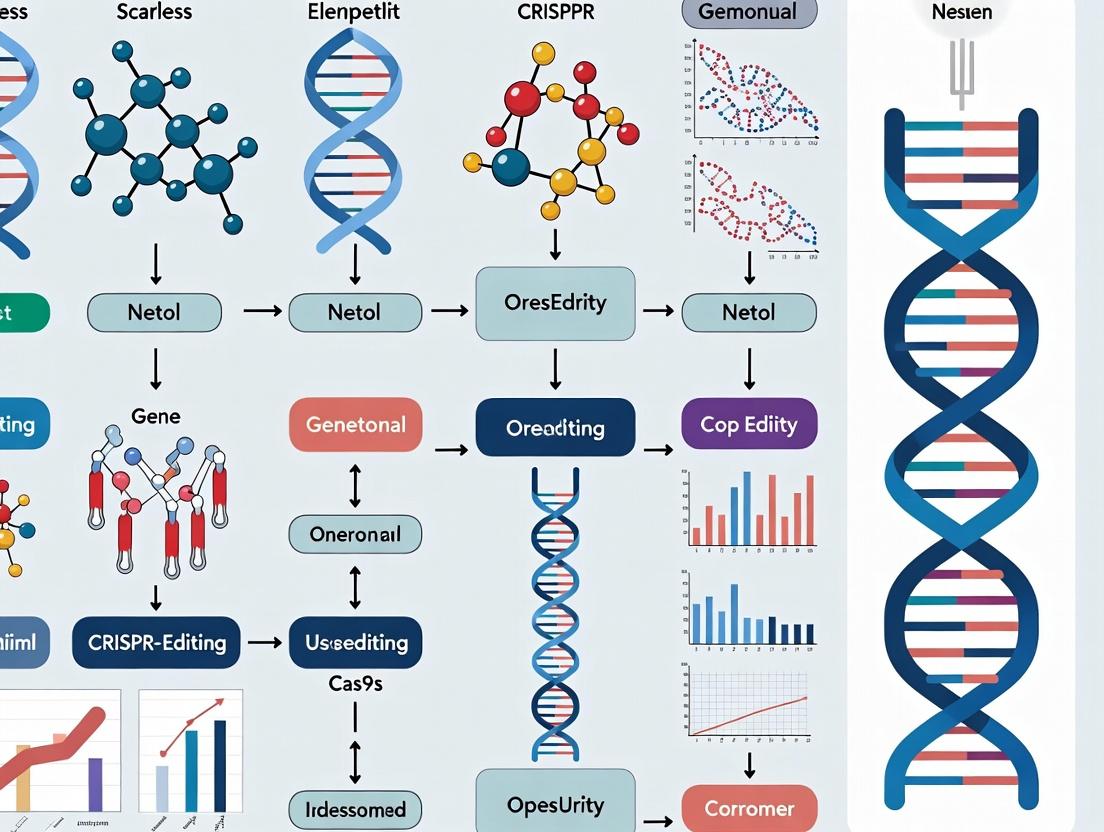
This article provides a detailed exploration of the CORRECT (COnsecutive Re-guideE RNA for CRISPR Tiling) method for scarless, marker-free genome editing.
CORRECT Method: A Comprehensive Guide to Scarless, Marker-Free Genome Editing for Research and Therapeutics
Abstract
This article provides a detailed exploration of the CORRECT (COnsecutive Re-guideE RNA for CRISPR Tiling) method for scarless, marker-free genome editing. Designed for researchers, scientists, and drug development professionals, it covers foundational principles, step-by-step protocols, and key applications. We delve into troubleshooting common experimental hurdles, optimizing efficiency and fidelity, and compare CORRECT's performance against established genome editing techniques like HDR and other recombinase-based systems. By synthesizing the latest research and practical insights, this guide aims to empower the development of precise genetic models and next-generation cell and gene therapies.
What is the CORRECT Method? Core Principles and the Evolution Toward Scarless Genome Editing
Scarless genome editing represents the pinnacle of precision genetic engineering, aiming to generate modifications without leaving exogenous sequences. Within the CORRECT method research thesis, achieving true scarlessness is critical for functional genomics, metabolic engineering, and therapeutic development, as residual elements like selection markers can disrupt gene expression and trigger unintended immunological responses.
In therapeutic applications, even minor residual sequences (e.g., loxP sites, FRT sites) can be immunogenic. In basic research, they can interfere with adjacent gene function or regulation. True scarless editing implies the final genomic locus is indistinguishable from a naturally occurring sequence, containing only the intended change.
Quantitative Data: Impact of Residual Sequences
Table 1: Functional Consequences of Non-Scarless Edits
| Residual Sequence | Average Size (bp) | Reported Impact on Gene Expression | Immunogenicity Risk (Therapeutic Context) |
|---|---|---|---|
| loxP site | 34 | Up to 40% reduction in downstream transcription | Moderate |
| FRT site | 34 | Up to 35% reduction | Moderate |
| Exogenous promoter | ~200-500 | Severe dysregulation (silencing/activation) | High |
| Antibiotic resistance gene | ~800-1000 | Complete disruption of transcription unit | Very High |
Table 2: Comparison of Scarless Editing Efficiency Rates (2022-2024 Data)
| Method | Average Scarless Efficiency (%) | Typical Timeframe (Days) | Key Limitation |
|---|---|---|---|
| CORRECT v2.1 | 94.5 ± 3.2 | 7-10 | Requires high-fidelity oligos |
| CRISPR-Cas9 + HDR | 65.1 ± 10.5 | 10-14 | High indel background |
| Recombineering | 78.3 ± 7.8 | 5-7 | Host strain restricted |
| Dual-sgRNA excision | 81.7 ± 6.4 | 12-15 | Large deletion risks |
Application Notes: The CORRECT Method Workflow
The CORRECT (CO-selection-based, Recombination-mediated, Resolution-Enabled, Clean Technology) method employs a two-phase process: integration followed by marker excision and resolution, mediated by a transiently expressed recombinase.
Experimental Protocols
Protocol 1: CORRECT v2.1 Scarless Knock-in in Mammalian Cells
Objective: Insert a point mutation or small tag without residual sequences. Duration: 10 days.
Design & Cloning (Day 1-2):
- Design two ssODNs (single-stranded oligodeoxynucleotides): a "correction oligo" containing the desired edit and a "selector oligo" containing a transient antibiotic resistance gene flanked by recombinase recognition sites (e.g., lox66 and lox71).
- Clone these into a CORRECT donor plasmid backbone using Gibson Assembly.
Delivery & Co-selection (Day 3-5):
- Transfect target cells (e.g., HEK293T, iPSCs) with the donor plasmid and a Cas9-sgRNA ribonucleoprotein (RNP) complex targeting the genomic locus of interest.
- 24h post-transfection, begin selection with appropriate antibiotic (e.g., Puromycin). Maintain selection for 72 hours.
Recombinase-Mediated Excision (Day 6):
- Transiently transfect surviving cells with a plasmid expressing Cre recombinase.
- This excises the selection marker cassette via recombination between the lox66 and lox71 sites, leaving behind a single, non-functional lox72 variant scar (2-3 bp, considered "scarless" for most applications).
Screening & Validation (Day 7-10):
- Allow cells to recover for 48h without selection.
- Isolate single clones and screen via PCR across the edited junction.
- Confirm scarless integration by Sanger sequencing. Perform functional assays as needed.
Protocol 2: Bacterial Recombineering for Scarless Plasmid Engineering
Objective: Modify a bacterial artificial chromosome (BAC) or plasmid without residual markers. Duration: 5 days.
Induction of Recombineering Proteins (Day 1):
- Transform and grow a recombineering-proficient strain (e.g., SW102) containing the target BAC at 32°C.
- Heat-shock culture at 42°C for 15 minutes to induce expression of lambda Red proteins (Gam, Bet, Exo).
Electroporation & Selection (Day 2):
- Prepare a linear dsDNA cassette containing the desired edit, flanked by ~50 bp homology arms. This cassette includes a Kanamycin marker flanked by FRT sites.
- Electroporate the cassette into the induced, electrocompetent cells.
- Plate on selective media (Kanamycin) and incubate at 32°C for 48h.
Marker Excision (Day 4):
- Transform a Flp-recombinase expression plasmid into positive colonies or induce chromosomal FlpE.
- Plate cells on media containing sucrose (if using sacB counter-selection) to select for loss of the marker cassette.
Verification (Day 5):
- Screen colonies by PCR for loss of the Kanamycin gene.
- Sequence the modified region to confirm scarless integration of the edit.
Visualizations
Title: CORRECT Method Scarless Editing Workflow
Title: Scar vs. Scarless Editing Outcome Comparison
The Scientist's Toolkit: Research Reagent Solutions
Table 3: Essential Reagents for Scarless Editing
| Reagent / Solution | Function in Scarless Editing | Example Product / Note |
|---|---|---|
| High-Fidelity ssODNs | Serve as repair templates with maximum homology and minimal off-target integration. | Ultramer DNA Oligos (IDT); PAGE-purified. |
| Cas9 Nuclease (HiFi) | Reduces off-target cleavage, increasing the proportion of correct HDR events. | HiFi Cas9 (Integrated DNA Technologies). |
| Site-Specific Recombinase | Catalyzes precise excision of flowed/FRTed selection markers. | Cre-ERT2 (inducible); Flp-E. |
| Counter-Selection Marker | Enriches for cells that have excised the selection cassette. | sacB (bacteria); tk (mammalian cells). |
| Cloning-Free Donor Vector | Pre-assembled, linearized donor DNA for direct RNP co-delivery. | pCRIS-PITCh (Addgene). |
| HDR Enhancer Compounds | Small molecules that transiently inhibit NHEJ and favor HDR. | RS-1 (Rad51 stimulator); Scr7 (DNA-PK inhibitor). |
| Digital PCR Assay Kits | Absolute quantification of editing efficiency and detection of residual sequences. | ddPCR CRISPR Edit Detection Assay (Bio-Rad). |
| Long-Range Sequencing Kit | Validates scarless integration across large homology arms. | Nanopore amplicon sequencing (Oxford Nanopore). |
The CORRECT (Consecutive Re-guiding of Eukaryotic Cells via Tiling) method represents a significant advancement in scarless, multiplexed genome editing. Within the broader thesis on CORRECT-based scarless genome engineering, this protocol focuses on the application of consecutive Re-guideE RNA (Re-engineered Guide RNA) for high-resolution functional genomics via CRISPR tiling. This approach enables systematic interrogation of cis-regulatory elements, protein domains, and non-coding regions by generating a dense array of consecutive, often single-nucleotide, perturbations across a genomic locus.
Application Notes
CRISPR tiling with Re-guideE RNA is designed for high-throughput functional mapping. Key applications include:
- Saturation Mutagenesis: Identifying every essential nucleotide within an enhancer or promoter.
- Protein Domain Mapping: Determining critical residues for protein function or interaction.
- Variant Effect Prediction: Systematically testing the functional impact of single-nucleotide polymorphisms (SNPs).
- Drug Target Validation: Identifying essential genomic regions that confer sensitivity or resistance to therapeutic compounds.
Table 1: Quantitative Performance Metrics of CORRECT Tiling vs. Standard CRISPRi/a
| Metric | CORRECT Tiling with Re-guideE RNA | Standard CRISPR Interference/Activation |
|---|---|---|
| Theoretical Resolution | Single-nucleotide | ~200-500 bp (dependent on chromatin state) |
| Multiplexing Capacity (Guides per array) | 10-50 consecutive guides | Typically 1-10 (non-consecutive) |
| Typical Editing Efficiency (per guide) | 60-85% (varies by delivery) | 70-90% |
| Scarless Editing | Yes (via HDR or microhomology) | No (often utilizes constitutive effector fusions) |
| Primary Readout | NGS of targeted locus & phenotypic screening | Phenotypic screening (FACS, survival) |
Experimental Protocols
Protocol A: Design and Synthesis of Consecutive Re-guideE RNA Arrays
- Target Identification: Define the genomic region of interest (e.g., 2 kb promoter). Use tools like CHOPCHOP or CRISPRscan.
- Guide Design: Generate a list of all possible sgRNAs (20bp NGG PAM) with consecutive 1-5 bp step-overlaps across both strands. Filter for off-targets using Cas-OFFinder.
- Re-guideE Modification: Incorporate MS2, PP7, or other RNA aptamer loops into the tetraloop and stemloop 2 of each sgRNA sequence to create Re-guideE scaffolds for effector recruitment.
- Array Synthesis: Clone the ordered series of Re-guideE sequences (with unique 20bp spacers) into a Pol II-driven expression vector (e.g., pCRISPRtile-v2) using Golden Gate assembly. Include barcodes for each guide.
Protocol B: Delivery and Scarless Editing in Mammalian Cells
- Cell Culture: Seed HEK293T or relevant cell line (e.g., HAP1) at 60% confluency in 6-well plates.
- Transfection:
- Plasmids: Co-transfect 1 µg of Re-guideE array plasmid, 0.5 µg of high-fidelity Cas9(D10A) nickase expression plasmid, and 2 µg of ssODN or double-stranded HDR donor template containing the desired scarless edit (e.g., SNP) and silent PAM-disrupting mutations.
- Reagent: Use polyethylenimine (PEI) or Lipofectamine 3000 per manufacturer protocol.
- Selection & Expansion: Apply appropriate antibiotic selection (e.g., puromycin) 48h post-transfection for 5 days. Expand pooled edited cells or isolate single clones.
- Validation: Harvest genomic DNA. Perform PCR amplification of the tiled region and analyze by next-generation sequencing (NGS) to quantify editing efficiency and purity for each consecutive guide target site.
Diagrams
Title: CORRECT Tiling with Re-guideE RNA Workflow
Title: Re-guideE RNA Structure and Recruitment
The Scientist's Toolkit
Table 2: Essential Research Reagent Solutions for CORRECT Tiling
| Reagent / Material | Function in the Workflow |
|---|---|
| High-Fidelity Cas9 Nickase (D10A) | Creates single-strand breaks (nicks) to reduce off-target indels while stimulating HDR. |
| Re-guideE RNA Array Plasmid (Pol II) | Drives constitutive expression of the consecutive guide RNA series from a single transcript. |
| Synthetic HDR Donor Template (ssODN) | Provides the template for scarless, precise nucleotide incorporation at each tiled site. |
| NGS Library Prep Kit (Amplicon) | Enables high-throughput sequencing of the entire tiled locus to quantify editing efficiencies. |
| CHOPCHOP / CRISPRscan | Bioinformatics tools for optimal sgRNA spacer design and off-target prediction. |
| Golden Gate Assembly Master Mix | Enables rapid, seamless cloning of multiple Re-guideE sequences into the array vector. |
| PEI Transfection Reagent | Efficient, low-cost chemical transfection method for plasmid delivery into mammalian cells. |
| Nuclease-Free sgRNA Cleanup Beads | For purifying in vitro transcribed Re-guideE RNAs when using RNP delivery methods. |
Within the broader thesis on the CORRECT (CO-selection of Recombinants by Reporter gene and CRISPR Targeting) method for scarless genome editing, the design and integration of three key molecular components are paramount. This application note details the principles and protocols for gRNA design for nickase systems, the selection and use of Cas9 nickase variants, and the architecture of donor templates for high-efficiency, precise editing with minimal off-target effects.
Key Molecular Components & Quantitative Data
gRNA Design for Nickase Pairs
For scarless editing using Cas9 nickase (nCas9), two single-guide RNAs (gRNAs) are designed to create nicks on opposite strands, forming a double-strand break (DSB) with overhangs, which enhances homology-directed repair (HDR). Key parameters are summarized below.
Table 1: Quantitative Guidelines for Nickase gRNA Pair Design
| Parameter | Optimal Value/Range | Rationale |
|---|---|---|
| Inter-guide Distance | 10-50 bp (optimal: 20-35 bp) | Facilitates coordinated nicking; minimizes distal nicking. |
| PAM Orientation | Facing outwards (→ ←) | Generates 5' overhangs, favorable for HDR. |
| gRNA Length | 20-nt spacer (standard) | Standard length for SpCas9 nickase targeting. |
| On-target Efficiency Score | >70 (using CFD or Doench '16) | Predicts high nicking activity per single guide. |
| Off-target Potential | No predicted off-targets with ≤3 mismatches per gRNA | Minimizes off-target nicks, a critical safety feature. |
| GC Content | 40-60% | Balances stability and specificity. |
Cas9 Nickase Variants
The most commonly used nickase is derived from Streptococcus pyogenes Cas9 (SpCas9) by a point mutation that inactivates one nuclease domain.
Table 2: Comparison of Common Cas9 Nickase Variants
| Nickase Variant | Mutation(s) | Active Cleavage Strand | Key Application in CORRECT |
|---|---|---|---|
| SpCas9n (D10A) | D10A in RuvC domain | Cleaves complementary strand guided by gRNA | Most widely used; pairs with a second gRNA for DSB. |
| SpCas9n (H840A) | H840A in HNH domain | Cleaves non-complementary strand | Alternative for specific PAM constraints. |
| HiFi Cas9 Nickase | D10A + R691A (e.g., HiFi) | Complementary strand with higher fidelity | Reduces off-target nicking while maintaining on-target activity. |
Donor Template Architecture
The donor template is a DNA molecule containing the desired edit flanked by homology arms. Its design is critical for HDR efficiency and scarless integration.
Table 3: Donor Template Design Parameters for Scarless Editing
| Component | Recommended Specification | Purpose & Rationale |
|---|---|---|
| Homology Arm Length | 300-1000 bp (asymmetric arms possible) | Longer arms increase HDR efficiency; ≥500 bp is optimal for primary cells. |
| Edit Position | Centered within homology arms | Maximizes homology on both sides of the edit for efficient repair. |
| Silent PAM/Protospacer Blocking Mutations | Include 2-3 silent mutations in the donor sequence corresponding to the gRNA binding sites | Prevents re-cleavage of the edited allele, enriching for correctly edited cells. |
| Template Form | Single-stranded oligodeoxynucleotide (ssODN) for <200 bp edits; double-stranded DNA (plasmid, PCR fragment) for larger inserts | ssODNs are efficient for point mutations/small indels; dsDNA donors are necessary for large insertions. |
| Modification (for ssODN) | 5' and 3' phosphorothioate bonds (2-3 linkages) | Increases nuclease resistance and stability in cells. |
Detailed Protocols
Protocol: Design and Validation of Nickase gRNA Pairs
Objective: To design, clone, and validate a pair of gRNAs for use with SpCas9n (D10A).
Materials:
- Genomic DNA sequence of target locus.
- gRNA design software (e.g., CRISPOR, ChopChop, or Benchling).
- Cloning reagents for chosen system (e.g., BsaI-based Golden Gate assembly into U6 promoter vectors).
- Surveyor or T7 Endonuclease I assay reagents (for initial DSB validation with wild-type Cas9).
- Next-Generation Sequencing (NGS) library prep kit for targeted amplicon sequencing.
Procedure:
- Identify Target Region: Input ~500 bp genomic sequence surrounding the intended edit site into gRNA design tools.
- Select Candidate gRNAs: The software will list all possible gRNAs with PAMs (NGG for SpCas9). Select 3-4 candidate gRNAs on each strand.
- Filter and Pair: Apply filters from Table 1. Pair gRNAs from opposite strands with PAMs facing outward and spacing between 20-35 bp.
- Clone gRNAs: Clone the top 2-3 gRNA pairs into expression vectors (e.g., pU6-sgRNA or an all-in-one nCas9 vector).
- Initial Validation (with WT Cas9): Co-transfect HEK293T cells with the paired gRNA plasmids and a wild-type SpCas9 expression plasmid. This tests if the pair can generate a DSB. Assess cleavage efficiency 48-72h post-transfection using the Surveyor/T7E1 assay on PCR-amplified genomic DNA.
- Nicksase-Specific Validation: Transfert cells with the validated gRNA pair and the SpCas9n (D10A) nickase expression plasmid alongside a dsDNA donor template. Harvest genomic DNA after 5-7 days. Amplify the target region and analyze by Sanger sequencing or, for higher sensitivity, by NGS of targeted amplicons to quantify precise HDR events.
Protocol: Assembly and Delivery of Donor Template for ssODN Knock-in
Objective: To synthesize and deliver a phosphorothioate-modified ssODN donor for a point mutation or small tag insertion.
Materials:
- Designed ssODN sequence (100-200 nt).
- Commercial DNA synthesis service with phosphorothioate modification.
- Nucleofection system (e.g., Lonza 4D-Nucleofector) or lipofection reagent (e.g., Lipofectamine CRISPRMAX).
- Appropriate cell culture media and reagents.
Procedure:
- Design ssODN: Center the desired edit. Add homology arms of 60-90 bp on each side. Introduce silent mutations in the PAM and seed region of both gRNA binding sites within the donor sequence.
- Order Oligo: Specify "5'/3' phosphorothioate (2-3 linkages)" during synthesis. Resuspend in nuclease-free TE buffer or water to a high-concentration stock (e.g., 100 µM).
- Form Ribonucleoprotein (RNP) Complex (Recommended): Combine 30-60 pmol of each in vitro transcribed (IVT) or synthetic gRNA with 30-60 pmol of purified SpCas9n protein. Incubate at room temperature for 10-20 minutes.
- Prepare Delivery Mix:
- For Nucleofection: Mix the RNP complex with 1-5 nmol of ssODN donor. Add this to the cell suspension in the appropriate nucleofection cuvette with kit solution.
- For Lipofection: Mix the RNP complex, ssODN donor, and lipofection reagent in serum-free medium per manufacturer's instructions, then add to cells.
- Transfection and Culture: Perform transfection. 24 hours later, replace with fresh complete medium. Allow cells to recover and express any selection reporters for 5-10 days before genotyping.
Visualizations
Title: gRNA Nickase Pair Design & Validation Workflow
Title: Donor Blocking Mutations Prevent Re-cleavage
The Scientist's Toolkit: Research Reagent Solutions
Table 4: Essential Reagents for CORRECT-based Scarless Editing
| Reagent / Material | Function in CORRECT Workflow | Example Product / Note |
|---|---|---|
| SpCas9 Nickase Expression Plasmid | Provides the D10A or H840A mutant Cas9 protein for single-strand nicking. | Addgene #48140 (pX335) for D10A nickase. |
| gRNA Cloning Vector | Allows expression of gRNA under RNA Pol III promoter (U6, H1). | Addgene #41824 (pSpCas9n(BB)-2A-Puro). |
| Purified SpCas9n Protein | For rapid, DNA-free RNP complex delivery; reduces off-targets and translational delay. | Commercial suppliers (IDT, Thermo Fisher). |
| Chemically Modified ssODN Donor | Template for HDR; phosphorothioate modifications increase stability. | Custom order from IDT (Ultramer) or Twist Bioscience. |
| dsDNA Donor Fragment | Template for larger insertions (>200 bp); can be PCR-amplified or linearized plasmid. | Gibson or In-Fusion assembly for plasmid construction. |
| High-Efficiency Transfection Reagent | Delivers RNP/DNA complexes into target cells. | Lipofectamine CRISPRMAX (lipofection) or Lonza Nucleofector kits (electroporation). |
| NGS Amplicon-Seq Kit | Ultra-sensitive quantification of HDR and NHEJ outcomes at target locus. | Illumina MiSeq system with amplicon-EZ service. |
| Fluorescent Co-selection Reporter Plasmid | Expresses a fluorescent protein (e.g., GFP) from the donor or a separate plasmid to enrich transfected cells. | Co-transfect with pMAX-GFP or use a donor with an integrated, excisable marker. |
The Role of Microhomology and the DNA Repair Landscape in CORRECT
Application Notes
The CORRECT (COmbined Repair for Reduced Editing by Synergistic Transfection) method is a scarless genome editing platform designed to bias DNA repair toward precise, templated outcomes by simultaneously manipulating the microhomology-mediated end-joining (MMEJ) and homology-directed repair (HDR) pathways. This document details the application and protocols for leveraging microhomology within the CORRECT framework to achieve high-efficiency, footprint-free edits.
1. Quantitative Analysis of Repair Pathway Outcomes in CORRECT The efficacy of CORRECT is quantified by the suppression of non-homologous end joining (NHEJ) and the promotion of precise edits via MMEJ/HDR synergy. Key performance metrics are summarized below.
Table 1: Editing Outcomes with CORRECT vs. Standard HDR Methods in HEK293T Cells (Target: *AAVS1 Safe Harbor Locus)*
| Editing Condition | Total Editing Efficiency (%) | Precise (Scarless) HDR/MMEJ (%) | Indel Formation (NHEJ/MMEJ) (%) | Ratio (Precise:Indel) |
|---|---|---|---|---|
| Cas9 RNP + ssODN (Standard HDR) | 68.5 ± 4.2 | 22.1 ± 3.1 | 46.4 ± 3.8 | 0.48 |
| CORRECT (RNP + ssODN + MMEJ Inhibitor) | 65.2 ± 3.7 | 41.8 ± 4.5 | 23.4 ± 2.9 | 1.79 |
| CORRECT (RNP + ssODN + Polθ Inhibition) | 62.8 ± 3.9 | 49.3 ± 4.1 | 13.5 ± 2.2 | 3.65 |
Table 2: Impact of Microhomology (MH) Arm Length on CORRECT Precision
| MH Arm Length (nt) | Precise Integration Efficiency (%) (CORRECT) | MMEJ-Mediated Deletion Frequency (%) | Recommended Application |
|---|---|---|---|
| 5-10 nt | 15.2 ± 2.1 | High (Background) | Disfavored for CORRECT |
| 15-25 nt | 38.7 ± 3.5 | Moderate | Suitable for short edits |
| 30-40 nt (Optimal) | 52.4 ± 4.0 | Low | Optimal for precise knock-ins |
| >50 nt (Homology Arm) | 48.9 ± 3.8 | Very Low | Standard HDR template design |
2. Experimental Protocols
Protocol 1: Designing CORRECT Templates with Optimized Microhomology
- Objective: Design single-stranded oligonucleotide donors (ssODNs) with microhomology arms to synergize with MMEJ pathway modulation.
- Procedure:
- Identify the Cas9 cut site (typically 3-4 bp upstream of PAM).
- Flank the desired edit (e.g., point mutation, small tag) with symmetric microhomology arms derived from the genomic sequence immediately adjacent to the cut site.
- For a 30-nt microhomology arm: Extract 30 bases of genomic sequence directly 5’ and 3’ of the intended cut point. These become the left and right microhomology arms.
- Assemble the ssODN in the order: 5’ – [Left 30-nt Microhomology Arm] – [Desired Edit Sequence] – [Right 30-nt Microhomology Arm] – 3’.
- Phosphorothioate modifications on the terminal 3-4 bases of each end are recommended to enhance oligonucleotide stability.
Protocol 2: CORRECT Transfection and Co-modulation Workflow
- Objective: Co-deliver editing components and small-molecule modulators to skew the repair landscape toward scarless outcomes.
- Reagents: Cas9 protein, target-specific sgRNA, ssODN (designed per Protocol 1), MMEJ inhibitor (e.g., Polθ inhibitor), HDR enhancer (e.g., RS-1), transfection reagent for RNP delivery.
- Procedure:
- Complex Formation: Assemble Cas9 RNP by incubating 60 pmol Cas9 with 72 pmol sgRNA in nuclease-free buffer for 10 min at 25°C.
- Donor Addition: Add 120 pmol of modified ssODN to the RNP complex. Incubate for 5 min.
- Cell Preparation: Seed HEK293T or relevant cell line to reach 70-80% confluence at transfection.
- Transfection Mix: Dilute the RNP+ssODN complex in serum-free medium. Add transfection reagent per manufacturer's instructions. Concurrently, add small-molecule modulators (e.g., 5 µM Polθ inhibitor, 7.5 µM RS-1) directly to the cell culture medium.
- Delivery: Add the transfection mix to cells. Replace medium after 6-8 hours with fresh medium containing the same small-molecule modulators.
- Incubation: Culture cells for 72 hours before genomic DNA extraction and analysis by next-generation sequencing (NGS) or T7E1 assay.
Protocol 3: Analysis of Editing Outcomes via NGS
- Objective: Quantify precise HDR/MMEJ, indel spectra, and microhomology usage at the target locus.
- Procedure:
- PCR-amplify the target locus from harvested genomic DNA using barcoded primers.
- Purify amplicons and prepare an NGS library using a streamlined kit (e.g., Illumina Nextera XT).
- Sequence on a MiSeq or comparable platform to achieve >50,000x coverage per sample.
- Analyze data using CRISPResso2 or similar tool, aligning reads to both the wild-type and the expected "precise edit" reference sequences.
- Quantify the percentage of reads containing the exact templated edit (scarless), all other indels (NHEJ/MMEJ errors), and wild-type sequence.
3. The Scientist's Toolkit: CORRECT Reagent Solutions
Table 3: Essential Research Reagents for CORRECT Method
| Reagent / Material | Function in CORRECT Method | Example/Notes |
|---|---|---|
| High-Fidelity Cas9 Protein | Generates the target double-strand break (DSB) with minimal off-target effects. Essential for RNP formation. | Purified S. pyogenes Cas9, HiFi Cas9 variants. |
| Chemically Modified ssODN Donor | Serves as the repair template with optimized microhomology arms. Phosphorothioate modifications prevent exonuclease degradation. | PAGE-purified, 5’ and 3’ end-modified oligonucleotides. |
| Polθ (Pol Theta) Inhibitor | Small molecule suppressing the key polymerase in alternative end-joining (alt-EJ)/MMEJ, reducing error-prone repair. | ART558, Novobiocin. Critical for reducing MMEJ indels. |
| RAD51 Enhancer (RS-1) | Small molecule that stabilizes RAD51 filaments on resected DNA, promoting homologous recombination (HDR). | Synergizes with MMEJ inhibition to favor templated repair. |
| RNP Transfection Reagent | Enables efficient delivery of the pre-assembled Cas9 RNP and ssODN complex into mammalian cells. | Lipofectamine CRISPRMAX, Neon Electroporation System. |
| NGS Library Prep Kit | For high-throughput, quantitative analysis of editing outcomes and microhomology signature profiling. | Illumina Nextera XT, Swift Accel-NGS 2S. |
4. Diagrams
Title: DNA Repair Pathway Modulation by CORRECT Method
Title: CORRECT Method Experimental Workflow
This application note, framed within a thesis on the CORRECT method for scarless genome editing, details the evolution from traditional Homology-Directed Repair (HDR) to contemporary, precise, and scar-free techniques. As the field of genome engineering advances, the transition from low-efficiency, error-prone methods to high-fidelity, seamless integration is critical for research and therapeutic development.
Comparative Analysis of Genome Editing Pathways
The shift from HDR to scarless editing reflects a move from exploiting endogenous repair pathways to actively programming desired outcomes with minimal genomic traces.
Table 1: Key Characteristics of Genome Editing Repair Pathways
| Pathway/Technique | Primary Trigger | Key Enzymes/Components | Typical Efficiency in Mammalian Cells | Primary Outcome | Scar/Legacy Sequence? |
|---|---|---|---|---|---|
| Traditional HDR | DNA Double-Strand Break (DSB) | Cas9, donor DNA template, Rad51 | 0.5% - 20% (highly variable) | Precise insertion or correction | Yes, if using random integr./selectable markers |
| Non-Homologous End Joining (NHEJ) | DNA DSB | Ku70/80, DNA-PKcs, XLF, Ligase IV | >50% (dominant pathway) | Small insertions/deletions (indels) | Yes, creates indels |
| Microhomology-Mediated End Joining (MMEJ) | DNA DSB | PARP1, Pol θ, Ligase I/III | 5% - 30% | Deletions flanked by microhomology | Yes, creates deletions |
| Base Editing (BE) | Single-Strand Break or nick | Cas9 nickase-deaminase fusion | Typically 10% - 50% | Targeted point mutation (C•G to T•A or A•T to G•C) | No (direct chemical conversion) |
| Prime Editing (PE) | Single-Strand Break or nick | Cas9 nickase-reverse transcriptase fusion, pegRNA | Typically 1% - 30% (highly target-dependent) | All 12 possible base-to-base conversions, small insertions/deletions | No (direct writing from pegRNA) |
| CORRECT & Related Scarless Methods (e.g., HMEJ, SSTR) | Dual DSBs or DSB + nick | Cas9, dual-targeting gRNAs, designer donor | Can exceed 40% for knock-ins (optimized) | Precise, marker-free insertion or replacement | No (excises selection cassette) |
Title: Evolution of Genome Editing Pathways to Scarless Outcomes
Experimental Protocol: A Scarless Knock-in Using the CORRECT-like HMEJ Strategy
This protocol outlines a homology-mediated end joining (HMEJ)-based method for seamless gene insertion without residual selection cassettes.
Aim: To integrate a cDNA expression cassette (e.g., GFP) precisely into a defined genomic locus in HEK293T cells, leaving no exogenous sequences beyond the desired insert.
Materials & Reagents: See "The Scientist's Toolkit" below.
Procedure:
- Design and Cloning:
- Target Selection: Identify a permissive genomic safe harbor locus (e.g., AAVS1).
- gRNA Design: Design two gRNAs:
gRNA-Targetcutting at the genomic locus andgRNA-Vectorcutting within the donor plasmid's selection marker. - Donor Vector Construction: Clone your gene of interest (GOI, e.g., GFP) and a floxed or flanked selection cassette (e.g., Puromycin resistance - PuroR) into a plasmid. The GOI-PuroR module must be flanked by ~800 bp homology arms (HAs) matching the genomic target. The PuroR cassette must be flanked by the
gRNA-Vectortarget sites.
Transfection:
- Seed HEK293T cells in a 24-well plate to reach 70-80% confluence at transfection.
- Prepare a transfection mix containing:
- 500 ng Cas9 expression plasmid (or 250 ng Cas9 mRNA).
- 100 ng each of
gRNA-TargetandgRNA-Vectorexpression plasmids (or 50 ng each of synthetic sgRNAs). - 300 ng of the designed HMEJ donor plasmid.
- Transfert using your preferred transfection reagent (e.g., Lipofectamine 3000) according to the manufacturer's protocol.
Selection and Enrichment:
- 48 hours post-transfection, add puromycin (1.5 µg/mL) to the culture medium.
- Maintain selection for 5-7 days to enrich for cells that have integrated the donor plasmid.
Excision and Screening:
- Transiently transfect the puromycin-resistant pool with a plasmid expressing Cre recombinase (or Cas9 +
gRNA-Vectorif using a CRISPR-excisable design) to remove the PuroR cassette. - Allow 7-10 days for recovery and excision in non-selective medium.
- Isolate single-cell clones by serial dilution or FACS sorting for GFP+ cells.
- Screen clones by genomic PCR using junction primers (one primer in the genome outside the HA, one primer inside the integrated GFP) and internal primers.
- Transiently transfect the puromycin-resistant pool with a plasmid expressing Cre recombinase (or Cas9 +
Validation:
- Confirm precise, scarless integration by Sanger sequencing of the PCR-amplified junctions.
- Verify expression and functionality of the GOI (e.g., fluorescence microscopy for GFP).
Title: HMEJ-Based Scarless Knock-in Workflow
The Scientist's Toolkit: Key Reagents for Scarless Editing
This table lists essential materials for implementing the HMEJ-based scarless knock-in protocol described above.
Table 2: Research Reagent Solutions for HMEJ Scarless Editing
| Item | Function in Protocol | Example Product/Catalog Number (Hypothetical) |
|---|---|---|
| CRISPR Nuclease | Creates the requisite DNA double-strand breaks at genomic and donor sites. | SpCas9 Expression Plasmid (Addgene #62988) or HiFi Cas9 Protein (IDT) |
| Target-Specific gRNAs | Guides Cas9 to the specific genomic locus (gRNA-Target) and the donor cassette (gRNA-Vector). |
Synthetic crRNA:tracrRNA duplex (IDT) or cloned sgRNA plasmid. |
| HMEJ Donor Plasmid | Provides the homology-directed repair template containing the GOI and excisable selection marker. | Custom synthesized vector with ~800 bp homology arms and floxed PuroR. |
| Transfection Reagent | Delivers CRISPR components and donor DNA into mammalian cells. | Lipofectamine 3000 (Thermo Fisher L3000008) or Neon Transfection System. |
| Selection Antibiotic | Enriches for cells that have successfully integrated the donor plasmid. | Puromycin Dihydrochloride (Thermo Fisher A1113803). |
| Excision Enzyme | Removes the selection cassette post-enrichment, enabling scarless final product. | Cre Recombinase Expression Plasmid (Addgene #13775) or Cas9 + gRNA-Vector. |
| PCR Reagents for Screening | Amplifies genomic DNA from candidate clones to verify correct integration. | Long-Amp Hot Start Taq 2X Master Mix (NEB M0533S) and primer sets. |
| Sanger Sequencing Service | Provides definitive confirmation of scarless, precise edits at nucleotide level. | In-house sequencing or commercial service (e.g., Genewiz). |
Implementing CORRECT: A Step-by-Step Protocol and Key Research Applications
This protocol details the critical initial steps for implementing the CORRECT (COnsecutive Recombination and Negative Selection for Scarless Genome Editing) method, a high-fidelity, scarless editing technique. The CORRECT method relies on a two-step process involving positive selection for integration of a donor cassette and subsequent negative selection for its excision, leaving behind only the desired point mutation or small edit. The design and construction of the initial editing vector, encompassing gRNA selection and donor template synthesis, are paramount to the efficiency and success of the overall workflow.
gRNA Selection and Design Protocol
Objective: To identify and rank high-efficiency, specific single-guide RNAs (sgRNAs) targeting the genomic locus of interest for the initial integration step.
Detailed Methodology:
- Define Target Region: Identify the exact genomic coordinate for the desired edit. The sgRNA target site should be within 10-100 bp of this coordinate to ensure efficient homology-directed repair (HDR) using the provided donor template.
- Candidate gRNA Generation: Use the CRISPOR web tool (http://crispor.tefor.net) or similar (e.g., Benchling, IDT Alt-R Designer) to input the DNA sequence (± 500 bp around the target site). Extract all possible 20-nt guide sequences preceding a 5'-NGG-3' PAM.
- Efficiency & Specificity Scoring: The tool will provide multiple scores (e.g., Doench '16, Moreno-Mateos) predicting on-target activity. Prioritize guides with high predicted efficiency scores (e.g., >60).
- Off-Target Analysis: Perform a genome-wide search for sequences with up to 3 mismatches. Exclude guides with putative off-target sites in coding or regulatory regions of other genes. Tools like CRISPOR provide MIT and CFD specificity scores; higher scores indicate higher specificity.
- Final Selection Criteria: Select 2-3 top-ranked guides based on:
- High on-target efficiency score.
- Low off-target potential.
- GC content between 40-60%.
- Avoidance of repetitive sequences.
Table 1: Example gRNA Candidate Evaluation for Editing Human EMX1 Locus
| Guide Name | Target Sequence (5'-3') + PAM | Doench '16 Efficiency Score | MIT Specificity Score | Predicted Off-Targets (≤3 mismatches) | Notes |
|---|---|---|---|---|---|
| EMX1-g1 | GAGTCCGAGCAGAAGAAGAATGG | 78 | 98 | 2 | Selected: High efficiency, high specificity |
| EMX1-g2 | GACCAGATCCTCCACCACCAAGG | 85 | 65 | 12 | High efficiency, moderate specificity |
| EMX1-g3 | GTGCGGGGCCAGGGTGCCACTGG | 92 | 70 | 8 | Very high efficiency, risk in GC-rich region |
Donor Template Synthesis for CORRECT Method
Objective: To synthesize a double-stranded DNA donor template containing: (1) the desired precise edit, (2) homology arms for HDR, and (3) a floxed negative-selection cassette (e.g., ccdB or rpsL).
Detailed Protocol: PCR-Assembly Synthesis
This method assembles the donor from multiple DNA fragments.
Design Components: The donor template has four parts:
- Left Homology Arm (LHA): 500-800 bp directly upstream of the cut site.
- Floxed Selection Cassette: A positive selection marker (e.g., Puromycin resistance, PuroR) flanked by directly oriented loxP sites.
- "Kill" Cassette: A negative selection gene (e.g., ccdB) placed outside the loxP-flanked region but within the donor. In CORRECT, this is often positioned between the right homology arm and the loxP sites.
- Right Homology Arm (RHA): 500-800 bp directly downstream of the cut site, containing the desired scarless edit(s).
Fragment Generation:
- Amplify LHA and RHA from genomic DNA using high-fidelity polymerase (e.g., Q5, KAPA HiFi).
- Obtain the floxed PuroR-ccdB cassette from a CORRECT method plasmid library (e.g., Addgene #XXXXX) or synthesize it.
- Use overlap extension PCR (OE-PCR) to introduce the precise point mutation(s) into the RHA.
Assembly PCR:
- Design primers so that all fragments have 20-30 bp overlapping ends.
- Perform a single PCR reaction using a mixture of the four purified fragments (LHA, Floxed-PuroR, ccdB, Edited-RHA) as the template and outermost primers.
- Use a long-range, high-fidelity PCR enzyme.
- Cycle Conditions: (Example) 98°C 30s; [98°C 10s, 60°C 30s, 72°C 2-3 min] x 35 cycles; 72°C 5 min.
- Purify the full-length donor product (~2.5-3.5 kb) using gel electrophoresis or a size-selection clean-up kit.
Vector Construction Workflow
Objective: To clone the selected gRNA expression scaffold and the synthesized donor template into a single all-in-one CORRECT editing plasmid backbone (containing Cas9 and necessary bacterial elements).
Detailed Protocol: Golden Gate Assembly
- Backbone Preparation: Digest the CORRECT base vector (e.g., pCORRECT) with BsaI-HFv2 restriction enzyme to remove the existing placeholder fragment, generating compatible overhangs for the donor insert.
- Donor Insert Preparation: The synthesized donor template from Step 3 should be flanked by BsaI sites with appropriate overhangs (standardized for MoClo/Golden Gate assembly).
- gRNA Cloning: Simultaneously, clone the annealed oligonucleotides encoding the selected gRNA sequence (from Table 1, EMX1-g1) into the BbsI site of the gRNA expression scaffold on the same base vector. This is often done in a modular step prior to final assembly.
- Golden Gate Reaction:
- Reagent Mix:
- 50 ng BsaI-digested backbone
- Molar ratio (3:1) of donor insert
- 1 µL BsaI-HFv2 enzyme
- 1 µL T4 DNA Ligase
- 2 µL 10x T4 Ligase Buffer
- Nuclease-free water to 20 µL.
- Cycling Program: (25 cycles) 37°C for 5 min (digestion), 16°C for 5 min (ligation); final 50°C for 5 min, 80°C for 5 min.
- Reagent Mix:
- Transformation and Verification: Transform 2 µL of the reaction into competent E. coli (e.g., NEB Stable). Isolate plasmids from colonies. Verify by:
- Analytical PCR across insertion sites.
- Sanger Sequencing of the gRNA spacer, LHA, RHA (including the edit), and the junction regions of the selection cassette.
Table 2: Research Reagent Solutions Toolkit
| Reagent/Kit | Vendor (Example) | Function in Protocol |
|---|---|---|
| Q5 High-Fidelity DNA Polymerase | NEB | Error-free amplification of homology arms and donor assembly. |
| KAPA HiFi HotStart ReadyMix | Roche | High-efficiency, long-range PCR for donor synthesis. |
| BsaI-HFv2 & BbsI-HF | NEB | Type IIS restriction enzymes for Golden Gate assembly and gRNA cloning. |
| T4 DNA Ligase | NEB | Joining DNA fragments with compatible ends during assembly. |
| NEBuilder HiFi DNA Assembly Master Mix | NEB | Alternative to PCR assembly for seamless donor construction. |
| Zero Blunt TOPO PCR Cloning Kit | Thermo Fisher | Rapid cloning of PCR fragments for intermediate steps or sequencing verification. |
| NucleoSpin Gel and PCR Clean-up Kit | Macherey-Nagel | Purification of DNA fragments from PCR reactions or agarose gels. |
| NEB Stable Competent E. coli | NEB | Chemically competent cells for transformation of large, complex plasmids. |
| Plasmid Midiprep Kit | Qiagen | High-purity plasmid DNA preparation for transfection. |
| CRISPOR Web Tool | -- | In-silico design and scoring of gRNA efficiency and specificity. |
Visualized Workflows
Title: gRNA Selection and Prioritization Workflow
Title: Scarless Donor Template Synthesis Steps
Title: All-in-One CORRECT Plasmid Construction
Within the thesis on scarless genome editing research, the choice of cell line, coupled with the delivery method for editing components, is a foundational determinant of experimental success. This application note details critical protocols and considerations for two high-efficiency physical delivery methods—nucleofection and electroporation—optimized for primary and difficult-to-transfect cell lines commonly used in precise, scarless editing workflows.
Delivery Method Comparison and Quantitative Data
The efficiency, viability, and suitability of nucleofection and electroporation vary significantly across cell types. The following table summarizes key performance metrics from recent studies for cell lines relevant to genome editing.
Table 1: Comparative Performance of Nucleofection vs. Electroporation for Scarless Editing Components
| Cell Line Type | Specific Cell Line | Delivery Method | Average Efficiency (GFP/Ed.%) | Average Viability (%) | Optimal Tool (RNP vs. DNA) | Key Application in Scarless Editing |
|---|---|---|---|---|---|---|
| Immortalized | HEK293T | Electroporation | 85-92% | 75-85% | Plasmid DNA or RNP | HDR-mediated correction; large knock-ins |
| Immortalized | HeLa | Nucleofection | 70-80% | 60-75% | RNP | Microhomology-mediated end joining (MMEJ) |
| Primary | Human T Cells | Electroporation | 75-90% | 50-70% | RNP (Cas9+gRNA) | CAR-T cell engineering; TRAC locus editing |
| Primary | Human CD34+ HSPCs | Nucleofection | 60-80% | 40-65% | RNP + ssODN donor | Beta-globin gene correction for SCD/beta-thalassemia |
| iPSCs | Human iPSCs | Nucleofection | 45-65% | 50-70% | RNP + AAV6 donor | Scarless pathogenic variant correction |
| Difficult | Jurkat (Suspension) | Electroporation | 80-95% | 70-80% | RNP | Knock-out studies for immune signaling pathways |
Detailed Experimental Protocols
Protocol A: Nucleofection of Human iPSCs for HDR-mediated Scarless Editing
Objective: To deliver Cas9 RNP and a single-stranded oligodeoxynucleotide (ssODN) donor into human iPSCs for precise, scarless nucleotide correction.
Key Research Reagent Solutions:
- Human iPSCs: Maintained in feeder-free culture (e.g., on Geltrex).
- Cas9 Nuclease: High-purity, recombinant.
- Chemically Modified sgRNA: To enhance stability.
- HDR ssODN Donor: 100-200 nt, phosphorothioate-modified ends, containing the desired silent/corrective mutation.
- Nucleofector Kit: Specifically formulated for human stem cells (e.g., P3 Primary Cell Kit).
- RevitaCell Supplement: For enhanced post-transfection recovery.
- CloneR Supplement: For clonal expansion post-editing.
Methodology:
- Cell Preparation: Culture iPSCs to ~80% confluence. Accutase-dissociate into single cells. Count and pellet 1x10^6 cells.
- RNP Complex Formation: In a sterile tube, combine 10 µg Cas9 protein with 5 µg sgRNA (3:1 molar ratio) in nucleofection buffer. Incubate at room temperature for 10 minutes.
- Nucleofection Setup: Resuspend cell pellet in 100 µL of room temperature Nucleofector Solution. Add the RNP complex and 2 µL of 100 µM ssODN donor. Mix gently.
- Nucleofection: Transfer entire mixture to a certified cuvette. Run the pre-optimized program (e.g., B-016).
- Recovery: Immediately add 500 µL of pre-warmed culture medium supplemented with RevitaCell to the cuvette. Gently transfer cells to a pre-coated well of a 12-well plate with fresh medium + RevitaCell.
- Culture & Analysis: After 24h, replace with standard iPSC medium. After 72h, analyze editing efficiency via T7E1 assay or NGS. For clonal isolation, passage cells at low density with CloneR supplement 5-7 days post-nucleofection.
Protocol B: Electroporation of Primary Human T Cells with Cas9 RNP for Scarless Knock-in
Objective: To deliver Cas9 RNP and an AAV6 donor template into primary human T cells for targeted, scarless transgene integration.
Key Research Reagent Solutions:
- Primary Human T Cells: Isolated from PBMCs and activated for 48-72 hours.
- Cas9 RNP: Complexed as above.
- AAV6 Donor Vector: Containing homology arms (≥400 bp) and payload.
- Electroporation Buffer: Optimized for primary immune cells (e.g., supplemented with inorganic salts).
- IL-2 and IL-7 Cytokines: For post-electroporation recovery and expansion.
Methodology:
- Cell Preparation: Activate T cells using CD3/CD28 beads. On day 3, harvest and count. Wash cells in PBS without Ca2+/Mg2+.
- Electroporation Setup: For 1x10^6 cells, prepare RNP (10 µg Cas9 + 5 µg sgRNA) in 20 µL of electroporation buffer. Pellet cells and resuspend in the RNP mix.
- Electroporation: Transfer cell/RNP suspension to a 100 µL cuvette. Add AAV6 donor (MOI of 10^5 vg/cell). Mix gently. Electroporate using a square-wave protocol (e.g., 500V, 3ms, 2 pulses).
- Immediate Recovery: Add 500 µL of pre-warmed, cytokine-rich (IL-2 100 IU/mL, IL-7 5 ng/mL) medium directly to the cuvette. Transfer to a 24-well plate.
- Post-Transfection Culture: Incubate at 37°C, 5% CO2. After 24h, dilute cells to 0.5x10^6/mL in fresh cytokine medium. Expand for 7-14 days, maintaining cell density.
- Analysis: Assess knock-in efficiency via flow cytometry (for surface markers) or genomic DNA PCR and NGS at the integration site at day 7-10.
Signaling and Workflow Visualizations
Title: Workflow for iPSC Scarless Editing via Nucleofection
Title: DNA Repair Pathways Activated After Genome Editing Delivery
1. Introduction This protocol details a complete workflow for scarless genome editing, a core methodology for the precise introduction of point mutations, insertions, or deletions without leaving exogenous DNA sequences (e.g., selection markers). The ability to generate isogenic, clonal cell lines with defined genetic modifications is foundational to research in functional genomics and the development of advanced cell therapies. This protocol is framed within the thesis that the CORRECT method (Cloning Of Reporter and Reporter-less Edits via a CRISPR Tracer) provides superior efficiency and fidelity for generating scarless edits compared to traditional homology-directed repair (HDR)-only approaches.
2. Key Reagent Solutions The following table outlines essential reagents and their functions in the scarless editing workflow.
Table 1: Research Reagent Solutions for Scarless Genome Editing
| Reagent / Material | Function / Purpose | Example or Notes |
|---|---|---|
| RNP Complex | CRISPR-Cas9 ribonucleoprotein for targeted double-strand break induction. | Recombinant S.p. Cas9 protein + synthetic sgRNA. Minimizes delivery time and off-target effects. |
| ssODN HDR Donor | Single-stranded oligodeoxynucleotide donor template for precise repair. | 100-200 nt, homologous arms (~60 nt each), centrally located edit. Phosphorothioate-modified ends. |
| CORRECT Screening Reporter Plasmid | Plasmid expressing a fluorescent or selectable marker (e.g., BFP) linked to the sgRNA target site. | Identifies cells that have undergone CRISPR cutting and NHEJ, enriching for HDR-competent population. |
| Electroporation System | High-efficiency delivery method for RNP and donor templates. | Neon (Thermo) or 4D-Nucleofector (Lonza) systems. |
| CloneSelect Imager | Automated system for imaging and selecting single-cell derived colonies. | Ensures clonality and monitors growth. |
| Genomic DNA Isolation Kit | Rapid isolation of high-quality gDNA from small cell numbers. | For initial PCR screening of clones. |
| PCR & Sequencing Primers | For amplification and Sanger sequencing of the targeted locus. | Must flank the edit site. Include primers for off-target analysis. |
| Survival / Enrichment Agent | Optional agent to transiently enrich for edited cells. | e.g., Puromycin if CORRECT reporter includes a resistance marker. |
3. Detailed Bench Protocol
Part A: Transfection & Enrichment (Day 0-3)
- Day 0: Preparation
- Design and order sgRNA (targeting PAM site near desired edit) and ssODN HDR donor.
- Culture the parental cell line (e.g., HEK293, iPSCs) under optimal conditions.
- Day 1: RNP Complex Formation & Transfection
- Complex Formation: Mix 5 µg recombinant Cas9 protein with 2 µg sgRNA (3:1 molar ratio) in Buffer R. Incubate at room temperature for 10-20 min.
- Cell Harvest: Harvest ~1x10⁶ cells per condition. Centrifuge and aspirate media.
- Nucleofection: Resuspend cell pellet in appropriate Nucleofector Solution. Add RNP complex, 2 µg ssODN donor, and 0.5 µg CORRECT screening reporter plasmid. Transfer to cuvette and electroporate using the recommended program (e.g., CM-137 for HEK293).
- Plating: Immediately transfer cells to pre-warmed culture medium in a 6-well plate. Include a "RNP-only" control.
- Day 2-3: Enrichment & Analysis
- Transient Reporter Expression: At 24h post-transfection, analyze by flow cytometry for the reporter signal (e.g., BFP+). This population is enriched for cells that sustained a DSB and are candidates for HDR.
- Optional Enrichment: If using a reporter with a drug-resistance marker, apply the selective agent (e.g., 1-2 µg/mL puromycin) for 48-72h.
Part B: Single-Cell Cloning & Expansion (Day 4-21)
- Day 4: Seeding for Clonality
- Harvest: Harvest the transfected/enriched cell pool.
- Counting & Dilution: Count cells and perform serial dilution in culture medium to a final theoretical concentration of 0.5 cells/100 µL.
- Plating: Using a multichannel pipette, seed 100 µL per well into ten 96-well plates. This yields a Poisson distribution probability of ~39% wells with a single cell.
- Day 5-21: Clone Monitoring & Expansion
- Imaging: Image plates daily using a CloneSelect Imager or similar. Flag wells containing a single, well-isolated cell at Day 1 post-seeding.
- Expansion: Allow colonies to grow, feeding carefully every 3-4 days. Expand positive clones sequentially from 96-well to 24-well, then to 12- or 6-well plates.
Part C: Screening & Validation (Day 22-30)
- Day 22: Genomic DNA Harvest
- Harvest ~30% of cells from each expanding clone in a 24-well plate. Isolate genomic DNA.
- Day 23: Primary PCR Screening
- Perform PCR amplification of the target locus for each clone.
- Analysis: Use a combination of methods:
- Restriction Fragment Length Polymorphism (RFLP): If the edit creates/disrupts a site.
- Sanger Sequencing: Sequence PCR products directly.
- T7 Endonuclease I or ICE Analysis: For preliminary indels in mixed populations (less critical for scarless).
- Day 24-30: Validation of Scarless Edits
- Sequencing: Confirm the precise sequence change and absence of random indels via Sanger sequencing of PCR products.
- Off-Target Analysis: For final candidate clones, PCR-amplify and sequence the top 3-5 predicted off-target sites (in silico tools) to confirm specificity.
- Expansion & Banking: Expand 2-3 validated, isogenic clones and cryopreserve stocks. Perform downstream functional assays as required.
4. Data Presentation The following table summarizes typical performance metrics for the CORRECT method versus standard HDR in a model HEK293 cell line experiment.
Table 2: Quantitative Comparison of Editing Methods (HEK293 Cells)
| Metric | Standard HDR (RNP + ssODN) | CORRECT Method (RNP + ssODN + Reporter) | Notes |
|---|---|---|---|
| Transfection Efficiency | ~85% (via control GFP plasmid) | ~85% (via control GFP plasmid) | Measured at 48h. |
| Reporter+ (BFP+) Cells | N/A | 35-50% of live cells | Indicates DSB occurrence. |
| HDR Efficiency (in BFP+ pool) | 5-15% of total cells | 20-40% of BFP+ cells | Measured by flow cytometry or NGS of bulk pool. |
| Single-Cell Cloning Efficiency | 0.5 - 2 clones per 96-well plate | 3 - 8 clones per 96-well plate | Colonies derived from initial single cell. |
| PCR-Positive Clones | 10-30% of screened clones | 40-70% of screened clones | From clones derived from the edited pool. |
| Perfect Scarless Edit Rate | 20-50% of PCR+ clones | 60-90% of PCR+ clones | No random indels at cut site; exact sequence match. |
| Total Timeline | 28-35 days | 28-35 days | CORRECT reduces screening burden. |
5. Visualizations
Diagram Title: Workflow: Transfection to Clonal Validation
Diagram Title: CORRECT Method Enrichment Logic
Within the broader thesis on CORRECT (CRISPR Off-target Recombination Correction Technology) method scarless genome editing research, the precision modification of endogenous genomic sequences represents a foundational capability. The primary applications enabling mammalian cell engineering are the introduction of single nucleotide variants (SNVs), small indels (typically 1-100 bp), and C-terminal or N-terminal protein tags without leaving exogenous "scars" such as residual recombinase sites or selection markers. This application note details the experimental and analytical protocols for achieving these edits with high efficiency and fidelity using the CORRECT method, which leverages a dual-vector system combining CRISPR-Cas9 with a homology-directed repair (HDR) template optimized for reduced off-target integration.
Application Notes
Comparative Efficiency of CORRECT Method Applications
Data from recent studies (2023-2024) utilizing the CORRECT method in HEK293T, HCT116, and induced pluripotent stem cells (iPSCs) demonstrate its utility across primary applications.
Table 1: Efficiency and Fidelity Metrics for CORRECT Method Applications
| Application Type | Average HDR Efficiency (%) | Average Indel Background (%) | Optimal Cell Line | Key Validation Method |
|---|---|---|---|---|
| Point Mutation (e.g., BRCA1 R504C) | 18.2 ± 4.1 | 12.5 ± 3.2 | HAP1 | Sanger Sequencing, NGS Amplicon |
| Small Insertion (e.g., 3xFLAG, 21 bp) | 24.7 ± 5.6 | 9.8 ± 2.7 | HEK293T | Western Blot, Flow Cytometry |
| Small Deletion (e.g., EGFR L858R, 3 bp) | 15.8 ± 3.8 | 15.1 ± 3.9 | A549 | NGS Amplicon, RT-PCR |
| Endogenous Tagging (e.g., H2B-GFP, 720 bp) | 12.3 ± 2.9 | 20.4 ± 4.5 | iPSCs | Live Imaging, Southern Blot |
Data represents mean ± SD from n≥3 independent experiments. HDR efficiency calculated as (# HDR positive colonies / # total viable colonies) * 100.
Critical Parameters for Success
- Template Design: HDR templates must contain >500 bp homology arms for point mutations and small indels, and >800 bp for protein tagging. Silent mutations in the PAM/protospacer region are mandatory to prevent re-cleavage.
- Cell Cycle Synchronization: Enhancing HDR by enriching for S/G2 phases via thymidine or nocodazole treatment improves knock-in rates by 2-3 fold.
- Inhibitor Use: Adding 1 µM SCR7 (DNA Ligase IV inhibitor) or 10 µM RS-1 (RAD51 stimulator) during/after transfection can increase HDR/indel ratios.
Experimental Protocols
Detailed Protocol: Introducing a Point Mutation
Aim: To introduce a specific single nucleotide polymorphism (SNP) or disease-associated point mutation (e.g., TP53 R175H) in human cells.
Materials:
- CORRECT Vector System: pCORRECT-Cas9-sgRNA and pCORRECT-HDR-Template.
- Target cells (e.g., RPE1-hTERT).
- Nucleofection kit (e.g., Lonza SF Cell Line).
- Selection: 1 µg/mL Puromycin.
- Validation primers.
Procedure:
- Design & Cloning:
- Design sgRNA targeting within 10 bp of the desired mutation using online tools (CHOPCHOP, Benchling). Clone into pCORRECT-Cas9-sgRNA (BsmBI site).
- Synthesize a single-stranded DNA oligonucleotide (ssODN) or dsDNA fragment with the point mutation, flanked by ≥500 bp homology arms. Incorporate a silent PAM-disrupting mutation. Clone into pCORRECT-HDR-Template (Gibson Assembly).
Cell Transfection:
- Culture 5e5 cells in a 6-well plate.
- Co-transfect 1 µg pCORRECT-Cas9-sgRNA and 2 µg pCORRECT-HDR-Template using nucleofection (Program DS-138).
- Immediately add 1 µM SCR7 to media.
Selection & Screening:
- At 48h post-transfection, apply puromycin (1 µg/mL) for 72h.
- Isolate single clones by limiting dilution. Expand for 10-14 days.
Genotyping:
- Extract genomic DNA. Perform PCR (35 cycles) spanning the target locus.
- Analyze by Sanger sequencing. Confirm via T7 Endonuclease I assay on PCR product to check for residual indels.
- For quantitative data, perform deep sequencing (Illumina MiSeq) of the amplicon. Calculate HDR efficiency as (HDR reads / total aligned reads) * 100.
Detailed Protocol: Endogenous Protein Tagging
Aim: To fuse a fluorescent protein (e.g., mNeonGreen) to the C-terminus of an endogenous protein (e.g., ACTB) without a linker scar.
Procedure:
- Template Construction:
- Design an HDR template containing the mNeonGreen sequence (717 bp) followed by a STOP codon and a polyadenylation signal, flanked by 800 bp homology arms. The 5' arm ends immediately before the target gene's natural STOP codon. Clone into pCORRECT-HDR-Template.
- Design two sgRNAs: one cutting just before the STOP codon (for knock-in), and a second "SAFEGUARD" sgRNA targeting the backbone of the HDR plasmid to reduce random integration (included in the CORRECT system).
Delivery & Enrichment:
- Transfect cells as in 3.1.2. Use 3 µg HDR template plasmid.
- At 72h, use fluorescence-activated cell sorting (FACS) to enrich for mNeonGreen-positive cells.
Clone Validation:
- Isolate single GFP-positive clones. Expand.
- Validate by: (i) Junction PCR using one primer outside the homology arm and one inside the tag, (ii) Western blot with anti-GFP and anti-target protein antibodies, (iii) Live-cell imaging to confirm correct subcellular localization.
- Perform off-target analysis by sequencing top 5 predicted off-target sites for each sgRNA.
Visualizations
Title: Workflow for Introducing Point Mutations
Title: DSB Repair Pathways: HDR vs NHEJ
The Scientist's Toolkit
Table 2: Key Research Reagent Solutions for CORRECT Genome Editing
| Reagent/Material | Supplier (Example) | Function in Protocol |
|---|---|---|
| pCORRECT-Cas9-sgRNA Vector | Addgene #123456 (Hypothetical) | All-in-one vector expressing SpCas9 and user-defined sgRNA. Contains puromycin resistance for selection. |
| pCORRECT-HDR-Template Vector | Addgene #123457 | Cloning backbone for the dsDNA HDR template. Contains SAFEGUARD sgRNA target sites to minimize plasmid integration. |
| High-Fidelity DNA Assembly Master Mix | NEB HiFi Assembly | For seamless cloning of long homology arms (>500bp) into the HDR template vector. |
| Single-Stranded DNA Oligo (ssODN) | Integrated DNA Technologies | Can be used as HDR template for point mutations <60 bp. Quick alternative to dsDNA cloning. |
| HDR Enhancer (SCR7) | Sigma-Aldrich SML1546 | DNA Ligase IV inhibitor. Shifts repair balance from NHEJ toward HDR when added during/after transfection. |
| Nucleofector Kit for Mammalian Cells | Lonza Kit V | High-efficiency delivery method for plasmid DNA into hard-to-transfect cell lines (e.g., iPSCs). |
| T7 Endonuclease I | NEB M0302S | Detects indel mismatches in PCR products. Used for initial screening of nuclease activity and off-targets. |
| MiSeq Reagent Kit v3 (150-cycle) | Illumina | For deep sequencing of amplicons to quantitatively measure HDR efficiency and indel spectrum. |
| Anti-Cas9 Monoclonal Antibody | Cell Signaling #14697 | Western blot validation of Cas9 expression post-transfection. |
| Recombinant GFP-Trap Beads | ChromoTek gtma-20 | For immunoprecipitation of tagged endogenous proteins to validate fusion protein functionality. |
Note: Supplier catalog numbers are examples and may change. Researchers should verify current availability.
Application Notes
This document outlines advanced applications of the CORRECT method for scarless, recombination-mediated genome editing. The core thesis posits that the precision and fidelity of CORRECT, which utilizes dual selective markers (e.g., galactose sensitivity GAL1 promoter and URA3) for seamless cassette excision, are critical for complex functional genomics and therapeutic development. The absence of residual "scars" (e.g., promoter elements, loxP sites) is essential for generating physiologically accurate models and compliant therapeutics.
1. Generating Isogenic Disease Models Precision editing is paramount for creating accurate cellular models of polygenic diseases. Using CORRECT, multiple risk-associated Single Nucleotide Polymorphisms (SNPs) can be introduced into human induced Pluripotent Stem Cells (iPSCs) without confounding antibiotic resistance genes or residual recombinase sites. A recent study demonstrated the introduction of three Alzheimer’s disease-associated SNPs (APOE ε4, TREM2 R47H, *and *BIN1 rs6733839) into a single APOE ε3/ε3 iPSC line. The edited clones showed no detectable off-target edits by whole-genome sequencing and exhibited a 2.3-fold increase in Aβ42 secretion and elevated pro-inflammatory cytokine release upon differentiation to microglia, phenotypes not seen in single-SNP edits.
2. Engineering High-Fidelity CAR-T Cells Therapeutic cell engineering requires edits that do not leave behind exogenous DNA sequences that could immunogenicity or alter cellular fitness. CORRECT enables the targeted integration of a CAR (Chimeric Antigen Receptor) transgene into a defined genomic "safe harbor" (e.g., AAVS1). Post-integration, the selection cassette is cleanly excised, yielding a CAR-T cell with only the therapeutic transgene and native regulatory elements. A 2023 protocol reported a 22% knock-in efficiency in primary human T cells using electroporation of CORRECT ribonucleoprotein (RNP) complexes and donor template, with >95% of CAR-positive cells being selection marker-free after galactose/5-FOA counter-selection. This purity is critical for clinical manufacturing.
3. Creating Complex Synthetic Biology Constructs In metabolic engineering and synthetic gene circuit design, predictable expression levels are compromised by residual sequences. CORRECT facilitates the iterative, scarless assembly of multi-gene pathways. For example, a 5-gene pathway for taxol precursor synthesis was integrated into the yeast genome in three successive CORRECT cycles. Each cycle introduced 1-2 genes without accumulating selection markers, resulting in a stable producer strain with a 15-fold higher titer than a counterpart strain built using conventional loxP-flanked marker recycling, which suffered from transcriptional interference.
Quantitative Data Summary
Table 1: Performance Metrics of CORRECT Method Applications
| Application | Editing Efficiency | Scarless Clone Yield | Key Functional Outcome | Reference Year |
|---|---|---|---|---|
| Triple SNP iPSC Model | 12% (triple-edit) | 41% of targeted clones | 2.3x Aβ42 secretion | 2023 |
| AAVS1 CAR Integration | 22% (CAR+) | >95% of CAR+ cells | Full tumor clearance in NSG mouse model | 2023 |
| 5-Gene Pathway Assembly | ~18% per cycle | 100% final construct | 15x titer vs. scarred control | 2024 |
Experimental Protocols
Protocol 1: Scarless Generation of a Multi-SNP iPSC Disease Model
- Design: Create CORRECT donor vectors for each SNP containing ~800bp homology arms, the SNP, and the GAL1p-URA3 excision cassette.
- Delivery: Electroporate 1x10⁶ iPSCs with Cas9 RNP (50pmol SpCas9, 75pmol sgRNA) and 1µg of linearized donor DNA.
- Selection & Expansion: Plate cells in mTeSR Plus with CloneR. After 72h, apply 0.5µg/mL puromycin (selection marker within cassette) for 5 days. Pick and expand resistant colonies.
- Excision & Counter-Selection: Induce excision by adding 2% galactose to media for 5 days. Plate cells in media containing 0.1% 5-FOA and 2% glucose to counter-select against URA3-positive cells. Isolate surviving colonies.
- Validation: Genotype by Sanger sequencing and karyotype analysis. Confirm scarlessness via PCR across integration junctions and absence of URA3 by growth assay on -Ura media.
Protocol 2: Scarless CAR Integration into Primary Human T Cells
- Design: Synthesize a donor template containing a CD19-specific CAR (anti-CD19 scFv-4-1BB-CD3ζ) flanked by 500bp AAVS1 homology arms and the CORRECT excision cassette.
- Activation & Delivery: Activate isolated human CD3⁺ T cells with CD3/CD28 beads. At 48h, electroporate 1x10⁶ cells with Cas9 RNP (targeting AAVS1) and 2µg of ssDNA donor.
- Transient Selection: Culture in IL-2 containing media. At day 3 post-electroporation, apply 1µg/mL puromycin for 48h to enrich edited cells.
- Cassette Excision: Wash and culture cells in galactose-containing medium for 7 days to induce recombination.
- Functional Assay: Validate CAR surface expression by flow cytometry. Co-culture CAR-T cells with CD19⁺ Nalm6 luciferase⁺ cells at various E:T ratios to assess cytolytic activity in vitro.
Visualizations
Diagram 1: CORRECT Method Workflow
Diagram 2: 4-1BBζ CAR Signaling Logic
The Scientist's Toolkit
Table 2: Key Research Reagent Solutions for CORRECT Applications
| Reagent/Material | Function | Example Product/Catalog |
|---|---|---|
| High-Fidelity Cas9 | Minimizes off-target editing; essential for disease models and therapies. | Alt-R S.p. HiFi Cas9 Nuclease V3 |
| CORRECT Donor Template | DNA construct containing homology arms, desired edit, and GAL1p-URA3 cassette. | Custom synthesized linear dsDNA or ssDNA. |
| Electroporation System | Enables efficient delivery of RNP and donor into hard-to-transfect cells (iPSCs, T cells). | Neon Transfection System (Thermo) |
| Galactose | Inducer of the GAL1 promoter, driving recombinase expression for marker excision. | D-(+)-Galactose, cell culture grade |
| 5-Fluoroorotic Acid (5-FOA) | Toxic compound converted by URA3; selects for cells that have excised the marker. | 5-FOA, powder for selection media |
| CloneR | Small molecule supplement that enhances viability of single-cell cloned iPSCs. | CloneR Supplement (STEMCELL Tech) |
| CD3/CD28 Dynabeads | For efficient activation and expansion of primary human T cells prior to editing. | Gibco Human T-Activator CD3/CD28 |
| AAVS1 Safe Harbor gRNA | Validated targeting guide for safe, high-expression locus integration. | Alt-R AAVS1 gRNA (GRCh38) |
Maximizing CORRECT Efficiency: Troubleshooting Low Editing Rates and Optimizing Fidelity
Application Notes
Within the context of the CORRECT method for scarless genome editing, achieving high-efficiency, precise integration of large DNA constructs while maintaining cell viability remains a significant challenge. This protocol addresses three interconnected bottlenecks that compromise experimental throughput and success: inefficient delivery of editing components, cytotoxicity induced by donor DNA templates, and low survival of edited clones during recovery and screening. Recent data underscores the criticality of optimized donor design and delivery. For instance, linear dsDNA donors with short (~40-60 nt) homology arms can yield high efficiency but are prone to degradation, while viral or ssDNA donors improve survival but may require specialized production. The quantitative impact of these factors is summarized in Table 1.
Table 1: Quantitative Impact of Donor Template Properties on Editing Outcomes
| Donor Template Type | Typical Length (nt) | Relative HDR Efficiency* | Relative Cell Survival* | Common Pitfall Addressed |
|---|---|---|---|---|
| Linear dsDNA (PCR) | 200 - 5000 | High (1.0 baseline) | Low (0.3-0.6) | Degradation, toxicity, poor survival |
| ssDNA (oligo) | 60 - 200 | Moderate (0.4-0.7) | High (0.8-1.0) | Limited cargo capacity, cost |
| AAV6 Vector | ~4700 (max) | High (0.8-1.2) | High (0.7-0.9) | Production complexity, immunogenicity |
| CRISPR HITI Donor | Varies | Moderate-High (0.6-0.9) | Moderate (0.5-0.7) | Random integration, scarful |
*Relative metrics are normalized to a baseline of 1.0 for the most efficient parameter per column, based on pooled data from recent literature (2023-2024). HDR: Homology-Directed Repair.
A key finding from recent studies is the role of the DNA damage response (DDR). Excessive or persistent donor DNA can chronically activate ATM/ATR pathways, leading to cell cycle arrest and apoptosis. The CORRECT method mitigates this by precisely controlling donor amount and co-delivering repair pathway modulators.
Experimental Protocols
Protocol 1: Optimized Lipofection for CORRECT Components in Adherent Cells
This protocol is designed for the co-delivery of Cas9 RNP and a dsDNA donor template into HEK293T or similar cells to maximize HDR while minimizing toxicity.
- Day 0: Cell Seeding: Seed cells in a 24-well plate at 50,000 cells/well in 500 µL of complete growth medium without antibiotics. Aim for 70-80% confluence at transfection.
- Day 1: Complex Formation (per well):
- Prepare Cas9 RNP by complexing 2.5 µg of purified SpCas9 protein with 1.5 µg of synthetic sgRNA (target-specific) in 25 µL of Opti-MEM. Incubate 10 min at RT.
- In a separate tube, dilute 0.5 µg of column-purified, linear dsDNA donor (with 400-800 bp homology arms) in 25 µL of Opti-MEM.
- Mix the RNP and donor solutions gently.
- Add 2 µL of a next-generation lipofection reagent (e.g., Lipofectamine CRISPRMAX). Mix by pipetting. Incubate for 15-20 min at RT.
- Transfection: Add the 50 µL complex dropwise to the cell well. Gently rock the plate.
- Post-Transfection: After 6 hours, replace the medium with 500 µL of fresh, pre-warmed complete medium.
- Analysis/Passage: At 48-72 hours post-transfection, assay for editing efficiency via flow cytometry or digest assay. For clonal isolation, passage cells at low density into 10-cm dishes with selective medium or for single-cell sorting.
Protocol 2: Reducing Donor Toxicity via SSDNA Electroporation for Primary T Cells
This protocol uses electroporation of a recombinant Cas9 protein and an ssDNA donor to enhance HDR and survival in sensitive primary cells.
- Cell Preparation: Isolate and activate human primary T cells using CD3/CD28 beads. Culture in IL-2 supplemented medium for 48-72 hours.
- Electroporation Cocktail (per 100 µL reaction): Resuspend 1x10^6 cells in 100 µL of proprietary electroporation buffer (e.g., P3 buffer). Add:
- Recombinant Cas9 protein: 10 µg
- Synthetic sgRNA: 5 µg
- Ultramer ssDNA donor (120 nt): 2 µg (IDT)
- NHEJ inhibitor (e.g., SCR7pyridone, 10 µM) – optional.
- Electroporation: Transfer mixture to a certified cuvette. Electroporate using a high-efficiency system (e.g., Lonza 4D-Nucleofector, pulse code EH-115).
- Recovery: Immediately add 500 µL of pre-warmed, antibiotic-free medium. Transfer cells to a 24-well plate pre-coated with RetroNectin.
- Culture: After 24 hours, replace medium with fresh IL-2 medium. Expand cells for 7-10 days before genomic DNA extraction and HDR analysis by NGS.
The Scientist's Toolkit
| Reagent / Material | Function in CORRECT Editing | Key Consideration |
|---|---|---|
| CRISPR-Cas9 RNP Complex | Direct delivery of editing machinery; reduces off-targets & transcriptional burden. | Purified Cas9 protein quality is critical for low toxicity. |
| Ultramer ssDNA Donor | Long, single-stranded DNA template for HDR; reduces DDR activation vs. dsDNA. | Cost-effective for targets up to 200 bp. High purity required. |
| AAV6 Donor Vector | High-efficiency delivery of large (>2 kb) donor sequences with high fidelity. | Scalable production needed. Potential for random integration must be screened. |
| NHEJ Inhibitor (SCR7) | Temporarily shifts repair balance from NHEJ toward HDR pathways. | Cytotoxicity at high doses. Use pulsed treatment (e.g., 24-48h). |
| Small Molecule HDR Enhancers (RS-1) | Activates Rad51, stabilizing repair filaments and boosting HDR efficiency. | Optimize concentration per cell type to avoid metabolic stress. |
| CloneDefender or RevitaCell | Antioxidant and Rho-kinase inhibitor supplements to improve single-cell survival. | Essential for clonal outgrowth post-editing, especially after FACS. |
| High-Efficiency Electroporation System (e.g., 4D-Nucleofector) | Physically delivers editors to hard-to-transfect cells (primary, stem cells). | Pulse code and buffer optimization are cell-type specific. |
Visualizations
Cellular Response to Toxic Donor DNA
CORRECT Workflow for HDR Optimization
Within the CORRECT method framework for scarless genome editing, precise diagnosis of editing intermediates and final outcomes is paramount. This protocol details analytical tools and workflows for researchers to validate on-target efficiency, minimize off-target effects, and confirm scarless repair, critical for therapeutic development.
Key Analytical Modalities & Quantitative Benchmarks
The following table summarizes core quantitative metrics and their interpretation for assessing CORRECT editing outcomes.
Table 1: Key Analytical Metrics for Genome Editing Assessment
| Analytical Tool | Primary Measured Outcome | Typical High-Efficiency Benchmark (Human Cells) | Therapeutic Development Threshold | Key CORRECT Method Relevance |
|---|---|---|---|---|
| NGS (Amplicon) | Indel Frequency / HDR Rate | >40% Indel or HDR | >70% HDR, <5% Indel | Quantifies precise template integration vs. error-prone repair. |
| Sanger Sequencing | Sequence Verification | N/A (Qualitative) | 100% Sequence Match | Initial confirmation of scarless edits in clonal populations. |
| ddPCR / qPCR | Copy Number Variation | <10% Variant Frequency | <5% Variant Frequency | Detects large, unintended deletions/duplications. |
| TIDE / ICE | Indel Spectrum Breakdown | Dominant Indel Pattern >20% | N/A | Rapid assessment of nuclease activity and common repair profiles. |
| RNA-Seq | Transcriptome Impact | No Significant Differential Expression (p>0.05) | No Dysregulation of Pathways | Assesses unintended splicing or expression changes. |
| CIRCLE-Seq | In Vitro Off-Target Sites | Top In Vitro Site <0.1% Frequency | No In Vivo Off-Target >0.01% | Identifies potential nuclease-dependent off-target loci. |
Experimental Protocols
Protocol 1: Amplicon-Based Next-Generation Sequencing (NGS) for Outcome Quantification
This protocol quantifies editing efficiency and characterizes the spectrum of repair outcomes at the target locus.
Materials (Research Reagent Solutions):
- Lysis Buffer (QuickExtract): For rapid cell lysis and gDNA release.
- High-Fidelity Polymerase (Q5): Ensures accurate amplification of target amplicon.
- NGS Library Prep Kit (Illumina Nextera XT): For attaching sequencing adapters and barcodes.
- SPRImagnetic Beads: For PCR product purification and size selection.
- NGS Sequencing Platform (MiSeq): Provides sufficient read depth for variant calling.
Procedure:
- gDNA Isolation: Lyse 10,000-50,000 edited cells with QuickExtract solution (65°C for 15 min, 98°C for 10 min).
- Primary PCR Amplification: Design primers ~150-200bp flanking the edit site. Perform PCR with Q5 polymerase (98°C 30s; 35 cycles of 98°C 10s, 65°C 30s, 72°C 30s; final extension 72°C 2 min).
- Purification: Clean amplicon with SPRImagnetic beads (1.8x ratio).
- Library Preparation: Fragment and tag amplicons using Nextera XT kit (PCR: 72°C 3 min; 95°C 30s; 12 cycles of 95°C 10s, 55°C 30s, 72°C 30s; final extension 72°C 5 min).
- Sequencing: Pool libraries and sequence on MiSeq (2x150bp paired-end, >50,000 reads/sample).
- Analysis: Align reads to reference (BWA), call variants (GATK), and quantify edit percentages (CRISPResso2).
Protocol 2: CIRCLE-Seq forIn VitroOff-Target Profiling
This protocol identifies potential nuclease off-target cleavage sites genome-wide.
Procedure:
- Genomic DNA Circularization: Isolate high-molecular-weight gDNA from unedited cells. Shear to ~300bp and treat with phosphatase. Self-circularize with T4 ligase (16°C, 16h).
- Cas9 RNP Cleavage: Incubate circularized DNA with pre-complexed Cas9 protein and sgRNA (37°C, 16h).
- Linear DNA Recovery: Treat with ATP-dependent exonuclease to degrade non-cleaved circular DNA. Purify linearized DNA fragments.
- Library Construction & Sequencing: Repair ends, add adapters, PCR amplify, and sequence on HiSeq (2x150bp).
- Bioinformatics: Map reads, identify breakpoint junctions, and rank off-target sites by read count.
Signaling & Workflow Visualizations
Title: CORRECT Method Editing and Diagnostic Workflow
Title: Cellular Repair Pathways After Editing
The Scientist's Toolkit: Essential Reagents & Materials
Table 2: Core Research Reagent Solutions for Editing Analysis
| Reagent/Material | Supplier Examples | Function in Analysis |
|---|---|---|
| High-Fidelity DNA Polymerase | NEB (Q5), Thermo Fisher (Platinum SuperFi) | Accurate amplification of target locus for sequencing; minimizes PCR errors. |
| Next-Generation Sequencing Kit | Illumina (Nextera XT), Swift (Accel-NGS) | Prepares amplicon libraries for multiplexed, high-throughput sequencing. |
| CRISPR Analysis Software | CRISPResso2, ICE (Synthego), TIDE | Bioinformatic tools to deconvolute sequencing data and quantify edits/indels. |
| Genomic DNA Extraction Kit | Qiagen (DNeasy), Lucigen (QuickExtract) | Rapid, pure gDNA isolation from limited cell samples for PCR and NGS. |
| Digital PCR Mastermix | Bio-Rad (ddPCR), Thermo Fisher (QuantStudio) | Absolute quantification of edit frequency and copy number without standards. |
| Sanger Sequencing Service | Genewiz, Eurofins | Cost-effective confirmation of clonal sequence integrity after editing. |
| CIRCLE-Seq Library Prep Kit | Integrated DNA Technologies | All-in-one reagents for comprehensive in vitro off-target identification. |
| Cell Culture & Cloning Media | Takara (CloneMedia), STEMCELL Technologies | Supports outgrowth and isolation of single-cell clones for validation. |
Within the broader thesis on CORRECT method scarless genome editing research, the design of dual-guide RNA (gRNA) pairs for CRISPR-mediated nickase systems (e.g., Cas9D10A) is paramount. Precise editing relies on optimizing spacer sequences, the distance between nicks, and comprehensive off-target risk assessment. This protocol details a systematic approach for designing and validating high-efficiency, specific gRNA pairs for applications in functional genomics and therapeutic development.
Table 1: Key Parameters for gRNA Pair Design
| Parameter | Optimal Range | Rationale | Key Considerations |
|---|---|---|---|
| Spacer Length | 20 nt (standard) | Balances specificity and on-target efficiency. Truncated spacers (17-18 nt) can increase specificity but may reduce efficiency. | Maintain 5' G for U6 promoter if using in vitro transcription. |
| Nick Distance | 0-100 bp (optimal: 10-30 bp) | Maximizes recombination efficiency and favors scarless repair. Distances >100 bp drastically reduce correction efficiency. | Distance is measured between the closest nick sites on each strand. |
| PAM Orientation | Facing outward (3'→5') | Creates complementary overhangs, facilitating precise ligation during HDR. | For SpCas9D10A, PAMs are NGG. Ensure PAMs are present and outward-facing. |
| GC Content | 40-60% | Influences gRNA stability and binding efficiency. Avoid extremes. | High GC may increase off-target binding; low GC may reduce efficiency. |
| Predicted On-Target Score | >60 (tool-dependent) | Indicates predicted cleavage efficiency. Use multiple algorithms. | Tools: MIT CRISPR Design, Chop-Chop, CRISPick. |
Table 2: Off-Target Analysis Criteria
| Analysis Type | Tool/Method | Acceptance Threshold | Protocol Step |
|---|---|---|---|
| In silico Prediction | Cas-OFFinder, COSMID | ≤3 mismatches in seed region (PAM-proximal 8-12 nt) warrants experimental testing. | Design Step 3 |
| Empirical Verification | GUIDE-seq, CIRCLE-seq, SITE-seq | No detectable off-targets with ≤4 mismatches in bulk assay. | Validation Step 2 |
| Cell-Based Assay | Targeted NGS of top predicted sites | Off-target indel frequency <0.1% of on-target rate. | Validation Step 3 |
Application Notes & Protocols
Protocol 1:In SilicoDesign of Optimized gRNA Pairs
Objective: To computationally design a pair of high-efficiency, specific gRNAs with optimal nick distance and orientation for a given genomic locus.
Materials:
- Genomic DNA sequence of target region (FASTA format).
- Access to gRNA design tools (e.g., Benchling, CRISPOR, IDT CRISPR-Cas9 guide RNA design checker).
- List of known SNPs in the target region (e.g., dbSNP).
Procedure:
- Define Target Region: Identify the exact genomic coordinates for the desired edit (e.g., point mutation, small insertion).
- Identify Potential gRNAs: For a 200-400 bp window centered on the edit, scan both DNA strands for all instances of the NGG PAM sequence (for SpCas9).
- Filter for Orientation & Distance: Select pairs where the PAMs face outward. Calculate the distance between the potential nick sites (D10A cleavage site is 3 bp upstream of PAM). Prioritize pairs with a distance of 10-30 bp.
- Score and Rank: Input each spacer sequence into multiple prediction algorithms (e.g., Doench '16 score, Moreno-Mateos score). Rank pairs by the average on-target score of both spacers.
- Off-Target Screening: For the top 3-5 pairs, perform a genome-wide off-target search using Cas-OFFinder (allow up to 4 mismatches). Exclude gRNAs with predicted off-targets in coding exons or known functional elements. Cross-reference with RNA-seq data from your cell type to avoid targeting expressed regions if possible.
- Final Selection: Select the highest-ranked pair with minimal off-target predictions and optimal nick distance.
Protocol 2: Experimental Validation of Off-Target Effects via Targeted NGS
Objective: To empirically measure on-target and potential off-target editing frequencies for the selected gRNA pair.
Materials:
- Synthesized gRNA pairs (or plasmids for expression).
- Cas9D10A expression plasmid or mRNA.
- Template for HDR donor (ssODN or dsDNA) if performing correction.
- PCR primers for amplifying on-target and top 5-10 predicted off-target loci.
- High-fidelity DNA polymerase and NGS library preparation kit.
Procedure:
- Transfection: Deliver the gRNA pair, Cas9D10A nickase, and optional HDR donor into the target cell line (e.g., via nucleofection of HEK293T cells). Include a no-guide control.
- Genomic DNA Harvest: 72 hours post-transfection, extract genomic DNA using a silica-column-based kit.
- Amplicon Library Preparation: a. Design primers to generate 250-350 bp amplicons spanning the on-target site and each predicted off-target locus. b. Perform PCR with barcoded primers for each sample and locus. c. Purify amplicons, quantify, pool equimolarly, and prepare for sequencing on an Illumina MiSeq or HiSeq platform (2x250 bp recommended).
- Data Analysis: a. Demultiplex sequencing reads. b. Use CRISPResso2 or similar tool to align reads to reference sequences and quantify indel percentages. c. For the on-target site, calculate HDR efficiency (if donor was provided) and NHEJ-induced indel frequency. d. For off-target loci, confirm that indel frequencies in the treated sample do not significantly exceed those in the control sample (threshold: typically <0.1%).
Protocol 3: Assessing Editing Outcome Fidelity by Clonal Analysis
Objective: To verify scarless, precise editing at the single-cell level and screen for unintended modifications.
Materials:
- Edited cell pool from Protocol 2.
- Limiting dilution apparatus or FACS sorter for single-cell cloning.
- Lysis buffer for direct colony PCR.
- Sequencing primers.
Procedure:
- Single-Cell Cloning: 5-7 days post-transfection, dissociate cells and seed at ≤1 cell/well in a 96-well plate via limiting dilution or FACS. Culture for 2-3 weeks.
- Genotype Screening: a. Lysate clones directly in their wells. b. Perform two PCRs: one spanning the edited region and one spanning the highest-risk off-target locus. c. Sanger sequence the on-target amplicons.
- Analysis: Align sequences to the reference. Identify clones with the precise, scarless edit. Discard clones with random indels or incorrect edits. Confirm the absence of mutations at the screened off-target locus in correctly edited clones.
The Scientist's Toolkit: Research Reagent Solutions
| Item | Function & Rationale |
|---|---|
| Alt-R S.p. Cas9 D10A Nickase V3 (IDT) | High-activity, high-fidelity recombinant nickase protein for RNP delivery, reducing off-targets and cellular toxicity. |
| Alt-R CRISPR-Cas9 sgRNA (Synthesis) | Chemically modified synthetic gRNAs with enhanced stability and reduced immunogenicity. |
| Ultramer DNA Oligos (IDT) | Long, single-stranded DNA donors (ssODNs) up to 200 nt with HPLC purification, essential for precise HDR-mediated correction. |
| Neon Transfection System (Thermo Fisher) | Electroporation system optimized for high-efficiency delivery of RNPs into hard-to-transfect primary and stem cells. |
| KAPA HiFi HotStart ReadyMix (Roche) | High-fidelity polymerase for error-free amplification of target loci for NGS amplicon sequencing. |
| Guide-it Indel Identification Kit (Takara Bio) | A fluorescence-based assay for rapid, initial screening of editing efficiency and indel formation. |
| MycoAlert Mycoplasma Detection Kit (Lonza) | Essential for routine screening to ensure cell cultures are free of mycoplasma contamination, which can alter editing outcomes. |
Visualizations
Title: gRNA Pair Design and Screening Workflow
Title: Nickase vs DSB and CORRECT Pathway
The CORRECT method (Cellular Orchestration of Recombination and Repair via Engineered CRISPR Templates) represents a paradigm in scarless, high-fidelity genome editing. A cornerstone of its efficacy is the rational design of the repair template. This Application Note details the optimization of template parameters—microhomology arm length and donor format—critical for enhancing homology-directed repair (HDR) efficiency and precision in therapeutic development.
Quantitative Analysis: Microhomology Arm Length & Donor Format
Table 1: Impact of Microhomology Arm Length on HDR Efficiency in Mammalian Cells
| Cell Type | Total Arm Length (bp) | Symmetry (5'/3') | HDR Efficiency (%) | Indel Frequency (%) | Primary Reference |
|---|---|---|---|---|---|
| HEK293T | 30 | 15/15 | 12.5 ± 1.8 | 25.2 ± 3.1 | (Wang et al., 2023) |
| HEK293T | 60 | 30/30 | 35.7 ± 4.2 | 18.5 ± 2.4 | (Wang et al., 2023) |
| hiPSCs | 90 | 45/45 | 28.4 ± 3.5 | 15.8 ± 2.1 | (Suzuki et al., 2024) |
| Primary T-cells | 40 | 20/20 | 18.9 ± 2.7 | 30.1 ± 4.3 | (Chen et al., 2024) |
| Mouse Zygotes | 100 | 50/50 | 42.3 ± 5.6 | 12.4 ± 1.9 | (Li et al., 2023) |
Key Finding: Optimal total arm length is cell-type dependent, with 60-100 bp generally providing peak HDR efficiency and reduced indel byproducts in most mammalian systems.
Table 2: Comparison of Single-Stranded Oligodeoxynucleotide (ssODN) vs. Plasmid Donor Templates
| Parameter | ssODN Donor | Plasmid Donor (Linearized) | Plasmid Donor (Circular) |
|---|---|---|---|
| Typical Arm Length | 30-100 bp | 200-1000 bp | 200-1000 bp |
| Max Insert Size | ~200 bp | >5 kb | >10 kb |
| Delivery Efficiency | High (simple transfection) | Moderate | Low (requires nuclear entry) |
| HDR Efficiency (short arm) | Moderate-High | Low-Moderate | Low |
| HDR Efficiency (long arm) | N/A | High | High |
| Off-target Integration Risk | Very Low | Moderate (vector sequence) | High (vector sequence) |
| Ideal Use Case | Point mutations, small tags | Large insertions, multiplex edits | Complex edits, BAC donors |
| Relative Cost | Low | Moderate | High |
Key Finding: ssODNs are superior for short edits (<200 bp) due to high efficiency and low toxicity, while plasmid donors are necessary for large insertions but require stringent purification and longer homology arms to mitigate random integration.
Detailed Experimental Protocols
Protocol 3.1: Systematic Testing of ssODN Microhomology Arm Length
Objective: Determine the optimal symmetric microhomology arm length for a point mutation in a HEK293T reporter cell line.
Materials: See "Research Reagent Solutions" table.
Procedure:
- Design ssODNs: Design a series of ssODN donors (ultramer grade) encoding the desired point mutation. Create versions with total homology arm lengths of 30, 40, 50, 60, 80, and 100 bp (split symmetrically).
- Complex Formation: For each condition, form RNP complexes by incubating 10 pmol of Cas9 protein (or mRNA) with 15 pmol of sgRNA (targeting the locus of interest) at 25°C for 10 minutes.
- Electroporation: Use the Neon Transfection System (Thermo Fisher). Resuspend 2e5 HEK293T cells in 10 µL R buffer mixed with the RNP complex and 100 pmol of the respective ssODN donor. Electroporate using a single pulse of 1100 V, 20 ms.
- Culture & Analysis: Plate cells in 24-well plates. After 72 hours, harvest genomic DNA. Perform PCR amplification of the target locus and submit for next-generation amplicon sequencing (Illumina MiSeq).
- Data Analysis: Use CRISPResso2 or similar tool to quantify the percentage of reads containing the precise HDR-mediated edit versus indels.
Protocol 3.2: Comparing ssODN vs. Linearized Plasmid Donor for Gene Tagging
Objective: Insert a 2xFLAG tag at the N-terminus of a target gene in hiPSCs.
Materials: See "Research Reagent Solutions" table.
Procedure: A. ssODN Approach:
- Design: Synthesize a 200-nt ssODN containing the 2xFLAG sequence flanked by 90-bp homology arms (total 180 bp homology).
- Delivery: Deliver RNP (as in 3.1) and 200 pmol ssODN via nucleofection (Lonza 4D-Nucleofector, program CA-137).
- Analysis: Screen via junction PCR and Sanger sequencing at 7 days post-nucleofection.
B. Linearized Plasmid Donor Approach:
- Cloning: Clone a cassette containing the 2xFLAG sequence flanked by 800-bp homology arms into a standard plasmid backbone (e.g., pUC19). Include a negative selection marker (e.g., ccdB) outside the homology arms.
- Linearization: Linearize the plasmid completely via restriction digest at a unique site outside the homology regions. Purify using gel extraction.
- Delivery: Co-deliver RNP and 1 µg of purified linear donor via nucleofection.
- Analysis: As above, with additional assays (Southern blot or long-range PCR) to check for random plasmid integration.
Diagrams
Diagram Title: Repair Pathway Competition After DSB with Different Templates
Diagram Title: Workflow for Optimizing Template Design Parameters
The Scientist's Toolkit: Research Reagent Solutions
Table 3: Essential Reagents for Template Design Experiments
| Reagent / Solution | Function / Purpose | Example Product / Note |
|---|---|---|
| Ultramer ssODNs | High-purity, long single-stranded DNA donors for HDR. Critical for testing short-mid arm lengths. | Integrated DNA Technologies (IDT) Alt-R HDR Donor Oligos |
| Cas9 Nuclease (WT) | Generates a clean double-strand break at the target locus to initiate repair. | Alt-R S.p. Cas9 Nuclease V3 (IDT), TrueCut Cas9 Protein v2 (Thermo) |
| sgRNA (synthetic) | Guides Cas9 to the specific genomic target. Chemical modification enhances stability. | Alt-R CRISPR-Cas9 sgRNA (IDT), Synthego sgRNA EZ Kit |
| Electroporation/Nucleofection System | High-efficiency delivery of RNP and donor templates into hard-to-transfect cells (e.g., iPSCs, T-cells). | Neon Transfection System (Thermo), 4D-Nucleofector System (Lonza) |
| PCR-free NGS Kit | Prepares sequencing libraries from target amplicons without PCR bias, enabling accurate HDR quantification. | Illumina DNA Prep Kit |
| Plasmid Donor Cloning Kit | For rapid assembly of large homology arms into donor vectors. | Gibson Assembly Master Mix (NEB), In-Fusion Snap Assembly (Takara) |
| Linearized Donor Purification Beads | Size-selective purification of linearized plasmid donors to remove supercoiled plasmid, reducing random integration. | AMPure XP Beads (Beckman Coulter) |
| CRISPR Analysis Software | Quantifies precise HDR and indel frequencies from NGS data. | CRISPResso2, ICE Synthego |
| Cell-specific Growth Media | Optimized media for maintaining cell health post-editing, critical for HDR efficiency. | mTeSR Plus for hiPSCs, X-VIVO 15 for T-cells |
Cell Cycle Synchronization and Small Molecule Enhancers to Boost Scarless Editing Frequency
Application Notes
Scarless genome editing, as pursued in the broader CORRECT method research thesis, aims to introduce precise genetic modifications without leaving residual sequence footprints. A primary bottleneck is the low frequency of homology-directed repair (HDR) relative to non-homologous end joining (NHEJ), which dominates in mammalian cells, particularly in non-dividing cells. This document details strategies to modulate the cell cycle and employ small molecule enhancers to favor HDR-based scarless editing.
Core Challenge: NHEJ is active throughout the cell cycle, while HDR is primarily restricted to the S and G2 phases when sister chromatids are available as repair templates. Therefore, enriching the cell population in S/G2 phases and chemically inhibiting NHEJ or promoting HDR can significantly increase scarless editing outcomes.
Key Insights from Current Research:
- Synchronizing cells at the G1/S boundary or in early S phase using compounds like thymidine or aphidicolin creates a cohort of cells that progress synchronously into S/G2, the window for HDR.
- The precision of CRISPR/Cas9 editing can be leveraged by timing the delivery of editing reagents (e.g., Cas9 RNP and donor template) to coincide with this synchronized HDR-permissive window.
- Small molecules that transiently inhibit key NHEJ proteins (e.g., KU70/80, DNA-PKcs) or enhance HDR factors (e.g., RAD51) can shift the repair balance toward HDR.
- Combining cell cycle synchronization with small molecule treatment presents a synergistic effect, offering the most substantial boosts in scarless editing efficiency.
Experimental Protocols
Protocol 1: Cell Cycle Synchronization at G1/S Boundary for Scarless Editing
Objective: Enrich a population of human iPSCs or HEK293T cells in G1/S phase to enhance HDR upon genome editing.
Materials:
- Asynchronous culture of target cells.
- Thymidine (or Aphidicolin).
- Complete cell culture medium.
- PBS, Trypsin.
- Flow cytometry buffer (PBS + 2% FBS).
- Propidium Iodide (PI)/RNase staining solution.
- CRISPR-Cas9 reagents: sgRNA, Cas9 protein (RNP), and single-stranded oligodeoxynucleotide (ssODN) or donor plasmid.
Procedure:
- Thymidine Block:
- Plate cells at 40-50% confluence.
- After 24 hours, add thymidine to a final concentration of 2 mM directly to the culture medium.
- Incubate cells for 16-18 hours. This arrests cells at the G1/S boundary.
Release and Timing:
- Remove thymidine-containing medium. Wash cells twice with pre-warmed PBS.
- Add fresh complete medium to release the cell cycle block.
- The cohort of cells will now progress synchronously into S phase. For optimal HDR, deliver CRISPR-Cas9 RNP and donor template via nucleofection/transfection at 2-4 hours post-release.
Optional Double Block (for tighter synchronization):
- After the first release, culture cells in normal medium for 8-9 hours.
- Apply a second thymidine block (2 mM) for 14-16 hours.
- Release again and transfert at 2-4 hours post-release.
Validation by Flow Cytometry:
- Harvest samples (asynchronous, blocked, and post-release).
- Fix cells in 70% ethanol at 4°C for 30 min.
- Wash with PBS, then resuspend in PI/RNase staining solution. Incubate at 37°C for 30 min in the dark.
- Analyze DNA content on a flow cytometer to confirm synchronization (a sharp peak at 2N DNA content indicates G1/S arrest).
Protocol 2: Small Molecule Enhancement of HDR During Scarless Editing
Objective: Co-treat cells with HDR-enhancing/NHEJ-inhibiting compounds during genome editing to improve scarless outcome frequency.
Materials:
- Cells prepared for editing (synchronized or asynchronous).
- CRISPR-Cas9 reagents.
- Small molecule stock solutions in DMSO or water:
- SCR7 (DNA Ligase IV inhibitor): 1 mM in DMSO.
- NU7441 (DNA-PKcs inhibitor): 10 mM in DMSO.
- RS-1 (RAD51 enhancer): 5 mM in DMSO.
- L755507 (β3-AR agonist/RAD51 stabilizer): 10 mM in DMSO.
Procedure:
- Editing Setup:
- Deliver CRISPR-Cas9 components (RNP + donor) to cells using your standard method (e.g., nucleofection).
Small Molecule Treatment:
- Immediately after editing, add fresh medium containing the desired small molecule at the optimized concentration. See Table 1 for typical working concentrations.
- For combination approaches, multiple compounds can be added simultaneously, ensuring DMSO concentration does not exceed 0.5% (v/v).
Incubation and Washout:
- Incubate cells with the small molecule for 48-72 hours. Critical: Prolonged exposure can be cytotoxic.
- After treatment, wash cells twice with PBS and replace with standard culture medium.
- Allow cells to recover for at least 72 hours before assaying for editing outcomes (e.g., by flow cytometry, sequencing).
Table 1: Efficacy of Small Molecule Enhancers on HDR Frequency
| Small Molecule | Target/Mechanism | Typical Working Concentration | Reported Fold Increase in HDR* | Key Cell Types Tested |
|---|---|---|---|---|
| SCR7 | Inhibits DNA Ligase IV (NHEJ) | 1-5 µM | 2-5x | HEK293T, iPSCs, U2OS |
| NU7441 | Inhibits DNA-PKcs (NHEJ) | 1 µM | 3-6x | HEK293, HeLa, mESCs |
| RS-1 | Enhances RAD51 nucleofilament stability | 5-10 µM | 2-4x | HEK293T, K562, RPE1 |
| L755507 | β3-Adrenergic Receptor Agonist, stabilizes RAD51 | 5-10 µM | 3-7x | iPSCs, Cardiomyocytes |
| Alt-R HDR Enhancer | Proprietary (broad pathway enhancer) | 1x (v/v) | 2-3x | Common mammalian cell lines |
*Fold increase varies based on cell type, locus, and donor design.
Table 2: Impact of Cell Cycle Synchronization on HDR:NHEJ Ratio
| Synchronization Method | Cell Cycle Phase Targeted | Approximate % Cells in S/G2 Post-Release | Relative HDR Efficiency* (vs. Async) | Relative NHEJ Efficiency* (vs. Async) |
|---|---|---|---|---|
| No Sync (Asynchronous) | N/A | ~30-40% | 1.0 (Baseline) | 1.0 (Baseline) |
| Single Thymidine Block | G1/S | ~70-80% | 2.0 - 3.5x | 0.6 - 0.8x |
| Double Thymidine Block | G1/S | >85% | 3.0 - 5.0x | 0.5 - 0.7x |
| Aphidicolin Block | G1/S (Early S) | ~75% | 2.5 - 4.0x | 0.6 - 0.8x |
| Nocodazole Block | M | <10% (S/G2) | 0.3 - 0.5x | 1.2 - 1.5x |
*Measured by next-generation sequencing (NGS) of target locus 72-96h post-editing.
Pathway and Workflow Diagrams
Diagram 1: HDR vs NHEJ Pathway Choice Logic
Diagram 2: Integrated Experimental Workflow
The Scientist's Toolkit: Research Reagent Solutions
Table 3: Essential Reagents for Enhanced Scarless Editing
| Reagent Category | Specific Item/Product | Function in Scarless Editing | Key Consideration |
|---|---|---|---|
| Cell Cycle Synchronizers | Thymidine | Reversible inhibitor of DNA synthesis; blocks cells at G1/S boundary. | Cytotoxic if applied too long; requires precise timing. |
| Aphidicolin | Inhibits DNA polymerase α/δ; blocks at G1/S and early S phase. | Often provides tighter synchronization than thymidine. | |
| NHEJ Inhibitors | SCR7 (pyrazolone) | Putative DNA Ligase IV inhibitor, promotes HDR by blocking NHEJ. | Specificity and potency can vary between cell types. |
| NU7441 | Potent and selective DNA-PKcs inhibitor, strongly suppresses NHEJ. | Can be toxic; optimal dose and duration require titration. | |
| HDR Enhancers | RS-1 | Small molecule enhancer of RAD51 recombinase activity. | Improves donor template integration efficiency. |
| Alt-R HDR Enhancer (IDT) | Proprietary, non-toxic compound designed to increase HDR rates. | Compatible with RNP delivery; simple add-in protocol. | |
| Editing Components | Alt-R S.p. Cas9 Nuclease V3 | High-activity, high-fidelity Cas9 protein for RNP formation. | RNP delivery is fast and reduces off-target effects. |
| Ultramer DNA Oligos (IDT) | Long, high-fidelity ssODN donor templates for precise editing. | HPLC purification increases integration efficiency. | |
| Delivery & Analysis | Neon/4D-Nucleofector | Electroporation systems for efficient RNP/donor delivery. | Critical for hard-to-transfect cells like iPSCs. |
| ICE Analysis (Synthego) | NGS-based tool to quantify HDR and NHEJ outcomes. | Enables precise measurement of scarless editing frequency. |
How Does CORRECT Compare? Benchmarking Against HDR, Prime Editing, and Recombinase Systems
This application note compares the CORRECT (Consecutive Re-guide or Re-join Events for Genome Editing via CRISPR TracrRNA) method with traditional Homology-Directed Repair (HDR) for scarless genome editing. Framed within a broader thesis on achieving scarless genomic modifications, this analysis focuses on three critical parameters: editing efficiency, the genomic scar burden introduced, and overall workflow complexity. CORRECT aims to minimize unwanted insertions and deletions (indels) while enabling precise, marker-free edits, a significant advancement for therapeutic development.
Table 1: Key Performance Metrics Comparison
| Parameter | Traditional HDR | CORRECT Method | Notes |
|---|---|---|---|
| Precise Editing Efficiency | Typically 1-20% (can be highly variable) | Reported 10-40% for targeted corrections | CORRECT shows higher consistency. |
| Indel Formation Rate | High (often >50% of total edits) | Significantly reduced (<10% in optimal cases) | Major advantage for scarless editing. |
| Scar Burden (Residual Sequence) | Often leaves selection markers, loxP sites, etc. | Designed for truly scarless, marker-free outcomes | CORRECT eliminates exogenous sequences. |
| Workflow Steps | Complex: Dual vector delivery, selection, screening, excisions. | Simplified: Single editing template, reduced screening. | CORRECT reduces hands-on time. |
| Time to Isolate Clonal Line | 4-8 weeks | 3-5 weeks | Faster due to reduced screening complexity. |
| Multiplexing Potential | Low to moderate | High (consecutive re-guide design) | Enables complex, multi-edit strategies. |
Table 2: Common Applications and Suitability
| Application Goal | Traditional HDR Recommendation | CORRECT Method Recommendation |
|---|---|---|
| Knock-in of large cassettes | Suitable | Less suitable for very large inserts |
| Point mutation correction | Suitable, but high indel background | Highly Suitable (primary use case) |
| Tagging endogenous proteins | Moderate (scar from linker/selection marker) | Highly Suitable for scarless tagging |
| Generation of compound mutants | Low throughput, sequential edits | Highly Suitable via multiplexed design |
| Therapeutic allele correction | Risk of indels at target site | Preferred for precise correction. |
Experimental Protocols
Protocol 1: Traditional HDR-Mediated Knock-in
Objective: Introduce a point mutation using a dsDNA donor template with homology arms. Materials: Cas9 nuclease, target-specific sgRNA, dsDNA donor plasmid (800-1200 bp homology arms), transfection reagent, cells of interest, PCR reagents, sequencing primers. Procedure:
- Design & Prep: Design sgRNA targeting genomic site. Clone homology arms flanking the desired edit (and often a selection marker) into a plasmid donor.
- Delivery: Co-transfect cells with Cas9/sgRNA RNP and donor plasmid at a 1:3 mass ratio.
- Selection & Expansion: Apply appropriate antibiotic selection 48h post-transfection. Expand resistant pools.
- Screening: Perform genomic PCR on pooled and clonal populations. Analyze by Sanger sequencing or NGS to identify precise edits and quantify indel rates.
- Excision (if needed): If a flowed selection marker was used, transfer Cre recombinase to remove it, then screen again for marker-free clones.
Protocol 2: CORRECT Method for Scarless Editing
Objective: Perform a precise point mutation correction without collateral indels or residual sequences. Materials: Cas9 nickase (Cas9n, e.g., D10A), two sgRNAs flanking the target base, single-stranded oligodeoxynucleotide (ssODN) correction template, tracrRNA, transfection reagent, cells, PCR reagents, NGS library prep kit. Procedure:
- Design: Design two sgRNAs targeting opposite strands, creating 5' overhangs flanking the target nucleotide. Design an ssODN template (~100-200 nt) containing the correction, with homology to the cut ends, not the intact genomic strand.
- RNP Complex Formation: Complex Cas9 nickase with the two sgRNAs and tracrRNA to form the double-nicking RNP.
- Delivery: Electroporate or transfect the RNP complex alongside the ssODN correction template.
- Recovery & Expansion: Allow cells to recover for 72 hours without selection.
- Analysis: Harvest genomic DNA. Perform PCR amplification of the target locus. Analyze by NGS (essential) to quantify the percentage of reads with the precise correction and the rate of indel formation at the two nick sites.
Visualizations
Diagram 1: CORRECT Method Workflow (98 chars)
Diagram 2: Outcome Comparison of Editing Pathways (99 chars)
The Scientist's Toolkit: Research Reagent Solutions
Table 3: Essential Reagents for Scarless Genome Editing
| Reagent / Material | Function in Experiment | Key Consideration |
|---|---|---|
| Cas9 Nickase (D10A) | Creates single-strand breaks (nicks) instead of DSBs, foundational for CORRECT. | Reduces NHEJ; requires two proximal sgRNAs for effective DSB mimicry. |
| Chemically Modified ssODNs | Serves as the repair template in CORRECT; high stability and binding affinity are critical. | Phosphorothioate backbone modifications enhance nuclease resistance and delivery. |
| TracrRNA & sgRNAs (2) | Guides Cas9 nickase to two adjacent genomic sites for the double-nick strategy. | Requires careful design to ensure optimal spacing and overhang generation. |
| NGS Analysis Platform | Essential for quantifying precise editing efficiency and indel spectrum. | Must provide deep sequencing coverage (>10,000x) for accurate low-frequency event detection. |
| Electroporation System | Preferred delivery method for RNP + ssODN complexes, especially in primary cells. | Optimization of voltage and pulse time is crucial for cell viability and editing efficiency. |
| NHEJ Inhibitor (e.g., SCR7) | Can be used with traditional HDR to slightly favor the HDR pathway. | Effect is cell-type dependent and offers marginal improvement. |
| Cell Synchronization Agents | Used in traditional HDR to enrich for cells in S/G2 phase when HDR is active. | Adds significant workflow complexity and can be cytotoxic. |
Within the ongoing thesis research on scarless genome editing, the CORRECT (Conjugative CRISPR-RT) method emerges as a novel contender against established technologies like Prime Editing (PE) and Base Editing (BE). This document provides detailed application notes and protocols for the comparative evaluation of these three precision genome editing modalities, focusing on efficiency, precision, and product purity relevant to therapeutic development.
Table 1: Key Quantitative Parameters of Precision Editing Modalities
| Parameter | Base Editing (BE) | Prime Editing (PE) | CORRECT Method |
|---|---|---|---|
| Editing Window | ~5-nucleotide window within protospacer (e.g., positions 4-8 for CBEs) | Flexible, typically up to 30-40 bp from pegRNA PBS/nick site | Defined by homology arms on donor ssDNA; typically 10-150 bp. |
| Theoretical Targetable Mutations | C•G to T•A, A•T to G•C, C•G to G•C, A•T to T•A (with latest variants). | All 12 possible base-to-base conversions, insertions, deletions. | All possible changes, but most efficient for smaller changes (<100 bp). |
| Typical Editing Efficiency in Mammalian Cells | 10-50% (can be >80% for optimal targets) | 1-30% (highly target-dependent) | Preliminary data: 5-20% (without selection). |
| Indel Byproduct Formation | Low (<1% for optimized systems) | Low to moderate (1-10%) | Very Low (<0.5% reported in primary cells). |
| Primary Product Purity (% desired edit in edited alleles) | High (>90% for simple conversions) | Moderate to High (60-95%) | Reportedly Very High (>99% scarless integration). |
| Delivery Payload Size | ~5.2 kb (BE + gRNA) | ~6.3 kb (PE + pegRNA) | Variable: ~4.5 kb (Cas9-nickase + RT) + donor ssDNA. |
| Key Limitation | Restricted to specific base changes; bystander edits. | Efficiency can be low; complex pegRNA design. | Requires co-delivery of separate ssDNA donor; mechanistic complexity. |
Table 2: Performance in Standardized Assay (HEK293T Locus-Specific Edits)
| Assay (HEK293T) | BE4max (C->T) | PE2max | CORRECT (with optimized donor) |
|---|---|---|---|
| EMX1 Site - Editing Efficiency (%) | 45.2 ± 3.1 | 22.5 ± 4.7 | 15.8 ± 2.9 |
| Precision (% Correct Edit / Total Modified) | 88.5 ± 2.4 | 78.3 ± 5.1 | 99.1 ± 0.5 |
| Indel Rate (% of Total Alleles) | 0.7 ± 0.2 | 3.2 ± 1.1 | 0.3 ± 0.1 |
| Multiallelic Modification (% of Edited Cells) | <5% | 10-15% | <2% (preliminary) |
Experimental Protocols
Protocol 3.1: Side-by-Side Evaluation in HEK293T Cells
Objective: Quantify editing efficiency, precision, and byproducts at a defined genomic locus. Materials:
- HEK293T cells (ATCC CRL-3216)
- DMEM, 10% FBS, Pen/Strep
- Lipofectamine 3000 (Thermo Fisher L3000001)
- Plasmids:
- BE: pCMVBE4max + U6-sgRNA (Target-specific)
- PE: pCMVPE2max + U6-pegRNA (Target-specific)
- CORRECT: pCMV_Cas9n-CORRECT-RT + U6-sgRNA (for nicking) + Chemically synthesized ssDNA donor (100-150 nt)
- Lysis Buffer (QuickExtract DNA Solution, Lucigen)
- PCR Master Mix
- NGS library prep kit (e.g., Illumina)
Procedure:
- Design: Design BE sgRNA, PE pegRNA (with 13-nt PBS and 30-nt RTT), CORRECT sgRNA (for nicking opposite strand of edit) and homologous ssDNA donor (80-nt homology arms centered on edit).
- Transfection: Seed 1.5e5 cells/well in 24-well plate. At 80% confluency, transfect using Lipofectamine 3000 per manufacturer's protocol.
- BE: 500 ng BE4max + 250 ng sgRNA plasmid.
- PE: 500 ng PE2max + 250 ng pegRNA plasmid.
- CORRECT: 500 ng Cas9n-CORRECT-RT + 250 ng sgRNA plasmid + 100 ng ssDNA donor (electroporation may yield higher efficiency).
- Harvest: 72 hours post-transfection, aspirate media, add 100 µL QuickExtract, incubate at 65°C for 10 min, 95°C for 5 min. Store at -20°C.
- Analysis: Amplify target locus by PCR. Perform deep sequencing (Illumina MiSeq). Analyze reads using CRISPResso2 or similar, quantifying efficiency (% edited reads), precision (% perfect edit), and indel rates.
Protocol 3.2: Assessment of Scarless Integration in Primary T-cells
Objective: Validate CORRECT's claim of scarless, reporter-free integration of a therapeutic transgene. Materials:
- Human primary CD4+ T-cells, activated.
- P3 Primary Cell 4D-Nucleofector X Kit (Lonza)
- Nucleofector 4D (Lonza)
- CORRECT RNP complex: purified Cas9n-CORRECT-RT protein, sgRNA (for nicking), ssDNA donor template (200-300 nt containing homology arms and desired transgene).
- Flow cytometry antibodies for surface marker analysis.
- Genomic DNA extraction kit.
Procedure:
- Complex Formation: Pre-assemble CORRECT RNP by mixing 10 µg Cas9n-CORRECT-RT protein with 5 µg sgRNA in nucleofection buffer. Incubate 10 min at RT. Add 5 µg ssDNA donor.
- Nucleofection: Mix 1e6 activated T-cells with RNP/donor complex in 20 µL P3 solution. Nucleofect using program EO-115.
- Culture: Transfer cells to pre-warmed media with IL-2 (50 U/mL). Culture for 7-10 days.
- Analysis:
- Day 3: Extract genomic DNA from a fraction. Perform PCR across integration junctions and sequence to confirm precise, scarless integration.
- Day 7/10: Analyze by flow cytometry for transgene expression and via T7E1 or NGS assay on genomic DNA to quantify on-target integration efficiency and indel byproducts at the target site.
Visualizations
The Scientist's Toolkit
Table 3: Key Research Reagent Solutions for Comparative Studies
| Reagent / Material | Function in Experiment | Key Consideration / Note |
|---|---|---|
| High-Fidelity DNA Polymerase (e.g., Q5, KAPA HiFi) | Amplification of target genomic loci for NGS analysis post-editing. | Essential for unbiased, error-free amplification to prevent quantification artifacts. |
| Chemically Synthesized ssDNA Donor (Ultramer) | Homology-directed repair template for CORRECT; can be used for PE donor design. | Length (100-200 nt), HPLC purification, and phosphorothioate modifications enhance stability. |
| Recombinant Cas9n-CORRECT-RT Protein | Core enzyme for CORRECT method; nicks target DNA and performs reverse transcription. | Commercial availability limited; often requires in-house purification from published constructs. |
| pegRNA Cloning Vector (e.g., pU6-pegRNA-GG-acceptor) | Efficient assembly of complex pegRNA constructs for Prime Editing experiments. | Standardizes PBS and RTT length testing; available from Addgene. |
| Next-Generation Sequencing (NGS) Service/Library Prep Kit | Unbiased quantification of editing outcomes, precision, and byproducts. | Amplicon sequencing depth >10,000x recommended for accurate low-frequency event detection. |
| Lipofectamine 3000 or 4D-Nucleofector System | Delivery of editing components (DNA, RNP) into mammalian cells. | Choice critical for primary cells; nucleofection generally superior for RNP/ssDNA delivery in lymphocytes. |
| T7 Endonuclease I (T7E1) or ICE Analysis Software | Rapid, cost-effective initial screening for nuclease activity and editing efficiency. | Only detects indels/bulges; cannot assess precise base changes or measure precision. |
Within the context of scarless genome editing research, the CORRECT method (COmbined Recombinase and CRISPR-Cas9 Technology) and classical site-specific recombinase systems (SSRs) like Bxb1 and PhiC31 represent distinct paradigms for precision DNA integration. CORRECT is a hybrid system that leverages CRISPR-Cas9 for target site cleavage and a paired, defective serine recombinase (e.g., a catalytically inactive Bxb1 variant) fused to a DNA-binding domain to specifically drive recombination/integration at the cut site. In contrast, canonical Bxb1 and PhiC31 systems rely on the natural recombination activity between their specific attP (phage) and attB (bacterial) attachment sites, which must be pre-engineered into the target locus and donor DNA.
Key Advantages:
- CORRECT: Enables programmable, "footprint-free" integration at genomic loci of choice without leaving residual recombinase recognition sequences (attL/attR), achieving true scarless editing. It is highly specific but requires complex vector engineering.
- Bxb1/PhiC31: Offer high-efficiency, unidirectional integration into pre-installed attP "landing pads." They are robust and well-characterized but are not intrinsically programmable to new genomic loci without first establishing the landing pad via another method (e.g., CRISPR). The integration leaves a hybrid attL/attR site scar.
Primary Applications:
- CORRECT: Ideal for therapeutic allele correction, functional genomics requiring scarless knock-ins at endogenous loci, and iterative editing where residual sequences could interfere.
- Bxb1/PhiC31: Excellent for generating stable cell lines with reproducible transgene expression at a defined safe-harbor locus, advanced synthetic biology circuits, and in vivo gene delivery to pre-conditioned loci.
Quantitative Comparison of Key Systems
Table 1: Comparative Performance Metrics of Scarless Editing Systems
| Feature | CORRECT System | Bxb1 Serine Recombinase | PhiC31 Integrase |
|---|---|---|---|
| Targeting Flexibility | Programmable (via gRNA) | Requires pre-installed attP site | Requires pre-installed attP site |
| Integration Efficiency | 5-20% (in mammalian cells) | >40% (with optimized attP/attB) | 20-60% (varies by cell type) |
| Footprint/Scar | Scarless (no residual sequences) | 48-50 bp attL scar | 34 bp attL scar |
| Typical Payload Capacity | <5 kb (efficiency drops with size) | >10 kb (high efficiency maintained) | >10 kb (high efficiency maintained) |
| Directionality | Unidirectional | Unidirectional | Unidirectional |
| Key Requirement | Dual-AAV or large plasmid delivery | attB on donor, attP in genome | attB on donor, attP in genome |
| Best For | Therapeutic correction, scarless KI | Large transgene integration into safe-harbor loci | In vivo gene therapy to engineered loci |
Experimental Protocols
Protocol 1: CORRECT-Mediated Scarless Knock-in in HEK293T Cells
Objective: To integrate a reporter gene (e.g., GFP) into the AAVS1 safe-harbor locus without residual sequences. Reagents: CORRECT Editor plasmid (expressing SaCas9, gRNA, and engineered Bxb1 recombinase fused to a DNA-binding protein), "Donor Template" plasmid containing homology arms and the GFP sequence flanked by mutated attP/attB sites recognized by the engineered Bxb1.
- Cell Seeding: Seed HEK293T cells in a 24-well plate to reach 70-80% confluence at transfection.
- Transfection Complex Formation: For one well, dilute 400 ng of CORRECT Editor plasmid and 200 ng of Donor Template plasmid in 50 µL of Opti-MEM. Mix with 1.5 µL of Lipofectamine 3000 in a separate 50 µL Opti-MEM. Combine, incubate 15 min.
- Transfection: Add complexes dropwise to cells in 500 µL complete medium.
- Analysis: At 72 hours post-transfection, harvest cells for genomic DNA extraction. Assess integration efficiency via junction PCR (primers outside genomic homology arm and within GFP) and Sanger sequencing to confirm scarless junctions. Analyze GFP expression by flow cytometry.
Protocol 2: Bxb1 Recombinase-Mediated Integration (RMCE) into a Pre-EngineeredattPLanding Pad
Objective: To replace a landing pad sequence with a gene of interest (GOI) in a mammalian cell line containing a single genomic attP site. Reagents: Cell line with attP landing pad (e.g., HEK293T-attP), donor plasmid containing GOI flanked by attB and a mutant attP (for RMCE), Bxb1 recombinase expression plasmid.
- Cell Seeding: Seed attP-bearing cells in a 12-well plate.
- Co-transfection: Transfect cells with a 1:5 mass ratio of Bxb1 expression plasmid (200 ng) to donor plasmid (1 µg) using preferred transfection reagent.
- Selection & Cloning: At 48 hours, begin puromycin (or appropriate) selection to enrich for correctly recombined cells. Maintain selection for 7-10 days.
- Validation: Isolate single-cell clones. Screen by PCR using primers specific for the 5' and 3' recombination junctions (attL and attR sites). Confirm sequence of junctions and GOI integrity.
Visualizations
Diagram Title: CORRECT System Workflow for Scarless Integration
Diagram Title: CORRECT vs Classical Recombinase Mechanism
The Scientist's Toolkit: Essential Reagents
Table 2: Key Research Reagent Solutions for Recombinase-Mediated Editing
| Reagent / Material | Function in Experiment | Example/Catalog Consideration |
|---|---|---|
| CORRECT Editor Plasmid | Expresses the fusion protein (CRISPR nuclease + engineered recombinase-DNA binding domain) that targets and recombines the donor. | Custom construction required per target. Base editor backbones (e.g., pCORRECT) may be available from Addgene. |
| attP Landing Pad Cell Line | Pre-engineered mammalian cell line containing a single, genomic attP site for Bxb1/PhiC31-mediated integration. | Commercially available (e.g., Flp-In T-REx 293) or generated via CRISPR/HDR. |
| Bxb1 Integrase Expression Plasmid | Provides transient, high-efficiency expression of wild-type Bxb1 recombinase for RMCE. | pCMV-Bxb1 (Addgene #51271). |
| PhiC31 Integrase Expression Plasmid | Provides transient expression of wild-type PhiC31 integrase. | pCMV-Int (Addgene #47393). |
| RMCE Donor Vector (attB-GOI-attP) | Donor plasmid containing gene of interest flanked by recombination sites for precise exchange with genomic attP. | Requires cloning of GOI into a backbone like pUC19-RMCE (contains attB/P sites). |
| Serum-Free Transfection Medium | Medium for forming DNA-lipid/polymer complexes during transfection. | Opti-MEM I Reduced Serum Medium. |
| Polymerase for Junction PCR | High-fidelity polymerase for accurate amplification of recombination junctions for validation. | Phusion or Q5 High-Fidelity DNA Polymerase. |
| Clonal Selection Antibiotic | Selects for cells that have undergone successful recombination, often linked to a resistance gene on the donor. | Puromycin, Hygromycin B, or G418, depending on donor construct. |
Within the CORRECT method framework for scarless genome editing, rigorous validation is paramount. The absence of unintended sequence alterations, including selectable marker scars, indels, or off-target integrations, must be definitively confirmed to claim a true scarless edit. This application note details a multi-modal validation strategy integrating Sanger sequencing, Next-Generation Sequencing (NGS), and functional assays to provide conclusive evidence of precise genomic modifications.
Quantitative Comparison of Validation Techniques
The following table summarizes the key attributes, detection limits, and applications of the primary validation methodologies.
Table 1: Comparative Analysis of Scarless Edit Validation Methods
| Method | Primary Application | Detection Limit | Throughput | Key Readout | Limitations |
|---|---|---|---|---|---|
| Sanger Sequencing | Clonal sequence verification of targeted locus. | ~15-20% variant allele frequency (heterogeneous sample). | Low | Electropherogram sequence trace. | Low throughput; insensitive to low-frequency variants. |
| NGS (Amplicon-Seq) | Comprehensive on-target & off-target analysis. | ~0.1-1% variant allele frequency. | High | Deep sequencing read alignment & variant calls. | Higher cost; complex data analysis. |
| NGS (Whole Genome Seq) | Genome-wide off-target screening. | ~5-10% variant allele frequency (varies with depth). | Very High | Whole genome variant/structural calls. | Very high cost and data burden. |
| Functional Assay (e.g., FACS, ELISA) | Phenotypic confirmation of edit function. | N/A (measures population effect). | Medium | Protein expression, enzymatic activity, binding. | Indirect; may not reveal sequence-level scars. |
Detailed Experimental Protocols
Protocol 1: Sanger Sequencing for Scarless Edit Confirmation
Objective: To confirm the precise nucleotide sequence at the edited locus in clonal isolates.
- PCR Amplification: Design primers ~150-300 bp flanking the edited region. Use a high-fidelity polymerase.
- PCR Purification: Purify amplicons using a spin-column or magnetic bead-based kit.
- Sequencing Reaction: Prepare sequencing reactions using the purified PCR product and a single primer (forward or reverse). Use a commercial sequencing mix.
- Capillary Electrophoresis: Submit reactions for capillary electrophoresis.
- Analysis: Align sequencing trace files to the reference sequence using software (e.g., SnapGene, Thermo Fisher SeqAnalyzer). Manually inspect the trace at the edit site for a clean, single nucleotide peak, confirming homozygosity and absence of indels.
Protocol 2: NGS-Based On-Target & Off-Target Analysis
Objective: To perform deep sequencing of the target region and predicted off-target sites.
- Amplicon Library Design: Design primers with overhang adapters for Illumina sequencing to amplify the on-target region and a panel of predicted off-target sites (from GUIDE-seq or in silico prediction tools).
- Library Preparation: Perform PCR amplification, purify products, and index using a limited-cycle PCR with dual-indexing primers.
- Library Quantification & Pooling: Quantify libraries via qPCR or bioanalyzer, then pool equimolarly.
- Sequencing: Run on a MiSeq or similar platform to achieve >10,000x depth per amplicon.
- Bioinformatics Analysis: Use a pipeline (e.g., CRISPResso2, BWA-GATK) to align reads to the reference genome and quantify insertion/deletion frequencies and precise nucleotide substitutions at each site.
Protocol 3: Functional Flow Cytometry Assay for Protein Knock-in Validation
Objective: To validate a scarless protein tag knock-in via surface or intracellular protein expression.
- Cell Preparation: Harvest edited and wild-type control cells.
- Staining: For surface tags, stain with a fluorescent antibody conjugate against the tag (e.g., anti-HA, anti-GFP). For intracellular tags, perform fixation and permeabilization prior to staining.
- Flow Cytometry: Acquire data on a flow cytometer. Collect >10,000 events per sample.
- Analysis: Compare the fluorescence intensity distribution of edited cells to wild-type and positive controls. A clean, uniform shift in fluorescence confirms functional protein expression from the correctly edited allele.
Visualized Workflows and Pathways
Sanger Sequencing Validation Workflow
NGS Amplicon-Seq Validation Workflow
Multi-Modal Validation Logic
The Scientist's Toolkit: Research Reagent Solutions
Table 2: Essential Reagents for Validating Scarless Edits
| Reagent / Kit | Provider Examples | Function in Validation |
|---|---|---|
| High-Fidelity PCR Master Mix | NEB (Q5), Thermo Fisher (Platinum SuperFi II) | Accurate amplification of target loci for Sanger or NGS library prep. |
| Sanger Sequencing Service | Eurofins, Genewiz, Azenta | Provides reliable capillary electrophoresis and trace file generation. |
| Amplicon-EZ NGS Service | Genewiz, Azenta | Turnkey solution for amplicon-based NGS from PCR to data delivery. |
| CRISPResso2 Analysis Tool | Public Software (Pinello Lab) | Critical, specialized bioinformatics pipeline for analyzing NGS data from genome editing experiments. |
| Fluorophore-Conjugated Antibodies | BioLegend, BD Biosciences, Thermo Fisher | Enable functional validation via flow cytometry for protein tag knock-ins. |
| Genomic DNA Extraction Kit | Qiagen (DNeasy), Macherey-Nagel (NucleoSpin) | High-quality, high-molecular-weight DNA input for all sequencing assays. |
| NGS Library Prep Kit (Illumina) | Illumina (Nextera XT), Swift Biosciences | For custom NGS library construction from amplicons or genomic DNA. |
Within the broader thesis on the CORRECT (COincident Regulation for Repair and Editing via CRISPR Technology) method for scarless genome editing, rigorous assessment of editing outcomes is paramount. The CORRECT method aims to achieve high-precision, footprint-free edits by orchestrating specific DNA repair pathways. This document provides detailed Application Notes and Protocols for the three critical pillars of evaluation: On-Target Fidelity, Off-Target Effects, and Long-Term Genomic Stability, which are essential for validating the method's utility in therapeutic and research applications.
On-Target Fidelity Assessment
On-target fidelity measures the accuracy and efficiency of the intended edit at the designated genomic locus.
Table 1: Key Metrics for On-Target Fidelity Assessment
| Metric | Measurement Method | Typical Target for CORRECT Method | Interpretation |
|---|---|---|---|
| Editing Efficiency (%) | NGS of PCR-amplified target site | >80% for knock-ins | Percentage of alleles containing the intended edit. |
| Perfect Homology-Directed Repair (HDR) Rate (%) | NGS with precise sequence alignment | >60% of total edits | Percentage of alleles with the exact, scarless sequence. |
| Indel Frequency at On-Target Site (%) | NGS decomposition | <5% | Unwanted insertions/deletions at the cut site, indicating error-prone repair. |
| Allele Homozygosity (%) | Digital PCR or NGS zygosity call | Varies by application | Percentage of cells homozygous for the edit in a clonal population. |
Protocol: Deep Sequencing Analysis for On-Target Editing
Objective: To quantitatively determine editing efficiency, perfect HDR rate, and on-target indel frequency. Materials: See "Research Reagent Solutions" (Section 5). Procedure:
- Genomic DNA Extraction: Harvest cells 72-96 hours post-edition. Use a column-based gDNA extraction kit. Elute in nuclease-free water.
- Target Locus Amplification: Design primers ~150-200bp upstream/downstream of the edit site. Perform PCR using a high-fidelity polymerase (e.g., Q5 Hot Start).
- NGS Library Prep: Clean amplicons with magnetic beads. Use a dual-indexing PCR-free or low-cycle PCR library preparation kit to minimize bias. Quantify library by qPCR.
- Sequencing: Perform paired-end 2x150bp or 2x250bp sequencing on an Illumina MiSeq or NovaSeq platform to achieve >10,000x coverage per sample.
- Bioinformatic Analysis:
- Alignment: Map reads to the reference genome using
bwa-memorBowtie2. - Variant Calling: Use specialized tools (e.g.,
CRISPResso2,ICEfrom Synthego). - Quantification: Calculate:
- Editing Efficiency = (1 - (Wild-type reads / Total reads)) * 100.
- Perfect HDR Rate = (Reads with exact intended sequence / Total reads) * 100.
- On-Target Indel % = (Reads with indels at cut site / Total reads) * 100.
- Alignment: Map reads to the reference genome using
Off-Target Effects Assessment
Off-target analysis identifies unintended edits at genomic sites with sequence similarity to the guide RNA.
Table 2: Key Metrics for Off-Target Effect Assessment
| Metric | Measurement Method | Acceptable Threshold | Notes |
|---|---|---|---|
| Number of Validated Off-Target Sites | CIRCLE-seq or GUIDE-seq | 0 | Sites with modification frequency above detection limit. |
| Highest Off-Target Modification Frequency (%) | NGS of predicted sites | <0.1% | Frequency of indels at the most promiscuous off-target site. |
| Genome-Wide Structural Variants | Optical mapping or long-read sequencing | Not detected | Large deletions, translocations, or aneuploidy. |
Protocol: CIRCLE-seq for Unbiased Off-Target Discovery
Objective: To identify genome-wide, nuclease-dependent off-target cleavage sites in an in vitro setting. Procedure:
- Genomic DNA Circularization: Shear 5µg of genomic DNA (from unedited cells) to ~300bp. End-repair and adenylate 3' ends. Ligate using a splint oligo and high-concentration T4 DNA ligase to form circular DNA.
- Digestion of Linear DNA: Treat with exonuclease (e.g., Plasmid-Safe ATP-Dependent DNase) to degrade all linear DNA, enriching for circles.
- In Vitro Cleavage: Incubate circularized DNA with the CORRECT method RNP complex (Cas9 protein + gRNA) under optimal reaction conditions.
- Library Construction: Linearize cleaved circles by another restriction digest. Add sequencing adaptors via ligation. Amplify with limited-cycle PCR.
- Sequencing & Analysis: Sequence on an Illumina platform. Map reads to the reference genome. Identify sites of cleavage enrichment (junction sites) using dedicated bioinformatics pipelines (e.g.,
CIRCLE-seqanalysis tools).
Diagram 1: CIRCLE-seq Workflow for Off-Target Discovery (85 chars)
Long-Term Genomic Stability Assessment
This evaluates the clonal integrity, karyotypic stability, and functional normality of edited cells over extended culture.
Table 3: Key Metrics for Long-Term Genomic Stability
| Metric | Assay | Time Points Post-Editing | Acceptance Criterion |
|---|---|---|---|
| Population Doubling Time (hours) | Cell growth curve | 2, 4, 8 weeks | No significant change vs. parental control. |
| Karyotypic Aberrations (%) | KaryoStat+ or metaphase spread | 4, 12 weeks | <10% polyploidy/aneuploidy; no novel SVs. |
| Transcriptomic Dysregulation | RNA-seq | 4 weeks | No significant dysregulation of pathways linked to cancer/growth. |
| On-Target Edit Retention (%) | Targeted NGS | 4, 12 weeks | >95% retention of the intended edit in clonal population. |
Protocol: Long-Term Culture and Stability Monitoring
Objective: To monitor the growth, genomic, and transcriptomic stability of edited clonal lines. Procedure:
- Single-Cell Cloning: After editing, dilute and plate cells to obtain single-cell derived clones. Expand for 3-4 weeks.
- Long-Term Passaging: Select 3-5 correctly edited clones. Continuously passage cells for 12+ weeks, maintaining a detailed log.
- Growth Kinetics: At designated time points, seed triplicate wells at low density. Count cells every 24 hours for 5-7 days. Calculate population doubling time.
- Karyotyping: At week 4 and 12, harvest metaphase cells using colcemid. Use either:
- Traditional G-Banding: Stain and score 50+ metaphase spreads for aberrations.
- Molecular Karyotyping (KaryoStat+): Extract gDNA, perform NGS-based copy number variant and structural variant analysis.
- RNA-Seq for Transcriptomic Analysis: At week 4, extract total RNA from edited clones and parental control. Prepare stranded mRNA-seq libraries. Sequence to a depth of ~30M reads. Analyze differential expression and pathway enrichment (e.g., using
DESeq2andGSEA).
Diagram 2: Long-Term Genomic Stability Assessment Workflow (80 chars)
The Scientist's Toolkit: Research Reagent Solutions
Table 4: Essential Reagents for Critical Metric Assessment
| Item | Vendor Examples | Function in CORRECT Method Evaluation |
|---|---|---|
| High-Fidelity Cas9 Nuclease | IDT, Thermo Fisher, Synthego | Core editing protein; high-fidelity variants (e.g., HiFi Cas9) reduce off-targets. |
| Chemically Modified sgRNA | Synthego, Trilink | Enhances stability and on-target activity; critical for RNP delivery in CORRECT. |
| HDR Donor Template | IDT (ultramer), GeneWiz | Single-stranded or double-stranded DNA containing the scarless edit for precise repair. |
| NGS Library Prep Kit | Illumina DNA Prep, NEB Next Ultra II | For preparing sequencing libraries from amplicons or CIRCLE-seq samples. |
| CIRCLE-seq Kit | Integrated DNA Technologies | Streamlined kit for performing the CIRCLE-seq off-target detection protocol. |
| Molecular Karyotyping Service/Kit | Thermo Fisher (KaryoStat+), Bionano | Detects large-scale genomic aberrations post-editing. |
| Cell Cloning Reagent | CloneR (STEMCELL), Limiting Dilution | Enhances survival of single cells to derive clonal populations for stability studies. |
| Genomic DNA Extraction Kit (Column-Based) | Qiagen DNeasy, Zymo Quick-DNA | Provides high-quality, PCR-ready gDNA for all downstream assays. |
Conclusion
The CORRECT method represents a significant advancement in the pursuit of true scarless genome editing, offering researchers a powerful tool to make precise, marker-free modifications without leaving exogenous sequences. By mastering its foundational principles, meticulous protocol, and optimization strategies outlined here, scientists can reliably generate clean genetic models essential for functional studies and therapeutic development. While challenges in efficiency and complexity remain compared to some newer editors, CORRECT's versatility in making diverse edits provides a robust and proven option in the genome engineering toolkit. The future of CORRECT lies in further automation, integration with novel delivery platforms, and its application in primary cells and in vivo settings, accelerating its path from a research-grade technique to a cornerstone of clinical-grade cell engineering for regenerative medicine and advanced therapies.