CRISPR Cas9 Knockout Cell Line Protocol: A Step-by-Step Guide for Researchers and Drug Developers
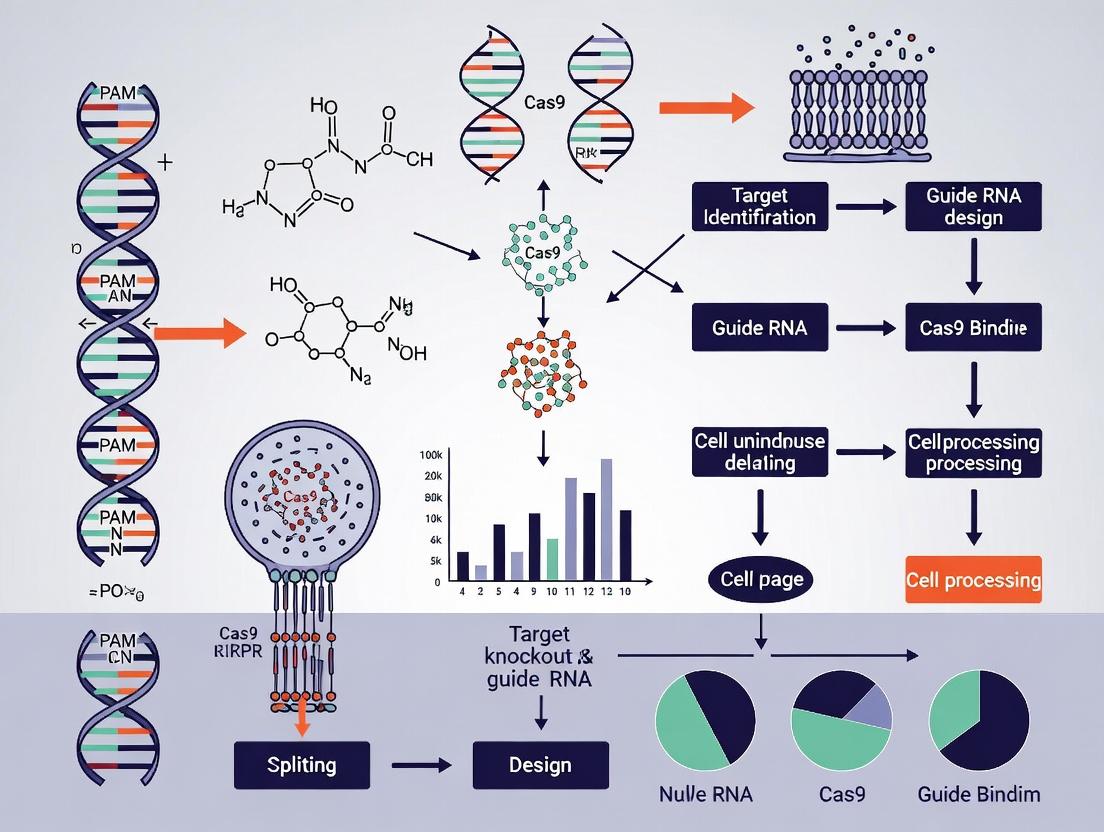
This comprehensive guide provides researchers, scientists, and drug development professionals with a complete workflow for generating CRISPR Cas9 knockout cell lines.
CRISPR Cas9 Knockout Cell Line Protocol: A Step-by-Step Guide for Researchers and Drug Developers
Abstract
This comprehensive guide provides researchers, scientists, and drug development professionals with a complete workflow for generating CRISPR Cas9 knockout cell lines. It covers foundational principles from mechanism to guide RNA design, details a hands-on, step-by-step protocol for delivery and clonal isolation, offers solutions to common troubleshooting and optimization challenges, and concludes with rigorous validation and comparative analysis strategies. This article serves as an essential resource for ensuring robust, reproducible, and well-characterized knockout models for functional genomics and therapeutic target validation.
Understanding CRISPR Cas9 Knockouts: Core Principles for Effective Cell Line Engineering
This whitepaper details the precise molecular mechanism by which the CRISPR-Cas9 system generates targeted DNA double-strand breaks (DSBs) and how the subsequent cellular repair processes lead to gene knockout. This mechanistic understanding is foundational to executing robust CRISPR-Cas9 knockout cell line protocols, a critical step in functional genomics, target validation, and drug discovery research.
Core Mechanism of Targeted Cleavage
The CRISPR-Cas9 system is an RNA-guided endonuclease derived from a prokaryotic adaptive immune system. Its function in gene editing relies on two core components:
- Cas9 Nuclease: A multi-domain enzyme that performs DNA cleavage.
- Guide RNA (gRNA): A chimeric RNA molecule consisting of a CRISPR RNA (crRNA) sequence, which provides target specificity via ~20 nucleotides of complementarity to the genomic DNA, and a trans-activating crRNA (tracrRNA), which forms a complex with Cas9.
The mechanism proceeds in three sequential steps:
1. Recognition and Binding: The Cas9-gRNA ribonucleoprotein (RNP) complex scans the genome for a protospacer adjacent motif (PAM), typically 5'-NGG-3' for Streptococcus pyogenes Cas9 (SpCas9). Upon locating a PAM, the gRNA begins to unwind the DNA duplex and form an R-loop structure if the ~20 nucleotides upstream of the PAM are complementary to the gRNA spacer sequence.
2. DNA Cleavage: Cas9 undergoes a conformational change that positions its two nuclease domains, HNH and RuvC, at the DNA target strand (complementary to the gRNA) and non-target strand, respectively. Each domain cleaves one strand, generating a blunt-ended DSB predominantly 3 nucleotides upstream of the PAM.
3. DSB Repair and Knockout: The cell recognizes the DSB as critical damage and initiates repair primarily via two competing, endogenous pathways:
- Non-Homologous End Joining (NHEJ): An error-prone pathway that directly ligates the broken ends, often resulting in small insertions or deletions (indels) at the junction.
- Homology-Directed Repair (HDR): A precise repair pathway that uses a homologous DNA template (e.g., an exogenous donor) to faithfully repair the break. In the absence of a repair template, NHEJ dominates.
Gene knockout is achieved when NHEJ-mediated repair introduces frameshift indels within the protein-coding exon of a target gene. This disrupts the translational reading frame, leading to premature termination codons (PTCs) and subsequent nonsense-mediated decay (NMD) of the mRNA or truncation of the protein, resulting in a loss-of-function allele.
Table 1: Key Quantitative Parameters of SpCas9 Cleavage
| Parameter | Description | Typical Value/Range |
|---|---|---|
| PAM Sequence | Recognition motif required for Cas9 binding | 5'-NGG-3' |
| Spacer Length | Target-specific sequence in gRNA | 20 nucleotides |
| Cleavage Site | Position of DSB relative to PAM | 3 bp upstream of PAM |
| Cleavage Product | Structure of DNA ends after cleavage | Blunt ends |
| Editing Efficiency | Rate of indel formation (cell-type dependent) | 20-80% in mammalian cells |
From DSB to Knockout: The Dominance of NHEJ
In a standard knockout experiment (without a donor template), the fate of the Cas9-induced DSB is predominantly determined by the NHEJ pathway.
Detailed NHEJ Mechanism:
- Damage Sensing: The Ku70/Ku80 heterodimer rapidly binds to the exposed DNA ends.
- End Processing: DNA ends may be processed by nucleases (e.g., Artemis), polymerases, or left unaltered. This step is inherently error-prone and creates the micro-heterogeneity that leads to indels.
- Ligation: The DNA Ligase IV/XRCC4/XLF complex ligates the two ends together.
The stochastic nature of end processing means each repaired allele in a population of cells acquires a unique indel. A significant subset of these indels (approximately one-third for a random distribution) will shift the translational reading frame.
Experimental Validation Protocol: To confirm knockout, researchers typically harvest genomic DNA from edited cells, amplify the target locus via PCR, and analyze the products.
- Sanger Sequencing & TIDE Analysis: PCR products are Sanger sequenced. The resulting chromatogram, showing overlapping sequences downstream of the cut site, is analyzed using tools like Tracking of Indels by DEcomposition (TIDE) to quantify the spectrum and frequency of indels.
- Next-Generation Sequencing (NGS): The PCR amplicons are deep sequenced. This provides a high-resolution, quantitative view of every indel allele present in the population, allowing precise calculation of knockout efficiency and frameshift frequency.
Table 2: Common Outcomes of NHEJ Repair Post-Cas9 Cleavage
| Repair Outcome | Structural Description | Consequence for Coding Sequence |
|---|---|---|
| Precise Ligation | No nucleotide change. | In-frame, no knockout (functional protein). |
| Deletion (-N) | Loss of nucleotides. | Frameshift if (Δbp) mod 3 ≠ 0. |
| Insertion (+N) | Addition of nucleotides. | Frameshift if (Δbp) mod 3 ≠ 0. |
| Complex Indel | Combined insertion/deletion. | Typically frameshifting. |
Title: CRISPR-Cas9 DSB Repair Pathway to Knockout
Advanced Considerations for Knockout Experiments
The Role of PAM Interference: Successful editing permanently alters the target DNA sequence. If the edit disrupts the PAM sequence (e.g., mutates the essential 'GG' dinucleotide), it prevents re-cleavage of the successfully edited allele, a phenomenon known as "PAM interference." This self-limiting behavior enriches for modified cells.
Experimental Protocol for Clonal Isolation: To generate a uniform knockout cell line, single-cell cloning is performed.
- Transfection/Electroporation: Deliver SpCas9 protein or mRNA and synthetic gRNA as an RNP complex into target cells for high efficiency and reduced off-target effects.
- Enrichment (Optional): Use fluorescence-activated cell sorting (FACS) if a fluorescent reporter is co-delivered, or antibiotic selection if a resistance marker is expressed.
- Single-Cell Seeding: Dilute and seed cells into 96-well plates to obtain clonal populations.
- Screening: Expand clones, extract genomic DNA, and screen via PCR/sequencing (as above) to identify clones with biallelic frameshift mutations.
- Validation: Confirm knockout at the protein level (e.g., by Western blot or flow cytometry) and functionally (e.g., via a phenotypic assay).
The Scientist's Toolkit: Key Research Reagent Solutions
Table 3: Essential Materials for CRISPR-Cas9 Knockout Experiments
| Reagent / Material | Function & Critical Considerations |
|---|---|
| SpCas9 Nuclease | The effector protein. Can be delivered as plasmid DNA, mRNA, or recombinant protein. RNP delivery offers rapid action and reduced off-target risk. |
| Synthetic sgRNA | A single-guide RNA combining crRNA and tracrRNA. Chemically modified sgRNAs can enhance stability and editing efficiency. |
| Delivery Vehicle | Method for intracellular delivery: Lipofectamine (plasmids), electroporation (RNPs/mRNA), or viral vectors (lentivirus for hard-to-transfect cells). |
| Positive Control gRNA | A validated gRNA targeting a housekeeping or easily assayed gene (e.g., AAVS1 safe harbor) to confirm system functionality. |
| NHEJ Inhibitor (e.g., SCR7) | Small molecule that can be used to transiently bias repair toward HDR, though its primary use is not in standard knockout workflows. |
| Cloning Reagents | For isolating single cells: 96-well plates, cloning medium, and optionally, cloning disks or FACS sorter. |
| Genomic DNA Extraction Kit | For rapid isolation of high-quality gDNA from clonal populations for screening. |
| PCR Mix & Primers | For amplifying the targeted genomic locus from clonal gDNA. High-fidelity polymerase is recommended. |
| NGS Library Prep Kit | For preparing amplicons from a pooled or clonal population for deep sequencing analysis of editing outcomes. |
| Antibodies | For validation of protein loss via Western blot or flow cytometry. Target-specific and loading control antibodies are required. |
Title: CRISPR Knockout Cell Line Workflow
This guide details the integrated pipeline from functional genomics to target validation, framed within the critical context of CRISPR-Cas9 knockout (KO) cell line research. The generation of precise genetic models is foundational for deconvoluting gene function, identifying therapeutic targets, and validating their role in disease. This whitepaper provides a technical deep-dive into methodologies, data interpretation, and translational applications for research and drug development professionals.
The Functional Genomics Pipeline with CRISPR-Cas9 KO Cells
Functional genomics aims to assign function to genes on a genome-wide scale. CRISPR-Cas9 KO cell lines serve as the primary workhorse for loss-of-function studies.
Core Experimental Protocol: Generating a Clonal CRISPR-Cas9 Knockout Cell Line
Objective: To create a stable, clonal cell line with a biallelic knockout of a gene of interest (GOI) for downstream phenotypic and mechanistic assays.
Materials & Reagents:
- Cas9-Expressing Cell Line: or transfection reagent and plasmid expressing Cas9 (e.g., pX459).
- sgRNA Design & Cloning: Oligos for GOI, cloning vector (e.g., pLentiGuide-Puro), BsmBI restriction enzyme, T4 DNA Ligase.
- Cell Culture Media & Supplements: Appropriate base medium, FBS, Penicillin/Streptomycin, selection antibiotics (Puromycin, Blasticidin).
- Validation Reagents: Lysis buffer, PCR reagents, T7 Endonuclease I or Surveyor Nuclease, Sanger sequencing primers, antibodies for Western Blot.
Detailed Protocol:
- sgRNA Design & Construction: Design two independent sgRNAs targeting early exons of the GOI using established tools (e.g., CRISPick, CHOPCHOP). Clone annealed oligos into a BsmBI-digested sgRNA expression vector. Sequence-verify the plasmid.
- Delivery: Transfect the sgRNA plasmid into your target cell line (with stable Cas9 expression) or co-transfect Cas9+sgRNA plasmids using a suitable method (lipofection, electroporation).
- Selection & Expansion: 48 hours post-transfection, apply the appropriate antibiotic (e.g., Puromycin, 1-5 µg/mL) for 3-5 days to select for transfected cells. Maintain cells without antibiotic for 2-3 days to allow expansion.
- Single-Cell Cloning: Seed cells at a density of 0.5 cells/well in a 96-well plate. Confirm clonality microscopically. Expand clones over 2-3 weeks.
- Genotypic Validation:
- PCR & Mismatch Detection Assay: Genomic DNA PCR of the target region. Treat the purified PCR product with T7E1 or Surveyor nuclease at 42°C for 1 hour. Analyze on agarose gel. Indels create heteroduplex DNA cleaved by the enzyme.
- Sequencing: Sanger sequence the PCR product. Use deconvolution software (e.g., TIDE, ICE) to quantify editing efficiency in polyclonal pools. For clones, sequence individual alleles via TA cloning or next-generation sequencing (NGS).
- Phenotypic Validation (Protein Level): Perform Western blot analysis using validated antibodies to confirm loss of target protein expression.
Quantitative Data from Functional Genomic Screens
Recent pooled CRISPR KO screens have identified essential genes across hundreds of cell lines, providing a quantitative fitness map.
Table 1: Summary of Key CRISPR Screen Datasets (DepMap)
| Dataset/Resource | # Cell Lines | # Genes Targeted | Core Fitness Genes Identified | Primary Application |
|---|---|---|---|---|
| DepMap 23Q4 Public | >1000 | ~18,000 | ~2,000 | Pan-cancer essentiality |
| Cancer Dependency Map | ~900 | ~18,000 | Varies by lineage | Identifying therapeutic targets |
| Project Achilles | ~800 | ~18,000 | ~1,600 | Gene essentiality profiling |
From Hit to Target: Validation Cascades
A hit from a functional genomics screen requires multi-layered validation to be considered a bona fide drug target.
Multi-Step Target Validation Protocol
Objective: To rigorously confirm the biological role and therapeutic relevance of a candidate gene identified in a screen.
Phase 1: Genetic Validation
- Method: Use multiple, independent sgRNAs against the same target in secondary assays. Employ CRISPR interference (CRISPRi) for transcriptional repression to rule out off-target effects of Cas9 cutting.
- Endpoint: Phenotypic concordance across targeting modalities strengthens specificity.
Phase 2: Pharmacological Validation (if tools exist)
- Method: Treat KO and wild-type (WT) cells with a small-molecule inhibitor or biologic against the target.
- Endpoint: WT cells should phenocopy the KO phenotype upon inhibitor treatment. KO cells should show no added effect, confirming on-target activity of the tool compound.
Phase 3: Mechanistic & Pathway Deconvolution
- Method: Perform transcriptomics (RNA-seq) or proteomics on isogenic KO/WT pairs. Use rescue experiments (e.g., introducing a cDNA copy resistant to the sgRNA) to confirm phenotype reversal.
- Endpoint: Establish the gene's position within a disease-relevant signaling pathway.
Key Signaling Pathways in Oncology Target Validation
Many validated oncology targets reside in core proliferation and survival pathways.
Title: Core Oncogenic Signaling Pathways for Validation
Quantitative Benchmarking for Validation
Successful targets demonstrate consistent, measurable effects across models.
Table 2: Target Validation Benchmark Metrics
| Validation Tier | Key Experiments | Success Metrics (Typical Range) | Acceptance Threshold |
|---|---|---|---|
| Genetic | 2+ independent sgRNAs | Phenotype correlation >80% | p < 0.01 vs. control |
| Rescue with cDNA | >70% phenotype reversion | ||
| Pharmacological | Tool compound dose-response in WT | IC50 in physiologically relevant range (nM-µM) | ≥10-fold selectivity over KO |
| Treatment of KO cells | No significant potency shift (∆IC50 < 2-fold) | ||
| Translational | Correlation in patient data (e.g., TCGA) | Hazard Ratio >1.5 for poor prognosis | FDR < 0.1 |
| Dependency in PDX models | Tumor growth inhibition >50% vs. control | p < 0.05 |
The Scientist's Toolkit: Essential Research Reagent Solutions
Table 3: Key Reagents for CRISPR KO & Validation Workflows
| Reagent Category | Specific Example | Function in Workflow |
|---|---|---|
| CRISPR Nucleases | SpCas9, HiFi Cas9, Cas12a | Induces targeted DNA double-strand break. HiFi variants reduce off-target effects. |
| Delivery Tools | Lentiviral sgRNA vectors, Lipofectamine 3000, Nucleofector | Enables stable or transient introduction of CRISPR components into cells. |
| Selection & Enrichment | Puromycin, Blasticidin S, Fluorescent Reporters (GFP) | Selects for successfully transfected/transduced cells. FACS enables enrichment. |
| Validation Enzymes/Kits | T7 Endonuclease I, Surveyor Kit, NGS Library Prep Kits | Detects indels at the target locus. NGS provides deep quantification. |
| Cell Line Engineering | Isogenic WT/KO Pair, cDNA Rescue Constructs | Provides controlled genetic background for phenotype attribution. |
| Phenotypic Assay Kits | CellTiter-Glo (Viability), Caspase-Glo (Apoptosis), Incucyte Reagents | Quantifies functional consequences of gene knockout in high-throughput format. |
| Pathway Analysis Tools | Phospho-specific Antibodies, Proteome Profiler Arrays | Maps the target gene's position and effect within signaling networks. |
Integrated Workflow: From Screen to Validated Target
The entire process, from initial discovery to pre-clinical candidate, follows a logical, iterative sequence.
Title: Integrated Workflow from Screen to Target
This guide details the foundational planning phase for a CRISPR-Cas9 knockout project, forming the first critical chapter of a comprehensive thesis on knockout cell line generation. The success of the entire experimental cascade—from gRNA design to clone validation—hinges on rigorous upfront definition of biological goals and strategic gene selection.
Defining Project Goals: A Quantitative Framework
Clear, quantifiable objectives align the project with broader research aims in functional genomics, drug target validation, or disease modeling. Key decision metrics must be established.
Table 1: Quantitative Framework for Goal Definition
| Goal Category | Primary Metrics | Typical Benchmark/Target | Measurement Assay |
|---|---|---|---|
| Functional Gene Validation | Phenotypic effect size (e.g., proliferation reduction) | ≥70% change vs. control | Incucyte live-cell analysis, ATP-based viability |
| Drug Target Identification | Shift in IC50 of therapeutic compound | ≥5-fold increase in resistant clone | Dose-response curve (10-point, n≥3) |
| Pathway Deconvolution | Downstream phospho-protein level change | ≥50% reduction from basal | Western blot, phospho-flow cytometry |
| Disease Modeling | Expression of disease-relevant marker | Induction to ≥80% of positive control | qPCR, immunocytochemistry |
Title: Goal-Driven Experimental Design Hierarchy
Systematic Target Gene Selection
Selection moves beyond gene-of-interest novelty to a multi-parameter assessment ensuring experimental feasibility and biological relevance.
Table 2: Target Gene Selection Criteria & Data Sources
| Criterion | Optimal Value/Range | Public Database/Source | Quantitative Score Weight |
|---|---|---|---|
| Essentiality Score (CERES/Chronos) | >0.5 (Non-essential in parent cell) | DepMap Portal (22Q4) | 30% |
| Expression Level (TPM/FPKM) | >10 TPM (for reliable detection) | GTEx, CCLE, in-house RNA-seq | 20% |
| Isoform Complexity | ≤3 predominant protein-coding isoforms | Ensembl, NCBI RefSeq | 15% |
| Predicted Off-Target Sites | ≤5 sites with ≤3 mismatches | CRISPick, CHOPCHOP | 20% |
| Known Domain Structure | Clear, central functional domain | UniProt, Pfam | 15% |
Protocol 3.1: Retrieving and Integrating Gene Selection Data
- Access DepMap (https://depmap.org/portal/): Query gene of interest. Download CERES score for your specific cell line (e.g., A549: CERES = -0.15). Scores near 0 indicate neutrality; negative scores indicate essentiality.
- Query CRISPick (https://portals.broadinstitute.org/gppx/crispick/public): Input gene ID and select appropriate reference (e.g., hg38). Retrieve top 20 gRNA ranks. Export off-target predictions for each.
- Cross-reference Ensembl: Use the gene stable ID to review all annotated transcripts. Filter for "MANE Select" or "Ensembl Canonical" to identify the principal isoform.
- Calculate Composite Score: Apply the weights from Table 2 to normalized (0-1) values for each criterion. Genes with a final score >0.7 are high-priority candidates.
Integrating Goals with Selection: The Pathway Context
Mapping the target gene onto its relevant signaling pathway clarifies the expected phenotypic outcome and guides subsequent validation assays.
Title: Pathway Knockout Logic for a Proliferation Target
The Scientist's Toolkit: Research Reagent Solutions
Table 3: Essential Reagents for Pre-Experimental Planning
| Reagent / Material | Supplier Examples | Critical Function in Planning Phase |
|---|---|---|
| Validated Cell Line | ATCC, ECACC | Provides a genetically stable, authenticated background for knockout. |
| Cell Line-Specific Media | Thermo Fisher, Sigma | Maintains consistent physiology and prevents stress-induced artifacts. |
| qPCR Primer Assays | IDT, Bio-Rad | Validates baseline target gene expression in the parent line. |
| Reference Control gRNA | Synthego, Horizon (EDIT-R) | Non-targeting control for benchmarking editing efficiency and phenotype. |
| Genomic DNA Isolation Kit | Qiagen, Promega | High-yield, pure gDNA required for initial sequencing and later genotyping. |
| NGS Library Prep Kit | Illumina, NEB | For deep-sequencing validation of on-target and potential off-target sites. |
| CRISPR Design Tool Subscription | Benchling, SnapGene | Integrated platform for gRNA design, off-target analysis, and sequence management. |
Within the context of CRISPR Cas9 knockout cell line protocol research, the precision and efficacy of a knockout experiment are fundamentally determined by the initial design of the guide RNA (gRNA). The gRNA serves as the molecular homing device for the Cas9 nuclease, directing it to a specific genomic locus for the creation of a double-strand break (DSB). This technical guide details the core principles, modern tools, and critical criteria for designing gRNAs that maximize on-target efficiency while mitigating off-target effects, a prerequisite for generating high-quality, clonal knockout cell lines.
Core Principles of gRNA Design
The selection of a target sequence within a gene of interest is governed by several biochemical and genomic principles:
- Protospacer Adjacent Motif (PAM) Requirement: The Cas9 nuclease (from Streptococcus pyogenes, SpCas9) requires a specific PAM sequence immediately downstream (3') of the target site. The canonical PAM for SpCas9 is 5'-NGG-3', where 'N' is any nucleotide. The target sequence (protospacer) is the 20 nucleotides directly upstream of this PAM.
- Target Location: For gene knockout via non-homologous end joining (NHEJ), gRNAs should be designed to target early exonic regions, preferably within constitutive exons common to all transcript variants, to maximize the likelihood of generating frameshift mutations.
- Sequence Composition: gRNA efficiency is influenced by nucleotide content. Guidelines include:
- A G or C at the 5' terminus of the gRNA (the "seed" region nearest the PAM) enhances stability.
- A GC content between 40-60% is generally optimal.
- Avoidance of homopolymeric stretches (e.g., AAAA, CCCC) and single-nucleotide repeats.
Quantitative Design Criteria & Predictive Scoring
The following criteria, often integrated into algorithmic scoring models, are critical for predicting on-target efficiency. Data from recent benchmarking studies are summarized below.
Table 1: Key gRNA Design Criteria and Their Impact on Efficiency
| Criterion | Optimal Range / Feature | Rationale & Impact |
|---|---|---|
| GC Content | 40% - 60% | Moderate GC content balances stability and specificity. Low GC may be less stable; high GC may increase off-target risk. |
| Seed Region GC | High (esp. position 20) | A G or C at the 1st base (position 20, adjacent to PAM) strongly correlates with high activity. |
| Melting Temperature (Tm) | ~55-65°C | Predicts gRNA:DNA duplex stability. Extremes can reduce efficiency. |
| Specificity (Off-Target) | 0-3 mismatches in seed region | Mismatches in the 10-12bp PAM-proximal "seed" region drastically reduce cleavage. Algorithms penalize gRNAs with highly similar genomic sequences. |
| Poly-T & Homopolymers | Avoid >4 nt repeats | TTTT can act as a premature RNA Polymerase III termination signal. Homopolymers can cause synthesis errors. |
| SNP Presence | Avoid common SNPs | Single nucleotide polymorphisms (SNPs) in the target population can prevent gRNA binding, reducing editing efficiency. |
Table 2: Comparison of Major gRNA Design & Scoring Tools (2023-2024)
| Tool Name | Primary Access | Key Scoring Algorithms | Unique Features | Best For |
|---|---|---|---|---|
| CRISPick (Broad) | Web Portal | Azimuth (deep learning), Rule Set 2 | Integrates with Broad's pipeline; excellent specificity scoring; human/mouse focus. | Standardized, high-throughput design. |
| CHOPCHOP v3 | Web, CLI, API | Efficiency, specificity, CRISPRscan | Visualizes target location on isoforms; supports many Cas variants & organisms. | Multi-organism and multi-Cas nuclease design. |
| CRISPOR | Web, CLI | Doench ’16, Moreno-Mateos, CFD specificity | Comprehensive off-target search with detailed mismatch analysis. | In-depth specificity analysis and validation. |
| UCSC Genome Browser | Plugin (CRISPR Track) | Integrated CRISPOR scores | Visualizes gRNAs directly in genomic context alongside other annotations. | Target selection within complex genomic regions. |
| Synthego CRISPR Design | Web Portal | Proprietary AI/ML Model | Includes synthesis-ready oligo sequences; extensive validation data. | Rapid design for synthetic gRNA orders. |
Experimental Protocol: Validating gRNA On-Target Efficiency
Prior to embarking on full knockout cell line generation, it is essential to empirically validate the cleavage efficiency of designed gRNAs.
Protocol: T7 Endonuclease I (T7EI) Mismatch Detection Assay
This protocol assesses the rate of indel formation at the target locus in a transfected cell population.
Material Preparation:
- Design and synthesize gRNA oligos (or order synthetic gRNA).
- Prepare or purchase Cas9 expression vector or RNP complex.
- Cultured cells for transfection (e.g., HEK293T, HeLa).
- Transfection reagent appropriate for your cell line.
- Genomic DNA extraction kit.
- PCR reagents, high-fidelity DNA polymerase.
- T7 Endonuclease I enzyme (NEB #M0302S).
- Agarose gel electrophoresis system.
Procedure:
- Day 1: Seed cells in a 24-well plate at 70-80% confluence.
- Day 2: Transfect cells with the Cas9 and gRNA constructs according to manufacturer protocol. Include a negative control (Cas9 only).
- Day 4-5: Harvest cells (typically 72h post-transfection) and extract genomic DNA.
- PCR Amplification: Design primers ~200-400bp flanking the target site. Perform PCR on extracted genomic DNA from treated and control samples.
- Heteroduplex Formation:
- Purify PCR products.
- Denature and reanneal: Mix 200ng of purified PCR product in 1X NEBuffer 2.1 in a total volume of 19µL. Denature at 95°C for 5 min, then ramp down to 85°C at -2°C/s, then to 25°C at -0.1°C/s.
- T7EI Digestion:
- Add 1µL of T7 Endonuclease I to the 19µL reannealed product. Incubate at 37°C for 30 minutes.
- Include an undigested control (add 1µL of buffer instead of enzyme).
- Analysis: Run the entire reaction on a 2-2.5% agarose gel. The presence of cleaved bands indicates indel formation. Estimate efficiency using band intensity analysis software.
Calculating Efficiency: Use densitometry to measure band intensities. If
aandbare the cleaved bands, andcis the uncleaved band:
Visualizing the gRNA Design & Validation Workflow
Diagram Title: gRNA Design & Selection Pipeline
The Scientist's Toolkit: Essential Reagents for gRNA Validation
Table 3: Key Research Reagent Solutions for gRNA Efficiency Testing
| Reagent / Material | Function & Explanation | Example Vendor/Product |
|---|---|---|
| High-Fidelity DNA Polymerase | Amplifies the genomic locus flanking the target site with minimal error for downstream analysis. | NEB Q5, Takara PrimeSTAR GXL |
| T7 Endonuclease I | Detects heteroduplex DNA formed by annealing of indel-containing and wild-type PCR strands; cleaves at mismatch sites. | New England Biolabs (M0302) |
| Genomic DNA Extraction Kit | Rapidly purifies high-quality, PCR-ready genomic DNA from transfected mammalian cells. | Qiagen DNeasy, Zymo Quick-DNA |
| Cell Line-Specific Transfection Reagent | Delivers plasmid DNA or RNP complexes into the target cells for gRNA/Cas9 expression. | Lipofectamine 3000, JetOPTIMUS, Neon Electroporation System |
| Synthetic gRNA or Oligos | Provides highly pure, consistent gRNA without cloning; enables rapid RNP complex formation. | Synthego, IDT Alt-R CRISPR-Cas9 gRNA |
| Next-Generation Sequencing (NGS) Library Prep Kit | For deep sequencing validation (amplicon-seq), providing quantitative, base-resolution indel data. | Illumina TruSeq, Swift Biosciences Accel-NGS |
| Surveyor / Cel-I Nuclease | Alternative to T7EI for mismatch detection; sometimes preferred for specificity. | Integrated DNA Technologies |
Integration with CRISPR Knockout Cell Line Protocol
The validated, high-efficiency gRNA is the foundational input for the subsequent steps in generating a clonal knockout cell line. It will be used to construct a lentiviral delivery vector (for stable cell lines) or to form ribonucleoprotein (RNP) complexes for direct transfection/electroporation. Following delivery, the principles of single-cell cloning, screening via PCR and Sanger sequencing, and functional validation are employed to establish and characterize the knockout line. Rigorous gRNA design, as outlined here, directly minimizes the screening burden downstream by ensuring a high initial rate of editing in the target cell population.
Within the context of CRISPR Cas9 knockout cell line generation, the choice of delivery format is a critical determinant of experimental success, impacting editing efficiency, specificity, cellular toxicity, and experimental timeline. This technical guide provides an in-depth comparison of the three primary formats: plasmid DNA, mRNA/sgRNA, and pre-assembled Ribonucleoprotein (RNP) complexes.
Quantitative Comparison of CRISPR Delivery Formats
The following table summarizes core performance metrics based on current literature and experimental data.
Table 1: Comparative Analysis of CRISPR-Cas9 Delivery Formats
| Parameter | Plasmid DNA (pDNA) | mRNA + sgRNA | Ribonucleoprotein (RNP) |
|---|---|---|---|
| Time to Nuclease Activity | Slow (24-48 hrs) | Moderate (4-12 hrs) | Very Fast (<1-4 hrs) |
| Typical Editing Efficiency | Moderate to High | High | Very High (especially in hard-to-transfect cells) |
| Risk of Genomic Integration | High (vector sequence) | None | None |
| Off-target Effect Risk | Higher (prolonged expression) | Moderate | Lowest (transient presence) |
| Cellular Toxicity | Low to Moderate | Moderate (immune response to RNA) | Low |
| Ease of Use / Production | Easy; standard cloning | Requires in vitro transcription (IVT) | Requires protein purification or commercial purchase |
| Cost | Low | Moderate | High |
| Ideal Application | Stable cell line generation, long-term studies | High-efficiency editing in standard cell lines | Primary cells, hard-to-transfect cells, clinical applications, rapid screening |
Detailed Experimental Protocols
The protocols below are integral to a comprehensive CRISPR knockout cell line workflow.
Protocol 1: Knockout Cell Line Generation via RNP Electroporation
This method is favored for its high efficiency and speed in generating clonal knockouts.
- RNP Complex Assembly: Combine 10 µg of purified Cas9 protein (e.g., Spy Cas9) with a 1.2-1.5x molar excess of synthetic sgRNA (typically 3-5 µg) in a sterile tube. Add nuclease-free buffer (e.g., PBS or Opti-MEM) to a final volume of 10 µL. Incubate at room temperature for 10-20 minutes.
- Cell Preparation: Harvest 1-2 x 10^6 target cells (e.g., HEK293, iPSCs, or primary T-cells) by trypsinization or gentle resuspension. Wash twice with PBS and resuspend in 100 µL of electroporation buffer specific to your system (e.g., Neon Buffer, SE Cell Line Solution).
- Electroporation: Mix the cell suspension with the pre-assembled RNP complex. Transfer to an electroporation cuvette or tip. Apply the optimized electrical pulse (e.g., 1600V, 10ms, 3 pulses for Neon system). Refer to manufacturer protocols for cell-specific parameters.
- Recovery & Analysis: Immediately transfer electroporated cells to pre-warmed, antibiotic-free culture medium. Analyze initial editing efficiency at the genomic DNA level via T7EI assay or next-generation sequencing (NGS) 48-72 hours post-delivery.
- Clonal Isolation: At 48 hours post-electroporation, dissociate and seed cells at low density (e.g., 0.5 cells/well) into 96-well plates for clonal expansion. Screen individual clones by PCR and sequencing (typically 7-14 days later).
Protocol 2: Plasmid-Based Knockout via Lipofection
A standard method for easily transfectable cell lines.
- Vector Design: Clone the expression cassette for Cas9 and the target-specific sgRNA into a single plasmid backbone (e.g., px459). Verify sequence by Sanger sequencing.
- Transfection: Seed cells 24 hours prior to reach 70-80% confluency. For a 6-well plate, prepare two tubes: Tube A: Dilute 2.5 µg plasmid DNA in 250 µL serum-free medium. Tube B: Dilute 7.5 µL of a transfection reagent (e.g., Lipofectamine 3000) in 250 µL serum-free medium. Combine tubes A and B, incubate 15 minutes at RT, then add dropwise to cells.
- Selection & Cloning: At 24-48 hours post-transfection, begin puromycin selection (typically 1-5 µg/mL, concentration must be pre-determined) for 3-5 days to eliminate non-transfected cells. Surviving cells are then trypsinized and subjected to clonal dilution as in Protocol 1, Step 5.
Visualized Workflows and Pathways
CRISPR Plasmid Delivery Workflow
CRISPR RNP Delivery Workflow
CRISPR Format Selection Guide
The Scientist's Toolkit: Essential Research Reagent Solutions
Table 2: Key Reagents for CRISPR Knockout Experiments
| Reagent / Material | Function in Protocol | Key Considerations |
|---|---|---|
| High-Fidelity Cas9 Expression Plasmid (e.g., px459) | All-in-one vector for Cas9, sgRNA, and puromycin selection marker. Enables stable integration and selection. | Contains mammalian promoters (CMV, U6). Critical to verify sequence post-cloning. |
| Purified Recombinant Cas9 Nuclease | Protein component for RNP assembly. Enables immediate, transient editing activity. | Commercial sources (e.g., IDT, Thermo Fisher) ensure high purity and nuclease activity. Aliquot to avoid freeze-thaw cycles. |
| Chemically Modified Synthetic sgRNA | Guides Cas9 to the specific genomic target site. Used in RNA and RNP formats. | Chemical modifications (e.g., 2'-O-methyl, phosphorothioate) enhance stability and reduce immune response. |
| Electroporation System (e.g., Neon, Nucleofector) | Enables physical delivery of RNP or RNA into hard-to-transfect cells via electrical pulses. | Optimization of pulse parameters (voltage, width, number) is cell-type specific and crucial for viability. |
| Lipofectamine 3000 Transfection Reagent | Lipid-based delivery vehicle for plasmids or RNA into adherent cell lines with high efficiency and low toxicity. | Serum-free conditions are required during complex formation. Optimal DNA:reagent ratio varies. |
| T7 Endonuclease I (T7EI) or Surveyor Nuclease | Detects indel mutations at the target locus by cleaving heteroduplex DNA formed from mixed wild-type and edited sequences. | A rapid, low-cost method for initial efficiency screening but less sensitive than NGS. |
| NGS-based Editing Analysis Service (e.g., amplicon-seq) | Provides quantitative, high-throughput, and precise measurement of editing efficiency and indel spectra. | Essential for characterizing clonal cell lines and rigorously assessing on- and off-target effects. |
| Puromycin Dihydrochloride | Antibiotic selection agent for cells transfected with plasmids containing a puromycin resistance gene (e.g., px459). | A kill curve must be performed for each new cell line to determine the optimal minimum effective concentration. |
Step-by-Step CRISPR Cas9 Knockout Protocol: From Transfection to Clonal Expansion
This in-depth technical guide details the foundational first step within the broader CRISPR Cas9 knockout cell line generation protocol. Successful outcomes in gene editing rely heavily on meticulous preparation, encompassing robust mammalian cell culture and the precise assembly of functional CRISPR ribonucleoprotein (RNP) complexes. This step establishes the essential prerequisites for the subsequent stages of delivery, selection, and validation.
Part 1: Mammalian Cell Culture Preparation
Optimal cell health and growth phase are critical for achieving high editing efficiency and cell viability post-transfection.
Key Quantitative Parameters for Common Cell Lines
Table 1: Culture Parameters for Commonly Edited Mammalian Cell Lines
| Cell Line Type | Recommended Medium | Seeding Density for Transfection | Target Confluency at Transfection | Recommended Split Ratio | Doubling Time (Approx.) |
|---|---|---|---|---|---|
| HEK293T | DMEM + 10% FBS | 0.5 - 2.0 x 10^5 cells/cm² | 70-80% | 1:5 to 1:10 | 24-36 hours |
| HeLa | DMEM + 10% FBS | 0.5 - 1.5 x 10^5 cells/cm² | 70-80% | 1:5 to 1:8 | 24 hours |
| U2OS | McCoy's 5A + 10% FBS | 0.8 - 1.5 x 10^5 cells/cm² | 70-80% | 1:4 to 1:6 | 30-40 hours |
| HCT 116 | McCoy's 5A + 10% FBS | 1.0 - 2.0 x 10^5 cells/cm² | 70-85% | 1:5 to 1:8 | 16-24 hours |
| iPSCs | mTeSR Plus or等效 | 0.5 - 1.5 x 10^5 cells/cm² | 50-70% | 1:10 to 1:20 | 24-48 hours |
Detailed Protocol: Thawing and Maintaining Adherent Cells
- Quick-Thaw: Remove cryovial from liquid nitrogen and immediately place in a 37°C water bath for ~1-2 minutes until only a small ice crystal remains.
- Dilution: Transfer cell suspension to a 15 mL conical tube containing 9 mL of pre-warmed complete growth medium to dilute the cryoprotectant (DMSO).
- Centrifugation: Centrifuge at 150-200 x g for 4 minutes. Aspirate supernatant.
- Reseed: Gently resuspend cell pellet in fresh complete medium. Seed cells into an appropriately sized culture vessel pre-coated if necessary (e.g., poly-L-lysine for neurons).
- Incubation: Place cells in a humidified incubator at 37°C with 5% CO₂.
- Monitoring & Passaging: Monitor daily. When cells reach 80-90% confluency, passage as follows:
- Aspirate medium.
- Wash with 1X Dulbecco's Phosphate-Buffered Saline (DPBS) without Ca²⁺/Mg²⁺.
- Add pre-warmed dissociation reagent (e.g., 0.25% Trypsin-EDTA) and incubate for 2-5 minutes at 37°C.
- Neutralize with complete medium. Centrifuge, resuspend, and seed at appropriate dilution.
Diagram Title: Mammalian Cell Culture Workflow for CRISPR Prep
Part 2: Assembling CRISPR-Cas9 RNP Complex
The ribonucleoprotein (RNP) complex, comprising purified Cas9 protein and a synthetic single-guide RNA (sgRNA), is the most direct and rapidly active editing tool, minimizing off-target effects and DNA vector integration risks.
Key Quantitative Parameters for RNP Assembly
Table 2: Typical RNP Assembly Components and Ratios for a 10 µL Reaction
| Component | Type/Example Stock Concentration | Final Amount per RNP | Molar Ratio (sgRNA:Cas9) | Notes |
|---|---|---|---|---|
| Cas9 Nuclease | 10 µM (e.g., Spy Cas9) | 1-3 pmol (0.1-0.3 µL) | 1:1 to 1.5:1 | Recombinant, high-fidelity variants recommended. |
| sgRNA (crRNA:tracrRNA duplex or synthetic sgRNA) | 10 µM | 1.2-4.5 pmol (0.12-0.45 µL) | Chemically modified sgRNAs enhance stability. | |
| Nuclease-Free Duplex Buffer (or equivalent) | - | To volume | Provides optimal ionic conditions for complex formation. | |
| Total Volume | 10 µL |
Detailed Protocol: RNP Complex Assembly
- Reagent Thaw: Thaw all components (Cas9 protein, sgRNA, buffers) on ice. Briefly centrifuge tubes to collect contents.
- Complex Formation: In a sterile, nuclease-free microcentrifuge tube, combine the following in order:
- Nuclease-free water (to bring final volume to 10 µL).
- Cas9 protein (final concentration 100-300 nM).
- sgRNA (final concentration 120-450 nM).
- Incubation: Mix gently by pipetting. Do not vortex. Incubate the mixture at room temperature (20-25°C) for 10-20 minutes to allow complete RNP complex formation.
- Immediate Use: Use the assembled RNP complex immediately for transfection (e.g., with lipofectamine CRISPRMAX) or nucleofection. Do not store the assembled RNP for extended periods.
Diagram Title: CRISPR-Cas9 RNP Complex Assembly Protocol
The Scientist's Toolkit: Essential Research Reagents
Table 3: Key Reagents for Cell Preparation and CRISPR Assembly
| Reagent Category | Specific Example | Function & Critical Notes |
|---|---|---|
| Cell Culture | Dulbecco's Modified Eagle Medium (DMEM) with high glucose | Provides essential nutrients and energy for most adherent mammalian cell lines. |
| Fetal Bovine Serum (FBS), heat-inactivated | Supplies growth factors, hormones, and attachment factors. Heat inactivation removes complement activity. | |
| 0.25% Trypsin-EDTA Solution | Proteolytic enzyme for detaching adherent cells during passaging. EDTA chelates calcium to enhance trypsin activity. | |
| DPBS (without Ca²⁺/Mg²⁺) | Balanced salt solution for washing cells and diluting dissociation reagents. | |
| CRISPR Components | Recombinant S. pyogenes Cas9 Nuclease (HiFi variant) | Endonuclease that creates double-strand breaks at DNA sites complementary to the sgRNA sequence. HiFi variants reduce off-target effects. |
| Synthetic sgRNA (chemically modified) | Chimeric RNA molecule combining crRNA (target-specific) and tracrRNA (scaffold). Chemical modifications (e.g., 2'-O-methyl, phosphorothioate) increase nuclease resistance. | |
| Nuclease-Free Duplex Buffer (IDT) or TE Buffer | Optimized buffer for resuspending and annealing RNA oligos or forming RNP complexes, maintaining RNA stability. | |
| Assembly & Delivery | Lipofectamine CRISPRMAX Transfection Reagent | Cationic lipid formulation specifically optimized for high-efficiency delivery of CRISPR RNP complexes into a wide range of cell types. |
| Nuclease-Free Water | Solvent free of RNases and DNases for diluting sensitive nucleic acids and proteins. | |
| Sterile, Nuclease-Free Microcentrifuge Tubes & Tips | Prevents contamination and degradation of CRISPR reagents. |
This guide provides a technical comparison of three primary delivery methods for CRISPR-Cas9 components within the context of generating knockout cell lines, a critical step in functional genomics and drug target validation.
Quantitative Comparison of Delivery Methods
Table 1: Core Performance Metrics of CRISPR-Cas9 Delivery Methods
| Parameter | Lipid Transfection | Electroporation | Viral Transduction (Lentivirus) |
|---|---|---|---|
| Typical Efficiency (Delivery %) | 70-95% (adherent cell lines) | 80-99% (hard-to-transfect cells) | >90% (dividing & non-dividing) |
| Cytotoxicity | Low to Moderate | Moderate to High | Low (post-transduction) |
| Primary Cell Suitability | Low to Moderate | High | High |
| Suspension Cell Suitability | Low | High | High |
| Insert Size Limitation | ~10-15 kb | Large (System dependent) | ~8 kb (lentiviral cargo limit) |
| Speed of Expression | Rapid (24-48h) | Rapid (24-48h) | Delayed (integration-dependent) |
| Stable Genomic Integration | Rare (transient) | Rare (transient) | Common (for integrating vectors) |
| Cost per Experiment | Low | Moderate | High (production & safety) |
| Technical Complexity | Low | Moderate | High (production & handling) |
| Biosafety Level | BSL-1/2 | BSL-1/2 | BSL-2+ (for lentivirus) |
Table 2: Method Selection Guide by Cell Type
| Cell Type / Requirement | Recommended Method | Rationale |
|---|---|---|
| Easy-to-transfect adherent (HEK293, HeLa) | Lipid Transfection | High efficiency, low cost, simplicity. |
| Hard-to-transfect adherent (primary neurons) | Electroporation or Viral Transduction | Overcomes barrier of low phagocytosis. |
| Suspension cells (Jurkat, THP-1) | Electroporation | Effective where lipid particles sediment out. |
| Primary immune cells (T cells) | Electroporation (non-viral) or Viral Transduction | Gold standard for clinical applications. |
| Requiring stable, long-term knockdown/out | Viral Transduction | Genomic integration enables persistent expression. |
| High-throughput screening | Lipid Transfection (arrayed) or Viral (pooled) | Scalability and cost considerations. |
Detailed Experimental Protocols
Protocol 1: Lipid-Based Transfection of CRISPR RNP
This protocol is optimized for adherent cell lines using Cas9-gRNA ribonucleoprotein (RNP) complexes.
Key Reagents:
- Cas9 Nuclease (e.g., from Integrated DNA Technologies, Sigma-Aldrich)
- Synthetic crRNA and tracrRNA or sgRNA
- Commercial Lipid Transfection Reagent (e.g., Lipofectamine CRISPRMAX, RNAiMAX)
- Opti-MEM Reduced Serum Medium
Procedure:
- RNP Complex Formation: Resuspend synthetic crRNA and tracrRNA to 100 µM in nuclease-free buffer. Mix equal volumes to make 50 µM duplex. For one well of a 24-well plate, combine 1.2 µl of 50 µM gRNA duplex with 1.5 µl of 20 µM Cas9 protein in a sterile tube. Incubate at room temperature for 10-20 minutes.
- Lipid Mixture Preparation: In a separate tube, dilute 3 µl of Lipid Transfection Reagent in 50 µl Opti-MEM. Incubate 5 minutes at RT.
- Complexation: Combine the diluted lipid with the RNP complex. Mix gently and incubate for 10-20 minutes at RT.
- Cell Transfection: Aspirate medium from cells at 70-90% confluency. Add the RNP-lipid complexes dropwise to cells in 500 µl fresh, antibiotic-free complete medium.
- Incubation & Analysis: Incubate cells at 37°C, 5% CO₂. Change medium after 6-24 hours. Assess editing efficiency via T7E1 assay or NGS 48-72 hours post-transfection.
Protocol 2: Electroporation of CRISPR RNP into Suspension Cells
This protocol uses the Neon Transfection System for Jurkat T cells.
Key Reagents:
- Cas9-GFP protein or Cas9 RNP
- Electroporation Buffer T or R (System specific)
- Neon Transfection System Tips and Pipette
Procedure:
- Cell Preparation: Culture Jurkat cells to log phase. Harvest 2-5 x 10⁵ cells per reaction, wash once with PBS, and resuspend in Resuspension Buffer R at a concentration of 2 x 10⁷ cells/ml.
- RNP Formation: Prepare Cas9 RNP complex as in Protocol 1. For each reaction, use 5 µg Cas9 protein and 3 µl of 100 µM gRNA duplex.
- Electroporation Setup: Mix 10 µl cell suspension with the pre-formed RNP complex. Aspirate into a Neon Tip.
- Pulse Conditions: Electroporate using preset protocol: 1320V, 10ms, 3 pulses.
- Recovery: Immediately transfer electroporated cells into pre-warmed, antibiotic-free medium in a 24-well plate.
- Analysis: Incubate and analyze editing efficiency as above. For Cas9-GFP, efficiency can be estimated via flow cytometry at 24h.
Protocol 3: Lentiviral Transduction for Stable Knockout Pool Generation
This protocol involves production of VSV-G pseudotyped lentivirus encoding SpCas9 and a gRNA.
Key Reagents:
- Lentiviral Packaging Plasmids: psPAX2, pMD2.G
- Transfer Plasmid: lentiCRISPRv2 (addgene #52961)
- Lenti-X Concentrator (Takara Bio)
- Polybrene (hexadimethrine bromide)
Procedure: A. Virus Production (in HEK293T cells):
- Seed HEK293T cells in a 6-well plate to reach 70% confluency next day.
- Co-transfect with 1 µg transfer plasmid, 0.75 µg psPAX2, and 0.25 µg pMD2.G using a standard PEI or lipid protocol.
- Replace medium 6h post-transfection with fresh complete medium.
- Harvest viral supernatant at 48 and 72 hours, filter through a 0.45 µm PES filter.
- Concentrate virus using Lenti-X Concentrator per manufacturer's instructions. Aliquot and store at -80°C.
B. Target Cell Transduction:
- Seed target cells at ~30% confluency in a 24-well plate.
- Thaw virus aliquot on ice. Dilute concentrated virus in medium containing 8 µg/ml Polybrene.
- Replace target cell medium with the virus-Polybrene mixture.
- Spinoculate by centrifuging plate at 800 x g for 30 minutes at 32°C. Then incubate at 37°C.
- Replace with fresh medium after 24 hours.
- Begin selection with appropriate antibiotic (e.g., 1-2 µg/ml Puromycin) 48 hours post-transduction. Maintain selection for 5-7 days to establish a polyclonal knockout pool.
Visualizations
Decision Workflow for CRISPR Delivery
Mechanistic Pathways of Each Delivery Method
The Scientist's Toolkit: Key Research Reagent Solutions
Table 3: Essential Reagents for CRISPR Delivery Experiments
| Reagent / Kit | Primary Function | Key Considerations |
|---|---|---|
| Lipofectamine CRISPRMAX (Thermo Fisher) | Lipid reagent optimized for RNP delivery. | High efficiency for adherent lines, low cytotoxicity vs. standard lipids. |
| Neon Transfection System (Thermo Fisher) | Electroporation device for 10µl-100µl samples. | Excellent for primary/suspension cells; requires optimization of pulse parameters. |
| 4D-Nucleofector System (Lonza) | Electroporation with cell-type specific programs & cuvettes. | Broad validated protocols for difficult cells (e.g., stem cells, neurons). |
| Lenti-X Packaging Single Shots (Takara Bio) | Simplified, third-generation lentivirus packaging system. | Reduces plasmid handling, improves consistency, BSL-2 compatible. |
| Polybrene (Hexadimethrine bromide) | Cationic polymer that enhances viral adhesion to cells. | Standard for lentiviral transduction; can be toxic—titrate for each cell type. |
| Puromycin Dihydrochloride | Selection antibiotic for lentiviral vectors carrying pac resistance gene. | Critical dose must be determined via kill curve for each new cell line. |
| Recombinant Cas9 Nuclease (NLS-tagged) | Ready-to-use protein for RNP formation with synthetic gRNA. | Enables rapid, transient editing without DNA; reduces off-target risk. |
| Synthetic crRNA & tracrRNA (Alt-R CRISPR-Cas9) | Chemically modified RNAs for RNP assembly. | Increases stability, reduces immune response, improves editing efficiency. |
| Opti-MEM I Reduced Serum Medium | Low-serum medium for lipid complex formation. | Essential for diluting lipids and nucleic acids/RNPs prior to complexation. |
This technical guide details Step 3 of a comprehensive CRISPR-Cas9 knockout cell line generation protocol. Following transfection, the focus shifts to post-transfection handling, a critical phase determining experimental success. This phase involves cell recovery, application of selective pressure to isolate edited cells, and implementation of enrichment strategies to increase the proportion of knockout clones. Efficient execution is paramount for researchers and drug development professionals aiming to generate high-quality, clonal cell lines for functional genomics and therapeutic target validation.
Cell Recovery and Media Replenishment
After transfection, cells undergo significant stress. A dedicated recovery period is essential for cellular health and to allow expression of the CRISPR machinery and antibiotic resistance genes.
Key Protocol: Post-Transfection Recovery
- Timing: 24-48 hours post-transfection.
- Procedure:
- Gently replace the transfection medium with fresh, complete growth medium 6-24 hours post-transfection to remove lipofection reagents or toxicity.
- Incubate cells under standard conditions (37°C, 5% CO₂) without selection for a further 24-48 hours. This allows:
- Expression of the Cas9 nuclease and guide RNA from the transfected plasmid or RNP complex.
- Adequate time for the DNA double-strand break and repair via Non-Homologous End Joining (NHEJ).
- Robust expression of the antibiotic resistance marker (e.g., puromycin-N-acetyltransferase).
- Considerations: Extending recovery beyond 72 hours may allow excessive proliferation of non-transfected cells, diluting the edited population.
Antibiotic Selection: Principles and Protocols
Antibiotic selection eliminates untransfected cells, enriching for those that have taken up the plasmid encoding both the CRISPR components and the resistance gene. The choice of antibiotic and its concentration is critical.
Quantitative Data on Common Selection Agents
Table 1: Common Antibiotics for CRISPR Vector Selection
| Antibiotic | Common Resistance Gene | Typical Working Concentration (Mammalian Cells) | Mode of Action | Key Consideration |
|---|---|---|---|---|
| Puromycin | pac (Puromycin N-acetyltransferase) | 1-10 µg/mL | Inhibits protein synthesis by binding to the ribosome. | Fast-acting (kills cells in 24-72 hours). Cytotoxicity requires precise concentration optimization. |
| Geneticin (G418) | neo (Aminoglycoside 3'-phosphotransferase) | 200-1000 µg/mL | Interferes with ribosomal function, causing misreading of mRNA. | Selection takes 7-14 days. Concentration is highly cell-type dependent. |
| Hygromycin B | hph (Hygromycin B phosphotransferase) | 50-200 µg/mL | Inhibits protein synthesis by causing mistranslation. | Often used for stable selection after initial puromycin enrichment. |
| Blasticidin S | bsr or bsd (Blasticidin S deaminase) | 2-10 µg/mL | Inhibits protein synthesis by preventing peptide bond formation. | Effective for both prokaryotic and eukaryotic cells. |
Key Protocol: Determining Kill Curve
A kill curve experiment is mandatory to establish the minimum concentration of antibiotic required to kill 100% of non-transfected (wild-type) cells within 3-5 days.
- Plate untransfected cells at a density equivalent to post-transfection (~20-30% confluence) in a multi-well plate.
- Apply a range of antibiotic concentrations (e.g., for puromycin: 0, 0.5, 1, 2, 4, 8, 10 µg/mL) 24 hours after plating.
- Refresh antibiotic-containing medium every 2-3 days.
- Monitor cell death daily via microscopy. The optimal selection concentration is the lowest concentration that kills all cells within 5 days. Record results as below.
Table 2: Example Kill Curve Results for Puromycin on HEK293T Cells
| Puromycin Conc. (µg/mL) | Day 3 Viability (%) | Day 5 Viability (%) | Notes |
|---|---|---|---|
| 0.0 | 100 | 100 | Healthy control. |
| 1.0 | 40 | 10 | Partial kill, insufficient. |
| 2.0 | 10 | 0 | Complete kill by Day 5. Optimal concentration. |
| 4.0 | <5 | 0 | Rapid kill, but may stress edited cells unnecessarily. |
Key Protocol: Application of Selective Pressure
- After the 24-48 hour recovery period, aspirate the growth medium.
- Add complete growth medium containing the pre-determined optimal concentration of selection antibiotic.
- Replace the selection medium every 2-3 days. Massive cell death (floating cells) should be visible within 2-5 days.
- Continue selection for 7-14 days until distinct, antibiotic-resistant colonies emerge. For puromycin, selection is often complete within 5-7 days.
Enrichment Strategies for Knockout Pools and Clones
Antibiotic selection yields a polyclonal pool of edited cells. Further enrichment for the desired knockout genotype is often required.
Fluorescence-Activated Cell Sorting (FACS)
Applicable when co-expressing a fluorescent marker (e.g., GFP) or using a reporter system.
Protocol: Enrichment via Co-Expressed Fluorescent Marker
- Harvest the polyclonal pool after selection using standard trypsinization.
- Resuspend cells in FACS buffer (PBS + 1% FBS + 1 mM EDTA).
- Filter cells through a 35-40 µm mesh to obtain a single-cell suspension.
- Sort the top 20-30% of fluorescent cells using a flow cytometer. This population is enriched for cells with high vector expression, correlating with higher editing efficiency.
- Re-plate sorted cells for expansion or direct single-cell cloning.
Single-Cell Cloning
The gold standard for generating isogenic knockout lines. Performed by limiting dilution or FACS-assisted single-cell sorting.
Protocol: Limiting Dilution Cloning
- After selection, harvest and count the polyclonal cell pool.
- Serially dilute the cell suspension to a theoretical density of 0.5 cells per 100 µL in complete growth medium.
- Plate 100 µL per well into multiple 96-well plates. Statistically, this yields ~40% wells with single cells.
- Feed carefully: 7-10 days post-plating, add 100 µL of fresh medium gently to avoid dislodging colonies.
- Visually screen plates for wells containing single, discrete colonies. Mark these for expansion.
- Expand promising clones sequentially to 24-well, then 6-well plates, and finally T25 flasks for genotyping and cryopreservation.
Negative Selection (e.g., FACS-Based Reporter Enrichment)
Advanced strategies use fluorescent reporters (like the Traffic Light Reporter system) that change fluorescence upon precise editing, allowing direct isolation of knockout cells.
The Scientist's Toolkit: Research Reagent Solutions
Table 3: Essential Materials for Post-Transfection Handling
| Item | Function/Benefit | Example/Note |
|---|---|---|
| Puromycin Dihydrochloride | Fast-acting selection agent for enriching transfected cells. | Soluble in water. Prepare stock at 1-10 mg/mL, aliquot, and store at -20°C. |
| Geneticin (G418 Sulfate) | Stable, long-term selection for neomycin resistance. | Active concentration varies greatly; a kill curve is essential. |
| Polybrene (Hexadimethrine Bromide) | Enhances retroviral transduction efficiency; sometimes used in CRISPR RNP delivery to increase uptake. | Used at 4-8 µg/mL. Can be cytotoxic. |
| CloneR or ClonePlus Supplements | Conditioned medium supplements that improve single-cell survival and cloning efficiency. | Contains growth factors and anti-apoptosis agents. |
| 96-Well & 384-Well Cell Culture Plates | Essential for high-throughput limiting dilution single-cell cloning. | Optically clear, flat-bottom plates for colony imaging. |
| FACS Tubes with Cell Strainer Caps | Provides ready-filtered single-cell suspensions for flow cytometry sorting. | Prevents nozzle clogs during sorting (35 µm mesh). |
| Cryopreservation Medium (e.g., Bambanker) | Allows archiving of polyclonal pools and clonal lines at each step. | Serum-free, ready-to-use formulations improve post-thaw viability. |
Visualized Workflows and Pathways
Post-Transfection Workflow and Enrichment Paths
Mechanism of Selection and Knockout
Within the workflow of generating a clonal, genetically homogeneous CRISPR-Cas9 knockout cell line, single-cell cloning is a critical, non-negotiable step. Following Cas9-mediated double-strand break induction and non-homologous end joining (NHEJ) repair, the cell population is a heterogeneous mixture of unmodified, heterozygous, and homozygous knockout cells. Single-cell cloning physically isolates individual progenitor cells to derive genetically identical progeny, enabling precise genotypic validation and functional phenotyping. This guide details the three principal techniques—Limiting Dilution, Fluorescence-Activated Cell Sorting (FACS), and Colony Picking—providing a framework for selecting the optimal method based on experimental constraints and cell type.
Technical Comparison of Single-Cell Cloning Methods
The choice of technique involves trade-offs between efficiency, cost, equipment needs, and cell viability. The following table summarizes key quantitative metrics.
Table 1: Comparative Analysis of Single-Cell Cloning Techniques
| Parameter | Limiting Dilution | FACS | Colony Picking (from Semi-Solid Media) |
|---|---|---|---|
| Principle | Statistical Poisson distribution of a diluted cell suspension into multi-well plates. | High-speed, droplet-based electrostatic isolation of single cells using defined parameters (e.g., 1 cell/well sort mode). | Manual or automated retrieval of a single colony derived from a single cell grown in semi-solid matrix like methylcellulose. |
| Single-Cell Efficiency | ~30-40% of wells with single cells (theoretical max is 37% by Poisson). | >95% confirmed single-cell deposition accuracy (instrument-dependent). | 100% (colony is clonal by origin). |
| Throughput | Moderate to High (can plate many plates easily). | High (thousands of cells sorted per minute). | Low to Moderate (manual picking is time-consuming). |
| Cost | Low (consumables only). | High (instrument access, dedicated sterile sort setup). | Low to Moderate. |
| Special Equipment | None. | Flow cytometer with single-cell sorting capability and sterile sheath fluid. | Microscope with picking capillaries or automated colony picker. |
| Cell Viability Stress | Low (minimal mechanical stress). | Moderate to High (hydrodynamic shear, electrostatic charge). | Low (cells are not physically separated until colony forms). |
| Best Suited For | Robust, adherent cell lines; low-budget projects; labs without sorting access. | Sensitive, non-adherent, or rare cells; when pre-sorting for viability or marker expression is required. | Cell types that grow well in semi-solid media (e.g., stem cells, some cancer lines); when visual colony inspection is needed. |
| Key Validation Step | Microscopic confirmation of single cell/well 4-24h post-plating. | Verify sort purity using single-cell deposition data from the instrument and/or post-sort imaging. | Confirmation that picked colony originated from a single, isolated cell in the matrix. |
Detailed Experimental Protocols
Protocol: Limiting Dilution Cloning for Adherent Cells
- Objective: To statistically distribute a cell suspension at a density yielding a high probability of single-cell occupancy per well.
- Materials: Parental polyclonal cell pool, complete growth medium, 96-well flat-bottom plates, multichannel pipette, hemocytometer or automated cell counter.
- Procedure:
- Harvest & Count: Trypsinize and resuspend the polyclonal cell population in pre-warmed complete medium. Perform a precise cell count.
- Serial Dilution: Calculate and perform serial dilutions to prepare two working suspensions:
- Suspension A: 10 cells/mL (for a target of ~1 cell/100µL well).
- Suspension B: 5 cells/mL (as a backup for lower-density plating).
- Plating: Seed 100µL of Suspension A into each well of a 96-well plate. This results in an average of 1 cell/well. Plate multiple plates to increase clone yield.
- Microscopic Verification: After 12-24 hours, visually inspect each well under a microscope and mark wells containing exactly one adherent cell. Discard wells with 0 or >1 cells.
- Expansion: Feed wells carefully every 3-4 days. Allow the single cell to proliferate until the well is 70-90% confluent (typically 2-3 weeks).
- Passaging: Transfer cells to progressively larger vessels (e.g., 96-well → 24-well → 6-well plate) for expansion and subsequent cryopreservation and genotyping.
Protocol: Single-Cell Cloning via FACS
- Objective: To deposit a single, live cell into each well of a plate with high accuracy and efficiency.
- Materials: Polyclonal cell pool, FACS-compatible viability dye (e.g., DAPI, 7-AAD), sterile sorting medium (e.g., PBS with 1-2% FBS, 25mM HEPES), 96-well or 384-well plates pre-filled with 100-200µL of complete medium, cell sorter with a 100µm nozzle and index sorting capability.
- Procedure:
- Sample Preparation: Harvest cells and resuspend in sterile, cold sorting medium. Filter through a 35-40µm cell strainer. Add viability dye per manufacturer's protocol.
- Instrument Setup: Sterilize the sorter fluidics with 70% ethanol and rinse with sterile sheath fluid. Use a "Single-Cell" or "1 Cell/Well" sort mode.
- Gating Strategy: Create a sequential gating hierarchy on the sorter software:
- FSC-A vs. SSC-A: Gate on the main cell population.
- FSC-H vs. FSC-A: Gate on single cells to exclude doublets.
- Viability Dye vs. FSC-A: Gate on viable (dye-negative) cells.
- Sort Setup: Load a pre-filled destination plate. Set the sort mode to deposit one cell into the center of each well. Enable index sorting if tracking individual cell parameters is desired.
- Collection & Verification: Initiate the sort. Post-sort, briefly centrifuge plates to settle cells. Within 6-24 hours, image each well to confirm the presence of a single cell. Document any wells with multiple cells.
- Expansion: Proceed with careful feeding and expansion as in 3.1, steps 5-6.
Protocol: Colony Picking from Methylcellulose-Based Semi-Solid Media
- Objective: To isolate discrete, macroscopic colonies derived from single progenitor cells.
- Materials: Polyclonal cell pool, methylcellulose-based semi-solid medium (e.g., MethoCult), 35mm culture dishes, sterile phosphate-buffered saline (PBS), 200µL pipette tips or fine-end pulled Pasteur pipettes, 96-well plates.
- Procedure:
- Suspension in Semi-Solid Medium: Harvest cells and resuspend thoroughly at a precise density (e.g., 500-1000 cells/mL) in the methylcellulose medium according to the manufacturer's instructions. Vortex mix well.
- Plating: Dispense 1.5 mL of the cell-methylcellulose suspension into 35mm dishes. Tilt and rotate to spread evenly. Place dishes in a humidified 37°C, 5% CO₂ incubator for 7-14 days.
- Colony Identification: Using an inverted microscope, identify well-isolated, discrete colonies (typically >50 cells). Mark their locations on the dish.
- Picking: Using a micropipette with a fine tip or a pulled glass capillary, gently aspirate the single colony under direct visualization with the microscope. Transfer the colony into a well of a 96-well plate containing 100-200µL of trypsin or pre-warmed medium.
- Dissociation & Expansion: Triturate the colony to create a single-cell suspension. Transfer to a larger well pre-coated with matrix if needed. Expand as described in 3.1.
The Scientist's Toolkit: Key Reagents & Materials
Table 2: Essential Research Reagent Solutions for Single-Cell Cloning
| Item | Function & Application |
|---|---|
| Cloning-Grade Fetal Bovine Serum (FBS) | Provides optimal growth factors and attachment properties to support proliferation from a single cell. Reduces batch variability. |
| Conditioned Medium | Medium harvested from a confluent culture of the parental cell line. Contains secreted factors that improve single-cell survival. Often used at 10-50% in fresh medium. |
| Rho-associated Kinase (ROCK) Inhibitor (Y-27632) | Enhances single-cell viability and cloning efficiency, particularly for sensitive or stem cell-like lines, by inhibiting apoptosis induced by dissociation. |
| Methylcellulose-based Semi-Solid Media | Provides a viscous, non-adherent matrix that restricts cell mobility, ensuring that developed colonies are clonally derived from a single progenitor. |
| Penicillin-Streptomycin (Pen-Strep) | Standard antibiotic supplement to prevent bacterial contamination during the extended, low-density culture period. |
| Antimycotic (e.g., Amphotericin B) | Optional addition to prevent fungal/yeast contamination in long-term cloning cultures. |
| Cell Dissociation Reagent (e.g., TrypLE) | Gentle, enzyme-free dissociation agent preferred for recovering fragile single-cell clones during passaging. |
| FACS Viability Dye (e.g., DAPI, 7-AAD, Propidium Iodide) | Distinguishes live from dead cells during flow cytometric sorting to ensure only viable single cells are deposited. |
| 96-well & 384-well Cell Culture Plates | Standard vessels for single-cell isolation and initial expansion. Tissue-culture treated, with flat, clear bottoms for microscopic observation. |
Visualization of Workflows & Concepts
Limiting Dilution Cloning Workflow
Single-Cell Cloning by FACS Workflow
Position within CRISPR KO Line Generation
The successful generation of clonal cell lines using CRISPR-Cas9 gene editing represents a significant milestone. However, the long-term value of these meticulously created models is entirely dependent on robust maintenance and cryopreservation protocols. This step is critical for preserving genomic stability, ensuring experimental reproducibility, and building a reliable repository for future drug discovery and functional genomics research. Failure at this stage can invalidate all preceding efforts in the knockout protocol.
I. Maintenance of Clonal Cell Lines Post-Editing
A. Routine Culture and Genomic Monitoring
Emerging clonal lines must be expanded systematically while continuously verifying the intended knockout.
Detailed Protocol: Routine Passaging and Genotype Verification
- Expansion: Culture clonal lines in appropriate media, maintaining sub-confluence (typically 70-80%). Passage using standardized dissociation reagents.
- Genomic DNA Harvest: At every 3-5 passages, harvest cells from a representative flask. Extract genomic DNA using a silica-membrane column kit.
- PCR Amplification: Design primers flanking the target site. Perform PCR (35 cycles) using a high-fidelity polymerase.
- Analysis:
- Gel Electrophoresis: Check for size shifts indicative of indels.
- Sanger Sequencing: Purify PCR product and sequence. Analyze chromatograms using tools like TIDE or ICE for indel efficiency quantification.
- Next-Generation Sequencing (NGS): For critical lines, perform amplicon-based NGS to definitively characterize the mutation spectrum and confirm homozygosity.
B. Key Considerations for Maintaining Phenotype
- Antibiotic Selection: If using a selection marker (e.g., puromycin), maintain selection pressure for the first 5-10 passages post-cloning to eliminate any residual non-edited cells. Thereafter, culture without selection to avoid unnecessary stress.
- Mycoplasma Testing: Test monthly using PCR-based detection kits.
II. Cryopreservation Protocol for CRISPR-Edited Clonal Lines
A standardized cryopreservation protocol is non-negotiable for preserving isogenic stocks.
Detailed Protocol: Cryopreservation of Clonal Cell Lines
- Preparation: Culture cells to late-log phase, ensuring >90% viability.
- Harvesting: Gently dissociate (e.g., with TrypLE). Inactivate enzyme with complete medium.
- Centrifugation: Pellet cells at 200 x g for 5 minutes.
- Freezing Medium Resuspension: Resuspend cell pellet at a high density in pre-chilled, specialized freezing medium. Do not use standard culture medium with only DMSO.
- Aliquoting: Dispense 1 ml aliquots into pre-labeled cryovials.
- Controlled Freezing: Place vials in an isopropanol-filled "Mr. Frosty" freezing container. Store at -80°C for 18-24 hours. This provides a cooling rate of approximately -1°C/minute.
- Long-Term Storage: Transfer vials to liquid nitrogen vapor phase (< -150°C) the next day.
III. Quantitative Data on Cell Recovery Post-Thaw
The efficacy of cryopreservation is measured by post-thaw recovery and genotype stability.
Table 1: Post-Thaw Recovery Metrics for CRISPR-Edited Clonal Lines
| Cell Line Type | Recommended Freezing Medium | Average Viability Post-Thaw* | Recommended Seeding Density for Recovery | Doubling Time Post-Thaw vs. Pre-Freeze |
|---|---|---|---|---|
| Adherent (HEK293, HeLa) | 90% FBS + 10% DMSO | 85 - 95% | 25-30% higher than normal | Unchanged |
| Adherent Sensitive (iPSCs, Primary) | Commercial Serum-Free Cryomedium | 70 - 85% | 50-100% higher than normal | May be extended for 1-2 divisions |
| Suspension (Jurkat, K562) | 90% Culture Medium + 10% DMSO | 80 - 90% | Start at 3-5e5 cells/ml | Unchanged |
*Viability assessed via Trypan Blue exclusion 24 hours post-thaw.
Table 2: Genomic Stability Assessment Post-Cryopreservation
| Analysis Method | Pre-Freeze Passage (P5) | Post-Thaw Recovery (P5+2) | Critical Threshold for Concern |
|---|---|---|---|
| Knockout Efficiency (by NGS) | 98.5% | 98.3% | < 95% |
| Karyotype Abnormality (Metaphase Spread) | 2% Polyploidy | 2% Polyploidy | > 10% Aberrant |
| Off-Target Locus Sequencing (Predicted Sites) | No variants detected | No variants detected | Any variant detected |
IV. The Scientist's Toolkit: Research Reagent Solutions
Table 3: Essential Materials for Maintenance and Cryopreservation
| Item | Function & Rationale |
|---|---|
| Serum-Free, Chemically Defined Cryopreservation Medium | Prevents background protein variability from FBS, enhances reproducibility, and improves recovery of sensitive lines. |
| Programmable Freezer | Provides the optimal, consistent -1°C/min cooling rate for complex or sensitive edited lines, superior to passive coolers. |
| Cryovials with Internal Thread | Prevents liquid nitrogen ingress during long-term storage, eliminating risk of vial explosion upon retrieval. |
| Mycoplasma PCR Detection Kit | Essential for routine screening; contamination can drastically alter cell phenotype and experimental outcomes. |
| High-Fidelity PCR Kit | For reliable re-genotyping of target loci without introducing polymerase errors during amplification. |
| Cellular Senescence β-Galactosidase Staining Kit | To monitor for premature growth arrest in clones, which can occur during extended in vitro culture. |
V. Workflow and Pathway Visualizations
Title: Cell Line Maintenance and Banking Workflow
Title: Cell Stress and Cryoprotection Pathways During Freeze-Thaw
Troubleshooting CRISPR Knockouts: Solving Low Efficiency, Off-Target, and Clonal Issues
Within the broader framework of CRISPR-Cas9 knockout cell line protocol research, achieving high knockout efficiency remains a pivotal challenge. Low efficiency can stall projects, consume resources, and yield inconclusive results. This technical guide systematically addresses the two primary levers for optimization: guide RNA (gRNA) design and delivery methods.
Core Factors Affecting Knockout Efficiency
Guide RNA Design & Validation
The gRNA is the critical determinant for Cas9 targeting. Poor design is a leading cause of failure.
Key Parameters:
- On-Target Activity: Dictated by sequence composition, chromatin accessibility, and genomic context.
- Off-Target Potential: Mismatch tolerance can lead to unintended edits.
Current Design Rules (2024): Recent algorithmic advances incorporate machine learning models trained on large-scale activity screens. Key features include:
- GC Content: Optimal between 40-60%.
- Specific Nucleotide Preferences: A 'G' at position 20 and a 'C' or 'G' at position 1 (of the 20nt spacer) are associated with higher activity in many systems.
- Avoidance of Homopolymer Runs and Self-Complementarity: Prevents secondary structure.
- Epigenomic Context: Targeting open chromatin regions (DNase I hypersensitive sites) increases success.
Experimental Protocol: gRNA Validation via T7 Endonuclease I (T7E1) Assay
- Transfection: Deliver your Cas9/gRNA plasmid or RNP into the target cell line (e.g., HEK293T).
- Harvest Genomic DNA: 72 hours post-transfection, extract genomic DNA.
- PCR Amplification: Design primers ~300-500bp flanking the target site. Amplify the region from harvested DNA.
- DNA Denaturation & Re-annealing: Purify PCR product. Denature at 95°C for 10 min, then slowly re-anneal (ramp down from 95°C to 25°C at -0.3°C/sec). This creates heteroduplexes if indels are present.
- T7E1 Digestion: Incubate re-annealed DNA with T7E1 enzyme at 37°C for 30-60 min. T7E1 cleaves mismatched DNA.
- Analysis: Run digested product on agarose gel. Cleaved bands indicate indel formation. Calculate efficiency: (1 - sqrt(1 - (b+c)/(a+b+c))) * 100, where a is undigested band intensity, and b & c are cleavage products.
Table 1: Comparison of gRNA Design & Validation Tools
| Tool Name | Type | Key Features | Best For |
|---|---|---|---|
| CRISPick (Broad) | Web Tool | Rule Set 2 scoring, integrates chromatin accessibility data (from cell lines), off-target prediction. | General use, especially for human/mouse. |
| CHOPCHOP v3 | Web Tool | Visualizes target location, codon usage, restriction sites, and SNP data. | Multi-species targeting. |
| CRISPRscan | Web Tool | Algorithm trained on zebrafish data, effective for predicting efficiency in vertebrates. | Developmental biology models. |
| CRISPRko Library (Brunello) | Pre-designed Library | Genome-wide library of 4 gRNAs/gene, designed with improved on-target/off-target rules. | Pooled knockout screens. |
Delivery Method Optimization
The choice of delivery vector directly impacts cellular uptake, toxicity, and editing kinetics.
Table 2: Delivery Methods for CRISPR-Cas9 Knockouts
| Method | Format | Typical Efficiency* | Toxicity | Key Considerations |
|---|---|---|---|---|
| Lipofection | Plasmid DNA, RNP | Moderate-High (30-80%) | Low-Moderate | Simple, but plasmid DNA can lead to prolonged Cas9 expression and increased off-targets. |
| Electroporation | RNP, mRNA | High (70-90%) | Moderate (cell-type dependent) | Gold standard for hard-to-transfect cells (e.g., primary, immune cells). RNP format is fast and precise. |
| Lentiviral Transduction | Plasmid (Stable Integration) | High (for delivery) | Low | Enables stable Cas9/gRNA expression; suitable for long-term studies but risk of genomic integration. |
| AAV Transduction | DNA (ss/ds) | Moderate | Very Low | Excellent for in vivo delivery; limited cargo capacity (<4.7kb). Requires split-Cas9 systems. |
| Microinjection | RNP, mRNA | Very High (>90%) | High (technically demanding) | Used for zygotes and large cells (e.g., oocytes). Low throughput. |
*Efficiencies are cell-type dependent and representative of common immortalized lines.
Experimental Protocol: Ribonucleoprotein (RNP) Delivery via Electroporation This protocol uses the Neon Transfection System (Thermo Fisher) as an example for high-efficiency RNP delivery.
- RNP Complex Formation: In vitro, complex purified Cas9 protein (e.g., 30pmol) with chemically synthesized sgRNA (e.g., 60pmol) in a small volume of resuspension buffer R. Incubate at room temperature for 10-20 min.
- Cell Preparation: Harvest and count cells. Wash with PBS. Resuspend at a high density (e.g., 1-5 x 10^7 cells/mL) in Resuspension Buffer R.
- Electroporation Setup: Mix 10µL of cell suspension with the formed RNP complex. Aspirate into a Neon Pipette with a 10µL tip.
- Pulse Conditions: Apply an optimized electrical pulse. For HEK293T: 1100V, 20ms, 2 pulses. (Conditions vary drastically by cell type—consult literature).
- Post-Pulse Recovery: Immediately transfer electroporated cells to pre-warmed, antibiotic-free medium in a multi-well plate.
- Analysis: Allow 48-72 hours for protein degradation before assessing knockout efficiency via flow cytometry, sequencing, or Western blot.
Integrated Diagnostic Workflow
The Scientist's Toolkit: Research Reagent Solutions
Table 3: Essential Reagents for CRISPR-Cas9 Knockout Optimization
| Item | Function & Rationale | Example Vendor/Product |
|---|---|---|
| Chemically Modified sgRNA | Increases stability and reduces immune response in cells, improving RNP efficacy. | Synthego (sgRNA EZ), IDT (Alt-R CRISPR-Cas9 sgRNA). |
| Recombinant Cas9 Protein | High-purity, ready-to-use protein for RNP formation. Enables rapid, transient activity. | Thermo Fisher (TrueCut Cas9 Protein), IDT (Alt-R S.p. Cas9 Nuclease). |
| Electroporation System | Enables high-efficiency delivery of RNPs into a wide range of cell types, including difficult primary cells. | Thermo Fisher (Neon), Lonza (4D-Nucleofector). |
| HDR Inhibitor (e.g., SCR7) | Suppresses homology-directed repair (HDR), promoting error-prone NHEJ, thus increasing knockout indel rates. | Available as small molecule from several chemical suppliers. |
| Next-Generation Sequencing Kit | For deep sequencing of the target locus (amplicon-seq) to quantify editing efficiency and profile indels precisely. | Illumina (MiSeq), IDT (xGen Amplicon). |
| Rapid Genotype Detection Kit | For quick, non-sequencing validation of edits (e.g., via T7E1 or ICE analysis). | Surveyor Mutation Detection Kit (IDT), ICE CRISPR Analysis Tool (Synthego). |
| Cell Health/Viability Assay | To measure cytotoxicity from delivery and editing, critical for protocol optimization. | Promega (CellTiter-Glo). |
Advanced Considerations for Stubborn Targets
For genes resistant to knockout despite optimized gRNA and delivery:
- Multiplex gRNAs: Target multiple exons simultaneously to increase probability of a frameshift.
- Dual Cas9 Systems: Use two Cas9s to create a large genomic deletion, excising the critical exon.
- p53 Inhibition: Transient inhibition can improve survival of cells editing essential genes, but requires careful control due to safety concerns.
- Time: For proteins with long half-lives (>24h), allow 1-2 weeks post-editing for full degradation before phenotyping.
Systematic optimization of both guide RNA design and delivery methodology is non-negotiable for generating high-quality CRISPR-Cas9 knockout cell lines. By employing validated gRNAs, utilizing the high-efficiency RNP-electroporation pipeline where possible, and accounting for target-specific biological factors, researchers can reliably diagnose and overcome low knockout efficiency, advancing their functional genomics and drug discovery research.
The generation of clonal knockout cell lines using CRISPR-Cas9 is a cornerstone of functional genomics and therapeutic target validation. A persistent challenge compromising data fidelity and therapeutic safety is the occurrence of off-target effects—unintended genetic modifications at loci other than the intended on-target site. These effects can lead to confounding phenotypic outcomes and pose significant risks in clinical applications. This guide details contemporary strategies for off-target mitigation and validation, framed within the workflow of creating and characterizing knockout cell lines, ensuring genetic and phenotypic conclusions are robust and reliable.
Design Strategies to Minimize Off-Target Effects
CRISPR-Cas9 Protein Engineering
The wild-type Streptococcus pyogenes Cas9 (SpCas9) nuclease tolerates significant mismatches in the guide RNA (gRNA) target sequence, especially in the 5' end distal from the protospacer adjacent motif (PAM). Protein engineering has yielded high-fidelity variants.
| Cas9 Variant | Key Mutations | Reported Off-Target Reduction (vs. SpCas9) | Primary Mechanism |
|---|---|---|---|
| SpCas9-HF1 | N497A, R661A, Q695A, Q926A | ~2- to 5-fold (Tsai et al., Nature, 2015) | Weakened non-specific DNA contacts |
| eSpCas9(1.1) | K848A, K1003A, R1060A | ~2- to 5-fold (Slaymaker et al., Science, 2016) | Reduced positive charge in non-target strand groove |
| HypaCas9 | N692A, M694A, Q695A, H698A | ~4-fold (Chen et al., Nature, 2017) | Stabilized REC3 domain for stricter recognition |
| Sniper-Cas9 | F539S, M763I, K890N | ~3- to 10-fold (Lee et al., Genome Biol., 2018) | Improved specificity via directed evolution |
| evoCas9 | M495V, Y515N, K526E, R661Q | ~50-fold (Casini et al., Nat. Biotechnol., 2018) | Phage-assisted continuous evolution (PACE) |
Protocol: Knockout Cell Line Generation with HiFi Cas9
- Design gRNA: Identify a 20-nt spacer sequence directly 5' of an NGG PAM in an early exon of the target gene using a design tool (e.g., CRISPick, CHOPCHOP).
- Select Cas9 Variant: Clone the chosen high-fidelity Cas9 variant (e.g., SpCas9-HF1) into your delivery vector (lentiviral, plasmid).
- Co-deliver: Transfect or transduce the target cell line with the Cas9 expression construct and the gRNA expression construct (e.g., via a U6 promoter-driven sgRNA).
- Isolate Clones: 48-72 hours post-delivery, single-cell sort or perform limiting dilution to isolate clonal populations.
- Expand & Screen: Expand clonal lines and perform initial genomic DNA PCR of the target locus for indel detection (e.g., via T7E1 assay or fragment analysis).
Guide RNA (gRNA) Design and Chemical Modification
Computational prediction and chemical synthesis reduce off-target risk at the guide design stage.
Detailed Protocol: In Silico Off-Target Prediction & Selection
- Generate Candidate Guides: Input your target gene ID into a specificity-focused tool like CRISPick or CHOPCHOP.
- Run Specificity Analysis: The tool will list candidate gRNAs with predicted off-target scores (e.g., CFD - Cutting Frequency Determination, MIT specificity score). It will list all genomic sites with ≤4 mismatches.
- Prioritize Guides: Select the gRNA with the highest specificity score (lowest predicted off-target activity). Avoid guides with perfect or near-perfect matches (0-2 mismatches) to other coding regions or regulatory elements.
- Validate Sequence: BLAST the final 20-nt spacer sequence against the reference genome of your cell line to confirm uniqueness.
Chemical Modifications: Incorporating 2'-O-methyl-3'-phosphonoacetate (MP) modifications at the 5' and 3' ends of the sgRNA, or using bridged nucleic acids (BNAs), can enhance nuclease resistance and increase specificity by stabilizing the correct RNA-DNA heteroduplex.
RNP Delivery and Kinetic Control
Delivering pre-assembled, purified Cas9 protein:sgRNA ribonucleoprotein (RNP) complexes reduces off-target effects by shortening the window of nuclease activity compared to plasmid DNA expression.
Protocol: RNP Delivery via Electroporation
- Prepare RNP Complex: Combine 10 µg of purified high-fidelity Cas9 protein with a 3:1 molar ratio of chemically modified sgRNA in Opti-MEM. Incubate at room temperature for 10-20 minutes.
- Prepare Cells: Harvest and count the target cells (e.g., HEK293T, iPSCs). Wash once with PBS and resuspend at 1-2 x 10^7 cells/mL in appropriate electroporation buffer (e.g., Neon Buffer).
- Electroporate: Mix 10 µL of cell suspension with 2-5 µL of prepared RNP complex. Electroporate using optimized parameters (e.g., 1400V, 20ms, 1 pulse for HEK293T).
- Plate Cells: Immediately transfer cells to pre-warmed culture medium and plate for clonal isolation.
Validation Approaches for Detecting Off-Target Effects
In Silico Prediction-Based Methods
These methods sequence loci nominated by algorithms like GuideScan or Cas-OFFinder.
Protocol: Targeted Amplicon Sequencing for Predicted Sites
- Amplify Loci: Design PCR primers flanking (by ~100-200bp) the top 10-50 predicted off-target sites and the on-target site.
- PCR & Purify: Perform high-fidelity PCR on genomic DNA from your knockout clone and a wild-type control. Purify amplicons.
- Prepare Library: Use a multiplexing kit (e.g., Illumina Nextera XT) to barcode samples.
- Sequence & Analyze: Perform deep sequencing (≥1000x coverage). Analyze reads for indels using tools like CRISPResso2 or TIDE.
Genome-Wide, Unbiased Methods
These methods interrogate the genome without prediction bias.
| Method | Principle | Key Advantage | Detection Limit |
|---|---|---|---|
| CIRCLE-Seq (Lazzarotto et al., Nat. Biotechnol., 2020) | In vitro circularization and amplification of Cas9-cleaved genomic DNA. | Extremely sensitive (can detect 0.01% variant frequency); minimal cellular context. | ~0.01% VAF |
| DISCOVER-Seq (Wienert et al., Science, 2019) | Identifies in situ off-target sites by sequencing DNA bound by the endogenous MRE11 repair protein. | Performed in living cells; captures relevant cellular context. | ~0.5-1% VAF |
| SITE-Seq (Cameron et al., Nat. Methods, 2017) | In vitro Cas9 cleavage of purified, fragmented genomic DNA, followed by sequencing of ends. | Sensitive; uses purified genomic DNA. | ~0.1% VAF |
| GUIDE-Seq (Tsai et al., Nat. Biotechnol., 2015) | Captures double-strand breaks via integration of a double-stranded oligodeoxynucleotide (dsODN) tag. | Robust in living cells; genome-wide. | ~0.1% VAF |
Detailed Protocol: GUIDE-Seq in Knockout Cell Line Workflow
- Transfect with dsODN: Co-transfect cells with Cas9-sgRNA RNP and the GUIDE-Seq dsODN (e.g., 100 nM) using a standard protocol.
- Harvest Genomic DNA: 72 hours post-transfection, harvest genomic DNA from pooled cells using a kit that yields high-molecular-weight DNA.
- Shear DNA & Enrich: Shear DNA to ~500 bp. Perform two rounds of nested PCR to specifically amplify genomic regions flanking integrated dsODN tags.
- Prepare Library & Sequence: Prepare an Illumina sequencing library from the enriched amplicons. Sequence paired-end.
- Bioinformatics Analysis: Use the GUIDE-seq analysis software (available on GitHub) to align reads, detect dsODN integration sites, and call significant off-target loci. Integrate these loci into the final validation report for the knockout clone.
Experimental Workflow for Comprehensive Off-Target Assessment
Off-Target Analysis Workflow for CRISPR Knockouts
The Scientist's Toolkit: Research Reagent Solutions
| Reagent / Material | Function & Purpose in Off-Target Mitigation |
|---|---|
| High-Fidelity Cas9 Expression Plasmid (e.g., pCas9-HF1, pCMV-eSpCas9(1.1)) | Encodes engineered Cas9 variant with reduced non-specific DNA binding for increased on-target specificity in plasmid-based delivery. |
| Chemically Modified sgRNA (synthetic) | 2'-O-methyl and/or phosphorothioate modifications at terminal nucleotides increase stability and specificity; essential for sensitive RNP applications. |
| Purified HiFi Cas9 Nuclease Protein | For RNP assembly. Protein delivery limits exposure time, reducing off-target cleavage. Essential for primary or hard-to-transfect cells. |
| GUIDE-Seq dsODN Oligonucleotide | A short, blunt, double-stranded DNA tag that integrates into DSBs during repair, enabling genome-wide, unbiased off-target site identification. |
| CIRCLE-Seq Adapter Oligos | Specialized adapters for in vitro circularization of Cas9-cleaved genomic DNA fragments, enabling ultra-sensitive off-target detection. |
| Multiplex PCR Kit for Illumina (e.g., KAPA HiFi HotStart) | Allows simultaneous amplification of multiple predicted off-target loci from a single DNA sample for deep sequencing library prep. |
| CRISPResso2 Software | A standardized bioinformatics pipeline for quantifying indels from next-generation sequencing data of on- and off-target amplicons. |
| Validated Positive Control gRNA/Cas9 | A well-characterized gRNA with known high off-target profile (e.g., for VEGFA site 2) to serve as a positive control in assay optimization. |
Selecting mitigation and validation strategies depends on the application's risk tolerance. For basic research knockout lines, using a HiFi Cas9 variant with careful gRNA design and RNP delivery may suffice, followed by targeted sequencing of top predicted sites. For therapeutic development or critical phenotypic studies, a combinatorial approach—using HiFi Cas9 RNP and a genome-wide validation method like GUIDE-Seq or CIRCLE-Seq—is strongly recommended before selecting the final clonal line for downstream experiments. Integrating these strategies into the standard CRISPR Cas9 knockout cell line protocol is no longer optional but a necessary component of rigorous, reproducible, and translatable research.
Within the workflow of generating CRISPR-Cas9 knockout cell lines, transfection of Cas9-gRNA ribonucleoprotein (RNP) complexes or plasmids is a critical step. A frequent and significant bottleneck is the sharp decline in cell viability following transfection. This toxicity directly compromises downstream processes—reducing the pool of edited cells, skewing clonal selection, and delaying project timelines. Effective management of post-transfection stress is therefore not merely a cell culture optimization, but a core determinant of successful knockout generation.
Post-transfection viability loss stems from multiple, often synergistic, insults:
- Delivery Vector Toxicity: Cationic lipids or polymers in common transfection reagents can disrupt cell membranes and induce innate immune responses (e.g., via TLR activation).
- Cellular Response to DNA Damage: Cas9-mediated double-strand breaks (DSBs) are recognized as DNA damage, triggering the p53-mediated DNA damage response (DDR). This can lead to cell cycle arrest or apoptosis, particularly in sensitive cell types like primary cells or stem cells.
- Cellular Stress from RNP/plasmid Overload: High concentrations of introduced nucleases or plasmids can overwhelm cellular machinery, leading to proteotoxic stress and off-target effects.
- Cellular Homeostasis Disruption: The transfection process itself can cause osmotic shock, oxidative stress, and metabolic imbalance.
Signaling Pathways of Cellular Stress and Death
The cellular response integrates multiple pathways, with p53 playing a central role.
Diagram 1: Key Signaling Pathways in Post-Transfection Stress
Experimental Protocols for Viability Assessment
Accurate quantification of viability is essential for troubleshooting.
Protocol 1: Differential Staining for Live/Dead Cell Count
- Harvest: Gently dissociate transfected cells 24-72 hours post-transfection.
- Stain: Resuspend cell pellet in 1 mL PBS containing 2 µM Calcein AM (live stain) and 1 µM Ethidium homodimer-1 (dead stain). Incubate for 30 minutes at 37°C.
- Analyze: Count using a dual-fluorescence capable hemocytometer or automated cell counter. Calculate viability: (Live cells / Total cells) × 100%.
Protocol 2: ATP-Based Luminescent Viability Assay
- Seed & Lyse: 24-48h post-transfection, equilibrate a 96-well plate at room temperature. Add an equal volume of CellTiter-Glo 2.0 reagent directly to culture medium.
- Shake & Incubate: Orbital shake for 2 minutes, then incubate in the dark for 10 minutes to stabilize luminescent signal.
- Read: Record luminescence on a plate reader. Normalize signal to untransfected controls.
Strategic Mitigation and Management Approaches
Table 1: Comparison of Toxicity Mitigation Strategies
| Strategy | Mechanism of Action | Target Toxicity Source | Key Considerations & Protocol Tips |
|---|---|---|---|
| RNP Transfection | Direct delivery of pre-complexed Cas9 protein and gRNA; minimizes DNA exposure and duration of nuclease activity. | DNA damage signaling, plasmid-associated toxicity. | Use high-purity, endotoxin-free Cas9. Titrate RNP from 10-50 pmol per 100k cells. Superior for sensitive cells. |
| Reagent Optimization | Using next-gen, low-toxicity transfection polymers or electroporation systems designed for RNP delivery. | Delivery vector cytotoxicity, membrane stress. | Test 3-4 different reagents/conditions. For electroporation, use high-viability settings (e.g., 1200V, 20ms, 1 pulse). |
| p53 Inhibition (Transient) | Temporary suppression of the p53 pathway using small molecules (e.g., pifithrin-α) during transfection. | p53-mediated apoptosis from DSB recognition. | Treat cells with 10-30 µM pifithrin-α 1 hour pre-transfection, maintain for 12-24h post. Use only for knockout, not for disease modeling. |
| Cell Recovery Protocol | Post-transfection "rest period" in enriched medium before selection or analysis. | General cellular stress, metabolic overload. | Supplement recovery medium with 10% FBS, 1x Non-Essential Amino Acids, and 1x Sodium Pyruvate for 48-72h. |
| Antioxidant & Caspase Inhibition | Scavenging ROS (e.g., N-acetylcysteine) or inhibiting apoptosis execution (e.g., Z-VAD-FMK). | Oxidative stress, caspase cascade. | Add 2mM NAC to medium during/after transfection. Use Z-VAD-FMK (20 µM) for critical, short-term rescue of precious cells. |
Diagram 2: Post-Transfection Recovery Workflow
The Scientist's Toolkit: Essential Research Reagent Solutions
Table 2: Key Reagents for Managing Post-Transfection Viability
| Reagent/Category | Example Product(s) | Primary Function in Mitigation |
|---|---|---|
| Low-Toxicity Transfection Reagents | Lipofectamine CRISPRMAX, ViaFect, TransIT-X2 | Formulated for RNP/plasmid delivery with reduced cytotoxicity and improved membrane compatibility. |
| Electroporation Systems | Neon (Thermo Fisher), 4D-Nucleofector (Lonza) | Physically delivers RNP complexes with high efficiency, bypassing chemical reagent toxicity. |
| Recombinant Cas9 Protein | Alt-R S.p. Cas9 Nuclease V3, TrueCut Cas9 Protein v2 | High-purity, endotoxin-tested protein for RNP assembly, minimizing immune activation. |
| p53 Pathway Inhibitor | Pifithrin-α (PFTα) | Temporarily blocks p53 transcriptional activity, reducing apoptosis post-DSB induction. |
| Cell Recovery Supplement | RevitaCell Supplement (Thermo Fisher) | Defined cocktail of antioxidants, ROCK inhibitor, and other components to reduce stress and enhance survival. |
| Viability Assay Kits | CellTiter-Glo 2.0 (Promega), LIVE/DEAD Viability/Cytotoxicity Kit | Quantitative assessment of cell health through ATP measurement or differential fluorescent staining. |
| Antioxidants | N-Acetylcysteine (NAC), Ascorbic Acid | Reduces reactive oxygen species (ROS) generated during transfection and cellular stress. |
| Caspase Inhibitors | Z-VAD-FMK (pan-caspase inhibitor) | Irreversibly inhibits caspase activity, blocking the final execution phase of apoptosis. |
Within the critical workflow of generating CRISPR-Cas9 knockout cell lines, single-cell cloning represents a significant bottleneck. The process of isolating and expanding a single genetically modified cell into a clonal population is fraught with low efficiency, with survival rates often below 10%. This technical guide details current methodologies to overcome these challenges, directly impacting the reliability and speed of generating isogenic cell lines for functional genomics and drug discovery.
Key Challenges and Quantitative Impact
The primary hurdles in single-cell cloning lead to substantial attrition, delaying downstream research and development.
Table 1: Common Challenges and Their Impact on Cloning Efficiency
| Challenge | Typical Effect on Survival/Expansion | Primary Consequence |
|---|---|---|
| Anoikis (Detachment-Induced Apoptosis) | Reduces viable colony formation by 50-80% | Loss of precious edited clones. |
| Metabolic Stress in Low-Density Culture | Slows doubling time by 2-3 fold initially. | Extended timeline to analytical scale. |
| Microbial Contamination | Can cause complete well failure. | Loss of entire experiment, requires re-cloning. |
| Clonal Variability (Phenotypic Drift) | Not quantifiable as a survival rate, but affects 100% of clones to varying degrees. | Non-isogenic populations, confounding data. |
Core Methodologies for Improved Survival and Expansion
Advanced Substrate and Media Formulations
Protocol: Preparation and Use of Laminin-521 Coated Plates for Anoikis Suppression
- Dilute recombinant human Laminin-521 to 0.5 µg/mL in DPBS without Ca2+/Mg2+.
- Add sufficient solution to cover the well surface of a 96-well plate (e.g., 50 µL for a flat-bottom well).
- Incubate plates at 37°C for a minimum of 2 hours (or overnight at 4°C for convenience).
- Aspirate the coating solution immediately before seeding cells. Do not let the coating dry.
- Seed single-cell suspensions in complete media supplemented with 10 µM Y-27632 (ROCK inhibitor) for the first 48-72 hours.
Conditional Reprogramming with ROCK Inhibition
Protocol: ROCK Inhibitor Supplementation for Initial Expansion
- Reagent: Y-27632 dihydrochloride (or alternative: Thiazovivin).
- Concentration: 10 µM in complete growth medium.
- Application: Add to the medium immediately after single-cell seeding.
- Duration: Maintain for 48-72 hours post-seeding, then replace with standard growth medium. Prolonged use can inhibit differentiation in certain lineages.
Microfluidic and FACS-Assisted Single-Cell Dispensing
Protocol: Flow Cytometry-Based Single-Cell Sorting into 96-Well Plates
- Cell Preparation: Generate a single-cell suspension of CRISPR-edited pool. Filter through a 35-40 µm cell strainer.
- Viability Staining: Stain cells with a viability dye (e.g., 1 µg/mL DAPI or equivalent) to exclude dead cells.
- Plate Preparation: Pre-fill each well of a 96-well plate with 100 µL of pre-warmed, conditioned medium (20% fresh medium + 80% medium from a confluent culture of the same cell type).
- Sorting Setup: Calibrate the sorter using alignment beads. Set sorting gates on FSC-A/SSC-A to exclude debris, then on FSC-H/FSC-W to select singlets, and finally on viability dye-negative population.
- Sorting: Use the "Single-Cell" or "One Cell Per Well" sort mode directly into the prepared plate. Confirm sort efficiency using post-sort analysis if available.
Use of Conditioned Media
Protocol: Generation of Cell-Type-Specific Conditioned Medium
- Culture parental (non-edited) cells of the same type to 70-80% confluency in standard growth medium.
- Replace with fresh growth medium (e.g., 10 mL for a T75 flask).
- Condition for 24 hours.
- Collect the medium and centrifuge at 300 x g for 5 minutes to remove any cells.
- Filter sterilize the supernatant using a 0.22 µm filter.
- Use immediately by mixing 1:1 to 4:1 with fresh medium, or aliquot and store at -20°C for up to 4 weeks.
Integrated Workflow for CRISPR Knockout Line Generation
Title: Integrated Single-Cell Cloning Workflow Post-CRISPR
Critical Signaling Pathways in Cell Survival Post-Detachment
Title: Key Pathways Targeted to Prevent Anoikis
The Scientist's Toolkit: Essential Research Reagents
Table 2: Key Reagent Solutions for Single-Cell Cloning
| Reagent/Category | Example Product | Primary Function in Cloning |
|---|---|---|
| ROCK Inhibitor | Y-27632 dihydrochloride | Inhibits Rho-associated kinase, reduces anoikis, and improves single-cell survival. |
| Recombinant Laminins | Laminin-521 (LN521) | Provides a physiologically relevant basement membrane substrate to support adhesion and signaling. |
| Low-Autofluorescence FBS | Qualified for cell sorting | Essential for FACS-based single-cell dispensing to reduce background signal during sorting. |
| Cloning-Grade Media | mTeSR Plus, StemFlex (for iPSCs) | Chemically defined, optimized for low-density plating and clonal growth. |
| Conditioned Media Generator | Feeder cells or commercial systems | Provides necessary paracrine factors and mitigates metabolic stress for isolated cells. |
| Cell Viability Dyes | DAPI, 7-AAD, Propidium Iodide | Critical for excluding non-viable cells during FACS sorting to improve well success rate. |
| Antibiotic/Antimycotic | Penicillin-Streptomycin-Amphotericin B | Prevents microbial contamination in long-term, low-density cultures. |
| Limiting Dilution Aids | CloneDetect, CloneSelect Imager | Software and imaging systems to track single-cell origin and confirm clonality. |
This document provides a structured optimization checklist within the broader thesis context of refining CRISPR-Cas9 knockout cell line generation protocols. This technical guide is intended to assist researchers in systematically improving editing efficiency, specificity, and clonal isolation for downstream applications in functional genomics and drug target validation.
Section 1: Key Optimization Parameters
The success of a CRISPR-Cas9 knockout experiment hinges on the careful adjustment of interdependent variables.
Table 1: Core Optimization Parameters and Target Ranges
| Parameter Category | Specific Parameter | Recommended Range / Optimal Value | Rationale |
|---|---|---|---|
| Guide RNA (gRNA) Design | On-target efficiency score (e.g., Doench '16) | > 50 | Predicts high activity. |
| Off-target potential (mismatch count) | 0-2 mismatches in seed region | Minimizes off-target cleavage. | |
| Delivery & Expression | Cas9:gRNA plasmid ratio (co-transfection) | 1:1 to 1:3 (mass) | Ensures complex formation without reagent overload. |
| Cell confluency at transfection | 70-80% | Optimizes uptake and viability. | |
| Editing Conditions | Cell survival post-transfection (indicative) | 30-70% | Balance between delivery efficiency and toxicity. |
| Timing of analysis or selection | 48-72 hrs (initial check) | Allows for protein turnover and editing detection. |
Section 2: Critical Experimental Protocols
Protocol 2.1: T7 Endonuclease I (T7E1) Mismatch Detection Assay
- Genomic DNA Extraction: Harvest transfected cells 48-72 hours post-delivery. Use a silica-column or magnetic bead-based kit.
- PCR Amplification: Design primers ~200-400bp flanking the target site. Use a high-fidelity polymerase.
- PCR Product Purification: Remove primers and dNTPs using a PCR clean-up kit.
- Heteroduplex Formation: Denature and reanneal purified PCR amplicons: 95°C for 10 min, ramp down to 25°C at -0.3°C/sec.
- Digestion: Incubate heteroduplexes with T7E1 enzyme (NEB) at 37°C for 60 minutes.
- Analysis: Run products on a 2-3% agarose gel. Cleavage into two smaller bands indicates presence of indels. Calculate indel frequency using band intensity analysis software.
Protocol 2.2: Single-Cell Cloning by Limiting Dilution
- Trypsinization: After antibiotic selection or FACS, create a single-cell suspension.
- Counting: Count cells accurately using an automated counter or hemocytometer.
- Dilution: Serially dilute cells to a theoretical density of 0.5-1 cell per 100 µL in conditioned growth medium.
- Plating: Seed 100 µL per well into multiple 96-well plates. Document plate maps.
- Incubation & Screening: After 7-14 days, visually identify wells with single colonies. Expand and screen clones via PCR and sequencing.
Section 3: Visualizing the Workflow
Title: CRISPR Knockout Optimization Workflow and Key Checkpoints
Section 4: The Scientist's Toolkit
Table 2: Essential Research Reagent Solutions for CRISPR-Cas9 Knockout
| Reagent / Material | Function & Rationale | Example Vendor |
|---|---|---|
| High-Efficiency Transfection Reagent | Enables delivery of CRISPR RNPs or plasmids into hard-to-transfect cells (e.g., primary, suspension). | Lipofectamine CRISPRMAX, Lonza Nucleofector |
| Alt-R S.p. Cas9 Nuclease V3 | High-fidelity, recombinant Cas9 protein for RNP formation. Reduces off-target effects. | Integrated DNA Technologies (IDT) |
| Gibco CloneR Supplement | Enhances single-cell survival and clonal outgrowth post-limiting dilution. | Thermo Fisher Scientific |
| QuickExtract DNA Solution | Rapid, column-free genomic DNA extraction for PCR-based genotyping from cell lysates. | Lucigen |
| Guide-it Long-range PCR Kit | Amplifies large genomic loci for detecting deletions or for Southern blot analysis. | Takara Bio |
| Synth-O-Mate Freeze Medium | Specialized, serum-free cryopreservation medium for long-term storage of validated clones. | Biological Industries |
Validating Your Knockout Cell Line: Essential Assays and Quality Control Standards
In the context of generating and characterizing CRISPR-Cas9 knockout cell lines, genotypic validation is a critical, multi-tiered process. It confirms the intended genetic modification at the target locus, distinguishing heterozygous from homozygous edits and characterizing complex indel patterns. This guide details three core validation methodologies, framing them within a standard CRISPR workflow for cell line engineering.
Quantitative Comparison of Genotypic Validation Methods
The choice of validation method depends on the required resolution, throughput, and project phase.
Table 1: Comparison of Genotypic Validation Techniques
| Parameter | Sanger Sequencing | T7E1 / Surveyor Nuclease Assay | Next-Generation Sequencing (NGS) |
|---|---|---|---|
| Primary Purpose | Definitive sequence determination; ideal for clonal validation. | Rapid, cost-effective screening for presence of indels. | Comprehensive, high-resolution profiling of complex editing outcomes. |
| Detection Sensitivity | Low (~15-20% mutant allele frequency). | Moderate (~5% mutant allele frequency). | High (<1% mutant allele frequency). |
| Throughput | Low (individual clones/amplicons). | Medium (96-well format possible). | High (multiplexed thousands of amplicons). |
| Quantitative Output | No (requires subcloning or decomposition software). | Semi-quantitative (band intensity). | Yes (precise allele frequency). |
| Key Informational Output | Exact DNA sequence at locus. | Indication of heteroduplex formation (indels). | Full spectrum of indel sequences and frequencies; detects HDR. |
| Best Used For | Final confirmation of clonal cell line genotype. | Initial bulk population screening post-transfection. | Detailed characterization of editing efficiency, polyclonal pools, and off-target analysis. |
Experimental Protocols
Protocol 1: T7 Endonuclease I (T7E1) Assay for Bulk Population Screening
Principle: PCR-amplified target sites from a heterogenous, edited cell population are denatured and re-annealed. Mismatches formed by heteroduplexes between wild-type and mutant alleles are cleaved by T7E1, indicating editing.
Method:
- Genomic DNA (gDNA) Extraction: Harvest bulk edited cells and control cells 72+ hours post-transfection. Extract gDNA using a column-based or magnetic bead kit.
- PCR Amplification: Design primers (~200-300 bp amplicon) flanking the CRISPR target site. Perform PCR using a high-fidelity polymerase.
- PCR Product Purification: Clean the amplicon using a PCR purification kit.
- Heteroduplex Formation: Dilute purified PCR product to ~100 ng/µL. Denature at 95°C for 10 min, then slowly re-anneal by ramping down to 25°C at -0.3°C/sec in a thermocycler.
- T7E1 Digestion: Prepare a 20 µL reaction: 200 ng re-annealed PCR product, 1X NEBuffer 2, 1 µL T7 Endonuclease I (NEB #M0302L). Incubate at 37°C for 60 min.
- Analysis: Run digested product on a 2-3% agarose gel. Cleavage products (two smaller bands) indicate indel presence. Estimate editing efficiency using band intensity: % Indel = 100 x (1 - sqrt(1 - (b+c)/(a+b+c))), where a is the intact band, b and c are cleavage products.
Protocol 2: Sanger Sequencing for Clonal Validation
Principle: Direct sequencing of PCR amplicons from single-cell-derived clones provides the definitive nucleotide sequence at the target locus.
Method:
- Clonal Isolation: Plate transfected cells at low density. Isolate single colonies using cloning rings, limited dilution in 96-well plates, or FACS.
- Clonal Expansion: Culture single clones for 2-3 weeks.
- gDNA Extraction & PCR: Harvest a fraction of clonal cells. Extract gDNA and perform PCR as in Protocol 1.
- Sequencing Preparation: Purify PCR product. Submit for Sanger sequencing with the forward and reverse PCR primers.
- Sequence Analysis: For heterozygous indels, the chromatogram will show double peaks downstream of the cut site. Use decomposition software (e.g., ICE Synthego, TIDE, or Mutation Surveyor) to infer the mixture of sequences, or clone the PCR product into a plasmid vector for sequencing individual alleles.
Protocol 3: Targeted Amplicon-Seq NGS for Deep Characterization
Principle: High-depth sequencing of PCR-amplified target loci enables precise quantification of every unique indel sequence in a population.
Method:
- Amplicon Library Preparation: Design primers with overhangs containing Illumina adapter sequences. Perform a two-step PCR: (1) Target-specific PCR from gDNA (bulk or clonal), (2) Indexing PCR to add unique dual indices (UDIs) and full adapter sequences.
- Library Purification & Quantification: Clean libraries using bead-based purification. Quantify precisely by qPCR (Kapa Biosystems).
- Sequencing: Pool libraries at equimolar ratios. Sequence on an Illumina MiSeq or iSeq with a 2x150 bp or 2x250 bp run to cover the entire amplicon.
- Bioinformatic Analysis: Process reads using a CRISPR-specific pipeline (e.g., CRISPResso2, breseq, or custom tools). Steps include: demultiplexing, adapter trimming, alignment to reference sequence, and indel quantification at the cut site.
Workflow and Relationship Diagrams
Title: CRISPR Workflow & Validation Method Selection
Title: T7E1 Assay Biochemical Principle
The Scientist's Toolkit: Research Reagent Solutions
Table 2: Essential Materials for Genotypic Validation
| Item | Function & Application | Example Product/Catalog |
|---|---|---|
| gDNA Extraction Kit | Isolates high-quality genomic DNA from cultured mammalian cells for downstream PCR. | Quick-DNA Miniprep Kit (Zymo), DNeasy Blood & Tissue (Qiagen). |
| High-Fidelity DNA Polymerase | Accurately amplifies the target locus from gDNA with minimal errors. | Q5 High-Fidelity (NEB), KAPA HiFi HotStart ReadyMix (Roche). |
| T7 Endonuclease I | Enzyme that cleaves heteroduplex DNA at mismatch sites for indel detection. | T7 Endonuclease I (NEB #M0302L). |
| PCR Purification Kit | Cleans PCR products to remove primers, dNTPs, and enzymes prior to sequencing or digestion. | DNA Clean & Concentrator-5 (Zymo), NucleoSpin Gel and PCR Clean-up (Macherey-Nagel). |
| Sanger Sequencing Service | Provides definitive nucleotide sequence data for PCR amplicons. | In-house facility or commercial provider (Genewiz, Eurofins). |
| Illumina-Compatible Library Prep Kit | Adds sequencing adapters and indices to amplicons for NGS. | NEBNext Ultra II FS DNA Library Prep Kit (NEB). |
| CRISPR-Specific NGS Analysis Software | Bioinformatics tool for aligning sequencing reads and quantifying indels. | CRISPResso2, ICE Analysis (Synthego). |
| Cloning Vectors for TA/Blunt-End Cloning | Allows separation of alleles from a heterozygous clone for individual Sanger sequencing. | pCR2.1-TOPO (Thermo Fisher), pJET1.2/blunt (Thermo Fisher). |
Within the context of a comprehensive CRISPR Cas9 knockout cell line research thesis, phenotypic validation is the critical step that bridges genotypic editing confirmation with functional analysis. Successful introduction of indels via CRISPR-Cas9 does not guarantee the intended protein-level knockout. Western Blot (WB) and Immunofluorescence (IF) are two orthogonal, cornerstone techniques used to confirm the loss of the target protein, providing direct evidence of a successful knockout and forming the basis for subsequent phenotypic studies. This guide details the experimental design, protocols, and data interpretation for robust validation.
Experimental Design & Rationale
A layered approach is essential for conclusive validation. Western blot provides quantitative, population-level confirmation of protein ablation, while immunofluorescence offers single-cell resolution, revealing knockout efficiency and potential heterogeneity within the polyclonal population. It also confirms the subcellular localization of the target, which is vital for understanding function.
Key Controls:
- Wild-type (WT) Cells: Untreated or mock-transfected parental cells.
- Negative Control (NC): Cells transfected with a non-targeting gRNA.
- Clonal vs. Polyclonal Populations: Validation should be performed on both the initial polyclonal pool and on isolated single-cell clones to confirm complete knockout.
Detailed Protocols
Western Blot Protocol for Knockout Validation
Principle: Proteins are separated by molecular weight via SDS-PAGE, transferred to a membrane, and probed with target-specific antibodies to detect presence or absence.
Detailed Methodology:
- Cell Lysis: Harvest WT and KO cells. Lyse in RIPA buffer (150mM NaCl, 1% NP-40, 0.5% sodium deoxycholate, 0.1% SDS, 25mM Tris pH 7.4) supplemented with protease and phosphatase inhibitors. Incubate on ice for 30 min, vortex intermittently. Centrifuge at 14,000 x g for 15 min at 4°C. Collect supernatant.
- Protein Quantification: Use a BCA or Bradford assay. Normalize all samples to a common concentration (e.g., 2 µg/µL) with lysis buffer and Laemmli sample buffer (with β-mercaptoethanol).
- SDS-PAGE: Load 20-40 µg of total protein per lane on a 4-20% gradient polyacrylamide gel. Include a pre-stained protein ladder. Run at constant voltage (100-120V) until dye front reaches the bottom.
- Transfer: Perform wet or semi-dry transfer to a PVDF or nitrocellulose membrane. For a 100 kDa protein, transfer at 100V for 1 hour or 25V overnight at 4°C.
- Blocking: Block membrane in 5% non-fat dry milk in TBST (Tris-buffered saline with 0.1% Tween-20) for 1 hour at room temperature (RT).
- Antibody Incubation:
- Primary Antibody: Dilute in 5% BSA/TBST according to manufacturer's specification. Incubate membrane overnight at 4°C with gentle agitation.
- Wash: 3 x 10 min with TBST.
- Secondary Antibody: Use HRP-conjugated anti-species antibody diluted in 5% milk/TBST. Incubate for 1 hour at RT.
- Wash: 3 x 10 min with TBST.
- Detection: Incubate membrane with enhanced chemiluminescence (ECL) substrate. Image using a chemiluminescence imager. Ensure no signal saturation.
- Loading Control: Re-probe the membrane with an antibody against a housekeeping protein (e.g., β-Actin, GAPDH, Vinculin) to confirm equal loading.
Immunofluorescence Protocol for Knockout Validation
Principle: Cells are fixed, permeabilized, and stained with fluorescently-labeled antibodies to visualize the target protein's presence and localization at the single-cell level.
Detailed Methodology:
- Cell Seeding: Seed WT and KO cells on sterile, poly-D-lysine coated glass coverslips in a 24-well plate. Culture until 60-80% confluent.
- Fixation: Aspirate media. Fix cells with 4% paraformaldehyde (PFA) in PBS for 15 min at RT. Caution: PFA is toxic.
- Permeabilization: Wash cells 3x with PBS. Permeabilize with 0.2% Triton X-100 in PBS for 10 min at RT.
- Blocking: Block in 5% normal serum (from secondary antibody host species) + 1% BSA in PBS for 1 hour at RT.
- Antibody Staining:
- Primary Antibody: Dilute in blocking solution. Apply to coverslip and incubate in a humidified chamber for 1-2 hours at RT or overnight at 4°C.
- Wash: 3 x 5 min with PBS.
- Secondary Antibody: Use Alexa Fluor-conjugated antibody (e.g., 488, 555, 647) diluted in blocking solution. Incubate for 1 hour at RT in the dark.
- Wash: 3 x 5 min with PBS in the dark.
- Nuclear Counterstain & Mounting: Incubate with DAPI (300 nM in PBS) for 5 min. Wash with PBS. Mount coverslip onto a glass slide using a mounting medium (e.g., ProLong Diamond).
- Imaging: Allow mounting medium to cure. Image using a confocal or epifluorescence microscope with appropriate filter sets. Capture images for both channels (target protein and DAPI) with identical exposure settings between WT and KO samples.
Data Presentation & Interpretation
| Sample Type | Western Blot Result | Immunofluorescence Result | Interpretation |
|---|---|---|---|
| Wild-Type (WT) | Clear band at expected molecular weight. | Specific fluorescent signal at correct subcellular location. | Target protein is expressed. Baseline for comparison. |
| CRISPR Knockout (KO) Pool | Band intensity reduction (>70%) or complete absence. | Heterogeneous signal: mix of positive and negative cells. | Successful editing in a subset of the polyclonal population. |
| CRISPR Knockout Clone | Complete absence of band (no detectable signal). | Uniform absence of specific signal across all cells (background only). DAPI signal confirms cells present. | Validated homozygous knockout cell line. Ready for phenotypic assays. |
| Negative Control (NC) | Band identical to WT. | Signal identical to WT. | No off-target editing from the CRISPR process itself. |
Table 2: Common Troubleshooting Guide
| Problem | Potential Cause | Suggested Solution |
|---|---|---|
| Weak/No Signal in WB (KO & WT) | Poor antibody specificity or sensitivity. | Validate antibody in a known positive control cell line. Optimize antibody concentration. |
| High Background in IF | Incomplete blocking or over-fixation. | Increase blocking time/concentration. Titrate fixative concentration and duration. |
| Residual Band in KO (WB) | Incomplete knockout; truncated protein product. | Sequence target locus to confirm frameshift. Test antibody against epitope downstream of indel. |
| Heterogeneous Signal in KO Pool (IF) | Expected for polyclonal populations. | Proceed with single-cell cloning to isolate a pure knockout line. |
The Scientist's Toolkit: Essential Research Reagents
Table 3: Key Reagent Solutions for Phenotypic Validation
| Reagent / Material | Function / Purpose | Example Product / Note |
|---|---|---|
| RIPA Lysis Buffer | Comprehensive cell lysis for total protein extraction, including membrane-bound proteins. | Commercial kits or lab-prepared with protease inhibitors. |
| BCA Protein Assay Kit | Colorimetric quantification of protein concentration for equal loading across WB samples. | Pierce BCA Protein Assay. |
| PVDF Membrane (0.45µm) | Robust protein-binding membrane for Western blot transfer, suitable for ECL detection. | Immobilon-P PVDF Membrane. |
| HRP-conjugated Secondary Antibody | Binds primary antibody and catalyzes chemiluminescent reaction for WB detection. | Anti-Rabbit IgG, HRP-linked. Must match primary antibody host species. |
| Enhanced Chemiluminescence (ECL) Substrate | Enzymatic substrate for HRP, produces light signal proportional to target protein abundance. | SuperSignal West Pico PLUS. |
| Target-Specific Validated Primary Antibody | Specifically binds the protein of interest for both WB and IF. Critical for validation success. | Choose antibodies validated for Knockout/Knockdown applications. |
| Alexa Fluor-conjugated Secondary Antibody | Highly fluorescent, photostable antibody for specific detection in IF. | Goat anti-Mouse IgG (H+L) Cross-Adsorbed, Alexa Fluor 555. |
| Prolong Diamond Antifade Mountant | Mounting medium that preserves fluorescence, contains DAPI for nuclear counterstain. | Invitrogen ProLong Diamond Antifade Mountant. |
| CRISPR Control gRNA (Non-targeting) | Control for non-specific cellular effects of the transfection and Cas9 activity. | Scrambled sequence with no known genomic target. |
Visualizing the Workflow and Logic
Title: CRISPR Knockout Validation Workflow
Title: Orthogonal Validation Strategy
Within the broader thesis on CRISPR-Cas9 knockout cell line protocol research, the generation of a genetically modified cell line is merely the first step. The subsequent, critical phase is functional validation—the rigorous demonstration that the intended knockout produces the expected biological consequence. This guide details the design and implementation of assays that move beyond genotyping to quantify phenotypic changes, thereby confirming the functional impact of gene loss. This bridges the gap between genetic engineering and biological insight, a cornerstone for meaningful research and therapeutic development.
Core Functional Validation Strategies: From Proliferation to Phenotype
The choice of assay is dictated by the gene's known or hypothesized function. Key strategies are summarized in Table 1.
Table 1: Core Functional Validation Assay Categories
| Assay Category | Biological Question | Common Readouts | Key Considerations |
|---|---|---|---|
| Cell Growth & Viability | Is the gene essential for proliferation or survival? | Cell counts, ATP levels (luminescence), Resazurin reduction (fluorescence), Colony formation. | Use isogenic control lines; monitor over extended time (5-7 days). |
| Apoptosis & Cell Death | Does knockout induce programmed cell death? | Caspase-3/7 activity, Annexin V/PI staining (flow cytometry), DNA fragmentation. | Distinguish between early/late apoptosis and necrosis. |
| Cell Cycle Analysis | Does knockout cause cell cycle arrest or dysregulation? | DNA content quantification (PI staining) via flow cytometry. | Identify specific phase (G1, S, G2/M) arrest. |
| Migration & Invasion | Is the gene involved in motility/metastasis? | Transwell/Boyden chamber assays, Scratch/wound healing assay. | For invasion, coat membranes with Matrigel. |
| Differentiation & Morphology | Does knockout alter cell fate or structure? | Microscopy, lineage-specific marker expression (IF, FACS), qPCR for differentiation genes. | Qualitative and quantitative assessment required. |
| Pathway-Specific Reporter Assays | Is a specific signaling pathway activated/inactivated? | Luciferase or fluorescent reporters (e.g., NF-κB, Wnt/β-catenin, p53). | Transient transfection of reporter into knockout line. |
| Molecular Phenotyping | What are the downstream transcriptional/proteomic consequences? | RNA-seq, qPCR array, Western blot for pathway phospho-proteins, Proteomics. | Most comprehensive; identifies compensatory mechanisms. |
Detailed Experimental Protocols
Protocol 1: Long-Term Clonogenic Survival Assay
Purpose: To assess the ability of a single cell to proliferate indefinitely, indicating gene essentiality for long-term survival. Materials: 6-well plates, complete growth medium, crystal violet stain (0.5% w/v in 25% methanol), PBS, formaldehyde (3.7%). Method:
- Seed: 7-14 days post-transfection/selection, harvest control and knockout cells. Seed a low density (200-1000 cells per well, depending on growth rate) in triplicate 6-well plates.
- Culture: Incubate for 10-14 days, replacing medium every 3-4 days, until visible colonies (>50 cells) form in control wells.
- Fix & Stain: Aspirate medium. Gently wash with PBS. Fix cells with 3.7% formaldehyde for 15 min. Aspirate, add crystal violet stain for 30 min.
- Wash & Quantify: Rinse thoroughly with tap water until background is clear. Air dry. Count colonies manually or using imaging software. Calculate plating efficiency and surviving fraction.
Protocol 2: Annexin V / Propidium Iodide (PI) Apoptosis Assay (Flow Cytometry)
Purpose: To distinguish and quantify live, early apoptotic, late apoptotic, and necrotic cell populations. Materials: Annexin V binding buffer (10mM HEPES, 140mM NaCl, 2.5mM CaCl2, pH 7.4), FITC-conjugated Annexin V, Propidium Iodide (PI) stock solution, flow cytometry tubes. Method:
- Harvest: Collect floating and adherent cells (using gentle trypsinization). Wash twice with cold PBS.
- Stain: Resuspend ~1x10^5 cells in 100µL Annexin V binding buffer. Add 5µL Annexin V-FITC and 5µL PI (diluted per manufacturer's instructions). Incubate for 15 min at RT in the dark.
- Analyze: Add 400µL binding buffer to each tube. Analyze within 1 hour on a flow cytometer using 488 nm excitation. Collect FITC emission at ~525 nm (Annexin V) and PI emission at >620 nm.
- Gate: Use quadrants: (Annexin V-/PI-: live; Annexin V+/PI-: early apoptotic; Annexin V+/PI+: late apoptotic; Annexin V-/PI+: necrotic).
Visualizing Signaling Pathways & Workflows
Title: p53 Pathway Disruption After Knockout
Title: Functional Validation Workflow Post-CRISPR
The Scientist's Toolkit: Key Research Reagent Solutions
Table 2: Essential Reagents for Functional Validation Assays
| Reagent/Category | Example Product/Brand | Primary Function in Validation |
|---|---|---|
| Cell Viability Kits | CellTiter-Glo Luminescent (Promega), PrestoBlue (Invitrogen) | Quantify metabolically active cells via ATP or resazurin reduction for growth curves. |
| Apoptosis Detection Kits | Annexin V FITC/PI kits (BD Biosciences, BioLegend), Caspase-Glo (Promega) | Detect phosphatidylserine externalization or caspase activity to measure cell death. |
| Cell Cycle Analysis Kits | PI/RNase Staining Buffer (BD Biosciences), FxCycle Violet (Invitrogen) | Stain DNA content for flow cytometric analysis of cell cycle distribution. |
| Extracellular Matrix (ECM) | Corning Matrigel (Corning) | Mimic basement membrane for invasion assays; coat transwell inserts. |
| Pathway Reporter Assays | Cignal Reporter Assays (Qiagen), Pathway Specific Luciferase Vectors (Addgene) | Measure activity of specific signaling pathways (Wnt, NF-κB, etc.) via luciferase/fluorescence. |
| Multiplex Immunoassay | Luminex xMAP Technology, ProcartaPlex (Invitrogen) | Simultaneously quantify multiple phosphorylated proteins or secreted cytokines from one sample. |
| Validated Antibodies | Cell Signaling Technology Total/Phospho Antibodies, Abcam | Detect knockout efficiency (protein loss) and downstream pathway effects via Western Blot/IF. |
| Next-Gen Sequencing | Illumina RNA-Seq, CRISPResso2 Analysis Pipeline | Transcriptome-wide profiling and precise quantification of editing outcomes. |
Within the framework of CRISPR-Cas9 knockout cell line generation and validation, ensuring the clonal purity and genetic stability of edited populations is paramount. This technical guide details the critical, post-editing quality control (QC) steps of karyotyping and mycoplasma testing. These assays are non-negotiable for confirming that cell lines used for downstream functional assays, bioproduction, or drug discovery are free of cytogenetic abnormalities and microbial contamination, thereby safeguarding experimental reproducibility and data integrity.
The CRISPR-Cas9 protocol introduces targeted double-strand breaks, invoking DNA repair mechanisms that can lead to unintended genomic alterations. Furthermore, clonal expansion from a single cell imposes significant stress, potentially selecting for karyotypically abnormal, fast-growing clones. Concurrently, mycoplasma contamination can drastically alter cellular physiology, compromising phenotype. Integrating karyotyping and mycoplasma testing into the standard knockout cell line validation pipeline (post-single-cell cloning and prior to functional characterization) is essential for attributing observed phenotypes to the intended genetic modification rather than to confounding artifacts.
Karyotyping: Monitoring Genomic Integrity
Purpose and Rationale
Karyotyping provides a global snapshot of a cell's chromosomal complement—number, size, and banding pattern. It detects large-scale aneuploidies, translocations, deletions, and insertions that may arise from CRISPR off-target effects, DNA repair errors, or clonal selection. A normal karyotype is a baseline requirement for isogenic control comparisons.
Detailed Protocol: Metaphase Spread Preparation and G-Banding
Principle: Arrest cells in metaphase, spread chromosomes, and stain with Giemsa after trypsin treatment to create unique banding patterns (G-bands) for identification.
Materials:
- Cell culture (70-80% confluent)
- Colcemid or colchicine solution (10 µg/mL)
- Hypotonic solution (0.075 M KCl)
- Fixative (3:1 methanol:glacial acetic acid), freshly prepared
- Giemsa stain, trypsin-EDTA, phosphate buffer
- Pre-cleaned microscope slides
- Humidified chamber
Method:
- Metaphase Arrest: Add Colcemid to culture medium (final 0.1 µg/mL). Incubate (37°C, 5% CO₂) for 1-4 hours (duration is cell line-dependent).
- Cell Harvest: Dislodge cells, pellet by centrifugation (200 x g, 5 min).
- Hypotonic Treatment: Resuspend pellet gently in pre-warmed 0.075 M KCl (10 mL). Incubate (37°C) for 15-20 min.
- Fixation: Add 1 mL of fresh fixative dropwise while gently vortexing. Centrifuge (200 x g, 5 min). Aspirate supernatant.
- Washes: Resuspend pellet in 10 mL fresh fixative. Incubate at room temperature for 20 min. Repeat centrifugation and fixation step twice.
- Slide Preparation: Resuspend final pellet in a small volume of fresh fixative. Using a Pasteur pipette, drop cell suspension from a height of 30-50 cm onto a chilled, wet slide. Air dry.
- G-Banding (Trypsin-Giemsa): a. Age slides overnight at 60°C or 1-2 hours at 90°C. b. Treat slides with 0.025% trypsin-EDTA for 10-60 seconds. c. Rinse sequentially in phosphate buffer, then stain in 4% Giemsa in buffer for 3-5 min. d. Rinse in deionized water, air dry.
- Analysis: Visualize under oil immersion (100x objective). Capture images of 20-50 well-spread metaphases. Analyze chromosome number and structure using karyotyping software (e.g., IKAROS, MetaSystems). Report according to ISCN (International System for Human Cytogenomic Nomenclature).
Quantitative Data and Interpretation
Table 1: Common Karyotypic Abnormalities in Cultured Mammalian Cell Lines
| Cell Line Type | Common Aberrations | Potential Impact on CRISPR Studies |
|---|---|---|
| HEK293 | Trisomy 17, der(22)t(17;22) | Altered gene dosage; may affect transfection efficiency and pathway studies. |
| HeLa | Hyper-triploid, numerous marker chromosomes | Extreme genomic instability; poor choice for isogenic controls. |
| hPSCs | 20q11.21 amplification, trisomy 12 | Promotes growth advantage, alters differentiation potential. |
| CHO-K1 | Random gains/losses (near-diploid background) | Can affect recombinant protein yield and quality. |
A minimum of 20 metaphase spreads should be analyzed to confirm a clonal karyotype. Aneuploidy in >10% of cells may indicate genetic instability.
Mycoplasma Testing: Ensuring a Contamination-Free Culture
Purpose and Rationale
Mycoplasma, the smallest self-replicating bacteria, are common, insidious contaminants that evade visual detection. They alter gene expression, metabolism, and growth, leading to irreproducible experimental results, especially in sensitive assays like CRISPR phenotype screens.
Detailed Protocol: PCR-Based Detection
Principle: Amplification of highly conserved 16S rRNA gene sequences specific to Mycoplasma and Acholeplasma genera.
Materials:
- Tested cell culture supernatant (or cell pellet)
- Positive control (e.g., M. orale, M. hyorhinis DNA)
- Negative control (nuclease-free water)
- Mycoplasma-specific PCR primer set (e.g., forward: 5'-GGG AGC AAA CAG GAT TAG ATA CCC T-3', reverse: 5'-TGC ACC ATC TGT CAC TCT GTT AAC CTC-3')
- High-fidelity DNA polymerase master mix
- Agarose gel electrophoresis equipment
- DNA gel stain (e.g., SYBR Safe)
Method:
- Sample Collection: Collect ~100 µL of cell culture supernatant from a confluent culture grown without antibiotics for at least 3 days.
- DNA Extraction (optional but recommended): Use a commercial microbial DNA extraction kit or boil supernatant (95°C, 10 min), then centrifuge (12,000 x g, 2 min) to pellet debris.
- PCR Setup: In a 25 µL reaction, combine: 12.5 µL PCR master mix, 1 µL each forward/reverse primer (10 µM), 5 µL template (supernatant or extracted DNA), 5.5 µL nuclease-free water.
- Thermocycling:
- Initial Denaturation: 95°C for 2 min.
- 35 Cycles: 95°C for 30s, 60°C for 30s, 72°C for 45s.
- Final Extension: 72°C for 5 min.
- Analysis: Run 10 µL of PCR product on a 1.5-2% agarose gel. A positive sample will show a band at ~500 bp. Compare to positive and negative controls.
Quantitative Data and Interpretation
Table 2: Comparison of Mycoplasma Detection Methods
| Method | Sensitivity (CFU/mL) | Time to Result | Key Advantage | Key Limitation |
|---|---|---|---|---|
| Culture (Gold Standard) | 10¹ - 10² | 4-28 days | Detects viable organisms, specific. | Very slow, requires specialist media. |
| PCR-Based | 10² - 10³ | 3-5 hours | Fast, highly sensitive, high throughput. | Cannot distinguish viable from non-viable. |
| Fluorochrome Staining (Hoechst) | 10⁵ - 10⁶ | 1-2 days | Visual, no specialized equipment. | Low sensitivity, subjective. |
| Enzymatic (MycoAlert) | 10³ - 10⁴ | ~20 minutes | Quantitative, luminescence readout. | Requires luminometer, kit cost. |
PCR is the recommended method for routine screening due to its speed and sensitivity. Testing should be performed monthly and on all new cell lines.
The Scientist's Toolkit: Essential Research Reagents
Table 3: Key Reagent Solutions for QC in CRISPR Cell Line Generation
| Reagent / Kit | Primary Function in QC | Critical Notes for Researchers |
|---|---|---|
| Colcemid Solution | Microtubule polymerization inhibitor; arrests cells in metaphase for karyotyping. | Concentration and incubation time must be optimized per cell line to yield high-quality metaphase spreads. |
| Giemsa Stain | DNA-binding dye for G-banding chromosome visualization. | Must be used with controlled trypsin digestion and proper buffer pH for consistent banding patterns. |
| Mycoplasma Detection PCR Kit | Contains optimized primers & controls for specific amplification of mycoplasma DNA. | Always include a positive control. Test supernatant from antibiotic-free culture for 3+ days. |
| Hoechst 33258 Stain | DNA-specific fluorescent dye for indirect mycoplasma detection via cytoplasmic DNA. | A rapid screening tool but lacks the sensitivity of PCR; used with indicator cell lines (e.g., Vero). |
| MycoAlert or Luminescence Assay | Detects mycoplasma enzymatic activity; provides a quantitative result. | Excellent for high-throughput screening. A ratio of (Reading B/Reading A) > 1.2 indicates contamination. |
| ISCN Reference Guide | Standardized nomenclature for describing karyotypes. | Essential for accurate reporting and publication of cytogenetic data. |
Integrated Workflow and Data Synthesis
The following diagram illustrates the logical placement of karyotyping and mycoplasma testing within the broader CRISPR knockout cell line development and validation pipeline.
Diagram 1: CRISPR knockout cell line QC workflow.
Karyotyping and mycoplasma testing are not ancillary checks but foundational components of rigorous CRISPR-Cas9 research. They provide the necessary assurance that a generated knockout cell line is both genetically defined and physiologically uncompromised. Embedding these QC checkpoints into the standard protocol minimizes the risk of costly experimental artifacts and is a hallmark of robust, reproducible science in drug discovery and functional genomics.
Within the broader thesis on CRISPR-Cas9 knockout cell line protocol research, a critical experimental design decision revolves around the choice of functional genomics tool. Researchers must strategically select between CRISPR knockout, RNA interference (RNAi) knockdown, and base editing technologies to address specific biological questions. This technical guide provides a comparative analysis to inform this selection, grounded in current methodologies and quantitative performance data.
Core Technology Mechanisms and Applications
CRISPR Knockout utilizes the Cas9 endonuclease to create double-strand breaks (DSBs) in a target genomic locus. Repair via error-prone non-homologous end joining (NHEJ) results in small insertions or deletions (indels) that can disrupt the reading frame, leading to a complete and permanent loss of gene function.
RNAi Knockdown employs short interfering RNA (siRNA) or short hairpin RNA (shRNA) to guide the RNA-induced silencing complex (RISC) to complementary mRNA transcripts, leading to their degradation or translational repression. This results in a transient, partial reduction of gene expression.
Base Editing uses a catalytically impaired Cas9 fused to a deaminase enzyme (e.g., APOBEC1 for C-to-T changes, TadA for A-to-G changes). It facilitates direct, irreversible conversion of a single DNA base pair without creating a DSB, enabling precise point mutations.
Technology Selection Decision Tree
Quantitative Comparison Table
Table 1: Performance Characteristics of Functional Genomics Tools
| Parameter | CRISPR Knockout | RNAi Knockdown | Base Editing |
|---|---|---|---|
| Permanence | Permanent (heritable) | Transient (days to weeks) | Permanent (heritable) |
| Effect on Protein | Complete loss (null allele) | Partial reduction (typically 70-90%) | Specific amino acid change |
| Primary Mechanism | NHEJ-mediated indels | mRNA degradation/translation block | Direct chemical base conversion |
| DSB Formation | Yes (core mechanism) | No | No (typically uses nickase) |
| Typical Efficiency | 10-60% (varies by cell line) | 70-90% mRNA reduction | 10-50% (varies by target sequence) |
| Off-Target Effects | DNA-level (lower with high-fidelity Cas9) | mRNA-level (seed-based & saturation effects) | DNA-level (bystander editing) |
| Optimal Application | Essential gene studies, phenotype discovery | Dose-dependent studies, viable cell analysis | Disease modeling, precise correction |
Detailed Experimental Protocols
Protocol 1: CRISPR-Cas9 Knockout for Generating Clonal Cell Lines
- Design & Cloning: Design two single-guide RNAs (sgRNAs) targeting early exons of the target gene using tools like CHOPCHOP or Benchling. Clone sgRNA sequences into a Cas9/sgRNA expression plasmid (e.g., pSpCas9(BB)).
- Delivery: Transfect the plasmid into your target cell line (e.g., HEK293T, HCT-116) using lipid-based transfection or nucleofection.
- Selection & Enrichment: Apply appropriate antibiotics (e.g., puromycin) 48h post-transfection for 3-5 days to select transfected cells.
- Single-Cell Cloning: Serially dilute cells to ~0.5 cells/well in a 96-well plate. Expand clonal populations for 2-3 weeks.
- Screening: Isolate genomic DNA from clones. Perform PCR amplification of the target region and analyze by Sanger sequencing and TIDE (Tracking of Indels by DEcomposition) or next-generation sequencing to identify frameshift mutations.
- Validation: Confirm knockout via western blot (protein loss) and functional assays.
Protocol 2: RNAi Knockdown for Transient Gene Silencing
- siRNA Design: Select 3-4 pre-validated siRNA duplexes targeting different regions of the target mRNA.
- Reverse Transfection: Complex siRNA with lipid-based transfection reagent in Opti-MEM. Seed cells directly onto the complex. A non-targeting siRNA serves as a negative control.
- Incubation: Assay cells 48-72 hours post-transfection for optimal knockdown.
- Validation: Assess knockdown efficiency by qRT-PCR (mRNA level) and/or western blot (protein level).
- Editor & gRNA Selection: Choose an appropriate base editor (e.g., BE4max for C-to-T, ABE8e for A-to-G). Design a sgRNA that positions the target base within the editing window (typically protospacer positions 4-8 for CBEs, 4-7 for ABEs).
- Plasmid Delivery: Co-transfect the base editor plasmid and sgRNA plasmid into cells.
- Harvest & Screen: Harvest genomic DNA 72h-96h post-transfection. Amplify the target region by PCR and sequence via Sanger or NGS to quantify editing efficiency.
- Clonal Isolation: If a clonal line is required, perform single-cell sorting or dilution cloning after transfection and screen individual clones by sequencing.
Knockout vs. Knockdown Experimental Workflows
The Scientist's Toolkit: Key Research Reagent Solutions
Table 2: Essential Materials for Functional Genomics Experiments
| Reagent/Material | Function | Example Products/Suppliers |
|---|---|---|
| High-Fidelity Cas9 Nuclease | Catalyzes DNA cleavage with reduced off-target activity for clean knockouts. | Alt-R S.p. HiFi Cas9 (IDT), TrueCut Cas9 Protein v2 (Thermo Fisher) |
| Chemically Modified sgRNA | Increases stability and reduces immune response; improves editing efficiency. | Alt-R CRISPR-Cas9 sgRNA (IDT), Synthego sgRNA EZ Kit |
| Lipid-Based Transfection Reagent | Delivers nucleic acids (plasmids, siRNA) into a wide range of mammalian cell lines. | Lipofectamine 3000 (Thermo), JetPRIME (Polyplus) |
| Nucleofection System | Electroporation-based delivery for hard-to-transfect cells (e.g., primary, stem cells). | Amaxa Nucleofector (Lonza), Neon System (Thermo) |
| Validated siRNA Libraries | Pre-designed, functionally tested siRNA pools to ensure specific and potent knockdown. | ON-TARGETplus siRNA (Horizon), Silencer Select siRNA (Thermo) |
| Base Editor Plasmids | All-in-one vectors expressing Cas9 nickase-deaminase fusions and sgRNA for precise base conversion. | BE4max, ABE8e plasmids (Addgene) |
| NGS-Based Editing Analysis Kit | Quantifies on-target editing efficiency and detects off-target events via amplicon sequencing. | Illumina CRISPR Guide Sequencing, Amplicon-EZ (Genewiz) |
The selection between knockout, knockdown, and base editing is contingent upon the specific research objective within the CRISPR-Cas9 knockout cell line thesis. CRISPR knockout is unequivocally superior for generating permanent, null phenotypes essential for definitive loss-of-function studies. RNAi knockdown remains valuable for studying essential genes where complete loss is lethal, or for acute, dose-dependent analyses. Base editing fills a distinct niche for modeling or correcting point mutations without the complexities of homology-directed repair. A rigorous comparative analysis, as outlined here, ensures the chosen methodology aligns precisely with the desired genetic and phenotypic outcome.
Conclusion
Successfully generating a CRISPR Cas9 knockout cell line is a multi-stage process that integrates foundational knowledge, precise methodology, proactive troubleshooting, and rigorous validation. By following this structured protocol—from meticulous gRNA design and efficient delivery through to single-cell cloning and comprehensive genotypic/phenotypic characterization—researchers can create highly reliable tools for probing gene function and validating therapeutic targets. As CRISPR technology evolves, the adoption of newer systems like prime editing and high-throughput screening protocols will further enhance the precision and scale of genetic knockout studies, accelerating discoveries in basic biomedical research and the development of novel therapeutics.