CRISPR in a Capsule: How AAV-Delivered crRNA Arrays Are Revolutionizing In Vivo Cancer Model Development
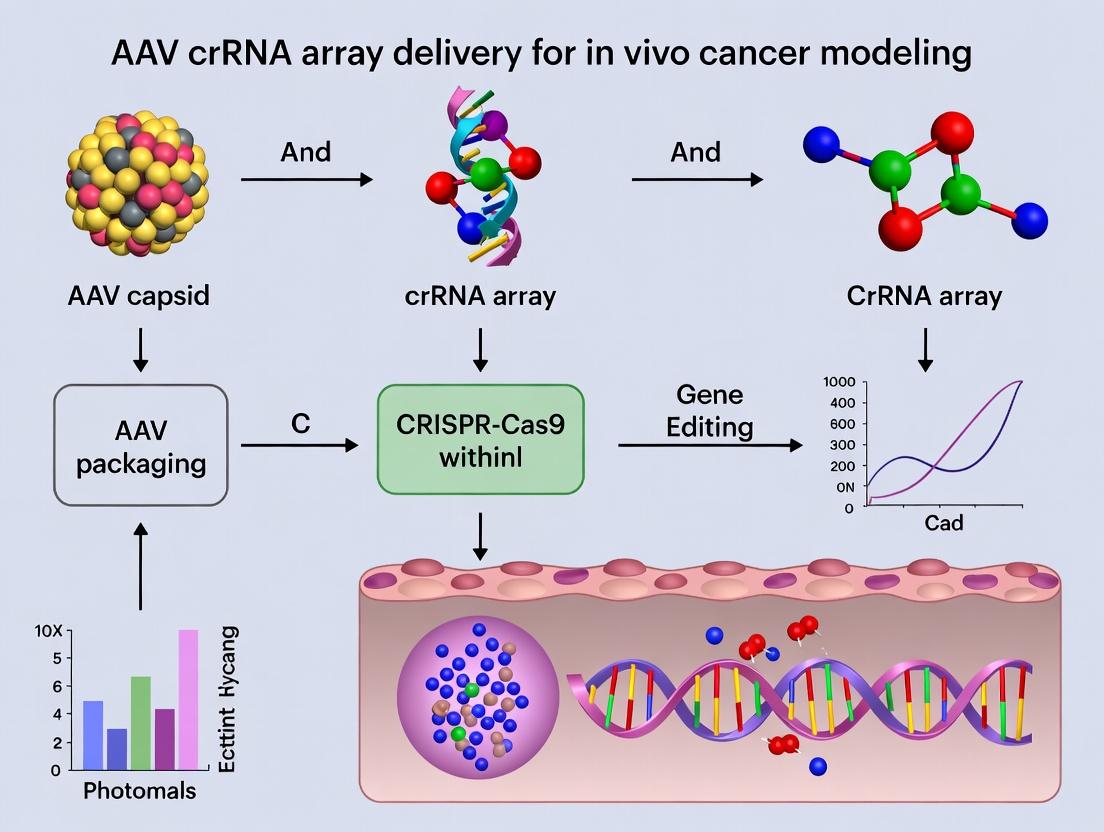
This article explores the cutting-edge methodology of using recombinant Adeno-Associated Virus (AAV) vectors to deliver CRISPR crRNA arrays for in vivo cancer modeling.
CRISPR in a Capsule: How AAV-Delivered crRNA Arrays Are Revolutionizing In Vivo Cancer Model Development
Abstract
This article explores the cutting-edge methodology of using recombinant Adeno-Associated Virus (AAV) vectors to deliver CRISPR crRNA arrays for in vivo cancer modeling. We provide a comprehensive guide for researchers, covering the foundational principles of multiplexed gene editing, the step-by-step design and production of AAV-crRNA array constructs, critical protocols for in vivo delivery and tumor monitoring, and best practices for troubleshooting common issues. We also compare this approach against traditional modeling techniques (GEMMs, PDX) and alternative delivery systems (lentivirus, nanoparticles), evaluating its efficiency, scalability, and translational relevance. This resource aims to empower scientists in preclinical oncology and drug development to implement and optimize this powerful platform for complex, polygenic cancer research.
The Science of Multiplexed Modeling: Understanding AAV Vectors and CRISPR crRNA Arrays for Cancer Research
In the era of advanced genomics and CRISPR screening, the indispensability of in vivo modeling for cancer biology is increasingly evident. While in vitro systems and organoids provide valuable mechanistic insights, they fail to recapitulate the intricate tumor microenvironment (TME), systemic immune responses, and pharmacokinetic/pharmacodynamic relationships that define cancer progression and therapeutic response. This is particularly critical for research utilizing Adeno-Associated Virus (AAV)-delivered CRISPR RNA (crRNA) arrays for multiplexed gene perturbation, where delivery efficiency, immune evasion, and off-target effects can only be fully assessed in a living organism.
Application Notes: AAV crRNA Arrays for In Vivo Oncogenomics
Objective: To model complex polygenic cancer driver interactions and synthetic lethalities directly in murine tissues.
Rationale: Pooled CRISPR screens in vitro identify candidate genes, but their functional impact within an intact biological system is often divergent. AAV vectors, particularly serotypes like AAV9 or PHP.S with tropism for specific tissues, enable the delivery of crRNA arrays targeting multiple genes to somatic cells in vivo. This allows for the de novo generation of tumors or the manipulation of established tumors within a native stromal and immune context.
Key Quantitative Findings from Recent Studies
Table 1: Efficacy of AAV-crRNA Array Delivery In Vivo vs. In Vitro Outcomes
| Metric | In Vitro 2D Model | In Vivo Model (Liver) | Notes |
|---|---|---|---|
| Tumor Formation Latency | Not Applicable | 8-12 weeks | Post-AAV injection; depends on oncogene combination. |
| Editing Efficiency (Target Cells) | >80% | 15-40% | In vivo efficiency is tissue and serotype-dependent. |
| Immune Cell Infiltration | Minimal | High (e.g., 30-50% CD45+ cells in TME) | Critical for immunotherapy research. |
| Off-Target Mutation Rate | 0.1-1.0% | <0.5% | Often lower in vivo due to selection pressures. |
| Correlation with Clinical Drug Response | ~30-40% | ~85-90% | In vivo models predict clinical trial outcomes more reliably. |
Table 2: Comparison of AAV Serotypes for In Vivo Cancer Modeling
| AAV Serotype | Primary Tissue Tropism | Effective Dose (vg/kg) | Pros for Cancer Modeling | Cons |
|---|---|---|---|---|
| AAV9 | Broad (Liver, Lung, Heart, CNS) | 1e11 - 1e12 | High transduction efficiency, crosses endothelial barriers. | Potential hepatotoxicity, broad tropism may lack specificity. |
| PHP.S | CNS (Mouse) | 5e10 - 1e11 | Enhanced CNS transduction in mice via Ly6a. | Species and strain-specific (C57BL/6J). |
| AAV8 | Liver (Hepatocytes) | 1e11 - 5e11 | Excellent hepatocyte specificity, robust expression. | Limited to liver-focused models. |
| AAV6 | Heart, Lung, Muscle | 1e11 - 1e12 | Good for lung adenocarcinoma models. | Moderate immunogenicity. |
Experimental Protocols
Protocol 1: AAV crRNA Array Design, Production, and In Vivo Delivery for Liver Cancer Modeling
I. crRNA Array Design and Vector Construction
- Target Selection: Identify 3-5 oncogenes or tumor suppressors (e.g., Kras, Trp53, Myc, Pten) from prior in vitro screens.
- Array Cloning: Design crRNA sequences (20bp guide + NGG PAM) and synthesize as a tandem array separated by direct repeats (e.g., 36bp saCas9 repeats). Clone into an AAV-compatible plasmid downstream of a U6 promoter. A constitutive promoter (Cbh) drives Cas9 expression.
- Plasmid Sequence Verification: Validate by Sanger sequencing and restriction digest.
II. AAV Production (Triple Transfection in HEK293T Cells)
- Materials: Polyethylenimine (PEI), pAAV-crRNA-Cas9 plasmid, pAAV-Rep2/Cap8 (for serotype 8), pHelper plasmid, DMEM+10% FBS, Opti-MEM, HEK293T cells at 70-80% confluency in 15cm plates.
- Transfection: For one plate, mix 10µg pAAV-crRNA-Cas9, 7µg pAAV-Rep2/Cap8, and 5µg pHelper in 1.5mL Opti-MEM. Add 66µL PEI (1mg/mL), vortex, incubate 15 min, add dropwise to cells.
- Harvest & Purification: 72hr post-transfection, scrape cells, pellet by centrifugation. Resuspend in lysis buffer, freeze-thaw 3x. Purify virus via iodixanol gradient ultracentrifugation. Titer by qPCR using ITR-specific primers.
III. In Vivo Delivery and Tumor Monitoring
- Animal Model: 6-8 week old immunocompetent C57BL/6 mice.
- Injection: Administer 1e11 vector genomes (vg) of purified AAV8-crRNA-Cas9 via tail vein injection in 100µL sterile PBS.
- Monitoring: Weigh mice weekly. Begin ultrasound imaging at week 6 to monitor liver lesion formation. Sacrifice at defined endpoints (e.g., 12 weeks or upon signs of distress).
- Analysis: Harvest liver, measure tumor nodules. Process tissue for: (a) H&E staining, (b) genomic DNA extraction for amplicon sequencing of target loci to assess editing, (c) flow cytometry for immune profiling (CD45, CD3, CD4, CD8, F4/80).
Protocol 2: In Vivo Validation of Synthetic Lethality
- AAV-Mediated Tumor Initiation: Follow Protocol 1 to generate primary tumors with a defined driver mutation (e.g., Kras G12D activation).
- Therapeutic crRNA Array Delivery: Once tumors are established (confirmed by imaging), administer a second AAV (e.g., AAV9 for broader distribution) carrying a crRNA array targeting a panel of putative synthetic lethal genes.
- Quantitative Outcome Measures:
- Tumor Burden: Measure by bioluminescence (if luciferase is incorporated) or serial ultrasound.
- Survival Analysis: Kaplan-Meier curves comparing treated vs. control (non-targeting crRNA) cohorts.
- Molecular Validation: Use single-cell RNA sequencing from dissociated tumors to correlate crRNA-mediated knockdown with apoptotic signatures in tumor cells.
Diagrams
AAV crRNA Workflow for In Vivo Target Validation
Components of In Vivo Modeling Critical for Cancer Biology
The Scientist's Toolkit
Table 3: Essential Research Reagents for AAV In Vivo Cancer Modeling
| Reagent / Material | Function | Key Consideration |
|---|---|---|
| AAV Helper-Free System | Provides AAV Rep/Cap and adenoviral helper genes for virus production. | Ensures high-titer, pure AAV prep without contaminating helper virus. |
| Iodixanol Gradient | Purifies AAV particles based on density via ultracentrifugation. | Yields higher functional titer and purity than traditional CsCl methods. |
| ITR-specific qPCR Primers | Accurately titers AAV vector genomes (vg/mL). | Critical for determining precise in vivo dosing. Avoids over/under-dosing. |
| High-Sensitivity Next-Gen Sequencing Kit | For deep amplicon sequencing of CRISPR target loci. | Quantifies editing efficiency, indels, and co-editing rates in bulk tissue. |
| Multiplexed Immunofluorescence Panel | Simultaneously visualizes tumor cells, immune subsets, and biomarkers. | Profiles spatial relationships within the intact TME from formalin-fixed tissue. |
| In Vivo Imaging System (IVIS) | Non-invasively tracks tumor growth via bioluminescence/fluorescence. | Allows longitudinal study in same animals, reducing cohort size variability. |
| Cas9-Expressing Mouse Line | Provides constitutive or inducible Cas9 expression in tissues. | Eliminates need for AAV-Cas9 delivery, freeing vector capacity for more crRNAs. |
This application note provides a focused primer on recombinant Adeno-Associated Virus (rAAV) serotypes and their tropisms, framed within the broader research objective of delivering CRISPR-CrRNA arrays for in vivo cancer modeling. Selecting the optimal rAAV serotype is critical for achieving high-efficiency, cell-type-specific transduction in target tumor tissues and microenvironmental cells.
AAV Serotype Tropism & Selection Criteria
The natural capsid variants of AAV confer distinct tropisms due to differences in primary receptor binding, coreceptor interaction, and intracellular trafficking. The table below summarizes key attributes of commonly used serotypes for oncology research.
Table 1: Tropism Profiles of Major rAAV Serotypes for Cancer Modeling Applications
| Serotype | Primary Receptor | Common Tropism in Vivo | Reported Transduction Efficiency in Cancer Models | Key Considerations |
|---|---|---|---|---|
| AAV1 | N-linked sialic acid | Muscle, CNS neurons | Moderate (e.g., sarcoma allografts) | Broad neuronal tropism. |
| AAV2 | HSPG | Liver, muscle, neurons | Low to Moderate (solid tumors) | Well-characterized, but high seroprevalence. |
| AAV5 | PDGFR / 2,3 sialic acid | CNS neurons, lung, photoreceptors | Moderate (brain tumors) | Excellent for CNS delivery. |
| AAV6 | HSPG / N-linked sialic acid | Heart, lung, muscle | High (hematopoietic cells, lung metastases) | Efficient for T-cell/immune cell transduction. |
| AAV8 | Laminin receptor | Liver, pancreas, muscle | Very High (hepatocellular carcinoma models) | Gold standard for hepatic gene transfer. |
| AAV9 | Galactose / LamR | Pan-tissue, CNS, heart, lung | High (disseminated tumors, brain metastases) | Crosses blood-brain barrier effectively. |
| AAV-DJ | Multiple (chimeric) | Broad (hepatocytes, CNS, heart) | Very High (diverse xenografts) | Engineered capsid; superior in vitro titer. |
| AAV-PHP.eB | LY6A (mouse-specific) | Enhanced CNS (mouse) | High (mouse glioblastoma models) | Species-specific; for advanced murine CNS cancer. |
Core Protocol: rAAV Serotype Tropism Validation in a Murine Xenograft Model
This protocol outlines steps to empirically validate serotype tropism for a specific cancer model prior to CrRNA array delivery.
Materials & Reagents
Research Reagent Solutions Toolkit:
| Item | Function |
|---|---|
| rAAV-CAG-GFP (Serotypes 6, 8, 9, DJ) | Reporter vectors to compare transduction patterns across capsids. |
| HEK293T/AAV-293 Cells | Production cell line for rAAV vector packaging. |
| Polyethylenimine (PEI) Max | Transfection reagent for plasmid delivery into producer cells. |
| Iodixanol Density Gradient Medium | For ultracentrifugation-based purification of rAAV vectors. |
| qPCR Kit with ITR-specific primers | For accurate, genome-containing vector titer determination. |
| Immunodeficient NSG Mice | Host for human tumor xenograft implantation. |
| IVIS Imaging System | For in vivo fluorescence imaging of GFP expression. |
| Anti-AAV Neutralizing Antibody Assay Kit | To pre-screen animal models for pre-existing AAV immunity. |
Detailed Protocol
Part A: rAAV Reporter Vector Production & Purification
- Transfection: Seed HEK293T cells at 70% confluency in 15-cm dishes. Co-transfect with pAAV-Replicon (GOI: CAG-GFP), pAAV-Helper, and pAAV-Rep/Cap (serotype-specific) plasmids at a 1:1:1 molar ratio using PEI Max.
- Harvest: 72 hours post-transfection, pellet cells by centrifugation. Perform three freeze-thaw cycles on the cell pellet in PBS-MK (PBS with 1mM MgCl₂ and 2.5mM KCl). Treat crude lysate with Benzonase (50 U/mL) at 37°C for 30 min.
- Iodixanol Gradient Purification: Layer clarified lysate onto a discontinuous iodixanol gradient (15%, 25%, 40%, 60%) in a quick-seal tube. Ultracentrifuge at 350,000 x g for 2 hours at 18°C.
- Collection & Buffer Exchange: Extract the 40% iodixanol fraction containing purified rAAV. Concentrate and exchange into sterile PBS + 0.001% Pluronic F-68 using a 100-kDa centrifugal filter.
- Titration: Determine genomic titer (vg/mL) via ITR-specific qPCR against a linearized standard curve.
Part B: In Vivo Tropism Validation in a Xenograft Model
- Tumor Implantation: Subcutaneously implant 5x10^6 human cancer cells (e.g., MDA-MB-231 for breast cancer) into the flank of 6-8 week old NSG mice.
- Vector Administration: Allow tumors to reach ~100 mm³. Randomize mice into groups (n=5 per serotype). Systemically administer (via tail vein) 1x10^11 vg of each rAAV-CAG-GFP serotype in 100 µL PBS.
- In Vivo Imaging: Perform weekly in vivo fluorescence imaging (IVIS) for 4 weeks post-injection to monitor GFP signal kinetics in the tumor region.
- Terminal Analysis: At day 28, euthanize mice and harvest tumors, liver, spleen, heart, lung, and brain. Weigh and process tissues for:
- Flow Cytometry: Generate single-cell suspensions. Quantify %GFP+ cells within tumor (and tumor-infiltrating lymphocyte) populations.
- Immunohistochemistry: Fix tissues in 4% PFA, section, and stain with anti-GFP antibody to visualize spatial transduction patterns.
Data Interpretation & Selection Workflow
The decision tree for serotype selection based on experimental goals and tumor biology is illustrated below.
(Diagram Title: AAV Serotype Selection for Cancer Models)
Key Signaling Pathways in AAV Cellular Entry & Trafficking
The transduction efficiency of a given serotype is dictated by its engagement with specific cell surface receptors and subsequent intracellular trafficking, a pathway summarized below.
(Diagram Title: rAAV Cellular Entry and Trafficking Pathway)
Empirical validation of rAAV serotype tropism, as detailed in this protocol, is a non-negotiable prerequisite for designing effective in vivo CrRNA array delivery strategies in cancer modeling. Matching the viral capsid to the target cell population maximizes on-target editing while minimizing off-target effects and immunogenic clearance, thereby increasing the fidelity and reproducibility of cancer gene function studies.
The delivery of CRISPR-Cas systems via Adeno-Associated Virus (AAV) is a cornerstone of modern in vivo functional genomics and cancer modeling research. A primary limitation is the ~4.7 kb packaging capacity of AAV, which restricts the co-delivery of Cas9 and multiple single-guide RNAs (sgRNAs). The development of compact crRNA arrays—where multiple CRISPR RNAs (crRNAs) are encoded within a single transcript—has revolutionized this space. This application note details the architecture, design principles, and protocols for implementing crRNA arrays within the context of AAV delivery for multiplexed gene editing in cancer models.
Architecture of a crRNA Array
A crRNA array is a single transcriptional unit encoding multiple, individual crRNA sequences. Each crRNA must be processed from the primary transcript to form a functional complex with Cas9 protein. The core architectural components are:
- Promoter: A single RNA polymerase III promoter (e.g., U6, H1) drives expression of the entire array.
- Direct Repeats (DRs): Identical sequences that flank each spacer. These are recognized by Cas9 (or the endogenous bacterial processing machinery in the case of RNase III) and are essential for processing the array into individual crRNAs. For S. pyogenes Cas9, the common DR is 5´-GUUUUAGAGCUAGAAAUAGCAAGUUAAAAUAAGGCUAGUCCGUUAUCAACUUGAAAAAGUGGCACCGAGUCGGUGCUUUUUU-3´.
- Spacers: The variable 20-nt sequences that determine DNA targeting specificity.
- Terminator: A poly-T stretch (for Pol III) signals transcription termination.
The generic architecture is: [Promoter] - [DR-Spacer1-DR] - [Spacer2-DR] - [Spacer3-DR] - ... - [Terminator].
Design Principles and Quantitative Considerations
Successful array design balances processing efficiency, cloning feasibility, and on-target activity. Key parameters are summarized in Table 1.
Table 1: Quantitative Design Parameters for crRNA Arrays
| Parameter | Optimal Value / Range | Rationale & Impact |
|---|---|---|
| Number of Spacers | 2 - 5 | Limited by AAV cargo space and decreasing processing efficiency with increasing length. >5 guides often show significant drop in activity of distal guides. |
| Direct Repeat Length | 36-42 bp (for SpCas9) | Must be the full, canonical sequence for efficient recognition and processing. Truncation reduces efficiency. |
| Spacer Length | 20 nt | Standard for SpCas9. Can be extended to 21-22 nt for potentially increased specificity. |
| Inter-guide "Linker" | None or short sequence (e.g., 2-4 nt) | Traditionally, arrays use direct DR-Spacer-DR junctions. Short linkers (e.g., "GTTT") may aid in synthesis/cloning but are not required for processing. |
| Avoidance of Poly-T | No TTTT in spacers or within DRs |
Premature transcription termination for Pol III promoters. |
| GC Content (Spacer) | 40-60% | Influences stability and activity. Extremes can reduce efficiency. |
| Self-Complementarity | Minimize within array | Secondary structure in the primary transcript can impede processing. |
Processing Mechanisms:
- Endogenous (RNase III): In cells expressing both Cas9 and its associated tracrRNA, the duplex formed between the DR and tracrRNA is cleaved by endogenous RNase III to liberate individual crRNAs.
- Cas9-Assisted: Cas9 protein itself can facilitate processing.
- Exogenous Ribozymes/Endonucleases: Inclusion of hammerhead or hepatitis delta virus (HDV) ribozymes flanking the array ensures precise processing even in the absence of efficient endogenous mechanisms and is considered a best practice for AAV delivery.
Core Protocol: Cloning a crRNA Array into an AAV Vector
Materials & Reagents
Research Reagent Solutions Table
| Item | Function | Example / Specification |
|---|---|---|
| AAV Transfer Plasmid | Backbone for AAV production. Must contain ITRs. | pAAV-U6-sgRNA-CBh-Cas9 (Addgene #107096) or similar. |
| High-Fidelity DNA Polymerase | PCR amplification of array fragments. | Q5 High-Fidelity DNA Polymerase (NEB). |
| Golden Gate Assembly Master Mix | Enzymatic assembly of repetitive arrays. | BsaI-HFv2 & T4 DNA Ligase (NEB), or commercial Golden Gate mix. |
| Chemically Competent E. coli | Transformation of assembled constructs. | NEB Stable or NEB 5-alpha. |
| Plasmid Miniprep Kit | Isolation of cloned DNA for verification. | Qiagen Miniprep Kit. |
| Sanger Sequencing Primers | Verification of array sequence. | U6-F: 5´-GAGGGCCTATTTCCCATGATTCC-3´ |
| BsmBI-v2 or BsaI-HFv2 | Restriction enzymes for Golden Gate assembly. | NEB enzymes, isothermal incubation. |
| T7 Endonuclease I or TIDE Analysis Tool | Assessment of editing efficiency. | Surveyor Mutation Detection Kit (IDT). |
Protocol: Golden Gate Assembly of a crRNA Array
This protocol uses BsaI-based Golden Gate assembly to seamlessly concatenate multiple spacer-DR units.
Design Oligonucleotides:
- For each spacer, design two complementary oligonucleotides (Top and Bottom, ~24-30 nt) that, when annealed, create a duplex with BsaI-compatible overhangs.
- The top oligo sequence: 5´- [ACCG] + spacer first 20 nt -3´
- The bottom oligo sequence: 5´- [AAAC] + reverse complement of spacer last 20 nt -3´
- The overhangs (in brackets) are designed so that the spacer is inserted in the correct orientation between two DRs in the recipient vector.
Anneal Oligos:
- Resuspend oligos to 100 µM in TE buffer.
- Mix 1 µL of each top and bottom oligo with 48 µL of nuclease-free water and 50 µL of 2x Annealing Buffer (20 mM Tris, pH 7.5, 100 mM NaCl, 2 mM EDTA).
- Heat to 95°C for 5 minutes in a heat block, then allow to cool slowly to room temperature (~1 hour). Dilute 1:200 in water for assembly.
Golden Gate Reaction:
- Set up the following reaction on ice:
- 50 ng linearized AAV destination vector (containing a single DR and terminator, flanked by BsaI sites).
- 1 µL of each diluted, annealed spacer duplex (from Step 2).
- 1 µL BsaI-HFv2 (10 U/µL).
- 1 µL T4 DNA Ligase (400 U/µL).
- 2 µL 10x T4 DNA Ligase Buffer.
- Nuclease-free water to 20 µL.
- Cycle in a thermocycler: (37°C for 5 min, 20°C for 5 min) x 30 cycles, then 80°C for 5 min, hold at 4°C.
- Set up the following reaction on ice:
Transformation and Screening:
- Transform 2-5 µL of the reaction into 50 µL of competent E. coli. Plate on selective agar.
- Pick colonies for miniprep. Screen by colony PCR or restriction digest.
- Validate the final plasmid by Sanger sequencing across the entire array using primers flanking the U6 promoter and terminator.
Protocol: Validating Array Processing and FunctionIn Vitro
Workflow:In VitroTranscription and Processing Assay
- Template Preparation: PCR amplify the array cassette (from promoter to terminator) using primers with a T7 promoter sequence appended upstream.
- In Vitro Transcription (IVT): Use the T7 High Yield RNA Synthesis Kit (NEB). Incubate at 37°C for 2-4 hours.
- Processing Reaction: Purify the IVT RNA. Set up a 20 µL reaction containing 500 ng of array RNA, 1x Cas9 Nuclease Reaction Buffer, and 500 ng of purified SpCas9 protein (or cell lysate expressing Cas9/tracrRNA). Incubate at 37°C for 1 hour.
- Analysis: Run the reaction products on a denaturing urea-PAGE gel (6-15%). Stain with SYBR Gold. Successful processing will show a shift from the full-length transcript to smaller, discrete bands corresponding to individual crRNA sizes (~100 nt).
In Vivo Application: AAV Production and Murine Cancer Modeling
Protocol: AAV Production & Tumor Delivery
- AAV Vector Production: Package the finalized AAV-crRNA-array plasmid (with a separate AAV-Cas9 plasmid if using a dual-vector system) into AAV serotype 9 (AAV9) or PHP.eB capsids using the triple transfection method in HEK293T cells. Purify via iodixanol gradient ultracentrifugation. Titrate via qPCR.
- Animal Model: Use an immunocompromised (e.g., NSG) or immunocompetent mouse strain appropriate for the cancer type.
- Delivery:
- For de novo tumor modeling: Co-inject 1x10^11 vg of AAV-Cas9 and 1x10^11 vg of AAV-crRNA-array (targeting tumor suppressors Trp53, Pten, and Rb1) via hydrodynamic tail vein injection or locally into the target tissue (e.g., pancreas, liver).
- For orthotopic/transplant models: Inject AAVs directly into established tumor nodules.
- Monitoring & Analysis: Monitor tumor growth via calipers or imaging. Harvest tissue at endpoint. Isolve genomic DNA and assess editing efficiency at each target locus by next-generation sequencing amplicon analysis or TIDE.
Visualizations
Title: crRNA Array Architecture and Processing Pathway
Title: Workflow for AAV crRNA Array In Vivo Cancer Modeling
The development of physiologically relevant in vivo cancer models is pivotal for understanding tumorigenesis and therapeutic response. A core challenge is the simultaneous perturbation of multiple genetic drivers to recapitulate human disease complexity. This application note details the methodology for leveraging the safety profile of Adeno-Associated Virus (AAV) with the multiplex editing power of CRISPR-Cas9, specifically through the delivery of crRNA arrays, for efficient in vivo modeling of polygenic cancers.
Key Research Reagent Solutions
| Reagent / Material | Function & Rationale |
|---|---|
| AAV Serotype (e.g., AAV9, PHP.eB, AAV-DJ) | Vector Capsid: Determines tissue tropism, transduction efficiency, and immune evasion. Selection is critical for targeting specific organs (e.g., liver, brain). |
| CRISPR-Cas9 System (saCas9, spCas9) | Nuclease: Catalyzes DNA double-strand breaks. Compact variants (saCas9) are preferred for AAV packaging. Delivered via a separate AAV vector or expressed from a transgene. |
| crRNA Array Plasmid (pT7crRNAarray) | Multiplex Guide Template: A single transcriptional unit encoding multiple crRNAs separated by direct repeats. Enables simultaneous targeting of several genomic loci from a single AAV cargo. |
| ITR-flanked AAV Construct | Packaging Template: Contains the crRNA array expression cassette flanked by AAV2 Inverted Terminal Repeats (ITRs), necessary for genome replication and packaging. |
| HEK293T/AAV Producer Cells | Packaging Cell Line: Provides essential adenoviral helper functions and Rep/Cap proteins in trans for recombinant AAV production. |
| Iodixanol Gradient | Purification Medium: Used for ultracentrifugation-based purification of AAV vectors, yielding high-titer, high-purity preparations suitable for in vivo use. |
| qPCR TaqMan Assay (ITR-specific) | Titer Quantification: Accurately measures vector genome (vg) titer of purified AAV stocks, essential for dose standardization. |
Protocol: Production and Use of AAV-crRNA Arrays for Liver Cancer Modeling
Part A: Production of AAV Vectors Encoding a crRNA Array
Objective: To generate high-titer AAV vectors packaging a crRNA array targeting a panel of tumor suppressor genes (e.g., p53, Pten, Rb1).
Materials:
- pAAV-ITR-U6-crRNAArray(sg1-sg4)-hSyn-mCherry (Vector for crRNA array)
- pAAV-CBh-saCas9 (Vector for SaCas9 nuclease)
- pHelper and pRep-Cap (Serotype-specific) plasmids
- PEI-Max transfection reagent
- HEK293T cells
- Iodixanol gradient solutions (15%, 25%, 40%, 60%)
- Dulbecco’s Phosphate-Buffered Saline (DPBS)
- Amicon Ultra-15 centrifugal filters
Procedure:
- Cell Seeding: Seed HEK293T cells in 15-cm dishes to reach 70-80% confluency at transfection.
- Triple Transfection: For each dish, mix 7.5 µg of pAAV-ITR-crRNAArray, 12.5 µg of pRep-Cap (e.g., AAV8 for liver tropism), and 15 µg of pHelper plasmid in 1.5 mL of serum-free medium. Add 70 µL of PEI-Max, vortex, incubate 15 min, and add to cells.
- Harvest & Lysis: 72 hours post-transfection, harvest cells and media. Pellet cells, resuspend in DPBS, and lyse via freeze-thaw cycles.
- Iodixanol Gradient Ultracentrifugation: Load clarified lysate onto a pre-formed iodixanol step gradient (60%, 40%, 25%, 15% in Beckman quick-seal tubes). Centrifuge at 350,000 x g for 2 hours at 18°C.
- Vector Extraction & Concentration: Extract the opaque 40% iodixanol fraction containing AAV. Concentrate and buffer-exchange into DPBS using Amicon filters.
- Titration: Quantify vector genome (vg) titer using ITR-specific TaqMan qPCR. Typical yields range from 1x10^13 to 1x10^14 vg/mL.
Part B: In Vivo Delivery and Tumor Induction
Objective: To induce hepatocellular carcinoma in adult mouse liver via co-delivery of AAV-saCas9 and AAV-crRNAArray.
Materials:
- 6-8 week old C57BL/6 mice
- Purified AAV-CBh-saCas9 (1e11 vg dose)
- Purified AAV-U6-crRNAArray (5e10 vg dose)
- Sterile DPBS
- Insulin syringes (29G)
Procedure:
- Vector Formulation: Mix AAV-saCas9 and AAV-crRNAArray in sterile DPBS to a total volume of 100 µL per mouse.
- Tail Vein Injection: Restrain mouse, warm tail, and perform slow intravenous injection via the lateral tail vein.
- Monitoring: Monitor mice weekly for signs of tumor burden (weight loss, abdominal distension).
- Analysis: Harvest liver at 8-12 weeks post-injection. Weigh, image, and section for histology (H&E), immunohistochemistry, and genomic DNA extraction for NGS validation of editing efficiency.
Table 1: In Vivo Editing Efficiency of AAV-Delivered crRNA Array (N=5 mice)
| Target Gene | Mean Indel Frequency (%) ± SD | Tumor Incidence (at 12 weeks) |
|---|---|---|
| Trp53 | 45.2 ± 6.7 | 100% |
| Pten | 38.9 ± 5.1 | 100% |
| Rb1 | 32.4 ± 7.3 | 80% |
| Control (Non-targeting) | 0.1 ± 0.05 | 0% |
Table 2: AAV Serotype Comparison for Liver Transduction
| AAV Serotype | Relative Vector Genome Copies per Liver Cell* | Primary Immune Response Profile |
|---|---|---|
| AAV8 | High (Baseline) | Low |
| AAV9 | Moderate | Moderate |
| AAV-DJ | High | Low |
| AAVrh10 | Very High | Low |
*Data from biodistribution studies in adult mice.
Visualizations
Diagram 1: AAV crRNA Array Production & In Vivo Workflow (82 chars)
Diagram 2: Key Pathways Disrupted in CRISPR Cancer Model (71 chars)
The advent of AAV-delivered CRISPR-CRISPRi/a crRNA arrays enables multiplexed genetic perturbation in vivo, accelerating the functional genomics of cancer. This application note details a systematic framework for selecting and prioritizing oncogenes (OGs), tumor suppressor genes (TSGs), and genetic modifiers for inclusion in a highly effective pooled array. The design is contextualized for in vivo cancer modeling, aiming to recapitulate complex tumorigenesis and identify therapeutic vulnerabilities.
Prioritization Criteria & Data Integration
Effective array design requires integration of multi-omic data to rank genes by their functional impact, druggability, and clinical relevance. The following quantitative criteria are synthesized into a prioritization score.
| Criteria Category | Specific Metric | Data Source/Example | Weight in Scoring |
|---|---|---|---|
| Genomic Alterations | Recurrent somatic mutations (missense, truncating). | TCGA, ICGC, cBioPortal | High |
| Copy number alterations (amplifications/deletions). | TCGA, COSMIC | High | |
| Fusion genes. | TCGA, Mitelman DB | Medium | |
| Functional Evidence | Essentiality scores (CRISPR/Cas9 screens). | DepMap (CERES/Chronos) | High |
| In vivo validation (mouse models). | PubMed, MMHCdb | High | |
| Pathway Context | Core pathway membership (e.g., RTK/RAS, PI3K, p53). | KEGG, Reactome, MSigDB | Medium |
| Synthetic lethality interactions. | BioGRID, SynLethDB | Medium | |
| Clinical Relevance | Association with prognosis (overall survival). | TCGA, KM-Plotter | Medium |
| Druggability (approved or clinical trial targets). | DrugBank, DGIdb | Medium | |
| Modifier Potential | Genes altering metastasis, immune evasion, or therapy resistance. | Literature mining (PubMed) | Variable |
Table 2: Exemplary High-Priority Targets for Solid Tumors (Pan-Cancer)
| Gene | Role | Primary Pathway | Alteration Frequency (TCGA Pan-Cancer Approx.) | DepMap Essentiality (Median CERES) | Rationale for Inclusion |
|---|---|---|---|---|---|
| KRAS | Oncogene | RTK/RAS | ~12% (mutations) | -1.05 | Common driver, therapeutic target. |
| TP53 | Tumor Suppressor | p53 | ~42% (mutations/deletions) | -0.45 | Master regulator, genome stability. |
| PIK3CA | Oncogene | PI3K/AKT/mTOR | ~15% (mutations/amps) | -0.92 | Key signaling node, druggable. |
| MYC | Oncogene | MYC Signaling | ~10% (amplifications) | -1.12 | Regulates proliferation, metabolism. |
| CDKN2A | Tumor Suppressor | Cell Cycle | ~25% (deletions/mutations) | -0.30 | Cyclin-dependent kinase inhibitor. |
| PTEN | Tumor Suppressor | PI3K/AKT/mTOR | ~10% (mutations/deletions) | -0.41 | PI3K pathway antagonist. |
| SMAD4 | Tumor Suppressor | TGF-β Signaling | ~8% (mutations/deletions) | -0.25 | Regulates growth and metastasis. |
| BRCA2 | Tumor Suppressor | DNA Repair | ~3% (mutations) | -1.08 | Homologous recombination, PARPi sensitivity. |
| VEGFA | Modifier (Angiogenesis) | Angiogenesis | Upregulated in many | -0.15 | Stromal modifier, therapeutic target. |
| CD274 (PD-L1) | Modifier (Immune) | Immune Checkpoint | Amplification/overexpression | ~0.10 (non-essential) | Immune evasion modifier. |
Experimental Protocol: In Silico Target Selection Workflow
Protocol 1: Multi-Omic Data Integration for Target Ranking
Objective: To generate a ranked list of candidate OGs, TSGs, and modifiers for crRNA array design. Materials:
- High-performance computing workstation.
- R/Python with packages (tidyverse, maftools, cgdsr, depmap).
- Public databases (as in Table 1).
Procedure:
- Data Acquisition:
- Download somatic mutation (MAF), copy number, and clinical data for your cancer type(s) of interest from the Genomic Data Commons (GDC) portal or cBioPortal.
- Acquire gene effect scores (CERES/Chronos) from the DepMap portal (latest release).
- Download known cancer gene lists from COSMIC (CGC) and MSigDB Hallmark gene sets.
Candidate Gene Pool Generation:
- Step 2.1: Compile an initial list by taking the union of: (a) Top 100 most frequently mutated genes in your cohort, (b) Genes with copy number alteration frequency >10%, (c) Genes in the Cancer Gene Census, (d) Top 200 essential genes (lowest CERES) in relevant cancer cell lines.
- Step 2.2: Filter for genes with clear biological roles (OG, TSG, modifier) based on UniProt/Swiss-Prot annotations and literature.
Quantitative Scoring:
- Assign normalized scores (0-1) for each criterion in Table 1 per gene.
- Calculate a Priority Score using a weighted sum:
Priority Score = (W_alt * S_alt) + (W_ess * S_ess) + (W_path * S_path) + (W_clin * S_clin). - Rank genes by the Priority Score within each functional category (OG, TSG, Modifier).
Final Selection for Array Design:
- Select the top-ranked genes from each category. The proportion per category can be tailored (e.g., 50% TSGs, 30% OGs, 20% Modifiers).
- Perform pathway enrichment analysis (e.g., via clusterProfiler) on the final list to ensure coverage of key oncogenic processes.
Experimental Protocol: Functional Validation of Array Candidates
Objective: To validate the functional impact of selected genes using focused in vitro screening prior to in vivo AAV array delivery.
Protocol 2: Focused CRISPRi/a-knockdown/activation Screening in Isogenic Lines
Research Reagent Solutions:
| Reagent/Tool | Function in Protocol | Example Source/Product |
|---|---|---|
| Lentiviral sgRNA Library | Delivers specific genetic perturbations (KO, KD, activation) into target cells. | Custom-designed pooled library (e.g., from Twist Bioscience). |
| AAV-crRNA Array Plasmid | Final AAV-compatible construct containing selected crRNA spacers. | Synthesized as a pooled array (e.g., from VectorBuilder). |
| Cas9/KRAB-dCas9 (CRISPRi) or dCas9-VPR (CRISPRa) Stable Cell Line | Provides the effector protein for permanent genetic perturbation. | Generated via lentiviral transduction and antibiotic selection. |
| Next-Generation Sequencing (NGS) Reagents | For quantifying sgRNA abundance pre- and post-selection. | Illumina Nextera XT kit for library preparation. |
| CellTiter-Glo Luminescent Assay | Measures cell viability/proliferation for fitness phenotype readout. | Promega, Cat# G7571. |
| Polybrene / Hexadimethrine bromide | Enhances viral transduction efficiency. | Sigma-Aldrich, Cat# H9268. |
| Puromycin / Blasticidin | Antibiotics for selecting transduced cells. | Thermo Fisher Scientific. |
Procedure:
- Cell Line Preparation: Generate a Cas9-effector (e.g., KRAB-dCas9 for CRISPRi) stable cell line relevant to your cancer model (e.g., lung epithelial line for lung cancer).
- Focused Library Design: Synthesize a lentiviral sgRNA library targeting the top 50-100 candidate genes from Protocol 1, with 5-10 sgRNAs per gene plus non-targeting controls.
- Library Transduction: Transduce the Cas9-effector cell line at a low MOI (~0.3) to ensure single sgRNA integration. Culture under puromycin selection for 7 days.
- Phenotypic Selection: Passage cells for 2-3 weeks. For positive selection (e.g., resistance to a drug), apply selective pressure. For negative selection (fitness), simply passage.
- NGS Sample Prep & Analysis:
- Harvest genomic DNA from the library pool at Day 4 (post-selection baseline) and at experimental endpoint.
- Amplify the sgRNA region via PCR and prepare sequencing libraries.
- Sequence on an Illumina platform to obtain ~500 reads per sgRNA.
- Use MAGeCK or similar algorithm to identify significantly depleted or enriched sgRNAs, pinpointing essential genes (TSGs) or fitness-enhancing genes (OGs), respectively.
- Data Triangulation: Integrate screening hits with the in silico prioritization scores to finalize the list for the AAV-crRNA array.
Signaling Pathway & Workflow Diagrams
Diagram 1: Target Selection & Validation Workflow for AAV Array Design
Diagram 2: Core Cancer Pathways & Key Genes for Targeting
From Design to Tumor: A Step-by-Step Protocol for AAV crRNA Array Delivery and In Vivo Modeling
Application Notes
This protocol details the first critical step in constructing a recombinant adeno-associated virus (AAV) for the delivery of multiplexed CRISPR RNA (crRNA) arrays for in vivo cancer modeling. The goal is to computationally design a single transcription unit encoding multiple guide RNAs (gRNAs) alongside the Cas effector (e.g., Cas9, Cas12a) within the constraints of the AAV packaging limit (~4.7 kb). This enables simultaneous knockout of multiple tumor suppressor genes in a target cell population, accelerating complex cancer phenotype development.
Key Design Considerations
- Capacity & Payload Optimization: The total size of the expression cassette—including promoter(s), crRNA array, Cas protein gene, and regulatory elements—must not exceed ~4.7 kb. This often necessitates the use of compact promoters (e.g., U6, H1, tRNA) and smaller Cas orthologs (e.g., SaCas9, Cas12a).
- crRNA Array Architecture: The array must be designed for efficient processing by the chosen Cas system. For Cas9, gRNAs are typically expressed as separate transcripts from individual U6 promoters or as a single transcript with ribozyme (e.g., HH–HDV) or tRNA flanking elements for processing.
- Specificity & Efficiency: All designed gRNAs must be screened computationally for on-target efficiency and minimal off-target effects across the relevant genome (e.g., human, mouse).
- AAV Backbone Selection: The ITR-flanked vector backbone (serotype-specific, e.g., AAV2) is chosen to accommodate the expression cassette. The final design must account for the inverted terminal repeat (ITR) sequences which are necessary for replication and packaging.
Protocol: Computational Design Workflow
Part 1: Target Selection and gRNA Design
Objective: Identify target genes and design high-efficiency, specific gRNA sequences.
Materials:
- Computer with internet access.
- Genomic database (e.g., UCSC Genome Browser, Ensembl).
- gRNA design software: CHOPCHOP, CRISPRscan, or Broad Institute's GPP Web Portal.
- Off-target prediction tool: Cas-OFFinder, CRISPOR.
Procedure:
- Define Target Genes: From your cancer model hypothesis, select 3-5 tumor suppressor genes (e.g., Trp53, Pten, Rb1).
- Retrieve Genomic Sequences: For each gene, obtain the cDNA and genomic DNA sequences (including intron/exon boundaries) for the target organism from a genomic database. Focus on early exons to maximize chances of frameshift mutations.
- Design gRNAs: Input each gene's target sequence into a gRNA design tool.
- Set parameters: Cas protein (e.g., SpCas9: 5'-N20-NGG-3'), organism.
- For each gene, select the top 3 candidate gRNAs based on the tool's efficiency score.
- Off-Target Analysis: Submit the selected gRNA sequences (the 20-nt spacer) to an off-target prediction tool.
- Allow up to 3 mismatches. Discard any gRNA with predicted off-target sites in protein-coding exons of other genes.
- Finalize gRNA Set: For each target gene, select the single gRNA with the highest predicted on-target efficiency and no significant predicted off-target effects. Record sequences.
Data Summary Table: Designed gRNA Sequences
| Target Gene | gRNA Spacer Sequence (5' to 3') | Predicted On-Target Efficiency (%) | Top Predicted Off-Target Site (Mismatches) | PAM Sequence |
|---|---|---|---|---|
| Trp53 (Exon 2) | GTCCGAGAAGCCCAGCCTGG | 92 | Chr1:154,234 (3) | CGG |
| Pten (Exon 5) | TGCAGATAATGACAAGGATG | 88 | None >2 mismatches | TGG |
| Rb1 (Exon 3) | GACCAGGTGCTCCATCGCTC | 95 | Chr9:101,234 (3) | AGG |
Part 2: Multiplexed crRNA Array Architecture Design
Objective: Assemble selected gRNA spacers into a single, processable transcriptional unit.
Materials:
- Sequence alignment/editing software (e.g., SnapGene, Benchling).
- Published sequences for processing elements (e.g., tRNA^Gly from Schistosoma mansoni, HH and HDV ribozymes).
Procedure:
- Choose Processing System: This protocol uses the tRNA-gRNA system for its high processing efficiency and compact size.
- Design Array Sequence: For each gRNA spacer, create a DNA sequence in the format:
[tRNA promoter] - [tRNA sequence] - [gRNA spacer] - [gRNA direct repeat (DR)].- The DR sequence is specific to the Cas protein (e.g., for SpCas9: 5'-GTTTAAGAGCTATGCTGGAAAC-3').
- Concatenate Units: Join the individual tRNA-gRNA units in tandem without intervening sequences. The final array structure is:
U6 Promoter - [tRNA^Gly-gRNA1-DR] - [tRNA^Gly-gRNA2-DR] - [tRNA^Gly-gRNA3-DR] - Termination signal. - Verify Sequence: Ensure no internal cryptic transcription start sites or undesirable restriction sites are created. The total array size for 3 gRNAs should be approximately ~450 bp.
Diagram: crRNA Array Design and Processing
Part 3: AAV Expression Cassette Assembly & Vector Finalization
Objective: Place the crRNA array and Cas gene into an AAV backbone within packaging limits.
Materials:
- Plasmid sequences for: AAV backbone (e.g., pAAV2), compact Cas9 (e.g., SaCas9), desired promoter (e.g., CAG, EF1α).
- In silico cloning/restriction analysis tool.
Procedure:
- Select Components:
- Cas Protein: Choose SaCas9 (∼3.2 kb) over SpCas9 (∼4.2 kb) for size.
- Promoter for Cas: Use a compact, strong ubiquitous promoter like EF1α short form (∼0.3 kb).
- AAV Backbone: Use a standard pAAV plasmid with ITR2 and ITR2 sequences.
- Create Final Map: Assemble the following elements between the AAV ITRs:
ITR - EF1α promoter - SaCas9 - WPRE - U6 promoter - crRNA array (from Part 2) - ITR.- WPRE (Woodchuck Hepatitis Virus Posttranscriptional Regulatory Element) enhances expression.
- Calculate Total Size: Sum the bp of all elements. A representative calculation is shown below.
- Analyze Restriction Sites: Identify unique restriction sites at the 5' and 3' ends of the crRNA array insertion site for future cloning steps.
Data Summary Table: AAV Expression Cassette Budget
| Component | Size (base pairs) | Notes |
|---|---|---|
| AAV2 ITRs (2x) | ~300 | Essential for replication/packaging. |
| EF1α-S Promoter | 320 | Compact, ubiquitous expression of Cas. |
| SaCas9 Coding Sequence | 3186 | Staphylococcus aureus Cas9. |
| WPRE | ~600 | Enhances mRNA stability/expression. |
| U6 Promoter | ~250 | Drives crRNA array expression. |
| crRNA Array (3 guides) | ~450 | Designed in Part 2. |
| Poly-A Signal | ~200 | SV40 or bGH polyadenylation signal. |
| Total | ~5306 | Exceeds AAV Capacity. |
| Adjustment Required | Remove WPRE (~600 bp) and use shorter poly-A. New Total: ~4600 bp (Feasible). |
Diagram: Final AAV Vector Assembly Workflow
The Scientist's Toolkit: Key Research Reagent Solutions
| Item | Function in This Protocol | Example/Supplier |
|---|---|---|
| gRNA Design Software (CHOPCHOP) | Web-based tool to design and rank gRNAs for multiple CRISPR systems based on efficiency and specificity. | chopchop.cbu.uib.no |
| Off-Target Prediction Tool (Cas-OFFinder) | Searches for potential off-target sites in a given genome allowing mismatches and bulges. | rgenome.net/cas-offinder |
| Molecular Biology Suite (SnapGene) | Software for in silico plasmid mapping, restriction analysis, and sequence design. Essential for virtual cloning. | SnapGene.com |
| AAV Backbone Plasmid | Provides the ITR-flanked cloning vector for packaging. Often includes a multiple cloning site or specific homing arms. | Addgene (#104963 - pAAV). |
| Compact Cas9 Expression Cassette | Pre-cloned SaCas9 or other small Cas variants under a suitable promoter, ready for insertion into AAV backbone. | Addgene (#61591 - pX601). |
| tRNA Array Cloning Kit | Pre-formed plasmids containing tRNA-flanking sequences to simplify multiplex gRNA array construction. | Takara Bio (Cat. # 634018). |
Within the context of a thesis on AAV CRISPR RNA (crRNA) array delivery for in vivo cancer modeling, the generation of high-titer, pure, and potent recombinant AAV (rAAV) vectors is a critical bottleneck. This application note details a scalable, reproducible protocol for the production, purification, and quality control of high-titer rAAV serotype 9 (AAV9), selected for its broad tropism and efficient in vivo transduction, suitable for delivering multiplexed crRNA arrays to induce complex oncogenic mutations.
Production: Triple Transfection in Suspension HEK293 Cells
Protocol: Large-Scale rAAV9 Production
This method utilizes the polyethyleneimine (PEI)-mediated transfection of suspension-adapted HEK293F cells with three plasmids: the AAV rep2/cap9 plasmid, the adenoviral helper plasmid, and the ITR-flanked AAV transgene plasmid containing the crRNA array and a fluorescent reporter.
Materials & Reagents:
- HEK293F cells (Thermo Fisher, 11625019)
- FreeStyle 293 Expression Medium (Thermo Fisher, 12338018)
- PEI MAX 40K (Polysciences, 24765)
- AAV transgene plasmid (ITR-crRNA_array-EF1α-GFP-WPRE-bGHpA-ITR)
- AAV rep2/cap9 plasmid (e.g., pAAV2/9)
- Adenoviral helper plasmid (e.g., pAdDeltaF6)
- Opti-MEM I Reduced Serum Medium (Thermo Fisher, 31985062)
Procedure:
- Cell Culture: Maintain HEK293F cells in shake flasks at 37°C, 8% CO₂, 125 rpm. Subculture to a density of (0.5 \times 10^6) cells/mL one day prior to transfection.
- Transfection Day (Day 0): Harvest cells at a density of (3.0 \times 10^6) cells/mL. For a 1L culture, pellet 1.2 x 10⁹ cells.
- DNA-PEI Complex Formation:
- In Tube A: Dilute 500 µg of total plasmid DNA (at a 1:1:1 molar ratio) in 50 mL Opti-MEM.
- In Tube B: Dilute 1.5 mg PEI MAX (3:1 PEI:DNA ratio) in 50 mL Opti-MEM.
- Rapidly mix Tube B into Tube A. Vortex for 15s and incubate at RT for 15 min.
- Transfection: Add the 100 mL DNA-PEI complex dropwise to 900 mL of cell suspension (final density (1.2 \times 10^6) cells/mL). Return to the shaker incubator.
- Harvest (Day 3): At 72 hours post-transfection, pellet cells and supernatant separately at 2,000 x g for 20 min. Retain both fractions for purification.
Research Reagent Solutions
| Reagent/Material | Function in Protocol | Key Provider/Example |
|---|---|---|
| HEK293F Cells | Suspension-adapted, serum-free production cell line for scalable AAV production. | Thermo Fisher Scientific |
| PEI MAX 40K | High-efficiency, low-toxicity cationic polymer for transient plasmid delivery. | Polysciences, Inc. |
| AAV Rep2/Cap9 Plasmid | Provides AAV2 replication proteins and AAV9 capsid proteins for packaging. | Addgene, Vigene Biosciences |
| Adenoviral Helper Plasmid | Provides essential non-AAV genes (E4, E2a, VA) for AAV replication. | Addgene, Vigene Biosciences |
| Opti-MEM I | Low-serum medium for efficient formation of DNA-PEI complexes. | Thermo Fisher Scientific |
| Benzonase Nuclease | Digests residual nucleic acids to reduce viscosity and improve purity. | MilliporeSigma |
Purification: Iodixanol Density Gradient Ultracentrifugation
Protocol: Cell Lysate & Clarification
- Cell Lysis: Resuspend the cell pellet from Step 2.1.5 in 50 mM Tris, 150 mM NaCl, pH 8.0. Perform three freeze-thaw cycles (liquid nitrogen/37°C water bath).
- Benzonase Treatment: Add MgCl₂ to 2 mM and Benzonase to 50 U/mL. Incubate at 37°C for 45 min.
- Clarification: Combine lysate with saved supernatant. Centrifuge at 4,500 x g for 30 min. Filter through a 0.8 µm PES filter.
Protocol: Iodixanol Gradient
- Gradient Preparation: In a sterile ultracentrifuge tube (e.g., Quick-Seal, Beckman), sequentially underlay with a blunt cannula:
- 9 mL clarified lysate.
- 6 mL of 15% iodixanol (in 1M NaCl, 50 mM Tris, pH 8.0).
- 6 mL of 25% iodixanol (in 50 mM Tris, pH 8.0).
- 5 mL of 40% iodixanol (in 50 mM Tris, pH 8.0).
- 5 mL of 60% iodixanol (PBS-MK: PBS, 1 mM MgCl₂, 2.5 mM KCl).
- Ultracentrifugation: Seal tubes and centrifuge in a Type 70 Ti fixed-angle rotor at 350,000 x g (avg), 18°C, for 2 hours.
- Vector Extraction: Puncture the tube side at the 40%-60% interface. Collect the 40% iodixanol fraction (approx. 5 mL), which contains the purified rAAV.
Quality Control & Analytics
Key QC Assays and Typical Results
Quantitative data from a representative batch of AAV9-crRNA_Array is summarized below.
Table 1: QC Analytics for Purified AAV9-crRNA_Array
| Assay | Method | Purpose | Typical Result | Acceptance Criteria |
|---|---|---|---|---|
| Genomic Titer | qPCR (ITR-specific primers/probe) | Quantifies vector genomes (vg). | (5.2 \times 10^{13}) vg/mL | N/A (Process Benchmark) |
| Infectious Titer | TCID₅₀ on HEK293/Rep-Cap | Quantifies functional, infectious particles. | (2.1 \times 10^{11}) IU/mL | N/A |
| Purity (Ratio) | Infectivity Ratio (IU:vg) | Measures packaging efficiency & potency. | 1:250 | >1:500 (High Quality) |
| Purity (Proteins) | SDS-PAGE/Coomassie & Silver Stain | Assesses capsid protein purity and presence of BSA/HEK proteins. | Clear VP1/2/3 bands; low impurities. | No dominant contaminant bands. |
| Endotoxin | LAL Chromogenic Assay | Detects bacterial endotoxins for in vivo use. | <0.5 EU/mL | <5 EU/mL |
| Sterility | Microbial Culture | Confirms absence of bacterial/fungal growth. | No growth after 14 days. | Sterile. |
Protocol: Quick qPCR Titer Determination
- Sample Prep: Treat 5 µL of purified AAV with 2 µL DNase I (RQ1, Promega) in 1X buffer for 30 min at 37°C. Inactivate at 75°C for 10 min.
- Digest & Inactivate: Add 3 µL Proteinase K (20 mg/mL) and incubate at 56°C for 1 hour, then 95°C for 20 min. Dilute sample 1:10⁵ in nuclease-free water.
- qPCR Setup: Use ITR-specific TaqMan assay. Include a standard curve of linearized plasmid (10⁷ to 10¹ copies/µL).
- Calculation: Titer (vg/mL) = (Mean copies from qPCR) x (Dilution Factor) x (Elution Volume in µL) / (Sample Volume in µL).
Experimental Workflow Diagram
AAV Production & Purification Workflow
Pathway: AAV Intracellular Assembly & Packaging
Intracellular AAV Assembly Pathway
Application Notes: AAV crRNA Array Delivery for In Vivo Cancer Modeling
The choice of administration route for Adeno-Associated Virus (AAV) vectors encoding CRISPR RNA (crRNA) arrays is a critical determinant in the success of in vivo cancer modeling studies. Each strategy presents a distinct balance between targeting specificity, transduction efficiency, immunogenicity, and systemic versus localized effects.
- Intratumoral (IT) Injection: Directly delivers the AAV-crRNA array into established tumors. This maximizes local transduction efficiency and minimizes off-target editing in healthy tissues. It is ideal for modeling tumor-intrinsic genetic manipulations and studying localized immune responses. However, it is invasive and not suitable for targeting disseminated metastases or pre-neoplastic lesions.
- Systemic (Intravenous, IV) Administration: Involves tail vein or retro-orbital injection, allowing the AAV vector to circulate throughout the body. This enables targeting of multiple tumor sites, metastatic niches, and the tumor microenvironment (e.g., stromal cells). Success hinges on the selected AAV serotype's natural or engineered tropism. The primary challenge is the potential for high off-target transduction in organs like the liver, which can sequester particles and cause toxicity.
- Tissue-Specific Delivery: Utilizes serotypes with innate tropism (e.g., AAV9 for muscle, AAVrh8 for liver) or engineered capsids to target specific organs (e.g., lung, brain) for cancer initiation. This is crucial for modeling cancers arising in precise epithelial or stromal compartments and for targeting pre-cancerous fields.
Table 1: Quantitative Comparison of AAV Delivery Routes for crRNA Arrays
| Parameter | Intratumoral | Systemic (IV) | Tissue-Specific |
|---|---|---|---|
| Typical Dose Range | 1e10 - 1e11 vg/tumor | 1e11 - 1e13 vg/mouse | 1e11 - 1e12 vg/mouse |
| Peak Expression Onset | 3-7 days | 7-14 days | 7-21 days |
| Local Transduction Efficiency | High (∼40-70% of tumor cells) | Variable (∼5-30% of tumor cells) | High in target organ (∼20-60%) |
| Off-Target Editing Risk | Very Low | High (e.g., Liver >80% uptake) | Moderate (confined to target tissue) |
| Suitability for Metastasis Modeling | Poor | Excellent | Variable (organ-dependent) |
| Common Serotype Examples | AAV2, AAVrh8 | AAV9, AAVPHP.eB, AAVLNPs | AAV9 (muscle/CNS), AAV6.2 (lung), AAVLK03 (liver) |
Protocol 1: Intratumoral Injection of AAV-crRNA Array for Tumor Editing Objective: To somatically edit multiple genes within an established subcutaneous tumor.
- Tumor Implantation: Inject 0.5-1.0x10^6 syngeneic cancer cells in 100 µL Matrigel/PBS subcutaneously into the flank of an immunocompetent mouse.
- Virus Preparation: Thaw AAV-crRNA array (e.g., targeting Trp53, Pten, Kras) stock on ice. Dilute in sterile PBS to a working concentration of 1e11 vg/50 µL. Keep on ice.
- Tumor Measurement: Allow tumor to reach 50-100 mm³ volume (V = (L x W²)/2).
- Injection: Anesthetize mouse. Using a 29-gauge insulin syringe, slowly inject 50 µL of the AAV preparation at multiple sites within the tumor. Hold needle in place for 10 seconds post-injection to prevent backflow.
- Monitoring: Measure tumor volume twice weekly. Harvest tumors 14-21 days post-injection for genomic DNA extraction and next-generation sequencing (NGS) analysis of editing efficiency.
Protocol 2: Systemic Delivery for Metastatic Modeling Objective: To deliver a crRNA array to induce genetic lesions in primary and disseminated tumor sites.
- Metastatic Model Setup: Inject 1x10^5 luciferase-tagged cancer cells via tail vein (for lung metastasis) or intracardiac injection (for bone/brain metastasis).
- AAV Administration: At day 3 post-cell inoculation, inject 100 µL of AAV9-PHP.eB-crRNA array (1e12 vg/mouse) via the retro-orbital sinus under anesthesia.
- Biodistribution Analysis: At 7 days post-AAV injection, image mice using an in vivo imaging system (IVIS) to confirm tumor localization. Euthanize a subset of mice, harvest organs (lungs, liver, spleen, brain), and homogenize for quantitative PCR (qPCR) to measure AAV genome copies per µg of tissue DNA.
- Efficacy Assessment: Monitor metastasis progression via weekly bioluminescence imaging. Terminal analysis includes H&E staining and NGS of microdissected metastatic nodules.
The Scientist's Toolkit: Essential Reagents for AAV-crRNA Delivery
| Item | Function | Example/Note |
|---|---|---|
| AAV Serotype | Determines cellular tropism & transduction efficiency. | AAV9 (broad systemic), AAVPHP.eB (enhanced CNS), AAV2 (localized). |
| crRNA Array Plasmid | Encodes multiple guide RNAs for multiplexed editing. | Must contain homologous arms for genomic integration or be delivered with Cas9. |
| HEK293T Cells | Production cell line for AAV packaging via triple transfection. | Requires high viability (>95%) for optimal yield. |
| Polyethylenimine (PEI) | Transfection reagent for AAV vector production. | Linear PEI, 40 kDa, at 1:3 DNA:PEI ratio. |
| Iodixanol Gradient | Purifies AAV particles via ultracentrifugation. | Step gradient (15%, 25%, 40%, 60%) isolates full capsids. |
| DNase I | Digests unencapsidated plasmid DNA during AAV prep. | Critical for accurate viral genome titer determination. |
| Proteinase K | Releases viral genomes from capsids for qPCR titration. | Used with SDS in lysis buffer. |
| SYBR Green qPCR Mix | Quantifies AAV genome titer (vg/mL) against a standard curve. | Targets the ITR region of the AAV genome. |
| Matrigel | Basement membrane matrix for tumor cell implantation. | Enhances tumor take rate; keep on ice. |
| In Vivo Imaging System | Tracks tumor growth/metastasis via luminescence. | Requires luciferase-expressing cells and D-luciferin substrate. |
Diagram 1: Route of Administration Decision Flow
Diagram 2: Key Pathways in AAV Host Interaction & Editing
Within the broader thesis on using Adeno-Associated Virus (AAV) vectors to deliver CRISPR RNA (crRNA) arrays for multiplexed gene editing in vivo, this step details the subsequent longitudinal monitoring of engineered tumor phenotypes. The successful delivery of oncogenic crRNA arrays to target somatic cells initiates tumorigenesis. This application note provides protocols for non-invasive and terminal techniques to track the dynamics of tumor initiation, local progression, and distant metastasis, enabling quantitative assessment of cancer model fidelity and therapeutic response.
Key Imaging Modalities for Longitudinal Monitoring
Bioluminescence Imaging (BLI)
Principle: Utilizes luciferase enzymes (e.g., Firefly, Gaussia) that oxidize injected substrate (D-luciferin, coelenterazine), emitting visible light detected by a sensitive CCD camera.
Application in AAV-CRISPR Models:
- Reporter Integration: A crRNA targeting a safe-harbor locus (e.g., Rosa26) for luciferase knock-in can be included in the AAV array, creating universally labeled, edited cells.
- Quantitative Tracking: Ideal for monitoring tumor burden, metastatic spread, and response to therapy in real-time.
Protocol: Standard In Vivo BLI Procedure
Materials:
- IVIS Spectrum or equivalent in vivo imaging system.
- XGI-8 anesthesia system with isoflurane.
- D-luciferin potassium salt (15 mg/mL in sterile PBS).
- Heating pad.
- Sterile PBS and 1 mL syringes with 27-29G needles.
Procedure:
- Animal Preparation: Induce anesthesia (3% isoflurane) and maintain at 1.5-2% in an induction chamber.
- Substrate Administration: Inject D-luciferin intraperitoneally at 150 mg/kg body weight (e.g., 10 µL/g of 15 mg/mL stock).
- Incubation: Place animal in a warmed (37°C) imaging chamber for 10 minutes to allow substrate distribution and peak signal development.
- Image Acquisition: Position animal in the imaging chamber (maintain anesthesia). Acquire a series of images with exposure times ranging from 1 second to 5 minutes (auto or manual). Use field of view (FOV) as appropriate (B for torso, D for whole body).
- Data Analysis: Using Living Image or equivalent software, define regions of interest (ROIs) over tumors and background. Quantify total flux (photons/second, p/s).
Table 1: Comparison of Primary In Vivo Imaging Modalities
| Modality | Sensitivity | Spatial Resolution | Depth Penetration | Quantification | Key Applications in AAV-crRNA Models |
|---|---|---|---|---|---|
| Bioluminescence (BLI) | Very High (pM-fM) | Low (3-5 mm) | Limited (~1-2 cm) | Excellent (linear) | Longitudinal tumor burden, metastasis screening, therapy response. |
| Fluorescence (FLI) | High (nM-pM) | Low (2-3 mm) | Limited (~1 cm) | Good (prone to attenuation) | Surface/superficial tumor visualization, vascular imaging, endoscopic applications. |
| Micro-CT | Low | High (50-200 µm) | Unlimited | Excellent (structural) | High-resolution 3D tumor volume, bone metastasis, lung nodules. |
| Micro-MRI | Moderate-High | High (50-100 µm) | Unlimited | Excellent (functional & structural) | Soft-tissue contrast, tumor morphology, angiogenesis (DCE-MRI), metastasis in brain/liver. |
| Micro-PET/SPECT | Very High (pM) | Low (1-2 mm) | Unlimited | Excellent (absolute) | Quantification of specific metabolic pathways (e.g., [¹⁸F]FDG), receptor expression. |
Advanced Techniques for Metastasis Detection
Intravital Microscopy (IVM): Allows real-time, high-resolution visualization of single cancer cell dynamics in live animals. Protocol: Implant a dorsal skinfold window chamber or perform surgical exposure of the target organ. Inject fluorescently labeled antibodies or use transgenic fluorescent protein reporters. Image using multiphoton microscopy to track cell motility, intravasation, and extravasation at the single-cell level.
Liquid Biopsy via Blood Collection: Monitor tumor evolution and metastasis non-invasively.
- Circulating Tumor DNA (ctDNA) Analysis: Isolate plasma from serial blood draws. Use droplet digital PCR (ddPCR) to detect AAV vector genomes or tumor-specific mutations created by the crRNA array.
- Circulating Tumor Cell (CTC) Enumeration: Use immunomagnetic enrichment (e.g., anti-EpCAM beads) followed by staining for cytokeratins and flow cytometry.
Terminal & Ex Vivo Analysis Protocols
Tissue Harvesting and Processing for Multi-omics
Protocol: Perfusion and Systematic Necropsy for Metastasis Mapping
- Euthanasia & Perfusion: Euthanize mouse via CO₂ overdose. Make a midline incision, expose the heart. Insert a 25G butterfly needle into the left ventricle, clip the right atrium, and perfuse with 20 mL of cold PBS until effluent is clear, followed by 10 mL of 4% PFA for fixation (if needed).
- Organ Harvest: Systematically remove primary tumor and all potential metastatic organs (lungs, liver, spleen, kidneys, brain, bone). Weigh each organ and document gross metastatic lesions.
- Sectioning: For lungs, inflate with 1 mL of 1% low-melt agarose/PBS via tracheal cannulation before fixation to preserve architecture. Section fixed tissues.
- Metastasis Quantification:
- H&E Staining: Count metastatic foci manually under a light microscope.
- Immunohistochemistry (IHC): Stain with tumor-specific (e.g., human-specific) or proliferation (Ki-67) antibodies.
- Ex Vivo BLI/FLI: Image fresh or fixed organs to detect micro-metastases.
Flow Cytometry for Tumor Dissociation & Immune Profiling
Protocol: Tumor Dissociation and Single-Cell Suspension Preparation
Reagents: Collagenase IV (1 mg/mL), DNase I (20 µg/mL) in HBSS, FBS, RBC lysis buffer.
- Mince fresh tumor tissue with a scalpel in a digestion cocktail.
- Incubate at 37°C for 30-45 minutes with gentle agitation.
- Filter through a 70 µm cell strainer, wash with PBS + 2% FBS.
- Treat with RBC lysis buffer for 3 minutes if needed. Wash and resuspend in FACS buffer.
- Stain with antibody panels for immune subsets (CD45+, CD3, CD4, CD8, F4/80, CD11c) and tumor markers. Analyze on a flow cytometer.
The Scientist's Toolkit: Research Reagent Solutions
Table 2: Essential Materials for In Vivo Monitoring in AAV-crRNA Models
| Item / Reagent | Supplier Examples | Function in Context |
|---|---|---|
| AAV-crRNA Array Construct | Custom synthesis (VectorBuilder, GenScript) | Delivers multiplexed sgRNAs to induce oncogenic mutations and may include reporter cassettes (Luciferase, fluorescent proteins). |
| D-Luciferin, Potassium Salt | PerkinElmer, GoldBio | Substrate for firefly luciferase, essential for BLI-based tracking of tumor cells. |
| IVIS Spectrum In Vivo Imager | PerkinElmer | Pre-clinical imaging system for sensitive, quantitative BLI and FLI data acquisition. |
| Isoflurane, USP | Piramal, Baxter | Volatile anesthetic for safe and reversible immobilization during imaging procedures. |
| Matrigel Matrix | Corning | Basement membrane extract for orthotopic or subcutaneous tumor cell implantation alongside AAV delivery. |
| Anti-CD31 Antibody | BioLegend, BD Biosciences | Endothelial cell marker for IHC analysis of tumor angiogenesis and microvessel density. |
| Collagenase IV, Type-S | Worthington Biochemical, Sigma-Aldrich | Enzyme for gentle dissociation of solid tumor tissue into viable single-cell suspensions for flow cytometry. |
| Circulating Tumor Cell Enrichment Kit | STEMCELL Tech (EasySep), Miltenyi (MACSmicroBeads) | Immunomagnetic negative or positive selection kits for isolating rare CTCs from blood samples. |
| Droplet Digital PCR (ddPCR) Supermix | Bio-Rad | For absolute quantification of low-abundance targets like AAV vector genomes or tumor-specific mutations in ctDNA. |
| Tissue-Tek O.C.T. Compound | Sakura Finetek | Optimal cutting temperature medium for embedding fresh frozen tissue for cryosectioning and subsequent staining. |
Visualization Diagrams
BLI Workflow for AAV CRISPR Models
Integrated Metastasis Tracking Pathway
This protocol details the terminal step in a workflow for in vivo cancer modeling using AAV-delivered CRISPR crRNA arrays. Following AAV administration and tumor development (Steps 1-4), rigorous tissue harvest and analysis are critical to: 1) validate successful genomic editing at the target locus, 2) characterize the resulting tumor pathology and molecular phenotype, and 3) correlate genotype with phenotype. This step provides the definitive proof-of-concept for the model's validity and yields essential data for downstream oncological research and therapeutic screening.
Key Research Reagent Solutions
| Reagent / Kit | Primary Function in Analysis |
|---|---|
| RNAlater Stabilization Solution | Preserves RNA integrity in fresh tissue samples for subsequent transcriptomic analysis (e.g., RNA-seq, qPCR). |
| DNeasy Blood & Tissue Kit | Isolates high-quality genomic DNA from complex tissue lysates for sequencing-based edit validation. |
| RNeasy Plus Mini Kit | Isolates total RNA, including miRNA, while eliminating genomic DNA contamination. |
| Next-Generation Sequencing (NGS) Library Prep Kit (e.g., Illumina) | Prepares amplicon libraries for deep sequencing of the CRISPR target site from gDNA. |
| Multiplex IHC/IF Antibody Panels | Enables simultaneous detection of tumor markers (e.g., cytokeratins), immune cell infiltration (CD3, CD68), and proliferation (Ki-67) on a single section. |
| CRISPR Edit Validation qPCR Assay | Enables rapid, quantitative assessment of indel frequency or specific allele presence. |
| Tissue-Tek OCT Compound | Optimal cutting temperature (OCT) medium for embedding fresh tissue for cryosectioning. |
Detailed Experimental Protocols
Protocol: Terminal Tissue Harvest and Processing
Objective: To collect and preserve tumor and control tissues for genomic, transcriptomic, and histopathological analysis. Materials: Dissection tools, labeled cryovials, RNAlater, OCT compound, 10% Neutral Buffered Formalin (NBF), dry ice, -80°C freezer. Procedure:
- Euthanize the animal following approved IACUC protocols.
- Rapidly expose the tumor and target organ(s). Photograph the gross pathology in situ.
- Aseptically dissect the tumor and relevant control tissues (e.g., contralateral tissue, liver for AAV biodistribution).
- For Multi-omics: Slice the tumor into sections (~3-5 mm³).
- Place one piece in RNAlater (RNA preservation) for 24h at 4°C, then store at -80°C.
- Snap-freeze a second piece directly in liquid nitrogen for gDNA extraction or bulk RNA-seq.
- Embed a third piece in OCT compound for frozen sectioning and IF/IHC.
- For Histopathology: Immerse the primary tumor mass intact in 10% NBF for 24-48 hours for complete fixation, followed by standard processing, paraffin embedding (FFPE), and sectioning (H&E staining).
Protocol: CRISPR Edit Validation via Amplicon Deep Sequencing
Objective: Quantify editing efficiency and characterize the spectrum of indels at the target locus. Materials: Isolated gDNA, PCR primers flanking target site, high-fidelity PCR master mix, NGS library prep kit, agarose gel electrophoresis system. Procedure:
- PCR Amplification: Design primers ~200-300bp upstream/downstream of the cut site. Perform PCR on gDNA from tumor and control tissue.
- Library Preparation: Barcode the PCR amplicons using a dedicated NGS library kit. Pool equimolar amounts of each sample.
- Sequencing: Run the pool on an Illumina MiSeq or similar platform (2x250bp or 2x300bp kits are ideal).
- Bioinformatic Analysis: Use pipelines like CRISPResso2 to align reads to the reference sequence and quantify the percentage of reads with insertions, deletions, or precise edits.
Protocol: Multiplex Immunofluorescence (mIF) on FFPE Sections
Objective: Spatially profile the tumor microenvironment (TME), including tumor cell identity, proliferation, and immune contexture. Materials: FFPE tissue sections, antigen retrieval buffer, multiplex IHC/IF antibody kit (e.g., Opal, multiplexed fluorescence), fluorescent microscope with spectral imaging or filter sets. Procedure:
- Deparaffinize and rehydrate FFPE sections. Perform heat-induced epitope retrieval.
- Apply protein block to reduce nonspecific binding.
- Sequential Staining Cycle: Apply primary antibody (e.g., anti-Ki-67), then a compatible fluorophore-conjugated secondary or tyramide signal amplification (TSA) reagent. Perform microwave stripping to remove antibodies.
- Repeat Step 3 for each marker in the panel (e.g., pan-cytokeratin, CD3, CD68, etc.).
- Counterstain nuclei with DAPI and mount.
- Image Acquisition & Analysis: Use a multispectral imaging system to capture slides. Employ image analysis software (e.g., HALO, QuPath) for cell segmentation and phenotyping.
Data Presentation and Typical Results
Table 1: Summary of Tumor Analysis from AAV-crRNA Array Study
| Analysis Type | Assay | Key Metrics | Typical Outcome (Example Data) |
|---|---|---|---|
| Genotypic Validation | Amplicon Seq | % Indel Frequency, Predominant Alleles | Tumor: 85% ± 5% indels; Control Tissue: <0.5% indels |
| Histopathology | H&E Staining | Tumor Grade, Invasion, Necrosis Area | Moderately differentiated carcinoma with 15% necrotic area. |
| Tumor Phenotyping | mIF (4-plex) | % Ki-67+ Tumor Cells, Immune Cell Density | 45% Ki-67+ in tumor cells; 250 CD3+ T cells / mm². |
| Molecular Signature | RT-qPCR | Expression Fold-Change (vs. control) | Myc: 8.5x; Cdkn2a: 0.2x (downregulated). |
| AAV Biodistribution | qPCR (AAV genome) | Vector Genomes/μg gDNA (in liver) | 3 x 10⁴ vg/μg gDNA in liver tissue. |
Visualized Workflows and Pathways
Diagram 1: Tissue Harvest and Multi-Omics Analysis Workflow (100 chars)
Diagram 2: From AAV Edit to Validated Tumor Model (96 chars)
Navigating Challenges: Optimization and Troubleshooting for Efficient In Vivo Editing and Tumorigenesis
Within the broader thesis on using Adeno-Associated Virus (AAV) vectors to deliver CRISPR-Cas9 crRNA arrays for in vivo cancer modeling, a primary technical hurdle is achieving sufficiently high editing efficiency in target tissues. Low efficiency can lead to failed model generation, mischaracterization of tumor dynamics, and inconclusive results. This Application Note focuses on systematic optimization of the three most critical AAV delivery parameters: Dose, Serotype, and Promoter, to overcome this pitfall.
Current literature and experimental data emphasize the interdependence of dose, serotype tropism, and promoter activity. The following tables consolidate key quantitative findings for informed experimental design.
Table 1: AAV Serotype Tropism & Relative Transduction Efficiency in Common Cancer Model Tissues
| AAV Serotype | Primary Receptor | Liver (Hepatocytes) | Pancreas | Lung (Airway Epithelium) | Brain (CNS Neurons) | Skeletal Muscle | Tumor (General Solid) |
|---|---|---|---|---|---|---|---|
| AAV9 | Galactose / LamR | High (++++) | Low (+) | Moderate (+++) | Very High (++++) | High (++++) | Moderate (++) |
| AAV8 | LamR | Very High (++++) | Low (+) | Low (+) | Low (+) | High (+++) | Low (+) |
| AAV6 | Sialic Acid / EGFR | Low (+) | N/A | High (++++) | Very Low (+/-) | Very High (++++) | Low to Moderate (++ ) |
| AAV5 | PDGFR / Sialic Acid | Moderate (++) | N/A | Moderate (++) | Moderate (++) | Low (+) | Low (+) |
| AAV-DJ | Multiple | High (+++) | Moderate(++) | Moderate (++) | Moderate (++) | Moderate (++) | High (+++) |
| AAV-PHP.eB | LY6A (Mouse) | High (+++) | N/A | N/A | Exceptional (++++) | N/A | Variable |
| AAVrh.10 | Unknown | Moderate (++) | N/A | Moderate (++) | High (+++) | Moderate (++) | Moderate (++) |
(Efficiency ratings: + to ++++, based on comparative studies of genome copies/cell or reporter expression. N/A: Insufficient robust data.)
Table 2: Recommended AAV Dose Ranges for In Vivo CRISPR Editing in Mice
| Target Tissue | Recommended Serotype | Dose Range (vg/mouse) | Administration Route | Key Considerations |
|---|---|---|---|---|
| Liver | AAV8, AAV9 | 1e11 – 5e11 | Intravenous (IV), Retro-orbital | High dose can lead to hepatotoxicity; promoter choice critical. |
| Brain (CNS) | AAV9, AAV-PHP.eB | 1e10 – 1e11 | Intravenous, Intracranial | IV dose for PHP.eB often higher (up to 2e11) for global CNS reach. |
| Lung | AAV6, AAV6.2 | 2e10 – 1e11 | Intranasal, Intratracheal | Mucosal barrier efficiency low; may require surfactant co-administration. |
| Pancreas | AAV-DJ, AAV8 (variant) | 5e10 – 2e11 | Intravenous, Intraductal | Extremely challenging; often requires surgical delivery. |
| Skeletal Muscle | AAV6, AAV9 | 5e10 – 2e11 | Intramuscular, IV | IM allows localized high concentration. |
| Orthotopic Tumor | AAV-DJ, AAV9 | 1e10 – 5e10 (per site) | Intratumoral, IV | Tumor stroma and pressure limit diffusion; IT injection preferred. |
(vg: vector genomes. Doses are for adult immunocompetent mice. Lower doses often sufficient for neonatal injections.)
Table 3: Promoter Selection for Tissue-Specific vs. Ubiquitous Expression
| Promoter | Size (approx.) | Expression Profile | Best Paired Serotype For | Relative Strength |
|---|---|---|---|---|
| CAG | ~1.8 kb | Strong, Ubiquitous | All, for broad targeting | Very High |
| EF1α | ~1.2 kb | Ubiquitous | All | High |
| CBh | ~0.9 kb | Ubiquitous, CNS-leaning | AAV9, PHP.eB for brain | High |
| TBG | ~0.3 kb | Liver-Specific | AAV8, AAV9 | High (in hepatocytes) |
| Syn1 | ~0.5 kb | Neuron-Specific | AAV9, PHP.eB, AAVrh.10 | Moderate-High |
| Desmin | ~0.6 kb | Muscle-Specific | AAV6, AAV9 | Moderate |
| SP-B | ~0.3 kb | Lung Epithelium-Specific | AAV6 | Moderate (cell-type specific) |
(Smaller promoters allow packaging of larger cargoes, crucial for crRNA arrays.)
Experimental Protocols
Protocol 3.1: SystematicIn VivoTiter & Serotype Comparison
Objective: Determine the optimal dose and serotype for editing in a target tissue. Materials: AAV vectors (same CRISPR payload, e.g., a 3x crRNA array targeting oncogenes, with a reporter like EGFP) packaged in serotypes AAV9, AAV8, AAV-DJ, and AAV6. Purified, titrated stocks (>1e13 vg/mL). Wild-type or immunodeficient mice (n=4-5 per group). Procedure:
- Dose Preparation: Dilute each AAV serotype stock in sterile PBS to create two dose cohorts: a moderate dose (e.g., 5e10 vg/mouse) and a high dose (e.g., 2e11 vg/mouse).
- Animal Administration: Administer AAV via the clinically relevant route (e.g., IV via tail vein for systemic delivery, or intratracheal for lung). Include a PBS-injected control group.
- Observation & Euthanasia: Monitor animals for 14-21 days to allow for robust transgene expression and editing.
- Tissue Harvest & Processing: Euthanize animals. Perfuse with PBS to remove blood-borne AAV. Harvest target organs (liver, lung, tumor, etc.). Weigh and divide each tissue: one portion for genomic DNA, one for protein/histology.
- Efficiency Quantification:
- Genomic DNA: Isolate using a commercial kit. Perform qPCR using primers for the AAV genome to determine vector genome copies per diploid genome (vg/dg).
- Editing Analysis: Perform targeted deep sequencing (e.g., Illumina MiSeq) of the genomic loci targeted by the crRNA array. Calculate indel or HDR efficiency (%) for each target.
- Expression Analysis: For the reporter, perform flow cytometry on dissociated tissues or Western blot/immunohistochemistry to determine percentage of transduced cells and expression intensity.
- Data Analysis: Plot vg/dg vs. editing % for each serotype/dose combination. The optimal condition maximizes editing while minimizing dose (reducing cost and potential immune responses).
Protocol 3.2:In VivoPromoter Comparison via Bioluminescence Imaging (BLI)
Objective: Compare the activity and specificity of different promoters in the context of an AAV-CRISPR system. Materials: AAV vectors (fixed serotype, e.g., AAV9) carrying a firefly luciferase (Fluc) gene driven by CAG, EF1α, or a tissue-specific promoter (e.g., TBG). In vivo imaging system (IVIS). Procedure:
- Animal Groups & Injection: Divide mice into groups (n=3). Inject each group with 1e11 vg of AAV9-Fluc under a different promoter via IV.
- Longitudinal Imaging:
- At days 7, 14, 21, and 28 post-injection, inject mice intraperitoneally with D-luciferin (150 mg/kg).
- Anesthetize mice (isoflurane) and place in the IVIS chamber 10 minutes post-luciferin injection.
- Acquire bioluminescence images with consistent exposure settings.
- Region of Interest (ROI) Analysis: Use IVIS software to quantify total flux (photons/sec) in ROIs drawn over the whole body, liver, brain, and muscle.
- Ex Vivo Validation: At the terminal time point, harvest organs, image ex vivo, and normalize luminescence to tissue weight. Correlate with promoter activity predictions.
Visualizations
Title: AAV Dose & Serotype Optimization Workflow
Title: Root Causes & Solutions for Low AAV Editing
The Scientist's Toolkit
| Research Reagent / Solution | Function & Application in Optimization |
|---|---|
| AAV Serotype Kit (e.g., from Vigene, SignaGen) | Pre-packaged library of different capsids with the same genome, enabling rapid in vitro or in vivo tropism screening. |
| AAVpro Titration Kit (Takara Bio) | Reliable qPCR-based kit for accurate determination of vector genome titer (vg/mL), critical for dose standardization. |
| Phenol Red-Free PBS | Vehicle for AAV dilution and injection. The absence of phenol red prevents potential interference with in vivo imaging. |
| D-Luciferin, Potassium Salt (Gold Bio) | Substrate for firefly luciferase used in bioluminescence imaging (Protocol 3.2) to non-invasively track promoter activity. |
| DNase I (RNase-free) | Essential for pre-treating genomic DNA samples prior to AAV genome qPCR, degrading unpackaged viral DNA that would inflate vg/dg. |
| Collagenase/Dispase Mix | Enzymatic tissue dissociation cocktail for preparing single-cell suspensions from solid tissues for flow cytometry analysis of transduction. |
| Next-Generation Sequencing Library Prep Kit (e.g., Illumina Nextera Flex) | For preparing amplicon libraries from targeted PCR products to enable deep sequencing analysis of CRISPR editing efficiency. |
| Anti-AAV Capsid Neutralizing Antibody Assay | To pre-screen animal models or sera for pre-existing neutralizing antibodies that could inactivate specific AAV serotypes. |
In the context of using AAV-delivered crRNA arrays for in vivo cancer modeling, two major technical challenges threaten experimental validity: off-target effects and mosaicism. Off-target effects refer to unintended editing at genomic sites with sequence homology to the intended target, potentially driving confounding phenotypes. Mosaicism—the coexistence of edited and unedited cells within a target tissue—arises from delayed or inefficient editing post-AAV delivery, complicating phenotype-genotype correlation. This document provides application notes and protocols to mitigate these pitfalls through careful design and analytical rigor.
Table 1: Prevalence and Impact of Off-Target Effects in AAV-crRNA Array Delivery
| Parameter | Typical Range (Reported) | High-Fidelity System Improvement | Key Determinants |
|---|---|---|---|
| Primary On-Target Efficiency | 20-80% indels in vivo | +/- 10% | AAV serotype, promoter, crRNA design |
| Off-Target Editing Frequency | 0.1-5.0% at top sites | 10-1000x reduction | crRNA specificity, Cas9 variant |
| Predicted Off-Target Sites per Guide | 1-20 (in silico) | 50-90% reduction | Genome complexity, mismatch tolerance |
| Functional Impact in Cancer Models | Up to 30% of observed phenotypes (confounded) | Not directly quantified | Pathway redundancy, site location |
Table 2: Mosaicism Metrics in Murine Cancer Models
| Tissue/Model | % Edited Cells (Range) | Coefficient of Variation (Between Animals) | Timepoint Post-AAV (Weeks) |
|---|---|---|---|
| Liver (HDR-driven HCC) | 40-95% | 15-25% | 8-12 |
| Brain (Glioblastoma) | 10-60% | 30-50% | 4-8 |
| Lung (Adenocarcinoma) | 20-80% | 20-40% | 6-10 |
| Pancreas (PDAC) | 5-30% | 40-60% | 10-14 |
Experimental Protocols
Protocol 3.1: In Silico Off-Target Prediction & crRNA Array Design
Objective: Design a crRNA array with minimal off-target potential for AAV delivery.
- Target Selection: Identify 20-nt spacer sequences for each target gene using tools like CHOPCHOP or CRISPick. Prioritize exonic regions near the 5' end of the coding sequence.
- Specificity Check: Input each spacer sequence into Cas-OFFinder (Bae et al., 2014). Parameters: Set genome (e.g., mm10/GRCm38), allow up to 4 mismatches, and include DNA/RNA bulge variants.
- Off-Target Ranking: Filter results. Discard any spacer with a predicted off-target site bearing ≤3 mismatches in the seed region (positions 1-12) and located in a coding or regulatory region of another gene.
- High-Fidelity Cas9 Selection: Design spacers optimized for HiFi Cas9 (V3) or SpCas9-HF1 by verifying required protospacer adjacent motif (PAM) compatibility.
- Array Assembly: Assemble selected crRNA sequences into a single expression cassette using tRNA or Csy4 processing systems. Ensure total array size, including promoters and terminators, remains within AAV packaging limits (~4.7 kb).
Protocol 3.2: CIRCLE-Seq for Empirical Off-Target Detection
Objective: Empirically identify off-target sites for a given crRNA in vitro. Materials: Purified Cas9 protein, in vitro-transcribed crRNA, genomic DNA, CIRCLE-Seq kit (or components for circularization and digestion).
- Genomic DNA Preparation: Extract high-molecular-weight gDNA from target tissue or cell line. Shear to ~300 bp and end-repair.
- Circularization: Ligate sheared gDNA into circular molecules using T4 DNA ligase. Dilute to favor intramolecular ligation.
- Cas9 Digestion: Incubate 1 µg circularized DNA with 100 nM Cas9:crRNA RNP complex in NEBuffer 3.1 at 37°C for 16 hours.
- Digestion & Linearization: Treat with ATP-dependent exonuclease to degrade linear, non-cleaved DNA. Cleave remaining circular molecules at the predicted off-target sites using Cas9 again, linearizing only molecules containing a cut site.
- Library Prep & Sequencing: Process linearized DNA for next-generation sequencing (Illumina). Align reads to the reference genome and identify sites with significant read start/end pileups, indicating cleavage.
Protocol 3.3: Single-Cell Sequencing Analysis for Mosaicism
Objective: Quantify editing heterogeneity within a tumor sample.
- Single-Cell Suspension: Generate a single-cell suspension from dissociated tumor tissue. Viability must be >80%.
- Cell Partitioning & Lysis: Use a 10x Genomics Chromium Controller to partition cells into Gel Bead-In-Emulsions (GEMs). Cells are lysed within GEMs.
- RNA/DNA Barcoding: Perform reverse transcription (for transcriptome) and pre-amplification (for genomic loci). Each molecule receives a unique cell barcode and unique molecular identifier (UMI).
- Targeted Amplicon Library for Edited Sites: Design PCR primers flanking each target edit region. Generate a separate, targeted NGS library from the pre-amplified product.
- Bioinformatic Analysis:
- Use Cell Ranger (10x) for baseline processing.
- Use CRISPResso2 (Pinello et al., 2019) in "single-cell" mode, inputting cell barcodes, to quantify indels at each target locus per cell.
- Cluster cells based on their combined edit status (e.g., edited Gene A only, edited Gene B only, double-edited, non-edited) and correlate with transcriptional clusters.
Diagrams
Title: Solution Workflow for AAV Editing Pitfalls
Title: On vs. Off-Target Editing Pathway
The Scientist's Toolkit: Research Reagent Solutions
Table 3: Essential Reagents for Mitigating Off-Target Effects & Mosaicism
| Reagent/Category | Specific Example(s) | Function in Context |
|---|---|---|
| High-Fidelity Cas9 Variants | HiFi SpCas9, SpCas9-HF1, eSpCas9(1.1) | Reduce off-target cleavage while maintaining robust on-target activity. Critical for array delivery. |
| AAV Serotypes | AAV9, AAV-PHP.eB, AAVrh.10 | Dictates tissue tropism for in vivo delivery. Choice impacts mosaicism by affecting % of transduced cells. |
| Titration Standard | AAVpro Titration Kit (Takara) | Accurate viral titer is essential for reproducible editing levels and minimizing animal-to-animal variability. |
| In Silico Design Tools | CHOPCHOP, CRISPick, Cas-OFFinder | Predict crRNA efficiency and off-target sites to inform optimal spacer selection for array design. |
| Empirical Off-Target Kits | CIRCLE-Seq Kit (IDT), GUIDE-Seq Kit | Gold-standard methods for genome-wide, unbiased identification of off-target sites. |
| Single-Cell Multiomics Platform | 10x Genomics Chromium Single Cell Immune Profiling | Enables simultaneous quantification of edit status (DNA) and transcriptional phenotype (RNA) in thousands of single cells from a mosaic tumor. |
| NGS Analysis Software | CRISPResso2, pipeCIRCLE | Specialized tools to quantify editing efficiency and analyze off-target sequencing data from protocols like CIRCLE-seq. |
Application Notes: Addressing Incomplete Penetrance in AAV-crRNA Tumor Modeling
Incomplete tumor penetrance—where only a fraction of genetically targeted cells initiate tumorigenesis—remains a significant hurdle in generating robust, reproducible in vivo cancer models using AAV-delivered CRISPR-Cas9 and crRNA arrays. This pitfall undermines statistical power, complicates phenotypic analysis, and can lead to false negatives in therapeutic validation studies. Based on current literature, the primary drivers are: 1) suboptimal co-delivery of multiple necessary genetic perturbations, 2) insufficient editing efficiency in target cell populations, and 3) timing mismatches between oncogenic transformation and immune evasion or other cooperative events.
Key Quantitative Findings:
Recent studies (2023-2024) have systematically quantified how crRNA array design and delivery parameters impact tumor penetrance. The data underscore that achieving >80% penetrance in immunocompetent models often requires multiplexed targeting of 3-5 cooperative pathways.
Table 1: Impact of crRNA Array Combinatorial Design on Tumor Penetrance in Murine Hepatocytes (AAV8-TBG-Cre driven)
| Target Gene Combination (Pathways) | Number of crRNAs in Array | AAV Dose (vg/mouse) | Median Tumor Penetrance (%) (n≥10) | Time to Oncogenesis (Weeks) |
|---|---|---|---|---|
| Trp53 single knockout | 1 | 1.0 x 10^11 | 15 | 28-32 |
| Trp53 + Pten (Tumor Suppressor) | 2 | 1.0 x 10^11 | 45 | 20-24 |
| Trp53 + Pten + KrasG12D (Core) | 3 | 1.0 x 10^11 | 78 | 12-16 |
| Core + Smad4 (Immune Evasion) | 4 | 1.0 x 10^11 | 92 | 10-14 |
| Core + Smad4 + Cdkn2a (Senescence) | 5 | 2.0 x 10^11 | 95 | 8-12 |
Table 2: Effect of AAV Re-Dosing Timing on Editing Efficiency and Penetrance
| Initial Dose (vg) | Boost Dose (vg) | Boost Timing (Weeks Post-Initial) | Mean Editing Efficiency in Target Tissue (%) | Resultant Penetrance (%) |
|---|---|---|---|---|
| 1.0 x 10^11 | None | N/A | 65 | 78 |
| 1.0 x 10^11 | 5.0 x 10^10 | 2 | 88 | 94 |
| 1.0 x 10^11 | 5.0 x 10^10 | 4 | 82 | 90 |
| 1.0 x 10^11 | 1.0 x 10^11 | 2 | 92 | 96 |
| 5.0 x 10^10 | 5.0 x 10^10 | 2 | 75 | 85 |
The data indicate that a single AAV dose often fails to transduce all target progenitor cells. A strategically timed boost, administered during the peak of initial cellular proliferation triggered by the first editing wave, significantly enhances overall penetrance.
Detailed Protocols
Protocol 1: Optimized Production and Purification of High-Titer AAV-crRNA Arrays
Objective: Produce high-titer, high-integrity AAV vectors carrying crRNA arrays for in vivo delivery.
Materials: See Scientist's Toolkit. Procedure:
- crRNA Array Cloning: Clone a polycistronic crRNA array into the AAV transfer plasmid under a tissue-specific promoter (e.g., TBG for liver, CAG for broad). Use tRNA or csy4 processing systems to separate individual crRNAs. Critical Step: Confirm array sequence integrity via Sanger and long-read sequencing to prevent recombination.
- AAV Production: Co-transfect HEK293T cells with the AAV transfer plasmid, pAAV-Rep2/Cap8 (for AAV8), and pHelper plasmid using PEI-Max. Use a 1:1:1 mass ratio (µg) totaling 15µg per 15cm plate.
- Purification: 72 hours post-transfection, harvest cells and supernatant. Pellet virus via PEG precipitation, resuspend, and purify using an iodixanol step-gradient ultracentrifugation (15%, 25%, 40%, 58% layers). Harvest the 40% iodixanol interface.
- Buffer Exchange & Titration: Desalt into PBS-MK buffer using a 100kD centrifugal filter. Titter via digital droplet PCR (ddPCR) using primers/probes against the polyA sequence. Aim for final titer > 2 x 10^13 vg/mL.
Protocol 2: In Vivo Delivery and Boost Timing for Maximal Penetrance
Objective: Achieve high editing efficiency and tumor penetrance in a murine liver cancer model.
Materials: 8-10 week old Cre-LoxP reporter mice, purified AAV (Protocol 1), sterile PBS, injection supplies. Procedure:
- Baseline Administration: Via tail vein, inject the primary AAV dose (e.g., 1.0 x 10^11 vector genomes in 100µL PBS) into each mouse. Monitor for acute stress.
- Boost Administration: At precisely 14 days post-initial injection, prepare a boost dose of the same vector preparation (e.g., 5.0 x 10^10 vg in 100µL PBS). Administer via tail vein.
- Monitoring & Validation:
- At 7 days post-boost (Day 21), sacrifice one cohort (n=3). Harvest target tissue, extract genomic DNA, and assess editing efficiency for each target via T7E1 assay or next-generation sequencing of PCR amplicons.
- Monitor remaining mice weekly via ultrasound or MRI for tumor formation. Record onset and location.
- At experimental endpoint, perform histopathological analysis (H&E, immunohistochemistry for target protein loss) to confirm tumor genotype and penetrance calculation (# mice with tumors / total # mice).
Protocol 3: Validating crRNA Array Processing and In Vivo Editing
Objective: Confirm proper intracellular processing of the crRNA array and correlated editing of all target loci.
Procedure:
- RNA Extraction: From snap-frozen tissue harvested 7 days post-boost, extract total RNA.
- cDNA Synthesis & qPCR for Processed crRNAs: Use a stem-loop reverse transcription primer (specific to the conserved crRNA handle) followed by qPCR with individual crRNA-spacer-specific probes. This quantifies the release of individual guide RNAs from the delivered array.
- NGS Amplicon Sequencing for Indel Analysis: Design PCR primers (~250bp amplicons) flanking each genomic target site. Perform high-depth sequencing (Illumina MiSeq). Analyze reads using CRISPResso2 to quantify indel percentages at each locus. Success Criterion: >80% editing at all 3-4 target loci in pre-tumor tissue correlates with >90% eventual tumor penetrance.
Visualizations
Diagram 1: Problem and solution map for tumor penetrance.
Diagram 2: Timeline for optimal AAV crRNA delivery.
Diagram 3: crRNA array processing to multiplexed editing.
The Scientist's Toolkit: Essential Reagents & Materials
Table 3: Key Research Reagent Solutions
| Item | Function/Benefit | Example Product/Catalog |
|---|---|---|
| AAV Serotype 8 | High tropism for murine hepatocytes; standard for liver cancer models. | Penn Vector Core AAV8, SignaGen AAV8-Cap plasmid. |
| tRNA-gRNA Array Cloning Kit | Facilitates assembly of polycistronic crRNA arrays with high efficiency. | Addgene Kit #1000000059 (tRNA), or Csy4-based systems. |
| ddPCR Supermix for AAV Titering | Absolute quantification of vector genome titer without standard curves. | Bio-Rad ddPCR Supermix for Probes (No dUTP). |
| High-Sensitivity DNA Assay | Accurate quantification of purified AAV DNA concentration post-purification. | Agilent Bioanalyzer High Sensitivity DNA chip. |
| In Vivo JetPEI | A low-toxicity transfection reagent for high-yield AAV production in HEK293T cells. | Polyplus-transfection Cat# 201-50G. |
| RNase Inhibitor (Murine) | Critical for maintaining crRNA array integrity during RNA extraction from murine tissue. | NEB Murine RNase Inhibitor (M0314L). |
| Stem-Loop RT Primer for crRNA | Enables specific reverse transcription of processed crRNAs for qPCR validation. | Custom design from IDT. |
| CRISPResso2 Analysis Software | Open-source tool for precise quantification of NGS editing outcomes from multiplexed targeting. | Available on GitHub. |
| Iodixanol (OptiPrep) | Used in gradient ultracentrifugation for high-purity AAV preparation with maintained infectivity. | Sigma-Aldrich D1556. |
This protocol details the advanced optimization of barcoded CRISPR RNA (crRNA) arrays delivered via Adeno-Associated Virus (AAV) for high-resolution clonal lineage tracing in vivo. This work is a core methodological pillar of a broader thesis focused on AAV crRNA array delivery for in vivo cancer modeling. The approach enables the simultaneous tracking of tumor subclone origins, dynamics, and evolutionary trajectories within a complex tissue ecosystem, critical for understanding tumor heterogeneity, metastasis, and therapy resistance.
Key Principles and Workflow
The system employs a lentiviral or AAV-delivered construct containing a programmable CRISPR-Cas9 system (e.g., Cas9n or nickase) and a compact, heritable genomic barcode array. This array consists of multiple, tandemly arranged synthetic target sites. Upon delivery, stochastic CRISPR-mediated editing of these target sites in individual cells generates unique, inheritable mutation patterns ("scars"). These scars serve as permanent lineage barcodes, which are read out via high-throughput sequencing (e.g., amplicon-seq) of tumors or metastatic sites.
Research Reagent Solutions Toolkit
| Reagent/Material | Function in Experiment |
|---|---|
| AAV Serotype (e.g., AAV9, PHP.eB) | In vivo delivery vehicle; chosen for high tropism to target tissue (e.g., liver, brain). |
| Barcoded crRNA Array Plasmid | Donor construct containing the array of synthetic CRISPR target sites (e.g., 10-30x repeats of a ~20bp target). |
| CRISPR Nickase (Cas9n-D10A) | Engineered Cas9 that creates single-strand nicks, reducing off-target effects while enabling array scarification. |
| Next-Generation Sequencing (NGS) Kit | For amplicon sequencing of the integrated barcode array from harvested tissue genomic DNA. |
| Tissue Dissociation Kit | For processing solid tumors or organs into single-cell suspensions for downstream cloning or DNA extraction. |
| sgRNA against a "Driver" Oncogene | Co-delivered to initiate tumorigenesis in conjunction with lineage tracing (e.g., KRAS G12D, MYC). |
| Barcode Analysis Software (e.g., Bartender) | Computational pipeline for demultiplexing, clustering, and analyzing sequencing reads to reconstruct lineages. |
Protocol 1: Vector Assembly and AAV Production
Objective: To clone the barcoded target array and CRISPR machinery into an AAV-compatible vector and produce high-titer virus.
- Clone the Barcode Array: Synthesize an oligo containing 10-30 tandem repeats of a unique, non-native 20bp protospacer adjacent motif (PAM)-flanked target sequence. Clone this array into a AAV ITR-flanked plasmid downstream of a strong, ubiquitous promoter (e.g., CAG).
- Add CRISPR Components: Clone in an expression cassette for Cas9 nickase, driven by a separate promoter. Include a single, constitutively expressed sgRNA targeting the synthetic array sequence.
- Package AAV: Co-transfect the recombinant AAV plasmid with pHelper and pAAV-RC (serotype-specific) plasmids into HEK293T cells using PEI. Harvest cells at 72h, lyse, and purify virus via iodixanol gradient ultracentrifugation. Titrate via qPCR.
Protocol 2: In Vivo Delivery, Tumor Initiation & Harvest
Objective: To initiate barcoded tumors in a living model and harvest tissues for lineage analysis.
- Animal Model: Use immunocompromised (e.g., NSG) or immunocompetent transgenic mice suitable for your cancer model.
- Co-delivery: Inject mice systemically (tail vein) or locally (orthotopic) with:
- AAV-Barcode Array (1e11 - 1e12 vg/mouse)
- AAV-Oncogene sgRNA (optional, if using a CRISPR-activation model) OR use a transgenic driver model.
- Monitor Tumor Growth: Use calipers, bioluminescence, or MRI to monitor tumor development over weeks/months.
- Harvest and Process: At endpoint, euthanize mouse. Resect primary tumor and all suspected metastatic organs (lung, liver, lymph nodes). Divide each sample: one part for snap-freezing (DNA/RNA), one for formalin fixation (histology), one for dissociation into single cells for FACS or organoid culture.
Protocol 3: Lineage Barcode Recovery and Sequencing
Objective: To extract and amplify the mutated barcode array from bulk tissue or single-cell samples.
- Genomic DNA Extraction: Use a commercial kit to extract high-quality gDNA from snap-frozen tissues. For single cells, use a direct lysis/PCR buffer.
- Primary PCR Amplification: Design primers flanking the integrated barcode array. Perform PCR with high-fidelity polymerase to generate amplicons encompassing the entire repetitive region.
- Cycling Conditions: 98°C 30s; [98°C 10s, 65°C 20s, 72°C 45s] x 30 cycles; 72°C 2min.
- Indexing and NGS Library Prep: Clean primary PCR product. Use a limited-cycle secondary PCR to add Illumina sequencing adapters and dual-index barcodes for sample multiplexing.
- Sequencing: Pool libraries and sequence on an Illumina MiSeq or HiSeq platform with 2x250bp or 2x300bp reads to ensure full-length coverage of the array.
Data Analysis and Interpretation
Primary Quantitative Output Table:
| Sample ID (Tumor Region) | Total Unique Barcodes Detected | Top 5 Clonal Fraction (%) | Shannon Diversity Index | Metastatic Barcode Overlap (vs. Primary) |
|---|---|---|---|---|
| Primary Tumor - Core | 1,542 | 12.1, 8.7, 5.2, 4.1, 3.3 | 5.8 | N/A |
| Primary Tumor - Invasive Front | 892 | 24.5, 6.1, 4.8, 3.0, 2.5 | 4.3 | N/A |
| Lung Metastasis 1 | 187 | 68.2, 7.1, 4.5, 2.1, 1.8 | 1.2 | 12.1% (Core), 24.5% (Front) |
| Liver Metastasis 1 | 45 | 91.0, 3.2, 1.1, 0.8, 0.7 | 0.4 | 24.5% (Front) |
| Analysis Interpretation: The data shows a bottleneck in metastasis, with a dominant clone from the primary tumor's invasive front seeding all distant sites. Low diversity in metastases indicates selective outgrowth. |
Critical Controls and Optimization Notes
- Control: Include a "No Cas9" control AAV to confirm barcode diversity is generated by active scarification, not PCR/sequencing errors.
- Optimization: The initial complexity of the barcode library (number of target repeats) must be balanced against AAV packaging size constraints (<~4.7kb).
- Analysis: Use a clustering algorithm (allowing 1-2 bp mismatch) to group sequencing reads into unique barcodes, distinguishing true scars from PCR errors.
Title: Barcoded Lineage Tracing In Vivo Workflow
Title: Molecular Logic of Barcode Scar Generation
Benchmarking the Platform: Validation Strategies and Comparison to Traditional Cancer Models
Within a research program focused on utilizing Adeno-Associated Virus (AAV) to deliver CRISPR-CRNA arrays for in vivo cancer modeling, a robust validation framework is essential. This framework must confirm two critical aspects: (1) On-target editing at the intended genomic loci, and (2) the resulting functional phenotype that drives oncogenesis. This document outlines integrated application notes and protocols to achieve this, ensuring that observed tumor phenotypes are directly linked to precise genetic modifications.
Tiered Validation of On-Target Editing
A multi-tiered approach is required to move from bulk detection to single-cell resolution of edits.
Primary Screening: Bulk DNA Analysis
- Protocol: T7 Endonuclease I (T7EI) or Surveyor Assay
- Isolate genomic DNA from transfected/transduced cell pools or homogenized tumor tissue (≥ 72 hours post-delivery).
- PCR-amplify the target region (150-500 bp amplicon, cleavage site not central).
- Heteroduplex Formation: Denature and reanneal PCR products to form mismatched heteroduplexes from indels.
- Digestion: Treat with T7EI (NEB) or Surveyor nuclease (IDT) according to manufacturer's instructions. These enzymes cleave mismatched DNA.
- Analysis: Run on agarose gel. Compare to undigested control. Cleaved bands indicate presence of indels. Estimate editing efficiency as percentage of cleaved DNA.
- Limitation: Semi-quantitative, low sensitivity for efficiencies < 2-5%, does not reveal exact sequence changes.
Quantitative Sequencing: Amplicon Deep Sequencing
- Protocol: Next-Generation Sequencing (NGS) of Target Amplicons
- DNA Prep & PCR: Isolate gDNA. Perform first-round PCR with barcoded primers to tag samples for multiplexing.
- Indexing: Perform a second, limited-cycle PCR to add Illumina flow cell adapters.
- Library Purification & QC: Use SPRI beads. Quantify via qPCR (Kapa Biosystems).
- Sequencing: Run on MiSeq or similar platform (≥10,000 reads per amplicon).
- Analysis: Use CRISPR-specific pipelines (CRISPResso2, Cas-Analyzer) to align reads to reference, quantify indel percentages, and characterize spectra (insertions, deletions, precise sequences).
Table 1: Comparison of On-Target Editing Detection Methods
| Method | Principle | Sensitivity | Quantitative? | Identifies Sequence? | Throughput | Cost |
|---|---|---|---|---|---|---|
| T7EI/Surveyor | Cleavage of DNA heteroduplexes | ~2-5% | Semi- | No | Low | $ |
| Sanger Sequencing + Deconvolution | Trace decomposition (TIDE, ICE) | ~5% | Yes, inferred | Indirectly | Medium | $$ |
| Amplicon Deep Sequencing | Direct NGS of target locus | <0.1% | Yes | Yes | High | $$$ |
Validating Functional Phenotype in Cancer Modeling
Confirming editing must be coupled with assays demonstrating transformation and tumorigenesis.
In Vitro Functional Phenotyping
- Protocol: Clonogenic Survival/Transformation Assay
- After AAV-CRISPR delivery to primary cells (e.g., murine hepatocytes, lung epithelial cells), plate at low density (500-1000 cells per well in 6-well plate).
- Culture for 10-14 days with regular media changes.
- Fix with 4% PFA, stain with 0.5% crystal violet.
- Quantification: Count colonies >50 cells or destain dye for spectrophotometric measurement. Compare to control. Increased colony formation suggests disruption of tumor suppressors (e.g., Trp53, Pten).
- Protocol: Competitive Proliferation Assay
- Co-transduce cells with AAV-CRISPR and a fluorescent marker (e.g., GFP) at low MOI.
- Mix edited (GFP+) and control (GFP-) cells at a known ratio (e.g., 1:1).
- Flow Cytometry Tracking: Measure GFP+ percentage over 2-3 weeks. An increasing GFP+ proportion indicates a selective growth advantage conferred by the edits.
In Vivo Validation: Tumorigenesis Assay
- Protocol: Allograft/Subcutaneous Tumor Formation
- Generate edited cell pools or clones in vitro via AAV-CRISPR targeting a cancer driver array (e.g., Kras[G12D] + crTrp53 + crCdkn2a).
- Harvest & Resuspend: Trypsinize, wash, and resuspend in 1:1 PBS:Matrigel on ice.
- Implantation: Inject 0.5-1 x 10^6 cells subcutaneously into flanks of immunocompromised (NSG) or syngeneic mice (≥ 5 mice/group).
- Monitoring: Measure tumor dimensions 2-3 times weekly. Calculate volume: (Length x Width^2)/2.
- Endpoint: Harvest tumors at a defined volume (~1500 mm³). Process for IHC (validate loss of protein, e.g., p53) and DNA/RNA extraction for downstream NGS validation of edits.
The Scientist's Toolkit: Research Reagent Solutions
Table 2: Essential Materials for Validation
| Item | Function/Application | Example Vendor |
|---|---|---|
| T7 Endonuclease I | Detection of indels via mismatch cleavage in heteroduplex DNA. | New England Biolabs (NEB) |
| Surveyor Nuclease | Alternative to T7EI for indel detection. | Integrated DNA Technologies (IDT) |
| KAPA HiFi HotStart | High-fidelity polymerase for error-free amplicon generation for NGS. | Roche |
| SPRIselect Beads | Size-selective purification of NGS libraries and PCR clean-up. | Beckman Coulter |
| CRISPResso2 Software | Bioinformatics tool for quantifying and visualizing genome editing from NGS data. | Open Source |
| Recombinant AAV (serotype e.g., AAV9) | Efficient in vivo delivery vehicle for CRISPR-CRRNA arrays. | Vigene, VectorBuilder |
| Matrigel Matrix | Basement membrane extract for enhancing tumor cell engraftment in vivo. | Corning |
| Anti-p53 Antibody | Immunohistochemistry to validate loss of tumor suppressor protein in tissue. | Cell Signaling Technology |
Integrated Workflow & Pathway Diagrams
Diagram 1: Integrated validation workflow for AAV-CRISPR cancer models.
Diagram 2: Example pathway disruption by AAV-CRISPR targeting.
This Application Note compares two pivotal technologies for generating somatic, multi-gene alterations in autochthonous mouse cancer models: AAV-delivered CRISPR-crRNA arrays and traditional Germline GEMMs. The core thesis posits that AAV-crRNA arrays offer a paradigm shift by decoupling complex genotype induction from the mouse breeding cycle, dramatically accelerating iterative hypothesis testing and enabling flexible modeling of tumor suppressor loss, oncogene activation, and genetic heterogeneity in immunocompetent contexts.
Quantitative Comparison: Speed, Flexibility, and Cost
Table 1: Head-to-Head Comparison of Key Parameters
| Parameter | AAV-crRNA Array Delivery | Traditional Germline GEMMs |
|---|---|---|
| Time to First Tumor (Concept to Data) | 4 – 8 weeks (Design, produce AAV, inject). | 12 – 24 months (ES cell targeting, breeding to homozygosity, backcrossing). |
| Model Generation Flexibility | Extremely High. New genetic combinations via AAV redesign; no new mouse line breeding. | Very Low. Each new combination requires new breeding schemes, often taking >1 year. |
| Multiplexing Capacity | High. Arrays can deliver 3-7+ crRNAs from a single AAV construct. | Limited by Breeding. Typically 2-3 alleles; more becomes logistically prohibitive. |
| Genetic Heterogeneity Modeling | Excellent. Stochastic editing in somatic cells mimics human tumor heterogeneity. | Poor. All cells in the tissue harbor identical germline mutations. |
| Immunocompetent Context | Yes. Uses wild-type or minimally engineered Cre-driver mice. | Yes. Fully immunocompetent, but often on mixed backgrounds. |
| Upfront Development Cost | Moderate (~$5k-$15k). Primarily for AAV design/production. | Very High (>$50k). Costs for ES cell work, extensive mouse husbandry. |
| Per-Experiment Cost | Low. Once AAV is produced, only injection costs. | High. Ongoing maintenance of multiple breeding colonies. |
| Spatio-Temporal Control | Moderate. Dictated by AAV tropism and/or use of inducible Cre or promoter. | High. Excellent with inducible Cre-lox systems (e.g., doxycycline). |
| Off-Target Effects | Present. CRISPR/Cas9 can have off-target edits. | Absent. Mutations are precise and germline. |
Detailed Application Notes & Protocols
Protocol: AAV-crRNA Array Design, Production, and In Vivo Delivery for Pancreatic Cancer Modeling
A. Design of the crRNA Expression Cassette
- Target Selection: Choose 3-5 target genes (e.g., Kras, Trp53, Cdkn2a, Smad4).
- crRNA Design: Use algorithms (e.g., CRISPick, CHOPCHOP) to identify high-efficiency, specific crRNAs for each gene. Include a crRNA targeting a fluorescent reporter (e.g., tdTomato) for tracking.
- Array Assembly: Clone crRNA sequences sequentially into a single expression plasmid under a U6 promoter. Each crRNA is flanked by direct repeats.
- AAV Vector Packaging: Subclone the crRNA array and a ubiquitously expressed Streptococcus pyogenes Cas9 (or SaCas9 for smaller AAV packaging) into an AAV transfer plasmid (e.g., AAV-ITR vectors). Use a liver-specific promoter for Cas9 if targeting hepatocytes.
- Control: Design a non-targeting crRNA array control AAV.
B. AAV Production (Triple Transfection in HEK293T Cells) Materials: Polyethylenimine (PEI), AAV transfer plasmid, AAV Rep/Cap plasmid (e.g., AAV8 or AAV9 for broad tropism), Adenovirus helper plasmid, HEK293T cells, DMEM, FBS.
- Seed HEK293T cells in 15-cm dishes.
- Co-transfect with the three plasmids (ratio ~1:1:1) using PEI.
- Harvest cells and media 72 hours post-transfection.
- Lyse cells via freeze-thaw, treat with Benzonase to digest unpacked DNA.
- Purify AAV via iodixanol gradient ultracentrifugation or affinity chromatography.
- Titrate via qPCR (genome copies/mL, GC/mL).
C. In Vivo Delivery to Pancreatic Ductal Adenocarcinoma (PDAC) Model Materials: Pdx1-Cre or Ptf1a-Cre driver mice (wild-type background), AAV-crRNA array (titer >1e12 GC/mL), sterile PBS, insulin syringes.
- Animal Preparation: Anesthetize 6-8 week-old Pdx1-Cre mice.
- Surgical Delivery: Perform a laparotomy to expose the pancreas.
- Intraductal Injection: Cannulate the common bile duct and retrograde inject 50-100 µL of AAV preparation (in PBS) to transduce pancreatic ductal cells.
- Monitor: Palpate for abdominal tumors weekly. Analyze endpoint tumors via histology and next-generation sequencing to confirm editing.
Protocol: Breeding a Conventional Triple-Mutant GEMM for PDAC (e.g., KPC Model)
- Start with Parental Lines: Acquire LSL-Kras^G12D/+, Trp53^flox/flox, and Pdx1-Cre mice.
- First Cross: Breed LSL-Kras^G12D/+ with Trp53^flox/flox to generate LSL-Kras^G12D/+; Trp53^flox/+ offspring.
- Second Cross: Breed LSL-Kras^G12D/+; Trp53^flox/+ with Trp53^flox/flox to generate LSL-Kras^G12D/+; Trp53^flox/flox.
- Third Cross (Critical): Breed LSL-Kras^G12D/+; Trp53^flox/flox with Pdx1-Cre mice.
- Identify Experimental Mice: Select offspring with genotype Pdx1-Cre; LSL-Kras^G12D/+; Trp53^flox/flox. These are the KPC mice.
- Timeline: This process typically requires 4-5 generations of breeding, taking 9-12 months under optimal conditions, plus additional time for tumor development.
Visualizations
Title: Workflow Comparison: AAV Array vs GEMM Development
Title: AAV crRNA Array Somatic Tumorigenesis Pathway
The Scientist's Toolkit: Essential Research Reagents
Table 2: Key Reagent Solutions for AAV-crRNA Array Experiments
| Reagent / Material | Function & Rationale |
|---|---|
| AAV Serotype 8 or 9 | Provides high-efficiency, broad tropism for in vivo delivery to organs like liver, pancreas, and brain. |
| U6-sgRNA Expression Plasmid | Backbone for cloning crRNA arrays; U6 promoter ensures high expression of guide RNAs in mammalian cells. |
| High-Fidelity DNA Polymerase (e.g., Q5) | For error-free PCR during crRNA array assembly and cloning steps. |
| Benzonase Nuclease | Degrades unpackaged nucleic acids during AAV purification, improving vector purity and yield. |
| Iodixanol Gradient Medium | Used in ultracentrifugation for high-purity AAV preparation free of cellular contaminants. |
| Anti-AAV Serotype 8/9 ELISA Kit | Quantifies intact AAV capsid particles to determine functional titer alongside genomic titer. |
| Pdx1-Cre or Ptf1a-Cre Mice | Driver lines for pancreas-specific expression of Cre, which can excise loxP-stop-loxR-Cas9 or initiate recombination for AAV-delivered elements. |
| Next-Gen Sequencing Panel (Custom) | For multiplexed, deep sequencing of tumor DNA to confirm on-target editing and assess clonal heterogeneity. |
| In Vivo Imaging System (IVIS) | For non-invasive tracking of tumor development if AAV includes a luciferase reporter. |
This application note directly compares two pivotal technologies for in vivo cancer modeling: AAV-delivered crRNA arrays and Patient-Derived Xenografts (PDX). Within the broader thesis that AAV-crRNA arrays represent a paradigm shift towards flexible, rapid, and multiplexed genetic manipulation in autochthonous or transplanted tumors, this analysis evaluates both systems on key metrics of manipulability. The goal is to inform researchers on selecting the optimal platform for functional genomics and drug target validation studies.
Table 1: Key Parameter Comparison for Genetic Manipulability
| Parameter | AAV-crRNA Arrays | Patient-Derived Xenografts (PDX) | Implications for Research |
|---|---|---|---|
| Model Generation Time | 3-6 weeks (from vector design to tumor analysis) | 6-12 months (from implantation to expansion) | AAV enables rapid iterative testing. |
| Multiplexing Capacity | High (4-10 genes per array in vivo demonstrated) | Low (Typically 1-2 edits via ex vivo manipulation) | AAV is superior for studying polygenic drivers & combinational knockouts. |
| Tumor Microenvironment | Uses murine stroma; can be modeled in immunocompetent hosts. | Retains human tumor stroma initially; becomes murine over passages. | PDX offers initial human TME; AAV allows immune interaction studies. |
| Genetic Fidelity | Engineered to spec; may not capture full human genomic complexity. | High; retains patient tumor's heterogenous genomics and histopathology. | PDX is for translational studies; AAV is for mechanistic dissection. |
| Throughput & Scalability | High; scalable vector production and delivery. | Low; labor-intensive, expensive, limited by tissue availability. | AAV suits high-throughput in vivo screening campaigns. |
| Tumor Origin | Often from murine cells (e.g., liver, pancreas) or transplanted cell lines. | Direct from human patient tumor tissue. | PDX has direct clinical relevance; AAV offers precise genetic control. |
Table 2: Quantitative Performance Metrics
| Metric | AAV-crRNA Arrays | PDX Models | Notes |
|---|---|---|---|
| Editing Efficiency In Vivo | 40-70% (liver), 10-40% (tumors) | <5-20% (if edited ex vivo) | AAV titers and delivery route critical for efficiency. |
| Tumor Success Rate/Engraftment | >90% (for robust drivers) | 20-70% (varies by cancer type) | PDX engraftment is stochastic and subtype-dependent. |
| Cost per Model (USD) | ~$2,000 - $5,000 | ~$10,000 - $25,000+ | AAV cost dominated by vector; PDX by husbandry and time. |
| Passaging & Expansion Time | N/A (direct in vivo genesis) | 2-4 months per passage | AAV models are typically analyzed in F0 generation. |
Experimental Protocols
Protocol 1: AAV-crRNA Array for Multiplexed In Vivo Tumor Modeling Objective: To generate and analyze tumors with multiplexed gene knockouts in mouse liver via hydrodynamic tail vein injection (HDVI) combined with AAV-crRNA array delivery.
- Design & Cloning:
- Design crRNA sequences (20-nt spacer) for 4-6 target tumor suppressor genes (e.g., Trp53, Pten, Rb1, Apc). Include unique direct repeats.
- Synthesize the crRNA array as a gBlock and clone into an AAV vector plasmid downstream of a U6 promoter. Use a second plasmid expressing SpCas9 (SaCas9 for smaller AAV packaging) under a liver-specific promoter (e.g., TBG).
- AAV Production & Purification:
- Produce AAV8 or AAV-DJ serotype vectors using PEI transfection of HEK293T cells with the crRNA array plasmid, Cas9 plasmid, and pAAV helper plasmid.
- Harvest at 72hr, purify via iodixanol gradient ultracentrifugation, and titter via qPCR.
- Mouse Hydrodynamic Injection & AAV Delivery:
- Anesthetize 6-8 week old immunocompetent mice (e.g., C57BL/6).
- Prepare a saline solution containing 10µg of transposon-based oncogene plasmid (e.g., Myc + KrasG12D) and 5µg of Sleeping Beauty transposase plasmid in a volume equal to 10% of mouse body weight (e.g., 2.5mL for 25g mouse).
- Inject the solution into the lateral tail vein within 5-8 seconds.
- Immediately follow with intravenous injection of 1x10^11 vg of AAV-crRNA array.
- Monitoring & Analysis:
- Monitor tumor formation via ultrasound or MRI over 4-8 weeks.
- Harvest liver tumors. Split for: (a) genomic DNA extraction (T7E1 assay, NGS for indel analysis), (b) RNA-seq, (c) histopathology (H&E, IHC).
Protocol 2: Genetic Manipulation of PDX Models via Ex Vivo Electroporation Objective: To introduce genetic edits into low-passage PDX tumor fragments prior to implantation.
- PDX Tissue Processing:
- Aseptically harvest a P2-P3 PDX tumor (~150mg) into cold, serum-free DMEM.
- Mechanically mince and enzymatically digest with collagenase/hyaluronidase for 45-60 min at 37°C to create a single-cell suspension.
- Filter through a 70µm cell strainer, lyse RBCs, and resuspend in electroporation buffer.
- Ex Vivo RNP Electroporation:
- Form ribonucleoprotein (RNP) complexes by incubating 20µM Alt-R S.p. Cas9 protein with 60µM of each target gene crRNA:tracrRNA duplex for 10 min at RT.
- Mix 1x10^6 PDX cells with RNPs in a 100µL cuvette.
- Electroporate using a square-wave system (e.g., 1350V, 10ms, 3 pulses).
- Immediately transfer cells to pre-warmed medium and incubate for 48 hours in vitro.
- Implantation & Engraftment:
- Resuspend edited cells in 50% Matrigel.
- Subcutaneously implant 0.5-1x10^6 cells into the flank of an NSG mouse.
- Monitor engraftment weekly. Upon reaching ~1000mm³, harvest and passage to expand the edited PDX line for downstream studies (e.g., drug treatment).
Visualizations
Diagram 1: AAV-crRNA Array In Vivo Workflow
Diagram 2: PDX vs. AAV Genetic Manipulation Pathways
The Scientist's Toolkit: Research Reagent Solutions
Table 3: Essential Materials for Featured Experiments
| Item | Function & Application | Example (Supplier) |
|---|---|---|
| AAV Helper-Free System | Provides necessary adenoviral genes in trans for AAV vector production. Essential for safe, high-titer AAV prep. | AAV-DJ Helper Free System (Cell Biolabs) |
| Alt-R S.p. Cas9 Nuclease V3 | High-fidelity, recombinant Cas9 protein for forming RNP complexes in PDX ex vivo electroporation. Reduces off-target effects. | Alt-R S.p. Cas9 Nuclease 3NLS (IDT) |
| Sleeping Beauty Transposon System | Enables stable genomic integration of oncogenes in mouse hepatocytes for rapid tumor initiation in AAV-HDVI models. | pT2/Oncogene & pCMV-SB100 plasmids (Addgene) |
| Matrigel, Growth Factor Reduced | Basement membrane matrix. Used for suspending PDX cells during implantation to enhance engraftment efficiency. | Corning Matrigel GFR (Corning) |
| LIVE/DEAD Viability/Cytotoxicity Kit | Critical for assessing cell viability after PDX tissue digestion and ex vivo electroporation steps. | LIVE/DEAD Kit (Thermo Fisher) |
| Next-Generation Sequencing Kit for CRISPR | Validates on-target editing efficiency and assesses potential off-targets in both AAV and PDX-derived tumor DNA. | Illumina CRISPR Amplicon Sequencing Kit (Illumina) |
| NSG (NOD-scid IL2Rγnull) Mice | Immunodeficient host strain essential for successful engraftment and propagation of human-derived PDX tissues. | NOD.Cg-Prkdcscid Il2rgtm1Wjl/SzJ (The Jackson Lab) |
The delivery of CRISPR-Cas machinery for in vivo cancer modeling requires vehicles that balance efficiency, cargo capacity, immunogenicity, and durability of expression. This application note compares three leading platforms: Adeno-Associated Virus (AAV), Lentivirus (LV), and Lipid Nanoparticles (LNPs), specifically within the thesis context of delivering crRNA arrays for multiplexed gene editing in tumor models.
The following table summarizes the critical comparative characteristics of each system for in vivo CRISPR delivery.
Table 1: Comparative Analysis of CRISPR Delivery Systems for In Vivo Applications
| Parameter | AAV | Lentivirus (LV) | Lipid Nanoparticles (LNP) |
|---|---|---|---|
| Cargo Capacity | ~4.7 kb (limiting for SpCas9 + gRNAs). Ideal for compact SaCas9 or crRNA arrays. | ~8-10 kb. Can accommodate large Cas9 variants, multiple gRNAs, and reporters. | High, effectively unlimited. Can co-package Cas9 mRNA and multiple gRNA molecules. |
| Immune Response | Pre-existing humoral immunity common; capsid triggers adaptive response. | Stronger innate and adaptive immune responses; integration risks raise safety concerns. | Largely innate immune activation (e.g., cytokine release); no adaptive immunity to vector. |
| Duration of Expression | Long-term (months to years) in non-dividing cells. Episomal. | Long-term due to genomic integration (risky). Stable in dividing cells. | Transient (days to ~1 week). Ideal for short, potent editing bursts. |
| Tropism & Targeting | Serotype-dependent; engineered capsids available for specific tissues. | Pseudotyping (e.g., VSV-G) broadens tropism; can be targeted via envelope engineering. | Targeting via surface ligand conjugation is complex; predominantly hepatic uptake in vivo. |
| Manufacturing & Titer | High-titer, scalable production. Standardized protocols. | High-titer production possible; biosafety level 2+ requirements. | Highly scalable, chemical synthesis. Rapid formulation. |
| Thesis Context: crRNA Array Delivery for Cancer Modeling | Preferred for long-term expression in stable tumor models. Limited cargo requires compact systems (e.g., SaCas9 + array). | Suitable for ex vivo engineering of tumor-infiltrating lymphocytes or creating stable cell lines. Integration confounding. | Optimal for rapid, high-efficiency editing in liver cancer models or short-term functional screens. |
Detailed Methodologies & Protocols
Protocol 2.1: Production and Purification of AAV Serotype 9 for crRNA Array Delivery
Objective: To produce high-titer, research-grade AAV9 vectors encoding a SaCas9 and a multiplex crRNA array targeting oncogenes (e.g., Kras, Trp53, Myc).
Materials (Research Reagent Solutions):
- pAAV-SaCas9-U6-crRNAarray: AAV ITR-flanking plasmid expressing Staphylococcus aureus Cas9 and a polycistronic crRNA array (≥3 targets).
- pHelper Plasmid: Provides adenoviral helper functions (E2A, E4, VA RNA).
- pAAV9 Rep2/Cap9 Plasmid: Provides AAV2 replication and AAV9 capsid proteins.
- HEK293T Cells: Adenovirus E1-complementing cell line.
- Polyethylenimine (PEI) MAX, 40k: Transfection reagent.
- Opti-MEM Reduced Serum Medium: For dilution of DNA/PEI.
- Benzonase Nuclease: Degrades unpackaged nucleic acids.
- Iodixanol Gradient Solutions (15%, 25%, 40%, 60%): For ultracentrifugation-based purification.
- PBS-MK Buffer: PBS with 1 mM MgCl₂ and 2.5 mM KCl.
- QuickTiter AAV Quantitation Kit: For vector genome (vg) titer determination.
Procedure:
- Cell Seeding: Seed ten 15-cm dishes with 6x10^6 HEK293T cells in DMEM + 10% FBS 24h prior to transfection.
- Triple Transfection: For each dish, prepare DNA mix in 1.5 mL Opti-MEM: 7.5 µg pAAV-SaCas9-crRNAarray, 10 µg pHelper, 5 µg pAAV9 Rep2/Cap9. In a separate tube, dilute 67.5 µL PEI MAX (1 mg/mL) in 1.5 mL Opti-MEM. Combine, vortex, incubate 15 min at RT, then add dropwise to cells.
- Harvest: At 72h post-transfection, collect cells and media. Pellet cells (1000 x g, 10 min). Resuspend cell pellet in PBS-MK. Perform three freeze-thaw cycles (liquid nitrogen/37°C water bath). Treat lysate with 50 U/mL Benzonase for 30 min at 37°C. Clarify by centrifugation (4000 x g, 30 min).
- Iodixanol Gradient Purification: Prepare step gradient in a ultracentrifuge tube: 3 mL 60% iodixanol (bottom), 4 mL 40%, 4 mL 25%, 3 mL 15% (top). Slowly load clarified lysate (~9 mL) on top. Centrifuge in a Type 70 Ti rotor at 350,000 x g, 2h, 18°C.
- Collection: Collect the opaque 40% fraction (~4 mL) containing purified AAV. Desalt/concentrate using a 100kDa Amicon filter unit with PBS.
- Titering: Determine genomic titer (vg/mL) via qPCR using ITR-specific primers and a standard curve from the plasmid. Aliquot and store at -80°C.
Protocol 2.2: Formulation of CRISPR-LNPs forIn VivoLiver Targeting
Objective: To formulate ionizable LNPs co-encapsulating Cas9 mRNA and multiple sgRNAs targeting tumor suppressor genes.
Materials (Research Reagent Solutions):
- Ionizable Lipid (e.g., DLin-MC3-DMA or SM-102): Forms core structure, enables endosomal escape.
- Phospholipid (DSPC): Stabilizes LNP bilayer.
- Cholesterol: Enhances membrane stability and fusion.
- PEGylated Lipid (PEG2000-DMG): Controls particle size and prevents aggregation.
- Cas9 mRNA: Modified (e.g., 5-methoxyuridine) for reduced immunogenicity.
- sgRNAs: Chemically modified (2'-O-methyl, phosphorothioate) for stability.
- Sodium Acetate Buffer (pH 4.0): For lipid dissolution and aqueous phase.
- TECAN or Microfluidic Mixer (e.g., NanoAssemblr): For precise rapid mixing.
Procedure:
- Lipid Stock Preparation: Dissolve ionizable lipid, DSPC, cholesterol, and PEG-lipid in ethanol at molar ratio 50:10:38.5:1.5. Final total lipid concentration ~12.5 mM.
- Aqueous Phase Preparation: Combine Cas9 mRNA and sgRNAs (mass ratio ~3:1) in 50 mM sodium acetate buffer, pH 4.0. Final RNA concentration ~0.2 mg/mL.
- Microfluidic Mixing: Using a NanoAssemblr instrument, mix the ethanolic lipid stream and aqueous RNA stream at a 3:1 flow rate ratio (total flow rate 12 mL/min). Set collection tube in PBS (pH 7.4) to immediately dilute formed particles.
- Dialyzation & Characterization: Dialyze LNP formulation against PBS (pH 7.4) for 4h at 4°C to remove ethanol. Filter through 0.22 µm membrane.
- QC Measurements: Determine particle size (~80-100 nm) and PDI (<0.2) via DLS. Measure RNA encapsulation efficiency (>90%) using RiboGreen assay. Store at 4°C for immediate in vivo use (within 48h).
Protocol 2.3:In VivoEvaluation of Editing Efficiency in a Murine Hepatocellular Carcinoma Model
Objective: To assess tumor initiation and progression following in vivo editing of oncogenes via AAV-crRNA array vs. LNP-mRNA/sgRNA.
Materials:
- Mouse Model: Alb-Cre; Rosa26-LSL-Cas9 mice (liver-specific Cre; express Cas9 upon delivery of Cre).
- Delivery: Group 1 (AAV): 1x10^11 vg of AAV9-TBG-Cre + AAV9-U6-crRNAarray (targeting Pten, p53). Group 2 (LNP): Single IV injection of LNPs containing Cre mRNA + sgRNAs against Pten and p53 (0.5 mg/kg mRNA). Group 3 (Control): PBS.
- In Vivo Imaging System (IVIS): For monitoring tumor growth if luciferase reporters are included.
- Next-Generation Sequencing (NGS) Platform: For deep sequencing of target loci.
Procedure:
- Animal Injection: Inject 6-8 week old mice intravenously (tail vein) with respective formulations (n=5 per group).
- Longitudinal Monitoring: Weigh mice twice weekly. Image via ultrasound or IVIS biweekly if reporters are used. Sacrifice mice at 12 weeks or when signs of distress appear.
- Tissue Harvest & Analysis: Collect liver, dissect visible tumor nodules. Weigh and record tumor burden.
- Genomic DNA Extraction & NGS: Isolate genomic DNA from tumor and adjacent normal tissue using a DNeasy kit. Amplify target loci with barcoded primers. Perform 2x150 bp paired-end sequencing on an Illumina MiSeq.
- Analysis: Align reads to reference genome. Calculate indel percentage at each target site using CRISPResso2. Compare editing spectra and tumor mutational burden between AAV and LNP groups.
Diagrams & Visualizations
Diagram 1: Platform Selection Logic for In Vivo CRISPR Cancer Models
Diagram 2: Parallel Experimental Workflow for AAV vs LNP In Vivo Study
The Scientist's Toolkit: Key Research Reagent Solutions
Table 2: Essential Reagents for In Vivo CRISPR Delivery Experiments
| Reagent / Material | Supplier Examples | Function & Application Note |
|---|---|---|
| AAVpro Helper Free System | Takara Bio | Complete plasmid system for high-titer AAV production in HEK293T cells; includes pHelper, Rep/Cap, and ITR plasmid. |
| Ionizable Lipids (SM-102, DLin-MC3-DMA) | Avanti Polar Lipids | Critical component of CRISPR-LNPs; enables efficient encapsulation and endosomal escape of RNA cargo. |
| Cas9 mRNA (modified) | Trilink BioTechnologies | Chemically modified mRNA encoding SpCas9 or SaCas9; reduced immunogenicity, enhanced translational efficiency for LNP delivery. |
| CRISPR crRNA Array Cloning Kit | Addgene (Toolkit plasmids) | Modular plasmids for assembling multiple gRNAs or crRNAs into a single transcript for AAV delivery. |
| QuickTiter AAV Quantitation Kit | Cell Biolabs | For rapid, sensitive titration of AAV vector genomes via ELISA or qPCR. |
| NanoAssemblr Ignite | Precision NanoSystems | Benchtop microfluidic mixer for reproducible, scalable LNP formulation. |
| RiboGreen RNA Quantitation Reagent | Thermo Fisher | Fluorescent assay to determine RNA encapsulation efficiency in LNPs. |
| In Vivo-JetPEI | Polyplus-transfection | Polymeric transfection reagent for in vivo delivery of plasmid DNA as an alternative control. |
| CRISPResso2 Analysis Tool | Open Source | Bioinformatics pipeline for quantifying and characterizing genome editing outcomes from NGS data. |
| Alb-Cre; LSL-Cas9 Mice | The Jackson Laboratory | Pre-clinical model for liver-specific Cas9 expression, enabling rapid in vivo editing upon Cre delivery. |
The development of in vivo cancer models that faithfully recapitulate the heterogeneity and therapeutic responses of human tumors is a critical bottleneck in translational oncology. The emerging use of Adeno-Associated Virus (AAV) vectors for the delivery of CRISPR RNA (crRNA) arrays presents a transformative approach for multiplexed gene editing directly in somatic tissues of living animals. This technology enables the simultaneous introduction of multiple oncogenic driver and tumor suppressor mutations, facilitating the rapid generation of autochthonous tumors within an intact immune system and microenvironment. This Application Note assesses the translational relevance of such advanced in vivo models by evaluating their fidelity to human cancer heterogeneity and therapy response, providing protocols for their generation and validation within the context of AAV-crRNA array-based cancer modeling research.
Comparative Analysis of In Vivo Cancer Models
Table 1: Fidelity of Current In Vivo Cancer Models to Human Disease
| Model Type | Key Engineering Method | Recapitulation of Heterogeneity | Recapitulation of Therapy Response & Resistance | Throughput | Immune Component | Key Limitations |
|---|---|---|---|---|---|---|
| Cell Line-Derived Xenografts (CDX) | Subcutaneous implantation of cultured cells. | Low (clonal expansion). | Poor; fails to predict clinical efficacy in ~90% of cases. | High | Immunodeficient host. | Lack of TME, genetic drift in culture. |
| Patient-Derived Xenografts (PDX) | Implantation of patient tumor fragments. | Medium (preserves some original clonal architecture). | Improved correlation; used for co-clinical trials. | Low | Immunodeficient host. | Loss of human stroma over passages, costly. |
| Genetically Engineered Mouse Models (GEMMs) | Germline or conditional transgenic/knockout. | Medium-High (evolution from defined initiating events). | Good for targeted therapies; spontaneous resistance can be studied. | Low-Medium | Fully intact. | Long latency, limited mutational complexity. |
| AAV-crRNA Array-Induced Somatic Models | In vivo delivery of multiplexed CRISPR edits to somatic cells. | High (enables complex, polyclonal initiation mimicking human carcinogenesis). | Potentially High (intact TME and immune system allow study of IO and adaptive resistance). | Medium-High (rapid tumorigenesis). | Fully intact. | Potential immunogenicity of AAV, editing efficiency variability, off-target effects. |
Source: Compiled from recent literature and reviews on comparative oncology models (2023-2024).
Key Research Reagent Solutions
Table 2: Essential Toolkit for AAV-crRNA Array In Vivo Cancer Modeling
| Reagent/Material | Function & Rationale |
|---|---|
| AAV Serotype (e.g., AAV9, PHP.eB, AAV8) | Determines tissue tropism (e.g., liver, lung, brain). Selection is critical for targeting specific cell-of-origin. |
| All-in-One crRNA Array Plasmid | Vector containing a U6-promoter driven array of CRISPR guide RNAs (crRNAs) targeting multiple oncogenes/TSGs and a Pol II-driven Cas9 (e.g., SaCas9, SpCas9). |
| High-Purity AAV Preparation Kit | For production of high-titer, endotoxin-free AAV vectors essential for in vivo use. |
| Next-Generation Sequencing (NGS) Panel | Targeted panel for deep sequencing of tumor DNA to quantify editing efficiency, clonal diversity, and off-target effects. |
| Multiplex Immunofluorescence (mIF) Panel | Antibody panels for key cancer, immune (CD8, CD4, FoxP3, PD-1, PD-L1), and stromal markers to profile the TME. |
| In Vivo Imaging System (IVIS) | For longitudinal monitoring of tumor burden using bioluminescent (Luciferase) or fluorescent reporters. |
| Syngeneic or Humanized Mouse Strains | Immunocompetent hosts (C57BL/6, BALB/c) or humanized mice for studying immunotherapy responses. |
Detailed Protocols
Protocol 4.1: Generation of AAV-crRNA Arrays for Multiplexed In Vivo Editing
Objective: To design, clone, and produce an AAV vector capable of delivering a suite of crRNAs targeting a defined set of cancer-related genes.
Materials:
- All-in-one AAV cloning backbone (e.g., pAAV-U6-gRNA_array-PGK-SaCas9).
- Oligonucleotides for crRNA target sequences (20bp + PAM complement).
- BsaI-HFv2 restriction enzyme and T4 DNA Ligase.
- Stbl3 competent E. coli.
- AAVpro Helper Free System (Takara) or similar.
- HEK293T cells.
- PEG-it Virus Precipitation Solution.
Procedure:
- Design: Select 3-8 target genes relevant to the cancer type. Design crRNAs using validated online tools (e.g., CRISPick). Ensure minimal off-target potential.
- Cloning: Anneal oligonucleotide pairs for each crRNA. Perform a Golden Gate assembly reaction using BsaI digestion and ligation into the pre-linearized AAV backbone. The array is assembled sequentially.
- Validation: Transform Stbl3 cells. Isolate plasmid DNA from multiple colonies and confirm assembly by Sanger sequencing using array-spanning primers.
- AAV Production: Co-transfect the crRNA array plasmid, pAAV Helper, and pRC plasmids into HEK293T cells using PEI-Max.
- Purification: Harvest cells and supernatant at 72h. Lyse cells, treat with Benzonase, and purify AAV particles via iodixanol gradient ultracentrifugation.
- Titration: Quantify genomic titer (vg/mL) via ddPCR using primers specific to the Cas9 or ITR region.
Protocol 4.2: In Vivo Tumor Initiation & Longitudinal Monitoring
Objective: To induce de novo tumors in target tissues and monitor their growth and response to therapy.
Materials:
- 6-8 week old immunocompetent mice.
- Purified AAV-crRNA array (1e11 – 1e12 vg in total).
- Sterile PBS.
- 50µL Hamilton syringe.
- In vivo bioluminescence imager.
- Anti-PD-1/CTLA-4 or targeted therapy compounds.
Procedure:
- Administration: Deliver AAV via an appropriate route (e.g., intravenous for systemic delivery, intracranial for brain tumors, orthotopic injection for specific organs). Include a control group receiving AAV encoding a non-targeting crRNA.
- Tumor Monitoring: If a luciferase reporter is included (e.g., under a cancer-specific promoter), inject mice i.p. with D-luciferin (150 mg/kg) weekly and image using IVIS. Caliper measurements can be used for subcutaneous lesions.
- Therapy Intervention: Once tumors are established (e.g., bioluminescence signal > 1e5 p/s/cm²/sr), randomize mice into treatment cohorts (e.g., vehicle control, immune checkpoint inhibitor, targeted therapy). Administer therapy per established schedules.
- Endpoint Analysis: Euthanize mice at defined endpoints or upon reaching humane criteria. Harvest tumors, weigh, and divide for (i) snap-freezing (DNA/RNA), (ii) OCT embedding (cryosection), and (iii) formalin fixation (IHC).
Protocol 4.3: Analysis of Tumor Heterogeneity & Microenvironment
Objective: To quantitatively assess intra-tumoral genetic heterogeneity and the composition of the tumor immune microenvironment (TIME).
Materials:
- DNeasy Blood & Tissue Kit.
- Custom NGS panel covering all crRNA target sites and known off-target loci.
- GeoMx Digital Spatial Profiler or standard mIF equipment.
- Antibody panels for mIF (PanCK, CD45, CD8, CD4, FoxP3, PD-L1, αSMA).
- Analysis software (CLC Genomics Server, QuPath, GraphPad Prism).
Procedure: Part A: NGS for Heterogeneity
- DNA Extraction: Extract genomic DNA from multiple spatially separated regions of the same tumor (≥3 regions).
- Library Prep & Sequencing: Amplify target regions via PCR, prepare libraries, and sequence on an Illumina MiSeq (500x minimum depth).
- Analysis: Use CRISPResso2 or similar to calculate indel efficiency at each target locus per region. Calculate Shannon Diversity Index based on the variety of indel sequences across regions to quantify clonal heterogeneity.
Part B: Multiplex Immunofluorescence for TIME
- Staining: Perform sequential immunofluorescence staining on 5µm FFPE sections using an Opal 7-Color kit.
- Imaging: Scan slides using a multispectral microscope (Vectra/Polaris).
- Quantification: Use image analysis software (inForm, QuPath) to segment tissue into tumor, stroma, and immune compartments. Quantify densities and spatial relationships (e.g., CD8+ cells within 10µm of PD-L1+ tumor cells).
Visualizations
Diagram 1: AAV crRNA Array In Vivo Modeling Workflow
Diagram 2: Therapy Response in Genetically Heterogeneous Models
Conclusion
The delivery of CRISPR crRNA arrays via AAV vectors represents a paradigm shift in in vivo cancer modeling, offering unprecedented speed, flexibility, and genetic complexity. By mastering the foundational principles, methodological protocols, and optimization strategies outlined here, researchers can overcome traditional bottlenecks associated with generating polygenic cancer models. This platform not only accelerates functional genomics and target validation but also provides a more dynamic system for studying tumor evolution, metastasis, and combination therapy resistance. Future directions will focus on enhancing tissue specificity, developing inducible and sequential editing systems, and integrating single-cell omics for deeper phenotyping. As the technology matures, AAV-crRNA array models are poised to become a cornerstone in the translational pipeline, bridging the gap between high-throughput genetic screens and clinically relevant preclinical testing.