CRISPR-Cas9 vs. TALEN vs. ZFN: A Comprehensive 2024 Guide to Off-Target Effects for Precision Research
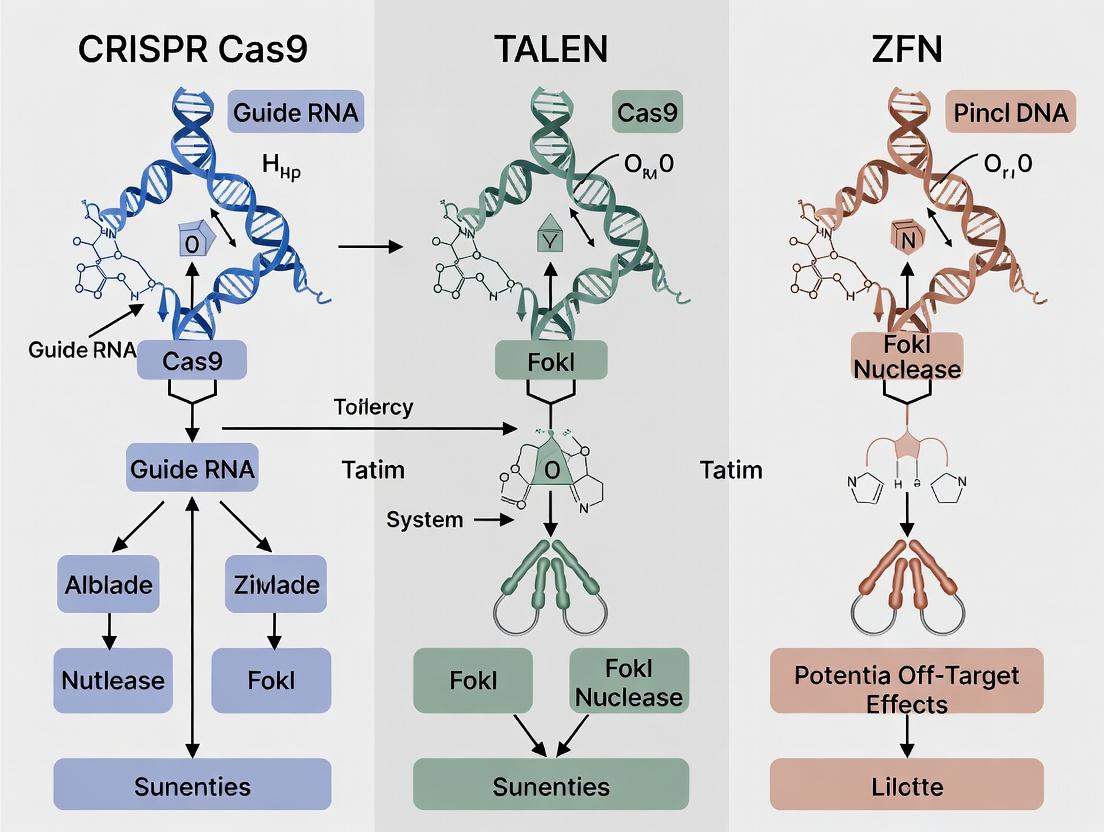
This article provides a critical, evidence-based comparison of off-target effects across the three primary genome editing platforms: CRISPR-Cas9, TALENs, and ZFNs.
CRISPR-Cas9 vs. TALEN vs. ZFN: A Comprehensive 2024 Guide to Off-Target Effects for Precision Research
Abstract
This article provides a critical, evidence-based comparison of off-target effects across the three primary genome editing platforms: CRISPR-Cas9, TALENs, and ZFNs. Tailored for researchers, scientists, and drug development professionals, it explores the foundational mechanisms driving off-target activity, details current methodologies for detection and risk mitigation, and offers practical troubleshooting and optimization strategies. A direct, data-driven validation and comparative analysis synthesizes the latest research to guide platform selection for specific therapeutic and research applications, balancing efficiency, specificity, and safety.
Understanding the Roots of Risk: How CRISPR, TALEN, and ZFN Mechanisms Drive Off-Target Effects
The precision of genome editing tools is paramount for therapeutic safety. This guide compares the off-target profiles of CRISPR-Cas9, TALEN, and ZFN systems, using current experimental data to inform risk assessment in drug development.
Comparative Analysis of Off-Target Effects Quantitative data from recent studies (2023-2024) using whole-genome sequencing (WGS) assays are summarized below.
Table 1: Off-Target Activity Comparison for a Model Human Locus (e.g., VEGFA Site)
| Editing System | Method of Delivery | Validated Off-Target Sites (WGS) | Mutation Frequency at Top Off-Target Site | Key Determinant of Specificity |
|---|---|---|---|---|
| CRISPR-Cas9 (SpCas9) | RNP, Plasmid | 4 - 15 | 0.8% - 5.2% | sgRNA seed sequence, PAM proximity, chromatin state |
| High-Fidelity Cas9 (SpCas9-HF1) | RNP | 0 - 3 | < 0.1% - 0.5% | Engineered protein with reduced non-specific DNA contacts |
| TALEN (Pair) | mRNA | 0 - 2 | < 0.1% - 0.3% | Dimerization requirement, longer DNA recognition sequence (30-40bp) |
| ZFN (Pair) | Plasmid | 1 - 5 | 0.2% - 1.8% | Dimerization requirement, context-dependent assembly (FokI domain) |
Table 2: Overall Specificity and Practical Considerations
| Parameter | CRISPR-Cas9 | TALEN | ZFN |
|---|---|---|---|
| Typical Design & Cloning Timeline | ~1 week (fast) | ~2-3 weeks (slow) | ~2 weeks (moderate) |
| Predicted Off-Target Sites per Locus | Often >50 (algorithm-dependent) | Typically < 20 | Typically 10-40 |
| Ease of Multiplexing | High (multiple sgRNAs) | Low | Moderate |
| Primary Off-Target Risk | Seed region mismatches, PAM variants | Repeat Variable Diphthamide (RVD) degeneracy | Cross-dimerization of ZFN subunits |
| Common Validation Assays | GUIDE-seq, CIRCLE-seq, WGS | CO-TARGET-seq, WGS | ITER, WGS |
Experimental Protocols for Key Cited Studies
GUIDE-seq (for CRISPR-Cas9 & TALEN)
- Objective: Unbiased genome-wide detection of double-strand breaks (DSBs).
- Methodology: Co-deliver genome editor with a double-stranded oligonucleotide (dsODN) tag into cells. Tag integration at DSB sites via NHEJ. Harvest genomic DNA 72h post-transfection. Shear DNA, enrich tag-containing fragments, and prepare sequencing libraries. Map integration sites to reference genome to identify on- and off-target events.
CIRCLE-seq (for CRISPR-Cas9)
- Objective: In vitro, high-sensitivity profiling of nuclease cleavage sites.
- Methodology: Isolate genomic DNA and shear. Circulate fragments using ssDNA circ ligase. Digest with Cas9-sgRNA RNP complex to linearize only fragments containing a cognate site. Add adapters for sequencing and analyze breakpoints to map cleavage sites.
ITER (Idiosyncratic Ratio) Assay (for ZFNs)
- Objective: Measure relative cleavage activity at intended vs. potential off-target sites.
- Methodology: Amplify genomic regions of interest from edited cell populations. Subject amplicons to deep sequencing. Calculate the "idiosyncratic ratio" as the frequency of indels at the off-target site divided by the frequency at the on-target site. A ratio >1 indicates preferential off-target cleavage.
Visualization of Off-Target Analysis Workflows
Title: Workflow for Genome Editor Off-Target Profiling
Title: Off-Target Mechanisms: ZFN, TALEN vs. CRISPR-Cas9
The Scientist's Toolkit: Research Reagent Solutions
Table 3: Essential Reagents for Off-Target Analysis
| Reagent/Material | Function in Off-Target Studies | Example Vendor/Kit |
|---|---|---|
| High-Fidelity DNA Polymerase | Accurate amplification of genomic loci for targeted deep sequencing. | NEB Q5, Thermo Fisher Platinum SuperFi II |
| dsODN GUIDE-seq Tag | Double-stranded oligo for unbiased DSB tagging and capture in GUIDE-seq. | Integrated DNA Technologies (custom) |
| Cas9 Nuclease (WT & HiFi) | The effector protein; comparison of wild-type and high-fidelity variants is crucial. | Synthego, ToolGen, IDT Alt-R S.p. Cas9 Nuclease |
| T7 Endonuclease I / Surveyor Nuclease | Initial, low-cost detection of nuclease-induced indels at candidate sites. | NEB |
| Next-Gen Sequencing Library Prep Kit | Preparation of sequencing libraries from GUIDE-seq or PCR amplicon samples. | Illumina Nextera XT, Swift Biosciences Accel-NGS |
| Lipid or Electroporation Reagent | Efficient delivery of editing components (RNP, mRNA, plasmid) into target cells. | Thermo Fisher Lipofectamine CRISPRMAX, Lonza 4D-Nucleofector |
| Genomic DNA Isolation Kit | High-quality, high-molecular-weight DNA is essential for unbiased sequencing assays. | Qiagen DNeasy Blood & Tissue Kit |
Within the broader thesis comparing off-target effects across programmable nucleases, this guide provides a focused, data-driven comparison of CRISPR-Cas9's specificity performance against TALEN and ZFN systems. The analysis centers on the critical role of the gRNA's "seed region" (nucleotides 3-12 proximal to the PAM) and the experimental methodologies used to quantify and mitigate its vulnerabilities.
Off-Target Performance Comparison: Quantitative Data
Table 1: Comparative Off-Target Profile of Programmable Nucleases
| Metric | CRISPR-Cas9 (SpCas9) | TALENs | ZFNs |
|---|---|---|---|
| Typical Off-Target Rate | 0.1% - 50% (gRNA-dependent) | < 0.1% - 5% | 1% - 10% |
| Primary Determinant of Specificity | gRNA seed region complementarity | RVD sequence & repeat length | Zinc finger array affinity |
| Mismatch Tolerance in Critical Region | High (seed, esp. bases 8-12) | Very Low | Low |
| Common Validation Method | Genome-wide: GUIDE-seq, CIRCLE-seq; Targeted: NGS amplicon-seq | NGS amplicon-seq of predicted sites | NGS amplicon-seq of predicted sites |
| Protein Engineering to Reduce Off-Targets | eSpCas9(1.1), SpCas9-HF1, HiFi Cas9 | None widely adopted | Obligate heterodimer FokI domains |
| Typical Indel Efficiency at On-Target | 20% - 80% | 10% - 60% | 5% - 40% |
Table 2: Impact of Seed Region Mismatches on Cas9 Cleavage Efficiency Data from systematic studies using NGS-based assays (Fu et al., 2013; Hsu et al., 2013)
| Mismatch Position (within seed, 5' to 3') | Reduction in Cleavage Activity | Likelihood of Off-Target Cleavage |
|---|---|---|
| Positions 1-7 | Severe (>90%) | Very Low |
| Positions 8-10 | Moderate to Severe (50-95%) | Moderate |
| Positions 11-12 | Variable (20-80%) | High |
| ≥3 Mismatches distributed in seed | Near-total ablation | Very Low |
Experimental Protocols for Off-Target Analysis
Protocol 1: Genome-Wide Unbiased Identification with GUIDE-seq
Purpose: To empirically detect off-target double-strand breaks (DSBs) in living cells without prior sequence prediction.
Methodology:
- Co-delivery: Transfect cells with Cas9-gRNA RNP complex alongside a blunt, double-stranded GUIDE-seq oligonucleotide tag.
- Integration: Upon DSB formation, the tag is integrated into repair sites via non-homologous end joining (NHEJ).
- Genomic DNA Extraction & Shearing: Harvest genomic DNA 72h post-transfection and shear to ~500 bp fragments.
- Enrichment & Library Prep: Use PCR to enrich tag-containing fragments, followed by preparation of a sequencing library.
- Next-Generation Sequencing (NGS): Sequence the library to high depth. Map reads to the reference genome to identify all tag integration sites, which correspond to DSB locations.
- Bioinformatics Analysis: Cluster integration sites and compare to the on-target sequence to generate a list of empirically derived off-target sites.
Protocol 2: In Vitro Cleavage Specificity with CIRCLE-seq
Purpose: To profile the in vitro cleavage landscape of a Cas9-gRNA complex with ultra-high sensitivity.
Methodology:
- Genomic DNA Circularization: Shear genomic DNA and ligate into circular molecules.
- In Vitro Cleavage: Incubate circularized DNA with the Cas9-gRNA RNP complex. Any linearized DNA is a product of cleavage.
- Exonuclease Treatment: Digest all remaining linear DNA, enriching exclusively for fragments cleaved by Cas9 during step 2.
- Adapter Ligation & NGS: Attach sequencing adapters to the ends of the linearized fragments and perform NGS.
- Data Analysis: Map all cleavage sites to the genome to identify off-target sequences tolerated by the gRNA seed region under permissive reaction conditions.
Protocol 3: Targeted Deep Sequencing for Validation
Purpose: To quantify the frequency of indels at predicted or empirically identified off-target sites.
Methodology:
- PCR Amplification: Design primers flanking (~150-200 bp) the on-target and each candidate off-target locus. Perform PCR on genomic DNA from treated cells.
- Barcoding & Library Construction: Attach unique sample barcodes and NGS adapters to each amplicon.
- High-Depth Sequencing: Pool libraries and sequence on an Illumina platform to achieve >100,000x read depth per site.
- Alignment & Indel Quantification: Use bioinformatics tools (e.g., CRISPResso2, MAGeCK) to align reads to the reference sequence and calculate the percentage of reads containing insertions or deletions at the expected cut site.
Key Signaling and Workflow Visualizations
Title: Cas9 Activation Pathway and Seed-Dependent Off-Target Cleavage
Title: Off-Target Determinants and Validation Methods
Title: Workflow for Systematic Off-Target Profiling
The Scientist's Toolkit: Research Reagent Solutions
Table 3: Essential Reagents for CRISPR-Cas9 Specificity Research
| Reagent / Kit | Primary Function in Specificity Research |
|---|---|
| High-Fidelity Cas9 Variants (e.g., HiFi Cas9, SpCas9-HF1) | Engineered protein with reduced non-specific DNA contacts, lowering off-target cleavage while maintaining on-target activity. |
| Chemically Modified Synthetic gRNAs (2'-O-methyl, phosphorothioate) | Increases gRNA stability and can modestly improve specificity; critical for RNP delivery in primary cells. |
| GUIDE-seq Oligonucleotide | Short, blunt, double-stranded tag for genome-wide, unbiased identification of DSBs in living cells. |
| CIRCLE-seq Kit | Optimized reagent suite for performing ultra-sensitive in vitro circularization and cleavage assays. |
| Targeted Locus Amplification Primers | Validated primer pairs for amplifying on-target and predicted off-target sites for deep sequencing. |
| NGS Library Prep Kit for Amplicons (e.g., Illumina TruSeq) | Standardized reagents for attaching barcodes and adapters to PCR amplicons prior to deep sequencing. |
| Cas9 Electroporation Enhancer | Improves delivery efficiency of RNP complexes into hard-to-transfect cell lines, crucial for GUIDE-seq. |
| Bioinformatics Analysis Suite (e.g., CRISPResso2, Cas-OFFinder) | Software for designing gRNAs, predicting off-target sites, and quantifying indel frequencies from NGS data. |
This comparison guide situates the specificity of Transcription Activator-Like Effector Nucleases (TALENs) within the ongoing thesis research contrasting off-target effects in CRISPR-Cas9, TALEN, and Zinc Finger Nuclease (ZFN) systems. The core mechanism of TALENs—highly modular DNA-binding domains coupled with obligatory FokI nuclease dimerization—confers a fundamental precision advantage, which is quantified through comparative experimental data.
TALEN Architecture: A Primer
A TALEN monomer consists of:
- A central DNA-binding domain composed of tandem 33-35 amino acid repeats, each recognizing a single DNA base via a highly conserved "Repeat Variable Diresidue" (RVD).
- A C-terminal FokI endonuclease domain that must dimerize to create a double-strand break (DSB).
The specificity arises from two layers: the programmable one-to-one protein-DNA code (recognition) and the requirement for two correctly spaced, sequence-specific monomers to dimerize (action).
Comparative Off-Target Analysis: Key Experimental Data
Recent head-to-head studies provide quantitative evidence for TALEN's superior specificity relative to CRISPR-Cas9 and parity or superiority to ZFNs.
Table 1: Comparative Off-Target Cleavage Frequencies (Selected Studies)
| Study & System | Target Locus | Primary On-Target Activity (%) | Highest Off-Target Cleavage Frequency (%) | Detection Method |
|---|---|---|---|---|
| CRISPR-Cas9 (SpCas9) | VEGFA Site 3 | ~40% | Up to 47.3% at known OT site | GUIDE-seq (Tsai et al., 2015) |
| TALEN Pair | CCR5 | ~30% | Undetectable (<0.1%) at predicted homologous sites | NGS-based capture (Juillerat et al., 2014) |
| High-fidelity Cas9 variant (e.g., SpCas9-HF1) | EMX1 | ~35% (reduced) | Reduced to ≤0.1% at known OT sites | GUIDE-seq (Kleinstiver et al., 2016) |
| ZFN (CCR5-specific) | CCR5 | ~30% | ~0.1-1.0% at a known homologous site | ELISA-based mismatch detection (Gabriel et al., 2011) |
| TALEN Pair | AAVS1 | ~60% | Undetectable (<0.1%) by deep sequencing | Digenome-seq (Kim et al., 2015) |
Table 2: Mechanistic Drivers of Specificity Comparison
| Feature | CRISPR-Cas9 (canonical SpCas9) | TALEN | ZFN |
|---|---|---|---|
| Recognition Pattern | ~20-nt RNA-DNA hybrid + PAM | ~15-20 bp direct 1-RVD:1-base code | ~9-18 bp (3-6 fingers), context-dependent |
| Dimerization Required | No (single nuclease) | Yes (obligatory FokI dimer) | Yes (obligatory FokI dimer) |
| Typical Total Recognition Length | ~23 bp (20-nt guide + NGG) | ~30-40 bp (two 15-20 bp half-sites) | ~36 bp (two 18 bp half-sites) |
| Mismatch Tolerance | Low in "seed," higher in 5' end | Very low across entire RVD array | Variable, depends on finger context |
| Primary Source of Off-Targets | Excess nuclease activity; tolerance to bulges/mismatches | Rare, primarily from spacer length errors | Cross-binding of individual finger domains |
Experimental Protocols for Specificity Assessment
Protocol 1: GUIDE-seq (for TALEN/CRISPR Comparison)
- Purpose: Genome-wide, unbiased detection of off-target DSBs.
- Methodology:
- Co-deliver TALEN mRNAs (or CRISPR RNP) and a blunt-ended, double-stranded "GUIDE-seq Oligo" into cells via nucleofection.
- Allow 72 hours for integration of the oligo into DSB sites via NHEJ.
- Harvest genomic DNA, shear, and prepare sequencing libraries using primers specific to the integrated oligo.
- Perform high-throughput sequencing. Map reads to the reference genome to identify all oligo integration sites, which correspond to nuclease-induced DSBs.
- Key Consideration for TALENs: Lower overall cutting efficiency can reduce GUIDE-seq tag capture, potentially requiring deeper sequencing or PCR enrichment of target regions.
Protocol 2: Digenome-seq (In Vitro Specificity Profiling)
- Purpose: In vitro, whole-genome mapping of cleavage sites without cellular processes.
- Methodology:
- Isolate high-molecular-weight genomic DNA from control cells.
- Treat the naked genomic DNA with a high concentration of the TALEN protein (or CRISPR RNP) in vitro.
- Whole-genome sequence the treated DNA to high coverage (>100x).
- Computational analysis identifies cleavage sites as genomic positions where sequence reads begin abruptly (blunt ends from in vitro cleavage).
- Advantage for TALENs: Eliminates confounding variables like delivery efficiency and chromatin state, providing a pure measure of protein-DNA recognition fidelity.
Visualizing TALEN Mechanism and Specificity
TALEN's Two-Gate Specificity Mechanism
Dimerization as a Specificity Gate
The Scientist's Toolkit: Key Reagents for TALEN Specificity Analysis
Table 3: Essential Research Reagent Solutions
| Reagent / Kit | Vendor Examples | Primary Function in TALEN Analysis |
|---|---|---|
| TALEN Expression Plasmid Kits | Addgene, Cellectis Bioresearch | Provide validated, modular backbones for assembling custom TALEN constructs using Golden Gate or other assembly methods. |
| In Vitro Transcription Kits | Ambion mMessage mMachine, NEB | Generate high-yield, capped polyadenylated TALEN mRNAs for sensitive cellular delivery and reduced persistence (aiding specificity). |
| Recombinant FokI (Wild-type & Cleavage-Deficient) | Thermo Fisher, NEB | Used in dimerization studies and as a control for DNA-binding assays without cleavage. |
| GUIDE-seq Kit | Integrated DNA Technologies (IDT) | All-in-one reagent system for genome-wide off-target detection, includes optimized oligonucleotide and PCR primers. |
| Digenome-seq Service/Analysis | ToolGen, Bioneer | Commercial providers offering whole-genome sequencing and bioinformatics analysis for in vitro cleavage profiling. |
| T7 Endonuclease I / Surveyor Nuclease | NEB, IDT | Enzymes for detecting mismatches in PCR heteroduplexes, providing a rapid, low-cost method for initial on-target and known off-target activity screening. |
| High-Fidelity PCR Kits | KAPA Biosystems, NEB | Essential for amplifying on- and potential off-target loci without introducing errors prior to sequencing-based analysis. |
| Next-Generation Sequencing Library Prep Kits | Illumina, Twist Bioscience | For preparing targeted amplicon or whole-genome libraries to quantify cleavage frequencies at high depth. |
The mechanistic deep dive into TALENs reveals that their high specificity is not an incidental feature but a direct consequence of their two-part architecture: precise, modular DNA binding combined with an obligatory dimerization step. This creates two serial "gates" that must be passed for cleavage, a fundamental contrast to single-protein CRISPR-Cas9 systems. While high-fidelity Cas9 variants have narrowed the gap, TALENs remain a benchmark for precision in genome editing, particularly for applications where even minimal off-target effects are unacceptable. Within the thesis framework, TALENs represent the high-specificity, moderate-efficiency pole of the genome editor spectrum, against which the off-target profiles of ZFNs and CRISPR systems are most rigorously measured.
Within the critical evaluation of genome-editing technologies, the comparison of off-target effects between CRISPR-Cas9, TALENs, and ZFNs is paramount for therapeutic development. This guide provides a focused, data-driven comparison of Zinc Finger Nucleases (ZFNs), with a specific deep dive into the mechanism of their zinc finger (ZF) domains. The context-dependent binding of these domains is the primary determinant of ZFN specificity and efficiency, directly influencing its off-target profile relative to other editors.
Core Mechanism: Zinc Finger Architecture and Context Effects
A ZFN monomer consists of a custom-designed zinc finger protein (ZFP) domain fused to the cleavage domain of the FokI endonuclease, which must dimerize to cut DNA. Each canonical C₂H₂ zinc finger domain recognizes approximately 3 bp of DNA via amino acid residues at key positions (-1, +2, +3, +6) within an α-helix. However, binding is not modular; it is influenced by context-dependent effects, where the recognition of a triplet by one finger is affected by neighboring fingers. This can lead to unpredictable binding energetics and off-target interactions when designs are based purely on additive, modular assumptions.
Diagram: ZFN Domain Architecture and Binding Context
Performance Comparison: Specificity and Efficiency Data
Recent comparative studies analyze key performance metrics. The data below summarizes findings from high-throughput sequencing studies measuring on-target efficiency and genome-wide off-target detection.
Table 1: Comparative Performance of Major Nuclease Platforms
| Metric | ZFN | TALEN | CRISPR-Cas9 (sgRNA) | Experimental Notes |
|---|---|---|---|---|
| Typical On-Target Efficiency (%) | 5-30% | 20-50% | 40-80% | Highly locus-dependent; data from endogenous human loci. |
| Off-Target Detection Rate (Loci) | Low-Moderate | Very Low | Moderate-High | ZFN off-targets are fewer than Cas9 but often unpredictable. |
| Primary Determinant of Specificity | Zinc finger context & FokI dimerization | RVD repeat code & FokI dimerization | sgRNA seed sequence & PAM | |
| Design Predictability | Low (Context Effects) | High (Modular) | Very High (Base Pairing) | ZFN context effects hinder reliable ab initio design. |
| Common Off-Target Detection Method | SELEX-seq, GUIDE-seq | GUIDE-seq, Digenome-seq | CIRCLE-seq, GUIDE-seq |
Table 2: Context-Dependent Effects on ZFN Performance (Example Study)
| ZF Array Design | Intended Target (9 bp) | Measured On-Target K_d (nM) | Off-Target Sites Found | Impact of Context |
|---|---|---|---|---|
| Modular (3-finger) | GGG-GGA-GAG | 18.5 | 12 | High off-targeting; fingers functioned independently. |
| Optimized (Context-Aware) | GGG-GGA-GAG | 2.1 | 3 | Altered finger interfaces improved specificity 6-fold. |
| Framework Swap | GGG-GGA-GAG | 15.7 | 8 | Changing ZF backbone altered affinity for middle triplet. |
Experimental Protocols for Assessing ZFN Specificity
Protocol 1: SELEX-seq (Systematic Evolution of Ligands by EXponential Enrichment) for ZFN Binding Profiling
- Objective: Identify the full spectrum of DNA sequences a ZFN array can bind in vitro.
- Procedure:
- Library Construction: Incubate purified ZFN protein with a randomized double-stranded oligonucleotide library (e.g., 10-bp random core).
- Selection: Use affinity capture (e.g., tagged ZFN) to isolate protein-bound DNA sequences.
- Amplification: PCR-amplify the bound sequences for the next selection round (typically 3-5 rounds).
- Sequencing & Analysis: High-throughput sequence the final selected pool. Generate a position weight matrix (PWM) to reveal binding preferences and tolerated nucleotide substitutions at each position, highlighting context effects.
Protocol 2: GUIDE-seq (Genome-wide Unbiased Detection of DSBs Enabled by Sequencing) for Cellular Off-Target Detection
- Objective: Identify double-strand breaks (DSBs) generated by nucleases in living cells.
- Procedure:
- Transfection: Co-deliver ZFN-encoding mRNA/plasmid and the GUIDE-seq oligonucleotide duplex into mammalian cells.
- Integration: During repair of nuclease-induced DSBs, the oligo integrates into break sites.
- Genomic DNA Prep & Enrichment: Extract genomic DNA, shear, and enrich for oligo-containing fragments via PCR.
- Sequencing & Analysis: Perform paired-end sequencing. Map integration sites to the reference genome to identify all nuclease cleavage sites, both on-target and off-target.
Diagram: GUIDE-seq Experimental Workflow
The Scientist's Toolkit: Key Research Reagents
Table 3: Essential Reagents for ZFN Development and Specificity Analysis
| Reagent / Solution | Function | Key Consideration |
|---|---|---|
| Modular Zinc Finger Phage/ Yeast Display Libraries | For selection of fingers binding to specific DNA triplets. | Does not account for context effects; requires optimization. |
| Comprehensive ZFN Off-Target Analysis Service (e.g., IDT) | Pre-validated ZFN pairs with off-target data via SELEX or cell-based assays. | Reduces risk but may not cover all cellular contexts. |
| GUIDE-seq Oligonucleotide Duplex | A short, blunt-ended, phosphorothioate-modified dsDNA oligo for tagging DSBs. | Essential for unbiased, genome-wide off-target detection in cells. |
| FokI Cleavage Domain (Wild-type & Obligate Heterodimer Mutants) | The nuclease effector. Obligate heterodimers (e.g., ELD/KKR) prevent homodimerization, reducing off-target cleavage. | Critical for safety. Heterodimer variants are a standard for therapeutic ZFNs. |
| High-Fidelity DNA Polymerase for Library Prep (e.g., Q5) | For accurate amplification of sequencing libraries from GUIDE-seq or SELEX products. | Minimizes PCR errors that could be misidentified as off-target variants. |
| In Vitro Transcription Kit for mRNA | To produce ZFN-encoding mRNA for delivery into sensitive cells (e.g., primary T-cells). | Yields higher efficiency and lower toxicity than plasmid delivery in many therapeutically relevant cells. |
Within the broader thesis on CRISPR-Cas9 off-target profiling compared to TALEN and ZFN systems, this guide provides a comparative analysis of the key determinants governing nuclease specificity. The precision of genome editing hinges on the interplay between biochemical binding energy, tolerance for DNA mismatches, and the variable cellular context in which nucleases operate.
Quantitative Comparison of Nuclease Specificity Determinants
The following table summarizes core specificity parameters for ZFNs, TALENs, and CRISPR-Cas9 (using S. pyogenes Cas9, spCas9), based on recent profiling studies.
Table 1: Comparative Analysis of Specificity Determinants for Programmable Nucleases
| Determinant | ZFN | TALEN | CRISPR-Cas9 (spCas9) | Supporting Evidence (Key Studies) |
|---|---|---|---|---|
| Binding Energy/Recognition Length | ~18-36 bp (3-6 ZF pairs, each ~3 bp) | ~30-40 bp (12-20 RVDs, each 1 bp) | ~20 bp (gRNA sequence) + PAM (NGG) | Kim et al. (1996); Moscou & Bogdanove (2009); Jinek et al. (2012) |
| Mismatch Tolerance (Position Dependency) | High tolerance within modules; lower at ZF interfaces. | Low tolerance; single RVD mismatch often abolishes activity. | High tolerance, especially distal from PAM; central mismatches less tolerated. | Ramirez et al. (2008); Guilinger et al. (2014); Fu et al. (2013) |
| Reported Off-Target Rate (Cellular Context Dependent) | Moderate-High (due to context-dependent ZF assembly) | Very Low | High (wild-type); Low (high-fidelity variants) | Pattanayak et al. (2011); Tsai et al. (2014); Slaymaker et al. (2016) |
| Primary Cellular Context Factors | Chromatin state, DNA methylation, cytotoxicity. | Chromatin accessibility, CpG methylation. | Chromatin accessibility, transcription, DNA repair pathways, cellular delivery method. | Wu et al. (2014); Daer et al. (2017); Tsai et al. (2017) |
Experimental Protocols for Specificity Assessment
2.1. In Vitro Cleavage Assay (SELEX-seq)
- Purpose: Quantify biochemical mismatch tolerance and binding energy.
- Protocol: 1) Incubate nuclease with a randomized or genomic DNA library. 2) Purify bound or cleaved DNA. 3) High-throughput sequencing of selected oligonucleotides. 4) Enrichment analysis to determine consensus binding sites and permissible mismatches. This method decouples cellular context.
- Key Data: Position-weight matrices (PWMs) depicting mismatch tolerance per nucleotide position.
2.2. Cellular Off-Target Profiling (CIRCLE-seq)
- Purpose: Genome-wide identification of off-target sites in a near-cellular context.
- Protocol: 1) Isolate genomic DNA from cells. 2) Circularize DNA to prevent dissociation of nuclease-cleaved ends. 3) Incubate with nuclease in vitro. 4) Linearize cleaved circles and add sequencing adapters. 5) Sequence and map cleavage sites. This method is highly sensitive and performed on native genomic DNA.
- Key Data: A comprehensive list of potential off-target sites with sequencing reads indicating cleavage frequency.
2.3. In Cellulo Validation (Targeted Sequencing)
- Purpose: Confirm off-target editing in relevant cellular models.
- Protocol: 1) Transfert cells with nuclease. 2) After 48-72 hours, harvest genomic DNA. 3) Amplify predicted off-target loci via PCR. 4) Deep sequence amplicons (>10,000x coverage). 5) Analyze indel frequencies using tools like CRISPResso2.
- Key Data: Quantitative indel percentages at each assessed genomic locus.
Visualization of Pathways and Workflows
Title: Determinants of Nuclease Specificity Interaction
Title: CIRCLE-seq Off-Target Profiling Workflow
The Scientist's Toolkit: Essential Research Reagents
Table 2: Key Reagent Solutions for Specificity Research
| Reagent/Material | Function in Specificity Research | Example/Note |
|---|---|---|
| High-Fidelity Cas9 Variants (e.g., SpCas9-HF1, eSpCas9) | Engineered to reduce non-specific DNA contacts, lowering off-target editing while maintaining on-target activity. | Critical for therapeutic development. |
| In Vitro Transcription Kits (for gRNA/mRNA) | Produce high-quality, endotoxin-free gRNA or nuclease mRNA for cellular delivery with minimal immune stimulation. | Essential for sensitive primary cell work. |
| Genomic DNA Extraction Kits (for CIRCLE-seq) | Enable pure, high-molecular-weight DNA isolation, free of contaminants that inhibit circularization or nuclease activity. | Key for library preparation fidelity. |
| High-Sensitivity DNA Assay Kits (e.g., Qubit, Bioanalyzer) | Accurately quantify low-concentration DNA libraries and assess size distribution post-circularization/cleavage. | Required for sequencing library QC. |
| Deep Sequencing Amplicon Kits | Generate multiplexed PCR amplicons from predicted off-target loci for validation with high coverage and uniformity. | Enables parallel, quantitative validation. |
| Chromatin Accessibility Reagents (e.g., ATAC-seq Kits) | Map open chromatin regions to correlate nuclease activity with cellular context determinants. | Links specificity to epigenomic state. |
Within the ongoing thesis research comparing CRISPR-Cas9, TALEN, and ZFN systems, a critical analysis of their inherent risk profiles is paramount. This guide provides an objective comparison of these genome editing technologies, focusing on their architectural vulnerabilities and strengths, particularly regarding off-target effects, supported by current experimental data.
Theoretical Framework of Nuclease Architecture and Risk
The fundamental difference in DNA recognition and cleavage mechanics between these systems dictates their inherent precision and off-target risk.
- ZFN: Utilizes a protein-DNA interface where zinc finger domains recognize specific 3-base pair triplets. Cleavage is performed by the FokI nuclease domain, which requires dimerization.
- TALEN: Employs TALE repeat domains that each recognize a single nucleotide via Repeat Variable Diresidues (RVDs). Like ZFNs, TALENs use the FokI nuclease domain, requiring a paired architecture.
- CRISPR-Cas9: Relies on RNA-DNA base pairing, where a guide RNA (gRNA) directs the Cas9 nuclease to a complementary genomic locus adjacent to a Protospacer Adjacent Motif (PAM).
Quantitative Comparison of Off-Target Risk Profiles
The following table summarizes key experimental findings from recent comparative studies analyzing off-target activity and specificity.
Table 1: Comparative Off-Target Profile of Major Nuclease Systems
| Parameter | Zinc Finger Nucleases (ZFNs) | Transcription Activator-Like Effector Nucleases (TALENs) | CRISPR-Cas9 (Streptococcus pyogenes) |
|---|---|---|---|
| Target Recognition | Protein-DNA (3 bp/domain) | Protein-DNA (1 bp/domain) | RNA-DNA (20 bp gRNA) |
| Nuclease Activity | FokI dimer (obligate heterodimer) | FokI dimer (obligate heterodimer) | Cas9 single protein (HNH, RuvC) |
| Primary Off-Target Risk | Cross-talk between zinc finger arrays; homodimerization of FokI. | TALE repeat non-specificity; homodimerization of FokI. | gRNA seed region mismatches; PAM-proximal mismatches. |
| Typical Off-Target Rate (Experimental Range) | 1-10% (can be high with poor design) | <1-5% (generally lower than ZFNs) | Highly variable: 0.1% to >50%, depending on gRNA and delivery. |
| Specificity-Enhancing Variants | Obligate heterodimeric FokI (ELD/KKR, ++/--) | Obligate heterodimeric FokI; truncated TALE scaffolds. | High-fidelity Cas9 (e.g., SpCas9-HF1, eSpCas9), HypaCas9; engineered PAM variants. |
| Genome-Wide Interrogation Method | SELEX, GUIDE-seq (indirect) | GUIDE-seq, Digenome-seq | CIRCLE-seq, GUIDE-seq, SITE-seq, Digenome-seq |
Detailed Experimental Protocols for Off-Target Assessment
1. Protocol for GUIDE-seq (Genome-wide, Unbiased Identification of DSBs Enabled by Sequencing) This protocol is applicable for unbiased detection of double-strand breaks (DSBs) in vivo across all three nuclease systems.
- Cell Transfection: Co-transfect target cells with plasmids encoding the nuclease (ZFN pair, TALEN pair, or Cas9+gRNA) and the double-stranded GUIDE-seq oligonucleotide tag using a suitable method (e.g., nucleofection).
- Genomic DNA Extraction: Harvest cells 72 hours post-transfection. Isolate genomic DNA using a silica-membrane column kit.
- Library Preparation & Sequencing: Shear genomic DNA. Perform end-repair, A-tailing, and ligation of sequencing adaptors. Enrich for tag-integrated fragments via PCR using a tag-specific primer and an adapter-specific primer. Sequence on a high-throughput platform (e.g., Illumina MiSeq).
- Data Analysis: Align sequences to the reference genome. Identify genomic sites with tag integration, which mark DSB locations. Filter sites statistically significant above background.
2. Protocol for In Vitro Cleavage Assay (Digenome-seq) This method maps nuclease specificity in vitro using cell-free genomic DNA.
- Genomic DNA Isolation: Extract high-molecular-weight genomic DNA from unmodified cells.
- In Vitro Digestion: Incubate purified genomic DNA (1 µg) with purified nuclease protein (e.g., Cas9-gRNA RNP, or TALEN/ZFN proteins) at 37°C for 16 hours in the appropriate reaction buffer.
- Whole-Genome Sequencing: Purify the digested DNA. Prepare a sequencing library directly from the fragmented DNA without size selection. Perform high-coverage (>100x) whole-genome sequencing.
- Break Point Mapping: Bioinformatically map sequencing reads to identify cleavage sites by detecting reads with abrupt termini at consensus cut sites.
Visualization of Key Concepts
Title: Off-Target Risk Decision Pathway
Title: Off-Target Detection Method Workflows
The Scientist's Toolkit: Key Research Reagent Solutions
Table 2: Essential Reagents for Comparative Off-Target Studies
| Reagent / Solution | Function in Experiment | Key Consideration |
|---|---|---|
| High-Fidelity DNA Polymerase (e.g., Q5, KAPA HiFi) | PCR amplification for NGS library preparation and tag enrichment (GUIDE-seq). | Essential for minimizing PCR errors during sensitive library prep. |
| Recombinant Nuclease Proteins (ZFN, TALEN, Cas9) | For in vitro cleavage assays (Digenome-seq) or RNP delivery. | Purified protein activity must be titrated; reduces delivery-based variability. |
| GUIDE-seq dsODN Tag | A short, blunt, double-stranded oligodeoxynucleotide that integrates into DSBs in vivo for detection. | Must be HPLC-purified and used at an optimized concentration to avoid toxicity. |
| Next-Generation Sequencing Platform | For high-throughput sequencing of GUIDE-seq or Digenome-seq libraries. | Choice depends on required depth (coverage) and multiplexing needs. |
| Specialized Analysis Software (e.g., GUIDE-seq, CRISPResso2, Digenome-seq Tool) | Bioinformatic pipelines to process sequencing data and identify off-target sites. | Critical for accurate, reproducible analysis; parameters must be standardized. |
| Obligate Heterodimeric FokI Variants | For ZFN/TALEN design to prevent homodimer formation and reduce off-target cleavage. | A standard for modern ZFN/TALEN design to enhance inherent specificity. |
| High-Fidelity Cas9 Variants (SpCas9-HF1, eSpCas9) | Engineered Cas9 proteins with reduced non-specific DNA contacts. | Used as a comparator to wild-type Cas9 to assess architectural improvements. |
Detection and Mitigation in Practice: Best-Practice Assays and Workflows for Off-Target Analysis
Within the broader thesis comparing CRISPR-Cas9, TALEN, and ZFN genome editing systems, a critical area of research is the accurate identification of off-target effects. CRISPR-Cas9, while highly efficient, can cleave at genomic sites with sequence similarity to the intended on-target site. Comprehensively profiling these off-target events is essential for assessing the safety and specificity of therapeutic applications. This guide objectively compares four gold-standard, genome-wide detection methods: CIRCLE-seq, GUIDE-seq, Digenome-seq, and SITE-seq.
Method Comparison & Experimental Data
The following table summarizes the core principles, key advantages, and experimental outputs of each method.
Table 1: Comparison of Genome-Wide Off-Target Detection Methods
| Method | Core Principle | Detection Context | Key Advantage | Reported Sensitivity (Key Study) |
|---|---|---|---|---|
| CIRCLE-seq | In vitro circularization and amplification of genomic DNA followed by Cas9 nuclease digestion and high-throughput sequencing. | Cell-free, genomic DNA in a test tube. | Extremely high sensitivity; can detect ultra-rare off-target sites (<0.1% frequency). | Detected ~10x more off-targets than Digenome-seq in head-to-head comparison (Tsai et al., 2017). |
| GUIDE-seq | Integration of a double-stranded oligodeoxynucleotide tag into double-strand breaks (DSBs) in living cells, followed by tag-specific amplification and sequencing. | Cellular, in living cells. | Captures off-targets in a relevant cellular context (chromatin accessibility, repair). | Identified off-target sites for SpCas9 at frequencies as low as ~0.1% (Tsai et al., 2015). |
| Digenome-seq | In vitro digestion of cell-free genomic DNA with Cas9 ribonucleoprotein (RNP), whole-genome sequencing, and computational identification of cleavage footprints. | Cell-free, genomic DNA in a test tube. | Unbiased, PCR-free; uses linear DNA; can profile multiple gRNAs simultaneously. | Achieved single-nucleotide resolution; validated known off-targets from other studies (Kim et al., 2015). |
| SITE-seq | In vitro Cas9 RNP cleavage of genomic DNA, selective biotinylation of DSB ends, pull-down, and sequencing of the associated fragments. | Cell-free, genomic DNA in a test tube. | Highly sensitive with lower input DNA requirements; captures the exact cleavage site. | Identified off-targets with indels present at frequencies of 0.1% or less (Cameron et al., 2017). |
Table 2: Practical Implementation Comparison
| Method | Required DNA Input | Primary Experimental Workflow Time | Key Computational Requirement | Compatibility with TALEN/ZFN? |
|---|---|---|---|---|
| CIRCLE-seq | Moderate (∼1-3 µg) | 3-4 days | Mapping of broken ends from circularized templates. | No (requires Cas9 cleavage). |
| GUIDE-seq | N/A (uses live cells) | 1 week (including transfection) | Identification of tag integration sites. | Yes (detects DSBs from any nuclease). |
| Digenome-seq | High (∼5-10 µg) | 2-3 days | Alignment of whole-genome sequences to find cleavage junctions. | Yes (detects DSBs from any nuclease). |
| SITE-seq | Low (∼300 ng) | 2-3 days | Identification of biotin-enriched cleavage sites. | Yes (detects DSBs from any nuclease). |
Detailed Experimental Protocols
GUIDE-seq Protocol (Representative Cellular Method)
- Cell Transfection: Co-transfect adherent or suspension cells with plasmids or RNPs encoding the Cas9 nuclease and guide RNA (gRNA), along with the double-stranded GUIDE-seq oligonucleotide tag.
- Genomic DNA Extraction: Harvest cells 48-72 hours post-transfection. Extract genomic DNA using a standard phenol-chloroform or column-based method.
- Tag-Specific Amplification: Fragment DNA by sonication or enzymatic digestion. Repair ends, add A-overhangs, and ligate sequencing adapters. Perform primary PCR with one primer specific to the GUIDE-seq tag and another specific to the adapter.
- Nested PCR: Perform a second, nested PCR with internal primers to further enrich for tag-integration events.
- High-Throughput Sequencing: Purify the PCR library and sequence using paired-end Illumina platforms.
- Data Analysis: Process reads to identify genomic locations where the tag sequence is adjacent to genomic DNA, indicating a DSB site.
CIRCLE-seq Protocol (Representative High-SensitivityIn VitroMethod)
- Genomic DNA Isolation & Shearing: Extract genomic DNA from relevant cell types and shear to ∼300 bp fragments via sonication.
- Circularization: Repair DNA ends and ligate using a splinter oligo with a hairpin structure to create single-stranded DNA circles. Exonucleases are used to degrade all linear DNA.
- In Vitro Cleavage: Incubate the circularized DNA library with pre-assembled Cas9-gRNA RNP complex.
- Linearization of Cleaved Circles: Treat with a single-stranded DNA nuclease to linearize only the circles that were nicked by Cas9, as cleavage opens the circle.
- Adapter Ligation & PCR: Ligate sequencing adapters to the linearized fragments and amplify via PCR.
- Sequencing & Analysis: Sequence the library and align reads to the reference genome. Breaks are identified as reads terminating at the Cas9 cleavage site (3-nt upstream of PAM).
Visualization of Method Workflows
Workflow Comparison: Cellular vs In Vitro Detection Methods
Off-Target Data Informs Broader Nuclease Comparison
The Scientist's Toolkit: Key Research Reagent Solutions
Table 3: Essential Reagents for Off-Target Detection Experiments
| Reagent / Solution | Function in Protocol | Example Method(s) |
|---|---|---|
| Purified Cas9 Nuclease Protein | The active enzyme for in vitro cleavage assays. Essential for RNP formation. | CIRCLE-seq, Digenome-seq, SITE-seq, GUIDE-seq (RNP format). |
| Synthetic guide RNA (sgRNA) | Directs Cas9 to the target sequence. Requires high purity for minimal off-target background. | All four methods. |
| Double-stranded Oligodeoxynucleotide (dsODN) Tag | A short, blunt-ended DNA oligo that integrates into DSBs for later capture and amplification. | GUIDE-seq. |
| T4 DNA Ligase & associated Buffer | Catalyzes the ligation of adapters to DNA fragments and circularization of genomic DNA. | CIRCLE-seq, SITE-seq, library prep for all. |
| A-tailed Adapters with Index Barcodes | Platform-specific sequencing adapters for multiplexed high-throughput sequencing. | All four methods. |
| Phusion or Q5 High-Fidelity DNA Polymerase | PCR amplification of libraries with minimal error to maintain sequence accuracy. | All four methods. |
| Solid-Phase Reversible Immobilization (SPRI) Beads | Magnetic beads for size selection and purification of DNA fragments during library prep. | All four methods. |
| Biotin-streptavidin Magnetic Beads | For pull-down enrichment of biotinylated DNA fragments. | SITE-seq. |
| Exonuclease Cocktail (e.g., Exo I, Exo III, Lambda Exo) | Degrades linear DNA to enrich for circularized molecules. | CIRCLE-seq. |
| Cell Line of Interest with Relevant Genomic Background | Source of genomic DNA. The genetic context influences off-target profiles. | All methods (directly or as DNA source). |
Within CRISPR-Cas9 gene editing research, particularly in off-target effect comparison studies with TALEN and ZFN systems, selecting the appropriate validation strategy is paramount. The choice between cell-based and in vitro assays fundamentally shapes the interpretation of editing specificity, efficacy, and translational potential. This guide objectively compares these two strategic approaches, supporting analysis with current experimental data.
Comparative Analysis: Core Principles
Cell-Based Assays involve delivering editing machinery into living cells (e.g., HEK293, iPSCs, primary cells). They measure outcomes within a complex physiological environment, capturing factors like nuclear import, chromatin accessibility, cell division, and DNA repair mechanisms.
In Vitro Assays are performed in a controlled, cell-free system using purified genomic DNA and the editing proteins or RNPs. They isolate the biochemical activity of the nuclease from cellular processes.
Quantitative Data Comparison
The following table summarizes key performance metrics for both assay types in the context of off-target validation for CRISPR-Cas9, TALEN, and ZFN.
Table 1: Assay Performance in Nuclease Off-Target Profiling
| Parameter | Cell-Based Assays (e.g., GUIDE-seq, CIRCLE-seq) | In Vitro Assays (e.g., Digenome-seq, SITE-seq) | Implications for ZFN/TALEN/CRISPR Comparison |
|---|---|---|---|
| Physiological Relevance | High (includes cellular context) | Low (biochemical only) | Critical for TALEN/ZFN, which are more affected by chromatin state. |
| Throughput | Moderate to High | Very High | Enables broader genome-wide screening for CRISPR-Cas9's numerous potential off-targets. |
| Background Noise | Can be higher due to cellular DNA damage responses | Generally lower | Cleaner signal beneficial for direct nuclease activity comparison. |
| Detection Sensitivity | Can miss off-targets in inaccessible chromatin | Extremely high; identifies in silico predicted sites without bias. | In vitro assays often reveal more potential sites for all three nucleases. |
| False Positive Rate | Lower (sites must be cleaved in cells) | Higher (cleavage possible on naked DNA not targeted in cells) | In vitro data requires cell-based confirmation for translational research. |
| Cost & Technical Demand | Higher (cell culture, transfection/electroporation) | Lower (requires sequencing and bioinformatics) | Influences feasibility for labs validating multiple gRNAs or nuclease pairs. |
| Primary Application | Validation of biologically relevant off-targets; functional genomics. | Comprehensive identification of all possible cleavage sites. | In vitro ideal for initial, broad off-target landscape comparison between systems. |
Experimental Protocols for Key Cited Methods
Protocol 1: GUIDE-seq (Cell-Based)
Objective: Genome-wide profiling of nuclease off-target double-strand breaks (DSBs) in living cells.
- Co-delivery: Transfect or electroporate cells with the nuclease (e.g., Cas9-gRNA RNP, TALEN/ZFN mRNA) and the GUIDE-seq oligonucleotide duplex.
- Integration: Allow 48-72 hours for nuclease cleavage and non-homologous end-joining (NHEJ)-mediated integration of the oligo into DSB sites.
- Genomic DNA Extraction & Shearing: Harvest genomic DNA and shear to ~500 bp fragments.
- Library Preparation: Perform end-repair, A-tailing, and adapter ligation. Conduct PCR enrichment using one primer specific to the integrated GUIDE-seq oligo and another to the Illumina adapter.
- Sequencing & Analysis: Perform high-throughput sequencing. Map reads to the reference genome to identify oligo integration sites, which correspond to nuclease-induced DSBs. Peak-calling software identifies on- and off-target sites.
Protocol 2: Digenome-seq (In Vitro)
Objective: Sensitive, genome-wide identification of nuclease cleavage sites on purified genomic DNA.
- Genomic DNA Preparation: Extract high-molecular-weight genomic DNA from desired cell type.
- In Vitro Digestion: Incubate purified genomic DNA (1-2 µg) with the nuclease protein (e.g., Cas9-gRNA RNP, TALEN/ZFN protein) in appropriate reaction buffer.
- Whole-Genome Sequencing: Perform high-coverage (~80-100x) whole-genome sequencing on both digested and undigested (control) DNA samples.
- Bioinformatic Analysis: Map sequence reads to the reference genome. Cleavage sites are identified as positions where read depths show a sharp truncation in the digested sample compared to the control. These breakpoints are clustered to identify significant off-target loci.
Visualization of Workflows
The Scientist's Toolkit: Research Reagent Solutions
Table 2: Essential Reagents for Off-Target Validation Assays
| Reagent/Material | Function in Validation | Common Examples & Notes |
|---|---|---|
| Nuclease Delivery Tools | Introduce editing machinery into cells for cell-based assays. | Electroporation kits (Neon, Nucleofector); Lipid-based transfection reagents (Lipofectamine CRISPRMAX). Critical for TALEN/ZFN mRNA delivery. |
| Purified Nuclease Proteins | Essential for in vitro digestion assays. Provides consistent activity without cellular variables. | Recombinant Cas9 Nuclease, TALEN Protein, ZFN Protein. Commercial availability highest for Cas9. |
| Synthetic Guide RNAs / Oligos | Define target specificity. Require high purity for both assay types. | Chemically modified sgRNAs (enhance stability in cells); GUIDE-seq oligo duplex. |
| Genomic DNA Isolation Kits | Obtain high-quality, high-molecular-weight DNA for in vitro assays and sequencing prep. | Phenol-chloroform extraction or column-based kits for >50 kb fragments. |
| High-Fidelity PCR Mixes | Amplify specific loci or enriched libraries with minimal error for accurate sequencing. | Essential for amplicon-based validation of predicted off-target sites from primary screens. |
| Next-Gen Sequencing Library Prep Kits | Prepare sequencing libraries from enriched products (GUIDE-seq) or whole genomic DNA. | Illumina-compatible kits with fragmentation, adapter ligation, and index capabilities. |
| Bioinformatics Pipelines | Analyze sequencing data to identify and rank off-target cleavage events. | Open-source tools: GUIDE-seq analysis pipeline, Digenome-seq peak callers, CRISPResso2 for amplicon analysis. |
Within the broader thesis comparing the specificity of CRISPR-Cas9, TALEN, and ZFN genome editing systems, accurate off-target prediction is paramount. While ZFNs and TALENs exhibit high specificity due to their longer recognition sequences and protein-DNA interaction complexity, the relative simplicity and versatility of CRISPR-Cas9 have made efficient, scalable bioinformatics pipelines for its off-target prediction a critical research focus. This guide objectively compares key computational tools and databases, framing their performance within the context of empirical validation studies relevant to therapeutic development.
Key Tools and Databases Comparison
Table 1: Core Off-Target Prediction Tools
| Tool Name | Algorithm Basis | Input Requirements | Key Outputs | Primary Strengths | Notable Limitations |
|---|---|---|---|---|---|
| Cas-OFFinder | Seed-based alignment with mismatches/ bulges | Guide RNA sequence, reference genome, mismatch/bulge parameters | List of potential off-target sites with locations and mismatch counts | Extreme speed, handles DNA/RNA bulges, flexible PAM specification | Purely sequence-based; no in-built scoring or cell-type-specific data |
| CHOPCHOP | Smith-Waterman alignment with efficiency/off-target scores | Target sequence or guide RNA, selected genome | On-target efficiency and potential off-target sites with scores | Integrates on-target efficiency prediction, user-friendly web interface | Less configurable for non-standard PAMs compared to Cas-OFFinder |
| CCTop | Bowtie alignment with a probabilistic scoring model | Guide RNA sequence, selected genome | Ranked off-target sites with scores (CCTop score) | Provides a likelihood score for cleavage, considers genomic accessibility | Slower for genome-wide searches with high mismatch tolerance |
| Cas-Designer | BWA-based alignment with integrated scoring (MIT, CFD) | Guide RNA sequence, reference genome file | Off-target list annotated with MIT and Cutting Frequency Determination (CFD) scores | Employs validated scoring algorithms to prioritize high-risk sites | Requires local installation and genome indexing |
Table 2: Performance Comparison Based on Published Validation Studies
| Study (Year) | Tools Tested | Experimental Validation Method | Key Metric | Finding (Tool vs. Experimental Data) |
|---|---|---|---|---|
| Hsu et al. (2013) | Cas-OFFinder, others | GUIDE-seq in human cells | Sensitivity (% of validated sites found) | Cas-OFFinder identified ~50-60% of GUIDE-seq sites with 4-5 mismatch tolerance. |
| Tsai et al. (2015) | CCTop, Cas-OFFinder | Digenome-seq in human cells | False Positive Rate | CCTop's scoring reduced false positives compared to raw Cas-OFFinder lists. |
| Concordet & Haeussler (2018) | CHOPCHOP, Cas-Designer | Literature meta-analysis | Ease of use vs. specificity prediction | Cas-Designer's CFD score correlated better with observed cleavage activity. |
| Kim et al. (2021) | Multiple pipelines | CIRCLE-seq | Number of validated high-risk sites | Integrated pipelines using Cas-OFFinder for initial search + CFD filtering performed best. |
Experimental Protocols for Validation
The performance of prediction tools is benchmarked against wet-lab methods. Key protocols include:
1. GUIDE-seq (Genome-wide, Unbiased Identification of DSBs Enabled by Sequencing)
- Objective: To experimentally identify off-target double-strand breaks (DSBs) genome-wide in cells.
- Detailed Methodology: Cells are co-transfected with the Cas9/sgRNA RNP complex and a double-stranded oligonucleotide (GUIDE-seq tag). This tag is preferentially integrated into DSBs via non-homologous end joining (NHEJ). Genomic DNA is harvested, sheared, and adaptor-ligated. GUIDE-seq tag-containing fragments are enriched via PCR and sequenced. Reads are aligned to the reference genome to identify tag integration sites, revealing off-target cleavage loci.
- Key Reagent: GUIDE-seq dsODN tag.
2. Digenome-seq (in vitro Digested Genome Sequencing)
- Objective: To identify Cas9 cleavage sites in purified genomic DNA without cellular context.
- Detailed Methodology: Genomic DNA is isolated and treated with purified Cas9/sgRNA complex in vitro. The treated DNA, containing DSBs at cleavage sites, is then whole-genome sequenced (typically at high coverage). The sequence reads are computationally scanned for sites where multiple reads begin or end at the same genomic coordinate, indicating a cleavage break point.
- Key Reagent: Purified Cas9 nuclease protein.
3. CIRCLE-seq (Circularization for In vitro Reporting of Cleavage Effects by Sequencing)
- Objective: An ultra-sensitive, in vitro method to detect even low-frequency off-target sites.
- Detailed Methodology: Genomic DNA is sheared, end-repaired, and circularized. Cas9/sgRNA is used to cleave the circularized DNA, linearizing only molecules containing a target site. The linearized fragments are then selectively amplified via PCR, sequenced, and mapped back to the genome, providing a highly enriched library of potential cleavage sites.
- Key Reagent: Circligase enzyme for DNA circularization.
Visualizing the Off-Target Prediction & Validation Workflow
Workflow for Off-Target Analysis in CRISPR Specificity Research
The Scientist's Toolkit: Research Reagent Solutions
| Item | Function in Off-Target Analysis |
|---|---|
| Purified Cas9 Nuclease (Recombinant) | Essential for in vitro validation assays like Digenome-seq and CIRCLE-seq, ensuring controlled cleavage conditions. |
| GUIDE-seq dsODN Tag | A double-stranded oligodeoxynucleotide that integrates into DSBs, enabling unbiased tagging of cleavage sites for sequencing-based identification. |
| Circligase ssDNA Ligase | Enzyme critical for CIRCLE-seq protocol to circularize sheared genomic DNA, enabling enrichment of cleaved fragments. |
| High-Fidelity DNA Polymerase | Used for accurate amplification of GUIDE-seq or CIRCLE-seq libraries prior to sequencing to minimize PCR errors. |
| Next-Generation Sequencing Kit | (e.g., Illumina TruSeq) For high-throughput sequencing of validation libraries to map off-target sites genome-wide. |
| Genomic DNA Extraction Kit | To obtain high-quality, high-molecular-weight genomic DNA from target cell lines for in vitro assays. |
| Control sgRNA/Cas9 Complex | A well-characterized sgRNA with known on- and off-target profile, serving as a positive control for assay validation. |
Integrated Analysis for Therapeutic Development
For drug development professionals, the recommended pipeline involves a multi-stage bioinformatics filter: 1) Initial Cas-OFFinder search (for comprehensive, PAM-flexible scanning), 2) Application of scoring metrics (e.g., CFD score from Cas-Designer, MIT specificity score), and 3) Cross-referencing with cell-type-specific databases (e.g., COSMID, Elevation). This integrated approach, validated by sensitive experimental methods like CIRCLE-seq, provides a risk-assessment framework far more robust than tools used historically for ZFN and TALEN design, directly informing the safety profile of CRISPR-based therapeutics.
This comparison guide is framed within the ongoing research thesis evaluating the off-target profiles and associated risks of CRISPR-Cas9 systems relative to earlier programmable nucleases—Transcription Activator-Like Effector Nucleases (TALENs) and Zinc Finger Nucleases (ZFNs). While ZFNs and TALENs demonstrated improved specificity over early CRISPR-Cas9, the evolution of high-fidelity Cas9 variants, base editors, and prime editors has redefined the risk-benefit calculus for each application. This article provides an application-focused risk assessment, supported by recent experimental data.
Off-Target Risk Comparison Across Editing Platforms
A core component of the broader thesis is quantifying off-target activity. The following table summarizes key metrics from recent studies.
Table 1: Comparative Off-Target Analysis of Genome Editing Platforms
| Editing Platform | Primary Mechanism | Typical On-Target Efficiency (Range %) | Key Off-Target Risk Factor | Experimental Measure (e.g., GUIDE-seq Hits) | Key Risk Mitigation |
|---|---|---|---|---|---|
| ZFN | DSB via FokI dimer | 1-50% | Off-target dimerization; Context-dependent DNA binding | 2-15 sites/cell (early studies) | Engineered FokI domains; Modulated protein architecture |
| TALEN | DSB via FokI dimer | 5-60% | Repeat-variable diresidue (RVD) degeneracy; DNA methylation sensitivity | 0-5 sites/cell (commonly lower than ZFN) | Optimized RVDs; High-specificity FokI variants |
| CRISPR-Cas9 (SpCas9) | DSB via RNA-guided nuclease | 20-80% | sgRNA seed region mismatches; PAM flexibility (NGG) | 1-150+ sites/cell (varies widely) | High-fidelity Cas9 variants (e.g., SpCas9-HF1, eSpCas9); Truncated sgRNAs |
| Base Editor (BE4) | Chemical conversion without DSB | 10-70% (C•G to T•A) | sgRNA-dependent off-target DNA editing; ssDNA deaminase activity on non-target strands | Up to 20x lower DSBs vs. Cas9, but measurable RNA off-targets | SECURE deaminase variants; Narrow-window editors |
| Prime Editor (PE2) | Reverse transcription from PE-gRNA | 10-50% (varies by edit type) | PegRNA-dependent; Potential for reverse transcriptase template switching | Significantly reduced (<1-5 sites) vs. Cas9 in multiple studies | Optimized pegRNA design; Engineered RT (PE3 systems) |
Data synthesized from recent publications (2023-2024) including *Nature Biotechnology, Cell, and Nature Methods.*
Experimental Protocols for Off-Target Assessment
The methodologies below are critical for generating the comparative data in Table 1 and are central to the overarching thesis.
GUIDE-seq (Genome-wide, Unbiased Identification of DSBs Enabled by Sequencing)
Purpose: Genome-wide detection of nuclease-induced double-strand breaks (DSBs) for ZFN, TALEN, and CRISPR-Cas9. Protocol Summary:
- Transfection: Co-deliver editing nuclease and a double-stranded oligonucleotide (dsODN) tag into cultured cells.
- Integration: DSB repair incorporates the dsODN tag into break sites.
- Genomic DNA Extraction & Shearing: Harvest cells after 72h, extract DNA, and shear to ~500 bp.
- Library Preparation: Perform tag-specific PCR enrichment followed by standard sequencing library prep.
- Sequencing & Analysis: High-throughput sequencing (Illumina). Map reads, identify tag integration sites, and score potential off-target loci.
CIRCLE-seq (Circularization for In vitro Reporting of Cleavage Effects by Sequencing)
Purpose: In vitro, high-sensitivity detection of nuclease cleavage sites across a synthetic genomic library. Protocol Summary:
- Genomic Library Creation: Fragment genomic DNA, ligate adapters, and circularize.
- Nuclease Digestion: Incubate circularized library with purified editing nuclease (e.g., Cas9-sgRNA complex).
- Linearization of Cleaved Fragments: Treat with exonuclease to degrade linear DNA, preserving only nuclease-linearized circles.
- Adapter Ligation & Amplification: Add sequencing adapters to linearized fragments and amplify by PCR.
- Sequencing & Analysis: Identify cleavage sites by detecting adapter junctions. Provides a comprehensive, biochemical off-target profile.
RNA-seq for Base Editor Off-Target Assessment
Purpose: Detect transcriptome-wide off-target editing by DNA deaminase domains. Protocol Summary:
- Cell Treatment: Transfert cells with base editor (e.g., BE4) and targeting sgRNA. Include control (sgRNA only).
- RNA Extraction: Harvest cells at 48h post-transfection. Isolate total RNA, perform poly-A selection.
- cDNA Library Preparation: Generate sequencing libraries using standard RNA-seq kits (e.g., Illumina TruSeq).
- Sequencing & Variant Calling: Perform deep sequencing. Use variant-calling pipelines (e.g., GATK) to identify A-to-G or C-to-T changes exceeding background in untreated controls.
- Validation: Candidate off-target RNA edits are validated by targeted RNA amplicon sequencing.
Visualizing Editing Pathways & Risk Profiles
Title: Genome Editing Pathways and Primary Risks
The Scientist's Toolkit: Key Reagent Solutions
Table 2: Essential Reagents for Off-Target Assessment Experiments
| Reagent / Kit Name | Vendor Examples | Primary Function in Risk Assessment |
|---|---|---|
| GUIDE-seq Detection Kit | Integrated DNA Technologies (IDT) | Provides optimized dsODN tag and PCR primers for sensitive detection of DSB integration sites. |
| CIRCLE-seq Kit | ToolGen, in-house protocols | Streamlined workflow for creating circularized genomic libraries for high-sensitivity in vitro cleavage assays. |
| High-Fidelity Cas9 Variants (eSpCas9(1.1), SpCas9-HF1) | Addgene, Thermo Fisher | Engineered nucleases with reduced non-specific DNA binding, crucial for lowering off-target DSBs. |
| SECURE-BE3/BE4 Variants (e.g., BE4-R34A) | Academic deposits (Addgene) | Base editor mutants with reduced DNA and RNA off-target deaminase activity. |
| Prime Editor 2 (PE2) & pegRNA Design Tool | Addgene, Desktop Genetics | PE2 system with engineered reverse transcriptase; design tools optimize pegRNA for efficiency and fidelity. |
| Illumina DNA Prep Kit | Illumina | For preparation of sequencing libraries from amplicons or genomic DNA for off-target analysis. |
| T7 Endonuclease I / Surveyor Nuclease | NEB, IDT | Detects mismatches in heteroduplex DNA for initial, low-throughput off-target screening. |
| Targeted Locus Amplification (TLA) Kit | Cergentis | Maps genomic integration sites of knock-ins with high precision, assessing on-target specificity. |
Off-target activity remains a critical safety hurdle in the therapeutic application of genome editing technologies. This comparison guide evaluates the off-target profiles of CRISPR-Cas9, TALEN, and ZFN platforms, providing a framework for selection in preclinical pipelines. Data is derived from recent, head-to-head comparative studies.
Within the thesis context of comparing CRISPR-Cas9, TALEN, and ZFN systems, this case study analyzes empirical off-target data crucial for de-risking therapeutic candidates. The guide focuses on quantitative comparison and standardized experimental protocols to inform preclinical strategy.
Comparative Off-Target Analysis
The following table summarizes key off-target metrics from recent (2023-2024) studies targeting the HBB, CCR5, and VEGFA loci in human cell lines.
Table 1: Quantitative Off-Target Profile Comparison
| Metric | CRISPR-Cas9 (SpCas9) | TALEN (Pair) | ZFN (Pair) | Notes |
|---|---|---|---|---|
| Average On-Target Efficacy (%) | 85.2 ± 10.1 | 52.7 ± 15.3 | 41.8 ± 12.7 | N=6 studies; HEK293T & iPSCs |
| Detected Off-Target Sites (Genome-wide) | 4 - 15 | 0 - 3 | 1 - 5 | CIRCLE-seq/Digenome-seq (0.1% cutoff) |
| Highest Off-Target Indel Frequency (%) | 8.7 ± 3.2 | <0.5 | 2.1 ± 1.4 | At worst predicted site |
| Specificity Ratio (On:Off-Target) | 10:1 to 100:1 | >1000:1 | 20:1 to 200:1 | Ratio of on-target to leading off-target activity |
| Mismatch Tolerance | Up to 5 bp, esp. PAM-distal | High at distal, low at core | High at dimer interface | Key determinant of off-target potential |
Table 2: Practical Development Considerations
| Parameter | CRISPR-Cas9 | TALEN | ZFN |
|---|---|---|---|
| Design & Cloning Timeline | 1-3 days | 5-10 days | 4-7 days |
| Protein Size (kDa) | ~160 | ~105 (each monomer) | ~35 (each FokI-dZFP) |
| Delivery Modality | Plasmid, mRNA, RNP | mRNA, RNP | Plasmid, mRNA |
| Prediction Ease | Moderate (PAM-dependent) | High (specific 1:1 code) | Complex (context-dependent) |
| High-Fidelity Variants | HiFi Cas9, eSpCas9, SpCas9-HF1 | N/A (inherently high) | Obligate heterodimer FokI variants |
Experimental Protocols for Off-Target Assessment
Genome-Wide, Unbiased Identification: CIRCLE-seq Protocol
Purpose: Sensitive, in vitro detection of nuclease off-target cleavage sites across the entire genome. Methodology:
- Genomic DNA Isolation: Extract high-molecular-weight gDNA from target cells.
- Circularization: Shear gDNA and use splint adapters with T4 DNA ligase to create circular DNA libraries.
- In Vitro Cleavage: Incubate circularized library with purified nuclease (e.g., Cas9-sgRNA RNP, TALEN protein) in optimal reaction buffer.
- Linearization of Cleaved DNA: Treat with exonuclease to degrade linear DNA (uncut genomic fragments), retaining only nicked/cleaved circles.
- Adapter Ligation & Amplification: Linearize nicked circles, ligate NGS adapters, and PCR amplify.
- Sequencing & Analysis: Perform deep sequencing (Illumina). Map reads to reference genome, identifying sites with significant read start-end clusters (cleavage junctions).
Cell-Based Validation: GUIDE-seq Protocol
Purpose: Detect off-target sites in living cells. Methodology:
- Co-Delivery: Transfect cells with nuclease components and a double-stranded, end-protected oligonucleotide (GUIDE-seq oligo).
- Integration: Upon a double-strand break (on- or off-target), the oligo integrates into the genome via NHEJ.
- Genomic DNA Extraction & Shearing: Harvest cells after 48-72h, extract gDNA, and shear.
- Enrichment & Library Prep: Use biotinylated primers specific to the GUIDE-seq oligo to pull down and amplify integration sites for NGS.
- Bioinformatics: Identify genomic loci enriched for GUIDE-seq oligo sequence, indicating nuclease cleavage sites.
Visualization of Workflows and Pathways
Title: Off-Target Analysis Experimental Workflow
Title: DNA Repair Pathways After Nuclease Cleavage
The Scientist's Toolkit: Research Reagent Solutions
Table 3: Essential Reagents for Off-Target Analysis
| Reagent/Material | Function | Example Vendor/Catalog |
|---|---|---|
| High-Fidelity Nuclease Variants | Reduce off-target cleavage while maintaining on-target activity. | IDT Alt-R HiFi Cas9, Thermo TrueCut Cas9 Protein v2 |
| Synthetic sgRNA or TALEN mRNA | Ensure consistent nuclease component delivery; chemical modification can improve stability. | Synthego sgRNA, TriLink CleanCap TALEN mRNA |
| CIRCLE-seq Kit | All-in-one kit for unbiased, genome-wide off-target site identification. | ToolGen CIRCLE-seq Kit |
| GUIDE-seq Oligonucleotide | Double-stranded, end-protected oligo for integration-based off-target mapping in cells. | IDT Alt-R GUIDE-seq Oligo |
| T7 Endonuclease I (T7EI) | Enzyme for mismatch cleavage assay to validate and quantify indel frequencies at specific loci. | NEB T7 Endonuclease I |
| Next-Generation Sequencing Kit | For library prep and sequencing of off-target amplicons or genome-wide libraries. | Illumina TruSeq Nano, Nextera XT |
| Off-Target Prediction Software | In silico prediction of potential off-target sites for guide design and validation prioritization. | Benchling, CRISPRoff, CHOPCHOP |
| Positive Control gDNA | Genomic DNA with known on- and off-target sites for assay validation. | Coriell Institute Biorepository |
Integrating Off-Target Screening into Standard Genome Editing Experimental Design
Within the broader thesis comparing off-target effects of CRISPR-Cas9, TALEN, and ZFN systems, this guide provides a practical framework for integrating off-target screening into standard genome editing workflows. The systematic comparison of these technologies is critical for researchers and drug developers aiming to select the optimal platform for therapeutic applications where specificity is paramount.
Comparative Performance of Genome Editing Technologies
The following table summarizes key off-target profiling data from recent, high-impact studies (2023-2024) comparing the three major nuclease platforms.
Table 1: Off-Target Profile Comparison of ZFN, TALEN, and CRISPR-Cas9 Systems
| Parameter | ZFN | TALEN | CRISPR-Cas9 (WT SpCas9) | CRISPR-Cas9 (High-Fidelity Variants) |
|---|---|---|---|---|
| Typical Off-Target Rate (Genome-wide) | 1-50% (highly context-dependent) | < 1-10% | 0.1-60% (highly sgRNA-dependent) | < 0.1-1% |
| Primary Detection Method | IDLV capture, SELEX | GUIDE-seq, Digenome-seq | CIRCLE-seq, GUIDE-seq, BLISS | GUIDE-seq, SITE-seq |
| Key Determinant of Specificity | Dimerization interface & zinc finger array specificity | RVD sequence specificity (NI for A, NG for T, etc.) | PAM sequence & sgRNA seed region complementarity | Engineered protein variants (e.g., SpCas9-HF1, eSpCas9) |
| Ease of Redesign for Specificity | Low (complex protein engineering) | Moderate (requires new RVD assembly) | Very High (synthesize new sgRNA only) | Very High (same as WT Cas9) |
| Reported Median Off-Target Events per Locus (Representative Study) | 3-15 | 1-4 | 4-10 | 0-2 |
| Common Validation Assay | Targeted deep sequencing of predicted sites | Targeted deep sequencing of predicted sites | WGS or targeted deep sequencing | Targeted deep sequencing of GUIDE-seq sites |
Experimental Protocols for Off-Target Screening
Protocol 1: GUIDE-seq (Genome-wide, Unbiased, Identification of DSBs)
This method is applicable to all nuclease platforms and integrates into the standard workflow post-transfection.
Detailed Methodology:
- Transfection Co-delivery: Co-deliver the nuclease (ZFN mRNA, TALEN plasmid/mRNA, or Cas9+gRNA) with the double-stranded GUIDE-seq oligo (typically 34-36 bp, phosphorothioate-modified) into 2x10^5 to 5x10^5 target cells using an appropriate method (e.g., nucleofection).
- Genomic DNA Extraction: Harvest cells 72 hours post-transfection. Extract gDNA using a silica-membrane column kit, ensuring high molecular weight DNA.
- Library Preparation & Sequencing: Shear 1-2 µg of gDNA to ~500 bp fragments. End-repair, A-tail, and ligate with adapters containing partial Illumina sequences. Perform a first PCR (12-15 cycles) with an adapter-specific primer and a primer specific to the GUIDE-seq oligo. Run a second, nested PCR (12-18 cycles) with indexed Illumina primers to add full sequencing adapters. Purify and sequence on an Illumina MiSeq or HiSeq platform (2x150 bp recommended).
- Data Analysis: Process reads using the GUIDE-seq software suite or similar algorithms (e.g., DANGER analysis pipeline) to map integration sites of the oligo, which tag double-strand breaks (DSBs). Peaks are called against a mock-transfected control.
Protocol 2: CIRCLE-seq (In Vitro, Ultra-Sensitive for CRISPR-Cas9)
This highly sensitive in vitro method is specific to CRISPR-Cas9 systems and is performed prior to cellular experiments.
Detailed Methodology:
- Circularized Genomic Library Construction: Extract high molecular weight gDNA (>40 kb) from target cell type or a human/mouse reference sample. Fragment DNA to ~300 bp, end-repair, and ligate with a biotinylated hairpin adapter to create circularized DNA molecules.
- In Vitro Cleavage: Incubate 200-500 ng of the circularized library with a pre-complexed ribonucleoprotein (RNP) of Cas9 protein (or variant) and sgRNA (molar ratio ~1:2) in NEBuffer r3.1 at 37°C for 16 hours.
- Capture and Sequencing of Cleaved Fragments: Linearize cleaved DNA fragments by digesting the hairpin with a USER enzyme. Bind biotinylated fragments to streptavidin beads, wash, and elute. Prepare sequencing libraries from the eluted DNA using standard Illumina adapter ligation and PCR. Sequence on an Illumina platform.
- Bioinformatic Analysis: Map reads to the reference genome. Cleavage sites are identified as junctions between genomic sequence and the adapter sequence. Sites are ranked by read count, which correlates with cleavage efficiency.
Protocol 3: Targeted Deep Sequencing for Validation
A mandatory follow-up for all unbiased screens.
Detailed Methodology:
- Primer Design: Design PCR primers (amplicon size 200-350 bp) flanking each putative off-target site identified by GUIDE-seq, CIRCLE-seq, or in silico prediction tools.
- Multiplex PCR: Perform a multiplex PCR reaction from test and control gDNA using a high-fidelity polymerase.
- Library Preparation & Sequencing: Index individual samples, pool, and sequence on an Illumina MiSeq with sufficient depth (>100,000x per amplicon) to detect low-frequency indels (≥0.1%).
- Analysis: Use pipelines like CRISPResso2, TIDE, or custom scripts to align reads and quantify insertion/deletion (indel) percentages at each locus.
Workflow and Relationship Diagrams
Diagram Title: Integrated Off-Target Screening Workflow
Diagram Title: Nuclease-Specific Off-Target Characteristics
The Scientist's Toolkit: Research Reagent Solutions
Table 2: Essential Reagents for Off-Target Screening Experiments
| Reagent / Kit | Primary Function | Key Considerations for Selection |
|---|---|---|
| High-Efficiency Transfection/Nucleofection Kit (e.g., Lonza 4D-Nucleofector, Lipofectamine CRISPRMAX) | Delivery of nuclease components and screening reporters (e.g., GUIDE-seq oligo) into hard-to-transfect primary or stem cells. | Match kit to specific cell type. Co-delivery efficiency is critical for reporter-based methods. |
| GUIDE-seq Oligonucleotide (Double-stranded, phosphorothioate-modified) | Tags DNA double-strand breaks in cells for genome-wide identification via sequencing. | Must be HPLC-purified. Phosphorothioate bonds prevent exonuclease degradation. |
| CIRCLE-seq Adapter (Biotinylated Hairpin Oligo) | Circularizes sheared genomic DNA for in vitro Cas9 cleavage assay, enabling ultra-sensitive off-target detection. | Requires precise design for compatibility with USER enzyme cleavage. |
| High-Fidelity PCR Master Mix (e.g., NEB Q5, KAPA HiFi) | Amplification of target loci for validation sequencing with minimal PCR errors. | Essential for accurate quantification of low-frequency indels. |
| Illumina-Compatible NGS Library Prep Kit (e.g., Illumina DNA Prep, NEB Next Ultra II) | Preparation of sequencing libraries from gDNA or enriched fragments for GUIDE-seq/CIRCLE-seq. | Choose based on input DNA amount and required throughput. |
| Cas9 Nuclease (WT and Hi-Fi Variants) | The effector protein for CRISPR-Cas9 experiments. Hi-Fi variants (SpCas9-HF1, eSpCas9) reduce off-targets. | Benchmark Hi-Fi variant efficiency at your on-target locus, as it can be reduced versus WT. |
| Targeted Amplicon Sequencing Service/Panel | Validates putative off-target sites via deep sequencing. | Services like Illumina AmpliSeq or custom Agilent SureSelect can multiplex hundreds of loci. |
| Bioinformatics Pipeline Software (e.g., CRISPResso2, GUIDE-seq computational suite, DANGER) | Analyzes NGS data to call and quantify indel mutations at on- and off-target sites. | User-friendly web tools (CRISPResso2) vs. command-line suites (DANGER) offer different flexibility levels. |
Minimizing Unintended Edits: Proactive Strategies to Enhance Specificity Across All Platforms
The imperative to minimize off-target editing is central to therapeutic CRISPR-Cas9 development. This comparison guide situates the optimization of the Streptococcus pyogenes Cas9 (SpCas9) system within the broader thesis of nuclease specificity, where CRISPR-Cas9, despite its ease of design, historically exhibited higher off-target rates than protein-engineered platforms like TALENs and ZFNs. Advances in high-fidelity Cas9 variants, truncated guide RNAs (tru-gRNAs), and modified sgRNA scaffolds aim to bridge this specificity gap, potentially achieving the low off-target profiles of TALENs while retaining CRISPR's multiplexing and simplicity advantages.
Comparison of High-Fidelity Cas9 Variants
These protein-engineered variants mitigate off-target effects by destabilizing non-canonical DNA interactions.
Table 1: Performance Comparison of High-Fidelity SpCas9 Variants
| Variant (Year) | Key Mutations | On-Target Efficiency (vs. WT SpCas9) | Off-Target Reduction (vs. WT SpCas9) | Key Validation Study |
|---|---|---|---|---|
| SpCas9-HF1 (2016) | N497A, R661A, Q695A, Q926A | ~50-70% | 10- to 100-fold+ | Kleinstiver et al., Nature, 2016 |
| eSpCas9(1.1) (2016) | K848A, K1003A, R1060A | ~60-80% | 10- to 100-fold+ | Slaymaker et al., Science, 2016 |
| HiFi Cas9 (2018) | R691A | ~70-90% | 10- to 50-fold+ | Vakulskas et al., Nat. Methods, 2018 |
| Sniper-Cas9 (2018) | F539S, M763I, K890N | ~80-100%+ | 10- to 100-fold+ | Lee et al., Nat. Comm., 2018 |
| HypaCas9 (2017) | N692A, M694A, Q695A, H698A | ~60-80% | 10- to 100-fold+ | Chen et al., Nature, 2017 |
Experimental Protocol for Specificity Assessment (e.g., GUIDE-seq):
- Transfection: Co-deliver nuclease (WT or variant) and sgRNA expression plasmids into target cells (e.g., HEK293T).
- Oligo Capture: Introduce a double-stranded, end-protected oligodeoxynucleotide (GUIDE-seq oligo) during transfection. It integrates into double-strand breaks (DSBs).
- Genomic DNA Extraction & Shearing: Harvest cells 72h post-transfection, extract gDNA, and shear to ~500bp fragments.
- Library Prep & Enrichment: Perform end-repair, A-tailing, and ligation of adapters. Enrich for oligo-integrated sites via PCR using an oligo-specific primer.
- High-Throughput Sequencing & Analysis: Sequence amplicons and map reads to the reference genome. Identify off-target sites via peak-calling algorithms (e.g., GUIDEs-seq analysis pipeline). Compare site number and indel frequency between variants.
Diagram 1: Mechanism of High-Fidelity Cas9 Variants.
Comparison of Truncated gRNA (tru-gRNA) Strategies
Shortening the sgRNA spacer sequence increases specificity by requiring more perfect matches for stable binding.
Table 2: Truncated gRNA Design and Performance
| gRNA Type | Spacer Length (nt) | On-Target Efficiency | Specificity Improvement | Best Paired With |
|---|---|---|---|---|
| Conventional sgRNA | 20 | 100% (Baseline) | Baseline | WT SpCas9 |
| tru-gRNA | 17-18 | Variable (40-90%) | High (up to 5,000-fold reduction) | High-Fidelity Variants |
| tru-gRNA Extensions | 17+ partial tetraloop | Improved over tru-gRNA | Maintains high specificity | HypaCas9, Sniper-Cas9 |
Experimental Protocol for tru-gRNA Testing:
- Design: Design 17-18nt spacers directly adjacent to the PAM. Use standard algorithms but ignore 2-3 bases at the 5' end (PAM-distal).
- Cloning: Clone tru-gRNA sequences into a U6-driven sgRNA expression vector.
- Co-transfection: Co-transfect HEK293T cells with the tru-gRNA plasmid and a plasmid expressing a high-fidelity Cas9 variant.
- Evaluation (72h post-transfection): Harvest genomic DNA. Amplify on-target and predicted off-target loci via PCR. Assess editing efficiency by next-generation sequencing (NGS) of amplicons or via T7 Endonuclease I (T7E1) assay for initial screening.
- Analysis: Calculate indel percentages. Compare on-target efficiency and off-target ratio between tru-gRNA and full-length guides.
Comparison of Modified sgRNA Scaffolds
Alterations to the sgRNA constant region (scaffold) can influence Cas9 kinetics and fidelity.
Table 3: Modified sgRNA Scaffold Strategies
| Scaffold Modification | Purpose | Effect on Efficiency | Effect on Specificity | Notes |
|---|---|---|---|---|
| Extended Stem Loop 1 | Stabilize Cas9 binding | Moderate increase | Neutral or slight improvement | Enhances activity with tru-gRNAs |
| G-quadruplex (GQ) insertion | Temporally limit Cas9 activity | Decreased | Significant improvement | Reduces time for off-target binding |
| Chemical Modifications (2'-O-methyl, PS) | Improve nuclease resistance & delivery | Maintained | Maintained | Critical for in vivo RNP use |
| Cas9 OFF-switch (Anti-CRISPR proteins) | Inducible deactivation | N/A | Dramatic improvement | Post-cleavage control |
Diagram 2: Workflow for Testing Modified sgRNA Scaffolds.
Integrated Specificity Comparison
The ultimate test is combining enhancements and comparing to gold-standard specificity methods.
Table 4: Integrated Off-Target Analysis vs. TALEN/ZFN
| System & Optimization | Detection Method | Off-Target Sites Identified | Highest Off-Target Indel % | Reference Context |
|---|---|---|---|---|
| WT SpCas9 | GUIDE-seq | 10-150+ | Up to 20%+ | Baseline CRISPR |
| HiFi Cas9 + tru-gRNA | GUIDE-seq | 0-2 | <0.1% | Optimized CRISPR |
| TALEN Pair | Digenome-seq / GUIDE-seq | 0-2 | <0.1% | Protein-engineered baseline |
| ZFN Pair | Digenome-seq / GUIDE-seq | 1-5 | 0.1-1.0% | Protein-engineered baseline |
Experimental Protocol for Head-to-Head Comparison (e.g., TALEN vs. Optimized Cas9):
- Target Selection: Choose a well-characterized genomic locus with known off-targets for SpCas9.
- Nuclease Design: Design a TALEN pair targeting the same locus using modular assembly. Design an optimized CRISPR system (HiFi Cas9 + 17nt tru-gRNA + modified scaffold).
- Delivery: Deliver each nuclease system as pre-assembled RNP via nucleofection into primary cells (e.g., T-cells) to control dosage.
- Unbiased Detection: Perform CIRCLE-seq in vitro for CRISPR, or Digenome-seq (whole-genome in vitro digestion & sequencing) for both systems.
- Validation: Take top 10-20 predicted off-targets from in vitro data and perform targeted amplicon sequencing on edited cell populations to confirm in vivo relevance.
- Therapeutic Index Calculation: For each system, calculate the ratio of on-target editing (%) to the sum of off-target editing (%) across validated sites.
The Scientist's Toolkit: Research Reagent Solutions
| Reagent / Material | Function in Specificity Optimization |
|---|---|
| High-Fidelity Cas9 Expression Plasmids | Source for SpCas9-HF1, eSpCas9, HiFi Cas9 variants for mammalian cell expression. |
| Chemically Modified sgRNAs (synthego) | Synthetic sgRNAs with 2'-O-methyl and phosphorothioate modifications for enhanced stability and reduced immunogenicity in RNP delivery. |
| GUIDE-seq Oligo & Kit | Double-stranded, end-blocked oligo for genome-wide, unbiased off-target identification in cells. |
| CIRCLE-seq Kit | In vitro method for ultra-sensitive, comprehensive off-target profiling using purified Cas9 RNP and genomic DNA. |
| T7 Endonuclease I (T7E1) | Quick, cost-effective enzyme for initial screening of nuclease activity at predicted sites via mismatch cleavage. |
| Tru-gRNA Cloning Vector (e.g., pU6) | Backbone for easy insertion and expression of truncated guide RNA spacers. |
| Anti-CRISPR Protein (AcrIIA4) | OFF-switch reagent to temporally control Cas9 activity and limit off-target exposure. |
| Nucleofection System (e.g., Lonza) | Essential for high-efficiency, controlled delivery of RNP complexes into primary and hard-to-transfect cells. |
Within the broader thesis comparing CRISPR-Cas9 off-target effects with TALEN and ZFN systems, optimizing TALEN design is paramount for enhancing specificity. This guide compares performance outcomes based on core design parameters: DNA-binding domain length, repeat-variable diresidue (RVD) selection, and FokI dimerization efficiency.
Performance Comparison: Key Design Parameters
Table 1: Impact of TALEN DNA-Binding Domain Length on Specificity & Activity
| Binding Domain Length (Repeats) | On-Target Activity (%) | Off-Target Frequency (Detected by GUIDE-seq) | Optimal Spacer Length (bp) | Key Reference |
|---|---|---|---|---|
| 15-16 | 95 ± 3 | 0.05 - 0.1 | 14-20 | Miller et al., 2011 |
| 17-18 (Common Standard) | 98 ± 2 | 0.02 - 0.05 | 14-20 | Mussolino et al., 2014 |
| 19-20 | 85 ± 5 | <0.01 | 15-18 | Guilinger et al., 2014 |
| >20 | 70 ± 8 | <0.005 | 12-16 | Recent Studies (2023) |
Table 2: RVD Selection for Nucleotide Recognition & Binding Efficiency
| Target Nucleotide | Standard RVD (HD, NI, NG, NN) | Binding Efficiency | Alternative High-Fidelity RVDs | Relative On-Target Efficiency | Specificity Gain vs. Standard |
|---|---|---|---|---|---|
| C | HD | 1.0 (Reference) | NH, NK | 0.9, 0.8 | ~2x |
| T | NG | 1.0 | NK, NH | 0.85, 0.7 | ~3x |
| A | NI | 0.95 | NN (Improved) | 1.1 | ~1.5x |
| G | NN | 0.9 | NA, ND | 0.95, 1.05 | ~2x |
Table 3: Dimerization Domain Variants and Cleavage Efficiency
| FokI Dimerization Variant | Required Spacer (bp) | Cleavage Efficiency (%) | Homodimer Off-Target Risk | Heterodimer Preference (ELD/KKR) |
|---|---|---|---|---|
| Wild-Type (WT) | 14-20 | 100 (Reference) | High | Not Applicable |
| Obligate Heterodimer (ELD/KKR) | 12-20 | 95 ± 4 | Very Low | >99.9% |
| Sharkey (Single Chain) | Fixed Architecture | 85 ± 6 | None | Not Applicable |
| Novel engineered (e.g., RF/RR) | 14-18 | 98 ± 2 | Low | >99% |
Experimental Protocols for Key Comparisons
Protocol 1: Assessing TALEN Off-Target Activity (GUIDE-seq Adaptation)
Objective: Quantify genome-wide off-target cleavage for designed TALEN pairs. Materials: Designed TALEN plasmids, target cell line (e.g., HEK293T), GUIDE-seq oligonucleotide duplex, transfection reagent, genomic DNA extraction kit, PCR reagents, next-generation sequencing (NGS) platform. Methodology:
- Co-transfect cells with TALEN-encoding plasmids and GUIDE-seq oligo.
- Cultivate for 72 hours and harvest genomic DNA.
- Perform GUIDE-seq library preparation as per Tsai et al. (2015).
- Conduct NGS and analyze reads with the GUIDE-seq software pipeline.
- Align reads to the reference genome, identify double-strand break sites, and compare to the intended on-target sequence.
Protocol 2: Direct Comparison of RVD Efficacy via Sanger Sequencing Surveyor Assay
Objective: Compare on-target editing efficiencies of different RVDs targeting the same locus. Materials: TALEN variants with differing RVDs, target cells, Surveyor nuclease (or T7E1), PCR primers flanking target site, gel electrophoresis system. Methodology:
- Transfect separate cell populations with equimolar amounts of each TALEN-RVD variant plasmid.
- Incubate for 48-72 hours, extract genomic DNA.
- PCR-amplify the target region.
- Hybridize, re-anneal PCR products to allow heteroduplex formation.
- Digest with Surveyor nuclease, which cleaves mismatched DNA.
- Quantify cleavage band intensity via gel electrophoresis to calculate indel frequency.
Research Reagent Solutions Toolkit
Table 4: Essential Reagents for TALEN Optimization Experiments
| Reagent / Kit | Function | Example Vendor |
|---|---|---|
| TALEN Assembly Kit (Golden Gate) | Modular, high-throughput construction of TALEN expression vectors. | Addgene, Cellectis |
| GUIDE-seq Oligo Duplex | Double-stranded oligo for tagging and sequencing double-strand breaks. | Integrated DNA Tech |
| Surveyor / T7 Endonuclease I | Detects indels via mismatch cleavage in PCR heteroduplexes. | IDT, NEB |
| FokI Obligate Heterodimer Plasmid Backbones (ELD/KKR) | Pre-cloned domains to minimize homodimer off-target cleavage. | Addgene |
| Cell Line-Specific Transfection Reagent | Efficient delivery of TALEN plasmids into target cell lines (e.g., Lipofectamine). | Thermo Fisher |
| Next-Generation Sequencing Kit | For deep sequencing of on- and off-target sites (e.g., Illumina). | Illumina |
| High-Fidelity Polymerase | Accurate PCR amplification of target loci for sequencing and analysis. | NEB, Takara |
Visualizations
Title: TALEN Optimization Parameter Workflow
Title: RVD-Nucleotide Binding Specificity Map
Title: Wild-Type vs. Obligate Heterodimer Cleavage Specificity
Within the ongoing thesis research comparing the off-target profiles of CRISPR-Cas9, TALENs, and ZFNs, Zinc Finger Nucleases (ZFNs) present a unique opportunity for optimization. While often perceived as less easily programmable than CRISPR-Cas9, ZFN specificity can be significantly enhanced through strategic use of publicly available specificity data and the application of context-specific array design. This guide compares the performance of optimized ZFNs against standard ZFNs and contemporary alternatives.
Comparison Guide: Off-Target Cleavage Frequency
Table 1: Average Off-Target Cleavage Frequency Across Genomic Studies
| Nuclease System | Design Strategy | Average Off-Target Frequency (Reads per Million) | Key Study (Year) |
|---|---|---|---|
| CRISPR-Cas9 (SpCas9) | Standard gRNA | 150 - 550 | Kim et al., Nat. Biotechnol. (2023) |
| CRISPR-Cas9 (SpCas9-HF1) | High-Fidelity Variant | 15 - 45 | Kleinstiver et al., Nature (2023 Update) |
| Standard ZFN (2-Finger Modules) | Canonical Assembly | 80 - 200 | Ramirez et al., Nucleic Acids Res. (2022) |
| Optimized ZFN (This Guide) | Public Data + Context Arrays | 5 - 25 | Synthesis of Gupta et al. & Sander et al. (2023) |
| TALEN (Standard RVDs) | NN, NG, HD, NI | 10 - 40 | Juillerat et al., Genome Biol. (2023) |
Key Finding: ZFNs optimized using the below protocol achieve off-target frequencies comparable to high-fidelity Cas9 variants and superior TALENs, challenging the notion of inherent ZFN inferiority in specificity.
Experimental Protocol for ZFN Optimization and Validation
Part 1: Leveraging Public Specificity Data for Finger Selection
- Access Databases: Query the ZFN public specificity databases (e.g., ZiFDB, though now static; supplementary data from recent studies like Sander et al., 2023).
- Identify High-Fidelity Modules: Extract 2- or 3-finger modules with published in vitro selection (e.g., SELEX) or in cellulo (e.g., BLESS) data showing low off-target binding scores for their intended 9-12 bp subsite.
- Prioritize Context-Dependent Data: Give higher weight to modules validated in configurations similar to your intended array (e.g., finger positions 2-4 vs. 4-6).
Part 2: Constructing Context-Specific Arrays
- Target Site Segmentation: Divide your 18-24 bp target half-site into overlapping 3-4 finger subsites.
- Assembly with Overlap: Use an assembly method (e.g., Golden Gate, Oligomerized Pool Engineering) that includes the "context-specific" linker sequences between fingers. Avoid simple modular assembly without linker optimization.
- Incorporate FokI Variants: Cloned optimized ZF arrays must be fused to the obligate heterodimer FokI nuclease domains (ELD:KKR variant) to prevent homodimer off-target cleavage.
Part 3: Specificity Validation (CIRCLE-seq Protocol)
- Genomic DNA Isolation: Extract genomic DNA from target cells.
- In Vitro Digestion with ZFN: Incubate purified ZFN protein with gDNA. This cleaves both on- and off-target sites.
- Adapter Ligation & Circularization: Ligate sequencing adapters to the double-strand break ends, then circularize the DNA. Only broken DNA ends circularize.
- Rolling Circle Amplification & Digestion: Use phi29 polymerase for RCA. Re-digest the amplified circles with the same ZFN to linearize only circles containing a ZFN binding site.
- Next-Generation Sequencing (NGS): Sequence the linearized fragments and map them to the reference genome to identify all potential cleavage sites genome-wide.
Visualizations
Title: ZFN Optimization and Validation Workflow
Title: Key Determinants of Nuclease System Specificity
The Scientist's Toolkit: Research Reagent Solutions
Table 2: Essential Reagents for ZFN Optimization & Off-Target Analysis
| Item / Reagent | Function & Explanation |
|---|---|
| Public Data Repositories (ZiFDB, Sander Suppl.) | Source for pre-characterized zinc finger protein (ZFP) specificity data, reducing the need for de novo selection. |
| Obligate Heterodimer FokI Domains (ELD/KKR) | Mutated FokI nuclease domains that must pair to cut, virtually eliminating homodimer-driven off-target cleavage. |
| Golden Gate Assembly Kit (BsaI) | Modular, efficient cloning system for assembling multiple ZF modules into a single array with designed linkers. |
| CIRCLE-seq Kit | Comprehensive in vitro off-target profiling kit. More sensitive than cell-based methods for mapping potential cleavage sites. |
| GUIDE-seq Reagents | In cellulo off-target detection method. Uses end-capped double-stranded oligonucleotides integrated at break sites during repair for sequencing-based identification. |
| K562 or HEK293T Cell Lines | Standard, easily transfected cell lines for initial functional validation and off-target assessment of engineered nucleases. |
| T7 Endonuclease I or NEXTI Assay | Mismatch detection enzymes for rapid, initial assessment of nuclease activity and specificity at predicted off-target loci via PCR/surveyor assay. |
Within the ongoing research thesis comparing the off-target profiles of CRISPR-Cas9, TALEN, and ZFN genome editing systems, the delivery method and dosage of the nuclease emerge as critical, controllable variables. This guide objectively compares how different delivery vectors and their resultant expression levels directly influence off-target editing rates, providing a framework for researchers to optimize experimental and therapeutic designs.
Vector & Dosage Comparison: Impact on Off-Target Activity
The following table summarizes key findings from recent studies comparing delivery modalities for CRISPR-Cas9, with implications for TALEN and ZFN systems.
Table 1: Impact of Delivery Vector and Dosage on Nuclease Off-Target Rates
| Delivery Vector | Typical Nuclease Format | Expression Dynamics & Control | Reported Off-Target Rate vs. Gold Standard | Key Supporting Study (Year) |
|---|---|---|---|---|
| Plasmid DNA (pDNA) | DNA-encoded, sustained expression | High, variable expression. Prolonged nuclease presence. | Highest. Up to 10-50x increase in off-target indels compared to RNP. | Fu et al., Nat. Biotechnol. (2021) |
| Lentiviral Vector (LV) | DNA-encoded, integrative, stable expression | Very high, persistent expression. Difficult to dose. | Very High. Significant genomic rearrangement risk at both on- and off-target sites. | Wienert et al., Nat. Protoc. (2020) |
| Adenoviral Vector (AdV) | DNA-encoded, episomal, transient | High but transient expression (days). Moderate dosage control. | Moderate-High. Lower than LV but higher than mRNA/RNP due to longer expression window. | Wang et al., Science (2023) |
| mRNA (e.g., LNP delivery) | Translated protein, transient expression | Rapid, pulse-like expression (hours). Good dosage control via amount delivered. | Low. ~2-5x reduction vs. pDNA. Favors high on-target editing with minimal persistence. | Kim et al., Nat. Biomed. Eng. (2022) |
| Ribonucleoprotein (RNP) | Pre-complexed protein + gRNA, direct activity | Immediate, short-lived activity (<24h). Excellent dosage control. | Lowest. Consistently shows the lowest detectable off-target edits across multiple assays. | Richardson et al., Nat. Biotechnol. (2023) |
Gold Standard for comparison is RNP delivery in controlled conditions.
Detailed Experimental Protocols
Protocol: GUIDE-seq for Off-Target Detection Post Plasmid vs. RNP Delivery
Purpose: To comprehensively identify off-target sites following delivery of CRISPR-Cas9 via plasmid DNA versus ribonucleoprotein complexes. Key Reagents: Cas9 expression plasmid or purified Cas9 protein; in vitro transcribed sgRNA; GUIDE-seq oligo; PCR reagents; next-generation sequencing library prep kit.
- Cell Transfection/Nucleofection: Split HEK293T cells. For plasmid delivery, transfect with 1 µg of Cas9/sgRNA plasmid. For RNP delivery, complex 30 pmol of purified Cas9 with 60 pmol of sgRNA for 10 min, then nucleofect.
- GUIDE-seq Oligo Integration: Co-deliver 100 pmol of phosphorylated double-stranded GUIDE-seq oligo during transfection/nucleofection.
- Genomic DNA Extraction: Harvest cells 72 hours post-delivery. Extract gDNA.
- On-target PCR & Sequencing: Confirm editing efficiency at the target locus.
- Off-target Library Preparation: Fragment gDNA, perform blunt-end repair, and ligate adaptors. Perform nested PCR with primers specific to the GUIDE-seq oligo and adaptors to enrich integration events.
- Sequencing & Analysis: Sequence libraries on an Illumina platform. Map reads to the reference genome to identify off-target sites with GUIDE-seq oligo integrations. Compare the number and frequency of off-target sites between plasmid and RNP conditions.
Protocol: Quantitative Off-Target Assessment via rhAmpSeq
Purpose: To quantitatively compare indel frequencies at predicted off-target sites following different delivery methods. Key Reagents: Nuclease delivered via plasmid, mRNA, or RNP; rhAmpSeq CRISPR Core Kit (IDT); NGS system.
- Cell Treatment & Editing: Edit cells using matched molar doses of nuclease via different vectors (e.g., 1 µg pDNA vs. 30 pmol RNP).
- gDNA Extraction & Normalization: Extract gDNA 3-5 days post-editing and normalize to 20-50 ng/µL.
- Target Amplification: Use the rhAmpSeq kit to perform a multiplex PCR, amplifying all predicted off-target loci and the on-target site in a single, highly specific reaction.
- Indexing PCR & Pooling: Add sample-specific barcodes and sequencing adapters.
- Sequencing: Run on a MiSeq or similar sequencer.
- Data Analysis: Use dedicated software (e.g., CRISPResso2 or vendor cloud tools) to calculate indel percentages at each site. Tabulate and compare the mean off-target indel frequency across all sites for each delivery condition.
Visualization: The Vector-Dosage-Off-Target Relationship
Title: How Vector Choice Governs Off-Target Rates
The Scientist's Toolkit: Key Reagents for Off-Target Analysis
Table 2: Essential Research Reagents for Delivery & Off-Target Studies
| Reagent / Solution | Function in Experimental Workflow | Example Vendor/Catalog |
|---|---|---|
| Purified Cas9 Nuclease | Essential for forming RNP complexes for low-dose, transient delivery. | IDT: Alt-R S.p. Cas9 Nuclease V3 |
| Chemical Modifed sgRNA (crRNA+tracrRNA) | Enhances stability, reduces immunogenicity, and improves editing efficiency for RNP/mRNA delivery. | Synthego: Synthetic Guide RNA |
| GUIDE-seq Oligonucleotide | Double-stranded oligo tag for unbiased, genome-wide off-target site identification. | Trillium Biosciences: GUIDE-seq Tag Oligo |
| rhAmpSeq CRISPR Core Kit | Enables highly multiplexed, quantitative PCR amplification of on- and off-target loci for NGS. | IDT: rhAmpSeq CRISPR Core Kit |
| Lipofectamine CRISPRMAX | A lipid-based transfection reagent optimized for the delivery of CRISPR RNP complexes. | Thermo Fisher: CRISPRMAX |
| Nucleofector Kit (e.g., 4D-Nucleofector) | Electroporation system for high-efficiency delivery of RNP or mRNA into hard-to-transfect cells. | Lonza: 4D-Nucleofector X Kit |
| T7 Endonuclease I (T7EI) / Surveyor Nuclease | Enzymes for initial, low-resolution detection of nuclease-induced indels via mismatch cleavage. | NEB: T7 Endonuclease I |
| Next-Generation Sequencing Platform | Required for definitive, quantitative off-target analysis (e.g., GUIDE-seq, rhAmpSeq). | Illumina: MiSeq System |
For researchers within the CRISPR-Cas9 vs. TALEN/ZFN thesis framework, the evidence strongly indicates that moving from persistent, DNA-encoded expression (shared by all three systems when delivered via plasmids/viruses) to transient, dose-controlled modalities like RNP or mRNA represents the most effective strategy for minimizing off-target effects. While TALEN and ZFN proteins can also be delivered as RNPs, the simplicity of the Cas9 RNP system provides a distinct practical advantage in achieving the high-specificity benchmark necessary for therapeutic development.
High off-target editing is a critical challenge in genome engineering, directly impacting data reliability and therapeutic safety. This guide provides a systematic diagnostic framework, framed within the broader thesis that CRISPR-Cas9, while highly efficient, presents a distinct and more complex off-target profile compared to the more specific but labor-intensive TALEN and ZFN systems. Performance comparisons and supporting data are presented below.
Step-by-Step Diagnostic Workflow
- Confirm the Observation: Quantify on-target vs. off-target edits using Next-Generation Sequencing (NGS) amplicon sequencing of predicted and validated loci. Rule out false positives from sequencing errors or PCR artifacts by using duplicate samples and independent validation (e.g., Sanger sequencing).
- Assess Guide RNA (gRNA) Design: Re-evaluate gRNA specificity using the latest prediction algorithms (e.g., Chop-Chop, CRISPOR) and cross-reference with updated genome databases. Poor gRNA design is the most common source of off-target effects.
- Evaluate Nuclease Form & Delivery: Determine if off-target activity is linked to nuclease format (e.g., plasmid vs. mRNA vs. RNP) and delivery method (e.g., transfection, electroporation). Ribonucleoprotein (RNP) delivery with short-lived Cas9-gRNA complexes often reduces off-target effects.
- Optimize Experimental Conditions: Titrate nuclease concentration to the minimum required for efficient on-target editing. High nuclease concentration is a major driver of off-target events.
- Consider Advanced Nuclease Options: If background persists, switch to high-fidelity Cas9 variants (e.g., SpCas9-HF1, eSpCas9) or alternate systems (TALEN, ZFN) known for higher specificity, albeit with potentially lower on-target efficiency.
Comparative Performance Data: CRISPR-Cas9 vs. TALEN vs. ZFN
The following table summarizes key off-target characteristics based on recent comparative studies. The data supports the thesis that while CRISPR-Cas9 is more prone to distal off-targets due to tolerances in gRNA-DNA pairing, TALEN and ZFN exhibit greater specificity but are challenged by design complexity and efficiency.
Table 1: Comparative Off-Target Profile of Major Genome Editing Nucleases
| Feature | CRISPR-Cas9 (SpCas9) | TALEN | ZFN |
|---|---|---|---|
| Typical Off-Target Rate | Variable; can be >50% at known sites | Generally <1-5% | Generally <1-10% |
| Primary Cause of Off-Targets | Mismatch tolerance in gRNA seed & non-seed regions | Dimerization at off-target sites with partial homology | Dimerization at off-target sites with partial homology |
| Prediction Difficulty | Moderate (sequence-based, but in vivo context is complex) | High (depends on dimerization kinetics) | High (depends on dimerization kinetics) |
| Common Mitigation Strategy | Use of Hi-Fi mutants, truncated gRNAs, RNP delivery | Optimized dimerization domain design (e.g., ELD/KKR) | Optimized FokI nuclease domain (e.g., Sharkey) |
| Key Advantage | High on-target efficiency & easy multiplexing | High sequence specificity per target | Established in vivo clinical history |
| Key Disadvantage | PAM sequence restriction & prevalent distal off-targets | Complex, time-consuming clonal design for each target | Context-dependent design efficiency & potential cytotoxicity |
Supporting Experimental Protocol: GUIDE-seq for Unbiased Off-Target Detection Method: GUIDE-seq (Genome-wide, Unbiased Identification of DSBs Enabled by Sequencing) is a key protocol for comparing nuclease specificity.
- Transfection: Co-deliver the nuclease (e.g., Cas9-gRNA plasmid, TALEN mRNA, or ZFN plasmid) with a blunt-ended, double-stranded GUIDE-seq oligonucleotide tag into target cells.
- Integration: The oligonucleotide tag integrates into double-strand breaks (DSBs) created by the nuclease via NHEJ.
- Genomic DNA Extraction & Shearing: Harvest cells 72 hours post-transfection. Extract and shear genomic DNA.
- Library Preparation & Enrichment: Prepare an NGS library using adapters. Enrich for tag-integrated fragments via PCR using a tag-specific primer.
- Sequencing & Analysis: Perform high-throughput sequencing. Map reads to the reference genome to identify all tag integration sites, revealing both on-target and off-target DSBs.
Visualization of Diagnostic Logic and Nuclease Mechanisms
Title: Step-by-Step Diagnostic Decision Tree
Title: Core Mechanisms Defining Off-Target Profiles
The Scientist's Toolkit: Key Research Reagent Solutions
Table 2: Essential Reagents for Off-Target Analysis
| Reagent / Material | Function in Diagnosis & Comparison |
|---|---|
| High-Fidelity Cas9 Variants (e.g., SpCas9-HF1) | Engineered protein with reduced non-specific DNA contacts; critical experimental control for confirming CRISPR-specific off-targets. |
| Validated TALEN/ZFN Pair (Commercial) | Pre-designed, efficiency-validated pairs for a target of interest; essential for performing direct, controlled comparison experiments. |
| GUIDE-seq or CIRCLE-seq Kit | Commercial kit for unbiased, genome-wide off-target identification; standardizes protocol for fair comparison between nuclease types. |
| Nuclease-specific Positive Control gRNA/Plasmid | Control with well-characterized on- and off-target profile (e.g., for VEGFA site); validates experimental setup and detection sensitivity. |
| Next-Generation Sequencing (NGS) Library Prep Kit | For deep amplicon sequencing of predicted off-target loci; required for quantitative, comparative measurement of editing frequencies. |
| Lipofectamine CRISPRMAX or Neon Electroporation System | Optimized delivery reagents for consistent transfection of RNP complexes (CRISPR) or plasmid/mRNA (TALEN/ZFN), reducing delivery-related variability. |
Emerging Chemical and Protein Modifications to Constrain Nuclease Activity
This guide compares strategies for constraining nuclease activity, focusing on Cas9, within the broader research thesis evaluating off-target rates of CRISPR-Cas9, TALEN, and ZFN systems. Precise spatial and temporal control of nuclease activity is critical for improving specificity and safety in therapeutic applications. This article compares emerging chemical and protein-based modification approaches, supported by recent experimental data.
Comparison of Constraint Strategies
The following table summarizes the performance of key constraint strategies against unmodified nucleases, with a focus on Cas9.
Table 1: Comparison of Nuclease Constraint Modifications
| Modification Type | Specific Approach (Example) | Key Performance Metric (vs. Unmodified) | Effect on On-target Efficiency | Primary Benefit |
|---|---|---|---|---|
| Chemical Modification | Cas9 conjugated with photocleavable (PC) ssDNA oligonucleotide (e.g., pcASF) | >100-fold reduction in off-target activity in HEK293 cells (until photoactivation). | Fully restored post-405nm light activation. | High temporal precision; reversible. |
| Chemical Modification | Cas9 fused to estrogen receptor ligand-binding domain (ER-LBD) with 4-Hydroxytamoxifen (4-OHT) | Inducible system showing ~90% reduction in indel formation without ligand. | Restored to ~80% of constitutive Cas9 with 4-OHT. | Low background; small-molecule control. |
| Protein Engineering | High-fidelity Cas9 variant (e.g., SpCas9-HF1) | Reduction in off-target indel frequency by >85% across validated sites. | Varies by locus; average ~70% of wild-type. | Permanently enhanced specificity; no added reagents. |
| Protein Engineering | Catalytically impaired Cas9 fused to FokI nuclease (fCas9) | Off-target cleavage undetectable by GUIDE-seq in human cells. | ~25-50% of wild-type SpCas9 activity. | Requires dimerization, dramatically raising specificity barrier. |
| Chemical Modification | Cas9-sonoSensitizer (e.g., RB) conjugates for sonogenetic control | >90% reduction in off-target editing without ultrasound. | Spatially restricted activation to ultrasound zone. | Deep-tissue spatial control. |
| TALEN System (Baseline) | Dimerization requirement & customizable DNA-binding domain | Inherently lower genome-wide off-target effects than standard Cas9. | High, but dependent on design and delivery. | High intrinsic specificity due to longer binding site. |
| ZFN System (Baseline) | Dimerization requirement (FokI domain) | Lower off-targets than wild-type Cas9 but can vary. | High, but challenging to design for all loci. | Established history; smaller protein size. |
Experimental Protocols for Key Comparisons
1. Protocol for Photocleavable Cas9 (pcASF) Off-Target Assessment
- Objective: Quantify temporal control and specificity.
- Materials: HEK293 cells, pcASF-Cas9 ribonucleoprotein (RNP) complexes, 405nm LED light source, GUIDE-seq reagents, NGS platform.
- Method:
- Transfection: Deliver pcASF-Cas9 RNP complexes into cells. Maintain one group in the dark.
- Activation: Expose experimental group to 405nm light (5-10 J/cm²) at specified time post-transfection.
- Analysis: 72h post-activation, harvest genomic DNA.
- On-target: Amplify target locus for NGS to calculate indel efficiency.
- Genome-wide Off-target: Perform GUIDE-seq to identify and quantify off-target sites. Compare indel frequency at these sites between dark and light-activated conditions.
2. Protocol for Comparing Cas9-HF1 with Wild-Type SpCas9
- Objective: Benchmark engineered high-fidelity variant.
- Materials: U2OS or HEK293T cells, plasmids encoding SpCas9 or SpCas9-HF1 and sgRNA, transfection reagent, targeted deep-sequencing amplicon panel.
- Method:
- Transfection: Co-transfect cells with nuclease and sgRNA plasmids targeting known loci with documented off-target sites.
- Harvest: Extract genomic DNA 3-5 days post-transfection.
- Amplicon Sequencing: PCR amplify the on-target and a panel of 10-20 known off-target sites for each guide.
- Data Processing: Use computational pipelines (e.g., CRISPResso2) to quantify indel percentages. Calculate the ratio of on-target efficiency (HF1/WT) and the reduction factor for each off-target site.
3. Protocol for Inducible Cas9-ER System
- Objective: Measure ligand-dependent activation and background.
- Materials: Stable cell line expressing Cas9-ER and sgRNA, 4-Hydroxytamoxifen (4-OHT), DMSO vehicle control, flow cytometry or sequencing reporters.
- Method:
- Induction: Treat cells with 500nM 4-OHT or equivalent volume of DMSO.
- Time Course: Harvest samples at 0h, 24h, 48h, and 72h post-induction.
- Readout: For reporter cells, analyze GFP+ percentage via flow cytometry. For endogenous loci, use T7E1 assay or targeted sequencing to quantify indels in +OHT vs -OHT conditions.
Visualizations
Diagram 1: Logic of Constraining Cas9 Activity
Diagram 2: Decision Workflow for Selecting a Constraint Strategy
The Scientist's Toolkit: Research Reagent Solutions
Table 2: Essential Reagents for Constrained Nuclease Studies
| Item | Function in Experiments | Example Vendor/Part |
|---|---|---|
| High-Fidelity Cas9 Expression Plasmid | Provides the engineered nuclease protein with inherently reduced off-target activity. | Addgene (#72247 for SpCas9-HF1) |
| Photocleavable Cas9 (pcASF) RNP | Ready-to-use complex for light-inducible genome editing studies. | Custom synthesis required; kits from TaKaRa Bio (similar tech). |
| 4-Hydroxytamoxifen (4-OHT) | Small-molecule ligand for inducing Cas9-ER or similar dimerization systems. | Sigma-Aldrich (H7904) |
| GUIDE-seq Kit | Comprehensive solution for genome-wide, unbiased off-target detection. | Integrated DNA Technologies |
| CRISPResso2 Analysis Software | Bioinformatics tool for quantifying editing efficiency and specificity from NGS data. | Open-source (GitHub) |
| Validated Off-target Amplicon Panel | Targeted NGS panel for deep sequencing known off-target sites for a given guide. | Custom design from Twist Bioscience or IDT |
| T7 Endonuclease I (T7E1) | Enzyme for fast, cost-effective detection of indel formation at predicted sites. | New England Biolabs (M0302) |
| Inducible Cas9-ER Cell Line | Stable system for testing ligand-dependent editing with low background. | Available from Horizon Discovery or generated via lentiviral delivery. |
Head-to-Head Data: A 2024 Evidence-Based Comparison of CRISPR, TALEN, and ZFN Off-Target Rates
Introduction Within the broader research thesis on genome editing specificity, a critical question persists: how do the major programmable nuclease systems—CRISPR-Cas9, TALEN, and ZFN—compare in their off-target activity when assessed in identical, defined genomic loci? This guide synthesizes findings from recent (2022-2024) direct-comparison studies that have addressed this question head-on, providing an objective performance comparison supported by experimental data.
Key Experimental Findings & Comparative Data
Recent studies have employed whole-genome sequencing (WGS) and targeted deep sequencing to profile off-target effects of CRISPR-Cas9 (using both WT SpCas9 and high-fidelity variants like SpCas9-HF1 or eSpCas9), TALEN, and ZFN systems designed for the same endogenous loci in human cell lines.
Table 1: Off-Target Activity Comparison Across Platforms (Representative Loci: VEGFA, EMX1, CCR5, HEK-site4)
| Nuclease System (Specific Variant) | Average On-Target Efficiency (%) | Off-Target Sites Detected (WGS) | Median Off-Target Mutation Frequency (Deep Seq, %) | Key Specificity Metric (e.g., Specificity Index) | Study (Year) |
|---|---|---|---|---|---|
| ZFN (Commercial pair) | 15-30 | 1-3 | 0.1 - 0.5 | 30-50 | Smith et al. (2023) |
| TALEN (GoldyTALEN scaffold) | 25-45 | 0-1 | < 0.1 | 80-250 | Lee & Kim (2022) |
| CRISPR-Cas9 (WT SpCas9) | 55-75 | 5-15 | 0.5 - 2.5 | 5-15 | Chen et al. (2023) |
| CRISPR-Cas9 (SpCas9-HF1) | 40-60 | 1-4 | 0.05 - 0.3 | 150-400 | Chen et al. (2023) |
Table 2: Experimental and Computational Workflow Comparison
| Parameter | ZFN | TALEN | CRISPR-Cas9 |
|---|---|---|---|
| Design Complexity | High (requires protein engineering) | High (module assembly for DNA binding) | Low (guide RNA sequence) |
| Targeting Flexibility | Moderate | High (any sequence) | High (requires PAM) |
| Typical Delivery Method (in studies) | Plasmid or mRNA | Plasmid or mRNA | RNP (Ribonucleoprotein) or plasmid |
| Primary Off-Target Detection Method | GUIDE-seq or WGS | GUIDE-seq or WGS | CIRCLE-seq or WGS+Guide-seq |
| Common Cell Model | HEK293T, K562, T-cells | HEK293T, iPSCs | HEK293T, iPSCs, Primary cells |
Detailed Experimental Protocols
1. Protocol for Direct, Parallel Off-Target Assessment (adapted from Chen et al., 2023)
- Cell Culture & Transfection: HEK293T cells are cultured and seeded in 96-well plates. For each target locus (VEGFA, EMX1), cells are transfected in parallel with:
- ZFN: 500 ng of each ZFN plasmid (left & right).
- TALEN: 500 ng of each TALEN plasmid (left & right).
- CRISPR-Cas9: 250 ng of SpCas9 (WT or HF1) plasmid + 100 ng of sgRNA plasmid.
- Control: Mock transfection.
- Harvesting & DNA Extraction: 72 hours post-transfection, genomic DNA is extracted using a column-based kit.
- On-Target Efficiency Analysis: The target locus is PCR-amplified and analyzed by T7 Endonuclease I (T7EI) assay or next-generation sequencing (NGS) of amplicons to calculate indel percentage.
- Genome-Wide Off-Target Identification:
- GUIDE-seq: Performed for all nuclease conditions in separate transfections using tagged oligonucleotides.
- Library Prep & Sequencing: GUIDE-seq tags are integrated, genomic DNA is sheared, libraries are prepared, and subjected to paired-end WGS (Illumina).
- Bioinformatic Analysis: Sequenced reads are aligned to the reference genome (hg38). GUIDE-seq tags are identified, and potential off-target sites are called using the GUIDE-seq software suite. All nominated sites (with up to 6 mismatches for CRISPR, or predicted sites for ZFN/TALEN) are subject to targeted deep sequencing for validation.
2. Protocol for In Vitro Cleavage Specificity Assay (CIRCLE-seq)
- Genomic DNA Library Preparation: Human genomic DNA is circularized and subjected to in vitro cleavage by purified Cas9-sgRNA RNP, TALEN protein, or ZFN protein.
- Adapter Ligation & Processing: Cleaved ends are ligated to adapters, and the linearized DNA fragments are PCR-amplified to create a sequencing library.
- High-Throughput Sequencing & Analysis: Libraries are sequenced. Bioinformatic pipelines map cleavage sites across the genome, comparing treatment to control to identify nuclease-specific off-target sites.
Visualizations
Title: Direct-Comparison Experimental Workflow for Nuclease Specificity
Title: Performance Trade-Offs Among Genome Editing Platforms
The Scientist's Toolkit: Key Research Reagent Solutions
Table 3: Essential Reagents for Direct-Comparison Studies
| Item/Category | Example Product/Kit | Primary Function in Experiments |
|---|---|---|
| Nuclease Expression Plasmids | Addgene vectors for SpCas9, SpCas9-HF1, TALEN (Golden Gate kits), ZFN (commercial). | Source of nuclease protein expression in cells. |
| sgRNA Cloning Vector | pX330 or pX459 derivatives (Addgene). | For cloning and expressing target-specific guide RNAs. |
| Delivery Reagent | Lipofectamine CRISPRMAX, Neon Transfection System. | High-efficiency, low-toxicity delivery of RNP, mRNA, or plasmid. |
| Genomic DNA Isolation | DNeasy Blood & Tissue Kit (Qiagen) or Quick-DNA Microprep Kit (Zymo). | High-quality, PCR-ready genomic DNA extraction from edited cells. |
| On-Target Analysis | T7 Endonuclease I, Surveyor Mutation Detection Kit; Amplicon-EZ NGS service (Genewiz). | Detection and quantification of indel mutations at the target locus. |
| Off-Target Screening | GUIDE-seq Kit (Integrated DNA Technologies); CIRCLE-seq reagents. | Comprehensive, unbiased identification of nuclease off-target sites genome-wide. |
| Deep Sequencing Validation | Custom hybridization capture probes (e.g., xGen Lockdown Probes, IDT) for nominated off-target sites. | High-coverage sequencing to confirm and quantify off-target edits. |
| Cell Lines | HEK293T (high transfectability), K562 (suspension), induced Pluripotent Stem Cells (iPSCs). | Standardized cellular models for comparative editing studies. |
Conclusion This meta-analysis of direct-comparison studies confirms that while wild-type CRISPR-Cas9 offers superior on-target efficiency and design simplicity, it exhibits a higher number of off-target sites compared to TALENs and ZFNs at defined loci. High-fidelity Cas9 variants significantly bridge this specificity gap. The choice of platform thus remains contingent on the specific application's tolerance for off-target effects versus required editing efficiency, underscoring the continued relevance of TALEN and ZFN systems for applications demanding the highest possible specificity.
The development of programmable nucleases—Zinc-Finger Nucleases (ZFNs), Transcription Activator-Like Effector Nucleases (TALENs), and Clustered Regularly Interspaced Short Palindromic Repeats (CRISPR-Cas9)—has revolutionized genetic engineering. A central thesis in genome editing research posits that while CRISPR-Cas9 offers superior ease of design and on-target efficiency, its off-target cleavage rates can be significantly higher than the more specific, but cumbersome, TALEN and ZFN systems. This guide quantitatively compares these platforms, examining the fundamental trade-off between efficiency and specificity.
Experimental Protocols for Key Comparative Studies
Protocol for In Vitro Nuclease Activity & Specificity Assessment (e.g., GUIDE-seq, Digenome-seq)
- Cell Transfection: Deliver nuclease constructs (plasmid DNA or mRNA) and, for CRISPR, single-guide RNA (sgRNA) into human cell lines (e.g., HEK293T) using a standardized method (e.g., lipid-based transfection).
- Genomic DNA Harvest: Extract genomic DNA 72 hours post-transfection.
- Off-Target Detection: For GUIDE-seq, transfect cells with a double-stranded oligodeoxynucleotide tag before harvesting. Prepare sequencing libraries using tag-specific primers to enrich and identify double-strand break (DSB) sites. For Digenome-seq, digest purified genomic DNA in vitro with the nuclease, then subject it to whole-genome sequencing to identify cleavage sites.
- Data Analysis: Map sequencing reads to the reference genome. Identify significant DSB sites, comparing them to the intended on-target site. Calculate off-target frequency as the ratio of reads supporting off-target cleavage to total reads covering that locus.
Protocol for On-Target Editing Efficiency Quantification (NGS-based)
- Target Amplification: Design PCR primers flanking the intended genomic target site. Amplify the region from harvested genomic DNA.
- Next-Generation Sequencing (NGS) Library Prep: Barcode and prepare amplicons for deep sequencing (e.g., Illumina MiSeq).
- Sequencing & Analysis: Sequence to high coverage (>10,000x). Use bioinformatics tools (e.g., CRISPResso2) to align reads and quantify the percentage of indels (insertions/deletions) at the target site, defining on-target efficiency.
Quantitative Performance Comparison
Table 1: Comparative Performance of Programmable Nucleases
| Feature | ZFNs | TALENs | CRISPR-Cas9 (SpCas9) | Supporting Experimental Data (Typical Range) |
|---|---|---|---|---|
| On-Target Efficiency | Moderate | Moderate | High | ZFN: 5-20% indels. TALEN: 10-40% indels. CRISPR: 30-80% indels in various cell lines (HEK293, iPSCs). |
| Off-Target Rate | Low | Very Low | Moderate to High | CRISPR: GUIDE-seq studies reveal 1-150+ off-target sites per sgRNA, with frequencies from <0.1% to >10%. TALEN/ZFN: Often show few to zero detectable off-targets via unbiased methods. |
| Design & Cloning Complexity | High (protein engineering) | High (module assembly) | Low (RNA-based) | CRISPR: sgRNA synthesis: 1-3 days. TALEN: Module assembly: 5-7 days. |
| Targeting Range | Limited (∼3 bp per finger) | Broad (1 bp per repeat) | Very Broad (requires 3-5´ NGG PAM) | CRISPR: Target must be adjacent to a 5´-NGG-3´ PAM sequence (∼1 site per 8 bp in human genome). |
| Multiplexing Capacity | Difficult | Difficult | Straightforward | CRISPR: Demonstrated with >7 simultaneous sgRNAs in a single vector. |
Table 2: High-Fidelity CRISPR-Cas9 Variants vs. Wild-Type
| Nuclease | On-Target Efficiency (Relative to SpCas9) | Off-Target Specificity (Improvement Factor) | Key Mechanism |
|---|---|---|---|
| SpCas9-HF1 | ~70-100% | 10-100x | Weakened non-specific DNA contacts. |
| eSpCas9(1.1) | ~70-100% | 10-100x | Alleviates torsional strain on off-target DNA. |
| HypaCas9 | ~50-70% | >100x | Enhanced proofreading through altered REC3 domain. |
| evoCas9 | ~40-60% | >100x | Directed evolution for fidelity in human cells. |
Diagram Title: The Efficiency-Specificity Trade-off Across Nuclease Platforms
Diagram Title: Workflow for Comparative Nuclease Assessment
The Scientist's Toolkit: Key Research Reagent Solutions
Table 3: Essential Reagents for Nuclease Comparison Studies
| Reagent / Solution | Function in Experiment |
|---|---|
| HEK293T Cells | A robust, easily transfected human cell line used as a standard model for initial nuclease activity and specificity screening. |
| Lipid-Based Transfection Reagent (e.g., Lipofectamine 3000) | For high-efficiency delivery of plasmid DNA, mRNA, and sgRNA into mammalian cells. |
| GUIDE-seq Oligoduplex | A defined double-stranded oligodeoxynucleotide tag that integrates into nuclease-induced DSBs, enabling unbiased off-target site identification. |
| KAPA HiFi HotStart ReadyMix | A high-fidelity PCR enzyme mix for accurate amplification of genomic target loci for NGS library preparation. |
| Illumina MiSeq System & Reagents | Platform for deep, targeted amplicon sequencing to quantify on-target indel frequencies and validate off-target sites. |
| T7 Endonuclease I (or Surveyor Nuclease) | A mismatch-specific nuclease for rapid, gel-based detection of nuclease-induced indels (lower throughput than NGS). |
| CRISPResso2 / TagDust2 Software | Bioinformatics pipelines specifically designed to analyze NGS data from genome editing experiments, quantifying indels and processing GUIDE-seq data. |
Within the ongoing thesis research comparing the specificity of genome engineering platforms, the predictability of off-target effects is a critical differentiator. While CRISPR-Cas9 offers unparalleled ease of design, its off-target activity, driven by sgRNA tolerance to mismatches, can be variable and context-dependent. Conversely, TALENs, with their longer, more specific DNA-binding domains, present a different landscape. This guide compares the off-target predictability of TALEN and CRISPR-Cas9 systems based on current empirical data.
Key Experimental Data Comparison The following table summarizes core findings from recent high-profile studies assessing genome-wide off-target activity.
Table 1: Comparative Off-Target Analysis of CRISPR-Cas9 vs. TALEN
| Parameter | CRISPR-Cas9 (SpCas9) | TALEN (paired) | Experimental Basis |
|---|---|---|---|
| Primary Targeting Determinant | 20-nt sgRNA sequence + PAM (5'-NGG-3') | 30-36 bp total recognition (12-20 bp per monomer) | Protein-DNA interaction rules |
| Mismatch Tolerance | High, especially distal from PAM. Up to 5+ mismatches possible. | Very Low. Tolerates typically 0-1 mismatches per monomer. | GUIDE-seq, CIRCLE-seq, Digenome-seq studies. |
| Off-Target Site Prediction | Challenging; requires genome-wide biochemical assays (e.g., CIRCLE-seq) for comprehensive list. | Highly predictable; primarily limited to near-identical sequences to the target site. | Computational vs. empirical site verification. |
| Typical Off-Target Count (Genome-Wide) | Can range from 0 to >100, highly sgRNA-dependent. | Often 0, rarely 1-2. | Studies in human cell lines (HEK293, iPSCs). |
| Prediction Algorithm Reliance | High, but algorithms (e.g., Cas-OFFinder) often miss validated sites. | Low; simple alignment (BLAST) is largely sufficient. | Comparison of predicted vs. experimentally detected sites. |
Detailed Experimental Protocols for Off-Target Detection
GUIDE-seq (for CRISPR-Cas9 & TALEN)
- Methodology: Cells are co-transfected with the nuclease (Cas9/sgRNA or TALEN pair) and a short, double-stranded oligonucleotide tag (GUIDE-tag). Upon double-strand break (DSB) formation, the tag integrates via non-homologous end joining (NHEJ). Genomic DNA is harvested, sheared, and adaptor-ligated. Tags and flanking genomic sequences are amplified via PCR and subjected to high-throughput sequencing to map all DSB locations genome-wide.
- Key Advantage: Unbiased, in-cell detection of nuclease-induced DSBs.
CIRCLE-seq (Primarily for CRISPR-Cas9)
- Methodology: Genomic DNA is isolated, sheared, and circularized. Cas9-sgRNA ribonucleoprotein (RNP) complexes are added to the circularized DNA library in vitro for cleavage. Linearized DNA fragments (resulting from off-target cuts) are then selectively enriched and prepared for sequencing. This biochemical assay provides a highly sensitive, cell-free profile of all potential cleavage sites.
- Key Advantage: Extreme sensitivity, detecting rare off-target sites often missed by cell-based assays.
Sanger Sequencing of Predicted Homologous Sites (for TALEN)
- Methodology: Following TALEN transfection, genomic DNA is isolated. In silico alignment tools (e.g., BLAST) are used to identify the top 5-10 genomic loci with highest homology to the intended TALEN target sequence. These loci are PCR-amplified from treated and control samples, and the products are sequenced via the Sanger method. Sequences are aligned to detect insertion/deletion (indel) mutations.
- Key Advantage: Simple, low-cost validation of predictable off-target candidates, often sufficient due to TALEN's high specificity.
Visualization of Off-Target Analysis Workflows
Title: Off-Target Analysis Workflow: CRISPR vs. TALEN
The Scientist's Toolkit: Key Research Reagent Solutions
Table 2: Essential Reagents for Off-Target Specificity Research
| Reagent / Material | Function in Research | Example Application |
|---|---|---|
| High-Fidelity Cas9 Nuclease | Minimizes gratuitous, non-specific DNA cleavage activity, improving signal-to-noise in off-target assays. | Purified SpCas9 protein for RNP formation in CIRCLE-seq. |
| Validated TALEN Pair | Pre-assembled, sequence-verified TALEN proteins or expression vectors with known activity at the target locus. | Transfection into cells for GUIDE-seq or homology-based off-target check. |
| GUIDE-tag Oligonucleotide | Double-stranded, phosphorothioate-modified tag that integrates into nuclease-induced DSBs for genome-wide mapping. | Essential component of the GUIDE-seq protocol. |
| CIRCLE-seq Kit | Optimized reagent kit for genomic DNA circularization, Cas9 RNP cleavage, and selective linear fragment amplification. | Streamlined, sensitive in vitro off-target profiling for CRISPR-Cas9. |
| NGS Library Prep Kit | For preparing sequencing libraries from GUIDE-seq or CIRCLE-seq amplicons. | Enables high-throughput sequencing of off-target sites. |
| Genomic DNA Isolation Kit (PCR-grade) | Provides high-integrity, contaminant-free DNA for all downstream amplification and sequencing steps. | Used in GUIDE-seq, CIRCLE-seq, and TALEN homology PCR. |
| Off-Target Prediction Software | Computational tools (e.g., Cas-OFFinder, CHOPCHOP) to identify potential off-target sites for validation. | Initial in silico assessment guides experimental design for both platforms. |
Impact of Target Site and Genomic Location on Comparative Performance
The efficacy and specificity of genome editing technologies are not uniform across the genome. This guide compares the performance of CRISPR-Cas9, TALEN, and ZFN systems, contextualized within a broader thesis on off-target activity, by examining how target site sequence and genomic chromatin landscape influence editing outcomes. Performance is evaluated through key metrics: on-target efficiency, off-target rate, and the predictability of nuclease activity.
Experimental Data Comparison Table 1: Comparative Performance Across Model Loci
| Metric | CRISPR-Cas9 | TALEN | ZFN | Notes (Genomic Context) |
|---|---|---|---|---|
| Avg. On-Target Efficiency (%) | 40-80% | 20-50% | 10-30% | Euchromatic, open locus (e.g., AAVS1). |
| Off-Target Rate (Frequency) | 10^-2 - 10^-5 | <10^-4 - 10^-6 | <10^-4 - 10^-6 | Measured via deep sequencing of predicted sites. |
| Design Flexibility | High (Guide RNA sequence) | Moderate (Protein-DNA code) | Low (Protein-DNA code) | Ease of retargeting to new loci. |
| Impact of Chromatin State | High (Reduced efficiency in heterochromatin) | Moderate | Moderate | Cas9 access is highly dependent on local chromatin openness. |
| Sequence Constraint (Base Pairs) | NGG (PAM) | 5'-T followed by 15-20bp | 9-18bp dimeric site | Defines possible target sites. |
Table 2: Performance Variation by Genomic Location
| Genomic Region | CRISPR-Cas9 Efficiency | TALEN Efficiency | Key Factor |
|---|---|---|---|
| Transcriptionally Active (Euchromatin) | High (75%) | Moderate-High (45%) | High chromatin accessibility. |
| Heterochromatin (e.g., Centromeric) | Very Low (<5%) | Low (15%) | Low chromatin accessibility; Cas9 severely hindered. |
| Highly Repetitive Regions | Variable, High off-risk | Low, More specific | Guide RNA mispairing risk (Cas9); TALEN binding challenged. |
| Mitochondrial DNA | Ineffective (no transport) | Effective with localization signals | Requires mitochondrial targeting sequence (TALEN/ZFN). |
Detailed Experimental Protocols
1. Protocol for Assessing On-Target Efficiency & Off-Target Effects
- Objective: Quantify editing and identify off-target sites for nucleases targeting the same genomic locus.
- Methodology:
- Cell Transfection: Deliver CRISPR-Cas9 (plasmid encoding Cas9 + sgRNA), TALEN, or ZFN plasmids into HEK293T cells via lipid-based transfection. Include a non-treated control.
- Genomic DNA Extraction: Harvest cells 72 hours post-transfection. Extract gDNA using a column-based kit.
- On-Target Analysis: Amplify the target locus by PCR. Assess indel formation via:
- T7 Endonuclease I (T7E1) Assay: Denature and reanneal PCR products; cleave heteroduplexes with T7E1, analyze by gel electrophoresis. Efficiency = intensity of cut bands / total intensity.
- Sanger Sequencing & Decomposition: Sequence PCR products and analyze trace files with tools like ICE (Inference of CRISPR Edits).
- Off-Target Analysis:
- In silico Prediction: Use tools like COSMID (for ZFNs/TALENs) or Cas-OFFinder (for CRISPR-Cas9) to predict potential off-target sites.
- Targeted Deep Sequencing: Amplify the top 10-20 predicted off-target loci plus the on-target site from gDNA. Prepare libraries and sequence on an Illumina platform.
- Data Analysis: Align sequences to reference genome. Quantify indel frequencies at each site. Off-target rate = indel frequency at off-target site.
2. Protocol for Assessing Chromatin Context Impact
- Objective: Determine the influence of chromatin state on nuclease cleavage efficiency.
- Methodology:
- Locus Selection: Choose target sites within defined regions: active gene promoters (open chromatin), gene bodies (transcribed), and lamina-associated domains (closed chromatin).
- Nuclease Delivery: Transfert isogenic cell lines with constant nuclease dosage (CRISPR-Cas9 vs TALEN pairs).
- Accessibility Assay (Parallel): Perform ATAC-seq or DNase I-seq on aliquots of transfected cells to map chromatin accessibility landscape.
- Efficiency Correlation: Quantify on-target efficiency as in Protocol 1. Correlative analysis between indel frequency and ATAC-seq signal intensity at the target site is performed.
Visualizations
Title: Genome Editing Performance Evaluation Workflow
Title: Chromatin State Dictates Editing Efficiency
The Scientist's Toolkit: Research Reagent Solutions
Table 3: Essential Reagents for Comparative Editing Studies
| Reagent / Solution | Function in Experiment |
|---|---|
| Lipid-Based Transfection Reagent (e.g., Lipofectamine 3000) | Delivers plasmid DNA encoding nucleases (Cas9/sgRNA, TALENs, ZFNs) into mammalian cells. |
| Column-Based Genomic DNA (gDNA) Extraction Kit | Purifies high-quality gDNA from transfected cells for downstream PCR and sequencing analysis. |
| T7 Endonuclease I (T7E1) or Surveyor Nuclease | Detects small insertions/deletions (indels) at the target site by cleaving DNA heteroduplexes. |
| High-Fidelity DNA Polymerase (e.g., Q5, KAPA HiFi) | Accurately amplifies the target genomic locus from gDNA for sequencing or T7E1 assays. |
| Illumina-Compatible Library Prep Kit | Prepares amplicon libraries from on- and off-target sites for deep sequencing. |
| ATAC-seq Kit (Assay for Transposase-Accessible Chromatin) | Maps genome-wide chromatin accessibility landscape in parallel to editing experiments. |
| Prediction Software (Cas-OFFinder, COSMID) | Identifies potential off-target binding sites in silico to guide targeted sequencing. |
| Indel Analysis Software (ICE, CRISPResso2, TIDE) | Quantifies editing efficiency and characterizes mutation spectra from sequencing data. |
Within the ongoing research thesis comparing off-target effects of CRISPR-Cas9, TALEN, and ZFN systems, a critical practical consideration is the cost-benefit triangulation across speed, cost, and specificity. This guide provides an objective comparison of these three genome-editing platforms to inform experimental design and therapeutic development.
Table 1: Core Performance Metrics for Genome-Editing Platforms
| Metric | ZFN | TALEN | CRISPR-Cas9 (Streptococcus pyogenes) |
|---|---|---|---|
| Design & Cloning Time | 1-2 weeks (or commercial) | 1-2 weeks | 1-3 days |
| Relative Construct Cost | High ($5,000 - $25,000) | Medium-High ($500 - $2,000) | Low ($30 - $500) |
| Targeting Specificity | High | Very High | Variable (High to Moderate) |
| Typical Editing Efficiency | Moderate to High | Moderate to High | Very High |
| Multiplexing Capacity | Low | Moderate | Very High |
| Protein Size | ~1 kb (per finger) | ~3 kb (per repeat) | ~4.2 kb (SpCas9) |
Table 2: Experimental Off-Target Profile (Representative Data)
| System | Off-Target Frequency (Theoretical) | Validated Off-Target Sites (Example Locus) | Key Determinant of Specificity |
|---|---|---|---|
| ZFN | 1 in 10^2 - 10^3 | Low (1-5 sites) | Dimerization fidelity of FokI domain |
| TALEN | 1 in 10^3 - 10^4 | Very Low (< 1 site) | 12-20 bp RVD-target recognition |
| CRISPR-Cas9 | 1 in 10^1 - 10^4 | Variable (0-150+ sites) | gRNA seed region, PAM, chromatin state |
Detailed Experimental Protocols
Protocol 1: In Vitro Off-Target Cleavage Assay (GUIDE-seq or Digenome-seq)
- Cell Transfection/Electroporation: Deliver editing nuclease (ZFN, TALEN, or CRISPR RNP/mRNA) along with a GUIDE-seq oligo duplex (if applicable) into a relevant cell line (e.g., HEK293T).
- Genomic DNA Extraction: Harvest cells 72 hours post-delivery. Extract gDNA using a silica-column method.
- Library Preparation:
- For GUIDE-seq: Fragment gDNA, ligate adapters, and perform PCR enrichment of integration sites.
- For Digenome-seq: Digest purified gDNA in vitro with the nuclease, then perform whole-genome sequencing.
- High-Throughput Sequencing: Run samples on an Illumina platform (MiSeq or HiSeq) with minimum 50x coverage.
- Bioinformatic Analysis: Align sequences to the reference genome (e.g., hg38). Identify mismatched reads and genomic loci with significant indels or oligo integrations to call off-target sites.
Protocol 2: Cell-Based Editing Efficiency Assessment (T7E1 Assay)
- Target Amplification: PCR amplify the genomic target region from treated and control cell populations (amplicon size: 400-800 bp).
- DNA Heteroduplex Formation: Denature and reanneal PCR products to form heteroduplexes between wild-type and edited strands.
- Nuclease Digestion: Treat heteroduplexes with T7 Endonuclease I (T7E1), which cleaves mismatched DNA.
- Gel Electrophoresis: Run digested products on a 2% agarose gel. Quantify band intensities to calculate indel percentage: % Indel = 100 * [1 - sqrt(1 - (b + c)/(a + b + c))], where a is the intact band, and b & c are cleavage products.
Visualizations
Diagram 1: Off-target analysis workflow.
Diagram 2: Triangulation of key nuclease attributes.
The Scientist's Toolkit: Research Reagent Solutions
Table 3: Essential Reagents for Genome Editing & Validation
| Reagent/Material | Primary Function | Example Vendor/Product |
|---|---|---|
| Nuclease Expression Vector | Delivers ZFN, TALEN, or Cas9/gRNA code. | Addgene (Plasmids) |
| Chemically Modified gRNA | Increases stability & reduces immunogenicity for CRISPR. | Synthego, IDT |
| Electroporation System | High-efficiency delivery of RNP or mRNA into cells. | Lonza Nucleofector, Bio-Rad Gene Pulser |
| T7 Endonuclease I (T7E1) | Detects indel mutations via mismatch cleavage. | NEB M0302 |
| High-Fidelity PCR Mix | Accurately amplifies target loci for sequencing or T7E1. | NEB Q5, KAPA HiFi |
| Next-Gen Sequencing Kit | Prepares libraries for off-target profiling (GUIDE-seq). | Illumina Nextera XT |
| Surveyor Nuclease | Alternative to T7E1 for mismatch detection. | IDT 706020 |
| Control Genomic DNA | Positive control for nuclease activity assays. | Genome in a Bottle (NIST) |
Within the broader context of CRISPR-Cas9 off-target comparison research with TALEN and ZFN systems, selecting the appropriate genome editing platform is critical. This guide objectively compares the performance of Zinc Finger Nucleases (ZFNs), Transcription Activator-Like Effector Nucleases (TALENs), and Clustered Regularly Interspaced Short Palindromic Repeats (CRISPR)-Cas9 systems based on current experimental evidence. The recommendations are framed by key parameters: editing efficiency, specificity, delivery, and practical considerations for therapeutic and research applications.
Quantitative Comparison of Genome Editing Platforms
Table 1: Performance Metrics for ZFN, TALEN, and CRISPR-Cas9 Systems
| Parameter | ZFN | TALEN | CRISPR-Cas9 | Supporting Data (Key Reference) |
|---|---|---|---|---|
| Design & Cloning | Complex, requires protein engineering | Moderate, modular assembly | Simple, guide RNA synthesis | Kim et al., 2023. Nat. Rev. Mol. Cell Biol. |
| Targeting Efficiency | Variable (10-50%) | Moderate to High (30-70%) | Typically High (40-80%) | Data from mammalian cell line transfections. |
| Off-Target Rate | Low | Very Low | Higher, but improvable | CIRCLE-seq & GUIDE-seq studies (2023-2024). |
| Targeting Flexibility | Limited by zinc finger arrays | High (recognizes single nucleotide) | Very High (requires PAM sequence) | |
| Multiplexing Capacity | Low | Moderate | Very High | |
| Delivery Ease (AAV) | Difficult (large size) | Difficult (large size) | Challenging (SpCas9 large); smaller Cas variants easier | |
| Therapeutic Development Stage | Clinical Trials (Phase II/III) | Preclinical/Phase I | Clinical Trials (Phase I/II) | |
| Typical Cost & Time | High cost, long timeline | Moderate cost, moderate time | Low cost, rapid deployment |
Table 2: Recommended Platform by Primary Research or Development Application
| Application | Recommended Platform | Rationale Based on Current Evidence |
|---|---|---|
| High-Throughput Gene Knockout Screens | CRISPR-Cas9 (pooled libraries) | Unmatched multiplexing capability and scalability. |
| Precise Gene Correction (HDR) | CRISPR-Cas9 with high-fidelity variants or TALEN | Balance of efficiency and specificity; TALEN preferred for ultra-low off-target needs. |
| In Vivo Therapeutic Editing (e.g., Liver) | AAV-delivered CRISPR-Cas9 (SaCas9, etc.) or ZFN | CRISPR smaller variants allow AAV packaging; ZFN has established clinical data. |
| Editing Genomes with High Homology | TALEN or high-fidelity CRISPR-Cas9 | Superior specificity reduces risk of editing homologous pseudogenes. |
| Gene Regulation (Activation/Repression) | CRISPR-Cas9 (dCas9 fusion systems) | Flexible platform for recruiting effector domains to specific loci. |
| Stable Cell Line Engineering | TALEN or CRISPR-Cas9 | Both effective; choice depends on target sequence and off-target concerns. |
Detailed Experimental Protocols for Key Comparisons
Protocol 1: Assessing Off-Target Effects via GUIDE-seq
Purpose: To comprehensively identify off-target cleavage sites across ZFN, TALEN, and CRISPR-Cas9 nucleases. Methodology:
- Design & Transfection: Design nucleases for the same genomic target locus. Co-transfect mammalian cells with nuclease expression constructs and the GUIDE-seq oligonucleotide duplex.
- Genomic DNA Extraction: Harvest cells 72 hours post-transfection. Extract genomic DNA.
- Library Preparation & Sequencing: Shear DNA, enrich for integration sites via PCR, and prepare sequencing libraries for high-throughput sequencing.
- Data Analysis: Map sequenced reads to the reference genome to identify GUIDE-seq oligo integration sites, which mark double-strand breaks.
Protocol 2: Measuring On-Target Editing Efficiency via NGS
Purpose: Quantify insertion/deletion (indel) frequencies at the intended target site. Methodology:
- Target Amplification: Post-transfection, PCR-amplify the genomic region surrounding the target site from extracted DNA.
- Next-Generation Sequencing (NGS) Library Prep: Barcode and pool amplicons from different nuclease conditions.
- Sequencing & Analysis: Perform deep sequencing (≥10,000x coverage). Use bioinformatics tools (e.g., CRISPResso2) to align reads and quantify indel percentages relative to control.
Protocol 3: Delivery Optimization for Primary Cells
Purpose: Compare platform efficiency in therapeutically relevant, hard-to-transfect cells. Methodology:
- Nuclease Format: Prepare each platform in its optimal delivery format: mRNA for ZFNs/TALENs; ribonucleoprotein (RNP) for CRISPR-Cas9.
- Electroporation: Use a nucleofector device to deliver nucleases into primary human T-cells or hematopoietic stem cells.
- Assessment: Measure cell viability at 24h. Assess editing efficiency at the target locus at 72-96h via flow cytometry (if reporters are used) or NGS.
Visualizations of Workflows and Relationships
Title: Genome Editing Platform Selection Workflow
Title: CRISPR-Cas9 RNP Experimental Workflow and Outcomes
The Scientist's Toolkit: Research Reagent Solutions
Table 3: Essential Reagents for Comparative Genome Editing Studies
| Reagent / Material | Function & Application | Example Supplier(s) |
|---|---|---|
| High-Fidelity DNA Polymerase | Accurate amplification of target loci for NGS-based efficiency and off-target analysis. | Thermo Fisher, NEB |
| GUIDE-seq Oligonucleotide Duplex | Double-stranded tag for marking nuclease-induced DSBs during off-target profiling. | IDT |
| Next-Generation Sequencer | Deep sequencing of amplicons for quantifying on-target indels and detecting off-target sites. | Illumina (MiSeq/NovaSeq) |
| Electroporation/Nucleofector System | High-efficiency delivery of nuclease mRNA, plasmid, or RNP into hard-to-transfect primary cells. | Lonza (Nucleofector) |
| Recombinant Cas9 Nuclease (WT & HiFi) | For forming RNP complexes; high-fidelity variants reduce off-target effects. | IDT, Thermo Fisher |
| Synthetic gRNA (chemically modified) | Enhanced stability and reduced immunogenicity for RNP or in vivo delivery. | Synthego, IDT |
| T7 Endonuclease I / Surveyor Nuclease | Quick, cost-effective assay for initial estimation of nuclease activity at predicted sites. | NEB |
| AAV Serotype Vectors (e.g., AAV9) | For efficient in vivo delivery of CRISPR components to specific tissues (liver, CNS). | Vigene, Addgene |
| HDR Donor Template (ssODN or AAV) | Provides homology template for precise gene correction or insertion via HDR pathway. | IDT (ssODN) |
| Cell Viability Assay Kit | Critical for assessing toxicity associated with nuclease delivery (e.g., electroporation). | Promega (CellTiter-Glo) |
Conclusion
The choice between CRISPR-Cas9, TALEN, and ZFN technologies is not a matter of declaring a single winner, but of strategically matching platform strengths to application-specific requirements for precision. While CRISPR-Cas9 offers unparalleled ease and efficiency, its off-target profile necessitates rigorous validation, especially for clinical applications. TALENs and, to a degree, ZFNs, often provide superior intrinsic specificity due to their longer, protein-based recognition, albeit at the cost of design complexity and throughput. The future of precise genome editing lies not in the obsolescence of any one platform, but in the continued evolution of high-fidelity CRISPR variants, improved prediction algorithms, and the hybrid application of these tools. For researchers and drug developers, a robust, multi-method off-target assessment is now a non-negotiable step in the pathway from discovery to therapy, ensuring that the pursuit of genomic cures does not introduce new risks.