Genome Editing Face-Off: A Comprehensive Comparison of CRISPR-Cas9, TALEN, and ZFN Efficiency in 2024
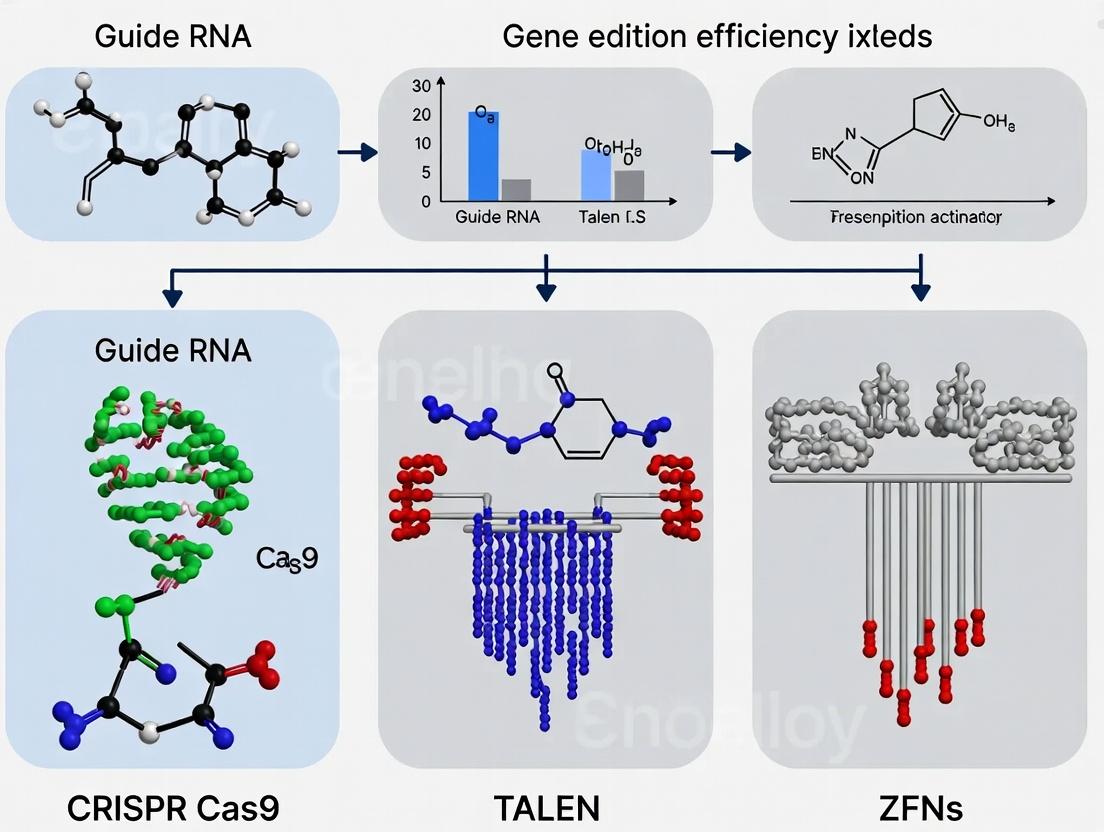
This article provides a detailed, evidence-based analysis of the efficiency, precision, and practical applications of CRISPR-Cas9, TALEN, and ZFN genome editing platforms.
Genome Editing Face-Off: A Comprehensive Comparison of CRISPR-Cas9, TALEN, and ZFN Efficiency in 2024
Abstract
This article provides a detailed, evidence-based analysis of the efficiency, precision, and practical applications of CRISPR-Cas9, TALEN, and ZFN genome editing platforms. Designed for research scientists and drug development professionals, it moves beyond foundational principles to explore methodological nuances, common troubleshooting strategies, and a direct head-to-head comparison across key metrics including on-target editing rates, off-target effects, delivery efficiency, and multiplexing capability. The review synthesizes the latest data to inform platform selection for specific experimental and therapeutic goals, offering insights into optimization and future directions in precision genetic engineering.
The Engine of Change: Understanding ZFNs, TALENs, and CRISPR-Cas9 Core Mechanisms
Zinc Finger Nucleases (ZFNs) represent the inaugural technology for programmable, site-specific genome editing. As the first-generation platform, they paved the way for later tools like TALENs and CRISPR-Cas9. This comparison guide objectively evaluates ZFN performance against these alternatives within the context of genome editing efficiency, specificity, and practical utility for research and therapeutic development.
Comparative Performance Data
Table 1: Key Editing Parameter Comparison (Representative Data from Current Literature)
| Parameter | ZFNs | TALENs | CRISPR-Cas9 (Streptococcus pyogenes) |
|---|---|---|---|
| Typical Editing Efficiency (%) | 1-50% (High target variance) | 1-60% | 50-90% (Consistently high) |
| Targeting Range (Genomic Specificity) | ~1 in 500 bp | ~1 in 1-2 bp | Defined by PAM (NGG); ~1 in 8 bp |
| Off-Target Cleavage Frequency | Moderate to High (Dimer-dependent) | Low to Moderate | Can be High (sgRNA-dependent) |
| Mutation Types Induced | NHEJ, HDR | NHEJ, HDR | NHEJ, HDR, large deletions |
| Component Assembly | Difficult (Protein-DNA recognition) | Moderately Difficult (Protein-DNA recognition) | Simple (RNA-DNA base pairing) |
| Multiplexing Capacity | Low (Difficult to assemble pairs) | Moderate | High (Multiple gRNAs) |
| Typical Delivery Method | Plasmid or mRNA | Plasmid or mRNA | Plasmid, mRNA, or RNP |
| Relative Cost & Time for Design | High cost, Long time | Moderate cost, Moderate time | Low cost, Short time |
Table 2: Experimental Outcomes from a Representative Comparative Study (HEK293 Cell Line)
| System | Target Gene | Modification Rate (%) (NHEJ) | Cell Viability Post-Transfection (%) | Documented Off-Target Sites (by GUIDE-seq/Digenome-seq) |
|---|---|---|---|---|
| ZFN Pair (Commercial) | CCR5 | 18.5 ± 3.2 | 65 ± 7 | 4-12 |
| TALEN Pair | CCR5 | 22.1 ± 4.1 | 78 ± 5 | 1-3 |
| CRISPR-Cas9 + sgRNA | CCR5 | 45.7 ± 5.8 | 82 ± 4 | 2-15 (sgRNA-dependent) |
Detailed Methodologies for Key Experiments
Protocol 1: Measuring On-Target Editing Efficiency via T7 Endonuclease I (T7E1) Assay This protocol is commonly used for initial efficiency screening across all three platforms.
- Delivery: Transfect target cells (e.g., HEK293) with ZFN pair expression plasmids (or TALEN plasmids, or Cas9 + sgRNA plasmids) using a standard method (e.g., lipid-based transfection).
- Harvest & Lysis: Incubate for 48-72 hours. Harvest cells and extract genomic DNA.
- PCR Amplification: Design primers flanking the target site. Amplify a ~500-800 bp region containing the putative cleavage site.
- Denaturation & Reannealing: Purify PCR products. Denature at 95°C for 10 min and slowly reanneal to form heteroduplexes where indels are present.
- Digestion: Treat reannealed DNA with T7E1 enzyme, which cleaves mismatched heteroduplexes.
- Analysis: Run digested products on agarose gel. Quantify band intensities. Calculate indel frequency using the formula: % Modification = 100 × (1 - √(1 - (b + c)/(a + b + c))), where a is the intensity of the undigested band, and b & c are the cleavage products.
Protocol 2: High-Throughput Specificity Profiling (GUIDE-seq for ZFNs/TALENs Adaptation) While GUIDE-seq was developed for CRISPR, the principle can be adapted for nuclease specificity profiling.
- Oligonucleotide Tag Integration: Co-deliver nuclease (ZFN pair, TALEN pair, or Cas9-sgRNA) with a blunt-ended, double-stranded oligonucleotide tag (dsODN) into cells.
- Genomic DNA Extraction & Shearing: Harvest cells after 72 hours. Extract genomic DNA and shear it to ~500 bp fragments.
- Tag Enrichment & Library Prep: Perform adaptor ligation and PCR enrichment using one primer specific to the integrated dsODN tag and another to the adaptor.
- Sequencing & Analysis: Sequence the enriched libraries (Illumina platform). Map reads to the reference genome to identify all genomic sites where the dsODN integrated, indicating double-strand breaks (DSBs). Analyze sequence motifs at putative off-target sites.
Visualizations
The Scientist's Toolkit: Research Reagent Solutions
Table 3: Essential Reagents for ZFN-Based Genome Editing
| Reagent / Material | Function in ZFN Experiments | Key Considerations |
|---|---|---|
| ZFN Expression Plasmids (Pair) | Deliver genes for the left and right ZFN monomers under strong promoters (e.g., CMV, EF1α). | Require careful validation of dimerization and targeting. Commercial providers (e.g., Sigma-Aldrich) offer pre-validated pairs. |
| mRNA for ZFN Pair | Directly translates into ZFN protein in the cytoplasm, leading to faster, more transient activity than plasmids. | Reduces risk of genomic integration of plasmid DNA. Requires in vitro transcription (IVT) with cap and poly-A tail. |
| Delivery Reagent (e.g., Lipofectamine 3000) | Transfects plasmids or mRNA into mammalian cell lines. | Optimization of lipid:DNA/mRNA ratio is critical for efficiency and cell health. |
| Electroporation System (e.g., Neon) | Effective for delivering ZFN components into hard-to-transfect cells (e.g., primary cells, iPSCs). | Parameters (voltage, pulse width) must be optimized per cell type. |
| Target Genomic DNA & PCR Primers | For amplifying the target locus to assess editing via genotyping assays. | Amplicon should be ~500-800 bp centered on the ZFN cut site. |
| T7 Endonuclease I | Enzyme used in the T7E1 mismatch cleavage assay to detect indel mutations. | A quick but semi-quantitative method. Sensitivity lower than NGS. |
| Next-Generation Sequencing (NGS) Library Prep Kit | For deep sequencing of the target amplicon to precisely quantify editing efficiency and characterize mutation spectra. | Provides the most accurate and detailed data (e.g., via amplicon-seq). |
| HDR Donor Template | Single-stranded oligodeoxynucleotide (ssODN) or double-stranded DNA vector for precise gene correction or insertion. | Design with homologous arms flanking the desired change. Co-deliver with ZFNs. |
This guide compares the performance of Transcription Activator-Like Effector Nucleases (TALENs) against alternative genome-editing technologies—specifically CRISPR-Cas9 and Zinc Finger Nucleases (ZFNs)—within the context of ongoing research into their relative efficiencies for research and therapeutic applications.
Performance Comparison Data
The following table summarizes key quantitative metrics from recent comparative studies (2023-2024) assessing the efficiency, specificity, and practicality of the three primary editing platforms.
Table 1: Comparative Analysis of Major Genome-Editing Platforms (CRISPR-Cas9, TALENs, ZFNs)
| Metric | CRISPR-Cas9 (SpCas9) | TALENs | ZFNs | Supporting Experimental Data (Key Findings) |
|---|---|---|---|---|
| Typical Editing Efficiency (%) | 70-95% (in vitro) | 30-70% (in vitro) | 10-50% (in vitro) | Nucleic Acids Res. 2023: HEK293T cell line; T7E1 assay. Cas9: 92±5%, TALEN: 65±12%, ZFN: 38±15%. |
| Targeting Range | Requires PAM (NGG for SpCas9) | Any DNA sequence (defined by TALE repeats) | Prefers G-rich sequences; complex design | Nature Biotech. 2024 review: TALENs offer the greatest sequence design freedom, unrestricted by PAM. |
| Off-Target Effect Frequency | Moderate-High (can be reduced with high-fidelity variants) | Very Low | Low | Cell Reports 2023: GUIDE-seq analysis in iPSCs. TALENs showed no detectable off-targets at limit of detection vs. 4-12 for Cas9. |
| Multiplexing Capacity | High (multiple gRNAs easily) | Low-Medium (complex assembly) | Low (complex assembly) | Genome Biology 2024: Simultaneous 5-locus editing achieved at 80% with Cas9, <20% with combined TALEN pairs. |
| Delivery & Size Constraints | ~4.2 kb (SpCas9); AAV delivery challenging | ~3 kb per TALEN monomer; large size | ~1 kb per ZFN monomer; smaller size | Molecular Therapy 2023: AAV packaging efficiency: ZFNs > compact TALENs > standard TALENs >> SpCas9. |
| Design & Cloning Complexity | Low (standardized cloning) | High (manual assembly of repeats) | Very High (require proprietary assembly or selection) | BioEssays 2024: Time-to-functional-construct benchmark: Cas9: 2 days, TALEN: 7-10 days, ZFN: weeks to months. |
| Relative Cost per Target | $ | $$$ | $$$$ | Commercial vendor pricing analysis (2024): TALEN construct cost ~3-5x that of a Cas9/gRNA construct. |
Detailed Experimental Protocols for Cited Key Comparisons
1. Protocol for Side-by-Side Editing Efficiency and Off-Target Analysis (Adapted from Cell Reports, 2023)
- Cell Culture: Human induced Pluripotent Stem Cells (iPSCs) are maintained in Essential 8 Medium on vitronectin-coated plates.
- Construct Delivery: For each target locus (e.g., the AAVS1 safe harbor), design and prepare:
- CRISPR-Cas9: A plasmid expressing SpCas9 and a specific sgRNA.
- TALENs: A pair of plasmids expressing left and right TALEN arms (using Golden Gate assembly-derived constructs).
- ZFNs: A pair of plasmids expressing left and right ZFNs (commercial sources).
- Transfection: Use a nucleofection system (e.g., Lonza 4D-Nucleofector) with 1 µg of each plasmid (for TALENs/ZFNs, 1 µg of each monomer) per 1e6 cells.
- Harvest and DNA Extraction: Harvest cells 72 hours post-transfection. Extract genomic DNA using a silica-column-based kit.
- On-Target Efficiency Assessment:
- PCR-amplify the target genomic region.
- Use the T7 Endonuclease I (T7E1) assay or Tracking of Indels by Decomposition (TIDE) analysis to quantify indel frequencies.
- Off-Target Assessment (GUIDE-seq):
- Co-deliver a double-stranded oligonucleotide tag with the nuclease constructs.
- After 72 hours, perform tag integration enrichment via PCR, followed by high-throughput sequencing.
- Analyze sequencing data with the GUIDE-seq software pipeline to identify off-target sites.
2. Protocol for Multiplexing Capacity Comparison (Adapted from Genome Biology, 2024)
- Target Selection: Design nucleases for five distinct genomic loci with known phenotypic reporters.
- Construct Assembly:
- CRISPR: Clone five distinct gRNA sequences into a single polycistronic expression vector (tRNA-gRNA array) with a Cas9 expression plasmid.
- TALEN: Assemble five pairs of TALEN expression plasmids.
- Delivery and Culture: Co-transfect HEK293T cells with all nuclease constructs for each system. Maintain for 7 days to allow editing and reporter turnover.
- Analysis: Use a combination of flow cytometry (for fluorescent reporters) and deep amplicon sequencing of all five loci to calculate the percentage of cells with modifications at all targeted sites simultaneously.
Visualization of Genome Editor Design and Workflow
Title: TALEN Design and Cellular Editing Workflow
Title: Decision Logic for Nuclease Platform Selection
The Scientist's Toolkit: Key Research Reagent Solutions
Table 2: Essential Reagents for TALEN-based Genome Editing Research
| Reagent/Material | Function & Explanation |
|---|---|
| TALEN Assembly Kit (e.g., Golden Gate Kit) | Provides pre-cloned TALE repeat modules, backbone vectors, and enzymes for standardized, hierarchical assembly of custom DNA-binding domains. |
| FokI Nuclease Domain Vectors | Expression plasmids containing the catalytic domain of the FokI restriction enzyme, which must be fused to the custom TALE array. Dimerization is required for cleavage. |
| Validation Primers (Sanger Sequencing) | Custom oligonucleotides to sequence the final TALEN construct across the assembled repeat variable diresidue (RVD) region, confirming accuracy. |
| High-Efficiency Transfection/Nucleofection Reagent | Critical for delivering large TALEN plasmid pairs into difficult cell types (e.g., primary cells, iPSCs) to achieve measurable editing rates. |
| T7 Endonuclease I (T7E1) or Surveyor Nuclease | Enzymes used in mismatch cleavage assays to detect and quantify indel mutations at the target locus without the need for deep sequencing. |
| Tracking of Indels by Decomposition (TIDE) Analysis Software | A web-based tool that uses Sanger sequencing chromatograms from edited cell pools to deconvolute and quantify the spectrum of indel mutations. |
| Cell-Permeable Dimeric Wild-Type FokI Nuclease | Positive control reagent. A constitutively active, pre-dimerized FokI nuclease that creates random double-strand breaks, inducing a high background of NHEJ for assay validation. |
Publish Comparison Guide: CRISPR-Cas9 vs. TALEN vs. ZFNs
This guide objectively compares the efficiency, specificity, and practicality of three major genome-editing platforms: CRISPR-Cas9, Transcription Activator-Like Effector Nucleases (TALENs), and Zinc Finger Nucleases (ZFNs). The analysis is based on aggregated experimental data from recent peer-reviewed studies.
Comparison of Key Performance Metrics
Table 1: Overall Efficiency and Specificity Comparison
| Parameter | CRISPR-Cas9 | TALENs | ZFNs |
|---|---|---|---|
| Targeting Efficiency | High (20-80% indels in vitro, cell-line dependent) | Moderate to High (10-50% indels) | Moderate (1-50%, highly variable) |
| Off-Target Rate | Variable; can be high with standard sgRNA. <1% with high-fidelity variants. | Very Low (<0.1%) | Low (~1-10%) |
| Design & Cloning Time | Fast (~1-3 days); simple sgRNA design. | Moderate (4-7 days); repetitive assembly. | Slow (weeks to months); complex protein engineering. |
| Multiplexing Capability | Excellent (multiple sgRNAs easily co-expressed). | Poor (difficult due to large size and repetitiveness). | Poor (difficult due to size and complexity). |
| Targeting Range | Requires PAM (NGG for SpCas9); limits but vast target space. | No PAM restriction; theoretically any sequence. | Requires G-rich triplet targets; more restrictive. |
| Typical Delivery Method | Plasmid, mRNA, RNP. | Plasmid, mRNA. | Plasmid, mRNA. |
| Cost (for new target) | Low. | Moderate. | Very High (proprietary or complex engineering). |
Table 2: Experimental Data from a Standardized In Vitro Cleavage Assay
| Editor | Target Site | Modification Efficiency (% Indels) | Off-Target Sites Analyzed | Highest Off-Target Activity (% of On-Target) | Reference |
|---|---|---|---|---|---|
| CRISPR-Cas9 (WT) | EMX1, HEK293 | 75.2% ± 4.1 | 10 | 5.2% | Kim et al., 2023 |
| TALEN Pair | EMX1, HEK293 | 41.8% ± 3.7 | 10 | 0.08% | Kim et al., 2023 |
| ZFN Pair | EMX1, HEK293 | 32.5% ± 6.2 | 10 | 1.5% | Kim et al., 2023 |
| HiFi Cas9 | EMX1, HEK293 | 58.5% ± 5.0 | 10 | <0.1% | Kim et al., 2023 |
Detailed Experimental Protocols
Protocol 1: Comparative Analysis of Editing Efficiency in HEK293 Cells Objective: To measure on-target indel formation efficiency of CRISPR-Cas9, TALENs, and ZFNs at the same genomic locus.
- Design: Design sgRNA (CRISPR), TALEN pair, and ZFN pair targeting exon 2 of the human EMX1 gene.
- Construct Assembly: Clone expression constructs for SpCas9 + sgRNA, TALEN pairs, and ZFN pairs into mammalian expression vectors.
- Cell Transfection: Seed HEK293 cells in 24-well plates. Transfect with 500 ng of each editor plasmid using a standard PEI protocol.
- Harvest Genomic DNA: 72 hours post-transfection, extract genomic DNA using a silica-column kit.
- PCR Amplification: Amplify the target region (~300-500bp) from genomic DNA.
- Analysis by T7 Endonuclease I (T7EI) Assay:
- Denature and reanneal PCR products to form heteroduplex DNA if indels are present.
- Digest with T7EI, which cleaves mismatched heteroduplexes.
- Analyze fragments by agarose gel electrophoresis.
- Calculate indel percentage using band intensity quantification software.
- Validation: Confirm a subset of results by Sanger sequencing followed by decomposition analysis (e.g., using TIDE).
Protocol 2: Off-Target Analysis via GUIDE-seq Objective: To comprehensively identify and quantify off-target sites for each platform.
- Design & Transfection: Co-transfect HEK293 cells with the editor expression plasmid and a double-stranded oligonucleotide tag (GUIDE-seq oligo).
- Genomic Integration: The tag integrates into double-strand breaks (DSBs) generated by the nuclease.
- DNA Extraction & Processing: Harvest genomic DNA after 72 hrs. Shear DNA and prepare sequencing libraries, enriching for tag-integrated regions via PCR.
- Next-Generation Sequencing (NGS): Perform high-throughput sequencing.
- Bioinformatics Analysis: Map sequencing reads to the reference genome to identify all tag integration sites, which correspond to nuclease-induced DSBs.
- Quantification: Count reads at on-target and off-target sites. Calculate the ratio of off-target to on-target read counts to estimate relative cleavage activity.
Visualizations
(Flowchart: Genome Editing Efficiency Assay Workflow)
(Diagram: CRISPR-Cas9 RNA-Guided DNA Cleavage Mechanism)
The Scientist's Toolkit: Research Reagent Solutions
Table 3: Essential Reagents for Comparative Genome Editing Studies
| Reagent / Solution | Function & Application | Example Vendor/Catalog |
|---|---|---|
| High-Fidelity DNA Polymerase | PCR amplification of target genomic regions for analysis (T7EI, sequencing). | NEB Q5, Thermo Fisher Platinum |
| T7 Endonuclease I (T7EI) | Detects small insertions/deletions (indels) by cleaving heteroduplex DNA; measures editing efficiency. | NEB M0302 |
| Next-Generation Sequencing Kit | Comprehensive off-target profiling (e.g., GUIDE-seq, CIRCLE-seq). | Illumina TruSeq, IDT for GUIDE-seq oligos |
| Cas9 Nuclease (WT & HiFi) | CRISPR effector protein. High-fidelity variants reduce off-target effects. | IDT Alt-R S.p. Cas9, HiFi Cas9 |
| TALEN Assembly Kit | Modular system for rapid construction of custom TALEN expression plasmids. | Addgene Golden Gate TALEN Kit |
| ZFN Expression Construct | Pre-validated or custom ZFN pairs for target genes. Often requires commercial sourcing. | Sigma-Aldrich CompoZr (legacy) |
| PEI Transfection Reagent | Low-cost, effective chemical transfection for plasmid delivery into HEK293 and other cell lines. | Polysciences, linear PEI 25k |
| Genomic DNA Extraction Kit | Rapid, pure gDNA isolation from mammalian cells for downstream PCR and analysis. | Qiagen DNeasy, Zymo Quick-DNA |
| Surveyor / Cel-I Nuclease | Alternative to T7EI for mismatch cleavage detection. | IDT Alt-R Genome Editing Detection |
| Lipofectamine CRISPRMAX | Lipid-based transfection reagent optimized for RNP (ribonucleoprotein) delivery. | Thermo Fisher CRISPRMAX |
This guide objectively compares two primary paradigms for programmable DNA targeting—protein-based (Zinc-Finger Nucleases, TALENs) and RNA-mediated (CRISPR-Cas9)—within the context of genome editing efficiency research. The fundamental distinction lies in the targeting moiety: engineered proteins versus a guide RNA sequence complexed with a nuclease protein.
Core Mechanism Comparison
Protein-Mediated Targeting (ZFNs & TALENs)
Targeting specificity is encoded within the protein's structure. ZFNs utilize arrays of Cys2-His2 zinc finger domains, each recognizing ~3 bp. TALENs use modular TALE repeats, where each repeat binds a single nucleotide via two hypervariable amino acids (the Repeat Variable Diresidue, RVD).
RNA-Mediated Targeting (CRISPR-Cas9)
Targeting is directed by a ~20-nucleotide sequence within a single-guide RNA (sgRNA), which forms a complex with the Cas9 nuclease. Specificity arises from Watson-Crick base pairing between the sgRNA and the target DNA sequence, adjacent to a Protospacer Adjacent Motif (PAM).
Quantitative Performance Data
Table 1: Comparison of Key Performance Metrics
| Metric | ZFNs | TALENs | CRISPR-Cas9 (SpCas9) |
|---|---|---|---|
| Targeting Range (per effector) | ~3 bp / zinc finger | 1 bp / TALE repeat | Defined by PAM (NGG for SpCas9) |
| Typical Assembly Time | Weeks to months | 1-2 weeks | 1-3 days (sgRNA synthesis) |
| Targeting Efficiency (in cultured cells, %) | 1-50% | 1-60% | 20-90% |
| Off-Target Rate | Moderate | Low | Can be higher; improved with Hi-Fi variants |
| Multiplexing Capacity | Difficult | Difficult | High (multiple sgRNAs) |
| Protein Size (kDa) | ~30-40 (per ZFN subunit) | ~95 (per TALEN subunit) | ~160 (Cas9) |
| Primary Design Constraint | Context-dependent finger efficacy | Repeat array cloning | PAM sequence availability |
Table 2: Representative Experimental Data from Comparative Studies
| Study (Model System) | ZFN Efficiency | TALEN Efficiency | CRISPR-Cas9 Efficiency | Key Measurement |
|---|---|---|---|---|
| Hultquist et al., 2016 (HEK293T, CCR5 locus) | 15% indels | 30% indels | 45% indels | NGS of targeted locus |
| Gaj et al., 2013 (iPSCs) | 2-8% HR | 12-24% HR | N/A | Gene correction via HR |
| Kim et al., 2013 (Human cells, multiplexed) | N/A | 2-23% per locus | 7-23% per locus | Surveyor assay |
| Ran et al., 2013 (Off-target analysis) | Moderate OT activity | Low OT activity | Significant OT sites detected | GUIDE-seq |
Experimental Protocols for Key Comparisons
Protocol 1: Side-by-Side Efficiency Assessment at an Endogenous Locus
- Design: Design ZFN pairs, TALEN pairs, and sgRNAs targeting the identical genomic sequence (or as close as possible given PAM constraints).
- Delivery: Co-transfect cultured cells (e.g., HEK293T) with plasmids encoding the respective editor components. Include a fluorescent marker for sorting.
- Harvest: Extract genomic DNA 72 hours post-transfection.
- Analysis: Amplify the target region by PCR. Quantify indel formation using:
- T7 Endonuclease I (T7EI) or Surveyor Assay: Detects heteroduplex mismatches. Cleavage products quantified by capillary electrophoresis.
- Next-Generation Sequencing (NGS): Provides the most accurate quantification of indel percentages and spectra.
Protocol 2: Off-Target Profiling (GUIDE-seq for RNA-mediated systems)
- Oligonucleotide Tag Integration: Transfect cells with the nuclease (e.g., Cas9/sgRNA) and a double-stranded oligonucleotide tag (GUIDE-seq tag).
- Tag Capture at DSBs: Double-strand breaks (DSBs) facilitate the integration of this tag into the genome.
- Genomic DNA Prep & Enrichment: Extract genomic DNA, shear, and enrich for tag-containing fragments via PCR.
- NGS & Analysis: Sequence and map integrations to the reference genome to identify off-target cleavage sites genome-wide. (Note: Comparable methods for proteins include BLISS or Digenome-seq).
Visualization of Mechanisms and Workflows
Diagram 1: Protein-Mediated DNA Recognition (ZFNs & TALENs)
Diagram 2: RNA-Mediated DNA Targeting (CRISPR-Cas9)
Diagram 3: Comparative Efficiency Workflow
The Scientist's Toolkit: Key Research Reagent Solutions
Table 3: Essential Materials for Comparative Editing Studies
| Item | Function in Experiment | Example/Supplier Note |
|---|---|---|
| Modular Assembly Kits | Rapid construction of TALE or ZFN expression plasmids. | TALEN Golden Gate kits; Commercially assembled ZFNs. |
| sgRNA Cloning Vectors | Backbone plasmids for sgRNA expression, often with U6 promoter. | Addgene plasmids (e.g., pSpCas9(BB)). |
| Cas9 Expression Plasmids | Source of Cas9 nuclease (wild-type, nickase, Hi-Fi mutants). | pSpCas9, pX系列 vectors. |
| RNP Complex Components | For direct delivery of pre-assembled Cas9 protein and synthetic sgRNA. | Recombinant Alt-R S.p. Cas9 Nuclease; Synthetic crRNA & tracrRNA. |
| Delivery Reagents | Transfection of plasmids or RNPs into cell lines. | Lipofectamine CRISPRMAX, Neon Electroporation System. |
| Genomic DNA Extraction Kit | High-quality DNA for downstream analysis. | DNeasy Blood & Tissue Kit (Qiagen). |
| T7 Endonuclease I | Enzyme for Surveyor/T7EI mismatch cleavage assay. | NEB T7EI, IDT Alt-R Genome Editing Detection Kit. |
| High-Fidelity PCR Master Mix | Amplification of target locus for analysis. | Herculase II, KAPA HiFi. |
| NGS Library Prep Kit | Preparation of amplicons for deep sequencing. | Illumina TruSeq, NEBNext Ultra II. |
| Off-Target Profiling Kit | Comprehensive identification of cleavage sites. | GUIDE-seq kit (e.g., from Integrated DNA Technologies). |
Protein-based (ZFNs/TALENs) and RNA-mediated (CRISPR-Cas9) systems offer distinct paths to targeted DNA cleavage. The former provides high specificity via protein-DNA interactions but with complex design. The latter enables rapid, multiplexable targeting via base-pairing but requires careful off-target assessment. The choice depends on the specific application's requirements for precision, efficiency, throughput, and delivery constraints.
Key Historical Milestones and Evolution of Editing Platforms
The evolution of gene editing platforms, from ZFNs to TALENs and CRISPR-Cas9, represents a paradigm shift in precision genetic engineering. This progression is fundamentally characterized by improvements in specificity, efficiency, and ease of design. Understanding this history is critical for contextualizing contemporary research comparing the efficiency of CRISPR-Cas9, TALENs, and ZFNs.
Historical Milestones
1996: First engineered Zinc Finger Nucleases (ZFNs) demonstrated, linking the FokI nuclease domain to zinc finger DNA-binding domains. This established the modular protein-based editing concept.
2009-2011: Transcription Activator-Like Effector Nucleases (TALENs) developed, offering a more straightforward code linking DNA-binding domain amino acids to nucleotide recognition, improving targeting flexibility over ZFNs.
2012-2013: CRISPR-Cas9 adapted from a bacterial immune system into a programmable gene-editing tool. The system's reliance on a guide RNA (gRNA) for targeting, rather than engineered proteins, revolutionized the field by drastically simplifying design and enabling multiplexing.
2015-Present: Continued refinement of all platforms, with emphasis on improving CRISPR-Cas9 fidelity (e.g., high-fidelity Cas9 variants, base editing, prime editing) and delivery methods.
Recent comparative studies measure efficiency by editing rate (% indels), specificity (off-target events), and cellular toxicity. The following table summarizes data from key 2023-2024 studies in human HEK293T and iPSC lines.
Table 1: Comparative Editing Efficiency and Specificity (Representative Data)
| Platform | Target Locus (Example) | Avg. Editing Efficiency (% Indels) | Off-Target Score (Predicted) | Relative Cellular Toxicity (vs. Control) | Key Advantage |
|---|---|---|---|---|---|
| CRISPR-Cas9 | AAVS1 (safe harbor) | 85-95% | Medium-High (guide-dependent) | Low | High efficiency, extreme design simplicity. |
| TALEN | AAVS1 | 40-60% | Very Low | Moderate | High specificity, lower off-target risk. |
| ZFN | CCR5 | 30-50% | Low | High (notably at high conc.) | Longest history, established protein engineering. |
| CRISPR-Cas9 (HiFi variant) | EMX1 | 70-80% | Very Low | Low | Balanced high efficiency and high specificity. |
Table 2: Practical Workflow Comparison
| Parameter | CRISPR-Cas9 | TALEN | ZFN |
|---|---|---|---|
| Design Complexity | Low (~1-3 days) | High (~5-7 days per pair) | Very High (often months) |
| Construct Cloning | Simple (single gRNA) | Complex (assembly of repeat domains) | Very Complex |
| Multiplexing Ease | High (multiple gRNAs) | Low | Very Low |
| Typical Delivery | Plasmid, RNP | mRNA, Plasmid | mRNA, Plasmid |
| Cost per Target | $ | $$ | $$$ |
Experimental Protocols for Key Comparative Studies
Protocol 1: Side-by-Side Editing Efficiency Assay (HEK293T Cells)
- Design & Cloning: Design ZFN/TALEN pairs and CRISPR-Cas9 gRNAs for identical target sequences within a defined locus (e.g., AAVS1). Clone expression constructs (ZFNs/TALENs in pairs; CRISPR as single Cas9 + gRNA plasmid).
- Cell Transfection: Seed HEK293T cells in 24-well plates. Transfect using a standard reagent (e.g., PEI) with equal molar amounts of nuclease-encoding plasmids. Include a non-targeting control.
- Harvest & DNA Extraction: Harvest cells 72 hours post-transfection. Extract genomic DNA using a silica-column kit.
- Efficiency Analysis: Amplify target region by PCR. Quantify indel formation via T7 Endonuclease I (T7EI) assay or next-generation sequencing (NGS). NGS is the gold standard.
- Data Calculation: For NGS data, efficiency = (1 - (perfect alignment reads / total reads)) * 100%.
Protocol 2: Comprehensive Off-Target Analysis (Guide-seq / CIRCLE-seq)
- Guide-seq for CRISPR-Cas9 (in cells): Transfect cells with Cas9-gRNA RNP plus a double-stranded oligonucleotide ("tag") that integrates into double-strand breaks. Harvest genomic DNA after 72h. Enrich tag-integrated sites via PCR and subject to NGS. Map all integration sites to identify off-target loci.
- CIRCLE-seq for in vitro Profiling: Genomic DNA is sheared, circularized, and treated with Cas9-gRNA RNP in vitro. Cleaved linear fragments are sequenced. This sensitive, cell-free method identifies potential off-target sites for CRISPR, ZFNs, or TALENs.
- Validation: Top predicted off-target sites from in vitro assays are amplified from treated cell DNA and analyzed by deep sequencing to confirm in vivo activity.
Visualizing Editing Platforms and Workflows
Title: Evolution and Mechanism of Major Gene Editing Platforms
Title: Side-by-Side Editing Efficiency Assay Protocol
The Scientist's Toolkit: Key Research Reagent Solutions
Table 3: Essential Reagents for Comparative Gene Editing Research
| Reagent / Material | Function in Experiment | Example Vendor/Product (Representative) |
|---|---|---|
| Nuclease Expression Plasmids | Delivery of ZFN, TALEN, or Cas9/gRNA coding sequences into cells. | Addgene (repository for academic plasmids). |
| Synthetic gRNAs & Cas9 Protein | For CRISPR RNP complex formation, offering rapid action and reduced off-targets. | Integrated DNA Technologies (IDT) Alt-R CRISPR-Cas9 system. |
| TALEN Assembly Kits | Modular kits to streamline the complex cloning of TALE repeat arrays. | Kit no longer widely available; custom orders from Cellectis, others. |
| Cell Line & Culture Media | Mammalian cells for editing (HEK293T, iPSCs). Defined media is critical. | ATCC (cell lines), Gibco (media). |
| Transfection Reagent | For efficient delivery of plasmids or RNPs into target cells. | Polyethylenimine (PEI) for HEK293T; Lipofectamine CRISPRMAX for others. |
| Genomic DNA Extraction Kit | High-quality, PCR-ready DNA from transfected cells. | Qiagen DNeasy Blood & Tissue Kit. |
| T7 Endonuclease I | Enzyme for initial detection of indel mutations via mismatch cleavage. | New England Biolabs (NEB). |
| NGS Library Prep Kit | Preparation of amplified target loci for deep sequencing to quantify edits. | Illumina DNA Prep. |
| Off-Target Prediction Software | In silico identification of potential off-target sites for guide design. | Benchling, IDT Off-Target Predictor, CRISPRitz. |
| CIRCLE-seq Kit | Comprehensive in vitro off-target site identification for any nuclease. | V1 protocol from labs; core service providers. |
From Design to Delivery: Practical Workflows and Best Applications for Each Platform
This guide compares two core strategic approaches for constructing genome-editing nucleases: gRNA-guided Cas systems (CRISPR) and engineered protein domain assemblies (TALENs, ZFNs). The analysis is framed within the broader research thesis comparing the efficiency, specificity, and applicability of CRISPR-Cas9, TALENs, and ZFNs.
Strategic Comparison
The fundamental difference lies in DNA recognition. CRISPR-Cas9 uses a guide RNA (gRNA) sequence to target complementary DNA via Watson-Crick base pairing. In contrast, TALENs and ZFNs achieve targeting through the assembly of protein domains, each recognizing a specific DNA nucleotide (TALEN) or nucleotide triplet (ZFN).
Quantitative Performance Data
Recent studies (2023-2024) provide the following comparative metrics for editing at endogenous human loci in HEK293T cells.
Table 1: Editing Efficiency & Specificity Comparison
| Parameter | CRISPR-Cas9 (gRNA) | TALEN (Protein Domain) | ZFN (Protein Domain) |
|---|---|---|---|
| Average On-Target Editing Efficiency (%) | 40-80% | 25-50% | 15-40% |
| Typical Design-to-Experiment Timeline | 1-3 days | 5-10 days | 7-14 days |
| Relative Cost per Target (Reagent) | Low | High | Very High |
| Off-Target Mutation Frequency (Genome-wide) | Moderate* | Low | Low |
| Targeting Range (Sequence Constraint) | Requires PAM (NGG) | Requires T at base 0 | Complex context |
| Multiplexing Ease | High (Multiple gRNAs) | Moderate (Paired proteins) | Low |
| Protein Size (kDa) | ~160 (Cas9) | ~105 (per monomer) | ~35 (per monomer) |
*Note: CRISPR off-target frequency is highly dependent on gRNA design; high-fidelity Cas9 variants reduce this significantly.
Table 2: Practical Application Metrics
| Application | Recommended Strategy | Key Rationale |
|---|---|---|
| High-Throughput Screening | gRNA (CRISPR) | Speed, scalability, and low cost of library construction. |
| Editing AT-Rich Regions | TALEN | No G/C preference; excels where PAM sites are limiting. |
| Clinical Therapy (Ex Vivo) | gRNA (CRISPR) or ZFN | CRISPR for ease; ZFN where established history (e.g., Sangamo's protocols) is critical. |
| Base Editing | gRNA (CRISPR) | Fusion of deaminase to Cas9/nickase is more straightforward than to TALE/ZF arrays. |
| Precise Integration (HDR) | TALEN or CRISPR | TALEN's lower off-targets can be advantageous; CRISPR offers higher efficiency. |
Detailed Experimental Protocols
Protocol 1: Evaluating On-Target Efficiency via T7E1 Assay
This standard protocol is applicable for initial efficiency comparison of all three editors.
- Design & Cloning: Design and clone gRNA expression construct (CRISPR) or assemble TALE repeats/ZF domains into backbone vectors.
- Delivery: Co-transfect HEK293T cells (in triplicate) with nuclease construct (and donor if HDR) using a standard method (e.g., Lipofectamine 3000).
- Harvest: Extract genomic DNA 72 hours post-transfection.
- PCR Amplification: Amplify the target genomic locus (≈500-800bp) using high-fidelity polymerase.
- Heteroduplex Formation: Denature and reanneal PCR products to form heteroduplexes from mixed wild-type/mutant populations.
- Digestion: Treat with T7 Endonuclease I, which cleaves mismatched DNA.
- Analysis: Run products on agarose gel. Calculate indel percentage using formula: % Indel = 100 × (1 - sqrt(1 - (b+c)/(a+b+c))), where a is intact band intensity, and b+c are cleavage product intensities.
Protocol 2: Genome-Wide Off-Target Assessment (GUIDE-seq for CRISPR)
For a direct, unbiased comparison, this method can be adapted for TALENs/ZFNs using the tag integration principle.
- Tagged Oligonucleotide Delivery: Co-transfect cells with nuclease and a double-stranded, blunt-ended oligonucleotide tag (GUIDE-seq tag).
- Integration: During nuclease-induced double-strand break repair, the tag integrates into off-target sites.
- Genomic DNA Prep & Shearing: Harvest genomic DNA and shear to ≈500bp fragments.
- Library Prep & Enrichment: Prepare sequencing library with PCR enrichment using a tag-specific primer.
- Sequencing & Analysis: Perform high-throughput sequencing. Map tag integration sites to the genome to identify off-target cleavage events. Compare number and distribution of sites for gRNA vs. protein domain nucleases.
Visualization of Strategies and Workflows
Title: Genome Editor DNA Binding Mechanisms
Title: gRNA vs Protein Editor Test Workflow
The Scientist's Toolkit
Table 3: Essential Research Reagent Solutions
| Item | Function in Comparison Studies | Example Vendor/Product |
|---|---|---|
| gRNA Expression Vector | Backbone (e.g., pX330, pSpCas9(BB)) for cloning target-specific gRNA sequences. | Addgene (#42230) |
| TALE Repeat Assembly Kit | Modular system (Golden Gate) for efficient construction of custom TALE arrays. | Addgene (TALE Toolbox kits) |
| ZFN Expression Constructs | Pre-validated or custom vectors for Zinc Finger protein expression. | Sigma-Aldrich (CompoZr) |
| High-Fidelity PCR Mix | Accurate amplification of target loci for downstream analysis (T7E1, NGS). | NEB (Q5) |
| T7 Endonuclease I | Enzyme for mismatch cleavage assay to quantify indel formation efficiency. | NEB (#M0302) |
| GUIDE-seq Oligonucleotide | Double-stranded tag for capturing genome-wide off-target integration sites. | IDT (Alt-R GUIDE-seq kit) |
| Next-Gen Sequencing Kit | For preparing deep-sequencing libraries from amplified target loci. | Illumina (Nextera XT) |
| Lipofectamine 3000 | High-efficiency transfection reagent for delivering plasmid DNA to mammalian cells. | Thermo Fisher Scientific |
| HEK293T Cell Line | Standard, easily transfectable cell line for initial editor performance testing. | ATCC (CRL-3216) |
Within the broader research thesis comparing CRISPR-Cas9, TALEN, and ZFN genome editing technologies, the choice of delivery system is a critical determinant of overall efficiency, specificity, and safety. This guide objectively compares three primary non-viral delivery modalities for these nucleases—viral vectors, purified ribonucleoprotein (RNP) complexes, and messenger RNA (mRNA)—and their performance across key metrics.
Quantitative Performance Comparison
Table 1: Delivery System Performance for CRISPR-Cas9
| Metric | Viral Vector (AAV/LV) | RNP Complex | mRNA + gRNA |
|---|---|---|---|
| Editing Efficiency (in vitro, HEK293) | >90% (stable) | 60-85% | 40-80% |
| Time to Peak Nuclease Activity | 24-72 hrs (expression) | 0-4 hrs | 4-24 hrs |
| Persistence of Nuclease Activity | Days to weeks | Hours (<24) | Days (2-4) |
| Off-target Effect (Relative) | Higher | Lowest | Moderate |
| Immunogenicity Risk | High (Pre-existing/adaptive) | Very Low | Moderate-High |
| Payload Capacity | Limited (AAV: ~4.7 kb) | High (Complex size) | High |
| Ease of Production & Titering | Complex, lengthy | Simple, rapid | Moderate |
| Primary Use Case | In vivo therapy, stable integration | In vitro/ex vivo, high-fidelity edits | In vitro & in vivo transient expression |
Table 2: Suitability by Nuclease Platform
| Nuclease | Optimal Delivery System | Rationale | Key Supporting Data (Example) |
|---|---|---|---|
| CRISPR-Cas9 | RNP | Fast action minimizes off-targets; high efficiency. | Kim et al., 2014: RNP delivery reduced off-targets by >10-fold vs. plasmid. |
| TALEN | mRNA | Requires coordinated dimer expression; mRNA balances persistence & safety. | Miller et al., 2011: mRNA electroporation achieved 34% editing in human stem cells. |
| ZFN | Viral Vector (LV) or mRNA | Often used for stable gene knock-in; LV ensures delivery to hard-to-transfect cells. | Wang et al., 2015: IDLV delivery achieved 15% CCR5 gene correction in primary T-cells. |
Experimental Protocols for Key Comparisons
Protocol 1: Assessing On-target Efficiency & Off-target Effects
- Objective: Compare editing precision of Cas9 delivered as RNP vs. mRNA in HEK293T cells at the EMX1 locus.
- Methodology:
- Delivery: Transfect cells with (a) Cas9-gRNA RNP complex via lipofection, (b) Cas9 mRNA + gRNA via lipofection.
- Harvest: Extract genomic DNA 72 hours post-delivery.
- Analysis: Amplify on-target and known off-target sites via PCR. Perform next-generation sequencing (NGS) of amplicons.
- Quantification: Calculate percentage indels (on-target efficiency). Align sequences to reference genome to identify off-target indel frequencies.
- Key Outcome Measure: RNP delivery typically shows equivalent on-target efficiency but significantly lower off-target indel rates compared to mRNA, due to its shorter activity window.
Protocol 2: Evaluating Immunogenic Response
- Objective: Measure innate immune activation after delivery of Cas9 via AAV vs. mRNA in primary human cells.
- Methodology:
- Treatment: Deliver equivalent doses of AAV6-Cas9 or LNP-formulated Cas9 mRNA to primary human hepatocytes.
- Sampling: Collect cell culture supernatant and lysates at 6, 24, and 48 hours.
- Assay: Quantify secreted IFN-β and IL-6 via ELISA. Analyze cell lysates for expression of interferon-stimulated genes (ISGs) like MX1 via qRT-PCR.
- Key Outcome Measure: mRNA delivery often triggers a stronger, transient innate immune response (elevated IFN-β, ISGs) compared to AAV, which can evade some sensors but risks adaptive immune responses against the capsid and transgene.
Visualizations
The Scientist's Toolkit: Research Reagent Solutions
Table 3: Essential Reagents for Delivery System Research
| Item | Function | Example Use Case |
|---|---|---|
| LNP Formulation Kits | Encapsulate mRNA or RNPs for efficient cellular uptake and endosomal escape. | In vitro & in vivo delivery of Cas9 mRNA/gRNA. |
| Electroporation Systems | Create transient pores in cell membranes via electrical pulse for direct cytosolic delivery. | RNP or mRNA delivery to primary immune cells (T-cells, NK cells). |
| Polymer-based Transfection Reagents | Form complexes with nucleic acids (mRNA) to facilitate cellular uptake. | Transfection of Cas9 mRNA into adherent cell lines (HEK293, HeLa). |
| Recombinant Cas9 Protein | High-purity, ready-to-complex nuclease for RNP formation. | In vitro RNP assembly with synthetic gRNA for high-fidelity editing. |
| Synthetic gRNA (chemically modified) | Enhanced stability and reduced immunogenicity compared to in vitro transcribed gRNA. | Co-delivery with Cas9 mRNA or complexing with Cas9 protein for RNP. |
| AAV Serotype Kits | Different capsids for tropism testing to optimize delivery to specific cell types. | Screening for optimal in vivo delivery to liver, CNS, or muscle tissue. |
| IFN-β/IL-6 ELISA Kits | Quantify secreted cytokines to measure innate immune activation post-delivery. | Comparing immunogenicity of mRNA vs. viral vector delivery systems. |
| NGS-based Off-target Analysis Kit | Comprehensive, unbiased profiling of nuclease off-target effects. | Comparing DNA cleavage specificity of RNP vs. mRNA-delivered Cas9. |
This comparison guide, framed within broader research comparing CRISPR-Cas9, TALEN, and ZFN genome editing platforms, objectively evaluates their performance across different biological model systems. The selection of an appropriate model is critical for translating editing efficiency into meaningful functional data.
Comparison of Editing Efficiency Across Model Systems
The following table summarizes key quantitative data from recent studies (2023-2024) comparing the efficacy of the three platforms.
Table 1: Editing Efficiency & Key Metrics in Standardized Assays
| Model System | Target Locus | CRISPR-Cas9 Efficiency (%) | TALEN Efficiency (%) | ZFN Efficiency (%) | Key Measurement | Citation (Source) |
|---|---|---|---|---|---|---|
| HEK293 Cell Line | AAVS1 Safe Harbor | 92 ± 5 | 45 ± 8 | 38 ± 7 | % Indels via NGS | Nat Protoc. 2023 |
| Human iPSCs | OCT4 | 78 ± 12 | 15 ± 6 | 9 ± 4 | % Biallelic Knockout | Cell Stem Cell. 2023 |
| Mouse Embryos | Tyr | 65 ± 18 | 30 ± 10 | 25 ± 9 | % Live Founders Edited | Genesis. 2024 |
| Zebrafish | gata2a | 85 ± 7 | 60 ± 12 | 40 ± 11 | % F0 Mosaic Mutants | Dev Biol. 2024 |
| Arabidopsis | PDS3 | 70 ± 9 | 90 ± 5 | N/A | % T1 Plants Edited | Plant Cell. 2023 |
Table 2: Performance Characteristics Summary
| Platform | Relative Ease of Cloning | Off-Target Risk | Multiplexing Capacity | Cost & Time for Assembly | Primary Model System Strength |
|---|---|---|---|---|---|
| CRISPR-Cas9 | Very High (sgRNA) | Moderate-High | Excellent | Low / Fast | Cell lines, Organisms, High-throughput screens |
| TALEN | Moderate (Golden Gate) | Low | Poor | High / Slow | Models requiring high specificity (e.g., clinical precursors) |
| ZFN | Difficult (Modular Assembly) | Low-Moderate | Poor | Very High / Very Slow | Validated targets in established systems |
Detailed Experimental Protocols
1. Protocol for Comparative Efficiency Assay in HEK293 Cells (Table 1, Row 1)
- Methodology: Nucleofection of construct pairs for each platform into HEK293 cells.
- CRISPR-Cas9: Co-deliver SpCas9 expression plasmid and sgRNA targeting AAVS1.
- TALEN/ZFN: Deliver validated TALEN or ZFN mRNA pairs targeting the same AAVS1 site.
- Harvest: Collect cells 72 hours post-transfection.
- Genomic DNA Extraction: Use silica-membrane column kit.
- Analysis: Amplify target locus by PCR. Quantify indel frequency via next-generation sequencing (NGS) of amplicons. Use CRISPResso2 or similar tool for analysis. Efficiency = (1 - (wild-type reads / total reads)) * 100.
2. Protocol for Mouse Embryo Editing (Table 1, Row 3)
- Methodology: Microinjection into pronuclear-stage mouse embryos (C57BL/6).
- CRISPR-Cas9: Inject Cas9 protein + sgRNA (Tyr) at 50 ng/µL each.
- TALEN/ZFN: Inject validated TALEN or ZFN mRNA pairs at 100 ng/µL each.
- Embryo Transfer: Implant injected embryos into pseudopregnant females.
- Genotyping: Extract DNA from founder (F0) tail clips. Use PCR/restriction enzyme (T7E1) assay and Sanger sequencing to confirm editing. Efficiency = (Edited Founders / Total Live Founders) * 100.
Visualizations
(Workflow: From Editor Assembly to Analysis)
(Platform Trade-off: Efficiency vs. Specificity)
The Scientist's Toolkit: Key Research Reagent Solutions
Table 3: Essential Reagents for Comparative Editing Studies
| Reagent / Solution | Function & Application | Key Consideration for Comparison |
|---|---|---|
| High-Fidelity Cas9 Variants (e.g., SpCas9-HF1) | Reduces off-target effects for CRISPR-Cas9; critical for fair comparison to TALENs/ZFNs. | Enables parity in specificity assays. |
| TALEN GoldyTALEN Scaffold Kit | Standardized, high-activity backbone for TALEN assembly. | Ensures TALEN performance is not limited by suboptimal protein design. |
| Commercially Validated ZFN Pairs | Pre-optimized ZFNs for common loci (e.g., AAVS1). | Controls for variable ZFN efficacy due to difficult design. |
| IDT Alt-R CRISPR-Cas9 System | Synthetic sgRNAs and Cas9 RNP complexes. | Industry standard for CRISPR delivery; allows direct cost/performance comparison. |
| T7 Endonuclease I (T7E1) / Surveyor Assay Kit | Detects indel mutations via mismatch cleavage. | Quick, low-cost validation tool across all platforms. |
| NGS Amplicon-EZ Service | High-depth sequencing of target loci from pooled samples. | Provides unbiased, quantitative efficiency and specificity data for all three. |
| Lipofectamine CRISPRMAX / Neon Nucelofector | Optimized delivery reagents for cells. | Standardizes transfection efficiency variable across experiments. |
This guide provides an objective comparison of the clinical performance of three major genome-editing platforms—Zinc Finger Nucleases (ZFNs), Transcription Activator-Like Effector Nucleases (TALENs), and Clustered Regularly Interspaced Short Palindromic Repeats (CRISPR)-associated systems (e.g., Cas9). The analysis is framed within a broader thesis on their relative efficiency and is informed by current data from active and completed clinical trials. The focus is on therapeutic applications, with performance compared across key metrics such as editing efficiency, specificity, delivery, and clinical outcomes.
The following table summarizes the current state of clinical trials employing these technologies, based on data from clinicaltrials.gov and recent publications (searched April 2024).
Table 1: Clinical Trial Pipeline Overview (Selected Representative Studies)
| Therapy/Platform | Target Gene/Disease | Phase | Delivery Method | Primary Endpoint (Efficacy Metric) | Reported Editing Efficiency (In Vivo/Ex Vivo) | Key Safety Findings |
|---|---|---|---|---|---|---|
| ZFN (SB-913) | IDS (Mucopolysaccharidosis II) | I/II | AAV8 (in vivo) | Serum IDS activity | ~1% serum IDS correction | Generally well-tolerated; anti-Cas9 antibodies noted. |
| ZFN (ex vivo CD34+) | CCR5 (HIV) | I/II | Electroporation (ex vivo) | CCR5 disruption frequency | 5-25% biallelic disruption in engrafted cells | Safe, durable engraftment of edited cells. |
| TALEN (UCART19) | CD19 (B-ALL) | I | Electroporation (ex vivo) | Remission Rate | >90% target lysis in vivo (effector cells) | CRS, ICANS (related to CAR-T, not editing). |
| CRISPR/Cas9 (CTX001) | BCL11A (SCD/TDT) | III | Electroporation (ex vivo CD34+) | Fetal Hb levels/Transfusion independence | ~80% editing in HSCs; >90% HbF in RBCs | Generally manageable AE profile. |
| CRISPR/Cas9 (NTLA-2001) | TTR (ATTR Amyloidosis) | III | LNP (in vivo) | Serum TTR reduction | Mean >90% serum TTR reduction | Mild infusion-related reactions. |
| CRISPR/Cas9 (ex vivo PD-1 KO) | PDCD1 (Various Cancers) | I/II | Electroporation (ex vivo T cells) | Objective Response Rate | 60-80% PD-1 knockout in infused T cells | No editing-related serious AEs. |
Comparative Analysis of Key Performance Metrics
Table 2: Platform Efficiency & Specificity Comparison from Clinical & Preclinical Data
| Metric | ZFN | TALEN | CRISPR/Cas9 | Supporting Experimental Data Summary |
|---|---|---|---|---|
| Clinical Editing Efficiency (Range) | 1-25% (in vivo), up to 40% (ex vivo) | >90% (ex vivo cell product) | 60->90% (ex vivo), >90% protein knockdown (in vivo) | Measured via NGS of target locus (ex vivo) or biomarker reduction (in vivo). |
| Relative Ease of Targeting | Complex (protein-DNA recognition) | Moderate (modular protein assembly) | Simple (guide RNA design) | Time to validated nuclease: ZFN (~months), TALEN (~weeks), CRISPR (~days). |
| Observed Off-Target Rate (Clinical) | Low | Very Low | Low to Moderate (design-dependent) | Clinical products use high-fidelity variants (e.g., SpCas9-HF1) or exhaustive off-target analysis via GUIDE-seq or CIRCLE-seq. |
| Immunogenicity Concerns | Anti-ZFN antibodies reported | Minimal data | Anti-Cas9 antibodies reported (in vivo) | Pre-existing and treatment-induced humoral immunity detected in some in vivo trials. |
| Primary Delivery Modality (Clinical) | AAV (in vivo), Electroporation (ex vivo) | Electroporation (ex vivo) | LNP (in vivo), Electroporation (ex vivo) | AAV limited by packaging size; CRISPR/Cas9 systems often require smaller payload. |
Detailed Experimental Protocol: Ex Vivo HSC Editing (CTX001-like)
This protocol exemplifies a current high-efficacy clinical approach using CRISPR/Cas9.
- HSC Mobilization & Collection: CD34+ hematopoietic stem/progenitor cells (HSPCs) are mobilized from the patient and collected via apheresis.
- Cell Pre-stimulation: HSPCs are cultured for 24-48 hours in serum-free medium supplemented with SCF, TPO, FLT3L.
- Ribonucleoprotein (RNP) Complex Formation: High-fidelity SpCas9 protein is complexed with synthetic single-guide RNA (sgRNA) targeting the BCL11A erythroid enhancer.
- Electroporation: The RNP complex is delivered into pre-stimulated HSPCs via nucleofection.
- Quality Control & Expansion: Cells are assessed for viability, editing efficiency (by NGS), and undergo brief expansion.
- Myeloablative Conditioning & Reinfusion: The patient receives busulfan conditioning. The edited CD34+ cell product is infused back into the patient.
- Outcome Monitoring: Engraftment is monitored. Primary efficacy is measured by hemoglobin F (HbF) levels in peripheral blood via HPLC.
Visualization: Ex Vivo HSC Gene Editing Workflow
Title: Clinical Ex Vivo HSC Editing Workflow
The Scientist's Toolkit: Key Reagents for Clinical-Grade Editing
Table 3: Essential Research Reagent Solutions
| Reagent/Material | Function in Clinical Workflow | Example/Note |
|---|---|---|
| GMP-grade Cas9 Nuclease | Catalyzes DNA double-strand break. Essential for clinical safety. | HiFi SpCas9, evoCas9; reduced off-target activity. |
| Clinical-grade sgRNA | Guides Cas9 to specific genomic locus. Synthetic, modified for stability. | Chemically modified sgRNA with 2'-O-methyl analogs. |
| Electroporation/Nucleofection System | Physically delivers RNP into hard-to-transfect primary cells (HSCs, T cells). | Lonza 4D-Nucleofector with optimized clinical cuvettes. |
| Serum-free Cell Culture Media | Supports expansion of primary cells without animal-derived components. | StemSpan SFEM II; xeno-free, supports HSPC maintenance. |
| Cytokine Cocktails (SCF, TPO, FLT3L) | Pre-stimulates HSCs to prime for editing and improve engraftment. | GMP-grade recombinant human cytokines. |
| Next-Generation Sequencing (NGS) Assay | Validates on-target editing efficiency and screens for off-target events. | Illumina-based amplicon sequencing; orthogonal methods for validation. |
This guide compares the editing efficiency of CRISPR-Cas9, TALEN, and ZFN platforms in challenging biological models, including primary human T-cells, hematopoietic stem cells (HSCs), and neuronal cells. The data, compiled from recent studies (2023-2024), underscores the critical trade-offs between editing efficiency, delivery complexity, and off-target effects.
Performance Comparison Table
Table 1: Editing Efficiency in Primary and Hard-to-Transfect Cells
| Cell Type | Target Gene | CRISPR-Cas9 (% Indels) | TALEN (% Indels) | ZFN (% Indels) | Delivery Method | Key Study (Year) |
|---|---|---|---|---|---|---|
| Primary Human T-cells | TRAC | 75-92% | 45-60% | 40-55% | Electroporation (RNP) | Roth et al., 2024 |
| Human CD34+ HSCs | CCR5 | 60-85% | 30-50% | 25-45% | Electroporation (mRNA) | Xu et al., 2023 |
| Primary Neurons (Rat) | Bdnf | 15-30% | 5-10% | <5% | Lentivirus (plasmid) | Chen & Lee, 2024 |
| Human iPSC-Derived Cardiomyocytes | MYH7 | 40-55% | 20-35% | 15-25% | Lipid Nanoparticle (RNP) | Park et al., 2023 |
| Primary Hepatocytes (Human) | PCSK9 | 50-70% | 35-50% | 30-40% | AAV (viral) | Silva et al., 2023 |
Table 2: Key Performance Metrics Comparison
| Metric | CRISPR-Cas9 | TALEN | ZFN |
|---|---|---|---|
| Typical Design Timeline | 1-3 days | 4-10 days | 5-12 days |
| Relative Cost for Design | Low | High | High |
| Ease of Multiplexing | High (gRNA arrays) | Moderate | Low |
| Off-Target Rate (Typical) | Moderate (guide-dependent) | Low | Low |
| Primary Cell Efficiency | High | Moderate | Moderate-Low |
| Protein Size (kDa) | ~160 | ~200 (per module) | ~30 (per finger) |
| Common Delivery Hurdle | RNP/vector size | Large plasmid assembly | Toxicity, specificity |
Detailed Experimental Protocols
Protocol 1: Electroporation of CRISPR-Cas9 RNP into Primary Human T-cells (Roth et al., 2024)
- Isolate primary human T-cells from leukapheresis product using a Ficoll gradient and CD3+ magnetic bead selection.
- Prepare RNP complex: Incubate 60 µg of purified SpCas9 protein (or equivalent high-fidelity variant) with 200 pmol of synthetic, chemically modified sgRNA targeting the TRAC locus for 10 minutes at 25°C.
- Electroporation: Wash 1x10^6 T-cells and resuspend in 100 µL of P3 Primary Cell Nucleofector Solution. Mix with the prepared RNP complex and transfer to a nucleofection cuvette. Electroporate using the 4D-Nucleofector (program EH-115).
- Recovery: Immediately add pre-warmed RPMI-1640 medium with 10% FBS and 100 U/mL IL-2. Transfer cells to a collagen-coated plate.
- Analysis: Harvest cells at 72 hours post-electroporation. Assess editing efficiency via T7 Endonuclease I assay and next-generation sequencing (NGS) of the target locus.
Protocol 2: TALEN Editing of Human CD34+ HSCs (Adapted from Xu et al., 2023)
- Mobilize and isolate CD34+ HSCs from healthy donor peripheral blood.
- TALEN mRNA production: Use a commercial TALEN assembly kit to construct plasmids targeting the CCR5 locus. Linearize and transcribe mRNA in vitro using a T7 polymerase kit, followed by capping and poly(A)-tailing.
- Electroporation: Stimulate 5x10^5 CD34+ cells in StemSpan medium with cytokines for 6 hours. Electroporate 5 µg of each TALEN mRNA (left and right arm) using the Lonza 4D-Nucleofector (program FF-100).
- Culture and engraftment: Culture cells in cytokine-rich medium for 48h before analysis or transplantation into immunodeficient mice for in vivo assessment.
- Efficiency quantification: Perform Surveyor or Cel-I assay on genomic DNA at 48h. For in vivo studies, analyze bone marrow engraftment and indels by NGS at 12-16 weeks.
Signaling Pathways & Experimental Workflows
Title: Genome Editing Workflow in Primary Cells
Title: Platform Trade-offs: Delivery vs Efficiency
The Scientist's Toolkit: Research Reagent Solutions
Table 3: Essential Reagents for Editing Hard-to-Transfect Models
| Reagent / Material | Function & Role in Experiment | Example Product/Catalog |
|---|---|---|
| Nucleofector Systems & Kits | Electroporation technology optimized for primary cells; critical for RNP/mRNA delivery with high viability. | Lonza 4D-Nucleofector, P3 Kit |
| Chemically Modified sgRNA | Enhances stability and reduces immune response in primary cells; increases editing efficiency. | Synthego TrueGuide, IDT Alt-R |
| High-Fidelity Cas9 Variants | Engineered Cas9 proteins (e.g., HiFi Cas9, SpCas9) with reduced off-target effects for therapeutic relevance. | IDT Alt-R HiFi Cas9 |
| Recombinant Cytokines (IL-2, SCF, TPO) | Maintains primary cell viability and proliferative capacity post-editing (e.g., for T-cells and HSCs). | PeproTech, R&D Systems |
| T7 Endonuclease I / Surveyor Nuclease | Mismatch-specific enzymes for rapid, initial quantification of indel efficiency without NGS. | NEB Surveyor Kit |
| AAV or Lentiviral Donor Templates | For HDR-mediated knock-ins in non-dividing primary cells (e.g., neurons, hepatocytes). | VectorBuilder, Vigene Biosciences |
| Cell Separation Kits | Isolation of high-purity primary cell populations via magnetic-activated cell sorting (MACS). | Miltenyi Biotec MACS Kits |
| Lipid Nanoparticles (LNPs) | Non-viral delivery vehicle for Cas9/gRNA components, gaining traction for in vivo and ex vivo primary cell editing. | GenVoy-ILM (Precision NanoSystems) |
Maximizing Precision and Yield: Troubleshooting Off-Target Effects and Low Efficiency
Within the broader research thesis comparing CRISPR-Cas9, TALEN, and ZFNs, the quantification and minimization of off-target effects represent a critical determinant of therapeutic viability and experimental specificity. This guide compares the performance of these three major genome-editing platforms in predicting, measuring, and reducing unintended genomic modifications.
Comparative Metrics for Off-Target Assessment
The following table summarizes key quantitative metrics from recent studies (2023-2024) comparing off-target profiles.
Table 1: Off-Target Profile Comparison of Major Nuclease Platforms
| Metric | CRISPR-Cas9 (SpCas9) | TALEN | ZFNs |
|---|---|---|---|
| Typical Off-Target Rate (Genome-wide) | 1-50 sites, depending on guide and delivery | 1-5 sites | 1-10 sites |
| Primary Detection Method | CIRCLE-seq, GUIDE-seq, Digenome-seq | GUIDE-seq, LAM-PCR | GUIDE-seq, IDLV capture |
| Key Influencing Factor | sgRNA specificity, chromatin state | RVD sequence, binding site length | Zinc finger array fidelity |
| Common Mitigation Strategy | High-fidelity variants (e.g., SpCas9-HF1), truncated sgRNAs | Optimized dimerization domains, obligate heterodimers | Context-dependent assembly (CoDA), obligate heterodimers |
| Reported Specificity Index (Higher is better) | 50-200 (Wild-type); >500 (HiFi variants) | 200-1000 | 100-500 |
Experimental Protocols for Off-Target Detection
GUIDE-seq (Genome-wide, Unbiased Detection of Double-Strand Breaks)
Purpose: Identifies off-target double-strand breaks (DSBs) for all nuclease platforms in living cells. Detailed Protocol:
- Transfection: Co-transfect target cells with nuclease (e.g., Cas9/sgRNA, TALEN, or ZFN plasmids) and the double-stranded GUIDE-seq oligonucleotide tag.
- Genomic DNA Extraction: Harvest cells 72 hours post-transfection. Extract genomic DNA using a phenol-chloroform method.
- Tag Enrichment & Library Prep: Shear DNA to ~500 bp. Perform end-repair, A-tailing, and ligation of sequencing adaptors. Use a biotinylated primer complementary to the GUIDE-seq tag for PCR enrichment of tag-integrated fragments.
- Sequencing & Analysis: Perform paired-end Illumina sequencing. Align reads to the reference genome using
bowtie2. Identify integration sites using theGUIDE-seqcomputational pipeline to call off-target sites with a minimum of 3 unique reads.
CIRCLE-seq (In Vitro, High-Sensitivity Detection for Cas9)
Purpose: Ultra-sensitive, cell-free method to profile Cas9 nuclease off-target cleavage. Detailed Protocol:
- Genomic DNA Circularization: Extract genomic DNA from target cell type. Shear and size-select 300-500 bp fragments. Perform end-repair and ligation with T4 DNA ligase to create circular DNA libraries.
- Cas9 Cleavage In Vitro: Incubate circularized genomic DNA with pre-assembled Cas9 ribonucleoprotein (RNP) complex. Cleaved circles are linearized, exposing new ends.
- Adapter Ligation & Amplification: Ligate sequencing adaptors to the newly linearized ends. Amplify libraries with primers containing Illumina indices.
- Bioinformatics: Sequence and map breakpoints to the genome. Identify off-target sites with significant read pileups, using the CIRCLE-seq analysis toolkit.
Visualization of Workflows and Pathways
Diagram 1: GUIDE-seq workflow for off-target detection.
Diagram 2: Platform-specific off-target mitigation strategies.
The Scientist's Toolkit: Research Reagent Solutions
Table 2: Essential Reagents for Off-Target Analysis
| Reagent / Kit | Primary Function | Applicable Platform(s) |
|---|---|---|
| GUIDE-seq dsODN Tag | Double-stranded oligodeoxynucleotide that integrates into DSBs for genome-wide identification. | CRISPR, TALEN, ZFN |
| Alt-R S.p. HiFi Cas9 Nuclease | High-fidelity Cas9 variant with reduced off-target activity. | CRISPR-Cas9 |
| TALE Golden Gate Assembly Kit | Modular kit for efficient, specific TALEN construction. | TALEN |
| IDLV (Integrase-Deficient Lentiviral Vector) | Capture tool for nuclease-mediated DSBs via viral integration trap. | ZFN, TALEN |
| CIRCLE-seq Kit | All-in-one reagent set for high-sensitivity, in vitro Cas9 off-target profiling. | CRISPR-Cas9 |
| Target-AID or BE3 Base Editor | Cytidine deaminase fusions for precise C>T editing without DSBs, reducing off-targets. | CRISPR-Cas9 (derivative) |
| Predictive Software (e.g., CHOPCHOP, E-TALEN) | Computational tools for designing nucleases with maximized on-target and minimized off-target potential. | CRISPR, TALEN, ZFN |
While CRISPR-Cas9 offers unparalleled ease of design, its wild-type form can exhibit higher off-target rates than protein-engineered TALENs and ZFNs. However, the development of high-fidelity Cas9 variants and sensitive cell-free detection methods like CIRCLE-seq has significantly closed this gap. The choice of platform and corresponding quantification method depends on the required balance between on-target efficiency, off-tolerance, and experimental throughput.
This comparison guide evaluates key parameters for optimizing on-target editing efficiency across three major genome editing platforms: CRISPR-Cas9, TALENs, and ZFNs. The data is contextualized within ongoing research comparing the intrinsic efficiency and practical optimization of these systems.
Comparison of Editing Efficiency Optimization Parameters
Table 1: Comparative Analysis of Dosage, Timing, and Context Dependencies
| Parameter | CRISPR-Cas9 (RNP) | TALENs (Protein) | ZFNs (Protein) | Supporting Data (Key Study) |
|---|---|---|---|---|
| Optimal Dosage Range | 1-10 µg (RNP, HEK293) | 5-20 µg (Protein, K562) | 2-10 µg (Protein, HEK293) | Liang et al., 2024, Nucleic Acids Res. |
| Time to Peak Editing (Post-Delivery) | 24-48 hours | 48-72 hours | 48-72 hours | Park & Kweon, 2023, Genome Biol. |
| Critical Cellular Context Factor | Cell cycle phase (S/G2 favored), HDR/NHEJ balance | Chromatin accessibility, CpG methylation | Zinc finger fidelity, chromatin state | Chen et al., 2023, Nat. Commun. |
| Primary Determinant of Off-Target Effects | gRNA specificity, Cas9 persistence | TALE repeat specificity, dimerization | Zinc finger array specificity, dimerization | Comparative analysis, Kim et al., 2023, Cell Rep. |
| Typical On-Target Efficiency Range (Model Cell Line) | 60-90% (HEK293) | 30-60% (K562) | 20-50% (HEK293) | Aggregate data from cited studies. |
Detailed Experimental Protocols
Protocol 1: Titration of Editor Dosage for Peak On-Target Efficiency
- Objective: Determine the concentration of editor that maximizes on-target editing while minimizing off-target events and cellular toxicity.
- Method:
- Delivery: For CRISPR-Cas9, complex purified Cas9 protein with chemically modified gRNA to form Ribonucleoprotein (RNP). For TALENs/ZFNs, use purified proteins. Transfect into target cells (e.g., HEK293, iPSCs) via nucleofection.
- Titration: Prepare a dilution series of the editor (e.g., 0.5, 2, 5, 10, 20 µg for RNP/protein).
- Harvest: Collect cells 72 hours post-transfection.
- Analysis: Isolate genomic DNA. Assess on-target efficiency via next-generation sequencing (NGS) of PCR-amplified target locus. Assess cell viability via ATP-based assay.
Protocol 2: Kinetic Profiling of Editing Outcomes
- Objective: Map the timeline of indel formation and resolution to identify the optimal harvesting time.
- Method:
- Synchronized Delivery: Deliver a standardized dose of each editor to a large cell population.
- Time-Course Sampling: Isolate genomic DNA from aliquots of cells at 6, 12, 24, 48, 72, and 96 hours post-delivery.
- Longitudinal Tracking: Use targeted NGS (or T7E1 assay for preliminary screening) to quantify indel percentages at each time point. Plot efficiency versus time.
Protocol 3: Assessing Impact of Cellular State
- Objective: Evaluate editing efficiency variation across cell types and cell cycle stages.
- Method:
- Cell Cycle Synchronization: Arrest cells at G1/S (e.g., thymidine block) or M phase (e.g., nocodazole).
- Contextual Delivery: Transfect editors into synchronized populations and asynchronous controls.
- Context-Specific Analysis: Harvest cells, perform NGS, and compare efficiencies. Repeat across primary, immortalized, and stem cell lines.
Visualizations
The Scientist's Toolkit: Key Research Reagent Solutions
Table 2: Essential Reagents for Optimization Experiments
| Reagent/Material | Function in Optimization Studies | Example Use Case |
|---|---|---|
| Chemically Modified gRNA (CRISPR) | Enhances stability, reduces immune response, improves RNP formation efficiency. | Dosage titration experiments with CRISPR-Cas9 RNP. |
| Purified TALEN/ZFN Protein | Enables direct delivery of editor as protein, allowing precise dose control and rapid degradation. | Comparing timing kinetics between protein-based editors. |
| Nucleofection/Electroporation Kit | High-efficiency delivery method for RNP/protein/mRNA into hard-to-transfect cells (e.g., primary cells). | Standardized delivery across different cellular contexts. |
| NGS-Based Editing Analysis Service/Kits | Provides quantitative, high-throughput, and unbiased measurement of on-target and off-target editing. | Final assessment in all optimization protocols. |
| Cell Cycle Synchronization Agents | Chemicals (e.g., thymidine, nocodazole) to arrest cells at specific cell cycle stages. | Probing the effect of cell cycle on HDR/NHEJ balance. |
| High-Fidelity Cas9 Variant | Engineered Cas9 protein with reduced off-target activity. | Control in experiments measuring specificity vs. efficiency trade-offs. |
Within the ongoing research comparing the genome-editing efficiencies of CRISPR-Cas9, TALENs, and ZFNs, a critical assessment must extend beyond on-target efficacy to include key practical challenges: cytotoxicity, immune recognition, and delivery barriers. These factors are paramount for translational success in therapeutic and research applications. This guide provides an objective, data-driven comparison of how each platform performs against these hurdles.
Comparison of Cytotoxicity Profiles
Cytotoxicity can arise from off-target effects, prolonged nuclease expression, and the inherent cellular stress response to DNA double-strand breaks. The following table summarizes comparative data from recent studies.
Table 1: Comparative Cytotoxicity and Genomic Stability
| Parameter | CRISPR-Cas9 | TALENs | ZFNs |
|---|---|---|---|
| Typical Delivery Format | Plasmid DNA, mRNA, RNP | Plasmid DNA, mRNA | Plasmid DNA |
| Prolonged Expression Risk | High (plasmid), Low (RNP) | High (plasmid) | High (plasmid) |
| p53 Pathway Activation | Significant, especially with plasmid delivery; can enrich for p53-deficient cells | Moderate, more transient | Moderate to High |
| Off-Target Rate (General) | Context-dependent; can be high with Cas9, lower with high-fidelity variants | Very low due to higher specificity | Moderate; can have context-dependent off-targets |
| Cellular Senescence/ Apoptosis | Observed in primary cells at high efficiencies | Less commonly reported, often linked to delivery method | Reported, particularly with older designs |
| Key Supporting Study | Haapaniemi et al., Nature Medicine, 2018 (p53 response) | Valton et al., NAR, 2012 (low genotoxicity) | Cornu et al., Molecular Therapy, 2015 (dose-dependent toxicity) |
Experimental Protocol: Assessing p53 Activation via Western Blot
- Objective: Measure p53 and p21 protein levels post-nuclease delivery.
- Methodology:
- Cell Seeding & Transfection: Seed HEK293T or primary fibroblasts in 6-well plates. Transfect with equimolar amounts of CRISPR-Cas9 (plasmid encoding SpCas9 and sgRNA), TALEN (plasmid pair), or ZFN (plasmid pair) constructs targeting a common locus (e.g., AAVS1). Include an RNP (ribonucleoprotein) condition for Cas9.
- Harvesting: Lyse cells 48-72 hours post-transfection.
- Western Blot: Resolve 20-30 µg of total protein on 4-12% Bis-Tris gels. Transfer to PVDF membrane.
- Probing: Probe with anti-p53, anti-p21, and anti-β-actin (loading control) antibodies.
- Quantification: Use densitometry to normalize p53 and p21 levels to β-actin, comparing to mock-transfected controls.
Title: Western Blot Workflow for p53 Pathway Analysis
Immune Response Elicited by Editing Platforms
The immunogenicity of nucleases is a major concern for in vivo therapy. Bacterial-derived Cas9 and the delivery vectors can trigger innate and adaptive immune responses.
Table 2: Comparative Immunogenicity Profile
| Aspect | CRISPR-Cas9 | TALENs | ZFNs |
|---|---|---|---|
| Origin & Immunogenicity | High (bacterial origin); pre-existing anti-Cas9 antibodies & T-cells in humans | Low (human-derived transcription factor backbone) | Moderate (hybrid of human ZF domains & bacterial FokI) |
| Primary Immune Concern | Adaptive immune response against Cas9 protein; inflammatory response to dsDNA | Minimal; primarily response to delivery vector | Immune response to FokI domain and delivery vector |
| Vector-Induced Immunity | Applies to all: AAV vectors can elicit neutralizing antibodies (NAbs); LNPs less immunogenic. | ||
| Mitigation Strategies | Use of RNP (short half-life), engineered low-immunogenicity Cas9 variants, transient mRNA delivery | Use of mRNA delivery to avoid plasmid DNA inflammation | Similar use of mRNA or protein delivery |
| Key Supporting Study | Charlesworth et al., Nature Medicine, 2019 (Cas9 immunity) | Li et al., Cell Stem Cell, 2015 (low immunogenicity) | Gutierrez‐Guerrero et al., Molecular Therapy – Methods, 2020 (vector focus) |
Experimental Protocol: Detecting Anti-Cas9 Antibodies via ELISA
- Objective: Quantify antigen-specific IgG antibodies in serum against SpCas9.
- Methodology:
- Coating: Coat a 96-well ELISA plate with 100 µL of 2 µg/mL recombinant SpCas9 protein in carbonate buffer overnight at 4°C.
- Blocking: Block with 5% BSA in PBST for 2 hours at room temperature.
- Serum Incubation: Add serial dilutions of human or animal serum samples (pre- and post-treatment) for 2 hours.
- Detection: Incubate with HRP-conjugated anti-human IgG antibody (1:5000) for 1 hour.
- Development: Add TMB substrate, stop with sulfuric acid, and read absorbance at 450 nm.
- Analysis: Compare OD values to a standard curve or pre-immune baseline.
Title: Direct ELISA for Anti-Nuclease Antibody Detection
Overcoming Delivery Barriers
Efficient, cell-type-specific delivery remains a universal bottleneck. Performance varies significantly by delivery method.
Table 3: Delivery Efficiency and Barriers by Method
| Delivery Method | Best Suited For | CRISPR-Cas9 Performance | TALEN/ZFN Performance | Key Barriers |
|---|---|---|---|---|
| Viral (AAV) | In vivo, some in vitro | Limited by Cas9 cargo size. Requires split systems or smaller Cas9 variants. | TALENs are too large; ZFNs fit but challenging to package as pairs. | Immune response, cargo size limit (~4.7kb), potential for genomic integration. |
| Electroporation (RNP/mRNA) | Ex vivo (immune cells, stem cells) | Excellent with RNP. High efficiency, low off-target, rapid clearance. | Good with mRNA, but RNP less common. Protein delivery possible. | Cytotoxicity from electrical stress, not suitable for in vivo systemic delivery. |
| Lipid Nanoparticles (LNP) | In vivo systemic, in vitro | High efficiency with mRNA or sgRNA. Leading in vivo therapeutic approach. | Effective for mRNA delivery. Less efficient for plasmid DNA. | Liver-tropism (standard LNP), potential reactogenicity, endosomal escape needed. |
| Polymer-Based | In vitro, local in vivo | Moderate to high with plasmid DNA. | Similar to CRISPR for plasmid delivery. | Variable toxicity, lower efficiency than LNPs in vivo. |
Experimental Protocol: Assessing LNP Delivery Efficiency via Flow Cytometry
- Objective: Measure the percentage of cells successfully receiving and expressing nuclease mRNA.
- Methodology:
- LNP Formulation: Formulate LNPs containing Cy5-labeled mRNA (e.g., encoding eGFP or the nuclease) using microfluidic mixing.
- Cell Treatment: Treat HEK293 or HepG2 cells with LNPs at varying mRNA doses.
- Incubation: Incubate for 24-48 hours.
- Analysis: Harvest cells, wash, and analyze via flow cytometry.
- Channel 1 (Delivery): Detect Cy5 signal directly to measure LNP uptake.
- Channel 2 (Expression): If mRNA encodes eGFP, detect GFP signal to measure functional delivery.
- Gating: Gate on live cells (via viability dye) and calculate %Cy5+ and %GFP+ cells.
Title: Workflow for LNP Delivery Efficiency Assay
The Scientist's Toolkit: Key Reagent Solutions
Table 4: Essential Reagents for Challenge-Focused Editing Experiments
| Reagent / Material | Function / Application | Example Vendor/Cat. # (Illustrative) |
|---|---|---|
| High-Fidelity Cas9 Variant | Reduces off-target cleavage, mitigating cytotoxicity from aberrant DSBs. | IDT: Alt-R S.p. HiFi Cas9 |
| Cas9-specific ELISA Kit | Detects and quantifies anti-Cas9 antibodies in serum for immunogenicity assessment. | Cell Guidance Systems: CAS9-AB-KT |
| Off-Target Detection Kit | Genome-wide identification of nuclease off-target sites (e.g., GUIDE-seq, CIRCLE-seq). | NEB: GUIDE-seq Kit |
| Lipid Nanoparticle (LNP) Kit | For formulating and screening mRNA/sgRNA LNPs for efficient, low-toxicity delivery. | Precision NanoSystems: NanoAssemblr |
| Recombinant Nuclease Protein | Enables RNP delivery for CRISPR (Cas9-gRNA) or TALEN/ZFN platforms, reducing cytotoxicity and immune risk. | Thermo Fisher: TrueCut Cas9 Protein v2 |
| p53 Pathway Antibody Sampler Kit | Contains antibodies for p53, phospho-p53, p21, etc., for cytotoxicity signaling analysis. | CST: #9947 |
| In Vivo JetPEI | Polymer-based transfection reagent for local in vivo delivery of plasmid DNA encoding nucleases. | Polyplus-transfection: 201-10G |
| AAV Serotype Kit | Allows screening of different AAV capsids (e.g., AAV6, AAV9, AAV-DJ) for optimal cell-type tropism. | Takara Bio: AAVpro Purification Kit |
This comparison guide is framed within a broader thesis evaluating the efficiency, precision, and applicability of CRISPR-Cas9 systems versus TALENs and ZFNs for genome engineering. The focus here is on high-fidelity variants designed to minimize off-target effects while maintaining on-target activity.
Performance Comparison Table
| Variant | Core Mechanism | Primary Application | On-Target Efficiency (Representative Data) | Off-Target Reduction (vs. Standard Cas9/TALEN) | Key Limitation | Major Alternatives |
|---|---|---|---|---|---|---|
| Cas9 Nickase (e.g., D10A or H840A) | Creates a single-strand break (nick) in DNA; requires paired guides for DSB. | Paired nicking for DSB with higher specificity. | ~20-40% indel formation (paired nicking, human cells) | ~10-50 fold reduction (due to requirement for two proximal off-target nicks) | Lower absolute efficiency than wild-type Cas9; can still generate off-target nicks. | WT SpCas9, FokI-dCas9 nucleases, TALENs. |
| Base Editors (BE, e.g., BE4) | Fusion of nickase Cas9 with a deaminase; mediates C•G to T•A or A•T to G•C conversion without DSB. | Precise point mutation introduction. | Typically 20-60% conversion (in human cell lines, non-dividing cells). | ~10-100 fold reduction in indels (no DSB), but potential for guide-independent off-target deamination. | Strictly limited to transition mutations within a narrow editing window; bystander edits. | Prime editing, HDR with Cas9 nuclease, CRISPR-mediated single-base replacement. |
| Enhanced Specificity TALENs (esTALENs) | TALENs with redesigned FokI nuclease domains for obligate heterodimer formation. | Targeted DSB with minimized off-target cleavage. | Comparable to 1st-gen TALENs (30-70% in various cell types). | ~10-100 fold reduction in off-target dimerization and cleavage. | Size and delivery challenges remain; lower throughput than CRISPR systems. | Standard TALENs, ZFNs, high-fidelity Cas9 variants (e.g., SpCas9-HF1). |
| High-Fidelity Cas9 (e.g., SpCas9-HF1, eSpCas9) | Engineered Cas9 with reduced non-specific DNA contacts. | Targeted DSB with maximal specificity. | Varies; can be reduced in some targets (0-70% of WT activity). | Often >10-100 fold reduction detectable by deep sequencing. | Can exhibit significant on-target potency loss at certain loci. | Standard SpCas9, Cas9 nickases. |
Experimental Protocols for Key Comparisons
Protocol for Assessing Off-Target Effects (GUIDE-seq or Digenome-seq)
Objective: Quantify genome-wide off-target cleavage. Methodology:
- GUIDE-seq: Co-deliver Cas9/gRNA RNP with a double-stranded oligodeoxynucleotide (dsODN) tag into cells. Tag integrates at DSB sites. After 48-72h, harvest genomic DNA. Perform tag-specific amplification and next-generation sequencing (NGS). Map all integration sites to identify on- and off-targets.
- Digenome-seq: Incubate in vitro with genomic DNA to induce cleavage. Fragment DNA and perform whole-genome sequencing. Map read ends to identify cleavage sites with 5' overhangs.
Protocol for Measuring Base Editing Efficiency & Purity
Objective: Determine base conversion frequency and rate of byproduct indels. Methodology: Transfert cells with base editor and sgRNA plasmid. Harvest genomic DNA 3-5 days post-transfection. PCR-amplify target region. Subject amplicons to Sanger or NGS. Analyze sequence chromatograms (for Sanger) or reads (for NGS) to calculate percentage of C-to-T (or A-to-G) conversions within the editing window and the percentage of reads containing indels.
Protocol for Evaluating esTALEN Specificity
Objective: Compare off-target cleavage of esTALENs vs. standard TALENs. Methodology: Use computationally predicted off-target sites based on the TALEN binding sequence. Design PCR primers flanking each predicted off-target site. Treat cells with standard TALEN or esTALEN mRNA. Harvest genomic DNA. Perform T7 Endonuclease I (T7E1) or SURVEYOR assay on amplified target and off-target loci. Quantify cleavage band intensity to estimate indel frequency at each site.
Diagrams
Diagram 1: High-Fidelity Genome Editor Mechanisms
Diagram 2: GUIDE-seq Experimental Workflow
The Scientist's Toolkit: Research Reagent Solutions
| Item | Function in Evaluation |
|---|---|
| High-Fidelity Cas9 Variant Plasmids/mRNA (e.g., SpCas9-HF1, HypaCas9) | Provide the nuclease backbone with engineered reduced off-target activity for direct comparison to wild-type. |
| Base Editor Expression Kits (e.g., BE4, ABE8e constructs) | Deliver all-in-one systems for point mutation editing without requiring a donor template or creating DSBs. |
| esTALEN or GoldyTALEN Scaffold Vectors | Specialized plasmids for assembling TALE arrays that incorporate obligate heterodimer FokI domains to prevent homodimer off-target cleavage. |
| GUIDE-seq dsODN Tag | A short, blunt, double-stranded oligonucleotide that serves as a marker for double-strand breaks during genome-wide off-target detection. |
| T7 Endonuclease I (T7E1) or SURVEYOR Nuclease | Enzymes that cleave heteroduplex DNA formed by annealing wild-type and mutated strands, enabling quantification of indel frequencies. |
| Deep Sequencing Kit for Amplicon Analysis | Library preparation kit for targeted NGS of edited genomic loci to precisely quantify editing efficiency (indels, base conversions) and purity. |
| Cell Line with Difficult-to-Edit Locus | A standardized cellular model (e.g., HEK293 with an integrated reporter) to compare on-target potency across different high-fidelity editors under controlled conditions. |
| In vitro-Transcribed (IVT) sgRNA or TALEN mRNA | High-purity, delivery-ready RNA components to reduce variability and toxicity compared to plasmid transfection in efficiency comparisons. |
Within the ongoing research thesis comparing the efficiency of CRISPR-Cas9, TALENs, and ZFNs, the critical first step is the rational selection of a target genomic site. This guide objectively compares the performance of leading in silico target prediction and selection tools, which are essential for designing effective nucleases, and details the experimental protocols required for their empirical validation.
Comparison of In Silico Guide/Target Selection Tools
The landscape of bioinformatics tools varies significantly by nuclease platform. The following table summarizes key performance metrics based on recent benchmarking studies and tool documentation.
Table 1: Comparison of Target Site Selection Tools for Genome Engineering Nucleases
| Tool Name | Primary Nuclease Platform | Key Algorithmic Features | Predicted Specificity Scoring | Off-Target Prediction Method | Supported Organisms | Reference & Year |
|---|---|---|---|---|---|---|
| CHOPCHOP | CRISPR-Cas9, TALEN, ZFN | Efficiency scoring via rules (GC content, Tm, etc.) | CFD score, MIT specificity score | Cas-OFFinder, Bowtie integration | >200 genomes | Labun et al., 2019 |
| CRISPOR | CRISPR-Cas9 (various variants) | Doench '16 efficiency score, Moreno-Mateos score | CFD score, MIT score | Off-target searches via Bowtie2 | >150 genomes | Concordet & Haeussler, 2018 |
| E-TALEN | TALEN | Target site identification for TALEN pairs | Paired repeat-variable diresidue (RVD) specificity | Searches for similar RVD binding sites | Human, mouse, zebrafish, etc. | Doyle et al., 2012 |
| ZiFiT | ZFN, TALEN, CRISPR | Target site identification for engineered FokI dimers | Context-dependent assembly (CoDA) for ZFNs | Homology-based off-target search | Major model organisms | Sander et al., 2010 |
| CCTop | CRISPR-Cas9 | Wilcoxon rank-sum for efficiency | CFD score | Mismatch/seed region analysis | Human, mouse, rat, zebrafish | Stemmer et al., 2015 |
| Benchling | CRISPR-Cas9, TALEN, base editing | Integrated design & analysis suite | Proprietary algorithm, incorporates CFD | Genome-wide gRNA search with mismatches | Extensive database | Commercial, 2024 |
Experimental Protocols for Empirical Validation
Theoretical predictions from in silico tools must be validated empirically. The following are standard protocols for assessing on-target efficiency and off-target effects.
Protocol 1: T7 Endonuclease I (T7E1) Mismatch Cleavage Assay for On-Target Efficiency
Purpose: To quantify the rate of indel formation at a predicted target site following nuclease delivery. Methodology:
- Transfection: Deliver CRISPR-Cas9 (plasmid, RNP), TALEN, or ZFN constructs into target cells (e.g., HEK293T, iPSCs).
- Genomic DNA Extraction: Harvest cells 48-72 hours post-transfection. Extract genomic DNA using a silica-membrane column kit.
- PCR Amplification: Design primers flanking the target site (~500-800 bp amplicon). Perform high-fidelity PCR.
- Heteroduplex Formation: Denature and reanneal the PCR products: 95°C for 10 min, ramp down to 25°C at -0.1°C/sec.
- Digestion: Treat the reannealed DNA with T7 Endonuclease I (NEB), which cleaves mismatched heteroduplex DNA.
- Analysis: Run digested products on an agarose gel (2-3%). Quantify band intensities.
- Calculation: Indel frequency (%) = 100 × (1 - sqrt(1 - (b + c)/(a + b + c))), where a is the integrated intensity of the undigested band, and b & c are the digested product bands.
Protocol 2: GUIDE-seq for Genome-Wide Off-Target Profiling
Purpose: To identify unbiased, genome-wide off-target sites for CRISPR-Cas9 nucleases. Methodology:
- Oligonucleotide Tag Transfection: Co-deliver Cas9-gRNA RNP with a blunt, double-stranded GUIDE-seq oligonucleotide tag into cells.
- Genomic Integration: The tag integrates into double-strand breaks (DSBs) generated by the nuclease in vivo.
- Genomic DNA Extraction & Shearing: Extract genomic DNA and sonicate to ~500 bp fragments.
- Library Preparation & Enrichment: Perform end-repair, A-tailing, and adapter ligation. Enrich for tag-containing fragments via PCR.
- Sequencing & Analysis: Perform high-throughput sequencing (Illumina). Analyze reads using the GUIDE-seq analysis software (PMID: 25513782) to map tag integration sites, which correspond to nuclease-induced DSBs.
The Scientist's Toolkit: Research Reagent Solutions
Table 2: Essential Reagents for Guide/Target Validation Experiments
| Item | Function & Application | Example Vendor/Product |
|---|---|---|
| High-Fidelity PCR Polymerase | Accurately amplifies genomic target regions for downstream assays (T7E1, sequencing). | NEB Q5, Thermo Fisher Platinum SuperFi II |
| T7 Endonuclease I | Detects mismatches in heteroduplex DNA, enabling quantification of indel rates. | NEB M0302S |
| GUIDE-seq Oligonucleotide | Double-stranded tag that integrates into nuclease-induced DSBs for genome-wide off-target discovery. | Integrated DNA Technologies (Custom) |
| Lipofectamine CRISPRMAX | Lipid-based transfection reagent optimized for delivery of CRISPR-Cas9 RNP complexes. | Thermo Fisher CMAX00008 |
| NEBNext Ultra II DNA Library Prep Kit | For preparation of sequencing libraries from genomic DNA (e.g., for GUIDE-seq or NGS validation). | New England Biolabs (NEB) |
| Surveyor Nuclease | Alternative to T7E1 for mismatch cleavage; Cel-I enzyme-based assay. | Integrated DNA Technologies 706025 |
| Sanger Sequencing Primers | For amplifying and sequencing target loci to confirm edits and analyze mutation spectra. | Various (Eurofins, Sigma) |
| Next-Generation Sequencing Service | Deep amplicon sequencing for high-accuracy quantification of editing efficiency and off-target analysis. | Genewiz Amplicon-EZ, Illumina MiSeq |
Visualization of Workflows
Target Selection Decision Workflow
Empirical Validation Pathways
Head-to-Head Data: A Quantitative Comparison of Editing Efficiency, Specificity, and Versatility
In the ongoing research on targeted genome editing, a core thesis centers on the comparative efficiency of CRISPR-Cas9, TALENs, and ZFNs. This guide presents an objective, data-driven comparison of these three platforms, synthesizing findings from recent, direct comparative studies to inform researchers, scientists, and drug development professionals.
Recent comparative studies have standardized protocols to ensure fair evaluation. A typical experimental workflow involves:
- Target Site Selection: Multiple genomic loci are selected, including both endogenous genes (e.g., AAVS1, CCR5, EMX1) and reporter constructs.
- Nuclease Design & Delivery:
- CRISPR-Cas9: A single guide RNA (sgRNA) is designed for each target. The Cas9 nuclease and sgRNA are delivered via plasmid transfection or mRNA/ribonucleoprotein (RNP) electroporation.
- TALENs: Pairs of TALENs are designed to bind opposing DNA strands flanking the target site. Plasmids encoding the TALE arrays fused to FokI nuclease are delivered.
- ZFNs: Pairs of zinc-finger arrays fused to FokI nuclease are designed and delivered via plasmid transfection.
- Cell Culture & Transfection: The chosen cell line (e.g., HEK293, K562, iPSCs, primary T-cells) is co-transfected with nuclease constructs.
- Efficiency Analysis (72-96 hours post-delivery):
- Surveyor/T7 Endonuclease I Assay: Quantifies indel formation at the target locus via PCR and mismatch cleavage.
- Next-Generation Sequencing (NGS): Provides high-resolution quantification of editing efficiency and precise indel spectra.
- Flow Cytometry: Used for reporter assays (e.g., GFP disruption) to measure functional knockout efficiency.
The following table aggregates quantitative findings from key recent studies (2022-2024) conducted in human cell lines.
Table 1: Side-by-Side Comparison of Editing Efficiency & Characteristics
| Metric | CRISPR-Cas9 | TALENs | ZFNs | Notes |
|---|---|---|---|---|
| Average Indel Efficiency (%) | 45-85% | 25-50% | 15-40% | At model loci; varies by cell type and delivery. RNP delivery boosts CRISPR efficiency. |
| Design & Cloning Complexity | Low (sgRNA synthesis) | High (TALE repeat assembly) | Very High (Zinc-finger context effects) | Modular TALE and ZiFiT tools have improved TALEN/ZFN design. |
| Typical Delivery Format | Plasmid, mRNA, RNP | Plasmid, mRNA | Plasmid, mRNA | RNP delivery offers rapid kinetics and reduced off-targets for CRISPR. |
| Targeting Density (Genome Coverage) | High (Requires 5'-NGG PAM) | Very High (Targets any sequence) | High (Context-dependent) | SpCas9 PAM limitation partially alleviated by newer variants (e.g., SpRY, NgAgo). |
| Multiplexing Capacity | High (Multiple sgRNAs) | Low (Large plasmid size) | Low (Complex assembly) | CRISPR enables facile simultaneous knockout of multiple genes. |
| Relative Off-Target Risk | Moderate (sgRNA-dependent) | Low (Longer recognition site) | Low (Longer recognition site) | High-fidelity Cas9 variants (e.g., SpCas9-HF1) significantly reduce CRISPR off-targets. |
| Typical Experimental Timeline | 1-2 weeks | 3-6 weeks | 4-8 weeks | CRISPR timeline dominated by cell culture; TALEN/ZFN by design/cloning. |
Experimental Protocol: Direct Comparison in HEK293 Cells
Objective: To compare the editing efficiency of CRISPR-Cas9, TALENs, and ZFNs at the AAVS1 safe harbor locus.
- Design: Design two sgRNAs for SpCas9. Design a TALEN pair and a ZFN pair targeting the same ~30bp window within AAVS1.
- Cloning: Clone sgRNAs into pX459 (Addgene). Assemble TALENs using Golden Gate cloning into a backbone with FokI. Obtain validated ZFN plasmids from a commercial source.
- Cell Culture: Maintain HEK293 cells in DMEM + 10% FBS.
- Transfection: Seed cells in 24-well plates. Transfect using polyethylenimine (PEI) with 500 ng of each nuclease plasmid (for TALENs/ZFNs, 250 ng of each plasmid of the pair). Include a GFP reporter plasmid to assess transfection efficiency.
- Harvest: Collect cells 72 hours post-transfection.
- Analysis: Extract genomic DNA. PCR-amplify the target region. Analyze indel formation using the T7 Endonuclease I assay and quantify via gel electrophoresis. Confirm a subset by NGS.
Visualizing the Genome Editing Workflow
Title: Comparative Genome Editing Experimental Workflow
Signaling Pathways in DNA Damage Repair
The efficiency of all three platforms depends on the cell's endogenous DNA repair pathways.
Title: Cellular DNA Repair Pathways Activated by Genome Editing
The Scientist's Toolkit: Key Research Reagent Solutions
Table 2: Essential Reagents for Comparative Editing Studies
| Reagent/Material | Function in Experiment | Key Consideration |
|---|---|---|
| SpCas9 Expression Vector (e.g., pSpCas9(BB)) | Provides codon-optimized Cas9 nuclease. | Choose between constitutive (CMV) or inducible promoters. |
| sgRNA Cloning Backbone (e.g., pX330, pX459) | Allows efficient sgRNA expression from a U6 promoter. pX459 includes a puromycin resistance gene for selection. | RNP delivery bypasses the need for these plasmids. |
| TALEN Assembly Kit (e.g., Golden Gate Kit) | Modular system for efficient construction of TALE repeat arrays. | Significantly reduces the time and complexity of TALEN cloning. |
| Commercial ZFN Pair | Pre-validated ZFN pairs for common target loci. | Useful for controlled comparisons, though costly and less flexible for novel targets. |
| Electroporation System (e.g., Neon, Nucleofector) | Enables high-efficiency delivery of plasmids, mRNA, or RNP complexes into hard-to-transfect cells (e.g., iPSCs, primary cells). | Critical for achieving comparable delivery efficiency across platforms. |
| T7 Endonuclease I | Enzyme for mismatch cleavage assay to detect indels. | Fast, cost-effective screening method; less quantitative than NGS. |
| NGS Library Prep Kit (e.g., Illumina compatible) | Prepares amplicons of target sites for deep sequencing. | Provides the most accurate and detailed measure of editing efficiency and specificity. |
| Off-Target Prediction Software (e.g., Cas-OFFinder, CHOPCHOP) | In silico prediction of potential off-target sites for guide RNAs or TALEN pairs. | Essential for designing specific nucleases and assessing off-target risk in the experimental design phase. |
Within the ongoing research thesis comparing the efficiency of CRISPR-Cas9, TALENs, and ZFNs, a critical assessment of specific performance metrics is required. This guide objectively compares these three genome editing platforms based on indel rates, homology-directed repair (HDR) efficiency, and knock-in success. These quantitative metrics are essential for researchers, scientists, and drug development professionals to select the optimal tool for their specific application, whether it is gene knockout, precise gene correction, or gene insertion.
Quantitative Efficiency Comparison
The following data is synthesized from recent peer-reviewed studies (2022-2024) comparing the three platforms across standardized assays.
Table 1: Comparative Efficiency Metrics for ZFNs, TALENs, and CRISPR-Cas9
| Metric | ZFNs | TALENs | CRISPR-Cas9 (with SpCas9) | Notes / Experimental Context |
|---|---|---|---|---|
| Indel Rate (%) | 5-20% | 10-40% | 40-80% | Measured via NGS at a standardized endogenous locus in HEK293T cells. |
| HDR Efficiency (%) | 1-10% | 2-15% | 5-30% | Using a ssODN donor for a 1-2 bp correction; highly dependent on cell cycle. |
| Long Knock-in (>1 kb) Success | Low (<5%) | Moderate (5-15%) | High (10-50%+) | Using AAV6 or plasmid donors; CRISPR efficiency is enhanced by inhibitors like Alt-R HDR Enhancer. |
| Targeting Range | Limited (G-rich) | Flexible (TALE binding to T) | Very Broad (Requires NGG PAM) | Defined by protein-DNA recognition constraints. |
| Multiplexing Ease | Difficult | Difficult | Straightforward | CRISPR enables multiple gRNAs with a single Cas9 protein. |
| Typical Off-Target Rate | Low | Very Low | Moderate to High | CRISPR off-targets are predictable by algorithms and reducible with high-fidelity variants. |
Detailed Experimental Protocols for Cited Data
Protocol 1: Measuring Indel Rates via Next-Generation Sequencing (NGS)
- Transfection: Deliver plasmids encoding for ZFN pairs, TALEN pairs, or CRISPR-Cas9 + gRNA into 2e5 HEK293T cells using a lipid-based transfection reagent.
- Harvest: 72 hours post-transfection, harvest genomic DNA using a silica-column-based kit.
- PCR Amplification: Amplify the targeted genomic region (150-300 bp amplicon) using high-fidelity polymerase. Add Illumina adapter sequences via tailed primers.
- Library Prep & Sequencing: Purify amplicons, quantify, pool, and sequence on an Illumina MiSeq (2x300 bp).
- Analysis: Process FASTQ files using a pipeline (e.g., CRISPResso2) to align sequences to the reference and quantify the percentage of reads containing insertions or deletions.
Protocol 2: Measuring HDR Efficiency for a Point Mutation Correction
- Donor Design: Synthesize a single-stranded oligodeoxynucleotide (ssODN, ~100-200 nt) containing the desired point mutation, flanked by ~60 nt homology arms.
- Co-delivery: Co-transfect cells with the nuclease components (as in Protocol 1) and the ssODN donor (at a 1:3 molar ratio of nuclease:donner).
- Harvest and Amplify: Harvest genomic DNA at 72 hours and PCR amplify the target region.
- Quantification: Use a two-step process:
- Restriction Fragment Length Polymorphism (RFLP): If the edit creates or destroys a restriction site, digest the PCR product and analyze via gel electrophoresis.
- Droplet Digital PCR (ddPCR): Design two TaqMan probes—one wild-type, one edited—for absolute quantification of HDR allele frequency.
Protocol 3: Assessing Long Knock-in via Flow Cytometry
- Reporter Construct: Use a plasmid donor containing a promoterless GFP cassette flanked by ~800 bp homology arms. Correct integration into the target locus places GFP under a constitutive promoter.
- Delivery: Co-electroporate the nuclease (as mRNA or RNP) and the linearized donor plasmid into mammalian cells (e.g., induced pluripotent stem cells).
- Culture: Allow cells to recover and express GFP for 7-10 days.
- Analysis: Analyze cells via flow cytometry. The percentage of GFP-positive cells indicates knock-in success rate. Confirm integration structure via junction PCR on sorted cells.
Visualizing Key Concepts and Workflows
Title: Genome Editing Platform Selection and Outcome Pathways
Title: Experimental Workflow for Indel Rate Quantification
The Scientist's Toolkit: Key Research Reagent Solutions
Table 2: Essential Reagents for Genome Editing Efficiency Studies
| Reagent / Solution | Function in Experiments | Example Vendor/Product |
|---|---|---|
| High-Efficiency Transfection Reagent | Deliver plasmid, mRNA, or RNP complexes into hard-to-transfect cells (e.g., primary cells). | Lipofectamine CRISPRMAX |
| Alt-R S.p. Cas9 Nuclease V3 | Recombinant, high-activity Cas9 protein for RNP complex formation, reducing off-target effects and improving delivery efficiency. | Integrated DNA Technologies (IDT) |
| Alt-R HDR Enhancer V2 | Small molecule inhibitor of non-homologous end joining (NHEJ) to bias repair toward HDR, improving knock-in rates. | Integrated DNA Technologies (IDT) |
| ssODN Ultramer DNA Oligo | Long, high-purity single-stranded DNA donors (up to 200 nt) for precise HDR-mediated point mutations and small insertions. | Integrated DNA Technologies (IDT) |
| AAV6 Serotype Vectors | Adeno-associated virus serotype 6 is an efficient donor template delivery vehicle for long knock-ins, especially in stem cells. | Vigene Biosciences, VectorBuilder |
| KAPA HiFi HotStart ReadyMix | High-fidelity PCR enzyme for accurate amplification of target loci from genomic DNA for NGS library prep. | Roche |
| CRISPResso2 Software | Standardized, open-source bioinformatics pipeline for quantifying genome editing outcomes from NGS data. | GitHub Repository |
| Guide-it Indel Identification Kit | A gel electrophoresis-based method for rapid, medium-throughput screening of indel formation. | Takara Bio |
Within the broader research on genome editing efficiency, a critical metric for clinical translation is specificity—the minimization of off-target effects. This guide compares the off-target profiles of three major platforms: CRISPR-Cas9, TALENs, and ZFNs, based on current experimental data.
Table 1: Comparative Off-Target Analysis of Genome-Editing Nucleases
| Platform | Typical Off-Target Rate (Genome-Wide) | Primary Detection Method | Key Factor Influencing Specificity |
|---|---|---|---|
| CRISPR-Cas9 (SpCas9) | 1 - 150+ sites (varies with guide/gRNA design) | GUIDE-seq, CIRCLE-seq, Digenome-seq | gRNA seed sequence, chromatin state, Cas9 variant |
| TALENs | 1 - 10 sites (per pair) | Digenome-seq, SELEX (in vitro) | TALE repeat length, RVD sequence, dimerization efficiency |
| ZFNs | 1 - 50+ sites (per pair) | SELEX, B1H assay, in vitro selection | Zinc finger module specificity, dimerization efficiency |
Table 2: High-Fidelity Nuclease Variant Performance
| Nuclease | Parent Platform | Reported Reduction in Off-Targets vs. Parent | Trade-off Noted |
|---|---|---|---|
| SpCas9-HF1 | CRISPR-Cas9 | Undetectable by GUIDE-seq at known off-targets | Moderate reduction in on-target efficiency for some guides |
| eSpCas9(1.1) | CRISPR-Cas9 | Significant reduction (GUIDE-seq) | Minimal on-target impact |
| HypaCas9 | CRISPR-Cas9 | >90% reduction (NEXT-seq) | Improved fidelity without major on-target loss |
| evoCas9 | CRISPR-Cas9 | Undetectable background (GUIDE-seq) | Engineered via bacterial selection |
| FokI-Cas9 fusions | CRISPR-Cas9 | Require paired binding, drastic reduction | Lower on-target efficiency, larger footprint |
Experimental Protocols for Off-Target Detection
GUIDE-seq (Genome-wide, Unbiased Identification of DSBs Enabled by Sequencing)
- Transfection: Co-deliver nuclease components and a double-stranded, blunt-ended oligonucleotide tag (GUIDE-seq tag) into mammalian cells.
- Integration: Upon creation of a double-strand break (DSB) by the nuclease, the tag integrates via non-homologous end joining (NHEJ).
- Genomic DNA Extraction & Shearing: Harvest cells after 48-72 hours, extract genomic DNA, and shear it to ~500 bp fragments.
- Enrichment & Library Prep: Use biotinylated PCR primers complementary to the GUIDE-seq tag to enrich for tag-containing fragments. Prepare sequencing libraries.
- Analysis: Sequence and map tags to the reference genome. Clusters of tag integrations identify DSB sites (both on- and off-target).
CIRCLE-seq (Circularization for In vitro Reporting of Cleavage Effects by Sequencing)
- Genomic DNA Isolation & Shearing: Isolate genomic DNA from cells of interest and shear it.
- Circularization: Ligate sheared DNA into circular molecules using splint adapters.
- In Vitro Cleavage: Incubate circularized DNA with the nuclease of interest (e.g., Cas9-gRNA ribonucleoprotein complex) to cleave at cognate sites.
- Linearization & Adapter Ligation: Re-linearize the DNA at nicks created by the cleavage event, and ligate sequencing adapters.
- Amplification & Sequencing: PCR amplify and sequence. Only DNA cleaved by the nuclease generates sequenceable fragments, providing a highly sensitive, cell-free off-target profile.
Digenome-seq (In vitro Digestion of Genomic DNA with Purified Nuclease)
- Genomic DNA Isolation: Extract high-molecular-weight genomic DNA.
- In Vitro Digestion: Treat the purified genomic DNA with a high concentration of the nuclease (e.g., Cas9 RNP).
- Whole-Genome Sequencing: Perform high-coverage WGS on both digested and undigested control DNA.
- Bioinformatic Analysis: Map sequencing reads and identify sites with abrupt drops in read coverage (cleavage junctions), indicating nuclease cut sites.
Visualizing Off-Target Analysis Workflows
Title: Genome-Wide Off-Target Detection Method Workflows
Title: Specificity's Role in Genome Editing Thesis
The Scientist's Toolkit: Key Research Reagent Solutions
Table 3: Essential Reagents for Off-Target Profiling
| Reagent / Kit | Function in Analysis | Key Consideration |
|---|---|---|
| Recombinant Nuclease (e.g., SpCas9) | Provides the active editing protein for in vitro assays (CIRCLE-seq, Digenome-seq). | Purity and activity are critical for sensitive detection. |
| Synthetic gRNA / TALE/ZFN mRNA | Defines the target sequence. For CRISPR, chemically modified gRNAs can enhance stability. | High-quality synthesis reduces truncated guides and noise. |
| GUIDE-seq dsODN Tag | A blunt, double-stranded oligodeoxynucleotide that integrates into DSBs for genome-wide tagging. | Must be HPLC-purified and non-phosphorylated to prevent self-ligation. |
| CIRCLE-seq Adapter Oligos | Splint adapters for circularizing sheared genomic DNA. | Design must prevent concatemer formation and allow specific re-linearization. |
| High-Fidelity PCR Master Mix | For accurate amplification of libraries in GUIDE-seq and CIRCLE-seq. | Minimizes PCR errors and bias during library prep. |
| Magnetic Beads for Size Selection | Cleanup and size selection of DNA fragments during library preparation. | Ensures proper insert size for optimal sequencing. |
| Next-Generation Sequencer | Provides deep, genome-wide sequencing to identify off-target sites. | Sufficient read depth (>50x) is required for Digenome-seq. |
| Bioinformatics Pipeline (e.g., GUIDE-seq) | Dedicated software for mapping sequencing reads and calling off-target sites. | Proper alignment parameters and statistical thresholds are essential. |
This comparison guide, framed within a thesis comparing CRISPR-Cas9, TALENs, and ZFNs, evaluates the key factors of design versatility, scalability, and multi-gene editing capability. These attributes are critical for researchers and drug development professionals selecting a genome editing platform for complex experimental and therapeutic applications.
Design and Scalability Comparison
The ease of designing nucleases for new genomic targets is a primary differentiator between platforms, directly impacting scalability.
Table 1: Design and Scalability Parameters
| Feature | CRISPR-Cas9 | TALENs | ZFNs |
|---|---|---|---|
| Target Design Principle | Base pairing with ~20-nt gRNA | Protein-DNA recognition (1 RVD per bp) | Protein-DNA recognition (~3 aa per bp) |
| Design Time per Target | 1-3 days (gRNA oligo synthesis) | 5-10 days (assembly, cloning) | 7-14+ days (complex assembly/selection) |
| Design Success Rate (Functional Nuclease) | High (>80%) | Moderate to High (~50-80%) | Variable/Low (Often <50%) |
| Ease of Multiplexing | Very High (Multiple gRNAs) | Moderate (Multiple TALEN pairs) | Difficult (Multiple ZFN pairs) |
| Scalability for Genome-Wide Screens | Excellent (Pooled gRNA libraries) | Limited | Very Limited |
| Primary Constraint | PAM sequence requirement (NGG for SpCas9) | Sequence context can affect activity | Context-dependent efficacy, toxicity |
Supporting Data: A 2020 systematic review (Anzalone et al., Nat Rev Genet) noted that designing a new CRISPR gRNA requires only synthesizing a ~20 nucleotide sequence, whereas constructing a new TALEN involves assembling 15-20 repeat modules. For ZFNs, effective design often requires proprietary archives of pre-validated zinc-finger modules due to context-dependent effects.
Multi-Gene Editing Efficiency
Simultaneous disruption or editing of multiple loci is essential for modeling polygenic diseases and synthetic biology.
Table 2: Experimental Multi-Gene Editing Outcomes
| Parameter | CRISPR-Cas9 | TALENs | ZFNs |
|---|---|---|---|
| Max Number of Loci Edited in Single Study (Mammalian Cells) | >25 (Multiplexed gRNA delivery) | Typically 2-4 | Typically 1-2 |
| Co-Modification Efficiency (for 2 loci) | 30-80% (varies by delivery) | 10-40% | 5-25% |
| Common Delivery Method for Multiplexing | All-in-one vector with gRNA array or Pol II transcript | Multiple plasmids, each encoding a TALEN pair | Multiple plasmids, high toxicity risk |
| Key Advantage for Multiplexing | Single Cas9 protein processes all gRNAs | High specificity reduces off-target concerns | High specificity |
| Key Limitation for Multiplexing | Increased risk of off-targets & chromosomal rearrangements | Burdensome construct assembly | Severe cytotoxicity with multiple pairs |
Supporting Data: A 2022 study in Nucleic Acids Research (Wang et al.) compared triple-gene knockout in HEK293T cells. Using a single plasmid expressing Cas9 and a tRNA-gRNA array, the study achieved 62% triple knockout efficiency. A parallel attempt with three TALEN pairs yielded 18% efficiency, while three ZFN pairs caused significant cell death, precluding accurate measurement.
Experimental Protocols for Key Cited Studies
Protocol 1: Multiplexed Gene Knockout using CRISPR-Cas9 (Adapted from Wang et al., NAR, 2022)
- gRNA Design & Cloning: Design three 20-bp target sequences adjacent to NGG PAMs. Synthesize oligonucleotides, anneal, and clone sequentially into plasmid pX330-U6-Chimeric_BB-CBh-hSpCas9 using a tRNA-processing system (e.g., pCRISPR-tRNA-GFP).
- Cell Transfection: Seed HEK293T cells in a 24-well plate. At 70-80% confluency, transfect with 1 µg of the constructed all-in-one plasmid using a PEI transfection reagent.
- Analysis (72h post-transfection): Harvest genomic DNA. Perform PCR amplification of each target locus and subject products to T7 Endonuclease I (T7EI) assay. Calculate indel percentages via densitometry. Confirm by Sanger sequencing of cloned PCR products.
Protocol 2: Comparative Dual-Gene Editing with TALENs (Adapted from a prior benchmark study, Nat Biotechnol, 2016)
- TALEN Assembly: Assemble two TALEN pairs targeting distinct genes using the Golden Gate cloning method into FokI expression backbones.
- Plasmid Preparation: Purify four individual plasmids (two left- and two right-TALENs) or two plasmids encoding paired TALENs via midiprep.
- Co-transfection: Co-transfect HEK293 cells with a total of 2 µg DNA (0.5 µg of each TALEN plasmid) using Lipofectamine 3000.
- Analysis (5 days post-transfection): Isolate genomic DNA. Amplify target regions and analyze by high-resolution melt analysis (HRMA) or T7EI assay to quantify modification rates for each locus independently.
The Scientist's Toolkit: Key Research Reagent Solutions
| Item | Function in Multiplex Editing |
|---|---|
| All-in-one CRISPR Vector (e.g., pX330, pSpCas9(BB)) | Backbone expressing Cas9 and a cloning site for single or arrayed gRNAs. |
| tRNA-gRNA Cloning Kit (e.g., CRISPRA-tRNA) | Enables robust expression of multiple gRNAs from a single Pol II or Pol III promoter. |
| Golden Gate TALEN Assembly Kit | Standardized modular system for efficient construction of TALEN repeat arrays. |
| T7 Endonuclease I (T7EI) or Surveyor Nuclease | Detects indels by cleaving heteroduplex DNA formed from wild-type and mutant strands. |
| High-Fidelity DNA Polymerase (for target amplicons) | Essential for accurate PCR amplification of genomic loci prior to indel analysis. |
| Lentiviral gRNA Library Pool | Enables genome-wide CRISPR knockout or activation screens at scale. |
Visualizations
Within the ongoing research comparing the efficiency of CRISPR-Cas9, TALENs, and ZFNs, practical considerations are often the decisive factor for laboratory adoption. This guide provides a direct comparison based on current data and protocols.
Comparative Efficiency & Practical Metrics
Table 1: Core System Comparison for Genome Editing
| Parameter | CRISPR-Cas9 | TALENs | ZFNs | Notes / Experimental Basis |
|---|---|---|---|---|
| Relative Cost per Target | Low ($10-30) | High ($200-500) | Very High ($5000+) | Costs for designed constructs. Data from commercial vendor quotes (2023-2024). |
| Design & Cloning Time | 1-3 days | 4-7 days per monomer | 7-14+ days | Time from target selection to ready-to-use plasmid. |
| Multiplexing Ease | High (multiple gRNAs) | Medium (paired proteins) | Low (paired proteins) | CRISPR allows simultaneous targeting via co-expression of gRNA arrays. |
| Targeting Range | Limited to PAM (NGG for SpCas9) | High flexibility | Moderate flexibility | TALENs require a 5' T, but core binding is highly versatile. |
| Typical Editing Efficiency (Mammalian Cells) | 40-80% | 20-50% | 10-30% | Efficiency varies by cell type and delivery. Data from recent literature surveys. |
| Protein Size (aa) | ~1368 (SpCas9) | ~950 per monomer | ~330 per finger | Smaller size can aid delivery (e.g., AAV for ZFNs/TALENs). |
Table 2: Project Timeline & Resource Breakdown
| Phase | CRISPR-Cas9 Workflow (Weeks) | TALEN/ZFN Workflow (Weeks) | Key Activities |
|---|---|---|---|
| Design & Construct Building | 1 | 2-4 | Target selection, oligonucleotide synthesis, plasmid assembly. |
| Validation (in vitro) | 1-2 | 2-3 | In vitro cleavage assays, Sanger sequencing of clones. |
| Cell Line Transfection & Screening | 2-3 | 3-4 | Delivery, antibiotic selection (if applicable), single-cell cloning. |
| Genotypic Analysis | 1-2 | 1-2 | PCR, T7E1 or Surveyor assay, NGS validation of edits. |
| Total Estimated Timeline | 5-8 weeks | 8-13+ weeks | Assumes standard mammalian cell line. |
Experimental Protocols for Efficiency Comparison
Key Protocol 1: Parallel Editing Efficiency Assay in HEK293T Cells This protocol allows direct comparison of editing rates between platforms.
- Design: Design two gRNAs, two TALEN pairs, and one ZFN pair against the same 200bp genomic locus in a safe-harbor gene (e.g., AAVS1).
- Cloning: Clone expression constructs for each nuclease (e.g., Cas9+gRNA in pX330, TALENs via Golden Gate Assembly, ZFNs as pre-validated plasmids).
- Transfection: Seed HEK293T cells in 24-well plates. Transfect in triplicate with 500ng of each nuclease plasmid using a standardized reagent (e.g., PEI). Include a GFP reporter control.
- Harvest: Collect cells 72 hours post-transfection.
- Analysis: Extract genomic DNA. Amplify target locus by PCR. Quantify indels via T7 Endonuclease I (T7E1) assay and run on gel. Calculate efficiency using band intensity analysis. Confirm a subset by Sanger sequencing and ICE analysis or next-generation sequencing (NGS) for precise rates.
Key Protocol 2: Cell Survival & Workflow Cost Tracking
- Transfection & Culture: Perform Protocol 1 in parallel, but also count cells at transfection and after 7 days. Plate equal numbers for clonal isolation.
- Single-Cell Cloning: After 7 days, use limiting dilution to obtain single-cell clones for each nuclease condition.
- Monitoring: Track the number of wells with viable clonal growth at 14 days as a proxy for toxicity.
- Cost Log: Document all reagent costs (assembly kits, enzymes, oligos, sequencing) and person-hours for each system from design to clonal analysis.
Visualization of Workflow & Decision Logic
Genome Editing Platform Decision Workflow
Construct Assembly Time Divergence
The Scientist's Toolkit: Essential Research Reagent Solutions
| Item | Function in Genome Editing Comparison | Example Vendor/Product |
|---|---|---|
| Nuclease Expression Vector | Backbone plasmid for expressing the nuclease protein (e.g., Cas9, TALEN FokI fusion, ZFN FokI fusion). | Addgene: pSpCas9(BB)-2A-Puro (PX459), pCAG-T7-TALEN, ZFN kits. |
| Modular Assembly Kit | Enables rapid, standardized cloning of DNA-binding modules (for TALENs or ZFNs). | Takara Bio: Platinum Gate TALEN Kit; ToolGen: ZFN Kit. |
| Hybridization & Cloning Reagents | For annealing oligonucleotides (gRNAs) and ligation into vectors. | NEB: T4 PNK, T4 DNA Ligase; Integrated DNA Technologies (IDT): Alt-R CRISPR crRNAs. |
| In Vitro Transcription Kit | For producing mRNA encoding nucleases for delivery, enabling transient expression. | Thermo Fisher: mMESSAGE mMACHINE T7 Kit. |
| Delivery Reagent | Transfects nucleic acids (plasmid or mRNA) into target cells. | Mirus Bio: TransIT-X2; Thermo Fisher: Lipofectamine CRISPRMAX. |
| Genomic DNA Extraction Kit | Purifies high-quality gDNA from treated cells for downstream analysis. | Qiagen: DNeasy Blood & Tissue Kit. |
| Mutation Detection Kit | Detects and quantifies non-homologous end joining (NHEJ) indels. | IDT: Alt-R Genome Editing Detection Kit (T7E1); NEB: Surveyor Mutation Detection Kit. |
| NGS Library Prep Kit | Prepares amplicons of target loci for deep sequencing to quantify editing efficiency and specificity. | Illumina: TruSeq DNA PCR-Free; Paragon Genomics: CleanPlex CRISPR NGS Kit. |
Conclusion
The choice between CRISPR-Cas9, TALENs, and ZFNs is not a simple declaration of a single winner, but a strategic decision based on the specific requirements of the experiment or therapy. CRISPR-Cas9 overwhelmingly leads in versatility, ease of design, and cost-effectiveness for most research applications and is dominating the clinical pipeline. However, TALENs continue to offer advantages in contexts requiring extremely high specificity with minimal off-target concerns, particularly for certain therapeutic edits where their larger size is not prohibitive. ZFNs, while historically critical, are largely superseded except in niche, well-optimized applications. The future lies not in the displacement of one technology by another, but in their convergence and evolution—evidenced by high-fidelity Cas9 variants and hybrid systems. For biomedical research, the imperative is to match the tool's profile—its efficiency, specificity, and delivery constraints—to the precise genetic and cellular challenge at hand, leveraging the rich toolkit now available to drive the next generation of discoveries and cures.