The 4.7kb Bottleneck: Understanding and Overcoming AAV CRISPR Cargo Size Limitations in Gene Therapy
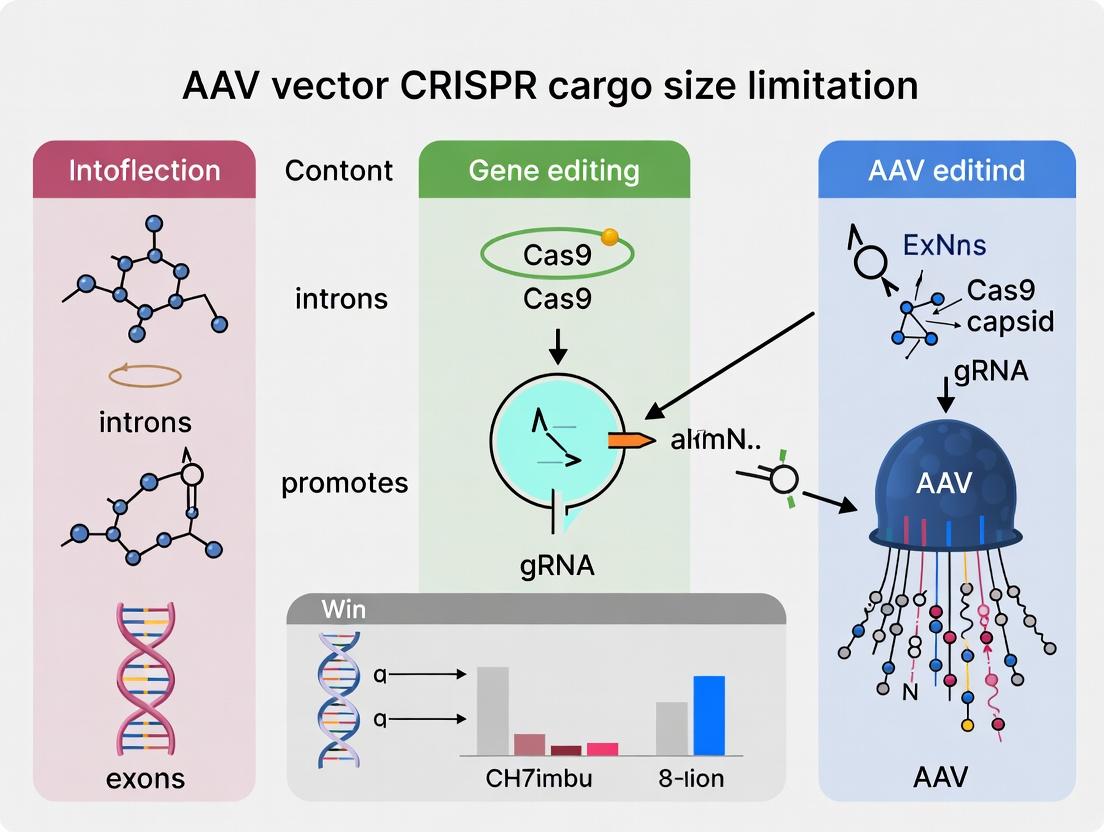
This article provides a comprehensive guide for researchers and drug developers on the critical size constraint (~4.7 kb) for packaging CRISPR-Cas systems into Adeno-Associated Virus (AAV) vectors.
The 4.7kb Bottleneck: Understanding and Overcoming AAV CRISPR Cargo Size Limitations in Gene Therapy
Abstract
This article provides a comprehensive guide for researchers and drug developers on the critical size constraint (~4.7 kb) for packaging CRISPR-Cas systems into Adeno-Associated Virus (AAV) vectors. It explores the fundamental reasons behind this limitation, surveys current and emerging methodological approaches to overcome it, details troubleshooting strategies for optimizing packaging efficiency and in vivo efficacy, and validates these methods by comparing their therapeutic outcomes. The article aims to equip scientists with the knowledge to design and implement effective CRISPR-based therapies within the strict confines of AAV's cargo capacity.
The 4.7kb Barrier: Decoding the Structural and Biological Limits of AAV Packaging
Within the broader thesis of AAV vector CRISPR cargo size limitation research, this whitepaper examines the fundamental biophysical constraints of the adeno-associated virus (AAV) capsid that establish an effective packaging limit of approximately 4.7 kilobases. This limit presents a critical bottleneck for delivering larger therapeutic cargos, such as CRISPR-Cas systems with regulatory elements. We explore the structural, thermodynamic, and mechanistic principles underlying this constraint, present quantitative data from key studies, and detail relevant experimental methodologies.
Recombinant AAV (rAAV) is a leading viral vector for in vivo gene therapy. Its single-stranded DNA genome is housed within an icosahedral protein capsid ~26 nm in diameter. While the wild-type AAV genome is ~4.7 kb, early empirical studies demonstrated that recombinant genomes exceeding ~5.0 kb led to drastically reduced titers and inefficient transduction. This ~4.7 kb "hard limit" emerges from a confluence of physical confinement, DNA bending energetics, and capsid assembly dynamics, directly impacting the design of CRISPR-Cas cargos which often approach or exceed this ceiling.
Core Physical and Structural Constraints
Capsid Internal Volume and DNA Density
The internal radius of the AAV capsid is approximately 12.5 nm, yielding a volume of roughly 8,180 nm³. Packaged DNA must achieve a high density to fit, creating substantial internal pressure.
Table 1: AAV Capsid Physical Dimensions and DNA Packing Parameters
| Parameter | Value | Explanation / Implication |
|---|---|---|
| Capsid External Diameter | ~26 nm | Determined by cryo-EM |
| Capsid Internal Radius | ~12.5 nm | Defines available volume |
| Internal Volume | ~8,180 nm³ | Constrains total polymer length |
| ssDNA Helix Diameter | ~2 nm | With hydration shell; occupies space |
| Theoretical Packing Limit (B-form) | >6 kb | Based on volume alone |
| Effective Packing Limit | ~4.7 - 5.0 kb | Dictated by energetics & assembly |
DNA Bending Energy and Stress
Forcing DNA into the small capsid requires severe bending, incurring an energy cost proportional to the persistence length of DNA (~50 nm for ssDNA under packing conditions). Longer genomes increase both bending energy and DNA-DNA electrostatic repulsion, making packaging thermodynamically unfavorable beyond a critical length.
Mechanism of Genome Packaging and the "Head-Full" Model
AAV genome packaging is linked to replication via the capsid's viral packaging (VP) proteins. The terminal resolution site (trs) in the inverted terminal repeat (ITR) is nicked during replication, providing a free 3' end for strand displacement and concurrent encapsidation. Evidence supports a "head-full" mechanism where packaging continues until the capsid is physically full, but is also gated by the strain sensed by the capsid proteins.
Diagram 1: AAV Genome Packaging and Termination Mechanism
Quantitative Evidence for the ~4.7 kb Limit
Empirical data across multiple studies consistently shows a sharp decline in packaging efficiency and viable titer as genome size increases past 4.7 kb.
Table 2: Impact of Genome Size on AAV Packaging Efficiency
| Genome Size (kb) | Relative Packaging Efficiency (%) (vs 4.7 kb) | Relative Infectious Titer (%) | Key Observations | Study (Example) |
|---|---|---|---|---|
| ≤ 4.7 | 100% | 100% | Optimal packaging and stability. | Dong et al., 1996 |
| 5.0 - 5.2 | 50 - 80% | 40 - 70% | Moderate reduction; increased empty capsids. | Wu et al., 2010 |
| 5.5 | ~10 - 25% | ~5 - 15% | Severe efficiency drop; genome truncations common. | Grieger et al., 2005 |
| ≥ 6.0 | < 5% | < 1% | Minimal full packaging; predominant empty capsids. | Allocca et al., 2008 |
Key Experimental Protocols for Studying Packaging Limits
Protocol: Assessing Packaging Efficiency via qPCR/Digital PCR
Objective: Quantify the ratio of full capsids containing the genome of interest to total capsids (full + empty). Reagents:
- Purified AAV vector preparation.
- DNase I (to degrade unpackaged DNA).
- Proteinase K & SDS (to disrupt capsids and release viral genomes).
- qPCR/dPCR reagents, primers/probes for a vector transgene and a capsid gene (e.g., cap). Method:
- Treat aliquot of vector with DNase I to remove external DNA.
- Inactivate DNase I (EDTA, heat).
- Treat sample with Proteinase K and SDS to degrade capsid and release internal genome.
- Perform qPCR/dPCR in two parallel reactions: a. Genome Titer: Using transgene-specific primers to quantify packaged genomes. b. Capsid Titer: Using primers for a cap region, only amplified after protease treatment, quantifying total capsids.
- Calculation: Packaging Efficiency (%) = (Genome Titer / Capsid Titer) * 100. Compare across constructs of different sizes.
Protocol: Southern Blot Analysis for Genome Integrity
Objective: Visualize and determine the size and integrity of packaged genomes. Reagents:
- Purified, DNase-treated AAV vectors.
- Alkaline lysis buffer.
- Neutralization buffer.
- Agarose gel electrophoresis system.
- Southern blot transfer apparatus, hybridization oven.
- Digoxigenin (DIG)-labeled DNA probe complementary to vector sequence.
- Anti-DIG-AP antibody and chemiluminescent substrate. Method:
- Lyse AAV particles with alkaline buffer, neutralize.
- Run released DNA on alkaline agarose gel (preserves ssDNA).
- Transfer DNA to positively charged nylon membrane.
- Hybridize membrane with DIG-labeled probe.
- Detect probe signal via anti-DIG antibody and chemiluminescence.
- Analysis: Compare signal position to size markers. Larger constructs (>5.0 kb) often show smearing or lower molecular weight bands, indicating truncation or degradation.
Protocol: Cryo-Electron Microscopy and 3D Reconstruction
Objective: Visualize capsid morphology and internal electron density to assess DNA content. Reagents:
- Highly purified AAV preparation at high concentration (>1e12 vg/mL).
- Quantifoil or C-flat cryo-EM grids.
- Vitrification robot (e.g., Vitrobot).
- High-end cryo-electron microscope (200-300 kV). Method:
- Apply 3-4 µL of sample to glow-discharged EM grid.
- Blot and plunge-freeze in liquid ethane using Vitrobot.
- Image under low-dose conditions in cryo-EM.
- Collect thousands of particle images.
- Perform 2D classification, 3D reconstruction, and density map calculation.
- Analysis: Empty capsids show low internal density. Fully packaged capsids show a concentric, radial pattern of high density. Partially filled capsids show intermediate, disordered density.
Implications for CRISPR-Cas Cargo Design
The ~4.7 kb limit constrains the delivery of CRISPR-Cas systems. SpCas9 (~4.2 kb) alone fits, but adding regulatory elements (promoter, terminator) and guide RNA expression cassette easily exceeds capacity. This drives research into smaller Cas orthologs (e.g., SaCas9 ~3.2 kb) and split-inteln systems.
Diagram 2: CRISPR Cargo Size Challenge and Strategies
The Scientist's Toolkit: Research Reagent Solutions
Table 3: Essential Reagents for AAV Packaging Limit Research
| Reagent / Material | Function in Research | Key Consideration |
|---|---|---|
| ITR-flanked Plasmid Constructs (various sizes) | Provide the recombinant genome template for packaging. Size variation is the independent variable. | Ensure ITR integrity via SmaI digestion or sequencing; use bacterial strains like Stbl3 to prevent recombination. |
| Packaging Plasmid (e.g., pAAV2/9) | Expresses AAV rep and cap genes to form the capsid. | Serotype defines tropism; Rep78/68 are essential for genome excision/packaging. |
| Adenoviral Helper Plasmid (e.g., pAdDeltaF6) | Provides necessary helper functions (E4, E2a, VA RNA) for AAV replication. | Must be devoid of AAV ITRs to prevent its packaging. |
| DNase I (RNase-free) | Degrades unencapsidated DNA post-production to accurately titer packaged genomes. | Critical step before genome extraction for qPCR or Southern blot. |
| Proteinase K | Digests capsid proteins to release the viral genome for analysis. | Use with SDS for complete lysis. Inactivate before PCR. |
| Anti-AAV Capsid Antibody (e.g., A20, ADK8) | ELISA detection of total physical capsid particles. | Distinguishes between full and empty capsids when combined with genome titer. |
| Alkaline Agarose | Gel electrophoresis matrix for resolving single-stranded AAV genomes. | Standard agarose causes ssDNA renaturation; alkaline conditions keep it single-stranded. |
| DIG DNA Labeling & Detection Kit | For non-radioactive, high-sensitivity Southern blot detection of packaged genomes. | Safer and more stable than ³²P; allows precise size determination. |
| Iodixanol Density Gradient Medium | Purifies AAV vectors via ultracentrifugation based on buoyant density. | Separates full (denser) from empty (less dense) capsids, enabling direct comparison. |
The ~4.7 kb limit is a fundamental property of the AAV virion, imposed by capsid geometry, DNA biophysics, and the mechanics of the packaging process. While it presents a significant hurdle for complex cargos like CRISPR-Cas systems, it drives innovative engineering solutions. Ongoing research within this thesis framework focuses on understanding precise strain-sensing mechanisms in the capsid, engineering capsids with altered internal volume or dynamics, and optimizing dual-vector strategies to bypass the limit entirely.
The therapeutic delivery of CRISPR-Cas systems is frequently constrained by the packaging capacity of viral vectors. Adeno-associated virus (AAV), the leading in vivo delivery vehicle, has a strict cargo limit of approximately 4.7 kilobases (kb). This whitepaper provides a detailed technical breakdown of the core CRISPR components—Cas nucleases, guide RNA (gRNA), and regulatory elements—within the critical context of AAV cargo optimization. Efficient vector design necessitates a precise accounting of each base pair to accommodate all functional elements within this tight constraint.
Quantitative Size Breakdown of CRISPR Components
The size of CRISPR components is a primary determinant of AAV compatibility. The following tables summarize the coding and functional sequence lengths for key elements.
Table 1: Cas Nuclease Coding Sequence (CDS) Sizes
| Cas Nuclease | Approximate CDS Size (bp) | Protein Size (kDa) | AAV-Compatible? (Single Vector) |
|---|---|---|---|
| SpCas9 (S. pyogenes) | ~4,100 bp | ~160 kDa | No (exceeds capacity) |
| SaCas9 (S. aureus) | ~3,150 bp | ~105 kDa | Yes, with small payload |
| Cas12a (Cpf1) (L. bacteria) | ~3,900 bp | ~130 kDa | Marginal (tight fit) |
| Compact Cas9 variants (e.g., SauriCas9) | ~3,100-3,300 bp | ~105-115 kDa | Yes |
| CasMINI (engineered) | ~1,800 bp | ~70 kDa | Yes, with large payload |
Table 2: Guide RNA and Regulatory Element Sizes
| Component | Type/Example | Approximate Size (bp) | Critical Notes |
|---|---|---|---|
| gRNA Scaffold | Standard SpCas9 sgRNA | ~100 bp | Includes tracrRNA and crRNA fusion. |
| Target Sequence | spacer | 20 bp | User-defined. |
| Promoter | U6 (Pol III) | ~250 bp | Drives gRNA expression. Compact. |
| Promoter | CBh (Pol II) | ~500-700 bp | Drives Cas expression. Larger but strong. |
| PolyA Signal | bGH, miniPolyA | 100-200 bp | Essential for mRNA termination. |
| ITRs (AAV) | Inverted Terminal Repeats | ~145 bp each | Required for AAV packaging; not part of cargo limit. |
| REP/REG Elements | e.g., WPRE | ~600 bp | Enhances expression; significant size cost. |
Strategies for AAV Packaging and Experimental Validation
Given the size limit, two primary strategies are employed: single-vector and dual-vector (split) systems.
Strategy 1: Single-Vector Packaging of SaCas9 Systems
For payloads under ~4.7 kb, a single AAV vector can be used. A typical construct includes:
[AAV-ITR] - [Promoter(CBh)] - [SaCas9 CDS] - [PolyA] - [Promoter(U6)] - [gRNA] - [AAV-ITR].
Total size must be calculated and verified.
Protocol 1: In Silico Assembly and Size Verification
- Design the plasmid construct using software (e.g., SnapGene).
- Annotate all elements: ITRs, promoters, CDS, polyA, gRNA.
- Use the software's "Size Report" function to calculate the total sequence length between the ITRs.
- Confirm the size is <4,700 bp. If necessary, employ size-reduction tactics: use truncated promoters (e.g., short synthetic promoters), shorter polyA signals (e.g., SV40), or remove unnecessary enhancers.
Strategy 2: Dual-Vector (Split) Systems for Large Cas9 like SpCas9 For SpCas9, the CDS is split into two separate AAV vectors, typically at an intein site. Reconstitution occurs via protein trans-splicing in the target cell.
Protocol 2: Assessing Split-System Efficiency *In Vitro
- Cell Transfection: Co-transfect HEK293T cells in a 24-well plate with three plasmids: (1) AAV genome plasmid containing the N-terminal half of SpCas9 fused to intein N, (2) AAV genome plasmid containing the C-terminal half fused to intein C, and (3) a plasmid expressing the target gRNA and a GFP reporter.
- Functional Assay: Include a target sequence for GFP disruption (knockout) in the reporter plasmid.
- Flow Cytometry: Harvest cells 72 hours post-transfection. Analyze by flow cytometry for GFP fluorescence loss.
- Efficiency Calculation: Compare the percentage of GFP-negative cells in the split-Cas9 + gRNA group to a positive control (full SpCas9 + gRNA). This measures reconstitution efficiency.
Visualization of Strategies and Workflows
Diagram 1: AAV CRISPR packaging strategies.
Diagram 2: Split-SpCas9 functional assay workflow.
The Scientist's Toolkit: Research Reagent Solutions
| Item / Reagent | Function in AAV-CRISPR Research |
|---|---|
| AAVpro Helper Free System (Takara) | A complete plasmid system for high-titer AAV production without helper virus contamination. |
| pAAV Vector Series (Addgene) | Pre-cloned backbone plasmids with ITRs for inserting Cas9, gRNA, and promoters. |
| SpCas9(D10A) Nickase & SaCas9 Plasmids | Source of nuclease CDS for subcloning into AAV backbones. |
| U6-sgRNA PCR Vector Kit | Allows rapid cloning of target-specific gRNA sequences into a U6-driven expression cassette. |
| ITR-Specific Sequencing Primers | Essential for verifying sequence integrity of AAV plasmid ITRs, which are prone to rearrangement. |
| AAV Titration ELISA Kit (Progen) | Quantifies physical particles (capsids) irrespective of genome content. |
| qPCR-based AAV Genome Titer Kit | Quantifies packaged vector genomes using ITR-specific probes. |
| HEK293T/HEK293AAV Cells | Standard cell line for AAV production via triple transfection. |
| Endura Duo Electrocompetent Cells | High-efficiency E. coli strain for stable propagation of large, complex AAV plasmids. |
| Guide-it GFP Disruption Assay (Takara) | A ready-to-use system to quantify CRISPR knockout efficiency via flow cytometry, as described in Protocol 2. |
Adeno-associated virus (AAV) vectors are a cornerstone of gene therapy and CRISPR-Cas delivery. A central thesis in the field posits that the ~4.7 kb packaging limit of AAV imposes a critical constraint on cargo design, particularly for CRISPR systems which require Cas nuclease and guide RNA expression cassettes. "Over-packaging" refers to the attempted incorporation of DNA genomes exceeding this natural limit. This whitepaper synthesizes current evidence demonstrating that over-packaging directly leads to a triad of detrimental outcomes: significantly reduced viral particle titer, diminished infectivity, and attenuated transgene expression. These consequences fundamentally impact the efficacy and dose requirements of AAV-based therapeutics and research tools.
Table 1: Impact of Genome Size on AAV Production and Functionality
| Genome Size (kb) | Relative Physical Titer (vg/mL) | Relative Infectious Titer (IU/mL) | Relative Transgene Expression in vivo | Key Observations | Primary Reference |
|---|---|---|---|---|---|
| ≤ 4.7 (Optimal) | 100% (Baseline) | 100% (Baseline) | 100% (Baseline) | Maximal packaging efficiency; full-length genomes predominate. | Wu et al., 2020 |
| 5.0 - 5.5 | 40-60% | 20-40% | 30-50% | Increased fraction of empty capsids & partial genomes; reduced specific infectivity. | Dong et al., 2023 |
| > 5.5 | < 20% | < 10% | < 20% | Severe packaging defect; predominantly empty/partial capsids; high particle-to-infectivity ratio. | Wang et al., 2022 |
| ~ 6.0 (CRISPR SaCas9) | 10-30% | 5-15% | 10-25% | Critical limitation for single-vector SaCas9 delivery; necessitates compact regulatory elements. | Ibraheim et al., 2021 |
Detailed Experimental Protocols for Assessing Over-packaging
Protocol 3.1: Production and Titer Analysis of Over-packaged AAV
Objective: To quantify the reduction in physical and infectious titers of AAV vectors with oversized genomes.
Materials:
- Plasmids: pXX6-80 (helper), pRep-Cap (serotype-specific), pITR-transgene (with oversized insert, e.g., 5.5kb).
- Cells: HEK293T cells at 70-80% confluence.
- Transfection: Polyethylenimine (PEI MAX) or equivalent.
- Purification: PEG precipitation followed by iodixanol gradient ultracentrifugation.
- Lysis Buffer: 50 mM Tris, 150 mM NaCl, 0.1% SDS, pH 8.5.
Method:
- Triple Transfection: Co-transfect HEK293T cells in a 1:1:1 molar ratio of helper, Rep-Cap, and ITR-transgene plasmids.
- Harvest: Collect cells and media 72 hours post-transfection.
- Purification: Lyse cells, treat with Benzonase, and purify vector via iodixanol step gradient.
- Physical Titer (vg/mL) by ddPCR:
- Treat purified AAV with DNase I to remove unpackaged DNA.
- Heat-inactivate DNase I and digest with Proteinase K.
- Perform ddPCR using primers/probe against the transgene (e.g., polyA signal). Calculate vector genome concentration using a standard curve.
- Infectious Titer (IU/mL) by TCID₅₀:
- Seed HEK293-Rep cells in 96-well plates.
- Perform 8-fold serial dilutions of the AAV prep (8 replicates per dilution).
- Infect cells and incubate for 72 hours.
- Lyse cells and detect packaged genomes via qPCR. Calculate the 50% infectious dose (TCID₅₀) using the Spearman-Kärber method.
Protocol 3.2: Assessing Genome Integrity and Transduction Efficiency
Objective: To analyze the integrity of packaged genomes and measure resulting transgene expression.
Method:
- DNA Extraction from Viral Particles: Incubate purified AAV with Proteinase K and SDS, followed by phenol-chloroform extraction and ethanol precipitation.
- Southern Blot Analysis:
- Digest extracted DNA with a restriction enzyme that cuts once within the genome.
- Run samples on a 0.8% agarose gel, denature, and transfer to a nylon membrane.
- Hybridize with a digoxigenin-labeled probe against the transgene.
- Visualize bands: a single band at the expected size indicates full-length packaging; smears or smaller bands indicate fragmentation/partial packaging.
- In vitro Transduction Assay:
- Infect target cells (e.g., HeLa) with an equal multiplicity of infection (MOI) based on physical titer.
- 48-72 hours post-infection, harvest cells.
- Quantify Expression: For fluorescent reporters, analyze by flow cytometry. For luciferase, perform a luciferase assay. Normalize expression levels to the "optimal size" vector control.
Visualizing the Mechanisms and Workflows
Title: Mechanism of Over-packaging Leading to Defective AAV
Title: Workflow for AAV Physical & Infectious Titering
The Scientist's Toolkit: Research Reagent Solutions
Table 2: Essential Reagents for AAV Packaging Size Studies
| Reagent/Material | Supplier Examples | Function in Over-packaging Research |
|---|---|---|
| ITR-Compatible Cloning Vectors (e.g., pAAV-MCS, pZac-series) | Addgene, VectorBuilder | Backbone plasmids with inverted terminal repeats (ITRs) for constructing test genomes of precise lengths. |
| Rep/Cap and Helper Plasmids (pAAV-RC, pHelper) | Cell Biolabs, Addgene | Provide AAV replication (Rep) and capsid (Cap) proteins, and adenoviral helper functions for vector production. |
| Droplet Digital PCR (ddPCR) Supermix & Probes | Bio-Rad | Enables absolute quantification of packaged vector genomes (vg) without a standard curve, critical for accurate physical titer. |
| Iodixanol (OptiPrep Density Gradient Medium) | Sigma-Aldrich, Cytiva | Used in ultracentrifugation for high-purity AAV purification with minimal loss, essential for accurate functional assays. |
| Anti-AAV Capsid Antibodies (e.g., Clone A20, ADK8) | Progen, American Research Products | ELISA-based quantification of total capsid particles, allowing calculation of full/empty particle ratios. |
| HEK293-Rep Cell Line | Engineered to stably express AAV Rep proteins, used in TCID₅₀ assays to amplify only infectious particles containing full rep/cap genes. | |
| Benzonase Nuclease | MilliporeSigma | Degrades unpackaged DNA and RNA in lysates, ensuring titer measurements reflect only encapsidated genomes. |
| Southern Blot Kit (DIG-labeled) | Roche | For direct visualization of packaged genome size and integrity, distinguishing full-length from truncated species. |
Adeno-Associated Virus (AAV) vectors have become the premier platform for in vivo gene therapy. Their evolution has been fundamentally driven by the expanding demands of their genetic cargo. This whitepaper, framed within the broader thesis of AAV vector CRISPR cargo size limitation research, traces the technical journey from simple cDNA expression to the complex delivery of CRISPR-Cas machinery, analyzing the consequent design challenges and innovative solutions.
The Cargo Timeline: Quantitative Evolution of Payload Demands
The payload capacity of recombinant AAV (rAAV), historically constrained to ~4.7 kb, has been continually stressed by advancing therapeutic transgene designs.
Table 1: Historical Evolution of AAV Cargo Types and Sizes
| Era | Primary Cargo Type | Typical Components | Approx. Size (kb) | Key Limitation |
|---|---|---|---|---|
| 1990s-2000s | cDNA | Promoter, cDNA, PolyA signal | 1.5 - 3.5 | Minimal; fit easily within capacity. |
| 2000s-2010s | Regulatory Cassettes | Tissue-specific promoter, cDNA, regulatory elements (WPRE, etc.) | 3.0 - 4.5 | Approaching capacity limit; promoter swapping. |
| 2010s-Present | CRISPR-Cas Systems | Promoter(s), Cas9 gene, sgRNA expression unit(s) | 4.2 - >4.7 | Systemic overshoot; requires truncation or splitting. |
Table 2: Size Breakdown of Modern CRISPR-Cas Components for AAV
| Component | Example | Typical Size (bp) | Notes |
|---|---|---|---|
| Cas9 Orthologs | S. pyogenes Cas9 (spCas9) | ~4,100 | Standard; exceeds AAV capacity with promoter. |
| S. aureus Cas9 (saCas9) | ~3,160 | Commonly used for its compact size. | |
| C. jejuni Cas9 (cjCas9) | ~2,950 | Ultra-compact alternative. | |
| Promoter (for Cas) | CAG | ~1,700 | Strong, ubiquitous; large. |
| CBh | ~800 | Smaller synthetic alternative. | |
| Mini-promoters | ~200 - 500 | Tissue-specific, size-optimized. | |
| sgRNA Expression | U6 promoter + sgRNA | ~250 - 350 | Fits within ITRs with compact Cas9. |
Key Experimental Protocols in Cargo Optimization
Protocol for Dual AAV Vector Co-transduction Assay (Split-Cas9)
Objective: To assess the efficacy of delivering oversized CRISPR-Cas9 cargo via two separate AAVs (e.g., one with Cas9, one with sgRNA and donor template). Materials: HEK293T or target cell line, dual AAV vectors (e.g., AAV-Cas9 & AAV-sgRNA-GFP), Dulbecco’s Modified Eagle Medium (DMEM), polybrene, genomic DNA extraction kit, PCR reagents, T7E1 or next-generation sequencing (NGS) analysis. Method:
- Cell Seeding: Plate cells in a 24-well plate at 70% confluence.
- Co-transduction: Mix AAV1 and AAV2 at a defined MOI ratio (e.g., 1:1, 5:1) in serum-free medium containing 8 µg/mL polybrene. Apply to cells.
- Incubation: After 6-12 hours, replace transduction medium with fresh complete medium.
- Harvest & Analysis: At 72-96 hours post-transduction, harvest cells.
- For GFP reporters: Analyze by flow cytometry.
- For gene editing: Extract genomic DNA. Amplify target locus by PCR. Assess indel frequency via T7 Endonuclease I (T7E1) assay or deep sequencing.
Protocol for Testing Compact Cas OrthologsIn Vivo
Objective: To compare editing efficiency of size-optimized Cas9 variants delivered via single AAV vectors in vivo. Materials: AAV9 vectors packaging saCas9 or cjCas9 with sgRNA under a U6 promoter and a fluorescent marker, mice, injection apparatus (e.g., tail vein for systemic delivery), tissue homogenizer, NGS library prep kit. Method:
- Animal Injection: Systemically inject mice (n=5 per group) with 1e11 vg of each AAV variant via tail vein.
- Tissue Collection: Euthanize mice at 4 weeks post-injection. Harvest liver, heart, and skeletal muscle.
- Sample Processing: Homogenize tissues. Extract genomic DNA.
- Deep Sequencing Analysis: Design amplicons spanning the target site. Prepare sequencing libraries and run on an Illumina MiSeq. Analyze reads for indel percentages and specificity using tools like CRISPResso2.
Visualizing Strategies to Overcome Cargo Limits
Strategies to Package CRISPR in AAV
Dual AAV Co-transduction Workflow
The Scientist's Toolkit: Research Reagent Solutions
Table 3: Essential Reagents for AAV CRISPR Cargo Research
| Reagent/Material | Supplier Examples | Function in Research |
|---|---|---|
| Compact Cas9 Expression Plasmids (e.g., pX601-saCas9, pX552-cjCas9) | Addgene | Provide the DNA template for packaging size-optimized Cas9 genes into AAV. |
| ITR-flanked AAV Helper Plasmids (e.g., pAAV-MCS, pAAV-CAG-FLEX) | Addgene, VectorBuilder | Backbone plasmids containing AAV2 ITRs for cloning cargo; critical for vector production. |
| AAV Serotype-specific Helper Plasmids (pXR1-9, pAR8) | Vigene, Addgene | Provide rep and cap genes for producing specific AAV serotypes (1-9) during triple transfection. |
| Adenoviral Helper Plasmid (pXX6-80 or pAdDeltaF6) | Addgene, Penn Vector Core | Supplies essential adenoviral genes (E4, E2a, VA RNA) for AAV vector production in HEK293 cells. |
| HEK293T/AAV-293 Cells | ATCC, Thermo Fisher | Packaging cell line expressing adenoviral E1 genes, required for AAV replication/production. |
| Polyethylenimine (PEI) MAX | Polysciences | Transfection reagent for efficient delivery of AAV helper plasmids into packaging cells. |
| Iodixanol Density Gradient Medium | Sigma-Aldrich, Cytiva | Used in ultracentrifugation for high-purity purification of AAV vectors from cell lysates. |
| AAVpro Titration Kit (qPCR) | Takara Bio | Quantifies viral genome titer (vg/mL) accurately, essential for dosing experiments. |
| T7 Endonuclease I (T7E1) | NEB | Enzyme for detecting indel mutations at targeted genomic loci via mismatch cleavage assay. |
| CRISPResso2 Analysis Software | Public GitHub Repository | Bioinformatics tool for precise quantification of genome editing outcomes from NGS data. |
The trajectory from cDNA to CRISPR cargo has transformed AAV from a simple gene replacement vehicle into a sophisticated genome-editing delivery platform. This evolution has directly catalyzed the core thesis of cargo size limitation research, driving innovations in protein minimization, regulatory element optimization, and multi-vector systems. The future of AAV-based gene therapy hinges on continuing to refine these strategies, balancing cargo complexity with packaging efficiency, tropism, and safety to realize the full potential of in vivo genome editing.
Squeezing CRISPR into AAV: Innovative Strategies for Compact System Design
The adeno-associated virus (AAV) is a premier vector for in vivo gene therapy and CRISPR-Cas delivery due to its safety profile and tropism. However, its strict ~4.7 kb packaging capacity presents a fundamental constraint. A standard SpCas9 (≈4.2 kb) with its sgRNA and necessary regulatory elements (e.g., promoters, polyA signals) easily exceeds this limit. This has driven the search for compact, efficient Cas nucleases that, with their expression cassettes, fit within a single AAV vector. This guide details the leading miniaturized effector proteins, their mechanisms, and experimental considerations for their application.
Comparative Analysis of Compact Cas Proteins
| Protein | Size (aa) | Gene Size (bp) | PAM Requirement | Cleavage Type | Native System | Key Advantage |
|---|---|---|---|---|---|---|
| SaCas9 | 1,053 | ~3.2 kb | 5'-NNGRRT-3' | Blunt (DSB) | S. aureus | First compact Cas9 proven in vivo; high efficiency. |
| Cas12f (AsCas12f) | 400-700 | ~1.5-2.1 kb | 5'-TTN-3' (T-rich) | Staggered (DSB) | Archaea | Ultra-compact; but traditionally lower activity. |
| Cas12j (PhiCas12j) | ~700-800 | ~2.1-2.4 kb | 5'-TTN-3' | Staggered (DSB) | Phage | Small size with improved in vivo editing. |
| Cas12e (CasX) | ~980 | ~2.9 kb | 5'-TTCN-3' | Staggered (DSB) | Unknown | Small, minimal off-targets, multi-turnover. |
| Cas9 from C. jejuni (CjCas9) | 984 | ~3.0 kb | 5'-NNNNRYAC-3' | Blunt (DSB) | C. jejuni | Compact; requires longer PAM. |
Detailed Experimental Protocols
AAV Vector Construction for Compact Cas Delivery
Objective: Clone a compact Cas expression cassette into an AAV ITR-flanked plasmid.
Materials:
- ITR-containing AAV backbone plasmid
- Compact Cas gene (e.g., SaCas9, codon-optimized for target species)
- Minimal Promoter: e.g., truncated CBh, SYN1, or liver-specific TBG promoter.
- sgRNA Expression Unit: U6 or H1 promoter driving sgRNA.
- Polyadenylation Signal: Synthetic minimal polyA (e.g., bGH, SV40).
- Assembly Reagent: Gibson Assembly or Golden Gate Assembly mix.
- E. coli competent cells for transformation.
Procedure:
- Design Cassette: Ensure total size (Promoter + Cas + polyA + sgRNA unit) is < 4.7 kb. Use sequence analysis tools to verify.
- Amplify Fragments: PCR-amplify the Cas gene and promoter with 20-40 bp overlaps for adjacent fragments.
- Perform Assembly: Mix backbone and insert fragments with Gibson Assembly Master Mix. Incubate at 50°C for 1 hour.
- Transform: Transform 2 µl of assembly reaction into competent E. coli. Plate on selective agar.
- Screen Colonies: Perform colony PCR and Sanger sequencing to confirm correct assembly, especially ITR integrity.
In VitroCleavage Assay for Activity Validation
Objective: Validate nuclease activity of a newly engineered compact Cas variant.
Materials:
- Purified Compact Cas Protein
- In vitro-transcribed sgRNA or synthetic sgRNA.
- Target DNA Plasmid (containing target site with cognate PAM).
- Non-Target Control Plasmid.
- Nuclease Buffer: 20 mM HEPES, 100 mM KCl, 5 mM MgCl₂, 1 mM DTT, pH 7.5.
- Stop Solution: 10 mM EDTA, 0.1% SDS, 50% glycerol, 0.05% xylene cyanol.
- Agarose Gel Electrophoresis system.
Procedure:
- Form RNP: Pre-incubate 50 nM Cas protein with 100 nM sgRNA in nuclease buffer for 10 min at 25°C.
- Initiate Cleavage: Add 10 nM target plasmid DNA to the RNP mix. Final volume: 20 µl.
- Incubate: Incubate reaction at 37°C for 1 hour.
- Stop Reaction: Add 5 µl of stop solution.
- Analyze: Load products on a 1% agarose gel. Successful cleavage yields two linear DNA fragments from a supercoiled substrate.
Key Signaling and Workflow Diagrams
Diagram Title: The Path to Single-AAV CRISPR Delivery
Diagram Title: Compact Cas Protein DNA Cleavage Mechanism
The Scientist's Toolkit: Essential Research Reagents
| Reagent/Material | Supplier Examples | Function in Experiment |
|---|---|---|
| AAV Helper-Free System | Agilent, Cell Biolabs | Provides Rep/Cap and adenoviral helper genes for AAV production in producer cells. |
| ITR-containing Plasmid Backbone | Addgene, custom synthesis | Provides AAV2 inverted terminal repeats (ITRs), the only cis-elements required for packaging. |
| Minimal Promoter (e.g., tCbh) | Synthetic DNA vendors | Drives strong Cas expression while reducing cassette size to fit AAV limit. |
| Codon-Optimized Cas Gene | Gene synthesis companies (IDT, GenScript) | Ensures high expression in mammalian cells; essential for compact Cas from prokaryotes/archaea. |
| HiFi Cas9 Plus Assembly Mix | NEB, Takara | Enables reliable, seamless assembly of multiple DNA fragments, crucial for building constrained AAV cassettes. |
| HEK293T/AAV-293 Cells | ATCC | Standard cell line for AAV vector production due to stable expression of adenovirus E1 gene. |
| Iodixanol Gradient Medium | Sigma-Aldrich, OptiPrep | Used in ultracentrifugation for high-purity, high-titer AAV vector purification. |
| In vitro Transcription Kit | NEB, Thermo Fisher | Produces sgRNA for initial RNP activity assays without mammalian expression. |
| T7 Endonuclease I / TIDE Analysis Tool | NEB, Synthego | Detects nuclease-induced indels at target genomic loci in cells. |
| Next-Generation Sequencing Kits | Illumina, PacBio | For comprehensive off-target profiling (e.g., CIRCLE-seq, GUIDE-seq) and on-target editing analysis. |
The development of SaCas9, Cas12f, Cas12j, and other ultra-compact effectors has directly addressed the AAV cargo bottleneck, enabling simpler, safer single-vector delivery for in vivo genome editing. Future directions focus on engineering these proteins for improved efficiency (as seen with evolved Cas12f variants), altered PAM preferences, and higher fidelity. The integration of these compact effectors with emerging technologies like base editing and prime editing cassettes, while still respecting size constraints, represents the next frontier in AAV-delivered genomic medicine.
Adeno-associated virus (AAV) vectors are the leading platform for in vivo gene therapy delivery. However, their ~4.7 kb cargo capacity is a critical limitation for delivering large genetic payloads, such as CRISPR-Cas9 systems (SpCas9 + gRNA ≈ 4.2 kb) when combined with regulatory elements, donor templates, or multiple gRNAs. This whitepaper, situated within a broader thesis on overcoming AAV cargo constraints, details two primary strategies: Dual-Vector (Trans-splicing/Overlapping) systems and Split-Intein systems. These approaches enable the partitioning and reconstitution of oversized CRISPR machinery post-delivery.
System Architectures & Mechanisms
Dual-Vector Systems
These systems rely on homologous recombination or splicing between two co-delivered AAV vectors, each carrying a portion of the gene of interest.
- Trans-splicing ITR System: Utilizes the inherent ability of AAV inverted terminal repeats (ITRs) to concatemerize. The cargo is split at an intron-exon boundary, and splicing reconstitutes the full transcript.
- Overlapping (Hybrid) System: Employs a region of homology (overlap) between the two vector genomes. Intracellular homologous recombination across this overlap reassembles the full-length expression cassette.
Split-Intein Systems
Inteins are autocatalytic protein-splicing domains. A split-intein system co-opts this natural process: the Cas9 protein is divided into N-terminal and C-terminal fragments, each fused to a complementary intein half. Upon co-expression, the inteins catalyze a precise protein trans-splicing reaction, excising themselves and ligating the Cas9 fragments into a functional, contiguous enzyme.
Comparative Analysis: Quantitative Data
Table 1: Performance Comparison of CRISPR Load Division Strategies
| Parameter | Dual-Vector (Trans-splicing) | Dual-Vector (Overlap) | Split-Intein (e.g., Npu DnaE) |
|---|---|---|---|
| Theoretical Reconstitution Efficiency | Moderate (Depends on splicing) | Low to Moderate (Depends on HR) | High (Rapid, directed protein splicing) |
| Typical Full-Length Protein Yield | 1-10% (relative to full AAV) | 0.1-5% (relative to full AAV) | 5-40% (relative to full AAV) |
| Critical Homology/Overlap Size | Splice donor/acceptor sites (~50-200 bp) | 200 - 1000 bp | Intein fusion junction (minimal) |
| Key Advantage | Can utilize endogenous splicing machinery | Simpler vector design | High-fidelity protein ligation; faster kinetics |
| Key Limitation | Splicing may be inefficient or aberrant | Highly dependent on recombination rates | Intein size adds to cargo; possible residual intein activity |
| Optimal Use Case | Delivery of large cDNA genes | Delivery of large genes with central homology region | Delivery of large nucleases (e.g., SpCas9, base editors) |
Table 2: Published Efficacy Metrics for Split-SpCas9 Delivery In Vivo
| Study (Representative) | Model | System | Reported Editing Efficiency (Target Tissue) | Key Outcome Metric |
|---|---|---|---|---|
| Truong et al., 2015 (Nat. Biotech.) | Mouse liver | Dual-AAV, Split-Intein (Npu DnaE) | ~6% indels (Liver) | First proof-of-concept for in vivo use |
| Chew et al., 2016 (Nat. Methods) | Mouse brain | Dual-AAV, Split-Intein (Ssp DnaE) | Up to 35% reporter modification (Neurons) | Demonstrated CNS efficacy |
| Levy et al., 2020 (Nat. Commun.) | Mouse retina | Dual-AAV, Split-Intein (Npu DnaE) | ~30% homology-directed repair (Photoreceptors) | Achieved therapeutic levels of gene correction |
Experimental Protocols
Protocol: Validating Split-Intein Cas9 FunctionalityIn Vitro
Objective: To confirm the reconstitution of nuclease activity from two split-Cas9-intein fragments expressed from separate plasmids.
Materials: See "The Scientist's Toolkit" below. Method:
- Plasmid Co-transfection: Seed HEK293T cells in a 24-well plate. Co-transfect using a suitable reagent (e.g., PEI-Max) with three plasmids:
- pX330-SplitCas9(N)-Intein(N) (250 ng)
- pX330-Intein(C)-SplitCas9(C) (250 ng)
- pEGFP-Puro (50 ng, transfection control). Include controls: Full-length SpCas9 plasmid and empty vector.
- Genomic DNA Harvest: At 72 hours post-transfection, aspirate media, wash with PBS, and lyse cells directly in the well with 100 µL of QuickExtract DNA Extraction Solution. Incubate at 65°C for 15 min, 98°C for 10 min, then store at -20°C.
- T7 Endonuclease I (T7E1) Assay:
- PCR-amplify a ~500-800 bp genomic region surrounding the target site from the extracted gDNA.
- Purify PCR products using a standard kit.
- Heteroduplex Formation: Mix 200 ng of purified PCR product with 2 µL of 10X NEBuffer 2.1 in a total volume of 19 µL. Heat to 95°C for 10 min, then ramp down to 85°C at -2°C/sec, then to 25°C at -0.1°C/sec.
- Digestion: Add 1 µL of T7 Endonuclease I enzyme to the heteroduplex mix. Incubate at 37°C for 60 min.
- Analysis: Run the digested product on a 2% agarose gel. Cleavage bands indicate presence of indels. Calculate indel frequency using band intensity densitometry.
Protocol: Assessing Dual-AAVIn VivoDelivery in Mouse Liver
Objective: To evaluate the reconstitution and editing efficacy of a split-intein Cas9 system delivered via dual AAV vectors.
Method:
- Vector Production: Package the split-Cas9-intein N- and C-fragment expression cassettes (each with a strong promoter, e.g., Cbh, and polyA) into separate AAV9 vectors via triple transfection in HEK293 cells. Purify using iodixanol gradient ultracentrifugation and titrate via qPCR.
- Animal Administration: Anesthetize C57BL/6 mice (6-8 weeks old). Inject a 1:1 mixture of the two AAV9 preparations (total dose: 2x10^11 – 1x10^12 vector genomes per mouse) via the tail vein in a total volume of 100-200 µL saline.
- Tissue Collection & Processing: At 2-4 weeks post-injection, euthanize mice and perfuse with PBS. Harvest liver lobes. Snap-freeze a portion in liquid N2 for gDNA/protein. Homogenize another portion for genomic DNA isolation using a DNeasy Blood & Tissue Kit.
- Efficacy Assessment:
- Next-Generation Sequencing (NGS): Perform targeted amplicon sequencing of the genomic locus. Isolate gDNA, PCR amplify the target region with barcoded primers, and sequence on an Illumina MiSeq. Analyze reads for indel percentages using tools like CRISPResso2.
- Western Blot: Lyse frozen liver tissue in RIPA buffer. Perform SDS-PAGE and blot for full-length SpCas9 using a monoclonal anti-Cas9 antibody. The intact ~160 kDa band indicates successful protein trans-splicing.
Visualizations
Diagram 1: Dual-Vector Trans-Splicing Mechanism (89 chars)
Diagram 2: Split-Intein Protein Reconstitution (90 chars)
The Scientist's Toolkit: Research Reagent Solutions
Table 3: Essential Materials for Split-CRISPR Experiments
| Item | Function/Description | Example Product/Catalog |
|---|---|---|
| Split-Cas9 Plasmids | Mammalian expression vectors encoding Cas9 fused to split intein halves (N & C). Backbone often contains gRNA scaffold. | Addgene #89373 (pX330-splitD10A-N), #89374 (pX330-splitH840A-C) |
| AAV Helper-Free System | Plasmid set for AAV vector production: Rep/Cap plasmid, Adenovirus helper plasmid, and ITR-containing transgene plasmid. | Cell Biolabs VPK-402 (AAV-DJ Helper-Free) |
| T7 Endonuclease I | Surveyor nuclease for detecting small indels via mismatch cleavage of heteroduplexed PCR products. | NEB #M0302S |
| QuickExtract DNA Solution | Rapid, single-tube reagent for direct PCR-ready gDNA extraction from cultured cells or tissues. | Lucigen QE09050 |
| AAV Serotype 9 | In vivo delivery; excellent tropism for liver, heart, and CNS. Provides high transduction efficiency. | Custom production or SignaGen AAV9-Capsid Plasmid |
| Next-Gen Sequencing Kit | For deep, quantitative analysis of editing outcomes (indels, HDR) via targeted amplicon sequencing. | Illumina MiSeq System & Nextera XT Index Kit |
| Anti-Cas9 Antibody | Mouse or rabbit monoclonal for detection of full-length Cas9 protein via Western blot. | Cell Signaling Technology #14697 |
| PEI-Max Transfection Reagent | Low-cost, highly effective polyethylenimine-based reagent for plasmid transfection of HEK293T cells. | Polysciences 24765-1 |
Optimizing Promoters and Regulatory Elements for Maximum Efficiency in Minimal Space
Adeno-associated virus (AAV) vectors are the leading platform for in vivo gene therapy delivery, prized for their safety and tropism. However, their packaging capacity of approximately 4.7 kb presents a formidable bottleneck for complex genetic cargos, such as those required for CRISPR-Cas9-based therapies. A standard Streptococcus pyogenes Cas9 (SpCas9) gene alone is ~4.2 kb, leaving scant space for essential promoters, guide RNA expression cassettes, and regulatory elements. This whitepaper details strategies to compress these regulatory components into minimal DNA footprints without compromising—and ideally enhancing—their transcriptional efficiency, directly addressing the core thesis of expanding functional cargo within the rigid AAV size limit.
Quantitative Analysis of Compact Promoters
The selection of a promoter is the primary determinant of both expression strength and space utilization. Below is a comparison of commonly used and emerging compact promoters in mammalian systems.
Table 1: Performance Metrics of Minimal Promoters for AAV-CRISPR Applications
| Promoter Name | Size (bp) | Relative Strength (vs CMV) | Cell/Tissue Specificity | Key Features & Notes |
|---|---|---|---|---|
| CMV | ~600-800 | 1.0 (Reference) | Broad, strong | Large size often prohibitive; can silence in vivo. |
| CAG | ~1300-1900 | 1.2 - 1.8 | Very broad, strong | Composite promoter; excellent strength but too large for most CRISPR cargo. |
| EF1α | ~200-1200 | 0.6 - 1.0 | Broad | Short variants available; consistent expression across cell types. |
| PGK | ~500-600 | 0.3 - 0.5 | Broad, ubiquitous | Moderate strength, relatively compact, less prone to silencing. |
| U6 | ~240 | N/A (Pol III) | Ubiquitous | Drives gRNA expression; minimal and essential. |
| Synapsin (Syn1) | ~460 | 0.4 (in neurons) | Neuron-specific | Enables cell-type restriction; smaller than many other cell-specific promoters. |
| TBG | ~300 | 0.7 (in hepatocytes) | Hepatocyte-specific | Highly compact and liver-specific; ideal for systemic AAV delivery. |
| CK8 | ~300 | 0.5 (in keratinocytes) | Keratinocyte-specific | Compact tissue-specific promoter. |
| Synthetic MiniPromoter (e.g., Mp | 100-400 | Variable (0.2 - 1.0) | Designed specificity | De novo engineered; can be tailored for size and specificity. |
Engineering and Optimization of Regulatory Elements
Introns and Woodchuck Hepatitis Post-Transcriptional Regulatory Element (WPRE)
Despite adding length, strategically chosen introns can dramatically enhance mRNA processing and nuclear export, allowing the use of a weaker, smaller promoter for equivalent output. The WPRE (~600 bp) enhances transcript stability and translation but is sizable. Truncated WPRE variants (e.g., WPRE3, ~380 bp) retain ~70-80% of the activity.
PolyA Signals
The canonical SV40 polyA signal is ~150 bp. Optimized minimal versions like bGH (≈ 120 bp) or synthetic polyA signals as short as 50 bp (e.g., AATAAA cassette) can be used, though efficiency must be validated.
Insulators and Chromatin Openers
To prevent promoter interference in multi-cassette designs and ensure reliable expression from minimal promoters, compact chromatin-opening elements are critical. The cHS4 Core Insulator (≈ 250 bp) can help block transcriptional silencing. Ubiquitous Chromatin Opening Elements (UCOEs) derived from the HNRPA2B1-CBX3 locus are effective but larger (>1 kb); minimized synthetic MARs (Matrix Attachment Regions) of 200-400 bp are under investigation.
Linker and Overlap Strategies
- 2A Self-Cleaving Peptides: For multicistronic expression (e.g., Cas9 and a reporter), P2A (~66 bp) is the smallest and most efficient, though some ribosome skipping occurs.
- Overlapping Genetic Elements: Designing the termination signal of one gene to overlap with the promoter of the next can save 50-100 bp.
Experimental Protocol: Side-by-Side Evaluation of Promoter Efficiency in a Size-Constrained Context
Objective: To quantitatively compare the expression strength of candidate compact promoters driving a reporter gene (e.g., nanoLuciferase) within a simulated AAV cargo size limit.
Methodology:
- Vector Construction: Clone each promoter from Table 1 (or truncated variants) upstream of the nanoLuc gene followed by a minimal bGH polyA signal into a standard mammalian expression plasmid backbone. Precisely measure each insert's size via sequencing and restriction digest.
- Size-Balanced Control: To account for plasmid size effects on transfection, use a "stuffer" sequence (e.g., non-coding, inert DNA) to normalize the total size of all test plasmids to the largest construct.
- Cell Transfection: Seed HEK293T cells (or relevant cell line, e.g., HepG2 for liver-specific promoters) in 96-well plates. Transfect each plasmid in triplicate using a polyethylenimine (PEI)-based method. Include a GFP-expressing control plasmid to normalize for transfection efficiency.
- Luciferase Assay: 48 hours post-transfection, lyse cells and assay using the Nano-Glo Luciferase Assay System. Measure luminescence on a plate reader.
- Data Normalization & Analysis: Normalize luminescence values first to GFP fluorescence (transfection control), then to total protein concentration (BCA assay). Plot normalized Relative Light Units (RLU) against promoter size.
Diagram Title: Promoter Efficiency Testing Workflow
Advanced Strategies: Logical Design of Multi-Gene Cassettes
For a complete CRISPR-Cas9 system, the arrangement of the Cas9 expression cassette and one or more gRNA cassettes is critical.
Example Compact Architecture:
[Compact Promoter (e.g., miniEF1α)]-[[Intron]]-[[Cas9 ORF]]-[[P2A]]-[[Reporter]]-[bGH polyA] + [U6]-[[gRNA scaffold]-[minimal polyT]]
This entire construct must be kept under 4.7 kb, necessitating the use of the smallest effective parts.
Diagram Title: Compact AAV CRISPR Cassette Architecture
The Scientist's Toolkit: Research Reagent Solutions
Table 2: Essential Reagents for AAV Promoter Optimization Research
| Reagent / Material | Function / Application | Example Product / Note |
|---|---|---|
| Minimal Promoter Libraries | Source of compact, tissue-specific, or synthetic promoters for testing. | Addgene collections (e.g., Klein et al. synthetic promoters); commercial tissue-specific promoter sets. |
| Modular Cloning System | Enables rapid, seamless assembly of promoters, ORFs, and regulatory parts. | Gibson Assembly Master Mix, Golden Gate Assembly (MoClo, GoldenBraid), NEBuilder HiFi DNA Assembly. |
| In Vivo Reporter Assay Kits | Quantify promoter activity in live animals or tissues post-AAV delivery. | Nano-Glo Luciferase Assay System (Promega); IVIS imaging systems for bioluminescence. |
| AAV Producer System | Package optimized cargo into AAV capsids for functional testing. | PEI transfection kits + AAV rep/cap + helper plasmids; serotype-specific kits (AAV9, AAV-DJ, etc.). |
| Droplet Digital PCR (ddPCR) | Precisely quantify AAV genome titer and vector copy number in transduced cells. | Bio-Rad QX200 system; essential for normalizing transduction experiments. |
| Next-Gen Sequencing (NGS) for SITE-Seq | Profile CRISPR-Cas9 editing efficiency and specificity in vivo. | Illumina-based sequencing to quantify on-target vs. off-target edits from minimal promoters. |
| Chromatin Accessibility Assay Kit | Assess if minimal promoters/synthetic elements maintain open chromatin. | ATAC-seq (Assay for Transposase-Accessible Chromatin) kit. |
Optimizing the non-coding regulatory landscape is paramount for overcoming AAV cargo limitations. The future lies in the rational design of fully synthetic, hyper-compact transcription modules that combine promoter, enhancer, and insulator activity in sequences under 200 bp. Machine learning models trained on epigenetic and transcriptional data will guide this design. Combining these ultra-minimized parts with smaller CRISPR effectors (e.g., Cas12f, ~1 kb) will ultimately unlock the delivery of complex therapeutic regimens within a single AAV vector, transforming the scope of in vivo genome editing.
The therapeutic application of CRISPR-Cas systems using Adeno-Associated Virus (AAV) vectors is fundamentally constrained by the viral cargo capacity of ~4.7 kb. This limitation necessitates strategic decisions in cargo design, primarily between "All-in-One" vectors, which package Cas nuclease and single-guide RNA(s) within a single AAV, and "Multiplexed" designs, which often separate components or encode multiple gRNAs. This technical guide, framed within ongoing research on overcoming AAV cargo size limitations, analyzes these competing paradigms, focusing on their impact on editing scope, efficiency, and translatability for research and drug development.
Core Design Paradigms: A Quantitative Comparison
Key Definitions & Components
- All-in-One (AIO): A single AAV vector encoding the Cas protein (e.g., SpCas9, saCas9, Cas12a) and one or more gRNA expression cassettes.
- Multiplexed gRNA (Multi-gRNA): A design focusing on delivering multiple gRNAs (typically 2+) targeting distinct genomic loci or a single locus from a single vector. The Cas nuclease can be encoded in the same vector (AIO-multiplex) or supplied separately (e.g., via a second AAV, mRNA, or protein).
Quantitative Payload Breakdown
The table below summarizes the typical size contributions of common CRISPR components, highlighting the packaging challenge.
Table 1: CRISPR Component Sizes and AAV Packaging Constraints
| Component | Example(s) | Approximate Size (bp) | Notes |
|---|---|---|---|
| AAV ITRs | Inverted Terminal Repeats | ~300 | Essential for packaging and replication; two required per vector. |
| Promoter (Cas) | CAG, CBh, EFS | 500 - 1200 | Strong, constitutive promoters common for in vivo use. |
| Cas9 Coding | SpCas9 | ~4100 | Standard SpCas9 exceeds AAV capacity alone. |
| saCas9 | ~3200 | Common compact alternative for AAV. | |
| Cas12a Coding | AsCas12a, LbCas12a | ~3600-3900 | Alternative nuclease with different PAM requirements. |
| PolyA Signal | bGH, hGH, SV40 | 200 - 500 | Required for transcript termination. |
| Promoter (gRNA) | U6, H1, 7SK | 200 - 350 | RNA Pol III promoters for gRNA expression. |
| gRNA Scaffold | SpCas9, saCas9, Cas12a | ~70 - 150 | Structural component of the guide RNA. |
| Target Sequence | 20 bp (SpCas9) | 20 | Variable spacer sequence. |
| Total ITR-to-ITR Limit | ~4700 | Maximum capacity for standard AAV production. |
Table 2: Design Strategy Comparison
| Parameter | All-in-One (Single gRNA) | All-in-One (Multiplex 2-3 gRNAs) | Dual/Multiplexed AAV (Separate Cas & gRNAs) |
|---|---|---|---|
| Typical Cas | saCas9, compact Cas12a | saCas9, ultra-compact Cas variants (e.g., CasMINI) | SpCas9, saCas9, or larger effectors possible. |
| gRNA Capacity | 1 | 2-3, limited by Cas size | Potentially high (e.g., 4+), delivered via separate gRNA-only vector(s). |
| Required AAV Dose | Single vector dose. | Single vector dose. | Co-delivery of 2+ vectors at matched doses. |
| Tropism Complexity | Simple (one serotype). | Simple (one serotype). | Complex (may use different serotypes for co-delivery). |
| Therapeutic Scope | Single target editing, gene disruption. | Multi-exon excision, small deletion, limited multi-gene targeting. | Large deletion, complex multi-gene editing, advanced base/prime editing. |
| Key Challenge | Limited to compact effectors; single target. | Severe size constraint; reduced multiplexing capacity. | Require high co-transduction efficiency; potential immunogenicity. |
Experimental Workflows & Protocols
Protocol: Evaluating All-in-One vs. Multiplexed AAV CRISPR SystemsIn Vitro
Objective: To compare editing efficiency, specificity, and multiplexing capability of a saCas9 AIO vector versus a dual-vector SpCas9 + multiplex gRNA system.
Materials: See "The Scientist's Toolkit" below.
Method:
- Vector Production: Produce AAV2/9-
CAG-saCas9-U6-gRNA1(AIO) and two separate AAV2/9 vectors:CAG-SpCas9andU6-gRNA1-U6-gRNA2-U6-gRNA3(Multiplex gRNA array). - Cell Transduction: Plate HEK293T cells in 96-well plates. Treat with:
- Group A: AIO AAV (MOI 1e5 vg/cell).
- Group B: SpCas9 AAV + Multiplex gRNA AAV (each at MOI 5e4 vg/cell, 1:1 ratio).
- Control: Untreated cells.
- Harvest & Analysis (Day 7 post-transduction):
- Extract genomic DNA.
- PCR & T7E1/SURVEYOR Assay: Amplify all target loci. Digest PCR products with mismatch-sensitive nucleases, analyze by gel electrophoresis to quantify indel efficiency per target.
- Next-Generation Sequencing (NGS): For comprehensive analysis. Amplify target regions with barcoded primers. Perform paired-end sequencing (≥10,000x coverage). Analyze reads for indels, large deletions (between gRNA targets), and potential chromosomal rearrangements using tools like CRISPResso2.
- Data Interpretation: Compare single-target efficiency (Group A vs. Group B, Target 1). Assess multi-target editing efficiency and co-editing rates in Group B. Evaluate specificity by NGS-based off-target analysis at predicted sites.
Protocol:In VivoAssessment of Editing Scope for Large Deletion Generation
Objective: To create a large (~1 kb) genomic deletion, comparing an AIO-dual-gRNA design with a dual-vector approach.
Method:
- Vector Design: For a mouse model, design:
- AIO:
AAV9-CBh-saCas9-U6-gRNA_left-U6-gRNA_right. - Dual Vector:
AAV9-CBh-SpCas9+AAV9-U6-gRNA_left-U6-gRNA_right.
- AIO:
- Animal Administration: Inject cohorts intravenously or locally (e.g., CNS, muscle) with matched total vector genomes (e.g., 1e12 vg AIO vs. 5e11 vg of each dual vector).
- Tissue Analysis (4-8 weeks post-injection):
- Harvest target tissue, extract genomic DNA.
- Perform long-range PCR (3-5 kb) spanning the two gRNA cut sites. The AIO system should yield a shorter deletion product if editing is successful.
- Use digital droplet PCR (ddPCR) with probes specific to the wild-type allele and the predicted deletion junction for precise, quantitative measurement of deletion efficiency in both groups.
- Assess on-target specificity and potential translocations between cut sites using inverse PCR or targeted locus amplification (TLA) followed by NGS.
Visualizing Key Concepts & Workflows
Diagram Title: AIO vs. Multiplexed AAV CRISPR Delivery Pathways
Diagram Title: Decision Flow: Selecting CRISPR AAV Design Strategy
The Scientist's Toolkit
Table 3: Key Research Reagent Solutions for AAV CRISPR Studies
| Item | Function/Application | Example Vendors/Resources |
|---|---|---|
| Ultra-Compact Cas Variants | Enable AIO designs with larger promoters or multiple gRNAs. | CasMINI (Cas12f), CasΦ, engineered saCas9 variants. |
| Dual AAV Co-Transduction Systems | Ensure matched, high-titer preps for dual-vector studies; serotype mixtures. | Packaging services (Virovek, Addgene, Vigene). |
| ITR-Safe Cloning Kits | Maintain integrity of AAV ITRs during plasmid construction, critical for high yield. | Takara Bio, VectorBuilder kits. |
| NGS Off-Target Analysis Kits | Unbiased genome-wide identification of off-target effects (e.g., GUIDE-seq, CIRCLE-seq). | Integrated DNA Technologies (IDT), commercial service providers. |
| Digital Droplet PCR (ddPCR) | Absolute quantification of AAV vector genomes, editing efficiency, and large deletion alleles. | Bio-Rad QX systems, assay design tools. |
| Long-Range PCR Kits | Amplify large fragments to detect genomic deletions from multiplexed editing. | Q5 High-Fidelity DNA Polymerase (NEB), PrimeSTAR GXL (Takara). |
| Cell Lines with Integrated Reporter | Rapid, quantitative assessment of editing efficiency and co-delivery (e.g., GFP-BFP to GFP+ conversion). | Commonly engineered in-house; available from repositories like ATCC. |
| In Vivo Delivery Accessories | Precise administration for local vs. systemic targeting (e.g., tail vein, intracranial injection setups). | Hamilton syringes, Alzet pumps, stereotaxic frames. |
Optimizing AAV-CRISPR Efficacy: Troubleshooting Low Titer, Inefficient Delivery, and Off-Target Effects
The persistent challenge of Adeno-Associated Virus (AAV) vector cargo capacity, particularly for complex CRISPR-Cas systems, remains a critical bottleneck in therapeutic gene editing. This in-depth guide is framed within the broader thesis of AAV CRISPR cargo size limitation research. When a gene editing experiment fails, the core problem often lies in one of three domains: Packaging (the physical incorporation of the cargo into the AAV capsid), Delivery (the transduction and trafficking to the nucleus), or Expression (the transcription and translation of the cargo). This whitepaper provides a structured diagnostic flowchart and accompanying experimental protocols to empower researchers to systematically identify the failure point.
The Diagnostic Flowchart
The following flowchart provides a logical pathway to isolate the root cause of experimental failure. The subsequent sections detail the experimental protocols for each key decision point.
Flowchart: Systematic Diagnosis of AAV-CRISPR Failure
Key Quantitative Data & Cargo Limitations
Table 1: AAV Serotype & Cargo Capacity Constraints
| Parameter | Typical Range | Notes & Implications |
|---|---|---|
| AAV Genome Size Limit | ~4.7 kb | The canonical packaging limit. Exceeding this drastically reduces titer. |
| Optimal Cassette Size | ≤4.5 kb | Allows for robust ITR function and high packaging efficiency. |
| Common CRISPR Payloads | SpCas9: ~4.2 kb, saCas9: ~3.3 kb, Cas12a: ~3.9 kb | SpCas9 + sgRNA + promoters often exceeds 4.7 kb, necessitating dual AAV or smaller alternatives. |
| Dual-AAV Strategies Efficiency | 1-30% of co-infected cells | Varies by serotype, split intron design, and homologous region size. |
| Effective Payload for Single AAV | ~4.0 - 4.3 kb with regulatory elements | Requires compact promoters (e.g., CAG variant, U6, tRNA), short polyA signals (e.g., bGH, SV40). |
Table 2: Experimental Readouts for Diagnostic Steps
| Diagnostic Step | Quantitative Assay | Expected Positive Result | Interpretation of Negative Result |
|---|---|---|---|
| Packaging (Q1) | DNase-resistant qPCR for ITR vs packaging signal | High titer (e.g., >1e12 vg/mL) with correct size genome. | Low titer or truncated genomes indicate packaging failure. |
| Delivery (Q2, Q3) | Flow cytometry for reporter, FISH/qPCR for nuclear gRNA | >70% transduction (high MOI), clear nuclear gRNA signal. | Low fluorescence suggests receptor/entry issue. No nuclear gRNA suggests trafficking failure. |
| Expression (Q4) | Western blot, immunofluorescence for Cas protein | Clear band at correct molecular weight, nuclear localization. | No band: transcriptional/translational failure. Cytoplasmic only: poor nuclear import signal (NLS). |
| Functionality (Q5) | T7E1 assay, NGS indel %, γ-H2AX immunofluorescence | Indels >5%, foci of γ-H2AX at target site. | No DSB: gRNA design flaw, chromatin closed, or inactive Cas9. |
Detailed Experimental Protocols
Protocol: Assessing Packaging Integrity (Flowchart Node Q1)
Aim: To determine if the full-length recombinant genome is successfully encapsulated. Method: DNase I Digestion followed by qPCR.
- Sample: Purified AAV vector stock.
- DNase Treatment: Incubate 5 µL of vector with 2 U of DNase I in 1x reaction buffer (total 10 µL) at 37°C for 30 min. Include a non-digested control.
- Enzyme Inactivation: Add 1 µL of 50 mM EDTA and heat at 75°C for 10 min.
- Lysis & DNA Release: Add 5 µL of 10 mg/mL Proteinase K and 5 µL of 10% SDS. Incubate at 56°C for 1 hour, then 95°C for 10 min.
- qPCR: Perform qPCR on the lysate using two primer/probe sets:
- ITR Set: Amplicon within one inverted terminal repeat (ITR). Detects total packaged genomes.
- Mid-Genome Set: Amplicon in the center of your expression cassette (e.g., within Cas9 gene). Detects full-length genomes.
- Analysis: Calculate vector genome (vg) titer for each set using a linearized plasmid standard curve. A significant drop (>1 log) in mid-genome titer compared to ITR titer indicates preferential packaging of truncated/partial genomes.
Protocol: Assessing Nuclear gRNA Delivery (Flowchart Node Q3)
Aim: To verify gRNA arrival in the nucleus post-transduction. Method: Fluorescence In Situ Hybridization (FISH) combined with immunofluorescence.
- Cell Culture: Seed target cells on coverslips. Infect with AAV-CRISPR at high MOI (e.g., 10^5 vg/cell).
- Fixation & Permeabilization: At 48-72h post-infection, fix with 4% PFA for 15 min, permeabilize with 0.5% Triton X-100 for 10 min.
- Hybridization: Prepare a fluorescently labeled (e.g., Cy3) DNA probe complementary to the constant region of your sgRNA scaffold. Apply hybridization buffer containing the probe to cells and incubate overnight at 37°C in a humidified chamber.
- Washing & Counterstaining: Wash stringently with SSC buffers to remove non-specific probe. Counterstain nuclei with DAPI.
- Imaging: Acquire confocal images. Co-localization of Cy3 signal (gRNA) with DAPI (nucleus) confirms successful nuclear delivery.
Protocol: Assessing Double-Strand Break Induction (Flowchart Node Q5)
Aim: To detect DNA damage response at the target locus. Method: γ-H2AX Immunofluorescence at the Target Site.
- Cell Preparation & Infection: As in 4.2.
- Immunofluorescence: At 48h post-infection, fix and permeabilize cells. Block with 5% BSA.
- Primary Antibody Incubation: Incubate with two primary antibodies simultaneously: mouse anti-γ-H2AX (phospho S139) and a rabbit antibody against a protein that binds your genomic target site (e.g., a specific transcription factor for that locus, or use a CRISPR/dCas9-FLAG system to tag the site).
- Secondary Antibody Incubation: Incubate with species-specific fluorescent secondary antibodies (e.g., anti-mouse Alexa Fluor 488, anti-rabbit Alexa Fluor 647).
- Imaging & Analysis: Image using super-resolution or high-resolution confocal microscopy. A punctate γ-H2AX focus that co-localizes with the signal marking the specific genomic locus indicates a target-specific DSB. Diffuse γ-H2AX staining indicates non-specific damage.
The Scientist's Toolkit: Essential Research Reagents
Table 3: Key Reagent Solutions for AAV-CRISPR Cargo Research
| Reagent / Material | Function / Purpose | Example / Notes |
|---|---|---|
| ITR-flanked Plasmid (cis) | Provides the recombinant genome for AAV production. Must contain cargo and functional ITRs. | pAAV-CAG-SpCas9-sgRNA. Critical for packaging efficiency. |
| AAV Rep/Cap & Helper Plasmids (trans) | Provides viral replication (Rep), capsid proteins (Cap, specific serotype), and adenoviral helper functions. | pRC9 (Rep2/Cap9 for AAV9), pHelper. Triple transfection standard. |
| Compact Promoters | Drives expression within size-constrained AAV cargo. | EF1α-SFFV hybrid, CAG-mini, U6 (for gRNA), tRNA-based systems. |
| Protease-Activated AAV (RecoVec) | Enables detection of successful co-transduction in dual-AAV systems via fluorescent reporter reconstitution. | AAV1: Cre, AAV2: loxP-Floxed-STOP-reporter. Validates delivery. |
| Dual qPCR Primers/Probes | For titering and assessing genome integrity (ITR vs. mid-cassette). | ITR-specific probe (e.g., TaqMan), mid-cassette probe (e.g., within Cas9). |
| Surrogate Cell Line | For quick titer and functionality checks pre-primary cells. | HEK293T (highly permissive), Huh-7 (for liver-tropic serotypes). |
| Anti-AAV Neutralizing Antibody Assay | Detects pre-existing humoral immunity in vivo that blocks delivery. | ELISA or in vitro transduction inhibition using target species serum. |
| Next-Generation Sequencing (NGS) Library Prep Kit | Gold standard for quantifying on-target editing and detecting off-target effects. | Illumina-based amplicon sequencing (e.g., two-step PCR). Requires high depth (>10^5 reads). |
This technical guide addresses a critical bottleneck in Adeno-Associated Virus (AAV) vector production for gene therapy, specifically within the context of ongoing research into CRISPR cargo size limitations. The packaging capacity of AAV (~4.7 kb) is severely strained by the inclusion of CRISPR-Cas nucleases (e.g., SpCas9 at ~4.2 kb), promoters, and guide RNA sequences. Maximizing the functional yield of intact, genome-containing capsids from production systems is therefore paramount. This whitepaper details optimization strategies for the three foundational pillars of AAV plasmid production: ITR (Inverted Terminal Repeat) design for stability, high-purity plasmid purification, and scalable production methodologies.
ITR Design for Stability and Efficiency
The ITRs are the only cis-acting elements required for AAV genome replication, packaging, and integration. Their integrity is non-negotiable for yield.
Key Design Principles
- Sequence Integrity: The 145-nucleotide palindromic structure is prone to rearrangement in bacterial systems. Using a stuffer sequence between ITRs in the plasmid backbone (e.g., a bacterial gene) reduces this recombination.
- Optimized ITR Variants: While wild-type ITRs are standard, engineered ITR variants can enhance specific processes. For example, ITR2 mutants can increase single-stranded DNA genome production.
- Cloning Strategy: Avoid placing high-stress elements (like strong bacterial promoters) near ITRs. Use recombination-deficient bacterial strains (e.g., Stbl3, Stbl4, NEB Stable) for propagation.
Experimental Protocol: ITR Integrity Verification
Method: Diagnostic Restriction Digest and Sanger Sequencing.
- Digest: Set up a 20 µL reaction with 500 ng of purified AAV plasmid, 1X restriction enzyme buffer, and 5-10 units of SmaI (cuts within the wild-type AAV2 ITR hairpin). Incubate at 25°C for 1 hour.
- Analysis: Run digested and uncut plasmid on a 0.8% agarose gel. An intact ITR will resist SmaI digestion, showing no size change. Degraded/rearranged ITRs will be cut, linearizing the plasmid and altering its migration.
- Sequencing: Perform Sanger sequencing across the ITR junction using primers flanking the ITR. Specialized polymerase mixes (e.g., GC-rich kits) are often required due to the hairpin secondary structure.
Table 1: Impact of Bacterial Strain on ITR Plasmid Yield and Stability
| Bacterial Strain | Key Feature | Average Plasmid Yield (µg/L culture) | % of Clones with Intact ITRs (by SmaI assay) | Best Use Case |
|---|---|---|---|---|
| DH5α | Standard cloning | High (500-1000) | 40-60% | General cloning, non-ITR plasmids |
| Stbl3 | recA13 mutation | Moderate (400-700) | 85-95% | Standard for ITR-bearing plasmids |
| NEB Stable | recA endA mutations | Moderate (350-650) | >98% | Large, unstable inserts, CRISPR cargoes |
| TOP10 | recA1 mutation | High (500-900) | 50-70% | Intermediate stability needs |
High-Purity Plasmid Purification Methods
Endotoxin and genomic DNA contamination in plasmid preps can severely impact transfection efficiency in HEK293 cell-based AAV production.
Comparative Purification Methods
Table 2: Plasmid Purification Methods for AAV Production
| Method | Principle | Scalability | Endotoxin Level (EU/µg) | Recommended AAV Production Scale | Suitability for CRISPR Cargo Vectors |
|---|---|---|---|---|---|
| Alkaline Lysis + Anion-Exchange | Binding of DNA to silica/qiagen resin under high salt | Mid-high (mini to gigaprep) | <0.1 | Research-scale (1-6 layer cell factory) | Good |
| CsCl-Ethidium Bromide Gradient | Density ultracentrifugation separating supercoiled plasmid | Low (ultra-clean, small vol) | <0.01 | Pre-clinical, GLP toxicology studies | Excellent (best for large plasmids) |
| Anion-Exchange Chromatography (FPLC) | Binding to resin (e.g., DEAE), gradient elution | High (mg to g scale) | <0.01 | Clinical and large-scale GMP | Excellent |
| Size-Exclusion Chromatography (SEC) | Removal of contaminants based on size | Complementary step | Can be <0.001 if combined | Final polishing step for GMP | Excellent |
Detailed Protocol: Two-Step Plasmid Purification (Anion-Exchange + SEC)
This protocol yields ultra-pure, transfection-ready plasmid suitable for large CRISPR-AAV constructs.
Step 1: Anion-Exchange Chromatography
- Lysate Preparation: Harvest 1L of bacterial culture. Perform standard alkaline lysis (P1, P2, P3 buffers). Clarify lysate by depth filtration or centrifugation.
- Column Equilibration: Equilibrate a 5 mL HiTrap Q HP column (Cytiva) with 5 column volumes (CV) of Equilibration Buffer (50 mM Tris-HCl, pH 8.0, 1 mM EDTA, 0.5 M NaCl).
- Loading & Washing: Dilute clarified lysate 1:10 with Binding Buffer (50 mM Tris-HCl, pH 8.0, 1 mM EDTA) to reduce salt concentration. Load onto column at 2 mL/min. Wash with 10 CV of Wash Buffer (Equilibration Buffer + 0.65 M NaCl).
- Elution: Elute plasmid DNA with a linear gradient from 0.65 M to 1 M NaCl over 20 CV. Collect 2 mL fractions. Monitor A260.
- Desalting: Pool plasmid-containing fractions and desalt into TE buffer or nuclease-free water using a PD-10 desalting column.
Step 2: Size-Exclusion Chromatography (Polishing)
- Column Equilibration: Equilibrate a HiPrep 16/60 Sephacryl S-500 HR column with 1.5 CV of SEC Buffer (10 mM Tris, 1 mM EDTA, 150 mM NaCl, pH 8.0).
- Sample Application: Concentrate the anion-exchange purified plasmid to ≤2 mL. Load onto the SEC column.
- Elution & Collection: Elute isocratically with SEC Buffer at 0.5 mL/min. Collect the first major A260 peak (supercoiled plasmid). The later, smaller peak contains RNA and fragmented DNA.
- Concentration & Storage: Concentrate using a centrifugal concentrator (100kDa MWCO), filter-sterilize (0.22 µm), and determine concentration (A260). Store at -20°C.
Plasmid Production Methods: From Flask to Fermenter
Methodology Comparison
Table 3: Scalable Plasmid DNA Production Methods
| Production Vessel | Typical Culture Volume | Process Control | Max Yield (mg/L) | Key Challenge | Ideal for Phase |
|---|---|---|---|---|---|
| Shake Flasks | 0.1 - 2 L | Low (temp, shaking) | 50-150 | Scalability, consistency | Research, early dev. |
| Wave Bioreactor | 10 - 100 L | Medium (pH, O2, temp) | 100-300 | Shear stress from rocking | Pre-clinical, process dev. |
| Stirred-Tank Bioreactor | 10 L - >1000 L | High (all parameters) | 300-800+ | Process optimization cost | Clinical & Commercial GMP |
Protocol: High-Yield Fed-Batch Fermentation in Stirred-Tank Bioreactor
Goal: Produce >500 mg/L of plasmid DNA for a CRISPR-AAV cargo construct.
- Strain & Inoculum: Use a chemically competent NEB Stable cell transformed with the ITR plasmid. Grow a 50 mL overnight culture in LB+antibiotic.
- Bioreactor Setup: A 10 L vessel with 5 L of defined, rich medium (e.g., Terrific Broth). Set initial conditions: 30°C, pH 7.0 (controlled with NH₄OH/H₃PO₄), dissolved oxygen (DO) at 30% saturation (controlled via agitation and air/O₂ mix).
- Batch Phase: Inoculate at 1% v/v. Allow cells to grow until the carbon source (e.g., glycerol) is nearly depleted, indicated by a DO spike.
- Fed-Batch Phase: Initiate a continuous or exponential feed of a nutrient concentrate (e.g., glycerol + yeast extract) to maintain a specific growth rate (~0.15 h⁻¹). This prevents acetate formation and maximizes biomass.
- Induction & Harvest: Once optical density (OD600) reaches 80-100, induce plasmid replication by raising temperature to 37°C (if using a pUC-origin plasmid) or adding an inducer. Harvest 4-6 hours post-induction by rapid cooling.
- Purification: Proceed with the large-scale anion-exchange + SEC protocol (Section 3.2).
The Scientist's Toolkit: Key Research Reagent Solutions
Table 4: Essential Reagents for AAV Plasmid Production & QC
| Item | Function | Example Product/Kit | Critical Note for CRISPR-AAV |
|---|---|---|---|
| Recombination-Deficient E. coli Strain | Stabilizes ITR sequences during plasmid propagation. | NEB Stable, Stbl3, Stbl4 | Mandatory to prevent ITR deletion. |
| Endotoxin-Free Plasmid Maxi/Giga Kit | Silica-membrane based purification of transfection-grade plasmid. | Qiagen EndoFree Plasmid Kit, Macherey-Nagel NucleoBond Xtra EF | Baseline for research-scale AAV production. |
| Anion-Exchange Chromatography Resin | High-resolution purification of supercoiled plasmid from impurities. | Cytiva HiTrap Q HP, Sartorius Sartobind Q | Scalable for process development. |
| Size-Exclusion Chromatography Resin | Polishing step to remove residual RNA, gDNA, and endotoxins. | Cytiva Sephacryl S-500 HR, S-1000 HR | Essential for GMP-grade plasmid. |
| SmaI Restriction Enzyme | Diagnostic tool to check ITR integrity (cuts degraded ITRs). | New England Biolabs (NEB) SmaI | Quick, essential QC step post-cloning. |
| GC-Rich PCR/Sequencing Kit | For reliable amplification and sequencing through ITR hairpins. | Roche GC-Rich PCR System, Takara LA Taq | Required for full plasmid sequence verification. |
| Capillary Electrophoresis System | Quantitative analysis of plasmid topology (supercoiled vs. nicked). | Agilent Fragment Analyzer, TapeStation | Superior to agarose gel for QC. |
Visualization of Workflows and Concepts
Diagram Title: AAV Plasmid Production and Quality Control Workflow
Diagram Title: Linking Thesis on CRISPR Cargo Size to Yield Optimization Needs
The therapeutic application of Adeno-Associated Virus (AAV) vectors for delivering CRISPR-Cas systems is constrained by the limited cargo capacity of AAV (~4.7 kb). This whitepaper is framed within a broader thesis investigating strategies to overcome the CRISPR cargo size limitation, where two parallel approaches are critical: 1) Engineering the AAV capsid to enhance targeting and transduction efficiency, thereby allowing lower, safer doses, and 2) Optimizing the route of administration (ROA) to maximize delivery to target tissues while minimizing off-target exposure and immune clearance. The synergy between novel capsids and sophisticated ROA is paramount for translating large CRISPR constructs (e.g., Cas9 plus multiple gRNAs or base editors) into viable in vivo therapies.
Capsid Engineering Strategies for Targeted Delivery
Capsid engineering aims to modify the viral protein shell to alter tropism, evade pre-existing immunity, and enhance transduction efficiency.
2.1 Rational Design Informed by structural biology, specific amino acid residues on the capsid surface are mutated to ablate natural receptor binding (e.g., HSGAG) or introduce ligands (e.g., peptides, DARPins) for specific cellular receptors.
2.2 Directed Evolution In vivo and in vitro selection platforms create vast capsid libraries from which variants with desired tropism are isolated.
- Protocol: CREATE (Cre REcombination-based AAV Targeted Evolution) for In Vivo Selection
- Library Construction: Generate an AAV capsid (VP1) library with diversity in surface-exposed loops via error-prone PCR or DNA shuffling. Clone into an AAV packaging plasmid.
- Animal Injection: Package the library into AAV particles using standard triple-transfection. Systemically inject a high-diversity dose (e.g., 1e11 vg per mouse) into a transgenic "Cre-reporter" mouse model (e.g., Rosa26-LSL-tdTomato) where the reporter gene is activated only upon Cre-mediated recombination.
- Target Tissue Isolation & Recovery: After 2-4 weeks, harvest the target organ (e.g., brain, liver). Isolate genomic DNA and amplify the AAV capsid sequences specifically from cells expressing the reporter (tdTomato+) using Cre-specific primers or via fluorescence-activated cell sorting (FACS) of positive cells.
- Iteration: The recovered capsid sequences are used to generate a new, enriched library for subsequent rounds of selection (typically 2-3 rounds).
- Characterization: Sequence individual clones from the final round and produce monoclonal AAVs to validate enhanced targeting in naive animals.
2.3 Capsid Data Summary
Table 1: Engineered AAV Capsids and Their Properties
| Capsid Variant | Engineering Method | Primary Target Tissue | Reported Efficiency Gain vs. AAV9 | Key Feature/Receptor |
|---|---|---|---|---|
| AAV-PHP.eB | Directed Evolution (Cre-based in mice) | Central Nervous System | ~40x higher transduction in brain | Binds to Ly6a, species-specific |
| AAV.CAP-B10 | Directed Evolution (in vivo in mice) | Liver / De-target Liver | ~10x lower liver transduction | Reduced hepatotropism |
| AAV-LK03 | Directed Evolution (human liver xenograft) | Human Hepatocytes | >100x in humanized mice | Binds human HLA complex |
| AAV9.47 | Rational Design | Skeletal Muscle, Heart | ~3-5x in muscle | Specific peptide insertion |
| AAVrh74 | Natural Isolate | Skeletal Muscle | Comparable, but different serotype profile | Used in clinical trials for SMA |
Diagram 1: Capsid engineering strategic workflow.
Route of Administration (ROA) Optimization
The ROA critically influences biodistribution, first-pass clearance, immune exposure, and final dose delivered to the target tissue.
3.1 Common ROAs for Systemic vs. Local Delivery
- Intravenous (IV): Systemic exposure. Subject to sequestration by liver, spleen, and pre-existing antibodies. High doses often required for extrahepatic targets.
- Intracerebroventricular (ICV) / Intrathecal (IT): Direct delivery to CSF for CNS targets. Bypasses the blood-brain barrier, reduces systemic exposure.
- Intramuscular (IM): Localized delivery for muscle diseases. Can lead to some systemic leakage.
- Subretinal / Intravitreal: Local ocular delivery.
3.2 Protocol: Comparative Biodistribution Study of Capsid x ROA
- Objective: Quantify vector genome (vg) delivery efficiency and specificity of a novel capsid (e.g., PHP.eB) vs. a benchmark (AAV9) via two ROAs (IV vs. ICV) in mice.
- Materials: AAV vectors (PHP.eB-CBh-eGFP, AAV9-CBh-eGFP), C57BL/6 mice, qPCR equipment, tissue homogenizer.
- Method:
- Dosing & Administration: Divide mice into four groups (n=5). Administer 1e11 total vg per animal.
- Group 1: AAV9, IV (tail vein)
- Group 2: PHP.eB, IV
- Group 3: AAV9, ICV (stereotactic injection)
- Group 4: PHP.eB, ICV
- Tissue Collection: At 14 days post-injection, perfuse animals with PBS. Collect target organs (brain regions, liver, heart, skeletal muscle, spleen).
- DNA Extraction & qPCR: Homogenize tissues. Extract total genomic DNA. Perform TaqMan qPCR using primers/probe against the eGFP transgene and a reference gene (e.g., mouse Rag1). Include a standard curve of the vector plasmid for absolute quantification.
- Data Analysis: Calculate vg per diploid genome (vg/dg):
(eGFP copy number) / (Rag1 copy number / 2). Compare across groups.
- Dosing & Administration: Divide mice into four groups (n=5). Administer 1e11 total vg per animal.
Table 2: Hypothetical Biodistribution Data (vg/dg) for AAV9 vs. PHP.eB via Different ROAs
| Target Tissue | AAV9 (IV) | PHP.eB (IV) | AAV9 (ICV) | PHP.eB (ICV) | Key Takeaway |
|---|---|---|---|---|---|
| Cortex | 0.05 | 2.10 | 1.80 | 25.50 | ICV + PHP.eB yields highest CNS delivery. |
| Liver | 5.20 | 0.80 | 0.01 | 0.005 | IV leads to high liver sequestration; ICV avoids it. |
| Heart | 0.30 | 0.15 | <0.001 | <0.001 | Systemic delivery required for cardiac targeting. |
| Spleen | 1.10 | 0.40 | <0.001 | <0.001 | ICV dramatically reduces immune organ exposure. |
Diagram 2: Route of administration decision factors.
The Scientist's Toolkit: Research Reagent Solutions
Table 3: Essential Materials for AAV Capsid & ROA Research
| Reagent / Material | Supplier Examples | Function in Research |
|---|---|---|
| AAVpro Purification Kit | Takara Bio | All-serotype purification kit for high-quality AAV vector prep from cell lysates. |
| pAAV Helper Free Packaging System | Cell Biolabs | Plasmid system providing Rep/Cap and Adenovirus helper genes for high-titer AAV production. |
| Ready-to-Use AAV Serotype Kits (AAV9, PHP.eB, etc.) | Vector Biolabs, Addgene | Pre-packaged, titered AAV vectors of common/engineered serotypes for control experiments. |
| Mouse Anti-AAV Capsid ELISA Kit | Progen, AAVance | Quantifies total AAV particle concentration (capsid ELISA), essential for dosing accuracy. |
| qPCR AAV Vector Genome Titer Kit | Applied Biological Materials | Quantifies encapsidated vector genomes using ITR-specific primers, distinct from capsid ELISA. |
| Cas9 (SaCas9, Nme2Cas9) Expression Plasmids | Addgene | Compact Cas9 orthologs for packaging into AAV alongside gRNAs, crucial for cargo limitation studies. |
| In Vivo JetPEI | Polyplus-transfection | Synthetic transfection reagent for rapid, in vivo screening of plasmid-based cargo constructs. |
| LIVE/DEAD Viability/Cytotoxicity Kit | Thermo Fisher | Assesses cytotoxicity of novel AAV capsids or high-dose administrations in vitro. |
| Anti-AAV Neutralizing Antibody Assay | Thermo Fisher (ELISPOT) | Measures pre-existing or therapy-induced humoral immune responses against AAV capsids. |
| Stereotaxic Instrument | Kopf Instruments | Precise frame for ICV, intraparenchymal, or subretinal injections in rodent models. |
Mitigating Immune Response and Off-Target Editing in Size-Constrained Systems
The pursuit of precise in vivo gene editing using Adeno-Associated Virus (AAV) vectors is fundamentally constrained by the viral particle's ~4.7 kb cargo capacity. This limitation necessitates the use of compact CRISPR-Cas systems, such as SaCas9, Nme2Cas9, or Cas12f variants, which often come with trade-offs in specificity, efficiency, or versatility. Within this size-constrained context, two paramount challenges emerge: (1) host immune responses to both the viral capsid and the foreign bacterial nuclease, and (2) off-target editing events that can compromise safety. This guide details technical strategies to mitigate these intertwined issues, framed within the broader thesis that overcoming immunogenicity and off-target effects is critical for realizing the therapeutic potential of compact CRISPR systems delivered via AAV.
Current Landscape: Compact CRISPR Systems and Their Trade-offs
Table 1: Comparison of Size-Constrained CRISPR-Cas Systems
| System | Approximate Size (bp) | PAM Requirement | Reported Fidelity (Relative to SpCas9) | Key Immunogenicity Concerns |
|---|---|---|---|---|
| SaCas9 | ~3.2 kb | NNGRRT | Moderate | High pre-existing seroprevalence; T-cell responses documented. |
| Nme2Cas9 | ~3.2 kb | NNNNCC | High | Lower seroprevalence but still immunogenic. |
| Cas12f (e.g., AsCas12f) | ~1.5-2.0 kb | T-rich | Low to Moderate (engineering improves) | Novel protein, limited human exposure data. |
| Engineered Staphylococcus aureus Cas9 (eSaCas9) | ~3.3 kb | NNGRRT | Improved (via fidelity mutations) | Similar to wild-type SaCas9. |
| CasMINI (engineered Cas12f) | ~1.5 kb | T-rich | Under characterization | Engineered protein, immunogenicity unknown. |
Mitigating Immune Responses in AAV-CRISPR Therapies
Capsid Immune Evasion Strategies
- Rationale: Neutralizing antibodies (NAbs) and capsid-directed T-cell responses can eliminate transduced cells, limiting efficacy and re-dosing potential.
- Key Approaches:
- Engineered Capsids: Use of directed evolution or rational design to create "stealth" capsids (e.g., AAV-LK03, AAV-S.66) with reduced reactivity to human NAbs and altered tropism.
- Empty Capsid Decoys: Co-administration of a high ratio of empty AAV capsids to saturate pre-existing antibodies and dendritic cell uptake.
- Transient Immunomodulation: Short-course, peri-administration immunosuppression with corticosteroids or monoclonal antibodies targeting complement or B-cells.
Nuclease Immune Tolerance Strategies
- Rationale: CRISPR nucleases are bacterial in origin and can elicit cytotoxic T-lymphocyte (CTL) responses against transduced cells.
- Key Approaches:
- Epitope Depletion: In silico prediction and deletion of immunodominant human T-cell epitopes from the Cas protein sequence.
- Targeted Immunosuppression: Use of rapamycin or anti-CD3 monoclonal antibodies to induce T-regulatory cells or transiently deplete T-cells.
- Promoter Selection: Use of tissue-specific or weaker ubiquitous promoters (e.g., synapsin for neurons) to limit expression below immunogenic thresholds.
Experimental Protocol 1: Assessing Pre-existing and Elicited Humoral Immunity
Title: ELISA for AAV Capsid and Cas9 Antibody Titers
- Coat a 96-well plate with 100 µL/well of purified AAV capsid (for NAb assay) or recombinant Cas9 protein (2 µg/mL in PBS). Incubate overnight at 4°C.
- Block with 200 µL/well of 3% BSA in PBS-T (0.05% Tween-20) for 2 hours at room temperature (RT).
- Serially dilute mouse or NHP serum samples (e.g., 1:50 to 1:109,350 in 3-fold steps) in blocking buffer. Add 100 µL/well. Incubate 2 hours at RT.
- Wash plate 3x with PBS-T. Add 100 µL/well of HRP-conjugated anti-species secondary antibody (e.g., anti-mouse IgG, 1:5000). Incubate 1 hour at RT.
- Wash 3x. Develop with 100 µL/well of TMB substrate for 10-15 minutes. Stop reaction with 50 µL/well of 1M H₂SO₄.
- Read absorbance at 450 nm. Titers are defined as the reciprocal of the highest dilution giving an absorbance > 2x the naive serum control.
Minimizing Off-Target Editing in Compact Systems
System Selection and Engineering
- High-Fidelity Variants: Utilize engineered high-fidelity (HiFi) versions of compact Cas enzymes (e.g., HiFi SaCas9) which incorporate mutations that destabilize non-specific DNA contacts.
- Cas12f Engineering: Employ structure-guided engineering to improve DNA binding fidelity of ultra-compact systems like Cas12f.
Guide RNA (gRNA) Design and Delivery Optimization
- Rationale: gRNA design is the primary determinant of specificity. Size constraints often prevent co-delivery of multiple gRNAs for redundant nicking.
- Key Approaches:
- Bioinformatic Screening: Use multiple algorithms (e.g., CFD score, MIT specificity score) to predict and avoid gRNAs with high-risk off-target sites.
- Truncated gRNAs (tru-gRNAs): Using 17-18 nt spacers instead of 20 nt can increase specificity for some Cas enzymes.
- Chemical Modifications: Incorporate 2'-O-methyl-3'-phosphorothioate (MS) modifications at gRNA termini to enhance stability without increasing size.
Experimental Validation of Off-Targets
Experimental Protocol 2: CIRCLE-seq for Genome-Wide Off-Target Profiling
Title: CIRCLE-seq Workflow for Off-Target Detection
- Extract Genomic DNA from target cells/tissue post-transduction or from a relevant cell line. Shear DNA to ~300 bp via sonication or enzymatic fragmentation.
- Ligate adapters and circularize the sheared DNA using ssDNA ligase. This creates a library of circularized genomic DNA fragments.
- Perform In Vitro Cleavage: Incubate the circular library (50 ng) with purified Cas9 protein (100 nM) and the candidate gRNA (100 nM) in NEBuffer r3.1 at 37°C for 16 hours.
- Linearize Off-Targets: Treat with exonuclease to degrade all linear DNA (non-cleaved fragments). The only linear DNA remaining will be fragments cleaved by Cas9-gRNA during step 3, which are now linearized from their circular form.
- Amplify & Sequence: Add sequencing adapters via PCR and perform high-throughput sequencing (Illumina). Align reads to the reference genome to identify cleavage sites, which manifest as junctions with 1-3 bp microhomologies.
Integrated Strategies and The Scientist's Toolkit
The Scientist's Toolkit: Essential Reagents for AAV-CRISPR Immune & Specificity Research
| Item | Function & Rationale |
|---|---|
| AAV Anc80 Library | A panel of engineered capsids for screening evasion of neutralization in in vitro or in vivo models. |
| IFN-γ ELISpot Kit | To quantify Cas9 or capsid-specific T-cell responses from splenocytes or PBMCs. |
| Recombinant Cas9 Protein (Species-Matched) | For T-cell stimulation assays and for in vitro cleavage assays (CIRCLE-seq, GUIDE-seq). |
| HiFi Cas9 Plasmid | High-fidelity variant of your chosen compact Cas9 for improved on-target specificity. |
| MS-modified sgRNA | Chemically synthesized, stabilized sgRNA for enhanced activity and potential reduced immunogenicity. |
| Corticosteroids (e.g., Dexamethasone) | For short-term immunomodulation protocols in animal studies. |
| Next-Generation Sequencing (NGS) Library Prep Kit | Essential for all genome-wide off-target detection methods (CIRCLE-seq, GUIDE-seq, DISCOVER-Seq). |
| In Silico Off-Target Prediction Tools (e.g., Cas-OFFinder) | To computationally predict potential off-target sites during gRNA design. |
Visualizing Key Concepts and Workflows
Title: Immune Challenge and Mitigation Pathways in AAV-CRISPR Therapy
Title: Off-Target gRNA Screening and Validation Pipeline
Benchmarking Success: Comparative Analysis of AAV-CRISPR Systems in Preclinical Models
This technical guide, situated within a broader thesis investigating AAV vector cargo size limitations, provides a comparative analysis of Staphylococcus aureus Cas9 (SaCas9) and Streptococcus pyogenes Cas9 (SpCas9) systems for in vivo genome editing in mouse models. The primary constraint is the packaging capacity of Adeno-Associated Virus (AAV) vectors (~4.7 kb), making the smaller SaCas9 (∼3.2 kb) an attractive alternative to the larger SpCas9 (∼4.2 kb), despite potential trade-offs in efficiency and specificity. This document synthesizes current data, experimental protocols, and reagent solutions to inform preclinical research and therapeutic development.
AAV is the leading vector for in vivo gene delivery due to its low immunogenicity and sustained expression. However, its limited cargo capacity necessitates compact expression cassettes. The canonical SpCas9, its sgRNA, and regulatory elements often exceed this limit, complicating all-in-one AAV delivery. The discovery of the smaller SaCas9 ortholog presented a viable solution, prompting rigorous comparative studies in animal models to evaluate its performance against the gold-standard SpCas9 system.
Quantitative Data Comparison: SaCas9 vs. SpCas9
Table 1: Molecular and Biochemical Properties
| Property | SpCas9 | SaCas9 | Implications for AAV Delivery |
|---|---|---|---|
| Size (aa / kb) | 1,368 aa / ~4.2 kb | 1,053 aa / ~3.2 kb | SaCas9 fits more easily with complex regulatory elements in AAV. |
| PAM Sequence | 5'-NGG-3' | 5'-NNGRRT-3' (or NNGRR(N)) | SaCas9 PAM is longer and less frequent, constraining targetable genomic sites. |
| sgRNA Length | ~100 nt | ~110 nt | Similar cargo demand for the guide component. |
| Typical All-in-One AAV Construct | Often requires dual-AAV strategies | Fits comfortably in a single AAV | SaCas9 enables simpler, single-vector delivery. |
Table 2: In Vivo Editing Efficiency in Mouse Models (Selected Studies)
| Target Organ/Tissue | Disease Model | SpCas9 Efficiency (% indels) | SaCas9 Efficiency (% indels) | Delivery Method & Dose | Key Finding |
|---|---|---|---|---|---|
| Liver | Hereditary Tyrosinemia | 5-10% (single AAV)* | 25-40% | Systemic AAV8 (1e11 vg) | SaCas9 showed superior in vivo efficiency in initial landmark study. |
| Muscle | Duchenne Muscular Dystrophy | 10-50% (dual AAV) | 5-30% | Local/Systemic AAV9 | SpCas9 often higher efficiency but requires split systems. |
| Brain | Huntington’s Disease | 20-70% (dual AAV) | 10-40% | Intrastriatal injection | Efficiency comparable; choice depends on PAM availability at target. |
| Eye | Retinal Degeneration | 15-60% | 10-50% | Subretinal injection | Both effective; SaCas9 allows more compact therapeutic constructs. |
*Note: Single AAV SpCas9 systems often use truncated promoters, impacting efficiency.
Experimental Protocols for Head-to-Head Evaluation
Protocol 1: Side-by-SideIn VivoEditing Assessment
Objective: Compare editing efficiency and specificity of SaCas9 and SpCas9 at analogous genomic loci in mouse liver.
- Target Selection: Identify a targetable genomic site with suitable PAMs for both nucleases. Design and clone validated sgRNAs for each into their respective AAV backbone vectors (e.g., pAAV-SaCas9-U6-sgRNA and pAAV-SpCas9-U6-sgRNA).
- Vector Production: Package each plasmid into AAV8 (hepatotropic) vectors using a standard triple-transfection method in HEK293T cells. Purify via iodixanol gradient centrifugation and titrate by ddPCR.
- Mouse Administration: Randomly assign adult C57BL/6 mice (n=6-8 per group) to receive:
- Group A: AAV8-SaCas9-sgRNA (1x10^11 vg/mouse, intravenous).
- Group B: AAV8-SpCas9-sgRNA (1x10^11 vg/mouse, intravenous).
- Group C: Saline control.
- Tissue Harvest & Analysis: At 4 weeks post-injection, harvest liver tissues.
- Efficiency: Isolate genomic DNA. Amplify target region by PCR and quantify indel frequency via T7 Endonuclease I (T7EI) assay or next-generation sequencing (NGS).
- Specificity: Perform GUIDE-seq or CIRCLE-seq in silico prediction followed by targeted sequencing of top predicted off-target sites.
Protocol 2: Functional Rescue in a Disease Model
Objective: Evaluate therapeutic efficacy using a mouse model of DMD (mdx mice).
- Construct Design: Create AAV9 vectors expressing either SaCas9 or a dual-AAV SpCas9 system, both targeting the mutant exon 23 of the mouse Dmd gene.
- Delivery: Administer vectors systemically (tail vein) or intramuscularly into neonatal or adult mdx mice.
- Outcome Measures (at 8-12 weeks):
- Molecular: DNA sequencing of the target site. RT-PCR and Western blot for dystrophin restoration.
- Histological: Immunofluorescence staining of dystrophin in muscle cryosections.
- Physiological: Measurement of grip strength and serum creatine kinase levels.
Visualization of Key Concepts
Diagram Title: AAV Cargo Size Constraint Drives Cas9 System Selection
Diagram Title: Head-to-Head In Vivo Cas9 Evaluation Workflow
The Scientist's Toolkit: Research Reagent Solutions
Table 3: Essential Materials for Comparative In Vivo Studies
| Item | Function & Specification | Example/Supplier |
|---|---|---|
| AAV Transfer Plasmids | Backbone for cloning SaCas9 or SpCas9 with U6-sgRNA expression cassette. | pAAV-SaCas9 (Addgene #61587), pAAV-SpCas9 (Addgene #100834). |
| Packaging Plasmids | Provide AAV Rep/Cap and Adenoviral helper functions for vector production. | pAAV-RC8 (for AAV8), pHelper (Agilent). |
| Cell Line | For AAV production (HEK293T) and initial sgRNA validation (target cell line). | HEK293T/17 (ATCC CRL-11268). |
| sgRNA Synthesis Kits | For rapid in vitro validation prior to AAV cloning. | Synthego CRISPR Kit, IDT Alt-R CRISPR-Cas9 sgRNA. |
| T7 Endonuclease I | Quick, cost-effective assay for preliminary indel detection. | NEB #M0302S. |
| NGS Kit for Indel Analysis | Gold-standard for quantifying editing efficiency and precision. | Illumina MiSeq, Amplicon-EZ service (GENEWIZ). |
| AAV Purification Kit | Alternative to iodixanol gradients for laboratory-scale prep. | AAVpro Purification Kit (Takara). |
| ddPCR Kit for Titration | Accurate absolute quantification of AAV vector genome titer. | Bio-Rad ddPCR AAV Titer Kit. |
| Target-Specific Antibodies | For detecting phenotypic rescue (e.g., dystrophin, metabolic proteins). | Anti-Dystrophin antibody (Abcam ab15277). |
| Mouse Disease Models | Genetically engineered models for functional rescue studies. | mdx (DMD), Fah-/- (Liver disease). |
The choice between SaCas9 and SpCas9 for in vivo mouse studies is context-dependent. SaCas9 is advantageous for single-AAV delivery, simplifying manufacturing and biodistribution, and often shows robust efficiency, particularly in the liver. Its main limitation is the restrictive PAM. SpCas9 offers greater target flexibility and potentially higher editing rates but frequently necessitates complex dual-vector systems, which can reduce overall efficiency and increase immunogenic risk.
For research framed by AAV cargo limitations, the recommended path is:
- Prioritize SaCas9 if a suitable NNGRRT PAM exists near the target site and single-vector delivery is a priority.
- Opt for SpCas9 only if PAM availability is insufficient or if maximal editing efficiency is critical and dual-vector delivery is feasible. Future engineering of compact Cas9 variants (e.g., NmeCas9) and evolved SaCas9s with relaxed PAM requirements will further refine this strategic landscape.
This whitepaper provides an in-depth technical comparison of dual-vector (trans-splicing or overlapping) and single mini-vector AAV strategies for delivering large CRISPR-Cas cargoes to the liver, framed within the critical research context of overcoming the ~4.7 kb adeno-associated virus (AAV) packaging limit. As gene therapies advance, the need to deliver oversized constructs—such as Cas9 plus multiple gRNAs or base editors—drives innovation in vector design. This guide details the methodologies, quantitative outcomes, and practical considerations for researchers developing liver-targeted genomic medicines.
The AAV vector remains the premier platform for in vivo gene therapy due to its excellent safety profile and sustained expression in non-dividing cells like hepatocytes. However, its stringent packaging capacity (~4.7 kb) is incompatible with many large therapeutic transgenes, including Streptococcus pyogenes Cas9 (SpCas9, ~4.2 kb) when combined with regulatory elements and guide RNA cassettes. This bottleneck has spurred two primary engineering solutions: (1) Dual-Vector Systems, which split the cargo across two separately packaged AAVs that reconstitute in the target cell, and (2) Single Mini-Vector Systems, which utilize truncated or alternative compact effectors (e.g., SaCas9, Casɸ). This study compares the efficacy, safety, and translational practicality of these approaches for liver applications.
Quantitative Comparison of Key Performance Metrics
Table 1: Comparative Performance of Dual-Vector and Single Mini-Vector Systems in Preclinical Liver Models
| Performance Metric | Dual-Vector (Trans-Splicing/Overlap) | Single Mini-Vector (e.g., SaCas9, Casɸ) | Notes & Key References |
|---|---|---|---|
| Max. Deliverable Cargo Size | Theoretical: ~9 kb; Practical: ~6-8 kb | Limited by single AAV cap: <4.7 kb | Dual-vector efficiency drops significantly >6 kb. |
| In Vivo Editing Efficiency (Mouse Liver, % indels) | 5% – 25% (High variability) | 10% – 60% (More consistent) | Efficiency depends heavily on target, promoter, and dose. Recent SaCas9 variants show >40% in mice. |
| Titer Requirement (vg/kg) | High (Often 2x total vg, e.g., 2e14) | Standard (e.g., 1e14) | Dual-vector requires co-infection of same cell, increasing effective dose need. |
| Reconstitution/Expression Kinetics | Slow (Requires ITR recombination) | Fast (Direct expression) | Dual-vector delay can impact therapeutic windows. |
| Immune Response (Capsid/Transgene) | Potentially higher (2x capsid exposure) | Standard AAV immunogenicity profile | Mini-vectors may use novel, less prevalent effectors with unknown immunogenicity. |
| Manufacturing Complexity | High (Two separate GMP batches) | Standard (Single vector) | Dual-vector requires precise ratio control. |
| Clinical-Stage Examples | PF-07055480 (Phase 1 for CEP290) | NTLA-2001 (Casɸ, Approved for ATTR) | Real-world validation is advancing for both. |
Detailed Experimental Protocols
Protocol 3.1: Evaluating Dual-Vector Trans-Splicing in Mouse Liver
Objective: To assess the efficacy of a dual-AAV split SpCas9 system in mediating targeted gene disruption in hepatocytes. Materials: Two AAVs (AAV8 preferred for liver tropism): one containing the 5' fragment of SpCas9 (with N-terminal nuclear localization signal (NLS) and part of the coding sequence) and a splice donor (SD); the other containing a splice acceptor (SA), the 3' SpCas9 fragment, and a U6-driven gRNA expression cassette. AAV vectors are produced via triple transfection in HEK293 cells and purified by iodixanol gradient. Procedure:
- Animal Injection: Cohorts of C57BL/6 mice (n=5-8 per group) are administered via tail vein with a 1:1 mixture of the two AAVs at a total dose of 2x10^14 vg/kg in saline.
- Tissue Harvest: At 2-, 4-, and 8-week post-injection, euthanize mice and perfuse livers with cold PBS. Harvest and snap-freeze tissue for analysis.
- Efficiency Analysis:
- Genomic DNA Extraction: Use commercial kits to extract gDNA from liver homogenates.
- Next-Generation Sequencing (NGS) Amplicon Sequencing: Design primers flanking the on-target site. Amplify, barcode, and sequence the products. Analyze reads for indel percentages using CRISPResso2.
- Western Blot: Confirm full-length Cas9 protein reconstitution using an antibody against a C-terminal epitope.
- Off-Target Assessment: Perform GUIDE-seq or CIRCLE-seq on genomic DNA from high-dose samples to profile genome-wide specificity.
Protocol 3.2: Assessing Single Mini-Vector (SaCas9) Editing In Vivo
Objective: To quantify the editing efficiency and durability of a single AAV packaging a compact SaCas9 and gRNA expression cassette. Materials: A single AAV8 vector expressing SaCas9 ( codon-optimized, ~3.2 kb) under a liver-specific promoter (e.g., TBG) and a U6-driven gRNA. Procedure:
- Animal Injection: Administer AAV8-SaCas9-gRNA via tail vein at doses ranging from 5x10^13 to 5x10^14 vg/kg.
- Longitudinal Monitoring: Collect blood serum at intervals to monitor potential liver damage (ALT/AST) and, if applicable, therapeutic protein levels (e.g., PCSK9).
- Endpoint Analysis (8-12 weeks):
- Harvest liver and other organs (heart, spleen, muscle) for biodistribution analysis by qPCR for vector genomes.
- Process liver sections for NGS indel analysis as in Protocol 3.1.
- Perform immunofluorescence or IHC on fixed liver sections to detect SaCas9 expression and assess hepatocyte transduction.
Visualizing Pathways and Workflows
Dual AAV Reconstitution Workflow
The AAV Cargo Size Limitation Context
The Scientist's Toolkit: Essential Research Reagents
Table 2: Key Research Reagents for AAV Liver Gene Editing Studies
| Reagent / Material | Provider Examples | Function in Research |
|---|---|---|
| AAV Serotype 8 or D-J Capsid Plasmids | Addgene, Penn Vector Core | Provides high hepatocyte tropism for liver-targeted delivery in mice and non-human primates. |
| Dual-Vector Split Cas9 Systems (ITR/SD-SA) | Addgene (e.g., plasmids from Lab of G. Gao) | Validated starting constructs for developing trans-splicing AAV therapies. |
| Compact Nuclease Expression Plasmids (SaCas9, Casɸ) | Addgene (e.g., from Lab of F. Zhang) | Backbone for creating single AAV vectors with smaller Cas effector genes. |
| Liver-Specific Promoters (e.g., TBG, ApoE-hAAT) | VectorBuilder, ATCC | Drives high, hepatocyte-specific expression of transgenes to minimize off-target effects. |
| HEK293T/HEK293 Cells | ATCC | Standard cell line for AAV vector production via triple transfection. |
| Iodixanol (OptiPrep Density Gradient Medium) | Sigma-Aldrich | Critical for high-purity AAV vector purification by ultracentrifugation. |
| AAV Genome Titer Kit (ddPCR-based) | Bio-Rad, Thermo Fisher | Provides precise, absolute quantification of vector genome concentration without standards. |
| NGS Amplicon-EZ Service | Genewiz, Azenta | Reliable service for high-throughput sequencing of on-target and potential off-target sites. |
| CRISPResso2 Analysis Software | Public GitHub Repository | Essential computational tool for quantifying indel frequencies and patterns from NGS data. |
| In Vivo JetPEI or Polyethylenimine (PEI) | Polyplus-transfection | Transfection reagent for scalable AAV production in suspension HEK293 cultures. |
The choice between dual-vector and single mini-vector strategies is contingent on the specific therapeutic cargo size, required efficiency, and clinical development pathway. While single mini-vectors like those employing Casɸ offer a more direct and efficient route for cargoes under 4.7 kb, dual-vector systems remain the only viable option for delivering truly oversized constructs. Future research is pivoting towards overcoming the limitations of both: enhancing dual-vector recombination efficiency via optimized ITR and splice signals, and engineering next-generation ultra-compact effectors (e.g., CasMINI) with high activity for single-vector delivery. The ultimate goal within AAV-CRISPR cargo size research is to develop a versatile, efficient, and safe platform capable of delivering any therapeutic genomic payload to the human liver.
Within the broader thesis on Adeno-Associated Virus (AAV) vector CRISPR cargo size limitation research, a central challenge persists: the inverse relationship between packaging efficiency and therapeutic efficacy. The AAV cargo capacity, traditionally limited to ~4.7 kb, constrains the delivery of larger CRISPR-Cas systems and their regulatory elements. This guide quantitatively analyzes the trade-offs inherent in primary strategies devised to circumvent this limitation, providing a technical framework for researchers and drug development professionals.
Core Strategies & Quantitative Trade-offs
Strategy 1: Compact Nuclease Systems
This approach employs naturally smaller Cas orthologs (e.g., SaCas9, Cas12f) to fit within a single AAV vector alongside gRNA and regulatory elements.
Quantitative Data Summary:
| Metric | SaCas9 (3.1 kb) | Cas12f (~1.0-1.5 kb) | SpCas9 (4.2 kb) |
|---|---|---|---|
| Packaging Efficiency (Relative titer) | 85-95% | 95-100% | 60-75% |
| Therapeutic Efficacy (In vivo editing %) | 20-40% | 5-25% (varies by target) | 40-70% (benchmark) |
| PAM Flexibility | NNGRRT | T-rich | NGG |
| Primary Trade-off | Moderate efficacy for high packaging | Lower efficacy for maximal packaging | High efficacy, poor packaging |
Strategy 2: Dual-Vector/Split Systems
The CRISPR components are divided across two or more AAV vectors (e.g., split-intein Cas9, dual-vector for Cas9 and gRNA).
Quantitative Data Summary:
| Metric | Intein-Split SpCas9 | Dual AAV (Cas9 + gRNA) | Overlapping Dual AAV |
|---|---|---|---|
| Packaging Efficiency (Titer of limiting vector) | 70-85% | 80-90% per vector | 60-80% per vector |
| Therapeutic Efficacy (In vivo editing %) | 15-35% | 10-30% | 20-50% |
| Reconstitution Efficiency | 30-60% | Dependent on co-transduction | Dependent on ITR concatemerization |
| Primary Trade-off | Efficacy loss from reconstitution vs. full single-vector delivery. |
Strategy 3: Minimized Regulatory Elements
Utilizing truncated or synthetic promoters (e.g., tRNA, Pol III promoters) and minimal polyA signals to save space for larger cargo.
Quantitative Data Summary:
| Metric | Full CBh Promoter (700 bp) | tRNA Promoter (~100 bp) | Synthetic Mini-Promoter (<200 bp) |
|---|---|---|---|
| Space Saved | 0 bp (ref) | ~600 bp | ~500 bp |
| Promoter Strength (Relative %) | 100% | 30-50% | 40-80% |
| Impact on Titer | Baseline | +10-15% | +5-12% |
| Impact on Efficacy (vs. full promoter) | Baseline | -20-50% | -10-40% |
Experimental Protocols for Key Assessments
Protocol: Determining AAV Packaging Efficiency
Objective: Quantify the percentage of genome-containing AAV particles for different cargo sizes. Materials: AAVpro Purification Kit, DNase I, Proteinase K, qPCR system, SYBR Green. Method:
- Purify AAV: Produce and purify AAV vectors via standard methods.
- DNase Treatment: Incubate 1e9 vg of AAV with 5 U DNase I for 30 min at 37°C to degrade unpackaged DNA.
- Viral Lysis: Add Proteinase K (0.5 mg/ml) and SDS (0.5%) and incubate at 56°C for 1 hr.
- Heat Inactivation: 95°C for 10 min.
- qPCR Quantification: Perform qPCR on treated sample against a standard curve of known vector genomes. Compare to an untreated control (total DNA). Packaging Efficiency (%) = (DNase-resistant vg / total vg) x 100.
Protocol: In Vivo Therapeutic Efficacy Assessment
Objective: Measure target tissue editing efficiency following AAV-CRISPR delivery. Materials: Animal model, AAV vectors, tissue homogenizer, genomic DNA extraction kit, T7 Endonuclease I or NGS platform. Method:
- Animal Delivery: Administer AAV via appropriate route (e.g., IV, IM, local injection) at defined titer.
- Tissue Collection: Harvest target tissue at predetermined endpoint (e.g., 4 weeks).
- Genomic DNA Extraction: Isolate high-quality gDNA.
- Editing Analysis:
- T7E1 Assay: PCR-amplify target region. Hybridize, digest with T7E1, run gel. Calculate indel %.
- NGS: Amplify target locus with barcoded primers. Sequence on Illumina platform. Analyze reads for indels using CRISPResso2.
Visualizations
Diagram 1: Core Size-Efficacy Trade-off
Diagram 2: Strategic Workflow Comparison
The Scientist's Toolkit: Research Reagent Solutions
| Reagent/Material | Function in AAV-CRISPR Cargo Research |
|---|---|
| pAAV Helper Plasmids | Provide essential AAV rep/cap and adenoviral helper genes in transient transfections. |
| ITR-flanked AAV Cloning Vectors (e.g., pAAV-MCS) | Backbone for cargo insertion; ITRs are the only cis-elements required for packaging. |
| Small Cas Ortholog Kits (SaCas9, Cas12f) | Pre-cloned plasmids for testing compact nuclease strategies. |
| Intein-Split Cas9 Plasmid Pairs | For dual-vector strategies; Cas9 is split at a specific site with intein halves for reconstitution. |
| Synthetic Mini-Promoter Libraries | Collections of truncated, high-activity promoters for space-saving expression. |
| High-Capacity AAV Capsid Mutants (e.g., AAV-DJ/PHPE) | Engineered capsids with potentially improved packaging or efficacy profiles. |
| Droplet Digital PCR (ddPCR) Reagents | For absolute quantification of vector genome titers and packaging efficiency. |
| T7 Endonuclease I (T7E1) | Enzyme for rapid, gel-based detection of nuclease-induced indels. |
| Next-Generation Sequencing (NGS) Library Prep Kits (e.g., Illumina) | For ultra-deep, quantitative analysis of editing efficiency and specificity. |
| In Vivo Delivery Reagents (e.g., in vivo-jetPEI) | For comparison of AAV efficacy with non-viral delivery methods. |
The adeno-associated virus (AAV) is a premier vehicle for in vivo gene therapy and CRISPR-Cas delivery. Its primary constraint is a ~4.7 kb packaging limit. This whitepaper, framed within broader research on AAV cargo capacity, details innovative strategies that have successfully bypassed this limitation, enabling the delivery of large genetic payloads in clinical and preclinical settings.
Core Strategies for Overcoming the Size Limit
Dual-Vector Trans-Splicing and Overlapping Systems
This approach splits a large transgene into two separate AAV vectors. Following co-infection, intracellular reconstitution occurs via homologous recombination or splicing.
Key Experiment: Delivery of ABC44 (~6.5 kb) for Stargardt Disease
- Protocol: Two AAVs were generated: AAV-ABCA4-5' (containing promoter and first half of cDNA with splice donor) and AAV-ABCA4-3' (containing second half with splice acceptor and polyA tail). Vectors were co-administered via subretinal injection in Abca4^-/- mice at a 1:1 ratio (total 1e9 vg/eye). Analysis via western blot and functional electroretinography (ERG) was performed at 4 and 12 weeks.
- Result: Full-length protein expression and partial functional rescue were achieved.
Dual-Vector Homology-Mediated End Joining (HMENJ)
Utilizes short homologous regions (~200-300 bp) at the termini of split vectors to promote recombination via the cellular MMEJ or alt-NHEJ pathways, often more efficient than traditional trans-splicing.
Protein Trans-Splicing: The Split-Intein Approach
Large proteins (like Cas nucleases) are split into two inactive halves, each delivered by a separate AAV. Reconstitution is mediated by a split intein, which catalyzes a precise peptide bond formation upon folding.
Key Experiment: Delivery of Split-Cas9 for DMD
- Protocol: Cas9 was split at a specific residue (e.g., 573/574). N-Cas9-inteinN and C-Cas9-inteinC fragments were cloned into separate AAV9 vectors. Vectors were co-delivered systemically (1e14 vg/kg each) to a mdx mouse model alongside a sgRNA vector targeting the dystrophin mutation. Muscle tissue was analyzed for exon skipping, dystrophin restoration, and functional improvement via force measurements at 8 weeks.
Table 1: Preclinical Case Studies Overcoming AAV Size Limitation
| Strategy | Disease Model | Payload (Size) | AAV Serotype | Efficiency (Reconstitution/Rescue) | Reference (Example) |
|---|---|---|---|---|---|
| Dual-Vector Trans-splicing | Stargardt (Abca4^-/-) | ABCA4 cDNA (~6.5 kb) | AAV5 | ~20-30% of WT protein levels; partial ERG rescue | Dyka et al., 2014 |
| Dual-Vector HMENJ | Hemophilia B (Canine) | FIX Padua (~5 kb w/reg. elements) | AAV8 | Stable FIX expression >50% of normal | Lostal et al., 2019 |
| Split-Intein (Cas9) | Duchenne Muscular Dystrophy (mdx) | SaCas9 + dual sgRNAs (~5.5 kb total) | AAV9 | Dystrophin restored in ~50% fibers; force improvement ~80% | Moretti et al., 2022 |
| Miniaturized Effectors | Huntington's Disease (Q175 KI) | zQADR-Cas9 (Compact editor) | AAV9 | ~70% mHTT allele reduction in striatum | Kolli et al., 2023 |
Table 2: Clinical Trial Applications
| Strategy | Trial Identifier / Name | Target Indication | Status (as of 2024) | Reported Outcome |
|---|---|---|---|---|
| Dual-Vector Trans-splicing | NCT01367444 (STAR) | Stargardt Disease (ABCA4) | Phase I/II Completed | Tolerated; modest visual function trends in some pts. |
| Overlapping Dual-Vector | NCT03368742 (ASCENT) | Usher Syndrome 1B (MYO7A) | Phase I/II Ongoing | Preliminary safety established |
| Miniaturized Cargo | Numerous (e.g., NCT04405310) | Transthyretin Amyloidosis (ATTR) | Phase III / Approved | >90% TTR knockdown sustained (using compact miRNA) |
Detailed Experimental Protocol: Split-Intein AAV-Cas9 Delivery
Objective: To assess in vivo gene editing via intein-mediated reconstitution of split-SaCas9 in a mouse model. Materials: See Scientist's Toolkit below. Method:
- Vector Design: Split SaCas9 at a permissive site (e.g., residue 573). Fuse N-terminal fragment to Npu intein N-half, and C-terminal fragment to intein C-half.
- AAV Production: Produce three separate AAV9 vectors: AAV9-N-Cas9-inteinN, AAV9-C-Cas9-inteinC, and AAV9-U6-sgRNA. Purify via iodixanol gradient, titrate by ddPCR.
- Animal Administration: Administer via tail vein injection to adult mdx mice. Dosage: 5e13 vg/kg of each Cas9 vector and 1e13 vg/kg of sgRNA vector in PBS.
- Tissue Collection: At 8 weeks post-injection, harvest tibialis anterior (TA), diaphragm, and heart muscles.
- Analysis:
- Genomic DNA: Isolate, PCR amplify target locus, sequence via NGS to quantify indel/exon skipping.
- Protein: Perform western blot for dystrophin and Cas9 on muscle lysates.
- Histology: Immunofluorescence staining for dystrophin on cryosections; calculate % of dystrophin-positive fibers.
- Function: Measure ex vivo specific force of the TA muscle.
Diagram 1: Split-Intein AAV-Cas9 Delivery Workflow (100 chars)
The Scientist's Toolkit: Key Research Reagent Solutions
Table 3: Essential Materials for Split-Cas9 AAV Experiments
| Item | Supplier Examples | Function & Critical Notes |
|---|---|---|
| Split-Cas9 Plasmids | Addgene (#139171, #139172) | Source of intein-fused N- and C-terminal Cas9 fragments for vector construction. |
| AAV Helper-Free System | Agilent, Cell Biolabs | Provides Rep/Cap and adenoviral helper genes for high-titer, contaminant-free AAV production. |
| AAV Serotype 9 Capsid Plasmid | Addgene, Vigene | Dictates tissue tropism (broad systemic, including muscle and CNS). |
| HEK293T/AAV-293 Cells | ATCC, Thermo Fisher | Production cell line for AAV generation via transfection. |
| Iodixanol (OptiPrep) | Sigma-Aldrich, Cosmo Bio | Medium for ultracentrifugation-based purification of AAV particles. |
| ddPCR Supermix for AAV Titering | Bio-Rad | For absolute quantification of viral genome copies; high precision at low concentrations. |
| Anti-Cas9 Antibody | Cell Signaling, Diagenode | Detect full-length, reconstituted Cas9 protein via western blot. |
| Npu DnaE Split Intein | Custom synthesis, lab-cloned | The specific intein pair used to catalyze protein trans-splicing with high efficiency. |
Signaling Pathway: AAV Intracellular Processing & Reconstitution
Diagram 2: Intracellular AAV Processing to Protein Function (97 chars)
The clinical and preclinical successes outlined demonstrate that the AAV size limitation is a surmountable engineering challenge. The choice of strategy—dual-vector systems, split-intteins, or effector miniaturization—depends on the specific payload and therapeutic context. As these technologies mature, they will continue to expand the reach of AAV-CRISPR therapies to encompass larger, more complex genetic cargoes.
Conclusion
The ~4.7 kb packaging limit of AAV vectors presents a formidable but not insurmountable challenge for CRISPR-Cas gene therapy. Success hinges on a strategic combination of effector miniaturization, intelligent vector design (using dual/split systems), and rigorous optimization of production and delivery protocols. While smaller Cas enzymes like SaCas9 offer a direct solution, emerging technologies such as hypercompact Cas12f variants and advanced split-intein systems are pushing the boundaries further, enabling more complex edits and multiplexing. The future lies in the continued development of even smaller, more precise editors and smarter delivery architectures. Ultimately, mastering these constraints is essential for translating the vast potential of CRISPR into safe, effective, and durable AAV-delivered therapies for a wide range of genetic diseases.