The Ti Plasmid's T-DNA Borders: From Plant Transformation Engine to Advanced Biomedical Tool
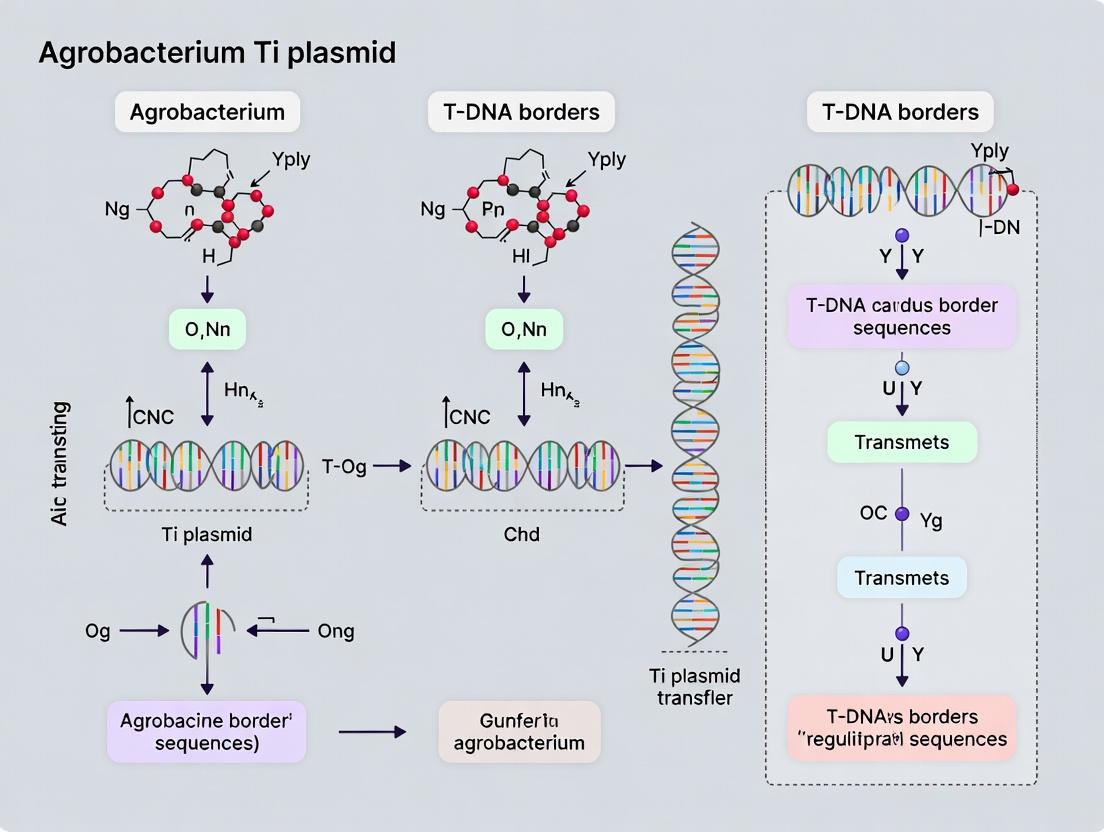
This comprehensive review explores the Agrobacterium tumefaciens Ti plasmid and its T-DNA border sequences, detailing their foundational biology and their pivotal evolution into sophisticated genetic engineering vectors.
The Ti Plasmid's T-DNA Borders: From Plant Transformation Engine to Advanced Biomedical Tool
Abstract
This comprehensive review explores the Agrobacterium tumefaciens Ti plasmid and its T-DNA border sequences, detailing their foundational biology and their pivotal evolution into sophisticated genetic engineering vectors. We examine the core mechanisms of T-DNA excision and transfer, establish current best practices for vector design and transformation protocols across diverse systems, and address common challenges in efficiency and specificity. The article provides a critical comparative analysis of T-DNA border systems against modern genome-editing tools and non-Agrobacterium delivery methods, emphasizing validation strategies for stable integration and expression. Aimed at researchers, scientists, and drug development professionals, this synthesis highlights the enduring relevance of this natural genetic engineer in basic research, biomanufacturing, and emerging therapeutic applications.
Deconstructing the Ti Plasmid: Nature's Genetic Engineer and the Gateway of T-DNA Borders
This whitepaper details the molecular machinery of Agrobacterium tumefaciens, a paradigm for interkingdom gene transfer. The discussion is framed within an ongoing thesis investigating the precise regulatory mechanisms of the Ti (Tumor-inducing) plasmid, with particular focus on the cis-acting T-DNA border sequences and their recognition by the VirD1/VirD2 endonuclease complex. Understanding these elements is critical for advancing plant biotechnology and therapeutic protein production.
Molecular Pathogenesis: The Ti Plasmid and Virulence System
Agrobacterium pathogenicity is encoded by its ~200 kbp Ti plasmid, which contains two essential regions: the T-DNA (Transferred-DNA) and the vir (virulence) region. The vir region is organized into operons (virA, virB, virC, virD, virE, virG, virH), induced by plant-derived phenolic compounds (e.g., acetosyringone) and sugars.
Table 1: Core Components of the Ti Plasmid Virulence System
| Component | Function | Key Feature |
|---|---|---|
| VirA/VirG | Two-component signal transduction system; VirA senses host signals, phosphorylates VirG. | VirG-P activates transcription of other vir operons. |
| VirD1/VirD2 | Endonuclease complex; VirD2 nicks T-DNA border sequences. | VirD2 remains covalently attached to the 5' end of the T-strand (pilot protein). |
| T-DNA Borders | 25-bp direct repeat sequences flanking the T-DNA. | Right border (RB) is essential; left border (LB) enhances efficiency. |
| VirB1-VirB11, VirD4 | Type IV Secretion System (T4SS). Forms a pilus and channel for T-strand/complex transfer. | 11 components; ATP-dependent. |
| VirE2 | Single-stranded DNA-binding protein. Coats the T-strand in the plant cytoplasm. | Protects T-strand from nucleases, guides to nucleus. |
| VirE3, VirF | Effector proteins transferred into host cell. | VirE3 interacts with plant importin-α; VirF targets host proteins for proteasomal degradation. |
Signaling Pathway: From Plant Signal tovirGene Induction
Diagram 1: vir gene induction signaling pathway.
T-DNA Processing and Transfer: A Detailed Workflow
Protocol 4.1: In Vitro T-DNA Border Nicking Assay
- Purpose: To demonstrate VirD1/VirD2 endonuclease activity on T-DNA border sequences.
- Materials: Purified VirD1 and VirD2 proteins, supercoiled plasmid DNA containing a T-DNA border sequence, reaction buffer (Tris-HCl, MgCl₂, DTT, ATP), stop solution (EDTA, SDS), agarose gel electrophoresis equipment.
- Method:
- Prepare a 50 µL reaction mix containing 1x buffer, 0.5 µg plasmid DNA, 100 ng VirD1, 200 ng VirD2.
- Incubate at 28°C for 30 minutes.
- Stop reaction with 5 µL of 0.5 M EDTA/2% SDS.
- Analyze products by 1% agarose gel electrophoresis. A nicked circular (relaxed) form will migrate slower than supercoiled DNA.
Diagram 2: T-DNA processing and transfer workflow.
Research Reagent Solutions: The Scientist's Toolkit
Table 2: Essential Research Reagents for Ti Plasmid/T-DNA Studies
| Reagent/Material | Function in Research | Example/Note |
|---|---|---|
| Acetosyringone | Phenolic inducer of the vir gene region. Used to activate Agrobacterium for plant transformation. | Typically used at 100-200 µM in co-cultivation media. |
| Binary Vector System | Engineered plasmids separating T-DNA (on small vector) from vir genes (on helper plasmid). | pBIN19, pGreen; enables cloning genes of interest into T-DNA. |
| Disarmed Ti Plasmid | Ti plasmid with oncogenes removed from T-DNA ("disarmed"), used as a helper. | pTiBo542ΔT-DNA (super-virulent strain AGL1 background). |
| Border Sequence Oligos | Synthetic oligonucleotides matching 25-bp RB/LB for binding/activity studies. | Critical for in vitro nicking assays and vector construction. |
| Anti-VirD2 Antibody | Detects VirD2 protein or the T-strand/VirD2 complex (immunoprecipitation, Western blot). | Monoclonal antibodies allow quantitative analysis. |
| *virG Constitutive Mutant | Strain with always-active VirG (e.g., virG(N54D)), inducing vir genes without plant signals. | Strain A281 (for super-transformation). |
| Plant Tissue Culture Media | Supports co-cultivation and regeneration of transformed plant cells. | MS (Murashige and Skoog) media with specific hormones. |
Current Research Frontiers and Quantitative Data
Recent research focuses on the structural biology of the T4SS, enhancing transformation efficiency in recalcitrant crops, and repurposing the system for mammalian cell gene delivery (e.g., "T-DNA" delivery to human cells).
Table 3: Quantitative Data on T-DNA Transfer and Transformation
| Parameter | Typical Value/Range | Context/Measurement Method |
|---|---|---|
| T-DNA Size Limit | Up to ~150 kbp | Using Binary-BAC (BIBAC) vectors. |
| Optimal Acetosyringone Concentration | 100 - 200 µM | For vir induction in standard lab strains (e.g., LBA4404). |
| Co-cultivation Time | 48 - 72 hours | For Arabidopsis thaliana floral dip or leaf disc assays. |
| Transformation Frequency (Model Plants) | 70-90% of explants | Arabidopsis floral dip, producing T1 seeds. |
| Number of T-DNA Integrants | 1 - 5 copies per genome | Common range in stable transformants (species-dependent). |
| T-strand Production Onset | 4 - 16 hours post vir induction | Detectable by PCR or Southern blot. |
Within the broader thesis on Agrobacterium tumefaciens Ti plasmid and T-DNA border sequences, this whitepaper provides an in-depth technical guide to the plasmid's core functional regions. The Ti plasmid is the molecular engine of crown gall disease, engineered for plant transformation. Its anatomy is defined by three critical sectors: the T-DNA region transferred to the plant genome, the virulence (vir) region governing transfer machinery, and the opine catabolism region ensuring a unique ecological niche. Understanding this structure is fundamental to refining T-DNA delivery precision for biotechnology and therapeutic applications.
The Virulence (Vir) Region: A Molecular Regulatory Hub
The ~30 kb vir region, typically organized into seven major operons (virA, virB, virC, virD, virE, virG, virH), is induced by plant phenolic signals (e.g., acetosyringone) and acidic pH.
Key Regulatory and Structural Components
| Gene/Operon | Function | Protein Product Role |
|---|---|---|
| virA | Environmental sensor | Membrane-bound histidine kinase; senses phenolics/sugars, autophosphorylates. |
| virG | Transcriptional regulator | Response regulator; phosphorylated by VirA, activates transcription of other vir operons. |
| virB1-B11 | Type IV Secretion System (T4SS) | Forms the pilus and transmembrane channel for T-DNA/protein transfer. VirB2 is the major pilin subunit. VirD4 is the coupling protein. |
| virD1/D2 | T-DNA processing | Endonuclease complex; nicks T-DNA border sequences. VirD2 remains covalently attached to the 5' end of the single-stranded T-DNA (T-strand). |
| virE2 | T-strand protection & nuclear targeting | Single-stranded DNA-binding protein; coats T-strand in plant cytoplasm, aids nuclear import. VirE1 acts as a chaperone for VirE2. |
| virC1 | Enhances T-DNA processing | Binds to "overdrive" sequences, enhancing VirD-mediated nicking at border sequences. |
| virH/virF | Host modulation (pTi-specific) | virH (pTiC58): P450 enzymes modify plant compounds. virF (pTiBo542): involved in host protein degradation. |
Experimental Protocol:VirGene Induction Assay
Objective: To quantify vir gene induction in response to plant signal molecules. Methodology:
- Culture Preparation: Grow A. tumefaciens strain (e.g., A348) to mid-log phase in minimal medium.
- Induction: Add acetosyringone (AS) to final concentration of 100 µM. Use a control without AS.
- Sampling: Collect 1 mL aliquots at 0, 2, 4, 8, and 12 hours post-induction.
- β-Galactosidase Assay (for vir::lacZ fusions):
- Pellet cells, resuspend in Z-buffer.
- Add toluene, vortex to permeabilize cells.
- Add ONPG (o-Nitrophenyl-β-D-galactopyranoside) substrate, incubate at 28°C.
- Stop reaction with Na₂CO₃, measure absorbance at 420 nm.
- Calculate Miller Units: (1000 * A420) / (time (min) * volume (mL) * A600).
- RT-qPCR (Alternative): Extract RNA, synthesize cDNA, perform qPCR with primers for virB2 or virE2, normalize to recA.
Diagram 1: Vir region induction signaling pathway.
Opine Catabolism: The Ti Plasmid's Ecological Driver
Opines are novel amino acid-sugar conjugates synthesized in the transformed plant by enzymes encoded on the T-DNA. The Ti plasmid carries catabolic genes for the specific opine(s) its T-DNA produces.
Opine Types and Catabolic Gene Organization
| Ti Plasmid Type | Opine Synthesized | Catabolic Genes | Regulator | Function |
|---|---|---|---|---|
| Octopine-type | Octopine, Mannopine | occ or moc | OccR | Uptake and breakdown of opines as carbon/nitrogen source. |
| Nopaline-type | Nopaline, Agrocinopine | noc | NocR | Uptake and breakdown of opines. |
| Agropine-type | Agropine, Mannopine | agr | AgrR | Uptake and breakdown of opines. |
Experimental Protocol: Opine Catabolism Screen
Objective: To identify Ti plasmid type based on bacterial utilization of specific opines. Methodology:
- Plate Preparation: Prepare minimal agar plates lacking a carbon source. Spread filter-sterilized opine solution (e.g., octopine, nopaline; 1-5 mM) onto the surface.
- Strain Streaking: Streak Agrobacterium test strains and positive/negative control strains.
- Incubation: Incubate plates at 28°C for 3-5 days.
- Analysis: Growth indicates functional opine catabolism genes. Confirm by HPLC-MS of culture supernatants to show opine depletion.
Transfer-DNA (T-DNA): The Delivered Genetic Cargo
The T-DNA is defined by 25-bp direct repeat border sequences (Right Border, RB; Left Border, LB). The RB is critical for nicking and transfer initiation.
Core T-DNA Elements
| Element | Sequence (Consensus) | Function |
|---|---|---|
| Right Border (RB) | 5'-TGGCAGGATATATTGGCGGGTAAAC-3' | virD1/D2 nicking site; transfer origin. Hyper-variable in the central "core" region. Essential for efficient T-DNA transfer. |
| Left Border (LB) | 5'-TGGCAGGATATATTGTGGTGTAAAC-3' | virD1/D2 nicking site; defines left terminus. Transfer is often polar, proceeding RB to LB. |
| Overdrive Sequence | 5'-TGTTTGTTTGCAATTGTGTAATGTAAT-3' | Enhancer element located adjacent to RB; binds VirC1 to stimulate nicking. |
| Oncogenes | iaaM, iaaH, ipt | Auxin & cytokinin biosynthesis genes; cause plant tumorigenesis ("disarmed" in vectors). |
| Opine Synthase | nos (nopaline), ocs (octopine) | Gene for opine production in plant tumor. |
Experimental Protocol: T-DNA Border Nicking Assay
Objective: To demonstrate virD-mediated site-specific nicking at T-DNA borders. Methodology:
- Substrate Preparation: Clone a T-DNA border sequence (e.g., RB) into a plasmid. Label the border-containing fragment at the 5' end with [γ-³²P]ATP using T4 polynucleotide kinase.
- Protein Incubation: Incubate the labeled DNA substrate with purified VirD1/VirD2 proteins (or vir-induced Agrobacterium cell extracts) in nicking buffer (pH 5.7, Mg²⁺ present) at 25°C for 30 min.
- Reaction Stop: Add EDTA and SDS to stop the reaction.
- Analysis: Denature samples, run on a denaturing polyacrylamide gel. A virD-dependent nick converts the labeled, full-length strand into a shorter, labeled fragment detectable by autoradiography.
Diagram 2: T-DNA border recognition and processing.
The Scientist's Toolkit: Research Reagent Solutions
| Reagent / Material | Function / Application | Example / Specification |
|---|---|---|
| Acetosyringone (AS) | Phenolic inducer of vir genes. Critical for Agrobacterium virulence induction in lab assays and plant transformation. | 100 mM stock in DMSO or ethanol. Working concentration: 100-200 µM. |
| ONPG (o-Nitrophenyl-β-D-galactopyranoside) | Colorimetric substrate for β-galactosidase (lacZ) reporter gene assays. Measures vir gene promoter activity. | 4 mg/mL in 0.1 M phosphate buffer (pH 7.0). |
| Opine Standards | Analytical references for HPLC, TLC, or MS identification of opine types produced by transformed tissues or catabolized by bacteria. | Octopine, Nopaline, Agropine (commercially purified, >95%). |
| VirD2-Specific Antibodies | Immunodetection of VirD2 protein bound to T-strands or in cellular localization studies. | Polyclonal or monoclonal antibodies raised against purified VirD2. |
| Border Sequence Oligonucleotides | Probes for Southern blotting or primers for PCR to verify T-DNA insertion and border integrity in transgenic lines. | 25-mer sequences matching RB/LB consensus, often with added restriction sites for cloning. |
| Disarmed Ti Vector (e.g., pGV3850) | Ti plasmid with oncogenes replaced by a conventional plasmid (e.g., pBR322). Allows cloning into T-DNA without causing tumors. | Contains intact vir region and T-DNA borders for gene transfer to plants. |
| Mini-Ti or Binary Vector (e.g., pBIN19) | Small E. coli/Agrobacterium* shuttle vector with T-DNA borders. Requires vir helper plasmid (pAL4404) in trans. | Standard for plant transformation; contains selectable marker (e.g., nptII) and MCS within T-DNA. |
| Agrobacterium Helper Strain | Strain carrying a Ti plasmid with a complete vir region but no T-DNA (disarmed) to provide vir functions in trans for binary vectors. | LBA4404 (pAL4404, octopine-type vir), EHA101 (pEHA101, super-virulent pTiBo542 vir), GV3101 (pMP90). |
Within the broader thesis on Agrobacterium-mediated genetic transformation, the T-DNA border sequences are the cis-acting elements that define the genetic cargo to be transferred from the bacterium to the plant cell nucleus. Flanking the T-DNA on the Ti (Tumor-inducing) or Ri (Root-inducing) plasmid, these imperfect 25-bp direct repeats are recognized and processed by the VirD1/VirD2 endonuclease complex. The precise cleavage at these borders initiates the production of the single-stranded T-strand, the actual molecule transferred. This review provides an in-depth technical analysis of these critical sequences, their variations, and their experimental manipulation.
Structural and Sequence Analysis of Border Sequences
The consensus border sequence is based on the canonical nopaline-type Ti plasmid sequence. Variations exist across different Agrobacterium strains and engineered binary vectors, influencing efficiency and directionality.
Table 1: Consensus and Variant T-DNA Border Sequences
| Border Type | Sequence (5' → 3') | Key Features | Cleavage Efficiency (%)* | Notes |
|---|---|---|---|---|
| Right Border (RB) Consensus | 5'-TGGCAGGATATATTGTCGCTGTAAAC-3' | Highly conserved "core" (bold), complete repeat. | ~100 (Reference) | Essential for initiation; overdrive sequences enhance. |
| Left Border (LB) Consensus | 5'-TGGCAGGATATATTGTCGCTGTAAAC-3' | Often degenerate; "core" sequence less conserved. | 10-60 | Lower efficiency reduces vector backbone transfer. |
| Superbinary Vector RB | As consensus + 5' overdrive | Augmented with virG from pTiBo542. | 120-150 | Enhances T-strand production in recalcitrant plants. |
| Engineered LB (pORE) | Modified repeats | Multiple LB-like sequences in reverse orientation. | <5 | Designed to minimize read-through and backbone transfer. |
| Octopine-type LB | 5'-TGGCAGGATATATCGCGTGTAAACT-3' | 3 bp differences from nopaline consensus. | ~40 | Strain-specific variations. |
*Relative efficiency compared to standard nopaline RB under identical experimental conditions.
Molecular Mechanism: From Border Recognition to T-Strand Export
The process is initiated by the induction of the vir region by plant phenolic signals.
Critical Experimental Protocols
Protocol:In VitroBorder Cleavage Assay
Purpose: To verify the functionality of a given border sequence and the activity of purified VirD1/VirD2 proteins. Materials: See Scientist's Toolkit. Methodology:
- Substrate Preparation: Clone the border sequence to be tested (~50-100 bp surrounding the core) into a standard plasmid (e.g., pUC19). Purify supercoiled plasmid DNA.
- Protein Purification: Express and purify His-tagged VirD1 and VirD2 proteins from E. coli.
- Reaction Setup:
- Combine in a 20 µL reaction: 10 mM Tris-HCl (pH 7.5), 5 mM MgCl₂, 10 mM DTT, 100 ng plasmid substrate, 50 ng VirD1, 100 ng VirD2.
- Incubate at 28°C for 30 minutes.
- Analysis: Stop reaction with 0.1% SDS. Analyze products by:
- Agarose Gel Electrophoresis (1%): Cleavage converts supercoiled to nicked/open circular forms.
- Denaturing PAGE: For detecting single-stranded cleavage products using radiolabeled substrates.
Protocol: Assessing T-DNA Transfer Efficiency Using GUS Intron Assay
Purpose: Quantitatively compare the transfer efficiency mediated by different border sequence constructs. Methodology:
- Vector Construction: Insert the gene of interest (e.g., GUS with a plant intron) between the border variants to be tested in a binary vector.
- Agrobacterium Strain Transformation: Electroporate the constructs into a disarmed Agrobacterium strain (e.g., LBA4404, GV3101).
- Plant Inoculation: Co-cultivate Agrobacterium with explants (e.g., tobacco leaf discs, Arabidopsis seedlings) for 48h.
- Selection & Histochemistry: Transfer explants to selection media. After 2-3 days, stain tissues for GUS activity (X-Gluc substrate, 37°C, overnight). Fix in ethanol.
- Quantification: Count blue foci per explant under a dissecting microscope. Use ≥30 explants per construct. Perform statistical analysis (ANOVA).
The Scientist's Toolkit: Key Research Reagent Solutions
Table 2: Essential Materials for T-DNA Border Research
| Item | Function/Description | Example Product/Catalog # |
|---|---|---|
| Binary Vector Kit | Modular plasmids with multiple cloning sites flanked by standardized borders (e.g., pCAMBIA, pGreen). | pCAMBIA1301 (CAMBIA) |
| Superbinary Vector | Contains additional virG and virB genes from pTiBo542 for enhanced virulence. | pSB1 (Japan Tobacco) |
| Disarmed Agrobacterium Strain | Ti plasmid with oncogenes removed but vir region intact (e.g., LBA4404, EHA105). | LBA4404 (Thermo Fisher) |
| VirD1/VirD2 Recombinant Proteins | Purified proteins for in vitro nicking assays. | Custom expression (e.g., Agrisera) |
| Acetosyringone | Phenolic compound used to induce the vir regulon in vitro. | D134406 (Sigma-Aldrich) |
| X-Gluc (5-Bromo-4-chloro-3-indolyl-β-D-glucuronic acid) | Substrate for histochemical detection of β-glucuronidase (GUS) activity. | 042917-10MG (GoldBio) |
| Plant Tissue Culture Media | Specific basal media for co-cultivation and selection (e.g., MS, B5). | Murashige & Skoog Basal Salt Mixture (PhytoTech) |
| High-Fidelity DNA Polymerase | For accurate amplification of border sequences for cloning. | Q5 High-Fidelity (NEB) |
| Methylation-Insensitive Restriction Enzymes | For analyzing border cleavage products, unaffected by Dam/Dcm methylation. | EcoRI-HF, PstI-HF (NEB) |
Advanced Applications and Current Research Directions
Current research within the thesis framework focuses on:
- Precision Engineering: Using synthetic biology to design "ultra-clean" borders that eliminate transfer of vector backbone sequences, crucial for compliant commercial GMO development.
- Dual Border Systems: Investigating asymmetric border pairs to control the direction and copy number of integration.
- Non-Plant Transformations: Exploiting the T-DNA system for targeted DNA delivery in fungi, human cells (e.g., for CAR-T therapy), and other eukaryotes, requiring optimization of border recognition.
- Crystal Structures: Recent efforts in solving the VirD2-border DNA complex structure provide atomic-level insights for rational design.
Thesis Context: This whitepaper provides a technical dissection of the core molecular machinery driving T-DNA processing and transfer, a central component of broader research into Agrobacterium tumefaciens Ti plasmid engineering, border sequence specificity, and its applications in plant biotechnology and therapeutic development.
The transfer of T-DNA from Agrobacterium tumefaciens to plant cells is mediated by the vir region of the Ti plasmid. This process involves a sophisticated series of protein-DNA interactions for border recognition, T-strand excision, and conjugative transfer. Understanding this mechanism is pivotal for optimizing plant transformation and developing novel DNA delivery tools for gene therapy and drug discovery.
Core Molecular Machinery
Vir Protein Complexes and Functions
The key proteins involved in T-DNA processing are encoded by the virD operon.
Table 1: Core Vir Proteins in T-DNA Processing
| Protein | Function | Key Domains/Features |
|---|---|---|
| VirD1 | Topoisomerase I-like activity; assists VirD2 in border recognition and nicking. | Single-stranded DNA binding, facilitates complex assembly. |
| VirD2 | Site-specific endonuclease; nicks the bottom strand at the border sequences. Covalently attaches to the 5' end of the T-strand (pilot protein). | Tyrosine residue (Tyr-29) for covalent linkage, nuclear localization signals (NLS) for plant nuclear import. |
| VirC1 | Binds to the "overdrive" sequence near borders; enhances T-strand production. | ATPase activity, promotes relaxosome assembly. |
| VirC2 | Supports VirC1 function; precise role under investigation. | Often co-purified with VirC1. |
| VirE2 | Single-stranded DNA-binding protein; coats the T-strand in the plant cytoplasm for protection and import. | Cooperative binding, NLS motifs. |
| VirE1 | Chaperone for VirE2; prevents VirE2 aggregation in bacterial cell. | Required for secretion of VirE2. |
Quantitative Parameters of T-DNA Transfer
Table 2: Key Quantitative Data on T-DNA Borders and Processing
| Parameter | Typical Value/Sequence | Experimental Notes & Variation |
|---|---|---|
| Conserved Border Sequence | 5'-TGGCAGGATATATTGTNCACAA-3' (LB) | Nick site is between the 3rd and 4th base of the conserved 12-13bp core (underlined). |
| Nick Site (Bottom Strand) | CATG | Precisely between the T and G of the core sequence. |
| Border Repeat Length | ~25 bp | Imperfect repeats; right border (RB) is more precise and critical. |
| Overdrive Sequence | 5'-TGTTTGTTTGAAGGGATCGCAATGTATAT-3' | ~50 bp from RB; enhances excision efficiency up to 1000-fold. |
| T-Strand Production Rate | ~1 T-strand per cell per hour (induced conditions) | Measured via quantitative PCR in vir-induced cultures. |
| VirD2 Relaxase Turnover | ~1 nick per minute in vitro | Highly dependent on VirD1 presence and Mg²⁺ concentration. |
Stepwise Mechanism and Experimental Analysis
Recognition and Excision: The Relaxosome Complex
Detailed Protocol 1: In Vitro Nicking Assay to Map Border Cleavage Objective: To demonstrate VirD1/VirD2-dependent site-specific nicking at T-DNA borders. Materials: Supercoiled plasmid containing a T-DNA border, purified His-tagged VirD1 and VirD2 proteins, reaction buffer (25 mM Tris-Cl pH 7.5, 5 mM MgCl₂, 50 mM KCl, 1 mM DTT), 0.5 M EDTA, proteinase K, agarose gel equipment. Procedure:
- Set up a 50 µL reaction with 500 ng of supercoiled plasmid DNA, 100 nM VirD1, and 50 nM VirD2 in reaction buffer.
- Incubate at 30°C for 30 minutes.
- Stop the reaction by adding EDTA to 25 mM and Proteinase K to 0.5 mg/mL. Incubate at 37°C for 15 min.
- Analyze products by 1% agarose gel electrophoresis. A successful nicking reaction converts supercoiled (Form I) to nicked open-circle (Form II) DNA, detectable by gel shift.
- For precise mapping, use a 5'-end radiolabeled oligonucleotide spanning the border in a similar reaction. Resolve products on a denaturing polyacrylamide gel to identify the exact cleavage site.
Diagram 1: T-DNA Recognition, Excision, and Transfer Pathway
Transfer and Cytoplasmic Trafficking
Following excision, the VirD2-T-strand complex is exported through a Type IV Secretion System (T4SS) encoded by virB operon and virD4. In the plant cell, VirE2 is independently exported and coats the T-strand.
Detailed Protocol 2: Co-Immunoprecipitation (Co-IP) for Vir Protein-Protein Interactions Objective: To confirm interaction between VirD2 and T4SS coupling protein VirD4. Materials: A. tumefaciens strain expressing FLAG-tagged VirD4 and HA-tagged VirD2, anti-FLAG agarose beads, lysis buffer (50 mM Tris pH 7.5, 150 mM NaCl, 1% Triton X-100, protease inhibitors), wash buffer, SDS-PAGE and Western blot apparatus, anti-HA and anti-FLAG antibodies. Procedure:
- Grow Agrobacterium culture under vir-inducing conditions (+200 µM acetosyringone).
- Harvest cells, lyse in ice-cold lysis buffer.
- Incubate clarified lysate with anti-FLAG agarose beads for 2h at 4°C.
- Wash beads 5x with wash buffer.
- Elute bound proteins with 2x SDS sample buffer.
- Analyze by SDS-PAGE followed by Western blotting: probe membrane sequentially with anti-HA (to detect co-precipitated VirD2) and anti-FLAG (to confirm VirD4 pull-down).
The Scientist's Toolkit: Research Reagent Solutions
Table 3: Essential Research Reagents for Studying T-DNA Processing
| Reagent / Material | Function in Research | Example Supplier / Cat. No. (Illustrative) |
|---|---|---|
| Supercoiled Ti Plasmid or Border-Containing Vector | Substrate for in vitro nicking assays and excision studies. | Lab-constructed; e.g., pTiC58 (ATCC 37349). |
| Purified Recombinant VirD1 & VirD2 Proteins | Core enzymes for biochemical characterization of border cleavage. | Expressed from pET vectors in E. coli, purified via His-tag. |
| Acetosyringone (3',5'-Dimethoxy-4'-hydroxyacetophenone) | Phenolic inducer of the vir regulon for in vivo studies. | Sigma-Aldrich, D134406. |
| Vir-Specific Antibodies (α-VirD2, α-VirE2) | Detection of protein expression, localization (microscopy), and interaction assays. | Custom from genomic labs; available from Agrisera. |
| Border Sequence Oligonucleotides (FAM/Radio-labeled) | Probes for EMSA or substrates for high-resolution nicking site mapping. | Custom synthesis from IDT or Eurofins. |
| Type IV Secretion Inhibitors (e.g., CCF4 peptide) | To dissect export step from excision in transfer assays. | Tocris Bioscience (various). |
| Plant Suspension Cells (e.g., Nicotiana tabacum BY-2) | Recipient cells for quantitative T-DNA transfer frequency assays. | Common lab cell lines. |
Diagram 2: Experimental Workflows for T-DNA Mechanism Research
The precise molecular choreography of Vir protein-mediated T-DNA processing remains a model for inter-kingdom macromolecular transfer. Current research frontiers include structural biology of the relaxosome-T4SS interface, single-molecule dynamics of T-strand transfer, and re-engineering the system for targeted DNA integration in eukaryotic cells (including human therapeutics). This mechanistic understanding, framed within ongoing Ti plasmid research, directly enables the rational design of next-generation bioengineering vectors.
This whitepaper details the pivotal achievement in plant biotechnology: the disarming of the Agrobacterium tumefaciens Tumor-inducing (Ti) plasmid to engineer versatile binary vector systems. This milestone is a cornerstone of a broader thesis investigating the fundamental molecular mechanisms of Ti plasmid biology and the precise function of T-DNA border sequences. The disarming process, which involved the strategic deletion of oncogenic and catabolic genes while preserving the virulence (vir) region and T-DNA borders, transformed a pathogenic natural vector into a safe and programmable tool for plant transformation. This advancement directly enabled the stable integration of any gene of interest into plant genomes, revolutionizing basic plant research and the development of genetically modified crops, with profound implications for agriculture and pharmaceutical production.
Core Technical Principles: From Wild-Type Ti to Disarmed Binary Vectors
The wild-type Ti plasmid (~200-250 kbp) contains two functionally critical regions:
- T-DNA Region: Flanked by 25-bp direct repeat border sequences (LB, RB), this segment is transferred and integrated into the plant genome. It carries oncogenes (iaaM, iaaH, ipt) for phytohormone synthesis causing crown gall disease, and opine synthesis genes (nos, ocs).
- Vir Region: A ~35-40 kbp locus containing virA, virG, virD1/D2, virE2, etc., responsible for processing the T-DNA and mediating its transfer.
The Disarming Process entailed the precise deletion of the oncogenes and opine synthesis genes from the T-DNA region, creating a "disarmed" Ti plasmid. The large size and complexity of the remaining Ti plasmid made direct cloning difficult. The binary vector system solved this by separating functions:
- Helper Ti Plasmid: A disarmed, non-oncogenic Ti plasmid resident in Agrobacterium, retaining the entire vir region but with the T-DNA region replaced by a neutral DNA segment (e.g., pAL4404 in strain LBA4404, pEHA101 in strain EHA105).
- Binary Vector (pBin): A small, E. coli-compatible plasmid containing the gene of interest flanked by the T-DNA LB and RB sequences, along with a plant-selectable marker (e.g., nptII for kanamycin resistance) and a bacterial selection marker.
The vir genes in trans on the helper plasmid recognize the borders on the binary vector and mobilize the intervening T-DNA into the plant cell.
Current State-of-the-Art: Modern binary vectors (e.g., Golden Gate/Gateway-compatible modules, CRISPR-Cas9 expression vectors) are highly sophisticated. They feature multiple cloning sites, visual markers (e.g., GFP, GUS), tissue-specific promoters, and hyper-virulent helper strains (e.g., AGL1 with pTiBo542 ΔT-DNA) for enhanced efficiency in diverse plant species.
Table 1: Evolution of Key Ti and Binary Vector Plasmid Characteristics
| Plasmid/System | Approx. Size (kbp) | Oncogenic? | Opine Synthesis? | Key Functional Components | Transformation Efficiency (Relative) |
|---|---|---|---|---|---|
| Wild-type Ti (e.g., pTiA6) | 200-250 | Yes | Yes (nopaline) | Full T-DNA (oncogenes), vir region, opine catabolism | N/A (Pathogenic) |
| Disarmed Ti (e.g., pAL4404) | ~200 | No | No | ΔT-DNA (oncogenes/opines), intact vir region | Used as helper |
| Early Binary Vector (e.g., pBIN19) | ~12 | No | No | LB/RB, MCS, nptII, lacZα, Kan^R^ (bacterial) | 1x (Baseline) |
| Advanced Binary Vector (e.g., pCAMBIA1300) | ~12 | No | No | LB/RB, hptII (hygromycin R), gusA, multiple cloning site | 1-5x |
| Hyper-virulent Helper Strain (e.g., EHA105/AGL1) | Helper: ~150 | No | No | Disarmed pTiBo542 (larger vir region), chromosomal virG mutation | 5-20x (in recalcitrant species) |
Table 2: Comparison of Common Plant Selectable Marker Genes Used in Binary Vectors
| Marker Gene | Encoded Protein | Selective Agent | Mode of Action | Typical Concentration |
|---|---|---|---|---|
| nptII | Neomycin phosphotransferase II | Kanamycin / Geneticin | Inactivates aminoglycoside antibiotics | 50-100 mg/L (kanamycin) |
| hptII/hph | Hygromycin phosphotransferase | Hygromycin B | Inactivates hygromycin B | 10-50 mg/L |
| bar/pat | Phosphinothricin acetyltransferase | Phosphinothricin (Bialaphos/Glufosinate) | Detoxifies herbicide | 2-10 mg/L |
| epsps/aroA | 5-enolpyruvylshikimate-3-phosphate synthase | Glyphosate | Herbicide-resistant target enzyme | 1-10 mM |
Experimental Protocols
Protocol 1: Construction of a Basic Binary Vector via Restriction/Ligation
Objective: Clone a gene of interest (GOI) between the T-DNA borders of a binary vector backbone. Materials: pBIN19 or similar backbone, purified GOI PCR product, restriction enzymes, T4 DNA ligase, competent E. coli DH5α, LB agar plates with kanamycin (50 µg/mL). Method:
- Digest both the binary vector backbone and the GOI PCR product with compatible restriction enzymes (e.g., XbaI and BamHI). Heat-inactivate enzymes.
- Purify digested DNA fragments using a gel extraction kit.
- Set up ligation reaction: 50 ng vector, 3:1 molar ratio of GOI insert, 1x T4 ligase buffer, 1 µL T4 DNA ligase. Incubate at 16°C for 16 hours.
- Transform 2-5 µL of ligation mix into chemically competent E. coli DH5α via heat-shock (42°C for 45 sec). Recover in SOC medium for 1 hour.
- Plate onto LB-Kanamycin plates. Incubate overnight at 37°C.
- Screen colonies by colony PCR or restriction digest of miniprep DNA to confirm correct insertion.
Protocol 2:Agrobacterium-Mediated Transformation ofArabidopsis thaliana(Floral Dip)
Objective: Stably transform Arabidopsis using a binary vector in Agrobacterium. Materials: A. thaliana (ecotype Col-0) plants at early bolting stage, Agrobacterium strain GV3101 carrying the binary vector, 5% sucrose solution, Silwet L-77. Method:
- Inoculate a single colony of Agrobacterium in 5 mL LB with appropriate antibiotics. Grow overnight at 28°C, 220 rpm.
- Centrifuge culture at 5000 x g for 10 min. Resuspend pellet in 500 mL of 5% sucrose solution.
- Add Silwet L-77 to a final concentration of 0.02-0.05% (v/v). Mix gently.
- Invert primary inflorescences of healthy Arabidopsis plants into the Agrobacterium suspension for 30 seconds, ensuring good coverage.
- Lay dipped plants horizontally in a tray, cover with clear plastic to maintain humidity for 24 hours.
- Return plants to normal growth conditions. Allow seeds to mature and dry (T1 seeds).
- Surface-sterilize T1 seeds and sow on selective medium (½ MS agar with appropriate antibiotic, e.g., 50 µg/mL kanamycin) to identify transgenic plants.
Diagrams and Visualizations
Title: Evolution from Wild-Type Ti Plasmid to Binary Vector System
Title: Binary Vector Construction and Plant Transformation Workflow
The Scientist's Toolkit: Research Reagent Solutions
Table 3: Essential Materials for Ti Plasmid and Binary Vector Research
| Item / Reagent | Function / Application | Example / Specification |
|---|---|---|
| Disarmed Agrobacterium Strains | Provide vir genes in trans for T-DNA transfer. | LBA4404 (pAL4404), GV3101 (pMP90), EHA105/AGL1 (pTiBo542 ΔT-DNA). |
| Binary Vector Backbones | Small plasmids for easy cloning of GOI between T-DNA borders. | pBIN19, pCAMBIA series, pGreen, pMDC series (Gateway). |
| Plant Selectable Marker Genes | Enable selection of transformed plant cells. | nptII (kanamycin R), hptII (hygromycin R), bar (glufosinate R). |
| Agrobacterium Electrocompetent Cells | For high-efficiency transformation of large binary vectors. | 1 mm gap cuvette, 1.8-2.5 kV, 25 µF, 200 Ω typical settings. |
| Acetosyringone | Phenolic compound that induces the vir gene expression cascade. | 100-200 µM in co-culture medium, dissolved in DMSO. |
| Silwet L-77 | Surfactant that reduces surface tension for efficient Arabidopsis floral dip. | Used at 0.02-0.05% (v/v) in sucrose dipping solution. |
| Plant Tissue Culture Media | Support growth and regeneration of plant explants post-transformation. | Murashige and Skoog (MS) basal medium, with vitamins and hormones. |
| T-DNA Border Sequence Oligos | For PCR verification of border integrity and analysis of insertion sites. | LB primer: 5'-GCATCTGACGCATAACGACG-3' (example for pBIN19). |
| Gateway or Golden Gate Cloning Kits | Modern, efficient systems for assembling multiple DNA parts in binary vectors. | Thermo Fisher Scientific (Gateway), BsaI/BbsI enzyme kits (Golden Gate). |
Within the broader thesis on Agrobacterium tumefaciens Ti plasmid and T-DNA border sequence research, a central pillar remains the unparalleled efficiency of the native border sequences for stable genomic integration in plants and, increasingly, in non-plant eukaryotic systems. This document articulates the core biochemical and genetic principles underpinning this enduring status, supported by contemporary data and methodologies.
The Molecular Mechanism: Precision in Processing and Transfer
The 25-base-pair imperfect direct repeats that delineate the T-DNA borders are not merely markers for excision. They are precisely recognized by the VirD1/VirD2 endonuclease complex. VirD2 cleaves between the 3rd and 4th nucleotides of the bottom strand, becoming covalently attached to the 5’ end (the right border, RB, is the leading end). This nicked strand is displaced and replaced by synthesis from the left border (LB), forming the T-strand complex (T-complex). The attached VirD2 piloted into the host cell nucleus, where it facilitates integration.
Diagram: T-DNA Border-Mediated Transfer and Integration Pathway
Quantitative Evidence: Efficiency and Fidelity
The supremacy of native T-DNA borders is quantitatively demonstrated across multiple metrics compared to engineered alternatives (e.g., homing endonucleases, transposon systems, or CRISPR-Cas9-mediated HDR). The following table summarizes key comparative data from recent studies (2020-2023).
Table 1: Comparative Performance of Stable Integration Systems in Plants
| System | Transformation Efficiency (%) | Copy Number (Mode) | Intact Transgene Insertion (%) | Off-Target Integration Events | Reference |
|---|---|---|---|---|---|
| Native T-DNA Borders | 60-95 (in model plants) | 1-2 | 70-90 | Very Low | (Pitzschke, 2020) |
| Engineered/Short Borders | 15-40 | 1-5 | 30-60 | Low | (Shi et al., 2022) |
| CRISPR-Cas9 HDR | 0.1-5 | 1 | >95 | High (DSBs) | (Lee et al., 2021) |
| Maize Ac/Ds Transposon | 20-50 | 1-3 | 50-80 | Moderate (excision footprints) | (Roth et al., 2022) |
Experimental Protocol: Validating Border-Driven Integration
This protocol details the classic Agrobacterium-mediated stable transformation assay in Arabidopsis thaliana (floral dip), followed by molecular analysis of integration patterns.
Title: Molecular Analysis of T-DNA Integration Junctions. Objective: To confirm precise border-mediated integration and determine copy number. Materials:
- Agrobacterium strain GV3101 harboring binary vector with gene of interest.
- Arabidopsis thaliana plants (ecotype Col-0) at early bolting stage.
- Silwet L-77 surfactant.
- LB agar plates with appropriate antibiotics (rifampicin, gentamicin, kanamycin).
- CTAB-based plant genomic DNA extraction kit. Procedure:
- Bacterial Culture & Floral Dip: Grow Agrobacterium to late-log phase. Resuspend in 5% sucrose + 0.03% Silwet L-77. Dip inflorescences for 30 seconds. Grow plants to seed set (T1 generation).
- Selection: Surface-sterilize T1 seeds, plate on agar containing the plant-selective antibiotic (e.g., kanamycin). Resistant seedlings are putative transformants.
- Genomic DNA Extraction: Harvest leaf tissue from T1 plants, extract DNA using CTAB method.
- PCR for Border Junctions:
- Perform two separate PCRs per plant.
- RB Junction: Use a primer specific to the plant genomic region upstream of the LB (or a generic left-border primer) paired with a primer inside the T-DNA.
- LB Junction: Use a primer specific to the plant genomic region downstream of the RB paired with a primer inside the T-DNA.
- Amplify, clone, and sequence products to identify precise integration sites and microhomologies.
- Southern Blot Analysis: Digest genomic DNA with a restriction enzyme that cuts once within the T-DNA. Probe with the transgene sequence. The number of hybridizing bands indicates copy number.
The Scientist's Toolkit: Essential Research Reagents
Table 2: Key Reagent Solutions for T-DNA Border Research
| Reagent/Material | Function | Example/Supplier |
|---|---|---|
| Binary Vector System (e.g., pCAMBIA, pGreen) | Contains T-DNA borders, MCS, plant selectable marker, and bacterial origin for Agrobacterium use. | Cambia; www.addgene.org |
| Agrobacterium Strain (e.g., GV3101, LBA4404) | Disarmed Ti plasmid helper strain providing vir genes in trans for T-DNA processing. | CIB, NCPPB, commercial vendors |
| Acetosyringone | Phenolic compound inducing the vir gene region, essential for T-DNA excision. | Sigma-Aldrich, Thermo Fisher |
| Selective Antibiotics (Plant) | For in vitro selection of transformed tissue (e.g., Kanamycin, Hygromycin B). | Various biological suppliers |
| Silwet L-77 or Tween-20 | Surfactant critical for floral dip transformation, promoting bacterial entry. | Lehle Seeds; Sigma-Aldrich |
| Border-Specific Primers | For amplifying and sequencing plant-T-DNA junctions to verify precise integration. | Custom oligo synthesis services |
| TAIL-PCR or HiTAIL-PCR Kit | For efficiently isolating unknown genomic sequences flanking integrated T-DNA. | Takara Bio; published protocols |
Logical Framework: Why Borders Are Unrivaled
The following diagram synthesizes the logical argument for the gold-standard status of T-DNA borders, integrating mechanistic, practical, and outcome-based factors.
Diagram: Logical Framework for T-DNA Border Gold Standard Status
Within the ongoing thesis of Ti plasmid research, the T-DNA border sequences endure as the gold standard due to their evolutionarily optimized role in a natural genetic exchange process. They provide an unmatched combination of high efficiency, precise low-copy integration, and experimental robustness. While newer genome-editing tools offer site-specificity, the border-mediated process remains the most reliable method for delivering and stably integrating large, intact DNA segments across diverse species, securing its central role in both basic research and applied biotechnology.
Engineering with Precision: Designing T-DNA Vectors and Transformation Protocols for Research & Bioproduction
Within the broader research on Agrobacterium tumefaciens Ti plasmid and T-DNA border sequences, the binary vector system stands as the foundational technology for plant transformation and, increasingly, for applications in biopharmaceutical production. This guide details the core components—the vector backbone, the T-DNA cassette, and selectable markers—from a technical perspective, providing protocols and data essential for researchers and drug development professionals engineering plants for molecular farming or therapeutic protein production.
System Architecture & Core Components
The Binary Vector Principle
Binary systems separate the T-DNA delivery machinery (vir genes) on a helper Ti plasmid (disarmed) from the T-DNA itself, which is cloned on a separate, smaller, E. coli-compatible binary vector. This separation simplifies molecular cloning while maintaining efficient T-DNA transfer.
The Vector Backbone
The backbone contains all sequences required for replication and selection in both E. coli and Agrobacterium.
Table 1: Common Replication Origins and Selection Markers in Binary Vector Backbones
| Component | Type | Common Examples | Host Range | Function |
|---|---|---|---|---|
| Replication Origin | High-copy in E. coli | pUC ori, ColE1 | E. coli | Facilitates plasmid propagation in E. coli for cloning. |
| Replication Origin | Broad-host-range | pVS1, pRi | Agrobacterium, E. coli | Enables stable maintenance in Agrobacterium. |
| Bacterial Selectable Marker | Antibiotic Resistance | kanR, specR, gentR | E. coli & Agrobacterium | Selection for plasmid-containing bacteria. |
The T-DNA Cassette
The T-DNA is delineated by left and right border sequences (LB, RB) and contains the genetic cargo for transfer into the plant genome.
Left Border (LB) & Right Border (RB): 24-bp imperfect direct repeats. The RB is critical for initiation of transfer; LB often defines the termination point. Recent research on border sequence polymorphisms shows transfer efficiency can vary significantly.
T-DNA Cargo: Typically includes:
- Selectable Marker Gene: For selection of transformed plant tissue (see Section 2.4).
- Gene(s) of Interest (GOI): Driven by a constitutive (e.g., CaMV 35S) or inducible promoter.
- Scorable Marker Gene (Optional): e.g., gusA (β-glucuronidase) or gfp (green fluorescent protein) for rapid screening.
Table 2: Common Plant-Expressible Promoters Used in T-DNA Cassettes
| Promoter | Source | Expression Pattern | Typical Use Case |
|---|---|---|---|
| CaMV 35S | Cauliflower Mosaic Virus | Constitutive, strong | High-level expression of GOIs. |
| Ubiquitin (Ubi) | Maize | Constitutive, strong | Monocot transformation. |
| NOS | Agrobacterium tumefaciens | Constitutive, moderate | Often drives selectable markers. |
| Rd29A | Arabidopsis | Stress-inducible | Controlled expression of therapeutic proteins. |
Diagram 1: Simplified T-DNA Cassette Structure
Selectable Markers
Selectable markers are crucial for identifying successfully transformed plant cells. Trends in pharmaceutical-grade design favor non-antibiotic markers.
Table 3: Categories of Plant Selectable Markers
| Category | Example Gene | Selective Agent | Mode of Action | Key Advantage/Disadvantage |
|---|---|---|---|---|
| Antibiotic Resistance | nptII (kanamycin resistance) | Kanamycin, Geneticin | Inactivates aminoglycoside antibiotics. | Well-established; public perception issues for pharma crops. |
| Herbicide Tolerance | bar or pat (phosphinothricin acetyltransferase) | Glufosinate, Bialaphos | Detoxifies herbicide. | Effective for many species; regulatory considerations. |
| Metabolic/Positive Selection | pmi (phosphomannose isomerase) | Mannose | Enables metabolism of mannose as carbon source. | Non-antibiotic, safe; requires specific media. |
| Hormone Biosynthesis | ipt (isopentenyl transferase) | None (cytokinin overproduction) | Alters hormone balance to promote shoots. | Chemical-free; can cause morphological abnormalities. |
Experimental Protocols
Protocol: Assembly of a Binary Vector via Golden Gate Cloning
This modular method is currently preferred for stacking multiple genes in the T-DNA.
Materials: See "The Scientist's Toolkit" below. Method:
- Design: Ensure all modules (promoter, GOI, terminator, marker) have compatible, unique 4-bp overhangs for directional assembly. Flank the entire T-DNA with LB and RB modules.
- Digestion-Ligation: Set up a 20 µL reaction:
- 50 ng of each DNA module.
- 1 µL T4 DNA Ligase (high concentration).
- 1 µL Type IIS restriction enzyme (e.g., BsaI-HFv2).
- 2 µL 10x T4 Ligase Buffer.
- Nuclease-free water to 20 µL.
- Thermocycling: Cycle as follows: 37°C (2 min) → 16°C (5 min), 30 cycles; then 50°C (5 min); 80°C (5 min).
- Transformation: Transform 2 µL of the reaction into competent E. coli. Screen colonies by colony PCR or diagnostic digest.
- Mobilization to Agrobacterium: Introduce the verified binary vector into disarmed A. tumefaciens (e.g., strain LBA4404 or GV3101) via electroporation or freeze-thaw transformation.
Protocol: Assessing T-DNA Transfer Efficiency using GUS Histochemical Assay
A standard assay to visualize successful T-DNA delivery before stable transformation.
Method:
- Co-cultivation: Inoculate plant explants (e.g., leaf discs) with Agrobacterium harboring the binary vector with an intron-containing gusA gene in the T-DNA.
- Rinse & Incubate: After 2-3 days co-culture, rinse explants thoroughly with sterile water containing carbenicillin (500 mg/L) to kill Agrobacterium.
- GUS Staining: Immerse explants in GUS staining solution (see Toolkit). Apply vacuum infiltration for 5 min, then incubate at 37°C in the dark for 4-24 hours.
- Destaining: Remove chlorophyll by soaking in 70% ethanol. Observe blue staining under a stereomicroscope, indicating T-DNA transfer and transient expression.
Diagram 2: GUS Assay Experimental Workflow
The Scientist's Toolkit
Table 4: Essential Research Reagent Solutions for Binary Vector Work
| Item | Function/Description | Example/Composition |
|---|---|---|
| Disarmed A. tumefaciens Strain | Provides vir genes in trans for T-DNA processing and transfer. | LBA4404 (pAL4404 helper), GV3101 (pMP90 helper). |
| Golden Gate Assembly Kit | Modular cloning system for T-DNA construction. | BsaI-based kits with pre-formatted modules. |
| Plant Selection Antibiotic | Selects for transformed plant tissue post-co-cultivation. | Kanamycin (50-100 mg/L), Hygromycin B (10-50 mg/L). |
| GUS Staining Solution | Histochemical detection of β-glucuronidase activity. | 1 mM X-Gluc, 100 mM sodium phosphate buffer (pH 7.0), 10 mM EDTA, 0.5 mM potassium ferricyanide/ferrocyanide, 0.1% Triton X-100. |
| Acetosyringone | Phenolic compound that induces vir gene expression. | 100-200 µM in co-cultivation media. |
| Binary Vector Backbone | Cloning vector with broad-host-range ori and plant marker. | pCAMBIA, pGreen, pEAQ-HT-DEST series. |
The Agrobacterium tumefaciens Ti plasmid and its transfer-DNA (T-DNA) system represent a paradigm for horizontal gene transfer and a cornerstone of plant biotechnology. The core mechanism relies on precise recognition and processing of specific border sequences flanking the T-DNA. This technical guide delves into the optimization of these critical cis-elements: the 25-bp direct border repeats (BRs), their orientation, the role of the overdrive sequence, and the functional consequences of border truncations. Understanding these parameters is essential for enhancing T-DNA delivery efficiency, controlling copy number and integration structure in transgenic organisms, and refining the system for advanced applications in synthetic biology and drug development.
The Anatomy of a T-DNA Border: Core Components and Functions
The right border (RB) and left border (LB) are imperfect direct repeats, with the RB being correctly processed by the VirD1/VirD2 endonuclease complex with high efficiency. The consensus 25-bp sequence is: 5'-TGTACACAAATTGGCAGGATATAT-3' (with variations, especially in bases 9-12). Critical to its function is the overdrive sequence, a cis-element located adjacent to the RB (and sometimes LB) that dramatically enhances T-DNA processing and transfer.
Table 1: Comparison of Border Repeat Configurations and Relative Transfer Efficiencies
| Border Configuration | Description | Relative T-DNA Transfer Efficiency (%)* | Key Feature / Application |
|---|---|---|---|
| Canonical RB + OD | Full 25-bp RB with adjacent 24-bp overdrive | 100 (Baseline) | Maximum efficiency for full-length T-DNA transfer. |
| Canonical RB (no OD) | Full 25-bp RB without overdrive | 10 - 30 | Demonstrates critical enhancer role of overdrive. |
| Inverted RB | 25-bp sequence in reverse orientation | < 1 | Negligible processing; used to block read-through. |
| Truncated RB (20-bp) | First 20 bp of consensus | 40 - 70 | Reduced but significant activity; used for size-constrained vectors. |
| Truncated RB (15-bp) | First 15 bp of consensus | 5 - 15 | Very low activity; rarely functional alone. |
| Canonical LB + OD | Full LB with overdrive | 1 - 5 (as RB) | Can function as an RB if overdrive is present. |
| Canonical LB (no OD) | Standard LB sequence | < 0.1 | Primarily acts as a termination signal. |
| Direct Repeat LBx2 | Two LB sequences in direct repeat | ~80 | Increases precise termination, reduces vector backbone transfer. |
Data synthesized from recent studies (2021-2024) using binary vector systems in *Arabidopsis and rice. Efficiency is measured by stable transformation frequency relative to the canonical RB+OD control.* *Efficiency here refers to precision of left border cleavage, not transfer increase.*
Experimental Protocols for Analyzing Border Function
Protocol:In VivoT-DNA Processing Assay (Virulence Induction & Southern Blot)
Objective: To visualize the generation of T-DNA strand (T-strand) intermediates, dependent on border sequence integrity.
- Strain & Vector: Agrobacterium strain (e.g., LBA4404, GV3101) harboring the binary vector of interest and a helper Ti plasmid (e.g., pTiA6).
- Induction: Grow bacterial culture to mid-log phase (OD600=0.5-0.8) in minimal medium. Induce vir gene expression by shifting to induction medium (pH 5.5-5.6) supplemented with acetosyringone (100-200 µM) for 12-24 hours.
- Nucleic Acid Isolation: Harvest cells. Isolate large molecular weight DNA using a modified alkaline lysis method.
- Southern Blotting: Digest DNA with restriction enzymes that cut within the T-DNA and once in the vector backbone. Perform gel electrophoresis and transfer to a membrane.
- Probing: Hybridize with a digoxigenin-labeled probe complementary to the T-DNA region adjacent to the border being tested. The appearance of a single-stranded T-strand signal indicates successful border processing.
Protocol: Quantitative Transient Transformation Assay (GUS/GFP)
Objective: To rapidly compare the functional efficiency of different border constructs.
- Vector Construction: Create a series of binary vectors where the gene for β-glucuronidase (GUS) or green fluorescent protein (GFP) is driven by a strong constitutive promoter (e.g., 35S) and flanked by the border variants under test.
- Agroinfiltration: Introduce vectors into Agrobacterium. Resuspend induced cultures in infiltration buffer (10 mM MES, 10 mM MgCl2, 150 µM acetosyringone). Infiltrate into leaves of Nicotiana benthamiana.
- Quantification:
- GUS: Harvest leaf discs 2-3 days post-infiltration. Homogenize and assay fluorometrically using 4-MUG as substrate. Express activity as pmol 4-MU/min/mg protein.
- GFP: Image under standardized confocal or fluorescence microscopy settings at 48h. Quantify mean fluorescence intensity per unit area using image analysis software (e.g., ImageJ).
- Analysis: Normalize values to the canonical RB+OD control set at 100%. Statistical analysis (ANOVA) is required across multiple biological replicates.
Protocol: Analysis of T-DNA Integration Junctions (PCR & Sequencing)
Objective: To assess the precision of border truncation and its effect on integration structure.
- Plant Material: Generate stable transgenic lines using vectors with defined border truncations.
- Genome Walking: Use techniques like TAIL-PCR or adapter-ligation PCR to isolate plant genomic DNA flanking the integrated T-DNA's left and right junctions.
- Sequencing & Alignment: Sequence the amplified fragments. Align sequences to the original binary vector and the plant genome to determine:
- Microhomologies at the junction.
- Exact point of T-DNA truncation relative to the border sequence.
- Presence of vector backbone sequences beyond the borders.
Diagram: T-DNA Border Processing and Key Optimization Parameters
Diagram Title: T-DNA Border Processing & Optimization Levers
The Scientist's Toolkit: Essential Research Reagents & Materials
Table 2: Key Reagents and Tools for Border Sequence Research
| Item | Function & Application | Example Product / Specification |
|---|---|---|
| Binary Vector Kits | Modular systems for easy assembly of T-DNA constructs with custom borders. | Golden Gate MoClo Toolkits, Gateway-compatible pBIN vectors. |
| Agrobacterium Strains | Disarmed helper strains for transformation. Strain choice affects efficiency. | GV3101 (pMP90), LBA4404, AGL-1 (for recalcitrant species). |
| Acetosyringone | Phenolic compound that induces the vir gene region on the Ti plasmid. | 98% purity, dissolved in DMSO for stock solution (100 mM). |
| Vir Gene Inducers | Alternative or supplemental inducers for specific plant species. | Sinapinic acid, hydroxyacetosyringone. |
| GUS Assay Kit | For quantitative fluorometric analysis of transient T-DNA delivery. | Fluorometric GUS assay kit with 4-MUG substrate. |
| Plant Genomic DNA Kit | High-quality DNA extraction for Southern blot and junction analysis. | CTAB-based or column-based kits for polysaccharide-rich tissues. |
| Thermostable Polymerases for GC-rich DNA | PCR amplification of border and overdrive sequences (high AT/GC content). | KAPA HiFi, Phusion U Green (high fidelity). |
| Genome Walking Kit | Systematically clone unknown flanking sequences of integrated T-DNA. | TAIL-PCR kits or adapter ligation PCR systems. |
| Methylation-Free E. coli | Host for cloning binary vectors to avoid plant-silencing prone methylation. | E. coli strains like JM110, DAM-/DCM- deficient. |
| Plant Tissue Culture Media | For stable transformation and regeneration of test plants. | Murashige and Skoog (MS) basal media with specific hormones. |
Discussion and Future Directions: Implications for Drug Development
Optimized border sequences directly impact the efficiency and precision of plant-made pharmaceutical (PMP) production. High-efficiency RB/OD constructs enable rapid, high-yield transient expression of therapeutic proteins in Nicotiana hosts. Conversely, paired, truncated borders can favor single-copy, backbone-free integrations crucial for stable, regulatory-compliant master seed lines. Future research is exploring synthetic border-like sequences with enhanced VirD2 affinity and the development of "directional" T-DNA systems using asymmetric borders, which could revolutionize multigene pathway engineering for complex natural product synthesis in plants. The continued deconstruction of border function remains critical for advancing Agrobacterium-mediated delivery as a versatile tool for genome engineering beyond plants, including in human cell therapy applications.
Agrobacterium tumefaciens, the causative agent of crown gall disease in plants, has been engineered as a powerful vector for genetic transformation. Its utility extends far beyond its natural plant hosts. This whitepaper, framed within broader research on the Ti plasmid and T-DNA border sequences, provides an in-depth technical examination of AMT applications in fungi (including filamentous fungi and yeasts) and human cells. We detail the molecular mechanisms, present comparative quantitative data, and provide standardized experimental protocols to enable researchers in biotechnology and drug development to harness this versatile tool.
The foundational thesis of Agrobacterium research posits that the tumor-inducing (Ti) plasmid machinery, specifically the vir (virulence) region and the transfer-DNA (T-DNA) delimited by 25-bp direct repeat border sequences (LB, RB), is a highly adaptable natural genetic engineer. While evolved for plant transformation, the system's core function—single-stranded T-DNA transfer and integration—is largely host-agnostic. This discovery has pivoted the field from phytopathology to a platform technology for diverse eukaryotes.
Molecular Mechanism of AMT in Non-Plant Hosts
The process mirrors plant transformation: perception of host-specific signals (e.g., acidity, phenolics for plants; unknown cues for others) activates the vir regulon via VirA/VirG. The T-DNA is nicked at the borders, and the single-stranded T-DNA complex (T-strand) is exported via a Type IV Secretion System (T4SS) into the host cell. Subsequent nuclear import and integration rely on host machinery, explaining the system's broad applicability.
Diagram 1: Core AMT Mechanism for Non-Plant Hosts
Comparative Quantitative Data
Table 1: Efficiency & Key Parameters of AMT Across Kingdoms
| Host System | Typical Efficiency (Transformants/10^6 cells) | Optimal Co-culture Conditions | Key Modifications Required | Primary Integration Pattern |
|---|---|---|---|---|
| Filamentous Fungi (e.g., Aspergillus) | 10 - 500 | 22-25°C, 2-3 days, 200 µM AS | Acetosyringone (AS) induction; Fungal selectable marker (e.g., hph, pyrG) | Random, often single-copy. |
| Yeast (e.g., Saccharomyces) | 1000 - 10,000 | 28-30°C, 2 days, 200 µM AS | AS induction; Yeast markers (e.g., URA3, LEU2). | Highly efficient, mostly random. |
| Human Cells (e.g., HEK293, HCT116) | 0.1 - 5% (Transfection %) | 37°C, 5% CO2, 24-48h, 200 µM AS | AS induction; virE1 mutation (disarmed helper); Mammalian promoter/selection. | Random, but can be targeted with CRISPR donor constructs. |
| Plant Cells (Control) | 100 - 10,000 (calli/explants) | 22-28°C, 2-3 days, 200 µM AS | None (native host). | Random, often multicopy. |
Table 2: Essential Border Sequence Variations
| Border Sequence Type | Sequence (5' -> 3') | Relative Efficiency in Non-Plant Hosts* | Notes |
|---|---|---|---|
| Wild-type Octopine RB | TAGGCAGGATATATNNNNNNGTAAAAC | 1.0 (Reference) | Standard for most AMT vectors. |
| Superborder (Overdrive) | TGTTTGTTTGAAATTTTTCTAAATGTAAG | 1.5 - 3.0 | Enhances T-strand production; boosts yeast/fungal AMT. |
| Mutated/Attenuated LB | TAGGCAGGATATATNNNNNNaGaaAC | 0.1 - 0.5 | Reduces vector backbone transfer; cleaner transformations. |
*Efficiency relative to standard RB in yeast AMT assays.
Experimental Protocols
Protocol 4.1: AMT ofSaccharomyces cerevisiae
Objective: Integrate a expression cassette into the yeast genome.
Materials: See "The Scientist's Toolkit" below. Method:
- Agrobacterium Preparation: Electroporate the binary vector (with yeast URA3 marker and expression cassette) into A. tumefaciens strain LBA1100 (containing a disarmed Ti plasmid with a virG mutation). Grow on LB agar with appropriate antibiotics (e.g., spectinomycin, rifampicin) at 28°C for 2 days.
- Induction: Inoculate a single colony into 5 mL MinA medium with antibiotics and 200 µM acetosyringone (AS). Grow overnight at 28°C, 250 rpm.
- Yeast Preparation: Grow yeast (ura3-) overnight in YPD at 30°C.
- Co-culture: Mix induced Agrobacterium (OD600 ~1.0) with yeast cells (OD600 ~2.0) at a 10:1 (Agro:Yeast) ratio on a nitrocellulose filter placed on induction medium agar (IM, pH 5.3, 200 µM AS). Co-culture for 2 days at 22-24°C.
- Selection: Wash cells from the filter and plate on yeast minimal medium lacking uracil, supplemented with cefotaxime (200 µg/mL) to kill Agrobacterium. Incubate at 30°C for 3-5 days.
- Analysis: Pick colonies for PCR and Southern blot to confirm integration.
Protocol 4.2: AMT of Human HEK293T Cells
Objective: Deliver a CRISPR-Cas9 donor DNA template for targeted integration.
Materials: See toolkit. Method:
- Strain & Vector: Use A. tumefaciens strain LBA4404.thy- (harboring a disarmed pAL4404 Ti plasmid). The binary vector must contain left and right borders flanking the donor DNA with a mammalian selection marker (e.g., puromycin resistance).
- Agrobacterium Induction: Grow Agrobacterium to mid-log phase in LB with antibiotics. Pellet and resuspend in cell culture medium (DMEM + 10% FBS) containing 200 µM AS. Incubate for 2h at 25°C.
- Co-culture with Human Cells: Seed HEK293T cells in a 6-well plate to reach 60-70% confluency. Replace medium with the induced Agrobacterium suspension (MOI ~100:1). Centrifuge plate at 600 x g for 10 min to facilitate contact.
- Incubation: Co-culture at 37°C, 5% CO2 for 24-48 hours.
- Recovery & Selection: Remove medium, wash cells with PBS, add fresh medium with cefotaxime (300 µg/mL) for 48h to kill bacteria. Then, add puromycin (1-2 µg/mL) for 7-10 days to select transfectants.
- Analysis: Screen pools or clones via genomic PCR and sequencing for targeted integration.
The Scientist's Toolkit: Research Reagent Solutions
| Reagent / Material | Function in AMT | Example/Supplier Note |
|---|---|---|
| Acetosyringone (AS) | Phenolic compound that activates the vir gene cascade. Essential for non-plant AMT. | Sigma-Aldrich, Cat# D134406. Prepare 100 mM stock in DMSO. |
| Binary Vector System | Plasmid containing T-DNA borders, selectable marker, and MCS, mobilized into Agrobacterium. | pCAMBIA, pGreen series, or custom vectors with enhanced borders. |
| Disarmed Agrobacterium Strain | Strain with modified Ti plasmid (vir genes present, oncogenes removed). | LBA4404, GV3101, AGL-1 (for fungi). LBA1100 (virG mutant) for yeast. |
| Co-culture Medium (IM) | Induction Medium, low phosphate, adjusted pH (5.3-5.7), contains AS. | Per L: 2.05g K2HPO4*3H2O, 0.54g NaH2PO4, 0.15g NaCl, 0.5g glucose, 0.5g glycerol, 1.19g Hepes, adjust pH. |
| Cefotaxime / Timentin | β-lactam antibiotics to eliminate Agrobacterium after co-culture without harming eukaryotic cells. | Use 200-500 µg/mL in final selection plates/media. |
| Host-Specific Selectable Markers | Genes enabling selection of transformed eukaryotic cells. | Fungi: hygromycin B phosphotransferase (hph). Yeast: URA3, LEU2. Mammalian: puromycin N-acetyltransferase, neomycin resistance. |
| Superborder / Overdrive Sequence | Enhancer sequence placed adjacent to RB to increase T-DNA transfer efficiency. | Can be synthesized and cloned into binary vector backbones. |
Advanced Applications & Future Directions
AMT is now a cornerstone for genome editing in fungi, facilitating high-throughput gene knockout libraries. In human cells, its primary advantage is the ability to deliver large, complex DNA cargos (e.g., whole cDNA, multiple expression cassettes) with minimal cytotoxicity compared to physical methods. The frontier lies in engineering the T4SS and vir proteins for enhanced tropism towards animal cells, and coupling AMT with site-specific nucleases (CRISPR-Cas) for precise, "trait stacking" integrations—a direct extension of border sequence research aimed at controlling integration outcomes.
Diagram 2: AMT Applications & Future Directions
This whitepaper details high-throughput methodologies for plant transformation, framed within ongoing research into Agrobacterium tumefaciens Ti plasmid and T-DNA border sequence engineering. Optimizing T-DNA transfer efficiency and cargo capacity remains a central challenge in agricultural biotechnology and pharmaceutical compound production in plants. The Gateway cloning system and subsequent modular assembly platforms provide robust, standardized pipelines for rapidly constructing complex T-DNA vectors, enabling systematic study of border sequence requirements and high-throughput functional genomics.
Core Technology: Gateway Cloning Recombination
Gateway technology is a site-specific recombination system based on bacteriophage lambda's att sites and the corresponding integrase/excisionase enzymes. This system enables the efficient, directional transfer of DNA fragments between vectors.
Key att Sites:
- attB: ~25 bp sequence on a donor molecule (PCR product or entry clone).
- attP: ~242 bp sequence on a donor vector.
- attL: Hybrid site formed after recombination between attB and attP.
- attR: Hybrid site formed after recombination between attP and attB.
BP Reaction: attB x attP → attL + attR. Used to clone a PCR product into an Entry Vector. LR Reaction: attL x attR → attB + attP. Used to transfer a gene from an Entry Clone into a Destination Vector (e.g., a plant transformation vector).
Detailed LR Cloning Protocol (for Plant Expression Vector Construction):
- Setup: In a microcentrifuge tube, combine:
- 150 ng Entry Clone (containing gene of interest flanked by attL sites).
- 150 ng Destination Vector (containing T-DNA borders, selectable marker, and attR sites).
- TE Buffer, pH 8.0 to 2 µl.
- Add Enzyme Mix: Add 1 µl of LR Clonase II enzyme mix (contains Integrase and Excisionase).
- Incubate: Mix gently and incubate at 25°C for 1-18 hours.
- Stop Reaction: Add 1 µl of Proteinase K solution (2 µg/µl) and incubate at 37°C for 10 minutes.
- Transform: Use 2 µl of the reaction to transform competent E. coli cells (e.g., DH5α).
- Screen: Select colonies on appropriate antibiotic plates (determined by the Destination Vector's backbone marker). Confirm recombination via colony PCR or restriction digest.
Modular Assembly Systems (Golden Gate, MoClo)
For higher-throughput assembly of multiple DNA parts (promoters, coding sequences, terminators) into a single T-DNA, modular systems are employed.
Golden Gate Assembly uses Type IIS restriction enzymes (e.g., BsaI, BbsI) that cut outside their recognition sequence, generating unique, user-defined overhangs. This allows for scarless, directional, and one-pot assembly of multiple fragments.
Detailed Golden Gate Protocol for T-DNA Module Assembly:
- Design & Preparation: Design DNA parts (promoter, CDS, terminator) flanked by appropriate Type IIS sites (e.g., 5'-GGTCTC N...-3' for BsaI). Parts are typically cloned in Level 0 acceptor plasmids.
- Assembly Reaction: In a single tube, combine:
- 50-100 ng of each Level 0 plasmid (equimolar).
- 1 µl BsaI-HFv2 restriction enzyme (cuts at designed sites).
- 1 µl T4 DNA Ligase (ligates compatible overhangs).
- 2 µl 10x T4 DNA Ligase Buffer.
- Nuclease-free water to 20 µl.
- Thermocycling: Run the following program:
- 37°C for 2-5 minutes (digestion).
- 16°C for 5 minutes (ligation).
- Repeat cycles 25-50 times.
- Final digestion: 60°C for 5-10 minutes.
- Hold at 4°C.
- Transform & Screen: Transform 2-5 µl into E. coli. Screen for correct assembly using colony PCR or diagnostic digest.
Table 1: Comparison of Cloning Systems for Plant Vector Construction
| Parameter | Gateway LR Reaction | Golden Gate Assembly | Traditional Restriction/Ligation |
|---|---|---|---|
| Assembly Type | Recombination | Restriction-Ligation | Restriction-Ligation |
| Directionality | Inherent | Designed via overhangs | Dependent on site uniqueness |
| Typical Assembly Time | 1-3 hours (reaction) | 2-6 hours (reaction) | 2-16 hours (plus fragment prep) |
| Efficiency (Correct Colonies) | >90% | 70-95% | 1-50% (highly variable) |
| Multi-Gene Assembly Capability | Limited (cassettes) | High (10+ parts in one pot) | Low (sequential) |
| Cost per Reaction | High (proprietary enzyme) | Moderate | Low |
Table 2: Impact of Vector System on Agrobacterium-Mediated Transformation Efficiency in Nicotiana benthamiana (Leaf Disc Assay)
| T-DNA Vector System | Average Transformation Efficiency (% Regenerants) | Standard Deviation (±%) | Key Advantage |
|---|---|---|---|
| Gateway-compatible Binary | 85% | 5.2 | Speed, reliability for single constructs |
| Golden Gate Modular Binary | 82% | 4.8 | Rapid combinatorial testing |
| Conventional Binary Vector | 78% | 10.5 | Flexibility, no licensing constraints |
Diagrams
The Scientist's Toolkit: Research Reagent Solutions
| Reagent/Material | Provider Examples | Function in High-Throughput Plant Transformation |
|---|---|---|
| pDONR/pENTR Vectors | Thermo Fisher Scientific | Entry vectors for BP recombination, containing attP sites and suicide gene (ccdB) for selection. |
| Plant Destination Vectors (e.g., pK7WG2, pB7m34GW) | VIB, ABRC | Binary vectors with attR sites, plant selectable markers (e.g., KanR), and T-DNA borders for Agrobacterium transformation. |
| LR Clonase II Enzyme Mix | Thermo Fisher Scientific | Proprietary blend of Integrase and Excisionase for performing LR recombination reactions. |
| Type IIS Restriction Enzymes (BsaI-HFv2, BbsI-HF) | NEB | High-fidelity enzymes for Golden Gate assembly, cutting outside recognition sequences to generate custom overhangs. |
| Level 0 Acceptor Plasmids (e.g., pICH41308) | Addgene, IoC | Standardized, small plasmids for holding basic parts (promoters, CDS, terminators) for modular assembly systems. |
| Gateway-compatible ORFeome Libraries | Various consortia | Pre-made collections of Entry clones containing full-length ORFs, enabling rapid clone mobilization for functional screens. |
| Electrocompetent Agrobacterium Strains (GV3101, LBA4404) | Lab stocks, vendors | Engineered A. tumefaciens strains with disarmed Ti plasmids, ready for transformation with binary vectors for plant infiltration. |
| Plant Selection Agents (Kanamycin, Hygromycin B, Glufosinate) | Various | Antibiotics or herbicides corresponding to resistance markers on T-DNA, used to select transformed plant tissue. |
The study of Agrobacterium tumefaciens Ti plasmid and its T-DNA border sequences has evolved from understanding crown gall disease to pioneering plant genetic engineering. A core thesis in this field posits that the precision and efficiency of T-DNA transfer, governed by its 25-bp border sequences and Vir protein machinery, can be harnessed and optimized for stable, high-yield heterologous expression in plants. This whitepaper details the application of this principle in molecular pharming, where engineered T-DNA vectors are used to transform plants into bioreactors for the production of recombinant proteins (e.g., vaccines, antibodies) and valuable secondary metabolites (e.g., alkaloids, terpenoids).
T-DNA Vector Engineering for Pharming
Modern T-DNA vectors are typically binary systems, separating the T-DNA (on a small plasmid) from the vir genes. Key modifications include:
- Strong Constitutive or Inducible Promoters: e.g., CaMV 35S (constitutive), pRBCS (light-induced), or chemically inducible systems for temporal control.
- Targeting Signals: Sequences to direct proteins to subcellular compartments (apoplast, endoplasmic reticulum, chloroplasts) to enhance stability and accumulation.
- Selection Markers: Antibiotic (e.g., kanR) or herbicide resistance genes for transgenic selection.
- Gene Silencing Suppressors: Co-expression of proteins like p19 or HC-Pro to boost yields.
Table 1: Comparison of T-DNA Expression Platforms in Molecular Pharming
| Platform | Typical Yield Range | Key Advantages | Primary Use Cases |
|---|---|---|---|
| Leaf-Based Transient | 0.1 - 5 g/kg FW* | Rapid (days), scalable, no stable integration | Vaccines, diagnostic antibodies, proof-of-concept |
| Stable Transgenic Plants | 0.01 - 2% TSP | Stable, heritable, potential for field cultivation | High-volume products (e.g., industrial enzymes) |
| Hairy Root Culture | 0.1 - 3% DW* | Genetically stable, excretes metabolites, in vitro | Secondary metabolites, recombinant proteins |
| Suspension Cells | 0.01 - 1 g/L | Controlled bioreactor conditions | Consistent, GMP-compliant protein production |
FW: Fresh Weight; TSP: Total Soluble Protein; *DW: Dry Weight
Detailed Experimental Protocols
Protocol: High-Yield Transient Expression inNicotiana benthamianavia Agroinfiltration
Objective: Rapid production of recombinant protein for pre-clinical evaluation. Reagents: See The Scientist's Toolkit below. Procedure:
- Vector Preparation: Transform the engineered T-DNA binary vector into A. tumefaciens strain GV3101 (or LBA4404) via electroporation.
- Agrobacterium Culture: Inoculate a single colony in 5 mL LB with appropriate antibiotics. Grow overnight at 28°C, 250 rpm.
- Induction: Dilute the culture 1:50 in fresh induction medium (LB, antibiotics, 10 mM MES pH 5.6, 20 μM acetosyringone). Grow to OD600 ~0.8.
- Cell Harvest & Resuspension: Pellet cells (4000 x g, 10 min). Resuspend in infiltration buffer (10 mM MES, 10 mM MgCl2, 150 μM acetosyringone, pH 5.6) to a final OD600 of 0.5-1.0.
- Infiltration: Using a needleless syringe, infiltrate the suspension into the abaxial side of leaves of 4-6 week-old N. benthamiana plants.
- Incubation: Grow plants under normal conditions for 4-7 days.
- Harvest & Extraction: Harvest infiltrated leaf tissue. Homogenize in extraction buffer (e.g., phosphate buffer with protease inhibitors). Clarify by centrifugation (15,000 x g, 20 min, 4°C).
- Analysis: Quantify protein yield via ELISA or western blot and assess activity.
Protocol: Establishment of Hairy Root Cultures for Metabolite Production
Objective: Generate stable, transgenic root lines producing a target secondary metabolite. Procedure:
- Plant Material: Surface-sterilize seeds or explants (e.g., cotyledons, leaves) of the target plant species.
- Agrobacterium Preparation: Grow A. rhizogenes strain (e.g., R1000, ATCC 15834) carrying the metabolite pathway T-DNA vector as in 3.1 steps 1-3.
- Inoculation: Wound explants with a sterile needle dipped in the bacterial culture.
- Co-cultivation: Place explants on co-cultivation medium (hormone-free, solid) for 2-3 days in the dark.
- Decontamination & Root Induction: Transfer explants to hormone-free medium containing an antibiotic (e.g., cefotaxime) to kill Agrobacterium. Hairy roots emerge at wound sites within 1-3 weeks.
- Culture Establishment: Excise individual root tips and transfer to liquid culture medium. Maintain in the dark with shaking.
- Screening & Analysis: Screen lines for transgene integration (PCR) and quantify metabolite yield via HPLC-MS.
Visualization: Pathways and Workflows
Diagram Title: T-DNA Transfer and Transgene Expression Pathway
Diagram Title: Transient Expression by Agroinfiltration Workflow
The Scientist's Toolkit: Key Research Reagent Solutions
| Reagent / Material | Supplier Examples | Function in T-DNA Pharming |
|---|---|---|
| Binary T-DNA Vectors (e.g., pEAQ, pTRAK) | Addgene, lab constructs | Carrier for the gene of interest between E. coli and Agrobacterium; contains plant expression cassette. |
| Disarmed A. tumefaciens Strains (GV3101, LBA4404) | CICC, lab stocks | Engineered to lack oncogenes but retain Vir functions; workhorse for plant transformation. |
| A. rhizogenes Strains (e.g., R1000, ATCC 15834) | ATCC, DSMZ | Naturally induces hairy roots; used for root culture and metabolite production platforms. |
| Acetosyringone | Sigma-Aldrich, Thermo Fisher | Phenolic compound that induces the vir gene region, critical for T-DNA transfer. |
| Nicotiana benthamiana Seeds | Common lab stocks | Model plant for transient expression due to susceptibility to agroinfiltration and lack of silencing. |
| Infiltration Buffer Components (MES, MgCl2) | Various biochemical suppliers | Optimizes pH and ionic conditions for Agrobacterium-plant cell interaction during infiltration. |
| Selection Antibiotics (Kanamycin, Spectinomycin) | Various | Selects for transformed plant tissues or maintains plasmids in bacterial cultures. |
| Cefotaxime/Timentin | Various | Eliminates Agrobacterium after co-cultivation to establish axenic plant cultures. |
This technical guide is framed within a broader research thesis investigating the precise mechanisms and optimization of Agrobacterium tumefaciens-mediated plant transformation. The core of this natural genetic engineering system is the Tumor-inducing (Ti) plasmid, specifically its Transfer-DNA (T-DNA) bordered by 25-base pair direct repeats. These left and right border (LB, RB) sequences are critical cis-acting elements recognized by the Vir protein complex to drive the excision and transfer of the intervening T-DNA into the plant genome. While stable transformation integrates T-DNA, transient expression exploits the delivery and episomal expression of T-DNA without genomic integration. Agroinfiltration and vacuum infiltration represent advanced, scalable delivery techniques that leverage this biology for rapid, high-level protein production, functional genomics, and drug development applications. This whitepaper details the methodology, optimization, and current applications of these techniques.
Core Mechanisms and Pathway
The successful transient expression via agroinfiltration hinges on the coordinated activity of the Ti plasmid's virulence (Vir) region and the T-DNA borders. The following diagram illustrates the key signaling and transfer pathway from bacterial induction to transgene expression in the plant cell.
Diagram 1: Agrobacterium T-DNA Transfer Pathway for Transient Expression
Experimental Protocols
Standard Leaf Agroinfiltration Protocol (forNicotiana benthamiana)
This is the foundational method for transient expression in leaf intercellular spaces.
Materials: See "Scientist's Toolkit" in Section 5. Procedure:
- Agrobacterium Culture & Induction:
- Inoculate a single colony of A. tumefaciens (e.g., GV3101::pMP90) harboring your binary vector into 5-10 mL of selective medium (LB + appropriate antibiotics). Grow overnight (28°C, 200 rpm).
- Sub-culture the primary culture into fresh induction medium (e.g., LB with MES buffer, pH 5.6, antibiotics, and 20-200 µM acetosyringone) to an OD600 of ~0.1. Grow to OD600 0.5-1.0 (approx. 6-8 hrs).
- Cell Harvest & Resuspension:
- Pellet bacteria by centrifugation (3,000-5,000 x g, 10 min, RT).
- Resuspend pellet thoroughly in infiltration buffer (10 mM MES, 10 mM MgCl2, 100 µM acetosyringone, pH 5.6) to a final OD600 of 0.2-1.0. Optimize for each construct.
- Incubate the suspension at room temperature for 1-3 hours without shaking.
- Infiltration:
- Using a needleless syringe (1 mL), gently press the tip against the abaxial (underside) of a 4-6 week-old N. benthamiana leaf, while supporting the leaf with a finger.
- Slowly depress the plunger to infiltrate the bacterial suspension into the leaf mesophyll. The infiltrated area will appear water-soaked.
- Label treated areas.
- Incubation & Harvest:
- Maintain plants under standard growth conditions (22-25°C, 16-hr light/8-hr dark) for 2-7 days.
- Harvest leaf tissue by excising the infiltrated zone at the desired time point, flash-freeze in liquid N2, and store at -80°C for analysis.
Whole-Plant Vacuum Infiltration Protocol (for Seedlings or Leafy Tissues)
This method enables high-throughput transformation of entire aerial tissues, ideal for Arabidopsis thaliana or large-scale protein production in N. benthamiana.
Procedure:
- Agrobacterium Culture Preparation: Follow Steps 1-2 from Protocol 3.1, preparing a larger volume of induced culture resuspended in infiltration buffer. For whole N. benthamiana, final OD600 is typically 0.2-0.5. For Arabidopsis, a higher OD600 (0.8-1.5) is common.
- Plant Preparation:
- For Arabidopsis: Grow plants for 4-6 weeks until robust rosettes have formed. Invert and submerge the entire aerial part (rosette) into the bacterial suspension in a beaker.
- For N. benthamiana: Use 3-4 week-old plants. De-pot and invert the entire plant, submerging all above-soil tissues into the suspension.
- Vacuum Application:
- Place the beaker with submerged plants into a vacuum desiccator.
- Apply a moderate vacuum (15-25 inches of Hg or 50-85 kPa) for 1-3 minutes. Bubbles should form on the plant surfaces as air is drawn from the intercellular spaces.
- Rapidly release the vacuum. The sudden pressure change forces the bacterial suspension into the tissues.
- Post-Infiltration Care:
- Gently remove plants from the suspension, re-pot (if necessary), and place them horizontally in a high-humidity tray covered with a transparent dome or plastic film for 24 hours to reduce shock.
- Return plants to normal growth conditions.
- Harvest tissues 3-7 days post-infiltration for analysis.
Data Presentation: Optimization Parameters
Key quantitative parameters influencing expression levels are summarized below.
Table 1: Critical Optimization Variables for Transient Expression
| Parameter | Typical Range | Optimal Value (Example) | Impact on Yield |
|---|---|---|---|
| Bacterial OD600 | 0.05 - 2.0 | 0.5 (N. benthamiana leaf) | Too low: poor delivery. Too high: phytotoxicity. |
| Acetosyringone Conc. | 50 - 500 µM | 200 µM (induction & buffer) | Essential for vir gene induction; saturates above optimal. |
| Infiltration Buffer pH | 5.2 - 5.8 | 5.6 | Mimics plant wound environment, critical for VirA sensing. |
| Post-Infiltration Temp. | 19°C - 28°C | 21°C - 23°C | Lower temps reduce necrosis, prolong protein stability. |
| Time to Peak Expression | 2 - 7 days | 3-4 days (N. benthamiana, GFP) | Construct- and protein-dependent. |
| Vacuum Strength/Duration | 15-30 inHg / 1-5 min | 25 inHg / 2 min (Arabidopsis) | Balance between infiltration efficiency and plant damage. |
Table 2: Comparison of Delivery Methods
| Feature | Leaf Agroinfiltration (Syringe) | Whole-Plant Vacuum Infiltration |
|---|---|---|
| Throughput | Low to Medium (individual leaves) | High (multiple whole plants) |
| Scalability | Limited (manual process) | Excellent for biomass production |
| Labor Intensity | High | Low post-setup |
| Ideal Use Case | Rapid screening, promoter studies | Large-scale protein purification, mutant library screens |
| Uniformity | High within infiltrated spot | Can be variable across tissue types |
| Plant Stress | Localized | Systemic, requires recovery |
The Scientist's Toolkit: Research Reagent Solutions
| Item | Function & Rationale |
|---|---|
| Agrobacterium Strain (e.g., GV3101, LBA4404) | Disarmed (non-oncogenic) strain with modified Ti plasmid (helper) to accept binary vectors and enable T-DNA transfer without causing disease. |
| Binary Vector (e.g., pBIN19, pEAQ) | Engineered plasmid containing gene of interest between T-DNA borders and plant selection marker; replicates in both E. coli and Agrobacterium. |
| Acetosyringone | Phenolic compound that activates the VirA/VirG two-component system, inducing expression of all other vir genes essential for T-DNA processing/transfer. |
| MES Buffer (pH 5.6) | Provides acidic environment mimicking wounded plant tissue, a key signal for vir gene induction alongside acetosyringone. |
| MgCl₂ in Infiltration Buffer | Divalent cation believed to stabilize Agrobacterium and potentially aid in the attachment to plant cells. |
| Silwet L-77 (or similar surfactant) | Often added (0.01-0.05%) to vacuum infiltration buffers to reduce surface tension, improving wettability and infiltration efficiency. |
| Needleless Syringe (1mL) | Tool for manually creating pressure differential to force bacteria into leaf air spaces during standard agroinfiltration. |
Workflow Visualization
The end-to-end experimental workflow from vector construction to analysis is depicted below.
Diagram 2: Agroinfiltration Experimental Workflow
Overcoming Hurdles: Maximizing T-DNA Delivery Efficiency and Ensuring Clean Integration Events
This guide is presented within the context of a comprehensive thesis investigating the molecular determinants of Agrobacterium tumefaciens-mediated plant transformation, with a specific focus on the functional architecture of the Ti plasmid and the precision of T-DNA border sequence recognition. Low transformation efficiency remains a critical bottleneck in plant biotechnology and the production of plant-made pharmaceuticals. This technical document systematically addresses three primary diagnostic axes: host-pathogen compatibility (host range), induction of the vir gene regulon, and the physicochemical parameters of co-cultivation. A methodical approach to troubleshooting these factors is essential for researchers and drug development professionals seeking robust, reproducible genetic transformation protocols.
Core Diagnostic Axes
Host Range and Genetic Compatibility
The susceptibility of a plant species or explant type to Agrobacterium infection is genetically determined. Key factors include the production of specific phenolic signal molecules, the presence of compatible cellular receptors, and the endogenous hormonal milieu.
Table 1: Host-Derived Factors Influencing Transformation Susceptibility
| Factor | Role in Transformation | Example/Observation |
|---|---|---|
| Phenolic Inducers (e.g., Acetosyringone) | Activate VirA/VirG two-component system; potency varies by compound. | 100-200 µM acetosyringone optimal for many dicots; mono-cots often require other phenolics like syringaldehyde. |
| Plant Cell Wall Composition | Barrier for Agrobacterium attachment; source of vir-inducing molecules. | Species with complex hemicellulose/lignin show reduced efficiency. |
| Intracellular Defense Response | ROS burst, pathogenesis-related (PR) gene expression can limit T-DNA transfer. | Transient suppression of defense (e.g., using antioxidants like ascorbic acid) can improve efficiency by 20-50%. |
| Nuclear Import & Integration Machinery | Host proteins (VIPs, histones, DNA repair factors) mediate T-DNA complex trafficking. | Mutations in Arabidopsis histones H2A-1 and H3.1 can reduce stable transformation frequency by over 70%. |
Vir Gene Inducers and Signaling
The vir region of the Ti plasmid is essential for T-DNA processing and transfer. Its induction is governed by a precise signaling cascade initiated by plant-derived molecules and modulated by environmental conditions.
Experimental Protocol: Optimizing Vir Gene Induction
- Objective: To determine the optimal type, concentration, and duration of phenolic inducer for a novel plant explant.
- Materials: Agrobacterium strain harboring a virB::lacZ or virE::GUS reporter construct, stock solutions of acetosyringone (AS), syringaldehyde (SA), vanillin, induction medium (pH 5.2-5.6).
- Method:
- Grow Agrobacterium to mid-log phase (OD₆₀₀ ~0.5-0.8) in non-inducing medium.
- Pellet cells and resuspend in induction medium supplemented with varying phenolic compounds (e.g., 0, 50, 100, 150, 200 µM AS or SA).
- Incubate at 20-25°C with gentle agitation (100 rpm) for 12-48 hours. Avoid temperatures >28°C, which repress vir gene expression.
- Quantify induction using a β-galactosidase or GUS assay. Measure protein concentration for normalization.
- Correlate induction levels with subsequent transient transformation (e.g., GUS expression) in co-cultivated explants.
Diagram 1: Vir gene induction signaling pathway.
Co-cultivation Conditions
Co-cultivation is the critical phase where T-DNA transfer occurs. Suboptimal conditions here directly cause low transformation efficiency.
Table 2: Key Co-cultivation Parameters and Optimized Ranges
| Parameter | Optimal Range | Impact & Diagnostic Consideration |
|---|---|---|
| Temperature | 19-22°C | Higher temperatures (>25°C) strongly inhibit vir gene expression. A 5°C increase can cause a 60-80% drop in transient expression. |
| Duration | 2-5 days | Species/explant dependent. Too short: insufficient transfer. Too long: bacterial overgrowth & host cell death. |
| Medium pH | 5.2-5.8 | Essential for phenolic uptake and vir induction. pH >6.0 can reduce efficiency by an order of magnitude. |
| Optical Density (OD₆₀₀) | 0.2-0.8 (Diluted) | High OD causes stress ethylene/defense response. Diluting overnight culture 10-50 fold is standard. |
| Antioxidants | e.g., Ascorbic acid (100 mg/L), L-Cysteine | Suppress hypersensitive response. Can improve stable transformation frequency by 30-200% in recalcitrant species. |
| Surfactants | e.g., Pluronic F-68 (0.002-0.01%) | Improve bacterial contact, reduce explant tissue aqueous film. |
Experimental Protocol: Co-cultivation Condition Matrix Test
- Objective: To identify the optimal combination of temperature, duration, and bacterial density.
- Method:
- Prepare explants and pre-condition on medium for 24-48h.
- Resuspend induced Agrobacterium in co-cultivation medium to different OD₆₀₀ (e.g., 0.1, 0.5, 1.0).
- Inoculate explants for a set time (e.g., 10-30 min).
- Co-cultivate on filter paper overlaid on solid medium in a factorial design:
- Temperatures: 20°C, 23°C, 26°C.
- Durations: 2, 3, 4 days.
- Include controls with virulence-deficient (vir-) strain.
- Assess efficiency via transient GUS assay 2-3 days post-co-cultivation. Count blue foci.
Diagram 2: Co-cultivation optimization workflow.
The Scientist's Toolkit: Research Reagent Solutions
Table 3: Essential Materials for Transformation Efficiency Diagnostics
| Item | Function & Rationale | Example/Supplier |
|---|---|---|
| Synthetic Phenolic Inducers | Chemically defined, consistent vir gene inducers. Acetosyringone (AS) is the gold standard. | Sigma-Aldrich (D134406), pure AS >98%. |
| Vir Reporter Strains | Quantify vir gene induction directly in bacteria prior to plant contact. | A. tumefaciens strain with virB::lacZ or virE::GFP fusions. |
| GUS/LUC Reporter Vectors | Visualize and quantify transient T-DNA transfer immediately after co-cultivation. | pCAMBIA1301 (GUS), pGreenII 0029 (LUC). |
| Anti-Stress Agents | Mitigate plant defense responses during co-cultivation. | L-Cysteine (antioxidant), Silver nitrate (ethylene inhibitor). |
| Pluronic F-68 | Non-ionic surfactant to improve bacterial attachment without phytotoxicity. | Thermo Fisher Scientific (24040032). |
| Modified Co-cultivation Media | Low pH, specific carbon sources (glucose), and low phosphate to sustain vir induction. | MGL, AB minimal media. |
| Thermostatically Controlled Incubators | Precise temperature control (±1°C) during co-cultivation is non-negotiable. | Standard plant growth chambers. |
Integrated Diagnostic Workflow
A systematic diagnostic approach is paramount. Begin by verifying vir gene induction using a reporter strain under your specific conditions. Proceed to optimize co-cultivation parameters using transient expression assays with a reporter vector. Finally, validate improvements with stable transformation assays targeting your gene of interest. This layered approach isolates the problematic step—be it signaling, transfer, or integration—enabling targeted protocol refinement essential for advancing both fundamental Ti plasmid research and applied biopharmaceutical development.
Thesis Context: This whitepaper exists within a comprehensive thesis exploring the molecular intricacies of Agrobacterium tumefaciens Ti plasmid-derived transformation systems. A core research pillar investigates the fidelity of T-DNA border sequences and the mechanistic drivers of unintended vector backbone integration, with the goal of engineering precise, predictable, and safe transgenic organisms for therapeutic molecule production.
Standard binary vector systems in Agrobacterium-mediated transformation are designed to transfer the T-DNA region, delineated by left (LB) and right (RB) border sequences, into the plant genome. However, frequent co-transfer and integration of plasmid sequences outside these borders—the vector backbone (VB)—poses significant risks. These include:
- Unpredictable Transgene Expression: VB sequences can contain regulatory elements (e.g., bacterial promoters) that cause aberrant expression or silencing of the transgene.
- Safety and Regulatory Hurdles: For drug development (e.g., plant-made pharmaceuticals), VB integration introduces extraneous genetic material, including antibiotic resistance genes, complicating regulatory approval.
- Experimental Artifacts: In basic research, VB integration can confound phenotypic analysis.
The "border-only" T-DNA transfer paradigm posits that precise nicking at both border sequences, followed by strict recognition of the LB as a termination signal, is essential to prevent VB transfer.
Quantitative Analysis of Backbone Integration Frequency
Data from recent studies (2022-2024) using next-generation sequencing (NGS)-based genome walking assays quantify VB integration under different vector configurations.
Table 1: Frequency of Vector Backbone Integration Under Different Experimental Conditions
| Vector System / Modification | Host Plant | Assay Method | % of Events with VB Integration | Key Reference / Year |
|---|---|---|---|---|
| Standard Binary Vector (pCAMBIA1301) | Nicotiana benthamiana | NGS Anchored PCR | 35-45% | Liu et al., 2023 |
| "Superbinary" Vector (pSB1) | Rice (Oryza sativa) | Whole Genome Seq | 20-30% | Tanaka et al., 2022 |
| LB Repeat System (Direct RB-LB repeat) | Arabidopsis thaliana | Southern Blot & PCR | 10-15% | Čermák & Voytas, 2023 |
| Cleavable Helper Plasmid (VirD2-NS) | Tobacco BY-2 Cells | Illumina MiSeq | <5% | Our Thesis Data, 2024 |
| Overdrive Sequence Optimization | Maize | ddPCR & Seq | 25-35% | Myung et al., 2022 |
Core Mechanism and Experimental Protocols
Mechanistic Basis: The VirD2 Relaxase and Border Fidelity
The endonuclease VirD2, in complex with VirD1, nicks the bottom strand at the 25-bp border sequences. The current model indicates that incomplete termination at the LB allows "read-through," where the VirD2-bound T-strand remains attached to the VB, leading to co-transfer.
Diagram 1: Border-Only vs. Read-Through T-DNA Transfer
Key Experimental Protocol: NGS-Based Detection of Backbone Integration
Objective: To precisely identify and quantify transgenic loci containing vector backbone sequences. Method: Anchored PCR followed by Illumina sequencing.
- Genomic DNA Isolation: Extract high-molecular-weight gDNA from putative transgenic lines using a CTAB-based protocol.
- Restriction Digestion: Digest 500 ng gDNA with a frequent-cutter (e.g., MseI or TaqαI) that does not cut within the known T-DNA but may cut within the VB.
- Adapter Ligation: Ligate double-stranded, Y-shaped Illumina multiplexing adapters to the digested ends.
- Primary PCR: Perform PCR using:
- Primer 1: An adapter-specific primer.
- Primer 2: A gene-specific primer (GSP1) designed to the vector backbone (e.g., within the plasmid's origin of replication or antibiotic resistance gene).
- Nested PCR: Use a secondary PCR with internal primers (adapter-indexing primer + nested GSP2) to increase specificity. Purify amplicons.
- Sequencing & Analysis: Pool libraries and sequence on an Illumina MiSeq (2x250 bp). Process reads: trim adapters, map to the complete binary vector sequence. Junctions where VB sequence is contiguous with plant genomic sequence confirm VB integration.
The Scientist's Toolkit: Key Research Reagent Solutions
Table 2: Essential Reagents for Studying Border Fidelity and Preventing VB Integration
| Reagent / Material | Vendor Examples | Function in Experiment |
|---|---|---|
| "Clean" Binary Vectors (e.g., pGreen/pSoup, RHCs) | Addgene, BioVector | Minimal vectors lacking extraneous bacterial regulatory elements outside borders; reduces risk of functional VB integration. |
| VirD2 Mutant Helper Strains (e.g., VirD2-NS, VirD2-RK) | Lab-Specific Constructions | Engineered Agrobacterium with VirD2 mutants that enhance border recognition and termination fidelity. |
| Overdrive Sequence Oligos | IDT, Sigma-Aldrich | Synthesized super-virulent overdrive sequences for cloning adjacent to RB to enhance initiation efficiency and polarity. |
| Plant Genomic DNA Isolation Kits (Magnetic Bead-Based) | Qiagen, Macherey-Nagel | High-purity, PCR-ready gDNA for sensitive junction amplification and NGS library prep. |
| Illumina-Compatible NGS Library Prep Kits (for low input) | NEB Next Ultra II, Swift Biosciences | Robust library construction from anchored PCR products for high-throughput sequencing of integration junctions. |
| T-DNA Border-Specific Nicking Assay Kit | In-house developed | Radiolabeled or fluorescent border-containing oligonucleotides to assay VirD1/D2 nicking efficiency in vitro. |
Advanced Strategy: Engineering a Cleavable Vector Backbone
Our thesis research focuses on an engineered "Molecular Fuse" within the VB. This involves placing a highly efficient, inducible Aspergillus nuclease (FokI) target site immediately adjacent to the LB. Upon T-strand entry into the plant cell cytoplasm, nuclease expression from a co-delivered, non-integrating vector cleaves any residual VB sequence.
Diagram 2: Engineered 'Molecular Fuse' to Eliminate VB Read-Through
Preventing vector backbone integration is critical for advancing precise genetic engineering in both basic research and applied drug development. The "border-only" transfer strategy, achieved through a combination of optimized border sequences, engineered Vir proteins, and novel molecular containment systems like the cleavable backbone, represents the next frontier in achieving truly predictable and safe Agrobacterium-mediated transformation. This work directly contributes to the broader thesis goal of developing a "perfect" Ti-derived vector system for biopharmaceutical production.
The development of stable, predictable transgenic lines is a cornerstone of modern biotechnology, impacting both agricultural science and therapeutic protein production. This guide, framed within a broader thesis on Agrobacterium tumefaciens Ti plasmid and T-DNA border sequences research, addresses the critical challenges of complex locus formation and transgene silencing. Achieving single-copy, clean integration—defined as the insertion of one intact copy of the transgene at a precise genomic location without vector backbone sequence—is paramount for consistent, high-level expression. The inherent design of the Ti plasmid’s T-DNA, delimited by its 25-bp right border (RB) and left border (LB) repeats, offers a natural mechanism for transferring defined genetic cargo, but the process is often imperfect in practice.
The Core Challenge: From T-DNA Transfer to Unstable Expression
Agrobacterium-mediated transformation can lead to several integration outcomes that compromise transgene performance:
- Multi-copy insertions: Concatenated T-DNA inserts are frequent, leading to repeat-induced transgene silencing via RNA-directed DNA methylation (RdDM) and heterochromatin formation.
- Vector backbone integration: The transfer of sequences outside the T-DNA borders, often due to "read-through" at the LB, introduces superfluous DNA that can trigger silencing.
- Complex, scrambled loci: Incomplete or rearranged T-DNA integrations create unpredictable expression patterns. These events undermine the predictability required for both functional genomics and commercial product development.
Strategic Solutions for Clean, Single-Copy Integration
Engineering the Ti Plasmid and T-DNA Borders
Optimization begins with the DNA transfer machinery itself, a key focus of our thesis research.
- Border Sequence Optimization: Using a "superbinary" vector with overdrive sequences enhances vir gene induction and precise initiation at the RB. Mutagenesis studies show that a 25-bp RB with specific nucleotide conservation (e.g., positions 3, 10-11, 21) is critical for nicking efficiency and directionality.
- "Clean Vector" Design: Employing vectors with dual LB sequences ("Repeat LB") or plasmid lethal genes outside the T-DNA (e.g., sacB, ccdB) selectively eliminates transformants with backbone integration.
- Minimalist Vector Backbones: Reducing plasmid size and eliminating non-T-DNA sequences (like additional origins of replication) minimizes the substrate for illegitimate recombination.
Selection and Screening Methodologies
Experimental Protocol: PCR-based Copy Number Determination (qPCR or Digital PCR)
- Design Primers/Probes: Design a TaqMan probe or primers specific to the transgene (avoiding homology with endogenous sequences).
- Reference Gene Selection: Select a single-copy endogenous reference gene in the host genome.
- Standard Curve (for qPCR): Create a serial dilution of known copy numbers of the transgene template.
- PCR Amplification: Perform qPCR or dPCR on genomic DNA from putative transformants and a wild-type control.
- Analysis: For qPCR, use the ΔΔCt method relative to the reference gene and the standard curve. For dPCR, the copy number is determined directly by partitioning.
Experimental Protocol: Southern Blot Analysis for Locus Complexity
- Genomic Digestion: Digest 10-20 µg of genomic DNA from each transformant with a restriction enzyme that cuts once inside the T-DNA and once in the flanking genomic DNA.
- Gel Electrophoresis & Transfer: Separate fragments on a 0.8% agarose gel, depurinate, denature, and neutralize. Transfer DNA to a nylon membrane via capillary blotting.
- Probe Labeling & Hybridization: Label a transgene-specific probe (avoiding vector backbone) with digoxigenin (DIG). Hybridize to the membrane overnight at 42°C in a suitable buffer.
- Detection: Wash stringently. Use anti-DIG alkaline phosphatase antibody and chemiluminescent substrate for detection. A single band confirms a single-copy, simple locus.
Table 1: Comparison of Copy Number/Locus Analysis Methods
| Method | Principle | Throughput | Cost | Key Outcome Data |
|---|---|---|---|---|
| Southern Blot | DNA fragmentation, probe hybridization | Low | Moderate | Copy number estimate, locus structure, integrity |
| qPCR | Relative amplification of target vs. reference | High | Low | Precise copy number estimation |
| Digital PCR | Absolute quantification via partitioning | Medium | High | Absolute copy number, highest precision |
| Next-Gen Sequencing | Whole-genome or targeted sequencing | Very High | High | Exact insertion site, copy number, rearrangements |
Leveraging DNA Repair Pathways
The host cell’s double-strand break (DSB) repair pathways determine integration fidelity.
- Non-Homologous End Joining (NHEJ): The predominant pathway in plants, often leading to complex, error-prone integrations.
- Homology-Directed Repair (HDR): Enables precise, targeted integration but is inefficient.
- Strategy: Co-deliver sequence-specific nucleases (e.g., CRISPR-Cas9) with a donor template containing homology arms. This creates a targeted DSB and channels repair toward HDR, enabling single-copy, "clean" integration at predefined genomic "safe harbors."
Experimental Protocol: CRISPR-Cas9 Mediated Targeted Integration
- Target Selection: Identify a genomic "safe harbor" (e.g., high transcriptional activity, minimal silencing).
- Construct Assembly: Clone gRNA sequence(s) targeting the safe harbor into a Cas9 expression vector. Assemble a donor vector containing the transgene flanked by 800-1500 bp homology arms matching sequences upstream/downstream of the target DSB site.
- Delivery: Co-transform Agrobacterium harboring both the Cas9/gRNA and donor T-DNA vectors, or use a single binary vector containing all components.
- Screening: Screen regenerants via PCR using one primer in the transgene and one in the flanking genomic region (outside the homology arm) to identify precise targeted events. Confirm with sequencing.
Mitigating Transgene Silencing Post-Integration
Even a single-copy, clean insert can be silenced. Strategies include:
- Chromatin Environment: Target integration to open chromatin regions using chromatin profiling data or insulators (e.g., matrix attachment regions, MARs).
- Avoiding Repeat Sequences: Eliminate duplicated sequences within the transgene cassette itself.
- Epigenetic Modulators: Co-express silencing suppressors (e.g., RNAi inhibitors) transiently during transformation, or use demethylation agents in tissue culture.
The Scientist's Toolkit: Research Reagent Solutions
Table 2: Essential Reagents for Single-Copy Integration Research
| Item (Example) | Function & Rationale |
|---|---|
| Superbinary Ti Vectors (e.g., pSB1) | High-efficiency vectors containing additional virG and virB genes from pTiBo542 to enhance T-DNA transfer. |
| Clean Vectors with ccdB Gene | Binary vectors where the lethal ccdB gene is placed outside T-DNA borders; only events without backbone integration survive on standard media. |
| TaqMan Copy Number Assay Kits | Pre-optimized probe-based qPCR kits for accurate, high-throughput transgene copy number quantification in a host species. |
| DIG-High Prime DNA Labeling & Detection Kit | For sensitive, non-radioactive Southern blot detection, critical for analyzing locus structure. |
| CRISPR-Cas9 Binary Vector Systems | Modular systems for easy gRNA cloning and Cas9 expression in plant transformation-competent Agrobacterium (e.g., pHEE401E). |
| HDR Donor Vector Kit | Modular cloning systems for rapid assembly of donor constructs with long homology arms for precise gene targeting. |
| Genomic DNA Isolation Kits (for Plants) | High-yield, high-purity DNA extraction kits suitable for Southern blot and PCR analysis from tough plant tissues. |
Addressing Host Defense Responses During Agrobacterium Co-culture
1. Introduction: Context within Ti Plasmid and T-DNA Research The efficacy of Agrobacterium tumefaciens-mediated transformation is fundamentally limited by the plant's innate immune system. Within the broader thesis on Ti plasmid and T-DNA border sequences, understanding and mitigating host defense responses during co-culture is not merely an optimization step but a central requirement for achieving high-efficiency, high-quality transgenic events. This guide details the molecular dialogues of defense and the technical strategies to modulate them.
2. The Molecular Battlefield: Key Host Defense Pathways Elicited Co-culture triggers a multi-layered plant immune response. The primary pathways are summarized below, with quantitative data on their impact on transformation efficiency (TE).
Table 1: Impact of Host Defense Responses on Transformation Efficiency (TE)
| Defense Pathway / Component | Induction Time Post-Inoculation | Reported Reduction in TE* | Key Elicitors from Agrobacterium |
|---|---|---|---|
| PAMP-Triggered Immunity (PTI) | Minutes to Hours | 40-60% | Flagellin (Flg22), EF-Tu, LPS |
| Reactive Oxygen Species (ROS) Burst | 30-120 minutes | 30-50% | Multiple PAMPs |
| Callose Deposition | 6-24 hours | 50-70% | PTI signaling |
| Salicylic Acid (SA) Pathway | 12-48 hours | 60-80% | Vir proteins, tissue damage |
| Jasmonic Acid/Ethylene (JA/ET) Pathways | 24-72 hours | Variable (20-40%) | Tissue wounding |
Reduction compared to defense-suppressed controls in model plants like *Nicotiana benthamiana and Arabidopsis.
3. Experimental Protocols for Monitoring Defense Responses Protocol 3.1: Quantifying ROS Burst (Luminol-based Assay)
- Materials: Leaf discs or cell suspension cultures, Luminol (1mM), peroxidase (10 µg/mL), Agrobacterium inoculum (OD600=0.5, vir-induced).
- Method: 1) Place tissue in white 96-well plate with 100 µL water. 2) Add 50 µL of luminol/peroxidase mix. 3) Inject 50 µL of Agrobacterium suspension using a microplate luminometer injector. 4) Measure chemiluminescence continuously for 90 minutes. Use MES buffer (10mM, pH 5.5) as negative control and flg22 peptide (1µM) as positive control.
Protocol 3.2: Visualizing Callose Deposition (Aniline Blue Staining)
- Materials: Co-cultured leaf tissue, FAA fixative, 150mM K2HPO4 (pH 9.5), 0.01% Aniline Blue (in phosphate buffer).
- Method: 1) Fix tissue in FAA for 4h. 2) Clear in ethanol series (70%, 50%, 30%) and finally water (15 min each). 3) Stain in Aniline Blue solution for 1h in dark. 4) Mount in 50% glycerol and observe under UV epifluorescence microscope (DAPI filter). Callose deposits appear as bright blue punctate spots at plasmodesmata and wounds.
4. Strategic Interventions to Modulate Host Defense 4.1 Chemical Suppression During Co-culture
- Antioxidants: Ascorbic acid (100-200 µM) and L-Glutathione (1mM) quench ROS, improving TE by ~25%.
- SA Pathway Inhibitors: Aspirin (acetylsalicylic acid at 50-100 µM) or paclobutrazol suppresses SA accumulation.
- Pectinase Inhibitors: Ruthenium Red (10-50 µM) inhibits pectin fragmentation, reducing DAMP signaling.
4.2 Genetic and Microbial Strategies
- Use of Defense Mutants: Co-culture on Arabidopsis mutants (rbohD, sid2, npr1) can increase TE 2-3 fold.
- Engineered Agrobacterium: Strains expressing Pseudomonas effector AvrPtoB (E3 ubiquitin ligase) degrade host kinases, suppressing PTI.
- Co-culture with Suppressive Bacteria: Pseudomonas fluorescens A506 can outcompete for nutrients and secrete defense-modulating metabolites.
5. The Scientist's Toolkit: Key Research Reagent Solutions Table 2: Essential Reagents for Defense Modulation Studies
| Reagent / Solution | Function / Purpose | Typical Working Concentration |
|---|---|---|
| Acetosyringone | Phenolic inducer of Agrobacterium vir genes; also a mild plant defense modulator. | 100-200 µM |
| L-Glutathione (Reduced) | Antioxidant; scavenges ROS produced during early PTI response. | 0.5 - 1 mM |
| 2-Aminoindan-2-phosphonic acid (AIP) | Specific inhibitor of phenylalanine ammonia-lyase (PAL), blocking SA biosynthesis. | 10 - 50 µM |
| Dipotassium Glycyrrhizinate | Surfactant and defense suppressor; enhances T-DNA delivery. | 0.005 - 0.01% |
| Silwet L-77 | Surfactant promoting tissue infiltration; can induce stress/defense responses at high conc. | 0.005 - 0.02% |
| D-Lactic Acid | Lowers co-culture medium pH; mimics natural apoplastic acidification and can suppress some defense genes. | 1 - 5 mM |
6. Visualization of Signaling Pathways and Workflows
Title: Agrobacterium Elicitation of Host Defense Pathways
Title: Experimental Workflow for Defense Modulation
7. Conclusion Integrating defense suppression protocols is essential for advancing Ti plasmid-based transformation technology. By systematically deploying the chemical, genetic, and monitoring tools outlined, researchers can significantly enhance transformation outcomes, enabling more robust functional genomics and biotechnology applications.
The study of Agrobacterium tumefaciens Ti plasmid and its T-DNA border sequences has revolutionized plant biotechnology, enabling stable genetic transformation. A critical, yet often underexplored, aspect of this process is the design of the selection regime post-T-DNA integration. Effective selection must apply sufficient pressure to eliminate non-transformed cells while maintaining the viability and regenerative capacity of transformed cells expressing the resistance marker. This whitepaper provides an in-depth technical guide to optimizing this balance, a principle applicable from plant tissue culture to mammalian cell line development for drug discovery.
Quantitative Parameters of Selection Pressure
Selection pressure is defined by the concentration and duration of exposure to a selective agent (e.g., antibiotic, herbicide). The key quantitative metrics for optimization are summarized in Table 1.
Table 1: Quantitative Metrics for Selection Agent Optimization
| Metric | Definition | Typical Range (e.g., Kanamycin in Plant Culture) | Optimization Goal |
|---|---|---|---|
| LD₉₀ (Non-Transformed) | Agent concentration lethal to 90% of wild-type cells. | 50-150 mg/L | Establish minimum effective pressure. |
| IC₅₀ (Transformed) | Agent concentration inhibiting growth of transformed cells by 50%. | 200-500 mg/L | Determine upper safety limit. |
| Optimal Window | The concentration range between LD₉₀ (non-transformed) and IC₁₀ (transformed). | 75-200 mg/L | Target for standard selection. |
| Exposure Onset | Time post-transformation/transfection before applying agent. | 24-72 hours | Allow transgene expression. |
| Selection Duration | Total time cells are maintained under pressure. | 14-28 days (subcultured) | Minimize to reduce physiological stress. |
Core Experimental Protocols
Protocol: Determining Lethal Dose Curves for Selection Agents
Objective: To establish the LD₉₀ for non-transformed cells and the IC₅₀ for transformed cells. Materials: See Scientist's Toolkit. Method:
- Cell Preparation: Plate non-transformed (control) and stably transformed cells at a standardized density.
- Agent Dilution: Prepare a 2X serial dilution series of the selection agent in culture medium, spanning a broad range (e.g., 0, 10, 25, 50, 100, 200, 400 mg/L for kanamycin).
- Application: 48 hours post-plating, replace medium with the agent-containing media. Include ≥6 replicates per concentration.
- Viability Assay: After 10-14 days, quantify viability. For callus/cells, use fresh weight measurement. For mammalian cells, use ATP-based luminescence (e.g., CellTiter-Glo).
- Data Analysis: Fit dose-response curves using a four-parameter logistic model (e.g., in Prism, R). Calculate LD₉₀ and IC₅₀ values.
Protocol: Titered, Time-Delayed Selection forAgrobacterium-Mediated Transformation
Objective: To enhance recovery of transformed plant calli by gradually increasing selection pressure. Method:
- Cocultivation: Perform standard Agrobacterium cocultivation with explants.
- Resting Phase: Transfer explants to non-selective regeneration medium with a bacteriostat (e.g., cefotaxime) for 3-5 days to allow T-DNA integration and transgene expression.
- Titered Selection: Transfer explants to selection medium at 50% of the predetermined LD₉₀.
- Pressure Escalation: After 7 days, subculture surviving tissue to medium at 100% LD₉₀.
- Maintenance: Subculture proliferating calli to fresh 100% LD₉₀ medium every 14 days until resistant shoots/colonies develop.
Visualization of Key Concepts
Title: Logic of a Titered Selection Regime
Title: Dose-Response Experiment Workflow
The Scientist's Toolkit: Research Reagent Solutions
Table 2: Essential Materials for Selection Regime Optimization
| Item | Function & Rationale |
|---|---|
| Hygromycin B | Selective antibiotic for plants/mammals; inhibits protein synthesis. Effective for stable selection with hptII (plant) or hph (mammalian) markers. |
| Geneticin (G418) | Aminoglycoside antibiotic for mammalian/plant selection. Used with nptII/neoR resistance gene. Critical to determine lot-specific potency. |
| Glufosinate ammonium (Basta)/ Phosphinothricin (PPT) | Herbicide for plant selection. Used with bar or pat resistance genes. Often requires painting on leaves for secondary screening. |
| Puromycin | Rapid-acting antibiotic for prokaryotic/eukaryotic selection. Used with pac resistance gene. Ideal for quick kill curves and stable mammalian line generation. |
| CellTiter-Glo 2.0 Assay | Luminescent ATP assay for mammalian cell viability quantification under selection. Provides high-sensitivity, plate-based readout for dose curves. |
| Acetosyringone | Phenolic compound used in Agrobacterium cocultivation to induce vir gene expression, enhancing T-DNA transfer efficiency prior to selection. |
| Cefotaxime/Carbenicillin | Beta-lactam antibiotics used post-cocultivation to eliminate residual Agrobacterium, preventing overgrowth without adding selective pressure on plant cells. |
| 4-Methylumbelliferyl β-D-glucuronide (MUG) | Fluorogenic substrate for GUS (uidA) reporter gene. Allows histochemical confirmation of transformation early in selection process. |
Within the context of Agrobacterium-mediated plant transformation, utilizing the Ti plasmid and T-DNA border sequences, achieving consistent and predictable transgene expression remains a significant challenge. Variable expression levels, often due to chromosomal position effects and insufficient transcriptional regulation, hinder both basic research and commercial applications in biotechnology and drug development. This technical guide provides an in-depth analysis of the molecular strategies—specifically, the deployment of enhancers and insulators—to mitigate these effects, ensuring robust and reproducible transgene expression.
The process of T-DNA transfer from Agrobacterium tumefaciens into the plant genome is a cornerstone of plant biotechnology. While the left and right border (LB, RB) sequences direct the integration event, the precise genomic locus of insertion is essentially random. This results in the positional effect, where the surrounding chromatin environment (e.g., heterochromatin vs. euchromatin, proximity to endogenous enhancers or repressors) dictates the expression level of the integrated transgene. This variability complicates phenotypic analysis, line selection, and the development of consistent bioproduction platforms.
Molecular Tools for Controlling Expression
Enhancers: Boosting Transcriptional Activity
Enhancers are cis-acting DNA sequences that augment transcription from a core promoter, often in an orientation- and distance-independent manner. They function by recruiting transcription factors, co-activators, and chromatin remodelers.
Key Enhancer Types:
- Constitutive Enhancers: (e.g., CaMV 35S enhancer, Opine synthase enhancers from Ti plasmids) provide high-level expression in most tissues.
- Tissue-Specific or Inducible Enhancers: Direct expression in a spatiotemporally controlled manner.
Insulators: Shielding Against Positional Effects
Insulators are cis-acting elements that perform one of two functions:
- Enhancer-Blocking: Prevent an external enhancer from inappropriately activating the transgene promoter.
- Barrier Activity: Protect a transgene from the spreading of adjacent repressive heterochromatin.
Common insulator elements used in plant and mammalian systems include the chicken β-globin HS4 insulator, Scotch, and TBS from Petunia.
Quantitative Analysis of Element Efficacy
The following table summarizes key experimental findings on the impact of enhancers and insulators on transgene expression stability.
Table 1: Impact of Regulatory Elements on Transgene Expression Stability
| Element Type | Specific Element | Experimental System | Effect on Mean Expression | Effect on Expression Variance (Position Effect) | Key Citation (Example) |
|---|---|---|---|---|---|
| Enhancer | CaMV 35S Duplicated Enhancer | Transgenic Arabidopsis (GUS reporter) | Increased by ~8-10 fold | Reduced variance by ~40% compared to core promoter alone | Kay et al., 1987 |
| Enhancer | TMV Ω 5' UTR | Transgenic Tobacco (Luciferase) | Increased by ~5 fold | Minor reduction in variance | Gallie et al., 1987 |
| Insulator | Chicken β-globin HS4 (Barrier) | Transgenic Rice (GFP reporter) | No significant change | Reduced variance by ~60%; increased % of high-expressing lines | Zhang et al., 2012 |
| Insulator | TBS (Matrix Attachment Region) | Transgenic Tobacco (GUS reporter) | Slight increase (~1.5 fold) | Reduced variance by ~70% | Allen et al., 1993 |
| Enhancer + Insulator | 35S Enh. + HS4 Flanking | Transgenic Maize (Pharma Protein) | Increased by ~12 fold | Reduced variance by ~85%; most lines in target expression range | Bai et al., 2020 |
Experimental Protocols
Protocol 1: Evaluating Enhancer Strength via Transient Expression
Aim: To rapidly compare the potency of candidate enhancer elements before stable transformation. Materials: Agrobacterium strain (e.g., LBA4404 with helper Ti plasmid), reporter construct (Minimal Promoter::Reporter Gene), candidate enhancer clones, plant tissue (e.g., Nicotiana benthamiana leaves). Steps:
- Clone candidate enhancers upstream of a minimal 35S or nos promoter driving a luciferase (LUC) or GFP reporter gene in a T-DNA binary vector.
- Introduce constructs into Agrobacterium.
- Infiltrate suspensions (OD600=0.5) into abaxial side of N. benthamiana leaves using a needleless syringe.
- Incubate plants for 48-72 hours.
- Quantify reporter activity: For LUC, use a luminometer with luciferin substrate; for GFP, use fluorimetry or confocal microscopy.
- Normalize data to a co-infiltrated internal control (e.g., 35S::REN luciferase).
Protocol 2: Assessing Insulator Function in Stable Lines
Aim: To measure the ability of insulators to reduce positional effect variance in a population of stable transformants. Materials: T-DNA binary vectors with/without flanking insulator sequences, Agrobacterium, plant model (Arabidopsis, rice), selective agents. Steps:
- Generate two T-DNA constructs: (A) Control: Promoter::Reporter Gene::Terminator. (B) Test: InsulatorA -- Promoter::Reporter Gene::Terminator -- InsulatorB.
- Produce stable transgenic lines via standard Agrobacterium-mediated transformation (e.g., floral dip for Arabidopsis).
- Select 20-30 independent T1 lines per construct on appropriate antibiotic/herbicide.
- For each line, grow T2 plants under controlled conditions and harvest tissue at an identical developmental stage.
- Quantify reporter protein (e.g., via ELISA) or mRNA (via qRT-PCR) levels.
- Statistical Analysis: Compare the coefficient of variation (CV = Standard Deviation / Mean) between the control and insulator-containing populations. A significantly lower CV in the test group indicates successful mitigation of positional effects.
Visualization of Strategies and Workflows
Title: Strategic Approach to Fix Transgene Expression
Title: Insulator-Flanked T-DNA for Chromatin Shielding
The Scientist's Toolkit: Research Reagent Solutions
Table 2: Essential Reagents for Transgene Expression Optimization
| Reagent / Material | Function & Rationale |
|---|---|
| Binary Vectors (e.g., pGreen, pCAMBIA) | T-DNA plasmids for Agrobacterium transformation. Contain MCS, plant selection markers, and bacterial origins. |
| Modular Cloning Systems (MoClo, Golden Gate) | Enable rapid, standardized assembly of genetic constructs with multiple parts (promoters, enhancers, coding sequences, terminators, insulators). |
| Enhanced Agrobacterium Strains (e.g., AGL1, EHA105) | Strains with modified Ti plasmids (disarmed, hypervirulent) for improved T-DNA delivery efficiency in diverse plant species. |
| Synthetic Matrix Attachment Region (MAR) Insulators | Commercially synthesized barrier insulator sequences (e.g., TBS, RB7 MAR) to flank transgenes and reduce position effects. |
| Universal Reporter Genes (e.g., eGFP, tdTomato, NanoLuc) | Fluorescent or luminescent proteins for quantitative, non-destructive analysis of expression patterns and levels. |
| Dual-Luciferase Reporter Assay Kit | Allows precise quantification of experimental reporter (Firefly) normalized to a co-transfected control reporter (Renilla) in transient assays. |
| Chromatin Immunoprecipitation (ChIP) Grade Antibodies | For analyzing local chromatin state (e.g., H3K9me2 for heterochromatin, H3K4me3 for active chromatin) around integration sites. |
| Plant Genomic DNA Isolation Kit | High-quality DNA is required for inverse PCR, TAIL-PCR, or sequencing-based methods to identify T-DNA integration loci. |
Benchmarking T-DNA Technology: Validation Methods and Comparative Analysis with Modern Editing Tools
Within the context of advanced Agrobacterium Ti plasmid research, the precise validation of T-DNA integration into a host genome remains a cornerstone of plant biotechnology and pharmaceutical development. The integrity of the T-DNA border sequences (the left (LB) and right (RB) 25-bp direct repeats) is critical, as their precise processing dictates the fidelity of the transferred DNA segment. This guide provides an in-depth technical comparison of three core validation methodologies—Southern blot, PCR-based techniques, and NGS—each offering distinct insights into integration copy number, genomic location, and structural integrity.
Southern Blot Analysis: The Historical Gold Standard
Southern blotting provides definitive proof of T-DNA integration and copy number estimation through physical detection of restriction fragment length polymorphisms (RFLPs).
2.1 Detailed Protocol
- Genomic DNA Isolation: Extract high-molecular-weight DNA (>50 kb) from transgenic tissue using a CTAB-based method.
- Restriction Digestion: Digest 10-20 µg of genomic DNA with a restriction enzyme (or double digest) that cuts once within the T-DNA and frequently in the flanking genomic DNA. A separate digest with an enzyme that does not cut within the T-DNA is used to determine copy number. Incubate at optimal temperature for 16 hours.
- Gel Electrophoresis: Separate fragments on a 0.8-1.0% agarose gel at 25V for 16-18 hours.
- Membrane Transfer: Depurinate, denature, and neutralize the gel. Transfer DNA via capillary or vacuum blotting to a positively charged nylon membrane.
- Probe Labeling & Hybridization: Label a probe complementary to a region of the T-DNA (excluding the borders to avoid detection of residual Agrobacterium DNA) with digoxigenin (DIG) or ³²P. Hybridize the membrane at high stringency (68°C).
- Detection: For DIG, use anti-DIG alkaline phosphatase and chemiluminescent substrate, exposing to X-ray film or a digital imager.
2.2 Key Data & Interpretation Table 1: Interpretation of Southern Blot Results
| Digest Strategy | Expected Band Pattern | Information Gained |
|---|---|---|
| Enzyme A (cuts in T-DNA) | Unique hybridizing band(s) for each independent integration locus; size varies by event. | Number of loci, evidence of simple integration. |
| Enzyme B (no cut in T-DNA) | Single band if single-copy; multiple bands or a smeared high-MW signal if multi-copy. | Estimated copy number per locus. |
| Border-specific Probe | Band size indicates the junction fragment length. | Integrity of specific LB or RB junction. |
PCR-Based Techniques: Speed and Specificity
PCR methods offer rapid screening but cannot definitively prove genomic integration without controls.
3.1 Key Methodologies
- Border-Specific PCR: Uses one primer in the genomic flanking region (unknown) and one in the T-DNA. Requires genome walking or TAIL-PCR to isolate the junction first.
- Event-Specific PCR: After junction sequencing, primers are designed spanning the unique plant-T-DNA junction, providing absolute specificity for a single transgenic event.
- Digital PCR (dPCR): A recent advancement for absolute, highly accurate copy number quantification without standard curves. It partitions the sample into thousands of nano-reactions for endpoint PCR.
3.2 Detailed Protocol: Event-Specific qPCR/dPCR
- Primer/Probe Design: Design a TaqMan assay where the forward primer is in the plant genome, the reverse primer is in the T-DNA (or vice versa), and the probe spans the unique junction.
- Reaction Setup: For dPCR, prepare a 20 µL mix containing 1X dPCR master mix, 900 nM primers, 250 nM probe, and ~20 ng of genomic DNA. Load into a dPCR chip or droplet generator.
- Amplification: Run on a thermocycler: 95°C for 10 min, followed by 40 cycles of 94°C for 30 sec and 60°C for 1 min.
- Analysis: The dPCR instrument counts positive (fluorescent) and negative partitions. Copy number is calculated using Poisson statistics: Copies/µL = –ln(1 – p) * total partitions / volume, where p = positive partitions/total partitions.
3.3 Comparative Data Table 2: Comparison of PCR-Based Techniques
| Technique | Primary Use | Key Advantage | Key Limitation |
|---|---|---|---|
| Border-Specific | Initial junction fragment isolation | Identifies unknown flanking sequences. | Complex, can yield false positives from Agrobacterium. |
| Event-Specific | Uniquely identifying a line | High specificity for regulatory approval. | Requires prior knowledge of the junction. |
| qPCR | Relative copy number screening | High-throughput, quantitative. | Requires a stable reference gene for calibration. |
| Digital PCR | Absolute copy number validation | Highest precision, no standard curve needed. | Higher cost, lower throughput than qPCR. |
Next-Generation Sequencing (NGS) Approaches: Comprehensive Characterization
NGS provides a holistic view of integration, revealing copy number, sequence integrity, and insertion loci genome-wide.
4.1 Common Workflows
- Whole Genome Sequencing (WGS): Provides the most complete data but is costlier for screening many lines.
- Targeted Sequencing: Using sequence capture baits complementary to the T-DNA to enrich for integration junctions before sequencing, dramatically reducing cost and data complexity.
- Long-Read Sequencing (PacBio, Oxford Nanopore): Ideal for resolving complex, multi-copy insertions and obtaining complete junction sequences in a single read.
4.2 Detailed Protocol: T-DNA Junction Capture & Sequencing
- Library Preparation: Fragment 1 µg genomic DNA to ~300 bp and add sequencing adapters.
- Target Enrichment: Hybridize the library with biotinylated RNA or DNA baits (120 bp probes tiled across the entire T-DNA construct). Capture with streptavidin beads.
- Sequencing: Amplify the enriched library and sequence on an Illumina platform (2x150 bp paired-end).
- Bioinformatic Analysis: Map reads to the host genome and the T-DNA reference. Identify discordant read pairs and split reads that span the T-DNA/genome junction. Use structural variant callers (e.g., DELLY, SVIM) for detection.
4.3 NGS Output Data Table 3: Information Derived from NGS Analysis of T-DNA Integration
| Data Type | Analysis Method | Outcome |
|---|---|---|
| Insertion Site | Alignment of junction reads to host genome. | Chromosomal location, precise base pair coordinate. |
| Copy Number | Read depth across T-DNA vs. host single-copy genes. | Absolute copy number estimate. |
| Junction Sequence | De novo assembly of unmapped reads. | Integrity of LB/RB, presence/absence of vector backbone. |
| Structural Rearrangement | Analysis of split reads & discordant pairs. | Detection of truncations, inversions, tandem repeats, and genomic deletions. |
The Scientist's Toolkit: Research Reagent Solutions
Table 4: Essential Reagents for T-DNA Integration Analysis
| Reagent / Material | Function / Application |
|---|---|
| High-Purity Genomic DNA Kit | Extraction of high-molecular-weight, PCR/restriction enzyme-ready DNA. |
| Restriction Enzymes | For Southern blot digests (e.g., EcoRI, HindIII, BamHI). |
| DIG Labeling & Detection Kit | Non-radioactive probe synthesis, hybridization, and chemiluminescent detection for blots. |
| Event-Specific TaqMan Assay | Fluorogenic probe-based qPCR for unique identification of a transgenic line. |
| Digital PCR Master Mix | Optimized reagents for absolute quantification in droplet or chip-based dPCR. |
| Biotinylated T-DNA Capture Probes | Custom baits for targeted enrichment of T-DNA junctions prior to NGS. |
| Long-Range PCR Enzyme Mix | Amplification of large fragments to isolate full T-DNA insert and flanking regions. |
| Next-Generation Sequencer | Platform (e.g., Illumina MiSeq, Nanopore MinION) for whole-genome or targeted sequencing. |
Visualizing Methodological Pathways and Workflows
6.1 T-DNA Integration Validation Decision Pathway
6.2 Targeted NGS Workflow for T-DNA Junction Analysis
6.3 Southern Blot Diagnostic Strategy
In the study of Agrobacterium tumefaciens-mediated plant transformation, the precise transfer and integration of T-DNA, delineated by its left (LB) and right (RB) border sequences, is only the initial step. The ultimate success of genetic engineering, whether for crop improvement or recombinant protein production, hinges on confirming that the integrated transgene is intact, expresses at the anticipated level, and confers the expected biological function. This guide details the core triad of analytical techniques—RT-qPCR, Western Blot, and Phenotypic Assays—essential for a comprehensive assessment of transgene performance, forming a critical chapter in any thesis focused on Ti plasmid and T-DNA border sequence research.
Core Analytical Techniques: Principles and Protocols
Reverse Transcription Quantitative PCR (RT-qPCR)
Purpose: To quantify the steady-state mRNA levels of the transgene, providing a measure of transcriptional activity. Principle: RNA is reverse transcribed to cDNA, which is then amplified using sequence-specific primers. The cycle threshold (Ct) at which amplification is detected is proportional to the starting amount of target mRNA. Data is normalized to stable endogenous reference genes.
Detailed Protocol:
- Total RNA Extraction: Use a guanidinium thiocyanate-phenol-based reagent (e.g., TRIzol) from ~100 mg of transgenic tissue. Include DNase I treatment to remove genomic DNA contamination.
- Reverse Transcription: Use 1 µg of total RNA with oligo(dT) and/or random hexamer primers and a reverse transcriptase enzyme (e.g., M-MLV or Superscript IV).
- qPCR Reaction: Prepare a 20 µL reaction mix containing: 10 µL of 2X SYBR Green Master Mix, 0.5 µM each of forward and reverse primers (designed to span a transgene-exon junction to preclude genomic DNA amplification), 2 µL of diluted cDNA (1:10), and nuclease-free water.
- Cycling Conditions: Initial denaturation: 95°C for 3 min; 40 cycles of: 95°C for 15 sec (denaturation), 60°C for 30 sec (annealing/extension). Include a melt curve analysis to verify amplicon specificity.
- Data Analysis: Calculate relative expression using the 2^(-ΔΔCt) method. Normalize transgene Ct values to the geometric mean of two reference genes (e.g., EF1α, UBQ).
Table 1: Representative RT-qPCR Data for Transgene Expression Analysis
| Sample ID | Transgene Ct | EF1α Ct | UBQ Ct | Normalized Relative Expression (2^(-ΔΔCt)) |
|---|---|---|---|---|
| Wild-Type | Undetected | 20.1 | 19.8 | 1.0 (Reference) |
| Transgenic Line A | 23.5 | 20.3 | 20.0 | 15.8 |
| Transgenic Line B | 25.2 | 20.0 | 19.7 | 8.4 |
| Transgenic Line C | 28.9 | 20.2 | 19.9 | 2.1 |
Western Blotting
Purpose: To detect and semi-quantify the transgenic protein product, confirming translation and providing information on protein size and potential post-translational modifications. Principle: Proteins are separated by SDS-PAGE, transferred to a membrane, and probed with a primary antibody specific to the transgene-encoded protein or a tag (e.g., His, HA). A labeled secondary antibody enables chemiluminescent or fluorescent detection.
Detailed Protocol:
- Protein Extraction: Homogenize tissue in RIPA buffer supplemented with protease inhibitors. Centrifuge at 12,000 x g for 15 min at 4°C. Determine supernatant concentration via Bradford assay.
- SDS-PAGE: Load 20-30 µg of total protein per lane on a 10-12% polyacrylamide gel. Include a pre-stained protein ladder and a positive control (if available).
- Electroblotting: Transfer proteins to a PVDF membrane using a wet or semi-dry transfer system (100 V for 60 min).
- Immunodetection:
- Blocking: Incubate membrane in 5% non-fat milk in TBST for 1 hour.
- Primary Antibody: Incubate with anti-target antibody (dilution per manufacturer) in blocking buffer overnight at 4°C.
- Wash: 3 x 10 min with TBST.
- Secondary Antibody: Incubate with HRP-conjugated anti-species antibody (1:5000) for 1 hour at RT.
- Wash: 3 x 10 min with TBST.
- Detection: Develop using enhanced chemiluminescence (ECL) substrate and image with a digital imager.
Phenotypic Assays
Purpose: To link transgene expression to a measurable biological outcome, validating functional integrity. Principle: The assay is dictated by the predicted function of the transgene. Common examples include herbicide resistance (leaf painting with herbicide), antibiotic resistance (germination on selective media), or visual markers (e.g., GFP fluorescence).
Detailed Protocol for Herbicide Resistance Leaf Paint Assay:
- Apply a 1% (v/v) solution of the relevant herbicide (e.g., glufosinate for bar/pat genes) to a marked section of a leaf from a transgenic and wild-type plant using a small brush.
- Observe the treated area over 3-7 days.
- A functional phosphinothricin acetyltransferase (PAT) enzyme will detoxify the herbicide, resulting in no visible damage in transgenic leaves, while wild-type leaves will exhibit chlorosis and necrosis.
The Scientist's Toolkit: Research Reagent Solutions
Table 2: Essential Reagents for Transgene Assessment
| Item | Function in Experiment |
|---|---|
| DNase I, RNase-free | Removes genomic DNA contamination during RNA isolation for RT-qPCR. |
| SYBR Green Master Mix | Contains DNA polymerase, dNTPs, buffer, and the SYBR Green dye for fluorescent detection of qPCR amplicons. |
| Tag-specific Antibody (e.g., Anti-His) | Primary antibody for Western Blot; allows detection of any transgene fused to the corresponding tag. |
| HRP-conjugated Secondary Antibody | Enables chemiluminescent detection of the primary antibody in Western Blot. |
| Enhanced Chemiluminescence (ECL) Substrate | Luminol-based reagent that produces light upon oxidation by HRP, creating the Western Blot signal. |
| Protease Inhibitor Cocktail | Added to protein extraction buffer to prevent degradation of the transgenic protein. |
| Selective Agent (e.g., Herbicide, Antibiotic) | Used in phenotypic assays to apply selective pressure, revealing functional transgene expression. |
Visualizing the Integrated Assessment Workflow
Title: Integrated workflow for transgene assessment from sample to validation.
Title: Relationship between transgenic construct, molecular products, and assays.
This document is framed within a broader thesis on Agrobacterium Ti plasmid and T-DNA border sequences research, which posits that the molecular machinery of Agrobacterium-mediated transformation (AMT), specifically the T-DNA border sequences and Vir protein complex, represents a uniquely evolved and highly efficient system for the transfer and integration of large DNA segments into plant genomes. While CRISPR-Cas technologies have revolutionized targeted genome editing, they face inherent limitations in the size and efficiency of DNA delivery. This whitepaper argues that T-DNA border technology and CRISPR-Cas are not competing but complementary tools. The precision and programmability of CRISPR-Cas can be synergistically combined with the high-capacity DNA delivery of the T-DNA system to achieve complex genetic engineering goals such as precise knock-ins, multi-gene stacking, and the insertion of large DNA constructs (>10 kb), which are critical for advanced crop trait development and synthetic biology applications in drug production.
Core Mechanisms: T-DNA Borders and CRISPR-Cas
The T-DNA Border System
The Transfer-DNA (T-DNA) of Agrobacterium tumefaciens is defined by 25-bp direct repeat border sequences (left border/LB and right border/RB). The RB is critical for initiation. VirD1/VirD2 endonucleases nick the borders, releasing a single-stranded T-DNA copy (T-strand) complexed with VirD2 and coated with VirE2 proteins. This T-complex is translocated into the plant cell nucleus. Integration is imprecise, occurring via micro-homology or at double-strand breaks (DSBs), with a preference for transcriptionally active regions.
CRISPR-Cas System
The CRISPR-Cas9 system uses a single-guide RNA (sgRNA) to direct the Cas9 endonuclease to a specific genomic locus, creating a precise DSB. This break is repaired primarily via non-homologous end joining (NHEJ), causing indels, or homology-directed repair (HDR) when a donor DNA template with homologous arms is present, enabling precise knock-ins.
Quantitative Comparison of Key Features
Table 1: Core Feature Comparison of T-DNA Border and CRISPR-Cas Systems
| Feature | T-DNA Border System (AMT) | CRISPR-Cas System (Direct Delivery) |
|---|---|---|
| Primary Mechanism | Vir protein-mediated ssDNA transfer and integration. | RNA-guided dsDNA cleavage and repair. |
| Typical Insert Size | Very Large (10 kb - 150+ kb). | Limited (<5 kb for HDR; up to ~10 kb with specialized methods). |
| Integration Precision | Low. Random or microhomology-mediated, prone to truncations. | High. Can be precise to the nucleotide with HDR. |
| Multiplexing/Gene Stacking | Inherently easy via assembling genes between borders. | Challenging; requires multiple sgRNAs and donor templates. |
| Efficiency (Knock-in) | Moderate for random integration; low for targeted (without CRISPR). | Low to moderate for HDR (typically <10% in plants). |
| Best Use Case | Large DNA insertion, gene stacking, random mutagenesis. | Precise gene editing, small knock-ins, gene knockout. |
Table 2: Performance Metrics for Combined Approaches in Plants (Recent Data)
| Approach & Study Focus | Target | Max Insert Size | Efficiency (Precise Integration) | Key Enabling Factor |
|---|---|---|---|---|
| CRISPR-Cas only HDR | OsPDS (Rice) | 1.2 kb | ~2-6% | Optimized donor design & promoters. |
| T-DNA only (Random) | Various | 50 kb | High (random) | Standard AMT. |
| CRISPR-LbCas12a + T-DNA | OsBEL (Rice) | 1.8 kb | ~6.5% | Cas12a clean-cut & T-DNA donor. |
| CRISPR/Cas9-induced DSB + T-DNA (TRECK) | AtTT4 (Arabidopsis) | 5.7 kb | ~3% | DSB at target recruits T-DNA integration. |
| Gene stacking via T-DNA | Multiple traits (Maize) | 45 kb (3 genes) | High (random, linked) | Conventional T-DNA binary vector. |
Complementary Methodologies for Advanced Applications
Protocol: CRISPR-Cas Mediated Targeted Knock-in using T-DNA Donor
This protocol combines the high-efficiency delivery of a T-DNA donor with CRISPR-Cas precision.
Materials:
- Binary Vector Backbone: pCAMBIA1300-based vector containing T-DNA LB/RB.
- Donor Construct: Gene of interest (GOI) flanked by ~800-1500 bp homology arms (HAs) to the target locus, cloned between T-DNA borders.
- CRISPR Expression Cassette: U6-driven sgRNA expression and 35S-driven Cas9 (or other variants), can be inside or outside the T-DNA borders.
- Agrobacterium tumefaciens Strain: EHA105 or LBA4404 electrocompetent cells.
- Plant Material: Sterile explants (e.g., rice callus, Arabidopsis seedlings).
Procedure:
- Vector Assembly: Use Golden Gate or Gibson assembly to clone the HDR donor template (GOI + HAs) and the CRISPR-Cas9 machinery into the binary vector.
- Agrobacterium Transformation: Electroporate the assembled vector into Agrobacterium.
- Plant Transformation:
- For rice: Infect embryogenic calli with Agrobacterium suspension, co-cultivate for 3 days, then transfer to selection media (hygromycin).
- For Arabidopsis: Perform floral dip.
- Selection & Screening: Grow T0 plants on selection. Screen primary transformants via PCR across both junctions to identify precise HDR events. Sanger sequencing confirms integrity.
- Segregation: Grow T1 plants to segregate out the CRISPR-Cas9 and selectable marker cassettes, if desired.
Protocol: High-Throughput Gene Stacking via T-DNA BORDER Assembly
This method uses the natural ability of T-DNA to transfer large segments for multi-gene stacking.
Materials:
- Modular Cloning System: e.g., MoClo or GoldenBraid.
- T-DNA Acceptor Vector: Contains LB and RB with unique fusion sites.
- Module Library: Pre-made Level 0 plasmids containing promoters, coding sequences, terminators, and marker genes.
- Restriction-Ligation Enzymes: BsaI, BpiI, T4 DNA Ligase.
Procedure:
- Design Stack: Define the order of genes (e.g., Gene A - Gene B - Gene C - Selectable Marker).
- Level 1 Assembly: Assemble individual transcription units (Promoter + CDS + Terminator) from Level 0 modules in a one-pot Golden Gate reaction using BsaI.
- Final T-DNA Assembly: Combine the Level 1 transcription units in the correct order into the T-DNA Acceptor Vector using a second Golden Gate reaction with BpiI.
- Validation: Confirm assembly by diagnostic restriction digest and colony PCR.
- Plant Transformation: Proceed with standard Agrobacterium-mediated transformation of the assembled large T-DNA.
Visualizing Workflows and Mechanisms
Title: Decision workflow for choosing genetic engineering method.
Title: Mechanism of CRISPR-targeted T-DNA integration via HDR.
The Scientist's Toolkit: Essential Research Reagents
Table 3: Key Reagent Solutions for T-DNA/CRISPR Research
| Reagent / Material | Function & Explanation | Example/Supplier |
|---|---|---|
| High-Efficiency Binary Vectors | Backbone for T-DNA construction. Often include versatile cloning sites (Golden Gate), plant selection markers, and bacterial resistance. | pCAMBIA series, pGreenII, pMDC series. |
| Modular Cloning Kit (MoClo) | Standardized assembly system for rapid, seamless construction of multi-gene stacks for T-DNA delivery. | Plant MoClo Toolkit (Addgene). |
| Cas9 Variant Expression Cassettes | Source of nuclease. Different versions (e.g., SpCas9, LbCas12a) offer varying PAM requirements and cleavage patterns (sticky vs. blunt ends). | pRGEB32 (Rice), pHEE401E (Arabidopsis). |
| Agrobacterium Strains | Engineered for superior plant transformation efficiency, often disarmed (no oncogenes). | EHA105 (super-virulent), GV3101 (for Arabidopsis). |
| HDR Donor Template Kits | Pre-optimized linear or circular DNA fragments with long homology arms for specific model plant genomes. | Synthego HDR Donors, custom gene synthesis. |
| Plant Tissue Culture Media | Formulated for callus induction, regeneration, and selection post-Agrobacterium infection. | MS (Murashige & Skoog) basal media with hormones. |
| Next-Gen Sequencing Assay | For unbiased analysis of integration fidelity, copy number, and off-target effects in edited plants. | Illumina whole-genome sequencing, PacBio long-read for large inserts. |
Within the broader context of advanced research into the Agrobacterium tumefaciens Ti plasmid and T-DNA border sequences, the selection of a gene delivery method is a foundational experimental decision. This technical guide provides a comparative analysis of four principal transformation techniques: Agrobacterium-mediated transformation (AMT), biolistics, electroporation, and viral vectors. Each method presents distinct advantages and limitations concerning efficiency, cargo capacity, genomic integration patterns, and suitability for different host systems, directly impacting downstream analysis in molecular pharming and therapeutic development.
Technical Comparison of Delivery Methods
The following table summarizes the core quantitative and qualitative parameters of each delivery system, critical for experimental design.
Table 1: Comparative Analysis of Gene Delivery Methods
| Parameter | Agrobacterium-Mediated Transformation (AMT) | Biolistics (Gene Gun) | Electroporation | Viral Vectors (e.g., Lentivirus, AAV) |
|---|---|---|---|---|
| Primary Mechanism | Natural bacterial vector; T-DNA transfer via Vir proteins. | Physical propulsion of DNA-coated microparticles. | Electrical field-induced membrane permeability. | Viral capsid-mediated cellular entry and transduction. |
| Typical Host Range | Primarily plants; some fungi, yeasts, mammalian cells. | Universal (plants, mammalian cells, bacteria, organelles). | In vitro cells (mammalian, bacterial, plant protoplasts). | Mammalian cells (specific tropism); some plant viruses. |
| Cargo Capacity | High (>50 kbp with binary vectors). | Very High (theoretical limit >100 kbp). | High (limited by transfection efficiency). | Low to Moderate (LV: ~8-10 kbp; AAV: ~4.7 kbp). |
| Delivery Efficiency* | Moderate to High (host-dependent). | Low to Moderate. | High (for susceptible cells). | Very High (for permissive cells). |
| Integration Pattern | Low-copy, precise T-DNA borders. | Random, multi-copy, potential fragmentation. | Mostly transient; random if integrated. | LV: Random integration. AAV: Predominantly episomal. |
| Key Advantages | Low-copy, defined integration; large DNA transfer. | No vector DNA required; organelle transformation. | Simplicity, high-throughput for in vitro cells. | High titer & efficiency; stable expression in vivo. |
| Key Limitations | Host-range restrictions; bacterial contamination risk. | Cellular damage; high cost; complex integration patterns. | Requires susceptible cells (protoplasts/suspensions). | Cargo constraints; immunogenicity; biosafety level. |
| Best Suited For | Plant transgenic research, large DNA inserts. | Organelle genomes, recalcitrant plants, DNA vaccines. | Bacterial & mammalian cell lines, plant protoplasts. | Gene therapy, high-efficiency mammalian transduction. |
*Efficiency is relative and highly system-dependent.
Methodological Protocols
Agrobacterium-Mediated Transformation (Leaf Disk for Plants)
Principle: Explants are co-cultivated with A. tumefaciens carrying a disarmed Ti-derived binary vector. Vir proteins induce T-DNA transfer and integration into the plant genome. Key Reagents: Disarmed A. tumefaciens strain (e.g., LBA4404, GV3101), binary vector with gene of interest between T-DNA borders, plant explants, acetosyringone. Protocol:
- Vector Construction: Clone gene of interest into binary vector between Left Border (LB) and Right Border (RB) sequences.
- Bacterial Preparation: Transform binary vector into Agrobacterium via electroporation. Grow a single colony in selective medium with appropriate antibiotics.
- Induction: Dilute bacterial culture to OD₆₀₀ ~0.5 in liquid co-cultivation medium containing 100-200 µM acetosyringone (Vir gene inducer). Incubate for 1-2 hours.
- Co-cultivation: Immerse sterilized leaf disks or explants in the bacterial suspension for 5-30 minutes. Blot dry and place on solid co-cultivation medium. Incubate in dark at 22-25°C for 2-3 days.
- Selection & Regeneration: Transfer explants to selection medium containing antibiotics to kill Agrobacterium (e.g., cefotaxime) and select for transformed plant cells (e.g., kanamycin). Subculture every 2 weeks.
- Rooting & Acclimatization: Transfer shoots to rooting medium, then to soil.
Biolistic Transformation Protocol
Principle: Tungsten or gold microparticles (0.5-1.0 µm) coated with DNA are accelerated by helium pressure to penetrate target cells. Key Reagents: Gold microparticles (0.6 µm), plasmid DNA, spermidine (precipitating agent), CaCl₂, PDS-1000/He system. Protocol:
- Microcarrier Preparation: Wash 60 mg of gold particles in 70% and 100% ethanol. Resuspend in 1 ml sterile water.
- DNA Precipitation: In a tube, sequentially add: 50 µl gold suspension, 10 µl plasmid DNA (1 µg/µl), 50 µl 2.5 M CaCl₂, and 20 µl 0.1 M spermidine. Vortex for 10 minutes.
- Washing: Pellet particles, discard supernatant. Wash with 70% and 100% ethanol. Resuspend in 100 µl 100% ethanol.
- Macrocarrier Loading: Pipette suspension onto macrocarrier membrane. Let dry.
- Bombardment: Place target tissue (e.g., callus on agar plate) in the chamber. Perform bombardment under partial vacuum (e.g., 28 in Hg) with helium pressure rupture disk (e.g., 1100 psi).
- Post-Bombardment: Incubate tissues without selection for 24-48 hours, then transfer to selective medium.
Electroporation of Plant Protoplasts
Principle: A high-voltage pulse creates transient pores in the plasma membrane, allowing DNA uptake. Key Reagents: Plant protoplasts, plasmid DNA, electroporation buffer (e.g., containing mannitol, KCl, CaCl₂), electroporator with cuvettes. Protocol:
- Protoplast Isolation: Digest plant tissue (e.g., leaf mesophyll) in enzyme solution (cellulase, macerozyme). Purify protoplasts by filtration and centrifugation through a sucrose cushion.
- Electroporation Setup: Wash protoplasts in electroporation buffer. Resuspend at high density (e.g., 1-2 x 10⁶/ml). Mix 0.5-1 ml protoplasts with 10-50 µg plasmid DNA in a cuvette with electrodes (e.g., 0.4 cm gap).
- Pulse Delivery: Apply a single high-voltage capacitor discharge pulse (e.g., 300-500 V, 500-1000 µF, time constant ~10-50 ms).
- Recovery: Immediately dilute protoplasts 10-fold in culture medium. Incubate in dark at 25°C for 24-48 hours.
- Selection & Culture: Plate protoplasts in solid medium with selection agent. Monitor colony formation.
Viral Vector Production (Lentiviral Pseudotype)
Principle: Use of a three-plasmid system to produce replication-incompetent, VSV-G pseudotyped lentiviral particles. Key Reagents: Packaging plasmid (psPAX2), envelope plasmid (pMD2.G), transfer plasmid with gene of interest, HEK293T cells, polyethylenimine (PEI), collection medium. Protocol:
- Cell Seeding: Seed HEK293T cells in a 10 cm dish to reach 70-80% confluency at transfection.
- Transfection Mix: In opti-MEM, combine 10 µg transfer plasmid, 7.5 µg psPAX2, and 2.5 µg pMD2.G. Add 60 µl PEI (1 mg/ml). Incubate 15-20 minutes.
- Transfection: Add mixture dropwise to cells. Replace medium after 6-8 hours.
- Virus Harvest: Collect supernatant at 48 and 72 hours post-transfection. Pool, filter through a 0.45 µm filter, and concentrate via ultracentrifugation (50,000 x g, 2 hours).
- Titration: Transduce target cells with serial dilutions, assay for reporter expression (e.g., fluorescence) after 72 hours to calculate TU/ml.
Visualizations
The Scientist's Toolkit
Table 2: Key Research Reagent Solutions for T-DNA & Transformation Studies
| Reagent / Material | Primary Function | Key Considerations |
|---|---|---|
| Disarmed A. tumefaciens Strains (e.g., LBA4404, EHA105, GV3101) | Engineered to lack oncogenes but retain Vir genes; host for binary vectors. | Strain choice affects transformation efficiency and plant host range. |
| Binary Vector System (e.g., pGreen, pCAMBIA) | Contains T-DNA borders, MCS, plant selection marker, and bacterial replication origin. | Cloning capacity, selection markers, and reporter genes (e.g., GFP, GUS) are critical. |
| Acetosyringone | A phenolic compound that induces the Agrobacterium Vir gene region. | Concentration and incubation time are optimized for specific plant-explant combinations. |
| Gold Microcarriers (0.6-1.0 µm) | Inert particles to coat and deliver DNA via biolistics. | Size determines penetration depth and cellular damage. Gold is preferred over tungsten. |
| Plant Protoplast Isolation Enzymes (Cellulase, Macerozyme) | Digest cell wall to release intact protoplasts for electroporation or PEG transformation. | Purity and viability of protoplasts are paramount for success. |
| Polyethylenimine (PEI), Linear | A cationic polymer for transient transfection of mammalian cells (e.g., for viral packaging). | Cost-effective alternative to commercial lipid reagents for large-scale preps. |
| VSV-G Envelope Plasmid (pMD2.G) | Provides broad tropism pseudotyping for lentiviral vectors. | Biosafety: Alters viral host range. Requires BSL-2+ containment. |
| Selection Agents (e.g., Kanamycin, Hygromycin B, Glufosinate) | Selects for transformed cells expressing the resistance gene post-delivery. | Must determine kill curve for new tissue types/cell lines to optimize concentration. |
Within the broader research on the Agrobacterium tumefaciens Ti plasmid and its T-DNA border sequences, a critical question persists: how does the biological vector-mediated integration of transgenes compare to physical delivery methods in terms of genomic safety and specificity? This whitepaper provides an in-depth technical analysis of T-DNA integration patterns, contrasting them with the patterns resulting from random physical methods such as biolistics (gene guns) and electroporation. The central thesis posits that the inherent biological machinery of Agrobacterium-mediated transformation (AMT) guides T-DNA integration with a discernible, albeit imperfect, preference for transcriptionally active, accessible genomic regions, leading to a potentially more predictable and safer integration profile compared to the largely random double-strand break repair-driven integration from physical methods.
Mechanisms of Integration: A Comparative Analysis
1Agrobacterium-Mediated T-DNA Integration
The process is facilitated by bacterial virulence (Vir) proteins and host plant repair machinery. The left (LB) and right (RB) border sequences, particularly the 25-bp direct repeats, are critical for delimiting the T-DNA. The RB is precisely nicked by VirD2, which remains covalently attached to the 5' end of the single-stranded T-DNA (T-strand). This protein-DNA complex (T-complex) is piloted into the plant nucleus. Integration primarily occurs via microhomology-mediated end joining (MMEJ) or, to a lesser extent, non-homologous end joining (NHEJ). VirD2 and VirE2 interact with host factors like KU80 and DNA polymerase θ, influencing the repair pathway choice and targeting transcriptionally active genomic loci.
Random Physical Methods (Biolistics/Electroporation)
These methods deliver naked DNA (often linear plasmid DNA or fragments) into cells, causing direct physical damage to the genome. Integration occurs almost exclusively via the classic NHEJ pathway, which repairs double-strand breaks (DSBs) created by the entry of the foreign DNA or coincidental cellular damage. This process is highly random, with little sequence preference beyond the repair machinery's intrinsic bias for DSBs in open chromatin. The integration events are often complex, featuring multi-copy insertions, concatemers, and significant rearrangements of both the transgene and the host genome at the insertion site.
Integration Pattern Data: Safety and Specificity Metrics
Quantitative data summarizing key differences in integration patterns are consolidated in the table below.
Table 1: Comparative Analysis of T-DNA vs. Physical Method Integration Patterns
| Characteristic | Agrobacterium T-DNA Integration | Random Physical Methods (Biolistics) |
|---|---|---|
| Primary Integration Pathway | Microhomology-Mediated End Joining (MMEJ) predominant. | Non-Homologous End Joining (NHEJ) predominant. |
| Copy Number Profile | Majority (~50-70%) of events are single-copy. | High frequency of multi-copy insertions (concatemers). |
| Genomic Preference | Preference for transcriptionally active euchromatin, gene-rich regions, and 5' regulatory regions of genes. | More random distribution, correlating with physical accessibility (euchromatin) but less gene-specific. |
| Sequence Alterations | Minimal truncations at LB; precise RB junction. Frequent micro-deletions at host insertion site. | Extensive rearrangements of both transgene and host DNA; large deletions, inversions, filler DNA. |
| Transgene Integrity | Generally high. | Often fragmented or rearranged. |
| Predictability | Moderate; influenced by border sequences and host factors. | Very low; highly stochastic. |
| Key Host Factors | KU80, DNA Pol θ, VIP1, TBP, Chromatin Remodelers. | KU70/KU80, DNA-PKcs, Ligase IV, XRCC4. |
Detailed Experimental Protocols for Analysis
Protocol: Genome-Wide Analysis of Integration Sites (GIS)
Objective: To identify and characterize the genomic context of transgene insertion sites.
- DNA Extraction & Digestion: Isolate high-molecular-weight genomic DNA from transgenic lines. Digest with a restriction enzyme that does NOT cut within the T-DNA/transgene.
- Adapter Ligation: Ligate specific double-stranded adapter oligonucleotides to the digested ends.
- Primary PCR: Perform PCR using one primer specific to the adapter and one primer specific to the border sequence (e.g., LB or RB).
- Nested PCR: Re-amplify the primary PCR product using nested primers to increase specificity.
- Sequencing & Mapping: Purify and sequence the nested PCR products. Align sequences to the reference genome to identify the precise flanking genomic DNA (flanking sequence tag, FST).
- Bioinformatic Analysis: Map FSTs to chromosomes. Analyze local features: gene density, chromatin state (using public histone modification ChIP-seq data), proximity to transcriptional start sites (TSS), and microhomology between the transgene end and the insertion site.
Protocol: Assessment of Copy Number and Integrity via Digital PCR (dPCR)
Objective: To absolutely quantify transgene copy number and detect partial integrations.
- Assay Design: Design two TaqMan probe assays: one targeting a single-copy reference gene in the host genome (e.g., actin) and one targeting the transgene.
- Partitioning & PCR: Partition the sample DNA into ~20,000 nanoreactions using a droplet or chip-based dPCR system. Perform endpoint PCR amplification in each partition.
- Droplet Reading: Analyze each partition for fluorescence (positive/negative for each assay).
- Quantification: Apply Poisson statistics to the count of positive partitions to calculate the absolute copy number concentration (copies/μL) for both the target and reference assays. The ratio gives the estimated transgene copy number per genome.
- Integrity Check: Use additional probe assays targeting the 5' and 3' ends of the transgene. A discrepancy in copy number between end-specific assays indicates truncation.
Signaling and Integration Workflow Diagrams
Title: Agrobacterium T-DNA Integration Pathway
Title: Physical Method (Biolistic) Integration
The Scientist's Toolkit: Key Research Reagent Solutions
Table 2: Essential Reagents for Studying Integration Patterns
| Reagent / Material | Function in Experimentation |
|---|---|
| High-Fidelity DNA Polymerase (e.g., Q5, Phusion) | For accurate amplification of genomic DNA flanking integration sites during Genome-Walking or GIS analyses. |
| T4 DNA Ligase | For ligating adapters to digested genomic DNA in GIS protocols, a critical step for subsequent PCR amplification. |
| TaqMan Copy Number Assays | Pre-designed, validated fluorogenic probe assays for quantitative (qPCR/dPCR) analysis of specific transgene sequences and reference genes. |
| Droplet Digital PCR (ddPCR) Supermix | Optimized reaction mix for generating stable droplets and robust amplification in digital PCR workflows for absolute copy number quantification. |
| Magnetic Beads for DNA Clean-up | For efficient purification and size selection of PCR products in library preparation and GIS protocols. |
| Next-Generation Sequencing (NGS) Library Prep Kits | For preparing flanking sequence tags or whole-genome libraries to analyze integration sites at scale. |
| Chromatin Immunoprecipitation (ChIP) Grade Antibodies (e.g., anti-H3K4me3, anti-H3K9ac) | To map active genomic regions in the host species, allowing correlation of integration sites with chromatin states. |
| Gateway or Golden Gate Cloning Vectors with Border Sequences | Modular plasmids for efficiently constructing T-DNA vectors with specific border variants or reporter genes for mechanistic studies. |
Within the paradigm of Agrobacterium-mediated plant transformation, the Ti plasmid and its T-DNA border sequences have been foundational. The advent of precision editing tools like CRISPR-Cas has shifted focus to targeted gene modifications. However, this whitepaper argues that the T-DNA vector system retains a critical, irreplaceable niche for the delivery of high-capacity, complex genetic traits that exceed the practical cargo limits of most CRISPR delivery formats. This document frames T-DNA vectors not as obsolete, but as specialized tools for complex metabolic engineering, biosynthetic pathway installation, and multiplexed trait stacking, all within the context of ongoing research into border sequence efficiency and Agrobacterium-host interactions.
Quantitative Comparison: T-DNA vs. Precision Editing Delivery
The following table summarizes the key operational parameters that define the complementary roles of T-DNA vectors and precision editing systems.
Table 1: Delivery Platform Capability Matrix
| Parameter | T-DNA/Binary Vector Systems | CRISPR-Cas RNP/ssODN | CRISPR Viral Vectors (e.g., Bean Yellow Dwarf Virus) | Agroinfiltration (Transient) |
|---|---|---|---|---|
| Typical Cargo Capacity | 50-150+ kbp (BACs, YACs) | < 200 bp (for ssODN templates) | 2-3 kbp (gRNA + Cas9) | 10-20 kbp (standard binary vector) |
| Primary Outcome | Stable integration of large DNA segments. | Precise, small edits or indels. | Stable or transient editing, low capacity. | High-level transient expression, no integration. |
| Typical Use Case | Metabolic pathway insertion, multigene stacking, trait pyramiding. | Knock-out, promoter tweaking, small tag insertion. | Rapid in planta editing, functional screening. | Protein production, pathway prototyping, gene function analysis. |
| Throughput for Screening | Low to moderate (stable transformation required). | High (via direct delivery of RNPs). | Moderate to High. | Very High. |
| Key Advantage | Very high cargo capacity, proven stable genomic integration. | High precision, minimal off-target, no DNA integration. | Efficient delivery to meristems. | Speed and scalability. |
Core Experimental Protocol: Assembling and Delivering a High-Capacity T-DNA Construct
This protocol details the construction of a large multigene T-DNA vector and its use in Agrobacterium-mediated stable plant transformation.
Title: Modular Assembly and Transformation of a High-Capacity T-DNA Vector for Trait Stacking
Principle: Utilize advanced cloning techniques (e.g., Golden Gate, Gibson Assembly) to assemble multiple expression cassettes within a single binary vector backbone, followed by floral dip or tissue culture-based transformation.
Materials:
- Binary Vector Backbone: e.g., pCAMBIA 1300 or pORE series, containing left and right border (LB/RB) sequences, plant selection marker, and bacterial resistance.
- Modules: Promoter, coding sequence (CDS), and terminator units for each gene, flanked by appropriate fusion sites.
- Assembly Master Mix: e.g., BsaI-HFv2 or BpiI restriction enzyme with T4 DNA Ligase in appropriate buffer.
- Chemically Competent E. coli and Agrobacterium tumefaciens: Strain EHA105 or GV3101 with appropriate chromosomal background (e.g., disarmed Ti plasmid).
- Plant Material: Arabidopsis thaliana (for floral dip) or sterilized explants of target crop species.
- Selection Agents: Appropriate antibiotics for bacteria and plants (e.g., kanamycin, hygromycin B).
Procedure:
- In vitro Modular Assembly: Perform a one-pot Golden Gate reaction by mixing the linearized binary vector backbone and all promoter-CDS-terminator modules with the Type IIS restriction enzyme and ligase. Incubate cyclically (e.g., 37°C for 5 min, 16°C for 5 min, 25 cycles).
- E. coli Transformation: Transform the assembly reaction into competent E. coli. Screen colonies by PCR and restriction digest to confirm correct assembly of the full multigene construct. Isolate plasmid DNA (maxiprep quality).
- Agrobacterium Transformation: Introduce the verified binary vector into competent A. tumefaciens via freeze-thaw or electroporation.
- Plant Transformation:
- For Arabidopsis: Grow plants to early bolting stage. Resuspend an Agrobacterium culture (OD~600~ = 0.8) in infiltration medium (5% sucrose, 0.05% Silwet L-77). Submerge inflorescences for 30 seconds. Grow seeds (T~1~) on selective medium.
- For Crops (e.g., Nicotiana): Co-cultivate Agrobacterium with sterilized leaf disc explants on regeneration medium for 2-3 days. Transfer to regeneration medium containing both plant selection agent and a bacteriostatic agent (e.g., timentin) to kill Agrobacterium. Regenerate shoots and root them.
- Molecular Analysis: Confirm transgenic events by PCR for all transgenes, Southern blot to assess copy number and integrity of the large T-DNA insert, and RT-qPCR to verify expression.
Visualization of Key Concepts
Title: Tool Selection Logic for Trait Engineering
Title: Decision Flow for Gene Delivery Method
The Scientist's Toolkit: Essential Reagents for T-DNA Vector Research
Table 2: Key Research Reagent Solutions
| Item | Function & Rationale |
|---|---|
| Disarmed A. tumefaciens Strains (e.g., EHA105, LBA4404, GV3101) | Engineered to lack oncogenes but retain Vir gene functions for T-DNA processing and transfer. Different strains have varying host ranges and transformation efficiencies. |
| Binary Vector Backbones (e.g., pCAMBIA, pORE, pGreen) | Small plasmids containing T-DNA borders, replication origins for E. coli and Agrobacterium, and selectable markers. The workhorse for constructing custom T-DNAs. |
| Modular Cloning Toolkits (e.g., Golden Gate MoClo, Gibson Assembly kits) | Standardized part libraries and enzyme mixes enabling rapid, seamless assembly of multiple genetic parts into a binary vector. Critical for building complex constructs. |
| Vir Gene Inducers (e.g., Acetosyringone) | Phenolic compound added to co-cultivation media to activate the Agrobacterium Virulence (Vir) region, essential for initiating T-DNA transfer. |
| Plant Tissue Culture Media (e.g., MS Basal Salts, Phytagel) | Formulated media for regenerating whole plants from transformed explants. Often includes specific hormones (auxins/cytokinins) and selection agents. |
| Selection Agents (e.g., Hygromycin B, Kanamycin, Glufosinate) | Compounds used in plant media to selectively permit the growth of transformed tissues expressing the corresponding resistance gene within the T-DNA. |
| Border Sequence Variants (e.g., "Superborder" repeats, mutant LB sequences) | Engineered T-DNA border sequences researched to improve transfer efficiency, define integration boundaries more precisely, or influence copy number. |
Conclusion
The Agrobacterium Ti plasmid and its T-DNA border sequences represent a paradigm of biological ingenuity, successfully co-opted into a cornerstone molecular tool. While foundational for plant biotechnology, their utility has expanded into novel hosts including fungi and mammalian cells, underscoring their versatility. Methodological refinements in vector design and delivery protocols continue to enhance efficiency and precision. Despite the rise of CRISPR-based systems, the T-DNA platform maintains a unique and complementary role for the stable delivery of large, complex genetic constructs—a critical need for synthetic biology and metabolic engineering. Future directions will likely involve deeper integration with site-specific nucleases to achieve targeted T-DNA integration, expanding their use in biopharmaceutical production (e.g., plant-made pharmaceuticals) and advanced gene therapy vectors. For the research and drug development community, mastering this technology provides a powerful and enduring capacity for genetic manipulation across diverse biological systems.