A Comprehensive Protocol for CRISPR-Cas9 Delivery via Lipid Nanoparticle Spherical Nucleic Acids (LN-SNAs): Synthesis, Application, and Optimization
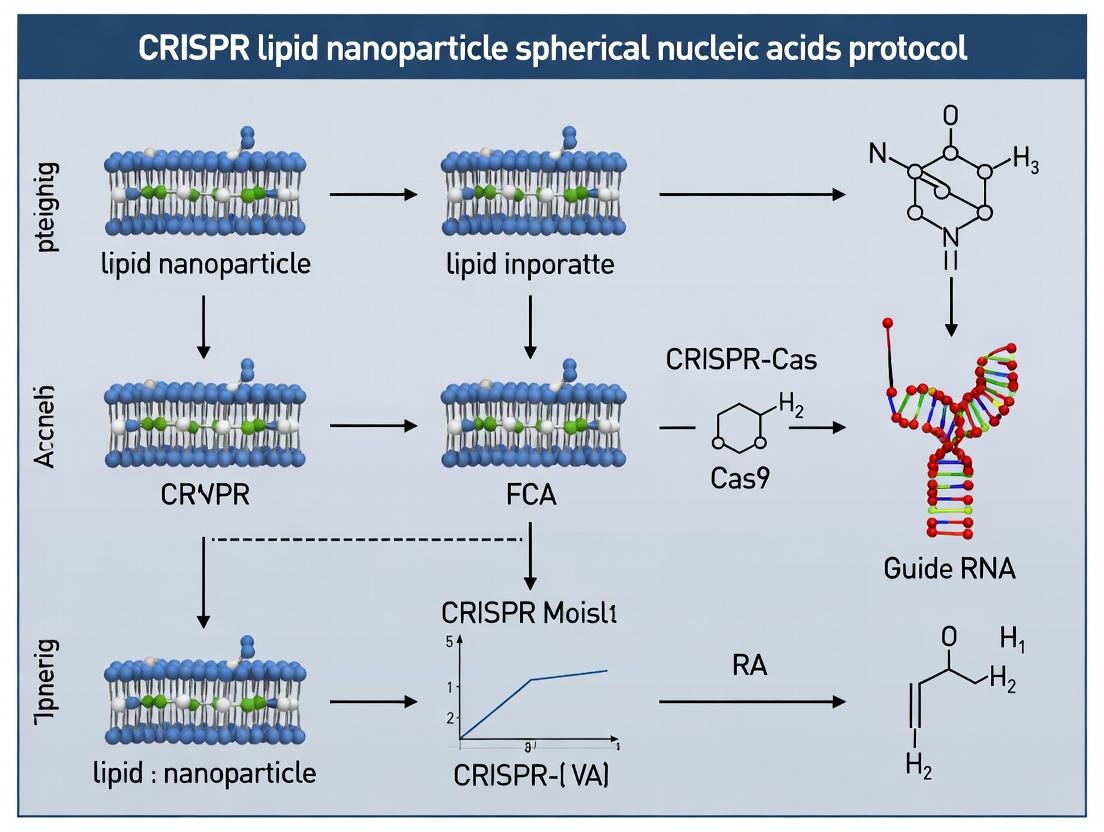
This article provides a detailed, step-by-step protocol for the design, synthesis, and application of CRISPR-Cas9-loaded Lipid Nanoparticle Spherical Nucleic Acids (LN-SNAs).
A Comprehensive Protocol for CRISPR-Cas9 Delivery via Lipid Nanoparticle Spherical Nucleic Acids (LN-SNAs): Synthesis, Application, and Optimization
Abstract
This article provides a detailed, step-by-step protocol for the design, synthesis, and application of CRISPR-Cas9-loaded Lipid Nanoparticle Spherical Nucleic Acids (LN-SNAs). Tailored for researchers and drug development professionals, it covers foundational concepts of LN-SNA architecture, a complete methodological workflow for gene editing, common troubleshooting and optimization strategies, and essential validation techniques. The guide synthesizes the latest advances to enable efficient, targeted delivery of CRISPR components for both in vitro and in vivo therapeutic development.
Understanding CRISPR LN-SNAs: Core Concepts, Architecture, and Design Principles
Core-Shell Architecture and Defining Characteristics
Spherical Nucleic Acids (SNAs) are a class of nanomaterials characterized by a dense, radially oriented shell of oligonucleotides covalently or electrostatically tethered to a spherical nanoparticle core. This architecture confers unique chemical and biological properties distinct from linear nucleic acids.
Table 1: Quantitative Comparison of SNA Core Materials
| Core Material | Typical Diameter (nm) | Common Functionalization | Key Advantage | Disadvantage |
|---|---|---|---|---|
| Gold Nanoparticle (AuNP) | 5 - 50 | Thiolated oligonucleotides | High stability, precise synthesis, optical properties | Potential immunogenicity, non-biodegradable |
| Liposome / LNP | 30 - 100 | Ionizable lipid encapsulation | High cargo load, biodegradable, FDA-approved platform | Less dense shell, dynamic structure |
| Silica (SiO₂) | 20 - 100 | Amine-modified surface coupling | Tunable porosity, rigid structure | Slower degradation kinetics |
| Quantum Dot | 3 - 10 | Ligand exchange | Intrinsic fluorescence for tracking | Potential cytotoxicity of heavy metals |
| Protein / Enzyme | 10 - 15 | Genetic or chemical fusion | Intrinsic biological activity | Limited scalability |
The SNA architecture enables unprecedented cellular uptake without transfection agents, resistance to nuclease degradation, and enhanced binding affinity (cooperative melting) due to polyvalent interactions. In the context of CRISPR-LNP research, the SNA paradigm is leveraged to design advanced delivery systems where the nucleic acid (e.g., sgRNA) is presented in a dense, organized shell around a lipid core, optimizing stability, targeting, and intracellular release.
Detailed Protocol: Synthesis of Gold Core SNA (Model System)
This protocol outlines the synthesis of a prototypical SNA using a 13 nm gold nanoparticle (AuNP) core and thiolated DNA.
Materials:
- Chloroauric acid (HAuCl₄): Gold precursor.
- Trisodium citrate dihydrate: Reducing and stabilizing agent.
- Thiolated oligonucleotides: DNA or RNA with a 5' or 3' alkylthiol modification (e.g., HS-(CH₂)₆-ssDNA).
- Salting Solution: Phosphate buffer (e.g., 0.1 M Na₂HPO₄, pH 7.4) and salts (NaCl, MgCl₂) for gradual salt aging.
- TCEP (tris(2-carboxyethyl)phosphine): Reducing agent to cleave disulfide bonds in thiolated oligos.
Procedure:
- Synthesis of 13 nm AuNPs (Turkevich Method): a. Prepare 150 mL of 1 mM HAuCl₄ in a clean, round-bottom flask. Bring to a rolling boil with vigorous stirring. b. Rapidly add 15 mL of 38.8 mM sodium citrate solution. c. Continue boiling and stirring until the solution turns deep red (≈15 min). Cool to room temperature. Characterize by UV-Vis (λmax ≈520 nm) and TEM.
Oligonucleotide Activation: a. Dissolve thiolated oligonucleotides in nuclease-free water to 1 mM. b. Incubate with 10x molar excess of TCEP (100 mM stock in water, pH 7.0) for 1 hour at room temperature to reduce disulfides.
Functionalization (Salt Aging): a. Combine 1 nmol of purified AuNPs (OD₅₂₀ calculation) with a large excess of activated oligonucleotides (≈100-500 per nanoparticle) in a low-salt buffer (e.g., 0.01 M PBS, pH 7.4). b. Use a stepwise "salt aging" process: add phosphate buffer and NaCl in aliquots over 6-8 hours to gradually increase the salt concentration to 0.5 M NaCl. This screens repulsive charges, allowing dense DNA packing. c. Stir gently at room temperature overnight.
Purification: a. Centrifuge the solution at 14,000 rpm for 25 minutes to pellet SNAs. Carefully remove supernatant. b. Resuspend pellet in a storage buffer (e.g., 0.5 M NaCl, 10 mM PBS, pH 7.4). Repeat 2-3 times to remove free oligonucleotides. c. Characterize final product via agarose gel electrophoresis (shifted mobility), UV-Vis (DNA/Au ratio), and DLS for hydrodynamic diameter.
Application Notes: SNA Design for CRISPR-LNP Systems
For CRISPR-Cas9 delivery, the SNA architecture can be adapted within lipid nanoparticles (LNPs). The core is an ionizable lipid-based nanoparticle encapsulating Cas9 mRNA or protein. The shell consists of a dense layer of sgRNA or DNA repair templates, either surface-conjugated or embedded within a PEG-lipid layer. This design aims to co-localize all components in the same subcellular compartment.
Table 2: Key Parameters for CRISPR SNA-LNP Efficacy
| Parameter | Typical Target Range | Measurement Technique | Impact on Function |
|---|---|---|---|
| Shell Density (sgRNA/# per particle) | 50 - 200 | Fluorescent dye quantification, Qubit assay | Defines uptake efficiency & cooperative binding |
| Core Size (LNP diameter) | 70 - 100 nm | Dynamic Light Scattering (DLS) | Affects biodistribution & cellular uptake route |
| Surface Zeta Potential | Slightly negative to neutral (-10 to +5 mV) | Zeta potential analyzer | Influences serum stability & non-specific uptake |
| N:P Ratio (for LNP core) | 3:1 - 6:1 | Charge ratio of ionizable lipid amines to nucleic acid phosphates | Determines encapsulation efficiency and cargo release |
| Polyethylene Glycol (PEG) Lipid % | 1.0 - 2.5 mol% | HPLC analysis of lipid mix | Controls circulation time and prevents aggregation |
The Scientist's Toolkit: Key Research Reagent Solutions
Table 3: Essential Materials for SNA Research
| Item | Function & Rationale |
|---|---|
| Thiol-/Disulfide-Modified Oligonucleotides | Enables covalent anchoring to gold or metallic cores via stable Au-S bonds. |
| Ionizable Lipids (e.g., DLin-MC3-DMA, SM-102) | Core component of LNPs; protonates in endosomes to enable nucleic acid release. |
| PEG-Lipids (e.g., DMG-PEG2000, ALC-0159) | Provides steric stabilization, reduces opsonization, and modulates pharmacokinetics. |
| TCEP Hydrochloride | Efficiently reduces disulfide bonds in modified oligos without damaging AuNPs. |
| Microfluidic Mixer (e.g., NanoAssemblr) | Enables reproducible, rapid mixing for consistent LNP-SNA formulation. |
| Nuclease-Free Buffers & Water | Prevents degradation of oligonucleotide shell during synthesis and purification. |
| SYBR Gold Nucleic Acid Gel Stain | Highly sensitive stain for visualizing SNA complexes in agarose gels post-synthesis. |
| Cell-Penetrating Peptide (CPP) Conjugates | Optional shell modification to further enhance uptake in difficult-to-transfect cells. |
Visualizations
SNA Core-Shell Structure & Properties
CRISPR SNA-LNP Assembly & Delivery Workflow
Within the broader thesis on CRISPR lipid nanoparticle spherical nucleic acids protocol research, the central challenge remains the efficient, targeted, and safe delivery of CRISPR-Cas9 components in vivo. Lipid nanoparticles (LNPs) have emerged as the leading non-viral delivery platform, overcoming key biological barriers to enable therapeutic gene editing. This application note details current protocols and data for formulating CRISPR-LNP therapeutics.
Table 1: Representative *in vivo Performance Metrics of Recent CRISPR-LNP Systems (2023-2024)*
| LNP Formulation Core | Target Tissue/Cell | Editing Efficiency (% indels) | Dose (mg/kg) | Key Advance |
|---|---|---|---|---|
| Ionizable Lipid (OF-02) | Hepatocytes (TTR) | >97% in mice, ~47% in NHP | 1.0 | First FDA-approved CRISPR therapy (Casgevy) |
| Selective Organ Targeting (SORT) LNPs | Lung, Spleen, Liver | Tissue-specific: 20-60% | 0.5 | Enabled extrahepatic targeting via added lipid |
| Charge-Altering Releasable Transporters (CARTs) | T cells ex vivo | >80% (PD-1 knockout) | N/A | Cytosolic release via intramolecular rearrangement |
| Helper Phospholipid-Optimized | Muscle | ~55% (DMD model) | 3.0 | Enhanced endosomal escape in myofibers |
Table 2: Comparison of CRISPR-Cas9 Payload Encapsulation Methods
| Payload Format | Typical Encapsulation Efficiency | Stability (4°C) | Key Advantage | Primary Challenge |
|---|---|---|---|---|
| Cas9 mRNA + sgRNA | 85-95% | 1-2 weeks | Rapid Cas9 expression, transient | Innate immune response |
| Ribonucleoprotein (RNP) | 50-70% | < 1 week | Immediate activity, no off-target transcription | Lower encapsulation, stability |
| All-in-one Plasmid DNA | 60-80% | >1 month | Single component, stable | Risk of genomic integration, delayed onset |
Detailed Protocols
Protocol 1: Formulation of CRISPR-LNPs via Microfluidic Mixing
This protocol for encapsulating Cas9 mRNA and sgRNA is adapted from seminal and recent (2024) methodologies.
Materials (Research Reagent Solutions):
- Ionizable Lipid (e.g., DLin-MC3-DMA or OF-02): Forms core of LNP, enables endosomal escape.
- Helper Phospholipid (DSPC): Stabilizes LNP bilayer structure.
- Cholesterol: Modulates membrane fluidity and integrity.
- PEGylated Lipid (e.g., DMG-PEG2000): Provides steric stabilization, prevents aggregation.
- Cas9 mRNA (modified): Nucleoside-modified for reduced immunogenicity.
- sgRNA (chemically modified): Modified ends for enhanced stability.
- Ethanol (Molecular Biology Grade): Solvent for lipid mixture.
- Sodium Acetate Buffer (pH 4.0): Aqueous buffer for nucleic acid dilution, establishes pH for ionic complexation.
- Microfluidic Device (e.g., NanoAssemblr): Enables rapid, reproducible mixing.
Procedure:
- Lipid Solution Preparation: Dissolve the ionizable lipid, DSPC, cholesterol, and PEG-lipid in ethanol at a molar ratio (e.g., 50:10:38.5:1.5) to a total lipid concentration of 12.5 mM. Warm slightly if necessary.
- Aqueous Phase Preparation: Dilute Cas9 mRNA and sgRNA (at a 1:1.2 molar ratio) in 25 mM sodium acetate buffer, pH 4.0, to a final concentration of 0.2 mg/mL total nucleic acid.
- Microfluidic Mixing: Use a staggered herringbone micromixer. Set the total flow rate (TFR) to 12 mL/min and a flow rate ratio (FRR, aqueous:ethanol) of 3:1. Simultaneously pump the aqueous nucleic acid solution and the ethanol lipid solution into the device.
- Buffer Exchange and Dialysis: Immediately dilute the formed LNP mixture 1:1 with 1x PBS (pH 7.4). Dialyze against ≥100 volumes of 1x PBS for 18 hours at 4°C using a 10kD MWCO membrane to remove ethanol and adjust pH.
- Concentration and Sterile Filtration: Concentrate LNPs using centrifugal filters (100kD MWCO). Sterilize by passing through a 0.22 µm PES syringe filter.
- Characterization: Measure particle size and PDI via dynamic light scattering, encapsulation efficiency using a Ribogreen assay, and zeta potential.
Protocol 2:In VivoDelivery and Editing Assessment in a Murine Model
This protocol follows Administration and analysis of CRISPR-LNPs targeting the liver.
Procedure:
- Animal Preparation: House C57BL/6 mice (6-8 weeks old) under standard conditions.
- LNP Administration: Inject CRISPR-LNPs via the tail vein at a dose of 1-3 mg RNA/kg in a total volume of 100-200 µL sterile PBS.
- Tissue Harvest: At 72 hours (for mRNA payload) or 7 days (for full editing assessment) post-injection, euthanize animals and harvest target tissues (e.g., liver, spleen, lung).
- Genomic DNA Extraction: Homogenize tissue samples. Extract gDNA using a commercial kit (e.g., DNeasy Blood & Tissue Kit).
- Editing Analysis by NGS: Amplify the target genomic region from purified gDNA using barcoded primers. Prepare sequencing libraries and run on an Illumina MiSeq. Analyze indel frequency using CRISPResso2 or similar software.
- Off-Target Analysis: Perform GUIDE-seq or in silico predicted off-target site sequencing on treated samples to assess specificity.
Visualizations
The Scientist's Toolkit: Essential Research Reagents & Materials
Table 3: Key Reagents for CRISPR-LNP Research
| Item | Function/Description | Example Vendor/Product |
|---|---|---|
| Ionizable Cationic Lipids | Critical for nucleic acid complexation and endosomal escape via the proton sponge effect. | MedChemExpress: SM-102, DLin-MC3-DMA; BroadPharm: OF-02 derivative. |
| PEG-Lipids | Polyethylene glycol-conjugated lipids that confer stealth properties, reduce clearance, and stabilize LNPs. | Avanti Polar Lipids: DMG-PEG2000, DSG-PEG2000. |
| Modified Cas9 mRNA | Nucleoside-modified (e.g., pseudouridine) mRNA encoding Cas9, reducing immunogenicity and increasing translation. | Trilink BioTechnologies: CleanCap Cas9 mRNA. |
| Chemically Modified sgRNA | sgRNA with 2'-O-methyl and phosphorothioate backbone modifications at terminal nucleotides for nuclease resistance. | Synthego: synthetic, modified sgRNAs. |
| Microfluidic Mixer | Device for rapid, reproducible mixing of aqueous and organic phases to form uniform LNPs. | Precision NanoSystems: NanoAssemblr Ignite. |
| Ribogreen Assay Kit | Fluorescent nucleic acid stain used to quantify encapsulated vs. free RNA to determine encapsulation efficiency. | Thermo Fisher Scientific: Quant-iT RiboGreen. |
| CRISPR Analysis Software | Bioinformatics pipeline for analyzing next-generation sequencing data to quantify editing efficiency and outcomes. | Public Tool: CRISPResso2. |
This Application Note details the critical components and protocols for constructing CRISPR Lipid Nanoparticle Spherical Nucleic Acids (LN-SNAs), a next-generation delivery platform for gene editing therapeutics. Framed within a broader thesis on CRISPR-LNP standardization, this document provides researchers with methodologies for assembling and characterizing LN-SNAs, which encapsulate Cas ribonucleoprotein (RNP) complexes within a lipid shell decorated with nucleic acid surface ligands.
Key Components and Research Reagent Solutions
Table 1: Essential Research Reagent Solutions for CRISPR LN-SNA Assembly
| Component Category | Specific Item/Example | Function/Explanation |
|---|---|---|
| Cas Payload | Cas9 mRNA or purified Cas9 protein | The gene-editing enzyme effector. mRNA requires in vivo translation, while protein enables immediate activity. |
| Guide RNA (gRNA) | Chemically modified single-guide RNA (sgRNA) | Directs the Cas protein to the specific genomic target sequence via Watson-Crick base pairing. |
| Ionizable Lipid | DLin-MC3-DMA, SM-102, ALC-0315 | Critical for nanoparticle self-assembly and endosomal escape. Protonates in acidic endosomes, disrupting the membrane. |
| Helper Lipid | DSPC (1,2-distearoyl-sn-glycero-3-phosphocholine) | Contributes to lamellar lipid bilayer structure and stability. |
| Cholesterol | Pharmaceutical Grade Cholesterol | Modulates membrane fluidity and integrity, aiding in cellular uptake and stability. |
| PEGylated Lipid | DMG-PEG2000, ALC-0159 | Provides a hydrophilic corona that stabilizes nanoparticles, reduces aggregation, and modulates pharmacokinetics. |
| Surface Ligand | Thiolated DNA or RNA oligonucleotides | Covalently attached to the LNP surface to create the "SNA" architecture, enabling enhanced cellular uptake and targeting. |
| Formulation Buffer | Citrate Buffer (pH 4.0) | Acidic environment ensures ionizable lipid is charged for efficient encapsulation of nucleic acid payloads. |
| Microfluidic Device | NanoAssemblr Ignite or comparable chip | Enables precise, rapid mixing of lipid and aqueous phases for reproducible, size-controlled LNP formation. |
Experimental Protocols
Protocol 1: Preparation of CRISPR RNP Complex
- Complex Formation: In a sterile microcentrifuge tube, combine purified Cas9 protein (final conc. 10 µM) with chemically modified sgRNA (final conc. 12 µM) at a 1:1.2 molar ratio in nuclease-free duplex buffer (30 mM HEPES, pH 7.5, 100 mM KCl).
- Incubation: Incubate the mixture at 25°C for 10 minutes to allow for RNP complex formation.
- Validation: Analyze complex formation via native agarose gel electrophoresis (1.5% gel in 0.5X TBE, run at 80V for 45 min) or using a gel shift assay.
Protocol 2: Microfluidic Formulation of CRISPR LN-SNAs
This protocol assumes the use of a standard two-inlet microfluidic mixer (e.g., NanoAssemblr).
- Lipid Phase Preparation: Combine ionizable lipid, DSPC, cholesterol, and PEG-lipid at a molar ratio (e.g., 50:10:38.5:1.5) in ethanol. Total lipid concentration should be 6-12 mM. Keep at room temperature.
- Aqueous Phase Preparation: Dilute the prepared CRISPR RNP complex (from Protocol 1) into a citrate buffer (50 mM, pH 4.0). The final RNP concentration should be ~0.2 mg/mL.
- Formulation: Load the lipid phase (ethanol) and aqueous phase (buffer + RNP) into separate syringes. Pump both phases into the microfluidic mixer at a controlled total flow rate (TR) of 12 mL/min and a flow rate ratio (FRR, aqueous:organic) of 3:1.
- Dialyze: Immediately transfer the collected effluent into a dialysis cassette (MWCO 20 kDa) and dialyze against 1X PBS (pH 7.4) for 4 hours at 4°C, with two buffer changes, to remove ethanol and adjust pH.
- Concentrate: Use centrifugal filtration units (MWCO 100 kDa) to concentrate the LNPs to the desired final concentration (e.g., 1 mg/mL total lipid).
- Functionalization (Surface Ligand Conjugation): Incubate the formulated LNPs with a 10-fold molar excess of thiolated oligonucleotides (relative to surface PEG-lipid) in PBS for 2 hours at room temperature with gentle agitation. Remove unbound oligonucleotides via size-exclusion chromatography (e.g., Sephadex G-25).
Protocol 3: Characterization of CRISPR LN-SNAs
- Size and PDI: Measure hydrodynamic diameter and polydispersity index (PDI) via Dynamic Light Scattering (DLS). Acceptable range: 70-120 nm, PDI < 0.2.
- Zeta Potential: Measure surface charge in 1 mM KCl at neutral pH using Laser Doppler Velocimetry. Typical range: -5 to +5 mV for PEGylated LNPs.
- Encapsulation Efficiency (EE%): Quantify using the Ribogreen assay. Treat samples with 0.1% Triton X-100 for total RNA/protein content and compare to untreated samples (free RNA/protein). Calculate EE% = (1 - (Free/Total)) x 100. Target EE% > 90%.
- Cryo-EM Imaging: Use cryogenic electron microscopy to visualize core-shell structure and confirm lamellar lipid layers.
Table 2: Typical Characterization Data for CRISPR LN-SNAs
| Parameter | Method | Target Specification | Typical Result |
|---|---|---|---|
| Size (Z-avg) | Dynamic Light Scattering | 80 - 100 nm | 92 ± 5 nm |
| Polydispersity (PDI) | Dynamic Light Scattering | < 0.20 | 0.12 ± 0.03 |
| Zeta Potential | Laser Doppler Velocimetry | -10 to +10 mV | -1.5 ± 0.8 mV |
| Encapsulation Efficiency | Fluorescent dye (Ribogreen) assay | > 85% | 95 ± 3% |
| sgRNA Integrity | Capillary Electrophoresis | > 95% full-length | 98% full-length |
Visualization of Workflows and Mechanisms
This application note is situated within a thesis investigating the development of a novel CRISPR-Cas9 delivery platform utilizing Lipid Nanoparticle-based Spherical Nucleic Acids (LNP-SNAs). Conventional delivery of CRISPR ribonucleoproteins (RNPs) or plasmids via lipofection or electroporation suffers from rapid degradation, immunogenicity, and poor tissue targeting. LNP-SNAs, which consist of a dense shell of highly oriented, covalently conjugated oligonucleotides on an LNP core, offer distinct advantages in stability, cellular interaction, and in vivo biodistribution, enabling more efficient and specific gene editing.
Quantitative Advantages: Comparative Data
Table 1: Comparative Performance of LNP-SNAs vs. Conventional Lipoplex Delivery
| Parameter | Conventional CRISPR Lipoplex | LNP-SNA Platform | Measurement Method | Reference Insights |
|---|---|---|---|---|
| Serum Stability (Half-life) | 30 - 60 minutes | > 24 hours | Fluorescence quenching assay of labeled oligonucleotides | SNAs resist nuclease degradation due to dense, oriented nucleic acid shell. |
| Cellular Uptake Efficiency | 15-30% (HeLa cells) | >95% (HeLa cells) | Flow cytometry (FAM-labeled cargo) | Uptake is rapid and independent of transfection agents via scavenger receptor engagement. |
| Endosomal Escape Efficiency | ~10-15% | ~40-60% | Gal8-mCherry endosome disruption assay | High local proton sponge effect from the SNA shell enhances membrane disruption. |
| Liver Biodistribution (% Injected Dose/g) | 60-80% | 25-40% (tunable) | Quantitative biodistribution study in mice (radiolabeling) | PEG density and SNA surface chemistry enable redirection from dominant liver uptake. |
| Tumor Accumulation (Fold Increase vs. Free Oligo) | 2-3 fold | 10-15 fold | In vivo imaging system (IVIS) in xenograft models | Enhanced Permeability and Retention (EPR) effect combined with improved stability. |
| Induced Immunogenicity (IFN-α levels) | High | Negligible | ELISA of serum post-administration | SNA architecture avoids recognition by Toll-like receptors (TLRs) in endosomes. |
Table 2: Key CRISPR Editing Outcomes in HepatocytesIn Vivo
| Delivery Vehicle | Target Gene | Editing Efficiency (% indels) | Dose (mg/kg) | Duration of Effect |
|---|---|---|---|---|
| Conventional LNP (ionizable lipid) | Ttr | 45% ± 6% | 1.0 | 4 weeks |
| LNP-SNA (optimized shell) | Ttr | 62% ± 5% | 0.75 | >12 weeks |
| Electroporation (ex vivo) | Ttr | 55% ± 10% | N/A | N/A (ex vivo) |
Detailed Experimental Protocols
Protocol 3.1: Synthesis of CRISPR LNP-SNAs
Objective: Prepare LNP-SNAs encapsulating Cas9 mRNA/sgRNA and functionalized with a dense shell of thiolated DNA. Materials: Ionizable lipid (e.g., DLin-MC3-DMA), cholesterol, DSPC, DMG-PEG2000, thiolated oligonucleotides, Cas9 mRNA, sgRNA, microfluidic mixer, TCEP, PBS. Procedure:
- LNP Core Formation: Prepare an ethanol phase containing ionizable lipid, cholesterol, DSPC, and DMG-PEG2000 (50:38.5:10:1.5 molar ratio). Prepare an aqueous phase containing Cas9 mRNA and sgRNA in citrate buffer (pH 4.0).
- Using a microfluidic mixer, combine the ethanol and aqueous phases at a 1:3 ratio (total flow rate 12 mL/min) to form cationic LNPs encapsulating CRISPR cargo.
- SNA Shell Conjugation: Reduce thiolated oligonucleotides (5’-/ThioMC6-D/) with 100 mM TCEP for 1 hr. Purify via desalting column.
- Incubate freshly formed LNPs with reduced oligonucleotides (5000 strands per particle) in PBS (pH 7.4) for 16 hours at room temperature under gentle agitation.
- Purify the resulting LNP-SNAs via tangential flow filtration (100 kDa MWCO) against PBS. Sterilize by 0.22 µm filtration. Characterize size (DLS ~30-50 nm), PDI (<0.2), and zeta potential (slightly negative).
Protocol 3.2: Assessing Cellular Uptake and Endosomal Escape
Objective: Quantify internalization and intracellular trafficking of LNP-SNAs. Materials: HeLa cells, FAM-labeled LNP-SNAs, LysoTracker Deep Red, Hoechst 33342, Gal8-mCherry plasmid, flow cytometer, confocal microscope. Procedure:
- Flow Cytometry for Uptake: Seed HeLa cells in 24-well plates. Treat with FAM-labeled LNP-SNAs or conventional lipoplexes (50 nM oligonucleotide equivalent). After 1, 3, and 6 hours, trypsinize cells, wash with PBS, and analyze using a flow cytometer (FITC channel). Calculate percentage of FAM-positive cells and mean fluorescence intensity.
- Confocal Microscopy for Co-localization: Seed cells on glass-bottom dishes. Pre-stain lysosomes with LysoTracker (50 nM, 30 min). Add FAM-labeled LNP-SNAs for 2 hours. Fix, stain nuclei with Hoechst, and image. Quantify co-localization using Pearson's coefficient.
- Gal8 Assay for Endosomal Escape: Transfect cells with Gal8-mCherry plasmid 24 hrs prior. Treat with LNP-SNAs. Gal8, which binds to exposed glycans upon endosomal damage, will form puncta. Image after 4-6 hours and quantify puncta per cell.
Protocol 3.3:In VivoBiodistribution and Efficacy Study
Objective: Evaluate tissue distribution and gene editing efficacy in a mouse model. Materials: C57BL/6 mice, Cy5-labeled LNP-SNAs, IVIS Spectrum, qPCR kit, T7 Endonuclease I assay, tissue homogenizer. Procedure:
- Imaging: Administer 2 mg/kg Cy5-labeled LNP-SNAs via tail vein injection (n=5). Acquire whole-body fluorescence images at 1, 4, 24, and 48 hours post-injection using IVIS. Euthanize animals at 48 hours, harvest organs (liver, spleen, kidney, lung, heart, tumor), image ex vivo, and quantify fluorescence.
- Editing Analysis: Administer CRISPR LNP-SNAs targeting a hepatic gene (e.g., Pcsk9). After 7 days, harvest liver tissue.
- Extract genomic DNA. Amplify the target region by PCR. Assess indel frequency using the T7EI mismatch cleavage assay (incubate 200 ng PCR product with T7EI for 30 min at 37°C, analyze on agarose gel) or by next-generation sequencing.
Visualizations
Title: Comparison of Cellular Delivery Pathways: Conventional vs. LNP-SNA
Title: LNP-SNA Synthesis and Validation Workflow
The Scientist's Toolkit: Research Reagent Solutions
| Item | Function/Application | Example/Note |
|---|---|---|
| Ionizable Lipid (DLin-MC3-DMA) | Forms pH-sensitive LNP core; promotes endosomal escape. | Critical for encapsulating nucleic acids. Clinical precedent in siRNA drugs. |
| DMG-PEG2000 | Polyethylene glycol-lipid conjugate; modulates stability, circulation time, and biodistribution. | PEG length and density are key optimization parameters. |
| Thiolated Oligonucleotides | Forms the dense, oriented SNA shell via covalent conjugation to the LNP surface. | Typically 15-30 bases, with a 5' or 3' thiol modification (C6 spacer). |
| TCEP (Tris(2-carboxyethyl)phosphine) | Reducing agent; cleaves disulfide bonds to activate thiolated oligonucleotides for conjugation. | Preferred over DTT as it is more stable and does not interfere with gold surfaces. |
| Microfluidic Mixer (e.g., NanoAssemblr) | Enables reproducible, scalable production of LNPs with low polydispersity. | Essential for achieving high encapsulation efficiency and uniform particle size. |
| T7 Endonuclease I | Detects CRISPR-induced indel mutations by cleaving heteroduplex DNA at mismatch sites. | Standard, accessible method for initial editing efficiency screening. |
| Gal8-mCherry Plasmid | Reporter for endosomal damage/escape; forms fluorescent puncta when endosomes are ruptured. | Provides visual and quantitative metrics for intracellular delivery efficiency. |
The development of CRISPR-Cas systems encapsulated within lipid nanoparticles (LNPs) as spherical nucleic acids (SNAs) represents a transformative convergence of gene editing, nanotechnology, and drug delivery. This Application Note, framed within a broader thesis on CRISPR-LNP-SNA protocol research, details current therapeutic applications and provides standardized experimental protocols. The modular LNP-SNA platform enables precise, targeted delivery of CRISPR ribonucleoproteins (RNPs) or mRNA, expanding the scope of treatable conditions from acquired somatic mutations in cancer to inherited genetic disorders.
Key Therapeutic Applications & Quantitative Landscape
Oncology Targets
CRISPR-LNP-SNAs enable direct in vivo editing of oncogenes, tumor suppressor genes, and genes involved in immune evasion. Recent clinical and pre-clinical efforts focus on targeting genes within the tumor microenvironment and engineering chimeric antigen receptor (CAR) immune cells ex vivo.
Genetic Disorder Targets
The platform is ideal for monogenic disorders, allowing for corrective editing in affected tissues. Liver, eye, and neuromuscular system are primary targets due to relative accessibility or the feasibility of local delivery.
Table 1: Key Therapeutic Targets and Current Development Status
| Therapeutic Area | Target Gene(s) | Disease/Condition | Delivery Mode | Development Phase (as of 2024) | Key Metric / Reported Editing Efficiency in vivo |
|---|---|---|---|---|---|
| Oncology | PDCD1 (PD-1) | Multiple Solid Tumors | Intra-tumoral or systemic LNP | Phase 1 Clinical Trials | Up to ~60% editing in tumor-infiltrating lymphocytes in murine models |
| Oncology | CTNNB1 (β-catenin) | Hepatocellular Carcinoma | Systemically administered LNP | Pre-clinical | >50% gene disruption, leading to ~70% tumor regression in mice |
| Genetic Disorder | TTR | Transthyretin Amyloidosis | Systemically administered LNP (hepatotropic) | FDA Approved (NTLA-2001) | ~90% serum TTR reduction at highest dose in humans |
| Genetic Disorder | PCSK9 | Hypercholesterolemia | Systemically administered LNP (hepatotropic) | Phase 1 Clinical Trials | ~65% reduction in serum PCSK9, ~30% LDL reduction in non-human primates |
| Genetic Disorder | CEP290 | Leber Congenital Amaurosis 10 | Sub-retinal LNP (EDIT-101) | Phase 1/2 Clinical Trials | ~25% editing of mutant allele in photoreceptors pre-clinically |
Table 2: CRISPR-LNP-SNA Formulation Components and Functions
| Component Category | Specific Molecule/Class | Function in CRISPR Delivery |
|---|---|---|
| Ionizable Lipid | DLin-MC3-DMA, SM-102, ALC-0315 | Encapsulates nucleic acid, fusogenic, promotes endosomal escape. Positive charge at low pH. |
| Helper Lipid | Cholesterol | Modulates membrane fluidity and stability of LNP. |
| PEGylated Lipid | DMG-PEG2000, DSG-PEG2000 | Stabilizes particle, prevents aggregation, controls particle size and pharmacokinetics. |
| Structural Lipid | DSPC | Provides structural integrity to the LNP bilayer. |
| Payload | Cas9 mRNA/sgRNA RNP | The active gene-editing machinery. SNA configuration can enhance nuclear delivery. |
Detailed Experimental Protocols
Protocol: Formulation of CRISPR-Cas9 RNP Loaded LNPs (SNA Configuration)
Objective: To prepare ionizable lipid-based LNPs encapsulating Cas9 protein:sgRNA ribonucleoprotein complexes for in vivo gene editing.
Materials (Research Reagent Solutions):
- Ionizable Lipid (e.g., SM-102): Primary cationic lipid for encapsulation.
- Cholesterol: Stabilizes LNP structure.
- DSPC: Provides bilayer structural support.
- DMG-PEG2000: Controls particle size and circulation time.
- Cas9 Nuclease (SpyCas9): Purified recombinant protein.
- Chemically Modified sgRNA: Target-specific, with 2'-O-methyl modifications for stability.
- RNase-free Sodium Acetate Buffer (pH 4.0): Aqueous phase for ethanol injection.
- 1x PBS (pH 7.4): For dialysis and final formulation buffer.
- Dialysis Cassettes (MWCO 10kDa): For buffer exchange and purification.
- Microfluidic Mixer (e.g., NanoAssemblr): For reproducible LNP formation.
Procedure:
- RNP Complex Formation: Incubate purified Cas9 protein with synthetic sgRNA at a 1:1.2 molar ratio in nuclease-free duplex buffer for 10 min at room temperature.
- Lipid Mixture Preparation: Dissolve ionizable lipid, cholesterol, DSPC, and DMG-PEG2000 in ethanol at a molar ratio of 50:38.5:10:1.5. Maintain total lipid concentration at ~10 mM.
- Aqueous Phase Preparation: Dilute the formed RNP complex into sodium acetate buffer (pH 4.0) to a final concentration of 100 µg/mL.
- Microfluidic Mixing: Using a staggered herringbone microfluidic mixer, combine the ethanol-lipid stream and the aqueous-RNP stream at a 1:3 volumetric flow rate ratio (total flow rate 12 mL/min). This induces rapid mixing and LNP self-assembly.
- Buffer Exchange & Purification: Immediately dilute the formed LNP suspension in 1x PBS (pH 7.4). Transfer to a dialysis cassette and dialyze against 1x PBS for 18 hours at 4°C to remove ethanol and exchange the external buffer.
- Characterization: Measure particle size and PDI via Dynamic Light Scattering (DLS). Determine encapsulation efficiency using a Ribogreen assay for unencapsulated RNA. Assess final concentration via absorbance at 280 nm.
Protocol:In VivoAssessment of Liver-Targeted Gene Knockout
Objective: To evaluate the efficacy and specificity of systemically administered CRISPR-LNP-SNAs targeting a hepatic gene (e.g., Pcsk9) in a murine model.
Materials:
- CRISPR-LNP-SNA: Formulated as in Protocol 3.1, targeting murine Pcsk9.
- C57BL/6 Mice: 8-week-old.
- Control LNP: Containing non-targeting sgRNA.
- Animal Imaging System (IVIS): For biodistribution if LNPs are dye-labeled.
- ELISA Kit for PCSK9: For quantification of protein knockdown in serum.
- Next-Generation Sequencing (NGS) reagents: For analysis of on-target and potential off-target editing.
Procedure:
- Dosing: Administer CRISPR-LNP-SNA intravenously via tail vein at a dose of 1-3 mg/kg of encapsulated RNP (n=5 per group). Include a control group receiving non-targeting LNP.
- Serum Collection: At days 0, 3, 7, 14, and 28 post-injection, collect blood via retro-orbital bleed. Isolate serum by centrifugation.
- Efficacy Analysis (Protein Level): Quantify serum PCSK9 protein levels using a commercial ELISA kit according to the manufacturer's protocol.
- Efficacy Analysis (Genetic Level): At day 7, sacrifice one cohort. Harvest liver tissue. Extract genomic DNA from ~25 mg of tissue. Amplify the on-target genomic region by PCR and subject amplicons to NGS to calculate indel percentage.
- Off-Target Analysis: Use computational tools (e.g., CIRCLE-Seq) to identify potential off-target sites from the Pcsk9 sgRNA. Amplify and deep sequence the top 10-15 predicted sites from liver genomic DNA.
- Histopathology: Fix a section of liver in formalin for H&E staining to assess general toxicity and immune infiltration.
Visualizations
Diagram 1: CRISPR-LNP-SNA In Vivo Delivery and Action Pathway
Diagram 2: CRISPR-LNP-SNA Formulation Workflow
The Scientist's Toolkit: Essential Research Reagent Solutions
Table 3: Critical Reagents for CRISPR-LNP-SNA Research
| Reagent / Material | Supplier Examples | Function & Importance |
|---|---|---|
| Ionizable Cationic Lipids (SM-102, ALC-0315) | Avanti Polar Lipids, MedChemExpress | Critical for efficient encapsulation of nucleic acid/protein payloads and endosomal escape. Defines LNP potency. |
| Microfluidic Mixer (NanoAssemblr) | Precision NanoSystems | Enables reproducible, scalable, and tunable formation of monodisperse LNPs with high encapsulation efficiency. |
| Chemically Modified sgRNA (2'-O-methyl, Phosphorothioate) | Synthego, IDT | Increases stability against nucleases, reduces immunogenicity, and improves editing efficiency in vivo. |
| Purified Cas9 Protein (SpyCas9) | Aldevron, Thermo Fisher | High-purity, endotoxin-free protein is essential for RNP formation and to minimize immune activation. |
| Ribogreen Quantification Kit | Thermo Fisher | Allows accurate measurement of encapsulated vs. free nucleic acid, determining LNP loading efficiency. |
| In Vivo-JetPEI or similar | Polyplus-transfection | A benchmark polymeric transfectant for in vivo studies, used as a comparative control to LNP delivery. |
| Next-Generation Sequencing Kit (for Amplicon-Seq) | Illumina, PacBio | Essential for quantifying on-target editing efficiency and profiling off-target effects at high depth. |
Step-by-Step Protocol: From Lipid Formulation to Functional CRISPR LN-SNAs
This document serves as a detailed application note within a broader thesis research program focused on developing a robust, reproducible protocol for the formulation of CRISPR-Cas9 ribonucleoprotein (RNP) complexes encapsulated within lipid nanoparticle spherical nucleic acids (LNP-SNAs). The convergence of CRISPR gene-editing precision with the efficient delivery and enhanced stability afforded by LNP-SNA architectures presents a transformative platform for therapeutic development. Sourcing high-purity materials and reagents, along with access to specialized instrumentation, is a critical determinant of experimental success and translational potential. These notes provide a curated guide to sourcing and application for researchers in this interdisciplinary field.
Sourcing and Selection of Ionizable Lipids for LNP Formulation
Ionizable lipids are the cornerstone of modern LNPs, enabling efficient encapsulation and endosomal escape. Sourcing decisions must balance commercial availability, cost, and structure-activity data.
Table 1: Commercial Sources of Ionizable Lipids for CRISPR-LNP Research
| Lipid Name (Example) | Supplier(s) | Purity | Approx. Cost (per 10 mg) | Key Property |
|---|---|---|---|---|
| DLin-MC3-DMA (MC3) | Avanti Polar Lipids, MedKoo | >99% | $450-$600 | Benchmark FDA-approved ionizable lipid |
| SM-102 | Cayman Chemical, Avanti Polar Lipids | >98% | $400-$550 | Used in Moderna COVID-19 vaccine |
| ALC-0315 | BroadPharm, MedChemExpress | >95% | $500-$700 | Used in BioNTech/Pfizer COVID-19 vaccine |
| C12-200 | Custom Synthesis (e.g., Sigma-Aldrid Custom Services) | >95% | High (Custom Quote) | High-performance research lipid |
| OF-Deg-Lin | Avanti Polar Lipids | >99% | $600-$800 | Biodegradable, ester-linked |
Protocol 2.1: Lipid Stock Solution Preparation and Storage
- Weighing: In a chemical fume hood, accurately weigh 10 mg of the ionizable lipid (e.g., SM-102) into a clean glass vial.
- Dissolution: Add anhydrous ethanol or chloroform to achieve a final concentration of 10 mM (calculate volume based on molecular weight). Vortex for 1 minute and bath sonicate for 5 minutes at room temperature to ensure complete dissolution.
- Aliquoting: Under an inert atmosphere (e.g., nitrogen or argon stream), aliquot the stock solution into glass vials with PTFE-lined caps to minimize oxidation and hydrolysis.
- Storage: Store aliquots at -20°C to -80°C under desiccant. For chloroform stocks, ensure storage in a spark-proof freezer. Bring to room temperature in a desiccator before use to prevent water condensation.
Sourcing CRISPR-Cas9 Components: RNPs vs. Nucleic Acids
The choice between Cas9 mRNA/sgRNA and pre-assembled Cas9 RNP complexes significantly impacts LNP design, editing efficiency, and off-target kinetics.
Table 2: Sourcing Options for CRISPR-Cas9 Editing Components
| Component | Type/Source | Key Considerations for LNP-SNA Research | Primary Suppliers |
|---|---|---|---|
| SpCas9 Protein | Wild-type, HiFi, eSpCas9 variants | Purity (>95%), endotoxin level (<0.1 EU/µg), storage buffer. Pre-assembled RNP allows faster editing kinetics. | ToolGen, IDT, Synthego, Berkeley MacroLab |
| sgRNA | Chemically modified, two-part (tracrRNA/crRNA) | Chemical modifications (e.g., 2'-O-methyl, phosphorothioates) enhance stability. HPLC purification is essential. | IDT, Synthego, Trilink Biotechnologies |
| Cas9 mRNA | Modified (e.g., Ψ, 5-mC), codon-optimized | Cap structure, poly-A tail length, modification level affect translation efficiency and immunogenicity. | Trilink Biotechnologies, Thermo Fisher, TriLink BioTechnologies |
| Target DNA/Reporters | Plasmid DNA, PCR amplicons, synthetic single-strand DNA donors | Ultrapure preparation (anion-exchange chromatography) is required for HDR experiments. | IDT, Twist Bioscience, GeneWiz |
Protocol 3.1: Pre-assembly and Purification of Cas9 RNP Complex
- Complex Assembly: In a nuclease-free microcentrifuge tube, combine purified SpCas9 protein (final 3 µM) with synthetic sgRNA (final 3.3 µM) in a 1:1.1 molar ratio in duplex buffer (30 mM HEPES, 100 mM KCl, pH 7.5).
- Incubation: Incubate the mixture at room temperature for 10-20 minutes to allow complete RNP complex formation.
- Optional Purification (Size Exclusion): For precise LNP formulation, remove uncomplexed sgRNA and protein using a Zeba Spin Desalting Column (7K MWCO, Thermo Fisher) pre-equilibrated with formulation buffer (e.g., citrate buffer, pH 4.0). Follow manufacturer's instructions.
- QC: Analyze complex formation via native agarose gel electrophoresis or EMSA. Use immediately for LNP formulation.
Essential Laboratory Equipment for LNP-SNA Production and Characterization
Reproducible LNP-SNA generation requires precise fluidic control and advanced analytical instrumentation.
The Scientist's Toolkit: Key Equipment for LNP-SNA Research
| Equipment | Function in LNP-SNA Workflow | Example Model/Supplier |
|---|---|---|
| Microfluidic Mixer | Enables reproducible, rapid mixing of lipid (ethanol) and aqueous phases to form homogeneous LNPs. | NanoAssemblr Ignite (Precision NanoSystems), iLiNP (Micro&Nano Space) |
| Dynamic Light Scattering (DLS) / Zetasizer | Measures particle size (hydrodynamic diameter), size distribution (PDI), and zeta potential. | Zetasizer Ultra (Malvern Panalytical) |
| HPLC System with ELSD/CAD | Quantifies lipid composition, assesses encapsulation efficiency of nucleic acids/RNPs, and monitors lipid degradation. | Agilent 1260 Infinity II with Corona Veo Charged Aerosol Detector (Thermo Fisher) |
| Cryo-Transmission Electron Microscope | Provides direct visualization of LNP morphology (lamellarity, core structure) and SNA presentation. | Talos Arctica (Thermo Fisher) |
| Plate Reader (Fluorescence) | Quantifies encapsulation efficiency via dye displacement assays (e.g., RiboGreen) and cell-based reporter assays. | SpectraMax iD5 (Molecular Devices) |
| Nucleic Acid Analyzer | Accurately quantifies and assesses purity of sgRNA, mRNA, and DNA components (A260/A280, A260/A230). | Fragment Analyzer (Agilent) |
Protocol 4.1: Microfluidic Formulation of CRISPR RNP LNPs
- Solution Preparation:
- Lipid Mixture (Ethanol Phase): Combine ionizable lipid, DSPC, cholesterol, and PEG-lipid at a molar ratio (e.g., 50:10:38.5:1.5) in ethanol to a total lipid concentration of 12-15 mM. Warm to 37°C to ensure cholesterol is fully dissolved.
- Aqueous Phase: Dilute the purified Cas9 RNP complex (from Protocol 3.1) into a low-pH citrate buffer (e.g., 50 mM citrate, pH 4.0). A final RNP concentration of 50-100 µg/mL is typical.
- Microfluidic Mixing:
- Load the lipid-ethanol phase and the aqueous RNP phase into separate syringes.
- Using a NanoAssemblr cartridge or chip (e.g., staggered herringbone mixer), set the Total Flow Rate (TFR) to 12 mL/min and the Flow Rate Ratio (FRR, aqueous:ethanol) to 3:1.
- Initiate flow. The output is a milky LNP suspension collected in a vial.
- Buffer Exchange and Dialysis:
- Immediately dilute the collected LNP suspension 1:1 with 1x PBS (pH 7.4).
- Transfer to a dialysis cassette (MWCO 20 kDa) and dialyze against 1 L of 1x PBS for 4 hours at 4°C, with one buffer change after 2 hours, to remove ethanol and raise pH.
- Sterilization and Storage: Sterile-filter the dialyzed LNP formulation through a 0.22 µm PES membrane. Aliquot and store at 4°C for short-term use (1 week) or at -80°C with cryoprotectants for long-term storage.
Analytical Workflow and Data Interpretation
LNP-SNA Quality Control and Assay Workflow
Table 3: Benchmark Quantitative Metrics for CRISPR RNP LNPs
| Analytical Parameter | Target Specification | Method | Data Interpretation |
|---|---|---|---|
| Hydrodynamic Diameter | 70-100 nm | Dynamic Light Scattering (DLS) | Ideal for endothelial cell targeting and avoiding rapid clearance. |
| Polydispersity Index (PDI) | < 0.20 | DLS | Indicates a monodisperse, homogeneous population essential for reproducible dosing. |
| Zeta Potential | Slightly negative to neutral ( -10 to +5 mV) in PBS | Electrophoretic Light Scattering | Suggests PEG coating and correlates with colloidal stability. |
| Encapsulation Efficiency (EE%) | > 80% for RNP | RiboGreen Fluorescence Assay | Critical for cost-effectiveness and minimizing off-target effects from free RNP. |
| Total Lipid Concentration | 5-15 mg/mL | HPLC-ELSD | Ensures accurate in vivo dosing and stability. |
| Endotoxin Level | < 0.1 EU/mL | LAL Chromogenic Assay | Mandatory for in vivo applications to avoid inflammatory responses. |
Within a research thesis focused on developing CRISPR-Cas9-loaded Lipid Nanoparticle Spherical Nucleic Acids (LNP-SNAs) for in vivo gene editing, the formulation methodology is a critical determinant of success. The choice between microfluidics (MF) and ethanol injection (EI) directly impacts LNP characteristics—size, polydispersity (PDI), encapsulation efficiency (EE%),), and ultimately, biological performance (potency and toxicity). These Application Notes provide a detailed, comparative framework for optimizing these two primary LNP formulation techniques for CRISPR ribonucleoprotein (RNP) or mRNA payloads.
Comparative Performance Data
Recent benchmarking studies highlight the distinct performance profiles of each method, summarized in Table 1.
Table 1: Comparative LNP Formulation Metrics for CRISPR Payloads
| Parameter | Microfluidics (MF) | Ethanol Injection (EI) | Optimization Target |
|---|---|---|---|
| Particle Size (nm) | 70 - 100 (Tight control) | 90 - 150 (Broader range) | 80-100 nm for systemic delivery |
| Polydispersity Index (PDI) | 0.05 - 0.15 | 0.15 - 0.30 | ≤ 0.15 |
| Encapsulation Efficiency (%) | 90 - 98% | 70 - 90% | ≥ 95% |
| Process Robustness | High (Controlled, scalable) | Moderate (Batch-to-batch variability) | High reproducibility |
| Formulation Throughput | Moderate to High | High (Bulk mixing) | Suitable for high-throughput screening |
| Required Equipment | Specialized chip & pump | Standard lab equipment (Syringe, vortex) | - |
| Typical Lipid Ratio (ionizable:helper:chol:PEG) | 50:10:38.5:1.5 | 50:10:38.5:1.5 | Adjust for payload & method |
Detailed Experimental Protocols
Protocol: Microfluidics-based LNP Formulation (CRISPR RNP/mRNA)
Objective: Reproducibly formulate monodisperse LNPs with high encapsulation efficiency. Key Reagent Solution: Ionizable lipid (e.g., DLin-MC3-DMA), DSPC, Cholesterol, DMG-PEG2000 dissolved in ethanol; CRISPR payload (mRNA or RNP) in citrate buffer (pH 4.0).
Preparation:
- Prepare the organic phase: Dissolve lipids at the desired molar ratio in anhydrous ethanol to a total lipid concentration of 10-12 mM. Filter (0.22 µm PTFE).
- Prepare the aqueous phase: Dilute CRISPR payload (mRNA or RNP complex) in 25 mM sodium citrate buffer, pH 4.0. Target an N/P ratio (amine to phosphate) of 3-6 for mRNA.
- Pre-cool both solutions to 4°C. Set microfluidic mixer (e.g., staggered herringbone or T-junction chip) and syringe pumps in a temperature-controlled environment (4°C).
Formulation:
- Load the organic and aqueous phases into separate glass syringes.
- Connect syringes to the microfluidic chip via appropriate tubing.
- Set the Total Flow Rate (TFR) to 12 mL/min and the Flow Rate Ratio (FRR, aqueous:organic) to 3:1. Initiate flow simultaneously.
- Collect the effluent LNP mixture in a vial placed on ice.
Dialysis & Buffer Exchange:
- Immediately transfer the crude LNP solution to a dialysis cassette (MWCO 20 kDa) or perform tangential flow filtration.
- Dialyze against 1X PBS (pH 7.4) for a minimum of 4 hours at 4°C, with 3-4 buffer changes.
- Filter the final formulation through a 0.22 µm sterile filter. Store at 4°C.
Diagram Title: Microfluidics LNP Workflow
Protocol: Ethanol Injection LNP Formulation Optimization
Objective: Rapid formulation of LNPs using standard laboratory equipment, with steps to improve homogeneity. Key Reagent Solution: Lipid components dissolved in ethanol; Payload in Tris-EDTA or citrate buffer.
Preparation:
- Prepare the organic phase: Dissolve lipids in ethanol as in Protocol 3.1.
- Prepare the aqueous phase: Dilute CRISPR payload in a large volume (e.g., 10x the ethanol volume) of agitation buffer (e.g., 50 mM Tris, pH 7.4). Pre-heat to 40°C in a water bath with a magnetic stirrer.
Injection & Mixing:
- While vigorously vortexing (max speed) or magnetically stirring (1200 rpm) the heated aqueous phase, rapidly inject the ethanol-lipid solution using a glass syringe (26G needle) or a peristaltic pump.
- Critical: Complete injection within 1-2 seconds to ensure instantaneous mixing.
Post-Formulation Processing:
- Continue stirring the mixture for 30 minutes at 40°C to allow for particle maturation and ethanol evaporation.
- Transfer the solution to dialysis tubing (MWCO 20 kDa). Dialyze against 1X PBS at room temperature for 2 hours, then at 4°C overnight.
- Optionally, subject the LNPs to 1-2 cycles of extrusion through a 100 nm polycarbonate membrane to reduce size and PDI.
- Sterile filter (0.22 µm) and store at 4°C.
Diagram Title: Ethanol Injection LNP Optimization
The Scientist's Toolkit: Key Research Reagent Solutions
Table 2: Essential Materials for CRISPR-LNP Formulation
| Item / Reagent Solution | Function / Role in Formulation |
|---|---|
| Ionizable Cationic Lipid (e.g., DLin-MC3-DMA, SM-102) | Core structural lipid; protonates in endosome to facilitate payload release. Critical for in vivo delivery. |
| Helper Phospholipid (e.g., DSPC, DOPE) | Enhances bilayer stability and fusogenicity. Contributes to membrane fusion/endosomal escape. |
| Cholesterol | Modulates membrane fluidity and integrity. Essential for LNP stability in vivo. |
| PEGylated Lipid (e.g., DMG-PEG2000, DSPE-PEG2000) | Provides a hydrophilic corona, reducing aggregation and opsonization. Controls particle size. |
| CRISPR Payload (mRNA or RNP complex) | The active therapeutic cargo (e.g., Cas9 mRNA + sgRNA, or pre-formed RNP). |
| Acidified Citrate Buffer (25-50 mM, pH 4.0) | Standard aqueous phase for microfluidics; promotes lipid protonation and stable particle formation. |
| Tris-EDTA Buffer (pH 7.4-8.0) | Common aqueous phase for ethanol injection; compatible with nucleic acid payloads. |
| Dialysis Cassette / TFF System (MWCO 20 kDa) | Removes organic solvent, exchanges buffer, and eliminates unencapsulated material. |
| Sterile Syringe Filter (0.22 µm, PES) | For sterile filtration of final LNP product prior to in vitro or in vivo use. |
| Microfluidic Chip & Precision Syringe Pumps | Enables controlled, reproducible nanoprecipitation for the MF method. |
| Polycarbonate Membrane Extruder | Used post-formulation (esp. for EI) to homogenize LNP size distribution. |
Selection & Optimization Guidance
The selection between methods hinges on research priorities:
- Choose Microfluidics for projects requiring high encapsulation efficiency, excellent batch-to-batch reproducibility, and a direct path to scalable GMP production. It is the preferred method for systemic administration studies.
- Choose Ethanol Injection for rapid prototyping, high-throughput screening of lipid compositions, or when capital equipment is limited. Post-formulation processing (extrusion) can significantly improve particle characteristics.
For thesis research aiming at in vivo proof-of-concept with CRISPR LNP-SNAs, beginning with microfluidics optimization is recommended to secure particles with optimal size, PDI, and encapsulation from the outset, thereby reducing confounding variables in biological assays.
This document provides application notes and protocols for the co-encapsulation of CRISPR-Cas9 components within lipid nanoparticles (LNPs), a critical sub-topic within a broader thesis on developing CRISPR-LNP Spherical Nucleic Acid (SNA) conjugates. Efficient co-loading of single-guide RNA (sgRNA) with Cas9 mRNA or protein is essential for achieving high gene-editing efficiency in vivo, as it ensures coordinated delivery of both functional units to the same target cell.
Co-loading Strategies: Mechanisms and Quantitative Comparison
The primary strategies involve electrostatic complexation and combinatorial formulation. Key quantitative data from recent literature is summarized below.
Table 1: Comparison of CRISPR Payload Co-loading Strategies in LNPs
| Strategy | Payload Combination | Typical N:P Ratio (or equivalent) | Encapsulation Efficiency (EE%) | Editing Efficiency In Vivo (Reported) | Key Advantage | Key Challenge |
|---|---|---|---|---|---|---|
| Co-complexation | Cas9 mRNA + sgRNA | N:P 3-6 (for ionizable lipid) | mRNA: 70-90%sgRNA: 60-85% | Up to 50% in mouse liver | Simple, single-step encapsulation. | Potential for differential loading rates. |
| Surface Loading | Cas9 Protein (RNP) + sgRNA | N/A (Post-insertion) | Protein: ~40-60% (surface-bound) | Up to 35% in local administration | Rapid activity, no transcription needed. | Lower EE, potential immunogenicity. |
| Sequential/Co-loading | Cas9 RNP (pre-formed) | Charge-based tuning | RNP: 50-70% | Up to 80% in cell lines | Immediate activity, reduced off-target. | Formulation stability, larger payload size. |
| Dual-compartment | mRNA (core) + sgRNA (surface) | Differential charge & formulation | mRNA: >80%sgRNA: >70% | Data emerging | Potentially optimized release kinetics. | Complex formulation process. |
N:P Ratio: Molar ratio of ionizable amine (Nitrogen) in lipid to phosphate in RNA.
Detailed Experimental Protocols
Protocol 3.1: Standard Microfluidic Co-encapsulation of Cas9 mRNA and sgRNA
Objective: To prepare LNPs co-loaded with Cas9 mRNA and chemically modified sgRNA using a rapid mixing technique. Materials: See "Scientist's Toolkit" (Section 5). Procedure:
- Lipid Stock Preparation: Prepare an ethanol phase containing ionizable lipid (e.g., DLin-MC3-DMA), DSPC, cholesterol, and PEG-lipid at molar ratios (e.g., 50:10:38.5:1.5). Total lipid concentration typically 10-12.5 mM in ethanol.
- Aqueous Payload Preparation: Prepare a citrate buffer (pH 4.0) containing both Cas9 mRNA and sgRNA. The total RNA concentration should be tuned to achieve the desired N:P ratio (e.g., 3:1 to 6:1). A typical working concentration is 0.2 mg/mL total RNA.
- Microfluidic Mixing: Using a precision microfluidic mixer (e.g., NanoAssemblr):
- Set the total flow rate (TFR) to 12 mL/min and a flow rate ratio (FRR, aqueous:ethanol) of 3:1.
- Load the lipid ethanol phase and RNA aqueous phase into separate syringes.
- Initiate simultaneous mixing. The resulting LNP suspension is collected in a vial.
- Buffer Exchange & Dialysis: Immediately dilute the formed LNPs 1:1 with 1x PBS (pH 7.4). Transfer to a dialysis cassette (MWCO 20 kDa) and dialyze against ≥200 volumes of 1x PBS for 18-24 hours at 4°C to remove ethanol and raise pH.
- Concentration & Characterization: Concentrate LNPs using centrifugal filters (MWCO 100 kDa). Measure particle size (DLS), PDI, and zeta potential. Quantify RNA encapsulation efficiency using a dye-binding assay (e.g., RiboGreen).
Protocol 3.2: Co-encapsulation of Pre-formed Cas9 RNP (ribonucleoprotein)
Objective: To encapsulate pre-complexed Cas9 protein and sgRNA. Procedure:
- RNP Complexation: Incubate recombinant Cas9 protein with sgRNA at a molar ratio of 1:1.2 (protein:sgRNA) in a suitable buffer (e.g., 20 mM HEPES, 150 mM KCl, pH 7.5) for 10-15 minutes at room temperature.
- Lipid Formulation Adjustment: Use an ionizable lipid with higher pKa or incorporate a helper cationic lipid (e.g., DOPE) to enhance interaction with the negatively charged RNP complex. The ethanol phase lipid composition may be adjusted (e.g., 40:15:40:5 molar ratio).
- Modified Mixing: The aqueous phase is the formed RNP complex in a low-pH buffer (citrate, pH 4-5). Microfluidic mixing proceeds as in Protocol 3.1, but with a lower FRR (e.g., 1:1 or 2:1) to minimize shear stress on the RNP.
- Dialysis & Characterization: Follow steps 4-5 from Protocol 3.1. Analyze encapsulation via SDS-PAGE for protein and gel electrophoresis for sgRNA.
Visualized Workflows and Pathways
Title: CRISPR Payload Strategy Selection Workflow
Title: Intracellular Fate of Co-loaded CRISPR-LNPs
The Scientist's Toolkit: Key Research Reagent Solutions
| Item | Function/Description | Example (Supplier) |
|---|---|---|
| Ionizable Cationic Lipid | Critical for RNA complexation at low pH and endosomal escape. | DLin-MC3-DMA (MedChemExpress), SM-102 (BroadPharm) |
| Helper Lipid (Phospholipid) | Stabilizes LNP bilayer structure. | DSPC (1,2-distearoyl-sn-glycero-3-phosphocholine) (Avanti) |
| Cholesterol | Enhances particle stability and membrane fusion. | Pharmaceutical grade (Sigma) |
| PEG-lipid | Controls particle size, prevents aggregation, modulates pharmacokinetics. | DMG-PEG 2000 or DSG-PEG 2000 (Avanti) |
| Cas9 mRNA | Template for in vivo Cas9 protein production. Chemically modified (e.g., 5-methoxyUTP, CleanCap). | Trilink Biotechnologies |
| Chemically Modified sgRNA | Enhances stability and reduces immunogenicity. 2'-O-methyl, phosphorothioate bonds. | Synthego, IDT |
| Recombinant Cas9 Protein | For RNP formation. High-purity, endotoxin-free. | Thermo Fisher, Aldevron |
| Microfluidic Mixer | For reproducible, scalable LNP formulation. | NanoAssemblr (Precision NanoSystems) |
| RiboGreen Assay Kit | For quantifying encapsulated vs. free RNA. | Quant-iT RiboGreen (Thermo Fisher) |
| Dynamic Light Scattering (DLS) | For measuring LNP size (nm), PDI, and zeta potential. | Zetasizer (Malvern Panalytical) |
Within the broader thesis on developing a robust, clinically translatable protocol for CRISPR-Cas9 delivery via lipid nanoparticle spherical nucleic acids (LNPs-SNAs), precise surface functionalization is a critical determinant of efficacy. This Application Note details standardized protocols for the assembly of core SNAs and their subsequent conjugation with targeting ligands and polyethylene glycol (PEG). This surface engineering aims to optimize biodistribution, enhance cellular uptake in target tissues, and mitigate immune clearance, directly addressing key in vivo delivery challenges for CRISPR-based therapeutics.
Key Research Reagent Solutions
| Reagent / Material | Function in SNA Assembly & Functionalization |
|---|---|
| Ionizable Cationic Lipid (e.g., DLin-MC3-DMA, SM-102) | Forms the core LNP, encapsulates nucleic acid (Cas9 mRNA/sgRNA), enables endosomal escape. |
| Cholesterol | Stabilizes LNP bilayer structure and modulates membrane fluidity. |
| Helper Phospholipid (e.g., DSPC) | Provides structural integrity to the LNP bilayer. |
| PEG-lipid (e.g., DMG-PEG2000) | Controls particle size during formulation, reduces aggregation, and initially shields from immune recognition. |
| Thiolated DNA or RNA Oligonucleotides | Forms the dense, oriented nucleic acid shell characteristic of an SNA; conjugation anchor. |
| Maleimide-functionalized Targeting Ligand (e.g., cRGD, N-Acetylgalactosamine) | Enables site-specific conjugation to thiolated SNA surface for active targeting. |
| Maleninde-PEG-NHS Ester (Heterobifunctional) | Facilitates post-assembly PEGylation or linker attachment for ligand conjugation. |
| Traut's Reagent (2-Iminothiolane) | Introduces sulfhydryl (-SH) groups onto amines for thiol-based conjugation chemistry. |
| Size Exclusion Chromatography (SEC) Columns | Purifies conjugated SNAs from excess, unreacted ligands and reagents. |
| Dynamic Light Scattering (DLS) / NTA Instrument | Characterizes hydrodynamic diameter, PDI, and concentration of functionalized SNAs. |
Table 1: Typical Characterization Metrics Post-Functionalization
| Parameter | Core LNP-SNA | After PEGylation | After Ligand Conjugation | Measurement Technique |
|---|---|---|---|---|
| Hydrodynamic Diameter (nm) | 45.2 ± 3.5 | 52.8 ± 4.1 | 55.3 ± 4.7 | Dynamic Light Scattering (DLS) |
| Polydispersity Index (PDI) | 0.12 ± 0.03 | 0.15 ± 0.04 | 0.18 ± 0.05 | DLS |
| Zeta Potential (mV) | +3.5 ± 1.2 | -2.1 ± 0.8 | -3.5 ± 1.0 | Electrophoretic Light Scattering |
| Ligand Density (molecules/particle) | N/A | N/A | 40 ± 15 | Fluorescence Assay / HPLC |
| PEG Density (mol %) | 1.5 (initial) | 3.0 (added) | 3.0 | NMR / Colorimetric Assay |
| Encapsulation Efficiency (%) | >95% | >92% | >90% | Ribogreen Assay |
Experimental Protocols
Protocol 4.1: Core LNP-SNA Assembly via Microfluidic Mixing
Objective: Formulate monodisperse LNPs encapsulating CRISPR payload with a surface primed for functionalization.
Materials: Ionizable lipid, Cholesterol, DSPC, DMG-PEG2000, Ethanol, Cas9 mRNA/sgRNA in Sodium Acetate Buffer (pH 4.0), Microfluidic mixer (e.g., NanoAssemblr), PBS (pH 7.4).
Method:
- Prepare the lipid phase: Dissolve ionizable lipid, cholesterol, DSPC, and initial PEG-lipid (DMG-PEG2000) in ethanol at a total lipid concentration of 12.5 mM. Maintain a molar ratio of 50:38.5:10:1.5, respectively.
- Prepare the aqueous phase: Dilute CRISPR-Cas9 mRNA and sgRNA in 25 mM sodium acetate buffer, pH 4.0, to a final total nucleic acid concentration of 0.2 mg/mL.
- Microfluidic Mixing: Set the total flow rate (TFR) to 12 mL/min and a flow rate ratio (FRR, aqueous:organic) of 3:1. Simultaneously pump both phases into the microfluidic mixer.
- Collect the formed LNP suspension in a vessel.
- Dialyze: Immediately dialyze the crude LNP solution against 1X PBS (pH 7.4) for 18 hours at 4°C using a 20 kDa MWCO membrane to remove ethanol and establish neutral pH.
- Concentrate: Use centrifugal filters (100 kDa MWCO) to concentrate particles to ~2 mg/mL total lipid.
- Characterize: Measure size, PDI, and zeta potential via DLS. Determine encapsulation efficiency using a Ribogreen quantification assay.
Protocol 4.2: Surface Thiolation and Targeting Ligand Conjugation
Objective: Introduce reactive thiol groups onto the LNP-SNA surface and conjugate maleimide-functionalized targeting ligands.
Materials: Core LNP-SNAs, Traut's Reagent, Maleimide-PEG-NHS ester, Maleimide-functionalized targeting ligand (e.g., cRGD-Mal), HEPES Buffered Saline (HBS, pH 7.4), Size Exclusion Chromatography (SEC) column.
Method: Part A: Surface Thiolation & Optional PEG Linker Attachment
- Dilute purified core LNPs in HBS (pH 7.4) to 1 mg/mL lipid concentration.
- Add a 100-fold molar excess of Traut's Reagent (relative to surface amines) to the LNP solution. Incubate for 1 hour at room temperature with gentle shaking.
- Optional Step for Spacer Addition: To attach a PEG spacer before ligand conjugation, add a 10-fold molar excess of Maleimide-PEG(3400)-NHS ester to the thiolated LNPs. Incubate for 2 hours at RT.
- Purify thiolated (or PEGylated-thiolated) LNPs via SEC (e.g., Sephadex G-25) using HBS as eluent to remove excess reagents. Collect the particle-containing fraction (first eluting peak).
Part B: Ligand Conjugation via Maleimide-Thiol Chemistry
- To the purified thiolated LNP fraction, add a 50-fold molar excess of the maleimide-functionalized targeting ligand.
- Incubate the reaction mixture for 4 hours at 4°C in the dark under an inert atmosphere (N₂) to prevent thiol oxidation.
- Purification: Pass the reaction mixture through a SEC column equilibrated with sterile 1X PBS to remove unconjugated ligand.
- Sterile-filter the final conjugated LNP-SNAs through a 0.22 µm PES membrane.
- Characterize: Determine particle size, PDI, and ligand density (via fluorescence if ligand is tagged, or by HPLC analysis of unconjugated ligand in flow-through).
Protocol 4.3: Post-Assembly PEGylation for Stealth Properties
Objective: Increase PEG density on the LNP-SNA surface to enhance circulatory half-life.
Materials: Core or ligand-conjugated LNP-SNAs, NHS ester-terminated PEG-lipid (e.g., DSPE-PEG2000-NHS), HBS (pH 8.0), Ammonium Chloride quenching solution.
Method:
- Adjust the pH of the LNP-SNA solution to 8.0 using HBS to optimize NHS ester reactivity with surface amine groups.
- Dissolve DSPE-PEG2000-NHS in chloroform, dry under N₂ gas, and resuspend in anhydrous DMSO immediately before use.
- Add the PEG-lipid solution to the stirred LNP solution at a molar ratio targeting an additional 1.5-2.0 mol% PEG relative to total lipid.
- React for 2 hours at room temperature.
- Quench the reaction by adding a 100 mM ammonium chloride solution (10% v/v).
- Dialyze against PBS (pH 7.4) for 24 hours to remove solvents and salts.
- Characterize final particle size, zeta potential (expected to be more neutral/negative), and confirm stability in 50% serum by DLS over 24 hours.
Visualizations
Diagram 1: SNA Assembly and Functionalization Workflow
Diagram 2: Ligand Conjugation via Maleimide-Thiol Chemistry
Within the framework of a thesis on CRISPR-LNP-SNA (lipid nanoparticle spherical nucleic acids) development, rigorous purification and characterization are critical to ensure product quality, consistency, and therapeutic efficacy. This document provides detailed Application Notes and Protocols for three cornerstone techniques: Size Exclusion Chromatography (SEC) for purification and size analysis, Dynamic Light Scattering (DLS) for hydrodynamic size and polydispersity, and Encapsulation Efficiency (EE) assays for quantifying cargo loading.
Application Notes & Protocols
Size Exclusion Chromatography (SEC)
Application Note: SEC, or Gel Filtration Chromatography, separates LNP-SNAs based on hydrodynamic radius. It is the gold-standard method for purifying formulated particles from unencapsulated nucleic acids (e.g., sgRNA, Cas9 mRNA) and excess lipids, while simultaneously providing an estimate of particle size relative to standards.
Protocol: SEC Purification of CRISPR-LNP-SNAs
- Column Preparation: Equilibrate a prep-grade SEC column (e.g., Sepharose 4B, Sephacryl S-500, or Superose 6 Increase) with at least 3 column volumes (CV) of filtered, degassed phosphate-buffered saline (PBS), pH 7.4.
- Sample Preparation: Dilute the crude LNP-SNA formulation 1:2 (v/v) with PBS. Filter through a 0.45 µm PVDF syringe filter to remove particulates.
- Loading and Elution: Load a sample volume ≤ 2% of the total column CV. Elute isocratically with PBS at a flow rate of 0.5-1.0 mL/min (adjust based on column specifications).
- Detection and Collection: Monitor elution at 260 nm (nucleic acid) and 280 nm (protein/lipid). The void volume (V₀) contains the LNP-SNAs. Collect the leading half of the 260 nm peak corresponding to V₀.
- Analysis: Analyze the elution profile. Compare the retention volume of the LNP peak to a calibration curve of known standards to estimate apparent size.
- Concentration: Concentrate the pooled LNP-SNA fractions using centrifugal filter units (e.g., 100 kDa MWCO).
Table 1: Typical SEC Results for CRISPR-LNP-SNA Formulations
| Formulation ID | Column Type | Retention Volume (mL) | Estimated Size (nm) | Purity (A260/A280 ratio of peak) |
|---|---|---|---|---|
| LNP-sgRNA (Crude) | Superose 6 Increase | 8.2 (broad peak) | N/A | 1.1 |
| LNP-sgRNA (Purified) | Superose 6 Increase | 7.5 | ~85 | 1.8 |
| LNP-Cas9 mRNA (Purified) | Sepharose 4B | 10.1 | ~110 | 1.7 |
Dynamic Light Scattering (DLS)
Application Note: DLS measures the Brownian motion of particles in suspension to determine the hydrodynamic diameter (Z-average) and the Polydispersity Index (PDI). It is a rapid, non-destructive quality control tool for assessing LNP-SNA size distribution and colloidal stability post-SEC.
Protocol: DLS Measurement of LNP-SNA Hydrodynamic Size
- Sample Preparation: Dilute the SEC-purified LNP-SNA sample in PBS to achieve a final RNA concentration of ~10-50 µg/mL. Avoid dilution buffers with dust or large aggregates.
- Instrument Setup: Equilibrate the DLS instrument at 25°C. Set measurement angle to 173° (backscatter, NIBS configuration) for higher sensitivity.
- Measurement: Load 50-100 µL of sample into a low-volume quartz cuvette or a disposable micro-cuvette. Perform a minimum of 12 sequential measurements (e.g., 10 seconds each).
- Data Analysis: The software calculates the Z-average diameter (intensity-weighted mean) and the PDI. A PDI < 0.2 indicates a monodisperse population; 0.2-0.7 is moderately polydisperse.
- Reporting: Report the Z-average ± standard deviation and PDI from at least three independent sample preparations.
Table 2: DLS Characterization of Purified CRISPR-LNP-SNAs
| Formulation ID | Z-Average Diameter (nm) | PDI | Stability (Size change after 7 days at 4°C) |
|---|---|---|---|
| LNP-sgRNA (Batch A) | 87.3 ± 2.1 | 0.09 | +2.5 nm |
| LNP-sgRNA (Batch B) | 91.5 ± 3.4 | 0.15 | +5.1 nm |
| LNP-Cas9 mRNA | 112.8 ± 4.7 | 0.11 | +3.8 nm |
Encapsulation Efficiency (EE) Assays
Application Note: Encapsulation Efficiency quantifies the percentage of nucleic acid cargo successfully incorporated into LNPs. The two primary methods are (1) direct measurement of encapsulated nucleic acid after purification and (2) indirect measurement using a dye-displacement assay (e.g., with Ribogreen).
Protocol A: Direct EE Measurement via Digestion & Quantification
- Total Nucleic Acid (TNA): Dilute 10 µL of crude formulation in 90 µL of 1% Triton X-100 in PBS. Incubate 15 min to disrupt LNPs. Further dilute in nuclease-free water.
- Free Nucleic Acid (FNA): Dilute 10 µL of crude formulation in 90 µL of PBS (without detergent). Do not disrupt LNPs.
- Quantification: Measure the RNA concentration in both samples using a UV-Vis spectrophotometer (A260) or a fluorometric assay (e.g., Ribogreen). For Ribogreen, use the dye according to manufacturer's protocol, measuring fluorescence (Ex/Em ~480/520 nm).
- Calculation: EE (%) = [1 - (FNA / TNA)] x 100
Protocol B: Indirect EE using Ribogreen Fluorescence Quenching
- Stock Solutions: Prepare LNP samples in PBS and a 1:200 dilution of Ribogreen dye in TE buffer.
- Free RNA Signal: Mix 25 µL of the crude LNP sample (unpurified) with 75 µL of Ribogreen working solution. This measures free, dye-accessible RNA.
- Total RNA Signal: Mix 25 µL of the crude LNP sample with 75 µL of Ribogreen working solution containing 0.5% Triton X-100. Incubate 5-10 min before reading. This measures total RNA.
- Measurement: Read fluorescence. Use a standard curve of free RNA for absolute quantification.
- Calculation: Use the formula from Protocol A.
Table 3: Encapsulation Efficiency of Different LNP-SNA Formulations
| Formulation ID | Method | Total RNA (µg/mL) | Free RNA (µg/mL) | EE (%) |
|---|---|---|---|---|
| LNP-sgRNA (Ionizable Lipid X) | Ribogreen (Direct) | 45.2 ± 3.1 | 5.1 ± 0.9 | 88.7 ± 2.5 |
| LNP-sgRNA (Lipid Y) | Ribogreen (Direct) | 50.1 ± 2.8 | 15.3 ± 2.1 | 69.5 ± 4.1 |
| LNP-Cas9 mRNA | A260 (Direct) | 125.0 ± 8.5 | 18.8 ± 3.2 | 85.0 ± 2.8 |
Diagrams
Title: LNP-SNA Characterization Workflow
Title: SEC Separation Principle
The Scientist's Toolkit: Research Reagent Solutions
Table 4: Essential Materials for LNP-SNA Characterization
| Item | Function & Application | Example Product/Brand |
|---|---|---|
| Prep-Grade SEC Resin | Porous matrix for separating particles by size. | Sepharose 4B, Superose 6 Increase (Cytiva) |
| ÄKTA pure FPLC System | Automated chromatography for reproducible SEC purification. | Cytiva |
| Zetasizer Ultra | Instrument for DLS (size, PDI) and Zeta Potential measurement. | Malvern Panalytical |
| Quant-iT RiboGreen Assay | Ultra-sensitive fluorescent dye for RNA quantification in EE assays. | Thermo Fisher Scientific |
| Ionizable Lipid | Key functional lipid for encapsulating nucleic acids at low pH. | DLin-MC3-DMA, SM-102, proprietary lipids |
| Phospholipid | Structural lipid forming the LNP bilayer. | DSPC (Avanti Polar Lipids) |
| PEGylated Lipid | Provides steric stabilization and controls circulation time. | DMG-PEG2000, ALC-0159 |
| Steroid Lipid | Enhances stability and membrane fusion. | Cholesterol (Sigma-Aldrich) |
| Disposable SEC Columns | For quick, small-scale size analysis (e.g., Izon qEV columns). | Izon Science |
| Centrifugal Concentrators | For concentrating purified LNP-SNA samples. | Amicon Ultra (100K MWCO, MilliporeSigma) |
Application Notes and Protocols
Introduction This protocol details a standardized workflow for the in vitro transfection of adherent mammalian cell lines using CRISPR-Cas9-loaded Lipid Nanoparticles (LNPs). The methodology is designed to evaluate cell-line-specific delivery efficiency and gene editing outcomes, providing critical data for optimizing LNP formulations as Spherical Nucleic Acid (SNA) constructs. This work supports the broader thesis aim of establishing robust, reproducible LNP-SNA platforms for therapeutic genome editing.
I. Research Reagent Solutions
| Item | Function |
|---|---|
| CRISPR-Cas9 RNP Complex | Pre-assembled ribonucleoprotein of Cas9 protein and target-specific sgRNA. Direct editing agent with rapid kinetics and reduced off-target risk. |
| Ionizable Cationic Lipid | Critical LNP component (e.g., DLin-MC3-DMA). Protonates in acidic endosome, enabling endosomal escape and cytoplasmic payload release. |
| PEGylated Lipid | Modulates LNP surface properties, controls particle size, and reduces non-specific binding/aggregation during storage and delivery. |
| Helper Phospholipids | (e.g., DSPC) Stabilize LNP bilayer structure and contribute to fusogenic properties for membrane fusion. |
| Cholesterol | Enhances LNP structural integrity and stability, and facilitates cellular uptake via membrane fusion. |
| Cell Line-Specific Media | Optimized growth media for each target cell line (e.g., HEK293, HepG2, primary fibroblasts) to ensure health pre/post-transfection. |
| Fluorescent Reporter Plasmid | Control plasmid encoding a fluorescent protein (e.g., GFP) to rapidly assess gross delivery efficiency via flow cytometry. |
| Genomic DNA Extraction Kit | For high-purity DNA isolation post-editing for downstream efficiency analysis. |
| T7 Endonuclease I / ICE Assay | Enzymatic mismatch detection assays to quantify indel formation rates at the target genomic locus. |
| Cell Viability Assay | (e.g., MTT, CellTiter-Glo) To quantify cytotoxicity associated with LNP transfection. |
II. Core Protocol: LNP Transfection & Editing Analysis
- Day 0: Cell Seeding Seed target cell lines in 24-well or 96-well plates at a density ensuring 70-80% confluency at the time of transfection (24-48 hours later). Use standard growth conditions (37°C, 5% CO₂).
- Day 1: LNP Transfection
- LNP Dilution: Thaw LNP formulations (encapsulating CRISPR RNP or reporter plasmid) on ice. Dilute in Opti-MEM Reduced Serum Medium to achieve desired final concentration (e.g., 0.1-10 µg/mL sgRNA concentration).
- Medium Exchange: Aspirate growth medium from cells and replace with 200 µL/well (24-well) of fresh, pre-warmed complete medium.
- Transfection: Add the diluted LNP solution dropwise to the wells. Gently swirl the plate. Include untreated and negative control wells.
- Incubation: Return cells to the incubator for 4-6 hours, then replace with fresh complete medium.
- Day 3-5: Efficiency Analysis
- Harvest Cells: 72 hours post-transfection, harvest cells for analysis.
- Delivery Efficiency (Flow Cytometry): For wells transfected with fluorescent reporter LNPs, detach, wash, and resuspend cells in PBS+2% FBS. Analyze the percentage of GFP-positive cells via flow cytometry.
- Viability Assessment: Perform CellTiter-Glo luminescent assay on parallel wells according to manufacturer's protocol. Normalize luminescence to untreated controls.
- Genomic DNA Extraction: For gene editing experiments, extract genomic DNA from pelleted cells using a commercial kit. Quantify DNA concentration.
- Editing Efficiency (T7EI Assay):
- PCR Amplification: Amplify the target genomic locus (200-500 bp amplicon) from extracted DNA.
- Heteroduplex Formation: Denature and reanneal PCR products.
- Digestion: Treat with T7 Endonuclease I, which cleaves mismatched DNA.
- Analysis: Run products on agarose gel. Quantify band intensities. Calculate indel % = 100 × (1 - sqrt(1 - (b + c)/(a + b + c))), where a is intact band, b & c are cleavage products.
III. Data Summary Tables
Table 1: Cell-Line-Specific Transfection Efficiency & Viability
| Cell Line | LNP Formulation (Ionizable Lipid) | Delivery Efficiency (% GFP+ Cells) | Editing Efficiency (% Indel) | Relative Viability (%) |
|---|---|---|---|---|
| HEK293T | LNP-A (DLin-MC3-DMA) | 95.2 ± 3.1 | 78.5 ± 4.2 | 92.1 ± 5.0 |
| HepG2 | LNP-A (DLin-MC3-DMA) | 65.7 ± 5.8 | 41.3 ± 6.1 | 85.4 ± 4.3 |
| Primary Fibroblasts | LNP-A (DLin-MC3-DMA) | 22.4 ± 4.2 | 8.9 ± 2.5 | 78.9 ± 7.1 |
| HepG2 | LNP-B (C12-200) | 81.3 ± 4.5 | 62.1 ± 5.8 | 88.2 ± 3.9 |
Table 2: Key Protocol Parameters & Optimization Ranges
| Parameter | Tested Range | Optimal Value (HEK293T) | Impact on Efficiency |
|---|---|---|---|
| Cell Confluence at Transfection | 50-90% | 70-80% | Higher confluence can reduce uptake; lower reduces cell number. |
| LNP Incubation Time | 2-24 h | 4-6 h | Longer exposure increases delivery but may impact viability. |
| sgRNA Loading (µg/mL) | 0.1 - 10 | 1.0 | Dose-dependent increase in editing until cytotoxicity plateau. |
| N:P Ratio (LNP Formulation) | 3:1 - 10:1 | 6:1 | Balances payload encapsulation, stability, and endosomal escape. |
IV. Diagrams
LNP Transfection and Analysis Workflow
LNP Structure and Intracellular Delivery Mechanism
Troubleshooting CRISPR LN-SNA Synthesis: Solving Low Yield, Efficacy, and Toxicity Issues
1. Introduction & Context Within the development of CRISPR-Cas9 Lipid Nanoparticle Spherical Nucleic Acids (LNP-SNAs), reproducible synthesis is paramount for therapeutic efficacy and clinical translation. This document, framed within a broader thesis on CRISPR LNP-SNA protocol standardization, details three critical synthesis pitfalls: nanoparticle aggregation, low nucleic acid payload loading, and batch-to-batch variability. The application notes and protocols herein are designed to help researchers identify, mitigate, and quantify these issues to ensure the production of consistent, high-quality LNP-SNAs for gene editing applications.
2. Pitfall 1: Aggregation Aggregation compromises LNP-SNA stability, cellular uptake, and biodistribution. It often occurs during formulation, buffer exchange, or storage.
Application Notes:
- Causes: Rapid mixing, improper lipid:aqueous phase ratio, ionic strength-induced fusion, and freeze-thaw cycles.
- Detection: Dynamic Light Scattering (DLS) is the primary tool. An increase in hydrodynamic diameter (Z-average) and a high Polydispersity Index (PDI > 0.3) indicate aggregation. Transmission Electron Microscopy (TEM) provides visual confirmation.
Quantitative Data on Aggregation Triggers: Table 1: Impact of Formulation and Storage Conditions on LNP-SNA Aggregation
| Condition/Variable | Optimal Range | Sub-Optimal Value | Observed Z-Avg. Increase | PDI |
|---|---|---|---|---|
| Mixing Rate (RPM) | 3,000 - 4,000 | 500 | +85% | 0.42 |
| Buffer (Post-Formulation) | 1 mM Tris, pH 7.4 | 1x PBS | +150% | 0.55 |
| Freeze-Thaw Cycles ( -80°C) | 0 cycles | 3 cycles | +60% | 0.38 |
| Ionic Strength (NaCl) | < 50 mM | 150 mM | +120% | 0.50 |
Protocol 1: Assessing Aggregation via DLS and TEM
- Objective: Quantify and visualize LNP-SNA aggregation.
- Materials: LNP-SNA sample, DLS instrument (e.g., Malvern Zetasizer), TEM grid (carbon-coated), 1% uranyl acetate stain, filter (0.22 µm).
- Method:
- Filter sample through a 0.22 µm syringe filter.
- DLS: Load 50 µL into a disposable cuvette. Perform measurement at 25°C with 3 runs of 60 seconds each. Record Z-average diameter and PDI.
- TEM: Apply 5 µL of sample to TEM grid for 1 minute. Wick away excess. Apply 5 µL of 1% uranyl acetate for 45 seconds. Wick away and air-dry. Image at 80-100 kV.
- Analysis: Compare Z-average and PDI to baseline (freshly prepared, optimized batch). A >20% increase in Z-average and/or PDI >0.3 warrants reformulation optimization.
3. Pitfall 2: Low Payload Loading Low encapsulation efficiency (EE%) of CRISPR-Cas9 ribonucleoprotein (RNP) or guide RNA (gRNA) reduces editing efficacy, increasing off-target risks and cost.
Application Notes:
- Causes: Incorrect lipid composition (insufficient ionizable lipid), poor nucleic acid complexation, improper N:P (nitrogen to phosphate) ratio, and inefficient mixing kinetics.
- Detection: Quantified using Ribogreen assay. Fluorescence of samples with and without detergent compares free vs. total nucleic acid to calculate EE%.
Quantitative Data on Loading Optimization: Table 2: Effect of Formulation Parameters on gRNA Encapsulation Efficiency
| Parameter | Low EE% Condition | High EE% Condition | Typical EE% Range |
|---|---|---|---|
| Ionizable Lipid (mol%) | 30% | 50% | 30-50% |
| N:P Ratio | 3 | 6 | 5-10 |
| Mixing Time (TEB vs. Aqueous) | 1 ms (micromixer) | 5 ms (micromixer) | 3-10 ms |
| Aqueous Phase pH | pH 5.0 | pH 4.0 | 3.5 - 4.5 |
Protocol 2: Quantifying Nucleic Acid Encapsulation Efficiency (RiboGreen Assay)
- Objective: Determine the percentage of gRNA/RNA encapsulated within LNPs.
- Materials: Quant-iT RiboGreen RNA reagent, TE buffer (1x), 10% Triton X-100, microplate reader, black 96-well plate.
- Method:
- Prepare two sets of sample dilutions (1:100) in TE buffer: Set A (Total RNA): 25 µL LNP-SNA + 25 µL 10% Triton X-100. Set B (Free RNA): 25 µL LNP-SNA + 25 µL TE buffer.
- Incubate for 10 minutes at 37°C.
- Add 200 µL of RiboGreen reagent (diluted 1:500 in TE) to each well.
- Incubate for 5 minutes in the dark, measure fluorescence (ex: 480 nm, em: 520 nm).
- Generate a standard curve with known RNA concentrations.
- Analysis:
- Calculate RNA concentration in Set A (Total) and Set B (Free).
- EE% = [(Total - Free) / Total] x 100. Target EE% for CRISPR LNP-SNAs is >90%.
4. Pitfall 3: Batch Variability Inconsistent physicochemical properties between synthesis batches hinder preclinical and clinical reproducibility.
Application Notes:
- Causes: Manual mixing inconsistencies, lipid stock concentration errors, temperature fluctuations, and equipment calibration drift.
- Detection: Multi-parameter characterization: DLS (size, PDI), NTA (concentration), RiboGreen (EE%), and agarose gel electrophoresis (payload integrity).
Protocol 3: Standardized Batch Quality Control (QC) Workflow
- Objective: Ensure batch-to-batch consistency of CRISPR LNP-SNAs.
- Materials: As per Protocols 1 & 2, plus Nanoparticle Tracking Analyzer (NTA), agarose gel equipment.
- Method: Perform the following assays on each new batch and a reference "gold standard" batch.
- Size & PDI: DLS (Protocol 1).
- Particle Concentration: NTA following manufacturer's protocol.
- EE%: RiboGreen Assay (Protocol 2).
- Payload Integrity: Run extracted RNA on a denaturing agarose gel or use Bioanalyzer.
- Acceptance Criteria: Establish internal specifications (e.g., Z-avg ± 10%, PDI < 0.2, EE% > 85%, intact RNA bands). Batches outside specifications should be investigated.
5. The Scientist's Toolkit: Research Reagent Solutions Table 3: Essential Materials for CRISPR LNP-SNA Synthesis and QC
| Item | Function / Role | Example / Notes |
|---|---|---|
| Ionizable Lipid | Critical for nucleic acid complexation and endosomal escape. | SM-102, DLin-MC3-DMA, proprietary cationic lipids. |
| PEGylated Lipid | Stabilizes nanoparticles, controls size, reduces opsonization. | DMG-PEG2000, DSG-PEG2000. |
| Structural Lipids | Form the LNP bilayer structure, influence fluidity and stability. | Cholesterol, DSPC. |
| Microfluidic Mixer | Enables reproducible, rapid mixing for uniform nanoparticle formation. | NanoAssemblr, staggered herringbone micromixer chips. |
| Quant-iT RiboGreen Assay | Fluorescent quantification of RNA encapsulation efficiency. | Highly sensitive, used with/without detergent. |
| Dynamic Light Scattering (DLS) Instrument | Measures hydrodynamic size, PDI, and zeta potential of nanoparticles. | Malvern Zetasizer series. |
| Nucleic Acid Payload | The active CRISPR component for gene editing. | Cas9 mRNA + sgRNA, or pre-complexed Cas9 RNP. |
6. Visualizations
Title: LNP-SNA Synthesis Workflow with Key Pitfalls and QC Checks
Title: Flowchart of the RiboGreen Encapsulation Efficiency Assay
Application Notes & Protocols
Title: Optimizing N/P Ratios and Lipid Compositions for Maximum CRISPR Activity and Minimal Toxicity
1. Introduction Within the broader thesis research on CRISPR-LNP-SNA (spherical nucleic acid) formulations, a critical sub-focus is the systematic optimization of two interdependent parameters: the nitrogen-to-phosphate (N/P) ratio and the ionizable lipid composition. The N/P ratio defines the charge balance between cationic lipid amines (N) and anionic nucleic acid phosphates (P), governing complexation efficiency, particle stability, and endosomal escape. Concurrently, the molecular structure of the ionizable lipid—characterized by pKa, hydrocarbon tail unsaturation, and linker chemistry—dictates the bilayer fluidity, fusogenicity, and metabolic clearance. This protocol details the design-of-experiment (DoE) approach to identify optimal formulations that maximize on-target gene editing while minimizing cytotoxicity and innate immune activation, enabling robust in vitro and in vivo application.
2. Key Quantitative Data Summary
Table 1: Impact of N/P Ratio on Formulation Properties & Performance
| N/P Ratio | Particle Size (nm) | PDI | Zeta Potential (mV) | Encapsulation Efficiency (%) | Relative Gene Editing (%) | Cell Viability (%) |
|---|---|---|---|---|---|---|
| 3 | 145 ± 12 | 0.18 | -5 ± 2 | 78 ± 5 | 15 ± 4 | 95 ± 3 |
| 6 | 110 ± 8 | 0.12 | +12 ± 3 | 98 ± 1 | 85 ± 7 | 88 ± 5 |
| 10 | 95 ± 5 | 0.10 | +22 ± 2 | >99 | 92 ± 5 | 75 ± 6 |
| 15 | 85 ± 10 | 0.15 | +28 ± 3 | >99 | 88 ± 6 | 62 ± 8 |
Table 2: Performance of Select Ionizable Lipids in CRISPR-LNP Formulations (at fixed N/P=6)
| Ionizable Lipid | Estimated pKa | Key Feature | In Vitro Editing (%) | In Vivo (Mouse) Editing (%) | ALT Elevation (Fold over PBS) |
|---|---|---|---|---|---|
| DLin-MC3-DMA | 6.44 | Gold Std. (Onpattro) | 75 ± 6 | 45 ± 10 | 1.8 |
| SM-102 | ~6.75 | Moderna COVID-19 Vaccine | 88 ± 5 | 60 ± 12 | 2.2 |
| ALC-0315 | ~6.71 | Pfizer/BioNTech Vaccine | 82 ± 7 | 55 ± 8 | 2.0 |
| C12-200 | ~6.30 | High fusogenicity | 95 ± 3 | 68 ± 9 | 3.5* |
| Lipid 5 (CL4) | ~6.20 | Biodegradable tail | 90 ± 4 | 65 ± 7 | 1.5 |
Note: C12-200 shows high potency but elevated hepatotoxicity markers.
3. Experimental Protocols
Protocol 3.1: Microfluidic Formulation & Characterization of CRISPR-LNPs Objective: To prepare and physicochemically characterize LNPs encapsulating CRISPR-Cas9 ribonucleoprotein (RNP) or mRNA/sgRNA. Materials: Microfluidic mixer (NanoAssemblr), syringe pump, ionizable lipid, phospholipid (DSPC), cholesterol, PEG-lipid, sodium acetate buffer (pH 4.0), CRISPR cargo in citrate buffer (pH 3.0). Procedure:
- Prepare lipid stock in ethanol: Combine ionizable lipid, DSPC, cholesterol, and PEG-lipid (e.g., DMG-PEG2000) at molar ratios (e.g., 50:10:38.5:1.5).
- Prepare aqueous phase: Dilute CRISPR cargo (RNP or mRNA/sgRNA) in 25 mM sodium acetate buffer to a final concentration of 0.1 mg/mL nucleic acid.
- Set total flow rate (TFR) to 12 mL/min and flow rate ratio (FRR, aqueous:ethanol) to 3:1 on the microfluidic instrument.
- Load solutions into syringes and initiate mixing. Collect formulated LNPs in a collection vial.
- Dialyze against 1X PBS (pH 7.4) for 2 hours at 4°C using a 10kD MWCO membrane to remove ethanol and perform buffer exchange.
- Characterize: Measure size and PDI via DLS, zeta potential via phase analysis light scattering, and encapsulation efficiency using Ribogreen assay.
Protocol 3.2: High-Throughput Screening of N/P Ratios & Lipid Compositions Objective: To systematically assess gene editing and cytotoxicity in a 96-well format. Materials: HEK293T or HepG2 cells, Lipofectamine 3000 (transfection control), CellTiter-Glo (viability), T7E1 or Next-Generation Sequencing (editing analysis). Procedure:
- Seed cells in 96-well plates at 10,000 cells/well 24 hours before treatment.
- Prepare a matrix of LNP formulations varying N/P ratios (3, 6, 10, 15) and ionizable lipid types (e.g., SM-102, ALC-0315, C12-200).
- Treat cells with LNPs at a final CRISPR cargo concentration of 100 nM (RNP) or 50 ng/µL (mRNA). Include untreated and Lipofectamine controls.
- Incubate for 72 hours.
- Viability Assay: Lyse 50 µL of culture per well with CellTiter-Glo reagent, measure luminescence.
- Editing Analysis: Extract genomic DNA from remaining cells. Amplify target region via PCR. Quantify indels using T7 Endonuclease I assay or deep sequencing.
Protocol 3.3: In Vivo Potency and Toxicity Evaluation Objective: To determine the optimal formulation from Protocol 3.2 in a murine model. Materials: C57BL/6 mice, formulation from Protocol 3.1, IV injection supplies, serum collection tubes, tissue homogenizer. Procedure:
- Administer CRISPR-LNPs via tail-vein injection at 1 mg/kg nucleic acid dose (n=5 per group).
- At 48 hours post-injection, collect blood via retro-orbital bleed. Separate serum for analysis of liver enzymes (ALT/AST) and cytokines (IL-6, IFN-α).
- Euthanize animals and harvest target tissues (e.g., liver, spleen). Snap-freeze for genomic DNA extraction or preserve in formalin for histopathology.
- Quantify in vivo editing efficiency by sequencing the target locus from extracted genomic DNA.
- Correlate editing data with serum biomarkers to establish therapeutic index.
4. Diagrams
Title: CRISPR-LNP Optimization Workflow
Title: Mechanism of Endosomal Escape
5. The Scientist's Toolkit
Table 3: Essential Research Reagent Solutions
| Reagent/Material | Supplier Examples | Function in Protocol |
|---|---|---|
| Ionizable Lipids (SM-102, ALC-0315) | Avanti Polar Lipids, MedChemExpress | Core fusogenic lipid, enables endosomal escape. |
| NanoAssemblr Microfluidic Mixer | Precision NanoSystems | Reproducible, scalable LNP formulation. |
| Ribogreen Quantitation Kit | Thermo Fisher Scientific | Fluorescent measurement of nucleic acid encapsulation efficiency. |
| CellTiter-Glo Luminescent Kit | Promega | High-throughput assessment of cell viability post-treatment. |
| T7 Endonuclease I | NEB | Fast, initial detection of CRISPR-induced indels. |
| ALT/AST Colorimetric Assay Kits | Sigma-Aldrich | Quantification of liver toxicity biomarkers in vivo. |
| PEG-lipid (DMG-PEG2000) | Avanti Polar Lipids | Provides stealth properties, modulates particle stability & circulation time. |
Thesis Context: These notes support the development of a robust CRISPR-Cas9 ribonucleoprotein (RNP) delivery platform using Lipid Nanoparticles (LNPs) formulated as Spherical Nucleic Acids (SNAs). Optimizing surface chemistry and fusogenic lipid composition is critical for enhancing delivery efficiency to primary cells in vitro and in vivo.
Key Parameters for Optimization
The following table summarizes critical variables and their impact on cellular delivery metrics.
Table 1: Impact of Surface PEG-Lipid and Ionizable/Cationic Lipid Structures on Delivery Efficiency
| Parameter | Variable | Typical Range | Effect on Cellular Uptake | Effect on Endosomal Escape | Key Measurement |
|---|---|---|---|---|---|
| PEG-Lipid | Molar % | 0.5 - 5.0% | Inverse correlation: Higher % reduces protein adsorption and uptake. | Can hinder fusion if not properly dissociated. | LNP size (DLS), serum stability, PK profile. |
| PEG Chain Length (Da) | 1000 - 5000 | Longer chains increase steric stabilization, reducing uptake. | Delays lipid mixing. | ||
| Ionizable Lipid | pKa (Apparent) | 5.7 - 6.8 | Moderate effect; essential for cationic charge in endosome. | Strong correlation: Optimal pKa (~6.2-6.5) maximizes protonation, membrane disruption. | siRNA/mRNA potency (IC50/EC50), in vivo efficacy. |
| Tail Unsaturation | 0-3 double bonds | Increases fluidity, can enhance uptake. | Critical for fusion pore formation. | Fusogenicity assays (e.g., R18/DPX). | |
| Helper Lipid | DOPE:Cholesterol Ratio | 20:50 to 40:30 mol% | DOPE promotes non-bilayer structures, enhancing uptake. | DOPE strongly promotes hexagonal phase transition, boosting escape. | Cryo-TEM morphology, transfection efficiency. |
| Cationic Lipid (Additive) | Molar % (of total lipid) | 0 - 10% | Direct correlation: Increases charge-mediated binding/uptake. | Can enhance membrane disruption but increases cytotoxicity. | Zeta potential, cell viability (MTT), uptake (flow cytometry). |
Detailed Experimental Protocols
Protocol 2.1: Formulation of CRISPR LNP-SNAs with Tunable Surface Chemistry
Objective: Prepare LNPs encapsulating Cas9 RNP/gRNA complexes with variable PEG-lipid and cationic lipid content. Materials: Ionizable lipid (e.g., DLin-MC3-DMA), DSPC, Cholesterol, PEG-lipid (e.g., DMG-PEG2000), cationic lipid (e.g., DOTAP), Cas9 RNP, Microfluidic mixer (e.g., NanoAssemblr), PBS (pH 7.4). Procedure:
- Prepare Lipid Mix: Dissolve ionizable lipid, DSPC, cholesterol, and PEG-lipid in ethanol at a total lipid concentration of 12-15 mM. For cationic tweaks, replace a molar fraction of ionizable lipid with DOTAP (e.g., 2.5%, 5%).
- Prepare Aqueous Phase: Dilute Cas9 RNP complex in sodium acetate buffer (50 mM, pH 5.0) to 0.2 mg/mL.
- Microfluidic Mixing: Use a staggered herringbone mixer. Set the total flow rate (TFR) to 12 mL/min and a flow rate ratio (aqueous:ethanol) of 3:1. Combine streams to form particles.
- Buffer Exchange & Purification: Dialyze the resulting LNP suspension against PBS (pH 7.4) for 2 hours at 4°C using a 20kD MWCO dialysis cassette. Alternatively, use tangential flow filtration.
- Characterization: Measure size and PDI by DLS, zeta potential by electrophoretic light scattering, and RNP encapsulation efficiency using Ribogreen assay.
Protocol 2.2: High-Throughput Screening of Fusogenic Lipid Blends
Objective: Quantify endosomal escape efficiency using a confocal microscopy-based split-GFP reporter assay. Materials: HeLa cells stably expressing GFP1-10, LNPs loaded with GFP11 peptide, Hoechst 33342, LysoTracker Deep Red, Confocal microscope. Procedure:
- Seed Cells: Plate reporter cells in 96-well glass-bottom plates at 15,000 cells/well. Incubate for 24 h.
- Treat with LNPs: Add GFP11-loaded LNPs (formulated with different DOPE:Chol ratios or ionizable lipid unsaturation) at 50 nM peptide concentration. Incubate for 4-6 h.
- Stain Organelles: Replace medium with fresh medium containing Hoechst (1 µg/mL) and LysoTracker (50 nM). Incubate 30 min.
- Image and Quantify: Acquire z-stack images. Use image analysis software (e.g., CellProfiler) to:
- Identify cytosolic GFP signal (reconstituted, punctate-free).
- Identify total GFP signal (cytosolic + vesicular).
- Calculate Endosomal Escape Ratio (EER) = Cytosolic GFP Intensity / Total GFP Intensity per cell.
- Data Analysis: Plot EER against lipid composition variables. Perform statistical analysis (one-way ANOVA).
Visualizations
Diagram Title: LNP Cellular Uptake and Endosomal Escape Pathway
Diagram Title: LNP Optimization and Screening Workflow
The Scientist's Toolkit: Research Reagent Solutions
Table 2: Essential Reagents for LNP-SNA Uptake & Escape Studies
| Item | Function & Rationale |
|---|---|
| Ionizable Lipid (DLin-MC3-DMA) | Industry benchmark. Becomes cationic in acidic endosomes to enable membrane disruption. |
| DOPE (1,2-dioleoyl-sn-glycero-3-phosphoethanolamine) | Helper lipid. Promotes transition to inverted hexagonal phase (HII), critical for fusion. |
| DMG-PEG2000 | PEG-lipid stabilizer. Controls LNP size and prevents aggregation. Its short C14 chain allows in vivo dissociation. |
| DOTAP | Cationic lipid additive. Increases surface charge for enhanced binding to anionic cell membranes in vitro. |
| NanoAssemblr Microfluidic Mixer | Enables reproducible, scalable LNP formulation with high encapsulation efficiency. |
| LysoTracker Deep Red | Fluorescent dye labeling acidic organelles (endosomes/lysosomes) to assess co-localization vs. escape. |
| Ribogreen Assay Kit | Quantifies encapsulated nucleic acid (or RNP) via fluorescence, using a detergent-based mask/enhance protocol. |
| Split-GFP Cellular Reporter System | Direct, quantitative measure of endosomal escape via cytosolic protein complementation. |
| Heparin | Polyanion used to dissociate surface-bound LNPs in flow cytometry uptake assays to measure internalization only. |
This Application Note details advanced methodologies for mitigating CRISPR-Cas9 off-target effects, a critical challenge in therapeutic genome editing. The protocols are framed within a broader thesis research program developing next-generation CRISPR-LNP-SNA (lipid nanoparticle spherical nucleic acid) conjugates. Effective sgRNA design and controlled cytoplasmic release are paramount for enhancing specificity and safety in in vivo applications.
Quantitative Analysis of Off-Target Prediction Tools
Table 1: Comparison of sgRNA Design and Off-Target Prediction Algorithms
| Tool Name | Primary Function | Key Input Parameters | Reported Specificity Improvement* | Reference / Source |
|---|---|---|---|---|
| CRISPOR | sgRNA design & off-target scoring | Sequence, PAM, genome build. Uses Doench ‘16 efficiency & CFD specificity scores. | ~50-70% reduction (using CFD score cutoff >0.2) | Haeussler et al., 2016 |
| DeepCRISPR | Off-target prediction via deep learning | Genomic sequence context. | Outperforms CFD score; ~60% reduction in high-risk off-targets | Chuai et al., 2018 |
| Elevation | Algorithmic ensemble for sgRNA ranking | On-target efficiency & off-target specificity profiles. | Up to 90% reduction in detectable off-targets (in cell lines) | Listgarten et al., 2018 |
| CCTop | Off-target identification & ranking | Mismatch tolerance, bulges, PAM variants. | Varies with stringency settings | Stemmer et al., 2015 |
| CHOPCHOP | sgRNA design with specificity check | Includes efficiency and specificity visualization. | Guides with high specificity score show >50% fewer off-sites | Labun et al., 2019 |
*Reported improvements are based on comparative studies within cited publications and represent potential reductions in detectable off-target sites under experimental conditions.
Protocols
Protocol 3.1: High-Specificity sgRNA Selection Workflow
Objective: To computationally select sgRNAs with minimized predicted off-target effects for downstream LNP-SNA formulation.
Materials:
- Target genomic DNA sequence (FASTA format).
- Access to CRISPOR web server or command-line tool.
- Local installation of BLAST for preliminary homology checks (optional).
Procedure:
- Target Identification: Define the 30bp genomic sequence flanking the PAM site (NGG) for your target locus.
- sgRNA Candidate Generation: Input the target sequence into the CRISPOR tool. Select the appropriate reference genome (e.g., hg38).
- Specificity Scoring: For each candidate sgRNA, CRISPOR will generate a CFD (Cutting Frequency Determination) specificity score. Prioritize guides with a CFD score >0.2 to minimize off-target binding.
- Off-Target Site Review: Examine the list of top predicted off-target sites provided by CRISPOR for your selected guide. Manually inspect sites with ≤3 mismatches, especially those in coding exons or regulatory regions of other genes.
- Final Selection: Choose the sgRNA with the optimal balance of high predicted on-target efficiency (Doench score) and minimal high-risk off-target sites (low CFD scores for off-targets).
Protocol 3.2: Formulation of CRISPR-Cas9 ribonucleoprotein (RNP) Loaded LNP-SNAs for Controlled Release
Objective: To encapsulate high-specificity sgRNA:Cas9 RNP complexes within an ionizable lipid nanoparticle (LNP) formulated as a Spherical Nucleic Acid (SNA) for enhanced stability and controlled endosomal release.
Materials:
- Ionizable Lipid: e.g., DLin-MC3-DMA (MC3) or SM-102. Function: Enables encapsulation and promotes endosomal escape via protonation.
- Helper Lipids: DSPC (1,2-distearoyl-sn-glycero-3-phosphocholine), Cholesterol, DMG-PEG 2000. Function: Stabilize bilayer structure, modulate fluidity, and provide stealth properties.
- Purified Cas9 Protein: High-concentration, endotoxin-free.
- Chemically Synthesized sgRNA: Selected via Protocol 3.1, with 2'-O-methyl 3' phosphorothioate modifications at terminal 3 bases for stability.
- Microfluidic Mixer: e.g., NanoAssemblr Ignite or Precision NanoSystems' microfluidic chip.
- Dialysis Cassettes or TFF System.
Procedure:
- RNP Complex Formation: Incubate purified Cas9 protein with synthetic sgRNA at a 1:1.2 molar ratio in nuclease-free buffer (e.g., 20mM HEPES, 150mM KCl, pH 7.5) for 10 min at 25°C to form active RNP complexes.
- Lipid Solution Preparation: Dissolve ionizable lipid (MC3 or SM-102), DSPC, Cholesterol, and DMG-PEG 2000 (at molar ratios ~50:10:38.5:1.5) in ethanol.
- Aqueous Phase Preparation: Dilute the formed RNP complexes in a citrate buffer (pH 4.0).
- Microfluidic Mixing: Using a microfluidic mixer, rapidly combine the ethanolic lipid stream with the acidic aqueous RNP stream at a fixed flow rate ratio (typically 3:1 aqueous:ethanol) and a total flow rate >10 mL/min. This induces spontaneous LNP formation.
- Buffer Exchange and Purification: Immediately dialyze or use Tangential Flow Filtration (TFF) against 1x PBS (pH 7.4) for 18-24 hours at 4°C to remove ethanol and establish neutral pH.
- Characterization: Measure particle size (target ~80-100 nm) via DLS, assess polydispersity index (PDI <0.2), determine encapsulation efficiency (via RiboGreen assay for unencapsulated RNA), and verify surface presentation of nucleic acids (SNA structure) via hybridization-based assays.
Protocol 3.3:In VitroAssessment of Editing Fidelity and Release Kinetics
Objective: To quantify on-target editing and off-target effects of LNP-SNA delivered RNP, and correlate with release profiles.
Materials:
- Target cell line (e.g., HEK293T, HepG2).
- LNP-SNA formulations from Protocol 3.2.
- Genomic DNA extraction kit.
- Next-generation sequencing (NGS) library prep kit for amplicon sequencing.
- GUIDE-seq or Digenome-seq reagents for unbiased off-target discovery (optional).
- Bafilomycin A1: Function: V-ATPase inhibitor used to arrest endosomal acidification/maturation and probe LNP escape kinetics.
Procedure: Part A: On-target & Predicted Off-target Assessment
- Treat cells with LNP-SNA-RNP at varying doses. Include a free RNP (lipofectamine) control.
- After 72h, harvest genomic DNA.
- Amplify the on-target locus and top 5-10 predicted off-target loci (from Protocol 3.1) via PCR.
- Prepare NGS libraries and sequence. Analyze indel frequencies using tools like CRISPResso2.
- Calculate the Specificity Index: (On-target % indel) / (Sum of % indels at predicted off-target sites). Higher values indicate greater specificity.
Part B: Controlled Release Kinetics Assay
- Pre-treat cells with Bafilomycin A1 (100 nM) for 1 hour prior to LNP-SNA-RNP addition.
- Add LNP-SNA to treated and untreated cells. Wash cells after 2, 4, 8, and 24 hours post-transfection.
- For each time point, harvest cells and measure on-target editing (as in Part A) 72h after the initial transfection time.
- Interpretation: A significant reduction in editing efficiency in Bafilomycin-treated cells at a given time point indicates that active endosomal escape was occurring during that window. This profiles the functional release kinetics.
Diagrams
Diagram Title: High-Specificity sgRNA Selection and Validation Workflow
Diagram Title: LNP-SNA Endosomal Escape and Release Pathway
The Scientist's Toolkit: Research Reagent Solutions
Table 2: Essential Reagents for High-Fidelity CRISPR-LNP-SNA Research
| Reagent / Material | Supplier Examples | Function in Protocol | Critical Notes |
|---|---|---|---|
| Chemically Modified sgRNA | Synthego, IDT, Trilink | Provides nuclease resistance, reduces immune activation, and can enhance specificity. | Use with 2'-O-methyl 3' phosphorothioate modifications at first and last 3 bases. |
| Endotoxin-Free Cas9 Protein | Aldevron, Thermo Fisher, in-house purification | Active enzyme component of the RNP complex. Low endotoxin is critical for in vivo work. | Verify concentration and activity via gel-shift assay before use. |
| Ionizable Lipid (MC3, SM-102) | MedKoo, Avanti, BroadPharm | The key functional lipid for pH-dependent endosomal escape in LNPs. | Store under inert gas, protect from light. Critical for controlled release. |
| Microfluidic Mixer (NanoAssemblr) | Precision NanoSystems | Enables reproducible, scalable production of monodisperse LNP-SNAs. | Chip geometry and flow rates determine particle size and PDI. |
| RiboGreen Assay Kit | Thermo Fisher | Quantifies encapsulated vs. free sgRNA to determine LNP loading efficiency. | Perform assay with and without detergent (Triton X-100) to measure total vs. free RNA. |
| Bafilomycin A1 | Sigma, Cayman Chemical | V-ATPase inhibitor used to probe the timing and endosomal dependence of LNP escape. | Use at low nanomolar concentrations (50-100 nM) to avoid excessive cytotoxicity. |
| NGS Amplicon-Seq Kit | Illumina, Swift Biosciences | Enables deep sequencing of target and off-target loci to quantify editing fidelity. | Must include unique molecular identifiers (UMIs) for accurate indel frequency calculation. |
Within the broader research thesis on developing robust therapeutic protocols for CRISPR-Cas9 Lipid Nanoparticle Spherical Nucleic Acids (LNPs-SNAs), achieving long-term stability is a critical translational bottleneck. This document details application notes and protocols for the lyophilization (freeze-drying) and subsequent storage of LNP-SNA formulations, enabling shelf-life extension from days to years while preserving biological activity.
Conventional aqueous suspensions of CRISPR LNP formulations are prone to chemical degradation (hydrolysis, oxidation), physical instability (aggregation, fusion), and cold-chain dependency. Lyophilization offers a solution by removing water, drastically reducing molecular mobility and degradation kinetics. The following table summarizes key stability metrics from recent literature for both liquid and lyophilized states.
Table 1: Stability Comparison of Liquid vs. Lyophilized CRISPR LNP Formulations
| Stability Parameter | Liquid Storage (4°C) | Lyophilized Storage (25°C) | Measurement Method & Key Notes |
|---|---|---|---|
| Size (PDI) Stability | Increase from 90 nm to >150 nm in 30 days (PDI >0.3) | Maintains 85-110 nm for 24 months (PDI <0.2) | Dynamic Light Scattering (DLS). Cryoprotectant is critical. |
| Encapsulation Efficiency (EE%) | Decrease from 95% to ~70% in 60 days | Maintains >90% for 24 months | Ribogreen Assay. Suggests minimal cargo leakage. |
| In Vitro Potency (Activity) | Loss of >50% activity in 14 days | Maintains >80% initial activity at 12 months | Luciferase Knockdown or GFP Expression in cell culture. |
| Recommended Max Shelf-Life | 1-4 weeks (refrigerated) | 24+ months (at ambient temp) | Based on ICH Q1E extrapolation of real-time/accelerated data. |
Research Reagent Solutions Toolkit
Table 2: Essential Materials for LNP-SNA Lyophilization
| Item | Function in Protocol |
|---|---|
| Cryoprotectant (e.g., Trehalose, Sucrose) | Forms an amorphous glassy matrix during drying, protecting LNP structure by water substitution and vitrification. |
| Bulking Agent (e.g., Mannitol) | Provides cake structure for elegant, pharmaceutically acceptable lyophilized cake that reconstitutes easily. |
| Lyoprotectant (e.g., Polyvinylpyrrolidone) | Stabilizes the lipid bilayer interface, prevents fusion/aggregation during the drying and storage phases. |
| Primary Container (Type I Glass Vials) | Ensures chemical inertness and maintains sterility for the final lyophilized product. |
| Stoppers (Teflon-coated, lyo closures) | Prevents moisture ingress during storage and allows for sublimation during the lyophilization cycle. |
| Oxygen Scavenger (in packaging) | Maintains an inert headspace in the final sealed vial, preventing oxidative lipid degradation. |
Detailed Experimental Protocols
Protocol 1: Pre-Lyophilization Formulation Optimization
Objective: Prepare a stable LNP-SNA suspension with optimized cryoprotectants for freeze-drying.
- LNP-SNA Preparation: Prepare CRISPR LNP-SNAs per standard microfluidic mixing protocol (lipid: mRNA at optimized N:P ratio). Dilute to target RNA concentration (e.g., 0.1 mg/mL) in nuclease-free 10 mM Tris buffer, pH 7.4.
- Cryoprotectant Screening: Prepare separate aliquots of the LNP suspension. Add sterile-filtered solutions of candidate cryoprotectants (e.g., 5-15% w/v trehalose, sucrose, or combinations with 1-2% mannitol) at a 1:1 volume ratio. Mix gently by inversion.
- Pre-lyo Characterization: Measure particle size (Z-average, PDI) and zeta potential via DLS, and encapsulation efficiency (Ribogreen) for each formulated aliquot. The optimal formulation shows ≤10% size increase post-excipient addition and maintains >90% EE.
Protocol 2: Lyophilization Cycle for CRISPR LNP-SNAs
Objective: Execute a controlled freeze-drying cycle to produce a stable lyophilized cake.
- Fill and Load: Aseptically fill 2R Type I glass vials with 2.0 mL of the optimized LNP-cryoprotectant formulation. Partially stopper with lyo closures. Load onto pre-cooled (-45°C) shelves.
- Freezing: Ramp shelf temperature to -45°C at 1°C/min. Hold for 2 hours to ensure complete solidification.
- Primary Drying (Sublimation): Set chamber pressure to 100 mTorr. Gradually increase shelf temperature to -25°C over 2 hours, hold for 40 hours. Endpoint determined by a comparative pressure measurement (Pirani vs. Capacitance manometer) ΔP <10%.
- Secondary Drying (Desorption): Gradually increase shelf temperature to +25°C over 5 hours. Hold at 25°C for 10 hours under vacuum (<50 mTorr) to reduce residual moisture to <1%.
- Stoppering & Sealing: Under full vacuum, stopper vials hydraulically. Backfill chamber with dry nitrogen or argon gas. Seal vials with aluminum caps immediately.
Protocol 3: Reconstitution and Post-Lyophilization Quality Control
Objective: Properly restore the lyophilized product and confirm stability.
- Reconstitution: Add the original volume of nuclease-free water (or specified buffer) directly onto the lyophilized cake. Gently swirl (DO NOT VORTEX) until the cake is fully dissolved (typically <60 seconds).
- Immediate QC: Within 15 minutes of reconstitution, perform:
- Size/PDI (DLS): Acceptable if within ±15% of pre-lyophilization values.
- Encapsulation Efficiency (Ribogreen): Acceptable if >85% of initial value.
- Visual Inspection: Solution should be clear, colorless to slightly opalescent, and free of visible particles.
- Potency Assay: Transfert relevant cell line (e.g., HEK293) with reconstituted LNPs normalized to a specific RNA dose. Quantify gene editing (NGS, T7E1) or protein knockdown (luminescence) 48-72 hours post-transfection. Compare to fresh, non-lyophilized LNP controls.
Visualizations
Title: LNP-SNA Lyophilization Workflow
Title: Degradation Pathways vs Lyoprotection
Benchmarking CRISPR LN-SNA Performance: Analytical, Functional, and Comparative Assays
Application Notes
Within the context of CRISPR-LNP spherical nucleic acid (SNA) development, rigorous physicochemical characterization is non-negotiable for ensuring efficacy, stability, and safety. These metrics directly correlate with critical biological outcomes: size and PDI influence biodistribution and cellular uptake; zeta potential predicts colloidal stability and interactions with cell membranes; and TEM morphology confirms core-shell structure and monodispersity. For CRISPR payloads, maintaining the integrity of the gRNA and Cas mRNA/ribonucleoprotein during and after encapsulation is paramount, and these QC parameters serve as essential proxies for successful formulation.
Table 1: Target Ranges for CRISPR-LNP SNA QC Metrics
| Metric | Ideal Target Range for LNPs | Significance in CRISPR-LNP SNAs |
|---|---|---|
| Hydrodynamic Diameter (DLS) | 70 - 120 nm | Optimizes for enhanced permeation and retention (EPR) effect and efficient cellular uptake. |
| Polydispersity Index (PDI) | < 0.20 | Indicates a monodisperse population crucial for reproducible biodistribution and dosing. |
| Zeta Potential | Slightly negative to neutral (-10 to +5 mV) | Ensures colloidal stability while minimizing non-specific protein adsorption (opsonization). |
| Morphology (TEM) | Spherical, uniform core-shell structure | Validates internal nanostructure essential for CRISPR component protection and release. |
Table 2: Impact of Out-of-Specification Metrics on CRISPR-LNP Performance
| Off-Spec Metric | Potential Consequence | Impact on Therapeutic Outcome |
|---|---|---|
| Size > 150 nm | Rapid clearance by the RES; reduced tumor penetration. | Decreased delivery efficiency to target tissues. |
| PDI > 0.30 | Heterogeneous population; unpredictable pharmacokinetics. | High batch-to-batch variability; unreliable efficacy. |
| Zeta Potential >> ±10 mV | Particle aggregation or rapid opsonization. | Reduced stability, potential immunogenicity, shortened circulation half-life. |
| Irregular Morphology | Compromised structural integrity; inefficient payload release. | Poor encapsulation efficiency and suboptimal gene editing. |
Experimental Protocols
Protocol 1: Dynamic Light Scattering (DLS) for Size and PDI Measurement
Principle: Measures intensity fluctuations of scattered light due to Brownian motion to determine hydrodynamic diameter (Z-average) and size distribution (PDI). Materials: Purified CRISPR-LNP suspension, 1x PBS (pH 7.4) or appropriate buffer, DLS instrument (e.g., Malvern Zetasizer), disposable sizing cuvettes. Procedure:
- Sample Preparation: Dilute the purified LNP formulation in a suitable filtered buffer (e.g., 1x PBS) to achieve a final count rate within the instrument's optimal sensitivity range. A 1:50 to 1:100 dilution is typical. Mix gently by inversion.
- Instrument Setup: Equilibrate the instrument at 25°C for at least 5 minutes. Select the "Size Measurement" protocol with the following parameters: material RI: 1.45, dispersant RI: 1.33 (water), viscosity: 0.887 cP.
- Measurement: Load the diluted sample into a clean, disposable sizing cuvette, ensuring no air bubbles. Place in the instrument.
- Data Acquisition: Perform a minimum of 3 sequential measurements (≥11 runs each) per sample. The instrument calculates the Z-average diameter (intensity-weighted mean) and the PDI from the cumulants analysis.
- Reporting: Report the Z-average (nm) and PDI as the mean ± standard deviation of the replicate measurements. Provide the intensity size distribution plot.
Protocol 2: Electrophoretic Light Scattering (ELS) for Zeta Potential Measurement
Principle: Applies an electric field to charged particles and measures their electrophoretic mobility via laser Doppler velocimetry, which is converted to zeta potential using the Smoluchowski model. Materials: Purified CRISPR-LNP suspension, 1 mM KCl or 1x PBS (for low conductivity), disposable folded capillary zeta cells. Procedure:
- Sample Preparation: Dilute LNPs in 1 mM KCl or a low ionic strength buffer to approximately 0.1 mg/mL lipid concentration. This reduces sample conductivity, preventing overheating and ensuring accurate measurement.
- Cell Loading: Using a syringe, carefully inject the sample into a clean, disposable folded capillary cell, ensuring no air bubbles are trapped.
- Instrument Setup: Insert the cell into the Zetasizer. Set the measurement parameters: temperature: 25°C, dispersant viscosity: 0.887 cP, dielectric constant: 78.5, F(Ka) model: Smoluchowski.
- Measurement: Perform a minimum of 3 measurements (≥12 runs each). The instrument will report zeta potential (mV) and electrophoretic mobility.
- Reporting: Report the mean zeta potential (mV) and standard deviation. The conductivity of the sample should also be noted.
Protocol 3: Transmission Electron Microscopy (TEM) for Morphological Analysis
Principle: A high-energy electron beam transmitted through a thin sample generates an image based on electron density, revealing ultrastructural details at nanometer resolution. Materials: Purified CRISPR-LNP sample, Formvar/carbon-coated copper grids (200-400 mesh), 1-2% Uranyl Acetate solution (negative stain), or Phosphotungstic Acid (PTA), filter paper, forceps. Procedure (Negative Staining):
- Grid Preparation: Glow-discharge the carbon-coated grids for 30-60 seconds to render the surface hydrophilic.
- Sample Application: Apply 5-10 µL of diluted LNP sample (approx. 0.05 mg/mL lipid) onto the grid. Allow to adsorb for 1-2 minutes.
- Staining: Wick away excess liquid with filter paper. Immediately apply a drop of 1-2% uranyl acetate stain for 30-60 seconds.
- Washing: Wick away the stain and gently wash with a drop of distilled water, immediately wicking it away. Repeat the wash step once.
- Drying: Allow the grid to air-dry completely in a clean, dust-free environment.
- Imaging: Image using a TEM operated at 80-100 kV. Capture images at various magnifications (e.g., 25,000x, 50,000x, 100,000x) to assess overall morphology, core-shell structure, and aggregation state.
Diagram Title: CRISPR-LNP SNA Quality Control Decision Workflow
The Scientist's Toolkit: Research Reagent Solutions
Table 3: Essential Materials for CRISPR-LNP Physicochemical Characterization
| Item | Function & Relevance |
|---|---|
| Lipid Stocks (Ionizable, Helper, PEG, Cholesterol) | Building blocks for LNP formation. Ionizable lipid is critical for CRISPR component encapsulation and endosomal escape. |
| Microfluidic Device (e.g., NanoAssemblr) | Enables reproducible, rapid mixing for forming uniform, monodisperse LNPs with high encapsulation efficiency. |
| Tangential Flow Filtration (TFF) System | For purifying and concentrating formulated LNPs, exchanging buffers, and removing unencapsulated components. |
| DLS/Zetasizer Instrument | Provides simultaneous measurement of hydrodynamic diameter, PDI, and zeta potential. Industry standard for nanoparticle QC. |
| Transmission Electron Microscope | Gold-standard for direct visualization of LNP morphology, size, and structural integrity at the nanoscale. |
| Formvar/Carbon-Coated Grids | Sample support film for TEM imaging. A clean, hydrophilic surface is essential for even particle distribution. |
| Uranyl Acetate (2% aqueous) | Common negative stain for TEM; enhances contrast by embedding around particles, outlining their structure. |
| Filtered Low-Ionic Strength Buffer (1 mM KCl) | Optimal dispersant for accurate zeta potential measurements, minimizing particle shielding and heating effects. |
| RNase-free Water and Consumables | Prevents degradation of sensitive CRISPR RNA components during sample preparation for QC assays. |
This application note details protocols for quantifying on-target editing efficiency in CRISPR-Cas9 experiments, a critical step in the development of CRISPR lipid nanoparticle spherical nucleic acid (LNP-SNA) therapeutics. Accurate efficiency measurement is essential for optimizing LNP-SNA formulations, assessing delivery efficacy, and establishing dose-response relationships for pre-clinical studies. This work supports the broader thesis goal of establishing a robust, standardized pipeline for the characterization of LNP-SNA gene editing constructs.
Key Research Reagent Solutions
| Reagent / Material | Function in Gene Editing Quantification |
|---|---|
| T7 Endonuclease I (T7E1) | Mismatch-specific endonuclease that cleaves heteroduplex DNA formed by annealing wild-type and edited sequences, enabling gel-based efficiency estimation. |
| High-Fidelity PCR Master Mix | For specific, unbiased amplification of the target genomic locus from mixed-cell populations post-editing. |
| Surveyor Nuclease S | Alternative to T7E1 for mismatch cleavage; sometimes preferred for its specific buffer optimizations. |
| Next-Generation Sequencing (NGS) Library Prep Kit | Prepares amplified target loci for high-depth sequencing to identify all indel variants and their frequencies. |
| Sanger Sequencing Primers | Designed to flank the cut site for PCR amplification and subsequent sequencing for decomposition analysis. |
| Microcapillary Electrophoresis System (e.g., Fragment Analyzer) | For high-sensitivity sizing and quantification of DNA fragments post-T7E1 digestion, superior to agarose gels. |
| CRISPResso2 or ICE (Inference of CRISPR Edits) Software | Bioinformatics tools for analyzing NGS or Sanger sequencing data to calculate precise editing efficiencies and indel profiles. |
| Purified Genomic DNA Extraction Kit | Isolates high-quality, inhibitor-free gDNA from transfected or transduced cells, critical for all downstream assays. |
Experimental Protocols
Genomic DNA Extraction Post LNP-SNA Treatment
Purpose: Isolate pure gDNA from edited cell populations.
- Harvest cells 72-96 hours post-transfection with CRISPR LNP-SNAs.
- Wash cell pellet with PBS.
- Lyse cells using a silica-membrane column-based kit (e.g., DNeasy Blood & Tissue Kit).
- Perform RNase A treatment.
- Elute DNA in nuclease-free water or low-EDTA TE buffer.
- Quantify DNA concentration via spectrophotometry (260/280 ratio ~1.8).
T7 Endonuclease I (T7E1) Assay Protocol
Purpose: Rapid, gel-based estimation of editing efficiency.
- PCR Amplification: Amplify target locus (200-500bp amplicon with cut site centered) from purified gDNA using high-fidelity polymerase.
- Heteroduplex Formation:
- Denature PCR products: 95°C for 5 min.
- Reanneal: Cool from 95°C to 25°C at a ramp rate of -2°C per second. This allows wild-type and edited strands to form mismatched heteroduplexes.
- T7E1 Digestion:
- Set up 20 µL reaction: 200-400 ng reannealed PCR product, 1X NEBuffer 2.1, 1 µL T7 Endonuclease I (NEB #M0302L).
- Incubate at 37°C for 30 minutes.
- Analysis: Run products on a 2-3% agarose gel or Fragment Analyzer. Cleavage products indicate editing.
- Quantification: Calculate indel percentage using formula:
- Efficiency (%) = 100 × [1 - (1 - (b+c)/(a+b+c))^1/2]
- where
a= integrated intensity of undigested band,bandc= intensities of cleavage products.
Next-Generation Sequencing (NGS) Analysis Protocol
Purpose: Gold-standard method for precise quantification of all indel sequences and their frequencies.
- Amplification: Perform a two-step PCR.
- Step 1 (Locus Amplification): Amplify target locus from gDNA with gene-specific primers containing partial adapter overhangs.
- Step 2 (Indexing): Add full Illumina adapters and sample-specific barcodes via a second, limited-cycle PCR.
- Purify pooled amplicon library (e.g., using SPRIselect beads).
- Quantify library by qPCR and sequence on a MiSeq or similar platform (≥10,000 reads/sample).
- Bioinformatic Analysis: Use CRISPResso2.
- Align reads to reference sequence.
- Quantify indels within a window around the cut site.
- Output includes: total editing efficiency, spectrum of indel sequences, and alignment figures.
Sanger Sequencing & Trace Decomposition Analysis
Purpose: Lower-cost alternative to NGS for efficiency estimation from mixed sequences.
- PCR and Clean-up: Amplify target locus and purify PCR product.
- Sanger Sequence using one of the PCR primers.
- Analysis: Submit .ab1 trace files to online tools (e.g., ICE Synthego, TIDE).
- Tools decompose the mixed sequencing trace into contributions from wild-type and edited alleles.
- Output provides estimated editing efficiency and, in some cases, predicted indel profiles.
Table 1: Comparison of Gene Editing Quantification Methods
| Method | Typical Read Depth / Analysis | Detection Limit | Key Metrics Provided | Time to Result (Post-PCR) | Relative Cost |
|---|---|---|---|---|---|
| T7E1 Assay | Gel electrophoresis | ~2-5% | Aggregate indel % | 1 day | $ |
| NGS | >10,000 reads/sample | ~0.1% | Precise indel %, full sequence spectrum, allele frequencies | 3-7 days | $$$$ |
| Sanger + Decomposition | Single sequencing run | ~5-10% | Estimated indel %, predicted indels | 1-2 days | $$ |
Table 2: Example NGS Data from LNP-SNA Experiment (Hypothetical Data)
| Sample (LNP Dose) | Total Reads | % Edited Reads | Most Frequent Indel (-) | Frequency of Top Indel | % HDR (with donor) |
|---|---|---|---|---|---|
| Control (PBS) | 15,243 | 0.12% | - | <0.1% | <0.1% |
| LNP-SNA (0.5 µg/mL) | 12,891 | 18.7% | -1 bp | 6.2% | 0.3% |
| LNP-SNA (2.0 µg/mL) | 14,556 | 52.4% | -1 bp | 18.5% | 1.8% |
Visualized Workflows and Pathways
T7E1 Assay Protocol Workflow
NGS vs Sanger Sequencing Analysis Pathways
Editing Quantification in LNP-SNA Thesis Workflow
This document details standardized protocols for the in vitro functional validation of CRISPR-LNP-SNA (Lipid Nanoparticle-encapsulated Spherical Nucleic Acid) mediated gene knockdown, framed within a broader thesis on CRISPR delivery systems. Validation is a two-pronged approach: confirmation of target protein reduction via western blot and assessment of consequent phenotypic changes. These application notes are designed for researchers and drug development professionals aiming to rigorously characterize gene function and therapeutic candidate efficacy.
Key Research Reagent Solutions
| Reagent/Material | Function & Explanation |
|---|---|
| CRISPR-LNP-SNA | Core delivery vehicle. The SNA architecture (dense nucleic acid shell on a nanoparticle core) facilitates cellular uptake, while the LNP formulation enhances stability and enables endosomal escape, delivering Cas9/gRNA ribonucleoprotein or mRNA. |
| Validated Target-Specific gRNA | Provides sequence specificity. Must be designed for minimal off-target effects and validated using algorithms like CRISPick, followed by sequencing confirmation (e.g., NGS). |
| Anti-Target Protein Antibody | Primary antibody for western blot detection. Requires validation for specificity (knockout/knockdown lysates) and appropriate species reactivity. |
| β-Actin/Tubulin Loading Control Antibody | Essential for normalizing western blot data to account for variations in total protein loading across samples. |
| Cell Viability Assay Kit (e.g., MTT, CellTiter-Glo) | Quantifies metabolic activity or ATP content as a primary phenotypic readout for essential gene knockdown, indicating cytotoxicity or reduced proliferation. |
| Annexin V/Propidium Iodide Apoptosis Kit | Flow cytometry-based assay to distinguish early apoptotic (Annexin V+/PI-), late apoptotic/necrotic (Annexin V+/PI+), and live cells, crucial for validating pro-survival gene knockdown. |
| Matrigel or Collagen I | Basement membrane extract for 3D cell culture or invasion assays. Used in phenotypic assays like cell invasion through a transwell membrane to study metastatic potential. |
| RIPA Lysis Buffer with Protease Inhibitors | For efficient cell lysis and protein extraction. Protease inhibitors prevent degradation of the target protein post-lysis, ensuring accurate quantification. |
| Chemiluminescent HRP Substrate | For sensitive detection of horseradish peroxidase-conjugated secondary antibodies in western blotting, enabling visualization of low-abundance proteins. |
Protocol: Western Blot for Protein Knockdown Validation
Experimental Workflow
Detailed Methodology
A. Cell Seeding & Transfection:
- Seed relevant cell line (e.g., HeLa, HEK293, or primary cells) in a 6-well plate at 60-70% confluence in complete medium 24 hours prior to transfection.
- Prepare treatment groups: a) Untreated control, b) Non-targeting gRNA LNP-SNA control, c) Target-specific gRNA LNP-SNA.
- Dose Optimization: Treat cells with CRISPR-LNP-SNA at a final concentration range (e.g., 10-100 nM gRNA equivalent). Use serum-free medium for complexing if required, then replace with complete medium after 4-6 hours.
- Incubate cells for 48-72 hours to allow for protein degradation.
B. Protein Harvest and Quantification:
- Aspirate medium, wash cells with ice-cold PBS.
- Lyse cells directly in the well with 150-200 µL of RIPA buffer supplemented with 1x protease inhibitor cocktail. Scrape and collect lysates.
- Centrifuge lysates at 14,000 x g for 15 min at 4°C. Collect supernatant.
- Determine protein concentration using a BCA protein assay. Prepare all samples to the same concentration (e.g., 2 µg/µL) in Laemmli buffer with β-mercaptoethanol.
C. Gel Electrophoresis and Blotting:
- Load 20-40 µg of total protein per lane onto a 4-20% gradient SDS-polyacrylamide gel.
- Run gel at constant voltage (e.g., 120V) until dye front reaches bottom.
- Transfer proteins to a PVDF membrane activated in methanol using a wet or semi-dry transfer system.
- Block membrane in 5% non-fat milk in TBST for 1 hour at room temperature.
D. Immunodetection:
- Incubate membrane with primary antibody (diluted in blocking buffer as per datasheet) against target protein and loading control (e.g., β-Actin) overnight at 4°C.
- Wash membrane 3x for 5 min with TBST.
- Incubate with appropriate HRP-conjugated secondary antibody (1:5000) for 1 hour at RT.
- Wash 3x for 5 min with TBST.
- Develop using a sensitive chemiluminescent substrate and image on a digital imager.
E. Densitometry Analysis:
- Use ImageJ or similar software to measure band intensity.
- Normalize target protein band intensity to the loading control band for each lane.
- Calculate percentage knockdown relative to the non-targeting gRNA control.
Expected Data & Analysis
Table 1: Representative Densitometry Data for Target Protein X Knockdown
| Sample | Target Protein Band Intensity (AU) | β-Actin Band Intensity (AU) | Normalized Intensity (Target/Actin) | % Knockdown vs. NT-Control |
|---|---|---|---|---|
| Untreated Control | 15500 | 5200 | 2.98 | N/A |
| Non-Targeting (NT) gRNA LNP-SNA | 14800 | 5100 | 2.90 | 0% (Reference) |
| Target gRNA LNP-SNA (50 nM) | 5800 | 5050 | 1.15 | 60.3% |
| Target gRNA LNP-SNA (100 nM) | 2100 | 4950 | 0.42 | 85.5% |
AU: Arbitrary Units. Data suggests a dose-dependent knockdown efficiency.
Protocol: Phenotypic Assays Post-Knockdown
Pathway to Phenotype Selection
Detailed Methodology: Annexin V Apoptosis Assay (for a Pro-Survival Target)
Workflow:
- Treat Cells: Seed and transfect cells with CRISPR-LNP-SNA as in Section 3.2.A.
- Harvest: 72h post-transfection, harvest both adherent and floating cells. Combine and wash with cold PBS.
- Stain: Resuspend ~1x10^5 cells in 100 µL of 1x Annexin V binding buffer. Add 5 µL of FITC Annexin V and 10 µL of Propidium Iodide (PI) solution. Incubate for 15 min at RT in the dark.
- Analyze: Add 400 µL of binding buffer and analyze by flow cytometry within 1 hour. Use untreated and single-stained controls for compensation.
Data Interpretation:
- Quadrant Q1 (Annexin V-/PI+): Necrotic cells.
- Quadrant Q2 (Annexin V+/PI+): Late apoptotic/dead cells.
- Quadrant Q3 (Annexin V+/PI-): Early apoptotic cells (key readout).
- Quadrant Q4 (Annexin V-/PI-): Viable cells.
Table 2: Representative Flow Cytometry Data for Apoptosis Assay
| Sample | % Viable Cells (Q4) | % Early Apoptotic (Q3) | % Late Apoptotic/Necrotic (Q2+Q1) | Total % Apoptotic (Q2+Q3) |
|---|---|---|---|---|
| Untreated Control | 89.2 ± 3.1 | 5.1 ± 1.2 | 5.7 ± 2.0 | 10.8 ± 2.5 |
| Non-Targeting gRNA | 87.5 ± 4.0 | 6.5 ± 1.8 | 6.0 ± 2.5 | 12.5 ± 3.0 |
| Target gRNA LNP-SNA | 62.8 ± 5.5 | 22.4 ± 3.5 | 14.8 ± 3.8 | 37.2 ± 5.5* |
*p < 0.01 vs. Non-Targeting control (Student's t-test). Data confirms pro-survival role of target gene.
Integrated Validation Workflow
These integrated protocols provide a robust framework for confirming CRISPR-LNP-SNA-mediated gene knockdown at the protein level and linking it directly to functional cellular outcomes. This two-step validation is critical for establishing causality in gene function studies and for providing compelling evidence of efficacy in therapeutic development pipelines.
This application note, framed within a broader thesis on CRISPR-LNP-SNA protocol development, provides a comparative analysis of Lipid Nanoparticle Spherical Nucleic Acids (LN-SNAs) against established delivery platforms: viral vectors, polyplexes, and standard LNPs. It details critical protocols and data for researchers advancing non-viral CRISPR-Cas delivery systems.
Table 1: Core Characteristics of Nucleic Acid Delivery Systems
| Platform | Typical Size (nm) | Loading Efficiency (%) | Zeta Potential (mV) | Scalability | Immunogenicity Risk |
|---|---|---|---|---|---|
| LN-SNA | 20-50 | >95 | -5 to +10 | High | Low-Moderate |
| Standard LNP | 60-100 | 80-95 | -3 to +5 | High | Low-Moderate |
| Polyplex | 50-200 | >95 | +15 to +40 | High | Moderate-High |
| Viral Vector | 20-200 | N/A (encapsidated) | Varies | Complex | High |
Table 2: Functional Performance in CRISPR Delivery In Vivo
| Platform | Knockout Efficiency (%) | Durability (weeks) | Liver Tropism | Off-Target Tissue % | Manufacturing Complexity |
|---|---|---|---|---|---|
| LN-SNA | 40-70 | >12 | High | <5 | Medium |
| Standard LNP | 30-60 | 8-12 | Very High | <10 | Medium |
| Polyplex | 10-40 | 2-4 | Low | 20-40 | Low |
| Adeno-Associated Virus (AAV) | 70-90 | >24 (persistent) | Depends on serotype | 5-30 | Very High |
Detailed Protocols
Protocol 1: Formulation of CRISPR-Loaded LN-SNAs
Principle: Microfluidic mixing creates monodisperse LN-SNAs with a dense, oriented nucleic acid shell (sgRNA) around a traditional LNP core (containing Cas9 mRNA or ribonucleoprotein).
- Lipid Preparation: Prepare an ethanol-phase lipid mix: Ionizable lipid (DLin-MC3-DMA, 50 mol%), DSPC (10 mol%), Cholesterol (38.5 mol%), DMG-PEG2000 (1.5 mol%). Prepare an aqueous phase of 25 mM sodium acetate buffer (pH 4.0) containing 50 µg/mL sgRNA (target-specific).
- Mixing: Use a microfluidic device (e.g., NanoAssemblr). Set flow rate ratio (aqueous:ethanol) to 3:1, total flow rate 12 mL/min. Combine streams to form particles.
- Shell Assembly: Immediately dialyze formed particles against 1x PBS (pH 7.4) for 24 hours at 4°C. During dialysis, sgRNA electrostatically assembles onto the cationic LNP surface via assisted loading.
- Purification & Characterization: Concentrate using centrifugal filters (100 kDa MWCO). Characterize by DLS (size, PDI), NTA (concentration), and Ribogreen assay for encapsulation/loading efficiency.
Protocol 2:In VitroTransfection Efficiency & Functional Knockout Assay
Principle: Quantify cellular delivery and CRISPR-mediated gene knockout in a reporter cell line (e.g., HEK293-GFP).
- Cell Seeding: Seed cells in a 24-well plate at 2.5 x 10^4 cells/well 24h prior.
- Transfection: Treat cells with LN-SNA formulations (or comparators) at 50 nM sgRNA concentration in serum-free medium.
- Incubation: After 4h, replace medium with complete growth medium.
- Flow Cytometry Analysis: At 72h post-transfection, harvest cells. Analyze GFP signal loss using a flow cytometer. Calculate knockout efficiency as:
(% GFP-negative cells in treated) - (% GFP-negative in untreated control). - Validation: Isolate genomic DNA from a parallel sample. Perform T7E1 assay or NGS on PCR-amplified target site to confirm editing.
Protocol 3:In VivoBiodistribution and Efficacy Study
Principle: Evaluate organ targeting and therapeutic efficacy in a murine model.
- Formulation Injection: Inject C57BL/6 mice (n=5/group) intravenously via tail vein with Cy5-labeled LN-SNAs (or comparators) at 0.5 mg/kg sgRNA dose.
- Imaging: At 6h and 24h post-injection, perform ex vivo fluorescence imaging of excised organs (liver, spleen, lungs, kidneys) using an IVIS system. Quantify signal per gram of tissue.
- Efficacy Measurement: For a therapeutic target (e.g., Ttr), inject formulations on Day 0 and Day 7. On Day 14, collect serum and measure target protein reduction via ELISA. Harvest liver tissue for NGS analysis of indel percentage.
Visualizations
Title: LN-SNA Formulation Workflow
Title: Comparative In Vivo Biodistribution
The Scientist's Toolkit: Key Research Reagent Solutions
Table 3: Essential Materials for CRISPR-LNP-SNA Research
| Item | Function & Relevance | Example Product/Catalog |
|---|---|---|
| Ionizable Cationic Lipid | Core component of LNP for nucleic acid encapsulation and endosomal escape. | DLin-MC3-DMA, SM-102, C12-200 |
| PEGylated Lipid | Provides steric stabilization, controls particle size and pharmacokinetics. | DMG-PEG2000, DSG-PEG2000 |
| Microfluidic Mixer | Enables reproducible, scalable production of monodisperse nanoparticles. | NanoAssemblr (Precision NanoSystems), µSMA (Dolomite) |
| sgRNA (CRISPR RNA) | Target-specific guide RNA for Cas9 ribonucleoprotein complex formation. | Synthesized via in vitro transcription or chemical synthesis. |
| Ribogreen Assay Kit | Fluorometric quantification of encapsulated/loaded nucleic acid. | Quant-iT RiboGreen (Invitrogen) |
| T7 Endonuclease I | Detects CRISPR-induced indel mutations via mismatch cleavage assay. | T7E1 (NEB) |
| NGS Library Prep Kit | Gold-standard quantification of editing efficiency and off-target analysis. | Illumina DNA Prep |
| Dynamic Light Scattering (DLS) Instrument | Measures hydrodynamic particle size, PDI, and zeta potential. | Zetasizer (Malvern Panalytical) |
I. Introduction This document details standardized protocols for the preliminary in vivo validation of CRISPR-Cas9 lipid nanoparticle spherical nucleic acid (LNP-SNA) conjugates, a core component of our broader thesis on developing a unified platform for genetic medicine. Validation encompasses biodistribution, preliminary safety (toxicology), and efficacy in relevant animal models, crucial for selecting lead candidates for IND-enabling studies.
II. Key Research Reagent Solutions & Materials Table 1: Essential Reagents and Materials for In Vivo LNP-SNA Validation
| Item | Function/Description | Example Vendor/Catalog |
|---|---|---|
| CRISPR LNP-SNA Formulation | Lead candidate; contains sgRNA, Cas9 mRNA/protein, ionizable lipid, helper lipids, cholesterol, PEG-lipid. | In-house formulation (Thesis Core) |
| Control LNP (Empty/Scramble) | Negative control for biodistribution and toxicology studies. | In-house formulation |
| Fluorescent Dye (e.g., DiR, Cy5) | Near-infrared fluorophore for in vivo imaging of biodistribution. | Thermo Fisher, Lumiprobe |
| Luciferase Reporter Animal Model | Transgenic model expressing luciferase in target tissue for efficacy quantification. | Jackson Laboratories |
| Disease Animal Model | Genetically or chemically induced model with target gene of interest. | Relevant to target (e.g., Pcsk9 for liver) |
| IVIS Imaging System | In vivo optical imaging for real-time biodistribution and efficacy (luciferase). | PerkinElmer |
| MSD/U-PLEX Assay Panels | Multiplexed serum cytokine analysis for immunogenicity assessment. | Meso Scale Discovery |
| Automated Hematology Analyzer | For complete blood count (CBC) analysis. | IDEXX |
| Clinical Chemistry Analyzer | For serum biochemistry (ALT, AST, BUN, etc.). | IDEXX |
| Next-Generation Sequencing (NGS) Platform | For on-target editing efficiency and off-target analysis. | Illumina |
III. Detailed Experimental Protocols
Protocol A: Biodistribution Study via Longitudinal NIR Imaging Objective: Quantify the whole-body and organ-specific accumulation of LNP-SNAs over time.
- LNP-SNA Labeling: Incorporate 1 mol% of DiR or Cy5-labeled lipid into the standard LNP-SNA formulation during synthesis.
- Animal Preparation: Use healthy wild-type mice (n=5/group). Anesthetize with isoflurane (2-3% in O₂).
- Dosing: Administer a single intravenous dose (e.g., 3 mg/kg mRNA dose) of fluorescently labeled LNP-SNA via tail vein.
- Imaging: At pre-determined time points (0.5, 2, 6, 24, 48, 72h post-injection), image animals using an IVIS Spectrum system. Use consistent parameters: excitation/emission filters for DiR (745/800 nm), medium binning, and auto-exposure.
- Ex Vivo Quantification: At terminal time points (e.g., 24h and 72h), euthanize animals, harvest major organs (liver, spleen, kidneys, lungs, heart, brain), and image ex vivo. Quantify total radiant efficiency ([p/s]/[µW/cm²]) per organ using Living Image software.
- Data Analysis: Express organ data as percentage of injected dose per gram of tissue (%ID/g) using a standard curve.
Table 2: Representative Biodistribution Data (%ID/g, Mean ± SD) at 24h Post-IV Injection
| Organ/Tissue | LNP-SNA (Liver-Targeted) | Control LNP (Standard) | Free Dye |
|---|---|---|---|
| Liver | 65.2 ± 8.7 | 42.1 ± 6.5 | 1.5 ± 0.4 |
| Spleen | 8.5 ± 2.1 | 15.3 ± 3.8 | 0.8 ± 0.2 |
| Kidneys | 3.1 ± 0.9 | 4.2 ± 1.1 | 85.3 ± 10.2 |
| Lungs | 2.8 ± 0.7 | 5.6 ± 1.4 | 1.2 ± 0.3 |
| Heart | 1.2 ± 0.3 | 1.5 ± 0.4 | 0.5 ± 0.1 |
| Brain | 0.1 ± 0.05 | 0.1 ± 0.05 | 0.1 ± 0.05 |
Protocol B: Preliminary Safety & Toxicology Assessment Objective: Evaluate acute toxicological responses and immunogenicity.
- Study Design: Single-dose escalation in mice (e.g., 1, 3, 10 mg/kg mRNA). Include LNP-SNA, empty LNP, and PBS groups (n=6/group).
- Clinical Observations: Monitor body weight, food/water intake, and clinical signs twice daily for 14 days.
- Clinical Pathology: On Day 2 and Day 14, collect blood via retro-orbital or terminal cardiac puncture.
- Serum Biochemistry: Analyze for liver injury (ALT, AST), kidney function (BUN, creatinine).
- Hematology: Perform CBC with differential.
- Immunogenicity: Use MSD U-PLEX assay to quantify key cytokines (IFN-γ, IL-6, TNF-α, IL-12p70) at 6h and 24h post-dose.
- Histopathology: Harvest and fix organs in 10% NBF for H&E staining. Score for inflammation, necrosis, and cellular infiltration.
Table 3: Example Serum Biochemistry and Cytokine Data (Day 2, 3 mg/kg Dose)
| Analyte | PBS Control | Empty LNP | CRISPR LNP-SNA | Significance |
|---|---|---|---|---|
| ALT (U/L) | 35 ± 8 | 110 ± 25 | 95 ± 20 | p<0.01 vs PBS |
| AST (U/L) | 75 ± 15 | 180 ± 40 | 165 ± 35 | p<0.01 vs PBS |
| IL-6 (pg/mL) | 5 ± 2 | 85 ± 20 | 45 ± 15 | p<0.05 vs Empty LNP |
| TNF-α (pg/mL) | 3 ± 1 | 25 ± 8 | 18 ± 6 | NS vs Empty LNP |
Protocol C: Efficacy Evaluation in a Murine Reporter Model Objective: Quantify functional gene editing in vivo.
- Model: Use ROSA26-LSL-Luciferase mice, where Cre-mediated recombination induces luciferase expression.
- LNP-SNA Design: Formulate LNP-SNAs containing Cre mRNA and a ROSA26-targeting sgRNA.
- Dosing: Administer a single IV dose (e.g., 1 mg/kg mRNA) to mice (n=5/group).
- Efficacy Imaging: At Day 7, inject D-luciferin (150 mg/kg, IP), image with IVIS 10 minutes post-injection. Quantify total flux (photons/sec).
- Molecular Confirmation: Harvest target organs (liver, spleen). Isolve genomic DNA for NGS-based indel analysis at the ROSA26 locus. Use T7E1 or ICE analysis for rapid validation.
Table 4: Efficacy Outcomes in *ROSA26-LSL-Luciferase Model (Day 7)*
| Treatment Group | Bioluminescent Signal (Total Flux, p/s) | NGS Indel Efficiency (%) | Notes |
|---|---|---|---|
| PBS | 5.2e3 ± 1.1e3 | 0.1 ± 0.1 | Background |
| Empty LNP | 6.1e3 ± 1.5e3 | 0.2 ± 0.1 | No effect |
| CRISPR LNP-SNA (Cre) | 8.7e8 ± 2.1e8 | 42.5 ± 7.8 | Successful editing |
IV. Visualized Workflows & Pathways
Title: Biodistribution Study Workflow
Title: Preliminary Safety Study Protocol
Title: In Vivo Efficacy Pathway & Readouts
Conclusion
This protocol integrates the cutting-edge fields of CRISPR gene editing and advanced nanomaterial design to provide a robust framework for constructing highly functional LN-SNAs. By mastering the foundational design principles, meticulous synthesis steps, systematic troubleshooting, and rigorous validation outlined here, researchers can develop potent, target-specific gene therapies. The future of this platform lies in refining tissue-specific targeting, enabling multiplexed gene editing, and navigating the translational path toward clinical trials for a new generation of genetic medicines. Continuous optimization of lipid libraries and payload design will further unlock the transformative potential of CRISPR LN-SNAs in biomedicine.