Advanced pegRNA Design Strategies: Maximizing Prime Editing Efficiency for Therapeutic Applications
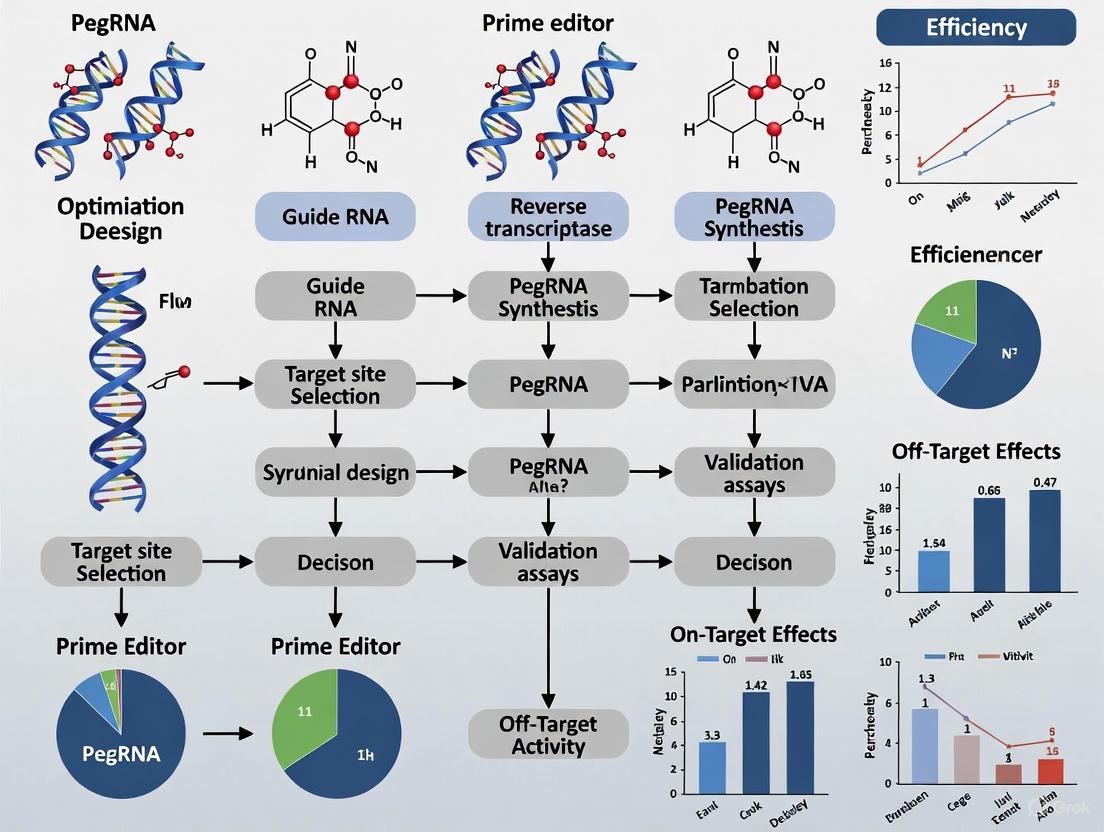
Prime editing represents a transformative advance in precision genome editing, yet its efficacy is critically dependent on the design of the prime editing guide RNA (pegRNA).
Advanced pegRNA Design Strategies: Maximizing Prime Editing Efficiency for Therapeutic Applications
Abstract
Prime editing represents a transformative advance in precision genome editing, yet its efficacy is critically dependent on the design of the prime editing guide RNA (pegRNA). This article provides a comprehensive guide for researchers and drug development professionals on optimizing pegRNA design. We explore the foundational architecture of pegRNAs and the prime editing mechanism, detail cutting-edge methodological advances including engineered pegRNAs (epegRNAs) and computational design tools, address key troubleshooting challenges such as low efficiency and byproduct formation, and validate strategies through comparative analysis of next-generation systems. By synthesizing the latest research, this resource aims to equip scientists with the knowledge to harness the full potential of prime editing for genetic research and therapeutic development.
Deconstructing the pegRNA: Core Components and the Prime Editing Mechanism
FAQ: Troubleshooting pegRNA Design and Efficiency
What are the core components of a pegRNA and their functions?
A pegRNA consists of four primary sequence parts that guide the prime editor and encode the desired genetic change.
- Spacer: A typically 20-nucleotide sequence that directs the Cas9 nickase to the specific target DNA site via complementary base pairing.
- Scaffold: The region that forms a secondary structure necessary for binding the Cas9 nickase protein, enabling its function.
- Reverse Transcription Template (RTT): Encodes the desired edit and provides a homology sequence for the DNA repair process. The length can vary but often starts at 10-16 nucleotides for initial testing.
- Primer Binding Site (PBS): A 10-15 nucleotide sequence that serves as an anchor point, annealing to the nicked DNA strand to initiate DNA synthesis by the reverse transcriptase [1].
How can I optimize the PBS and RTT sequences for better editing efficiency?
Optimizing the length and composition of the PBS and RTT is critical for successful prime editing. The following table summarizes key design parameters based on published recommendations [2].
| Component | Key Optimization Parameter | Recommendation |
|---|---|---|
| PBS (Primer Binding Site) | Length | Test different lengths, starting with ~13 nucleotides [2]. |
| GC Content | Aim for 40–60% GC content for most successful outcomes [2]. | |
| RTT (Reverse Transcription Template) | Length | Test different lengths, starting with ~10-16 nucleotides [2]. |
| 5' Nucleotide | The first base of the 3' extension should not be a C to avoid disruptive base pairing with the gRNA scaffold [2]. |
My prime editing efficiency is low. What are some advanced strategies to improve it?
Low efficiency can stem from several issues, including pegRNA degradation or misfolding. The table below outlines advanced engineering strategies.
| Strategy | Mechanism | Key Findings |
|---|---|---|
| epegRNAs [3] | Adds a stabilizing RNA motif (e.g., evopreQ1 or mpknot) to the 3' end of the pegRNA to protect it from exonucleolytic degradation. | Improved prime editing efficiency 3 to 4-fold on average in multiple human cell lines (HeLa, U2OS, K562) without increasing off-target effects [3]. |
| pegRNA Refolding [4] | A simple procedure of heat denaturation followed by slow cooling to re-fold the pegRNA into its correct, functional conformation. | Improved ribonucleoprotein-mediated PE efficiencies in zebrafish embryos by up to nearly 25-fold by resolving internal misfolding [4]. |
| Same-Sense Mutations (spegRNA) [5] | Introduces additional, silent point mutations in the RTT to create a "bubble" of multiple mismatches that is less efficiently recognized and reversed by the cellular mismatch repair (MMR) system. | Increased base-editing efficiency by up to 4,976-fold (on-average 353-fold) by evading MMR [5]. Introducing two mutations at positions 2/5 or 3/6 (counting from the 3' end of the RTT) was particularly effective [5]. |
| Point Mutations in RTT [4] | Introducing specific point mutations (e.g., at RTT+1 or RTT+2) to disrupt internal complementary sequences within the pegRNA that cause misfolding. | Mutations at the RTT+2 position increased pure PE frequency by up to 6.7-fold (mean 2.4-fold) in zebrafish embryos [4]. |
How can I reduce undesired byproducts like scaffold sequence incorporation?
A common undesired byproduct is the incorporation of parts of the pegRNA scaffold into the genome. Structural studies reveal that the M-MLV reverse transcriptase (RT) can sometimes continue reverse transcription beyond the end of the RTT and into the scaffold region of the pegRNA [6]. To mitigate this:
- Rational Engineering: Based on structural insights, you can rationally engineer pegRNA variants or fuse the M-MLV RT within SpCas9 at positions that limit over-extension [6].
- Avoid Homology: When using MMR-inhibiting systems like PE4/PE5, ensure the pegRNA scaffold sequence is not homologous to the target genomic site to prevent incorrect incorporation [2].
What is the role of a nicking sgRNA (ngRNA), and how should I design it?
Systems like PE3 and PE5 use a second, standard sgRNA to nick the non-edited DNA strand. This encourages the cell to use the edited strand as a template during repair, thereby boosting editing efficiency [2].
- Design: Test multiple nick sites, starting with sites approximately 50 bp upstream or downstream from the original prime editing nick site [2].
- High-Fidelity Design (PE3b/PE5b): For lower indel rates, design the ngRNA so that it can only bind and nick after the edit has been installed on the opposite strand. This approach, known as PE3b/PE5b, reduces concurrent nicks and is recommended over PE3/PE5 when possible [2].
Experimental Protocols
This protocol helps resolve internal misfolding in pegRNAs that can inhibit Cas9 binding.
- Resuspension: Dilute the synthesized pegRNA in nuclease-free buffer or water.
- Denaturation: Heat the pegRNA to 65-75°C for 2-5 minutes.
- Refolding: Slowly cool the pegRNA to room temperature over 20-30 minutes. This can be done by turning off the heating block and letting it cool naturally or by using a thermal cycler with a controlled ramp rate.
- Storage: Use immediately or store at -20°C for later use. Always keep on ice when in use.
This strategy enhances editing efficiency by confounding the cellular mismatch repair system.
- Identify Codons: Within the reverse transcriptase template (RTT) of your pegRNA, identify codons where you can introduce silent mutations that do not change the encoded amino acid.
- Select Positions: Focus on introducing one or two same-sense mutations. The most effective positions are often:
- A single mutation at position 1, 5, or 6 (counting the 3'-base of the RTT as position 1).
- Two mutations simultaneously at positions 2/5 or 3/6.
- Design and Test: Design a small panel of 1-5 spegRNAs incorporating these mutations and test them empirically against your target.
Signaling Pathways and Workflows
pegRNA Optimization Decision Workflow
This diagram illustrates a logical workflow for troubleshooting and optimizing pegRNA design to improve prime editing efficiency.
Mechanism of Undesired Scaffold Incorporation
Structural studies have revealed how reverse transcription can extend beyond the intended RTT, leading to the incorporation of pegRNA scaffold sequences into the genome, a major undesired byproduct [6].
The Scientist's Toolkit: Research Reagent Solutions
| Item | Function in Prime Editing | Key Consideration |
|---|---|---|
| EnginepegRNAs (epegRNAs) [3] | pegRNAs with 3' terminal RNA motifs (evopreQ1, mpknot) that protect against exonuclease degradation, enhancing stability and efficiency. | Use computational tools like pegLIT to design linkers that minimize unwanted intra-RNA base pairing [2]. |
| PE Systems (PE2, PE3, PE5) [2] [1] | Progressive generations of prime editors. PE2 is the basic system; PE3 adds a nicking sgRNA; PE5 combines a nicking sgRNA with MMR inhibition. | PE3b/PE5b systems, where the nicking sgRNA targets the edited sequence, are recommended to reduce indel byproducts [2]. |
| MMR Inhibitors (e.g., MLH1dn) [2] | Suppresses the mismatch repair pathway, which can reverse prime edits, thereby improving the persistence of installed edits. | Ensure pegRNA scaffold has no homology to the genomic target to prevent unintended edits when MMR is inhibited [2]. |
| La Protein / PE7 [2] | An RNA-binding protein (fused in PE7 or endogenous) that binds 3' polyU tracts on pegRNAs, protecting them from degradation. | Adding 3' polyU tracts can improve PE efficiency for standard pegRNAs, but this is not used with epegRNAs [2]. |
How Prime Editing Works: A Visual Guide
The prime editing mechanism is a precise, multi-step process that enables "search-and-replace" genome editing without double-strand breaks. The following diagram illustrates the complete pathway from initial target binding to final flap resolution.
Troubleshooting Common Experimental Challenges
Table 1: Prime Editing Troubleshooting Guide
| Problem | Potential Causes | Solutions & Optimization Strategies | Expected Outcomes |
|---|---|---|---|
| Low editing efficiency | - pegRNA degradation [3]- Suboptimal PBS/RTT length [2]- Cellular MMR reversal [7] [8] | - Use epegRNAs with 3' RNA motifs (evopreQ1, mpknot) [3]- Test PBS lengths of ~13 nt and RTT lengths of 10-16 nt [2]- Employ PE4/PE5 systems with MLH1dn to inhibit MMR [9] [8] | 3-4× efficiency improvement with epegRNAs [3]; 7.7× improvement with PE4 vs PE2 [8] |
| High indel formation | - Concurrent nicking of both strands [1] [8]- pegRNA scaffold homology to target site [2] | - Use PE3b system with nicking sgRNA that targets only edited strand [1] [8]- Ensure no homology between pegRNA scaffold and genomic target [2] | 13-fold reduction in indels with PE3b vs PE3 [8] |
| Inefficient flap resolution | - MMR bias against edited strand [7]- Short heteroduplex region | - Incorporate silent mutations to create 3+ base "bubbles" that evade MMR [2]- Edit the PAM sequence to prevent re-nicking [2] | Improved heteroduplex resolution in favor of edited strand |
| Off-target effects | - pegRNA spacer homology to non-target sites [10] | - Use computationally optimized spacers with minimal off-target potential- Employ systems requiring three binding events (spacer, PBS, 3' flap) [9] | Lower off-target effects compared to CRISPR-Cas9 [10] [9] |
Experimental Protocols for Key Optimizations
Protocol: Engineering pegRNAs (epegRNAs) for Enhanced Stability
Background: Traditional pegRNAs are susceptible to 3' degradation, producing truncated RNAs that compete for target sites but cannot mediate editing [3]. Engineered pegRNAs (epegRNAs) incorporate structured RNA motifs that protect against exonuclease degradation.
Materials:
- RNA synthesis capability for extended pegRNAs (110-266 nt) [11]
- evopreQ1 (42 nt) or mpknot RNA motifs [3]
- 8-nt non-interfering linker sequences (design with pegLIT tool) [3] [2]
Method:
- Design standard pegRNA with spacer, scaffold, RTT, and PBS sequences
- Append an 8-nt linker to the 3' end of the PBS using ViennaRNA for design [3]
- Add evopreQ1 or mpknot RNA motif to the 3' terminus [3]
- Synthesize and purify using HPLC grade for optimal results [11]
- Validate editing efficiency in HEK293T cells comparing to canonical pegRNA
Expected Results: epegRNAs show 3-4× higher editing efficiency in HeLa, U2OS, and K562 cells without increasing off-target effects [3].
Protocol: PE3b System for Reduced Indel Formation
Background: The PE3 system increases editing efficiency by nicking the non-edited strand but can raise indel rates due to concurrent nicking. PE3b addresses this by designing the nicking sgRNA to target only after the edit is installed [1] [8].
Materials:
- PE2 enzyme (Cas9 nickase-reverse transcriptase fusion) [8]
- pegRNA encoding desired edit
- Nicking sgRNA designed to match edited sequence
Method:
- Design pegRNA with standard parameters (13 nt PBS, 10-16 nt RTT) [2]
- Design nicking sgRNA with spacer complementary to the edited sequence, not the wild-type allele
- Transfert cells with PE2 + pegRNA + nicking sgRNA plasmids
- Analyze editing efficiency and indel rates via sequencing
- Compare to PE3 system with standard nicking sgRNA
Expected Results: PE3b achieves similar editing efficiencies as PE3 but with 13-fold reduction in indel formation [8].
Research Reagent Solutions
Table 2: Essential Reagents for Prime Editing Research
| Reagent Type | Key Examples | Specifications | Applications |
|---|---|---|---|
| Prime Editor Proteins | PE2, PEmax, PE6 variants [8] | Cas9(H840A)-RT fusions with varying mutations | Core editing machinery; PEmax offers codon optimization for human cells [8] |
| pegRNA Synthesis | HPLC-purified pegRNAs [11] | 110-266 nt length, ≥85% purity, modifications available | Encoding target site and desired edit; critical for experimental success |
| Stability-Enhanced RNAs | epegRNAs [3] | pegRNAs with 3' evopreQ1 or mpknot motifs | Improved editing efficiency (3-4×) by preventing degradation |
| MMR Inhibition | MLH1dn plasmid [9] [8] | Dominant-negative MLH1 variant | Increases editing efficiency in PE4/PE5 systems by reducing edit reversal |
| Delivery Tools | PE2/PE3 mRNA [11] | Modified mRNA (Cap1, m1Ψ) for reduced immunogenicity | Enables transient editor expression without viral vectors |
| Validation Primers | Target-specific primers [11] | Amplify edited genomic regions | Essential for quantifying editing efficiency and specificity |
Frequently Asked Questions (FAQs)
Q1: What are the key advantages of prime editing over base editing and traditional CRISPR-Cas9 systems?
Prime editing offers several distinct advantages: (1) It enables all 12 possible base-to-base conversions without DNA double-strand breaks, unlike CRISPR-Cas9 which relies on error-prone repair of DSBs [7] [8]; (2) It has greater targeting flexibility than base editors, which are constrained by the need for a precisely positioned PAM sequence within their editing window [8]; (3) It produces fewer indel byproducts than Cas9-initiated homology-directed repair [10] [8]; (4) It can install small insertions and deletions in addition to point mutations [1].
Q2: Why does prime editing efficiency vary between cell types, and how can this be addressed?
Editing efficiency depends on cellular factors including DNA repair pathway activity, pegRNA stability, and reverse transcriptase processivity [7] [3]. Different cell types express varying levels of mismatch repair proteins that can reverse prime edits [8]. To address this: (1) Use the PE4/PE5 systems with MLH1dn to transiently inhibit MMR in refractory cell types [9] [8]; (2) Employ epegRNAs to protect against exonuclease degradation [3]; (3) Optimize PBS and RTT lengths empirically for each cell type [2].
Q3: What are the most critical parameters for designing effective pegRNAs?
Optimal pegRNA design requires attention to several parameters: (1) Primer binding site length of ~13 nucleotides with 40-60% GC content [2]; (2) Reverse transcriptase template length of 10-16 nucleotides for most edits [2]; (3) Avoidance of C as the first base of the 3' extension to prevent disruptive base pairing [2]; (4) Incorporation of PAM edits when possible to prevent re-nicking of edited strands [2]; (5) Use of 3' RNA structural motifs or polyU tracts (for PE7) to enhance stability [3] [2] [8].
Q4: What recent advancements address the delivery challenges of prime editing components?
Recent innovations focus on: (1) Smaller prime editors (PE6a, PE6b) that can be packaged into AAV vectors [8]; (2) Engineered pegRNAs with improved stability (epegRNAs, petRNAs) [3] [12]; (3) PE7 system which fuses the La protein to stabilize pegRNAs [8]; (4) proPE system which separates nicking and templating functions for more efficient editing [12]; (5) Optimized mRNA and LNP formulations for transient delivery [7] [11].
Prime editing represents a transformative "search-and-replace" genome editing technology that directly writes new genetic information into a specified DNA site without requiring double-strand breaks (DSBs) or donor DNA templates [13] [14]. This technology has evolved significantly from its initial conception to more advanced systems, with continuous improvements focused on enhancing editing efficiency, specificity, and delivery capabilities. The optimization of prime editor proteins and pegRNA design has been central to this evolution, enabling broader application across research and therapeutic contexts [15] [16].
At its core, prime editing employs a fusion protein consisting of a Cas9 nickase (nCas9) reverse transcriptase (RT) enzyme complex, programmed with a specialized prime editing guide RNA (pegRNA) [17] [18]. The pegRNA both specifies the target genomic location and encodes the desired edit, making its design a critical determinant of editing success. This technical support center addresses the key challenges researchers face when implementing prime editing systems, with particular emphasis on pegRNA design optimization within the broader context of prime editor evolution from PE1 to advanced PE6 systems.
Prime Editor Evolution: From PE1 to PE6
Developmental Timeline and Key Improvements
The progression of prime editing systems has involved strategic engineering of both the editor protein and auxiliary components to enhance performance across diverse editing contexts.
Table 1: Evolution of Prime Editing Systems from PE1 to PE6
| System | Key Components | Editing Efficiency | Major Innovations | Primary Applications |
|---|---|---|---|---|
| PE1 | nCas9(H840A) + M-MLV RT + pegRNA | ~10-20% in HEK293T cells [18] | Founding proof-of-concept system [18] | Initial demonstration of prime editing principle |
| PE2 | nCas9(H840A) + engineered M-MLV RT (5 mutations) + pegRNA [19] [18] | ~20-40% in HEK293T cells [18] | 5 RT mutations (D200N/L603W/T330P/T306K/W313F) enhancing activity, binding, and thermostability [19] | General-purpose editing with improved efficiency over PE1 |
| PE3 | PE2 system + additional nicking sgRNA [19] [18] | ~30-50% in HEK293T cells [18] | Dual-nicking strategy to encourage use of edited strand as repair template [18] | Applications requiring higher editing efficiency |
| PE4 | PE2 system + MLH1dn (MMR inhibition) [19] | ~50-70% in HEK293T cells [18] | Mismatch repair inhibition to reduce correction of edited strands [19] | Editing in MMR-proficient contexts |
| PE5 | PE3 system + MLH1dn (MMR inhibition) [19] | ~60-80% in HEK293T cells [18] | Combines dual nicking with MMR inhibition [19] | High-efficiency editing with reduced off-target effects |
| PEmax | Codon-optimized nCas9 + engineered RT + nuclear localization signals [19] | Improved over PE2 | Architecture optimization, linker engineering, and improved expression [19] | Versatile high-performance editing |
| PE6 | Evolved RT variants (PE6a-d) and Cas9 variants (PE6e-g) + epegRNAs [15] [19] | ~70-90% in HEK293T cells [18]; 22-fold improvement for compact RTs [15] | Phage-assisted evolution of compact RTs; engineered Cas9 domains [15] | Therapeutic applications with enhanced efficiency and delivery |
Key Experimental Workflows in Prime Editor Development
The development of advanced prime editors has employed several sophisticated protein engineering and evolution methodologies:
Phage-Assisted Continuous Evolution (PACE) for PE6 Development:
- Objective: Evolve compact reverse transcriptases with improved prime editing efficiency [15]
- Methodology:
- Implement continuous evolution system linking prime editing activity to phage propagation
- Apply selective pressure for improved editing efficiency over multiple generations
- Screen evolved RT variants across multiple edit types and cell lines
- Outcome: Identification of PE6a-d variants with up to 22-fold improved editing efficiency and reduced size (516-810 bp smaller than PEmax) [15]
Rational Engineering of Reverse Transcriptase Enzymes:
- Objective: Improve RT performance through structure-guided mutagenesis [15]
- Methodology:
- Install analogous mutations to PE2's five mutations (D200N, T306K, W313F, T330P, L603W) in various RTs
- Use AlphaFold2-predicted structures to guide mutations for RTs without crystal structures
- Test individual and combined mutations across multiple edits in HEK293T cells
- Outcome: 5.3-fold to 6.8-fold improvement in editing efficiency for engineered RTs compared to wild-type versions [15]
Troubleshooting Guide: Common Prime Editing Challenges
pegRNA Design and Optimization Issues
Problem: Low editing efficiency across multiple targets
- Potential Cause: Suboptimal primer binding site (PBS) length or reverse transcriptase template (RTT) design [2]
- Solution:
- Systematically test PBS lengths starting from 13 nucleotides [2]
- Optimize RTT length to approximately 10-16 nucleotides for standard edits [2]
- Maintain PBS GC content between 40-60% where possible [2]
- Avoid 'C' as the first base of the 3′ pegRNA extension to prevent non-canonical base pairing with G81 of the gRNA scaffold [2]
- Advanced Solution: Implement engineered pegRNAs (epegRNAs) with evopreQ1 or mpknot motifs at the 3′ end to protect against degradation [16]
Problem: High indel rates alongside desired edits
- Potential Cause: Repeated nicking of the newly synthesized strand due to intact PAM sequence [2]
- Solution: Incorporate PAM-disrupting mutations as part of the edit to prevent re-binding of the editor [2]
- Alternative Solution: Use PE3b/PE5b systems with nicking sgRNAs designed to bind only after the edit is installed [2]
Problem: Inconsistent performance across cell types
- Potential Cause: Variable expression levels of prime editors and pegRNAs [20]
- Solution: Implement stable genomic integration using piggyBac transposon system for consistent editor expression [20]
- Validation Approach: Use single-cell cloning to establish lines with verified editor expression and function [20]
Editor Selection and Delivery Challenges
Problem: Limited delivery capacity for in vivo applications
- Potential Cause: Large size of prime editor components exceeding viral packaging limits [15]
- Solution: Utilize compact PE6 variants (PE6a-b) with reduced-size RTs (516-810 bp smaller than PEmax) [15]
- Alternative Solution: Employ dual-AAV delivery systems with split editor components [15] [16]
Problem: Poor performance with long, complex edits
- Potential Cause: Limitations in RT processivity or flap resolution [15]
- Solution: Select appropriate RT variants specialized for different edit types (PE6 editors show specialization for specific edit classes) [15]
- Advanced Solution: For insertions >30 bp, consider twinPE or PASSIGE systems for large DNA integrations [13] [19]
Frequently Asked Questions (FAQs)
Q1: What are the key considerations when choosing between PE2, PE3, PE4, and PE5 systems?
- A: System selection depends on your specific application requirements. PE2 provides a solid foundation with reasonable efficiency. PE3 enhances efficiency through an additional nicking sgRNA but may increase indel rates. PE4 and PE5 incorporate MLH1dn to inhibit mismatch repair, significantly improving efficiency particularly in mismatch repair-proficient contexts but requiring careful design to prevent undesired outcomes [19] [18]. For therapeutically relevant editing in patient-derived fibroblasts and primary human T-cells, PE6 variants have demonstrated enhanced performance [15].
Q2: How does pegRNA design differ for various prime editor generations?
- A: While the core principles of pegRNA design remain consistent across systems, advanced editors like PE6 benefit from optimized pegRNA architectures. For all systems, begin with standard PBS lengths of ~13 nt and RTT of ~10-16 nt. For PE6 systems, incorporate epegRNA designs with structured RNA motifs for enhanced stability. The first base of the 3′ extension should not be 'C' in any system to prevent non-canonical gRNA binding [2].
Q3: What delivery methods show highest efficiency for prime editors?
- A: Delivery optimization significantly impacts editing outcomes. Recent research demonstrates that combining piggyBac transposon system for stable editor integration with lentiviral delivery of epegRNAs achieves up to 80% editing efficiency across multiple cell lines [20]. For in vivo applications, dual-AAV delivery of PE6 systems achieved 40% loxP insertion in mouse cortex, a 24-fold improvement over previous systems [15].
Q4: How can I address the challenge of installing long insertions (>100 bp)?
- A: For large insertions, consider these approaches:
- TwinPE: Uses two pegRNAs to edit both DNA strands, enabling larger insertions and deletions [13]
- PASSIGE (Prime Assisted Site-Specific Integrase Gene Editing): Combines prime editing with recombinases for gene-sized insertions [13] [19]
- PE6 with dual-AAV: Enables longer insertions (38-42 bp) with 12-183-fold improvements in efficiency compared to earlier systems [15]
Table 2: Prime Editing Efficiency Optimization Strategies
| Challenge | Standard Approach | Enhanced Approach | Expected Improvement |
|---|---|---|---|
| Low Efficiency | PE2 with standard pegRNA | PE6 with epegRNA + MMR inhibition | Up to 22-fold with PE6 editors [15] |
| Delivery Limitations | Single-vector delivery | Dual-AAV with compact PE6 variants | 24-fold improvement in vivo [15] |
| Large Insertions | Standard PE | TwinPE or PASSIGE | Insertions >5,000 bp possible [13] [19] |
| Cell-Type Specific Challenges | Transient transfection | Stable integration via piggyBac | Up to 80% efficiency in multiple cell lines [20] |
Research Reagent Solutions
Table 3: Essential Research Reagents for Prime Editing Optimization
| Reagent | Function | Examples/Specifications | Application Context |
|---|---|---|---|
| Prime Editor Plasmids | Core editing machinery | PEmax (Addgene #174828), PE6 variants | Base editor proteins for different systems |
| pegRNA Expression Vectors | Edit specification | epegRNA backbones with evopreQ1/mpknot | Stabilized pegRNAs for improved efficiency |
| MMR Inhibition Components | Enhance editing efficiency | MLH1dn (dominant-negative MLH1) | PE4/PE5 systems for MMR-proficient contexts |
| Delivery Systems | Editor and guide delivery | piggyBac transposon, lentiviral vectors, AAV | Cell-type specific delivery optimization |
| Validation Tools | Edit confirmation | Next-generation sequencing, T7E1 assay | Efficiency and specificity assessment |
Advanced Workflow: Systematic Prime Editing Optimization
Comprehensive Optimization Protocol:
- Initial pegRNA Design
- Design 3-4 pegRNAs per target with varying PBS lengths (10-15 nt) and RTT configurations
- Incorporate structured RNA motifs (evopreQ1 or mpknot) for epegRNA designs
- Include silent mutations to create 3-base or longer tracts when possible to evade MMR [2]
Editor Selection Matrix
- Test PE2, PEmax, and appropriate PE6 variants in parallel
- For challenging edits, include PE4/PE5 with MLH1dn for MMR inhibition
- For therapeutic applications requiring viral delivery, prioritize compact PE6 variants
Delivery Optimization
Validation and Iteration
- Quantify editing efficiency using next-generation sequencing (minimum 5000x coverage)
- Assess indel formation and off-target effects using targeted sequencing
- Iterate on pegRNA design based on initial results, focusing on optimal performers
This systematic approach combining pegRNA design optimization with appropriate editor selection and delivery methods has demonstrated substantial improvements in prime editing efficiency, achieving up to 80% editing in cell lines and 50% in human pluripotent stem cells [20].
Understanding Editing Windows and Protospacer Adjacent Motif (PAM) Constraints
Frequently Asked Questions (FAQs)
1. What are the primary constraints of the prime editing (PE) window? The canonical prime editing window is constrained by its mechanism, which limits efficient editing to positions within approximately 30 base pairs (bp) downstream (3') of the nick site created by the Cas9 nickase on the non-target strand [8]. Editing efficiency typically decreases for edits located further from the nick site, particularly beyond the +12 to +15 position [21] [22]. This is partly due to the challenge of fully synthesizing long reverse transcriptase templates without degradation [12].
2. How does PAM availability limit targetable sites for prime editing? The PAM sequence is an absolute requirement for the Cas9 protein to bind DNA. For the commonly used Streptococcus pyogenes Cas9 (SpCas9), the canonical PAM is 5'-NGG-3'. This sequence must be present on the non-target DNA strand, positioning the nick site 3-4 bp upstream (5') of the PAM [8] [22]. The need for a specific PAM sequence at a precise location and orientation relative to the target edit can render some genomic sites inaccessible, creating "PAM deserts" [8].
3. What strategies can overcome PAM and editing window constraints? Recent advances have developed several strategies to overcome these limitations, as summarized in the table below.
Table 1: Strategies to Overcome PAM and Editing Window Constraints
| Strategy | Mechanism | Key Advantage | Example System |
|---|---|---|---|
| Reverse Prime Editing (rPE) [21] | Uses Cas9-D10A nickase to nick the target strand, enabling editing in the 5' direction from the HNH nick site. | Expands the editing scope to the 5' direction; potentially higher fidelity due to reduced double-strand break formation. | rPE2, rPE3 |
| Prolonged Editing Window (proPE) [12] | Separates the nicking and templating functions onto two different sgRNAs (engRNA and tpgRNA). | Extends the effective editing window and enhances efficiency for edits distant from the nick site. | proPE |
| Engineered Cas9 Variants [23] | Incorporates mutations (e.g., K848A, H982A) to relax nick positioning and promote 5' strand degradation. | Reduces indel errors by up to 36-fold, improving the edit-to-indel ratio. | pPE (precise Prime Editor) |
| PAM-Relaxed Cas Domains [22] | Utilizes engineered Cas proteins like SpRY or other orthologs with altered PAM requirements. | Increases the number of targetable sites in the genome by relaxing the strict NGG PAM requirement. | PE-SpRY |
Troubleshooting Guides
Issue: Low Editing Efficiency for Edits Distant from the PAM Site
Potential Cause: The edit is located at a suboptimal position within the prime editing window, where reverse transcription efficiency drops.
Solutions:
- Utilize the proPE system: Co-deliver an essential nicking guide RNA (engRNA) and a separate template-providing guide RNA (tpgRNA). The tpgRNA uses a truncated spacer (11-15 nt) that binds DNA without nicking, locally presenting the template near the edit site. This can increase editing efficiency for low-performing edits by an average of 6.2-fold [12].
- Employ a twin-pe strategy: If the edit is very large, consider using two pegRNAs that target opposite strands to create complementary flaps [22].
- Consider Reverse PE (rPE): If the PAM orientation allows, design an rpegRNA for the rPE system, which establishes an editing window on the opposite side of the nick [21].
Table 2: Troubleshooting Low Efficiency and Off-Target Effects
| Symptom | Potential Cause | Recommended Solution |
|---|---|---|
| Low efficiency for edits >12bp from nick | Incomplete DNA flap synthesis/degradation [12] | Switch to the proPE system [12]. |
| High indel byproducts | Re-nicking of the edited strand or MutSα–MutLα mismatch repair activity [8] [23] | Use the PE3b system; or employ PEmax with MMR inhibition (PE4/PE5 systems) [8]; or use the high-fidelity pPE editor [23]. |
| Inefficient editing in a "PAM desert" | Lack of an NGG PAM sequence near the target site [8] | Use an rPE system to access a different editing window [21]; or employ a PAM-relaxed Cas variant [22]. |
| Low pegRNA stability | Degradation of the 3' extension (PBS/RTT) of the pegRNA [8] | Use epegRNAs with engineered RNA pseudoknots to protect the 3' end, or use the PE7 system which fuses the La protein to stabilize pegRNAs [8]. |
Issue: High Indel Byproducts
Potential Cause: The non-edited strand is being nicked by the Cas9 nickase before the heteroduplex is resolved, leading to double-strand breaks repaired by error-prone pathways [8] [23].
Solutions:
- Use the PE3b system: This system uses a nicking sgRNA (ngRNA) designed to bind only after the edit has been incorporated into the primary strand, reducing the chance of simultaneous nicking [8].
- Inhibit Mismatch Repair (MMR): Use the PE4 or PE5 system, which co-expresses a dominant-negative MLH1 mutant to transiently inhibit MMR, favoring the retention of the edited strand [8].
- Employ a high-fidelity editor: Use the recently engineered pPE (K848A-H982A), which relaxes nick positioning to promote degradation of the competing 5' strand, reducing indels by up to 36-fold compared to standard PE [23].
Experimental Protocols
Protocol 1: Implementing the proPE System to Extend the Editing Window
Purpose: To significantly improve prime editing efficiency for edits that are distal from the canonical nick site or otherwise inefficient [12].
Materials:
- Prime editor protein (e.g., PEmax)
- Essential nicking guide RNA (engRNA): A standard sgRNA targeting the desired genomic site.
- Template-providing guide RNA (tpgRNA): An sgRNA with a truncated spacer (11-15 nucleotides) targeting a site near the intended edit. Its 3' extension contains the PBS and RTT, but it does not induce a nick.
Method:
- Design: Design the engRNA to create the initial nick. Design the tpgRNA to bind a genomic site as close as possible to the intended edit. The truncated spacer ensures the PE complex binds DNA without cleaving it.
- Delivery: Co-transfect cells with plasmids encoding the prime editor, the engRNA, and the tpgRNA. The optimal ratio of engRNA to tpgRNA should be determined empirically.
- Optimization: Titrate the amount of engRNA plasmid. High levels of engRNA can lead to re-nicking and reduce efficiency. The amount of tpgRNA can be increased until efficiency saturates [12].
- Analysis: Assess editing efficiency 72-96 hours post-transfection using amplicon deep sequencing.
Protocol 2: Applying Reverse Prime Editing (rPE)
Purpose: To create an editing window on the 5' side of the HNH-mediated nick site, thereby accessing new genomic territory and potentially reducing unwanted byproducts [21].
Materials:
- Reverse Prime Editor protein (e.g., rPE2): A fusion of Cas9-D10A nickase and M-MLV reverse transcriptase.
- Reverse pegRNA (rpegRNA): Designed based on the target DNA strand. The PBS of the rpegRNA binds to the DNA sequence adjacent to the 5' terminus of the HNH-mediated nick site.
Method:
- Design: Identify a PAM sequence and design the rpegRNA spacer to be complementary to the target strand. The PBS and RTT in the rpegRNA's 3' extension are designed to encode the desired edit within the new 5' editing window.
- Delivery: Transfect cells with the rPE2 (or optimized rPE7max) editor and the rpegRNA.
- Enhancement (Optional): For higher efficiency, include a nicking sgRNA to create the rPE3 system, which nicks the non-edited strand to bias repair in favor of the edit [21].
- Analysis: Validate editing outcomes and specificity using next-generation sequencing.
Signaling Pathways and Workflows
The Scientist's Toolkit: Research Reagent Solutions
Table 3: Essential Reagents for Advanced Prime Editing Applications
| Reagent / System | Function | Key Application |
|---|---|---|
| PEmax [8] | An optimized prime editor architecture with codon-optimized RT, additional NLS, and Cas9 mutations. | General purpose prime editing with improved expression and activity in human cells. Serves as the base for many advanced systems. |
| pPE (precise Prime Editor) [23] | A prime editor (K848A-H982A) that relaxes nick positioning to promote 5' strand degradation. | Achieving extremely high-fidelity edits with dramatically reduced indel errors (up to 36-fold lower). |
| rPE2 / rPE7max [21] | A prime editor using Cas9-D10A to create a reverse editing window on the target strand. | Accessing edits 5' of the PAM site; potentially higher fidelity editing due to reduced DSB formation. |
| proPE System [12] | A dual-guide system separating nicking (engRNA) and templating (tpgRNA) functions. | Enhancing efficiency for edits distant from the nick site and expanding the effective editing window. |
| epegRNA [8] | An engineered pegRNA with 3' RNA pseudoknots to protect against degradation. | Stabilizing pegRNA structure to increase the availability of intact template for reverse transcription. |
| PE4/PE5 System [8] | A prime editing system co-expressing a dominant-negative MLH1dn to transiently inhibit mismatch repair. | Improving editing efficiency by biasing cellular repair to favor the edited strand, especially in PE3 mode. |
Strategic pegRNA Engineering and Computational Design Tools
Frequently Asked Questions (FAQs)
1. What is the primary cause of low prime editing efficiency, and how do epegRNAs address this? The primary cause is the degradation of the pegRNA's 3' extension, which contains the primer binding site (PBS) and reverse transcription template (RTT). Unlike the guide portion that is protected by the Cas9 protein, this 3' extension is exposed and susceptible to cellular exonucleases. Truncated pegRNAs can still bind the target site but are incompetent for editing, thereby poisoning the process by occupying the editor without performing the desired function [3]. epegRNAs address this by incorporating stable RNA pseudoknots at their 3' terminus. These structured motifs act as protective barriers, shielding the pegRNA from degradation and significantly enhancing its intracellular stability and lifetime, which in turn improves editing efficiency [3] [24].
2. Which RNA motifs are most effective for stabilizing pegRNAs? Research has identified several effective RNA motifs. The most commonly used are the evopreQ1 pseudoknot (a 42-nt prequeosine-1 riboswitch aptamer) and the mpknot pseudoknot (from the Moloney murine leukemia virus frameshifting element) [3]. An alternative approach uses xrRNA motifs derived from flaviviruses like Zika virus and Murray Valley encephalitis virus, which are renowned for their mechanical rigidity and resistance to exonucleases [24]. The table below summarizes the performance of these different motifs.
Table 1: Comparison of Protective RNA Motifs for epegRNAs
| Motif Name | Origin | Key Features | Reported Average Efficiency Enhancement |
|---|---|---|---|
| evopreQ1 | Bacterial riboswitch [3] | Small size (42 nt), defined tertiary structure [3] | 3 to 4-fold in multiple cell lines [3] |
| mpknot | Moloney murine leukemia virus (MMLV) [3] | Endogenous template for MMLV RT, tertiary structure [3] | 3 to 4-fold in multiple cell lines [3] |
| xrRNA (e.g., Zika) | Flaviviruses (e.g., Zika virus) [24] | Knot-like structure, mechanically rigid, confers exonuclease resistance [24] | Up to 3.1-fold for base conversions [24] |
3. Is a linker sequence necessary when appending these motifs to a pegRNA? Yes, using a linker is generally recommended. An 8-nucleotide (nt) linker between the PBS and the protective motif can prevent steric clashes and unwanted base-pairing interactions that might interfere with the reverse transcription process or the folding of the pseudoknot itself [3]. While one study found that epegRNAs with the smaller evopreQ1 motif were less affected by linker omission, performance can be variable, and including a linker provides more consistent results [3]. Computational tools like pegLIT are available to help design optimal, non-interfering nucleotide linkers [3] [2].
4. Do epegRNAs increase the risk of off-target editing? Extensive studies have shown that the use of epegRNAs does not increase off-target editing activity. The protective motifs enhance the stability and functional capacity of pegRNAs without altering the inherent specificity of the prime editor complex. The edit-to-indel ratios and off-target profiles remain comparable to, or are sometimes improved over, those of canonical pegRNAs [3] [24].
5. Besides epegRNAs, what other strategies can improve pegRNA stability? Another prominent strategy involves leveraging the La protein, an endogenous RNA-binding protein that stabilizes RNAs with 3' poly(U) tracts. The PE7 system fuses a fragment of the La protein directly to the prime editor. This fusion recruits the cellular La protein to the pegRNA, further protecting it from degradation and offering an alternative or complementary stabilization method [8] [2].
Troubleshooting Guides
Problem: Consistently Low Prime Editing Efficiency
Potential Cause: The pegRNA is being degraded, or its design is suboptimal.
Solution Checklist:
- Switch to epegRNAs: Replace standard pegRNAs with epegRNAs incorporating either the evopreQ1 or mpknot motif. This is one of the most impactful steps to overcome degradation [3].
- Use a Linker: Ensure your epegRNA design includes an 8-nt linker between the PBS and the protective RNA motif. Use the pegLIT tool to design a suitable linker sequence [3] [2].
- Optimize PBS and RTT Length: Even with epegRNAs, the core pegRNA components need to be optimized. Test PBS lengths around 13 nt and RTT lengths of 10-16 nt. Maintain a GC content of 40-60% for the PBS [2].
- Inhibit Mismatch Repair (MMR): Combine your epegRNA with a system that temporarily inhibits MMR, such as the PE4/PE5 system (which uses a dominant-negative MLH1 protein) or the PE6/PE7 systems. This prevents the cell from rejecting the newly edited strand [8] [18].
- Consider the 3' Terminal Base: Avoid designing a pegRNA whose 3' extension begins with a C base, as it can base-pair with G81 in the sgRNA scaffold, disrupting Cas9 binding and function [2].
Problem: High Indel Byproducts
Potential Cause: The editing strategy leads to concurrent nicks on both DNA strands, which can be misinterpreted as a double-strand break.
Solution Checklist:
- Edit the PAM Site: If your edit allows, include a silent or synonymous mutation in the PAM sequence. This prevents the prime editor from re-binding and re-nicking the newly edited strand [2].
- Use the PE3b/PE5b Strategy: When employing a second nicking sgRNA (as in PE3/PE5), design it as a PE3b/PE5b system. This means the nicking sgRNA should be complementary to the edited DNA sequence, ensuring it only nicks the non-edited strand after the edit has been installed, thereby reducing double-nicking events and indel formation [8] [2].
Experimental Protocols
Protocol 1: Constructing an epegRNA Expression Cassette
This protocol is adapted from methods used in rice and mammalian cell studies [3] [25].
Research Reagent Solutions:
Table 2: Essential Reagents for epegRNA Construction
| Item | Function/Description |
|---|---|
| pegRNA Design Tool | Software (e.g., pegFinder, PlantPegDesigner) to design spacer, RTT, and PBS sequences. |
| pegLIT Tool | Web tool for designing a non-interfering linker between the PBS and the RNA motif [3]. |
| Overlap Extension PCR | A technique to synthesize the full epegRNA fragment for cloning. |
| U6 Promoter Vector | A plasmid vector (e.g., pOsU6BbsIx2tQ1_polyT) for expressing the epegRNA in cells. |
| BbsI Restriction Site | A Type IIS restriction enzyme site used for golden gate cloning of the epegRNA sequence. |
| In-Fusion Cloning System | A seamless cloning method to insert the epegRNA fragment into the linearized vector. |
Methodology:
- Design: Using your target sequence and desired edit, design the pegRNA spacer, RTT, and PBS (e.g., 13 nt PBS, 10-16 nt RTT). Use pegLIT to generate an 8-nt linker and append your chosen protective motif (e.g., evopreQ1) to the 3' end of the linker [3] [25].
- Oligonucleotide Synthesis: Synthesize overlapping DNA oligonucleotide pairs that, when annealed, form the complete sequence: 20-nt spacer - sgRNA scaffold - RTT - PBS - 8-nt linker - RNA motif.
- Fragment Assembly: Perform an overlap extension PCR with the oligonucleotides to synthesize the full epegRNA expression cassette as a double-stranded DNA fragment.
- Vector Preparation: Digest your U6 promoter-containing destination vector with BbsI (or another suitable Type IIS enzyme) to linearize it.
- Cloning: Use the In-Fusion HD Cloning system to ligate the PCR-amplified epegRNA fragment into the linearized vector. Transform the ligation product into competent bacteria and sequence-verify positive clones [25].
Protocol 2: Evaluating epegRNA Performance in Mammalian Cells
Methodology:
- Cell Culture and Transfection: Culture HEK293T cells (or your cell line of interest) under standard conditions. Co-transfect the cells with two plasmids: one expressing the prime editor (e.g., PEmax) and the other expressing the epegRNA (constructed in Protocol 1). Include a control group transfected with a canonical pegRNA targeting the same site [3].
- Harvest and Analysis: Harvest cells 72 hours post-transfection. Extract genomic DNA from the cell population.
- Next-Generation Sequencing (NGS): Design primers to amplify the genomic region surrounding the target site by PCR. Purify the PCR products and subject them to NGS.
- Data Analysis: Analyze the NGS data to calculate the percentage of reads containing the desired edit. Calculate the editing efficiency as (# of edited reads / # of total reads) * 100. Compare the efficiency of the epegRNA to the canonical pegRNA control. Also, calculate the edit:indel ratio to assess precision [3] [24].
Diagrams and Workflows
epegRNA Protection Mechanism
Experimental Workflow for epegRNA Testing
Optimizing Primer Binding Site (PBS) Length and Reverse Transcriptase Template (RTT) Composition
Frequently Asked Questions (FAQs)
Q1: What are the recommended starting lengths for PBS and RTT? Initial pegRNA designs should test a PBS length of about 13 nucleotides and an RTT length of 10–16 nucleotides [2]. For edits requiring longer RTTs, further optimization is critical, as unintended secondary structures in the pegRNA can inhibit editing [2].
Q2: How does PBS sequence composition affect editing efficiency? Primer Binding Sites with a GC content between 40% and 60% are most likely to be successful [2]. While sequences outside this range can be optimized, staying within this GC content window improves the probability of effective primer binding and editing.
Q3: Why is the first base of the pegRNA's 3' extension important? The first base of the 3' extension should not be a C. A C in this position is speculated to base-pair with a specific guanine (G81) in the gRNA scaffold, disrupting the canonical pegRNA structure and Cas9 binding, which can compromise editing efficiency [2].
Q4: How can I improve the stability of my pegRNA? Using engineered pegRNAs (epegRNAs) that include structured RNA motifs (like mpknot) at their 3' end can protect the pegRNA from exonucleolytic degradation and improve its stability and editing outcomes [18] [2]. Tools like pegLIT can help design linkers for these structures [2].
Q5: What strategic edits can be included in the RTT to enhance outcomes?
- Edit the PAM sequence if possible. This prevents the Cas9 nickase from re-binding and re-nicking the newly synthesized edited strand, which reduces the formation of unwanted indels [2].
- For point mutations, consider adding silent mutations to create a "bubble" of 3 or more consecutive mismatches. Cellular DNA mismatch repair (MMR) systems are less efficient at correcting these multi-base mismatches, thereby increasing the likelihood that the edit is permanently incorporated [2].
Troubleshooting Common Experimental Issues
Problem: Low Prime Editing Efficiency
Potential Causes and Solutions:
Cause 1: Suboptimal PBS or RTT length.
Cause 2: pegRNA degradation.
Cause 3: Active DNA Mismatch Repair (MMR) rejecting the edit.
Cause 4: Inefficient resolution of the editing intermediate.
- Solution: For the PE3/PE5 systems, use a nicking sgRNA (ngRNA) on the non-edited strand. Test ngRNA binding sites located approximately 50–100 bp from the original pegRNA nick site to encourage the cell to use the edited strand as a repair template [18] [2]. Prefer the PE3b/PE5b strategy, where the ngRNA is designed to bind only after the edit is installed, reducing the chance for double-strand breaks and indels [2].
Problem: High Indel Byproducts
Potential Causes and Solutions:
Cause 1: Concurrent nicking of both DNA strands.
- Solution: Switch from the PE3/PE5 system to the PE3b/PE5b system. This ensures the nicking sgRNA only targets the edited DNA sequence, thereby minimizing the chance of creating a double-strand break [2]. Also, consider using next-generation prime editors like vPE or pPE, which are engineered with Cas9-nickase mutations that relax nick positioning and dramatically reduce indel errors [23].
Cause 2: Re-nicking of the edited strand.
- Solution: A key strategy is to include the PAM site in your edit. By mutating the PAM sequence in the RTT, you prevent the prime editor from recognizing and re-nicking the newly edited DNA [2].
Cause 3: Homology between pegRNA scaffold and genomic sequence.
- Solution: When using MMR-inhibiting systems (PE4/PE5), ensure the pegRNA scaffold sequence does not have significant homology to the target genomic region. This homology can lead to the unintended incorporation of parts of the scaffold into the genome [2].
Quantitative Data for PBS and RTT Optimization
Table 1: Experimentally Determined Optimal Ranges for PBS and RTT
| Parameter | Recommended Starting Point | Tested Effective Range | Key Considerations |
|---|---|---|---|
| PBS Length | 13 nt [2] | 8 - 16 nt [18] [12] | PBS with 40-60% GC content is most successful [2]. |
| RTT Length | 10-16 nt [2] | 10 - 30+ nt [18] | Longer templates require careful optimization to avoid secondary structures [2]. |
Experimental Protocol: Systematic Optimization of pegRNA Design
This protocol provides a step-by-step methodology for empirically determining the optimal PBS and RTT parameters for a specific prime editing target, based on established best practices [18] [2].
Objective: To identify the most efficient pegRNA design for a specific genomic edit by testing a matrix of PBS and RTT lengths.
Materials:
- Prime editor plasmid (e.g., PEmax [26])
- Plasmid(s) for nicking sgRNA (if using PE3/PE5 systems)
- Cloning-ready backbone plasmid for pegRNA expression
- Oligonucleotides for cloning various pegRNA designs
- Tissue culture materials and transfection reagent for your cell line (e.g., HEK293T [18])
- Genomic DNA extraction kit
- PCR reagents and primers flanking the target site
- Next-Generation Sequencing (NGS) library preparation kit and access to a sequencer [26]
Workflow Diagram: PegRNA Design Optimization
Procedure:
pegRNA Design and Cloning:
- For your specific target edit, design a library of pegRNAs that vary in PBS length (e.g., 8, 10, 13, 16 nucleotides) and RTT length (e.g., 10, 16, 22, 30 nucleotides).
- Ensure the first base of the 3' extension is not a C [2].
- Clone each pegRNA design into your chosen expression vector.
Cell Transfection:
- Culture your target cells (e.g., HEK293T) according to standard protocols.
- Co-transfect the cells with a constant amount of the prime editor plasmid (e.g., PEmax) and each individual pegRNA plasmid. Include a negative control (e.g., a non-targeting pegRNA).
- If using a PE3/PE5 system, also co-transfect a plasmid expressing a nicking sgRNA.
Harvest and Genomic DNA Extraction:
- 48-72 hours post-transfection, harvest the cells.
- Extract genomic DNA using a commercial kit, ensuring high purity and concentration for downstream PCR.
Target Locus Amplification and Sequencing:
- Design primers to amplify a ~300-500 bp region surrounding the target site.
- Perform PCR on the extracted genomic DNA from each sample.
- Prepare an NGS library from the purified PCR amplicons and sequence on an Illumina platform or equivalent to obtain deep sequencing data.
Data Analysis:
- Process the NGS data using specialized software (e.g., CRISPResso2) to align sequences to the reference genome.
- For each pegRNA variant, calculate the editing efficiency (% of reads containing the precise desired edit) and the indel rate (% of reads with insertions or deletions at the target site).
- The optimal pegRNA is the one that yields the highest editing efficiency with the lowest indel rate.
The Scientist's Toolkit: Essential Research Reagents
Table 2: Key Reagents for Prime Editing Optimization
| Item | Function in Experiment | Example & Notes |
|---|---|---|
| Prime Editor Plasmids | Core editing machinery. | PEmax: Codon-optimized PE2 with enhanced nuclear localization [26]. PE6/PE7: Newer versions with compact RT or fused La protein for improved stability/efficiency [18]. |
| pegRNA Expression Vectors | To clone and express pegRNA variants. | Plasmids with U6 promoter for pegRNA expression. Some are designed for easy oligo cloning [27]. |
| MMR Inhibitor | Suppresses mismatch repair to boost editing efficiency. | MLH1dn: A dominant-negative MLH1 protein used in PE4 and PE5 systems [18] [26]. |
| Nicking sgRNA | Nicks the non-edited strand to bias repair towards the edit. | Required for PE3 and PE5 systems. Designed to bind ~50-100 bp from the pegRNA nick site [2]. |
| Stable Cell Line Generation Tools | Ensures sustained editor expression for difficult edits. | PiggyBac Transposon System: Allows stable genomic integration of large prime editor constructs [20]. |
| NGS Analysis Software | Precisely quantifies editing efficiency and byproducts. | Tools like CRISPResso2 are essential for accurate analysis of prime editing outcomes from amplicon sequencing data [26]. |
Prime editing is a versatile "search-and-replace" genome editing technology that enables precise installation of substitutions, insertions, and deletions without requiring double-strand DNA breaks or donor DNA templates [28]. The system uses a prime editing guide RNA (pegRNA) that both specifies the target genomic location and encodes the desired edit through its 3' extension, which contains a primer binding site (PBS) and a reverse transcription template (RTT) [2]. Despite its promising capabilities, prime editing efficiency is significantly influenced by pegRNA design parameters, including PBS length, RTT composition, and secondary structure formation [29] [2]. Optimizing these components manually is complex and time-consuming, creating a critical need for computational tools that can streamline and enhance the design process. This technical support center addresses common experimental challenges through targeted troubleshooting guides and FAQs, providing researchers with practical methodologies for improving prime editing outcomes.
Computational Tools for pegRNA Design
pegFinder: Rapid pegRNA Design and Ranking
Overview: pegFinder is a web-based tool that rapidly designs and ranks candidate pegRNAs from reference and edited DNA sequences [30]. Its algorithm incorporates sgRNA on-target and off-target scoring predictions and nominates secondary nicking sgRNAs to increase editing efficiency.
Key Features and Design Parameters:
- Input Requirements: pegFinder requires the wildtype DNA sequence (>100nt flanks recommended around the edit site) and the edited DNA sequence with identical 5' and 3' ends [30].
- Spacer Selection: The tool prioritizes sgRNA spacers whose target sites would be disrupted after prime editing and considers the distance between the nick site and desired edits [30].
- PBS and RTT Generation: pegFinder evaluates edited base positioning and GC content to generate appropriate PBS and RTT sequences of varying lengths for experimental optimization [30].
- Secondary Nicking sgRNAs: It identifies PE3 nicking sgRNAs (40-150nt away on the opposite strand) and PE3b sgRNAs that become active only after successful editing [30].
Table 1: pegFinder Design Parameters and Outputs
| Component | Design Considerations | pegFinder Output |
|---|---|---|
| sgRNA Spacer | Target disruption post-editing; Distance to edits | Ranked list of candidate spacers |
| Primer Binding Site (PBS) | GC content (40-60% optimal) [2] | PBS sequences of varying lengths (e.g., ~13 nt starting point) [2] [30] |
| Reverse Transcription Template (RTT) | Length, secondary structure avoidance | RTT templates of varying lengths (e.g., 10-16 nt starting point) [2] [30] |
| Cloning Oligos | Direct experimental implementation | Oligonucleotide sequences for standard plasmid vectors [30] |
pegLIT: Optimizing Linker Sequences for Structured pegRNAs
Overview: pegLIT (pegRNA Linker Identification Tool) addresses the challenge of unwanted base pairing in engineered pegRNAs (epegRNAs). epegRNAs include structured RNA motifs at their 3' end, such as mpknot, to protect against degradation and improve stability [2]. pegLIT creates non-interfering nucleotide linkers between the pegRNA and these 3' motifs to minimize unwanted intra-RNA base pairing with the primer binding site, thereby enhancing editing efficiency [31] [2].
PlantPegDesigner: Application in Plant Systems
Note: Within the provided search results, no specific information was available for "PlantPegDesigner." The tools and principles discussed, particularly pegFinder, have been validated in plant systems [30], suggesting that general pegRNA design rules are applicable. For plant-specific optimization, researchers should consult specialized literature or tools.
Troubleshooting Guide: Common pegRNA Design and Experimental Issues
Low Editing Efficiency
Problem: Prime editing fails to produce the desired edit at detectable levels, or efficiency is very low.
Solutions:
- Systematically vary PBS and RTT length: Begin with a PBS of ~13 nt and an RTT of 10-16 nt, but test a range of lengths for both components as optimal parameters are context-dependent [2] [30].
- Avoid a 'C' as the first base of the 3' extension: This prevents disruptive base pairing with G81 of the gRNA scaffold, which can interfere with Cas9 binding [2].
- Edit the PAM sequence: Incorporating an edit that disrupts the protospacer adjacent motif (PAM) prevents the Cas9 nickase from re-binding and re-nicking the newly synthesized strand, which can reduce indel formation [2].
- Use enhanced systems: Employ epegRNAs with tools like pegLIT to stabilize the pegRNA [2] or use advanced editor architectures like PEmax and systems with transient MMR inhibition (PE4/PE5) [28] [20].
- Validate with a positive control: Always include a well-characterized pegRNA and target site to confirm your experimental system is functioning correctly [32].
High Indel Byproduct Formation
Problem: The editing experiment results in an unacceptable frequency of insertions and deletions (indels) at the target site.
Solutions:
- Implement the PE3b/PE5b strategy: Design the nicking sgRNA to bind only after the edit is installed on the opposite strand. This reduces the chance of creating concurrent nicks that can lead to double-strand breaks and indels [2] [30].
- Disrupt the PAM: As with improving efficiency, editing the PAM sequence prevents re-nicking of the edited strand [2].
- Modulate MMR inhibition: In PE4/PE5 systems, ensure the pegRNA scaffold lacks homology to the genomic target, as MMR inhibition can otherwise promote unintended incorporation of the scaffold sequence [2].
Inefficient Editing in Specific Cell Types
Problem: Editing efficiency is satisfactory in standard cell lines (e.g., HEK293T) but low in therapeutically relevant or difficult-to-transfect cells.
Solutions:
- Optimize delivery method and expression: Use stable genomic integration of the prime editor (e.g., via piggyBac transposon system) and sustained pegRNA delivery (e.g., lentivirus) to ensure robust, long-term expression [20].
- Select highly active clones: Establish single-cell clones from stably integrated editor cells and validate for high editing activity [20].
- Use strong, ubiquitous promoters: Drive editor expression with potent promoters like CAG for high-level, consistent expression across cell types [20].
Frequently Asked Questions (FAQs)
Q1: What are the optimal starting lengths for the PBS and RTT? A1: A recommended starting point is a PBS of about 13 nucleotides and an RTT of 10-16 nucleotides. However, these are not universal optima, and you should test a range of lengths (e.g., 8-15 nt for PBS, and extensions for longer RTTs) to find the most effective combination for your specific edit and genomic context [2] [30].
Q2: How can I reduce the likelihood of my edit being reversed by the DNA mismatch repair (MMR) system? A2: You can design your RTT to include silent mutations near your primary edit, creating a "bubble" of 3 or more consecutive mismatches. MMR is less efficient at correcting these longer tracts of mismatched bases, which helps the desired edit to be retained [2].
Q3: When should I use a PE3/PE5 system versus a PE4/PE5 system? A3:
- PE3/PE5: Use these if you can tolerate a potentially higher indel rate and want to avoid long-term MMR inhibition. They are a good choice when a highly active nicking sgRNA is available and the edit does not generate excessive indels [28] [2].
- PE4/PE5: Prefer these when minimizing indels is a top priority, or in cell types where nicking sgRNAs are ineffective. These systems transiently inhibit MMR to boost editing efficiency [28] [2].
Q4: My pegRNA is designed correctly, but editing is still low. What other factors should I check? A4:
- Delivery efficiency: Ensure your transfection method is efficient for your cell type. Consider optimizing delivery conditions extensively [32] [20].
- Editor expression: Verify robust expression of the prime editor protein using Western blot or other methods.
- Cell health: High toxicity can reduce the number of successfully edited cells. Titrate the amounts of editor and pegRNA to find a balance between efficiency and cell viability [33] [32].
Essential Research Reagent Solutions
Table 2: Key Reagents for Prime Editing Experiments
| Reagent / Tool | Function / Description | Example Use Case |
|---|---|---|
| PEmax Vector | An optimized prime editor architecture with improved nuclear localization and expression. | Increasing base editing efficiency across diverse cell lines. |
| epegRNA Scaffold | A pegRNA with a structured 3' RNA motif (e.g., mpknot) for enhanced stability. | Improving editing yields, especially for challenging edits. |
| MLH1dn (MLH1 dominant-negative) | A component of PE4/PE5 systems that transiently inhibits DNA mismatch repair. | Boosting editing efficiency in MMR-proficient cell types. |
| pegLIT Tool | A computational tool for designing optimal linkers in epegRNAs. | Preventing unwanted secondary structure in complex pegRNA designs. |
| piggyBac Transposon System | A non-viral method for stable genomic integration of large DNA cargo. | Creating stable cell lines with sustained prime editor expression. |
| Lentiviral pegRNA Vectors | Viral delivery system for sustained pegRNA expression. | Enabling long-term pegRNA expression in hard-to-transfect cells. |
Workflow and Conceptual Diagrams
Diagram 1: A computational and experimental workflow for designing and testing pegRNAs, integrating tools like pegFinder and pegLIT.
Diagram 2: The structure of a pegRNA and its key design parameters, showing which computational tools address different components.
FAQs and Troubleshooting Guides
Dual pegRNA Systems
Q1: What is a dual pegRNA (or paired pegRNA) system, and why would I use it?
A: A dual pegRNA system involves using two separate prime editing guide RNAs (pegRNAs) that are designed to edit the same target site. The primary goal is to significantly increase the efficiency of prime editing by having two opportunities to incorporate the desired edit. One pegRNA nicks and edits the "target" strand, while its partner nicks and edits the "non-target" strand. This dual nicking strategy encourages the cell's repair machinery to use the edited strands as templates, thereby increasing the likelihood of permanently installing the desired mutation into the genome [25].
Q2: My dual pegRNA editing efficiency is low. What are the key design principles to check?
A: Low efficiency can often be traced to pegRNA design. Focus on these critical parameters:
- PAM Availability and Orientation: The two pegRNAs must bind to opposite DNA strands and their PAMs should point outward. When using canonical SpCas9 (NGG PAM), one pegRNA should recognize an NGG PAM sequence, while its partner should recognize the complementary CCN sequence on the opposite strand [25].
- PAM Sequence for Cas9 Variants: If you are using a Cas9-NG variant (which recognizes NG PAMs) to expand targeting scope, be aware that efficiency can be highly dependent on the specific NG PAM sequence. For example, in rice, editing efficiency was particularly low when one of the pegRNAs targeted an NGC PAM [25].
- Use of Engineered pegRNAs (epegRNAs): Always consider using epegRNAs, which have an engineered RNA structure (like a pseudoknot) appended to their 3' end. This modification enhances pegRNA stability by protecting it from degradation, which consistently improves editing outcomes [25].
Q3: Does using a dual pegRNA system increase the risk of generating indels?
A: While the dual pegRNA system is designed to be more efficient, the use of two nicking events does inherently increase the theoretical risk of generating small insertions or deletions (indels) if the nicks are processed into a double-strand break. However, the overall risk is still much lower than with traditional CRISPR-Cas9 which relies on creating double-strand breaks from the start [34] [18].
proPE System (engRNA/tpgRNA)
Q4: What is the fundamental difference between standard PE and the proPE system?
A: The key innovation of proPE (prime editing with prolonged editing window) is the separation of the nicking and templating functions onto two distinct RNA molecules [12]:
- Essential Nicking Guide RNA (engRNA): This is a standard sgRNA that directs the prime editor protein to nick the target DNA site. It is responsible for initiating the editing process.
- Template Providing Guide RNA (tpgRNA): This RNA contains the Primer Binding Site (PBS) and Reverse Transcription Template (RTT), but it has a truncated spacer sequence (11-15 nucleotides). This truncation makes the Cas9 protein catalytically inactive at the tpgRNA's binding site, meaning it binds DNA but does not nick it. Its sole purpose is to position the editing template near the nick created by the engRNA.
This separation of labor overcomes several bottlenecks inherent to standard PE where a single pegRNA must perform both functions [12].
Q5: When should I consider using the proPE system over a standard dual pegRNA approach?
A: The proPE system is particularly advantageous in the following scenarios [12]:
- When you need to make edits that fall outside the typical editing window of standard PE.
- When you are targeting a site where standard PE consistently shows very low efficiency (<5%).
- When you require allele-specific editing, as the requirement for two target sites (one for the engRNA and one for the tpgRNA) increases specificity.
- When you want to minimize potential inhibition from degraded pegRNAs, as the system is less susceptible to this issue.
Q6: How do I design a tpgRNA for the proPE system?
A: The design of the tpgRNA is critical for proPE success. The most important parameter is its spacer length.
- Spacer Length: Design the tpgRNA with a truncated spacer of 10 to 15 nucleotides. A length of 15 nucleotides is sufficient to render SpCas9 inactive for DNA cleavage while still allowing for stable binding to the target site. Effective editing has been observed with spacers as short as 5 nucleotides, but 10-15 nt is the recommended range [12].
- Binding Site: The tpgRNA should bind to a DNA sequence in the vicinity of the nick site created by the engRNA.
Q7: I've set up my proPE system, but editing is still inefficient. What can I optimize?
A: If efficiency is low, titrate the amount of your engRNA. Unlike in standard PE, the amount of nicking activity (governed by the engRNA) and templating activity (governed by the tpgRNA) can be independently controlled in proPE. Research has shown that increasing the amount of engRNA only improves efficiency up to a point, after which it can decline, likely due to re-nicking of the edited DNA. Therefore, testing two or three different concentrations of engRNA plasmid while keeping the tpgRNA amount constant is a key optimization step [12].
The following tables consolidate key quantitative findings from recent studies on dual pegRNA and proPE systems.
Table 1: Dual pegRNA Efficiency with Different Cas9 Variants in Rice
This table compares the editing efficiency of a wild-type SpCas9 (PE-wt) with a broad-range SpCas9-NG (PE-NG) when used in a dual epegRNA setup [25].
| Cas9 Editor | PAM Recognized | Required PAM Configuration for Dual PegRNAs | Key Finding on Editing Efficiency |
|---|---|---|---|
| PE-wt | NGG | One NGG and one CCN (outward-facing) | Can be highly efficient even when targeting a distal PAM site. |
| PE-NG | NG | Two NG PAMs (outward-facing) | Efficiency is highly variable and can be significantly lower than PE-wt when one of the paired epegRNAs targets an NGC PAM. No significant difference from PE-wt when using NGA or NGT PAMs. |
Table 2: proPE System Performance vs. Standard Prime Editing
This table summarizes the performance enhancements offered by the proPE system as reported in the foundational study [12].
| Performance Metric | Standard PE | proPE System | Enhancement & Notes |
|---|---|---|---|
| Editing Efficiency (for low-performing PE sites) | < 5% | Up to 29.3% | Represents an average 6.2-fold increase for edits where standard PE is inefficient. |
| Functional tpgRNA Spacer Length | Not Applicable (single pegRNA) | 10-15 nucleotides (effective editing detectable with spacers as short as 5 nt) | The truncated spacer is essential to make the Cas9 complex bound to tpgRNA catalytically inactive. |
| Key Tunable Parameter | Single pegRNA concentration | engRNA concentration | proPE allows independent optimization of nicking (engRNA) and templating (tpgRNA). Editing efficiency peaks at an optimal engRNA level. |
Experimental Protocols
Protocol 1: Implementing a Dual epegRNA System in Rice
This protocol is adapted from a study that successfully used dual epegRNAs for precise gene modification in rice [25].
1. Design and Cloning:
- Design Tool: Use specialized software like pegFinder, PlantPegDesigner, or pegLIT to design your paired epegRNAs.
- epegRNA Structure: Ensure each epegRNA is engineered to include an 8-nucleotide linker and an RNA pseudoknot sequence (e.g., tevopreQ1) at its 3' end to enhance stability.
- Vector Construction: Clone the two epegRNA expression cassettes concomitantly into your chosen binary vector containing the prime editor (e.g., PE-wt or PE-NG). The vector should use a plant-codon-optimized editor and a suitable promoter (e.g., ZmUbi).
2. Plant Transformation and Selection:
- Plant Material: Use 4-week-old calli derived from rice embryo scutellum (e.g., cultivars Nipponbare or Yamadawara).
- Transformation: Perform Agrobacterium tumefaciens-mediated transformation (strain EHA105) with a 3-day co-cultivation period.
- Selection: Transfer calli to selection medium containing hygromycin B for 2-3 weeks to select for antibiotic-resistant clones.
3. Analysis of Editing Efficiency:
- DNA Extraction: Perform rapid DNA extraction from individual, clonally propagated transgenic calli.
- Genotyping: Use PCR to amplify the target genomic region and perform Sanger sequencing of the products.
- Efficiency Calculation: Calculate the PE frequency as the percentage of transgenic calli lines in which the desired mutation is detected by sequencing.
Protocol 2: Validating and Optimizing the proPE System in Human Cells
This protocol outlines the key steps for setting up and testing the proPE system, based on the original publication [12].
1. Component Design and Preparation:
- engRNA Design: Design a standard sgRNA that targets your genomic site of interest and will direct the prime editor to create a nick.
- tpgRNA Design: Design a second guide RNA that contains the PBS and RTT encoding your desired edit. Crucially, its spacer sequence must be truncated to 11-15 nucleotides to prevent DNA cleavage.
- Plasmid Preparation: Prepare separate plasmids for the expression of the prime editor protein, the engRNA, and the tpgRNA.
2. Transfection and Titration:
- Cell Line: Use HEK293T cells or your cell line of interest.
- Initial Transfection: Co-transfect cells with a constant, saturating amount of the tpgRNA plasmid and the prime editor plasmid, along with a series of different concentrations of the engRNA plasmid (e.g., low, medium, high).
- Control: Always include a control with a non-targeting tpgRNA to confirm that editing is specific to the combination of both engRNA and tpgRNA.
3. Editing Assessment:
- Genomic DNA Analysis: After 72 hours, extract genomic DNA and amplify the target locus by PCR.
- Deep Sequencing: Perform amplicon deep sequencing to quantitatively assess the precise editing efficiency and to screen for any indel byproducts.
- Data Analysis: Compare the editing efficiency across the different engRNA concentration conditions to identify the optimal level that maximizes correct edits while minimizing errors.
System Architecture Diagrams
Dual pegRNA Editing Mechanism
proPE System Workflow
Research Reagent Solutions
Table 3: Essential Reagents for Advanced Prime Editing Systems
| Reagent / Component | Function in Experiment | Key Specifications & Notes |
|---|---|---|
| SpCas9-NG Nickase | Expands the targeting scope of PE by recognizing NG PAMs instead of only NGG. | Essential for dual pegRNA strategies when NGG PAMs are not available. Be aware that efficiency can vary with the specific NG sequence (e.g., NGC can be low-efficiency) [25]. |
| Engineered pegRNA (epegRNA) | The guide RNA that directs editing and contains the template; enhanced for stability. | Should include a 3' RNA pseudoknot structure (e.g., tevopreQ1 or mpknot) to prevent degradation and improve editing efficiency [25]. |
| proPE System Plasmids | Plasmid DNA for expressing the engRNA and tpgRNA components. | The tpgRNA plasmid must be designed with a truncated spacer (10-15 nt). Multiple engRNA plasmid concentrations should be tested for optimal results [12]. |
| PiggyBac Transposon System | Enables stable genomic integration of the prime editor for sustained expression. | A non-viral delivery method ideal for creating stable cell lines with high, persistent editor expression, which can boost editing rates [35]. |
| MLH1dn (MLH1 dominant-negative) | A mismatch repair (MMR) inhibitor. | Co-expression with the prime editor can increase editing efficiency by inhibiting the MMR pathway, which often corrects PE-mediated edits back to the original sequence [18] [35]. |
Overcoming pegRNA Design Challenges and Boosting Editing Efficiency
Mismatch Repair Inhibition: The Core Concept
What is the fundamental mechanism by which inhibiting the Mismatch Repair (MMR) pathway with MLH1dn improves prime editing efficiency?
The MMR system, specifically the MutSα–MutLα complex, actively recognizes and rejects the heteroduplex DNA structure formed during prime editing, thereby suppressing desired edit outcomes [36] [8]. The heteroduplex contains a mismatch between the newly synthesized, edited DNA strand and the original, unedited strand [8]. The MMR machinery tends to excise the edited strand, using the original, unedited strand as a template for repair, effectively reversing the prime edit [36] [8]. Using a dominant-negative version of the MLH1 protein (MLH1dn) transiently inhibits this pathway. MLH1dn is a truncated mutant (lacking the D754–756 endonuclease domain) that disrupts the function of the native MutLα complex [36] [37]. This inhibition prevents the removal of the edited DNA flap, giving cellular processes a better chance to permanently incorporate the desired genetic change [8].
Table 1: Key MMR Components and Their Role in Prime Editing
| Protein/Complex | Role in Native MMR | Effect on Prime Editing |
|---|---|---|
| MutSα (MSH2-MSH6) | Recognizes base-base mismatches [36]. | Identifies the prime editing heteroduplex as a "lesion" to be corrected [8]. |
| MutLα (MLH1-PMS2) | Coordinates strand excision and repair [36]. | Directs the excision of the edited strand, reversing the edit [36] [8]. |
| MLH1dn | Not applicable (engineered inhibitor). | Disrupts MutLα function, protecting the edited strand and increasing editing efficiency [36] [37]. |
Evaluating the Performance Boost
What level of efficiency improvement can be expected from incorporating MLH1dn into my prime editing system?
Inhibiting MMR with MLH1dn consistently and significantly enhances prime editing efficiency across various cell types and target loci. The improvement is most pronounced when moving from the PE2 to the PE4 system (PE2 + MLH1dn). The following table summarizes the efficiency gains reported in key studies.
Table 2: Documented Efficiency Improvements with MLH1dn-Based Systems
| Editing System | Description | Reported Editing Efficiency | Reference |
|---|---|---|---|
| PE2 | Original optimized editor (nCas9-RT fusion + pegRNA). | ~20–40% in HEK293T cells [18] [16]. | |
| PE4 | PE2 + MLH1dn co-expression. | ~50–70% in HEK293T cells (7.7-fold average increase over PE2) [18] [8]. | [18] [8] [16] |
| PE3 | PE2 + additional sgRNA to nick non-edited strand. | ~30–50% in HEK293T cells [18] [16]. | |
| PE5 | PE3 + MLH1dn co-expression. | ~60–80% in HEK293T cells (2.0-fold average increase over PE3) [18] [8]. | [18] [8] [16] |
Beyond average increases, PE4 and PE5 systems demonstrate a crucial benefit: they substantially reduce the formation of undesirable small insertions and deletions (indels) by minimizing error-prone repair of the editing intermediate [36] [8]. The enhancement level depends on cell type, likely due to varying endogenous MMR activity [36].
Experimental Protocol: Implementing MLH1dn
What is a detailed methodology for employing MLH1dn in a prime editing experiment?
This protocol outlines the steps for a plasmid-based delivery of the PE4 system into cultured human cells.
1. Reagent Preparation
- Prime Editor Plasmid: Use a plasmid expressing the optimized PEmax architecture (e.g., pCMV-PEmax, Addgene #132775) [35] [8].
- MLH1dn Plasmid: Use a plasmid for co-expression of PEmax and MLH1dn (e.g., pCMV-PEmax-P2A-hMLH1dn, Addgene #174828) [35].
- pegRNA Plasmid: Design and clone your target-specific pegRNA into an appropriate expression vector. Consider using engineered pegRNAs (epegRNAs) with 3' RNA stability motifs for further enhanced efficiency [18] [16] [38].
2. Cell Transfection
- Culture your target cells (e.g., HEK293T, HAP1, K562) under standard conditions.
- Co-transfect the cells with the PE4/PE5 plasmid (expressing both PEmax and MLH1dn) and the pegRNA plasmid. For the PE5 system, also include a plasmid expressing the second nicking sgRNA.
- Critical Control: Include a PE2 or PE3 control (without MLH1dn) transfected in parallel to accurately quantify the improvement provided by MMR inhibition.
3. Post-Transfection Incubation and Analysis
- Allow the cells to recover and express the editors for 48–72 hours.
- Harvest genomic DNA from the transfected cell population.
- Amplify the target genomic locus by PCR and analyze editing efficiency using next-generation amplicon sequencing (e.g., Illumina MiSeq). Analyze the data with tools like CRISPResso2 to quantify the percentage of reads containing the intended edit and undesired indels [37].
The Scientist's Toolkit: Essential Research Reagents
Table 3: Key Reagents for Implementing MMR Inhibition in Prime Editing
| Reagent / Tool | Function / Purpose | Example Source / Identifier |
|---|---|---|
| PE4/PE5 Plasmid | All-in-one expression of PEmax and MLH1dn. | Addgene #174828 [35] |
| PEmax Plasmid | Optimized prime editor base for building custom systems. | Addgene #132775 [35] |
| pegRNA Expression Vector | Backbone for cloning and expressing pegRNAs. | Addgene #132777 |
| MLH1dn (dominant-negative mutant) | The core inhibitor of the MutLα complex. | [36] [37] |
| epegRNA Scaffold | Structured RNA motifs to protect pegRNA from degradation. | evopreQ1, mpknot [16] |
| CRISPResso2 | Software for quantifying prime editing outcomes from NGS data. | [37] |
Troubleshooting Common Issues
The efficiency boost with MLH1dn in my PE4 system is lower than expected. What could be the reason?
Several factors can dampen the effect of MLH1dn. First, optimize pegRNA design, as a poorly designed pegRNA is a primary bottleneck. Ensure the Primer Binding Site (PBS) and Reverse Transcription Template (RTT) lengths are optimal (typically 10-16 nucleotides) [21] and use epegRNAs to prevent degradation [16] [38]. Second, consider cell-type-specific MMR activity; cells with low endogenous MMR may show a less dramatic improvement [36]. Finally, ensure robust co-delivery of both the prime editor and MLH1dn components, as inefficient transfection can limit performance.
Are there safety concerns associated with the transient inhibition of the MMR pathway for therapeutic applications?
Current research indicates that transient MMR inhibition during prime editing is relatively safe. Studies have reported no obvious microsatellite instability (a hallmark of MMR deficiency) following PE4/PE5 editing [36]. However, the potential for a transient increase in general mutation rate deserves further careful examination, especially for therapeutic applications [36]. The field is actively developing refined systems for more controlled MMR evasion.
Beyond MLH1dn: Integrated Optimization
Should I consider other optimizations alongside MLH1dn to achieve maximum editing efficiency?
Yes, combining MLH1dn with other recent advancements often has an additive or synergistic effect on prime editing efficiency. The following diagram illustrates how these strategies integrate into a unified workflow.
For instance, the PE7 system, which fuses the RNA-binding protein La to the prime editor to further stabilize pegRNAs, can be combined with MMR inhibition for superior results [18] [38]. Furthermore, employing advanced delivery methods, such as the piggyBac transposon system for stable editor expression or optimized lentiviral vectors for pegRNA delivery, can ensure sustained, high-level expression of all components, which is critical for challenging edits and cell types [35].
FAQ: What are the main types of byproducts in prime editing, and what causes them?
Prime editing, while precise, can generate two primary classes of byproducts:
Indel Errors (Insertions/Deletions): These are unintended small insertions or deletions that occur at the target site instead of the desired edit. A major driver is the formation of errant double-strand breaks (DSBs), which can occur when cellular mismatch repair (MMR) pathways convert the initial single-strand nick into a DSB [23]. Furthermore, a inherent bias in the editing process often favors the retention of the original, unedited 5' DNA strand over the newly synthesized, edited 3' strand. This competition can lead to failed edits and the generation of indels [23].
Scaffold-Derived Inserts: These byproducts occur when the reverse transcriptase (RT) does not stop at the end of the programmed reverse transcription template (RTT) in the pegRNA. Instead, it "reads through" into the adjacent scaffold sequence of the pegRNA itself. This results in the unintended incorporation of scaffold-derived nucleotide sequences into the genomic DNA alongside the intended edit [39]. The processivity of newer, more efficient prime editors can exacerbate this issue [39].
FAQ: How can I design pegRNAs to prevent reverse transcriptase readthrough and scaffold integrations?
To precisely terminate reverse transcription and prevent scaffold-derived inserts, you can incorporate specific modifications at the 3' end of the RTT, directly before the pegRNA scaffold begins.
Experimental Protocol: Using Modified pegRNAs
- Design and Synthesis: Design your pegRNA with the desired RTT and PBS. Order the synthetic pegRNA with one of the following modifications inserted between the RTT and the scaffold sequence:
- Delivery and Analysis: Deliver the modified pegRNA along with your prime editor (e.g., PEn, PE6d, PE) into your target cells (e.g., K562 cells, primary human hepatocytes, mouse zygotes) using your standard method (e.g., transfection, electroporation of RNP complexes) [39].
- Validation: Harvest cells after editing and analyze the target locus using targeted amplicon sequencing. Compare the frequency of precise edits versus edits containing scaffold-derived sequences in cells treated with modified versus unmodified pegRNAs.
The table below summarizes the key characteristics of these modifications:
Table 1: Modified pegRNAs for Mitigating Scaffold-Derived Byproducts
| Modification Type | Mechanism of Action | Key Advantages | Reported Efficacy |
|---|---|---|---|
| Abasic Spacer (rSp/C3) | Acts as a steric block, terminating reverse transcription immediately upstream of the modification [39]. | Strong and precise blocking of RT; commercially available [39]. | Up to 5.3-fold decrease in scaffold integration; increased precision 1.4- to 6.6-fold in tested cell lines [39]. |
| 2'-O-Methylation (C96Me) | Creates a conformational "bump" that the RT cannot bypass, halting synthesis [39]. | Common, commercially available RNA modification that also enhances pegRNA stability [39]. | 5.3-fold decrease in scaffold integration observed in a PCSK9 editing assay in K562 cells [39]. |
Diagram 1: Mechanism of pegRNA modifications to block RT readthrough.
FAQ: What strategies can reduce indel byproducts during prime editing?
Minimizing indels requires engineering the editor itself and modulating cellular repair pathways. A highly effective strategy involves using engineered Cas9 nickase variants that relax the positioning of the DNA nick.
Experimental Protocol: Using Low-Indel Prime Editors
- Editor Selection: Use a prime editor variant engineered to reduce indel errors. Key examples include:
- pPE (Precise Prime Editor): Contains the K848A–H982A double mutation in the Cas9 domain, which relaxes nick positioning and promotes degradation of the competing 5' DNA strand, favoring the incorporation of the edited strand [23].
- vPE (Next-Generation Prime Editor): Combines error-suppressing Cas9 mutations with the latest efficiency-boosting architecture [23] [40].
- Delivery: Deliver the plasmid or mRNA encoding the engineered prime editor (e.g., pPE, vPE) along with your pegRNA and nicking gRNA (if using a PE3/PE5 system) into your target cells (e.g., HEK293T cells).
- MMR Inhibition (Optional): For additional efficiency, co-express a dominant-negative version of the MLH1 protein (MLH1dn) to suppress the mismatch repair pathway, which is a known source of indel byproducts [20] [18].
- Validation: Analyze editing outcomes and byproducts using amplicon sequencing. Quantify the ratio of desired edits to indel byproducts to calculate the edit:indel ratio.
The performance of these optimized editors is summarized below:
Table 2: Engineered Prime Editors for Reduced Indel Errors
| Editor Name | Key Mutations/Features | Key Improvement | Reported Performance |
|---|---|---|---|
| pPE | Cas9n with K848A–H982A mutations [23]. | Promotes degradation of the competing 5' strand, suppressing indels [23]. | 7.6-fold lower indels (pegRNA-only) and 26-fold lower indels (with ngRNA) vs. PEmax; edit:indel ratios up to 361:1 [23]. |
| vPE | Combines error-suppressing Cas9 mutations with latest efficiency architecture and an RNA-binding protein [23] [40]. | High efficiency with minimal errors [23]. | Up to 60-fold lower indel errors vs. previous editors; edit:indel ratios as high as 543:1 [23] [40]. |
| PE5 | Incorporates MMR inhibition (MLH1dn) and uses a nicking sgRNA [18]. | Increases editing efficiency and reduces indels by suppressing cellular MMR [18]. | Editing efficiency of ~60–80% in HEK293T cells [18]. |
Diagram 2: How engineered PE variants reduce indel errors.
The Scientist's Toolkit: Research Reagent Solutions
Table 3: Essential Reagents for Minimizing Prime Editing Byproducts
| Reagent / Tool | Function | Example Use-Case |
|---|---|---|
| Synthetic pegRNAs with Abasic Spacers | Terminates reverse transcription to prevent scaffold-derived inserts [39]. | Installing small insertions in primary human hepatocytes or mouse embryos with high precision [39]. |
| Synthetic pegRNAs with 2'-O-Methyl Modifications | Blocks RT readthrough and enhances RNA stability [39]. | Improving editing precision in cell lines using PRINS or processive PE systems like PE6d [39]. |
| pPE/vPE Plasmid Systems | Engineered editor proteins that drastically reduce indel errors [23] [40]. | Achieving high-fidelity edits for therapeutic development where low off-target indels are critical [23]. |
| MLH1dn (Dominant-Negative MLH1) | Inhibits the mismatch repair pathway to increase editing efficiency and reduce indels [20] [18]. | Used in systems like PE4 and PE5 to boost performance, particularly in difficult-to-edit cell types [18]. |
| epegRNA Scaffolds | Incorporates structured RNA motifs (e.g., evopreQ1) at the 3' end of pegRNAs to prevent degradation and increase efficiency [3]. | Broadly improving prime editing efficiency 3- to 4-fold across various mammalian cell lines [3]. |
| PiggyBac Transposon System | Enables stable genomic integration of large prime editor constructs for sustained expression [20]. | Creating single-cell clones with robust, long-term editor expression, achieving up to 80% editing efficiency [20]. |
Frequently Asked Questions (FAQs)
FAQ 1: What are the key components of a Prime Editing system that need to be delivered? The Prime Editing system consists of two main components that must be co-delivered: (1) the prime editor protein, such as PE2, PEmax, PE4, or PE5, which is a fusion of a Cas9 nickase (H840A) and an engineered reverse transcriptase; and (2) the prime editing guide RNA (pegRNA), which specifies the target locus and encodes the desired edit through its reverse transcription template (RTT) and primer binding site (PBS) [2] [28]. For systems like PE3/PE3b and PE5b, an additional nicking sgRNA is also required [2] [28].
FAQ 2: My prime editing efficiency is low, despite using an optimized pegRNA. Could the delivery method be the issue? Yes, the delivery method significantly impacts editing efficiency. Low efficiency can result from insufficient co-delivery of all components into the same cell, degradation of the pegRNA before the editor complex forms, or cytotoxicity from the delivery method itself. pegRNAs are long (often >110 nt) and structured, making them susceptible to degradation; using stabilized versions (epegRNAs with 3' RNA motifs) or chemical modifications (2'-O-methyl + phosphorothioate) can improve stability and performance [2] [11]. Furthermore, the delivery of MMR inhibition components for PE4/PE5 systems adds another layer of complexity [28].
FAQ 3: How do I choose between PE2, PE3, PE4, and PE5 systems for my experiment? The choice of Prime Editing system involves a trade-off between editing efficiency and the generation of indel byproducts. The table below summarizes the primary considerations for selecting a system [28].
Table 1: Guide to Selecting a Prime Editing System
| PE System | Key Features | Recommended Use Cases |
|---|---|---|
| PE2 | Basic system; lower editing efficiency than PE3/PE4/PE5, but minimal indels. | Applications not requiring maximized efficiency; when nicking sgRNA optimization is not desired; or when the edit inherently evades MMR [28]. |
| PE3/PE3b | PE2 + a nicking sgRNA; higher efficiency than PE2, but can generate more indels. PE3b nicks only the edited strand, reducing indels. | When high efficiency is needed and indel frequency at the target site is acceptable; or when MMR inhibition is not desired [28]. |
| PE4/PE5 | PE2 + transient MMR inhibition (e.g., MLH1dn); higher efficiency than PE2 with fewer indels than PE3. PE5 includes a nicking sgRNA. | When maximizing efficiency and minimizing indels is critical, particularly in difficult-to-edit cell types [2] [28]. |
Troubleshooting Guides
Issue: Low Editing Efficiency Across All Cell Types
Potential Causes and Solutions:
Suboptimal pegRNA Design: Efficiency is highly dependent on the pegRNA's structure.
- Action: Redesign the pegRNA, focusing on the Primer Binding Site (PBS) and Reverse Transcription Template (RTT). Systematically test PBS lengths starting from 13 nt and RTT lengths of 10-16 nt [2]. Use a design tool like PEGG or pegFinder to generate and rank candidates [41] [30].
- Action: To evade cellular mismatch repair (MMR), consider installing silent mutations near your primary edit to create a "bubble" of 3 or more mismatched bases [2].
Inefficient Co-delivery of Components:
- Action: For viral delivery, ensure the packaging capacity of your vector (e.g., AAV, ~4.7 kb) is not exceeded. Consider using a dual-vector system or switching to a high-capacity vector like lentivirus.
- Action: For non-viral methods like LNPs, confirm that large, anionic RNA molecules (like pegRNAs) are efficiently encapsulated and that the LNP formulation enables endosomal escape in your target cell type.
Issue: High Cytotoxicity or Cell Death Post-Delivery
Potential Causes and Solutions:
Toxicity of the Delivery Vector:
- Action: For viral vectors, high multiplicity of infection (MOI) can cause toxicity. Titrate the viral dose to the lowest effective MOI.
- Action: For LNPs, some lipid components can be toxic. Screen different LNP formulations for improved biocompatibility.
- Note: Both desalt and HPLC-purified pegRNAs have been shown to exhibit low cytotoxicity in experimental setups, which helps isolate the cause to the delivery vehicle or the editing proteins [11].
High Off-Target Activity or Genomic Instability:
Issue: Inconsistent Editing in a Heterogeneous Cell Population
Potential Causes and Solutions:
Variable Transduction/Transfection Efficiency:
- Action: Include a fluorescent reporter or a selectable marker (e.g., puromycin resistance) in your delivery construct to isolate successfully transfected cells. This enriches for a population where editing can occur.
- Action: For viral delivery, use a virus with a broad tropism for your target cells (e.g., VSV-G pseudotyped lentivirus) and ensure high, consistent viral titer.
Instability of the pegRNA:
- Action: Switch from standard pegRNAs to engineered pegRNAs (epegRNAs). These contain structured RNA motifs (e.g., evopreQ1, mpknot) at the 3' end that protect against exonuclease degradation and can significantly boost efficiency [2] [11].
- Action: Order pegRNAs with stabilizing chemical modifications. For example, default 2'-O-methyl + phosphorothioate modifications are offered by some synthesis services and enhance pegRNA stability without extra cost [11].
The Scientist's Toolkit
Table 2: Key Research Reagent Solutions for Prime Editing
| Reagent / Tool | Function / Description | Example Use |
|---|---|---|
| pegRNA Design Tools (PEGG, pegFinder) | Computational tools for designing and ranking pegRNAs and nicking sgRNAs based on sequence and predictive efficiency scores [41] [30]. | High-throughput design of pegRNA libraries for screening or optimizing individual guides for a specific edit. |
| Stabilized pegRNAs (epegRNAs) | pegRNAs with 3' RNA structural motifs that protect against degradation, improving stability and editing efficiency [2] [11]. | Critical for difficult-to-transfect cells or for edits requiring high efficiency. |
| PE Systems (PE2, PEmax, PE4, PE5) | Engineered prime editor proteins. PEmax offers improved expression/nuclear localization; PE4/PE5 co-express MMR inhibitors [28]. | PEmax is a common starting point. PE4/PE5 are used in cell types with high MMR activity to boost efficiency. |
| Validated Positive Control Kits | Pre-designed, efficiency-verified pegRNAs and target primers for standard loci (e.g., human HEK3) [11]. | Essential for validating your entire experimental workflow, from delivery to editing, before attempting your target edit. |
Experimental Protocol: Validating a Prime Editing Delivery Workflow
This protocol outlines the steps to test and optimize the delivery of a prime editing system using a validated positive control, ensuring your delivery method is functional before proceeding to your target gene of interest.
1. Design and Preparation of Components:
- Select a Control System: Choose a well-characterized positive control, such as a pegRNA targeting the human HEK3 locus, which is known to achieve high editing efficiency (e.g., over 60%) [11].
- Acquire Components: Obtain the control pegRNA (and corresponding nicking sgRNA for PE3/PE5 systems) and the appropriate prime editor (PE2, PEmax, or PE4/PE5 mRNA or plasmid). These are available from various reagent suppliers [11].
- Prepare Cells: Culture HEK293T cells (or your chosen cell line) to 70-90% confluency at the time of delivery.
2. Delivery and Transfection:
- Co-Delivery: Transfect 0.2 million HEK293T cells with a mixture of (e.g., 1 µg PE2/PEmax mRNA) and the control pegRNA (e.g., 90 pmol). If using a PE3/PE5 system, include the nicking sgRNA at a 1:3 ratio to the pegRNA (e.g., 30 pmol) [11].
- Method: Use your chosen delivery method (e.g., electroporation, lipofection, or viral transduction) and include a negative control (e.g., cells transfected with editor but non-targeting pegRNA).
3. Analysis and Validation:
- Harvest Genomic DNA: Extract genomic DNA from transfected cells 72 hours post-delivery.
- Assess Efficiency: Amplify the target locus by PCR and analyze editing efficiency using Sanger sequencing followed by decomposition of sequencing traces, or next-generation sequencing (NGS) for a more quantitative result [11] [28].
The workflow for this validation experiment is summarized in the following diagram:
Troubleshooting Guides
FAQ 1: My pegRNA shows no editing activity. What are the primary design parameters I should check?
Low or absent prime editing efficiency is most frequently linked to suboptimal pegRNA design. You should systematically verify the following core parameters [2]:
- Primer Binding Site (PBS) Length: Test different PBS lengths, typically starting from 13 nucleotides (nt). The PBS should be complementary to the nicked DNA strand to prime reverse transcription [2].
- PBS GC Content: Aim for a PBS with 40–60% GC content. Sequences outside this range can still function but often require more extensive optimization [2].
- Reverse Transcriptase Template (RTT) Length: Begin with an RTT of 10–16 nt. For longer edits, test multiple RTT lengths, as secondary structures can inhibit editing [2].
- 3' Extension Sequence: Ensure the first base of the pegRNA's 3' extension is not a Cytosine (C). A 'C' in this position can disrupt the gRNA's canonical structure by base-pairing with G81 [2].
FAQ 2: I am getting a high number of indels alongside my intended edit. How can I reduce this?
A high incidence of indels is a common byproduct in some prime editing systems (like PE3) and can be mitigated by several strategies [2] [28]:
- Edit the PAM Sequence: If your edit allows, incorporate a silent or compatible mutation in the Protospacer Adjacent Motif (PAM). This prevents the Cas9 nickase from re-binding and re-nicking the newly synthesized strand, which is a primary cause of indels [2].
- Use the PE3b/PE5b System: Design your nicking sgRNA (for the non-edited strand) so that its binding site is overlapped by your edit. This means the nicking sgRNA will only efficiently bind and nick after the prime edit has been installed, reducing the chance of creating a double-strand break from concurrent nicks and thus lowering indel rates [2] [28].
- Employ MMR-Inhibiting Systems (PE4/PE5): Transiently inhibit the DNA Mismatch Repair (MMR) pathway by co-expressing a dominant-negative MLH1 protein (MLH1dn). This biases cellular repair towards accepting the edited strand, improving efficiency and reducing indel formation in many cell types [28].
FAQ 3: My editing efficiency is low across multiple pegRNAs. How can I optimize my experimental system?
If pegRNA design is not the issue, focus on optimizing the core prime editing components and cellular environment [28] [43]:
- Upgrade Your Editor and Guide: Use the enhanced PEmax architecture for improved nuclear localization and expression, and epegRNAs (engineered pegRNAs with a structured RNA motif like
tevopreQ1at their 3' end) to protect the pegRNA from degradation. The combination of PEmax and epegRNAs can significantly boost editing efficiency [43]. - Modulate MMR in the Host Cell: For small edits (particularly point mutations), conduct editing in MMR-deficient cell lines (e.g., with
MLH1knocked out). MMR actively rejects small, single-base edits; disabling it can lead to dramatic increases in efficiency, with some edits exceeding 80-95% in benchmarked systems [43]. - Ensure Stable Editor Expression: Unlike transient transfection, stable expression of the prime editor (e.g., PEmax) allows edits to accumulate over time, leading to higher final editing rates in a cell population [43].
Table 1: Troubleshooting Common Prime Editing Problems
| Problem | Possible Cause | Recommended Solution |
|---|---|---|
| No editing activity | Suboptimal PBS or RTT length [2] | Systematically test PBS (~13 nt) and RTT (10-16 nt) lengths. |
| Non-ideal GC content [2] | Adjust PBS GC content to 40-60%. | |
| Disrupted gRNA structure [2] | Ensure the 3' extension of the pegRNA does not start with 'C'. | |
| High indel frequency | Re-nicking of edited strand [2] | Edit the PAM sequence to prevent Cas9 re-binding. |
| Concurrent nicking of both strands [28] | Switch from PE3 to the PE3b system for strand-specific nicking. | |
| Low editing efficiency | pegRNA degradation [43] | Use epegRNAs with protective RNA motifs. |
| Rejection by MMR [28] [43] | Use PE4/PE5 systems (with MLH1dn) or use MMR-deficient cell lines. | |
| Inefficient editor [43] | Use the PEmax editor architecture and ensure stable expression. |
FAQ 4: What computational tools are available for designing pegRNAs?
Using specialized software is highly recommended to streamline the complex design process.
- pegFinder: A web tool that rapidly designs pegRNAs from reference and edited DNA sequences. It incorporates on-target and off-target scoring, nominates secondary nicking sgRNAs for PE3 and PE3b systems, and generates oligonucleotide sequences for direct cloning [30].
- PRIDICT: A machine learning-based tool that helps predict the efficiency of pegRNA designs, allowing users to select the most promising candidates for experimental testing [2].
- Broad Institute sgRNA Designer / CRISPRscan: While originally developed for standard CRISPR knockout, these tools can provide on-target and off-target scores that can be uploaded and considered by pegFinder during the design process [30].
Experimental Protocols
Protocol: A Benchmarked Workflow for High-Efficiency Prime Editing
This protocol synthesizes recommendations from recent high-impact studies to achieve robust prime editing in mammalian cells [28] [43].
Step 1: In Silico pegRNA and Nicking sgRNA Design
- Define Input Sequences: Obtain a wildtype DNA sequence of your target locus with sufficient flanking sequence (>100 nt on each side). Generate the "edited" sequence by incorporating your desired mutation[s] into the wildtype sequence [30].
- Run pegFinder: Input both sequences into the pegFinder web tool. If available, upload pre-computed sgRNA scores from the Broad Institute's designer. Let the tool generate a ranked list of candidate pegRNAs [30].
- Select Multiple Candidates: From the output, select the top 2-3 ranked pegRNAs for testing. The tool will provide the spacer sequence, PBS, RTT, and the corresponding cloning oligo sequences.
- Design Nicking sgRNAs (for PE3/PE3b): Use pegFinder to also design 2-3 nicking sgRNAs. For PE3, select nicking sgRNAs that bind 40-150 bp away from the primary nick site on the opposite strand. For PE3b, select nicking sgRNAs whose binding site overlaps with the edit [2] [28] [30].
Step 2: Cloning and Delivery
- Clone pegRNAs: Order and anneal the oligonucleotides generated by pegFinder, then clone them into your chosen pegRNA expression plasmid [30].
- Choose Your PE System: Select the appropriate prime editor plasmid based on your needs [28]:
- PE2 (PEmax): For basic editing or when nicking sgRNAs cause high indels.
- PE3 (PEmax + nicking sgRNA): For higher efficiency when indel frequency is not a primary concern.
- PE4/PE5 (PEmax + MLH1dn): For improved efficiency with minimal indels, ideal for therapeutically relevant applications.
- Co-transfect: Deliver the prime editor and pegRNA plasmids (and nicking sgRNA/MLH1dn plasmid if applicable) into your target cells using a method optimized for that cell type (e.g., lipofection, electroporation). For difficult-to-transfect cells, consider using pre-assembled ribonucleoproteins (RNPs) for delivery [44].
Step 3: Validation and Analysis
- Harvest Genomic DNA: Collect cells 48-72 hours post-transfection for initial efficiency checks. For stable editor expression, harvest cells over a time course (e.g., 7, 14, 21, 28 days) to monitor edit accumulation [43].
- Amplify Target Locus: Design PCR primers flanking your edit site and amplify the genomic region.
- Sequence and Analyze: Use Sanger sequencing or next-generation sequencing (NGS) to analyze the PCR products. For a quantitative measure of efficiency, NGS is strongly recommended. Analyze the sequencing data for:
- Precise Edits: The intended edit with no other changes.
- Imprecise Edits/Errors: The intended edit with additional unwanted mutations.
- Indels: Insertions or deletions at the target site.
Table 2: Key Reagent Solutions for Prime Editing Experiments
| Reagent / Tool | Function | Example / Note |
|---|---|---|
| Prime Editor (PE2/PEmax) | Fusion protein (Cas9 nickase + Reverse Transcriptase) that executes the edit. | PEmax offers improved nuclear localization and expression over PE2 [43]. |
| pegRNA | Guides editor to target locus and provides template for the new sequence. | The core component that defines the target and the edit [2]. |
| epegRNA | An engineered pegRNA with enhanced stability. | Contains a 3' RNA motif (e.g., tevopreQ1) that protects against exonuclease degradation, boosting efficiency [43]. |
| Nicking sgRNA (for PE3) | Guides editor to nick the non-edited strand. | Increases editing efficiency by triggering cellular repair to use the edited strand [2] [28]. |
| MMR Inhibitor (for PE4/PE5) | Dominant-negative MLH1 (MLH1dn). | Suppresses the cellular MMR system to enhance editing efficiency, especially for small substitutions [28] [43]. |
| Design Tool (pegFinder) | Computational design of pegRNAs and nicking sgRNAs. | Automates the complex design process and generates oligos for cloning [30]. |
Workflow and Component Diagrams
Prime Editing Workflow
pegRNA Structure Guide
Benchmarking pegRNA Performance and Validating Next-Generation Systems
Frequently Asked Questions (FAQs)
Q1: What are the most critical metrics for evaluating a prime editing experiment? The most critical metrics are editing efficiency (the percentage of alleles that contain the desired edit) and purity (the proportion of edited sequences that contain only the desired edit without unwanted byproducts like indels) [8] [16]. These are typically quantified using high-throughput sequencing methods and analyzed with specialized tools.
Q2: Why does my prime editing experiment show high efficiency but also high indel rates? High indel rates are often due to the cellular mismatch repair (MMR) system recognizing and processing the heteroduplex DNA structure created during prime editing [8] [16]. This can lead to the rejection of the edited strand. To improve purity, consider using advanced PE systems like PE4 or PE5, which incorporate a dominant-negative version of the MLH1 protein (MLH1dn) to transiently inhibit the MMR pathway, thereby reducing indels and favoring the desired edit [8].
Q3: My pegRNA was designed using a prediction tool, but editing efficiency is still low. What other factors should I investigate? While computational design is crucial, low efficiency can stem from other factors:
- Cellular MMR Status: MMR-proficient cell lines (e.g., K562) typically show lower efficiency for certain edits compared to MMR-deficient lines (e.g., HEK293T) [45]. Use the appropriate predictive model for your cellular context (e.g., PRIDICT2.0 has separate models for HEK293T and K562 cells) [45].
- pegRNA Stability: Standard pegRNAs can be degraded in cells. Switching to engineered pegRNAs (epegRNAs), which include stabilizing RNA motifs at their 3' end, can enhance efficiency by 3–4 fold [16].
- Local Chromatin Environment: The chromatin state at the target locus can influence editing rates. Tools like ePRIDICT are being developed to quantify this impact [45].
Q4: Are there tools that can analyze my editing outcomes from Sanger sequencing? Yes, tools like ICE (Inference of CRISPR Edits) can analyze Sanger sequencing data to determine editing efficiency and indel profiles [46]. While initially developed for standard CRISPR knockouts and knock-ins, it provides a cost-effective alternative to next-generation sequencing for initial efficiency assessments.
Key Metrics and Measurement Methodologies
To ensure robust and reproducible prime editing experiments, researchers must quantitatively assess outcomes. The table below summarizes the core metrics and how to measure them.
Table 1: Key Metrics for Evaluating Prime Editing Experiments
| Metric | Description | How to Measure | Interpretation |
|---|---|---|---|
| Editing Efficiency | The percentage of DNA alleles that contain the intended precise edit [29]. | Amplicon sequencing of the target locus followed by analysis with tools like PRIDICT2.0 or custom bioinformatics pipelines to quantify the frequency of the desired sequence change [45]. | A higher percentage indicates a more successful edit. Efficiency is highly dependent on pegRNA design, target locus, and cell type. |
| Purity (Indel Rate) | The percentage of edited alleles that contain small insertions or deletions (indels) instead of, or in addition to, the desired edit [8] [16]. | Analysis of the same amplicon sequencing data to identify and quantify reads with insertions or deletions at the target site. | A lower percentage is desired. High indel rates suggest issues with the editing system, often related to MMR activity or suboptimal pegRNA design. |
| Knockout Score (KO Score) | The proportion of cells with indels likely to disrupt gene function (e.g., frameshifts or large indels) [46]. | Derived from sequencing data by tools like ICE. It sums the abundance of frameshift and large (e.g., 21+ bp) indels [46]. | Specific to knockout experiments. A higher score indicates a greater likelihood of successful gene knockout. |
| Knock-in Score (KI Score) | The proportion of sequences with the desired precise insertion [46]. | Calculated from sequencing data by tools like ICE by quantifying the exact match to the intended knock-in sequence [46]. | Specific to knock-in experiments. A higher score indicates more successful insertion of the donor sequence. |
Experimental Protocol: Validating pegRNA Designs
This protocol outlines a standard method for systematically testing and validating the efficiency of different pegRNA designs for a specific target edit.
1. Design pegRNAs: Use computational tools like OPED, PrimeDesign, or PRIDICT2.0 to generate multiple candidate pegRNAs for your desired edit [29] [45]. The tools will optimize the Primer Binding Site (PBS) and Reverse Transcription Template (RTT) sequences.
2. Clone pegRNAs: Synthesize and clone the candidate pegRNAs into an appropriate expression plasmid backbone.
3. Transfect Cells:
- Culture the target cells (e.g., HEK293T, HCT116).
- Co-transfect cells with the prime editor (e.g., PE2, PEmax) and individual pegRNA plasmids. Include a non-targeting control.
- Harvest cells 72-96 hours post-transfection.
4. Extract Genomic DNA and Prepare Amplicons:
- Extract genomic DNA from harvested cells.
- Design primers to amplify a ~300-500 bp region surrounding the target site.
- Perform PCR to generate amplicons for sequencing.
5. Sequence and Analyze:
- Use high-throughput amplicon sequencing (NGS) for the most accurate quantification.
- Analyze the sequencing data to calculate editing efficiency and indel percentage (purity) as defined in Table 1. Align reads to a reference sequence to identify the precise edits and any byproducts.
The workflow for this validation protocol is summarized in the following diagram:
Computational Tools for pegRNA Design and Efficiency Prediction
Leveraging machine learning models is a key strategy for optimizing pegRNA design in silico before wet-lab experiments. The following table compares state-of-the-art tools.
Table 2: Comparison of Prime Editing Predictive Models
| Tool Name | Key Features | Edit Types Supported | Reported Performance (Pearson r) | Best For |
|---|---|---|---|---|
| OPED | Uses a deep transfer learning model; provides an interpretable editing score; includes OPEDVar database of pre-designed pegRNAs [29]. | Diverse edit types and positions [29]. | 0.769 (HT-test dataset) [29]. | Researchers seeking high accuracy and interpretability for diverse edits. |
| PRIDICT2.0 | Predicts efficiency in MMR-proficient and deficient contexts; model for in vivo editing; accounts for a wide range of edit types [45]. | 1-5 bp replacements, 1-15 bp insertions/deletions, combination edits [45]. | 0.90 (HEK293T), 0.70 (K562) [45]. | Designing complex edits and for experiments in MMR-proficient cells or in vivo. |
| DeepPE | An earlier machine learning model that relies on manual feature engineering [29]. | Primarily 1-3 bp edits [45]. | (Outperformed by newer models) [29]. | Historical comparison; newer tools are generally preferred. |
The process of using these tools to optimize a design is illustrated below:
The Scientist's Toolkit: Essential Reagents for Prime Editing
Table 3: Key Research Reagent Solutions for Prime Editing
| Reagent / Tool | Function / Description | Example or Note |
|---|---|---|
| Prime Editor (PE) Protein | The core enzyme fusion (Cas9 nickase + Reverse Transcriptase) that performs the edit [8] [1]. | PE2: Standard optimized editor. PEmax: Improved codon usage and nuclear localization [8]. PE6a-g: Specialized editors for specific edits or delivery constraints [8]. |
| pegRNA / epegRNA | The guide RNA that specifies the target site and encodes the desired edit. The scaffold is essential for Cas9 binding [1]. | epegRNA includes a structured RNA motif at the 3' end to enhance stability and increase editing efficiency by 3–4 fold [16]. |
| MMR Inhibition System | A co-delivered reagent to transiently suppress the mismatch repair pathway, improving editing efficiency and purity [8]. | PE4/PE5 systems: Use a dominant-negative MLH1 (MLH1dn) construct [8]. |
| Delivery Vector | A system to introduce the PE and pegRNA into cells. | Plasmids, viral vectors (e.g., AAVs for PE6 variants), or lipid nanoparticles (LNPs) [16] [1]. The large size of PE components often requires dual-AAV strategies [16]. |
| Analysis Software | Computational tools to analyze sequencing data and quantify outcomes. | ICE for Sanger-based analysis [46]; PRIDICT2.0 or OPED for pegRNA design and NGS data analysis [29] [45]. |
The expansion of targetable genomic sites is a primary objective in prime editing (PE) development. The wild-type Prime Editor (PE-wt), PE-NG, and Cas12a-based Prime Editors (Cas12a PE) represent distinct evolutionary paths to achieve this goal, each with unique mechanisms and trade-offs.
PE-wt utilizes the original Streptococcus pyogenes Cas9 (SpCas9) nickase, which requires the canonical NGG PAM (where "N" is any nucleotide). This PAM requirement restricts targeting to approximately 1 in 16 random genomic sequences [16] [18].
PE-NG systems incorporate engineered Cas9 variants (e.g., SpCas9-NG) with relaxed PAM requirements, recognizing the simpler NG PAM. This dramatically expands the theoretical targeting scope to about 1 in 4 random genomic sequences, a four-fold increase over PE-wt [47] [18].
Cas12a PE represents an architecturally distinct approach. Based on a Type V CRISPR system, it naturally recognizes T-rich PAMs (e.g., TTTV, where V is A, C, or G). This provides complementary targeting to Cas9-based systems, enabling access to genomic regions rich in A/T nucleotides that are difficult to target with SpCas9-derived editors [48] [18].
Table 1: Key Characteristics of Prime Editing Systems
| Feature | PE-wt | PE-NG | Cas12a PE |
|---|---|---|---|
| Core Nuclease | SpCas9 nickase (H840A) | Engineered SpCas9-NG nickase | Cas12a nickase (R1226A) |
| PAM Requirement | NGG | NG | T-rich (e.g., TTTV) |
| Targeting Scope | ~1 in 16 sequences | ~1 in 4 sequences | Complementary to Cas9-based systems |
| Guide RNA | pegRNA | pegRNA | crRNA + separate circular RT template [18] or cpegRNA [16] |
| crRNA Processing | Requires tracrRNA | Requires tracrRNA | Self-processes pre-crRNA; no tracrRNA needed [48] |
| Reported Efficiency | Highly variable (0-30% common) | Improved over PE-wt | Up to 40.75% in HEK293T cells [18] |
Troubleshooting Guide: FAQs on Editor Selection and Use
FAQ 1: How do I choose between a PE-NG and a Cas12a PE for my target site?
The choice is primarily dictated by the sequence flanking your target. Follow this decision workflow:
If your target site is preceded by an NG sequence, PE-NG is the recommended choice. If it is preceded by a TTTV or other T-rich PAM, Cas12a PE is more appropriate [18]. If no compatible PAM exists, you may need to explore other editor variants or wait for future technologies with further-relaxed PAM requirements.
FAQ 2: My chosen prime editor shows low editing efficiency. What are the primary optimization strategies?
Low efficiency is a common challenge. Systematically address these key factors:
- Inhibit Mismatch Repair (MMR): This is a critical step for Cas9-based PE (PE-wt and PE-NG). Co-expressing a dominant-negative variant of the MLH1 protein (MLH1dn) or using MMR-deficient cell lines can dramatically increase editing efficiency, in some cases from <10% to over 90% for certain edits [43] [49].
- Optimize Guide RNA Design:
- For PE-wt and PE-NG, use engineered pegRNAs (epegRNAs) that incorporate 3' structural motifs (e.g., evopreQ1, tevopreQ1) to protect against degradation. This can improve efficiency by 3- to 4-fold [16] [49].
- For Cas12a PE, initial studies utilize a circular RNA (cpegRNA) as the reverse transcription template, which offers enhanced stability [18].
- Leverage Advanced Editor Versions: Do not use the original PE1 or PE2 systems. For Cas9-based editing, systems like PEmax offer improved nuclear localization and codon optimization [43] [49]. The latest PE6 series includes optimized reverse transcriptases and Cas9 domains that further enhance performance [50] [18].
- Ensure Stable, Long-term Expression: Stable expression of the editor and epegRNA allows edits to accumulate over time, often leading to much higher final efficiency compared to transient transfection [43] [49].
FAQ 3: Does Cas12a PE offer any specific advantages beyond PAM recognition?
Yes. The compact size of Cas12a relative to SpCas9 is a significant advantage. This is particularly beneficial for viral delivery, especially when using adeno-associated virus (AAV) vectors which have a limited packaging capacity. A smaller editor leaves more space for regulatory elements or additional functional domains [48] [18]. Furthermore, Cas12a's ability to self-process its own pre-crRNA simplifies the expression of multiple guide RNAs from a single transcript, which can be beneficial for multiplexed editing applications [48].
Experimental Protocols for Performance Benchmarking
Protocol 1: Side-by-Side Comparison of On-target Editing Efficiency
This protocol allows for a direct, quantitative comparison of the performance of PE-wt, PE-NG, and Cas12a PE at identical or adjacent genomic loci with different PAM contexts.
Materials:
- Plasmids: Editor plasmids (e.g., PEmax for PE-wt, PEmax-NG for PE-NG, Cas12a-PE for Cas12a PE).
- Guide RNAs: Designer pegRNAs for PE-wt/PE-NG and crRNAs+cpegRNAs for Cas12a PE, targeting sites with NGG, NG, and TTTV PAMs but aiming to correct the same mutation or introduce the same edit.
- Cells: HEK293T or other easily transfectable cell lines; consider using isogenic MMR-deficient (e.g., MLH1 KO) lines for Cas9-based PE.
- Delivery Reagent: Lipofectamine 3000 or electroporator.
- Analysis: DNA extraction kit, PCR reagents, NGS library prep kit, and access to next-generation sequencing.
Method:
- Design: Select a target genomic region. Design multiple pegRNAs/cpegRNAs that install the same specific edit (e.g., a point mutation) but are driven by NGG, NG, and TTTV PAMs located upstream of the target.
- Transfection: Co-transfect your cells in separate wells with (a) PE-wt + NGG-pegRNA, (b) PE-NG + NG-pegRNA, and (c) Cas12a PE + Cas12a-cpegRNA. Include untransfected controls.
- Harvest: Harvest cells 72-96 hours post-transfection.
- Analysis: Extract genomic DNA, amplify the target region by PCR, and prepare libraries for deep sequencing (at least 10,000x coverage).
- Quantification: Analyze NGS data to calculate the percentage of reads containing the precise intended edit without indels.
Table 2: Key Research Reagents for Prime Editing Experiments
| Reagent Category | Specific Examples | Function | Considerations |
|---|---|---|---|
| Prime Editor Proteins | PE2, PEmax (PE-wt); PEmax-NG (PE-NG); Cas12a-PE | Catalytic core of the editing system; nicks DNA and writes new sequence. | PEmax offers improved efficiency over PE2. PE-NG expands target range. Cas12a-PE offers T-rich PAM targeting [43] [18]. |
| Optimized Guide RNAs | epegRNA (tevopreQ1), cpegRNA | Specifies target locus and encodes the desired edit. Protects against degradation. | epegRNAs are critical for Cas9-based PE efficiency. Cas12a PE uses a different RNA system [16] [49] [18]. |
| MMR Inhibition Tools | MLH1dn plasmid; MLH1-KO cell lines | Suppresses the mismatch repair pathway to enhance editing efficiency. | Essential for achieving high efficiency with small edits in Cas9-based PE systems [43] [49]. |
| Delivery Vectors | Lentiviral, AAV vectors | Stable delivery of editor components into cells. | AAV is favored for therapeutics but has size constraints, favoring compact editors like Cas12a [16] [18]. |
Protocol 2: Evaluating Off-target Effects
Understanding the specificity of these systems is crucial for therapeutic applications. This protocol uses a genome-wide method to assess off-target activity.
Materials: All materials from Protocol 1, plus a whole-genome sequencing (WGS) service or a targeted off-target amplification and sequencing approach.
Method:
- Editing: Generate clonal cell lines edited with PE-NG and Cas12a PE, ensuring they have the same desired on-target edit.
- Controls: Include the parental, unedited cell line as a control.
- Sequencing: Submit genomic DNA from multiple clones and the control for high-coverage (>=30x) WGS.
- Bioinformatic Analysis: Use specialized pipelines (e.g.,
crispresso2,pinpoint) to align sequences from edited clones to the control and call all single-nucleotide variants (SNVs) and indels. - Comparison: Compare the number and spectrum of de novo mutations in PE-NG versus Cas12a PE clones to their shared parental control. A significant increase in mutations in edited clones, particularly near potential off-target sites, indicates editor-specific off-target activity.
The following diagram summarizes the integrated experimental workflow for selecting, deploying, and validating these prime editing systems.
Prime editing is a versatile "search-and-replace" genome editing technology that enables precise genetic modifications without creating double-strand DNA breaks. A significant challenge with earlier prime editors was the generation of insertion and deletion (indel) errors as byproducts, which could lead to unpredictable and potentially deleterious outcomes. The development of pPE (precise Prime Editor) and vPE (a next-generation prime editor) represents a major advancement by dramatically reducing these genomic errors while maintaining high editing efficiency. For researchers optimizing pegRNA design, integrating these high-fidelity editors into your workflow is crucial for achieving clean and predictable experimental results. This guide provides the essential troubleshooting and foundational knowledge for their successful implementation [51] [23] [52].
? Frequently Asked Questions (FAQs)
Q1: What are the fundamental differences between pPE, vPE, and previous prime editors like PEmax?
The core difference lies in engineered mutations within the Cas9 nickase that destabilize the competing 5' DNA strand, favoring the incorporation of the edited 3' strand and thereby reducing errors.
- pPE (precise Prime Editor): This variant incorporates two key mutations in the Cas9 nickase (K848A and H982A). These mutations relax the positioning of the DNA nick, promoting degradation of the original, unedited 5' strand. This results in significantly fewer indel errors compared to PEmax, especially when used with a nicking gRNA (ngRNA).
- vPE: This is a next-generation editor that combines the error-suppressing strategy of pPE (the Cas9 nickase mutations) with an efficiency-boosting architecture. This architecture includes an RNA-binding protein that stabilizes the ends of the RNA template. The result is an editor with an error rate as low as 1/60th of the original prime editors, achieving an unprecedented edit-to-indel ratio.
- Comparison to PEmax: While PEmax was optimized for efficiency, pPE and vPE are engineered for precision. They solve the critical problem of unwanted byproduct indels that plagued earlier systems [51] [23] [52].
Q2: What is the typical edit-to-indel ratio I can expect with vPE, and how does it compare to older systems?
The edit-to-indel ratio is a key metric for assessing precision. The following table summarizes the performance gains of vPE and pPE across different editing modes, based on data from HEK293T cells:
Table 1: Performance Comparison of Prime Editors
| Editor | Editing Mode | Edit:Indel Ratio | Indel Reduction vs. PE | Key Feature |
|---|---|---|---|---|
| PE / PEmax | pegRNA + ngRNA | Up to ~12:1 | (Baseline) | Standard efficiency-optimized editor [23] |
| pPE | pegRNA + ngRNA | Up to 361:1 | 26-fold (avg) | K848A & H982A Cas9 nickase mutations [23] |
| vPE | High-precision mode | Up to 543:1 | 60-fold | Combines error-suppression with stabilized RNA template [51] [52] |
Q3: My editing efficiency has dropped after switching to pPE. How can I troubleshoot this?
A slight reduction in raw editing efficiency is possible when moving to a higher-fidelity system, as the focus shifts to precision. However, the massive gain in edit-to-indel ratio often makes this a worthwhile trade-off.
- Verify Your Delivery System: Ensure robust expression of the prime editor and pegRNA. Consider using the piggyBac transposon system for stable genomic integration and sustained expression, which has been shown to achieve up to 80% editing efficiency in optimized setups [20].
- Re-optimize Your pegRNA: High-fidelity editors still depend on well-designed pegRNAs.
- Use computational tools like OPED (Optimized Prime Editing Design), a deep learning model that predicts pegRNA efficiency and has been validated to significantly boost editing outcomes [29].
- For challenging targets with poly-T sequences, consider the exPE (extended PE) system, which uses RNA Pol II promoters to transcribe longer pegRNAs and can improve efficiency by up to 14-fold [53].
- Confirm the Use of a Nicking gRNA (ngRNA): The full error-suppressing potential of pPE is often realized in the PE3/PE3b mode (using pegRNA + ngRNA). Ensure your ngRNA is correctly designed and delivered [23].
Q4: Are pPE and vPE effective in cell types other than HEK293T, such as stem cells?
Yes, the principles of high-fidelity editing are applicable across cell types. While the foundational studies for pPE and vPE were conducted in HEK293T cells, optimized prime editing systems have been successfully validated in challenging models, including human pluripotent stem cells (hPSCs) in both primed and naïve states, achieving substantial editing efficiencies of up to 50% [20]. Success in your specific cell line will depend on optimizing delivery and pegRNA design.
? Troubleshooting Common Experimental Issues
Issue: High Indel Rates Persist with pPE/vPE
- Potential Cause 1: Inadequate inhibition of the cellular mismatch repair (MMR) pathway. The MMR system can interfere with the incorporation of edits and promote indels.
- Potential Cause 2: Suboptimal pegRNA design, leading to low efficiency and increased relative byproducts.
Issue: Low Overall Editing Efficiency in Target Cells
- Potential Cause: Poor delivery or transient expression of the prime editing components.
- Solution:
- Stable Integration: Use the piggyBac transposon system to generate clonal cell lines that stably express the prime editor. This ensures sustained and ubiquitous expression [20].
- Promoter Optimization: Drive prime editor expression with a strong, ubiquitous promoter like CAG instead of CMV for potentially higher expression levels [20].
- Lentiviral Delivery: For pegRNAs, use lentiviral delivery to achieve robust and sustained expression over multiple days, allowing more time for the editing event to occur [20].
- Solution:
? Experimental Protocol: Validating pPE/vPE Performance
This protocol outlines the key steps for benchmarking the performance of pPE or vPE against a standard editor like PEmax at an endogenous locus.
1. Design and Cloning * Target Selection: Choose a well-characterized genomic locus (e.g., AAVS1, EMX1, TGFB1). * pegRNA Design: Design a pegRNA to install a specific edit (e.g., a point mutation). Use tools like PrimeDesign or OPED to optimize the PBS and RTT sequences. * ngRNA Design: Design a standard sgRNA to nick the non-edited strand. * Editor Cloning: Clone the pegRNA and the expression constructs for your test editors (PEmax, pPE, vPE) into your preferred delivery vector.
2. Cell Transfection and Harvest * Culture HEK293T cells (or your target cell line) under standard conditions. * Co-transfect cells with the prime editor construct and the pegRNA+ngRNA constructs. Include a non-treated control. * Harvest cells 72-96 hours post-transfection for genomic DNA extraction.
3. Analysis by Next-Generation Sequencing (NGS) * PCR Amplification: Amplify the target genomic region with high-fidelity polymerase. * Library Prep & Sequencing: Prepare sequencing libraries and run on an NGS platform to sufficient coverage (>50,000x read depth per sample). * Data Analysis: Use a prime editing-specific analysis tool (e.g., PrimeEditor) to calculate: * Intended Editing Efficiency: (% of reads containing the precise desired edit) * Indel Frequency: (% of reads with insertions or deletions at the target site) * Edit:Indel Ratio: (Intended Editing Efficiency / Indel Frequency)
Diagram: Experimental Workflow for Validating High-Fidelity Editors
? Research Reagent Solutions
The following table lists essential materials and their functions for setting up experiments with pPE and vPE.
Table 2: Essential Reagents for High-Fidelity Prime Editing
| Reagent / Tool | Function / Description | Example/Reference |
|---|---|---|
| pPE/vPE Expression Plasmid | Expresses the engineered Cas9 nickase (e.g., with K848A, H982A mutations) fused to reverse transcriptase. | Available from academic labs; components on Addgene [23] |
| pegRNA Expression Vector | Plasmid to express the pegRNA, which specifies the target and encodes the edit. | U6 promoter-based vectors are standard [23] [53] |
| piggyBac Transposon System | For stable genomic integration of large editor constructs, enabling sustained expression. | Helper (transposase) and Donor (editor) plasmids [20] |
| MLH1dn Plasmid | Expresses a dominant-negative MMR protein to boost editing efficiency and reduce indels. | Key component of PE4/PE5 systems [23] [18] |
| pegRNA Design Tool (OPED) | Machine learning model for predicting and optimizing pegRNA efficiency. | Web application available [29] |
| NGS Analysis Pipeline | Software for accurately quantifying prime editing outcomes and indel errors from sequencing data. | Tools like PrimeEditor, PE-Analyzer |
Troubleshooting Guide: pegRNA Design & Prime Editing in hPSCs
Why is my prime editing efficiency low in human pluripotent stem cells (hPSCs)?
Human pluripotent stem cells, including both primed and naïve state cells, present unique challenges for prime editing due to their distinct cellular environment. Low efficiency typically stems from multiple factors that must be systematically addressed [20].
Solutions:
- Implement stable genomic integration: Use the piggyBac transposon system for robust, sustained expression of prime editor components rather than transient delivery methods [20]
- Utilize enhanced promoters: Replace standard CMV promoters with stronger alternatives like CAG for higher expression levels of prime editing machinery [20]
- Employ epegRNAs: Incorporate engineered pegRNAs with 3' RNA stability motifs (evopreQ1 or mpknot) to prevent degradation of the 3' extension containing the reverse transcription template and primer binding site [3]
- Address mismatch repair inhibition: Co-express dominant-negative MLH1 (MLH1dn) to temporarily inhibit the mismatch repair pathway, which significantly improves editing efficiency [20]
How can I predict which pegRNA designs will be most effective?
pegRNA design optimization is critical for successful prime editing. Several computational approaches are available with varying accuracy [29].
Performance Comparison of pegRNA Design Tools:
| Tool Name | Approach | Key Features | Validation Performance (Pearson r) |
|---|---|---|---|
| OPED | Nucleotide language model with transfer learning | Interpretable predictions, broad applicability across edit types | 0.561-0.668 (endogenous sites) [29] |
| DeepPE | Machine learning with manual feature engineering | Predefined pegRNA features (GC count, folding energy) | Lower than OPED in comparative analysis [29] |
| PRIDICT | Feature-based machine learning | Manual feature calculation | Outperformed by OPED across test datasets [29] |
| PrimeDesign | Rule-based design | Expert-driven design guidelines | Limited by human expertise constraints [29] |
Recommendation: Use OPED for design optimization, as it consistently outperforms other tools and provides a user-friendly web application for generating optimized designs [29].
What delivery methods work best for prime editing components in hPSCs?
The method of delivering prime editing components significantly impacts editing efficiency, especially in challenging cell types like hPSCs [20].
Optimized Delivery Strategy:
Key Advantages:
- piggyBac transposon: Provides substantial cargo capacity (~20 kb) for multiplexed gene co-expression and sustained transgene expression while circumventing immunogenicity concerns of viral delivery [20]
- Lentiviral pegRNA delivery: Ensures robust, ubiquitous expression lasting up to 14 days, sufficient for proper editing kinetics [20]
- Single-cell clone selection: Enables isolation of clones with optimal prime editor expression levels [20]
How can I improve pegRNA stability and prevent degradation?
The 3' extension of pegRNAs is particularly vulnerable to exonucleolytic degradation, which can poison prime editing activity by creating editing-incompetent RNPs that still compete for target sites [3].
epegRNA Engineering Solution:
| Stabilizing Motif | Size (nt) | Efficiency Improvement | Best Applications |
|---|---|---|---|
| evopreQ1 | 42 | 3-4 fold in multiple cell lines | General purpose; smaller size beneficial for synthesis [3] |
| mpknot (MMLV) | Variable | 2.1-5.6 fold across cell types | May help recruit MMLV reverse transcriptase [3] |
| 8-nt linker | 8 | Prevents interference with pegRNA function | Essential for mpknot, recommended for evopreQ1 [3] |
Implementation Protocol:
- Design pegRNA with desired edit using computational tools (OPED recommended)
- Append 8-nt linker sequence designed to avoid base pairing with PBS or spacer
- Add RNA stability motif (evopreQ1 or mpknot) to the 3' terminus
- Validate functionality across multiple target sites to confirm improved efficiency
What editing efficiencies can I realistically expect in hPSC disease models?
Realistic expectations vary based on the specific approach and optimization level. Systematic optimization combining multiple strategies has demonstrated substantial success [20].
Quantitative Efficiency Data from Published Studies:
| Application Context | Cell Type | Optimization Strategy | Reported Efficiency |
|---|---|---|---|
| General Prime Editing | Multiple cell lines | piggyBac + CAG promoter + lentiviral pegRNAs | Up to 80% across multiple loci [20] |
| hPSC Editing | Human pluripotent stem cells | Combined stable integration + optimized delivery | Up to 50% in both primed and naïve states [20] |
| Disease Modeling | iPSC-derived cells | Isogenic line generation via precise editing | Varies by specific model and protocol [54] |
Experimental Protocols for Successful hPSC Prime Editing
Protocol 1: Systematic Optimization for High-Efficiency hPSC Editing
Based on: Systematic optimization achieving 50% efficiency in hPSCs [20]
Materials:
- pB-pCAG-PEmax-P2A-hMLH1dn-T2A-mCherry vector (piggyBac transposon with optimized PE)
- pCAG-hyPBase plasmid (hyperactive piggyBac transposase)
- Lentiviral epegRNA constructs with stability motifs
- Target hPSC line (primed or naïve state)
Methodology:
- Co-transfect hPSCs with PB transposon vector and transposase plasmid (ratio 3:1)
- Select stable integrants using appropriate antibiotics (e.g., puromycin) for 7-10 days
- Isolate single-cell clones by FACS sorting mCherry-positive cells into 96-well plates
- Expand and validate clones for prime editor expression via Western blot and functional assays
- Transduce with lentiviral epegRNAs at MOI 10-50 and maintain for 10-14 days
- Analyze editing efficiency by targeted NGS at days 7, 10, and 14 post-transduction
Critical Steps:
- Include non-transfected controls to establish baseline editing frequency
- Test multiple epegRNA designs per target (OPED-recommended designs preferred)
- Monitor cell viability closely during antibiotic selection
Protocol 2: epegRNA Implementation for Enhanced Stability
Based on: Engineered pegRNAs improving efficiency 3-4 fold [3]
Reagent Preparation:
- Design epegRNA with the following structure:
- 5' spacer sequence (20 nt)
- sgRNA scaffold
- Reverse transcription template (desired edit + homology)
- Primer binding site (10-15 nt)
- 8-nt non-interfering linker (designed via ViennaRNA)
- 3' stability motif (evopreQ1 or mpknot)
- Clone into lentiviral vector under U6 promoter
- Package lentivirus using standard third-generation system
Validation Experiments:
- Compare editing efficiency between standard pegRNA and epegRNA
- Assess indel rates to ensure no increase in undesired byproducts
- Test multiple target sites to confirm broad applicability
Research Reagent Solutions
| Reagent Category | Specific Solution | Function | Source/Reference |
|---|---|---|---|
| Prime Editor Systems | PEmax | Optimized editor with improved NLS, codon usage, and mutations | [20] |
| Delivery Vectors | piggyBac transposon system | Stable genomic integration with large cargo capacity | [20] |
| pegRNA Design | OPED web tool | Computational optimization of pegRNA designs | [29] |
| Stability Enhancement | epegRNAs with evopreQ1/mpknot | 3' motif protection against exonuclease degradation | [3] |
| MMR Inhibition | MLH1dn | Dominant-negative suppression of mismatch repair | [20] |
| hPSC Culture | Naïve/primed state media | Maintenance of pluripotent states during editing | [20] |
Conclusion
The optimization of pegRNA design is paramount for unlocking the full potential of prime editing in biomedical research and therapeutic contexts. This synthesis of foundational principles, advanced engineering strategies, and rigorous validation methods demonstrates that systematic pegRNA design—incorporating stability enhancements, computational prediction, and strategic system selection—can dramatically increase editing efficiency while minimizing errors. Future directions will focus on the development of even more sophisticated AI-powered design algorithms, the refinement of compact editors for in vivo delivery, and the application of these optimized systems in clinical trials for a wide range of genetic disorders. As these tools mature, robust pegRNA design will remain the cornerstone of precise, safe, and effective genome engineering.
References
- 1. Prime Editing as a Precision Gene Editing Tool [https://www.synthego.com/guide/crispr-methods/prime-editing/]
- 2. Design Tips for Prime Editing [https://blog.addgene.org/design-tips-for-prime-editing]
- 3. Engineered pegRNAs improve prime editing efficiency - PMC [https://pmc.ncbi.nlm.nih.gov/articles/PMC8930418/]
- 4. Enhancing CRISPR prime editing by reducing misfolded ... [https://elifesciences.org/articles/90948]
- 5. Highly efficient prime editing by introducing same-sense ... [https://www.nature.com/articles/s41467-022-29339-9]
- 6. Structural basis for pegRNA-guided reverse transcription by a ... [https://pmc.ncbi.nlm.nih.gov/articles/PMC11222144/]
- 7. : The Next Frontier in Precision Gene Therapy Prime Editing [https://pubmed.ncbi.nlm.nih.gov/41038616/]
- 8. Prime Editing: Adding Precision and Flexibility to CRISPR ... [https://blog.addgene.org/prime-editing-crisp-cas-reverse-transcriptase]
- 9. - Wikipedia Prime editing [https://en.wikipedia.org/wiki/Prime_editing]
- 10. Prime editing – an update on the field | Gene Therapy [https://www.nature.com/articles/s41434-021-00263-9]
- 11. pegRNA(Prime Editing guide RNA)Synthesis Service [https://www.genscript.com/pegrna-synthesis-service.html]
- 12. ProPE expands the prime editing window and enhances ... [https://www.nature.com/articles/s41929-025-01406-6]
- 13. Science [https://primemedicine.com/science/]
- 14. Back to Basics - Base & Prime Editing [https://frontlinegenomics.com/back-to-basics-base-and-prime-editing/]
- 15. Phage-assisted evolution and protein engineering yield ... [https://pmc.ncbi.nlm.nih.gov/articles/PMC10482982/]
- 16. Emerging trends in prime editing for precision genome ... [https://www.nature.com/articles/s12276-025-01463-8]
- 17. Prime Editing - Wellcome Sanger Institute Blog [https://sangerinstitute.blog/2023/07/17/prime-editing-explainer/]
- 18. Emerging trends in prime editing for precision genome ... [https://pmc.ncbi.nlm.nih.gov/articles/PMC12322275/]
- 19. The Advancement and Applications of Prime Editing [https://www.preprints.org/manuscript/202411.1633]
- 20. Systematic optimization of prime editing for enhanced ... [https://pmc.ncbi.nlm.nih.gov/articles/PMC12069386/]
- 21. Prime editor with rational design and AI-driven optimization ... [https://www.nature.com/articles/s41467-025-60495-w]
- 22. Prime editing for precise and highly versatile genome ... [https://pmc.ncbi.nlm.nih.gov/articles/PMC10989687/]
- 23. Engineered prime editors with minimal genomic errors [https://www.nature.com/articles/s41586-025-09537-3]
- 24. Enhancement of prime editing via xrRNA motif-joined ... [https://www.nature.com/articles/s41467-022-29507-x]
- 25. Prime editing using paired pegRNAs targeting NG- or NGG ... [https://www.frontiersin.org/journals/genome-editing/articles/10.3389/fgeed.2025.1550308/full]
- 26. Prime editing in mammals: From promise to practicalities - PMC [https://pmc.ncbi.nlm.nih.gov/articles/PMC12550301/]
- 27. Plan Your CRISPR Experiment [https://www.addgene.org/guides/crispr/plan-your-experiment/]
- 28. and executing Designing experiments in mammalian... prime editing [https://pmc.ncbi.nlm.nih.gov/articles/PMC9799714/]
- 29. Design of prime-editing guide RNAs with deep transfer ... [https://www.nature.com/articles/s42256-023-00739-w]
- 30. A web tool for the design of prime-editing guide RNAs - PMC [https://pmc.ncbi.nlm.nih.gov/articles/PMC7882013/]
- 31. Other pegRNA & gRNA Design Tools - PEGG [https://pegg.readthedocs.io/en/latest/other_design_tools.html]
- 32. Optimize Your CRISPR Experiments Like a Pro [https://www.synthego.com/blog/crispr-optimization]
- 33. Troubleshooting Guide for Common CRISPR-Cas9 Editing ... [https://synapse.patsnap.com/article/troubleshooting-guide-for-common-crispr-cas9-editing-problems]
- 34. Prime Editing for Crop Improvement: A Systematic Review ... [https://pmc.ncbi.nlm.nih.gov/articles/PMC12385346/]
- 35. Systematic optimization of prime editing for enhanced ... [https://www.frontiersin.org/journals/cell-and-developmental-biology/articles/10.3389/fcell.2025.1589034/full]
- 36. Enhancing prime editing via inhibition of mismatch repair ... [https://pmc.ncbi.nlm.nih.gov/articles/PMC8864037/]
- 37. Enhanced prime editing systems by manipulating cellular ... [https://www.sciencedirect.com/science/article/pii/S0092867421010655]
- 38. Improving prime editing with an endogenous small RNA- ... [https://www.nature.com/articles/s41586-024-07259-6]
- 39. Modified pegRNAs mitigate scaffold-derived prime editing ... [https://www.nature.com/articles/s41467-025-58653-1]
- 40. Modified Prime Genomic Editing Greatly Improves Precision [https://www.insideprecisionmedicine.com/topics/precision-medicine/modified-prime-genomic-editing-greatly-improves-precision/]
- 41. PEGG :: PEGG: Prime Editing Guide Generator [https://pegg.readthedocs.io/]
- 42. CRISPR Guide [https://www.addgene.org/guides/crispr/]
- 43. A benchmarked, high-efficiency prime editing platform for ... [https://www.nature.com/articles/s41592-024-02502-4]
- 44. 5 tips when starting a CRISPR-Cas9 experiment | IDT [https://www.idtdna.com/page/support-and-education/decoded-plus/quick-tips-when-starting-a-crispr-experiment/]
- 45. Machine learning prediction of prime editing efficiency ... [https://pmc.ncbi.nlm.nih.gov/articles/PMC7617539/]
- 46. How To Use ICE: A Detailed Guide for Analyzing CRISPR ... [https://www.synthego.com/guide/how-to-use-crispr/ice-analysis-guide/]
- 47. CRISPR/Cas9 Genome Editing Services丨 ... [https://www.genscript.com/crispr-services.html]
- 48. CRISPR-Cas12a: Functional overview and applications [https://pmc.ncbi.nlm.nih.gov/articles/PMC7090318/]
- 49. A benchmarked, high-efficiency prime editing platform for ... [https://pmc.ncbi.nlm.nih.gov/articles/PMC10996517/]
- 50. Phage-assisted evolution and protein engineering yield ... [https://www.sciencedirect.com/science/article/pii/S0092867423008541]
- 51. Engineered prime editors with minimal genomic errors [https://pubmed.ncbi.nlm.nih.gov/40963020/]
- 52. A more precise way to edit the genome [https://news.mit.edu/2025/more-precise-way-edit-genome-0917]
- 53. Extended pegRNAs enhance the editing capability of ... [https://www.sciencedirect.com/science/article/abs/pii/S0167779924002488]
- 54. Modeling human diseases with induced pluripotent stem cells [https://pmc.ncbi.nlm.nih.gov/articles/PMC5868991/]