Agrobacterium-Mediated CRISPR Delivery: A Comprehensive Guide for Efficient Plant Genome Editing
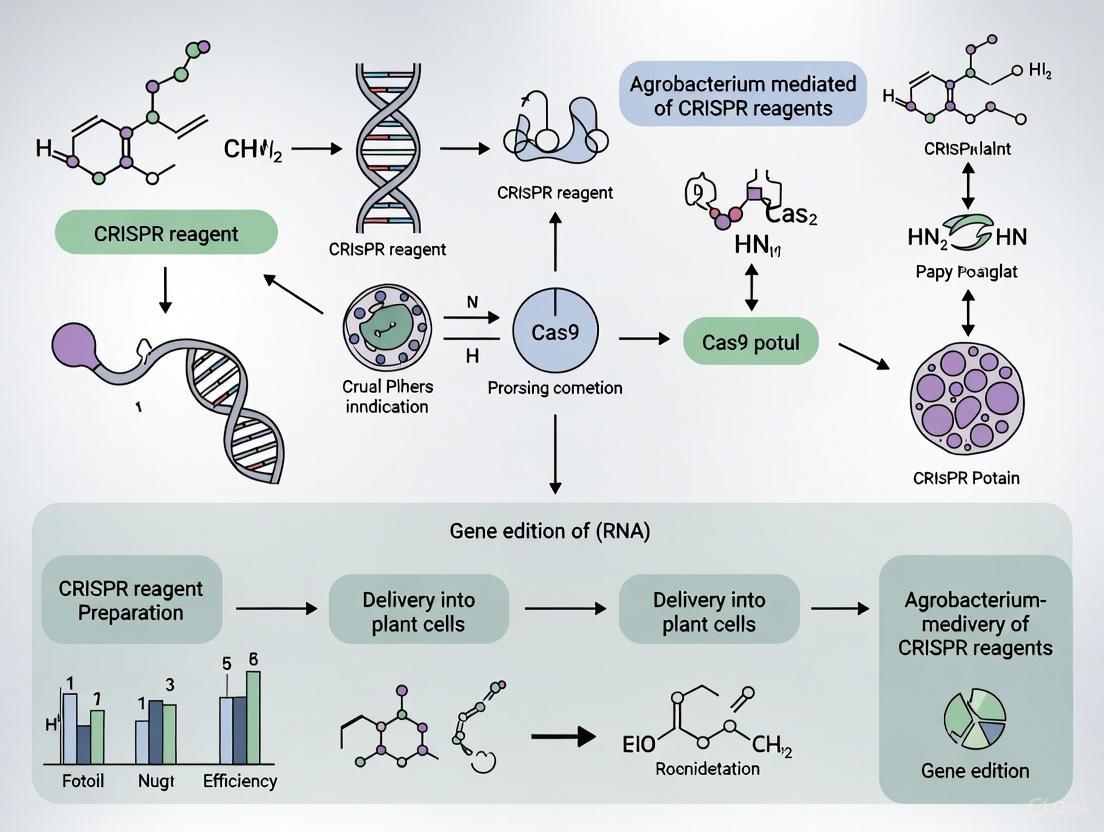
This article provides a comprehensive overview of Agrobacterium-mediated delivery for CRISPR/Cas reagents in plants, a cornerstone technique for functional genomics and crop improvement.
Agrobacterium-Mediated CRISPR Delivery: A Comprehensive Guide for Efficient Plant Genome Editing
Abstract
This article provides a comprehensive overview of Agrobacterium-mediated delivery for CRISPR/Cas reagents in plants, a cornerstone technique for functional genomics and crop improvement. We explore the foundational principles of this method, from the basic biology of Agrobacterium to the components of CRISPR/Cas systems. The manuscript details advanced methodological workflows, including ternary vector systems and protocols for specific crops like wheat and Nicotiana alata. A dedicated section addresses common bottlenecks and optimization strategies, such as enhancing transformation efficiency with developmental regulators and achieving transgene-free editing. Finally, we present a comparative analysis with other delivery methods (biolistics, RNP transfection) and outline robust validation techniques for confirming edits and assessing off-target effects. This guide is tailored for researchers and scientists seeking to implement or optimize this powerful technology in their plant genome editing pipelines.
The Core Principles of Agrobacterium and CRISPR Synergy
Agrobacterium tumefaciens is a soil-borne, Gram-negative bacterium renowned for its natural ability to transfer genetic material into plant genomes, a process that has been harnessed to make it a cornerstone of plant genetic engineering [1]. This pathogen causes crown gall disease in plants by transferring a segment of DNA (T-DNA) from its Tumor-inducing (Ti) plasmid into the host plant cell, where it integrates into the plant's nuclear DNA [2] [3]. The resulting expression of T-DNA genes leads to the production of plant hormones that cause tumor formation and opines that the bacterium can utilize as a nutrient source [1].
The molecular mechanism of T-DNA transfer is a sophisticated, multi-step process triggered by plant signals. The core steps are as follows:
- Signal Recognition and vir Gene Induction: Upon sensing plant wound compounds, such as acetosyringone, Agrobacterium activates the expression of its virulence (vir) genes located on the Ti plasmid [1].
- T-DNA Processing: The vir gene products nick the T-DNA at its left and right border sequences. The excised single-stranded T-DNA (T-strand) is coated and protected by VirE2 proteins [3].
- Formation of the T-Complex: The single-stranded T-DNA, bound to the VirD2 pilot protein at its 5' end and covered by VirE2 proteins, forms the T-complex ready for export [2].
- Transfer into the Host Cell: The T-complex is transferred into the plant cell cytoplasm through a bacterial Type IV Secretion System (T4SS) encoded by the virB operon [1].
- Nuclear Import and Integration: Inside the plant cell, the T-complex is trafficked into the nucleus. The VirD2 protein is thought to interact with host proteins, such as the TATA box-binding protein and a nuclear protein kinase, to facilitate this process [2]. The T-DNA then integrates into the plant genome, a process that can involve double-stranded intermediates and often targets double-strand break repair sites [2].
The following diagram illustrates this complex transfer process and its integration with CRISPR/Cas9 delivery workflows.
Application Notes: Delivering CRISPR/Cas9 Reagents
The natural DNA transfer machinery of Agrobacterium tumefaciens has been ingeniously repurposed to deliver CRISPR/Cas9 genome editing components into plant cells. This application is revolutionizing plant functional genomics and molecular breeding by enabling precise genetic modifications.
Key Advancements and Efficiencies
Table 1: Recent Applications of Agrobacterium-Mediated CRISPR/Cas9 Delivery in Plants
| Plant Species | Target Gene | Edited Trait | Transformation/Editing Efficiency | Key Findings |
|---|---|---|---|---|
| Fraxinus mandshurica (Manchurian ash) [4] | FmbHLH1 | Drought tolerance | 18% of induced clustered buds were gene-edited | Established first CRISPR system for this tree; knockout increased drought resistance. |
| Platycodon grandiflorus (Balloon flower) [5] | chr2.2745 | Functional genomics | 16.70% genome editing efficiency | Combined with morphogenic regulators to boost regeneration to 21.88%. |
| Elymus nutans (Alpine grass) [5] | EnTCP4 | Delayed flowering, Drought tolerance | 19.23% editing efficiency | First stable transformation system for this grass; enabled molecular breeding. |
| Melia volkensii (African timber tree) [5] | M24::eGFP (reporter) | Foundation for future editing | Transformation established | Pioneered method for future CRISPR applications in this drought-resistant species. |
| Tomato [5] | Multiple gene families | Fruit development, flavor, disease resistance | ~1300 independent lines created | Used genome-wide multi-targeted sgRNA library to overcome functional redundancy. |
Protocol: Agrobacterium-Mediated Transformation of Fraxinus mandshurica
This protocol, adapted from a 2025 study, details the successful generation of FmbHLH1 knockout plants to study drought tolerance [4].
I. Plant Material Preparation
- Explant Source: Excise embryos from surface-sterilized seeds of Fraxinus mandshurica.
- Germination: Culture sterile embryos on Woody Plant Medium (WPM) solid medium (WPM + 20 g/L sucrose + 6 g/L agar, pH 5.8) without hormones.
- Growth Conditions: Maintain plantlets at 24–26 °C, 70–75% relative humidity, with a 12-h light/12-h dark cycle (400 μmol/m²/s light intensity) [4].
II. Vector Construction and Agrobacterium Preparation
- Target Selection: Input the target gene sequence (FmbHLH1 used in the cited study) into a target design website (e.g., http://skl.scau.edu.cn/targetdesign/) to generate specific knockout targets.
- Vector Assembly: Clone synthesized oligonucleotide cassettes into a binary CRISPR/Cas9 vector (e.g., pYLCRISPR/Cas9P35S-N) behind a suitable promoter like AtU6-26.
- Agrobacterium Transformation: Introduce the recombinant vector into an appropriate Agrobacterium tumefaciens strain (e.g., EHA105) via electroporation or freeze-thaw. Select positive colonies on LB agar with appropriate antibiotics [4].
III. Inoculation and Co-cultivation
- Bacterial Culture: Grow the transformed Agrobacterium in liquid LB medium at 28 °C until the OD₆₀₀ reaches between 0.5 and 0.8.
- Centrifugation: Pellet the bacteria by centrifugation at 1500 g for 10 min and resuspend in an inoculation medium.
- Infection: Infect the sterile plantlets or explants with the bacterial suspension. The study optimized both Agrobacterium concentration and infection duration for maximal efficiency [4].
IV. Selection and Regeneration
- Selection Medium: Transfer infected explants to a selective WPM solid medium containing antibiotics (e.g., kanamycin at a lethal concentration determined empirically, found to be between 20-70 mg/L for F. mandshurica) to inhibit Agrobacterium growth and select for transformed plant cells.
- Clustered Bud Induction: Induce the formation of clustered buds from the transformed growing points by supplementing the media with specific hormones at optimized concentrations.
- Screening: Screen the induced buds for editing events. In the cited study, 18% of the randomly selected clustered buds were confirmed to be gene-edited, validating the system's effectiveness [4].
V. Analysis of Transgenic Plants
- Molecular Analysis: Extract genomic DNA from putative transgenic lines. Use PCR and sequencing to confirm the presence of CRISPR/Cas9-induced mutations at the target locus.
- Phenotypic Analysis: For functional gene studies (e.g., FmbHLH1), conduct phenotypic analyses. The cited study evaluated drought tolerance by measuring physiological indicators like reactive oxygen species scavenging ability and osmotic adjustment [4].
The Scientist's Toolkit: Essential Research Reagents
Table 2: Key Reagent Solutions for Agrobacterium-Mediated CRISPR Delivery
| Reagent / Solution | Function / Purpose | Example Components / Notes |
|---|---|---|
| Agrobacterium Strain | Engineered to deliver T-DNA containing CRISPR constructs. Hypervirulent strains can increase efficiency. | EHA105, AGL1, LBA4404. Strain AGL1 is noted for hypervirulence [6]. |
| Binary Vector System | Carries the genetic cargo between E. coli and Agrobacterium. Houses CRISPR/Cas9 genes and gRNA expression cassettes. | pYLCRISPR/Cas9P35S-N vector [4]. Contains plant and bacterial origins of replication, selectable markers. |
| Culture Media | For growing and inducing Agrobacterium, and for regenerating transformed plants. | LB, YEB, or AB-MES for bacteria; WPM or MS1 solid medium for plant culture and selection [4] [6]. |
| Vir Gene Inducers | Chemical signals that activate the vir genes on the Ti plasmid, initiating T-DNA transfer. | Acetosyringone (200 μM used in Arabidopsis suspension cell transformation) [6]. |
| Selection Agents | To eliminate non-transformed plant cells and isolate editing events. | Antibiotics like kanamycin (20-70 mg/L for F. mandshurica [4]); herbicides depending on the resistance marker used. |
| Hormone Supplements | To induce callus formation and regenerate whole plants from transformed cells. | Cytokinins (e.g., 6-Benzylaminopurine/BAP), Auxins (e.g., 2,4-Dichlorophenoxyacetic acid/2,4-D) [6]. |
Advanced Experimental Workflow: From Transformation to Analysis
The following diagram outlines the comprehensive journey of creating and analyzing a gene-edited plant line using Agrobacterium-mediated CRISPR/Cas9 delivery, integrating steps from the protocol above.
Emerging Technologies and Future Directions
The field of Agrobacterium-mediated transformation is continuously evolving, with several emerging technologies poised to enhance its utility for CRISPR/Cas9 delivery further.
- Ternary Vector Systems: These systems incorporate accessory virulence genes and immune suppressors on a separate plasmid, working alongside standard binary vectors. This innovation can overcome the intrinsic transformation barriers of recalcitrant crops, achieving 1.5- to 21.5-fold increases in stable transformation efficiency in species like maize, sorghum, and soybean [7].
- Strain Engineering via INTEGRATE: Advanced CRISPR-associated transposase (CAST) systems, such as INTEGRATE, enable precise genome engineering of Agrobacterium itself. This allows for the creation of optimized chassis strains, for example, by deleting the T-DNA from the root-inducing (Ri) plasmid of A. rhizogenes K599 to "disarm" it or by creating auxotrophic mutants (e.g., thymidine auxotrophy) for improved biosafety and control [1].
- Transformation Simplification: Novel methods are being developed to bypass the need for complex tissue culture. Techniques like the Leaf-Cutting Transformation (LCT) for Jonquil and similar plants allow for transgenic operations without aseptic procedures, significantly streamlining the process for amenable species [8].
- Protoplast Transfection as a Validation Tool: For species with low transformation and regeneration efficiency, such as pea (Pisum sativum L.), PEG-mediated transfection of protoplasts provides a high-throughput platform for rapidly validating the efficiency of CRISPR/Cas9 reagents in vivo before undertaking stable transformation, saving considerable time and resources [9].
The CRISPR/Cas9 system has revolutionized genetic engineering, providing an unprecedented ability to precisely edit genomes across diverse organisms. For plant research, coupling this technology with Agrobacterium-mediated delivery has become a predominant method for introducing CRISPR reagents into plant cells [10]. This Agrobacterium-based approach utilizes the bacterium's natural ability to transfer DNA into plant genomes, offering a reliable means to achieve stable integration and expression of CRISPR components [7]. A comprehensive understanding of the three core components—the guide RNA (gRNA), the Cas nuclease, and the Protospacer Adjacent Motif (PAM)—is fundamental to designing successful experiments. This protocol deconstructs the CRISPR/Cas9 system within the context of Agrobacterium-mediated transformation, providing detailed methodologies for researchers to effectively harness this powerful technology for plant genome engineering.
Core Component 1: The Guide RNA (gRNA)
The guide RNA is a synthetic RNA molecule that directs the Cas nuclease to a specific genomic location. It consists of two primary parts: the scaffold sequence, necessary for Cas9 binding, and a user-defined ~20-nucleotide spacer that defines the genomic target to be modified [11].
gRNA Design Considerations
- Specificity: The targeting sequence must be unique compared to the rest of the genome to minimize off-target effects [11].
- Seed Sequence: An 8–10 base pair region at the 3' end of the gRNA targeting sequence is critical for initial DNA annealing; mismatches here typically inhibit cleavage [11].
- Multiplexing: Delivering multiple gRNAs using a single plasmid ensures all are expressed in the same cell, enabling complex edits. Most multiplex systems can target 2–7 genetic loci from a single vector [11].
Core Component 2: The Cas Nuclease
The Cas nuclease is the enzyme that creates the double-strand break (DSB) in the DNA. The most commonly used nuclease is SpCas9 from Streptococcus pyogenes [11]. The resulting DSB is repaired by one of two cellular pathways [11]:
- Non-Homologous End Joining (NHEJ): An efficient but error-prone repair pathway that often results in small insertions or deletions (indels), leading to gene knockouts.
- Homology Directed Repair (HDR): A less efficient, high-fidelity pathway that uses a homologous DNA template for precise repair, enabling specific gene edits.
Engineered Cas9 Variants for Enhanced Specificity and Flexibility
| Cas9 Variant | Key Features and Improvements |
|---|---|
| Cas9 Nickase (Cas9n) | D10A mutation; cuts only one DNA strand; requires two adjacent nickases for a DSB, increasing specificity [11]. |
| dead Cas9 (dCas9) | D10A and H840A mutations; no nuclease activity; used for targeted gene regulation or fluorescent imaging when fused to effectors [11] [12]. |
| High-Fidelity Cas9s (e.g., eSpCas9, SpCas9-HF1) | Engineered to reduce off-target editing by weakening non-specific DNA interactions [11]. |
| PAM-Flexible Cas9s (e.g., xCas9, SpRY) | Recognize non-canonical PAM sequences (e.g., NG, NGN), expanding the range of targetable genomic sites [11]. |
Core Component 3: The Protospacer Adjacent Motif (PAM)
The PAM is a short, specific DNA sequence (typically 2-6 base pairs) that follows the DNA region targeted for cleavage by the CRISPR system [13]. It is absolutely required for Cas nuclease activity and serves as a binding signal, enabling the nuclease to distinguish between foreign DNA (a valid target) and the bacterium's own CRISPR array (self-DNA) [13] [14].
PAM Sequences for Different Cas Nucleases
The PAM requirement is a key factor in determining which genomic locations can be targeted. The table below summarizes PAM sequences for various nucleases.
Table 1: Common CRISPR Nucleases and Their PAM Sequences
| CRISPR Nuclease | Organism Isolated From | PAM Sequence (5' to 3') |
|---|---|---|
| SpCas9 | Streptococcus pyogenes | NGG |
| SaCas9 | Staphylococcus aureus | NNGRRT or NNGRRN |
| NmCas9 | Neisseria meningitidis | NNNNGATT |
| Cas12a (Cpf1) | Lachnospiraceae bacterium | TTTV |
| Cas12i2Max | Engineered from Cas12i | TN and/or TNN |
| Cas12b | Alicyclobacillus acidiphilus | TTN |
Agrobacterium-Mediated Delivery of CRISPR/Cas9
Agrobacterium tumefaciens is a naturally occurring soil bacterium capable of transferring DNA (T-DNA) from its tumor-inducing (Ti) plasmid into the plant genome. This mechanism has been co-opted to deliver CRISPR/Cas9 components into plant cells [10].
Key Advantages
- High Editing Efficiency: Demonstrated to achieve up to 100% editing efficiency in some plant cultivars like Cavendish banana [10].
- Broad Applicability: Successfully used in a wide range of plants, including recalcitrant monocot crops and woody species like Citrus sinensis and Populus [10] [5].
- Stable Integration: Facilitates single-copy, stable integration of the T-DNA containing the CRISPR construct [10].
Experimental Protocol: Agrobacterium-Mediated Transformation
This protocol outlines the key steps for delivering CRISPR/Cas9 reagents into plants using Agrobacterium.
Materials and Reagents
- Binary vector containing Cas9 and gRNA expression cassette(s)
- Agrobacterium tumefaciens strain (e.g., LBA4404, GV3101)
- Appropriate plant explants (e.g., calluses, leaves, floral organs)
- Plant tissue culture media (co-cultivation, selection, regeneration)
- Antibiotics for bacterial and plant selection
Procedure
- Vector Construction: Clone your sequence-specific gRNA(s) and a Cas9 expression cassette (often codon-optimized for plants) into a binary T-DNA vector.
- Agrobacterium Transformation: Introduce the recombinant binary vector into your chosen Agrobacterium strain via electroporation or freeze-thaw transformation.
- Plant Co-cultivation:
- Grow the transformed Agrobacterium to log phase.
- Immerse the target plant explants in the Agrobacterium suspension for a defined period.
- Blot the explants dry and co-cultivate them on solid medium for 2-3 days to allow T-DNA transfer.
- Selection and Regeneration:
- Transfer explants to selection media containing antibiotics to eliminate Agrobacterium and select for plant cells that have integrated the T-DNA.
- Induce shoot and root formation from the transformed tissue on regeneration media.
- Molecular Analysis:
- Regenerate whole plants from the selected tissue.
- Validate genetic modifications using PCR, sequencing, and other assays to confirm the presence of edits and assess for off-target effects.
Diagram 1: Agrobacterium-mediated CRISPR delivery workflow.
Advanced Applications: Visualization with CRISPRainbow
Beyond gene editing, catalytically inactive dCas9 can be used for visualizing genomic loci in living cells. The CRISPRainbow system engineers the gRNA scaffold to include unique RNA hairpins (e.g., MS2, PP7, boxB) that recruit differently colored fluorescent proteins [12]. This allows for multicolor labeling of up to six chromosomal loci in live cells, enabling researchers to study nuclear organization and chromosome dynamics in real time [12].
The Scientist's Toolkit: Essential Reagents for CRISPR Plant Research
Table 2: Key Research Reagent Solutions for Agrobacterium-Mediated CRISPR
| Reagent / Tool | Function in the Experiment |
|---|---|
| Ternary Vector Systems | Enhances transformation efficiency in recalcitrant crops by delivering accessory virulence genes [7]. |
| Multiplex gRNA Vectors | Allows simultaneous expression of multiple gRNAs from a single plasmid for complex genome edits [11]. |
| High-Fidelity Cas9 Variants | Reduces off-target effects while maintaining robust on-target activity [11]. |
| PAM-Flexible Cas Enzymes (e.g., SpRY) | Expands the targetable genome space by recognizing non-NGG PAM sequences [11] [13]. |
| dCas9-Fluorescent Protein Fusions | Enables live-cell imaging of genomic loci for studies of nuclear architecture [15] [12]. |
| Codon-Optimized Cas9 | Improves Cas9 expression and editing efficiency in plant cells [10]. |
| Morphogenic Regulators (e.g., Wus2, BBM) | Co-delivered to enhance regeneration efficiency, particularly in difficult-to-transform species [5]. |
The synergistic application of the CRISPR/Cas9 system with Agrobacterium-mediated delivery has created a powerful and accessible platform for plant genome engineering. The continuous refinement of its core components—through improved gRNA design, high-fidelity and PAM-flexible Cas enzymes, and optimized transformation protocols—is steadily overcoming the biological barriers in recalcitrant crop species. By following the detailed protocols and utilizing the reagent toolkit outlined in this document, researchers can systematically design and execute CRISPR experiments, accelerating the development of improved crop varieties to meet the challenges of global food security.
The revolutionary potential of CRISPR-based genome editing in plant biology and crop improvement is undeniable, offering unprecedented precision for functional genomics and the development of improved cultivars. However, the efficient delivery of CRISPR reagents into plant cells remains a significant bottleneck in plant genetic engineering [16]. The rigid plant cell wall presents a formidable barrier to the entry of foreign biomolecules, and many plant species have complex genome structures characterized by polyploidy and genomic rearrangements [16]. Among the various delivery methods available, Agrobacterium-mediated transformation has emerged as a preferred vehicle for CRISPR reagent delivery due to its unique combination of efficiency, reliability, and practical advantages [17] [18].
This Application Note examines the scientific and technical foundations underpinning the preference for Agrobacterium-mediated delivery systems in plant CRISPR workflows. We explore the methodological advances that have solidified its position, provide detailed protocols for implementation, and contextualize its role within the broader landscape of plant biotechnology. While newer technologies such as nanoparticle vectors and viral delivery systems continue to develop, Agrobacterium-based methods currently offer the most robust and widely adopted platform for achieving stable genetic modifications in a diverse range of plant species [17] [16].
Comparative Delivery Mechanisms in Plant Biotechnology
The Delivery Method Spectrum
CRISPR reagent delivery in plants primarily employs three principal methodologies: Agrobacterium-mediated transformation, biolistic particle delivery, and protoplast transfection. Each system possesses distinct advantages and limitations that make them suitable for different applications and plant species [16].
Table 1: Comparison of Major CRISPR Delivery Methods in Plants
| Delivery Method | Key Advantages | Principal Limitations | Best Applications |
|---|---|---|---|
| Agrobacterium-mediated | Low transgene copy number; Stable integration; Reliable expression; Cost-effective [19] [16] | Limited host range; Tissue culture dependency; Somaclonal variations [16] | Stable transformation; Species within host range |
| Biolistic/Particle Bombardment | Genotype-independent; Broad species range; Delivers diverse cargo (DNA, RNA, RNP) [20] | High transgene copy number; Tissue damage; Equipment cost; Complex insertion patterns [20] [16] | Recalcitrant species; DNA-free editing (RNP delivery) |
| Protoplast Transfection | High efficiency; DNA-free editing possible; Genotype-flexible [16] | Regeneration challenges; Species-specific protocols; Technical expertise required [16] | DNA-free mutants; Species with established protoplast systems |
Quantitative Performance Metrics
Recent technological advancements have significantly improved the performance of delivery systems. The development of the Flow Guiding Barrel (FGB) for biolistic delivery, for instance, has demonstrated a 22-fold enhancement in transient transfection efficiency and a 4.5-fold increase in CRISPR-Cas9 ribonucleoprotein editing efficiency in onion epidermis [20]. Similarly, ternary vector systems for Agrobacterium-mediated transformation have achieved remarkable 1.5- to 21.5-fold increases in stable transformation efficiency in previously recalcitrant crops like maize, sorghum, and soybean [7].
Table 2: Quantitative Efficiency Metrics of Advanced Delivery Systems
| Delivery System | Innovation | Efficiency Gain | Experimental Context |
|---|---|---|---|
| Biolistic Delivery | Flow Guiding Barrel (FGB) | 22x transient transfection; 4.5x RNP editing [20] | Onion epidermis |
| Biolistic Delivery | Flow Guiding Barrel (FGB) | 10x stable transformation frequency [20] | Maize B104 immature embryos |
| Agrobacterium System | Ternary Vector Systems | 1.5-21.5x stable transformation [7] | Recalcitrant crops (maize, soybean) |
| Agrobacterium Protocol | Developmental Regulators | 37.5-60.22% callus induction [19] | Maize inbred lines |
| Agrobacterium Protocol | Developmental Regulators | 6-12x transformation efficiency [19] | Wild tomato |
Agrobacterium-Mediated Transformation: Core Mechanisms and Workflow
The Molecular Basis of T-DNA Transfer
Diagram: Agrobacterium T-DNA Transfer and CRISPR Delivery Workflow
The fundamental mechanism of Agrobacterium-mediated transformation involves the natural ability of Agrobacterium tumefaciens to transfer a specific segment of DNA (T-DNA) from its tumor-inducing (Ti) plasmid into the plant genome [1]. In engineered strains for biotechnology applications, the disarmed T-DNA region carries CRISPR-Cas9 expression cassettes rather than the native oncogenes [1] [16]. The process initiates when the bacterium detects phenolic compounds released from wounded plant tissues, triggering the expression of virulence (vir) genes [1]. These vir genes facilitate T-DNA processing and delivery into plant cells through a Type IV Secretion System (T4SS) [1]. Once inside the plant nucleus, the T-DNA integrates into the genome, enabling stable expression of CRISPR components [16].
Advanced Vector Systems and Strain Engineering
The development of ternary vector systems represents a significant advancement in Agrobacterium-mediated transformation technology. Unlike traditional binary vectors, these systems incorporate accessory virulence genes and immune suppressors that overcome intrinsic transformation barriers in recalcitrant crops [7]. This innovation has dramatically expanded the effective host range of plant genetic engineering, enabling efficient transformation of species previously resistant to Agrobacterium-mediated methods [7].
Concurrent advances in Agrobacterium strain engineering have further enhanced the utility of this delivery system. The INTEGRATE system, a CRISPR RNA-guided transposase system, enables precise genomic modifications in Agrobacterium strains themselves, facilitating the development of auxotrophic mutants with improved biosafety profiles [1]. These engineered strains, such as those with thymidine auxotrophy, cannot survive outside laboratory conditions without supplementation, addressing concerns about environmental release [1].
Application Notes: Protocol for Agrobacterium-Mediated CRISPR Delivery in Rice
Experimental Workflow and Reagent Solutions
Diagram: Rice Transformation and Genome Editing Protocol
This protocol outlines an optimized method for Agrobacterium-mediated CRISPR-Cas9 delivery in recalcitrant rice genotypes, achieving high transformation efficiency in a relatively short period [18]. The method addresses the poor response to tissue culture that often limits genome editing in these genotypes.
Table 3: Research Reagent Solutions for Rice Transformation
| Reagent/Component | Function | Specifications/Alternatives |
|---|---|---|
| Binary Vector | Carries CRISPR-Cas9 expression cassette | Typically contains plant codon-optimized Cas9, sgRNA expression unit |
| Agrobacterium Strain | T-DNA delivery vehicle | EHA105, AGL1, or LBA4404 disarmed strains [18] [1] |
| Explant Source | Target tissue for transformation | Immature embryos or calli induced from mature seed [18] |
| Selection Agents | Identification of transformed tissue | Antibiotics (e.g., hygromycin) or herbicides [18] [19] |
| Developmental Regulators | Enhance regeneration efficiency | WUS, BBM, PLT genes co-expressed to overcome genotype limitations [19] |
Step-by-Step Methodology
Vector Construction and Agrobacterium Preparation
- CRISPR Construct Design: Clone species-specific sgRNA expression cassette into a binary vector containing a plant codon-optimized Cas9 nuclease driven by appropriate promoters (e.g., CaMV 35S or Ubiqutin) [18] [16].
- Agrobacterium Transformation: Introduce the binary vector into disarmed Agrobacterium strains (e.g., EHA105) via electroporation or freeze-thaw method [18].
- Culture Preparation: Inoculate a single colony into liquid medium with appropriate antibiotics and grow to OD₆₀₀ = 0.4-0.6 at 28°C with shaking [18].
Plant Transformation and Regeneration
- Explant Preparation: Isolate immature embryos (1.0-1.5 mm) from rice seeds and precondition on callus induction medium for 3-5 days [18].
- Inoculation: Immerse explants in Agrobacterium suspension for 15-30 minutes with gentle agitation [18].
- Co-cultivation: Transfer inoculated explants to filter paper over co-cultivation medium and incubate at 22-25°C for 2-3 days in darkness [18].
- Selection and Regeneration:
- Transfer explants to selection medium containing antibiotics to inhibit Agrobacterium growth and select for transformed plant cells [18].
- Subculture every 2 weeks to fresh selection medium until embryogenic calli form [18].
- Transfer putative transgenic calli to regeneration medium to induce shoot and root formation [18] [19].
- Plant Recovery: Transfer regenerated plantlets to rooting medium, then to soil in controlled environment conditions [18].
Molecular Verification and Editing Assessment
- DNA Extraction: Isolate genomic DNA from regenerated plant leaves using CTAB or commercial kits [18].
- Mutation Detection: Use restriction enzyme assays, PCR/sequencing, or next-generation sequencing to identify CRISPR-induced mutations at target loci [5].
- Transgene Copy Number Analysis: Employ Southern blotting or digital PCR to determine T-DNA copy number and identify single-copy events [18].
Emerging Innovations and Future Perspectives
Integration of Developmental Regulators
A significant advancement in Agrobacterium-mediated transformation is the incorporation of developmental regulators (DRs) to enhance regeneration efficiency. Key genes such as WUSCHEL (WUS), BABY BOOM (BBM), and PLETHORA (PLT) have demonstrated remarkable capabilities in promoting plant regeneration across diverse species [19]. For instance, co-expression of BBM and WUS2 has significantly boosted transformation efficiency in difficult-to-transform species like maize, rice, and sorghum [19]. Similarly, TaWOX5 (a WUS family gene in wheat) has improved transformation efficiency up to 75.7-96.2% in easily transformable varieties and 17.5-82.7% in difficult-to-transform varieties [19].
Viral Vectors and DNA-Free Approaches
Recent research has explored the combination of Agrobacterium with viral vectors to enhance CRISPR delivery efficiency. The Tobacco Rattle Virus (TRV) has been successfully employed as a viral vector for CRISPR reagent delivery, with TRV components introduced into T-DNA regions of Agrobacterium and infiltrated into transgenic plants expressing Cas9 [16]. This approach leverages the systemic movement of viruses within plants to achieve wider distribution of editing components [16].
For applications requiring DNA-free edited plants, Agrobacterium-mediated transient expression offers a viable pathway. By regenerating plants without employing selection pressure, researchers can recover transgene-free edited events, which is particularly valuable for vegetatively propagated plants where segregating out integrated transgenes through crossing is not feasible [16].
Ternary Vector Systems and Expanded Host Range
The development of ternary vector systems represents one of the most promising directions for Agrobacterium-mediated transformation. These systems have demonstrated remarkable success in overcoming the biological barriers that previously limited transformation in recalcitrant species [7]. Future innovations are likely to focus on expanding these capabilities further, including transient delivery of morphogenic factors to enhance regeneration and organelle-targeted transformation for broader genetic modifications [7].
Additionally, ongoing refinement of Agrobacterium engineering—such as developing auxotrophic strains for improved biosafety and optimizing secretion systems for enhanced protein delivery—presents exciting opportunities for advancing plant biotechnology [7] [1]. These developments are reshaping the landscape of plant genetic engineering, bridging the gap between transformation efficiency and targeted genome modifications to drive the development of more resilient and high-performing crops [7].
Agrobacterium-mediated transformation remains the preferred vehicle for CRISPR delivery in plants due to its unique combination of biological efficiency, practical reliability, and continuous innovation. The method's ability to generate low-copy-number integration events, coupled with advances in vector design, strain engineering, and regeneration enhancement through developmental regulators, has maintained its relevance in an evolving technological landscape. While challenges remain—particularly regarding host range limitations and tissue culture dependencies—the integration of ternary vector systems, viral components, and DNA-free approaches continues to expand the capabilities of this powerful delivery platform. As plant biotechnology advances toward increasingly precise genetic modifications, Agrobacterium-mediated delivery is poised to remain a cornerstone technology for both basic research and crop improvement applications.
The Agrobacterium-mediated transformation stands as a cornerstone of plant biotechnology, enabling the transfer of genetic material into plant genomes. While binary vector systems have been the workhorse for decades, the emergence of ternary vector systems represents a significant evolutionary leap, particularly for delivering CRISPR-Cas reagents to recalcitrant plant species. This advancement is crucial for accelerating functional genomics and precision breeding in crops previously resistant to genetic transformation.
Traditional binary vectors consist of two plasmids: a T-DNA binary vector containing the genes of interest and a helper Ti plasmid carrying virulence (vir) genes. Ternary vector systems enhance this framework by incorporating a third, accessory plasmid that carries extra copies of key vir genes. This supplemental boost of virulence proteins has been shown to dramatically overcome the intrinsic biological barriers that limit transformation efficiency in many crop species [7] [21]. The fusion of this improved delivery system with CRISPR-Cas technology is now reshaping the landscape of plant genetic engineering.
The Technical Shift from Binary to Ternary Vector Systems
Core Architecture and Mechanism
The fundamental difference between binary and ternary systems lies in their plasmid composition and functional capacity:
- Binary Vector System: This conventional system uses two plasmids:
- T-DNA Binary Vector: Contains the genes of interest (e.g., Cas9 and gRNA expression cassettes) flanked by T-DNA borders.
- Helper Ti Plasmid: A disarmed plasmid that provides the essential vir genes required for T-DNA processing and transfer.
- Ternary Vector System: This enhanced system incorporates a third component:
The additive effect of these extra vir gene copies intensifies the plant's response to Agrobacterium infection. The enhanced virulence protein pool more effectively suppresses plant immune responses and facilitates higher efficiency T-DNA processing and delivery, effectively breaking down transformation barriers [7] [21].
Quantitative Evidence of Enhanced Performance
The superiority of ternary vector systems is demonstrated by substantial quantitative improvements in transformation efficiency across multiple plant species.
Table 1: documented Transformation Efficiency Enhancements Using Ternary Vector Systems
| Plant Species | Transformation Efficiency Increase (Fold) | Key Enabling Factors | Citation |
|---|---|---|---|
| Maize | 3.9 to 6.8-fold | Ternary system united with morphogenic regulators (Bbm, Wus2) [23] | [23] |
| Maize inbred B104 | 4% to 6.4% (absolute frequency) | Ternary helper plasmid pKL2299, optimized media [22] | [22] |
| Sorghum, Soybean | 1.5 to 21.5-fold | Accessory vir genes and immune suppressors [7] [21] | [7] [21] |
| Wild tobacco (N. alata) | ~1% to >80% (absolute frequency) | Optimized hypocotyl transformation; CRISPR-Cas9 delivery [24] | [24] |
Beyond efficiency, ternary systems have proven highly effective for multiplex genome editing. In wild tobacco (Nicotiana alata), a ternary vector-delivered CRISPR-Cas9 system employing a polycistronic tRNA-gRNA (PTG) strategy successfully knocked out multiple allelic S-RNase genes simultaneously, achieving over 50% editing efficiency and creating self-compatible lines [24]. In wheat, an Agrobacterium-delivered CRISPR/Cas9 system enabled the generation of mutants for four grain-regulatory genes with an average 10% edit rate in the T0 generation, allowing for the recovery of homozygous mutations [25].
Application Notes and Protocols
A Standardized Protocol for Maize Inbred B104 Transformation
The following optimized protocol, adapted from [22], details the use of a ternary vector system for efficient transformation and genome editing of the recalcitrant maize inbred B104. This method reduces the transformation timeline from over 160 days to just 60 days.
- Plant Material: Harvest B104 immature zygotic embryos (1.6–2.0 mm in length) 10–12 days after pollination. Ears can be stored at 4°C for 1–3 days before use.
- Agrobacterium Strain and Vectors:
- Strain: LBA4404.
- Ternary System: The strain should harbor both a conventional T-DNA binary vector (e.g., pKL2013, carrying Cas9, gRNA, and selectable marker) and a compatible ternary helper plasmid (e.g., pKL2299, containing additional vir genes from pTiBo542 with an RK2 origin) [22].
- Infection and Co-cultivation:
- Isolate embryos and infect with an Agrobacterium suspension (OD₆₀₀ = 0.4-0.8) for 15 minutes.
- Co-cultivate embryos on solid co-cultivation medium at 21°C in the dark for 3 days.
- Selection and Regeneration:
- Transfer embryos to callus induction medium containing a selective agent (e.g., bialaphos) and a bacteriostat (e.g., timentin). Culture for 2-3 weeks at 28°C in the dark.
- Move embryonic callus to regeneration medium, first to shoot induction medium for 2 weeks, then to root induction medium, under a 16-h light/8-h dark photoperiod.
- Analysis of Transformed Plants:
- Extract genomic DNA from putative T0 plant leaves.
- Perform PCR and sequencing of the target genomic locus to identify CRISPR-Cas9-induced mutations.
This protocol, leveraging the ternary system, achieves an average transformation frequency of 6.4%, with over 66% of transgenic plants carrying targeted mutations [22].
Workflow Visualization
The following diagram illustrates the key procedural steps and component interactions in the ternary vector system transformation.
The Scientist's Toolkit: Essential Research Reagents
Successful implementation of advanced Agrobacterium-mediated transformation relies on a suite of specialized reagents and genetic components.
Table 2: Key Research Reagent Solutions for Ternary Vector Systems
| Reagent / Component | Function / Purpose | Specific Examples |
|---|---|---|
| Ternary Helper Plasmid | Provides supplemental vir genes to enhance T-DNA delivery efficiency and expand host range. | pKL2299 (for use with LBA4404) [22]; pVS1-based helpers [23] |
| Morphogenic Regulators (MRs) | Transcription factors that promote somatic embryogenesis and shoot regeneration in recalcitrant genotypes and species. | Baby boom (Bbm), Wuschel2 (Wus2); often used as inducible or excisable cassettes [23] [26] |
| CRISPR-Cas9 Binary Vector | Carries the genome editing machinery within the T-DNA. | Vectors with plant-optimized Cas9 (e.g., driven by ZmUbi promoter) and gRNA(s) (e.g., driven by TaU6 promoter) [25] [22] |
| Engineered Agrobacterium Strains | Strains optimized for specific purposes, such as reduced environmental persistence or improved transformation in certain hosts. | Auxotrophic strains (e.g., thymidine auxotrophs); INTEGRATE-system engineered strains [1] |
| Chemical Inducers & Excision Systems | To control the temporal expression or remove transformation-enhancing genes (like MRs) after regeneration to ensure normal plant development. | Estradiol-inducible systems (e.g., for BrrWUSa) [26]; Cre/loxP site-specific recombination [23] |
The transition from binary to ternary vector systems marks a pivotal advancement in Agrobacterium-mediated delivery, effectively overcoming one of the most significant bottlenecks in plant biotechnology. By integrating accessory virulence plasmids, these systems achieve unprecedented transformation efficiencies in previously recalcitrant crops. When combined with morphogenic regulators and modern genome editing tools like CRISPR-Cas9, ternary vectors provide a robust and versatile platform for functional genomics and precision breeding. This powerful synergy between delivery and editing technologies is poised to drive the development of more resilient and high-performing crops, essential for addressing global agricultural challenges.
The successful Agrobacterium-mediated delivery of CRISPR reagents is a cornerstone of modern plant genetic engineering. This process hinges on three interdependent pillars: the host range of the bacterial vector, the careful selection of explants, and the efficiency of tissue culture regeneration systems. Overcoming challenges in these areas is critical for applying CRISPR-Cas technology to a broader spectrum of plant species, particularly those deemed recalcitrant to genetic transformation. This protocol outlines key considerations and methodologies to optimize these factors, providing a framework for researchers to advance functional genomics and precision crop breeding.
Host Range and Agrobacterium Strain Selection
The inherent host range specificity of Agrobacterium tumefaciens can be a significant barrier to transforming non-model plant species. Recent advancements in vector engineering are directly addressing this limitation.
Ternary Vector Systems
Ternary vector systems represent a transformative innovation that enhances the virulence of Agrobacterium, thereby expanding its effective host range. Unlike traditional binary vectors, these systems incorporate accessory virulence genes and immune suppressors that help overcome the intrinsic transformation barriers of recalcitrant crops [7]. Their application has enabled remarkable 1.5- to 21.5-fold increases in stable transformation efficiency in species previously resistant to Agrobacterium-mediated transformation, such as maize, sorghum, and soybean [7].
Agrobacterium Strain Engineering
Precise genome engineering of Agrobacterium itself is now possible, allowing for the development of specialized strains. The INTEGRATE system—a CRISPR RNA-guided transposase—enables high-fidelity, marker-free genomic modifications in Agrobacterium [1]. This technology can be used to create auxotrophic strains (e.g., through thymidylate synthase knockout), which require specific nutritional supplements. These strains offer improved biosafety by reducing environmental persistence and can enhance transformation efficiency by minimizing bacterial overgrowth during co-cultivation with plant tissues [1].
Quantitative Comparison of Transformation Technologies
Table 1: Key Transformation Technologies and Their Efficiencies
| Technology | Key Feature | Best For | Reported Efficiency Gains | Limitations |
|---|---|---|---|---|
| Ternary Vector Systems | Delivers accessory virulence genes | Recalcitrant crops (maize, sorghum, soybean) | 1.5 to 21.5-fold increase in stable transformation [7] | Requires vector construction |
| Biolistics with FGB | Flow Guiding Barrel optimizes particle flow | Species resistant to Agrobacterium; DNA-free RNP delivery | 4.5-fold increase in RNP editing; 10-fold higher stable transformation in maize [20] | Can cause tissue damage; complex transgene insertions |
| Protoplast Transfection | PEG-mediated DNA-free editing | Species with established protoplast regeneration | Up to 64% regeneration frequency; 40% transfection efficiency [27] | Requires high-efficiency protoplast regeneration system |
| INTEGRATE-mediated Agrobacterium Engineering | Creates auxotrophic and disarmed strains | Improving biosafety and reducing contamination | High-efficiency, marker-free genome modifications in Agrobacterium [1] | Specialized technical expertise required |
Explant Selection and Preparation
The choice of explant is a critical determinant of transformation success, as it must possess high regenerative capacity and be accessible to Agrobacterium infection.
Meristematic and Nodal Explants
Explants rich in meristematic tissues are often preferred due to their active cell division and high totipotency. Nodal culture is particularly powerful for recalcitrant horticultural crops, utilizing sterilized immature nodal explants (1–2 cm in length) containing abundant intercalary and apical meristematic cells [28]. These cells exhibit high mitotic activity and enhanced totipotency, and they retain less water compared to other explants, making them more conducive to regeneration [28]. This method has been successfully applied to species including Garcinia mangostana, Artocarpus heterophyllus, Cucumis melo, and Citrus limon [28].
Explant Sterilization Protocol
Proper sterilization is essential to prevent microbial contamination without compromising explant viability.
- Cleaning: Clean immature nodal explants with a liquid detergent (Tween 20) and rinse thoroughly with distilled water for 20 minutes [28].
- Antimicrobial Treatment: Immerse explants in a fungicide-bactericide solution containing carbendazim (0.1%) and streptocycline (0.1%) for 20 minutes, then wash 4–5 times with distilled water [28].
- Surface Sterilization: Immerse in 70% ethanol for 5 minutes, followed by treatment with 0.8–1.0% sodium hypochlorite for 20 minutes [28].
- Rinsing: Rinse 3–5 times with sterile distilled water to remove all residual sterilants [28].
Media Formulation for Explant Establishment
Sterilized explants are inoculated onto media such as Murashige and Skoog (MS) or Driver-Kuniyuki (DKW), supplemented with plant growth regulators. A typical formulation includes 0.01–2 mg/L auxin and 0.4–4 mg/L cytokinin, or a combination of both [28]. Cultures are maintained under a 16-h light/8-h dark photoperiod at 25 ± 2°C, with shoot regeneration typically occurring within 4–8 weeks [28].
Tissue Culture Regeneration Systems
Efficient regeneration of whole plants from transformed cells is often the bottleneck in plant genetic engineering. The following systems have proven effective across diverse species.
Clustered Bud System for Woody Plants
For challenging woody species like Fraxinus mandshurica, a clustered bud system has been developed to induce and screen homozygous edited plants [4]. This system involves supplementing media with hormones at different concentrations to promote the formation of multiple buds from a single transformed growing point. Among 100 randomly transformed growing points, 18% of the induced clustered buds were confirmed to be gene-edited, demonstrating the system's effectiveness for both regeneration and screening [4].
Protoplast Regeneration System
For species like Brassica carinata, a highly efficient, five-stage protoplast regeneration protocol has been developed [27]. The key to success lies in adjusting media composition and plant growth regulators at different developmental stages:
- Stage I (Cell Wall Formation): Requires high concentrations of NAA and 2,4-D in the initial medium (MI) [27].
- Stage II (Active Cell Division): Requires a lower auxin concentration relative to cytokinin (MII) [27].
- Stage III (Callus Growth & Shoot Induction): Essential high cytokinin-to-auxin ratio (MIII) [27].
- Stage IV (Shoot Regeneration): Optimal with even higher cytokinin-to-auxin ratio (MIV) [27].
- Stage V (Shoot Elongation): Requires only low levels of BAP and GA3 (MV) [27].
This optimized protocol achieves an average regeneration frequency of up to 64% and a transfection efficiency of 40% using the GFP marker gene [27].
In Planta Genome Editing System (IPGEC)
To bypass tissue culture entirely, an in planta genome editing system has been developed for species like citrus [29]. This system co-delivers Cas9, multiple sgRNAs, regeneration-promoting transcription factors (e.g., WUS, STM, IPT), and T-DNA delivery enhancers via Agrobacterium to soil-grown seedlings. This approach enables transgene-free, biallelic editing without tissue culture, significantly accelerating trait improvement while avoiding somaclonal variation [29].
Quantitative Data on Regeneration Efficiencies
Table 2: Regeneration Efficiencies Across Different Plant Systems
| Plant Species | Explant Type | Regeneration System | Key Growth Regulators | Efficiency |
|---|---|---|---|---|
| Fraxinus mandshurica | Growing points | Clustered bud system | Hormones at varying concentrations (specifics not detailed) | 18% gene-edited clustered buds [4] |
| Brassica carinata | Leaf protoplasts | Five-stage protoplast regeneration | Stage-specific NAA, 2,4-D, cytokinins, BAP, GA3 | 64% regeneration frequency; 40% transfection efficiency [27] |
| Recalcitrant horticultural crops | Immature nodal segments | Nodal culture | 0.01-2 mg/L auxin; 0.4-4 mg/L cytokinin | Shoot regeneration in 4-8 weeks [28] |
| Citrus | Soil-grown seedlings | In Planta Genome Editing (IPGEC) | WUS, STM, IPT transcription factors | High-efficiency editing in commercial cultivars [29] |
The Scientist's Toolkit: Essential Research Reagent Solutions
Table 3: Key Reagents for Agrobacterium-Mediated CRISPR Delivery and Plant Regeneration
| Reagent/Category | Specific Examples | Function/Application |
|---|---|---|
| Agrobacterium Strains | EHA105, K599, C58C1 [4] [29] | Engineered for plant transformation; strain selection affects host range and efficiency. |
| CRISPR Delivery Vectors | pYLCRISPR/Cas9P35S-N [4], Ternary vectors [7] | Carry Cas9 nuclease and guide RNA expression cassettes for plant transformation. |
| Plant Growth Regulators | Auxins (NAA, 2,4-D), Cytokinins (BAP) [27] [28] | Direct cell fate in tissue culture; critical ratios induce callus, shoot, or root formation. |
| Culture Media | MS, DKW, WPM [4] [28] | Provide essential nutrients and minerals; selection depends on plant species and explant type. |
| Selection Agents | Kanamycin [4] | Select for transformed tissues when combined with appropriate resistance genes in T-DNA. |
| Sterilization Agents | Ethanol, Sodium Hypochlorite, Tween 20 [28] | Surface sterilize explants to prevent microbial contamination in tissue culture. |
Regulatory Pathways in Explant Regeneration
The regeneration capacity of explants is governed by complex molecular pathways. Understanding these networks can inform protocol optimization, particularly through the strategic use of plant growth regulators.
Integrated Experimental Workflow
A successful transformation project integrates considerations of host range, explant selection, and regeneration into a cohesive workflow. The following diagram outlines this integrated process from explant preparation to plant acclimatization.
Concluding Remarks
The successful integration of Agrobacterium-mediated CRISPR delivery with robust regeneration systems requires careful optimization of all three components covered in this protocol. The expansion of host range through ternary vector systems and engineered Agrobacterium strains, combined with the strategic use of meristematic explants and stage-specific regeneration protocols, is breaking down barriers in plant genetic engineering. By applying these principles and protocols, researchers can accelerate the development of improved crop varieties with enhanced precision and efficiency.
Advanced Workflows and Crop-Specific Protocols
Within the broader scope of CRISPR reagent delivery research, Agrobacterium-mediated transformation stands as a cornerstone method for plant genome engineering. [30] [16] This technique leverages the natural DNA transfer capability of Agrobacterium tumefaciens to deliver CRISPR/Cas components into plant cells, enabling precise genomic modifications. [31] The method is particularly valued for its ability to generate stable transformants and for its relatively high efficiency in a wide range of plant species, though its success is often genotype-dependent. [16] [31] This protocol outlines a standardized pipeline, integrating key optimizations from recent studies to ensure robust delivery of CRISPR reagents for effective genome editing in plants.
Principle of the Method
The type II CRISPR/Cas9 system from Streptococcus pyogenes functions as a highly programmable genome editing tool. [32] [11] Its core components are two elements: the Cas9 endonuclease and a single guide RNA (sgRNA). [32] [11] The sgRNA directs the Cas9 protein to a specific genomic locus through complementary base pairing. Upon recognition of a Protospacer Adjacent Motif (PAM), typically 5'-NGG-3' for SpCas9, the nuclease induces a double-strand break (DSB) in the DNA. [11]
The cellular repair of this DSB is harnessed for genome editing. The predominant Non-Homologous End Joining (NHEJ) pathway often results in small insertions or deletions (indels), leading to gene knockouts. [32] [11] The less frequent Homology-Directed Repair (HDR) pathway can be co-opted for precise gene insertion or replacement when a donor repair template is provided. [32] [16]
Agrobacterium tumefaciens mediates the delivery of the genes encoding these CRISPR components via its Transfer DNA (T-DNA). [31] The T-DNA, defined by left and right border sequences, is integrated into the plant genome, leading to the stable expression of Cas9 and sgRNA(s). This results in heritable genomic edits. [30] [16]
The following workflow diagram illustrates the complete experimental pipeline, from vector construction to the analysis of edited plants:
Key Reagent Solutions
Successful implementation of this pipeline depends on critical reagents and genetic components. The table below details the essential "Research Reagent Solutions" required for establishing an efficient Agrobacterium-mediated CRISPR delivery system.
Table 1: Essential Reagents for Agrobacterium-Mediated CRISPR Delivery
| Reagent / Component | Function & Description | Examples & Notes |
|---|---|---|
| Binary Vector System | Carries T-DNA with CRISPR expression cassettes; backbone allows replication in both E. coli and Agrobacterium. | Ternary systems [30] or all-in-one vectors (e.g., pX260, pX330 [32]) with plant codon-optimized Cas9. |
| Cas9 Nuclease | Engineered endonuclease that creates DSBs at target sites specified by the sgRNA. | SpCas9 is most common; high-fidelity variants (e.g., eSpCas9, SpCas9-HF1 [11]) reduce off-target effects. |
| Guide RNA (sgRNA) | Chimeric RNA that combines crRNA and tracrRNA functions for target recognition and Cas9 binding. | Driven by Pol III promoters (e.g., U6, U3 [25]); target sequence uniqueness is critical. |
| Agrobacterium Strain | Engineered soil bacterium that naturally transfers T-DNA into plant genomes. | Common strains: EHA105, LBA4404, GV3101; disarmed versions lack phytohormone genes for normal regeneration. [4] [31] |
| Plant Explants & Media | Source of plant cells/tissues for transformation and specialized media for regeneration. | Hypocotyls, immature embryos, leaf discs; media contain auxins/cytokinins for organogenesis. [24] |
| Selection Agents | Allows growth of transformed cells by conferring resistance to antibiotics or herbicides. | Kanamycin, hygromycin; resistance gene (e.g., NptII, HptII) included in T-DNA. [16] |
Equipment and Software
Laboratory Equipment
- Thermocycler: For PCR amplification during vector construction and genotyping.
- Electroporator or Water Bath: For introducing the plasmid vector into Agrobacterium cells.
- Laminar Flow Hood: Provides a sterile environment for all plant tissue culture work.
- Plant Growth Chambers or Incubators: For maintaining controlled conditions (temperature, light, humidity) for co-cultivation and plant regeneration.
- Centrifuges: For pelleting bacterial cultures and processing plant samples.
- Gel Electrophoresis System: For analyzing PCR products and checking DNA constructs.
- Sequencing Facility Access: For confirming plasmid sequences and genotyping edited plants.
Software and Bioinformatics Tools
- gRNA Design Software (e.g., CRISPR-P, CHOPCHOP): For selecting specific sgRNA targets with minimal off-site effects. [11]
- Sequence Analysis Tools (e.g., BLAST, Clustal Omega): For verifying target sequence uniqueness and designing primers.
- Plasmid Design Software: For planning and visualizing genetic constructs.
Step-by-Step Protocol
Stage 1: Vector Construction andAgrobacteriumPreparation
Step 1: Design and Clone sgRNA Expression Cassette(s)
- Design sgRNAs: Use bioinformatics software to select 20-nt target sequences specific to your gene of interest, located immediately 5' to a PAM (NGG for SpCas9). [11] Check for potential off-target sites across the genome.
- Clone into Binary Vector: Insert the annealed oligonucleotides encoding the sgRNA into the sgRNA expression site of a binary vector (e.g., pTagRNA4, pLC41-based vectors) using Golden Gate cloning (e.g., with BsaI) or traditional restriction-ligation. [25] For multiplex editing, use a polycistronic tRNA-gRNA (PTG) strategy or a vector with multiple sgRNA expression sites. [24] [11]
- Transform Agrobacterium: Introduce the verified binary vector into a suitable Agrobacterium strain (e.g., EHA105) via electroporation or freeze-thaw transformation. [4] Select transformed colonies on appropriate antibiotics.
Step 2: PrepareAgrobacteriumCulture for Transformation
- Inoculate and Grow: Pick a single positive colony and inoculate a liquid culture (e.g., YEP or LB medium with appropriate antibiotics). Grow at 28°C with shaking (200-250 rpm) for ~24 hours until the late log phase. [4]
- Induce and Adjust Culture: Centrifuge the culture and resuspend the bacterial pellet in an induction medium (e.g., containing acetosyringone, typically 100-200 µM) to mimic plant wound signals. Adjust the final optical density at 600 nm (OD600) to the optimal value for your plant species. The table below provides optimized parameters from recent studies.
Table 2: Optimized Agrobacterium Infection Parameters for Different Plant Systems
| Plant Species / System | Optimal OD₆₀₀ | Optimal Infection Duration | Key Explant Type | Reported Editing Efficiency |
|---|---|---|---|---|
| Wheat (Fielder) | Information Missing | Information Missing | Immature embryos | Average 10% (up to 68 mutants recovered for 4 genes) [25] |
| Wild Tobacco (N. alata) | Information Missing | Information Missing | Hypocotyls | >50% (PDS gene) [24] |
| Manchurian Ash (F. mandshurica) | 0.5 - 0.8 | Information Missing | Embryonic growing points | 18% of induced clustered buds [4] |
Stage 2: Plant Transformation and Regeneration
Step 3: Infect Plant Explants
- Prepare Explants: Surface-sterilize seeds or tissues and isolate the target explants (e.g., hypocotyls, immature embryos, leaf discs). A hypocotyl-based system boosted transformation efficiency in wild tobacco from ~1% to over 80%. [24]
- Inoculate: Immerse the explants in the prepared Agrobacterium suspension for the optimal duration (often 15-30 minutes), with gentle agitation.
Step 4: Co-cultivation
- Transfer Explants: Blot the explants dry on sterile filter paper and place them on solid co-cultivation medium (containing acetosyringone but no antibiotics).
- Incubate: Incubate the plates in the dark at a plant-specific temperature (e.g., 22-25°C) for 2-3 days. This allows Agrobacterium to attach to plant cells and transfer the T-DNA.
Step 5: Resting, Selection, and Regeneration
- Resting Phase: Transfer explants to a resting medium containing antibiotics (e.g., timentin or cefotaxime) to kill the Agrobacterium but without the plant selection agent. This reduces bacterial overgrowth and allows plant cell recovery.
- Selection Phase: Move explants to a selection medium containing both antibiotics to eliminate Agrobacterium and a selective agent (e.g., kanamycin) to inhibit the growth of non-transformed plant cells. Subculture to fresh selection media every 2-3 weeks.
- Regeneration: As resistant calli form, transfer them to regeneration media, often with adjusted phytohormone ratios to promote shoot formation. Subsequently, transfer developed shoots to rooting medium. [24] [31] The molecular process of T-DNA transfer and editing is shown below:
Stage 3: Molecular Analysis and Validation
Step 6: Screen Regenerated Plants (T0)
- Genomic DNA Extraction: Harvest leaf tissue from regenerated plants and extract genomic DNA.
- PCR and Sequencing: Amplify the target genomic region by PCR and sequence the products (via Sanger or NGS) to detect mutations. Screening a small population of transgenic wheat plants (T0, T1, T2) allowed recovery of homozygous mutants without detecting off-target mutations in the most active lines. [25]
- Calculate Editing Efficiency: Determine the percentage of independently regenerated plants that carry mutations at the target locus.
Step 7: Assess Off-Target Effects
- In Silico Prediction: Use software to predict potential off-target sites based on sequence similarity to the sgRNA.
- PCR Amplification: Amplify the top potential off-target sites from genomic DNA and sequence them to check for unintended edits. [25]
Troubleshooting
Table 3: Common Issues and Troubleshooting Guide
| Problem | Potential Cause | Solution |
|---|---|---|
| Low Transformation Efficiency | Non-optimal Agrobacterium vitality or density. | Ensure bacteria are in log growth phase; optimize OD600 and infection time. [4] |
| No Regenerants After Selection | Selection pressure too high; explant not competent for regeneration. | Titrate selection agent concentration; use highly regenerable explant types and optimized hormone media. [24] |
| No Mutations Detected (Transformation Successful) | Low CRISPR/Cas9 activity; poor sgRNA design. | Verify sgRNA sequence and Cas9 codon-optimization for the plant species; use validated promoters (e.g., ZmUbi for Cas9, TaU6 for sgRNA in wheat). [25] |
| High Chimerism in T0 Plants | Editing occurred after initial cell division. | Regenerate from single cells (e.g., via protoplasts) or advance to T1 generation to segregate mutations. [16] |
| High Off-Target Effects | sgRNA has multiple near-identical matches in the genome. | Use high-fidelity Cas9 variants (e.g., SpCas9-HF1); design sgRNAs with maximal on-target and minimal off-target scores. [11] |
Data Analysis and Interpretation
- Editing Efficiency: Calculate as (number of edited T0 plants / total number of T0 plants analyzed) * 100%. Efficiencies can vary significantly; for example, reports include >50% in N. alata and 10% in wheat. [25] [24]
- Mutation Characterization: Classify the types and frequencies of induced mutations (e.g., deletions, insertions). In wheat, large deletions (>10 bp) were reported as the dominant mutation type. [25]
- Homozygous Mutant Recovery: Identify plants with bi-allelic mutations in the T0 generation or screen the T1 progeny of heterozygous T0 plants to find homozygous individuals. In wheat, homozygous mutants with a 1160-bp deletion in TaCKX2-D1 showed a significant increase in grain number per spikelet多元化. [25]
This standardized protocol for Agrobacterium-mediated delivery of CRISPR/Cas reagents provides a reliable pathway for achieving heritable genome edits in plants. The integration of optimized ternary vector systems [30], species-specific promoters [25], and improved regeneration techniques [24] has significantly enhanced the efficiency and scope of this method. This pipeline is instrumental for both basic research, such as functional gene characterization in wild relatives like Nicotiana alata [24] and Fraxinus mandshurica [4], and for applied crop improvement, enabling the development of novel traits in species like oil palm [31] and wheat [25]. As the field progresses, further refinements in vector design, Agrobacterium strains, and tissue culture methods will continue to expand the utility of this powerful genome editing delivery platform.
Within the broader scope of a thesis on Agrobacterium-mediated delivery of CRISPR reagents, the design and assembly of the transformation construct represent a critical foundational step. The choice of regulatory elements, particularly promoters, and the strategy for vector assembly directly determine the efficiency of reagent delivery, the frequency of mutagenesis, and the successful recovery of edited plants. This protocol details evidence-based strategies for selecting promoters and assembling binary vectors for CRISPR/Cas9-based genome editing in plants, with a focus on applications in both model and recalcitrant species. The guidelines are framed to help researchers overcome specific bottlenecks in Agrobacterium-mediated transformation, such as low editing efficiency and genotype dependency.
Promoter Selection for CRISPR/Cas9 Expression Cassettes
The promoter drives the consistent and robust expression of the Cas nuclease and the guide RNA (gRNA). Selection is based on the desired expression pattern (constitutive, tissue-specific, or transient) and the host organism's compatibility.
Table 1: Promoter Selection for Cas9 and gRNA Expression
| Component | Promoter Type | Example Promoters | Key Characteristics | Recommended Use |
|---|---|---|---|---|
| Cas9 | Constitutive | CaMV 35S, OsUbiquitin (OsUbi), ZmUbiquitin (ZmUbi), Endogenous Constitutive (e.g., FmECP3) | Drives strong, continuous expression in most tissues; 35S is broad-range, ubiquitin promoters often stronger in monocots [33] [34]. Endogenous promoters can show superior activity (e.g., 5.48x higher than control) [35]. | Standard workhorse for stable transformation; species-specific promoters can significantly boost efficiency in recalcitrant species [35]. |
| gRNA | RNA Polymerase III | AtU6, OsU6, Truncated Endogenous Variants (e.g., FmU6-6-4) | Precise transcription initiation and termination; critical for gRNA accuracy. Species-specific U6 variants can drive sgRNA expression >3x higher than heterologous promoters [35]. | Default choice for gRNA expression; cloning the native U6 promoter from the target species is highly recommended to maximize editing efficiency [35]. |
Vector Assembly and Engineering
The assembly of the binary vector involves cloning the chosen expression cassettes for Cas9 and sgRNA(s) into a T-DNA region, which is then transferred into the plant genome by Agrobacterium.
Basic Workflow for Vector Construction
The following workflow outlines the key steps for constructing a CRISPR/Cas9 binary vector.
Advanced Vector Engineering Strategies
Recent research has highlighted several strategies to enhance vector performance:
- Binary Vector Copy Number Engineering: Introducing point mutations into the plasmid's origin of replication (ori) can increase its copy number within Agrobacterium. This simple engineering step has been shown to improve plant transformation efficiency by up to 100% and fungal transformation by up to 400%, as higher copy numbers lead to more T-DNA copies available for delivery [36].
- Multiplexing with tRNA Processing Systems: For multi-gene editing, multiple gRNA expression units can be assembled in a single vector using a tRNA-processing system. The gRNA sequences are flanked by tRNA, which are cleaved post-transcriptionally to release individual gRNAs. This strategy was successfully used to create an optimized vector for pea,
PsU6.3-tRNA-PsPDS3-en35S-PsCas9[37]. - Self-Removing CRISPR Vectors: To generate transgene-free edited plants, the Cas9 and SMG expression cassettes can be flanked by target sites for gRNAs expressed from the same T-DNA. After editing, the CRISPR machinery excises itself, allowing for the recovery of edited plants without the transgene in the next generation [38].
Essential Reagents and Materials
Table 2: Research Reagent Solutions for Construct Design and Assembly
| Reagent / Material | Function | Example & Notes |
|---|---|---|
| Binary Vector | Carries T-DNA for transfer into plant genome. | pYLCRISPR/Cas9P35S-N [4], pZNH2GTRU6 [34]. Backbone sequence and ori impact efficiency [36]. |
| Cas9 Nuclease | Creates double-strand breaks at target DNA site. | Streptococcus pyogenes Cas9 (SpCas9) is most common. Newer variants (e.g., SpRY) relax PAM constraints [33]. |
| Restriction Enzymes / Cloning Kit | Assembly of expression cassettes into the vector. | BsaI, BbsI for Golden Gate assembly [33] [34]. In-Fusion HD cloning kits also widely used [34]. |
| Agrobacterium Strain | Mediates delivery of T-DNA into plant cells. | EHA105 [4] [34], LBA4404 [38]. Strain choice can affect host range and efficiency. |
| Web-Based gRNA Design Tools | In silico selection of specific gRNA targets and off-target prediction. | CRISPR-P 2.0, CHOPCHOP, Cas-Designer [33]. Species-specific tools like WheatCRISPR improve accuracy for complex genomes [33]. |
| Developmental Regulators (DRs) | Co-expressed to enhance transformation & regeneration. | WUS2, BBM boost embryogenesis; GRF4-GIF1 fusion enhances shoot regeneration in recalcitrant varieties [19]. |
Experimental Protocol: A Step-by-Step Guide
Protocol 1: Construction of a CRISPR/Cas9 Binary Vector
This protocol adapts established methods for assembling a binary vector containing a Cas9 expression cassette and one or more gRNA expression cassettes [33] [4].
Materials:
- Purified plasmid DNA of your chosen binary vector (e.g., pYLCRISPR/Cas9P35S-N).
- Cas9 expression cassette (e.g., with 35S or Ubiquitin promoter).
- DNA fragment for the gRNA scaffold under a U6 promoter.
- Oligonucleotides for your target-specific gRNA sequence.
- Appropriate restriction enzymes (e.g., BsaI) and ligase.
- Competent E. coli cells.
Procedure:
- sgRNA Oligo Annealing:
- Design forward and reverse oligonucleotides (∼20-nt target sequence) with 5' overhangs compatible with your digested vector.
- Resuspend oligonucleotides to 100 µM in annealing buffer (e.g., 10 mM Tris, 50 mM NaCl, 1 mM EDTA, pH 7.5–8.0).
- Mix equal volumes, heat to 95°C for 5 minutes, and cool slowly to room temperature (∼1–2 hours). Dilute the annealed duplex 1:100 before use.
Vector Digestion:
- Digest 1–2 µg of the binary vector with the appropriate restriction enzyme (e.g., BsaI for a Golden Gate assembly) in a 20 µL reaction for 1–2 hours at the recommended temperature.
Ligation:
- Set up a ligation reaction containing the digested vector and the diluted, annealed oligo duplex. Use a vector:insert molar ratio of ∼1:10. Incubate with T4 DNA ligase at room temperature for 1 hour or 16°C overnight.
Transformation and Screening:
- Transform the ligation product into competent E. coli cells.
- Select transformed colonies on antibiotic-containing plates.
- Screen colonies by colony PCR or restriction digest to confirm the correct insertion of the gRNA sequence.
Sequencing and Agrobacterium Transformation:
- Sequence the final plasmid from a positive E. coli colony to verify the entire sequence of the inserted gRNA and the absence of mutations.
- Transform the validated plasmid into your chosen Agrobacterium tumefaciens strain (e.g., EHA105) using the freeze-thaw method [38].
Protocol 2: Validating gRNA Efficiency with an In Vitro Cleavage Assay
Before proceeding with plant transformation, validating the functionality of the designed gRNAs is highly recommended [39].
Materials:
- Purified CRISPR/Cas9 plasmid or synthetic gRNA and commercial Cas9 protein.
- Plant genomic DNA from the target cultivar.
- PCR reagents and primers flanking the target site (producing an amplicon of 500–800 bp).
- Gel electrophoresis equipment.
Procedure:
- Amplify Target Locus: Perform PCR using the cultivar's genomic DNA to amplify a fragment containing the gRNA target site.
- Set Up Cleavage Reaction:
- If using a plasmid: Incubate the PCR amplicon (∼200 ng) with the CRISPR/Cas9 plasmid (∼200 ng) in a nuclease buffer.
- If using RNP complex: Pre-complex purified Cas9 protein (e.g., 100–200 ng) with synthetic gRNA (molar ratio 1:2) for 10 minutes at room temperature. Then add the PCR amplicon.
- Incubate and Analyze: Incubate the reaction at 37°C for 1 hour. Run the products on a 1.5–2% agarose gel. A successful cleavage will result in the full-length amplicon being cut into two smaller, distinct bands.
- Quantify Efficiency: Use gel image analysis software to estimate the cleavage efficiency as the intensity ratio of the cut bands to the total DNA (cut + uncut). Proceed with plant transformation for gRNAs showing efficient cleavage in vitro.
The strategic selection of promoters and careful assembly of the binary vector are non-negotiable prerequisites for successful Agrobacterium-mediated CRISPR genome editing. As research advances, the trend is moving toward using species-specific endogenous promoters and engineered vector backbones to push the boundaries of efficiency, especially in recalcitrant species. By adhering to the detailed protocols and utilizing the recommended reagent toolkit outlined in this document, researchers can construct robust and highly efficient CRISPR systems. This establishes a solid foundation for subsequent Agrobacterium-mediated delivery and the regeneration of genome-edited plants, directly contributing to the overarching goals of functional genomics and precision crop breeding.
The application of CRISPR-Cas9 technology in wheat improvement has been historically challenged by the predominant use of biolistic transformation methods, which often result in complex integration patterns and transgene silencing [25]. This case study details the development of an optimized Agrobacterium-delivered CRISPR system for hexaploid wheat, addressing key limitations in transformation efficiency and editing specificity. The system leverages advanced vector design and optimized tissue culture protocols to achieve high-efficiency genome editing in elite wheat cultivars, providing researchers with a robust tool for functional genomics and trait improvement [40] [25].
Within the broader context of Agrobacterium-mediated delivery of CRISPR reagents, this research demonstrates how tailored approaches can overcome species-specific barriers. The polyploid nature of the wheat genome (2n = 6x = 42) presents unique challenges for genome editing, including higher potential for off-target effects and the necessity for simultaneous editing of multiple homoeologous alleles [41] [42]. The protocol described herein successfully addresses these challenges through careful selection of regulatory elements and optimization of delivery parameters.
Results and Discussion
System Development and Optimization
The development of an efficient Agrobacterium-delivered CRISPR system required optimization across multiple parameters, including vector design, selection of regulatory elements, and tissue culture conditions. A critical innovation was the incorporation of the JD633-GRF4-GIF1 vector system, which substantially reduces regeneration time to under 90 days while enabling efficient transformation of elite wheat cultivars [40]. This represents a significant improvement over conventional protocols that often require extended regeneration periods and are genotype-dependent.
Comparison of delivery methods revealed distinct advantages of the Agrobacterium-based approach over biolistic transformation. The Agrobacterium system consistently produced lower-copy-number integrations and reduced transgene silencing, facilitating more stable inheritance of edits across generations [25]. Additionally, the continued activity of CRISPR-Cas9 through generations enabled recovery of novel mutations in T1 and T2 populations, reducing the number of primary transformants required for successful editing [25].
Editing Efficiency and Specificity
The optimized system demonstrated an average edit rate of 10% across four grain-regulatory genes (TaCKX2-1, TaGLW7, TaGW2, and TaGW8) in T0, T1, and T2 generation plants [25]. Notably, different mutation patterns were observed in wheat compared to other plant species, with deletions exceeding 10 bp constituting the dominant mutation type [25]. The system successfully generated homozygous mutants in a single generation, including a 1160-bp deletion in TaCKX2-D1 that significantly increased grain number per spikelet [25].
Comprehensive analysis confirmed the absence of off-target mutations in the most Cas9-active plants, validating the specificity of the designed gRNAs [25]. This high specificity is particularly notable given wheat's complex genome, which contains over 80% repetitive sequences that pose significant challenges for precise targeting [41] [42].
Table 1: Performance Comparison of CRISPR Delivery Methods in Wheat
| Parameter | Agrobacterium-Delivered System | Biolistic Transformation |
|---|---|---|
| Average edit rate | 10% [25] | Not specified |
| Transgene copy number | Low [25] | High, complex integration [25] |
| Gene silencing frequency | Reduced [25] | Common [25] |
| Regeneration time | <90 days with JD633-GRF4-GIF1 [40] | Typically longer |
| Off-target mutations | Not detected in most active lines [25] | Not specified |
Application in Trait Improvement
The utility of this platform for wheat improvement was demonstrated through editing of genes controlling important agronomic traits. Beyond the successful editing of grain regulatory genes, the system shows promise for enhancing disease resistance through manipulation of susceptibility (S) genes [43]. This approach offers potential advantages over traditional resistance (R) gene pyramiding, as S gene-mediated resistance is often more durable and less vulnerable to pathogen evolution [43].
The system's efficiency in generating multiplex edits enables comprehensive analysis of gene families and functional networks, particularly valuable in wheat's polyploid genome where functional redundancy between homoeologs can obscure phenotypic effects [42]. This capability facilitates the identification of optimal gene targets for crop improvement and the development of novel breeding strategies.
Materials and Methods
Vector Design and Construction
The core CRISPR-Cas9 system employs a wheat codon-optimized Cas9 gene driven by the maize ubiquitin (ZmUbi) promoter, ensuring high expression levels in wheat cells [25]. Guide RNA expression is driven by wheat U6 RNA polymerase III promoters, with the TaU6.3 promoter showing superior performance in comparative assays [25].
The binary vector pLC41 was modified as a Gateway recipient vector, incorporating the Cas9 expression cassette and guide RNA scaffolds in a single T-DNA construct [25]. This design facilitates efficient transfer of all CRISPR components to the plant genome while maintaining the system's activity through subsequent generations.
Table 2: Key Research Reagent Solutions for Wheat CRISPR Transformation
| Reagent/Component | Function | Optimal Specification |
|---|---|---|
| Agrobacterium strain | T-DNA delivery | EHA105 [44] or GV1301 [45] |
| Binary vector | CRISPR component assembly | pLC41-based [25] or JD633-GRF4-GIF1 [40] |
| Selectable marker | Transformant selection | Hygromycin phosphotransferase (hpt) [44] |
| Promoter for Cas9 | Drives Cas9 expression | Maize ubiquitin (ZmUbi) [25] |
| Promoter for gRNA | Drives guide RNA expression | Wheat U6 promoters (TaU6.3 optimal) [25] |
| Explant type | Tissue for transformation | Embryogenic callus from mature seeds [44] |
Guide RNA Design Strategy
Given wheat's complex hexaploid genome, gRNA design followed a comprehensive three-phase strategy: gene verification, gRNA designing, and gRNA analysis [42]. Target genes were first assessed for homology across the A, B, and D subgenomes using the Wheat PanGenome database and Clustal Omega software to identify conserved regions suitable for simultaneous editing of all homoeologs [42].
gRNAs were designed using WheatCRISPR software with the following parameters: 5'-GN(19-21)-GG-3' PAM sequence, minimal off-target potential, and optimal structural characteristics [42]. The designed gRNAs were further validated by analyzing potential secondary structures, Gibbs free energy, and self-complementarity to ensure high editing efficiency [42].
Plant Material and Transformation
Embryogenic calli were induced from mature seeds of elite wheat cultivars on callus induction medium (CIM) containing 2.5 mg/L 2,4-D and 0.5 mg/L BAP [44]. The optimal shoot regeneration medium (SRM) contained 2 mg/L BAP and 0.5 mg/L NAA, supporting efficient regeneration of transformed tissues [44].
Agrobacterium tumefaciens strain EHA105 harboring the CRISPR construct was grown to OD600 = 0.5 in inflation medium supplemented with 200 µM acetosyringone [44]. Embryogenic calli were immersed in the bacterial suspension for 30 minutes, followed by co-cultivation for 3 days in the dark at 22°C [44]. Transformed tissues were selected on medium containing 20 mg/L hygromycin, with the optimal transformation efficiency reaching 21.25% in similar monocot systems [44].
Molecular Analysis
Putative transformants were screened via PCR for the presence of transgenes, with editing efficiency confirmed through sequencing of target loci [25]. Southern blot analysis validated transgene integration patterns, while quantitative RT-PCR assessed Cas9 and gRNA expression levels [45]. Off-target potential was evaluated by sequencing the most likely off-target sites based on in silico predictions [25].
The inheritance and stability of edits were tracked across T1 and T2 generations through genotyping, confirming continued activity of the CRISPR-Cas9 system in subsequent generations [25]. This feature enables recovery of additional mutant alleles without repeated transformation events, significantly enhancing the efficiency of mutant population development.
This case study demonstrates an efficient Agrobacterium-delivered CRISPR system for wheat genome editing, achieving an average 10% edit rate with high specificity [25]. The optimized protocol successfully addresses key challenges in wheat transformation, including genotype dependency, extended regeneration timelines, and editing efficiency in polyploid genomes [40] [25].
The JD633-GRF4-GIF1 vector system reduces regeneration time to under 90 days, making large-scale genome editing projects in elite wheat cultivars more feasible [40]. The continued activity of CRISPR-Cas9 through generations enables recovery of novel mutations in T1 and T2 populations, reducing the number of primary transformants required [25].
Future applications of this platform will focus on multiplex editing of gene families and regulatory networks, leveraging wheat's pan-genome diversity to develop climate-resilient varieties [43] [42]. The system also provides a foundation for deploying advanced editing technologies like base editing and prime editing in wheat, further expanding the toolbox for precision breeding [46].
Table 3: Troubleshooting Guide for Common Transformation Issues
| Problem | Potential Cause | Solution |
|---|---|---|
| Low transformation efficiency | Suboptimal bacterial density | Adjust OD600 to 0.4-0.6 [44] |
| Poor callus formation | Inappropriate hormone balance | Optimize 2,4-D and BAP concentrations [44] |
| High escape rate during selection | Ineffective selection pressure | Validate hygromycin concentration (typically 15-25 mg/L) [44] |
| Low editing efficiency | Poor gRNA design | Redesign gRNA using WheatCRISPR [42] |
| Plant regeneration failure | Suboptimal regeneration medium | Use SRM with 2 mg/L BAP + 0.5 mg/L NAA [44] |
A significant bottleneck in plant functional genomics and molecular breeding is the recalcitrance of many species to genetic transformation, a challenge particularly pronounced in crop wild relatives (CWRs) [24] [47]. These species harbor invaluable genetic reservoirs for traits such as disease resistance, abiotic stress tolerance, and quality improvements that have been lost during the domestication of cultivated crops [24] [47]. Nicotiana alata, a wild tobacco species, exemplifies this problem. As an important horticultural plant and model for studying gametophytic self-incompatibility (SI), it possesses valuable genes for disease resistance and ornamental traits [24] [47]. However, its recalcitrance to conventional transformation techniques, such as the leaf disk method, has severely hampered gene function validation and breeding research [24]. This case study details the establishment of an optimized Agrobacterium-mediated CRISPR/Cas9 delivery system that successfully overcame the transformation barrier in N. alata, achieving breakthrough efficiencies and enabling precise genome editing [24].
Breakthrough: Establishing an Efficient Transformation and Editing System
The pivotal advancement came from transitioning from traditional leaf disk explants to an optimized hypocotyl-mediated transformation method [24]. This shift addressed the primary limitation in N. alata, where conventional techniques yielded transformation efficiencies of only approximately 1% [24]. The new protocol dramatically increased the genetic transformation efficiency to over 80%, representing a quantum leap for functional genomics in this species [24].
To validate the system's editing capability, researchers first targeted the phytoene desaturase (NalaPDS) gene, a visual marker whose disruption causes albino phenotypes [24]. The system achieved over 50% editing efficiency for NalaPDS mutations, providing clear phenotypic evidence of successful genome editing [24]. For a more complex breeding objective—converting self-incompatible N. alata to self-compatible lines—researchers employed a polycistronic tRNA-gRNA (PTG) strategy to simultaneously target exonic regions of allelic S-RNase genes [24]. This demonstrated the system's capacity for multiplexed editing, essential for addressing genetic redundancy in polygenic traits [24].
Table 1: Key Quantitative Outcomes of the Established N. alata Genome Editing System
| Experimental Parameter | Previous Status | Improved Status | Methodology |
|---|---|---|---|
| Genetic Transformation Efficiency | ~1% | >80% | Optimized hypocotyl-mediated transformation |
| Editing Efficiency (NalaPDS) | Not established | >50% | Agrobacterium-delivered CRISPR/Cas9 |
| Multiplex Editing Capability | Not demonstrated | Successfully demonstrated | Polycistronic tRNA-gRNA (PTG) strategy targeting S-RNase genes |
Detailed Experimental Protocols
Optimized Hypocotyl-Mediated Transformation ofN. alata
The following protocol was established to achieve high-efficiency transformation [24]:
Key Reagents:
- Nicotiana alata seeds
- Surface sterilization solutions (e.g., 70% ethanol, sodium hypochlorite)
- Callus induction medium
- Agrobacterium tumefaciens strain harboring the CRISPR/Cas9 construct
- Antibiotics for selection
- Estradiol (for inducible systems)
Procedure:
- Seed Sterilization and Germination: Surface sterilize N. alata seeds and sow on appropriate medium. Germinate under controlled conditions.
- Explant Preparation: After 4 days, harvest hypocotyls from seedlings. Cut into 3–5 mm segments to use as explants.
- Agrobacterium Co-cultivation: Inoculate hypocotyl explants with Agrobacterium suspension for 15 minutes.
- Co-culture Period: Transfer explants to callus induction medium and co-culture for 2 days in darkness.
- Callus Induction and Regeneration: Transfer explants to light conditions (16-hour light/8-hour dark photoperiod at 22°C) for callus induction. Shoot regeneration typically becomes evident within 4 weeks.
- Rooting and Plantlet Formation: Transfer regenerated shoots to rooting medium to establish whole plantlets.
Application of CRISPR/Cas9 for Genome Editing
Target Gene Validation using NalaPDS [24]:
- Target Selection: Identify a target site within the first exon of the NalaPDS gene.
- gRNA Design and Vector Construction: Design and clone gene-specific gRNA into a CRISPR/Cas9 binary vector.
- Plant Transformation: Deliver the construct into N. alata hypocotyls using the optimized transformation protocol.
- Mutation Analysis: Identify successful editing by sequencing the target region in regenerated plants to detect insertions or deletions (indels).
Multiplexed Editing of S-RNase Genes for Self-Compatibility [24]:
- gRNA Array Design: Design multiple gRNAs targeting conserved exonic regions of allelic S-RNase genes.
- PTG Vector Construction: Assemble the gRNAs into a polycistronic tRNA-gRNA array within the CRISPR/Cas9 transformation vector.
- Plant Transformation and Regeneration: Transform hypocotyl explants and regenerate plants as described.
- Screening for Self-Compatibility: Screen T0 plants for successful knockout of S-RNase function by assessing self-pollen acceptance and seed set.
Diagram 1: Experimental workflow for high-efficiency hypocotyl-mediated transformation of N. alata.
The Scientist's Toolkit: Essential Research Reagents
Table 2: Key Research Reagent Solutions for Overcoming Recalcitrance
| Research Reagent / Tool | Function in the Protocol | Application in N. alata Study |
|---|---|---|
| Hypocotyl Explants | Alternative tissue source overcoming leaf disk recalcitrance | Primary explant material achieving >80% transformation efficiency [24] |
| Polycistronic tRNA-gRNA (PTG) | Enables simultaneous expression of multiple gRNAs from a single construct | Multiplexed editing of allelic S-RNase genes to induce self-compatibility [24] |
| Developmental Regulators (e.g., WUS, BBM) | Transcription factors enhancing regeneration capacity (Not used in this study but highly relevant) | Reported in other systems to overcome genotype-dependent regeneration; potential for further optimization in N. alata [48] [26] |
| Estradiol-Inducible System | Controls transgene expression temporally to avoid developmental defects | Used in related systems (e.g., turnip) for controlled expression of regeneration genes like BrrWUSa [26] |
| Phytoene Desaturase (PDS) | Visual marker gene for validating editing efficiency | Proof-of-concept target demonstrating >50% editing efficiency through albino phenotype [24] |
Broader Implications for Agrobacterium-Mediated CRISPR Reagent Delivery
The success in N. alata exemplifies a broader trend in overcoming transformation barriers through methodological innovation. The shift from leaf disks to hypocotyl explants highlights that tissue source selection can be a critical factor in transforming recalcitrant species [24]. Furthermore, the application of the PTG system for multiplexed editing addresses the pervasive challenge of genetic redundancy, particularly relevant for polygenic traits and gene families [24] [49]. This approach is vital for engineering complex agronomic traits controlled by multiple genes.
The N. alata case study aligns with advancements in Agrobacterium-mediated delivery systems, particularly the evolution toward ternary vector systems that enhance T-DNA transfer efficiency [30]. Future improvements could integrate morphogenic regulators like WUSCHEL (WUS) and BABY BOOM (BBM), which have successfully boosted transformation frequencies in other challenging species, including turnip (Brassica rapa) and various monocots, by promoting somatic embryogenesis and shoot regeneration [48] [26].
Diagram 2: Strategic framework for overcoming transformation recalcitrance in plants.
This case study demonstrates that the recalcitrance of N. alata to genetic transformation is not an insurmountable barrier. Through systematic optimization of explant choice and transformation methodology, researchers established a highly efficient Agrobacterium-mediated CRISPR/Cas9 system, achieving transformation efficiencies over 80% and editing efficiencies over 50% [24]. This platform enables fundamental research on gene function and provides a viable path for molecular breeding in this species and potentially other challenging CWRs. The integration of these strategies with emerging technologies—including advanced vector systems, morphogenic regulators, and sophisticated multiplexed editing tools—heralds a new era where genetic transformation and genome editing can be routinely applied across a wider range of plant species to unlock valuable genetic diversity for crop improvement [24] [49] [48].
The advent of precision genome editing technologies, specifically base editing and prime editing, has revolutionized genetic engineering by enabling targeted nucleotide changes without requiring double-stranded DNA breaks (DSBs) [50] [51]. Unlike conventional CRISPR-Cas9 systems that create DSBs and rely on error-prone cellular repair mechanisms, base editors use deaminase enzymes fused to Cas nickases to directly convert one base to another, while prime editors employ a Cas9-reverse transcriptase fusion to write new genetic information directly into a target locus using a prime editing guide RNA (pegRNA) template [50] [51]. These technologies offer unprecedented precision for both basic research and therapeutic applications, but their successful implementation heavily depends on the efficient delivery of these large molecular complexes into target cells.
The challenge of delivery is particularly pronounced in plant systems, where Agrobacterium-mediated transformation remains a cornerstone method for introducing foreign DNA [19] [17]. This application note examines current delivery platforms for base editors and prime editing reagents, with special emphasis on plant systems, and provides detailed protocols for implementing these technologies in research settings. We frame this discussion within the broader context of Agrobacterium-mediated delivery of CRISPR reagents, highlighting both established and emerging strategies to overcome the unique challenges presented by precision editing tools.
The delivery of genome editing reagents can be broadly categorized into viral, non-viral, and physical methods, each with distinct advantages and limitations for different applications. Biological delivery methods, primarily using Agrobacterium tumefaciens, are preferred for plant transformation due to their ability to stably integrate DNA into the plant genome [19] [17]. Non-viral methods include lipid nanoparticles, polyplexes, and the delivery of preassembled ribonucleoprotein (RNP) complexes, which offer transient activity that can reduce off-target effects [52]. Viral vectors such as adeno-associated viruses (AAVs), adenoviruses, and lentiviruses are more commonly used in mammalian systems but face limitations with larger editors due to packaging constraints [52].
Table 1: Comparison of Delivery Methods for Base Editors and Prime Editors
| Delivery Method | Mechanism | Cargo Format | Editing Outcome | Key Advantages | Major Limitations |
|---|---|---|---|---|---|
| Agrobacterium-mediated | T-DNA transfer from bacterial cell to plant nucleus | DNA plasmid | Stable integration | Wide host range; stable inheritance; well-established protocols | Genotype dependence; tissue culture requirements; lengthy process |
| Viral Vectors (AAV, LV) | Viral infection and entry | DNA, RNA | Transient or stable | High efficiency in vivo; broad tissue tropism | Limited cargo size; immunogenicity concerns; potential insertional mutagenesis |
| Lipid Nanoparticles (LNPs) | Membrane fusion and endocytosis | RNA, RNP | Transient | Clinical validation; minimal immunogenicity; cell-type specific formulations | Endosomal trapping; potential cytotoxicity; variable efficiency across cell types |
| Electroporation | Electrical field-induced membrane permeability | DNA, RNA, RNP | Transient or stable | High efficiency ex vivo; applicable to wide range of macromolecules | Cell damage; specialized equipment needed; not suitable for in vivo use |
| RNP Transfection | Endocytosis or direct penetration | Protein-RNA complex | Transient | Immediate activity; reduced off-target effects; no DNA integration | Lower efficiency in some systems; delivery optimization required |
The choice of delivery method significantly impacts editing efficiency, specificity, and practical implementation. For plant systems, Agrobacterium-mediated transformation remains the gold standard, though it requires overcoming genotype-dependent limitations and extensive tissue culture phases [19]. Recent innovations focus on improving these methods through the use of developmental regulators to enhance regeneration efficiency and the development of tissue culture-free approaches [19].
Agrobacterium-Mediated Delivery in Plant Systems
Methodology and Workflow
Agrobacterium-mediated transformation utilizes the natural DNA transfer capability of Agrobacterium tumefaciens to deliver editing reagents as part of the T-DNA from its Ti plasmid [19] [17]. For base editors and prime editors, the genes encoding these systems are cloned into binary vectors between T-DNA borders, along with necessary regulatory elements and selection markers.
Table 2: Key Reagent Solutions for Agrobacterium-Mediated Delivery
| Reagent | Composition | Function | Considerations |
|---|---|---|---|
| Binary Vector | T-DNA borders, editor genes, selection marker | Carries editing machinery into plant cells | Size limitations; choice of promoters (e.g., ubiquitin, 35S) affects expression |
| Agrobacterium Strain | Disarmed pathogen with helper plasmid | Mediates T-DNA transfer | Strain efficiency varies by plant species (e.g., LBA4404, EHA105) |
| Acetosyringone | Phenolic compound | Induces vir gene expression | Concentration critical for efficient T-DNA transfer |
| Selection Agents | Antibiotics/herbicides | Enriches for transformed cells | Must be optimized for each plant species to balance selection and toxicity |
| Developmental Regulators | WUS, BBM, GRF-GIF | Enhances regeneration | Co-transformation can overcome genotype limitations |
The following diagram illustrates the complete workflow for Agrobacterium-mediated delivery of base editors and prime editors in plants:
Detailed Protocol: Agrobacterium-Mediated Transformation for Prime Editors
Materials:
- Binary vector containing prime editor construct (e.g., PEmax with CAG promoter)
- Agrobacterium tumefaciens strain (e.g., LBA4404, EHA105, GV3101)
- Plant explants (appropriate for species: hypocotyls, leaf discs, immature embryos)
- Acetosyringone stock solution (100 mM in DMSO)
- Appropriate selection agents (antibiotics/herbicides based on vector system)
Procedure:
Vector Construction (3-5 days)
- Clone prime editing components (nCas9-RT fusion, pegRNA expression cassette) into binary vector
- Include plant selection marker (e.g., hygromycin, kanamycin, or BASTA resistance)
- Verify sequence integrity through restriction digest and sequencing
Agrobacterium Preparation (2 days)
- Transform binary vector into Agrobacterium via electroporation or freeze-thaw method
- Select positive colonies on appropriate antibiotics
- Inoculate single colony in 5 mL YEP medium with antibiotics, incubate at 28°C with shaking (200 rpm) for 24-48 hours
Plant Material Preparation (1 day)
- Surface sterilize plant explants (e.g., 70% ethanol, followed by sodium hypochlorite)
- Rinse thoroughly with sterile distilled water
- Prepare explants to appropriate size (e.g., 0.5-1 cm leaf discs, 1 cm hypocotyl segments)
Co-cultivation (2-3 days)
- Dilute Agrobacterium culture to OD600 = 0.5-0.8 in liquid co-cultivation medium
- Add acetosyringone to final concentration of 100-200 μM
- Immerse explants in bacterial suspension for 10-30 minutes with gentle agitation
- Blot dry on sterile filter paper and transfer to co-cultivation medium
- Incubate in dark at 22-25°C for 2-3 days
Selection and Callus Induction (2-8 weeks)
- Transfer explants to selection medium containing appropriate antibiotics to eliminate Agrobacterium and select for transformed plant cells
- Include appropriate plant growth regulators for callus induction (auxins and cytokinins)
- Subculture every 2 weeks to fresh selection medium
- Monitor for callus formation and development of putative transgenic tissues
Regeneration (4-12 weeks)
- Transfer embryogenic callus to regeneration medium
- Include developmental regulators if needed (e.g., WUS, BBM) to enhance regeneration efficiency
- Monitor for shoot development and transfer developing shoots to fresh medium as needed
Rooting and Acclimation (2-4 weeks)
- Transfer shoots to rooting medium
- Once roots establish, transfer plantlets to soil
- Acclimate gradually to greenhouse conditions
Molecular Analysis
- Confirm editing efficiency through PCR-based methods, restriction fragment length polymorphism, or sequencing
- Assess potential off-target effects through whole-genome sequencing or targeted approaches
Advanced Delivery Strategies and Optimization
Enhancing Regeneration with Developmental Regulators
A significant bottleneck in plant genetic engineering, particularly for recalcitrant species, is efficient regeneration of whole plants from transformed cells. Recent advances address this challenge through the co-expression of developmental regulators (DRs) that promote cell differentiation and organogenesis [19]. Key DRs include:
- WUSCHEL (WUS): A homeodomain transcription factor that promotes meristem formation and shoot regeneration
- BABY BOOM (BBM): An AP2/ERF transcription factor that induces embryonic cell fate and enhances transformation efficiency
- GROWTH-REGULATING FACTORS (GRF-GIF): Fusion proteins that significantly enhance regeneration frequency, with GRF4-GIF1 increasing wheat regeneration from 2.5% to 63.0% in tetraploid wheat [19]
- PLETHORA (PLT) genes: Essential for callus formation and bud regeneration, with PLT5 enhancing transformation efficiency in multiple species [19]
The integration of DR expression within editing constructs has demonstrated remarkable improvements in transformation efficiency. For example, in maize, co-expression of ZmWIND1 increased callus induction rates to 60.22% in certain inbred lines, compared to much lower efficiencies in control groups [19].
DNA-Free Editing Approaches
While Agrobacterium-mediated transformation remains valuable for stable integration, transient delivery methods that avoid DNA integration offer advantages for reducing off-target effects and regulatory concerns. The ribonucleoprotein (RNP) approach delivers preassembled Cas9 protein-gRNA complexes directly into plant cells, typically through protoplast transfection or particle bombardment [53].
In a comparative study of chicory editing, RNP delivery resulted in high mutation efficiency without detectable off-target activity or integration of foreign DNA [53]. The following diagram illustrates the key decision points for selecting appropriate delivery methods based on research objectives:
Delivery in Mammalian Systems: Comparative Insights
While Agrobacterium-mediated delivery is specific to plants, understanding mammalian delivery systems provides valuable comparative insights. Mammalian systems primarily utilize viral vectors and lipid nanoparticles for in vivo delivery, each with distinct advantages and limitations [52].
Viral Vectors for Therapeutic Applications
- Adeno-Associated Viruses (AAVs): Non-pathogenic with mild immune responses but limited payload capacity (~4.7 kb), requiring creative solutions for delivering larger editors [52]
- Lentiviral Vectors (LVs): Can deliver larger cargo and infect non-dividing cells but integrate into the host genome, raising safety concerns [52]
- Adenoviral Vectors (AdVs): Large payload capacity (up to 36 kb) but can provoke strong immune responses [52]
Recent innovations include virus-like particles (VLPs) that deliver editors transiently without viral genomes, reducing safety concerns associated with traditional viral vectors [52].
Advanced Delivery Optimization Strategies
Systematic optimization of delivery methods has dramatically improved prime editing efficiency in challenging systems. One comprehensive approach achieved up to 80% editing efficiency across multiple cell lines through several key strategies [54]:
- Stable genomic integration of prime editors via piggyBac transposon system
- Selection of single clones with optimal editor expression
- Enhanced promoter systems (CAG promoter) for robust expression
- Lentiviral delivery of engineered pegRNAs (epegRNAs) for sustained expression
This optimized framework achieved substantial editing efficiencies of up to 50% even in difficult-to-edit human pluripotent stem cells in both primed and naïve states [54].
The expanding toolkit for delivering base editors and prime editing reagents continues to evolve, with significant advances in both plant and mammalian systems. For plant research, Agrobacterium-mediated transformation remains the cornerstone method, particularly when enhanced with developmental regulators to overcome species-specific limitations. The emergence of DNA-free approaches like RNP delivery offers attractive alternatives for applications where transgenic integration is undesirable.
Future directions will likely focus on novel delivery platforms that further enhance efficiency while minimizing off-target effects. The continued optimization of editor architecture, including the development of smaller variants compatible with viral vector packaging constraints, will expand therapeutic applications. In agriculture, the integration of advanced delivery methods with developmental regulators promises to overcome the transformation bottlenecks that have long hindered gene editing in recalcitrant crop species.
As these technologies mature, standardized protocols and comparative efficiency data will be essential for researchers to select optimal delivery strategies for their specific applications. The continued refinement of both the editors themselves and the methods for their delivery will undoubtedly accelerate the adoption of precision genome editing across basic research, therapeutic development, and agricultural biotechnology.
Overcoming Bottlenecks and Enhancing Editing Efficiency
Addressing Low Transformation Efficiency in Recalcitrant Genotypes
Agrobacterium-mediated transformation is a cornerstone of plant biotechnology, enabling the delivery of CRISPR gene-editing reagents for functional genomics and crop improvement. However, its potential is severely limited by low transformation efficiency, particularly in recalcitrant genotypes that resist standard laboratory protocols. This challenge stems from a complex interplay of factors including poor Agrobacterium susceptibility, inefficient plant regeneration from transformed cells, and genotype-dependent responses to tissue culture conditions [55] [19]. Overcoming this bottleneck is critical for applying advanced genome editing tools across a wider range of plant species and elite cultivars. This Application Note synthesizes recent advances to provide actionable strategies and detailed protocols for significantly enhancing transformation efficiency in challenging plant genotypes.
Strategic Approaches and Key Data
Research has identified several synergistic strategies to combat low transformation efficiency. The quantitative effectiveness of these approaches is summarized in the table below.
Table 1: Strategies for Improving Transformation Efficiency in Recalcitrant Genotypes
| Strategy | Key Finding | Quantitative Improvement | Plant System | Reference |
|---|---|---|---|---|
| Genotype Screening | Use of VIGS efficiency as a proxy for Agrobacterium susceptibility identified a highly transformable genotype (PC69). | Transformation efficiency increased from rare events to ~5% (explants with shoots/total). | Chili Pepper (Capsicum annuum) | [55] |
| DR: REF1 Peptide | Application of the wound-signaling peptide REF1. | Regeneration efficiency increased by 5- to 19-fold; transformation efficiency by 6- to 12-fold. | Wild Tomato | [19] |
| DR: GRF-GIF Fusion | Co-expression of GROWTH-REGULATING FACTOR (GRF) and its cofactor GRF-INTERACTING FACTOR (GIF). | Regeneration frequency enhanced from 2.5% to 63.0% in tetraploid wheat. | Wheat, Tomato, Pepper | [55] [19] |
| DR: PLT5 | Overexpression of the transcription factor PLETHORA 5 (PLT5). | Transformation efficiency reached 6.7–13.3%. | Sweet Pepper, Tomato, Rapeseed | [19] |
| DR: WIND1 | Overexpression of the AP2/ERF transcription factor WIND1. | Callus induction rates increased to ~60% and ~48% in two maize inbred lines. | Maize, Rapeseed, Tomato | [19] |
| Physical & Culture Optimization | Combination of vacuum infiltration and avoidance of pre-culture for explants. | Significantly increased transformation efficiency in cotyledon explants. | Chili Pepper (Capsicum annuum) | [55] |
The following diagram illustrates the logical workflow for selecting and implementing these strategies to address specific bottlenecks in the transformation pipeline.
Experimental Protocols
Optimized Agrobacterium-Mediated Transformation of Chili Pepper
The following protocol, adapted from a high-efficiency chili pepper transformation system, provides a robust template for recalcitrant dicot species [55].
Key Research Reagent Solutions:
- Plant Material: 12-day-old seedling hypocotyls or cotyledons.
- Agrobacterium Strain: EHA105 or other hypervirulent strain.
- Reporter Gene:
RUBYfor visible, non-fluorescent selection. - Culture Media: See hormone compositions below.
Procedure:
- Explant Preparation: Aseptically prepare 0.5-1.0 cm segments from hypocotyls and cotyledons of 12-day-old seedlings.
- Agrobacterium Inoculation:
- Resuspend an overnight Agrobacterium culture in inoculation medium to an OD₆₀₀ of 0.6.
- Apply vacuum infiltration at -0.06 MPa for 10-15 minutes to the explants submerged in the bacterial suspension. Do not pre-culture explants before inoculation.
- Co-culture: Blot-dry explants and co-culture on solid medium for 48 hours in the dark at 24°C.
- Callus Induction: Transfer explants to Callus-Inducing Medium (CIM) containing:
- 4.4 g/L MS salts, 30 g/L sucrose, 7.4 g/L agar.
- Hormones: 2 mg/L zeatin riboside (ZR), 0.1 mg/L indole-3-acetic acid (IAA).
- Additives: 4 mg/L AgNO₃ (ethylene inhibitor), 360 mg/L timentin, 75 mg/L kanamycin.
- Culture for 2-4 weeks until green bud primordia appear.
- Shoot Induction: Transfer bud-forming explants to Shoot-Inducing Medium (SIM) with:
- Reduced ZR (0.5 mg/L).
- IAA replaced with 0.17 mg/L gibberellic acid (GA₃).
- Add 100 mg/L activated carbon.
- Rooting: Excise elongated shoots (>2 cm) and culture on Root-Inducing Medium (RIM) containing 2 mg/L indole-3-butyric acid (IBA).
Employing Developmental Regulators to Bypass Regeneration Bottlenecks
For profoundly recalcitrant species, the expression of developmental regulators (DRs) can be a transformative strategy. The following workflow details the use of DRs in the transformation pipeline, with their specific functions and targets.
Procedure:
- Vector Construction: Clone genes of interest (e.g.,
GRF4-GIF1,REF1,PLT5) under the control of constitutive or tissue-specific promoters within your transformation vector. - Co-transformation: Either co-deliver the DR construct alongside your CRISPR/Cas9 vector, or use a single vector harboring both systems.
- Culture on Hormone-Reduced Media: The presence of potent DRs often reduces or eliminates the need for high concentrations of exogenous hormones in the culture media. Test standard CIM/SIM against media with reduced hormone levels.
- Regeneration and Selection: Proceed with standard regeneration steps. The DRs will enhance the growth and development of transformed tissue, increasing the proportion of successful plant recovery.
Validation of Genome Editing Efficiency
Following transformation, it is crucial to confirm the presence and nature of edits. The choice of analysis method depends on the desired balance between throughput, cost, and informational detail.
Table 2: Methods for Validating CRISPR Genome Editing Efficiency
| Method | Principle | Key Advantages | Key Limitations | Best For |
|---|---|---|---|---|
| Next-Generation Sequencing (NGS) | Deep sequencing of amplified target loci. | Gold standard; comprehensive view of all edits and their frequencies; highly sensitive. | Expensive; requires bioinformatics expertise; time-consuming. | Definitive validation; detailed characterization of editing profiles. [56] |
| ICE (Inference of CRISPR Edits) | Computational decomposition of Sanger sequencing traces. | Cost-effective; user-friendly; provides indel spectrum and efficiency (ICE score); highly correlative to NGS. | Based on inference from population data. | Routine, high-throughput screening of editing efficiency. [56] |
| TIDE (Tracking of Indels by Decomposition) | Computational decomposition of Sanger sequencing traces. | Cost-effective alternative to NGS. | Less accurate than ICE for complex edits; struggles with large indels. | Basic assessment of editing activity. [56] |
| qEva-CRISPR | Quantitative, multiplex ligation-dependent probe amplification (MLPA). | Detects all mutation types; quantitative; highly sensitive; enables multiplexing (target & off-target). | Requires specific probe design and qPCR equipment. | Sensitive, quantitative measurement in complex samples or for multiplexed targets. [57] |
| T7 Endonuclease 1 (T7E1) Assay | Cleavage of heteroduplex DNA at mismatch sites. | Fast; inexpensive; requires only basic lab equipment. | Not quantitative; cannot identify specific sequence changes; may miss some edits. | Quick, preliminary confirmation of editing activity. [56] |
Recommended Protocol: ICE Analysis for Routine Validation
- DNA Extraction & PCR: Isolate genomic DNA from putative edited tissue and control (wild-type) tissue. Perform PCR amplification of the target genomic region.
- Sanger Sequencing: Purify the PCR products and submit for Sanger sequencing.
- Data Analysis:
- Upload the Sanger sequencing chromatogram files (.ab1) from both the control and edited samples to the web-based ICE tool (e.g., Synthego ICE Analysis).
- Input the target sequence and the sgRNA sequence.
- The tool returns an ICE Score (% editing efficiency), a Knockout Score (% of frameshift indels), and a detailed breakdown of the specific indel sequences and their abundances.
Addressing low transformation efficiency in recalcitrant genotypes requires a multifaceted strategy. As detailed in this note, the most effective approach integrates careful genotype selection, optimization of physical and culture conditions, and the powerful application of developmental regulators. The provided protocols for pepper transformation and DR deployment offer a practical starting point. Finally, validating success through robust, quantitative methods like ICE or NGS is essential for accurately gauging the improvement in transformation and editing efficiency. By systematically applying these strategies, researchers can significantly overcome one of the most significant bottlenecks in plant functional genomics and precision breeding.
Leveraging Developmental Regulators (e.g., WUS, BBM) to Boost Regeneration
Within the broader scope of Agrobacterium-mediated delivery of CRISPR-Cas reagents, a significant bottleneck remains the efficient regeneration of whole plants from transformed tissue. Plant developmental regulators, key transcription factors controlling cell fate and meristem formation, are emerging as powerful tools to overcome this limitation. This Application Note details the use of regulators such as WUSCHEL (WUS) and BABY BOOM (BBM) to significantly enhance regeneration efficiency and extend transformation to previously recalcitrant genotypes, thereby accelerating functional genomics and crop improvement programs.
The Role of Key Developmental Regulators
WUSCHEL (WUS) is a homeodomain transcription factor essential for de novo establishment of the shoot stem cell niche. Its expression marks the shoot progenitor region during regeneration [58] [59]. In a cytokinin-rich environment, a two-step mechanism activates WUS: first, repressive histone marks are removed from its locus; subsequently, B-type ARABIDOPSIS RESPONSE REGULATORs (ARRs) spatially activate its expression [59]. Constitutive expression of WUS can induce somatic embryos and shoot regeneration, but often leads to pleiotropic effects, including abnormal development and sterility [60] [26].
BABY BOOM (BBM), an AP2/ERF transcription factor, promotes cell proliferation and embryogenesis. It often acts synergistically with WUS2 to induce rapid somatic embryo formation from explants, bypassing the need for a prolonged callus phase [60].
The following diagram illustrates the core molecular mechanism by which a cytokinin-rich environment and key regulators initiate shoot regeneration.
Quantitative Impact on Transformation and Editing
The application of developmental regulators has demonstrated quantitatively superior outcomes compared to conventional methods, enhancing both transformation and genome editing efficiency.
Table 1: Quantitative Impact of Developmental Regulators on Crop Transformation
| Crop Species | Developmental Regulator | Transformation Efficiency | Genotype Application | Key Outcome |
|---|---|---|---|---|
| Sorghum [60] | Zm-Wus2 + Zm-Bbm | 38.8% (Tx430); 6.5-9.5% (recalcitrant lines) | Broadly genotype-independent | Achieved transformation in previously non-transformable lines; ~2x efficiency in model line. |
| Turnip [26] | Constitutive BrrWUSa | 13% shoot regeneration | Applied to recalcitrant landraces | Enabled shoot regeneration where it was previously unsuccessful. |
| Turnip [26] | Estradiol-inducible BrrWUSa | Generated fertile plants | Applied to recalcitrant landraces | Avoided pleiotropic effects, produced fertile T0 plants. |
| Maize [60] | Zm-Wus2 + Zm-Bbm | Increased frequency & range | Broadly genotype-independent | Induced direct somatic embryo formation. |
Table 2: Impact on CRISPR-Cas Genome Editing Efficiency
| Crop Species | Developmental Regulator | Editing Target | Editing Outcome | Comparison to Conventional Method |
|---|---|---|---|---|
| Sorghum [60] | Wus2-enabled transformation | Multiple targeted loci | Up to 6.8-fold increase in gene-dropout frequency | Significantly higher mutation frequency across different genotypes. |
| Turnip [26] | Estradiol-inducible BrrWUSa | BrrTCP4b | Generated 20 edited T0 seedlings | Successfully achieved genome editing in a previously transformation-recalcitrant species. |
Detailed Experimental Protocols
Protocol 1:WUS2/BBM-Enabled Sorghum Transformation for CRISPR Editing
This protocol, adapted from a 2022 study, uses Wus2 and Bbm to achieve rapid, genotype-independent transformation and high-efficiency genome editing in sorghum [60].
Workflow Overview:
Key Reagents and Steps:
- Vector System: Utilize a binary vector (e.g., pPHP79066) containing:
- Axig1pro:Wus2 and Pltppro:Bbm morphogenic gene cassettes.
- A plant-optimized CRISPR-Cas9 expression cassette (e.g., hCas9, U6::sgRNA).
- A visual marker (e.g., Ltp2pro:Zs-YELLOW1) and a selectable marker (e.g., Sb-Alspro:Hra).
- Agrobacterium Strain: Use thymidine auxotrophic Agrobacterium tumefaciens LBA4404 Thy- equipped with a ternary vector system containing an accessory plasmid (e.g., pPHP71539) for superior T-DNA delivery.
- Explants: Isolate immature embryos (1.0-1.5 mm) from sterilized sorghum seeds.
- Transformation & Regeneration:
- Inoculation & Co-cultivation: Infect embryos with Agrobacterium suspension (OD₆₀₀ ~0.6-0.8) for 15 minutes, then co-cultivate on solid medium for 7 days in the dark.
- Somatic Embryo Induction: Transfer explants to a multi-purpose medium without selection for 1 week. Globular-shaped somatic embryos should protrude from the scutellar surface by 14 days post-inoculation.
- Maturation & Selection: Transfer somatic embryos to maturation medium containing appropriate selection agents (e.g., herbicides for Hra). Culture for 4 weeks under a 16-h photoperiod.
- Regeneration: Transfer developing shoots to a rooting medium for 1-3 weeks until a robust root system develops.
- Acclimatization: Transfer plantlets to soil in a greenhouse.
Note: Total process time is approximately 2 months, significantly shorter than conventional sorghum transformation (up to 4 months).
Protocol 2: Estradiol-InducibleBrrWUSafor Turnip Transformation
This protocol uses a chemically inducible system to control WUS expression, mitigating pleiotropic effects while promoting regeneration in recalcitrant turnip [26].
Workflow Overview:
Key Reagents and Steps:
- Vector System: Clone the BrrWUSa gene into the XhoI and SpeI sites of the pER8 vector, placing it under the control of an estradiol-inducible promoter.
- Explants: Use 3-5 mm hypocotyl segments from 4-day-old sterile turnip seedlings.
- Transformation & Regeneration:
- Inoculation & Co-cultivation: Inoculate explants with Agrobacterium carrying pER8-BrrWUSa for 15 minutes. Co-cultivate on callus-induction medium for 2 days in the dark.
- Callus Induction: Transfer explants to fresh callus-induction medium supplemented with 2 µM estradiol to activate BrrWUSa expression. Culture for 2-4 weeks under a 16-h photoperiod.
- Shoot Regeneration: Transfer embryogenic calli to shoot-induction medium containing 2 µM estradiol and a selection agent (e.g., 20 mg/L kanamycin). Shoots should regenerate within 4 weeks.
- Rooting: Excise regenerated shoots and transfer to a simple Murashige and Skoog (MS) medium for root induction.
- Acclimatization: Transfer rooted plantlets to soil. These T0 plants are typically fertile and develop without major defects.
The Scientist's Toolkit: Essential Reagent Solutions
Table 3: Key Research Reagents for Implementing Regulator-Based Transformation
| Reagent / Tool | Function / Description | Example Use Case |
|---|---|---|
| WUS2 Expression Cassette | Drives somatic embryogenesis; often used with tissue-specific or inducible promoters (e.g., Axig1pro, Pltppro). | Core component in sorghum and maize transformation systems [60]. |
| BBM Expression Cassette | Promotes cell proliferation; acts synergistically with WUS2. | Combined with WUS2 to induce direct somatic embryo formation in sorghum [60]. |
| Inducible System (pER8 Vector) | Chemically controlled gene expression (e.g., via estradiol) to avoid pleiotropic effects of constitutive expression. | Production of fertile BrrWUSa-expressing turnip T0 plants [26]. |
| Ternary Vector System | An accessory plasmid (e.g., pPHP71539) in Agrobacterium that improves T-DNA delivery efficiency across genotypes. | Achieved high T-DNA delivery in recalcitrant sorghum lines [60]. |
| Morphogenic Gene-Free Systems | "Altruistic transformation" or advanced excision systems that deliver the regulator protein or remove the integrated gene. | Generates high-quality, morphogenic gene-free edited events [60]. |
Integrating developmental regulators like WUS and BBM into Agrobacterium-mediated CRISPR/Cas delivery pipelines is a transformative strategy. It directly addresses the critical bottlenecks of low regeneration efficiency and genotype dependency. The protocols and data presented herein provide a clear roadmap for researchers to implement these powerful tools, enabling more efficient genome editing and functional gene characterization in a wider range of crop species, including those previously considered recalcitrant.
Strategies for Achieving Transgene-Free Edited Plants
The pursuit of transgene-free edited plants represents a crucial advancement in agricultural biotechnology, addressing regulatory concerns and public acceptance while enabling precise crop improvement. Within Agrobacterium-mediated delivery of CRISPR reagents, achieving transgene-free status typically involves strategies that separate the editing function from stable integration of foreign DNA. This allows for precise genome modifications while eliminating persistent transgenes in the final edited plants. These approaches are particularly valuable for vegetatively propagated species with long generation times and for perennial crops where traditional segregation is impractical [61] [62]. This application note details the leading strategies and provides standardized protocols for generating transgene-free edited plants using Agrobacterium-mediated delivery systems.
Key Strategies and Their Applications
Researchers have developed multiple innovative strategies to produce transgene-free edited plants, each with distinct mechanisms, advantages, and suitable applications.
Table 1: Comparison of Major Strategies for Transgene-Free Plant Editing
| Strategy | Mechanism | Key Advantage | Efficiency Range | Ideal Application |
|---|---|---|---|---|
| PARS (PAR1-based screening) | Uses paraquat resistance from mutated PAR1 gene as a co-editing selection marker [61]. | 2.81-fold increased screening efficiency; ~10% of T1 plants transgene-free [61]. | Herbicide-resistant mutants: ~10% transgene-free in T1 [61] | Various crops using diverse delivery approaches |
| Co-editing Strategy | Edits a herbicide resistance gene (e.g., ALS) alongside gene(s) of interest via transient expression [62]. | Enables T0 generation transgene-free editing in vegetatively propagated species [62]. | Biallelic/homozygous transgene-free mutants: 1.9% to 42.1% [62] | Tomato, potato, citrus, other vegetatively propagated crops |
| Grafting on Mobile TLS Rootstocks | Wild-type scions grafted onto transgenic rootstocks expressing tRNA-like sequence (TLS)-fused Cas9/gRNA [63]. | Produces heritable, transgene-free edits in one generation without tissue culture [63]. | Heritable edits achieved in Arabidopsis and Brassica rapa [63] | Species compatible with grafting; challenging-to-transform plants |
| Chemical Selection Enhancement | Short-term kanamycin selection enriches Agrobacterium-infected cells during transient editing [64]. | 17x efficiency improvement over original transient method; simple application [64]. | 17x more efficient than original transient method [64] | Citrus and other crops amenable to Agrobacterium transformation |
The following workflow illustrates the decision-making process for selecting an appropriate strategy based on experimental goals and plant species characteristics:
Experimental Protocols
PARS (PAR1-Based Positive Screening) Strategy
The PARS strategy utilizes the endogenous PAR1 gene as a co-editing marker. When mutated, PAR1 confers resistance to the herbicide paraquat, enabling efficient selection of edited cells without stable transgene integration [61].
Detailed Protocol:
Vector Construction:
- Clone sgRNAs targeting both your gene of interest (GOI) and the PAR1 gene into a CRISPR/Cas9 binary vector such as pHEE401E or the specialized pPARS vector.
- For pPARS construction, introduce the sgRNApar1-3 sequence using the primer pair PAR1-2Tar-F/R to amplify a U6 terminator-U6 promoter-sgRNApar1-3 element from the pCBC-DT1T2 plasmid.
- Ligate this element into the BsaI-digested pHEE401E binary vector via homologous recombination, retaining BsaI sites for subsequent insertion of sgRNAs targeting your GOI [61].
Plant Transformation and Selection:
- Transform Arabidopsis thaliana accession Col-0 via Agrobacterium-mediated floral dip method.
- Surface-sterilize T0 seeds and sow on half-strength Murashige and Skoog (MS) medium containing 1 µM paraquat.
- After 14 days, transfer resistant seedlings to soil for further growth.
- To confirm transgene-free status in T1 edited plants, sow seeds on half-strength MS medium supplemented with 25 mg/L hygromycin; transgene-free plants will not survive [61].
Table 2: Key Research Reagent Solutions for PARS Strategy
| Reagent/Vector | Function | Application Notes |
|---|---|---|
| pHEE401E Vector | Binary vector for plant CRISPR/Cas9 system | Contains Cas9 and sites for sgRNA insertion; select with hygromycin [61] |
| pPARS Vector | Specialized vector with pre-loaded sgRNApar1-3 | Retains BsaI sites for easy cloning of additional sgRNAs [61] |
| Paraquat Herbicide | Selective agent for par1 mutants | Use at 1 µM in half-strength MS medium for selection [61] |
| Agrobacterium tumefaciens GV3101 | Delivery vector for plant transformation | Standard strain for floral dip transformation [61] |
Co-editing Strategy for T0 Generation
This approach uses transient expression of base editors to simultaneously edit a selection marker (e.g., ALS for herbicide resistance) and gene(s) of interest, enabling direct identification of transgene-free edits in the T0 generation [62].
Detailed Protocol:
Vector Design and Assembly:
- Construct a T-DNA vector containing cytosine base editor (e.g., A3A-PBE) for C-to-T conversions, CRISPR RNA (crRNA) for your GOI, and a green fluorescent protein (GFP) reporter.
- Include a crRNA targeting the ALS gene to introduce a W542L/S621I double mutation that confers chlorsulfuron resistance [62].
Plant Transformation and Screening:
- Transform tomato, tobacco, potato, or citrus via Agrobacterium-mediated transformation without selection pressure.
- Regenerate shoots and screen for GFP expression to identify transformation events.
- Apply herbicide selection (e.g., chlorsulfuron for ALS mutants) to identify edited lines.
- Select GFP-negative, herbicide-resistant shoots as these represent transgene-free edited plants [62].
Grafting with Mobile Editing Systems
This innovative approach utilizes grafting to deliver editing components from transgenic rootstocks to wild-type scions via tRNA-like sequences (TLS), producing heritable edits without direct transformation of the target plant [63].
Detailed Protocol:
Generation of Mobile Editing Rootstocks:
- Create transgenic rootstocks expressing Cas9 and gRNAs fused to tRNA-like sequences (TLS1 - tRNAMet or TLS2 - tRNAMet-ΔDT).
- Use estradiol-inducible promoter for zCas9 and constitutive Pol-III promoters (U6-26, U6-29) for gRNAs.
- Confirm transcript mobility through RT-PCR and functional editing in grafted tissues [63].
Grafting and Selection:
- Hypocotyl-graft wild-type scions onto transgenic rootstocks expressing Cas9-TLS and gRNA-TLS fusions.
- Grow grafted plants for 3 weeks and screen for phenotypic evidence of editing in scion tissues.
- Collect seeds directly from edited scions, which will be transgene-free and contain heritable edits [63].
The following diagram illustrates the grafting-mediated transgene-free editing workflow and mechanism:
Quantification and Validation
Accurate detection and quantification of editing efficiency is crucial for evaluating these strategies. Multiple methods are available with varying sensitivity, cost, and technical requirements.
Table 3: Methods for Quantifying Genome Editing Efficiency
| Method | Principle | Sensitivity | Cost | Best Use Scenario |
|---|---|---|---|---|
| Targeted Amplicon Sequencing (AmpSeq) | NGS of target loci; gold standard [65]. | Very High | High | Definitive efficiency quantification; research applications |
| PCR-RFLP | Restriction enzyme cleavage of unedited sequences [65]. | Medium | Low | Rapid screening; low-throughput applications |
| T7 Endonuclease 1 (T7E1) Assay | Enzyme cleaves DNA heteroduplex mismatches [65]. | Medium | Low | Quick efficiency assessment; initial screening |
| Droplet Digital PCR (ddPCR) | Partitioned PCR for absolute quantification [65]. | High | Medium | Accurate editing frequency measurement; validated targets |
| PCR-Capillary Electrophoresis/IDAA | Fragment analysis for indel detection [65]. | High | Medium | Moderate throughput; precise sizing of indels |
The strategies outlined herein provide robust methodologies for generating transgene-free edited plants using Agrobacterium-mediated delivery. The choice of strategy depends on multiple factors including target species, technical constraints, and desired timeframe. The PARS system offers efficient screening across diverse crops, while the co-editing strategy is particularly valuable for vegetatively propagated species, enabling T0 generation transgene-free editing. The grafting approach presents a novel solution for challenging-to-transform species and enables one-generation production of heritable edits. Implementation of these protocols, coupled with appropriate quantification methods, will accelerate the development of improved crop varieties without persistent transgenes, addressing both regulatory requirements and consumer preferences.
Minimizing Somaclonal Variation and Chimerism in T0 Plants
The Agrobacterium-mediated delivery of CRISPR reagents has revolutionized plant biotechnology, enabling precise genomic modifications. However, a significant challenge persists in the regeneration of stable T0 plants: the concurrent emergence of somaclonal variation and chimerism. Somaclonal variation refers to the genetic and epigenetic alterations that arise in plants regenerated from in vitro culture, leading to unintended phenotypic consequences independent of the targeted edit [66] [67]. Chimerism occurs when an edited plant is composed of a mixture of genetically different cells (both edited and unedited), which can hinder the recovery of a stable, uniformly edited lineage, especially in the T0 generation [66].
These phenomena are intrinsically linked to the traditional tissue culture-dependent (TCD) regeneration processes, which involve extended periods in an artificial environment that can induce stress and mutations [67]. For researchers employing Agrobacterium-mediated transformation, overcoming these obstacles is critical for accurately interpreting gene-phenotype relationships, reducing the number of lines requiring analysis, and accelerating the development of commercially viable, edited crops. This Application Note details advanced strategies and protocols designed to minimize these artifacts within the context of a broader thesis on CRISPR reagent delivery.
Problem Analysis: Origins and Impact
Mechanisms Leading to Somaclonal Variation and Chimerism
Somaclonal variation primarily stems from the stress of the tissue culture process itself. Prolonged exposure to plant growth regulators (PGRs), the act of dedifferentiating somatic cells into callus, and the subsequent regeneration under aseptic conditions can induce point mutations, chromosomal rearrangements, changes in ploidy, and epigenetic alterations [66] [67]. The risk of somaclonal variation increases with the duration of the in vitro culture period.
Chimerism in T0 plants often originates from the fact that editing events may not occur simultaneously in all cells of a multicellular explant. When Agrobacterium delivers T-DNA containing the CRISPR/Cas machinery, only a subset of cells may be successfully transformed and edited. If a single edited cell then gives rise to a regenerated shoot via organogenesis, the resulting plant is frequently a mosaic of edited and wild-type tissues [66]. This is particularly problematic when the target is a fundamental developmental gene, as biallelic mutations in a chimeric meristem can be non-viable, preventing the recovery of edits through seed [16].
The core strategy for minimizing these issues involves two complementary approaches: 1) developing tissue culture-independent (TCI) methods that bypass callus formation and in vitro regeneration altogether, and 2) refining tissue culture-dependent methods to shorten the process and target regeneration to a single, uniformly edited cell.
Table: Strategic Approaches to Minimize Artefacts in T0 Plants
| Strategy | Primary Mechanism for Reducing Variation | Key Advantage | Example Technique |
|---|---|---|---|
| Tissue Culture-Independent (TCI) Methods | Bypasses dedifferentiation and in vitro regeneration. | Avoids somaclonal variation at source; often transgene-free. | De Novo Meristem Induction, Grafting, Viral Delivery (VIGE) [66] [68] |
| Developmental Regulator (DR)-Assisted Transformation | Reprograms somatic cells directly into meristems, shortening culture time. | Reduces time in culture; targets single-cell origin; genotype-independent. | Co-delivery of WUS, STM, IPT [66] [16] |
| Meristem-Based Transformation | Targets existing meristematic cells already destined to form shoots. | Minimizes callus phase; exploits natural cell lineages. | Cut-Dip-Budding (CDB), Meristem Injection [66] |
| Haploid-Inducer Mediated Genome Editing | Editing occurs during haploid induction; no tissue culture. | Produces haploid edited plants; excellent for functional genomics. | IMGE/HI-Edit [68] |
| DNA-Free Editing | Uses transient reagents (RNPs, mRNA) without DNA integration. | Eliminates vector backbone integration and associated tissue culture for transgene removal. | RNP Delivery via Bombardment or Protoplasts [69] |
The following diagram illustrates the logical decision-making process for selecting the most appropriate strategy based on research goals and plant species.
Diagram: Strategy Selection Workflow for Minimizing Artefacts
Application Notes & Protocols
Protocol 1: De Novo Meristem Induction for Transgene-Free Editing
This protocol leverages the co-delivery of developmental regulator (DR) genes with CRISPR reagents to induce new, edited meristems directly on somatic tissues of soil-grown plants, effectively bypassing traditional tissue culture [66] [16].
Experimental Workflow:
- Vector Construction: Clone your target sgRNA(s) and a plant codon-optimized Cas9 (if not using a Cas9-expressing line) into a T-DNA binary vector. Crucially, also clone DR genes such as Maize WUSCHEL2 (ZmWUS2) and Arabidopsis SHOOT MERISTEMLESS (AtSTM) or ISOPENTENYL TRANSFERASE (IPT) onto the same T-DNA. Use a vector system designed for easy excision of the T-DNA cassette to aid in generating transgene-free plants [66] [16].
- Plant Material Preparation: Use soil-grown seedlings of your target species. For citrus, researchers have successfully used 10-day-old seedlings in pots [29].
- Agrobacterium Transformation and Preparation: Transform the engineered vector into a suitable Agrobacterium tumefaciens strain (e.g., EHA105). Grow a fresh culture to an OD₆₀₀ of ~0.5-1.0 in induction medium containing acetosyringone.
- Inoculation and Co-cultivation: For citrus, the "in planta" method involved piercing the axillary buds of seedlings and applying the Agrobacterium suspension [29]. Alternatively, stem internodes can be injected with the suspension. Co-cultivate the plants for 2-3 days in high-humidity conditions.
- De Novo Meristem Development: After co-cultivation, transfer plants to standard growth conditions without selection. The expression of DR genes will reprogram somatic cells at the injection site, leading to the formation of new, adventitious shoot meristems over 3-8 weeks.
- Shoot Recovery and Screening: Excise the newly formed shoots and transfer them to rooting medium or soil. These shoots are often non-chimeric as they originate from a single reprogrammed cell. Perform molecular screening (e.g., PCR/RE assay, sequencing) on leaf tissue to identify plants with the desired edit.
- Transgene Segregation: Since the DR genes and CRISPR machinery are typically on the same T-DNA, the primary edited shoot (T0) will be transgenic. Self-pollinate the T0 plant and screen the T1 progeny to identify individuals that have inherited the genetic edit but lost the T-DNA, resulting in transgene-free edited plants [16].
Protocol 2: Virus-Induced Genome Editing (VIGE)
VIGE utilizes engineered plant viruses to deliver sgRNAs into plants that constitutively express Cas9, enabling efficient editing without the need for tissue culture [29] [16].
Experimental Workflow:
- Generate Cas9-Expressing Lines: First, create stable transgenic plants that constitutively express the Cas9 nuclease. These will serve as the universal receivers for VIGE.
- Viral Vector Engineering: Engineer a viral vector, such as the Tobacco Rattle Virus (TRV), to carry your target sgRNA sequence. Fusing the sgRNA to mobile RNA elements like tRNA-like sequences (TLS) or Flowering Locus T (FT) can enhance the systemic movement of the sgRNA to meristematic cells, increasing the chance of heritable editing [29] [16] [68].
- Delivery of Viral Vector: For TRV, the system is bipartite. Inoculate young leaves of the Cas9-expressing plant by agrobacterium infiltration with a mixture of cultures containing TRV1 (encoding replication proteins) and TRV2 (encoding the coat protein and your sgRNA). Alternatively, use mechanical rub-inoculation with viral RNA transcripts.
- Plant Growth and Viral Spread: Maintain plants under optimized conditions (e.g., reduced light was shown to increase heritable editing rates in tomatoes [29]). Allow the virus to spread systemically throughout the plant for 2-4 weeks.
- Seed Harvest and Screening: Harvest seeds (T1) from the infected Cas9-expressing plants (T0). The viral vector delivers sgRNAs to germline cells, leading to editing in the next generation. Screen T1 seedlings for the desired edits. These progeny will be transgene-free for the editing construct, having only inherited the genetic mutation, not the viral vector or sgRNA. The stable Cas9 transgene can be segregated out in subsequent generations if desired.
Table: Key Research Reagent Solutions
| Reagent / Tool | Function in Protocol | Key Consideration |
|---|---|---|
| Developmental Regulators (WUS2, STM, IPT) | Reprograms somatic cells to form new meristems, shortening regeneration time and reducing chimerism [66] [16]. | Requires careful cloning; constitutive expression can be deleterious; inducible promoters are preferred. |
| Tobacco Rattle Virus (TRV) VIGE Vector | Efficiently delivers sgRNAs in vivo to meristems of Cas9-expressing plants for heritable, transgene-free editing [29]. | Limited cargo capacity; efficiency depends on virus-host compatibility and promoter choice driving Cas9. |
| Ribonucleoprotein (RNP) Complexes | Pre-assembled Cas9 protein + sgRNA; enables DNA-free editing with immediate activity and rapid degradation, minimizing off-targets [69] [68]. | Requires efficient delivery method (e.g., biolistics, PEG-mediated protoplast transfection); costlier for large-scale use. |
| Cut-Dip-Budding (CDB) System | Uses Agrobacterium rhizogenes to induce transgenic roots that naturally sprout edited buds, a simple TCI method [66]. | Relies on natural root sprouting, which is not feasible for all plant species. |
| Haploid Inducer Lines | Delivers CRISPR reagents during cross-pollination to edit the genome of haploid embryos, bypassing tissue culture [68]. | Species-specific haploid inducer lines required; applied successfully in crops like maize. |
The following diagram visualizes the key experimental workflow for the De Novo Meristem Induction protocol.
Diagram: De Novo Meristem Induction Workflow
Concluding Remarks
The pursuit of genetically stable and uniformly edited T0 plants is paramount for advancing plant functional genomics and crop breeding. While Agrobacterium-mediated delivery remains a cornerstone technique, its coupling with innovative tissue culture-independent strategies and refined regeneration protocols provides a powerful toolkit to overcome the historical challenges of somaclonal variation and chimerism.
Methods such as de novo meristem induction and virus-induced genome editing represent significant leaps forward, offering paths to transgene-free editing with minimal artifacts. The choice of protocol ultimately depends on the target species, available resources, and regulatory goals. By integrating these approaches, researchers can enhance the efficiency and reliability of their CRISPR/Cas workflows, ensuring that observed phenotypes are a direct consequence of the intended genomic modification.
Optimizing Co-cultivation and Selection Conditions for Higher Yield
The success of Agrobacterium-mediated transformation for the delivery of CRISPR reagents is a cornerstone of modern plant functional genomics and precision breeding. However, the efficiency of this process is critically dependent on two key phases: the co-cultivation of plant explants with Agrobacterium, and the subsequent selection of transformed tissues. Optimizing the conditions for these stages is paramount to overcoming genotype-specific recalcitrance and achieving higher transformation yields, which in turn accelerates gene editing and trait development. This protocol details evidence-based strategies to enhance co-cultivation and selection, providing a reliable framework for researchers aiming to improve transformation efficiency in a variety of plant species, with a particular focus on challenging crops.
Key Optimization Parameters for Co-cultivation and Selection
Optimization revolves around fine-tuning biological, physical, and chemical parameters to favor bacterial virulence and the survival of transformed plant cells. The table below summarizes the core factors that require systematic investigation.
Table 1: Key Parameters for Optimizing Co-cultivation and Selection
| Phase | Parameter | Typical Optimization Range | Impact & Consideration |
|---|---|---|---|
| Co-cultivation | Agrobacterium Strain | EHA105, LBA4404, A4, ATCC 15834 [4] [70] | Strain choice is species-specific; affects T-DNA transfer efficiency and symptom severity. |
| Optical Density (OD₆₀₀) | 0.2 - 0.8 [4] [70] | Lower OD may reduce overgrowth; higher OD can increase transformation but also cause necrosis. | |
| Co-cultivation Duration | 2 - 3 days [4] [70] | Must be balanced for sufficient T-DNA transfer before bacterial overgrowth occurs. | |
| Acetosyringone Concentration | 50 - 200 µM [4] [70] | A potent virulence inducer; critical for transforming non-model species and recalcitrant tissues. | |
| Temperature | 19-25°C [19] | Lower temperatures (e.g., 22-25°C) are often used to slow bacterial growth while allowing T-DNA transfer. | |
| Selection | Antibiotic/Herbicide Type | Hygromycin, Kanamycin [4] [70] | Agent must be effective for the selectable marker gene (e.g., hptII for hygromycin). |
| Lethal Concentration | Species- and explant-specific (e.g., 20-70 mg/L Kanamycin) [4] | Must be empirically determined to kill non-transformed cells without harming positive ones. | |
| Selection Timing | Immediate vs. Delayed application [19] | A short delay post-co-cultivation can allow transformed cells to recover and begin dividing. | |
| Duration | Multiple weeks, through subcultures [19] | Must be maintained until non-transformed control tissues are completely dead. |
Experimental Protocols for Parameter Optimization
Protocol 1: Determining Optimal Co-cultivation Conditions
This protocol outlines a factorial experiment to identify the best combination of bacterial density, infection time, and co-cultivation duration.
Materials
- Plant explants (e.g., immature embryos, hypocotyls, callus)
- Agrobacterium strain harboring the CRISPR/Cas vector and a visual reporter (e.g., RUBY [70] or GFP)
- Liquid co-cultivation medium (e.g., MS or LS salts) with acetosyringone
- Solid co-cultivation medium (same base, with gelling agent)
Methodology
- Prepare Agrobacterium Inoculum: Grow a single colony of the engineered Agrobacterium in liquid LB with appropriate antibiotics to different optical densities (OD₆₀₀ of 0.2, 0.4, 0.6, and 0.8). Centrifuge and resuspend the bacterial pellets in liquid co-cultivation medium supplemented with 100-200 µM acetosyringone [70].
- Infect Explants: Immerse explants in the different bacterial suspensions for 20-30 minutes with gentle agitation.
- Co-cultivation: Blot the explants dry and transfer them to solid co-cultivation medium. Incubate in the dark at 22-25°C for durations of 2, 3, and 4 days [4] [70].
- Data Collection: After co-cultivation, record the incidence of bacterial overgrowth. Subsequently, transfer explants to recovery/selection medium and monitor transformation efficiency by counting the number of explants expressing the visual reporter gene (e.g., pink pigmentation for RUBY [70]) or surviving selection after 2-3 weeks.
Protocol 2: Establishing a Robust Selection Regime
A stringent selection system is vital to efficiently identify transformed events. This protocol describes steps to determine the lethal dose of a selection agent.
Materials
- Non-transformed (wild-type) explants
- Selection agents (e.g., hygromycin, kanamycin)
- Standard tissue culture media
Methodology
- Prepare Media: Incorporate the selection agent into the regeneration medium at a range of concentrations. For example, prepare media with 0, 20, 30, 40, 50, 60, and 70 mg/L of kanamycin [4].
- Culture Explants: Place wild-type explants on each of the selection media variants. Include a control on agent-free medium.
- Monitor and Score: Culture the explants under standard growth conditions for 3-4 weeks, observing them weekly. The optimal lethal concentration is the lowest concentration at which 100% of the control explants are completely necrotized or bleached within the culture period [4].
- Validate: Apply the determined lethal concentration to putative transformed tissues from Protocol 1. Only cells that have integrated the resistance gene will survive and proliferate.
The Scientist's Toolkit: Essential Research Reagent Solutions
The following table catalogues key reagents and their critical functions in optimizing transformation workflows.
Table 2: Key Research Reagent Solutions for Agrobacterium-mediated Transformation
| Reagent / Material | Function & Application | Examples & Notes |
|---|---|---|
| Agrobacterium Strains | Delivery of T-DNA containing CRISPR/Cas constructs. | EHA105 [4]: Hypervirulent strain, often used for recalcitrant species.A4 & ATCC 15834 [70]: A. rhizogenes strains for hairy root induction. |
| Virulence Inducers | Activate Agrobacterium Vir genes, enhancing T-DNA transfer. | Acetosyringone [4] [70]: Crucial for transforming monocots and other challenging explants. |
| Developmental Regulators (DRs) | Overcome genotype-dependent regeneration bottlenecks. | BBM/WUS2 [19]: Promotes somatic embryogenesis.GRF-GIF [19]: Enhances shoot regeneration efficiency. |
| Visual Reporter Genes | Enable non-invasive, early tracking of transformation success. | RUBY [70]: Produces betalain pigment (red), visible without substrates or special equipment.GFP/mCherry [20]: Fluorescent proteins requiring specific light for visualization. |
| Selection Agents | Eliminate non-transformed cells, allowing only positive events to grow. | Hygromycin/Kanamycin [4] [70]: Common antibiotics for plant selection. Concentration must be empirically determined. |
Signaling Pathways and Workflow Logic
The optimization of co-cultivation and selection is not a linear process but an integrated one, where signaling molecules and plant developmental pathways play a central role. Acetosyringone, a phenolic compound, mimics plant wound signals and activates the bacterial Virulence (Vir) system, initiating T-DNA transfer. Inside the plant cell, the success of recovering a whole transformed plant depends on the activation of key developmental pathways that can be enhanced by co-expressing developmental regulators. The following diagram illustrates the logical relationship between optimized parameters, key signaling molecules, and the desired cellular outcomes leading to a higher yield of transformed plants.
Ensuring Precision and Benchmarking Against Alternative Methods
Within the framework of Agrobacterium-mediated delivery of CRISPR reagents, robust molecular confirmation of editing success is a critical step downstream of transformation. This application note details the genotyping assays essential for verifying and characterizing CRISPR-induced mutations in plant genomes. The choice of genotyping method is crucial, as it must accurately detect edits within a complex background of wild-type alleles and, in the case of polyploid crops, numerous hom(e)ologous copies [71]. We summarize the capabilities of key techniques, provide a detailed protocol for a transgene-free CRISPR-Cas9 workflow in tomato, and list essential reagent solutions to equip researchers for effective analysis of their edited lines.
Comparative Analysis of Genotyping Assays
Following Agrobacterium-mediated transformation, a primary challenge is the efficient screening of numerous transgenic events to identify lines with the desired mutational profile. This is particularly critical in polyploid species, where achieving a phenotypic change often requires co-mutation of a high percentage of gene copies [71]. Selecting an appropriate genotyping method depends on the required information (presence/absence of edits, co-mutation frequency, indel sizes), throughput, and cost.
The table below compares the key non-sequencing methods used for mutant screening in CRISPR-edited plants.
Table 1: Comparison of Genotyping Assays for Detecting CRISPR-Cas9 Mutagenesis
| Assay Method | Key Principle | Mutagenesis Detection | Co-Mutation Frequency Resolution | Indel Size Resolution | Key Advantages |
|---|---|---|---|---|---|
| Capillary Electrophoresis (CE) | Size fractionation of fluorescently labelled PCR amplicons [71]. | Yes | Precise quantification [71]. | 1 base pair (bp) resolution [71]. | Most comprehensive assay; cost-effective for polyploids [71]. |
| Cas9 Ribonucleoprotein (RNP) Assay | In vitro cleavage of PCR amplicons by Cas9-gRNA complexes [71]. | Yes | Semi-quantitative (based on band intensity) [71]. | No | Identifies mutant lines with low (~3.2%) co-mutation frequency; no restriction site needed [71]. |
| High-Resolution Melt Analysis (HRMA) | Detection of dissociation curve shifts in PCR amplicons caused by mutations [71]. | Yes | Semi-quantitative | No | Distinguishes edited from wild-type lines [71]. |
| Cleaved Amplified Polymorphic Sequences (CAPS) | Loss of a restriction enzyme site due to mutation [71]. | Yes | Semi-quantitative (based on band intensity) [71]. | No | Simple; requires standard agarose gel electrophoresis [71]. |
| Sanger Sequencing + Deconvolution Software | Sequencing of PCR amplicons and analysis with tools like CasAnalyzer [71]. | Yes | Can be determined with analysis | Yes | Direct evidence of mutagenesis; reveals exact sequence changes [71]. |
Among these, Capillary Electrophoresis (CE) has been highlighted as a particularly comprehensive and economical alternative to sequencing-based methods for polyploid species like sugarcane, as it provides precise information on both mutagenesis frequency and indel size [71].
Detailed Experimental Protocol: CRISPR-Cas9 Gene Knockout and Transgene-Free Plant Generation in Tomato
This protocol provides a step-by-step methodology for generating transgene-free CRISPR-Cas9 edited tomato plants, from vector assembly through to molecular confirmation, utilizing Agrobacterium-mediated delivery [72].
Key Features
- Target Design: Two sgRNAs are employed, designed within the first exon downstream and closer to the start codon of the gene of interest to maximize the likelihood of a loss-of-function mutation [72].
- Timeline: The process from initial cloning to obtaining a transgene-free edited plant takes approximately 6–12 months [72].
- Outcome: Production of homozygous edited plants that are free of the CRISPR-Cas9 transgene cassette [72].
Research Reagent Solutions
Table 2: Essential Research Reagents for Agrobacterium-mediated CRISPR-Cas9 in Tomato
| Reagent / Material | Function / Application | Examples / Specifications |
|---|---|---|
| Vector System | Assembly of CRISPR expression cassettes; GoldenGate cloning is used [72]. | pICSL01009::AtU6p, pICH47742::2x35S-5'UTR-hCas9(STOP)-NOST, pICSL11024 (NOSp-NPTII-OCST) [72]. |
| Biological Materials | Host for genetic transformation. | Solanum lycopersicum cv. MoneyMaker; Agrobacterium tumefaciens strain GV3101 [72]. |
| Restriction Enzymes | Enzymatic digestion for GoldenGate assembly. | BsaI-HFv2, BpiI (BbsI) [72]. |
| Selection Antibiotics | Selection of transformed bacteria and plant tissues. | Kanamycin (for plant selection), Gentamicin, Rifampicin (for Agrobacterium selection) [72]. |
| Plant Growth Regulators | Induction and development of calli and shoots in tissue culture. | 2,4-D, Kinetin, trans-Zeatin, IAA [72]. |
| PCR Reagents | Amplification of target loci for genotyping. | Taq DNA Polymerase, dNTPs, specific primers for the target gene and Cas9 (e.g., Cas9_6F/R) [72]. |
Step-by-Step Workflow
Step 1: sgRNA Design and Vector Assembly
- Design two sgRNAs with high specificity and low off-target potential for the target gene.
- Assemble the sgRNA expression cassettes into the final CRISPR vector using a GoldenGate assembly reaction with BsaI enzyme [72].
- Transform the assembled plasmid into E. coli DH5α for propagation and subsequently into Agrobacterium tumefaciens strain GV3101 for plant transformation [72].
Step 2: Tomato Transformation and Regeneration
- Explants: Use cotyledon or hypocotyl explants from sterile tomato seedlings.
- Agrobacterium Co-cultivation: Immerse explants in an Agrobacterium culture resuspended in CIM II medium (containing 200 µM acetosyringone) for 20-30 minutes, then co-cultivate on CIM II medium in the dark for two days [72].
- Callus Induction: Transfer explants to CIM I medium with Timentin to eliminate Agrobacterium.
- Shoot Induction: Transfer developed calli to Shoot Induction Medium (SIM I and later SIM II), containing kinetin and zeatin, under a 16h light/8h dark photoperiod [72].
- Root Induction: Excise developed shoots and transfer to Root Induction Medium (RIM) [72].
Step 3: Molecular Screening for Edited Events
- Genomic DNA Extraction: Isolate DNA from regenerated plantlets.
- PCR Amplification: Amplify the target genomic region using gene-specific primers.
- Mutation Analysis:
- Perform an initial screen using the Cas9 RNP assay to rapidly identify potential mutant lines from a large number of transformants [71].
- For positive hits, use Capillary Electrophoresis (CE) to precisely determine the co-mutation frequency and indel sizes present in the polyploid genome [71].
- Confirm the specific sequence changes in selected lines by Sanger sequencing of the PCR amplicons.
Step 4: Selection of Transgene-Free Plants
- Screen edited plants for the absence of the Cas9 transgene using PCR with primers specific to the Cas9 sequence (e.g., Cas96F and Cas96R) [72].
- Select plants that show the desired edit but are negative for the Cas9 transgene for further propagation.
- In the T1 generation, segregate and identify homozygous edited lines that stably exhibit the mutation and the desired phenotype.
The following diagram illustrates the complete experimental workflow:
The Clustered Regularly Interspaced Short Palindromic Repeats (CRISPR)/Cas9 system has revolutionized genome editing by providing an efficient, convenient, and programmable method for making precise changes to specific nucleic acid sequences [73]. This transformative technology holds tremendous promise for treating both genetic and non-genetic diseases, with several therapies already progressing through clinical trials and the recent approval of the first CRISPR-based medicine, Casgevy (exa-cel) [74]. However, a significant concern in therapeutic applications remains the potential for off-target effects—unintended, unwanted, or even adverse alterations to the genome at sites other than the intended target [73].
The challenge of off-target effects arises from the natural mechanism of CRISPR-Cas9 target recognition. The wild-type Cas9 from Streptococcus pyogenes (SpCas9) can tolerate between three and five base pair mismatches between the guide RNA (gRNA) and the genomic DNA, potentially creating double-stranded breaks (DSBs) at multiple sites across the genome that bear similarity to the intended target and contain the correct protospacer-adjacent motif (PAM) sequence [74]. These off-target edits can confound experimental results in basic research and pose critical safety risks in therapeutic applications, particularly if mutations occur in oncogenes or other critical genomic regions [74].
Within the context of Agrobacterium-mediated delivery of CRISPR reagents—a preferred method for plant genome editing [30]—comprehensive off-target analysis becomes even more crucial for regulatory approval and public acceptance of edited crops. This Application Note provides a comprehensive overview of the methods available for assessing CRISPR/Cas9 specificity, with detailed protocols structured to support researchers in designing rigorous off-target analysis workflows for their specific experimental systems.
Understanding Off-Target Effects: Mechanisms and Consequences
The Molecular Basis of Off-Target Activity
CRISPR-Cas9 off-target editing occurs through a kinetic mechanism of R-loop formation during target recognition. The Cas9-sgRNA complex scans duplex DNA for a PAM sequence, then initiates base pairing between the crRNA and the PAM-adjacent bases of the DNA target strand [75]. This RNA-DNA heteroduplex reversibly expands, forming a triple-stranded R-loop structure, with full R-loop formation triggering a conformational change that licenses DNA cleavage [75].
Mismatches between the gRNA and DNA target create energy barriers during R-loop expansion, promoting its collapse. However, the impact of these mismatches is strongly position-dependent, with PAM-proximal mismatches (within the "seed region") imposing stronger inhibition of R-loop formation compared to distal mismatches [75]. Quantitative models describe this process as a random walk in a one-dimensional free energy landscape, where R-loop expansion occurs through single base-pair steps at sub-millisecond timescales [75].
Implications for Agrobacterium-Mediated Delivery
Agrobacterium-mediated genetic transformation (AMGT) represents the preferred method for CRISPR/Cas reagent delivery in plants, with recent advancements including binary vector, superbinary vector, dual binary vector, and ternary vector systems [30]. The persistent expression of CRISPR components in stably transformed plants increases the window for off-target activity, making careful gRNA design and comprehensive off-target analysis particularly important. Successful applications of Agrobacterium-delivered CRISPR systems have been demonstrated in species including wild tobacco (Nicotiana alata) [24] and pea (Pisum sativum L.) [37], highlighting the broad applicability of this delivery method.
Methodological Approaches for Off-Target Assessment
A variety of methods have been developed to predict, detect, and quantify off-target activity, each with distinct strengths, limitations, and appropriate use cases. These approaches can be broadly categorized as in silico prediction, biochemical detection, cellular methods, and in situ techniques.
Table 1: Comparison of Major Approaches for Off-Target Analysis
| Approach | Example Methods | Input Material | Key Strengths | Key Limitations |
|---|---|---|---|---|
| In silico Prediction | Cas-OFFinder, CRISPOR, CCTop, MIT CRISPR tool, GuideScan2 | Genome sequence + computational models | Fast, inexpensive; useful for initial gRNA design and prioritization | Predictions only; does not capture chromatin effects or cellular repair dynamics |
| Biochemical Detection | CIRCLE-seq, CHANGE-seq, SITE-seq, DIGENOME-seq | Purified genomic DNA | Ultra-sensitive; comprehensive; standardized conditions; no cellular context needed | May overestimate cleavage; lacks biological context of chromatin and DNA repair |
| Cellular Methods | GUIDE-seq, DISCOVER-seq, UDiTaS, HTGTS | Living cells (edited) | Captures true cellular activity with native chromatin and repair machinery | Requires efficient delivery; may miss rare sites; some methods require specialized reagents |
| In situ Techniques | BLISS, BLESS, END-seq | Fixed/permeabilized cells or nuclei | Preserves genomic architecture; captures breaks in native context | Technically complex; lower throughput; variable sensitivity between methods |
In Silico Prediction Tools
In silico prediction represents the first line of defense against off-target effects, enabling researchers to select optimal gRNAs during experimental design. These computational tools identify potential off-target sites based on sequence homology to the intended target.
Key Tools and Algorithms:
GuideScan2: A recently upgraded tool that uses a novel search algorithm based on the Burrows-Wheeler transform for memory-efficient, parallelizable construction of high-specificity gRNA databases. GuideScan2 allows user-friendly design and analysis of individual gRNAs and gRNA libraries for targeting both coding and non-coding regions in custom genomes [78].
Cas-OFFinder: Widely applied due to its high tolerance of sgRNA length, PAM types, and the number of mismatches or bulges [73].
CCTop (Consensus Constrained TOPology prediction): Uses a scoring model based on the distances of mismatches to the PAM sequence to nominate off-target sites [73].
DeepCRISPR: Incorporates both sequence and epigenetic features in its prediction algorithm, potentially offering improved accuracy by accounting for chromatin accessibility [73].
Table 2: Comparison of In Silico Prediction Tools for CRISPR Off-Target Analysis
| Tool | Algorithm Basis | Key Features | PAM Flexibility | Mismatch Tolerance |
|---|---|---|---|---|
| GuideScan2 | Burrows-Wheeler transform with simulated reverse-prefix trie traversals | Memory-efficient; parallelizable; enables genome-wide specificity analysis | Customizable PAM sequences | Mismatches and RNA/DNA bulges |
| CasOT | Alignment-based | First exhaustive off-target prediction tool; allows custom parameter adjustment | Adjustable PAM sequence | Up to 6 mismatches |
| Cas-OFFinder | Alignment-based | High tolerance of sgRNA length and PAM types | Multiple PAM types | Mismatches or bulges |
| CCTop | Scoring-based (distance to PAM) | Provides off-target predictions with quality scores | Standard PAM (NGG) | Multiple mismatches |
| DeepCRISPR | Machine learning with epigenetic features | Considers both sequence and epigenetic context | Standard PAM (NGG) | Multiple mismatches |
Protocol: In Silico Off-Target Prediction Using GuideScan2
Prepare Reference Genome: Obtain the appropriate reference genome sequence for your target organism in FASTA format.
Install GuideScan2: Download and install the GuideScan2 command-line tool from https://github.com/pritykinlab/guidescan-cli or access the web interface at https://guidescan.com.
Generate gRNA Database: Create a genome index using the
guidescan2 indexcommand with parameters appropriate for your experimental system (e.g., gRNA length, PAM sequence).Design gRNAs: Use the
guidescan2 designcommand to generate candidate gRNAs for your target region, specifying output format to include specificity scores.Analyze Specificity: Examine the specificity scores for all candidate gRNAs, prioritizing those with the highest specificity (lowest potential for off-target activity).
Cross-validate Predictions: Verify top candidate gRNAs using an alternative prediction tool (e.g., Cas-OFFinder) to ensure consensus on specificity predictions.
Biochemical Detection Methods
Biochemical methods assess nuclease activity in vitro using purified genomic DNA, providing highly sensitive, comprehensive identification of potential cleavage sites without cellular influences.
Key Methods and Applications:
CIRCLE-seq (Circularization for In vitro Reporting of Cleavage Effects by Sequencing): Circularizes sheared genomic DNA, incubates with Cas9/gRNA ribonucleoprotein (RNP) complex, then linearizes the DNA for next-generation sequencing. This approach offers high sensitivity with lower sequencing depth requirements compared to DIGENOME-seq [73] [77].
CHANGE-seq (Circularization for High-throughput Analysis of Nuclease Genome-wide Effects by Sequencing): An improved version of CIRCLE-seq with tagmentation-based library preparation for higher sensitivity and reduced bias [77].
SITE-seq (Selective enrichment and Identification of Tagged genomic DNA Ends by Sequencing): Uses biotinylated Cas9 RNP to capture cleavage sites on genomic DNA, followed by sequencing. This method provides strong enrichment of true cleavage sites with high sensitivity [73] [77].
DIGENOME-seq (DIGested GENOME Sequencing): Digests purified genomic DNA with Cas9/gRNA RNP followed by whole-genome sequencing. This approach requires relatively high sequencing coverage but provides comprehensive detection [73].
Table 3: Comparison of Biochemical Off-Target Detection Methods
| Method | Sensitivity | Input DNA | Key Steps | Advantages |
|---|---|---|---|---|
| DIGENOME-seq | Moderate | Micrograms of purified gDNA | 1. Treat gDNA with RNP2. Whole-genome sequencing3. Map cleavage sites | Direct detection; no enrichment bias |
| CIRCLE-seq | High | Nanograms of gDNA | 1. Circularize gDNA2. RNP treatment3. Exonuclease digestion4. Sequence linearized fragments | High sensitivity; low input DNA |
| CHANGE-seq | Very High | Nanograms of gDNA | 1. Circularize gDNA2. RNP treatment3. Tagmentation-based library prep4. Sequencing | Highest sensitivity; reduced bias |
| SITE-seq | High | Micrograms of gDNA | 1. Biotinylated RNP treatment2. Streptavidin enrichment3. Sequencing | Strong enrichment; low background |
Protocol: CIRCLE-seq for Comprehensive Off-Target Identification
Genomic DNA Isolation: Extract high-molecular-weight genomic DNA from target cells or tissues using a method that minimizes shearing (e.g., phenol-chloroform extraction).
DNA Fragmentation and Circularization: Fragment DNA to 1-5 kb fragments using controlled nebulization or enzymatic fragmentation. End-repair fragments and circularize using T4 DNA ligase.
CRISPR RNP Cleavage: Incubate circularized DNA with preassembled Cas9-gRNA RNP complex in appropriate reaction buffer. Include negative control without RNP.
Exonuclease Digestion: Treat reactions with exonuclease to degrade linear DNA fragments, enriching for cleaved circles.
Library Preparation and Sequencing: Break circles at cleavage sites, add sequencing adapters, and perform next-generation sequencing with sufficient coverage (typically 50-100 million reads per sample).
Bioinformatic Analysis: Map sequencing reads to reference genome, identify read start/end clusters corresponding to cleavage sites, and compare to negative control to filter background.
Cellular Methods
Cellular methods assess nuclease activity directly in living cells, capturing the influence of chromatin structure, DNA repair pathways, and cellular context on editing outcomes.
Key Methods and Applications:
GUIDE-seq (Genome-wide, Unbiased Identification of DSBs Enabled by Sequencing): Integrates double-stranded oligodeoxynucleotides (dsODNs) into DSBs, which are then used as priming sites for sequencing. This method offers high sensitivity with low false positive rates but requires efficient delivery of the dsODN tag [73] [77].
DISCOVER-seq (Discovery of In Situ Cleavage Ends by Sequencing): Utilizes the DNA repair protein MRE11 as bait to perform ChIP-seq, capturing repair events at cleavage sites. This method provides high sensitivity and precision in cells with minimal false positives [73] [77].
UDiTaS (Uni-Directional Targeted Sequencing): An amplicon-based NGS assay to quantify indels, translocations, and vector integration at target loci. This approach offers high sensitivity for specific genomic regions but is not genome-wide [77].
HTGTS (High-Throughput Genome-wide Translocation Sequencing): Detects DSB-caused chromosomal translocations by sequencing bait-prey DSB junctions, providing accurate detection of chromosomal rearrangements induced by DSBs [73].
Protocol: GUIDE-seq for Genome-Wide Off-Target Detection in Cells
Cell Transfection: Transfect cells with plasmids encoding Cas9 and sgRNA, along with the GUIDE-seq dsODN tag. For hard-to-transfect cells, consider using RNP delivery.
Genomic DNA Extraction: Harvest cells 72 hours post-transfection and extract genomic DNA using standard methods.
Library Preparation: Fragment DNA, end-repair, and add sequencing adapters. Perform PCR enrichment using one primer specific to the dsODN tag and another complementary to the adapter sequence.
Sequencing and Data Analysis: Sequence libraries and align reads to the reference genome. Identify GUIDE-seq tag integration sites, which correspond to DSB locations. Filter sites present in negative control samples (no nuclease or no tag).
In Situ Techniques
In situ techniques capture DNA breaks in fixed cells or nuclei, preserving genomic architecture and providing spatial information about cleavage events.
Key Methods:
BLESS (Breaks Labeling, Enrichment on Streptavidin, and Next-Generation Sequencing): Directly captures DSBs in situ by ligating biotinylated adaptors to exposed DNA ends in fixed cells [73] [77].
BLISS (Breaks Labeling In Situ and Sequencing): Captures DSBs in situ by dsODNs with T7 promoter sequence, requiring low input material [73].
END-seq: A highly sensitive method for mapping DNA double-strand breaks and monitoring repair outcomes across the genome [77].
Table 4: Key Research Reagent Solutions for Off-Target Analysis
| Reagent/Resource | Function | Example Applications | Considerations |
|---|---|---|---|
| High-Fidelity Cas9 Variants | Engineered Cas9 proteins with reduced off-target activity | Therapeutic applications; sensitive cell models | May have reduced on-target efficiency; verify performance |
| Chemically Modified gRNAs | Synthetic gRNAs with modifications to enhance stability and specificity | In vivo applications; therapeutic development | 2'-O-methyl analogs and 3' phosphorothioate bonds reduce off-target editing |
| dsODN Tags | Double-stranded oligodeoxynucleotides for DSB tagging | GUIDE-seq experiments | Optimize concentration to balance detection efficiency and cellular toxicity |
| MRE11-Specific Antibodies | Immunoprecipitation of repair complexes | DISCOVER-seq | Antibody quality critically impacts success; validate for ChIP |
| Biotinylated Cas9 RNP | Streptavidin-based enrichment of cleavage complexes | SITE-seq | Maintain nuclease activity after biotinylation |
| NGS Library Prep Kits | Preparation of sequencing libraries from various inputs | All sequencing-based detection methods | Select kits compatible with expected DNA quantity and quality |
Experimental Workflow and Decision Framework
The following diagram illustrates a recommended workflow for comprehensive off-target analysis, integrating multiple complementary methods:
Comprehensive off-target analysis is essential for advancing CRISPR-based applications from basic research to clinical translation. The evolving regulatory landscape, highlighted by recent FDA guidance recommending multiple methods including genome-wide analysis [77], underscores the importance of rigorous specificity assessment.
For researchers utilizing Agrobacterium-mediated delivery systems, we recommend a tiered approach: beginning with careful gRNA selection using advanced in silico tools like GuideScan2, proceeding to biochemical methods for comprehensive potential off-target identification, and validating biologically relevant off-targets in cellular systems. This multi-layered strategy provides the most complete assessment of CRISPR/Cas9 specificity while balancing practical considerations of resource allocation and experimental throughput.
As the field continues to evolve, standardization of off-target analysis methods and reporting will be critical for comparing results across studies and building confidence in CRISPR-based technologies for both agricultural and therapeutic applications.
The efficacy of CRISPR-Cas genome editing in plants is profoundly influenced by the choice of delivery method for introducing editing reagents into plant cells. Within the broader scope of research on Agrobacterium-mediated delivery of CRISPR reagents, it is crucial to understand how this biological method compares to the physical approach of biolistic bombardment. Both techniques have been extensively adapted to deliver CRISPR-Cas components, including DNA, RNA, and preassembled ribonucleoprotein (RNP) complexes, yet they differ significantly in their mechanisms, efficiencies, and genomic outcomes. Agrobacterium-mediated transformation leverages the natural DNA transfer capability of Agrobacterium tumefaciens, while biolistic bombardment uses high-velocity microprojectiles to directly deliver cargo into cells. Recent advancements have substantially improved the performance of both systems. For instance, engineering Agrobacterium's binary vector to increase its copy number can boost transformation efficiency by up to 100% in plants and 400% in fungi [36]. Conversely, innovations in biolistics hardware, such as the flow guiding barrel (FGB), have achieved a 22-fold enhancement in transient transfection efficiency and a 4.5-fold increase in CRISPR-Cas9 RNP editing efficiency [20]. This application note provides a detailed comparative analysis structured to guide researchers in selecting and optimizing the most appropriate delivery method for their specific experimental needs in plant genome editing.
Performance Comparison and Quantitative Data
The table below summarizes key performance metrics for Agrobacterium-mediated and biolistic bombardment delivery methods, highlighting their suitability for different CRISPR editing applications.
Table 1: Performance Comparison of Agrobacterium and Biolistic Bombardment for CRISPR Delivery
| Feature | Agrobacterium-Mediated Delivery | Biolistic Bombardment |
|---|---|---|
| Core Mechanism | Biological; utilizes natural DNA transfer of Agrobacterium to deliver T-DNA containing CRISPR reagents [79]. | Physical; uses high-velocity gold/tungsten microprojectiles to deliver DNA, RNA, or proteins directly into cells [20] [79]. |
| Typical CRISPR Cargo | Plasmid DNA encoding Cas nuclease and gRNA(s) [16]. | Plasmid DNA, mRNA, or pre-assembled Ribonucleoproteins (RNPs) [20] [16]. |
| Editing Efficiency (Recent High Examples) | ~50% editing efficiency in wild tobacco (N. alata) [24]; near 100% transient transformation in sunflower and Arabidopsis suspension cells [6] [80]. | 6.6% RNP editing in onion epidermis [20]; highly efficient multiplexed editing in polyploid crops [81]. |
| Multiplexing Capacity | High; facilitated by polycistronic tRNA-gRNA (PTG) systems to target multiple loci simultaneously [24] [81]. | High; suitable for complex multiplexing, especially in polyploid genomes like wheat [81]. |
| Transgene Integration Pattern | Typically results in low-copy number, simpler integration patterns with defined ends [79] [82]. | Often leads to complex, multi-copy insertions and potential fragmentation of the delivered DNA [82]. |
| Host Range & Genotype Dependence | Can be limited by host specificity and genotype dependence, especially in monocots and wild crop relatives [20] [24]. | Broad host range; largely genotype-independent, making it suitable for recalcitrant species [20] [79]. |
| Unintended Genomic Effects | Random T-DNA integration; potential for vector backbone integration [82]. | Significant particle-induced tissue damage; complex integration patterns and large structural variations [82]. |
Experimental Protocols
High-Efficiency Agrobacterium-Mediated Transformation of Suspension Cells
This protocol, adapted from studies achieving near-100% transformation efficiency in photosynthetic Arabidopsis suspension cells, is ideal for high-throughput functional screening of CRISPR constructs [6].
Table 2: Key Reagents for Agrobacterium-Mediated Transformation
| Reagent/Solution | Function | Example/Specification |
|---|---|---|
| Agrobacterium Strain | Hypervirulent strain for enhanced T-DNA transfer. | AGL1 [6]. |
| Vector Backbone | Carries T-DNA with CRISPR expression cassettes. | High-copy-number binary vector (e.g., pICH86988 for Golden Gate Assembly) [6] [36]. |
| Co-cultivation Medium | Supports plant cells and bacteria during T-DNA transfer. | ABM-MS medium [6]. |
| Acetosyringone | Phenolic compound that induces Agrobacterium virulence genes. | 200 µM [6]. |
| Surfactant | Enhances bacterial attachment and infiltration into plant tissues. | 0.05% (w/v) Pluronic F68 [6]. |
| Solid Support Medium | Provides a solid surface for co-cultivation, boosting efficiency. | Solid Paul's medium or ABM-MS medium with plant agar [6]. |
Step-by-Step Procedure:
- Vector Construction: Clone your CRISPR-Cas9/gRNA expression cassettes into a high-copy-number binary vector [36]. Transform the vector into the hypervirulent Agrobacterium tumefaciens strain AGL1 [6].
- Agrobacterium Culture Preparation:
- Inoculate a preculture of the transformed Agrobacterium in YEB medium with appropriate antibiotics and grow at 28°C, 160 rpm for 20-24 hours.
- Use the preculture to inoculate the main culture in AB-MES medium (supplemented with 200 µM acetosyringone) to an OD600 of 0.2. Grow the main culture at 28°C, 160 rpm for 16-20 hours until OD600 reaches 0.3-0.5.
- Harvest the bacterial cells by centrifugation (6,800 × g for 10 min) and resuspend in ABM-MS medium to a final OD600 of 0.8 [6].
- Plant Cell Preparation: Subculture photosynthetically active Arabidopsis suspension cells (e.g., cv. Columbia) in MS1 medium to a packed cell volume (PCV) of 10%. Grow for 4-5 days to the mid-exponential phase (PCV of 15-20%) [6].
- Co-cultivation (Solid Medium Method):
- Wash the plant suspension cells twice with ABM-MS medium via centrifugation (200 × g for 5 min). Adjust the PCV to 70% with ABM-MS medium.
- Mix 1 mL of washed plant cells with 1 mL of the prepared Agrobacterium suspension and 200 µM acetosyringone.
- Pipette 0.5 mL of the mixture onto a Petri dish containing solid Paul's medium or solid ABM-MS medium. Spread gently and allow the liquid to dry under a sterile bench for 10 minutes.
- Seal the plate and incubate at 24°C under continuous light for 2 days [6].
- Post Co-cultivation: After co-cultivation, carefully remove the cells from the plate and wash twice with ABM-MS medium containing 250 µg/mL ticarcillin to eliminate Agrobacterium [6].
- Regeneration and Analysis: Transfer the washed cells to a regeneration medium to recover edited plants or proceed directly with molecular analysis to assess editing efficiency.
Biolistic Delivery of CRISPR Ribonucleoproteins (RNPs)
This protocol leverages recent advancements in biolistics hardware, specifically the Flow Guiding Barrel (FGB), for highly efficient DNA-free editing in onion epidermis and other tissues [20].
Table 3: Key Reagents for Biolistic Delivery of RNPs
| Reagent/Solution | Function | Example/Specification |
|---|---|---|
| Gold Particles | Microprojectiles for carrying and delivering biomolecules. | 0.6 µm gold microparticles [20]. |
| CRISPR Reagents | Pre-assembled Cas protein and sgRNA complexes for DNA-free editing. | Cas9 or Cas12a Ribonucleoproteins (RNPs) [20]. |
| Spermidine | A polyamine that helps bind biomolecules to gold particles. | Pure, prepared in water [20]. |
| Calcium Chloride | Co-precipitating agent that facilitates coating of biomolecules onto gold particles. | Prepared in water [20]. |
| Flow Guiding Barrel | 3D-printed device optimizing gas/particle flow dynamics in the gene gun. | Replaces internal spacer rings in Bio-Rad PDS-1000/He system [20]. |
Step-by-Step Procedure:
- Microprojectile Preparation:
- Weigh 5-10 mg of 0.6 µm gold particles into a 1.5 mL microcentrifuge tube.
- While vortexing, sequentially add the following:
- Pre-assembled CRISPR-Cas RNP complex (e.g., 2 µg of Cas9 protein complexed with sgRNA).
- 5 µL of spermidine (1 µL can be sufficient with FGB [20]).
- 25 µL of CaCl₂ solution.
- Continue vortexing for 2-3 minutes, then allow the particles to settle for 1 minute.
- Pellet the particles by a brief pulse in a microcentrifuge (5-10 seconds). Remove and discard the supernatant.
- Wash the pellet with 100% ethanol, pulse spin, and remove the supernatant.
- Resuspend the coated gold particles in 20-30 µL of 100% ethanol. Keep on ice until use [20].
- Gene Gun Setup:
- Install the Flow Guiding Barrel (FGB) in the gene gun chamber, replacing the standard spacer rings and stopping screen assembly [20].
- Pipette the gold particle suspension onto the center of a macrocarrier. Allow the ethanol to evaporate completely in a dry, sterile environment.
- Bombardment Parameters:
- Place the target tissue (e.g., onion epidermis, immature embryos) in the chamber.
- Use a longer target distance (as optimized for FGB) and reduced helium pressure. For the Bio-Rad PDS-1000/He system, a pressure of 650-900 psi is often effective with the FGB [20].
- Perform the bombardment.
- Post-Bombardment Culture and Analysis:
- Transfer the bombarded tissues to appropriate recovery and regeneration media.
- After a suitable period, extract genomic DNA from the treated tissues and analyze editing efficiency using next-generation sequencing (NGS) or other methods [20].
The Scientist's Toolkit: Essential Research Reagent Solutions
Table 4: Essential Reagents and Tools for CRISPR Delivery in Plants
| Item | Function/Application | Key Characteristics |
|---|---|---|
| Hypervirulent Agrobacterium Strains | T-DNA delivery for stable and transient transformation. | Strain AGL1 provides high efficiency; engineered for superior T-DNA transfer [6]. |
| High-Copy Binary Vectors | Plasmid for carrying T-DNA with CRISPR constructs in Agrobacterium. | Engineered origin of replication increases copy number, boosting T-DNA delivery and editing efficiency [36]. |
| Flow Guiding Barrel | Accessory for biolistic gene guns to optimize particle flow. | 3D-printed device that creates laminar flow, increasing target area and particle velocity; compatible with Bio-Rad PDS-1000/He [20]. |
| Gold Microcarriers | Microparticles for biolistic delivery of biomolecules. | 0.6 µm size is optimal for plant cell transformation; inert and dense [20]. |
| Pre-assembled RNPs | DNA-free CRISPR editing cargo for biolistics. | Complex of purified Cas nuclease and in vitro transcribed sgRNA; minimizes off-target effects and avoids DNA integration [20] [16]. |
| Polycistronic tRNA-gRNA Arrays | Genetic construct for multiplexed CRISPR editing. | Enables simultaneous expression of multiple gRNAs from a single Pol II promoter for multi-gene targeting [24] [81]. |
Within plant biotechnology, the delivery of CRISPR reagents remains a significant bottleneck. The choice between stable integration methods, such as Agrobacterium-mediated transformation, and transient delivery methods, such as DNA-free Ribonucleoprotein (RNP) transfection, profoundly impacts the efficiency, outcome, and regulatory status of genome-edited plants [16]. This analysis provides a detailed, experimentalist-focused comparison of these two pivotal approaches, framing them within the broader research objectives of enhancing precision and efficiency in plant genome engineering.
Comparative Performance Analysis
The quantitative differences between Agrobacterium and RNP transfection are critical for experimental planning. The table below summarizes key performance metrics from direct comparative studies.
Table 1: Direct Comparison of Agrobacterium and RNP Transfection Performance
| Characteristic | Agrobacterium-Mediated Transformation | DNA-Free RNP Transfection |
|---|---|---|
| Editing Efficiency | Varies; 9.6% of edited lines in potato; high chimerism [83] | Superior; 18.4% (RNP) vs. 9.6% (Agrobacterium) in potato; high biallelic mutation rate in chicory [84] [83] |
| Mutation Profile | Heterozygous, biallelic, or complex chimeric patterns [84] [53] | Primarily biallelic, heterozygous, or homozygous mutations; clean deletions [84] [53] |
| Transgene Integration | Common (30% plasmid fragment integration); requires segregation [84] [53] | None detected; produces transgene-free plants [84] [53] [83] |
| Off-Target Effects | Low off-target activity observed in chicory study [84] [53] | No off-target mutations detected in chicory study with 2-4 mismatches [84] [53] |
| Regulatory Status | Often classified as transgenic, complicating regulatory path [84] | "Non-transgenic" end product, potentially simpler regulatory approval [84] [16] |
Detailed Experimental Protocols
Agrobacterium-Mediated Stable Transformation
This protocol is adapted from methods used in wheat and chicory, which utilize a binary vector system for stable T-DNA integration [84] [53] [25].
Table 2: Key Reagents for Agrobacterium-Mediated Transformation
| Reagent / Material | Function / Description | Example or Specification |
|---|---|---|
| Binary Vector | Carries expression cassettes for Cas9 and sgRNA(s) within T-DNA borders | pLC41-based vector with ZmUbi promoter for Cas9 and TaU6 promoters for sgRNAs [25] |
| Agrobacterium Strain | Disarmed pathogen that transfers T-DNA to plant cells | A. tumefaciens (e.g., strain EHA105, GV3101) [25] |
| Plant Explants | Target tissue for transformation and regeneration | Immature embryos (wheat, maize), leaf discs, or root chicory protoplasts [84] [25] |
| Selection Agents | Antibiotics or herbicides to select transformed tissue | Kanamycin, Hygromycin B, or herbicides like Bialaphos [19] [25] |
| Developmental Regulators (Optional) | Enhance regeneration; overcome genotype dependence | BBM, WUS2, GRF-GIF fusion proteins [19] |
Step-by-Step Workflow:
- Vector Construction: Clone a wheat-codon-optimized Cas9 gene under a strong constitutive promoter (e.g., maize ubiquitin, ZmUbi) and the sgRNA(s) under pol III promoters (e.g., TaU6.1, TaU6.3) into a binary vector [25].
- Agrobacterium Preparation: Introduce the binary vector into the Agrobacterium strain. Grow a fresh culture in induction medium supplemented with appropriate antibiotics to an OD₆₀₀ of ~0.5 [25].
- Explant Inoculation & Co-cultivation: Immerse explants in the Agrobacterium suspension for 10-30 minutes. Blot dry and co-cultivate on solid medium for 2-3 days in the dark [25].
- Selection and Regeneration: Transfer explants to selection media containing antibiotics to inhibit Agrobacterium growth and a selective agent (e.g., kanamycin) to allow growth of transformed cells. Induce callus formation and subsequent shoot and root regeneration on specific hormone-containing media [19] [25].
- Molecular Analysis: Genotype regenerated T0 plants by PCR and sequencing of the target locus to identify editing events. Due to potential chimerism, analyze subsequent T1 generations to identify heritable mutations and segregate away the integrated T-DNA [84] [25].
DNA-Free Editing via RNP Transfection into Protoplasts
This protocol, optimized for chicory and potato, delivers pre-assembled Cas9 protein and sgRNA complexes directly into protoplasts, eliminating the use of DNA [84] [53] [83].
Table 3: Key Reagents for DNA-Free RNP Transfection
| Reagent / Material | Function / Description | Example or Specification |
|---|---|---|
| Recombinant Cas9 Protein | CRISPR nuclease; active without cellular transcription/translation | Commercially available S. pyogenes Cas9 (e.g., ToolGen, IDT) |
| Synthetic sgRNA | In vitro transcribed or synthesized guide RNA | Target-specific sgRNA, HPLC-purified |
| Protoplast Isolation Enzymes | Digest cell wall to release protoplasts | Cellulases and Pectinases (e.g., 1.5% Cellulase R10, 0.4% Macerozyme R10) |
| PEG Solution | Facilitates fusion and uptake of RNPs into protoplasts | 40% Polyethylene Glycol (PEG) 4000 solution |
| Regeneration Media | Complex media to induce cell division and plant regeneration | Mannitol-rich osmoticum, followed by callus and shoot induction media |
Step-by-Step Workflow:
- RNP Complex Assembly: For 2×10⁵ protoplasts, pre-assemble 10 µg of recombinant Cas9 protein with a 1.5x molar excess of synthetic sgRNA in nuclease-free buffer. Incubate at 25°C for 15 minutes to form the RNP complex [84] [83].
- Protoplast Isolation: Digest 1g of young leaf tissue or cell suspension culture in an enzyme solution (e.g., 1.5% Cellulase, 0.4% Macerozyme in 0.4M mannitol) for 4-16 hours. Purify released protoplasts by filtering through a mesh (e.g., 100 µm) and washing via centrifugation [84] [83].
- Protoplast Transfection: Resuspend the protoplast pellet in a small volume of MaMg solution (0.4M mannitol, 15mM MgCl₂). Add the pre-assembled RNP complex, followed by an equal volume of 40% PEG solution. Mix gently and incubate for 10-30 minutes [84].
- Washing and Culture: Dilute the transfection mixture stepwise with W5 solution (154mM NaCl, 125mM CaCl₂, 5mM KCl) to inactivate the PEG. Pellet the protoplasts and resuspend in culture medium to encourage cell wall regeneration and initial cell divisions [83].
- Regeneration and Screening: Plate the transfected protoplasts in alginate layers or liquid culture. After initial growth, transfer microcalli to solid regeneration media to induce shoots and roots. Screen regenerated plants for mutations; the DNA-free nature means no segregation is required, and edits are often stable and non-chimeric [84] [83].
Technical Workflow and Performance Visualization
The following diagram synthesizes the core experimental pathways and their performance outcomes, providing a visual summary of the key decision points.
The Scientist's Toolkit: Essential Research Reagent Solutions
Successful implementation of these protocols relies on specific, high-quality reagents.
Table 4: Essential Reagents for CRISPR Delivery in Plants
| Reagent / Solution | Critical Function | Technical Notes |
|---|---|---|
| High-Copy Binary Vectors | Increases T-DNA copy number in Agrobacterium, boosting transformation efficiency [36] | Engineered origins of replication (e.g., pVS1 mutants) can improve efficiency by up to 100% [36]. |
| Developmental Regulators (DRs) | Overcomes genotype-dependent regeneration bottlenecks [19] | Co-expression of genes like WUS2, BBM, or GRF-GIF in explants can dramatically increase transformation rates in recalcitrant species [19]. |
| Recombinant Cas9 Protein | Active ingredient for DNA-free editing; ensures short activity window [84] [83] | Use high-purity, endotoxin-free protein. Aliquot and store at -80°C to prevent degradation and maintain activity. |
| Synthetic sgRNA | Defines target specificity for RNP complexes [84] | Chemical synthesis with 2'-O-Methyl 3' phosphorothioate modifications can enhance stability during transfection. |
| Protoplast Isolation Kit | Standardized enzymes for reproducible protoplast yield | Critical for viability. Test different enzyme concentrations and digestion times for each plant species and tissue type. |
| PEG Transformation Solution | Induces membrane fusion and RNP uptake into protoplasts [83] | PEG concentration and molecular weight (e.g., PEG 4000) are critical parameters. Fresh preparation is recommended. |
The choice between Agrobacterium and RNP transfection is not merely technical but strategic. Agrobacterium-mediated transformation is a robust, well-established method but carries the burden of transgene integration and complex regulatory oversight. In contrast, DNA-free RNP transfection offers a path to transgene-free, precisely edited plants with a potentially simpler regulatory profile, though it currently faces challenges with regeneration from protoplasts. The ongoing development of novel delivery platforms, such as advanced biolistic systems with flow-guiding barrels [85] and engineered viral vectors [86], promises to further reshape this landscape. For researchers, the optimal path is dictated by the target species, available infrastructure, and the ultimate regulatory and commercial goals for the edited crop.
Within the framework of Agrobacterium-mediated delivery of CRISPR reagents, the critical phase of analysis begins after putative transgenic or gene-edited plants are regenerated. This stage involves a multi-tiered evaluation to confirm the success and fidelity of the genome editing process. Researchers must systematically characterize the molecular and phenotypic consequences to determine the efficacy of the editing system and the stability of the induced mutations. This document outlines standardized protocols for quantifying editing efficiency, confirming the inheritance of edits, and conducting a thorough phenotypic analysis, providing a comprehensive toolkit for validating Agrobacterium-mediated CRISPR/Cas outcomes in plant systems.
Quantitative Analysis of Editing Efficiency
Editing efficiency is a primary metric that reflects the success of the CRISPR/Cas system in inducing targeted mutations. It is typically quantified as the percentage of independently regenerated lines or explants that carry mutations at the target locus.
Table 1: Representative Editing Efficiencies in Various Crops via Agrobacterium-Mediated Delivery
| Crop / Plant Species | Target Gene | Editing Efficiency (Range) | Key Influencing Factor | Reference |
|---|---|---|---|---|
| Pepper (Capsicum annuum) | Multiple | ~5% (of explants) | Use of genotype 'PC69', RUBY reporter, vacuum infiltration | [55] |
| Oil Palm (Elaeis guineensis) | Multiple | 0.7% - 1.5% (transformation efficiency) | Low baseline transformation efficiency | [31] |
| Pea (Pisum sativum) | PsPDS (Phytoene desaturase) | Successful editing confirmed | Optimized vector (PsU6.3-tRNA-PsPDS3-en35S-PsCas9) | [37] |
| Cavendish Banana ('Williams') | Not Specified | 100% (in edited lines) | Highly effective Agrobacterium-mediated protocol | [10] |
| Poplar (Populus spp.) | Various | High efficiency reported | Effectiveness in woody plants | [10] |
The data in Table 1 underscores that genotype is a paramount factor influencing final editing efficiency. For instance, a screening for Agrobacterium susceptibility and regeneration capacity identified the pepper genotype 'PC69', which was pivotal for establishing a transformation system with ~5% efficiency [55]. Furthermore, the use of visual reporters like RUBY, which produces a red betalain pigment, allows for the early and non-destructive identification of transformation events, thereby streamlining the efficiency calculation process [55].
Protocol: Molecular Analysis of Editing Efficiency
This protocol details the steps for DNA extraction and analysis to confirm mutagenesis at the target locus.
Materials & Reagents:
- Lysis Buffer: CTAB (Cetyltrimethylammonium bromide) or commercial plant DNA extraction kits.
- PCR Reagents: High-fidelity DNA polymerase, specific primers flanking the target site (avoiding off-target regions), dNTPs.
- Gel Electrophoresis: Agarose, gel stain (e.g., ethidium bromide or SYBR Safe), DNA ladder.
- Restriction Enzyme (Optional): An enzyme that cleaves the unedited (wild-type) amplicon, useful for tracking loss of site due to editing.
- Sanger Sequencing Reagents: Capillary sequencer or outsourcing service.
- T7 Endonuclease I or Cel I Surveyor Nuclease: For detecting heterogeneous mutation pools.
Procedure:
- Genomic DNA Extraction:
- Collect approximately 100 mg of leaf tissue from regenerated T0 plants and a wild-type control.
- Homogenize the tissue using a bead beater or mortar and pestle in liquid nitrogen.
- Extract genomic DNA using a CTAB method or a commercial kit, following the manufacturer's instructions.
- Quantify DNA concentration and purity using a spectrophotometer and dilute to a working concentration of 20-50 ng/μL.
PCR Amplification:
- Design primers that amplify a 400-800 bp region encompassing the target site.
- Set up a PCR reaction: 50-100 ng genomic DNA, 1X polymerase buffer, 0.2 mM dNTPs, 0.2 μM each primer, and 0.5-1 unit of high-fidelity DNA polymerase.
- Use the following thermocycling conditions: initial denaturation at 95°C for 3 min; 35 cycles of 95°C for 30 s, 55-65°C (primer-specific) for 30 s, 72°C for 45-60 s/kb; final extension at 72°C for 5 min.
Mutation Detection (Choose one or more methods):
- Restriction Fragment Length Polymorphism (RFLP) Assay: If the CRISPR-induced mutation results in the loss (or gain) of a restriction enzyme site, digest the purified PCR product with the appropriate enzyme. Analyze the fragments by agarose gel electrophoresis. A mutated allele will show a different banding pattern compared to the wild-type control.
- T7 Endonuclease I / Surveyor Assay: This method detects heteroduplex DNA formed when a mutated DNA strand pairs with a wild-type strand. Hybridize the PCR products by denaturing and reannealing. Treat the hybridized DNA with T7E1 or Surveyor nuclease, which cleaves mismatched heteroduplexes. Analyze the cleavage products by gel electrophoresis. The presence of cleaved bands indicates mutation.
- Sanger Sequencing and Deconvolution: Purify the PCR product and submit for Sanger sequencing. For biallelic or homozygous edits, the chromatogram will show a clean, shifted sequence after the cut site. For heterozygous or mosaic edits, the chromatogram will show overlapping peaks after the cut site. Use online tools like PolyPeakParser or ICE Synthego to deconvolute the complex chromatograms and infer the indels present.
- High-Throughput Sequencing (Recommended): For a comprehensive and quantitative view of the editing outcomes, barcode the PCR amplicons from individual lines and perform next-generation sequencing (NGS). This provides the exact sequences and frequencies of all indel mutations present, allowing for precise calculation of efficiency and characterization of the mutation spectrum.
Analysis of Mutation Inheritance and Stability
For commercial application and fundamental research, it is essential to demonstrate that the CRISPR-induced mutations are heritable and stable across generations. This involves analyzing the segregation patterns in the T1 (first progeny) generation and beyond.
Table 2: Inheritance Patterns of CRISPR-Induced Mutations in Progeny
| Observation in T1 Generation | Genetic Interpretation | Key Evidence from Literature |
|---|---|---|
| All T1 plants show the mutant phenotype. | The T0 parent was homozygous for the edit. | Stable, non-mosaic T0 plants can yield homozygous T1 offspring. |
| Mutant phenotype segregates in a 3:1 (Mutant:Wild-type) ratio. | The T0 parent was heterozygous for the edit, and the mutation is stably inherited in a Mendelian fashion. | Confirmed in pepper lines carrying the RUBY reporter, where some T1 populations showed a perfect 3:1 segregation [55]. |
| Mutant phenotype segregates in a non-Mendelian ratio (e.g., <75%). | Possible reduced fitness or gametophyte lethality associated with the mutation. | Observed in de novo meristem editing; biallelically edited meristems sometimes failed to set viable seeds [16]. |
| No mutant plants are found in the T1 generation. | The T0 plant was a non-transgenic mosaic, or the edit was not present in the germline. | Can occur with transient expression systems where the CRISPR reagents do not reach the reproductive cells. |
Protocol: Segregation Analysis in the T1 Generation
Materials & Reagents:
- Seeds from self-pollinated T0 plants.
- Materials for phenotypic analysis (e.g., camera for visible markers, spectrophotometer for biochemical traits).
- PCR and sequencing reagents as described in Section 2.1.
Procedure:
- Seed Germination and Plant Establishment:
- Sow 20-30 T1 seeds from each T0 line of interest on soil or germination media.
- Grow the plants under controlled environmental conditions.
Phenotypic Screening:
- If a visible reporter (e.g., RUBY) or a scorable phenotype (e.g., albinism for PDS) was used, visually screen the T1 seedlings for segregation of the trait.
- Record the number of plants displaying the mutant versus wild-type phenotype.
Genotypic Confirmation:
- Extract genomic DNA from a leaf sample of each T1 plant.
- Perform PCR and sequencing (Sanger or NGS) of the target locus as described in Section 2.1 to determine the genotype (homozygous mutant, heterozygous, or wild-type) of each plant.
Statistical Analysis:
- Use a Chi-squared (χ²) test to compare the observed phenotypic or genotypic ratios against the expected Mendelian ratios (e.g., 3:1 for a heterozygous T0 parent).
- A p-value > 0.05 indicates that the observed segregation does not significantly differ from the expected ratio, supporting stable Mendelian inheritance.
Phenotypic and Functional Characterization
The ultimate goal of genome editing is to achieve a desired phenotypic change. A robust phenotypic analysis confirms the functional consequence of the genetic mutation.
Table 3: Guide to Phenotypic Analysis of Gene-Edited Plants
| Phenotypic Category | Analysis Methods | Example in CRISPR Literature |
|---|---|---|
| Visual/Morphological | Digital photography, measurement of plant height, leaf size and shape, root architecture, flower/fruit morphology. | Editing the PsPDS gene in pea caused a clear albino phenotype [37]. Editing developmental regulators can alter plant architecture. |
| Biochemical | ELISA, Western blot (protein level); HPLC, GC-MS for metabolites; spectrophotometric assays for enzyme activity. | In clinical trials, successful editing for hATTR and HAE was confirmed by measuring ~90% and 86% reduction in disease-related TTR and kallikrein proteins in blood, respectively [87]. |
| Physiological | Chlorophyll fluorescence, photosynthetic rate measurement, stress tolerance assays (drought, salinity, pathogen infection). | The efficacy of a personalized in vivo CRISPR therapy for CPS1 deficiency was judged by symptom improvement and reduced medication dependence [87]. |
| Molecular (Beyond genotyping) | RNA-Seq or qRT-PCR to analyze expression of the targeted gene and related pathway genes; whole-genome sequencing to identify potential off-target effects. | DNA repair outcomes differ dramatically between cell types; neurons take longer to resolve DNA damage and favor different repair pathways than dividing cells [88]. |
Protocol: Tracking Repair Outcomes in Different Cell Types
Understanding DNA repair is crucial for predicting editing outcomes. Recent research highlights that repair pathways differ significantly between dividing and non-dividing cells.
Materials & Reagents:
- Cell Models: Induced Pluripotent Stem Cells (iPSCs) and iPSC-derived postmitotic cells (e.g., neurons, cardiomyocytes).
- Delivery System: Virus-like particles (VLPs) for efficient delivery to neurons [88].
- Analysis Tools: NGS for amplicon sequencing, software for indel decomposition (e.g., CRISPResso2), flow cytometry.
Procedure:
- Model System Preparation:
- Differentiate human iPSCs into the desired postmitotic cell type (e.g., cortical neurons). Validate postmitotic state with markers (e.g., >99% Ki67-negative) [88].
CRISPR Delivery:
- Produce VLPs containing Cas9 ribonucleoprotein (RNP) complex.
- Transduce both dividing iPSCs and postmitotic cells with the same VLP preparation to ensure equal dosing.
Longitudinal Analysis of Indel Formation:
- Harvest cells at multiple time points post-transduction (e.g., days 1, 4, 7, 14, 21).
- Extract genomic DNA and perform NGS on the target locus.
- Key Observation: In iPSCs, indels typically plateau within a few days. In neurons, indel accumulation can continue for up to two weeks, indicating a slower repair process [88].
Characterization of Repair Outcomes:
- Bioinformatically analyze the NGS data to categorize the types of mutations (small insertions, small deletions, large deletions).
- Key Observation: Dividing cells like iPSCs show a broader range of indels, including large deletions associated with MMEJ. In contrast, postmitotic neurons exhibit a narrower distribution, predominantly small indels associated with NHEJ, and a higher ratio of insertions to deletions [88].
The Scientist's Toolkit: Key Research Reagent Solutions
Table 4: Essential Reagents for Evaluating CRISPR Outcomes in Plants
| Research Reagent | Function/Application in Analysis | Example/Note |
|---|---|---|
| RUBY Reporter | A visual, non-destructive reporter that produces red betalain pigment. Allows for early identification of transformation events and visual tracking of segregation in progeny without specialized equipment [55]. | Superior to GFP in pepper callus and shoots for visual detection. |
| T7 Endonuclease I / Surveyor Nuclease | Enzymes used for the rapid detection of indel mutations in a population of PCR amplicons by cleaving heteroduplex DNA. Ideal for initial screening before sequencing. | Part of the "mutation detection" toolkit for efficient screening. |
| High-Fidelity DNA Polymerase | For accurate amplification of the target genomic locus prior to sequencing or other downstream analyses. Reduces PCR-introduced errors. | Essential for preparing clean amplicons for NGS. |
| Virus-Like Particles (VLPs) | A delivery system for Cas9 RNP, particularly useful for hard-to-transfect cells like neurons. Enables controlled dosing and study of DNA repair in clinically relevant postmitotic cells [88]. | VSVG/BRL-pseudotyped FMLV VLPs showed >97% transduction efficiency in human neurons. |
| Next-Generation Sequencing (NGS) | Provides a comprehensive, quantitative, and detailed view of all editing outcomes at the target site (spectrum of indels) and can be used for genome-wide off-target assessment. | The gold standard for quantifying editing efficiency and precision. |
| Agrobacterium Strain with Developmental Regulators | Agrobacterium strains engineered to express plant developmental regulators (e.g., Wuschel2, ipt, SlGIF1) can enhance transformation and regeneration efficiency, thereby increasing the potential for obtaining edited plants [55] [16]. | Overexpression of SlGIF1 improved transformation efficiency in pepper. |
Conclusion
Agrobacterium-mediated delivery remains a highly efficient and versatile method for CRISPR/Cas reagent delivery in plants, particularly with the advent of ternary vector systems that significantly expand its host range and efficacy. The integration of developmental regulators is revolutionizing transformation protocols, breaking down genotype-dependent barriers that have long hampered progress. While the choice of delivery method must be tailored to the specific project—weighing factors such as the goal of obtaining transgene-free plants, crop species, and available resources—Agrobacterium offers a compelling balance of efficiency, stable expression, and advanced vector toolkit. Future directions will focus on further simplifying and streamlining the process, moving toward tissue culture-free editing, refining organelle-specific targeting, and engineering next-generation Agrobacterium strains for enhanced biosafety and delivery capabilities. These advancements will continue to empower researchers in developing improved crops with greater precision and speed.
References
- 1. Frontiers | IMAGE: INTEGRATE -Mediated Agrobacterium Genome... [https://www.frontiersin.org/journals/microbiology/articles/10.3389/fmicb.2025.1676008/full]
- 2. - Site of specific - integration via... Agrobacterium tumefaciens T DNA [https://pubmed.ncbi.nlm.nih.gov/14551323/]
- 3. Ti plasmid type affects T-DNA processing in Agrobacterium ... [https://www.sciencedirect.com/science/article/abs/pii/S0378109796005149]
- 4. Establishment of a CRISPR/Cas9 gene editing system ... [https://pmc.ncbi.nlm.nih.gov/articles/PMC12379479/]
- 5. CARBON Newsletter (27 May 2025) - Your Latest ... [https://crisprmedicinenews.com/news/carbon-newsletter-27-may-2025-your-latest-news-about-crispr-in-agrobio/]
- 6. Efficient Agrobacterium‐Mediated Transformation of Green ... [https://pmc.ncbi.nlm.nih.gov/articles/PMC12550646/]
- 7. Empowering Agrobacterium: Ternary vector systems as a ... [https://www.sciencedirect.com/science/article/pii/S073497502500117X]
- 8. Stable transformation mediated by Agrobacterium ... [https://www.frontiersin.org/journals/plant-science/articles/10.3389/fpls.2025.1594197/full]
- 9. Efficient protoplast isolation and transfection for CRISPR ... [https://link.springer.com/article/10.1007/s11240-025-03198-w]
- 10. 3.2.2. Agrobacterium-Mediated Delivery [https://bio-protocol.org/exchange/minidetail?id=9846656&type=30]
- 11. CRISPR Guide [https://www.addgene.org/guides/crispr/]
- 12. CRISPRainbow and Genome Visualization [https://blog.addgene.org/crisprainbow-and-genome-visualization]
- 13. Importance of the PAM Sequence in CRISPR Experiments [https://www.synthego.com/guide/how-to-use-crispr/pam-sequence/]
- 14. PAM identification by CRISPR-Cas effector complexes [https://pmc.ncbi.nlm.nih.gov/articles/PMC6546366/]
- 15. Visualizing the Nucleome Using the CRISPR–Cas9 System [https://pmc.ncbi.nlm.nih.gov/articles/PMC9940691/]
- 16. Advances in Delivery Mechanisms of CRISPR Gene- ... [https://www.frontiersin.org/journals/genome-editing/articles/10.3389/fgeed.2022.830178/full]
- 17. CRISPR-based gene editing in plants: Focus on reagents ... [https://pubmed.ncbi.nlm.nih.gov/39963563/]
- 18. Agrobacterium-Mediated Genetic Transformation and ... [https://pubmed.ncbi.nlm.nih.gov/41028420/]
- 19. Current Advancement and Future Prospects in Simplified ... [https://pmc.ncbi.nlm.nih.gov/articles/PMC11944944/]
- 20. Enhancing biolistic plant transformation and genome editing ... [https://pmc.ncbi.nlm.nih.gov/articles/PMC12216195/]
- 21. Ternary vector systems as a new arsenal for plant ... [https://pubmed.ncbi.nlm.nih.gov/40571168/]
- 22. An Improved Agrobacterium-Mediated Transformation and ... [https://www.frontiersin.org/journals/plant-science/articles/10.3389/fpls.2022.860971/full]
- 23. A Novel Ternary Vector System United with Morphogenic ... [https://pmc.ncbi.nlm.nih.gov/articles/PMC6878030/]
- 24. Establishment and application of Agrobacterium-delivered ... [https://www.frontiersin.org/journals/plant-science/articles/10.3389/fpls.2024.1329697/full]
- 25. Development of an Agrobacterium‐delivered CRISPR ... [https://pmc.ncbi.nlm.nih.gov/articles/PMC6662106/]
- 26. Establishment of Agrobacterium-mediated genetic ... [https://plantmethods.biomedcentral.com/articles/10.1186/s13007-022-00931-w]
- 27. Development of a highly efficient protoplast regeneration ... [https://www.frontiersin.org/journals/plant-science/articles/10.3389/fpls.2025.1604283/full]
- 28. Nodal culture for efficient regeneration and CRISPR/Cas ... [https://link.springer.com/article/10.1007/s44281-025-00080-9]
- 29. CARBON Newsletter (29 April 2025) - Your Latest ... [https://crisprmedicinenews.com/news/carbon-newsletter-29-april-2025-your-latest-news-about-crispr-in-agrobio/]
- 30. Agrobacterium-mediated delivery of CRISPR/Cas reagents ... [https://pubmed.ncbi.nlm.nih.gov/32279281/]
- 31. Agrobacterium-Mediated Genome Modification for ... [https://www.lidsen.com/journals/genetics/genetics-09-02-292]
- 32. Delivery Strategies of the CRISPR-Cas9 Gene-Editing ... [https://pmc.ncbi.nlm.nih.gov/articles/PMC5723556/]
- 33. CRISPR/Cas9‐Mediated Gene Knockout in Cereal Crops - PMC [https://pmc.ncbi.nlm.nih.gov/articles/PMC12461677/]
- 34. CRISPR/Cas9- and Cas3-mediated modification of copy ... [https://www.frontiersin.org/journals/genome-editing/articles/10.3389/fgeed.2025.1652950/full]
- 35. Development of an endogenous promoter-driven CRISPR ... [https://www.maxapress.com/article/id/6890112afa6c586fb1bc1854]
- 36. Breakthrough Dramatically Improves Researchers' Ability ... [https://innovativegenomics.org/news/improving-agrobacterium-mediated-transformation/]
- 37. Development of an Agrobacterium-mediated CRISPR/ ... [https://www.sciencedirect.com/science/article/pii/S2214514122000952]
- 38. Application of a multiplex CRISPR/Cas9 strategy for ... [https://www.frontiersin.org/journals/genome-editing/articles/10.3389/fgeed.2025.1633104/full]
- 39. Optimizing Agrobacterium-Mediated Transformation and ... [https://www.mdpi.com/1422-0067/22/20/10909]
- 40. A Protocol for High-efficiency Transformation and Genome ... [https://pubmed.ncbi.nlm.nih.gov/40198566/]
- 41. Comprehensive approaches to design efficient gRNA for ... [https://pmc.ncbi.nlm.nih.gov/articles/PMC12259558/]
- 42. Comprehensive approaches to design efficient gRNA for ... [https://www.frontiersin.org/journals/genome-editing/articles/10.3389/fgeed.2025.1579165/full]
- 43. CRISPR-mediated genome editing of wheat for enhancing ... [https://www.frontiersin.org/journals/genome-editing/articles/10.3389/fgeed.2025.1542487/full]
- 44. An optimized protocol for in vitro regeneration and genetic ... [https://bmcgenomics.biomedcentral.com/articles/10.1186/s12864-025-11899-x]
- 45. Optimization of regeneration and Agrobacterium-mediated ... [https://www.nature.com/articles/s41598-020-72751-8]
- 46. CRISPR-based gene editing in plants: Focus on reagents ... [https://pmc.ncbi.nlm.nih.gov/articles/PMC11830140/]
- 47. Establishment and application of Agrobacterium-delivered ... [https://pmc.ncbi.nlm.nih.gov/articles/PMC10944875/]
- 48. Current Advancement and Future Prospects in Simplified ... [https://www.mdpi.com/2223-7747/14/6/889]
- 49. harnessing multiplex editing for polygenic trait engineering ... [https://pmc.ncbi.nlm.nih.gov/articles/PMC12527382/]
- 50. Emerging trends in prime editing for precision genome ... [https://pmc.ncbi.nlm.nih.gov/articles/PMC12322275/]
- 51. Emerging trends in prime editing for precision genome ... [https://www.nature.com/articles/s12276-025-01463-8]
- 52. CRISPR Delivery Methods: Cargo, Vehicles, and Challenges [https://www.synthego.com/blog/delivery-crispr-cas9/]
- 53. A comparison of three different delivery methods for ... [https://www.frontiersin.org/journals/plant-science/articles/10.3389/fpls.2023.1111110/full]
- 54. Systematic optimization of prime editing for enhanced ... [https://pmc.ncbi.nlm.nih.gov/articles/PMC12069386/]
- 55. Establishment of an efficient Agrobacterium‐mediated ... [https://pmc.ncbi.nlm.nih.gov/articles/PMC12576473/]
- 56. How to Pick the Best CRISPR Data Analysis Method for ... [https://www.synthego.com/guide/how-to-use-crispr/analysis-methods/]
- 57. qEva-CRISPR: a method for quantitative evaluation of ... [https://pmc.ncbi.nlm.nih.gov/articles/PMC6158505/]
- 58. A Two-Step Model for de Novo Activation of WUSCHEL ... [https://pubmed.ncbi.nlm.nih.gov/28389585/]
- 59. A Two-Step Model for de Novo Activation of WUSCHEL ... [https://pmc.ncbi.nlm.nih.gov/articles/PMC5466026/]
- 60. Wuschel2 enables highly efficient CRISPR/Cas-targeted ... [https://www.nature.com/articles/s42003-022-03308-w]
- 61. A simple and efficient strategy to produce transgene-free ... [https://pmc.ncbi.nlm.nih.gov/articles/PMC9888365/]
- 62. Transgene-free genome editing of vegetatively propagated ... [https://www.nature.com/articles/s41477-023-01520-y]
- 63. Heritable transgene-free genome editing in plants by ... [https://www.nature.com/articles/s41587-022-01585-8]
- 64. New Method Makes Transgene-Free Gene Editing Even More ... [https://today.uconn.edu/2025/11/new-method-makes-transgene-free-gene-editing-even-more-promising/]
- 65. Comprehensive benchmarking of genome editing ... [https://pmc.ncbi.nlm.nih.gov/articles/PMC12144422/]
- 66. Tissue culture-independent approaches to revolutionizing ... [https://pmc.ncbi.nlm.nih.gov/articles/PMC11789523/]
- 67. Advances in Tissue Culture-Free Genetic Engineering and ... [https://link.springer.com/article/10.1007/s12033-025-01476-8]
- 68. Genome Editing by Grafting [https://www.mdpi.com/1422-0067/26/19/9294]
- 69. Strategies for delivery of CRISPR/Cas-mediated genome ... [https://pmc.ncbi.nlm.nih.gov/articles/PMC10398581/]
- 70. Optimization of Agrobacterium-mediated gene ... [https://link.springer.com/article/10.1007/s44372-025-00116-4]
- 71. Comparison of genotyping assays for detection of targeted ... [https://www.frontiersin.org/journals/genome-editing/articles/10.3389/fgeed.2024.1505844/full]
- 72. CRISPR-Cas9 Protocol for Efficient Gene Knockout and ... [https://en.bio-protocol.org/en/bpdetail?id=5012&type=0]
- 73. Off-target effects in CRISPR/Cas9 gene editing - PMC [https://pmc.ncbi.nlm.nih.gov/articles/PMC10034092/]
- 74. CRISPR Off-Target Editing: Prediction, Analysis, and More [https://www.synthego.com/blog/crispr-off-target-editing/]
- 75. A quantitative model for the dynamics of target recognition ... [https://www.nature.com/articles/s41467-022-35116-5]
- 76. Methods for Optimizing CRISPR-Cas9 Genome Editing ... [https://pmc.ncbi.nlm.nih.gov/articles/PMC4976696/]
- 77. BLOG: Selecting the Right Gene Editing Off-Target Assay [https://seqwell.com/guide-to-selecting-right-gene-editing-off-target-assay/]
- 78. Genome-wide CRISPR guide RNA design and specificity ... [https://genomebiology.biomedcentral.com/articles/10.1186/s13059-025-03488-8]
- 79. Deep Dive Into Plant Transformation: Protoplast-Mediated ... [https://www.goldbio.com/blogs/articles/deep-dive-into-plant-transformation-protocols-protoplast-mediated-biolistic-mediated-agrobacterium-mediated-gene-transfer?srsltid=AfmBOoqGW1upW7dEBBt36C6cUVRXQiVNt4OnBLSue1ET44iqvRxCqYbU]
- 80. Establishment of Agrobacterium-Mediated Transient ... [https://www.mdpi.com/2223-7747/14/15/2412]
- 81. Advancements in CRISPR-Mediated Multiplex Genome ... [https://www.preprints.org/manuscript/202506.1640]
- 82. Unintended Genomic Outcomes in Current and Next ... [https://www.mdpi.com/2223-7747/11/21/2997]
- 83. Comparative potato genome editing: Agrobacterium ... [https://publications.slu.se/?file=publ/show&id=117824]
- 84. A comparison of three different delivery methods for ... [https://pmc.ncbi.nlm.nih.gov/articles/PMC10131283/]
- 85. Enhancing biolistic plant transformation and genome ... [https://www.nature.com/articles/s41467-025-60761-x]
- 86. Protocol for transformation-free genome editing in plants ... [https://www.sciencedirect.com/science/article/pii/S2666166724006026]
- 87. CRISPR Clinical Trials: A 2025 Update [https://innovativegenomics.org/news/crispr-clinical-trials-2025/]
- 88. Characterizing and controlling CRISPR repair outcomes in ... [https://www.nature.com/articles/s41467-025-66058-3]