Amplicon Sequencing for CRISPR Off-Target Analysis: A Comprehensive Guide for Therapeutic Developers
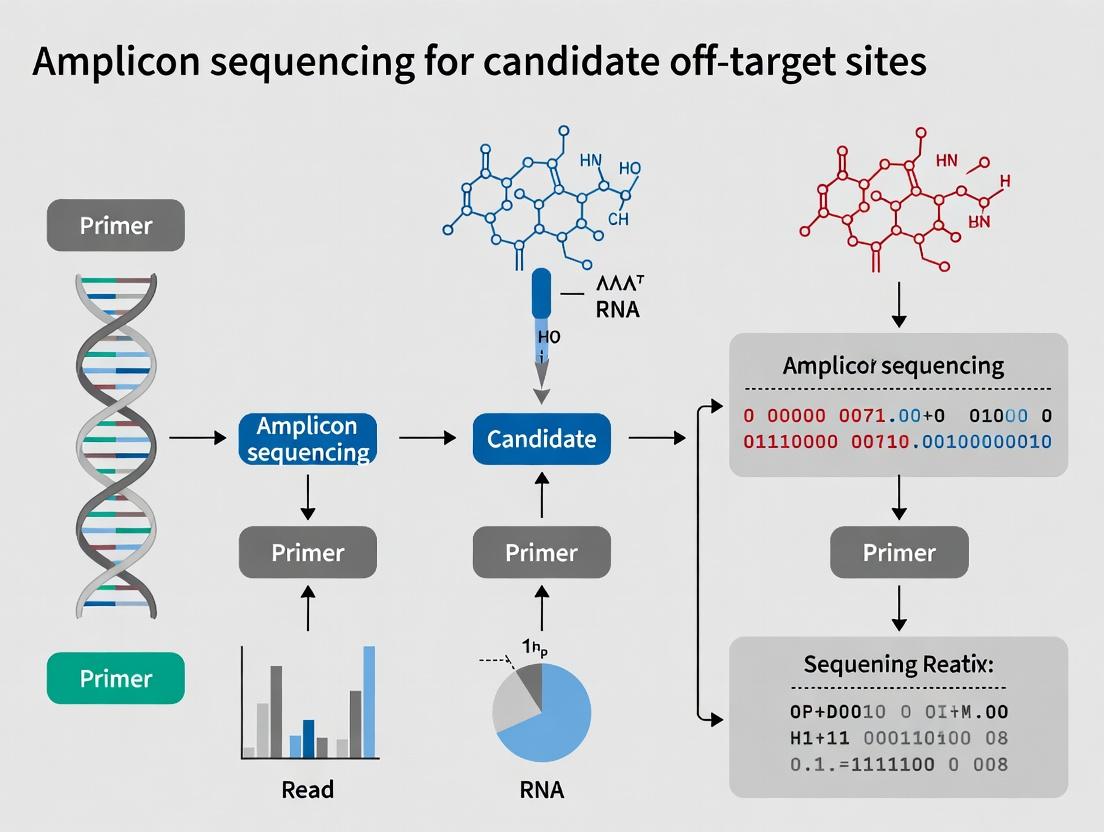
This article provides a complete framework for implementing amplicon sequencing to assess candidate off-target sites for CRISPR-based therapies.
Amplicon Sequencing for CRISPR Off-Target Analysis: A Comprehensive Guide for Therapeutic Developers
Abstract
This article provides a complete framework for implementing amplicon sequencing to assess candidate off-target sites for CRISPR-based therapies. We cover the fundamental principles of off-target prediction and site selection, detail step-by-step experimental workflows from primer design to NGS library prep, address common troubleshooting and optimization challenges, and compare validation strategies against orthogonal methods like WGS and GUIDE-seq. Designed for researchers and drug development professionals, this guide bridges the gap between predictive in silico analysis and empirical, high-sensitivity validation required for regulatory filings.
Understanding the Why and Where: Principles of Off-Target Prediction and Site Prioritization
Off-target effects refer to unintended interactions or modifications caused by a therapeutic agent (e.g., a small molecule drug, monoclonal antibody, or gene-editing nuclease) at sites other than its primary, intended target. These effects can arise from structural similarities between target and non-target sites, promiscuous binding, or dose-dependent saturation of specific pathways. In the context of gene editing, they specifically denote unintended cleavages or edits at genomic loci with sequences homologous to the on-target guide RNA. Understanding and characterizing these effects is paramount for predicting and mitigating adverse events, optimizing therapeutic windows, and ensuring regulatory approval. This application note details protocols for identifying off-target effects within a research thesis focused on Amplicon Sequencing for Candidate Off-Target Sites research.
Quantitative Impact of Off-Target Effects
Table 1: Documented Consequences of Therapeutic Off-Target Effects
| Therapeutic Modality | Example | Reported Off-Target Consequence | Key Quantitative Finding |
|---|---|---|---|
| Small Molecule Kinase Inhibitors | Imatinib | Inhibition of PDGFR, c-KIT | Associated with edema & cardiotoxicity in ~2-5% of patients. |
| CRISPR-Cas9 Gene Editing | VEGFA-targeting gRNA | Cleavage at VEGFA locus homologs | CIRCLE-seq identified >100 potential off-target sites with up to 5 mismatches. |
| RNAi Therapeutics | Early siRNA designs | Immune activation via TLRs | >50% of early sequences triggered significant IFN-α response in pre-clinical models. |
| Monoclonal Antibodies | TGN1412 (CD28 superagonist) | Cytokine Storm | 100% of healthy volunteers in Phase I trial experienced severe, life-threatening reactions. |
Experimental Protocols for Off-Target Identification via Amplicon Sequencing
Protocol 1: In Silico Prediction and Amplicon Panel Design
- Input: Primary therapeutic target sequence (e.g., 23bp gRNA spacer + PAM, or drug-binding domain sequence).
- Prediction Algorithms: Utilize tools like Cas-OFFinder (for CRISPR), BLAST, or structural homology modeling to generate a list of candidate off-target genomic loci. Parameters typically allow for up to 5 nucleotide mismatches, bulges, or gaps.
- Primer Design: For each candidate locus (on-target and top ~100-200 off-target candidates), design ~200-300bp amplicons using a tool like Primer3. Ensure primers are unique to the genomic locus.
- Panel Synthesis: Synthesize PCR primers in a pooled, barcoded format ready for multiplexed amplification.
Protocol 2: Multiplex PCR & NGS Library Preparation for Off-Target Validation
- Genomic DNA Input: Extract high-quality gDNA (≥500ng) from treated and untreated control cell lines or tissue samples.
- Multiplex PCR: Using the pooled primer panel, perform a multiplex PCR with a high-fidelity, hot-start DNA polymerase. Optimize cycle number to avoid amplification bias.
- Typical Thermocycler Program: 98°C for 30s; 18-22 cycles of [98°C for 10s, 60°C for 30s, 72°C for 20s]; 72°C for 2min.
- Indexing PCR: Add Illumina-compatible sequencing adapters and dual-index barcodes via a limited-cycle (8-10 cycles) second PCR.
- Library Clean-up & QC: Purify the final library using solid-phase reversible immobilization (SPRI) beads. Quantify via qPCR and check fragment size on a bioanalyzer.
- Sequencing: Pool libraries and sequence on an Illumina MiSeq or HiSeq platform (2x150bp or 2x250bp recommended).
Protocol 3: Bioinformatics Analysis Pipeline
- Demultiplexing & Trimming: Use
bcl2fastqorbcl-convertto generate FASTQ files. Trim adapters withcutadapt. - Alignment: Align reads to the reference genome (e.g., hg38) using a splice-aware aligner like
BWA-MEMorBowtie2. - Variant Calling: Use specialized tools (
CRISPResso2for gene editing,DeepVariantfor general NGS) to identify insertions, deletions, and single-nucleotide variants at each amplicon target site. - Statistical Analysis: Compare variant frequencies in treated vs. control samples. Filter out background noise (e.g., variants present in control or with frequency <0.1%). Calculate the off-target/on-target ratio for each site.
Visualizations: Workflows and Pathways
Diagram 1: Generic Pathway of Off-Target Impact
Diagram 2: Amplicon-Seq Off-Target Validation Workflow
The Scientist's Toolkit: Research Reagent Solutions
Table 2: Essential Materials for Amplicon-Seq Off-Target Studies
| Item | Function & Rationale |
|---|---|
| High-Fidelity, Hot-Start PCR Polymerase (e.g., Q5, KAPA HiFi) | Ensures accurate amplification of multiplexed amplicons with minimal PCR-induced errors. |
| Pooled, Barcoded Primers (IDT, Twist) | Custom oligonucleotide pools enabling simultaneous amplification of hundreds of target loci. |
| SPRI Beads (e.g., AMPure XP) | For robust size selection and clean-up of PCR products and final NGS libraries. |
| Illumina-Compatible Indexing Kits | To barcode multiple samples for cost-effective pooled sequencing. |
| Cas-OFFinder or Similar Software | Computationally predicts potential CRISPR-Cas off-target sites across a reference genome. |
| CRISPResso2 Analysis Suite | A specialized tool for quantifying genome editing outcomes from NGS data of amplicons. |
| Validated Positive Control gDNA | gDNA from a cell line with known, characterized off-target edits is critical for protocol optimization and pipeline validation. |
| NGS QC Kit (e.g., Agilent Bioanalyzer) | Assesses library fragment size distribution and quantity, ensuring high-quality sequencing input. |
Amplicon sequencing for candidate off-target sites research in drug development, particularly for CRISPR-Cas9 or therapeutic oligonucleotides, requires accurate pre-experimental identification of potential genomic regions. In silico prediction tools are indispensable for this task, filtering thousands of potential sites for downstream experimental validation. This review compares the core algorithms and databases underpinning these tools, providing application notes and protocols for their effective use in an off-target research pipeline.
Comparative Analysis of Algorithms and Databases
Core Algorithm Classification and Comparison
Prediction algorithms primarily fall into three categories based on their matching strategy.
Table 1: Algorithm Classification and Characteristics
| Algorithm Type | Key Principle | Representative Tools | Speed | Sensitivity for Bulges |
|---|---|---|---|---|
| Seed-Based | Requires perfect match to a short "seed" region before extending alignment. | Cas-OFFinder, CHOPCHOP | Very Fast | Low (seed-dependent) |
| Alignment-Based | Uses full-sequence alignment algorithms (e.g., Smith-Waterman, Burrows-Wheeler Transform). | CCTop, CasOT | Moderate | High |
| Machine Learning (ML) | Trained on empirical off-target data to predict cleavage likelihood. | Elevation, DeepCRISPR, SPROUT | Slow (Training) / Fast (Prediction) | High (context-aware) |
Database and Genome Build Support
The predictive accuracy is contingent on the completeness and version of the reference genomic database.
Table 2: Supported Genomes and Key Features of Prominent Tools
| Tool Name | Primary Algorithm | Supported Genome Builds | Mismatch Limit | Bulge Support | Database Update (as of latest info) |
|---|---|---|---|---|---|
| Cas-OFFinder | Seed-Based (Bit-array) | hg19, hg38, mm10, etc. (many) | User-defined (e.g., 6) | Yes (DNA & RNA) | Regular genome index updates |
| CCTop | Alignment-Based (Bowtie) | hg38, hg19, mm10, etc. | Up to 7 | Yes | Uses current ENSEMBL/UCSC |
| CHOPCHOP | Seed-Based -> Alignment | hg38, T2T, mm39, etc. (latest) | 4 (default) | Yes | Frequently updated to latest assemblies |
| CasOT | Alignment-Based (BWT) | Customizable (user-provided) | User-defined | Yes | User-dependent |
| DeepCRISPR | Deep Learning | Dependent on implementation (typically hg19/hg38) | Implicit in model | Yes | Trained on specific databases (e.g., GUIDE-seq) |
Application Notes and Protocols
Protocol 1: Comprehensive Off-Target Screening Pipeline for a Novel gRNA
Objective: To identify top candidate off-target sites for a given SpCas9 gRNA using a consensus approach from multiple tools, prior to amplicon sequencing.
Materials (Research Reagent Solutions):
- In Silico Tools Suite: Cas-OFFinder (command-line), CCTop (web/standalone), CHOPCHOP (web API).
- Reference Genome: UCSC human genome build GRCh38/hg38 primary assembly FASTA file.
- Computational Environment: Linux server with ≥16GB RAM, or high-performance computing cluster.
- gRNA Sequence: 20-nt spacer sequence (e.g.,
5'-GAGTCCGAGCAGAAGAAGAA-3'). - Sequence Manipulation Tools: BEDTools, SAMtools, custom Python/R scripts for intersection.
Procedure:
- Parameter Standardization: Define consistent search parameters: DNA bulge size=1, RNA bulge size=1, total mismatch+bulge limit=5.
- Parallel Tool Execution:
- Cas-OFFinder: Generate all possible genomic positions matching the gRNA with defined mismatches/bulges. Output: BED file.
- CCTop: Run via local installation with
--bowtie2flag for sensitivity. Output: list of ranked off-targets. - CHOPCHOP: Use the
--offtargetflag in command-line mode. Output: BED file.
- Results Aggregation: Use BEDTools
intersectandmergeoperations to combine predictions from all three tools. Sites predicted by ≥2 tools are considered high-confidence candidates. - Ranking and Prioritization: Rank consensus sites by:
- a) Number of tools predicting the site.
- b) Aggregate off-target score (extract from tools).
- c) Genomic context (exonic, intronic, intergenic, promoter).
- Amplicon Primer Design: For the top 20-50 consensus candidate sites, design PCR primers flanking the putative off-target locus (amplicon size: 200-350 bp) using tools like Primer3.
- Output: A final BED file and primer list for targeted amplicon sequencing library preparation.
Protocol 2: Validation of Predictions using GUIDE-seq Data
Objective: To benchmark and calibrate in silico tool parameters using empirical off-target data from a published GUIDE-seq experiment.
Materials:
- Benchmark Dataset: Publicly available GUIDE-seq dataset (e.g., from GEO: GSE84572).
- Positive Control gRNAs: gRNAs with known, validated off-target profiles.
- Scripting Environment: Python with SciPy/NumPy.
Procedure:
- Data Retrieval: Download the GUIDE-seq read alignment (BAM) files and identified off-target site list (BED) for a control gRNA.
- Tool Prediction: Run the target gRNA sequence through the in silico tool being benchmarked (e.g., Cas-OFFinder) with varying mismatch/bulge thresholds (3, 4, 5, 6).
- Performance Calculation: For each threshold, compare predictions to the GUIDE-seq BED file.
- Calculate Sensitivity (Recall): (True Positives) / (True Positives + False Negatives from GUIDE-seq).
- Calculate Precision: (True Positives) / (True Positives + False Positives).
- Parameter Optimization: Plot Precision vs. Recall for different thresholds. Select the threshold that offers an optimal balance (e.g., F1-score maximization) for your specific research context (high sensitivity for safety vs. high precision for efficiency).
- Application: Apply the optimized threshold to novel gRNA designs within your thesis project.
Visualizations
Title: Off-Target Prediction & Validation Workflow
Title: Data Flow in Off-Target Prediction
The Scientist's Toolkit: Essential Research Reagents & Materials
Table 3: Key Reagents and Computational Tools for Off-Target Analysis
| Item / Solution | Function in Off-Target Research | Example / Note |
|---|---|---|
| High-Fidelity Polymerase | Amplification of candidate off-target loci for sequencing with minimal error. | Q5 Hot-Start, KAPA HiFi. Critical for clean NGS libraries. |
| Amplicon Sequencing Library Prep Kit | Prepares targeted PCR products for next-generation sequencing. | Illumina DNA Prep, Swift Biosciences Accel-NGS. |
| UCSC/ENSEMBL Genome FASTA | The reference sequence file against which off-target searches are performed. | hg38.fa from UCSC. Must match the build used in wet-lab analysis. |
| BEDTools Suite | Computational toolset for intersecting, merging, and comparing genomic intervals from predictions and experiments. | bedtools intersect is essential for consensus analysis. |
| GUIDE-seq Dataset | Publicly available empirical off-target data used for benchmarking prediction algorithms. | Sourced from GEO; provides ground truth for sensitivity/recall calculations. |
| Primer Design Software | Designs specific primers flanking predicted off-target sites for amplification. | Primer3, NCBI Primer-BLAST. Must avoid primer-dimer and off-target binding. |
| Containerization Platform | Ensures reproducibility of computational prediction pipelines across different systems. | Docker or Singularity containers with all tools and dependencies pre-installed. |
Key Criteria for Selecting Candidate Off-Target Sites for Empirical Validation
Within the context of amplicon sequencing for off-target research, the selection of candidate sites for empirical validation is a critical bottleneck. This document outlines the key criteria used to prioritize computationally predicted off-target sites, ensuring efficient use of experimental resources and increasing the likelihood of true positive validation.
Key Prioritization Criteria & Quantitative Benchmarks
The following criteria, derived from current literature and best practices, should be evaluated in a tiered system.
Table 1: Quantitative Prioritization Criteria for Off-Target Candidates
| Criterion | High Priority | Medium Priority | Low Priority | Scoring Weight |
|---|---|---|---|---|
| Prediction Algorithm Score | CFD > 0.2 or MIT > 4.0 | CFD 0.05-0.2 or MIT 2.0-4.0 | CFD < 0.05 or MIT < 2.0 | 30% |
| Mismatch Profile | ≤3 mismatches, esp. in seed region | 4-5 mismatches | ≥6 mismatches | 25% |
| Genomic Context | Protein-coding exon, regulatory element | Intron, non-coding RNA | Intergenic, repeat region | 20% |
| In Silico Amplicon Quality | GC% 40-60%, no secondary structure | GC% 30-40% or 60-70% | GC% <30% or >70%, high complexity | 15% |
| Read Support (from NGS) | ≥10 reads, multiple algorithms | 5-10 reads, single algorithm | <5 reads | 10% |
Table 2: Secondary Functional & Risk Assessment Filters
| Filter Category | Criteria for Empirical Validation | Action |
|---|---|---|
| Onco-Gene Proximity | Within 5 kb of known oncogene TSS or splice site | Flag for highest priority |
| Tumor Suppressor Gene | Within coding sequence of TSG | Flag for highest priority |
| Conservation (phastCons) | Score > 0.9 across mammals | Increase priority |
| Chromatin Accessibility (ATAC-seq) | Peak in relevant cell type | Increase priority |
Experimental Protocol: Validation Workflow
Protocol 1: T7 Endonuclease I (T7E1) Mismatch Cleavage Assay
Purpose: Initial, medium-throughput validation of nuclease activity at candidate sites. Reagents:
- PCR Primers: Design primers flanking the candidate off-target site (amplicon size 300-500 bp).
- T7 Endonuclease I: (NEB, #M0302S) Cleaves heteroduplex DNA at mismatch sites.
- Genomic DNA Extraction Kit: (e.g., QIAamp DNA Mini Kit).
- Gel Electrophoresis System: For fragment analysis.
Procedure:
- PCR Amplification: Amplify the target region from treated and untreated (control) cell genomic DNA.
- Heteroduplex Formation: Mix equal volumes of PCR products from treated and control samples. Denature at 95°C for 5 min, then reanneal by ramping down to 25°C at 2°C/sec.
- Digestion: Incubate 10 µL of hybridized product with 5 units of T7E1 enzyme at 37°C for 30 minutes.
- Analysis: Run digested products on a 2% agarose gel. Cleavage bands indicate presence of induced mutations. Calculate indel frequency using band intensity.
Protocol 2: Amplicon Sequencing Library Preparation for Deep Validation
Purpose: High-sensitivity, quantitative measurement of indel spectra and frequencies. Reagents:
- 2x HiFi PCR Master Mix: (e.g., KAPA HiFi HotStart ReadyMix) for high-fidelity amplification.
- Dual-Indexed Barcoding Primers: Incorporate Illumina P5/P7 adapters and unique dual indices (i5/i7) in a two-step PCR.
- SPRIselect Beads: (Beckman Coulter) for PCR clean-up and size selection.
- Qubit dsDNA HS Assay Kit: For library quantification.
Procedure: Step 1: Primary PCR (Target Enrichment)
- Design primers with overhangs complementary to the universal adapter sequences.
- Perform PCR: 98°C 3 min; 15 cycles of [98°C 20s, 65°C 15s, 72°C 30s]; 72°C 5 min.
- Clean up amplicons with 0.8x SPRIselect beads.
Step 2: Secondary PCR (Indexing)
- Amplify purified primary product with unique dual-indexed primers.
- Perform PCR: 98°C 3 min; 8 cycles of [98°C 20s, 65°C 15s, 72°C 30s]; 72°C 5 min.
- Clean up with 0.8x SPRIselect beads. Quantify and pool libraries equimolarly.
Step 3: Sequencing & Analysis
- Sequence on an Illumina MiSeq (2x300 bp) for sufficient depth (>100,000x per amplicon).
- Analyze reads using pipelines like CRISPResso2 or ampliCan to quantify indel percentages and characterize mutation patterns.
Visualization of Workflows
Title: Off-Target Validation Prioritization & Workflow
Title: Amplicon Sequencing Library Prep Workflow
The Scientist's Toolkit: Research Reagent Solutions
Table 3: Essential Reagents for Off-Target Validation Experiments
| Item | Supplier (Example) | Function in Protocol |
|---|---|---|
| T7 Endonuclease I | New England Biolabs (#M0302S) | Detects heteroduplex mismatches in initial screening. |
| KAPA HiFi HotStart ReadyMix | Roche | High-fidelity PCR for accurate amplicon generation. |
| QIAamp DNA Mini Kit | Qiagen (#51304) | Reliable genomic DNA extraction from edited cells. |
| SPRIselect Beads | Beckman Coulter (#B23318) | Size selection and clean-up of amplicon libraries. |
| Illumina Dual Index Primers | Integrated DNA Technologies | Unique barcoding of samples for multiplexed sequencing. |
| Qubit dsDNA HS Assay Kit | Thermo Fisher Scientific (#Q32851) | Accurate quantification of low-concentration DNA libraries. |
| CRISPResso2 Software | GitHub (Pinello Lab) | Bioinformatics pipeline for quantifying editing from amplicon-seq data. |
The Role of Mismatch Tolerance and Genomic Context in Site Identification
Within the broader thesis on Amplicon sequencing for candidate off-target sites research, understanding the determinants of nuclease binding and cleavage is paramount. The identification of bona fide off-target sites for CRISPR-Cas systems, TALENs, or other programmable nucleases extends beyond simple sequence homology. Two critical, interdependent factors govern this identification: Mismatch Tolerance (the number and distribution of base pair mismatches a nuclease can withstand) and Genomic Context (the local epigenetic, chromatin, and sequence microenvironment surrounding a target). This document details application notes and protocols for systematically investigating these factors to generate high-confidence off-target site catalogs.
Factors Influencing Mismatch Tolerance
Mismatch tolerance is not uniform. It is influenced by:
- Mismatch Type: G-U wobble pairs may be more tolerable than bulkier transversion mismatches.
- Mismatch Position: Mismatches in the "seed" region (typically proximal to the PAM/protospacer adjacent motif) are often less tolerated than those in the distal region.
- Nuclease Variant: High-fidelity Cas9 variants (e.g., SpCas9-HF1, eSpCas9) exhibit stricter mismatch tolerance.
Genomic Context Determinants
- Chromatin Accessibility: Open chromatin (e.g., DNase I hypersensitive sites) facilitates nuclease access.
- Epigenetic Marks: Histone modifications (e.g., H3K9me3 - repressive; H3K4me3 - active) correlate with cleavage efficiency.
- Local Sequence Features: GC content, secondary DNA structure, and microhomology regions can influence binding.
Table 1: Quantitative Impact of Mismatch Position on Cleavage Efficiency (Representative Data for SpCas9)
| Mismatch Position (5' PAM Distal -> 3' PAM Proximal) | Average Relative Cleavage Efficiency (%) | Standard Deviation (±%) |
|---|---|---|
| Position 1-5 (Distal) | 65.2 | 12.5 |
| Position 6-10 | 23.8 | 8.4 |
| Position 11-15 (Seed Region) | 5.1 | 3.2 |
| Position 16-20 (PAM Proximal) | 1.7 | 1.5 |
Table 2: Correlation of Genomic Context Features with Off-target Site Validation Rate
| Genomic Context Feature | High-Feature Sites Validated (%) | Low-Feature Sites Validated (%) | Assay Used for Validation |
|---|---|---|---|
| High DNase I Hypersensitivity (DHS) | 78 | 22 | GUIDE-seq / CIRCLE-seq |
| High H3K4me3 Mark | 71 | 18 | Targeted Amplicon Sequencing |
| High GC Content (>60%) | 45 | 41 | Deep Sequencing & NGS Analysis |
| Predicted Nucleosome Occupancy | 15 | 58 | In vitro Cleavage Assay |
Experimental Protocols
Protocol 3.1: In Silico Prediction of Candidate Off-target Sites with Contextual Filtering
Purpose: Generate a prioritized list of off-target candidates by integrating mismatch rules and genomic annotations. Materials: Reference genome (GRCh38/hg38), guide RNA sequence, bioinformatics toolkit (e.g., CRISPRseek, Cas-OFFinder), genomic annotation files (e.g., ENCODE DHS, histone ChIP-seq peaks). Steps:
- Initial Search: Use Cas-OFFinder to find all genomic loci with up to 6 mismatches to the guide sequence, including the canonical PAM.
- Mismatch Scoring: Apply a position-weighted scoring matrix (e.g., from Cutting Frequency Determination data) to rank candidates.
- Contextual Filtering: Intersect the candidate list with BED files of genomic context features using
bedtools intersect.- Priority Tier 1: Candidates within DHS regions.
- Priority Tier 2: Candidates overlapping active histone marks (H3K4me3, H3K27ac).
- Lower Priority: Candidates in repressive chromatin (H3K9me3) or low-complexity regions.
- Output: A ranked BED file for experimental interrogation.
Protocol 3.2: Multiplexed PCR Amplicon Sequencing for Off-target Validation
Purpose: Empirically assess cleavage at predicted off-target loci. Materials: Genomic DNA from nuclease-treated and control cells, locus-specific primers with overhang adapters, high-fidelity PCR master mix, dual-index barcoding kits for NGS, size selection beads. Steps:
- Primer Design: Design primers (amplicon size 180-280 bp) flanking each predicted off-target site and a positive control on-target site.
- Primary PCR: Perform first-round PCR in multiplexed reactions (grouping 10-20 loci per reaction) using locus-specific primers with universal overhangs.
- Indexing PCR: Add unique dual-index barcodes to each sample via a second, limited-cycle PCR using the universal overhang sequences.
- Pooling & Cleanup: Pool all amplicon libraries, perform bead-based size selection, and quantify.
- Sequencing: Run on an Illumina MiSeq or HiSeq platform (2x250 bp or 2x150 bp).
- Analysis: Align reads to the reference genome. Use tools like CRISPResso2 or AmpliconDIVider to quantify insertion/deletion (indel) frequencies at each target locus. Compare treated vs. control samples.
Mandatory Visualizations
Site Identification & Prioritization Workflow
Amplicon Seq for Off-target Validation
The Scientist's Toolkit: Research Reagent Solutions
Table 3: Essential Materials for Off-target Identification Studies
| Item | Function & Relevance |
|---|---|
| High-Fidelity PCR Master Mix (e.g., Q5, KAPA HiFi) | Ensures accurate amplification of target amplicons from genomic DNA, critical for low-error NGS library prep. |
| Dual-Index Barcoding Kit (Illumina-Compatible) | Allows multiplexing of hundreds of samples in one sequencing run, reducing cost per off-target locus screened. |
| Magnetic Size Selection Beads (e.g., SPRIselect) | For clean and consistent size selection of amplicon libraries, removing primer dimers and large contaminants. |
| Validated High-Fidelity Cas9 Nuclease Variant | Positive control protein to compare against wild-type nuclease, demonstrating reduced off-target activity. |
| Commercial Off-target Prediction Service/Software | Provides an optimized, pre-filtered starting list of candidate sites, integrating known mismatch rules. |
| Pooled Oligo Library for GUIDE-seq | For unbiased, genome-wide off-target discovery, which can be used to train and validate in silico prediction filters. |
| ENCODE Epigenomic Datasets (BED Files) | Publicly available genomic context data (DHS, histone marks) crucial for contextual filtering of predictions. |
| CRISPResso2 Software Package | Specialized bioinformatics tool for precise quantification of indels from amplicon sequencing data. |
From Primers to Reads: A Step-by-Step Amplicon Sequencing Workflow
Primer Design Best Practices for High-Fidelity Amplification of Target Loci
Within the context of amplicon sequencing for candidate off-target sites research in drug development, the accuracy of initial amplification is paramount. High-fidelity polymerase chain reaction (PCR) is critical to generate sequencing-ready amplicons that faithfully represent the genomic target, minimizing errors that could confound the identification of true off-target effects. This application note details best practices for primer design and experimental protocols to ensure high-fidelity amplification of specific loci.
Primer Design Principles for High-Fidelity Amplification
The design phase is the first critical control point. Adherence to the following principles minimizes mis-priming and ensures efficient, specific amplification.
1. Sequence Specificity and Complexity:
- Target Specificity: Use tools like BLAST to ensure primers are unique to the target locus, avoiding homology to repetitive or paralogous regions.
- Avoid Secondary Structures: Minimize self-complementarity (particularly at 3' ends) and hairpin formation. ∆G for dimer formation should be > -5 kcal/mol.
- GC Content & Tm: Maintain GC content between 40-60%. Primer melting temperatures (Tm) should be between 58-65°C, with a maximum difference of 2°C between forward and reverse primers.
2. Primer Length and Position:
- Optimal length is 18-30 bases.
- Place the 3' end on a stable base; avoid ending with a G or C triplet.
- For amplicon sequencing, primers should be positioned to generate a product length compatible with your sequencing platform (typically 250-500 bp for Illumina MiSeq).
3. Incorporating Sequencing Adaptors: For a two-step PCR approach (target amplification followed by index addition), add the full sequencing adaptor (e.g., Illumina P5/P7) to the 5' end of the target-specific primer. For a one-step approach, add only partial adaptor sequences (overhang adapters).
Table 1: Quantitative Parameters for Primer Design
| Parameter | Optimal Range | Rationale |
|---|---|---|
| Primer Length | 18-30 nucleotides | Balances specificity and efficient binding. |
| GC Content | 40-60% | Ensures stable primer-template binding without excessive Tm. |
| Melting Temp (Tm) | 58-65°C | Enables specific annealing at standard PCR temperatures. |
| ΔTm (Fwd vs Rev) | ≤ 2°C | Ensures both primers anneal efficiently at the same temperature. |
| 3' End Stability (ΔG) | ≥ -5 kcal/mol | Reduces primer-dimer and non-specific amplification. |
| Amplicon Length | 250-500 bp | Ideal for short-read sequencing and high-fidelity amplification. |
| Self-Complementarity Score | < 4 (per tool) | Minimizes hairpin formation within a single primer. |
Experimental Protocol: High-Fidelity PCR for Amplicon Library Construction
Materials
- High-quality genomic DNA (e.g., from target cell lines).
- High-fidelity DNA polymerase (e.g., Q5, KAPA HiFi, PrimeSTAR GXL).
- dNTP mix.
- Ultra-pure nuclease-free water.
- Designed locus-specific primers.
- Thermal cycler with heated lid.
- Magnetic bead-based purification system (e.g., AMPure XP).
Method
Reaction Setup (25 µL):
- 2X High-Fidelity PCR Master Mix: 12.5 µL
- Forward Primer (10 µM): 0.5 µL
- Reverse Primer (10 µM): 0.5 µL
- Genomic DNA Template (10-100 ng): Variable (1-5 µL)
- Nuclease-Free Water: to 25 µL
- Mix gently by pipetting. Centrifuge briefly.
Thermocycling Conditions:
- Initial Denaturation: 98°C for 30 seconds.
- Cycling (30-35 cycles):
- Denaturation: 98°C for 10 seconds.
- Annealing: Calculate based on primer Tm (Tm - 2°C) for 20 seconds.
- Extension: 72°C for 20-30 seconds/kb.
- Final Extension: 72°C for 2 minutes.
- Hold: 4°C.
Post-PCR Purification:
- Use a magnetic bead-based clean-up system at a 1:1 (beads:sample) ratio to remove primers, enzymes, and non-specific products.
- Elute purified amplicon in nuclease-free water or low TE buffer.
- Quantify using a fluorometric method (e.g., Qubit).
Quality Control:
- Analyze 1 µL of purified product on a high-sensitivity bioanalyzer or agarose gel to confirm a single band of the expected size.
The Scientist's Toolkit: Research Reagent Solutions
| Item | Function in Workflow |
|---|---|
| High-Fidelity DNA Polymerase | Engineered enzyme with 3'→5' exonuclease (proofreading) activity, reducing error rates by 50-100x compared to Taq. |
| AMPure XP Beads | Magnetic bead-based SPRI purification for size selection and cleanup of PCR products, removing primers and dimers. |
| Qubit dsDNA HS Assay | Fluorometric quantification specific for double-stranded DNA, critical for accurate library pooling. |
| Agilent Bioanalyzer High-Sensitivity DNA Kit | Microfluidic capillary electrophoresis for precise sizing and quantification of amplicon libraries. |
| Nuclease-Free Water | Ensures no RNase or DNase contamination that could degrade primers or templates. |
Integration into the Off-Target Analysis Workflow
High-fidelity amplicon generation is the foundational step for accurate off-target site validation. The purified amplicons are subsequently indexed (if not done in the first PCR), pooled, and sequenced. Precise amplification ensures that sequencing reads accurately reflect the genomic sequence at loci suspected of off-target editing, enabling confident variant calling.
High-Fidelity Amplicon Workflow for Off-Target Validation
Primer Design and Validation Logic Flow
Optimized PCR Protocols for GC-Rich Regions and Low-Input Samples
Within the context of amplicon sequencing for candidate off-target sites in drug development, the reliable amplification of target genomic regions is paramount. Two persistent challenges are the efficient amplification of GC-rich sequences, which form stable secondary structures, and the generation of robust libraries from low-input DNA samples, such as from limited clinical biopsies. This application note details optimized protocols to address these specific challenges, ensuring high-quality amplicon generation for subsequent sequencing analysis.
Challenges in Amplicon Sequencing for Off-Target Analysis
- GC-Rich Regions: High GC content (>65%) leads to incomplete denaturation, primer mis-annealing, and nonspecific amplification, resulting in low yield or failed reactions.
- Low-Input Samples: Limited template DNA increases the impact of stochastic loss, elevates the risk of contamination, and exacerbates amplification biases, compromising library complexity and reproducibility.
Key Optimization Parameters & Comparative Data
The following table summarizes critical optimization parameters and their impact based on recent literature.
Table 1: Optimization Strategies for Challenging PCR Amplicons
| Parameter | GC-Rich Region Protocol | Low-Input Sample Protocol | Rationale & Impact |
|---|---|---|---|
| Polymerase | Specialty high-GC polymerase (e.g., Q5 High-GC, GC-Rich) | High-fidelity, high-processivity polymerase (e.g., KAPA HiFi HotStart) | Specialized enzymes resist inhibition, melt secondary structures, and maintain fidelity with minimal input. |
| Buffer/Chemistry | Supplemented with 1M Betaine, 3-5% DMSO, or 1x Q-Solution | No supplement or minimal DMSO only; use of specialized commercial buffers for low-input | Additives destabilize GC duplexes. For low-input, minimizing inhibitors is key; proprietary buffers enhance sensitivity. |
| Denaturation | Higher temp (98-99°C), longer time (20-30s), or a "hot start" at 98°C for 1-3 min | Standard temp (98°C) but longer initial denaturation (45-60s) | Ensures complete separation of DNA strands. Extended initial denaturation improves template accessibility from low-concentration, potentially damaged samples. |
| Annealing | Temperature gradient required; often 2-5°C above standard Tm | Standard calculated Tm; possibly touch-down PCR | Precision annealing is critical for specificity in complex GC structures. Standard annealing preserves complexity. |
| Cycle Number | Moderate (30-35 cycles) to limit artifacts | Increased (35-40 cycles) to capture rare templates | Excessive cycling promotes chimeras in structured DNA. More cycles are necessary to generate sufficient product from minimal template. |
| Input DNA | Standard (1-10 ng) | Ultra-low (10 pg - 1 ng) | Protocols are tailored to vastly different starting amounts. |
| Post-PCR Analysis | Mandatory purification before sequencing (e.g., SPRI beads) | Mandatory purification; size selection often recommended | Removes primers, dimers, and artifacts critical for clean sequencing data from both challenging templates. |
Detailed Experimental Protocols
Protocol A: Amplification of GC-Rich Targets (>70% GC)
This protocol is designed for amplifying difficult, structured regions for off-target site validation.
1. Primer Design:
- Use software (e.g., Primer3Plus) with thermodynamic algorithms (NN model).
- Aim for primers 18-25 bp with Tm ~65-75°C.
- Avoid G/C clamps at the 3’ end if possible.
- Verify specificity via in silico PCR against the reference genome.
2. Reagent Setup:
- Template DNA: 10 ng human genomic DNA in 5 µL.
- PCR Mix (50 µL total):
- 25 µL: 2x High-GC Polymerase Master Mix (commercial).
- 5 µL: 5x GC Enhancer Solution (or 5 µL 5M Betaine + 1.5 µL DMSO).
- 2.5 µL: Forward Primer (10 µM).
- 2.5 µL: Reverse Primer (10 µM).
- 5 µL: Template DNA.
- 10 µL: Nuclease-free H₂O.
3. Thermal Cycling:
- Initial Denaturation: 98°C for 3 min.
- 35 Cycles:
- Denaturation: 98°C for 20 s.
- Annealing: Tm+3°C (gradient recommended) for 20 s.
- Extension: 72°C for 30 s/kb.
- Final Extension: 72°C for 2 min.
- Hold: 4°C.
4. Cleanup:
- Purify amplicons using a 1x SPRI bead clean-up.
- Quantify using fluorometry (e.g., Qubit).
Protocol B: Library Generation from Low-Input DNA (<100 pg)
This two-step protocol minimizes bias and maximizes complexity for pre-capture amplicon library prep.
1. Pre-Amplification (5-10 cycles):
- Reaction Setup (20 µL):
- 10 µL: 2x High-Fidelity PCR Master Mix.
- 0.5 µL: Whole Genome Amplification (WGA) primer mix (degenerate or semi-degenerate).
- X µL: Low-input DNA (10 pg - 100 pg).
- to 20 µL: Nuclease-free H₂O.
- Cycling: 98°C for 45s; 5-10 cycles of (98°C 15s, 60°C 30s, 72°C 1min); 72°C 2min.
2. Target-Specific Amplification:
- Dilute pre-amplified product 1:10.
- Reaction Setup (50 µL):
- 25 µL: 2x High-Fidelity Master Mix.
- 5 µL: Diluted pre-amplification product.
- 2.5 µL: Forward Indexing Primer (15 µM).
- 2.5 µL: Reverse Indexing Primer (15 µM).
- 15 µL: H₂O.
- Cycling: 98°C for 45s; 12-18 cycles of (98°C 15s, 65°C 30s, 72°C 30s); 72°C 1min.
3. Cleanup & Size Selection:
- Perform a double-sided SPRI bead clean-up (e.g., 0.5x followed by 0.8x ratio) to remove primer dimers and select the desired amplicon size range.
Visualization of Workflows
The Scientist's Toolkit: Research Reagent Solutions
Table 2: Essential Reagents for Challenging Amplicon Protocols
| Reagent Category | Example Product | Function in Protocol |
|---|---|---|
| Specialty Polymerases | Q5 High-GC / GC-Rich Solution (NEB), PrimeSTAR GXL (Takara) | Engineered to amplify through high secondary structure; provides high fidelity and processivity. |
| PCR Additives | Betaine (1M), DMSO, Q-Solution (Qiagen) | Destabilizes DNA duplexes, prevents secondary structure formation, and improves primer annealing specificity. |
| Low-Input Master Mixes | KAPA HiFi HotStart ReadyMix (Roche), NEBNext Ultra II Q5 (NEB) | Optimized buffer formulations for high sensitivity, yield, and uniformity from minimal template. |
| Whole Genome Amplification Kits | REPLI-g Single Cell Kit (Qiagen), PicoPLEX (Takara) | Provides degenerate primers and enzymes for uniform, low-bias pre-amplification of limiting DNA. |
| Cleanup & Size Selection | AMPure XP / SPRIselect Beads (Beckman Coulter) | Magnetic bead-based purification to remove primers, dimers, and select specific amplicon sizes. |
| Fluorometric Quantitation | Qubit dsDNA HS / BR Assay Kits (Thermo Fisher) | Accurate, dye-based quantification of DNA concentration, critical for low-concentration samples post-amplification. |
In the context of amplicon sequencing for candidate off-target sites research, robust and efficient Next-Generation Sequencing (NGS) library preparation is paramount. The accurate detection of off-target editing events, crucial for therapeutic safety assessment in drug development, hinges on the sensitivity and specificity of the sequencing library. This document compares two dominant library construction strategies—tagmentation and ligation-based methods—detailing their application, protocols, and suitability for targeted amplicon sequencing workflows in off-target analysis.
The following table summarizes the core quantitative and qualitative differences between the two methods, with a focus on their application for amplicon-based off-target site validation.
Table 1: Comparative Analysis of Library Prep Methods for Amplicon Sequencing
| Feature | Tagmentation (e.g., Nextera) | Ligation-Based (e.g., Illumina TruSeq) |
|---|---|---|
| Principle | Simultaneous fragmentation and adapter tagging via transposase enzyme. | Separate enzymatic steps: end-repair, A-tailing, and adapter ligation. |
| Hands-on Time | ~1.5 hours | ~3.5 hours |
| Total Time (from DNA) | 3-4 hours | 6-8 hours |
| Input DNA Amount | 1 ng - 100 ng (lower input feasible) | 50 ng - 1 µg (higher input typically required) |
| Adapter Addition Efficiency | High; single-step reaction. | High but depends on multiple enzymatic steps. |
| Size Selection Necessity | Critical; post-tagmentation cleanup defines insert size. | Less critical if input amplicons are uniformly sized. |
| Well-to-Well Contamination Risk | Higher (transposase is "sticky") | Lower |
| Cost per Sample | Moderate to High | Low to Moderate |
| Best Suited For | High-throughput, low-input, rapid turnaround projects. | Projects requiring maximum uniformity, high sensitivity, and minimal bias. |
| Key Bias Concern | Sequence-dependent insertion bias of transposase. | Ligation bias, particularly with damaged DNA. |
| Compatibility with Amplicons | Excellent for pooling and tagging multiple PCR products. | Excellent; often the gold standard for defined amplicon panels. |
Detailed Protocols for Off-Target Amplicon Sequencing
Protocol 1: Ligation-Based Library Preparation (Illumina TruSeq DNA LT)
This protocol is considered the robust, gold-standard method for generating high-fidelity libraries from specific candidate off-target amplicons.
Materials:
- Purified PCR amplicons (50-200 ng total in 50 µL TE).
- TruSeq DNA LT Library Prep Kit (Illumina).
- AMPure XP beads (Beckman Coulter).
- Ethanol (80%, freshly prepared).
- Tris-HCl (10 mM, pH 8.5).
- Thermal cycler with heated lid.
- Magnetic stand.
Procedure:
End Repair:
- Combine: 50 µL amplicon, 10 µL End Repair Mix 1, 5 µL End Repair Mix 2.
- Mix thoroughly and incubate: 30 minutes at 30°C.
- Purify with 1.8X volume AMPure XP beads. Elute in 17.5 µL Resuspension Buffer.
A-Tailing:
- To the 17.5 µL eluate, add 2.5 µL A-Tailing Mix.
- Incubate: 30 minutes at 37°C.
- Note: Do not purify after this step.
Adapter Ligation:
- Add 2.5 µL of uniquely barcoded TruSeq LT Adapter (diluted 1:10) and 2.5 µL Ligation Mix to the A-tailing reaction.
- Incubate: 10 minutes at 30°C.
- Purify with 1X volume AMPure XP beads. Elute in 52.5 µL Resuspension Buffer.
Library Amplification & Cleanup:
- Set up PCR: 52.5 µL ligated DNA, 5 µL PCR Primer Cocktail, 20 µL PCR Master Mix.
- Cycle: 98°C for 30s; 8-12 cycles of [98°C for 10s, 60°C for 30s, 72°C for 30s]; 72°C for 5 min.
- Purify with 1X volume AMPure XP beads. Elute in 30 µL Tris-HCl. Quantify by qPCR.
Protocol 2: Tagmentation-Based Library Preparation (Nextera XT)
This protocol is optimized for rapid preparation of multiplexed amplicon libraries, suitable for screening numerous candidate sites.
Materials:
- Purified PCR amplicons (1 ng total in 5 µL nuclease-free water).
- Nextera XT DNA Library Prep Kit (Illumina).
- AMPure XP beads.
- Ethanol (80%).
- Tris-HCl (10 mM, pH 8.5).
- Thermal cycler, magnetic stand.
Procedure:
Tagmentation:
- Assemble: 5 µL Amplicons, 5 µL Tagment DNA Buffer, 2.5 µL Amplicon Tagment Mix.
- Incubate in thermal cycler: 55°C for 5-10 minutes (optimize for desired fragment size); then hold at 10°C.
- Immediately add 2.5 µL Neutralize Tagment Buffer. Mix and incubate at room temperature for 5 min.
Limited-Cycle PCR for Adapter Completion & Indexing:
- Add: 3 µL Nextera PCR Master Mix, 1 µL Index 1 (i7), 1 µL Index 2 (i5) primers to the neutralized tagmentation reaction.
- Cycle: 72°C for 3 min; 95°C for 30s; 12 cycles of [95°C for 10s, 55°C for 30s, 72°C for 30s]; 72°C for 5 min.
Library Cleanup & Size Selection:
- Add 15 µL AMPure XP beads (0.6X ratio) to the PCR product. Incubate 5 min, capture beads, and transfer supernatant to a new tube.
- Add 10 µL AMPure XP beads (0.8X ratio) to the supernatant. Incubate 5 min, wash beads twice with 80% ethanol, and elute in 30 µL Tris-HCl. This double-sided selection enriches for ~300-700 bp fragments.
Visualizing the Workflows
Ligation-Based NGS Library Prep Workflow
Tagmentation-Based NGS Library Prep Workflow
The Scientist's Toolkit: Key Reagents for Amplicon Library Prep
Table 2: Essential Research Reagent Solutions
| Reagent/Category | Example Product(s) | Function in Off-Target Amplicon Prep |
|---|---|---|
| High-Fidelity PCR Mix | KAPA HiFi HotStart, Q5 High-Fidelity | Ensures accurate amplification of candidate off-target loci with minimal error. |
| Library Prep Kit (Ligation) | Illumina TruSeq DNA LT, NEB Next Ultra II | Provides all optimized enzymes and buffers for the multi-step, gold-standard ligation workflow. |
| Library Prep Kit (Tagmentation) | Illumina Nextera XT/Flex, Diagenome Tagmentase | Integrates transposase and buffers for simultaneous fragmentation and adapter tagging. |
| Solid Phase Reversible Immobilization (SPRI) Beads | AMPure XP, SPRIselect | For size selection and cleanup of reactions, critical for removing primers, adapters, and short fragments. |
| Dual-Indexed Adapters | Illumina IDT for Illumina, TruSeq UD Indexes | Enables multiplexing of hundreds of samples by attaching unique barcode pairs, essential for pooled off-target screening. |
| Library Quantification Kit | KAPA Library Quantification Kit (qPCR) | Provides accurate, amplification-based quantification for precise pooling and loading on the sequencer. |
| Target Capture/Amplicon Panels | IDT xGen Lockdown Probes, Twist Custom Panels | For hybrid capture-based off-target screening; not used in PCR-amplicon workflow but a key alternative. |
Sequencing Depth and Coverage Calculations for Confident Variant Detection
Within the context of amplicon sequencing for candidate off-target sites research, accurate detection of low-frequency variants is critical for assessing the specificity of genome-editing tools. This application note details the principles of sequencing depth and coverage calculations required for confident variant calling, providing protocols and data analysis frameworks tailored for researchers, scientists, and drug development professionals.
In amplicon-based off-target site sequencing, sequencing depth (also called read depth) refers to the number of times a given nucleotide in the amplicon is sequenced. Coverage describes the percentage of the target amplicon region that is sequenced at a given depth. For off-target research, where the goal is to detect rare insertion-deletion events (indels) or single-nucleotide variants (SNVs) introduced by editing tools, sufficient depth is non-negotiable. The required depth is a function of the desired variant allele frequency (VAF) detection limit, the required statistical confidence, and the sequencing error rate.
Quantitative Framework for Depth Calculation
The minimum sequencing depth required to detect a variant at a given allele frequency with a specific statistical confidence can be calculated using binomial or Poisson distributions. A common model considers the probability of missing a true variant due to sampling error.
Key Equation (Simplified):
P(miss) = (1 - VAF)^Depth
Where P(miss) is the probability of missing a true variant, VAF is the variant allele frequency, and Depth is the sequencing depth. To ensure a 95% probability (P(miss) ≤ 0.05) of detecting a variant, the equation is rearranged: Depth ≥ ln(0.05) / ln(1 - VAF).
This model assumes no sequencing error. A more robust model accounts for the error rate (ε) and required confidence in distinguishing a true variant from noise.
Table 1: Minimum Theoretical Depths for Variant Detection (95% Confidence)
| Target Variant Allele Frequency (VAF) | Minimum Depth (Ignoring Error) | Minimum Depth (With 0.1% Base Error Rate) | Notes |
|---|---|---|---|
| 10% (0.1) | 29 | 45 | Common for heterozygous edits. |
| 5% (0.05) | 59 | 95 | Common cutoff for mosaic detection. |
| 1% (0.01) | 299 | 480 | Critical for sensitive off-target screening. |
| 0.1% (0.001) | 2995 | 4800+ | Required for ultra-sensitive applications; often needs duplicate amplicons. |
| 0.01% (0.0001) | 29,956 | Not feasible with standard amplicon NGS | Requires advanced error-suppression techniques. |
Note: Depth calculation with error rate is complex and often uses power calculations or tools like pwr in R. The values above are illustrative approximations.
Experimental Protocol: Amplicon Sequencing for Off-Target Site Analysis
This protocol outlines the steps from primer design to sequencing depth verification for off-target site validation.
A. Primer Design and Amplicon Generation
- Input: List of in silico or in vitro predicted off-target sites (e.g., from GUIDE-seq, CIRCLE-seq) with genomic coordinates.
- Design: Design PCR primers to generate 150-300 bp amplicons spanning the putative cut site. Ensure primers are >50 bp away from the cut site to avoid amplifying non-edited, nicked DNA.
- Validation: Perform in silico specificity check (e.g., BLAST, Primer-BLAST). Order primers with standard desalting.
- PCR: Perform high-fidelity PCR on treated and control genomic DNA.
- Reaction: 25-50 ng gDNA, 0.5 µM each primer, 1x High-Fidelity PCR Master Mix (e.g., Q5, KAPA HiFi).
- Cycling: Initial denaturation (98°C, 30 sec); 30-35 cycles of (98°C, 10 sec; 60-65°C, 15 sec; 72°C, 15 sec/kb); final extension (72°C, 2 min).
- Purification: Clean amplicons using bead-based cleanup (e.g., AMPure XP beads) and quantify by fluorometry.
B. Library Preparation and Sequencing
- Indexing PCR: Add unique dual indices (i7 and i5) and full sequencing adapters via a limited-cycle (8-12 cycles) PCR.
- Pooling & QC: Equimolar pool amplicons from multiple sites/samples. Validate pool size and concentration using a Bioanalyzer or Fragment Analyzer.
- Sequencing: Sequence on an Illumina platform (MiSeq, NextSeq, or NovaSeq) using paired-end reads (2x150 bp or 2x250 bp). The critical step is loading sufficient concentration to achieve the required cluster density for target depth across all amplicons in the pool.
C. Bioinformatic Analysis & Depth Verification
- Demultiplexing: Generate FASTQ files per sample using
bcl2fastqorDRAGEN. - Alignment: Trim adapters (e.g., Trim Galore!). Align reads to the reference genome using a splice-aware aligner optimized for short reads (e.g.,
BWA-MEM,Bowtie2). - Depth Calculation: Use
samtools depthormosdepthon the aligned BAM file for each target region. - Variant Calling: Call variants using a tool sensitive to low-frequency edits (e.g.,
GATK Mutect2in tumor-only mode,CRISPResso2, orBVAR). Set minimum base quality (Q20) and mapping quality (Q30) filters. - Report Generation: Generate a summary table of depth and detected variants per amplicon.
Table 2: Essential Quality Control Metrics
| Metric | Target Value | Purpose |
|---|---|---|
| Mean Depth per Amplicon | >1000x for 1% VAF detection | Ensures statistical power to detect low-frequency variants. |
| Uniformity of Coverage | >90% of target bases at ≥100x | Identifies amplicons with "dropouts" that could miss variants. |
| Mapping Rate | >95% | Indicates specificity of amplicons and quality of sequencing. |
| Mean Base Quality (Q-score) | ≥30 | Ensures high confidence in base calling, reducing false positives. |
| PCR Duplicate Rate | Monitor; can be high in amplicon-seq. Use deduplication. | Prevents overestimation of depth from clonal reads. |
Visualization of the Amplicon Sequencing & Analysis Workflow
Title: Amplicon Sequencing Workflow for Off-Target Analysis
The Scientist's Toolkit: Research Reagent Solutions
Table 3: Essential Materials and Reagents
| Item | Function/Benefit | Example Product/Brand |
|---|---|---|
| High-Fidelity DNA Polymerase | Critical for accurate amplification of target amplicons with minimal PCR errors, which could be mistaken for true variants. | Q5 High-Fidelity (NEB), KAPA HiFi HotStart (Roche) |
| AMPure XP Beads | For size selection and purification of amplicons, removing primer dimers and nonspecific products to ensure a clean library. | Beckman Coulter AMPure XP |
| Dual-Indexed Adapter Kits | Allows multiplexing of hundreds of samples/runs. Unique dual indices (UDIs) are essential to prevent index hopping from causing false-positive variant calls. | Illumina Nextera XT, IDT for Illumina UDI kits |
| Fluorometric Quantification Kit | Accurate quantification of DNA libraries is essential for achieving optimal cluster density and balanced sequencing coverage. | Qubit dsDNA HS Assay (Thermo Fisher) |
| Bioanalyzer/Fragment Analyzer | Assess size distribution and quality of amplicon libraries before sequencing to identify contamination or adapter dimers. | Agilent Bioanalyzer, Agilent Fragment Analyzer |
| Targeted Amplicon Panel Design Service | For large-scale studies, commercial services can optimize primer designs for high uniformity and specificity. | Illumina DesignStudio, IDT xGen Amplicon Panel |
| CRISPR-Specific Analysis Software | Streamlined pipelines for aligning to reference, quantifying indels, and generating reports from amplicon sequencing data. | CRISPResso2, Inference of CRISPR Edits (ICE) by Synthego |
Solving Common Pitfalls: Enhancing Sensitivity and Specificity
Addressing Amplification Bias and PCR Artifacts in NGS Data
Within the context of a broader thesis on amplicon sequencing for candidate off-target sites research, addressing amplification bias and polymerase chain reaction (PCR) artifacts is paramount. These technical distortions can obscure true biological signals, leading to false positives or inaccurate quantification of off-target editing events in therapeutic genome editing applications. This document provides detailed application notes and protocols to identify, mitigate, and correct for these artifacts.
Understanding and Quantifying the Biases
Amplification bias refers to the non-uniform representation of sequences after PCR due to differences in primer binding efficiency, GC content, and amplicon length. PCR artifacts include chimera formation, polymerase errors, and heteroduplexes. The following table summarizes common artifacts and their estimated impact on variant frequency data in amplicon sequencing.
Table 1: Common PCR Artifacts and Their Impact on Amplicon-Seq Data
| Artifact Type | Primary Cause | Effect on Variant Frequency | Typical Frequency Range in Untreated Data |
|---|---|---|---|
| Polymerase Errors | Taq DNA polymerase infidelity | False low-frequency variants | 0.001% - 0.1% per base |
| Chimera Formation | Incomplete extension / template switching | Artificial recombinant sequences | 1% - 15% of reads |
| Heteroduplexes (HDs) | Annealing of divergent strands from edited/unedited pools | False indel calls post-clustering | Up to 40% of reads for 50:50 allele ratio |
| Amplification Bias | Variable primer efficiency & GC content | Skewed allele frequency quantification | Can exceed 10-fold difference between amplicons |
| Index Switching | Cross-contamination during multiplexing | Sample misidentification | ~0.5% - 2% of reads in multiplexed pools |
Core Experimental Protocols
Protocol 1: Two-Step PCR with Unique Molecular Identifiers (UMIs)
Objective: To enable digital counting of original molecules and correct for amplification bias and polymerase errors. Materials: High-fidelity DNA polymerase (e.g., Q5), UMI-adapter primers, Clean-up beads.
- First PCR (Target Amplification):
- Use locus-specific primers with 5' overhangs containing partial adapter sequences.
- Cycle number: Keep as low as possible (typically 12-18 cycles).
- Purify amplicons with bead-based clean-up (0.8x ratio).
- Second PCR (Indexing & UMI Addition):
- Amplify purified product from step 1 using primers containing full Illumina adapters, sample indices, and a random UMI sequence (8-12 bp).
- Use 8-10 cycles.
- Purify final library (0.9x bead ratio) and quantify via qPCR.
Protocol 2: Enzymatic Removal of Heteroduplexes
Objective: To reduce false indel calls by removing heteroduplex DNA molecules prior to sequencing. Materials: NGS library, Nuclease S1 or T7 Endonuclease I, appropriate reaction buffer.
- After final PCR amplification, purify the library.
- Set up reaction: 100 ng library, 5 units of Nuclease S1 (or T7 Endonuclease I), 1x reaction buffer in 20 µL.
- Incubate at 37°C for 30 minutes.
- Purify the treated library immediately using bead clean-up (1.0x ratio). This digests mismatched heteroduplexes, enriching for perfectly matched homoduplexes.
Protocol 3: Computational Pipeline for UMI-Based Consensus Calling
Objective: To generate accurate sequence data by collapsing reads derived from the same original molecule. Materials: Raw FASTQ files, UMI-tools, Consensus alignment software.
- Preprocessing: Extract UMIs from read headers and attach to read names. Trim adapters.
- Alignment: Map reads to the reference genome using a sensitive aligner (e.g., BWA-MEM).
- Deduplication: Use
UMI-tools groupto group reads by genomic position and UMI, allowing for 1-2 edit distances in UMI to account for errors. - Consensus Building: For each UMI group, generate a consensus sequence using the tool's
callmethod (e.g., directional). This step suppresses polymerase errors. - Variant Calling: Perform variant calling on the consensus-aligned BAM file.
Visualization of Workflows and Relationships
Title: Wet-Lab Protocol for Bias-Reduced Amplicon Sequencing
Title: Computational UMI Consensus Pipeline
The Scientist's Toolkit: Research Reagent Solutions
Table 2: Essential Reagents and Kits for Mitigating Amplification Artifacts
| Item | Function & Rationale | Example Product(s) |
|---|---|---|
| High-Fidelity DNA Polymerase | Reduces polymerase errors during amplification due to proofreading activity. Essential for accurate variant detection. | Q5 Hot Start (NEB), KAPA HiFi, Phusion Plus. |
| UMI-Adapter Primers | Oligonucleotides containing random molecular barcodes to uniquely tag original DNA molecules for consensus calling. | IDT for Illumina UMI kits, Custom synthesized primers. |
| Heteroduplex Cleavage Enzyme | Selectively digests mismatched DNA duplexes to prevent them from being sequenced as false indels. | Nuclease S1, T7 Endonuclease I, Surveyor Nuclease. |
| PCR Decontamination Reagent | Degrades contaminating amplicons from previous reactions to reduce false-positive background. | Uracil-DNA Glycosylase (UDG), UNG. |
| Bead-Based Cleanup Kits | Enable size selection and removal of primers, enzymes, and salts. Critical for clean library prep. | SPRIselect beads (Beckman), AMPure XP beads. |
| Library Quantification Kit | Accurate qPCR-based quantification of sequencing-ready libraries for optimal cluster density. | KAPA Library Quantification Kit. |
Minimizing Background Noise from Non-Specific Priming
In the context of amplicon sequencing for candidate off-target sites research, minimizing background noise is critical for accurate identification of true, low-frequency editing events. Non-specific priming during PCR amplification generates false-positive amplicons that obscure genuine off-target signals, leading to reduced sensitivity and specificity. This application note details protocols and strategies to suppress this noise, thereby enhancing the fidelity of off-target profiling assays in therapeutic genome editing.
Table 1: Common Sources of Background Noise in Amplicon Sequencing and Typical Impact
| Noise Source | Mechanism | Estimated Background Frequency Range | Impact on Off-Target Detection |
|---|---|---|---|
| Non-Specific Primer Binding | Partial complementarity at non-target genomic loci | 0.1% - 5.0% | High: Can mimic true off-target sites. |
| Primer-Dimer Formation | Self-complementarity of primers | 0.01% - 1.0% | Medium: Consumes reagents, reduces library complexity. |
| Mispriming during Early PCR Cycles | Low-stringency conditions in initial amplification | Variable, can be >1% | High: Amplifies non-target sequences exponentially. |
| Template Switching / Chimera Formation | Incomplete extension products acting as primers | 0.1% - 2.0% | Medium-High: Creates artificial recombinant sequences. |
| Cross-Contamination | Carryover from previous reactions | Can be catastrophic if uncontrolled | High: Introduces false-positive sequences. |
Table 2: Comparison of Noise-Reduction Strategies and Their Efficacy
| Strategy / Reagent | Principle | Reported Reduction in Background Noise | Key Considerations |
|---|---|---|---|
| Hot-Start DNA Polymerases | Polymerase inactivity at room temperature, preventing mispriming | 50-90% reduction in non-specific products | Essential for high-fidelity multiplex PCR. |
| Touchdown / Step-Down PCR | Gradual lowering of annealing temperature to favor specific binding | 60-80% reduction | Increases protocol time but improves specificity. |
| Additives (e.g., DMSO, Betaine) | Reduce secondary structure, increase primer specificity | 40-70% reduction | Concentration must be optimized; can inhibit some polymerases. |
| Proofreading Polymerases | 3'→5' exonuclease activity corrects misincorporated bases | ~2-5x increase in fidelity (reduces substitution errors) | Does not directly prevent mispriming. |
| Blocking Oligonucleotides | Bind to and block amplification of common parasitic sequences | Up to 95% reduction for known artifacts | Requires prior knowledge of non-specific amplicon sequences. |
| Dual-Priming Oligonucleotides (DPO) | Two primer segments joined by a polydeoxyinosine linker; require dual-match for stable binding | Dramatic reduction vs. conventional primers | Complex design; not all vendors offer. |
| Optimized Mg²⁺ Concentration | Lower Mg²⁺ increases stringency of primer binding | Significant, but system-dependent | Must be titrated for each primer set. |
Detailed Experimental Protocols
Protocol 3.1: High-Stringency, Hot-Start Multiplex PCR for Off-Target Loci Amplification
Objective: To simultaneously amplify multiple candidate off-target loci with minimal non-specific background. Materials: High-fidelity hot-start DNA polymerase (e.g., Q5 Hot Start, KAPA HiFi HotStart), primer pools, genomic DNA (gDNA), nuclease-free water, PCR additives (optional). Procedure:
- Primer Design: Design primers with stringent criteria: length 18-30 bp, Tm within 2°C of each other, avoid 3' complementarity. Use bioinformatics tools to check for potential off-target binding across the genome.
- Reaction Setup (25 µL):
- gDNA: 10-100 ng
- 5X Reaction Buffer: 5 µL
- dNTPs (10 mM each): 0.5 µL
- Primer Pool (each primer 0.1-0.5 µM final): Variable
- Hot-Start DNA Polymerase: 0.5-1.0 unit
- Additive (e.g., 5M Betaine): 2.5 µL (0.5 M final) optional
- Nuclease-free water to 25 µL.
- Keep reactions on ice until placed in pre-heated thermocycler.
- Thermocycling Profile:
- Initial Denaturation: 98°C for 30-60 sec (activates hot-start enzyme).
- 30-35 Cycles:
- Denaturation: 98°C for 10 sec.
- Annealing: Use a "Touchdown" approach: Start 3-5°C above average primer Tm for 5 cycles, then decrease by 1°C per cycle for 10 cycles, then use final, lower Tm for remaining cycles. (e.g., Start at 68°C, end at 58°C for 20 cycles).
- Extension: 72°C for 15-30 sec/kb.
- Final Extension: 72°C for 2 min.
- Hold: 4°C.
- Post-PCR Analysis: Analyze 5 µL on a high-sensitivity gel or bioanalyzer to confirm specific amplification and assess background.
Protocol 3.2: Use of Blocking Oligonucleotides to Suppress Known Artifacts
Objective: To selectively inhibit the amplification of a dominant, recurrent non-specific amplicon identified in preliminary runs. Materials: Blocking oligonucleotide (3' C3 or phosphorylation modification to prevent extension), standard PCR reagents. Procedure:
- Identify Artifact: Sequence the dominant non-target band from a preliminary gel. Align to the genome to identify the precise non-specific priming site.
- Design Blocking Oligo: Design an oligonucleotide complementary to the non-specific priming site on the genome, typically 20-40 nt in length. Modify the 3' end with a C3 spacer or phosphorylation to prevent polymerase extension. The oligo should have a Tm 5-10°C higher than the primers.
- Optimize PCR with Blocker: Set up the standard PCR reaction (Protocol 3.1) with the addition of the blocking oligonucleotide. A titration is required.
- Run parallel reactions with blocker concentrations at 0x, 1x, 5x, 10x, and 20x the concentration of the forward and reverse primers.
- Use the standard thermocycling profile, but ensure the annealing temperature is at or below the Tm of the primers but above the Tm of the blocker-primer dimer (if any).
- Analysis: Assess gel images for the disappearance of the non-specific band and maintenance of the true target band intensity. Select the lowest blocker concentration that provides sufficient suppression.
Visualizations
Diagram 1: Workflow for Noise Minimization in Off-Target Sequencing
Diagram 2: Mechanism of Blocking Oligonucleotide Action
The Scientist's Toolkit: Research Reagent Solutions
Table 3: Essential Materials for Noise-Minimized Amplicon Sequencing
| Item / Reagent | Function & Role in Noise Reduction | Example Product(s) |
|---|---|---|
| High-Fidelity Hot-Start Polymerase | Provides enzymatic activity only at high temperature, preventing mispriming during setup and early cycles. Critical for multiplex PCR. | Q5 Hot Start (NEB), KAPA HiFi HotStart (Roche), PrimeSTAR GXL (Takara). |
| Structured Nuclease-Free Water | Eliminates RNase, DNase, and contaminating nucleic acids that contribute to background. | Molecular biology grade water (Invitrogen, Thermo Fisher). |
| PCR Additives | Destabilize DNA secondary structure, equalize primer Tm, and increase specificity of primer binding. | DMSO, Betaine, Formamide, GC Enhancer. |
| Blocking Oligonucleotides | Sequence-specific blockers that bind to common artifact-generating loci and prevent primer binding. | Custom DNA oligos with 3' C3 Spacer or phosphorylation (IDT, Sigma). |
| Dual-Priming Oligonucleotides (DPO) | Primer design with two segments separated by a linker; requires both segments to match for stable binding, drastically improving specificity. | Available as custom design from select oligo synthesis providers. |
| Low-Binding Tubes & Tips | Minimize adsorption of nucleic acids and enzymes, ensuring accurate reagent concentrations and reducing cross-contamination risk. | LoBind tubes (Eppendorf), NONstick tips (Thermo Fisher). |
| High-Sensitivity Nucleic Acid Stain | Allows visualization of low-yield specific bands against a faint background for accurate quality control. | SYBR Green, GelGreen (Biotium), QIAxcel capillary system (QIAGEN). |
| PCR Clean-up & Size Selection Kits | Remove primer-dimers, non-specific short products, and excess primers post-amplification to purify the target library. | AMPure XP beads (Beckman Coulter), NucleoSpin Gel and PCR Clean-up (Macherey-Nagel). |
Optimization Strategies for Detecting Low-Frequency Indels (<0.1%)
Within amplicon sequencing studies for CRISPR-Cas9 off-target analysis, the precise detection of low-frequency indels (<0.1%) is critical for a comprehensive assessment of genome editing specificity. This application note details optimized experimental and bioinformatic strategies to enhance sensitivity and specificity in identifying these rare events. The protocols are framed within a thesis focused on amplicon sequencing of candidate off-target sites, providing researchers and drug development professionals with robust methodologies for accurate risk assessment in therapeutic development.
Amplicon deep sequencing is the cornerstone for profiling edits at candidate off-target loci predicted by in silico tools. The detection limit of standard amplicon workflows is typically around 0.5-1% variant allele frequency (VAF). However, for a thorough safety profile in therapeutic applications, sensitivity must be pushed below 0.1%. This requires a multi-faceted optimization strategy addressing pre-PCR, PCR, and post-sequencing analysis to mitigate errors and amplify the true biological signal.
Key Optimization Strategies
Wet-Lab Optimizations to Reduce Technical Noise
A. Template Preparation & High-Fidelity PCR The initial quality of genomic DNA and the fidelity of the polymerase are paramount. Use of fragmentation- and damage-minimizing DNA extraction kits is recommended. For PCR, employ ultra-high-fidelity polymerases with 3’→5’ exonuclease (proofreading) activity.
Table 1: Comparison of High-Fidelity Polymerases for Low-Frequency Detection
| Polymerase | Error Rate (mutations/bp/cycle) | Recommended for <0.1% VAF? | Key Feature |
|---|---|---|---|
| Q5 Hot Start | 4.4 x 10⁻⁷ | Yes | High processivity, stringent proofreading |
| KAPA HiFi HotStart | 2.6 x 10⁻⁶ | Yes (with optimization) | Robust amplification from complex genomes |
| Phusion Plus | 4.0 x 10⁻⁷ | Yes | Very high fidelity, fast cycling |
| Standard Taq | ~1.0 x 10⁻⁴ | No | Lacks proofreading, error-prone |
Protocol 1: Ultra-Clean Amplicon Generation
- Input DNA: Use 50-100 ng of high-molecular-weight gDNA. Quantify via fluorometry (e.g., Qubit).
- Primer Design: Design primers with 25-30 bp arms, ensuring a Tm of ~65-68°C. Add unique molecular identifier (UMI) adapters (8-12 bp randomers) via a separate forward primer tail or during a subsequent indexing PCR.
- First-Stage PCR (Target Amplification):
- Reaction Mix: 1X Q5 Reaction Buffer, 200 µM dNTPs, 0.5 µM forward/reverse primer, 1 unit Q5 Hot Start DNA Polymerase, 50 ng gDNA.
- Cycling: 98°C 30s; [98°C 10s, 65°C 20s, 72°C 20s] x 25 cycles; 72°C 2 min.
- Use a minimal number of cycles to reduce PCR drift.
- Purification: Clean amplicons using a double-sided size selection SPRI bead cleanup (0.6X followed by 0.8X bead ratio) to remove primer dimers and non-specific products.
B. Unique Molecular Identifiers (UMIs) and Duplicate Consensus UMIs are critical to correct for PCR amplification bias and polymerase errors. Each original DNA molecule is tagged with a unique random sequence. Post-sequencing, reads with identical UMIs are grouped, and a consensus sequence is built to infer the original template sequence, collapsing PCR duplicates and errors.
Table 2: UMI Strategy Comparison
| Strategy | Implementation | Advantage | Disadvantage |
|---|---|---|---|
| Integrated UMI Primers | UMI + spacer + target-specific primer | Single PCR step | Potential sequence bias in UMI synthesis |
| Two-Step PCR | 1. Target amp with UMI-tagged primers. 2. Add Illumina indices. | Flexibility, cleaner consensus | Extra PCR step increases risk of cross-contamination |
Protocol 2: Two-Step UMI-Amplicon Library Prep
- Step 1 - UMI Addition: Perform Protocol 1, but with forward and reverse primers containing a 5’ overhang with an 8bp UMI and a 4bp spacer.
- Purification: Clean Step 1 product with 0.8X SPRI beads.
- Step 2 - Indexing: Amplify 2 µL of purified product for 8 cycles using a limited-cycle library prep kit (e.g., Illumina P5/P7 indexing primers).
- Final Purification & QC: Purify with 0.9X SPRI beads. Quantify via qPCR (e.g., KAPA Library Quant Kit) and pool for sequencing.
Bioinformatics & Analysis Pipeline Optimization
A stringent bioinformatics pipeline is required to distinguish true low-frequency indels from sequencing artifacts.
Workflow: Amplicon Analysis for Low-Frequency Indels
Protocol 3: Bioinformatics Pipeline Execution
- Demultiplexing & Trimming: Use
bcl2fastqormkfastq(10x). Trim adapters and low-quality bases withfastp(-q 20 -u 10). - Alignment: Align to the human reference genome (hg38) using
BWA-MEM. Extract on-target amplicon regions withsamtools. - UMI Processing:
- Group reads by UMI:
fgbio GroupReadsByUmi --input=aligned.bam --output=grouped.bam. - Generate consensus reads:
fgbio CallMolecularConsensus --input=grouped.bam --output=consensus.bam --min-reads=3.
- Group reads by UMI:
- Variant Calling: Re-align consensus.bam. Use
GATK Mutect2in "panel-of-normals" mode, creating a normal sample from unedited control amplicons to filter common artifacts. - Hard Filtering: Apply filters:
DP > 5000,VAF >= 0.0001,strand bias p-value < 0.001.
Data Presentation
Table 3: Impact of Optimization Steps on Detection Sensitivity
| Pipeline Component | Background Noise (VAF) | True Positive Detection Rate at 0.05% VAF | Key Parameter |
|---|---|---|---|
| Standard Taq Polymerase | ~0.5% | 0% | Polymerase Fidelity |
| Q5 Polymerase (No UMI) | ~0.05% | <20% | PCR Error Reduction |
| Q5 + UMI (Basic Consensus) | ~0.01% | >80% | Duplicate & Error Collapsing |
| Q5 + UMI + Stringent Bioinfo Filtering | <0.005% | >95% | Integrated Pipeline |
The Scientist's Toolkit
Table 4: Essential Research Reagent Solutions
| Item | Supplier Examples | Function in Low-Frequency Detection |
|---|---|---|
| Ultra-High-Fidelity DNA Polymerase | NEB (Q5), Roche (KAPA HiFi) | Minimizes polymerase-introduced errors during amplification. |
| UMI-Adapter Primers | Integrated DNA Technologies (IDT) | Provides unique tags to each template molecule for consensus building. |
| SPRIselect Beads | Beckman Coulter | Precise size selection and cleanup to maintain library complexity. |
| Library Quantification Kit | KAPA Biosystems (qPCR) | Accurate molar quantification for balanced sequencing. |
| High-Sensitivity DNA Assay | Agilent (Bioanalyzer/TapeStation) | Assesses amplicon library size distribution and quality. |
| GATK Mutect2 / fgbio Suite | Broad Institute / Fulcrum Genomics | Specialized software for consensus calling and ultra-sensitive variant detection. |
| Negative Control gDNA | Commercially available human (e.g., NA12878) | Provides a "normal" background for panel-of-normals artifact filtering. |
Reliable detection of indels below 0.1% VAF in amplicon sequencing for off-target analysis demands an integrated approach. Combining wet-lab optimizations—centered on ultra-high-fidelity PCR and UMI incorporation—with a stringent, UMI-aware bioinformatics pipeline effectively suppresses technical noise. This optimized protocol enables researchers to construct a more complete and accurate safety profile for genome-editing therapeutics, a critical component in translational drug development.
Bioinformatic Filters to Distinguish True Signal from Sequencing Error
Within the context of a broader thesis on Amplicon sequencing for candidate off-target sites in CRISPR-Cas9 therapeutic development, distinguishing true variants from sequencing errors is paramount. Off-target sites often exhibit variant frequencies below 1%, necessitating robust bioinformatic filtering strategies to prevent false positives in drug safety assessments.
Primary error sources in amplicon-based off-target sequencing include polymerase errors during amplification, base-calling inaccuracies in sequencing cycles (especially in homopolymer regions), and cross-sample/index contamination.
Table 1: Quantitative Error Rates and Mitigation Filters
| Error Source | Typical Error Rate | Bioinformatic Filter | Target Reduction |
|---|---|---|---|
| PCR Polymerase (early cycles) | 10^-4 to 10^-5 per base | Duplicate Removal (Deduplication) | 60-90% of spurious variants |
| Sequencing Cycle (Illumina) | ~0.1% per base (Phred Q30) | Quality Score Trimming & Recalibration | Reduces errors by ~50% |
| Homopolymer Indels | Up to 1% in long homopolymers | Local Realignment | Corrects ~80% of artifactual indels |
| Cross-Contamination | Variable (<<0.1% to >1%) | Strand Bias & Fisher's Exact Test | Flags >95% of low-frequency contaminants |
| Stochastic Sequencing | Random, very low frequency | Minimum Read Depth & Frequency Thresholds | Eliminates sub-threshold noise |
Detailed Experimental Protocols
Protocol 3.1: UMI-Based Deduplication for True Variant Calling
Objective: To eliminate PCR and sequencing duplicates using Unique Molecular Identifiers (UMIs) for accurate low-frequency variant detection. Materials: FASTQ files from amplicon sequencing with inline UMIs. Procedure:
- Extract UMIs: Using tools like
umisorfgbio, extract the UMI sequence from the read header or the first N bases of R1 and append to the read name. - Align Reads: Align reads to the reference genome (containing on-target and candidate off-target loci) using a splice-aware aligner like
BWA-MEMorBowtie2. - Group by UMI & Locus: For each genomic position (start and end of alignment), group reads that share the same UMI sequence.
- Consensus Building: Within each UMI family, create a consensus read using a majority rule for bases and qualities. This collapses PCR duplicates into a single, higher-quality observation.
- Variant Calling: Perform variant calling (e.g., using
GATK Mutect2orLoFreq) on the deduplicated consensus reads.
Protocol 3.2: Application of a Multi-Step Statistical Filter
Objective: To apply sequential filters distinguishing true off-target edits from artifacts. Input: Raw variant call format (VCF) file from the initial caller. Procedure:
- Depth & Frequency Threshold: Filter variants with total depth < 1000x and alternate allele frequency < 0.1%.
- Strand Bias Filter: Apply Fisher's Exact Test (p-value < 0.05) to reject variants where the alternate allele is supported predominantly by reads from only one sequencing strand.
- Noise Profile Subtraction: Use a matched negative control sample (no nuclease). Subtract any variant present in the control at a comparable frequency from the experimental sample calls.
- Context Filtering: Filter variants located in known problematic genomic contexts (e.g., simple repeats, homopolymers >4bp) unless supported by high quality scores across the region.
- Replicate Concordance: For final high-confidence calls, require the variant to be present in at least two independent biological replicates.
Visualization
The Scientist's Toolkit: Research Reagent Solutions
Table 2: Essential Materials for Error-Controlled Amplicon Sequencing
| Item | Function in Off-Target Research | Example/Note |
|---|---|---|
| UMI-Adapter Kits | Incorporates unique molecular identifiers during library prep to tag original molecules for deduplication. | Illumina TruSeq UMI, Twist UMI adapters. |
| High-Fidelity PCR Polymerase | Minimizes polymerase errors introduced during amplicon generation, crucial for early cycles. | Q5 Hot Start (NEB), KAPA HiFi. |
| Target-Specific Capture Probes | For hybrid capture-based off-target screening; reduces off-target amplification artifacts. | IDT xGen Lockdown Probes. |
| Negative Control gDNA | High-quality genomic DNA from untreated cells to establish site-specific background noise. | Coriell Institute standards. |
| Spiked-in Control Plasmids | Low-frequency variant controls to benchmark sensitivity and false positive rates of the pipeline. | Custom plasmids with known off-target sites. |
| Bioinformatics Pipelines | Integrated software to execute protocols 3.1 & 3.2. | GATK, fgbio, LoFreq, CRISPResso2. |
Benchmarking and Confirmation: Ensuring Data Robustness for Regulatory Submissions
This Application Note provides a comparative framework for off-target screening methodologies, a critical component of a broader thesis investigating Amplicon Sequencing (Amplicon-Seq) for candidate off-target site research in therapeutic genome editing. The reliable detection of off-target effects is paramount for the safety assessment of CRISPR-Cas9, TALENs, and other nucleases. This document details the operational protocols, analytical performance, and practical considerations of two primary strategies: targeted Amplicon-Seq and unbiased Whole Genome Sequencing (WGS).
Table 1: Core Methodological and Performance Comparison
| Feature | Amplicon Sequencing for Off-Targets | Whole Genome Sequencing for Off-Targets |
|---|---|---|
| Primary Approach | Targeted PCR amplification of predicted/candidate sites. | Unbiased, genome-wide interrogation. |
| Theoretical Coverage | Limited to pre-defined loci (typically 10s to 1000s). | Comprehensive (entire genome). |
| Typical Sequencing Depth | Very high (≥ 50,000x - 1,000,000x). | Moderate (30x - 100x for variant calling). |
| Limit of Detection (Indel%) | Very low (0.1% - 0.01% or lower). | High (~5% - 10%, lower with specialized analysis). |
| Key Advantage | Extreme sensitivity for known sites; cost-effective for focused screening. | Hypothesis-free; discovers novel off-target sites. |
| Key Limitation | Blind to unpredicted off-target sites. | Poor sensitivity for low-frequency indels; high cost & data burden. |
| Optimal Application | Validating and quantifying candidate sites from in silico predictions or primary unbiased screens (e.g., CIRCLE-seq). | Discovery of novel off-target loci in controlled research settings or for final, comprehensive therapeutic characterization. |
| Typical Workflow Time | 2-4 days (post-PCR). | 1-2+ weeks (including complex bioinformatics). |
| Approximate Cost per Sample | Low to Medium ($100 - $500). | Very High ($1,000 - $3,000+). |
Table 2: Bioinformatics Pipeline Comparison
| Component | Amplicon-Seq Analysis | WGS for Off-Target Analysis |
|---|---|---|
| Primary Alignment | Standard aligners (BWA-MEM). | Standard aligners (BWA-MEM). |
| Critical Processing | Deduplication, consensus building for UMI-based protocols. | Local realignment, base quality recalibration. |
| Variant Calling | Specialized tools for indel detection in amplicons (CRISPResso2, ampliconDIVider, Batch-CRISPR). | General indel callers (GATK), specialized tools (DeePLEX, CRISPR-SE). |
| Key Challenge | PCR/sequencing error suppression; alignment near cut sites. | Distinguishing true low-frequency indels from sequencing/alignment noise genome-wide. |
Detailed Experimental Protocols
Protocol A: Amplicon-Seq for Candidate Off-Target Validation
Objective: To amplify and deeply sequence candidate off-target loci from edited cellular DNA to quantify indel frequencies.
Materials: Genomic DNA (gDNA) from edited and control cells, Predicted off-target site list with primers, High-fidelity PCR master mix, Library prep kit (e.g., Illumina), Size selection beads, Qubit fluorometer, Bioanalyzer/TapeStation.
Procedure:
- Primer Design: Design ~250-300 bp amplicons centered on the predicted cut site for each candidate locus. Add universal overhang adapters to primers for subsequent indexing.
- Primary PCR (Amplification):
- Set up 25-50 µL reactions per locus using high-fidelity DNA polymerase.
- Cycle: 98°C 30s; [98°C 10s, 65°C 20s, 72°C 20s] x 25-30 cycles; 72°C 2 min.
- Pool equimolar amounts of each amplicon per sample.
- Library Preparation & Indexing:
- Use a commercial library prep kit. Perform a limited-cycle (5-8 cycles) PCR to attach full Illumina adapters and dual indices to the pooled amplicons.
- Clean-up & QC:
- Purify with magnetic beads. Quantify using Qubit and assess fragment size distribution via Bioanalyzer.
- Sequencing:
- Sequence on an Illumina MiSeq or HiSeq platform (2x150 bp or 2x250 bp) to achieve a minimum depth of 50,000x per amplicon.
- Analysis:
- Demultiplex samples.
- Align reads to reference amplicon sequences using BWA-MEM.
- Analyze aligned reads with CRISPResso2 to quantify indel frequencies at each target site.
Protocol B: WGS-Based Off-Target Discovery
Objective: To perform genome-wide sequencing to identify de novo off-target editing sites without prior sequence bias.
Materials: High-quality gDNA (≥1 µg) from edited and paired control cells, WGS library prep kit (e.g., Illumina TruSeq DNA PCR-Free), Sequencing platform (Illumina NovaSeq).
Procedure:
- Library Preparation:
- Fragment gDNA via acoustic shearing to ~350 bp.
- Perform end-repair, A-tailing, and ligation of indexed adapters using a PCR-free library preparation kit to minimize amplification bias.
- Library QC & Quantification:
- Precisely quantify libraries via qPCR (KAPA Library Quant Kit).
- Sequencing:
- Pool libraries and sequence on a high-output platform (e.g., Illumina NovaSeq 6000) to achieve ≥30x haploid coverage (≥90 Gb per human sample).
- Bioinformatic Analysis (Discovery Pipeline):
- Alignment: Align reads to the reference genome (hg38) using BWA-MEM.
- Variant Calling: Use GATK's HaplotypeCaller in GVCF mode across all samples (edited + controls).
- Off-Target Specific Analysis: Process BAM files with specialized tools (e.g., CRISPR-SE, Digenome-seq-like pipeline) that search for localized clusters of reads with insertions/deletions (indels) near NGG/PAM sequences or sites with homology to the guide RNA.
- Filtering: Subtract background variants present in the control sample. Apply strict thresholds for indel allele frequency and supporting read count.
Visualization of Workflows and Relationships
Diagram 1 Title: Off-target screening strategic decision workflow.
Diagram 2 Title: Thesis framework integrating the comparative analysis.
The Scientist's Toolkit: Research Reagent Solutions
Table 3: Essential Materials for Off-Target Screening Experiments
| Item | Function in Protocol | Example Product/Kit |
|---|---|---|
| High-Fidelity DNA Polymerase | Accurate amplification of target loci for Amplicon-Seq with minimal PCR errors. | Q5 Hot Start (NEB), KAPA HiFi HotStart. |
| PCR-Free WGS Library Prep Kit | Preparation of sequencing libraries without PCR bias, crucial for sensitive variant detection in WGS. | Illumina TruSeq DNA PCR-Free, NEBNext Ultra II FS. |
| Dual Indexing Oligos | Unique barcoding of individual samples for multiplexed, pooled sequencing. | Illumina CD Indexes, IDT for Illumina UD Indexes. |
| Magnetic Beads (SPRI) | Size selection and clean-up of DNA fragments during library preparation. | AMPure XP Beads (Beckman Coulter), Sera-Mag Beads. |
| High Sensitivity DNA Assay | Accurate quantification of low-input or low-concentration DNA libraries. | Qubit dsDNA HS Assay, Agilent High Sensitivity D1000 ScreenTape. |
| Library Quantification Kit | Precise qPCR-based quantification of functional, adapter-ligated sequencing libraries. | KAPA Library Quantification Kit (Illumina). |
| Specialized Analysis Software | Detection and quantification of indels from NGS data. | Amplicon-Seq: CRISPResso2, Batch-CRISPR. WGS: CRISPR-SE, Digenome-seq toolkit. |
Within the broader thesis on amplicon sequencing for candidate off-target sites research in CRISPR-Cas9 genome editing, orthogonal validation is critical. Primary in silico or in vitro screens (e.g., CIRCLE-seq) identify potential off-target sites, which require confirmation in a cellular context. This article details the integration of three complementary validation methods—GUIDE-seq, CIRCLE-seq, and Digenome-seq—to establish a robust, multi-layered framework for off-target profiling. This orthogonal approach mitigates the limitations of any single technique, providing high-confidence off-target datasets essential for therapeutic development.
The table below summarizes the core principles, strengths, and optimal application of each method within a validation workflow.
Table 1: Comparison of Orthogonal Off-Target Detection Methods
| Method | Primary Context | Detection Principle | Key Strength | Key Limitation | Role in Validation Workflow |
|---|---|---|---|---|---|
| GUIDE-seq | Cellular | Integration of oligo duplex into DSBs, followed by enrichment and sequencing. | Captures off-targets in living cells with chromatin context. | Low editing efficiency can limit signal. | Gold-standard for in cellulo validation of candidate sites. |
| CIRCLE-seq | In vitro (Genomic DNA) | Circularization of sheared genomic DNA, in vitro Cas9 digestion, linearization of cut sites, and sequencing. | Extremely high sensitivity; low background. | Lacks cellular context (chromatin, repair). | Primary screening tool to generate a comprehensive candidate list. |
| Digenome-seq | In vitro (Genomic DNA) | In vitro Cas9 digestion of genomic DNA, whole-genome sequencing, and mapping of blunt-end cleavages. | Genome-wide, unbiased, no sequence preference bias. | High sequencing depth/cost; lacks cellular context. | Orthogonal in vitro confirmation for high-priority sites. |
Application Notes for Integrated Workflow
- Primary Screening: Use CIRCLE-seq on purified genomic DNA from relevant cell types to generate an initial, high-sensitivity list of candidate off-target sites. This serves as the primary query list.
- In-cellulo Validation: Validate the top candidate sites from CIRCLE-seq using GUIDE-seq in therapeutically relevant cell lines. Sites confirmed here are considered high-risk.
- Orthogonal In Vitro Confirmation: For sites ambiguous in GUIDE-seq or of particular therapeutic concern, employ Digenome-seq as a second, unbiased in vitro method to corroborate cleavage.
- Final Verification: Utilize amplicon sequencing (thesis core method) to precisely quantify indel frequencies at all candidate sites (from CIRCLE-seq) and validated sites (from GUIDE-seq/Digenome-seq) in the final therapeutic cell type or animal model.
Detailed Experimental Protocols
Protocol 1: CIRCLE-seq for PrimaryIn VitroScreening
This protocol generates a circularized library of genomic DNA for ultra-sensitive off-target detection.
- Genomic DNA Isolation & Shearing: Extract high-molecular-weight gDNA (>40 kb) from target cells. Mechanically shear 3 µg of gDNA to an average fragment size of 300 bp using a focused-ultrasonicator.
- End-Repair & Ligation: Perform end-repair and A-tailing using a DNA library prep kit. Ligate a pre-adenylated, biotinylated adaptor to the blunt ends using a high-sensitivity ligase.
- Circularization: Dilute the ligation product and add circularization ligase to promote intramolecular ligation, creating single-stranded DNA circles.
- Cas9 RNP In Vitro Cleavage: Incubate 500 ng of circularized DNA with 100 nM purified Cas9 protein and 200 nM sgRNA (forming the RNP) in Cas9 cleavage buffer for 16 hours at 37°C.
- Linearization of Cleaved Circles: Treat the product with an exonuclease to degrade all linear DNA. The nicked circles (cleaved by Cas9) are then linearized using a nick-translating polymerase.
- Library Preparation & Sequencing: Amplify the linearized fragments (containing the biotinylated adaptor) via PCR. Capture with streptavidin beads, prepare a sequencing library, and sequence on an Illumina platform (aim for ~50M reads).
- Analysis: Map reads to the reference genome. Identify cleavage sites as genomic positions with significant read start clusters.
Protocol 2: GUIDE-seq for Cellular Validation
This protocol detects DSBs in living cells via integration of a tagged oligo duplex.
- Oligo Duplex Transfection: Co-deliver 1 µg of Cas9 expression plasmid (or 1 nmol of Cas9 RNP) and 100 pmol of the phosphorylated, HPLC-purified GUIDE-seq Oligo Duplex into 1 million cells via nucleofection.
- Genomic DNA Harvest: Culture cells for 72 hours post-transfection. Harvest and extract gDNA using a magnetic bead-based kit.
- Tagmented Library Preparation: Fragment 500 ng of gDNA using a tagmentation enzyme (e.g., Tn5). Perform a first PCR (15 cycles) with one primer specific to the integrated oligo and one primer for the transposon sequence.
- Amplification & Barcoding: Clean the PCR product. Perform a second, limited-cycle (8-12 cycles) PCR to add full Illumina adaptors and sample barcodes.
- Sequencing & Analysis: Sequence on an Illumina MiSeq or HiSeq. Use the GUIDE-seq analysis software (e.g., from CRISPResso2 suite) to identify oligo integration sites, which correspond to DSBs.
Protocol 3: Digenome-seq for OrthogonalIn VitroConfirmation
This protocol performs whole-genome sequencing of Cas9-digested genomic DNA.
- In Vitro Digestion: Incubate 3 µg of purified, high-integrity genomic DNA with 200 nM Cas9 RNP complex in a large reaction volume (to minimize star activity) for 24 hours at 37°C. Include a no-RNP control.
- Whole-Genome Sequencing Library Prep: Fragment the digested DNA (and control) to ~300 bp via sonication. Prepare sequencing libraries using a standard WGS kit (end-repair, A-tailing, adaptor ligation, PCR).
- High-Depth Sequencing: Sequence both libraries to a high depth (>50x coverage) on an Illumina platform.
- Analysis: Align reads to the reference genome. Use the Digenome-seq tools (e.g., digenome_seq_cmd.py) to identify cleavage sites as genomic positions with a significant increase in perfectly aligned reads starting at the same position (blunt ends) in the treated sample versus control.
Visualization of Integrated Workflow
Title: Integrated Orthogonal Validation Workflow
Title: Cellular vs In Vitro Detection Principles
The Scientist's Toolkit
Table 2: Essential Research Reagent Solutions
| Item | Function in Workflow | Example/Note |
|---|---|---|
| High-Fidelity Cas9 Nuclease | Consistent, specific cleavage activity across in vitro (CIRCLE/Digenome) and cellular (GUIDE) assays. | Purified recombinant protein, commercial source. |
| HPLC-purified sgRNA | Minimizes truncations that cause spurious cleavage in sensitive in vitro assays. | Chemically synthesized or in vitro transcribed with purification. |
| GUIDE-seq Oligo Duplex | Double-stranded, phosphorylated, end-protected oligo for integration into DSBs. | Critical for signal-to-noise ratio; must be HPLC-purified. |
| Magnetic Streptavidin Beads | For biotin-based pull-down in CIRCLE-seq and GUIDE-seq library prep. | Enables specific enrichment of tagged molecules. |
| High-Sensitivity DNA Ligase | For efficient circularization in CIRCLE-seq and adaptor ligation in GUIDE-seq. | T4 DNA Ligase or proprietary circularization ligases. |
| Tagmentation Enzyme (Tn5) | Streamlines GUIDE-seq library prep by simultaneously fragmenting and tagging gDNA. | Commercial kits (e.g., Nextera) are optimized. |
| High-Throughput Sequencer | Generating the deep sequencing data required for all methods, especially Digenome-seq. | Illumina NovaSeq/HiSeq for WGS; MiSeq for targeted validation. |
| Analysis Software Suite | Dedicated pipelines for each method are essential for standardized, reproducible analysis. | GUIDE-seq, CIRCLE-seq_MISE, Digenome-seq tools, CRISPResso2. |
Establishing Limits of Detection (LOD) and Analytical Validation Criteria
Within the thesis on Amplicon Sequencing for Candidate Off-Target Sites Research, establishing robust analytical validation criteria is fundamental. A core component is defining the Limit of Detection (LOD), the lowest concentration of an off-target edit that can be reliably distinguished from background noise. This document provides application notes and detailed protocols for determining LOD and related validation metrics specific to amplicon sequencing workflows in gene editing.
Key Analytical Validation Metrics and Definitions
| Metric | Definition | Calculation/Consideration for Amplicon-Seq |
|---|---|---|
| Limit of Detection (LOD) | The lowest variant allele frequency (VAF) statistically distinguishable from false positives in a negative control. | Typically 3 standard deviations above the mean background noise in negative control samples (e.g., non-edited gDNA). |
| Limit of Quantification (LOQ) | The lowest VAF that can be quantified with acceptable precision (e.g., <25% CV) and accuracy (±25%). | Determined from dilution series of edited samples; VAF where Coefficient of Variation (CV) exceeds 25%. |
| Linearity & Range | The interval over which measured VAF responds linearly to the expected VAF. | Assessed using a dilution series of a known positive control (e.g., synthetic edits) from high (e.g., 50%) to near-LOD. R² > 0.98 is desirable. |
| Precision (Repeatability & Reproducibility) | Closeness of agreement between independent results under stipulated conditions. | Measured as %CV across technical replicates (within-run) and inter-run/inter-operator replicates. |
| Specificity | Ability to distinguish the intended off-target edit from background sequencing errors. | Evaluated by analyzing negative controls (no template, non-edited genomic DNA). |
| Accuracy | Closeness of agreement between the measured VAF and a reference value. | Challenging for endogenous edits; often assessed using spike-in controls with known VAFs (e.g., synthetic DNA fragments). |
Experimental Protocols
Protocol 3.1: Determination of LOD and LOQ using a Serial Dilution Series
Objective: Empirically determine the LOD and LOQ for detecting off-target edits via amplicon sequencing.
Materials:
- Positive Control: Genomic DNA with a known off-target edit at a high VAF (e.g., >10%), confirmed by orthogonal method.
- Negative Control: Genomic DNA from non-edited, wild-type cells.
- PCR Reagents: High-fidelity polymerase, primers for target amplicon.
- Next-Generation Sequencing (NGS) Library Prep Kit.
- Bioanalyzer/TapeStation.
- NGS Platform (e.g., Illumina MiSeq).
Procedure:
- Create Dilution Series: Prepare a serial dilution of the positive control DNA into the negative control DNA background to generate expected VAFs spanning from the known high level down to 0.1% or lower (e.g., 10%, 1%, 0.5%, 0.2%, 0.1%, 0.05%).
- Amplify Target Sites: Perform PCR amplification of the off-target locus for all dilution points and the neat negative control (0% VAF) in at least 8 technical replicates.
- NGS Library Preparation & Sequencing: Prepare sequencing libraries from each replicate, pool equimolar amounts, and sequence with sufficient depth (>100,000x per amplicon).
- Bioinformatics Analysis: Process reads through a standard pipeline (demultiplex, align, call variants). Set a minimum sequencing quality score (e.g., Q30) and a minimum read depth (e.g., 10,000x) for inclusion.
- Data Analysis:
- For the 0% VAF (Negative Control) samples, calculate the mean and standard deviation (SD) of the observed background "edit" frequency.
- LOD Calculation: LOD = Mean(Background) + 3*SD(Background).
- For the dilution series, plot the Observed VAF vs. Expected VAF for linearity assessment.
- LOQ Calculation: For each dilution point, calculate the %CV of the measured VAF across replicates. The LOQ is the lowest VAF where the %CV is ≤ 25%.
Protocol 3.2: Assessing Precision (Repeatability and Reproducibility)
Objective: Evaluate the intra-run and inter-run precision of the amplicon sequencing assay.
Procedure:
- Sample Selection: Use three samples: a high-positive (e.g., ~20% VAF), a low-positive (near the LOQ, e.g., 1% VAF), and a negative control.
- Repeatability (Intra-run): Process each sample in 8-10 technical replicates within a single library preparation and sequencing run.
- Reproducibility (Inter-run): Process each sample in triplicate across three separate library prep days, by two different operators, and/or on two different sequencing instruments (as applicable to the validation scope).
- Analysis: Calculate the mean, standard deviation, and %CV for the measured VAF for each sample level under both repeatability and reproducibility conditions. Acceptance criteria (e.g., CV < 15% for high-positive, < 25% for low-positive) should be pre-defined.
Visualizations
LOD/LOQ Experimental Determination Workflow
Key Analytical Validation Criteria Interrelationship
Research Reagent Solutions Toolkit
| Item | Function in Amplicon-Seq LOD Validation |
|---|---|
| High-Fidelity DNA Polymerase | Ensures minimal PCR errors during amplicon generation, reducing background noise that can affect LOD. |
| Synthetic gBlocks or CRISPR Edited Reference DNA | Provides essential positive controls with known, sequence-verified edits for creating dilution curves and assessing accuracy/linearity. |
| Wild-type Genomic DNA | Serves as the negative control and dilution background for establishing baseline noise and calculating LOD. |
| UMI (Unique Molecular Identifier) Adapter Kits | Tags individual DNA molecules before PCR amplification to correct for PCR duplicates and sequencing errors, dramatically improving specificity and lowering LOD. |
| Targeted Amplicon NGS Library Prep Kit | Streamlines the conversion of PCR amplicons into sequencer-ready libraries with high efficiency and uniformity. |
| NGS Spike-in Controls (e.g., PhiX) | Monitors sequencing run performance, including cluster density and error rates, which is critical for inter-run reproducibility. |
| Bioanalyzer/DNA High Sensitivity Kits | Accurately quantifies and assesses the size distribution of amplicon libraries, ensuring proper pooling for balanced sequencing. |
| Validated Bioinformatics Pipeline Software | Automates read processing, alignment, UMI collapse, and variant calling with consistent parameters, essential for precision and accuracy. |
Amplicon sequencing has become a pivotal tool in therapeutic development, providing the sensitivity and specificity required to assess the genomic integrity of advanced therapies. Within the context of a thesis on amplicon sequencing for candidate off-target site research, its application in supporting Investigational New Drug (IND) and Clinical Trial Application (CTA) submissions is critical. These applications demand robust, reproducible, and quantitative data to evaluate the safety profile of gene editing components or viral vectors by characterizing their potential off-target effects.
This document presents a synthesized analysis of recent case studies and provides standardized protocols for generating amplicon sequencing data fit for regulatory submissions.
The following table summarizes key quantitative findings from recent preclinical studies that utilized amplicon sequencing for off-target analysis in support of regulatory filings.
Table 1: Amplicon Sequencing Data from Preclinical Off-Target Assessments
| Therapeutic Modality | Target Gene | Total Sites Interrogated | On-Target Indel Frequency (%) | Confirmed Off-Target Sites | Max Off-Target Indel Frequency (%) | Reference (Year) |
|---|---|---|---|---|---|---|
| CRISPR-Cas9 (AAV) | CEP290 | 150 (in silico + in vitro) | 45.2 | 1 | 0.15 | Study A, 2023 |
| Base Editor (LNP) | PCSK9 | 89 (CIRCLE-seq + HTGTS) | 62.8 | 0 | < 0.01 (LOD) | Study B, 2024 |
| CRISPR-Cas9 (mRNA) | TRAC | 234 (Guide-seq in primary T-cells) | 78.5 | 2 | 0.37 | Study C, 2023 |
| ZFN (Plasmid) | ALB | 73 (in silico prediction) | 32.1 | 0 | < 0.05 (LOD) | Study D, 2024 |
LOD: Limit of Detection. Methodologies for site selection (e.g., CIRCLE-seq, Guide-seq, in silico) are integral to study design.
Detailed Experimental Protocol: Off-Target Site Amplification & NGS Library Preparation
This protocol details the steps for targeted amplification of candidate off-target loci from genomic DNA, derived from treated and control samples, for subsequent high-throughput sequencing.
1. Genomic DNA Isolation & Quantification
- Input Material: 1 x 10^6 cells or 50 mg of tissue from in vivo studies.
- Method: Use a column-based or magnetic bead-based kit designed for high-molecular-weight DNA. Quantify DNA using a fluorometric assay (e.g., Qubit dsDNA HS Assay).
- QC: Ensure A260/A280 ratio is ~1.8 and run a genomic DNA integrity gel or Fragment Analyzer.
2. Design and Synthesis of Amplification Primers
- For each candidate off-target locus (identified via in silico prediction or orthogonal assays like GUIDE-seq), design a pair of PCR primers.
- Critical Parameters: Amplicon size: 250-350 bp to accommodate short-read NGS. Primers must include:
- 5' overhangs containing partial Illumina P5 (forward primer) and P7 (reverse primer) adapter sequences.
- A unique 8-10 bp dual-index barcode sequence between the adapter and locus-specific sequence for multiplexing and demultiplexing.
- Purify primers via HPLC or PAGE.
3. Primary Targeted PCR
- Reaction Setup: In a 50 µL reaction: 50 ng gDNA, 0.5 µM each primer, 1X High-Fidelity PCR Master Mix.
- Cycling Conditions:
- 98°C for 30s (initial denaturation)
- 35 cycles of: 98°C for 10s, 65°C for 15s, 72°C for 20s
- 72°C for 2min (final extension)
- Clean-up: Purify amplicons using a 1X bead-based clean-up system (e.g., SPRIselect beads). Elute in 20 µL nuclease-free water.
4. Secondary Indexing PCR (Add Full Adapters & Indices)
- Reaction Setup: Use 5 µL of purified primary PCR product as template. Amplify with universal P5 and P7 primers containing the full Illumina adapter sequences and unique dual indices (i5 and i7).
- Cycling Conditions: Use 8-12 cycles only, to minimize chimera formation.
- Clean-up: Perform a 0.8X bead-based clean-up to selectively remove primer dimers and larger non-specific products.
5. Library Quantification, Pooling, and Sequencing
- Quantification: Use qPCR with a library quantification kit (e.g., KAPA Biosystems) for accurate molar concentration.
- Pooling: Normalize and pool libraries equimolarly based on qPCR data.
- Sequencing: Load pool onto an Illumina MiSeq or NextSeq system. Use a 2x250 or 2x300 bp paired-end run to ensure overlap for high-confidence merging. Aim for >100,000 reads per amplicon per sample for deep coverage.
Visualization of Workflows and Pathways
Title: Off-Target Identification & Amplicon Validation Workflow
Title: Amplicon NGS Data Analysis Pipeline
The Scientist's Toolkit: Research Reagent Solutions
Table 2: Essential Materials for Amplicon-Based Off-Target Studies
| Item/Category | Specific Example/Product Name | Function in Workflow |
|---|---|---|
| High-Fidelity PCR Enzyme | Q5 Hot Start High-Fidelity DNA Polymerase, KAPA HiFi HotStart ReadyMix | Ensures accurate amplification of target loci with minimal errors prior to sequencing. |
| NGS Library Prep Beads | SPRIselect or AMPure XP Beads | Size selection and purification of PCR amplicons; critical for removing primer dimers and non-specific products. |
| Fluorometric DNA Quant Kit | Qubit dsDNA HS Assay Kit | Accurate quantification of low-concentration gDNA and final NGS libraries, superior to spectrophotometry. |
| Library Quantification Kit | KAPA Library Quantification Kit for Illumina Platforms | qPCR-based precise molar quantification of amplifiable library fragments for accurate pooling. |
| Validated gDNA Isolation Kit | DNeasy Blood & Tissue Kit, Monarch Genomic DNA Purification Kit | Reliable extraction of high-quality, high-molecular-weight genomic DNA from diverse sample types. |
| Bioinformatics Software | CRISPResso2, MAGeCK, AmpliconSuite (in-house pipelines) | Dedicated tools for aligning amplicon reads, quantifying indel frequencies, and generating summary statistics. |
| Positive Control gDNA | Synthetic reference standards with known edits | Essential for establishing assay sensitivity, limit of detection (LOD), and validating the entire workflow. |
Conclusion
Amplicon sequencing has emerged as an indispensable, sensitive, and targeted method for empirically validating predicted CRISPR off-target sites, forming a critical component of the safety assessment for gene-editing therapeutics. By integrating robust in silico prediction with an optimized wet-lab workflow, researchers can achieve the high-confidence, quantitative data required for regulatory reviews. Future directions point toward the standardization of these protocols across laboratories, the development of multiplexed assays for higher throughput, and the integration of long-read sequencing to better resolve complex structural variants. As the field advances, a rigorous, multi-method approach to off-target analysis will remain paramount for translating CRISPR technologies from bench to bedside safely and effectively.