Base Editors in Genome Engineering: A Comprehensive Guide to Precision Tools for Research and Therapy
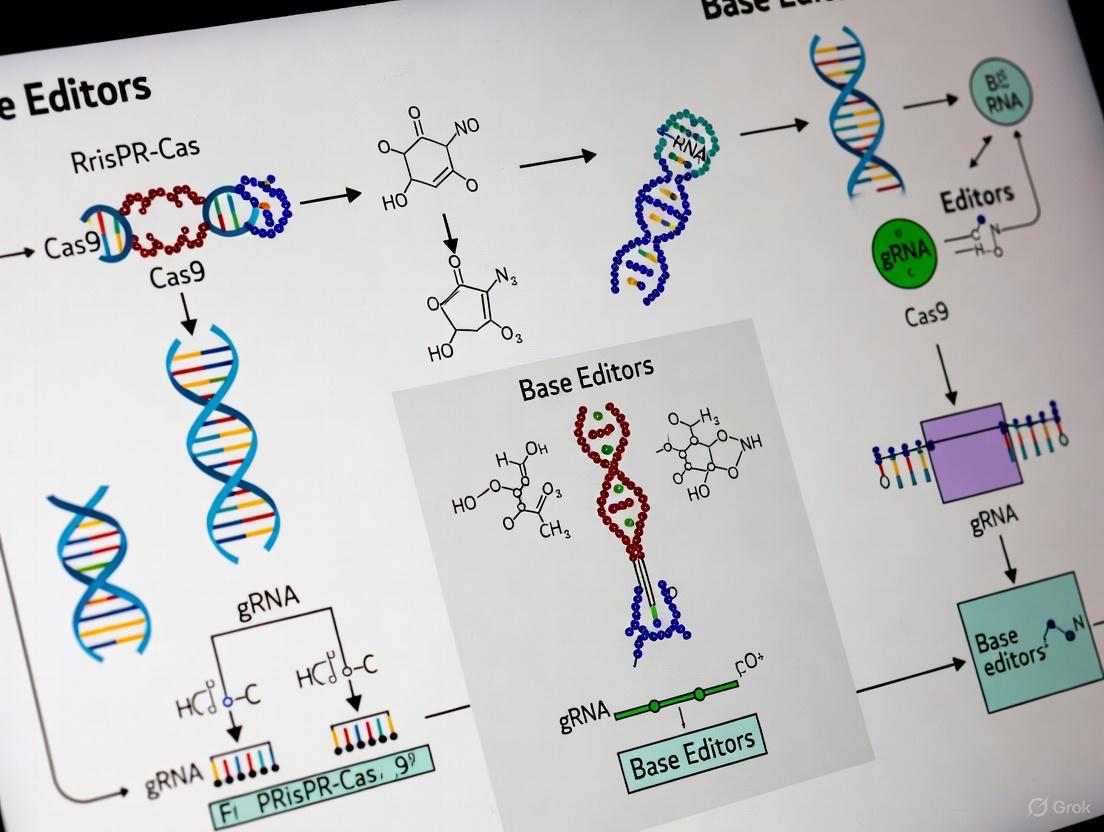
Base editors represent a revolutionary class of CRISPR-derived genome engineering tools that enable the direct, programmable conversion of a single DNA base into another without creating double-stranded DNA breaks.
Base Editors in Genome Engineering: A Comprehensive Guide to Precision Tools for Research and Therapy
Abstract
Base editors represent a revolutionary class of CRISPR-derived genome engineering tools that enable the direct, programmable conversion of a single DNA base into another without creating double-stranded DNA breaks. This article provides a comprehensive overview for researchers and drug development professionals, covering the foundational mechanisms of Cytosine Base Editors (CBEs) and Adenine Base Editors (ABEs), their diverse methodological applications in research and therapy, persistent challenges like off-target effects and bystander editing, and the critical frameworks for validating editing efficiency and specificity. By synthesizing current advancements and comparative analyses, this guide aims to equip scientists with the knowledge to strategically implement base editing technologies to address genetic diseases and accelerate therapeutic development.
The Foundation of Precision: Understanding Base Editor Mechanisms and Components
Base editing represents a transformative advancement in genome engineering, enabling precise, single-nucleotide alterations without inducing double-strand DNA breaks (DSBs). This technology leverages fusion proteins combining catalytically impaired CRISPR-Cas systems with nucleobase deaminases, directly converting one base pair to another through chemical modification. Unlike conventional nuclease-based CRISPR approaches that rely on cellular repair mechanisms following DSBs, base editing operates through fundamentally different biochemical principles, offering higher efficiency and purity in installing point mutations. This technical guide examines the molecular architecture, mechanisms, and experimental applications of base editing technologies, framing them within the broader paradigm shift toward precision genetic engineering in research and therapeutic development.
Traditional CRISPR-Cas9 genome editing has revolutionized biological research by enabling targeted genomic modifications through RNA-programmed DNA cleavage. However, its dependence on double-strand break generation and subsequent cellular repair pathways introduces significant limitations, including unpredictable indel formation, chromosomal rearrangements, and low efficiency of precise point mutation installation, particularly in non-dividing cells [1] [2].
Base editing emerged in 2016 as a groundbreaking alternative that addresses these limitations by directly rewriting one DNA base into another without DSB formation [3]. This technology has expanded the genome editing toolkit beyond cutting and patching to include precise chemical conversion, establishing a new paradigm for therapeutic correction of point mutations—which constitute the largest class of known human genetic variants associated with disease [4] [5].
Table 1: Fundamental Distinctions Between Editing Technologies
| Feature | CRISPR-Cas9 Nuclease | Base Editing | Prime Editing |
|---|---|---|---|
| Core Mechanism | Double-strand break induction | Direct chemical base conversion | Reverse transcription of new sequence |
| DSB Formation | Required | Avoided | Avoided |
| Donor Template | Required for HDR | Not required | Encoded in pegRNA |
| Primary Editing Outcomes | Indels (NHEJ) or targeted integration (HDR) | C•G to T•A or A•T to G•C transitions | All 12 possible base-to-base conversions, small insertions/deletions |
| Editing Efficiency in Non-dividing Cells | Low (HDR inefficient) | High | Moderate to high |
| Therapeutic Application | Gene disruption | Point mutation correction | Point mutation correction, small insertions/deletions |
| Key Limitations | Off-target indels, complex rearrangements | Restricted to specific transition mutations, bystander edits | Lower efficiency, larger construct size |
Molecular Architecture of Base Editors
Base editors are sophisticated fusion proteins that combine multiple enzymatic functions to achieve precise nucleotide conversion. Their core components work in concert to target specific genomic loci and execute chemical modifications on DNA bases.
Core Protein Components
The foundational architecture of base editors consists of three essential elements:
Catalytically Impaired Cas Protein: Either Cas9 nickase (nCas9) with a single active nuclease domain or completely deactivated Cas9 (dCas9) serves as a programmable DNA-binding module that localizes the editor to specific genomic sites without generating DSBs [6] [7]. The nickase variant (containing a D10A mutation in SpCas9) creates a single-strand break in the non-edited DNA strand, enhancing editing efficiency by directing cellular repair to utilize the edited strand as a template [4].
Nucleobase Deaminase: This enzyme performs the central chemical conversion of target nucleotides. Cytosine base editors (CBEs) utilize cytidine deaminases (e.g., APOBEC1) that convert cytosine to uracil, while adenine base editors (ABEs) employ engineered adenosine deaminases (e.g., TadA*) that convert adenine to inosine [8] [4].
Accessory Proteins: In CBEs, uracil glycosylase inhibitor (UGI) is fused to prevent excision of the uracil intermediate by cellular base excision repair (BER) pathways, thereby increasing editing efficiency and product purity [4] [1].
Guide RNA and Targeting Constraints
Base editors employ standard CRISPR guide RNAs (gRNAs) for DNA targeting, but with unique design considerations. The target base must be strategically positioned within a specific "editing window" relative to the protospacer adjacent motif (PAM) sequence [6]. This window typically spans nucleotides 4-8 (counting the PAM as positions 21-23) in SpCas9-derived editors, creating a constraint that must be addressed during gRNA design [4].
Diagram 1: Base editor targeting requires precise positioning of the editing window relative to the PAM sequence.
Mechanisms of Base Editing
The molecular mechanism of base editing involves a coordinated sequence of DNA binding, chemical modification, and cellular processing that ultimately results in permanent nucleotide conversion.
Cytosine Base Editing (CBE) Pathway
Cytosine base editors initiate a multi-step process that converts C•G base pairs to T•A pairs:
DNA Binding and Strand Separation: The gRNA directs the CBE to the target genomic locus, where nCas9 binds and unwinds the DNA duplex, forming an R-loop structure that exposes a single-stranded DNA region [4] [6].
Cytosine Deamination: The APOBEC1 deaminase domain catalyzes the hydrolytic deamination of cytosine bases within the editing window, converting them to uracils by removing an amino group [3] [4].
Cellular Processing: The resulting U•G mismatch undergoes cellular repair processes. UGI inhibits uracil N-glycosylase, preventing erroneous uracil excision. Nicking of the non-edited strand by nCas9 directs the mismatch repair (MMR) system to preferentially replace the G with an A, using the uracil-containing strand as a template [4].
DNA Replication Outcome: During subsequent DNA replication, the uracil is read as thymine, resulting in a permanent C•G to T•A base pair conversion [6].
Diagram 2: The CBE mechanism involves DNA binding, cytosine deamination, cellular processing, and permanent conversion.
Adenine Base Editing (ABE) Pathway
Adenine base editors operate through a conceptually similar but chemically distinct pathway:
DNA Binding and Strand Separation: Similar to CBEs, ABEs use nCas9 to bind DNA and expose a single-stranded region through R-loop formation [4] [1].
Adenine Deamination: The engineered TadA deaminase domain converts adenine to inosine through deamination. Unlike cytosine deaminases, natural adenine deaminases acting on DNA did not exist and were engineered through extensive protein evolution [4] [2].
Cellular Interpretation: The DNA replication machinery interprets inosine as guanosine, leading to an A•T to G•C base pair conversion during subsequent cell divisions. ABEs do not require UGI as inosine is not efficiently recognized by DNA repair machinery [6] [1].
Table 2: Comparison of Base Editor Classes and Properties
| Property | Cytosine Base Editors (CBEs) | Adenine Base Editors (ABEs) |
|---|---|---|
| Core Deaminase | APOBEC1 (natural) | engineered TadA (evolved) |
| Chemical Conversion | Cytosine → Uracil → Thymine | Adenine → Inosine → Guanine |
| Base Pair Change | C•G to T•A | A•T to G•C |
| Accessory Domain | UGI (uracil glycosylase inhibitor) | Not required |
| First Generation | BE1 (2016) | ABE7.10 (2017) |
| Efficiency in Mammalian Cells | 37% (BE3 average across 6 loci) | ~50% (ABE7.10) |
| Key Challenge | C-G/C-A byproducts, RNA off-targets | Narrower editing window in early versions |
| Optimized Versions | BE4, BE4max, AncBE4max | ABEmax, ABE8e, ABE8s |
Experimental Design and Implementation
Editor Selection and Optimization
The choice of base editor depends on the specific experimental requirements and target sequence context:
CBE vs. ABE Selection: Determine which transition mutation (C•G to T•A or A•T to G•C) is required based on the sequence context and desired amino acid change [6].
PAM Compatibility: Select Cas protein variants based on PAM availability near the target base. Options include SpCas9 (NGG PAM), SpCas9-NG (NG PAM), xCas9 (NG/GAA/GAT PAMs), and Cas12a-based editors (TTTV PAM) [1] [7].
Editing Window Considerations: Design gRNAs that position the target nucleotide within the optimal editing window (typically positions 4-8 for SpCas9-based editors) while minimizing potential bystander edits at adjacent bases of the same type within the window [6].
Delivery Methods and Validation
Efficient delivery and thorough validation are critical for successful base editing experiments:
Plasmid DNA: Most accessible approach but potential for extended editor expression and increased off-target effects [7].
mRNA and gRNA Co-delivery: Enables transient editor expression, reducing off-target risks while maintaining high editing efficiency [6].
Ribonucleoprotein (RNP) Complexes: Preassembled editor-gRNA complexes offer the most transient activity, potentially minimizing off-target effects while enabling rapid editing [6].
Validation Requirements: Always assess on-target efficiency by Sanger or next-generation sequencing, evaluate potential bystander edits within the editing window, and perform appropriate off-target analyses (GOTI, whole-genome sequencing, or RNA-seq for transcriptome-wide deamination assessment) [1].
Table 3: Key Research Reagent Solutions for Base Editing Applications
| Reagent Category | Specific Examples | Function and Application |
|---|---|---|
| Base Editor Plasmids | BE4max, AncBE4max, ABEmax, ABE8e | Optimized editor expression; improved efficiency and specificity |
| Cas Protein Variants | SpCas9-NG, xCas9, SpRY, SaCas9, LbCas12a | Expanded PAM compatibility for targeting diverse genomic loci |
| Guide RNA Cloning Systems | Multiplex gRNA vectors, U6 expression systems | Efficient gRNA delivery and expression; enable multiplexed editing |
| Delivery Vehicles | AAV vectors, Lentiviral particles, Lipid nanoparticles (LNPs) | In vivo and in vitro editor delivery with tissue-specific targeting |
| Validation Tools | Sanger sequencing primers, NGS libraries, UNG inhibition assays | Assessment of editing efficiency, specificity, and product purity |
| Cell Lines | HEK293T, HAP1, iPSCs, Primary cell systems | Model systems for editing optimization and functional assessment |
Current Challenges and Limitations
Despite their transformative potential, base editors face several technical challenges that require careful consideration in experimental design:
Off-Target Editing: Base editors can cause both DNA and RNA off-target modifications. DNA off-targets may occur at partially homologous genomic sites, while RNA off-targets result from promiscuous deaminase activity independent of Cas9 binding [1]. High-fidelity base editor variants with engineered deaminase domains address these concerns through reduced non-specific activity [1] [2].
Bystander Edits: Multiple editable bases within the activity window can lead to unintended concurrent mutations. Strategies to mitigate this include using editors with narrower activity windows or designing gRNAs that position only the desired base within the window [8] [1].
Sequence Context Limitations: Certain sequence motifs (e.g., methylated cytosines for CBEs) may be edited with reduced efficiency. Deaminase engineering and editor architecture optimization can help address these constraints [4].
Delivery Constraints: The relatively large size of base editor constructs (~5-6 kb) presents challenges for packaging into delivery vehicles with limited capacity, such as adeno-associated viruses (AAVs) [1]. Split-intein systems and compact editor variants are being developed to overcome this limitation [2].
Future Directions and Emerging Applications
The base editing field continues to evolve rapidly, with several promising directions emerging:
Therapeutic Translation: Multiple base editing therapies have entered clinical trials, including treatments for sickle cell disease, beta-thalassemia, familial hypercholesterolemia, and T-cell leukemia [2]. The first patient treated with base-edited cell therapy achieved remission from T-cell leukemia, demonstrating the technology's clinical potential [2].
Dual Base Editors: New editors capable of simultaneous cytosine and adenine editing (ACBEs) enable broader editing capabilities within a single system [1] [5].
AI-Guided Optimization: Machine learning approaches are being employed to predict editing outcomes, optimize gRNA design, and engineer novel editor variants with improved properties [9].
Novel Editor Discovery: Bioinformatic mining of microbial diversity has uncovered novel CRISPR systems and deaminases that may enable next-generation editing tools with unique capabilities [9].
The ongoing refinement of base editing technology continues to expand its potential for research and therapeutic applications, solidifying its role as a paradigm-shifting approach in genome engineering.
Base editors represent a revolutionary class of genome engineering tools that enable precise, programmable conversion of single DNA bases without inducing double-strand DNA breaks (DSBs), a significant limitation of earlier CRISPR-Cas9 nuclease systems [3]. This core architecture ingeniously fuses a catalytically impaired Cas protein (dCas9) with a deaminase enzyme, all directed by a guide RNA (sgRNA) to a specific genomic locus [3]. The primary advantage of base editors over traditional CRISPR-Cas9 lies in their ability to directly convert one base pair to another without relying on homology-directed repair (HDR), thereby achieving higher efficiency and purity of editing outcomes while minimizing undesirable insertions and deletions (indels) [3]. Initially developed for cytosine (C) to thymine (T) conversions, the toolset has rapidly expanded to include adenine (A) to guanine (G) base editing and more sophisticated prime editing systems [9] [3]. This technical guide delves into the core architecture of these tools, detailing their components, mechanisms, and experimental methodologies, framed within the broader context of their transformative role in genome engineering research and therapeutic development.
Core Components of the Base Editing System
The functionality of base editors hinges on the synergistic interaction of three fundamental components: a catalytically impaired Cas protein, a deaminase enzyme, and a guide RNA. Each component plays a critical and distinct role in ensuring precise and efficient genome editing.
Catalytically Impaired Cas Protein
The foundation of the base editor is a Cas9 protein that has been rendered catalytically "dead" (dCas9) or converted into a nickase (nCas9) through targeted point mutations. The dCas9 variant contains mutations (e.g., D10A and H840A in Streptococcus pyogenes Cas9) that abolish its endonuclease activity, meaning it can no longer cleave either strand of DNA [3]. Its primary function is to act as a programmable DNA-binding module, scanning the genome and unwinding the DNA double helix upon recognizing a target sequence adjacent to a Protospacer Adjacent Motif (PAM) [10]. This unwinding creates a transient single-stranded DNA region known as the R-loop, which exposes the non-target DNA strand and makes it accessible for the deaminase enzyme to act upon [10]. The use of a nickase (nCas9), which cuts only the non-edited DNA strand, is common in later-generation base editors like BE3. This nick promotes the cell's repair machinery to favor the conversion of the edited base (e.g., U to T) on the opposite strand, thereby increasing editing efficiency [3].
Deaminase Enzyme
The deaminase enzyme is the catalytic heart of the base editor, responsible for the direct chemical conversion of one base to another. These enzymes are typically recruited from the APOBEC (Apolipoprotein B mRNA Editing Enzyme, Catalytic Polypeptide-Like) family for cytosine base editing (CBE) or evolved from the TadA (tRNA adenosine deaminase) enzyme for adenine base editing (ABE) [3].
- Natural Function and Mechanism: APOBEC deaminases, such as APOBEC1, function in innate immunity by deaminating cytidine to uridine in viral cDNA, while AID (Activation-Induced Deaminase) drives antibody diversification through somatic hypermutation in the Ig locus [3]. These enzymes operate by hydrolytically deaminating a cytosine base in single-stranded DNA (ssDNA), converting it to uracil, which is then read as thymine during DNA replication or repair [3].
- Engineering for Enhanced Performance: Natural deaminases have inherent sequence context preferences (e.g., human APOBEC3A prefers UC motifs) that can limit their versatility [11]. Recent advances use AI-driven protein engineering and structure-based design to create enhanced deaminases. For instance, researchers have developed "Professional APOBECs" (ProAPOBECs) with expanded capabilities for C-to-U editing across diverse sequence contexts (GC, CC, AC, UC) and reduced off-target effects by targeting dimerization interfaces [11].
Guide RNA (sgRNA)
The guide RNA (sgRNA) is the navigational system of the base editor. It is a chimeric RNA molecule that combines the functions of the native crRNA and tracrRNA. The ~20 nucleotide spacer sequence at the 5' end of the sgRNA is programmable and determines the specific genomic target site by forming a complementary duplex with the target DNA strand [10] [3]. The secondary stem-loop structures of the sgRNA scaffold are crucial for binding and stabilizing the Cas protein. The binding of the sgRNA to dCas9/nCas9 induces a conformational change that facilitates DNA unwinding, exposing a ~5-nucleotide "editing window" typically located 13-18 nucleotides upstream of the PAM site where the deaminase acts with highest efficiency [3].
Quantitative Data on Base Editing Systems
The performance of base editors is characterized by key metrics such as editing efficiency, editing window, and product purity. The following tables summarize quantitative data for various base editing architectures.
Table 1: Performance Comparison of Cytosine Base Editor Architectures [10]
| Base Editor Architecture | Average Editing Efficiency (%) | Editing Window (Position from PAM) | Key Features |
|---|---|---|---|
| BE3 (N-terminal fused) | ~60% | C3-C8 (Peak: C5-C7) | Original high-efficiency editor; requires N-terminal fusion. |
| sgBE-SL4 (SL4+MS2) | ~40% higher than (SL1+MS2)+(SL3+MS2) | C5-C10 | Deaminase tethered to 4th stem-loop; wider window than BE3. |
| (SL1+MS2)+(SL3+MS2) | ~11.55% | Dual peaks at ~C5 and ~C12 | Traditional MS2 recruitment site; lower efficiency. |
Table 2: Advanced Base Editing Platforms and Their Efficiencies [12] [11]
| Platform Name | Type | Key Components | Reported Efficiency/Outcome |
|---|---|---|---|
| PERT | DNA Prime Editing | Prime Editor, engineered suppressor tRNA | Restored enzyme activity to 20-70% in human cell models; ~6% in mouse model, nearly eliminating disease. |
| CU-REWIRE4.0 | RNA Base Editing | ePUF10, ProAPOBEC | 82.3% C-to-U editing efficiency on EGFP mRNA; effective in vivo editing in mouse brain and liver. |
Detailed Experimental Protocols
To ensure reproducibility in genome engineering research, below are detailed protocols for key experiments involving base editing systems.
Protocol: sgBE System Assembly and Validation
This protocol outlines the steps for constructing and testing a structure-guided base editor (sgBE) where the deaminase is tethered to specific stem-loops of the sgRNA [10].
sgRNA Scaffold Design and Cloning:
- Design sgRNA expression vectors with MS2 RNA aptamer sequences inserted into specific stem-loops (e.g., SL1, SL3, SL4) of the sgRNA scaffold. For example, to create sgBE-SL4, fuse the MS2 sequence to the 4th stem-loop.
- Use site-directed mutagenesis or synthetic gene fragment assembly to generate these constructs within a U6-promoter driven plasmid.
Base Editor Protein Construction:
- Create an expression plasmid for a fusion protein consisting of (from N- to C-terminus): MS2 Coat Protein (MCP) -> linker -> cytidine deaminase (e.g., APOBEC1) -> linker -> uracil DNA glycosylase inhibitor (UGI) -> linker -> nickase Cas9 (nCas9).
- The nCas9 (D10A) is critical for nicking the non-edited strand to improve efficiency.
Cell Transfection and Editing:
- Culture HEK293T cells in standard DMEM medium supplemented with 10% FBS.
- Co-transfect cells at 70-80% confluency with the sgRNA plasmid and the base editor fusion protein plasmid using a transfection reagent like Lipofectamine 3000.
- Include a positive control (e.g., a standard BE3 editor) and a negative control (e.g., a non-targeting sgRNA).
Harvest and Analysis:
- Harvest cells 72 hours post-transfection and extract genomic DNA.
- Amplify the target genomic locus by PCR and subject the product to Sanger sequencing.
- Quantify base editing efficiency using computational tools like EditR, which can detect and quantify base conversions from Sanger sequencing chromatograms. Editing efficiencies above 5% are generally considered statistically significant in this setup [10].
Protocol: In Vivo RNA Base Editing with CU-REWIRE
This protocol describes the application of the CU-REWIRE system for RNA base editing in a mouse model [11].
Editor Assembly:
- Construct a plasmid expressing the CU-REWIRE fusion protein: an engineered Pumilio/FBF (ePUF10) RNA-binding domain fused to a Professional APOBEC (ProAPOBEC) deaminase.
- The ePUF10 domain is engineered to include an LP peptide insertion in its fourth repeat for improved stability and efficiency.
Vector Packaging and Delivery:
- Package the expression construct into an Adeno-Associated Virus (AAV) vector, selecting a serotype (e.g., AAV9) with high tropism for the target tissue (e.g., liver or brain).
- Purify the AAV particles and quantify the viral titer (vector genomes/mL).
Animal Injection and Phenotypic Analysis:
- Systemically administer the AAV (e.g., via tail vein injection for liver targeting or intracerebroventricular injection for brain targeting) to adult mice. Include control groups injected with a non-targeting AAV.
- For a cholesterol-lowering study: Several weeks post-injection, collect blood plasma from treated and control mice. Measure cholesterol levels using a standard enzymatic assay.
- For a neurological disease model: Conduct behavioral tests relevant to the disease phenotype (e.g., social interaction tests for autism models) several weeks post-injection.
Efficiency and Off-Target Assessment:
- Extract total RNA from the target tissue. Reverse transcribe RNA to cDNA.
- Perform deep sequencing (RNA-seq) of the target transcript with at least 50x coverage to quantify the C-to-U editing efficiency at the intended site.
- Analyze the entire transcriptome data from the RNA-seq to identify potential off-target editing events, noting that these are often due to the basal activity of the APOBEC enzyme rather than the PUF targeting domain [11].
Diagrams of Architectures and Workflows
The following diagrams, generated with Graphviz, illustrate the core architectures and experimental workflows described in this guide.
Diagram Title: Core Base Editor Architecture
Diagram Title: sgBE Validation Workflow
Diagram Title: CU-REWIRE RNA Editing Mechanism
The Scientist's Toolkit: Research Reagent Solutions
Successful implementation of base editing experiments requires a suite of specific reagents and tools. The table below catalogs essential materials and their functions.
Table 3: Essential Research Reagents for Base Editing Experiments
| Reagent / Tool Name | Function / Application | Key Characteristics |
|---|---|---|
| dCas9/nCas9 Plasmids | Provides the DNA-binding backbone for base editors. | Catalytically impaired (D10A, H840A) or nickase (D10A) versions; from various species (Sp, Sa). |
| Deaminase Expression Constructs | Sources cytidine (APOBEC1, AID) or adenine (TadA) deaminase activity. | Can be wild-type or engineered (e.g., ProAPOBECs); often codon-optimized for mammalian cells. |
| MS2-tagged sgRNA Vectors | Enables deaminase recruitment to specific sgRNA stem-loops (e.g., SL4). | Plasmid with U6 promoter for sgRNA expression; includes MS2 aptamer sequences. |
| MS2 Coat Protein (MCP) Fusions | Links the deaminase to the MS2-tagged sgRNA. | MCP is fused to the deaminase, creating a physical bridge to the sgRNA. |
| UGI (Uracil Glycosylase Inhibitor) | Improves C-to-T editing efficiency by preventing uracil excision. | Included as a domain in the base editor fusion protein (e.g., in BE3, sgBE). |
| AAV Vectors | In vivo delivery of base editor components. | Serotypes (AAV9, AAV-DJ) selected for target tissue tropism; limited packaging capacity. |
| EditR Software | Quantifies base editing efficiency from Sanger sequencing data. | Accessible web tool; calculates percentage of base conversion from chromatogram files. |
Cytosine Base Editors (CBEs) represent a groundbreaking class of genome engineering tools that enable precise, programmable conversion of cytosine to thymine (C•G to T•A) without introducing double-strand DNA breaks (DSBs) or requiring donor DNA templates [13]. This technology represents a significant advancement over earlier CRISPR-Cas9 approaches that relied on the inefficient homology-directed repair (HDR) pathway, which often results in low editing efficiency and frequent unintended insertions or deletions (indels) [13]. CBEs have rapidly evolved from research tools to therapeutic agents, with recent clinical applications demonstrating the correction of a fatal genetic condition in a human infant [14].
The core innovation of CBEs lies in their fusion of a catalytically impaired Cas protein with a cytidine deaminase enzyme, typically from the APOBEC (Apolipoprotein B mRNA Editing Catalytic Polypeptide-like) family [15] [13]. This architecture allows targeted chemical modification of single DNA bases through a multi-step mechanism that harnesses and directs natural cellular processes. The development of CBEs has expanded the CRISPR toolbox beyond disruptive cutting toward precision editing, enabling single-nucleotide changes with efficiencies exceeding 50% at many genomic loci while maintaining low indel rates typically below 1.5% [13].
Core Mechanism of C•G to T•A Conversion
The conversion of C•G to T•A by CBEs occurs through a coordinated biochemical process involving multiple enzyme activities and cellular repair pathways. The mechanism can be dissected into four primary stages: target localization, cytosine deamination, uracil processing, and DNA repair.
Target Localization and ssDNA Exposure
CBEs utilize a guide RNA (gRNA) to direct a Cas9 nickase (nCas9) fusion protein to a specific genomic locus [15]. Upon binding, nCas9 partially unwinds the DNA duplex, exposing a single-stranded DNA (ssDNA) bubble on the non-target strand. This exposed ssDNA region, typically 5-10 nucleotides in length and positioned within a defined "editing window" approximately 13-17 nucleotides upstream of the protospacer adjacent motif (PAM) site, becomes accessible to the deaminase domain [15] [16].
Cytosine Deamination to Uracil
The cytidine deaminase domain (e.g., APOBEC3A, APOBEC1, or Sdd7) catalyzes the hydrolytic deamination of cytosine to uracil within the exposed ssDNA window [15] [17]. This chemical conversion changes the base pairing properties: cytosine naturally pairs with guanine, while uracil pairs with adenine. The deamination reaction proceeds through a zinc-dependent mechanism where a water molecule attacks the cytosine ring at the C4 position, leading to the release of ammonia and formation of uracil [18].
Uracil Protection and Strand Nicking
To preserve the uracil intermediate and prevent its removal by cellular repair machinery, CBEs incorporate one or more copies of the uracil glycosylase inhibitor (UGI) protein [15] [14] [13]. UGI binds to and inhibits endogenous uracil DNA glycosylase (UNG), which would otherwise excise uracil to initiate error-prone base excision repair that could lead to undesirable C-to-non-T outcomes or indels [15] [14]. Simultaneously, the nCas9 domain creates a single-strand nick in the non-edited DNA strand (the strand complementary to the uracil-containing strand) [13].
DNA Repair and Mutation Fixation
The combination of the U•G mismatch and the strategically placed nick triggers cellular DNA repair processes that favor the installation of a thymine in place of the original cytosine [15]. The nick is interpreted by the cellular machinery as indicating the U-containing strand as the template strand for repair. During subsequent replication or repair, the U•G mismatch is resolved to U•A, and then to T•A after another round of replication [13]. Alternatively, the nicked strand may be repaired using the uracil-containing strand as a template, directly converting the G to an A on the complementary strand [13].
Table: Key Components of Cytosine Base Editors and Their Functions
| Component | Structure/Type | Function in C•G to T•A Conversion |
|---|---|---|
| Catalytically impaired Cas | Cas9 nickase (nCas9) | Binds target DNA via gRNA complementarity; nicks non-edited strand to bias repair |
| Cytidine deaminase | APOBEC3A, APOBEC1, Sdd7, A3B-CTD | Converts cytosine to uracil in exposed ssDNA editing window |
| UGI | One or more protein domains | Inhibits uracil DNA glycosylase (UNG) to prevent uracil excision and increase C-to-T product purity |
| Nuclear localization signal | Peptide sequence | Directs the editor to the nucleus |
| Linkers | Flexible peptide sequences | Connects protein domains and affects editing window properties |
The DNA repair pathways that process the U•G mismatch significantly influence editing outcomes. Recent research has identified that mismatch repair (MMR) factors, particularly the MutSα complex (MSH2/MSH6 heterodimer), facilitate C•G to T•A outcomes [15]. In contrast, alternative repair pathways involving RFWD3 (an E3 ubiquitin ligase) can lead to C•G to G•C transversions, while XPF (a 3'-flap endonuclease) and LIG3 (a DNA ligase) can repair the intermediate back to the original C•G base pair [15].
Diagram Title: Core Mechanism of C•G to T•A Conversion by CBEs
Quantitative Comparison of CBE Platforms
The field has witnessed rapid development of diverse CBE platforms with varying editing characteristics, efficiencies, and specificities. The table below summarizes key performance metrics for prominent CBE systems.
Table: Performance Comparison of Major CBE Platforms
| Editor Name | Deaminase Source | Average C•G to T•A Efficiency | Editing Window | Sequence Context Preference | Key Features/Limitations |
|---|---|---|---|---|---|
| BE3 | rAPOBEC1 | ~30% | Positions ~4-8 | Weak TC preference | First-generation editor; significant indels (~1.1%) and byproducts [13] |
| BE4max | rAPOBEC1 | 56.7% ± 3.3% | Positions ~2-11 | TC preference | Improved version with 2x UGI; reduced C-to-G/A byproducts [17] [13] |
| eA3A-BE3 | Engineered A3A (N57G) | Similar to BE3 on TC motifs | Positions ~5-9 | Strong TCR>TCY>VCN hierarchy | High precision; >40-fold improved precision at certain sites [16] |
| Sdd7 | Engineered Sdd7 | 60.1% ± 2.4% | Broad (positions ~2-14) | Minimal sequence preference | High activity but increased bystander and off-target editing [17] |
| Sdd7e1/e2 | Engineered Sdd7 variants | Maintains high efficiency | Narrowed | Minimal sequence preference | Reduced bystander editing; improved specificity [17] |
| CBE-T | Engineered TadA | Comparable to BE4 | More precise than BE4 | Flexible sequence preferences | Lower off-targets; uses evolved TadA variants [19] |
| A3B-CBE | A3B-CTD | Varies by site | Positions ~4-9 | Prefers 4-nt hairpin loops | Nuclear localization; hairpin loop preference [20] |
Advanced CBE Engineering and Optimization Strategies
Deaminase Engineering for Enhanced Specificity
Recent advances in CBE technology have focused on addressing limitations such as bystander editing (modification of non-target cytosines within the editing window) and off-target activity. Protein engineering approaches have yielded deaminase variants with improved properties:
Engineered A3A (eA3A): Structure-guided mutations (e.g., N57G, Y130F) in human APOBEC3A restore strong sequence preference (TCR>TCY>VCN), dramatically reducing bystander editing while maintaining efficiency on cognate motifs [16]. For example, eA3A-BE3 corrected a human beta-thalassemia promoter mutation with >40-fold higher precision than BE3 [16].
Sdd7 variants: Rational engineering of Sdd7 through mutations at positions V132L, R119A, and R153A reduced bystander editing upstream of the protospacer while maintaining high on-target efficiency [17]. Combination variants (e.g., V132L+R153A) nearly eliminated bystander edits while preserving robust on-target activity [17].
TadA-derived CBEs: Directed evolution of the adenine deaminase TadA created variants capable of efficient cytosine deamination [19]. These CBE-T editors demonstrate comparable on-target efficiency to BE4 but with a more precise editing window, reduced guide-dependent off-target editing, and no detectable gRNA-independent genome-wide off-target editing [19].
Delivery Methods and Format Optimization
Delivery method significantly impacts CBE performance and specificity:
Plasmid DNA: Convenient but associated with extended editor expression, increasing off-target risks [14].
Ribonucleoprotein (RNP) complexes: Direct delivery of preassembled editor protein with gRNA reduces off-target effects and avoids DNA integration concerns [14]. Purification challenges have been addressed through optimized expression in E. coli and inclusion of solubility tags [14].
Engineered virus-like particles (eVLP): Delivery of Sdd7e1/e2 via eVLP further improved specificity, nearly eliminating bystander edits and increasing precise single-point mutations [17].
Editing Window Modulation
Strategies to narrow the editing window improve precision when multiple cytosines are present in the target region:
SSB fusions: Fusion of phage-derived single-stranded DNA binding proteins (SSB) to the CBE N-terminus narrowed the editing window by occluding portions of the target sequence [14]. Placement at the N-terminus maintained efficient editing while intermediate positioning often abolished activity [14].
Linker optimization: Modifying linkers connecting deaminase to Cas9 affects editing window size and position [13].
Deaminase mutations: Specific mutations (e.g., in YE1-BE3) can narrow the editing window to approximately three nucleotides but may reduce overall efficiency [16].
Experimental Protocol for CBE Evaluation
Mammalian Cell Editing Protocol
The following protocol represents a standard methodology for evaluating CBE performance in human cell lines:
Materials:
- CBE expression plasmid (e.g., BE4max, eA3A-BE3, or Sdd7 variants)
- gRNA expression plasmid or synthetic gRNA
- HEK293T cells (or other relevant cell lines)
- Transfection reagent (e.g., PEI, Lipofectamine)
- Genomic DNA extraction kit
- PCR reagents for target amplification
- Next-generation sequencing platform
Procedure:
- Cell culture: Maintain HEK293T cells in Dulbecco's Modified Eagle Medium (DMEM) supplemented with 10% fetal bovine serum at 37°C with 5% CO₂.
- Transfection: Seed cells at 60-70% confluence in 24-well plates. Co-transfect 500 ng CBE plasmid and 250 ng gRNA plasmid using appropriate transfection reagent according to manufacturer's instructions.
- Harvest: 72 hours post-transfection, harvest cells and extract genomic DNA using commercial kits.
- Target amplification: Design primers flanking the target site and amplify by PCR with barcoded primers for multiplexing.
- Sequencing and analysis: Perform amplicon sequencing on an Illumina platform. Analyze sequencing data using appropriate base editing analysis tools (e.g., BE-Analyzer, CRISPResso2) to quantify editing efficiency, product purity, and indel frequency.
Analysis metrics:
- Editing efficiency = (Number of reads with C•G to T•A conversion) / (Total reads) × 100%
- Product purity = (C•G to T•A conversions) / (All observed edits at target site) × 100%
- Bystander editing ratio = (Editing at non-target C) / (Editing at target C)
Off-Target Assessment Methods
gRNA-independent off-target assessment (R-loop assay):
- Transfect cells with CBE plasmid, gRNA, catalytically inactive SaCas9 (dSaCas9), and saCas9 gRNA to create artificial R-loop structures [17].
- Amplify and sequence known R-loop formation sites at endogenous genomic loci.
- Compare C•G to T•A frequencies between CBE variants and negative controls.
Genome-wide off-target assessment:
- Use orthogonal methods such as whole-genome sequencing of edited clones.
- Apply specialized assays like UPD-seq (uracil pull-down sequencing) to map genome-wide uracil incorporation [20].
Research Reagent Toolkit
Table: Essential Reagents for CBE Research
| Reagent Category | Specific Examples | Function/Application | Notes |
|---|---|---|---|
| CBE Plasmids | BE4max, eA3A-BE3, Sdd7e1, CBE-T | Provide base editor expression | Available from AddGene; codon-optimized for mammalian cells [17] [16] [13] |
| gRNA Expression Systems | U6-promoter driven vectors, synthetic gRNAs | Target editor to specific genomic loci | Synthetic gRNAs preferred for RNP delivery [14] |
| Cell Lines | HEK293T, K562, SKOV3, primary T cells | Evaluation of editing efficiency and specificity | Primary cells important for therapeutic relevance [19] [17] |
| Delivery Reagents | PEI, Lipofectamine, electroporation kits | Introduce editors into cells | Electroporation preferred for RNP delivery [14] |
| Analysis Tools | Next-generation sequencer, BE-Analyzer software | Quantify editing outcomes | Amplicon sequencing depth >10,000x recommended [17] |
| Control Plasmids | GFP expression vectors, inactive CBE variants | Experimental controls | Essential for normalizing transfection efficiency [16] |
Emerging Applications and Future Directions
CBEs have demonstrated significant potential in both basic research and therapeutic applications. Recent advances include:
Therapeutic genome editing: CBEs have entered clinical trials and have been used to correct a fatal genetic condition in a human infant, with marked clinical improvement reported [14].
Primary cell engineering: CBE-T editors demonstrated robust activity in primary T cells and hepatocytes, validating their potential as therapeutic gene-editing tools [19].
Dual base editors: Development of CABE-Ts that catalyze both A-to-I and C-to-U editing using a single TadA variant enables programmable installation of all transition mutations with a single editor [19].
RNA base editing: Engineered APOBEC variants (ProAPOBECs) fused with PUF proteins enable efficient C-to-U RNA editing with therapeutic potential demonstrated in mouse models of hypercholesterolemia and autism spectrum disorder [11] [21].
The future of CBE technology will likely focus on further enhancing specificity, expanding targeting scope through novel Cas variants with diverse PAM preferences, and improving delivery efficiency for therapeutic applications. As the understanding of DNA repair pathways involved in base editing outcomes deepens, more sophisticated editors that can precisely control editing outcomes will continue to emerge.
Genome engineering research has been transformed by the development of base editors, a class of precision tools that enable direct, irreversible conversion of one DNA base pair into another without inducing double-strand DNA breaks (DSBs) or requiring donor DNA templates [13]. Unlike early CRISPR applications that relied on the low-efficiency homology-directed repair (HDR) pathway, base editors operate through chemical modification of nucleobases within DNA, effectively sidestepping the predominant non-homologous end joining (NHEJ) pathway that often introduces unpredictable insertions and deletions (indels) [13]. Among these revolutionary tools, Adenine Base Editors (ABEs) specifically catalyze the conversion of A•T base pairs to G•C, representing a powerful approach for correcting the most common type of pathogenic single-nucleotide variants in humans [13] [22].
The Molecular Architecture of ABEs
Adenine Base Editors are fusion proteins comprising three essential components:
A catalytically impaired Cas9 variant: Typically a nickase (nCas9) that cleaves only the DNA strand containing the guide RNA complement (target strand) but leaves the other strand (non-target strand) intact [22]. This nicking activity is crucial for enhancing editing efficiency.
An engineered tRNA adenosine deaminase: The laboratory-evolved TadA (tRNA-specific adenosine deaminase) domain that performs the central catalytic function of deaminating adenosine [13] [22].
A guide RNA (gRNA): The RNA component that programs the Cas9 moiety to target specific genomic loci through complementary base pairing [22].
The development of ABEs presented a unique challenge as no natural DNA adenine deaminases were known to exist. This obstacle was overcome through extensive directed evolution of the native bacterial tRNA adenosine deaminase TadA, which naturally deaminates adenosine to inosine at the wobble position 34 of tRNAᵃʳᵍ [13] [22]. After seven rounds of molecular evolution, researchers obtained functional ABEs, with the most active initial variant (ABE7.10) displaying an average editing efficiency of 53% with an editing window spanning protospacer positions 4-7 [13].
Table 1: Evolution of Adenine Base Editors
| Generation | Key Features | Editing Efficiency | Editing Window | Notable Improvements |
|---|---|---|---|---|
| ABE7.10 | First functional ABE from directed evolution | ~53% average | Positions 4-7 | Foundation for all subsequent ABEs |
| ABEmax | Improved nuclear localization and codon usage | 1.3-1.5x ABE7.10 | Positions 4-7 | Better expression and nuclear targeting |
| ABE8e | TadA-8e (V106W) variant from phage-assisted evolution | ~590-fold faster than ABE7.10 [13] | Wider activity window | Dramatically accelerated deamination kinetics |
| ABE8s | 40 new variants from further evolution | 98-99% in primary T cells [13] | Expanded window (positions 3-10) | High efficiency in therapeutically relevant cells |
The Stepwise Molecular Mechanism of A•T to G•C Conversion
The process of adenine base editing involves a precisely coordinated sequence of molecular events:
Target Recognition and R-loop Formation
The Cas9-gRNA complex identifies target genomic DNA by locating a protospacer adjacent motif (PAM) sequence—for the commonly used Streptococcus pyogenes Cas9 (SpCas9), this is a 5'-NGG sequence [22]. Upon PAM recognition, the Cas9-gRNA complex initiates DNA unwinding, verifying complementarity between the gRNA and the target DNA strand. This process results in the formation of an R-loop structure, where the target strand forms a stable heteroduplex with the gRNA, while the non-target strand becomes temporarily displaced as a flexible single-stranded DNA (ssDNA) [22] [23].
Deoxyadenosine Deamination in the Single-Stranded DNA
The displaced non-target strand ssDNA within the R-loop becomes accessible to the engineered TadA deaminase domain of the ABE. TadA catalyzes the hydrolytic deamination of deoxyadenosine (dA) to deoxyinosine (dI) [22]. This conversion represents the central chemical transformation in adenine base editing. Structural studies using cryo-electron microscopy have revealed that ABE8e, one of the most efficient ABE variants, accelerates DNA deamination by up to ~1100-fold compared to earlier ABEs, primarily due to mutations that stabilize DNA substrates in a constrained, transfer RNA-like conformation [23].
DNA Strand Nicking and Cellular Repair
The nCas9 domain of the ABE then nicks the target DNA strand (the strand complementary to the edited strand) [22]. This strategic nicking of the unedited strand triggers cellular DNA repair mechanisms that perceive the nicked strand as "newly synthesized" and in need of correction. Consequently, the cell uses the edited strand (containing dI) as a template for repair [13].
DNA Replication and Permanent Base Pair Conversion
During subsequent DNA replication or repair, the deoxyinosine (dI) in the edited strand is interpreted by DNA polymerases as deoxyguanosine (dG), and thus pairs with cytosine [22]. After a second round of DNA replication, this results in a permanent A•T to G•C base pair conversion at the target site [13] [22].
Diagram Title: ABE Molecular Mechanism
Structural Basis of Engineered TadA Function
The remarkable efficiency of evolved TadA variants stems from specific structural modifications that enable DNA deamination. Wild-type EcTadA forms homodimers and specifically recognizes the rigid structure of tRNA anticodon stems with the U³³(-1)A³⁴(0)C³⁵(+1)G³⁶(+2) sequence in the anticodon loop [22]. Cryo-EM structures of ABE8e in DNA-bound states reveal that:
- Directed evolution introduced mutations primarily in substrate-binding loops and the C-terminal α5-helix, enabling recognition of ssDNA rather than tRNA [22].
- Despite significant functional changes, the overall 3D structure of evolved TadA8e remains comparable to wild-type EcTadA, suggesting optimization rather than complete restructuring of the active site [22].
- The homodimer interface (composed of α2, α3, and α4 helices) remains largely preserved, though the functional significance of dimerization in DNA deamination requires further investigation [22].
- Upon binding, the flexible ssDNA substrate acquires a U-turn conformation that positions the target adenine optimally for deamination [22].
Table 2: Key TadA Mutations and Their Functional Impacts in ABE Development
| Residue | Wild-type | Evolved (ABE8e) | Functional Impact |
|---|---|---|---|
| 106 | Ala | Val/Trp (ABE8e) | Alters substrate specificity and processivity [13] |
| 108 | Asp | Asn | Enhances DNA binding and catalytic efficiency |
| Other mutations | Various | 20 total substitutions in ABE8e | Optimize active site, improve ssDNA binding, and increase deamination rate [22] |
Experimental Approaches for ABE Development and Analysis
Directed Evolution of TadA
The development of advanced ABE variants employed sophisticated phage-assisted continuous evolution (PACE) systems [13]. In this approach:
- The evolving TadA gene is encoded on a selection phage that infects E. coli host cells.
- Host cells contain accessory plasmids that establish a selection circuit regulating gene III expression, which is essential for phage replication.
- Only phage encoding TadA variants with desired deamination activity trigger production of gene III product, enabling selective propagation of improved variants [24].
- Under constant mutagenesis and dilution, phage lacking desired activity are rapidly diluted out, while beneficial mutations persist and accumulate [24].
Assessment of Base Editing Efficiency
Robust experimental protocols are essential for characterizing ABE performance:
Cell Culture Transfection:
- HEK293T cells are commonly used for initial screening
- Cells are transiently co-transfected with ABE expression vectors and guide RNA plasmids
- Editing efficiency is assessed 72-96 hours post-transfection [25]
High-Throughput Sequencing Analysis:
- Genomic DNA is extracted from transfected cells
- Target regions are amplified via PCR and subjected to next-generation sequencing
- Base editing efficiency is quantified using tools like CRISPResso2 [25]
Off-Target Assessment:
- RNA sequencing evaluates transcriptome-wide off-target RNA editing
- Whole-genome sequencing detects DNA-level off-target effects
- γH2AX immunofluorescence or Western blotting assesses genotoxicity and DNA damage response [26]
Advanced ABE Engineering and Future Directions
Dual-Function Base Editors
Recent engineering efforts have successfully created dual base editors that combine the functions of both adenine and cytosine editing. Notably, TadA has been further engineered to generate:
- TadCBEs: TadA-derived cytosine base editors that convert C•G to T•A with high efficiency and low off-target activity [24].
- TadDE: A TadA dual base editor that performs equally efficient cytosine and adenine base editing [24].
- CABE-Ts: Cytosine and adenine base editors utilizing a single TadA variant (TADAC) that catalyzes both A-to-I and C-to-U editing, creating a more compact editor approximately 700 bp smaller than previous dual editors [19].
Chromatin-Modulating Fusion Proteins
Research has demonstrated that fusion of chromatin-associated factors such as HMGN1 can enhance ABE efficiency. HMGN1-fused ABE (HMGN1-A8e) showed modestly higher editing efficiency at most tested loci, with average increases of up to 37.40% at certain sites, likely through increased chromatin accessibility [25].
Clinical Applications and Trials
ABEs have demonstrated significant therapeutic potential in clinical settings:
- Primary T cell editing: ABE8 variants achieved 98-99% target modification in primary T cells, making them promising tools for cell therapy applications [13].
- In vivo therapies: Lipid nanoparticle (LNP) delivery of ABEs enables systemic administration, as demonstrated in clinical trials for hereditary transthyretin amyloidosis (hATTR) where participants showed ~90% reduction in disease-related protein levels [27].
- Rare genetic diseases: The first personalized in vivo CRISPR treatment was successfully administered to an infant with CPS1 deficiency, establishing a regulatory pathway for rapid approval of genome editing therapies [27].
Diagram Title: ABE Engineering Evolution
The Scientist's Toolkit: Essential Reagents for ABE Research
Table 3: Key Research Reagents and Resources for ABE Experiments
| Reagent/Resource | Function/Application | Examples/Specifications |
|---|---|---|
| ABE Plasmids | Expression of base editor components | ABE7.10, ABE8e, ABEmax; often with codon optimization for mammalian cells |
| Guide RNA Vectors | Target specificity determination | U6-promoter driven sgRNA expression cassettes |
| Cell Lines | In vitro editing assessment | HEK293T (screening), primary T cells, HSPCs (therapeutic relevance) |
| Delivery Methods | Introducing editors into cells | Lipid nanoparticles (LNP) for in vivo work; electroporation for ex vivo editing |
| Analysis Tools | Quantifying editing outcomes | CRISPResso2, next-generation sequencing, γH2AX staining for genotoxicity |
| Target Validation | Confirming editing specificity | RNA-seq for transcriptome-wide off-target assessment; WGS for DNA off-targets |
Adenine Base Editors represent a landmark advancement in genome engineering, offering unprecedented capability for precise A•T to G•C conversion without inducing double-strand breaks. Through sophisticated protein engineering of TadA deaminases, researchers have developed increasingly efficient and specific editors with expanding therapeutic applications. The modular nature of ABEs continues to inspire new engineering approaches, including dual-function editors and chromatin-modulating fusions, ensuring that this technology will remain at the forefront of precision genome editing for both basic research and clinical applications.
The Critical Role of the Uracil Glycosylase Inhibitor (UGI) in Enhancing CBE Efficiency
Base editing represents a significant evolution in the field of genome engineering, enabling precise, single-nucleotide changes without inducing double-stranded DNA breaks (DSBs) associated with traditional CRISPR-Cas9 editing [28] [6]. Cytosine base editors (CBEs) are a class of these tools designed specifically for converting cytosine (C) to thymine (T) through a multi-step biochemical process [3] [6]. The core architecture of a CBE typically consists of a catalytically impaired Cas9 variant (such as nickase Cas9 or dCas9) fused to a cytidine deaminase enzyme [6].
The editing process begins when the CBE complex binds to DNA at a target site specified by the guide RNA (gRNA). The cytidine deaminase component then acts on a single-stranded DNA region within an "editing window," converting cytosine to uracil [29] [6]. This uracil intermediate is structurally similar to thymine and pairs with adenine during DNA replication. However, a fundamental cellular defense mechanism recognizes this uracil as DNA damage and initiates base excision repair (BER) to restore the original cytosine, thereby undermining the editing efficiency [30] [3]. It is at this critical juncture that the uracil glycosylase inhibitor (UGI) plays its indispensable role by blocking this repair pathway and ensuring the persistence of the edited base.
Molecular Mechanism of UGI Action
Structural Basis of UGI-Mediated Inhibition
UGI is a small, thermostable protein (84 amino acids in its native form from Bacillus subtilis bacteriophage PBS2) that acts as a potent and specific inhibitor of uracil-DNA glycosylase (UDG) [31] [32]. The molecular mechanism of inhibition has been elucidated through high-resolution crystal structures of UGI complexed with human and E. coli UDG [31] [32].
UGI achieves remarkable inhibition through protein mimicry of DNA. The UGI structure consists of a twisted five-stranded antiparallel beta sheet and two alpha helices [31]. During complex formation, UGI inserts a beta strand into the conserved DNA-binding groove of UDG without contacting the uracil specificity pocket [31]. This interface buries over 1200 Ų on UGI and is characterized by shape and electrostatic complementarity, specific charged hydrogen bonds, and hydrophobic packing [31].
Notably, UGI most closely resembles a midpoint in the trajectory between B-form DNA and the kinked DNA observed in UDG:DNA product complexes, making it a transition-state mimic for UDG-flipping of uracil nucleotides from DNA [32]. This exquisite structural mimicry enables UGI to effectively compete with DNA substrates for the UDG active site, forming a very high-affinity complex that irreversibly inhibits the enzyme's activity [31] [32].
The UGI-UDG Interaction Pathway
The following diagram illustrates the competitive inhibition mechanism through which UGI blocks the base excision repair pathway, thereby ensuring the success of C•G to T•A base conversion:
Figure 1: UGI Inhibition of UDG in the Base Editing Pathway. UGI acts as a competitive inhibitor of UDG, preventing the initiation of base excision repair and allowing the uracil intermediate to be processed as thymine during DNA replication.
Historical Development and Optimization of UGI-Enhanced CBEs
Evolution of CBE Generations
The integration of UGI into base editing systems has evolved through several generations, each demonstrating improved editing efficiency and specificity:
First-Generation Base Editors (BE1): The initial CBE design featured a fusion of rat APOBEC1 cytidine deaminase to dCas9, which catalyzed the conversion of cytosine to uracil but suffered from low efficiency due to active uracil excision by endogenous UDG [3].
Second-Generation Base Editors (BE2): This iteration incorporated a single UGI unit fused to the C-terminus of dCas9, resulting in significantly enhanced C-to-T editing efficiency by blocking uracil excision [3].
Third-Generation Base Editors (BE3): The current standard configuration utilizes Cas9 nickase (nCas9) instead of dCas9, with UGI fused to the C-terminus. The nickase activity creates a single-strand break in the non-edited strand, which biases cellular repair mechanisms to replace the G opposite the U with an A, further improving editing efficiency [3] [6].
Advanced CBE Architectures: Recent developments have explored novel UGI placements, including internal fusion within the nCas9 architecture. A 2025 study demonstrated that relocating UGI to position 1282 within nCas9 maintained robust on-target editing while substantially reducing Cas9-dependent DNA off-target activity [30].
Quantitative Impact of UGI on Editing Outcomes
Table 1: Comparative Performance of CBE Variants With and Without UGI
| CBE Variant | UGI Configuration | Average C-to-T Efficiency | C-to-A/C-to-G Indels | Cas9-Dependent Off-Target Effects | Reference |
|---|---|---|---|---|---|
| BE1 (no UGI) | None | <10% | Not reported | Not assessed | [3] |
| BE2 | Single C-terminal UGI | ~15-20% | Reduced | Not assessed | [3] |
| BE3 | Single C-terminal UGI | ~30-50% | Minimized | Moderate | [3] [6] |
| YE1-no UGI | None | 12.6% | 45.1% total (C-to-A: 8.8%, C-to-G: 36.3%) | Not specified | [30] |
| YE1-UGI-C (Classical) | Single C-terminal UGI | 91.7% | <3% total | Substantial | [30] |
| YE1-UGI-1282 | Internal UGI (position 1282) | 84.3% | <1% total | Dramatically reduced | [30] |
The quantitative data clearly demonstrates that UGI inclusion is essential for achieving high-efficiency C-to-T conversion while minimizing undesired editing byproducts. The internal fusion strategy represents a particularly promising advancement for therapeutic applications where off-target effects present significant safety concerns.
Advanced UGI Engineering Strategies
Spatial Optimization of UGI Placement
Recent research has focused on optimizing UGI placement within the CBE architecture to enhance specificity. A comprehensive study published in Scientific Reports in 2025 systematically evaluated UGI relocation through internal fusion within nCas9 [30]. Researchers generated 23 distinct YE1-UGI-X CBE variants with UGI inserted at different positions within nCas9 and compared them to classical C-terminal UGI fusion.
The screening revealed that 20 out of 23 YE1-UGI-X variants maintained robust on-target editing (>50% C-to-T conversion) while 20/23 variants exhibited significantly reduced Cas9-dependent off-target activity [30]. The most promising construct, YE1-UGI-1282, demonstrated dramatic reductions in off-target editing across all examined loci while maintaining high on-target efficiency [30].
Notably, the selectivity ratios (on-target/off-target) of YE1-UGI-1282 exhibited 37- to 104-fold improvements over the classical YE1 system, establishing an alternative engineering paradigm for developing high-fidelity CBEs [30].
Split-UGI and Multiplexed Configurations
Further engineering explorations have investigated the use of P2A-linked UGI constructs that effectively create a split-Cas9 system [30]. Among 23 engineered YE1-2A-UGI-X CBE variants, 16 constructs retained robust on-target editing (>50% C-to-T conversion), with 21/23 variants showing significantly reduced Cas9-dependent off-target activity compared to the C-terminal UGI control [30].
The effective positions for UGI integration differed between conventional fusion and P2A-linked constructs, suggesting that the separation of protein fragments necessitates additional structural and functional assembly to achieve efficient editing at target sites [30].
Table 2: Comparison of UGI Engineering Strategies in CBEs
| Engineering Strategy | Mechanism | Advantages | Limitations | Therapeutic Potential |
|---|---|---|---|---|
| C-Terminal Fusion (Classical BE3) | Single UGI fused to nCas9 C-terminus | High on-target efficiency, established protocol | Substantial Cas9-dependent off-target effects | Moderate (requires careful off-target assessment) |
| Internal Fusion (YE1-UGI-1282) | UGI inserted at specific internal nCas9 sites | High on-target efficiency with dramatically reduced off-target effects | Requires extensive screening for optimal positions | High (improved safety profile) |
| Split-UGI with P2A Linker | P2A peptide creates separate but linked UGI | Reduced off-target effects, flexible configuration | Potential for decreased overall editing efficiency | Moderate to High (dependent on specific application) |
| UGI Dimer/Multimer | Multiple UGI units in tandem | Potentially enhanced UDG inhibition | Increased construct size, possible steric hindrance | Moderate (packaging challenges for viral delivery) |
Experimental Protocols for UGI-Enhanced CBE Evaluation
Protocol: Assessing CBE Efficiency with UGI Components
Objective: To quantitatively evaluate the editing efficiency and specificity of UGI-enhanced CBEs at endogenous genomic loci.
Materials:
- CBE plasmid constructs (with and without UGI)
- HEK293T or other suitable cell line
- Target-specific sgRNAs
- Lipofectamine 3000 or similar transfection reagent
- PCR reagents and genomic DNA extraction kit
- High-throughput sequencing platform
Methodology:
- Cell Culture and Transfection: Maintain HEK293T cells in appropriate medium. Seed cells in 24-well plates at 70-80% confluence. Transfect with CBE constructs (with and without UGI) and target-specific sgRNAs using Lipofectamine 3000 according to manufacturer's protocol [30].
- Genomic DNA Extraction: 72 hours post-transfection, harvest cells and extract genomic DNA using commercial kits.
- PCR Amplification: Design primers flanking the target region and amplify by PCR. Include barcodes for multiplexed sequencing.
- High-Throughput Sequencing: Purify PCR products and subject to next-generation sequencing (Illumina MiSeq or similar platform).
- Data Analysis: Process sequencing data using appropriate bioinformatics tools (CRISPResso2, BEAT, etc.) to quantify:
- C-to-T conversion efficiency at target site
- Presence of bystander edits within the activity window
- Indel formation rates
- Non-C-to-T conversion products (C-to-A, C-to-G)
Expected Results: UGI-containing CBEs should demonstrate significantly higher C-to-T conversion efficiency (>30%) compared to non-UGI controls, with minimal non-C-to-T byproducts [30].
Protocol: Evaluating Off-Target Effects of UGI-Enhanced CBEs
Objective: To assess Cas9-dependent and Cas9-independent off-target effects of different UGI-CBE configurations.
Materials:
- Engineered CBE variants (classical and internally-fused UGI)
- Validated off-target sgRNAs for known loci (e.g., EMX1-OT2, HEK4-OT2) [30]
- Control sgRNAs with minimal off-target potential
- Rest of materials as in Protocol 5.1
Methodology:
- Cell Transfection: Transfect cells with CBE variants and both on-target and validated off-target sgRNAs as described in Protocol 5.1.
- Amplification of Off-Target Loci: Design primers for known off-target sites based on previous studies or computational predictions [30].
- Deep Sequencing: Perform high-throughput sequencing of both on-target and off-target loci.
- Comprehensive Analysis: Calculate editing efficiencies at all examined loci and determine selectivity ratios (on-target/off-target efficiency).
Expected Results: Classical C-terminal UGI fusions typically exhibit substantial off-target activity (e.g., 30-40% at validated off-target sites), while internally-fused UGI variants (e.g., YE1-UGI-1282) should show dramatically reduced off-target editing (e.g., <5%) while maintaining high on-target efficiency [30].
The Scientist's Toolkit: Essential Reagents for UGI-CBE Research
Table 3: Key Research Reagents for UGI and CBE Applications
| Reagent/Category | Specific Examples | Function/Application | Technical Notes |
|---|---|---|---|
| Base Editor Plasmids | BE3, BE4, YE1-based constructs [30] [3] | Core editor components for C-to-T conversion | Available from Addgene; BE3 is most widely validated |
| UGI Variants | Wild-type UGI, UGI mutants, split-UGI configurations [30] | Inhibition of uracil excision repair | C-terminal fusion is standard; internal fusions show improved specificity |
| Cell Lines | HEK293T, HeLa, HAP1, iPSCs [33] | Evaluation of editing efficiency and specificity | HEK293T recommended for initial testing due to high transfection efficiency |
| Delivery Systems | Lipofectamine 3000, PEI-based nanoparticles [34], AAV vectors [35] | Introduction of editing components into cells | Non-viral methods suitable for research; AAV necessary for therapeutic applications |
| Analysis Tools | CRISPResso2, BEAT, targeted deep sequencing [30] | Quantification of editing efficiency and off-target effects | Amplicon sequencing required for precise quantification of base conversions |
| UDG Assay Kits | Commercial UDG activity assays | Validation of UGI functionality | Useful for confirming UGI activity in novel constructs |
The uracil glycosylase inhibitor (UGI) plays an indispensable role in cytosine base editing by fundamentally altering the cellular response to the engineered uracil intermediate. Through its remarkable structural mimicry of DNA and competitive inhibition of UDG, UGI ensures that the deaminated cytosine persists through DNA replication to become a permanent T•A base pair [31] [32].
Recent advances in UGI engineering, particularly the strategic relocation of UGI within the Cas9 architecture, have demonstrated that spatial organization can significantly influence both on-target efficiency and off-target specificity [30]. The development of internally-fused UGI-CBE variants represents a promising direction for therapeutic applications where minimizing off-target effects is paramount.
As base editing continues to transition from research tool to clinical therapeutic—evidenced by the recent FDA approval of the first CRISPR-based therapy [28]—further optimization of UGI components and their integration into editing complexes will be essential. Future research directions include engineering UGI variants with enhanced inhibition potency, developing systems with tunable UGI activity for transient versus permanent inhibition, and creating novel architectures that optimize the size constraints of viral delivery vectors [35] [30]. Through these continued innovations, UGI-enhanced base editors will remain at the forefront of precise genome engineering for both basic research and therapeutic applications.
Base editing represents a significant leap forward in the field of genome engineering, enabling precise, single-nucleotide changes without inducing double-stranded DNA breaks (DSBs) [36] [8]. This technology combines the targeting specificity of CRISPR systems with the chemical conversion capabilities of deaminase enzymes, addressing the critical need for tools that can efficiently correct point mutations, which account for approximately 60% of known human disease-causing variants [37] [6]. The foundational adenine and cytosine base editors have undergone rapid evolution, yielding advanced platforms such as the ABE8 series and BE4max variants that offer dramatically improved editing efficiency, precision, and therapeutic potential [38] [37] [39]. This review examines the molecular architecture, functional improvements, and experimental applications of these advanced base editors, providing researchers with a technical guide for their implementation in genome engineering research.
Core Mechanisms of Base Editing
Fundamental Components and Editing Principles
Base editors are fusion proteins that typically consist of three main components: a catalytically impaired Cas protein (either dead Cas9/dCas9 or nickase Cas9/nCas9), a deaminase enzyme, and a guide RNA (gRNA) for target specificity [8] [6]. The mechanism relies on the Cas protein binding to a specific genomic locus directed by the gRNA, which creates an R-loop structure that exposes a single-stranded DNA region. The deaminase enzyme then acts on specific nucleotides within this exposed region, known as the "editing window," typically spanning 5-10 nucleotides [8].
Cytosine Base Editors (CBEs) utilize cytidine deaminases (such as APOBEC1) to convert cytosine (C) to uracil (U), which DNA polymerases read as thymine (T) during replication or repair, ultimately resulting in a C•G to T•A base pair conversion [36] [6]. To enhance efficiency, CBEs incorporate uracil glycosylase inhibitor (UGI) to prevent the base excision repair pathway from reversing the U•G mismatch back to C•G [36] [8].
Adenine Base Editors (ABEs) employ engineered adenine deaminases (such as evolved TadA) to convert adenine (A) to inosine (I), which is interpreted as guanine (G) by cellular machinery, resulting in an A•T to G•C base pair conversion [36] [39] [6]. The development of ABEs required extensive protein engineering since no natural DNA adenine deaminases were known to exist [36].
Table 1: Core Components of Advanced Base Editing Systems
| Component | Function | Examples |
|---|---|---|
| Cas Protein | DNA binding and localization | nCas9 (D10A), dCas9, Cas12a, SpRY |
| Cytosine Deaminase | Converts C to U | APOBEC1, AncAPOBEC1, YE1, YFE |
| Adenine Deaminase | Converts A to I | TadA-7.10, TadA-8e, TadA-8.17 |
| Inhibitor Domains | Enhances editing efficiency | UGI (uracil glycosylase inhibitor) |
| Nuclear Localization Signals | Directs editor to nucleus | Bipartite NLS (BE4max, ABE8) |
| Guide RNA | Targets specific genomic loci | sgRNA, crRNA |
Visualizing Base Editor Architecture and Mechanism
The following diagram illustrates the core architecture and editing mechanism of a typical base editor:
Advanced Base Editor Platforms
The ABE8 Series: Enhanced Adenine Base Editing
The ABE8 series represents an eighth-generation evolution of adenine base editors developed through directed evolution of the TadA deaminase domain [38] [39]. These editors demonstrate substantial improvements over previous versions:
Enhanced Efficiency: ABE8s show approximately 1.5× higher editing at protospacer positions A5-A7 and 3.2× higher editing at positions A3-A4 and A8-A10 compared to ABE7.10 [38]. In primary human T cells, ABE8s achieve 98-99% target modification efficiency, maintained even when multiplexed across three loci [38].
Reduced Indel Formation: When using catalytically dead Cas9 (dCas9), ABE8 constructs demonstrated a 2.1× on-target DNA-editing efficiency while reducing indel frequency by more than 90% compared to ABE7.10 [39].
Broadened PAM Compatibility: ABE8 variants utilizing NG-Cas9 (recognizing NG PAM) and SaCas9 (recognizing NNGRRT PAM) show 1.6× and 2× median increases in editing frequency respectively over ABE7.10 with standard SpCas9 [39].
Reduced Off-Target Effects: ABE8s induce no significant levels of sgRNA-independent off-target adenine deamination in genomic DNA and very low levels of adenine deamination in cellular mRNA when delivered as mRNA [38].
Table 2: Performance Comparison of Adenine Base Editors
| Editor | Editing Efficiency | Editing Window | Indel Frequency | Key Features |
|---|---|---|---|---|
| ABE7.10 | Baseline | Positions 4-7 (protospacer) | Up to 1.5% | First-generation efficient ABE |
| ABEmax | ~1.3× ABE7.10 | Similar to ABE7.10 | Similar to ABE7.10 | Codon optimization, NLS improvements |
| ABE8e | ~1.8-3.2× ABE7.10 | Positions 3-10 | <0.5% | Eight TadA mutations, monomeric |
| ABE8.17 | ~1.9-3.2× ABE7.10 | Positions 3-10 | <0.5% | High efficiency in primary cells |
| ABE8.17-NL | Similar to ABE8.17 | Positions 2-4 (narrowed) | <0.3% | Linker deletion for precision |
BE4max and AncBE4max: Optimized Cytosine Base Editing
The BE4max and AncBE4max platforms represent fourth-generation cytosine base editors with significant improvements over earlier CBEs:
Enhanced Nuclear Localization: BE4max incorporates bipartite nuclear localization signals at both N and C-termini, improving nuclear import and editing efficiency [37].
Ancestral Deaminase Reconstruction: AncBE4max substitutes rAPOBEC1 with an APOBEC optimized by ancestral sequence reconstruction, resulting in higher editing efficiency and reduced bystander edits [37].
Improved Product Purity: In zebrafish models, BE4max and AncBE4max provide desired base substitutions at similar efficiency to BE3 and Target-AID but without detectable indels [37]. AncBE4max specifically produces fewer incorrect and bystander edits [37].
Precision-Optimized Editors: YFE-BE4max and ABE8.17-NL
Recent engineering efforts have focused on narrowing the editing window to minimize bystander mutations:
YFE-BE4max: This cytosine base editor incorporates three mutations (W90Y + Y120F + R126E) in rAPOBEC1, narrowing the editing window to approximately 3 nucleotides while maintaining high efficiency [40]. In rabbit embryos, YFE-BE4max successfully mediated precise single C-to-T conversions at disease-relevant loci with minimal bystander editing [40].
ABE8.17-NL: By eliminating the linker between the TadA-8.17 and nCas9 domains, researchers created ABE8.17-NL, which achieves efficient base editing within a narrowed window (2-4 nt) in human HEK293FT cells [41]. This modification improves single-base precision while maintaining the high efficiency of the ABE8.17 platform.
Experimental Applications and Protocols
Implementation in Animal Model Systems
Advanced base editors have been successfully deployed across multiple organismal systems for disease modeling and functional studies:
Rabbit Disease Models: ABE8.17 and SpRY-ABE8.17 have been used to efficiently introduce point mutations in rabbits to model human diseases [41]. At the Tyr locus (associated with albinism), ABE8.17 achieved editing efficiencies of 41-72%, while ABE7.10 failed to produce desired edits at the same loci [41]. Similarly, YFE-BE4max was used to introduce precise point mutations in the Lmna gene (associated with Hutchinson-Gilford progeria syndrome) in F0 rabbits with high efficiency and precision [40].
Zebrafish Genetic Studies: BE4max and AncBE4max have demonstrated efficient C-to-T conversion in zebrafish using highly active sgRNAs targeting twist and ntl genes [37]. These editors provided desired base substitutions at similar efficiency to previous BE3 and Target-AID plasmids but without detectable indels [37].
Therapeutic Applications in Human Cells
Advanced base editors show remarkable promise for therapeutic genome engineering:
Hemoglobinopathies: ABE8 was used in human CD34+ hematopoietic stem cells to recreate a natural allele at the promoter of the γ-globin genes HBG1 and HBG2 with up to 60% efficiency, causing persistence of fetal hemoglobin as a potential treatment for sickle cell disease and β-thalassemia [38].
Primary T Cell Engineering: In primary human T cells, ABE8s achieved 98-99% target modification at multiple loci, enabling the generation of universal CAR T cells resistant to PD1 inhibition [38] [39]. This high efficiency was maintained when multiplexed across three loci simultaneously [38].
Detailed Experimental Protocol: Base Editing in Mammalian Cells
The following workflow outlines a standard protocol for implementing advanced base editors in mammalian cell systems:
Critical Protocol Steps:
Target Selection and gRNA Design: Identify the target base and ensure a compatible PAM sequence is positioned such that the target base falls within the editor's activity window (typically positions 4-8 for canonical SpCas9-based editors) [36] [8]. For ABE8 editors, the window extends from approximately positions 3-10 [38] [39].
Editor Delivery: For therapeutic applications, mRNA delivery is recommended as it results in more effective on-target editing and reduced off-target editing frequencies compared to plasmid DNA [39]. The use of ribonucleoprotein (RNP) complexes can further enhance specificity.
Validation Methods: Initial screening via Sanger sequencing followed by targeted deep sequencing to quantify editing efficiency, bystander edits, and indel frequencies [37] [40]. Tools like EditR can provide robust base editing quantification from Sanger sequencing data [40].
Off-Target Assessment: Evaluate potential sgRNA-dependent off-target sites through whole-genome sequencing or targeted approaches. For ABE8 editors, the V106W mutation (ABE8.17-m+V106W) can reduce off-target RNA and gRNA-dependent DNA editing while maintaining on-target activity [39].
Research Reagent Solutions
Table 3: Essential Research Reagents for Advanced Base Editing
| Reagent | Source/Identifier | Function | Applications |
|---|---|---|---|
| pCMV_BE4max | Addgene #112093 | C-to-T editing with optimized NLS | Mammalian cell editing, animal models |
| pCMV_AncBE4max | Addgene #112094 | C-to-T editing with ancestral deaminase | High-efficiency editing with reduced bystanders |
| ABE8.17 plasmid | Addgene (various) | High-efficiency A-to-G editing | Therapeutic applications, primary cells |
| ABE8e protein | GenScript RC00010 | Recombinant ABE8e protein | RNP delivery, therapeutic development |
| SpRY-ABE8.17 | Custom construction | Broad PAM compatibility (NRN/NYN) | Targeting previously inaccessible sites |
| YFE-BE4max | Custom construction | Narrow window C-to-T editing | Precision editing with minimal bystanders |
Advanced base editors including the ABE8 series, BE4max, AncBE4max, and precision-optimized variants like YFE-BE4max and ABE8.17-NL represent a maturation of base editing technology with robust capabilities for research and therapeutic applications [38] [37] [40]. These tools demonstrate significantly enhanced efficiency, narrowed editing windows, reduced indel formation, and improved specificity compared to earlier generations [38] [39] [40]. The successful application of these editors in animal models and primary human cells highlights their potential for both disease modeling and therapeutic development [38] [40] [41].
Future developments will likely focus on further narrowing editing windows, expanding PAM compatibility through engineered Cas variants, enhancing delivery efficiency, and reducing already minimal off-target effects [8] [42]. The recent collaboration between Revvity and Profluent to combine AI-engineered enzymes with modular base editing platforms represents the next frontier in this field, potentially enabling single-nucleotide precision without bystander editing [42]. As these tools continue to evolve, they will undoubtedly expand the capabilities of genome engineering for both basic research and clinical applications.
From Bench to Bedside: Applications and Workflows for Base Editing
Base editors are advanced genome engineering tools that enable precise, programmable conversion of a single DNA base into another without creating double-strand breaks (DSBs), a significant limitation of earlier CRISPR-Cas9 nuclease systems [6]. They have revolutionized biological research and therapeutic development by offering a powerful strategy for correcting pathogenic single-nucleotide variants (SNVs), which account for approximately 58% of known human disease-causing genetic variations [43]. The core architecture of a base editor typically consists of three main components: a catalytically impaired Cas protein (such as nickase Cas9, nCas9, or dead Cas9, dCas9), a deaminase enzyme, and a guide RNA (gRNA) [6].
The mechanism of action involves the gRNA directing the fused Cas-deaminase complex to a specific genomic locus. Upon binding, the Cas protein locally unwinds the DNA, exposing a single-stranded DNA region that becomes accessible to the deaminase enzyme. The deaminase then chemically modifies a target base within a specific "editing window" [6]. In the case of Cytosine Base Editors (CBEs), a cytidine deaminase converts cytosine (C) to uracil (U), leading to a C•G to T•A substitution after DNA replication or repair. CBEs often incorporate a uracil glycosylase inhibitor (UGI) to prevent repair of the U back to C [6]. Adenine Base Editors (ABEs) use an engineered tRNA adenosine deaminase (TadA) to convert adenine (A) to inosine (I), which is read as guanine (G) by cellular machinery, resulting in an A•T to G•C substitution [6]. The success of this sophisticated machinery is critically dependent on two fundamental parameters: the Protospacer Adjacent Motif (PAM) requirement dictated by the Cas protein and the editing window determined by the spatial configuration of the deaminase relative to the Cas protein.
Understanding PAM Requirements for Target Selection
The Protospacer Adjacent Motif (PAM) is a short, specific DNA sequence immediately adjacent to the target DNA sequence that is absolutely required for the Cas protein to recognize and bind to the target site [44]. The PAM sequence is a key determinant of targetability, as it restricts the genomic locations that a given base editor can access. Different Cas proteins, and their engineered variants, recognize different PAM sequences.
Traditional base editors built from Streptococcus pyogenes Cas9 (SpCas9) require an NGG PAM sequence (where "N" is any nucleotide) directly downstream of the target site [44]. This requirement has been a significant limitation for targeting specific disease-relevant mutations. To overcome this constraint, several strategies have been employed:
- Use of engineered Cas variants with altered PAM specificities: Proteins such as SpG and SpRY (collectively known as "SpCas9 variants") recognize broader PAM sequences, significantly expanding the targeting scope [43] [45].
- Use of orthologous Cas proteins from other species: For instance, the recently developed base editors based on the miniature Cas12f1 protein (only 422 amino acids) offer a compact editing system with its own distinct PAM requirements, facilitating targeting in spatially constrained environments [46].
- AI-driven discovery and design of novel editors: Large language models (LLMs) trained on vast datasets of CRISPR operons are now being used to generate novel, functional gene editors like OpenCRISPR-1, which exhibit diverse PAM specificities, some of which are unconstrained by natural evolutionary boundaries [45].
The following table summarizes the PAM requirements for various Cas proteins used in base editing systems:
Table 1: PAM Requirements for Different Cas Proteins in Base Editing
| Cas Protein | Size (aa) | PAM Requirement | Implications for Target Selection |
|---|---|---|---|
| SpCas9 | ~1368 | NGG | Restricts targets to sites with NGG downstream; ~1 in 8 bp in human genome. |
| SpG (SpCas9 variant) | ~1368 | NGN | Significantly expands targetable sites compared to SpCas9 [43]. |
| SpRY (SpCas9 variant) | ~1368 | NRN > NYN | Near-PAMless targeting, offering the broadest scope for SpCas9-derived editors [43]. |
| Cas12f1 (e.g., AsCas12f1) | 422 | T-rich (e.g., TTTN) [46] | Compact size ideal for viral delivery; unique PAM expands target range to T-rich regions. |
| AI-Designed (e.g., OpenCRISPR-1) | Varies | Programmable/Diverse | PAM specificity can be tailored during the AI design process, potentially bypassing natural constraints [45]. |
Defining and Optimizing the Editing Window
The editing window is the specific region within the target DNA protospacer where the deaminase enzyme is active and can efficiently modify bases. This window is primarily determined by the spatial distance between the deaminase's active site and the Cas protein, typically spanning a narrow range of nucleotides (e.g., positions 4-10, counting the PAM-distal end as position 1) [6] [43]. A broader editing window increases the likelihood of bystander edits—unintended base conversions at non-target bases within the same window, which can compromise editing precision and therapeutic safety.
Recent research has focused intensely on engineering base editors with narrowed editing windows to minimize bystander effects. A notable example is the development of the ABE-NW1, which incorporates a engineered TadA-NW1 deaminase. This was achieved by integrating a structural module from the human Pumilio1 RNA-binding protein into the TadA-8e deaminase to enhance specific interactions with the DNA substrate. As a result, ABE-NW1 consistently achieves robust A-to-G editing within a refined 4-nucleotide window (protospacer positions 4-7), a significant reduction from the 10-nucleotide window (positions 3-12) characteristic of its predecessor, ABE8e [43]. This refinement is critical for therapeutic applications, as approximately 82.3% of human disease-associated mutations correctable by ABEs are located in regions with multiple adjacent editable adenines [43].
Furthermore, novel systems like the Cas12f1-based base editors exhibit unique editing profiles, demonstrating the ability to catalyze base conversion on both DNA strands within distinct editing windows, adding another layer of complexity and opportunity for target selection [46].
Table 2: Characteristics of Editing Windows for Different Base Editors
| Base Editor | Deaminase | Editing Window (Protospacer Positions) | Key Characteristics and Applications |
|---|---|---|---|
| BE3/BE4 | APOBEC1 | ~ Positions 4-8 [44] | Early CBE; broader window can lead to bystander C-to-T edits. |
| ABE7.10 | TadA* | ~ Positions 4-7 | Early ABE; narrower window than later, more active variants [6]. |
| ABE8e | TadA-8e | Positions 3-12 [43] | High activity but very broad window, high risk of bystander editing. |
| ABE-NW1 | TadA-NW1 | Positions 4-7 [43] | Engineered for precision; high efficiency with significantly reduced bystander edits. Ideal for correcting mutations in multi-A stretches. |
| Cas12f1-BE | e.g., TadA | Distinct windows on both target and non-target strands [46] | Unique dual-strand editing capability; compact size beneficial for delivery. |
A Methodological Framework for gRNA Design and Validation
Designing a highly functional gRNA for base editing requires careful consideration beyond simple target site selection. A systematic computational pipeline, such as BExplorer, can optimize gRNA design for various base editors by evaluating multiple criteria [44].
In Silico gRNA Design Workflow
A robust gRNA design strategy involves a multi-step filtering and ranking process:
- Initial Screening:
- gRNA Sequence Filtering:
- Candidate gRNA Ranking:
- Minimize Bystander Edits: Prioritize gRNAs whose activity window contains the fewest number of bases identical to the target base. This is perhaps the most critical step for ensuring precision [44].
- Predict Off-Target Effects: Use tools like Cas-OFFinder to predict potential off-target sites across the genome. Rank gRNAs with lower off-target scores higher [44].
- Check for SNPs: Avoid gRNA sequences that overlap with common single-nucleotide polymorphisms (SNPs), as SNPs can disrupt gRNA binding and reduce on-target efficiency [44].
gRNA Design Workflow
Experimental Validation and Functional Assessment
After in silico design, experimental validation is crucial. The following protocol outlines a standard workflow for testing base editing gRNAs:
Protocol: Testing Base Editing gRNA Efficiency and Specificity in Human Cells
- gRNA Cloning: Clone the top-ranked candidate gRNA sequences into an appropriate lentiviral sgRNA expression vector (e.g., lenti-sgRNA hygro) [47].
- Cell Transfection/Transduction:
- Culture human cell lines (e.g., HEK293T) in recommended media.
- Co-transfect cells with the base editor plasmid (e.g., ABE8e, ABE-NW1) and the sgRNA plasmid using a transfection reagent like Lipofectamine 3000 [47] [43]. Alternatively, package sgRNAs into lentivirus and transduce cells stably expressing the base editor.
- Harvest Genomic DNA: 48-72 hours post-transfection, harvest cells and extract high-quality genomic DNA using a commercial kit (e.g., Monarch Genomic DNA Purification Kit) [47].
- Targeted Amplicon Sequencing:
- Design PCR primers to amplify the genomic region encompassing the target site.
- Amplify the target locus from the genomic DNA.
- Prepare sequencing libraries and perform high-throughput sequencing (HTS) on an Illumina platform [43].
- Data Analysis:
- On-target Efficiency: Calculate the percentage of sequencing reads containing the desired base conversion.
- Bystander Editing: Quantify the percentage of reads with unintended edits at other bases within the editing window.
- Off-target Assessment: For lead candidates, use methods like GUIDE-seq or CIRCLE-seq to experimentally profile off-target edits genome-wide, or amplify and sequence the top in silico-predicted off-target sites [44] [43].
Table 3: Key Research Reagent Solutions for Base Editing Studies
| Reagent / Resource | Function / Description | Example Use Case |
|---|---|---|
| Base Editor Plasmids | Mammalian expression vectors encoding the base editor fusion protein (e.g., BE3, ABE8e, ABE-NW1). | Providing the core editing machinery in human cells [43]. |
| lenti-sgRNA Vectors | Lentiviral backbones for cloning and delivering guide RNA sequences. Enables stable integration and selection (e.g., with hygromycin) [47]. | For persistent gRNA expression in hard-to-transfect cells. |
| Lipofectamine 3000 | A high-efficiency lipid nanoparticle (LNP)-based transfection reagent. | Co-delivery of base editor and gRNA plasmids into HEK293T cells for initial testing [47]. |
| GMP-grade Base Editor RNP | Research-grade or Good Manufacturing Practice (GMP) grade ribonucleoprotein complexes of base editor protein and gRNA. | For clinical-grade therapeutic development with high fidelity and minimal off-targets [6]. |
| Monarch Genomic DNA Kit | A commercial kit for purifying high-quality, high-molecular-weight genomic DNA. | Preparing samples for downstream amplicon sequencing after editing [47]. |
| BExplorer Software | An integrated computational pipeline for optimized gRNA design for 26+ types of base editors, evaluating PAM, window, GC, and off-targets [44]. | In silico screening and ranking of gRNAs for a pathogenic SNP before experimental testing. |
| Cas-OFFinder | A bioinformatics tool for genome-wide prediction of potential off-target sites for a given gRNA [44]. | Assessing the specificity of candidate gRNAs during the design phase. |
The precision of CRISPR-base editing is fundamentally governed by the interdependent factors of PAM requirements and the editing window. Navigating these constraints requires a sophisticated strategy that combines the selection of the appropriate base editor architecture—be it a newly engineered high-specificity variant like ABE-NW1, a compact Cas12f1 system, or an AI-generated editor—with a rigorous, multi-parameter gRNA design workflow. As the field advances, the integration of computational tools and AI-driven protein design is set to further expand the targetable genomic space and enhance the fidelity of base editing outcomes. This progress will be critical for realizing the full therapeutic potential of base editors in treating a wide array of genetic diseases.
Pathogenic point mutations represent a fundamental cause of a substantial proportion of human genetic diseases. Single-nucleotide variants (SNVs) account for an estimated 90% of known pathogenic genetic variants, disrupting essential biological processes and contributing to a wide spectrum of conditions, from rare monogenic disorders to inherited cancers [6]. Recent data from the NIH's "All of Us" Research Program has unveiled over 275 million previously undocumented genetic variants, including nearly 4 million potentially disease-relevant regions, highlighting the critical need for precision gene-editing therapeutics [6]. Among these point mutations, nonsense mutations—a class that creates premature termination codons—are particularly detrimental, accounting for approximately 30% of all rare diseases and 24% of disease-causing mutations documented in the ClinVar database [12]. The development of CRISPR-based genome editing technologies, particularly base editors and prime editors, has revolutionized our approach to correcting these mutations, offering unprecedented precision without relying on double-strand DNA breaks (DSBs) or donor DNA templates [48] [49].
This technical guide examines the foundational principles, applications, and methodologies of base editing technology within the broader context of genome engineering research. We explore how these sophisticated tools are being harnessed to address the significant challenge posed by pathogenic point mutations, with a focus on practical experimental implementation for researchers and drug development professionals.
Base Editing: Core Principles and Mechanisms
Base editing represents a significant evolution beyond conventional CRISPR-Cas9 nuclease-based editing. Whereas traditional CRISPR-Cas9 introduces double-strand breaks (DSBs) that are repaired by error-prone non-homologous end joining (NHEJ) or homology-directed repair (HDR), base editors directly chemically convert one DNA base to another without creating DSBs [48] [8]. This approach avoids the undesirable insertions or deletions (indels) and complex rearrangements associated with DSB repair, while achieving higher efficiency and purity than HDR-based correction, especially in non-dividing cells [48] [49].
Molecular Architecture of Base Editors
Base editors are modular fusion proteins comprising three essential components:
- Catalytically impaired Cas9 variant: Typically a Cas9 nickase (nCas9) that cuts only the non-edited DNA strand, or dead Cas9 (dCas9) with no nuclease activity. This component provides programmable DNA-binding capability [8] [6].
- Deaminase enzyme: Catalyzes the chemical conversion of a specific nucleotide base. The deaminase determines the type of base conversion the editor can perform [8] [6].
- Guide RNA (gRNA): Directs the complex to the specific target DNA sequence through complementary base pairing [8] [6].
The mechanism involves the Cas9 component binding to the target DNA sequence specified by the gRNA, displacing the non-target DNA strand to form an R-loop structure. This exposes a single-stranded DNA region to the deaminase enzyme, which acts on bases within a specific "editing window" typically 5-10 nucleotides long, positioned distally from the protospacer adjacent motif (PAM) site [8].
Figure 1: Base Editor Target Recognition and R-loop Formation. The base editor complex binds genomic DNA through gRNA complementarity, creating an R-loop that exposes single-stranded DNA within the editing window.
Major Classes of Base Editors
Two primary classes of DNA base editors have been developed, each enabling different transition mutations:
Cytosine Base Editors (CBEs)
CBEs mediate the conversion of cytosine (C) to thymine (T), resulting in a C•G to T•A base substitution [8] [6]. The first-generation CBEs utilized a cytidine deaminase (such as APOBEC1) that deaminates cytosine to uracil in single-stranded DNA [48] [8]. A significant challenge was that cellular DNA repair mechanisms, particularly uracil DNA N-glycosylase (UNG) in the base excision repair (BER) pathway, efficiently recognize and remove uracil, drastically reducing editing efficiency [8]. This limitation was overcome in second-generation CBEs by incorporating a uracil glycosylase inhibitor (UGI), which blocks UNG activity and improves editing efficiency approximately 3-fold [8]. The nCas9 component nicks the non-edited strand to bias cellular repair toward the edited strand, further enhancing permanent conversion to the desired base pair [8].
Figure 2: CBE Molecular Mechanism. CBEs deaminate cytosine to uracil, which is subsequently replicated as thymine, achieving a C•G to T•A substitution.
Adenine Base Editors (ABEs)
ABEs convert adenine (A) to guanine (G), resulting in an A•T to G•C base substitution [8] [6]. A significant breakthrough in ABE development was engineering a DNA-acting adenosine deaminase, as naturally occurring adenine deaminases only target RNA [8]. Researchers used directed evolution to create a version of the Escherichia coli tRNA adenosine deaminase (TadA) that could act on single-stranded DNA [8]. ABEs typically function as heterodimers with one wild-type and one engineered TadA subunit (TadA*) [8] [6]. The deamination of adenine produces inosine, which DNA polymerases read as guanine during replication and repair, ultimately resulting in the desired A•T to G•C conversion [8]. Since inosine is not excised by DNA repair enzymes like uracil, ABEs do not require additional inhibitor components like UGI [8].
Table 1: Comparison of Major Base Editor Systems
| Feature | Cytosine Base Editors (CBEs) | Adenine Base Editors (ABEs) |
|---|---|---|
| Base Conversion | C•G → T•A | A•T → G•C |
| Key Enzyme | Cytidine deaminase (e.g., APOBEC1) | Engineered adenosine deaminase (e.g., TadA*) |
| Intermediate | Uracil (U) | Inosine (I) |
| Inhibitor Required | Uracil glycosylase inhibitor (UGI) | None |
| First Generation | BE3 (2016) | ABE7.10 (2017) |
| Editing Efficiency | Up to 75% in cell models [50] | Up to 71% in cell models [50] |
| Product Purity | Reduced by bystander edits | High in human embryos [50] |
Therapeutic Applications and Experimental Evidence
Base editing technologies have demonstrated remarkable potential in correcting pathogenic point mutations across diverse disease models, advancing both therapeutic development and functional genomics.
Disease Modeling and Correction
Research has validated base editing efficacy in multiple experimental systems:
- Human Cell Models: ABE-mediated correction achieved 75% editing efficiency at the A6 site of the TTR gene and 71% efficiency at the A4 site of the RPE65 gene in HEK293T cells, demonstrating the potential for addressing amyloid transthyretin amyloidosis and Leber congenital amaurosis, respectively [50].
- Human Embryo Studies: ABE7.10 generated precise A-to-G conversions in human tripronuclear embryos with high product purity and no detectable off-target indels or mutations, supporting the precision of base editing systems [50].
- Rare Disease Treatment: A novel prime editing strategy called PERT (prime editing-mediated readthrough of premature termination codons) successfully restored protein function in cell and animal models of Batten disease, Tay-Sachs disease, Niemann-Pick disease type C1, and Hurler syndrome, addressing a common cause of roughly 30% of rare diseases [12].
Table 2: Base Editing Outcomes in Selected Disease Models
| Disease/Target | Mutation Type | Editor | Model System | Efficiency | Functional Outcome |
|---|---|---|---|---|---|
| TTR Amyloidosis | A-to-G (Pathogenic) | ABE | HEK293T cells | 75% | Successful conversion [50] |
| RPE65 (LCA) | A-to-G (Pathogenic) | ABE | HEK293T cells | 71% | Successful conversion [50] |
| Hurler Syndrome | Nonsense mutation | PERT (Prime Editing) | Mouse model | ~6% enzyme activity | Symptom elimination [12] |
| Batten Disease | Nonsense mutation | PERT (Prime Editing) | Human cell model | 20-70% enzyme activity | Protein function restoration [12] |
| Familial Hyper-cholesterolemia | A-to-G (Therapeutic) | ABE | Clinical trial | N/A | PCSK9 disruption [8] |
Functional Genomics and Screening
Base editing screens are emerging as powerful tools for high-throughput functional annotation of coding variants, enabling systematic analysis of genotype-phenotype relationships [47]. When designed to focus on single edits and high-efficiency sgRNAs, base editing screens show strong correlation with "gold standard" deep mutational scanning (DMS) datasets, providing a complementary approach for variant functional assessment at endogenous genomic loci [47]. These screens are particularly valuable for identifying splicing defects and loss-of-function variants across the genome [47].
Experimental Design and Methodology
Implementing base editing experiments requires careful consideration of multiple parameters to achieve optimal efficiency and specificity.
The Scientist's Toolkit: Essential Reagents
Table 3: Key Research Reagents for Base Editing Experiments
| Reagent/Category | Specific Examples | Function and Application Notes |
|---|---|---|
| Base Editor Plasmids | BE3/BE4 (CBE), ABE7.10, ABE8e, BE4max, ABEmax | Engineered effector plasmids encoding the base editor fusion protein. Newer versions offer improved efficiency and specificity [50] [51]. |
| Guide RNA Backbones | lenti-sgRNA hygro, U6-expression vectors | Delivery vectors for sgRNA expression. Specific promoters (U6, H1) optimize expression in different cell types [47]. |
| Delivery Vehicles | AAV vectors (serotypes 2, 8, 9), Lentiviral particles, Lipid nanoparticles (LNPs) | In vivo and in vitro delivery of editing components. AAVs preferred for viral delivery due to low immunogenicity; LNPs for non-viral mRNA/protein delivery [48] [8]. |
| Cell Lines | HEK293T, HeLa, U2OS, iPSCs, Primary cells | Validation and disease modeling. Editing efficiency varies significantly by cell type [50] [51]. |
| Animal Models | Mouse (various strains), Human tripronuclear embryos | In vivo validation and therapeutic testing. Human embryos require strict ethical oversight [50] [51]. |
| Analysis Tools | EditR, CRISPResso2, Next-generation sequencing | Assessment of editing efficiency and specificity. HTS essential for comprehensive off-target profiling [50]. |
Critical Experimental Parameters
- Protospacer Adjacent Motif (PAM) Requirements: The choice of Cas9 variant dictates PAM requirements, constraining targetable genomic sites. SpCas9 requires 5'-NGG-3', while SaCas9 requires 5'-NNGRRT-3', and engineered variants like SpRY have near-PAMless capability [48].
- Editing Window Positioning: The target base must be positioned within the deaminase's activity window (typically nucleotides 4-10 of the protospacer, counting from the PAM-distal end) [8]. ABEs show highest efficiency at positions 4-7 in human embryos [50].
- gRNA Design Considerations: Base editing gRNAs require precise positioning of the target base within the editing window. Thermodynamic properties, secondary structure, and length (typically 20 nucleotides) influence efficiency and specificity [48] [8].
- Bystander Edits: When multiple editable bases fall within the editing window, unintended "bystander" edits can occur. Engineering deaminases with narrower editing windows can mitigate this issue [8].
Protocol: ABE-Mediated Correction in Cell Culture
This protocol outlines a standard workflow for ABE-mediated correction of a pathogenic A-to-G mutation in HEK293T cells, based on methodologies described in the literature [50].
Day 1: Cell Seeding
- Seed HEK293T cells in appropriate culture medium (DMEM + 10% FBS) in a 6-well plate at 30-50% confluence. Incubate at 37°C, 5% CO₂ overnight.
Day 2: Transfection
- Transfect cells at 70-80% confluence with:
- ABE plasmid: 1.5 μg of ABE7.10 or ABE8e expression vector
- sgRNA plasmid: 0.5 μg of sgRNA expression vector targeting the desired locus
- Transfection reagent: Use lipid-based transfection (e.g., Lipofectamine 3000) per manufacturer's protocol
- Include untransfected and transfection-control only controls.
Day 3-5: Selection and Expansion
- If using selection markers, begin antibiotic selection 24-48 hours post-transfection.
- Expand cells while monitoring for potential toxicity.
Day 5-7: Genomic DNA Extraction and Analysis
- Extract genomic DNA using standardized kits (e.g., Monarch Genomic DNA Purification Kit).
- Amplify target region by PCR using high-fidelity DNA polymerase.
- Analyze editing efficiency by:
- Sanger sequencing with decomposition tools (EditR)
- TA cloning and sequencing for precise quantification
- High-throughput sequencing for comprehensive assessment of editing outcomes and off-target effects
Validation and Functional Assays
- For therapeutic targets, perform functional validation:
- Western blot for protein restoration
- Enzymatic activity assays where applicable
- RNA sequencing to assess transcriptomic impacts
- Analyze potential off-target editing at predicted off-target sites.
Current Limitations and Future Perspectives
Despite remarkable progress, base editing technologies face several challenges that active research seeks to address:
Technical Limitations
- Off-target Editing: Base editors can exhibit both Cas9-dependent and deaminase-dependent off-target activities, including unintended DNA and RNA editing [8]. Engineering high-fidelity deaminases and optimized delivery strategies can mitigate these effects [8].
- Bystander Edits: Multiple editable bases within the editing window can lead to unintended conversions [8] [47]. Base editor variants with narrower editing windows address this limitation [8].
- PAM Restrictions: Natural Cas variants have specific PAM requirements that limit targetable sites [48]. Engineered Cas proteins with altered PAM specificities (e.g., SpG, SpRY, SaKKH) continue to expand the targeting scope [48].
- Delivery Challenges: The relatively large size of base editor genes complicates packaging into delivery vectors like AAV [48] [8]. Split-intein systems and dual-AAV approaches enable in vivo delivery [51].
Emerging Innovations and Future Directions
The field of precise genome editing continues to evolve rapidly with several promising developments:
- Prime Editing Advancement: Prime editing systems represent a significant expansion of editing capabilities, enabling all 12 possible base-to-base conversions, as well as targeted insertions and deletions, without DSBs [49]. Recent work demonstrates optimized prime editors (PE2*) with improved nuclear localization and editing efficiency in adult mouse models [51].
- Therapeutic Translation: Multiple base editing therapies have entered clinical development, including an ABE-based approach for familial hypercholesterolemia that disrupts the PCSK9 gene [8], and applications in HIV resistance through CCR5/CCRX4 disruption [8].
- AI-Powered Optimization: Artificial intelligence and machine learning are accelerating editor optimization, guiding protein engineering, and improving gRNA design [9]. AI tools can predict editing outcomes, off-target effects, and functional consequences of specific variants [9].
- Disease-Agnostic Approaches: Strategies like PERT (prime editing-mediated readthrough) aim to develop single editing agents that could benefit multiple patient populations by targeting common mutation mechanisms rather than specific genes [12].
Base editing technologies have fundamentally transformed our approach to correcting pathogenic point mutations, offering unprecedented precision in modifying the genome without inducing double-strand breaks. From their initial development as CBEs and ABEs to the latest prime editing systems, these tools have demonstrated remarkable potential both as research tools for investigating genetic diseases and as therapeutic agents for treating them. While challenges remain in optimizing efficiency, specificity, and delivery, the rapid pace of innovation—driven by protein engineering, AI-assisted design, and creative molecular approaches—continues to expand the capabilities and applications of these powerful technologies. As the field advances, base editors and prime editors are poised to make increasingly significant contributions to biomedical research and the development of transformative therapies for a major fraction of human genetic diseases.
Installing Protective Mutations and Generating Disease Models for Functional Genomics
Base editing represents a transformative advancement in genome engineering research, enabling precise, irreversible single-nucleotide alterations without inducing double-strand DNA breaks. This technical guide comprehensively details the core mechanisms, experimental methodologies, and applications of cytosine and adenine base editors for installing protective mutations and generating accurate disease models. We provide structured quantitative data comparisons, detailed experimental protocols, and specialized visualization of the underlying molecular mechanisms. Within the broader context of genome engineering, base editors address a critical limitation of conventional CRISPR-Cas systems by achieving high-efficiency precision editing with significantly reduced unintended mutagenesis, making them particularly valuable for functional genomics studies, therapeutic development, and agricultural improvement.
Base editors are engineered fusion proteins that combine a catalytically impaired CRISPR-Cas protein with a nucleobase deaminase enzyme, enabling direct chemical conversion of one DNA base pair to another without requiring double-strand breaks (DSBs) or donor DNA templates [13]. This technology has revolutionized precision genome editing by overcoming the fundamental limitations of earlier approaches: the inefficient homology-directed repair (HDR) pathway, which typically achieves precise editing in only 0.5-5% of treated cells, and the propensity for conventional CRISPR-Cas9 to generate undesirable insertions/deletions (indels) at frequencies often exceeding 20% [6].
The significance of base editors extends across multiple research domains, particularly functional genomics and therapeutic development. Approximately 65% of known human pathogenic genetic variants are point mutations, representing a vast target area for corrective strategies [52]. Base editors provide researchers with powerful tools to create precise cellular and animal models that recapitulate these genetic changes, enabling sophisticated studies of gene function, disease mechanisms, and potential therapeutic interventions [53] [54]. The technology has been successfully applied to install protective mutations, correct disease-causing variants, and generate accurate models of human genetic disorders in various model organisms, including zebrafish, mice, and mammalian cell systems [53] [54].
Core Mechanisms of Base Editing
Base editors function through a sophisticated molecular mechanism that combines CRISPR-guided target specificity with enzymatic base conversion. The fundamental architecture consists of three essential components: a modified Cas protein (either catalytically dead dCas9 or nickase nCas9), a nucleobase deaminase enzyme, and a guide RNA (gRNA) that provides targeting specificity [6]. Unlike conventional CRISPR-Cas systems that create double-strand breaks, base editors chemically modify DNA bases within a defined editing window, typically spanning 3-5 nucleotides in the protospacer region [55].
Figure 1: Molecular Mechanisms of Cytosine and Adenine Base Editors. Base editors use gRNA-directed targeting to create R-loop structures where single-stranded DNA becomes accessible to deaminase enzymes. CBEs convert C to U using cytidine deaminases, while ABEs convert A to I using engineered adenosine deaminases, with both ultimately resulting in permanent base pair transitions through cellular repair processes.
Cytosine Base Editors (CBEs)
Cytosine base editors catalyze the conversion of cytosine to thymine (C•G to T•A) through a multi-step biochemical process. The editor's cytidine deaminase (typically rat APOBEC1) acts on single-stranded DNA within the R-loop structure, deaminating cytosine to form uracil [13] [6]. This creates a U•G mismatch intermediate that the cellular machinery resolves through DNA repair and replication. To prevent reversion of uracil back to cytosine via base excision repair, CBEs incorporate uracil glycosylase inhibitor (UGI) proteins that block cellular uracil N-glycosylase activity [13]. The original BE3 system demonstrated editing efficiencies exceeding 30% with only 1.1% indel formation—a dramatic improvement over HDR-based approaches [13]. Subsequent generations (BE4, BE4max) further improved product purity by reducing unwanted C-to-G/A conversions through additional UGI copies and optimized linkers [13].
Adenine Base Editors (ABEs)
Adenine base editors mediate the conversion of adenine to guanine (A•T to G•C) using laboratory-evolved Escherichia coli tRNA adenosine deaminase (TadA) [13]. Since no natural DNA adenine deaminases existed, researchers employed directed evolution to create TadA variants capable of DNA editing [6]. The resulting ABE complex deaminates adenine to inosine, which is subsequently interpreted as guanine during DNA replication and repair [6]. ABEs typically demonstrate higher product purity than CBEs, with minimal non-G conversion byproducts and exceptionally low indel rates (approximately 1.2%) [13]. Advanced variants including ABE8e and ABE8s exhibit dramatically accelerated editing kinetics (∼590-fold faster than early versions) and broader editing windows, achieving up to 98-99% target modification in challenging primary cell types like T cells [13].
Experimental Workflows for Disease Modeling
The application of base editing for generating disease models follows a systematic workflow encompassing target selection, editor design, delivery optimization, and validation. The following diagram illustrates the key decision points and methodological considerations:
Figure 2: Experimental Workflow for Base Editing-Mediated Disease Modeling. The process begins with clear objective definition, followed by systematic target analysis, editor selection, gRNA design with computational validation, delivery optimization, and comprehensive molecular and phenotypic validation.
Target Selection and gRNA Design
Effective disease modeling requires meticulous target analysis and gRNA design. The target nucleotide must be positioned within the editor's activity window (typically positions 4-10 counting PAM-distal) while minimizing potential bystander edits to adjacent bases [56]. Computational tools like BE-DICT employ attention-based deep learning algorithms trained on high-throughput screening data to predict editing outcomes with high accuracy (AUC 0.92-0.95), significantly improving design success rates [56]. Key considerations include:
- PAM Requirement: The protospacer adjacent motif must be compatible with the selected Cas variant (NGG for SpCas9, NAA for Spy-mac, etc.)
- Editing Window Positioning: The target base should ideally reside at positions demonstrating maximal efficiency (e.g., position 6 for ABEmax)
- Sequence Context: Cytosine editing efficiency varies significantly based on flanking sequences (e.g., TC motifs preferred by APOBEC1-based editors)
- Bystander Mitigation: Neighboring editable bases within the window may require editor variants with narrowed activity or alternative gRNA spacer designs
Editor Delivery and Validation Methods
Delivery strategies must be optimized for specific experimental systems. For in vivo applications, adeno-associated virus (AAV) vectors remain predominant, though their limited packaging capacity often necessitates dual-vector systems using split-intein fusions [54]. Lipid nanoparticles (LNPs) represent an emerging alternative for efficient in vivo delivery [54]. In zebrafish embryos, direct injection of base editor mRNA and synthetic gRNAs at the one-cell stage achieved editing efficiencies up to 91% with minimal indel formation [53]. For mammalian cell culture, plasmid transfection or ribonucleoprotein (RNP) delivery approaches are commonly employed, with RNP formats offering potential advantages for reducing off-target effects [13].
Validation requires comprehensive molecular characterization including Sanger or next-generation sequencing to quantify editing efficiency, bystander mutations, and indel rates. Functional validation should assess phenotypic outcomes through pathway-specific reporters (e.g., Wnt signaling activation via TCF/GFP reporters) [53], physiological assays, and where applicable, whole-organism phenotyping.
Quantitative Comparison of Base Editing Platforms
Table 1: Performance Characteristics of Major Base Editor Platforms
| Editor Platform | Base Conversion | Editing Window | Peak Efficiency | PAM Requirement | Key Applications |
|---|---|---|---|---|---|
| BE4-gam [53] [13] | C→T | ~5nt (positions 4-9) | Up to 86% | NGG | Disease modeling in zebrafish [53] |
| AncBE4max [13] | C→T | ~5nt | 4.2-6× improvement over BE4 | NGG | Enhanced mammalian cell editing |
| ABE7.10 [13] | A→G | 4-7 | ~53% | NGG | Early therapeutic development |
| ABEmax [13] [56] | A→G | 4-7 | Significant improvement over ABE7.10 | NGG | Broad experimental applications |
| ABE8e [13] [56] | A→G | Expanded window | 98-99% in primary T cells | NGG | Therapeutic applications in hard-to-edit cells |
| Target-AID [56] | C→T | Shifted PAM-distally | Comparable to BE4max | NGG | Alternative sequence contexts |
Table 2: In Vivo Disease Modeling Outcomes Using Base Editing
| Disease Model | Editor Used | Delivery Method | Editing Efficiency | Functional Outcome |
|---|---|---|---|---|
| Zebrafish ctnnb1 (Wnt activation) [53] | BE4-gam | mRNA/gRNA injection | Up to 73% | Ectopic Wnt signaling in retinal progenitor cells |
| Zebrafish cbl (dwarfism model) [53] | BE4-gam | mRNA/gRNA injection | 35-50% | Creation of novel dwarfism phenotype |
| Mouse mitochondrial disease [57] | TALE base editors | AAV delivery | Not specified | Disease reversion in next generation |
| Mouse tyrosinemia type I [54] | Not specified | AAV/intein system | Varied | Extended survival |
| Duchenne muscular dystrophy [54] | Not specified | AAV/intein system | Varied | Restored dystrophin expression |
| Neurodegenerative models [54] | Not specified | AAV/intein system | Varied | Cognitive improvement |
Advanced Applications in Functional Genomics
Installing Protective Mutations
Base editors effectively introduce protective mutations that confer disease resistance or resilience. This approach involves identifying naturally occurring genetic variants associated with favorable health outcomes and recapitulating them in model systems. The precision of base editing makes it ideally suited for installing such mutations without disrupting surrounding genomic elements or regulatory sequences. Successful applications include:
- Protective Allele Introduction: Installing known protective variants (e.g., APOE variants associated with reduced Alzheimer's risk, CCR5Δ32 conferring HIV resistance) into cellular or animal models to study protective mechanisms
- Gene Inactivation: Introducing premature stop codons into disease-associated genes through targeted C→T or A→G mutations, effectively creating functional knockouts without DSB-associated risks
- Splice Site Modulation: Modifying splice donor/acceptor sites to redirect alternative splicing toward protective isoforms
Advanced Disease Modeling
Base editors have generated sophisticated disease models across multiple species. In zebrafish, BE4-gam successfully created accurate models of human cancer-associated mutations in endogenous genes including ctnnb1 (β-catenin S33F for constitutive Wnt activation) and cbl (W577* for dwarfism) with high efficiency (35-91%) and minimal bystander mutations [53]. These models preserve endogenous gene regulation and expression patterns, providing more physiologically relevant systems compared to transgenic overexpression approaches.
In mammalian systems, optimized TALE base editors have enabled the generation and reversion of mitochondrial disease models in rats, demonstrating the reversible nature of precise genome editing for causal validation studies [57]. For monogenic metabolic disorders like tyrosinemia type I and severe premature aging conditions such as Hutchinson-Gilford progeria, base editing has achieved significant functional improvements and extended survival in mouse models, highlighting its therapeutic potential [54].
The Scientist's Toolkit: Essential Research Reagents
Table 3: Essential Research Reagents for Base Editing Applications
| Reagent Category | Specific Examples | Function & Application |
|---|---|---|
| Base Editor Plasmids | BE4-gam, AncBE4max, ABEmax, ABE8e | Provide the genetic template for base editor expression in target cells |
| gRNA Cloning Systems | U6-promoter vectors, modified sgRNA scaffolds | Enable efficient gRNA expression and editor complex formation |
| Delivery Vehicles | AAV vectors (serotypes 2, 6, 9), lipid nanoparticles (LNPs), electroporation systems | Facilitate efficient editor delivery to target cells and tissues |
| Validation Tools | BE-DICT prediction algorithm, Sanger sequencing primers, NGS amplicon panels | Enable editing efficiency prediction and experimental quantification |
| Cell-Type Specific Media | Primary cell culture media, stem cell maintenance media | Support viability and proliferation of edited cells |
| Control Reagents | Non-targeting gRNAs, editor-only controls, wild-type controls | Essential for experimental normalization and specificity validation |
Technical Considerations and Challenges
Despite their advantages, base editors present distinct technical challenges that require careful experimental design. Off-target effects represent a significant concern, with base editors potentially causing both genome-wide DNA deamination and transcriptome-wide RNA deamination [1]. While ABEs generally demonstrate higher specificity than CBEs, both platforms require appropriate controls and validation methods. Recent engineering efforts have addressed these concerns through:
- High-Fidelity Variants: Incorporation of high-fidelity Cas9 domains (e.g., HF-BE3) reduces DNA off-target editing by 37-fold with minimal on-target efficiency reduction [13]
- Delivery Optimization: Ribonucleoprotein (RNP) delivery formats minimize editor exposure time, reducing off-target effects [13]
- Editor Engineering: Directed evolution has produced deaminase variants with reduced sequence preferences and narrowed activity windows to minimize bystander editing
Additional limitations include PAM sequence restrictions, which continue to expand through engineered Cas variants recognizing NGA, NG, NAA, and other non-canonical motifs [1]. The irreversible nature of base editing also necessitates exceptional on-target specificity, particularly for therapeutic applications [52].
Future Directions and Concluding Remarks
The integration of artificial intelligence with base editing represents the frontier of genome engineering research. AI methodologies, including machine learning and deep learning models, are advancing the field by accelerating editor optimization, guiding protein engineering, and supporting the discovery of novel genome-editing enzymes [9]. Tools like BE-DICT demonstrate how deep learning algorithms can accurately predict editing outcomes based on sequence context, significantly improving experimental design efficiency [56].
Emerging opportunities include AI-powered virtual cell models that can guide target selection and predict functional outcomes of genome editing interventions [9]. The continued expansion of the base editing toolkit through discovery of novel CRISPR systems (including transposon-associated TnpB and IscB proteins) provides additional platforms for precision genome manipulation [9]. As these technologies mature, base editing is poised to become an increasingly indispensable tool for functional genomics, enabling researchers to precisely dissect gene function, model human diseases with unprecedented accuracy, and develop novel therapeutic strategies for genetic disorders.
Base editors represent a transformative class of CRISPR-derived genome engineering tools that enable precise, irreversible single-nucleotide changes without inducing double-strand DNA breaks (DSBs). This technical guide focuses on their therapeutic applications in preclinical models, examining both in vivo and ex vivo approaches. Unlike traditional CRISPR-Cas nucleases that create DSBs and rely on cellular repair mechanisms, base editors operate through chemical modification of DNA bases, resulting in higher precision and fewer unintended mutations [49]. The two primary classes include cytosine base editors (CBEs), which mediate C•G to T•A conversions, and adenine base editors (ABEs), which catalyze A•T to G•C transitions [58] [59]. Their development has created new therapeutic possibilities for addressing single-nucleotide variants, which account for approximately two-thirds of known human genetic diseases [60].
The modular architecture of base editors consists of three core components: (1) a catalytically impaired Cas protein (nCas9 or dCas9) that maintains DNA binding capacity without causing DSBs, (2) a nucleotide deaminase enzyme (either cytidine or adenosine deaminase) that catalyzes the base conversion, and (3) in some designs, accessory proteins that enhance editing efficiency and purity [58] [49]. For therapeutic applications, base editors offer significant advantages over conventional nuclease-based approaches, including reduced indel formation, higher editing efficiency in non-dividing cells, and the ability to make precise single-base changes without donor DNA templates [58]. This whitepaper examines the implementation of these technologies across non-human primate and humanized mouse models, with specific emphasis on experimental protocols, quantitative outcomes, and translational potential.
Molecular Mechanisms and Editor Evolution
Architecture and Editing Mechanisms
Base editors function through a coordinated multi-step mechanism that begins with programmable DNA binding. The guide RNA (gRNA) directs the Cas component to the target genomic locus, where it binds and partially unwinds the DNA duplex, forming an R-loop that exposes a single-stranded DNA region [61]. This exposed single strand becomes accessible to the deaminase enzyme, which operates within a defined "editing window" typically spanning nucleotides 4-9 (counting the PAM as positions 21-23) [58].
Cytosine Base Editors (CBEs): These editors fuse a cytidine deaminase (often APOBEC1) to Cas9. The deaminase converts cytosine to uracil within the editing window. Cellular DNA repair machinery then recognizes the U•G mismatch and replaces the uracil with thymine, ultimately resulting in a C•G to T•A conversion. To prevent premature uracil excision, CBEs typically incorporate a uracil glycosylase inhibitor (UGI) [61] [49].
Adenine Base Editors (ABEs): These editors utilize an engineered tRNA adenosine deaminase (TadA) that converts adenine to inosine. DNA polymerases interpret inosine as guanine, leading to an A•T to G•C transition during subsequent DNA replication or repair [58] [49].
The following diagram illustrates the fundamental mechanisms of both cytosine and adenine base editors:
Evolution of Base Editing Systems
Since their initial development in 2016, base editors have undergone multiple generations of optimization to enhance their therapeutic potential. First-generation editors demonstrated proof-of-concept but exhibited limitations in efficiency and specificity. Subsequent iterations have addressed these challenges through protein engineering, nuclear localization optimization, and codon optimization for different model systems [58] [62].
The evolutionary trajectory of ABEs illustrates this progress well. ABE7.10, an early variant, showed approximately 50% editing efficiency across multiple genomic loci in human cells. Through phage-assisted continuous evolution, researchers developed the ABE8 series, which demonstrated substantially improved kinetics and efficiency. ABE8e, for instance, shows a 6-fold increase in editing efficiency compared to ABE7.10, making it particularly valuable for therapeutic applications where high editing rates are critical [58] [62]. Parallel advancements have occurred with CBEs, with editors such as BE4max and AncBE4max showing enhanced performance across diverse cellular contexts and model organisms [58].
Recent engineering efforts have focused on addressing limitations such as off-target editing, bystander mutations (editing of non-target bases within the editing window), and PAM restrictions. The development of "near PAM-less" Cas variants like SpRY has significantly expanded the targeting scope of base editors, while the incorporation of specific point mutations (e.g., V106W in ABEs) has dramatically reduced unwanted RNA editing [62]. These refined editors now enable researchers to target previously inaccessible genomic loci while maintaining high specificity profiles essential for clinical translation.
In Vivo Therapeutic Applications in Humanized Models
Phenylketonuria (PAH) and Pseudoxanthoma Elasticum (ABCC6) Models
Recent breakthroughs in base editing have demonstrated remarkable success in humanized mouse models of monogenic liver disorders. A July 2025 study investigated ABE8.8-mediated correction of pathogenic variants in the PAH gene (associated with phenylketonuria) and ABCC6 gene (associated with pseudoxanthoma elasticum) [63]. Researchers employed lipid nanoparticles (LNPs) to deliver both ABE8.8 mRNA and guide RNAs targeting the disease-causing mutations.
The experimental workflow for these in vivo therapeutic studies involved several critical stages:
A key innovation in this study was the implementation of hybrid gRNAs containing specific DNA nucleotide substitutions in the spacer region. These modified gRNAs demonstrated significantly improved specificity profiles compared to standard RNA-only gRNAs. For the PAH P281L correction, researchers systematically evaluated 21 different hybrid gRNA designs with single, double, or triple DNA substitutions at positions 3-10 of the spacer sequence [63]. The optimal hybrid gRNAs (PAH1hyb22-24) not only maintained high on-target editing efficiency (~90%) but also reduced off-target editing and bystander mutations. Specifically, bystander editing decreased from 4.4% with standard gRNAs to approximately 1% with optimized hybrid gRNAs, while off-target editing at the previously identified PAH1OT3 site was significantly reduced [63].
Table 1: Quantitative Outcomes of Hybrid gRNAs in PAH P281L Correction
| gRNA Type | On-Target Editing (%) | Bystander Editing (%) | PAH1_OT3 Off-Target Editing (%) | ONE-Seq Sites >0.01 |
|---|---|---|---|---|
| Standard gRNA | ~90% | 4.4% | 1.3% | 280 |
| Hybrid gRNA (Single Sub) | ~80-90% | ~1-4% | Variable | 150-270 |
| Hybrid gRNA (Double Sub) | ~85-90% | ~1-3% | Variable | 120-190 |
| Hybrid gRNA (Triple Sub) | ~80-90% | ~1-2% | Significantly Reduced | 80-150 |
| Optimized Hybrid (22-24) | ~90% | ~1% | Minimal | <50 |
The therapeutic efficacy of this approach was demonstrated through significant phenotypic rescue in both disease models. Treated PKU mice showed reduced blood phenylalanine levels, while PXE models exhibited improved pyrophosphate levels, directly addressing the metabolic defects underlying these conditions [63]. These studies highlight the potential of combining advanced base editors with engineered gRNAs to achieve therapeutic editing with enhanced safety profiles.
Hereditary Tyrosinemia Type 1 (HT1) Model
Base editing has also shown promise in addressing hereditary tyrosinemia type 1 through a different therapeutic strategy – modifier gene disruption. Rather than correcting the primary FAH gene mutation, this approach targets the HPD gene, which encodes 4-hydroxyphenylpyruvate dioxygenase [63]. Disruption of HPD prevents the accumulation of toxic metabolites that cause liver damage in HT1, offering a therapeutic alternative to direct mutation correction.
In vivo delivery of ABE8.8 with HPD-targeting gRNAs via LNPs resulted in efficient gene disruption in mouse liver, with editing efficiencies sufficient to confer metabolic protection. This strategy demonstrates the versatility of base editing platforms, which can be deployed for both corrective editing and strategic gene disruption depending on the therapeutic requirements of specific genetic disorders [63].
Ex Vivo and In Vivo Applications in Non-Human Primates
Clinical Translation and NHP Safety Studies
Non-human primate (NHP) studies represent a critical bridge between rodent models and human clinical trials for base editing therapies. The ABE8.8 editor has undergone rigorous evaluation in NHP models, establishing a strong safety and efficacy profile that supported its transition to human trials [63] [27]. These studies have primarily focused on liver-directed editing, leveraging the natural tropism of lipid nanoparticles for hepatic tissue.
A notable example is the development of VERVE-101, a base editing therapy for heterozygous familial hypercholesterolemia. This therapy targets the PCSK9 gene in the liver to reduce low-density lipoprotein cholesterol (LDL-C) levels. NHP studies demonstrated that a single intravenous infusion of VERVE-101 achieved durable (≥476 days) reductions in blood PCSK9 levels (up to 90%) and LDL cholesterol (up to 69%) with minimal off-target effects [27]. These promising preclinical results paved the way for ongoing clinical trials, with early results showing similar effects in human patients [27].
Table 2: Base Editing Outcomes in Non-Human Primate Studies
| Therapeutic Target | Disease Model | Editing Efficiency | Protein Reduction | Phenotypic Effect | Duration |
|---|---|---|---|---|---|
| PCSK9 | Familial Hypercholesterolemia | 40-60% in liver | PCSK9: ~90% | LDL-C: ~69% reduction | ≥476 days |
| TTR | hATTR Amyloidosis | 50-70% in liver | TTR: ~90% | Disease progression halted | ≥2 years |
| Kallikrein | Hereditary Angioedema | 60-80% in liver | Kallikrein: ~86% | Attack frequency: >90% reduction | 16+ weeks |
The delivery optimization for NHP studies has involved careful formulation of LNPs containing base editor mRNA and synthetic gRNAs. Dosing parameters established in these models have informed human trial designs, with researchers implementing step-wise dose escalation to identify the therapeutic window that maximizes editing efficiency while maintaining an acceptable safety profile [27].
Safety and Specificity Assessments
Comprehensive off-target profiling represents an essential component of NHP studies. Techniques such as ONE-seq (OligoNucleotide Enrichment and sequencing) have been specifically adapted for base editor off-target detection, as conventional assays designed to detect double-strand breaks do not accurately capture base editing outcomes [63]. These analyses have demonstrated that optimized ABE8.8 systems with high-fidelity Cas variants and carefully designed gRNAs exhibit minimal off-target activity in NHP liver tissues.
Additionally, long-term monitoring of NHP subjects has revealed no evidence of genotoxicity, abnormal liver pathology, or persistent inflammatory responses associated with base editing treatments [27]. The transient nature of mRNA-based delivery systems contributes to this favorable safety profile, as base editor expression is limited to a short window following administration, reducing the potential for prolonged off-target activity.
The Scientist's Toolkit: Essential Research Reagents
Table 3: Key Reagents for Base Editing Research in Animal Models
| Reagent / Tool | Function | Example Applications | Key Considerations |
|---|---|---|---|
| ABE8 Series | High-efficiency adenine base editing | ABE8.8, ABE8e, ABE8.20 variants; therapeutic correction of A•T to G•C mutations | 6-fold higher efficiency than ABE7.10; requires optimization for specific targets |
| Hybrid gRNAs | Enhanced specificity with DNA substitutions | Reduction of off-target editing in PAH, ABCC6 models [63] | DNA bases at positions 3-10; requires systematic screening for optimal design |
| LNP Formulations | In vivo delivery of mRNA/gRNA | Liver-targeted delivery in mice and NHPs [63] [27] | Tissue tropism varies with LNP composition; optimized for mRNA encapsulation |
| ONE-seq | Off-target profiling for base editors | Comprehensive identification of off-target sites in human hepatocytes [63] | Superior to GUIDE-seq for base editors; detects single-nucleotide variants |
| SpG/SpRY Cas9 | Expanded PAM recognition | Targeting NGN (SpG) or NAN/NNG (SpRY) PAM sites [62] | Increases targetable genomic loci; may require enhanced specificity measures |
| Animal Models | Therapeutic efficacy assessment | Humanized PAH P281L, ABCC6 R1164X mice; NHP safety studies [63] | Genetic humanization enables testing of patient-specific therapeutic strategies |
Detailed Experimental Protocols
In Vivo Base Editing in Humanized Mouse Models
Protocol: LNP-mediated Base Editor Delivery to Mouse Liver
Guide RNA Design and Validation:
- Design gRNAs with the target adenine within the editing window (positions 4-8 for ABE8.8)
- For enhanced specificity, incorporate DNA substitutions at positions 4, 5, 6, 9, and 10 of the spacer sequence to create hybrid gRNAs [63]
- Validate gRNA efficiency and specificity in cell-based models (e.g., HuH-7 hepatocytes) before in vivo use
mRNA and gRNA Preparation:
- Generate ABE8.8 mRNA using in vitro transcription with nucleotide cap and poly-A tail additions
- Synthesize hybrid gRNAs using solid-phase synthesis with specified DNA substitutions
- Purify nucleic acids using HPLC or column-based methods to ensure high purity
LNP Formulation:
- Prepare lipid mixtures containing ionizable cationic lipid, phospholipid, cholesterol, and PEG-lipid at molar ratios optimized for hepatic delivery
- Combine ABE8.8 mRNA and hybrid gRNA at optimal mass ratio (typically 3:1 mRNA:gRNA)
- Use microfluidic mixing to encapsulate nucleic acids in LNPs at precise nitrogen-to-phosphate ratios
- Characterize LNP size (70-100 nm ideal), polydispersity, and encapsulation efficiency
In Vivo Administration:
- Administer LNPs via tail vein injection in humanized mice (dose range: 1-3 mg/kg total RNA)
- Utilize appropriate control groups (empty LNPs, non-targeting gRNAs)
- Monitor animals for acute adverse reactions
Efficiency and Specificity Assessment:
- Harvest liver tissue 7-14 days post-injection
- Extract genomic DNA and amplify target regions for sequencing analysis
- Quantify on-target editing efficiency using next-generation sequencing
- Assess bystander editing at adjacent adenines within the editing window
- Perform ONE-seq or related methods for comprehensive off-target profiling [63]
Off-Target Profiling Using ONE-seq
Protocol: Comprehensive Off-Target Identification for Base Editors
Library Preparation:
- Design biotinylated double-stranded oligo donors containing the target sequence with modified bases to prevent editing
- Transfect cells with base editor components and oligo donors
- Harvest genomic DNA 72 hours post-transfection
Enrichment and Sequencing:
- Fragment genomic DNA and hybridize with biotinylated probes
- Capture probe-bound fragments using streptavidin beads
- Prepare sequencing library from captured DNA
- Perform high-throughput sequencing (minimum 50M reads per sample)
Data Analysis:
- Align sequences to reference genome
- Identify potential off-target sites with sequence similarity to on-target site
- Calculate ONE-seq scores (normalized to on-target site = 1.0)
- Validate candidate off-target sites with amplicon sequencing [63]
The therapeutic application of base editors in non-human primates and humanized mouse models has demonstrated remarkable progress, with multiple programs advancing to clinical trials. The case studies examined in this technical guide illustrate the sophisticated engineering approaches being employed to enhance the safety and efficacy of these systems, including hybrid gRNAs for reduced off-target editing, advanced LNP formulations for improved delivery, and comprehensive specificity profiling to de-risk clinical translation.
As the field progresses, key challenges remain in expanding the scope of base editing beyond hepatic tissues, further minimizing off-target activity, and developing strategies to address immune responses to editing components. The emergence of more precise editing technologies, such as prime editing, offers complementary approaches that may address certain limitations of current base editors [59]. However, the robust efficiency and relatively compact size of base editors continue to make them particularly well-suited for therapeutic applications, especially those requiring in vivo delivery.
The successful implementation of base editing therapies for genetic disorders will depend on continued optimization of the tools and methodologies detailed in this guide. As demonstrated by the rapid progression from initial discovery to clinical application, these technologies hold immense promise for addressing previously untreatable genetic diseases through precise genome engineering.
CRISPR-mediated DNA base editors represent a paradigm shift in precision genome engineering, enabling irreversible single-nucleotide conversions without inducing double-stranded DNA breaks (DSBs) [1] [6]. These molecular tools are categorized primarily into two classes: cytosine base editors (CBEs) that facilitate C•G to T•A conversions, and adenine base editors (ABEs) that catalyze A•T to G•C transitions [6] [58]. Their ability to correct pathogenic point mutations with high efficiency and minimal indel formation has positioned base editors as powerful tools for both basic research and therapeutic development [54] [58].
The typical architecture of a base editor consists of three core components: (1) a catalytically impaired Cas protein (either dead Cas9/dCas9 or nickase Cas9/nCas9) that provides DNA targeting specificity; (2) a deaminase enzyme (cytidine deaminase for CBEs or evolved tRNA adenosine deaminase for ABEs) that catalyzes the base conversion; and (3) a guide RNA (gRNA) that directs the complex to the target genomic locus [6]. For CBEs, additional elements such as uracil glycosylase inhibitor (UGI) are incorporated to prevent repair of the edited base back to its original state [1] [6].
Despite their precision, base editors face several challenges that necessitate rigorous screening workflows. These include off-target editing on both DNA and RNA, bystander mutations within the editing window, and sequence context-dependent efficiency variations [1] [63]. This technical guide outlines a comprehensive framework for screening base editing outcomes—from initial computational predictions to high-throughput empirical validation—to help researchers optimize editing efficiency and specificity for their specific applications.
In Silico Prediction Phase
The screening workflow begins with computational predictions to identify optimal target sites and estimate potential editing outcomes before embarking on costly experimental work.
Target Selection and gRNA Design
Successful base editing requires careful consideration of several sequence-specific factors. The editing window—typically nucleotides 4-8 for SpCas9-based editors relative to the protospacer adjacent motif (PAM)—must contain the target base [6] [58]. The PAM requirement (NGG for SpCas9) must be satisfied for Cas binding [1]. Additionally, the presence of multiple identical bases within the editing window increases the likelihood of bystander mutations [63].
BE-dataHIVE, a comprehensive SQL database aggregating over 460,000 gRNA target combinations, serves as an invaluable resource for this phase [64]. This database incorporates data from multiple studies and is enriched with biophysical parameters such as melting temperatures and energy terms that influence editing outcomes.
Computational Prediction Tools
Machine learning models trained on large-scale editing datasets have become essential for predicting both efficiency and bystander outcomes [64] [65]. These models typically take into account numerous sequence features including local sequence context, GC content, position within the editing window, and chromatin accessibility parameters.
The core prediction tasks in base editing are mathematically defined as follows [64]:
Efficiency rate (Reff): The proportion of sequencing reads with at least one edit within the designated editing window (positions s to e).
Where Eedited(s,e) represents reads with edits in the window and E represents total reads.
Bystander edit rate (Rbystander): The frequency of edits at a specific position i within the editing window.
Where Epos(i) represents reads edited at position i.
Bystander outcome rate (Routcome): The frequency of specific base conversions (x→y) at position i.
Where Eoutcome(i,x,y) represents reads with the specific base conversion.
These mathematical relationships form the foundation for both computational predictions and subsequent experimental validation metrics.
Table 1: Key Databases and Tools for In Silico Base Editing Prediction
| Resource Name | Type | Key Features | Applications |
|---|---|---|---|
| BE-dataHIVE [64] | Database | >460,000 gRNA targets; melting temperatures; energy terms | Training custom ML models; gRNA efficiency prediction |
| EditR [66] | Analysis Tool | Sanger sequencing decomposition; open-source R Shiny app | Rapid efficiency quantification without NGS |
| ONE-seq [63] | Specificity Profiling | ABE-tailored off-target prediction; oligonucleotide enrichment | Genome-wide off-target nomination |
Experimental Validation Methodologies
Following computational predictions, empirical validation is essential to verify editing outcomes and assess off-target effects.
Editing Efficiency Quantification
Multiple methods are available for quantifying base editing efficiency, each with distinct advantages and limitations:
EditR provides a simple, cost-effective method for quantifying base editing efficiency from Sanger sequencing traces [66]. This approach is particularly valuable for rapid screening of limited targets without requiring expensive NGS. The algorithm decomposes complex chromatograms from edited samples by comparing them to control sequences and quantifying the proportion of edited bases at each position.
Next-generation sequencing (NGS) remains the gold standard for comprehensive characterization of editing outcomes [66]. Amplicon sequencing of target loci provides single-nucleotide resolution data on editing efficiency, bystander mutations, and indel formation. While more expensive and computationally intensive than Sanger-based methods, NGS delivers complete information about the distribution and frequency of all editing outcomes at a target site.
Enzymatic mismatch cleavage assays (e.g., Surveyor, T7E1, Guide-it Resolvase) offer a middle ground for efficiency quantification [66]. These methods detect heteroduplex formation between edited and unedited DNA sequences but cannot discern specific base changes or multiple adjacent edits, making them suboptimal for base editing applications where precise outcome characterization is required.
Table 2: Comparison of Base Editing Efficiency Quantification Methods
| Method | Resolution | Throughput | Cost | Key Advantages | Key Limitations |
|---|---|---|---|---|---|
| EditR [66] | Single-base | Low-medium | Low | Rapid; cost-effective; simple analysis | Limited to predominant edits; lower accuracy for complex outcomes |
| NGS [66] | Single-base | High | High | Comprehensive outcome data; high accuracy | Expensive; bioinformatics expertise required |
| Enzymatic Mismatch [66] | Site-specific | Medium | Medium | No specialized equipment needed | Cannot identify specific base changes; low resolution |
| Bacterial Colony Sequencing [66] | Single-base | Low | High | Precise outcome characterization | Labor-intensive; low throughput |
Specificity Assessment: Off-Target and Bystander Editing
A critical component of base editing validation is comprehensive specificity profiling. Bystander mutations—unintended edits at adjacent bases within the editing window—represent a major challenge, particularly when they could introduce pathogenic variants [63]. For example, in correcting the PAH P281L variant for phenylketonuria, bystander editing at position 3 would disrupt a splice site, potentially exacerbating the disease [63].
Hybrid gRNAs with strategic DNA nucleotide substitutions in the spacer sequence have recently emerged as a powerful strategy to minimize both off-target editing and bystander mutations [63]. Systematic screening of these hybrid gRNAs for PAH P281L correction demonstrated dramatic reductions in off-target editing (from 1.3% to near background levels) while maintaining high on-target efficiency (~90%) and reducing bystander editing from 4.4% to ~1% [63].
For genome-wide off-target assessment, ABE-tailored ONE-seq (OligoNucleotide Enrichment and sequencing) provides a specialized approach for nominating and verifying off-target sites [63]. Unlike conventional off-target assays designed to detect double-strand breaks, ONE-seq is optimized for identifying base editing events. This method involves in vitro cleavage of genomic DNA with the ABE complex followed by sequencing to identify potential off-target sites, which are subsequently validated through targeted amplicon sequencing.
High-Throughput Screening Applications
Base editing has been successfully adapted for genome-wide screening in both eukaryotic and prokaryotic systems, enabling functional genomics at unprecedented scale.
Screening in Bacterial Systems
In bacteria, base editing offers significant advantages over conventional CRISPR knockout approaches that rely on double-strand break induction and homologous recombination [67]. The recently developed ScBE3 system utilizes Streptococcus canis Cas9 with flexible NNG PAM recognition, substantially expanding the targetable genomic space [67]. This system has been successfully applied for both start codon disruption and premature stop codon introduction in Escherichia coli.
A key innovation for enhancing screening performance is the two-step editing-enrichment strategy that combines base editing with Cas9-induced counter-selection of unedited cells [67]. This approach significantly enriches for intended edits, overcoming variable editing efficiencies that can complicate high-throughput screens. The system was validated through a conditional essentiality screen in minimal media that successfully identified genes necessary for growth under these conditions [67].
Screening in Mammalian Systems
In mammalian cells, base editing screens enable precise functional characterization of single-nucleotide variants without the confounding effects of DSB-induced toxicity. These screens are particularly valuable for modeling human disease-associated point mutations and identifying genetic modifiers at scale.
The workflow for mammalian screening typically involves:
- Library design focusing on specific nucleotide conversions within editable windows
- Lentiviral delivery of base editor and gRNA library components
- Selection pressure application (e.g., drug treatment, nutrient deprivation)
- NGS-based quantification of gRNA abundance changes to identify hits
Machine learning approaches trained on these screening outcomes have revealed key determinants of editing efficiency, including local sequence context, chromatin accessibility, and gRNA-specific features [65].
Research Reagent Solutions
The following table summarizes key reagents and tools essential for implementing comprehensive base editing screening workflows.
Table 3: Essential Research Reagents for Base Editing Screening
| Reagent Category | Specific Examples | Function/Application | Considerations |
|---|---|---|---|
| Base Editor Enzymes | BE4max, AncBE4max [1], ABE8.8-m [63], ABE8e/s [1], ScBE3 [67] | Catalyze specific base conversions | Choose based on PAM requirements, editing window, and efficiency |
| gRNA Modifications | Hybrid gRNAs [63] | Reduce off-target and bystander editing | DNA nucleotide substitutions at positions 3-10 in spacer |
| Delivery Systems | Lipid Nanoparticles (LNPs) [63] [54], AAV vectors [54] [58] | In vivo delivery of editor components | Split-intein systems overcome AAV packaging limits [58] |
| Specificity Profiling | ONE-seq [63] | Genome-wide off-target nomination | ABE-tailored version available |
| Analysis Tools | EditR [66] | Quantify editing from Sanger sequencing | Free web tool or downloadable application |
| Databases | BE-dataHIVE [64] | gRNA design and outcome prediction | >460,000 gRNA target combinations |
Workflow Visualization
The following diagram illustrates the comprehensive screening workflow from computational prediction through experimental validation:
A systematic approach to base editing screening—integrating computational predictions, empirical validation, and high-throughput applications—is essential for harnessing the full potential of these powerful genome engineering tools. The rapidly evolving toolkit of base editors, gRNA design strategies, and analytical methods continues to enhance our ability to precisely manipulate genomic sequences with increasing predictability and safety. As machine learning models incorporate more diverse datasets and editing platforms expand their targeting scope, screening workflows will become increasingly robust, enabling broader application in both basic research and therapeutic development.
Navigating Challenges: Off-Target Effects, Bystander Edits, and Optimization Strategies
Identifying and Mitigating Off-Target DNA and RNA Deamination
Base editors represent a transformative advancement in genome engineering, enabling precise single-nucleotide changes in genomic DNA and RNA without inducing double-strand DNA breaks. These molecular tools typically consist of a programmable DNA-binding protein (such as CRISPR-Cas9) fused to a deaminase enzyme. Cytosine base editors catalyze the deamination of cytidine to uridine, leading to C•G to T•A conversions, while adenine base editors catalyze the deamination of adenosine to inosine, resulting in A•T to G•C conversions. However, the therapeutic application of these powerful tools is challenged by off-target deamination events, which can occur at unintended locations in the genome or transcriptome. This technical guide examines the mechanisms underlying these off-target effects and details the current strategies for their identification and mitigation within the context of genome engineering research.
DNA Off-Target Deamination: Mechanisms and Mitigation
Mechanisms of DNA Off-Target Effects
Off-target DNA deamination manifests primarily in two forms: Cas-dependent and Cas-independent activity. Cas-dependent off-target editing occurs when the base editor binds and acts at genomic sites with DNA sequences similar to the intended target guide RNA. Cas-independent off-target editing, more challenging to predict, results from the deaminase component acting on single-stranded DNA without Cas9 guidance, often exacerbated by the deaminase's natural affinity for single-stranded DNA [43] [29]. Furthermore, bystander editing presents a significant challenge, where multiple editable bases within the activity window are modified, potentially disrupting gene function even when the target base is correctly edited [43].
Engineering Strategies to Minimize DNA Off-Target Effects
Recent protein engineering approaches have successfully narrowed the editing window of base editors to reduce bystander effects. A notable breakthrough integrated a naturally occurring oligonucleotide binding module into the deaminase active center of TadA-8e, creating the TadA-NW1 variant. When conjugated with Cas9 nickase, ABE-NW1 achieves robust A-to-G editing within a four-nucleotide window, substantially narrower than the 10-bp window of ABE8e. This modification decreased the bystander-to-target editing ratio by up to 20.3-fold at specific sites while maintaining comparable on-target efficiency [43].
The Cas-embedding strategy, which involves embedding functional deaminases within the Cas9 protein's architecture, has also demonstrated promise in reducing off-target effects. Applied to C-to-G base editors, this approach produced the HF-CGBE editor, which showed no significant difference in off-target effects compared to negative controls at both DNA and RNA levels [68].
For cytosine base editors, structural analysis and machine learning have facilitated the discovery of novel deaminases with improved specificity. Using AlphaFold2 to predict structures of 1,483 cytidine deaminases, researchers identified several deaminases exhibiting high editing efficiencies with increased on-target to off-target ratios. Rational mutagenesis of predicted DNA-interacting residues in these deaminases further reduced off-target editing [69].
Table 1: Engineered Base Editors with Reduced Off-Target DNA Effects
| Base Editor | Parent Editor | Key Modification | Editing Window | Reduction in Off-Target/Bystander Effects |
|---|---|---|---|---|
| ABE-NW1 | ABE8e | Oligonucleotide binding module in TadA-8e | 4 nucleotides | Up to 20.3-fold reduction in bystander ratio [43] |
| HF-CGBE | CGBE | Cas-embedding of eA3A, RBMX, and Udgx | Not specified | No significant off-target vs. control [68] |
| YE1 | BE | Previously engineered cytosine base editor | Not specified | Reference for efficiency comparison [69] |
| eA3A | hA3A | Engineered human APOBEC3A | Not specified | Reference for efficiency comparison [69] |
RNA Off-Target Deamination: Mechanisms and Mitigation
Understanding RNA Off-Target Editing
While DNA base editors are designed for genomic DNA modification, many deaminase components retain residual affinity for RNA, leading to transcriptome-wide RNA off-target editing. This is particularly problematic for adenine base editors originally evolved from RNA deaminases, and for cytidine deaminases with natural RNA editing activity [62] [70]. These off-target events can disrupt normal RNA function and cellular processes, presenting significant safety concerns for therapeutic applications.
Engineering Specific RNA Editing Systems
To enable specific RNA editing without DNA modification, several innovative systems have been developed. The REWIRE platform utilizes PUF proteins rather than Cas proteins for targeting. PUF proteins feature 8- or 10-repeat motifs, each programmable to bind specific RNA bases, enabling highly specific RNA targeting without CRISPR components [11] [70].
The CU-REWIRE system, combining a PUF domain with cytidine deaminase APOBEC3A, achieves C-to-U RNA editing efficiencies of 20-45% at endogenous mRNAs. Structural optimization through LP peptide insertion created CU-REWIRE4.0, which demonstrated 82.3% editing efficiency at an EGFP reporter site compared to 69.7% for the previous version [11].
Further engineering of APOBEC3A addressed its tendency to form dimers that contribute to off-target editing. Mutation of critical amino acid sites involved in dimerization reduced this stabilizing interaction with nucleic acids, thereby minimizing off-target effects while maintaining on-target activity [11].
Table 2: RNA Base Editing Systems and Their Characteristics
| System Name | Targeting Mechanism | Deaminase Component | Editing Type | Reported Efficiency |
|---|---|---|---|---|
| CU-REWIRE | PUF domain | APOBEC3A | C-to-U RNA | 20-45% (endogenous mRNAs) [70] |
| CU-REWIRE4.0 | Enhanced PUF domain (ePUF10) | APOBEC3A | C-to-U RNA | 82.3% (EGFP reporter) [11] |
| REPAIR | dCas13 | ADAR2 | A-to-I RNA | Not specified [70] |
| CURE | dCas13 | APOBEC3A | C-to-U RNA | Limited efficiency [11] |
| ProAPOBECs | PUF domain | AI-engineered APOBEC | C-to-U RNA | Effective in vivo [11] |
Experimental Protocols for Detecting Off-Target Deamination
The Oligo-seq protocol provides a method to identify DNA motifs preferentially targeted by base editors. This in vitro, sequencing-based approach monitors deaminase activity on DNA oligonucleotides containing random nucleotides and/or DNA structures, determining which sequences are preferentially deaminated through high-throughput sequencing [71].
Protocol Summary:
- Preparation: Generate cell lysates containing the deaminase of interest and assess its activity.
- Library Generation: Incubate the deaminase with oligonucleotide libraries containing random nucleotides, then extract and prepare the edited DNA for sequencing.
- Data Analysis: Sequence the edited oligonucleotides and analyze results to identify preferred sequence motifs through bioinformatic approaches [71].
Genome-Wide Off-Target Assessment
For comprehensive off-target profiling in cellular systems, the following methodology provides a robust approach:
Cell Culture and Transfection:
- Culture HEK293T cells (or relevant cell line) under standard conditions.
- Co-transfect with base editor and sgRNA plasmids using preferred transfection method.
- Include appropriate controls (untransfected cells, catalytically dead editors).
Targeted Amplicon Sequencing:
- Harvest genomic DNA 72-96 hours post-transfection.
- Design PCR primers flanking the target site and potential off-target sites.
- Amplify regions of interest and subject to high-throughput sequencing with sufficient coverage (≥1,000× per sgRNA).
- Analyze sequencing data for editing efficiency and indel formation [43] [69].
RNA Off-Target Assessment:
- Extract total RNA from transfected cells.
- Perform RNA sequencing with sufficient depth (recommended ≥50M reads per sample).
- Analyze data for anomalous A-to-I or C-to-U editing across the transcriptome.
- Compare with control samples to identify editor-specific off-target events [11].
Research Reagent Solutions
Table 3: Essential Research Reagents for Off-Target Deamination Studies
| Reagent / Method | Function | Key Features / Applications |
|---|---|---|
| Oligo-seq [71] | Mapping deaminase sequence preferences | In vitro assay, identifies sequence motifs, works with APOBEC3B and other deaminases |
| ABE-NW1 [43] | Narrow-window adenine base editing | 4-nt editing window, reduced bystander editing, compatible with various Cas9 variants |
| HF-CGBE [68] | High-fidelity C-to-G base editing | Cas-embedded architecture, minimal DNA/RNA off-target effects, incorporates eA3A and RBMX |
| ProAPOBECs [11] | RNA C-to-U editing | AI-engineered cytidine deaminases, expanded sequence context capability (GC, CC, AC, UC) |
| CU-REWIRE4.0 [11] | Targeted RNA base editing | Enhanced PUF domain, 82.3% editing efficiency, specific C-to-U RNA editing |
| AlphaFold2-predicted Deaminases [69] | Novel cytidine deaminases with improved properties | Structure-based discovery, high efficiency, diverse editing windows, context-independent editing |
Visualizing Experimental Workflows and Engineering Strategies
Diagram 1: Comprehensive off-target mitigation workflow. This flowchart illustrates the interconnected strategies for addressing DNA and RNA off-target deamination, from initial identification through protein engineering, system redesign, and comprehensive detection methodologies, culminating in base editors with improved specificity.
Diagram 2: Problem-solution mapping for deamination specificity. This diagram maps specific off-target deamination problems to their corresponding engineering solutions, illustrating how different strategies address distinct challenges in base editor specificity.
The rapid advancement of base editing technologies has been matched by increasingly sophisticated strategies to address off-target DNA and RNA deamination. The integration of structural insights, protein engineering, and novel targeting systems has yielded editors with dramatically improved specificity profiles. Continued refinement of these approaches, coupled with standardized detection methodologies, will be essential for realizing the full therapeutic potential of base editing while ensuring safety and precision. As the field progresses, the development of base editors with minimal off-target effects will expand the scope of treatable genetic disorders and enhance the safety profile of genomic medicines.
Base editors are powerful tools in genome engineering that enable the precise conversion of a single DNA base into another without causing double-stranded DNA breaks [6]. These editors, including Cytosine Base Editors (CBEs) for C•G to T•A conversions and Adenine Base Editors (ABEs) for A•T to G•C conversions, consist of a catalytically impaired Cas protein fused to a deaminase enzyme that operates within a defined "activity window" of single-stranded DNA [72]. While this technology represents a significant advancement over earlier editing methods, it introduces a specific challenge: bystander mutations.
Bystander mutations occur when additional editable bases (adenines or cytosines) reside within the base editor's activity window alongside the target base. These adjacent bases undergo unintended deamination, leading to multiple nucleotide changes that can confound experimental results and potentially alter protein function in undesirable ways [72]. The probability of bystander mutations increases with the number of editable bases within the activity window and varies based on the sequence context and the specific deaminase variant employed. Addressing this challenge requires sophisticated computational frameworks that can predict, quantify, and minimize these unintended edits while maintaining high on-target efficiency.
Computational Framework for Bystander Mutation Analysis
The beditor Workflow: A Comprehensive Scoring Approach
The beditor computational workflow provides a comprehensive framework for designing guide RNAs (gRNAs) that accounts for the specific requirements of base editing, including the mitigation of bystander mutations [73]. This open-source Python package evaluates multiple factors to generate a priori estimates of editing efficiency through its proprietary scoring system.
The beditor score (B) is calculated using the formula:
B = (Πₐⁿ Pₐ × Gₐ) × A
where Pₐ represents alignment penalties for off-target binding, Gₐ denotes genomic context penalties, and A is a critical penalty based on whether the editable base falls within the optimal activity window of the base editor [73]. This scoring system specifically penalizes gRNA designs where the target base lies outside the maximum activity window, thereby indirectly minimizing scenarios prone to bystander effects.
Table 1: beditor Scoring Parameters for Bystander Mutation Mitigation
| Parameter | Symbol | Impact on Bystander Mutations | Optimal Value |
|---|---|---|---|
| Activity Window Position | A | Ensures target base is optimally positioned | Target base in center of window |
| Off-target Alignment Penalty | Pₐ | Reduces edits at unintended genomic sites | Pₐ → 1 (minimal off-target binding) |
| Genomic Context Penalty | Gₐ | Considers functional genomic regions | Higher penalty for genic regions |
| PAM Proximity | - | Affects editing efficiency and specificity | Mismatches distant from PAM preferred |
gRNA Design Considerations for Bystander Minimization
When designing gRNAs for base editing experiments, several sequence-specific factors must be considered to minimize bystander mutations:
Activity Window Positioning: The editing window typically spans approximately 5 nucleotides within the protospacer [72]. Strategic positioning of this window relative to the PAM sequence can help isolate the target base from other editable bases.
Deaminase Variant Selection: Different deaminase variants exhibit distinct sequence preferences and editing window widths. Selecting variants with narrower activity windows or specific sequence context preferences (e.g., "BC" preference for SsAPOBEC3B) can reduce bystander editing [72].
PAM and Cas Variant Selection: Using Cas variants with different PAM requirements expands the possible targeting space, allowing researchers to select genomic orientations that minimize bystander bases [73].
Table 2: Base Editor Variants with Optimized Editing Properties
| Base Editor Type | Variant Name | Bystander Mitigation Features | Primary Applications |
|---|---|---|---|
| CBE | BE4max-NG (YE1) | Less processive, narrowed editing window | High-precision editing |
| CBE | RrAPOBEC3F (F130L) | Retains high on-target activity, reduced bystanders | Therapeutic applications |
| CBE | eA3A-BE3 (N57G) | "(A)UC" sequence preference | Context-specific editing |
| ABE | evo-TadA (V106W) | Inactivated or deleted wild-type TadA | Reduced RNA off-target editing |
| ABE | evo-TadA (F148A) | Narrowed editing window | High-fidelity A-to-G editing |
Experimental Protocol for Bystander Mutation Assessment
gRNA Library Design and Validation
The following protocol provides a step-by-step methodology for designing and validating gRNAs that minimize bystander mutations using the beditor framework:
Input Mutation Specification: Define the target mutation in either nucleotide (e.g., "c.35G>A") or amino acid (e.g., "p.W12*") format. For
beditor, this information is typically provided in a YAML configuration file specifying the host species, genome assembly, and desired editing strategy ("model" or "correct") [73].gRNA Library Generation: Execute the
beditorcommand with appropriate parameters to generate a library of candidate gRNAs. The software identifies all possible gRNAs that could address the target mutation while considering PAM requirements and activity window positioning.beditor Score Calculation: For each candidate gRNA,
beditorcalculates a comprehensive score that incorporates:- Position-dependent mismatch penalties relative to PAM
- Genomic context of potential off-target sites
- Optimal positioning of the target base within the activity window
- Potential for confounding mutational effects [73]
gRNA Selection and Prioritization: Select gRNAs with optimal
beditorscores that position the target base within the maximum activity window while minimizing the number of additional editable bases in the same window. Prioritize gRNAs with higher scores, indicating better overall editing efficiency and specificity.Experimental Validation: Transfert adherent cells with the selected BE:gRNA combinations using appropriate methods (e.g., lipofection, electroporation). After 48-72 hours, harvest genomic DNA and amplify the target region by PCR for sequencing analysis [72].
Quantifying Bystander Mutation Frequency
To accurately assess bystander mutations in base editing experiments:
Next-Generation Sequencing Analysis: Perform deep sequencing of the target region (recommended coverage >10,000x) to detect low-frequency bystander mutations.
Editing Efficiency Calculation: Calculate editing efficiency as the percentage of sequencing reads containing the desired base conversion using the formula: Editing Efficiency = (Number of reads with desired edit / Total reads) × 100
Bystander Mutation Frequency: Quantify bystander mutations by identifying all additional C-to-T or A-to-G conversions within the activity window using the formula: Bystander Frequency = (Number of reads with additional edits / Total edited reads) × 100
Statistical Analysis: Compare editing efficiency and bystander mutation frequency across different BE:gRNA combinations to identify optimal pairs that maximize on-target editing while minimizing bystander effects.
Workflow for Bystander Mutation Analysis
Research Reagent Solutions
Table 3: Essential Research Reagents for Bystander Mutation Studies
| Reagent/Category | Specific Examples | Function in Bystander Mutation Research |
|---|---|---|
| Cytosine Base Editors | BE4max-NG, RrAPOBEC3F, PpAPOBEC1 (H122A) | Enable C•G to T•A conversions with varying bystander profiles |
| Adenine Base Editors | ABEmax-NG, ABE8.20-m, evo-TadA variants | Enable A•T to G•C conversions with optimized specificity |
| Computational Tools | beditor workflow, BEDTools, BWA aligner | Design gRNAs and predict editing outcomes with bystander analysis |
| Validation Reagents | Sanger sequencing kits, NGS library prep kits | Quantify editing efficiency and bystander mutation frequency |
| Cell Culture Resources | Adherent cell lines, transfection reagents | Provide cellular context for editing experiments and clonal isolation |
The beditor computational framework represents a significant advancement in addressing the challenge of bystander mutations in base editing applications. By integrating a comprehensive scoring system that accounts for editing window positioning, off-target effects, and genomic context, researchers can design gRNAs that maximize on-target efficiency while minimizing confounding mutational effects. The continuous development of base editor variants with narrowed activity windows and specific sequence preferences further enhances our ability to perform precise genomic modifications. As these computational and molecular tools evolve, they will undoubtedly expand the therapeutic and research applications of base editing technologies while maintaining the high precision required for functional genomics and clinical applications.
Protein Engineering and Directed Evolution for Enhanced Fidelity and Activity
Base editors represent a groundbreaking class of genome engineering tools that enable precise, programmable conversion of single DNA bases without generating double-strand breaks (DSBs), which are typically induced by conventional CRISPR-Cas9 systems [1]. These molecular machines combine the programmable DNA-targeting capability of CRISPR systems with the chemical conversion activity of DNA-editing enzymes, primarily deaminases [74]. The development of base editors has opened new therapeutic avenues for correcting pathogenic point mutations, which account for approximately half of all known human genetic disease variants [75]. The two primary classes of base editors are Cytosine Base Editors (CBEs), which convert C•G to T•A base pairs, and Adenine Base Editors (ABEs), which convert A•T to G•C base pairs [8] [1].
The fundamental architecture of base editors consists of three core components: (1) a catalytically impaired Cas protein (most commonly a nickase variant, nCas9, or dead Cas9, dCas9) that retains DNA-binding capability but cannot generate DSBs; (2) a deaminase enzyme (either cytidine or adenosine deaminase) that performs the chemical conversion of the target base; and (3) a guide RNA (gRNA) that provides targeting specificity by complementary base pairing with the DNA locus of interest [6]. For CBEs, the deaminase converts cytosine to uracil within a defined "editing window" of single-stranded DNA exposed by the Cas-RNA complex. The cell's DNA repair machinery then interprets this uracil as thymine during subsequent replication cycles, completing the C•G to T•A conversion [74] [6]. ABEs operate through a similar mechanism but utilize an engineered adenosine deaminase to convert adenine to inosine, which is interpreted as guanine by cellular machinery [1].
Core Challenges: Fidelity and Activity Trade-offs
Despite their transformative potential, first-generation base editors faced significant challenges that limited their therapeutic application, primarily centering on trade-offs between editing efficiency (activity) and precision (fidelity) [76] [1].
Defining Fidelity and Activity in Base Editors
In base editing systems, activity refers to the efficiency with which the desired base conversion occurs at the intended target site, typically measured as the percentage of sequenced alleles containing the edit [77]. Fidelity encompasses multiple dimensions of precision: (1) minimization of off-target editing (unintended edits at genomic sites with similarity to the target sequence), (2) reduction of bystander edits (unwanted conversions of additional bases within the editing window), and (3) elimination of promiscuous deamination (undesired editing of DNA or RNA at random genomic locations) [76] [1].
Specific Fidelity Challenges
The primary fidelity concerns stem from both the Cas and deaminase components. Cas-dependent off-target editing occurs when the Cas protein binds to DNA sequences with strong similarity to the intended target site [76]. Cas-independent off-target editing results from the intrinsic deamination activity of the deaminase domain, which can affect random DNA or RNA molecules throughout the genome [76] [1]. Bystander editing presents a particular challenge when multiple editable bases (cytosines for CBEs or adenines for ABEs) are present within the editing window, leading to heterogeneous editing outcomes and potential disruption of non-targeted genomic sequences [8] [1].
Table: Key Challenges in Base Editor Fidelity and Activity
| Challenge | Impact on Fidelity | Impact on Activity |
|---|---|---|
| Cas-dependent off-target editing | High: Mismatched sgRNA binding leads to editing at incorrect genomic loci | Variable: Can reduce on-target efficiency due to resource competition |
| Cas-independent off-target editing | High: Random deamination throughout genome and transcriptome | Minimal direct impact |
| Bystander editing | High: Multiple edits within window create heterogeneous outcomes | Variable: Can reduce percentage of desired single-base conversion |
| Restrictive editing windows | Can be improved by narrowing window | Often reduced: Limits targetable positions and sequences |
| PAM sequence constraints | Minimal direct impact | High: Limits the number of targetable disease-relevant loci |
Protein Engineering Strategies for Enhanced Base Editors
Protein engineering approaches have been instrumental in addressing the fidelity-activity trade-off, employing both rational design and directed evolution methodologies to optimize base editor components.
Deaminase Engineering
The deaminase component represents a critical engineering target due to its central role in both the desired on-target activity and unwanted off-target effects. Engineering efforts have focused on altering sequence context preferences, narrowing the editing window, and reducing promiscuous deamination activity [77] [1].
Rational design approaches have included:
- UGI integration: Early CBE development incorporated uracil DNA glycosylase inhibitor (UGI) to prevent excision of the edited uracil base by base excision repair pathways, significantly improving C-to-T editing efficiency [74].
- Linker optimization: Modifying the linker connecting the deaminase to Cas protein has been shown to influence editing window width and position, enabling more precise targeting of specific bases [74].
- Nuclear localization signals: Adding optimized nuclear localization sequences (NLS) enhances nuclear import of base editors, improving editing efficiency without compromising fidelity [74].
Directed evolution has proven particularly powerful for engineering deaminases with improved properties. The development of Phage-Assisted Continuous Evolution (PACE) for base editors (BE-PACE) enables rapid evolution of deaminase domains through dozens of generations of mutation, selection, and replication per day [77]. In one notable application, BE-PACE was used to evolve novel cytosine base editors that overcome the native sequence context constraints of APOBEC1, which poorly deaminates GC motifs. The resulting evolved CBE, evoAPOBEC1-BE4max, demonstrated up to 26-fold higher efficiency at editing GC contexts while maintaining efficient editing in all other sequence contexts tested [77]. Another evolved deaminase, evoFERNY, is 29% smaller than APOBEC1 while maintaining efficient editing across all tested sequence contexts, addressing delivery constraints associated with larger base editor constructs [77].
Cas Protein Engineering
Engineering of the Cas protein component has focused primarily on reducing Cas-dependent off-target editing while maintaining high on-target activity and expanding targeting scope through PAM compatibility.
High-fidelity Cas variants have been systematically evaluated in base editor contexts. A comparative study testing four high-fidelity Cas9 variants (eSpCas9(1.1), SpCas9-HF1, HypaCas9, and evoCas9) in ABE architectures found that eSpCas9(1.1) integrated into ABE7.10 (creating e-ABE7.10) demonstrated the best balance, with on-target editing efficiency similar to wild-type SpCas9 ABE (10.61% ± 2.42% vs. 9.40% ± 1.75%) while reducing off-target editing to background levels at three known off-target sites [76]. The relative specificity ratio of e-ABE7.10 ranged from 2.5 to 54.5 across different genomic sites, demonstrating substantial fidelity improvements [76].
PAM-compatible Cas variants have significantly expanded the targeting scope of base editors. Engineered SpCas9 variants with altered PAM specificities (recognizing NG, GAA, GAT, NGA, NGAG, and NGCG) and orthologs from other species (SaCas9, KKH-SaCas9, SauriCas9, and Cas12a/Cpf1) have been incorporated into both CBE and ABE architectures, enabling targeting of previously inaccessible disease-relevant loci [1].
Table: Engineered Base Editor Variants and Their Properties
| Base Editor | Parent Editor | Key Modification | Efficiency | Fidelity Improvement | Primary Application |
|---|---|---|---|---|---|
| BE4max | BE4 | Codon optimization, additional UGI, longer linkers | ~1.5-2x BE3 | Reduced indel formation | General C-to-T editing |
| AncBE4max | BE4 | Ancestral reconstruction of APOBEC1 | Higher than BE4max | Similar to BE4max | General C-to-T editing |
| evoAPOBEC1-BE4max | BE4max | BE-PACE evolved APOBEC1 | Up to 26x higher for GC contexts | Maintained context flexibility | Challenging GC targets |
| ABE8e | ABE7.10 | Additional TadA mutations, removed wtTadA | Higher on-target | Moderate RNA off-target | High-efficiency A-to-G editing |
| e-ABE7.10 | ABE7.10 | eSpCas9(1.1) high-fidelity Cas9 | Similar to ABE7.10 | Up to 54.5x specificity ratio | Reduction of Cas-dependent off-targets |
| CDA1-BE3 | BE3 | CDA1 deaminase instead of APOBEC1 | Moderate | Reduced C-to-A/G conversions | Targets with high BER activity |
Experimental Protocols for Evaluating Engineered Base Editors
Rigorous evaluation of engineered base editors requires standardized experimental protocols to assess both activity and fidelity across multiple dimensions.
Protocol 1: Comprehensive On-target Activity Assessment
Objective: Quantify base editing efficiency at multiple endogenous genomic loci to establish activity profile.
Methodology:
- Site Selection: Choose 5-10 genomically diverse target sites representing varying sequence contexts, including both favorable and disfavored deaminase contexts.
- Cell Transfection: Co-transfect HEK293T cells (or relevant cell line) with base editor plasmid and site-specific sgRNA plasmid using lipid-based transfection. Include appropriate controls (non-transfected cells, editor-only, sgRNA-only).
- Harvest and DNA Extraction: Harvest cells 72-96 hours post-transfection. Extract genomic DNA using silica-column or magnetic bead-based methods.
- PCR Amplification: Amplify target regions using high-fidelity DNA polymerase with primers flanking the edited region. Include Illumina adapter sequences for sequencing.
- Next-Generation Sequencing: Sequence amplicons using 150-300bp paired-end sequencing on Illumina platform to achieve >10,000x coverage per sample.
- Data Analysis: Process sequencing data using customized pipelines (CRISPResso2, BE-Analyzer) to quantify base conversion percentages at each position within the editing window.
Key Parameters: Editing efficiency (%) at each target base, editing window profile, product purity (ratio of desired to undesired edits) [47] [76].
Protocol 2: Cas-Dependent Off-target Assessment
Objective: Identify and quantify editing at off-target sites with sequence similarity to the intended target.
Methodology:
- Off-target Prediction: Use computational tools (CCTop, Cas-OFFinder) to identify genomic sites with sequence similarity to the target site, allowing up to 5 nucleotide mismatches.
- Cell Transfection: Transfect cells with base editor and target-specific sgRNA as in Protocol 1.
- Targeted Amplification: Design PCR primers for top 10-20 predicted off-target sites plus known off-target sites from literature.
- Next-Generation Sequencing: Amplify and sequence off-target loci as in Protocol 1.
- Whole-Genome Sequencing: For comprehensive assessment, perform whole-genome sequencing on edited cells to identify unexpected off-target sites.
Key Parameters: Off-target editing frequency (%), specificity ratio (on-target/off-target ratio), distribution of off-target sites relative to target sequence similarity [76].
Protocol 3: BE-PACE for Deaminase Evolution
Objective: Continuously evolve deaminase domains with improved activity on disfavored sequence contexts.
Methodology:
- Circuit Design: Implement a genetic circuit in E. coli where cytosine deamination reverts an inactivating mutation in T7 RNA polymerase, activating expression of gene III (required for M13 bacteriophage propagation) [77].
- Phage Construction: Clone deaminase-intein fusion into M13 phage vector, with complementary intein fragment and dCas9-UGI supplied by host cell.
- PACE Setup: Establish continuous flow culture system (lagoon) with host E. coli carrying selection circuit and accessory plasmids.
- Evolution Process: Seed lagoon with deaminase phage population and maintain continuous dilution. Monitor phage propagation and circuit activation via luciferase reporter.
- Variant Recovery: After 100-200 hours of evolution, harvest phage and sequence deaminase genes to identify mutations.
- Validation: Clone evolved deaminase variants into mammalian base editor architecture and evaluate using Protocol 1.
Key Parameters: Phage propagation rate, luciferase activation kinetics, number of evolution generations, mutations in recovered variants [77].
BE-PACE Experimental Workflow
The Scientist's Toolkit: Essential Research Reagents
Successful implementation of base editor engineering requires specialized reagents and tools. The following table summarizes key components for protein engineering and directed evolution experiments.
Table: Essential Research Reagents for Base Editor Engineering
| Reagent Category | Specific Examples | Function/Application | Key Characteristics |
|---|---|---|---|
| Base Editor Plasmids | BE4max, ABE8e, AncBE4max | Provide template for engineering and mammalian expression | Codon-optimized, with appropriate selection markers |
| Deaminase Libraries | error-prone PCR libraries, synthetic TadA variants | Source of diversity for directed evolution | High diversity coverage, minimal bias |
| Cas Protein Variants | eSpCas9(1.1), SpCas9-HF1, HypaCas9, evoCas9 | Reduction of Cas-dependent off-target editing | High-fidelity mutations (K848A, K1003A, etc.) |
| Cell Lines | HEK293T, HAP1, iPSCs | Evaluation of editing efficiency and fidelity | High transfection efficiency, reproducible growth |
| Selection Systems | BE-PACE circuit, antibiotic resistance | Enrichment for improved variants | Stringent coupling of desired activity to survival |
| gRNA Libraries | Target-tiling libraries, predicted off-target sets | Comprehensive assessment of editing profile | Cover diverse sequence contexts and PAM requirements |
| Analysis Tools | CRISPResso2, BE-Analyzer, deep sequencing platforms | Quantification of editing outcomes | Accurate variant calling, bystander edit detection |
Future Perspectives and Concluding Remarks
The integration of artificial intelligence with protein engineering represents the next frontier in base editor optimization [9]. Machine learning models are being deployed to predict the effects of specific mutations on base editor function, guiding more intelligent library design for directed evolution campaigns [9]. Additionally, AI-powered structural prediction tools like AlphaFold2 and RoseTTAFold are enabling computational modeling of base editor architectures, providing insights into spatial constraints that influence editing window width and deaminase positioning [9] [74].
The continued refinement of base editors through protein engineering and directed evolution is rapidly advancing their therapeutic potential. As these tools become more precise and efficient, they hold promise for correcting a wide range of genetic diseases with unprecedented accuracy. The experimental frameworks and engineering strategies outlined in this technical guide provide a roadmap for researchers seeking to develop next-generation base editors with enhanced fidelity and activity profiles suitable for therapeutic applications.
Base Editor Architecture and Outcomes
Expanding Targeting Scope with Engineered Cas Variants and Orthologs for Flexible PAM Recognition
The CRISPR-Cas system has revolutionized biological research and therapeutic development by enabling precise, programmable genome editing. However, the targeting scope of these powerful tools is fundamentally constrained by a critical molecular requirement: the protospacer adjacent motif (PAM). This short DNA sequence adjacent to the target site serves as a binding signal for Cas proteins, initiating the process of DNA unwinding and cleavage. The stringent PAM requirements of naturally occurring Cas nucleases, particularly the widely used Streptococcus pyogenes Cas9 (SpCas9) which recognizes a 5'-NGG-3' PAM, create substantial targeting gaps throughout the genome [9] [78].
This limitation has driven extensive research into overcoming PAM restrictions through two complementary strategies: mining natural Cas orthologs from bacterial genomes and engineering novel variants with altered PAM specificities. These approaches have yielded a diverse toolbox of CRISPR enzymes that significantly expand the targetable genomic landscape, thereby enhancing both basic research capabilities and therapeutic development [79]. For base editors—CRISPR-derived tools that enable precise single-nucleotide changes without double-strand breaks—expanding PAM compatibility is particularly valuable as it increases the proportion of disease-relevant single-nucleotide variants that can be corrected [78] [6].
Natural Cas Orthologs: A Source of Diverse PAM Specificities
Bacterial genomes harbor an immense diversity of CRISPR-Cas systems, providing a rich resource for discovering nucleases with innate PAM specificities that differ from SpCas9. Systematic bioinformatic and functional analyses have identified numerous Cas9 orthologs with unique PAM recognition patterns that can target genomic regions inaccessible to SpCas9.
Key Naturally Occurring Cas Orthologs and Their PAM Requirements
| Cas Ortholog | PAM Sequence | Size (aa) | Targeting Scope | Key Applications |
|---|---|---|---|---|
| S. pyogenes Cas9 (SpCas9) | 5'-NGG-3' | 1,368 | Standard reference | General genome editing, base editing [78] |
| S. aureus Cas9 (SaCas9) | 5'-NNGRRN-3' | 1,053 | ~1/4 of SpCas9 | AAV delivery, in vivo therapies [80] |
| S. uberis Cas9 | AT-rich | ~1,100-1,400 | Complementary to SpCas9 | Gene repression, activation, base editing [79] |
| Cas12a (Cpf1) | 5'-TTTN-3' | 1,300 | AT-rich regions | Staggered cuts, multiplexed editing [80] |
| Cas12e (CasX) | Various | ~1,000 | Compact targeting | AAV delivery, dsDNA/ssDNA targeting [80] |
| CjCas9 orthologs | N4RYAC/N4RAA/N4CNA | ~1,000 | Unique motifs | High-fidelity editing with minimal off-targets [81] |
Strategic mining of bacterial genera commonly associated with human microbiomes and food sources has yielded particularly promising candidates. For instance, characterization of Cas9 orthologs from Streptococcus species including S. uberis, S. iniae, S. gallolyticus, and S. lutetiensis has revealed effectors with distinct AT-rich PAM preferences that function robustly in human cells [79]. These natural orthologs not only expand targeting range but also offer orthogonal systems for multiplexed editing—simultaneously targeting multiple genomic loci without cross-talk between guide RNAs [79] [82].
The compact size of many natural orthologs provides additional advantages for therapeutic applications. SaCas9 and various Cas12 variants are significantly smaller than SpCas9, facilitating packaging into adeno-associated virus (AAV) vectors with limited cargo capacity [80]. This feature is crucial for in vivo gene therapies where efficient delivery remains a major challenge.
Protein Engineering Strategies for PAM Expansion
While natural diversity provides valuable tools, protein engineering approaches have dramatically expanded the PAM recognition capabilities beyond naturally occurring sequences. These efforts employ both structure-guided rational design and directed evolution to modify Cas proteins for altered PAM specificity.
Engineered Cas Variants with Expanded PAM Recognition
| Engineered Variant | Parent Nuclease | Key Mutations | Recognized PAM | Editing Efficiency |
|---|---|---|---|---|
| VQR | SpCas9 | D1135V, R1335Q, T1337R | 5'-NGA-3' | Robust editing activity [83] |
| VRER | SpCas9 | D1135V, G1218R, R1335E, T1337R | 5'-NGCG-3' | Robust editing activity [83] |
| EQR | SpCas9 | D1135E, R1335Q, T1337R | 5'-NGAG-3' | Robust editing activity [83] |
| xCas9 | SpCas9 | Multiple | 5'-NGN-3' | Broad PAM recognition [78] |
| SpRY | SpCas9 | Multiple | 5'-NRN->NYN-3' | Near-PAMless [78] |
| Cas9-NG | SpCas9 | Multiple | 5'-NG-3' | Relaxed PAM requirement [78] |
| Hsp1-Hsp2Cas9-Y | CjCas9 | Chimeric + fidelity mutations | 5'-N4CY-3' | High specificity, minimal off-targets [81] |
Structural analyses and molecular dynamics simulations have revealed that effective PAM recognition involves not only direct contacts between PAM-interacting residues and DNA but also a distal network that stabilizes the PAM-binding domain and preserves long-range communication with other functional domains [83]. For instance, the D1135V substitution present in multiple engineered variants does not directly contact DNA but allosterically stabilizes the PAM-binding cleft and preserves coupling to the HNH nuclease domain [83].
The development of "near-PAMless" Cas variants like SpRY (recognizing NRN and, to a lesser extent, NYN PAMs) represents a significant milestone toward essentially unrestricted DNA targeting [78]. When incorporated into base editor architectures, these engineered variants dramatically increase the proportion of targetable disease-associated single-nucleotide variants, bringing the promise of personalized gene therapies closer to reality [78] [84].
Computational and AI-Driven Approaches for PAM Prediction
Artificial intelligence and computational methods have emerged as powerful tools for both understanding and expanding PAM compatibility. Molecular dynamics simulations combined with graph theory and centrality analyses have revealed that efficient PAM recognition requires local stabilization, distal coupling, and entropic tuning rather than being a simple consequence of base-specific contacts [83].
Community network analysis of Cas9 variants has demonstrated that the PAM-interacting domain functions as an upstream allosteric hub that couples PAM sensing to distal conformational changes required for HNH activation [83]. This understanding has guided engineering efforts toward mutations that not only alter direct DNA contacts but also preserve essential allosteric communication pathways.
Machine learning models trained on structural and sequence data have accelerated the discovery and optimization of novel Cas variants with desired PAM specificities [9]. These AI-driven approaches can predict the functional impact of mutations before experimental testing, dramatically reducing the time and resources required for protein engineering. Deep learning methods have also been applied to predict the activity of engineered guide RNAs and their compatibility with various Cas variants, further enhancing targeting precision [9].
Experimental Protocols for PAM Characterization
Comprehensive characterization of novel or engineered Cas variants requires rigorous experimental determination of their PAM specificities and functional capabilities. The following protocols represent established methodologies for profiling PAM requirements and editing efficiencies.
PAM Determination via GFP-Activation Assay
Purpose: To empirically determine the PAM sequence requirements for uncharacterized Cas orthologs or engineered variants [81].
Methodology:
- Clone a library of randomized PAM sequences upstream of a GFP reporter gene
- Co-transfect with Cas nuclease and guide RNA expression constructs
- Sort GFP-positive cells using fluorescence-activated cell sorting (FACS)
- Sequence recovered PAM regions to identify functional motifs
- Validate candidate PAMs through targeted editing assays
Key Reagents:
- Randomized PAM library (8-12bp variable region)
- Cas nuclease expression construct (codon-optimized for target cells)
- Guide RNA expression vector with appropriate promoters
- Fluorescent reporter cell line
- Sequencing primers for PAM region amplification
Functional Characterization in Mammalian Cells
Purpose: To assess the genome editing capability and specificity of Cas variants in relevant cellular environments [79].
Methodology:
- Design multiple guide RNAs targeting endogenous genes (e.g., HBE) with compatible PAMs
- Package Cas variant and guide RNAs into lentiviral vectors
- Transduce target cells (e.g., K562, HEK293T)
- Quantify editing efficiency via flow cytometry (for reporter genes) or sequencing
- Assess specificity through RNA-seq or GUIDE-seq to detect off-target effects
Key Reagents:
- Lentiviral packaging system (psPAX2, pMD2.G)
- Reporter cell lines (e.g., HBE-mCherry K562)
- Antibodies for detection (if applicable)
- Next-generation sequencing library preparation reagents
- Flow cytometry antibodies and buffers
Research Reagent Solutions for PAM Expansion Studies
The following table details essential research reagents and their applications in developing and characterizing Cas variants with expanded PAM compatibility.
| Research Reagent | Function | Application Examples |
|---|---|---|
| Lentiviral Vector Systems | Efficient delivery of CRISPR components | dCas9-KRAB-2A-EGFP constructs for repression screening [79] |
| Reporter Cell Lines | Functional assessment of editing | HBE-mCherry K562 for repression efficiency quantification [79] |
| Codon-Optimized Cas Variants | Enhanced expression in mammalian systems | Human-codon optimized Cas9 orthologs from Streptococcus species [79] |
| Uracil Glycosylase Inhibitor (UGI) | Prevents repair of C>U conversions | Critical component of cytosine base editors (BE4max) [78] [6] |
| Engineered Deaminases | Base conversion catalysis | rAPOBEC1 (CBE) and evolved TadA (ABE8e) for base editing [78] [6] |
| AAV Delivery Vectors | In vivo therapeutic delivery | Compact Cas variants (SaCas9, Cas12a) for gene therapy [80] |
Clinical Applications and Therapeutic Implications
The expansion of PAM compatibility has direct implications for developing CRISPR-based therapeutics, particularly in the realm of base editing for genetic diseases. By increasing the proportion of targetable disease-causing mutations, engineered Cas variants enable more versatile therapeutic strategies.
Notable successes include the case of KJ Muldoon, the first patient to receive a customized base editor therapy for urea cycle disorder caused by a single-point mutation in the CPS1 gene [84]. This pioneering treatment demonstrated the potential of bespoke gene editing approaches tailored to individual mutations. The development of platform technologies like PERT (prime editing-mediated readthrough of premature termination codons) further illustrates how a single editing agent can address multiple genetic diseases caused by nonsense mutations across different genes [12].
In cancer immunotherapy, base editors with expanded PAM compatibility have enabled more precise engineering of allogeneic CAR-T cells through multiplexed editing of immune-related genes without double-strand breaks [78]. This approach reduces the risk of chromosomal translocations and enhances the safety profile of cell-based therapies.
Ongoing clinical trials continue to explore the therapeutic potential of these advanced editing tools, with a focus on optimizing delivery, specificity, and long-term efficacy [78] [84]. As the targeting scope of CRISPR systems continues to expand through both natural ortholog discovery and protein engineering, the repertoire of treatable genetic disorders will likewise grow, bringing us closer to comprehensive genetic medicine.
The strategic expansion of PAM compatibility through both natural ortholog discovery and rational protein engineering has dramatically increased the targeting scope of CRISPR-based genome editing systems. These advances are particularly impactful for base editing technologies, which require precise positioning of target nucleotides within defined editing windows. The continued integration of structural insights, computational modeling, and machine learning approaches will further accelerate the development of next-generation CRISPR tools with enhanced capabilities and refined specificities. As these technologies mature, they hold immense promise for addressing previously untreatable genetic disorders through precisely tailored therapeutic interventions.
Leveraging Artificial Intelligence and Machine Learning for De Novo Base Editor Design
The advent of programmable genome editing has fundamentally transformed biological research and therapeutic development, with CRISPR-based systems leading this revolution. Within this toolkit, base editors represent a critical advancement, enabling precise, single-nucleotide changes in genomic DNA without requiring double-strand breaks (DSBs) or donor DNA templates [85]. These molecular machines are fusion proteins that typically couple a catalytically impaired Cas nuclease (a nickase) with a nucleotide deaminase enzyme [1]. Two primary classes have been developed: Cytosine Base Editors (CBEs), which mediate the conversion of cytosine to thymine (C-to-T), and Adenine Base Editors (ABEs), which catalyze the conversion of adenine to guanine (A-to-G) [85]. This precise editing capability is particularly valuable for therapeutic applications, as a substantial proportion of known human genetic diseases are caused by point mutations that base editors can, in theory, correct [1].
However, the initial generations of base editors have faced significant limitations that constrain their widespread application. These challenges include a restricted editing window (the accessible genomic space near the protospacer adjacent motif, or PAM), the potential for bystander edits (unintended modifications of nearby bases within the editing window), and off-target effects on both DNA and RNA [1]. Furthermore, the natural diversity of CRISPR systems, while vast, presents functional trade-offs when these systems are ported into human cells [86]. Artificial intelligence (AI) and machine learning (ML) are now poised to overcome these limitations by moving beyond the constraints of natural evolution. By leveraging large-scale biological data and sophisticated computational models, researchers can now design de novo base editors with optimized properties, heralding a new era of precision in genetic medicine [9] [86].
AI and ML Methodologies for Protein Design
The de novo design of base editors leverages several advanced AI methodologies that learn the complex relationships between protein sequence, structure, and function from natural evolutionary data.
Large Language Models (LLMs) for Protein Generation
Inspired by their success in natural language processing, protein language models are trained on vast datasets of protein sequences to learn the underlying "grammar" and "syntax" of protein structure and function [86]. These models operate on the principle that patterns of amino acid co-evolution found in nature encode the blueprints for functional folding. When applied to base editor design, researchers fine-tune these general models on curated datasets of CRISPR-Cas operons, enabling the generation of novel, functional protein sequences that adhere to the functional constraints of CRISPR systems while diverging significantly from known natural sequences [86]. For instance, one study mined 26.2 terabases of genomic and metagenomic data to build a CRISPR-Cas Atlas, which was then used to fine-tune the ProGen2 model. This approach generated a diversity of Cas proteins that was 4.8 times greater than that found in nature, with many sequences sharing only 40-60% identity to any known natural protein [86].
Structure Prediction and Function-Guided Optimization
AI-driven protein structure prediction tools, such as AlphaFold2 and AlphaFold 3, provide critical validation for AI-generated editor designs [87] [9]. These tools can rapidly assess whether a proposed novel sequence will fold into a stable, coherent structure resembling known functional CRISPR effectors. This creates a powerful iterative design loop: language models generate candidate sequences, structure prediction tools validate their fold, and the functional data from tested candidates is fed back to improve the generative models. This cycle is crucial for optimizing complex properties like editing efficiency, specificity, and PAM compatibility [9].
Experimental Workflow for AI-Driven Base Editor Design and Validation
The following diagram illustrates the integrated computational and experimental pipeline for creating and validating novel base editors.
Data Curation and Model Training
The foundation of any successful AI design project is a comprehensive, high-quality dataset. The process begins with the systematic mining of publicly available genomic and metagenomic databases (e.g., NCBI, JGI IMG) to identify CRISPR-Cas operons [86]. This raw data must be rigorously filtered and annotated to include information on Cas protein sequences, associated CRISPR arrays, trans-activating CRISPR RNAs (tracrRNAs), and PAM sequences. For base editor-specific design, this dataset can be enriched with experimental results from previous editor variants, including their editing windows, efficiency, and off-target profiles. This curated dataset then serves as the training ground for fine-tuning a base protein language model (e.g., ProGen2), transforming it into a specialist model capable of generating plausible CRISPR-based effector sequences [86].
AI-Guided Generation and In Silico Validation
The fine-tuned model generates thousands of novel protein sequences. These can be unconditional generations or prompted with specific sequence motifs to steer the output toward desired families like Cas9 or Cas12a [86]. The generated sequences undergo strict in silico filtering based on criteria such as sequence similarity to natural proteins, predicted structural integrity via AlphaFold2 (prioritizing sequences with high pLDDT scores), and the presence of key functional residues. This step computationally prioritizes the most promising candidates for synthesis and testing.
Experimental Characterization of Novel Base Editors
Selected candidate sequences are synthesized and cloned into plasmid vectors for expression. The initial functional screening typically involves delivering the novel base editor along with a guide RNA into a human cell line and measuring its ability to install the desired point mutation at a defined target site, often using a reporter assay or targeted deep sequencing [86]. Promising candidates then advance to a rigorous profiling phase:
- Efficiency and Editing Window: Determine the percentage of intended base conversion and map the precise editing window within the target site [1] [85].
- Specificity Analysis: Assess off-target activity using genome-wide methods like GUIDE-seq or CIRCLE-seq to identify and quantify edits at unintended genomic sites [1].
- Product Purity: Quantify the prevalence of undesirable byproducts, such as indels or bystander edits within the editing window [85].
- Functional Delivery: Test the editor in therapeutically relevant primary cells and in vivo models to assess performance in a more physiological context [85].
Case Study: OpenCRISPR-1 - An AI-Designed Editor
A landmark study demonstrated the power of this AI-driven approach by designing OpenCRISPR-1, a Cas9-like effector entirely generated by a language model [86]. The model was fine-tuned on a massive dataset of nearly 240,000 natural Cas9 sequences. From over 500,000 generated sequences, OpenCRISPR-1 was selected for its novelty and predicted functionality. Despite being, on average, 400 mutations away from any known natural Cas9 and sharing only about 57% sequence identity, OpenCRISPR-1 folded into a stable, functional nuclease [86]. In human cells, it demonstrated comparable or improved activity and specificity relative to the canonical SpCas9 and, importantly, was compatible with base editing systems, proving the feasibility of using AI-designed scaffolds for precise genome modification [86].
Essential Research Reagents and Tools
The following table details key reagents and computational tools essential for the design and testing of AI-generated base editors.
Table 1: Essential Research Reagents and Tools for AI-Driven Base Editor Development
| Category | Reagent/Tool Name | Function and Application |
|---|---|---|
| AI Design Tools | ProGen2 (fine-tuned) [86] | Generative protein language model for de novo sequence creation. |
| CRISPR-Cas Atlas [86] | Curated dataset of CRISPR operons for model training and fine-tuning. | |
| AlphaFold2 / AlphaFold 3 [9] [86] | Validates structural integrity and folding of AI-generated protein sequences. | |
| Editor Components | OpenCRISPR-1 [86] | Example of an AI-generated Cas protein scaffold for building new editors. |
| Deaminase Domains (e.g., rAPOBEC1, evolved TadA) [1] [85] | Enzymatic component that catalyzes the desired base conversion (C-to-T or A-to-G). | |
| Uracil Glycosylase Inhibitor (UGI) [1] | Improves C-to-T editing efficiency by inhibiting base excision repair. | |
| Validation Tools | CRISPR-GPT [88] | AI agent that assists with guide RNA design, experiment planning, and troubleshooting. |
| Targeted Deep Sequencing | Gold-standard method for quantifying base editing efficiency and product purity at the target locus. | |
| GUIDE-seq / CIRCLE-seq [1] | Unbiased, genome-wide methods for identifying potential off-target editing sites. |
The integration of AI and ML into the design lifecycle of base editors marks a paradigm shift in genome engineering. This approach allows us to move beyond the functional trade-offs inherent in naturally evolved systems and create bespoke molecular tools with optimized properties for therapeutic applications. The successful development of editors like OpenCRISPR-1 provides a compelling proof-of-concept [86]. Looking forward, the field will likely see the rise of in silico clinical trials, where AI models will predict the efficacy and safety of gene therapies in virtual patient populations, considering genetic variability. Furthermore, the expansion of AI tools like CRISPR-GPT into a comprehensive "Scientist's Copilot" will democratize access to complex gene-editing techniques, accelerating the journey from basic research to clinical drug development [88]. As these technologies mature, the focus must remain on establishing robust ethical frameworks and safety protocols to ensure the responsible development and application of these powerful tools [87] [88].
Ensuring Precision: A Comparative Guide to Validating Base Editing Outcomes
Base editors represent a revolutionary class of genome engineering tools that enable precise point mutations without inducing double-stranded DNA breaks (DSBs) [89] [90]. Unlike conventional CRISPR-Cas9 systems that create DSBs and rely on cellular repair mechanisms, base editors directly chemically modify target nucleobases through fusion proteins that combine a catalytically impaired Cas protein with a nucleobase deaminase enzyme [8] [6]. This fundamental mechanism allows for single-nucleotide changes with higher precision and significantly reduced rates of unintended editing byproducts compared to DSB-dependent approaches [49].
The advancement of base editing technologies toward research and therapeutic applications necessitates rigorous assessment using three fundamental performance metrics: on-target efficiency, which quantifies the success rate of intended edits at the target locus; product purity, which measures the proportion of correct edits among all editing outcomes; and indel rates, which quantifies the frequency of unintended insertions and deletions [49] [91]. These metrics collectively provide a comprehensive picture of editing performance, enabling researchers to optimize editor design, compare different platforms, and evaluate safety profiles for potential clinical applications. This guide provides technical details on defining, measuring, and interpreting these critical parameters within base editing research.
Defining the Core Metrics
On-Target Efficiency
On-target efficiency refers to the frequency with which a base editor successfully installs the desired point mutation at the intended genomic target site [91]. This metric is typically reported as a percentage of sequenced alleles that contain the intended base conversion. For example, an on-target efficiency of 40% indicates that 40 out of every 100 sequenced alleles contain the desired edit. Efficiency varies significantly depending on the specific base editor architecture, target genomic sequence, chromatin accessibility, and cell type [89] [92].
The primary determinant of on-target efficiency is the precise positioning of the base editing window—the narrow region of single-stranded DNA within the R-loop where the deaminase enzyme can access and modify bases [8] [6]. This window typically spans approximately 5-10 nucleotides located distally from the protospacer adjacent motif (PAM) sequence [89]. For the commonly used cytosine base editor BE3, the editing window encompasses positions 4-8 (counting the PAM as positions 21-23), while Target-AID, which uses a different deaminase, exhibits a slightly shifted window of positions 2-6 [4]. Successful editing requires that the target base falls within this accessible window, highlighting the critical importance of gRNA design for maximizing on-target efficiency.
Product Purity
Product purity measures the proportion of editing events that result in the desired base change versus unwanted conversions at the target nucleotide or at nearby "bystander" bases within the editing window [49] [6]. High product purity indicates that most editing events yield precisely the intended mutation without collateral modifications. For example, when using a cytosine base editor (CBE) to convert a specific C to T, high purity would mean minimal occurrence of C-to-G or C-to-A conversions at that position, and minimal editing of other cytosines within the window.
Several molecular factors influence product purity. For CBEs, a key challenge is preventing cellular DNA repair machinery from reversing the U•G intermediate before it becomes fixed as a T•A base pair [89] [4]. The initial deamination of cytosine produces uracil, which can be recognized and removed by the base excision repair (BER) pathway initiated by uracil DNA glycosylase (UNG), leading to reversion to the original C•G pair or error-prone repair [89]. Second-generation base editors addressed this limitation by incorporating a uracil glycosylase inhibitor (UGI) to protect the uracil intermediate and improve conversion efficiency [4]. For both CBEs and adenine base editors (ABEs), the use of a nickase version of Cas9 (nCas9) that cuts the non-edited strand further enhances purity by directing the cellular mismatch repair system to use the edited strand as a template [6].
Indel Rates
Indel rates quantify the frequency of unintended insertions or deletions of nucleotides at the target site, expressed as a percentage of sequenced alleles [91]. While base editors are specifically designed to avoid DSBs, indels remain a concern because the single-strand nicks introduced by some base editors can occasionally be converted to DSBs through concurrent nicking of both strands or through aberrant DNA repair processes [8]. For example, the excision of an edited base by BER can sometimes lead to a DSB, whose repair subsequently generates indels [8].
Notably, base editors typically generate indel frequencies substantially lower than those produced by DSB-dependent editing tools. In the initial characterization of BE3, indel formation averaged only 1.1% across six tested loci, significantly lower than the indel rates typically observed with conventional CRISPR-Cas9 [4]. More recent systems like the EXPERT prime editor have demonstrated remarkably low indel rates of approximately 0.28%, comparable to the 0.2% observed with PE2 systems [93]. Monitoring indel rates remains crucial for safety assessment, particularly for therapeutic applications where unintended mutations could have deleterious consequences, including potential oncogenic transformations [49].
Quantitative Comparison of Metrics Across Platforms
The table below summarizes typical performance ranges for these key metrics across different base editing platforms, illustrating the trade-offs between efficiency, purity, and safety.
Table 1: Performance Metrics of Major Base Editing Platforms
| Base Editor | Edit Type | On-Target Efficiency* | Product Purity* | Typical Indel Rate* | Key Components |
|---|---|---|---|---|---|
| BE3 [4] | C•G to T•A | ~37% (average) | Moderate | ~1.1% (average) | nCas9, APOBEC1, UGI |
| ABE7.10 [4] | A•T to G•C | Varies by locus | High | <1% | nCas9, TadA heterodimer |
| Target-AID [4] | C•G to T•A | Varies by locus | Moderate | ~1% | nCas9, CDA1, UGI |
| BE4max [92] | C•G to T•A | Improved over BE3 | Higher than BE3 | Reduced over BE3 | Engineered nCas9, APOBEC1, UGI |
| ABE8e [92] | A•T to G•C | Improved over ABE7.10 | High | <1% | Engineered nCas9, evolved TadA |
| EXPERT [93] | Prime editing | 3.12-fold enhancement for large fragments | High | ~0.28% | Cas9 nickase, M-MLV RT, ext-pegRNA, ups-sgRNA |
Note: Efficiency, purity, and indel rates are highly dependent on specific target sites, cell types, and delivery methods. Values represent typical ranges reported in literature.
Methodologies for Metric Assessment
Multiple experimental methods are available for quantifying base editing outcomes, each with distinct strengths, limitations, and appropriate applications. The selection of methodology depends on the required resolution, throughput, and resource constraints of the experiment.
Table 2: Comparison of Methods for Assessing Base Editing Metrics
| Method | Resolution | Throughput | Key Applications | Major Strengths | Major Limitations |
|---|---|---|---|---|---|
| T7 Endonuclease I (T7EI) [91] | Low | Medium | Initial screening, indel detection | Rapid, inexpensive, simple protocol | Semi-quantitative, low sensitivity, cannot distinguish edit types |
| Tracking of Indels by Decomposition (TIDE) [91] | Medium | Medium | Efficiency and indel analysis | Quantitative, provides indel spectrum, web-based tool | Relies on Sanger sequencing quality, lower resolution for complex outcomes |
| Inference of CRISPR Edits (ICE) [91] | Medium | Medium | Efficiency and indel analysis | Quantitative, provides indel breakdown, web-based tool | Depends on PCR and sequencing quality |
| Droplet Digital PCR (ddPCR) [91] | High for specific edits | High | High-precision efficiency measurement | Absolute quantification, high sensitivity, excellent reproducibility | Requires specific probe design, detects only predefined edits |
| Next-Generation Sequencing (NGS) [91] | Highest | Variable (low to high) | Comprehensive analysis of all metrics | Base-resolution data, detects all edit types, high quantitative accuracy | Higher cost, complex data analysis, computational requirements |
Detailed Experimental Protocols
Next-Generation Sequencing (Gold Standard Method)
Procedure:
- Design and amplification: Design PCR primers flanking the target site (typically generating 300-500 bp amplicons). Perform PCR amplification using high-fidelity DNA polymerase from genomic DNA of edited cells.
- Library preparation: Purify PCR products and prepare sequencing libraries using platform-specific kits (e.g., Illumina). Include barcodes for sample multiplexing.
- Sequencing: Perform high-depth sequencing (recommended >100,000 reads per sample) on an appropriate NGS platform (e.g., Illumina MiSeq).
- Data analysis: Process raw sequencing data through quality filtering, then align reads to the reference sequence using tools like BWA or Bowtie2. Quantify editing efficiency by calculating the percentage of reads with the desired base substitution. Assess product purity by examining the distribution of all base changes at the target position and nearby bystander sites. Determine indel rates by identifying reads with insertions or deletions around the target site using tools like CRISPResso2.
Droplet Digital PCR (ddPCR) for High-Throughput Efficiency Assessment
Procedure:
- Probe design: Design two fluorescent probe assays: one specific for the edited allele (e.g., FAM-labeled) and one for the wild-type allele (e.g., HEX/VIC-labeled).
- Sample preparation: Extract genomic DNA from edited cells and digest with restriction enzymes if necessary to improve accessibility. Prepare ddPCR reaction mix with DNA template, probes, and ddPCR supermix.
- Droplet generation: Generate droplets using a droplet generator, creating thousands of nanoliter-sized partitions where individual PCR reactions occur.
- PCR amplification: Perform endpoint PCR on the droplet emulsion using the following cycling conditions: 95°C for 10 minutes (activation), then 40 cycles of 94°C for 30 seconds and 55-60°C for 1 minute (annealing/extension), followed by 98°C for 10 minutes (enzyme deactivation).
- Droplet reading and analysis: Read droplets using a droplet reader to count fluorescent-positive droplets for each channel. Calculate editing efficiency as: [FAM-positive droplets / (FAM-positive + HEX-positive droplets)] × 100.
The Scientist's Toolkit: Essential Research Reagents
Table 3: Essential Reagents for Base Editing Research and Characterization
| Reagent Category | Specific Examples | Function in Base Editing Experiments |
|---|---|---|
| Base Editor Plasmids | BE4max, ABE8e, PE2 | Encodes the base editor protein components for expression in target cells |
| Guide RNA Vectors | U6-promoter driven gRNA expression constructs | Delivers targeting component for directing editors to specific genomic loci |
| Delivery Tools | Lipofectamine, electroporation systems, AAV vectors | Enables intracellular delivery of editor components into target cells |
| Control Templates | Synthetic oligonucleotides, plasmid controls with wild-type and edited sequences | Serves as reference materials for assay validation and quantification [91] |
| PCR Components | High-fidelity DNA polymerases (Q5), primers flanking target sites | Amplifies target genomic regions for downstream editing analysis |
| Sequencing Tools | Illumina sequencing kits, Sanger sequencing reagents | Enables detection and quantification of editing outcomes at base resolution |
| Cell Culture Materials | Appropriate cell lines (HEK293T, HeLa), culture media, selection antibiotics | Provides cellular context for editor evaluation and optimization |
| Analysis Software | TIDE, ICE, CRISPResso2 | Computational tools for decomposing editing outcomes from sequencing data |
Visualizing Base Editor Mechanism and Key Metrics
The following diagram illustrates the fundamental mechanism of cytosine base editing, highlighting where key metrics are determined throughout the process:
The rigorous quantification of on-target efficiency, product purity, and indel rates provides the essential framework for evaluating and advancing base editing technologies. As these precision genetic tools continue to evolve toward therapeutic applications, standardized assessment using the methodologies outlined in this guide will ensure accurate comparison across platforms and meaningful evaluation of safety profiles. Future developments in base editing will likely focus on further enhancing efficiency while minimizing off-target effects and maximizing product purity, ultimately enabling the full potential of these revolutionary tools for research and clinical applications.
In the rapidly advancing field of genome engineering, base editors have emerged as powerful tools that enable precise genetic modifications without inducing double-strand DNA breaks (DSBs). These editors, including cytosine base editors (CBEs) and adenine base editors (ABEs), function by catalyzing specific chemical conversions on DNA nucleobases, offering a safer alternative to traditional nuclease-based approaches by minimizing unintended mutations and chromosomal rearrangements. The development of highly efficient base editors, such as the AI-optimized AncBE4max-AI-8.3 variant, which demonstrates 2-3-fold increased editing efficiency, underscores the critical need for equally sophisticated validation methodologies [94]. Accurately measuring editing efficiency is paramount for developing and applying these genome editing strategies in both research and clinical contexts [91]. This whitepaper provides an in-depth comparative analysis of five widely used validation techniques—T7 Endonuclease I (T7EI) assay, Tracking of Indels by Decomposition (TIDE), Inference of CRISPR Edits (ICE), droplet digital PCR (ddPCR), and Next-Generation Sequencing (NGS)—within the specific context of base editor evaluation. We present structured quantitative data, detailed experimental protocols, and practical guidance to assist researchers, scientists, and drug development professionals in selecting the most appropriate validation method for their specific applications.
Understanding Base Editors in Genome Engineering
Base editors represent a significant evolution in genome editing technology, designed to directly convert one DNA base into another without requiring DSBs. The typical architecture of a base editor consists of a catalytically impaired Cas nuclease (nickase or dead Cas) fused to a deaminase enzyme. CBEs, for instance, convert cytosine to thymine through a cytidine deaminase, while ABEs convert adenine to guanine using an engineered adenosine deaminase [94]. More recent advancements include glycosylase-based editors that enable additional conversion types, such as C:G to G:C [94].
The editing process occurs when the base editor forms an R-loop with the target DNA, exposing a single-stranded DNA region for deamination. The absence of DSBs significantly reduces the risk of unintended mutations caused by error-prone repair pathways [94]. This precision makes base editors particularly valuable for therapeutic applications, where correcting point mutations is a primary goal. In fact, base editors have the potential to correct approximately 30% of currently annotated human pathogenic variants [94]. The recent integration of artificial intelligence in protein engineering, exemplified by tools like the Protein Mutational Effect Predictor (ProMEP), has further accelerated the development of enhanced Cas9 variants with improved editing efficiency [94].
T7 Endonuclease I (T7EI) Assay
The T7EI assay is a mismatch cleavage method that detects small insertions or deletions (indels) resulting from genome editing. This technique relies on the T7 Endonuclease I enzyme, which recognizes and cleaves heteroduplex DNA formed by hybridization between wild-type and indel-containing sequences [91]. Following PCR amplification of the target region, the products are denatured and reannealed, creating heteroduplexes at positions where indels create mismatches. T7EI cleaves these mismatches, producing DNA fragments of predictable sizes that can be separated and visualized via agarose gel electrophoresis [91] [95].
While historically popular due to its low cost and technical simplicity, the T7EI assay presents significant limitations. It is only semi-quantitative, has a low dynamic range, and tends to underestimate editing efficiency, particularly when indel frequencies exceed 30% [95]. Its accuracy is influenced by factors including the complexity of indels and their relative abundance, making it less suitable for precise quantification of base editing outcomes [95].
Tracking of Indels by Decomposition (TIDE)
TIDE represents a more quantitative approach that analyzes Sanger sequencing chromatograms through sequence trace decomposition algorithms to estimate editing efficiency [91] [96]. The method compares sequencing traces from edited samples against wild-type controls, decomposing the complex chromatogram into its constituent sequences to determine the frequencies of various insertions, deletions, and other modifications [91].
Users submit their sequencing data through a web interface (http://shinyapps.datacurators.nl/tide/), specifying the CRISPR cut site (typically 3 bases upstream of the PAM sequence) and defining an analysis window around this site [91]. While TIDE offers more quantitative data than T7EI, its accuracy depends heavily on PCR amplification quality and sequencing reliability [91]. A systematic comparison revealed that while TIDE accurately predicts indel sizes, it can deviate by more than 10% from NGS-predicted frequencies in 50% of clones tested [95].
Inference of CRISPR Edits (ICE)
ICE, developed by Synthego, is another Sanger sequencing-based computational tool that provides detailed analysis of editing efficiency and indel distribution [97]. The ICE algorithm aligns unedited control sequences with edited samples, calculating editing efficiency (reported as an ICE score corresponding to indel frequency) and providing information on the types and distributions of indels present [97].
ICE demonstrates high accuracy comparable to NGS (R² = 0.96) and can detect unexpected editing outcomes, including large insertions or deletions, without additional time or cost [97]. The software includes a Knockout Score that specifically quantifies the proportion of edits containing large indels or frameshifts, offering additional functional relevance [97]. Comparative studies have shown that DECODR, a tool similar to ICE, provides the most accurate estimations of indel frequencies for most samples, though all computational tools perform best with simple indels containing only a few base changes [96].
Droplet Digital PCR (ddPCR)
ddPCR offers a highly precise and quantitative approach to measuring DNA editing frequencies using differentially labeled fluorescent probes [91]. This method partitions PCR reactions into thousands of nanoliter-sized droplets, each functioning as an individual PCR reaction. By counting positive and negative droplets, ddPCR provides absolute quantification of editing efficiency without requiring standard curves [91].
The exceptional precision of ddPCR makes it particularly valuable for applications requiring fine discrimination between edit types and evaluation of edited versus unedited cell frequencies [91]. A recent advancement, CLEAR-time dPCR (Cleavage and Lesion Evaluation via Absolute Real-time dPCR), multiplexes dPCR assays to quantify genome integrity at targeted sites, tracking active double-strand breaks, small indels, large deletions, and other aberrations in absolute terms [98]. This method has revealed that conventional mutation screening assays often exhibit significant biases, with up to 90% of loci showing unresolved DSBs in some cases [98].
Next-Generation Sequencing (NGS)
NGS represents the gold standard for analyzing CRISPR editing outcomes, providing comprehensive characterization of editing efficiency and specificity through deep sequencing of target regions [97] [95]. This high-throughput approach sequences PCR amplicons spanning the target site, offering detailed information on the spectrum and frequency of all induced modifications at single-base resolution [97].
The unparalleled sensitivity and comprehensive data provided by NGS come with higher costs, longer processing times, and requirements for specialized bioinformatics expertise [97]. However, when compared to other methods, NGS consistently provides a more accurate and complete picture of editing outcomes, particularly for complex editing patterns or low-frequency events [95]. Validation studies have shown that NGS of edited pools effectively reflects true editing efficiency, with indel frequencies comparable to those observed in single-cell-derived clones [95].
Comparative Performance Analysis
The following tables summarize key quantitative and qualitative comparisons between the five validation methods, focusing on their applicability for assessing base editing outcomes.
Table 1: Quantitative Comparison of Validation Methods
| Method | Dynamic Range | Accuracy vs. NGS | Cost per Sample | Processing Time | Multiplexing Capability |
|---|---|---|---|---|---|
| T7EI | Limited (<30%) [95] | Poor (underestimates efficiency) [95] | Low | 1-2 days | Low |
| TIDE | Medium | Moderate (deviates >10% in 50% of clones) [95] | Medium | 2-3 days | Medium |
| ICE | Medium | High (R² = 0.96 with NGS) [97] | Medium | 2-3 days | Medium |
| ddPCR | High | High (precise absolute quantification) [91] [98] | Medium-High | 1-2 days | High |
| NGS | Very High | Gold Standard | High | 3-7 days | Very High |
Table 2: Qualitative Comparison of Applications and Limitations
| Method | Key Strengths | Key Limitations | Best Suited For |
|---|---|---|---|
| T7EI | Low cost, technically simple, quick results [91] [97] | Semi-quantitative, low sensitivity, limited dynamic range [91] [95] | Initial screening when precise quantification not needed [97] |
| TIDE | More quantitative than T7EI, provides indel spectrum [91] | Accuracy depends on sequencing quality, limited for complex indels [91] [96] | Moderate-throughput screening with simple edits |
| ICE | High accuracy, detects large indels, user-friendly interface [97] | Limited for complex indels, computational analysis required [96] | Labs requiring NGS-level accuracy with Sanger sequencing [97] |
| ddPCR | Absolute quantification, high precision, detects rare events [91] [98] | Requires specific probes and equipment, limited to known targets [91] | Therapeutic applications requiring precise quantification [98] |
| NGS | Highest sensitivity, comprehensive data, detects all edit types [97] [95] | Expensive, time-consuming, requires bioinformatics expertise [97] | Final validation, characterization of complex editing patterns [95] |
Experimental Protocols
Detailed T7EI Assay Protocol
- PCR Amplification: Amplify the target region from genomic DNA using high-fidelity DNA polymerase. Primers should flank the edited site with sufficient overhang (typically 150-300 bp total product size) [91].
- Product Purification: Purify PCR products using a commercial gel and PCR clean-up kit according to manufacturer instructions [91].
- Heteroduplex Formation: Denature and reanneal PCR products using the following thermocycler program: 95°C for 5 minutes, ramp down to 85°C at -2°C/second, then to 25°C at -0.1°C/second, followed by a 4°C hold [95].
- T7EI Digestion: Prepare reaction mixture containing 8 μL purified PCR product, 1 μL NEBuffer 2, and 1 μL T7 Endonuclease I enzyme (M0302, New England Biolabs). Incubate at 37°C for 30 minutes [91].
- Analysis: Separate digestion products on a 1-2% agarose gel containing ethidium bromide or GelRed. Image gels and quantify band intensities using densitometry software. Calculate editing efficiency using the formula: % modification = [1 - (1/(1 + (cleaved sum/uncut))] × 100 [95].
Detailed ICE Analysis Protocol
- Sample Preparation: PCR amplify target region from both edited and control (unmodified) samples using the same primers as for T7EI assay.
- Sanger Sequencing: Submit PCR products for Sanger sequencing using one of the PCR primers as the sequencing primer.
- Data Upload: Access the ICE web tool and upload the wildtype control sequence (.ab1 file) and edited sample sequence file (.ab1 format).
- Parameter Configuration: Input the gRNA target sequence and specify the approximate cut site (3 bases upstream of PAM sequence). Use default parameters for initial analysis.
- Results Interpretation: Review the ICE score (indel frequency), knockout score (frameshift frequency), and indel distribution spectrum provided by the analysis [97].
CLEAR-time dPCR Protocol for Comprehensive Editing Assessment
- Assay Design: Design primer-probe sets for:
- Genomic DNA Preparation: Extract high-quality genomic DNA using standard methods, quantifying concentration precisely.
- Droplet Generation: Partition each dPCR reaction into approximately 20,000 droplets using a droplet generator.
- PCR Amplification: Run the following thermocycling protocol: 95°C for 10 minutes (enzyme activation), 40 cycles of 94°C for 30 seconds (denaturation) and 55-60°C for 1 minute (annealing/extension), followed by a 98°C for 10 minutes (enzyme deactivation) and 4°C hold.
- Droplet Reading: Analyze droplets using a droplet reader to quantify FAM and HEX signals in each droplet.
- Data Analysis: Calculate absolute copy numbers and linkage frequencies using manufacturer's software, normalized to reference assays [98].
Workflow Visualization
Workflow Comparison of Genome Editing Validation Methods
The Scientist's Toolkit: Essential Research Reagents
Table 3: Key Research Reagents for Validation Methods
| Reagent/Kit | Supplier Examples | Function/Application |
|---|---|---|
| T7 Endonuclease I | New England Biolabs (M0302) [91] | Recognizes and cleaves mismatched DNA in heteroduplexes for T7EI assay |
| Q5 Hot Start High-Fidelity Master Mix | New England Biolabs (M0494) [91] | High-fidelity PCR amplification for all sequencing-based methods |
| Gel and PCR Clean-Up Kit | Macherey-Nagel [91] | Purification of PCR products prior to downstream applications |
| ddPCR Supermix | Bio-Rad | Reaction mixture optimized for droplet digital PCR applications |
| Droplet Generator and Reader | Bio-Rad | Instrumentation for creating and analyzing droplet digital PCR assays |
| MiSeq System | Illumina | Next-generation sequencing platform for targeted amplicon sequencing |
| Sanger Sequencing Services | Macrogen [91] | External sequencing service for TIDE and ICE analysis |
| Flow Cytometry Reagents | Multiple suppliers | Cell sorting and enrichment (e.g., mCherry-positive cells) for validation [94] |
Method Selection Guidelines
Choosing the appropriate validation method depends on multiple factors, including research goals, resource constraints, and required precision. For initial screening of base editor activity where precise quantification is not critical, the T7EI assay offers a cost-effective option, despite its limitations in accuracy and dynamic range [97]. For moderate-throughput screening where quantitative data on editing efficiency is needed, TIDE or ICE analysis of Sanger sequencing data provides a balanced approach with good accuracy and reasonable cost [96] [97].
For therapeutic applications or instances requiring precise quantification of editing frequencies, ddPCR methods, particularly advanced approaches like CLEAR-time dPCR, offer absolute quantification with high precision and the ability to detect multiple types of editing outcomes simultaneously [98]. Finally, for comprehensive characterization of editing profiles, including detection of complex patterns or low-frequency events, NGS remains the gold standard, providing unparalleled detail at single-base resolution [97] [95].
As base editing technologies continue to evolve, with innovations such as AI-guided protein engineering producing more efficient editors [94], validation methods must similarly advance to meet increasing demands for accuracy and comprehensiveness. The growing emphasis on therapeutic applications, exemplified by clinical trials for CRISPR-based medicines [27], further underscores the critical importance of robust, reliable validation methodologies in the genome editing workflow.
The validation of base editing outcomes requires careful consideration of the strengths and limitations of available methodologies. While traditional approaches like T7EI offer simplicity and low cost, they lack the quantitative precision required for many applications. Sanger sequencing-based computational tools (TIDE and ICE) provide a middle ground with good accuracy and more detailed indel characterization. For the highest level of precision and absolute quantification, ddPCR approaches excel, while NGS remains the comprehensive solution for complete editing profile analysis. As base editors continue to advance toward clinical applications, with recent developments including prime editing-mediated readthrough strategies for treating nonsense mutations [12], the selection of appropriate validation methodologies becomes increasingly critical to ensure accurate assessment of editing efficiency and safety profiles. By understanding the capabilities and limitations of each method detailed in this analysis, researchers can make informed decisions that optimize their validation strategies for specific applications in genome engineering research and therapeutic development.
Assessing Bystander Edits and Unwanted Byproducts in Plasmid and Endogenous Loci Models
Base editors have emerged as powerful tools in genome engineering, enabling precise single-nucleotide changes without creating double-strand DNA breaks (DSBs) or requiring donor DNA templates [59] [1]. These molecular machines typically consist of a catalytically impaired Cas nuclease (either nickase or deactivated) fused to a deaminase enzyme that chemically converts one DNA base to another. The primary classes include cytosine base editors (CBEs) for C•G to T•A conversions, adenine base editors (ABEs) for A•T to G•C conversions, and more recent variants that expand editing capabilities to transversions [43] [1]. Despite their transformative potential for research and therapeutic applications, base editors face a significant challenge: their tendency to create unwanted bystander edits—additional nucleotide conversions within the activity window—and other byproducts that can compromise editing precision and raise safety concerns [1] [99].
The fundamental mechanism of base editing creates an inherent risk for bystander mutations. When base editors bind to target DNA, they expose a single-stranded DNA region in the form of an R-loop, which becomes accessible to the deaminase enzyme [100]. This editing window typically spans several nucleotides, and when multiple editable bases (cytosines for CBEs, adenines for ABEs) are present within this window, the deaminase may modify not only the target base but also adjacent bases [43] [1]. For ABE8e, one of the most efficient adenine base editors, the editing window spans approximately 10 base pairs (positions 3-12 within the protospacer), creating substantial potential for bystander editing [43]. Alarmingly, approximately 82.3% of human disease-associated mutations that can be corrected by ABEs are located within regions containing multiple adenines, meaning most therapeutic applications would risk introducing unintended mutations [43].
Quantitative Assessment of Bystander Edits and Byproducts
Metrics and Methodologies for Quantification
Rigorous assessment of bystander edits requires standardized methodologies and metrics. The most common approach involves targeted-amplicon high-throughput sequencing (HTS) of edited genomic regions, which provides quantitative data on editing efficiencies at each position within the target window [43] [99]. Key metrics include:
- Bystander-to-target editing ratio: The percentage of editing events containing unwanted bystander mutations relative to those containing only the intended target edit [43]
- Editing window size: The span of nucleotides exhibiting ≥20% of the peak editing efficiency [43]
- Byproduct index: The frequency of unintended editing outcomes, including indels and transversion mutations [101]
- Editing purity: The percentage of edited sequences containing only the precise intended edit without errors [102]
For quantitative comparisons, researchers often define a bystander-to-target editing ratio threshold of 20%, beyond which bystander editing becomes concerning for therapeutic applications [43].
Comparative Performance of Base Editor Variants
Table 1: Comparison of Bystander Editing Profiles in Advanced Base Editors
| Base Editor | Editing Window Size | Key Mutations/Features | Reduction in Bystander Ratio | Therapeutic Applicability |
|---|---|---|---|---|
| ABE8e | 10 bp (positions 3-12) | TadA-8e deaminase | Baseline (reference) | 18.0% of pathogenic mutations [99] |
| ABE-NW1 | 4 bp (positions 4-7) | TadA-NW1 with oligonucleotide binding module | Up to 20.3-fold reduction | Improved precision for cystic fibrosis CFTR W1282X correction [43] |
| ABE8e-YA | Restricted (YA motifs) | TadA-8e A48E mutation | 3.0-fold decrease at A7 | Addresses 9.3% of pathogenic mutations [99] |
| hyPopCBE-V4 | Narrowed window | MS2-UGI + Rad51DBD + bpNLS | Clean edit increase: 20.93% to 40.48% | Plant biotechnology applications [101] |
Table 2: Byproduct Profiles of Base Editing Systems
| Editor Type | Primary Edit | Common Byproducts | Byproduct Reduction Strategy | Resulting Editor |
|---|---|---|---|---|
| Traditional CBE | C-to-T | C-to-G/A, indels | Additional UGI, Gam protein fusion | BE4, AncBE4max [1] |
| CGBE | C-to-G | C-to-T (up to 53.1%) | Glycosylase-based system (gCBE) | M-gCBE (12.5% C-to-T) [103] |
| ABE8e | A-to-G | Multiple A edits, RNA deamination | Motif preference engineering | ABE8e-YA [99] |
| Prime Editing | All substitutions | Small insertions, deletions | MMR inhibition (MLH1dn) + epegRNA | PE5, PE6 [59] |
Engineering Strategies to Minimize Bystander Effects
Structure-Guided Deaminase Engineering
Recent advances in protein engineering have enabled the development of base editors with dramatically reduced bystander effects through structure-guided approaches. The TadA-NW variant was created by integrating a naturally occurring oligonucleotide binding module into the deaminase active center of TadA-8e [43]. This engineering strategy enhances binding affinity and specificity with the DNA nontarget strand by recapitulating structural features of the RNA-binding domain of human Pumilio1 protein [43]. The incorporated binding module utilizes specific amino acid side chains to form electrostatic bonds, hydrogen bonds, and stacking interactions with nucleobases, stabilizing the substrate conformation and reducing deamination of non-target bases [43].
Similarly, ABE8e-YA was developed through rational design based on the crystal structure of ABE8e (PDB:6VPC) [99]. The A48E substitution introduces a glutamate side chain that generates electrostatic repulsion with the DNA phosphate backbone, displacing the substrate toward the opposite face of the deamination pocket and compressing the van der Waals gap within the active site [99]. The resulting steric constraints preferentially accommodate smaller pyrimidines (C/T), thereby enhancing YA motif sequence preference and reducing bystander editing at non-YA sites.
Diagram 1: Engineering strategies to reduce bystander edits in base editors
Fusion Proteins and Stabilization Domains
Alternative approaches to reducing bystander effects involve fusing additional protein domains to base editors to stabilize the R-loop structure and enhance editing precision. The RNA-DNA hybrid binding domain from human RNaseH1 (RHBD1) significantly enhances editing activity in PAM-proximal regions when fused to base editors [100]. This 50-amino acid domain stabilizes the R-loop formation, which is crucial for controlling the exposure of single-stranded DNA to the deaminase enzyme [100].
Similarly, fusion of the single-strand DNA-binding domain of RAD51 (Rad51DBD) to base editors enhances affinity between the single-stranded non-target DNA strand and the deaminase [100] [101]. In plant systems, this approach has been successfully combined with the MS2-UGI system and modified nuclear localization signals (BPSV40NLS) in the hyPopCBE-V4 variant, resulting in synergistic improvement of editing precision while reducing byproducts [101]. The proportion of plants with clean C-to-T edits (without byproducts) increased from 20.93% to 40.48%, and efficiency of clean homozygous C-to-T editing rose from 4.65% to 21.43% [101].
Experimental Models and Assessment Protocols
Plasmid vs. Endogenous Loci Comparisons
Accurate assessment of bystander editing requires careful consideration of experimental models. Studies have demonstrated that editing efficiency and bystander profiles can differ significantly between plasmid-based templates and endogenous genomic loci [104]. Plasmid models often show higher editing efficiencies due to their accessibility and copy number, but may not fully recapitulate the chromatin environment and DNA repair mechanisms of endogenous loci [104].
A comprehensive workflow for therapeutic base editing assessment should include initial screening using plasmid templates followed by validation at endogenous loci [104]. For the USH2A gene, researchers empirically validated the efficiency of adenine and cytosine base editor/guide combinations for correcting 35 different mutations, comparing results between plasmid templates, transgenes, and finally creating a humanized knockin mouse model for in vivo validation [104]. This systematic approach revealed that the most promising editing conditions identified in plasmid models generally performed well in more complex systems, with split-intein AAV9 delivery achieving 65% ± 3% correction at the mutant base pair in mouse retina [104].
Detailed Protocol for Bystander Edit Quantification
Materials and Reagents:
- Base editor expression plasmids (e.g., ABE8e, ABE-NW1, hyPopCBE-V4)
- Target cell line (HEK293T, K562, or cell line relevant to disease model)
- Transfection reagent (lipofectamine or polyethyleneimine)
- Lysis buffer for genomic DNA extraction
- PCR reagents for amplicon generation
- High-throughput sequencing platform (Illumina recommended)
Procedure:
- Design and Cloning: Design sgRNAs targeting genomic sites with multiple editable bases within the expected activity window. For initial validation, include sites with known disease-associated mutations and bystander-prone sequences [43] [99].
Cell Transfection: Plate cells at appropriate density (e.g., 2×10^5 HEK293T cells per well in 24-well plate). Transfect with base editor plasmid (500 ng) and sgRNA plasmid (250 ng) using preferred transfection method. Include controls with empty vector and nontargeting sgRNA [43] [99].
Harvest and DNA Extraction: Harvest cells 72-96 hours post-transfection. Extract genomic DNA using standard protocols, ensuring DNA concentration and quality meets sequencing requirements [99].
Library Preparation and Sequencing:
- Design PCR primers flanking the target site with appropriate overhangs for sequencing adapter attachment
- Amplify target regions (2-step PCR recommended for adding dual indices)
- Purify amplicons using magnetic beads and quantify using fluorometric methods
- Pool equimolar amounts of each sample for sequencing on Illumina platform (MiSeq or NovaSeq) [43] [102]
Data Analysis:
- Demultiplex sequencing data and assess quality metrics
- Align reads to reference sequence using appropriate aligners (BWA, Bowtie2)
- Quantify base conversion frequencies at each position within the target window
- Calculate bystander-to-target editing ratios and editing purity metrics
- Perform statistical analysis to compare editors and conditions [43] [99]
Diagram 2: Experimental workflow for assessing bystander edits
The Scientist's Toolkit: Essential Research Reagents
Table 3: Essential Reagents for Bystander Edit Assessment
| Reagent Category | Specific Examples | Function/Purpose | Key Characteristics |
|---|---|---|---|
| Base Editor Plasmids | ABE8e, ABE-NW1, ABE8e-YA, hyPopCBE-V4 | Introduce base editing machinery into cells | Codon-optimized, with appropriate nuclear localization signals [43] [99] [101] |
| Cell Lines | HEK293T, K562, PEmaxKO (MLH1-deficient) | Provide cellular context for editing assessment | High transfection efficiency, relevant disease models [43] [102] |
| Sequencing Platforms | Illumina MiSeq/NovaSeq | High-throughput assessment of editing outcomes | Appropriate read length (2×150bp to 2×250bp) for target amplicons [43] [102] |
| Analysis Tools | BE-Analyzer | Quantify base editing efficiency from FASTQ files | Calculates conversion rates at each position [99] |
| Delivery Systems | AAV9, Lipid Nanoparticles | In vivo delivery of editing components | Tissue-specific tropism, efficient payload delivery [99] [104] |
The systematic assessment of bystander edits and unwanted byproducts represents a critical frontier in the therapeutic development of base editing technologies. While recent engineering advances have yielded editors with dramatically improved precision, including TadA-NW1 with its 4-nucleotide editing window and ABE8e-YA with its sequence motif preference, the field continues to evolve [43] [99]. The comprehensive evaluation of editing outcomes across different model systems—from plasmids to endogenous loci to animal models—provides essential data for predicting therapeutic safety and efficacy [104].
Future directions will likely focus on further refining editing specificity through computational protein design and machine learning approaches [94], developing more accurate predictive models for bystander editing risk, and establishing standardized safety profiles for clinical translation. As these precision genome editing tools mature, their potential to correct disease-causing mutations without introducing harmful bystander edits will open new avenues for treating genetic disorders with unprecedented accuracy and safety.
Benchmarking Base Editors Against Prime Editing and HDR-Based Methods
Precise genome editing is transformative for biomedical research and therapeutic development. While CRISPR-Cas9 nucleases initiate double-strand breaks (DSBs) repaired by homology-directed repair (HDR) or non-homologous end joining (NHEJ), these methods face limitations in efficiency and precision [3] [105]. Base editors (BEs) and prime editors (PEs) represent advanced technologies that enable targeted DNA modifications without requiring DSBs or donor templates, addressing key challenges of HDR-based methods [49] [106]. This review benchmarks BEs, PEs, and HDR across efficiency, precision, applications, and technical constraints.
HDR-Based Editing
- Mechanism: Relies on DSBs induced by Cas9 nucleases, followed by repair using exogenous donor templates with homologous arms [107].
- Applications: Ideal for inserting large DNA fragments (e.g., gene knock-ins) or precise point mutations [105] [108].
- Limitations:
Base Editing
- Mechanism: Fuses catalytically impaired Cas9 (nickase) to deaminase enzymes. Cytosine base editors (CBEs) convert C•G to T•A, while adenine base editors (ABEs) convert A•T to G•C within a 4–5 nucleotide activity window [3] [49].
- Applications:
- Advantages:
- Limitations:
Prime Editing
- Mechanism: Utilizes a Cas9 nickase-reverse transcriptase fusion and a prime editing guide RNA (pegRNA) to directly write new genetic information into the target site [105] [106].
- Applications:
- Advantages:
- Limitations:
Figure 1: Core Mechanisms of HDR, Base Editing, and Prime Editing.
Quantitative Benchmarking
Table 1: Performance Comparison of Genome Editing Technologies
| Parameter | HDR-Based Methods | Base Editors | Prime Editors |
|---|---|---|---|
| Editing Scope | Point mutations, large insertions [105] | C•G to T•A, A•T to G•C [49] | All point mutations, small indels [106] |
| Efficiency | 0.1–60% (cell-dependent) [3] | 10–50% (CBE/ABE) [109] | 1–30% (PE2/PE3) [106] |
| Indel Byproducts | High (NHEJ competition) [107] | Low (<1%) [49] | Very low [106] |
| DSB Formation | Yes [105] | No [3] | No [106] |
| Bystander Edits | N/A | Common in activity window [105] | Rare [106] |
| PAM Flexibility | Dependent on Cas9 variant [109] | Expanded by Cas9-NG/SpG [109] | Dependent on Cas9 variant [106] |
| Therapeutic Examples | β-thalassemia correction [49] | BCL2 mutation screens [109] | Tyrosinemia correction [106] |
Table 2: Experimental Workflow Comparison
| Step | HDR | Base Editing | Prime Editing |
|---|---|---|---|
| Design | gRNA + donor template [107] | gRNA + BE plasmid [3] | pegRNA + PE plasmid [106] |
| Delivery | Viral vectors, electroporation [110] | Viral vectors, nanoparticles [111] | Dual AAV systems [106] |
| Validation | Amplicon sequencing, RFLP [112] | Targeted sequencing, ddPCR [112] | Amplicon sequencing [112] |
| Key Reagents | Cas9 nuclease, donor DNA [107] | dCas9-deaminase fusion [3] | nCas9-RT fusion [106] |
Experimental Protocols
Base Editing Workflow for BRCA1 Screening
- sgRNA Design:
- Target BRCA1 exonic regions with NGG PAMs or expanded PAMs (e.g., NG) using SpCas9-NG [109].
- Library Delivery:
- Transfect A375 cells with ABE8e or CBE plasmids via lentiviral vectors [109].
- Editing Validation:
- Harvest genomic DNA 72 hours post-transfection.
- Amplify target regions and sequence via amplicon sequencing (AmpSeq) [112].
- Analysis:
Prime Editing Workflow for Point Mutations
- pegRNA Design:
- Delivery:
- Co-transfect HEK293T cells with PE2 plasmid and pegRNA using lipofection [105].
- Efficiency Optimization:
- Use PE3 system with nicking sgRNA to enhance edit incorporation [106].
- Validation:
- Detect edits via AmpSeq or droplet digital PCR (ddPCR) [112].
The Scientist's Toolkit
Table 3: Essential Reagents for Genome Editing
| Reagent | Function | Examples |
|---|---|---|
| Cas9 Variants | DNA targeting and cleavage | SpCas9-NG (NG PAMs) [109] |
| Base Editor Plasmids | Express deaminase-dCas9 fusions | ABE8e, BE4 [3] |
| Prime Editor Systems | Express nCas9-reverse transcriptase fusions | PE2, PE3 [106] |
| pegRNAs | Target specifying and edit templating | epegRNA [106] |
| Delivery Vectors | In vivo/in vitro delivery | AAV, lentivirus [49] |
| Validation Tools | Edit quantification | AmpSeq, ddPCR [112] |
Discussion and Future Perspectives
Base editors excel in efficiency for transition mutations, while prime editors offer unparalleled versatility for complex edits. HDR remains critical for large insertions but is hampered by low efficiency and DSB risks [105] [49]. Future directions include:
- Enhanced Specificity: Engineering high-fidelity Cas9 variants (e.g., HiFi Cas9) to minimize off-target effects [109].
- Improved Delivery: Optimizing AAV vectors and nanoparticle systems for in vivo therapeutic applications [49].
- Automated Design: Leveraging AI tools for pegRNA and sgRNA optimization [106].
By integrating benchmarking data and experimental workflows, this guide provides a foundation for selecting genome editing strategies aligned with research goals.
Establishing Robust Preclinical Validation Pipelines for Therapeutic Translation
The transition from basic research to clinical application represents a critical juncture in therapeutic development, often termed the "valley of death" due to the high attrition rates of investigational agents [113]. This whitepaper examines the establishment of robust preclinical validation pipelines within the specific context of genome engineering technologies, particularly programmable base editors. We provide a comprehensive technical guide detailing integrated methodologies for target validation, therapeutic efficacy assessment, and safety profiling to enhance the translational potential of base editing therapies. By framing these pipelines within a modified Translational Science Spectrum model, this work aims to provide researchers with practical frameworks to accelerate the development of next-generation genetic therapeutics while addressing common challenges in translational reproducibility and predictive utility.
Programmable base editors represent a precise class of genome engineering tools that enable single-nucleotide changes in genomic DNA without introducing double-strand breaks, dramatically improving editing precision over traditional CRISPR-Cas9 systems [114] [6]. These molecular machines typically consist of three main components: a modified Cas9 variant (either a nickase [nCas9] or catalytically dead Cas9 [dCas9]), a deaminase enzyme that chemically modifies target nucleotides, and a guide RNA (gRNA) that provides targeting specificity [6]. By avoiding double-strand DNA breaks, base editors minimize unintended consequences such as insertions, deletions (indels), and chromosomal rearrangements that have complicated earlier genome editing approaches [6].
The therapeutic imperative for base editing technologies is substantial, with an estimated 90% of known pathogenic genetic variants caused by single nucleotide variants (SNVs) [6]. Data from the NIH's All of Us Research Program has unveiled over 275 million previously undocumented genetic variants, including nearly 4 million potentially disease-relevant regions, highlighting the critical need for precision gene editing therapeutics [6]. Base editors directly address this need by enabling the correction of point mutations linked to a wide range of genetic diseases, from inherited cancers to rare monogenic disorders [6].
Table: Major Base Editor Classes and Their Molecular Characteristics
| Base Editor Type | Base Conversion | Core Enzyme Components | Primary Applications | Key Considerations |
|---|---|---|---|---|
| Cytosine Base Editor (CBE) | C•G to T•A | Cas9 nickase + APOBEC1 deaminase + UGI | Correcting gain-of-function mutations; introducing stop codons | Potential for bystander edits within editing window; requires uracil glycosylase inhibitor (UGI) to prevent repair reversal |
| Adenine Base Editor (ABE) | A•T to G•C | Cas9 nickase + engineered TadA heterodimer | Correcting loss-of-function mutations; splice site modulation | No known natural DNA adenine deaminase required extensive protein engineering |
| High-Fidelity Variants | Dependent on fused deaminase | Engineered Cas9 variants (e.g., eSpCas9, SpCas9-HF1) | Therapeutic applications requiring minimal off-target editing | Enhanced specificity through reduced non-target strand interactions or enhanced proofreading |
Integrated Translational Precision Medicine Pipeline Framework
Theoretical Foundation: Bridging the Valley of Death
Translational science provides the metastructure and theoretical backbone for targeted translational research projects, forming a predictive framework that coordinates scientific, clinical, industrial, and political-economic health resources to efficiently transform discoveries into medical interventions [115]. The operational phases of translational research span five sequential but non-linear areas of activity (T0-T4) encompassing basic research, emphasized-preclinical research bridge, clinical research, clinical implementation, and public health impact [115] [113]. This process is characterized by continuous feedback loops with interdependent phases rather than a simple linear progression, requiring ongoing data gathering, analysis, and dissemination across stakeholders [113].
The "valley of death" metaphor aptly describes the translational gap where promising basic research findings fail to advance to clinical application [113]. Current estimates indicate that 80-90% of research projects fail before ever reaching human testing, with only approximately 0.1% of new drug candidates progressing from preclinical research to approved therapeutics [113]. This attrition stems from multiple factors including poor hypothesis generation, irreproducible data, ambiguous preclinical models, statistical errors, and insufficient transparency in research reporting [113]. A striking analysis reveals that the development of a newly approved drug costs approximately $2.6 billion, a 145% increase (inflation-adjusted) over estimates from 2003, while R&D efficiency halves approximately every 9 years – a phenomenon known as Eroom's Law [113].
Modified Translational Science Spectrum (mTSS) for Base Editors
The integrated translational precision medicine pipeline presented here adapts the NCATS Translational Science Spectrum and EUSTM models to create a modified TSS (mTSS) specifically optimized for genome engineering therapeutics [115]. This framework includes distinct but interconnected components: basic research, emphasized-preclinical research bridge, clinical research, clinical implementation (including commercial transfer), and community-public health impact [115]. The mTSS intentionally incorporates patient perspective at every developmental stage and acknowledges the necessity of reverse translation from clinical observations back to basic mechanism discovery.
The preclinical research bridge serves as the critical connection between basic and clinical research, requiring projects that combine clinical experience with fundamental scientific knowledge to address medical needs [115]. For base editing therapeutics, this bridge encompasses two primary branches: (1) a drug validation branch focusing on therapeutic efficacy assessment using pathophysiologically relevant models, and (2) a technology development branch concentrating on delivery optimization and safety profiling [115]. Both branches employ state-of-the-art technologies including three-dimensional organoid-like culture systems, in vitro, ex vivo, and in silico models that collectively serve as the biological matrix for therapy and technology validation [115].
Experimental Methodologies for Preclinical Validation
Guide RNA Design and Validation
The foundation of precise base editing lies in the careful design and validation of guide RNAs. Unlike standard CRISPR-Cas9 gRNAs designed to induce double-strand breaks, base editing gRNAs must position the target nucleotide within the specific editing window of the deaminase-Cas fusion complex, typically spanning a narrow range of bases in the protospacer region [6]. The following protocol details gRNA design and validation:
Target Selection: Identify target sequences with the desired nucleotide change located within positions 4-8 of the protospacer (for most base editor architectures), ensuring the target base is appropriately positioned within the deaminase activity window [114].
Specificity Analysis: Use in silico tools (e.g., Cas-OFFinder) to identify potential off-target sites with partial homology, prioritizing targets with minimal off-site potential, especially in coding regions [7].
PAM Compatibility: Verify presence of a compatible protospacer adjacent motif (PAM) immediately adjacent to the target sequence. For SpCas9-derived base editors, this is traditionally NGG, though engineered variants like SpRY offer near-PAMless flexibility [7].
gRNA Construction: Clone synthesized gRNA sequences into appropriate expression vectors using U6 polymerase III promoters for high expression. For multiplexed editing, utilize systems allowing tandem gRNA expression from a single transcript [7].
In Vitro Validation: Prior to cellular experiments, validate gRNA activity using purified base editor protein in cell-free systems when possible, assessing binding and minimal editing activity [114].
Cell Transfection and Editing Efficiency Assessment
Efficient delivery of base editing components to relevant cell types is crucial for preclinical validation. The following methodology details transfection and assessment protocols:
Plasmid or RNP Delivery: Prepare base editor as plasmid DNA, mRNA, or ribonucleoprotein (RNP) complexes. RNP delivery often shows higher efficiency and reduced off-target effects [114] [6].
Transfection Method Selection:
- Lipofection: Suitable for standard cell lines (HEK293, HeLa) using lipid-based transfection reagents optimized for nucleic acid or RNP delivery [114].
- Electroporation: Recommended for difficult-to-transfect cells including primary cells and iPSCs using system-specific optimization of voltage, pulse length, and recovery conditions [114].
Editing Efficiency Quantification:
- Harvest cells 48-72 hours post-transfection
- Extract genomic DNA using silica column-based methods
- Amplify target region by PCR with high-fidelity polymerase
- Analyze editing efficiency via next-generation sequencing (Illumina platforms) or Sanger sequencing with decomposition tools like EditR or BEAT [114]
Cell Sorting for Clonal Isolation: For the generation of isogenic cell lines, employ fluorescence-activated cell sorting (FACS) to single-cell sort transfected cells into 96-well plates, expanding clones for comprehensive molecular characterization [114].
Table: Quantitative Assessment of Base Editing Outcomes
| Assessment Parameter | Methodology | Acceptance Criteria | Typical Range | Clinical Relevance |
|---|---|---|---|---|
| Editing Efficiency | NGS amplicon sequencing | >70% for most therapeutic applications | 10-95% (dependent on locus) | Determines therapeutic dose and regimen |
| Indel Formation | NGS with specialized analysis tools | <1-5% (dependent on application) | 0.1-10% | Primary safety concern; potential for oncogenic mutations |
| Off-Target Editing | GUIDE-seq or CIRCLE-seq | No significant increase over background | Locus-dependent | Long-term safety profile |
| Bystander Editing | NGS of entire editing window | Minimal bystanders at therapeutic target | 0-90% within window | Potential for unintended modifications |
| Product Purity | NGS quantifying desired vs. other edits | >90% desired product | 50-99% | Therapeutic efficacy |
High-Throughput Screening for Therapeutic Candidate Identification
High-throughput screening represents a powerful approach for identifying potential therapeutic candidates within a translational pipeline. The following protocol adapts methodologies successfully applied in glioblastoma stem-like cells (GSCs) [115]:
Compound Library Preparation: Curate a focused library of 167+ blood-brain-barrier penetrating drugs already approved for human use, formatted in 96- or 384-well plates for robotic screening [115].
Robotic Workstation Programming: Parameterize industry-grade robotic workstations for precise liquid handling, prioritizing pipetting-based systems over printing-based systems for sensitive suspension stem cell models [115].
Cell Viability Assessment: Plate GSCs or other disease-relevant cells at optimized densities (e.g., 1,000-3,000 cells/well in 384-well format), adding compounds across a concentration range (typically 1nM-10μM) [115].
Endpoint Measurement: After 72-120 hours incubation, measure cell growth inhibition using ATP-based viability assays (CellTiter-Glo) or similar methodologies, with Z'-factor >0.5 indicating robust assay performance [115].
Hit Identification: Apply statistical thresholds (e.g., >50% growth inhibition at clinically achievable concentrations) to identify candidate compounds for further validation [115].
Mechanistic Follow-up: Subject hit compounds to secondary assays including apoptosis measurement, cell cycle analysis, and differentiation status assessment to elucidate mechanisms of action [115].
In Silico Analysis and Clinical Dataset Interrogation
Computational analysis of clinical datasets provides critical context for preclinical findings and helps prioritize targets with human disease relevance:
Database Mining: Access and analyze data from The Cancer Genome Atlas (TCGA), Chinese Glioma Genome Atlas (CGGA), or disease-specific databases to assess target expression in patient populations [115].
Correlation Analysis: Examine relationships between target expression or mutation status and clinical outcomes including overall survival, treatment response, and disease recurrence [115].
Diversity Considerations: Ensure analyses include appropriate ethnic, gender, and age diversity by leveraging datasets with broad demographic representation [115].
Pathway Enrichment: Perform gene set enrichment analysis (GSEA) to identify pathways co-regulated with targets of interest, providing mechanistic insights [115].
The Scientist's Toolkit: Research Reagent Solutions
Table: Essential Research Reagents for Base Editing and Preclinical Validation
| Reagent Category | Specific Examples | Function | Considerations |
|---|---|---|---|
| Base Editor Systems | BE4max, ABE8e, AccuBase CBE [6] | Enable specific nucleotide conversions | Varying efficiencies, specificities, and sizes impact delivery method |
| Guide RNA Vectors | Multiplex gRNA vectors (e.g., Addgene #100000) [7] | Express single or multiple gRNAs from U6 promoter | Multiplex systems enable combinatorial targeting; modified scaffolds enhance stability |
| Delivery Tools | Lipofectamine CRISPRMAX, Neon Electroporation System [114] | Introduce editing components into cells | Method must be optimized for cell type; RNP delivery reduces off-targets |
| Validation Reagents | HiFi DNA polymerase, NGS library prep kits [114] | Assess editing efficiency and specificity | Choice affects sensitivity and quantitative accuracy |
| Cell Culture Models | iPSCs, primary cells, 3D organoids [115] | Provide pathophysiologically relevant testing platforms | Stem cell models may better recapitulate disease biology |
| Screening Tools | Robotic liquid handling systems, optimized compound libraries [115] | Enable high-throughput therapeutic candidate identification | Pipetting-based systems preferred for sensitive cell models |
The establishment of robust preclinical validation pipelines represents a critical imperative for translating the considerable promise of base editing technologies into transformative genetic therapeutics. By implementing integrated approaches that combine rigorous gRNA design, efficient delivery methods, pathophysiologically relevant model systems, and comprehensive computational validation, researchers can significantly enhance the predictive utility of preclinical studies. The frameworks and methodologies detailed in this technical guide provide a structured approach to navigating the challenges inherent in therapeutic translation, potentially offering pathways to bridge the "valley of death" and accelerate the development of precision genetic medicines for diverse human diseases. As base editing technologies continue to evolve toward enhanced specificity and expanded targeting capabilities, these preclinical validation pipelines will serve as the essential foundation ensuring their safe and effective transition to clinical application.
Conclusion
Base editing has firmly established itself as a cornerstone of precision genome engineering, offering an unparalleled ability to correct pathogenic point mutations with high efficiency and minimized double-strand break-associated risks. The maturation of CBEs and ABEs, coupled with rigorous optimization to enhance their specificity and expand their targeting range, has paved a clear path from foundational research to clinical application. The future of the field lies in the continued integration of computational and AI-driven design to create next-generation editors with ultimate precision, the refinement of safe and efficient in vivo delivery systems, and the successful translation of these powerful tools into transformative therapies for a wide spectrum of genetic disorders. As validation methodologies become more standardized and sensitive, the potential for base editors to realize the promise of precision medicine for countless patients is increasingly within reach.
References
- 1. Current Status and Challenges of DNA Base Editing Tools [https://pmc.ncbi.nlm.nih.gov/articles/PMC7474268/]
- 2. David Liu Wins 2025 Breakthrough Prize for Base Editing and ... [https://www.the-scientist.com/david-liu-wins-2025-breakthrough-prize-for-base-editing-and-prime-editing-72888]
- 3. Methods and applications of CRISPR-mediated base editing ... [https://pmc.ncbi.nlm.nih.gov/articles/PMC5997582/]
- 4. Base editing: precision chemistry on the genome and ... [https://pmc.ncbi.nlm.nih.gov/articles/PMC6535181/]
- 5. Single base editing | IDT [https://eu.idtdna.com/page/support-and-education/decoded-plus/single-base-editing/]
- 6. CRISPR Base Editing Explained | ABE & CBE in Gene ... [https://www.synthego.com/crispr-base-editing-guide/]
- 7. CRISPR Guide [https://www.addgene.org/guides/crispr/]
- 8. Explainer: What Are Base Editors and How Do They Work? [https://crisprmedicinenews.com/news/explainer-what-are-base-editors-and-how-do-they-work/]
- 9. Harnessing artificial intelligence to advance CRISPR ... [https://www.nature.com/articles/s41576-025-00907-1]
- 10. sgBE: a structure-guided design of sgRNA architecture ... [https://genomebiology.biomedcentral.com/articles/10.1186/s13059-020-02137-6]
- 11. Effective in vivo RNA base editing via engineered cytidine ... [https://www.nature.com/articles/s41467-025-64748-6]
- 12. Single prime editing system could potentially treat multiple ... [https://www.broadinstitute.org/news/single-prime-editing-system-could-potentially-treat-multiple-genetic-diseases]
- 13. CRISPR 101: Cytosine and Adenine Base Editors [https://blog.addgene.org/single-base-editing-with-crispr]
- 14. Cytosine base editor-DNA binding domain fusions for editing ... [https://bmcbiotechnol.biomedcentral.com/articles/10.1186/s12896-025-01020-1]
- 15. Elucidating the genetic mechanisms governing cytosine ... [https://pmc.ncbi.nlm.nih.gov/articles/PMC12092667/]
- 16. An APOBEC3A-Cas9 base editor with minimized bystander ... [https://pmc.ncbi.nlm.nih.gov/articles/PMC6181770/]
- 17. Engineered Sdd7 cytosine base editors with enhanced ... [https://www.nature.com/articles/s41467-025-60789-z]
- 18. Regulation, functional impact, and therapeutic targeting of ... [https://pubmed.ncbi.nlm.nih.gov/39047499/]
- 19. Improved cytosine base editors generated from TadA ... [https://www.nature.com/articles/s41587-022-01611-9]
- 20. Distinguishing preferences of human APOBEC3A and ... [https://www.nature.com/articles/s41467-024-46231-w]
- 21. Engineered deaminases enable precise RNA base editing [https://crisprmedicinenews.com/news/engineered-deaminases-enable-precise-rna-base-editing/]
- 22. Unlocking the secrets of ABEs: the molecular mechanism ... [https://pmc.ncbi.nlm.nih.gov/articles/PMC10586758/]
- 23. DNA capture by a CRISPR-Cas9-guided adenine base editor [https://pubmed.ncbi.nlm.nih.gov/32732424/]
- 24. Evolution of an adenine base editor into a small, efficient cytosine base editor with low off-target activity | Nature Biotechnology [https://www.nature.com/articles/s41587-022-01533-6]
- 25. HMGN1 enhances CRISPR-directed dual-function A-to-G ... [https://www.nature.com/articles/s41467-023-38193-2]
- 26. TadA orthologs enable both cytosine and adenine editing ... [https://pmc.ncbi.nlm.nih.gov/articles/PMC9880001/]
- 27. CRISPR Clinical Trials: A 2025 Update [https://innovativegenomics.org/news/crispr-clinical-trials-2025/]
- 28. Advancing CRISPR genome editing into gene therapy clinical ... [https://pmc.ncbi.nlm.nih.gov/articles/PMC12094669/]
- 29. CRISPR-dependent base editing as a therapeutic strategy ... [https://www.frontiersin.org/journals/genome-editing/articles/10.3389/fgeed.2025.1553590/full]
- 30. UGI relocation inside Cas9 reduces Cas9 dependent off ... [https://www.nature.com/articles/s41598-025-19482-w]
- 31. Crystal structure of human uracil-DNA glycosylase in complex ... [https://pubmed.ncbi.nlm.nih.gov/7671300/]
- 32. 1UGI: URACIL-DNA GLYCOSYLASE INHIBITOR PROTEIN [https://www.rcsb.org/structure/1ugi]
- 33. Progress and Prospects of Gene Editing in Pluripotent ... [https://pmc.ncbi.nlm.nih.gov/articles/PMC10452926/]
- 34. Synthesis of ionizable lipopolymers using split-Ugi reaction ... [https://www.nature.com/articles/s41467-025-59136-z]
- 35. Engineering miniature CRISPR-Cas Un1Cas12f1 for efficient ... [https://pmc.ncbi.nlm.nih.gov/articles/PMC11101732/]
- 36. Base editing: a brief review and a practical example - PMC [https://pmc.ncbi.nlm.nih.gov/articles/PMC8038524/]
- 37. BE4max and AncBE4max Are Efficient in Germline ... [https://pmc.ncbi.nlm.nih.gov/articles/PMC7407168/]
- 38. Directed evolution of adenine base editors with increased ... [https://www.nature.com/articles/s41587-020-0491-6]
- 39. A New Generation of Adenine Base Editors Improves ... [https://blog.addgene.org/adenine-base-editors-improves-editing-in-primary-human-cells]
- 40. Efficient base editing with high precision in rabbits using ... [https://www.nature.com/articles/s41419-020-2244-3]
- 41. Highly efficient A-to-G base editing by ABE8.17 in rabbits [https://pmc.ncbi.nlm.nih.gov/articles/PMC8888895/]
- 42. Revvity and Profluent collaborate on gene-editing toolkit [https://www.ddw-online.com/revvity-and-profluent-collaborate-on-gene-editing-toolkit-37006-202509/]
- 43. A streamlined base editor engineering strategy to reduce ... [https://www.nature.com/articles/s41467-025-63609-6]
- 44. Systematic Exploration of Optimized Base Editing gRNA ... [https://pmc.ncbi.nlm.nih.gov/articles/PMC11082405/]
- 45. Design of highly functional genome editors by modelling ... [https://www.nature.com/articles/s41586-025-09298-z]
- 46. Base editing both DNA strands in distinct editing windows ... [https://www.sciencedirect.com/science/article/pii/S2589004225022941]
- 47. A side-by-side comparison of variant function ... [https://pmc.ncbi.nlm.nih.gov/articles/PMC11244880/]
- 48. CRISPR-Cas9 DNA Base-Editing and Prime-Editing - PMC [https://pmc.ncbi.nlm.nih.gov/articles/PMC7503568/]
- 49. cutting-edge applications of base editing and prime editing in ... [https://translational-medicine.biomedcentral.com/articles/10.1186/s12967-024-05957-3]
- 50. Efficient Generation of Pathogenic A-to-G Mutations in ... [https://pmc.ncbi.nlm.nih.gov/articles/PMC6611966/]
- 51. Improved prime editors enable pathogenic allele correction ... [https://www.nature.com/articles/s41467-021-22295-w]
- 52. Base Editing Market Analysis, Size, and Forecast 2025-2029 [https://www.technavio.com/report/base-editing-market-industry-analysis]
- 53. Precise base editing for the in vivo study of developmental ... [https://pmc.ncbi.nlm.nih.gov/articles/PMC7932688/]
- 54. In vivo precision base editing to rescue mouse models of ... [https://www.sciencedirect.com/science/article/pii/S2162253125001763]
- 55. Improvement of base editors and prime editors advances ... [https://pmc.ncbi.nlm.nih.gov/articles/PMC8968349/]
- 56. Predicting base editing outcomes with an attention ... [https://www.nature.com/articles/s41467-021-25375-z]
- 57. Base editors model mitochondrial disease [https://www.nature.com/articles/s41587-025-02706-9]
- 58. In vivo precision base editing to rescue mouse models of ... [https://pmc.ncbi.nlm.nih.gov/articles/PMC12284509/]
- 59. Emerging trends in prime editing for precision genome ... [https://pmc.ncbi.nlm.nih.gov/articles/PMC12322275/]
- 60. The First Human to Undergo In Vivo CRISPR 2.0 Personalized ... [https://erictopol.substack.com/p/the-first-human-to-undergo-in-vivo]
- 61. Base editors in zebrafish: a new era for functional ... [https://www.frontiersin.org/journals/genome-editing/articles/10.3389/fgeed.2025.1598887/full]
- 62. The Advances Behind The World's First Personalized ... [https://blog.addgene.org/base-editing-advances-behind-personalized-crispr]
- 63. Improved specificity and efficiency of in vivo adenine base ... [https://www.nature.com/articles/s41551-025-01545-y]
- 64. Be-dataHIVE: a base editing database - BMC Bioinformatics [https://bmcbioinformatics.biomedcentral.com/articles/10.1186/s12859-024-05898-0]
- 65. Determinants of Base Editing Outcomes from Target ... [https://www.sciencedirect.com/science/article/pii/S0092867420306322]
- 66. A Method to Quantify Base Editing from Sanger Sequencing [https://pmc.ncbi.nlm.nih.gov/articles/PMC6694769/]
- 67. Expanding the flexibility of base editing for high-throughput ... [https://pmc.ncbi.nlm.nih.gov/articles/PMC11039988/]
- 68. Developing safe and efficient CGBE editor based on Cas- ... [https://www.sciencedirect.com/science/article/pii/S2405805X25000092]
- 69. Structure-guided discovery of highly efficient cytidine ... [https://www.nature.com/articles/s41551-024-01220-8]
- 70. Harnessing RNA base editing for diverse applications in RNA ... [https://pmc.ncbi.nlm.nih.gov/articles/PMC11979053/]
- 71. Oligo-seq protocol for mapping DNA motifs targeted by ... [https://www.sciencedirect.com/science/article/pii/S2666166725001649]
- 72. Base Editing in Human Cells to Produce Single Nucleotide ... [https://pmc.ncbi.nlm.nih.gov/articles/PMC7654285/]
- 73. beditor: A Computational Workflow for Designing Libraries ... [https://pmc.ncbi.nlm.nih.gov/articles/PMC6553823/]
- 74. The Design and Application of DNA Editing Enzymes as ... [https://pmc.ncbi.nlm.nih.gov/articles/PMC10330504/]
- 75. Base editing: advances and therapeutic opportunities [https://www.nature.com/articles/s41573-020-0084-6]
- 76. Development of a high-fidelity Cas9-dependent adenine ... [https://pmc.ncbi.nlm.nih.gov/articles/PMC10308163/]
- 77. Continuous evolution of base editors with expanded target ... [https://pmc.ncbi.nlm.nih.gov/articles/PMC6728210/]
- 78. CRISPR-Cas9 base editors and their future role in human ... [https://pmc.ncbi.nlm.nih.gov/articles/PMC10887149/]
- 79. Characterization of diverse Cas9 orthologs for genome and ... [https://pmc.ncbi.nlm.nih.gov/articles/PMC11929499/]
- 80. Alternatives to CRISPR-Cas9: Nucleases for Next-Gen ... [https://www.synthego.com/blog/alternatives-to-crispr-cas9-nucleases-for-next-gen-therapy/]
- 81. Genome editing with natural and engineered CjCas9 ... [https://www.sciencedirect.com/science/article/pii/S1525001623000618]
- 82. Applications of multiplexed CRISPR–Cas for genome ... [https://www.nature.com/articles/s12276-025-01500-6]
- 83. Design Rules for Expanding PAM Compatibility in CRISPR ... [https://pmc.ncbi.nlm.nih.gov/articles/PMC12424760/]
- 84. Scientists Race to Deliver Custom Gene Therapies ... [https://singularityhub.com/2025/11/18/scientists-race-to-deliver-custom-gene-therapies-for-incurable-diseases-in-weeks-not-years/]
- 85. cutting-edge applications of base editing and prime editing in ... [https://pmc.ncbi.nlm.nih.gov/articles/PMC11662623/]
- 86. Design of highly functional genome editors by modelling ... [https://pmc.ncbi.nlm.nih.gov/articles/PMC12422970/]
- 87. Meets AI : The Future of Smart Gene CRISPR - Poniak Times Editing [https://www.poniaktimes.com/ai-crispr-gene-editing-2025/]
- 88. AI-powered CRISPR could lead to faster gene therapies ... [https://med.stanford.edu/news/all-news/2025/09/ai-crispr-gene-therapy.html]
- 89. Base editing: advances and therapeutic opportunities - PMC [https://pmc.ncbi.nlm.nih.gov/articles/PMC7721651/]
- 90. Base editing: What is it and what does it mean for ... [https://www.genomicseducation.hee.nhs.uk/blog/base-editing-what-is-it-and-what-does-it-mean-for-healthcare/]
- 91. Comparative Analysis of Methods for Assessing On-Target ... [https://pmc.ncbi.nlm.nih.gov/articles/PMC11932317/]
- 92. Noncanonical target-strand cytosine base editing via ... [https://pmc.ncbi.nlm.nih.gov/articles/PMC12569094/]
- 93. EXPERT expands prime editing efficiency and range of ... [https://www.nature.com/articles/s41467-025-56734-9]
- 94. AI-guided Cas9 engineering provides an effective strategy ... [https://pmc.ncbi.nlm.nih.gov/articles/PMC12583830/]
- 95. A Survey of Validation Strategies for CRISPR-Cas9 Editing [https://www.nature.com/articles/s41598-018-19441-8]
- 96. Systematic Comparison of Computational Tools for Sanger ... [https://pmc.ncbi.nlm.nih.gov/articles/PMC10854981/]
- 97. How to Pick the Best CRISPR Data Analysis Method for ... [https://www.synthego.com/guide/how-to-use-crispr/analysis-methods/]
- 98. Unveiling the cut-and-repair cycle of designer nucleases in ... [https://www.nature.com/articles/s41467-025-65182-4]
- 99. A motif preferred adenine base editor with minimal bystander ... [https://pmc.ncbi.nlm.nih.gov/articles/PMC12528748/]
- 100. RNA-DNA hybrid binding domain broadens the editing ... [https://www.sciencedirect.com/science/article/pii/S1525001625004757]
- 101. Synergistic optimization enhancing the precision and ... [https://www.nature.com/articles/s42003-025-08308-0]
- 102. A benchmarked, high-efficiency prime editing platform for ... [https://www.nature.com/articles/s41592-024-02502-4]
- 103. Efficient C-to-G base editing in rice with reduced C-to-T ... [https://www.sciencedirect.com/science/article/pii/S2214514125001709]
- 104. Systematic empirical evaluation of individual base editing ... [https://www.sciencedirect.com/science/article/pii/S1525001625000462]
- 105. Prime editing for precise and highly versatile genome ... [https://pmc.ncbi.nlm.nih.gov/articles/PMC10989687/]
- 106. Emerging trends in prime editing for precision genome ... [https://www.nature.com/articles/s12276-025-01463-8]
- 107. HDR vs. NHEJ: CRISPR Gene Editing Techniques [https://www.zeclinics.com/blog/hdr-vs-nhej-in-crispr-gene]
- 108. CRISPR-Based Genome Editing Tools: Insights into ... [https://pmc.ncbi.nlm.nih.gov/articles/PMC8225059/]
- 109. Benchmarking of SpCas9 variants enables deeper base ... [https://www.nature.com/articles/s41467-022-28884-7]
- 110. Comparing Gene Editing Platforms: CRISPR vs. Traditional ... [https://blog.crownbio.com/comparing-gene-editing-platforms-crispr-vs-traditional-methods]
- 111. Base Editing Market 2025: Artificial Intelligence Revolution ... [https://www.linkedin.com/pulse/base-editing-market-2025-artificial-intelligence-89lcf/]
- 112. Comprehensive benchmarking of genome editing ... [https://pmc.ncbi.nlm.nih.gov/articles/PMC12144422/]
- 113. Lost in translation: the valley of death across preclinical and ... [https://transmedcomms.biomedcentral.com/articles/10.1186/s41231-019-0050-7]
- 114. Genome editing with programmable base editors in human cells - PubMed [https://pubmed.ncbi.nlm.nih.gov/40121079/]
- 115. A Preclinical Pipeline for Translational Precision Medicine ... [https://pmc.ncbi.nlm.nih.gov/articles/PMC8472761/]