Beyond the Cut: How CRISPR Base Editing Offers Precision Without Double-Strand Breaks
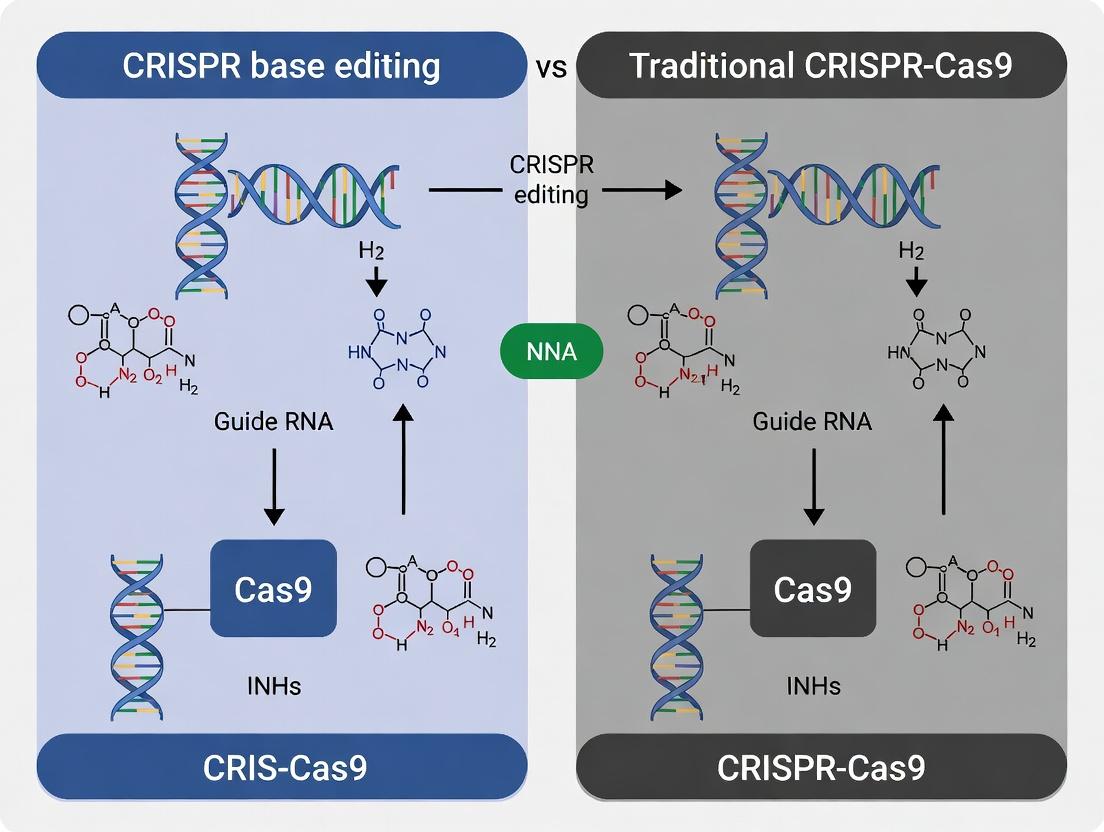
This article provides a comparative analysis for research and drug development professionals of CRISPR-Cas9 gene editing versus its evolved counterpart, CRISPR base editing.
Beyond the Cut: How CRISPR Base Editing Offers Precision Without Double-Strand Breaks
Abstract
This article provides a comparative analysis for research and drug development professionals of CRISPR-Cas9 gene editing versus its evolved counterpart, CRISPR base editing. We explore the foundational mechanisms, from double-strand break repair to direct chemical conversion of nucleotides. The article details core methodologies, applications in disease modeling and therapeutic development, and key considerations for experimental design and optimization. A head-to-head comparison evaluates efficiency, precision, off-target effects, and delivery challenges, concluding with a synthesis of current limitations and future clinical implications for precision medicine.
Understanding the Core Mechanics: From DNA Scissors to Molecular Pencils
Within the broader thesis contrasting CRISPR base editing with traditional CRISPR-Cas9, it is essential to first define the foundational paradigm. Traditional CRISPR-Cas9 gene editing operates through the creation of targeted DNA double-strand breaks (DSBs), subsequently resolved by the cell's endogenous DSB repair pathways. This reliance on DNA breakage and repair fundamentally dictates the outcomes, limitations, and applications of the technology. This guide details the mechanistic underpinnings, quantitative outcomes, and standard experimental protocols of this traditional system.
Core Mechanism: From DSB Creation to Repair
The Cas9 endonuclease, guided by a single guide RNA (sgRNA), introduces a blunt-ended DSB at a target locus complementary to the sgRNA's spacer sequence and adjacent to a protospacer adjacent motif (PAM). The cell primarily repairs this break via two competing, error-prone pathways.
Figure 1: DSB Repair Pathways in Traditional CRISPR-Cas9 Editing
Quantitative Outcomes of DSB Repair
The efficiency and precision of editing are quantified by the rates of indel formation and the spectrum of resulting mutations. Data from recent mammalian cell line studies (2023-2024) illustrate typical outcomes.
Table 1: Quantitative Outcomes of Traditional CRISPR-Cas9 Editing in Mammalian Cells
| Cell Type | Average Indel Efficiency (%) | NHEJ-Derived Indels (%) | MMEJ-Derived Indels (%) | Large Deletions (>100 bp) Frequency | Reference (Example) |
|---|---|---|---|---|---|
| HEK293T | 40-75% | ~70-85% | ~15-30% | 5-20% | (Recent pooled screen, 2023) |
| iPSCs | 20-50% | ~80-90% | ~10-20% | 2-10% | (Differentiation study, 2024) |
| Primary T Cells | 30-60% | ~65-80% | ~20-35% | 10-25% | (CAR-T engineering, 2023) |
| HepG2 | 50-80% | ~75-85% | ~15-25% | 5-15% | (Toxicology model, 2024) |
Table 2: Spectrum of Indels Generated by Error-Prone NHEJ/MMEJ
| Indel Type | Approximate Frequency | Typical Consequence |
|---|---|---|
| -1 bp deletion | ~15% | Frameshift likely |
| -2 to -5 bp deletion | ~25% | Frameshift likely |
| +1 bp insertion | ~10% | Frameshift likely |
| +2 to +5 bp insertion | ~15% | Frameshift possible |
| Microhomology-mediated deletion (-3 to -50 bp) | ~20% | Frameshift or in-frame deletion |
| Complex insertions/deletions | ~15% | Frameshift highly likely |
Detailed Experimental Protocol: Assessing Cas9-Induced DSB Repair
This protocol outlines steps for transfecting cells, harvesting genomic DNA, and analyzing editing outcomes via T7 Endonuclease I (T7EI) assay and Sanger sequencing tracking of indels by decomposition (TIDE).
A. Cell Transfection and Editing
- Design sgRNAs: Using tools like CHOPCHOP or Benchling, design 20-nt sgRNAs targeting your gene of interest. Ensure a 5'-NGG PAM is present on the target strand.
- Complex RNP (Recommended): Combine 5 µg of purified S. pyogenes Cas9 protein with 200 pmol of synthetic sgRNA in Opti-MEM. Incubate 10 min at 25°C to form ribonucleoprotein (RNP).
- Cell Preparation: Seed 2e5 HEK293T cells per well in a 24-well plate 24h prior.
- Transfection: Dilute 2 µL of Lipofectamine CRISPRMAX in 50 µL Opti-MEM. Mix with the pre-complexed RNP. Incubate 10 min, then add dropwise to cells.
- Harvest: 72h post-transfection, aspirate media, wash with PBS, and lyse cells directly for genomic DNA extraction (e.g., using QuickExtract DNA Solution).
B. T7 Endonuclease I (T7EI) Mismatch Cleavage Assay
- PCR Amplification: Amplify a 400-600 bp region surrounding the target site from harvested genomic DNA. Use high-fidelity polymerase.
- Hybridization: Purify PCR product. For heteroduplex formation: Denature 200 ng PCR product at 95°C for 5 min, then slowly reanneal by ramping down to 25°C at 0.1°C/sec.
- Digestion: To the hybridized product, add 1 µL T7EI enzyme (NEB), 2 µL 10X NEBuffer 2, and nuclease-free water to 20 µL. Incubate at 37°C for 30 min.
- Analysis: Run digested product on a 2% agarose gel. Cleaved bands indicate presence of indels (heteroduplex DNA). Editing efficiency (%) can be estimated from band intensity.
C. TIDE Analysis (Quantitative Decomposition of Sequencing Chromatograms)
- Sanger Sequencing: Submit purified PCR product (from Step B1) for Sanger sequencing with a primer upstream of the target.
- Data Processing: Upload the sequencing chromatogram (.ab1 file) of the edited sample and a control (untransfected) sample to the TIDE web tool (https://tide.nki.nl).
- Parameter Setting: Input the sgRNA target sequence and the approximate cut site (3 bp upstream of PAM).
- Output: The tool decomposes the complex chromatogram, providing a quantitative breakdown of the most frequent indels and overall editing efficiency.
The Scientist's Toolkit: Key Research Reagent Solutions
Table 3: Essential Reagents for Traditional CRISPR-Cas9 DSB Experiments
| Reagent/Material | Function & Rationale | Example Vendor/Product |
|---|---|---|
| S. pyogenes Cas9 Nuclease | The core endonuclease that creates the DSB. Recombinant, high-purity protein is essential for RNP delivery. | Thermo Fisher TrueCut Cas9 Protein v2 |
| Synthetic sgRNA (chemically modified) | Guides Cas9 to the target locus. Chemical modifications (e.g., 2'-O-methyl, phosphorothioate) enhance stability and reduce immunogenicity in cells. | Synthego sgRNA EZ Kit |
| CRISPRMAX or Lipofectamine 3000 | Lipid-based transfection reagents optimized for high-efficiency delivery of RNPs or plasmid DNA into a wide range of mammalian cells. | Thermo Fisher Lipofectamine CRISPRMAX |
| QuickExtract DNA Solution | Rapid, single-tube lysis reagent for direct PCR from cultured cells, crucial for fast genotyping without column-based purification. | Lucigen QuickExtract DNA Solution |
| T7 Endonuclease I | Surveyor nuclease that detects and cleaves mismatches in heteroduplex DNA, enabling rapid quantification of editing efficiency. | NEB T7 Endonuclease I |
| High-Fidelity PCR Polymerase | Amplifies the target genomic locus with minimal error for accurate downstream analysis (T7EI, sequencing). | NEB Q5 or Thermo Fisher Platinum SuperFi II |
| Next-Generation Sequencing (NGS) Library Prep Kit | For deep, quantitative analysis of the full spectrum of editing outcomes (indels, large deletions) at the target site. | Illumina CRISPR Amplicon Sequencing Kit |
Comparative Context: The DSB-Dependent Limitation
The data and mechanisms above frame the central thesis for the development of base editing: the stochastic nature of DSB repair is its principal drawback. While efficient for gene knockout, achieving precise, predictable single-nucleotide changes without DSBs is impossible in this paradigm. The repair outcome is not controlled by the experimenter but by the cellular machinery, leading to a heterogeneous mixture of products and potential genomic instability from large deletions or translocations. This inherent limitation drives the pursuit of DSB-free editing technologies, such as base editors, which directly convert one base pair to another without inducing a DSB, thereby offering greater precision and product purity for therapeutic point correction.
The landscape of genome editing has been dominated by traditional CRISPR-Cas9 nuclease systems, which create double-strand breaks (DSBs) to initiate DNA repair. While powerful, reliance on endogenous repair pathways (non-homologous end joining, NHEJ, or homology-directed repair, HDR) leads to stochastic outcomes: indel formation is predominant, and precise point mutation correction is inefficient and often accompanied by unwanted byproducts. This limitation is the central thesis from which base editing technology emerged. Base editors (BEs) represent a paradigm shift by directly converting one DNA base pair to another without creating a DSB, thereby minimizing indel formation and enhancing precision editing efficiency. This whitepaper defines the core architecture, mechanism, and applications of these fusion proteins, positioning them as a transformative alternative within the broader CRISPR toolset.
Core Architecture & Mechanism
A base editor is a fusion protein consisting of three essential components:
- A Catalytically Impaired Cas9 (nickase): Most commonly, Streptococcus pyogenes Cas9 (SpCas9) with a D10A mutation (Cas9n) is used. It retains the ability to bind specific genomic DNA guided by a single-guide RNA (sgRNA) but nicks only the non-edited strand instead of creating a DSB.
- A Deaminase Enzyme: The effector domain that catalyzes the direct chemical conversion of one base to another.
- Cytidine Deaminase (e.g., rAPOBEC1): For Cytosine Base Editors (CBEs), converting C•G to T•A.
- Adenine Deaminase (e.g., TadA-8e): For Adenine Base Editors (ABEs), converting A•T to G•C.
- An Inhibitor of Base Excision Repair (BER): Often a uracil glycosylase inhibitor (UGI) protein fused to CBEs to prevent the cell's repair machinery from reversing the intended edit (uracil excision).
Mechanistic Workflow (CBE Example):
- The Cas9n-sgRNA complex locates and binds the target DNA sequence, forming an R-loop.
- Within the exposed single-stranded DNA "bubble" (typically positions 4-8 in the protospacer, the "editing window"), the cytidine deaminase converts a cytidine (C) to uridine (U), creating a U•G mismatch.
- The UGI domain prevents cellular UDG from removing the U.
- Cellular DNA repair machinery preferentially treats U as thymine (T). The nick in the non-edited strand triggers repair using the edited strand as a template, resulting in a permanent C•G to T•A base pair conversion.
Quantitative Performance: Base Editors vs. Traditional Cas9
Table 1: Comparative Performance Metrics of Base Editing vs. Traditional CRISPR-Cas9 HDR for Point Mutation Correction
| Parameter | Traditional Cas9 + HDR Template | Cytosine Base Editor (CBE) | Adenine Base Editor (ABE) |
|---|---|---|---|
| Primary Editing Outcome | Precise point mutation via donor template. | C•G to T•A conversion. | A•T to G•C conversion. |
| Typical Efficiency (in cells) | 0.1% - 10% (highly variable). | 10% - 50% (average ~30-40%). | 10% - 50% (average ~30-40%). |
| Indel Formation Rate | High (often >10% from NHEJ). | Very Low (<1% with optimized editors). | Very Low (<1% with optimized editors). |
| DSB Formation | Required for HDR. | Avoided. | Avoided. |
| Product Purity | Low; indels and heterozygous edits common. | High; desired base change dominates. | High; desired base change dominates. |
| Therapeutic Relevance | Challenging for in vivo correction. | Highly promising for in vivo correction of point mutations. | Highly promising for in vivo correction of point mutations. |
Table 2: Characteristics of Major Base Editor Classes
| Editor Class | Deaminase | Cas9 Variant | Key Accessory | Primary Conversion | Editing Window |
|---|---|---|---|---|---|
| CBE (1st Gen) | rAPOBEC1 | SpCas9 (D10A) | UGI | C•G → T•A | ~nt 4-8 (Protospacer) |
| ABE (7.10) | TadA* (dimer) | SpCas9 (D10A) | - | A•T → G•C | ~nt 4-8 (Protospacer) |
| BE4max | rAPOBEC1 | SpCas9 (D10A) | 2x UGI | C•G → T•A | ~nt 4-8 (Protospacer) |
| ABE8e | TadA-8e (evolved) | SpCas9 (D10A) | - | A•T → G•C | ~nt 4-8 (Protospacer) |
Detailed Experimental Protocol: In vitro Testing of Base Editor Activity
Objective: To assess the on-target editing efficiency and product purity of a novel CBE variant in HEK293T cells at the EMX1 locus.
Materials (Research Reagent Solutions):
Table 3: Essential Reagents for Base Editing Experiments
| Reagent / Material | Function & Critical Detail |
|---|---|
| Base Editor Plasmid | Expression vector for the BE fusion protein (e.g., pCMV-BE4max). Contains promoter, NLS, Cas9n, deaminase, UGI. |
| sgRNA Expression Plasmid | Vector (e.g., pU6-sgRNA) expressing the guide RNA targeting the genomic locus of interest. |
| HEK293T Cells | Robust, easily transfected human cell line for initial validation. |
| Transfection Reagent | Lipid-based (e.g., Lipofectamine 3000) or polymer-based reagent for plasmid delivery. |
| Lysis Buffer | Quick alkaline lysis buffer for crude genomic DNA extraction from transfected cells. |
| PCR Primers | Oligonucleotides flanking the target site (~300-500bp amplicon) for sequencing analysis. |
| High-Fidelity PCR Mix | For accurate amplification of the target genomic locus. |
| Sanger Sequencing Service | For initial efficiency assessment via chromatogram decomposition analysis. |
| Next-Generation Sequencing (NGS) Library Prep Kit | For quantitative, high-depth analysis of editing outcomes and byproducts (e.g., indel frequency). |
Methodology:
- sgRNA Design & Cloning: Design a 20-nt spacer sequence targeting the EMX1 gene within a known active site. Clone the annealed oligos into the BsaI site of the sgRNA expression plasmid.
- Cell Transfection: Seed HEK293T cells in a 24-well plate. At 70-80% confluency, co-transfect 500 ng of BE plasmid and 250 ng of sgRNA plasmid using the transfection reagent per manufacturer's protocol. Include a "Cas9 nuclease + sgRNA" control and a "no nuclease" control.
- Genomic DNA Harvest: 72 hours post-transfection, aspirate media, wash with PBS, and add 50-100 µL of direct lysis buffer (e.g., 25 mM NaOH, 0.2 mM EDTA). Incubate at 95°C for 20 min, then neutralize with an equal volume of 40 mM Tris-HCl (pH 5.5). Centrifuge, and use supernatant as PCR template.
- Target Site Amplification: Perform PCR using high-fidelity polymerase with primers flanking the target site. Purify the PCR amplicon.
- Editing Analysis:
- Sanger Sequencing: Submit purified PCR product for Sanger sequencing. Analyze chromatograms using online tools (e.g., Inference of CRISPR Edits, ICE) to quantify editing efficiency.
- NGS Validation: For precise quantification, prepare an NGS library from the purified amplicon (adding barcodes via a second PCR). Sequence on an Illumina MiSeq. Analyze reads using alignment software (e.g., CRISPResso2) to calculate the percentage of C-to-T (or A-to-G) conversions at each position within the editing window and the percentage of reads containing indels.
Visualizing Key Concepts
Title: Base Editor Fusion Protein Architecture
Title: CBE Chemical Conversion Mechanism
Title: Base Editing vs Traditional CRISPR Pathways
Base editing represents a significant advancement in precision genome engineering, developed as a targeted alternative to traditional CRISPR-Cas9 homology-directed repair (HDR). Traditional Cas9 induces double-strand breaks (DSBs), leading to error-prone non-homologous end joining (NHEJ) with low efficiency of precise edits. Base editors, however, enable direct, irreversible conversion of one DNA base pair to another (e.g., C•G to T•A or A•T to G•C) without requiring DSBs or donor DNA templates. This technical guide dissects the core components of these systems within the context of expanding the genome editing toolkit.
The Core Triad of Base Editing
Nickase Cas9 (nCas9)
The nCas9 variant is the targeting module, engineered from wild-type SpCas9. A single point mutation (D10A) in the RuvC nuclease domain abolishes its ability to cleave the DNA strand complementary to the guide RNA, while the HNH domain remains active to nick the non-target (gRNA-bound) strand. This creates a transient single-strand break, which is more efficiently repaired than a DSB and minimizes indel formation. Recent variants like SpCas9-NG or xCas9 expand the targeting range beyond traditional NGG PAM sequences.
Deaminase Enzyme
The catalytic core is a single-stranded DNA (ssDNA) deaminase enzyme, tethered to nCas9. For Cytosine Base Editors (CBEs), this is typically an APOBEC1 family enzyme, which catalyzes the hydrolytic deamination of cytidine to uridine within a narrow "activity window" (~positions 4-8 within the non-target strand protospacer). Uridine is then read as thymine during replication or repair. Adenine Base Editors (ABEs) use an evolved tRNA adenosine deaminase (TadA*) to convert adenosine to inosine (read as guanosine). Deaminase engineering (e.g., SECURE-base editors with reduced off-target activity) is a major focus of current research.
Guide RNA (gRNA) Architecture
The gRNA (typically ~100 nt) retains the standard CRISPR scaffold but with a 20-nt spacer sequence that defines genomic targeting. Its precise sequence is critical for determining the positioning of the deaminase activity window relative to the PAM. Modifications to the scaffold or the use of extended gRNAs (e.g., 15-20 nt spacers) can influence editing efficiency and product purity by altering the R-loop structure.
Quantitative Comparison of Base Editor Systems
Table 1: Comparison of Primary Base Editor Systems
| Parameter | Cytosine Base Editor (CBE) | Adenine Base Editor (ABE) | Traditional CRISPR-Cas9 HDR |
|---|---|---|---|
| Core Components | nCas9(D10A) + Cytidine Deaminase (e.g., APOBEC1) + UGI | nCas9(D10A) + Evolved Adenosine Deaminase (TadA*) | Wild-type Cas9 + Donor DNA Template |
| Primary Edit | C•G to T•A | A•T to G•C | User-defined (requires template) |
| Theoretical Efficiency* | 10-50% (cell-dependent) | 10-40% (cell-dependent) | Typically <10% in most cell lines |
| Indel Formation Rate | Low (typically <1-5%) | Very Low (typically <1%) | High (can be >20%) |
| Primary Byproducts | C•G to G•C, C•G to A•T (dependent on repair pathways) | Minimal | Random indels, large deletions |
| Activity Window | ~ Protospacer positions 4-8 (counting from PAM-distal end) | ~ Protospacer positions 4-8 | N/A |
| Key Reagent Solutions | BE4max plasmid, APOBEC-nCas9-UGI constructs | ABE8e plasmid, TadA*-nCas9 constructs | SpCas9 plasmid, ssODN donor |
*Efficiencies are highly variable based on cell type, delivery method, and genomic locus.
Detailed Experimental Protocol: Validating a CBE System In Vitro
Aim: To assess the on-target editing efficiency and product purity of a CBE at a specific genomic locus in HEK293T cells.
Materials & Reagents:
- Cells: HEK293T (ATCC CRL-3216)
- Plasmids: pCMV-BE4max (Addgene #112093), pU6-gRNA (containing target-specific spacer)
- Transfection Reagent: Lipofectamine 3000 (Thermo Fisher, L3000001)
- Lysis Buffer: QuickExtract DNA Extraction Solution (Lucigen, QE09050)
- PCR Reagents: Q5 High-Fidelity 2X Master Mix (NEB, M0492)
- Sequencing Primers: Target-specific forward and reverse primers (~250 bp amplicon flanking edit site)
- Analysis: Inference of CRISPR Edits (ICE) analysis tool (Synthego) or CRISPResso2.
Methodology:
- gRNA Design & Cloning: Design a 20-nt spacer sequence targeting the desired locus with an appropriate PAM (NGG for SpCas9-derived BE4max). Clone into the pU6-gRNA plasmid via BbsI restriction site Golden Gate assembly.
- Cell Transfection: Seed HEK293T cells in a 24-well plate. At 70-80% confluency, co-transfect 500 ng of pCMV-BE4max and 250 ng of pU6-gRNA using Lipofectamine 3000 per manufacturer's protocol.
- Genomic DNA Harvest: 72 hours post-transfection, aspirate media, wash with PBS, and add 100 µL of QuickExtract solution per well. Incubate at 65°C for 15 min, 98°C for 5 min, then hold at 4°C. Dilute lysate 1:10 in nuclease-free water for PCR.
- Amplicon Generation: Perform PCR using Q5 Master Mix and target-specific primers. Purify the PCR product using a standard column-based kit.
- Sanger Sequencing & Analysis: Submit purified amplicons for Sanger sequencing. Analyze the resulting chromatograms using the ICE tool (Synthego). Input the control (untransfected) and treated sample traces. The tool will output the estimated editing efficiency (%) and the spectrum of nucleotide substitutions (product purity).
Diagrams
Base Editing Molecular Mechanism
gRNA Spacer Alignment & Activity Window
The Scientist's Toolkit: Key Research Reagent Solutions
Table 2: Essential Reagents for Base Editing Research
| Reagent / Material | Provider Examples | Function in Experiment |
|---|---|---|
| Base Editor Plasmids (BE4max, ABE8e) | Addgene | Pre-optimized, high-efficiency expression constructs for mammalian cells. Include nuclear localization signals and linkers. |
| Ultramer DNA Oligos (ssODN donors) | Integrated DNA Technologies (IDT) | For traditional HDR control experiments or designing precision edits outside base editor windows. |
| Lipofectamine 3000 / CRISPRMAX | Thermo Fisher Scientific | Lipid-based transfection reagents optimized for high-efficiency delivery of RNP or plasmid DNA to hard-to-transfect cells. |
| Synthetic Chemically-Modified gRNA (synthego) | Synthego | Ready-to-use, high-purity gRNA with chemical modifications enhancing stability and editing efficiency. |
| Q5 High-Fidelity DNA Polymerase | New England Biolabs (NEB) | For error-free amplification of genomic target loci for downstream sequencing analysis. |
| Next-Generation Sequencing Kits (Illumina) | Illumina | For deep, unbiased quantification of on-target editing and genome-wide off-target screening (e.g., GUIDE-seq). |
| Inference of CRISPR Edits (ICE) Analysis Tool | Synthego (Web Tool) | Rapid, quantitative analysis of Sanger sequencing traces to determine editing efficiency and outcomes. |
| HEK293T / HAP1 Cell Lines | ATCC, Horizon Discovery | Standard, easily transfected cell lines used for initial validation of editing systems and gRNA efficiency. |
1. Introduction within the CRISPR Editing Thesis
The advent of CRISPR-Cas9 revolutionized genetic engineering by enabling targeted DNA double-strand breaks (DSBs). However, reliance on endogenous repair pathways (non-homologous end joining, NHEJ, or homology-directed repair, HDR) introduces limitations: low efficiency of precise edits, high frequency of indels, and restricted utility in non-dividing cells. This forms the core thesis for the development of base editing: to achieve precise, efficient point mutations without requiring DSBs or donor DNA templates. Base Editors (BEs) fulfill this by directly catalyzing chemical conversion of one base pair to another. This guide details the four main classes: ABEs (A•T to G•C) and three CBE variants (C•G to T•A).
2. Core Architecture & Mechanism
All base editors fuse a catalytically impaired Cas9 nickase (nCas9, D10A) or dead Cas9 (dCas9) to a nucleobase deaminase enzyme. The nCas9 retains the ability to nick the non-edited strand, improving editing efficiency. The deaminase acts on single-stranded DNA within the R-loop formed by Cas9 binding.
2.1 Adenine Base Editors (ABEs): A•T to G•C ABEs use an evolved tRNA-specific adenosine deaminase (TadA) to convert adenosine (A) to inosine (I) in DNA. Inosine is read as guanosine (G) by polymerases, leading to an A•T to G•C change during replication or repair.
2.2 Cytosine Base Editors (CBEs): C•G to T•A CBEs use a cytidine deaminase (e.g., rAPOBEC1, AID, or CDA1) to convert cytosine (C) to uracil (U). Uracil is then read as thymine (T). Three main classes are distinguished by their deaminase origin and engineering:
- BE1: dCas9-rAPOBEC1 (1st gen, low efficiency).
- BE2: dCas9-rAPOBEC1 + uracil glycosylase inhibitor (UGI) to prevent U excision.
- BE3: nCas9-rAPOBEC1 + UGI (standard architecture).
- BE4: Improved nCas9-rAPOBEC1-UGI with additional UGI and engineering for higher purity.
3. Quantitative Data & Performance Comparison
Table 1: Characteristic Comparison of Main Base Editor Classes
| Feature | ABE7.10 | BE3 (CBE) | BE4max (CBE) | Target-AID (CBE) |
|---|---|---|---|---|
| Core Deaminase | Evolved TadA dimer | rat APOBEC1 | rat APOBEC1 | Petromyzon marinus AID (PmCDA1) |
| Cas9 Component | nCas9 (D10A) | nCas9 (D10A) | nCas9 (D10A) | nCas9 (D10A) |
| Accessory Protein | - | Single UGI | Two UGIs | Single UGI |
| Primary Conversion | A•T → G•C | C•G → T•A | C•G → T•A | C•G → T•A |
| Typical Editing Window | Positions 4-8 (Protospacer) | Positions 4-8 (Protospacer) | Positions 4-8 (Protospacer) | Positions 1-5 (Protospacer) |
| Avg. Editing Efficiency* | 50% ± 25% | 40% ± 30% | 50% ± 25% | 30% ± 20% |
| Indel Rate* | < 0.5% | 1-5% | < 1.0% | 1-3% |
| Key Product Purity | Very High | Moderate | High | Moderate |
| Common Applications | Disease modeling (G>A mutations), correct G•C to A•T SNPs | Disease modeling, stop codon introduction, correct A•T to G•C SNPs | High-fidelity C•G to T•A editing | Preferentially edits ssDNA in transcriptionally active regions |
*Efficiency and indel rates are highly sequence and context-dependent; values represent common ranges reported in mammalian cells.
4. Detailed Experimental Protocol: BE3/BE4max Delivery and Assessment in HEK293T Cells
- Objective: Introduce a specific C•G to T•A point mutation at a genomic locus.
- Materials: See "The Scientist's Toolkit" below.
- Method:
- Design & Cloning: Design a 20-nt sgRNA targeting the desired locus with the C base within the editing window (positions 4-8, counting PAM as 21-23). Clone into the sgRNA expression backbone of the BE3 or BE4max plasmid (Addgene #73021, #112093).
- Cell Culture & Transfection: Maintain HEK293T cells in DMEM + 10% FBS. Seed 2e5 cells/well in a 24-well plate 24h pre-transfection. Transfect with 500ng BE plasmid and 250ng sgRNA plasmid (if separate) using 2µL of polyethylenimine (PEI, 1mg/mL). Include a non-targeting sgRNA control.
- Harvest & Genomic DNA Extraction: 72h post-transfection, aspirate media, wash with PBS, and lyse cells directly in the well with 50µL DirectPCR Lysis Reagent + 0.4mg/mL Proteinase K. Incubate at 55°C for 3h, then 85°C for 45min. Use 1-2µL of lysate as PCR template.
- PCR & Sequencing: Amplify the target region (amplicon size ~300-500bp) using high-fidelity polymerase. Purify PCR product. Submit for Sanger sequencing. For quantitative analysis, perform next-generation sequencing (NGS) on purified amplicons.
- Data Analysis: Analyze Sanger sequencing traces with decomposition software (e.g., EditR, BEAT). For NGS data, align reads to reference genome and calculate percentage of C to T conversion within the editing window and indel frequency using tools like CRISPResso2.
5. Visualization of Base Editor Mechanisms & Workflow
Diagram 1: CBE mechanism: deamination, nick, and repair.
Diagram 2: Standard base editing experimental workflow.
6. The Scientist's Toolkit: Essential Research Reagents
Table 2: Key Reagents for Base Editing Experiments
| Reagent/Material | Function/Description | Example Vendor/Catalog |
|---|---|---|
| Base Editor Plasmids | Mammalian expression vectors for BE3, BE4max, ABE7.10, etc. | Addgene (#73021, #112093, #102919) |
| sgRNA Cloning Vector | Backbone for sgRNA expression; often part of BE plasmid. | Addgene (#41824) |
| High-Fidelity Polymerase | Accurate amplification of target locus for sequencing. | NEB Q5, Thermo Fisher Phusion |
| Next-Gen Sequencing Kit | Library prep for deep sequencing of edited amplicons. | Illumina Nextera XT |
| PEI Transfection Reagent | Cost-effective chemical transfection for HEK293T & similar lines. | Polysciences #24765 |
| Lipofectamine 3000 | Lipid-based transfection reagent for sensitive cell lines. | Thermo Fisher L3000001 |
| Neon/Nucleofector System | Electroporation for high-efficiency delivery in primary/hard-to-transfect cells. | Thermo Fisher, Lonza |
| DirectPCR Lysis Reagent | Rapid, column-free gDNA extraction from cultured cells. | Viagen Biotech 101-T |
| CRISPResso2 Software | Critical computational tool for analyzing NGS data of base editing outcomes. | (Open Source) |
| EditR Web Tool | Quick analysis of Sanger sequencing traces for base edits. | (Open Source Web Tool) |
Within the ongoing thesis comparing CRISPR-Cas9 to base editing technologies, the "base editing window" emerges as a critical, defining parameter influencing therapeutic viability. While base editors (BEs) offer precise chemical conversion of single DNA bases without generating double-strand breaks—a key advantage over traditional Cas9—their precision is constrained by a spatially defined activity window. This window dictates the range of nucleotides within the protospacer where efficient editing occurs, directly impacting product purity—the percentage of desired edits versus unwanted by-products like indels or non-target base conversions.
Defining the Base Editing Window
The base editing window is primarily determined by the architecture of the editor itself. A typical cytosine base editor (CBE) or adenine base editor (ABE) comprises a catalytically impaired Cas nickase (or dead Cas9) fused to a deaminase enzyme. The spatial positioning of the deaminase relative to the DNA strand confines its activity to a specific segment of the R-loop formed during target binding. For many first-generation editors, this window spans approximately positions 4-8 (counting the PAM as 21-23) within the protospacer. Nucleotides outside this window are edited inefficiently.
Consequences for Product Purity
Product purity is compromised by several phenomena intrinsic to the base editing window:
- Within-Window Off-Target Edits: Multiple cytosines or adenines within the window can be deaminated, leading to bystander mutations.
- Strand Slip-Ups: Non-canonical base edits (e.g., C-to-A, C-to-T) can occur due to error-prone translesion synthesis.
- Indel Formation: Although reduced compared to Cas9, residual nicking can still lead to indel formation, especially with longer exposure or inefficient repair.
These impurities pose significant challenges for clinical applications, where a homogeneous, precisely edited cell population is often required.
Quantitative Data on Editing Windows and Purity
The following table summarizes key characteristics of prominent base editor systems, illustrating the relationship between window design and output purity.
Table 1: Characteristics of Major Base Editor Systems
| Editor System | Deaminase | Cas Variant | Primary Editing Window (Protospacer Positions)* | Typical Product Purity (Desired Edit) | Common By-products |
|---|---|---|---|---|---|
| BE3 (CBE) | rAPOBEC1 | nCas9 (D10A) | 4-8 | 50-80% | C-to-T at other Cs, Indels (<1%) |
| BE4max | rAPOBEC1 | nCas9 (D10A) | 4-8 | 70-90% | Reduced bystanders, Indels (<0.5%) |
| ABE7.10 | TadA-TadA* | nCas9 (D10A) | 4-7 | 80-99% | Very low indels, rare A-to-G bystanders |
| Target-AID | PmCDA1 | nCas9 (D10A) | 1-5 | 40-70% | C-to-T bystanders in window |
| evoFERNY | evoCDA1 | SpCas9-NG | 2-6 | >90% | Minimal bystanders, high specificity |
*Positions relative to the PAM (SpCas9: NGG, PAM positions 21-23).
Experimental Protocol: Assessing Editing Window and Purity
To characterize the base editing window and product purity for a novel editor, the following detailed protocol is employed.
Protocol: Deep Sequencing Analysis of Base Editing Outcomes
Objective: Quantify editing efficiency, map the base editing window, and determine product purity at a target genomic locus.
Materials (Research Reagent Solutions Toolkit):
| Reagent/Material | Function in Experiment |
|---|---|
| Base Editor Plasmid | Expresses the BE protein (e.g., BE4max) and gRNA. |
| HEK293T Cells | Standard, easily transfected cell line for initial characterization. |
| Lipofectamine 3000 | Lipid-based transfection reagent for plasmid delivery. |
| Genomic DNA Extraction Kit | Isolates high-quality gDNA post-editing (e.g., 72 hrs post-transfection). |
| PCR Master Mix (High-Fidelity) | Amplifies the target genomic region with minimal errors. |
| NGS Library Prep Kit | Prepares amplicon libraries for deep sequencing (Illumina platform). |
| Sanger Sequencing Reagents | For initial, rapid validation of editing. |
| CRISPResso2 or BE-Analyzer | Bioinformatics software for quantifying base edit frequencies from NGS data. |
Method:
- gRNA Design & Cloning: Design three gRNAs targeting different genomic loci, each containing multiple target bases (Cs or As) spanning positions 1-15 of the protospacer. Clone gRNAs into the BE expression plasmid.
- Cell Transfection: Seed HEK293T cells in a 24-well plate. Transfect with 500 ng of BE plasmid per well using Lipofectamine 3000 per manufacturer's protocol. Include a negative control (gRNA only, no deaminase).
- Genomic DNA Harvest: At 72 hours post-transfection, harvest cells and extract genomic DNA.
- Target Amplification: Perform PCR using high-fidelity polymerase to amplify a ~300-500 bp region surrounding each target site. Use barcoded primers for multiplexing.
- Next-Generation Sequencing (NGS): Purify PCR amplicons, quantify, pool equimolarly, and prepare sequencing library. Sequence on an Illumina MiSeq (2x300 bp) to achieve >10,000x coverage per amplicon.
- Data Analysis: Process raw reads using CRISPResso2. Align reads to the reference amplicon sequence. The software will quantify:
- Editing Efficiency: Percentage of reads with any C-to-T (or A-to-G) conversion in the protospacer.
- Base Editing Window: Frequency of editing at each individual nucleotide position.
- Product Purity: Percentage of reads containing only the desired single-base change versus those with bystander edits or indels.
Visualizing Base Editor Architecture and Outcome Analysis
The architecture of base editors and the workflow for analyzing their output are critical to understanding the window limitation.
Base Editor Structure and Activity Window
Base Editing Outcome Analysis Workflow
Strategies to Narrow the Window and Enhance Purity
Recent research focuses on engineering solutions to tighten the editing window and improve purity:
- Deaminase Engineering: Directed evolution of deaminases (e.g., evoCDA1, evoAPOBEC1) with altered DNA interaction interfaces to narrow activity profiles.
- Cas Domain Engineering: Using Cas variants with altered spacer lengths or PAM requirements shifts the window.
- Dual-Guide Systems: Employing two gRNAs to position the deaminase more precisely.
- Chemical Modifications: Incorporating ligand-inducible degrons or allosteric switches for temporal control, reducing exposure time and off-target effects.
The base editing window is a fundamental parameter that directly governs the product purity of base editing technologies. While traditional CRISPR-Cas9 faces challenges from heterogeneous indel outcomes, base editors contend with bystander edits within their activity window. Rigorous characterization using NGS-based protocols is essential. Ongoing protein engineering efforts aimed at refining the deamination window are central to the thesis that base editing represents a more precise, predictable, and ultimately clinically viable evolution of CRISPR-based genome modification.
Designing Experiments: Protocol Considerations for Base Editing vs. Cas9 Knockout/Knock-in
Within the broader thesis comparing CRISPR base editing to traditional CRISPR-Cas9, a critical distinction lies in the mechanism and outcome. Traditional Cas9 induces a double-strand break (DSB), relying on endogenous repair pathways (NHEJ or HDR) that can lead to unpredictable indels. Base editors (BEs), however, directly catalyze a precise, single-nucleotide conversion without a DSB, comprising a catalytically impaired Cas protein fused to a deaminase enzyme. This fundamental difference necessitates a specialized and more nuanced approach to guide RNA (gRNA) design, where the primary goals shift from inducing cleavage to positioning the deaminase activity with optimal efficiency and minimal off-target editing.
Core Principles of Base Editing and gRNA Positioning
Base editors are classified by their conversion capability:
- Cytosine Base Editors (CBEs): Convert C•G to T•A within a defined activity window.
- Adenine Base Editors (ABEs): Convert A•T to G•C within a defined activity window.
The deaminase enzyme has an activity window—a range of nucleotides relative to the protospacer adjacent motif (PAM) where it can efficiently access and modify the target base. For common BE systems like BE4max or ABEmax, this window is typically positions 4-10 (counting the PAM-distal end as position 1, with the PAM as positions 21-23 for SpCas9). The target base must fall within this window.
Diagram 1: Base Editor Architecture and Activity Window
Key gRNA Design Parameters for Efficiency
Activity Window Placement
The single most critical factor. The target nucleotide (A for ABE, C for CBE) must be positioned within the deaminase's activity window. The editing efficiency often varies across the window, typically peaking in the middle (e.g., positions 6-8).
gRNA Sequence Composition
- GC Content: Moderate GC content (40-60%) in the spacer region generally promotes stable binding without excessive secondary structure.
- Avoidance of Homopolymer Runs: Sequences with multiple consecutive identical bases (especially runs of Gs or Cs) can reduce efficiency or promote gRNA misfolding.
- Self-Complementarity: Avoid sequences that can form internal secondary structures (e.g., hairpins), which may interfere with Cas9 binding or complex stability.
PAM Compatibility
The PAM sequence requirement is dictated by the Cas protein in the base editor (e.g., SpCas9-NGG, SaCas9-NNR, or NGN for SpCas9-NG variants). The gRNA must be designed to target a site immediately adjacent to a compatible PAM.
Strand Selection (Targeting vs. Non-Targeting Strand)
Base editors primarily deaminate bases on the non-target strand (the strand not complementary to the gRNA spacer). Therefore, the gRNA must be designed to bind the opposite strand such that the target base on the non-target strand falls within the activity window.
Diagram 2: Strand Selection for Base Editing
Table 1: Comparative gRNA Design Considerations: Base Editing vs. Traditional Cas9
| Design Parameter | Traditional Cas9 (for Knockout) | Base Editing (for Point Mutation) | Rationale for Difference |
|---|---|---|---|
| Primary Goal | Induce a DSB near the target site. | Position deaminase activity over a specific nucleotide. | Base editing avoids DSBs; requires precise enzyme positioning. |
| Optimal Target Site | Close to functional domain (e.g., exon early in coding sequence). | Must have the target nucleotide (A or C) within the deaminase activity window (e.g., positions 4-10). | Efficiency is dictated by the enzyme's access to the base, not just genomic context. |
| PAM Requirement | Strictly required for Cas9 binding. | Strictly required, and the PAM position defines the activity window location. | The PAM location directly calculates where the activity window falls on the target sequence. |
| Strand Selection | Largely irrelevant for DSB formation. | Critical. gRNA binds the strand opposite the target base to be edited. | Deaminases act on the non-target strand (ssDNA loop displaced by gRNA binding). |
| Editing Outcome | Unpredictable indels via NHEJ. | Predictable point mutation (C->T or A->G) within the window. | Specificity is intrinsically higher but can lead to bystander edits (unwanted edits of same base type in window). |
| Off-Target Concern | DSBs at off-target genomic sites with similar sequence. | Two types: (1) DNA-level off-target deamination, (2) RNA-level off-target deamination by free deaminase. | The fused deaminase can have its own sequence preferences independent of Cas9 binding. |
Advanced Strategies for Maximizing Specificity
Minimizing Bystander Edits
Bystander edits are the unintended conversion of additional, non-target A or C residues within the activity window. Strategies:
- Window Engineering: Choose a gRNA that places the target nucleotide in a position with minimal other editable bases nearby.
- BE Variant Selection: Use engineered BE variants with narrower activity windows (e.g., SECURE-CBEs, ABE8e with altered window).
- Masking by Codon Context: If possible, design so that bystander edits are synonymous or occur in a non-coding region.
Reducing DNA Off-Target Effects
- High-Fidelity Cas Variants: Use base editors fused to HiFi Cas9 or eSpCas9 variants to minimize off-target DNA binding.
- Truncated gRNAs (tru-gRNAs): Using gRNAs with a shortened spacer (14-15 nt instead of 20 nt) can increase specificity by tolerating fewer mismatches, though it may reduce on-target efficiency—requiring empirical tuning.
- Computational Prediction: Use tools like GUIDE-seq, CIRCLE-seq, or in silico predictors to screen gRNA candidates for potential off-target sites in the genome.
Mitigating RNA Off-Target Effects
The free deaminase domain (especially in CBEs) can cause widespread transcriptome-wide cytidine deamination.
- Solution: Use SECURE (Serine Carboxypeptidase 1 Upregulation Reduces Editing) or other engineered deaminase mutants (e.g., APOBEC1 mutants) that reduce RNA binding while preserving DNA editing activity.
Experimental Protocol: gRNA Screening for Base Editing
Objective: To empirically determine the on-target efficiency and specificity of candidate gRNAs for a base editing experiment.
Materials:
- The Scientist's Toolkit:
Reagent/Solution Function in Protocol Base Editor Plasmid(s) Expresses the BE fusion protein (e.g., BE4max for C->T, ABEmax for A->G). gRNA Expression Vectors Individual plasmids or a pooled library expressing candidate gRNA sequences. Delivery Vehicle Lipofectamine 3000 (for HEK293T), electroporation system (for primary cells), or viral vectors (lentivirus, AAV). Target Cell Line Cells containing the genomic locus of interest (e.g., HEK293T for initial screening). PCR Reagents High-fidelity polymerase for amplifying the target genomic region. Sanger Sequencing Primers Primers flanking the target site for amplification and sequencing. T7 Endonuclease I (T7EI) or TIDE For initial, rapid assessment of editing efficiency (detects heterogeneity). Next-Generation Sequencing (NGS) Library Prep Kit For deep sequencing to quantify precise editing efficiency and bystander edits. Decomposition/Inference Analysis Software (e.g., BE-Analyzer, CRISPResso2) To analyze NGS data and calculate base conversion percentages.
Procedure:
- gRNA Design & Cloning:
- Identify all possible PAM sites near your target nucleotide.
- For each PAM, design a 20-nt spacer sequence such that the target base is positioned within the activity window (e.g., positions 4-10 for SpCas9-BE). Design gRNAs for both DNA strands.
- Clone individual gRNA sequences into your chosen expression vector (e.g., U6-driven).
- Co-transfection:
- Seed target cells in a 24-well or 96-well plate.
- Co-transfect cells with a constant amount of base editor plasmid and individual gRNA plasmid (e.g., 500 ng BE + 250 ng gRNA plasmid per well in 24-well format). Include a negative control (gRNA only).
- Incubate cells for 48-72 hours.
- Genomic DNA Harvest:
- Extract genomic DNA from transfected cells using a commercial kit.
- Primary Efficiency Analysis (Rapid Screen):
- Amplify the target region by PCR.
- Use T7 Endonuclease I assay or perform Sanger sequencing followed by TIDE (Tracking of Indels by Decomposition) analysis. Note: While TIDE is optimized for indels, it can indicate successful editing by showing a mixed chromatogram.
- Deep Sequencing Analysis (Definitive Quantification):
- For promising gRNA candidates, prepare an NGS amplicon library from the PCR products.
- Sequence on an Illumina MiSeq or similar platform to obtain >10,000x coverage per sample.
- Analyze reads using BE-Analyzer or CRISPResso2 (in base editing mode). These tools will provide:
- Percentage of reads with C->T (or A->G) conversion at the target position.
- Percentage of bystander edits at each editable base within the window.
- Indel frequency (should be very low, <1% for a good BE experiment).
- Specificity Assessment (For Lead Candidates):
- Perform GUIDE-seq or use an in vitro CIRCLE-seq assay with the BE:gRNA ribonucleoprotein (RNP) complex to identify potential DNA off-target sites.
- For RNA off-targets, perform RNA sequencing on cells transfected with the lead BE:gRNA combination vs. control and analyze for C->U (for CBE) signatures.
Diagram 3: gRNA Screening and Validation Workflow
Effective gRNA design for base editing moves beyond the simple "cleavage site" logic of traditional CRISPR-Cas9. It requires a precise understanding of the base editor's architecture, focusing on the strategic placement of the target nucleotide within the deaminase activity window, careful strand selection, and proactive mitigation of bystander and off-target edits. As the field advances, the integration of high-fidelity Cas variants, engineered deaminases with narrowed windows, and comprehensive computational and empirical screening protocols will be essential for translating the precise promise of base editing into safe and effective research and therapeutic applications. This targeted design philosophy underscores the broader thesis that base editing represents a more controlled and predictable gene correction tool, but one that demands a correspondingly higher level of design sophistication.
The clinical translation of CRISPR-Cas9 and its precise derivative, base editing, hinges on the efficient, safe, and tissue-specific delivery of editing machinery. While the broader thesis contrasts the mechanism and outcome fidelity of base editing versus traditional CRISPR-Cas9 (which creates double-strand breaks), the delivery challenge is a critical, cross-cutting bottleneck. Both viral and non-viral platforms face distinct trade-offs in packaging size, immunogenicity, delivery efficiency, persistence, and manufacturing. This guide provides a technical comparison of these delivery modalities as applied to both Cas9 nuclease and base editor cargo.
Quantitative Comparison of Delivery Platforms
Table 1: Core Characteristics of Viral vs. Non-Viral Delivery for CRISPR/Base Editing
| Parameter | Viral Vectors (AAV, Lentivirus) | Non-Viral Vectors (LNPs, Electroporation) |
|---|---|---|
| Typical Cargo | Plasmid DNA, smaller Base Editor mRNAs (AAV), integrated transgenes (LV) | RNP, mRNA/sgRNA, plasmid DNA |
| Max Packaging Capacity | AAV: ~4.7 kb; Lentivirus: ~8-10 kb | Effectively unlimited |
| In Vivo Delivery Efficiency | High for specific serotypes | Variable; high in liver with LNPs, cell-type dependent |
| Immune Response | Significant; pre-existing & adaptive immunity to capsid | Generally lower; can be inflammatory (e.g., to mRNA or carrier) |
| Editing Persistence | Long-term (AAV episomes, LV integration) | Transient (hours to days for RNP/mRNA) |
| Risk of Genomic Integration | Low for AAV (non-integrating), high for LV (designed for integration) | Very low (especially for RNP) |
| Manufacturing Scalability | Complex, high cost | Simpler, more scalable (for synthetic carriers) |
| Key Challenge for Base Editors | AAV size constraint requires split intein systems; immunogenicity | Cytoplasmic delivery efficiency for large RNPs; endosomal escape |
Table 2: Summary of Recent In Vivo Delivery Performance Data (2023-2024)
| Delivery Method | Cargo | Target Tissue/Model | Avg. Editing Efficiency (% indels or % base conversion) | Key Study Reference |
|---|---|---|---|---|
| AAV9 | ABE8e (split) | Mouse heart | ~60% A•T>G•C conversion (of target alleles) | [Recent Nature Biotech, 2023] |
| LNP (ionizable) | ABE mRNA + sgRNA | Mouse liver | ~70% correction (serum Pah protein restoration) | [Recent Cell, 2024] |
| Electroporation (ex vivo) | Cas9 RNP | Human HSPCs | >80% indels in CD34+ cells | [Standard protocol] |
| LV (VSV-G) | CRISPR-Cas9 + gRNA | Human T cells (ex vivo) | >70% indels (TRAC locus) | [Standard protocol] |
| Polymer Nanoparticle | BE4 mRNA + sgRNA | Mouse brain | ~30% C•G>T•A conversion (local injection) | [Recent Science Adv., 2023] |
Detailed Experimental Protocols
Protocol 3.1: AAV Production for Split Base Editor Delivery
- Objective: Produce high-titer AAV9 for in vivo delivery of a dual-AAV split-intein base editor system.
- Materials: Two plasmid sets (AAV-ABE-N, AAV-ABE-C), packaging plasmid (pAAV2/9), adenoviral helper plasmid, HEK293T cells, PEI transfection reagent, PBS-MK buffer, iodixanol gradient solution, Amicon Ultra-15 concentrators.
- Method:
- Culture HEK293T cells in twenty 15-cm dishes to 80-90% confluency.
- Co-transfect each dish with three plasmids: the AAV transfer plasmid (ABE-N or ABE-C), pAAV2/9, and the helper plasmid at a 1:1:1 mass ratio using PEI reagent.
- Harvest cells 72h post-transfection. Pellet cells and resuspend in PBS-MK. Perform three freeze-thaw cycles.
- Treat lysate with Benzonase (50 U/mL) at 37°C for 30 min to degrade unpackaged nucleic acids.
- Purify AAV via iodixanol step-gradient ultracentrifugation. Extract the 40% iodixanol fraction.
- Concentrate and buffer-exchange into PBS using Amicon concentrators (100kDa MWCO).
- Titrate via qPCR using ITR-specific primers. Store at -80°C.
Protocol 3.2: Lipid Nanoparticle (LNP) Formulation for Base Editor mRNA Delivery
- Objective: Formulate ionizable lipid-based LNPs encapsulating base editor mRNA and sgRNA for systemic in vivo delivery.
- Materials: Ionizable lipid (e.g., DLin-MC3-DMA), DSPC, cholesterol, PEG-lipid, base editor mRNA, sgRNA, sodium acetate buffer (pH 4.0), PBS, microfluidic mixer (NanoAssemblr).
- Method:
- Prepare the lipid mixture in ethanol: Combine ionizable lipid, DSPC, cholesterol, and PEG-lipid at a molar ratio of 50:10:38.5:1.5.
- Prepare the aqueous phase: Combine base editor mRNA and sgRNA (mass ratio ~3:1) in sodium acetate buffer (pH 4.0).
- Use a microfluidic mixer to combine the ethanol (lipid) and aqueous (RNA) phases at a 1:3 volumetric flow rate ratio, with a total flow rate of 12 mL/min.
- Immediately dilute the formed LNP suspension in PBS (pH 7.4) at a 1:4 ratio.
- Dialyze against PBS (pH 7.4) for 18h at 4°C to remove ethanol and exchange buffer.
- Concentrate if needed using centrifugal filter units. Measure particle size (Z-average ~80-100 nm) via DLS and RNA encapsulation efficiency (>90%) via RiboGreen assay.
Visualizations
The Scientist's Toolkit: Research Reagent Solutions
Table 3: Essential Materials for CRISPR/Base Editor Delivery Research
| Item | Function in Delivery Research | Example Vendor/Product |
|---|---|---|
| AAV Serotype Plasmids | Provides viral capsid proteins defining tissue tropism (e.g., AAV2/9 for liver/CNS). | Addgene: pAAV2/9, pAAV2/rh10 |
| Ionizable Cationic Lipid | Key component of LNPs for RNA encapsulation and endosomal escape. | MedChemExpress: DLin-MC3-DMA; Avanti: ALC-0315 |
| PEI Max (Polyethylenimine) | High-efficiency transfection reagent for plasmid delivery in vitro and AAV production. | Polysciences: 24765 |
| NanoAssemblr | Microfluidic instrument for reproducible, scalable LNP formulation. | Precision NanoSystems: Ignite or Blaze |
| sgRNA Synthesis Kit | For high-yield, clean production of sgRNA for RNP assembly or co-delivery. | New England Biolabs: HiScribe T7 Kit |
| RiboGreen Assay Kit | Quantifies encapsulated vs. free RNA in LNPs to determine packaging efficiency. | Invitrogen: R11490 |
| Cas9 Protein (Nuclease or D10A) | For generating RNP complexes with in vitro transcribed sgRNA for electroporation. | IDT: Alt-R S.p. Cas9 Nuclease |
| Lenti-X Concentrator | Simplifies lentiviral vector concentration from cell culture supernatant. | Takara Bio: 631231 |
| Endotoxin-Free Plasmid Kits | Critical for in vivo applications to prevent inflammatory responses. | Qiagen: EndoFree Plasmid Kits |
| In Vivo-JetPEI | Polymer-based transfection reagent designed for local in vivo DNA delivery. | Polyplus: 201-50G |
Within the ongoing research paradigm comparing CRISPR base editing to traditional CRISPR-Cas9, the latter remains foundational for its versatility in generating permanent, sequence-agnostic DNA modifications. While base editing offers precise point mutations without double-strand breaks (DSBs), traditional Cas9 nuclease, by inducing DSBs, is indispensable for complete gene knockouts, large genomic deletions, and precise knock-ins via Homology-Directed Repair (HDR). This whitepaper details the technical execution of these three core applications.
Gene Knockouts via Non-Homologous End Joining (NHEJ)
The primary method for generating gene knockouts involves inducing a DSB within an early exon of the target gene, followed by repair via the error-prone NHEJ pathway. This often results in small insertions or deletions (indels) that disrupt the reading frame, leading to a premature stop codon and functional gene disruption.
Quantitative Data: Factors Influencing Knockout Efficiency
The efficiency of knockout generation is influenced by multiple factors, as summarized in Table 1.
Table 1: Factors Affecting CRISPR-Cas9 Knockout Efficiency
| Factor | Typical Range/Options | Impact on Efficiency |
|---|---|---|
| gRNA Design (On-target) | High-score (e.g., >60) vs. Low-score | High-score gRNAs can increase efficiency by 2-5 fold. |
| Delivery Method | Lipofection, Electroporation, Viral (LV, AAV) | Electroporation in primary cells can achieve >80% indel rates; viral varies (20-70%). |
| Cell Type | Immortalized lines, Primary cells, Stem cells | Dividing cells show higher NHEJ activity; primary cells often <50% without optimization. |
| Cas9 Format | Plasmid, mRNA, Ribonucleoprotein (RNP) | RNP delivery often yields highest efficiency (e.g., 60-90% indels) with reduced off-target effects. |
| Target Site Accessibility (Chromatin) | Open vs. Closed chromatin regions | Sites in open chromatin can be 10x more efficient. |
Experimental Protocol: Generating Knockouts via RNP Electroporation
Objective: To create a clonal population of cells with a frameshift knockout of a specific gene.
Materials:
- Target Cells: Adherent or suspension cells (e.g., HEK293T, Jurkat, primary T-cells).
- Reagents: Synthetic crRNA and tracrRNA or synthetic sgRNA; purified Cas9 nuclease protein; electroporation buffer (e.g., Neon Buffer); cell culture media; cloning reagents for single-cell sorting.
- Equipment: Electroporator (e.g., Neon System, Amaxa Nucleofector); fluorescence-activated cell sorter (FACS); PCR thermocycler; sequencing apparatus.
Procedure:
- gRNA Design & Complex Formation:
- Design a gRNA targeting an early coding exon of your gene. Use algorithms (e.g., from Broad Institute) to minimize off-target potential.
- For a two-part RNA system: Anneal equimolar amounts of crRNA and tracrRNA (e.g., 100 µM each) by heating to 95°C for 5 min and slowly cooling.
- Form the RNP complex by incubating purified Cas9 protein (e.g., 30 pmol) with the annealed gRNA (e.g., 36 pmol) at room temperature for 10-20 minutes.
- Cell Preparation & Electroporation:
- Harvest and wash cells in PBS. Resuspend in appropriate electroporation buffer at a high density (e.g., 1-2 x 10⁶ cells/µL).
- Mix cell suspension with pre-formed RNP complex. Electroporate using cell-type-specific parameters (e.g., 1600V, 10ms, 3 pulses for HEK293T).
- Recovery and Analysis:
- Immediately transfer cells to pre-warmed complete media. Culture for 48-72 hours.
- Harvest genomic DNA from a portion of the population. Perform PCR amplification of the target region.
- Analyze indel efficiency using T7 Endonuclease I (T7E1) or Surveyor assays, or by next-generation sequencing (NGS). NGS provides the most accurate quantitative measurement (e.g., % indels).
- Clonal Isolation:
- At 48 hours post-electroporation, dilute cells and seed into 96-well plates for single-cell cloning or sort single cells via FACS.
- Expand clones for 2-3 weeks. Screen by PCR and Sanger sequencing to identify clones with biallelic frameshift mutations.
Large Genomic Deletions
By delivering two gRNAs targeting distal sites on the same chromosome, traditional Cas9 can excise large intervening genomic segments (from kilobases to megabases). This is crucial for studying non-coding regulatory regions, modeling chromosomal deletions, or removing entire genes or exons.
Quantitative Data: Deletion Efficiency and Size
Efficiency declines with increasing deletion size and is cell-type dependent.
Table 2: Typical Efficiencies for Large Deletions
| Deletion Size | Cell Type | Delivery Method | Typical Efficiency Range (by PCR/NGS) |
|---|---|---|---|
| 1 - 10 kb | HEK293T | Plasmid (2 gRNAs) | 10-30% |
| 10 - 100 kb | Mouse ES Cells | RNP (2 gRNAs) | 5-20% |
| 100 kb - 1 Mb | iPSCs | mRNA (2 gRNAs) | 1-10% |
| >1 Mb | Primary Fibroblasts | Viral (2 gRNAs) | <1% (often requires selection) |
Experimental Protocol: Generating a 50 kb Deletion
Objective: To delete a 50 kb genomic region containing a putative enhancer element.
Procedure:
- Dual gRNA Design & Delivery:
- Design one gRNA upstream and one downstream of the target region. Verify specificity for each individually.
- Co-deliver both gRNAs with Cas9 as plasmid, mRNA, or RNP. For RNP, form two separate RNP complexes and mix them prior to electroporation.
- Screening and Validation:
- After 72 hours, screen the bulk population by PCR using primers flanking the intended deletion (producing a smaller product if deletion occurs).
- Confirm the exact deletion junction by Sanger sequencing of the PCR product.
- For clonal isolation, single-cell sort and expand cells. Screen clones using a triple-primer PCR strategy: two external primers and one internal primer (within the deleted region). Deletion-positive clones will show a band only with the external primers.
Knock-in via Homology-Directed Repair (HDR)
HDR uses a donor DNA template with homology arms to precisely insert a desired sequence (e.g., a reporter, tag, or SNP) at the DSB site. This is the most technically demanding application due to the low innate frequency of HDR in most somatic cells, which preferentially use NHEJ.
Quantitative Data: HDR Efficiency Variables
HDR efficiency is typically an order of magnitude lower than NHEJ.
Table 3: Key Variables and Their Impact on HDR Knock-in Efficiency
| Variable | Optimal Condition/Strategy | Rationale & Typical Effect |
|---|---|---|
| Cell Cycle Stage | S/G2 phase | HDR is active; synchronization can boost HDR 2-4x relative to NHEJ. |
| Donor Template Form | Single-stranded oligodeoxynucleotide (ssODN) for <200 bp; double-stranded DNA (dsDNA) plasmid for larger inserts. | ssODNs show higher efficiency for small edits (often 5-20% in amenable cells). |
| Homology Arm Length | ssODN: 35-90 nt total; dsDNA donor: 500-1000 bp arms. | Longer arms increase efficiency for large insertions but complicate template construction. |
| NHEJ Inhibition | Pharmacological (e.g., Scr7, NU7026) or co-expression of 53BP1-dominant negative. | Can increase HDR:NHEJ ratio by 2-5 fold, but may be cytotoxic. |
| Donor Delivery | Co-electroporation with RNP; AAV for high efficiency in certain cells. | AAV donors can achieve >30% HDR in stem cells. |
Experimental Protocol: Knock-in of a FLAG Tag via ssODN
Objective: To precisely insert a 3xFLAG tag at the N-terminus of a protein-coding gene.
Procedure:
- Design of gRNA and ssODN Donor:
- Design a gRNA whose cut site is immediately before the start codon (ATG).
- Synthesize a 150-200 nt ssODN donor template containing: a 5’ homology arm (~60 nt upstream of the cut site), the 3xFLAG sequence (in-frame, without disrupting the ATG), and a 3’ homology arm (~60 nt starting just after the cut site). Silent mutations in the PAM or seed region of the gRNA binding site on the donor are essential to prevent re-cutting.
- Cell Transfection and Synchronization (Optional):
- Synchronize cells in S-phase using a thymidine block or other agents if possible.
- Co-deliver Cas9 RNP and the ssODN donor template via electroporation. Use a 1:5 to 1:10 molar ratio of RNP:ssODN.
- Screening and Validation:
- Allow cells to recover for 72 hours. Harvest genomic DNA.
- Screen using allele-specific PCR designed to amplify only the HDR-modified allele (one primer spanning the insertion junction).
- For clonal isolation, single-cell sort and expand. Screen clones by junction PCR and validate by western blot (anti-FLAG) and Sanger sequencing of the entire modified locus.
Diagrams
Title: Workflow for Generating Gene Knockouts with Cas9 and NHEJ
Title: Mechanism for Creating Large Deletions with Dual gRNAs
Title: Homology-Directed Repair Pathway for Precise Knock-in
The Scientist's Toolkit: Essential Research Reagents
Table 4: Key Reagents for Traditional Cas9 Experiments
| Reagent | Function & Description | Example/Brand |
|---|---|---|
| High-Fidelity Cas9 Nuclease | Wild-type S. pyogenes Cas9 protein for RNP delivery. Reduces off-target effects compared to plasmid delivery. | IDT Alt-R S.p. Cas9 Nuclease V3, Thermo Fisher TrueCut Cas9 Protein v2. |
| Synthetic gRNA (crRNA/tracrRNA or sgRNA) | Chemically modified RNAs for enhanced stability and RNP complex formation. | IDT Alt-R CRISPR-Cas9 crRNA & tracrRNA, Synthego sgRNA. |
| Electroporation/Nucleofection Kit | Cell-type specific reagents for high-efficiency delivery of RNPs or nucleic acids. | Lonza Nucleofector Kits, Thermo Fisher Neon Kits. |
| HDR Donor Template | Single-stranded oligodeoxynucleotide (ssODN) or double-stranded DNA donor with homology arms for precise editing. | IDT Ultramer DNA Oligo, Vector-based donor constructs. |
| NHEJ Inhibitor | Small molecule to temporarily inhibit NHEJ and favor HDR pathways. | SCR7, NU7026. |
| Editing Analysis Tools | Enzymatic or NGS-based kits for quantifying indel and HDR efficiency. | IDT Alt-R Genome Editing Detection Kit (T7E1), ICE Analysis (Synthego), NGS services. |
| Clonal Isolation Medium | Toxin-free, conditioned media or supplements to support single-cell survival and growth. | CloneR (Stemcell Technologies), Feeder-conditioned media for iPSCs. |
Base editing, a precise genome engineering technology derived from CRISPR-Cas systems, enables direct, irreversible conversion of one DNA base pair to another without requiring double-stranded DNA breaks (DSBs) or donor DNA templates. Positioned within the broader thesis comparing CRISPR base editing to traditional CRISPR-Cas9, this technology’s primary advantage lies in its efficiency and precision for point mutation correction and introduction, minimizing the indels and chromosomal rearrangements often associated with Cas9-induced DSBs. This guide details its core applications.
Quantitative Comparison: Base Editing vs. Traditional Cas9 for Point Mutations
Table 1: Performance Metrics for Correcting Point Mutations in Human Cells (Representative Data)
| Metric | Traditional Cas9 + HDR Donor | Cytosine Base Editor (CBE) | Adenine Base Editor (ABE) |
|---|---|---|---|
| Typical Editing Efficiency | 0.1% – 20% (varies widely) | 10% – 75% | 10% – 60% |
| Indel Formation Rate | 1% – 20% (inherent to DSB repair) | < 1% – 3% (typically low) | < 1% – 3% (typically low) |
| Product Purity (% Desired Edit) | Moderate (limited by HDR competition) | High (for C•G to T•A) | Very High (for A•T to G•C) |
| Primary Byproducts | Indels, large deletions, translocations | Undesired base transitions (C to G/A) within window | Primarily low-frequency bystander edits |
| Key Factor | Cell cycle-dependent (HDR active in S/G2) | Editing window (~5 nucleotides wide) | Editing window (~5 nucleotides wide) |
Table 2: Common Disease Model SNPs Introduced via Base Editing (2024 Data)
| Disease Model | Gene | Pathogenic SNP Introduced | Base Editor Type | Typical Efficiency in iPSCs |
|---|---|---|---|---|
| Alzheimer's Disease | APOE | ε4 allele (C->T, Arg->Cys) | CBE (e.g., BE4max) | 40-60% |
| Cardiomyopathy | MYBPC3 | c.2905+1 G>A (splice site) | ABE (e.g., ABE8e) | 25-45% |
| Sickle Cell Disease | HBB | c.20A>T (Glu6Val) | Requires transversion | N/A (Not a direct transition) |
| Progeria | LMNA | c.1824 C>T (Gly608Gly) | CBE | 50-70% |
Experimental Protocols
Protocol 1: Correcting a Point Mutation in Patient-Derived iPSCs using a CBE
Aim: To correct a pathogenic G>A (C>T on coding strand) mutation in a gene associated with metabolic disorder.
- Design gRNA: Design a 20-nt spacer sequence targeting the genomic locus containing the mutant C (within the CBE editing window, typically protospacer positions 4-8). Verify specificity via tools like CRISPOR.
- Construct Assembly: Clone the gRNA expression cassette (U6 promoter + scaffold) and the CBE editor (e.g., BE4max-P2A-EGFP) into a single or dual vector system.
- Delivery: Electroporate 1x10^6 patient iPSCs with 2 µg of editor plasmid and 1 µg of gRNA plasmid (or 3 µg of all-in-one RNP complex).
- Culture & Sorting: Culture cells in mTeSR Plus medium. At 48-72h post-transfection, sort GFP-positive cells via FACS.
- Analysis: Extract genomic DNA from sorted pool or single-cell clones. Amplify target region by PCR and sequence via Sanger or next-generation sequencing (NGS) to determine correction efficiency and assess indel/byproduct rates.
Protocol 2: Introducing a SNP for Isogenic Disease Modeling using an ABE
Aim: To introduce a neurodegenerative disease-associated A>G (T>C on coding strand) SNP into a wild-type iPSC line.
- gRNA Design: Design spacer to position the target A (within ABE editing window, positions 4-8) opposite the T strand of the desired A•T to G•C change.
- Ribonucleoprotein (RNP) Complex Formation: Complex 100 pmol of purified ABE8e protein with 120 pmol of synthetic sgRNA in buffer, incubate at 25°C for 10 min.
- Delivery: Transfect the RNP complex into 1x10^5 wild-type iPSCs using a nucleofection system optimized for stem cells.
- Clonal Isolation: Allow recovery for 5-7 days, then dissociate and seed cells at low density for single-cell clone derivation.
- Genotyping & Validation: Screen 20-30 clones by PCR and Sanger sequencing. Identify correctly edited clones without bystander edits. Validate pluripotency markers and karyotype integrity.
Visualizations
The Scientist's Toolkit: Research Reagent Solutions
Table 3: Essential Materials for Base Editing Experiments
| Reagent/Material | Function | Example/Notes |
|---|---|---|
| CBE & ABE Plasmids | Express editor protein and gRNA in cells. | BE4max, ABE8e high-efficiency variants; all-in-one constructs. |
| Purified Base Editor Protein | For RNP delivery, reduces off-targets and transient expression. | Recombinant BE4max or ABE8e protein, commercial kits available. |
| Synthetic sgRNA | High-purity guide RNA for RNP complex formation. | Chemically modified sgRNAs (e.g., with 2'-O-methyl analogs) enhance stability. |
| Nucleofection System | Efficient delivery into hard-to-transfect cells (e.g., iPSCs, primary cells). | 4D-Nucleofector (Lonza) with optimized cell-type specific kits. |
| NGS Off-Target Analysis Kit | Comprehensive assessment of genome-wide specificity. | Guideseq, CIRCLE-seq, or optimized in silico prediction tools. |
| Clonal Isolation Medium | Supports single-cell survival and growth for clone derivation. | mTeSR Plus with CloneR (Stemcell Tech) or equivalent. |
| High-Fidelity PCR Mix | Accurate amplification of target locus for sequencing analysis. | Q5 or Phusion Ultra II DNA polymerase. |
| Cell Sorter (FACS) | Isolation of successfully transfected/transduced cells based on reporter. | Enriches edited population, critical for low-efficiency edits. |
Base editing, a precise CRISPR-derived technology, enables direct, irreversible conversion of one DNA base pair to another without inducing double-strand breaks (DSBs). This represents a significant advance over traditional CRISPR-Cas9 nuclease approaches, which rely on error-prone repair of DSBs and can generate uncontrolled indels. This whitepaper examines three compelling therapeutic case studies—Sickle Cell Disease (SCD), Progeria (Hutchinson-Gilford Progeria Syndrome), and PCSK9-mediated LDL cholesterol reduction—within the thesis that base editing offers superior precision and safety profiles for defined point mutation corrections compared to traditional Cas9 nuclease strategies.
Case Study 1: Sickle Cell Disease (SCD)
Pathogenic Mutation & Target: SCD is caused by an A•T to T•A transversion in codon 6 of the β-globin gene (HBB), resulting in a glutamate-to-valine substitution (E6V). The primary therapeutic strategy involves reactivating fetal γ-globin (HBG1/HBG2) to compensate for defective adult β-globin. This is achieved by disrupting repressive binding sites for BCL11A, a transcriptional silencer of HBG.
Base Editing Approach: An adenosine base editor (ABE) is used to install a nonsense or disruptive mutation in the +58 BCL11A erythroid enhancer or the HBG promoter. This precise A•T to G•C conversion disrupts the BCL11A-binding motif, de-repressing γ-globin expression.
Quantitative Data Summary:
Table 1: Base Editing Outcomes for SCD Models
| Model | Target Locus | Base Editor | Editing Efficiency (%) | HbF Induction (% F-cells) | Key Reference |
|---|---|---|---|---|---|
| Primary human HSPCs | BCL11A enhancer | ABE8e-NRCH | >90% | >40% (in erythroid progeny) | Newby et al., Nature, 2021 |
| CD34+ cells from SCD patients | HBG promoters | ABE8e | ~80% | ~30% | Zeng et al., Nat. Biomed. Eng., 2020 |
| In vivo mouse model | BCL11A enhancer | ABE8e (mRNA/LNP) | ~60% in bone marrow | Sustained >25% HbF | Li et al., Science, 2023 |
Experimental Protocol: Ex Vivo Editing of Human HSPCs for SCD
- Mobilization & Isolation: CD34+ hematopoietic stem and progenitor cells (HSPCs) are mobilized from a donor and isolated via leukapheresis and immunomagnetic selection.
- Electroporation: Cells are resuspended in electroporation buffer. A ribonucleoprotein (RNP) complex—comprising purified ABE8e protein and a sgRNA targeting the BCL11A enhancer (e.g., 5'-GATGGAGAAGGCGAAGGCGG-3')—is delivered via nucleofection.
- Culture & Expansion: Edited HSPCs are cultured in cytokine-rich media (SCF, TPO, FLT3L) for 48-72 hours.
- Transplantation: Cells are infused into an immunodeficient mouse (NSG) model for in vivo engraftment assessment or differentiated in vitro into erythroid lineages.
- Assessment: Engraftment is measured by human cell chimerism in bone marrow after 12-16 weeks. Editing efficiency is quantified via NGS of the target site. HbF expression is analyzed by FACS (using HbF staining) and HPLC.
Signaling Pathway: BCL11A-Mediated γ-Globin Silencing
Diagram Title: Base Editing Disrupts BCL11A to Reactivate Fetal Hemoglobin
Case Study 2: Hutchinson-Gilford Progeria Syndrome (HGPS)
Pathogenic Mutation & Target: Most HGPS cases are caused by a single C•G to T•A transition at position 1824 in the LMNA gene (c.1824 C>T; p.G608G). This activates a cryptic splice site, producing a toxic protein called progerin. The goal is to permanently disable this splice site.
Base Editing Approach: A cytosine base editor (CBE) is used to install a second, disruptive C•G to T•A mutation at the cryptic splice donor site (or an adjacent base). This ablates splicing to progerin while preserving the wild-type LMNA mRNA.
Quantitative Data Summary:
Table 2: Base Editing Outcomes for Progeria Models
| Model | Target Sequence | Base Editor | Editing Efficiency (%) | Progerin Reduction (%) | Phenotypic Rescue |
|---|---|---|---|---|---|
| Patient-derived fibroblasts | LMNA c.1824 | BE3 or yBE-CBE4 | 20-50% | 40-90% | Improved nuclear morphology |
| HGPS mouse model (LmnaG609G/+) | Lmna c.1827 | ABE8.8-m | ~60% (liver) | ~70% (liver) | Extended lifespan (>25%) |
| Human iPSCs from patients | LMNA cryptic splice site | Target-AID | Up to 70% | >90% | Normal differentiation potential |
Experimental Protocol: In Vivo Base Editing in a Progeria Mouse Model
- Animal Model: Use the LmnaG609G/+ mouse model (homologous to human G608G).
- Editor Formulation: Package ABE8.8 mRNA and sgRNA (targeting the mouse c.1827 site) into lipid nanoparticles (LNPs).
- Administration: Inject LNPs intravenously into postnatal day 10-14 mice.
- Monitoring: Track survival and weight weekly.
- Tissue Analysis: Harvest tissues (liver, aorta, skin) at endpoint. Quantify editing efficiency by NGS of genomic DNA. Measure progerin levels by western blot or immunofluorescence. Assess vascular pathology histologically.
Workflow: In Vivo Base Editing for Progeria
Diagram Title: In Vivo Base Editing Workflow for Progeria Therapy
Case Study 3: PCSK9 Knockdown for LDL Cholesterol Reduction
Target & Mechanism: Proprotein convertase subtilisin/kexin type 9 (PCSK9) binds to the hepatic LDL receptor (LDLR), promoting its degradation. Loss-of-function variants in PCSK9 are associated with lifelong low LDL-C and reduced cardiovascular risk. The goal is to mimic these protective variants.
Base Editing Approach: A CBE is delivered to the liver to install a nonsense mutation (e.g., CAA>TAA) in the PCSK9 gene, creating a premature stop codon and a functional knockout.
Quantitative Data Summary:
Table 3: Preclinical Base Editing of PCSK9
| Model | Delivery Method | Target Codon | Editing Efficiency (%) | Plasma PCSK9 Reduction | LDL-C Reduction |
|---|---|---|---|---|---|
| Cynomolgus monkey | LNP (CBE mRNA) | Codon 67 (CAA>TAA) | ~63% (liver) | >90% (persistent 8 months) | ~60% |
| Mouse (humanized liver) | AAV8 (BE3 + sgRNA) | Multiple exons | Up to 35% | ~70% | ~50% |
| Primary human hepatocytes | LNP (CBE RNP) | Codon 155 (CGA>TGA) | 40-70% | N/A (in vitro) | N/A |
Experimental Protocol: Non-Human Primate (NHP) Study for PCSK9 Knockdown
- Animals & Groups: Healthy adult cynomolgus monkeys, divided into dose cohorts and vehicle control.
- Editor Formulation: Prepare LNPs containing CBE (e.g., ANCBE) mRNA and a PCSK9-targeting sgRNA.
- Dosing: Administer a single intravenous infusion of LNP.
- Longitudinal Sampling: Collect blood samples weekly/monthly to monitor plasma PCSK9 protein (ELISA) and LDL cholesterol levels.
- Terminal Analysis: At study endpoint (e.g., 6-12 months), perform liver biopsy. Quantify editing efficiency via NGS. Assess off-target editing via whole-genome sequencing or CIRCLE-seq.
The Scientist's Toolkit: Key Research Reagents for Base Editing Studies Table 4: Essential Research Reagents and Materials
| Reagent/Material | Function/Description | Example Vendor/Product |
|---|---|---|
| Base Editor Plasmids | Expression vectors for CBEs (e.g., BE4max) or ABEs (e.g., ABE8.8). Used for in vitro and in vivo delivery. | Addgene (#130441, #140001) |
| Chemically Modified sgRNAs | Enhance stability and editing efficiency, especially for RNP or LNP delivery. Include 2'-O-methyl and phosphorothioate modifications. | Synthego, IDT |
| Electroporation/Nucleofection Kits | For efficient delivery of RNP into primary cells (e.g., HSPCs, T cells). | Lonza P3 Primary Cell Kit, Neon Transfection System (Thermo) |
| Lipid Nanoparticles (LNPs) | Formulation for in vivo delivery of mRNA encoding base editors. | Custom formulation (ionizable lipid, DSPC, cholesterol, PEG-lipid) |
| Next-Generation Sequencing (NGS) Kits | For comprehensive on-target and off-target analysis (amplicon-seq, WGS). | Illumina MiSeq, Enrichment kits (Twist Bioscience) |
| Primary Cells | Disease-relevant human cells for ex vivo studies (e.g., CD34+ HSPCs, hepatocytes, fibroblasts). | StemCell Technologies, Lonza |
| Cell Culture Media & Cytokines | For expansion and maintenance of sensitive primary cell types post-editing. | StemSpan SFEM II (for HSPCs) |
These case studies demonstrate base editing's transformative potential for correcting precise point mutations underlying monogenic disorders. For SCD, base editing enables efficient, scarless disruption of BCL11A, inducing therapeutic HbF levels. For Progeria, it directly reverses the cryptic splice-site mutation, reducing toxic progerin. For hypercholesterolemia, it creates durable protective PCSK9 knockouts. Framed within the broader thesis of CRISPR evolution, base editing addresses the key limitation of traditional Cas9—uncontrolled repair outcomes from DSBs—offering a more predictable and potentially safer therapeutic profile for point mutation diseases. The critical challenges remain optimizing delivery, minimizing rare off-target edits, and navigating regulatory pathways for clinical translation.
Navigating Experimental Hurdles: Off-Target Effects, Efficiency, and Product Analysis
Within the broader thesis comparing CRISPR base editing to traditional CRISPR-Cas9, a central challenge remains the minimization of off-target effects. While traditional nuclease-active Cas9 creates double-strand breaks (DSBs) with well-characterized off-target potential, a distinct class of "DSB-independent" off-targets exists for catalytically dead or nickase Cas9 (dCas9/nCas9) fusions, including base editors (BEs). This guide provides a technical comparison of these off-target profiles, focusing on mechanistic origins and experimental strategies for their assessment and mitigation.
Mechanistic Origins and Pathways
2.1 Cas9 DSB-Independent Off-Targets Catalytically dead Cas9 (dCas9) can bind to DNA at off-target sites without cleavage. When fused to effector domains (e.g., transcriptional activators, epigenomic modifiers), this binding can lead to unintended gene modulation or chromatin changes. The primary mechanisms are:
- Ectopic dCas9 Binding: Mismatch-tolerant binding of the gRNA-DNA complex.
- Effector Domain Activity: The tethered effector acting at the mis-bound site.
2.2 Base Editor Off-Targets Base editors (BEs), fusions of nCas9 or dCas9 with a deaminase enzyme, introduce distinct off-target risks:
- DNA Off-Targets: Similar to dCas9, nCas9/dCas9 can bind off-target DNA, and the deaminase may act on nearby nucleobases. Crucially, deaminase activity can also occur independently of Cas9 binding at sites accessible by the free deaminase domain.
- RNA Off-Targets: The deaminase domain (particularly APOBEC1 in some cytosine BEs) can promiscuously deaminate RNA, leading to widespread transcriptomic edits.
Diagram 1: Off-target effect pathways for dCas9 and base editors.
Quantitative Comparison of Off-Target Profiles
Table 1: Comparative Analysis of Off-Target Effects
| Feature | Traditional Cas9 (DSB) | dCas9-Effector Fusions (DSB-Independent) | Base Editors |
|---|---|---|---|
| Primary Off-Target Source | DNA cleavage at mismatched sites. | DNA binding & tethered effector activity at mismatched sites. | 1) DNA binding + deamination.2) Cas9-independent deaminase activity.3) RNA deamination. |
| Cellular Outcome | Indels, genomic rearrangements. | Ectopic gene expression, chromatin changes. | Point mutations (DNA), transcriptome changes (RNA). |
| Detection Methods | WGS, Digenome-seq, GUIDE-seq, CIRCLE-seq. | ChIP-seq (for binding), RNA-seq (for expression), epigenomic profiling. | DNA: Digenome-seq, ssODN-mediated enrichment.RNA: RNA-seq, specific capture methods. |
| Reported Frequencies | Highly variable (0-50%+); can be minimized with high-fidelity variants. | Binding off-targets frequent; functional effects depend on effector potency. | DNA off-targets: Often lower than Cas9 nuclease but detectable.RNA off-targets (e.g., BE3): Can be high (>10,000 transcript sites). |
| Key Mitigation Strategies | High-fidelity Cas9 variants, optimized gRNA design, truncated gRNAs. | High-fidelity dCas9, tighter effector regulation, optimized gRNAs. | DNA: High-fidelity Cas9 domains, engineered deaminases with reduced DNA off-targets.RNA: Deaminase engineering (e.g., SECURE-BEs), rational mutagenesis. |
Experimental Protocols for Off-Target Assessment
4.1 Protocol for Detecting DSB-Independent DNA Binding (dCas9 ChIP-seq)
- Cell Transfection: Deliver plasmid encoding dCas9 (tagged, e.g., FLAG/HA) and target-specific gRNA.
- Crosslinking: Treat cells with 1% formaldehyde for 10 min at room temperature. Quench with 125mM glycine.
- Cell Lysis & Sonication: Lyse cells and sonicate chromatin to ~200-500 bp fragments.
- Immunoprecipitation: Incubate lysate with anti-tag antibody conjugated to magnetic beads overnight at 4°C.
- Wash & Elution: Stringently wash beads. Reverse crosslinks and purify DNA.
- Sequencing & Analysis: Prepare libraries for high-throughput sequencing. Map reads to reference genome; call peaks relative to control (no gRNA or non-targeting gRNA).
4.2 Protocol for Assessing Base Editor DNA Off-Targets (GOTI, Guide-seq Adapted)
- Method: Genome-Wide Off-Target Analysis by Two-Cell Embryo Injection (GOTI) or in vitro methods like Digenome-seq.
- GOTI Workflow Summary: a. Generate mouse embryos from a hybrid cross (e.g., C57BL/6 × CAST/EiJ). b. At the two-cell stage, inject one blastomere with BE + gRNA (test) and the other with a control (e.g., nCas9 only). c. Allow development to blastocyst. Sort and separately amplify genomes of edited (GFP+) and control (GFP-) cells. d. Perform deep whole-genome sequencing (WGS) on both populations. Use SNPs between parental strains to differentiate de novo edits from sequencing errors. e. Identify off-target sites with statistically significant mutation rates in the test sample.
4.3 Protocol for Detecting RNA Off-Targets (Transcriptome-Wide RNA Sequencing)
- Cell Treatment: Transfert cells with BE (test) or deaminase-dead control (negative control).
- RNA Extraction: Harvest cells 48-72h post-transfection. Extract total RNA using TRIzol, treat with DNase I.
- Library Preparation & Sequencing: Deplete ribosomal RNA. Prepare stranded RNA-seq libraries. Sequence deeply (e.g., 100M+ paired-end reads).
- Bioinformatic Analysis: Map reads to transcriptome. Use variant callers (e.g., GATK) to identify A-to-G or C-to-T conversions (for ABE or CBE, respectively). Filter against control sample and known SNPs. Focus on sites not predicted by DNA gRNA sequence.
Diagram 2: Workflow for comprehensive off-target analysis.
The Scientist's Toolkit: Research Reagent Solutions
Table 2: Essential Reagents for Off-Target Studies
| Reagent / Material | Function in Experiment | Example/Note |
|---|---|---|
| High-Fidelity Cas9/dCas9 Variants (e.g., SpCas9-HF1, eSpCas9(1.1)) | Reduces mismatch tolerance for DNA binding, lowering both DSB and DSB-independent off-targets. | Essential for cleaner background in dCas9-effector and BE studies. |
| Engineered Deaminase Variants (e.g., SECURE-BEs, YE1, R33A) | Deaminases mutated to reduce RNA/DNA off-target activity while retaining on-target efficiency. | Critical for moving BEs toward clinical application. |
| ChIP-Grade Antibodies (anti-FLAG, anti-HA) | For immunoprecipitation of tagged dCas9 in ChIP-seq to map genome-wide binding. | Ensure high specificity and low background. |
| Ultrapure Nucleases (e.g., DNase I, RNase A) | For specific removal of contaminating nucleic acids during sample prep for RNA-seq or in vitro assays. | Prevents cross-sample contamination. |
| Ribosomal RNA Depletion Kits | Enriches for mRNA and non-coding RNA by removing abundant rRNA, improving RNA-seq cost-efficiency for off-target detection. | Key for sensitive RNA off-target identification. |
| Hybrid Mouse Strains (C57BL/6, CAST/EiJ) | Provide polymorphic sites for high-confidence mutation calling in GOTI and related in vivo off-target assays. | Gold standard for in vivo DNA off-target profiling. |
| Whole Genome Amplification Kits | Amplifies minute DNA amounts from single cells or sorted populations for subsequent sequencing. | Required for low-input methods like GOTI. |
| Bioinformatic Pipelines (e.g., CRISPResso2, DeepCRISPR, custom GATK workflows) | For analyzing sequencing data to call edits, map binding sites, and distinguish signal from noise. | Custom pipelines often needed for novel editor variants. |
The advent of CRISPR-Cas9 revolutionized genetic engineering by enabling targeted DNA double-strand breaks (DSBs). However, its reliance on endogenous DNA repair pathways—non-homologous end joining (NHEJ) or homology-directed repair (HDR)—introduces inefficiencies and unpredictable outcomes like indels. Base editors (BEs) represent a paradigm shift, directly converting one target DNA base pair to another without inducing DSBs, thereby minimizing genotoxic stress and unwanted byproducts. This whitepaper delves into the three critical, interdependent pillars governing base editing efficiency: the inherent kinetics of the deaminase enzyme, the spatial positioning of the guide RNA (gRNA), and the often-overlooked variable of cellular context. Optimizing these factors is paramount for advancing therapeutic and research applications where precision and high yield are non-negotiable.
Pillar I: Deaminase Activity and Engineering
Deaminases are the catalytic core of base editors. Cytosine base editors (CBEs) use cytidine deaminases (e.g., rAPOBEC1, BE3, YE1), while adenine base editors (ABEs) use engineered tRNA adenosine deaminases (e.g., TadA variants).
Key Parameters:
- Activity Window: The region within the single-stranded DNA bubble where deamination occurs. High-activity deaminases can have broader windows but risk more off-target edits.
- Processivity: The rate of deamination per enzyme-DNA binding event.
- Sequence Context Preference: Many deaminases favor specific neighboring nucleotides (e.g., rAPOBEC1's TC preference).
- Off-Target RNA/DNA Activity: Unwanted deamination of cellular RNA or DNA at non-target sites.
Table 1: Engineered Deaminase Variants and Their Properties
| Deaminase Variant (Example) | Editor Type | Key Mutations/Features | Activity Window | Primary Benefit | Trade-off |
|---|---|---|---|---|---|
| BE4max | CBE | R33A, K34A in Cas9n; N-terminal Gam fusion | ~Positions 4-10 (C4-C10) | Increased editing efficiency & product purity | Slightly increased size |
| YE1 | CBE | Y130F, R132E in rAPOBEC1 | Narrowed (C5-C7) | Dramatically reduced off-target RNA editing | Reduced on-target efficiency |
| ABE8e | ABE | TadA-8e variant with further mutations | Broadened (A3-A10) | ~590x faster kinetics than ABE7.10 | Increased DNA & RNA off-targets |
| SECURE-ABE | ABE | TadA variants (e.g., V106W) | Similar to ABE8e | Greatly reduced off-target RNA editing | Moderate reduction in on-target rate |
Experimental Protocol:In VitroDeaminase Activity Assay
Purpose: To quantitatively compare the kinetic parameters (kcat, KM) of deaminase variants.
- Protein Purification: Express and purify deaminase-nCas9 fusion proteins via affinity chromatography (e.g., His-tag).
- Substrate Preparation: Synthesize fluorescently labeled single-stranded DNA oligos containing the target base within a known protospacer sequence.
- Reaction Setup: In a 96-well plate, mix deaminase (varying concentrations) with excess DNA substrate in reaction buffer. Incubate at 37°C.
- Reaction Quenching: At time intervals (e.g., 0, 30, 60, 120 sec), transfer aliquots to a stop solution containing a denaturant.
- Product Analysis: Use HPLC or mass spectrometry to separate and quantify the fraction of converted product (e.g., Uracil) versus substrate (Cytosine).
- Data Analysis: Plot initial velocity vs. substrate concentration. Fit data to the Michaelis-Menten equation to derive KM and kcat.
Diagram 1: Workflow for deaminase kinetic assay.
Pillar II: gRNA Positioning and Design
The gRNA not only confers specificity via its spacer sequence but its length and composition critically influence the R-loop structure, thereby defining the "editing window."
Key Principles:
- Protospacer Length: Truncated gRNAs (14-18 nt) often narrow the editing window, enhancing precision but potentially reducing efficiency.
- Spacer Sequence: GC content and secondary structure can affect R-loop stability and kinetics.
- gRNA Scaffold Modifications: Chemical modifications (e.g., 2'-O-methyl, phosphorothioate) enhance stability, especially for in vivo delivery.
Table 2: Impact of gRNA Spacer Length on Editing Profile
| Spacer Length | Editing Window Width (C-to-T example) | Typical Peak Efficiency Position | Relative On-Target Efficiency | Relative Product Purity (Desired Edit %) |
|---|---|---|---|---|
| 20 nt (Standard) | Broad (C4-C10) | C5-C7 | 100% (Reference) | Baseline |
| 18 nt (Truncated) | Narrowed (C5-C8) | C6 | 60-85% | Increased |
| 16 nt (Truncated) | Sharply Narrowed (C5-C6) | C5 | 30-60% | Significantly Increased |
Experimental Protocol: Editing Window Determination via Targeted Deep Sequencing
Purpose: To empirically map the editing efficiency at each base position within the protospacer for a given BE/gRNA pair.
- Cell Transfection: Deliver BE plasmid and gRNA expression plasmid/cassette into target cells (e.g., HEK293T) via a standardized method (lipofection, electroporation).
- Genomic DNA Harvest: 72 hours post-transfection, extract genomic DNA.
- PCR Amplification: Amplify the target genomic locus using high-fidelity PCR with primers containing Illumina adapter overhangs.
- Library Prep & Sequencing: Index the amplicons and pool for next-generation sequencing (NGS) on a platform like MiSeq (≥10,000x read depth per sample).
- Bioinformatic Analysis: Align reads to the reference sequence. Calculate the percentage of reads with C-to-T (for CBE) or A-to-G (for ABE) conversions at each position within the protospacer and neighboring bases.
- Visualization: Plot conversion efficiency (%) vs. genomic position to define the editing window.
Diagram 2: gRNA structure determines editing window.
Pillar III: Cellular Context
The intracellular environment profoundly impacts editing outcomes, often accounting for the stark variability between cell types.
Critical Cellular Factors:
- Cell Cycle Phase: Base editing can occur throughout the cell cycle, but HDR-mediated correction of undesired edits (e.g., using a nickase) is S/G2-phase dependent.
- DNA Repair Machinery: Endogenous uracil DNA glycosylase (UNG) opposes CBE activity by excising the product (Uracil), leading to undesired outcomes. Inhibiting UNG (e.g., with UGI fused to BE) is standard. Mismatch repair (MMR) can affect ABE outcomes.
- Chromatin State & Epigenetics: Tightly packed heterochromatin restricts access, reducing efficiency. DNA methylation can inhibit binding.
- Transcription Status: Actively transcribed regions may be more accessible but also subject to transcription-coupled repair.
- Delivery Method & Nuclear Uptake: LNP, electroporation, and viral delivery (AAV, lentivirus) differentially affect editor concentration and kinetics.
Table 3: Modulating Cellular Factors to Optimize Editing
| Cellular Factor | Tool/Intervention | Effect on Editing Efficiency/Outcome |
|---|---|---|
| Uracil Repair (UNG) | Fusion of UGI (uracil glycosylase inhibitor) to BE | ↑ CBE product purity by preventing U excision & error-prone repair |
| Mismatch Repair (MMR) | Transient MMR inhibition (e.g., MLH1 siRNA) | ↑ ABE efficiency in some contexts by preventing reversion of A•T to G•C |
| Chromatin Accessibility | Co-delivery of transcriptional activators or cell synchronization | Can ↑ efficiency in heterochromatin |
| Cell Cycle | Synchronization (e.g., nocodazole for G2/M) | Can optimize strategies involving nicking for purity |
Experimental Protocol: Assessing Cell-Type Specific Variability
Purpose: To compare base editing efficiency of the same BE/gRNA combination across different cellular contexts.
- Cell Panel Selection: Choose a panel of relevant cell types (e.g., HEK293T, iPSCs, primary T cells, a difficult-to-edit cancer cell line).
- Standardized Delivery: Use a single, optimized delivery method for all cell types where possible (e.g., nucleofection for adherent and suspension cells). Use identical amounts of BE mRNA and synthetic gRNA.
- Harvest & Sequence: At 72 hours (or optimal timepoint), harvest genomic DNA from all cell types in parallel.
- NGS Analysis: Process all samples together through amplicon sequencing (as in Section 3 protocol) to minimize batch effects.
- Multi-Factorial Analysis: Correlate editing efficiency with cell-type specific data: RNA-seq (chromatin/gene expression), proteomics (DNA repair protein levels), and cell cycle profiles.
Diagram 3: Cellular factors influencing editing.
The Scientist's Toolkit: Key Research Reagent Solutions
Table 4: Essential Reagents for Base Editing Optimization
| Reagent / Material | Function & Purpose in Optimization | Example Vendor/Product |
|---|---|---|
| Modular Base Editor Plasmids | Allows rapid swapping of deaminase variants, Cas domains (nCas9, xCas9, SaCas9), and linkers for testing. | Addgene (e.g., pCMVBE4max, pCMVABE8e) |
| Arrayed gRNA Library | Pre-designed, validated gRNAs targeting the same locus with varying spacer lengths/sequences for systematic comparison. | Synthego (CRISPRevolution), IDT (Alt-R) |
| BE mRNA & Synthetic gRNA | For rapid, transient expression without genomic integration; essential for primary cells and in vivo studies. | TriLink BioTechnologies (CleanCap mRNA), IDT (Alt-R crRNA & tracrRNA) |
| Uracil DNA Glycosylase (UDG) Inhibitor (UGI) | Critical component fused to CBEs or added in trans to suppress base excision repair and increase yield. | NEB (Recombinant UGI) |
| High-Fidelity PCR Master Mix | For accurate amplification of genomic target loci prior to NGS, minimizing PCR errors that confound editing analysis. | KAPA HiFi, Q5 (NEB) |
| NGS Amplicon-EZ Service | Streamlined service for sequencing PCR amplicons to quantify editing efficiency and byproducts. | Genewiz, Azenta |
| Cell Cycle Synchronization Agents | (e.g., Nocodazole, Thymidine) To arrest cells at specific phases to study cell cycle dependence of editing. | Sigma-Aldrich, Cayman Chemical |
| MMR Pathway Inhibitors | Small molecules or siRNA to transiently inhibit MMR and assess its impact on ABE efficiency. | (e.g., MLH1/PMS2 siRNA from Dharmacon) |
The advent of CRISPR-Cas9 revolutionized genetic engineering by enabling precise DNA double-strand breaks (DSBs). However, its reliance on endogenous repair pathways—non-homologous end joining (NHEJ) and homology-directed repair (HDR)—results in a high frequency of insertions and deletions (indels). Base editing emerged as a transformative alternative, directly converting one target base pair to another without inducing DSBs, thereby minimizing indel formation. Yet, base editors introduce their own spectra of byproducts, including off-target editing, unintended base conversions (e.g., C•G to A•T), and low-level indels. This whitepaper provides an in-depth analysis of the mechanisms behind these byproducts and details current experimental strategies to mitigate them, framing the discussion within the comparative evolution of CRISPR-Cas9 to base editing technologies.
Mechanisms of Byproduct Formation
2.1 Indel Formation in Base Editing While base editors are designed to avoid DSBs, indel artifacts can arise from several mechanisms:
- Ung Inhibition: Uracil DNA glycosylase (UNG) can recognize and excise uracil (resulting from cytidine deamination by a CBE), creating an abasic site that can be processed into a single-strand break, leading to indel formation via low-fidelity repair.
- Cas9 Nickase Activity: Adenine Base Editors (ABEs) and CBEs use a Cas9 nickase (nCas9) or a fully inactive "dead" Cas9 (dCas9). The nicks generated by nCas9 can occasionally be converted to DSBs via overlapping nicks on opposite strands or via replication fork collapse.
- DNA Damage Response: The persistent binding of the editor complex or the presence of DNA lesions (like uracil) can trigger mismatch repair or other repair pathways that introduce errors.
2.2 Undesired Base Conversions
- CBE Byproducts: Cytidine deaminases (e.g., AID, APOBEC1) in CBEs can catalyze not only C•G to T•A conversion but also, at lower efficiency, C•G to G•C or A•T conversions. Deamination of cytosines outside the activity window, particularly on the non-target strand, is a major source of these undesired edits.
- ABE Byproducts: The engineered TadA deaminase in ABEs is highly specific for A•T to G•C conversion, but residual activity on cytosines or other adenines can lead to minor byproducts.
Table 1: Comparison of Byproduct Frequencies Across Editing Platforms
| Editing Platform | Primary Edit | Typical Edit Efficiency (%) | Indel Frequency (%) | Undesired Conversion Frequency* (%) | Key Source of Byproduct |
|---|---|---|---|---|---|
| CRISPR-Cas9 (HDR) | Targeted Insertion | 0.1 - 20 | 10 - 50 | N/A | NHEJ dominance over HDR |
| CRISPR-Cas9 (NHEJ) | Gene Knockout | N/A | 20 - 60 | N/A | Error-prone repair |
| 1st Gen CBE (BE1) | C•G to T•A | 10 - 30 | 0.5 - 2.0 | 1.0 - 5.0 | Uracil excision, off-target deamination |
| 2nd Gen CBE (BE4) | C•G to T•A | 40 - 60 | 0.1 - 1.0 | 0.5 - 2.0 | Uracil excision, non-target strand editing |
| UNG-KO CBE (BE4-UNG-) | C•G to T•A | 40 - 55 | < 0.1 | 0.5 - 2.0 | Non-target strand editing |
| 1st Gen ABE (ABE7.10) | A•T to G•C | 25 - 50 | 0.1 - 0.5 | < 0.1 | Off-target deamination |
| High-Fidelity ABE (ABE8e) | A•T to G•C | 50 - 80 | 0.1 - 0.3 | < 0.1 | Residual Cas9-dependent off-targets |
*Undesired conversions for CBE: C to G/A; for ABE: A to T/C.
Table 2: Strategies to Reduce Byproducts & Their Efficacy
| Strategy | Target Byproduct | Mechanism | Experimental Outcome (Reduction) | Key Reference(s) |
|---|---|---|---|---|
| UNG Inhibition/KO | Indels | Blocks uracil excision pathway | Indels reduced by ~3-10 fold | Komor et al., Nature 2016 |
| Fused GI Domain | Indels | Inhibits base excision repair | Indels reduced by ~2-3 fold | Komor et al., Science 2017 |
| Engineering Deaminase | Undesired Conversions | Narrow activity window, alter specificity | C-to-G/A byproducts reduced ~50-70% | Kurt et al., Nat. Comms 2021 |
| High-Fidelity Cas Variants | Off-target Edits | Tighter DNA binding specificity | Off-target edits reduced to near-background | Gaudelli et al., Nature 2017; Richter et al., Nat. Biotech. 2020 |
| Phage-ASO Pairing | Non-Target Strand Editing | Block deaminase access to non-target strand | Non-target strand editing reduced ~90% | Liu et al., Nat. Biotech. 2023 |
Experimental Protocols
Protocol 1: Assessing Indel Frequencies via NGS Amplicon Sequencing This protocol quantifies indel byproducts after base editing.
- Cell Transfection: Deliver base editor (plasmid or RNP) and sgRNA into target cells (e.g., HEK293T) via nucleofection or lipofection.
- Genomic DNA Extraction: Harvest cells 72-96 hours post-transfection. Extract gDNA using a commercial kit (e.g., Quick-DNA Miniprep Kit).
- PCR Amplification: Design primers flanking the target site (amplicon size: 250-350 bp). Perform PCR using a high-fidelity polymerase (e.g., Q5 Hot Start).
- Library Preparation & NGS: Purify PCR products. Use a two-step PCR protocol to attach Illumina sequencing adapters and sample barcodes. Pool libraries and sequence on a MiSeq or HiSeq platform (2x300 bp recommended).
- Data Analysis: Use computational pipelines like CRISPResso2 or BE-Analyzer to align reads to a reference sequence and quantify the percentage of sequences containing indels versus precise base conversions.
Protocol 2: Evaluating Undesired Base Conversions with Duplex Sequencing This high-fidelity protocol identifies low-frequency, non-canonical edits.
- Cell Editing & DNA Extraction: Perform editing and extract gDNA as in Protocol 1.
- Duplex Sequencing Adapter Ligation: Use a commercial duplex-seq kit (e.g., from TwinStrand Biosciences). Fragment gDNA, ligate asymmetrical adapters containing unique molecular identifiers (UMIs), and perform limited-cycle PCR.
- Target Enrichment: Perform a second PCR with primers specific to the target locus.
- High-Depth Sequencing: Sequence the final library to extreme depth (>100,000x coverage per strand).
- Bioinformatic Analysis: Process data through the vendor's proprietary pipeline or tools like
Du Novo. The UMI system allows reconstruction of original double-stranded DNA molecules, distinguishing true low-frequency mutations from PCR/sequencing errors. Precisely quantify all six possible base substitution frequencies at each position in the activity window.
Diagrams
Title: Byproduct Formation Pathways: CRISPR-Cas9 vs. Base Editors
Title: Workflow for Quantifying Base Editing Byproducts via NGS
The Scientist's Toolkit: Research Reagent Solutions
Table 3: Essential Materials for Byproduct Analysis Experiments
| Item | Function | Example Product/Supplier |
|---|---|---|
| Base Editor Plasmids | Source of editor protein (CBE, ABE) and sgRNA expression. | Addgene (pCMVBE4, pCMVABE8e) |
| High-Fidelity DNA Polymerase | For accurate amplification of target loci from gDNA for NGS. | NEB Q5 Hot Start DNA Polymerase |
| Next-Gen Sequencing Kit | To prepare barcoded Illumina-compatible libraries from PCR amplicons. | Illumina DNA Prep Kit |
| Duplex Sequencing Kit | For ultra-accurate detection of low-frequency mutations. | TwinStrand Biosciences Duplex-Seq Kit |
| CRISPResso2 Software | Standard, user-friendly tool for quantifying editing outcomes and indels from NGS data. | Open-source (GitHub) |
| BE-Analyzer Software | Specialized pipeline for base editor-specific analysis, including base conversion spectra. | Open-source (GitHub) |
| Uracil DNA Glycosylase (UNG) Inhibitor | To experimentally validate the role of uracil excision in indel formation (e.g., Ugi protein). | NEB Ugi Protein |
| High-Fidelity Cas9 Variant | To reduce off-target edits, a primary source of byproducts. | eSpCas9(1.1) or SpCas9-HF1 plasmids (Addgene) |
Within the ongoing research paradigm comparing CRISPR base editing to traditional CRISPR-Cas9 nucleases, rigorous analytical validation is paramount. While both technologies aim to modify genomic sequences, their mechanisms and outcomes differ fundamentally. Base editors introduce precise single-nucleotide changes without generating double-strand breaks (DSBs), potentially reducing unintended consequences like large deletions or translocations. Traditional Cas9 induces a DSB, relying on endogenous repair pathways (NHEJ or HDR) that can be error-prone. To accurately compare the efficacy, precision, and safety profiles of these systems, researchers require robust, quantitative tools. Next-generation sequencing (NGS) has emerged as the gold standard for comprehensively assessing on-target editing efficiency and the purity of the intended edit, providing the high-resolution data necessary to advance therapeutic development.
NGS Assays for Editing Analysis
Amplicon Sequencing
This targeted approach involves PCR amplification of the genomic region of interest, followed by NGS library preparation and deep sequencing. It provides ultra-deep coverage (>10,000x), enabling sensitive detection of low-frequency edits and heterogeneous outcomes.
Detailed Protocol:
- Primer Design: Design primers ~100-150 bp upstream and downstream of the target site, ensuring they do not contain common SNP sites. Add appropriate sequencing adapter overhangs (e.g., Illumina Nextera or standard Illumina tails).
- PCR Amplification: Perform initial PCR on purified genomic DNA using high-fidelity polymerase. Use a minimal number of cycles (typically 18-25) to reduce PCR artifacts.
- Indexing & Library Prep: Perform a second, limited-cycle PCR to add dual indexes and full sequencing adapters.
- Purification & Pooling: Purify amplicons using magnetic beads, quantify, and pool equimolar amounts of each sample.
- Sequencing: Run on a short-read sequencer (e.g., Illumina MiSeq, NextSeq) with paired-end reads to cover the entire amplicon.
rhAmpSeq (RNA-guided Hybridization-AmpSeq)
This method uses specific hybridization probes to capture target loci, reducing primer-derived artifacts and improving multiplexing capability for screening dozens to hundreds of sites simultaneously.
Detailed Protocol:
- Probe Design: Design specific rhAmp probes for each target locus using manufacturer's guidelines (e.g., IDT).
- Target Capture: Hybridize probes to genomic DNA. Use a gap-fill/ligation step and exonuclease digestion to remove non-ligated probes.
- Universal Amplification: Amplify captured targets using universal primers.
- Indexing & Sequencing: Add indexes via a second PCR and sequence.
Quantitative Analysis of Key Metrics
NGS data analysis pipelines (e.g., CRISPResso2, BE-Analyzer, AmpliCan) deconvolute complex sequencing reads into quantifiable metrics.
Table 1: Core Quantitative Metrics for Base Editing vs. Cas9
| Metric | Definition | Importance for Base Editing | Importance for Cas9 Nuclease |
|---|---|---|---|
| Editing Efficiency | % of reads containing any modification at target site. | Measures total activity. High efficiency desired. | Measures total indel formation. High efficiency desired. |
| Product Purity | % of edited reads containing the exact intended nucleotide change (e.g., C•G to T•A). | Critical. Measures precision. High purity indicates clean conversion with minimal byproducts. | Not applicable in same way; intended product is often a disruptive indel. |
| Indel Frequency | % of reads with insertions/deletions. | Key Safety Metric. Undesirable outcome indicating nicking or DSB formation. Should be minimized. | Primary Outcome. The intended disruptive outcome is measured here. |
| Base Conversion Distribution | Frequency of each possible nucleotide substitution within the editing window. | Reveals editor's signature (e.g., C-to-T, C-to-G, C-to-A) and off-target conversions. | N/A |
| On-Target Specificity Ratio | (Intended Edit Frequency) / (Total Indel Frequency + Unintended Edit Frequency). | Composite metric for precision; higher is better. | Less commonly used; focus is on on-target vs. off-target indel ratio. |
Table 2: Typical NGS-Based Outcomes Comparison (Illustrative Data)
| Parameter | CRISPR-Cas9 Nuclease (HDR-Mediated Correction) | Cytosine Base Editor (CBE) | Adenine Base Editor (ABE) |
|---|---|---|---|
| Primary Intended Edit | Precise HDR-mediated SNP correction. | C•G to T•A conversion. | A•T to G•C conversion. |
| Average On-Target Efficiency | 5-30% (highly variable, cell-type dependent). | 30-70% (without DSB). | 30-60% (without DSB). |
| Product Purity (Intended Edit) | Typically low (<30% of edited reads); competes with NHEJ. | Often high (50-95%); dependent on sequence context. | Often very high (80-99%). |
| Indel Byproduct | High (20-60% of total alleles). | Low (<5-10% for optimized editors). | Very Low (<1-2% for optimized editors). |
| Common Unintended Byproducts | Complex indels, multi-nucleotide deletions, translocations. | Non-C-to-T conversions (C-to-G, C-to-A) within window. | Minimal; rare non-A-to-G changes. |
The Scientist's Toolkit: Research Reagent Solutions
Table 3: Essential Reagents for NGS-Based Editing Assessment
| Item | Function & Rationale |
|---|---|
| High-Fidelity PCR Polymerase (e.g., Q5, KAPA HiFi) | Ensures accurate amplification of target loci for amplicon sequencing, minimizing PCR-induced errors that could be misattributed as edits. |
| Magnetic Bead-Based Cleanup Kits (e.g., SPRIselect) | For reliable size selection and purification of amplicon libraries, removing primers, dimers, and contaminants. |
| Dual-Indexed Sequencing Adapters | Enables multiplexing of hundreds of samples in a single sequencing run, reducing per-sample cost and processing time. |
| Validated NGS Analysis Software (CRISPResso2, BE-Analyzer) | Specialized, peer-reviewed tools that accurately align reads, quantify editing outcomes, and distinguish signal from sequencing/PCR noise. |
| Synthetic Control Oligos (gBlocks) | DNA fragments containing known edit mixtures (e.g., 50% WT, 30% intended edit, 20% indel). Essential for validating the accuracy and sensitivity of the entire NGS workflow. |
| Cell Line Genomic DNA Extraction Kit | Provides high-quality, high-molecular-weight DNA with consistent yield and purity, ensuring uniform PCR amplification across samples. |
Experimental Workflow and Data Interpretation
NGS Workflow for CRISPR Editing Analysis
Pathway Context: DNA Repair Determinants of Observed Outcomes
The quantitative results from NGS are a direct readout of cellular DNA repair pathways engaged by each editor.
DNA Repair Pathways for Cas9 vs Base Editors
NGS provides the indispensable, high-resolution data required to critically evaluate next-generation CRISPR tools. In the direct comparison between base editing and traditional Cas9, NGS metrics—particularly product purity and indel byproduct frequency—quantitatively highlight the fundamental advantage of base editors: the ability to achieve precise single-nucleotide changes with minimal genotoxic byproducts. This analytical rigor is non-negotiable for therapeutic development, where safety and predictability are paramount. As editors evolve, so too must NGS protocols and bioinformatic tools, ensuring the field possesses the critical analytical capabilities to match its innovative engineering.
The development of CRISPR-based gene editing technologies has evolved from traditional Cas9-mediated double-strand break (DSB) induction to more precise base editing systems. While CRISPR-Cas9 relies on generating DSBs and subsequent repair via non-homologous end joining (NHEJ) or homology-directed repair (HDR)—processes that can trigger p53-mediated DNA damage responses and significant immunogenicity—base editors offer a potentially safer alternative. Base editors fuse a catalytically impaired Cas protein (nickase or dead) to a nucleotide deaminase enzyme, enabling direct, irreversible conversion of one base pair to another without DSBs. A significant proportion of these deaminases, such as the commonly used APOBEC1 and TadA variants, are derived from bacterial sources. This whitepaper analyzes the immunogenic potential of these bacterial-derived deaminase enzymes, a critical consideration within the broader thesis that base editing may offer superior clinical safety profiles compared to traditional CRISPR-Cas9, contingent upon managing host immune recognition of these microbial proteins.
Immunogenicity of Bacterial Deaminases: Mechanisms and Data
Bacterial proteins can elicit adaptive immune responses through recognition by pattern recognition receptors (PRRs) on antigen-presenting cells, leading to T-cell activation and neutralizing antibody production. For therapeutic in vivo delivery, this can reduce efficacy and cause adverse events.
Table 1: Immunogenicity Profile of Common Bacterial-Derived Deaminases in Base Editors
| Deaminase Enzyme | Bacterial Source | Common Base Editor | Reported Immunogenicity (Preclinical Models) | Key Immune Epitopes Identified | Mitigation Strategies Explored |
|---|---|---|---|---|---|
| rAPOBEC1 | Rattus norvegicus (not bacterial, included for contrast) | BE3, BE4 | Low in murine models; human ADA possible | Human HLA-presented peptides predicted | Humanized variants, delivery optimization |
| TadA (tRNA-specific adenine deaminase) | Escherichia coli | ABE7.10 (1st gen) | Moderate; anti-TadA antibodies detected in mouse sera | Multiple B-cell and T-cell epitopes mapped | Extensive protein engineering led to TadA-8e (ABE8e) with reduced immunogenicity |
| TadA-8e (evolved) | E. coli (heavily engineered) | ABE8e | Significantly reduced compared to TadA wild-type | Epitope removal via directed evolution | Protein engineering (directed evolution) |
| CDA1 (Cytidine Deaminase) | E. coli | CRISPR-SKIP, some CGBEs | High predicted; limited in vivo data | Strong MHC-II binding affinity predicted | Fusion with inhibitory domains, transient mRNA delivery |
Table 2: Comparative Immune Response Triggers: CRISPR-Cas9 vs. Base Editors
| Immune Trigger | Traditional CRISPR-Cas9 (e.g., SpCas9) | Base Editor (e.g., BE4max, ABE8e) |
|---|---|---|
| PAMP Recognition | High: Bacterial Cas9 protein contains multiple TLR agonists. | Moderate/High: Bacterial deaminase domain remains a PAMP source. |
| Pre-existing Immunity | ~60% of humans have anti-Cas9 antibodies (for SaCas9, SpCas9). | Largely unknown for deaminases; population screening studies lacking. |
| DNA Damage Response | High: DSBs activate p53, inflammatory cytokines. | Low: No DSBs, minimal p53 activation. |
| Delivery Vector Immunity | High for adenoviral/AAV vectors. | Same vector-related challenges apply. |
| Overall Immunogenic Risk | Very High (Compound factors: foreign protein + DSBs + vector). | Moderate (Primary risk: foreign protein + vector). |
Experimental Protocols for Assessing Immunogenicity
Protocol 3.1:In SilicoEpitope Prediction and MHC Binding Affinity Analysis
Objective: Predict T-cell and B-cell epitopes within bacterial deaminase sequences. Methodology:
- Sequence Retrieval: Obtain FASTA sequences for deaminases (e.g., TadA, CDA1) from UniProt.
- T-cell Epitope Prediction:
- Use NetMHCpan (version 4.1) and IEDB MHC-II prediction tools.
- Input: Deaminase protein sequence.
- Parameters: Select most frequent HLA class I and class II alleles (e.g., HLA-A02:01, DRB101:01).
- Output: Ranked list of predicted 9-mer and 15-mer peptide binders with IC50 values (nM). Peptides with IC50 < 50 nM are considered strong binders.
- B-cell Epitope Prediction:
- Use BepiPred-2.0 and Ellipro on the IEDB server.
- Input: Protein sequence and 3D structure (if available, PDB file).
- Output: Linear and conformational epitopes based on solvent accessibility and flexibility.
- Analysis: Consolidate predictions to identify immunodominant regions for experimental validation.
Protocol 3.2:In VivoHumoral and Cellular Immune Response Assay (Mouse Model)
Objective: Quantify antibody production and T-cell activation following delivery of bacterial deaminase. Materials: C57BL/6 mice (n=10/group), purified deaminase protein or AAV encoding base editor, ELISA kits, IFN-γ ELISpot kit, flow cytometry antibodies. Methodology:
- Immunization: Administer deaminase antigen (e.g., 50 µg protein in adjuvant, or 1e11 vg AAV) via intramuscular injection to mice. Include a PBS control group.
- Serum Collection: Collect blood via retro-orbital bleed at weeks 0 (pre-bleed), 2, 4, and 8. Isolate serum.
- Anti-Deaminase Antibody ELISA (Week 4):
- Coat 96-well plates with 100 µL of target deaminase protein (2 µg/mL) overnight.
- Block with 5% BSA. Add serial dilutions of mouse serum.
- Detect bound IgG using HRP-conjugated anti-mouse IgG and TMB substrate. Measure OD450nm. Report endpoint titer.
- T-cell Response - IFN-γ ELISpot (Week 6):
- Isolate splenocytes. Plate 2.5e5 cells/well in IFN-γ capture antibody-coated plates.
- Stimulate with pools of predicted T-cell epitope peptides (10 µg/mL) or full protein.
- After 36h, develop spots using biotinylated detection antibody and streptavidin-ALP. Count spots (SFU = spot-forming units).
- Flow Cytometry for T-cell Activation (Week 6):
- Stain splenocytes with fluorochrome-conjugated antibodies: CD3, CD4, CD8, CD44 (activation marker), CD62L.
- Analyze frequency of CD44hiCD62L- effector memory T-cells in antigen-stimulated vs. control samples.
Signaling Pathways in Deaminase-Induced Immune Activation
Research Reagent Solutions Toolkit
Table 3: Essential Reagents for Immunogenicity Studies of Bacterial Deaminases
| Reagent / Solution | Supplier Examples (Updated) | Function in Research |
|---|---|---|
| Recombinant Bacterial Deaminase Proteins | Sino Biological, ProteoGenix, Custom (Genscript) | Positive control antigen for in vitro and in vivo immune assays. |
| HLA Tetramers loaded with predicted deaminase peptides | MBL International, ImmunoScape | Direct detection and isolation of deaminase-specific T-cells by flow cytometry. |
| Anti-Cytokine Antibodies (IFN-γ, IL-2, IL-6) | BioLegend, Thermo Fisher, R&D Systems | Detection of T-cell and inflammatory responses via ELISA, ELISpot, or intracellular staining. |
| MHC Prediction Software & Services | IEDB Analysis Resource, NetMHCpan, Genscript's in silico tool | Computational prediction of immunogenic T-cell epitopes within deaminase sequences. |
| Human PBMCs from Diverse Donors | STEMCELL Tech, AllCells | Ex vivo human immune cell assays to assess pre-existing or induced deaminase immunity. |
| AAV Serotype Kits (for in vivo delivery) | Vector Biolabs, Addgene | Delivery of base editor constructs in vivo to model therapeutic administration and immune response. |
| Custom Peptide Pools (15-mers overlapping) | Genscript, Peptide 2.0 | Stimulation of T-cells from immunized animals or human PBMCs to map immunodominant regions. |
Mitigation Strategies and Engineering Approaches
To realize the safety advantage of base editors over CRISPR-Cas9, mitigating deaminase immunogenicity is paramount. Strategies include:
- Deimmunization by Epitope Deletion: Using in silico tools (Protocol 3.1) to identify and mutate key residues in B-cell and T-cell epitopes without compromising enzymatic activity.
- Protein Engineering & Humanization: Directed evolution (as used to develop TadA-8e) to reduce microbial sequence identity while maintaining or enhancing function. Exploring rare or human-derived deaminase homologs.
- Delivery Optimization: Using transient delivery modalities (e.g., mRNA or protein-RNP complexes) rather than persistent viral vectors to limit antigen exposure.
- Immunosuppressive Regimens: Co-administering transient immunosuppressants during initial therapy, though this conflicts with the goal of a benign therapeutic profile.
Within the thesis comparing CRISPR base editing to traditional Cas9 systems, the immunogenicity of bacterial-derived deaminase enzymes presents a significant, yet manageable, challenge. While base editors eliminate the highly immunogenic trigger of DNA DSBs, the foreign nature of their effector domains sustains immune risk. Rigorous computational and experimental assessment, as outlined in this guide, is essential for profiling this risk. Strategic protein engineering and delivery method selection are critical to de-risk these platforms, paving the way for base editors to achieve their potential as safer, next-generation genomic medicines.
Head-to-Head Analysis: Precision, Versatility, and Clinical Translation Potential
Direct Comparison of On-Target Precision and Mutational Spectrum at the Target Site
Within the broader investigation comparing CRISPR base editing to traditional CRISPR-Cas9 nuclease systems, a critical metric for therapeutic and research application is the fidelity of the edit. This document provides an in-depth technical analysis of on-target precision and the resulting mutational spectrum at the designated locus. While CRISPR-Cas9 induces double-strand breaks (DSBs) repaired by error-prone non-homologous end joining (NHEJ) or homology-directed repair (HDR), base editors (BEs) catalyze direct, irreversible chemical conversion of one base pair to another without DSBs, theoretically offering greater control over the edit outcome.
Quantitative Comparison of On-Target Outcomes
The following tables summarize key quantitative data from recent comparative studies.
Table 1: Summary of On-Target Editing Precision Metrics
| Metric | Traditional CRISPR-Cas9 (with HDR) | Adenine Base Editor (ABE) | Cytosine Base Editor (CBE) | Notes |
|---|---|---|---|---|
| Intended Edit Efficiency | Typically 5-30% (HDR-dependent) | Often 30-70% | Often 20-60% | HDR rates vary widely by cell type. BEs operate independently of HDR. |
| Indel Formation Rate | High (15-60% from NHEJ) | Very Low (<1%) | Low to Moderate (0.1-10%) | CBEs can induce low levels of indels via uracil excision. |
| Product Purity (% of edits that are desired) | Low to Moderate (HDR among NHEJ) | Very High (>90% for A•T>G•C) | Moderate to High (often >70%) | Purity for CBEs affected by bystander edits within window. |
| Multiplexing Potential | High (co-delivery of gRNAs) | High | High | All systems support multiplexing, but outcome complexity differs. |
Table 2: Analysis of Mutational Spectrum at Target Site
| System | Primary Mutations Generated | Common Unintended On-Target Alterations | Key Influencing Factors |
|---|---|---|---|
| CRISPR-Cas9 Nuclease | Indels (small deletions/insertions), precise HDR templated edits. | Large deletions, chromosomal rearrangements, complex on-target indels. | gRNA design, cellular context (p53 status, repair dominance), delivery method. |
| Adenine Base Editor (ABE) | A•T to G•C conversion. | Rare off-target deamination; minimal indels. | Editing window (typically positions 4-8 in protospacer), spacer sequence. |
| Cytosine Base Editor (CBE) | C•G to T•A conversion. | Bystander edits (multiple C's within window), C•G to G•C or C•G to A•T transversions, low-fidelity indels. | Editing window width (e.g., ~5nt for 3rd-gen), uracil DNA glycosylase inhibition, sequence context. |
Experimental Protocols for Direct Comparison
A robust head-to-head comparison requires carefully controlled experiments.
Protocol 1: Parallel Transfection and Deep Sequencing Analysis
- Design: For a single target genomic locus, design: a) a Cas9 nuclease + ssODN HDR template for a specific point mutation, b) a BE (ABE or CBE) gRNA to install the same point mutation.
- Cell Transfection: Culture HEK293T or a relevant cell line. In parallel, transfect triplicate wells with:
- Group A: SpCas9 expression plasmid + specific gRNA + ssODN HDR donor.
- Group B: ABE or CBE editor plasmid + specific gRNA.
- Control: Reporter plasmid. Use a consistent, high-efficiency transfection reagent (e.g., Lipofectamine 3000).
- Harvest and Amplicon Sequencing: 72 hours post-transfection, harvest genomic DNA. Amplify the target region (~300bp amplicon) using high-fidelity PCR. Index and pool amplicons for next-generation sequencing (Illumina MiSeq).
- Bioinformatic Analysis: Use pipelines like CRISPResso2 or BE-Analyzer. Quantify:
- Total editing efficiency: (% reads with any modification).
- Precise edit efficiency: (% reads with only the intended point mutation).
- Indel spectrum: Type and frequency of insertions/deletions.
- Product purity: (Precise edits / Total edited reads) x 100.
- Bystander edits: For BE, profile all base conversions within the editing window.
Protocol 2: In Vitro Cleavage or Deamination Assay (Biochemical Validation)
This protocol assesses intrinsic enzyme fidelity without cellular repair complexities.
- Substrate Preparation: Generate a double-stranded DNA plasmid or PCR amplicon containing the target sequence.
- Reconstitute RNP/Protein: For Cas9: complex purified SpCas9 protein with target gRNA to form Ribonucleoprotein (RNP). For BE: purify or obtain active BE protein (e.g., BE4max) and complex with gRNA.
- Reaction: Incubate the DNA substrate with the RNP/complex in appropriate buffer. For Cas9, run a time course and quench. For BE, allow deamination reaction to proceed.
- Analysis: For Cas9, use gel electrophoresis or NGS to profile cleavage products. For BE, treat with uracil DNA glycosylase (for CBE products) or use NGS to directly sequence reaction products and quantify deamination patterns.
Diagrams of Key Concepts and Workflows
Title: CRISPR-Cas9 vs Base Editor Repair Pathways
Title: Mutational Spectrum Analysis from NGS
The Scientist's Toolkit: Key Research Reagent Solutions
| Item/Reagent | Function & Rationale |
|---|---|
| High-Efficiency Transfection Reagent (e.g., Lipofectamine 3000, Nucleofector) | Ensures robust and comparable delivery of plasmid or RNP complexes into hard-to-transfect cell lines, critical for head-to-head efficiency comparisons. |
| Purified Cas9 and Base Editor Proteins | For RNP formation in biochemical assays or clinical-grade editing. Reduces variability and off-target effects associated with plasmid-based expression. |
| Ultra-High-Fidelity PCR Mix (e.g., Q5, KAPA HiFi) | Essential for generating amplicons for deep sequencing with minimal PCR-induced errors, ensuring accurate quantification of editing outcomes. |
| Illumina-Compatible Dual-Indexing Primer Kit | Allows multiplexed sequencing of many samples from parallel experiments, reducing cost and batch effects during NGS. |
| CRISPResso2, BE-Analyzer, or BATCH-GE Software | Specialized, peer-reviewed bioinformatics tools for precisely quantifying editing efficiency, indels, and base conversion frequencies from NGS data. |
| Synthetic ssODN HDR Donor Template | For Cas9 HDR experiments. Must be HPLC-purified and designed with homology arms (typically 60-90nt each) to template the precise edit. |
| Uracil DNA Glycosylase (UDG) | Used in in vitro CBE assays to confirm conversion of C to U (creating abasic sites), serving as a biochemical validation of deaminase activity. |
| Deep Sequencing Validation Service (e.g., Sanger, PacBio HiFi) | Independent validation of NGS results, particularly for assessing complex structural variations that short-read NGS may miss. |
The clinical translation of CRISPR-based therapeutics is fundamentally constrained by delivery. While traditional CRISPR-Cas9 (spCas9) and newer base editors (BEs) share a common goal of genome manipulation, their distinct molecular architectures impose different challenges for in vivo delivery. The core thesis is that while base editing offers superior precision—enabling direct, irreversible conversion of a single base pair without generating double-strand breaks (DSBs)—their increased size compared to spCas9 nucleases exacerbates the primary bottleneck of packaging into efficient, tissue-tropic delivery vectors. This guide provides a technical analysis of how editor size impacts key delivery parameters and outlines experimental approaches to quantify these challenges.
Quantitative Comparison of Editor Sizes and Delivery Payloads
The size of the editor protein is a critical determinant for viral vector packaging, particularly for Adeno-Associated Viruses (AAVs), which have a strict ~4.7 kb cargo limit. The following table summarizes the sizes of key editors and their common delivery configurations.
Table 1: Molecular Sizes of CRISPR Editors and Delivery Constructs
| Editor System | Core Protein Size (aa)* | Fusion Components | Approximate Total cDNA Size (kb) | AAV Dual-Vector Required? | Common Delivery Vector(s) |
|---|---|---|---|---|---|
| spCas9 (Nuclease) | 1,368 | sgRNA | ~4.2 | No (but tight fit) | AAV, LNPs |
| ABE8e (Adenine Base Editor) | ~1,400 | TadA-8e dimer + sgRNA | ~5.2 | Yes | AAV (split), LNPs |
| BE4max (Cytosine Base Editor) | ~1,400 | APOBEC1, UGIs + sgRNA | ~5.4 | Yes | AAV (split), LNPs |
| Cas9 nickase (nCas9) | 1,368 | D10A mutation | ~4.2 | No | AAV, LNPs |
| Compact Cas9s (e.g., SaCas9) | 1,053 | sgRNA | ~3.3 | No | AAV, LNPs |
*aa = amino acids. Data compiled from recent literature (Anzalone et al., 2022; Richter et al., 2023).
Table 2: Impact of Payload Size on AAV Delivery Efficiency
| Payload Size (kb) | AAV Serotype | Titer Achievable (vg/mL)* | In Vivo Tropism Model | Observed Editing Efficiency (%) |
|---|---|---|---|---|
| < 4.7 (SaCas9) | AAV9 | 1 x 10^14 | Mouse liver | 45-60 |
| ~4.7 (spCas9) | AAV9 | 5 x 10^13 | Mouse liver | 20-40 |
| > 4.7 (BE4max) | AAV9 (Dual) | ~2 x 10^13 (each) | Mouse liver | 5-25 |
vg = vector genomes. *Efficiency depends on reconstitution rate of split intein system.
Experimental Protocols for Assessing Delivery Bottlenecks
Protocol 3.1: Quantifying AAV Packaging Efficiency for Large Editors
Objective: Compare the viral titers achievable for spCas9 vs. a base editor when packaged into AAV. Materials:
- HEK293T cells
- pAAV vector plasmids encoding spCas9 or BE4max (split intein designs)
- pHelper and pRC plasmids (serotype specific, e.g., AAV9)
- Polyethylenimine (PEI) transfection reagent
- Iodixanol gradient solution
- qPCR kit for vector genome titration
Method:
- Triple Transfection: Co-transfect HEK293T cells in fifteen 15-cm dishes with the AAV vector plasmid, pHelper, and pRC plasmid at a 1:1:1 molar ratio using PEI.
- Harvest & Lysis: 72 hours post-transfection, harvest cells, pellet, and lyse via freeze-thaw cycles.
- Purification: Purify crude lysate using iodixanol step-gradient ultracentrifugation.
- Titration: Treat purified AAV with DNase I to remove unpackaged DNA. Inactivate DNase, then digest capsid with Proteinase K. Extract DNA and perform absolute quantification using qPCR with primers targeting the vector's polyA signal. Compare vg/mL yields for each construct.
Protocol 3.2: In Vivo Editing Efficiency Comparison via Hydrodynamic Tail Vein Injection (Mouse Liver)
Objective: Directly compare in vivo editing efficiency of spCas9 and a base editor when delivered as plasmid DNA, bypassing viral packaging limits to isolate editor-specific performance. Materials:
- C57BL/6 mice
- Endotoxin-free plasmid DNA: pCMV-spCas9-sgRNA(target) & pCMV-BE4max-sgRNA(target)
- Saline solution
- High-pressure injection system
Method:
- Plasmid Preparation: Prepare identical masses (e.g., 20 µg) of each plasmid, formulated in a large volume of saline (10% of mouse body weight).
- Hydrodynamic Injection: Rapidly inject the plasmid solution into the tail vein of mice (n=5 per group) within 5-8 seconds.
- Tissue Analysis: Sacrifice mice 7 days post-injection. Harvest liver, isolate genomic DNA.
- Efficiency Quantification: Amplify target locus by PCR and perform next-generation sequencing (NGS) or HPLC-based analysis (for base edits) to determine indel (for spCas9) or base conversion (for BE) frequencies. Normalize for delivery via qPCR for plasmid biodistribution.
Visualizing Key Concepts and Workflows
Diagram 1: CRISPR Editor Delivery Vector Decision Flow
Diagram 2: AAV Packaging Limit & Base Editor Engineering
The Scientist's Toolkit: Research Reagent Solutions
Table 3: Essential Reagents for Studying Delivery Bottlenecks
| Reagent / Material | Function in Experiment | Key Consideration |
|---|---|---|
| AAV Helper-Free System (e.g., pAAV, pRC, pHelper) | Provides all components for AAV production in trans. Essential for packaging custom editor constructs. | Serotype (pRC plasmid) determines tissue tropism (e.g., AAV9 for liver/CNS). |
| Split Intein Plasmid Pairs (e.g., pAAV-NBe, pAAV-CBe) | Encode halves of a large editor (like BE4max) fused to split intein sequences. Allows dual-AAV delivery. | Reconstitution efficiency varies; requires careful in vitro validation before in vivo use. |
| LNP Formulation Kits (ionizable lipids, PEG-lipids) | For formulating mRNA or ribonucleoprotein (RNP) versions of editors. Circumvents AAV size limits. | Formulation affects potency, immunogenicity, and tissue targeting (e.g., liver vs. spleen). |
| Next-Generation Sequencing (NGS) Kit for Amplicon Analysis | Provides deep sequencing of target loci to quantify editing efficiency (indels, base conversions), purity, and byproducts. | Critical for detecting low-frequency off-target edits and complex outcomes from traditional Cas9. |
| sgRNA Synthesis Kit (IVT or Chemical) | Produces high-quality, in vitro transcribed or synthetic sgRNA for RNP formation or co-delivery. | Chemical synthesis allows modification (e.g., 2'-O-methyl) to enhance stability and reduce immunogenicity. |
| Anti-CRISPR (Acr) Proteins | Can be co-delivered as a safety switch to temporally control editor activity, relevant for both nuclease and base editors. | Useful for mitigating potential off-target effects, especially in sensitive tissues. |
Within the broader evaluation of CRISPR-derived technologies, a central thesis has emerged: precision genome editing agents like base editors may offer superior genomic safety profiles compared to traditional CRISPR-Cas9, which relies on double-strand break (DSB) repair pathways. This whitepaper provides an in-depth technical assessment of the long-term genomic outcomes associated with these distinct strategies, focusing on the persistence and consequences of unintended edits, cellular responses, and genotoxic risk.
Mechanisms and Inherent Safety Profiles
Traditional CRISPR-Cas9 (DSB Repair): The Cas9 nuclease creates a blunt-ended DSB, primarily repaired by two competing pathways:
- Non-Homologous End Joining (NHEJ): Error-prone, often leading to small insertions or deletions (indels) at the target site, resulting in gene knockout.
- Homology-Directed Repair (HDR): Uses a donor template for precise repair but is inefficient in most somatic cells.
The primary safety concerns are:
- On-target Genotoxicity: P53-mediated cell cycle arrest, apoptosis, or large-scale chromosomal deletions and translocations from concurrent DSBs.
- Off-target Effects: Cas9 can cleave at genomic sites with sequence homology to the guide RNA, leading to indels at unintended loci.
CRISPR Base Editing: This technology uses a catalytically impaired Cas protein (dCas9 or nickase) fused to a nucleotide deaminase enzyme. It enables direct, irreversible conversion of one base pair to another (e.g., C•G to T•A) without inducing a DSB. Repair relies on transient DNA mismatch repair (MMR) or base excision repair (BER) pathways.
The primary safety concerns are:
- Off-target Deaminase Activity: Deamination can occur on single-stranded DNA (e.g., during transcription or R-loop formation) or at genomic sites with relaxed guide RNA specificity.
- Bystander Editing: Within the activity window of the base editor (~5 nucleotides), non-target bases may be edited.
- Undesired Byproducts: Low-efficiency formation of indels, unintended transversion mutations, or base editor-independent off-target effects.
Comparative Quantitative Data on Long-Term Outcomes
Table 1: Long-Term Genomic Outcomes of Base Editing vs. DSB-Dependent Editing
| Safety Parameter | DSB-Dependent Repair (Cas9) | Base Editing | Key Measurement Technique |
|---|---|---|---|
| On-target Indel Rate | High (5–60%) | Very Low (<1%) | Targeted deep sequencing (amplicon-seq). |
| Large Deletion (>100 bp) Frequency | Significant (up to ~10%) | Extremely Rare | Long-range PCR, droplet digital PCR (ddPCR), or optical genome mapping. |
| Chromosomal Translocation Risk (Multi-locus cutting) | High | Negligible (with nickase) | FISH, whole-genome sequencing (WGS). |
| Primary Off-target Mutation Type | Indels | Point mutations (SNVs) | CIRCLE-seq, GUIDE-seq (for Cas9); Digenome-seq, in silico prediction + targeted sequencing for BEs. |
| P53 Pathway Activation | Common | Minimal | Western blot for p53/p21, RNA-seq of pathway genes. |
| Long-term Clonal Outgrowth & Stability | Potential for dominant indels or complex on-target rearrangements. | Stable point mutations; potential for low-frequency, persistent bystander variants. | Clonal isolation, longitudinal sequencing over multiple cell passages. |
| Therapeutic Editing Efficiency in vivo | Variable, often limited by HDR efficiency and cellular toxicity. | High for point correction; limited by delivery and activity window. | NGS of target tissue biopsies. |
Experimental Protocols for Key Safety Assessments
Protocol 4.1: Comprehensive Off-target Analysis via CIRCLE-seq (for Cas9 and Base Editors)
- Genomic DNA Extraction: Isolate gDNA from edited cells or in vitro reactions using a silica-column based kit.
- In vitro Complex Formation: Incubate purified Cas9 or base editor protein with sgRNA and sheared genomic DNA.
- Circularization: Treat with a DNA end repair kit, then use T4 DNA ligase to circularize any fragments with free ends (including those cleaved or nicked by the editor).
- Enzymatic Digestion: Digest with a cocktail of exonucleases (e.g., Plasmid-Safe ATP-Dependent DNase) to degrade all linear DNA, enriching for circularized off-target fragments.
- Library Prep & Sequencing: Fragment the circular DNA, prepare an Illumina sequencing library, and perform paired-end sequencing.
- Bioinformatic Analysis: Map reads to the reference genome, identifying sites of circularization (junctions) as putative off-target sites for validation.
Protocol 4.2: Assessing Large On-target Deletions via ddPCR
- Primer/Probe Design: Design two TaqMan probe assays:
- Test Assay: Amplicon spanning the predicted junction of a large deletion (e.g., 1–2 kb from cut site).
- Reference Assay: Amplicon from a distant, unedited region on the same chromosome.
- DNA Preparation: Extract gDNA and quantify precisely.
- Droplet Generation & PCR: Partition each sample into ~20,000 nanoliter droplets with both assays. Perform endpoint PCR.
- Droplet Reading: Use a droplet reader to classify each droplet as positive (FAM/HEX fluorescence) or negative for each assay.
- Analysis: Use Poisson statistics to calculate the absolute copy number of the reference and test loci. The ratio (test/reference) indicates the frequency of the large deletion.
Protocol 4.3: Longitudinal Clonal Analysis for Stability
- Single-Cell Cloning: After editing, perform limiting dilution to isolate single-cell clones in a 96-well plate.
- Expansion: Culture clones for 4–6 weeks, splitting as needed.
- Timepoint Sampling: Harvest a fraction of cells at passages 1, 5, and 10 for gDNA extraction.
- Deep Sequencing: Perform high-coverage (>10,000x) amplicon sequencing of the on-target locus and known off-target sites.
- Variant Calling: Use tools like CRISPResso2 to quantify editing efficiency, purity, and indel spectra. Track changes in variant allele frequency (VAF) over passages to assess stability.
Visualizing Core Concepts and Workflows
Title: Core Safety Mechanisms of CRISPR Systems
Title: Long-Term Safety Assessment Workflow
The Scientist's Toolkit: Key Research Reagent Solutions
Table 2: Essential Reagents for Genomic Safety Assessment
| Reagent/Material | Provider Examples | Primary Function in Safety Assays |
|---|---|---|
| High-Fidelity Cas9 & Base Editor Proteins | IDT, Thermo Fisher, NEB | For in vitro cleavage/deamination assays (CIRCLE-seq) to map off-targets without cellular confounding factors. |
| CIRCLE-seq Kit | Tools like custom protocols; key enzymes from NEB/Takara | All-in-one optimized workflow for sensitive, genome-wide off-target identification. |
| ddPCR Supermix for Probes (No dUTP) | Bio-Rad | Enables absolute quantification of large deletion events without bias from DNA fragmentation. |
| T7 Endonuclease I / Surveyor Nuclease | IDT, NEB | Rapid, initial assessment of on-target editing efficiency and gross indel formation. |
| Next-Generation Sequencing Library Prep Kits | Illumina, Twist Bioscience | For preparing high-complexity libraries from amplicons or whole genomes for deep sequencing. |
| CRISPR Analysis Software (CRISPResso2, Cas-analyzer) | Open Source | Bioinformatics tools for precise quantification of editing outcomes from sequencing data. |
| Genomic DNA Isolation Kits (Mammalian Cells) | Qiagen, Macherey-Nagel | High-quality, high-molecular-weight gDNA is critical for all downstream molecular analyses. |
| Single-Cell Cloning Medium | Gibco, Sigma | Ensures high viability during limiting dilution for isolation of pure clonal populations. |
The evolution from traditional CRISPR-Cas9 nuclease systems to precision base editors represents a paradigm shift in genome engineering. This whitepaper positions these technologies within the ongoing research thesis that base editing offers a superior solution for specific point mutation corrections but cannot supplant Cas9's role in larger-scale genomic integrations. The fundamental distinction lies in the DNA repair mechanisms each tool exploits: Cas9 relies on endogenous, often error-prone, repair pathways like Homology-Directed Repair (HDR) or Non-Homologous End Joining (NHEJ), while base editors directly and irreversibly convert one base pair to another without inducing double-strand breaks (DSBs).
Core Technology Mechanisms & Quantitative Comparison
Mechanism of Cas9 for Knock-in
Traditional Cas9 (typically SpCas9) creates a targeted DSB. For knock-in, the desired insertion or correction is facilitated by providing a DNA donor template with homology arms. The cell's HDR pathway uses this template to repair the break, integrating the new sequence. This process is most efficient in the S/G2 phases of the cell cycle and is generally low-efficiency (typically 1-20% in mammalian cells, often lower in primary or non-dividing cells).
Mechanism of Base Editing
Base editors are fusion proteins consisting of a catalytically impaired Cas9 (nickase or dead Cas9) linked to a nucleotide deaminase enzyme. Cytosine Base Editors (CBEs) convert C•G to T•A, while Adenine Base Editors (ABEs) convert A•T to G•C within a defined activity window (typically ~5 nucleotides wide) within the single-stranded DNA bubble created by Cas9. They do not create DSBs, instead making a permanent, predictable point mutation with minimal indel formation.
Table 1: Quantitative Comparison of Cas9-Knock-in vs. Base Editing
| Parameter | Cas9 + HDR (Knock-in) | Base Editing (Point Mutation) |
|---|---|---|
| Primary Outcome | Insertion of large DNA fragments (e.g., reporters, tags) or precise sequence replacement. | Direct conversion of a single base pair (C to T or A to G). |
| DSB Induction | Required. Inevitable. | Not required. Minimized. |
| Efficiency in Vitro | Typically 1-20% for HDR, highly variable. | Typically 30-70% for point mutations, can exceed 90%. |
| Efficiency in Vivo | Often <1-5% for HDR in many tissues. | Can be 5-60% depending on delivery and target tissue. |
| Indel Byproduct Rate | High (NHEJ competes with HDR, often >10%). | Very low (<1% for optimized editors). |
| Donor Template Required | Yes (single or double-stranded DNA). | No (the editor is the effector). |
| Cell Cycle Dependence | Strong (HDR is active in S/G2 phases). | Minimal (works in non-dividing cells). |
| Purity of Product | Low (mixture of indels, correct KI, no edit). | High (predominant desired point mutation). |
| Theoretical Off-Targets | DSB-dependent (at cut site) & DSB-independent. | Primarily DSB-independent; RNA off-targets possible. |
| Size of Edit | Unlimited in theory (kbs possible). | Limited to point mutations within the activity window. |
Decision Framework: When to Use Which Technology
Use Traditional Cas9 (with HDR donor) when:
- The goal is to insert a gene or large DNA fragment (e.g., GFP, selection cassette, exon).
- You need to delete a large genomic segment.
- You are introducing multiple, dispersed point mutations simultaneously that cannot be covered by a single base editor window.
- You are working in a system where HDR efficiency is proven and high, and purity is less critical.
- You need to leverage NHEJ for gene knockouts concurrently.
Use Base Editing when:
- The goal is a precise point mutation (SNP correction, stop codon introduction/removal, splice site alteration).
- Minimizing indel formation is critical (e.g., therapeutic applications, functional studies without disrupting regulatory elements).
- Targeting post-mitotic or slowly dividing cells (neurons, cardiomyocytes).
- A high-purity, high-efficiency outcome is the priority over a large insertion.
- The target base is within the activity window (~protospacer positions 4-10 for SpCas9-based editors) and the PAM site is available.
Detailed Experimental Protocols
Protocol for Cas9-Mediated Knock-in in Mammalian Cells
Key Reagents: SpCas9 protein or expression plasmid, sgRNA, single-stranded oligodeoxynucleotide (ssODN) or double-stranded donor plasmid, transfection reagent, target cells.
Procedure:
- Design: Design sgRNA to cut as close as possible to the intended insertion site. Design a donor template with ~50-100 nt homology arms flanking the insertion sequence. Incorporate silent mutations in the sgRNA seed sequence within the donor to prevent re-cutting.
- Formulation: Co-deliver Cas9, sgRNA, and donor template via electroporation (for hard-to-transfect cells) or lipid-based transfection.
- Delivery Ratios: A typical molar ratio for RNP + ssODN delivery is 1:1.2:10 (Cas9:sgRNA:donor).
- Culture: Plate transfected cells and allow 48-72 hours for repair and expression.
- Validation: Screen using a combination of PCR (to check for insertion size) and Sanger sequencing or next-generation sequencing (NGS) to verify precise integration and sequence.
Protocol for Base Editing in Mammalian Cells
Key Reagents: Base editor (BE4max for CBE or ABEmax for ABE) plasmid or mRNA, sgRNA, transfection reagent.
Procedure:
- Design: Design sgRNA to position the target base within the activity window (e.g., positions 4-10 for BE4max). The PAM (NGG for SpCas9-derived) must be present.
- Formulation: Co-deliver base editor and sgRNA. For maximal efficiency and reduced off-targets, use mRNA or protein for the editor.
- Delivery: Transfect cells. Base editing occurs rapidly, with edits detectable within hours.
- Culture: Allow 48-72 hours for full expression and editing.
- Validation: Extract genomic DNA from the target region. Analyze by targeted amplicon sequencing (NGS) to quantify editing efficiency (% of reads with the desired base change) and byproduct indels (typically <1%).
Visualization of Pathways and Workflows
Diagram 1: Cas9 Knock-in Workflow & Competing Repair Pathways
Diagram 2: Base Editing Molecular Mechanism
The Scientist's Toolkit: Key Research Reagent Solutions
Table 2: Essential Materials for Cas9 Knock-in vs. Base Editing Experiments
| Reagent / Material | Function in Cas9 Knock-in | Function in Base Editing | Example/Notes |
|---|---|---|---|
| Nuclease/Editor | Wild-type Cas9 (SpCas9): Creates the required DSB. | Base Editor Protein: Catalytically impaired Cas9 fused to deaminase (e.g., BE4max, ABE8e). | Available as plasmid, mRNA, or purified RNP. RNP delivery reduces off-targets. |
| Guide RNA | Targets Cas9 to the specific genomic locus for cleavage. | Positions the base editor and defines the activity window for the target base. | Chemically modified sgRNAs can enhance stability and efficiency. |
| Donor Template | ssODN or dsDNA plasmid: Provides homology for HDR and the sequence to be inserted. | Not required. The editor protein itself carries the chemical modification function. | For HDR, ssODNs are preferred for point changes; plasmids for large inserts. |
| Delivery System | Electroporation/Lipofection: Critical for co-delivery of large RNP + DNA donor complexes. | Similar, but simpler payload (editor + sgRNA only). Viral vectors (AAV, lentivirus) common for in vivo use. | Neon/4D-Nucleofector for primary cells. AAV serotype choice is critical for in vivo tropism. |
| Enrichment Tools | Fluorescent Reporters/Puromycin: Often co-integrated with the donor to select HDR-positive cells. | Surrogate reporters can enrich for base editor activity. PCR + NGS is the primary validation. | FACS sorting for fluorescent reporters. |
| Validation Assay | PCR + Sequencing (Sanger/NGS): Essential to confirm precise integration and check for indels. | Targeted Amplicon Sequencing (NGS): Quantifies editing efficiency (% conversion) and indel background. | Illumina MiSeq, Ion Torrent. TIDE analysis is insufficient for base editing. |
| Cell Line | Dividing cells with active HDR pathway (e.g., iPSCs, certain cancer lines). | Any cell type, including non-dividing primary cells (neurons, T-cells). | iPSCs are excellent for both; primary T-cells are a key therapeutic target for base editing. |
Within the broader thesis comparing CRISPR base editing to traditional CRISPR-Cas9, the regulatory and clinical progression of these technologies serves as the ultimate validation of their therapeutic potential and safety profiles. Traditional CRISPR-Cas9, which creates double-strand breaks (DSBs), is now established in clinical trials for diverse conditions. In contrast, newer CRISPR base editing technologies, which enable precise single-nucleotide conversions without inducing DSBs, are rapidly advancing through early-phase clinical testing. This whitepaper provides an in-depth technical analysis of the current trial landscape, detailing protocols, pathways, and key reagents shaping this field.
The following tables summarize the current clinical trial status as of early 2024, compiled from databases including ClinicalTrials.gov, the EU Clinical Trials Register, and Chinese trial registries.
Table 1: Global Clinical Trial Landscape for CRISPR-Cas9 and Base Editing Therapies
| Technology | Total Registered Interventional Trials | Phase I | Phase I/II | Phase II | Phase III | Key Therapeutic Areas |
|---|---|---|---|---|---|---|
| Traditional CRISPR-Cas9 | 85+ | 35 | 28 | 18 | 4 | Oncology (CAR-T), Hematology (SCD, β-thal), Infectious Diseases (HIV), Inherited Blindness |
| CRISPR Base Editing | 12+ | 8 | 4 | 0 | 0 | Oncology (CAR-T), Hematology (SCD, β-thal), Hypercholesterolemia |
Table 2: Select Pivotal Clinical Trials Demonstrating Technological Platforms
| Trial Identifier | Technology | Target / Therapy | Condition | Phase | Status (Latest) | Key Institution/Sponsor |
|---|---|---|---|---|---|---|
| NCT05210595 | Base Editing (BE) | BEAM-101: Editing BCL11A erythroid enhancer | Sickle Cell Disease (SCD) & β-Thalassemia | I/II/III | Recruiting | Vertex Pharmaceuticals/CRISPR Therapeutics |
| NCT05456880 | Base Editing (BE) | BEAM-201: Multiplex-edited CD7 CAR-T | Relapsed/Refractory T-ALL & AML | I/II | Recruiting | Beam Therapeutics |
| NCT05397184 | Base Editing (BE) | VERVE-101: PCSK9 base edit (A->G) | Heterozygous Familial Hypercholesterolemia | Ib | Active, not recruiting | Verve Therapeutics |
| NCT03745287 | CRISPR-Cas9 | CTX001: Editing BCL11A enhancer in HSPCs | SCD & β-Thalassemia | I/II | Completed/Long-term F/U | Vertex/CRISPR Therapeutics |
| NCT04601051 | CRISPR-Cas9 | CTX110: CD19 allogeneic CAR-T (TRAC, B2M edits) | B-cell Malignancies | I | Completed | CRISPR Therapeutics |
| NCT03166878 | CRISPR-Cas9 | PD-1 knocked-out T cells | Advanced Esophageal Cancer | I/II | Completed | Chinese PLA General Hospital |
Experimental Protocol Analysis
Protocol forEx VivoHematopoietic Stem Cell (HSC) Editing (Representative: BCL11A Enhancer Targeting)
This protocol underpins trials for SCD (e.g., BEAM-101, CTX001).
1. HSPC Mobilization & Apheresis: Patients receive plerixafor and/or G-CSF to mobilize CD34+ HSCs from bone marrow into peripheral blood, followed by leukapheresis collection. 2. CD34+ Cell Selection: Using clinical-grade immunomagnetic selection (CliniMACS system) to purify target cell population. 3. Electroporation & RNP Delivery: * For Cas9: Cells are electroporated with a complex of SpCas9 protein and a single guide RNA (sgRNA) targeting the BCL11A erythroid-specific enhancer. * For Base Editor (e.g., BEAM-101): Cells are electroporated with a ribonucleoprotein (RNP) complex of a nucleoside deaminase-fused Cas9 nickase (e.g., ABE8e-NSpCas9) and a sgRNA designed to create an A•T to G•C conversion at the precise locus within the BCL11A enhancer. 4. Edited Cell Culture & QC: Cells are briefly cultured and undergo rigorous QC: on-target editing efficiency (NGS), indel profile (Cas9 only), karyotyping, and viability assays. 5. Patient Myeloablation: Patient receives busulfan conditioning to clear bone marrow niche. 6. Reinfusion: Edited CD34+ cells are infused back into the patient. 7. Longitudinal Monitoring: Engraftment, hemoglobin profiles, and potential off-target effects are monitored via serial blood sampling and advanced sequencing techniques (e.g., GUIDE-seq, CIRCLE-seq for Cas9; in silico and in vitro screens for base editors).
Protocol forIn VivoBase Editing (Representative: VERVE-101 for PCSK9)
1. Lipid Nanoparticle (LNP) Formulation: The therapeutic consists of an LNP encapsulating: * mRNA encoding an adenine base editor (ABE, e.g., ABE8.8). * sgRNA targeting the PCSK9 gene in hepatocytes. 2. Administration: A single, low-dose intravenous infusion of the LNP formulation. 3. In Vivo Delivery & Editing: LNPs are taken up by hepatocytes. mRNA is translated into ABE protein, which complexes with the sgRNA in the cytoplasm and enters the nucleus to catalyze the precise A•T to G•C conversion at the target codon in the PCSK9 gene, introducing a premature stop codon. 4. Pharmacodynamic Monitoring: Serial measurement of serum PCSK9 protein and low-density lipoprotein cholesterol (LDL-C) levels. 5. Safety Surveillance: Comprehensive analysis for off-target editing in predicted genomic sites (via NGS of isolated hepatocyte DNA from animal models extrapolated to human risk) and monitoring for liver inflammation (ALT/AST), immunogenicity, and other adverse events.
Key Signaling Pathways and Workflows
BCL11A Enhancer Editing Pathway in Erythropoiesis
Workflow:Ex Vivovs.In VivoClinical Approaches
The Scientist's Toolkit: Key Research Reagent Solutions
Table 3: Essential Reagents for Preclinical & Clinical-Grade CRISPR/Base Editing Research
| Reagent / Material | Function in R&D & Manufacturing | Example (Non-promotional) |
|---|---|---|
| Clinical-grade Cas9 & Base Editor mRNA/protein | Core enzyme for editing. mRNA (for in vivo) or purified protein (for ex vivo RNP) must be GMP-grade, endotoxin-free, with high purity and activity. | GMP-grade SpCas9 or ABE8e mRNA/protein. |
| Synthetic, chemically modified sgRNA | Guides the editor to the target genomic locus. Chemical modifications (e.g., 2'-O-methyl, phosphorothioate) enhance stability and reduce immunogenicity. | Truncated sgRNAs with 3' phosphorothioate bonds for in vivo use. |
| Electroporation Systems | Enables efficient delivery of RNP complexes into primary cells (e.g., HSCs, T cells). Clinical systems require closed, scalable formats. | Lonza 4D-Nucleofector (with clinical X-unit), MaxCyte GTx. |
| Cell Separation Systems | Isolation of specific cell populations (CD34+, CD3+) from apheresis product with high purity and viability under GMP. | Miltenyi Biotec CliniMACS Prodigy, Terumo Elutra. |
| GMP-grade Cell Culture Media & Cytokines | Supports expansion and maintenance of edited cells without introducing variability or contaminants. | Serum-free, xeno-free media (e.g., StemSpan, TexMACS) with recombinant cytokines (SCF, TPO, IL-6). |
| Off-Target Analysis Assays | Critical safety assessment. Detects potential unintended edits genome-wide. | For Cas9: GUIDE-seq, CIRCLE-seq, Digenome-seq. For Base Editors: in silico prediction + in vitro saturation screens (e.g., CHANGE-seq). |
| Lipid Nanoparticles (LNP) | Delivery vehicle for in vivo mRNA/sgRNA formulations. Must target specific tissues (e.g., liver) with high efficiency and acceptable toxicity profile. | Ionizable cationic lipids, PEG-lipids, cholesterol, phospholipid formulations. |
| Next-Generation Sequencing (NGS) Assays | QC and release testing: on-target editing efficiency, indel analysis, translocation detection, and vector integration site analysis. | Targeted amplicon sequencing, whole-genome sequencing for advanced characterization. |
Conclusion
CRISPR base editing represents a paradigm shift from the 'cut-and-paste' mechanism of traditional Cas9, offering a more precise and potentially safer route for correcting point mutations—a major class of human genetic disease. While base editing excels at precise single-base conversions without double-strand breaks, it is not a universal replacement; traditional Cas9 remains essential for knock-ins and gene knockouts. The future of gene editing lies in a diversified toolkit. For clinical translation, key challenges for base editors include minimizing rare off-target effects (especially RNA editing), improving delivery of larger protein complexes, and expanding the editable sequences beyond the current windows. Continued development of next-generation editors, like prime editors, and advanced delivery vectors will be crucial for realizing the full therapeutic potential of precision genome engineering in biomedicine.