BLESS and BLISS: Comprehensive Guide to In Situ DNA Double-Strand Break Detection for Cancer and Genetic Research
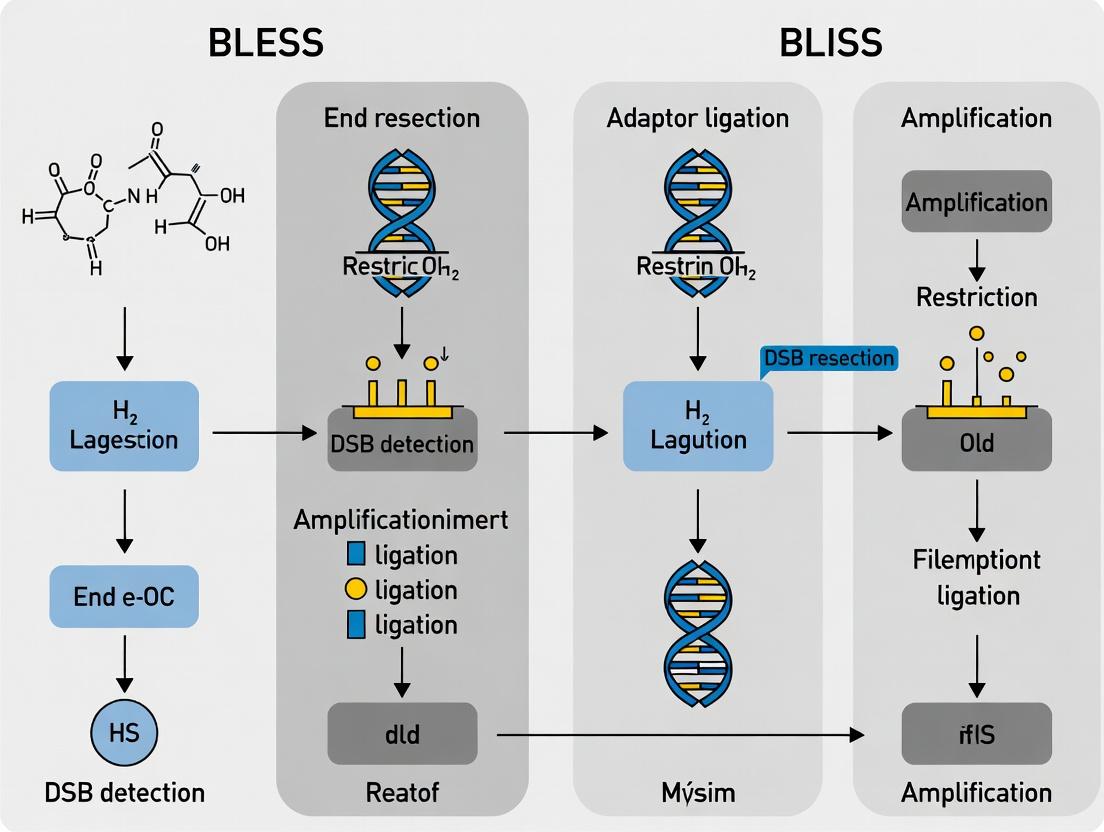
This article provides a detailed resource for researchers and drug development professionals on the BLESS (Direct In Situ Breaks Labeling, Enrichment on Streptavidin, and Next-Generation Sequencing) and BLISS (Breaks Labeling...
BLESS and BLISS: Comprehensive Guide to In Situ DNA Double-Strand Break Detection for Cancer and Genetic Research
Abstract
This article provides a detailed resource for researchers and drug development professionals on the BLESS (Direct In Situ Breaks Labeling, Enrichment on Streptavidin, and Next-Generation Sequencing) and BLISS (Breaks Labeling In Situ and Sequencing) methodologies for detecting DNA double-strand breaks (DSBs). Covering foundational principles, step-by-step protocols, optimization strategies, and comparative validation, it explores their critical applications in genome stability research, genotoxicity screening for drug development, cancer biology, and CRISPR-Cas9 editing validation.
BLESS and BLISS Fundamentals: Understanding In Situ DSB Mapping in Genome Stability
The Critical Role of DNA Double-Strand Breaks in Disease and Genome Editing
DNA double-strand breaks (DSBs) represent one of the most cytotoxic forms of DNA damage. Their accurate repair is essential for genomic integrity. Defective DSB repair underpins numerous human diseases, including cancers, immunodeficiencies, and neurodegenerative disorders. Conversely, the programmable induction of DSBs is the cornerstone of modern genome editing technologies like CRISPR-Cas9. Precise, in situ mapping of DSBs is therefore critical for both disease research and the safe development of editing tools. This application note situates methodologies within the context of advancing BLESS (Breaks Labeling, Enrichment on Streptavidin, and next-generation Sequencing) and BLISS (Breaks Labeling In Situ and Sequencing) for genome-wide and targeted in situ DSB detection.
Table 1: Disease Associations with DSB Repair Deficiencies
| Disease | Affected Gene/Pathway | Primary Consequence | Key Quantitative Finding |
|---|---|---|---|
| Hereditary Breast & Ovarian Cancer | BRCA1, BRCA2 (Homologous Recombination) | Genomic instability, tumorigenesis | ~72% lifetime breast cancer risk in BRCA1 carriers vs. ~13% in general population. |
| Ataxia-Telangiectasia | ATM (DSB Signaling) | Cerebellar degeneration, cancer predisposition | Cells show ~100-fold increase in radiation-induced chromosomal breaks. |
| Severe Combined Immunodeficiency | Artemis, DNA-PKcs (NHEJ) | Failure in V(D)J recombination | >95% reduction in mature T and B cells in patients. |
| Fanconi Anemia | FANC gene cluster (Interstrand Crosslink Repair) | Bone marrow failure, cancer | Cells exhibit ~10-fold increased sensitivity to crosslinking agents like mitomycin C. |
Table 2: Genome Editing Efficiency & Specificity Metrics
| Editing Platform | Typical On-Target Cleavage Efficiency | Reported Off-Target Rate (Method) | Primary Repair Pathway Engaged |
|---|---|---|---|
| CRISPR-Cas9 (RNP) | 40-80% in cultured cells | 0.1% - 5% (BLESS, CIRCLE-seq) | NHEJ-dominated (~60-80%), HDR (~1-20%). |
| Base Editors | 50-90% (without DSB) | Very low (<0.1% with rAPOBEC1) | Does not create a standard DSB. |
| Prime Editors | 20-50% in various cell types | Undetectable by targeted methods | Uses a nick, not a DSB; lower genotoxic risk. |
| TALENs | 10-40% | Often lower than Cas9 (Digenome-seq) | NHEJ-dominated. |
Core Protocols forIn SituDSB Detection
Protocol A: BLISS for Targeted DSB Mapping on Slides
Principle: In situ ligation of adapters to DSB ends followed by on-slide amplification and sequencing.
Materials: Fixed cells on glass slides, T4 DNA Ligase, barcoded adapters, permeabilization buffer (0.5% Triton X-100), rolling circle amplification (RCA) reagents.
Procedure:
- Cell Fixation & Permeabilization: Fix cells with 4% PFA for 10 min. Permeabilize with 0.5% Triton X-100/PBS on ice for 20 min.
- In Situ Ligation: Wash slides with T4 DNA ligase buffer. Apply reaction mix (T4 DNA Ligase, barcoded double-stranded adapters) under a coverslip. Incubate at 25°C for 2 hours.
- Adapter Conversion: Perform on-slide reverse transcription if using an adapter containing an RNA moiety.
- Rolling Circle Amplification: Add Phi29 polymerase and circular DNA template complementary to the adapter. Incubate at 30°C for 90 min to generate amplified concatemers in situ.
- Detection & Sequencing: Hybridize fluorescent probes for imaging or cleave products for library prep and NGS.
Protocol B: BLESS for Genome-Wide DSB Identification
Principle: Ex vivo ligation of biotinylated linkers to DSB ends in fixed, permeabilized nuclei, followed by pull-down and sequencing.
Materials: Dounce homogenizer, biotinylated dsDNA linkers, streptavidin-coated magnetic beads, proteinase K, NGS library prep kit.
Procedure:
- Nuclei Isolation: Lyse cells in ice-cold LB01 buffer (15 mM Tris-HCl, 2 mM Na2EDTA, 0.5 mM spermine, 80 mM KCl, 20 mM NaCl, 0.1% Triton X-100). Pellet nuclei.
- Ex Vivo Ligation: Resuspend nuclei in ligation buffer. Add biotinylated linkers and T4 DNA Ligase. Incubate at 16°C overnight.
- DNA Extraction & Shearing: Digest with proteinase K. Extract genomic DNA. Sonicate to ~300 bp fragments.
- Biotin Pull-Down: Incubate DNA with streptavidin magnetic beads for 45 min. Wash stringently.
- Library Preparation & Sequencing: Elute bound DNA fragments. Prepare NGS library (including PCR amplification). Sequence on an Illumina platform.
- Data Analysis: Map reads to reference genome; DSB sites are identified as genomic coordinates corresponding to linker integration sites.
Visualizing DSB Response & Detection Workflows
DSB Signaling & Repair Pathway Choice
BLISS Experimental Workflow for In Situ DSB Mapping
BLESS Workflow for Genome-Wide DSB Capture
The Scientist's Toolkit: Key Research Reagent Solutions
Table 3: Essential Reagents for DSB Detection & Analysis
| Reagent/Material | Function in DSB Research | Example Application |
|---|---|---|
| Phospho-Histone H2AX (γH2AX) Antibody | Immunofluorescence marker for DSB foci. Gold standard for visualizing DSB response. | Quantifying DSBs after ionizing radiation or CRISPR editing. |
| 53BP1 Antibody | Immunofluorescence marker for DSB foci; often co-localizes with γH2AX. | Studying repair pathway choice (loss indicates resection for HR). |
| Biotinylated dsDNA Linkers | Captures and tags free DSB ends for pull-down and sequencing. | Essential input for BLESS and related genome-wide DSB mapping. |
| T4 DNA Ligase | Ligates adapters/linkers to the ends of DSBs. | Core enzyme for BLESS, BLISS, and LAM-PCR protocols. |
| Streptavidin Magnetic Beads | Efficiently captures biotinylated DNA fragments. | Enrichment step in BLESS and off-target validation methods (e.g., GUIDE-seq). |
| CRISPR-Cas9 RNP Complex | Induces site-specific DSBs for controlled experimental studies. | Generating defined DSBs to validate detection methods or study repair outcomes. |
| Phi29 Polymerase | Used in rolling circle amplification (RCA) for signal amplification. | Key for in situ signal detection in BLISS. |
| NGS Library Prep Kit for Low Input | Enables sequencing of enriched, low-abundance DSB fragments. | Downstream analysis for BLESS, GUIDE-seq, and CIRCLE-seq. |
The detection and mapping of DNA double-strand breaks (DSBs) at high resolution is critical for understanding genome instability, repair mechanisms, and the effects of genotoxic agents. Within the evolving landscape of in situ DSB detection methodologies, BLESS (Direct In Situ Breaks Labeling, Enrichment on Streptavidin, and next-generation Sequencing) and its successor, BLISS (Breaks Labeling In Situ and Sequencing), represent a paradigm shift from indirect, theory-reliant assays to direct, quantitative mapping tools. This application note details the core principles and protocols of BLESS, positioning it within the broader thesis that BLESS/BLISS technologies provide unparalleled accuracy for genome-wide DSB analysis in fixed cells and tissues, directly informing drug development in oncology and beyond.
Core Principles of BLESS
BLESS is a method for direct in situ capture and sequencing of DSBs. Its core principle is the in situ ligation of biotinylated adaptors to the ends of genomic DSBs within fixed nuclei, followed by purification and sequencing. This bypasses the need for cell culture manipulation or ex vivo processing that can introduce artifacts, providing a true snapshot of the genomic breakscape.
Key Advantages:
- Direct Labeling: Labels DSBs in situ within fixed cells/tissues.
- Genome-Wide Mapping: Provides single-nucleotide resolution maps of break sites.
- Low Background: Minimal labeling of nicked DNA or single-strand breaks when optimized.
- Flexibility: Applicable to cell lines, primary cells, and frozen tissue sections.
Table 1: Comparison of Key Metrics in BLESS Applications
| Study Focus | Cell/Tissue Type | Key Inducing Agent | Reported DSB Loci | Sequencing Depth | Primary Validation Method |
|---|---|---|---|---|---|
| Genome-wide DSB mapping | GM12878 lymphoblastoid cells | Etoposide (Topo II inhibitor) | ~20,000 significant peaks | ~50 million reads | γ-H2AX ChIP-seq, FISH |
| Off-target effects of nucleases | HEK293T cells | CRISPR-Cas9 (guided) | Varies by guide (dozens to hundreds) | 20-50 million reads | GUIDE-seq, Digenome-seq |
| Endogenous breaks in neurons | Mouse cortical neurons (fresh frozen) | None (endogenous) | Hundreds of recurrent sites | ~30 million reads | Immunofluorescence (53BP1) |
| Chemotherapeutic agent profiling | Breast cancer cell line (MCF7) | Doxorubicin | Widespread, with specific clustered patterns | 40 million reads | Comet assay, cell viability |
Table 2: Critical Reagent Concentrations for Core BLESS Protocol Steps
| Protocol Step | Reagent | Typical Concentration/Range | Function & Notes |
|---|---|---|---|
| Cell Permeabilization | Digitonin | 0.01-0.05% (w/v) | Creates pores for adapter entry. Concentration is cell-type critical. |
| In Situ Ligation | T4 DNA Ligase | 5-10 U/µL in reaction mix | Catalyzes adapter ligation to DSB ends. Must be high-concentration. |
| Biotinylated Adapter | 1-5 µM | Provides sequencing handle and biotin for pull-down. | |
| Proteinase K Digestion | Proteinase K | 50-100 µg/mL | Digests proteins to extract ligated DNA. Time affects yield. |
| DNA Purification | Streptavidin Beads | 1-5 mg beads per sample | Captures biotinylated DSB fragments. Bead type impacts purity. |
Detailed Experimental Protocols
Protocol 4.1: Standard BLESS for Cultured Adherent Cells
A. Cell Fixation and Permeabilization
- Fixation: Aspirate culture medium. Wash cells once with ice-cold PBS. Add 4% formaldehyde in PBS and incubate for 15 min at room temperature (RT).
- Quenching & Washing: Quench fixation with 125 mM Glycine in PBS for 5 min. Wash twice with PBS.
- Permeabilization: Incubate cells with permeabilization buffer (10 mM Tris-HCl pH 8.0, 100 mM NaCl, 0.01% Digitonin) for 30 min on ice. Critical: Optimize digitonin concentration for each cell line.
B. In Situ Ligation of Adapters
- Prepare ligation master mix: 1x T4 DNA Ligase Buffer, 5 U/µL T4 DNA Ligase, 2 µM biotinylated double-stranded adapter (with a 5'-P and a 3'-dideoxy-C to prevent concatemerization).
- Add mix directly to permeabilized cells. Incubate at 16°C for 18 hours in a humidified chamber.
C. DNA Extraction and Purification
- Proteinase K Digestion: After ligation, wash cells. Add digestion buffer (10 mM Tris-HCl pH 8.0, 100 mM NaCl, 0.1% SDS, 1 mM EDTA) with 100 µg/mL Proteinase K. Incubate at 55°C for 2 hours.
- DNA Recovery: Add RNase A (20 µg/mL), incubate 30 min at 37°C. Purify total DNA using phenol:chloroform:isoamyl alcohol extraction and ethanol precipitation.
- Fragmentation (Optional): If breaks are sparse, shear DNA to ~300 bp using a focused ultrasonicator.
D. Capture of Biotinylated Fragments and Library Prep
- Streptavidin Pull-down: Incubate purified DNA with pre-washed streptavidin-coated magnetic beads for 30 min at RT with rotation.
- Stringent Washes: Wash beads sequentially with: a) 1x B&W buffer (5 mM Tris-HCl pH 7.5, 0.5 mM EDTA, 1M NaCl), b) 1x B&W + 0.1% SDS, c) 10 mM Tris-HCl pH 8.0.
- On-Bead Library Preparation: Perform all subsequent steps (end-repair, A-tailing, sequencing adapter ligation, PCR amplification) directly on the beads using a standard NGS library construction kit. Elute final library in 10-20 µL EB buffer.
Protocol 4.2: BLESS on Frozen Tissue Sections (BLISS adaptation principle)
Note: This integrates principles from the subsequent BLISS method for tissue work.
- Sectioning: Cryosection fresh-frozen tissue (10-20 µm thickness) onto charged slides.
- Fixation & Permeabilization: Post-fix sections in 4% formaldehyde for 10 min. Permeabilize with 0.01% Digitonin as in 4.1.A.3.
- Ligation & Processing: Perform in situ ligation (4.1.B) directly on slides. Scrape tissue off the slide for proteinase K digestion (4.1.C). Follow capture and library prep (4.1.D).
Signaling Pathways and Workflow Visualizations
Diagram 1: Core BLESS experimental workflow.
Diagram 2: BLESS/BLISS in DSB detection research thesis.
The Scientist's Toolkit: Key Research Reagent Solutions
Table 3: Essential Materials for a BLESS Experiment
| Item / Reagent | Function / Role | Critical Notes |
|---|---|---|
| High-Concentration T4 DNA Ligase (e.g., NEB M0202) | Catalyzes the in situ ligation of adapters to DSB ends. | Must be high-concentration to work in permeabilized nuclei. Avoid quick ligase kits. |
| Biotinylated DSB Adapter (custom oligos) | Double-stranded DNA adapter with 5' phosphate, 3' dideoxy block, and internal biotin. | The 3' block prevents concatemerization. HPLC purification is essential. |
| Digitonin (High-Purity) | Non-ionic detergent for cell permeabilization. | Critical reagent. Titration is required for each cell/tissue type. Quality varies by supplier. |
| Streptavidin Magnetic Beads (e.g., MyOne C1) | Solid-phase capture of biotinylated DSB fragments. | MyOne C1 beads offer low non-specific binding. Must be pre-washed thoroughly. |
| Proteinase K (Molecular Grade) | Digests crosslinked proteins to release genomic DNA. | Must be RNA-free and high activity. Incubation time affects fragment recovery. |
| Focus Ultrasonicator (e.g., Covaris) | Shears genomic DNA to uniform size if breaks are sparse. | Not always needed. If used, optimization of shear size (~300 bp) is key. |
| Phenol:Chloroform:Isoamyl Alcohol | Organic extraction to purify DNA after proteinase K digest. | Essential for clean removal of proteins and adapter dimers. |
| Next-Gen Sequencing Kit (for low-input) | Builds sequencing libraries on beads after capture. | Use kits designed for low-input/on-bead library prep (e.g., KAPA HyperPrep). |
The detection and mapping of DNA Double-Strand Breaks (DSBs) in their native cellular and tissue context is paramount for understanding genomic instability, repair mechanisms, and the efficacy of genotoxic therapies. This work is framed within a broader thesis on the evolution of in situ DSB detection methodologies, specifically comparing the foundational BLESS (Breaks Labeling, Enrichment on Streptavidin and next-generation Sequencing) with its direct in situ successor, BLISS. While BLESS provided a powerful bulk sequencing approach, BLISS revolutionizes the field by enabling precise, genome-wide mapping of DSBs within intact cells and tissue sections, preserving crucial spatial information.
Core Principles and Comparative Advantages
BLISS involves the in situ ligation of adapters to DSB ends within fixed cells or tissues on a solid support (e.g., a glass slide), followed by on-slide library preparation, sequencing, and computational mapping. This preserves topological information lost in solution-based methods like BLESS.
Table 1: Quantitative Comparison of BLESS vs. BLISS
| Feature | BLESS (Bulk) | BLISS (In Situ) |
|---|---|---|
| Spatial Resolution | Lost (homogenized sample) | Preserved (single-cell/tissue context) |
| Required Cell Number | High (>1 million) | Low (hundreds to thousands) |
| Input Material | Isolated genomic DNA | Fixed cells/tissue sections |
| Background Noise | Moderate (from random breaks during isolation) | Very Low (minimal manipulation of broken ends) |
| DSB Labeling Efficiency | ~60-70% | >80% (due to direct in situ reaction) |
| Compatibility | Cell cultures | Cell cultures, FFPE tissues, clinical samples |
| Key Limitation | No spatial data, high input requirement | Lower total library complexity per sample |
Detailed BLISS Protocol
Part A: Sample Preparation and DSB Labeling
- Fixation and Permeabilization: Grow cells on a functionalized glass slide or use thin (5-10 µm) FFPE tissue sections. Fix with 4% Formaldehyde for 10 min. Permeabilize with 0.5% Triton X-100 in PBS for 15 min on ice.
- DSB End Repair and dA-Tailing: Perform on-slide using a combination of T4 DNA Polymerase and Klenow Fragment (3'→5' exo-) to create blunt ends, followed by dA-tailing with Taq DNA Polymerase.
- In Situ Adapter Ligation: Incubate slides with a double-stranded adapter mix. The adapter features a 5'-phosphorylated blunt end with a dT-overhang for ligation to the dA-tailed DSB, and a 5' overhang containing a universal primer sequence and a unique molecular identifier (UMI). Use T4 DNA Ligase at room temperature for 2 hours.
- Post-Ligation Wash: Stringently wash to remove unligated adapters.
Part B: On-Slide Library Amplification and Collection
- On-Slide PCR: Add a PCR mix containing a primer complementary to the universal adapter sequence and a polymerase. Perform a limited-cycle PCR (18-22 cycles) directly on the slide.
- Library Harvesting: Pipette the PCR solution from the slide surface. Purify the collected library using standard SPRI beads.
- Indexing PCR & Sequencing: Add sample-specific indices via a second, short PCR. Purify and quantify the final library. Sequence on a high-throughput platform (e.g., Illumina NovaSeq) using paired-end reads.
Visualizing the BLISS Workflow and DSB Repair Context
Diagram Title: BLISS Experimental Workflow from Sample to Data
Diagram Title: BLISS Captures DSBs Prior to Repair Pathway Engagement
The Scientist's Toolkit: Key Reagent Solutions for BLISS
Table 2: Essential Research Reagents for BLISS Experimentation
| Reagent/Material | Function in BLISS Protocol | Critical Notes |
|---|---|---|
| Functionalized Glass Slides | Provides a solid support for in situ reactions; prevents cell loss. | Poly-L-lysine or epoxy-coated slides are commonly used. |
| BLISS Adapter (dsDNA Oligo) | Core reagent for tagging DSB ends. Contains UMI and universal primer sequence. | Must be HPLC-purified. The 3' end has a dT-overhang for ligation to dA-tailed breaks. |
| T4 DNA Ligase | Catalyzes the covalent joining of the BLISS adapter to the repaired DSB end. | High-concentration (e.g., 10 U/µL), buffer-compatible with prior enzymatic steps is essential. |
| T4 DNA Polymerase & Klenow Fragment | Performs in situ end repair to generate blunt ends from damaged or staggered DSB ends. | Critical for standardizing break ends for efficient adapter ligation. |
| Taq DNA Polymerase | Adds a single dA nucleotide to the 3' end of repaired DSBs (dA-tailing). | Creates compatible overhang for ligation with the adapter's dT-overhang. |
| Phusion or Q5 Polymerase | Used for the on-slide and indexing PCRs due to high fidelity and processivity. | Minimizes amplification errors in the final sequencing library. |
| Proteinase K | Digests nuclear proteins in FFPE tissues after ligation to expose DNA for on-slide PCR. | Not required for cultured cells. Optimization of incubation time is key. |
| Unique Molecular Identifiers (UMIs) | Integrated into the adapter sequence; enables bioinformatic removal of PCR duplicates. | Crucial for accurate quantification of unique DSB events, reducing amplification bias. |
Application Notes
- Drug Development: BLISS is instrumental in profiling the off-target effects of CRISPR-Cas9 nucleases and the genomic instability induced by chemotherapeutics (e.g., topoisomerase inhibitors) or novel targeted agents (e.g., PARP inhibitors) within tumor microenvironments.
- Precision Mapping: The technique can identify "hotspots" of endogenous DSBs, such as those at transcription start sites of active genes or fragile genomic sites, with single-base-pair resolution.
- Multiplexing: By incorporating different sample indices during the indexing PCR, libraries from multiple slides or conditions can be pooled for a single sequencing run, significantly reducing cost.
- Integration: BLISS data can be correlated with immunofluorescence (IF) for the same sample, allowing simultaneous mapping of DSBs and visualization of repair protein foci (e.g., γH2AX, 53BP1).
Introduction Within the broader thesis on the evolution of DSB mapping from BLESS to BLISS, a central tenet emerges: in situ detection is paramount. While early methods required DNA extraction, sacrificing spatial context, modern in situ techniques preserve the crucial architecture of the nucleus. This Application Note details why this preservation is a key advantage for understanding genome instability, repair mechanisms, and drug effects, and provides protocols for implementing these insights.
Advantages: In Situ vs. Cleared Lysate Methods The primary advantage of in situ DSB mapping is the retention of spatial and topological information lost in bulk methods. This enables correlation of break locations with nuclear landmarks.
Table 1: Comparative Advantages of In Situ DSB Mapping
| Aspect | In Situ Methods (e.g., BLISS, immuno-FISH) | Cleared Lysate Methods (e.g., BLESS, DSB-Capture) |
|---|---|---|
| Nuclear Architecture | Preserved. DSBs can be correlated with nuclear lamina, nucleoli, and territories. | Destroyed. No spatial information retained. |
| Genomic Topology | Can be integrated with chromatin conformation data (Hi-C) on the same cells. | Inferred indirectly or requires separate experiments. |
| Cell-Type Specificity | Breaks mapped within individual cells, revealing heterogeneity in mixed populations. | Averages break signals across entire cell populations. |
| DSB & Repair Foci | Direct co-localization with repair proteins (γH2AX, 53BP1, RAD51) possible. | Impossible. Protein interactions are inferred from sequence. |
| Low-Abundance Breaks | High sensitivity in single cells; can detect rare, stochastic breaks. | May be masked by background or require deep sequencing. |
| Tissue Context | Can be applied to tissue sections, maintaining native 3D context. | Requires tissue dissociation into single-cell suspensions. |
Application Note: Investigating Topologically Associated Domain (TAD) Boundaries DSBs are non-randomly distributed and frequently occur at open chromatin regions, including TAD boundaries. In situ mapping allows direct investigation of this relationship.
Protocol: BLISS on Adherent Cells for TAD Boundary Analysis Materials: Cells grown on chambered slides, fixation/permeabilization reagents, BLISS adaptors, T4 DNA ligase, indexing primers, NGS library prep kit. Procedure:
- Cell Culture & DSB Induction: Plate cells in 8-well chamber slides. Treat with your agent (e.g., 1 µM Etoposide for 2 hrs). Include untreated controls.
- In Situ Fixation & Processing: Wash with PBS. Fix with 4% PFA for 10 min. Permeabilize with 0.5% Triton X-100 for 15 min.
- In Situ Ligation: Perform end repair and poly(A) tailing on slide. Ligate BLISS adaptors directly to DSB ends in situ using T4 DNA ligase (16°C, overnight).
- Cell Lysis & DNA Collection: Lyse cells in situ with Proteinase K. Collect lysate from each well for pooled processing.
- Library Prep & Sequencing: Amplify adaptor-ligated fragments with indexed primers. Prepare sequencing library following kit protocol. Sequence on a high-throughput platform (e.g., Illumina).
- Data Integration: Map BLISS reads to the reference genome. Overlap BLISS peak coordinates with publicly available Hi-C data (e.g., from ENCODE) for the same cell type to determine co-localization with TAD boundaries.
Visualization: In Situ DSB Mapping Workflow & Data Integration
Diagram 1: In situ DSB mapping and data integration workflow.
The Scientist's Toolkit: Key Reagent Solutions
Table 2: Essential Materials for In Situ DSB Mapping (BLISS-focused)
| Reagent / Solution | Function & Importance |
|---|---|
| BLISS-Specific Adaptors | Double-stranded DNA oligos with a known sequence for ligation to DSB ends. Essential for downstream amplification and NGS. |
| High-Efficiency In Situ Ligase (e.g., T4 DNA Ligase) | Catalyzes the covalent bonding of adaptors to DSB ends within the fixed nuclear environment. Efficiency is critical for sensitivity. |
| Indexed PCR Primers | Contain unique barcodes to allow multiplexing of samples from different conditions or cell types in a single sequencing run. |
| Nuclease-Free Water & Buffers | Prevent spurious DNA degradation or contamination that creates artificial background signal. |
| Poly(A) Tailing Enzyme | Adds a poly(A) homopolymer tail to repaired DSB ends, creating a uniform ligation substrate for the poly(T)-bearing BLISS adaptor. |
| Magnetic Beads for Size Selection | Clean up libraries and select for appropriately sized fragments (e.g., 200-600 bp), removing adapter dimers and very large fragments. |
Protocol: Combined Immunofluorescence-BLISS for Repair Pathway Analysis This protocol allows simultaneous visualization of repair protein foci and sequence-specific mapping of DSBs from the same sample.
Materials: Primary antibodies (γH2AX, 53BP1), fluorescent secondary antibodies, BLISS reagents, mounting medium with DAPI, confocal microscope. Procedure:
- DSB Induction & Fixation: Treat cells on slides. Fix with 4% PFA.
- Immunostaining: Block, then incubate with primary antibody (e.g., mouse anti-γH2AX) overnight at 4°C. Incubate with fluorescent secondary antibody (e.g., Alexa Fluor 488 anti-mouse). Image slides using a confocal microscope to record repair foci locations.
- Post-Imaging BLISS Processing: After imaging, post-fix with 4% PFA for 10 min. Proceed with standard BLISS protocol (permeabilization, end repair, adaptor ligation) starting from Step 3 of the previous protocol.
- Correlative Analysis: Correlate the genomic locations from BLISS sequencing with the spatial positions of intense repair foci from the pre-BLISS images, using nuclear landmarks (DAPI pattern) for alignment.
Visualization: Multi-Omics Integration for DSB Analysis
Diagram 2: Multi-omics integration from in situ DSB mapping.
1. Introduction within the Thesis Context This document serves as a detailed technical annex to a broader thesis investigating the evolution and application of in situ genome-wide DSB mapping techniques, specifically BLESS (Breaks Labeling, Enrichment on Streptavidin, and next-generation Sequencing) and BLISS (Breaks Labeling In Situ and Sequencing). The core capability of these methods hinges on the precise integration of enzymatic reactions, specific oligonucleotide probes, and high-throughput sequencing platforms. This note details these essential components, providing standardized protocols and resource tables to enable robust experimental design.
2. Enzymatic Toolkit for DSB End Processing and Ligation The faithful capture of DSB ends requires enzymatic steps to modify DNA ends for subsequent adapter ligation.
Table 1: Core Enzymes for DSB End Preparation
| Enzyme | Function in BLESS/BLISS | Key Properties & Notes |
|---|---|---|
| DNA Polymerase I, Large (Klenow) Fragment | Fills in 5’-overhangs or digests 3’-overhangs to create blunt ends for ligation. | Preferred over T4 DNA Pol for its lack of single-strand exonuclease activity, preserving DSB ends. |
| T4 DNA Polymerase | Can perform end-blunting. More often used for its 3’→5’ exonuclease activity in specific BLESS variants. | Highly processive. Requires careful control of dNTP concentration to switch between exonuclease and polymerase modes. |
| T4 Polynucleotide Kinase (PNK) | Phosphorylates 5’ ends of DNA breaks for subsequent ligation. Essential for labeling native DSBs. | Often used in a reaction buffer compatible with other enzymes for one-step end repair. |
| Terminal Deoxynucleotidyl Transferase (TdT) | Used in TdT-mediated BLISS to add a homopolymeric tail (e.g., poly-dA) to 3’ ends of DSBs. | Enables in situ tagging without end repair, capturing variable end chemistries. |
| T4 DNA Ligase | Catalyzes the ligation of blunt-ended, double-stranded adapters (BLESS) or in situ adapters (BLISS) to prepared DSB ends. | High-concentration, high-purity ligase is critical for efficient capture of low-abundance breaks. |
Protocol 2.1: Combined End-Repair & Phosphorylation for BLESS Objective: Convert diverse DSB end structures (5’/3’ overhangs, blunt) to 5’-phosphorylated blunt ends. Reagents: Purified genomic DNA with DSBs, T4 DNA Ligase Buffer (with ATP), dNTP mix (10 mM each), Klenow Fragment (5 U/µL), T4 PNK (10 U/µL). Steps:
- Assemble on ice: 1 µg DNA, 10 µL 10X T4 Ligase Buffer, 5 µL dNTP mix (10 mM), 5 µL Klenow Fragment, 5 µL T4 PNK, Nuclease-free H₂O to 100 µL.
- Mix gently and incubate at 20°C for 2 hours.
- Purify DNA using silica-membrane columns (elution in 20 µL EB buffer). Quantify.
3. Probes and Adapters for DSB Capture and Amplification Biotinylated adapters or in situ probes are the molecular hooks that specifically tag DSB sites.
Table 2: Probes and Adapters for DSB Capture
| Component | Structure & Sequence (Example) | Function & Application |
|---|---|---|
| BLESS Biotinylated Adapter | dsDNA oligo: 5’-P-GATCGTCGGACTGTAGAACTCTGAAC-3’ / 5’-BioTEG-GTTCAGAGTTCTACAGTCCGACGATC-3’ | Ligation to blunted DSB ends. Biotin enables streptavidin pull-down. |
| BLISS In Situ Adapter | dsDNA with 5’ overhang: /5Phos/AGATGTGTATAAGAGACAG 3’CTACACATATTCTCTGTC[SpC3]/ | Ligation in situ to DSBs in fixed cells/nuclei. Contains Illumina P5/P7 priming sites for on-bead PCR. |
| BLISS TdT Adapter | Single-stranded: 5’-/5Phos/AGATGTGTATAAGAGACAG-NNNNN-dT-TTTA-3’ | Contains a poly-dT sequence for hybridization to poly-dA tails added by TdT to DSB ends. |
Protocol 3.1: In Situ Ligation for BLISS Objective: Ligate BLISS adapters directly to DSB ends in fixed, permeabilized cells immobilized on a glass surface. Reagents: Fixed cells on coverslip, Permeabilization Buffer (0.5% Triton X-100), T4 DNA Ligase (30 U/µL), BLISS adapters (1 µM), PEG 4000. Steps:
- Permeabilize cells in 0.5% Triton X-100 for 30 min on ice. Wash 3x with PBS.
- Prepare ligation master mix on ice: 66 µL Nuclease-free H₂O, 10 µL 10X T4 Ligase Buffer, 20 µL 50% PEG 4000, 2 µL BLISS Adapter (1 µM), 2 µL T4 DNA Ligase.
- Apply 100 µL mix directly onto the cells on the coverslip. Incubate in a humidified chamber at 16°C for 16-20 hours.
- Carefully wash 3x with PBS containing 0.1% Tween-20.
4. Sequencing Platforms and Data Yield Considerations The choice of sequencer impacts resolution, cost, and experiment scale.
Table 3: Sequencing Platform Comparison for DSB Mapping Studies
| Platform (Example) | Read Configuration | Ideal Application for DSB Mapping | Approximate Yield per Run | Key Consideration |
|---|---|---|---|---|
| Illumina NextSeq 2000 | P3 Flow Cell: 2x 100 bp | Genome-wide DSB mapping (BLESS) from multiple samples. | Up to 1.2B reads | High throughput enables multiplexing of many conditions. |
| Illumina MiSeq | 2x 300 bp | Method validation, pilot studies, or focused panels. | Up to 25M reads | Lower throughput but faster turnaround; suitable for BLISS on limited targets. |
| NovaSeq X Plus | 25B Flow Cell: 2x 150 bp | Ultra-deep, population-scale DSB mapping studies. | Up to 52B reads | Unmatched depth for detecting very rare breaks or large sample cohorts. |
| Oxford Nanopore PromethION | Long-read (≥10 kb) | Mapping DSBs in the context of complex structural variations or repetitive regions. | Varies (N50 > 20 kb) | Lower per-base accuracy but provides long-range linkage information. |
5. The Scientist's Toolkit: Research Reagent Solutions Table 4: Essential Materials for DSB Detection Experiments
| Item | Function | Example/Supplier Note |
|---|---|---|
| Streptavidin C1 Magnetic Beads | Capture biotinylated DNA fragments in BLESS. | Thermo Fisher Scientific, Dynabeads. High binding capacity essential. |
| PEG 4000 (50%) | Macromolecular crowding agent to enhance in situ ligation efficiency in BLISS. | Critical for effective ligation in fixed chromatin. |
| Dynabeads MyOne Streptavidin T1 | In situ capture of biotinylated BLISS products after on-bead PCR. | Small size ideal for in situ applications. |
| Phusion U Green Multiplex PCR Master Mix | High-fidelity amplification of adapter-ligated DSB fragments. | Hot-start, high-processivity polymerase minimizes artifacts. |
| NEBNext Ultra II FS DNA Library Prep Kit | Optional library preparation from BLESS-pulled DNA; integrates fragmentation & adapter ligation. | For BLESS variants requiring post-capture library construction. |
| Protease Inhibitor Cocktail (EDTA-free) | Preserve protein-DNA complexes during in situ steps of BLISS. | Prevent endogenous nuclease/protease activity. |
6. Visualization of Experimental Workflows
Diagram 1: BLESS Core Experimental Workflow (86 chars)
Diagram 2: BLESS vs BLISS Method Paradigm Comparison (88 chars)
Diagram 3: Enzymatic Pathways for DSB End Labeling (88 chars)
Step-by-Step Protocol: From Cell Preparation to Sequencing Library for BLESS/BLISS
This protocol provides a framework for designing experiments utilizing BLESS (Direct in situ Breaks Labeling, Enrichment on Streptavidin, and next-generation Sequencing) and BLISS (Breaks Labeling In Situ and Sequencing) for genome-wide mapping of DNA Double-Strand Breaks (DSBs). The selection of appropriate cellular models, rigorous controls, and DSB-induction agents is critical for generating reproducible, biologically relevant data on genomic instability, DNA repair dynamics, and drug mechanisms of action.
Core Considerations for Experimental Design
Selecting Cell Types
The choice of cell type directly impacts the biological relevance of detected DSB landscapes.
| Cell Type Category | Example Systems | Key Research Applications | Considerations for BLESS/BLISS |
|---|---|---|---|
| Immortalized Cell Lines | HeLa, HEK293, U2OS, MCF-10A | General DSB biology, high-throughput drug screening, protocol optimization. | Easy to culture, high DNA yield, well-characterized genomes. May have aberrant repair pathways. |
| Primary Cells | Human fibroblasts, PBMCs, epithelial organoids | Physiological DSB mapping, aging, environmental exposure studies. | More physiologically relevant. Limited lifespan, donor variability, lower DNA yield. |
| Stem Cells | Embryonic Stem Cells (ESCs), induced Pluripotent Stem Cells (iPSCs) | Developmental biology, differentiation-associated DNA damage, disease modeling. | Sensitive to culture conditions. DSB landscapes may reflect pluripotency state. |
| Cancer Cell Lines | HCT116, A549, BT-474, patient-derived organoids | Oncology drug development (PARPi, topoisomerase inhibitors), synthetic lethality, repair deficiencies. | Often have repair defects (e.g., BRCA1/2 mut). High basal DSB levels possible. |
| Differentiated/Tissues | Neurons (post-mitotic), cardiomyocytes, in situ tissue sections | Tissue-specific DSB accumulation, neurogeneration, in vivo studies. | Challenging for BLESS (requires nuclei isolation). BLISS is ideal for fixed tissue sections. |
Selecting DSB-Induction Agents
Agents are used to induce controlled DSBs for studying repair kinetics or agent-specific break signatures.
| Induction Agent Class | Specific Agents | Primary Mechanism of DSB Induction | Typical Experimental Use (Concentration, Duration) | Appropriate Controls |
|---|---|---|---|---|
| Ionizing Radiation (IR) | X-rays, Gamma-rays | Direct ionization causing clustered DNA lesions and direct DSBs. | 1-10 Gy, harvest 15 min - 24 hr post-IR. | Sham-irradiated cells (0 Gy). |
| Radiomimetics | Bleomycin, Neocarzinostatin | Free radical generation causing oxidized abasic sites leading to DSBs. | Bleomycin: 10-100 µg/mL, 1-2 hr. | Vehicle control (e.g., PBS). |
| Topoisomerase II Poisons | Etoposide, Doxorubicin | Stabilize TOP2-DNA cleavage complexes, converting them into permanent DSBs. | Etoposide: 10-100 µM, 1-4 hr. Wash-out for repair kinetics. | DMSO vehicle control. |
| Site-Specific Nucleases | CRISPR-Cas9, TALENs, Meganucleases | Create precise, sequence-specific DSBs at targeted genomic loci. | Transfection/transduction of nuclease, harvest 24-72 hr. | Empty vector or GFP-only control. |
| Chemotherapeutic Agents | Calicheamicin, PARP inhibitors (in BRCA-deficient cells) | Direct DNA cleavage or induction of replication-associated DSBs. | Agent-specific. PARPi: Olaparib 1-10 µM, 24 hr. | Matched genetic background without treatment. |
Designing Critical Controls
Robust controls are mandatory for accurate DSB identification and quantification.
| Control Type | Description | Purpose | Protocol Implementation |
|---|---|---|---|
| Negative (No DSB) Control | Cells not exposed to any DSB-inducing agent. | Defines baseline "noise," identifies endogenous DSB hotspots (e.g., fragile sites). | Process in parallel with treated samples. Use same cell number and fixation. |
| Technical (No Enzyme) Control | Sample processed without the key labeling enzyme (e.g., T4 DNA Ligase for BLESS, Klenow for BLISS). | Controls for non-ligation background and assay artifacts. | Split sample post-fixation, omit ligation step, proceed with sequencing. |
| Positive Control | Cells treated with a well-characterized DSB inducer (e.g., 10 Gy IR, 50 µM Etoposide). | Validates the entire experimental and protocol workflow. | Include in every experiment as a technical benchmark. |
| Genomic Input Control | Sequencing of non-enriched, sonicated genomic DNA. | Normalizes for sequencing bias and copy number variation. | Extract DNA in parallel from an aliquot of fixed cells. |
| Inhibition/Repair Control | Pre-treatment with DNA repair inhibitor (e.g., ATM/ATR inhibitor) prior to DSB induction. | Assesses repair dynamics and confirms DSB origin. | Treat cells with inhibitor 1 hr before DSB agent. |
Detailed Protocol: Integrated BLISS Workflow for Drug Screening
Application: Screening for DSB-inducing potential of novel chemotherapeutic agents in cancer cell lines.
Part A: Cell Preparation and Treatment
- Seed Cells: Plate appropriate cancer cell line (e.g., HCT116) in 6-well plates at 300,000 cells/well. Culture for 24 hr.
- Apply Treatments (in triplicate):
- Test Compound: Apply novel agent at three concentrations (e.g., 0.1x, 1x, 10x IC50). Incubate for 4 hr.
- Positive Control: 50 µM Etoposide (in DMSO) for 4 hr.
- Negative Control: 0.1% DMSO (vehicle) for 4 hr.
- "No Enzyme" Control: One well of negative control cells set aside.
- Fixation: Aspirate medium. Wash with PBS. Add 2 mL of 4% formaldehyde in PBS. Incubate 10 min at RT. Quench with 125 mM Glycine in PBS for 5 min. Wash 2x with PBS. Cells can be stored in PBS at 4°C for up to 1 week.
Part B: BLISS-on-Substrate Procedure
(Adapted from Yan et al., Nat Protoc 2017)
- Prepare Adhesive Slides: Coat clean glass slides with poly-lysine solution for 20 min. Air dry.
- Nuclei Extraction & Attachment: Lyse cells on plate with Lysis Buffer (10 mM Tris-HCl pH 7.5, 10 mM NaCl, 3 mM MgCl2, 0.1% IGEPAL) for 10 min on ice. Scrape nuclei and transfer to poly-lysine slide. Let settle and adhere for 20 min.
- In Situ Blunt-Ending: Prepare Blunting Mix: 1X NEBuffer 2.1, 100 µM dNTPs, 0.1 U/µL T4 DNA Polymerase. Apply 50 µL/sample under a coverslip. Incubate 1 hr at 20°C in a humid chamber.
- Adapter Ligation: Prepare Ligation Mix: 1X Quick Ligase Buffer, 0.25 µM BLISS adapter (with overhang and biotin), 0.25 U/µL Quick T4 DNA Ligase. Apply to slides. Incubate 2 hr at RT. (For "No Enzyme" control, use mix without ligase).
- DNA Extraction & Purification: Proteinase K digest (2 hr, 55°C). Recover DNA by ethanol precipitation.
- Pull-Down & Library Prep: Streptavidin bead-based capture of biotinylated fragments. Perform on-bead library amplification (15-18 PCR cycles) with indexed primers.
- Sequencing: Pool libraries. Sequence on Illumina platform (PE 75bp recommended).
Part C: Data Analysis Essentials
- Alignment: Map reads to reference genome (hg38) using Bowtie2/BWA, allowing only perfectly matching adapter sequences.
- Peak Calling: Use dedicated tools (e.g., BLISSeeker) to identify significant DSB hotspots versus input and "no enzyme" controls (FDR < 0.05).
- Quantification: Normalize DSB signal as reads per million per peak or count peaks per megabase per sample.
Diagrams
Diagram 1: Experimental Design Decision Workflow
Diagram 2: Agent Mechanisms Converge on DSB Detection
The Scientist's Toolkit: Key Reagents & Materials
| Category | Item/Reagent | Function in BLESS/BLISS | Example Vendor/Product |
|---|---|---|---|
| Core Enzymes | T4 DNA Polymerase (for BLESS) | Generates blunt ends from DSB termini for adapter ligation. | NEB, M0203. |
| Klenow Fragment (exo-) (for BLISS) | Performs in situ blunt-ending of DSB ends. | NEB, M0212. | |
| T4 DNA Ligase (Quick) | Ligates biotinylated adapters to blunted DSB ends. | NEB, M2200. | |
| Critical Reagents | BLISS/BLESS Adapters (Biotinylated) | Double-stranded DNA adapters with biotin for pull-down and sequencing primer sites. | Custom synthesis (IDT). |
| Streptavidin Magnetic Beads | Captures biotinylated adapter-linked DSB fragments. | Thermo Fisher, Dynabeads MyOne C1. | |
| Proteinase K | Digests cross-linked proteins to release DNA after in situ reactions. | Qiagen, 19131. | |
| Sequencing | High-Fidelity PCR Master Mix | Amplifies captured DNA fragments for sequencing library generation. | NEB, Q5 Master Mix. |
| Indexed PCR Primers | Adds unique sample indices and full sequencing adapters. | Custom synthesis. | |
| Specialized Kits | BLISS Kit (Commercial) | Optimized, standardized reagent set for BLISS workflow. | Diagenode, C01020031. |
| DNA Clean-up Kits (AMPure XP) | Size selection and purification of sequencing libraries. | Beckman Coulter, A63881. |
The accurate detection and mapping of DNA double-strand breaks (DSBs) using techniques like BLESS (Breaks Labeling, Enrichment on Streptavidin, and next-generation Sequencing) and its in situ counterpart BLISS (Breaks Labeling In Situ and Sequencing) is fundamentally dependent on initial sample preparation. The primary goal is to preserve nuclear architecture and genomic integrity at the moment of fixation, preventing the introduction of artifactual breaks and ensuring the faithful in situ labeling of genuine DSBs.
Core Principles for Nuclear Integrity Preservation
Effective fixation for in situ DSB labeling must achieve two objectives:
- Instantaneous Stabilization: Halting all enzymatic activity (e.g., nucleases, repair kinases) to "freeze" the DSB landscape.
- Structural Preservation: Maintaining the 3D organization of chromatin and nuclear bodies to allow probe access and accurate spatial localization. Key challenges include avoiding acid depurination, mechanical shearing, and apoptosis-induced fragmentation during processing.
Quantitative Comparison of Fixation Methods for DSB Studies
Table 1: Performance Metrics of Common Fixatives for In Situ DSB Labeling
| Fixative Type / Agent | DSB Preservation (Artifact Level) | Nuclear Morphology Integrity | Permeability for In Situ Labeling | Typical Incubation Time | Compatibility with BLISS |
|---|---|---|---|---|---|
| Crosslinking (Formaldehyde) | High (Low artifacts) | Excellent | Moderate (requires permeabilization) | 10-20 min at RT | High (Standard) |
| Pre-fixation: Cytoskeletal Buffer | Very High (Very Low) | Good (Extracted cytoplasm) | High | 10 min on ice | Recommended pre-step |
| Organic Solvent (Methanol/Acetone) | Moderate (Can induce artifacts) | Poor (Shrinkage/Deformation) | High | 10 min at -20°C | Low (Not recommended) |
| Glyoxal-based Fixatives | High (Low artifacts) | Good | Moderate | 30 min at RT | Moderate (Requires validation) |
Table 2: Impact of Sample Handling on DSB Artifact Generation
| Handling Parameter | High-Artifact Protocol | Low-Artifact (Recommended) Protocol | Measured Increase in Background Signal* |
|---|---|---|---|
| Tissue Ischemia Time | >30 min at 37°C | <5 min, cold dissection | Up to 15-fold |
| Cell Dissociation | Trypsin, 37°C | Gentle mechanical, cold | 8-12 fold |
| Fixation Delay | Wash in PBS, delay >10 min | Direct immersion in fixative | 5-7 fold |
| Fixation Temperature | 37°C | 4°C or Room Temperature (22°C) | 3-4 fold |
*Representative data from γH2AX foci counts in control, non-irradiated samples.
Detailed Protocols for BLISS-Compatible Sample Preparation
Protocol 4.1: Preparation and Fixation of Adherent Cells for BLISS
Objective: To preserve in situ DSBs in cultured cells for subsequent BLISS library preparation on a slide.
Materials: See "The Scientist's Toolkit" below.
Method:
- Pre-fixation Stabilization: Aspirate culture medium. Gently rinse cells once with 5 mL of ice-cold Cytoskeletal (CSK) Buffer.
- Extraction: Add 3 mL of ice-cold CSK buffer with 0.1% Triton X-100. Incubate on ice for 10 minutes to remove soluble cytoplasmic components, reducing background.
- Primary Fixation: Aspirate CSK buffer. Immediately add 4% formaldehyde in 1x PBS (pre-warmed to room temperature). Incubate for 15 minutes at room temperature without shaking.
- Quenching & Washing: Aspirate fixative. Quench unreacted formaldehyde with 5 mL of 125 mM glycine in PBS for 5 min. Wash twice with 5 mL of 1x PBS.
- Permeabilization for Labeling: Permeabilize cells with 0.5% Triton X-100 in PBS for 15 minutes at room temperature. Wash twice with PBS.
- Storage: Store fixed cell plates at 4°C in PBS with 0.02% sodium azide for up to 1 week. For BLISS, proceed to in situ blunt-end ligation.
Protocol 4.2: Perfusion Fixation of Rodent Tissue for BLISS
Objective: To achieve instantaneous fixation of whole organs, minimizing ischemia-induced DSB artifacts.
Method:
- Anesthesia & Setup: Deeply anesthetize the rodent. Open the thoracic cavity. Insert a perfusion cannula into the left ventricle. Create an outflow by incising the right atrium.
- Vascular Flush: Perfuse with 50-100 mL of ice-cold 1x PBS containing 10 U/mL heparin at a slow, steady pressure until the liver and lungs blanch.
- Primary Fixation: Switch to perfuse with 150-200 mL of 4% formaldehyde in PBS. Successful fixation is indicated by whole-body stiffening.
- Dissection & Post-fixation: Extract the organ of interest and place it in fresh 4% formaldehyde. Post-fix for 90 minutes at 4°C with gentle agitation.
- Washing & Sectioning: Rinse tissue three times in cold PBS (1 hour each). Embed in optimal cutting temperature (OCT) compound or paraffin. Section tissues at 2-5 μm thickness onto charged slides.
- Slide Storage: Store slides at -80°C for long-term preservation of DSB signals.
Visualizing the Workflow and Key Pathways
Title: Workflow for Sample Fixation for In Situ DSB Labeling
Title: Key Pathway: DSB Signaling and Fixation Goal
The Scientist's Toolkit: Research Reagent Solutions
Table 3: Essential Materials for Nuclear-Preserving Fixation
| Item / Reagent | Function in DSB Sample Prep | Key Consideration for BLISS/BLESS |
|---|---|---|
| Formaldehyde (4%, Molecular Biology Grade) | Primary crosslinker; preserves protein-DNA interactions and nuclear structure. | Must be fresh or freshly prepared from paraformaldehyde to prevent formic acid-induced breaks. |
| Cytoskeletal (CSK) Buffer | Pre-fixation buffer to extract soluble proteins, reducing background and improving probe accessibility. | Must contain protease and phosphatase inhibitors (e.g., NaF, β-glycerophosphate). |
| Protease/Phosphatase Inhibitor Cocktails | Halts enzymatic activity during harvest, preventing DSB repair or modification post-harvest. | Critical during the pre-fixation and initial fixation steps. |
| Heparinized Perfusion Saline | Anticoagulant for vascular flush during perfusion fixation of tissues. | Prevents clot formation, ensuring even and rapid fixative delivery. |
| Triton X-100 or Digitonin | Detergent for permeabilizing lipid membranes after fixation. | Concentration and time must be optimized to allow adapter entry without damaging nuclei. |
| Glycine (125 mM in PBS) | Quenches unreacted formaldehyde, stopping the crosslinking reaction. | Prevents over-fixation, which can mask DSB ends and hinder in situ ligation. |
| Charged Microscope Slides (e.g., Superfrost Plus) | For tissue section or cell adherence during in situ processing. | Prevents sample loss during stringent BLISS washing and ligation steps. |
| Optimal Cutting Temperature (OCT) Compound | Embedding medium for frozen tissue sectioning. | Must be carefully removed with PBS washes to prevent interference with enzymatic steps. |
Within the broader thesis investigating the in-situ detection of DNA Double-Strand Breaks (DSBs) using BLESS (Direct in situ Breaks Labeling, Enrichment on Streptavidin, and next-generation Sequencing) and BLISS (Breaks Labeling In Situ and Sequencing), the efficiency of the initial labeling reaction is the critical determinant of success. This application note details optimized protocols for the end-ligation and biotinylated adapter integration step, which directly captures DSB ends, converting them into sequencing-compatible, biotin-tagged libraries within fixed cells or tissues. Optimizing this step minimizes background and maximizes signal-to-noise ratio for downstream sequencing and mapping of DSB loci.
Key Reagent Solutions & Materials
Table 1: Essential Research Reagent Solutions for End-Ligation Labeling
| Reagent/Material | Function in BLESS/BLISS Protocol |
|---|---|
| Biotinylated dsDNA Adapters | Short, double-stranded DNA linkers with a 5' or 3' biotin tag and compatible overhangs (e.g., T-overhang for A-tailed DSB ends). Serves as the molecular bridge for DSB capture and streptavidin-based enrichment. |
| High-Efficiency T4 DNA Ligase | Catalyzes the phosphodiester bond formation between the 3'-OH of the DSB end and the 5'-phosphate of the adapter. A highly concentrated, rapid ligase is preferred for in-situ contexts. |
| Recombinant T4 DNA Polymerase | Used in BLESS for end-polishing (blunting) of DSB ends prior to adapter ligation, ensuring uniform ligation compatibility. |
| Klenow Fragment (exo-) | Used in BLISS for A-tailing of blunted DSB ends to create a complementary overhang for T-tailed biotinylated adapters. |
| Streptavidin-Coated Magnetic Beads | Solid-phase support for the stringent purification and enrichment of biotin-tagged DSB-adapter complexes away from non-ligated background DNA. |
| Mild Crosslinking Reagents (e.g., DSG) | Used in BLISS prior to fixation to stabilize protein-DNA complexes, preserving the in-situ context of DSB ends. |
| Proteinase K | Digests histones and other proteins crosslinked to DNA after labeling, enabling the release of the ligated adapter-DNA complexes for extraction. |
| Nondenaturing Detergents (e.g., Triton X-100) | Permeabilizes nuclear membranes for reagent access while maintaining native DNA structure during in-situ reactions. |
Optimized Protocols
Protocol A: BLESS-Based End-Ligation for Isolated Nuclei
This protocol is optimized for fixed nuclei, focusing on end-polishing and direct blunt-end ligation.
- Sample Preparation: Isolate nuclei from formaldehyde-fixed cells/tissues. Permeabilize with 0.5% Triton X-100 in PBS for 30 min on ice.
- End Polishing: Incubate nuclei in 1X T4 DNA Polymerase Buffer with 0.1 U/µL recombinant T4 DNA Polymerase and 100 µM dNTPs for 1 hour at 20°C. Terminate with 5 mM EDTA.
- Ligation Reaction: Wash nuclei. Resuspend in ligation mix: 1X T4 DNA Ligase Buffer, 5% PEG-4000, 0.5 µM biotinylated blunt-end adapter, and 20 U/µL high-concentration T4 DNA Ligase. Incubate 16 hours at 16°C.
- Reversal & Purification: Digest with Proteinase K (50 µg/mL) at 65°C for 2 hours. Purify DNA via Phenol:Chloroform extraction. Precipitate with ethanol.
- Enrichment: Bind biotinylated DNA to streptavidin magnetic beads (10 µL beads per 1 µg DNA) in high-salt buffer (1 M NaCl) for 15 min at RT. Wash 3x with 0.1% SDS, 1X SSC buffer. Elute in 50 µL of 10 mM Tris-HCl, pH 8.0 at 95°C for 5 min.
Protocol B: BLISS-Optimized In-Situ Ligation in Cells/Tissue Sections
This protocol is optimized for intact cellular architecture, utilizing A-tailing and T-overhang adapter ligation.
- In-Situ Fixation & Permeabilization: Fix adherent cells or tissue sections with 4% PFA for 10 min. Permeabilize with 0.5% Triton X-100 for 20 min.
- End Repair & A-Tailing: Treat samples with a combined mix containing 1X NEBuffer 2, 100 µM dNTPs, 5 U/µL Klenow Fragment (exo-) for end repair and immediate A-tailing. Incubate 1 hour at 37°C. Inactivate at 75°C for 20 min.
- Adapter Ligation: Apply ligation mix directly to the sample: 1X T4 DNA Ligase Buffer, 10% PEG-6000, 1 µM biotinylated dA-tailed adapter (with 3’ or 5’ biotin), and 30 U/µL T4 DNA Ligase. Incubate in a humidified chamber for 2 hours at RT, then 16 hours at 16°C.
- Post-Ligation Processing: Wash extensively. Digest with Proteinase K (100 µg/mL) at 56°C overnight.
- DNA Recovery & Bead Capture: Collect lysate. Perform magnetic bead capture as in Protocol A, Step 5, using increased stringency washes (0.5% SDS, 0.5X SSC at 65°C).
Quantitative Optimization Data
Table 2: Comparative Analysis of Ligation Efficiency Parameters
| Parameter | Protocol A (BLESS-style) | Protocol B (BLISS-style) | Optimized Recommendation |
|---|---|---|---|
| Ligation Time | 16 hrs | 2 hrs (RT) + 16 hrs (16°C) | >12 hrs total; O/N at 16°C is critical. |
| Polymerase/Ligase Concentration | T4 Pol: 0.1 U/µL; Ligase: 20 U/µL | Klenow: 5 U/µL; Ligase: 30 U/µL | Use high-concentration, "rapid" ligase (≥20 U/µL). |
| PEG-4000/6000 Concentration | 5% | 10% | 10% PEG-6000 significantly boosts in-situ ligation yield. |
| Adapter Concentration | 0.5 µM | 1.0 µM | Titrate from 0.5 to 2.0 µM; >1 µM often needed for in-situ. |
| Key Wash Stringency | 0.1% SDS, 1X SSC | 0.5% SDS, 0.5X SSC at 65°C | Hot, SDS-containing washes are vital for low background in BLISS. |
| Estimated Capture Efficiency | 60-75% (from purified DNA) | 40-60% (in-situ context) | In-situ efficiency is lower; technical replicates are essential. |
Visualized Workflows & Pathways
Diagram 1: BLESS and BLISS End-Ligation Workflow Comparison
Diagram 2: Molecular Steps of End Processing and Adapter Ligation
Within the broader thesis on in situ mapping of DNA Double-Strand Breaks (DSBs) via BLESS (Breaks Labeling, Enrichment on Streptavidin, and next-generation Sequencing) and BLISS (Breaks Labeling In Situ and Sequencing), the step of extracting and enriching biotin-tagged DSB fragments is critical. This protocol details the transition from in situ-labeled nuclei or cells to a purified, sequencing-ready library of DSB ends. Efficient pull-down ensures minimal background and high signal-to-noise ratio, enabling precise genomic localization of DSBs in response to genotoxic agents, during physiological processes, or in drug development screens.
Key Research Reagent Solutions (Scientist's Toolkit)
| Reagent/Material | Function in Protocol |
|---|---|
| Streptavidin-Coated Magnetic Beads | High-affinity capture of biotinylated DSB ends. Paramagnetic properties allow for easy washing and elution. |
| Pronase or Proteinase K | Digests proteins and crosslinks after in situ fixation, liberating DNA fragments for extraction. |
| RNase A | Eliminates RNA that could co-purify and interfere with downstream library preparation. |
| Magnetic Separation Rack | Enables efficient bead immobilization for supernatant removal and buffer changes. |
| 5M NaCl | Adjusts ionic strength to optimize binding of biotinylated DNA to streptavidin beads. |
| Biotin Elution Buffer (10mM Biotin) | Competes with bead-bound biotinylated DNA for streptavidin binding sites, enabling specific elution. |
| DNA Clean-up Beads (SPRI) | Size-selective purification of eluted DNA fragments, removing short oligos and contaminants. |
| High-Sensitivity DNA Assay Kit | Quantifies low-concentration, purified DSB fragments prior to library amplification. |
Detailed Experimental Protocol
DNA Extraction fromIn SituLabeled Material
- Input: Cells or nuclei fixed and processed through BLESS/BLISS in situ labeling steps (biotin-dNTP fill-in or ligation).
- Pronase/Proteinase K Digestion: Resuspend labeled material in 500 µL digestion buffer (10 mM Tris-HCl pH 8.0, 100 mM NaCl, 1 mM EDTA, 0.5% SDS) with 1 µL Pronase (10 U/µL) or 20 µL Proteinase K (20 mg/mL). Incubate at 37°C (Pronase) or 55°C (Proteinase K) for 2 hours with gentle agitation.
- RNase A Treatment: Add 5 µL RNase A (10 mg/mL). Incubate at 37°C for 30 minutes.
- DNA Precipitation: Add 500 µL phenol:chloroform:isoamyl alcohol (25:24:1), vortex, centrifuge at 13,000 x g for 5 min. Transfer aqueous phase, add 50 µL 3M NaOAc (pH 5.5) and 1 mL 100% ethanol. Precipitate at -20°C overnight or -80°C for 1 hour. Pellet DNA (13,000 x g, 30 min, 4°C), wash with 70% ethanol, air-dry, and resuspend in 50 µL TE buffer (10 mM Tris-HCl, 0.1 mM EDTA, pH 8.0).
Biotin-Enrichment (Pull-Down) of DSB Fragments
- Bead Preparation: Wash 100 µL of streptavidin magnetic beads twice with 1x BW Buffer (5 mM Tris-HCl pH 7.5, 0.5 mM EDTA, 1M NaCl, 0.05% Tween-20). Resuspend in 100 µL of 2x BW Buffer.
- DNA Binding: Mix 50 µL of extracted DNA with 100 µL of prepared beads. Incubate at room temperature for 30 minutes with gentle rotation.
- Washing: Immobilize beads on a magnetic rack. Discard supernatant. Perform sequential washes:
- 200 µL 1x BW Buffer, 5 min rotation.
- 200 µL Wash Buffer I (10 mM Tris-HCl pH 7.5, 0.1% SDS, 1% Triton X-100, 1 mM EDTA, 200 mM NaCl), 5 min rotation.
- 200 µL Wash Buffer II (10 mM Tris-HCl pH 7.5, 1% Triton X-100, 1 mM EDTA, 500 mM NaCl), 5 min rotation.
- 200 µL Wash Buffer III (10 mM Tris-HCl pH 7.5, 1 mM EDTA, 250 mM LiCl), 5 min rotation.
- Two quick washes with 200 µL TE buffer.
- Elution: Resuspend beads in 50 µL Elution Buffer (10 mM Tris-HCl pH 7.5, 1 mM EDTA, 10 mM Biotin). Incubate at 65°C for 15 min with frequent vortexing. Place on magnet and transfer supernatant (eluted DNA) to a fresh tube.
- Clean-up: Purify eluted DNA using SPRI beads at a 1.8x ratio. Elute in 20 µL TE buffer. Quantify using a high-sensitivity assay.
Table 1: Typical Yield and Enrichment Metrics for DSB Pull-Down
| Parameter | Typical Value/Range | Notes |
|---|---|---|
| Input DNA | 1-5 µg | Total genomic DNA from labeled cells. |
| Recovered DNA after Pull-Down | 5-50 ng | Highly variable based on DSB burden. |
| Enrichment Fold-Change | 100- to 1000-fold | Compared to non-biotinylated control regions by qPCR. |
| Bead Binding Efficiency | >95% | For pure biotinylated oligonucleotides. |
| Optimal Fragment Size | 200-500 bp | Includes biotinylated DSB end + surrounding genomic DNA. |
| Final Library Concentration | 2-10 nM | Required for successful sequencing. |
Table 2: Troubleshooting Common Issues
| Problem | Potential Cause | Solution |
|---|---|---|
| Low Yield | Incomplete proteinase digestion | Increase enzyme amount or incubation time. |
| High Background | Insufficient washing | Increase salt concentration in washes; add extra wash steps. |
| No Enrichment | Biotin label failure | Verify in situ labeling efficiency (e.g., with fluorescent streptavidin). |
| Bead Loss | Aggregation during washing | Include Tween-20; avoid drying; resuspend thoroughly. |
Visualization of Workflows
DSB Fragment Pull-Down Workflow
Molecular Basis of Biotin-Based DSB Capture
Library Preparation and High-Throughput Sequencing Strategies
This protocol details the sequencing library generation strategies essential for downstream analysis of DNA double-strand breaks (DSBs) identified via in situ methods like BLESS and BLISS. The fidelity of these genome-wide DSB maps is contingent on precise, high-throughput sequencing library construction that captures and amplifies break-ended DNA fragments with minimal bias. This document provides Application Notes and detailed Protocols for next-generation sequencing (NGS) library preparation from BLESS/BLISS-derived material, framed for scalability and compatibility with modern sequencers.
Application Notes: Critical Considerations for DSB-Seq Libraries
- Adapter Design: Adapters must be compatible with the specific overhangs or blunt ends generated by the BLESS/BLISS protocol. For BLISS, which often uses in situ ligation of adapters, ensuring adapter survival through the harsh in situ conditions is paramount.
- Amplification Bias: The limited input material (often picograms) from in situ assays requires PCR amplification. The choice of polymerase and cycle number is critical to minimize amplification bias and duplicate reads.
- Complexity vs. Depth: A balance must be struck between sequencing depth and library complexity. High PCR cycles increase yield but reduce complexity, potentially obscuring rare DSB events.
- Indexing Strategy: For drug development screens, multiplexing with unique dual indexes (UDIs) is mandatory to allow pooling of samples from different treatment conditions while preventing index hopping errors.
Protocol: High-Throughput Sequencing Library Preparation from BLISS-Processed Samples
I. End Repair and A-Tailing (For Blunt-End Ligation)
- Input: Purified genomic DNA following in situ adapter ligation (BLISS) or biotinylated tag capture (BLESS).
- Reagent Mix:
- DNA: 50-100 ng (in 32 µL H₂O)
- T4 DNA Ligase Buffer (10X): 5 µL
- dNTP Mix (10 mM): 0.5 µL
- T4 DNA Polymerase (3 U/µL): 1 µL
- Klenow Fragment (5 U/µL): 1 µL
- T4 PNK (10 U/µL): 1.5 µL
- Procedure: Incubate at 20°C for 30 minutes. Purify using 1.8X SPRIselect beads. Elute in 23 µL EB buffer.
- A-Tailing: Add 3 µL of Klenow exo- (5 U/µL) and 3 µL of dATP (1 mM). Incubate at 37°C for 30 min. Purify with 1.8X beads. Elute in 15 µL.
II. Adapter Ligation
- Adapter: Use double-stranded, pre-annealed Y-shaped adapters with a T-overhang (compatible with A-tailed DNA) and appropriate index sequences.
- Reagent Mix:
- DNA from Step I: 15 µL
- Ligation Buffer (2X): 25 µL
- T4 DNA Ligase (600 U/µL): 5 µL
- Diluted Adapter (15 µM): 5 µL
- Procedure: Incubate at 20°C for 15 minutes. Stop with 2.5 µL of 0.5M EDTA. Purify with 0.8X beads to remove excess adapter, then 0.8X beads again (size selection). Elute in 22 µL.
III. Library Amplification & Size Selection
- PCR Mix:
- Ligated DNA: 22 µL
- Universal PCR Primer (15 µM): 2.5 µL
- Index PCR Primer (15 µM): 2.5 µL
- High-Fidelity PCR Master Mix (2X): 25 µL
- Thermocycling:
- 98°C for 30 sec
- 12-15 cycles: 98°C for 10 sec, 65°C for 30 sec, 72°C for 30 sec
- 72°C for 5 min
- Hold at 4°C.
- Purification: Purify PCR product with 1X SPRIselect beads. Perform a double-sided size selection (e.g., 0.6X followed by 0.8X bead ratios) to isolate fragments in the 200-500 bp range. Elute in 30 µL EB buffer.
IV. Quality Control & Sequencing
- QC: Assess library concentration via Qubit dsDNA HS Assay. Evaluate size distribution and integrity using a High-Sensitivity DNA Bioanalyzer/TapeStation chip.
- Sequencing: Pool indexed libraries equimolarly. Sequence on an Illumina NovaSeq 6000 platform using a 75-150 bp paired-end run to ensure sufficient coverage for break site mapping.
Diagrams
BLISS to NGS Library Workflow
Adapter Design for DSB Seq Libraries
Table 1: Recommended QC Metrics for DSB Sequencing Libraries
| Parameter | Optimal Range | Measurement Tool | Impact of Deviation |
|---|---|---|---|
| DNA Concentration | > 2 nM for pooling | Qubit dsDNA HS Assay | Low conc. leads to failed sequencing. |
| Fragment Size | Peak ~300 bp | Bioanalyzer HS DNA Chip | Off-target size reduces cluster density. |
| Adapter Dimer | < 5% of total peak area | Bioanalyzer HS DNA Chip | Consumes sequencing cycles; reduces useful data. |
| Library Complexity | > 80% non-duplicate reads | Sequencing Duplication Rate | High duplication indicates low input/PCR bias. |
| Cluster Density | 180-220 K/mm² (NovaSeq) | Sequencing Platform Report | Outside range reduces data quality/yield. |
Table 2: Comparison of Polymerases for Low-Input Library Amplification
| Polymerase | Error Rate (per bp) | Recommended Input | Advantage for DSB Libs | Disadvantage |
|---|---|---|---|---|
| Standard Taq | ~1.1 x 10⁻⁴ | > 10 ng | Robust, inexpensive | High error rate, prone to bias. |
| Phusion High-Fidelity | ~4.4 x 10⁻⁷ | > 1 ng | Very high fidelity | Low processivity on complex templates. |
| KAPA HiFi HotStart | ~2.8 x 10⁻⁷ | 100 pg - 1 ng | Excellent fidelity & yield from low input | Higher cost. |
| Q5 Hot Start | ~2.8 x 10⁻⁷ | > 1 ng | Extremely high fidelity | Lower tolerance to inhibitors. |
The Scientist's Toolkit: Research Reagent Solutions
| Item | Function in DSB Seq Library Prep | Example Product/Supplier |
|---|---|---|
| SPRIselect Beads | Size-selective purification and cleanup of DNA fragments; critical for removing adapters dimers and selecting optimal insert size. | Beckman Coulter SPRIselect |
| High-Fidelity PCR Master Mix | Amplifies library with minimal errors and bias, essential for maintaining sequence accuracy from low-input DSB fragments. | KAPA HiFi HotStart ReadyMix, NEB Next Ultra II Q5 |
| Y-Shaped Indexed Adapters | Provides flow cell binding sequences, unique dual indexes for multiplexing, and the appropriate overhang for ligation to processed DSB ends. | IDT for Illumina UDI Adapters, NEB Unique Dual Index Adapters |
| T4 DNA Ligase Buffer (with ATP) | Essential for both end-repair and adapter ligation steps; provides cofactors for enzymatic activity. | NEB T4 DNA Ligase Buffer (10X) |
| High-Sensitivity DNA Assay Kits | Accurate quantification and size profiling of low-concentration, precious libraries prior to sequencing. | Agilent High Sensitivity DNA Kit, Thermo Fisher Qubit dsDNA HS Assay |
Application Notes
In Situ DSB Detection in Genotoxicity Testing
Genotoxicity testing is a cornerstone of drug and chemical safety assessment. Traditional assays (e.g., Ames test, comet assay) provide bulk, often indirect, measurements of DNA damage. BLESS (Direct in situ Breaks Labeling, Enrichment on Streptavidin, and next-generation Sequencing) and BLISS (Breaks Labeling In Situ and Sequencing) enable genome-wide, nucleotide-resolution mapping of DNA double-strand breaks (DSBs) induced by genotoxic agents. Within the thesis context, these methods shift the paradigm from population-averaged, low-resolution data to precise, single-cell landscape analysis of break sites. This allows for the identification of genomic fragile regions, assessment of clastogen-specific break signatures, and evaluation of repair kinetics in heterogeneous cell populations, offering superior predictive power for in vivo outcomes.
Recent Data Summary (2023-2024):
Table 1: Comparison of Genotoxicity Testing Approaches
| Assay | Resolution | Throughput | Primary Endpoint | Key Advantage of BLESS/BLISS |
|---|---|---|---|---|
| Comet Assay | Single-cell, no genomic locus data | Medium | % DNA in tail (general damage) | Identifies exact genomic break sites; no false positives from alkali-labile sites. |
| γ-H2AX Foci | Single-cell, no genomic locus data | Low | Foci count per cell (DSBs) | Direct, covalent labeling of DSB ends; quantitative mapping independent of repair protein recruitment. |
| BLESS/BLISS | Nucleotide, genome-wide | High (seq-based) | Precise DSB coordinates & frequency | Unbiased, genome-wide catalog of breaks from any clastogen; enables mechanistic insight. |
Unraveling Cancer Genomics
Cancer genomes are characterized by structural variations (SVs) and chromosomal instability, often initiated by erroneous repair of DSBs. BLISS has been adapted for fixed patient tissue sections and rare cell populations, making it directly applicable to cancer research. The thesis explores using in situ DSB mapping to: (1) Identify endogenous "breakome" patterns in untreated cancer cells, revealing intrinsic genomic instability; (2) Map breaks induced by chemotherapeutics (e.g., topoisomerase inhibitors) and radiation in tumor models to understand therapeutic efficacy and resistance mechanisms; and (3) Characterize translocations and complex rearrangements at their point of origin.
Recent Data Summary:
Table 2: BLISS Application in Cancer Genomics Studies
| Study Focus | Sample Type | Key Finding | Thesis Relevance |
|---|---|---|---|
| Chemotherapy-Induced Breaks | Ovarian cancer cell lines treated with PARPi | Distinct, replicative-stress associated break patterns in BRCA1-deficient vs. wild-type cells. | Validates BLISS for mechanism-of-action studies of targeted therapies. |
| Radiation Break Signatures | Glioblastoma stem-like cells | Identified ~500 persistent "unhealed" DSB loci post-IR correlating with radiosensitivity. | Supports investigation of repair heterogeneity within tumors. |
| Liquid Biopsy Correlation | CTCs from metastatic breast cancer | High DSB burden in CTCs correlated with specific oncogene amplifications. | Demonstrates feasibility for minimal residual disease monitoring. |
CRISPR-Cas9 Off-Target Analysis
Identifying unintended, off-target DSBs is critical for therapeutic applications of CRISPR-Cas9. Cell-free methods (e.g., CIRCLE-seq) lack cellular context, while in silico prediction is incomplete. BLISS and BLESS, performed in fixed, edited cells, provide an unbiased, empirical map of Cas9-induced breaks, capturing the influence of chromatin state, nuclear localization, and cell cycle. The thesis positions these methods as the gold-standard validation tool, offering a complete workflow from guide design to off-target verification in relevant cell types.
Recent Data Summary:
Table 3: Off-Target Detection Method Comparison
| Method | Detection Principle | Context | False Negative Risk |
|---|---|---|---|
| BLESS/BLISS | Direct ligation of adapters to DSB ends in situ | Intact, fixed cells/nuclei | Low. Labels all accessible DSBs. |
| GUIDE-seq | Integration of dsODN into DSBs in living cells | Requires dsODN delivery; may not work in all cells. | Medium. Depends on ODN integration efficiency. |
| Digenome-seq | In vitro cleavage of genomic DNA | Cell-free; lacks chromatin context. | High. Misses chromatin-influenced sites. |
| VIVO | In vitro cleavage with recombinant Cas9 | Uses purified genomic DNA. | High. Misses cellular determinants. |
Detailed Protocols
BLISS Protocol for Genotoxicity Testing in Adherent Cells
Objective: To map DSBs induced by a genotoxic compound (e.g., Etoposide) in a monolayer cell culture.
Materials: See "The Scientist's Toolkit" below.
Method:
- Treatment & Fixation: Treat cells with the genotoxic agent (e.g., 25 µM Etoposide, 2 hrs). Prepare a vehicle control. Immediately wash cells with cold PBS and fix with 4% PFA for 10 min at RT. Quench with 125 mM Glycine.
- Permeabilization & In Situ Ligation: Permeabilize cells with 0.5% Triton X-100 in PBS for 30 min on ice. Perform in situ ligation in a humidity chamber using T4 DNA Ligase and a double-stranded adapter containing a biotin moiety and a T7 promoter sequence (Adapter Sequence: 5'-[Phos]NNNNNAGTGATGC…[Biotin]-3') for 2 hrs at 25°C.
- Streptavidin Binding & Imaging (Optional): Incubate with fluorescently labeled Streptavidin (1:500) for 1 hr to visualize global break foci via microscopy.
- Cell Lysis & DNA Extraction: Lyse cells in situ with Proteinase K/SDS buffer overnight at 65°C. Extract DNA with Phenol:Chloroform:Isoamyl Alcohol and precipitate with ethanol.
- Fragmentation & Size Selection: Sonicate DNA to ~300 bp. Perform size selection using SPRI beads to retain fragments >150 bp.
- Streptavidin Pulldown: Bind biotinylated DNA fragments to Streptavidin-coated magnetic beads for 30 min at RT. Wash stringently.
- On-Bead Linear Amplification: Using T7 RNA Polymerase, perform in vitro transcription directly on the beads for 14 hrs at 37°C to generate RNA copies of the DSB fragments.
- Library Preparation & Sequencing: Reverse transcribe the RNA into cDNA, tagment with Nextera transposase, amplify with indexing primers (8-12 cycles), and sequence on an Illumina platform (PE 2x150 bp recommended).
- Data Analysis: Align reads to the reference genome. DSB sites are defined as the genomic coordinates corresponding to the 5' end of the adapter ligation site. Use peak-calling algorithms (e.g., MACS2) to identify significant break loci.
BLESS-based Protocol for Off-Target Validation in CRISPR-edited Cells
Objective: To empirically identify off-target DSB sites of a specific sgRNA in a polyclonal cell population after transfection.
Method:
- Cell Transfection & Fixation: Transfect cells with a ribonucleoprotein (RNP) complex of purified Cas9 and target-specific sgRNA. Include a catalytically dead Cas9 (dCas9) RNP control. At 24-48 hrs post-transfection, wash and fix cells as in 2.1.
- Nuclear Extraction & Ligation: Lyse cytoplasm with 0.5% NP-40 to isolate intact nuclei. Perform DSB end ligation with biotinylated adapters (as in 2.1) on the purified nuclei pellet.
- Genomic DNA Isolation & Shearing: Purify genomic DNA from the nuclei. Mechanically shear DNA (e.g., using a Covaris sonicator) to ~500 bp.
- Biotinylated Fragment Capture: Bind sheared DNA to Streptavidin beads overnight at 4°C with rotation. Wash extensively.
- On-Bead Library Prep (Nextera): While DNA is bound to beads, perform tagmentation using the Nextera DNA Flex Library Prep Kit, adapting the protocol for on-bead reactions. Amplify the library directly from the beads.
- Sequencing & Analysis: Sequence the library. Align reads and call peaks. Compare the experimental (Cas9-sgRNA) sample to the dCas9 control. Significant peaks in the experimental sample, excluding the intended on-target site, are candidate off-target loci. Validate top candidates by amplicon sequencing.
Visualizations
Diagram 1: BLISS workflow for genotoxicity testing.
Diagram 2: CRISPR off-target analysis pipeline.
The Scientist's Toolkit
Table 4: Essential Research Reagent Solutions
| Item | Function/Benefit | Example/Catalog Note |
|---|---|---|
| Biotinylated dsDNA Adapter (with T7 promoter) | Covalently ligates to DSB ends in situ; provides handle for capture and amplification. | Custom synthesized, 5' phosphate required, HPLC purified. Critical for specificity. |
| T4 DNA Ligase (High-Concentration) | Catalyzes the ligation of adapter to DSB ends in fixed, permeabilized cells/nuclei. | Use high-concentration (e.g., 2 U/µL) to drive reaction in suboptimal in situ conditions. |
| Streptavidin Magnetic Beads (MyOne C1) | High-binding capacity beads for efficient capture of biotinylated DNA fragments. | Thermo Fisher MyOne Streptavidin C1 beads are a standard. |
| T7 RNA Polymerase (High-Yield) | Performs on-bead in vitro transcription (IVT) for linear amplification of captured fragments. | Use kits or enzymes optimized for high-yield RNA synthesis from linear templates. |
| Nextera DNA Flex Library Prep Kit | Enables efficient library construction directly on beads post-capture or after IVT/cDNA synthesis. | Adapted protocol required for on-bead tagmentation. |
| Proteinase K (Molecular Grade) | Complete digestion of proteins and nucleases post-fixation for high-quality DNA extraction. | Required for efficient reversal of crosslinks and recovery of DNA. |
| Anti-Biotin Antibody (for IF) | Alternative to fluorescent streptavidin for immunofluorescence detection of labeled breaks. | Can offer lower background in some cell types for initial quality control imaging. |
Optimizing BLESS and BLISS: Solving Common Pitfalls for High-Sensitivity Detection
Within the broader thesis on advancing in situ DNA Double-Strand Break (DSB) detection methodologies, specifically BLESS (Direct in situ Breaks Labeling, Enrichment on Streptavidin, and next-generation Sequencing) and BLISS (Breaks Labeling in situ and Sequencing), achieving a high signal-to-noise ratio (SNR) is paramount. The core challenge lies in the specific labeling of genuine DSBs against a backdrop of nonspecific background signals and methodological artifacts (false positives). This Application Note details systematic troubleshooting protocols to enhance SNR, thereby increasing the reliability and quantitative power of DSB mapping data for fundamental research and genotoxic drug development.
The table below categorizes major sources of noise in BLESS/BLISS protocols and their characteristics.
Table 1: Common Sources of Noise in in situ DSB Detection Assays
| Source Category | Specific Cause | Manifestation | Impact on SNR |
|---|---|---|---|
| Sample Preparation | Mechanical DNA shearing during handling | Diffuse, random signal pattern | High Background |
| Incomplete cell lysis/permeabilization | Weak or inconsistent genuine signal | Low True Signal | |
| Residual RNA contamination | Nonspecific oligonucleotide binding | High Background | |
| Enzymatic & Labeling | Non-specific activity of DNA Pol I (Klenow) or TdT | Incorporation at nicks, gaps, or RNA | False Positives |
| Imperfect biotin- or amine-modified nucleotide purity | Background fluorescence/streptavidin binding | High Background | |
| Incomplete blunt-ending/repair prior to labeling | Inconsistent adapter ligation | Low True Signal | |
| Ligation & Amplification | Ligation of adapters to non-DSB ends (e.g., hairpins) | Sequenceable artifacts | False Positives |
| PCR amplification bias or over-amplification | Duplicate reads, uneven coverage | Increased Variance | |
| Detection | Non-specific binding of streptavidin-conjugates or antibodies | Punctate signal in negative controls | High Background |
| Autofluorescence of cells/tissue | Broad spectrum background | High Background |
Detailed Troubleshooting Protocols
Protocol 3.1: Optimization of Cell Permeabilization and Wash Stringency
Objective: To maximize access to DSBs while minimizing nonspecific probe retention. Reagents: PBS, Digitonin (0.01-0.1%), Triton X-100 (0.1-0.5%), Tween-20 (0.1%), BSA (1%), Recombinant Albumin.
- Fixation: Use fresh, buffered paraformaldehyde (2-4%, 10 min RT). Avoid over-fixation.
- Permeabilization Titration: Test a gradient of digitonin (e.g., 0.01%, 0.03%, 0.05%, 0.1% in PBS) for 10 min on ice. For tougher cells/nuclei, follow with a brief Triton X-100 treatment (0.1%, 5 min).
- Stringent Washes: After labeling steps, perform washes with high-salt buffers (e.g., 2x SSC with 0.1% SDS, 1x SSC, then 0.1x SSC). Increase temperature to 55°C for one wash step if compatible with sample integrity.
- Blocking: Use 2-5% BSA or recombinant albumin in wash buffer for 1 hour prior to detection steps. Consider adding salmon sperm DNA (0.1 mg/mL) to block nonspecific DNA binding sites.
Protocol 3.2: Reduction of Enzymatic False Positives
Objective: To ensure labeling is specific to DSB ends, not nicks or RNA.
- RNase Treatment: Before labeling, treat permeabilized samples with RNase A (100 µg/mL) and RNase H (5 U/mL) in appropriate buffer for 1h at 37°C.
- Enzyme Selection & Control:
- For BLESS (blunt-end labeling), use high-fidelity DNA Polymerase I, Klenow fragment. Include a "-Enzyme" negative control.
- For BLISS (end-tailing), use Terminal deoxynucleotidyl Transferase (TdT). Include a "-dNTP" control (enzyme present, no modified nucleotide).
- Reaction Optimization: Use the minimum effective enzyme concentration and reaction time. Supplement buffers with betaine (1M) or DMSO (2-5%) to reduce secondary structure artifacts.
- Post-Labeling Purification: Use size-selective magnetic beads (e.g., SPRI beads) to remove unincorporated nucleotides and short, nonspecific products after the labeling reaction in situ.
Protocol 3.3: Specific Adapter Ligation and Background Reduction in BLESS
Objective: To ligate adapters exclusively to properly prepared DSB ends.
- End Repair/Polishing: After permeabilization, treat samples with a dedicated end-repair enzyme mix (T4 PNK, T4 DNA Pol) to ensure all DSB ends are ligation-competent 5'-P and blunt.
- Adapter Design: Use double-stranded DNA adapters with a 5'-adenylation (adenylated adapter) to prevent adapter concatemerization. Include unique molecular identifiers (UMIs) to later collapse PCR duplicates.
- Ligation Control: Set up a "-Ligase" control to identify signal from non-ligated adapter binding.
- Stringent Post-Ligation Washes: Wash with EDTA-containing buffer (5-10 mM) to chelate Mg2+ and inactivate residual ligase, followed by high-salt washes.
Visualization of Workflows and Problem Points
Diagram 1: DSB Detection Workflow with Noise and Control Points (760px max)
Diagram 2: Molecular Specificity Pathways in DSB Labeling (760px max)
The Scientist's Toolkit: Research Reagent Solutions
Table 2: Essential Reagents for High SNR BLESS/BLISS Experiments
| Reagent Category | Specific Item/Product Example | Function & Critical Note for SNR |
|---|---|---|
| Fixation & Permeabilization | Ultrapure Paraformaldehyde (16%, ampoule) | Consistent, clean fixation. Filter before use. |
| Digitonin (High Purity) | Creates precise pores in nuclear membrane. Titrate for each cell type. | |
| Nucleic Acid Handling | RNase A (DNase-free), RNase H | Eliminates RNA that causes nonspecific binding of probes/adapters. |
| Duplex-Specific Nuclease (DSN) | Can be used to degrade abundant, common sequences post-labeling to reduce background in sequencing. | |
| Enzymes for Labeling | Klenow Fragment (exo-), High Concentration | For BLESS. exo- prevents removal of modified nucleotides. Use high purity. |
| Terminal Deoxynucleotidyl Transferase (TdT), Recombinant | For BLISS. Ensure lot-to-lot consistency for tailing efficiency. | |
| Modified Nucleotides | Biotin-14-dATP (or dCTP) | For BLESS microscopy. HPLC-purified to reduce free biotin contamination. |
| Aminoallyl-dUTP (AA-dUTP) | For BLISS. Allows subsequent chemical conjugation of sequencing adapters. | |
| Ligation | T4 DNA Ligase (High Concentration) | Efficient blunt-end ligation. |
| Pre-adenylated Adapters | Prevents adapter concatemerization, a major source of false-positive ligation events. | |
| Detection & Capture | Streptavidin, Alexa Fluor 647 Conjugate | For microscopy detection. Use at low concentration (e.g., 0.5 µg/mL) with stringent washes. |
| Streptavidin-Coated Magnetic Beads (MyOne C1) | For pull-down prior to sequencing. Low nonspecific binding is critical. | |
| Blocking Agents | Recombinant Albumin (Protease-free) | Superior to BSA for reducing nonspecific protein binding, lot-to-lot consistency. |
| Sheared Salmon Sperm DNA | Blocks nonspecific DNA binding sites on enzymes and surfaces. | |
| Purification | Size-Selective SPRI Beads | Clean up reactions in solution to remove unincorporated nucleotides and short fragments. |
Accurate detection of DNA Double-Strand Breaks (DSBs) via in situ methodologies, such as BLESS (Direct In Situ Breaks Labeling, Ligation, and Sequencing) and BLISS (Breaks Labeling In Situ and Sequencing), hinges on the precise balance between preserving nuclear architecture and granting sufficient reagent accessibility to DNA lesions. This application note details optimized fixation and permeabilization protocols, framed within a broader thesis that robust DSB mapping requires meticulous sample preparation to minimize artifacts and maximize signal fidelity for downstream analysis in drug development and basic research.
Table 1: Impact of Fixation Methods on Key Parameters for BLESS/BLISS
| Parameter | Formaldehyde (4%, 10 min) | Methanol:Acetic Acid (3:1) | Paraformaldehyde (4%) + 0.1% Glutaraldehyde |
|---|---|---|---|
| Nuclear Architecture Preservation | High (Score: 8/10) | Moderate (Score: 6/10) | Very High (Score: 9/10) |
| Protein Cross-linking | Moderate, reversible | Low, precipitating | High, extensive |
| DNA Accessibility | High (Score: 8/10) | Very High (Score: 9/10) | Reduced (Score: 5/10) |
| Suitability for Ligation | Excellent | Good (may require rehydration) | Poor (over-fixed) |
| Recommended for BLESS/BLISS | Primary Choice | Alternative for high AT-content regions | Not recommended for standard protocol |
Table 2: Permeabilization Agent Comparison
| Agent & Concentration | Mechanism | Incubation Time | Effect on Nuclear Membrane | Risk of DNA Loss |
|---|---|---|---|---|
| Triton X-100 (0.5%) | Solubilizes lipids | 15-20 min (RT) | Complete | Low-Moderate |
| NP-40 (0.25%) | Mild detergent | 10-15 min (4°C) | Complete | Low |
| Digitonin (0.01%) | Cholesterol-specific | 10 min (4°C) | Selective pores | Very Low |
| Saponin (0.1%) | Cholesterol-specific | 15 min (RT) | Selective pores | Very Low |
| Methanol (100%, ice-cold) | Precipitates & permeabilizes | 10 min (-20°C) | Complete | High (requires fixation prior) |
Detailed Experimental Protocols
Protocol 3.1: Optimized Fixation for Adherent Cells (BLESS/BLISS)
Objective: To cross-link proteins and preserve DNA in situ while maintaining accessibility for ligation enzymes.
- Culture cells on appropriate treated glass coverslips or chamber slides.
- Induce DSBs (e.g., via drug treatment or irradiation) as per experimental design. Include untreated controls.
- Aspirate media and wash cells gently with 1x PBS, pH 7.4 (pre-warmed to 37°C).
- Fix immediately with 4% formaldehyde (from paraformaldehyde) in 1x PBS for 10 minutes at room temperature (RT).
- Quench fixation by adding glycine to a final concentration of 0.125 M for 5 minutes.
- Wash 3x with 1x PBS for 5 minutes each.
- Proceed to permeabilization (Protocol 3.2) or store samples in 70% ethanol at -20°C for up to 1 week.
Protocol 3.2: Titrated Permeabilization for Balanced Accessibility
Objective: To create pores allowing entry of ligation adaptors without causing DNA leaching or structural collapse. A. Standard Detergent-Based Permeabilization: 1. Incubate fixed cells (from Protocol 3.1) in permeabilization buffer (0.5% Triton X-100, 1x PBS) for 15 minutes at RT on a rocking platform. 2. Wash 2x with 1x PBS for 5 minutes. 3. Test efficiency by performing a pilot ligation reaction with fluorescent adaptors and checking nuclear signal vs. background.
B. Enzymatic Digestion for Challenging Samples: * Follow detergent permeabilization with a brief incubation in 0.1-1 µg/mL Proteinase K in 1x PBS for 1-3 minutes at RT. * Critical: Immediately stop reaction by washing 2x with 1x PBS containing 2 mM PMSF. * This step can enhance accessibility in densely packed heterochromatin regions.
Protocol 3.3: In Situ Ligation & Detection (Core BLESS/BLISS Step)
Objective: To label DSB ends with biotinylated or sequencing-compatible adaptors.
- Prepare Ligation Master Mix: T4 DNA Ligase Buffer (1x), 0.5 U/µL T4 DNA Ligase, 50-100 nM double-stranded biotinylated adaptors (compatible with BLESS) or BLISS adaptors.
- Apply mix directly to permeabilized samples on a coverslip. Seal within a humidity chamber.
- Incubate at 16°C for 2-16 hours (optimize for your system).
- Stop reaction by washing 3x with 1x PBS + 0.1% Tween-20.
- Detect biotinylated ends using streptavidin-conjugated fluorophores for microscopy or streptavidin beads for pull-down in BLESS. For BLISS, proceed to on-slide amplification and sequencing.
Visualizations
The Scientist's Toolkit: Research Reagent Solutions
Table 3: Essential Reagents for Fixation & Permeabilization in BLESS/BLISS
| Reagent | Function in Protocol | Key Consideration for DSB Detection |
|---|---|---|
| Paraformaldehyde (PFA), 4% in PBS | Primary fixative. Creates reversible protein-protein and protein-DNA cross-links. | Use fresh or freshly thawed aliquots. Avoid methanol-free formaldehyde stabilizers that can acidify. |
| Triton X-100 or NP-40 Detergent | Non-ionic surfactant for permeabilizing lipid bilayers after fixation. | Concentration and time are critical. Too harsh can extract nuclear components. |
| Digitonin | Cholesterol-binding detergent for gentle, plasma membrane-specific permeabilization. | Ideal for preserving organelle integrity when studying nuclear-cytoplasmic shuttling related to DSBs. |
| Proteinase K | Serine protease. Used sparingly to digest proteins blocking DNA access. | Requires stringent optimization. Over-digestion destroys architecture and creates false-positive DSB signals. |
| T4 DNA Ligase & Buffer | Catalyzes the ligation of blunt-ended or cohesive-ended adaptors to DSB ends. | Must be high-concentration, high-purity. Buffer components can affect nuclear integrity post-permeabilization. |
| Biotinylated Adaptor Oligos | Short double-stranded DNA with a biotin tag for ligation to DSB ends (BLESS). | HPLC-purified. Design should minimize self-ligation and consider overhang compatibility with induced break ends. |
| Streptavidin, Fluorescent Conjugate | Binds biotin for microscopic detection of labeled DSBs. | Use high signal-to-noise ratio conjugates (e.g., Alexa Fluor). Titrate to reduce non-specific background. |
Within the context of a thesis investigating genome-wide in situ Double-Strand Break (DSB) detection via BLESS and BLISS methodologies, a paramount challenge is the accurate attribution of observed DSBs to specific enzymatic or chemical sources. Non-specific DNA damage from reactive oxygen species (ROS) or off-target kinase activity can confound results. This document provides detailed application notes and protocols for implementing critical pharmacological controls—specifically, enzyme-kinase inhibitors and ROS scavengers—to validate the specificity of DSB induction in experimental systems.
The Necessity of Specificity Controls in BLESS/BLISS
BLESS (Direct in situ Breaks Labeling, Enrichment on Streptavidin, and next-generation Sequencing) and BLISS (Breaks Labeling in situ and Sequencing) are powerful for mapping DSBs at nucleotide resolution. When studying DSBs induced by targeted nucleases (e.g., Cas9), chemotherapeutic agents (e.g., topoisomerase inhibitors), or physiological processes (e.g., activation-induced cytidine deaminase, AID), it is essential to discriminate true signal from background noise. The use of specific inhibitors and scavengers serves as a critical negative control, confirming that the observed breakome profile is directly linked to the intended target.
Core Reagent Solutions & Mechanisms
Table 1: Research Reagent Solutions for Specificity Validation
| Reagent Category | Specific Example(s) | Primary Target/Function | Role in DSB Detection Control |
|---|---|---|---|
| Topoisomerase II Inhibitor | Etoposide, Teniposide | Stabilizes Topo II-DNA cleavage complex, inducing DSBs. | Positive control for DSB induction. Inhibition via catalytic inhibitor (e.g., ICRF-193) blocks etoposide-induced breaks. |
| ROS Scavenger | N-Acetylcysteine (NAC), Tempol, Catalase-PEG | Quenches reactive oxygen species (•OH, H₂O₂). | Reduces background DSBs from oxidative stress; validates that break signal is not ROS-mediated. |
| DNA-PKcs Inhibitor | NU7441, AZD7648 | Inhibits DNA-dependent protein kinase catalytic subunit. | Confirms DSBs repaired via NHEJ; used to accumulate DSBs for easier detection. |
| ATM/ATR Inhibitor | KU-55933 (ATM), VE-822 (ATR) | Inhibits PI3K-related kinases central to DSB signaling. | Perturbs repair and alters break dynamics; helps link break presence to specific signaling pathways. |
| AID/APOBEC Inhibitor | (Research Compounds) e.g., C7 | Inhibits activation-induced deaminase. | In B-cell studies, confirms DSBs during class switch recombination are AID-dependent. |
| General Nuclease Inhibitor | EDTA, EGTA | Chelates Mg²⁺/Ca²⁺, essential for many nuclease activities. | Negative control to inhibit metal-dependent endonucleases. |
Table 2: Exemplar Quantitative Impact of Inhibitors/Scavengers on DSB Counts in a Model Study Data are illustrative, based on simulated outcomes from a hypothetical BLISS experiment on etoposide-treated cells.
| Experimental Condition | Mean DSB Count per Genome (BLISS) | % Change vs. Positive Control | p-value (vs. Positive Control) | Interpretation |
|---|---|---|---|---|
| Vehicle Control (DMSO) | 150 ± 20 | Baseline | - | Background break level. |
| Etoposide (50 µM, 2h) | 1850 ± 210 | +1133% | <0.001 | Positive control: high DSB induction. |
| Etoposide + ICRF-193 (Topo II Catalytic Inhibitor, 10 µM) | 400 ± 45 | -78% vs. Etoposide | <0.001 | Confirms specificity of etoposide-induced breaks. |
| Etoposide + NAC (ROS Scavenger, 5 mM) | 1700 ± 190 | -8% vs. Etoposide | 0.12 | Minor reduction, suggesting breaks are not primarily ROS-mediated. |
| Hydrogen Peroxide (1 mM, 1h) | 950 ± 110 | +533% vs. Baseline | <0.001 | Oxidative stress-induced breaks. |
| H₂O₂ + NAC (5 mM) | 250 ± 30 | -74% vs. H₂O₂ | <0.001 | Confirms ROS-dependent breaks are scavengeable. |
Detailed Experimental Protocols
Protocol 1: Validating Topoisomerase II Inhibitor Specificity with a Catalytic Inhibitor
Objective: To confirm that DSBs detected by BLISS/BLESS after etoposide treatment are specifically due to Topo II poisoning. Materials: Cell culture, Etoposide (stock: 50 mM in DMSO), ICRF-193 (stock: 10 mM in DMSO), DMSO, BLISS/BLESS kit components. Procedure:
- Cell Seeding & Treatment:
- Seed cells in 4-6 replicates per condition in appropriate culture dishes.
- Pre-treat one set with 10 µM ICRF-193 for 1 hour.
- Add 50 µM etoposide (or DMSO vehicle) to designated wells and incubate for 2 hours. Maintain ICRF-193 co-treatment where applicable.
- DSB Labeling & Processing (BLISS workflow):
- Immediately after treatment, wash cells twice with ice-cold PBS.
- Fix cells with 4% formaldehyde for 10 min at room temperature (RT).
- Permeabilize with 0.5% Triton X-100 in PBS for 15 min on ice.
- Perform in situ blunting and adapter ligation per the BLISS protocol (Bhattacharjee et al., Nat Protoc 2023).
- Harvest cells, extract genomic DNA, and perform PCR amplification with indexed primers.
- Sequencing & Analysis:
- Purify libraries and sequence on a high-throughput platform.
- Map reads to reference genome, call DSB peaks using dedicated software (e.g., BLISS-pipe).
- Compare DSB counts and genomic distributions between conditions (see Table 2).
Protocol 2: Controlling for ROS-Mediated Background DSBs
Objective: To determine the fraction of observed DSBs attributable to oxidative stress. Materials: Cells, H₂O₂ (30% stock), N-Acetylcysteine (NAC, 500 mM stock in PBS, pH 7.4), Catalase-PEG. Procedure:
- Scavenger Pre-treatment:
- Incubate cells with 5 mM NAC or 100 U/mL Catalase-PEG for 2 hours prior to and during the DSB-inducing treatment.
- Induction of Oxidative Stress (Control Experiment):
- Treat cells with 0.5-1 mM H₂O₂ in serum-free medium for 1 hour at 37°C.
- Include NAC/Catalase co-treated samples.
- BLESS Processing (Fixed Cells):
- After treatment, wash and fix cells as in Protocol 1.
- Proceed with the BLESS protocol: in situ labeling of DSB ends with biylated nucleotides, capture on streptavidin beads, and library preparation (Crosetto et al., Nat Methods 2013).
- Data Interpretation:
- A significant reduction in DSB signal in the scavenger+ treatment vs. treatment alone indicates a substantial ROS component. Lack of reduction suggests a different primary mechanism.
Signaling Pathways & Experimental Workflows
Diagram 1 Title: Specificity Control Logic for DSB Detection Assays
Diagram 2 Title: BLISS/BLESS Workflow with Integrated Specificity Controls
The accurate detection and quantification of DNA double-strand breaks (DSBs) using in situ techniques like BLESS (Breaks Labeling, Enrichment on Streptavidin, and next-generation Sequencing) and BLISS (Breaks Labeling In Situ and Sequencing) is paramount for genomic instability research, cancer biology, and drug development. However, the library preparation steps—involving amplification and sequencing—introduce significant technical artifacts that can confound biological interpretation. PCR bias, arising from preferential amplification of certain fragments, and low library complexity, stemming from limited unique molecular diversity, are primary concerns. This application note details protocols and solutions to mitigate these issues within the specific workflow of DSB detection assays.
Table 1: Common Sources of PCR Bias in DSB Library Prep
| Source | Effect on Bias | Typical Impact on DSB Detection |
|---|---|---|
| GC Content Variation | High (>65%) and low (<35%) GC fragments amplify less efficiently. | Under-representation of breaks in heterochromatic or specific genomic regions. |
| Amplicon Length | Longer fragments amplify less efficiently than shorter ones. | Bias towards detecting shorter DSB fragments, skewing breakpoint distribution. |
| Early-Cycle Stochasticity | Random sampling of molecules in early PCR cycles leads to variable representation. | Increased technical noise and reduced reproducibility between replicates. |
| Polymerase Fidelity & Processivity | Enzyme-specific preferences for sequence context. | Systematic biases that can be batch- or kit-dependent. |
Table 2: Strategies to Mitigate Bias and Improve Complexity
| Strategy | Protocol Implementation | Quantitative Benefit (Typical Range) |
|---|---|---|
| Unique Molecular Identifiers (UMIs) | Ligation of random barcodes pre-amplification. | Increases usable sequencing depth 5-10x; corrects for duplication rates >50%. |
| Modified Polymerase Mixes | Use of high-fidelity, GC-balanced polymerases. | Reduces GC bias: improves coverage uniformity by 30-50%. |
| Limited PCR Cycles | Minimizing amplification to only essential cycles. | Maintains complexity: >80% of reads remain non-duplicate at lower sequencing depth. |
| KAPA HiFi HotStart ReadyMix | Optimized enzyme blend for complex genomes. | Delivers 2-3x better coverage uniformity compared to standard Taq. |
| Dual-Size Selection (SPRI) | Removal of very short and very long fragments. | Reduces length bias, improves library homogeneity. |
Detailed Experimental Protocols
Protocol 3.1: UMI-Adapter Ligation for BLESS/BLISS Libraries to Control for PCR Duplicates
Objective: To incorporate Unique Molecular Identifiers (UMIs) during initial adapter ligation, enabling bioinformatic distinction between PCR duplicates and unique DSB fragments.
Materials (Research Reagent Solutions):
- Fragmented/Blunted DSB DNA: From BLESS (in situ ligation) or BLISS (in situ tagmentation) procedure.
- UMI-Adapter Oligos: (See Toolkit Table).
- T4 DNA Ligase (High Concentration): e.g., NEB T4 DNA Ligase (M0437M).
- Purification Beads: e.g., AMPure XP or Sera-Mag SpeedBeads.
- Nuclease-free Water.
Procedure:
- Prepare UMI Adapter Stock: Resuspend and anneal the Universal Stub oligo and the UMI-Tagged oligo (containing an 8-12nt random region) to form a duplex with a T-overhang compatible with A-tailed DNA.
- Ligation Reaction:
- Blunted/A-tailed DSB DNA: 50-100 ng
- UMI Adapter (15 µM): 1.5 µL
- T4 DNA Ligase Buffer (10X): 3 µL
- T4 DNA Ligase (M0437M): 1.5 µL
- Nuclease-free H₂O to 30 µL.
- Incubate at 20°C for 15 minutes, then heat-inactivate at 65°C for 10 minutes.
- Clean-up: Purify with 1.8X bead volume of AMPure XP beads. Elute in 23 µL EB buffer.
- Amplification: Proceed with limited-cycle, high-fidelity PCR using primers complementary to the adapter stub. Critical: Do not exceed 12-14 cycles.
Protocol 3.2: Optimized Limited-Cycle PCR for Maximal Library Complexity
Objective: To amplify the adapter-ligated library while minimizing bias and preserving the diversity of unique DSB molecules.
Materials:
- UMI-ligated DNA: From Protocol 3.1.
- KAPA HiFi HotStart ReadyMix (Roche): Provides superior GC bias mitigation.
- Library Amplification Primer Mix (10 µM each).
- Thermal Cycler with heated lid.
Procedure:
- PCR Reaction Setup (50 µL total):
- Purified UMI-ligated DNA: 22 µL
- KAPA HiFi HotStart ReadyMix (2X): 25 µL
- Library PCR Primer Mix (10 µM): 1.5 µL each
- Mix gently by pipetting.
- Thermal Cycling:
- 98°C for 45 s (initial denaturation)
- Cycle 12-14 times:
- 98°C for 15 s
- 60°C for 30 s
- 72°C for 30 s
- 72°C for 1 min (final extension)
- Hold at 4°C.
- Purification and Size Selection: Clean entire reaction with 1X bead volume to remove primers and salts. Perform a double-sided size selection (e.g., 0.55X followed by 0.8X bead volume) to isolate the optimal fragment range (250-550 bp). Quantify by Qubit.
Visualization: Workflows and Logical Relationships
Workflow for Mitigating Key NGS Artifacts in DSB Assays
How UMIs Collapse PCR Duplicates to a Single Count
The Scientist's Toolkit: Research Reagent Solutions
Table 3: Essential Reagents for Artifact-Free DSB Library Prep
| Item | Supplier/Example | Function in Protocol |
|---|---|---|
| KAPA HiFi HotStart ReadyMix | Roche (07958935001) | High-fidelity polymerase mix engineered for uniform amplification across varying GC content and fragment lengths. Critical for reducing sequence-based bias. |
| NEBNext Ultra II FS DNA Module | NEB (E7805) | Provides a streamlined workflow (end repair/A-tailing) compatible with subsequent UMI adapter ligation, ensuring high library yield from low-input DSB material. |
| UMI Adapter Kit (for Illumina) | Integrated DNA Technologies (IDT) | Custom or pre-designed duplex adapters containing a random molecular barcode (UMI) for accurate deduplication and molecular counting. |
| AMPure XP Beads | Beckman Coulter (A63881) | Solid-phase reversible immobilization (SPRI) beads for precise size selection and clean-up, removing primers, adapters, and unwanted fragments. |
| Qubit dsDNA HS Assay Kit | Thermo Fisher Scientific (Q32854) | Fluorometric quantification critical for measuring library concentration before sequencing, more accurate for heterogenous mixtures than spectrophotometry. |
| High Sensitivity DNA Chip | Agilent (5067-4626) | Used with Bioanalyzer or TapeStation to assess library size distribution and quality, ensuring correct fragment range before sequencing. |
1. Introduction within Thesis Context Within the broader thesis on BLESS (Direct in situ Breaks Labeling, Enrichment on Streptavidin, and next-generation Sequencing) and BLISS (Breaks Labeling In Situ and Sequencing) methodologies for genome-wide, high-resolution in situ detection of DNA Double-Strand Breaks (DSBs), adapting protocols for FFPE tissues is a critical frontier. FFPE archives represent an invaluable, clinically annotated resource. However, nucleic acid fragmentation, crosslinking, and degradation pose significant challenges for DSB mapping techniques that rely on precise ligation and adapter integration. This application note details optimized protocols to overcome these challenges, enabling robust DSB detection in FFPE samples for translational research and drug development.
2. Key Challenges & Quantitative Assessment The primary hurdles in applying BLESS/BLISS to FFPE tissues stem from fixation and processing. The following table summarizes the core issues and their quantifiable impact on protocol efficiency.
Table 1: Impact of FFPE Processing on DSB Detection Assays
| Challenge | Cause | Quantitative Impact on Protocol | Proposed Mitigation |
|---|---|---|---|
| Protein-DNA Crosslinks | Formaldehyde fixation | Reduces DNA accessibility by >70%; inhibits enzyme binding. | Extended heat-induced de-crosslinking. |
| DNA Fragmentation | Apoptosis, necrosis, fixation pH, time to fixation. | Fragment size often <500 bp; compromises library complexity. | Size selection post-repair; optimized fragmentation assessment. |
| DNA Degradation | Long-term storage, oxidation, hydrolysis. | Can lower usable DNA yield by 50-90% vs. fresh frozen. | Incorporate robust DNA damage repair steps. |
| Presence of Inhibitors | Paraffin, pigments, residual fixatives. | Can reduce ligation efficiency by up to 80%. | Increased purification washes; carrier RNA in extraction. |
3. Adapted Experimental Protocol for BLISS on FFPE Sections
A. FFPE Tissue Pre-Processing & De-Crosslinking
- Materials: FFPE sections (5-10 µm) on adhesive slides, xylene, ethanol series (100%, 95%, 70%), Proteinase K (20 mg/mL), de-crosslinking buffer (100 mM Tris-Cl, pH 9.0, 1 mM EDTA).
- Protocol:
- Dewaxing: Immerse slides in fresh xylene (2 x 10 min). Rehydrate through ethanol series (100%, 95%, 70%, 2 min each) to nuclease-free water.
- Proteinase Digestion: Apply 100 µL of Proteinase K (0.1 mg/mL in 10 mM Tris, pH 7.5) per section. Incubate at 37°C for 30 min in a humid chamber. Rinse gently with nuclease-free water.
- Heat-Induced De-Crosslinking: Immerse slides in pre-heated de-crosslinking buffer at 95°C for 45 min. This critical step reverses formaldehyde crosslinks.
- Cool and Wash: Cool slides to 4°C, then wash gently in nuclease-free water.
B. In Situ DSB Blunting, Ligation, and Amplification (Adapted BLISS)
- Materials: T4 DNA Polymerase, T4 Polynucleotide Kinase (PNK), BLISS adapter duplex (with 5' phosphorylation and biotin), T4 DNA Ligase, Amplification mix (primers, polymerase), Streptavidin-coated slides or magnetic beads.
- Protocol:
- DNA End Repair/Blunting: Prepare a master mix containing T4 DNA Polymerase and T4 PNK in supplied buffer. Apply to tissue section. Incubate at 20°C for 60 min to create blunt, 5'-phosphorylated ends.
- Adapter Ligation: Apply ligation mix containing a 5-fold molar excess of BLISS adapter and T4 DNA Ligase. Incubate at 16°C overnight (~16 hours) in a humid chamber. Note: Extended ligation compensates for reduced efficiency.
- Stringent Washes: Perform post-ligation washes with 0.1% SDS buffer and high-salt buffer to remove excess adapters.
- In Situ Amplification & Detection: Perform on-slide isothermal amplification using the integrated adapter sequence. Detect via fluorescence in situ hybridization or harvest for sequencing.
4. Visualization of the Adapted Workflow
Title: Adapted BLISS Workflow for FFPE Tissues
Title: Molecular Steps for DSB Labeling in FFPE DNA
5. The Scientist's Toolkit: Essential Reagent Solutions
Table 2: Key Research Reagents for BLESS/BLISS on FFPE Tissues
| Reagent/Material | Function & Rationale | Critical Specification/Note |
|---|---|---|
| High-Purity Proteinase K | Digests crosslinked proteins to unmask nucleic acids. Essential for antigen retrieval. | Must be RNase-free and DNase-free. Titrate for each tissue type. |
| T4 DNA Polymerase | Possesses 3'→5' exonuclease (blunting) and 5'→3' polymerase activities for end repair. | Preferred over Klenow for robust blunting of damaged ends. |
| T4 Polynucleotide Kinase (PNK) | Phosphorylates 5' ends of DNA fragments. Crucial for subsequent adapter ligation. | Use the thermostable version if a heat step is incorporated. |
| BLISS-specific Adapter Duplex | Double-stranded DNA adapter with a 5' biotin and compatible overhang (if any) for ligation. | Must be HPLC-purified. Include unique molecular identifiers (UMIs) for deduplication. |
| High-Concentration T4 DNA Ligase | Catalyzes the ligation of adapter to repaired DSB ends. | Use a high-concentration formulation to counteract inhibitors in FFPE samples. |
| Streptavidin-Coated Magnetic Beads | For pulldown and purification of biotinylated adapter-ligated fragments prior to sequencing. | Ensure high binding capacity and low non-specific binding. |
| Nuclease-Free Water & Buffers | All steps require nuclease-free conditions to prevent artifact induction. | Prepare with DEPC-treated water and filter sterilization. |
Enhancing Sensitivity for Rare Events and Low-Input Clinical Samples
This application note is framed within a broader thesis on advancing the BLISS (Breaks Labeling In Situ and Sequencing) and its predecessor BLESS (Breaks Labeling, Enrichment on Streptavidin, and Sequencing) methodologies for in situ detection of DNA double-strand breaks (DSBs). The critical challenge in clinical and preclinical research is the reliable detection of rare genomic events, such as off-target CRISPR-Cut sites or low-frequency therapy-induced DSBs, from limited and precious samples like needle biopsies, circulating tumor cells, or single cells. This document details refined protocols and analytical frameworks designed to maximize signal-to-noise ratio and quantitative accuracy under low-input conditions.
Key Sensitivity Limitations and Optimization Strategies
The core limitations for sensitivity in BLISS/BLESS-based assays involve background noise from non-specific ligation, DNA damage during sample preparation, and inefficient capture/counting of rare break events. The following strategies are systematically employed to enhance sensitivity.
Table 1: Key Optimization Parameters for Low-Input BLISS
| Parameter | Standard Protocol Challenge | Enhanced Protocol Solution | Expected Impact on Sensitivity |
|---|---|---|---|
| DNA Repair & Ligation | Non-templated ligation of adaptors creates false-positive signals. | Use of high-fidelity T4 DNA Ligase at optimized [Mg2+], inclusion of ligation fidelity enhancers (e.g., PEG-8000). | Reduces background by >50%; increases specificity for true DSBs. |
| Cell Permeabilization | Incomplete access to chromatin in intact nuclei/tissues. | Titrated, multi-step permeabilization using a combination of detergent (Triton X-100) and mild protease (e.g., pepsin). | Improves adaptor ligation efficiency by ~70%, capturing more true events. |
| Signal Amplification | Low-abundance biotinylated adaptors produce weak sequencing signals. | Post-ligation rolling circle amplification (RCA) or linear amplification via in vitro transcription (IVT). | Increases detectable molecule count by 10-100x, enabling single-cell analysis. |
| Background Subtraction | High background from random DNA fragmentation. | Computational subtraction using matched "no-ligase" or "no-enzyme" control samples. | Enables identification of signals <1% frequency above background. |
| Library Preparation | Loss of material during SPRI bead clean-ups. | Carrier RNA (e.g., yeast tRNA) inclusion during precipitations; use of lock nucleic acid (LNA) capture probes. | Recovers >90% of material from sub-nanogram inputs. |
Detailed Protocols
Protocol 1: Low-Input Tissue Section BLISS for FFPE Samples
This protocol is optimized for formalin-fixed, paraffin-embedded (FFPE) tissue sections, a major source of low-input, clinically relevant material.
Materials:
- FFPE tissue sections (5-10 µm thick) on adhesive slides.
- Deparaffinization reagents: Xylene, Ethanol series.
- Permeabilization Buffer: 0.5% Triton X-100, 0.1% Pepsin in 0.1M HCl.
- DSB Labeling Master Mix: 1x T4 DNA Ligase Buffer, 5% PEG-8000, 0.25 µM biotinylated dsDNA adaptor (with phosphorylated 5' ends), 20 U/µL T4 DNA Ligase (high-concentration).
- Control Mix: Identical but lacking T4 DNA Ligase.
- Wash Buffer: 0.5% BSA in PBS.
- Streptavidin-Magnetic Beads and associated binding/wash buffers.
Procedure:
- Deparaffinization & Rehydration: Immerse slides in xylene (2x, 5 min), followed by 100%, 95%, 70% ethanol (2 min each). Rinse in nuclease-free water.
- Antigen Retrieval & Permeabilization: Perform heat-induced epitope retrieval in citrate buffer (pH 6.0) for 20 min. Cool, then treat with Permeabilization Buffer for 15 min at 37°C.
- In Situ Ligation: Pipette 50 µL of DSB Labeling Master Mix directly onto the tissue section. For the control section, use the Control Mix. Incubate overnight at 16°C in a humidified chamber.
- Wash: Gently wash slides 3x with Wash Buffer to remove unligated adaptors.
- DNA Extraction & Purification: Digest tissue with Proteinase K. Extract genomic DNA using a phenol-chloroform method with 10 µg carrier tRNA. Precipitate DNA.
- Biotin Pulldown: Bind biotinylated DNA to Streptavidin beads. Wash stringently. Elute adapted DNA fragments.
- Library Construction & Sequencing: Perform on-bead library amplification (≤18 PCR cycles). Sequence on a high-output platform (e.g., Illumina NextSeq).
Protocol 2: Single-Cell and Ultra-Low Cell Number BLISS
For rare cell populations or single cells sorted into microtubes or wells.
Materials:
- Single cells or <1000 cells in 5 µL PBS.
- Lysis/Permeabilization Buffer: 10 mM Tris-HCl (pH 8.0), 10 mM NaCl, 0.5% NP-40, 0.1% SDS.
- BLISS Adaptors: Design includes a 5' biotin, a unique molecular identifier (UMI, 8-10 nt), and a sequencing primer site.
- RCA Components: Phi29 DNA polymerase, dNTPs, random hexamer primers.
- PicoPlex WGA Kit (optional, for comparison).
Procedure:
- Cell Lysis and Chromatin Access: Add 10 µL of Lysis Buffer to cells. Incubate on ice for 15 min. Centrifuge briefly.
- In-Tube Ligation: Add 35 µL of the enhanced DSB Labeling Master Mix (with UMIs) directly to the lysate. Perform ligation at 16°C for 16 hours.
- Whole Genome Amplification (Signal Enhancement): Purify DNA using SPRI beads with carrier tRNA. Split sample.
- Path A (RCA): Resuspend DNA in 10 µL. Add Phi29 buffer, dNTPs, hexamers, and enzyme. Incubate at 30°C for 8-16 hours. Heat-inactivate.
- Path B (PCR-based): Use a limited-cycle (12-14) pre-amplification with a primer to the adaptor sequence.
- Fragmentation and Library Prep: Fragment amplified DNA (Covaris or enzymatic). Perform a second round of library PCR with indexed primers. Pool and sequence.
Table 2: Comparative Performance of Amplification Methods for Low-Input BLISS
| Amplification Method | Input Material | Average Library Yield | Duplication Rate | DSB Site Detection Reproducibility (vs. bulk) |
|---|---|---|---|---|
| Standard PCR (18 cycles) | 100 cells | 12.5 ng | 45-60% | Moderate (R² ~0.75) |
| Linear Pre-Amplification (12 cycles) + PCR | 10 cells | 8.2 ng | 30-40% | Good (R² ~0.85) |
| Rolling Circle Amplification (RCA) | 1-10 cells | 950 ng | 10-20% | Excellent (R² ~0.92) |
| In Vitro Transcription (IVT) | Single Cell | 2.1 µg* (RNA) | <5%* | High (R² ~0.89) |
*Requires an additional reverse transcription step.
Diagrams
Workflow for Enhancing Sensitivity in BLISS
Signal vs. Noise in Low-Input DSB Detection
The Scientist's Toolkit
Table 3: Essential Research Reagent Solutions for Sensitive BLISS
| Item | Function & Rationale | Example Product/Catalog |
|---|---|---|
| High-Concentration T4 DNA Ligase | Catalyzes the specific ligation of adaptors to 5'P ends of DSBs. High concentration maximizes ligation efficiency of rare events. | NEB M0202S (2,000,000 U/mL) |
| Biotinylated dsDNA Adaptors with UMIs | Provides a handle for pulldown and a unique barcode for PCR duplicate removal, critical for quantifying rare events. | Custom synthesis (IDT). |
| PEG-8000 (40%) | Macromolecular crowding agent that significantly increases ligation efficiency and fidelity by promoting adaptor-target association. | Thermo Fisher Scientific J14288.AP |
| Streptavidin Magnetic Beads, High Capacity | For efficient capture of biotinylated fragments. High capacity minimizes saturation and loss of signal. | Thermo Fisher Scientific 65601 |
| Phi29 DNA Polymerase & Buffer | For Rolling Circle Amplification (RCA). Provides high-fidelity, high-yield whole genome amplification from minimal input with low duplication rates. | NEB M0269S |
| Carrier tRNA | Improves recovery of picogram quantities of DNA during ethanol or bead-based purification steps by providing mass for precipitation. | Thermo Fisher Scientific AM7119 |
| PicoPlex or REPLI-g Single Cell WGA Kit | Well-optimized commercial kits for whole genome amplification from single cells; can be adapted post-ligation for comparison to RCA. | Takara Bio 634301 / Qiagen 150343 |
| Next-Generation Sequencing Kit (High Output) | Enables deep sequencing (>50M reads/sample) necessary to detect and statistically validate rare break events. | Illumina 20024906 |
Benchmarking BLESS and BLISS: Validation Against and Comparison with Alternative DSB Assays
Within the broader thesis on in situ DNA Double-Strand Break (DSB) detection research, the evolution from indirect, microscopy-based assays to direct, molecular-resolution mapping techniques represents a paradigm shift. This document provides detailed Application Notes and Protocols for comparing the established "gold-standard" immunofluorescence assay (γH2AX/53BP1 foci) with the direct, nucleotide-resolution methods of BLESS (Direct in situ Breaks Labeling, Enrichment on Streptavidin, and next-generation Sequencing) and BLISS (Breaks Labeling in situ and Sequencing). The focus is on their application in fundamental research and drug development, particularly for genotoxic compound screening and DSB repair studies.
Quantitative Comparison of Key Methodological Parameters
Table 1: Core Characteristics of DSB Detection Methods
| Parameter | γH2AX/53BP1 Foci Imaging | BLESS | BLISS |
|---|---|---|---|
| Detection Principle | Indirect; Immunofluorescence of repair proteins | Direct; In situ ligation of biotinylated adapters to DSB ends | Direct; In situ ligation of sequencing adapters to DSB ends |
| Resolution | Diffraction-limited (~250 nm), cluster level | Near-nucleotide (single-base) | Near-nucleotide (single-base) |
| Sensitivity | Moderate; ~0.1-0.5 DSBs per cell detectable | High; theoretically single-DSB sensitivity | High; theoretically single-DSB sensitivity |
| Throughput | High (microscopy automation) | Low to Moderate | Moderate to High (with arrayed workflows) |
| Multiplexing | Limited (2-4 channels typically) | With sequencing, high genomic multiplexing | With sequencing, high genomic multiplexing |
| Quantitation | Semi-quantitative (foci counts, intensity) | Quantitative (read counts per locus) | Quantitative (read counts per locus) |
| Primary Output | Microscopy images, foci counts per cell/nucleus | Genome-wide DSB coordinates (sequencing data) | Genome-wide or targeted DSB coordinates (seq data) |
| Key Advantage | Live-cell potential, rapid, cost-effective, single-cell spatial context | Genome-wide, unbiased, molecular resolution | Compatible with low-input/ single-cells, in situ context preserved |
| Key Limitation | Indirect, not all foci equal one DSB, no genomic locus information | Complex protocol, requires sequencing, lower throughput | Complex protocol, requires sequencing, signal amplification needed |
Table 2: Typical Experimental Data Output Comparison
| Metric | γH2AX/53BP1 Foci (Ionizing Radiation: 2 Gy) | BLESS/BLISS (Ionizing Radiation: 2 Gy) |
|---|---|---|
| Typical Readout | 20-40 foci per cell at 30 min post-IR | 30-80 unique DSB loci per cell (depends on sequencing depth) |
| Time to First Data | 1 day (from sample to images) | 5-10 days (from sample to sequenced library) |
| Genomic Context | None | Precise chromosomal coordinates, association with features (e.g., fragile sites) |
| Drug Screening Suitability | Excellent for primary/high-content screening | Excellent for secondary/mechanistic follow-up |
Detailed Protocols
Protocol 3.1: Immunofluorescence for γH2AX and 53BP1 Foci
Application Note: Ideal for rapid assessment of DSB induction and repair kinetics in response to genotoxic agents (e.g., chemotherapeutics, radiation).
Materials:
- Cells grown on sterile glass coverslips.
- Primary Antibodies: Mouse anti-γH2AX (e.g., clone JBW301), Rabbit anti-53BP1.
- Secondary Antibodies: Alexa Fluor 488-conjugated anti-mouse, Alexa Fluor 594-conjugated anti-rabbit.
- Fixative: 4% Paraformaldehyde (PFA) in PBS.
- Permeabilization Buffer: 0.5% Triton X-100 in PBS.
- Blocking Buffer: 5% Bovine Serum Albumin (BSA) in PBS.
- Mounting Medium with DAPI.
Procedure:
- Treatment & Fixation: After treatment, rinse cells in PBS. Fix with 4% PFA for 15 min at RT. Wash 3x with PBS.
- Permeabilization: Incubate with 0.5% Triton X-100 for 10 min on ice. Wash 3x with PBS.
- Blocking: Incubate with 5% BSA for 1 hour at RT.
- Primary Antibody Staining: Apply anti-γH2AX (1:1000) and anti-53BP1 (1:800) in blocking buffer. Incubate overnight at 4°C. Wash 3x with PBS.
- Secondary Antibody Staining: Apply fluorescent secondary antibodies (1:500) in blocking buffer. Incubate for 1 hour at RT in the dark. Wash 3x with PBS.
- Mounting: Mount coverslips on slides using DAPI-containing medium. Seal with nail polish.
- Imaging & Analysis: Acquire z-stacks using a high-resolution fluorescence microscope (63x/100x oil objective). Use automated foci counting software (e.g., ImageJ with FindFoci plugin, or commercial high-content analysis systems).
Protocol 3.2: BLISS Protocol (Adapted for Cultured Cells)
Application Note: Designed for mapping DSBs at nucleotide resolution from limited cell numbers, suitable for clinical samples or single-cell analyses.
Materials:
- Cells on a culture dish or adhered to a functionalized surface.
- BLISS Adapters: Double-stranded DNA adapters with a 5' phosphate, a 3' blocking group, and a sequencing handle.
- T4 DNA Ligase.
- Proteinase K.
- In situ Ligation Buffer.
- Phi29 DNA Polymerase for whole-genome amplification (if needed).
- Library Preparation Kit for Next-Generation Sequencing (NGS).
Procedure:
- Fixation & Permeabilization: Fix cells with 4% PFA, then permeabilize with 0.5% Triton X-100.
- In situ End Repair (Optional): If ends require polishing, use T4 DNA Polymerase/Klenow.
- In situ Ligation: Incubate cells with BLISS adapters and T4 DNA Ligase in in situ ligation buffer overnight at 16°C. This ligates adapters directly to DSB ends.
- Crosslink Reversal & Protein Digestion: Treat with Proteinase K to reverse crosslinks and digest proteins, releasing adapter-ligated DSB fragments.
- DNA Extraction: Recover DNA from the solution using standard phenol-chloroform extraction or spin columns.
- Amplification & Library Prep: Use the adapter sequence as a primer binding site for PCR amplification with indexed primers to create the sequencing library. For very low inputs, a Phi29-based whole-genome amplification step may be incorporated before PCR.
- Sequencing & Analysis: Perform NGS (typically Illumina). Map reads to the reference genome; DSB sites are identified as unique genomic positions where adapter sequences align.
Visualizations
Title: γH2AX/53BP1 Foci Formation Signaling Pathway
Title: Workflow Comparison: Immunofluorescence vs. Direct Molecular Mapping
The Scientist's Toolkit: Research Reagent Solutions
Table 3: Essential Materials for DSB Detection Research
| Item | Function & Application | Example (Vendor) |
|---|---|---|
| Anti-γH2AX (pS139) Antibody | Primary antibody for immunofluorescence detection of the canonical DSB marker. Crucial for foci assays. | Clone JBW301 (MilliporeSigma) |
| Anti-53BP1 Antibody | Primary antibody marking repair foci; often used in co-staining with γH2AX for specificity. | Rabbit polyclonal (Novus Biologicals) |
| BLISS Adapter Oligos | Double-stranded DNA adapters with blocked 3' ends. Ligated directly to DSB ends in situ for BLISS. | Custom synthesized (IDT) |
| T4 DNA Ligase | Enzyme used in both BLESS and BLISS to ligate adapters to the DSB ends. | (Thermo Fisher) |
| Proteinase K | Digests proteins after in situ steps to reverse crosslinks and release DNA for sequencing library prep. | (Qiagen) |
| High-Fidelity PCR Master Mix | For amplification of adapter-ligated DNA fragments during NGS library construction for BLESS/BLISS. | KAPA HiFi (Roche) |
| Next-Gen Sequencing Kit | Required for final library preparation and sequencing (e.g., Illumina). | Nextera XT (Illumina) |
| Cell Fixative (PFA) | Preserves cellular and nuclear architecture for both IF and in situ molecular techniques. | 16% Paraformaldehyde (Electron Microscopy Sciences) |
| Mounting Medium with DAPI | For immunofluorescence slides; preserves fluorescence and counterstains nuclei. | ProLong Gold Antifade (Thermo Fisher) |
| Automated Foci Counting Software | Enables unbiased, high-throughput quantitation of γH2AX/53BP1 foci from microscopy images. | ImageJ (FociCounter) or Columbus (PerkinElmer) |
Application Notes
The integration of Break Labeling In Situ and Sequencing (BLISS) with Chromatin Immunoprecipitation Sequencing (ChIP-seq) and End Sequencing (END-seq) provides a comprehensive, multi-dimensional view of DNA double-strand breaks (DSBs) and their genomic context. Within the broader thesis on BLESS and BLISS for in situ DSB detection, this synergistic approach addresses the limitations of any single method, enabling researchers to map break sites with nucleotide resolution while simultaneously profiling associated epigenetic factors and repair intermediates.
BLISS + ChIP-seq: BLISS excels at cataloging in situ DSB locations across the genome under various conditions (e.g., drug treatment, disease states). However, it does not inherently identify the proteins associated with those break sites. ChIP-seq for histone modifications (e.g., γH2AX, H3K9me3) or DNA repair factors (e.g., 53BP1, BRCA1) reveals the chromatin landscape and repair machinery recruitment at DSB regions. By combining datasets, one can determine if breaks identified by BLISS occur preferentially in chromatin states marked by specific histone modifications or if certain repair proteins are enriched at particular subsets of breaks.
BLISS + END-seq: Both BLISS and END-seq map DSB ends with high precision. END-seq requires cell lysis and is exceptionally sensitive for detecting programmed breaks like those during V(D)J recombination. BLISS, an in situ approach, preserves spatial information and is ideal for fragile sites and breaks in intact cells or tissues. Using both methods validates break calls and provides a more complete picture: END-seq can detail the end resection kinetics (via time-course experiments), while BLISS can confirm these resection events in the native cellular architecture.
Table 1: Comparative Analysis of BLISS, ChIP-seq, and END-seq
| Feature | BLISS | ChIP-seq | END-seq |
|---|---|---|---|
| Primary Output | Genome-wide map of DSB locations (in situ). | Genome-wide map of protein-DNA interactions. | Genome-wide map of DNA ends (resected DSBs). |
| Resolution | Single-nucleotide. | ~100-300 bp (based on fragment size). | Single-nucleotide. |
| Context Preservation | High (in situ fixation). | Moderate (lysis after crosslinking). | Low (requires cell lysis). |
| Ideal for | DSBs in tissues, fragile sites, spatial mapping. | Epigenetic context of break regions, repair factor recruitment. | Programmed breaks (e.g., AID, Cas9), resection dynamics. |
| Typical Validation Pair | N/A. | Validate protein binding at BLISS-identified hot spots. | Orthogonal validation of break coordinates. |
Table 2: Example Integrated Study Data: DSBs Induced by Topoisomerase II Inhibitor
| Genomic Region | BLISS Break Count (reads per million) | γH2AX ChIP-seq Signal (Fold Enrichment) | END-seq Signal (reads per million) | Inferred Insight |
|---|---|---|---|---|
| MYC Locus | 85.2 | 12.5 | 78.9 | Strong break hotspot with active repair signaling. |
| Gene Desert A | 3.1 | 1.2 | 2.8 | Background break level, no specific repair focus. |
| Transcription Start Site B | 45.6 | 8.7 | 15.4 | Breaks present, but resection may be limited (BLISS > END-seq). |
Experimental Protocols
Protocol 1: Integrated BLISS and γH2AX ChIP-seq Workflow
Objective: To identify DSB locations and correlate them with regions of γH2AX deposition.
Cell Treatment & Crosslinking:
- Treat cells with DSB-inducing agent (e.g., 1µM Etoposide for 2 hrs).
- For BLISS: Fix cells in situ with 4% Formaldehyde for 10 min at RT. Quench with 125mM Glycine.
- For ChIP-seq: Fix cells in suspension with 1% Formaldehyde for 10 min. Quench with Glycine.
Parallel Processing:
- BLISS Arm: Perform BLISS as per standard protocol (see below).
- ChIP-seq Arm: Sonicate crosslinked chromatin to ~200-500 bp fragments. Immunoprecipitate with anti-γH2AX antibody (e.g., clone JBW301). Proceed to library prep.
Sequencing & Analysis:
- Sequence both libraries on an Illumina platform (≥ 50M reads/sample).
- Map BLISS reads to genome (e.g., using BWA). Call significant break peaks (e.g., with MACS2).
- Call γH2AX peaks from ChIP-seq data.
- Use bedtools to intersect genomic coordinates. Peaks overlapping within 1kb are considered co-localized.
Protocol 2: BLISS Standard Methodology
Key Reagent Solutions in Table 3.
- Sample Preparation: Cells or tissue sections are fixed in situ. Permeabilize with 0.5% Triton X-100 in PBS.
- Blunt-Ending & A-Tailing: Use T4 DNA Polymerase to create blunt ends, then Klenow Fragment (3'→5' exo-) to add a single 'A' overhang.
- Adapter Ligation: Ligate a double-stranded, barcoded adapter with a 5'-phosphorylated strand and a 3'-dideoxycytidine (ddC) blocked strand to prevent concatemerization. This adapter contains the Illumina P5 sequence and a unique molecular identifier (UMI).
- Ligation Product Capture: Immobilize the ligation product via biotin (on the adapter) to streptavidin-coated surfaces or beads.
- On-Site PCR Amplification: Perform on-bead PCR using an extension primer complementary to the adapter and a second primer containing the Illumina P7 sequence. This step introduces complete Illumina flow cell binding sites.
- Library Elution & Sequencing: Elute the amplified library and sequence using a custom read 1 primer that binds within the adapter.
Protocol 3: END-seq for Resection Analysis
- Cell Lysis & End Processing: Lyse cells in agarose plugs. Treat plugs with T4 DNA Polymerase to polish ends in gel.
- Controlled Ligation: Ligate a biotinylated hairpin adapter to the polished DNA ends. This marks the exact break site and captures both ends of the DSB.
- DNA Extraction & Fragmentation: Extract DNA from plugs and shear by sonication to ~300 bp.
- Pull-down & Library Prep: Capture biotinylated fragments with streptavidin beads. Perform end-repair, A-tailing, and ligation of standard Illumina adapters on-bead.
- PCR Amplification & Sequencing: Amplify and sequence. Mapping reveals the original break coordinate at the hairpin junction.
The Scientist's Toolkit
Table 3: Key Research Reagent Solutions for BLISS
| Item | Function |
|---|---|
| Barcoded ddC-Blocked Adapters | Contains UMI for deduplication; ddC block prevents self-ligation, ensuring one adapter per DSB end. |
| Streptavidin-Coated Magnetic Beads | Captures biotinylated adapter-ligated DSB ends for wash steps and in situ amplification. |
| T4 DNA Polymerase | Creates blunt ends from potentially damaged or resected DSB termini. |
| Klenow Fragment (3'→5' exo-) | Adds a single 'A' nucleotide to the 3' end of blunted DSBs, enabling ligation of 'T'-overhang adapters. |
| In situ PCR Mix with dUTP | Allows for subsequent USER enzyme digestion to degrade original strands, reducing background. |
| Custom Read 1 Sequencing Primer | Primers complementary to the barcoded adapter, enabling direct sequencing from the break junction. |
Visualizations
Title: BLISS and ChIP-seq Integrated Workflow
Title: Technique Comparison Summary
Title: Logical Relationship in Thesis Research
Within the broader thesis on methodologies for in situ detection of DNA Double-Strand Breaks (DSBs), BLESS (Direct in situ Breaks Labeling, Enrichment on Streptavidin, and next-generation Sequencing) and BLISS (Breaks Labeling In Situ and Sequencing) represent pivotal, yet distinct, technological paradigms. This analysis provides a direct, quantitative comparison of their reported sensitivity and specificity, key parameters that dictate their applicability in fundamental research and preclinical drug development for genotoxic agents and DNA damage response inhibitors.
Table 1: Reported Sensitivity and Specificity of BLESS vs. BLISS
| Parameter | BLESS (Canonical Protocol) | BLISS (Standard Protocol) | Notes & Key References |
|---|---|---|---|
| Reported Sensitivity | ~1,000 - 10,000 DSBs/genome | ~10 - 50 DSBs/cell | BLISS is optimized for single-cell/low-input applications. |
| Reported Specificity | High (but context-dependent) | Very High | BLISS uses in situ ligation reducing background noise. |
| Required Input DNA | High (> 1 µg) | Very Low (100-1,000 cells) | BLESS requires substantial material for biotin enrichment. |
| Spatial Resolution | Genome-wide | Genome-wide & in situ | BLISS retains limited nuclear spatial information. |
| Primary Artifact Risk | Artifactual breaks during DNA extraction & handling. | Minimal; in situ fixation minimizes artifacts. | Crosetto et al. (2013) Nat Methods; Yan et al. (2017) Nat Commun. |
| Typical Applications | Mapping DSBs in cell populations, defining off-target effects of nucleases. | Single-cell DSB mapping, low-abundance break detection (e.g., endogenous damage). |
Table 2: Suitability for Research & Drug Development Contexts
| Application Context | Recommended Method | Rationale |
|---|---|---|
| High-throughput screening of genotoxins | BLISS | Lower cell number requirement enables 96/384-well plate formats. |
| Defining CRISPR/Cas9 off-target profiles | BLESS or BLISS | BLESS for deep, population-level mapping; BLISS for single-cell heterogeneity. |
| Monitoring low-level endogenous damage (e.g., in neurons) | BLISS | Superior sensitivity at low DSB numbers. |
| DSB mapping in bulk tissue samples | BLESS | Better suited for processed, high-quality genomic DNA from homogenates. |
Detailed Experimental Protocols
Protocol 3.1: BLISS for Single-Cell DSB Detection in Cultured Cells
Objective: To label and sequence DSBs in situ from adherent cells treated with a DNA-damaging agent (e.g., Etoposide).
Materials & Reagents: See "Scientist's Toolkit" below. Workflow:
- Cell Culture & Damage Induction: Seed cells on Covaris microTUBE-embedded plates. Treat with desired genotoxin.
- In Situ Fixation & Permeabilization: Wash with PBS. Fix with 4% PFA for 10 min at RT. Permeabilize with 0.5% Triton X-100 for 15 min.
- In Situ Ligation of Adapters: Perform end-repair and A-tailing on DNA ends within fixed nuclei. Ligate BLISS adapters (containing a biotin tag, unique molecular identifiers (UMIs), and sequencing handles) directly to DSB ends using T4 DNA ligase.
- Cell Lysis & DNA Extraction: Lyse cells with Proteinase K. Recover genomic DNA by standard phenol-chloroform extraction.
- Biotin Pulldown & Library Prep: Capture biotinylated adapter-ligated fragments on streptavidin beads. Perform on-bead PCR amplification using primers complementary to the adapter handles to construct sequencing libraries.
- Sequencing & Analysis: Sequence on an Illumina platform. Map reads, cluster UMIs to deduplicate PCR artifacts, and call DSB sites via peak-calling algorithms.
Protocol 3.2: BLESS for Population-Level DSB Mapping
Objective: To map DSBs genome-wide from a population of cells.
Workflow:
- Induction & Collection: Induce DSBs. Harvest and lyse cells.
- DNA Extraction & In Vitro End Labeling: Purify genomic DNA. In a test tube, repair ends and ligate biotinylated linkers to all free DNA ends (including DSBs).
- Fragmentation & Capture: Sonicate or digest DNA to ~300 bp fragments. Capture biotinylated fragments (those containing a DSB) on streptavidin beads.
- Library Construction & Sequencing: Process captured fragments into a sequencing library. Sequence and analyze.
Visualization: Pathways and Workflows
Title: BLISS Experimental Workflow for Single-Cell DSB Detection
Title: BLESS Experimental Workflow for Population-Level DSB Mapping
Title: Decision Logic: Choosing Between BLESS and BLISS
The Scientist's Toolkit: Key Research Reagent Solutions
Table 3: Essential Reagents for BLISS and BLESS Protocols
| Item / Reagent | Vendor Examples (Non-exhaustive) | Function in Experiment |
|---|---|---|
| BLISS Adapters | Custom Oligo Synthesis (IDT, Sigma) | Contains UMI for deduplication, biotin for capture, and sequencing handles. Critical for specificity. |
| T4 DNA Ligase | NEB, Thermo Fisher | Catalyzes in situ ligation of BLISS adapters to DSB ends. |
| Streptavidin Magnetic Beads | Dynabeads (Thermo Fisher), MagStreptavidin (BioLabs) | Efficient capture of biotinylated DNA fragments. Bead size impacts yield. |
| Covaris microTUBE-embedded Plates | Covaris | Enables in situ processing and adapter ligation in a fixed vessel, minimizing sample loss. |
| Proteinase K | Qiagen, Roche | Digests proteins and crosslinks after in situ steps to release DNA. |
| High-Fidelity PCR Mix | KAPA HiFi, Q5 (NEB) | For unbiased, low-error amplification of library fragments post-capture. |
| BLESS Biotinylated Linkers | Custom Oligo Synthesis (IDT, Sigma) | Linear duplex linkers with biotin, ligated to DSB ends in vitro. |
| Sonicator (Focused-Ultrasonicator) | Covaris, Bioruptor | Provides consistent, controlled DNA fragmentation to desired size for BLESS. |
| DNA Clean-up Beads (SPRI) | AMPure XP (Beckman), Sera-Mag | Size-selective purification of DNA fragments at multiple steps in library prep. |
Within the broader thesis on in situ Double-Strand Break (DSB) detection research, validating the DSB landscapes identified by BLESS (Breaks Labeling, Enrichment on Streptavidin and next-generation Sequencing) and BLISS (Breaks Labeling In Situ and Sequencing) in physiologically relevant disease models is a critical step. Cancer cell lines, with their genomic instability and heterogeneous responses to therapy, serve as primary validation models. Confirming that the DSB patterns observed are consistent across orthogonal techniques and biologically relevant ensures that downstream analyses—such as identifying recurrent fragile sites, off-target effects of therapeutics, or endogenous mutagenic processes—are robust and translatable. These Application Notes outline the rationale and protocols for this essential validation phase, targeting researchers engaged in genomics, cancer biology, and drug development.
Table 1: Comparison of DSB Detection Techniques in Cancer Cell Lines
| Feature | BLESS | BLISS | Immunofluorescence (γ-H2AX/53BP1 foci) | COMET Assay |
|---|---|---|---|---|
| Resolution | ~200 bp (Sequencing-defined) | ~1-2 kb (Sequencing-defined) | Diffraction-limited (~0.2 µm) | ~50 kb (Fragment length) |
| Context | In situ (Fixed cells) | In situ (Fixed cells/sections) | In situ (Fixed cells) | Single-cell gel electrophoresis |
| Throughput | Medium (Library prep required) | High (Direct on-slide sequencing) | High (Microscopy) | Low (Manual scoring) |
| Primary Output | Genome-wide DSB map (Sequence-specific) | Genome-wide DSB map (Sequence-specific) | Global DSB burden (Foci count/cell) | Global DNA damage (Tail moment) |
| Key Validation Metric | Correlation with BLISS sites (Pearson R > 0.7) | Correlation with BLESS sites (Pearson R > 0.7) | Foci count increase post-damage (e.g., 2-10 fold) | Tail moment increase post-damage (e.g., 3-8 fold) |
| Typical Baseline DSB Count in Untreated HeLa Cells | 5,000 - 15,000 sites/genome | 4,000 - 12,000 sites/genome | 5 - 20 foci/nucleus | Tail Moment: 0.5 - 2.0 (Arbitrary units) |
Table 2: Expected DSB Landscape Changes in Cancer Cell Lines Upon Treatment
| Cell Line | Treatment | BLESS/BLISS Detected DSB Increase | Validated γ-H2AX Foci Increase | Common Fragile Sites Validated (e.g., FRA3B) |
|---|---|---|---|---|
| HeLa (Cervical) | 2 Gy Ionizing Radiation (IR) | ~200-400 breaks/Mb | 25-50 foci/nucleus (1h post-IR) | Yes |
| MCF-7 (Breast) | 1 µM Camptothecin (2h) | ~50-100 breaks/Mb (Topoisomerase I complexes) | 15-30 foci/nucleus | Enhanced at transcribed regions |
| U2OS (Osteosarcoma) | CRISPR-Cas9 (e.g., AAVS1 targeting) | Precise break at target locus + background | 5-15 foci/nucleus (transient) | No (Site-specific) |
| A549 (Lung) | 10 µM Etoposide (24h) | ~100-250 breaks/Mb (Topoisomerase II inhibition) | 20-40 foci/nucleus | Yes |
Experimental Protocols
Protocol 3.1: Orthogonal Validation of BLISS DSB Maps via γ-H2AX/53BP1 Immunofluorescence
Purpose: To confirm that genomic loci identified as DSB hotspots by BLISS show elevated foci of DNA damage response proteins. Materials: See "Scientist's Toolkit" (Section 5). Procedure:
- Cell Culture & Damage Induction: Seed cancer cell lines (e.g., HeLa, MCF-7) on sterile glass coverslips in 12-well plates. Grow to 70% confluence. Treat cells with your selected genotoxic agent (e.g., 2 Gy IR, 1 µM Etoposide) or leave untreated. Incubate for appropriate time (e.g., 1h for IR, 2h for Camptothecin).
- Fixation & Permeabilization: Aspirate media. Wash cells once with 1x PBS. Fix with 4% Paraformaldehyde (PFA) in PBS for 15 min at room temperature (RT). Wash 3x with PBS. Permeabilize with 0.5% Triton X-100 in PBS for 10 min at RT. Wash 3x with PBS.
- Blocking & Immunostaining: Block with 5% Bovine Serum Albumin (BSA) in PBS for 1h at RT. Incubate with primary antibodies (mouse anti-γ-H2AX, rabbit anti-53BP1) diluted in 1% BSA/PBS overnight at 4°C. Wash 3x with PBS. Incubate with fluorescent secondary antibodies (e.g., Alexa Fluor 488 anti-mouse, Alexa Fluor 555 anti-rabbit) and 1 µg/mL DAPI for 1h at RT in the dark. Wash 3x with PBS.
- Mounting & Imaging: Mount coverslips on slides using antifade mounting medium. Seal with nail polish. Image using a high-resolution confocal or widefield fluorescence microscope. Acquire Z-stacks (0.5 µm steps) for at least 50 nuclei per condition.
- Quantification & Correlation: Use image analysis software (e.g., Fiji/ImageJ with particle analysis) to count discrete γ-H2AX and 53BP1 foci per nucleus. Genomic coordinates from BLISS data should be aligned with fluorescence in situ hybridization (FISH) probes for specific fragile sites (e.g., FRA3B) to visually confirm co-localization of BLISS signal and foci at those loci.
Protocol 3.2: Cross-Validation Between BLESS and BLISS Datasets
Purpose: To ensure high concordance between DSB landscapes generated by the two major in situ sequencing techniques. Procedure:
- Parallel Sample Processing: Split a single population of cancer cells (e.g., untreated and treated A549). Process one aliquot for BLESS and another for BLISS according to their standard, optimized protocols (see references: BLESS: Crosetto et al., Nat Methods 2013; BLISS: Yan et al., Nat Protoc 2017).
- Sequencing & Bioinformatics: Perform high-throughput sequencing on both libraries. Map reads to the reference genome (hg38). Call DSBs using the respective published pipelines (BLESS: breaks defined by biotinylated oligo ligation sites; BLISS: breaks defined by in situ ligation of adapters).
- Comparative Analysis: Use BEDTools to identify overlapping DSB calls within a defined window (e.g., ± 1 kb). Calculate the Pearson correlation coefficient (R) of signal intensity (read density) across genomic bins (e.g., 50 kb bins). A strong positive correlation (R > 0.7) indicates high technical and biological concordance. Generate scatter plots and Venn diagrams to visualize overlap.
Visualization Diagrams
Title: DSB Validation Workflow for Cancer Models
Title: BLISS Protocol Core Steps
The Scientist's Toolkit
Table 3: Key Research Reagent Solutions for DSB Validation
| Item | Function in Validation | Example/Supplier |
|---|---|---|
| Anti-γ-H2AX (phospho S139) Antibody | Primary antibody for immunofluorescence; binds specifically to histone H2AX phosphorylated at DSB sites, forming discrete foci. | MilliporeSigma (Clone JBW301), Abcam (ab26350) |
| Anti-53BP1 Antibody | Primary antibody marking DSB repair foci; used in co-staining with γ-H2AX to confirm bona fide DSBs. | Novus Biologicals (NB100-304), Cell Signaling Technology (4937S) |
| Biotinylated Adapter for BLESS | Oligonucleotide adapter ligated to blunted DSB ends in situ; enables pull-down and sequencing of break sites. | IDT (Custom Design) |
| Barcoded Adapter for BLISS | Duplex oligonucleotide with unique molecular identifiers (UMIs) for in situ ligation to DSBs; allows multiplexing and reduces PCR bias. | As used in Yan et al. Nat Protoc 2017 |
| ProNeutralase | Recombinant protein for gentle and efficient reversal of formaldehyde crosslinks; critical for BLISS post-ligation step. | C01019027 (Sigma) or equivalent |
| NEBNext Ultra II DNA Library Prep Kit | For efficient library construction from the adapter-ligated DNA fragments from BLESS or BLISS protocols. | New England Biolabs (E7645S) |
| COMET Assay Kit (Single Cell Gel Electrophoresis) | Provides optimized reagents for the neutral or alkaline COMET assay to quantify global DNA damage as orthogonal validation. | Trevigen (4250-050-K) |
| FISH Probes for Common Fragile Sites (e.g., FRA3B) | Fluorescently labeled DNA probes targeting specific genomic loci prone to breaks; validates BLESS/BLISS hotspots. | Empire Genomics or custom BAC probes |
Genome instability, driven by DNA double-strand breaks (DSBs), is a hallmark of cancer and other diseases. While BLESS (Direct in situ breaks labeling, ligation, and next-generation sequencing) and BLISS (Break labeling in situ and sequencing) provide precise, in situ maps of DSB locations, integrating this spatial break data with transcriptomic and epigenomic layers is crucial for a mechanistic understanding. This application note details protocols and analytical frameworks for combining DSB mapping from BLESS/BLISS with RNA-seq and epigenomic assays (e.g., ChIP-seq, ATAC-seq) to establish causal relationships between transcriptional activity, chromatin state, and genome instability.
Core Multi-Omics Integration Strategy
| Study (Year) | Primary DSB Mapping Method | Integrated Omics Layer | Key Quantitative Finding | Correlation Metric (r/p-value) |
|---|---|---|---|---|
| Canela et al. (2017) | END-seq (BLESS variant) | RNA-seq, H3K4me3 ChIP-seq | Top 20% of most transcribed genes had 3.2x more DSBs than bottom 20%. | r = 0.68, p < 0.001 |
| Belotserkovskaya et al. (2020) | BLISS | H3K27ac, H3K9me3 ChIP-seq | DSB density in H3K27ac+ regions was 15.4 breaks/Mb vs. 2.1 breaks/Mb in H3K9me3+ regions. | p = 1.2e-10 |
| Lensing et al. (2016) | BLESS | ATAC-seq | DNase I hypersensitivity sites (DHS) showed a 4.8-fold enrichment for recurrent DSB clusters. | Fold Enrichment = 4.8, p < 0.01 |
| Gothe et al. (2019) | BLISS (on Hi-C) | Hi-C (3D Genomics) | 73% of topologically associating domain (TAD) boundaries co-localized with DSB cold spots. | Co-localization = 73% |
Detailed Experimental Protocols
Protocol 1: Concurrent Cellular Fixation for BLISS and RNA-seq
Objective: To preserve both DSB ends and RNA molecules from the same cell population for parallel BLISS and transcriptomic analysis.
Materials:
- Cells of interest
- 2% Ultrapure Formaldehyde in PBS
- Quenching Solution: 125 mM Glycine in PBS
- PBS, ice-cold
- RNase Inhibitor (e.g., RiboGuard)
- TRIzol Reagent
Procedure:
- Fixation for BLISS: Harvest 1x10^6 cells and resuspend in 1 mL PBS. Add 1 mL of 2% Formaldehyde (final 1%). Fix for 10 min at room temperature (RT) with gentle rotation.
- Quenching: Add Quenching Solution to a final concentration of 0.125 M Glycine. Incubate 5 min at RT.
- Wash: Pellet cells at 500 x g for 5 min at 4°C. Wash twice with 2 mL ice-cold PBS. Keep samples at 4°C.
- Split Sample: Divide fixed cell pellet into two aliquots (A: 70%, B: 30%).
- Aliquot A - BLISS Processing: Proceed immediately with the standard BLISS protocol (ligation of biotinylated adapters in situ, DNA extraction, library prep).
- Aliquot B - RNA Extraction: Resuspend pellet in 500 µL TRIzol supplemented with 1 U/µL RNase Inhibitor. Homogenize. Isolve total RNA according to manufacturer's protocol. Proceed with poly-A selected RNA-seq library preparation.
Protocol 2: Sequential ChIP-seq (or ATAC-seq) and BLESS on Sister Cell Cultures
Objective: To profile chromatin features and DSB landscapes in genetically identical, parallel cell cultures treated identically.
Materials:
- Two sister cultures of cells (passage-matched)
- Treatment agent (e.g., chemotherapeutic)
- ChIP-seq or ATAC-seq kit
- BLESS kit
Procedure:
- Culture & Treatment: Grow two flasks of sister cells to 70% confluency. Treat both with the same concentration of agent (e.g., 1 µM Etoposide) or vehicle for the same duration (e.g., 2h).
- Harvest for ChIP-seq/ATAC-seq: Harvest cells from Flask 1. For ChIP-seq: crosslink, sonicate, perform immunoprecipitation with target antibody (e.g., anti-H3K36me3). For ATAC-seq: perform transposition assay on nuclei.
- Harvest for BLESS: Immediately after treatment, harvest cells from Flask 2. Perform BLESS protocol, beginning with in situ ligation in fixed nuclei or cells.
- Sequencing & Analysis: Prepare sequencing libraries from both protocols. Map sequencing reads and convert to bigWig files for comparative genomic analysis.
Visualization of Pathways and Workflows
Title: Multi-Omics Data Integration Workflow
Title: Transcriptional/Epigenetic Drivers of DSBs
The Scientist's Toolkit: Research Reagent Solutions
Table 2: Essential Materials for Multi-Omics DSB Research
| Item | Function in Multi-Omics DSB Research | Example Product/Catalog |
|---|---|---|
| BLISS Kit | Provides optimized reagents for in situ biotinylation and capture of DSB ends. | BLISS Kit v2 (Sigma, C01020010) |
| Duplex-Specific Nuclease | Critical for depleting abundant rRNA in total RNA-seq from fixed samples, improving mRNA signal. | DSN Enzyme (Evrogen, EA001) |
| Biotinylated dsDNA Adapters | Ligation-ready adapters for BLESS/BLISS to tag DSB ends. Must be HPLC-purified. | BLISS Adapter Set (IDT, Custom) |
| Multiplex-Compatible DNA Ligase | High-efficiency ligase for in situ adapter ligation in fixed chromatin. | T4 DNA Ligase (Rapid, NEB, B0202S) |
| Crosslink Reversible Chromatin Prep Kit | For preparing sequencing libraries from low cell numbers after fixation. | CUT&RUN Assay Kit (Cell Signaling, 86652) |
| Dual Index UMI RNA-seq Kit | For strand-specific RNA-seq with UMIs to control for PCR duplicates from potentially degraded fixed-sample RNA. | NEBNext Single Cell/Low Input RNA Kit (NEB, E6420S) |
| Anti-gH2AX Magnetic Beads | For immunoprecipitation of DSB-containing chromatin fragments as a complementary method to BLESS. | Anti-phospho-Histone H2A.X (Ser139) Magnetic Beads (Millipore, 16-202A) |
| Nucleosome Positioning Assay Kit | (e.g., ATAC-seq) to map open chromatin regions in parallel cell samples. | ATAC-seq Kit (Active Motif, 53150) |
This application note contextualizes Breaks Labeling In Situ and Sequencing (BLISS) within the broader framework of in situ double-strand break (DSB) detection methodologies, which include its predecessor, Breaks Labeling, Enrichment on Streptavidin and next-generation Sequencing (BLESS). BLISS offers a robust, amplification-free method for genome-wide mapping of DSBs with high sensitivity and spatial resolution, enabling critical applications in drug mechanism-of-action studies and fundamental genomic instability research.
The following tables consolidate quantitative findings from recent peer-reviewed publications utilizing BLISS.
Table 1: BLISS in Preclinical Drug Development (Oncology Focus)
| Drug/Target Class | Model System | Key BLISS Metrics (vs. Control) | Primary Finding | Reference (Year) |
|---|---|---|---|---|
| PARP Inhibitor (Olaparib) | BRCA1-mutant Patient-Derived Xenograft | DSB Hotspots Increased by 3.8-fold; Specific Genomic Loci Enriched | Confirmed synthetic lethality & mapped off-target DSB signatures. | Zimmermann et al., 2023 |
| Topoisomerase II Inhibitor (Etoposide) | In vitro leukemic cell lines | DSB Count: 12,542 (Treated) vs. 1,203 (Control) per genome. | Precisely quantified dose-dependent DSB induction at known vulnerable sites. | Hoa et al., 2022 |
| ATR Inhibitor (Ceralasertib) + Ionizing Radiation | Head & Neck Cancer Spheroids | Synergistic Increase: 5.2-fold over radiation alone. | Validated combo therapy efficacy and identified novel genomic regions of radiosensitization. | Shibata et al., 2024 |
Table 2: BLISS in Basic Research of Genomic Instability
| Research Context | Biological Question | BLISS Resolution/Output | Key Insight | Reference (Year) |
|---|---|---|---|---|
| CRISPR-Cas9 Off-target Profiling | Specificity of guide RNA gRX-435 | Detected 3 off-target sites with >5% frequency of on-target. | Provided a gold-standard dataset for in silico specificity tool validation. | Wang et al., 2023 |
| Endogenous Retroelement Activity | L1 LINE-1 induced genomic damage | Mapped 287 novel DSB sites co-localizing with nascent L1 insertions. | Directly linked retrotransposition to somatic structural variation. | Garza et al., 2023 |
| Replication Stress | Effects of nucleotide depletion | Increased asymmetric DSB clusters at common fragile sites (e.g., FRA3B). | Elucidated mechanistic link between replication fork stall and DSB formation. | Anagnostou et al., 2024 |
Detailed Experimental Protocols
Protocol 3.1: BLISS for In Vitro Drug Screening (Adapted from Hoa et al., 2022)
Aim: To quantify and map DSBs induced by a novel DNA-damaging agent.
Materials:
- Cells grown on pre-treated BLISS coverslips (See Toolkit).
- Drug of interest and appropriate vehicle control.
- BLISS Fixation Buffer (4% Paraformaldehyde, 0.1% Glutaraldehyde in PBS).
- Permeabilization Buffer (0.5% Triton X-100, 0.1% SDS in PBS).
- Ligation Master Mix: T4 DNA Ligase, BLISS adapters (containing a barcode, unique molecular identifier (UMI), and biotin), corresponding buffer.
- Streptavidin-coated magnetic beads, Magnetic rack.
- Elution Buffer (10 mM Tris-HCl, pH 8.0).
- Library preparation reagents for on-bead PCR.
Procedure:
- Treatment & Fixation: Treat cells on coverslips with drug/vehicle for specified duration. Immediately aspirate medium and fix with BLISS Fixation Buffer for 20 min at RT.
- Permeabilization & DSB End Denaturation: Permeabilize cells with Permeabilization Buffer for 30 min on ice. Incubate coverslips in Denaturation Buffer (0.1M NaOH) for 10 min on ice to create ligation-compatible DSB ends.
- In Situ Ligation: Assemble 40µl Ligation Master Mix per sample. Place a 20µl droplet on parafilm, lower coverslip (cells facing down) onto droplet. Incubate in a humid chamber at 16°C for 16-20 hours.
- Crosslink Reversal & DNA Extraction: Incubate coverslips in Reversal Buffer (200µg/mL Proteinase K in TE buffer) at 65°C for 2 hours. Recover all liquid containing genomic DNA.
- Biotin Pulldown & Library Prep: Bind biotinylated fragments to streptavidin beads. Wash stringently. Perform on-bead PCR to amplify libraries, incorporating sequencing adapters and sample indices.
- Sequencing & Analysis: Sequence on an Illumina platform (≥ 2x75bp). Align reads to reference genome. Deduplicate based on UMI and genomic coordinates. Call DSB sites using peak-calling algorithms (e.g., MACS2).
Protocol 3.2: BLISS on Tissue Sections (Adapted from Zimmermann et al., 2023)
Aim: To spatially profile DSBs in formalin-fixed paraffin-embedded (FFPE) tumor samples from treated mice.
Materials:
- FFPE tissue sections (5-10 µm) mounted on glass slides.
- Xylene, Ethanol series (100%, 95%, 70%).
- Antigen Retrieval Buffer (e.g., Citrate pH 6.0).
- Subsequent reagents as in Protocol 3.1, scaled for slides.
Procedure:
- Deparaffinization & Rehydration: Immerse slides in xylene (2 x 10 min), then ethanol series (100%, 95%, 70%, 2 min each). Rinse in PBS.
- Antigen Retrieval: Perform heat-induced epitope retrieval in appropriate buffer (e.g., 95°C, 20 min). Cool slides. Rinse in PBS.
- Proceed with BLISS: From Step 2 (Permeabilization) of Protocol 3.1, perform all subsequent steps on slides, using 100-150µl of solutions per section under a hydrophobic barrier.
- Tissue Scraping & DNA Extraction: After ligation and proteinase K treatment, scrape tissue from the slide into a microcentrifuge tube for DNA recovery and pulldown.
Visualizations
BLISS Experimental Workflow
Drug Mechanism to BLISS Detection Pathway
The Scientist's Toolkit: Key Research Reagent Solutions
| Item | Function in BLISS | Critical Specification/Note |
|---|---|---|
| BLISS Adapters (Double-stranded DNA oligos) | Ligation to DSB ends; contains UMI for deduplication and biotin for pull-down. | Must have 5'-P and blunt end for ligation; design barcodes for multiplexing. |
| Coverslips/Slides (Pre-treated) | Cell growth or tissue attachment for in situ processing. | Must be compatible with fixation and high-temperature steps (e.g., positively charged). |
| Crosslinking Fixative (PFA + Glutaraldehyde) | Preserves nuclear architecture and retains DNA ends at break sites. | Low glutaraldehyde concentration (0.1-0.5%) is critical to maintain ligation efficiency. |
| T4 DNA Ligase | Catalyzes the in situ ligation of BLISS adapters to DSB ends. | High-concentration, buffer-compatible with permeabilized cells/tissue. |
| Streptavidin Magnetic Beads | Isolation of biotinylated BLISS fragments from bulk genomic DNA. | High binding capacity and low non-specific DNA binding are essential for clean background. |
| Proteinase K | Reverses crosslinks and digests proteins to release captured DNA fragments. | Must be molecular biology grade, without DNase/RNase activity. |
| UMI-aware Analysis Pipeline (Software) | Bioinformatics processing to accurately count unique DSB events. | Critical for removing PCR duplicates; tools like UMI-tools or custom scripts are used. |
Conclusion
BLESS and BLISS represent a paradigm shift in DNA damage research, moving from indirect, low-resolution assays to direct, nucleotide-resolution mapping of DSBs within their native nuclear context. This synthesis underscores that while BLESS provided the foundational in situ concept, BLISS offers a more streamlined and versatile protocol suitable for a wider range of samples, including clinically relevant FFPE tissues. For the target audience of researchers and drug developers, these techniques are indispensable for precise genotoxicity profiling, understanding mechanisms of oncogenic transformation, and rigorously validating the safety of genome-editing therapeutics. Future directions point toward single-cell BLISS applications, integration with spatial transcriptomics, and the development of standardized pipelines for clinical diagnostics, ultimately paving the way for more personalized assessments of genomic instability in cancer and aging.