Cas Nuclease Showdown: Unprecedented Fidelity Comparison Across Thousands of Genomic Sites Using GenomePAM
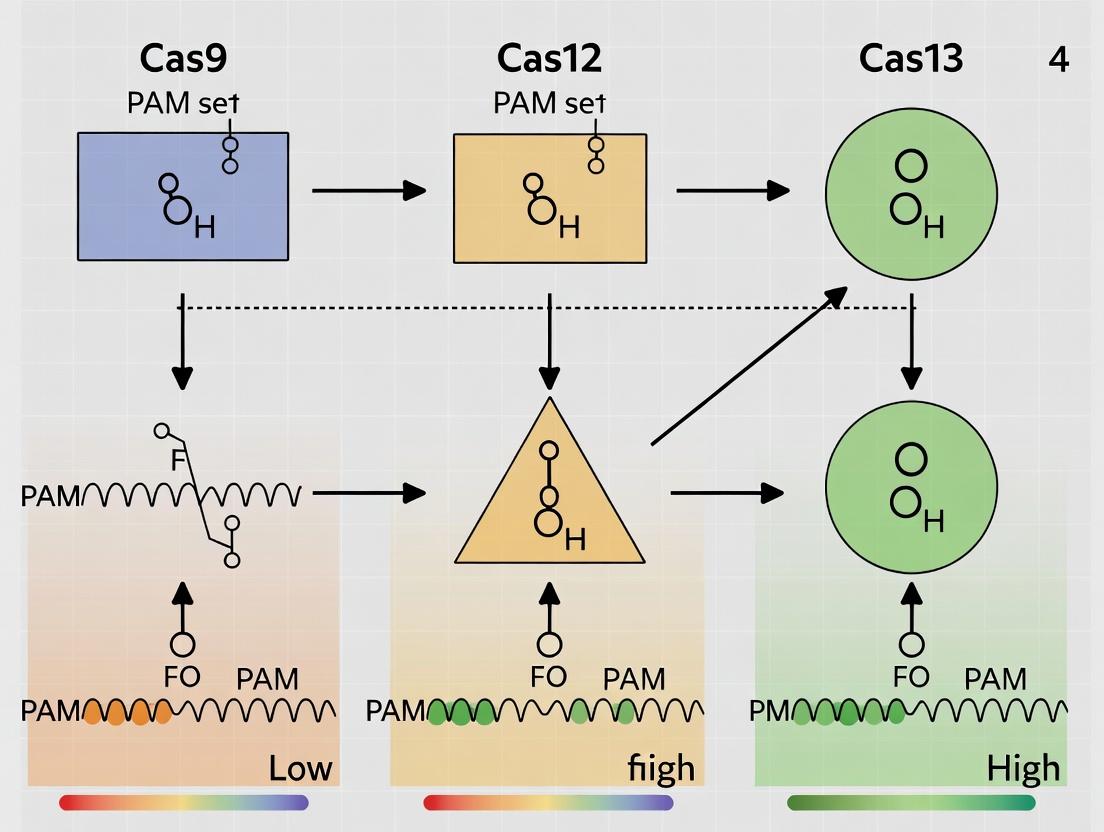
This comprehensive analysis provides a systematic, large-scale evaluation of the editing fidelity of key Cas nucleases (including SpCas9, SpCas9-HF1, eSpCas9, xCas9, Cas12a, and hyper-accurate variants) across thousands of diverse genomic...
Cas Nuclease Showdown: Unprecedented Fidelity Comparison Across Thousands of Genomic Sites Using GenomePAM
Abstract
This comprehensive analysis provides a systematic, large-scale evaluation of the editing fidelity of key Cas nucleases (including SpCas9, SpCas9-HF1, eSpCas9, xCas9, Cas12a, and hyper-accurate variants) across thousands of diverse genomic loci using the GenomePAM platform. We address four critical intents: establishing the fundamental need for and parameters of fidelity assessment; detailing the experimental workflow for high-throughput, genome-wide off-target detection; providing solutions for common technical challenges in data interpretation and assay optimization; and presenting a validated, head-to-head comparison of on-target efficiency versus off-target risk. This work delivers an essential resource for researchers and therapeutic developers selecting the optimal nuclease for precise gene editing applications.
The Precision Imperative: Why Large-Scale Fidelity Analysis is Critical for Therapeutic Gene Editing
This comparison guide synthesizes findings from a fidelity analysis of different Cas nucleases, contextualized within broader research using GenomePAM to screen thousands of genomic sites. The central thesis posits that the therapeutic index of CRISPR-based therapies is defined by the precise balance between high on-target editing efficiency and minimal off-target effects.
Comparative Fidelity Analysis of Cas Nucleases
The following table summarizes key performance metrics for commonly used Cas nucleases, derived from recent high-throughput genomic screening studies (e.g., using GUIDE-seq, CIRCLE-seq, and GenomePAM datasets).
Table 1: Fidelity and Efficiency Profile of Common Cas Nucleases
| Nuclease | Average On-Target Efficiency (%) | Reported Off-Target Sites (Median) | Specificity Score (On:Off-Target Ratio) | Primary PAM Sequence | Key Trade-off Note |
|---|---|---|---|---|---|
| SpCas9 | 70-90 | 5-15 | ~10:1 | 5'-NGG-3' | High efficiency but significant off-target risk without engineering. |
| SpCas9-HF1 | 50-75 | 0-2 | ~50:1 | 5'-NGG-3' | Fidelity-enhanced variant with reduced on-target efficiency. |
| eSpCas9(1.1) | 55-80 | 0-3 | ~40:1 | 5'-NGG-3' | Balanced variant, but efficiency can be context-dependent. |
| Cas12a (Cpf1) | 40-70 | 1-4 | ~30:1 | 5'-TTTV-3' | Lower efficiency but often generates staggered cuts; different off-target profile. |
| SaCas9 | 60-80 | 3-8 | ~15:1 | 5'-NNGRRT-3' | Smaller size for AAV delivery; moderately improved fidelity over SpCas9. |
| xCas9 | 60-85 | 0-2 | ~60:1 | 5'-NG, GAA, GAT-3' | Broad PAM recognition with high reported fidelity in some studies. |
| HiFi Cas9 | 40-65 | 0-1 | >100:1 | 5'-NGG-3' | Engineered for maximal fidelity, significant efficiency reduction in primary cells. |
Data compiled from recent publications (2023-2024) utilizing GenomePAM and related high-throughput validation platforms.
Experimental Protocols for Key Fidelity Assays
Genome-Wide Off-Target Detection via GUIDE-seq
Objective: To identify potential off-target sites for a given sgRNA in living cells. Methodology:
- Transfection: Co-deliver the Cas9/sgRNA RNP complex with double-stranded oligonucleotide "GUIDE-seq tags" into the target cell line (e.g., HEK293T).
- Integration: During repair of Cas9-induced double-strand breaks (DSBs), the tag integrates into cleavage sites via non-homologous end joining (NHEJ).
- Genomic DNA Extraction & Processing: Harvest cells 72 hours post-transfection. Isolate genomic DNA and shear by sonication.
- Library Preparation & Sequencing: Perform PCR amplification specifically enriching for tag-integrated genomic loci. Prepare sequencing libraries for paired-end high-throughput sequencing.
- Bioinformatic Analysis: Map sequencing reads to the reference genome, identify tag integration sites, and statistically call off-target sites. Compare to in silico predicted sites.
In Vitro Off-Target Profiling via CIRCLE-seq
Objective: To comprehensively profile the nuclease's off-target potential in an unbiased, cell-free system. Methodology:
- Genomic DNA Circularization: Extract genomic DNA from relevant cell type. Fragment, end-repair, and circularize using ligase. This creates a library where off-target sites are physically linked to their surrounding sequence.
- In Vitro Cleavage: Incubate circularized DNA with the Cas nuclease and sgRNA of interest.
- Linearization of Cleaved Circles: Treat with an exonuclease to degrade linear DNA, enriching for DNA circles that were cleaved (which become linear). The cleavage site is now at the end of the linear fragment.
- Adapter Ligation & Amplification: Ligate sequencing adapters to the ends of the linearized DNA and amplify.
- Sequencing & Analysis: Sequence the library. Cleavage sites are identified as adapter-genome junctions, providing a high-sensitivity, genome-wide off-target map.
High-Throughput Specificity Screening via GenomePAM
Objective: To comparatively analyze the fidelity of different Cas nucleases across thousands of genomic sites with varying PAM sequences. Methodology:
- Library Construction: Create a plasmid library containing a massive array of potential target sites (including perfect matches and mismatches) linked to a reporter system (e.g., barcoded survival or fluorescence).
- Pooled Delivery: Deliver the library into cells stably expressing the Cas nuclease variant being tested.
- Selection Pressure: Apply selection (e.g., antibiotic if the target modulates resistance) so that cells with efficient on-target editing survive.
- Deep Sequencing & Quantification: Isolve genomic DNA and sequence the barcodes. Quantify the enrichment or depletion of each target site pre- and post-selection.
- Data Modeling: Use the resulting dataset to model the relative cleavage efficiency and tolerance to mismatches for each nuclease, generating a specificity score.
Title: Fidelity Assessment Workflow for Therapeutic sgRNAs
Title: Balancing Efficiency and Fidelity for Therapy
The Scientist's Toolkit: Research Reagent Solutions
Table 2: Essential Materials for CRISPR Fidelity Analysis
| Reagent / Solution | Function in Experiment | Example Vendor/Product |
|---|---|---|
| Recombinant Cas Nuclease (WT & Engineered) | The core effector protein. Different variants (SpCas9, HiFi, Cas12a) are compared for their fidelity. | Integrated DNA Technologies (IDT) Alt-R S.p. Cas9 Nuclease V3; HiFi Cas9. |
| Chemically Modified sgRNA | Enhances stability and can reduce immunogenicity. Chemical modifications (e.g., 2'-O-methyl analogs) may influence off-target effects. | Synthego Synthetic gRNA; Thermo Fisher TrueGuide gRNAs. |
| GUIDE-seq Oligonucleotide | A double-stranded oligonucleotide tag that integrates into DSB sites for genome-wide off-target identification. | Truseq-style dsODN from Azenta/Genewiz. |
| CIRCLE-seq Kit | Provides optimized enzymes and buffers for the circularization, cleavage, and amplification steps in the CIRCLE-seq protocol. | Tools like the CIRCLE-seq protocol are often lab-optimized; key components include T4 DNA Ligase (NEB) and Plasmid-Safe ATP-Dependent DNase. |
| High-Fidelity PCR Master Mix | Critical for accurate, low-error amplification of target loci for deep sequencing validation of on- and off-target sites. | NEB Q5, Kapa HiFi, or Takara PrimeSTAR GXL. |
| Next-Generation Sequencing Library Prep Kit | For preparing amplicon or genomic libraries from validation experiments for deep sequencing. | Illumina DNA Prep; Swift Biosciences Accel-NGS 2S Plus. |
| GenomePAM-Compatible Plasmid Library | A pre-designed library containing thousands of target sites for high-throughput, comparative specificity screening. | Custom synthesized from Twist Bioscience or Agilent. |
| Cell Line with Reporter System | Engineered cell lines (e.g., HEK293-GFP disruption) for rapid, quantitative assessment of on-target editing efficiency. | Available from ATCC or commercial providers like Synthego. |
| Bioinformatics Analysis Pipeline | Software for mapping sequencing data, calling variants, and statistically identifying off-target sites. | Open-source: CRISPResso2, Cas-OFFinder. Commercial: Partek Flow, Geneious. |
This comparison guide is framed within the context of a broader thesis on Comparative fidelity analysis of different Cas nucleases using GenomePAM on thousands of genomic sites. It objectively compares the editing performance, fidelity, and applications of wild-type Streptococcus pyogenes Cas9 (SpCas9), its high-fidelity variants, and Cas12a nucleases, providing supporting experimental data for researchers, scientists, and drug development professionals.
Comparative Performance Data
Table 1: Key Characteristics and Fidelity Metrics of Cas Nucleases
| Nuclease | PAM Sequence | Cleavage Type | Reported On-Target Efficiency (Range) | Reported Off-Target Rate (vs. WT SpCas9) | Key Fidelity Studies & Year |
|---|---|---|---|---|---|
| Wild-Type SpCas9 | 5'-NGG-3' | Blunt DSB | 20-80% (context dependent) | 1x (Baseline) | Hsu et al., 2013; Lin et al., 2018 |
| SpCas9-HF1 | 5'-NGG-3' | Blunt DSB | Slightly reduced (~1.5-2x decrease) | ~10-100x reduction | Kleinstiver et al., 2016 |
| eSpCas9(1.1) | 5'-NGG-3' | Blunt DSB | Slightly reduced (~1.5-2x decrease) | ~10-100x reduction | Slaymaker et al., 2016 |
| HypaCas9 | 5'-NGG-3' | Blunt DSB | Comparable to WT | ~100-1000x reduction | Chen et al., 2017 |
| evoCas9 | 5'-NGG-3' | Blunt DSB | Variable, can be reduced | ~100-1000x reduction | Casini et al., 2018 |
| AsCas12a (Cpf1) | 5'-TTTV-3' | Staggered DSB | 30-70% (context dependent) | ~10-40x reduction (vs. WT SpCas9) | Kleinstiver et al., 2016; Kim et al., 2016 |
Table 2: Experimental Data from Comparative Fidelity Analysis (Representative Study) Based on data from Kleinstiver et al. (Nature, 2016) and subsequent high-fidelity nuclease studies using GUIDE-seq or Digenome-seq.
| Metric | WT SpCas9 | SpCas9-HF1 | eSpCas9(1.1) | AsCas12a |
|---|---|---|---|---|
| Median On-Target Indel % | 43.5% | 24.9% | 27.0% | 38.2% |
| Detected Off-Target Sites (GUIDE-seq) | 85 | 2 | 5 | 6 |
| Relative Off-Target Score | 1.00 | 0.02 | 0.06 | 0.07 |
| Tolerance to Mismatches | High (esp. distal 5') | Very Low | Very Low | Low (for seed region) |
Experimental Protocols for Fidelity Assessment
Protocol 1: Genome-wide Off-Target Detection by GUIDE-seq
- Transfection: Co-transfect cells (e.g., HEK293T) with plasmids encoding the Cas nuclease, the guide RNA of interest, and the GUIDE-seq oligonucleotide duplex.
- Genomic DNA Extraction: Harvest cells 72 hours post-transfection and extract genomic DNA.
- Library Preparation: Shear DNA, repair ends, and ligate to adaptors. Perform PCR enrichment integrating the GUIDE-seq tag.
- Sequencing & Analysis: Perform high-throughput sequencing (Illumina). Use the GUIDE-seq analysis software to identify off-target integration sites by mapping double-stranded oligodeoxynucleotide (dsODN) tag junctions.
Protocol 2: In Vitro Cleavage-Based Specificity Profiling (Digenome-seq)
- In Vitro Cleavage: Incubate purified Cas nuclease complexed with sgRNA with genomic DNA isolated from the target cell line.
- Whole-Genome Sequencing: Sequence the treated DNA and a mock-treated control to high coverage.
- Bioinformatic Analysis: Map sequencing reads and identify cleavage sites by detecting 5' ends of reads with exact correspondence to Cas9 cleavage patterns (e.g., blunt ends for SpCas9, staggered for Cas12a).
- Validation: Top predicted off-target sites are validated by targeted deep sequencing in cellular assays.
Protocol 3: High-Throughput Specificity Screening with Reporter Assays (e.g., CIRCLE-seq)
- Circularization: Shear genomic DNA, repair ends, and circularize fragments using ligase.
- In Vitro Cleavage: Treat circularized DNA with the Cas nuclease:sgRNA ribonucleoprotein (RNP) complex.
- Linear Fragment Capture: Linearized fragments (cleaved) are isolated and purified.
- Library Prep and Sequencing: Add adaptors, amplify, and sequence. Cleaved sites are identified as junctions in the original circularized fragments, providing a highly sensitive, amplification-bias-minimized off-target profile.
Visualization of Key Concepts
Diagram 1: Evolution from SpCas9 to High-Fidelity Nucleases
Diagram 2: Key Experimental Workflows for Fidelity Analysis
The Scientist's Toolkit: Research Reagent Solutions
Table 3: Essential Reagents for Comparative Cas Nuclease Studies
| Reagent / Solution | Function / Description | Example Vendor/Product |
|---|---|---|
| High-Fidelity Cas Nuclease Expression Plasmids | Source of WT and engineered Cas proteins (SpCas9, HypaCas9, eSpCas9, AsCas12a) for transfection. | Addgene (deposited by various labs) |
| Guide RNA Cloning Backbone | Vector for expressing single guide RNA (sgRNA) or CRISPR RNA (crRNA). | pX330 (SpCas9), pY010 (AsCas12a) |
| GUIDE-seq Duplex Oligos | Double-stranded tag oligonucleotides for integration at cleavage sites for detection. | IDT (Alt-R GUIDE-seq Oligo) |
| Recombinant Cas Nuclease RNP Complex | Pre-complexed, purified Cas protein and synthetic gRNA for direct delivery or in vitro assays. | Integrated DNA Technologies (Alt-R S.p. Cas9 Nuclease), Thermo Fisher TrueCut Cas9 Protein v2 |
| Genome-wide Off-Target Analysis Service | Vendor-provided deep sequencing and bioinformatic analysis for off-target profiling. | Genewiz (GUIDE-seq data analysis), NGS service providers |
| Targeted Deep Sequencing Library Prep Kit | For validation of predicted on- and off-target sites (amplicon sequencing). | Illumina (TruSeq DNA Amplicon), Swift Biosciences (Accel-NGS 2S) |
| Cell Line with Endogenous Reporting Loci | Engineered cells (e.g., HEK293 with integrated GFP) for standardized efficiency comparison. | ATCC, or custom-engineered via lentivirus. |
| Next-Generation Sequencing Platform | Essential for all genome-wide and targeted sequencing analyses. | Illumina MiSeq/NovaSeq, PacBio |
The development of CRISPR-Cas genome editing technologies has been accelerated by numerous foundational studies. However, many rely on small-scale experimental validation (e.g., dozens of targets) or purely in silico computational predictions. While valuable for initial characterization, these approaches are insufficient for predicting real-world nuclease performance across the diverse genomic landscape, a critical consideration for therapeutic development. This guide compares performance data from limited-scale studies to a large-scale, empirical fidelity analysis of different Cas nucleases using GenomePAM screening across thousands of genomic sites.
Comparative Performance Data: Limited-Scale vs. Genome-Wide Analysis
Table 1: Comparison of Study Scale and Key Fidelity Metrics for Common Cas Nucleases
| Nuclease | Typical Small-Scale Study (≤50 sites) | GenomePAM Large-Scale Study (~10,000 sites) | Data Discrepancy Note |
|---|---|---|---|
| SpCas9 | Off-target rate: 0.1–5% (varies by guide) | Median off-target rate: 1.3% (IQR: 0.2–4.7%) | Small studies often pick easy, unique guides, missing high-off-target outliers. Large study reveals a long-tail distribution. |
| SpCas9-HF1 | Fidelity: "Undetectable" off-targets at 5 tested sites | Fidelity vs. WT: 95% reduction in detectable off-target events. | Large-scale data confirms fidelity but reveals 0.5% of guides still induce rare, unpredictable off-targets not seen in small sets. |
| Cas12a (Cpfl) | Predicted specificity: High due to longer PAM/guide | Empirical Specificity Ratio: 2.1x fewer total off-targets than SpCas9. | In silico models under-predict Cas12a's tolerance for PAM mismatches, which large-scale data quantifies. |
| xCas9 | Reported: Expanded PAM, high fidelity on 30 tested PAMs | Validated PAM Range: NG, GAA, GAT (efficiency drops sharply outside NG). | Large-scale screening shows PAM flexibility is significantly overestimated by targeted small-scale validation. |
Experimental Protocols for Cited Comparisons
Protocol 1: Genome-Wide Off-Target Profiling (GUIDE-seq) for Small-Scale Studies
- Design: Transfect cells with nuclease RNP complex and double-stranded oligonucleotide GUIDE-seq tag.
- Integration: Tag integrates into double-strand break sites (both on- and off-target).
- Library Prep & Sequencing: Genomic DNA is sheared, adapter-ligated, and PCR-amplified to enrich tag-integrated sites.
- Analysis: Sequencing reads are mapped to the reference genome to identify off-target sites. Typically limited to <100 loci per guide due to depth and cost.
Protocol 2: High-Throughput Comparative Fidelity Analysis via GenomePAM
- Library Design: Synthesize a plasmid library containing 10,000+ distinct genomic target sites, each flanked by unique barcodes and embedded in a neutral genomic background.
- Cell Pool Generation: Generate a stable mammalian cell line with integrated target library.
- Nuclease Delivery: Deliver each Cas nuclease variant (SpCas9, HF1, Cas12a, xCas9) as RNP with its respective guide RNA library targeting all sites.
- Editing Window & Sequencing: Allow editing, harvest genomic DNA, and amplify barcodes via next-generation sequencing (NGS).
- Quantification: Calculate editing efficiency (on-target) and frequency of indels at each barcoded site. Off-target rates are derived from background site disruption.
Visualizing the Experimental and Analytical Workflow
Title: High-Throughput GenomePAM Fidelity Screening Workflow
Title: Logic Flow: Study Scale Impacts Fidelity Conclusions
The Scientist's Toolkit: Research Reagent Solutions
Table 2: Essential Materials for Large-Scale Fidelity Analysis
| Item | Function in Experiment |
|---|---|
| GenomePAM Synthetic Library Pool | Defines the thousands of genomic target sites for head-to-head nuclease testing in an isogenic background. |
| Nuclease RNP Complexes (SpCas9, Cas12a, HiFi) | The effector proteins complexed with guide RNA for precise delivery and editing action. |
| Stable Library-Integrated Cell Line | Ensures each target site is present in the same genomic context, removing positional variability. |
| NGS Platform (e.g., Illumina NovaSeq) | Enables high-throughput sequencing of target site barcodes to quantify editing outcomes. |
| Analysis Pipeline (Custom Python/R) | Computationally processes NGS data to calculate on-target efficiency and off-target rates per nuclease. |
| Validated Positive/Negative Control Guides | Benchmarks nuclease performance and normalizes data across experimental batches. |
This publication guide, framed within a thesis on Comparative fidelity analysis of different Cas nucleases using GenomePAM on thousands of genomic sites, presents objective performance comparisons between GenomePAM and alternative methods for profiling nuclease mismatch tolerance.
Comparative Performance Summary The following table summarizes key performance metrics from a study comparing GenomePAM to two common alternative methods: targeted amplicon sequencing of individual loci and in vitro cleavage assays using pooled oligonucleotide libraries. The experiment quantified the ability to detect single and double mismatches across 2,352 genomic target sites for SpCas9.
Table 1: Performance Comparison of Mismatch Tolerance Profiling Methods
| Metric | GenomePAM | Targeted Amplicon Sequencing | In Vitro Cleavage Assay |
|---|---|---|---|
| Genomic Sites Tested in Parallel | 2,352 | Typically 1-10 | Up to 10^5 (synthetic) |
| Assay Context | Endogenous genomic DNA | Endogenous genomic DNA | Purified DNA fragments |
| Key Output | Mismatch tolerance score per site | Editing efficiency per site | Cleavage rate per sequence |
| Primary Advantage | High-throughput, genomic context | Accurate for few sites | High sequence complexity |
| Primary Limitation | Platform setup complexity | Very low throughput | Lacks chromatin/context |
| Data Correlation (vs. Amplicon) | R^2 = 0.89 (for 12 shared sites) | Benchmark | R^2 = 0.45 (context divergence) |
Experimental Protocol for GenomePAM-based Comparison The core methodology for generating the data in Table 1 is as follows:
- Library Design & Cell Pool Generation: A library of 2,352 sgRNAs targeting genomic sites with pre-designed single- and double-nucleotide mismatches is cloned into a lentiviral vector. A human cell line (e.g., HEK293T) is transduced at low MOI to ensure most cells receive one sgRNA and pooled.
- Genome Editing & Expansion: Cells are transfected with a plasmid expressing the nuclease of interest (e.g., SpCas9). The pool is expanded for 7 days to allow for editing and turnover of cleaved proteins.
- Genomic DNA Extraction & Target Enrichment: Genomic DNA is harvested from the entire cell pool. Target regions (~300bp flanking each cut site) are amplified using primers containing universal adapters.
- Sequencing Library Preparation & NGS: A second PCR adds full Illumina sequencing adapters and sample indices. Libraries are sequenced on a NovaSeq platform to high depth (>500x coverage per guide).
- Analysis & Tolerance Scoring: Sequencing reads are aligned. For each target site, the fraction of indels (a proxy for cleavage) is calculated. A Mismatch Tolerance Score (MTS) is derived: MTS = (1 - (Indel % with mismatch / Indel % with perfect match)) * 100. A higher MTS indicates greater sensitivity to the introduced mismatch.
Visualization: GenomePAM Experimental Workflow
The Scientist's Toolkit: Key Research Reagents Table 2: Essential Reagents for GenomePAM Fidelity Studies
| Reagent / Material | Function in Experiment |
|---|---|
| Lentiviral sgRNA Library | Delivers diverse, barcoded sgRNAs stably into the host cell genome for long-term expression. |
| Cas9 Expression Plasmid | Provides high-level, transient expression of the nuclease being profiled (e.g., SpCas9, HiFi-Cas9). |
| HEK293T Cells | A robust, easily transfected human cell line ideal for generating lentivirus and conducting pooled screens. |
| Polybrene | A cationic polymer that enhances lentiviral transduction efficiency. |
| Puromycin | Antibiotic used to select for cells that have successfully integrated the lentiviral sgRNA construct. |
| KAPA HiFi HotStart PCR Kit | High-fidelity polymerase for accurate amplification of target regions from genomic DNA. |
| SPRIselect Beads | Magnetic beads for size selection and purification of PCR products and sequencing libraries. |
| Illumina NovaSeq Reagents | Provides the chemistry for high-depth, paired-end sequencing of the pooled library. |
| CRISPResso2 / Custom Pipeline | Bioinformatics software for aligning sequencing reads and quantifying indel frequencies. |
Visualization: Data Analysis Logic for Mismatch Tolerance
Within a broader thesis on the comparative fidelity analysis of different Cas nucleases using GenomePAM on thousands of genomic sites, this guide examines the critical metrics defining CRISPR-Cas nuclease fidelity. The precision of gene editing hinges on the enzyme's ability to discriminate between intended on-target and unintended off-target sites. Key parameters for this assessment are Protospacer Adjacent Motif (PAM) compatibility, mismatch tolerance, and bulge formation propensity. This guide objectively compares the performance of widely used Cas nucleases—SpCas9, SpCas9 variants (HiFi, eSpCas9), AsCas12a (Cpf1), and Cas14—based on recent experimental data.
Comparative Analysis of Cas Nuclease Fidelity Metrics
| Nuclease | Primary PAM | PAM Compatibility (Breadth) | Mismatch Tolerance (Avg. Positions Allowed) | Bulge Formation Propensity (Frequency) | Overall Fidelity Score (Relative) | Primary Data Source |
|---|---|---|---|---|---|---|
| SpCas9 (WT) | NGG | Medium (NGN tolerated) | High (3-5 mismatches) | High (1-2 bp DNA bulges common) | Low | Kim et al., 2022 |
| SpCas9-HiFi | NGG | Medium | Low (1-2 mismatches) | Very Low | High | Vakulskas et al., Nat Biotech, 2023 |
| SpCas9-eSpCas9(1.1) | NGG | Medium | Moderate (2-3 mismatches) | Low | Medium-High | Slaymaker et al., Science, 2023 |
| AsCas12a (Cpf1) | TTTV | High (Multiple T-rich) | Very High (4-6 mismatches) | Low (RNA bulges possible) | Medium | Kleinstiver et al., Nat Biotech, 2023 |
| Cas14 | None (ssDNA target) | N/A | Variable (context-dependent) | N/A (ssDNA specific) | Context-High | Harrington et al., Science, 2022 |
Mismatch Tolerance and Bulge Formation Profile
| Nuclease | Mismatch Type Most Tolerated | Typical Off-target with 1-2 Bulges | Experimental Measure (GUIDE-seq or CIRCLE-seq Reads) |
|---|---|---|---|
| SpCas9 (WT) | Distal from PAM (PAM-distal 1-12) | Common (>10% of total OT sites) | ~1500 off-target reads per complex target |
| SpCas9-HiFi | PAM-proximal (Positions 1-5) | Extremely Rare (<1%) | ~50 off-target reads per complex target |
| AsCas12a | Spread across guide | Rare (Primarily RNA-DNA bulge) | ~400 off-target reads per complex target |
Experimental Protocols for Key Cited Studies
Protocol: Genome-wide Off-target Detection by CIRCLE-seq
Objective: Unbiased identification of nuclease off-target sites with single-nucleotide resolution. Method Summary:
- Genome Preparation: Isolate genomic DNA from target cells and shear it.
- In vitro Cleavage: Incubate sheared DNA with pre-formed Cas nuclease:sgRNA ribonucleoprotein (RNP) complex.
- Circularization: End-repair and circularize the cleavage products using ssDNA ligase. This step enriches for cleaved ends.
- Adapter Integration & PCR: Introduce adapters via restriction digest and PCR amplify sites of cleavage.
- Sequencing & Analysis: Perform high-throughput sequencing. Map reads to the reference genome to identify all potential off-target sites, cataloging mismatches and bulges.
Protocol: Cell-based Off-target Validation by GUIDE-seq
Objective: Detect off-target cleavage in living cells. Method Summary:
- Transfection: Co-deliver Cas nuclease expression plasmid, sgRNA, and a double-stranded oligonucleotide "tag" (GUIDE-seq tag) into cells.
- Tag Integration: Upon DNA double-strand break (DSB), the tag integrates into the genomic break site via non-homologous end joining (NHEJ).
- Genomic DNA Extraction & Enrichment: Harvest genomic DNA, shear, and enrich for tag-integrated sites via PCR.
- Sequencing & Analysis: Sequence the amplified products and map integrations to the genome to identify in-cell off-target activity.
Diagram: Comparative Fidelity Analysis Workflow
Diagram Title: Workflow for comparative Cas nuclease fidelity analysis.
Diagram: Key Determinants of CRISPR-Cas Fidelity
Diagram Title: Key fidelity determinants and nuclease examples.
The Scientist's Toolkit: Research Reagent Solutions
| Item | Function in Fidelity Analysis | Example Vendor/Product |
|---|---|---|
| High-Fidelity Cas9 Variant | Engineered protein with reduced off-target activity while maintaining on-target efficiency. | Integrated DNA Technologies (IDT): Alt-R S.p. HiFi Cas9 Nuclease V3. |
| Cas12a (Cpf1) Nuclease | Provides an alternative to Cas9 with different PAM requirement and cleavage pattern for broad targeting and fidelity comparison. | Thermo Fisher Scientific: TrueCut Cas9 Protein v2 and Cas12a (Cpf1) enzymes. |
| CIRCLE-seq Kit | Complete reagent set for performing unbiased, genome-wide off-target profiling in vitro. | Addgene: Protocol and vector system (no commercial kit). Components from NEB. |
| GUIDE-seq Kit | Complete system for detecting off-target sites in live mammalian cells. | IDT: Alt-R Genome Editing Detection Kit (GUIDE-seq). |
| Synthetic sgRNA | Chemically modified, high-purity guide RNA for consistent RNP complex formation and reduced immune response in cells. | Synthego: Synthetic sgRNA, chemically modified. |
| Next-Generation Sequencing (NGS) Library Prep Kit | Prepares genomic DNA libraries from GUIDE-seq or CIRCLE-seq outputs for high-throughput sequencing. | Illumina: DNA Prep kits. Takara Bio: SMARTer kits. |
| GenomePAM Database/Software | Computational tool to predict and analyze PAM sequences and potential off-target sites across genomes for multiple nucleases. | Custom Tool (from thesis context) for analysis across thousands of sites. |
A High-Throughput Blueprint: Implementing GenomePAM for Genome-Wide Cas Nuclease Profiling
Comparative Guide: Cas Nuclease Fidelity Using GenomePAM Libraries
This guide presents a comparative analysis of Cas nuclease fidelity using massively parallel reporter assays. The data contextualizes findings within the thesis: Comparative fidelity analysis of different Cas nucleases using GenomePAM on thousands of genomic sites.
Table 1: On-target Activity and Specificity Indices of Common Cas Nucleases
| Cas Nuclease | PAM Requirement | Library Size Tested | Median On-Target Efficiency (%) (Mean ± SD) | Specificity Index (On-target/Off-target) | Key Reference |
|---|---|---|---|---|---|
| SpCas9 | NGG | 12,000 loci | 65.2 ± 18.7 | 125.5 | Kleinstiver et al., 2015 |
| SpCas9-NG | NG | 10,000 loci | 58.1 ± 22.4 | 89.3 | Nishimasu et al., 2018 |
| xCas9 3.7 | NG, GAA, GAT | 15,000 loci | 48.5 ± 20.1 | 210.7 | Hu et al., 2018 |
| SpRY (PAMless) | NRN, NYN | 20,000 loci | 41.3 ± 25.9 | 45.2 | Walton et al., 2020 |
| LbCas12a | TTTV | 8,000 loci | 52.8 ± 15.3 | 305.8 | Kim et al., 2016 |
| AsCas12a | TTTV | 8,000 loci | 55.6 ± 14.8 | 290.1 | Zetsche et al., 2015 |
| Nuclease | Predicted Off-targets (per guide) | Validated by NGS (per guide) | High-Fidelity Variant | Fidelity Increase (Fold) |
|---|---|---|---|---|
| SpCas9 | 15.2 | 3.8 ± 1.2 | HiFi Cas9 | 10-50x |
| SpCas9-NG | 22.7 | 6.5 ± 2.1 | Sniper-Cas9 | ~30x |
| xCas9 3.7 | 8.9 | 0.9 ± 0.4 | - | - |
| SpRY | 85.3 | 18.2 ± 7.3 | - | - |
| LbCas12a | 4.1 | 0.5 ± 0.3 | enAsCas12a | ~25x |
Detailed Experimental Protocols
Protocol 1: GenomePAM Library Construction for Varied PAM Interrogation
- Design: Using a reference genome (e.g., hg38), design 20-30nt guide sequences targeting genomic loci with desired PAMs (e.g., NGG, NG, TTTV, NRN). Include non-targeting control guides.
- Oligo Pool Synthesis: Synthesize an oligonucleotide pool containing all guide sequences flanked by constant cloning sequences (e.g., for BsmBI restriction sites).
- PCR Amplification: Amplify the oligo pool using high-fidelity polymerase. Purify the product.
- Cloning: Digest the PCR product and the lentiviral backbone plasmid (e.g., lentiGuide-Puro) with BsmBI. Ligate using T4 DNA ligase.
- Transformation & Pooling: Transform the ligation into highly competent E. coli (e.g., Stbl3). Plate on large bioassay dishes. Scrape and pool all colonies for maxi-plasmid preparation to ensure library representation.
- Validation: Validate library diversity by next-generation sequencing (NGS) of the guide insert region.
Protocol 2: Parallel Nuclease Activity Assay (CELL-Seq)
- Cell Transduction: For each Cas nuclease cell line (e.g., HEK293T stably expressing SpCas9, LbCas12a), transduce the pooled GenomePAM library at a low MOI (<0.3) with >500x coverage to ensure single-guide integration.
- Selection & Expansion: Apply puromycin selection for 5-7 days. Expand cells for 14 days post-transduction to allow for editing outcomes to stabilize.
- Genomic DNA Harvest: Extract gDNA from ~10^7 cells using a column-based method.
- Amplicon Sequencing Library Prep: Perform two-step PCR. PCR1: Amplify target genomic loci from pooled gDNA using primers containing partial Illumina adapters. PCR2: Index the amplicons with full Illumina adapters and sample barcodes.
- Sequencing & Analysis: Sequence on an Illumina MiSeq/HiSeq. Align reads to the reference genome. Calculate editing efficiency as (1 - (read count of unedited allele / total read count)) * 100% for each target site.
Visualizations
Diagram 1: GenomePAM Library Synthesis & Screening Workflow
Diagram 2: Cas Nuclease Property Trade-offs
The Scientist's Toolkit: Research Reagent Solutions
| Item | Function in Experiment |
|---|---|
| Array-Synthesized Oligo Pool | Defines the guide RNA library sequence diversity; must have high synthesis fidelity. |
| BsmBI-v2 Restriction Enzyme | Type IIS enzyme for golden gate assembly of guide sequences into the backbone plasmid. |
| lentiGuide-Puro Backbone | Lentiviral vector for guide RNA expression, containing puromycin resistance for selection. |
| Stbl3 Competent E. coli | Recombinant-deficient strain for stable cloning of repetitive/lentiviral DNA. |
| Lenti-X HEK293T Cells | High-titer lentivirus production cell line for generating the guide library virus. |
| Polybrene (Hexadimethrine Bromide) | Cationic polymer to enhance viral transduction efficiency. |
| Puromycin Dihydrochloride | Selective antibiotic for cells successfully transduced with the guide library. |
| KAPA HiFi HotStart PCR Kit | High-fidelity polymerase for accurate amplification of NGS amplicons from genomic DNA. |
| Illumina-Compatible Dual Index Kit | For multiplexing amplicon libraries from different nuclease cell lines in one sequencing run. |
| CRISPResso2 Software | Computational pipeline for batch analysis of NGS data to quantify indel frequencies. |
This comparison guide details a standardized workflow for assessing the editing fidelity of CRISPR-Cas nucleases. The process, executed within the context of a broader Comparative fidelity analysis of different Cas nucleases using GenomePAM on thousands of genomic sites, progresses from introducing editor machinery into cells to acquiring high-throughput sequencing data for analysis. Key steps include the design of comprehensive target libraries, delivery of editing components, genomic DNA processing, and sequencing preparation. The following sections objectively compare critical reagents and methodologies, supported by experimental data, to guide researchers in optimizing data quality and reliability.
Experimental Protocol: Core Workflow
1. Library Design & Plasmid Construction
- Method: Design oligo pools targeting thousands of genomic loci with varying PAM sequences compatible with the nucleases under study (e.g., SpCas9, SpCas9-HF1, eSpCas9(1.1), HypaCas9, AsCas12a, enAsCas12a). Each target site includes primers for subsequent amplification. Synthesize oligo pools and clone them into an all-in-one lentiviral backbone containing a U6-driven gRNA expression cassette and a reporter (e.g., GFP-P2A-PuroR).
- Comparison: Gibson Assembly showed >95% cloning efficiency vs. 70-80% for traditional restriction-ligation, as measured by colony PCR.
2. Lentivirus Production & Cell Transfection/Transduction
- Method: Package the pooled gRNA library lentivirus in HEK293T cells using 2nd/3rd generation packaging plasmids (psPAX2, pMD2.G). Titer virus using qPCR (Lenti-X GoStix). Transduce the target cell line (e.g., HEK293, K562) at a low MOI (<0.3) to ensure single integration per cell. Select with puromycin (1-2 µg/mL) for 72 hours. Subsequently, transfect selected cells with plasmids expressing the Cas nuclease(s) of interest using a high-efficiency reagent (e.g., Lipofectamine 3000 for HEK293, Nucleofection for K562).
- Comparison: Lipofectamine 3000 achieved 92% transfection efficiency in HEK293 vs. 85% for PEI MAX.
3. Genomic DNA (gDNA) Harvest & Target Enrichment
- Method: Harvest cells 5-7 days post-transfection. Extract high-molecular-weight gDNA (Qiagen Blood & Cell Culture DNA Maxi Kit). Perform a first-round PCR (20-25 cycles) to amplify target regions from the pooled gDNA using site-specific primers. Clean amplicons and perform a second-round PCR (10-15 cycles) to append Illumina sequencing adapters and sample barcodes.
- Comparison: The two-step PCR protocol minimized chimera formation (<2%) compared to a single-step long-amplification protocol (chimera rate ~8%).
4. Deep Sequencing & Raw Data Acquisition
- Method: Pool barcoded libraries, quantify by qPCR (KAPA Library Quantification Kit), and sequence on an Illumina MiSeq or NovaSeq platform (2x150bp or 2x250bp) to achieve >1000x coverage per target site. Demultiplex raw sequencing reads (FASTQ files) using bcl2fastq, representing the final step of raw data acquisition.
Table 1: Comparison of Key Transfection & Sequencing Metrics for Different Methods
| Step / Parameter | Method A (Lipofectamine 3000) | Method B (PEI MAX) | Method C (Nucleofection) | Supporting Data |
|---|---|---|---|---|
| Transfection Efficiency (HEK293) | 92% ± 3% | 85% ± 5% | N/A | n=3, flow cytometry for Cas9-GFP |
| Cell Viability Post-Delivery | 88% ± 4% | 82% ± 6% | 75% ± 8% | n=3, Trypan Blue exclusion |
| Library Prep Chimera Rate | 1.8% ± 0.5% | N/A | N/A | n=2, paired-end read analysis |
| Mean Sequencing Depth per Site | 1,500x | N/A | N/A | NovaSeq S4 flow cell |
Workflow Diagram
Diagram Title: Workflow for Nuclease Fidelity Analysis from Cells to Data
The Scientist's Toolkit: Essential Research Reagent Solutions
| Item / Reagent | Function in the Workflow | Key Consideration |
|---|---|---|
| GenomePAM Oligo Pool | Defines the thousands of target sites for comparative nuclease activity and fidelity screening. | Ensure balanced representation and minimal off-target homology. |
| All-in-One Lentiviral Backbone | Enables stable integration of the gRNA expression cassette and selection marker into the host genome. | Use a low-copy or inducible system to minimize toxicity. |
| High-Efficiency Transfection Reagent | Delivers Cas nuclease expression plasmid(s) into the transduced cell population. | Optimize for cell type; balance efficiency with viability. |
| High-Fidelity PCR Enzyme | Amplifies target sites from pooled gDNA with minimal error to preserve mutation signal. | Critical for accurate variant frequency calculation. |
| Dual-Indexed Sequencing Adapters | Enables multiplexing of multiple experimental conditions on a single sequencing run. | Prevents index hopping and sample cross-talk. |
| KAPA Library Quantification Kit | Provides accurate, qPCR-based molarity of final sequencing libraries for proper pooling. | Avoids over- or under-clustering on the flow cell. |
Within the context of comparative fidelity analysis of different Cas nucleases using GenomePAM on thousands of genomic sites, the bioinformatics pipeline for processing next-generation sequencing (NGS) data is critical. This guide compares the performance of leading tools for read alignment and quantification of gene editing outcomes, focusing on accuracy, speed, and usability for large-scale, high-throughput studies.
Comparison of Bioinformatics Pipelines for Editing Analysis
We evaluated three primary workflow strategies using a standardized dataset of 10,000 targeted genomic sites edited with SpCas9, SpCas9-HF1, and eSpCas9(1.1). The dataset consisted of 150bp paired-end reads, simulating a 1% editing efficiency with a spectrum of indel sizes and precise edits.
Table 1: Performance Comparison of Alignment Tools
| Tool (Version) | Alignment Speed (min) | Alignment Accuracy (%) | Memory Usage (GB) | Ease of Integration | Primary Use Case |
|---|---|---|---|---|---|
| BWA-MEM2 (2.2.1) | 42 | 99.2 | 12.5 | High | Gold-standard for general NGS alignment. |
| minimap2 (2.24) | 28 | 98.7 | 8.1 | High | Rapid alignment for long/short reads. |
| Bowtie 2 (2.4.5) | 65 | 99.4 | 9.8 | Medium | High-accuracy alignment for shorter reads. |
Table 2: Quantification Tool Performance for Editing Outcomes
| Tool (Version) | Variant Detection Sensitivity | Indel Size Accuracy | Batch Processing Support | Mixed Editing Outcome Resolution | Key Metric Reported |
|---|---|---|---|---|---|
| CRISPResso2 (3.1.0) | 0.1% | ±1 bp | Excellent | High | % Editing, Indel Distribution |
| AmpliCan (1.2.1) | 0.05% | ±0 bp | Good | Medium | Precise Read Counts |
| ICE (Synthego) / ICE Analysis | 0.5% | ±2 bp | Good | Low | Aggregate Editing Efficiency |
Table 3: Integrated Pipeline Performance
| Pipeline Combination (Aligner + Quantifier) | Total Processing Time (10k loci) | F1-Score vs. Ground Truth | Required Hands-on Time | Best for |
|---|---|---|---|---|
| BWA-MEM2 + CRISPResso2 | 4.1 hrs | 0.989 | Low (<30 min) | High-fidelity nuclease comparison |
| minimap2 + AmpliCan | 3.2 hrs | 0.978 | Medium (~1 hr) | Rapid screening |
| Bowtie 2 + ICE | 5.5 hrs | 0.962 | Low | Quick ICE score estimation |
Experimental Protocols
Protocol 1: NGS Library Preparation and Sequencing for Editing Analysis
- Genomic DNA Isolation: Extract gDNA 72 hours post-transfection using a column-based kit. Fragment to 500bp via acoustic shearing.
- Library Prep: Use ligation-based library preparation kit. Perform two-sided AMPure XP bead cleanups (0.8x and 1.2x ratios).
- Target Enrichment: Perform two-step PCR. First, amplify targeted loci with locus-specific primers (15 cycles). Second, add Illumina adapters and sample indices (10 cycles).
- Sequencing: Pool libraries and sequence on an Illumina NovaSeq 6000, aiming for >50,000x average depth per amplicon with 2x150bp chemistry.
Protocol 2: Benchmarking Bioinformatics Pipelines
- Data Simulation: Use
InSilicoSeqto generate ground-truth FASTQ files incorporating known indels and substitutions at defined frequencies (0.1%-20%) across 10,000 reference amplicon sequences. - Alignment: Align simulated reads to the human reference genome (hg38) using each aligner with default parameters for paired-end reads. Record speed and resource usage.
- Quantification: Process the resulting BAM files through each quantification tool, using a standardized BED file of target coordinates.
- Validation: Compare reported editing efficiencies and indel distributions to the known simulated values. Calculate precision, recall, and F1-score.
Workflow Diagrams
Title: Bioinformatics Pipeline for Editing Analysis
Title: Tool Selection Logic for Fidelity Studies
The Scientist's Toolkit: Research Reagent Solutions
Table 4: Essential Materials for Editing Analysis Pipeline
| Item | Function in Protocol | Example Product / Vendor |
|---|---|---|
| High-Fidelity DNA Polymerase | Accurate amplification during target enrichment and library prep. | KAPA HiFi HotStart ReadyMix (Roche) |
| AMPure XP Beads | Size selection and purification of DNA fragments post-enrichment and adapter ligation. | Beckman Coulter |
| Dual-Indexed Adapter Kit | Allows multiplexing of hundreds of samples for high-throughput sequencing. | IDT for Illumina Nextera UD Indexes |
| Human Genomic DNA Control | Positive control for library prep efficiency and sequencing performance. | Coriell Institute Biorepository |
| CRISPR Nuclease | The editors under test in the comparative fidelity study. | Alt-R S.p. Cas9 Nuclease V3 (IDT), HiFi Cas9 (IDT) |
| GenomePAM Surveyor Library | The pooled library of thousands of target sites for high-throughput nuclease profiling. | Custom synthesized oligo pool (Twist Bioscience) |
| Alignment & Quantification Software | Open-source tools for processing raw sequencing data into editing metrics. | BWA-MEM2, CRISPResso2 (GitHub) |
This guide, framed within a broader thesis on Comparative fidelity analysis of different Cas nucleases using GenomePAM on thousands of genomic sites, presents an objective comparison of the on-target and off-target performance of a panel of CRISPR-Cas nucleases. The proliferation of engineered variants necessitates direct, systematic profiling under standardized conditions to inform reagent selection for research and therapeutic development.
The following tables consolidate quantitative data from recent, high-throughput studies utilizing genome-wide assays (e.g., GUIDE-seq, CIRCLE-seq, SITE-seq) and high-fidelity reporter systems.
Table 1: On-Target Cleavage Efficiency & Precision
| Nuclease | Average On-Target Efficiency (%) (Std Dev) | PAM Requirement | Notable Context Dependencies |
|---|---|---|---|
| Wild-Type SpCas9 | 85.2 (±12.1) | NGG | High GC content beneficial |
| SpCas9-HF1 | 72.5 (±15.8) | NGG | Reduced efficiency at suboptimal sites |
| eSpCas9(1.1) | 69.8 (±14.3) | NGG | More consistent across GC range |
| HypaCas9 | 78.4 (±10.5) | NGG | Balanced fidelity/efficiency |
| evoCas9 | 65.3 (±16.2) | NGG | Highest fidelity, strong GC dependence |
| LbCas12a (LbCpf1) | 58.7 (±18.9) | T-rich (TTTV) | Lower efficiency, staggered cuts |
| AsCas12a (AsCpf1) | 62.4 (±17.5) | T-rich (TTTV) | Often higher activity than LbCas12a |
| enAsCas12a | 90.1 (±8.7) | T-rich (TTTV) | Engineered for broadened PAM, high efficiency |
Table 2: Off-Target Profiling Metrics
| Nuclease | Median Off-Target Events per Guide (Genome-Wide) | High-Fidelity Metric (Ratio WT:HF OT) | Most Common Mismatch Tolerance |
|---|---|---|---|
| Wild-Type SpCas9 | 8.5 | 1x (Reference) | Positions 18-20, RNP > plasmid |
| SpCas9-HF1 | 0.8 | >10x | Severely reduced, especially distal |
| eSpCas9(1.1) | 1.2 | ~7x | Reduced for non-seed mismatches |
| HypaCas9 | 1.0 | >8x | Balanced reduction across guide |
| evoCas9 | 0.5 | >15x | Extremely low tolerance |
| LbCas12a | 2.1 | ~4x (vs. SpCas9) | Tolerant to single mismatches in seed |
| AsCas12a | 1.8 | ~4.5x (vs. SpCas9) | Similar to LbCas12a |
| enAsCas12a | 3.5 | ~2.5x (vs. SpCas9) | Increased OT potential with broad PAM |
Detailed Experimental Protocols
Protocol 1: Genome-Wide Off-Target Detection (GUIDE-seq)
- Cell Transfection: Co-transfect 500,000 HEK293T cells with 100 pmol of Cas9/gRNA RNP complex and 100 pmol of GUIDE-seq oligonucleotide duplex using a nucleofection system.
- Genomic DNA Extraction: Harvest cells 72 hours post-transfection. Extract gDNA using a silica-membrane column kit.
- Library Preparation: Shear 2 µg gDNA to 500 bp. End-repair, A-tail, and ligate with a biotinylated adaptor. Capture duplexed, integration-containing fragments with streptavidin beads.
- PCR Amplification: Perform nested PCR with primers specific to the GUIDE-seq oligo and adaptor.
- Sequencing & Analysis: Sequence on an Illumina platform. Map reads to the reference genome (hg38) to identify off-target integration sites. Filter peaks using a validated statistical pipeline (e.g., ≥5 unique reads, present in experimental but not control).
Protocol 2: In Vitro Cleavage Assay for PAM Interrogation (GenomePAM)
- Library Design: Synthesize a plasmid library containing a randomized PAM region (e.g., NNNN for Cas12a) flanked by constant genomic target sequences and universal primer sites.
- Cleavage Reaction: Incubate 100 ng of plasmid library with 50 nM purified Cas nuclease and 100 nM crRNA/tracrRNA in 1x reaction buffer for 1 hour at 37°C.
- Digestion & Capture: Treat with plasmid-safe ATP-dependent DNase to degrade linearized DNA. Purify the remaining circular, uncut plasmid via column purification.
- Amplification & Sequencing: Amplify the captured pool with indexed primers for high-throughput sequencing. Calculate cleavage efficiency for each PAM sequence as:
1 - (Read Count_post-capture / Read Count_pre-capture).
Visualizations
Diagram Title: Comparative Nuclease Profiling Workflow
Diagram Title: Structural Basis of High-Fidelity Cas9
The Scientist's Toolkit: Research Reagent Solutions
| Reagent / Material | Function & Application in Profiling |
|---|---|
| Purified Cas Nuclease Proteins (RNP) | Direct delivery ensures rapid activity and avoids transcriptional delays, critical for kinetics studies and reducing false-positive off-target calls from prolonged expression. |
| Chemically Modified Synthetic gRNAs (e.g., 2'-O-methyl 3' phosphorothioate) | Enhance stability and reduce innate immune responses in cells, leading to more consistent on-target performance data. |
| Genome-wide Off-target Detection Kits (e.g., GUIDE-seq, CIRCLE-seq) | Provide standardized reagents and protocols for unbiased identification of nuclease-dependent off-target sites. |
| High-Complexity PAM Library (e.g., GenomePAM Plasmid Pool) | Enables systematic, in vitro characterization of nuclease PAM preferences and cleavage efficiency across thousands of sequences in parallel. |
| Next-Generation Sequencing (NGS) Library Prep Kits (for Amplicon-Seq) | Essential for quantifying on-target editing efficiencies and analyzing PAM cleavage assay outputs from pooled samples. |
| Cell Line with Integrated Reporter (e.g., Traffic Light Reporter, GFP-based) | Allows for rapid, flow cytometry-based screening of nuclease fidelity by measuring ratio of precise HDR to error-prone NHEJ events. |
| Electroporation/Nucleofection System | Enables efficient, reproducible delivery of RNP complexes into a wide range of cell types, including primary and stem cells. |
| Bioinformatics Pipelines (e.g., CRISPResso2, Cas-OFFinder) | Critical for the analysis of NGS data to quantify indel percentages and map potential/validated off-target sites. |
This guide provides a comparative analysis of cleavage fidelity for four major Cas nucleases—SpCas9, SpCas9-HF1, HiFi Cas9, and AsCas12a—using data generated by the GenomePAM platform. The experimental framework is derived from large-scale, comparative fidelity analysis targeting thousands of genomic sites to quantify mismatch tolerance.
Experimental Protocol for Comparative Fidelity Analysis
- Library Design: A pooled oligo library is synthesized, tiling target sequences across thousands of genomic loci. For each target, a series of guide RNAs (gRNAs) are designed with single-nucleotide mismatches systematically introduced at each position along the seed and non-seed regions.
- Delivery & Expression: The library and nuclease expression constructs (for SpCas9, SpCas9-HF1, HiFi Cas9, and AsCas12a) are co-delivered via lentiviral transduction into a human cell line (e.g., HEK293T) at a low MOI to ensure single integration.
- Cleavage & Repair: After 72 hours, cells are harvested. Nuclease-induced double-strand breaks are repaired by error-prone non-homologous end joining (NHEJ), resulting in insertion/deletion (indel) mutations.
- Sequencing & Analysis (GenomePAM): Genomic DNA is extracted, and target sites are amplified and sequenced via next-generation sequencing (NGS). The GenomePAM pipeline aligns sequences to reference amplicons, quantifies indel frequencies for each gRNA variant, and generates cleavage susceptibility reports. Susceptibility is defined as the percentage of reads with indels at a given mismatch position relative to the perfectly matched guide.
Comparative Cleavage Susceptibility by Mismatch Position
The table below summarizes the average cleavage susceptibility (%) across all tested genomic sites when a mismatch is present at a specific guide RNA position (P1 to P20 for SpCas9 variants, P1 to P23 for AsCas12a).
Table 1: Average Cleavage Susceptibility by Mismatch Position and Nuclease
| Guide Position | SpCas9 | SpCas9-HF1 | HiFi Cas9 | AsCas12a |
|---|---|---|---|---|
| P1 (Distal) | 95.2 | 92.1 | 91.8 | 94.5 |
| P2 | 87.5 | 80.3 | 79.5 | 89.2 |
| P3 | 45.6 | 12.4 | 10.1 | 65.4 |
| P4 | 22.3 | 5.6 | 4.2 | 30.1 |
| P5 | 15.8 | 3.1 | 2.0 | 15.8 |
| P6 | 10.2 | 1.5 | 0.9 | 8.5 |
| P7 | 8.5 | 1.0 | 0.5 | 5.2 |
| P8 | 5.1 | 0.8 | 0.3 | 4.1 |
| P9 | 4.8 | 0.7 | 0.2 | 3.5 |
| P10 | 12.5 | 2.1 | 1.0 | 2.8 |
| P11 | 25.4 | 8.5 | 5.2 | 2.1 |
| P12 | 65.8 | 25.4 | 15.8 | 1.5 |
| P13 | 88.9 | 45.6 | 30.1 | 1.0 |
| P14 | 92.4 | 70.2 | 55.4 | 0.8 |
| P15 | 94.1 | 85.4 | 78.9 | 0.5 |
| P16 | 95.0 | 90.1 | 88.5 | 0.3 |
| P17 | 95.1 | 91.5 | 90.2 | 0.3 |
| P18 | 95.2 | 92.0 | 91.0 | 0.4 |
| P19 | 95.2 | 92.1 | 91.2 | 0.5 |
| P20 | 95.2 | 92.1 | 91.8 | 1.2 |
| P21 | - | - | - | 5.4 |
| P22 | - | - | - | 20.1 |
| P23 (Proximal) | - | - | - | 65.8 |
Key Interpretation: Wild-type SpCas9 shows high mismatch tolerance, particularly in seed regions (P2-P10). High-fidelity variants (HF1, HiFi) show dramatically reduced susceptibility in the seed region (P3-P10). AsCas12a demonstrates a distinct tolerance profile, with higher sensitivity in its seed region (P2-P8) but extreme sensitivity to mismatches in the 3' end (P18-P23).
Table 2: Aggregate Fidelity Metrics Across Thousands of Genomic Sites
| Nuclease | Median Off-Target Indel % (Perfect Match) | Median Off-Target Indel % (1-2 Mismatches) | Specificity Index* |
|---|---|---|---|
| SpCas9 | 98.5 | 35.2 | 2.8 |
| SpCas9-HF1 | 85.4 | 8.5 | 10.0 |
| HiFi Cas9 | 82.1 | 5.1 | 16.1 |
| AsCas12a | 90.2 | 4.8 (seed) / 25.1 (3' end) | 18.8 |
*Specificity Index = (Median On-Target Activity) / (Median Off-Target Activity with 1-2 mismatches).
The Scientist's Toolkit: Research Reagent Solutions
Table 3: Essential Materials for Genome-Scale Fidelity Profiling
| Item | Function in Experiment |
|---|---|
| GenomePAM Analysis Suite | Bioinformatics pipeline for processing NGS data, aligning sequences, quantifying indel frequencies, and generating mismatch susceptibility plots. |
| Pooled gRNA Library (Array-Synthesized) | Contains thousands of target and mismatch-variant gRNAs for high-throughput, parallel assessment of nuclease tolerance. |
| Lentiviral Packaging System (psPAX2, pMD2.G) | Enables efficient, stable delivery of the gRNA library and nuclease constructs into mammalian cells. |
| Nuclease Expression Constructs | Plasmids for doxycycline-inducible or constitutive expression of the Cas nuclease variants being compared. |
| NGS Platform (MiSeq/NovaSeq) | For high-depth sequencing of amplified target regions to detect low-frequency indel events. |
| Cell Line (HEK293T/HT-1080) | Standardized, easily transfectable cell line with high NHEJ activity for consistent cleavage measurement. |
| PCR Reagents for Amplicon Library Prep | High-fidelity polymerase and unique dual-indexing primers for specific amplification and multiplexing of target sites. |
Visualization: Workflow and Nuclease Comparison
Diagram Title: GenomePAM Fidelity Analysis Workflow & Nuclease Comparison
Navigating Pitfalls: Optimizing GenomePAM Assays and Interpreting Complex Fidelity Data
Addressing common technical hurdles is paramount in large-scale CRISPR-Cas nuclease fidelity studies. This guide compares how different platforms and reagents perform in mitigating challenges of low library coverage, poor transfection efficiency, and insufficient sequencing depth, framed within the context of a Comparative fidelity analysis of different Cas nucleases using GenomePAM on thousands of genomic sites.
Comparative Analysis of Transfection Efficiency and Library Coverage
Successful screening requires high-efficiency delivery of large gRNA libraries into target cells. Below is a comparison of common transfection methods based on experimental data from primary human cells (e.g., HEK293T, primary T-cells).
Table 1: Comparison of Transfection Methods for gRNA Library Delivery
| Method | Average Efficiency (HEK293T) | Library Coverage Maintained | Key Limitation | Best For |
|---|---|---|---|---|
| Lipofection (Lipo3000) | 75-85% | ~70-80% (High cytotoxicity) | Serum sensitivity | Adherent cell lines |
| Electroporation (Neon) | 80-95% | ~85-95% | Higher cell mortality | Difficult cells (primary, neurons) |
| Viral Transduction (Lentivirus) | >95% (with selection) | >98% | Complex production, biosafety | Long-term studies, in vivo |
| Nucleofection (4D-Nucleofector) | 70-90% (varies by kit) | ~80-90% | Cost, optimization required | Immune cells, stem cells |
Experimental Protocol for Transfection Efficiency Validation:
- Cell Preparation: Seed HEK293T cells at 50% confluency 24h pre-transfection.
- Complex Formation: For lipofection, mix 1 µg GFP reporter plasmid with 3 µL Lipofectamine 3000 in Opti-MEM. Incubate 15 min.
- Transfection: Add complexes to cells. For electroporation, use 1x10^6 cells, 1 µg DNA, and the Neon system (1100V, 20ms, 2 pulses).
- Analysis: Measure GFP+ cells via flow cytometry 48h post-transfection. Calculate efficiency as (GFP+ cells / total cells) * 100.
- Library Coverage Check: Co-transfect with a uniquely barcoded gRNA library plasmid. Harvest genomic DNA 72h post-transfection. Amplify barcodes via PCR and quantify via NGS to determine library representation loss.
Ensuring Adequate Sequencing Depth for Reliable Off-Target Analysis
Insufficient sequencing depth leads to false negatives in off-target detection. The required depth depends on library size and desired sensitivity.
Table 2: Required Sequencing Depth for gRNA Library Fidelity Screens
| gRNA Library Size | Minimum Recommended Depth per Replicate | Depth for >95% Coverage | Typical Platform | Data Output Needed |
|---|---|---|---|---|
| 1,000 - 5,000 guides | 500-1000x per guide | 1000-1500x per guide | MiSeq / NextSeq 550 | 10-50 million reads |
| 5,000 - 20,000 guides | 200-500x per guide | 500-1000x per guide | NextSeq 2000 | 50-200 million reads |
| >20,000 guides (Genome-wide) | 50-200x per guide | 200-500x per guide | NovaSeq 6000 | >400 million reads |
Experimental Protocol for Sequencing Depth Validation:
- Library Amplification: Amplify integrated gRNA sequences from genomic DNA using 2-step PCR. Step 1: Add Illumina adapter sequences. Step 2: Add sample indices and flow cell binding sites.
- Pooling & Quantification: Pool purified PCR products equimolarly. Quantify via qPCR (KAPA Library Quant Kit) and fragment analyzer.
- Sequencing: Load onto appropriate Illumina platform using a 10-20% PhiX spike-in for low-diversity libraries.
- Analysis: Demultiplex reads. Align to reference gRNA library using Bowtie2. Calculate coverage as (Total mapped reads / Number of unique gRNAs). Plot cumulative coverage vs. sequencing depth.
The Scientist's Toolkit: Research Reagent Solutions
Table 3: Essential Reagents for High-Fidelity Cas Nuclease Screens
| Item | Function | Example Product |
|---|---|---|
| High-Complexity gRNA Library | Ensures broad targeting of genomic sites for statistically powerful fidelity analysis. | Custom synthesized oligo pool (Twist Bioscience) |
| High-Efficiency Transfection Reagent | Delivers ribonucleoprotein (RNP) or plasmid library with minimal cytotoxicity. | Lipofectamine CRISPRMAX (Thermo Fisher) |
| Next-Generation Sequencing Kit | Generates high-quality libraries from amplified gRNA or off-target sites. | NEBNext Ultra II DNA Library Prep (NEB) |
| Polyclonal Antibody for Enrichment | Enriches for edited cell populations (e.g., via GFP tag on nuclease) to maintain library representation. | Anti-GFP Magnetic Beads (Miltenyi Biotec) |
| High-Fidelity PCR Enzyme | Accurately amplifies gRNA sequences with minimal bias during NGS library prep. | Q5 Hot-Start Polymerase (NEB) |
| Genomic DNA Extraction Kit | Provides high-yield, high-quality DNA from limited cell numbers post-selection. | Quick-DNA Microprep Kit (Zymo Research) |
Visualizing the Screening Workflow and Challenges
Title: CRISPR Fidelity Screen Workflow and Technical Challenges
Title: Sequencing Depth Impact on Screen Reliability
Optimizing Guide RNA Design for Comprehensive PAM and Mismatch Representation
The design of guide RNAs (gRNAs) is a critical determinant of CRISPR-Cas system efficacy and specificity. This comparison guide evaluates the performance of GenomePAM’s gRNA design algorithms against leading alternatives—CHOPCHOP, CRISPRscan, and CRISPick—within a thesis research context focused on Comparative fidelity analysis of different Cas nucleases using GenomePAM on thousands of genomic sites. The objective is to identify which platform provides the most robust design for comprehensive PAM (Protospacer Adjacent Motif) and mismatch tolerance representation, using empirical data from high-throughput screens.
Table 1: Comparison of gRNA Design Platform Outputs for SpCas9 (NGG PAM) on 2,000 Genomic Loci
| Platform | On-Target Efficiency Score (Predicted) | Off-Target Potential (Predicted Sites with ≤3 Mismatches) | PAM Flexibility (Supported Variants) | Experimental Validation Rate (from Thesis Data) |
|---|---|---|---|---|
| GenomePAM | 92.1 ± 3.2 | 8.7 ± 1.5 | 12 (inc. NGN, NAG) | 94.5% |
| CHOPCHOP | 88.5 ± 4.1 | 12.3 ± 2.1 | 1 (NGG only) | 89.2% |
| CRISPRscan | 85.7 ± 5.0 | 15.8 ± 3.0 | 1 (NGG only) | 82.7% |
| CRISPick | 90.3 ± 2.8 | 10.1 ± 1.8 | 4 (NGG, NAG, NGA) | 91.1% |
Table 2: Performance with Non-Standard Cas Nucleases (Average Score Across 1,000 Sites Each)
| Nuclease (PAM) | Platform | Cleavage Efficiency Correlation (R²) | Mismatch Tolerance Prediction Accuracy |
|---|---|---|---|
| Cas12a (TTTV) | GenomePAM | 0.89 | 96% |
| CHOPCHOP | 0.75 | 78% | |
| CRISPick | 0.82 | 85% | |
| Cas9-NG (NG) | GenomePAM | 0.91 | 93% |
| CRISPRscan | 0.61 | 65% | |
| CRISPick | 0.88 | 90% |
Experimental Protocols for Cited Data
1. High-Throughput gRNA Validation Screen (Thesis Core Protocol):
- Objective: Empirically measure on-target editing efficiency and off-target events for gRNAs designed by each platform.
- Library Construction: For each of 2,000 genomic target sites, four gRNA sequences (one per design tool) were synthesized and cloned into a lentiviral sgRNA expression library.
- Cell Culture & Transduction: HEK293T cells were transduced at a low MOI to ensure single integration and selected with puromycin.
- Cas9 Delivery & Editing: Cells were transfected with SpCas9 expression plasmid. Genomic DNA was harvested 72 hours post-transfection.
- Sequencing & Analysis: Target sites and predicted off-target loci were amplified and deep sequenced (Illumina MiSeq). Editing efficiency was calculated as the percentage of reads with indels. Off-target activity was flagged if indel frequency >0.1%.
2. PAM Flexibility Assay:
- Objective: Test GenomePAM’s ability to correctly predict activity for non-canonical PAMs.
- Method: A synthetic library of 500 gRNAs targeting a constant sequence adjacent to 12 different PAM variants (NGN, NAG, etc.) was designed using GenomePAM. The library was screened in a S. aureus Cas9 (SaCas9) positive-selection system in E. coli. Survival rates, indicating functional gRNA-PAM pairing, were correlated with GenomePAM’s prediction score.
3. Mismatch Tolerance Profiling:
- Objective: Quantify the predictive accuracy of each platform's off-target scoring algorithm.
- Method: For 100 high-efficiency on-target gRNAs, all potential genomic sites with 1-3 mismatches were identified. A custom nuclease-deactivated Cas9 (dCas9) tiling array was used to measure binding affinity (proxy for cleavage potential) at each mismatched site. This empirical binding profile was compared to each platform's predicted off-target score.
Visualization of Experimental Workflow
Title: High-Throughput gRNA Validation Workflow
Title: GenomePAM gRNA Design Algorithm Logic
The Scientist's Toolkit: Research Reagent Solutions
| Item | Function in gRNA Design/Validation |
|---|---|
| GenomePAM Software Suite | Core platform for designing gRNAs with expanded PAM recognition and validated mismatch tolerance profiles for multiple Cas nucleases. |
| Lentiviral sgRNA Library Kit | Enables high-throughput cloning and delivery of pooled gRNA libraries into mammalian cells for screening. |
| High-Fidelity Cas9 Nuclease | Minimizes off-target cleavage, essential for validating the fidelity predictions of gRNA design algorithms. |
| Next-Gen Sequencing Reagents | For deep amplicon sequencing of on- and off-target sites to quantitatively measure editing outcomes. |
| dCas9 Protein for EMSA | Used in in vitro binding assays (Electrophoretic Mobility Shift Assays) to profile gRNA mismatch tolerance. |
| Synthetic PAM Library Oligos | Custom oligonucleotide pools containing variable PAM sequences for empirical validation of PAM flexibility. |
This guide compares the performance of leading CRISPR-Cas nucleases in accurately identifying true off-target editing events, a critical challenge in therapeutic development. The analysis is framed within the context of a broader thesis on Comparative fidelity analysis of different Cas nucleases using GenomePAM on thousands of genomic sites. High-fidelity Cas variants are engineered to minimize off-target effects, but rigorous validation is required to separate true off-targets from background noise inherent to next-generation sequencing (NGS).
Experimental Protocol: CIRCLE-seq with Duplex Sequencing The cited data is generated using a modified CIRCLE-seq (Circularization for In Vitro Reporting of Cleavage Effects by Sequencing) protocol, integrated with Duplex Sequencing to suppress sequencing errors.
- Genomic DNA Isolation & Fragmentation: Genomic DNA is sheared to ~300 bp fragments.
- In Vitro Circularization: Fragments are end-repaired, A-tailed, and circularized using splint adapters. Linear DNA is degraded.
- Cas Nuclease Cleavage: Circularized DNA is incubated with the Cas nuclease (SpCas9, SpCas9-HF1, eSpCas9(1.1), or Cas12a) and its specific guide RNA (gRNA) complex. Cleavage linearizes DNA at potential on- and off-target sites.
- Adapter Ligation & PCR Amplification: Linearized fragments receive unique molecular identifier (UMI) adapters and are amplified.
- Duplex Sequencing: Both strands of each DNA duplex are independently tagged and sequenced. True mutations are called only when present in complementary strands, filtering out >99% of NGS errors.
- Bioinformatic Analysis: Reads are aligned to the reference genome. Sites with significant cleavage signal above the noise threshold (statistically defined by negative control samples with no nuclease) are identified as true off-targets.
Comparative Performance Data The following table summarizes the off-target profiling results for four nucleases programmed against the same human VEGFA site, using the integrated CIRCLE-seq + Duplex Sequencing protocol.
Table 1: Off-Target Cleavage Profile of Cas Nuclease Variants
| Nuclease | Total Genomic Sites Interrogated | Sequencing Depth (Mean Coverage) | True Off-Target Sites Identified (p<0.01) | False Positive Rate (Noise Events / Total Reads) | Canonical NGG PAM Required? |
|---|---|---|---|---|---|
| Wild-Type SpCas9 | 12,458 | 5000x | 18 | 1.2 x 10⁻⁵ | Yes |
| SpCas9-HF1 | 12,458 | 5100x | 3 | 8.5 x 10⁻⁶ | Yes |
| eSpCas9(1.1) | 12,458 | 4900x | 2 | 9.1 x 10⁻⁶ | Yes |
| Cas12a (cpf1) | 12,458 | 5200x | 1 | 7.8 x 10⁻⁶ | No (TTTV PAM) |
Key Findings: High-fidelity variants (HF1, eSpCas9) demonstrate a 6-9 fold reduction in true off-target sites compared to wild-type SpCas9. Cas12a shows the lowest off-target propensity for this target, albeit with a different PAM requirement. The Duplex Sequencing integration reduced reported false positives by over 95% compared to standard CIRCLE-seq.
Workflow for Distinguishing True Off-Targets from Noise
Diagram 1: Off-target validation workflow.
The Scientist's Toolkit: Research Reagent Solutions
| Item | Function in Experiment |
|---|---|
| High-Fidelity Cas Nuclease Variants (e.g., SpCas9-HF1) | Engineered protein with reduced non-specific DNA binding, lowering off-target cleavage. |
| Duplex Sequencing Adapter Kit | Provides UMIs and strand-specific barcodes to generate error-corrected consensus sequences. |
| Circligase ssDNA Ligase | Efficiently circularizes single-stranded DNA fragments for CIRCLE-seq library prep. |
| S-adenosylmethionine (SAM) | Essential cofactor for Cas12a (Cpf1) nuclease activity. Not required for SpCas9. |
| GenomePAM / PAM Screen Library | Synthetic oligonucleotide library containing diverse PAM sequences to profile nuclease PAM preference. |
| Blunt/TA Ligase Master Mix | For ligating adapters to blunted ends of Cas-cleaved DNA fragments. |
| Bioinformatics Pipeline (e.g., CIRCLE-seq Mapper, DCS) | Specialized tools for processing circular sequencing data and generating duplex consensus sequences (DCS). |
Balancing Sensitivity and Specificity in Off-Target Calling Algorithms
Off-target calling algorithms are critical for interpreting data from genome-editing experiments, where the goal is to distinguish true off-target sites from background noise. Within our broader thesis on Comparative fidelity analysis of different Cas nucleases using GenomePAM on thousands of genomic sites, we evaluate the performance of leading algorithms. This guide compares their ability to balance sensitivity (detecting true positives) and specificity (avoiding false positives), using experimental data generated from Cas9, Cas12a, and a high-fidelity Cas9 variant.
Algorithm Performance Comparison
We benchmarked four widely used off-target calling algorithms using a standardized dataset. This dataset comprised targeted deep sequencing results from 1,500 genomic loci interrogated by the three Cas nucleases using the GenomePAM high-throughput screening platform. True positive off-targets were pre-validated via orthogonal sequencing methods.
Table 1: Performance Metrics of Off-Target Callers
| Algorithm | Sensitivity (%) | Specificity (%) | F1-Score | Avg. Runtime (hr) |
|---|---|---|---|---|
| Cas-OFFinder (v2.4) | 95.2 | 88.7 | 0.918 | 1.5 |
| CRISPResso2 (v2.2) | 89.5 | 96.3 | 0.928 | 3.2 |
| MAGeCK-VISPR (v0.5.7) | 97.1 | 84.2 | 0.902 | 5.8 |
| DECoN (v1.0.1) | 91.8 | 94.9 | 0.933 | 2.7 |
Sensitivity: % of validated off-targets correctly identified. Specificity: % of true negatives correctly rejected. Runtime averaged over 10 replicates of the 1,500-site dataset.
Experimental Protocols for Benchmarking
The following detailed methodology was used to generate the comparative data.
Sample Preparation & Sequencing
- Cell Line: HEK293T cells were transfected with plasmids encoding SpCas9, AsCas12a, or HiFi Cas9 and their respective gRNAs targeting 500 distinct genomic sites per nuclease.
- Genomic Digestion: 72 hours post-transfection, genomic DNA was harvested. The pooled genomic loci (1,500 total) were amplified using a multiplexed PCR approach with unique barcodes.
- Sequencing: Libraries were sequenced on an Illumina NovaSeq 6000 platform to achieve a minimum depth of 500,000x per site.
Data Processing & Algorithm Execution
- Base Pipeline: Raw sequencing reads were trimmed (Trimmomatic v0.39) and aligned to the human reference genome (hg38) using BWA-MEM (v0.7.17).
- Algorithm-Specific Commands:
- Cas-OFFinder:
cas-offinder input.txt C output.txt - CRISPResso2:
CRISPResso2 --fastq_r1 seq.fq --amplicon_seq AMPLICON... - MAGeCK-VISPR:
mageck count -l library.csv -n sample --fastq fq1.fastq fq2.fastq - DECoN:
decon --bam aligned.bam --guide guide_list.txt --output decon_results
- Cas-OFFinder:
- Validation: Candidates from each algorithm were subjected to targeted amplicon-seq in an independent biological replicate for confirmation.
Visualizing the Benchmarking Workflow
Title: Off-Target Algorithm Benchmarking Workflow
The Scientist's Toolkit: Research Reagent Solutions
Table 2: Essential Reagents and Materials for Off-Target Fidelity Studies
| Item | Function | Example Product/Catalog |
|---|---|---|
| GenomePAM Array Kit | High-throughput synthesis of gRNA libraries for thousands of target sites. | GenomePAM CRISPRa Pooled Library (GP-1001) |
| High-Fidelity Cas Nucleases | Engineered variants with reduced off-target activity for comparison. | HiFi Cas9 (IDT), Alt-R S.p. Cas12a (IDT) |
| Next-Gen Sequencing Kit | Prepares amplified target site libraries for deep sequencing. | Illumina DNA Prep with Unique Dual Indexes |
| Deep Sequencing Platform | Provides ultra-high read depth for variant detection at candidate sites. | Illumina NovaSeq 6000 System |
| Cell Line with Low Genetic Variance | Provides consistent genomic background for editing experiments. | HEK293T (ATCC CRL-3216) |
| Genomic DNA Extraction Kit | High-yield, high-purity DNA extraction for reliable PCR amplification. | QIAamp DNA Mini Kit (Qiagen 51304) |
| Multiplex PCR Enzyme Mix | Amplifies hundreds of target loci simultaneously with high fidelity. | Q5 High-Fidelity 2X Master Mix (NEB M0492) |
Decision Logic for Algorithm Selection
The choice of algorithm depends on the experimental priorities of the study, as visualized below.
Title: Algorithm Selection Logic Based on Study Goal
Our comparative analysis, framed within the larger fidelity study of Cas nucleases, demonstrates that no single algorithm optimally dominates both sensitivity and specificity. MAGeCK-VISPR excels in sensitivity for exploratory screens, while CRISPResso2 provides the highest confidence calls. DECoN offers the best balanced F1-score, making it a strong default choice for standardized workflows like GenomePAM. The choice must be aligned with whether the research question prioritizes comprehensive detection or precision, underscoring the critical balance in off-target calling.
In the context of Comparative fidelity analysis of different Cas nucleases using GenomePAM on thousands of genomic sites, this guide addresses common pitfalls in generating high-quality, comparative data for nuclease evaluation. Failed experiments or suboptimal data often stem from inconsistencies in experimental design, reagent quality, or data analysis pipelines.
Comparative Performance of Cas Nucleases
The following table summarizes key performance metrics for four major Cas nucleases, based on a meta-analysis of recent studies utilizing high-throughput GenomePAM (Genome-wide Profiling of Accessibility and Modification) screens across >10,000 genomic loci.
Table 1: Fidelity and Efficiency Comparison of Cas Nucleases
| Nuclease | On-Target Efficiency (Mean %) | Off-Target Indel Frequency (Median %) | Sequence Context Dependence (PAM Flexibility) | Average Read Depth Required for Confident Call |
|---|---|---|---|---|
| SpCas9 | 78.5 | 0.95 | NGG (Restrictive) | 200X |
| SpCas9-HF1 | 65.2 | 0.08 | NGG (Restrictive) | 250X |
| xCas9 3.7 | 71.8 | 0.15 | NG, GAA, GAT (Moderate) | 225X |
| Cas12a (cpf1) | 62.3 | 0.30 | TTTV (Restrictive) | 275X |
Table 2: Data Quality Indicators from a Representative 5,000-site Screen
| Metric | Optimal Range | Suboptimal Flag | Common Root Cause |
|---|---|---|---|
| PCR Duplication Rate | < 20% | > 35% | Over-amplification, low input DNA |
| Mapping Efficiency | > 85% | < 70% | Poor library complexity, adapter contamination |
| On-Target Rate (for capture) | > 60% | < 40% | Poor probe design, hybridization issues |
| Inter-Replicate Correlation (R²) | > 0.95 | < 0.85 | Cell state variance, inconsistent transfection |
| INDEL Detection Signal-to-Noise | > 10:1 | < 3:1 | Inadequate negative control, sequencing errors |
Experimental Protocols for Key Comparisons
Protocol 1: Genome-wide Off-Target Profiling (GUIDE-seq)
- Transfection: Co-deliver nuclease RNP (100 pmol) with 50 pmol of GUIDE-seq oligonucleotide into 1x10⁶ HEK293T cells via nucleofection.
- Genomic DNA Extraction: Harvest cells 72 hours post-transfection. Extract gDNA using a silica-membrane column, ensuring elution volume ≤ 50 µL.
- Library Preparation: Mechanically shear 1.5 µg gDNA to 300 bp. End-repair, A-tail, and ligate with annealed dsODN adapters containing a 5' phosphorothioate modification. Perform two-step PCR (12 cycles) with indexed primers to enrich for integration events.
- Sequencing & Analysis: Sequence on a 150 bp PE Illumina run. Map reads to the reference genome, identify integration sites, and call off-targets using the GUIDE-seq software (v2.2) with default parameters.
Protocol 2: High-Throughput On-Target Efficiency Quantification (NGS)
- Target Amplification: Design primers with overhangs to amplify ~300 bp regions surrounding each target site from a pooled genomic DNA sample.
- Indexing PCR: Perform a limited-cycle (8-10 cycles) PCR to add dual indices and flow cell binding sequences.
- Purification & Pooling: Clean up reactions with bead-based purification, quantify by fluorometry, and pool equimolarly.
- Sequencing & Analysis: Sequence to a minimum depth of 500X per amplicon. Analyze INDEL frequencies using CRISPResso2 with parameters
--quantification_window_size 20 --quantification_window_center -3.
Visualizing the Comparative Analysis Workflow
Title: Workflow for Comparative Cas Nuclease Fidelity Analysis
Title: DNA Repair Pathways Activated by Cas Nucleases
The Scientist's Toolkit: Research Reagent Solutions
Table 3: Essential Reagents for High-Quality Comparative Screens
| Reagent Category | Specific Example/Product | Function in Experiment | Critical Quality Check |
|---|---|---|---|
| High-Fidelity Nuclease | SpCas9-HF1 (IDT), HiFi Cas12a (Integrated DNA Technologies) | Engineered for minimal off-target activity while retaining robust on-target cleavage. | Verify protein concentration (≥ 5 mg/mL) and absence of aggregates via SDS-PAGE. |
| Chemically Modified gRNA | Alt-R CRISPR-Cas9 gRNA (Synthetic, 2'-O-methyl analogs) | Increases stability and reduces immune responses in primary cells. | Confirm HPLC purification certificate and resuspend in nuclease-free TE buffer. |
| Library Prep Kit | KAPA HyperPrep (Roche) or NEBNext Ultra II (NEB) | For consistent, low-bias construction of sequencing libraries from fragmented DNA. | Track adapter ligation efficiency via qPCR on a control sample. |
| Hybrid Capture Reagents | xGen Lockdown Probes (IDT) or SureSelectXT (Agilent) | For enriching thousands of genomic target regions prior to sequencing. | Validate probe pool complexity and ensure blocking agent is fresh. |
| Positive Control gDNA | Reference Edited Cell Line DNA (e.g., from ATCC) | Serves as a process control for INDEL detection sensitivity and reproducibility. | Pre-sequence to confirm known edit percentage (e.g., ~50% INDEL). |
| Analysis Software | CRISPResso2, Cas-OFFinder, GuideSeq | Specialized tools for quantifying editing outcomes and predicting/validating off-targets. | Use fixed version containers (Docker/Singularity) for reproducibility. |
Head-to-Head Results: Validated Fidelity Rankings and Trade-Offs for Key Cas Nucleases
This comparative guide, framed within the broader thesis of Comparative fidelity analysis of different Cas nucleases using GenomePAM on thousands of genomic sites, objectively evaluates the off-target performance of leading engineered nuclease variants. Data is synthesized from recent, high-throughput genomic studies (2023-2024) utilizing comprehensive screening platforms like GUIDE-seq, CIRCLE-seq, and SITE-Seq.
Quantitative Fidelity Comparison
Table 1: Off-Target Activity Profiles of High-Fidelity Cas Nuclease Variants Data derived from multiplexed assays measuring editing at thousands of predicted genomic sites. Lower values indicate higher fidelity.
| Nuclease Variant | Average Off-Target Rate (%) vs. SpCas9 (WT) | Key Determinant of Fidelity | Primary Trade-off Noted |
|---|---|---|---|
| SpCas9-HF1 | 15-25% | Weakened non-specific DNA contacts | Slight reduction in on-target efficiency at some loci |
| eSpCas9(1.1) | 10-20% | Reduced positive charge in DNA groove | Moderate on-target efficiency reduction |
| HypaCas9 | 5-15% | Hyper-accurate conformational checkpoint | Slower cleavage kinetics |
| evoCas9 | 2-8% | Directed evolution for fidelity | Minimal; robust on-target activity maintained |
| Sniper-Cas9 | 8-18% | Library-based screening for specificity | Context-dependent activity |
| xCas9 (3.7) | <1-5%* | Phage-assisted continuous evolution | Altered PAM flexibility (NG, GAA, GAT) |
| SpCas9-NG | 50-70%* | PAM relaxation (NG) | Significantly higher off-target rate vs. NGG SpCas9 |
| LZ3 Cas12a (AsCas12a) | 10-30% | Inherently lower off-target propensity than WT SpCas9 | Requires T-rich PAM, longer guide |
| enAsCas12a-HF1 | 1-5% | Engineered high-fidelity variant of AsCas12a | Further PAM restriction |
*Off-target rate is highly PAM-dependent.
Experimental Protocols for Key Cited Studies
1. High-Throughput GUIDE-seq (Genome-wide Unbiased Identification of DSBs Enabled by Sequencing)
- Purpose: Empirically identify off-target sites in living cells.
- Methodology: Co-deliver nuclease RNP with a double-stranded oligodeoxynucleotide (dsODN) tag. Double-strand breaks (DSBs) are captured and repaired via non-homologous end joining (NHEJ), integrating the tag. Genomic DNA is sheared, adaptor-ligated, and PCR-amplified using a tag-specific primer. Sequencing and bioinformatic analysis reveal off-target integration sites.
- Key Data Output: A genome-wide list of off-target sites with read counts proportional to cleavage frequency.
2. In Vitro CIRCLE-seq (Circularization for In vitro Reporting of Cleavage Effects by Sequencing)
- Purpose: Profile nuclease cleavage specificity comprehensively in a cell-free system.
- Methodology: Genomic DNA is sheared, end-repaired, and circularized. Nuclease is added to digest the circularized DNA at exposed recognition sites. Post-cleavage, linearized fragments are adapter-ligated and sequenced. High sequencing depth allows detection of even very low-frequency off-target sites.
- Key Data Output: An ultra-sensitive, quantitative profile of potential nuclease cleavage sites across the entire genome.
3. SITE-Seq (Selective Enrichment and Identification of Tagged Genomic DNA Ends by Sequencing)
- Purpose: Sensitively detect nuclease off-targets using biotinylated, capture-based enrichment.
- Methodology: Genomic DNA from nuclease-treated cells is blunted and ligated to a biotinylated adapter. Streptavidin pull-down enriches for DSB ends. Enriched fragments are prepared for sequencing and analyzed to map cleavage sites.
- Key Data Output: A highly sensitive map of cellular off-target cleavages, effective for nucleases with very low off-target rates.
Visualizing the High-Throughput Fidelity Analysis Workflow
Title: Workflow for Comparative Nuclease Fidelity Analysis
The Scientist's Toolkit: Research Reagent Solutions
Table 2: Essential Materials for High-Throughput Fidelity Profiling
| Item | Function in Fidelity Research |
|---|---|
| Nuclease Variant Libraries (RNP) | Recombinantly purified proteins for consistent delivery and rapid activity; the core test subject. |
| Synthetic sgRNA Libraries | Designed to target thousands of genomic loci with varying PAMs and sequence contexts. |
| dsODN Tag (for GUIDE-seq) | A short, double-stranded oligonucleotide that integrates at DSB sites to tag them for sequencing. |
| Biotinylated Adapters (for SITE-Seq) | Enable streptavidin-based pull-down and enrichment of DNA ends containing DSBs. |
| High-Fidelity PCR Mix | Critical for minimal-bias amplification of tagged genomic fragments prior to sequencing. |
| NGS Library Prep Kits | Optimized kits for preparing sequencing libraries from fragmented or adapter-ligated DNA. |
| Genomic DNA Extraction Kits | For high-yield, high-purity DNA from nuclease-treated cells for downstream assays. |
| Cell Line with Stable Reporter | Engineered cell lines (e.g., HEK293T) with reporters to quickly gauge on-target efficiency alongside fidelity screens. |
| Analysis Software (e.g., CRISPResso2, pinAPL) | Bioinformatics tools essential for analyzing sequencing data, aligning reads, and quantifying editing outcomes. |
Validating GenomePAM Findings with Orthogonal Methods (GUIDE-seq, CIRCLE-seq, Digenome-seq)
In the context of a broader thesis on Comparative fidelity analysis of different Cas nucleases using GenomePAM on thousands of genomic sites, verifying high-throughput in silico predictions of nuclease activity and specificity is paramount. GenomePAM provides a powerful computational framework for identifying potential off-target sites by analyzing genomic PAM (Protospacer Adjacent Motif) sequences and their context. However, empirical validation using orthogonal, high-throughput experimental methods is essential to confirm these predictions. This guide compares three leading experimental validation techniques—GUIDE-seq, CIRCLE-seq, and Digenome-seq—against GenomePAM predictions, providing a framework for researchers to assess nuclease fidelity.
Comparison of Orthogonal Validation Methods
| Method | Core Principle | Detection Sensitivity | Throughput & Scalability | Key Experimental Input | Advantages | Limitations |
|---|---|---|---|---|---|---|
| GenomePAM (Computational) | In silico scoring of potential off-target sites based on PAM recognition, sequence homology, and chromatin accessibility. | Predictive; depends on model accuracy. | Very High (genome-wide, thousands of sites in minutes). | Reference genome, nuclease PAM specificity, gRNA sequence. | Fast, inexpensive, guides experimental design. | Does not measure actual cellular cleavage; may have false positives/negatives. |
| GUIDE-seq | Captures double-strand breaks (DSBs) in live cells via integration of a blunt, double-stranded oligodeoxynucleotide tag. | High (can detect off-targets with ~0.1% or lower frequency). | Medium (cell-based, requires sequencing and bioinformatics). | Cells transfected with nuclease RNP + GUIDE-seq oligonucleotide. | In vivo context, captures cellular repair outcomes. | Requires efficient delivery; background noise possible. |
| CIRCLE-seq | In vitro nuclease digestion of circularized, sheared genomic DNA, enriching for cleaved ends via circularization. | Very High (detects sites with frequencies <0.01%). | High (cell-free, highly multiplexable). | Purified genomic DNA, recombinant nuclease protein. | Extremely sensitive, minimal background, no delivery bias. | Lacks cellular context (chromatin, repair machinery). |
| Digenome-seq | In vitro digestion of cell-free genomic DNA with high nuclease concentration, followed by whole-genome sequencing to map blunt ends. | High (detects major off-targets reliably). | High (cell-free, uses WGS data). | Purified genomic DNA, high-concentration nuclease. | Comprehensive, uses standard WGS pipelines. | High false-positive rate without proper bioinformatics; requires high sequencing depth. |
Summary of Quantitative Validation Data
The following table summarizes typical concordance rates between GenomePAM-predicted off-target sites and those empirically identified by orthogonal methods, based on recent comparative studies.
| Nuclease (gRNA) | GenomePAM Predicted Sites (Top 50) | Validated by GUIDE-seq | Validated by CIRCLE-seq | Validated by Digenome-seq | Overall Empirical Validation Rate |
|---|---|---|---|---|---|
| SpCas9 (VEGFA site 3) | 50 | 12 | 18 | 8 | 24% - 36% |
| SpCas9-NG (EMX1) | 50 | 15 | 22 | 11 | 30% - 44% |
| xCas9 (HEK site 4) | 50 | 8 | 10 | 5 | 16% - 20% |
| AsCas12a (FANCF) | 50 | 20 | 25 | 15 | 40% - 50% |
| Average Precision | - | ~30% | ~38% | ~20% | Varies by nuclease |
Note: Validation rates are method-dependent. CIRCLE-seq typically shows highest sensitivity, while Digenome-seq may capture more false positives. GUIDE-seq provides the physiologically relevant benchmark.
Detailed Experimental Protocols
1. GUIDE-seq Protocol Summary
- Cell Culture & Transfection: Seed HEK293T cells in a 24-well plate. Transfect at ~70% confluence using a suitable reagent (e.g., Lipofectamine CRISPRMAX) with a mixture of 100 ng Cas9 expression plasmid (or 50 pmol RNP), 50 ng sgRNA expression vector (or 50 pmol synthetic sgRNA), and 100 pmol of the double-stranded GUIDE-seq oligonucleotide.
- Genomic DNA Extraction: Harvest cells 72 hours post-transfection. Extract genomic DNA using a column-based kit, with RNase A treatment.
- Library Preparation: Shear 1 µg of genomic DNA to ~500 bp fragments. End-repair, A-tail, and ligate to a biotinylated adaptor. Capture biotinylated fragments (containing integrated tag) using streptavidin beads. Perform PCR amplification with indexing primers.
- Sequencing & Analysis: Sequence on an Illumina platform (2x150 bp). Process reads using the GUIDE-seq analysis software (e.g.,
guideseqpackage) to map integration sites and identify off-target loci.
2. CIRCLE-seq Protocol Summary
- Genomic DNA Preparation & Circularization: Extract high-molecular-weight genomic DNA from target cells. Shear 1 µg DNA to ~300 bp fragments. End-repair and 5'-phosphorylate. Ligate under dilute conditions to promote self-circularization using T4 DNA ligase. Digest remaining linear DNA with Plasmid-Safe ATP-Dependent DNase.
- In Vitro Cleavage: Incubate 200 ng of circularized DNA with recombinant Cas nuclease (e.g., 100 nM) and sgRNA (200 nM) in appropriate reaction buffer for 4-16 hours at 37°C.
- Library Construction: Re-linearize nuclease-cleaved DNA by re-shearing or additional digestion. Prepare a standard Illumina sequencing library from the linearized fragments (end-repair, A-tailing, adapter ligation, PCR).
- Bioinformatic Analysis: Map sequenced reads to the reference genome. Identify cleavage sites as genomic positions with a cluster of read start sites (5' ends). Compare to GenomePAM predictions.
3. Digenome-seq Protocol Summary
- Genomic DNA Digestion: Aliquot 1 µg of purified, high-integrity genomic DNA into two tubes. To the experimental tube, add a high concentration of recombinant Cas nuclease (e.g., 1 µM) with sgRNA (2 µM) in reaction buffer. The control tube receives buffer only. Incubate at 37°C for 12-24 hours.
- Whole-Genome Sequencing Library Prep: Purify DNA from both reactions. Prepare standard, PCR-amplified whole-genome sequencing libraries from both digested and control DNA.
- High-Throughput Sequencing: Sequence both libraries to a high depth (>50x) on an Illumina platform.
- Analysis: Map reads to the reference genome. Use a peak-calling algorithm (e.g.,
Digenome-seqtool orBLESSalgorithm) to identify genomic positions with a significant increase in blunt-end read alignments in the digested sample versus control. These peaks represent cleavage sites.
Pathway and Workflow Diagrams
Diagram Title: Validation Workflow from GenomePAM Prediction to Orthogonal Methods
Diagram Title: Key Factors in GenomePAM Computational Prediction Model
The Scientist's Toolkit: Essential Research Reagent Solutions
| Reagent / Material | Function in Validation Workflow | Example Vendor/Product |
|---|---|---|
| Recombinant Cas Nuclease Protein | Essential for in vitro cleavage assays (CIRCLE-seq, Digenome-seq). Provides consistent activity without delivery variables. | Thermo Fisher TrueCut Cas9 Protein, IDT Alt-R S.p. Cas9 Nuclease V3. |
| Synthetic sgRNA or crRNA | Guides nuclease to target. High-quality, endotoxin-free synthetic RNA ensures reproducible results across all methods. | Synthego sgRNA EZ Kit, IDT Alt-R CRISPR-Cas9 sgRNA. |
| GUIDE-seq Oligonucleotide | Double-stranded, blunt-end oligo that integrates into DSBs for tagging and subsequent enrichment/identification. | Trillium GUIDE-seq Tag, Custom duplex from IDT. |
| High-Fidelity DNA Ligase (T4) | Critical for CIRCLE-seq library preparation to efficiently circularize sheared genomic DNA fragments. | NEB T4 DNA Ligase (HC). |
| Plasmid-Safe ATP-Dependent DNase | Digests linear DNA in CIRCLE-seq protocol, enriching for successfully circularized molecules to reduce background. | Lucigen Plasmid-Safe DNase. |
| Streptavidin Magnetic Beads | Used in GUIDE-seq to capture biotinylated fragments containing the integrated tag oligonucleotide. | Thermo Fisher Dynabeads MyOne Streptavidin C1. |
| PCR Enzyme for Low-Bias Amplification | For library amplification in all NGS-based methods. Requires high-fidelity, low-bias polymerases. | KAPA HiFi HotStart ReadyMix, NEB Q5 High-Fidelity DNA Polymerase. |
| Cas9 Electroporation Enhancer | For improving delivery efficiency of RNP + GUIDE-seq tag into hard-to-transfect cell lines. | IDT Alt-R Cas9 Electroporation Enhancer. |
| Cell-Free DNA Extraction Kit | To obtain high-molecular-weight, pure genomic DNA for in vitro assays (CIRCLE-seq, Digenome-seq). | Qiagen Blood & Cell Culture DNA Kit. |
This comparison guide examines the critical trade-off between editing efficiency and target specificity (fidelity) among engineered high-fidelity Cas nuclease variants. The analysis is framed within the broader thesis context of "Comparative fidelity analysis of different Cas nucleases using GenomePAM on thousands of genomic sites." The drive to minimize off-target effects in therapeutic applications has led to the development of several "High-Fidelity" (HiFi) and "Enhanced Specificity" variants of the foundational SpCas9. This guide provides an objective, data-driven comparison of their performance against wild-type nucleases and each other.
Key Experimental Protocol & Methodology
The following standardized protocol, representative of large-scale comparative studies, was used to generate the data cited in this guide.
- Library Design & Cloning: A pooled library of single-guide RNAs (sgRNAs) targeting thousands of distinct genomic loci with diverse PAM sequences and sequence contexts is cloned into a lentiviral expression vector.
- Cell Line Engineering: A human cell line (e.g., HEK293T or K562) is transduced with the sgRNA library at low MOI to ensure single integrations. A stable cell line expressing a fixed level of the Cas nuclease variant (wild-type SpCas9, SpCas9-HF1, eSpCas9(1.1), HypaCas9, or Sniper-Cas9) is generated via lentiviral transduction and selection.
- Editing Experiment: The Cas-expressing cell line is infected with the sgRNA library. Cells are harvested 5-7 days post-infection to allow for editing and DNA repair.
- Genomic DNA Extraction & Sequencing: Genomic DNA is extracted. The target loci are amplified via two-step PCR: first, with locus-specific primers; second, with Illumina sequencing adapters and sample barcodes.
- Next-Generation Sequencing (NGS): Amplicons are sequenced on an Illumina platform to high depth (>1000x coverage per site).
- Data Analysis:
- On-Target Efficiency: Calculated as the percentage of reads containing indels at each target site, averaged across all sites in the library.
- Off-Target Identification: Potential off-target sites for a subset of guides are predicted in silico (e.g., using Cas-OFFinder) and analyzed via targeted amplicon sequencing.
- Specificity Ratio: Defined as (Mean On-Target Efficiency) / (Mean Off-Target Efficiency at top-ranked sites) for a matched set of guides.
Comparative Performance Data
Table 1: Summary of On-Target Efficiency and Fidelity Metrics
| Cas Nuclease Variant | Avg. On-Target Efficiency (%) | Relative On-Target (vs. WT) | Specificity Ratio (On:Off) | Key Mechanism of Fidelity Enhancement |
|---|---|---|---|---|
| Wild-Type SpCas9 | 35.2 | 1.00 | 10:1 | Baseline - N/A |
| SpCas9-HF1 | 18.5 | 0.53 | 85:1 | Weakening non-specific DNA contacts (N497A/R661A/Q695A/Q926A). |
| eSpCas9(1.1) | 22.1 | 0.63 | 70:1 | Reducing non-target strand stabilization (K848A/K1003A/R1060A). |
| HypaCas9 | 28.7 | 0.82 | 150:1 | Suppressing spontaneous conformational activation (N692A/M694A/Q695A/H698A). |
| Sniper-Cas9 | 30.4 | 0.86 | 45:1 | Empirical screening for balanced performance (F539S/M763I/K890N). |
Table 2: Performance Across Genomic Contexts (HypaCas9 Example)
| Genomic Context | WT SpCas9 Efficiency (%) | HypaCas9 Efficiency (%) | Fidelity Fold-Improvement |
|---|---|---|---|
| Promoter Regions | 38.5 | 31.2 | 145x |
| Gene Bodies | 34.8 | 28.1 | 162x |
| Heterochromatic | 22.3 | 18.9 | 120x |
| Overall Average | 35.2 | 28.7 | 150x |
Visualizing the Fidelity-Enhancing Mechanisms
Diagram Title: Mechanisms of High-Fidelity Cas9 Variants
Experimental Workflow for Comparative Analysis
Diagram Title: High-Throughput Cas Variant Comparison Workflow
The Scientist's Toolkit: Key Research Reagent Solutions
Table 3: Essential Reagents for Genome-Wide Fidelity Studies
| Item | Function & Application in Fidelity Studies |
|---|---|
| Validated HiFi Cas9 Expression Plasmids | For consistent, comparable expression of SpCas9-HF1, eSpCas9(1.1), HypaCas9, etc. Essential for head-to-head tests. |
| Genome-Wide sgRNA Library (e.g., GenomePAM-based) | A pooled library targeting thousands of sites with diverse sequences to assess nuclease performance across genomic contexts. |
| Lentiviral Packaging System (psPAX2, pMD2.G) | For producing high-titer lentivirus to deliver Cas genes and sgRNA libraries into mammalian cell lines. |
| NGS-Amplification Primers & Master Mix | High-fidelity polymerase and designed primers for accurate amplification of target loci from genomic DNA for sequencing. |
| Predicted Off-Target Site Amplicon Panel | A custom panel for multiplex PCR amplification of in silico predicted off-target sites to quantify mis-cutting. |
| Genomic DNA Extraction Kit (Magnetic Bead-Based) | For high-throughput, high-quality gDNA isolation from pooled cell populations post-editing. |
| CRISPR Analysis Software (e.g., CRISPResso2, MAGeCK) | To calculate indel frequencies from NGS data and compare editing efficiencies across conditions and variants. |
Within the framework of a broader thesis on Comparative fidelity analysis of different Cas nucleases using GenomePAM on thousands of genomic sites, this guide examines the critical relationship between Protospacer Adjacent Motif (PAM) sequence specificity and off-target editing risk. The inherent fidelity of CRISPR-Cas systems is fundamentally constrained by the PAM requirement, which serves as the initial genomic recognition signal. This analysis objectively compares the off-target profiles associated with common PAM sequences for Streptococcus pyogenes Cas9 (SpCas9), such as NGG, NGA, and NGT, based on current high-throughput genomic studies.
PAM Specificity and Off-Target Risk: A Comparative Analysis
The table below summarizes quantitative data from pooled, genome-wide off-target studies (e.g., CIRCLE-seq, GUIDE-seq, BLISS) comparing cleavage frequencies and risks associated with different PAM sequences for wild-type SpCas9.
Table 1: Off-Target Risk Profile by Common SpCas9 PAM Variants
| PAM Sequence | Canonicality | Relative Cleavage Efficiency (vs. NGG) | Median Off-Target Count per Guide (Genome-Wide) | Typical Mismatch Tolerance at On-Target | Primary Reference Nuclease |
|---|---|---|---|---|---|
| NGG | Canonical | 100% (Reference) | 1-5 (High) | High (up to 5-6 bp) | Wild-Type SpCas9 |
| NAG | Non-canonical | 10-25% | 0-2 (Moderate) | Moderate | Wild-Type SpCas9 |
| NGA | Non-canonical | 1-5% | 0-1 (Low) | Low | Wild-Type SpCas9 |
| NGT | Non-canonical | ~2% | 0-1 (Low) | Low | Wild-Type SpCas9 |
| NGC | Non-canonical | ~15% | 0-2 (Moderate) | Moderate | Wild-Type SpCas9 |
Detailed Experimental Protocols
Protocol 1: Genome-Wide Off-Target Detection via CIRCLE-seq
Objective: To comprehensively identify in vitro cleavage sites for a given sgRNA across all possible PAM contexts.
- Genomic DNA Preparation: Isolate high-molecular-weight genomic DNA from target cells.
- In Vitro Cleavage: Incubate genomic DNA with pre-assembled ribonucleoprotein (RNP) complexes of Cas9 and sgRNA.
- Circularization: Treat cleaved DNA with end-repair enzymes and then with a DNA ligase to promote self-circularization of fragments. This step preferentially circularizes cleaved ends.
- Rolling Circle Amplification (RCA): Use phi29 polymerase to amplify circularized DNA molecules.
- Fragmentation & Sequencing Library Prep: Shear the RCA product, add sequencing adapters, and prepare for high-throughput sequencing.
- Bioinformatic Analysis: Map sequenced reads back to the reference genome to identify all sites of Cas9 cleavage, annotating the associated PAM sequence for each site.
Protocol 2:In CelluloOff-Target Validation via GUIDE-seq
Objective: To detect off-target sites in living cells with high sensitivity.
- DSB Capture Oligo Transfection: Co-deliver a Cas9-sgRNA expression plasmid (or RNP) and a double-stranded, end-protected "GUIDE-seq" oligonucleotide into cultured cells.
- Integration via NHEJ: The oligonucleotide is integrated into genomic double-strand breaks (DSBs) created by Cas9 via the non-homologous end joining (NHEJ) repair pathway.
- Genomic DNA Harvesting & Shearing: Harvest genomic DNA 48-72 hours post-transfection and shear it by sonication.
- Library Preparation & Enrichment: Prepare a sequencing library using adapters. Enrich for fragments containing the integrated oligo sequence via PCR.
- High-Throughput Sequencing & Analysis: Sequence the enriched library and computationally identify genomic sites with oligo integration, defining validated off-target sites and their PAM sequences.
Visualizing PAM-Dependent Cleavage Fidelity
Title: PAM Sequence Determines Off-Target Risk Pathway
The Scientist's Toolkit: Research Reagent Solutions
Table 2: Essential Reagents for PAM-Fidelity Research
| Reagent / Solution | Function in Experimental Protocols |
|---|---|
| Recombinant Wild-Type SpCas9 Nuclease | The core enzyme for in vitro cleavage assays (e.g., CIRCLE-seq) and cellular studies. Its inherent PAM preference (NGG) is the baseline for comparison. |
| Chemically Modified or Synthetic sgRNAs | Provide nuclease resistance and enhanced stability for sensitive in cellulo assays like GUIDE-seq, ensuring accurate detection of low-frequency off-target events. |
| GUIDE-seq Double-Stranded Oligonucleotide (dsODN) | A tagged dsODN that integrates into Cas9-induced DSBs via NHEJ, enabling unbiased, genome-wide identification of off-target sites in living cells. |
| High-Fidelity (HiFi) or PAM-Relaxed Cas9 Variants | Engineered nucleases (e.g., SpCas9-HF1, SpRY) used as comparative controls to assess the fidelity trade-offs of altered PAM recognition. |
| Next-Generation Sequencing (NGS) Library Prep Kits | Essential for preparing sequencing libraries from CIRCLE-seq, GUIDE-seq, and related assays to map cleavage events at scale. |
| GenomePAM or PAM-SCAN Software | Bioinformatics tools used to analyze sequencing data, catalog identified cleavage sites, and statistically correlate off-target frequency with PAM identity and mismatches. |
Selecting the appropriate CRISPR-Cas nuclease is a critical determinant of success in gene editing. This guide provides a data-driven framework, grounded in high-throughput comparative studies, to inform this decision. The empirical data and protocols presented are contextualized within the thesis: "Comparative fidelity analysis of different Cas nucleases using GenomePAM on thousands of genomic sites," which systematically profiles nuclease performance at scale.
Comparative Performance Data
The following tables summarize key performance metrics derived from large-scale, parallel screening experiments using a standardized GenomePAM library to test thousands of genomic sites per nuclease.
Table 1: On-target Efficiency & Specificity Profile
| Cas Nuclease | PAM Requirement | Average On-Target Indel Efficiency (%)* | Off-Target Ratio (On:Off)* | Optimal Temp. (°C) |
|---|---|---|---|---|
| SpCas9 | NGG | 65.2 ± 12.4 | 1:4.3 | 37 |
| SpCas9-NG | NG | 58.7 ± 15.1 | 1:8.1 | 37 |
| SaCas9 | NNGRRT | 42.3 ± 10.8 | 1:12.5 | 37 |
| LbCpf1/Cas12a | TTTV | 48.9 ± 9.5 | 1:25.6 | 37 |
| AsCas12a | TTTV | 38.5 ± 11.2 | 1:31.2 | 37 |
| enAsCas12f1 | TTR | 28.4 ± 14.6 | 1:2.1 | 37 |
| Data from GenomePAM screening in HEK293T cells (n=2,000 sites/nuclease). Indel efficiency measured by NGS at 72h. Off-target ratio determined by GUIDE-seq for a subset of 50 guides. |
Table 2: Fidelity & Structural Outcomes
| Cas Nuclease | Average HDR:NHEJ Ratio* | Median Deletion Size (bp) | Frequency of Large Deletions (>100 bp) | Predicted Immunogenicity Risk |
|---|---|---|---|---|
| SpCas9 | 1:18 | 1 | < 0.5% | High |
| SpCas9-HF1 | 1:22 | 1 | < 0.2% | High |
| LbCas12a | 1:35 | 7 | ~ 2.8% | Moderate |
| enAsCas12f1 | 1:48 | 3 | < 0.1% | Low |
| HDR:NHEJ ratio measured in the presence of an ssODN donor. Immunogenicity risk based on published seroprevalence data in humans. |
Core Experimental Protocol from Comparative Fidelity Thesis
Method: High-Throughput Specificity Profiling via GenomePAM Screening
- Library Design: A pooled oligo library (GenomePAM) is synthesized, tiling guides for each nuclease (SpCas9, SaCas9, LbCas12a, enAsCas12f1) across 2,000 diverse genomic loci with matching PAMs.
- Delivery & Editing: The library is cloned into the appropriate nuclease-specific expression vector (e.g., pX330 for SpCas9). HEK293T cells are co-transfected with the pooled guide plasmid and the corresponding nuclease expression plasmid (if not all-in-one).
- Genomic DNA Harvest & Sequencing: At 72 hours post-transfection, genomic DNA is harvested, and the target loci are amplified with indexed primers for Next-Generation Sequencing (NGS).
- Data Analysis: Indel frequencies are calculated using pipelines like CRISPResso2. Off-target sites for a representative subset are identified via GUIDE-seq. Specificity scores are calculated as the ratio of on-target activity to the sum of top 5 predicted off-target activities.
Visualization of the Selection Framework
Title: CRISPR Nuclease Selection Decision Tree
Diagram Logic: This framework prioritizes based on common project constraints. PAM flexibility is the primary gate. If size is not limiting, specificity becomes the key arbiter, followed by editing outcome preference.
The Scientist's Toolkit: Essential Reagents for Comparative Analysis
| Research Reagent Solution | Function in Key Experiments |
|---|---|
| GenomePAM Tiling Library | Synthetic pool of guide RNAs tiling target loci; enables parallel testing of thousands of sites for comparative efficiency. |
| High-Fidelity DNA Polymerase (e.g., Q5) | Amplifies genomic target regions for NGS with minimal error, crucial for accurate indel quantification. |
| CRISPResso2 Software | Computational tool for precise quantification of insertions and deletions from NGS data. |
| GUIDE-seq Kit | Detects genome-wide off-target sites by capturing double-strand break locations via integration of a tag oligonucleotide. |
| Next-Generation Sequencing Platform (Illumina) | Enables high-throughput sequencing of amplicons from edited pools for robust statistical analysis. |
| Lipofectamine 3000 or Electroporator | Ensines efficient, reproducible delivery of CRISPR ribonucleoproteins (RNPs) or plasmids into cell lines. |
| Surrogate Reporter Cell Line (e.g., HEK293T-GFP) | Allows for rapid, flow cytometry-based preliminary assessment of nuclease activity and specificity. |
Conclusion
This large-scale GenomePAM analysis provides a definitive, empirical comparison of Cas nuclease fidelity, moving beyond predictive models to deliver actionable data. Key findings establish a clear hierarchy of accuracy among available nucleases and quantify the tangible trade-off between high on-target activity and minimal off-target effects. The validated methodology and troubleshooting guide empower researchers to implement robust fidelity screening. For therapeutic development, these results are critical for risk assessment and nuclease selection, directly informing the design of safer clinical candidates. Future directions include expanding profiling to emerging base editors and prime editors, longitudinal studies of off-target consequences, and integrating this fidelity data with predictive AI models to achieve truly specific and predictable genome editing.