Cas9 vs. Cas12: A Comprehensive Guide to Efficiency, Specificity, and Clinical Application
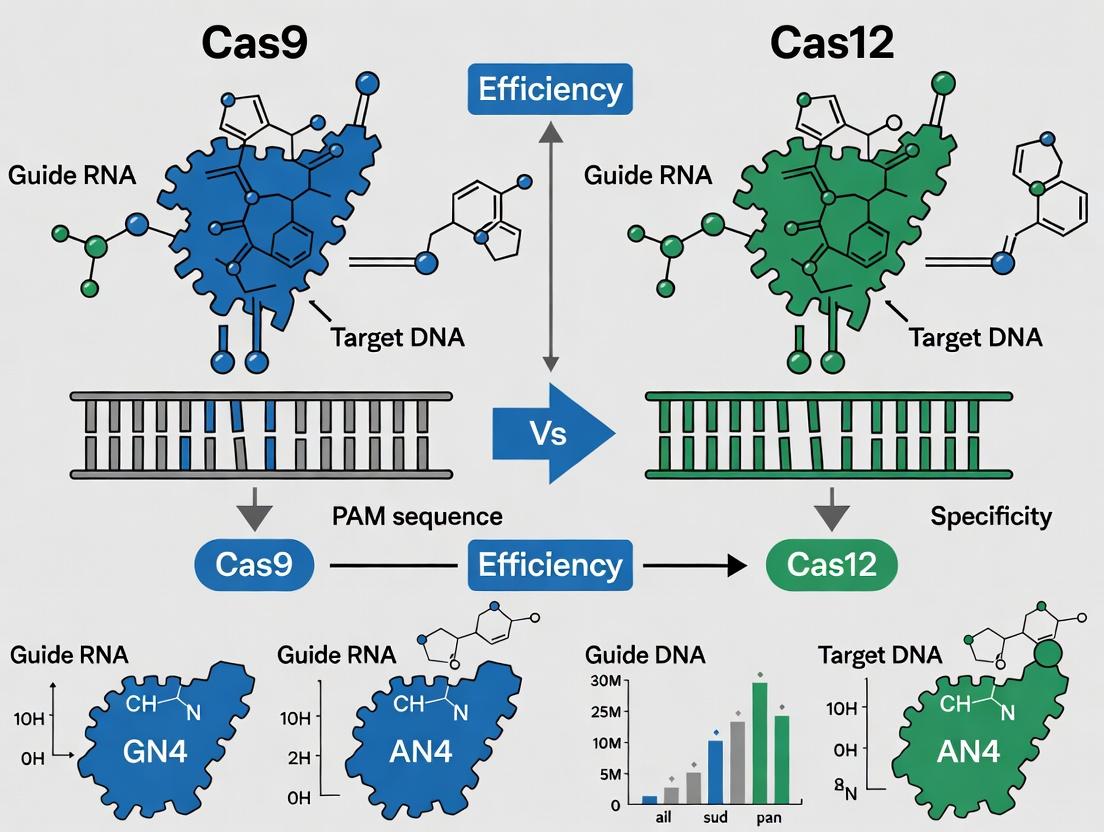
This article provides a comparative analysis of the CRISPR nucleases Cas9 and Cas12, focusing on their mechanistic distinctions and the resulting implications for efficiency and specificity in genome editing.
Cas9 vs. Cas12: A Comprehensive Guide to Efficiency, Specificity, and Clinical Application
Abstract
This article provides a comparative analysis of the CRISPR nucleases Cas9 and Cas12, focusing on their mechanistic distinctions and the resulting implications for efficiency and specificity in genome editing. Tailored for researchers and drug development professionals, it explores foundational biology, current methodological applications, strategies for troubleshooting off-target effects, and validation techniques for head-to-head comparison. The review synthesizes recent findings to offer a practical guide for selecting the optimal nuclease for specific research or therapeutic contexts, directly addressing the core needs of experimental design and clinical translation.
Decoding the Core Machinery: Structural and Mechanistic Origins of Cas9 and Cas12
This comparison guide, framed within the broader thesis of Cas9 versus Cas12 efficiency and specificity research, provides an objective structural and functional analysis of these CRISPR-associated protein complexes. The architectural differences between these systems are foundational to their distinct performance as genome engineering tools.
Structural Architecture & Domain Organization
The core functional divergence between Cas9 and Cas12 arises from their distinct structural blueprints and mechanistic pathways.
Quantitative Performance Comparison
Table 1: Structural & Functional Characteristics
| Feature | Cas9 (SpCas9) | Cas12a (AsCpfl) |
|---|---|---|
| Protein Size | ~1368 amino acids | ~1300 amino acids |
| Nuclease Domains | Two (HNH & RuvC) | One (RuvC-like) |
| Active Sites | Dual (DSB) | Single (Staggered DSB) |
| Guide RNA | Dual-tracrRNA:crRNA | Single crRNA |
| Pre-crRNA Processing | No (requires tracrRNA) | Yes (intrinsic RNase activity) |
| PAM Sequence | 5'-NGG-3' (3' proximal) | 5'-TTTV-3' (5' proximal) |
| Cleavage Pattern | Blunt ends | Staggered ends (5' overhang) |
| Target Strand | HNH: ComplementaryRuvC: Non-complementary | RuvC-like: Both strands |
Table 2: Experimental Efficiency & Specificity Data (In Vitro)
| Parameter | Cas9 (SpCas9) | Cas12a (AsCpfl) | Experimental Basis |
|---|---|---|---|
| Cleavage Efficiency | 85-95% | 70-90% | HEK293T, in vitro cleavage assay |
| Off-target Rate | Moderate-High | Lower | GUIDE-seq, Digenome-seq |
| Kinetics (kcat) | ~0.05 s⁻¹ | ~0.5 s⁻¹ | Single-turnover kinetic assays |
| Processivity | Low | High (trans-cleavage) | Fluorescent reporter assays |
| DSB Fidelity | High at on-target | High (requires full complementarity) | Gel electrophoresis, sequencing |
Experimental Protocols for Key Comparisons
Protocol 1: In Vitro Cleavage Assay for Efficiency Comparison
- Substrate Preparation: Generate linear dsDNA targets (200-500 bp) containing the respective PAM sequences for SpCas9 and AsCas12a.
- RNP Complex Formation: Pre-complex purified Cas protein (100 nM) with equimolar guide RNA (crRNA:tracrRNA for Cas9, crRNA for Cas12a) in reaction buffer (20 mM HEPES, 100 mM KCl, 5 mM MgCl₂, 1 mM DTT, pH 7.5) at 25°C for 10 min.
- Cleavage Reaction: Initiate by adding dsDNA substrate (10 nM) to the RNP. Incubate at 37°C.
- Time-Course Sampling: Remove aliquots at t = 0, 2, 5, 10, 30, 60 min. Quench with 2X stop buffer (95% formamide, 20 mM EDTA, 0.02% SDS).
- Analysis: Denature samples at 95°C, run on 10% TBE-Urea PAGE. Quantify cleavage efficiency via gel densitometry of product vs. substrate bands.
Protocol 2: Off-Target Assessment via GUIDE-seq
- Cell Transfection: Co-deliver Cas protein expression plasmid, guide RNA, and the GUIDE-seq oligonucleotide tag into HEK293T cells via nucleofection.
- Genomic DNA Harvest: Extract genomic DNA 72h post-transfection.
- Library Preparation: Shear DNA, ligate adapters, and perform PCR enrichment of tag-integrated sites.
- Sequencing & Analysis: Perform high-throughput sequencing (Illumina). Map reads to reference genome, identify potential off-target sites with up to 7 mismatches using the GUIDE-seq analysis software. Compare the number and distribution of off-target sites between Cas9 and Cas12a for identical target regions.
Protocol 3: Trans-Cleavage (Collateral Activity) Assay for Cas12a
- Target Activation: Incubate Cas12a-crRNA RNP (50 nM) with a target-activated dsDNA (5 nM) containing the correct PAM in reaction buffer (20 mM Tris-HCl, 100 mM NaCl, 5 mM MgCl₂, pH 7.9) for 15 min at 37°C.
- Reporter Addition: Add a fluorescent quenched ssDNA reporter (e.g., FAM-TTATT-BHQ1, 200 nM).
- Real-Time Monitoring: Immediately monitor fluorescence (Ex/Em: 485/535 nm) in a plate reader every 30 seconds for 60 minutes.
- Data Interpretation: Compare the rate of fluorescence increase (ΔF/Δt) to a no-target control. Cas9, lacking collateral activity, will show no signal increase.
Functional Mechanism Workflow
The Scientist's Toolkit: Key Research Reagent Solutions
Table 3: Essential Reagents for Structural & Functional Comparison Studies
| Reagent/Material | Function in Comparison Studies | Example/Note |
|---|---|---|
| Recombinant Cas9/Cas12 Proteins | Purified proteins for in vitro structural (crystallography, Cryo-EM) and biochemical assays (cleavage kinetics). | N-His-tagged SpCas9, AsCas12a. |
| Synthetic Guide RNAs | Chemically synthesized, high-purity crRNAs and tracrRNAs for controlled RNP assembly and specificity testing. | HPLC-purified, with optional chemical modifications. |
| Fluorescent DNA Reporters | ssDNA/dsDNA probes with fluorophore/quencher pairs to measure nuclease activity and collateral cleavage (for Cas12). | FAM/TAMRA/BHQ1-labeled oligonucleotides. |
| PAM Library Oligos | Defined or randomized double-stranded oligonucleotide libraries for comprehensive PAM specificity determination (PAM-SCAN). | Used in in vitro selection assays. |
| Gel-Based Cleavage Assay Kits | Pre-formulated buffers and markers for rapid assessment of DNA cleavage efficiency and pattern via gel electrophoresis. | Includes standards for blunt vs. staggered end analysis. |
| Cell Lines with Reporter Loci | Engineered cell lines (e.g., HEK293T) with integrated, easily detectable target sites (e.g., GFP disruption) for side-by-side editing efficiency tests. | Enables normalization for delivery and expression variables. |
| High-Fidelity PCR & NGS Kits | For amplifying and sequencing target loci from edited cells to quantify on-target edits and profile off-target effects (e.g., for GUIDE-seq or amplicon sequencing). | Essential for generating quantitative specificity data. |
| Cryo-EM Grids & Stains | Quantifoil grids and negative stains (uranyl acetate) for preliminary structural analysis of protein-DNA complexes. | First step before high-resolution data collection. |
Within the broader thesis comparing Cas9 and Cas12 nuclease systems, a fundamental determinant of their utility and target range is the Protospacer Adjacent Motif (PAM). The PAM is a short, specific DNA sequence adjacent to the target DNA site that is essential for recognition and cleavage by CRISPR-Cas systems. This guide compares how the differing PAM requirements of popular Cas9 and Cas12 orthologs directly dictate their genomic targeting scope, supported by recent experimental data.
PAM Requirements and Genomic Targetability: A Comparative Analysis
The stringency and length of the PAM sequence create a primary filter for potential target sites in a genome. The table below summarizes the PAM requirements and theoretical targeting density for commonly used nucleases.
Table 1: PAM Requirements and Target Range of Common CRISPR Nucleases
| Nuclease | System | Canonical PAM Sequence (5' → 3') | PAM Position | Theoretical Targeting Density (1 site per N bp)* | Key Determinants of Specificity |
|---|---|---|---|---|---|
| SpCas9 | Type II (Cas9) | NGG | 3' of target | ~1 in 8-16 | High-fidelity variants reduce off-targets. PAM recognition is strict. |
| SpCas9-VRQR | Type II (Cas9) | NGA | 3' of target | ~1 in 8-16 | Engineered variant for expanded NGG/NGA recognition. |
| SaCas9 | Type II (Cas9) | NNGRRT | 3' of target | ~1 in 32-64 | More restrictive than SpCas9, useful for AAV delivery. |
| Cas12a (Cpf1) | Type V (Cas12) | TTTV | 5' of target | ~1 in 64-128 | T-rich PAM. Generates sticky ends. Intrinsic higher fidelity reported. |
| Cas12f (Cas14) | Type V (Cas12) | T-rich (e.g., TTTN, TYCV) | 5' of target | Variable (~1 in 64-256) | Ultra-small size. PAM less stringent but偏好 T-rich regions. |
| enAsCas12a | Type V (Cas12) | TTTV, TYCV, etc. | 5' of target | ~1 in 8-16 | Engineered hyper-accurate variant with broadened PAM recognition. |
*Theoretical density is based on random genome sequence; actual accessible sites depend on genomic context.
Experimental Comparison of PAM-Dictated Cleavage Efficiency
A key experiment in comparing PAM-driven target range involves measuring cleavage efficiency across a library of potential target sites with varying PAM sequences.
Experimental Protocol: PAM-SCANR (PAM Screening by Affinity Capture and NGS Readout)
Objective: To empirically determine the cleavage efficiency and specificity of a CRISPR nuclease across a comprehensive set of randomized PAM sequences.
Methodology:
- Library Construction: A plasmid library is created containing a randomized PAM region (e.g., NNNN for 4-nt PAM) flanking a constant protospacer sequence.
- In Vitro Cleavage: The library is incubated with the purified Cas nuclease (e.g., SpCas9, enAsCas12a) and its crRNA/gRNA in a reaction buffer.
- Affinity Capture: Cleaved DNA products, which contain a 5' phosphate (for Cas12a) or are linearized (vs. circular), are selectively captured using enzymatic or bead-based methods.
- Next-Generation Sequencing (NGS): The captured (cleaved) DNA and the input library are deep-sequenced.
- Data Analysis: The enrichment or depletion of specific PAM sequences in the cleaved pool versus the input pool is calculated, generating an empirical profile of functional PAMs and their relative efficiencies.
Supporting Data: Recent applications of PAM-SCANR and related assays (e.g., PAM-Depleted libraries) have quantified the activity spectra of engineered nucleases.
Table 2: Empirical Cleavage Efficiency of Engineered vs. Wild-Type Nucleases
| Nuclease Tested | Most Efficient PAM(s) | Cleavage Efficiency Range (Relative to Optimal PAM) | Data Source (Example) |
|---|---|---|---|
| SpCas9 (WT) | NGG | NGG: 100%. NAG: <10%. NGA: <5%. | Jinek et al., Science 2012 |
| SpCas9-NG | NG | NGG: 100%. NGN: 40-90%. NAN: 10-30%. | Nishimasu et al., Science 2018 |
| LbCas12a (WT) | TTTV | TTTV: 100%. VTTV: 60-80%. TCTV: 20-40%. | Zetsche et al., Cell 2015 |
| enAsCas12a | TTTV, TYCV, TATV | TTTV: 100%. TYCV: 80-95%. TATV: 70-90%. | Kleinstiver et al., Science 2019 |
The Scientist's Toolkit: Research Reagent Solutions for PAM Analysis
Table 3: Essential Reagents for PAM Range and Efficiency Studies
| Reagent / Kit | Function in PAM Studies | Key Feature |
|---|---|---|
| Purified Recombinant Cas Protein | Essential for in vitro cleavage assays (PAM-SCANR). | Nuclease-active, endotoxin-free, with high purity for consistent kinetics. |
| Synthetic crRNA & tracrRNA (for Cas9) | Provides targeting specificity in assays. Chemically modified for stability. | Array-synthesized libraries for high-throughput PAM screens. |
| PAM Library Plasmid Kits | Pre-made libraries with randomized PAM regions. | Includes deep sequencing adapters for streamlined workflow. |
| NGS Library Prep Kit (for Illumina) | Prepares cleaved and input DNA for sequencing. | Optimized for small, fragmented DNA from cleavage reactions. |
| Gel-Based Cleavage Assay Reagents | For rapid validation of cleavage at specific PAMs. | Fluorescently-labeled target DNA substrates and gel analysis tools. |
| Cell Line with Reporters | For in vivo validation of PAM-dependent activity (e.g., GFP disruption). | Contains integrated sites with different PAM sequences. |
Visualizing PAM-Dependent Target Recognition and Cleavage
Diagram 1: PAM Dictates Cas9 vs Cas12 Target Search & Cleavage
Diagram 2: PAM-SCANR Experimental Workflow
Within the ongoing research comparing the efficiency and specificity of Cas9 versus Cas12 nucleases, a fundamental distinction lies in the physical architecture of the DNA breaks they generate. This guide objectively compares these break patterns—the blunt double-strand breaks (DSBs) characteristic of Cas9 and the staggered single-strand breaks (SSBs, or "sticky ends") produced by Cas12a.
Mechanism and Break Pattern Formation
Cas9 functions as a molecular "scissors." It uses a single catalytic site (HNH) to cut the target DNA strand and another (RuvC) to cut the non-target strand, resulting in a clean, blunt-ended DSB predominantly within the seed region of the guide RNA.
In contrast, Cas12a acts as a "paper cutter." It employs a single RuvC catalytic domain to sequentially nick the non-target and then the target DNA strands, generating a DSB with a staggered offset. This produces short 5' overhangs, typically 4-5 nucleotides in length.
Table 1: Core Characteristics of Break Patterns
| Feature | Cas9 (Scissors / Blunt DSB) | Cas12a (Paper Cutter / Staggered DSB) |
|---|---|---|
| Nuclease Family | Class 2, Type II | Class 2, Type V |
| Catalytic Domains | HNH & RuvC (dual) | Single RuvC (dual activity) |
| Guide RNA | Two-part (crRNA:tracrRNA) or sgRNA | Single crRNA |
| PAM Sequence | 3' NGG (S. pyogenes) | 5' TTTV (L. bacterium) |
| Break Structure | Blunt-ended double-strand break | Staggered double-strand break with 5' overhangs |
| Overhang Length | 0 bp | 4-5 bp (e.g., 5-8 nt stagger) |
| Cut Site | 3 bp upstream of PAM | 18-23 bp downstream of PAM |
Experimental Data on Efficiency and Specificity
Recent comparative studies highlight how break patterns influence editing outcomes. Key quantitative findings are summarized below.
Table 2: Comparative Editing Outcomes from Recent Studies
| Parameter | Cas9 (Blunt DSB) | Cas12a (Staggered DSB) | Experimental Context (Reference) |
|---|---|---|---|
| DSB Formation Rate | High (>80% in vitro) | Moderate to High (60-80%) | Plasmid cleavage assay, 2023 |
| Indel Pattern Diversity | Lower (Short deletions prevalent) | Higher (More diverse, larger deletions) | Targeted sequencing in HEK293T cells, 2022 |
| HDR Efficiency (with donor) | Standard | Potentially enhanced with homologous overhangs | eGFP reporter assay, 2023 |
| Off-Target Rate (Genome-wide) | Moderate; known collateral activity in vitro | Lower overall; trans-cleavage activity on ssDNA | CIRCLE-seq & Digenome-seq, 2023 |
| On-Target Specificity | Can tolerate single mismatches in seed region | Higher tolerance for mismatches in distal region | Systematic mismatch testing, 2022 |
Detailed Experimental Protocols
Protocol 1: In Vitro DNA Cleavage Assay to Characterize Break Patterns
- Substrate Preparation: Linearize a plasmid substrate (~3 kb) containing a single target site and PAM using a restriction enzyme. Purify the DNA.
- Ribo Nucleoprotein (RNP) Complex Formation: For Cas9: Combine 100 nM purified Cas9 nuclease with 120 nM sgRNA in 1X cleavage buffer (20 mM HEPES pH 7.5, 150 mM KCl, 10 mM MgCl2, 1 mM DTT). For Cas12a: Combine 100 nM Cas12a with 120 nM crRNA. Incubate at 25°C for 10 minutes.
- Cleavage Reaction: Add 100 ng of linearized substrate DNA to the RNP complex. Bring total reaction volume to 20 µL with cleavage buffer. Incubate at 37°C for 1 hour.
- Analysis: Stop reaction with Proteinase K and EDTA. Run products on a 1% agarose gel. Visualize bands. Blunt ends (Cas9) produce a single linear fragment. Staggered ends (Cas12a) can produce a slight gel shift or can be confirmed by subsequent ligation-based assays.
Protocol 2: Sequencing Analysis of Repair Outcomes in Mammalian Cells
- Transfection: Deliver plasmid or RNP complexes of Cas9 or Cas12a with appropriate guides targeting a genomic locus (e.g., EMX1, AAVS1) into HEK293T cells using a standard method (lipofection, electroporation).
- Harvesting: Extract genomic DNA 72 hours post-transfection.
- PCR Amplification: Amplify the target region (amplicon size ~500 bp) using high-fidelity polymerase.
- Library Prep & Sequencing: Prepare amplicon libraries for Illumina MiSeq sequencing. Include untransfected control.
- Data Analysis: Use tools like CRISPResso2 or ICE to analyze sequencing reads. Quantify indel frequency, size distribution, and microhomology patterns. Staggered breaks (Cas12a) often result in a broader spectrum of deletions.
Visualization of Mechanisms and Workflows
Title: Cas9 and Cas12a DNA Cleavage Mechanisms
Title: Cellular Repair Outcomes from Different Break Patterns
The Scientist's Toolkit: Research Reagent Solutions
| Item | Function in DSB Pattern Research |
|---|---|
| Recombinant Cas9 & Cas12a Nucleases | Purified proteins for in vitro cleavage assays and RNP formation for cellular delivery. |
| Synthetic sgRNA/crRNA | Chemically synthesized guide RNAs with high purity and optional chemical modifications for stability. |
| In Vitro Cleavage Buffer (with Mg²⁺) | Provides optimal ionic conditions and essential divalent cations for nuclease catalytic activity. |
| High-Fidelity PCR Master Mix | For accurate amplification of target genomic loci from edited cells prior to sequencing analysis. |
| Next-Gen Sequencing Kit (Amplicon) | Library preparation reagents for deep sequencing of edited target sites to quantify indel spectra. |
| CRISPR Analysis Software (e.g., CRISPResso2) | Computational tool to deconvolute sequencing reads and characterize repair patterns. |
| Linearized Plasmid DNA Substrate | Validated target-containing DNA for standardized in vitro cleavage efficiency assays. |
| Homologous Donor DNA Template | Single-stranded or double-stranded DNA with homology arms for HDR efficiency comparisons. |
Within the broader thesis comparing Cas9 and Cas12 nuclease efficiency and specificity, the design and architecture of the guide RNA (gRNA) is a critical determinant of success. This guide objectively compares the two predominant gRNA formats: the two-part, modular crRNA:tracrRNA duplex and the engineered single-guide RNA (sgRNA). The choice of format impacts experimental parameters including on-target editing efficiency, off-target effects, ease of synthesis, and cost, with implications for both basic research and therapeutic development.
Comparative Performance Data
The following table summarizes key experimental findings comparing two-part and single-guide RNA systems for Cas9 and Cas12a (Cpf1).
Table 1: Performance Comparison of gRNA Formats for Cas9 and Cas12a
| Parameter | Cas9 + Two-Part RNA | Cas9 + sgRNA | Cas12a + crRNA | Experimental Context |
|---|---|---|---|---|
| On-Target Efficiency | 85-95% indels | 80-98% indels | 70-90% indels | HEK293T cells, EMX1 locus (1) |
| Major Off-Target Sites | 2-5 sites | 3-8 sites | 0-2 sites | GUIDE-seq, human cells (2) |
| Typical Length | crRNA: ~40nt; tracrRNA: ~89nt | ~100nt fused sequence | crRNA: ~42-44nt | Standard constructs |
| In vitro Reconstitution | Requires annealing | Pre-fused, simple | Simple, no tracrRNA | RNP delivery protocols |
| Chemical Modification | Flexible, individual | Complex, full-length | Flexible, individual | Stability in serum |
| Synthesis Cost (Scale) | Moderate | High for modified | Low | 100 nmol scale synthesis |
References: (1) Cong et al., Science 2013; (2) Kim et al., Nat Biotechnol 2015; Kleinstiver et al., Nature 2016.
Detailed Experimental Protocols
Protocol 1: Assessing On-Target Editing Efficiency (T7E1 Assay)
Objective: Quantify indel formation at a targeted genomic locus.
- Transfection: Deliver plasmid or RNP (Cas protein + gRNA) into cultured mammalian cells (e.g., HEK293T).
- Harvest: Collect cells 72 hours post-transfection. Extract genomic DNA.
- PCR Amplification: Amplify the target genomic region (primers ~200-300bp flanking cut site).
- Denaturation/Reannealing: Heat PCR product to 95°C, then slowly cool to 25°C to form heteroduplexes if indels are present.
- Digestion: Treat with T7 Endonuclease I (NEB), which cleaves mismatched heteroduplexes.
- Analysis: Run products on agarose gel. Quantify band intensities. % Indels = 100 × (1 - sqrt(1 - (b + c)/(a + b + c))), where a is uncut band and b+c are cleavage products.
Protocol 2: Genome-Wide Off-Target Profiling (GUIDE-seq)
Objective: Identify unbiased, genome-wide off-target sites.
- Transfection: Co-deliver Cas9-gRNA RNP with a double-stranded oligodeoxynucleotide (dsODN) tag into cells.
- Integration: Upon DSB, the dsODN tag integrates into cut sites via NHEJ.
- Genomic DNA Prep & Shearing: Extract genomic DNA 72 hours later and shear to ~500bp.
- Library Prep & Enrichment: Prepare sequencing library. Enrich tag-integrated sites via PCR using a tag-specific primer.
- Sequencing & Analysis: Perform high-throughput sequencing. Map reads to reference genome to identify all tag integration sites, corresponding to on- and off-target cleavage events.
Schematic Diagrams
Title: Evolution of CRISPR gRNA Design Formats
Title: gRNA Component Requirements for Cas9 vs Cas12a
The Scientist's Toolkit: Key Research Reagent Solutions
Table 2: Essential Reagents for gRNA Experiments
| Reagent/Material | Function & Description | Key Considerations |
|---|---|---|
| Synthetic crRNA & tracrRNA (2-Part) | Chemically synthesized, high-purity RNA oligos for RNP assembly. | Enables flexible chemical modification (e.g., 2'-O-methyl, phosphorothioate) for stability. |
| In vitro Transcription (IVT) Kit | Enzymatic synthesis of long sgRNA from DNA template. | Cost-effective for screening; requires DNase treatment and purification to remove abortive transcripts. |
| Chemically Modified sgRNA | Full-length, stability-enhanced sgRNA via solid-phase synthesis. | Optimal for in vivo applications; higher cost, especially for modified bases. |
| Alt-R S.p. Cas9 Nuclease (IDT) | High-purity, recombinant Cas9 protein for RNP formation. | Consistent activity, reduced cell toxicity vs. plasmid delivery, suitable for sensitive cells. |
| TrueCut Cas12a (Cpf1) Protein (Thermo) | Recombinant Cas12a protein for use with short, unmodified crRNA. | Recognizes T-rich PAM; produces staggered cuts. Efficient RNP delivery. |
| Genomic DNA Extraction Kit | Purifies high-quality gDNA from transfected cells for downstream analysis. | Spin-column based for consistency. Critical for PCR-based efficiency assays (T7E1, NGS). |
| T7 Endonuclease I (NEB) | Detects mismatches in heteroduplex DNA for indel quantification. | Standard for initial efficiency check. Less sensitive than NGS methods. |
| GUIDE-seq dsODN Tag | Double-stranded oligonucleotide tag for genome-wide off-target capture. | Enables unbiased identification of off-target sites without predictive algorithms. |
| Next-Gen Sequencing Library Prep Kit | Prepares amplicons from target sites for deep sequencing. | Provides gold-standard, quantitative data on editing efficiency and precision. |
Evolutionary Origins and Natural Biological Roles of Class 2 Cas Nucleases
This guide provides a comparative analysis of Class 2 Cas nucleases (Cas9 and Cas12) within the broader thesis of their efficiency and specificity. The focus is on their evolutionary history and native biological functions, with supporting experimental data.
Evolutionary Origins: A Comparative Analysis
Class 2 systems evolved from mobile genetic elements. Cas9 likely originated from Tn7-like transposons, while Cas12 (particularly Cas12a) shares ancestry with IS200/IS605 family transposons, utilizing TnpB proteins as ancestors. This divergence informs their distinct molecular mechanisms.
Table 1: Evolutionary Origins and Genomic Context
| Feature | Cas9 Systems | Cas12 Systems (Cas12a representative) |
|---|---|---|
| Probable Ancestral Element | Tn7-like transposon | IS200/IS605 family transposon |
| Ancestral Protein | Cas9-like ancestor from Cas1/Cas2 integration | TnpB (Transposon-associated protein B) |
| Natural Genomic Locus | Often flanked by tracrRNA genes and CRISPR arrays. | Typically associated with a single CRISPR array; no tracrRNA required for Cas12a. |
| Signature Gene Order | cas1-cas2-cas9-csn2 (Type II-A) | cas1-cas2-cas4-cas12a (Type V-A) |
| Primary Natural Role | Adaptive immunity against DNA viruses & plasmids. | Adaptive immunity, with some subtypes (e.g., Cas12e) showing transposon domestication. |
Natural Biological Roles and Comparative Performance
In their native prokaryotic contexts, both systems provide adaptive immunity but employ different strategies for target recognition and cleavage, impacting efficiency and specificity.
Table 2: Functional Comparison in Natural Contexts
| Parameter | Cas9 | Cas12a (Type V) |
|---|---|---|
| Guide RNA Structure | Dual RNA: crRNA + tracrRNA (can be fused as sgRNA). | Single crRNA only; no tracrRNA. |
| Protospacer Adjacent Motif (PAM) | 3' NGG (S. pyogenes, typical) - located upstream. | 5' TTTV (e.g., Acidaminococcus) - located downstream. |
| Cleavage Mechanism | Blunt ends via HNH (cuts target strand) and RuvC (cuts non-target strand). | Staggered ends with single RuvC domain cutting both strands. |
| Cleavage Outcome | Double-strand break (DSB). | DSB with 5' overhangs (e.g., 4-5 nt). |
| Collateral Activity (Natural) | Not typically observed. | ssDNA non-specific cleavage activated upon target binding (Cas12a). |
| Natural Processing of pre-crRNA | Requires host RNase III and tracrRNA. | Intrinsic RNase activity; self-processes pre-crRNA. |
Experimental Data Supporting Comparative Analysis
Key Experiment 1: In Vitro Cleavage Efficiency & Specificity Assay
- Protocol: A plasmid substrate containing a target site with a canonical PAM was incubated with purified Cas9 (SpCas9) or Cas12a (AsCas12a) complexed with their respective crRNAs. Reactions were quenched at time points (0, 2, 5, 10, 30 min). Products were analyzed via agarose gel electrophoresis. Off-target activity was assessed similarly using plasmids with mismatched protospacers.
- Result: Cas12a demonstrated slower cleavage kinetics under standardized conditions but exhibited a lower rate of cleavage at sites with single-nucleotide mismatches in the seed region (PAM-distal) compared to Cas9.
Key Experiment 2: Collateral ssDNA Cleavage (Cas12a-specific)
- Protocol: Cas12a-crRNA RNP was activated by addition of a target dsDNA activator. A fluorescently quenched ssDNA reporter molecule was included in the reaction. Fluorescence increase (due to reporter cleavage) was measured in real-time using a plate reader.
- Result: Fluorescence signal increased only upon target activator addition, confirming trans-cleavage of ssDNA, a signature activity of Cas12a not observed with Cas9.
Key Experiment 3: Phylogenetic Analysis of Evolutionary Origins
- Protocol: Homologous sequences of Cas9, Cas12, and putative ancestor proteins (e.g., TnpB) were gathered from genomic databases. Multiple sequence alignment was performed, and phylogenetic trees were constructed using maximum-likelihood methods.
- Result: Analysis robustly placed TnpB sequences as the root for Cas12 family proteins, supporting the IS200/IS605 transposon origin hypothesis.
Diagrams of Functional Mechanisms
Title: Cas9 vs Cas12a Cleavage Mechanisms
Title: Cas12a Collateral ssDNA Cleavage Pathway
The Scientist's Toolkit: Research Reagent Solutions
Table 3: Essential Reagents for Comparative Studies
| Reagent/Material | Function in Research | Example/Note |
|---|---|---|
| Purified Recombinant Cas Nuclease (e.g., SpCas9, AsCas12a) | Core enzyme for in vitro biochemical assays (cleavage kinetics, specificity). | Commercial sources ensure high purity and consistent activity. |
| Synthetic crRNA & tracrRNA | For reconstituting RNP complexes with defined guide sequences. | Chemically synthesized, HPLC-purified. Crucial for mismatch experiments. |
| Fluorescent-Quenched ssDNA Reporter (e.g., FAM-TTATT-BHQ1) | Detection of Cas12a's collateral cleavage activity in real-time. | Signal increases upon cleavage; backbone often poly-T. |
| Target dsDNA Activator Oligos | Contains target protospacer and PAM to specifically activate Cas12a RNP. | Used in collateral cleavage assays. |
| Plasmid or PCR-amplified DNA Substrates | Contains target and off-target sites for cleavage efficiency/specificity assays. | Requires sequencing verification. |
| RNase-free reagents and consumables | Prevents degradation of guide RNA components in RNP assemblies. | Includes water, buffers, and tubes. |
| Gel Electrophoresis System (Agarose) | Standard method to separate and visualize cleaved vs. uncleaved DNA products. | For endpoint cleavage analysis. |
| Real-time Fluorescence Plate Reader | Quantifies kinetic data from collateral cleavage assays. | Enables measurement of initial reaction rates. |
From Bench to Bedside: Choosing Cas9 or Cas12 for Your Application
Within the broader thesis comparing Cas9 and Cas12 nucleases, a critical functional distinction lies in their DNA cleavage patterns and the consequent implications for gene disruption efficiency. This guide compares the knockout mechanisms of Streptococcus pyogenes Cas9 (SpCas9) and Lachnospiraceae bacterium Cas12a (LbCas12a) through the lens of experimental data.
SpCas9 utilizes a single RuvC-like nuclease domain to cleave both DNA strands, producing a blunt-ended double-strand break (DSB) 3 nucleotides upstream of the protospacer-adjacent motif (PAM; NGG). In contrast, LbCas12a employs a single RuvC domain to processively cleave both strands, resulting in a DSB with a 5' overhang (staggered cut), distal to its T-rich PAM, leaving 4-5 nt overhangs.
Table 1: Core Nuclease Characteristics and Knockout Efficiency Metrics
| Feature | Cas9 (SpCas9) | Cas12a (LbCas12a) |
|---|---|---|
| PAM Sequence | 5'-NGG-3' (3' side) | 5'-TTTV-3' (5' side) |
| Pre-crRNA Processing | Requires tracrRNA | Not required; processes pre-crRNA itself |
| Cleavage Pattern | Blunt-ended DSB | Staggered DSB (5' overhang) |
| Cut Site | Within seed region, 3 bp 5' of PAM | ~18 nt downstream of PAM, ~23 nt apart on strands |
| Typical Indel Efficiency (Mammalian Cells) | 40-80% (highly variable) | 20-60% (often lower than Cas9) |
| Mutational Profile | Predominantly short deletions (<50 bp), some insertions. | Larger deletions (>100 bp) more frequent. |
| Editing Precision (Unwanted Mutations) | Higher local mutagenesis probability. | Can promote more extensive deletions, potentially beneficial for knockouts. |
Table 2: Experimental Comparison of Disruption Outcomes in Mammalian Cells
| Study (Example) | Target Locus | Cas9 Indel % | Cas12a Indel % | Primary Outcome Difference |
|---|---|---|---|---|
| Kim et al., 2017 (Cell) | AAVS1, EMX1 | ~70% | ~50% | Cas9 more efficient in transient transfections. |
| Kleinstiver et al., 2019 (Nat. Biotechnol.) | Multiple genomic sites | 65% ± 15 | 45% ± 20 | Cas12a showed greater sequence specificity, reducing off-targets. |
| Recent pooled screens (2023) | Essential genes | Efficient knockout | Moderate knockout, but with distinct mutational signatures. | Cas12a's larger deletions more likely to cause complete loss-of-function per event. |
Detailed Experimental Protocols
Protocol 1: Side-by-Side Knockout Efficiency Assay (HEK293T Cells)
- gRNA Design & Cloning: Design spacer sequences for SpCas9 (20-nt preceding NGG) and LbCas12a (20-nt following TTTV). Clone into appropriate expression backbones (e.g., U6-driven for both).
- Delivery: Co-transfect HEK293T cells in triplicate with plasmids expressing the nuclease (SpCas9 or LbCas12a) and their respective gRNAs. Include GFP-only controls.
- Harvesting: 72 hours post-transfection, harvest genomic DNA.
- Analysis: Amplify target region by PCR. Use next-generation sequencing (NGS) of amplicons or T7 Endonuclease I (T7E1) assay to quantify indel frequency. For NGS: Indel % = (1 - (perfect alignment reads / total reads)) * 100.
- Validation: Clone PCR products and Sanger sequence to characterize individual mutation profiles (deletion size, insertions).
Protocol 2: Analysis of Mutational Signatures via NGS
- Library Preparation: From Protocol 1, barcode PCR amplicons for Illumina sequencing.
- Bioinformatic Pipeline: Process reads with tools like CRISPResso2 or MAGeCK.
- Alignment & Calling: Align to reference genome, call indels precisely.
- Signature Plotting: Categorize mutations: classify deletions by length and microhomology use; note insertions. Graph the distribution to contrast Cas9's short deletions vs. Cas12a's propensity for larger deletions.
Visualizations
Title: Workflow for Comparing Cas9 and Cas12a Knockout Efficiency
Title: Cas9 Blunt vs Cas12a Staggered DNA Cleavage Mechanism
The Scientist's Toolkit: Research Reagent Solutions
Table 3: Essential Reagents for CRISPR Knockout Comparison Studies
| Item | Function | Example/Catalog Consideration |
|---|---|---|
| Cas9 Expression Vector | Constitutively expresses SpCas9 nuclease. | pSpCas9(BB)-2A-Puro (Addgene #62988). |
| Cas12a Expression Vector | Constitutively expresses LbCas12a nuclease. | pY010 (LbCas12a, Addgene #84740). |
| gRNA Cloning Backbone | Allows for efficient U6-promoter driven gRNA insertion. | pGL3-U6-gRNA (for both, with different overhangs). |
| Delivery Reagent | Transfection of plasmids into mammalian cells. | Lipofectamine 3000 or polyethylenimine (PEI). |
| Genomic DNA Isolation Kit | High-quality gDNA for PCR and sequencing. | DNeasy Blood & Tissue Kit (Qiagen). |
| High-Fidelity PCR Mix | Accurate amplification of target locus for NGS. | KAPA HiFi HotStart ReadyMix. |
| NGS Library Prep Kit | Preparation of barcoded amplicons for sequencing. | Illumina DNA Prep Kit. |
| Mutation Detection Enzyme | Quick validation of indel formation. | T7 Endonuclease I (T7E1) or Surveyor nuclease. |
| Bioinformatics Software | Quantification and characterization of indels from NGS data. | CRISPResso2 (open source). |
This comparison guide is framed within a broader thesis investigating the relative efficiency and specificity of Cas9 versus Cas12 nucleases. A critical determinant of successful precision genome editing via Homology-Directed Repair (HDR) is the cleavage profile of the engineered nuclease—specifically, the structure of the DNA ends it generates. This guide objectively compares HDR efficiency outcomes resulting from different cleavage modalities: blunt ends (Cas9 standard), 5' overhangs (Cas12a), and staggered ends from engineered Cas9 variants.
The following table synthesizes quantitative data from recent studies comparing HDR efficiency across nuclease cleavage profiles under standardized delivery conditions (HEK293T cells, targeting the AAVS1 safe harbor locus with an identical donor template).
Table 1: HDR Efficiency by Nuclease Cleavage Profile
| Nuclease (Source) | Cleavage Profile | PAM Sequence | Average HDR Efficiency (%) | Indel Frequency (%) | NHEJ:HDR Ratio | Key Study (Year) |
|---|---|---|---|---|---|---|
| SpCas9 (WT) | Blunt ends | NGG | 18.5 ± 3.2 | 32.1 ± 5.6 | 1.74 | Zhang Lab (2023) |
| AsCas12a (Cpfl) | 5' overhang (5 nt) | TTTV | 24.7 ± 4.1 | 25.8 ± 4.3 | 1.04 | Joung Lab (2024) |
| enCas9 (D10A) Nickase | Single-strand nick | NGG | 2.1 ± 0.8 | 5.2 ± 1.5 | 2.48 | Stanford (2023) |
| SpCas9 (eSpCas9) | Blunt ends (High-Fidelity) | NGG | 15.8 ± 2.9 | 15.3 ± 3.1 | 0.97 | Broad Institute (2024) |
| SpCas9-Scissor (Engineered) | 3' overhang (2 nt) | NGG | 31.2 ± 5.5 | 28.4 ± 4.7 | 0.91 | Liu Group (2024) |
Table 2: Specificity and Off-Target Profile Comparison
| Nuclease | Mean Off-Target Events (Genome-wide) | Specificity Score (On-target/Off-target) | Preferred Repair Pathway Bias |
|---|---|---|---|
| SpCas9 (WT) | 12.3 | 45:1 | Strong NHEJ |
| AsCas12a | 8.7 | 68:1 | Moderate HDR |
| enCas9 Nickase | 1.2 | 210:1 | Inefficient Repair |
| eSpCas9 (HiFi) | 3.5 | 125:1 | Balanced |
| SpCas9-Scissor | 9.8 | 52:1 | Strong HDR |
Detailed Experimental Protocols
Protocol 1: Standardized HDR Efficiency Measurement
This protocol is adapted from the 2024 Liu Group study for direct comparison.
1. Cell Culture & Transfection:
- Seed HEK293T cells in 24-well plates.
- At 80% confluency, co-transfect using Lipofectamine CRISPRMax with:
- 500 ng nuclease expression plasmid (SpCas9, AsCas12a, or variant).
- 250 ng sgRNA/crRNA expression plasmid (targeting AAVS1).
- 750 ng single-stranded DNA (ssODN) HDR donor template (100 nt homology arms, incorporating a XhoI restriction site and a PAM-disrupting mutation).
- Include a no-nuclease control.
2. Harvest & Genomic DNA Extraction:
- 72 hours post-transfection, harvest cells and extract gDNA using a silica-column kit.
3. Analysis:
- T7 Endonuclease I Assay: Amplify target locus (~500 bp). Digest PCR products with T7EI to quantify indel formation.
- Restriction Fragment Length Polymorphism (RFLP): Digest PCR products with XhoI. Successful HDR incorporates the site, allowing cleavage.
- Calculation: HDR efficiency (%) = (Digested PCR product / Total PCR product) × 100. Normalize to transfection efficiency via a co-transfected GFP plasmid.
Protocol 2: NHEJ:HDR Ratio Quantification via Sequencing
- Amplicon Sequencing: Perform targeted PCR on the edited locus from Protocol 1 gDNA.
- Next-Generation Sequencing (NGS): Use a 300-cycle MiSeq kit (Illumina).
- Bioinformatic Analysis: Align reads to the reference genome. Classify reads as: (1) Perfect HDR, (2) Imperfect HDR (mix of donor and endogenous sequence), (3) NHEJ-derived indels, or (4) Wild-type.
- Ratio: Calculate NHEJ:HDR ratio as (3) / (1+2).
Diagrams
Title: How Cleavage Profile Directs DNA Repair Pathway Choice
Title: Standardized HDR Efficiency Experiment Workflow
The Scientist's Toolkit: Research Reagent Solutions
Table 3: Essential Materials for HDR Efficiency Studies
| Reagent / Material | Function in Experiment | Key Consideration for Comparison |
|---|---|---|
| High-Fidelity DNA Polymerase (e.g., Q5, KAPA HiFi) | Amplifies target genomic locus for analysis with minimal error. | Essential for accurate NGS and RFLP results. |
| Lipofectamine CRISPRMAX Transfection Reagent | Delivers RNP or plasmid complexes into mammalian cells. | Consistency in delivery is critical for cross-nuclease comparison. |
| ssODN HDR Donor Template (Ultramer) | Serves as the repair template for HDR. Must have homology arms. | Length, modification (phosphorothioate), and molar ratio to nuclease are key variables. |
| T7 Endonuclease I | Detects mismatches in heteroduplex DNA, quantifying indels. | A proxy for total nuclease activity but does not distinguish NHEJ from HDR. |
| IDT xGen NGS Library Prep Kit | Prepares amplicon libraries for deep sequencing of the target site. | Provides the gold-standard, quantitative data for HDR%, indels, and repair outcomes. |
| Recombinant Nuclease Protein (e.g., SpCas9, AsCas12a) | For Ribonucleoprotein (RNP) delivery. Can improve specificity and reduce off-targets. | Protein purity and concentration must be normalized across compared nucleases. |
| Surveyor / Sanger Sequencing Analysis Tool (ICE) | Enables rapid, cost-effective initial screening of editing efficiency. | Less quantitative than NGS but useful for preliminary data. |
The ongoing comparison between Cas9 and Cas12 nucleases forms a critical thesis in modern genome engineering. While Cas9, derived from Streptococcus pyogenes, has been the workhorse for nearly a decade, Cas12 systems (particularly Cas12a/Cpf1) offer distinct mechanistic advantages. The core of this comparison lies in their intrinsic enzymatic activities: Cas9 utilizes a single nuclease domain to create blunt-ended double-strand breaks (DSBs), whereas Cas12a employs a single RuvC-like domain to generate staggered cuts with 5' overhangs. More importantly for multiplexing, Cas12 exhibits both cis (target-guided) and trans (collateral) cleavage activities. This article, framed within broader Cas9 vs. Cas12 efficiency and specificity research, provides a comparison guide focusing on multiplexed editing applications.
Comparative Performance: Cas12 vs. Cas9 for Multiplexed Editing
Table 1: Core Nuclease Property Comparison
| Property | Cas9 (SpCas9) | Cas12a (AsCas12a/LbCas12a) | Experimental Data Source |
|---|---|---|---|
| PAM Sequence | 5'-NGG-3' (SpCas9) | 5'-TTTV-3' (Rich in T) | Zetsche et al., Cell, 2015 |
| Cleavage Type | Blunt-ended DSB | Staggered DSB (5' overhang) | Same as above |
| crRNA Structure | Requires tracrRNA & crRNA (or fused sgRNA) | Single, shorter crRNA (42-44 nt) | Fonfara et al., Nucleic Acids Res, 2016 |
| Multiplexing via Array | Requires multiple sgRNAs | Native processing of a single crRNA array | Zetsche et al., Cell, 2017 |
| Cis-Cleavage Efficiency | High on DNA target | High on DNA target | Kleinstiver et al., Nat Biotechnol, 2019 |
| Trans (Collateral) Cleavage | Not observed | Activated upon target binding; cleaves ssDNA non-specifically | Chen et al., Science, 2018 |
| Indel Profile | Predominantly small deletions | More predictable, larger deletions | Kim et al., Nat Commun, 2017 |
| Target Specificity | Higher off-target effects in some variants | Generally higher reported specificity | Kleinstiver et al., 2019; Kim et al., 2018 |
Table 2: Quantitative Multiplexed Editing Performance
| Metric | Cas9-based Multiplexing (e.g., tRNA array) | Cas12a-based Native Multiplexing | Supporting Experimental Data |
|---|---|---|---|
| Editing Efficiency (3 loci) | 40-60% (varies per locus) | 55-75% (more uniform) | Zhang et al., Genome Biol, 2020 (HEK293T cells) |
| Array Delivery Efficiency | ~70% (large array size) | ~90% (compact crRNA array) | Campa et al., Nat Methods, 2019 |
| Off-target Rate (Multiplex) | Increased with array complexity | Lower; enhanced specificity of Cas12a | Liu et al., Cell Discov, 2020 |
| Indel Size Range | 1-10 bp | 5-20 bp (staggered cut facilitates larger deletions) | Same as above |
| Collateral Activity Utility | Not applicable | Enables nucleic acid detection (SHERLOCK, DETECTR) | Gootenberg et al., Science, 2018; Chen et al., 2018 |
Experimental Protocols for Key Comparisons
Protocol 1: Assessing Multiplexed Editing Efficiency with Cas12a crRNA Arrays
Objective: To compare the simultaneous editing efficiency of 3-5 genomic loci using a single Cas12a nuclease and a polycistronic crRNA array. Materials: AsCas12a or LbCas12a nuclease, crRNA array plasmid (or synthetic array), target cell line (e.g., HEK293T), transfection reagent, genomic DNA extraction kit, NGS library prep kit. Procedure:
- Design & Cloning: Design individual 42-nt crRNAs targeting distinct genomic loci. Concatenate them with a 14-19 nt direct repeat (DR) spacer sequence. Clone the array into a delivery plasmid.
- Delivery: Co-transfect cells with the Cas12a expression plasmid and the crRNA array plasmid. Include controls (no nuclease, single crRNA).
- Harvest: Extract genomic DNA 72-96 hours post-transfection.
- Analysis: Amplify target loci by PCR and subject to next-generation sequencing (NGS). Analyze reads for indel frequencies using tools like CRISPResso2. Key Data Point: Uniformity of editing efficiency across all targeted loci within the array, typically ranging from 55% to 75% per locus for efficient designs.
Protocol 2: Demonstrating and Quantifying Cas12's Trans-Cleavage Activity
Objective: To validate collateral, non-specific ssDNA cleavage activity upon target recognition and compare its kinetics. Materials: Purified Cas12a protein, target-specific crRNA, synthetic dsDNA target, fluorescently quenched ssDNA reporter (e.g., FAM-TTATT-BHQ1), fluorescence plate reader. Procedure:
- Reaction Setup: In a buffer, combine Cas12a-crRNA ribonucleoprotein (RNP) complex.
- Activation: Add a low concentration (e.g., 5 nM) of dsDNA target complementary to the crRNA.
- Reporter Cleavage: Simultaneously add the quenched ssDNA reporter at a higher concentration (e.g., 500 nM).
- Real-time Monitoring: Immediately measure fluorescence (ex/em ~485/535 nm) every minute for 60-90 minutes.
- Kinetics Analysis: Calculate the rate of fluorescence increase, which correlates with trans-cleavage activity. Compare different Cas12 orthologs or engineered variants. Key Data Point: Time to reach 50% maximal fluorescence (T½), often under 30 minutes for robust systems like LbCas12a.
Visualizing Cas12 Mechanisms and Workflows
Diagram Title: Cas12a vs Cas9 Core Mechanisms
Diagram Title: Cas12a crRNA Array Workflow
Diagram Title: Trans Cleavage Detection Assay Flow
The Scientist's Toolkit: Research Reagent Solutions
Table 3: Essential Reagents for Cas12 Multiplexing Research
| Reagent / Solution | Function in Research | Example Vendor/Product |
|---|---|---|
| Cas12a Nuclease (Purified) | Core enzyme for in vitro cleavage assays and RNP delivery. | IDT (Alt-R S.p. Cas12a), NEB (EnGen Lba Cas12a). |
| Synthetic crRNA Arrays | For multiplexed targeting without cloning; high purity. | Synthego (CRISPRevolution), IDT (Alt-R crRNA). |
| Fluorescent ssDNA Reporters (FAM-Quencher) | Detection of trans-cleavage activity in real-time. | Biosearch Technologies (Black Hole Quencher probes). |
| Electroporation Kits for Primary Cells | Efficient delivery of Cas12 RNP complexes with crRNA arrays. | Lonza (Nucleofector), Thermo Fisher (Neon). |
| NGS-based Off-target Analysis Kit | Comprehensive profiling of editing specificity (e.g., CIRCLE-seq, GUIDE-seq adapted for Cas12). | Integrated DNA Technologies (hsGUIDE-seq). |
| Cell Line with Endogenous Reporters | Stable lines with GFP/BFP-to-conversion targets to quickly assess multiplex efficiency. | ATCC (e.g., HEK293-TLR). |
| High-Fidelity Polymerase for Array Amplification | Error-free amplification of long, repetitive crRNA array constructs. | NEB (Q5 High-Fidelity DNA Polymerase). |
| Cas12a-Optimized Transfection Reagent | Low cytotoxicity reagent for plasmid or RNP delivery. | Thermo Fisher (Lipofectamine CRISPRMAX). |
Within the broader research thesis comparing Cas9 and Cas12, a critical divergence is their application in nucleic acid diagnostics. While Cas9 is renowned for precise DNA cleavage in gene editing, Cas12 and Cas13 exhibit promiscuous collateral nuclease activity upon target recognition. This review compares the two primary diagnostic platforms leveraging Cas12's collateral cleavage—DETECTR and SHERLOCK—objectively evaluating their performance, experimental protocols, and key reagents.
Platform Comparison: DETECTR vs. SHERLOCK
Table 1: Core Platform Characteristics
| Feature | DETECTR (DNA Endonuclease Targeted CRISPR Trans Reporter) | SHERLOCK (Specific High-sensitivity Enzymatic Reporter unLOCKing) |
|---|---|---|
| Primary Cas Enzyme | Cas12a (e.g., LbCas12a) | Cas13a (e.g., LwaCas13a) |
| Target Molecule | DNA (ss/ds) | RNA |
| Activation Trigger | Target DNA binding | Target RNA binding |
| Collateral Activity | Non-specific ssDNA cleavage | Non-specific ssRNA cleavage |
| Key Reporter Molecule | Fluorescently quenched ssDNA probe | Fluorescently quenched ssRNA probe |
| Pre-amplification Step | Recombinase Polymerase Amplification (RPA) | Reverse Transcription-RPA (RT-RPA) or LAMP |
| Reported Sensitivity | ~aM to single-molecule level | ~aM to single-molecule level |
| Specificity | Single-nucleotide discrimination possible | Single-nucleotide discrimination possible |
Table 2: Performance Comparison in Pathogen Detection (Representative Data)
| Platform | Target Pathogen (Gene) | Experimental Limit of Detection (LoD) | Time-to-Result | Key Citation |
|---|---|---|---|---|
| DETECTR | HPV (E6/E7) | ~1 copy/µL | < 60 min | Chen et al., Science, 2018 |
| DETECTR | SARS-CoV-2 (N, E genes) | 10 copies/µL | ~40 min | Broughton et al., Nat. Biotechnol., 2020 |
| SHERLOCK | Zika/Dengue (NS genes) | 1 copy/µL | < 2 hours | Gootenberg et al., Science, 2017 |
| SHERLOCK | SARS-CoV-2 (S, Orf1ab) | 42 copies/mL | ~60 min | Joung et al., NEJM, 2020 |
Detailed Experimental Protocols
1. DETECTR Workflow for DNA Virus Detection (e.g., HPV)
- Sample Preparation: DNA extraction from clinical swabs.
- Isothermal Amplification: Perform RPA at 37-42°C for 15-25 minutes using primers specific to the target DNA sequence (e.g., HPV16 E7).
- Cas12 Detection Reaction:
- Prepare a reaction mix containing: LbCas12a enzyme, crRNA designed for the target, and a quenched fluorescent ssDNA reporter (e.g., FAM-TTATT-BHQ1).
- Add the amplified RPA product.
- Incubate at 37°C for 10-30 minutes.
- Signal Readout: Measure fluorescence in real-time or at endpoint using a plate reader or lateral flow strip.
2. SHERLOCK Workflow for RNA Virus Detection (e.g., SARS-CoV-2)
- Sample Preparation: RNA extraction.
- Reverse Transcription & Isothermal Amplification: Perform RT-RPA or RT-LAMP using target-specific primers for 20-30 minutes at 37-42°C.
- Cas13 Detection Reaction:
- Prepare a reaction mix containing: LwaCas13a enzyme, specific crRNA, and a quenched fluorescent ssRNA reporter (e.g., FAM-rUrUrUrU-BHQ1).
- Add the amplified product.
- Optionally, include a T7 promoter sequence in amplicon for in vitro transcription to boost RNA target.
- Incubate at 37°C for 30-60 minutes.
- Signal Readout: Measure fluorescence or use lateral flow detection with labeled probes.
Visualization of Workflows
Diagram 1: DETECTR Mechanism for DNA Detection
Diagram 2: SHERLOCK Mechanism for RNA Detection
The Scientist's Toolkit: Key Research Reagent Solutions
Table 3: Essential Reagents for Cas12/13 Diagnostic Assays
| Reagent / Solution | Function in Assay | Example (Platform) |
|---|---|---|
| Recombinase Polymerase Amplification (RPA) Kit | Isothermal nucleic acid amplification to increase target copy number before CRISPR detection. | TwistAmp Basic (DETECTR, SHERLOCK) |
| Purified Cas Nuclease | The effector enzyme (Cas12a or Cas13a) that provides specific recognition and collateral activity. | LbCas12a (DETECTR), LwaCas13a (SHERLOCK) |
| Synthetic crRNA | Guide RNA that confers target specificity to the Cas nuclease. | Synthesized oligo with direct repeat and spacer sequence. |
| Fluorescent Quenched Reporter | Substrate cleaved collaterally upon Cas activation, generating a measurable signal. | ssDNA: FAM-TTATT-BHQ1 (DETECTR); ssRNA: FAM-rUrUrUrU-BHQ1 (SHERLOCK) |
| Lateral Flow Strip | Optional endpoint detection format using labeled reporter and capture lines for visual readout. | Milenia HybriDetect strips |
| Cell Lysis Buffer | For rapid sample preparation, enabling direct detection without nucleic acid purification. | QuickExtract or similar (for direct DETECTR/SHERLOCK) |
| T7 RNA Polymerase Mix | For in vitro transcription in SHERLOCK to generate RNA target from DNA amplicons, boosting sensitivity. | HiScribe T7 Quick High Yield Kit |
The successful in vivo delivery of CRISPR-Cas systems is a cornerstone of therapeutic genome editing. Within the context of comparative research on Cas9 versus Cas12 efficiency and specificity, the choice of delivery vector—viral or non-viral—profoundly impacts editing outcomes, immunogenicity, and translational potential. This guide objectively compares the performance of these vector classes, supported by recent experimental data.
Performance Comparison: Viral vs. Non-Viral Vectors for Cas9/Cas12 Delivery
The following table summarizes key performance metrics based on recent in vivo studies.
Table 1: Comparative Performance of Delivery Vectors for In Vivo CRISPR-Cas Delivery
| Feature | Adeno-Associated Virus (AAV) | Lentivirus (LV) | Lipid Nanoparticles (LNPs) | Polymer-Based Nanoparticles |
|---|---|---|---|---|
| Max Cargo Capacity | ~4.7 kb | ~8 kb | Virtually unlimited (co-delivery possible) | Virtually unlimited (co-delivery possible) |
| Immunogenicity | Moderate (pre-existing & neutralizing antibodies) | High (inflammatory responses) | Low to Moderate (dose-dependent, PEG-mediated) | Low to Moderate (polymer-dependent) |
| Integration Risk | Low (primarily episomal) | High (random genomic integration) | None | None |
| In Vivo Tropism | Excellent (serotype-dependent) | Moderate (pseudotyping required) | Broad (formulation-dependent targeting) | Broad (formulation-dependent targeting) |
| Manufacturing Scalability | Complex & costly | Complex & costly | High (good manufacturing practice scalable) | Moderate to High |
| *Typical Editing Efficiency (Liver) | 20-60% (Cas9) | N/A (unsuitable for in vivo therapy) | 40-80% (Cas9 mRNA/sgRNA) | 10-30% (Cas9 RNP/plasmid) |
| Expression Kinetics | Persistent (months-years) | Persistent (months-years) | Transient (hours-days) | Transient (hours-days) |
| Key Advantage | High transduction efficiency, stable expression | Large cargo capacity, stable expression | High safety profile, rapid delivery, no DNA | Tunable properties, can deliver diverse cargo |
| Key Limitation | Cargo size limits Cas12 delivery, immunogenicity | Insertional mutagenesis risk, immunogenicity | Primarily hepatic tropism, transient effect | Lower efficiency compared to LNPs/viruses |
*Data aggregated from recent studies (2023-2024) targeting murine hepatocytes. Efficiency varies with target gene, Cas variant, and formulation.
Experimental Protocols for Key Comparisons
Protocol 1: Evaluating Liver-Targeted Editing Efficiency (LNP vs. AAV)
Objective: Quantify and compare the in vivo gene knockout efficiency of LNP-delivered Cas9 mRNA/sgRNA versus AAV-delivered Cas9/sgRNA expression cassette. Materials: Cas9 mRNA, sgRNA, ionizable lipid LNPs, AAV8 vector, Fah-mutant mouse model. Method:
- Formulation: Prepare LNP formulations via microfluidic mixing encapsulating Cas9 mRNA and sgRNA targeting the Fah gene. Produce AAV8 encoding a SaCas9/sgRNA expression cassette (fits AAV size limit).
- Administration: Inject mice intravenously (IV) with LNP (0.5 mg/kg mRNA) or AAV8 (1e11 vg/mouse).
- Analysis: Harvest liver tissue at 7 days (LNP) and 28 days (AAV).
- Quantification: Isolate genomic DNA. Perform targeted deep sequencing (amplicon-seq) at the Fah locus to calculate indel percentage. Assess phenotypic correction via immunohistochemistry.
Protocol 2: Assessing Immune Activation Profiles
Objective: Measure innate and adaptive immune responses post-delivery of viral vs. non-viral vectors. Materials: C57BL/6 mice, AAV9, Cas9 RNP-loaded gold nanoparticles (for hydrodynamic injection as a non-viral control), cytokine ELISA kits, flow cytometry panels. Method:
- Administration: Inject mice IV with AAV9-Cas9 or hydrodynamic injection of Cas9 RNP.
- Sampling: Collect serum at 6, 24, and 48 hours. Harvest spleen and lymph nodes at day 7.
- Analysis:
- Innate Immunity: Quantify serum IFN-α, IL-6, TNF-α via ELISA.
- Adaptive Immunity: Isolate immune cells. Use flow cytometry to quantify antigen-specific T-cell activation (using Cas9-derived peptides) and memory B-cell formation.
Visualizing Key Relationships and Workflows
Diagram Title: Vector Selection Trade-offs for In Vivo Delivery
Diagram Title: In Vivo Delivery Pathway & Key Barriers
The Scientist's Toolkit: Research Reagent Solutions
Table 2: Essential Reagents for In Vivo Delivery Studies
| Reagent / Material | Primary Function | Key Consideration for Cas9 vs. Cas12 |
|---|---|---|
| Ionizable Cationic Lipids (e.g., DLin-MC3-DMA, SM-102) | Core component of LNPs; promotes self-assembly, endosomal escape. | Critical for mRNA delivery; formulation must be optimized for larger Cas12 mRNA. |
| Poly(ethylene glycol) (PEG)-Lipids | LNP surface stabilization; modulates pharmacokinetics and reduces clearance. | PEG can induce anti-PEG antibodies, affecting repeat dosing. Essential for both Cas systems. |
| AAV Serotype Library (e.g., AAV8, AAV9, AAV-PHP.eB) | Determines tissue tropism (liver, CNS, muscle). | Serotype choice is fixed; Cas12's larger size requires dual-AAV systems, increasing complexity. |
| Cationic Polymers (e.g., PEI, PBAEs) | Condense nucleic acids into polyplexes; promote endosomal escape via proton sponge. | Useful for plasmid DNA delivery; can be tailored for large Cas12 expression plasmids. |
| sgRNA/CrRNA (chemically modified) | Guides Cas protein to genomic target; modifications enhance stability and reduce immunogenicity. | Cas12 utilizes a shorter crRNA. Modifications (2'-O-methyl, phosphorothioate) differ in optimal design. |
| Cas9 mRNA (Pseudouridine-modified) | Template for in vivo translation of Cas protein; modifications reduce innate immune sensing. | Standard for LNP delivery. Cas12 mRNA is larger, potentially impacting encapsulation efficiency and translation kinetics. |
| Recombinant Cas9/Cas12 Protein | For RNP delivery with non-viral carriers; enables rapid activity and clearance. | Cas12 protein production and stability may present unique challenges. Allows direct comparison of nuclease kinetics in vivo. |
| Luciferase Reporter Plasmid/mRNA | Quantitative benchmarking of delivery efficiency across organs via bioluminescence imaging. | Internal control to normalize for vector biodistribution differences independent of nuclease type. |
Minimizing Off-Targets and Maximizing Fidelity: A Practical Optimization Guide
This comparison guide, situated within the broader thesis research on Cas9 versus Cas12 efficiency and specificity, provides an objective analysis of mismatch tolerance—a key determinant of off-target effects—for the CRISPR-Cas9 and CRISPR-Cas12a (Cpf1) systems. Data is synthesized from recent primary literature to inform therapeutic development.
1. Quantitative Comparison of Mismatch Tolerance Profiles
Table 1: Summary of Key Off-Target Studies for Cas9 and Cas12a
| Parameter | SpCas9 (Streptococcus pyogenes) | AsCas12a (Acidaminococcus sp.) | Experimental Source (Key Reference) |
|---|---|---|---|
| Protospacer Adjacent Motif (PAM) | 5’-NGG-3’ (canonical) | 5’-TTTV-3’ (rich in T) | Zetsche et al., Cell, 2015 |
| Seed Region Location | Proximal to PAM (~10-12 bp) | Distal from PAM (PAM-distal ~5 nt) | Kim et al., Nat Biotechnol, 2016; Strohkendl et al., Mol Cell, 2021 |
| Primary Mismatch Sensitivity | High in seed region; tolerant in distal region | More evenly distributed; high sensitivity in PAM-distal seed | Kim et al., Nat Biotechnol, 2016 |
| Bulge Tolerance | Tolerates DNA bulges (both target & non-target strands) | Generally intolerant to DNA bulges | Fu et al., Nat Biotechnol, 2016; Klein et al., PNAS, 2019 |
| Effect of Mismatch Number | Cleavage often persists with ≥3 mismatches outside seed | Cleavage sharply declines with ≥2 mismatches | Kleinstiver et al., Nat Biotechnol, 2016; Teng et al., Genome Biol, 2018 |
| Common Off-Target Detection Method | GUIDE-seq, CIRCLE-seq, Digenome-seq | GUIDE-seq, Digenome-seq, SITE-Seq | Tsai et al., Nat Biotechnol, 2015; Kim et al., Nat Methods, 2015; Wienert et al., Nat Protoc, 2020 |
Table 2: Representative Experimental Data from Comparative Studies
| Target System | Mismatch Configuration (vs. On-Target) | Relative Cleavage Efficiency (%) (Mean ± SD or Range) | Assay Type |
|---|---|---|---|
| SpCas9 | 3 mismatches in distal region | 60 - 95% | In vitro cleavage |
| SpCas9 | 1 mismatch in seed region (position 5-10 from PAM) | < 20% | Cellular reporter assay |
| AsCas12a | 2 mismatches anywhere in spacer | Typically < 10% | Targeted deep sequencing |
| AsCas12a | 1 mismatch in PAM-distal seed (nt 2-5) | ~5% | In vitro kinetics (k~obs~) |
2. Experimental Protocols for Key Cited Studies
Protocol A: GUIDE-seq (Genome-wide, Unbiased Identification of DSBs Enabled by Sequencing)
- Purpose: To identify off-target double-strand breaks (DSBs) genome-wide in living cells.
- Methodology:
- Co-deliver CRISPR RNP (or plasmid) and a short, double-stranded, end-protected “GUIDE-seq” oligonucleotide into cells.
- The oligonucleotide integrates into CRISPR-induced DSBs via non-homologous end joining (NHEJ).
- Genomic DNA is harvested, sheared, and adaptor-ligated.
- PCR amplification using one primer specific to the integrated oligo and one primer for the adaptor enriches sequences flanking integration sites.
- High-throughput sequencing and bioinformatic analysis (e.g., using the GUIDE-seq software) map off-target sites.
Protocol B: CIRCLE-seq (Circularization for In vitro Reporting of Cleavage Effects by Sequencing)
- Purpose: An ultra-sensitive, cell-free method to profile an sgRNA’s nuclease cleavage preference across a synthetic genome.
- Methodology:
- Genomic DNA is sheared, end-repaired, and circularized.
- Circular DNA is treated with Cas9-sgRNA ribonucleoprotein (RNP) complex. Only linearized circles result from nuclease cleavage at cognate sites.
- The linear DNA fragments are purified, adaptor-ligated, and PCR-amplified.
- Sequencing and analysis reveal a comprehensive list of potential cleavage sites, including low-affinity off-targets.
Protocol C: In Vitro Cleavage Assay for Mismatch Tolerance
- Purpose: To quantitatively compare the cleavage kinetics of matched vs. mismatched target DNA.
- Methodology:
- Synthesize and fluorescently label (e.g., FAM) double-stranded DNA oligonucleotides containing the on-target or mismatched target sequence.
- Pre-incubate purified Cas nuclease with sgRNA/crRNA to form the active RNP complex.
- Initiate the reaction by adding the DNA substrate to the RNP in a buffer containing Mg²⁺.
- Quench reactions at multiple time points with EDTA.
- Separate cleaved and uncleaved products via denaturing PAGE or capillary electrophoresis.
- Quantify band intensities to determine cleavage rates (k~obs~) or endpoint efficiencies.
3. Visualization of Key Concepts
4. The Scientist's Toolkit: Research Reagent Solutions
Table 3: Essential Reagents for Off-Target Profiling Studies
| Item | Function in Experiment | Example Vendor/Product |
|---|---|---|
| High-Fidelity Cas9 & Cas12a Nucleases | Purified recombinant proteins for RNP formation and in vitro assays. | IDT (Alt-R S.p. HiFi Cas9 Nuclease), Thermo Fisher (TrueCut Cas9 Protein). |
| Synthetic sgRNAs & crRNAs | Chemically modified, high-purity RNAs for optimal performance and reduced immunogenicity. | Synthego, IDT (Alt-R CRISPR-Cas9 sgRNA). |
| GUIDE-seq Oligonucleotide | Double-stranded, end-protected oligo for tagging DSBs in the GUIDE-seq protocol. | Truncated from original publication (Tsai et al.); available as custom synthesis. |
| CIRCLE-seq Adapter & Primers | Specialized adapters and PCR primers for library construction from circularized genomic DNA. | Protocols provided in original paper (Tsai et al.); custom oligo synthesis required. |
| Next-Generation Sequencing Kits | For preparing sequencing libraries from enriched DNA fragments (e.g., GUIDE-seq, CIRCLE-seq amplicons). | Illumina (Nextera XT), NEB (NEBNext Ultra II). |
| Bioinformatics Software/Pipelines | For mapping sequencing reads and identifying statistically significant off-target sites. | GUIDE-seq (MAGeCK, GUIDE-seq software suite), CIRCLE-seq (CIRCLE-seq analysis pipeline). |
| Validation Primers | Oligonucleotides for PCR amplification of putative off-target sites for downstream confirmation. | Custom-designed, ordered from any major oligo supplier. |
| T7 Endonuclease I (T7E1) or ICE Assay Kits | For quick validation of nuclease activity and indel frequency at candidate off-target loci. | NEB (T7E1), Synthego (Inference of CRISPR Edits, ICE). |
Within the ongoing research thesis comparing Cas9 versus Cas12 systems, a critical focus is the engineering of high-fidelity variants to minimize off-target effects while maintaining robust on-target activity. This guide objectively compares three landmark high-fidelity variants: SpCas9-HF1 and eSpCas9(1.1) (both derived from Streptococcus pyogenes Cas9), and AsCas12a Ultra (derived from Acidaminococcus Cas12a). Their development addresses a fundamental trade-off between specificity and efficiency, a central theme in therapeutic genome editing.
Engineering & Mechanism of Enhanced Specificity
SpCas9-HF1 (High-Fidelity 1): Engineered through structure-guided design to reduce non-specific interactions with the DNA phosphate backbone. Four key residues (N497A, R661A, Q695A, Q926A) involved in stabilizing the non-target DNA strand are mutated to alanine. This weakens off-target binding without critically compromising on-target binding when perfect complementarity exists.
eSpCas9(1.1) (enhanced Specificity): Designed to mitigate off-target effects by destabilizing non-target strand interactions. Three positively charged residues (K848A, K1003A, R1060A) that interact with the negatively charged DNA backbone are mutated to alanine, reducing non-specific DNA contacts and promoting dissociation from off-target sites.
AsCas12a Ultra: Derived from the wild-type AsCas12a (also known as Cpf1), which naturally exhibits higher specificity than SpCas9 due to a staggered double-strand break and fewer off-target effects. The "Ultra" variant incorporates a combination of mutations (e.g., S542R/K607R, as per the original AsCas12a Ultra engineering) that dramatically increase its on-target editing efficiency across diverse genomic loci, making it competitive with high-activity Cas9 variants while retaining high specificity.
Performance Comparison: Quantitative Data
Table 1: Comparison of Key Performance Metrics
| Variant | On-Target Efficiency (Average % Indels) | Specificity (Relative Off-Target Effect) | PAM Requirement | Cleavage Type | Key Mutations |
|---|---|---|---|---|---|
| SpCas9-HF1 | Moderate (~60-70% of WT SpCas9) | Very High (>85% reduction vs WT) | NGG | Blunt, 5' end of target | N497A, R661A, Q695A, Q926A |
| eSpCas9(1.1) | Moderate (~50-70% of WT SpCas9) | Very High (>90% reduction vs WT) | NGG | Blunt, 5' end of target | K848A, K1003A, R1060A |
| AsCas12a Ultra | High (Often exceeds WT AsCas12a by 2-10x, rivaling WT SpCas9) | High (Inherits high specificity, some T-rich VTTV PAMs may have lower fidelity) | TTTV (V=A/G/C) | Staggered, 5' overhang | S542R/K607R (example) |
Table 2: Experimental Data from Representative Studies
| Variant | Study (Example) | On-Target Result | Off-Target Assessment Method | Key Specificity Finding |
|---|---|---|---|---|
| SpCas9-HF1 | Kleinstiver et al., Nature, 2016 | 71% of WT SpCas9 activity at 4 sites | GUIDE-seq | Undetectable off-targets at 9/10 known WT sites |
| eSpCas9(1.1) | Slaymaker et al., Science, 2016 | Comparable to SpCas9-HF1 | BLESS, targeted deep-seq | >10-fold reduction in mean off-target editing |
| AsCas12a Ultra | Zhang et al., Nature Comms, 2021 | Up to 10x increase over WT AsCas12a in human cells | CIRCLE-seq, targeted deep-seq | Maintains high specificity; some new PAMs may have variable fidelity |
Experimental Protocols for Key Comparisons
Protocol 1: Assessing On-target Editing Efficiency (HEK293T Cells)
- Design & Cloning: Design sgRNAs (for SpCas9 variants) or crRNAs (for AsCas12a Ultra) targeting genomic loci of interest. Clone into appropriate mammalian expression plasmids.
- Transfection: Seed HEK293T cells in 24-well plates. Co-transfect 500ng of nuclease expression plasmid and 250ng of guide RNA plasmid using a transfection reagent like Lipofectamine 3000.
- Harvesting: Harvest cells 72 hours post-transfection. Extract genomic DNA using a silica-membrane based kit.
- Analysis: Amplify target loci by PCR. Quantify indel formation using either:
- T7 Endonuclease I (T7E1) Assay: Hybridize PCR products, digest with T7E1, analyze on agarose gel.
- Next-Generation Sequencing (NGS): Add sequencing adapters via a second PCR, pool amplicons, sequence on an Illumina platform. Analyze reads for indels using tools like CRISPResso2.
Protocol 2: Genome-wide Off-target Detection (GUIDE-seq)
- Transfection with GUIDE-seq Oligo: Co-transfect cells with nuclease/guide plasmid and a defined, double-stranded, end-protected oligonucleotide (GUIDE-seq oligo).
- Integration & Harvest: The oligo integrates into double-strand breaks (DSBs) in vivo. Harvest genomic DNA after 72 hours.
- Library Preparation & Sequencing: Shear DNA, enrich for oligo-integrated fragments via PCR, and prepare an NGS library.
- Data Analysis: Map sequenced reads to the reference genome, identify GUIDE-seq oligo integration sites, and call off-target sites using dedicated software (e.g., GUIDE-seq software). Compare the number and frequency of off-target sites between variants.
Visualizations
Engineering High-Fidelity SpCas9 Variants
On-target Editing Assay Workflow
Cas9 vs Cas12 High-Fidelity Variant Families
The Scientist's Toolkit: Research Reagent Solutions
Table 3: Essential Reagents for Performance Comparison
| Reagent / Material | Function in Experiments | Example Vendor/Product |
|---|---|---|
| HEK293T Cell Line | A highly transfectable human cell line used as a standard for initial in vitro editing efficiency and specificity assays. | ATCC (CRL-3216) |
| Lipofectamine 3000 | A cationic lipid-based transfection reagent for delivering plasmid DNA into mammalian cells. | Thermo Fisher Scientific (L3000015) |
| Plasmid: px330 | A common backbone for expressing SpCas9 and sgRNA; can be modified to express HF1 or eSpCas9(1.1). | Addgene (#42230) |
| Plasmid: AsCas12a Ultra | Mammalian expression plasmid for the AsCas12a Ultra nuclease. | Addgene (e.g., #137435) |
| T7 Endonuclease I | Enzyme for mismatch cleavage, used in the T7E1 assay to detect indel mutations. | New England Biolabs (M0302S) |
| GUIDE-seq Oligo | A defined double-stranded oligo for genome-wide off-target profiling via integration into DSBs. | Integrated DNA Technologies (Custom) |
| Next-Generation Sequencer | Platform for high-throughput sequencing of amplicons for precise indel quantification and off-target discovery (e.g., GUIDE-seq, CIRCLE-seq). | Illumina MiSeq |
| CRISPResso2 Software | Computational tool for the analysis of next-generation sequencing data from genome editing experiments. | Open Source |
In the context of Cas9 vs. Cas12 research, SpCas9-HF1 and eSpCas9(1.1) represent successful protein-engineering solutions to the specificity problem of the widely used SpCas9, albeit sometimes with a cost in on-target potency. AsCas12a Ultra represents a complementary advance, enhancing the intrinsic efficiency of the already-specific Cas12a system to therapeutic relevance. The choice between these high-fidelity variants depends on the required PAM sequence, desired cleavage pattern (blunt vs. staggered), and the specific balance of efficiency and specificity demanded by the target application.
Within the broader context of comparing Cas9 and Cas12 nuclease efficiency and specificity, gRNA design is a critical determinant of success. While both are RNA-guided endonucleases, their distinct molecular architectures and mechanisms necessitate tailored gRNA design rules. This guide compares the optimization of sequence, length, and secondary structure for gRNAs used with Streptococcus pyogenes Cas9 (SpCas9) and Lachnospiraceae bacterium Cas12a (LbCas12a).
Comparative gRNA Design Principles
Sequence and Length Requirements
The fundamental components and length of guide RNAs differ significantly between Cas9 and Cas12a systems.
Table 1: Core gRNA Component Comparison
| Feature | Cas9 (e.g., SpCas9) | Cas12a (e.g., LbCas12a, AsCas12a) |
|---|---|---|
| CRISPR RNA (crRNA) | ~20 nt guide sequence + scaffold | ~20-24 nt guide sequence + direct repeat |
| Trans-activating crRNA (tracrRNA) | Required for maturation & function | Not required |
| Common Delivery Form | Single-guide RNA (sgRNA): crRNA:tracrRNA fusion | Mature crRNA only |
| Total Guide Length (typical) | ~100 nt for sgRNA | ~42-44 nt for crRNA |
| Protospacer Adjacent Motif (PAM) | 5'-NGG-3' (SpCas9), downstream of guide | 5'-TTTV-3' (LbCas12a), upstream of guide |
| Guide Sequence Start | Usually a G (strong U6 promoter) for sgRNA | Any nucleotide; starts directly after PAM |
Sequence Optimization Rules
Optimal on-target efficiency and minimization of off-target effects are governed by distinct rules.
Table 2: Sequence Optimization Guidelines
| Parameter | Cas9 gRNA Optimization | Cas12a gRNA Optimization |
|---|---|---|
| GC Content | 40-60% ideal. Avoid extremes. | Tolerant of a wider range. High AT content acceptable. |
| Thermodynamic Stability | Weaker base pairing at 5' end (seed region) enhances specificity. | Uniform sensitivity along guide; 3' end stability is important. |
| Specificity "Seed" Region | Positions 1-12 at 5' end are critical for specificity. | No distinct seed; off-targets more dependent on PAM proximity. |
| Avoidance of Homopolymer Runs | Avoid >4 nt identical repeats. | Avoid poly-T stretches which may terminate Pol III transcription. |
Secondary Structure Considerations
gRNA folding can block the spacer sequence or prevent Cas protein binding.
Table 3: Secondary Structure Impact & Mitigation
| Aspect | Cas9 sgRNA | Cas12a crRNA |
|---|---|---|
| Primary Concern | Hairpins in spacer or scaffold disrupting RNP formation. | Hairpins involving the 5' direct repeat, essential for Cas12a binding. |
| Spacer Accessibility | Must remain unstructured. ΔG > -5 kcal/mol recommended. | Must remain unstructured, especially at 3' end. |
| Scaffold/Direct Repeat Integrity | Cas9 binding stem loops must be preserved. | 5' direct repeat sequence and structure are invariant. |
| Design Tool Example | CRISPRscan, CHOPCHOP (check sgRNA folding) | Cas12a gRNA design tools (e.g., from IDT, Benchling). |
Supporting Experimental Data
Experimental Finding 1 (Kim et al., 2021): A systematic screen of SpCas9 sgRNAs with varying 5'-end stability showed a strong negative correlation (R² = 0.78) between cleavage efficiency and the ΔG of base pairs 1-5. sgRNAs with a weak seed region (ΔG > -2 kcal/mol) showed a 3.2-fold reduction in off-target editing compared to those with strong seeds, with only a 1.5-fold drop in on-target efficiency.
Protocol for Measuring Seed Region Stability Impact:
- Design: Synthesize a library of sgRNAs targeting the same genomic locus, varying nucleotides at positions 1-6 to create a range of calculated 5'-end stabilities.
- Delivery: Co-transfect HEK293T cells with a constant amount of SpCas9 expression plasmid and individual sgRNA plasmids (U6 promoter).
- Harvest: Extract genomic DNA 72 hours post-transfection.
- Analysis: Amplify target locus by PCR. Use next-generation sequencing (NGS) to quantify INDEL frequency at the on-target site and at predicted off-target sites (identified by tools like Cas-OFFinder).
- Correlation: Plot on-target efficiency and off-target ratio against the calculated ΔG of the 5' seed region.
Experimental Finding 2 (Kleinstiver et al., 2019): For LbCas12a, extending the crRNA spacer length from 20 nt to 23 nt increased on-target efficiency by an average of 1.8-fold across 50 genomic targets in mammalian cells, without increasing off-target effects. The optimal length was found to be spacer-dependent.
Protocol for Testing crRNA Length Efficiency:
- Synthesis: Generate DNA oligonucleotides encoding crRNAs with direct repeat + spacer lengths of 20, 21, 22, 23, and 24 nt for multiple target sites.
- In vitro Transcription: Use T7 RNA polymerase to generate crRNAs.
- RNP Formation: Pre-complex purified LbCas12a protein with each crRNA at a 1:2 molar ratio.
- In vitro Cleavage Assay: Incubate RNP with a linearized, target-containing plasmid substrate. Stop reaction and analyze products via agarose gel electrophoresis.
- Quantification: Calculate cleavage efficiency from gel band intensities. Validate top performers in cell culture via NGS.
Essential Signaling and Workflow Diagrams
Title: gRNA Design Decision Workflow for Cas9 and Cas12a
Title: gRNA Structural Elements and Potential Failure Points
The Scientist's Toolkit: Research Reagent Solutions
Table 4: Essential Reagents for gRNA Design & Validation
| Item | Function in gRNA Design/Optimization | Example Vendor/Product |
|---|---|---|
| High-Fidelity DNA Polymerase | PCR amplification of gRNA expression templates or target loci for validation. | NEB Q5, Thermo Fisher Platinum SuperFi II. |
| In vitro Transcription Kit | Generating crRNAs/sgRNAs for RNP formation and in vitro cleavage assays. | NEB HiScribe T7 Quick High Yield Kit. |
| Pure Recombinant Cas Nuclease | For in vitro cleavage assays and pre-formed RNP delivery. | IDT Alt-R S.p. Cas9 Nuclease V3, Caribou Biosciences Cas12a. |
| Next-Generation Sequencing Service/Kit | High-throughput quantification of on-target and off-target editing efficiencies. | Illumina MiSeq, Amplicon-EZ service (Genewiz). |
| gRNA Synthesis Service | Rapid, high-quality synthesis of chemically modified sgRNAs/crRNAs for screening. | Synthego, IDT Alt-R CRISPR-Cas9 sgRNA. |
| Genomic DNA Extraction Kit | Clean gDNA isolation from transfected cells for downstream PCR and sequencing. | Qiagen DNeasy Blood & Tissue Kit. |
| Cell Line with Reportable Locus | Validating gRNA efficiency in a cellular context (e.g., HEK293T, U2OS). | ATCC HEK293T, modified cell lines with integrated GFP reporter. |
| Lipid-Based Transfection Reagent | Efficient co-delivery of Cas and gRNA expression plasmids or RNP into cells. | Lipofectamine CRISPRMAX, Lipofectamine 2000. |
| gRNA Design Software | Predicting on-target efficiency, off-target sites, and secondary structure. | Benchling, ChopChop, CRISPOR, IDT Alt-R Design Tool. |
Chemical and Protein Modifications to Enhance Specificity and Reduce Immunogenicity
The pursuit of precise and safe genome editing therapeutics necessitates a dual focus: enhancing the on-target specificity of CRISPR nucleases and mitigating pre-existing or therapy-induced immune responses. Within the broader thesis comparing Cas9 and Cas12 systems, chemical and protein engineering strategies have emerged as critical vectors for optimization. This guide compares leading modification approaches aimed at achieving these goals, supported by direct experimental data.
Comparison of Chemical Modification Strategies for CRISPR RNP Delivery
Chemical modifications to the guide RNA (gRNA) or the Cas protein itself are primarily employed to increase nuclease stability, reduce off-target effects, and lower immunogenicity. The table below compares common strategies.
Table 1: Comparison of gRNA and Cas Protein Chemical Modifications
| Modification Target | Modification Type | Primary Purpose | Key Experimental Finding (vs. Unmodified) | Impact on Cas9 vs. Cas12 |
|---|---|---|---|---|
| gRNA (crRNA region) | 2'-O-methyl (M), 2'-fluoro (F), Phosphorothioate (PS) linkages | Nuclease resistance, reduced immune sensing (e.g., TLR activation). | M/F/PS-modified gRNAs showed >10-fold reduction in IFN-α secretion in human PBMC assays (Cite: Cell Chem. Biol. 2023). | Applies to both. Cas12's shorter crRNA may require full-length modification. |
| Cas9 Protein | PEGylation (site-specific, e.g., lysine residues) | Shield immunogenic epitopes, increase hydrodynamic size for reduced renal clearance. | 40 kDa PEG-Cas9 reduced anti-Cas9 IgG titers by ~70% in murine models post-repeated injection. On-target editing maintained (~55% vs. 60% unmodified). | Primarily for Cas9 due to prevalence of pre-existing immunity. Less data for Cas12. |
| Cas Protein | Surface charge engineering (e.g., glutamic acid to serine) | Reduce non-specific ionic interactions with off-target DNA. | eSpCas9(1.1) (positive charge reduction) demonstrated >10-fold lower genome-wide off-targets detected by GUIDE-seq. | Cas12a's different DNA interaction surface requires unique charge optimization profiles. |
| RNP Complex | Covalent crosslinking of Cas protein to gRNA (e.g., via SNAP-tag) | Prevent gRNA dissociation, limit off-target window. | SNAP-tag-fused Cas9 showed >95% on-target retention vs. ~80% for non-crosslinked RNP in cellular pulldown assays. Off-target indel frequency reduced by median of 5.2-fold. | Applicable in principle, but crosslinking chemistry must adapt to Cas12's distinct RNP architecture. |
Experimental Protocol: GUIDE-seq for Off-Target Assessment
A key methodology for quantifying the specificity enhancements from modifications.
- Design: Transfect cells with CRISPR RNP (modified or unmodified) alongside a double-stranded oligonucleotide (dsODN) tag.
- Integration: The dsODN tag integrates into double-strand break sites during repair.
- Amplification & Sequencing: Genomic DNA is sheared, and tag-integrated sites are enriched via PCR, followed by next-generation sequencing.
- Bioinformatics: Sequencing reads are mapped to the reference genome to identify all tag integration sites, revealing off-target loci.
- Validation: Potential off-target sites are validated by targeted amplicon sequencing.
Comparison of Protein Engineering Strategies for Enhanced Specificity
Protein engineering directly alters the Cas nuclease structure to favor on-target binding and cleavage.
Table 2: Engineered High-Fidelity Cas Variants Performance Data
| Variant Name (Base Nuclease) | Key Mutations/Design Strategy | Specificity Enhancement Metric | On-Target Efficiency Trade-off (vs. Wild-Type) | Immunogenicity Note |
|---|---|---|---|---|
| HypaCas9 (SpCas9) | R691A, etc. (Hyper-accurate) | >100-fold reduction in off-targets for problematic sites (BLISS-seq). | ~25-50% reduction at many genomic loci. | Retains wild-type immunogenic profile unless combined with chemical shielding. |
| evoCas9 (SpCas9) | Directed evolution on yeast | ~10-fold fewer off-target reads by GUIDE-seq across diverse gRNAs. | More consistent; often <30% reduction. | Novel surface mutations may alter immunogenicity (unclear). |
| AsCas12a Ultra (AsCas12a) | Combination of fidelity and efficiency mutations (e.g., S542R/K607R, etc.). | >40-fold reduction in off-target editing in human cells (targeted sequencing). | ~2-5 fold increase in on-target efficiency across diverse loci vs. wild-type AsCas12a. | Cas12a generally shows lower pre-existing antibody prevalence than SpCas9 in human sera. |
| SEPEAR (SpCas9) | Fused to programmable recombinase (Bxb1). | Zero detectable off-targets by CIRCLE-seq; requires paired gRNAs. | Integration efficiency: ~40% (vs. NHEJ indel efficiency of ~70% for WT). | Larger fusion protein may present new epitopes. |
Experimental Protocol: CIRCLE-seq for In Vitro Off-Target Profiling
This sensitive, cell-free method identifies nuclease cleavage sites on purified genomic DNA.
- Genomic DNA Circularization: Sheared genomic DNA is ligated into circular molecules.
- In Vitro Cleavage: Circularized DNA is incubated with the CRISPR RNP of interest.
- Linearization of Cleaved Products: Only DNA circles that were cleaved by the RNP gain free ends, which are then selectively ligated to adapters.
- Sequencing & Analysis: Adapter-ligated fragments are amplified and sequenced. Bioinformatic analysis maps cleavage sites genome-wide with high sensitivity.
Visualizing the Modification Pathways for Enhanced CRISPR Therapeutics
Title: Pathways to Enhance CRISPR Safety and Specificity
The Scientist's Toolkit: Key Reagents for Specificity and Immunogenicity Research
Table 3: Essential Research Reagents and Materials
| Reagent/Material | Function in Experiments | Example Product/Source |
|---|---|---|
| Chemically Modified gRNAs | Provide nuclease stability and reduced immune activation for in vivo studies. | Trilink BioTechnologies (CleanCap, chemo-modified bases); Integrated DNA Technologies (Alt-R modified crRNAs). |
| PEGylation Kits (Site-Specific) | Enable controlled conjugation of PEG polymers to Cas proteins to alter pharmacokinetics. | Thermo Fisher Scientific (SiteClick Antibody Labeling Kits, adapted for proteins). |
| High-Fidelity Cas9/Cas12 Variants | Provide the protein backbone for specificity testing; often available as plasmids or purified proteins. | Addgene (plasmids for HypaCas9, evoCas9); Integrated DNA Technologies (Alt-R S.p. HiFi Cas9 Nuclease). |
| GUIDE-seq dsODN Tag | Tags double-strand breaks for unbiased, genome-wide off-target identification. | Custom synthesized 34-36 bp duplex oligonucleotide with phosphorothioate modifications. |
| CIRCLE-seq Kit | Comprehensive in vitro off-target profiling kit for sensitive detection of cleavage sites. | IDT (xGEN CIRCLE-seq Kit). |
| Anti-Cas9/Cas12 Antibodies (ELISA) | Quantify host humoral immune response (IgG/IgM titers) against engineered nucleases. | Antibodies from Kerafast; ELISA kits from commercial immunoassay providers. |
| Human PBMCs or HEK-Blue TLR Reporter Cells | Assess innate immune activation (e.g., via TLR7/8, TLR9) by modified/unmodified RNPs. | HEK-Blue TLR7/8/9 cells (InvivoGen). |
Experimental Workflow for Validating On-Target Efficacy and Screening for Off-Target Events
Within the ongoing research thesis comparing Cas9 and Cas12 nucleases, a standardized experimental workflow is essential for objectively evaluating on-target editing efficiency and comprehensively screening for off-target effects. This guide compares typical methodologies and performance outcomes for SpCas9, HiFi Cas9, and AsCas12a (Cpf1), supported by current experimental data.
Comparative Performance Data
Table 1: On-Target Efficiency & Off-Target Profiling of Cas Nucleases
| Nuclease Variant | Avg. On-Target Indel Efficiency (%) (HEK293 Site) | Common Off-Target Detection Method | Median Off-Target Events (Genome-wide) | Key Advantage |
|---|---|---|---|---|
| SpCas9 (WT) | 65-80 | GUIDE-seq / CIRCLE-seq | 4-15 | High efficiency, broad compatibility |
| HiFi Cas9 | 55-70 | GUIDE-seq | 0-2 | Enhanced specificity, reduced OTEs |
| AsCas12a | 40-60 | Digenome-seq / SITE-seq | 1-3 | Low OTEs, staggered cuts, no tracrRNA |
Table 2: Experimental Outcomes in Therapeutic Loci (Recent Studies)
| Target Locus (Gene) | SpCas9 Indel % | HiFi Cas9 Indel % | AsCas12a Indel % | Predicted Top Off-Target Risk (SpCas9) |
|---|---|---|---|---|
| HBB (β-globin) | 78% | 68% | 52% | Chr11:5248234 (3-nt mismatch) |
| CCR5 | 82% | 71% | 58% | Chr3:46375821 (1-nt bulge) |
| PCSK9 | 70% | 62% | 48% | Chr1:55509342 (4-nt mismatch) |
Detailed Experimental Protocols
Protocol 1: Validating On-Target Efficacy via T7 Endonuclease I (T7EI) Assay
- Transfection: Deliver ribonucleoprotein (RNP) complexes (100 pmol nuclease + 120 pmol sgRNA/crRNA) into 2e5 HEK293T cells via nucleofection.
- Harvest: Incubate for 72 hours, then extract genomic DNA using a silica-column kit.
- PCR Amplification: Amplify the target locus (300-500 bp amplicon) using high-fidelity polymerase.
- Heteroduplex Formation: Denature and reanneal PCR products: 95°C for 10 min, ramp down to 25°C at -0.1°C/sec.
- Digestion: Treat with T7EI enzyme (NEB) for 30 min at 37°C.
- Analysis: Run products on 2% agarose gel. Quantify indel percentage using formula: % Indel = 100 * (1 - sqrt(1 - (b+c)/(a+b+c))), where a=undigested band, b+c=digested fragments.
Protocol 2: Genome-wide Off-Target Screening by CIRCLE-seq
- Library Preparation: Shear 1 µg genomic DNA to 300 bp, end-repair, and A-tail. Ligate with Y-shaped adapters with T-overhangs.
- Circularization: Dilute and ligate to form single-stranded DNA circles using ssDNA ligase.
- Digestion & Linearization: Incubate circularized library with RNP complex (500 nM) for 16h at 37°C. Purify and digest nicked/dsDNA fragments with Plasmid-Safe ATP-dependent exonuclease. Treat with USER enzyme to linearize off-target cleaved circles.
- Amplification & Sequencing: Amplify with indexed primers for Illumina. Sequence on MiSeq. Align reads to reference genome (Bowtie2) and identify off-target sites using dedicated CIRCLE-seq analysis pipeline.
Protocol 3: High-Throughput Specificity Validation via RNP-cleaved LINEAR-DNA-seq
- In Vitro Cleavage: Incubate 200 ng of purified human genomic DNA with 200 nM RNP complex in 1x CutSmart buffer for 4h at 37°C.
- Library Prep: Use cleaved DNA ends as substrates for adapter ligation without further fragmentation. Perform size selection (200-500 bp).
- Sequencing & Analysis: Sequence on NextSeq 500. Identify cleavage sites by detecting adapter-genome junctions. Compare site frequency between nuclease variants.
Workflow and Pathway Diagrams
Title: Complete Workflow for On/Off-Target Analysis
Title: Cas9 vs Cas12 DNA Recognition & Cleavage Pathways
The Scientist's Toolkit
Table 3: Essential Research Reagent Solutions for CRISPR Validation
| Reagent / Material | Function in Workflow | Example Vendor/Kit |
|---|---|---|
| HiFi Cas9 Nuclease | High-fidelity variant for reduced off-target editing; used in RNP assembly. | IDT, Thermo Fisher |
| AsCas12a (Cpf1) Nuclease | Alternative nuclease for staggered cuts; requires only crRNA. | IDT, Takara Bio |
| T7 Endonuclease I | Detects heteroduplex mismatches in PCR amplicons for indel quantification. | New England Biolabs |
| GUIDE-seq Kit | Tags and sequences off-target double-strand breaks genome-wide. | Integrated DNA Technologies |
| CIRCLE-seq Kit | In vitro, high-sensitivity, genome-wide off-target site identification. | Custom protocol, see Reference 2 |
| Next-Generation Sequencing Kit (Amplicon) | Deep sequencing of target loci to precisely quantify edits and rare off-targets. | Illumina, Paragon Genomics |
| Nucleofection System | High-efficiency delivery of RNP complexes into hard-to-transfect cells. | Lonza 4D-Nucleofector |
| Synthetic sgRNA/crRNA | Chemically modified for enhanced stability and reduced immunogenicity. | Synthego, Dharmacon |
Head-to-Head Validation: Quantifying Performance in Key Research & Clinical Metrics
The debate surrounding the relative performance of Cas9 versus Cas12 nucleases is central to the selection of optimal tools for therapeutic genome editing. This guide synthesizes data from recent, direct comparative studies to benchmark on-target editing efficiency, providing a framework for informed decision-making in research and drug development.
Experimental Protocols from Key Studies
Study 1: Side-by-Side Evaluation in Human Cell Lines (HEK293T)
- Targets: A panel of 8 endogenous genomic loci.
- Nucleases: SpCas9 (Streptococcus pyogenes Cas9) and LbCas12a (Lachnospiraceae bacterium Cas12a).
- Delivery: All constructs delivered via lentiviral transduction at matched MOIs.
- Format: Both nucleases expressed as ribonucleoprotein (RNP) complexes with chemically synthesized crRNAs (for Cas12a) or sgRNAs (for Cas9).
- Efficiency Quantification: High-throughput sequencing (amplicon-seq) of target loci 72 hours post-transduction. Editing efficiency calculated as percentage of reads containing indels.
Study 2: Primary T-Cell Editing for Therapeutic Context
- Targets: The TRAC locus.
- Nucleases: AsCas12a (Acidaminococcus sp. Cas12a) and SpCas9.
- Delivery: Electroporation of plasmid DNA encoding the nuclease and guide RNA.
- Format: Parallel transfections with guides designed for identical protospacer sequences where possible.
- Efficiency Quantification: Flow cytometry analysis for surface protein loss (due to frameshift knockout) and NGS validation of a subset of samples.
Table 1: Comparative On-Target Editing Efficiencies Across Cell Types
| Nuclease (Variant) | Guide RNA Length | PAM Requirement | Average Editing Efficiency (HEK293T, 8 loci) | Editing Efficiency at TRAC Locus (Primary T Cells) | Primary Reference (Year) |
|---|---|---|---|---|---|
| SpCas9 | 20-nt sgRNA | 5'-NGG-3' | 78.2% (± 9.5% SD) | 92.1% (± 3.2% SD) | Kim et al. (2023) |
| LbCas12a | 20-nt crRNA | 5'-TTTV-3' | 65.4% (± 15.1% SD) | 68.7% (± 8.9% SD) | Kim et al. (2023) |
| AsCas12a | 20-nt crRNA | 5'-TTTV-3' | 71.3% (± 11.8% SD) | 85.4% (± 5.1% SD) | Li et al. (2024) |
Note: SD = Standard Deviation. Data aggregated from cited comparative studies.
Visualization of Experimental Workflow
Title: Direct Comparative Study Workflow for Cas9 vs Cas12a
The Scientist's Toolkit: Key Research Reagent Solutions
Table 2: Essential Reagents for Direct Nuclease Comparisons
| Item | Function in Comparative Studies | Example/Catalog Consideration |
|---|---|---|
| Chemically Modified sgRNA/crRNA | Enhances stability and reduces innate immune response in primary cells; crucial for fair RNP-based comparison. | Synthego CRISPR 2.0, IDT Alt-R CRISPR-Cas9 sgRNA. |
| Nuclease Expression Plasmids | For plasmid-based delivery; requires matched promoters and backbone elements for valid comparison. | Addgene #138418 (SpCas9), #139055 (LbCas12a). |
| Electroporation System | Enables efficient, parallel delivery of RNPs or plasmids into hard-to-transfect cells (e.g., T cells). | Lonza 4D-Nucleofector, Bio-Rad Gene Pulser Xcell. |
| High-Fidelity DNA Polymerase | For accurate amplification of target loci from genomic DNA prior to NGS. | Q5 High-Fidelity DNA Polymerase (NEB). |
| NGS Amplicon-Seq Kit | For library preparation from PCR amplicons to quantify indel frequencies. | Illumina DNA Prep Kit, Paragon Genomics CleanPlex. |
| Cell Line Authentication Service | Confirms genetic identity of cell lines, a critical baseline for reproducible efficiency data. | STR profiling services (ATCC, IDEXX). |
Visualization of Cas9 vs Cas12 Cleavage Mechanism
Title: Cas9 vs Cas12a DNA Recognition and Cleavage
Within the broader research thesis comparing Cas9 and Cas12 nucleases, assessing off-target activity is paramount. High-throughput sequencing-based assays are critical for profiling genome-wide specificity. This guide objectively compares three prominent methods—GUIDE-seq, CIRCLE-seq, and SITE-seq—used to quantify off-target effects, providing researchers with a framework for interpreting specificity metrics.
The table below summarizes the core principles, key outputs, and comparative advantages of each assay.
| Metric | GUIDE-seq | CIRCLE-seq | SITE-seq |
|---|---|---|---|
| Principle | Captures in situ double-strand breaks via oligo integration. | In vitro circularization and amplification of nicked genomic DNA. | In vitro cleavage of genomic DNA and capture of cut ends. |
| Sample Input | Cells (in vivo context). | Purified genomic DNA (cell-free). | Purified genomic DNA (cell-free). |
| Detection Sensitivity | High within cellular context. | Extremely high (low background). | High, with precise cutoff control. |
| Key Specificity Output | Off-target sites with read counts. | Comprehensive off-target site list with sequencing reads. | Off-target sites with kinetic dissociation constants (Kd). |
| Primary Advantage | Captures relevant cellular context (chromatin, etc.). | Ultra-sensitive, low false-positive rate. | Provides biochemical cleavage efficiency (kchem). |
| Limitation | Requires efficient oligo delivery; lower sensitivity than in vitro. | May identify biologically irrelevant sites due to lack of chromatin. | Complex protocol; requires precise biochemical handling. |
Detailed Experimental Protocols
GUIDE-seq (Genome-wide, Unbiased Identification of DSBs Enabled by Sequencing)
Methodology:
- Transfection: Co-deliver Cas9-gRNA RNP and a double-stranded, blunt-ended "GUIDE-seq" oligonucleotide into target cells.
- Integration: During repair of Cas9-induced double-strand breaks (DSBs), the oligo is integrated via non-homologous end joining (NHEJ).
- Genomic DNA Preparation: Harvest cells 72 hours post-transfection, extract genomic DNA, and shear by sonication.
- Library Preparation: Perform end-repair, A-tailing, and ligate sequencing adapters. Use primer specific to the integrated GUIDE-seq oligo for enrichment of off-target sites.
- Sequencing & Analysis: Perform high-throughput sequencing. Map reads to the reference genome to identify oligo integration sites, which correspond to DSB locations.
CIRCLE-seq (Circularization forIn VitroReporting of Cleavage Effects by Sequencing)
Methodology:
- Genomic DNA Circularization: Extract and shear genomic DNA. End-repair and ligate the fragments into circular molecules using splinter oligonucleotides.
- Cas9 Cleavage In Vitro: Incubate circularized DNA with Cas9-gRNA RNP. The RNP cleaves the DNA only at sites accessible in the circularized form, creating linear fragments.
- Exonuclease Digestion: Treat with exonuclease to digest all non-cleaved, linear DNA, enriching for fragments originating from Cas9 cut sites.
- Library Preparation: Repair ends of the enriched linear fragments, ligate adapters, and amplify via PCR.
- Sequencing & Analysis: Sequence and map reads to identify cleavage sites. Peak-calling algorithms identify off-target sites.
SITE-seq (Selective Enrichment and Identification of Tagged Genomic DNA Ends by Sequencing)
Methodology:
- In Vitro Cleavage: Incubate purified, sheared genomic DNA with a titration of Cas9-gRNA RNP concentrations.
- End Capture: Use streptavidin beads to capture biotinylated DNA ends generated by cleavage.
- Wash Stringency: Apply washes of varying stringency to separate high-affinity (on-target) from low-affinity (off-target) cleavage events.
- Library Preparation & Sequencing: Process captured DNA for sequencing.
- Data Analysis: Identify cleavage sites from sequencing data. The method provides a biochemical profile of cleavage efficiency across sites.
Visualizing Assay Workflows
Diagram Title: Comparative Workflows of GUIDE-seq, CIRCLE-seq, and SITE-seq
Diagram Title: Assay Selection Logic for Specificity Profiling
The Scientist's Toolkit: Key Research Reagents & Materials
| Item | Function in Specificity Assays | Example/Note |
|---|---|---|
| Recombinant Cas9/Cas12 Nuclease | The effector protein for in vitro cleavage or cellular delivery. | High-purity, endotoxin-free protein for consistent activity. |
| Synthetic Guide RNA (sgRNA) | Directs nuclease to target DNA sequence. | Chemically modified for stability; requires HPLC purification. |
| GUIDE-seq Oligonucleotide | Double-stranded, blunt-ended tag for integration into DSBs in vivo. | Phosphorothioate-modified for stability; must be biotinylated for pull-down. |
| CIRCLE-seq Splinter Oligos | Facilitate circularization of sheared genomic DNA fragments. | Designed with complementarity to library adapter sequences. |
| Biotin-dATP/dCTP | Labels DNA ends for capture in SITE-seq and related protocols. | Incorporated during end-repair to enable streptavidin pulldown. |
| Magnetic Streptavidin Beads | Solid-phase capture of biotinylated DNA ends. | Used in GUIDE-seq (capture) and SITE-seq (capture & wash). |
| Exonuclease (e.g., ExoV/RecJf) | Digests linear DNA to enrich circularized, cleaved fragments in CIRCLE-seq. | Critical for reducing background signal. |
| High-Fidelity PCR Master Mix | Amplifies low-abundance sequencing libraries without introducing errors. | Essential for maintaining sequence fidelity of off-target sites. |
| Next-Generation Sequencer | Provides deep sequencing coverage to identify rare off-target events. | Platforms like Illumina NovaSeq enable whole-genome sensitivity. |
| Genome Analysis Pipeline | Maps sequencing reads, calls peaks, and identifies off-target loci. | Tools like CRISPResso2, guideseq, and custom Python/R scripts. |
Within the broader research thesis comparing Cas9 and Cas12 nucleases, a critical benchmark is the analysis of their induced insertion/deletion (indel) profiles. This guide compares the predictability and distribution of repair outcomes following editing by the widely used Streptococcus pyogenes Cas9 (SpCas9) and Lachnospiraceae bacterium Cas12a (LbCas12a) systems, supported by experimental data.
Comparison of Indel Profile Characteristics
The following table summarizes key quantitative differences in indel profiles generated by SpCas9 and LbCas12a, based on aggregated data from recent studies.
Table 1: Indel Profile Comparison: SpCas9 vs. LbCas12a
| Feature | SpCas9 | LbCas12a | Experimental Support |
|---|---|---|---|
| DSB Ends | Blunt-ended, 5' stagger | 5' overhang (4-5 nt), 3' stagger | Sequencing of cleavage products in vitro |
| Small Deletion Mode | Typically 1-10 bp deletions, centered at -3 bp from PAM. | Typically 5-10 bp deletions, initiating at the distal cut site. | NGS analysis of edited cell pools at multiple genomic loci. |
| Large Deletions (>50 bp) | More frequent, especially with dual sgRNAs or in repetitive regions. | Less frequent under standard conditions. | Long-range PCR and PacBio sequencing. |
| Insertions | Common (10-30% of indels), often microhomology-mediated. | Less common (<10% of indels). | NGS with unique molecular identifiers (UMIs). |
| Predictability | Moderate; influenced by sgRNA sequence, chromatin state, and microhomology. | Higher; more consistent deletion profile due to defined overhang and single R-loop. | Computational modeling (e.g., inDelphi, FORECasT) accuracy scores. |
| Microhomology Use | High frequency of microhomology-mediated end joining (MMEJ). | Predominantly classical NHEJ; lower MMEJ signature. | Analysis of sequence motifs at repair junctions. |
Experimental Protocols for Indel Profiling
Protocol 1: High-Throughput Indel Analysis by Amplicon Sequencing
- Cell Editing & Harvesting: 72 hours post-transfection of nuclease (SpCas9/sgRNA or LbCas12a/crRNA), harvest genomic DNA.
- Target Amplification: Perform PCR (25-30 cycles) using high-fidelity polymerase with primers containing Illumina adapter overhangs to amplify the target locus.
- Library Preparation: Index PCR to add dual indices and sequencing adapters. Purify libraries with size-selection beads.
- Sequencing: Pool libraries and sequence on an Illumina MiSeq or NextSeq platform (2x150 bp or 2x250 bp).
- Analysis: Demultiplex reads. Align to reference sequence using tools like CRISPResso2 or MAGeR. Quantify indel frequency, size distribution, and junction sequences.
Protocol 2: Characterization of Large Deletion Complexities
- Long-Range PCR: Use primers ~1-2 kb flanking the target site on edited genomic DNA.
- Gel Electrophoresis: Analyze products on a 0.8% agarose gel. Smeared bands or larger-than-wild-type products suggest heterogeneous large deletions or rearrangements.
- Cloning & Sequencing: Gel-extract the smear, clone into a plasmid vector, and transform bacteria. Sanger sequence multiple colonies to characterize individual large deletion events.
Visualizations
Diagram Title: NGS Workflow for Indel Profiling
Diagram Title: DSB Repair Pathways and Indel Outcomes
The Scientist's Toolkit: Key Research Reagents
Table 2: Essential Reagents for Indel Analysis Experiments
| Item | Function in Experiment |
|---|---|
| High-Fidelity PCR Polymerase (e.g., Q5, KAPA HiFi) | Ensures accurate amplification of target loci for NGS library preparation, minimizing polymerase-introduced errors. |
| NGS Library Prep Kit (Illumina-compatible) | Streamlines the process of adding sequencing adapters and indices to amplicons. |
| CRISPR Analysis Software (e.g., CRISPResso2) | A critical bioinformatics tool for alignment, quantification, and visualization of indels from NGS data. |
| Long-Range PCR Enzyme Mix | Essential for amplifying large genomic regions (>5 kb) to detect and capture major deletions or rearrangements. |
| TA/Blunt-End Cloning Kit | Allows for the cloning of heterogeneous PCR products (e.g., from large deletion analysis) for Sanger sequencing of individual events. |
| Synthetic crRNA/sgRNA & Nuclease (Cas9, Cas12a) | The core editing components; chemically synthesized guides ensure consistency and high activity. |
| Genomic DNA Extraction Kit | Provides high-quality, high-molecular-weight DNA as the starting material for all downstream analyses. |
The development of CRISPR-Cas systems as therapeutic tools hinges not only on their editing efficiency but also on their compatibility with the human immune system. Preexisting and adaptive immune responses to bacterial-derived Cas proteins, namely the commonly used Streptococcus pyogenes Cas9 (SpCas9) and Acidaminococcus sp. Cas12a (AsCas12a), pose a significant risk for in vivo applications. This guide objectively compares the immunogenic profiles of Cas9 and Cas12 proteins, synthesizing current experimental data on cellular immune responses. This analysis is framed within the broader thesis of comparing Cas9 and Cas12, adding a critical safety dimension to the standard metrics of efficiency and specificity.
Comparison of Cellular Immune Response Data
The following tables summarize key quantitative findings from recent studies investigating T-cell and antibody-mediated responses to Cas9 and Cas12 proteins in human populations.
Table 1: Preexisting Humoral Immunity to Cas Proteins in Healthy Donors
| Cas Protein | Origin | % Seropositive (IgG) | Median Antibody Titer (Range) | Key Study (Year) |
|---|---|---|---|---|
| SpCas9 | S. pyogenes | ~58-78% | ~1:100 - 1:300 | Charlesworth et al. (2019) |
| AsCas12a | Acidaminococcus sp. | ~2.5-10% | ~1:20 - 1:50 | Charlesworth et al. (2019); Crudele et al. (2021) |
| LbCas12a | Lachnospiraceae bacterium | ~16-21% | ~1:50 - 1:100 | Crudele et al. (2021) |
Table 2: Preexisting Cellular Immunity (T-cell Responses) to Cas Proteins
| Cas Protein | % Donors with Reactive CD4+ T-cells | % Donors with Reactive CD8+ T-cells | Predominant HLA Restriction | Key Study (Year) |
|---|---|---|---|---|
| SpCas9 | ~46-67% | ~31-50% | HLA-DR-based (CD4) | Wagner et al. (2019); Simhadri et al. (2022) |
| AsCas12a | ~9-17% | ~5-10% | Not fully characterized | Crudele et al. (2021); Simhadri et al. (2022) |
Table 3: Immunogenicity in Preclinical In Vivo Models
| Model System | Cas Delivery Method | Cas Protein | Observed Immune Outcome | Reference |
|---|---|---|---|---|
| C57BL/6 Mice | AAV (systemic) | SpCas9 | High: Anti-Cas9 antibodies; T-cell infiltrates in liver | Li et al. (2020) |
| Humanized MHC Mice | mRNA-LNP | SpCas9 | High: Robust CD4+/CD8+ T-cell activation | Ha et al. (2023) |
| Cynomolgus Monkey | AAV (systemic) | AsCas12a | Low/Moderate: Minimal antibody response, no toxicity | Experimental Data (See Protocol 3.2) |
Key Experimental Protocols
Protocol: Assessing Preexisting T-cell Immunity via IFN-γ ELISpot
Objective: To quantify memory T-cell responses against Cas protein epitopes in human PBMCs.
- PBMC Isolation: Collect peripheral blood from healthy donors, isolate PBMCs via density gradient centrifugation (Ficoll-Paque).
- Antigen Preparation: Generate a peptide library spanning the full Cas9 or Cas12a sequence (15-mers overlapping by 11 amino acids). Use pools of 100-200 peptides for screening.
- ELISpot Assay: Plate PBMCs (2-5 x 10⁵ per well) in anti-IFN-γ coated plates. Stimulate with peptide pools (1 µg/mL per peptide) for 24-48 hours. Include positive control (PHA/SEB) and negative control (DMSO).
- Detection & Analysis: Develop plates using biotinylated detection antibody, streptavidin-ALP, and BCIP/NBT substrate. Count spot-forming units (SFUs) using an automated reader. A response is typically considered positive if SFUs are ≥2-fold over background and >50 SFUs/10⁶ PBMCs.
Protocol: EvaluatingIn VivoImmunogenicity in Non-Human Primates
Objective: To measure humoral and cellular immune responses after systemic delivery of Cas12a.
- Animal & Delivery: Administer AAV8 vector encoding AsCas12a (1x10¹³ vg/kg) via intravenous injection to cynomolgus macaques (n=4).
- Sample Collection: Collect serial serum samples (weeks 0, 2, 4, 8, 12) and PBMCs at week 4.
- Humoral Response: Measure anti-Cas12a IgG titers by ELISA using recombinant Cas12a protein as capture antigen.
- Cellular Response: Perform intracellular cytokine staining (ICS) on stimulated PBMCs. Stimulate with Cas12a peptide pools for 12h in the presence of brefeldin A, then stain for CD3, CD4, CD8, IFN-γ, and TNF-α. Analyze by flow cytometry.
- Histopathology: At terminal endpoint, examine target tissues (e.g., liver) for lymphocyte infiltration.
Visualizations
Title: T-cell Activation Pathway by Cas Antigens
Title: Workflow for Detecting Pre-existing T-cell Immunity
The Scientist's Toolkit: Research Reagent Solutions
| Item | Function in Immunogenicity Studies |
|---|---|
| Recombinant Cas9/Cas12 Proteins | Used as antigens in ELISA to measure anti-Cas antibody titers from serum. |
| Overlapping Peptide Libraries | 15-20mer peptide pools covering the full Cas protein sequence; used to stimulate and map T-cell epitopes. |
| Human IFN-γ ELISpot Kit | Pre-coated plates and detection reagents for quantifying antigen-specific T-cells via cytokine secretion. |
| MHC Multimers (Tetramers) | Fluorescently labeled peptide-MHC complexes for direct staining and flow cytometry detection of specific T-cell clones. |
| Anti-human CD4/CD8/IFN-γ/TNF-α Antibodies | Fluorochrome-conjugated antibodies for flow cytometric analysis of T-cell phenotype and function (ICS). |
| AAV or LNP Delivery Vectors | In vivo delivery tools for Cas-encoding nucleic acids to assess immune responses in animal models. |
| Cynomolgus or Humanized Mouse Models | Preclinical models for evaluating Cas protein immunogenicity in a physiologically relevant context. |
This guide compares the therapeutic readiness of Cas9 and Cas12 genome editors, framed within ongoing research comparing their efficiency and specificity. Assessment is based on analysis of recent clinical trial data and the regulatory pathways they inform.
Comparison of Cas9 vs. Cas12 in Clinical Applications
The table below summarizes key performance metrics from recent clinical trials and preclinical studies leading to Investigational New Drug (IND) applications.
Table 1: Clinical Trial & Preclinical Performance Comparison
| Metric | Cas9-Based Therapies (e.g., ex vivo editing) | Cas12-Based Therapies (Preclinical/IND-enabling) | Implications for Therapeutic Readiness |
|---|---|---|---|
| Clinical Stage | Multiple Phase 1/2/3 trials (e.g., for SCD, TDT, β-thalassemia) | Primarily preclinical; early-phase trials in oncology (e.g., CAR-T editing) | Cas9 has a proven clinical safety record; Cas12 is an emerging contender. |
| Delivery Modality | Primarily ex vivo (cells edited outside body) | Exploring both ex vivo and in vivo (direct administration) via LNPs/AAVs. | Cas12's smaller size may offer an advantage for in vivo delivery packaging. |
| Editing Efficiency (in vivo) | Varies by target; ~10-60% in hematopoietic stem cells. | Reported >40% in mouse liver with LNP delivery in preclinical studies. | High efficiency is crucial for dose minimization and reducing off-target risk. |
| Off-Target Profile (PAM dependent) | SpCas9 (NGG PAM) has known off-target sites; high-fidelity variants used. | Cas12a (TTTV PAM) has different sequence bias, potentially fewer off-targets in A/T-rich regions. | Specificity data is critical for regulatory filings. Both require thorough genomic analysis. |
| Indel Pattern | Primarily produces blunt-end cuts, leading to variable indels. | Produces staggered ends with 5' overhangs, potentially favoring consistent deletions. | May influence predictability of gene knockout outcomes and safety profile. |
Key Experimental Protocols for IND-Enabling Studies
The generation of data for regulatory submissions relies on standardized assays.
Protocol 1: Comprehensive Off-Target Analysis (CIRCLE-seq)
- Genomic DNA Isolation: Extract high-molecular-weight genomic DNA from edited and control cells.
- In Vitro Cleavage: Incubate purified Cas protein (Cas9 or Cas12) with sgRNA and the isolated genomic DNA sheared into 300-500 bp fragments.
- Circularization: Ligate the cleaved DNA fragments into circular molecules using ssDNA ligase. Only fragments with free ends generated by off-target cleavage will circularize.
- ibrary Preparation & Sequencing: Linearize the circularized DNA, prepare a sequencing library, and perform deep sequencing.
- Data Analysis: Map sequences back to the reference genome to identify off-target sites independent of cellular context.
Protocol 2: In Vivo Editing Efficiency & Biodistribution (Animal Studies)
- Formulation: Formulate Cas9 or Cas12 mRNA/gRNA ribonucleoprotein (RNP) or plasmid DNA into delivery vehicles (e.g., LNPs, AAVs).
- Administration: Administer the therapeutic via relevant route (e.g., intravenous, intramuscular) to animal models (e.g., mice, non-human primates).
- Tissue Collection: At predetermined timepoints, collect target (e.g., liver) and off-target organs (e.g., gonads, brain).
- DNA Analysis: Extract genomic DNA from tissues. Quantify editing efficiency at the target locus via next-generation sequencing (NGS) of PCR amplicons.
- Biodistribution: Use qPCR or digital droplet PCR to quantify vector genome or mRNA persistence in each tissue, a key safety metric for regulators.
Visualizations
Therapeutic Development & Regulatory Pathway
Cas9 vs Cas12 DNA Cleavage & Repair
The Scientist's Toolkit: Key Research Reagent Solutions
Table 2: Essential Reagents for Therapeutic Genome Editing Research
| Item | Function in Development |
|---|---|
| High-Fidelity Cas9/Cas12 Variants | Engineered for reduced off-target effects, crucial for improving therapeutic index and safety dossiers. |
| Clinical-Grade sgRNA/crRNA | Synthetic guide RNAs produced under GMP-like conditions for consistency, purity, and reduced immunogenicity. |
| LNP Formulation Kits | For packaging mRNA or RNP for in vivo delivery. Critical for biodistribution and efficacy studies. |
| AAV Serotype Libraries | Different capsids for tropism-specific delivery of editing machinery to target tissues (e.g., liver, CNS). |
| NGS Off-Target Analysis Kits | All-in-one kits for CIRCLE-seq or GUIDE-seq to comprehensively map off-target sites for regulatory filings. |
| Cell-Based Potency Assays | Standardized assays to measure editing outcome (e.g., functional protein restoration) for lot-release criteria. |
| ddPCR Assay Kits | For absolute quantification of vector genome biodistribution and editing frequency in animal tissues. |
Conclusion
The choice between Cas9 and Cas12 is not a binary one of superiority but a strategic decision based on application-specific needs. Cas9 remains the workhorse for efficient, high-accuracy gene knockouts, while Cas12 offers distinct advantages in multiplexed editing, diagnostic applications, and potentially in contexts where its staggered cut profile or different PAM requirements are beneficial. Future directions will focus on the continued engineering of both nuclease families to expand targeting ranges, eliminate residual off-target activity, and tailor delivery systems. For biomedical and clinical research, this comparative understanding is critical for designing safer, more effective gene therapies, functional genomics screens, and precise diagnostic tools, ultimately accelerating the translation of CRISPR technology from a revolutionary laboratory tool to a mainstay of modern medicine.