Cas9 vs Cas12a: A Structural and Functional Guide for Genome Editing Researchers
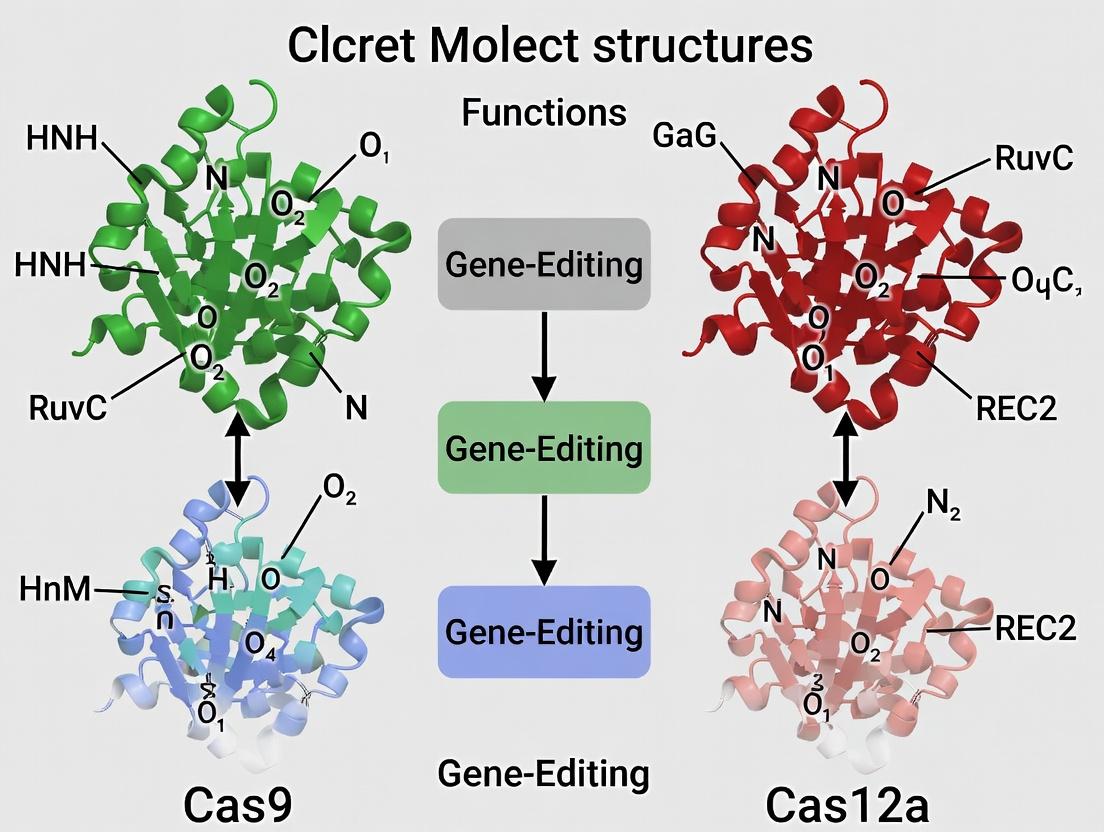
This article provides a comprehensive, up-to-date comparison of the two most prominent CRISPR nucleases, Cas9 and Cas12a.
Cas9 vs Cas12a: A Structural and Functional Guide for Genome Editing Researchers
Abstract
This article provides a comprehensive, up-to-date comparison of the two most prominent CRISPR nucleases, Cas9 and Cas12a. Tailored for researchers and drug development professionals, we dissect their fundamental architectures, DNA recognition mechanisms, and catalytic domains. The analysis extends to their divergent guide RNA requirements, editing outcomes (blunt vs. staggered ends), and multiplexing capabilities, providing critical insights for experimental design. We address common challenges in specificity, delivery, and efficiency, offering optimization strategies. Finally, we systematically compare their performance in key validation metrics—editing precision, off-target rates, and therapeutic suitability—to empower informed nuclease selection for basic research and clinical applications.
The Blueprint of Precision: Deconstructing Cas9 and Cas12a Molecular Architecture
Within the broader thesis comparing Cas9 and Cas12a (Cpfl) systems, the fundamental divergence in their core structural scaffolds dictates their distinct functional mechanisms. Both are RNA-guided endonucleases central to CRISPR-based genome editing, but their evolutionary paths have led to radically different architectures. This whitepaper provides an in-depth technical guide to these scaffolds, focusing on the arrangement of nuclease lobes and catalytic domains, which directly impact target recognition, cleavage efficiency, and off-target effects—critical considerations for therapeutic development.
Core Architectural Blueprints: A Comparative Analysis
The catalytic heart of these enzymes lies in their nuclease domains, arranged within a conserved structural scaffold.
Cas9: A Bilobed Architecture with Dual Catalytic Sites
Cas9 proteins (e.g., Streptococcus pyogenes Cas9) possess a bilobed structure composed of the Recognition (REC) Lobe and the Nuclease (NUC) Lobe.
- REC Lobe: Primarily responsible for sgRNA and target DNA heteroduplex binding and verification. It undergoes a major conformational change upon guide RNA loading.
- NUC Lobe: Houses the catalytic centers and the Protospacer Adjacent Motif (PAM) interaction site. It contains:
- RuvC Domain: Cleaves the non-target DNA strand. It is split into three subdomains scattered across the primary sequence but assembled in the tertiary structure.
- HNH Domain: Cleaves the target DNA strand (complementary to the crRNA). It sits as a distinct module within the NUC lobe.
- PAM-Interacting Domain (PID): A critical module within the NUC lobe that reads the PAM sequence (e.g., 5'-NGG-3' for SpCas9) on the double-stranded DNA, initiating target strand separation (R-loop formation).
Cas12a: A Single RuvC-Only Lobe with Integrated Functions
Cas12a systems (e.g., Acidaminococcus Cas12a) represent a more streamlined architecture. They lack the distinct bilobed separation and the HNH domain entirely.
- Unified Lobe Structure: The REC and NUC functions are integrated into a single, compact lobe.
- Single Catalytic Site: Contains only a single, unified RuvC domain responsible for cleaving both DNA strands. It achieves staggered double-strand breaks via coordinated catalysis.
- PAM Interaction: The PAM-interacting region is part of the same unified lobe, recognizing a T-rich PAM (e.g., 5'-TTTV-3') directly on the target strand, which influences its preference for DNA over RNA.
Quantitative Structural & Functional Comparison
Table 1: Core Structural & Functional Comparison of Cas9 and Cas12a Scaffolds
| Feature | Cas9 (e.g., SpCas9) | Cas12a (e.g., AsCas12a) |
|---|---|---|
| Overall Architecture | Bilobed (REC & NUC) | Single, Unified Lobe |
| Catalytic Domains | Two distinct: RuvC & HNH | One: Single RuvC domain |
| DNA Cleavage | Dual nickases; blunt ends | Single nuclease; staggered ends (5' overhangs) |
| PAM Location | Non-target strand (e.g., NGG) | Target strand (e.g., TTTV) |
| crRNA Processing | Requires trans-activating tracrRNA | Self-processes pre-crRNA; no tracrRNA needed |
| Target Strand Cleavage | HNH domain | Single RuvC domain |
| Non-Target Strand Cleavage | RuvC domain | Single RuvC domain |
| R-loop Size | ~10 bp | ~8 bp |
| Typical Size (aa) | ~1368 aa (SpCas9) | ~1300 aa (AsCas12a) |
Table 2: Catalytic Cleavage Signatures
| Parameter | Cas9 | Cas12a |
|---|---|---|
| Cleavage Position | 3 bp upstream of PAM | Between 18th & 23rd nt downstream of PAM (target strand); 10-14 nt downstream (non-target) |
| Cut Pattern | Blunt ends | Staggered ends (4-5 nt 5' overhang) |
| Catalytic Metal Ions | Mg²⁺ (bound in HNH & RuvC active sites) | Mg²⁺ or Mn²⁺ (in single RuvC pocket) |
| Trans-Cleavage Activity | No | Yes (collateral cleavage of ssDNA post-activation) |
Experimental Protocols for Structural & Functional Analysis
Protocol: Cryo-EM for Determining Nuclease Conformational States
Objective: Capture high-resolution structures of Cas9/Cas12a in multiple functional states (apo, RNA-bound, DNA-bound, post-cleavage).
- Sample Preparation: Purify recombinant nuclease. Incubate with synthetic crRNA (and tracrRNA for Cas9) and complementary/non-complementary target DNA strands to form specific complexes.
- Vitrification: Apply 3.5 µL of sample at 0.5-1 mg/mL to a glow-discharged holey carbon grid. Blot for 3-5 seconds at 100% humidity and plunge-freeze in liquid ethane using a vitrification robot.
- Data Collection: Image grids on a 300 keV cryo-electron microscope equipped with a direct electron detector. Collect 3,000-5,000 movies at a nominal magnification of 105,000x (yielding ~0.8 Å/pixel), with a total dose of 40-50 e⁻/Ų.
- Image Processing: Motion-correct and dose-weight movies. Perform template-based particle picking, extract ~1-2 million particles, and conduct 2D classification. Generate an initial model ab initio, followed by heterogeneous refinement to separate conformational states. Perform non-uniform and local refinement for the final high-resolution maps (target 3.0 Å or better).
- Model Building & Refinement: Dock existing crystal structures or build de novo models into the map using Coot. Refine the model iteratively with Phenix, using real-space and reciprocal-space refinement, incorporating geometry and secondary structure restraints.
Protocol:In VitroCleavage Assay to Characterize Catalytic Activity
Objective: Quantify DNA cleavage efficiency and kinetics of wild-type and mutant nucleases.
- Substrate Preparation: Generate a linear, double-stranded DNA target (200-500 bp) containing the appropriate PAM sequence via PCR. Radioactively label the 5' end using [γ-³²P] ATP and T4 Polynucleotide Kinase or use a fluorophore-labeled primer.
- RNP Complex Formation: Pre-incubate 100 nM purified nuclease with 120 nM crRNA (and tracrRNA for Cas9) in reaction buffer (20 mM HEPES pH 7.5, 100 mM KCl, 5 mM MgCl₂, 1 mM DTT) at 37°C for 10 minutes.
- Cleavage Reaction: Initiate the reaction by adding labeled DNA substrate to a final concentration of 10 nM. Aliquot 10 µL reactions into a time course (e.g., 0, 15s, 30s, 1, 2, 5, 15, 30 min) at 37°C.
- Reaction Quench: Stop each time point by adding 10 µL of stop solution (95% formamide, 20 mM EDTA, 0.01% Bromophenol Blue).
- Analysis: Denature samples at 95°C for 5 min, then resolve products on a denaturing 10% polyacrylamide-urea gel. Visualize and quantify cleavage products using a phosphorimager or fluorescence scanner. Fit data to a single-exponential equation to determine observed rate constants (kobs).
Visualizing Structural & Functional Relationships
Diagram 1: Cas9 vs. Cas12a DNA Cleavage Pathways.
Diagram 2: Core Structural Scaffold Comparison.
The Scientist's Toolkit: Key Research Reagent Solutions
Table 3: Essential Reagents for Structural & Functional Studies
| Reagent | Function | Example/Supplier |
|---|---|---|
| Recombinant Cas9/Cas12a Protein | Purified nuclease for in vitro assays, crystallization, and Cryo-EM. | IDT (Alt-R S.p. Cas9 Nuclease 3NLS), Thermo Fisher (TrueCut Cas9 Protein), Benchling (AsCas12a). |
| Synthetic crRNA & tracrRNA | Chemically synthesized guide RNAs for precise complex formation. High purity is critical for structural studies. | IDT (Alt-R CRISPR-Cas9 crRNA & tracrRNA), Sigma-Aldrich. |
| PAM-containing DNA Substrates | Defined double-stranded or single-stranded DNA targets for cleavage assays and complex formation. | Custom gBlocks Gene Fragments (IDT), PCR-amplified fragments. |
| Cryo-EM Grids | Holey carbon films (e.g., Quantifoil, UltrauFoil) for vitrifying protein samples. | Electron Microscopy Sciences, Quantifoil. |
| Crystallization Screens | Sparse matrix screens (e.g., Morpheus, JC SG) for identifying initial protein-RNA-DNA complex crystallization conditions. | Molecular Dimensions, Hampton Research. |
| Fluorophore-/Radio-labeled dNTPs | For generating labeled DNA substrates to visualize cleavage products with high sensitivity. | PerkinElmer ([α-³²P] dATP), Thermo Fisher (Alexa Fluor-dUTP). |
| Catalytically Dead (dCas9/dCas12a) | Mutant proteins (D10A/H840A for SpCas9; D908A for AsCas12a) for structural studies of binding states without cleavage. | Available from multiple protein expression vendors. |
| Metal Ion Solutions | High-purity MgCl₂, MnCl₂, etc., for studying metal-dependent catalysis and conformational changes. | MilliporeSigma (Molecular biology grade). |
Thesis Context: This whitepaper details a critical functional distinction within the broader comparative analysis of Cas9 and Cas12a (Cpfl) nucleases. PAM recognition specificity fundamentally dictates the targetable genomic space of these systems, influencing their utility in research and therapeutic development.
The Protospacer Adjacent Motif (PAM) is a short, fixed DNA sequence immediately adjacent to the target DNA sequence that is essential for CRISPR nuclease recognition and cleavage. The PAM requirement is a primary determinant of targeting flexibility and range.
Quantitative Comparison of PAM Specificity & Genomic Targeting
The PAM sequence directly dictates the theoretical number of targetable sites within a genome.
Table 1: Core PAM Specifications and Targetable Space
| Nuclease | Canonical PAM Sequence | PAM Position | Theoretical Targeting Frequency* | Approx. Sites per Human Genome* | Key Structural Determinant | ||
|---|---|---|---|---|---|---|---|
| SpCas9 | 5'-NGG-3' | 3' of guide (downstream) | 1 in 8 bp (NGG) | ~1 in 16 (1/4 * 1/4) = 1/16 of all NNN? Let's recalc properly: For a random 3-bp sequence, probability of 'GG' in last two is (1/4)*(1/4)=1/16. The 'N' is any base, so probability remains 1/16. | 1 in 16 bp? Wait, need to clarify: For a random 3-base sequence, probability it matches NGG is (1 for N) * (1/4 for G) * (1/4 for G) = 1/16. So in a long random sequence, you'd expect an NGG every ~16 bases? But that's for a 3-base window. More accurately: For any given base, the probability the next two are GG is (1/4)*(1/4)=1/16. So in a long sequence of N bases, expected number of NGG PAMs is ~N/16. For human genome (3.2e9 bp), that's ~200 million sites. Let's put that number. | ~200 million | PI domain in REC lobe |
| SaCas9 | 5'-NNGRRT-3' | 3' of guide | 1 in 32 bp? Actually, NNGRRT: N(1) * N(1) * G(1/4) * R(1/2: A or G) * R(1/2) * T(1/4) = 1 * 1 * 1/4 * 1/2 * 1/2 * 1/4 = 1/64. So probability a random 6-mer is NNGRRT is 1/64. But we need frequency per base? For a long sequence, expected frequency is ~1/64 for a 6-base window? Actually, for a given position, probability the next 5 bases match GRRT? This is getting messy. Let's simplify: Use "Theoretical Targeting Frequency" as "1 in X bp" meaning you expect a PAM every X base pairs. For SpCas9 NGG: Expect a GG dinucleotide every 16 bp, so "1 in 16 bp". For SaCas9 NNGRRT (6-mer), probability a random 6-mer matches is 1/4^6? Wait, N is any (1), R is A/G (1/2). So: N(1) * N(1) * G(1/4) * R(1/2) * R(1/2) * T(1/4) = 1 * 1 * 1/4 * 1/2 * 1/2 * 1/4 = 1/64. So in a long sequence, expected number of NNGRRT 6-mers is ~ L/64, where L is sequence length. So you expect one every ~64 bp. But careful: These 6-mers overlap. Let's just use "Probability a random site has PAM" which is 1/16 for SpCas9 (NGG over 3 bp) and 1/64 for SaCas9 (NNGRRT over 6 bp). So for human genome (3.2e9 bp), expected sites: SpCas9: 3.2e9 / 16 = 200 million; SaCas9: 3.2e9 / 64 = 50 million. | ~50 million | PI domain variant | ||
| AsCas12a | 5'-TTTV-3' (V = A, C, G) | 5' of guide (upstream) | 1 in 64 bp? TTTV: T(1/4) * T(1/4) * T(1/4) * V(3/4: not T) = (1/4)^3 * (3/4) = (1/64)*(3/4)=3/256 ≈ 1/85.3. So probability a random 4-mer is TTTV is 3/256 ≈ 0.0117. Expected frequency: one every ~85 bp. But Cas12a often cited as TTTN? Actually literature: "TTTV" where V is non-T. So yes, 3/256. For simplicity, often called "T-rich". | ~38 million (3.2e9 * 3/256) | PI domain in REC lobe? Actually, Cas12a has a different structure, PAM interaction in a positively charged channel. | ||
| LbCas12a | 5'-TTTV-3' | 5' of guide | Same as AsCas12a | ~38 million | Same as above |
*Calculations assume random nucleotide distribution. Actual genomic sequences (e.g., GC bias, repeats) alter practical targetability.
Table 2: Functional Implications of PAM Diversity
| Feature | 5' NGG (SpCas9) | 5' T-rich (Cas12a) |
|---|---|---|
| Position Relative to Guide | Downstream (3') | Upstream (5') |
| Genomic Space Coverage | High density (~1 site/16 bp) | Lower density (~1 site/85 bp) |
| Therapeutic Context Utility | Broad targeting, but may miss AT-rich regions | Favors AT-rich genomic regions; useful for targeting gene deserts |
| Guide RNA Design | Requires separate tracrRNA; spacer defined by 5' of crRNA | Single crRNA; spacer defined by 3' of crRNA |
| Cleavage Pattern | Blunt ends at PAM-distal end | Staggered cuts with 5' overhangs |
| Downstream Applications | Ideal for HDR, gene knock-ins | Potentially better for NHEJ, gene knock-outs due to overhangs |
Experimental Protocols for PAM Determination
In VitroPAM Depletion Assay (for Novel Nuclease Characterization)
Objective: Empirically determine the PAM sequence requirement for an uncharacterized CRISPR nuclease. Key Reagents: See "Scientist's Toolkit" below. Protocol:
- Library Construction: Synthesize a degenerate oligonucleotide library containing a randomized NNNN (or longer) PAM region flanked by constant sequences, adjacent to a fixed protospacer target.
- In Vitro Cleavage: Incubate the DNA library with the nuclease and its cognate guide RNA under optimal buffer conditions (e.g., NEBuffer 3.1 for SpCas9) at 37°C for 1 hour.
- Size Selection: Run the reaction products on an agarose gel. Excise and purify the uncut DNA fragment, which represents library members that were not cleaved due to an incompatible PAM.
- Amplification & Sequencing: PCR-amplify the purified uncut DNA and subject it to next-generation sequencing (Illumina MiSeq/HiSeq).
- Bioinformatic Analysis: Align sequences and compare the frequency of each NNNN sequence in the initial input library versus the post-cleavage uncut library. Depleted sequences in the uncut pool represent functional PAMs.
SELEX-Based PAM Identification (PAM-SELEX)
Objective: To identify high-affinity PAM sequences through iterative rounds of selection. Protocol:
- Immobilization: Biotinylate a double-stranded DNA library containing a fully randomized PAM region. Bind to streptavidin magnetic beads.
- Binding Selection: Incubate beads with the CRISPR nuclease:gRNA complex. Wash to remove unbound/weakly bound DNA.
- Elution: Elute the nuclease-bound DNA (containing functional PAMs) using a high-salt buffer or protease treatment.
- Amplification & Iteration: PCR-amplify the eluted DNA to generate an enriched library for the next selection round (typically 3-5 rounds).
- Cloning & Sanger Sequencing: Clone the final enriched pool and sequence individual colonies to identify conserved PAM motifs.
Visualizing PAM Recognition and Its Consequences
Diagram 1: PAM Recognition in Cas9 vs Cas12a
Diagram 2: PAM Depletion Assay Workflow
The Scientist's Toolkit: Key Reagents for PAM Analysis
Table 3: Essential Research Reagents for PAM Characterization Experiments
| Reagent / Material | Function in Experiment | Example Vendor/Product |
|---|---|---|
| Purified CRISPR Nuclease | Active enzyme for in vitro cleavage or binding assays. | Thermo Fisher TrueCut Cas9 v2, IDT Alt-R S.p. Cas9 Nuclease. |
| Synthetic Guide RNA (crRNA & tracrRNA or sgRNA) | Directs nuclease to the target sequence adjacent to the randomized PAM. | IDT Alt-R CRISPR-Cas9 crRNA/tracrRNA, Synthego sgRNA. |
| Degenerate Oligonucleotide Library | DNA substrate containing randomized PAM region for empirical determination. | Custom synthesis from IDT or Twist Biosciences. |
| Streptavidin Magnetic Beads | For immobilizing biotinylated DNA libraries in SELEX-based protocols. | Thermo Fisher Dynabeads MyOne Streptavidin C1. |
| High-Fidelity PCR Master Mix | For accurate amplification of DNA libraries pre- and post-selection. | NEB Q5 High-Fidelity, KAPA HiFi HotStart ReadyMix. |
| Next-Generation Sequencing Kit | For deep sequencing of input and output libraries. | Illumina MiSeq Reagent Kit v3. |
| Gel Extraction/PCR Cleanup Kit | For size selection and purification of DNA fragments. | Qiagen QIAquick Gel Extraction Kit, Zymo DNA Clean & Concentrator. |
| Nuclease Reaction Buffer | Optimized buffer for nuclease activity (Mg²⁺, pH, salt conditions). | NEBuffer 3.1 (for SpCas9), manufacturer-specific buffers. |
This guide examines a fundamental divergence in guide RNA architecture and processing between the two major CRISPR-Cas endonuclease families: Cas9 and Cas12a (Cpf1). The distinction between the dual-RNA system (tracrRNA:crRNA) of Cas9 and the single crRNA system of Cas12a is not merely structural but has profound implications for host factor reliance, precursor processing, and experimental utility. Within the broader thesis comparing Cas9 and Cas12a structure-function relationships, guide RNA complexity represents a primary determinant of their respective mechanisms, efficiency, and adaptability for genome engineering and therapeutic applications.
Core Architecture: Dual vs. Single Guide Systems
Cas9 and the Dual-tracrRNA:crRNA System
The native Streptococcus pyogenes Cas9 (SpCas9) system requires two separate RNA components:
- crRNA (CRISPR RNA): A ~42-nt RNA containing a 20-nt spacer sequence complementary to the target DNA and a 22-nt repeat-derived sequence.
- tracrRNA (trans-activating CRISPR RNA): A ~89-nt RNA that is partially complementary to the repeat region of the crRNA. It is essential for crRNA maturation via RNase III and for stabilizing the mature guide complex.
In practice, these are often fused into a single guide RNA (sgRNA) through a synthetic linker, but this is an artificial construct that mimics the natural dual-RNA complex.
Cas12a and the Single crRNA System
Cas12a (e.g., from Lachnospiraceae bacterium NdCas12a or Acidaminococcus sp. AsCas12a) requires only a single, short (~42-44 nt) crRNA. This crRNA contains a 19-24 nt spacer sequence and a 19-23 nt direct repeat sequence that forms a stable hairpin structure. Cas12a possesses intrinsic RNase activity to process its own pre-crRNA array, eliminating the need for a separate tracrRNA and host RNase III.
Precursor Processing Pathways
Cas9 Precursor Processing Pathway
Cas9 processing relies heavily on host machinery. The following diagram illustrates the pathway from transcription to active complex formation.
Title: Cas9 Dual gRNA Processing and Loading Pathway
Detailed Protocol: In Vitro Reconstitution of Native Cas9 Processing
- Objective: To demonstrate RNase III-dependent maturation of pre-crRNA.
- Reagents: Purified E. coli RNase III, in vitro transcribed pre-crRNA array, in vitro transcribed tracrRNA, buffer (20 mM Tris-HCl pH 7.5, 150 mM KCl, 1 mM DTT, 1 mM MgCl2).
- Method:
- Combine 100 nM pre-crRNA, 200 nM tracrRNA, and 20 U RNase III in reaction buffer.
- Incubate at 37°C for 30 minutes.
- Stop reaction with 2x RNA loading dye containing 95% formamide and 20 mM EDTA.
- Analyze products via 15% denaturing urea-PAGE and ethidium bromide staining.
- A shift from full-length pre-crRNA to a ~42-nt band indicates successful processing.
Cas12a Precursor Processing Pathway
Cas12a autonomously processes its crRNA precursor, a key functional differentiator.
Title: Cas12a Autonomous Pre-crRNA Processing Pathway
Detailed Protocol: Demonstrating Cas12a's In Vitro Pre-crRNA Processing
- Objective: To confirm Cas12a's intrinsic RNase activity.
- Reagents: Purified recombinant Cas12a protein, in vitro transcribed pre-crRNA array (containing 2-3 direct repeats and spacers), reaction buffer (20 mM HEPES pH 6.5, 150 mM KCl, 1 mM DTT, 5 mM MgCl2).
- Method:
- Combine 200 nM Cas12a and 100 nM pre-crRNA array in reaction buffer.
- Incubate at 37°C for 15-60 minutes.
- Quench with EDTA (final 25 mM) and proteinase K treatment.
- Purify RNA via phenol-chloroform extraction and analyze via 10% denaturing urea-PAGE with SYBR Gold staining.
- Appearance of discrete ~42-44 nt bands confirms successful processing of the array into individual crRNAs.
Quantitative Comparison of Key Features
Table 1: Architectural and Processing Comparison
| Feature | Cas9 (SpCas9) | Cas12a (LbCas12a) |
|---|---|---|
| Native Guide Form | Dual RNA: tracrRNA + crRNA | Single crRNA |
| Mature Guide Length | ~100-130 nt (sgRNA) | ~42-44 nt (crRNA) |
| Host Factor Required | RNase III (for maturation) | None (self-processed) |
| crRNA Processing | Host RNase III + tracrRNA | Intrinsic RNase activity (Cas12a protein) |
| Pre-crRNA Processing Site | Within repeat sequence | Within direct repeat (cleaves after 19-23 nt) |
| Resulting 5' End | 1-2 nt overhang (from RNase III) | 7-9 nt 5' overhang (sticky end) |
| PAM Sequence | 5'-NGG-3' (downstream) | 5'-TTTV-3' (upstream) |
| DNA Cleavage | Blunt ends (RuvC & HNH) | Staggered ends (5' overhang) (RuvC only) |
Table 2: Experimental and Practical Implications
| Implication | Cas9 System | Cas12a System |
|---|---|---|
| Multiplexing (Array Expression) | Requires co-expression of tracrRNA and RNase III | Simpler: Express pre-crRNA array; Cas12a processes itself |
| Guide RNA Synthesis Cost | Higher (longer sgRNA ~100 nt) | Lower (shorter crRNA ~42 nt) |
| Delivery Size Constraint | Larger sgRNA expression cassette | Smaller crRNA expression cassette |
| CRISPR Locus in Nature | More complex (tracrRNA gene separate) | More compact (no tracrRNA gene) |
| Screening Library Cloning | Standard (one guide per vector) | More efficient: Multiple guides can be cloned as an array in one step |
The Scientist's Toolkit: Key Research Reagent Solutions
Table 3: Essential Reagents for gRNA Complex Studies
| Item | Function in Research | Example Supplier/Product |
|---|---|---|
| Recombinant Cas9 & Cas12a Proteins | For in vitro cleavage assays, RNP formation, and processing studies. | Thermo Fisher TrueCut Cas9, NEB Alt-R S.p. Cas9, IDT A.s. Cas12a (Cpf1). |
| RNase III (E. coli, purified) | Essential for in vitro reconstitution of the native Cas9 processing pathway. | NEB M0265S (E. coli RNase III). |
| T7 RNA Polymerase Kit | For high-yield in vitro transcription of pre-crRNA arrays, tracrRNA, and individual guides. | NEB HiScribe T7 High Yield RNA Synthesis Kit. |
| Synthetic sgRNA/crRNA (Alt-R) | Chemically synthesized, pre-validated guides for high-efficiency experiments, avoiding in vitro transcription. | IDT Alt-R CRISPR-Cas9 sgRNA, Alt-R CRISPR-Cas12a crRNA. |
| 10% Denaturing Urea-PAGE Gel System | Critical for resolving and visualizing small RNA products (20-150 nt) from processing assays. | Invitrogen Novex TBE-urea gels. |
| SYBR Gold Nucleic Acid Gel Stain | High-sensitivity stain for visualizing RNA in gels post-electrophoresis. | Thermo Fisher Scientific S11494. |
| Pre-crRNA Array Cloning Vector | Plasmid with a T7 promoter for expressing CRISPR arrays to study Cas12a processing. | Addgene #69974 (pFCT-dCrA). |
| RNase Inhibitor (Murine) | Protects RNA during handling and in reactions that do not require RNase activity. | NEB M0314S (Murine RNase Inhibitor). |
| DTT (Dithiothreitol) | Reducing agent to maintain cysteine-dependent enzyme (like Cas proteins) activity. | Commonly available from Sigma-Aldrich, Thermo Fisher. |
| Magnesium Chloride (MgCl₂) | Essential divalent cation cofactor for both RNase and DNase activities of Cas proteins. | Commonly available from Sigma-Aldrich, Thermo Fisher. |
Within the ongoing investigation into CRISPR-Cas systems, the structural and functional dichotomy between Type II Cas9 and Type V Cas12a nucleases presents a fundamental case study. A critical point of divergence lies in the mechanism employed by their respective catalytic engines to generate DNA double-strand breaks (DSBs). This whitepaper provides an in-depth technical analysis of these mechanisms, focusing on the formation of blunt ends (Cas9) versus staggered ends with 5′ overhangs (Cas12a). Understanding this distinction is paramount for researchers and drug development professionals, as the nature of the DSB directly impacts downstream cellular repair pathways, gene editing outcomes, and therapeutic applications.
Catalytic Core Architecture and Cleavage Mechanics
The cleavage outcome is dictated by the arrangement and activation of nuclease domains within each enzyme.
Cas9 (e.g., Streptococcus pyogenes Cas9): Possesses two distinct nuclease domains: the HNH domain and the RuvC-like domain. The HNH domain cleaves the DNA strand complementary to the crRNA (target strand). The RuvC-like domain cleaves the non-complementary strand (non-target strand). These domains are positioned to cut at sites approximately opposite each other within the bound DNA duplex, resulting in a DSB with predominantly blunt ends or a very short 1-2 bp overhang.
Cas12a (e.g., Acidaminococcus sp. Cas12a): Contains a single, unified RuvC-like nuclease domain. This domain is responsible for cleaving both DNA strands. Cleavage occurs via a coordinated, sequential mechanism where the domain must reposition between cuts on the two strands. The staggered alignment of the cut sites results in a DSB with a 5′ overhang, typically 4-5 nucleotides in length, and a single-stranded 5′ flap on the non-target strand.
Table 1: Core Catalytic Properties of Cas9 vs. Cas12a
| Property | Cas9 (Type II) | Cas12a (Type V) |
|---|---|---|
| Nuclease Domains | Two distinct: HNH & RuvC-like | One unified RuvC-like domain |
| Cleavage Mechanism | Simultaneous, dual-domain cut | Sequential, single-domain repositioning |
| DSB End Structure | Predominantly blunt ends | Staggered ends with 5′ overhang (4-5 nt) |
| PAM Location | 3′ downstream of protospacer | 5′ upstream of protospacer (TTTV) |
| Pre-crRNA Processing | Requires trans-activating crRNA (tracrRNA) | Intrinsic RNase activity; processes its own pre-crRNA |
Diagram 1: Catalytic pathways for blunt vs. staggered DSB formation.
Experimental Protocols for DSB Characterization
In Vitro Cleavage Assay for End Analysis
Purpose: To directly visualize and characterize the cleavage products of Cas9 and Cas12a. Detailed Protocol:
- Substrate Preparation: Generate a linear dsDNA substrate (~300-500 bp) containing the appropriate PAM and protospacer sequence via PCR. 5′-label one strand using T4 Polynucleotide Kinase and [γ-³²P]ATP or a fluorescent dye.
- RNP Complex Assembly: Pre-incubate purified nuclease (100 nM) with equimolar crRNA (for Cas12a) or crRNA:tracrRNA duplex (for Cas9) in reaction buffer (20 mM HEPES pH 7.5, 100 mM KCl, 5 mM MgCl₂, 1 mM DTT) for 10 min at 25°C.
- Cleavage Reaction: Add radiolabeled DNA substrate (10 nM) to the RNP. Incubate at 37°C for 30 min.
- Reaction Quenching: Stop the reaction with 2× stop buffer (95% formamide, 20 mM EDTA, 0.025% SDS).
- Product Separation: Denature samples at 95°C for 5 min and resolve products on a high-resolution denaturing polyacrylamide gel (10-15% urea-PAGE).
- Visualization & Analysis: Visualize via phosphorimaging or fluorescence. Compare cleavage product sizes to a sequencing ladder. The differential migration of the two labeled strands indicates staggered cutting.
Next-Generation Sequencing (NGS) of Repair Outcomes
Purpose: To quantify the prevalence of insertions, deletions (indels), and precise edits resulting from blunt vs. staggered end repair. Detailed Protocol:
- Cell Transfection/Electroporation: Deliver Cas9 or Cas12a RNP into target cells (e.g., HEK293T) using a suitable method.
- Genomic DNA Harvest: At 72 hours post-editing, extract genomic DNA.
- Amplicon Library Preparation: PCR amplify (15-20 cycles) the target locus using primers containing Illumina adapter overhangs.
- Indexing PCR: Add dual-index barcodes and full adapter sequences in a second, limited-cycle PCR.
- NGS & Bioinformatics: Pool libraries, sequence on an Illumina MiSeq or HiSeq platform. Analyze reads using tools like CRISPResso2 to quantify indel patterns and infer the initial DSB structure from the repair profile.
Table 2: Quantitative Comparison of Repair Outcomes from Blunt vs. Staggered Ends
| Repair Outcome Metric | Typical Blunt End (Cas9) Profile | Typical Staggered End (Cas12a) Profile | Experimental Measurement Method |
|---|---|---|---|
| Small Deletion Frequency | High (>60% of indels) | Moderate (40-50% of indels) | NGS Amplicon Sequencing |
| Deletion Size Mode | Often 1-10 bp, microhomology-mediated | Can be larger, >10 bp | NGS Amplicon Sequencing |
| Precise Insertion Frequency | Very Low (<1%) | Higher (1-5%) due to overhang filling | NGS Amplicon Sequencing |
| Frame-Shift Efficiency | High and predictable | Slightly less predictable due to varied deletion profiles | NGS Amplicon Sequencing |
| In Vitro Cleavage Offset | Cuts are opposed (±1 bp) | Cuts are staggered by 4-8 nt, creating a 5' overhang | Denaturing PAGE Analysis |
Diagram 2: Experimental determination of DSB structure impact.
The Scientist's Toolkit: Research Reagent Solutions
Table 3: Essential Reagents for DSB Mechanism Studies
| Reagent / Material | Function in Research | Example Vendor/Product |
|---|---|---|
| Recombinant Cas9 & Cas12a Proteins | High-purity, nuclease-active enzymes for in vitro biochemical assays and RNP delivery. | IDT, Thermo Fisher, NEB |
| Synthetic crRNAs & tracrRNAs | Chemically synthesized guide RNAs for precise RNP complex formation and specificity studies. | IDT, Sigma-Aldrich, Horizon Discovery |
| [γ-³²P]ATP or Fluorescent-dUTP | For end-labeling DNA substrates to visualize cleavage products on gels. | PerkinElmer, Jena Bioscience |
| High-Resolution Urea-PAGE Gels | To separate single-stranded DNA cleavage products differing by single nucleotides. | Bio-Rad, Invitrogen |
| CRISPR-Cas NGS Analysis Software | Bioinformatics tools to deconvolute complex indel patterns from sequencing data. | CRISPResso2, BE-Analyzer |
| Electroporation Systems | For efficient, non-viral delivery of RNP complexes into hard-to-transfect cell types. | Lonza 4D-Nucleofector, Bio-Rad Gene Pulser |
| HR & NHEI Reporter Cell Lines | Genetically engineered cells (e.g., EJ-DR-GFP) to quantify the engagement of specific DNA repair pathways post-DSB. | ATCC, custom from Horizon Discovery |
From Bench to Application: Strategic Deployment of Cas9 and Cas12a in Research & Therapy
This guide, framed within a broader thesis comparing Cas9 and Cas12a structures and functions, provides a systematic decision framework for selecting the optimal CRISPR system for specific genome engineering goals. The structural distinctions between Cas9 and Cas12a—particularly their guide RNA requirements, PAM sequences, and cleavage mechanisms—directly inform their suitability for knockout, knock-in, and multiplexed editing applications.
Core Structural & Functional Comparisons: Cas9 vs. Cas12a
The selection of an editor is fundamentally guided by the inherent biochemical properties of the Cas protein. The following table summarizes the key quantitative and qualitative differences.
Table 1: Structural and Functional Comparison of Cas9 and Cas12a (Cas12a vs. Cas9)
| Feature | Cas9 (e.g., SpCas9) | Cas12a (e.g., LbCas12a, AsCas12a) |
|---|---|---|
| Molecular Size | ~1368 amino acids (SpCas9) | ~1228 amino acids (LbCas12a) |
| Guide RNA | Dual RNA (crRNA + tracrRNA) or sgRNA | Single crRNA only |
| CRISPR Array Processing | Requires RNase III & host factors for pre-crRNA processing | Intrinsic RNase activity; processes its own pre-crRNA array |
| PAM Sequence | 3' NGG (SpCas9), high specificity | 5' TTTV (T-rich), upstream of target |
| Cleavage Mechanism | Blunt ends, HNH & RuvC domains cut target & non-target strands, respectively | Staggered ends (~5 nt 5' overhang), RuvC domain cuts both strands |
| Cleavage Site | 3 bp upstream of PAM | Distal to PAM, after 18th & 23rd nucleotides in target strand |
| Multiplexing (Native) | Requires multiple sgRNA expression constructs | Native multiplexing from a single transcript of a pre-crRNA array |
| Target Specificity | Higher potential for off-targets due to stable DNA-RNA hybrid | Higher reported fidelity due to more stringent PAM and shorter seed region |
| Editing Efficiency | Generally high for knockout in many cell types | Variable; can be lower than Cas9 in mammalian cells but optimized variants exist |
Decision Framework: Selecting Your Editor
The following workflow diagram outlines the primary decision-making process for editor selection based on project goals.
Detailed Methodologies for Key Applications
Protocol for High-Efficiency Knockout Using Cas9 (NHEJ)
- Objective: Generate frameshift indels via Non-Homologous End Joining (NHEJ).
- Materials: See "The Scientist's Toolkit" below.
- Method:
- Design: Select target site within first constitutive exons of the gene. Verify presence of NGG PAM. Design 20-nt spacer sequence directly 5' to PAM.
- Cloning: Clone annealed oligos into a U6-promoter driven sgRNA expression plasmid (e.g., pX330). Verify by sequencing.
- Delivery: Co-transfect mammalian cells (e.g., HEK293T) with 1 µg of sgRNA plasmid and 1 µg of Cas9 expression plasmid (if not in same vector) using a lipid-based transfection reagent.
- Analysis: Harvest genomic DNA 72-96h post-transfection. Perform T7 Endonuclease I (T7E1) or Surveyor assay on PCR-amplified target locus (amplicon size 300-500 bp). Quantify indel frequency via gel analysis or next-generation sequencing (NGS).
Protocol for Precise Knock-in Using Cas12a and a dsDNA Donor (HDR)
- Objective: Achieve homology-directed repair (HDR) for precise insertion of a tag or sequence.
- Method:
- Design: Identify target site with 5' TTTV PAM. Design crRNA spacer (24 nt). Synthesize a double-stranded DNA (dsDNA) donor template with ≥500 bp homology arms on each side, flanking the desired insertion. Introduce silent mutations in the PAM or seed region to prevent re-cutting.
- Ribonucleoprotein (RNP) Complex Formation: In vitro, complex 30 pmol of purified Cas12a protein with 60 pmol of synthetic crRNA in NEBuffer 3.1 at 25°C for 15 min.
- Delivery: Electroporate 2e5 target cells (e.g., iPSCs) with the RNP complex and 100-200 ng of dsDNA donor template using a cell-type specific electroporation program.
- Enrichment & Screening: Apply appropriate antibiotic selection if donor contains a selection marker. Screen clones by junction PCR and Sanger sequencing across both homology arms.
Protocol for Native Multiplexed Editing Using Cas12a crRNA Array
- Objective: Simultaneously disrupt or edit multiple genetic loci.
- Method:
- Array Design: Design individual 24-nt crRNA spacers for each target (with TTTV PAM). Order a single gBlock gene fragment where crRNA sequences are separated by a 19-nt direct repeat (DR) sequence native to the Cas12a system (e.g., LbCas12a DR: 5'-UUUCUACACUCCUACAAAAA-3').
- Cloning: Clone the polycistronic crRNA array into a plasmid downstream of a U6 promoter.
- Co-expression: Transfect cells with this single crRNA array plasmid and a Cas12a expression plasmid.
- Validation: The Cas12a protein will autoprocess the array into individual crRNAs. Assess editing at all target loci individually via PCR and T7E1 assay or NGS.
The Scientist's Toolkit: Essential Research Reagent Solutions
Table 2: Key Reagents for CRISPR-Cas Editing Experiments
| Reagent / Material | Function & Rationale |
|---|---|
| High-Fidelity Cas9/Cas12a Expression Plasmid | Ensures robust and specific nuclease expression. Codon-optimized versions enhance efficiency in mammalian cells. |
| U6-sgRNA or U6-crRNA Cloning Vector | Polymerase III promoter for high-level, nuclear expression of short guide RNAs. |
| Chemically Synthetic crRNA & tracrRNA (for Cas9) | For rapid RNP assembly, bypassing cloning, ideal for screening and sensitive cells. |
| Purified Recombinant Cas9/Cas12a Protein | Enables RNP delivery, which is fast, reduces off-targets, and avoids DNA integration concerns. |
| Electroporation System (e.g., Neon, Nucleofector) | Critical for efficient delivery of RNP complexes and donor DNA into hard-to-transfect primary and stem cells. |
| T7 Endonuclease I (T7E1) or Surveyor Nuclease | Mismatch-specific endonucleases for rapid, cost-effective quantification of indel efficiency without NGS. |
| Next-Generation Sequencing (NGS) Library Prep Kit for Amplicons | Provides quantitative, base-pair resolution data on editing outcomes (indel spectra, HDR rates). |
| Single-Stranded Oligodeoxynucleotide (ssODN) | ~100-200 nt donor template for short insertions or point mutations via HDR. |
| Linear Double-Stranded DNA Donor (PCR or Gene Fragment) | Large dsDNA template with long homology arms for inserting larger cassettes (e.g., reporters, tags). |
| HDR Enhancers (e.g., RS-1, SCR7) | Small molecules that inhibit NHEJ or promote HDR pathways, potentially increasing knock-in efficiency. |
Table 3: Typical Performance Metrics of Cas9 vs. Cas12a in Mammalian Cells
| Application & Metric | Cas9 (SpCas9) Typical Range | Cas12a (LbCas12a) Typical Range | Key Influencing Factors |
|---|---|---|---|
| Knockout (Indel %)* | 40-80% (transfection), >80% (RNP) | 20-60% (transfection), 40-75% (RNP) | Delivery method, cell type, guide design, PAM availability. |
| HDR Efficiency (KI %) | 1-20% (with ssODN) | 1-15% (with ssODN) | Cell cycle, donor design/type, use of HDR enhancers, target locus. |
| Multiplexing Efficiency (≥3 targets) | Moderate (co-transfection efficiency drops) | High (single transcript processing) | CrRNA array design, promoter strength. |
| Off-Target Indel Ratio (On:Off) | Varies widely; 10:1 to 1000:1 | Generally reported >100:1 (higher fidelity) | Guide specificity, nuclease variant (e.g., HiFi Cas9), delivery method. |
*Data based on common immortalized cell lines (HEK293, HeLa) using efficient delivery methods. Primary cells typically show lower efficiencies.
Within the broader thesis comparing Cas9 and Cas12a, guide RNA (gRNA) design is not merely a practical step but a direct consequence of fundamental structural and mechanistic divergence. The two nucleases have evolved distinct architectures, leading to different gRNA requirements, which in turn dictate unique design rules for optimization. This guide details the empirical rules for crRNA design, framed by the understanding that Cas9 utilizes a dual-guide (tracrRNA:crRNA) or single-guide RNA (sgRNA) complex, while Cas12a processes its own crRNA array from a single RNA transcript and requires only a short crRNA. These functional differences necessitate a system-specific approach to length, structural stability, and specificity.
Core crRNA Design Parameters: A Comparative Framework
The optimal crRNA parameters are dictated by the enzyme's structure, particularly its recognition lobe and nucleic acid cleavage domains.
Table 1: Foundational crRNA Characteristics for Cas9 and Cas12a
| Parameter | SpyCas9 (Streptococcus pyogenes Cas9) | AsCas12a (Acidaminococcus sp. Cas12a) | Structural/Functional Basis |
|---|---|---|---|
| Guide Form | Single-guide RNA (sgRNA) fusing tracrRNA and crRNA. | Mature crRNA only; self-processed from direct repeat array. | Cas9 requires tracrRNA for stability and maturation; Cas12a has intrinsic RNase activity for pre-crRNA processing. |
| Spacer Length | 20 nucleotides (nt) is standard; 17-24 nt can be functional. | 21-24 nt, with 20 nt being less active. Optimal often 23-24 nt. | Dictated by the steric size of the channel between the REC and NUC lobes. Cas12a's channel accommodates a longer heteroduplex. |
| Direct Repeat (DR) | 42-nt tracrRNA-derived sequence in sgRNA, forming crucial hairpins. | 19-nt or 36-nt repeat at 5' end of crRNA, essential for protein binding. | Cas9 sgRNA has multiple stem loops that interact with the REC lobe. Cas12a crRNA has a short 5' handle forming a stem loop critical for anchoring. |
| PAM Location | 3'-NGG-5' (downstream of spacer). | 5'-TTTV-3' (upstream of spacer). | PAM Interacts with the PI domain in Cas9 (C-terminal). In Cas12a, the PAM is recognized by the PI domain in a distinct orientation, situating it upstream. |
| Seed Region | 10-12 bp at the 3' end of the spacer (PAM-proximal). | 5-8 bp at the 5' end of the spacer (PAM-distal) and ~10 bp in the middle. | Cas9 seed is critical for initial DNA melting and specificity. Cas12a has a more distributed seed and specificity profile. |
| GC Content | Optimal 40-60%. High GC (>80%) can hinder unwinding. | Optimal 30-70%. More tolerant of high AT content. | Relates to heteroduplex stability and the energy required for R-loop formation, which differs between protein structures. |
Table 2: Quantitative Impact of Spacer Length on Activity
| System | Spacer Length (nt) | Relative Cleavage Efficiency (%)* | Notes |
|---|---|---|---|
| SpyCas9 | 17 | ~40% | Often insufficient for stable R-loop formation. |
| 18 | ~75% | Marginally acceptable. | |
| 20 | 100% (Reference) | Standard, optimal balance of activity & specificity. | |
| 22 | ~90% | Slightly reduced activity in some contexts. | |
| 24 | ~60% | Potential for increased off-target effects. | |
| AsCas12a | 20 | ~50% | Suboptimal; truncation reduces activity severely. |
| 21 | ~85% | Functional minimum for many targets. | |
| 23 | 100% (Reference) | Often considered optimal for high activity. | |
| 24 | ~95% | Comparable to 23 nt, sometimes preferred. | |
| 25 | ~70% | Activity begins to decline. |
*Representative data compiled from recent studies; exact values are target-dependent.
Structural Considerations and Stability Prediction
The secondary structure of the gRNA itself is a critical, often overlooked, factor. Stable intramolecular structures within the spacer sequence can sequester it and prevent efficient hybridization to the DNA target.
Protocol 1: In silico Analysis of gRNA Secondary Structure
- Sequence Input: Obtain the full gRNA sequence (spacer + direct repeat/tracrRNA scaffold).
- Folding Simulation: Use RNA folding software (e.g., NUPACK, RNAfold from ViennaRNA Package). Set temperature to 37°C.
- Constraint Application: For Cas9, apply a constraint to force the base-pairing between the spacer seed region (last 10-12 nt) and a dummy DNA target sequence to simulate the active conformation. This reveals competing internal structures.
- Metrics: Calculate the Minimum Free Energy (MFE) of the unbound gRNA. More negative MFE indicates a more stable internal structure, which is generally detrimental. Specifically, examine if any nucleotides within the spacer are internally paired (ΔG > -3 kcal/mol is typically acceptable).
- Comparison: Re-fold multiple candidate gRNAs for the same target and select the one with the least stable internal spacer structure.
Diagram Title: Workflow for gRNA Secondary Structure Analysis
Specificity and Off-Target Mitigation Strategies
Specificity is governed by the nuclease's tolerance for mismatches, which differs markedly between Cas9 and Cas12a.
Protocol 2: Comprehensive Off-Target Prediction and Validation
- In silico Prediction:
- For Cas9: Use tools like Cas-OFFinder or CHOPCHOP. Input the 20-nt spacer sequence plus the PAM (NGG). Search genomes allowing up to 3-5 mismatches, with particular weight given to mismatches in the seed region (positions 1-12 from PAM).
- For Cas12a: Use Cas12a-specific predictors (e.g., from CRISPRseek). Input the spacer and 5'-TTTV PAM. Cas12a tolerates mismatches more evenly, so examine the entire spacer length.
- Experimental Validation (CIRCLE-seq or GUIDE-seq):
- Library Preparation: Extract genomic DNA from target cells. For GUIDE-seq, electroporate cells with the gRNA/Cas RNP complex alongside a double-stranded oligodeoxynucleotide (dsODN) tag.
- Enrichment & Sequencing: Digest DNA, ligate adapters, and perform PCR to enrich for cleaved fragments (or tag-integrated sites).
- Bioinformatics: Map sequencing reads to the reference genome, identify integration sites or breakpoints, and rank potential off-target loci by read count.
- Specificity-Enhanced Variants: For highest fidelity, use engineered Cas proteins (e.g., SpCas9-HF1, eSpCas9(1.1) for Cas9; enAsCas12a for Cas12a). These hyper-accurate mutants have altered DNA interaction residues, reducing tolerance for mismatches.
Diagram Title: Off-Target Identification and Mitigation Workflow
The Scientist's Toolkit: Research Reagent Solutions
Table 3: Essential Reagents for gRNA Design and Validation
| Reagent / Kit | Function / Description | Key Consideration |
|---|---|---|
| In vitro Transcription Kit (e.g., HiScribe T7) | Produces high yields of gRNA for RNP complex formation or screening. | Ensure kit is optimized for short RNA transcripts and includes DNase I treatment. |
| Synthetic crRNA (Custom Oligo) | Chemically synthesized, high-purity crRNA for Cas12a or pre-complexed RNP. | HPLC purification is essential to ensure correct length and remove failure sequences. |
| Alt-R CRISPR-Cas9 crRNA & tracrRNA | A commercial system of optimized, chemically modified RNAs for enhanced stability and reduced immunogenicity in cells. | Chemical modifications (e.g., 2'-O-methyl, phosphorothioate) improve nuclease resistance. |
| GUIDE-seq dsODN Tag | A defined, short double-stranded DNA oligo that integrates at Cas-induced breaks to tag off-target sites for sequencing. | Use a non-homologous, phosphorothioate-protected dsODN to prevent degradation and ligation. |
| Cas9 Nuclease (WT & High-Fidelity) | Purified recombinant Cas9 protein for RNP assembly. HF variants minimize off-target cleavage. | Aliquot and store at -80°C to prevent loss of activity; use nuclease-free buffers. |
| Cas12a (Cpf1) Nuclease | Purified recombinant Cas12a protein, which has distinct PAM and cleavage requirements. | Verify the specific PAM preference (TTTV vs. TTTN) for the ortholog used (AsCas12a vs. LbCas12a). |
| Nucleofection/Kinetic Electroporation System | Enables efficient delivery of RNP complexes into hard-to-transfect primary cells for GUIDE-seq and functional assays. | Optimization of cell-specific electroporation programs is critical for viability and efficiency. |
| Next-Generation Sequencing Library Prep Kit | For preparing sequencing libraries from CIRCLE-seq or GUIDE-seq amplicons. | Select kits with high sensitivity for low-input DNA and minimal PCR bias. |
Within the context of Cas9 vs. Cas12a structure and function comparisons, a critical translational barrier is the efficient, safe, and specific delivery of these programmable nucleases to target cells. Structural differences—such as Cas9's dual-guide RNA (tracrRNA:crRNA) requirement and Cas12a's single guide RNA, as well as their distinct molecular weights and PAM specificities—directly influence delivery strategy design. This guide details the core delivery modalities, their challenges, and experimental protocols, framed by the need to accommodate both nuclease types.
Quantitative Comparison of Delivery Modalities
Table 1: Key Properties and Challenges of Nuclease Delivery Strategies
| Property | RNP (Ribonucleoprotein) | Viral Vector (AAV) | mRNA (LNP) |
|---|---|---|---|
| Nuclease Flexibility | High (Cas9 & Cas12a) | Limited by cargo size (Cas12a>Cas9) | High (Cas9 & Cas12a) |
| Onset of Action | Minutes-Hours | Days-Weeks | Hours |
| Duration of Activity | Short (days) | Prolonged (months) | Short (days) |
| Immunogenicity Risk | Low | Moderate-High | Moderate |
| Off-Target Risk Profile | Lower (transient) | Higher (sustained) | Moderate |
| Cargo Capacity | ~160 kDa (Cas9) | <~4.7 kb | High (with LNP) |
| Manufacturing | Complex (protein) | Complex (viral) | Scalable |
| Primary Challenge | Cytosolic delivery efficiency | Packaging size, immunogenicity, cost | Immunogenicity, LNP tropism |
Detailed Delivery Strategies & Experimental Protocols
RNP (Ribonucleoprotein) Delivery
RNP delivery involves pre-complexing the purified Cas protein (Cas9 or Cas12a) with its guide RNA(s) before introduction into cells. This minimizes off-target DNA exposure and is transient.
Core Challenge: Efficient cytosolic internalization and endosomal escape of the large, negatively charged RNP complex.
Protocol: In Vitro RNP Delivery via Electroporation (for T cells)
- Reagents: Purified Cas9 or Cas12a protein, synthetic sgRNA (or crRNA for Cas12a), electroporation buffer, target cells.
- Method:
- RNP Complex Formation: Incubate purified nuclease (e.g., 30 pmol) with equimolar sgRNA (for Cas9) or crRNA (for Cas12a) at room temperature for 10-20 minutes.
- Cell Preparation: Harvest and wash 1x10^6 target T cells in an electroporation-compatible buffer (e.g., PBS without serum).
- Electroporation: Mix cells with RNP complex in an electroporation cuvette. Apply pulse (e.g., Neon System: 1600V, 10ms, 3 pulses).
- Recovery: Immediately transfer cells to pre-warmed culture medium and incubate. Assess editing efficiency at 48-72h via T7E1 assay or NGS.
Viral Vector Delivery (Adeno-Associated Virus - AAV)
AAVs are non-pathogenic, single-stranded DNA viruses offering high transduction efficiency in vivo but are constrained by a ~4.7 kb cargo limit.
Core Challenge: The S. pyogenes Cas9 (SpCas9) coding sequence (~4.2 kb) barely fits with its sgRNA expression cassette, leaving little room for regulatory elements. Smaller Cas12a orthologs (e.g., Lachnospiraceae bacterium Cas12a, ~3.9 kb) are more amenable.
Protocol: In Vivo AAV Vector Production & Validation
- Reagents: AAV Transfer Plasmid (ITR-flanked Cas/gRNA expression cassette), AAV Rep/Cap Plasmid, Adenoviral Helper Plasmid, HEK293 cells, Polyethylenimine (PEI).
- Method:
- Triple Transfection: Co-transfect HEK293 cells at ~70% confluency with the three plasmids using PEI in a 1:1:1 molar ratio.
- Harvest & Purification: At 72h post-transfection, harvest cells and supernatant. Lyse cells, treat with Benzonase, and purify virions via iodixanol gradient ultracentrifugation.
- Titration: Quantify genomic titer (vector genomes/mL) via qPCR against a standard curve.
- In Vivo Delivery: Administer via appropriate route (e.g., tail vein for liver tropism, local injection). Analyze editing in target tissue after 2-4 weeks.
mRNA Delivery (Lipid Nanoparticles - LNPs)
LNP-formulated mRNA enables transient, high-level nuclease expression in vivo, bypassing genomic integration risks.
Core Challenge: Immunogenicity of both mRNA and LNP components, and achieving organ-selective delivery beyond the liver.
Protocol: Formulation of Nuclease mRNA-LNPs via Microfluidic Mixing
- Reagents: Cas9 or Cas12a mRNA (N1-methylpseudouridine-modified), ionizable lipid (e.g., DLin-MC3-DMA), phospholipid, cholesterol, PEG-lipid, PBS (pH 4.0), 1x PBS (pH 7.4).
- Method:
- Lipid Mixture: Dissolve ionizable lipid, phospholipid, cholesterol, and PEG-lipid in ethanol at a defined molar ratio (e.g., 50:10:38.5:1.5).
- Aqueous Phase: Dilute mRNA in citrate or acetate buffer (pH 4.0).
- Microfluidic Mixing: Using a staggered herringbone or T-junction mixer, combine the ethanol phase and aqueous phase at a 1:3 volumetric flow rate ratio (total flow rate ~12 mL/min).
- Dialyze & Formulate: Dialyze the resulting suspension against 1x PBS (pH 7.4) for 18-24h to remove ethanol and raise pH. Concentrate, filter sterilize, and store at 4°C.
Visualizing Delivery Pathways & Workflows
Diagram 1: RNP Intracellular Trafficking Pathway
Diagram 2: Strategy Selection Decision Flow
The Scientist's Toolkit: Key Research Reagent Solutions
Table 2: Essential Reagents for Nuclease Delivery Research
| Reagent Category | Specific Example(s) | Function in Delivery Research |
|---|---|---|
| Purified Nucleases | Recombinant SpCas9, AsCas12a (LbCas12a) | Core component for RNP assembly. Must be high-purity, endotoxin-free. |
| Synthetic Guide RNAs | Chemically modified sgRNA (Cas9), crRNA (Cas12a) | Enhances stability and reduces immunogenicity in RNP and mRNA contexts. |
| Electroporation Systems | Neon (Thermo), Nucleofector (Lonza) | Enables high-efficiency RNP or mRNA delivery into hard-to-transfect primary cells (e.g., T cells, HSPCs). |
| Ionizable Lipids | DLin-MC3-DMA, SM-102, ALC-0315 | Critical component of LNPs for encapsulating and delivering mRNA; determines efficiency and tropism. |
| AAV Serotype Plasmids | AAV2 (ITR), AAV6, AAV8, AAV9 (Cap genes) | Determines viral capsid tropism for in vivo targeting of specific tissues (e.g., liver, CNS, muscle). |
| Editing Detection Assays | T7 Endonuclease I, NGS amplicon sequencing kits, ICE/Synthego tools | Quantify on-target editing efficiency and analyze off-target profiles post-delivery. |
| Immunogenicity Assays | IFN-α/β ELISA, Anti-drug Antibody (ADA) assays | Measure innate immune response to mRNA/LNP or adaptive response to viral capsid/Cas protein. |
The comparative analysis of Cas9 and Cas12a nucleases is central to advancing CRISPR-based technologies. While Cas9 remains a powerful tool for programmable DNA cleavage, its structural architecture necessitates a dual RNA guide (tracrRNA:crRNA) and produces blunt-ended double-strand breaks. In contrast, Cas12a (formerly Cpf1), characterized by a distinct RuvC-like nuclease domain and the absence of an HNH domain, operates as a single crRNA-guided endonuclease. It generates staggered double-strand breaks with 5' overhangs and, critically, exhibits trans- or collateral cleavage activity upon target DNA recognition. This collateral cleavage of non-target single-stranded DNA (ssDNA) reporters is the cornerstone of its application in sensitive, next-generation diagnostic platforms like DETECTR (DNA Endonuclease-Targeted CRISPR Trans Reporter). This whitepaper details the technical implementation of Cas12a in large-scale screening and diagnostics, framing its unique functional attributes against the comparative benchmark of Cas9.
Core Mechanism: Target-Activated Collateral Cleavage
The diagnostic utility of Cas12a hinges on its cis- and trans-cleavage activities.
- Target Recognition & cis-Cleavage: The Cas12a-crRNA ribonucleoprotein complex binds to its specific target DNA sequence, complementary to the crRNA spacer, and adjacent to a T-rich PAM (5'-TTTV-3'). This binding induces a conformational change, activating the RuvC domain to cleave the target DNA strand (cis-cleavage).
- Collateral trans-Cleavage: The activated RuvC domain non-specifically cleaves any nearby ssDNA molecules. This indiscriminate trans-cleavage is persistent, with a single activated complex turning over thousands of reporter molecules.
Quantitative Comparison: Cas9 vs. Cas12a for Diagnostics
Table 1: Structural & Functional Comparison of Cas9 and Cas12a in Diagnostic Contexts
| Feature | Cas9 (e.g., SpCas9) | Cas12a (e.g., LbCas12a) | Diagnostic Implication |
|---|---|---|---|
| Guide RNA | Dual (tracrRNA + crRNA) or sgRNA | Single crRNA (shorter, ~42-44 nt) | Cas12a simplifies reagent production and multiplexing. |
| PAM Sequence | 3'-NGG-5' (SpCas9) | 5'-TTTV-3' (LbCas12a) | Different sequence requirements influence target range. |
| Cleavage Output | Blunt-ended DSB | Staggered DSB with 5' overhang | Not directly relevant to diagnostics based on collateral effect. |
| Collateral Activity | None | Robust ssDNA trans-cleavage | Fundamental for amplification-free detection. Cas9 cannot be used in DETECTR-style assays. |
| Catalytic Rate (k~cat~) | ~0.1-1 s⁻¹ (for target DSB) | ~1250 s⁻¹ (for trans-cleavage of ssDNA) | Cas12a's collateral activity is orders of magnitude faster, enabling rapid signal generation. |
| Detection Limit (LOD) | Not applicable (for diagnostics) | ~aM to single-digit copies/µL (post-amplification) | Enables ultra-sensitive detection of target nucleic acids. |
| Multiplexing | Requires multiple tracrRNAs | Simplified via a single array crRNA transcript | Cas12a is inherently more suited for parallel, multi-target screening. |
Detailed Experimental Protocol: DETECTR Assay for Viral Detection
This protocol outlines a standard DETECTR workflow for detecting a viral DNA target (e.g., HPV16) from a purified sample.
A. Materials & Reagent Preparation
- Recombinant LbCas12a Protein: Purified, nuclease-active.
- Target-specific crRNA: Synthesized with direct repeat sequence and a 20-24 nt spacer complementary to the target viral DNA.
- ssDNA Fluorescent Reporter: A short (e.g., 6-FAM/TTATT/3BHQ-1) or quenched (FQ) reporter. Cleavage separates fluorophore from quencher.
- Isothermal Amplification Reagents (Optional Pre-amplification): Recombinase Polymerase Amplification (RPA) or LAMP primers specific to the target.
- Reaction Buffer: Typically 20 mM HEPES, 100 mM NaCl, 5 mM MgCl₂, 1 mM DTT, pH 6.8.
- Plate Reader or Real-time Fluorometer.
B. Step-by-Step Workflow
Step 1: Target Amplification (Optional but recommended for high sensitivity)
- Perform an RPA reaction at 37-42°C for 15-25 minutes using extracted sample DNA.
- Protocol:
- Assemble a 50 µL RPA reaction: 29.5 µL rehydration buffer, 2.4 µL forward primer (10 µM), 2.4 µL reverse primer (10 µM), 5 µL template DNA, and 2 µL magnesium acetate (280 mM) to initiate.
- Incubate at 39°C for 20 minutes.
- Use product directly in the Cas12a detection step (dilution may be required).
Step 2: Cas12a Detection Reaction Assembly
- Prepare a master mix in a low-binding microcentrifuge tube or a well of a fluorescence microplate.
- 1x Reaction Buffer
- 50 nM LbCas12a
- 60 nM crRNA
- 500 nM ssDNA FQ Reporter
- Add the amplified product from Step 1 (or unamplified target DNA) to the master mix. Include a no-template control (NTC).
- Final reaction volume: 20-50 µL.
Step 3: Incubation and Signal Acquisition
- Immediately place the reaction in a real-time fluorometer or plate reader pre-heated to 37°C.
- Measure fluorescence (Ex/Em ~485/535 nm for FAM) every 30-60 seconds for 30-60 minutes.
- Data Analysis: A positive sample shows an exponential increase in fluorescence over time. The time-to-threshold (Tt) is inversely proportional to the initial target concentration. The NTC should show no signal increase.
Visualization of Workflows and Mechanisms
Title: DETECTR Assay Workflow for Viral DNA Detection
Title: Cas12a Target Recognition & Collateral Cleavage Mechanism
The Scientist's Toolkit: Key Research Reagent Solutions
Table 2: Essential Reagents for Cas12a-based Screening & Diagnostics
| Reagent / Material | Function & Role in Experiment | Key Considerations |
|---|---|---|
| Purified Cas12a Nuclease | The core enzyme component. Catalyzes both target-specific and collateral cleavage. | Requires high purity (>95%) and minimal nuclease contamination. LbCas12a and AsCas12a are common variants. |
| Synthetic crRNA | Provides target specificity. Guides Cas12a to the complementary DNA sequence. | Must contain the correct direct repeat sequence. Spacer length and sequence optimization required for each target. Chemical modifications can enhance stability. |
| ssDNA Fluorescent Reporters | Signal generation molecule. Collateral cleavage produces a fluorescent readout. | Common formats: FAM/TTATT/BHQ-1 or HEX/TTATT/Iowa Black. Quenching efficiency and nuclease resistance impact sensitivity. |
| Isothermal Amplification Mix (RPA/LAMP) | Pre-amplifies target nucleic acid to boost assay sensitivity to attomolar levels. | Enables detection of few copies. Must be compatible with downstream Cas12a reaction (e.g., buffer components, pH). |
| Low-Binding Microtubes/Plates | Reaction vessels for detection steps. | Minimizes adsorption of proteins and nucleic acids, ensuring reproducible reaction kinetics and signal. |
| Real-time Fluorometer/Plate Reader | Instrumentation for kinetic measurement of fluorescence signal. | Requires precise temperature control (37°C) and sensitivity to detect low fluorescence changes. High-throughput models enable large-scale screening. |
Overcoming Hurdles: Optimization Strategies for Cas9 and Cas12a Efficiency and Fidelity
The fundamental structural and functional differences between Cas9 and Cas12a nucleases directly influence their off-target editing profiles, necessitating distinct mitigation strategies. Cas9, with its bilobed architecture, uses two separate lobes to bind the DNA target and cleave it, resulting in a blunt-end cut. Its recognition of a G-rich Protospacer Adjacent Motif (PAM, typically NGG) and reliance on a seed region within the guide RNA make it susceptible to off-target binding at loci with PAM-proximal mismatches. In contrast, the single RuvC-domain containing Cas12a is simpler, recognizes a T-rich PAM (TTTV), and processes its own CRISPR RNA (crRNA). It induces staggered cuts with 5' overhangs. Cas12a's requirement for complete PAM complementarity and its tendency to cleave non-target strands after initial target strand cleavage contribute to a generally higher intrinsic specificity but introduce unique off-target patterns, such as preferential seed-distal tolerance. This technical guide details high-fidelity engineered variants and computational tools tailored for each nuclease class.
High-Fidelity Nuclease Variants: Engineering and Mechanisms
Engineered high-fidelity variants primarily work by destabilizing non-specific DNA interactions, enhancing proofreading, or altering conformational checkpoints.
High-Fidelity Cas9 Variants
These variants introduce mutations that reduce binding energy, making the nuclease more sensitive to guide-target mismatches.
Table 1: Key High-Fidelity SpCas9 Variants
| Variant Name | Key Mutations | Mechanism of Increased Fidelity | Reported On-Target Efficiency vs. Wild-Type (WT) | Key Reference (Protocol) |
|---|---|---|---|---|
| SpCas9-HF1 | N497A/R661A/Q695A/Q926A | Weakening hydrogen bonding to DNA sugar-phosphate backbone. | ~60-80% of WT at most sites. | Kleinstiver et al., Nature, 2016. |
| eSpCas9(1.1) | K848A/K1003A/R1060A | Altering positive charge to reduce non-specific electrostatic interactions with DNA. | ~70-90% of WT. | Slaymaker et al., Science, 2016. |
| HypaCas9 | N692A/M694A/Q695A/H698A | Stabilizing the REC3 domain in a "proofreading" conformation that senses mismatches. | ~50-70% of WT. | Chen et al., Nature, 2017. |
| Sniper-Cas9 | F539S/M763I/K890N | Combination of mutations improving specificity while maintaining activity. | Often >90% of WT. | Lee et al., Cell Reports, 2018. |
| evoCas9 | M495V/Y515N/K526E/R661Q | Directed evolution for reduced off-target activity in human cells. | ~60-80% of WT. | Casini et al., Nature Biotech, 2018. |
Experimental Protocol for Validating High-Fidelity Variants (e.g., GUIDE-seq):
- Design & Transfection: Co-transfect cells with plasmids encoding the high-fidelity Cas9 variant and a single guide RNA (sgRNA) of interest, along with a double-stranded oligonucleotide (dsODN) tag (e.g., a 34bp non-homologous to genome sequence).
- Tag Integration: During repair of the nuclease-induced double-strand break (DSB), the dsODN tag is integrated into the genome via non-homologous end joining (NHEJ).
- Genomic DNA Extraction & Library Prep: Harvest cells 72 hours post-transfection. Extract genomic DNA and shear by sonication. Prepare sequencing libraries using adapters containing a partial Illumina sequencing primer site.
- Tag-Specific Enrichment: Perform PCR using one primer specific to the integrated dsODN tag and another primer containing the remainder of the Illumina sequencing site and a sample index.
- High-Throughput Sequencing & Analysis: Sequence the enriched libraries. Use bioinformatics pipelines (e.g., the original GUIDE-seq analysis software) to identify genomic locations flanked by the tag sequence, which correspond to both on- and off-target cleavage sites. Compare the number and frequency of off-target sites between WT and high-fidelity variants.
High-Fidelity Cas12a Variants
Engineering efforts for Cas12a focus on maintaining its inherent specificity while improving on-target efficiency in mammalian cells.
Table 2: Key High-Fidelity LbCas12a and AsCas12a Variants
| Variant Name | Parent Nuclease | Key Mutations/Modifications | Mechanism/Effect | Reported Performance | Key Reference |
|---|---|---|---|---|---|
| enAsCas12a | AsCas12a | S542R/K607R | Enhances nuclear import and stabilization, boosting on-target activity in human cells without increasing off-targets. | ~3-10x higher on-target activity than WT AsCas12a. | Kleinstiver et al., Nature Biotech, 2019. |
| LbCas12a-Plus | LbCas12a | D156R | Increases activity on targets with non-canonical PAMs (e.g., TTTG, TTTC) and improves efficiency. | Broadens target range while maintaining high specificity. | Tóth et al., Nucleic Acids Res, 2020. |
| Cas12a Ultra | LbCas12a | Proprietary mutations (not fully disclosed) | Engineered for dramatically higher editing efficiency across diverse genomic loci and cell types. | Reported as the most active LbCas12a variant. | Zhang Lab, Addgene #171205. |
Computational Prediction Tools for Off-Target Identification
These in silico tools are essential for guide RNA design and pre-experimental risk assessment.
Table 3: Prominent Off-Target Prediction Tools for Cas9 and Cas12a
| Tool Name | Primary Nuclease | Algorithm Basis | Input Requirements | Output | Availability |
|---|---|---|---|---|---|
| CRISPOR | Cas9, Cas12a | Integrates multiple scoring algorithms (Doench '16, Moreno-Mateos, etc.) and searches for off-targets via BLAST or Bowtie. | Target sequence, reference genome, nuclease type. | List of potential off-targets with scores, primer design. | http://crispor.org |
| Cas-OFFinder | Cas9, others | Genome-wide search for sites with up to n mismatches and/or DNA/RNA bulges in the spacer sequence. | Guide sequence, PAM, mismatch/bulge parameters, genome files. | List of all possible genomic loci meeting mismatch criteria. | http://www.rgenome.net |
| CCTop | Cas9, Cas12a | A two-step search: 1) Identification of potential off-targets, 2) Detailed ranking. | Guide RNA sequence, PAM, reference genome. | Ranked off-target list with potential cleavage scores. | https://cctop.cos.uni-heidelberg.de |
| CHOPCHOP | Cas9, Cas12a, others | Web tool for target selection and off-target prediction using BWA and Bowtie. | Gene name, coordinate, or sequence. | Visualized on-target efficiency and off-target sites. | https://chopchop.cbu.uib.no |
The Scientist's Toolkit: Research Reagent Solutions
Table 4: Essential Reagents for Off-Target Analysis Experiments
| Item | Function/Application | Example/Supplier |
|---|---|---|
| High-Fidelity Nuclease Plasmids | Source of the engineered Cas protein for transfection. | Addgene repositories (e.g., #71814 for SpCas9-HF1, #171205 for Cas12a Ultra). |
| Validated Positive Control sgRNA/crRNA | Guides with known on-target efficiency and documented off-target profile for benchmarking. | Synthesized oligos or commercial libraries (IDT, Synthego). |
| GUIDE-seq dsODN Tag | Double-stranded oligonucleotide for tag integration during NHEJ to mark cleavage sites. | 34bp dsODN with phosphorothioate modifications (Integrated DNA Technologies). |
| Digenome-seq Kit | Contains reagents for in vitro digestion of genomic DNA and subsequent sequencing library prep. | Commercial kits available (e.g., from ToolGen). |
| CIRCLE-seq Reagents | Oligos and enzymes for circularization and amplification of in vitro cleaved genomic DNA fragments. | Protocol-specific; requires T4 DNA ligase, phi29 polymerase, and custom oligos. |
| Next-Generation Sequencing (NGS) Library Prep Kit | For preparing sequencing libraries from enriched or digested DNA. | Illumina TruSeq, Nextera XT, or NEBNext Ultra II kits. |
| Off-Target Analysis Software | Bioinformatics pipeline for identifying and quantifying off-target sites from NGS data. | GUIDE-seq analysis pipeline, CIRCLE-seq analysis suite, or commercial solutions. |
Experimental Workflow and Logical Pathways
Title: Workflow for Off-Target Assessment & Mitigation
Title: Mechanism of High-Fidelity Cas9 Variants
Within the broader thesis comparing Cas9 and Cas12a structures and functions, a central challenge is their inherent restriction by Protospacer Adjacent Motif (PAM) sequences. This limitation constrains targetable genomic loci. Recent engineering efforts focused on PAM relaxation have dramatically expanded the targeting scope of both systems, while parallel optimization of reaction conditions has been critical for achieving high editing efficiencies in vitro and in cellular contexts. This guide provides a technical deep dive into these complementary strategies for enhancing genome editing efficiency.
PAM Relaxation Engineering: Mechanism and Variants
Structural Basis of PAM Recognition
Cas9 and Cas12a recognize PAMs through distinct structural mechanisms. SpCas9 uses a arginine-rich motif in the PI domain to interrogate the major groove of the duplex DNA, specifically recognizing the canonical NGG PAM. Cas12a (e.g., AsCas12a, LbCas12a) employs a short β-sheet and loop regions to recognize a T-rich PAM (TTTV) predominantly via minor groove interactions and base readout. Relaxation engineering involves mutations in these PAM-interacting domains to alter specificity and reduce stringency.
Engineered SpCas9 Variants
Key SpCas9 variants with relaxed PAM requirements have been developed through directed evolution and structure-guided engineering.
Table 1: Engineered SpCas9 Variants with Relaxed PAM Specificity
| Variant Name | Key Mutations | Recognized PAM | PAM Relaxation Efficiency (vs. WT) | Primary Reference |
|---|---|---|---|---|
| SpCas9-NG | R1335V/L1111R/N1317R/D1135V/G1218R/E1219F/A1322R/T1337R | NG (N= A/C/G/T) | ~50-70% editing at NGH sites in vivo | Nishimasu et al., Science (2018) |
| xCas9 3.7 | A262T/R324L/S409I/E480K/E543D/M694I/E1219V | NG, GAA, GAT | Broad range but variable efficiency | Hu et al., Nature (2018) |
| SpCas9-NRRH | D1135L/S1136W/G1218K/E1219Q/R1335Q/T1337R | NRRH (R=A/G) | High efficiency at NRCH & NRTH sites | Miller et al., Nature Biotech (2020) |
| SpG | D1135L/S1136W/G1218K/E1219Q/R1335Q/T1337R | NGN | >90% of NGN PAMs targetable | Walton et al., Science (2020) |
| SpRY | D1135L/S1136W/G1218K/E1219Q/R1335Q/T1337R | NRN > NYN (Y=C/T) | Near PAM-less targeting | Walton et al., Science (2020) |
Detailed Protocol: Assessing PAM Specificity Using PAM-SCANR (PAM Screen by Circularization for High-Throughput Analysis of Relative activity)
- Library Construction: Synthesize a plasmid library containing a constant protospacer sequence followed by a fully randomized 8-bp PAM region (N8).
- In Vitro Cleavage: Incubate the plasmid library (1 µg) with the engineered Cas nuclease (e.g., SpCas9-NG, 100 nM) and sgRNA (120 nM) in NEBuffer r3.1 at 37°C for 1 hour.
- Circularization: Purify the cleaved DNA. Use T4 DNA Ligase (5 U/µL) to circularize linearized plasmids that have been successfully cut. Intact, uncut plasmids remain linear.
- Transformation and Sequencing: Transform the ligation product into E. coli. Only circularized plasmids yield colonies. Isolve plasmid DNA from pooled colonies and perform high-throughput sequencing of the PAM region.
- Data Analysis: Enriched PAM sequences in the output library compared to the input represent functional PAMs for the tested nuclease variant. Calculate fold-enrichment for each PAM sequence.
Engineered Cas12a Variants
Cas12a's compact size and ability to process its own crRNA make it attractive, but its T-rich PAM was a limitation. Recent variants have significantly relaxed this requirement.
Table 2: Engineered Cas12a (Cpfl) Variants with Relaxed PAM Specificity
| Variant Name | Parental Nuclease | Key Mutations | Recognized PAM | Key Improvement | Primary Reference |
|---|---|---|---|---|---|
| enAsCas12a | AsCas12a | S542R/K607R | TTTV > TYCV (Y=C/T), VCD (V=A/C/G) | 3- to 10-fold higher editing at non-canonical sites | Kleinstiver et al., Science (2019) |
| AsCas12a RR | AsCas12a | E174R/S542R/K548R | TTTV > TATV, TTTV, TTCV, TCTG | Expanded targeting range in human cells | Tóth et al., Nature Comm (2020) |
| LbCas12a RR | LbCas12a | G532R/K538R | TTTV > VTTV, TTTV, TTCV, TCTG, CCCC | Highly relaxed PAM, enhanced activity | Tóth et al., Nature Comm (2020) |
| LbCas12a-RVR | LbCas12a | D156R/E795L | TTTV > TTTV, TTCV, CCCC, TCTA | Improved editing efficiency at AT-rich regions | Gao et al., Genome Biology (2021) |
Detailed Protocol: Mammalian Cell-Based PAM Profiling for Cas12a RR Variants
- Reporter Library Design: Generate a lentiviral library containing a GFP reporter gene disrupted by an integrated target site with a fully randomized 8-bp PAM region.
- Library Delivery & Editing: Transduce HEK293T cells with the reporter library at an MOI of 0.3. Transfect cells with plasmids expressing the Cas12a RR variant (e.g., LbCas12a RR, 500 ng) and a crRNA targeting the constant protospacer region (250 ng) using PEI Max.
- FACS Sorting & Analysis: 72 hours post-transfection, harvest cells and sort GFP-positive (successfully edited) cells using a flow cytometer.
- Deep Sequencing: Isolve genomic DNA from sorted (GFP+) and unsorted populations. Amplify the integrated PAM region by PCR and subject to NGS.
- Determining PAM Preference: Align sequences and calculate the normalized frequency of each PAM in the edited (GFP+) population versus the unedited control. Generate sequence logos from enriched PAMs.
Diagram 1: PAM Relaxation Engineering Workflow
Reaction Condition Optimization
Optimizing delivery and reaction conditions is essential to realize the potential of PAM-relaxed variants.
Key Parameters for Optimization
- Ribonucleoprotein (RNP) Complex Formation: Molar ratio of nuclease to guide RNA, incubation temperature/time.
- Delivery Method: Electroporation (e.g., Neon, Amaxa) vs. lipid-based transfection. Electroporation typically yields higher efficiency for RNP delivery.
- Cellular State: Cell cycle synchronization can affect HDR outcomes.
- Buffer Composition: For in vitro applications, Mg2+ concentration, pH, and ionic strength are critical.
- Temperature: Some variants (e.g., Cas12a RR) may have altered optimal temperature ranges.
Protocol: Optimizing RNP Electroporation for Cas12a RR Variants in T Cells
- RNP Complex Assembly: Combine purified LbCas12a RR protein (final 60 µM) with chemically synthesized crRNA (final 60 µM) in duplex buffer (30 mM HEPES pH 7.5, 100 mM KCl). Incubate at 37°C for 10 minutes.
- Cell Preparation: Isolve primary human T cells and activate with CD3/CD28 beads for 48 hours. Wash cells in PBS.
- Electroporation Setup: Resuspend 1e6 T cells in 20 µL of P3 Primary Cell buffer (Lonza). Add 5 µL of pre-assembled RNP complex (final ~15 µM). Mix gently.
- Electroporation: Transfer the cell-RNP mixture to a 16-well Nucleocuvette Strip. Electroporate using the Lonza 4D-Nucleofector X Unit with program code EO-115.
- Post-Transfection Recovery: Immediately add 80 µL of pre-warmed RPMI-1640 medium with 10% FBS and IL-2 (100 U/mL) to the cuvette. Transfer cells to a 96-well plate. Culture at 37°C, 5% CO2.
- Analysis: At 72 hours post-electroporation, extract genomic DNA and assess editing efficiency by targeted deep sequencing (Amplicon-Seq).
Table 3: Optimization Parameters and Impact on Editing Efficiency
| Parameter | Typical Test Range | Optimal Condition (Example) | Impact on Efficiency (vs. Suboptimal) |
|---|---|---|---|
| Nuclease:Guide Ratio (for RNP) | 1:1 to 1:3 | 1:1.2 (mol/mol) | >20% increase in indels |
| RNP Concentration (in cuvette) | 5 - 30 µM | 15 µM | Peak efficiency, avoids toxicity |
| Electroporation Buffer | P3, P5, SF Cell Line | P3 for Primary T Cells | Cell-type dependent, 2-5x difference |
| Electroporation Pulse Code (Lonza) | DS-150, CM-138, EO-115 | EO-115 for T Cells | Critical for viability & uptake |
| Post-Electroporation Recovery Media | RPMI, Opti-MEM, Custom | RPMI + 10% FBS + IL-2 | 30% improvement in viable cell count |
| Time of Analysis (post-edit) | 48h - 120h | 72h | Balances edit manifestation & cell division |
The Scientist's Toolkit: Research Reagent Solutions
Table 4: Essential Reagents for PAM Relaxation & Optimization Studies
| Reagent / Material | Function / Purpose | Example Vendor/Catalog |
|---|---|---|
| Purified PAM-Relaxed Nuclease Protein (e.g., SpCas9-NG, LbCas12a RR) | Direct use in RNP assays; consistent activity, no delivery bias. | ToolGen, IDT, Thermo Fisher |
| Synthetic sgRNA or crRNA (Chemically Modified) | Enhanced stability, reduced immunogenicity in cells. | Synthego, Trilink, IDT |
| PAM Discovery Plasmid Library (e.g., pPAM-SCAN) | High-throughput determination of nuclease PAM preferences in vitro. | Addgene (#1000000075) |
| Lentiviral PAM Reporter Library | Cell-based profiling of functional PAMs in relevant genomic context. | Custom synthesis (e.g., Twist Bioscience) |
| Electroporation System & Buffers (e.g., Lonza 4D-Nucleofector) | High-efficiency delivery of RNPs into hard-to-transfect cells (primary, stem cells). | Lonza |
| Lipid-Based Transfection Reagents (e.g., Lipofectamine CRISPRMAX) | Easy plasmid or RNP delivery into adherent cell lines. | Thermo Fisher |
| NGS-based Editing Analysis Kit (Amplicon-Seq) | Quantitative, unbiased measurement of indels and HDR at target loci. | Illumina (Nextera XT), Paragon Genomics |
| Cell Viability Assay Kit (e.g., CellTiter-Glo) | Quantifying toxicity associated with nuclease delivery or off-target effects. | Promega |
Diagram 2: Reaction Optimization & Validation Pipeline
PAM relaxation engineering, exemplified by SpCas9-NG and Cas12a RR variants, has fundamentally expanded the targeting scope of CRISPR systems, a critical advancement within the Cas9 vs. Cas12a functional comparison. However, the full potential of these powerful tools is only realized through concomitant optimization of reaction conditions, particularly for RNP delivery. The integration of robust engineering with empirical reaction optimization, as outlined in this guide, provides a reliable pathway to achieving high-efficiency genome editing across basic research and therapeutic development.
Within the broader research comparing the structure and function of Cas9 versus Cas12a, a core practical challenge persists: low editing efficiency. This guide details a systematic, multi-pronged troubleshooting approach focused on three primary levers: guide RNA (gRNA) re-design, delivery verification, and nuclease:gRNA ratio titration. The distinct structural architectures of Cas9 and Cas12a—particularly in their guide RNA requirements, protospacer adjacent motif (PAM) recognition, and DNA cleavage mechanisms—necessitate tailored optimization strategies for each system. This whitepaper provides a technical roadmap for researchers and drug development professionals to diagnose and resolve suboptimal editing outcomes.
Core Factors and Systematic Workflow
The following diagram illustrates the logical decision pathway for diagnosing low editing rates in Cas9 or Cas12a systems.
Troubleshooting Low Editing Rates Workflow
Guide RNA Re-design: A Comparative Approach
The structural differences between Cas9 and Cas12a demand distinct gRNA design rules. Cas9 utilizes a dual-RNA complex (crRNA and tracrRNA, often fused as a single-guide RNA, sgRNA), while Cas12a processes its own crRNA array from a single transcript. Key parameters for re-design include:
Table 1: Comparative gRNA Design Rules for Cas9 vs. Cas12a
| Parameter | SpCas9 (Cas9) | AsCas12a (Cas12a) | Troubleshooting Action |
|---|---|---|---|
| PAM Sequence | 5'-NGG-3' (canonical) | 5'-TTTV-3' (canonical) | Verify PAM compatibility for target site. |
| Guide Length | 20-nt spacer (standard) | 20-24-nt spacer (optimum) | Test spacers of varying lengths (18-24 nt). |
| Seed Region | 10-12 bp proximal to PAM | 5-7 bp distal to PAM | Avoid mismatches in seed region; re-design if necessary. |
| gRNA Scaffold | tracrRNA:crRNA hybrid | Direct repeat (DR) sequence | Ensure correct, nuclease-specific scaffold is used. |
| 5' Base | G preferred for U6 promoter | No specific requirement | For U6-driven Cas9 guides, add 5' G if absent. |
| Off-target Prediction | High tolerance for 5' mismatches | High specificity, less tolerant | Use predictive algorithms (e.g., ChopChop, CRISPOR). |
| Secondary Structure | gRNA hairpins critical for Cas9 binding | Pre-crRNA processing important | Predict and avoid intra-spacer folding (ΔG > -5 kcal/mol). |
Protocol 3.1: In Silico gRNA Re-design and Scoring
- Input Target Sequence: Input 200-300 bp of genomic DNA flanking your target site into a design tool (e.g., Benchling, IDT's design tool).
- Generate Candidates: For Cas9, select all guides with a 5'-NGG-3' PAM. For Cas12a, select guides with a 5'-TTTV-3' PAM.
- Score Guides: Use an ensemble scoring algorithm (e.g., Doench '16 for Cas9, Kim '20 for Cas12a) to predict on-target efficiency. Prioritize guides with scores >50.
- Check Specificity: Perform genome-wide off-target search allowing up to 3 mismatches. Discard guides with perfect or near-perfect matches to other genomic loci.
- Analyze Secondary Structure: Use RNAfold (ViennaRNA Package) to predict minimum free energy (MFE) of the spacer sequence alone. Avoid spacers with MFE < -5 kcal/mol, indicating stable internal structure.
- Synthesize: Order 3-5 top-ranked guides as chemically modified synthetic RNAs or as oligonucleotides for cloning into expression vectors.
Delivery and Expression Verification
Inefficient delivery is a primary cause of low editing. Verification must occur at multiple levels.
Protocol 4.1: Quantitative Delivery Verification Workflow
- Transduction/Transfection Control: Co-deliver a fluorescent marker (e.g., GFP mRNA for electroporation, a fluorescent protein plasmid for lipofection). Measure delivery efficiency via flow cytometry 24-48 hours post-delivery. Target >70% positive cells for robust analysis.
- Nuclease Expression Check:
- Western Blot: Lyse cells 48h post-delivery. Use antibodies against Cas9 (e.g., 7A9-3A3) or Cas12a (e.g., 5A6) and a housekeeping protein (e.g., GAPDH).
- Functional Reporter Assay: Co-transfect with a nuclease-specific DNA damage reporter (e.g., a GFP-based reporter disrupted by INDEL formation). Measure GFP+ cells via flow cytometry 72h post-delivery.
- gRNA Expression Check:
- RT-qPCR: Extract total RNA, treat with DNase, and perform reverse transcription. Use TaqMan assays specific for the gRNA scaffold region. Normalize to a stable U6 snRNA or a synthetic spike-in RNA control.
Delivery Verification Methods
Titration of Nuclease:gRNA Ratio
The molar ratio of nuclease to gRNA is critical for forming active ribonucleoprotein (RNP) complexes. Empirical titration is essential.
Table 2: Example Titration Matrix for RNP Electroporation (based on recent literature)
| Condition | Nuclease (pmol) | gRNA (pmol) | Molar Ratio (Nuclease:gRNA) | Expected Outcome* |
|---|---|---|---|---|
| A (Excess Nuclease) | 100 | 25 | 4:1 | Low efficiency; uncomplexed nuclease may increase off-targets. |
| B (Standard) | 100 | 100 | 1:1 | Standard starting point. Optimal for many cell types. |
| C (Excess gRNA) | 100 | 400 | 1:4 | May improve efficiency for hard-to-edit loci by driving RNP formation. |
| D (High RNP) | 200 | 200 | 1:1 | Doubled total RNP. Tests saturation of cellular machinery. |
| E (Low RNP) | 50 | 50 | 1:1 | Control for potential toxicity or saturation effects. |
*Outcome varies by cell type and delivery method.
Protocol 5.1: RNP Complex Formation and Titration for Primary T Cells
- Prepare gRNA: Resynthesize or dilute synthetic crRNA (and tracrRNA for Cas9) in nuclease-free duplex buffer (IDT). For Cas9, anneal crRNA:tracrRNA at equimolar ratios (95°C for 5 min, ramp down to 25°C).
- Prepare RNP Complexes: In separate tubes, combine Alt-R S.p. Cas9 nuclease V3 or Alt-R A.s. Cas12a (Cpf1) Ultra with the annealed gRNA (or crRNA for Cas12a) at the molar ratios from Table 2. Use PBS or Opti-MEM as dilution buffer. Incubate at room temperature for 10-20 minutes.
- Cell Electroporation: Use a clinically relevant cell type (e.g., human CD4+ T cells). Mix 2e5 cells with each pre-complexed RNP mixture. Electroporate using the SE Cell Line 4D-Nucleofector X Kit (Lonza) and program EN-150. Include an RNP-free control.
- Analysis: Harvest genomic DNA 72 hours post-electroporation. Perform targeted amplicon sequencing (Illumina MiSeq) of the locus. Analyze INDEL frequencies using computational tools (e.g., CRISPResso2). The optimal ratio yields the highest INDEL% without compromising cell viability.
The Scientist's Toolkit: Research Reagent Solutions
Table 3: Essential Reagents for CRISPR-Cas Troubleshooting
| Item Name (Example) | Function/Description | Key Application |
|---|---|---|
| Alt-R S.p. Cas9 Nuclease V3 (IDT) | High-fidelity, recombinant S. pyogenes Cas9 protein. | Gold standard for RNP formation and delivery in therapeutic contexts. |
| Alt-R A.s. Cas12a (Cpf1) Ultra (IDT) | High-activity recombinant Acidaminococcus Cas12a protein. | For Cas12a-specific RNP experiments; requires TT TV PAM. |
| Alt-R CRISPR-Cas9 sgRNA (IDT) | Chemically modified synthetic sgRNA with 2'-O-methyl and phosphorothioate bonds. | Enhances stability and reduces immune activation in primary cells. |
| Alt-R CRISPR-Cas12a crRNA (IDT) | Chemically modified crRNA for Cas12a systems. | Direct use with Cas12a protein; no tracrRNA needed. |
| EDIT-R Inducible Cas9 Cell Line (Horizon) | Stable cell line with doxycycline-inducible Cas9 expression. | Controls for delivery variability; focuses troubleshooting on gRNA design. |
| Guide-it Indel Identification Kit (Takara Bio) | T7 Endonuclease I-based mismatch cleavage assay. | Quick, inexpensive validation of editing prior to deep sequencing. |
| LentiCRISPR v2 Vector (Addgene) | Lentiviral all-in-one expression vector for Cas9 and sgRNA. | For stable cell line generation and long-term expression studies. |
| Gibco CTS TrueCut Cas9 Protein (Thermo) | A GMP-manufactured Cas9 protein. | For preclinical and clinical scale RNP production workflows. |
| Neon Transfection System (Thermo) | Electroporation device for high-efficiency RNP/delivery into cell lines and primary cells. | Consistent delivery across difficult-to-transfect cell types. |
| CRISPResso2 (Software) | Bioinformatics tool for sequencing-based quantification of genome editing. | Accurately calculates INDEL percentages and precise edit sequences from NGS data. |
The therapeutic application of CRISPR-Cas systems hinges on overcoming significant in vivo delivery hurdles. A comparative analysis of the structure and function of the archetypal Cas9 and the smaller, more efficient Cas12a provides a critical framework for addressing these challenges. This guide details the core in vivo obstacles—pre-existing immunity, packaging limitations, and precise transcriptional control—and presents experimental strategies rooted in the distinct biochemical properties of these two nucleases.
Immunogenicity: Pre-existing and Adaptive Immune Responses
A primary clinical concern is host immune reactivity against bacterial-derived Cas proteins. Comparative studies show differing immunogenic profiles.
Table 1: Comparative Immunogenicity & Mitigation Strategies for Cas9 and Cas12a
| Parameter | SpCas9 | AsCas12a | Notes & Mitigation Strategies |
|---|---|---|---|
| Pre-existing Antibodies (Human Serum) | ~78% positivity (SpCas9) | ~21% positivity (AsCas12a) | Data from Charlesworth et al., Nat Med 2019. Cas12a shows lower seroprevalence. |
| Pre-existing T-Cell Responses | Detectable in ~67% donors | Detectable in ~46% donors | Indicates varied cellular immunity based on common bacterial exposures. |
| Protein Size (approx.) | ~1368 aa (160 kDa) | ~1303 aa (150 kDa) | Smaller size of Cas12a may influence immunogenicity and delivery. |
| Primary Mitigation | Epitope Masking: Fusion to PAS polypeptides; Protein Engineering: Deimmunization via point mutations (e.g., removal of immunodominant epitopes). | Ortholog Screening: Use of less prevalent orthologs (e.g., LbCas12a, BhCas12a). PASylation equally applicable. | PASylation extends serum half-life and can shield immunogenic epitopes. |
Experimental Protocol: Assessing Pre-existing Immunity
- Objective: Measure pre-existing anti-Cas antibodies and T-cell reactivity in human donor samples.
- Materials: Recombinant Cas9/Cas12a protein, ELISA plates, IFN-γ ELISpot kits, peripheral blood mononuclear cells (PBMCs) from donors.
- Method:
- Antibody ELISA: Coat plates with 2 µg/mL purified Cas protein. Incubate with diluted human serum. Detect with anti-human IgG-HRP. Titers are calculated from serial dilutions.
- T-Cell ELISpot: Isolate PBMCs. Plate 2.5 x 10^5 cells/well with 10 µg/mL Cas protein (positive control: PHA; negative: media). After 40h, detect IFN-γ spots. Response is quantified as spot-forming units (SFU) per million cells.
Size Constraints for Viral Delivery
The packaging capacity of adeno-associated virus (AAV) vectors (~4.7 kb) is a major limitation. Cas12a's inherent structural advantages are evident here.
Table 2: Packaging into AAV Vectors: Cas9 vs. Cas12a
| Component | SpCas9 System | AsCas12a System | Solution Strategy |
|---|---|---|---|
| Cas Coding Sequence | ~4.2 kb (large) | ~3.9 kb (smaller) | Cas12a's smaller size inherently allows more space for regulatory elements. |
| sgRNA/scRNA Expression | ~0.4 kb (sgRNA) | ~0.4 kb (scRNA) | Similar requirement. |
| Promoter/Regulatory Elements | Minimal required ~0.3-0.5 kb. | Minimal required ~0.3-0.5 kb. | Use of compact promoters (e.g., tRNA or U6 variants) is critical for both. |
| Key Challenge | Exceeds AAV capacity with standard promoters. | Fits more comfortably, allowing additional elements. | For Cas9: Split Intein Systems or Dual-Vector Trans-Splicing are mandatory. For Cas12a: Single-vector delivery is often feasible. |
Experimental Protocol: Dual-AAV Intein-Mediated In Vivo Delivery
- Objective: Reconstitute large Cas proteins in vivo via split inteins.
- Materials: Two AAV vectors (e.g., AAV9) encoding N- and C-terminal Cas fragments fused to split intein sequences, target animal model.
- Method:
- Vector Design: Split Cas9 at a permissive site (e.g., residue 573/574). Fuse N-half to GCN4 intein N fragment and C-half to GCN4 intein C fragment. Each expression cassette must be <4.7 kb.
- Production & Delivery: Produce high-titer AAVs (>1e13 vg/mL). Co-administer both vectors systemically (e.g., intravenous injection) at a 1:1 ratio.
- Validation: Analyze tissue after 2-4 weeks for protein reconstitution via western blot and editing via next-generation sequencing (NGS) of target loci.
Transcriptional Regulation for Safety and Specificity
Precise temporal and spatial control of Cas expression minimizes off-target effects and toxicity.
Table 3: Transcriptional Regulation Systems for In Vivo Use
| System | Mechanism | Inducer/Controller | Applications & Notes |
|---|---|---|---|
| Doxycycline-inducible (Tet-On) | rtTA binds TRE promoter upon Dox binding. | Doxycycline (oral/injection) | Widely used; potential for leakiness and slow off-kinetics. |
| Rapamycin-inducible Dimerization | FKBP-Cas fragment dimerizes with FRB-other fragment upon rapamycin. | Rapamycin/Analogs (RapaLink) | Allows rapid induction and dose control; possible immunogenicity of foreign domains. |
| Tissue-Specific Promoters | Directs expression to specific cell types (e.g., hepatocytes, neurons). | Endogenous transcriptional machinery | Reduces off-target tissue exposure; often less strong than viral promoters. |
| CRISPRa/i Integration | Use dCas9/dCas12a fused to transcriptional regulators to control endogenous Cas expression. | sgRNAs/scRNAs targeting endogenous promoter | Creates self-regulating circuits; requires careful design to avoid feedback loops. |
Experimental Protocol: Doxycycline-Inducible (Tet-On) AAV-Mediated Expression
- Objective: Achieve tightly controlled, inducible Cas expression in vivo.
- Materials: AAV vector with TRE promoter driving Cas, second AAV with tissue-specific promoter driving rtTA (or a single bidirectional vector), doxycycline chow/water.
- Method:
- Vector Delivery: Administer AAV(s) to adult animal.
- Induction: After 2 weeks (for stable transduction), initiate induction by switching to doxycycline-medicated chow (e.g., 200 mg/kg). Maintain for 1-4 weeks.
- Control: Keep control cohort on standard chow.
- Analysis: Measure Cas mRNA (qRT-PCR) and protein (western) levels pre- and post-induction. Correlate with editing efficiency (NGS) in target tissues at endpoint.
The Scientist's Toolkit: Essential Research Reagents
| Reagent / Material | Function in In Vivo CRISPR Research |
|---|---|
| AAV Serotype 9 (AAV9) | Commonly used capsid for efficient systemic delivery, especially to liver, heart, and muscle. |
| PASylation Peptide Sequence | Encodes a long, unstructured polypeptide chain to mask immunogenic epitopes and extend serum half-life of Cas proteins. |
| Split Intein (e.g., GCN4) | Mediates precise protein trans-splicing for reconstituting large Cas proteins from dual AAV vectors. |
| Doxycycline (Dox) | Small molecule inducer for the Tet-On system; administered via food or water for sustained induction. |
| TRE3G Promoter | A minimal, tightly regulated promoter element for Tet-On systems, offering low baseline leakiness. |
| ELISpot Kit (IFN-γ) | For quantifying antigen-specific T-cell responses from splenocytes or PBMCs after in vivo exposure. |
| Next-Generation Sequencing (NGS) Library Prep Kit | Essential for quantifying on-target editing efficiency and profiling off-target sites (e.g., GUIDE-seq, Digenome-seq). |
| Recombinant Cas9/Cas12a Protein (for ELISA) | Used as coating antigen to quantify anti-Cas antibody titers in serum post-treatment. |
Visualizations
Dual AAV Intein-Mediated Cas Delivery
Doxycycline-Inducible (Tet-On) Cas Expression
In Vivo Challenges & Solutions Framework
Head-to-Head Analysis: Validating Performance of Cas9 and Cas12a in Key Metrics
Thesis Context: This analysis provides a critical, data-driven comparison of the Cas9 and Cas12a (Cpf1) endonucleases within the broader research framework of their structural and functional divergence. Understanding these parameters is essential for selecting the optimal CRISPR system for therapeutic and research applications.
Core Functional Comparison Table
| Parameter | Cas9 (spCas9) | Cas12a (AsCas12a, LbCas12a) | Key Implications |
|---|---|---|---|
| Specificity (Off-target rate) | Moderate. Tolerates some mismatches, especially in PAM-distal region. High-fidelity variants exist (e.g., SpCas9-HF1). | Generally higher. Mismatches in the seed region (PAM-proximal) are less tolerated. More stringent. | Cas12a may offer advantages in applications where minimizing off-target effects is paramount. |
| Efficiency (Knockout/KI) | High knockout efficiency across many cell types. NHEJ-mediated repair dominates. | Can be variable; often high in eukaryotic cells but sometimes lower than Cas9. Efficient in non-dividing cells. | Cas9 is often the first choice for standard gene knockout. Cas12a's efficiency is target-dependent. |
| Multiplexing (crRNA delivery) | Requires separate expression of each gRNA (transcriptional unit per target). | Inherently multiplexable. A single CRISPR array transcript can be processed into multiple mature crRNAs. | Cas12a is superior for targeting multiple genomic loci from a single transcript, simplifying delivery. |
| Target Range (PAM Sequence) | PAM: 5'-NGG-3' (SpCas9). Frequency: ~1 in 8 bp in random DNA. | PAM: 5'-TTTV-3' (e.g., TTTV for AsCas12a). Frequency: ~1 in 32 bp in random DNA. | Cas9 has a broader targetable genome space. Cas12a's AT-rich PAM expands targeting to gene-poor, AT-rich regions. |
| Cleavage Mechanism | Blunt-ended double-strand breaks (DSBs). Cuts 3 bp upstream of PAM. | Staggered/cohesive-ended DSBs with a 5' overhang. Cuts 18-23 bp downstream of PAM. | Cas12a's overhangs can facilitate directional DNA assembly and may influence repair pathway choice. |
| crRNA/gRNA Structure | Two-component: crRNA + tracrRNA, often fused into a single-guide RNA (sgRNA). ~100 nt. | Single-component: crRNA only. Typically ~40-44 nt. Shorter, simpler. | Cas12a crRNAs are easier to synthesize and deliver (e.g., via array or chemically). |
| Collateral Activity (ssDNAse) | No. | Yes. Upon target DNA binding, activated Cas12a non-specifically cleaves surrounding ssDNA. | Enables applications like DNA detection (SHERLOCK, DETECTR). A consideration for cellular assays. |
Experimental Protocols for Key Comparisons
Protocol 1: Assessing Nuclease-Specificity (Off-Target Analysis)
Method: GUIDE-seq or CIRCLE-seq
- GUIDE-seq: Co-deliver CRISPR nuclease (Cas9 or Cas12a) components with a double-stranded oligodeoxynucleotide (dsODN) tag into cultured cells.
- Integration: The dsODN tag integrates into DSB sites via NHEJ.
- Amplification & Sequencing: Genomic DNA is sheared, and tag-containing fragments are enriched via PCR, followed by next-generation sequencing (NGS).
- Bioinformatics: Identify all genomic integration sites of the tag to map off-target cleavage events. Compare the number and location of off-targets between Cas9 and Cas12a for identical on-target sites.
Protocol 2: Evaluating Knockout Efficiency
Method: T7 Endonuclease I (T7E1) or ICE Analysis
- Transfection: Deliver plasmids encoding the nuclease and a target-specific guide RNA into the cell line of interest (e.g., HEK293T).
- Harvest & Extract: After 48-72 hours, harvest cells and extract genomic DNA.
- PCR Amplification: Amplify the targeted genomic locus.
- Denaturation & Reannealing: Denature and reanneal the PCR product. Heteroduplexes form if indels are present.
- Digestion: Treat with T7E1 enzyme, which cleaves mismatched heteroduplex DNA.
- Analysis: Run fragments on agarose gel. Cleavage band intensity quantifies indel formation efficiency. NGS-based methods (ICE) provide more precise quantification.
Protocol 3: Testing Multiplexing Capability
Method: In vivo Processing of a CRISPR Array (Cas12a-specific)
- Array Design: Synthesize a single transcript encoding multiple, direct repeat-spacer units (e.g., DR-spacerA-DR-spacerB-DR).
- Delivery: Deliver this array construct along with a Cas12a expression construct into cells.
- Validation: After 48-72h, assess editing at multiple genomic loci corresponding to the spacers (via NGS or targeted PCR). Successful editing at all loci confirms autonomous pre-crRNA processing by Cas12a's RNase activity.
Visualizations
Diagram 1: Cas9 vs Cas12a DNA Cleavage & PAM
Diagram 2: Multiplexed crRNA Array Processing
The Scientist's Toolkit: Research Reagent Solutions
| Reagent / Material | Function in Cas9/Cas12a Research | Example Vendor/Catalog |
|---|---|---|
| High-Fidelity Nuclease Variants | Engineered versions (e.g., SpCas9-HF1, eSpCas9(1.1), AsCas12a Ultra) with reduced non-specific DNA binding to minimize off-target effects. | IDT, Thermo Fisher |
| Synthetic crRNAs/sgRNAs | Chemically synthesized, ready-to-use guide RNAs for rapid screening and RNP (ribonucleoprotein) delivery, enhancing reproducibility. | Synthego, IDT |
| RNP Complex Kits | Pre-formed, purified Cas protein + guide RNA complexes. Enable transient, delivery with fast kinetics and reduced off-targets. | IDT (Alt-R S.p. Cas9 Nuclease V3), Thermo Fisher (TrueCut Cas9 Protein) |
| Ready-to-Use CRISPR Arrays | Pre-cloned, validated plasmids or arrays of multiple guide RNAs for Cas12a multiplexing experiments. | Addgene (deposited plasmids), ToolGen |
| Off-Target Detection Kits | All-in-one kits for GUIDE-seq or CIRCLE-seq workflows, simplifying comprehensive specificity profiling. | TGuide-Seq Kit (Singular Genomics), CIRCLE-seq kits |
| Cell Line-Specific Transfection Reagents | Optimized lipids or polymers (e.g., Lipofectamine CRISPRMAX) for efficient delivery of CRISPR components into hard-to-transfect primary or stem cells. | Thermo Fisher |
| NGS-Based Editing Analysis Services | Cloud-based platforms (e.g., ICE, CRISPResso2) or kits to precisely quantify editing efficiency and characterize mutation spectra from sequencing data. | Synthego (ICE Analysis), BEACON Designer by PREMIER Biosoft |
Within the broader research context comparing Cas9 and Cas12a structures and functions, a critical point of differentiation lies in their off-target cleavage profiles. While both are DNA-targeting nucleases, their distinct architectures and mechanisms lead to varying propensities for off-target DNA cleavage. Furthermore, the discovery of RNA cleavage activity in certain Cas variants adds a layer of complexity to off-target profiling. Accurate assessment of these events is paramount for therapeutic applications. This guide details the principles of DNA versus RNA off-target propensity and the methodologies, such as CIRCLE-seq and GUIDE-seq, that enable their genome-wide validation.
DNA vs. RNA Cleavage Propensity: A Structural and Mechanistic Basis
Cas9 and Cas12a (Cpfl) exhibit fundamentally different off-target landscapes due to their structural and mechanistic differences.
Cas9: Requires two separate RNA molecules (crRNA and tracrRNA) or a fused single-guide RNA (sgRNA). It recognizes a short Protospacer Adjacent Motif (PAM), typically NGG for SpCas9. DNA unwinding initiates at the PAM, and strand interrogation proceeds via RNA-DNA heteroduplex formation. Off-targets can occur with up to 5+ base mismatches, especially if distributed in the PAM-distal region, and are influenced by sgRNA sequence and delivery format. Cas9 possesses two nuclease domains (HNH and RuvC) that cleave the target and non-target DNA strands, respectively, producing a blunt-ended double-strand break (DSB).
Cas12a: Requires only a crRNA and recognizes a T-rich PAM (e.g., TTTV). It employs a distinct, staggered cleavage mechanism using a single RuvC domain to cut both DNA strands, producing sticky-ended DSBs with a 5' overhang. Cas12a exhibits a tighter seed region near the PAM, generally resulting in higher specificity and fewer off-targets than SpCas9 in vivo. Notably, upon activation by target DNA binding, Cas12a exhibits trans- or collateral single-stranded DNA (ssDNA) cleavage activity, which is a significant consideration for off-target effects.
Recent studies also identify promiscuous RNA cleavage activity for some Cas variants under specific conditions, an off-target effect requiring separate profiling.
Table 1: Structural and Cleavage Properties Influencing Off-Target Profiles
| Property | Cas9 (SpCas9) | Cas12a (AsCas12a) | Implication for Off-Target Profile |
|---|---|---|---|
| PAM Sequence | 5'-NGG-3' (SpCas9) | 5'-TTTV-3' | Defines initial target search space; T-rich PAM is less frequent. |
| Guide RNA | sgRNA (crRNA+tracrRNA) | crRNA only | Simpler guide for Cas12a may reduce assembly-related variability. |
| Cleavage Mechanism | Blunt-end DSB (HNH & RuvC) | Staggered DSB (RuvC only) | Staggered ends influence repair pathway choice and sequencing library prep. |
| "Seed" Region | PAM-proximal 10-12 nt | PAM-proximal guide region | Stronger seed constraint in Cas12a enhances specificity. |
| Collateral Activity | Not typically observed | Nonspecific trans-ssDNA cleavage post-activation | Major source of off-target DNA cleavage and cytotoxicity. |
| Reported RNA Cleavage | Low, under high concentration | Low, under high concentration | Potential for transcriptome-wide off-targets; requires specific assays. |
Validation Methods for Genome-Wide Off-Target Screening
GUIDE-seq (Genome-wide, Unbiased Identification of DSBs Enabled by Sequencing)
Principle: Captures in situ double-strand breaks (DSBs) by integrating a short, double-stranded oligonucleotide tag into DSB repair sites in living cells. Protocol Summary:
- Co-delivery: Transfect cells with Cas nuclease (RNP or plasmid), sgRNA, and the GUIDE-seq dsODN tag.
- Tag Integration: During repair of nuclease-induced DSBs via non-homologous end joining (NHEJ), the dsODN is ligated into the break.
- Genomic DNA Extraction & Shearing: Harvest genomic DNA 48-72h post-transfection and shear by sonication.
- Library Preparation: Perform end-repair, A-tailing, and ligate sequencing adapters. Use primers specific to the dsODN tag to enrich for tag-integrated sites.
- Sequencing & Analysis: Perform high-throughput paired-end sequencing. Map reads to the reference genome, identify tag integration sites, and cluster them to call off-target loci.
CIRCLE-seq (Circularization forIn VitroReporting of Cleavage Effects by Sequencing)
Principle: An in vitro, highly sensitive method that uses circularized genomic DNA as a substrate to detect nuclease cleavage events with low background. Protocol Summary:
- Genomic DNA Circularization: Extract high-molecular-weight genomic DNA from target cells. Shear, end-repair, and ligate the fragments into circular molecules using a high-concentration ligase.
- Cas Nuclease Digestion: Incubate circularized DNA with pre-assembled Cas nuclease RNP (Cas protein + sgRNA). A DSB linearizes the circular DNA at the cut site.
- Adapter Ligation & Linear DNA Capture: Ligate adapters to the ends of the linearized molecules. Use exonuclease to degrade remaining ssDNA and uncircularized/linear DNA, enriching only fragments linearized by Cas cleavage.
- PCR Amplification & Sequencing: Amplify adapter-ligated products and prepare for next-generation sequencing.
- Analysis: Map sequence reads to the reference genome. Peaks of read ends indicate cleavage sites. Compare to a no-nuclease control to filter background.
Table 2: Comparison of Key Off-Target Validation Methods
| Method | Principle | Context | Sensitivity | Key Advantage | Key Limitation |
|---|---|---|---|---|---|
| GUIDE-seq | In situ tag integration into DSBs | Cellular (in vivo) | High (detects ~1% activity) | Captures breaks in chromosomal context with repair. | Requires efficient delivery of dsODN; cell-type dependent. |
| CIRCLE-seq | In vitro cleavage of circularized DNA | Cell-free (in vitro) | Very High (detects <0.1% activity) | Extremely low background; high sensitivity for rare off-targets. | Does not account for cellular chromatin or repair effects. |
| Digenome-seq | In vitro sequencing of Cas9-digested genomic DNA | Cell-free (in vitro) | High | Uses whole genome sequencing; no sequence bias. | High sequencing cost; requires significant computational analysis. |
| SITE-seq (Selective enrichment and identification of Tagged Ends) | In vitro cleavage followed by adapter ligation to ends | Cell-free (in vitro) | High | Uses defined biotinylated adapters for clean capture. | Multi-step biochemical enrichment. |
| CLEVER-seq (Cas9 Located Exonuclease Visible Enrichment Repair sequencing) | Captures 3' overhangs from Cas12a staggered cuts | Cellular (in vivo) | High for Cas12a | Specific for profiling Cas12a's sticky-ended breaks. | Specialized for Cas12a-like nucleases. |
Experimental Workflow and Pathway Diagrams
Diagram Title: Comparison of CIRCLE-seq and GUIDE-seq Experimental Workflows
Diagram Title: Decision Logic for Selecting an Off-Target Profiling Method
The Scientist's Toolkit: Essential Research Reagents & Materials
Table 3: Key Reagent Solutions for Off-Target Profiling Experiments
| Reagent / Material | Function & Description | Example Application |
|---|---|---|
| High-Fidelity Cas9/Cas12a Nuclease | Recombinant, endotoxin-free protein for RNP formation. Reduces cell toxicity and improves specificity. | RNP assembly for CIRCLE-seq or cellular delivery in GUIDE-seq. |
| Chemically Modified Synthetic sgRNA/crRNA | RNAs with phosphorothioate bonds and 2'-O-methyl modifications. Enhance stability and reduce immunogenicity. | All cellular assays (GUIDE-seq) to improve performance. |
| GUIDE-seq dsODN Tag | Double-stranded, blunt-ended, phosphorothioate-modified oligonucleotide. Serves as the tag for NHEJ-mediated integration into DSBs. | Essential reagent for the GUIDE-seq protocol. |
| Circular Ligase (e.g., Circligase) | ATP-dependent ssDNA ligase. Efficiently circularizes sheared genomic DNA fragments for CIRCLE-seq substrate preparation. | Critical step in CIRCLE-seq library generation. |
| Exonuclease Cocktail (e.g., Exo I, Exo III, RecJf) | Enzymes that degrade linear ssDNA and dsDNA. Enriches for Cas-cleaved, linearized DNA circles by removing uncut background. | Post-digestion enrichment in CIRCLE-seq and SITE-seq. |
| Biotinylated Adapter Oligos | Adapters with a 5' or 3' biotin tag. Allow for streptavidin-based pull-down of specific DNA fragments, reducing background in NGS libraries. | Used in SITE-seq and CLEVER-seq for targeted capture. |
| Next-Generation Sequencing Kit (Illumina-compatible) | Library preparation kit for high-throughput sequencing. Must be compatible with the specific adapter sequences used in the protocol. | Final step for all sequencing-based off-target detection methods. |
| Genomic DNA Extraction Kit (High Molecular Weight) | For obtaining intact, high-quality genomic DNA with minimal shearing, essential for circularization in CIRCLE-seq. | Initial step for CIRCLE-seq and Digenome-seq. |
| Cell Transfection Reagent (for RNP/nucleic acid) | Efficient delivery method for Cas9 RNP, sgRNA, and dsODN tag into target cell lines. Critical for GUIDE-seq success. | Cellular delivery in GUIDE-seq and related in vivo assays. |
| Off-Target Analysis Software (e.g., CRISPResso2, Cas-OFFinder) | Bioinformatics pipelines for aligning sequencing reads, identifying indel frequencies, or predicting potential off-target sites. | Data analysis for all off-target validation methods. |
The comparative analysis of Cas9 and Cas12a (Cpf1) nucleases extends beyond their protein architecture and guide RNA requirements to their fundamental biochemical output: the structure of the DNA double-strand break (DSB). This whitepaper drills down into the core mechanistic distinction—blunt ends (Cas9) versus cohesive, sticky ends (Cas12a)—and its direct, quantifiable impact on the spectrum of insertion and deletion (indel) mutations and repair pathway engagement. This analysis is pivotal for the broader thesis that Cas12a's structural and functional divergence from Cas9 confers distinct and potentially more predictable genomic editing outcomes, a critical consideration for therapeutic development.
Fundamental Break Chemistry Dictates Repair Pathway Engagement
DSB End Structure
- SpCas9: Generates a blunt-ended DSB predominantly via a pair of coordinated nuclease domains (RuvC and HNH), cutting both strands at the same position, 3 bp upstream of the PAM (NGG).
- LbCas12a: Generates a 5' overhang (sticky end) via a single nuclease domain (RuvC-like), producing a staggered cut with a 4-5 nucleotide 5' overhang, located distal to the PAM (TTTV).
Primary DNA Repair Pathways
The end structure is the primary determinant of the cellular repair route, which in turn defines the indel profile.
- Non-Homologous End Joining (NHEJ): The dominant pathway in mammalian cells, directly ligates broken ends. Error-prone, leading to indels.
- Microhomology-Mediated End Joining (MMEJ): Also called Alt-EJ. A subset of end joining that resects a few nucleotides to find flanking microhomologies (2-25 bp) before joining, typically resulting in larger, more predictable deletions.
Table 1: Break Characteristics and Primary Repair Pathway Bias
| Feature | Cas9 (Blunt-End) | Cas12a (Sticky-End, 5' overhang) |
|---|---|---|
| Break Chemistry | Blunt, double-stranded cut | Staggered cut with 5' overhang (4-5 nt) |
| Immediate End Fate | Requires processing (resection) before ligation | Overhangs can anneal via complementary bases |
| Dominant Repair Path | Classical-NHEJ (c-NHEJ) favored initially | MMEJ is significantly more accessible and favored |
| Key Determinant | End protection by Ku70/80 complex | Exposure of single-stranded DNA promotes MMEJ factors |
Quantitative Indel Profile Comparisons
Experimental data from multiple studies using deep sequencing of edited cell populations reveal distinct statistical outcomes.
Table 2: Characteristic Indel Profiles from Cas9 vs. Cas12a Editing
| Metric | Cas9 (Blunt) | Cas12a (Sticky) | Experimental Context |
|---|---|---|---|
| Predominant Indel Type | Small insertions & deletions (1-10 bp), highly variable | Larger, more uniform deletions | HEK293T cells, EMX1, VEGFA sites |
| Deletion Size Mode | 1-bp deletions most common | Deletion size often corresponds to distance to first upstream microhomology | Targeted sequencing of mixed cell populations |
| Microhomology at Junctions | Present in ~15-30% of reads | Present in ~60-80% of reads | Analysis of post-repair junction sequences |
| Predictability Index | Lower (broad distribution) | Higher (sharper distribution) | Measured by entropy of indel frequency distribution |
| Frameshift Efficiency | High, but with variable in-frame outcomes | More consistent frameshift profile per target site | Coding sequence knock-out experiments |
Experimental Protocols for Characterization
Protocol 4.1: Indel Profiling via Amplicon Sequencing
Objective: Quantify and characterize the spectrum of mutations introduced at a target locus after Cas9 or Cas12a editing.
- Transfection: Deliver ribonucleoprotein (RNP) complexes (nuclease + sgRNA/crRNA) or plasmid DNA into cultured mammalian cells (e.g., HEK293T) via electroporation or lipid-based transfection.
- Harvesting: Incubate for 72 hours. Extract genomic DNA using a silica-column based kit.
- PCR Amplification: Perform first-round PCR with high-fidelity polymerase using primers flanking the target site (~300-400 bp product).
- Indexing & Library Prep: Perform a second, limited-cycle PCR to add Illumina sequencing adapters and dual-index barcodes.
- Sequencing & Analysis: Pool libraries and sequence on a MiSeq (2x300 bp). Analyze raw reads using bioinformatics tools (e.g., CRISPResso2, ICE Analysis) to align sequences to the reference amplicon and quantify indels, microhomology use, and allele frequencies.
Protocol 4.2: Assessing Repair Pathway Dependency
Objective: Determine the relative contribution of c-NHEJ vs. MMEJ to repair outcomes.
- Cell Line Preparation: Use wild-type and isogenic knockout lines for key repair genes (e.g., DNA Ligase IV for c-NHEJ deficiency, PARP1 or Polθ inhibition for MMEJ deficiency).
- Editing & Sequencing: Edit both lines with identical Cas9 or Cas12a RNP concentrations. Follow Protocol 4.1 for amplicon sequencing.
- Data Interpretation: Compare indel profiles. A shift in deletion spectra in Lig4-/- cells treated with Cas9 indicates alternative pathway use. A dramatic reduction in the predominant deletion pattern in Cas12a-edited cells upon Polθ inhibition confirms MMEJ dependency.
Visualization of Repair Pathway Logic
Diagram Title: Repair Pathway Divergence from Cas9 vs. Cas12a DNA Breaks
Diagram Title: Amplicon Sequencing Workflow for Indel Analysis
The Scientist's Toolkit: Key Research Reagent Solutions
Table 3: Essential Materials for Indel Profile Research
| Item | Function | Example/Note |
|---|---|---|
| High-Fidelity DNA Polymerase | Accurately amplifies target genomic region for sequencing without introducing errors. | Q5 Hot-Start Polymerase, KAPA HiFi. |
| Next-Gen Sequencing Kit | Prepares amplicon libraries for Illumina platforms. | Illumina Nextera XT, NEBNext Ultra II. |
| CRISPR Nuclease (Alt-R) | Recombinant, high-purity Cas9 or Cas12a protein for RNP formation. | IDT Alt-R S.p. Cas9 Nuclease V3, Alt-R A.s. Cas12a. |
| Synthetic Guide RNA | Chemically modified single-guide RNA (Cas9) or crRNA (Cas12a) for enhanced stability. | IDT Alt-R CRISPR-Cas9 sgRNA, Alt-R CRISPR-Cas12a crRNA. |
| DNA Repair Inhibitors | Chemically perturb specific pathways to establish dependency. | NU7026 (DNA-PKcs inhibitor for NHEJ), ART558 (Polθ inhibitor for MMEJ). |
| Genomic DNA Extraction Kit | Clean, PCR-ready genomic DNA from cultured cells. | QIAamp DNA Micro Kit, Quick-DNA Miniprep Kit. |
| Analysis Software | Quantifies indels and repair patterns from sequencing data. | CRISPResso2 (command line), ICE Analysis (Synthego, web-based). |
| Repair-Deficient Cell Lines | Isogenic lines to dissect pathway mechanics. | LIG4 knockout, XRCC4 knockout, or POLQ knockout lines. |
This review provides an in-depth analysis of the clinical development pipeline for Cas9- and Cas12a-based therapies, framed within a broader thesis on their comparative structure and function. Cas9 and Cas12a are distinct CRISPR-associated endonucleases with unique biochemical properties that influence their therapeutic application. Cas9 utilizes a dual-guide RNA system, generates blunt-ended double-strand breaks, and requires a protospacer adjacent motif (PAM) sequence of NGG. In contrast, Cas12a employs a single crRNA, produces staggered double-strand breaks with 5' overhangs, and recognizes a T-rich PAM (TTTV). These fundamental differences impact specificity, multiplexing capabilities, and delivery strategies, which are reflected in the design and status of clinical candidates.
Current Clinical Trial Landscape
The following table summarizes the global clinical trial activity for Cas9- and Cas12a-based therapies as of early 2025, based on data from ClinicalTrials.gov and corporate pipelines.
Table 1: Global Clinical Trial Status for Cas9- and Cas12a-Based Therapies
| Therapeutic Platform (Nuclease) | Total Number of Trials (All Phases) | Phase I | Phase I/II | Phase II | Phase III | Approved Therapies | Primary Disease Targets |
|---|---|---|---|---|---|---|---|
| Cas9-Based | > 65 | 28 | 22 | 12 | 3 | 2 (exa-cel, Casgevy) | SCD, TDT, Cancer, Amyloidosis, HIV, LCA10 |
| Cas12a-Based | 8 | 5 | 3 | 0 | 0 | 0 | TDT, SCD, ATTR, HIV |
Key: SCD: Sickle Cell Disease; TDT: Transfusion-Dependent β-Thalassemia; ATTR: Transthyretin Amyloidosis; LCA10: Leber Congenital Amaurosis Type 10.
Approved Therapies
Table 2: Approved CRISPR-Cas Genome Editing Therapies
| Therapy Name (Commercial) | Nuclease | Developer(s) | Approval Date & Region | Indication(s) | Key Genetic Target |
|---|---|---|---|---|---|
| Exa-cel (Casgevy) | Cas9 (SpCas9) | Vertex/CRISPR Therapeutics | Dec 2023 (UK), Dec 2023 (US) | SCD, TDT | BCL11A erythroid enhancer |
| Exa-cel (Casgevy) | Cas9 (SpCas9) | Vertex/CRISPR Therapeutics | Jan 2024 (EU) | TDT | BCL11A erythroid enhancer |
Detailed Experimental Protocols for Key Clinical Candidates
Protocol for Exa-cel (Casgevy) Manufacturing
This protocol underlies the first approved Cas9-based therapy.
- 1. Patient HSPC Collection: Hematopoietic stem and progenitor cells (HSPCs) are collected via apheresis after mobilization with granulocyte colony-stimulating factor (G-CSF) and plerixafor.
- 2. CRISPR-Cas9 RNP Electroporation:
- Reagent Preparation: A ribonucleoprotein (RNP) complex is formed by combining:
- SpCas9 Nuclease: Purified Streptococcus pyogenes Cas9 protein.
- sgRNA: Synthetic single-guide RNA targeting the erythroid-specific enhancer region of the BCL11A gene (e.g., sequence: 5'-GCCACAUGCAAAGUCUGCUCUUUUAGAGCUAGAAAU-3').
- Electroporation: The patient's HSPCs are washed and resuspended in electroporation buffer. The RNP complex is added, and cells are electroporated using a device like the Lonza 4D-Nucleofector (program DZ-100 or similar). This delivers the RNP directly into the cell cytoplasm, enabling rapid editing with minimal off-target exposure.
- Reagent Preparation: A ribonucleoprotein (RNP) complex is formed by combining:
- 3. Cell Expansion & Quality Control: Edited HSPCs are cultured briefly in cytokine-rich media (SCF, TPO, FLT3L). QC assays include:
- INDEL Frequency: Assessed by next-generation sequencing (NGS) of the target locus.
- Viability & Potency: Flow cytometry for CD34+ cell count and colony-forming unit (CFU) assays.
- 4. Patient Conditioning & Reinfusion: The patient undergoes myeloablative conditioning with busulfan. The final edited HSPC product is infused intravenously.
Protocol for In Vivo Cas12a Therapy (NTLA-2001 for ATTR)
This protocol describes the approach for a leading in vivo Cas12a candidate (Phase I/II).
- 1. Lipid Nanoparticle (LNP) Formulation:
- mRNA Component: Cas12a (from Lachnospiraceae bacterium) mRNA, codon-optimized for human expression and chemically modified for stability.
- gRNA Component: A single crRNA targeting the human TTR gene sequence.
- LNP Assembly: The mRNA and crRNA are co-encapsulated in an ionizable lipid-based LNP (e.g., containing proprietary lipid MC3 or similar) via rapid mixing of an aqueous phase containing nucleic acids and an ethanol phase containing lipids, forming ~80 nm particles.
- 2. Patient Administration & Delivery: The LNP formulation is administered as a single intravenous infusion. LNPs primarily target hepatocytes via ApoE-mediated uptake.
- 3. In Vivo Editing & Phenotype Assessment:
- Mechanism: Within hepatocytes, the LNP releases its payload. The Cas12a mRNA is translated into protein, which complexes with the crRNA. The RNP binds the TTR gene at the target site, creates a double-strand break, and subsequent error-prone non-homologous end joining (NHEJ) disrupts the gene.
- Efficacy Monitoring: Serum levels of transthyretin (TTR) protein are measured regularly by immunoassay (e.g., ELISA). Reductions of >80% have been reported.
- Safety Monitoring: Standard clinical chemistry, hematology, and assessment of anti-drug antibodies.
Visualization of Key Workflows and Pathways
Ex Vivo HSPC Editing Workflow (Cas9)
Title: Cas9 Ex Vivo HSPC Therapy Manufacturing Process
In Vivo LNP Delivery & Mechanism (Cas12a)
Title: Cas12a In Vivo LNP Delivery and Editing Mechanism
The Scientist's Toolkit: Key Research Reagent Solutions
Table 3: Essential Reagents and Materials for CRISPR-Cas Clinical Development
| Reagent / Material | Function in Therapy Development | Example/Notes |
|---|---|---|
| Recombinant Cas9/Cas12a Protein | High-purity, endotoxin-free nuclease for RNP assembly in ex vivo protocols. | SpCas9 for exa-cel; LbCas12a or AsCas12a variants for editing. |
| Synthetic sgRNA/crRNA | Chemically modified guide RNA with enhanced stability and reduced immunogenicity. | 2'-O-methyl, phosphorothioate backbone modifications. |
| Ionizable Lipid Nanoparticles (LNPs) | For efficient, targeted in vivo delivery of mRNA and gRNA payloads to tissues like liver. | Proprietary lipids (e.g., DLin-MC3-DMA, A9). |
| Electroporation System | For transient, efficient delivery of RNP complexes to primary cells (e.g., HSPCs, T-cells). | Lonza 4D-Nucleofector X Unit, MaxCyte ATx or GTx. |
| GMP-Grade Cell Culture Media & Cytokines | For expansion and maintenance of patient cells during ex vivo manufacturing. | Serum-free media, recombinant human SCF, TPO, IL-3. |
| NGS Off-Target Analysis Kit | Comprehensive assessment of editing specificity across the genome. | In vitro or in silico guided whole-genome sequencing assays. |
| ddPCR/qPCR Assays for INDEL Quantification | Rapid, sensitive quality control for editing efficiency at the target locus. | Droplet digital PCR (ddPCR) offers high precision for low-frequency edits. |
Conclusion
The choice between Cas9 and Cas12a is not a matter of superiority but of strategic alignment with experimental or therapeutic goals. Cas9 remains the workhorse for robust, high-efficiency editing with well-established design rules, while Cas12a offers distinct advantages in multiplexed editing, simplified guide RNA systems, and potentially lower off-target rates due to its staggered cleavage. For therapeutic development, factors like immunogenicity, delivery vehicle size, and desired repair outcome (NHEJ vs. HDR) are paramount in nuclease selection. Future directions point toward continued protein engineering to expand PAM compatibility and enhance fidelity, the development of novel Cas12a variants with improved activity, and hybrid systems that leverage the strengths of both enzymes. Ultimately, a deep understanding of their structural and functional nuances empowers researchers and clinicians to harness these powerful tools with greater precision, accelerating innovation in functional genomics and the development of next-generation genetic medicines.