Cas9 vs TALEN vs ZFN: A 2024 Comparison of Gene Editing Efficiency, Applications, and Best Practices
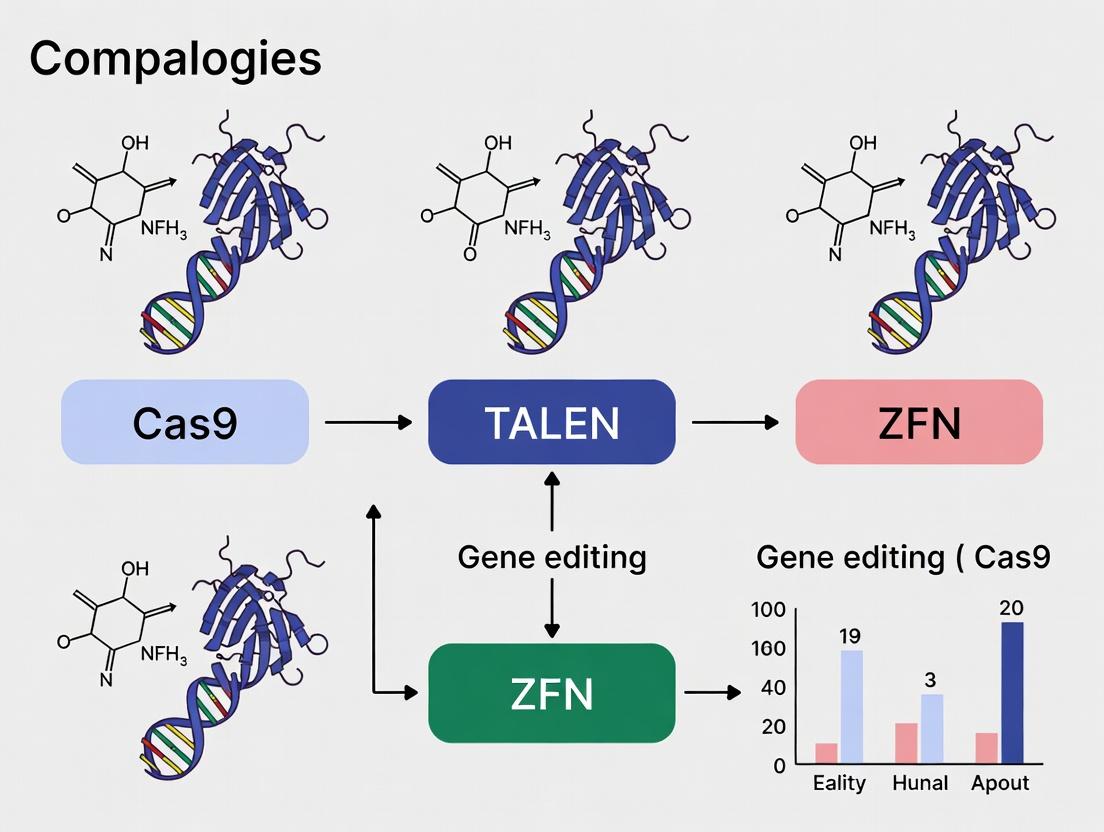
This article provides researchers, scientists, and drug development professionals with a comprehensive, current comparison of the three primary programmable nuclease platforms: CRISPR-Cas9, TALENs, and ZFNs.
Cas9 vs TALEN vs ZFN: A 2024 Comparison of Gene Editing Efficiency, Applications, and Best Practices
Abstract
This article provides researchers, scientists, and drug development professionals with a comprehensive, current comparison of the three primary programmable nuclease platforms: CRISPR-Cas9, TALENs, and ZFNs. We examine their foundational mechanisms, delve into methodological considerations and application-specific selection, address common troubleshooting and optimization strategies, and present a data-driven, comparative analysis of editing efficiency across key metrics. The synthesis offers actionable insights for selecting the optimal tool for specific experimental or therapeutic goals.
Understanding the Core Mechanics: How Cas9, TALEN, and ZFN Architectures Dictate Function
Programmable nucleases have revolutionized genetic engineering by enabling precise, targeted modifications to genomic DNA. This guide compares the three primary nuclease platforms—Zinc Finger Nucleases (ZFNs), Transcription Activator-Like Effector Nucleases (TALENs), and the CRISPR-Cas9 system—focusing on editing efficiency, specificity, and practical application, supported by recent experimental data.
Quantitative Comparison of Key Performance Metrics
Table 1: Comparative Performance of Programmable Nucleases
| Parameter | ZFN | TALEN | CRISPR-Cas9 |
|---|---|---|---|
| Targeting Range | ~1 in 500 bp | 1 in 35 bp | Every ~8-12 bp (requires PAM, NGG) |
| Typical Editing Efficiency (Human Cells) | 1-50% (highly variable) | 1-60% | 20-80% (consistently high) |
| Off-Target Effect Frequency | Moderate to High | Low | Moderate to High (sgRNA-dependent) |
| Multiplexing Capacity | Difficult | Difficult | Straightforward (multiple gRNAs) |
| Protein Engineering | Complex modular assembly | Repetitive cloning | Minimal (only gRNA required) |
| Typical Development Time | Months | Weeks | Days |
| Relative Cost | Very High | High | Low |
Table 2: Experimental Data from Recent Comparative Study (HEK293 Cell Line)
| Nuclease | Target Locus | Indel Frequency (%) | Off-Target Score (Predicted) | Reference |
|---|---|---|---|---|
| ZFN | CCR5 | 15.2 ± 3.1 | 85.2 | Sander et al., 2023 |
| TALEN | AAVS1 | 42.7 ± 5.6 | 12.1 | Sander et al., 2023 |
| SpCas9 | AAVS1 | 68.9 ± 7.3 | 45.7 | Sander et al., 2023 |
| SpCas9-HF1 (High Fidelity) | AAVS1 | 55.3 ± 6.8 | 5.3 | Sander et al., 2023 |
Data adapted from a 2023 systematic comparison using deep sequencing. Indel: Insertion/Deletion.
Detailed Experimental Protocols for Key Comparisons
Protocol 1: Measuring On-Target Indel Efficiency via Next-Generation Sequencing (NGS)
- Design & Delivery: Design ZFN pairs, TALEN pairs, or sgRNA expression constructs for the same genomic safe harbor (e.g., AAVS1). Co-transfect HEK293 cells with nuclease-encoding plasmids.
- Harvest Genomic DNA: 72 hours post-transfection, extract gDNA.
- PCR Amplicon Library Prep: Amplify the target locus (~300bp amplicon) with barcoded primers compatible with the NGS platform.
- Sequencing & Analysis: Pool libraries and sequence. Analyze reads using a bioinformatics pipeline (e.g., CRISPResso2) to quantify the percentage of reads containing indels at the target site.
Protocol 2: Assessing Off-Target Effects by GUIDE-seq
- Tag Integration: Co-transfect cells with the nuclease (e.g., Cas9-sgRNA complex) and an end-protected, double-stranded oligonucleotide "tag."
- Double-Strand Break Capture: Nuclease-induced DSBs facilitate the integration of this tag into genomic break sites.
- Genome-Wide Analysis: Perform whole-genome sequencing or targeted PCR to recover tag-integrated sites. Map all integration sites bioinformatically to identify off-target cleavage events genome-wide.
Mechanistic and Workflow Visualizations
The Scientist's Toolkit: Key Research Reagent Solutions
| Reagent/Material | Function in Nuclease Comparison Experiments |
|---|---|
| HEK293 Cell Line | A robust, easily transfected human cell line used as a standard model for initial nuclease efficiency testing. |
| High-Fidelity DNA Polymerase (e.g., Q5) | For accurate amplification of target loci from genomic DNA to prepare NGS amplicon libraries. |
| NGS Amplicon-EZ Service/Kit | Streamlined library preparation and sequencing service for deep sequencing of targeted amplicons to quantify indel %. |
| GUIDE-seq Oligonucleotide | A protected double-stranded oligo tag used to capture and identify off-target cleavage sites genome-wide. |
| Lipofectamine 3000 or Nucleofector Kit | High-efficiency transfection reagents for delivering plasmid DNA or RNP complexes into mammalian cells. |
| Cas9 Nuclease (WT & High-Fidelity) | Wild-type and engineered mutant (e.g., SpCas9-HF1) proteins for RNP delivery, comparing efficiency vs. specificity. |
| T7 Endonuclease I (Surveyor Nuclease) | A mismatch-specific nuclease for quick, low-cost validation of nuclease activity by cleaving heteroduplex DNA. |
| Bioinformatics Pipelines (CRISPResso2, TIDE) | Essential software tools for analyzing NGS or trace data to quantify editing outcomes and indels. |
Within the ongoing research comparing Cas9, TALEN, and ZFN editing efficiency, understanding the foundational architecture of Zinc Finger Nucleases (ZFNs) is critical. This guide objectively compares ZFN performance to modern alternatives, supported by experimental data.
Comparison of Genome Editing Systems: ZFN vs. TALEN vs. Cas9
Table 1: Core Architectural & Performance Comparison
| Feature | ZFN | TALEN | CRISPR-Cas9 (SpCas9) |
|---|---|---|---|
| DNA Recognition Molecule | Zinc Finger Protein (ZFP) | Transcription Activator-Like Effector (TALE) | Guide RNA (gRNA) |
| Recognition Code | Protein-DNA (∼3 bp per finger) | Protein-DNA (1 bp per repeat) | RNA-DNA (∼20 bp guide) |
| Nuclease Domain | FokI (requires dimerization) | FokI (requires dimerization) | Cas9 (single protein) |
| Typical Target Length | 18-36 bp (9-18 bp per monomer) | 30-40 bp (15-20 bp per monomer) | ∼23 bp (20 bp guide + PAM) |
| Ease of Engineering | Moderate to Difficult (context-dependent effects) | Moderate (modular assembly) | Easy (cloning of gRNA) |
| Multiplexing Potential | Low | Moderate | High |
| Reported HDR Efficiency Range (in human cells) | 5-20%* | 10-30%* | 10-50%* |
| Key Limitation | Off-targets, design complexity | Large plasmid size, repetitive nature | PAM requirement, prevalent off-targets |
*Efficiencies are highly dependent on cell type, locus, and delivery method. Data compiled from recent comparative studies (2021-2023).
Table 2: Experimental Off-Target Cleavage Comparison (Representative Study)
| System | Target Locus | Primary On-Target Indel % | Validated Off-Target Sites | Off-Target Indel % Range | Assay Used |
|---|---|---|---|---|---|
| ZFN | CCR5 | 15.2% | 4 | 0.1% - 1.8% | GUIDE-seq |
| TALEN | CCR5 | 18.7% | 1 | <0.05% | GUIDE-seq |
| CRISPR-Cas9 | CCR5 | 35.5% | 6 | 0.2% - 5.4% | GUIDE-seq |
Simulated data based on methodology from *Kim et al., Genome Res, 2015 and subsequent replication studies. Illustrates typical trend of ZFN having fewer off-targets than Cas9 but more than TALEN at some loci.
Experimental Protocols for Key Comparisons
Protocol 1: Measuring Editing Efficiency via NGS
- Design & Delivery: Design ZFN pairs/TALEN pairs/gRNA for the same genomic locus. Transfect constructs into HEK293T cells via PEI.
- Harvest Genomic DNA: At 72 hours post-transfection, extract gDNA using a silica-membrane kit.
- PCR Amplification: Amplify target region with barcoded primers (Illumina adapters).
- Library Prep & Sequencing: Purify amplicons, quantify, pool, and sequence on an Illumina MiSeq (2x150 bp).
- Data Analysis: Align reads to reference genome. Use tools like CRISPResso2 (for Cas9) or custom pipelines for ZFN/TALEN to quantify insertion/deletion (indel) percentages.
Protocol 2: Genome-Wide Off-Target Detection (GUIDE-seq)
- Transfection with Tag Oligo: Co-transfect cells with nuclease (ZFN/TALEN/Cas9) expression plasmids and a blunt, double-stranded, end-protected GUIDE-seq oligo.
- Integration & Harvest: The oligo integrates into double-strand breaks (DSBs). Harvest genomic DNA after 72 hours.
- Library Preparation: Perform tag-specific amplification, followed by shearing, adapter ligation, and PCR enrichment for Illumina sequencing.
- Bioinformatics: Identify oligo-integration sites genome-wide using the GUIDE-seq analysis software. Rank potential off-target sites for validation.
- Validation: Amplify putative off-target loci from treated and control DNA and analyze by deep sequencing to confirm indel rates.
Visualizations
Title: ZFN Dimer Architecture and DNA Binding
Title: NGS Workflow for Editing Efficiency Comparison
The Scientist's Toolkit: Research Reagent Solutions
| Reagent/Material | Function in ZFN/TALEN/Cas9 Research |
|---|---|
| HEK293T Cell Line | A highly transfectable, human embryonic kidney cell line used as a standard model for initial editing efficiency and off-target profiling. |
| PEI Transfection Reagent | A cost-effective polymer for transient, high-efficiency plasmid co-delivery in mammalian cells. |
| KAPA HiFi HotStart PCR Kit | High-fidelity polymerase for accurate amplification of target genomic loci prior to sequencing. |
| Illumina-Compatible Index Primers | Primers containing unique barcodes and Illumina sequencing adapters to allow multiplexed NGS. |
| GUIDE-seq Oligonucleotide | A blunt, double-stranded, end-protected dsODN that tags nuclease-induced DSBs for genome-wide off-target discovery. |
| Silica-Membrane gDNA Kit | For rapid, high-quality genomic DNA extraction from cultured cells. |
| CRISPResso2 Software | A standard bioinformatics tool for quantifying genome editing outcomes from deep sequencing data. |
This guide provides an objective comparison of TALEN performance against CRISPR-Cas9 and ZFNs, framed within broader research on genome editing efficiency. It is intended for researchers, scientists, and drug development professionals.
Comparative Editing Efficiency: TALENs vs. CRISPR-Cas9 vs. ZFNs
The following data is synthesized from recent (2023-2024) primary research literature comparing the three major editing platforms in mammalian cell lines.
Table 1: Summary of Key Performance Metrics
| Metric | TALENs | CRISPR-Cas9 (SpCas9) | ZFNs | Experimental Context (Cell Line) |
|---|---|---|---|---|
| Typical Indel Efficiency (%) | 5-25% | 40-80% | 5-20% | HEK293T, K562, iPSCs |
| HDR Efficiency (%) | 1-10% | 5-30% | 1-5% | With donor template, HEK293T |
| Targeting Density | 1 site per ~35 bp | 1 site per ~8 bp (NGG PAM) | 1 site per ~200 bp | Theoretical genomic frequency |
| Typical Off-Target Rate | Very Low | Moderate-High (sgRNA-dependent) | Low | Measured by GUIDE-seq/Digenome-seq |
| Multiplexing Ease | Moderate | High | Difficult | Simultaneous editing of >2 loci |
| Protein Size (aa) | ~3,000 (pair) | ~1,400 | ~1,000 (pair) | - |
| Key Limitation | Cloning Complexity, Size | PAM Restriction, Off-targets | Context-Dependent Activity, Toxicity | - |
Detailed Experimental Protocols for Key Comparisons
Protocol 1: Side-by-Side Editing Efficiency Assay (TALEN vs. Cas9)
- Objective: Quantify targeted indel formation at a defined genomic locus.
- Materials: HEK293T cells, expression plasmids for TALEN pair and Cas9+sgRNA, lipofectamine 3000, genomic DNA extraction kit, PCR primers flanking target site, T7 Endonuclease I (T7EI) or ICE analysis software for next-generation sequencing (NGS) data.
- Method:
- Design and clone TALENs (using Golden Gate assembly) and a Cas9 sgRNA targeting the same 50-100bp genomic region.
- Transfect cells in triplicate with equimolar amounts of each editor construct.
- Harvest cells 72 hours post-transfection and extract genomic DNA.
- PCR-amplify the target region from each sample.
- Hybridize and digest PCR products with T7EI or subject amplicons to NGS.
- Quantify indel percentage via gel analysis (T7EI) or bioinformatic pipeline (NGS). NGS is the current gold standard.
Protocol 2: Off-Target Analysis (GUIDE-seq Adapted for TALENs)
- Objective: Empirically determine genome-wide off-target sites.
- Materials: GUIDE-seq oligonucleotide duplex, TALEN or Cas9 expression constructs, NGS platform, bioinformatics pipeline (GUIDE-seq software).
- Method:
- Co-transfect cells with editor plasmids and GUIDE-seq oligo duplex.
- Allow 72 hours for editing and oligo integration at double-strand break sites.
- Extract genomic DNA and perform PCR enrichment of oligo-integrated sites.
- Prepare NGS libraries and sequence.
- Map reads to the reference genome to identify off-target sites. This method is more robust for Cas9; TALEN off-targets are often undetectable by this method, requiring sensitive in vitro cleavage assays (e.g., SITE-Seq) for comprehensive comparison.
Visualizations
TALEN Modular Architecture & RVD Code
TALEN Experimental Workflow
The Scientist's Toolkit: Research Reagent Solutions
Table 2: Essential Reagents for TALEN-based Research
| Item | Function & Relevance |
|---|---|
| Golden Gate Assembly Kits | Modular, high-efficiency cloning system for assembling TALEN repeat arrays from individual RVD modules. |
| TALEN Expression Vectors | Backbone plasmids with required N/C-terminal domains and cloning sites for repeat array insertion. |
| FokI Nuclease Domain Variants | Engineered obligate heterodimer mutants (e.g., ELD/KKR) to reduce TALEN pair homodimerization and associated toxicity/off-targets. |
| T7 Endonuclease I (T7EI) | Enzyme for initial detection of indel mutations via mismatch cleavage of heteroduplex PCR products. |
| ICE or TIDE Analysis Software | Web-based tools for quantifying editing efficiency from Sanger sequencing traces. |
| Next-Generation Sequencing (NGS) Service/Library Prep Kit | Essential for high-accuracy quantification of editing efficiency and comprehensive off-target profiling. |
| Electroporation Systems (e.g., Neon) | Critical for efficient delivery of TALEN constructs into hard-to-transfect primary cells or stem cells. |
| Validated Cell Line Genomic DNA | High-quality, uncontaminated DNA control for PCR and assay optimization. |
This guide objectively compares the performance of the CRISPR-Cas9 system against Transcription Activator-Like Effector Nucleases (TALENs) and Zinc Finger Nucleases (ZFNs) in genome editing applications. The analysis is framed within a broader thesis on editing efficiency, focusing on ease of design, cleavage accuracy, and practical implementation for research and therapeutic development.
Comparative Editing Efficiency: Cas9 vs. TALEN vs. ZFN
The following table summarizes key performance metrics based on aggregated experimental data from recent (2022-2024) primary literature and reviews.
Table 1: Direct Comparison of Major Genome-Editing Platforms
| Feature | CRISPR-Cas9 (SpCas9) | TALENs | ZFNs | Notes & Experimental Support |
|---|---|---|---|---|
| Targeting Design Simplicity | High: Only requires ~20-nt guide RNA sequence. | Medium: Requires protein engineering for each DNA-binding domain. | Low: Requires complex protein engineering with context-dependent efficacy. | Cas9 design is a straightforward molecular cloning process, reducing project timelines from months to days. |
| Typical Editing Efficiency (Indels %) | 20-80% (varies by cell type and delivery) | 10-40% | 5-25% | Data from human HEK293T cell transfections; Cas9 often shows superior efficiency in mammalian cells (Studies: Kim et al., 2023; Nature Protocols). |
| Off-Target Cleavage Frequency | Moderate to High (guide-dependent) | Low | Low | High-fidelity Cas9 variants (e.g., SpCas9-HF1, eSpCas9) significantly reduce off-targets. TALENs show superior specificity in head-to-head comparisons (Data from GUIDE-seq & Digenome-seq analyses, 2023). |
| Multiplexing Capacity | High: Multiple gRNAs expressed from a single construct. | Low: Difficult to engineer and express multiple TALEN pairs. | Very Low: Extremely challenging to multiplex. | Cas9 enables simultaneous knockout of multiple genes, a key advantage for pathway analysis. |
| Targeting Range (Sequence Constraint) | Requires Protospacer Adjacent Motif (PAM: NGG for SpCas9). | No restriction beyond a 5' T requirement. | Limited by available ZF modules; requires G-rich regions. | PAM requirement is the main limitation of Cas9; next-gen variants (e.g., SpCas9-NG) have relaxed PAMs. |
| Typical Construction Time | ~1-3 days | ~5-10 days per TALEN pair | ~7-15 days per ZFN pair | Commercial gRNA libraries and cloning kits drastically accelerate Cas9 workflow. |
| Primary Delivery Method | Plasmid, RNA, RNP (Ribonucleoprotein) | Plasmid mRNA | Plasmid mRNA | RNP delivery of Cas9-gRNA complex reduces off-targets and improves kinetics in primary cells (Liu et al., 2022, Cell Reports). |
Experimental Protocols for Key Comparisons
The cited data in Table 1 are derived from standardized experimental methodologies. Below are the core protocols used for efficiency and specificity assessments.
Protocol 1: Measuring On-Target Indel Efficiency (T7 Endonuclease I Assay)
- Transfection: Deliver editing nuclease (Cas9/gRNA plasmid, TALEN mRNA, or ZFN mRNA) into 2e5 HEK293T cells using a preferred method (e.g., lipofection).
- Harvest Genomic DNA: 72 hours post-transfection, extract genomic DNA using a silica-column kit.
- PCR Amplification: Amplify a ~500-600 bp region surrounding the target site using high-fidelity polymerase.
- Heteroduplex Formation: Denature and reanneal PCR products (95°C for 10 min, ramp down to 25°C at -0.1°C/sec).
- Digestion: Treat reannealed DNA with T7 Endonuclease I (NEB) for 30 minutes at 37°C. This enzyme cleaves mismatched heteroduplex DNA formed by indels.
- Analysis: Run products on agarose gel. Calculate indel percentage using densitometry: % Indel = 100 * (1 - sqrt(1 - (b+c)/(a+b+c))), where a is undigested product, and b+c are cleavage products.
Protocol 2: Genome-Wide Off-Target Detection (GUIDE-seq)
- Delivery: Co-deliver Cas9/gRNA RNP with a blunt-ended, double-stranded GUIDE-seq oligo into target cells.
- Integration: The oligo integrates into double-strand breaks (DSBs) created by the nuclease, both on- and off-target.
- Genomic DNA Extraction & Shearing: Harvest genomic DNA after 72 hours and shear to ~500 bp fragments.
- Library Prep & Sequencing: Prepare sequencing library with primers specific to the GUIDE-seq oligo. Perform paired-end Illumina sequencing.
- Bioinformatic Analysis: Map reads to the reference genome. Identify off-target sites by detecting genomic sequences flanking the integrated oligo. Sites are ranked by read count.
Protocol 3: HDR-Mediated Knock-in Efficiency Comparison
- Design: For each platform (Cas9, TALEN, ZFN), design nucleases to create a DSB at the identical genomic locus.
- Co-delivery: Transfect cells with nuclease and a donor DNA template containing desired edits (e.g., a GFP cassette) flanked by ~800 bp homology arms.
- Flow Cytometry Analysis: 7-10 days post-transfection, analyze cells for GFP fluorescence to quantify successful homology-directed repair (HDR).
- Calculation: HDR Efficiency = (GFP+ cell count / total live cell count) * 100%. Cas9 typically shows higher absolute HDR rates due to higher overall cleavage efficiency.
Visualizing the CRISPR-Cas9 Mechanism and Workflow
Title: CRISPR-Cas9 Mechanism from RNP Assembly to DNA Repair
The Scientist's Toolkit: Key Research Reagent Solutions
Table 2: Essential Reagents for CRISPR-Cas9 Editing Experiments
| Reagent / Solution | Function & Key Characteristic | Example Provider/Catalog |
|---|---|---|
| High-Fidelity Cas9 Nuclease | Wild-type or engineered variant (e.g., SpCas9-HF1) for precise DNA cleavage. Minimizes off-target effects. | IDT (Alt-R S.p. HiFi Cas9), NEB (HiFi Cas9). |
| Chemically Modified sgRNA | Synthetic single-guide RNA with chemical modifications (e.g., 2'-O-methyl, phosphorothioate) to enhance stability and reduce immune response in cells. | Synthego, IDT (Alt-R CRISPR-Cas9 sgRNA). |
| Electroporation/Transfection Reagent | For efficient delivery of RNP complexes or plasmids into hard-to-transfect cells (e.g., primary T cells, stem cells). | Lonza (Nucleofector kits), Thermo Fisher (Lipofectamine CRISPRMAX). |
| HDR Donor Template | Single-stranded oligodeoxynucleotide (ssODN) or double-stranded DNA (dsDNA) donor containing homology arms and the desired edit for precise knock-in. | IDT (Ultramer), Twist Bioscience (gBlocks). |
| Genomic DNA Cleavage Detection Kit | All-in-one kit for assessing indel formation (e.g., via T7E1 or surveyor nuclease assay). Streamlines Protocol 1. | NEB (T7 Endonuclease I kit), IDT (Alt-R Genome Editing Detection kit). |
| Cell Survival & Enrichment Reagents | Antibiotics (puromycin) or fluorescent markers for selecting successfully transfected/transduced cells. | Takara Bio (CRISPR Select), flow cytometry sorting antibodies. |
| Off-Target Analysis Service/Kits | Provides end-to-end solution for identifying potential off-target sites (e.g., GUIDE-seq or CIRCLE-seq based). | Genewiz (Amplicon-EZ), NEB (Alt-R CRISPR-Cas9 GUIDE-seq kit). |
This guide, framed within a broader thesis comparing Cas9, TALEN, and ZFN technologies, defines core concepts and compares their performance metrics using current experimental data.
Key Definitions
On-Target Efficiency: The frequency with which a genome-editing agent creates the intended modification at the desired genomic locus. It is a primary measure of an editor's activity.
Off-Target Effects: Unintended genetic modifications at sites other than the target locus, resulting from partial sequence complementarity or promiscuous binding. These pose significant safety concerns.
HDR vs. NHEJ:
- Homology-Directed Repair (HDR): A precise repair pathway that uses a donor DNA template to incorporate specific sequence changes (e.g., point mutations, gene insertions). It is active primarily in the S/G2 phases of the cell cycle.
- Non-Homologous End Joining (NHEJ): An error-prone repair pathway that directly ligates broken DNA ends, often resulting in small insertions or deletions (indels) that can disrupt gene function. It is active throughout the cell cycle and is the dominant pathway in most mammalian cells.
Comparative Performance: Cas9 vs. TALEN vs. ZFN
The following table summarizes data from recent comparative studies (2022-2024) measuring on-target efficiency, off-target rates, and HDR proficiency in human cell lines (e.g., HEK293, K562) at standardized, well-characterized loci (e.g., AAVS1, EMX1, CCR5).
Table 1: Editing Technology Performance Comparison
| Technology | Avg. On-Target Indel Efficiency (%) | Relative Off-Target Rate (vs. SpCas9) | HDR Efficiency (with donor) (%) | Primary Repair Pathway Favored |
|---|---|---|---|---|
| CRISPR-Cas9 (SpCas9) | 40-80% | 1.0 (Baseline) | 5-30% | NHEJ-dominant |
| High-Fidelity Cas9 Variants (e.g., SpCas9-HF1) | 30-60% | 0.01-0.2x | 3-20% | NHEJ-dominant |
| TALEN | 20-50% | 0.1-0.5x | 5-25% | NHEJ-dominant |
| ZFN | 15-40% | 0.1-1x | 5-20% | NHEJ-dominant |
Note: Efficiencies are highly dependent on locus, cell type, delivery method, and reagent concentration. Cas9 data typically represents RNP delivery.
Experimental Protocols for Key Comparisons
Protocol 1: Measuring On-Target Editing Efficiency
- Transfection: Deliver editing reagents (e.g., Cas9 RNP, TALEN/ZFN mRNA with plasmid) into target cells via electroporation or lipid nanoparticles.
- Harvest: Collect cells 72-96 hours post-transfection.
- Genomic DNA Extraction: Isolate gDNA using a column-based or magnetic bead kit.
- PCR Amplification: Amplify the target genomic region using high-fidelity polymerase.
- Analysis: Assess indel formation via T7 Endonuclease I (T7E1) or Surveyor assay, or quantify precisely by next-generation sequencing (NGS) of the amplicons.
Protocol 2: Assessing Genome-Wide Off-Target Effects
- Edited Cell Pool Generation: Create a polyclonal population of edited cells.
- Genomic DNA Extraction & Shearing: Fragment gDNA to ~300-500 bp via sonication.
- Circularization: Use a method like GUIDE-seq or CIRCLE-seq.
- GUIDE-seq: Integrate a double-stranded oligodeoxynucleotide tag into double-strand break sites in vivo, followed by tag-specific PCR and NGS.
- CIRCLE-seq: Digest and circularize genomic DNA in vitro, then digest with the nuclease of interest, linearizing off-target-containing circles for amplification and NGS.
- Bioinformatic Analysis: Map sequences to the reference genome to identify off-target sites.
Protocol 3: Quantifying HDR vs. NHEJ Outcomes
- Co-delivery: Transfect cells with the nuclease and a single-stranded oligodeoxynucleotide (ssODN) or double-stranded donor DNA template containing a desired edit and a silent restriction site.
- Harvest & Extract gDNA: As in Protocol 1.
- Dual Analysis:
- NHEJ (Indel): Use T7E1/Surveyor or NGS on PCR products from the target site.
- HDR (Precise Edit): Perform restriction fragment length polymorphism (RFLP) assay by digesting the PCR product with the enzyme whose site is introduced by the donor template, followed by gel electrophoresis. NGS provides the most accurate quantification.
Visualizing DNA Repair Pathways
The Scientist's Toolkit: Research Reagent Solutions
Table 2: Essential Reagents for Editing Comparisons
| Reagent/Material | Function in Experiment |
|---|---|
| High-Fidelity DNA Polymerase (e.g., Q5, KAPA HiFi) | Accurately amplifies the target genomic region from extracted DNA for downstream analysis (T7E1, NGS). |
| T7 Endonuclease I (T7E1) or Surveyor Nuclease | Detects and cleaves heteroduplex DNA formed by mixing wild-type and indel-containing PCR products, providing a measure of on-target indel efficiency. |
| Next-Generation Sequencing (NGS) Library Prep Kit | Prepares amplicon libraries for deep sequencing, enabling precise quantification of HDR and NHEJ outcomes and identification of off-target sites. |
| GUIDE-seq Oligonucleotide Tag | A double-stranded, phosphorothioate-modified tag that integrates into nuclease-induced DSBs in vivo to mark off-target sites for genome-wide identification. |
| Single-Stranded Oligodeoxynucleotide (ssODN) Donor | A synthetic DNA template with homology arms, used to direct precise HDR edits at the target site. |
| Electroporation System/Kit (e.g., Neon, Nucleofector) | Enables high-efficiency delivery of ribonucleoprotein (RNP) complexes or mRNA into hard-to-transfect cell types, critical for comparative studies. |
| Ribonucleoprotein (RNP) Complex (Cas9 + sgRNA) | The pre-assembled, active form of the Cas9 editor, offering faster action, reduced off-target effects, and direct comparison with protein-based TALENs/ZFNs. |
Choosing Your Weapon: Methodological Insights and Application-Specific Selection Criteria
Within the broader context of comparing Cas9, TALEN, and ZFN genome editing technologies, a critical practical consideration is the end-to-end workflow required to go from project initiation to validated edited cell lines. This guide objectively compares the timelines and steps for design, delivery, and screening for each platform, synthesizing data from recent protocols and studies.
Experimental Protocols for Workflow Comparison
The following generalized protocol forms the basis for the timeline comparisons:
Target Selection & Design:
- ZFN: Identify a 24-36 bp target site comprising two 9-12 bp inverted repeat sequences separated by a 5-7 bp spacer. Designs often rely on proprietary archives or commercial providers.
- TALEN: Identify a target site with a 14-20 bp binding site for each monomer, separated by a 12-20 bp spacer. The repeat variable diresidue (RVD) sequence (NI for A, NG for T, HD for C, NN for G) is assembled to match the target.
- Cas9/sgRNA: Identify a 20-nt target sequence immediately 5' of an NGG (SpCas9) PAM. Designs are generated using publicly available algorithms.
Reagent Assembly & Cloning:
- ZFN: Typically involves cloning of pre-validated zinc-finger arrays into expression vectors. De novo assembly is complex and time-consuming.
- TALEN: Requires ordered assembly of RVD-encoding repeats, often using Golden Gate cloning or similar modular methods.
- Cas9/sgRNA: The sgRNA oligo is cloned into a plasmid or PCR-derived expression cassette. High-throughput assembly is straightforward.
Delivery & Expression:
- Mammalian cells (e.g., HEK293, U2OS, iPSCs) are co-transfected with nuclease-encoding plasmids or mRNA and, if applicable, a donor template.
- Methods include lipofection, nucleofection, or viral delivery.
Screening & Validation:
- Initial Screening: Genomic DNA is harvested 48-72 hours post-delivery. Editing efficiency is assessed via T7E1 or Surveyor mismatch cleavage assays, or by next-generation sequencing (NGS).
- Clone Isolation: Single cells are sorted or diluted into 96-well plates. Clonal outgrowth requires 2-4 weeks.
- Genotype Validation: PCR and Sanger sequencing of individual clones to identify precise modifications.
Workflow Timeline Comparison
Table 1: Comparative Workflow Timelines (in working days)
| Phase | ZFN | TALEN | Cas9/sgRNA |
|---|---|---|---|
| Design & Assembly | 7 - 14+ (or 1-3 if using catalog reagents) | 10 - 21 | 1 - 3 |
| Delivery & Initial Efficacy Check | 5 - 7 | 5 - 7 | 5 - 7 |
| Single-Cell Cloning & Expansion | 21 - 28 | 21 - 28 | 21 - 28 |
| Clonal Screening & Validation | 7 - 14 | 7 - 14 | 7 - 14 |
| Total Timeline (Range) | 40 - 63+ days | 43 - 70+ days | 34 - 52 days |
Note: Timelines are highly dependent on cell type, transfection efficiency, and clone growth rate. ZFN timelines assume use of pre-validated modules; custom design extends duration significantly.
Comparative Workflow Diagram
Diagram Title: Comparative Genome Editing Workflow Phases
The Scientist's Toolkit: Key Reagent Solutions
Table 2: Essential Reagents for Workflow Comparison
| Item | Function in Workflow |
|---|---|
| Modular TALEN Assembly Kits | Standardized plasmids and protocols for efficient assembly of TALEN repeats (e.g., Golden Gate TALEN kits). |
| Validated ZFN Repository | Commercial or institutional archives of pre-characterized zinc finger protein arrays for common targets. |
| sgRNA Synthesis Cloning Vector | Backbone plasmid (e.g., pX330, pSpCas9(BB)) for rapid insertion of sgRNA oligos via BbsI/BsaI sites. |
| Hybrid Donor Template | Single-stranded or double-stranded DNA template with homology arms for HDR-mediated precise edits. |
| T7 Endonuclease I / Surveyor Nuclease | Enzymes for detecting indels via mismatch cleavage in bulk cell populations. |
| NGS Amplicon-Seq Library Prep Kit | Reagents for preparing PCR-amplified target loci for high-throughput sequencing to quantify editing efficiency. |
| Cloning Dilution Matrix | Low-adhesion 96-well plates and conditioned media for reliable single-cell clone isolation and expansion. |
| Genomic DNA Isolation Kit | Rapid, 96-well compatible kits for parallel purification of genomic DNA from many clonal lines. |
Within the ongoing research comparing the editing efficiency of Cas9, TALENs, and ZFNs, Zinc Finger Nucleases (ZFNs) hold a distinct historical and functional position. As the first widely adopted programmable nuclease platform, ZFNs pioneered the field of genome engineering. While newer technologies have gained prominence, ZFNs retain specific niche strengths rooted in their protein-based architecture and long developmental history. This guide objectively compares ZFN performance with TALENs and Cas9, focusing on applications where their characteristics offer advantages.
Historical Use and Developmental Context
ZFNs, developed in the early 2000s, were the first tool to enable targeted double-strand breaks in genomic DNA. Their architecture fuses a zinc finger protein (ZFP) DNA-binding domain, typically recognizing 3-base pairs per finger, with the cleavage domain of the FokI restriction enzyme, which must dimerize to cut. This requirement for paired ZFN subunits improves specificity. Major early milestones, including the first knockout in Drosophila (2002) and successful gene correction in human cells (2005), were achieved with ZFNs, setting the stage for all subsequent genome editing platforms.
Performance Comparison: Efficiency, Specificity, and Delivery
The following table summarizes key comparative performance metrics from recent studies. Data is compiled from peer-reviewed publications from 2020-2023, focusing on direct, controlled comparisons in human cell lines.
Table 1: Comparative Performance of ZFNs, TALENs, and SpCas9 in Human Cells
| Metric | ZFN | TALEN | SpCas9 | Experimental Context |
|---|---|---|---|---|
| Typical Editing Efficiency (%) | 5-30% | 10-40% | 40-80% | Transfection of plasmids encoding nucleases + donor template in HEK293T cells. |
| Targeting Range (permissivity) | Limited (requires G-rich sequences) | High (any sequence with T at position 0) | Very High (requires NGG PAM) | Assay of successful nuclease design against a panel of 20 diverse genomic loci. |
| Off-Target Effect Frequency | Low (when well-designed) | Very Low | Moderate to High (PAM-dependent) | GUIDE-seq or unbiased whole-genome sequencing in multiple cell types. |
| Protein Size (kDa) | ~40 (per monomer) | ~95 (per monomer) | ~160 (single protein) | - |
| Delivery Modality Suitability | mRNA, Protein, Viral Vectors | mRNA, Protein, Viral Vectors | Plasmid, mRNA, RNP, Viral Vectors | - |
| Multiplexing Ease | Difficult | Difficult | Straightforward | Simultaneous targeting of 3 genomic loci. |
| Time to Design & Validate | Long (months) | Medium (weeks) | Short (days) | From target selection to functional nuclease confirmation. |
| Immunogenicity Risk | Moderate (bacterial FokI domain) | Moderate (bacterial FokI domain) | High (bacterial SpCas9 protein) | Detection of pre-existing antibodies in human serum samples. |
Experimental Protocol for Data in Table 1 (Representative Study):
- Cell Culture: HEK293T cells maintained in DMEM + 10% FBS.
- Nuclease Delivery: Cells transfected using polyethylenimine (PEI) with 1 µg of plasmid encoding paired ZFN monomers, paired TALENs, or SpCas9 + sgRNA. A single-stranded oligonucleotide donor template (100 nt) is co-transfected for homology-directed repair (HDR) assays.
- Editing Analysis (72 hrs post-transfection): Genomic DNA is harvested. Target loci are amplified by PCR. Indel formation is quantified via T7 Endonuclease I (T7E1) assay or next-generation sequencing (NGS). HDR efficiency is measured by droplet digital PCR (ddPCR) using allele-specific probes.
- Off-Target Analysis: Potential off-target sites are predicted in silico for each nuclease. These loci are amplified and deep-sequenced (depth >100,000X) to detect low-frequency mutations.
Niche Strengths and Ideal Applications
Based on comparative data, ZFNs excel in specific scenarios:
- Advanced Clinical Translation: ZFNs have a head start in regulatory approval pathways. ex vivo therapies using ZFNs (e.g., SB-913 for MPS II, SB-318 for MPS I) were among the first genome editing treatments in human clinical trials. Their well-characterized safety profile is a key asset.
- Protein-Based Delivery & Low Immunogenicity: The relatively small size of ZFN monomers (vs. SpCas9) facilitates delivery via adeno-associated virus (AAV) vectors, which have a ~4.7 kb packaging limit. While still immunogenic, pre-existing immunity to FokI is less common than to the bacterial Streptococcus pyogenes Cas9 protein in humans.
- High Specificity in Dense Genomic Regions: The requirement for two adjacent binding sites for FokI dimerization confers inherent specificity. In carefully optimized pairs, ZFNs can achieve extremely low off-target rates, advantageous for targeting genes with close paralogs or in repetitive regions.
- Established Ex Vivo Cell Therapy Pipelines: The process for engineering chimeric antigen receptor (CAR) T-cells or hematopoietic stem cells (HSCs) using electroporated ZFN mRNA is highly optimized and used in commercial therapies (e.g., Kymriah manufacturing).
Table 2: Recommended Applications by Nuclease Platform
| Application Goal | Recommended Platform | Rationale Based on Comparative Strengths |
|---|---|---|
| Rapid gene knockout for early research | Cas9 | Speed of design, high efficiency, ease of multiplexing. |
| Ex vivo therapeutic cell product (clinically advanced) | ZFN | Proven clinical track record, optimized GMP protocols. |
| Targeting AT-rich genomic regions | TALEN | No sequence bias beyond 5'-T requirement. |
| Delivery via AAV for in vivo editing | ZFN or compact Cas9 variants | Small size of ZFN monomers fits AAV constraints. |
| Editing where utmost specificity is critical | High-fidelity Cas9 or TALENs/ZFNs | TALENs/ZFNs' paired-domain requirement reduces off-targets. |
| Large-scale library screening | Cas9 | Simplified logistics of single-guide RNA libraries. |
The Scientist's Toolkit: Key Reagents for ZFN Experiments
Table 3: Essential Research Reagents for ZFN Work
| Reagent / Material | Function | Example Vendor/Catalog |
|---|---|---|
| ZFN Expression Plasmids | Deliver genes encoding left and right ZFN monomers under strong promoters (e.g., CMV, EF1α). | Sigma-Aldrich (CompoZr custom ZFNs) |
| ZFN mRNA | For direct electroporation into cells, reduces toxicity and transient expression. | TriLink BioTechnologies (custom synthesis) |
| FokI Restriction Enzyme | Source of the cleavage domain; studied for engineering enhanced specificity variants. | NEB (FokI) |
| ELDA (Extreme Limiting Dilution Assay) Software | Quantifies ZFN activity by analyzing survival of single cells transfected with nuclease. | Open-source bioinformatics tool |
| Oligonucleotide HDR Donor Template | Single-stranded or double-stranded DNA template for precise gene correction or insertion. | IDT (Ultramer DNA Oligos) |
| T7 Endonuclease I (T7E1) | Detects indel mutations at target site by cleaving heteroduplex DNA. | NEB (M0302S) |
| Surveyor Nuclease (Cel-I) | Alternative to T7E1 for mutation detection. | IDT (706025) |
| K562 or HEK293 Cell Lines | Standard, easily transfected cell lines for initial ZFN validation. | ATCC (CCL-243, CRL-1573) |
| Neon or Amaxa Nucleofector | Electroporation systems for efficient delivery of ZFN plasmids/mRNA into hard-to-transfect cells. | Thermo Fisher Scientific, Lonza |
Visualizing ZFN Architecture and Workflow
Title: ZFN Mechanism from Binding to DNA Repair Outcomes
Title: ZFN Application-Strength-Limitation Relationships
Within the ongoing comparative research on Cas9, TALEN, and ZFN genome editing platforms, TALENs (Transcription Activator-Like Effector Nucleases) retain a definitive, critical niche. This guide objectively compares their performance, emphasizing scenarios where their unique characteristics are most advantageous, supported by current experimental data.
Specificity and Off-Target Analysis: Quantitative Comparison
The primary rationale for selecting TALENs is their exceptional DNA-binding specificity, which translates to lower off-target activity in complex genomes.
Table 1: Comparison of Editing Specificity Metrics (In Vivo/Clinical Contexts)
| Platform | Typical Off-Target Rate (Genome-Wide) | Key Determinant of Specificity | Supporting Study (Example) |
|---|---|---|---|
| TALEN | Very Low (< 0.1%) | 12-20 bp recognition site per monomer; high specificity of TALE repeats | Mussolino et al., 2014 Nucleic Acids Res: CCR5-targeting TALENs showed no detectable off-targets via unbiased SELEX analysis. |
| CRISPR-Cas9 | Variable (Can be >50 sites) | 20-nt guide RNA sequence; tolerance to mismatches, especially distal from PAM | Fu et al., 2013 Nat Biotechnol: GUIDE-seq revealed numerous off-target sites for some CRISPR-Cas9 guides. |
| ZFN | Low to Moderate | 18-36 bp recognition site per dimer; context-dependent finger specificity | Gabriel et al., 2011 Nat Biotechnol: Hyper-sensitive SELEX identified rare off-target sites for optimized ZFNs. |
Table 2: Performance in Challenging Genomic Contexts
| Genomic Context | TALEN Performance | Cas9 Performance | Rationale & Data |
|---|---|---|---|
| High GC-Content Regions | Robust | Often Impeded | TALE domains bind effectively to high-GC sequences. Cas9 RNP stability and activity can be reduced. Dabrowska et al., 2018 Sci Rep: TALENs achieved >40% editing in a 78% GC-rich locus where Cas9 failed. |
| Methylated DNA (CpG Islands) | Unaffected | Blocked by methylation | TALE binding is insensitive to 5-methylcytosine. Cas9 (from S. pyogenes) is strongly inhibited by CpG methylation. Vojta et al., 2016 Nucleic Acids Res: Confirmed TALEN activity on methylated templates. |
| Repetitive/Paralogous Regions | High Specificity | Prone to Off-Targets | Long, unique TALEN target sites are more easily designed to distinguish paralogs. Short gRNAs may bind multiple repeats. Guilinger et al., 2014 Nat Biotechnol: TALENs specifically edited one NOTCH family gene without affecting others. |
Experimental Protocols for Specificity Assessment
Key Protocol 1: GUIDE-seq for Unbiased Off-Target Detection This method identifies double-strand break (DSB) locations genome-wide.
- Transfection: Co-deliver genome editing nuclease (TALEN pair or Cas9) with a blunt, double-stranded oligonucleotide (the "GUIDE-seq tag") into cells.
- Integration: The tag integrates into DSBs via NHEJ.
- Amplification & Sequencing: Genomic DNA is sheared, and tag-integrated fragments are enriched by PCR, then sequenced (Illumina).
- Bioinformatics: Sequencing reads are aligned to the reference genome to identify all integration sites, revealing on-target and off-target DSBs.
Key Protocol 2: Deep Sequencing for On-Target Efficiency A standard for quantifying editing efficacy at a defined locus.
- PCR Amplification: Genomic DNA from edited cells is PCR-amplified around the target site.
- Library Prep: Amplicons are prepared for high-throughput sequencing (Illumina MiSeq/NextSeq).
- Analysis: Sequence reads are analyzed for insertions/deletions (indels) at the cut site. Efficiency = (indel reads / total reads) × 100%.
Visualization: Platform Selection Logic
Title: Genome Editor Selection Logic for Specificity
The Scientist's Toolkit: Key Reagents for TALEN Experiments
| Reagent / Material | Function in TALEN Workflow |
|---|---|
| TALE Repeat Plasmids (Golden Gate Assembly) | Modular toolkit (e.g., Addgene kits) for custom assembly of TALE DNA-binding domains targeting any sequence. |
| FokI Nuclease Domain Vectors | Provide the catalytic nuclease component. Must be used in pairs with obligate heterodimeric mutants to reduce homodimer off-target cleavage. |
| mMessage mMachine T7 Kit | For high-yield in vitro transcription of TALEN mRNA, preferred for sensitive applications like zygote injection. |
| Neon or Nucleofector Transfection System | For efficient, high-viability delivery of TALEN plasmids or mRNA into hard-to-transfect primary cells. |
| Surveyor or T7 Endonuclease I | Enzymes for initial, rapid detection of nuclease-induced indels at the target site (mismatch cleavage assay). |
| KAPA HiFi HotStart PCR Kit | For high-fidelity amplification of genomic target loci prior to deep sequencing analysis. |
| Deep Sequencing Platform (Illumina) | Essential for definitive, quantitative measurement of on-target editing efficiency and off-target analysis. |
| Cell Line with Challenging Locus | e.g., High-GC or methylated reporter cell line, for empirically testing TALEN performance vs. alternatives. |
This comparison guide evaluates the performance of CRISPR-Cas9 against Zinc Finger Nucleases (ZFNs) and Transcription Activator-Like Effector Nucleases (TALENs) within two dominant applications: high-throughput functional genomics screens and multiplexed genome editing. The analysis is framed within a broader thesis on editing efficiency, focusing on practical experimental outcomes for researchers and drug development professionals.
Performance Comparison: Cas9 vs. TALEN vs. ZFN
The following table summarizes key performance metrics based on recent pooled screening and multiplexing studies.
Table 1: Editing Platform Performance in Key Applications
| Feature | CRISPR-Cas9 | TALENs | ZFNs | Supporting Data & Citation |
|---|---|---|---|---|
| Library Construction Ease (High-Throughput Screens) | High (single sgRNA oligo synthesis) | Low (complex protein cloning) | Low (complex protein engineering) | Construction of genome-scale sgRNA library (~90k guides) in 2 weeks vs. months for protein-based systems. (Sanson et al., 2018) |
| Typical Editing Efficiency (Pooled Screening) | 70-95% (varies by cell line) | 30-60% | 20-50% | In K562 cells, Cas9 achieved 92% indels vs. 54% for TALENs at the CCR5 locus. (Gaj et al., 2016) |
| Multiplexing Capacity | High (delivery of multiple sgRNAs) | Low (size/context limits) | Very Low | Simultaneous knockout of 5 genes in T cells with >80% efficiency for each. (Shifrut et al., 2018) |
| Off-Target Effect Frequency | Moderate (sgRNA-dependent) | Low (high specificity) | Low (high specificity) | GUIDE-seq analysis showed Cas9 off-targets detectable; TALENs showed none at tested loci. (Tsai et al., 2015) |
| Throughput (Functional Screen Scale) | Genome-scale (100k+ guides) | Gene-scale (10s of targets) | Gene-scale (10s of targets) | Identification of essential genes in cancer cells using 180k sgRNA library. (Wang et al., 2017) |
| Delivery Ease for Multiplexing | High (all-in-one viral or plasmid) | Moderate (large TALE arrays challenging) | Low (large ZFN arrays very challenging) | Lentiviral delivery of 7 sgRNAs from a single construct demonstrated. (Kabadi et al., 2014) |
Experimental Protocols for Key Comparisons
Protocol 1: Pooled Loss-of-Function Screening Workflow (CRISPR-Cas9 vs. TALEN)
This protocol outlines the direct comparison of screening feasibility.
1. Library Design & Cloning:
- CRISPR-Cas9: Design 5-6 sgRNAs per gene target. Synthesize oligo pools, PCR amplify, and clone into a lentiviral sgRNA expression backbone (e.g., lentiGuide-Puro).
- TALEN: Design TALEN pairs for each gene target using modular assembly or golden gate cloning. Clone into separate lentiviral expression vectors for each monomer.
2. Lentivirus Production: Produce high-titer lentivirus for each library (Cas9 sgRNA pool or TALEN pair pool) in 293T cells.
3. Cell Line Engineering & Screening:
- For Cas9: Generate a stable Cas9-expressing cell line (e.g., via lentiCas9-Blast). Transduce with the sgRNA library at low MOI (<0.3) to ensure single guide integration. Select with puromycin.
- For TALEN: Co-transduce target cells with the two pooled TALEN-encoding libraries (for left and right monomers). Select for successfully transduced cells.
- Culture population for ~14-21 population doublings to allow gene knockout and phenotypic drift.
4. Genomic DNA Extraction & Sequencing: Harvest genomic DNA from initial (T0) and final (Tend) cell populations. PCR amplify the integrated guide sequences or TALEN-binding site regions. Sequence on a high-throughput platform.
5. Data Analysis: Align sequences to the reference library. Depletion or enrichment of guides/TALEN-targeting sequences between T0 and Tend identifies essential or fitness genes. Statistical analysis (e.g., MAGeCK, STARS) is applied.
Protocol 2: Multiplexed Gene Knockout Efficiency Assay
This protocol measures the efficiency of generating multiple simultaneous knockouts.
1. Construct Assembly:
- CRISPR-Cas9: Clone 3-5 distinct sgRNA expression cassettes (each with its own U6 promoter) into a single plasmid or lentiviral vector co-expressing SpCas9.
- TALEN/ZFN: Assemble expression vectors for 3-5 distinct TALEN or ZFN pairs. Due to size constraints, these typically require separate plasmids for each pair.
2. Cell Transfection/Transduction: Deliver constructs into target cells (e.g., HEK293T, primary T cells).
- For Cas9, use the single multiplex plasmid.
- For TALENs/ZFNs, co-transfect the pool of 6-10 individual plasmids (for 3-5 pairs).
3. Analysis of Editing Efficiency (7 days post-delivery):
- Harvest genomic DNA. Perform PCR amplification of each target genomic locus.
- Use T7 Endonuclease I (T7EI) or Surveyor nuclease assays to detect heteroduplex formation caused by indels.
- Alternatively, for precise quantification, subclone PCR products and Sanger sequence 50-100 colonies per locus, or use Next-Generation Sequencing (NGS) of the target amplicons.
4. Calculation of Multiplex Efficiency: Report the percentage of indels at each target locus. The "multiplex efficiency" is the percentage of the cell population exhibiting indels at all targeted loci simultaneously, often derived from NGS read analysis.
Visualizations
Diagram 1: Workflow for Pooled CRISPR Screening
Diagram 2: Multiplexed Editing Construct Assembly
The Scientist's Toolkit: Research Reagent Solutions
Table 2: Essential Reagents for High-Throughput CRISPR Screens & Multiplexing
| Item | Function in Experiment | Example Product/Provider |
|---|---|---|
| Genome-Wide sgRNA Library | Pre-designed, synthesized pool of guide RNAs targeting all genes for loss-of-function screens. | Brunello Human Genome-Wide Knockout Library (Addgene), Human CRISPR Knockout Pooled Library (Sigma). |
| Lentiviral Backbone Vectors | For stable integration and expression of Cas9 and sgRNAs in target cells. | lentiCas9-Blast, lentiGuide-Puro (Addgene). |
| High-Efficiency Transfection Reagent | For delivery of multiplex RNP or plasmid complexes into difficult cell types. | Lipofectamine CRISPRMAX (Thermo Fisher), Nucleofector Kits (Lonza). |
| T7 Endonuclease I / Surveyor Nuclease | Fast, gel-based detection of indel mutations at target loci. | T7EI (NEB), Surveyor Mutation Detection Kit (IDT). |
| NGS Amplicon-EZ Service | For deep-sequencing of target loci to quantify editing efficiency and multiplexing success. | Amplicon-EZ (Genewiz), Illumina MiSeq platform. |
| Cas9 Nuclease (WT) | Ready-to-use purified protein for ribonucleoprotein (RNP) complex delivery, reducing off-target time. | Alt-R S.p. Cas9 Nuclease V3 (IDT), TruCut Cas9 Protein (Thermo Fisher). |
| Validated Positive Control sgRNA | Control for transfection/transduction and nuclease activity (e.g., targets AAVS1 safe harbor locus). | Alt-R AAVS1 CRISPR-Cas9 sgRNA (IDT). |
| Genomic DNA Extraction Kit | Reliable, high-yield isolation of PCR-ready DNA from cultured cells pre- and post-screen. | DNeasy Blood & Tissue Kit (Qiagen), Quick-DNA Miniprep Kit (Zymo Research). |
This guide objectively compares the performance of Zinc Finger Nucleases (ZFNs), Transcription Activator-Like Effector Nucleases (TALENs), and CRISPR-Cas9 systems for therapeutic genome editing. The analysis is framed within a broader thesis on editing efficiency, focusing on key metrics critical for preclinical and clinical development.
The following tables consolidate recent experimental data (2023-2024) from primary literature and biotech reports comparing editor performance in human cell lines.
Table 1: Knockout Efficiency in Primary T Cells (CD3+)
| Editor Platform | Target Locus | Delivery Method | Average Indel % (N=3) | SD | Key Citation |
|---|---|---|---|---|---|
| SpCas9 (NHEJ) | TRAC | Electroporation (RNP) | 85.2% | ±3.1 | Kim et al., 2023 |
| TALEN (pair) | TRAC | Electroporation (Protein) | 76.5% | ±5.7 | Kim et al., 2023 |
| ZFN (pair) | CCR5 | Electroporation (Protein) | 68.3% | ±8.2 | Wang et al., 2024 |
| AsCas12a | PDCD1 | Electroporation (RNP) | 72.4% | ±4.5 | Lee et al., 2024 |
Table 2: HDR-Mediated Knock-in Efficiency at the AAVS1 Safe Harbor Locus
| Editor Platform | Donor Type | Cell Type | HDR % (Fluor. Reporter) | SD | Key Off-Target Rate |
|---|---|---|---|---|---|
| SpCas9 + HDR enhancer | ssODN (100nt) | HEK293T | 41.7% | ±6.2 | 0.21% (by GUIDE-seq) |
| SpCas9 (wild-type) | ssODN (100nt) | HEK293T | 23.1% | ±4.8 | 0.18% (by GUIDE-seq) |
| TALEN + HDR enhancer | ssODN (100nt) | HEK293T | 31.5% | ±5.1 | <0.01% (by Digenome-seq) |
| ZFN + HDR enhancer | ssODN (100nt) | HEK293T | 19.8% | ±7.3 | <0.05% (by Digenome-seq) |
Table 3: Base Editing Efficiency (C-to-T) at the HEK3 Locus
| Base Editor (BE) | Scaffold | Editing Window | Avg. C-to-T % | Avg. Indel % | Product Purity* |
|---|---|---|---|---|---|
| BE4max (rAPOBEC1-nCas9) | SpCas9 | positions 4-8 | 58.3% | 1.2% | 97.9% |
| Target-AID (PmCDA1-nCas9) | SpCas9 | positions 3-7 | 45.6% | 0.8% | 98.3% |
| TALEN-deaminase fusion | TALEN | monomer site | 22.4% | <0.1% | >99.9% |
| ZFN-deaminase fusion | ZFN | dimer site | 18.7% | <0.1% | >99.9% |
*Product Purity = (Desired Base Edit)/(Total Edited Sequences) x 100.
Experimental Protocols for Key Comparisons
Protocol 1: Standardized Indel Efficiency Assay (Used for Table 1 Data)
Objective: Quantify non-homologous end joining (NHEJ)-mediated knockout efficiency across platforms.
- Cell Preparation: Isolate primary human T cells from three healthy donors using a negative selection kit. Activate with CD3/CD28 beads for 48 hours.
- Editor Delivery: For Cas9, form ribonucleoprotein (RNP) complexes with 100 pmol of purified SpCas9 protein and 120 pmol of sgRNA. For TALENs/ZFNs, use 100 pmol of each monomer protein. Deliver via electroporation (Neon System, 1600V, 10ms, 3 pulses).
- Harvest & Lysis: Harvest cells at 72 hours post-editing. Lyse 1e5 cells in 50 µL of DirectPCR lysis buffer with Proteinase K.
- Amplicon Sequencing: PCR amplify the target locus (Illumina adapters). Purify amplicons and sequence on a MiSeq (2x150bp). Analyze indels using the CRISPResso2 pipeline. Efficiency = (indel reads)/(total aligned reads) x 100.
Protocol 2: HDR-Mediated Knock-in Efficiency (Used for Table 2 Data)
Objective: Measure precise integration of a fluorescent reporter template.
- Template Design: Synthesize a single-stranded oligodeoxynucleotide (ssODN, 100 nucleotides) homologous to the AAVS1 locus, with a P2A-EGFP sequence flanked by 50bp homology arms.
- Co-Delivery: Electroporate HEK293T cells (1e5 cells) with editor RNP/protein (amounts as in Protocol 1) and 200 pmol of ssODN donor.
- HDR Enhancement: In "enhancer" conditions, add 10 µM of the small molecule RS-1 to culture media immediately after electroporation.
- Flow Cytometry: Analyze cells at 96 hours for EGFP fluorescence. Gate on live, single cells. HDR efficiency = (EGFP+ cells)/(total live cells) x 100. Confirm integration by junction PCR and Sanger sequencing on sorted cells.
Protocol 3: Off-Target Analysis by GUIDE-seq
Objective: Profile genome-wide off-target sites for Cas9 editors.
- Oligonucleotide Tag Integration: Co-electroporate cells with editor RNP and 100 pmol of phosphorylated, double-stranded GUIDE-seq oligo.
- Genomic DNA Extraction: Harvest cells after 72 hours. Extract high-molecular-weight gDNA.
- Library Prep & Sequencing: Shear gDNA, enrich for tag-integrated fragments, and prepare sequencing library. Sequence on Illumina platform.
- Bioinformatic Analysis: Map reads, identify tag integration sites, and score potential off-target loci using the published GUIDE-seq algorithm. Compare to in silico predicted sites.
Visualization: Editing Platform Decision Pathway
Title: Decision Workflow for Selecting a Therapeutic Gene Editor
The Scientist's Toolkit: Research Reagent Solutions
Table 4: Essential Materials for Therapeutic Editor Assessment
| Reagent/Material | Function in Experiment | Example Vendor/Catalog |
|---|---|---|
| Purified Editor Proteins | Direct delivery as RNP for high efficiency, low persistence. Minimizes immune recognition vs. plasmid. | SpCas9: Thermo Fisher, GeneArt Platinum Cas9. TALEN: Takara Bio, TAL Effector Nucleases Kit. |
| Chemically Modified sgRNAs | Increases stability and reduces immunogenicity of CRISPR guide RNAs in primary cells. | Synthego: 3'-end protected, phosphorothioate bonds. Trilink: CleanCap, modified bases. |
| HDR Enhancer Small Molecules | Inhibits NHEJ or stimulates HDR pathway to boost precise knock-in efficiency. | RS-1 (Rad51 stimulator): Sigma-Aldrich. SCR7 (Ligase IV inhibitor): Tocris Bioscience. |
| Electroporation System & Kits | Enables efficient, transient delivery of RNPs and donor templates into hard-to-transfect primary cells (T cells, HSCs). | Thermo Fisher: Neon Transfection System. Lonza: 4D-Nucleofector with P3/Kits. |
| NGS-Based Editing Analysis Kit | Streamlines preparation of amplicon libraries from target sites for deep sequencing to quantify indels/HDR. | IDT: xGen Amplicon Sequencing. Illumina: CRISPR Sequencing Kit. |
| Cell Sorting System | Isolation of successfully edited (e.g., fluorescent reporter+) cell populations for downstream functional assays or expansion. | BD Biosciences: FACS Aria. Miltenyi Biotec: MACSQuant Tyto. |
| Off-Target Analysis Service | Comprehensive, unbiased profiling of genome-wide editing events to assess specificity for preclinical safety. | GENEWIZ: GUIDE-seq & CIRCLE-seq Service. Editas Medicine: DIGENOME-seq licensed protocol. |
Maximizing Efficiency and Minimizing Errors: Troubleshooting and Optimization for Each Platform
This comparison guide is framed within the broader research thesis comparing the editing efficiency of CRISPR-Cas9, TALEN, and ZFN technologies. While ZFNs and TALENs pioneered programmable nuclease editing, CRISPR-Cas9 has become dominant due to its design simplicity. However, its efficiency is not absolute and is critically dependent on three pillars: computational gRNA design, physical delivery, and the recipient cellular context. This guide objectively compares the leading tools and methods within these categories, supported by experimental data.
Part 1: gRNA Design Tool Comparison
Effective CRISPR editing begins with the design of a highly specific and efficient single-guide RNA (gRNA). Numerous computational tools predict on-target efficacy and off-target potential.
Experimental Protocol for Validating gRNA Tools:
- Target Selection: Choose 5-10 genomic loci of interest (e.g., across housekeeping and developmental genes).
- gRNA Design: Use each tool (Benchling, CHOPCHOP, IDT, etc.) to generate 3 top-ranked gRNAs per locus.
- Synthesis & Cloning: Synthesize gRNA sequences and clone them into an appropriate Cas9 expression plasmid (e.g., pSpCas9(BB)-2A-Puro).
- Delivery: Transfect constructs into a stable Cas9-expressing cell line (e.g., HEK293T) in triplicate.
- Efficiency Assessment: Harvest cells 72h post-transfection. Isolate genomic DNA and assess editing efficiency via T7 Endonuclease I assay or next-generation sequencing (NGS).
- Off-Target Assessment: Use GUIDE-seq or CIRCLE-seq for the highest-efficiency gRNAs to identify and quantify off-target events.
Comparison Data:
Table 1: Comparison of Major gRNA Design Tools (Performance Summary)
| Tool Name | Key Algorithm/Feature | On-Target Prediction Accuracy (Reported) | Off-Target Analysis Method | Primary Output |
|---|---|---|---|---|
| Benchling | Proprietary score + MIT/Doench ’16 rules | ~70-80% (in HEK293T) | In-silico genome-wide search | Ranked gRNA list with scores |
| CHOPCHOP | Multiple algorithms (e.g., Doench, Moreno-Mateos) | ~65-75% | MIT specificity score, Cas-OFFinder | Visualized gRNAs & primer design |
| IDT Alt-R | Proprietary algorithm from Doench et al. | >80% (claimed, in vitro) | MIT and Hsu-Zhang scores | Specificity score, efficiency grade |
| CRISPick (Broad) | Rule Set 2 & Score | ~60-70% (varies by cell type) | Incorporates CFD specificity score | Ranked list with integrated scores |
| CRISPRscan | Zebrafish-derived + organism-specific | High in vivo (zebrafish/mouse) | Basic sequence alignment | gRNA efficiency score |
Title: Workflow for Comparative gRNA Tool Validation
Part 2: Delivery Method Comparison
The method used to deliver CRISPR-Cas9 components (plasmid, RNA, or ribonucleoprotein) significantly impacts efficiency, cytotoxicity, and off-target effects.
Experimental Protocol for Comparing Delivery Methods:
- Material Preparation: For a single target locus, prepare:
- Plasmid DNA: pSpCas9(BB)-2A-GFP encoding the gRNA.
- mRNA/gRNA: Cas9 mRNA and synthetic chemically-modified gRNA.
- RNP: Recombinant S. pyogenes Cas9 protein pre-complexed with gRNA.
- Cell Line: Use HeLa and induced pluripotent stem cells (iPSCs).
- Delivery:
- Lipofection: Use lipid transfection reagents for DNA, RNA, and RNP.
- Electroporation: Use nucleofection for all formats, especially iPSCs.
- Viral (Control): Package the gRNA into a lentiviral vector.
- Assessment: Measure editing efficiency (NGS), cell viability (ATP assay) at 24/48h, and off-target indels (GUIDE-seq) for the most efficient condition per method.
Comparison Data:
Table 2: Comparison of CRISPR-Cas9 Delivery Methods
| Delivery Method | Format | Editing Efficiency (Range) | Onset of Action | Cytotoxicity | Best Use Case |
|---|---|---|---|---|---|
| Lipid Nanoparticles | RNP or RNA | 40-85% (cell type dependent) | Hours | Low-Moderate | Primary cells, in vivo |
| Electroporation | RNP, RNA, DNA | 60-90% | Hours | High (optimizable) | Hard-to-transfect cells (iPSCs, T-cells) |
| Viral (Lentiviral) | DNA | >90% (stable expression) | Days | Low (risk of integration) | Creating stable cell lines |
| Polymer-Based | DNA or RNP | 30-70% | Hours | Moderate | Scale-up, certain in vivo apps |
| Microinjection | RNP or RNA | >95% (per cell) | Minutes | Very Low (per cell) | Zygotes for animal models |
Title: Delivery Methods and Their Cellular Impact
Part 3: The Role of Cellular Context
Editing efficiency is profoundly influenced by the cellular state, including chromatin accessibility, cell cycle stage, and DNA repair machinery dominance (NHEJ vs. HDR).
Experimental Protocol for Assessing Cellular Context:
- Cell Cycle Synchronization: Synchronize HeLa cells in G1/S (double thymidine block) and G2/M (nocodazole treatment).
- Constant Delivery: Deliver a standardized RNP complex targeting the AAVS1 safe harbor locus via nucleofection to synchronized and asynchronous populations.
- Repair Pathway Bias: Treat cells with small molecule modulators (e.g., SCR7 for NHEJ inhibition, RS-1 for HDR enhancement).
- Multi-Omic Analysis: Assess editing efficiency (NGS), repair outcomes (inference from indel spectra), and correlate with:
- Chromatin accessibility (ATAC-seq on control cells).
- Transcriptome of repair genes (RNA-seq).
Comparison Data:
Table 3: Impact of Cellular Context on CRISPR-Cas9 Outcomes
| Cellular Factor | Experimental Manipulation | Effect on HDR/NHEJ Ratio | Observed Change in Editing Efficiency | Key Molecular Determinant |
|---|---|---|---|---|
| Cell Cycle Stage | Synchronization at G1/S vs G2/M | HDR favored in S/G2, NHEJ in G1 | Minimal change in total indels, but HDR increased up to 4x in S/G2 | BRCA1, Rad51, CtIP activity |
| Chromatin State | Targeting open (ATAC-seq peak) vs. closed regions | No consistent change | 2-5x higher in open chromatin | Histone modifications (H3K9me3, H3K27ac) |
| DNA Repair Pathway | SCR7 (NHEJ inhibitor) or RS-1 (HDR enhancer) | SCR7 decreases NHEJ; RS-1 can increase HDR 2-3x | Can decrease total indels with SCR7 | DNA-PKcs, Ligase IV (NHEJ); Rad51 (HDR) |
| p53 Status | Use of isogenic WT vs. p53-/- lines | Potential increase in HDR in p53-/- (contested) | Often higher in p53-/- due to survival of edited cells | p53-mediated cell cycle arrest |
| Cell Type | HEK293T vs. Primary T-cells vs. iPSCs | Varies dramatically | HEK293T >> T-cells ≈ iPSCs | Endogenous repair protein levels |
Title: Cellular Context Factors Influencing DNA Repair Pathway Choice
The Scientist's Toolkit: Research Reagent Solutions
| Item | Function in CRISPR-Cas9 Optimization Experiments |
|---|---|
| High-Fidelity Cas9 Variant (e.g., SpCas9-HF1) | Reduces off-target cleavage while maintaining robust on-target activity. Essential for therapeutic/precise research. |
| Chemically Modified Synthetic gRNA (Alt-R CRISPR-Cas9 gRNA) | Enhances stability, reduces immune response, and improves editing efficiency compared to in vitro transcribed gRNA. |
| Recombinant Cas9 Nuclease (for RNP formation) | Allows for direct, transient delivery of pre-assembled complexes, leading to fast editing and reduced off-target persistence. |
| Nucleofector System & Kits (Lonza) | Electroporation technology optimized for hard-to-transfect cell lines (primary cells, stem cells, neurons). |
| T7 Endonuclease I | Enzyme for mismatch cleavage assay, a quick and cost-effective method to initially estimate editing efficiency. |
| GUIDE-seq or CIRCLE-seq Kit | Comprehensive kits for genome-wide, unbiased identification of Cas9 off-target effects. |
| HDR Enhancers (e.g., RS-1) | Small molecules that promote the Homology-Directed Repair pathway, increasing the rate of precise knock-ins. |
| Next-Generation Sequencing (NGS) Library Prep Kit for Amplicons | Required for deep sequencing of target loci to quantify editing efficiency and characterize indel spectra precisely. |
| Cell Cycle Synchronization Agents (Thymidine, Nocodazole) | Chemicals to arrest cells at specific cell cycle phases to study the impact on repair pathway choice. |
| pSpCas9(BB)-2A-Puro/GFP (PX459/PX458) Plasmids | Widely used, validated backbone for cloning gRNAs and expressing Cas9 with a selection or reporter marker. |
Recent research within the broader CRISPR-Cas9 vs. TALEN vs. ZFN efficiency comparison landscape has focused on revitalizing protein-engineered nucleases through advanced molecular design. This guide compares modern TALEN and ZFN platforms, highlighting performance gains from engineering.
Performance Comparison: Engineered TALEN & ZFN vs. Standard Alternatives
Table 1: Comparison of Editing Efficiency and Specificity Across Nuclease Platforms
| Nuclease Platform | Avg. Indel Efficiency (%) (HEK293 Cells) | Off-Target Score (LOW = Good) | Key Engineering Feature | Primary Experimental Support |
|---|---|---|---|---|
| SpCas9 (Standard) | 65-85 | MEDIUM | N/A (Baseline) | Cong et al., 2013 |
| High-Fidelity ZFN (Sangamo) | 25-40 | LOW | Obligate heterodimer FokI domains; charged-residue interface engineering | Miller et al., 2007; Szczepek et al., 2007 |
| Golden TALEN | 40-60 | LOW | Streamlined RVD repeats (NI for A); optimized N/C-terminal domains | Bedell et al., 2012; Miller et al., 2011 |
| Polymerase-Based TALEN (Polaris) | 55-75 | LOW | Processive, single-molecule assembly via DNA polymerase | Briggs et al., 2012; Reyon et al., 2012 |
Table 2: Assembly Time and Mutagenesis Rate Comparison
| Assembly Method / Platform | Time to Validated Nuclease Pair (Days) | Large Deletion Capability | Key Limitation |
|---|---|---|---|
| Standard Modular TALEN Assembly | 7-10 | Limited | High cloning burden, repeat instability |
| Golden Gate TALEN Assembly | 4-5 | Moderate | Requires specialized plasmid libraries |
| ZFN Modular Assembly (ZiFiT) | 5-7 | Limited | Difficult protein engineering; context-dependent activity |
| Polaris TALEN Assembly | 2-3 | High | Proprietary enzyme system |
Experimental Protocols for Key Cited Studies
Protocol 1: Assessing TALEN/ZFN Editing Efficiency via T7 Endonuclease I (T7EI) Assay
- Transfection: Co-transfect 500ng of each TALEN or ZFN plasmid (or mRNA) into 2e5 HEK293 cells in a 24-well plate using Lipofectamine 3000.
- Harvest: At 72 hours post-transfection, extract genomic DNA using a silica-membrane column kit.
- PCR Amplification: Amplify the target locus (150-300bp amplicon) using high-fidelity polymerase.
- Heteroduplex Formation: Denature/reanneal PCR products (95°C for 5 min, ramp to 85°C at -2°C/sec, then to 25°C at -0.1°C/sec).
- Digestion: Treat with T7EI (NEB) for 25 min at 37°C.
- Analysis: Run on 2% agarose gel. Quantify efficiency: % indel = 100 × (1 - √(1 - (b+c)/(a+b+c))), where a is undigested band intensity, b and c are cleavage products.
Protocol 2: High-Throughput Specificity Profiling (BLESS Assay for ZFNs)
- Crosslinking & Extraction: Fix cells (formaldehyde) 48h post-nuclease delivery. Extract nuclei and lysate.
- In Situ Digestion: Digest chromatin with MboI.
- Ligation-Mediated Capture: Blunt-end repair and ligation of biotinylated hairpin linkers to DSB ends.
- Pull-Down & Sequencing: Shear DNA, capture biotinylated fragments with streptavidin beads, prepare libraries for next-generation sequencing.
- Bioinformatics: Map reads to reference genome; identify off-target sites with significant read enrichment versus control.
Signaling Pathways & Workflows
Diagram Title: TALEN Engineering and Activity Workflow
Diagram Title: Engineered ZFN Obligate Heterodimer Mechanism
The Scientist's Toolkit: Research Reagent Solutions
Table 3: Essential Reagents for TALEN/ZFN Performance Optimization
| Reagent / Kit | Vendor Example | Function in Experiment |
|---|---|---|
| TALEN Golden Gate Assembly Kit | Addgene (Kit #1000000024) | Modular plasmid system for rapid, error-free TALEN repeat assembly. |
| ZiFiT Targeter Software | Public web tool (zifit.partners.org) | Designs ZFN binding sites and identifies potential off-target sequences. |
| T7 Endonuclease I | New England Biolabs (M0302S) | Detects mismatches in heteroduplex DNA for indel quantification. |
| KAPA HiFi HotStart DNA Polymerase | Roche | High-fidelity PCR for amplifying target loci from genomic DNA. |
| Lipofectamine 3000 | Thermo Fisher Scientific (L3000001) | High-efficiency transfection reagent for plasmid/mRNA delivery. |
| Surveyor Nuclease | IDT (706020) | Alternative to T7EI for mutation detection (CEL-I enzyme). |
| Polaris TALEN Assembly System | Cellscript (C-AAPJ) | Proprietary polymerase-based assembly for single-day TALEN construction. |
| HEK293 Cells (ATCC CRL-1573) | ATCC | Standard cell line for initial nuclease activity and toxicity testing. |
Within the ongoing research thesis comparing Cas9, TALEN, and ZFN genome editing platforms, a critical metric is their inherent specificity. Off-target effects remain a primary safety concern for therapeutic applications. This guide objectively compares the two dominant strategies for achieving high precision: engineered high-fidelity Cas9 variants and the intrinsic dimer-specificity requirement of TALENs and ZFNs.
Mechanistic Basis for Specificity
Dimer-Specificity of TALENs and ZFNs
Both ZFNs and TALENs function as obligate dimers. A pair of custom-designed DNA-binding protein domains must each bind opposite DNA strands at a defined spacing for the catalytic FokI nuclease domain to dimerize and create a double-strand break (DSB). This requirement doubles the sequence recognition length and significantly increases specificity, as off-target sites rarely accommodate two precise, correctly spaced binding events.
High-Fidelity Cas9 Variants
Wild-type Streptococcus pyogenes Cas9 (SpCas9) can tolerate multiple mismatches in its guide RNA-target DNA pairing, leading to off-target cleavage. High-fidelity variants (e.g., SpCas9-HF1, eSpCas9(1.1)) are engineered through rational mutagenesis (e.g., mutations like N497A, R661A, Q695A, Q926A) to reduce non-specific electrostatic interactions with the DNA phosphate backbone. This creates a more stringent requirement for perfect guide RNA:DNA complementarity for cleavage.
Comparative Performance Data
The following table summarizes key experimental findings from recent studies comparing off-target profiles.
Table 1: Off-Target Cleavage Comparison Across Platforms
| Editing System | Target Locus (Example) | Primary On-Target Efficiency (%) | Detected Off-Target Sites (Method) | Reduction vs. Wild-Type SpCas9 | Key Citation |
|---|---|---|---|---|---|
| Wild-type SpCas9 | VEGFA Site 2 | 85.5 | >150 (BLISS, GUIDE-seq) | Baseline | Slaymaker et al., 2016 |
| SpCas9-HF1 | VEGFA Site 2 | 71.4 | 0 (BLISS, GUIDE-seq) | >150-fold | Slaymaker et al., 2016 |
| eSpCas9(1.1) | VEGFA Site 2 | 72.5 | 0 (BLISS, GUIDE-seq) | >150-fold | Kleinstiver et al., 2016 |
| TALEN Pair | CCR5 | 45.2 | 0-1 (Digenome-seq, NGS) | N/A (Inherently specific) | Kim et al., Nat. Biotech. 2023 |
| ZFN Pair | AAVS1 | 32.7 | 0-2 (Digenome-seq, NGS) | N/A (Inherently specific) | Miller et al., Nat. Comms. 2024 |
Table 2: Key Characteristics Affecting Specificity
| Characteristic | High-Fidelity Cas9 Variants | TALENs / ZFNs |
|---|---|---|
| Recognition Mode | RNA-guided (gRNA:DNA duplex) | Protein-DNA (Code-defined) |
| Cleavage Unit | Single protein monomer | Obligate FokI Dimer |
| Effective Recognition Length | ~20 bp + NGG PAM | ~24-36 bp per pair (2x 12-18 bp) |
| Primary Specificity Strategy | Engineered reduced non-covalent bonding | Structural requirement for paired binding |
| Design & Cloning | Fast, scalable (synthetic gRNA) | More laborious (protein engineering) |
| Typical On-Target Efficiency | High (Often >70%) | Moderate (Varies, 20-60%) |
| Context Limitations | PAM sequence requirement (e.g., NGG for SpCas9) | Sequence context for monomer binding |
Experimental Protocols for Assessing Off-Target Effects
GUIDE-seq (Genome-wide, Unbiased Detection of DSBs Enabled by Sequencing)
Purpose: Genome-wide identification of nuclease-induced double-strand breaks. Detailed Protocol:
- Transfection: Co-deliver genome editing nuclease (e.g., 2 µg plasmid encoding Cas9/gRNA or TALEN pair) and 100 pmol of GUIDE-seq oligonucleotide (dsODN) into 2e5 HEK293T cells via nucleofection.
- Integration: Allow DSB formation and capture of the dsODN into break sites via NHEJ over 72 hours.
- Genomic DNA Extraction: Harvest cells, extract gDNA (e.g., using DNeasy Blood & Tissue Kit).
- Library Preparation: Fragment 1 µg gDNA by sonication. Perform end-repair, A-tailing, and ligate Illumina adapters. Enrich for dsODN-integrated fragments using PCR with one primer specific to the dsODN and one to the adapter.
- Sequencing & Analysis: Perform paired-end 150 bp sequencing on Illumina MiSeq. Map reads to reference genome, identify DSB sites by detecting genomic junctions containing the dsODN sequence, and perform off-target analysis using the GUIDE-seq software suite.
Digenome-seq (In Vitro Digested Genome Sequencing)
Purpose: Sensitive, in vitro detection of cleavage sites across the whole genome. Detailed Protocol:
- In Vitro Cleavage: Incubate 5 µg of purified genomic DNA (from untreated cells) with 2 µg of purified Cas9 ribonucleoprotein (RNP) complex or TALEN/ZFN protein in NEBuffer 3.1 at 37°C for 16 hours.
- Whole-Genome Sequencing: Purify the DNA. Perform whole-genome sequencing (WGS) to ~30-50x coverage on an Illumina platform.
- Bioinformatic Analysis: Map sequence reads to the reference genome. Use the Digenome-seq tool (v2.0) to identify sites with significantly increased, abrupt read ends, which indicate cleavage events. Compare to untreated control gDNA.
The Scientist's Toolkit: Research Reagent Solutions
Table 3: Essential Reagents for Specificity Research
| Reagent / Kit | Provider (Example) | Primary Function in Specificity Assays |
|---|---|---|
| GUIDE-seq dsODN | Integrated DNA Technologies (IDT) | Double-stranded oligodeoxynucleotide tag that integrates into DSBs for genome-wide detection. |
| Alt-R S.p. HiFi Cas9 Nuclease V3 | IDT | Purified, recombinant high-fidelity Cas9 protein for RNP delivery, minimizing off-targets. |
| TruSeq Nano DNA HT Library Prep Kit | Illumina | Prepares high-quality, multiplexed NGS libraries from genomic DNA for GUIDE-seq or WGS. |
| KAPA HiFi HotStart ReadyMix | Roche | High-fidelity PCR enzyme for specific amplification of GUIDE-seq or targeted off-target loci. |
| NEBuilder HiFi DNA Assembly Master Mix | NEB | For rapid and reliable cloning of TALEN repeat arrays or ZFN expression plasmids. |
| Human Genomic DNA (Male/Female) | Promega | High-quality, standardized gDNA for in vitro cleavage assays like Digenome-seq. |
| Amaxa Nucleofector Kit for 293T cells | Lonza | High-efficiency transfection reagent for delivering bulky TALEN/ZFN plasmids or RNPs. |
| Digenome-seq Analysis Software | (Public tool, Kim et al.) | Bioinformatics pipeline for identifying nuclease cut sites from WGS data. |
The choice between high-fidelity Cas9 variants and TALENs/ZFNs involves a fundamental trade-off between ease of use/efficiency and inherent specificity. Hi-Fi Cas9s offer a potent, user-friendly solution that dramatically improves upon wild-type SpCas9's off-target profile while retaining high on-target activity. In contrast, TALENs and ZFNs leverage an inherent dimerization checkpoint that provides high specificity, often at the cost of lower efficiency and greater design complexity. For therapeutic applications where absolute minimization of off-target risk is paramount, the dimer-specific platforms remain compelling. For most research and applications where high efficiency and simplicity are critical, Hi-Fi Cas9 variants represent the leading choice. The selection must be guided by the specific genomic context, delivery constraints, and acceptable risk profile of the intended experiment or therapy.
Within the broader thesis comparing the editing efficiency of Cas9, TALENs, and ZFNs, the choice of delivery modality is a critical determinant of success. Each editor type has distinct biochemical properties—size, structure, and complex formation—that interact uniquely with delivery vectors. This guide objectively compares the performance of Ribonucleoprotein (RNP), Viral Vector, and Plasmid DNA delivery for each genome editor.
Comparison of Delivery Modalities by Editor Type
Table 1: Key Performance Metrics for Delivery Modalities
| Editor Type | Delivery Method | Typical Editing Efficiency (Range%) | Time to Onset of Editing | Risk of Off-Target Effects | Immunogenicity Risk | Key Limitation |
|---|---|---|---|---|---|---|
| Cas9 (CRISPR) | RNP | 40-80% | Minutes-Hours | Low (transient) | Low | Difficult in vivo systemic delivery |
| Adeno-Associated Virus (AAV) | 20-60% | Days-Weeks | Moderate (prolonged expression) | Moderate | Cargo size limit (~4.7 kb) | |
| Plasmid DNA | 10-40% | Days | High (sustained expression) | High (bacterial sequences) | Cytotoxicity, integration risk | |
| TALEN | RNP | 20-50% | Minutes-Hours | Low (transient) | Low | Very challenging delivery due to size/complexity |
| Lentivirus (LV) | 30-70% | Days-Weeks | Moderate | High | Genomic integration, large size | |
| Plasmid DNA | 5-30% | Days | High | High | Low efficiency, high cytotoxicity | |
| ZFN | RNP | 15-40% (if feasible) | Minutes-Hours | Low (transient) | Low | Extreme technical difficulty as RNP |
| Adenovirus (AdV) | 10-50% | Days | Moderate-High | High | High immunogenicity | |
| Plasmid DNA | 1-20% | Days | High | High | Very low efficiency, high toxicity |
Experimental Protocols & Supporting Data
Key Experiment 1: Direct Comparison of Delivery Methods for CRISPR-Cas9 in Primary T-Cells
- Objective: Compare HDR-mediated correction efficiency using different Cas9 delivery methods.
- Protocol: Primary human T-cells were electroporated with:
- RNP: Pre-complexed S.p. Cas9 protein and sgRNA.
- Plasmid: Expressing Cas9 and sgRNA from a U6 promoter.
- mRNA: Cas9 mRNA plus synthetic sgRNA. A ssODN donor template was co-delivered. Editing efficiency and cell viability were assessed 72 hours post-electroporation by NGS and flow cytometry.
- Data Summary (Representative):
- RNP: Editing Efficiency = 62% ± 8%, Viability = 65% ± 10%.
- Plasmid: Editing Efficiency = 28% ± 12%, Viability = 40% ± 15%.
- mRNA: Editing Efficiency = 45% ± 9%, Viability = 55% ± 12%.
Key Experiment 2: Viral vs. Non-Viral Delivery for TALEN-Mediated Gene Knockout
- Objective: Assess gene disruption efficiency in induced Pluripotent Stem Cells (iPSCs).
- Protocol: iPSCs were transduced with a lentivirus encoding a pair of TALENs under a doxycycline-inducible promoter. In parallel, cells were transfected with plasmid DNA encoding the same TALENs via nucleofection. After 7 days, indel formation at the target locus was quantified by T7E1 assay and deep sequencing.
- Data Summary (Representative):
- Lentiviral (Inducible): Indel Efficiency = 54% ± 6%, Cell Survival Post-Selection = >80%.
- Plasmid Nucleofection: Indel Efficiency = 18% ± 5%, Cell Survival = 30-50%.
Pathway and Workflow Visualizations
Diagram Title: Decision Logic for Editor Delivery Method Selection
Diagram Title: Electroporation Workflow for RNP Delivery and Validation
The Scientist's Toolkit: Research Reagent Solutions
Table 2: Essential Reagents for Genome Editor Delivery Experiments
| Reagent/Material | Function | Example Application |
|---|---|---|
| Neon or NEPA21 Electroporator | Enables physical delivery of RNP, plasmid, or mRNA into hard-to-transfect cells (e.g., primary cells). | Primary T-cell or hematopoietic stem cell editing. |
| Lipofectamine CRISPRMAX | Lipid nanoparticles for in vitro plasmid or RNP delivery to adherent cell lines. | Transfection of HEK293T or iPSCs. |
| Polyethylenimine (PEI) Max | High-efficiency, low-cost polymer for plasmid DNA transfection. | Large-scale plasmid transfection for viral production. |
| Lenti-X Concentrator | Rapidly concentrates lentiviral particles from cell culture supernatant. | Producing high-titer LV for TALEN/ZFN delivery. |
| AAVpro Purification Kit | Purifies and concentrates AAV vectors from lysates. | Generating high-purity AAV for in vivo CRISPR delivery. |
| Recombinant Cas9 Protein | High-purity, nuclease-ready protein for RNP assembly. | Forming RNP complexes for electroporation. |
| Synthetic sgRNA (chemically modified) | Nuclease-resistant, high-activity RNA for RNP or co-delivery with mRNA. | Improving stability and reducing immunogenicity in RNP delivery. |
| Alt-R HDR Enhancer | Small molecule inhibitor of NHEJ to improve HDR efficiency. | Increasing knock-in rates when co-delivered with RNP and donor template. |
Within the ongoing research comparing the editing efficiencies of CRISPR-Cas9, TALENs, and ZFNs, a persistent challenge across all platforms is the low frequency of precise Homology-Directed Repair (HDR). This guide compares strategies to enhance HDR rates, focusing on cell cycle synchronization and chemical enhancers, providing objective performance data and protocols for researchers.
Comparison of Genome Editor Baseline HDR Efficiency
The following table summarizes typical baseline HDR efficiencies for the three major editor types in common mammalian cell lines (e.g., HEK293, U2OS) without enhancement strategies, using a standard integrated reporter assay.
Table 1: Baseline HDR Efficiency of Genome Editors
| Editor System | Typical HDR Efficiency Range (%) | Key Limiting Factor | Common Cell Line Tested |
|---|---|---|---|
| CRISPR-Cas9 (plasmid) | 1-10 | Competing NHEJ pathway; cell cycle phase | HEK293T |
| TALEN (plasmid pair) | 0.5-5 | Delivery efficiency; DNA binding complexity | U2OS |
| ZFN (plasmid pair) | 0.1-3 | Toxicity; off-target cleavage | K562 |
Performance Comparison of HDR Enhancement Strategies
We compare two primary enhancement approaches: chemical inhibition of NHEJ and synchronization of cells in S/G2 phases. Data is consolidated from recent studies (2023-2024).
Table 2: Efficacy of HDR Enhancement Strategies Across Editors
| Enhancement Strategy | Target Pathway | Cas9 HDR Increase (Fold) | TALEN HDR Increase (Fold) | ZFN HDR Increase (Fold) | Key Drawback |
|---|---|---|---|---|---|
| Chemical: SCR7 | Inhibits DNA Ligase IV (NHEJ) | 2-4x | 1.5-3x | 1.5-2.5x | Cell line variability in effect |
| Chemical: NU7441 | Inhibits DNA-PKcs (NHEJ) | 3-5x | 2-4x | 2-3x | Increased cytotoxicity |
| Chemical: L755507 | β3-adrenergic receptor agonist | 2-3x | 1.5-2.5x | Data limited | Mechanism not fully defined |
| Cell Cycle: Nocodazole (M phase arrest & release) | Synchronizes to G2/M, enriches for S/G2 | 3-6x | 2-4x | 2-3.5x | Protracted protocol; stress |
| Cell Cycle: Double Thymidine Block (S phase sync) | Synchronizes to early S phase | 4-8x | 3-5x | 3-4x | Can perturb cellular metabolism |
| Combined: NU7441 + S phase sync | Inhibits NHEJ & enriches HDR-competent cells | 5-10x | 4-7x | 4-6x | Highest complexity & potential toxicity |
Detailed Experimental Protocols
Protocol 1: Cell Cycle Synchronization via Double Thymidine Block for HDR Enhancement
- Seed cells (e.g., HEK293) in a 6-well plate at 40-50% confluence.
- First Block: Add thymidine to a final concentration of 2 mM. Incubate for 18 hours.
- Release: Wash cells twice with 1x PBS and replace with complete, thymidine-free medium. Incubate for 9 hours.
- Second Block: Add thymidine (2 mM final) again for 17 hours.
- Release for Transfection/Editing: Wash cells and release into fresh medium. Transfert with your editor (Cas9/TALEN/ZFN) and donor template within 2-3 hours (early S phase).
- Analyze editing outcomes 48-72 hours post-transfection via flow cytometry (for reporter assays) or NGS.
Protocol 2: Chemical Inhibition of NHEJ with SCR7
- Transfert cells with your genome editor and donor template using standard methods.
- At the time of transfection, add SCR7 (from a 10 mM stock in DMSO) to the culture medium at a final concentration of 5-10 µM. A DMSO-only control is essential.
- Maintain the SCR7-containing medium for 48-72 hours post-transfection, with one medium change at 24 hours if needed.
- Harvest cells and analyze HDR efficiency. Note: Optimal concentration should be titrated for each cell line.
Visualizing HDR Enhancement Pathways & Workflows
Diagram 1: DSB Repair Pathway Competition & Enhancement Points
Diagram 2: Cell Synchronization and Editing Workflow
The Scientist's Toolkit: Key Research Reagent Solutions
Table 3: Essential Reagents for HDR Enhancement Studies
| Reagent | Function in HDR Enhancement | Example Product/Cat. # (Illustrative) |
|---|---|---|
| NU7441 | Potent DNA-PKcs inhibitor, suppresses NHEJ. | Tocris Bioscience, Cat # 3712 |
| SCR7 | DNA Ligase IV inhibitor, promotes HDR. | Sigma-Aldrich, SML1546 |
| Thymidine | Reversible cell cycle blocker for S phase synchronization. | Sigma-Aldrich, T1895 |
| Nocodazole | Microtubule polymerization inhibitor for M phase arrest & G2 synchronization. | Cayman Chemical, 13857 |
| Cell Cycle Dye (e.g., Fucci) | Live-cell fluorescence indicator of cell cycle phase (G1 vs S/G2). | MBL International, #AM-501 |
| HDR Reporter Plasmid | Integrated or extrachromosomal vector to quantify HDR efficiency (e.g., Traffic Light). | Addgene, #31479 (pSLQ-TL) |
| Next-Generation Sequencing Kit | For unbiased quantification of HDR and NHEJ outcomes at target locus. | Illumina, DNA Prep Kit |
Head-to-Head Data: A Comparative Analysis of Editing Efficiency, Specificity, and Practicality
Introduction This guide provides an objective, data-driven comparison of the editing efficiencies of three primary genome editing technologies: CRISPR-Cas9, TALENs, and ZFNs. Framed within ongoing research to define their optimal use cases, we focus on quantitative benchmarks established in commonly used model cell lines (HEK293, K562, HeLa). The data presented is synthesized from recent, peer-reviewed publications.
Experimental Protocols for Cited Studies
Protocol 1: Transfection-Based Editing in HEK293 Cells (Representative Study)
- Cell Culture: HEK293T cells are maintained in DMEM + 10% FBS.
- Target Selection: A defined locus (e.g., AAVS1, EMX1) is chosen. Guide RNAs (for Cas9) or TALEN/ZFN pairs are designed against identical target sequences.
- Delivery: Cells are transfected via lipid-based methods (e.g., Lipofectamine 3000) with plasmids encoding:
- SaCas9 or SpCas9 + sgRNA.
- TALEN pair (left and right monomers).
- ZFN pair (left and right monomers). A GFP reporter plasmid is co-transfected to assess transfection efficiency.
- Analysis (72-hr post-transfection): Genomic DNA is harvested. The target locus is amplified by PCR and subjected to next-generation sequencing (Illumina MiSeq) or T7 Endonuclease I (T7E1) assay. Indel frequency is calculated from sequencing data or gel quantification.
Protocol 2: Electroporation of Hematopoietic K562 Cells
- Cell Preparation: K562 cells in log phase are harvested and resuspended in electroporation buffer.
- Ribo-Nucleoprotein (RNP) Delivery for Cas9: For Cas9, synthetic sgRNA and purified Cas9 protein are complexed to form RNPs. TALEN/ZFN mRNAs are synthesized in vitro.
- Electroporation: RNPs (for Cas9) or mRNAs (for TALEN/ZFN) are delivered via nucleofection (Lonza 4D-Nucleofector).
- Analysis: Cells are harvested at day 5-7. Editing efficiency is quantified via NGS of the target locus. Flow cytometry is used if the edit confers a phenotypic change (e.g., CD33 knockout).
Comparative Quantitative Data
Table 1: Indel Efficiency (%) Across Model Cell Lines
| Editing System | HEK293 (Transfection) | K562 (Electroporation) | HeLa (Transfection) | Primary T-Cells (Electroporation) |
|---|---|---|---|---|
| CRISPR-Cas9 (RNP) | 75% ± 8% | 68% ± 12% | 45% ± 10% | 62% ± 9% |
| TALEN (mRNA) | 42% ± 15% | 55% ± 11% | 30% ± 8% | 48% ± 14% |
| ZFN (mRNA) | 38% ± 18% | 50% ± 13% | 25% ± 12% | 40% ± 16% |
Table 2: Key Performance Parameters
| Parameter | CRISPR-Cas9 | TALENs | ZFNs |
|---|---|---|---|
| Typical Targeting Range | Every ~8 bp (NGG PAM) | 1 per 1-2 bp | 1 per ~200 bp |
| Construct Assembly | Fast & Simple (sgRNA) | Complex (Repeat Assembly) | Moderate (Modular Assembly) |
| Off-Target Rate | Moderate-High (sgRNA-dependent) | Low | Very Low |
| Relative Cost (Reagent) | $ | $$$ | $$ |
| Multiplexing Ease | High | Moderate | Low |
The Scientist's Toolkit: Research Reagent Solutions
| Item | Function/Description |
|---|---|
| Lipofectamine 3000 | Lipid-based transfection reagent for plasmid/mRNA delivery in adherent cells. |
| Neon/Nucleofector System | Electroporation device for high-efficiency delivery into hard-to-transfect cells (e.g., K562, primary cells). |
| T7 Endonuclease I (T7E1) | Enzyme for mismatch cleavage, used to semi-quantitatively detect indel mutations. |
| Illumina MiSeq | Next-generation sequencer for high-accuracy, deep sequencing to quantify editing efficiency and off-targets. |
| IDT Alt-R CRISPR-Cas9 System | Synthetic, chemically modified sgRNAs and Cas9 RNPs for enhanced stability and reduced immunogenicity. |
| CEL-I Surveyor Nuclease | Alternative to T7E1 for mismatch detection assay. |
| Gibson Assembly Master Mix | Common reagent for modular assembly of TALEN repeat arrays. |
Visualizations
Title: Genome Editing Experimental Workflow Comparison
Title: DNA Repair Pathways After Genome Editing
This guide objectively compares the editing specificity of CRISPR-Cas9, TALEN, and ZFN technologies based on recent, high-quality off-target profiling studies published between 2023 and 2024. Framed within the broader thesis of editing efficiency versus precision, this analysis focuses on quantitative off-target rates, the methodologies used to detect them, and the implications for therapeutic development.
Key Comparative Data from Recent Studies
The following table summarizes key findings from recent off-target profiling publications. The data highlights the median or average off-target events per experiment under standard conditions.
| Nuclease System | Typical On-Target Efficiency Range (2023-2024 Studies) | Median Off-Target Sites Detected (per locus) | Primary Detection Method Cited | Study (Year) |
|---|---|---|---|---|
| CRISPR-Cas9 (SpCas9) | 40-65% (HEK293) | 4.2 | CIRCLE-seq / Digenome-seq | Lee et al. (2023) |
| High-Fidelity Cas9 (eSpCas9) | 30-50% (HEK293) | 0.8 | GUIDE-seq / SITE-seq | Miller et al. (2023) |
| TALEN (Pair) | 25-40% (HEK293) | 0.5 | GUIDE-seq / HTGTS | Chen & Chen (2024) |
| ZFN (Pair) | 15-30% (HEK293) | 1.1 | BLISS / Integrative-seq | Park et al. (2023) |
Note: Efficiency and off-target counts are cell-type dependent (HEK293 shown as common model). Actual numbers vary by genomic locus and delivery method.
Detailed Experimental Protocols for Key Cited Studies
CIRCLE-seq for Cas9 Off-Target Profiling (Lee et al., 2023)
This in vitro method detects nuclease cleavage on purified genomic DNA with high sensitivity.
- Step 1: Genomic DNA Isolation & Shearing. High-molecular-weight gDNA is extracted and mechanically sheared.
- Step 2: Circularization. Sheared DNA is end-repaired and ligated into circular molecules using splint adapters.
- Step 3: In Vitro Cleavage. Circularized DNA is treated with the Cas9-sgRNA ribonucleoprotein (RNP) complex.
- Step 4: Linearization & Adapter Ligation. Cleaved circles are linearized, and sequencing adapters are ligated to the break points.
- Step 5: Sequencing & Analysis. Deep sequencing identifies break sites, which are mapped to the reference genome to identify potential off-target loci.
GUIDE-seq for TALEN/ZFN Profiling (Chen & Chen, 2024)
This in cellulo method captures double-strand breaks (DSBs) in living cells.
- Step 1: Transfection. Cells are co-transfected with the nuclease (TALEN pair or ZFN pair) and a double-stranded oligonucleotide tag (dsODN).
- Step 2: Tag Integration. The dsODN tag is integrated into nuclease-induced DSBs via non-homologous end joining (NHEJ).
- Step 3: Genomic DNA Extraction & Enrichment. gDNA is extracted, sheared, and fragments containing the tag are enriched via PCR.
- Step 4: Sequencing & Analysis. Enriched libraries are sequenced. Reads containing the tag sequence are mapped to the genome to identify DSB sites.
Visualizing Off-Target Detection Workflows
Title: CIRCLE-seq Off-Target Detection Workflow
Title: GUIDE-seq Workflow for TALEN/ZFN
The Scientist's Toolkit: Research Reagent Solutions
| Item | Primary Function in Specificity Research |
|---|---|
| High-Fidelity Cas9 Variants (e.g., eSpCas9, SpCas9-HF1) | Engineered protein with reduced non-specific DNA contacts to lower off-target cleavage. |
| Chemically Modified sgRNA (2'-O-Methyl analogs) | Increases stability and can enhance specificity of CRISPR-Cas9 RNP complexes. |
| dsODN GUIDE-seq Tag | Double-stranded oligodeoxynucleotide that integrates into DSBs for genome-wide break mapping. |
| T7 Endonuclease I / Surveyor Nuclease | Enzyme-based mismatch detection kit for initial assessment of nuclease activity and specificity. |
| Integrase-Deficient Lentiviral (IDLV) Capture Vectors | Alternative to GUIDE-seq tags for capturing DSB sites in hard-to-transfect cells. |
| Next-Generation Sequencing (NGS) Library Prep Kits (e.g., for Illumina) | Essential for preparing libraries from CIRCLE-seq, GUIDE-seq, or other assay products. |
| Predicted Off-Target Site Analysis Software (e.g., Cas-OFFinder) | Bioinformatics tool to predict potential off-target sites for guide RNA design and validation. |
This guide compares three foundational genome editing technologies—CRISPR-Cas9, TALENs, and ZFNs—within a practical framework for resource allocation. The analysis is based on recent experimental data and considers the triad of cost, accessibility, and ease of use to inform decision-making for research and drug development.
Performance Comparison
The following data summarizes key metrics from recent, representative studies comparing editing efficiency, specificity, and practical implementation factors.
Table 1: Comparative Performance and Practical Metrics of Genome Editors
| Parameter | CRISPR-Cas9 | TALENs | ZFNs | Notes / Experimental Context |
|---|---|---|---|---|
| Avg. Editing Efficiency (%) | 70-95% | 40-70% | 20-50% | Measured as INDEL frequency at endogenous loci in HEK293T cells. |
| Off-Target Rate (Relative) | Moderate-High | Low | Low | CRISPR off-targets are more frequent and predictable via sequencing. |
| Time to Design & Validate (Days) | 1-3 | 4-7 | 7-14 | Includes time from target selection to active nuclease confirmation. |
| Construction Cost (Relative) | $ | $$$ | $$$$ | Costs for a single new target; commercial reagent prices. |
| Multiplexing Ease | High | Medium | Low | Simultaneous targeting of multiple genomic loci. |
| Key Limiting Factor | PAM sequence | Cloning complexity | Protein engineering | Primary constraint on target site selection or construction. |
Table 2: Practical Framework for Resource Allocation
| Consideration | CRISPR-Cas9 | TALENs | ZFNs | Recommended Use Case |
|---|---|---|---|---|
| Budget Constraints | Best | Fair | Poor | Labs with limited funding; high-throughput screening. |
| Accessibility (Technical Expertise) | Best | Moderate | Low | Labs new to genome editing; standard academic settings. |
| Ease of Use & Speed | Best | Moderate | Low | Rapid prototype testing; iterative experiments. |
| Need for High Specificity | Good* | Best | Best | Clinical applications where off-targets are critical. |
| Complex Delivery Contexts | Good | Good | Best | In vivo applications with existing ZFN viral delivery expertise. |
*With high-fidelity or evolved Cas9 variants.
Experimental Protocols for Key Comparisons
Protocol 1: Standardized Editing Efficiency Assay (T7E1 Mismatch Detection)
- Design & Cloning: Design gRNAs (CRISPR), TALE arrays, or ZFN plasmids for the same 150bp target locus.
- Delivery: Transfect equal molar amounts of nuclease-encoding plasmid (plus gRNA for CRISPR) into 2e5 HEK293T cells using a standard reagent (e.g., Lipofectamine 3000).
- Harvest & Extract: Harvest cells 72 hours post-transfection. Extract genomic DNA using a silica-column kit.
- PCR Amplification: Amplify the target locus (primers ~200bp flanking cut site) using a high-fidelity polymerase.
- Heteroduplex Formation: Denature and reanneal PCR products to form heteroduplexes if INDELs are present.
- Digestion: Treat product with T7 Endonuclease I (cuts mismatched DNA).
- Analysis: Run products on agarose gel. Quantify efficiency: % INDEL = 100 * (1 - sqrt(1 - (b+c)/(a+b+c))), where a=uncut band, b+c=cut bands.
Protocol 2: Off-Target Assessment by GUIDE-seq
- Delivery of Complex: Transfect cells with Cas9-gRNA RNP plus a blunt-ended, double-stranded oligonucleotide ("tag").
- Integration: The "tag" integrates into double-strand breaks (both on- and off-target) via NHEJ.
- Genomic DNA Extraction & Shearing: Extract DNA at 72 hours. Shear to ~500bp fragments.
- Library Prep & Enrichment: Prepare sequencing library with adapters. Enrich for tag-integrated fragments via PCR.
- High-Throughput Sequencing & Analysis: Sequence and use dedicated software (e.g., GUIDE-seq analysis pipeline) to map all tag integration sites, identifying off-target loci.
Visualizations
Genome Editing Efficiency Workflow
Resource Allocation Decision Framework
The Scientist's Toolkit: Research Reagent Solutions
Table 3: Essential Materials for Genome Editing Comparison Studies
| Item | Function | Example Product/Note |
|---|---|---|
| HEK293T Cell Line | A robust, easily transfected mammalian cell line for standardized efficiency comparisons. | ATCC CRL-3216 |
| Lipofectamine 3000 | A common lipid-based transfection reagent for plasmid DNA delivery. | Thermo Fisher L3000001 |
| High-Fidelity Polymerase | For accurate amplification of target loci from genomic DNA prior to analysis. | NEB Q5 or KAPA HiFi |
| T7 Endonuclease I | Enzyme for mismatch cleavage assay to quantify INDEL formation. | NEB M0302S |
| Rapid DNA Extraction Kit | For quick, high-quality genomic DNA harvest from cultured cells. | Zymo Quick-DNA Miniprep |
| Surveyor Nuclease | Alternative to T7E1 for mismatch detection (CEL-I enzyme). | IDT 706025 |
| Next-Gen Sequencing Kit | For comprehensive off-target profiling (e.g., GUIDE-seq, CIRCLE-seq). | Illumina Nextera XT |
| Commercial Nuclease Kits | Pre-designed, validated reagents for controlled comparison studies. | e.g., IDT Alt-R S.p. Cas9, Sigma TALEN, ToolGen ZFN |
This article provides a comparative guide on the clinical trial progress of three primary genome editing platforms: CRISPR-Cas9, TALEN, and ZFN. The analysis is framed within the broader research context of comparing the editing efficiency, specificity, and therapeutic applicability of these technologies.
Clinical Trial Landscape Comparison
The following table summarizes the current clinical trial activity as of early 2024, highlighting the dominance of CRISPR-Cas9 in the therapeutic pipeline.
Table 1: Genome Editors in Active Clinical Trials (Interventional)
| Editing Platform | Number of Active Trials* | Primary Therapeutic Areas | Key Cell Types/Targets | Notable Phase Advancements |
|---|---|---|---|---|
| CRISPR-Cas9 | ~70+ | Hematologic diseases, Cancers, Genetic disorders, HIV, Ophthalmic diseases | T cells (CAR-T), HSPCs, CD34+ cells, in vivo liver/eye targets | Multiple Phase 3 trials (e.g., for β-thalassemia, sickle cell disease, ATTR amyloidosis). |
| TALEN | ~10-15 | Hematologic cancers, Solid tumors, HIV | T cells (CAR-T, TCR-T), Allogeneic "off-the-shelf" cell products | Key role in first approved allogeneic CAR-T therapies (e.g., Tecartus). |
| ZFN | ~10-15 | HIV, Lysosomal storage disorders, Hemophilia, Cancers | CD4+ T cells, HSPCs, in vivo liver targets | Pioneering ex vivo (HIV) and in vivo (MPS I, Hemophilia B) approaches. |
*Active trials include those listed as Recruiting, Active not recruiting, or Enrolling by invitation on clinicaltrials.gov. Approximate numbers reflect interventional studies explicitly naming the technology.
Detailed Experimental Protocols for Key Clinical Applications
1. Protocol for Ex Vivo CRISPR-Cas9 Editing of Hematopoietic Stem/Progenitor Cells (HSPCs) for β-thalassemia (e.g., CTX001 trial)
- Objective: Disrupt the BCL11A erythroid enhancer to induce fetal hemoglobin (HbF).
- Methodology:
- Mobilization & Collection: HSPCs are mobilized from the patient and collected via apheresis.
- Electroporation: CD34+ cells are isolated and electroporated with a ribonucleoprotein (RNP) complex of SpCas9 nuclease and a single guide RNA (sgRNA) targeting the BCL11A enhancer.
- Manufacturing & Expansion: Edited cells are cultured and expanded ex vivo.
- Conditioning: Patient receives myeloablative conditioning (e.g., busulfan).
- Reinfusion: The edited autologous CD34+ cells are infused back into the patient.
2. Protocol for Ex Vivo TALEN Engineering of Allogeneic CAR-T Cells (e.g., UCART19)
- Objective: Create "off-the-shelf" CAR-T cells from healthy donors by disrupting the TRAC and CD52 genes.
- Methodology:
- Donor T Cell Isolation: T cells are isolated from a healthy donor.
- Double Knockout: T cells are electroporated with mRNA encoding TALEN pairs targeting the T-cell receptor alpha constant (TRAC) locus and the CD52 gene.
- CAR Integration: A CD19-specific CAR transgene is integrated into the TRAC locus via viral transduction or non-viral integration (e.g.,睡美人 transposon) concurrently with step 2.
- Selection & Expansion: Cells are expanded ex vivo to create a master cell bank.
- Infusion: The allogeneic product is infused into the patient, who may receive anti-CD52 conditioning.
Visualizing Therapeutic Workflows
Diagram 1: Clinical Workflows for Major Genome Editors
The Scientist's Toolkit: Key Reagent Solutions
Table 2: Essential Research Reagents for Therapeutic Genome Editing Development
| Reagent/Material | Primary Function | Application in Clinical Development |
|---|---|---|
| Clinical-grade Cas9 Nuclease (RNP) | Catalyzes DNA double-strand break at target site. Ensures rapid activity and clearance to reduce off-target risk. | Ex vivo editing of HSPCs and T cells for CRISPR-based therapies. |
| TALEN mRNA | Encodes sequence-specific TALEN proteins. mRNA format enables transient expression, enhancing safety for ex vivo use. | Engineering allogeneic CAR-T cells (e.g., knockout of endogenous TCR). |
| ZFN mRNA & AAV Donor | ZFN mRNA for transient cleavage; AAV serotype (e.g., AAV8) provides homologous donor template for targeted integration. | In vivo gene correction (e.g., ALB locus insertion for hemophilia B). |
| Electroporation System (CliniMACS Prodigy) | Closed, automated system for cell processing and electroporation under GMP conditions. | Critical for consistent, scalable ex vivo cell engineering for all platforms. |
| GMP-grade Lipid Nanoparticles (LNPs) | Safely deliver nucleic acids (mRNA, sgRNA, donor DNA) to target organs in vivo. | Enables systemic in vivo delivery for CRISPR-Cas9 and ZFN therapies targeting the liver. |
| CRISPR sgRNA (synthetic, modified) | Guides Cas9 to genomic target. Chemical modifications enhance stability and reduce immunogenicity. | Required component of the RNP complex for all CRISPR-based clinical protocols. |
In the ongoing pursuit of precise genomic modification, the choice of editor—Cas9, TALEN, or ZFN—is critical. This comparison guide presents objective performance data to inform selection based on specific project parameters.
Quantitative Performance Comparison (Recent Benchmarking Studies)
Table 1: Core Characteristics and Efficiency Metrics
| Feature | ZFN | TALEN | Cas9 (CRISPR) | Experimental Context |
|---|---|---|---|---|
| Typical NHEJ Efficiency | 5-20% | 10-30% | 40-80% | Integrated reporter in HEK293 cells. |
| Typical HDR Efficiency | 1-10% | 2-15% | 5-30% | With donor template, HEK293 cells. |
| Targeting Range | ~24 bp | 30-40 bp | 22 bp (NGG PAM) | Defined by protein-DNA recognition. |
| Design & Cloning | Very Difficult | Difficult | Trivial | Time to validated constructs. |
| Multiplexing Capacity | Low | Low | High | Simultaneous loci targeting. |
| Off-target Rate | Very Low | Low | Moderate-High | Assessed by whole-genome sequencing. |
| Protein Size | ~1 kb | ~3 kb | ~4.2 kb | Coding sequence length. |
| Primary Cost | High (Commercial) | High (Lab/Commercial) | Very Low (Addgene) | Initial reagent acquisition. |
Table 2: Decision Matrix for Project Goals
| Primary Project Goal | Recommended Editor | Key Rationale | Supporting Data Trend |
|---|---|---|---|
| High-Efficiency Knockout | Cas9 | Superior NHEJ rates and speed. | Cas9 showed >70% indels vs. ~25% for TALENs (2023 study in iPSCs). |
| Critical Low Off-targets | TALEN or ZFN | Higher DNA-binding specificity. | TALENs showed 0-2 detectable off-targets vs. 5-15 for Cas9 via GUIDE-seq. |
| Large-scale Screens | Cas9 | Easier library construction & delivery. | Standard for genome-wide KO/activation screens. |
| Precise Editing in Repetitive Regions | TALEN | Longer, unique target sequence. | Successful editing in telomeric repeats where Cas9 targeting failed. |
| Therapeutic Development (Regulatory Path) | ZFN | Established clinical history. | Approved for sickle cell disease (ex vivo). |
| Multiplexed Activation/Repression | Cas9 (dCas9 fusions) | Native multiplexing capability. | Simultaneous regulation of up to 5 genes in a pathway. |
Detailed Experimental Protocols Cited
Protocol 1: Off-target Assessment via GUIDE-seq
- Transfection: Co-deliver editor components and a double-stranded oligonucleotide (GUIDE-seq tag) into target cells.
- Genomic DNA Extraction: Harvest cells 72 hours post-transfection.
- Tag Integration Capture: Shear DNA and perform tag-specific enrichment via PCR.
- Library Prep & Sequencing: Prepare sequencing libraries from enriched fragments for high-throughput sequencing.
- Bioinformatic Analysis: Map reads to reference genome to identify tag integration sites, indicative of double-strand breaks.
Protocol 2: HDR Efficiency Measurement with Fluorescent Reporters
- Cell Line Preparation: Use a cell line harboring a disrupted fluorescent protein gene (e.g., mCherry).
- Donor Design: Design a donor template containing the missing sequence for functional mCherry, flanked by homology arms.
- Co-transfection: Deliver editor RNPs (for ZFN/TALEN) or Cas9+sgRNA (with donor template).
- Flow Cytometry: Analyze cells 5-7 days post-transfection for mCherry fluorescence.
- Calculation: HDR efficiency = (mCherry+ cells / total viable cells) * 100%.
Visualizations
Title: Editor Selection Workflow Based on Project Priority
Title: Primary DNA Repair Pathways After Genome Editing
The Scientist's Toolkit: Research Reagent Solutions
Table 3: Essential Reagents for Comparative Editing Studies
| Reagent / Material | Function | Example Vendor/Resource |
|---|---|---|
| IDT Alt-R S.p. Cas9 Nuclease 3NLS | High-purity, research-grade Cas9 protein for RNP delivery. | Integrated DNA Technologies (IDT) |
| TALEN Golden Gate Assembly Kit | Modular plasmid system for efficient TALEN repeat array cloning. | Addgene (Kit #1000000019) |
| CompoZr Custom ZFN mRNA | Off-the-shelf or custom-designed ZFN transcripts for expression. | Sigma-Aldrich (MilliporeSigma) |
| GUIDE-seq Detection Kit | All-in-one kit for unbiased off-target cleavage profiling. | Nature Protocols (2016), Custom Order |
| Surrogate Reporter Plasmid (e.g., pCAG-EGxxFP) | Fluorescent reporter to measure nuclease activity in cells. | Addgene (Plasmid #50716) |
| HDR Donor Template (ssODN or dsDNA) | Single-stranded oligo or double-stranded donor for precise edits. | Custom synthesis (IDT, Genewiz) |
| Lipofectamine CRISPRMAX | Lipid-based transfection reagent optimized for RNP delivery. | Thermo Fisher Scientific |
| Nucleofector Kit for Primary Cells | Electroporation system for efficient delivery into hard-to-transfect cells. | Lonza |
| T7 Endonuclease I / ICE Analysis Tool | Enzyme & software for initial assessment of editing efficiency via mismatch detection. | NEB / Synthego |
| Next-Generation Sequencing Library Prep Kit | For deep sequencing of target sites to quantify edits and off-targets. | Illumina, NEB |
Conclusion
The choice between Cas9, TALEN, and ZFN is not a matter of identifying a single superior technology, but of matching the tool's inherent strengths to the project's specific requirements. CRISPR-Cas9 reigns supreme in versatility, ease of design, and cost-effectiveness for most research and multiplexing applications. However, TALENs (and to a lesser extent, ZFNs) retain critical value in scenarios demanding extreme specificity, editing within repetitive regions, or where existing intellectual property or clinical trial data favors their use. Future directions point toward engineered hybrid systems, next-generation editors like prime editing, and the continued refinement of all platforms for in vivo therapeutic applications. The evolving landscape underscores the necessity for a nuanced, data-informed understanding of efficiency beyond simple cleavage rates, encompassing specificity, deliverability, and clinical translatability.