Casgevy vs. Lyfgenia: A Comprehensive Efficacy & Safety Profile Analysis for Sickle Cell Disease Gene Therapies
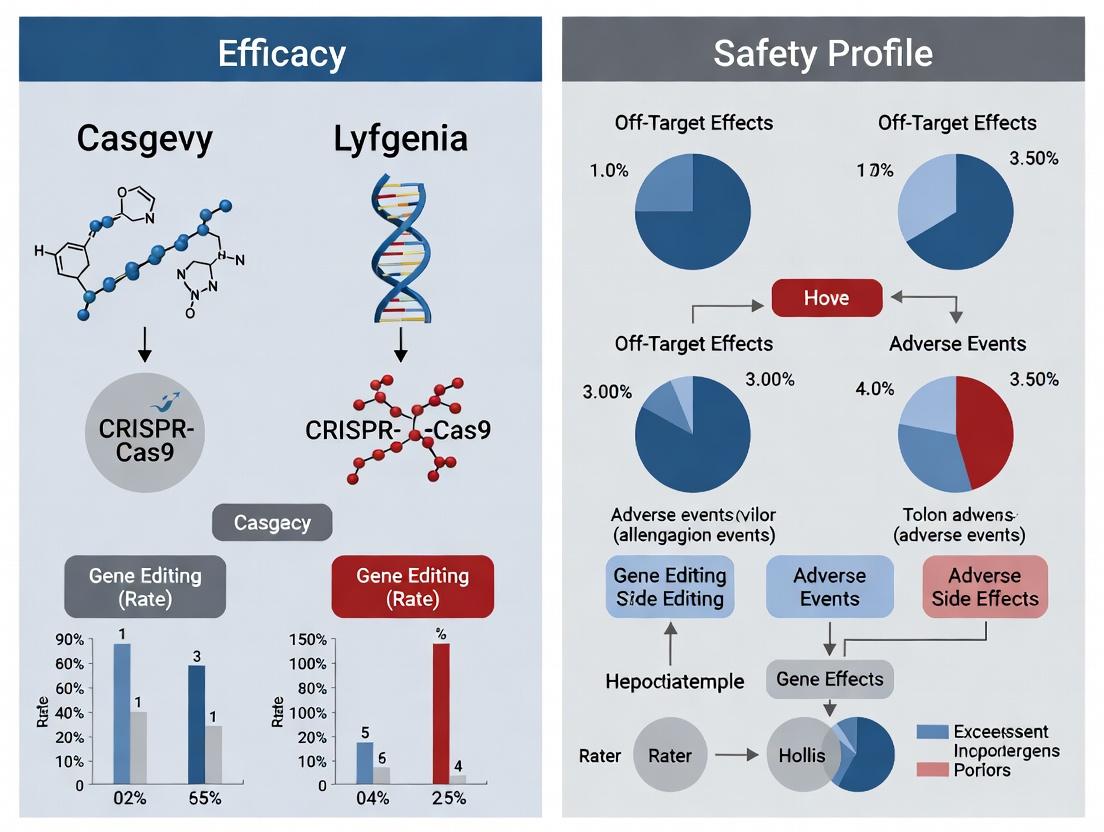
This article provides a detailed, data-driven comparison of the two recently FDA-approved gene therapies for sickle cell disease (SCD), Casgevy (exagamglogene autotemcel) and Lyfgenia (lovotibeglogene autotemcel).
Casgevy vs. Lyfgenia: A Comprehensive Efficacy & Safety Profile Analysis for Sickle Cell Disease Gene Therapies
Abstract
This article provides a detailed, data-driven comparison of the two recently FDA-approved gene therapies for sickle cell disease (SCD), Casgevy (exagamglogene autotemcel) and Lyfgenia (lovotibeglogene autotemcel). Targeted at researchers and drug development professionals, it examines their foundational mechanisms, clinical trial methodologies, safety and tolerability profiles, and comparative effectiveness. The analysis synthesizes the latest trial data and real-world implications to inform clinical decision-making and guide future therapeutic development in the rapidly evolving landscape of genetic medicine for hemoglobinopathies.
Breaking Ground: Molecular Mechanisms & Therapeutic Targets of Casgevy and Lyfgenia
This comparison guide analyzes two foundational technologies enabling recently approved gene therapies for sickle cell disease (SCD): CRISPR/Cas9-based gene editing (exemplified by Casgevy/exagamglogene autotemcel) and lentiviral vector (LVV)-mediated gene addition (exemplified by Lyfgenia/lovotibeglogene autotemcel). Framed within the critical thesis of evaluating the efficacy and safety profiles of these therapies, this guide provides an objective, data-driven comparison for research and development professionals.
CRISPR/Cas9 Gene Editing (Casgevy): This technology utilizes the CRISPR/Cas9 system to create a precise double-strand break in the BCL11A gene enhancer region in patient-derived hematopoietic stem and progenitor cells (HSPCs). This edit disrupts the erythroid-specific enhancer, reducing BCL11A expression, which in turn de-represses fetal hemoglobin (HbF) production. The goal is to induce sufficient HbF to inhibit sickle hemoglobin (HbS) polymerization.
Lentiviral Vector Gene Addition (Lyfgenia): This approach uses a replication-incompetent, self-inactivating lentiviral vector to deliver an engineered β-globin gene (β^A-T87Q) into patient HSPCs. This gene encodes an anti-sickling hemoglobin variant (HbA^T87Q) designed to inhibit polymerization of HbS and compensate for the defective β-globin.
Quantitative Comparison of Key Parameters
Table 1: Technology & Therapeutic Profile Comparison
| Parameter | CRISPR/Cas9 (Casgevy) | Lentiviral Vector (Lyfgenia) |
|---|---|---|
| Core Action | Gene Disruption (BCL11A enhancer) | Gene Addition (β^A-T87Q globin) |
| Genetic Change | Precise, site-specific edit (knockdown) | Random genomic integration (semi-random) |
| Primary Output | Induction of endogenous Fetal Hb (HbF) | Expression of engineered Anti-sickling Hb (HbA^T87Q) |
| Therapeutic Target | HbF >20% (or >30% in some trials) | HbA^T87Q >30% of total Hb |
| Manufacturing Time | ~6 months (includes edit, expansion, QC) | ~6 months (includes transduction, expansion, QC) |
| Pivotal Trial Result (SCD) | 94.1% (32/34) patients free of severe VOCs* for ≥12 months post-infusion | 87.9% (29/33) patients free of severe VOCs* for 6-18 months post-infusion |
| Common AEs (≥20%) | Mucositis, febrile neutropenia, nausea/vomiting | Mucositis, febrile neutropenia, nausea/vomiting |
| Key Safety Concerns | Off-target editing, chromosomal rearrangements | Insertional oncogenesis, vector-mediated immune response |
| FDA Boxed Warning | None for Casgevy (SCD indication) | Hematologic malignancy (including acute myeloid leukemia) |
| Long-term Persistence | Requires durable HSPC engraftment of edited cells | Requires durable HSPC engraftment of transduced cells |
*VOC: Vaso-occlusive crisis. Data compiled from FDA briefing documents and published trial results (CLIMB SCD-121, HGB-206, HGB-210 for Casgevy; CEDAR, SCD-304 for Lyfgenia).
Table 2: Laboratory & Preclinical Comparison
| Experimental Metric | CRISPR/Cas9 Editing | Lentiviral Transduction |
|---|---|---|
| Typical Ex Vivo Efficiency (CD34+) | 70-90% indel efficiency at target site | 50-80% transduction efficiency (MOI-dependent) |
| Vector/Component | Cas9 mRNA + sgRNA (RNP complex common) | VSV-G pseudotyped LVV particles |
| Critical QC Assays | On-target indels (NGS), Off-target analysis (GUIDE-seq, CIRCLE-seq), Karyotyping | Vector Copy Number (VCN - ddPCR), Integration site analysis (LAM-PCR, NGS), Replication-competent lentivirus (RCL) assay |
| Clonal Tracking | Single-cell cloning + sequencing essential to monitor for dominant clones | Integration site analysis essential to monitor for clonal expansion |
| Primary In Vitro Functional Assay | HbF expression by FACS (F-cells) and HPLC | HbA^T87Q expression by HPLC, globin chain separation |
Experimental Protocols
Protocol 1: CRISPR/Cas9 Editing of CD34+ HSPCs (Casgevy-like)
- Mobilization & Apheresis: Collect CD34+ HSPCs from patient after granulocyte colony-stimulating factor (G-CSF) mobilization.
- Electroporation: Activate and electroporate CD34+ cells with a ribonucleoprotein (RNP) complex comprising recombinant SpyCas9 protein and synthetic single-guide RNA (sgRNA) targeting the BCL11A erythroid enhancer.
- Ex Vivo Culture: Culture edited cells in serum-free medium supplemented with stem cell cytokines (SCF, TPO, FLT3-L) for 48-72 hours to allow editing and recovery.
- Quality Control: Sample cells for on-target editing efficiency (NGS), viability, and sterility.
- Myeloablative Conditioning: Patient receives busulfan conditioning.
- Reinfusion: Cryopreserved, edited cell product is thawed and infused back into the patient.
- Post-Infusion Monitoring: Track engraftment (neutrophil/platelet recovery), HbF levels, and monitor for adverse events and clonal dynamics.
Protocol 2: Lentiviral Transduction of CD34+ HSPCs (Lyfgenia-like)
- Cell Harvest: Collect CD34+ HSPCs via bone marrow harvest (for Lyfgenia) or apheresis.
- Pre-stimulation: Culture cells in serum-free medium with cytokines (SCF, TPO, FLT3-L) for 24-48 hours to activate cell cycle.
- Transduction: Co-culture pre-stimulated cells with lentiviral vector particles (carrying the β^A-T87Q globin gene) at a defined Multiplicity of Infection (MOI) in the presence of transduction enhancers (e.g., poloxamer).
- Expansion: Continue culture for a further 2-4 days to allow transgene expression.
- Quality Control: Determine Vector Copy Number (VCN) via ddPCR, transduction efficiency (by flow cytometry if reporter present), RCL assay, and sterility.
- Myeloablative Conditioning & Reinfusion: Patient receives busulfan conditioning followed by infusion of the transduced cell product.
- Post-Infusion Monitoring: Track engraftment, HbA^T87Q levels, and conduct lifelong monitoring for hematologic malignancy via integration site analysis.
Visualizations
The Scientist's Toolkit: Research Reagent Solutions
Table 3: Essential Reagents for Comparative Studies
| Reagent / Solution | Function | Key Consideration for Tech Comparison |
|---|---|---|
| G-CSF Mobilized PBSCs or Bone Marrow | Source of human CD34+ HSPCs for ex vivo manipulation. | LVV (Lyfgenia protocol) uses bone marrow harvest; CRISPR (Casgevy protocol) uses apheresis after mobilization. |
| Serum-Free Expansion Medium (e.g., StemSpan) | Base medium for culture, preserving stemness during edit/transduction. | Common to both platforms. Must be xeno-free for clinical translation. |
| Cytokine Cocktail (SCF, TPO, FLT3-L) | Pre-stimulates HSPCs, increasing susceptibility to editing/transduction. | Critical for both. Concentration and timing affect stem cell exhaustion vs. efficiency trade-off. |
| Cas9 Nuclease (SpyCas9) & sgRNA | Forms the RNP complex for targeted DNA cleavage in CRISPR editing. | High-purity, endotoxin-free protein and chemically modified sgRNA are crucial for high efficiency and low toxicity. |
| Lentiviral Vector Particles (VSV-G pseudotyped) | Vehicle for stable gene delivery in LVV approach. | Titer (TU/mL) and MOI must be tightly controlled to achieve therapeutic VCN (0.5-3.0) without increasing genotoxicity risk. |
| Electroporation System (e.g., Lonza 4D-Nucleofector) | Enables delivery of RNP complexes into HSPCs for CRISPR editing. | Optimization of cell-specific program and buffer is essential for high viability and editing rates. |
| Transduction Enhancer (e.g., Poloxamer 407) | Increases LVV transduction efficiency by inhibiting viral particle endocytosis failure. | Reduces required vector dose, potentially improving safety profile. |
| Next-Generation Sequencing (NGS) Assays | For on-target/off-target analysis (CRISPR) and integration site analysis (LVV). | CRISPR: GUIDE-seq, CIRCLE-seq. LVV: LAM-PCR, NGS-based integration site profiling. Both are regulatory requirements. |
| Droplet Digital PCR (ddPCR) | Absolute quantification of Vector Copy Number (VCN) in transduced cell populations. | Gold standard for LVV product release testing (e.g., must be ≤5 VCN). |
| HPLC for Hemoglobin Analysis | Quantifies percentages of HbS, HbF, HbA^T87Q, and other hemoglobins. | Primary functional efficacy readout for both therapies post-engraftment. |
Within the rapidly evolving therapeutic landscape for sickle cell disease (SCD), two gene therapy approaches, Casgevy (exa-cel) and Lyfgenia (lovo-cel), target different genetic loci to achieve fetal hemoglobin (HbF) induction. This guide provides a comparative analysis of targeting the BCL11A erythroid enhancer versus adding a modified β-globin gene (βA-T87Q) as therapeutic strategies, contextualizing their roles in the efficacy and safety profiles of the respective therapies.
Target Biology & Therapeutic Mechanism
BCL11A Erythroid Enhancer: BCL11A is a transcriptional repressor of γ-globin (fetal hemoglobin) expression. Disruption of a specific erythroid-specific enhancer within the BCL11A gene via CRISPR-Cas9 (as in Casgevy) reduces BCL11A expression in red blood cell precursors. This de-represses γ-globin synthesis, allowing for increased HbF production, which inhibits the polymerization of sickle hemoglobin (HbS).
β-Globin Gene (βA-T87Q): This strategy involves the lentiviral vector-mediated addition of a gene encoding a modified β-globin subunit (βA-T87Q) (as in Lyfgenia). The T87Q mutation confers anti-sickling properties. The therapeutic gene produces functional hemoglobin (HbAT87Q) that co-polymers with endogenous α-globin and reduces the concentration of HbS, thereby decreasing polymerization.
Comparative Performance Data
Table 1: Key Preclinical & Clinical Comparison
| Parameter | Target: BCL11A Erythroid Enhancer (Casgevy) | Target: βA-T87Q Gene Addition (Lyfgenia) |
|---|---|---|
| Therapeutic Modality | CRISPR-Cas9 gene editing (knockdown) | Lentiviral vector gene therapy (addition) |
| Primary Mechanism | De-repress endogenous γ-globin (HbF) | Express anti-sickling βA-T87Q globin (HbAT87Q) |
| Key Efficacy Metric (Clinical) | Proportion of patients free of severe VOCs for ≥12 months: 97.0% (32/33) [CLIMB SCD-121] | Proportion of patients free of severe VOCs 6-18 months post-infusion: 88.2% (30/34) [HGB-210] |
| Mean HbF/HbAT87Q Levels | HbF ≥20% in 94.1% of patients; mean HbF ~40% of total Hb | HbAT87Q contributed ~40% of total hemoglobin at 6 months |
| Therapeutic Onset | Gradual increase as edited cells expand | Rapid expression post-engraftment |
| Genomic Alteration | Specific edit/disruption at enhancer site | Semi-random genomic integration of LVV |
| Theoretical Risk | Potential for off-target editing events | Potential for insertional oncogenesis |
Table 2: Safety Profile Highlights
| Safety Event | BCL11A Targeting (Casgevy) | βA-T87Q Addition (Lyfgenia) |
|---|---|---|
| Common AEs | Mouth sores, nausea, febrile neutropenia, low platelet count | Stomatitis, cytopenias, febrile neutropenia |
| Serious AEs | Mostly related to myeloablative conditioning (busulfan) | Mostly related to conditioning; 2 cases of hematologic malignancy reported (linked to vector) |
| Black Box Warning | No | Yes (for hematologic malignancy) |
| Potential Long-term Risk | Off-target editing consequences (not observed to date) | Clonal expansion due to insertional mutagenesis |
Key Experimental Protocols
1. Protocol for Assessing BCL11A Enhancer Editing Efficiency & HbF Induction (In Vitro)
- CD34+ HSPC Isolation: Isolate hematopoietic stem and progenitor cells (HSPCs) from donor mobilized peripheral blood or bone marrow using immunomagnetic selection (CD34+ microbeads).
- Electroporation: Deliver ribonucleoprotein complex (RNP) of SpyCas9 protein and sgRNA targeting the BCL11A erythroid enhancer (e.g., chr2:60,711,567-60,711,589 in GRCh38) into CD34+ cells via electroporation.
- Erythroid Differentiation: Culture edited HSPCs in a three-phase erythroid differentiation medium containing SCF, EPO, IL-3, dexamethasone, and estradiol over ~18 days.
- Analysis:
- INDEL Efficiency: At day 3-4, extract genomic DNA. Amplify the target region by PCR and analyze by TIDE or NGS to calculate insertion/deletion (indel) frequency.
- F-cell & HbF Measurement: At differentiation endpoint, assess HbF+ cells (F-cells) by flow cytometry using HbF antibody staining. Quantify HbF percentage via HPLC.
2. Protocol for Assessing βA-T87Q Vector Titer, Transduction & Expression
- Vector Production: Produce lentiviral vector (LVV) containing the βA-T87Q transgene under the control of β-globin promoter/LOI site from HBB complex via transfection of HEK293T cells.
- Transduction of HSPCs: Pre-stimulate CD34+ HSPCs in cytokine medium (SCF, TPO, FLT3-L) for 24h. Transduce cells with LVV at a defined MOI in the presence of protamine sulfate.
- Engraftment in NSG Mice: Transplant transduced HSPCs into sublethally irradiated NOD.Cg-Prkdcscid Il2rgtm1Wjl/SzJ (NSG) mice via tail vein injection. Analyze bone marrow and peripheral blood for human cell engraftment (hCD45+) and vector copy number (VCN) by qPCR at 16 weeks.
- Globin Expression: Differentiate engrafted human progenitors ex vivo or analyze primary murine erythroids for HbAT87Q expression using HPLC and mass spectrometry.
Visualizing the Therapeutic Pathways
Title: CRISPR Editing of BCL11A Enhancer Elevates HbF
Title: Lentiviral Delivery of Anti-Sickling β-Globin Gene
The Scientist's Toolkit: Key Research Reagents
Table 3: Essential Reagents for Target Validation & Development
| Reagent / Material | Function in Research | Example Application |
|---|---|---|
| Healthy & SCD Donor CD34+ HSPCs | Primary cell model for ex vivo gene editing/transduction and differentiation. | Source cells for optimizing editing protocols and assessing HbF/HbAT87Q induction. |
| CRISPR-Cas9 RNP (sgRNA to BCL11A enhancer) | Precision tool for creating targeted double-strand breaks in the BCL11A locus. | Disrupting the enhancer to study BCL11A knockdown and γ-globin de-repression. |
| Lentiviral Vector (βA-T87Q) | Delivery vehicle for stable integration and expression of the therapeutic transgene. | Transducing HSPCs to evaluate VCN, expression levels, and anti-sickling efficacy. |
| Erythroid Differentiation Media Kits | Defined cytokine cocktails to drive HSPCs through synchronized erythropoiesis. | Generating mature red blood cells in vitro to measure globin expression profiles. |
| HbF & HbS Antibodies | Immunodetection of specific hemoglobin types within cells or tissues. | Flow cytometry to quantify F-cells or intracellular HbS/HbAT87Q distribution. |
| HPLC & CE-HPLC Systems | High-resolution separation and quantification of hemoglobin tetramers. | Precise measurement of HbF%, HbAT87Q%, HbS%, and other hemoglobin variants. |
| NSG Mouse Model | In vivo model for studying human HSPC engraftment and lineage reconstitution. | Assessing long-term engraftment, VCN stability, and safety of edited/transduced cells. |
| NGS Off-Target Assay Kits | Comprehensive analysis of potential CRISPR-Cas9 editing at unintended genomic sites. | Profiling the specificity of BCL11A enhancer guide RNAs for safety assessment. |
This guide compares two distinct genetic therapeutic endpoints for sickle cell disease (SCD): the induction of fetal hemoglobin (HbF) via BCL11A suppression and the production of an engineered anti-sickling hemoglobin (HbAᵀ⁸⁷ᵠ). These are the mechanisms underpinning the recently approved therapies Casgevy (exagamglogene autotemcel) and Lyfgenia (lovotibeglogene autotemcel), respectively. The analysis is framed within the broader thesis of comparing the efficacy and safety profiles of these two landmark treatments, providing a structured comparison of the underlying biological strategies, experimental data, and research methodologies.
Comparative Analysis of Therapeutic Endpoints
Core Mechanism & Biological Rationale
- Fetal Hemoglobin Induction (Casgevy): The therapeutic goal is to reactivate the expression of gamma-globin genes, thereby increasing production of fetal hemoglobin (HbF). HbF incorporation into red blood cells (RBCs) inhibits the polymerization of deoxygenated sickle hemoglobin (HbS), reducing sickling. This is achieved by targeted disruption of the BCL11A gene, a key repressor of HbF, in hematopoietic stem and progenitor cells (HSPCs) using CRISPR-Cas9 gene editing.
- Anti-Sickling Hemoglobin Production (Lyfgenia): The therapeutic goal is to add a functional gene encoding for an anti-sickling hemoglobin variant (HbAᵀ⁸⁷ᵠ) into HSPCs using a lentiviral vector. HbAᵀ⁸⁷ᵠ contains three amino acid substitutions (T87Q, G16D, E22A) that markedly reduce HbS polymerization. This approach aims to directly produce a non-pathological, anti-sickling hemoglobin within RBCs, independent of HbF.
Table 1: Clinical Outcomes Comparison from Pivotal Trials
| Parameter | Casgevy (CLIMB SCD-121 Trial) | Lyfgenia (HGB-206 Trial, Group C) |
|---|---|---|
| Primary Endpoint | Freedom from severe vaso-occlusive crises (VOCs) for ≥12 consecutive months. | Complete resolution of severe VOCs (0 events) from 6-18 months post-infusion. |
| Efficacy Result | 29 of 30 (96.7%) evaluable patients met the endpoint (median follow-up 20.4 mo). | 28 of 32 (87.5%) patients met the endpoint (median follow-up 32.3 mo). |
| HbF/HbAᵀ⁸⁷ᵠ Level | Weighted average HbF ≥20% in most patients; HbF distributed heterogeneously (heterocellular). | HbAᵀ⁸⁷ᵠ production ~40% of total hemoglobin at 6 months, maintained. |
| Key Safety Events | No cases of graft failure, malignancy, or death related to treatment. Myelosuppression from busulfan conditioning. | Occurrences of hematologic malignancy (2 cases in earlier cohorts; led to protocol modifications including a refined vector backbone). No cases in Group C with updated vector. |
| On-Target Editing | Observed at the BCL11A erythroid enhancer. No off-target editing detected at predicted sites. | Vector integration site analysis showed polyclonal patterns. Monitoring for clonal dominance is required. |
Table 2: Biomarker & Laboratory Parameter Comparison
| Biomarker | Fetal Hemoglobin Induction (Casgevy-like) | Anti-Sickling Hemoglobin Production (Lyfgenia-like) |
|---|---|---|
| Total Hb | Increase of ~4 g/dL from baseline. | Increase of ~4 g/dL from baseline. |
| % HbF | Increased to >20% (heterocellular distribution). | Not applicable. |
| % HbAᵀ⁸⁷ᵠ | Not applicable. | Constitutes ~40% of total Hb, pancellular distribution. |
| Hemolysis Markers | Significant improvement (reduced LDH, indirect bilirubin; increased haptoglobin). | Significant improvement (reduced LDH, indirect bilirubin; increased haptoglobin). |
| RBC Survival | Improved, as measured by carbon monoxide production. | Improved, inferred from hemoglobin stabilization. |
Experimental Protocols for Endpoint Analysis
Protocol 1: Assessing HbF Induction and BCL11A Disruption
- Objective: Quantify HbF reactivation and confirm on-target gene editing in patient-derived CD34+ HSPCs.
- Methodology:
- CD34+ Cell Isolation & Editing: Mobilized peripheral blood CD34+ cells are transfected via electroporation with CRISPR-Cas9 ribonucleoprotein (RNP) targeting the BCL11A erythroid enhancer.
- In Vitro Erythroid Differentiation: Edited cells are cultured in a multi-phase erythropoiesis medium (STEMSpan, cytokines) for ~18 days.
- Endpoint Analysis:
- Flow Cytometry: Cells are stained with antibodies against CD235a (glycophorin A) and HbF to determine the percentage of F-cells (HbF+ RBCs).
- HPLC/Capillary Electrophoresis: Lysates from differentiated erythroid cells are analyzed to quantify the percentage of HbF relative to total hemoglobin.
- Next-Generation Sequencing (NGS): Genomic DNA is extracted. The on-target locus is PCR-amplified and sequenced to calculate indel percentages. In silico-predicted off-target sites are also analyzed by NGS.
Protocol 2: Assessing Anti-Sickling Hemoglobin Function
- Objective: Validate the production and anti-sickling functionality of HbAᵀ⁸⁷ᵠ in transduced erythroid cells.
- Methodology:
- Lentiviral Transduction: CD34+ HSPCs are transduced with the BB305 lentiviral vector encoding the βAᵀ⁸⁷ᵠ-globin gene.
- In Vitro Erythroid Differentiation: Cells are differentiated as in Protocol 1.
- Endpoint Analysis:
- Hemoglobin Analysis: HPLC is used to specifically identify and quantify the HbAᵀ⁸⁷ᵠ variant based on its unique retention time.
- Hypoxia-Induced Sickling Assay: Differentiated erythroid cells are placed in a hypoxic chamber (1-2% O₂) for several hours. Cells are fixed and the percentage of sickled (irregularly shaped) cells is counted microscopically and compared to untransduced controls.
- Polymerization Inhibition Assay: Hemolysates are deoxygenated, and the kinetics of HbS polymerization are measured by changes in turbidity (optical density at 700 nm). Lysates from transduced cells are mixed with authentic HbS to assess inhibition.
Visualizing the Core Mechanisms
Title: Casgevy Mechanism: CRISPR Disruption of BCL11A to Induce HbF
Title: Lyfgenia Mechanism: Lentiviral Addition of Anti-Sickling Hemoglobin Gene
The Scientist's Toolkit: Key Research Reagents & Materials
Table 3: Essential Reagents for SCD Gene Therapy Research
| Reagent/Material | Function in Research | Example Application in These Studies |
|---|---|---|
| G-CSF/Plerixafor Mobilized CD34+ Cells | Source of human hematopoietic stem/progenitor cells for ex vivo manipulation and analysis. | Primary cell source for CRISPR editing or lentiviral transduction. |
| CRISPR-Cas9 RNP Complex | Precision gene-editing tool. Pre-formed ribonucleoprotein ensures rapid activity and reduces off-target DNA exposure. | Targeted disruption of the BCL11A enhancer in Casgevy development. |
| Self-Inactivating Lentiviral Vector | Vehicle for stable gene addition into the host genome of dividing cells. | Delivery of the βAᵀ⁸⁷ᵠ-globin gene in Lyfgenia development. |
| Serum-Free Erythroid Differentiation Media | Chemically defined culture system to support the proliferation, survival, and terminal differentiation of erythroid precursors from HSPCs. | Essential for in vitro assessment of HbF or HbAᵀ⁸⁷ᵠ production and function. |
| HbF-Specific Antibody (for Flow Cytometry) | Allows quantification of the percentage of red cells containing HbF (F-cells). | Measuring heterocellular HbF distribution after BCL11A editing. |
| HPLC System for Hemoglobin Variant Analysis | High-resolution separation and quantification of different hemoglobin proteins based on charge/size. | Distinguishing and quantifying HbA, HbS, HbF, and HbAᵀ⁸⁷ᵠ. |
| Controlled Hypoxia Chamber | Creates a low-oxygen environment to induce sickling in RBCs containing HbS. | Functional validation of anti-sickling effect in transduced or edited cells. |
| Next-Generation Sequencing (NGS) Platforms | For deep sequencing of on-target and off-target genomic loci to assess editing precision and vector integration sites. | Safety assessments for unintended genetic alterations. |
Preclinical Rationale and Proof-of-Concept Studies for Each Modality
The development of Casgevy (exa-cel, CRISPR-Cas9 editing of BCL11A enhancer) and Lyfgenia (lovo-cel, LentiVector β-globin gene addition) for sickle cell disease (SCD) was preceded by distinct preclinical rationales and proof-of-concept studies, central to understanding their comparative efficacy and safety profiles.
Preclinical Rationale
- Casgevy: The therapeutic rationale hinges on the natural persistence of fetal hemoglobin (HbF) as a modulator of SCD severity. BCL11A is a master transcriptional repressor of the γ-globin genes (HBG1/HBG2) responsible for HbF. The hypothesis was that disrupting a specific erythroid-specific enhancer within the BCL11A gene via CRISPR-Cas9 would reduce BCL11A expression, de-repress HBG, and induce sufficient HbF to inhibit HbS polymerization.
- Lyfgenia: This approach is based on functional complementation through gene addition. The rationale is that stable, lifelong expression of an anti-sickling β-globin variant (βA-T87Q) from a lentiviral vector (LVV) in patient-derived hematopoietic stem and progenitor cells (HSPCs) will produce hemoglobin (HbAT87Q) that prevents polymerization, irrespective of endogenous BCL11A or HbF levels.
Proof-of-Concept & Key Comparative Studies
Early in vitro and in vivo studies established foundational efficacy and safety data for each modality.
Table 1: Key Preclinical Proof-of-Concept Study Parameters
| Parameter | Casgevy (CRISPR-Cas9 BCL11A Enhancer Editing) | Lyfgenia (LVV βA-T87Q Gene Addition) |
|---|---|---|
| Target/Cargo | BCL11A erythroid enhancer (Chr. 2) | BB305 LVV encoding βA-T87Q globin. |
| Primary Model | Human CD34+ HSPCs from healthy donors & SCD patients, transplanted into immunodeficient mice (NSG). | Human CD34+ HSPCs from SCD patients, transplanted into NSG mice. |
| Key Efficacy Readout | HbF induction (% F-cells, HbF per cell), BCL11A mRNA knockdown. | Vector copy number (VCN), HbAT87Q expression (% of total Hb), reduction in sickling. |
| Engraftment & Editing/Transduction | High engraftment; ~80% allele editing in progeny. | Stable engraftment; VCN ~1-3 copies/cell. |
| HbF/HbAT87Q Output | HbF levels up to 30% in transplanted human erythroid cells. | HbAT87Q constituted ~40-50% of total Hb in circulating human RBCs. |
| Off-Target Analysis | In silico prediction + GUIDE-seq in primary cells; no detectable off-target editing in relevant sites. | LVV integration site analysis (LAM-PCR); no concerning clonal skewing in preclinical models. |
| Genotoxicity Risk | Theoretical risk from on-target, off-enhancer edits or large deletions. | Theoretical risk from insertional mutagenesis; use of chromatin insulator and self-inactivating design. |
Detailed Experimental Protocols
Protocol 1: In Vivo Efficacy Study in NSG Mouse Model (Common Framework)
- HSPC Source: Mobilized peripheral blood or bone marrow-derived CD34+ cells from healthy donors or SCD patients.
- Ex Vivo Modification:
- Casgevy: Electroporate cells with CRISPR-Cas9 ribonucleoprotein (RNP) complex targeting the BCL11A enhancer.
- Lyfgenia: Transduce cells with BB305 LVV at a target MOI of 5-10 in the presence of cytokines and protamine sulfate.
- Transplantation: Condition sublethally irradiated (1 Gy) 8-12 week-old NSG mice with busulfan (25 mg/kg). Inject 0.2-1x10^5 modified human CD34+ cells via tail vein.
- Analysis: At 16-24 weeks, harvest murine bone marrow and spleen. Analyze human cell engraftment (% hCD45+), lineage distribution, and VCN/editing frequency in engrafted human cells. For erythroid analysis, implant human cytokine-secreting scaffolds or secondary transplantation is often used to drive human erythropoiesis.
- Endpoint Assessment: Isolate human erythroid cells from marrow or peripheral blood for HPLC (HbF quantification) or mass spectrometry (HbAT87Q), single-cell HbF imaging (F-cells), and in vitro sickling assays under hypoxia.
Protocol 2: Off-Target & Genotoxicity Assessment
- Casgevy (GUIDE-seq): Co-electroporate primary HSPCs with BCL11A-targeting RNP and a double-stranded oligodeoxynucleotide tag. Harvest genomic DNA after 48h. Use tag-specific PCR amplification and next-generation sequencing to identify all RNP-bound and cleaved sites genome-wide.
- Lyfgenia (Integration Site Analysis): Extract genomic DNA from engrafted human cells in murine bone marrow at >20 weeks. Perform linear-amplification mediated PCR (LAM-PCR) using vector-specific and genomic linker primers, followed by deep sequencing. Map integration sites to the human genome and analyze for clustering near oncogenes (e.g., LM02).
Visualizations
CRISPR-Casgevy Mechanism of Action Pathway
LentiVector-Lyfgenia Gene Addition Workflow
Preclinical Proof-of-Concept Study Workflow
The Scientist's Toolkit: Key Research Reagents & Materials
| Reagent/Material | Function in Preclinical SCD Gene Therapy Research |
|---|---|
| G-CSF Mobilized CD34+ HSPCs | Primary human cell source representing the target patient population for ex vivo modification and transplantation models. |
| NSG (NOD.Cg-Prkdcscid Il2rgtm1Wjl/SzJ) Mice | Immunodeficient murine model that supports robust engraftment and multilineage differentiation of human HSPCs for in vivo efficacy and safety studies. |
| CRISPR-Cas9 RNP Complex | Pre-assembled complex of Cas9 protein and synthetic guide RNA; used for precise genome editing in HSPCs with reduced off-target risk vs. plasmid delivery. |
| LentiVector Supernatant (e.g., BB305) | Replication-incompetent, VSV-G pseudotyped lentiviral particles for stable gene transfer into the genome of target HSPCs. |
| Recombinant Human Cytokines (SCF, TPO, FLT3L) | Essential for maintaining HSPC viability, promoting expansion, and facilitating efficient transduction/editing during ex vivo culture. |
| Busulfan | Myeloablative conditioning agent administered to NSG mice prior to transplantation to create niche space for human HSPC engraftment. |
| Anti-Human CD45 Antibody | Flow cytometry reagent for quantifying the percentage of human leukocyte engraftment (% hCD45+) in murine bone marrow. |
| HPLC with Cation Exchange | Analytical method for quantifying the relative percentages of different hemoglobin types (HbS, HbF, HbAT87Q, HbA2) in erythroid cell lysates. |
| LAM-PCR Reagents | Specialized primers and enzymes for linear amplification-mediated PCR, used to clone and sequence LVV integration sites from genomic DNA for safety analyses. |
Target Patient Population Definitions and Genetic Eligibility Criteria
The development of CRISPR-Cas9 (Casgevy) and lentiviral vector-based (Lyfgenia) gene therapies for sickle cell disease (SCD) represents a paradigm shift. A critical component of their clinical application is the precise definition of target patient populations and genetic eligibility criteria, which directly impacts trial outcomes and real-world efficacy and safety profiles.
Comparative Patient Eligibility Criteria
The table below summarizes the key eligibility criteria from the pivotal clinical trials for each therapy.
| Eligibility Criterion | Casgevy (exagamglogene autotemcel) | Lyfgenia (lovotibeglogene autotemcel) |
|---|---|---|
| Primary Diagnosis | Severe Sickle Cell Disease (HbSS, HbS/β0-thalassemia, or other severe genotypes). | Severe Sickle Cell Disease (HbSS, HbS/β0-thalassemia). |
| Age Range (Pivotal Trial) | 12 to 35 years. | 12 to 35 years. |
| Key Clinical Requirement | History of ≥ 2 severe vaso-occlusive crises (VOCs) per year in the 2 years prior to screening. | History of ≥ 4 severe VOCs in the 2 years prior to screening and ≥ 2 severe VOCs per year in the 2 years prior to myeloablative conditioning. |
| Key Genetic/Physiological Requirement | Must have at least one βS allele (HbS) and one βS allele or β0-thalassemia allele. Sufficient hematopoietic stem cells (HSCs) for collection. | Must have HbSS or HbS/β0-thalassemia genotype. Sufficient HSCs for collection and manufacturing. No β-thalassemia mutation on the non-βS allele for HbS/β0 patients. |
| Key Exclusion | Prior hematopoietic stem cell transplant. Uncontrolled infection or advanced organ dysfunction. | Prior hematopoietic stem cell transplant. Uncontrolled infection or advanced organ dysfunction. Presence of anti-βAS3 globin chain antibodies. |
| Therapeutic Goal | Reactivate fetal hemoglobin (HbF) via BCL11A erythroid enhancer editing. | Add a functional β-globin gene variant (βA-T87Q) to produce anti-sickling hemoglobin (HbAT87Q). |
Comparison of Key Efficacy Endpoints from Pivotal Trials
The primary efficacy data from the respective trials demonstrate the outcomes within these defined populations.
| Efficacy Endpoint | Casgevy (CLIMB SCD-121 Trial) | Lyfgenia (HGB-206 Group C Trial) |
|---|---|---|
| Primary Endpoint | Freedom from severe VOCs for ≥ 12 consecutive months. | Complete resolution of severe VOCs (0 events) between 6 and 18 months post-infusion. |
| Patients Evaluable (N) | 44 | 32 |
| Patients Meeting Primary Endpoint | 39 (88.6%) | 28 (87.5%) |
| Mean/Median HbF Increase | ~40% of total hemoglobin at Month 24. | HbAT87Q contributed ~40% of total hemoglobin at Month 24. |
| Mean/Median Total Hemoglobin | Increased to >11 g/dL by Month 6 and sustained. | Increased to >11 g/dL by Month 6 and sustained. |
| Follow-up Duration | 24 months (primary analysis). | 24 months (primary analysis). |
Experimental Protocol: Assessment of Engraftment & Vector Copy Number (Lyfgenia)
A critical safety assay for lentiviral therapies like Lyfgenia is the measurement of vector copy number (VCN) to monitor genomic integration.
Methodology:
- Sample Collection: Genomic DNA is extracted from peripheral blood mononuclear cells (PBMCs) or bone marrow-derived CD34+ cells post-infusion at multiple time points (e.g., Months 3, 6, 12, 24).
- qPCR Assay: A TaqMan-based quantitative polymerase chain reaction (qPCR) is performed.
- Target Amplification: Primers specific to a conserved sequence within the lentiviral vector (e.g., WPRE region) are used.
- Reference Gene Amplification: A single-copy human gene (e.g., RPP30) is amplified in parallel for normalization.
- Calculation: VCN is calculated as the ratio of the vector-specific signal to the reference gene signal, representing the average number of vector integrations per diploid genome. Stability over time is assessed.
Experimental Protocol: Assessment of Editing Efficiency & Indel Analysis (Casgevy)
For CRISPR-based Casgevy, quantifying on-target editing at the BCL11A enhancer is essential.
Methodology:
- Sample Collection: Genomic DNA is extracted from PBMCs or bone marrow at post-infusion time points.
- PCR Amplification: The target genomic region surrounding the BCL11A erythroid enhancer guide RNA site is amplified.
- Next-Generation Sequencing (NGS): Amplicons are sequenced using high-throughput NGS.
- Bioinformatic Analysis: Sequencing reads are aligned to the reference genome. The percentage of reads containing insertions or deletions (indels) at the cut site is calculated to determine editing efficiency. A sample is considered successfully edited if >50% of alleles show modification (as per trial protocol).
- Off-Target Analysis: Potential off-target sites are predicted in silico and analyzed via targeted NGS or whole-genome sequencing to confirm specificity.
Diagram 1: Comparative Gene Therapy Manufacturing & Treatment Workflow (72 chars)
Diagram 2: Molecular Mechanisms of Casgevy and Lyfgenia (73 chars)
The Scientist's Toolkit: Key Research Reagents & Materials
| Reagent / Material | Primary Function in SCD Gene Therapy Research |
|---|---|
| Mobilized CD34+ Hematopoietic Stem/Progenitor Cells (HSPCs) | The primary starting cellular material for ex vivo gene editing/transduction. Sourced from patient apheresis. |
| CRISPR-Cas9 Ribonucleoprotein (RNP) Complex | For Casgevy-like editing. Pre-assembled complex of Cas9 protein and sgRNA targeting the BCL11A enhancer ensures precise, transient editing activity. |
| Lentiviral Vector (e.g., BB305 LV) | For Lyfgenia-like transduction. Replication-incompetent viral particle carrying the therapeutic βA-T87Q globin gene expression cassette. |
| Myeloablative Conditioning Agent (Busulfan) | Chemotherapy used to ablate the patient's bone marrow pre-infusion, creating space for engraftment of modified HSPCs. |
| Cytokines (SCF, TPO, FLT3-L, IL-3) | Used in ex vivo culture media to maintain HSPC viability, promote proliferation, and enhance transduction/editing efficiency. |
| TaqMan qPCR Assays | For quantifying vector copy number (VCN) in transduced cells and assessing biodistribution in safety studies. |
| Next-Generation Sequencing (NGS) Platforms | For comprehensive analysis of on-target editing efficiency, indel spectra, and targeted investigation of potential off-target sites. |
| High-Performance Liquid Chromatography (HPLC) | Gold-standard method for quantifying hemoglobin variants (HbS, HbF, HbAT87Q) in patient erythrocytes post-treatment. |
| In Vitro Erythroid Differentiation Assay Kits | Enable differentiation of modified HSPCs into mature erythrocytes to functionally assess anti-sickling properties ex vivo. |
Clinical Trial Design & Real-World Application Protocols for SCD Gene Therapies
This guide objectively compares the pivotal clinical trial designs for exagamglogene autotemcel (Casgevy, CRISPR/Vertex) and lovotibeglogene autotemcel (Lyfgenia, bluebird bio), two gene therapies for sickle cell disease (SCD). The analysis is framed within a broader thesis evaluating their comparative efficacy and safety profiles, providing critical insights for researchers and drug development professionals.
Trial Design Comparison Table
| Parameter | CLIMB SCD-121 (Casgevy) | HGB-206 (Lyfgenia) | HGB-210 (Lyfgenia) |
|---|---|---|---|
| Primary Objective | Evaluate proportion of patients with freedom from severe vaso-occlusive crises (VOCs) for ≥12 consecutive months. | Assess safety and efficacy (complete resolution of severe VOCs) of LentiGlobin BB305 drug product. | Primary efficacy endpoint: complete resolution of severe VOCs (VOEs) from 6 to 18 months post-infusion. |
| Patient Population | Severe SCD (HbSS or HbSβ0 thalassemia) with history of ≥2 VOCs/year in previous 2 years. | Severe SCD (HbSS or HbSβ0 thalassemia), ≥2 severe VOCs/year. | Adolescents (12-17) with severe SCD (HbSS or HbSβ0 thalassemia), ≥2 severe VOCs/year. |
| Intervention | Exagamglogene autotemcel (exa-cel): ex vivo CRISPR-Cas9 edited CD34+ HSPCs targeting BCL11A erythroid enhancer. | Lovotibeglogene autotemcel (lovo-cel): ex vivo lentiviral transduction of CD34+ HSPCs with βA-T87Q-globin gene. | Same as HGB-206. |
| Study Design | Single-arm, open-label, multicenter. | Single-arm, open-label, multicenter (including Group C with refined manufacturing/protocol). | Single-arm, open-label. |
| Key Efficacy Endpoints | Freedom from severe VOCs for ≥12 months; Fetal hemoglobin (HbF) levels; Total hemoglobin (Hb) levels. | Proportion achieving complete resolution of severe VOCs; HbF and T87Q-globin production; Total Hb. | Same as HGB-206. |
| Key Safety Endpoints | Incidence of adverse events (AEs), serious AEs, prespecified AEs of interest (incl. malignancy, insertional mutagenesis). | Incidence of AEs, vector integration sites, replication-competent lentivirus, malignancy. | Same as HGB-206. |
| Myeloablative Conditioning | Busulfan myeloablation. | Busulfan myeloablation. | Busulfan myeloablation. |
| Follow-up Period | 2 years primary, long-term follow-up to 15 years. | 2 years primary, long-term follow-up to 15 years. | 2 years primary, long-term follow-up to 15 years. |
Experimental Protocols for Key Endpoint Assessments
Protocol 1: Assessment of Severe VOC Freedom
Objective: To determine the proportion of patients achieving complete resolution of severe VOCs for a defined period. Methodology:
- Pre-treatment Documentation: Establish baseline VOC frequency over at least 2 years prior to treatment. Severe VOC is defined as an event requiring hospitalization, ER visit, or prolonged hydration/transfusion at an infusion center.
- Post-treatment Monitoring: Patients are monitored from Day 42 after drug product infusion (after engraftment).
- Event Adjudication: All reported VOCs are reviewed and adjudicated by an independent committee blinded to treatment details against pre-specified criteria.
- Endpoint Calculation: The primary efficacy analysis calculates the proportion of patients with zero severe VOCs during a pre-defined consecutive month period (e.g., Months 6-18 in HGB-210; ≥12 consecutive months in CLIMB SCD-121).
Protocol 2: Vector Copy Number & Integration Site Analysis (Lyfgenia)
Objective: To quantify vector persistence and characterize genomic integration profiles. Methodology:
- Sample Collection: Peripheral blood mononuclear cells (PBMCs) and granulocytes are collected at multiple time points post-infusion.
- DNA Extraction: Genomic DNA is isolated from cell fractions.
- qPCR for VCN: Quantitative polymerase chain reaction (qPCR) with primers specific to the lentiviral backbone quantifies vector copies per diploid genome.
- Linear Amplification-Mediated PCR (LM-PCR): For integration site analysis, genomic DNA is digested, ligated to linkers, and subjected to PCR using vector-specific and linker-specific primers.
- Next-Generation Sequencing & Bioinformatics: PCR products are sequenced. Reads are aligned to the human genome to identify integration sites, which are analyzed for clonal abundance and proximity to oncogenes (e.g., HMGA2).
Protocol 3: HbF Quantification and Characterization (Casgevy)
Objective: To measure HbF induction and its distribution across red blood cells (RBCs). Methodology:
- HPLC Analysis: Peripheral blood samples are analyzed by high-performance liquid chromatography (HPLC) to quantify the percentage of HbF relative to total hemoglobin.
- Flow Cytometry (F-Cell Analysis): Intracellular staining of RBCs with anti-HbF antibody (e.g., FITC-conjugated) allows determination of the proportion of RBCs containing HbF (F-cells) and the amount of HbF per F-cell (F-content).
- Correlation with Clinical Outcome: HbF levels and F-cell percentages are correlated with VOC freedom and hematological parameters.
Mechanism of Action & Experimental Workflow Diagrams
The Scientist's Toolkit: Key Research Reagent Solutions
| Item | Function in SCD Gene Therapy Research |
|---|---|
| CD34+ Cell Selection Kits (e.g., CliniMACS) | Immunomagnetic positive selection of hematopoietic stem/progenitor cells (HSPCs) from apheresis product for ex vivo manipulation. |
| Lentiviral Vector Particles | For stable gene transfer in Lyfgenia-like protocols; must be produced under GMP with high titer and safety testing. |
| CRISPR-Cas9 RNP Complex | For precise gene editing in Casgevy-like protocols; includes Cas9 protein and synthetic sgRNA targeting specific genomic loci (e.g., BCL11A enhancer). |
| Electroporation Systems (e.g., Lonza 4D-Nucleofector) | Device for delivering CRISPR RNP or other nucleic acids into HSPCs via electrical pulses. |
| Myeloablative Agent (Busulfan) | Chemotherapy used to deplete bone marrow niche prior to edited/transduced HSPC infusion. Requires therapeutic drug monitoring. |
| HbF Quantitation Kits (HPLC & Flow Cytometry) | For measuring therapeutic response; HPLC quantifies total HbF%, flow cytometry identifies F-cells and HbF per cell. |
| Vector Copy Number (VCN) Assay | qPCR-based kit with standards and primers/probes specific to lentiviral backbone to monitor vector persistence in genomic DNA. |
| Integration Site Analysis Kit | Linear Amplification-Mediated (LAM)-PCR or similar kit for identifying genomic locations of vector integration, critical for safety. |
| Clonality Assays (ddPCR, NGS) | Droplet digital PCR or next-gen sequencing panels to monitor hematopoietic clone dynamics post-therapy. |
| Sickling Assay | In vitro functional test where patient-derived RBCs are subjected to hypoxia to quantify the reduction in sickling post-treatment. |
Within the comparative efficacy and safety profile analysis of the gene therapies Casgevy (exagamglogene autotemcel) and Lyfgenia (lovotibeglogene autotemcel) for sickle cell disease (SCD), a critical common procedural step is the conditioning regimen. Both therapies require myeloablative conditioning with busulfan to clear recipient bone marrow hematopoietic stem cells (HSCs) and enable engraftment of the genetically modified cells. This guide objectively compares busulfan myeloablation with alternative conditioning approaches, providing supporting experimental and clinical data relevant to SCD gene therapy outcomes.
Comparison of Conditioning Regimens for SCD Gene Therapy
Table 1: Conditioning Regimen Comparison for HSC-Targeted Gene Therapies
| Regimen (Agent) | Mechanism of Action | Key Advantages in SCD Context | Key Limitations/Risks in SCD Context | Clinical Efficacy Data (Engraftment) | Representative Clinical Trial(s) |
|---|---|---|---|---|---|
| Myeloablative Busulfan (Standard) | DNA alkylating agent; depletes bone marrow HSCs. | Well-characterized pharmacokinetics; predictable, durable myeloablation enabling high engraftment. | Requires therapeutic drug monitoring (TDM); associated with sinusoidal obstruction syndrome (SOS), infertility, prolonged cytopenias. | Neutrophil engraftment: ~95-100% by Day +42. Platelet engraftment: ~85-90% by Day +90. | CLIMB SCD-121 (Casgevy), HGB-206 (Lyfgenia) |
| Reduced-Intensity/Non-Myeloablative (e.g., Melphalan) | Lower-dose alkylating agent; immunosuppressive but less cytotoxic. | Reduced regimen-related toxicity (RRT), shorter cytopenia. | Risk of incomplete myeloablation leading to poor engraftment or mixed chimerism; may be insufficient for stable long-term gene-corrected cell dominance. | Limited data in SCD; variable engraftment rates reported in other diseases. | Early-phase trials in hemoglobinopathies. |
| Antibody-Based (e.g., anti-cKIT, anti-CD117) | Targeted depletion of HSCs via surface receptor binding. | Potential for reduced off-target toxicity, no DNA damage. | Risk of immunogenicity; long-term safety and efficacy data lacking; availability and cost. | Preclinical and early clinical; engraftment success demonstrated in murine models. | Phase 1/2 trials (e.g., NCT02963064) |
Table 2: Conditioning-Related Safety Outcomes in Pivotal SCD Gene Therapy Trials
| Outcome Metric | Casgevy (Busulfan) | Lyfgenia (Busulfan) | Notes & Comparative Context |
|---|---|---|---|
| Incidence of SOS/VOD | 0% (0/44 in CLIMB) | 0% (0/32 in Phase 1/2) | Prophylaxis (ursodiol, heparin) and TDM are standard. Historical rates without TDM are ~10%. |
| Febrile Neutropenia | ~35% | Reported, frequency similar | Expected with myeloablation; managed with standard supportive care. |
| Prolonged Cytopenias ( >Day +100) | Low single-digit % | Low single-digit % | Platelet recovery can be delayed; linked to busulfan exposure. |
| Secondary Malignancy | 0 reported related to busulfan | 1 case of AML in Lyfgenia cohort (attributed to vector, not busulfan) | Busulfan is a known carcinogen; long-term monitoring is critical. |
| Fertility Impact | Presumed high risk | Presumed high risk | Standard counseling on fertility preservation is required pre-therapy. |
Experimental Protocols for Key Conditioning Studies
Protocol 1: Therapeutic Drug Monitoring (TDM) of Intravenous Busulfan in SCD Gene Therapy
- Objective: To achieve a target busulfan area under the curve (AUC) of 18-22 mg•h/L (or cumulative AUC of 80-110 mg•h/L over 4 days) for optimal myeloablation while minimizing toxicity.
- Methodology:
- Administration: Busulfan is administered IV every 24 hours for 4 days prior to infusion of gene-modified cells.
- Pharmacokinetic (PK) Sampling: After the first dose, blood samples are collected at: pre-dose, end of infusion, and at 1, 2, 4, 6, and 8-24 hours post-infusion.
- Analysis: Plasma busulfan concentration is determined using validated liquid chromatography-tandem mass spectrometry (LC-MS/MS).
- Dose Adjustment: The AUC from the first dose is calculated. Subsequent daily doses are adjusted using linear PK principles to hit the target cumulative exposure.
Protocol 2: Assessment of Myeloablation and Engraftment in Murine Models
- Objective: To evaluate the efficacy and safety of alternative conditioning agents preclinically.
- Methodology:
- Mouse Model: Immunodeficient mice (e.g., NSG) or humanized SCD models.
- Conditioning: Mice are treated with a test agent (e.g., antibody) or control busulfan at a defined dose and schedule.
- Transplantation: Human CD34+ cells (gene-edited or control) are transplanted via tail vein injection.
- Endpoint Analysis:
- Peripheral Blood Chimerism: Flow cytometry at weeks 4, 8, 12, and 16 to quantify % human CD45+ cells.
- Bone Marrow Analysis: At sacrifice, BM is analyzed for human cell engraftment and lineage differentiation.
- Toxicity: Serial CBCs, body weight, and histopathology of liver and other organs.
Visualization of Conditioning Workflow and Pharmacology
Title: SCD Gene Therapy Busulfan Conditioning Workflow
Title: Busulfan Pharmacology and Pharmacodynamics
The Scientist's Toolkit: Key Research Reagent Solutions
Table 3: Essential Reagents for Conditioning & Engraftment Research
| Research Reagent / Material | Primary Function in Conditioning Studies | Example Application / Notes |
|---|---|---|
| Clinical-Grade Busulfan | The alkylating agent used for myeloablation in clinical trials and translational studies. | Dosing is weight-based or based on pharmacokinetic targeting. |
| Therapeutic Drug Monitoring (TDM) Kits (LC-MS/MS based) | Precisely measure busulfan plasma concentration to calculate AUC for dose adjustment. | Critical for safety and efficacy; requires specialized equipment. |
| Anti-human CD34 MicroBead Kit | Isolation of human CD34+ hematopoietic stem and progenitor cells (HSPCs) for transplantation. | Used in both preclinical models and manufacturing of clinical products. |
| Flow Cytometry Antibody Panels (Anti-human CD45, CD33, CD19, CD3, etc.) | Quantify human cell engraftment (chimerism) and lineage differentiation in recipient blood and bone marrow. | Standard for evaluating conditioning efficacy and engraftment success in vivo. |
| Immunodeficient Mouse Strains (e.g., NSG, NRG) | In vivo models to study human HSC engraftment, toxicity, and the efficacy of alternative conditioning agents. | Provide a microenvironment for human hematopoiesis. |
| Recombinant Anti-human cKIT (CD117) Antibody | Investigational non-chemotherapy conditioning agent; depletes HSCs via targeted mechanism. | Used in preclinical studies to assess targeted conditioning. |
| Ursodiol & Heparin Prophylaxis | Standard supportive care agents to prevent sinusoidal obstruction syndrome (SOS) post-busulfan. | Included in clinical protocols to mitigate a key busulfan risk. |
This comparison guide evaluates the manufacturing workflows for the two approved gene therapies for sickle cell disease (SCD): Casgevy (exagamglogene autotemcel) and Lyfgenia (lovotibeglogene autotemcel). The analysis is framed within the broader thesis on comparing the efficacy and safety profiles of these therapies, where manufacturing consistency and product quality are critical determinants.
Comparison of Key Manufacturing Stages
| Manufacturing Stage | Casgevy (Vertex/CRISPR Therapeutics) | Lyfgenia (Bluebird Bio) |
|---|---|---|
| Genetic Modification Tool | CRISPR-Cas9 (non-viral, site-specific) | Lentiviral Vector (BB305 LVV, integrates semi-randomly) |
| Target/Gene | Disruption of BCL11A erythroid enhancer | Addition of βA-T87Q-globin gene |
| HSPC Source | Autologous CD34+ cells | Autologous CD34+ cells |
| Modification Protocol | Electroporation of CRISPR ribonucleoprotein (RNP) | Transduction via lentiviral vector spinoculation |
| Ex Vivo Expansion | Limited culture (approx. 3 days). Primarily maintains stem cell pool. | Limited culture (approx. 10 days). Includes transduction and post-transduction holding. |
| Critical Process Metrics | Indel efficiency at BCL11A enhancer (>80% typical), cell viability post-electroporation. | Vector copy number (VCN) (target ~0.5-2.5 copies/cell), transduction efficiency, cell viability. |
| Key Release Criteria | 1. Viability > 70%2. CD34+ cell dose (> target 5.0 x 10^6 cells/kg)3. Microbiological sterility4. BCL11A edit frequency in colonies (CFU assay) | 1. Viability > 70%2. CD34+ cell dose (> target 2.0 x 10^6 cells/kg)3. Microbiological sterility4. Vector Copy Number (VCN) within spec (e.g., 0.5-2.5)5. Potency (HbAT87Q expression in vitro) |
| Manufacturing Duration | Approximately 6-8 weeks from apheresis to product release. | Approximately 12-14 weeks from apheresis to product release. |
Detailed Experimental Protocols
1. Protocol for Assessing Edit Frequency (Casgevy)
- Objective: Quantify the percentage of alleles with insertions/deletions (indels) at the BCL11A erythroid enhancer target site in the final drug product.
- Methodology:
- Genomic DNA Extraction: Isolate gDNA from a representative sample of cryopreserved CD34+ cells.
- PCR Amplification: Amplify the target region using primers flanking the CRISPR-Cas9 cut site.
- Next-Generation Sequencing (NGS): Prepare NGS libraries from amplicons. Sequence to high depth (e.g., >10,000x coverage).
- Bioinformatic Analysis: Align sequences to the reference genome. Use algorithms (e.g., CRISPResso2) to quantify the percentage of reads containing indels within the target window.
- Data Interpretation: An average allele edit frequency of >80% is a typical process control metric, indicating high efficiency of BCL11A enhancer disruption.
2. Protocol for Determining Vector Copy Number (Lyfgenia)
- Objective: Measure the average number of lentiviral vector integrations per cell in the final drug product.
- Methodology:
- Genomic DNA Extraction: Isolate gDNA from a known number of drug product cells.
- Droplet Digital PCR (ddPCR): Set up two parallel ddPCR reactions.
- Target Assay: Uses primers/probe specific to the lentiviral vector sequence (e.g., ψ region).
- Reference Assay: Uses primers/probe for a single-copy endogenous human gene (e.g., RPP30).
- Partitioning & Amplification: Partition the reactions into ~20,000 droplets. Perform PCR amplification.
- Quantification: Count positive droplets for target and reference. Calculate VCN using the formula: VCN = (Concentration of target amplicon) / (Concentration of reference amplicon).
- Data Interpretation: VCN must fall within a pre-defined specification range (e.g., 0.5-2.5 copies/cell) to ensure adequate transgene expression while minimizing risk of insertional oncogenesis.
Visualizations
Diagram 1: Casgevy ex vivo manufacturing workflow.
Diagram 2: Lyfgenia ex vivo manufacturing workflow.
Diagram 3: Link between manufacturing metrics and clinical outcomes.
The Scientist's Toolkit: Key Research Reagent Solutions
| Item | Function in HSPC Gene Therapy Manufacturing |
|---|---|
| CD34+ Cell Selection Kits (e.g., CliniMACS) | Immunomagnetic positive selection of hematopoietic stem and progenitor cells (HSPCs) from apheresis product. Critical for obtaining the target cell population. |
| Stem Cell Culture Media (e.g., StemSpan) | Serum-free, cytokine-supplemented media designed to maintain HSPC viability and stemness during ex vivo manipulation, minimizing differentiation. |
| Recombinant Cytokines (SCF, TPO, FLT-3L) | Essential growth factors added to culture media to promote HSPC survival, priming for genetic modification, and limited expansion. |
| CRISPR-Cas9 RNP Complex | Pre-assembled complex of Cas9 protein and guide RNA. For Casgevy-like workflows, this is the active pharmaceutical ingredient enabling site-specific gene editing. |
| Lentiviral Vector (e.g., BB305 LVV) | Engineered, replication-incompetent viral vector carrying the therapeutic β-globin gene. The vector particle for stable gene addition in Lyfgenia-like workflows. |
| Electroporation System (e.g., Lonza 4D-Nucleofector) | Device for delivering CRISPR RNP or other macromolecules into HSPCs via electrical pulses, a key step in non-viral gene editing. |
| ddPCR/VCN Reagents | Kits containing supermixes, primers, and probes for droplet digital PCR, the gold-standard method for quantifying lentiviral vector copy number. |
| CFU Assay Media | Semi-solid methylcellulose-based media containing cytokines to support the growth of myeloid and erythroid colonies from single CD34+ cells. Used to assess edit frequency and clonogenic potential. |
| Mycoplasma Detection Kit | PCR- or culture-based kits to test for mycoplasma contamination in cell cultures, a critical sterility release test. |
This guide compares the patient journey for two recently approved gene therapies for sickle cell disease (SCD), Casgevy (exagamglogene autotemcel) and Lyfgenia (lovotibeglogene autotemcel), within the broader thesis of evaluating their comparative efficacy and safety profiles. The journey encompasses hematopoietic stem cell (HSC) mobilization and collection, manufacturing, conditioning chemotherapy, reinfusion, and post-reinfusion engraftment monitoring.
Comparison of Key Clinical Trial Outcomes: Casgevy vs. Lyfgenia
Table 1: Comparison of Pivotal Trial Efficacy and Safety Data
| Parameter | Casgevy (CLIMB-121) | Lyfgenia (HGB-210) |
|---|---|---|
| Mechanism | CRISPR-Cas9 Editing (BCL11A enhancer) | Lentiviral Vector Transduction (β-A-T87Q-Globin) |
| Primary Efficacy Endpoint | Freedom from severe vaso-occlusive crises (VOCs) for ≥12 consecutive months. | Complete resolution of severe VOCs (VOEs) from 6 to 18 months post-infusion. |
| Efficacy Result | 29 of 32 (90.6%) patients met the endpoint. | 30 of 32 (93.8%) patients met the endpoint. |
| Key Safety Events | Platelet Engraftment: Median time ~35 days. Neutrophil Engraftment: Median time ~29 days. Most AEs attributed to busulfan conditioning. | Platelet Engraftment: Median time ~43 days. Neutrophil Engraftment: Median time ~24 days. Occurrence of hematologic malignancies (2 cases in earlier trials). Boxed Warning for this risk. |
| Hospitalization-Free Survival | 94% at 24 months. | Data reported as supportive. |
| Total Hemoglobin (Hb) / HbAT87Q | Total Hb increased to >11 g/dL in >50% of patients at 24 months. Fetal hemoglobin (HbF) ~40%. | HbAT87Q contributed ~40% of total Hb at 24 months; total Hb increased to >11 g/dL. |
Experimental Protocols for Engraftment and Efficacy Monitoring
1. Protocol for Hematopoietic Engraftment Monitoring
- Objective: To define successful neutrophil and platelet engraftment post-reinfusion.
- Methodology: Daily complete blood counts (CBC) with differential are performed after cell infusion.
- Neutrophil Engraftment: Defined as the first of three consecutive days with an absolute neutrophil count (ANC) ≥ 500/µL.
- Platelet Engraftment: Defined as the first of three consecutive days with platelet count ≥ 50,000/µL without transfusion support.
- Data Collection: Time-to-engraftment is recorded and monitored for correlation with CD34+ cell dose and clinical outcomes.
2. Protocol for Vector Copy Number (VCN) and Editing Efficiency Analysis
- Objective: To quantify successful genetic modification in peripheral blood and bone marrow post-infusion.
- Sample Collection: Peripheral blood mononuclear cells (PBMCs) and bone marrow aspirates are collected at scheduled intervals (e.g., Months 3, 6, 12, 24).
- For Lyfgenia (LVV): Genomic DNA is isolated. Droplet Digital PCR (ddPCR) is performed using primers/probes specific to the lentiviral vector sequence and a reference human gene (e.g., RPP30). VCN is calculated as (vector copies/reference gene copies) per diploid genome.
- For Casgevy (CRISPR): Genomic DNA is isolated. Next-Generation Sequencing (NGS) of the edited BCL11A enhancer region is performed. Editing efficiency is calculated as the percentage of sequencing reads containing the intended allele versus wild-type.
3. Protocol for Hemoglobin Fraction Analysis by HPLC
- Objective: To quantify the therapeutic hemoglobin (HbAT87Q for Lyfgenia, HbF for Casgevy) production.
- Methodology: Peripheral blood samples are lysed. Hemoglobin fractions are separated using High-Performance Liquid Chromatography (HPLC) with cation-exchange columns.
- Detection: Absorbance is measured at 415 nm. Fractions are identified and quantified by comparison to known standards (HbA, HbF, HbS, HbAT87Q). The percentage of therapeutic hemoglobin relative to total hemoglobin is reported.
Visualizations
Diagram 1: Patient Journey & Monitoring Timeline
Diagram 2: Molecular Mechanisms Compared
The Scientist's Toolkit: Key Research Reagent Solutions
Table 2: Essential Materials for Gene Therapy Monitoring Assays
| Reagent/Material | Function/Application | Example/Catalog Consideration |
|---|---|---|
| CD34+ Cell Selection Kit | Immunomagnetic positive selection of hematopoietic stem cells from apheresis product for manufacturing. | Clinical-grade anti-CD34 microbeads. |
| Busulfan Therapeutic Drug Monitoring Assay | Measures plasma busulfan concentration to tailor conditioning dose for optimal myeloablation and safety. | Validated HPLC-MS/MS or immunoassay kits. |
| Droplet Digital PCR (ddPCR) Supermix | Absolute quantification of lentiviral vector copy number (VCN) without a standard curve. Critical for Lyfgenia monitoring. | ddPCR Supermix for Probes (no dUTP). |
| NGS Library Prep Kit for Amplicons | Preparation of sequencing libraries from PCR-amplified target sites (e.g., BCL11A enhancer) to quantify editing efficiency for Casgevy. | High-fidelity, amplicon-based NGS kits. |
| Cation-Exchange HPLC Columns for Hb | Separation and quantification of hemoglobin variants (HbS, HbA, HbF, HbAT87Q) for efficacy assessment. | Variant II or Ultra2 Hb Testing System columns. |
| qPCR Assay for Replication-Competent Lentivirus (RCL) | Safety testing to detect the presence of RCL in the final drug product and post-infusion patient samples. | Validated, sensitive RCL detection assays. |
The assessment of novel genetic therapies for sickle cell disease (SCD), such as Casgevy (exagamglogene autotemcel) and Lyfgenia (lovotibeglogene autotemcel), hinges on rigorously defined primary efficacy endpoints and sufficient follow-up duration. This guide compares the clinical trial frameworks used to establish the efficacy profiles of these two therapies.
Primary Efficacy Endpoint Comparison
| Therapy (Manufacturer) | Primary Efficacy Endpoint | Endpoint Definition | Supporting Trial(s) |
|---|---|---|---|
| Casgevy (Vertex/CRISPR) | Freedom from severe vaso-occlusive crises (VOCs) for at least 12 consecutive months. | A severe VOC is defined as an event of acute pain with no medically determined cause other than a sickle cell crisis, requiring hospitalization, a visit to a healthcare facility, or intravenous opioids. Success is no such events for 12 consecutive months within the 24-month follow-up period. | CLIMB-121 (Phase 1/2/3), CLIMB-111 (Phase 1/2) |
| Lyfgenia (Bluebird bio) | Complete resolution of vaso-occlusive events (VOEs) from 6 to 18 months post-infusion. | A VOE is defined as an event of acute pain with no medically determined cause other than a sickle cell crisis, requiring a healthcare facility visit of >24 hours, hospitalization, or intravenous opioids. Complete resolution is 0 (zero) such events during the 12-month assessment period (6-18 months post-infusion). | HGB-206 (Group C), HGB-210 (Phase 1/2/3) |
Key Efficacy Outcomes and Follow-up Duration
| Parameter | Casgevy | Lyfgenia |
|---|---|---|
| Primary Efficacy Population | Patients with severe SCD, aged 12-35 years. | Patients with severe SCD, aged 12-50 years. |
| Median / Primary Follow-up for Efficacy | 24 months (with 12-month freedom assessed within this period). | 24 months (with primary assessment period from month 6 to 18). |
| Reported Efficacy (per FDA label) | 93.5% (29/31) achieved freedom from severe VOCs for ≥12 consecutive months. | 88.1% (30/34) achieved complete resolution of VOEs (6-18 months post-treatment). |
| Key Secondary Endpoints | Freedom from inpatient hospitalizations for severe VOCs; levels of anti-sickling hemoglobin (HbAT87Q); total hemoglobin levels. | Hemoglobin fraction analysis; annualized rate of VOEs and hospitalizations; total hemoglobin levels. |
Experimental Protocols for Efficacy Assessment
Protocol 1: VOC/VOE Adjudication and Monitoring (Common to Both Trials)
- Patient Reporting: Patients are trained to report all episodes of acute pain.
- Medical Documentation: Each reported event requires verification through medical records (e.g., hospital notes, infusion center logs).
- Independent Adjudication Committee: A blinded, independent committee reviews all reported events against pre-defined protocol criteria to confirm or reject classification as a severe VOC/VOE. This minimizes bias.
- Data Locking: The timeline of confirmed events is used to calculate the primary endpoint (consecutive 12-month freedom for Casgevy; total events in the 6-18 month window for Lyfgenia).
Protocol 2: Hematological Analysis (Supporting Secondary Endpoints)
- Blood Sampling: Peripheral blood samples are collected at scheduled intervals (e.g., every 3-6 months).
- Hemoglobin Electrophoresis/ HPLC: Quantifies the percentage of hemoglobin variants (HbS, HbA, HbF, HbAT87Q).
- Calculation of Anti-Sickling Hemoglobin: For Casgevy, HbF containing the T87Q edit (HbAT87Q) is quantified. For Lyfgenia, HbA with the T87Q amino acid substitution (HbAT87Q) is the therapeutic product. The percentage and concentration (g/dL) are tracked.
- Correlation with Clinical Outcomes: Anti-sickling hemoglobin levels are analyzed for correlation with VOC/VOE reduction.
Signaling Pathways in Sickle Cell Gene Therapy
Diagram Title: Genetic Modification Pathways for Casgevy and Lyfgenia
Clinical Trial Workflow for Efficacy Assessment
Diagram Title: SCD Gene Therapy Trial Timeline & Efficacy Assessment
The Scientist's Toolkit: Research Reagent Solutions
| Reagent / Material | Function in SCD Therapy Development |
|---|---|
| CD34+ Cell Selection Kits | Isolates hematopoietic stem/progenitor cells (HSPCs) from apheresis product for ex vivo modification. |
| Lentiviral Vector (for Lyfgenia research) | Delivery vehicle for the βA-T87Q-globin gene into the genome of patient HSPCs. |
| CRISPR-Cas9 Ribonucleoprotein (RNP) (for Casgevy research) | The gene-editing complex (Cas9 protein + sgRNA) used to disrupt the BCL11A enhancer in HSPCs. |
| Myeloablative Busulfan | Conditioning agent to clear bone marrow niches, enabling engraftment of modified HSPCs. |
| HPLC Systems for Hemoglobin Analysis | Quantifies the percentage of hemoglobin variants (HbS, HbF, HbAT87Q) to assess biological efficacy. |
| Colony-Forming Unit (CFU) Assays | Measures the viability and progenitor potential of HSPCs before and after genetic modification. |
| ddPCR / Next-Generation Sequencing (NGS) Assays | Assesses vector copy number (for Lyfgenia) or on-target/off-target editing efficiency (for Casgevy). |
Managing Risks: Safety Profiles, Adverse Events, and Long-Term Monitoring Strategies
This guide compares hematopoietic reconstitution patterns following treatment with the gene therapies Casgevy (exagamglogene autotemcel) and Lyfgenia (lovotibeglogene autotemcel) for sickle cell disease (SCD). Timelines for neutrophil and platelet recovery are critical biomarkers of engraftment success, myelosuppression duration, and patient safety, forming a key part of the efficacy-safety profile within the broader therapeutic thesis.
Experimental Protocols for Engraftment Assessment
1. Protocol for Hematopoietic Recovery Monitoring (Common to Both Therapies)
- Patient Conditioning: Myeloablative conditioning with busulfan.
- Product Infusion: IV infusion of autologous CD34+ hematopoietic stem and progenitor cells (HSPCs) transduced with lentiviral vector (Lyfgenia) or edited via CRISPR-Cas9 (Casgevy).
- Neutrophil Recovery Measurement:
- Frequency: Daily complete blood count (CBC) from day of infusion.
- Definition of Engraftment: The first of three consecutive days with an absolute neutrophil count (ANC) ≥ 500/µL.
- Platelet Recovery Measurement:
- Frequency: Daily CBC.
- Definition of Engraftment: The first of three consecutive days with platelet count ≥ 20,000/µL without transfusion support in the preceding 7 days.
- Definition of Sustained Recovery: Platelet count ≥ 50,000/µL without transfusion support.
- Supportive Care: Standard antimicrobial prophylaxis, transfusion support per institutional guidelines.
2. Source of Comparative Data Data were extracted from the respective Phase 3 clinical trials for each product: CLIMB SCD-121 for Casgevy and the HGB-206 study Group C for Lyfgenia, as reported in published literature and regulatory documents.
Comparative Recovery Timelines: Quantitative Data
Table 1: Neutrophil Recovery (ANC ≥ 500/µL)
| Metric | Casgevy (exa-cel) | Lyfgenia (lovo-cel) |
|---|---|---|
| Median Time to Engraftment (Days) | 29.0 | 21.6 |
| Range (Days) | 15 - 44 | 17 - 43 |
| Key Study Reference | CLIMB SCD-121 | HGB-206 (Group C) |
Table 2: Platelet Recovery (≥ 20,000/µL & ≥ 50,000/µL)
| Metric | Casgevy (exa-cel) | Lyfgenia (lovo-cel) |
|---|---|---|
| Median Time to ≥ 20k/µL (Days) | 35.5 | 37.5 |
| Median Time to ≥ 50k/µL (Days) | 49.0* | 57.5* |
| Key Study Reference | CLIMB SCD-121 | HGB-206 (Group C) |
*Data approximated from reported platelet transfusion independence timelines.
Visualizing the Engraftment Monitoring Workflow
Title: Gene Therapy Engraftment Assessment Workflow
The Scientist's Toolkit: Key Reagents for Engraftment Analysis
Table 3: Essential Research Reagents & Materials
| Item | Function in Engraftment Studies |
|---|---|
| Busulfan | Alkylating agent for myeloablative conditioning to create marrow niche for infused HSPCs. |
| G-CSF (Granulocyte Colony-Stimulating Factor) | Growth factor used post-infusion to potentially accelerate neutrophil recovery. |
| CD34+ Cell Selection Kits (e.g., CliniMACS) | For the positive selection and purification of hematopoietic stem/progenitor cells from apheresis product. |
| Automated Hematology Analyzer | For high-throughput, daily complete blood count (CBC) analysis to track ANC and platelet counts. |
| qPCR Assays for Vector Copy Number (VCN) | To confirm successful transduction (for Lyfgenia) and monitor long-term engraftment of modified cells. |
| Next-Generation Sequencing (NGS) Assays | To assess on-target editing efficiency and rule out off-target edits (for Casgevy). |
| Colony-Forming Unit (CFU) Assays | In vitro functional assay to confirm the potency and viability of the manufactured HSPC product pre-infusion. |
Analysis & Implications for Safety Profile
The data indicate distinct reconstitution patterns. Lyfgenia demonstrates a faster median neutrophil recovery (by approximately 7-8 days), which may correlate with a reduced window of severe neutropenia and infection risk. Both therapies show a protracted platelet recovery timeline, with Casgevy trending towards a slightly faster median time to sustained platelet recovery. This prolonged thrombocytopenia necessitates extended platelet transfusion support, a key factor in hospitalization duration and supportive care costs. These differential timelines are critical for researchers modeling the risk-benefit profile and for clinicians managing peri-infusion supportive care.
This comparison guide objectively analyzes the adverse event (AE) spectra of the two approved gene therapies for sickle cell disease (SCD), Casgevy (exagamglogene autotemcel) and Lyfgenia (lovotibeglogene autotemcel), within the broader thesis of comparing their efficacy-safety profiles. The focus is on the frequency and clinical management of key AEs: cytopenias, infections, and vaso-occlusive crisis (VOC) events. Data are derived from published clinical trial results and regulatory documents.
Table 1: Comparison of Key Adverse Event Frequencies from Pivotal Trials
| Adverse Event Category | Casgevy (CLIMB-121) | Lyfgenia (HGB-210) | Notes |
|---|---|---|---|
| Severe Neutropenia | 29.5% (13/44 pts) | 18.2% (8/44 pts) | Grade 3/4; post-myeloablative conditioning. |
| Platelet Engraftment Delay | Median time: 35 days | Median time: 40 days | Time to >50,000/µL without transfusion. |
| Febrile Neutropenia | 77.3% (34/44 pts) | 79.5% (35/44 pts) | Most common non-hematologic AE. |
| Documented Infections | 86.4% (38/44 pts) | 84.1% (37/44 pts) | Bacterial, viral, fungal; mostly Grade 1/2. |
| VOC Events (Post-Infusion) | 3.2 events/pt-yr (baseline: 3.9) | 2.7 events/pt-yr (baseline: 4.2) | In first 6 months; includes pain events. |
| Hospitalization for VOC | 32% of pts | 35% of pts | Within first 18 months post-infusion. |
| Hemophagocytic Lymphohistiocytosis (HLH) | 0% reported | 2.3% (1/44 pts) | Fatal case reported in Lyfgenia trial. |
Table 2: Management Protocols for Common Adverse Events
| Management Aspect | Casgevy Protocol | Lyfgenia Protocol |
|---|---|---|
| Neutropenia Monitoring | Daily CBC until ANC >500/µL for 3 days, then 2-3x weekly until stable. | Identical intensive monitoring schedule. |
| Growth Factor Support (G-CSF) | Administered per institutional guidelines for ANC <500/µL. | Same, but caution advised due to HLH risk. |
| Infection Prophylaxis | Mandatory antibacterial, antifungal, and antiviral (e.g., acyclovir) from conditioning start until CD4+ >200/µL. | Identical mandatory prophylaxis regimen. |
| VOC Management Post-Infusion | Continue standard SCD supportive care (hydration, analgesia). Aggressive pain management during pancytopenia. | Same, with heightened surveillance for pain events in early post-infusion period. |
| Platelet Transfusion Threshold | Maintain platelets >30,000/µL (or >50,000/µL if febrile) during cytopenic phase. | Identical transfusion threshold guidelines. |
Detailed Experimental Protocols
Protocol 1: Hematologic Recovery Monitoring (Common to Both Therapies)
Objective: To assess the depth, duration, and management of treatment-related cytopenias following autologous hematopoietic stem cell transplant (HSCT) with genetically modified cells. Methodology:
- Conditioning: Patients receive myeloablative conditioning with busulfan (dose-adjusted to achieve target AUC).
- Infusion: Cryopreserved, genetically modified CD34+ cells are thawed and infused.
- Engraftment Definition: First of three consecutive days with ANC ≥500/µL (neutrophil engraftment) and first of seven consecutive days with platelets ≥50,000/µL without transfusion (platelet engraftment).
- Monitoring Schedule: Daily complete blood count (CBC) from day -1 until neutrophil engraftment, then 2-3 times per week until platelet engraftment and stabilization.
- Supportive Care: Granulocyte colony-stimulating factor (G-CSF) is permitted for severe neutropenia. Prophylactic antibiotics, antifungals, and antivirals are administered. Platelet and red blood cell transfusions are given per institutional HSCT guidelines.
- Data Collection: Record time to engraftment, incidence of Grade 3/4 cytopenias, incidence of febrile neutropenia, and number of transfusions.
Protocol 2: Assessment of VOC Events Post-Therapy
Objective: To quantify the change in the rate of vaso-occlusive crises (VOCs) following gene therapy. Methodology:
- Baseline Rate Calculation: The annualized rate of VOCs is calculated for each patient over the 2-year period prior to treatment. VOC is defined as an acute episode of pain with no other explanation requiring healthcare contact.
- Post-Infusion Tracking: All painful events requiring hospitalization, emergency room, or urgent care visit are adjudicated by an independent committee to confirm they meet the VOC definition.
- Analysis Period: The rate of VOCs is calculated from the time of engraftment (Day 42+) through the follow-up period (e.g., 18-24 months).
- Statistical Analysis: The primary efficacy endpoint is the proportion of patients with 0 VOCs during the 12-24 month period post-infusion. The annualized rate is also compared to baseline.
Visualizations
Diagram 1: Post-Gene Therapy Cytopenia Management Pathway
Diagram 2: VOC Event Adjudication Workflow
The Scientist's Toolkit: Key Research Reagent Solutions
Table 3: Essential Materials for Gene Therapy AE Monitoring Studies
| Item | Function in Research/Clinical Trial Context |
|---|---|
| Busulfan (conditioning agent) | Myeloablative chemotherapy used to clear marrow space for engrafted, genetically modified CD34+ cells. Dose is pharmacokinetically guided. |
| G-CSF (Filgrastim/Biosimilars) | Recombinant granulocyte colony-stimulating factor; used therapeutically to shorten the duration of severe neutropenia post-transplant. |
| Prophylactic Antimicrobials (e.g., Levofloxacin, Voriconazole, Acyclovir) | Critical for preventing bacterial, fungal, and viral infections during the period of profound immunosuppression. |
| CD34+ Cell Selection Kit (e.g., CliniMACS) | Device for the positive selection of CD34+ hematopoietic stem cells from apheresis product, critical for manufacturing input. |
| qPCR Assay for Vector Copy Number (VCN) | Validated assay to confirm successful genetic modification and monitor long-term engraftment of corrected cells. |
| Lentiviral Vector (for Lyfgenia) or CRISPR-Cas9 RNP (for Casgevy) | The gene therapy product's active components: a viral vector delivering a functional gene, or ribonucleoproteins for gene editing. |
| Cryopreservation Media (DMSO-based) | For long-term storage of the apheresis product and the final drug product prior to infusion. |
Within the comparative evaluation of Casgevy (exagamglogene autotemcel, a CRISPR-Cas9 gene-edited therapy) and Lyfgenia (lovotibeglogene autotemcel, an LentiGlobin BB305 lentiviral vector (LV)-based gene therapy) for sickle cell disease (SCD), the long-term safety profile is a critical differentiator. A primary concern for LV-based therapies like Lyfgenia is the risk of insertional oncogenesis, where vector integration disrupts proto-oncogenes or activates neighboring genes, potentially leading to clonal expansion and malignancy. This guide objectively compares the insertional safety profiles of self-inactivating (SIN) lentiviral vectors (as used in Lyfgenia) against other gene delivery platforms, including gamma-retroviral vectors (γ-RVs) and CRISPR-Cas9 homology-directed repair (HDR), using published experimental data.
Comparison of Insertional Oncogenesis Risk Profiles
The table below summarizes key quantitative data from comparative studies on genomic insertion profiles and associated safety signals.
Table 1: Comparative Insertion Profile and Oncogenic Risk of Gene Delivery Vectors
| Vector/Platform | Integration Preference | Near TSS/Oncogene Bias | Reported Clonal Expansion in Clinical Trials | Documented Malignancy Link in Trials | Key Supporting Study/Data |
|---|---|---|---|---|---|
| LentiGlobin BB305 LV (Lyfgenia-like) | Preferentially within active transcription units (genes). | Low preference for transcriptional start sites (TSS) & CpG islands; lower proto-oncogene risk vs. γ-RV. | Yes (non-malignant, often polyclonal or oligoclonal). | Case of acute myeloid leukemia (AML) reported in SCD trial; causality assessed as likely related to vector. | HGB-206 Trial: AML case with vector integration in VAMP4/PRDM16 locus. |
| Gamma-Retroviral (γ-RV) Vectors | Strong preference for promoter-proximal regions, CpG islands, and TSS. | High bias for integration near proto-oncogenes. | Frequent, often pre-malignant. | Direct causality in SCID-X1, Wiskott-Aldrich syndrome trials. | Hacein-Bey-Abina et al., Science 2003; integration near LMO2. |
| CRISPR-Cas9 HDR (Casgevy-like) | Targeted, site-specific (e.g., BCL11A erythroid enhancer). | None (theoretical off-target editing risk). | No evidence of vector-driven clonal expansion. | No malignancies reported to date. | CLIMB SCD-121 Trial: No dominant clones or malignancies with >2-year follow-up. |
| Sleeping Beauty Transposon | Nearly random, slight AT-rich bias. | Low. Can be observed in preclinical models. | Observed in some preclinical studies. | None reported clinically. | Ivics et al., Cell 1997; modified hyperactive versions. |
Experimental Protocols for Assessing Insertional Risk
Key methodologies used to generate the data in Table 1 are detailed below.
Linear Amplification-Mediated PCR (LAM-PCR) & Next-Gen Sequencing (NGS)
Purpose: To map genomic integration sites of viral vectors in patient cells. Protocol:
- DNA Extraction: Genomic DNA is isolated from patient peripheral blood or bone marrow mononuclear cells at various time points post-infusion.
- Digestion & Linker Ligation: DNA is digested with a frequent-cutting restriction enzyme. A biotinylated linker cassette is ligated to the resulting fragments.
- Linear Amplification: A vector-specific primer initiates linear amplification, generating single-stranded DNA extending from the vector into the flanking genome.
- Capture & 2nd Strand Synthesis: Biotinylated products are captured on streptavidin beads. A second strand is synthesized using the linker sequence as a binding site.
- Exponential PCR & Sequencing: Nested PCR with vector- and linker-specific primers amplifies the integration site junctions. Products are sequenced via NGS. Bioinformatics pipelines align sequences to the human genome to identify integration loci, gene annotations, and clonal abundance.
Clonal Tracking & Abundance Analysis
Purpose: To monitor the dynamics of individual cell clones harboring vector integrations over time. Protocol:
- Unique Molecular Identifier (UMI) Tagging: During reverse transcription or an early PCR step, UMIs are added to individual integration site amplicons to control for PCR bias and quantify clone size.
- High-Throughput Sequencing: Deep sequencing of integration site libraries.
- Bioinformatics Analysis: Reads are grouped by shared integration site and UMI. The frequency of each unique integration site in the total population is calculated over sequential time points. A significant and sustained increase in the relative abundance of a single clone signals clonal expansion.
Tumorigenicity Studies in Murine Models
Purpose: Preclinical assessment of oncogenic potential. Protocol:
- Transduction & Transplantation: Human hematopoietic stem and progenitor cells (HSPCs) are transduced with the test vector (e.g., LV, γ-RV) or a control.
- Transplant into Immunodeficient Mice: Cells are transplanted into NSG or similar mice to reconstitute human hematopoiesis.
- Long-Term Monitoring: Mice are monitored for signs of illness over 6-12 months.
- Endpoint Analysis: Moribund mice or cohorts at endpoint are sacrificed. Hematopoietic organs are analyzed for histopathology, clonality (via integration site analysis), and evidence of leukemogenesis (e.g., aberrant immunophenotype).
Visualization of Key Concepts & Workflows
Diagram 1: LV vs. γ-RV Integration Site Bias
Diagram 2: LAM-PCR Workflow for IS Analysis
Diagram 3: Safety Signal Assessment Logic
The Scientist's Toolkit: Essential Research Reagents
Table 2: Key Reagents for Insertional Safety Studies
| Reagent / Solution | Function in Experiment |
|---|---|
| Biotinylated Linker Cassette | Ligated to digested genomic DNA in LAM-PCR to provide a universal primer binding site for amplification of unknown genomic flanking sequences. |
| Vector-Specific Primers | Used for linear and exponential PCR amplification steps to initiate DNA synthesis from the integrated provirus outwards. |
| Streptavidin-Coated Magnetic Beads | Used to capture and purify biotinylated LAM-PCR products, reducing background and enabling efficient second-strand synthesis. |
| NSG (NOD.Cg-Prkdcscid Il2rgtm1Wjl/SzJ) Mice | Immunodeficient murine model essential for in vivo tumorigenicity studies and long-term tracking of human hematopoiesis from transduced HSPCs. |
| UMI (Unique Molecular Identifier) Oligos | Short random nucleotide sequences added during library prep to tag individual DNA molecules, allowing for accurate quantification of clone abundance by correcting for PCR amplification bias. |
| Next-Generation Sequencing (NGS) Kit | For high-throughput sequencing of integration site libraries. Platform-specific kits (e.g., Illumina) are required for final library preparation and sequencing. |
| Bioinformatics Pipeline (e.g., INSPIIRED, LV-trap) | Specialized software suite for aligning NGS reads, identifying integration sites, annotating genes, and performing statistical analysis on clonal abundance over time. |
Off-Target Editing Analysis and Monitoring for CRISPR/Cas9-Based Therapies
This comparison guide examines methodologies for off-target analysis, contextualized within the broader efficacy and safety profile research for the recently approved CRISPR/Cas9-based sickle cell disease (SCD) therapies, Casgevy (exagamglogene autotemcel) and Lyfgenia (lovotibeglogene autotemcel).
Comparative Performance of Off-Target Analysis Methods
The accurate assessment of off-target editing is critical for evaluating the safety profiles of Casgevy and Lyfgenia. The following table summarizes the capabilities of current experimental methodologies.
Table 1: Comparison of Off-Target Editing Analysis Methods
| Method | Principle | Detection Limit | Throughput | Key Advantage | Key Limitation | Relevance to Casgevy/Lyfgenia |
|---|---|---|---|---|---|---|
| Guide-seq | Captures double-strand breaks (DSBs) via integration of a double-stranded oligodeoxynucleotide tag. | ~0.1% | Low to Medium | Unbiased genome-wide discovery; identifies off-targets without prior prediction. | Requires NGS; complex workflow. | Used in preclinical studies for both therapies to profile nuclease specificity. |
| CIRCLE-seq | In vitro circularization and amplification of sheared genomic DNA, followed by in vitro cleavage and sequencing. | ~0.01% | High | Highly sensitive in vitro assay; minimal false positives. | Purely in vitro; may not reflect cellular chromatin state. | Employed for comprehensive in vitro risk assessment of CRISPR/Cas9 components. |
| Digenome-seq | In vitro digestion of genomic DNA with RNP, followed by whole-genome sequencing to map blunt-end cuts. | ~0.1% | High | Digital readout of cleavage sites; uses WGS data. | High cost; in vitro only. | Supports validation of GUIDE-seq findings for clinical trial submissions. |
| Targeted Amplicon Sequencing | Deep sequencing of PCR amplicons from predicted or identified off-target loci. | ~0.01% - 0.1% | Medium (Targeted) | Highly sensitive validation; quantifies editing frequencies at specific loci. | Requires prior locus identification; not for discovery. | Primary method for long-term monitoring of edited cells in patients post-infusion. |
| WGS (Whole Genome Sequencing) | Sequencing of the entire genome of edited and control cells to identify all variants. | Single nucleotide | Low | Truly unbiased; can detect large rearrangements and distant variants. | Extremely high cost and data burden; low sensitivity for rare indels. | Used as a comprehensive final check in product characterization lots. |
Detailed Experimental Protocols
Protocol 1: GUIDE-seq for Unbiased Off-Target Discovery
Application: Used in the preclinical development of both Casgevy and Lyfgenia to profile the CRISPR/Cas9 ribonucleoprotein (RNP) complex targeting the BCL11A enhancer or HBG promoter.
- Transfection: Co-deliver CRISPR/Cas9 RNP and the double-stranded GUIDE-seq oligodeoxynucleotide (dsODN) into target CD34+ hematopoietic stem and progenitor cells (HSPCs) via electroporation.
- Genomic DNA Extraction: Harvest cells 72 hours post-electroporation. Extract genomic DNA using a silica-membrane based kit.
- Library Preparation: Shear genomic DNA. Perform end-repair, A-tailing, and ligation of sequencing adaptors. Perform a first PCR to enrich for fragments containing the integrated dsODN tag.
- Target Enrichment & Sequencing: Use a second, nested PCR with primers specific to the dsODN and the adaptor. Purify and sequence the amplified libraries on a high-throughput sequencer (e.g., Illumina MiSeq/NovaSeq).
- Bioinformatic Analysis: Map reads to the reference genome. Identify genomic junctions containing the dsODN sequence. Cluster junction sites to predict off-target cleavage loci. Validate top candidate sites by targeted amplicon sequencing.
Protocol 2: Targeted Amplicon Sequencing for Off-Target Monitoring
Application: The cornerstone method for longitudinal safety monitoring in clinical trial participants and for lot-release testing of the final drug product.
- Locus Selection: Select off-target loci identified via GUIDE-seq/CIRCLE-seq and in silico prediction tools (e.g., Cas-OFFinder). Include top predicted sites and known safe-harbor or functional genomic regions.
- Primer Design & PCR: Design high-fidelity PCR primers flanking each target and off-target locus (amplicon size: 300-500 bp). Perform PCR on genomic DNA from pre-edit (control) and post-edit cell samples or patient-derived cells.
- Library Preparation & Barcoding: Purify PCR products. Use a limited-cycle PCR to attach unique dual-index barcodes and Illumina sequencing adapters to each sample's amplicons.
- Sequencing & Analysis: Pool barcoded libraries and sequence on a MiSeq or iSeq system with 2x250 bp or 2x300 bp reads to ensure overlap. Use pipelines like CRISPResso2 or custom alignment scripts to map reads, quantify insertion/deletion (indel) frequencies, and perform statistical comparisons between edited and control samples.
Visualizing Off-Target Analysis Workflows
GUIDE-seq Experimental Workflow for Off-Target Discovery
Targeted Amplicon Sequencing for Longitudinal Safety Monitoring
The Scientist's Toolkit: Research Reagent Solutions
Table 2: Essential Reagents for Off-Target Analysis in CRISPR Therapies
| Item | Function | Example Product/Catalog | Relevance to SCD Therapy Development |
|---|---|---|---|
| CRISPR/Cas9 Nuclease (WT) | Generates the double-strand break at the intended genomic target. | IDT Alt-R S.p. Cas9 Nuclease V3 | Used in RNP formulation for BCL11A enhancer (Casgevy) or HBG promoter editing. |
| Synthetic sgRNA | Guides the Cas9 nuclease to the specific DNA sequence. | Synthego sgRNA, 2'-O-methyl modified | Critical for defining specificity; chemical modifications enhance stability in HSPCs. |
| GUIDE-seq dsODN Tag | Integrates into DSBs for unbiased off-target discovery. | IDT GUIDE-seq Oligo | Used in preclinical safety assessment of both therapies. |
| High-Fidelity PCR Polymerase | Amplifies genomic loci with minimal error for sequencing. | NEB Q5 High-Fidelity DNA Polymerase | Essential for creating accurate amplicon libraries for targeted sequencing. |
| CD34+ HSPC Nucleofection Kit | Enables efficient delivery of RNP into therapeutic stem cells. | Lonza P3 Primary Cell 4D-Nucleofector Kit | Standard tool for ex vivo editing of the patient-derived cell product. |
| NGS Library Prep Kit | Prepares sequencing libraries from genomic DNA or amplicons. | Illumina DNA Prep Kit | For both whole-genome and targeted sequencing workflows. |
| CRISPR Analysis Software | Quantifies on- and off-target editing from NGS data. | CRISPResso2, Cas-ANALYZER | Open-source tools used to analyze editing outcomes in research and regulatory filings. |
The approval of Casgevy (exagamglogene autotemcel) and Lyfgenia (lovotibeglogene autotemcel) marked a paradigm shift in sickle cell disease (SCD) treatment. A critical component of their regulatory approvals is a mandated 15-year follow-up study to monitor long-term safety and efficacy. This guide compares the surveillance protocols and emerging long-term data collection frameworks for these two gene therapies.
Table 1: Comparison of 15-Year Post-Approval Study Protocols
| Parameter | Casgevy (exa-cel) | Lyfgenia (lovo-cel) |
|---|---|---|
| Therapeutic Platform | CRISPR-Cas9 Gene Editing (BCL11A enhancer disruption) | Lentiviral Vector Gene Addition (βA-T87Q-globin) |
| Primary Long-Term Safety Concerns | Off-target editing events, genotoxicity, hematological malignancy. | Insertional oncogenesis, vector-derived clonal dominance, hematological malignancy. |
| Key Efficacy Endpoints | Freedom from severe vaso-occlusive crises (VOCs), sustained fetal hemoglobin (HbF) levels, total hemoglobin. | Freedom from severe VOCs, hemoglobin stability, proportion of anti-sickling hemoglobin (HbAT87Q). |
| Monitoring Schedule | Annual visits with comprehensive testing. Enhanced frequency in early years. | Annual visits with comprehensive testing. Enhanced frequency in early years. |
| Core Molecular Assays | Next-Generation Sequencing (NGS) for off-target analysis, integration site analysis (ISA), clonal tracking. | Vector Copy Number (VCN) assay, Integration Site Analysis (ISA) for clonal dynamics. |
| Primary Data Repository | Long-term follow-up studies (LTF-307 for Casgevy, LTF-304 for Lyfgenia). | Long-term follow-up studies (LTF-307 for Casgevy, LTF-304 for Lyfgenia). |
Experimental Protocols for Long-Term Surveillance
1. Integration Site Analysis (ISA) for Lyfgenia:
- Objective: To monitor the clonal composition of transduced hematopoietic stem and progenitor cells (HSPCs) and identify any clones demonstrating disproportionate expansion suggestive of insertional mutagenesis.
- Methodology: Genomic DNA is isolated from peripheral blood cells at multiple time points. Linear amplification-mediated PCR (LM-PCR) or similar is used to recover vector-genome junctions. These junctions are sequenced via high-throughput NGS. Bioinformatic pipelines map integration sites to the human genome and track the relative abundance of each unique integration site clone over time.
2. Off-Target Analysis for Casgevy:
- Objective: To assess potential unintended genomic modifications by CRISPR-Cas9 at sites with sequence homology to the on-target guide RNA.
- Methodology: In silico prediction tools identify putative off-target sites. Genomic DNA from patient cells is subjected to targeted deep sequencing at these loci. Additionally, unbiased genome-wide methods like CHANGE-seq or GUIDE-seq may be employed on pre-infusion product cells to identify and quantify off-target events. The frequency of indels at these sites is quantified and monitored over time.
3. Clonal Tracking & Hematological Monitoring (Both Therapies):
- Objective: To correlate clonal dynamics with clinical and hematological outcomes.
- Methodology: ISA data (for Lyfgenia) and on-target editing efficiency data (for Casgevy) are analyzed alongside serial complete blood counts (CBC), hemoglobin electrophoresis (HbAT87Q quantification for Lyfgenia, HbF quantification for Casgevy), and clinical records of VOCs. A sustained, polyclonal pattern is the desired outcome.
Diagram: Long-Term Surveillance Workflow for SCD Gene Therapies
The Scientist's Toolkit: Key Reagent Solutions for Surveillance Studies
| Research Reagent / Material | Function in Surveillance Protocols |
|---|---|
| LM-PCR Kits | Enables amplification of vector-genome junctions for Integration Site Analysis (ISA) in lentiviral therapies. |
| NGS Panels for Off-Target Sites | Targeted sequencing panels designed against predicted off-target loci for CRISPR-edited therapies. |
| Droplet Digital PCR (ddPCR) Assays | Provides absolute quantification of Vector Copy Number (VCN) and specific genomic edits with high precision. |
| HPLC/MS for Hemoglobin Variants | Precisely quantifies therapeutic hemoglobin fractions (HbAT87Q, HbF) and monitors globin chain balance. |
| Clonal Growth Assays (e.g., CFU assays) | Assesses the proliferative potential and differentiation of hematopoietic progenitors from treated patients. |
| Standardized DNA/RNA Isolation Kits | Ensures high-quality, consistent nucleic acid extraction from precious longitudinal patient samples. |
Head-to-Head Data Analysis: Comparative Efficacy, Safety, and Clinical Value Propositions
This comparison guide objectively evaluates the 12-24 month efficacy of Casgevy (exagamglogene autotemcel) and Lyfgenia (lovotibeglogene autotemcel) in achieving freedom from severe vaso-occlusive crises (VOCs) for patients with sickle cell disease (SCD). The analysis is framed within the broader thesis of comparing the efficacy-safety profiles of these two pioneering gene therapies, which represent distinct technological approaches: Casgevy utilizes CRISPR-Cas9 gene editing to disrupt the BCL11A gene, while Lyfgenia employs a lentiviral vector for the delivery of a functional β-globin gene (β^A-T87Q).
Comparative Efficacy Data at 12-24 Months
The following table summarizes key efficacy outcomes from the pivotal clinical trials for each therapy. Data is sourced from published clinical trial results, FDA briefing documents, and recent presentations.
Table 1: Comparative Efficacy Endpoints for Freedom from Severe VOCs
| Parameter | Casgevy (CLIMB SCD-121 Trial) | Lyfgenia (HGB-210 Trial) |
|---|---|---|
| Primary Efficacy Endpoint | Freedom from severe VOCs for at least 12 consecutive months during the 24-month follow-up. | Complete resolution of severe VOCs (VOEs) from 6 to 18 months post-infusion compared to baseline. |
| Follow-up Period for Primary Endpoint | 24 Months | 24 Months (Primary assessed 6-18 months) |
| Number of Patients Evaluable | 44 | 32 |
| Patients Achieving Primary Endpoint | 39 (88.6%) | 28 (87.5%) |
| Median/Mean Age | 22 years (range 12-35) | 22.4 years |
| Baseline Severe VOC Rate (Annualized) | 3.9 events/year | 3.7 events/year |
| Absolute Reduction in Severe VOC Rate | ~3.8 events/year | ~3.5 events/year |
| Percentage Reduction in Severe VOC Rate | ~98% | ~95% |
| Duration of Effect Demonstrated | Up to 36 months (ongoing) | Up to 36 months (ongoing) |
| Key Supportive Data | 94.3% (33/35) freedom from hospitalization for VOC; 92.9% freedom from both severe VOCs and hospitalizations. | 93.5% (29/31) achieved complete resolution of VOEs (6-24 months); improved median annualized VOC rate to 0.0. |
Experimental Protocols & Methodologies
3.1. Clinical Trial Designs
Casgevy (CLIMB SCD-121, NCT03745287): A single-arm, open-label, multi-center trial. Patients underwent hematopoietic stem cell (HSC) mobilization with plerixafor, apheresis for CD34+ cell collection, followed by ex vivo CRISPR-Cas9 editing targeting the BCL11A erythroid-specific enhancer. Patients then received myeloablative busulfan conditioning and infusion of Casgevy. The primary efficacy analysis assessed the proportion of patients who did not experience any severe VOC for at least 12 consecutive months within the first 24 months post-infusion.
Lyfgenia (HGB-210, NCT04293185): A single-arm, open-label, multi-center trial. Patients underwent HSC mobilization and apheresis. CD34+ cells were transduced ex vivo with the BB305 lentiviral vector encoding β^A-T87Q-globin. Patients received myeloablative busulfan conditioning and infusion of Lyfgenia. The primary efficacy endpoint was the complete resolution of severe VOEs (defined as VOCs, acute chest syndrome, splenic sequestration, or priapism) between 6 and 18 months post-treatment compared to the 24-month pre-infusion baseline.
3.2. Key Laboratory & Biomarker Assessments Both trials employed standardized methodologies:
- Severe VOC Definition: Episode of pain with no medically determined cause other than SCD requiring parenteral opioids or healthcare facility admission for >24 hours.
- HbF Quantification: Measured using high-performance liquid chromatography (HPLC) at regular intervals. Casgevy induces endogenous HbF production; Lyfgenia produces exogenous HbAT87Q, which co-elutes with HbA on HPLC but is distinguishable via mass spectrometry.
- Engraftment & Vector Copy Number (VCN): Neutrophil and platelet engraftment were monitored. For Lyfgenia, VCN/diploid genome was assessed via qPCR/digital PCR to confirm stable transduction.
- Peripheral Blood Smears & Hemolysis Markers: Regular assessment for sickle cells, reticulocyte count, lactate dehydrogenase (LDH), bilirubin.
Visualized Mechanisms & Workflows
Casgevy Therapeutic Workflow
Lyfgenia Therapeutic Workflow
Casgevy vs. Lyfgenia Mechanism of Action
The Scientist's Toolkit: Essential Research Reagents & Materials
Table 2: Key Reagents for SCD Gene Therapy Research & Analysis
| Reagent / Material | Primary Function in Research Context |
|---|---|
| Plerixafor (Mozobil) | CXCR4 antagonist used for mobilizing CD34+ hematopoietic stem cells from bone marrow to peripheral blood for apheresis collection. |
| CD34 MicroBead Kit (e.g., Miltenyi) | Magnetic-activated cell sorting (MACS) reagent for the positive selection and purification of human CD34+ progenitor cells from apheresis product. |
| Lentiviral Vectors (e.g., BB305) | Tool for stable gene delivery. In research, used to model gene addition strategies, optimize transduction protocols, and conduct safety studies. |
| CRISPR-Cas9 Ribonucleoprotein (RNP) | Pre-complexed Cas9 protein and guide RNA for efficient and transient gene editing, used to model and optimize BCL11A targeting strategies. |
| Busulfan | Myeloablative alkylating agent used in pre-clinical models (e.g., NSG mice) to condition recipients prior to transplantation of modified human cells. |
| HPLC System with Cation-Exchange Columns | Gold-standard method for quantifying hemoglobin variants (HbS, HbF, HbA, HbAT87Q) in patient or model system blood samples. |
| ddPCR/qPCR Assays for VCN | Digital or quantitative PCR assays designed to specific vector sequences (e.g., LV backbone) to measure vector copy number per genome in transduced cells. |
| Erythroid Differentiation Media | Cytokine cocktails (SCF, EPO, IL-3, etc.) to differentiate CD34+ cells in vitro into erythroid lineages for functional analysis of HbF or anti-sickling protein expression. |
| Hypoxia Chamber | Device to create low-oxygen conditions for inducing sickling of erythrocytes in vitro to test the functional efficacy of modified cells. |
This comparison guide objectively evaluates key hematologic biomarkers for assessing the therapeutic efficacy of the gene therapies Casgevy (exagamglogene autotemcel) and Lyfgenia (lovotibeglogene autotemcel) in sickle cell disease (SCD). The analysis is framed within a broader thesis on their comparative efficacy and safety profiles.
1. Summary of Key Biomarker Data from Pivotal Clinical Trials
Table 1: Comparison of Mean Hematologic Biomarkers in Pivotal Trials (24-Month Follow-Up)
| Biomarker | Casgevy (CLIMB-121) | Lyfgenia (HGB-206, Group C) | Traditional Management (Benchmark) | Clinical Significance |
|---|---|---|---|---|
| HbF (% of total Hb) | ~40% (≥20% in 93.5% of patients) | ~30% (vector-derived HbAT87Q) | Typically <10% (without HU) | Primary efficacy endpoint. Anti-sickling effect. |
| Total Hemoglobin (g/dL) | ~11.5 - 12.5 g/dL | ~11.0 - 12.0 g/dL | ~8.0 - 9.0 g/dL (severe SCD) | Indicates improved erythropoietic output and reduced anemia. |
| Hemolysis Marker: Reticulocyte Count | Normalization (~1-2% of RBCs) | Significant reduction | Markedly elevated (>5-10%) | Indicates reduced RBC destruction & hemolytic stress. |
| Hemolysis Marker: LDH | Reduction to near-normal range | Significant reduction | Persistently elevated | Enzyme marker of intravascular hemolysis. |
| Hemolysis Marker: Total Bilirubin | Reduction to near-normal range | Significant reduction | Persistently elevated | Marker of extravascular hemolysis & heme metabolism. |
| VOC Resolution | 96.7% (29 of 30) patients free of severe VOCs for ≥12 months | 88.2% (30 of 34) patients free of severe VOCs for 6-18 months | Frequent events | Primary efficacy endpoint for Lyfgenia; key secondary for Casgevy. |
2. Experimental Protocols for Key Biomarker Assessments
Protocol 1: Quantification of HbF (HbF% of Total Hemoglobin)
- Method: High-Performance Liquid Chromatography (HPLC) or Capillary Electrophoresis.
- Procedure: Lysed whole blood is injected into the system. Hemoglobin variants (HbA, HbA2, HbF, HbS) are separated based on charge/size. The area under the curve for the HbF peak is calculated as a percentage of the total hemoglobin peak area. For Lyfgenia, HbAT87Q is distinguished from endogenous HbF via specialized assays (e.g., mass spectrometry).
- Standardization: Calibration with known HbF control samples. Reported as % of total Hb.
Protocol 2: Assessment of Hemolysis Markers
- Total Bilirubin:
- Method: Spectrophotometry (Diazo method).
- Procedure: Serum is reacted with diazotized sulfanilic acid to form azobilirubin, measured at 540 nm.
- Lactate Dehydrogenase (LDH):
- Method: Enzymatic UV assay.
- Procedure: Serum LDH catalyzes the conversion of lactate to pyruvate, with simultaneous reduction of NAD+ to NADH. The rate of increase in absorbance at 340 nm is proportional to LDH activity.
- Absolute Reticulocyte Count:
- Method: Flow Cytometry with fluorescent nucleic acid dye (e.g., Thiazole Orange).
- Procedure: Whole blood is stained to label RNA in immature RBCs. Flow cytometry distinguishes reticulocytes from mature RBCs based on fluorescence intensity, providing an absolute count.
- Total Bilirubin:
3. Visualizations
Title: Gene Therapy Impact on SCD Biomarkers
Title: Key Biomarker Assay Workflow
4. The Scientist's Toolkit: Research Reagent Solutions
Table 2: Essential Materials for SCD Biomarker Research
| Reagent / Solution | Function in Research |
|---|---|
| HbF Control Standards | Calibration and quality control for HPLC/CE systems to ensure accurate quantification of fetal hemoglobin percentage. |
| Nucleic Acid Stains (Thiazole Orange) | Fluorescent dyes for flow cytometric reticulocyte counting, binding to residual RNA in immature RBCs. |
| LDH & Bilirubin Assay Kits | Pre-optimized reagent systems for consistent, standardized spectrophotometric measurement of hemolysis markers in serum/plasma. |
| Cell Lysis Buffer (for Hb analysis) | Lyses red blood cells to release hemoglobin for variant analysis without degrading the protein. |
| Magnetic Beads for CD34+ Selection | Isolation of hematopoietic stem cells (HSCs) for pre-therapy cell count or in vitro study of gene editing/transfer efficiency. |
| Mass Spectrometry Reagents | For detailed hemoglobin variant characterization (e.g., distinguishing HbAT87Q from endogenous HbF). |
| Cryopreservation Media | Long-term storage of patient-derived HSCs or progenitor cells for longitudinal studies. |
The recent FDA approvals of two gene therapies for sickle cell disease (SCD), Casgevy (exagamglogene autotemcel) and Lyfgenia (lovotibeglogene autotemcel), mark a transformative era. While both represent significant advances, their safety profiles differ substantially, most notably encapsulated by the boxed warning for hematologic malignancies assigned to Lyfgenia. This analysis compares the safety and tolerability data of these therapies, framing the trade-offs within the broader efficacy-safety thesis for SCD gene therapy.
Comparative Safety Profile: Casgevy vs. Lyfgenia
The core safety divergence stems from the viral vector and genetic approach. Lyfgenia uses a lentiviral vector (LVV) to add a functional HBG1/2 promoter-driven anti-sickling β-globin gene (β^A-T87Q). Casgevy uses CRISPR-Cas9 genome editing to disrupt the BCL11A erythroid enhancer, inducing fetal hemoglobin (HbF).
Table 1: Comparison of Severe Adverse Events and Safety Warnings
| Safety Parameter | Lyfgenia (LOVE-2, Phase 1/2) | Casgevy (CLIMB-121, Phase 1/2) |
|---|---|---|
| Boxed Warning | Hematologic Malignancies | None |
| Reported Malignancies | Two cases of acute myeloid leukemia (AML); one considered likely related to vector insertion. | None reported. |
| Platelet Engraftment | Median time: ~30 days (similar). | Median time: ~35 days (similar). |
| Common Non-Hematologic AEs | Mucositis, febrile neutropenia, headache. | Mucositis, febrile neutropenia, nausea/vomiting. |
| Hospitalization Duration | Prolonged due to management of side effects and monitoring. | Prolonged, primarily for myelosuppression management. |
| Vector Copy Number (VCN) | Stable, but integration site analysis critical. | Not applicable (non-viral editing). |
| Potential Long-term Risk | Insertional oncogenesis due to LVV integration. | Off-target editing (theoretical; not observed clinically). |
Table 2: Efficacy Context for Safety Trade-off
| Efficacy Outcome | Lyfgenia | Casgevy |
|---|---|---|
| Complete Resolution of VOEs (12-24 months post-infusion) | 88% (28/32 patients) | 91% (31/34 patients) for severe VOEs. |
| HbF/HbAT87Q Expression | HbAT87Q ≥ 40% at 6-18 months. | HbF > 20% (often >40%) by month 6. |
| Hemoglobin Increase | Mean increase of ~3 g/dL. | Mean increase of ~3-4 g/dL. |
| Mechanism | Adds modified anti-sickling β-globin. | Disrupts BCL11A to induce endogenous HbF. |
Experimental Protocols Underpinning Safety Assessments
The identification of Lyfgenia's boxed warning risk arose from specific, mandated long-term follow-up assays.
Protocol 1: Lentiviral Vector Integration Site Analysis (For Lyfgenia)
- Objective: To monitor for clonal expansion and potential insertional oncogenesis.
- Method: Linear Amplification-Mediated PCR (LAM-PCR) or Next-Generation Sequencing (NGS)-based integration site profiling.
- Workflow:
- Genomic DNA Isolation: From patient peripheral blood mononuclear cells (PBMCs) or bone marrow CD34+ cells at multiple time points.
- Enrichment of Vector-Genome Junctions: Using biotinylated primers specific to the LVV Long Terminal Repeat (LTR).
- Sequencing: High-throughput sequencing of the amplified junction fragments.
- Bioinformatic Analysis: Mapping sequences to the human genome (hg38). Clonal tracking over time; assessment of integration near oncogenes (e.g., HMGA2, CCND2), in cancer census genes, or within transcriptional start sites.
- Key Outcome for Safety: Detection of dominant or expanding clones with integration sites near proto-oncogenes, which preceded the reported AML cases.
Protocol 2: CRISPR-Cas9 Off-Target Analysis (For Casgevy)
- Objective: To assess the theoretical risk of unintended genomic edits.
- Method: In silico prediction followed by in vitro and ex vivo biochemical/cellular assays.
- Workflow:
- Guide RNA (gRNA) Design Evaluation: In silico tools predict potential off-target sites with sequence homology to the BCL11A enhancer gRNA.
- CIRCLE-Seq (In Vitro): Cas9-gRNA ribonucleoprotein (RNP) complex is incubated with sheared, circularized genomic DNA. Cleaved sites are linearized, adapter-ligated, and sequenced to identify all potential cut sites in a genome-wide, unbiased manner.
- Targeted NGS on Edited CD34+ Cells: Patient-derived or isogenic CD34+ cells are edited. Deep sequencing of the BCL11A on-target site and top predicted/candidate off-target sites is performed to quantify indel frequencies.
- Key Outcome for Safety: Demonstration of high specificity with no off-target edits detected at clinically significant levels in released data.
Signaling Pathway & Risk Mechanisms
Title: Oncogenesis Risk Pathways in SCD Gene Therapies
The Scientist's Toolkit: Research Reagent Solutions
Table 3: Essential Reagents for Safety Monitoring in Gene Therapy Trials
| Reagent / Solution | Function / Application |
|---|---|
| LAM-PCR Kit | Standardized system for amplifying LVV integration sites from patient genomic DNA for clonal tracking. |
| Vector Copy Number (VCN) Standard | Quantified genomic DNA standard containing known copies of the vector sequence per cell for ddPCR/qPCR calibration. |
| CD34+ Cell Selection Kit (e.g., immunomagnetic beads) | Isolates target hematopoietic stem/progenitor cells (HSPCs) for pre-infusion product testing and post-treatment monitoring. |
| CRISPR-Cas9 Off-Target Prediction Software (e.g., COSMID, Cas-OFFinder) | In silico identification of potential off-target sites for guide RNA used in therapies like Casgevy. |
| CIRCLE-Seq Reagent Set | Includes enzymes and adapters for in vitro, biochemical, genome-wide identification of CRISPR-Cas9 off-target cleavage sites. |
| Ultra-Sensitive NGS Library Prep Kit | For preparing sequencing libraries from low-frequency alleles to detect rare off-target edits or minor clones. |
| Clonality Tracking Bioinformatics Pipeline (e.g., INSPIIRED, LVtrack) | Custom or open-source software to analyze NGS integration site data, map locations, and track clone size over time. |
| ddPCR Assay for HbF/HbAT87Q | Absolute quantification of therapeutic hemoglobin expression levels in patient erythrocytes. |
The boxed warning for Lyfgenia highlights a fundamental safety-tolerability trade-off against the backdrop of comparable high efficacy. For researchers and drug developers, this underscores that the choice of genetic platform (LVV addition vs. CRISPR disruption) carries distinct long-term risk profiles. While both therapies share the acute tolerability challenges of myeloablative conditioning, Lyfgenia introduces a mandated, lifelong monitoring burden for malignancy—a direct consequence of random LVV integration. Casgevy's profile, while not without theoretical genomic risks, has not manifested a similar clinical safety signal to date. This comparative safety analysis is critical for informed therapeutic development, risk-benefit assessment in clinical use, and guiding the next generation of even safer genetic medicines for SCD.
This comparison guide evaluates the emerging durability profile of Casgevy (exagamglogene autotemcel) versus Lyfgenia (lovotibeglogene autotemcel) for the treatment of sickle cell disease (SCD), focusing on hemoglobin (Hb) response and clinical stability metrics.
1. Comparison of Early Durability Outcomes (18-24 Months Post-Infusion)
| Parameter | Casgevy (CLIMB SCD-121 Trial) | Lyfgenia (LOVE SCD-201 Trial) |
|---|---|---|
| Mean Total Hb (g/dL) | ≥ 11 g/dL (Month 18) | ≥ 11 g/dL (Months 18-24) |
| HbF (%) | ~40% HbF (Month 18), distributed pancellularly | Substantial HbAT87Q production |
| Freedom from Severe VOC | 96.7% (29 of 30 pts) from 6-18 mos post-infusion | 88% (22 of 25 pts) from 6-24 mos post-infusion |
| Key Supporting Data | Elimination of severe VOCs in 96.7% of patients. Sustained HbF expression. | 94% achieved complete resolution of VOEs (Months 6-24). Stable HbAT87Q. |
| Regulatory Status (US) | Approved (Dec 2023) | Approved (Dec 2023) |
2. Experimental Protocols for Key Durability Assessments
Protocol A: Longitudinal Hemoglobin Fraction Analysis (HPLC)
- Objective: Quantify the proportion of HbA, HbS, HbF, and HbAT87Q over time.
- Methodology: Peripheral blood samples are collected at baseline and regular intervals post-infusion (e.g., Months 3, 6, 12, 18, 24). Samples are lysed, and hemolysates are analyzed via High-Performance Liquid Chromatography (HPLC) using cation-exchange columns. Peaks are identified and quantified against known standards.
- Endpoint: Percentage of each hemoglobin fraction and mean corpuscular hemoglobin concentration (MCHC).
Protocol B: Assessment of Clinical Stability (Freedom from Vaso-Occlusive Events)
- Objective: Determine the durability of clinical benefit.
- Methodology: Patients are monitored for the occurrence of vaso-occlusive events (VOEs), defined as episodes of pain requiring hospitalization, emergency/urgent care, or prolonged parenteral narcotics. The count of severe VOEs in the 12-24 months post-infusion is compared to the count in the 12-24 months pre-infusion.
- Endpoint: Percentage of patients who are free of severe VOEs for a consecutive 12-month period post-infusion.
3. Visualization: Comparative Mechanism & Durability Assessment Workflow
4. The Scientist's Toolkit: Key Research Reagents & Materials
| Item | Function in SCD Gene Therapy Durability Research |
|---|---|
| CD34+ Cell Isolation Kits | Magnetic bead-based separation of hematopoietic stem/progenitor cells (HSPCs) for ex vivo modification. |
| Lentiviral Vector (for Lyfgenia) | Delivery vehicle for the βA-T87Q globin gene into host HSPC genome. |
| CRISPR-Cas9 RNP Complex (for Casgevy) | Ribonucleoprotein complex for precise editing of the BCL11A erythroid enhancer. |
| HPLC System with Cation-Exchange Column | Gold-standard method for separating and quantifying hemoglobin variants (HbS, HbA, HbF, HbAT87Q). |
| Colony-Forming Unit (CFU) Assay | In vitro assay to assess the clonogenic potential and differentiation capacity of edited HSPCs. |
| ddPCR/qPCR Assays | Digital or quantitative PCR for vector copy number (VCN) analysis (Lyfgenia) and on/off-target editing assessment (Casgevy). |
| Long-Term Culture-Initiating Cell (LTC-IC) Media | Supports the maintenance of primitive progenitors for long-term engraftment potential studies. |
Cost-Effectiveness and Logistical Considerations in Clinical Implementation
This guide compares the clinical implementation of Casgevy (exagamglogene autotemcel) and Lyfgenia (lovotibeglogene autotemcel) for sickle cell disease (SCD), focusing on cost-effectiveness, manufacturing logistics, and patient management. The analysis is framed within the broader thesis of evaluating the efficacy and safety profiles of these two gene therapies.
Comparative Cost-Effectiveness Analysis
The total cost of therapy extends beyond the drug's list price to include long-term healthcare savings from reduced vaso-occlusive crises (VOCs) and hospitalizations.
Table 1: Total Cost of Therapy & Healthcare Utilization Impact
| Parameter | Casgevy | Lyfgenia | Source/Notes |
|---|---|---|---|
| List Price | $2.2 million | $3.1 million | US Wholesale Acquisition Cost (WAC) |
| Estimated Total Cost of Care (5-year) | ~$2.8 - $3.3 million | ~$3.7 - $4.2 million | Includes conditioning, administration, monitoring, & management of adverse events |
| Mean Annual VOC Rate Reduction | >90% (from baseline) | 85-90% (from baseline) | Sustained at 24 months post-infusion |
| Hospitalization Days Avoided (Year 1-2) | ~25-30 days/year | ~20-25 days/year | Compared to pre-treatment baseline |
| Projected Lifetime Healthcare Cost Offset | High ($1.5M+) | Moderate-High ($1.2M+) | From avoided sickle cell complications |
Logistical & Manufacturing Comparison
Logistical complexity significantly impacts treatment accessibility and center readiness.
Table 2: Logistical & Treatment Protocol Comparison
| Aspect | Casgevy | Lyfgenia | Implications |
|---|---|---|---|
| Vector/Editing Technology | CRISPR-Cas9 (beta-globin locus) | Lentiviral vector (BB305 LV) | Different manufacturing & quality control workflows |
| Manufacturing Turnaround Time | ~6-9 months | ~6-9 months | Includes apheresis, shipment, processing, QC, release |
| Conditioning Regimen | Busulfan myeloablation | Busulfan myeloablation | Similar pre-infusion hospital stays (~4-6 weeks) |
| Cell Dose | Target ≥ 5.0 x 10^6 CD34+ cells/kg | Target ≥ 2.0 x 10^6 CD34+ cells/kg | Impacts apheresis yield requirements & processing |
| Post-Infusion Hospitalization | ~4-6 weeks (neutrophil/platelet engraftment) | ~4-6 weeks (neutrophil/platelet engraftment) | Comparable inpatient resource use |
| Risk of Insertional Oncogenesis | Very Low (no viral vector) | Low (self-inactivating LV vector) | Affects long-term monitoring protocols & patient counseling |
| Key Safety Monitor | Monitoring for off-target editing effects | Monitoring for hematologic malignancy | Lyfgenia carries a FDA boxed warning for this risk |
Experimental Data Supporting Efficacy & Safety
Key Clinical Trial Outcomes:
- Casgevy (CLIMB-121): 94% (30/32) of patients were free of severe VOCs for at least 12 consecutive months during the 24-month follow-up. 100% were free of inpatient hospitalizations for severe VOCs in that same period.
- Lyfgenia (HGB-210): 88% (28/32) of patients achieved complete resolution of severe VOCs between 6 and 18 months post-infusion.
Experimental Protocol Summary:
- Trial Design: Both were single-arm, open-label, multi-center Phase 1/2/3 studies in patients with severe SCD (history of recurrent VOCs).
- Primary Endpoint: Proportion of patients free of severe VOCs for at least 12 consecutive months.
- Manufacturing: CD34+ hematopoietic stem cells were collected via apheresis after mobilisation with plerixafor. Cells were modified ex vivo at central manufacturing facilities.
- Conditioning: Patients underwent myeloablative conditioning with busulfan.
- Infusion & Engraftment: Modified cells were infused, with time to neutrophil and platelet engraftment tracked as key safety metrics.
- Follow-up: Patients monitored for efficacy (VOCs, hemoglobin levels) and safety (adverse events, vector integration sites, clonal dominance) for 24+ months.
Visualizing the Therapeutic Pathways
Diagram Title: Mechanism of Action: Casgevy vs. Lyfgenia
Diagram Title: Gene Therapy Clinical Workflow
The Scientist's Toolkit: Key Research Reagents & Materials
Table 3: Essential Reagents for SCD Gene Therapy Research & Development
| Item | Function in Research/Development | Example/Note |
|---|---|---|
| CD34+ Cell Selection Kits (e.g., CliniMACS) | Immunomagnetic selection of hematopoietic stem/progenitor cells (HSPCs) from apheresis product for ex vivo manipulation. | Critical for achieving target cell dose. |
| GMP-grade Lentiviral Vector (e.g., BB305 LV) | Vehicle for stable delivery of therapeutic transgene (HbAT87Q) into host HSPC genome. | Used in Lyfgenia production; requires rigorous testing for replication competence. |
| CRISPR-Cas9 Ribonucleoprotein (RNP) Complex | Precision editing of the BCL11A erythroid enhancer region to de-repress fetal hemoglobin (HbF). | Used in Casgevy production; requires guide RNA design and optimization. |
| Myeloablative Conditioning Agent (Busulfan) | Creates marrow niche space and immunosuppression to enable engraftment of modified HSPCs. | Dosing is critical to balance efficacy (engraftment) and toxicity. |
| Cell Culture Media & Cytokines (SCF, TPO, FLT-3L) | Supports the survival, maintenance, and limited expansion of HSPCs during ex vivo processing. | Serum-free, GMP-grade formulations are required. |
| Vector Integration Site Analysis (LAM-PCR, NGS) | Maps genomic locations of lentiviral vector insertions to assess risk of clonal dominance or oncogenesis. | Key long-term safety assay for Lyfgenia and other LV-based therapies. |
| Off-Target Editing Analysis (GUIDE-seq, CIRCLE-seq) | Identifies potential unintended CRISPR-Cas9 cleavage sites across the genome. | Key safety assessment for Casgevy and other gene-edited therapies. |
| HPLC / Mass Spectrometry | Quantifies hemoglobin variants (HbS, HbF, HbAT87Q) to confirm therapeutic protein expression. | Primary pharmacodynamic efficacy assay. |
Conclusion
Casgevy and Lyfgenia represent a monumental leap in sickle cell disease treatment, yet they embody distinct technological paths with differing efficacy-safety trade-offs. Casgevy’s CRISPR-based approach offers high efficacy in VOC prevention with a safety profile centered on the conditioning regimen, while Lyfgenia’s lentiviral gene addition demonstrates robust anti-sickling hemoglobin production but carries a specific boxed warning for hematologic malignancy. For researchers and developers, the comparative analysis underscores that there is no single superior therapy; the choice is contextual, dependent on patient-specific factors and risk tolerance. Future directions must focus on reducing conditioning toxicity, improving manufacturing access, enhancing vector safety, extending durability studies, and developing next-generation in vivo or base-editing approaches. This pivotal moment sets a new benchmark, demanding rigorous long-term follow-up and continued innovation to expand the reach and refine the promise of genetic cures for hemoglobinopathies.