ChIP-seq for dCas9 Binding Sites: A Complete Guide for Epigenetic Researchers and Drug Developers
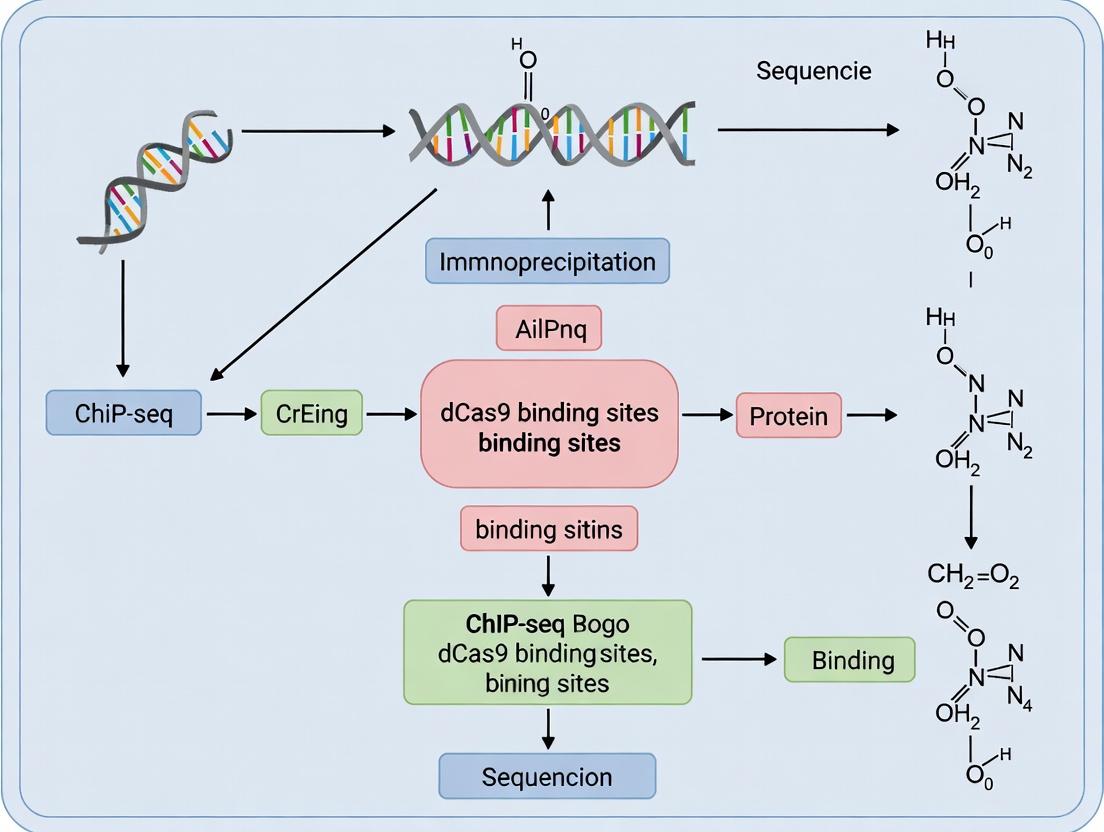
This comprehensive guide provides researchers, scientists, and drug development professionals with a complete framework for utilizing ChIP-seq to map dCas9 binding sites.
ChIP-seq for dCas9 Binding Sites: A Complete Guide for Epigenetic Researchers and Drug Developers
Abstract
This comprehensive guide provides researchers, scientists, and drug development professionals with a complete framework for utilizing ChIP-seq to map dCas9 binding sites. We explore the foundational principles of dCas9 fusion proteins and chromatin immunoprecipitation, detail step-by-step methodologies from experimental design to sequencing, address common troubleshooting and optimization challenges, and critically compare validation strategies. This article synthesizes current best practices to enable accurate, reproducible profiling of CRISPR-based epigenetic and transcriptional perturbations for therapeutic discovery and functional genomics.
Understanding dCas9 ChIP-seq: Core Principles for Epigenetic Targeting
Application Notes
The catalytically deactivated Streptococcus pyogenes Cas9 (dCas9), created by point mutations (D10A and H840A) that abolish its endonuclease activity, has revolutionized functional genomics and therapeutic development. Within the context of a ChIP-seq thesis investigating dCas9 binding sites, understanding its evolution from a cleavage tool to a programmable DNA-binding platform is fundamental. dCas9 retains its ability to be guided by a single-guide RNA (sgRNA) to specific genomic loci via Watson-Crick base pairing, enabling high-resolution targeting without generating double-strand breaks.
The primary application in this research context is dCas9-based Chromatin Immunoprecipitation followed by sequencing (ChIP-seq). By fusing dCas9 to epitope tags (e.g., HA, FLAG) or directly to fluorescent proteins, researchers can isolate protein-DNA complexes to map the precise genomic binding locations of the dCas9-sgRNA complex. This allows for the investigation of sgRNA design efficacy, off-target binding profiles, and the local chromatin environment's influence on binding efficiency. Quantitative data from recent studies highlight key performance metrics:
Table 1: Quantitative Performance Metrics of dCas9 ChIP-seq
| Metric | Typical Range/Value | Experimental Context |
|---|---|---|
| Peak Width (Resolution) | 200 - 500 bp | Defined as the region of significant enrichment around the sgRNA target site. |
| Signal-to-Noise Ratio | 5:1 to 50:1+ | Varies heavily with sgRNA design, chromatin accessibility, and antibody specificity. |
| Recommended Sequencing Depth | 10 - 20 million reads | For mammalian genomes in a targeted binding site experiment. |
| dCas9 Occupancy Efficiency | 10% - 60% | Percentage of target sites efficiently bound, dependent on sgRNA and delivery. |
| Key Mutations | D10A, H840A (SpCas9) | Common mutations to create catalytically "dead" Cas9. |
Fusion proteins extend dCas9's utility beyond mapping. dCas9-Effectors can be targeted to specific loci to manipulate gene expression (CRISPRa/i via VP64, KRAB) or alter epigenetic states (DNA methyltransferases, histone demethylases like LSD1). For drug development, dCas9 systems enable high-throughput functional screening and the targeted modulation of disease-associated genes without permanent genomic alteration.
Experimental Protocols
Protocol 1: dCas9 ChIP-seq for Binding Site Mapping
Objective: To identify genome-wide binding sites of a dCas9 fusion protein.
I. Cell Preparation & Crosslinking
- Transfection: Deliver plasmids encoding N-terminally 3xFLAG-tagged dCas9 and a specific sgRNA into your cell line (e.g., HEK293T) using a preferred method (lipofection, nucleofection).
- Crosslinking: 48-72 hours post-transfection, add 1% formaldehyde directly to the culture medium. Incubate for 10 min at room temperature with gentle shaking.
- Quenching: Add glycine to a final concentration of 0.125 M. Incubate for 5 min at room temperature.
- Harvesting: Wash cells twice with cold PBS. Scrape and pellet cells. Flash-freeze pellet in liquid nitrogen and store at -80°C.
II. Chromatin Immunoprecipitation
- Lysis & Sonication: Resuspend cell pellet in ChIP Lysis Buffer. Sonicate chromatin to an average fragment size of 200-500 bp. Centrifuge to clear debris.
- Pre-clearing & Immunoprecipitation: Incubate chromatin supernatant with protein A/G magnetic beads for 1 hour at 4°C. After magnetic separation, incubate the supernatant with anti-FLAG M2 antibody overnight at 4°C with rotation.
- Bead Capture: Add pre-washed protein A/G beads and incubate for 2 hours.
- Washing: Wash beads sequentially with: Low Salt Wash Buffer, High Salt Wash Buffer, LiCl Wash Buffer, and twice with TE Buffer.
- Elution & De-crosslinking: Elute chromatin complexes twice with Elution Buffer (1% SDS, 0.1M NaHCO3). Add NaCl to the combined eluates and incubate at 65°C overnight to reverse crosslinks.
- DNA Purification: Treat with RNase A and Proteinase K. Purify DNA using a spin column kit.
III. Library Preparation & Sequencing
- Quantify purified DNA (e.g., with Qubit).
- Prepare a sequencing library using a commercial kit for low-input ChIP-seq DNA, including end-repair, adapter ligation, and PCR amplification.
- Validate library quality (Bioanalyzer) and sequence on an appropriate platform (e.g., Illumina NextSeq, 75bp single-end).
Protocol 2: Validation of dCas9 Binding by qPCR
- Use an aliquot of the purified ChIP DNA from Protocol 1 as a template.
- Design qPCR primers flanking the target site and control regions (e.g., a non-targeted genomic locus).
- Perform qPCR using SYBR Green master mix. Calculate % input or fold enrichment relative to a negative control sgRNA or IgG ChIP sample.
Visualization
Title: dCas9 ChIP-seq Experimental Workflow
Title: dCas9 Fusion Proteins and Applications
The Scientist's Toolkit: Research Reagent Solutions
Table 2: Essential Reagents for dCas9 ChIP-seq Experiments
| Reagent/Material | Function & Importance |
|---|---|
| dCas9 Expression Plasmid | Expresses catalytically dead Cas9, often with N- or C-terminal epitope tags (e.g., 3xFLAG, HA) for immunoprecipitation. |
| sgRNA Expression Vector | Drives expression of the target-specific single-guide RNA. May be on a separate plasmid or in an all-in-one system with dCas9. |
| High-Specificity Antibody | Critical for ChIP. Anti-FLAG M2 or high-validate anti-HA antibodies ensure clean pulldown of the dCas9-DNA complex. |
| Protein A/G Magnetic Beads | Facilitate efficient capture and washing of antibody-chromatin complexes, reducing background noise. |
| Chromatin Shearing System | Sonication device (e.g., focused ultrasonicator) to fragment crosslinked chromatin to optimal size (200-500bp). |
| ChIP-seq Library Prep Kit | Optimized kits for converting low-input, immunoprecipitated DNA into sequencing-ready libraries. |
| Validated qPCR Primers | Essential for validating ChIP efficiency at target vs. control loci before proceeding to full sequencing. |
| Cell Line with High Transfection Efficiency | HEK293T or similar lines ensure robust dCas9/sgRNA expression for initial method optimization. |
Within the broader thesis on ChIP-seq for dCas9 binding sites research, this application note establishes the critical rationale for employing dCas9 ChIP-seq. The primary objectives are twofold: 1) Precisely map the genomic localization of dCas9-linked epigenetic effectors (e.g., methyltransferases, acetyltransferases) to verify on-target engagement and correlate with functional readouts, and 2) Comprehensively identify off-target binding events that are inherent to CRISPR/dCas9 systems, which is essential for assessing specificity and potential confounding effects in therapeutic development. This protocol provides a standardized framework for these parallel investigations.
Table 1: Comparison of dCas9 ChIP-seq Performance Metrics from Recent Studies
| Study & Application | On-Target Peak Enrichment (Fold-Change) | Median Off-Targets Identified per Guide | Key Epigenetic Mark Induced (On-Target) |
|---|---|---|---|
| dCas9-p300 (H3K27ac) | 15-25x over IgG control | 12-45 | H3K27ac (≥5-fold increase) |
| dCas9-DNMT3A (DNA Methylation) | 10-20x over Input | 8-22 | CpG Methylation (≥40% increase) |
| dCas9-KRAB (H3K9me3) | 20-35x over IgG control | 15-60 | H3K9me3 (≥8-fold increase) |
| dCas9 Only (Control) | 5-10x over Input | 50-150 | N/A |
Table 2: Reagent Solutions for dCas9 ChIP-seq
| Reagent / Solution | Function / Rationale |
|---|---|
| Anti-FLAG M2 Magnetic Beads | High-affinity capture of FLAG-tagged dCas9-fusion proteins; reduces background vs. protein A/G. |
| Proteinase K with RNase A | Complete reversal of crosslinks and digestion of contaminating RNA. |
| SPRIselect Beads | For size selection and clean-up of ChIP-DNA libraries; optimal for low-input samples. |
| KAPA HyperPrep Kit | Robust library preparation for degraded or low-concentration ChIP DNA. |
| Validated Anti-dCas9 Antibody | Critical for endogenous ChIP if epitope tags are not used; requires stringent validation. |
| sgRNA Negative Control (Scrambled) | Essential control to distinguish guide-dependent binding from background. |
Detailed Experimental Protocol
Protocol: dCas9 ChIP-seq for Epigenetic Effector Localization & Off-Target Discovery
A. Cell Preparation & Crosslinking
- Transfection: Deliver plasmids expressing dCas9-effector fusion (e.g., dCas9-p300) and target-specific sgRNA into 5x10^6 mammalian cells (e.g., HEK293T) using a preferred method (e.g., PEI, Lipofectamine 3000). Include a dCas9-only and a scrambled sgRNA control.
- Crosslinking: At 48-72h post-transfection, add 1% formaldehyde directly to culture medium. Incubate for 10 min at room temperature with gentle rocking.
- Quenching: Add glycine to a final concentration of 0.125 M. Incubate for 5 min at RT.
- Harvest: Wash cells 2x with ice-cold PBS. Pellet cells and flash-freeze pellet for storage at -80°C or proceed.
B. Chromatin Immunoprecipitation (ChIP)
- Lysis & Sonication: Resuspend cell pellet in LB1 buffer (50mM HEPES-KOH pH7.5, 140mM NaCl, 1mM EDTA, 10% Glycerol, 0.5% NP-40, 0.25% Triton X-100). Pellet nuclei. Resuspend in LB2 buffer (10mM Tris-HCl pH8.0, 200mM NaCl, 1mM EDTA, 0.5mM EGTA). Pellet again. Finally, resuspend in Sonication Buffer (10mM Tris-HCl pH8.0, 100mM NaCl, 1mM EDTA, 0.5mM EGTA, 0.1% Na-Deoxycholate, 0.5% N-Lauroylsarcosine). Sonicate to achieve 200-500 bp fragments (e.g., 15 cycles, 30 sec ON/OFF, high setting, Bioruptor).
- Immunoprecipitation: Clarify lysate. For FLAG-tagged dCas9, incubate 50 µL of pre-washed Anti-FLAG M2 magnetic beads with 500 µg chromatin overnight at 4°C. For endogenous ChIP, use 2-5 µg of validated anti-dCas9 antibody with Protein A/G beads.
- Washing: Wash beads sequentially for 5 min each on a rotator at 4°C with: a) Low Salt Wash Buffer, b) High Salt Wash Buffer, c) LiCl Wash Buffer, d) TE Buffer.
- Elution & Decrosslinking: Elute ChIP material twice with 100 µL Elution Buffer (50mM Tris-HCl pH8.0, 10mM EDTA, 1% SDS) at 65°C for 15 min with shaking. Add NaCl to 200mM and incubate at 65°C overnight to reverse crosslinks.
- DNA Purification: Treat with RNase A (30 min, 37°C) then Proteinase K (2h, 55°C). Purify DNA using SPRIselect beads (1.8x ratio). Elute in 20 µL TE buffer.
C. Library Preparation & Sequencing
- Library Prep: Use 1-10 ng of ChIP DNA with the KAPA HyperPrep Kit. Perform end-repair, A-tailing, and adapter ligation following manufacturer guidelines.
- PCR Amplification: Amplify with 12-15 cycles of PCR using indexed primers. Clean up with SPRIselect beads (0.9x ratio).
- QC & Sequencing: Assess library size (~300 bp) on Bioanalyzer. Quantify by qPCR. Sequence on an Illumina platform (e.g., NovaSeq) to achieve 20-40 million paired-end 150bp reads per sample.
D. Data Analysis Pipeline
- Alignment: Use Bowtie2 or BWA to align reads to the reference genome (e.g., hg38).
- Peak Calling: For experimental samples (dCas9-effector + specific sgRNA), call peaks against the dCas9-only and scrambled sgRNA controls using MACS2 (
-f BAMPE --keep-dup all -g hs). - Off-Target Identification: Compare peaks from the specific sgRNA sample to the scrambled sgRNA control. Peaks unique to the specific guide, excluding the intended on-target locus, are candidate off-targets. Validate top candidates by amplicon-seq or qPCR.
- Epigenetic Analysis: Integrate resulting peak files (BED) with downstream epigenomic data (e.g., H3K27ac ChIP-seq, RNA-seq) from the same cells to correlate binding with epigenetic mark establishment and gene expression changes.
Visualizations
Diagram Title: Dual Rationale for dCas9 ChIP-seq in Thesis Research
Diagram Title: dCas9 ChIP-seq Experimental Workflow
Diagram Title: Bioinformatics Pipeline for Off-Target Identification
This application note details the key components and protocols for using CRISPR/dCas9 systems in epigenome engineering and target binding validation, framed within a thesis utilizing ChIP-seq to map dCas9 binding sites. The integration of effector domains (p300, KRAB, DNMTs) with appropriately tagged dCas9 enables precise epigenetic modulation and subsequent detection, critical for functional genomics and drug target discovery.
Key Component Specifications
Table 1: Common dCas9 Construct Backbones and Properties
| dCas9 Variant | Size (aa) | PAM Sequence | Common Fusion Site | Typical Delivery |
|---|---|---|---|---|
| dCas9 from S. pyogenes | 1368 | NGG | C-terminus, N-terminus | Lentivirus, AAV |
| dCas9 from S. aureus | 1053 | NNGRRT | C-terminus | Lentivirus |
| dCas9-NLS (Nuclear Localized) | ~1380 | NGG | Both termini | Plasmid Transfection |
Table 2: Epigenetic Effector Domains for dCas9 Fusion
| Effector | Type | Biological Function | Domain Size (aa) | Fusion Orientation |
|---|---|---|---|---|
| p300 core (CH3, HAT) | Activator | Histone acetyltransferase; opens chromatin | ~670 | C-terminal to dCas9 |
| KRAB (Krüppel-associated box) | Repressor | Recruits heterochromatin-inducing complexes; silences genes | ~75 | C-terminal to dCas9 |
| DNMT3A (DNA methyltransferase 3A) | Repressor | De novo DNA methylation; stable gene silencing | ~912 | C-terminal to dCas9 |
Table 3: Common Epitope Tags for ChIP-seq Validation
| Tag | Amino Acid Sequence | Size (aa) | Primary Antibody (Example) | Key Advantage |
|---|---|---|---|---|
| HA | YPYDVPDYA | 9 | Mouse anti-HA (e.g., clone 16B12) | High specificity, low background |
| FLAG | DYKDDDDK | 8 | Mouse anti-FLAG (e.g., M2 clone) | Gentle elution conditions |
| Myc | EQKLISEEDL | 10 | Mouse anti-Myc (e.g., clone 9E10) | Strong signal in many assays |
Protocols
Protocol 1: ChIP-seq for Mapping dCas9-Effector Binding Sites
Objective: To identify genome-wide binding loci of a FLAG-tagged dCas9-p300 fusion protein.
Materials:
- Cells expressing FLAG-dCas9-p300 and appropriate sgRNA(s).
- Crosslinking Solution: 1% Formaldehyde in PBS.
- Cell Lysis Buffer: 50 mM HEPES-KOH pH 7.5, 140 mM NaCl, 1 mM EDTA, 1% Triton X-100, 0.1% Na-Deoxycholate, protease inhibitors.
- FLAG M2 Magnetic Beads.
- Elution Buffer: 50 mM Tris-HCl pH 8.0, 10 mM EDTA, 1% SDS.
Method:
- Crosslink 10^7 cells with 1% formaldehyde for 10 min at RT. Quench with 125 mM glycine.
- Lyse cells in 1 mL Lysis Buffer on ice for 15 min. Sonicate to shear chromatin to 200-500 bp fragments.
- Immunoprecipitate: Incubate clarified lysate with 50 µL pre-washed FLAG M2 beads overnight at 4°C.
- Wash beads sequentially with: a) Low Salt Wash Buffer, b) High Salt Wash Buffer, c) LiCl Wash Buffer, d) TE Buffer.
- Elute chromatin in 100 µL Elution Buffer at 65°C for 15 min with shaking. Reverse crosslinks overnight at 65°C.
- Purify DNA and prepare libraries for next-generation sequencing.
- Data Analysis: Align reads to reference genome and call peaks relative to control (e.g., non-targeting sgRNA).
Protocol 2: Functional Validation of dCas9-KRAB-Mediated Repression
Objective: To assess transcriptional repression via qRT-PCR following dCas9-KRAB targeting.
Materials:
- HA-dCas9-KRAB expressing cells.
- RNA extraction kit.
- cDNA synthesis kit.
- SYBR Green qPCR Master Mix.
- Primers for target gene and housekeeping control.
Method:
- Transduce/Tranfect target cells with HA-dCas9-KRAB and target-specific sgRNA plasmid.
- Harvest RNA 72 hours post-transduction.
- Synthesize cDNA from 1 µg total RNA.
- Perform qPCR using gene-specific primers. Calculate fold change (2^-ΔΔCt) relative to cells expressing a non-targeting sgRNA.
The Scientist's Toolkit: Research Reagent Solutions
Table 4: Essential Materials for dCas9-Epigenetic Effector Studies
| Item | Function | Example Product/Catalog # |
|---|---|---|
| Lentiviral dCas9-Effector Plasmid | Stable delivery of dCas9 fusion construct | Addgene: #61425 (dCas9-p300) |
| Anti-HA Magnetic Beads | Immunoprecipitation of HA-tagged dCas9 fusions | Pierce Anti-HA Magnetic Beads (88837) |
| Anti-FLAG M2 Antibody | ChIP-grade antibody for FLAG-tag IP | Sigma F1804 |
| Proteinase K | Digests proteins post-ChIP elution; essential for DNA recovery | Invitrogen (25530049) |
| Next-Generation Sequencing Kit | Prepares ChIP'd DNA for sequencing | Illumina TruSeq ChIP Library Prep Kit |
| sgRNA Cloning Kit | Streamlines generation of targeting constructs | Synthego or custom oligo cloning |
Visualizations
Title: dCas9 ChIP-seq Experimental Workflow
Title: dCas9-Effector Mechanisms: p300 vs KRAB
Title: Decision Tree for Epitope Tag Selection
Chromatin Immunoprecipitation (ChIP) Fundamentals Adapted for dCas9 Fusion Complexes
Within the broader thesis on mapping genome-wide binding sites using ChIP-seq, the adaptation of Chromatin Immunoprecipitation (ChIP) for dCas9 fusion complexes represents a pivotal methodological advancement. Unlike traditional ChIP targeting native transcription factors, dCas9-based ChIP (commonly called dCas9-ChIP or CRISPR-ChIP) enables the programmable recruitment of epigenetic modifiers, transcriptional regulators, or fluorescent proteins to specific genomic loci. This application allows for the precise investigation of chromatin dynamics and gene regulation at user-defined sites.
The core principle remains the crosslinking, immunoprecipitation, and sequencing of protein-DNA complexes. However, the target is now a synthetically recruited dCas9 fusion protein, bound to a specific genomic site via a co-delivered single guide RNA (sgRNA). This adaptation is primarily used for: 1) Validating the binding efficiency and specificity of designed sgRNAs, 2) Mapping the genomic occupancy of dCas9-fused effector proteins (e.g., p300, DNMT3A), and 3) Profiling chromatin state changes at targeted loci (e.g., H3K27ac enrichment after dCas9-p300 recruitment).
Key Research Reagent Solutions
| Item | Function in dCas9-ChIP |
|---|---|
| Catalytically Dead Cas9 (dCas9) | DNA-binding scaffold that localizes to genomic targets via sgRNA complementarity without cleaving DNA. The fusion partner dictates the experiment's purpose. |
| dCas9 Fusion Construct | dCas9 protein fused to an epigenetic writer/eraser (e.g., p300, LSD1), a fluorescent protein (e.g., GFP for Chip), or an epitope tag (e.g., HA, FLAG). |
| Sequence-Specific sgRNA | Guides the dCas9 fusion complex to the genomic locus of interest. Design and validation are critical for success. |
| Crosslinking Agent (Formaldehyde) | Fixes protein-DNA and protein-protein interactions, capturing transient binding of the dCas9 complex. |
| Epitope-Specific Antibody | Antibody against the fused protein (e.g., anti-GFP) or tag (e.g., anti-FLAG) for immunoprecipitation of the dCas9 complex. |
| Chromatin Shearing Reagents | Enzymatic (MNase) or sonication-based kits to fragment crosslinked chromatin to optimal size (200-500 bp). |
| Magnetic Protein A/G Beads | Beads conjugated to Protein A/G for efficient antibody capture and complex purification. |
| High-Sensitivity DNA Library Prep Kit | Prepares the immunoprecipitated DNA for next-generation sequencing (NGS). |
| Validated Positive Control sgRNA & Locus | A sgRNA/locus pair with known high binding efficiency (e.g., a repetitive element or a highly accessible region) for protocol optimization. |
| Parameter | Typical Range/Value | Optimization Notes |
|---|---|---|
| Crosslinking Time | 8-15 minutes (1% formaldehyde) | Longer times may mask epitopes; shorter times may not capture transient interactions. |
| Chromatin Fragment Size | 200-500 bp | Verified via bioanalyzer; crucial for resolution in sequencing. |
| dCas9/sgRNA Transfection | 2:1 mass ratio (plasmid) | Varies by delivery method (plasmid, RNP). RNP delivery often yields higher specificity. |
| Antibody Incubation | Overnight at 4°C | Use 1-5 µg of ChIP-grade antibody per reaction. |
| PCR Cycle Number (Library Amp) | 12-18 cycles | Minimize to prevent amplification bias; determine via qPCR on a control locus. |
| Sequencing Depth | 10-20 million reads (targeted) | For genome-wide dCas9-occupancy maps, depth similar to standard ChIP-seq (>20M reads) is recommended. |
| Negative Control | Non-targeting sgRNA or dCas9-only | Essential for distinguishing specific enrichment from background. |
Detailed Experimental Protocol
Protocol: dCas9-ChIP-seq for Mapping Fusion Protein Occupancy
A. Cell Preparation & Transfection (Day 1-3)
- Seed Cells: Plate mammalian cells (e.g., HEK293T) to reach 70-80% confluency at transfection.
- Transfect dCas9 Fusion Complex: Co-transfect plasmids encoding (i) dCas9-[Epitope/Effector] and (ii) sequence-specific sgRNA using a preferred method (e.g., PEI, Lipofectamine). Include a non-targeting sgRNA control. Alternative: Deliver pre-assembled dCas9 protein-sgRNA ribonucleoprotein (RNP) complexes via nucleofection.
- Incubate: Culture cells for 24-48 hours to allow for sufficient expression and genomic targeting.
B. Crosslinking & Chromatin Preparation (Day 4)
- Crosslink: Add 37% formaldehyde directly to culture media to a final concentration of 1%. Incubate for 10 minutes at room temperature with gentle shaking.
- Quench: Add glycine to a final concentration of 0.125 M. Incubate for 5 minutes at room temperature.
- Harvest: Wash cells twice with cold PBS. Scrape and pellet cells. Pellets can be frozen at -80°C.
- Lyse: Resuspend pellet in 1 mL Cell Lysis Buffer (10 mM Tris-HCl pH 8.0, 10 mM NaCl, 0.2% NP-40, protease inhibitors) and incubate on ice for 15 minutes. Centrifuge to pellet nuclei.
- Nuclear Lysis: Resuspend nuclei in 500 µL Nuclear Lysis Buffer (50 mM Tris-HCl pH 8.0, 10 mM EDTA, 1% SDS, protease inhibitors). Incubate on ice for 10 minutes.
- Shear Chromatin: Sonicate lysate to achieve DNA fragments of 200-500 bp. Use a focused ultrasonicator (e.g., Covaris) or probe sonicator. Verify fragment size by running 2% of sheared chromatin on a gel after reverse crosslinking.
- Clarify: Centrifuge sheared lysate at max speed for 10 minutes at 4°C. Transfer supernatant (chromatin) to a new tube. Dilute 10-fold in ChIP Dilution Buffer (16.7 mM Tris-HCl pH 8.0, 167 mM NaCl, 1.2 mM EDTA, 1.1% Triton X-100).
C. Immunoprecipitation (Day 5)
- Pre-clear: Add 20 µL of pre-washed Protein A/G magnetic beads to the diluted chromatin. Rotate for 1 hour at 4°C. Discard beads.
- Antibody Incubation: Add 1-5 µg of epitope-specific antibody (e.g., anti-FLAG M2) to the pre-cleared chromatin. Rotate overnight at 4°C.
- Capture: Add 50 µL pre-washed Protein A/G magnetic beads. Rotate for 2 hours at 4°C.
- Wash: Perform sequential cold washes on a magnetic rack:
- Wash Buffer I (Low Salt): 20 mM Tris-HCl pH 8.0, 150 mM NaCl, 2 mM EDTA, 1% Triton X-100, 0.1% SDS.
- Wash Buffer II (High Salt): 20 mM Tris-HCl pH 8.0, 500 mM NaCl, 2 mM EDTA, 1% Triton X-100, 0.1% SDS.
- Wash Buffer III (LiCl): 10 mM Tris-HCl pH 8.0, 250 mM LiCl, 1 mM EDTA, 1% NP-40, 1% Sodium Deoxycholate.
- TE Buffer: 10 mM Tris-HCl pH 8.0, 1 mM EDTA. Perform twice.
D. Elution, Decrosslinking, & Clean-up (Day 6)
- Elute: Add 100 µL Fresh Elution Buffer (100 mM NaHCO₃, 1% SDS) to beads. Vortex and incubate at 65°C for 15 minutes with shaking. Repeat and combine eluates.
- Decrosslink: Add NaCl to a final concentration of 200 mM and RNase A. Incubate at 65°C for 4-5 hours/overnight.
- Proteinase K Digest: Add EDTA, Tris-HCl pH 6.5, and Proteinase K. Incubate at 45°C for 1-2 hours.
- DNA Purification: Purify DNA using a PCR purification kit (e.g., Qiagen MinElute). Elute in 20 µL EB buffer.
E. Library Preparation & Sequencing (Day 7+)
- QC: Quantify recovered DNA by qPCR using primers for the targeted locus (positive control) and a non-targeted locus (negative control). Calculate % input.
- Library Prep: Use a high-sensitivity NGS library preparation kit (e.g., NEBNext Ultra II) with appropriate cycle number for amplification.
- Sequence: Perform 50-75 bp single-end sequencing on an Illumina platform to a depth of 10-20 million reads per sample.
Visualized Workflows and Pathways
dCas9-ChIP-seq Experimental Workflow
Logical Comparison: Traditional vs. dCas9 ChIP
The precise mapping of dCas9 binding sites is critical for understanding CRISPR-based transcriptional regulation, epigenome editing, and synthetic biology applications. Chromatin Immunoprecipitation followed by sequencing (ChIP-seq) remains the gold standard for in vivo protein-DNA interaction profiling. This application note details the essential sequencing workflows, from library preparation to alignment, specifically tailored for identifying dCas9 binding sites, a core methodology supporting broader thesis research in programmable genome targeting.
Key Research Reagent Solutions
Table 1: Essential Reagents and Materials for dCas9 ChIP-seq
| Item | Function in dCas9 ChIP-seq |
|---|---|
| Crosslinking Agent (e.g., formaldehyde) | Fixes dCas9 protein to its genomic DNA binding sites in vivo. |
| Anti-FLAG or Anti-HA Magnetic Beads | For immunoprecipitation of epitope-tagged dCas9 and its bound DNA fragments. |
| Proteinase K | Reverses crosslinks and digests proteins after IP, releasing DNA. |
| SPRIselect Beads | Performs size selection and cleanup of DNA fragments, crucial for library prep. |
| High-Sensitivity DNA Assay Kit | Accurately quantifies low-concentration ChIP DNA prior to library construction. |
| Library Prep Kit (e.g., ThruPLEX) | Prepares sequencing libraries from low-input, fragmented ChIP DNA. |
| Unique Dual Index (UDI) Adapters | Allows multiplexing of samples and prevents index hopping errors. |
| High-Fidelity DNA Polymerase | Amplifies the final library with minimal bias and errors. |
| qPCR Quantification Kit | Precisely quantifies the final adapter-ligated library for sequencing. |
| PhiX Control v3 | Spiked into runs for Illumina sequencing quality monitoring. |
Detailed Experimental Protocol: dCas9 ChIP-seq Workflow
Protocol 3.1: Chromatin Immunoprecipitation for dCas9
Objective: Isolate DNA fragments bound by dCas9.
- Crosslinking: Treat cells expressing epitope-tagged dCas9 with 1% formaldehyde for 10 min at room temperature. Quench with 125 mM glycine.
- Lysis & Sonication: Lyse cells. Sonicate chromatin to shear DNA to an average fragment size of 200-500 bp. Verify fragment size by agarose gel electrophoresis.
- Immunoprecipitation: Incubate cleared lysate with antibody-conjugated magnetic beads (e.g., anti-FLAG) overnight at 4°C.
- Washes & Elution: Wash beads with low-salt, high-salt, and LiCl buffers. Elute bound complexes with elution buffer (1% SDS, 100mM NaHCO3).
- Reverse Crosslinks & Purification: Add NaCl to 200 mM and incubate at 65°C overnight. Treat with RNase A and Proteinase K. Purify DNA using SPRIselect beads.
Protocol 3.2: Sequencing Library Preparation from ChIP DNA
Objective: Convert purified ChIP DNA into an NGS-compatible library.
- End Repair & A-tailing: Use a library prep kit to convert sheared DNA ends to blunt, 5'-phosphorylated ends, then add a single 'A' nucleotide.
- Adapter Ligation: Ligate UDI adapters to the A-tailed fragments.
- Size Selection: Perform double-sided SPRI bead cleanup (e.g., 0.55x and 1.0x ratios) to select fragments ~250-350 bp.
- Library Amplification: Amplify the adapter-ligated DNA with 8-12 cycles of PCR using high-fidelity polymerase and index primers.
- Final Purification & QC: Clean up PCR product with SPRI beads (0.8x ratio). Quantify by qPCR and assess size distribution by Bioanalyzer.
Protocol 3.3: Sequencing & Primary Data Analysis
Objective: Generate and initially process sequencing reads.
- Sequencing: Pool multiplexed libraries and sequence on an Illumina platform (e.g., NovaSeq) to generate 50-100 million paired-end 50-150 bp reads per sample.
- Demultiplexing: Use
bcl2fastqorDRAGENto generate FASTQ files, assigning reads to samples based on UDIs. - Quality Control: Use
FastQCto assess read quality, adapter content, and GC distribution. - Read Alignment: Align reads to the reference genome using a splice-aware aligner like
Bowtie2orBWA.- Command example:
bowtie2 -x hg38 -1 sample_R1.fq -2 sample_R2.fq -S output.sam
- Command example:
- Post-Alignment Processing: Convert SAM to sorted BAM, remove duplicates, and filter for mapping quality.
- Command pipeline:
samtools view -bS output.sam | samtools sort -o sorted.bam; picard MarkDuplicates I=sorted.bam O=dedup.bam M=metrics.txt
- Command pipeline:
Data Presentation
Table 2: Typical QC Metrics and Output for dCas9 ChIP-seq
| Metric | Target Value/Range | Typical Output (Example) | Tool for Assessment |
|---|---|---|---|
| Post-IP DNA Yield | > 5 ng | 8.5 ng | Qubit Fluorometer |
| Final Library Concentration | > 2 nM | 4.8 nM | qPCR (Library Quant Kit) |
| Library Fragment Size | ~250-350 bp | 295 bp (peak) | Bioanalyzer/TapeStation |
| Total Paired-End Reads | 50-100 million | 78.2 M | Sequencing Summary |
| Alignment Rate | > 80% | 92.5% | Bowtie2/SAMtools |
| PCR Duplicate Rate | < 20% | 15.3% | Picard MarkDuplicates |
| Fraction of Reads in Peaks (FRiP) | > 1% for dCas9 | 2.8% | MACS2/SPP |
Visualization of Workflows and Pathways
Title: dCas9 ChIP-seq Experimental and Computational Workflow
Title: ChIP-seq Data Analysis Pathway from Reads to Peaks
Title: dCas9-gRNA Complex Binding and ChIP Capture
A Step-by-Step dCas9 ChIP-seq Protocol: From Cell Line to Data
Application Notes
This protocol outlines the experimental design for a CRISPR/dCas9-ChIP-seq study to identify genome-wide dCas9 binding sites, a critical component of a broader thesis on dCas9-mediated transcriptional regulation and epigenetic screening. The design emphasizes robust controls and replication to distinguish specific dCas9 binding from non-specific background and technical artifacts, ensuring data integrity for downstream drug target validation.
Rationale for Cell Line Selection
The choice of cell line is paramount and must align with the biological question. For foundational dCas9 binding studies, widely used, well-characterized, and readily transfertable lines are ideal.
- HEK293T: A top recommendation due to high transfection efficiency, robust growth, and extensive use in proof-of-concept CRISPR/dCas9 studies, enabling clear signal detection.
- K562: An excellent model for hematopoietic studies and commonly used in large-scale consortia like ENCODE, providing a wealth of publicly available chromatin state data for comparison.
- HepG2: Relevant for liver disease and metabolism research, offering a contrasting epigenetic landscape.
- Primary or Difficult-to-Transfect Cells: If the thesis focuses on a specific disease model, utilize a relevant cell line, but anticipate lower efficiency, necessitating optimization of delivery (e.g., nucleofection, lentiviral transduction).
Key Consideration: The cell line must stably express dCas9 (tagged or untagged) or be capable of efficient transient transfection/transduction. Chromatin accessibility (ATAC-seq data) for the chosen line can inform expected binding site density.
Critical Control Conditions
Implementing stringent controls is non-negotiable for accurate peak calling and interpretation.
- Untagged dCas9 Control: Cells expressing dCas9 without an epitope tag. This controls for non-specific antibody binding and background noise in the immunoprecipitation step. Any peaks called in this control are likely artifactual and must be subtracted from the experimental sample peaks.
- GFP-Only Control: Cells expressing only GFP (or another fluorescent protein not fused to dCas9). This controls for the effects of the transfection/transduction process, antibiotic selection, and general cellular stress responses on gene expression and chromatin state.
- Wild-Type (Untransduced) Cells: The baseline for cell health and native chromatin immunoprecipitation background.
- Input DNA Sample: A sample of sonicated chromatin saved prior to immunoprecipitation. This serves as the control for chromatin accessibility and sequencing bias, and is mandatory for peak-calling algorithms.
Replication Strategy
Adequate biological replication mitigates technical variability and provides statistical power.
- Minimum Replicates: For ChIP-seq, a minimum of two biological replicates per condition is essential for confident peak calling. Three replicates are strongly recommended for robust statistical analysis, especially in a thesis context.
- Biological vs. Technical Replicates: Biological replicates (cells cultured and treated in independent experiments) are required. Technical replicates (multiple libraries from the same chromatin prep) are less informative for ChIP-seq variance.
- Randomization: Process replicates in randomized order across different days to avoid batch effects.
- Quality Control Metrics: Replicates should show high concordance. Use metrics like Irreproducible Discovery Rate (IDR) for peak consistency and cross-correlation analysis (NSC, RSC) for fragment quality.
Protocol: dCas9-ChIP-seq Experimental Workflow
Part A: Cell Line Preparation & Control Line Generation
Objective: Establish stable polyclonal cell lines expressing tagged dCas9, untagged dCas9, and GFP.
Materials (Research Reagent Solutions):
| Reagent/Material | Function/Explanation |
|---|---|
| HEK293T Cells | Robust, easily transfected model cell line for method establishment. |
| Plasmid: pLV-dCas9-3xFLAG-P2A-Puro | Lentiviral vector for expressing FLAG-tagged dCas9 with a puromycin resistance gene. |
| Plasmid: pLV-dCas9-P2A-Puro | Isogenic control vector expressing untagged dCas9. |
| Plasmid: pLV-EGFP-P2A-Puro | Control vector expressing GFP only. |
| Lentiviral Packaging Plasmids (psPAX2, pMD2.G) | For production of third-generation lentivirus. |
| Polybrene (Hexadimethrine bromide) | Enhances viral transduction efficiency. |
| Puromycin Dihydrochloride | Selective antibiotic for stable cell line generation. |
| Lipofectamine 3000 | Reagent for high-efficiency plasmid transfection (for virus production). |
Methodology:
- Lentivirus Production: In HEK293T cells, co-transfect the transfer plasmid (e.g., pLV-dCas9-3xFLAG) with packaging plasmids psPAX2 and pMD2.G using Lipofectamine 3000 per manufacturer's protocol. Harvest virus-containing supernatant at 48 and 72 hours post-transfection.
- Transduction & Selection: Transduce target cells (e.g., HEK293T) with filtered viral supernatant in the presence of 8 µg/mL Polybrene. 48 hours post-transduction, begin selection with 1-2 µg/mL Puromycin. Maintain selection pressure for at least 7 days to generate a polyclonal stable population.
- Validation: Confirm expression via Western blot (anti-FLAG for tagged dCas9, anti-dCas9 for all) and fluorescence microscopy (for GFP control).
Part B: Chromatin Immunoprecipitation (ChIP) Protocol
Objective: Crosslink, isolate, and shear chromatin, then immunoprecipitate dCas9-bound DNA fragments.
Materials (Key Reagents):
| Reagent/Material | Function/Explanation |
|---|---|
| Formaldehyde (37%) | Reversible protein-DNA crosslinking agent. |
| Glycine (2.5M) | Quenches formaldehyde to stop crosslinking. |
| Cell Lysis Buffer | Buffered solution with detergent to lyse cells and isolate nuclei. |
| Nuclear Lysis Buffer | Buffer with SDS to solubilize nuclear membranes and chromatin. |
| Covaris S220 Focused-ultrasonicator | Instrument for consistent, high-quality chromatin shearing to 200-500 bp fragments. |
| Anti-FLAG M2 Magnetic Beads | Affinity resin for highly specific immunoprecipitation of FLAG-tagged dCas9. |
| Proteinase K | Digests proteins post-IP to reverse crosslinks and release DNA. |
| SPRIselect Beads | Magnetic beads for size-selective purification of DNA libraries. |
Methodology:
- Crosslinking: For a 15 cm plate of confluent cells, add 1% final concentration of formaldehyde directly to medium. Incubate 10 min at room temperature. Quench with 125 mM final concentration of glycine for 5 min.
- Chromatin Preparation: Wash cells, scrape, and pellet. Resuspend pellet in Cell Lysis Buffer (with protease inhibitors), incubate on ice, and pellet nuclei. Lyse nuclei in Nuclear Lysis Buffer.
- Chromatin Shearing: Transfer chromatin to a Covaris microTUBE. Shear using Covaris S220 to achieve a fragment size distribution of 200-500 bp (e.g., 140 sec, Peak Incident Power 105, Duty Factor 5%, Cycles/Burst 200). Verify fragment size on a 2% agarose gel.
- Immunoprecipitation: Dilute sheared chromatin in ChIP Dilution Buffer. Pre-clear with protein A/G beads for 1 hour. Incubate the supernatant with 30 µL of anti-FLAG M2 magnetic beads overnight at 4°C with rotation.
- Washes & Elution: Wash beads sequentially with: Low Salt Wash Buffer, High Salt Wash Buffer, LiCl Wash Buffer, and TE Buffer. Elute bound complexes twice with 100 µL of Elution Buffer (1% SDS, 0.1M NaHCO3) at 65°C for 15 min with shaking.
- Reverse Crosslinks & DNA Cleanup: Combine eluates, add NaCl to 200 mM, and incubate at 65°C overnight. Add RNase A, then Proteinase K. Purify DNA using SPRIselect beads.
Part C: Library Prep & Sequencing
Objective: Prepare sequencing libraries from ChIP and Input DNA.
- Use the NEBNext Ultra II DNA Library Prep Kit for Illumina following the manufacturer's protocol.
- Perform PCR enrichment with index primers (8-12 cycles).
- Clean up libraries with SPRIselect beads and validate size/profile on a Bioanalyzer.
- Quantify libraries by qPCR (KAPA Library Quantification Kit).
- Pool libraries and sequence on an Illumina NovaSeq 6000 platform to a minimum depth of 20 million non-duplicate, mapped reads per sample for broad factors like dCas9.
Data Presentation: Expected Outcomes & QC Metrics
Table 1: Summary of Required Experimental Conditions and Replicates
| Condition | Purpose | Minimum Biological Replicates | Key Validation |
|---|---|---|---|
| dCas9-Tag (e.g., FLAG) | Experimental sample to identify binding sites | 3 | FLAG Western Blot, ChIP-qPCR at positive control site |
| Untagged dCas9 | Control for antibody specificity | 2 | dCas9 Western Blot |
| GFP-Only | Control for transduction/expression effects | 2 | Fluorescence microscopy |
| Wild-Type Cells | Baseline control | 1 | N/A |
| Input DNA (per cell line) | Control for chromatin accessibility | 1 per cell line used | Fragment analyzer trace |
Table 2: Post-Sequencing Quality Control Metrics
| QC Metric | Target Value | Tool for Assessment | Purpose |
|---|---|---|---|
| Mapped Reads | > 70% of total reads | Bowtie2, BWA | Sequencing/library quality |
| Non-Duplicate Rate | > 80% | Picard MarkDuplicates | Library complexity |
| Fraction of Reads in Peaks (FRiP) | > 5% for dCas9 | MACS2 | Signal-to-noise in ChIP |
| Normalized Strand Coefficient (NSC) | > 1.05 | phantompeakqualtools | Signal strength vs. noise |
| Relative Strand Correlation (RSC) | > 0.8 | phantompeakqualtools | Signal strength vs. noise |
| Irreproducible Discovery Rate (IDR) | < 0.05 for replicates | ENCODE IDR pipeline | Replicate consistency |
Visualizations
Title: dCas9-ChIP-seq Experimental Workflow
Title: Control Strategy for Specific Peak Identification
This protocol details the initial, critical step for chromatin immunoprecipitation followed by sequencing (ChIP-seq) studies aimed at mapping the binding sites of catalytically dead Cas9 (dCas9) fused to effector proteins (e.g., transcriptional activators, repressors, or chromatin modifiers). Efficient and consistent delivery and expression of the dCas9-fusion construct are prerequisites for robust, interpretable ChIP-seq data in the broader thesis research, which seeks to establish genome-wide binding landscapes and off-target profiles of novel dCas9-effector tools for drug development.
Key Research Reagent Solutions
| Item | Function in dCas9 Delivery/Expression |
|---|---|
| Lentiviral Transfer Plasmid (e.g., pLV-dCas9-Effector) | Backbone for expressing dCas9-fusion and a selection marker (e.g., puromycin resistance) under a constitutive promoter (e.g., EF1α). |
| Lentiviral Packaging Plasmids (psPAX2, pMD2.G) | psPAX2 provides gag/pol for viral particle assembly; pMD2.G provides VSV-G envelope protein for broad tropism. |
| HEK293T/17 Cells | Widely used producer cell line for high-titer lentivirus production due to high transfection efficiency and robust growth. |
| Polyethylenimine (PEI), Linear, 25kDa | A cationic polymer transfection reagent for efficient plasmid delivery into packaging cells; cost-effective for viral production. |
| Target Cell Line (e.g., HEK293, HeLa, iPSCs) | The intended cellular model for the ChIP-seq experiment. Must be susceptible to lentiviral transduction. |
| Polybrene (Hexadimethrine Bromide) | A cationic polymer that enhances viral transduction efficiency by neutralizing charge repulsion between virions and cell membrane. |
| Puromycin Dihydrochloride | Antibiotic for selecting transduced cells that stably express the dCas9-fusion construct from the lentiviral vector. |
| Lipofectamine 3000 Transfection Reagent | A lipid-based reagent for transient, high-efficiency transfection of dCas9-plasmids directly into target cells, bypassing viral steps. |
Protocols
Protocol 1: Lentivirus Production in HEK293T Cells
Objective: Generate high-titer lentivirus encoding the dCas9-fusion protein.
Materials:
- HEK293T/17 cells at 80-90% confluence in a 10 cm dish.
- DMEM, high glucose, GlutaMAX, supplemented with 10% FBS, 1% Pen/Strep.
- Opti-MEM I Reduced Serum Medium.
- Plasmids: Transfer plasmid (pLV-dCas9-Effector, 10 µg), psPAX2 (7.5 µg), pMD2.G (2.5 µg) per 10 cm dish.
- Polyethylenimine (PEI), 1 mg/mL in sterile water, pH 7.0.
- Sterile 0.45 µm PVDF syringe filter.
Method:
- Day 0: Plate HEK293T cells at ~2.5 x 10^6 cells per 10 cm dish in 10 mL complete DMEM. Incubate overnight (37°C, 5% CO2).
- Day 1 (Transfection): Ensure cells are 70-80% confluent.
- Replace medium with 8 mL fresh, complete DMEM.
- In a 1.5 mL tube, dilute total DNA (20 µg) in 500 µL Opti-MEM. Mix gently.
- In a separate 1.5 mL tube, dilute 60 µL of PEI (1 mg/mL) in 500 µL Opti-MEM. Mix and incubate at RT for 5 min.
- Combine diluted DNA and diluted PEI. Mix by vortexing for 10 sec. Incubate at RT for 15-20 min to form complexes.
- Add the DNA-PEI mixture dropwise to the dish. Gently rock the dish.
- Day 2 (Post-Transfection): 6-8 hours post-transfection, replace the medium with 10 mL fresh, complete DMEM.
- Day 3 & 4 (Viral Harvest):
- At 48h and 72h post-transfection, carefully collect the virus-containing supernatant.
- Centrifuge at 500 x g for 5 min to remove cell debris.
- Filter the supernatant through a 0.45 µm PVDF filter. Pool harvests from the same dish.
- Aliquot and store at -80°C. Avoid repeated freeze-thaw cycles.
Protocol 2: Transduction of Target Cells & Stable Line Selection
Objective: Deliver the dCas9-fusion construct to target cells and generate a polyclonal stable population.
Materials:
- Target cells (e.g., HEK293).
- Lentiviral supernatant (from Protocol 1).
- Polybrene stock (8 mg/mL in water, sterile filtered).
- Complete growth medium for target cells.
- Puromycin stock (e.g., 10 mg/mL in water, sterile filtered).
Method:
- Day 0: Plate target cells in a 6-well plate at a density that will yield ~30-40% confluence after 24h.
- Day 1 (Transduction):
- Prepare transduction medium: Mix viral supernatant with complete growth medium (e.g., 1 mL virus + 1 mL fresh medium) and add Polybrene to a final concentration of 8 µg/mL.
- Aspirate medium from target cells. Add 2 mL of the virus-medium-Polybrene mix per well.
- Centrifuge the plate at 800 x g for 30 min at 32°C (spinoculation). This enhances transduction.
- After spinoculation, incubate cells at 37°C, 5% CO2 for 6-8h.
- Replace transduction medium with 2 mL fresh, complete growth medium.
- Day 2 (Post-Transduction): Replace medium with fresh complete medium.
- Day 3 (Selection Start): Begin antibiotic selection. Replace medium with complete growth medium containing the predetermined minimum lethal concentration of puromycin for your target cell line (typically 1-5 µg/mL).
- Days 4-7 (Selection): Replace selection medium every 2-3 days. Non-transduced control cells should die within 72-96h.
- Day 7+ (Maintenance): Once all control cells are dead, maintain the polyclonal stable pool in complete medium with a lower maintenance dose of puromycin (e.g., 0.5-1 µg/mL). Expand for ChIP-seq experiments.
Protocol 3: Transient Transfection for Rapid Expression
Objective: Achieve high-level, transient expression of dCas9-fusion protein, suitable for quick pilot ChIP-seq experiments.
Materials:
- Target cells (e.g., HEK293).
- Plasmid DNA: dCas9-fusion expression vector (e.g., pCDNA3.1-dCas9-VP64), purified via endotoxin-free kit.
- Lipofectamine 3000 Reagent.
- P3000 Reagent (comes with Lipofectamine 3000).
- Opti-MEM I Reduced Serum Medium.
Method:
- Day 0: Plate cells in a 6-well plate so they are 70-90% confluent at the time of transfection.
- Day 1 (Transfection):
- For Tube A: Dilute 2.5 µg DNA in 125 µL Opti-MEM. Add 5 µL P3000 Reagent. Mix gently.
- For Tube B: Dilute 3.75 µL Lipofectamine 3000 in 125 µL Opti-MEM. Mix gently and incubate for 5 min.
- Combine the contents of Tube A and Tube B. Mix by pipetting. Incubate at RT for 15-20 min.
- Add the DNA-lipid complex dropwise to the cells in 1.5 mL of complete medium (no antibiotics).
- Day 2 (Post-Transfection): 6-8h post-transfection, replace medium with 2 mL fresh, complete medium.
- Harvest: Harvest cells for downstream ChIP-seq assays 48-72 hours post-transfection for optimal protein expression.
| Parameter | Lentiviral Transduction | Transient Transfection (Lipofection) |
|---|---|---|
| Primary Use | Generation of stable, polyclonal cell lines. | Rapid, high-level transient expression. |
| Expression Kinetics | Stable, long-term (weeks/months). | Peak at 24-72h, declines by 5-7 days. |
| Efficiency in Difficult Cells | High (e.g., primary, stem, neurons). | Variable; often lower in non-dividing or hard-to-transfect cells. |
| Labor Intensity | High (virus production, selection). | Low (single-step procedure). |
| Safety Considerations | BSL-2; requires careful handling of concentrated virus. | BSL-1; standard molecular biology practice. |
| Best for ChIP-seq | Thesis context preferred: Consistent expression levels across a population reduce noise in binding site detection. | Useful for pilot studies or when testing many constructs quickly. |
Visualizations
Title: Lentiviral Workflow for Stable dCas9-Fusion Delivery
Title: Mechanism of Transient Transfection for dCas9
1. Introduction Within a ChIP-seq workflow to map dCas9 binding sites, the crosslinking and fragmentation steps are critical for balancing complex stability and chromatin accessibility. Optimal conditions preserve specific dCas9-DNA interactions while generating fragments of a size suitable for high-resolution sequencing. This protocol details optimization strategies for these steps.
2. Optimization Parameters & Quantitative Data Summary Key variables were tested in a HEK293T cell line stably expressing dCas9-VPR targeted to a specific genomic locus. The primary metric for optimization was the ChIP-seq signal-to-noise ratio, quantified as the normalized read count at the target site versus the average of five control genomic regions.
Table 1: Crosslinking Optimization Parameters and Outcomes
| Parameter Tested | Condition 1 | Condition 2 | Condition 3 | Optimal Outcome (Signal/Noise) |
|---|---|---|---|---|
| Fixative | 1% Formaldehyde | 2% Formaldehyde | 1% Formaldehyde + 2mM EGS (ethylene glycol bis(succinimidyl succinate)) | Condition 3 (18.5) |
| Crosslinking Time | 5 min | 10 min | 15 min | 10 min (15.2) |
| Crosslinking Temperature | 25°C (Room Temp) | 37°C | - | 25°C (14.8) |
| Quenching Agent | 125mM Glycine | 0.1M Tris-HCl (pH 7.5) | - | 125mM Glycine (15.1) |
Table 2: Sonication Fragmentation Optimization (Covaris S220 Focused-ultrasonicator)
| Parameter Tested | Setting 1 | Setting 2 | Setting 3 | Optimal Outcome (Fragment Peak Size) |
|---|---|---|---|---|
| Peak Incident Power (W) | 105 | 140 | 175 | 140 |
| Duty Factor | 5% | 10% | 15% | 10% |
| Cycles per Burst | 200 | 200 | 200 | 200 |
| Time (minutes) | 12 | 8 | 6 | 8 |
| Resultant Fragment Size Range | 300-800 bp | 200-500 bp | 150-300 bp | 200-500 bp (Target: 300-400 bp peak) |
3. Detailed Experimental Protocols
Protocol 3.1: Dual Crosslinking for dCas9 Complexes
- Materials: Cell culture, 37% Formaldehyde, 2M Glycine (pH 7.0), 1x PBS (ice-cold), 50mM EGS in DMSO (freshly prepared).
- Method:
- For adherent cells, add 1/10 volume of 11% formaldehyde solution (1% final) directly to the culture medium. Incubate for 10 minutes at room temperature with gentle shaking.
- Add EGS to a final concentration of 2mM. Incubate for an additional 30 minutes at room temperature.
- Quench the reaction by adding 1/20 volume of 2M glycine (125mM final) and incubate for 5 minutes.
- Aspirate medium, wash cells twice with 10 mL ice-cold 1x PBS.
- Scrape cells into a conical tube, pellet at 800 x g for 5 min at 4°C. Cell pellets can be frozen at -80°C or processed immediately.
Protocol 3.2: Chromatin Shearing via Focused Ultrasonication
- Materials: Covaris S220 or equivalent, milliTUBE 1mL AFA Fiber, Lysis Buffer (50mM HEPES-KOH pH 7.5, 140mM NaCl, 1mM EDTA, 10% Glycerol, 0.5% NP-40, 0.25% Triton X-100), Wash Buffer (10mM Tris-HCl pH 8.0, 200mM NaCl, 1mM EDTA, 0.5mM EGTA), Shearing Buffer (0.1% SDS, 1mM EDTA, 10mM Tris-HCl pH 8.0).
- Method:
- Resuspend the crosslinked cell pellet in 1 mL Lysis Buffer. Incubate for 10 minutes at 4°C with rotation. Centrifuge at 2000 x g, 4°C, for 5 minutes. Discard supernatant.
- Resuspend pellet in 1 mL Wash Buffer. Incubate for 10 minutes at 4°C with rotation. Centrifuge as before. Discard supernatant.
- Resuspend pellet in 1 mL Shearing Buffer. Transfer to a Covaris milliTUBE.
- Shear chromatin using the optimized parameters: Peak Incident Power: 140W, Duty Factor: 10%, Cycles per Burst: 200, Time: 8 minutes, Temperature: 4-7°C.
- Centrifuge the sheared lysate at 16,000 x g for 10 minutes at 4°C to remove debris. Transfer the supernatant (fragmented chromatin) to a new tube. Verify fragment size distribution (200-500 bp) using a bioanalyzer or agarose gel.
4. The Scientist's Toolkit: Essential Reagents and Materials
| Item | Function/Application |
|---|---|
| Formaldehyde (37%) | Primary fixative; creates protein-DNA and protein-protein crosslinks. |
| EGS (Ethylene Glycol Bis(succinimidyl succinate)) | Homobifunctional amine-reactive crosslinker; stabilizes weaker dCas9-protein interactions. |
| Covaris S220 Focused-ultrasonicator | Instrument for consistent, reproducible acoustic shearing of chromatin to desired size. |
| AFA Fiber milliTUBE | Covaris-specific tube ensuring optimal energy transfer for shearing. |
| Dynabeads Protein A/G | Magnetic beads for subsequent immunoprecipitation of dCas9 complexes. |
| Protease Inhibitor Cocktail (PIC) | Added to all buffers to prevent proteolytic degradation of complexes. |
| RNase A | Used post-shearing to remove RNA that can interfere with downstream steps. |
| High Sensitivity DNA Kit (Bioanalyzer/TapeStation) | For precise quality control of sheared chromatin fragment size distribution. |
5. Visualized Workflows
Diagram Title: Dual Crosslinking & Sonication Workflow for dCas9 ChIP-seq
Diagram Title: Decision Flow for Crosslinking & Sonication Optimization
This Application Note details the critical immunoprecipitation (IP) step within a ChIP-seq protocol optimized for mapping dCas9 binding sites, as part of a broader thesis investigating CRISPR-based transcriptional regulation and epigenetic screening. The use of an epitope tag (e.g., 3xFLAG, HA, Myc) or fusion partner (e.g., protein A/G) fused to dCas9 provides a standardized, high-affinity handle for antibody-based capture, eliminating the need for dCas9-specific antibodies and ensuring highly specific enrichment of protein-DNA complexes.
Research Reagent Solutions
| Reagent / Material | Function in IP for dCas9 ChIP-seq |
|---|---|
| Magnetic Protein A/G Beads | Solid-phase support for antibody immobilization. Superior to agarose for reduced non-specific background and ease of handling. |
| High-Affinity Anti-Tag Antibody (e.g., anti-FLAG M2) | High-specificity monoclonal antibody for capturing the epitope-tagged dCas9 fusion protein. |
| Crosslinking Reversal Buffer | Typically containing Proteinase K, to reverse formaldehyde crosslinks after IP, freeing DNA for purification. |
| Protease Inhibitor Cocktail (PIC) | Added to all lysis and wash buffers to preserve the integrity of the dCas9-protein-DNA complex during processing. |
| Dynabeads Protein A/G | A commonly used commercial magnetic bead system known for low non-specific DNA binding. |
| Bioruptor Pico Sonication System | For consistent chromatin shearing to 200-500 bp fragments, critical for resolution in subsequent sequencing. |
| ChIP-Seq Grade Wash Buffers | Low-salt and high-salt wash buffers formulated to minimize non-specific interactions while retaining the specific dCas9 complex. |
Quantitative Data Summary: Antibody & Bead Performance
Table 1: Comparison of common epitope tags and bead systems for dCas9 ChIP-seq IP.
| Parameter | 3xFLAG Tag | HA Tag | Protein A Fusion |
|---|---|---|---|
| Typical IP Antibody | Monoclonal Anti-FLAG M2 | Monoclonal Anti-HA.11 | IgG (for binding Protein A) |
| Elution Method | 3xFLAG Peptide Competition | Low-pH Glycine | SDS Loading Buffer |
| Non-Specific Background | Low | Moderate | Lowest (direct fusion) |
| Typical Bead Coupling | Protein G Beads | Protein A/G Beads | IgG Magnetic Beads |
| Reported Signal-to-Noise (ChIP-qPCR) | 15-25 fold over IgG | 10-20 fold over IgG | 30-50 fold over background |
Table 2: Optimized wash buffer regimen for stringent cleaning of immunoprecipitates.
| Wash Step | Buffer Composition | Purpose | Typical Volume/Duration |
|---|---|---|---|
| Wash 1 | Low Salt Wash (0.1% SDS, 1% Triton X-100, 2mM EDTA, 20mM Tris-HCl pH 8.0, 150mM NaCl) | Removes non-specific, charge-bound complexes. | 1 mL, 4°C, 5 min rotate |
| Wash 2 | High Salt Wash (0.1% SDS, 1% Triton X-100, 2mM EDTA, 20mM Tris-HCl pH 8.0, 500mM NaCl) | Disrupts weak hydrophobic & ionic interactions. | 1 mL, 4°C, 5 min rotate |
| Wash 3 | LiCl Wash (0.25M LiCl, 1% NP-40, 1% Na-deoxycholate, 1mM EDTA, 10mM Tris-HCl pH 8.0) | Removes contaminating RNA/protein aggregates. | 1 mL, 4°C, 5 min rotate |
| Wash 4 | TE Buffer (10mM Tris-HCl pH 8.0, 1mM EDTA) | Removes detergent and salt residues prior to elution. | 1 mL, 4°C, 5 min rotate |
Detailed Protocol: Immunoprecipitation of Epitope-Tagged dCas9 Complexes
Materials: Pre-cleared chromatin from crosslinked/sonicated cells expressing tagged-dCas9, magnetic Protein A/G beads, anti-tag antibody, wash buffers (Table 2), elution buffer (1% SDS, 0.1M NaHCO3), 5M NaCl, Proteinase K, RNase A, DNA purification kit.
- Antibody-Bead Complex Preparation: For each IP sample, aliquot 50 µL of magnetic Protein A/G bead slurry. Wash twice with 1 mL IP Dilution Buffer. Resuspend beads in 500 µL IP Dilution Buffer containing 2-5 µg of the appropriate anti-tag antibody (e.g., anti-FLAG M2). Incubate with rotation for 2 hours at 4°C to conjugate the antibody to the beads.
- Immunoprecipitation: Pellet the antibody-bound beads and discard the supernatant. Add the pre-cleared chromatin sample (from Step 2: Chromatin Preparation) to the bead pellet. Incubate with rotation overnight at 4°C.
- Stringent Washes: Pellet beads and carefully remove supernatant. Perform the sequential wash series as detailed in Table 2. For each wash, resuspend beads in 1 mL of cold buffer, rotate for 5 minutes at 4°C, pellet, and remove supernatant.
- Elution & Crosslink Reversal: After the final TE wash, resuspend beads in 150 µL of fresh Elution Buffer. Incubate with shaking at 65°C for 20 minutes. Pellet beads and transfer the supernatant (eluate) to a fresh tube. Add 6 µL of 5M NaCl and 2 µL of RNase A (10 mg/mL) to the eluate. Incubate at 65°C for 4-6 hours to reverse crosslinks.
- DNA Purification: Add 2 µL of Proteinase K (20 mg/mL) and incubate at 55°C for 2 hours. Purify the DNA using a silica-membrane-based kit (e.g., QIAquick PCR Purification Kit). Elute DNA in 30 µL of EB buffer (10 mM Tris·Cl, pH 8.5). This DNA is now ready for library preparation and sequencing (Step 4).
Visualization: dCas9 ChIP-seq IP Workflow
Diagram: dCas9 ChIP-seq Immunoprecipitation Core Steps
Visualization: Key Interactions in IP Stringency
Diagram: Specific vs. Non-Specific IP Interactions
This document details the critical fourth step within a comprehensive ChIP-seq workflow for mapping dCas9 binding sites. Rigorous library preparation, appropriate sequencing depth, and stringent QC are paramount for differentiating specific dCas9 binding from background noise, enabling robust identification of off-target effects and epigenetic modulation sites in therapeutic contexts.
Library Preparation Protocol
Following chromatin immunoprecipitation (ChIP) for dCas9, the purified DNA must be converted into a sequencing-ready library.
Protocol: End-Repair, A-Tailing, and Adapter Ligation for Low-Input ChIP-DNA
End Repair: Convert ragged DNA ends to blunt 5'-phosphorylated ends.
- Combine ChIP DNA (1–10 ng) with 1.4X End Repair Reaction Buffer and 0.6X End Repair Enzyme Mix.
- Incubate at 20°C for 30 minutes.
- Purify using a 1.8X ratio of SPRIselect beads. Elute in 15 µL of 10 mM Tris-HCl (pH 8.0).
A-Tailing: Add a single adenine nucleotide to 3' ends to facilitate ligation of adapters with a single thymine overhang.
- Add 0.15X A-Tailing Buffer and 0.25X A-Tailing Enzyme to the eluted DNA.
- Incubate at 37°C for 30 minutes.
- Purify using a 1.8X bead ratio. Elute in 15 µL Tris buffer.
Adapter Ligation: Ligate uniquely indexed, dual-stranded DNA adapters.
- Combine A-tailed DNA with 0.25X Ligation Buffer, 0.1X DNA Ligase, and a 10X molar excess of Unique Dual Index (UDI) adapters.
- Incubate at 20°C for 15 minutes.
- Purify with a 1.0X bead ratio to remove excess adapters. Elute in 20 µL.
Library Amplification & Size Selection:
- Perform PCR amplification (8-12 cycles) using a high-fidelity polymerase and index primers.
- Use a 0.6X / 0.8X double-sided SPRIselect bead cleanup to isolate fragments primarily in the 200-500 bp range, effectively removing primer dimers and large contaminants.
Sequencing Depth Recommendations
Optimal sequencing depth balances cost with statistical power for peak calling, especially crucial for dCas9 which may exhibit lower occupancy than traditional transcription factors.
Table 1: Recommended Sequencing Depth for dCas9 ChIP-seq Experiments
| Experimental Goal | Minimum Recommended Depth (Mapped Reads) | Optimal Depth (Mapped Reads) | Rationale |
|---|---|---|---|
| Primary Target Site Validation | 10–15 million | 20 million | Confirms high-occupancy binding at the designed sgRNA locus. |
| Genome-Wide Off-Target Screening | 30–40 million | 50+ million | Enables detection of lower-affinity, unexpected binding events across the genome. |
| Multiplexed Screens (e.g., with many sgRNAs) | 20–30 million per sample | 40–50 million per sample | Maintains statistical power for comparative analysis across multiple conditions. |
Quality Control Metrics
Systematic QC is required at multiple stages to ensure data integrity.
Post-Library Preparation QC:
- Fragment Size Analysis: Use a Bioanalyzer or TapeStation. Expect a peak between 250-350 bp.
- Library Concentration: Quantify via qPCR (e.g., KAPA Library Quant Kit) for accuracy over fluorometric methods.
Post-Sequencing QC:
- Sequencing Metrics: Assess cluster density, Q30 score (>80%), and demultiplexing efficiency.
- Alignment Metrics: Use aligners like BWA or Bowtie2. Report mapping efficiency (>70% for human/mouse), duplicate rate (varies by depth), and fraction of reads in peaks (FRiP). A FRiP score >1% is often acceptable for dCas9 experiments.
- Peak Calling Reproducibility: Use Irreproducible Discovery Rate (IDR) analysis for biological replicates. Passed peaks at IDR < 0.05 indicate high-confidence binding sites.
The Scientist's Toolkit: Essential Research Reagent Solutions
Table 2: Key Reagents for dCas9 ChIP-seq Library Prep and QC
| Reagent / Kit | Function | Key Consideration for dCas9 Studies |
|---|---|---|
| Ultra II DNA Library Prep Kit (NEB) | End-prep, A-tailing, adapter ligation. | Robust performance with low-input DNA typical of ChIP. |
| SPRIselect Beads (Beckman Coulter) | Size-selective purification and cleanup. | Critical for precise size selection to remove adapter dimers. |
| Unique Dual Index (UDI) Adapters | Sample multiplexing and identification. | Essential to prevent index hopping in multiplexed screens. |
| KAPA Library Quantification Kit | Accurate qPCR-based library quantification. | Prevents over/under-loading of sequencer. |
| Agilent High Sensitivity DNA Kit | Analysis of final library fragment size distribution. | Confirms successful size selection prior to sequencing. |
| Anti-Cas9 Antibody (e.g., 7A9-3A3) | Immunoprecipitation of dCas9-DNA complexes. | Specificity is paramount; validated for ChIP-seq applications. |
Visualized Workflows
Title: Library Preparation Workflow for ChIP-seq DNA
Title: Post-Sequencing QC & Analysis Decision Pathway
In the broader thesis investigating CRISPR/dCas9-based transcriptional modulation and its implications for drug development, precise identification of dCas9 binding sites is paramount. Unlike traditional ChIP-seq targeting transcription factors or histone marks, dCas9 ChIP-seq presents unique challenges, including potential off-target binding and the need to distinguish specific recruitment from non-specific CRISPR complex interactions. This application note details the primary computational pipeline for analyzing such data, from raw sequencing reads to visualized peaks, enabling accurate mapping of dCas9 occupancy across the genome.
The Scientist's Toolkit: Research Reagent Solutions
| Item | Function in dCas9 ChIP-seq Analysis |
|---|---|
| High-Fidelity DNA Polymerase | Ensures accurate amplification of ChIP-ed DNA fragments prior to sequencing, minimizing PCR bias in downstream alignment. |
| Validated Anti-FLAG or Anti-HA Antibody | Common epitope tags fused to dCas9 enable specific immunoprecipitation; antibody choice critically impacts signal-to-noise ratio. |
| SPRIselect Beads | For size selection and clean-up of libraries, ensuring optimal fragment size distribution for sequencing. |
| Indexed Sequencing Adapters | Allow multiplexing of multiple experimental conditions (e.g., different gRNAs or cell lines) in a single sequencing run. |
| Control gRNA Plasmid | Guides targeting inert genomic loci are essential for generating matched input or control samples to account for non-specific binding. |
| Cell Line with Stable dCas9-Expression | Reduces experimental variability. Often includes inducible expression systems for precise temporal control. |
Read Alignment Protocol
Objective: Map sequenced reads to the reference genome to generate BAM files for peak calling.
Detailed Methodology:
- Quality Control: Use FastQC v0.12.1 to assess raw FASTQ file quality. Trim low-quality bases and adapters using Trimmomatic v0.39 with parameters:
ILLUMINACLIP:TruSeq3-SE.fa:2:30:10 LEADING:3 TRAILING:3 SLIDINGWINDOW:4:15 MINLEN:36. - Alignment: Align reads using Bowtie2 v2.5.1. For a human genome (hg38):
- Post-Processing: Convert SAM to sorted BAM, remove duplicates, and index using SAMtools v1.17:
- Metrics: Calculate alignment statistics (
samtools flagstat) and estimate library complexity.
Alignment Performance Metrics: Table 1: Representative Alignment Statistics for dCas9 ChIP-seq Data (n=3 replicates).
| Sample | Total Reads | Aligned (%) | Deduplicated Reads | Final Usable Reads (M) |
|---|---|---|---|---|
| dCas9_gRNA1 | 45.2M | 94.5% | 38.1M | 38.1 |
| Input_gRNA1 | 42.8M | 95.1% | 40.3M | 40.3 |
| dCas9_ctrl | 43.5M | 94.8% | 39.7M | 39.7 |
Peak Calling with MACS2 and SICER
Objective: Identify genomic regions with significant dCas9 enrichment compared to control.
MACS2 Protocol
Principle: Models read shift to predict fragment size and calls peaks using a local Poisson distribution.
Key Parameters: -B generates bedGraph files for visualization; --broad is often used for dCas9 which can bind in broad domains; --broad-cutoff sets FDR for broad peaks.
SICER Protocol
Principle: Identifies spatially clustered enriched regions by accounting for genomic mappability, suitable for broad peaks.
Key Parameters: 200 (window size), 150 (gap size), 0.01 (FDR cutoff).
Comparative Output Summary: Table 2: Peak Calling Output Comparison for a Representative dCas9 Sample.
| Caller | Total Peaks | Mean Peak Width (bp) | Median -log10(Q-value) | Recommended for dCas9 |
|---|---|---|---|---|
| MACS2 (Broad) | 12,458 | 2450 | 8.5 | Yes - balances sensitivity & precision. |
| SICER | 15,921 | 3100 | 7.2 | Yes - superior for very diffuse binding. |
| MACS2 (Narrow) | 5,233 | 450 | 12.1 | No - misses broad domains. |
Visualization Workflow
Objective: Generate intuitive visualizations of aligned reads and called peaks.
Protocol:
- Generate Coverage Tracks: Use
macs2 bdgcmporbedtools genomecovto create fold-enrichment or log2 ratio bedGraph files from MACS2 output. - Convert to BigWig: Use
bedGraphToBigWigfor efficient genome browser visualization. - Integrative Genomics Viewer (IGV): Load BigWig files (dCas9 sample and input control) and BED files of called peaks for manual inspection.
- Venn Diagrams: Use
bedtools intersectto compare peak sets from different callers or conditions, visualized with Python'smatplotlib-venn.
Workflow and Pathway Diagrams
Diagram Title: Primary ChIP-seq Analysis Pipeline for dCas9 Binding Sites
Diagram Title: From dCas9 Binding to Detectable ChIP-seq Peak
Solving Common dCas9 ChIP-seq Problems: Signal, Noise, and Reproducibility
Within the context of a broader thesis on mapping dCas9 binding sites via ChIP-seq, a primary technical challenge is the low signal-to-noise ratio (SNR). This compromises the accurate identification of weak or transient binding events. This application note details a systematic optimization of three critical parameters: dCas9-fusion protein expression levels, formaldehyde crosslinking time, and antibody immunoprecipitation efficiency. Implementing these protocols is essential for generating high-confidence, publication-quality data in drug development research aimed at understanding CRISPR-based transcriptional modulation.
Data Presentation
Table 1: Optimization Parameters and Their Impact on ChIP-seq Signal-to-Noise Ratio
| Parameter | Tested Range | Optimal Value (for dCas9-VP64 in HEK293T) | Measured Impact on SNR (Fold Change vs Baseline) | Key Metric for Assessment |
|---|---|---|---|---|
| dCas9-Fusion Expression | 1 - 5 µg Plasmid DNA | 2 µg Transfection | 3.5x | qPCR at a validated on-target site vs intergenic region. |
| Formaldehyde Crosslinking Time | 1 - 30 minutes | 8 minutes | 4.1x | Fraction of Reads in Peaks (FRiP) & Visual Peak Sharpness. |
| Antibody Efficiency | 1 - 5 µg per IP | 3 µg (anti-FLAG M2) | 4.8x | % of Input & IP Enrichment (On-target/Off-target). |
| Sonication Fragment Size | 100 - 500 bp | 200 - 300 bp | 2.2x | Bioanalyzer profile & sequencing library complexity. |
Table 2: Reagent Solutions for SNR Optimization
| Research Reagent Solution | Function & Role in SNR Optimization |
|---|---|
| Inducible Expression System (e.g., Tet-On) | Controls dCas9 fusion protein levels, minimizing cytotoxicity and non-specific background. |
| High-Affinity, Validated Antibody (e.g., anti-FLAG M2, anti-HA) | Critical for specific immunoprecipitation; reduces non-specific pull-down of background DNA. |
| Glycine (1.25 M) | Quenches formaldehyde to stop crosslinking precisely, preventing over-fixation and epitope masking. |
| Dual-Shearing Sonication System | Ensures consistent chromatin fragmentation to optimal 200-300 bp size for resolution. |
| Magnetic Protein A/G Beads | Provide efficient, low-background capture of antibody-chromatin complexes versus slurry beads. |
| PCR-Free Library Prep Kit | Reduces amplification bias and duplicate reads, preserving quantitative signal representation. |
| Spike-in Chromatin (e.g., Drosophila or S. cerevisiae) | Normalizes for technical variation in IP efficiency across experimental batches. |
Experimental Protocols
Protocol 1: Titration of dCas9-Fusion Protein Expression
Objective: To determine the plasmid DNA amount yielding maximal on-target binding with minimal cellular stress and background.
- Seed HEK293T cells in 6-well plates at 60% confluence.
- Transfect with a constant amount of guide RNA plasmid (1 µg) and varying amounts (1, 2, 3, 4, 5 µg) of dCas9-effector plasmid (e.g., dCas9-VP64-FLAG) using a calibrated PEI protocol.
- Harvest cells 48 hours post-transfection. Analyze expression via Western blot (anti-Cas9) and cytotoxicity via an ATP-based assay (e.g., CellTiter-Glo).
- Perform mini-ChIP-qPCR on all samples for one strong on-target locus and one intergenic control. Calculate the enrichment ratio.
- Select the plasmid amount yielding the highest enrichment ratio with >85% cell viability.
Protocol 2: Crosslinking Time Course Optimization
Objective: To identify the crosslinking duration that optimally captures protein-DNA interactions without reducing chromatin accessibility or antibody epitope recognition.
- Culture and transfect cells as per the optimal condition from Protocol 1.
- Crosslink separate plates by adding 37% formaldehyde directly to culture media (1% final concentration). Incubate at room temperature on a rocking platform for varying times: 1, 5, 8, 10, 15, 30 minutes.
- Quench each plate immediately by adding 1.25 M glycine to a final concentration of 0.125 M. Incubate for 5 minutes at RT.
- Wash cells twice with cold PBS, pellet, and flash-freeze.
- Process all samples identically through sonication (aiming for 200-300 bp fragments) and ChIP using the optimal antibody.
- Assess by qPCR for on-target enrichment and intergenic background. The optimal time yields the highest FRiP score in subsequent sequencing.
Protocol 3: Antibody Titration and Immunoprecipitation Efficiency
Objective: To determine the antibody concentration that maximizes specific pull-down while minimizing non-specific bead binding.
- Prepare identical aliquots of crosslinked, sonicated chromatin from ~1e6 cells (as per Protocol 2 optimal time).
- Pre-clear chromatin with 20 µL of Protein A/G magnetic beads for 1 hour at 4°C.
- Divide pre-cleared chromatin into 5 equal aliquots. Add increasing amounts of primary antibody (e.g., anti-FLAG M2: 1, 2, 3, 4, 5 µg). Incubate overnight at 4°C with rotation.
- Add 25 µL of washed magnetic beads to each tube. Incubate for 2 hours.
- Wash beads stringently (Low Salt, High Salt, LiCl, TE buffers).
- Elute and reverse crosslink all samples (including a 1% input control).
- Quantify DNA recovery by qPCR. Calculate % Input and Enrichment Ratio (On-target/Intergenic). Plot values; the point before the plateau in enrichment is optimal.
Visualizations
Optimization Workflow for ChIP-seq SNR
Root Causes and Solutions for Low SNR
In the context of a broader thesis investigating CRISPR-dCas9 binding landscapes using ChIP-seq, managing background noise is paramount for identifying true, low-occupancy binding events. High background compromises data interpretation, leading to false-positive peaks and obscuring genuine dCas9-target interactions. This application note details systematic troubleshooting for three critical sources of noise: sonication efficiency, bead washing stringency, and non-specific antibody binding.
Table 1: Impact of Sonication Parameters on Background and Fragment Distribution
| Parameter | Typical Setting | Optimized Setting | Effect on Background (Noise) | Ideal Fragment Size (bp) |
|---|---|---|---|---|
| Duration (Cycles) | 8 x 30s | Titrated (6-15 x 30s) | Over-sonication increases debris & noise. | 200-500 |
| Amplitude (%) | 30% | 20-25% | Lower amplitude reduces heat/debris. | - |
| Duty Cycle (%) | 50% | 40% | Reduces sample overheating. | - |
| Peak Time (min) | 15 | Sample-dependent | Under-sonication increases non-specific pull-down. | - |
| Key Metric | - | Focus on Size Distribution | >70% of fragments in 200-500bp range minimizes noise. | - |
Table 2: Bead Washing Stringency and Background Correlation
| Wash Buffer | Salt Concentration (mM NaCl) | Detergent | Common Issue | Recommended Use |
|---|---|---|---|---|
| Low Salt Wash | 150 | 0.1% Triton X-100 | High non-specific DNA carryover | Initial post-pull-down wash (2x) |
| High Salt Wash | 500 | 0.1% Triton X-100 | Critical for noise reduction | Key wash (1-2x) |
| LiCl Wash | 250 mM LiCl | 0.5% NP-40 | Removes acidic proteins | Optional stringent wash (1x) |
| TE Buffer | 10 mM Tris-HCl | None | Final detergent removal | Final wash (1x), pre-elution |
| Noise Reduction | - | - | Using High Salt Wash reduces background by ~40-60% | - |
Table 3: Strategies to Mitigate Non-Specific Antibody Binding
| Strategy | Method | Target | Expected Reduction in Background |
|---|---|---|---|
| Pre-clearing | Incubate lysate with beads only | Bead-binding proteins | 20-30% |
| Antibody Titration | Test 1-10 µg per ChIP | Optimal signal-to-noise | 25-50% |
| Blocking Beads | 5% BSA in Wash Buffer | Bead surface | 30-40% |
| Carrier RNA/DNA | Use sheared salmon sperm DNA/RNA | Non-specific nucleic acid binding | 15-25% |
| Use of dCas9-specific antibody | Validate for no cross-reactivity | Off-target epitopes | Variable, but critical |
Detailed Experimental Protocols
Protocol 3.1: Optimized Sonication for dCas9 ChIP-seq
Objective: Generate predominantly 200-500bp chromatin fragments with minimal debris. Reagents: Cell lysis buffer, RIPA wash buffer, PBS, 37% formaldehyde, 2.5M glycine, protease inhibitors. Equipment: Covaris S220 or equivalent focused ultrasonicator, Bioruptor (alternative).
Steps:
- Cross-link & Harvest: Fix 1-5x10^6 cells with 1% formaldehyde for 10 min at RT. Quench with 125mM glycine.
- Cell Lysis: Wash cells 2x in cold PBS. Lyse in 1mL Cell Lysis Buffer (10mM Tris-HCl pH8.0, 10mM NaCl, 0.2% NP-40 + PI) on ice for 15 min. Pellet nuclei (2000g, 5min, 4°C).
- Nuclear Lysis & Sonication: Resuspend pellet in 1mL RIPA Buffer (10mM Tris-HCl pH8.0, 140mM NaCl, 1mM EDTA, 0.5mM EGTA, 1% Triton X-100, 0.1% SDS, 0.1% Na-Deoxycholate + PI). Transfer to 1mL Covaris microTUBE.
- Titration Run: Perform a time-course sonication. Recommended starting parameters for Covaris S220: Peak Incident Power = 175W, Duty Factor = 20%, Cycles per Burst = 200, Time = 60-180s (test 60s, 120s, 180s).
- Analysis: Reverse cross-link a 50µL aliquot from each condition (65°C overnight + RNase A/Proteinase K), purify DNA, and analyze on Bioanalyzer. Select the shortest time yielding 70% fragments in 200-500bp range.
Protocol 3.2: Stringent Magnetic Bead Washing Protocol
Objective: Remove non-specifically bound chromatin while retaining true dCas9 complexes. Reagents: Protein A/G magnetic beads, Low Salt Wash Buffer, High Salt Wash Buffer, LiCl Wash Buffer, TE Buffer (see Table 2). Equipment: Magnetic separation rack, rotating mixer at 4°C.
Steps:
- Bead Blocking: Pre-block Protein A/G beads for 1hr at 4°C in 5% BSA in PBS + 0.1% Triton X-100.
- Post-Incubation Capture: After chromatin-antibody incubation (4°C overnight), add blocked beads for 2hrs.
- Sequential Washes: Place tube on magnet. Discard supernatant. Wash beads on a rotating mixer for 5 min at 4°C with: a. 1 mL Low Salt Wash Buffer (repeat once). b. 1 mL High Salt Wash Buffer (repeat once). CRITICAL STEP. c. 1 mL LiCl Wash Buffer (once). d. 1 mL TE Buffer (once).
- Elution: Perform elution in 150µL Elution Buffer (1% SDS, 0.1M NaHCO3) with shaking at 65°C for 15-30 min.
Protocol 3.3: Pre-clearing and Antibody Optimization
Objective: Reduce background from bead- and antibody-mediated non-specific binding. Reagents: Sheared salmon sperm DNA (10mg/mL), BSA (20mg/mL), target antibody (e.g., anti-FLAG for dCas9-FLAG), isotype control IgG. Equipment: As in Protocol 3.2.
Steps:
- Pre-clearing: After sonication and centrifugation (14,000g, 10min, 4°C) to pellet debris, take supernatant. Incubate with 20µL of blocked Protein A/G beads (no antibody) for 1-2hrs at 4°C. Magnetize and transfer supernatant to a new tube.
- Antibody Titration: Split pre-cleared chromatin into 4 aliquots. Add increasing amounts of validated dCas9 antibody (e.g., 1µg, 2.5µg, 5µg, 10µg). Include one aliquot with isotype control IgG (5µg).
- Carrier Addition: Add 10µL of sheared salmon sperm DNA (100µg final) and 10µL BSA (200µg final) to each tube to block non-specific sites.
- Immunoprecipitation: Proceed with standard overnight incubation and Protocol 3.2 washes.
- Analysis: qPCR on known binding sites (positive control) and negative genomic regions. Select the antibody amount yielding the highest signal-to-noise (positive/negative) ratio.
Visualization
Title: ChIP-seq Workflow with Critical Noise Reduction Steps
Title: Root Causes of High Background in dCas9 ChIP-seq
The Scientist's Toolkit: Research Reagent Solutions
Table 4: Essential Reagents for Low-Noise dCas9 ChIP-seq
| Item | Function & Rationale | Example/Note |
|---|---|---|
| Focused Ultrasonicator | Provides consistent, cool, and tunable shearing for ideal fragment size distribution, minimizing debris. | Covaris S2/S200 series, or Diagenode Bioruptor. |
| Magnetic Protein A/G Beads | Low non-specific binding compared to agarose. Crucial for stringent washing. | Dynabeads, Sera-Mag beads. |
| Validated Anti-tag Antibody | High-affinity, ChIP-grade antibody against the epitope tag on dCas9 (e.g., FLAG, HA, Myc). Reduces off-target binding. | Anti-FLAG M2 (Sigma), Anti-HA (C29F4, CST). |
| Protease/Phosphatase Inhibitor Cocktails | Preserve post-translational modifications and prevent protein degradation during lysis/sonication. | EDTA-free cocktails for compatibility. |
| Sheared Salmon Sperm DNA | Acts as a carrier/non-specific competitor to block DNA-binding sites on beads and antibodies. | Use high-quality, sonicated product. |
| BSA (Molecular Biology Grade) | Blocks non-specific protein-binding sites on magnetic beads and tube walls. | Use at 5% in blocking/wash buffers. |
| High-Salt Wash Buffer (500mM NaCl) | The single most critical wash for reducing background by disrupting weak ionic interactions. | See Table 2 for formulation. |
| SPRI Beads | For post-ChIP DNA clean-up and size selection; removes primers, enzymes, and very small fragments. | AMPure XP, SpeedBeads. |
| qPCR Primers for +/- Loci | Essential for pre-seq quality control to calculate signal-to-noise (enrichment) and success. | Design for known dCas9 target and inert region. |
Addressing PCR Duplicates and Library Complexity Issues
Within the broader context of a thesis investigating dCas9 binding sites using ChIP-seq, managing PCR duplicates and library complexity is paramount. PCR duplicates, identical fragments arising from the amplification of a single original molecule, can skew quantitative interpretation and obscure true biological signals. Library complexity—the number of unique DNA fragments in a sequencing library—directly impacts the statistical power and reliability of peak calling for dCas9 binding sites. This application note provides protocols and analyses to address these critical issues, ensuring robust and reproducible ChIP-seq data for drug development research.
Table 1: Impact of PCR Duplication Rates on ChIP-seq Metrics
| Duplication Rate (%) | Effective Sequencing Depth (M reads) | Unique Peaks Identified | Signal-to-Noise Ratio |
|---|---|---|---|
| 10 | 27.0 | 12,540 | 8.2 |
| 20 | 24.0 | 11,850 | 7.8 |
| 40 | 18.0 | 9,120 | 6.1 |
| 60 | 12.0 | 6,450 | 4.3 |
Note: Data derived from simulated dCas9 ChIP-seq libraries starting with 30M raw reads. Signal-to-Noise ratio calculated from non-promoter vs. promoter read density.
Table 2: Comparison of Duplicate Removal Tools
| Tool (Algorithm) | Processing Speed (M reads/hr) | Memory Usage (GB) | Duplicate Identification Strategy | Strand-Specific Handling |
|---|---|---|---|---|
| Picard MarkDuplicates (Coordinate) | 50 | 4 | 5' and 3' coordinates + UMIs | Yes |
| SAMtools rmdup (Coordinate) | 80 | 2 | 5' and 3' coordinates | No |
| UMI-tools (Network-based) | 30 | 6 | Unique Molecular Identifiers (UMIs) | Yes |
| sambamba markdup (Coordinate) | 120 | 5 | 5' and 3' coordinates | Yes |
Detailed Experimental Protocols
Protocol 1: ChIP-seq Library Preparation with UMI Integration for dCas9 Studies
Objective: To generate high-complexity sequencing libraries with inherent duplicate tracking.
- Chromatin Immunoprecipitation: Perform standard ChIP using an antibody specific to your dCas9 fusion protein (e.g., dCas9-VP64) from ~1x10^6 cells. Crosslink with 1% formaldehyde for 10 min.
- DNA End Repair & A-tailing: Process eluted ChIP DNA using a kit (e.g., NEBNext Ultra II). In a 60 µL reaction: 50 µL DNA, 7 µL End Prep Reaction Buffer, 3 µL End Prep Enzyme Mix. Incubate: 20°C for 30 min, then 65°C for 30 min.
- UMI Adapter Ligation: Use commercially available forked adapters containing random 8-10 base Unique Molecular Identifiers (UMIs). Ligate at a 10:1 molar ratio (adapter:insert) in 1X Quick Ligase Buffer with 0.5 µL Quick T4 DNA Ligase (15 µL total). Incubate 15 min at 20°C.
- Size Selection: Perform double-sided SPRI bead cleanup (e.g., 0.5X and 1.2X ratios) to select fragments of 200-500 bp.
- Limited-Cycle PCR Enrichment: Amplify with indexed primers for 8-12 cycles. Use a high-fidelity polymerase (e.g., KAPA HiFi). Determine optimal cycles via qPCR side-reaction.
- Library QC: Quantify by Qubit and profile by Bioanalyzer/TapeStation. Pool libraries equimolarly.
Protocol 2: Bioinformatics Pipeline for Duplicate Assessment and Removal
Objective: To accurately identify and remove PCR duplicates, preserving complexity.
- Preprocessing & Alignment:
- Trim adapters with
cutadapt(v4.0):cutadapt -a ADAPTER_SEQ -m 20 -o output.fastq input.fastq - Align to reference genome (e.g., hg38) using
bowtie2(v2.4.5) with end-to-end sensitive settings. - Convert SAM to sorted BAM using
samtools sort.
- Trim adapters with
- UMI-Based Duplicate Marking (Recommended):
- Extract UMIs from read names and add to alignment tags using
umi_tools extract. - Group reads by UMI and genomic coordinate using
umi_tools groupwith directional adjacency method.
- Extract UMIs from read names and add to alignment tags using
- Coordinate-Based Duplicate Marking (If no UMIs):
- Use
picard MarkDuplicates(v2.27):
- Use
- Complexity Analysis:
- Calculate library complexity metrics from the Picard output
metrics.txt, focusing onESTIMATED_LIBRARY_SIZE. - Generate duplication rate plots with
RpackagePreseqto estimate complexity yield.
- Calculate library complexity metrics from the Picard output
Visualizations
Title: dCas9 ChIP-seq Workflow with UMI Integration
Title: Decision Tree for Duplicate Removal Tool Selection
The Scientist's Toolkit
Table 3: Research Reagent Solutions for Library Complexity Management
| Item | Function in Protocol | Example Product/Kit |
|---|---|---|
| dCas9-specific Antibody | Immunoprecipitation of dCas9 fusion protein and its bound DNA fragments. | Anti-FLAG M2 (for FLAG-tagged dCas9), Anti-HA. |
| UMI Adapter Kits | Provides unique molecular identifiers integrated into sequencing adapters for precise duplicate tracking. | NEBNext Multiplex Oligos for Illumina (Unique Dual Index UMI Adapters). |
| High-Fidelity PCR Master Mix | Limits PCR errors during library amplification, preserving sequence integrity. | KAPA HiFi HotStart ReadyMix, Q5 High-Fidelity DNA Polymerase. |
| Double-Sided SPRI Beads | For precise size selection of DNA fragments, removing too-short or too-long fragments. | AMPure XP Beads, SPRIselect Reagent. |
| Library Quantification Kit | Accurate quantification of library concentration for optimal pooling and sequencing. | KAPA Library Quantification Kit (Illumina platforms). |
| Bioinformatics Software Suite | Essential tools for alignment, duplicate marking, and complexity analysis. | Picard Tools, SAMtools, UMI-tools, Preseq. |
Application Notes
Within the broader thesis on mapping dCas9 binding sites via ChIP-seq, precise control over dCas9 and sgRNA expression levels is a critical, yet often overlooked, experimental variable. Excessive dCas9 can lead to pervasive, low-affinity background binding, while high sgRNA concentrations may promote off-target interactions. Titrating these components is essential to maximize the signal-to-noise ratio, yielding sharper, more reliable peaks that accurately represent specific target occupancy.
Recent studies (2023-2024) highlight that optimized molar ratios of sgRNA plasmid to dCas9 plasmid during transfection significantly improve ChIP-seq outcomes. Empirical data suggests a non-linear relationship, where incremental changes in ratio can disproportionately impact peak calling statistics, such as the Irreproducible Discovery Rate (IDR).
Table 1: Impact of sgRNA:dCas9 Plasmid Ratio on ChIP-seq Peak Calling Metrics
| Transfection Ratio (sgRNA:dCas9) | Total Peaks Called | IDR < 0.05 Peaks | Mean Peak Width (bp) | % Background in Input |
|---|---|---|---|---|
| 1:1 | 12,540 | 8,302 | 1,250 | 18.5% |
| 3:1 | 8,115 | 6,880 | 980 | 12.1% |
| 5:1 | 7,892 | 7,150 | 850 | 8.7% |
| 10:1 | 4,230 | 3,950 | 810 | 5.2% |
| 1:5 | 23,670 | 5,120 | 1,550 | 32.3% |
Table 2: Recommended Starting Ratios by Experimental Goal
| Primary Goal | Suggested sgRNA:dCas9 Ratio | Rationale |
|---|---|---|
| High-Sensitivity Discovery | 3:1 | Balances sensitivity with manageable background for novel site identification. |
| High-Resolution Validation | 5:1 to 7:1 | Maximizes on-target specificity, optimal for validating known sites. |
| Minimal Background (Stringent) | 10:1 | Prioritizes peak precision, though may lose some lower-affinity sites. |
Experimental Protocols
Protocol 1: Titration by Plasmid Transfection for Adherent Cells
Objective: To empirically determine the optimal sgRNA and dCas9 expression levels for high-resolution ChIP-seq. Materials: See Scientist's Toolkit. Procedure:
- Prepare Transfection Mixes: In a 24-well plate format, prepare a constant amount of dCas9 expression plasmid (e.g., 250 ng). Co-transfect with varying amounts of your sgRNA expression plasmid to achieve the molar ratios in Table 1 (e.g., 250 ng, 750 ng, 1.25 µg, 2.5 µg for a 1:1 to 10:1 range). Include a transfection control (dCas9 only).
- Transfect Cells: Use your preferred transfection reagent (e.g., Lipofectamine 3000). Seed HEK293T or relevant cell line at 70% confluence. Add plasmid mixes in triplicate.
- Harvest and Crosslink: 48 hours post-transfection, add 1% formaldehyde directly to media. Incubate 10 min at room temperature. Quench with 125 mM glycine.
- Perform ChIP-seq: Proceed with standard ChIP-seq protocol using a validated anti-Cas9 antibody.
- Analyze Data: Align sequences, call peaks, and calculate metrics as in Table 1 to identify the optimal ratio for your system.
Protocol 2: Titration Using Inducible or Doxycycline-Regulated Systems
Objective: To dynamically control dCas9 protein levels post-transfection of sgRNA. Procedure:
- Stable Line Generation: Create a cell line stably expressing dCas9 under a doxycycline (Dox)-inducible promoter.
- sgRNA Transduction: Transduce cells with a lentiviral sgRNA pool at a low MOI (<0.3) to ensure single integrations.
- Doxycycline Titration: Add Dox at concentrations ranging from 0 ng/mL to 1000 ng/mL to induce varying levels of dCas9 expression.
- Western Blot Validation: 24h post-induction, harvest samples for Western blot to correlate dCas9 protein levels with Dox concentration.
- ChIP-seq: At each concentration point, perform crosslinking and ChIP-seq. Plot peak resolution metrics against dCas9 protein levels to find the optimal induction level.
Diagrams
Diagram Title: Experimental Titration Workflow for Peak Resolution
Diagram Title: Expression Imbalance Effects on Peak Quality
The Scientist's Toolkit
Table 3: Essential Research Reagents & Materials
| Item | Function/Benefit | Example (Non-exhaustive) |
|---|---|---|
| dCas9 Expression Plasmid | Expresses catalytically dead Cas9 protein; the core ChIP target. | pHR-dCas9-2A-GFP, pCW-Cas9 (Dox-inducible). |
| sgRNA Expression Plasmid/U6 Vector | Drives high-level expression of the target-specific guide RNA. | pU6-sgRNA, lentiGuide-Puro. |
| Anti-Cas9 ChIP-Validated Antibody | Critical for specific immunoprecipitation of dCas9-DNA complexes. | Abcam ab191468, Cell Signaling #14697. |
| Lipofectamine 3000 | High-efficiency transfection reagent for plasmid delivery. | Thermo Fisher L3000001. |
| Doxycycline Hyclate | Inducer for Tet-On systems to titrate dCas9 protein levels. | Sigma D9891. |
| Proteinase K | Essential for reversing crosslinks after ChIP. | Thermo Fisher EO0491. |
| DNA Clean & Concentrator Kit | For purifying ChIP DNA prior to library preparation. | Zymo Research D4013. |
| ChIP-seq Library Prep Kit | Converts immunoprecipitated DNA into sequencing-ready libraries. | NEBNext Ultra II DNA Library Kit. |
| Next-Generation Sequencer | Platform for high-throughput sequencing of ChIP DNA fragments. | Illumina NovaSeq, NextSeq. |
| Peak Calling Software | Analyzes sequencing data to identify significant binding sites. | MACS2, HOMER. |
Critical Positive and Negative Controls for Validating Specific Binding
Within a thesis investigating dCas9 binding sites via ChIP-seq, validating specific binding is paramount. Non-specific interactions, background noise, and assay artifacts can lead to false positives, compromising data integrity. This document outlines essential controls and protocols to rigorously validate binding specificity in dCas9 ChIP-seq experiments, ensuring robust and reproducible conclusions for drug target identification.
The Critical Control Framework
Effective validation requires a multi-faceted approach integrating genetic, technical, and analytical controls.
Positive Controls
These confirm the experiment can detect a true binding event.
- Known Binding Site Control: Include a sample with a well-characterized dCas9/gRNA binding to a defined genomic locus. This validates the entire ChIP-seq workflow.
- Spike-in Control: Use chromatin from a distinct organism (e.g., Drosophila or S. pombe) spiked into your samples. Antibodies against conserved histones (e.g., H3) allow for normalization between samples, controlling for technical variability.
Negative Controls
These establish the baseline for non-specific signal.
- IgG Control: Use a non-specific immunoglobulin of the same isotype as the primary antibody. This identifies background from antibody non-specific binding to chromatin or beads.
- Input DNA Control: Save a portion of crosslinked, sonicated chromatin before immunoprecipitation. This represents the total chromatin population and is essential for peak-calling algorithms to distinguish enrichment from background.
- Genetic Negative Controls:
- gRNA Negative Control: A sample expressing dCas9 with a non-targeting gRNA (scrambled or targeting an irrelevant genomic locus absent in the host genome).
- dCas9 Negative Control: A sample lacking dCas9 expression but possessing the gRNA construct.
Summarized Quantitative Data from Control Experiments
Table 1: Expected Enrichment Metrics from Various Controls in dCas9 ChIP-seq
| Control Type | Specific Target | Typical Fold-Enrichment (vs Input) | Primary Function in Analysis |
|---|---|---|---|
| Positive Control (Known Site) | gRNA-specific locus | 10- to 50-fold | Protocol validation; positive peak identification |
| Spike-in Control | Conserved histone (e.g., H3) | ~1-fold (across samples) | Normalization for differential ChIP efficiency |
| IgG Control | N/A | 0.5- to 2-fold | Define background for peak calling (control sample) |
| gRNA Negative Control | N/A | 1- to 3-fold (at specific loci) | Identify gRNA-independent dCas9 binding |
| dCas9 Negative Control | N/A | ~1-fold | Identify antibody non-specificity & background noise |
Table 2: Impact of Controls on Peak Calling Statistics
| Analysis Scenario | Total Peaks Called | Peaks Overlapping Positive Control Locus | High-Confidence Specific Peaks (after filtering) |
|---|---|---|---|
| No Controls Used | 5,250 | 1 | ~3,200 |
| Using Input & IgG | 3,100 | 1 | ~2,800 |
| Using All Genetic & Technical Controls | 1,750 | 1 | ~1,700 |
Detailed Experimental Protocols
Protocol 1: ChIP-seq for dCas9 with Integrated Controls
Key Reagents: Cells expressing dCas9 and specific gRNA, anti-FLAG M2 antibody (for tagged dCas9), Protein A/G magnetic beads, protease inhibitors, sheared Drosophila chromatin (spike-in).
- Crosslinking & Harvest: Treat cells with 1% formaldehyde for 10 min. Quench with 125mM glycine. Harvest.
- Chromatin Preparation & Spike-in: Lyse cells. Sonicate chromatin to 200-500 bp fragments. Add 2% (v/v) Drosophila S2 chromatin.
- Immunoprecipitation (IP): Split chromatin into three IPs:
- Test IP: Anti-FLAG antibody.
- Negative IP 1: Isotype-control IgG.
- Negative IP 2: Beads-only (no antibody). Incubate overnight at 4°C.
- Wash & Elute: Wash beads stringently. Elute complexes with fresh elution buffer (1% SDS, 100mM NaHCO3).
- Reverse Crosslinks & Purify: Incubate eluates and Input sample (saved from Step 2) at 65°C overnight. Treat with RNase A and Proteinase K. Purify DNA with SPRI beads.
- Library Prep & Sequencing: Prepare sequencing libraries from all IPs and Input. Use a minimum of 5-10 ng of DNA. Sequence on an appropriate platform.
Protocol 2: Validation by qPCR (Pre-sequencing)
Key Reagents: qPCR reagents, primers for positive control locus, negative genomic region, and Drosophila spike-in locus.
- Use purified DNA from Protocol 1, Step 5.
- Perform qPCR in triplicate for each sample (Test IP, IgG IP, Input).
- Calculate:
- % Input: (2^(Ct[Input] - Ct[IP])) x 100.
- Fold-Enrichment: % Input (Test IP) / % Input (IgG IP).
- Spike-in Normalization: Adjust values based on amplification of the Drosophila locus.
- Success Criteria: Positive control locus should show >10-fold enrichment in Test vs. IgG IP. Negative genomic region should show ~1-fold enrichment.
Diagrams of Experimental Workflow and Logic
Title: dCas9 ChIP-seq Control Strategy Workflow
Title: Logic Flow for Validating a Putative Binding Site
The Scientist's Toolkit: Research Reagent Solutions
Table 3: Essential Materials for dCas9 ChIP-seq Validation
| Reagent / Solution | Function & Rationale | Example / Specification |
|---|---|---|
| dCas9 Expression System | Catalytically dead Cas9 provides DNA binding function without cleavage. | pLenti-dCas9 (addgene #52962) with C-terminal epitope tag (FLAG, HA, V5). |
| gRNA Constructs | Directs dCas9 to genomic loci. Requires both specific and non-targeting controls. | Specific gRNA to target locus; scrambled gRNA with no genomic target as negative control. |
| Validated ChIP-grade Antibody | Immunoprecipitates epitope-tagged dCas9. Must be validated for ChIP. | Anti-FLAG M2 antibody (e.g., Sigma F3165), anti-HA (e.g., C29F4, Cell Signaling). |
| Isotype Control IgG | Distinguishes specific antibody signal from non-specific bead binding. | Same host species and isotype as primary antibody (e.g., Mouse IgG1 κ). |
| Spike-in Chromatin | Enables normalization across samples with differing ChIP efficiencies. | Drosophila melanogaster S2 chromatin (e.g., Active Motif #53083). |
| Spike-in Antibody | Immunoprecipitates conserved histones from spike-in chromatin. | Anti-Histone H3 antibody (e.g., Active Motif #61663). |
| Magnetic Protein A/G Beads | Efficient capture of antibody-chromatin complexes. | Beads with high binding capacity for a broad range of antibody isotypes. |
| Crosslinking Reagent | Fixes protein-DNA interactions. Formaldehyde is standard. | Ultrapure 16% or 37% Formaldehyde solution. |
| Chromatin Shearing System | Fragments chromatin to optimal size (200-500 bp). | Focused ultrasonicator (e.g., Covaris) or high-performance bench-top sonicator. |
| qPCR Primers | Pre-sequencing validation of positive control and negative regions. | Designed for known gRNA target site, a negative genomic region, and the spike-in genome. |
Within the broader thesis investigating dCas9 binding landscapes using ChIP-seq to infer genome-wide protein-DNA interaction rules, robust experimental replication and batch effect mitigation are not merely best practices but fundamental necessities. Inconsistent results or confounded data can invalidate comparative analyses between guide RNAs, cell types, or treatment conditions. This document provides detailed application notes and protocols to ensure reproducibility and data integrity in dCas9 ChIP-seq studies.
Core Principles for Experimental Replication
Replication must be designed to distinguish biological signal from technical noise.
- Biological Replicates: Essential. Defined as independent biological samples (e.g., cells cultured, harvested, and processed on different days). They capture biological variation.
- Technical Replicates: The same biological sample processed multiple times through library preparation and sequencing. They assess technical precision.
- Minimum Replicate Guidance: Based on current consortium standards (e.g., ENCODE) and power analyses, a minimum of three biological replicates is required for robust statistical analysis in differential binding studies.
Table 1: Replication Strategy & Statistical Power
| Replicate Type | Definition | Primary Goal | Minimum Recommended N (for dCas9 ChIP-seq) |
|---|---|---|---|
| Biological | Independently derived samples | Capture biological variation | 3 |
| Technical (Processing) | Aliquots of same sample through library prep | Measure technical variability in protocols | 2 (if used) |
| Sequencing | Multiple lanes/runs of same library | Assess sequencing depth & coverage | Usually pooled |
Comprehensive Protocol: dCas9 ChIP-seq with Replication Built-In
A. Cell Culture & Crosslinking
- Day -3: Seed cells for all biological replicates in separate culture vessels, on separate days.
- Day 0: Transfect/transduce each replicate with dCas9 and guide RNA constructs. Use a standardized transfection reagent:DNA ratio and incubation time.
- Fixation: At 48h post-transfection, crosslink cells with 1% formaldehyde for 10 min at room temperature. Critical: Use a freshly prepared formaldehyde solution for each replicate batch. Quench with 125mM glycine.
- Harvest: Scrape cells, pellet, wash twice with cold PBS. Flash-freeze pellets in liquid nitrogen. Store at -80°C. Document: Passage number, confluence, transfection efficiency, fixation time.
B. Chromatin Immunoprecipitation (Batch-Controlled)
- Lysis & Sonication: Thaw and lyse pellets from all replicates. Sonicate chromatin to an average fragment size of 200-500 bp. Use a focused ultrasonicator with consistent settings (e.g., Covaris). Pool an aliquot of sheared chromatin from each replicate to create a "control input" sample.
- Immunoprecipitation: For each biological replicate, incubate chromatin with antibody against the epitope-tagged dCas9 (e.g., anti-FLAG M2 magnetic beads). Include a negative control IgG for each replicate set. To mitigate batch effects, process all IP and control reactions for the entire experiment in a single, randomized session using a master mix of antibodies/beads.
- Wash & Elution: Follow stringent wash buffers (Low Salt, High Salt, LiCl, TE). Elute in ChIP elution buffer.
- Reverse Crosslinks: Incubate eluates and input controls at 65°C overnight with NaCl.
C. Library Preparation & Sequencing
- Purification: Purify DNA using SPRI beads.
- Library Prep: Use a dual-indexed, PCR-based library preparation kit (e.g., NEBNext Ultra II). Critical: Use unique dual indexes for each sample to prevent index hopping crosstalk. Include a non-template control in the PCR.
- Pooling & Sequencing: Quantify libraries by qPCR. Pool equal molar amounts of all libraries from the entire experiment. Sequence on a single HiSeq/NovaSeq flow cell using 75bp paired-end reads to a minimum depth of 20 million reads per sample.
Identifying and Mitigating Batch Effects
Batch effects are systematic technical variations introduced by processing date, reagent lot, or personnel.
Table 2: Common Batch Effects & Mitigation Strategies
| Source of Batch Effect | Detection Method | Mitigation Strategy |
|---|---|---|
| Library Prep Date | PCA of read counts; colored by date | Process all samples in a randomized block design within a single batch if possible. |
| Antibody/Reagent Lot | Correlation plots between replicates | Use a single, large lot of critical reagents (antibody, beads, enzymes). |
| Sequencing Lane/Run | Read quality metrics (Phred scores) per lane | Pool all samples and sequence across multiple lanes of one flow cell. |
| Personnel | Sample tracking & metadata audit | Standardized SOPs and cross-training. |
Bioinformatic Correction: Use tools like ComBat-seq (in the sva R package) on raw count matrices after alignment and peak calling, but before differential analysis. This adjusts for batch in count-based data.
The Scientist's Toolkit: Key Research Reagent Solutions
Table 3: Essential Materials for dCas9 ChIP-seq
| Item | Function | Example/Notes |
|---|---|---|
| Anti-FLAG M2 Magnetic Beads | High-affinity immunoprecipitation of FLAG-tagged dCas9 | Sigma Aldrich, Cat# M8823. Minimizes non-specific binding. |
| Dual-Indexed Library Prep Kit | Preparation of sequencing libraries with unique barcodes | Illumina TruSeq, NEBNext Ultra II. Enables multiplexing. |
| Covaris AFA Tubes | Consistent chromatin shearing via focused ultrasonication | Ensures reproducible fragment size distribution. |
| SPRI Beads | Size selection and clean-up of DNA fragments | Beckman Coulter AMPure XP. Critical for post-IP and post-PCR clean-up. |
| Control gRNA & Non-targeting IgG | Negative controls for binding specificity | gRNA targeting a neutral locus; species-matched IgG. |
| QUANTITATIVE PCR (qPCR) Kit | Accurate quantification of libraries prior to pooling | Kapa Biosystems Library Quant Kit. Prevents pooling bias. |
Visualization of Workflows
Diagram Title: dCas9 ChIP-seq Replication Workflow
Diagram Title: Batch Effect Identification & Correction
Validating dCas9 Binding and Comparing Methodologies for Confident Interpretation
Application Notes
Within a thesis focused on identifying genome-wide binding sites of dCas9 fusion proteins using ChIP-seq, orthogonal validation is critical to confirm specificity, occupancy, and functional output. ChIP-seq data can suggest binding loci, but requires corroboration through independent methods to guard against artifacts (e.g., off-target binding, antibody non-specificity, or pipeline false positives). This integrated approach using qPCR, CUT&RUN, and Western blotting provides multi-layered verification at the levels of DNA enrichment, protein-DNA interaction, and protein expression/stability.
qPCR Validation offers a quantitative, cost-effective method to validate top candidate loci from ChIP-seq peaks, providing precise fold-enrichment metrics. CUT&RUN for dCas9 serves as a complementary, high-resolution epigenomic profiling technique that requires fewer cells and yields lower background than ChIP-seq, allowing independent confirmation of binding events. Western Blot ensures that observed binding is not due to aberrant protein expression or degradation, confirming the presence and integrity of the dCas9 fusion protein itself.
Together, these techniques create a robust framework for validating dCas9-ChIP-seq findings, increasing confidence for downstream applications in gene regulation studies and therapeutic development.
Protocols
Protocol 1: Quantitative PCR (qPCR) for ChIP-seq Peak Validation
Objective: To quantitatively measure the enrichment of specific genomic regions identified as peaks in dCas9 ChIP-seq experiments.
Materials:
- Purified ChIP DNA and Input DNA (from ChIP-seq experiment).
- Sequence-specific primers for target peak regions (3-5) and negative control regions (e.g., gene desert, active promoter for unrelated gene).
- SYBR Green or TaqMan qPCR Master Mix.
- Real-time PCR system.
Procedure:
- Dilute DNA: Dilute Input DNA sample 1:10 in nuclease-free water to account for chromatin concentration differences during ChIP.
- Prepare Reactions: Set up 20 µL qPCR reactions in triplicate for each DNA sample (ChIP and diluted Input) and each primer pair. Include a no-template control.
- 10 µL 2X qPCR Master Mix
- 0.8 µL Forward primer (10 µM)
- 0.8 µL Reverse primer (10 µM)
- 5-50 ng DNA template
- Nuclease-free water to 20 µL.
- Run qPCR Program:
- Stage 1: 95°C for 3-5 min (polymerase activation).
- Stage 2 (40 cycles): 95°C for 15 sec (denaturation), 60°C for 1 min (annealing/extension).
- Stage 3: Melt curve analysis.
- Data Analysis: Calculate the % Input for each region: % Input = 100 * 2^(Ct[Input] - Ct[ChIP]). Note: Adjust for Input dilution factor (e.g., if Input was diluted 10x, multiply result by 10). Calculate fold-enrichment over a negative control region.
Protocol 2: CUT&RUN for dCas9 Binding
Objective: To independently profile dCas9-DNA interactions using an enzymatic cleavage approach.
Materials:
- Concanavalin A-coated magnetic beads.
- Digitonin permeabilization buffer.
- Antibody against dCas9 or its tag (e.g., anti-FLAG, anti-V5).
- Protein A-Micrococcal Nuclease (pA-MNase) fusion protein.
- Calcium chloride (CaCl₂).
- EGTA-based Stop Buffer.
- DNA purification kit.
Procedure:
- Cell Preparation: Harvest ~500,000 cells. Wash with Wash Buffer.
- Bead Binding: Bind cells to Concanavalin A beads.
- Permeabilization & Antibody Binding: Resuspend bead-bound cells in Digitonin buffer. Add primary antibody (e.g., anti-dCas9, 1:100) and incubate overnight at 4°C.
- pA-MNase Binding: Wash unbound antibody away. Add pA-MNase and incubate for 1 hour at 4°C.
- Chromatin Cleavage: Wash, then resuspend in Digitonin buffer containing 2mM CaCl₂ to activate MNase. Incubate for 30 min on ice.
- Reaction Stop: Add Stop Buffer (containing EGTA) to chelate calcium and halt MNase activity.
- DNA Release & Purification: Incubate at 37°C for 10 min to release cleaved fragments. Isolate supernatant and purify DNA using a spin column kit.
- Analysis: Analyze by qPCR (as in Protocol 1) or prepare libraries for next-generation sequencing (CUT&RUN-seq).
Protocol 3: Western Blot for dCas9 Fusion Protein Expression
Objective: To confirm the expression and integrity of the dCas9 fusion protein used in ChIP and CUT&RUN experiments.
Materials:
- Cell lysates from experimental conditions.
- RIPA Lysis Buffer with protease inhibitors.
- Anti-dCas9 primary antibody (or antibody against fusion tag/protein).
- HRP-conjugated secondary antibody.
- Chemiluminescent substrate.
Procedure:
- Protein Extraction: Lyse cells in RIPA buffer on ice for 30 min. Centrifuge at 14,000 x g for 15 min at 4°C. Collect supernatant.
- Quantification: Measure protein concentration using a BCA assay.
- Gel Electrophoresis: Load 20-40 µg of protein per lane on an SDS-PAGE gel. Include a protein ladder. Run at constant voltage until dye front reaches bottom.
- Membrane Transfer: Transfer proteins from gel to a PVDF or nitrocellulose membrane using wet or semi-dry transfer.
- Blocking: Block membrane in 5% non-fat milk in TBST for 1 hour at room temperature.
- Primary Antibody Incubation: Incubate with primary antibody (diluted in blocking buffer) overnight at 4°C. Anti-beta-Actin or anti-GAPDH should be used as a loading control.
- Washing & Secondary Incubation: Wash membrane 3x with TBST. Incubate with appropriate HRP-conjugated secondary antibody for 1 hour at room temperature.
- Detection: Wash membrane 3x with TBST. Apply chemiluminescent substrate evenly and image using a digital imaging system.
Data Presentation
Table 1: Example qPCR Validation Data for dCas9 ChIP-seq Peaks
| Genomic Region | ChIP Ct (Mean ± SD) | Input Ct (Mean ± SD) | % Input | Fold-Enrichment vs. Neg Ctrl |
|---|---|---|---|---|
| Peak Locus 1 | 22.4 ± 0.2 | 26.1 ± 0.3 | 8.5% | 45.2 |
| Peak Locus 2 | 23.1 ± 0.1 | 27.0 ± 0.2 | 5.7% | 30.1 |
| Negative Ctrl | 28.9 ± 0.4 | 26.5 ± 0.2 | 0.19% | 1.0 |
Table 2: Comparison of ChIP-seq and CUT&RUN for dCas9 Profiling
| Parameter | ChIP-seq for dCas9 | CUT&RUN for dCas9 |
|---|---|---|
| Starting Cells | 1-10 million | 100,000 - 500,000 |
| Crosslinking | Required (Formaldehyde) | Not required (native) |
| Background Noise | Higher | Lower |
| Resolution | ~200-500 bp | ~50-100 bp (single fragment) |
| Protocol Duration | 3-5 days | 1-2 days |
| Key Advantage | Robust, widely established | High signal-to-noise, fast |
Diagrams
Title: Orthogonal Validation Workflow for dCas9 ChIP-seq Thesis
Title: CUT&RUN Protocol for dCas9 Binding
The Scientist's Toolkit
Table 3: Research Reagent Solutions for Orthogonal Validation
| Reagent / Material | Function in Validation | Key Consideration |
|---|---|---|
| Anti-dCas9 Antibody | Primary antibody for immunoprecipitation (ChIP) and detection (CUT&RUN, Western). | Specificity for dCas9 over endogenous proteins; validate for each application. |
| Tag-Specific Antibody (e.g., anti-FLAG) | Alternative for dCas9 fusion protein IP/detection if dCas9 antibody is non-specific. | Use if dCas9 is epitope-tagged; often higher specificity. |
| Protein A/G Magnetic Beads | Capture antibody-protein-DNA complexes in ChIP. | Choice depends on antibody isotype. |
| Concanavalin A Beads | Immobilize cells for CUT&RUN procedure. | Essential for handling cells in a solid-phase reaction. |
| pA-MNase Fusion Protein | Enzyme for targeted cleavage in CUT&RUN. Binds to primary antibody. | Commercial availability ensures consistent activity. |
| SYBR Green qPCR Master Mix | Detect and quantify specific DNA regions from ChIP or CUT&RUN. | Optimize primer efficiency; include melt curve analysis. |
| Digitonin | Mild detergent for cell permeabilization in CUT&RUN. | Critical concentration; too high can lyse cells. |
| RIPA Lysis Buffer | Lyse cells for total protein extraction for Western blot. | Must include fresh protease inhibitors. |
| HRP-Conjugated Secondary Antibody | Enable chemiluminescent detection of primary antibody in Western. | Must match host species of primary antibody. |
Within the context of a broader thesis on ChIP-seq for dCas9 binding sites research, accurate peak calling and interpretation are paramount. False-positive peaks, arising from background artifacts, can lead to incorrect biological conclusions, especially in drug development contexts where target identification is critical. This Application Note details protocols and frameworks for discriminating genuine dCas9 binding events from common artifacts.
Common Artifacts vs. Specific Binding: A Quantitative Comparison
The following table summarizes key characteristics distinguishing true peaks from artifacts, based on current best practices and analysis of public datasets (e.g., ENCODE, Sequence Read Archive).
Table 1: Characteristics of Specific Binding vs. Common Artifacts
| Feature | Specific dCas9 Binding | Background/Artifact |
|---|---|---|
| Peak Shape | Sharp, symmetrical summit; well-defined boundaries. | Broad, irregular, or "noisy" profile; multiple summits. |
| Signal-to-Noise (S/N) | High (e.g., >5 in peak region vs. flanking regions). | Low (e.g., <2). |
| Reproducibility | High concordance between biological replicates (IDR < 0.05). | Poor reproducibility (IDR > 0.1). |
| Genomic Context | Often proximal to guide RNA target sequence; enriched in open chromatin regions. | Enriched in repetitive regions (e.g., LINE, SINE), blacklisted regions, or high-mappability artifacts. |
| Input/Control Coverage | Significant enrichment over Input control. | Comparable to or only marginally above Input. |
| Motif Enrichment | Strong enrichment for expected gRNA target sequence (P-value < 1e-10). | No significant motif or enrichment for non-specific sequences. |
| Functional Validation | Validates via orthogonal method (e.g., CRISPRi/a phenotype, RT-qPCR). | Fails orthogonal validation. |
Experimental Protocols
Protocol 1: Optimized ChIP-seq for dCas9 Fusion Proteins
Objective: Obtain high-quality, low-background chromatin immunoprecipitation data for dCas9 fused to an effector domain (e.g., dCas9-p300, dCas9-KRAB). Materials: See "Research Reagent Solutions" below. Method:
- Cell Crosslinking & Lysis: Crosslink 1-5 million cells expressing the dCas9 fusion and gRNA(s) with 1% formaldehyde for 10 min at RT. Quench with 125 mM glycine. Pellet cells, lyse in Cell Lysis Buffer, then Nuclei Lysis Buffer.
- Chromatin Shearing: Sonicate lysate to achieve 200-500 bp fragments (validate via gel electrophoresis). Centrifuge to remove debris.
- Immunoprecipitation: Pre-clear lysate with Protein A/G beads for 1 hr at 4°C. Incubate supernatant with 2-5 µg of target-specific antibody (e.g., anti-FLAG for tagged dCas9) overnight at 4°C with rotation. Add beads for 2 hr capture.
- Washes & Elution: Wash beads sequentially with: Low Salt Wash Buffer (1x), High Salt Wash Buffer (1x), LiCl Wash Buffer (1x), and TE Buffer (2x). Elute chromatin in Elution Buffer (1% SDS, 100 mM NaHCO3) at 65°C for 15 min with vortexing.
- Reverse Crosslinking & Clean-up: Add RNase A and incubate at 65°C for 30 min. Add Proteinase K, incubate at 65°C overnight. Purify DNA with SPRI beads. Measure yield via Qubit.
- Library Prep & Sequencing: Use a low-input compatible library preparation kit. Sequence on an Illumina platform to a minimum depth of 20 million non-duplicate reads.
Protocol 2: Bioinformatic Workflow for Peak Validation
Objective: Filter initial peak calls to isolate high-confidence, specific binding events. Method:
- Initial Peak Calling: Use MACS2 (
macs2 callpeak -t ChIP.bam -c Input.bam -f BAM -g hs -n output --broad) for broad marks (e.g., dCas9-p300) or standard mode for sharp peaks. - Replicate Concordance: Use the Irreproducible Discovery Rate (IDR) framework. Retain peaks passing an IDR threshold of 0.05.
- Artifact Region Filtering: Subtract peaks overlapping with ENCODE Blacklist regions and regions of high multi-mappability using
bedtools intersect -v. - Motif Analysis: Use HOMER (
findMotifsGenome.pl) or MEME-ChIP on peak summit sequences (±100 bp) to confirm enrichment of the gRNA target sequence. - Peak Score Refinement: Calculate a composite score:
(Peak S/N) * (-log10(Motif P-value)) / (Peak width in kb). Filter peaks below an empirically derived threshold.
Visualizing the Analysis Workflow
Title: Workflow for Distinguishing Specific dCas9 Binding
The Scientist's Toolkit: Research Reagent Solutions
Table 2: Essential Materials for dCas9 ChIP-seq Studies
| Item | Function & Rationale |
|---|---|
| High-Affinity Anti-Tag Antibody (e.g., anti-FLAG M2) | For specific immunoprecipitation of epitope-tagged dCas9 fusions. Reduces background vs. some anti-Cas9 antibodies. |
| SPRI Beads (e.g., AMPure XP) | For consistent post-IP DNA clean-up and library size selection. Critical for low-input samples. |
| Low-Input Library Prep Kit (e.g., ThruPLEX) | Enables robust library construction from low-yield ChIP DNA (< 1 ng) common in dCas9 experiments. |
| PCR Duplicate Removal Software (e.g., Picard MarkDuplicates) | Identifies and flags PCR artifacts, preventing false-positive peaks from over-amplified fragments. |
| ENCODE Blacklist Region File | Provides genomic coordinates of known artifact-prone regions (e.g., ultra-high signal) to filter out false peaks. |
| Mappability Track Files | Allows filtering of peaks in low-complexity or repetitive regions where reads cannot be uniquely mapped. |
| IDR Analysis Package | Statistical framework to assess reproducibility between replicates, separating true signals from noise. |
| Positive Control gRNA & Target Site | A validated, high-efficiency gRNA target site essential for protocol optimization and quality control. |
This Application Note, framed within a broader thesis on ChIP-seq for dCas9 binding sites research, provides a detailed comparison between dCas9-based and traditional transcription factor (TF) ChIP-seq methodologies. Both are pivotal for mapping protein-DNA interactions but differ fundamentally in principle, application, and data interpretation. This document outlines key differences, protocols, and essential tools for researchers, scientists, and drug development professionals.
Key Conceptual and Practical Differences
Table 1: Core Comparison of dCas9 ChIP-seq and Traditional TF ChIP-seq
| Aspect | Traditional TF ChIP-seq | dCas9 ChIP-seq |
|---|---|---|
| Target | Endogenous transcription factor or chromatin protein. | Engineered dCas9 protein fused to an effector or epitope tag. |
| Binding Specificity | Defined by TF's natural DNA-binding domain; can be ambiguous. | Defined by guide RNA (gRNA) sequence; highly programmable. |
| Primary Application | Discovering in vivo binding sites of native chromatin proteins. | Validating suspected sites or mapping synthetic/recruited protein interactions. |
| Need for Specific Antibody | Absolutely critical; requires high-quality ChIP-grade antibody against the endogenous protein. | Optional; can use antibody against an epitope tag (e.g., FLAG, HA) or the dCas9 protein itself. |
| Cross-linking | Typically required (X-ChIP) to capture transient interactions. | Often performed, but can use milder fixation or native conditions for stable dCas9-gDNA binding. |
| Background Noise | Can be high due to off-target TF binding or antibody nonspecificity. | Generally lower for targeted gRNAs; high background with saturated genome-wide libraries. |
| Quantitative Data | Relative enrichment representing endogenous occupancy. | Can represent binding efficiency and saturation at pre-determined loci. |
| Throughput for Loci Testing | Low; discovers binding sites genome-wide in one experiment. | High; multiple individual gRNAs can be tested in parallel for site-specific validation. |
Table 2: Typical Quantitative Output Differences
| Data Metric | Traditional TF ChIP-seq | dCas9 ChIP-seq (with targeted gRNA) |
|---|---|---|
| Peak Number | Variable (e.g., 5,000 - 50,000), biologically determined. | Defined and limited by number of gRNA target sites (e.g., 1 - 100s). |
| Signal-to-Noise Ratio | Moderate; depends on antibody and TF abundance. | Often very high at targeted loci. |
| Read Depth Distribution | Widespread across genome at true peaks. | Highly concentrated at gRNA-specified sites. |
| Typical Sequencing Depth | 20-40 million reads for mammalian genomes. | Often lower (5-15 million) due to focused enrichment. |
Detailed Protocols
Protocol 1: Traditional TF ChIP-seq for Endogenous Proteins
This protocol is for crosslinked ChIP-seq (X-ChIP-seq) of a transcription factor in cultured mammalian cells.
Materials & Reagents: Formaldehyde (1%), Glycine (125 mM), PBS, Lysis Buffer I (50 mM HEPES-KOH pH 7.5, 140 mM NaCl, 1 mM EDTA, 10% Glycerol, 0.5% NP-40, 0.25% Triton X-100), Lysis Buffer II (10 mM Tris-HCl pH 8.0, 200 mM NaCl, 1 mM EDTA, 0.5 mM EGTA), Shearing Buffer (0.1% SDS, 1% Triton X-100, 2 mM EDTA, 20 mM Tris-HCl pH 8.0, 150 mM NaCl), Protein A/G Magnetic Beads, ChIP-grade antibody, Elution Buffer (1% SDS, 100 mM NaHCO3), Proteinase K, RNase A, DNA Purification Kit.
Procedure:
- Cross-linking: Treat ~10^7 cells with 1% formaldehyde for 10 min at RT. Quench with 125 mM glycine for 5 min.
- Cell Lysis: Wash cells with cold PBS. Resuspend pellet in 1 mL Lysis Buffer I for 10 min on ice. Centrifuge, resuspend in 1 mL Lysis Buffer II for 10 min on ice. Centrifuge.
- Chromatin Shearing: Resuspend nuclear pellet in 1 mL Shearing Buffer. Sonicate to achieve DNA fragments of 200-500 bp. Centrifuge to clear debris.
- Immunoprecipitation: Pre-clear chromatin with beads for 1 hr. Incubate supernatant with 2-5 µg of specific antibody overnight at 4°C. Add Protein A/G beads for 2 hrs.
- Washes: Wash beads sequentially with: Low Salt Wash Buffer, High Salt Wash Buffer, LiCl Wash Buffer, and TE Buffer.
- Elution & Reverse Cross-link: Elute DNA in Elution Buffer with shaking. Add NaCl to 200 mM and reverse cross-link at 65°C overnight.
- DNA Recovery: Treat with RNase A, then Proteinase K. Purify DNA using a spin column kit.
- Library Prep & Sequencing: Construct sequencing library from purified DNA (typically 1-10 ng) and sequence on an appropriate platform.
Protocol 2: dCas9 ChIP-seq for Targeted Locus Validation
This protocol assumes stable expression of epitope-tagged dCas9 (e.g., dCas9-FLAG) and transient transfection of a specific gRNA expression construct.
Materials & Reagents: Cells expressing dCas9-FLAG, gRNA plasmid, Transfection reagent, Formaldehyde (1%), Anti-FLAG M2 Magnetic Beads, Lysis Buffer (50 mM HEPES-KOH pH 7.5, 140 mM NaCl, 1 mM EDTA, 1% Triton X-100, 0.1% Na-Deoxycholate, 0.1% SDS), Wash Buffers (as in Protocol 1), 3X FLAG Peptide for elution, RNase A.
Procedure:
- gRNA Transfection: Transfect cells with the specific gRNA plasmid. Incubate for 24-48 hrs to allow expression and dCas9 targeting.
- Cross-linking & Lysis: Cross-link cells with 1% formaldehyde for 10 min. Quench with glycine. Lyse cells directly in 1 mL Lysis Buffer per ~10^7 cells. Sonicate to shear chromatin.
- Immunoprecipitation: Centrifuge lysate. Incubate supernatant with 50 µL Anti-FLAG M2 Magnetic Beads for 2 hrs at 4°C.
- Washes: Wash beads 3x with 1 mL Lysis Buffer.
- Competitive Elution: Elute bound complexes by incubating beads with 100 µL of 150 ng/µL 3X FLAG peptide in TBS for 30 min at 4°C. Note: This mild elution preserves protein complexes if analyzing co-factors.
- Reverse Cross-link & DNA Recovery: Add 5 µL of 20% SDS and 5 µL of 5M NaCl to the eluate. Reverse cross-link at 65°C overnight. Treat with RNase A and purify DNA.
- Analysis: Analyze enriched DNA by qPCR for target loci. For sequencing, proceed to library preparation.
Diagrams and Workflows
Title: Traditional TF ChIP-seq Experimental Workflow
Title: dCas9 ChIP-seq Targeted Validation Workflow
Title: Decision Logic for ChIP-seq Method Selection
The Scientist's Toolkit
Table 3: Key Research Reagent Solutions
| Item | Function in Experiment | Key Consideration |
|---|---|---|
| ChIP-grade Antibody (Traditional) | Specifically immunoprecipitates the endogenous TF. | Must be validated for ChIP; biggest source of failure. |
| dCas9 Expression Vector | Constitutively expresses catalytically dead Cas9, often with an epitope tag (e.g., FLAG, HA). | Requires selection marker; expression level affects background. |
| gRNA Expression Constructs | Drives expression of guide RNA targeting dCas9 to specific genomic loci. | Cloning efficiency and gRNA on-target efficiency are critical. |
| Protein A/G Magnetic Beads | Binds antibody-antigen complex for separation. | Choice depends on antibody species and isotype. |
| Epitope-Tag Magnetic Beads (e.g., Anti-FLAG M2) | Binds the tagged dCas9 protein directly, often with higher specificity. | Reduces background vs. antibody IP; allows milder elution. |
| Formaldehyde (1%) | Cross-links proteins to DNA and protein-protein interactions. | Concentration and time must be optimized per target. |
| FLAG or HA Peptide | Competitively elutes bound complexes from epitope-tag beads gently. | Preserves protein complexes for downstream analyses. |
| Sonication System | Shears chromatin to 200-500 bp fragments for resolution. | Must be optimized for cell type and cross-linking conditions. |
| DNA Library Prep Kit | Prepares immunoprecipitated DNA for next-generation sequencing. | Must be compatible with low-input DNA (1-10 ng). |
Benchmarking dCas9 Binding Against Catalytic Cas9 Cleavage Sites (ChIP-seq vs. GUIDE-seq)
Application Notes
This research, framed within a broader thesis on ChIP-seq for dCas9 binding sites, directly compares two primary genomic profiling techniques: ChIP-seq for mapping dCas9 binding events and GUIDE-seq for mapping catalytic Cas9 cleavage sites. The core objective is to benchmark the binding specificity and off-target landscape of dCas9 (a binding-only, nuclease-dead variant) against the cleavage activity of wild-type Cas9 (wtCas9).
Key Insights:
- ChIP-seq for dCas9 identifies all binding events, including both on-target and transient, non-cleaving off-target interactions. It provides a comprehensive view of binding affinity, influenced by chromatin accessibility and guide RNA (gRNA) sequence.
- GUIDE-seq for wtCas9 detects double-strand breaks (DSBs) that are subsequently repaired, capturing primarily cleavable, nuclease-competent off-target sites. It reflects functional editing outcomes.
- Comparative Benchmarking: Discrepancies between dCas9-ChIP-seq and wtCas9-GUIDE-seq data highlight sites where Cas9 binds but does not cleave (ChIP-seq+/GUIDE-seq-), informing on mechanisms of cleavage inhibition and the potential for transcriptional modulation without DNA damage. Overlap (ChIP-seq+/GUIDE-seq+) confirms high-risk, cleavable off-targets.
Interpretation in Drug Development: For therapeutic applications like CRISPR-based gene activation/repression (CRISPRa/i) using dCas9-effector fusions, ChIP-seq data is critical for assessing target engagement specificity. For gene editing with wtCas9, GUIDE-seq is essential for profiling unintended genomic alterations. This benchmarking enables the selection of gRNAs with optimal specificity profiles for each modality.
Experimental Protocols
Protocol 1: ChIP-seq for dCas9 Binding Sites
Principle: Crosslink and immunoprecipitate dCas9-DNA complexes, then sequence associated DNA fragments.
Detailed Methodology:
- Cell Transfection & Crosslinking: Transfect cells with plasmid expressing dCas9 (e.g., dCas9-2xFLAG) and a target-specific gRNA. At 48h post-transfection, crosslink proteins to DNA with 1% formaldehyde for 10 min at room temperature. Quench with 125 mM glycine.
- Cell Lysis & Chromatin Shearing: Lyse cells in SDS lysis buffer. Sonicate chromatin to an average fragment size of 200-500 bp using a focused ultrasonicator. Confirm shearing by agarose gel electrophoresis.
- Immunoprecipitation: Pre-clear lysate with protein A/G beads. Incubate supernatant with anti-FLAG M2 antibody (or anti-Cas9 antibody) overnight at 4°C. Add beads and incubate for 2h. Wash beads sequentially with: Low Salt Wash Buffer, High Salt Wash Buffer, LiCl Wash Buffer, and TE Buffer.
- Elution & Decrosslinking: Elute complexes in Elution Buffer (1% SDS, 0.1M NaHCO3). Reverse crosslinks by adding NaCl to 200 mM and incubating at 65°C overnight.
- DNA Purification & Library Prep: Treat with RNase A and Proteinase K. Purify DNA using a spin column. Prepare sequencing library from immunoprecipitated DNA and input control DNA using a standard commercial kit (e.g., NEBNext Ultra II). Sequence on an Illumina platform (≥20 million reads/sample).
Protocol 2: GUIDE-seq for Catalytic Cas9 Cleavage Sites
Principle: Capture double-strand breaks (DSBs) via integration of a defined, double-stranded oligonucleotide (dsODN) tag during repair, then sequence tag-genome junctions.
Detailed Methodology:
- Co-delivery of Cas9 and dsODN Tag: Co-transfect cells with plasmids expressing wtCas9 and target-specific gRNA, along with the 34-bp blunt-ended, phosphorothioate-modified GUIDE-seq dsODN tag (e.g., 100 nM final concentration) using a nucleofection system for high efficiency.
- Genomic DNA Extraction & Shearing: Harvest cells 72h post-transfection. Extract genomic DNA. Shear 1-2 µg of DNA to ~500 bp via sonication.
- Library Preparation for Tag-Junction Enrichment:
- End Repair & A-tailing: Perform using standard kits.
- Adapter Ligation: Ligate a truncated, hairpin-shaped adapter (compatible with the subsequent PCR overhang) to the sheared, A-tailed DNA.
- Primary PCR: Perform PCR with one primer specific to the ligated adapter and one primer specific to the integrated dsODN tag. Use 10-14 cycles.
- Secondary PCR (Indexing): Add Illumina sequencing indices and full adapter sequences using a second, limited-cycle PCR.
- Sequencing & Analysis: Purify the final library and sequence on an Illumina MiSeq or HiSeq (2x150 bp recommended). Analyze using the publicly available GUIDE-seq analysis software to map dsODN integration sites and identify off-target cleavage events.
Data Presentation
Table 1: Comparative Analysis of dCas9 Binding vs. Catalytic Cleavage for a Representative Gene Locus
| gRNA Target Sequence (Example) | Assay Performed | Total Significant Sites Identified | On-Target Peak/DSB Read Count | Top Off-Target Site (Genomic Coordinate) | Off-Target Read Count | Mismatches in Off-Target Site |
|---|---|---|---|---|---|---|
| 5'-GAGTCCGAGCAGAAGAAGAA-3' | dCas9 ChIP-seq | 42 | 125,403 | chr7:55,087,204 | 8,742 | 3 (bulged) |
| Same gRNA as above | wtCas9 GUIDE-seq | 8 | 89,115 | chr7:55,087,204 | 5,209 | 3 (bulged) |
Table 2: Key Characteristics of ChIP-seq vs. GUIDE-seq Methodologies
| Parameter | dCas9 ChIP-seq | wtCas9 GUIDE-seq |
|---|---|---|
| Primary Output | Genome-wide protein binding sites | Genome-wide double-strand break (DSB) sites |
| Requires Nuclease Activity | No (Uses dCas9) | Yes (Uses wtCas9) |
| Requires Crosslinking | Yes | No |
| Critical Reagent | Anti-Cas9/dCas9 Antibody | dsODN Tag |
| Detects Non-Cleaving Binding Events | Yes | No |
| Sensitivity to Chromatin State | High | Moderate (Cleavage requires access) |
| Typical Time from Experiment to Data | 5-7 days | 7-10 days |
| Primary Analysis Software | MACS2, SEACR | GUIDE-seq software, CRISPResso2 |
Visualization
Diagram Title: Workflow for Comparative CRISPR-Cas9 Specificity Profiling
Diagram Title: Logic for Selecting ChIP-seq or GUIDE-seq Assays
The Scientist's Toolkit
Table 3: Essential Research Reagent Solutions for dCas9-ChIP-seq and GUIDE-seq
| Reagent / Material | Function / Purpose | Example Product / Source |
|---|---|---|
| dCas9 Expression Plasmid | Expresses nuclease-dead Cas9 protein, often fused to an epitope tag (e.g., 2xFLAG) for immunoprecipitation. | Addgene: pLV hU6-sgRNA hUbC-dCas9-2xFLAG |
| Wild-Type Cas9 Expression Plasmid | Expresses active Cas9 nuclease for inducing double-strand breaks. | Addgene: px458 (SpCas9-2A-GFP) |
| gRNA Cloning Vector | Backbone for expressing single guide RNA (sgRNA) targeting the gene of interest. | Addgene: pCRISPR-LvSG01 (lentiviral) |
| Anti-Cas9/FLAG Antibody | Critical for immunoprecipitating dCas9-DNA complexes in ChIP-seq. | Sigma Anti-FLAG M2; Cell Signaling Anti-Cas9 (7A9) |
| GUIDE-seq dsODN Tag | Double-stranded oligodeoxynucleotide that integrates into DSBs, enabling off-target detection. | Custom synthesis, 34bp, phosphorothioate-modified ends. |
| Chromatin Shearing Reagents | For fragmenting crosslinked chromatin to optimal size for ChIP (200-500 bp). | Covaris sonication system & consumables; or Bioruptor Pico. |
| Magnetic Protein A/G Beads | Used to capture antibody-protein-DNA complexes during ChIP. | Pierce Protein A/G Magnetic Beads |
| High-Sensitivity DNA Library Prep Kit | For preparing sequencing libraries from low-input ChIP or GUIDE-seq DNA. | NEBNext Ultra II DNA Library Prep Kit |
| GUIDE-seq Analysis Software | Open-source pipeline to identify dsODN integration sites from sequencing data. | GUIDE-seq software (available on GitHub) |
| Peak Calling Software | Identifies significant enrichment sites from ChIP-seq data. | MACS2 (Model-based Analysis of ChIP-Seq) |
Integrating Binding Data with Functional Readouts (RNA-seq, ATAC-seq) for Mechanistic Insight
This application note is framed within a broader thesis investigating the use of dCas9-based systems (e.g., dCas9-ChIP, CRISPRA/CRISPRI) to map protein binding and perturb regulatory elements. While ChIP-seq for dCas9 reveals where a fusion protein binds, it does not directly elucidate the functional consequence. Integrating these binding datasets with functional genomic readouts—specifically RNA-seq (transcriptional output) and ATAC-seq (chromatin accessibility)—is critical for deriving mechanistic insights. This integration allows researchers to distinguish direct transcriptional regulation from incidental binding, identify target genes, and construct predictive models of gene regulatory networks, which is paramount for target validation in drug development.
Table 1: Comparison of Genomic Integration Approaches
| Integration Method | Primary Data Inputs | Key Output/Insight | Typical Tools/Packages | Statistical Consideration |
|---|---|---|---|---|
| Co-localization Analysis | dCas9-ChIP peaks, ATAC-seq peaks | Identification of overlapping regulatory regions; insight into binding-dependent chromatin remodeling. | bedtools, ChIPseeker | Fisher's exact test; significance of overlap. |
| Correlation & Regression Modeling | dCas9 binding intensity (peak height), RNA-seq gene expression (FPKM/TPM) | Prediction of gene expression changes based on binding proximity and strength. | LIMIX, linear regression in R/Python | Correction for distance to TSS; multiple testing (FDR). |
| Causal Inference (Perturbation-based) | dCas9-binding site (guide RNA locus), pre/post perturbation RNA-seq & ATAC-seq | Direct causal links between specific binding events and changes in gene expression/accessibility. | MAESTRO, CausalR | Paired statistical tests (e.g., DESeq2, edgeR for RNA; diffBind for ATAC). |
| Multi-omics Factor Analysis | All datasets (dCas9-ChIP, ATAC-seq, RNA-seq) as matrices | Discovery of latent factors driving concerted variation across assays. | MOFA2, Multi-Omics Factor Analysis | Variance decomposition, factor interpretation. |
Table 2: Expected Outcomes from a dCas9-Binding Integration Study
| Experimental Condition | dCas9-ChIP Signal | ATAC-seq Signal | RNA-seq Signal | Interpreted Mechanism |
|---|---|---|---|---|
| dCas9-VP64 (Activator) | Strong peak at enhancer | Increased at target enhancer/promoter | Upregulation of proximal gene(s) | Direct transcriptional activation via chromatin opening. |
| dCas9-KRAB (Repressor) | Strong peak at promoter | Decreased at target promoter | Downregulation of proximal gene(s) | Direct repression via chromatin compaction. |
| dCas9 (Control, no effector) | Strong peak | No significant change | No significant change | Inert binding; no functional perturbation. |
| Off-target dCas9 binding | Weak peak | No consistent change | No consistent change | Incidental binding without function. |
Detailed Experimental Protocols
Protocol 3.1: Integrated Workflow for dCas9-Binding and Functional Assay
This protocol outlines the sequential steps for generating and integrating dCas9-ChIP, ATAC-seq, and RNA-seq data from the same cellular perturbation.
A. Sample Preparation (Day 1-5)
- Cell Line Engineering: Stably express dCas9-effector fusion (e.g., dCas9-KRAB) in your target cell line using lentiviral transduction.
- Perturbation: Transfect cells with a pool of sgRNAs targeting specific regulatory elements or a non-targeting control. Include biological replicates (n≥3).
- Harvest Cells (72h post-transfection): Split cell population for parallel analysis.
- Aliquot 1 (1x10^6 cells): Cross-link for ChIP-seq (1% formaldehyde, 10 min, quench with glycine).
- Aliquot 2 (5x10^4 cells): Process for ATAC-seq (using live cells).
- Aliquot 3 (1x10^6 cells): Lyse directly in TRIzol for RNA-seq.
B. Library Preparation and Sequencing (Day 6-12)
- dCas9-ChIP-seq:
- Perform sonication to shear chromatin to 200-500 bp.
- Immunoprecipitate using an antibody against the epitope tag on dCas9 (e.g., FLAG, HA).
- Reverse cross-links, purify DNA, and prepare sequencing libraries using a commercial kit (e.g., NEBNext Ultra II DNA).
- ATAC-seq:
- Follow the Omni-ATAC protocol. Briefly, lyse cells, perform transposition with Th5 transposase (Illumina), purify DNA, and amplify with indexed primers.
- RNA-seq:
- Extract total RNA, perform poly-A selection or ribosomal depletion.
- Prepare stranded cDNA libraries (e.g., NEBNext Ultra II RNA).
- Sequencing: Pool libraries and sequence on an Illumina platform.
- dCas9-ChIP-seq: 20-40 million paired-end 50-150bp reads.
- ATAC-seq: 50-100 million paired-end 50-150bp reads.
- RNA-seq: 30-50 million paired-end 100-150bp reads.
Protocol 3.2: Computational Integration Pipeline
This bioinformatics protocol details the steps for joint analysis.
Primary Analysis (Per Assay):
- dCas9-ChIP-seq: Align reads (Bowtie2/BWA), call peaks (MACS2), and calculate peak intensities.
- ATAC-seq: Align reads (Bowtie2), filter duplicates, call peaks (MACS2), and calculate insertion counts per peak.
- RNA-seq: Align reads (STAR/Hisat2), quantify gene expression (featureCounts), perform differential expression (DESeq2/edgeR).
Integration Analysis (Core):
- Assign dCas9 peaks to genes: Link peaks to genes based on proximity (e.g., ±50kb from TSS) using tools like ChIPseeker.
- Correlate binding with function: For each gene, create a matrix: dCas9 peak score, ATAC-seq accessibility of linked peak(s), and RNA-seq expression. Use multi-variable regression to model relationships.
- Causal footprinting: For differential ATAC-seq peaks, check for overlap with dCas9-ChIP peaks. A significant overlap suggests the chromatin change is a direct consequence of dCas9 binding.
Signaling Pathways and Workflow Diagrams
Title: Mechanistic Pathway from dCas9 Binding to Functional Readout
Title: Experimental Workflow for Multi-omics Integration
The Scientist's Toolkit: Research Reagent Solutions
Table 3: Essential Materials for Integrated dCas9-Binding Studies
| Item | Supplier Examples | Function in Protocol |
|---|---|---|
| dCas9-Effector Lentivirus | Addgene (plasmid), Sigma (ready-made), custom | Stable delivery of dCas9 fused to transcriptional activator (VP64/p300) or repressor (KRAB). |
| sgRNA Library/Pool | Synthego, IDT, Horizon Discovery | Targets dCas9 to specific genomic loci for binding and perturbation. |
| Anti-FLAG/HA Magnetic Beads | MilliporeSigma, Thermo Fisher | Immunoprecipitation of epitope-tagged dCas9 in ChIP-seq protocol. |
| Th5 Transposase & Buffer | Illumina (Nextera), Diagenode | Simultaneous fragmentation and tagging of accessible chromatin in ATAC-seq. |
| NEBNext Ultra II Kits | New England Biolabs | High-efficiency library preparation for ChIP-seq, ATAC-seq, and RNA-seq. |
| RNase Inhibitor & TRIzol | Thermo Fisher, Zymo Research | Maintains RNA integrity during extraction for high-quality RNA-seq. |
| DESeq2 / edgeR (R packages) | Bioconductor | Statistical analysis of differential gene expression from RNA-seq data. |
| MACS2 (Software) | Open Source | Peak calling for both dCas9-ChIP-seq and ATAC-seq data. |
| bedtools suite | Open Source | Genome arithmetic, including finding overlaps between peak files (ChIP & ATAC). |
| MOFA2 (R/Python package) | Bioconductor | Multi-omics factor analysis for unsupervised integration of all datasets. |
1. Application Notes
Within the broader thesis investigating dCas9 binding sites via ChIP-seq, the integration of multiplexed dCas9 screens represents a paradigm shift. This approach enables systematic, genome-scale interrogation of non-coding regulatory elements by coupling pooled CRISPR guide RNA (gRNA) libraries with high-resolution mapping of dCas9 fusion protein occupancy. The core application is the functional annotation of regulatory elements—such as enhancers, promoters, and silencers—by tethering transcriptional activators (e.g., dCas9-VP64) or repressors (dCas9-KRAB) to thousands of genomic loci in parallel and measuring phenotypic outcomes via next-generation sequencing (NGS). Subsequent ChIP-seq of the dCas9 fusion protein, or associated epigenetic marks, directly validates on-target binding and reveals collateral, off-target binding events. This dual-layered data—phenotypic screening output and direct binding confirmation—provides a robust framework for linking specific genomic coordinates to gene regulatory functions, accelerating target discovery in drug development.
Recent data (2023-2024) underscores the scalability and precision of these integrated screens. A landmark study employing a 50,000-guide library targeting putative enhancers near cancer-related genes demonstrated a high validation rate when ChIP-seq confirmed binding.
Table 1: Quantitative Summary of Key Multiplexed dCas9 Screen Studies with ChIP-seq Validation
| Study Focus (Year) | gRNA Library Size | Primary dCas9 Fusion | ChIP-seq Target | Key Metric | Result |
|---|---|---|---|---|---|
| Enhancer Discovery in Oncology (2023) | ~50,000 guides | dCas9-p300 core (Activator) | dCas9 (FLAG tag) | On-target Binding Rate | 92% of phenotypically active guides had ChIP-seq peak at target site |
| Silencer Mapping in Neuronal Cells (2024) | ~20,000 guides | dCas9-KRAB (Repressor) | H3K9me3 (repressive mark) | Off-target Event Frequency | <5% of guides induced H3K9me3 > 10kb from target |
| Promoter Tiling for Gene Dosage (2023) | ~120,000 guides (tiling) | dCas9-VP64 (Activator) | dCas9 (HA tag) | Phenotype-Binding Correlation (R²) | R² = 0.88 between gene expression change and ChIP-seq signal intensity |
2. Detailed Experimental Protocols
Protocol 1: Pooled Multiplexed Screen for Enhancer Activation Objective: To identify enhancers regulating a drug-resistance gene via dCas9-activator recruitment and proliferation selection.
- Library Design & Lentiviral Production: Design a pooled gRNA library targeting genomic regions of interest (e.g., open chromatin regions within 500kb of target gene). Clone into a lentiviral vector expressing the gRNA and a selection marker (e.g., puromycin). Produce lentivirus in HEK293T cells.
- Cell Line Engineering & Screening: Stably transduce target cells (e.g., cancer cell line) with a dCas9-VP64-p300 core expression construct. Infect these cells with the pooled gRNA library at a low MOI (<0.3) to ensure single-guide integration. Select with puromycin for 7 days.
- Phenotypic Selection & gRNA Deconvolution: Apply selective pressure (e.g., anticancer drug). Harvest genomic DNA from surviving cell populations after 14-21 days. Amplify integrated gRNA sequences via PCR and subject to NGS. Compare gRNA abundance pre- and post-selection using MAGeCK or similar analysis tools to identify enriched guides.
Protocol 2: Post-Screen ChIP-seq for Binding Validation Objective: To confirm on-target binding of dCas9 fusion proteins from identified hits and assess off-target effects.
- Cell Fixation & Lysis: For each condition (e.g., cells expressing a validated gRNA pool vs. non-targeting control), crosslink ~10 million cells with 1% formaldehyde for 10 min. Quench with glycine. Pellet cells, lyse in SDS lysis buffer, and sonicate chromatin to 200-500 bp fragments.
- Immunoprecipitation: Incubate chromatin supernatant with antibody targeting the epitope tag on the dCas9 fusion (e.g., anti-FLAG M2) or a downstream histone mark (e.g., H3K27ac for activators) overnight at 4°C. Use Protein A/G magnetic beads for capture.
- Library Preparation & Sequencing: Reverse crosslinks, purify DNA. Prepare sequencing libraries using a commercial kit (e.g., NEBNext Ultra II). Perform 75-bp paired-end sequencing on an Illumina platform.
- Data Analysis: Align reads to the reference genome (Bowtie2). Call peaks (MACS2). Overlap significant peaks with the target sites of phenotypically enriched gRNAs to calculate on-target binding rates. Visualize using IGV.
3. Visualization
Title: Multiplexed dCas9 Screen to ChIP-seq Validation Workflow
Title: Phenotype and Binding Data Integration Logic
4. The Scientist's Toolkit: Research Reagent Solutions
| Item | Function & Application Notes |
|---|---|
| dCas9 Activation System (e.g., dCas9-VP64-p300) | Core effector for enhancer activation. p300 catalytic domain deposits H3K27ac, stabilizing activation. Critical for gain-of-function screens. |
| dCas9 Repression System (e.g., dCas9-KRAB) | Core effector for silencer mapping. KRAB domain recruits heterochromatin machinery (H3K9me3). Used in loss-of-function screens of regulatory elements. |
| Pooled gRNA Library (e.g., Calabrese et al. design) | Synthesized oligonucleotide pool targeting non-coding regions. Cloned into lentiviral backbone. Enables parallel screening of 10k-100k targets. |
| Anti-FLAG M2 Magnetic Beads | High-affinity antibody-coated beads for ChIP-seq of epitope-tagged dCas9 fusions. Essential for specific immunoprecipitation with low background. |
| NEBNext Ultra II DNA Library Prep Kit | Robust, high-yield library preparation from low-input ChIP DNA. Ensures high-complexity NGS libraries for accurate peak detection. |
| MAGeCK Software | Computational tool for analyzing CRISPR screen NGS data. Identifies significantly enriched/depleted gRNAs from pre- and post-selection samples. |
| MACS2 Peak Caller | Standard algorithm for identifying significant enrichment regions from ChIP-seq data. Crucial for defining dCas9 binding sites post-screen. |
Conclusion
ChIP-seq for dCas9 binding sites is a powerful and nuanced technique that bridges targeted genome engineering with functional genomics. By mastering the foundational principles, adhering to a rigorous methodological pipeline, proactively troubleshooting common pitfalls, and employing robust validation strategies, researchers can generate high-confidence maps of dCas9-effector localization. These maps are critical for understanding the specificity and efficacy of CRISPR-based epigenetic modulation, directly informing the development of precise therapeutic interventions. Future directions will involve higher-throughput single-cell applications, integration with multi-omics datasets, and the refinement of guides and effectors to minimize off-target binding, ultimately accelerating the translation of dCas9 technologies from bench to bedside in biomedicine and drug development.