CIRCLE-seq: The Ultimate Guide to In Vitro CRISPR Off-Target Screening for Precision Therapeutics
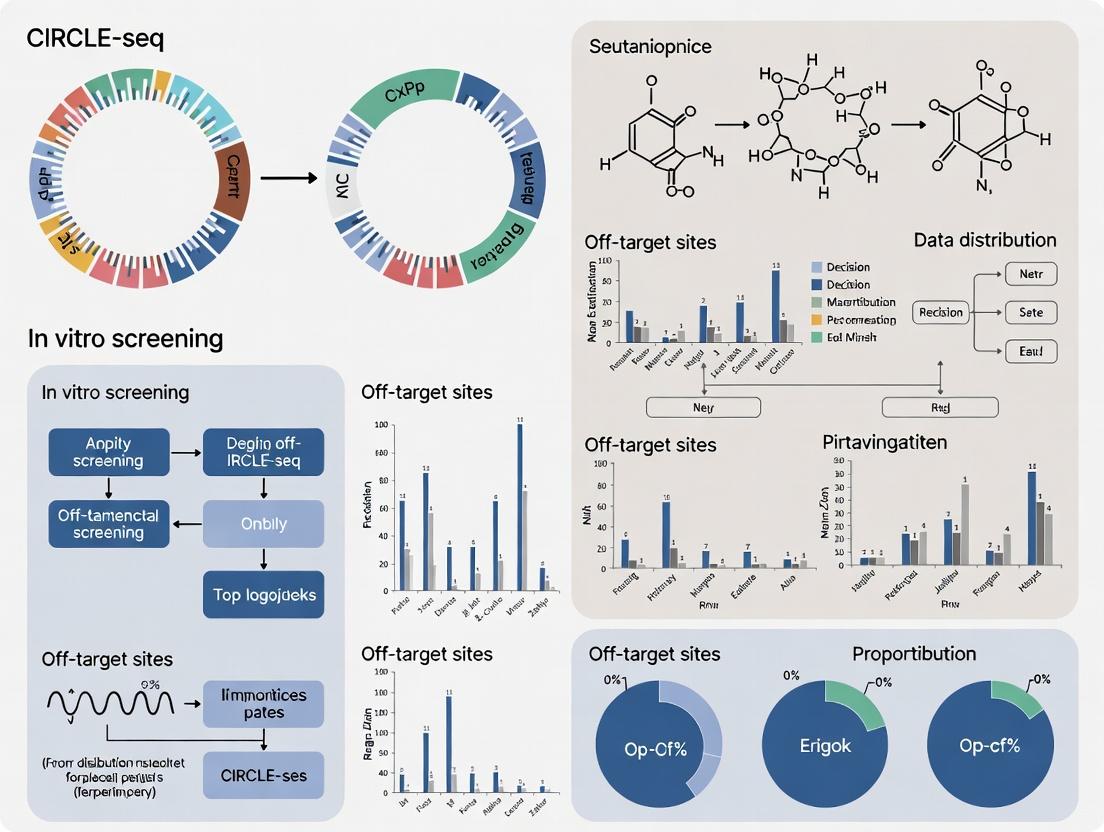
This comprehensive guide explores CIRCLE-seq (Circularization for In Vitro Reporting of Cleavage Effects by Sequencing), a cutting-edge, cell-free method for identifying CRISPR-Cas nuclease off-target effects.
CIRCLE-seq: The Ultimate Guide to In Vitro CRISPR Off-Target Screening for Precision Therapeutics
Abstract
This comprehensive guide explores CIRCLE-seq (Circularization for In Vitro Reporting of Cleavage Effects by Sequencing), a cutting-edge, cell-free method for identifying CRISPR-Cas nuclease off-target effects. Targeted at researchers, scientists, and drug development professionals, the article details the foundational principles of the technique, provides a step-by-step methodological workflow from genomic DNA circularization to sequencing library prep, and discusses critical applications in therapeutic development. It further addresses common troubleshooting and optimization strategies for sensitivity and specificity, and validates CIRCLE-seq against other screening methods (e.g., GUIDE-seq, Digenome-seq) while highlighting its integration with in silico prediction tools. The conclusion synthesizes its pivotal role in advancing the safety profile of CRISPR-based therapies toward clinical translation.
Understanding CIRCLE-seq: A Cell-Free Breakthrough for Unbiased CRISPR Off-Target Detection
The Critical Need for Off-Target Screening in Therapeutic CRISPR Development
The clinical translation of CRISPR-Cas9 therapeutics hinges on establishing an unequivocal safety profile, with off-target editing representing the foremost biological risk. Off-target effects—unintended genetic modifications at loci with sequence homology to the guide RNA (gRNA)—can disrupt tumor suppressor genes, activate oncogenes, or cause chromosomal rearrangements. Within the thesis research on in vitro CIRCLE-seq methodologies, this document underscores the imperative for comprehensive off-target screening and provides standardized protocols to de-risk therapeutic gRNA selection.
Current Landscape & Quantitative Data
Recent studies underscore the prevalence and potential impact of off-target effects, even for highly specific guides.
Table 1: Off-Target Profile of Selected Clinically-Relevant CRISPR-Cas9 Targets
| Target Gene (Therapeutic Context) | Predicted On-Target Efficiency | Off-Target Sites Identified (CIRCLE-seq) | Highest-Frequency Off-Target Location | Key Risk (e.g., Oncogene, TSG) |
|---|---|---|---|---|
| VEGFA (Wet AMD) | 92% | 84 | VEGFA pseudogene (Chr. 1) | Unknown |
| CCR5 (HIV Resistance) | 88% | 43 | CCR2 (Chr. 3p21) | Immune modulation |
| B2M (Allogeneic CAR-T) | 95% | 21 | B2M antisense (Chr. 15q21) | Unknown |
| TTR (hATTR Amyloidosis) | 90% | 15 | TTR intronic region (Chr. 18) | Potential splicing defect |
Table 2: Comparison of Off-Target Detection Methods
| Method | Principle | Sensitivity | Throughput | In Vitro/In Vivo | Time to Result |
|---|---|---|---|---|---|
| CIRCLE-seq | Circularized, amplified genomic DNA + Cas9 cleavage in vitro | ~0.0001% | High | In Vitro | 7-10 days |
| CHANGE-seq | Adapter-tagged dsDNA ends post-Cas9 cleavage in vitro | ~0.0001% | High | In Vitro | 7-10 days |
| GUIDE-seq | Integration of tagged dsODN into DSBs in living cells | ~0.01% | Medium | Cellular | 2-3 weeks |
| Digenome-seq | In vitro Cas9 digestion + whole genome sequencing | ~0.1% | High | In Vitro | 5-7 days |
| ONE-seq (2024) | Nickase-based, strand-specific sequencing | ~0.001% | High | In Vitro | 5-7 days |
Detailed Experimental Protocols
Protocol 3.1: High-Sensitivity CIRCLE-seq for Comprehensive Off-Target Mining
This protocol, central to the thesis, outlines the procedure for identifying Cas9 off-target sites from purified genomic DNA.
I. Genomic DNA Preparation and Circularization
- Isolate high-molecular-weight genomic DNA (>40 kb) from target cell lines using a phenol-chloroform method.
- Fragment 5 µg of gDNA by sonication to an average size of 300 bp.
- Repair DNA ends and ligate a pre-adenylated adapter using T4 DNA Ligase (no ATP).
- Circularize the adapter-ligated DNA using Circligase II ssDNA Ligase (60°C, 1 hour).
- Purify circularized DNA with AMPure XP beads.
II. In Vitro Cas9 Cleavage & Library Preparation
- Incubate 500 ng of circularized DNA with 100 nM SpCas9-gRNA RNP complex in NEBuffer 3.1 at 37°C for 16 hours.
- Linearize off-target cleaved DNA by heat inactivation (80°C, 20 min) and incubation with T7 Endonuclease I (identifies mismatched duplexes).
- Recover the cleaved, linearized fragments using streptavidin beads (binding to biotinylated adapter).
- Perform on-bead end-repair, A-tailing, and ligation of sequencing adapters.
- Amplify the library with 12-15 PCR cycles using indexed primers. Size-select (200-500 bp) and quantify by qPCR.
III. Sequencing & Bioinformatic Analysis
- Sequence on an Illumina NovaSeq platform (PE 150 bp) to a depth of ~50 million reads per sample.
- Align reads to the reference genome (hg38) using BWA-MEM.
- Identify cleavage sites by detecting reads with adapter sequence at the 5' end and a mapping quality >30.
- Rank off-target sites by read count and calculate the cutting frequency score. Validate top candidate sites (≥0.01% of reads) by targeted amplicon sequencing in cellular models.
Protocol 3.2:In-CellValidation via Targeted Amplicon Sequencing
- Transfection: Deliver the same SpCas9-gRNA RNP used in CIRCLE-seq into relevant human cell lines (e.g., HEK293T, primary T-cells) via nucleofection.
- Genomic Harvest: Extract genomic DNA 72 hours post-transfection.
- Amplicon Library Prep: Design primers flanking the top 10-20 off-target loci and the on-target site. Amplify loci in multiplexed PCRs.
- Sequencing & Analysis: Sequence amplicons on a MiSeq (PE 300 bp). Analyze with CRISPResso2 to quantify insertion/deletion (indel) frequencies at each locus.
Visualized Workflows & Pathways
Title: CIRCLE-seq Experimental Workflow
Title: gRNA Safety Screening & Decision Pathway
The Scientist's Toolkit: Research Reagent Solutions
Table 3: Essential Reagents for CIRCLE-seq Off-Target Screening
| Reagent / Kit | Vendor (Example) | Function in Protocol |
|---|---|---|
| Circligase II ssDNA Ligase | Lucigen | Catalyzes the circularization of single-stranded DNA adapter-ligated fragments. Critical for method sensitivity. |
| SpCas9 Nuclease (HiFi) | Integrated DNA Technologies (IDT) | High-fidelity Cas9 variant for RNP formation. Reduces off-target cleavage while maintaining on-target activity. |
| NEBNext Ultra II FS DNA Library Prep Kit | New England Biolabs (NEB) | For efficient end-prep, A-tailing, and adapter ligation during library construction post-capture. |
| Dynabeads MyOne Streptavidin C1 | Thermo Fisher Scientific | Magnetic beads for capturing biotinylated DNA fragments post-Cas9 cleavage. |
| Illumina DNA Prep | Illumina | Streamlined library preparation kit compatible with amplified fragments for final NGS sequencing. |
| CRISPResso2 | Open Source | Bioinformatics tool for quantification of indel frequencies from amplicon sequencing validation data. |
| Human Genomic DNA (e.g., HG001) | Coriell Institute | High-quality, well-characterized reference DNA for standardized, reproducible off-target screening assays. |
Within the context of CIRCLE-seq (Circularization for In Vitro Reporting of Cleavage Effects by Sequencing) research, genomic DNA circularization is the foundational technique that dramatically enhances the sensitivity of detecting rare enzymatic events, such as CRISPR-Cas9 off-target cleavages. This application note details the principle, protocols, and key reagents for implementing this core methodology.
The Principle of Sensitive Detection via Circularization
Genomic DNA fragmentation and subsequent circularization selectively enrich for molecules that have undergone a double-strand break (DSB). Intact, high-molecular-weight DNA is inefficiently circularized and is selectively degraded. In contrast, fragments containing DSBs at their ends are ligated into circles, protecting them from exonuclease digestion. This circularization step exponentially enriches for signal (DSB events) over background (intact DNA), enabling the detection of off-target sites occurring at frequencies below 0.1%.
Key Quantitative Advantages of Circularization in CIRCLE-seq
| Metric | Standard NGS Library Prep (with DSBs) | CIRCLE-seq with Circularization | Improvement Factor |
|---|---|---|---|
| Background DNA | High (>99.9% of sequenced reads) | Very Low (<10% of sequenced reads) | >100-fold reduction |
| Signal-to-Noise Ratio | Low | Very High | >1,000-fold increase |
| Detection Sensitivity | ~1% variant frequency | <0.1% variant frequency | >10-fold more sensitive |
| Required Sequencing Depth | High for rare events | Lower for equivalent sensitivity | ~5-10 fold more efficient |
Detailed Protocols
Protocol 1: Genomic DNA Fragmentation & End Repair for CIRCLE-seq
Objective: To shear genomic DNA and generate ends compatible with A-tailing and adapter ligation.
- Input: 1 µg of genomic DNA (e.g., from cell lines or tissue) in 50 µL TE buffer.
- Fragmentation: Use a Covaris S2 or equivalent sonicator. Program: 10% Duty Factor, Intensity 5, 200 cycles/burst, 60 seconds duration. Goal: ~300 bp average fragment size.
- Clean-up: Purify DNA using 1.8x volumes of AMPure XP beads. Elute in 32 µL nuclease-free water.
- End Repair: To 32 µL DNA, add 5 µL T4 DNA Ligase Buffer (10X), 3 µL dNTP Mix (10 mM), 5 µL T4 DNA Polymerase (3 U/µL), 5 µL DNA Polymerase I Large (Klenow) Fragment (5 U/µL). Incubate at 20°C for 30 minutes.
- Clean-up: Purify with 1.8x AMPure XP beads. Elute in 42 µL nuclease-free water.
Protocol 2: A-tailing, Adapter Ligation, and Circularization
Objective: To add adapters with compatible overhangs and catalyze intramolecular circularization.
- A-tailing: To 42 µL end-repaired DNA, add 5 µL NEBuffer 2 (10X), 3 µL dATP (10 mM), and 1 µL Klenow Fragment (3'→5' exo–) (5 U/µL). Incubate at 37°C for 30 min.
- Adapter Ligation: Add 50 µL Blunt/TA Ligase Master Mix (2X) and 2 µL of a diluted, partially double-stranded adapter (15 µM stock, sequences: 5'-[Phos]GATCGGAAGAGCACACGTCT-3' and 5'/5rApp/CTGTCTCTTATACACATCTGACGCTGCCGACGA/3ddC/-3'). Incubate at 20°C for 15 min.
- Clean-up: Purify with 1.8x AMPure XP beads. Elute in 30 µL EB buffer.
- Circularization (Key Step): To 30 µL DNA, add 40 µL 2X Quick Ligation Buffer and 10 µL Quick T4 DNA Ligase. Incubate at 20°C for 2 hours. This promotes intramolecular ligation.
- Exonuclease Digestion: Add 4 µL Plasmid-Safe ATP-Dependent DNase (10 U/µL) and 5 µL ATP (25 mM). Incubate at 37°C for 60-90 minutes to degrade linear DNA. Heat-inactivate at 70°C for 30 min.
- Clean-up: Purify with 2x AMPure XP beads. Elute in 25 µL EB buffer. The product is enriched, circularized DNA containing DSB junctions.
Visualizations
Diagram 1: CIRCLE-seq DNA Processing & Circularization Workflow (96 chars)
Diagram 2: Selective Enrichment Principle of DNA Circularization (94 chars)
The Scientist's Toolkit: Research Reagent Solutions
| Reagent/Material | Supplier Examples | Function in CIRCLE-seq |
|---|---|---|
| Covaris S2/E220 Focused-ultrasonicator | Covaris, Inc. | Provides consistent, tunable shearing of genomic DNA to optimal fragment size (~300 bp). |
| AMPure XP Beads | Beckman Coulter | SPRI bead-based purification for size selection and clean-up between enzymatic steps. |
| Quick T4 DNA Ligase | New England Biolabs (NEB) | Catalyzes both intermolecular adapter ligation and the crucial intramolecular circularization step. |
| Plasmid-Safe ATP-Dependent DNase | Lucigen | Digests linear double-stranded DNA with high specificity, enriching circular molecules by removing background. |
| Partially Double-Stranded Adapter (with /5rApp/ and /3ddC/) | Integrated DNA Technologies (IDT) | Specialized adapter prevents concatemerization; 5' adenylation promotes T/A ligation, 3' ddC blocks self-ligation. |
| KAPA HiFi HotStart ReadyMix | Roche | High-fidelity polymerase for accurate PCR amplification of the final, enriched circular DNA library prior to sequencing. |
| NEBNext Ultra II FS DNA Library Prep Kit | NEB | Commercial kit that can be adapted to provide optimized buffers and enzymes for end-prep and A-tailing steps. |
Application Notes
Within the broader thesis on advancing in vitro off-target screening for genome editing technologies, CIRCLE-seq (Circularization for In vitro Reporting of Cleavage Effects by Sequencing) establishes a critical paradigm. Its key advantages address the limitations of cell-based and earlier in vitro methods for profiling CRISPR-Cas nuclease off-target effects.
- Unbiased Discovery: Unlike computational prediction tools or chromatin-immunoprecipitation-based methods (ChIP-seq), CIRCLE-seq does not rely on prior assumptions about genomic sequence or chromatin state. By fragmenting genomic DNA into small, covalently closed circles, it creates a universal library where any genomic locus can be cleaved and linearized by the nuclease, enabling the detection of novel, unexpected off-target sites.
- Cell-Free System: Performing the entire assay in vitro on purified genomic DNA eliminates cellular context barriers such as toxicity, transfection efficiency, and chromatin accessibility variability. This allows for the controlled profiling of nuclease activity purely based on sequence recognition and catalytic efficiency, providing a clear, reproducible biochemical signature.
- High-Throughput Scalability: The method is inherently scalable. A single sequencing library, prepared from one DNA sample, can be screened against an entire genome with a single nuclease-guide RNA (gRNA) complex. This enables parallel screening of hundreds of gRNAs in a multi-well plate format, dramatically accelerating the safety assessment pipeline in therapeutic development.
The integration of these advantages makes CIRCLE-seq a gold-standard orthogonal validation tool. It provides a comprehensive, reproducible, and scalable off-target profile that is essential for risk assessment in clinical applications of CRISPR-Cas systems.
Detailed Experimental Protocol: CIRCLE-seq for Off-Target Screening
This protocol details the core steps for performing CIRCLE-seq, optimized for high-sensitivity detection of CRISPR-Cas9 off-target cleavage.
I. Genomic DNA Preparation and Circularization
- Isolation & Shearing: Extract high-molecular-weight genomic DNA (e.g., from HEK293T cells) using a phenol-chloroform method. Fragment 2 µg of DNA to an average size of 300 bp using a focused-ultrasonicator (e.g., Covaris S220).
- End-Repair & A-tailing: Treat sheared DNA with a mixture of T4 DNA Polymerase, T4 Polynucleotide Kinase, and Klenow Fragment to create blunt, 5'-phosphorylated ends. Subsequently, add a single 3'-A overhang using Taq DNA Polymerase.
- Circularization: Ligate the A-tailed DNA using a high-concentration T4 DNA Ligase under dilute conditions (to promote intramolecular circularization). Use a splinter oligonucleotide complementary to the expected ligation junction to bridge and enhance circularization efficiency.
- Exonuclease Digestion: Treat the ligation reaction with a cocktail of exonucleases (e.g., Plasmid-Safe ATP-Dependent DNase, Exonuclease I, Exonuclease III) to degrade all linear DNA fragments. Purify the remaining covalently closed circular DNA (cccDNA) using silica-membrane columns.
II. In Vitro Cleavage and Library Preparation
- Nuclease Cleavage: Incubate 100-200 ng of purified cccDNA with a pre-complexed CRISPR-Cas9 ribonucleoprotein (RNP). A typical 50 µL reaction contains:
- cccDNA template
- 100 nM recombinant S. pyogenes Cas9 nuclease
- 120 nM synthetic gRNA (targeting your locus of interest)
- Reaction Buffer (20 mM HEPES pH 7.5, 100 mM KCl, 5 mM MgCl₂, 1 mM DTT, 5% glycerol)
- Incubate at 37°C for 2 hours.
- Linear DNA Recovery: Post-cleavage, the RNP linearizes circles at sites complementary to the gRNA. Add Proteinase K to digest the Cas9 protein. Purify the DNA, which now contains linearized fragments originating from cleaved circles.
- Adapter Ligation & PCR Amplification: Repair ends of the linearized DNA and ligate dual-indexed sequencing adapters. Perform limited-cycle (12-16 cycles) PCR amplification to construct the final sequencing library.
III. Sequencing and Data Analysis
- Sequencing: Pool libraries and sequence on an Illumina platform (2x150 bp paired-end recommended).
- Bioinformatics: Process reads through a dedicated pipeline (e.g.,
circle-seq). Key steps include:- Trimming adapter sequences.
- Aligning reads to the reference genome.
- Identifying "junction" sites where the original circular DNA was linearized by Cas9. These sites manifest as paired-end reads mapping to inverted orientations.
- Calculating read depth at each potential off-target site and comparing it to a negative control (no nuclease) to assign a cleavage score.
Table 1: Comparison of Off-Target Screening Methods
| Method | Throughput | Bias | System | Key Limitation |
|---|---|---|---|---|
| CIRCLE-seq | High (Parallel) | Unbiased | Cell-Free | Does not inform on cellular repair outcomes |
| ChIP-seq | Medium | High (Chromatin-dependent) | Cellular | Identifies binding, not cleavage |
| GUIDE-seq | Low-Medium | Low (Requires dsODN uptake) | Cellular | Dependent on dsODN delivery efficiency |
| Computational Prediction | Very High | Very High (Algorithm-dependent) | In silico | High false-positive/negative rates |
| BLISS | Medium | Low | Cellular/Fixed | Technically challenging, lower sensitivity |
Table 2: Representative CIRCLE-seq Output for a Model gRNA
| Genomic Locus | Mismatches | Read Count (Test) | Read Count (Control) | Cleavage Score |
|---|---|---|---|---|
| On-Target (EMX1 site 5) | 0 | 145,682 | 12 | 99.99 |
| Off-Target Site 1 | 3 | 8,745 | 5 | 98.94 |
| Off-Target Site 2 | 4 | 1,203 | 8 | 85.12 |
| Off-Target Site 3 | 5 | 87 | 3 | 45.21 |
Cleavage Score = 100 * (1 - [Control Count / Test Count]). Sites with Score > 80 are considered high-confidence off-targets.
Visualizations
CIRCLE-seq Experimental Workflow
Cas9 Cleavage Signal Detection Logic
The Scientist's Toolkit: Key Research Reagent Solutions
| Item | Function & Rationale |
|---|---|
| Focused-Ultrasonicator (Covaris) | Reproducibly shears genomic DNA to a tight size distribution (~300 bp), critical for efficient circularization. |
| Plasmid-Safe ATP-Dependent DNase | Specifically degrades linear double-stranded DNA while leaving cccDNA intact, crucial for background reduction. |
| High-Fidelity DNA Ligase (e.g., T4 DNA Ligase) | Catalyzes the intramolecular circularization of sheared, end-prepped DNA fragments. |
| Recombinant S. pyogenes Cas9 Nuclease | Highly active, pure, and RNase-free protein for consistent in vitro cleavage reactions. |
| Synthetic Chemically-Modified gRNA | Provides enhanced nuclease stability and consistent RNP complex formation compared to in vitro transcribed guides. |
| Dual-Indexed NGS Adapters (Illumina) | Enable multiplexed, high-throughput sequencing of multiple gRNA screenings in a single run. |
| SPRIselect Beads | Perform clean-up and size selection of DNA fragments after each enzymatic step with high recovery and reproducibility. |
1. Application Notes for CIRCLE-seq In Vitro Off-Target Screening
CIRCLE-seq (Circularization for In vitro Reporting of Cleavage Effects by sequencing) is a highly sensitive, in vitro method for defining the genome-wide off-target cleavage profile of CRISPR-Cas9 ribonucleoproteins (RNPs). Its sensitivity stems from the selective circularization and amplification of cleaved genomic DNA fragments, enabling the detection of rare off-target sites. The core components—Cas9/gRNA RNP, high-quality genomic DNA, and specialized enzymatic machinery—must be precisely prepared and integrated for a successful assay.
Table 1: Key Performance Metrics of Modern CIRCLE-seq Protocols
| Metric | Typical Performance Range | Notes |
|---|---|---|
| Input Genomic DNA | 100 - 500 ng | High molecular weight (>20 kb) is critical. |
| In vitro Cleavage Time | 1 - 3 hours | 37°C, with RNP in excess. |
| Sensitivity (Detection Limit) | 0.1% of total reads or lower for bona fide sites | Can identify sites with cleavage rates ~0.1% of on-target. |
| Background (Uncleared Control) | < 0.01% of reads mapping to putative sites | Highlights importance of no-RNP controls. |
| On-target Read Fraction | 1 - 10% of total mapped reads | Varies based on gRNA and genome complexity. |
| Identified Off-target Sites | 0 - 100+ | Highly gRNA-dependent; some gRNAs show exceptional specificity. |
2. Detailed Protocols
Protocol 2.1: Preparation of Cas9/gRNA RNP Complex
- Components: Recombinant high-fidelity Cas9 nuclease (e.g., SpyFi Cas9), target-specific crRNA, tracrRNA, or synthetic sgRNA.
- Annealing: Combine crRNA and tracrRNA (each at 100 µM in Nuclease-Free Duplex Buffer) in equimolar ratios. Heat to 95°C for 5 min, then ramp down to 25°C at 0.1°C/sec. For sgRNA, resuspend to 100 µM in Nuclease-Free Buffer.
- Complex Formation: Mix Cas9 protein (final 30 µM) with annealed gRNA or sgRNA (final 36 µM) in a 1:1.2 molar ratio in RNP Formation Buffer (20 mM HEPES pH 7.5, 150 mM KCl, 1 mM DTT, 10% glycerol). Incubate at 25°C for 10 min. Aliquot and store at -80°C.
Protocol 2.2: Genomic DNA Isolation and Shearing for CIRCLE-seq
- Isolation: Use a phenol-chloroform or column-based method from the cell type of interest to obtain high-molecular-weight DNA. Verify integrity by pulsed-field or standard agarose gel electrophoresis.
- Shearing: Fragment 500 ng of genomic DNA to an average size of 300 bp using a focused-ultrasonicator (e.g., Covaris) under conditions that minimize heat generation. Avoid enzymatic shearing methods.
- End-Repair & A-tailing: Use a commercial end-repair/dA-tailing module. Purify DNA using SPRI beads.
Protocol 2.3: CIRCLE-seq Workflow
- In vitro Cleavage: Incubate 100 ng of sheared, dA-tailed genomic DNA with 50-100 nM pre-formed RNP in 1x Cas9 Nuclease Reaction Buffer (20 mM HEPES pH 7.5, 100 mM KCl, 10 mM MgCl2, 1 mM DTT, 5% glycerol) for 2 hours at 37°C. Include a no-RNP control.
- Adapter Ligation: Purify reactions with SPRI beads. Ligate a double-stranded, hairpin-shaped adapter (with a 3' dT overhang) to the Cas9-cleaved ends using a high-fidelity DNA ligase. The hairpin adapter prevents concatemerization.
- Circularization: Treat with an ATP-dependent DNA exonuclease to degrade linear DNA. The remaining adapter-ligated, nicked circular DNA is resistant.
- Digestion of Non-Circularized DNA: Add a single-stranded DNA nuclease (e.g., S1 nuclease) to nick and degrade any incomplete circular structures. Purify.
- Linearization & PCR Amplification: Treat circles with a uracil-DNA glycosylase and endonuclease VIII (or use a restriction enzyme site designed into the adapter) to linearize at the original cleavage site. Amplify with indexed primers for NGS.
- Sequencing & Analysis: Sequence on an Illumina platform. Map reads to the reference genome. Identify significant read start clusters (cleavage sites) using tools like CIRCLE-seq Mapper or BLENDER, comparing to the no-RNP control to filter background.
3. Diagrams
Diagram 1: CIRCLE-seq Experimental Workflow
Diagram 2: Off-target Site Risk Assessment Logic
4. The Scientist's Toolkit: Research Reagent Solutions
Table 2: Essential Materials for CIRCLE-seq
| Item | Function in CIRCLE-seq | Example/Notes |
|---|---|---|
| High-Fidelity Cas9 Nuclease | Catalytic component of the RNP; cleaves DNA at complementary target sites. | Recombinant SpyFi Cas9 or similar high-specificity variant to reduce bias. |
| Synthetic sgRNA or RNA Duplex | Guides Cas9 to specific genomic loci. | Chemically modified sgRNA can enhance stability in vitro. |
| Hairpin Adapter | Blunts and circularizes Cas9-cleaved ends; contains unique molecular identifier (UMI). | Critical for selective amplification of cleaved fragments. Must have 3' dT overhang for A-tail ligation. |
| ATP-dependent DNA Exonuclease | Degrades linear DNA, enriching for adapter-ligated circular molecules. | e.g., Plasmid-Safe ATP-Dependent DNase. |
| Single-Stranded DNA Nuclease | Cleaves imperfect hairpins and nicks, purifying intact circular DNA. | e.g., S1 Nuclease or Mung Bean Nuclease. |
| Uracil-DNA Glycosylase (UDG) & Endonuclease VIII | Linearizes circularized DNA at the original cleavage site for PCR. | Part of a USER enzyme mix; acts on uracil incorporated in the adapter. |
| High-Fidelity PCR Master Mix | Amplifies linearized DNA with minimal bias for NGS library preparation. | Must include appropriate indexing primers for multiplexing. |
| SPRI Beads | For DNA size selection and purification between enzymatic steps. | Enables automation and high recovery of small DNA fragments. |
| NGS Platform | High-throughput sequencing of final libraries to map cleavage sites. | Illumina NextSeq or NovaSeq for sufficient depth (>50M reads). |
The accurate identification of CRISPR-Cas9 off-target effects is critical for therapeutic safety. This document, framed within a broader thesis on CIRCLE-seq in vitro off-target screening research, details the evolution from foundational methods like CHIP-seq and BLESS. We outline their protocols, limitations, and how CIRCLE-seq represents a significant methodological advance, providing detailed application notes for contemporary research.
Comparative Analysis of Early Methods and CIRCLE-seq
Table 1: Quantitative and Qualitative Comparison of Off-Target Detection Methods
| Feature | CHIP-seq | BLESS (Direct In Situ) | CIRCLE-seq (In Vitro) |
|---|---|---|---|
| Primary Use | In vivo protein-DNA binding site mapping. | In situ detection of DSBs in fixed cells. | Unbiased, in vitro genome-wide off-target cleavage profiling. |
| Bias | High. Requires pre-knowledge of target, antibody specificity. | Moderate. Captures breaks at time of fixation; bias towards accessible chromatin. | Extremely Low. Uses purified genomic DNA, no cellular context bias. |
| Sensitivity | Low for rare off-targets. High background noise. | Moderate. Limited by cleavage frequency and capture efficiency. | Very High. Circularization and amplification enable detection of ultra-rare cleavage events. |
| Throughput & Scalability | Moderate. Complex in vivo workflow. | Low. Technically challenging, low multiplexing. | High. Adaptable to high-throughput sequencing platforms. |
| Key Quantitative Metric | ~10-20% of peaks may be false positives (antibody noise). | Identifies hundreds of off-target sites, but misses many in closed chromatin. | Detects orders of magnitude more potential off-target sites (>1000) with high validation rate. |
| Major Limitation | Cannot distinguish binding from cleavage; high false positive rate. | Technically arduous; snapshots a single moment; poor for low-frequency events. | Identifies potential off-targets requiring in vivo validation. |
Detailed Experimental Protocols
Protocol 1: Standard CHIP-seq for Cas9 Binding (Not Cleavage) This protocol identifies where Cas9 binds, not necessarily where it cuts, a key limitation.
- Crosslinking & Lysis: Treat ~10^7 cells expressing Cas9/gRNA with 1% formaldehyde for 10 min. Quench with 125mM glycine. Lyse cells in SDS lysis buffer.
- Chromatin Shearing: Sonicate lysate to shear DNA to 200-500 bp fragments. Confirm size by agarose gel electrophoresis.
- Immunoprecipitation: Incubate sheared chromatin with 5 µg of anti-Cas9 antibody (or control IgG) overnight at 4°C. Add Protein A/G magnetic beads for 2 hours.
- Wash & Elute: Wash beads sequentially with Low Salt, High Salt, LiCl, and TE buffers. Elute complexes in Elution Buffer (1% SDS, 100mM NaHCO3).
- Reverse Crosslinks & Purify: Add NaCl to 200mM and incubate at 65°C overnight. Treat with RNase A and Proteinase K. Purify DNA with spin columns.
- Library Prep & Seq: Prepare sequencing library from IP and Input DNA. Sequence on Illumina platform (≥ 20 million reads).
Protocol 2: BLESS for In Situ Capture of DSBs This protocol captures genomic DSBs, including potential off-targets, at a specific time point in fixed cells.
- DSB Labeling In Situ: Fix ~5x10^6 cells expressing Cas9/gRNA in 4% PFA. Permeabilize with 0.5% Triton X-100. Incubate with Biotinylated duplex oligonucleotide linkers in NEBuffer 3.1 using DNA Ligase to label DSB ends.
- Genome Extraction & Capture: Extract genomic DNA using phenol-chloroform. Fragment DNA by sonication (average ~300 bp).
- Pull-down of Biotinylated DSBs: Incubate fragmented DNA with Streptavidin-coated magnetic beads for 30 min at RT. Wash thoroughly.
- On-Bead Library Prep: Perform end-repair, A-tailing, and adapter ligation directly on beads. Elute and PCR-amplify the library.
- Sequencing & Analysis: Sequence on Illumina platform. Map reads; genuine DSB sites show clusters of reads with linker sequence at 5' end.
Protocol 3: CIRCLE-seq for In Vitro, Genome-Wide Off-Target Profiling This core thesis methodology provides a sensitive, unbiased map of Cas9's cleavage potential on purified genomic DNA.
- Genomic DNA Preparation & Shearing: Extract high-molecular-weight gDNA from cells not expressing Cas9. Shear to ~300 bp fragments.
- Circularization: Repair DNA ends (T4 PNP, T4 DNA Pol). Ligate using T4 DNA Ligase under dilute conditions (3 µg DNA in 1 mL) to promote intramolecular circularization. Treat with ATP-dependent exonucleases to degrade linear DNA (carrying inherent DSBs), enriching for circularized DNA.
- Cas9 In Vitro Cleavage: Incubate purified circles with Recombinant Cas9 protein and the target gRNA (100:1 molar ratio of Cas9:gDNA) in NEBuffer 3.1 for 16h at 37°C. This linearizes circles only at cognate cleavage sites.
- Library Construction from Linearized Products: Repair ends of the cleavage products. Ligate sequencing adapters and PCR amplify.
- High-Throughput Sequencing & Analysis: Sequence deeply (≥ 50 million reads). Use specialized algorithms (e.g., CIRCLE-seq analysis pipeline) to map cleavage sites, which appear as junctions between originally non-contiguous genomic sequences in the linearized reads.
Visualizations
Title: CIRCLE-seq Experimental Workflow for Unbiased Off-Target Detection
Title: Logical Evolution from Early Method Limitations to CIRCLE-seq
The Scientist's Toolkit: Research Reagent Solutions for CIRCLE-seq
Table 2: Essential Materials for CIRCLE-seq Protocol
| Item | Function in Experiment |
|---|---|
| Recombinant S. pyogenes Cas9 Nuclease | The effector protein for in vitro cleavage of the circularized gDNA library. High purity is essential. |
| Target-specific sgRNA (chemically synthesized or in vitro transcribed) | Guides Cas9 to the intended target and its potential off-target sequences. |
| T4 DNA Polymerase & T4 Polynucleotide Kinase | For end-repair of sheared gDNA prior to circularization. |
| T4 DNA Ligase | Catalyzes the intramolecular circularization of sheared, repaired gDNA under dilute conditions. |
| ATP-dependent Exonuclease Mix (e.g., Plasmid-Safe) | Degrades linear DNA molecules, selectively enriching for successfully circularized DNA to reduce background. |
| Magnetic Beads for SPRI Clean-up (e.g., AMPure XP) | For efficient size selection and purification of DNA between enzymatic steps (circularization, cleavage, adapter ligation). |
| High-Fidelity PCR Master Mix | For the final amplification of the sequencing library to maintain sequence fidelity of identified off-target sites. |
| Illumina-Compatible Sequencing Adapters | Allows for multiplexed, high-throughput sequencing of the final library. |
| Bioinformatics Pipeline (e.g., CIRCLE-seq Mapper, Cas-OFFinder) | Specialized software to map chimeric sequencing reads back to the reference genome and identify off-target cleavage loci. |
A Step-by-Step CIRCLE-seq Protocol: From Sample Prep to Data Generation
This application note details the foundational workflow for CIRCLE-seq (Circularization for In Vitro Reporting of Cleavage Effects by Sequencing), a highly sensitive, in vitro method for the comprehensive profiling of CRISPR nuclease off-target effects. The quality of the initial genomic DNA (gDNA) processing directly determines the sensitivity and reliability of downstream off-target site detection, making standardized protocols critical for screening in therapeutic development.
Key Research Reagent Solutions
| Item | Function in CIRCLE-seq Workflow |
|---|---|
| High-Molecular-Weight (HMW) gDNA Isolation Kit | Ensures extraction of long, intact DNA strands (>50 kb) to provide optimal substrate for shearing and to maintain genomic context. |
| Covaris Focused-Ultrasonicator or equivalent | Provides reproducible, tunable acoustic shearing to generate gDNA fragments of a target size (e.g., 300-400 bp), minimizing over-shearing and heat-induced damage. |
| DNA Clean & Concentrator Kit (e.g., Zymo Research) | Purifies and concentrates sheared DNA fragments, removing enzymes, salts, and small fragments that interfere with circularization. |
| T4 DNA Ligase (High-Concentration) | Catalyzes the intramolecular circularization of sheared, end-repaired/blunted gDNA fragments at high dilution to favor self-ligation over concatenation. |
| ATP (10 mM) | Essential cofactor for T4 DNA Ligase activity, driving the phosphodiester bond formation during circularization. |
| PEG 4000 or 8000 | Macromolecular crowding agent added to ligation reactions to increase effective concentration of DNA ends, significantly boosting circularization efficiency. |
Detailed Experimental Protocols
Protocol 1: High-Molecular-Weight Genomic DNA Isolation
- Source Cells: 1-5 x 10⁶ mammalian cells (e.g., HEK293T).
- Lysis: Pellet cells, resuspend in lysis buffer (e.g., 10 mM Tris-HCl pH 8.0, 0.1 M EDTA, 0.5% SDS, 20 µg/mL RNase A). Incubate 1 hr at 37°C.
- Protein Precipitation: Add Proteinase K (100 µg/mL), incubate 3 hr at 56°C. Cool, add protein precipitation solution, vortex, and centrifuge (13,000 x g, 10 min).
- DNA Precipitation: Transfer supernatant to isopropanol, mix gently. Spool out HMW DNA with a sealed pipette tip.
- Wash & Hydration: Wash DNA coil in 70% ethanol, air-dry briefly, and hydrate in TE buffer (10 mM Tris-HCl, 0.1 mM EDTA, pH 8.0) overnight at 4°C.
- QC: Assess integrity via pulsed-field or 0.5% agarose gel electrophoresis. A260/280 ratio should be ~1.8.
Protocol 2: Controlled Ultrasonic Shearing of gDNA
- Instrument: Covaris S2 or M220.
- Sample Prep: Dilute 1-3 µg of HMW gDNA in 130 µL of TE buffer in a microTUBE.
- Shearing Parameters (for ~350 bp fragments):
- Peak Incident Power: 175 W
- Duty Factor: 10%
- Cycles per Burst: 200
- Treatment Time: 60 seconds
- Temperature: 4-7°C (maintained by water bath)
- Post-Shear QC: Analyze 20 ng on a 2% agarose gel or Bioanalyzer/TapeStation to verify fragment size distribution.
Protocol 3: End-Repair and Circularization
- End-Repair: Purify sheared DNA (Protocol 2). Use 1 µg DNA in a 100 µL reaction with T4 DNA Polymerase, T4 Polynucleotide Kinase, and dNTPs in supplied buffer. Incubate 30 min at 20°C, then purify.
- Ligation Setup for Circularization: Dilute end-repaired DNA to 1 ng/µL in nuclease-free water. Set up a 200 µL ligation:
- 100 µL (100 ng) end-repaired DNA
- 20 µL 10X T4 DNA Ligase Buffer
- 20 µL 50% PEG 4000
- 58 µL nuclease-free water
- 2 µL (2000 U) High-Concentration T4 DNA Ligase
- Incubation: Incubate at 25°C for 16 hours (overnight).
- Enzyme Inactivation: Heat-inactivate at 65°C for 10 min.
- Purification: Purify circularized DNA using a DNA Clean & Concentrator kit, eluting in 20 µL. Product is now ready for subsequent CIRCLE-seq steps (Cas9 cleavage, adapter ligation, RCA).
Table 1: Impact of Input gDNA Integrity on CIRCLE-seq Library Metrics
| gDNA Input Quality (Avg. Fragment Size) | Shearing Efficiency (% in 300-400 bp range) | Circularization Efficiency (qPCR) | Mappable Reads in Final Library (%) |
|---|---|---|---|
| High (>50 kb) | 85% ± 5% | 65% ± 8% | >90% |
| Moderate (10-20 kb) | 70% ± 10% | 45% ± 10% | 75-85% |
| Degraded (<5 kb) | N/A (pre-sheared) | <20% | <60% |
Table 2: Optimized Shearing Parameters for Different Target Sizes
| Target Insert Size (bp) | Peak Power (W) | Duty Factor | Cycles/Burst | Time (sec) |
|---|---|---|---|---|
| 200 | 175 | 20% | 200 | 80 |
| 350 | 175 | 10% | 200 | 60 |
| 500 | 150 | 10% | 200 | 50 |
Workflow and Process Diagrams
CIRCLE-seq gDNA Prep Core Workflow
Circularization Reaction Parameter Logic
Application Notes
This protocol is integral to the broader thesis on comprehensive in vitro off-target screening using CIRCLE-seq. Optimizing Cas9 ribonucleoprotein (RNP) concentration and incubation conditions for in vitro cleavage is a critical prerequisite step. It directly influences the efficiency and specificity of target DNA cleavage, which subsequently impacts the sensitivity and accuracy of off-target site identification in CIRCLE-seq libraries. These standardized conditions are essential for generating reproducible, high-quality data for therapeutic genome editing safety assessments.
The following tables summarize critical optimization variables and typical quantitative outcomes from systematic titration experiments.
Table 1: Optimization of Cas9 RNP Concentration for In Vitro Cleavage
| Component | Tested Range | Optimal Concentration (for 100 ng dsDNA) | Observed Effect |
|---|---|---|---|
| SpyCas9 Protein | 10 – 500 nM | 50 – 100 nM | <100 nM: Suboptimal cleavage. >200 nM: Increased non-specific fragmentation. |
| sgRNA (crRNA:tracrRNA) | 12 – 600 nM | 60 – 120 nM | Maintain 1.2:1 molar ratio to Cas9. Excess sgRNA can promote off-target activity. |
| RNP Complex (pre-formed) | 10 – 500 nM RNP | 50 – 100 nM | 15-min pre-incubation at 25°C is standard for complex formation. |
| Resulting Cleavage Efficiency | - | 85 – 95% | Measured via gel electrophoresis or capillary electrophoresis. |
Table 2: Optimization of Incubation Conditions for In Vitro Cleavage
| Parameter | Tested Range | Optimal Condition | Rationale |
|---|---|---|---|
| Temperature | 25°C – 45°C | 37°C | Balances enzyme activity and fidelity. Higher temps may destabilize RNP. |
| Time | 5 min – 16 hours | 60 minutes | >90% cleavage typically within 30-60 min. Prolonged incubation increases non-specific activity. |
| Buffer System | Various (NEBuffer 3.1, Tango, etc.) | 1X NEBuffer 3.1 | Provides ideal ionic strength (100 mM NaCl, 50 mM Tris-HCl) and pH (7.9) for SpyCas9. |
| MgCl₂ | 0 – 10 mM | 5 – 6 mM | Essential cofactor for Cas9 catalytic activity. |
| Additives (e.g., DTT, BSA) | 0 – 1 mg/mL BSA | 1 mM DTT, 0.1 mg/mL BSA | DTT maintains Cas9 reduction state; BSA stabilizes protein. |
Detailed Experimental Protocols
Protocol 1: Pre-formation of Cas9 RNP Complex
Objective: To assemble active Cas9 ribonucleoprotein complexes prior to cleavage reactions.
- Dilution: Dilute purified S. pyogenes Cas9 nuclease to 1 µM in 1X Cas9 reaction buffer (20 mM HEPES pH 7.5, 150 mM KCl, 1 mM DTT, 10% glycerol).
- Annealing: For synthetic sgRNA or crRNA:tracrRNA duplex:
- Combine crRNA and tracrRNA (or resuspend synthetic sgRNA) to 2 µM in Nuclease-Free Duplex Buffer (IDT: 30 mM HEPES pH 7.5, 100 mM potassium acetate).
- Heat to 95°C for 5 minutes, then cool to room temperature (~25°C) over 60 minutes.
- Complex Formation: Mix diluted Cas9 (final 100 nM) with annealed sgRNA (final 120 nM) in 1X NEBuffer 3.1. Incubate at 25°C for 15 minutes.
Protocol 2:In VitroCleavage Reaction and Analysis
Objective: To cleave target DNA substrate and quantify efficiency.
- Reaction Setup: In a 0.2 mL PCR tube, combine:
- 100 ng (or ~0.5-1 nM) purified, PCR-amplified target DNA substrate (200-500 bp).
- 1X NEBuffer 3.1 (10 mM Tris-HCl, 50 mM NaCl, 10 mM MgCl₂, 100 µg/mL BSA, pH 7.9 @ 25°C).
- Pre-formed Cas9 RNP from Protocol 1 (final 50 nM).
- Nuclease-free water to 20 µL total volume.
- Incubation: Place reaction in a thermal cycler or heat block at 37°C for 60 minutes.
- Reaction Stop: Add 2 µL of Proteinase K (20 mg/mL) and 2 µL of 0.5 M EDTA. Incubate at 56°C for 15 minutes to degrade Cas9 and halt cleavage.
- Analysis: Purify DNA using a standard PCR cleanup kit. Analyze cleavage products via:
- Agarose Gel Electrophoresis (2% gel): Visualize fragment sizes.
- Capillary Electrophoresis (e.g., Fragment Analyzer, Bioanalyzer): Quantify percent cleavage using peak areas: % Cleaved = (Sum of Cleaved Product Areas) / (Total DNA Area) * 100.
Diagrams
Diagram 1: RNP Cleavage Optimization Workflow (87 chars)
Diagram 2: Cleavage Optimization in CIRCLE-seq Workflow (77 chars)
The Scientist's Toolkit: Research Reagent Solutions
Table 3: Essential Materials for Cas9 RNP In Vitro Cleavage Optimization
| Reagent/Material | Supplier Examples | Function in Protocol |
|---|---|---|
| Recombinant S. pyogenes Cas9 Nuclease | IDT, Thermo Fisher, NEB, Synthego | The core endonuclease enzyme, pre-complexed with sgRNA to form the active RNP. |
| Synthetic sgRNA or crRNA:tracrRNA Duplex | IDT, Horizon, Synthego | Provides target specificity. Chemically modified versions can enhance stability. |
| NEBuffer 3.1 (10X) | New England Biolabs (NEB) | Standard optimized reaction buffer for SpyCas9, providing Mg²⁺, pH, and ionic strength. |
| Target DNA Substrate (PCR-amplified) | Custom genomic PCR or synthetic gBlocks (IDT) | Contains the intended on-target site. Used to measure cleavage efficiency under test conditions. |
| Proteinase K (20 mg/mL) | Qiagen, Thermo Fisher, NEB | Halts the cleavage reaction by degrading the Cas9 protein after incubation. |
| 0.5 M EDTA Solution | Various (Sigma, Thermo Fisher) | Chelates Mg²⁺ ions, irreversibly stopping all enzymatic activity. |
| DNA Cleanup Kit (PCR purification) | Qiagen, Macherey-Nagel, Zymo Research | Purifies DNA post-cleavage for accurate analysis by gel or capillary electrophoresis. |
| High-Sensitivity DNA Analysis Kit | Agilent (Bioanalyzer), Advanced Analytical (Fragment Analyzer) | Provides quantitative, digital analysis of cleavage fragment sizes and efficiencies. |
Within the context of a broader thesis on CIRCLE-seq (Circularization for In Vitro Reporting of Cleavage Effects by Sequencing) for comprehensive off-target screening in drug development, library preparation is the critical step that transforms fragmented, blunt-ended genomic DNA into sequencer-compatible molecules. This application note details the optimized protocols for adapter ligation and PCR amplification, which are fundamental to generating high-complexity, unbiased NGS libraries for sensitive off-target detection. These protocols are specifically tailored for the unique requirements of CIRCLE-seq, where capturing all potential cleavage events with minimal background is paramount.
Key Principles & Considerations
CIRCLE-seq libraries begin with genomic DNA that has been enzymatically cleaved (e.g., by a CRISPR-Cas9 complex in vitro) and subsequently repaired to create blunt ends. The library preparation must:
- Maintain the original complexity and relative abundance of all fragments.
- Minimize the introduction of ligation or amplification biases.
- Efficiently convert blunt-ended fragments into molecules with platform-specific adapters.
- Incorporate unique dual indices (UDIs) to enable multiplexing and accurate demultiplexing.
Research Reagent Solutions Toolkit
| Item | Function in Protocol |
|---|---|
| Blunt/TA Ligase Master Mix | Catalyzes the ligation of dsDNA adapters to blunt-ended, 5'-phosphorylated DNA fragments. Contains a proprietary ligase and optimized buffer. |
| NEBNext Ultra II Q5 Master Mix | High-fidelity, hot-start PCR mix for robust amplification of library fragments with minimal bias and error rate. |
| Unique Dual Index (UDI) Primer Sets | PCR primers containing Illumina-compatible P5/P7 sequences, unique i5 and i7 index combinations, and sequencing primer binding sites. Enable multiplexing. |
| SPRSelect or AMPure XP Beads | Solid-phase reversible immobilization (SPRI) magnetic beads for size selection and cleanup of DNA, removing primers, adapters, and short fragments. |
| Tris-EDTA (TE) Buffer, pH 8.0 | Low-ionic-strength buffer for elution and storage of DNA libraries, preventing degradation and ensuring compatibility with downstream steps. |
| High Sensitivity DNA Analysis Kit (e.g., Agilent Bioanalyzer/TapeStation) | For quantitative and qualitative assessment of library size distribution and concentration. |
| Universal Adapter (Illumina) | Y-shaped, partially double-stranded adapter containing sequences complementary to the flow cell and the PCR primer sites. |
Protocol 1: Adapter Ligation
Objective
To ligate platform-specific forked adapters to 5'-phosphorylated, blunt-ended DNA fragments generated from the CIRCLE-seq cleavage and circularization workflow.
Materials
- Purified, blunt-ended DNA fragments (~100 ng in 30 µL).
- NEBNext Ultra II Ligation Master Mix (or equivalent Blunt/TA Ligase Master Mix).
- NEBNext Adapter for Illumina (15 µM stock, diluted to working concentration as recommended).
- Nuclease-free water.
- Magnetic stand and SPRSelect beads.
- 80% Freshly prepared ethanol.
- TE Buffer.
Detailed Methodology
- Ligation Reaction Setup: Combine the following components in a sterile, nuclease-free PCR tube on ice:
- DNA Fragments: 30 µL
- Ligation Master Mix: 15 µL
- Diluted Adapter: 5 µL
- Total Volume: 50 µL
- Incubation: Mix thoroughly by pipetting. Incubate at 20°C for 15 minutes in a thermal cycler with heated lid disabled.
- Ligation Cleanup: Add 50 µL of SPRSelect beads (1.0x ratio) to the ligation reaction. Mix thoroughly and incubate at room temperature for 5 minutes.
- Place on a magnetic stand until the supernatant is clear (~5 min). Carefully remove and discard the supernatant.
- Wash: With the tube on the magnetic stand, add 200 µL of 80% ethanol. Incubate for 30 seconds, then remove and discard the ethanol. Repeat for a total of two washes.
- Air-dry the beads for ~5 minutes until cracks appear. Do not over-dry.
- Elute: Remove from the magnetic stand. Resuspend the beads in 52 µL of TE Buffer. Incubate at room temperature for 2 minutes. Place on the magnetic stand until clear. Transfer 50 µL of the supernatant containing the adapter-ligated DNA to a new tube.
- Optional Size Selection: To remove adapter dimers and large fragments, perform a double-sided bead cleanup (e.g., 0.8x followed by 0.15x bead ratios). Refer to manufacturer's protocols.
Critical Parameters
- Adapter Concentration: Using too much adapter increases adapter-dimer formation. Using too little reduces ligation efficiency. Titration may be necessary.
- Input DNA Quantity: Excessive input can lead to chimeric products. The recommended 100 ng is optimal for most CIRCLE-seq applications.
- Cleanup Bead Ratio: The 1.0x ratio efficiently removes unligated adapters and salts while retaining the target size library.
Protocol 2: PCR Amplification and Indexing
Objective
To amplify the adapter-ligated library, enriching for properly constructed fragments, and to incorporate unique dual indices (UDIs) for sample multiplexing.
Materials
- Adapter-ligated DNA (50 µL from Protocol 1).
- NEBNext Ultra II Q5 Master Mix (2X).
- NEBNext UDI Primer Mix (or separate i5 and i7 primer stocks).
- Nuclease-free water.
- Magnetic stand and SPRSelect beads.
- 80% Ethanol.
- TE Buffer.
Detailed Methodology
- PCR Reaction Setup: Combine the following in a PCR tube:
- Adapter-ligated DNA: 25 µL
- Q5 Master Mix (2X): 25 µL
- UDI Primer Mix (or 2.5 µL each of i5 & i7 primers): 5 µL
- Total Volume: 55 µL
- PCR Cycling: Run the following program in a thermal cycler:
- 98°C for 30 seconds (Initial Denaturation)
- Cycle (10-14 cycles):
- 98°C for 10 seconds (Denaturation)
- 65°C for 75 seconds (Annealing/Extension)
- 65°C for 5 minutes (Final Extension)
- Hold at 4°C
- PCR Cleanup: Add 55 µL of SPRSelect beads (1.0x ratio) to the PCR product. Mix and incubate for 5 minutes at room temperature.
- Place on a magnetic stand. Once clear, discard the supernatant.
- Perform two washes with 200 µL of 80% ethanol as in Protocol 1.
- Air-dry and elute in 32 µL of TE Buffer. Transfer 30 µL of eluate to a new tube.
- Quantification and Quality Control: Use a fluorometric method (e.g., Qubit) for concentration and a High Sensitivity DNA Kit (Bioanalyzer/TapeStation) to verify library size distribution (~300-500 bp typical insert) and check for the absence of a primer-dimer peak (~125 bp).
Critical Parameters
- Cycle Number: Minimize PCR cycles (start with 10) to reduce amplification bias and duplication rates. Increase only if yield is insufficient.
- Primer Specificity: Ensure UDI primers are compatible with the adapter sequences used.
- Final Library QC: Accurate sizing and quantification are essential for optimal cluster density on the sequencer.
Table 1: Typical Size Distribution and Yield for a CIRCLE-seq Library
| Library Component | Average Size (bp) | Expected Yield (ng) | Purpose/Note |
|---|---|---|---|
| Adapter Dimer | ~125 | < 1% of total | Contaminant to be minimized via cleanup. |
| Target Library | 300 - 500 | 50 - 200 | Contains genomic inserts with adapters. |
| Final Library (post-PCR) | 350 - 550 | 100 - 500 | Ready for sequencing after QC. |
Table 2: Recommended Reagent Volumes for Ligation and PCR
| Step | Component | Volume (µL) | Notes |
|---|---|---|---|
| Ligation | Input DNA | 30 | Up to 100 ng, in low-EDTA buffer. |
| Ligation Master Mix (2X) | 15 | Contains ligase, ATP, buffer. | |
| Diluted Adapter (1.5 µM) | 5 | Critical for efficiency/dimer balance. | |
| PCR | Ligated DNA Input | 25 | ~50% of cleaned-up ligation product. |
| Q5 Master Mix (2X) | 25 | High-fidelity polymerase mix. | |
| UDI Primer Mix (10X) | 5 | Final concentration 1X. |
Workflow and Pathway Visualizations
Title: NGS Library Prep: Ligation & PCR Workflow
Title: Adapter Ligation Molecular Steps
Title: SPRI Bead Cleanup Strategy Table
Within a broader thesis employing CIRCLE-seq (Circularization for In Vitro Reporting of Cleavage Effects by Sequencing) for comprehensive off-target screening of genome-editing nucleases, the step of sequencing and primary bioinformatics is critical. This phase transitions from raw sequencing data to the definitive identification of nuclease-induced cleavage sites. CIRCLE-seq’s unique strength lies in its circularization and re-linearization workflow, which selectively enriches for cleaved genomic fragments, dramatically improving signal-to-noise ratio for detecting low-frequency off-target events. The primary bioinformatics pipeline must therefore be tailored to decode this specific library structure, distinguishing true cleavage sites from sequencing artifacts and background noise. Accurate identification at this stage forms the foundational dataset for all subsequent off-target characterization and risk assessment in therapeutic development.
Key Research Reagent Solutions
| Item | Function in CIRCLE-seq Analysis |
|---|---|
| High-Fidelity DNA Polymerase | Ensures accurate amplification of CIRCLE-seq libraries prior to sequencing, minimizing PCR errors that could be misidentified as variants. |
| Illumina Sequencing Reagents | Provides the chemistry for high-throughput, paired-end sequencing, generating the raw data (FASTQ files) for cleavage site detection. |
| Custom Adapter Oligonucleotides | Contain specific sequences for library amplification and sequencing, and are key for in silico identification of valid read pairs during data processing. |
| Genomic DNA Reference File | A FASTA file of the target organism's reference genome (e.g., hg38 for human) used for precise alignment of sequenced reads to identify cleavage locations. |
| Bioinformatics Software Suite | Includes tools like cutadapt, BWA-MEM, and custom Python/R scripts for adapter trimming, alignment, and cleavage signature identification. |
Primary Bioinformatics Protocol: From FASTQ to Cleavage Sites
Objective: To process paired-end sequencing data from a CIRCLE-seq library and identify genomic coordinates of nuclease cleavage sites.
Materials: Linux-based high-performance computing environment, FASTQ files (R1 & R2), reference genome FASTA, custom analysis scripts.
Detailed Protocol:
Step 1: Adapter Trimming and Read Filtering
- Tool:
cutadaptor similar. - Command Example:
- Purpose: Removes adapter sequences and low-quality bases. Retains only read pairs where both reads pass quality thresholds, ensuring clean input for alignment.
Step 2: Alignment to Reference Genome
- Tool:
BWA-MEMorBowtie2. - Command Example:
- Purpose: Maps each read pair to its genomic location of origin. CIRCLE-seq reads represent circulized cleavage junctions, so proper paired-end alignment is crucial.
Step 3: Identification of Cleavage Signatures
- Tool: Custom Python script (logic outlined below).
- Algorithm:
- Parse aligned SAM/BAM files. Identify read pairs where the two reads align in "innie" orientation (5' ends facing each other) with a small, defined insert size.
- Extract the precise genomic coordinates of the aligned ends of each read pair. These end points represent the boundaries of the original linear duplex break.
- Cluster these end points across all read pairs. A true cleavage site is supported by multiple independent read pairs whose ends cluster at a single genomic locus.
- Score each cluster based on read depth and mapping quality.
Step 4: Generation of Cleavage Site Table
- The output is a comprehensive table of predicted cleavage sites.
Table: Example Output of Primary CIRCLE-seq Bioinformatics Analysis
| Genomic Locus (Chr:Start) | Sequence Context (PAM in bold) | Total Supporting Reads | Read Density (Reads/Million) | Predicted Cleavage Offset* |
|---|---|---|---|---|
| chr2:215,456,720 | GACCTCCAGCACAGGTGGGTC | 1,542 | 850.2 | -3, +3 |
| chr7:55,623,891 | AATGACAGCTAGGGTACCTAA | 892 | 491.8 | -3, +3 |
| chr12:112,004,567 | TTCCAAATCCTCGGGAGATCA | 315 | 173.7 | -3, +3 |
| chr19:40,981,234 | CTAGATCGATCTGGGCCATGG | 47 | 25.9 | -3, +3 |
*Note: For SpCas9, cleavage typically occurs 3 base pairs upstream of the PAM. "-3, +3" indicates cuts on the complementary strands.
Visualization of the Bioinformatics Workflow
CIRCLE-seq Bioinformatics Pipeline
Visualization of CIRCLE-seq Cleavage Signature
CIRCLE-seq Cleavage Signature Alignment
Application Notes
Within the broader thesis on CIRCLE-seq in vitro off-target screening research, a primary application is the systematic profiling of CRISPR-based therapeutics. CIRCLE-seq (Circularization for In vitro Reporting of Cleavage Effects by sequencing) provides an ultra-sensitive, high-throughput method to identify off-target DNA cleavage sites genome-wide. This is critical for advancing therapeutic safety.
Current research (2024-2025) confirms that CIRCLE-seq remains the gold-standard in vitro method for unbiased off-target site identification due to its low false-positive rate and ability to detect sites with low mutation frequencies (<0.1%). Recent protocol optimizations have increased library complexity and sequencing efficiency, enabling more comprehensive profiling of complex gRNA libraries.
Quantitative data from recent studies highlight the performance comparison between key off-target profiling methods:
Table 1: Comparison of In Vitro Off-Target Screening Methods
| Method | Sensitivity (Detection Limit) | Required Input DNA | Primary Use Case | Key Limitation |
|---|---|---|---|---|
| CIRCLE-seq | ~0.01% variant frequency | 1-5 µg genomic DNA | Unbiased genome-wide discovery | In vitro context only |
| Digenome-seq | ~0.1% variant frequency | 5-10 µg genomic DNA | Genome-wide discovery | Higher background noise |
| SITE-seq | ~0.1% variant frequency | 1-5 µg genomic DNA | Targeted verification | Requires guide-specific probes |
| BLISS | Single-cell level | Cultured cells | Cell-specific profiling | Technically challenging |
A secondary, crucial application is the comparative analysis of nuclease variants (e.g., SpCas9-HF1, eSpCas9, HypaCas9, xCas9, and newer engineered variants like SpRY). CIRCLE-seq profiling quantitatively demonstrates the reduced off-target activity of high-fidelity variants while sometimes revealing altered sequence preferences.
Table 2: Off-Target Profile of Select Cas9 Variants (Summary Data)
| Nuclease Variant | Avg. Number of Off-Target Sites (vs. Wild-Type SpCas9) | Relative On-Target Efficiency* | Notable Sequence Preference Shift |
|---|---|---|---|
| Wild-Type SpCas9 | 100% (Baseline) | 100% | Standard NGG PAM |
| SpCas9-HF1 | Reduced by 85-95% | 60-80% | NGG PAM, stricter seed |
| HypaCas9 | Reduced by 90-98% | 70-90% | NGG PAM |
| eSpCas9(1.1) | Reduced by 80-90% | 70-85% | NGG PAM |
| xCas9 3.7 | Reduced by >95% | 40-70% (varies) | Broad NG, GAA, GAT PAMs |
| SpRY | ~Varies by guide | 50-80% | Near PAM-less (NRN > NYN) |
Relative to WT SpCas9 for the same on-target site. *SpRY maintains high on-target activity but can exhibit novel off-target landscapes due to relaxed PAM.
Finally, CIRCLE-seq is instrumental in screening pooled gRNA libraries for therapeutic development, such as those targeting the BCL11A enhancer for sickle cell disease or TTR for amyloidosis. It enables the selection of guides with the cleanest off-target profiles before clinical application.
Experimental Protocols
Protocol 1: CIRCLE-seq for Comprehensive Off-Target Profiling of a Single gRNA
Objective: To identify genome-wide off-target cleavage sites for a given CRISPR nuclease and gRNA complex.
Materials: See "The Scientist's Toolkit" below.
Procedure:
- Genomic DNA Preparation: Extract high-molecular-weight genomic DNA (>50 kb) from relevant cell type (e.g., HEK293T). Fragment 5 µg of DNA by sonication to an average size of 300 bp.
- End Repair & A-tailing: Use a DNA repair enzyme mix (e.g., NEBNext Ultra II FS) to generate blunt-ended, 5'-phosphorylated, 3'-dA-tailed fragments.
- Adapter Ligation: Ligate a specially designed, hairpin-shaped adapter (with a 3'-dT overhang) to the A-tailed DNA fragments. This adapter contains a MmeI restriction site and is resistant to exonuclease digestion.
- Nuclease Cleavage In Vitro: Incubate the adapter-ligated DNA library (200 ng) with the pre-complexed CRISPR nuclease (e.g., 100 nM SpCas9) and gRNA (120 nM) in cleavage buffer at 37°C for 4-16 hours. Include a no-nuclease control.
- Circularization: Purify DNA and treat with exonuclease to degrade linear DNA, enriching cleaved fragments with ligated adapters. Circularize the remaining DNA using a high-concentration ssDNA ligase (Circligase II).
- Linearization & MmeI Digestion: Digest the circularized DNA with the restriction enzyme MmeI, which cuts 20 bp downstream of its recognition site within the adapter, liberating a 20 bp genomic sequence adjacent to the cut site.
- PCR Amplification & Sequencing: Add sequencing adapters via PCR (≤18 cycles). Purify and size-select the library (200-400 bp). Sequence on an Illumina platform (PE 150 bp recommended).
- Bioinformatic Analysis: Map sequenced reads to the reference genome. Identify sites with significant read start clusters (cleavage sites). Filter against control sample. Validate top candidate sites using orthogonal methods (e.g., targeted amplicon sequencing).
Protocol 2: High-Throughput Screening of a gRNA Library
Objective: To profile the off-target landscapes of hundreds of gRNAs in a pooled format.
Procedure:
- Pooled gRNA Library Design: Synthesize a pooled oligonucleotide library containing all gRNA sequences (with constant 5' and 3' flanking sequences for amplification).
- gRNA Transcription: Amplify the pool by PCR and transcribe in vitro to generate a pooled gRNA library.
- Parallel CIRCLE-seq Reactions: Complex the pooled gRNAs with Cas9 nuclease. Perform the CIRCLE-seq procedure (Steps 1-7 above) as a single, pooled reaction.
- Demultiplexing: Include a unique barcode in the PCR adapters corresponding to each gRNA in the pool. After sequencing, bioinformatically demultiplex reads based on the gRNA barcode to assign off-target sites to each individual guide.
- Analysis: Generate an off-target scorecard for each gRNA in the library to rank guides by specificity.
Diagrams
CIRCLE-seq Experimental Workflow
Thesis Context & Key Applications
The Scientist's Toolkit
Table 3: Essential Research Reagents for CIRCLE-seq
| Reagent / Material | Function in Protocol | Critical Notes |
|---|---|---|
| High-Quality Genomic DNA | Substrate for in vitro cleavage. | Must be high molecular weight (>50 kb) from a relevant cell type. |
| Hairpin Adapter Oligo | Contains MmeI site; allows circularization and specific linearization. | Must be HPLC-purified. 3'-dT overhang is essential for ligation. |
| CRISPR Nuclease (WT or Variant) | The effector protein for DNA cleavage. | Use high-purity, recombinant protein. Titrate for optimal activity. |
| T7 RNA Polymerase Kit | For in vitro transcription of single or pooled gRNAs. | Ensures high-yield gRNA synthesis without cellular contaminants. |
| Circligase II ssDNA Ligase | Catalyzes the circularization of single-stranded DNA fragments. | High efficiency is critical for library yield. |
| MmeI Restriction Enzyme | Cuts 20 bp downstream of its site in the adapter, releasing genomic tag. | Specific activity defines the genomic fragment captured. |
| Exonuclease Cocktail (e.g., Exo I, III, VII) | Degrades linear DNA, enriching for adapter-ligated (cleaved) circles. | Reduces background dramatically. |
| NEBNext Ultra II FS DNA Library Prep Kit | Provides optimized enzymes for end repair, A-tailing, and PCR. | Streamlines pre-sequencing steps. |
| Illumina-Compatible Index Primers | Adds sequencing adapters and sample barcodes during PCR. | Enables multiplexing of multiple gRNA samples. |
| Bioinformatics Pipeline (e.g., CIRCLE-seq Mapper) | Aligns sequences, calls cleavage sites, filters background. | Custom or published pipelines are required for analysis. |
Optimizing CIRCLE-seq: Troubleshooting for Maximum Sensitivity and Specificity
Within the broader thesis on advancing CIRCLE-seq (Circularization for In Vitro Reporting of Cleavage Effects by Sequencing) methodologies for comprehensive off-target screening in therapeutic development, two persistent technical challenges critically impact data fidelity: Incomplete Circularization and High Background Noise. These pitfalls can obscure true off-target sites, leading to false negatives or inflated off-target lists, thereby compromising the assessment of CRISPR-Cas system specificity. This application note details the underlying causes, quantitative impacts, and provides optimized protocols to mitigate these issues, ensuring robust and interpretable off-target profiling for researchers and drug development professionals.
Quantitative Impact Analysis
The efficiency of genomic DNA (gDNA) circularization and the subsequent enzymatic steps directly dictate the signal-to-noise ratio in CIRCLE-seq libraries. The following table summarizes key performance metrics associated with these pitfalls, gathered from recent optimization studies.
Table 1: Impact of Circularization Efficiency and Background Noise on CIRCLE-seq Outcomes
| Parameter | Typical Range with Pitfall | Optimized Target Range | Measured Impact on Data (vs. Optimized) | Key Consequence |
|---|---|---|---|---|
| gDNA Circularization Efficiency | 40-70% | >90% | ~3-fold increase in usable reads | Reduced complexity, increased false negatives. |
| Non-circularized Linear DNA Carryover | 10-30% of total library | <5% | Up to 50% of background reads | High background noise masking low-frequency signals. |
| Background Read Alignment Rate (to reference genome) | 15-35% | 5-10% | 2-3 fold higher background | Decreased signal-to-noise ratio, obscures true off-targets. |
| Phi29 Polymerase Non-specific Amplification | High (Uncontrolled) | Minimal (Controlled) | Introduces >10^6 spurious molecules | Artifactual peaks unrelated to cleavage sites. |
| Ratio of On-target to Top Off-target Read Counts | < 10:1 | > 50:1 | Significant compression of dynamic range | Poor discrimination between true off-targets and noise. |
Detailed Experimental Protocols
Protocol 3.1: High-Efficiency gDNA Circularization and Purification
Objective: To maximize the circularization of sheared, end-repaired gDNA fragments and rigorously remove all linear DNA, thereby minimizing the primary source of background noise.
Materials:
- Blunt-ended, A-tailed gDNA (200-500 bp fragments).
- T4 DNA Ligase (High Concentration, e.g., 5 U/µL) and 10x Reaction Buffer.
- CircLigase ssDNA Ligase (for single-stranded ligation control).
- PEG 8000 (50% w/v solution).
- Exonuclease Cocktail: Plasmid-Safe ATP-Dependent DNase (or mixture of Exonuclease I and III).
- Magnetic Beads for size selection (e.g., SPRIselect beads).
- Elution Buffer: 10 mM Tris-HCl, pH 8.0.
Method:
- Ligation Reaction Setup:
- Combine in a nuclease-free tube:
- Blunt-ended, A-tailed gDNA: 100 ng
- 10x T4 DNA Ligase Buffer: 5 µL
- 50% PEG 8000: 5 µL (Critical: Enhances intramolecular ligation)
- Nuclease-free water to 48 µL
- Mix gently and incubate at 22°C for 2 minutes.
- Add 2 µL of High-Concentration T4 DNA Ligase. Mix thoroughly by pipetting.
- Incubate at 22°C for 1 hour, then 65°C for 10 minutes to inactivate the ligase.
- Combine in a nuclease-free tube:
Exonuclease Digestion of Linear DNA:
- Add directly to the ligation reaction:
- 10x Plasmid-Safe Buffer: 6 µL
- ATP (25 mM): 3 µL
- Plasmid-Safe DNase: 1 µL
- Nuclease-free water: 10 µL
- Mix and incubate at 37°C for 30 minutes, then 70°C for 30 minutes.
- Alternative: Use a combination of Exonuclease I (degrades ssDNA) and Exonuclease III (degrades dsDNA from ends) following manufacturer's guidelines.
- Add directly to the ligation reaction:
Purification and Size Selection:
- Bring reaction volume to 100 µL with nuclease-free water.
- Add 60 µL of room-temperature SPRIselect beads (0.6x ratio) to bind and remove enzymes, salts, and very short fragments.
- Follow standard bead washing (80% ethanol) and elution steps in 25 µL Elution Buffer.
- Quantify using a fluorometer sensitive to dsDNA (e.g., Qubit). Expect a yield of ~30-50% of input gDNA mass after circularization and cleanup.
Quality Control: Analyze product size distribution on a Bioanalyzer or TapeStation. A successful reaction shows a broad smear centered >1000 bp (concatenated circles) and the absence of a peak at the original linear fragment size (200-500 bp).
Protocol 3.2: Phi29 Polymerase Amplification with Background Suppression
Objective: To uniformly amplify circularized DNA while suppressing non-specific amplification from any residual linear DNA or primer artifacts.
Materials:
- Circularized gDNA (from Protocol 3.1).
- Phi29 DNA Polymerase and 10x Reaction Buffer.
- Random Hexamer Primers (50 µM).
- dNTP Mix (10 mM each).
- Betaine (5 M solution).
- DMSO.
- SYBR Green I Nucleic Acid Gel Stain (for real-time monitoring).
- Thermal cycler with real-time capabilities.
Method:
- Reaction Assembly on Ice:
- Combine in a PCR tube:
- Circularized gDNA: 10 ng
- 10x Phi29 Buffer: 5 µL
- dNTP Mix (10 mM): 1.5 µL
- Random Hexamers (50 µM): 2 µL
- Betaine (5 M): 7.5 µL (Critical: Reduces secondary structures, improves uniformity)
- DMSO: 2.5 µL (Critical: Suppresses non-specific amplification)
- SYBR Green I (100x diluted): 1 µL
- Nuclease-free water to 48 µL
- Mix gently and briefly centrifuge.
- Combine in a PCR tube:
Real-Time, Controlled Amplification:
- Place tube in a real-time thermal cycler.
- Incubate at 95°C for 3 min, then snap-cool on ice for 2 min to denature circles and anneal primers.
- Add 2 µL of Phi29 DNA Polymerase (10 U/µL) to the reaction mix. Pipette to mix.
- Run the following program:
- 30°C for 30 seconds (extension).
- Cycle to step 1 for 30-60 times, with continuous fluorescence read.
- CRITICAL: Monitor the amplification curve. Terminate the reaction (by moving to 65°C for 10 minutes to inactivate Phi29) immediately as the fluorescence signal enters the early linear phase, typically after 12-18 hours. Over-amplification is a major source of noise.
Purification:
- Purify the amplified product using a 0.8x SPRI bead cleanup to remove enzymes, primers, and small artifacts.
- Elute in 30 µL of Elution Buffer. Quantify via fluorometry.
Visualization of Workflows and Pitfalls
Title: CIRCLE-seq Workflow with Major Pitfalls Highlighted
Title: Cause and Effect of Incomplete Circularization
The Scientist's Toolkit: Key Research Reagent Solutions
Table 2: Essential Reagents for Mitigating CIRCLE-seq Pitfalls
| Reagent / Material | Function & Rationale | Optimization Tip |
|---|---|---|
| PEG 8000 (50% w/v) | Crowding agent that promotes intramolecular ligation (circularization) over intermolecular joining (concatenation). Essential for >90% efficiency. | Add fresh from stock. Final concentration of 5-10% in ligation is optimal. |
| Plasmid-Safe ATP-Dependent DNase | Digests linear dsDNA while leaving circular and nicked DNA intact. Primary tool for background reduction post-ligation. | Combine with a post-digestion bead cleanup (0.6x) for best linear fragment removal. |
| High-Concentration T4 DNA Ligase | High-activity ligase ensures rapid kinetics, favoring the circularization reaction before linear fragments can diffuse apart. | Use a high-concentration formulation to minimize reaction volume, maintaining high effective PEG concentration. |
| Betaine (5M) | PCR enhancer and destabilizer of secondary structures. In Phi29 RCA, it improves primer annealing uniformity across diverse sequences, reducing amplification bias. | Final concentration of 0.5-1.0 M is typically used. |
| DMSO | Reduces non-specific primer binding and DNA secondary structure. Critical in Phi29 reactions to suppress amplification from misprimed sites on linear contaminants. | Use at 2-5% final concentration. Higher concentrations may inhibit Phi29. |
| SYBR Green I & Real-time PCR System | Allows real-time monitoring of Phi29 amplification. Enables reaction termination before the plateau phase to prevent over-amplification noise. | Calibrate instrument sensitivity to detect fluorescence increase from a 10 ng input. Stop reaction in early linear phase. |
| SPRIselect Magnetic Beads | Size-selective purification. A 0.6x ratio post-circularization removes small fragments and enzyme buffers; a 0.8x post-RCA cleans the final product. | Always bring samples to room temperature with beads for consistent size cutoffs. |
Abstract Within the framework of CIRCLE-seq-based in vitro off-target screening research, maximizing on-target cleavage efficiency is paramount for accurately defining CRISPR-Cas9 specificity. This application note details the interdependent roles of gRNA design parameters and Cas9:gRNA molar ratios in achieving efficient DNA cleavage, providing protocols for systematic optimization to enhance the fidelity and interpretability of off-target profiling data.
The precision of CIRCLE-seq, a highly sensitive method for identifying CRISPR-Cas9 off-target sites, is contingent on the use of a ribonucleoprotein (RNP) complex with high intrinsic on-target activity. Suboptimal cleavage efficiency can lead to false negatives in off-target catalogs or necessitate excessive sequencing depth. Two critical, controllable variables are the in silico design of the single-guide RNA (sgRNA) and the in vitro stoichiometry of the RNP components.
Core Principles of gRNA Design for High Efficiency
gRNA design directly influences Cas9 binding kinetics, DNA melting, and cleavage probability. Key sequence-based features determine efficacy.
Table 1: gRNA Design Features and Impact on Cleavage Efficiency
| Feature | Optimal Characteristic | Functional Rationale | Recommended Tool (Source) |
|---|---|---|---|
| GC Content | 40-60% | Balances stability (too high) and specificity (too low). | CRISPOR, CHOPCHOP |
| Seed Region (PAM-proximal 8-12 nt) | High stability, no secondary structure | Critical for R-loop initiation and target strand discrimination. | RNAfold (ViennaRNA) |
| Overall gRNA Scaffold | Use of enhanced stability versions (e.g., 5' G, modified nucleotides) | Improves nuclease resistance and RNP complex half-life. | Synthego, IDT Alt-R CRISPR-Cas9 sgRNA |
| Predictive Scoring | High on-target score (>50) | Algorithms integrate multiple features (GC, sequence context, etc.) to predict activity. | CRISPOR, Broad Institute GPP Portal |
| Poly-T Tracts | Avoid 4+ consecutive T's | Acts as an early RNA Polymerase III transcription termination signal for U6-driven expression. | Built-in check in most design tools. |
Optimizing Cas9:gRNA Molar Ratios for In Vitro RNP Complexes
For in vitro applications like CIRCLE-seq, pre-complexing Cas9 protein with sgRNA is standard. The molar ratio is crucial for ensuring complete, active complex formation without wasting reagents.
Table 2: Effects of Variable Cas9:gRNA Molar Ratios
| Ratio (Cas9:gRNA) | Expected Outcome | Impact on CIRCLE-seq Assay |
|---|---|---|
| 1:1 | Theoretically ideal stoichiometry. | Risk of incomplete complexing due to minor pipetting inaccuracies or sgRNA degradation. |
| 1:1.5 to 1:2 (gRNA excess) | Ensures all Cas9 is saturated with gRNA; common standard. | Maximizes active RNP yield. Excess free gRNA does not interfere with cleavage. |
| 1.5:1 to 2:1 (Cas9 excess) | All gRNA is complexed, free Cas9 present. | Free Cas9 is inactive, may compete for DNA binding without cleavage, potentially muddying kinetics. |
| Sub-stoichiometric gRNA (<1:1) | Population of inactive, gRNA-free Cas9. | Significantly reduces overall cleavage efficiency, leading to poor library generation. |
Conclusion: A 1:2 (Cas9:gRNA) molar ratio is generally recommended as a starting point for in vitro cleavage assays to guarantee full RNP assembly.
Integrated Protocol: RNP Complex Assembly and Cleavage Efficiency Validation
Protocol 4.1: Optimized RNP Complex Assembly for In Vitro Cleavage Objective: To form highly active Cas9-gRNA RNP complexes for use in CIRCLE-seq adapter cleavage or validation assays. Materials:
- Purified S. pyogenes Cas9 nuclease (e.g., IDT Alt-R S.p. Cas9 Nuclease V3)
- Chemically synthesized sgRNA (e.g., Alt-R CRISPR-Cas9 sgRNA) or in vitro transcribed, purified sgRNA
- Nuclease-Free Duplex Buffer (IDT) or equivalent (e.g., 30 mM HEPES pH 7.5, 100 mM KCl)
- Thermal cycler or water bath.
Procedure:
- Dilution: Dilute Cas9 protein and sgRNA to working concentrations in nuclease-free duplex buffer or storage buffer. Keep on ice.
- Complexing: In a nuclease-free microtube, combine components in the following order for a 10 µL reaction:
- Nuclease-Free Duplex Buffer (to bring to final volume)
- sgRNA (final concentration 1 µM)
- Cas9 Nuclease (final concentration 0.5 µM)
- Final Molar Ratio: 1 Cas9 : 2 sgRNA
- Incubation: Mix gently by pipetting. Incubate at room temperature (20-25°C) for 10-20 minutes. Do not place on ice post-complexing, as this can promote dissociation.
- Use: Use the assembled RNP complex immediately in cleavage reactions. For short-term storage (≤ 4 hours), keep at room temperature.
Protocol 4.2: Validation of Cleavage Efficiency via Gel Electrophoresis Objective: To confirm high on-target activity of the optimized RNP before proceeding to large-scale CIRCLE-seq library preparation. Materials:
- Assembled RNP complex (from Protocol 4.1)
- Target DNA substrate (PCR-amplified genomic region, ~500-1000 bp)
- NEBuffer 3.1 or equivalent Cas9 reaction buffer
- Proteinase K or SDS loading dye to stop reaction
- Agarose gel electrophoresis system.
Procedure:
- Set Up Cleavage Reaction: In a 20 µL reaction, combine:
- 100 ng (or 0.5-1 nM) target DNA substrate
- 1X Cas9 Reaction Buffer
- Optimized RNP complex (final Cas9 concentration 10-100 nM; titrate for 50-90% cleavage)
- Nuclease-free water to volume.
- Incubate: 37°C for 1 hour.
- Stop Reaction: Add Proteinase K (0.5 mg/mL) and incubate at 56°C for 10 min, or directly add SDS-containing gel loading dye.
- Analyze: Run products on a 2% agarose gel. Successful cleavage yields two lower-molecular-weight bands. Calculate efficiency: (Intensity of cleaved bands / Total intensity) * 100%. Efficiency >80% is recommended for robust CIRCLE-seq.
Visualizing the Optimization Workflow and Logic
Title: gRNA & RNP Optimization Workflow for CIRCLE-seq
Title: Logic of Optimal Cas9:gRNA Stoichiometry
The Scientist's Toolkit: Research Reagent Solutions
Table 3: Essential Reagents for gRNA/RNP Optimization
| Reagent / Solution | Function & Importance | Example Vendor/Product |
|---|---|---|
| Chemically Modified sgRNA | Incorporates 2'-O-methyl and phosphorothioate bonds at terminal nucleotides, dramatically improving nuclease resistance and RNP stability in vitro and in cells. | IDT Alt-R CRISPR-Cas9 sgRNA; Synthego sgRNA EZ Kit |
| High-Purity Cas9 Nuclease | Recombinant, endotoxin-free Cas9 protein with consistent lot-to-lot activity, essential for reproducible cleavage kinetics and RNP complexing. | IDT Alt-R S.p. Cas9 Nuclease V3; Thermo Fisher TrueCut Cas9 Protein v2 |
| Nuclease-Free Duplex Buffer | Optimized ionic buffer for complexing Cas9 and sgRNA, promoting proper folding and stable RNP formation without precipitation. | IDT Nuclease-Free Duplex Buffer |
| Predesigned sgRNA Libraries | For screening applications, libraries of sgRNAs with optimized design features, provided in formats compatible with high-throughput RNP assembly. | Sigma-Aldrich MISSION sgRNA; Dharmacon Edit-R |
| In Vitro Transcription Kit | For high-yield, cost-effective sgRNA production when chemical synthesis is not feasible; requires subsequent purification. | NEB HiScribe T7 Quick High Yield Kit |
| Gel-Based Cleavage Assay Kit | All-in-one kits containing control templates, buffers, and standards for rapid validation of RNP activity. | IDT Alt-R Guide RNA Checkout Assay |
Conclusion: Systematic optimization of gRNA design and Cas9:gRNA stoichiometry is a prerequisite for generating highly active RNP complexes. This optimization directly translates to robust DNA cleavage in the initial step of CIRCLE-seq, ensuring that subsequent off-target identification is based on a complete profile of nuclease activity, thereby increasing the predictive value of the screening data for therapeutic development.
Application Notes
This document details optimized protocols for the critical enzymatic steps of end-blunting and circularization within the CIRCLE-seq workflow for in vitro off-target screening of CRISPR-Cas nucleases. The efficiency and fidelity of T4 DNA Polymerase and Circligase are paramount for generating high-complexity, low-background circular DNA libraries from fragmented genomic DNA, enabling comprehensive off-target site identification.
1. Quantitative Comparison of Reaction Conditions
Table 1: Optimization of T4 DNA Polymerase Blunting Reaction
| Parameter | Standard Condition | Optimized Condition (A) | Optimized Condition (B) | Impact on CIRCLE-seq Yield |
|---|---|---|---|---|
| Incubation Temperature | 12°C | 25°C | 20°C | ↑ Efficiency at 20-25°C; faster, more complete blunting. |
| Incubation Time | 15-20 min | 30 min | 45 min | ↑ Yield with 30-45 min; ensures complete 3'→5' exonuclease and polymerase activity. |
| dNTP Concentration | 100 µM each | 500 µM each | 250 µM each | ↑ 500 µM prevents over-digestion; critical for high-molecular-weight DNA. |
| Enzyme:DNA Ratio (U/µg) | 5:1 | 12.5:1 | 10:1 | ↑ Higher ratio (10-12.5:1) improves processing of complex, fragmented ends. |
Table 2: Optimization of ssDNA Circligase Reaction
| Parameter | Standard Condition | Optimized Condition (A) | Optimized Condition (B) | Impact on Circularization Efficiency |
|---|---|---|---|---|
| ATP Concentration | 1 mM | 2.5 mM | 5 mM | ↑ 2.5 mM optimal; 5 mM can inhibit; ATP is critical cofactor. |
| Betaine Concentration | 1 M | 2.5 M | 1.5 M | ↑ 1.5-2.5 M significantly enhances intramolecular ligation. |
| Incubation Temperature | 60°C | 45°C | 60°C followed by 45°C | ↑ Step-down (60°→45°C) can favor circularization over concatemer formation. |
| Incubation Time | 1-2 hr | 4 hr (or O/N) | 2 hr | ↑ O/N incubation maximizes yield for low-input or suboptimal ends. |
| Polyethylene Glycol (PEG) | 0% | 15% (w/v) PEG 8000 | 10% (w/v) PEG 8000 | ↑ 10-15% PEG dramatically increases effective enzyme concentration and product yield. |
2. Detailed Experimental Protocols
Protocol 1: Optimized End-Blunting with T4 DNA Polymerase
- Input: Purified, sheared genomic DNA (1-2 µg) in 50 µL nuclease-free water.
- Reagent Setup (100 µL final volume):
- 10 µL 10X T4 DNA Polymerase Buffer (provided)
- 10 µL 10 mM dNTP Mix (final 1 mM each)
- 1-2 µg fragmented genomic DNA
- 25 U T4 DNA Polymerase (e.g., 2.5 µL of 10 U/µL)
- Nuclease-free water to 100 µL.
- Procedure:
- Assemble reaction mix on ice.
- Incubate at 25°C for 30 minutes.
- Purify DNA immediately using a SPRI bead-based cleanup system (1.8X bead-to-sample ratio). Elute in 23 µL nuclease-free water.
- Note: Avoid EDTA in the elution buffer, as it will inhibit the subsequent Circligase step.
Protocol 2: Optimized ssDNA Circularization with Circligase
- Input: 23 µL blunted, purified DNA from Protocol 1.
- Reagent Setup (50 µL final volume):
- 23 µL Blunted DNA
- 5 µL 10X Circligase Buffer (provided)
- 2.5 µL 50 mM MnCl₂ (final 2.5 mM)
- 2.5 µL 50 mM ATP (final 2.5 mM)
- 10 µL 5 M Betaine (final 1 M)
- 5 µL 50% PEG 8000 (final 5%)
- 2 µL Circligase (100 U)
- Procedure:
- Assemble reaction mix on ice in the order listed.
- Mix thoroughly by gentle pipetting. Do not vortex.
- Incubate at 60°C for 1 hour, then 45°C for 3-16 hours (O/N recommended).
- Heat-inactivate at 80°C for 10 minutes.
- Purify using a SPRI bead cleanup (1.8X ratio) to remove enzymes, salts, and PEG. Elute in 20 µL 10 mM Tris-HCl, pH 8.0.
3. Experimental Workflow Diagram
Title: CIRCLE-seq Enzymatic Processing Workflow
4. The Scientist's Toolkit: Key Reagent Solutions
Table 3: Essential Reagents for CIRCLE-seq Enzymatic Steps
| Reagent | Function in Protocol | Key Consideration for Optimization |
|---|---|---|
| T4 DNA Polymerase | Possesses 3'→5' exonuclease (blunting) and 5'→3' polymerase activities. Creates flush, blunt ends from sheared DNA. | High specific activity is crucial. Use high enzyme:DNA ratio and sufficient dNTPs to prevent excessive digestion. |
| Circligase ssDNA Ligase | Catalyzes intramolecular ligation (circularization) of single-stranded DNA with a 5'-phosphate and a 3'-hydroxyl. | Highly sensitive to ATP, betaine, and PEG concentrations. Requires Mn²⁺ as cofactor. |
| Molecular Biology-Grade Betaine | Cosolvent that reduces DNA secondary structure and enhances intramolecular ligation efficiency by Circligase. | Typical optimal final concentration is 1-2.5 M. Must be nuclease-free. |
| PEG 8000 | Molecular crowding agent. Increases effective concentration of DNA ends, favoring circularization over intermolecular joining. | Critical additive. 5-15% final concentration often required. Include in reaction mix, not just buffer. |
| SPRI Beads | Solid-phase reversible immobilization beads for DNA size selection and clean-up between enzymatic steps. | Ratios (e.g., 1.8X) are critical for removing enzymes/salts while retaining desired fragment sizes. |
| High-Quality dNTP Mix | Substrates for T4 DNA Polymerase fill-in activity. High concentration prevents non-productive exonuclease degradation. | Use at 0.5-1 mM final concentration to ensure polymerase activity outpaces exonuclease activity. |
CIRCLE-seq (Circularization for In Vitro Reporting of Cleavage Effects by Sequencing) is a highly sensitive in vitro method for identifying CRISPR-Cas nuclease off-target sites. While its sensitivity reduces false negatives, it inherently generates a high number of false-positive candidates. Effective bioinformatic filtering is therefore critical to distinguish true, biologically relevant off-targets from experimental and computational noise, enabling accurate risk assessment in therapeutic development.
Core Filtering Strategies and Decision Framework
Primary Sequence-Based Filtering
This first layer uses alignment metrics to shortlist potential off-target sites from the initial sequencing read pile.
Table 1: Key Alignment Metrics and Recommended Thresholds for CIRCLE-seq Data
| Metric | Description | Typical Threshold | Primary Effect |
|---|---|---|---|
| Mismatch Count | Number of bases differing from the on-target spacer sequence. | ≤ 4-5 (for SpCas9) | Reduces FPs drastically; risk of FN if too stringent. |
| Bulge Size | Number of unpaired bases in DNA-RNA heteroduplex (for bulges). | Total bulge length ≤ 2-3 | Filters improbable structural variants. |
| Alignment Score | Weighted score penalizing mismatches & bulges (e.g., from BWA, Bowtie2). | ≥ 90% of perfect match | Quantifies overall similarity. |
| Read Depth | Number of unique, independent CIRCLE-seq reads supporting a site. | ≥ 3-5 reads (post-PCR duplicate removal) | Filters stochastic sequencing errors. |
Title: Primary Sequence-Based Filtering Workflow for CIRCLE-seq
Experimental Noise Modeling and Subtraction
CIRCLE-seq background noise arises from non-specific DNA cleavage during in vitro reactions and template-independent adapter ligation.
Protocol 2.2.1: In Silico Negative Control Generation
- Input: Your experimental CIRCLE-seq read dataset (BAM format).
- Shuffle Reads: Use
bedtools shuffleto randomly redistribute aligned reads across the genome, preserving chromosome and length distributions. Repeat to generate 5-10 randomized control datasets. - Call "Sites": Run the same alignment and primary filtering (Table 1) on each shuffled dataset.
- Build Noise Model: Aggregate identified loci from all shuffled runs to create a genome-wide background noise profile. Calculate an empirical p-value for each real site based on its overlap with this noise model.
- Filter: Discard sites from the real data where p-value > 0.01 (or a defined FDR threshold).
Enzymatic Signal vs. Artifact Discrimination
True cleavage events are characterized by double-strand breaks with specific end characteristics.
Protocol 2.3.1: Cleavage Signature Verification
- Pileup Analysis: For each shortlisted site, generate an alignment pileup using
samtools mpileup. Focus on the ±10 bp window around the putative cut site (predicted to be 3 bp upstream of the PAM for SpCas9). - Identify Cleavage Pattern: Visually inspect or algorithmically detect:
- A sharp drop in read coverage at the predicted cut site.
- An increase in read starts (5' ends) immediately downstream of the cut site and read ends (3' ends) immediately upstream—signatures of in vitro end-repair and adapter ligation.
- Quantify Signature: Calculate the "cleavage score" as: (Read starts at position +1 to +3) / (Total reads spanning region).
- Threshold: Retain sites where cleavage score > 0.1 and coverage drop > 50%.
Title: Discriminating True Cleavage from Artifact Signatures
Integration withIn SilicoPrediction Tools
Combining biochemical (CIRCLE-seq) and computational predictions increases confidence.
Table 2: Integrative Filtering Approach
| Tool/Data | Use Case | Integration Strategy | Outcome |
|---|---|---|---|
| CFD Score (Cutting Frequency Determination) | Predicts activity of mismatched targets. | Retain CIRCLE-seq sites with CFD > 0.01. | Removes low-activity, high-mismatch sites. |
| MIT Off-Target | Genome-wide in silico prediction. | Intersect CIRCLE-seq list with top 100 MIT predictions. | Validates computationally predicted sites. |
| Chromatin Accessibility (ATAC-seq/DNase-seq) | Identifies open chromatin regions. | Prioritize CIRCLE-seq sites in open chromatin for in vivo relevance. | Reduces FPs from inaccessible regions. |
The Scientist's Toolkit: Research Reagent Solutions
Table 3: Essential Materials for CIRCLE-seq Analysis Pipeline
| Item | Function | Example/Note |
|---|---|---|
| High-Fidelity DNA Polymerase | Amplify circularized DNA with minimal bias for NGS library prep. | KAPA HiFi HotStart ReadyMix. |
| Tn5 or Similar Transposase | For rapid, efficient tagmentation-based NGS library construction. | Illumina Nextera XT or IDT for Illumina Nextera. |
| CRISPR-Cas9 Nuclease (WT & High-Fidelity) | Positive control (WT) and comparator (HiFi) for assessing filter performance. | Wild-type SpCas9, SpCas9-HF1, or eSpCas9(1.1). |
| Human Genomic DNA | Substrate for in vitro cleavage reactions. | High-molecular-weight DNA from a cell line (e.g., HEK293). |
| dsDNA Fragmentase | Optional, for generating non-specific cleavage background control. | Generates random breaks to model noise. |
| Bioinformatics Pipelines | Integrated workflows for end-to-end analysis. | circle_map (original pipeline), MAGeCK (adapted), or custom Snakemake/Nextflow workflows. |
| Genomic Alignment Tool | Map reads allowing gaps (bulges) and mismatches. | BWA-MEM with adjusted parameters or Bowtie2 in local mode. |
Final Validation Protocol
Protocol 4.1: Computational Validation of Filtering Efficacy Objective: To benchmark filtering strategies and minimize overall error.
- Generate Ground Truth Data: Use a set of known, independently validated off-targets (e.g., from targeted amplicon sequencing) as a positive control set.
- Run Full Pipeline: Process raw CIRCLE-seq data through successive filtering layers (Sections 2.1-2.4).
- Calculate Performance Metrics:
- Sensitivity (Recall): (True Positives Detected) / (All Sites in Ground Truth).
- Precision: (True Positives Detected) / (All Sites Called by Pipeline).
- F1 Score: Harmonic mean of precision and sensitivity.
- Optimize: Adjust thresholds in Table 1 iteratively to maximize the F1 Score for your specific experimental setup and Cas nuclease variant.
Table 4: Example Performance Metrics Post-Filtering
| Filtering Stage | Sites Remaining | Estimated Precision | Key Action |
|---|---|---|---|
| Raw Alignments | ~10,000-100,000 | <5% | Initial list, high false positives. |
| After Primary (Table 1) | ~500-2,000 | ~20-40% | Removes majority of spurious alignments. |
| After Noise Subtraction | ~100-500 | ~50-70% | Removes experimental background. |
| After Cleavage Signature | ~20-100 | ~80-95% | Confirms enzymatic activity pattern. |
| After In Silico Integration | Final: 10-50 | >90% | Prioritizes biologically plausible sites. |
Adapting CIRCLE-seq for Novel CRISPR Systems (e.g., Cas12a, Base Editors)
CIRCLE-seq (Circularization for In Vitro Reporting of Cleavage Effects by Sequencing) is a highly sensitive, cell-free method for identifying CRISPR-Cas nuclease off-target sites. Within the broader thesis of in vitro off-target screening, CIRCLE-seq's core innovation is the use of circularized genomic DNA as a substrate, which enriches for cleaved fragments post-reaction, allowing for ultra-deep sequencing and comprehensive off-target discovery. This protocol details the adaptation of the original Cas9-focused CIRCLE-seq framework for novel CRISPR systems, including Cas12a (Cpfl) nucleases and DNA base editors. These adaptations are critical for the safety assessment of next-generation therapeutic gene editing tools.
Application Notes
Key Adaptations for Different Systems
For Cas12a (Cpfl):
- Substrate Design: Cas12a requires a T-rich PAM (TTTV) and generates staggered ends with a 5' overhang. CIRCLE-seq libraries must be prepared from genomic DNA sheared via methods compatible with this cut pattern (e.g., dsDNA Fragmentase). Adapter ligation steps must account for the overhang.
- Reaction Buffer: The original NEBuffer r3.1 (optimal for SpCas9) must be replaced with Cas12a-specific buffers (e.g., NEBuffer 2.1 or manufacturer-specific buffer) to ensure optimal activity and accurate off-target profiling.
- sgRNA vs. crRNA: Cas12a utilizes a shorter, unstructured crRNA. In vitro transcription or chemical synthesis protocols must be adjusted accordingly.
For Base Editors (BE, e.g., BE4, ABE):
- Enzymatic Challenge: Base editors do not create double-strand breaks (DSBs). Therefore, the core CIRCLE-seq protocol must be modified to detect nickase activity (for BE variants that nick the non-edited strand) or to capture uracil excision events. This involves treating the reaction product with DNA repair enzymes (e.g., UDG, APE1) to convert base edits into strand breaks before circularization and linearization.
- Control Experiments: Essential controls include the catalytically dead base editor (dBE) and the nickase-only version (nBE) to distinguish background noise from true off-target editing signals.
Table 1: Comparative Metrics of Adapted CIRCLE-seq Protocols
| System & Target | Sensitivity (Detection Limit) | Key Off-Targets Identified (vs. Cell-Based Methods) | Recommended Sequencing Depth | Key Buffer/Enzyme Adaptation |
|---|---|---|---|---|
| SpCas9 (Original) | ~0.1% variant allele frequency (VAF) | 10-20x more sites than ChIP-seq or GUIDE-seq | 50-100M reads | NEBuffer r3.1, Proteinase K digestion |
| AsCas12a | ~0.05% VAF (due to cleaner cutting profile) | Identifies staggered-cut off-targets missed in Cas9 assays | 50-75M reads | NEBuffer 2.1, Heat inactivation at 65°C |
| BE4max (C>T) | ~0.5% VAF (after UDG/APE1 treatment) | Reveals off-target deamination independent of nicking | 100-150M reads | Post-reaction treatment with UDG (2U), APE1 (10U) |
| ABE8e (A>G) | ~0.4% VAF (after UDG/APE1 treatment) | Identifies rA:dI intermediate-driven off-targets | 100-150M reads | Post-reaction treatment with Endonuclease V (5U) |
Detailed Protocols
Adapted CIRCLE-seq Workflow for Cas12a
Part A: Circularized Genomic DNA Library Preparation
- Isolate & Shear Genomic DNA: Isulate high-molecular-weight gDNA (>50 kb) from target cell type. Fragment 1 µg gDNA using dsDNA Fragmentase (37°C, 30 min) to ~300 bp average size. Purify.
- End Repair & A-tailing: Use commercial end-prep modules (e.g., NEBNext Ultra II End Repair/dA-Tailing Module). Incubate at 20°C for 30 min, then 65°C for 30 min. Purify.
- Adapter Ligation: Ligate Y-shaped or hairpin adapters compatible with subsequent linearization. Use T4 DNA Ligase (16°C, overnight). Purify rigorously.
- Circularization: Dilute ligated DNA to 2 ng/µL in 200 µL of 1X Circligase buffer. Add Circligase II ssDNA Ligase (100 U). Incubate at 60°C for 2 hours. Heat inactivate at 80°C for 10 min.
- Purify Circles: Use AMPure XP beads at a 1.8x ratio to remove linear DNA. Elute in nuclease-free water.
Part B: In Vitro Cleavage & Sequencing Library Prep
- Cas12a RNP Complex Formation: For each reaction, complex 100 nM purified AsCas12a protein with 120 nM in vitro transcribed crRNA in 1X NEBuffer 2.1. Incubate at 25°C for 10 min.
- Cleavage Reaction: Add 100 ng circularized library to the RNP complex. Bring to 50 µL final volume with 1X NEBuffer 2.1. Incubate at 37°C for 2 hours.
- Post-Reaction Cleanup: Add Proteinase K (0.5 mg/mL) and SDS (0.1% final). Incubate at 55°C for 30 min. Purify DNA using AMPure XP beads (1.8x).
- Linearize Circles: Add T7 Endonuclease I (10 U) in provided buffer to specifically nick and linearize cleaved circles. Incubate at 37°C for 1 hour. Purify.
- PCR Amplify & Index: Amplify linearized fragments using Illumina-compatible primers (8-12 cycles). Purify final library. Validate on Bioanalyzer (~300 bp peak). Sequence on Illumina platform (2x150 bp, 75M reads minimum).
Modified CIRCLE-seq for Cytosine Base Editors (CBE)
Follow the Part A protocol above identically to create the circularized library.
Modified Part B: Enzymatic Challenge for Base Editing Detection
- Base Editing Reaction: Complex 200 nM BE4max protein with 240 nM sgRNA. Incubate with 100 ng circularized library in 1X appropriate buffer (e.g., NEBuffer 3.1) at 37°C for 3 hours.
- UDG/APE1 Treatment: To convert cytosine deamination to strand breaks, add Uracil DNA Glycosylase (UDG, 2 U) and AP Endonuclease 1 (APE1, 10 U) directly to the reaction. Incubate at 37°C for 1 hour.
- Cleanup & Linearization: Purify DNA with AMPure XP beads (1.8x). Proceed with Step 4 (Linearize Circles) and Step 5 (PCR Amplify) from the Cas12a protocol (3.1 Part B).
Visualizations
Title: Adapted CIRCLE-seq Core Workflow
Title: System-Specific Adaptations for Off-Target Detection
The Scientist's Toolkit
Table 2: Essential Research Reagent Solutions
| Item | Function in Adapted CIRCLE-seq | Example Product/Catalog # |
|---|---|---|
| dsDNA Fragmentase | Generates randomly sheared, double-stranded DNA fragments ideal for creating Cas12a-compatible ends. | NEBNext dsDNA Fragmentase (M0348) |
| Circligase II ssDNA Ligase | Critical enzyme for forming covalently closed circular DNA templates from adapter-ligated fragments. | Circligase II ssDNA Ligase (CL9021K) |
| Cas12a (Cpfl) Nuclease | The effector protein for cleavage; purity is critical for low-background in vitro reactions. | Alt-R A.s. Cas12a (Cpfl) V3 (IDT) |
| Base Editor Protein | Purified BE4max, ABE8e, or other variant for deamination-based editing assays. | BE4max Protein (ToolGen) |
| Uracil DNA Glycosylase (UDG) | Initiates repair pathway for CBE off-target detection by removing uracil bases. | UDG (NEB M0280) |
| AP Endonuclease 1 (APE1) | Cleaves the abasic site generated by UDG, creating a strand break for CIRCLE-seq detection. | APE1 (NEB M0282) |
| T7 Endonuclease I | Recognizes and nicks the heteroduplex in re-annealed, cleaved circles, enabling linearization. | T7EI (NEB M0302) |
| High-Sensitivity DNA Assay | Accurate quantification of low-concentration DNA libraries prior to sequencing. | Qubit dsDNA HS Assay Kit |
| AMPure XP Beads | Provides solid-phase reversible immobilization (SPRI) for precise DNA size selection and purification. | Beckman Coulter A63881 |
| Y-shaped Adapters | Contain sequencing primer sites and molecular barcodes; hairpin adapters block unwanted concatemerization. | IDT for Illumina UDI Adapters |
Validating CIRCLE-seq: Benchmarking Against Cell-Based and In Silico Methods
Within the broader thesis on advancing in vitro off-target screening for CRISPR-Cas systems, the evolution from cellular to cell-free assays represents a critical paradigm shift. This analysis compares four key methods: CIRCLE-seq, GUIDE-seq, Digenome-seq, and SITE-seq. The central thesis posits that CIRCLE-seq, as a highly sensitive, amplification-free, in vitro method, offers unparalleled advantages for comprehensive off-target profiling, though each technique has distinct applications within the drug development pipeline.
Table 1: Core Characteristics and Performance Metrics
| Feature | CIRCLE-seq | GUIDE-seq | Digenome-seq | SITE-seq |
|---|---|---|---|---|
| Primary Context | In vitro (cell-free genomic DNA) | In vivo (living cells) | In vitro (cell-free genomic DNA) | In vitro (cell-free genomic DNA) |
| Detection Principle | Circularization & rolling-circle amplification | Oligonucleotide tag integration & enrichment | Whole-genome sequencing of Cas9-cleaved DNA | Capture of Cas9-cleaved ends & sequencing |
| Reported Sensitivity | ~0.1% variant allele frequency (VAF) | ~0.1% VAF in transfected cells | ~0.1% VAF | ~0.1% – 1% VAF |
| Genomic Coverage | Comprehensive (theoretical 100%) | Biased by transfection & integration efficiency | Comprehensive (theoretical 100%) | Comprehensive (theoretical 100%) |
| Cellular Artifacts | None | Yes (requires dsODN delivery, cell viability) | None | None |
| Throughput | High (pooled gRNA screening possible) | Low to medium (per-sample transfection) | High | Medium |
| Key Advantage | Ultra-sensitive, minimal bias, no amplification artifacts | Detects off-targets in relevant cellular context | Simple protocol, uses WGS data | Direct biochemical capture of cleavage events |
| Key Limitation | Does not inform on cellular repair outcomes | Low efficiency in hard-to-transfect cells, high background possible | High sequencing depth/cost, over-calling potential | Requires multiple steps of end-capture and ligation |
Table 2: Typical Experimental Outputs (Representative Data)
| Metric | CIRCLE-seq | GUIDE-seq | Digenome-seq | SITE-seq |
|---|---|---|---|---|
| Avg. Off-Targets per gRNA | 10 – 100+ | 1 – 15 | 10 – 100+ | 5 – 50 |
| Required Seq. Depth | 50 – 100M reads | 50 – 150M reads | 500M – 1B+ reads | 50 – 100M reads |
| Time to Result | 7-10 days | 2-3 weeks | 7-14 days | 7-10 days |
| Cell Number Required | 0 (μg of genomic DNA) | 10^5 – 10^6 cells | 0 (μg of genomic DNA) | 0 (μg of genomic DNA) |
Detailed Experimental Protocols
Protocol A: CIRCLE-seq Workflow
Key Reagents: Purified genomic DNA, Cas9-gRNA RNP, T4 DNA Ligase, Phi29 DNA Polymerase, Exonuclease I/III mix, ATP, dNTPs.
- Genomic DNA Preparation: Extract high-molecular-weight genomic DNA (>40 kb) from target cell lines.
- In Vitro Cleavage: Incubate 1 μg genomic DNA with purified Cas9-gRNA ribonucleoprotein (RNP) complex in NEBuffer r3.1 at 37°C for 4-16 hours.
- DNA Circularization: Dilute reaction and treat with T4 DNA Ligase (in the presence of ATP) to promote intramolecular circularization of fragmented DNA.
- Exonuclease Digestion: Add a mix of Exonuclease I and III to degrade all linear DNA fragments, enriching for successfully circularized molecules.
- Rolling Circle Amplification (RCA): Use Phi29 DNA Polymerase and random hexamers to perform RCA of circularized templates, generating long concatemeric DNA products.
- Fragmentation & Library Prep: Shear RCA products to ~300 bp and construct sequencing libraries using standard adaptor ligation protocols (e.g., NEBNext Ultra II).
- Sequencing & Analysis: Perform paired-end sequencing (Illumina). Map reads to reference genome, identify junction sites corresponding to Cas9 cleavage loci, and score off-target sites.
Protocol B: GUIDE-seq Workflow
Key Reagents: dsODN tag, transfection reagent, genomic DNA extraction kit, tag-specific PCR primers, Tn5 transposase or enzymatic library prep kit.
- dsODN Transfection: Co-transfect cultured cells with Cas9-gRNA expression plasmids/RNP and a double-stranded oligodeoxynucleotide (dsODN) tag using an appropriate method (e.g., lipofection, electroporation).
- Genomic DNA Harvest: After 48-72 hours, harvest cells and extract genomic DNA.
- Tag-Specific Enrichment: Perform a first PCR using one primer specific to the integrated dsODN tag and one primer targeting a common adaptor ligated to sheared genomic DNA.
- Library Amplification & Indexing: Use a second, nested PCR with indexed primers to construct the final sequencing library.
- Sequencing & Analysis: Sequence. Identify genomic loci flanked by dsODN tag sequences, which represent Cas9 cleavage sites.
Protocol C: Digenome-seq Workflow
Key Reagents: Purified genomic DNA, Cas9-gRNA RNP, Whole-genome sequencing library prep kit.
- In Vitro Digestion: Incubate a high concentration of purified genomic DNA (2-5 μg) with Cas9-gRNA RNP until cleavage is complete.
- Whole-Genome Sequencing: Perform whole-genome sequencing (WGS) library preparation directly on the cleaved DNA without size selection or enrichment. Sequence to ultra-high depth (>500M reads).
- Bioinformatic Analysis: Map all sequencing reads to the reference genome. Identify genomic positions with a significant clustering of read start/end positions, which indicate Cas9 cleavage sites.
Protocol D: SITE-seq Workflow
Key Reagents: Purified genomic DNA, Cas9-gRNA RNP, Streptavidin beads, Biotin-dCTP, Terminal deoxynucleotidyl transferase (TdT), Klenow Fragment.
- In Vitro Cleavage: Incubate genomic DNA with Cas9-gRNA RNP.
- 3' End Tail & Capture: Use TdT to add a biotin-dCTP tail to the 3' ends of the cleaved DNA fragments. Capture these fragments using streptavidin beads.
- 5' End Repair & Adaptor Ligation: On-bead, repair the 5' ends and ligate a sequencing adaptor.
- Elution & Library Amplification: Elute the captured DNA and perform PCR to add full sequencing adaptors and indexes.
- Sequencing & Analysis: Sequence. Analyze for loci where Cas9-cleaved ends have been captured.
Visualizations
Diagram Title: CIRCLE-seq Experimental Workflow
Diagram Title: Method Classification by Biological Context
Diagram Title: Thesis Logic: Evaluating Off-Target Methods
The Scientist's Toolkit: Key Research Reagent Solutions
Table 3: Essential Reagents for Featured CIRCLE-seq Protocol
| Reagent / Solution | Function in Experiment | Critical Notes |
|---|---|---|
| Purified Cas9 Nuclease | Catalytic component for in vitro DNA cleavage. | High purity and nuclease-free grade is essential to reduce background. |
| Synthetic gRNA (or crRNA:tracrRNA) | Guides Cas9 to the intended target sequence. | Chemically modified gRNAs can enhance in vitro stability. |
| High-Integrity Genomic DNA | Substrate for off-target cleavage. | Must be high molecular weight (>40 kb) to allow efficient circularization. |
| T4 DNA Ligase (High-Concentration) | Catalyzes intramolecular circularization of cleaved DNA fragments. | Critical step to create template for RCA. Requires precise dilution. |
| Exonuclease I & III Mix | Degrades linear DNA, enriching for circularized molecules. | Dramatically improves signal-to-noise ratio. |
| Phi29 DNA Polymerase | Performs Rolling Circle Amplification (RCA) from circular templates. | Provides high-fidelity, strand-displacing amplification without thermal cycling. |
| NEBNext Ultra II FS DNA Library Prep Kit | Prepares sequencing libraries from sheared RCA product. | Optimized for fragmented, double-stranded DNA input. |
| ATP (10 mM) | Energy source for T4 DNA Ligase reaction. | Aliquot to avoid freeze-thaw degradation. |
| dNTP Mix (10 mM each) | Provides nucleotides for Phi29 polymerase during RCA. | Use a high-quality, nuclease-free mix. |
Application Notes
The implementation of high-sensitivity in vitro off-target screening methods, such as CIRCLE-seq, has dramatically increased the catalog of potential CRISPR-Cas nuclease editing sites. However, the critical translational step lies in validating which of these in silico and in vitro predicted sites are bona fide off-targets in relevant biological systems. This application note details the framework and methodologies for correlating CIRCLE-seq data with downstream in vivo and cell-based validation studies, a core component of a comprehensive thesis on off-target profiling. The primary goal is to distinguish biologically relevant off-target events from technical artifacts of hyper-sensitive in vitro assays.
Key Considerations for Correlation:
- Threshold Setting: CIRCLE-seq data, characterized by extremely low background, provides a quantitative readout of cleavage efficiency (e.g., read counts, % of total reads). Establishing a correlation requires defining a cutoff (e.g., top 10-20 ranked sites, sites with read counts >0.1% of on-target) for prioritizing sites for validation.
- Validation Hierarchy: A tiered validation approach is recommended, progressing from cellular models to in vivo systems.
- Quantitative Correlation Metrics: The correlation strength is assessed by the percentage of CIRCLE-seq-predicted sites that validate in cells or in vivo (true positive rate) and the identification of any validated sites missed by CIRCLE-seq (false negatives).
Summary of Correlation Data from Recent Studies: The following table summarizes typical correlation outcomes between ultra-sensitive in vitro screens (like CIRCLE-seq) and cell-based validation methods such as targeted amplicon sequencing or GUIDE-seq.
Table 1: Correlation Rates Between In Vitro CIRCLE-seq Predictions and Cell-Based Validation
| CIRCLE-seq Prediction Threshold | Typical Validation Rate in Cell-Based Models (e.g., HEK293T) | Key Factors Influencing Correlation |
|---|---|---|
| Top 10-20 ranked off-targets | 30% - 70% | Chromatin accessibility, cell type, nuclease delivery method, repair outcomes. |
| Sites with >0.1% of on-target reads | 20% - 50% | Assay sensitivity threshold; lower-activity sites may be biologically silent. |
| All sites detected (no threshold) | <10% | Highlights the over-prediction of ultra-sensitive in vitro assays; biological context filters noise. |
Note: Validation rates in animal models or primary cells are generally lower than in immortalized cell lines due to additional physiological complexities.
Experimental Protocols
Protocol 1: Prioritization and Validation of CIRCLE-seq Hits in Cell Culture
Objective: To experimentally validate top-ranked CIRCLE-seq off-target sites in a relevant human cell line using targeted next-generation sequencing (NGS).
Materials:
- List of top 20-50 off-target loci from CIRCLE-seq analysis.
- Design of PCR primers for each locus.
- Cultured human cells (e.g., HEK293T, iPSCs).
- Transfection reagents (e.g., Lipofectamine CRISPRMAX) or nucleofection system.
- CRISPR-Cas9 ribonucleoprotein (RNP) complex or plasmid encoding gRNA and Cas9.
- Genomic DNA extraction kit.
- High-fidelity PCR master mix.
- NGS library preparation kit and sequencer.
Methodology:
- gRNA and Cas9 Delivery: Transfect or nucleofect cells with the Cas9-gRNA RNP complex at a concentration optimized for the cell type.
- Harvest Genomic DNA: Extract genomic DNA from cells 72-96 hours post-transfection using a silica-membrane based kit.
- Targeted Amplicon Sequencing: a. Perform PCR amplification of each prioritized off-target locus and the on-target locus from the harvested genomic DNA. Include a non-treated control sample. b. Purify PCR amplicons and attach dual-index barcodes and sequencing adapters via a second PCR. c. Pool all barcoded amplicons and sequence on an Illumina MiSeq or HiSeq platform (minimum 50,000x read depth per amplicon).
- Data Analysis: a. Demultiplex reads and align to reference sequences. b. Use algorithms like CRISPResso2 or TIDE to quantify insertion/deletion (indel) frequencies at each locus. c. Calculate the validation rate: (Number of loci with indel frequency significantly above background control) / (Total number of loci tested).
Protocol 2: In Vivo Validation of High-Priority Off-Targets in Mouse Models
Objective: To assess the occurrence of top cell-validated off-target edits in a living organism following systemic delivery of CRISPR-Cas9 components.
Materials:
- List of 3-5 top cell-validated off-target loci.
- Mouse model amenable to CRISPR delivery (e.g., via hydrodynamic tail vein injection, AAV).
- CRISPR-Cas9 delivery vector (e.g., AAV vectors encoding SaCas9 and gRNA).
- Tissue collection supplies (dissection tools, liquid nitrogen).
- DNeasy Blood & Tissue Kit (Qiagen).
Methodology:
- In Vivo Delivery: Administer the CRISPR-Cas9 therapeutic vector to adult mice via the appropriate route (e.g., intravenous injection for AAVs).
- Tissue Harvest: After 4-8 weeks, euthanize animals and harvest target tissues (e.g., liver, muscle) as well as potential off-target organs. Flash-freeze in liquid nitrogen.
- Genomic Analysis: a. Homogenize tissue samples and extract genomic DNA. b. Perform targeted amplicon sequencing (as in Protocol 1, Step 3) for the on-target and the selected off-target loci from each tissue's DNA. c. Quantify indel frequencies across tissues.
- Correlation Assessment: Determine if the off-target activity hierarchy observed in CIRCLE-seq and cell culture correlates with the in vivo results. Note any tissue-specific effects.
Visualizations
Title: Off-Target Validation Workflow from CIRCLE-seq to In Vivo
Title: Funnel of Off-Target Validation from In Vitro to In Vivo
The Scientist's Toolkit: Research Reagent Solutions
Table 2: Essential Materials for Off-Target Correlation Studies
| Item | Function & Application in Protocol |
|---|---|
| CIRCLE-seq Wet-Lab Kit | Provides optimized reagents for circularization, rolling-circle amplification, and digestion steps to generate sequencing libraries from in vitro cleaved genomic DNA. |
| Lipofectamine CRISPRMAX | A lipid-based transfection reagent specifically optimized for the delivery of CRISPR-Cas9 RNP complexes into a wide range of mammalian cell lines. |
| NEBNext Ultra II FS DNA Library Prep Kit | For preparing high-fidelity, targeted amplicon sequencing libraries from PCR products. Its fragmentation step (FS) is omitted for amplicon workflows. |
| CRISPResso2 Analysis Software | A computational tool for quantifying genome editing outcomes from NGS data. Critical for calculating indel percentages at on- and off-target loci. |
| AAV9-Cas9 & AAV-U6-gRNA Vectors | Serotype 9 Adeno-Associated Virus vectors for efficient, systemic in vivo delivery of CRISPR components to tissues like liver, muscle, and CNS in mice. |
| DNeasy Blood & Tissue Kit | Reliable silica-membrane based spin-column kit for high-quality genomic DNA extraction from both cultured cells and animal tissues. |
| IDT xGen Amplicon Primers | High-fidelity, double-stranded DNA amplicon probes for targeted sequencing of specific genomic loci with minimal bias. |
Integrating CIRCLE-seq Data with In Silico Prediction Algorithms (CCTop, Cas-OFFinder)
1. Introduction and Thesis Context
Within a broader thesis investigating CIRCLE-seq as a gold-standard in vitro off-target screening method, this protocol addresses a critical integration step. While CIRCLE-seq provides empirical, genome-wide off-target profiles, in silico prediction tools like CCTop and Cas-OFFinder are essential for initial guide RNA selection and post-hoc analysis. This document provides application notes and detailed protocols for the bidirectional integration of these computational and empirical data streams to enhance the specificity and safety assessment of CRISPR-Cas systems in therapeutic development.
2. Core Algorithm Comparison and Data Integration Workflow
The following table summarizes the key features, inputs, and outputs of the two primary in silico tools, contextualized with CIRCLE-seq data.
Table 1: Comparison of In Silico Prediction Tools for Integration with CIRCLE-seq
| Feature | CCTop (CRISPR/Cas9 target online predictor) | Cas-OFFinder | Role in CIRCLE-seq Workflow |
|---|---|---|---|
| Primary Function | Guide RNA design & off-target prediction with a scoring model. | Genome-wide search for potential off-target sites given mismatches, bulges, and PAM. | Pre-screen gRNAs; Post-hoc validation/characterization of CIRCLE-seq hits. |
| Input Requirements | Reference genome, gRNA sequence, PAM, mismatch tolerance. | Query gRNA sequence, PAM pattern, reference genome, mismatch/bulge parameters. | Identical inputs ensure consistency between prediction and experimental validation. |
| Scoring/Output | Provides a specificity score (CFD score) and predicted off-target sites ranked by likelihood. | Returns a list of genomic coordinates with specified sequence deviations, without a built-in ranking score. | CCTop scores help prioritize CIRCLE-seq-validated sites for functional follow-up. Cas-OFFinder provides a comprehensive list for saturation analysis. |
| Key Advantage | User-friendly web interface and integrated scoring for prioritization. | Extremely flexible, allowing any PAM and complex DNA/RNA bulge definitions. | Cas-OFFinder can search for atypical off-targets (e.g., with DNA bulges) later found in CIRCLE-seq data. |
| Integration Step | Pre-experimental: Rank and select gRNAs with higher predicted specificity. Post-experimental: Filter CIRCLE-seq hits against CCTop predictions. | Post-experimental: Use CIRCLE-seq-validated off-target sequences as query to find related sites (e.g., with 1 additional mismatch) in the genome. |
Diagram 1: Integrated CIRCLE-seq and In Silico Analysis Workflow
3. Detailed Experimental Protocols
Protocol 3.1: Pre-Experimental gRNA Screening using CCTop Objective: Rank candidate gRNAs for low predicted off-target effects prior to CIRCLE-seq.
- Navigate to the CCTop web interface (crispr.cos.uni-heidelberg.de).
- Input Parameters:
- Paste the target genomic sequence (approx. 500bp surrounding target) or provide a target site coordinate and select the organism.
- Select the CRISPR-Cas system (e.g., S. pyogenes Cas9).
- Set mismatch number to 4. Set "Targets" to "All".
- Execute the search. CCTop returns all possible gRNAs in the input region.
- Analysis: Export the table. Prioritize gRNAs with:
- High "Specificity" score.
- Fewer total predicted off-target sites (especially those with ≤3 mismatches).
- Avoidance of predicted off-targets in coding or regulatory regions of sensitive genes.
Protocol 3.2: Post-CIRCLE-seq Data Integration with Cas-OFFinder Objective: Perform an exhaustive search for sites related to CIRCLE-seq-validated off-targets.
- Input Preparation: Compile a list of genomic sequences (e.g., 23bp) for all CIRCLE-seq-identified off-target sites, centered on the PAM-distal region.
- Cas-OFFinder Execution:
- Use the standalone binary or web tool (rgenome.net/cas-offinder/).
- Create an input file: Specify the genome index path, then list each query sequence in a format:
[Chromosome] [Direction] [Sequence] [PAM]. For CIRCLE-seq hits, the chromosome and direction are known. - Set search parameters: Allow for 1-2 additional mismatches or a single DNA bulge relative to the CIRCLE-seq-validated sequence. This identifies near-miss genomic loci.
- Output Analysis: The output lists all genomic coordinates meeting the relaxed criteria. Cross-reference these coordinates with the original CIRCLE-seq data to distinguish truly cleaved sites (CIRCLE-seq positive) from genomically similar but uncleaved loci (CIRCLE-seq negative). This defines the boundary conditions for cleavage.
Protocol 3.3: Reconciliation and Final Profile Generation
- Create a master table with columns:
Genomic Coordinate,gRNA Homology Sequence,Mismatch/Bulge Count,CCTop Prediction (Y/N),CCTop CFD Score,CIRCLE-seq Read Count,Cas-OFFinder Expanded Search (Y/N). - Populate the table with data from:
- All CCTop predictions (for the selected gRNA).
- All CIRCLE-seq-identified sites.
- All Cas-OFFinder expanded sites.
- Generate the final integrated profile: A site is flagged as "High Confidence Off-Target" if it is empirically validated by CIRCLE-seq. In silico predictions inform on false negatives: CIRCLE-seq sites not predicted by CCTop may reveal algorithm limitations, whereas high-scoring CCTop sites not found by CIRCLE-seq require careful review of sequencing depth.
4. The Scientist's Toolkit: Essential Research Reagent Solutions
Table 2: Key Reagents and Materials for Integrated Analysis
| Item | Function/Application in Protocol | Example/Notes |
|---|---|---|
| High-Fidelity DNA Polymerase | Amplification of CIRCLE-seq libraries to minimize PCR-induced errors. | KAPA HiFi or Q5 Hot Start. Critical for maintaining sequence fidelity prior to bioinformatic analysis. |
| Cas9 Nuclease (Recombinant) | In vitro cleavage of genomic DNA in the CIRCLE-seq protocol. | Commercial wild-type S. pyogenes Cas9. Batch consistency is key for reproducible off-target activity. |
| Next-Generation Sequencing Platform | High-depth sequencing of CIRCLE-seq libraries to detect rare off-target events. | Illumina MiSeq/NovaSeq. Requires sufficient depth (>50M reads) for genome-wide sensitivity. |
| Genomic DNA Isolation Kit | Preparation of high-molecular-weight, high-purity genomic input DNA for CIRCLE-seq. | Qiagen Genomic-tip or similar. Purity is essential to reduce background in in vitro cleavage. |
| CCTop & Cas-OFFinder Software | In silico prediction and sequence search algorithms. | Web servers or local installation. Local installation of Cas-OFFinder is recommended for large-scale batch analysis. |
| Bioinformatics Pipeline (e.g., CIRCLE-seq Mapper) | Alignment of sequencing reads and identification of cleavage sites. | Custom scripts or published pipelines (e.g., from the original CIRCLE-seq publication) are required to process raw data into an off-target list. |
Diagram 2: Data Reconciliation Logic for Final Profile
Application Notes
Within the broader thesis of advancing in vitro off-target screening, this case study demonstrates the application of CIRCLE-seq (Circularization for In Vitro Reporting of Cleavage Effects by Sequencing) to de-risk a preclinical CRISPR-Cas9 therapeutic candidate targeting the PROX1 gene for the treatment of a rare liver disorder. The core thesis posits that CIRCLE-seq provides a highly sensitive, cell-free genome-wide method to identify potential off-target sites, enabling their subsequent assessment in cellular models and informing guide RNA selection and therapy design.
The process began with the design of three candidate single guide RNAs (sgRNAs) targeting a specific exon of PROX1. Genomic DNA (gDNA) from a relevant cell line was isolated, sheared, and circularized. This circularized DNA library was then incubated with the SpCas9 nuclease complexed with each sgRNA. Cleaved DNA fragments, indicative of on- and off-target nuclease activity, were linearized, adapter-ligated, and sequenced via next-generation sequencing (NGS). Bioinformatic analysis identified all potential off-target sites with sequence similarity to the guide.
Key quantitative outcomes for the lead sgRNA candidate are summarized below. The primary metric for risk assessment is the "CIRCLE-seq read ratio," representing the normalized sequencing reads at an off-target site relative to the on-target site.
Table 1: Summary of CIRCLE-seq Off-Target Analysis for Lead PROX1 sgRNA
| Off-Target Site Rank | Genomic Locus | Mismatches/ Bulge | CIRCLE-seq Read Ratio (Normalized) | Validated in Cells? (Yes/No) |
|---|---|---|---|---|
| On-Target | PROX1 (Exon 5) | 0 | 1.000 | Yes |
| 1 | PROX1 (Intron 3) | 1 (PAM-distal) | 0.045 | Yes (Low activity) |
| 2 | Intergenic (Chr15) | 3 | 0.012 | No |
| 3 | MALAT1 (non-coding) | 2 + 1-bp bulge | 0.007 | Yes (Very low activity) |
| 4-25 | Various | 3-4 | < 0.005 | No (25 sites tested) |
The data revealed one intragenic off-target site within PROX1 itself (rank 1) and 24 other potential sites with minimal cleavage signal. Crucially, the top-ranked off-target sites were carried forward for orthogonal validation in hepatocyte-derived cells using targeted deep sequencing. Only two sites (ranks 1 & 3) showed detectable, but significantly lower (<5% of on-target), editing in cells. This comprehensive profile provided the confidence to select this sgRNA as the lead therapeutic candidate, as its off-target risk was deemed minimal and acceptable within the therapeutic window.
Detailed Protocols
Protocol 1: CIRCLE-seq Library Preparation andIn VitroCleavage
Objective: To create a circularized gDNA library and perform in vitro cleavage with the Cas9-sgRNA ribonucleoprotein (RNP) complex.
Materials:
- Input: High-molecular-weight gDNA (200 ng/µL) from target-relevant cell line.
- Enzymes: Covaris shearing system, T4 DNA Ligase, Plasmid-Safe ATP-Dependent DNase, Cas9 Nuclease (SpCas9).
- Reagents: Circligase ssDNA Ligase, AMPure XP beads, in vitro transcription kit for sgRNA synthesis.
- Buffers: NEBuffer r3.1, T4 DNA Ligase Reaction Buffer.
Procedure:
- DNA Shearing: Fragment 3 µg gDNA via Covaris sonication to an average size of 300 bp.
- End Repair & A-tailing: Use a commercial end-prep module to generate blunt-ended, 3'-dA-tailed fragments.
- Adapter Ligation: Ligate Y-shaped, dual-barcoded sequencing adapters to DNA fragments using T4 DNA Ligase.
- Circularization: Purify ligated DNA. Incubate with Circligase ssDNA Ligase (60°C, 1 hr) to circularize adapter-flanked fragments.
- Linearization of Non-Circular DNA: Treat with Plasmid-Safe DNase (37°C, 30 min) to degrade linear DNA, enriching for circularized molecules.
- In Vitro Cleavage Reaction: a. Synthesize sgRNA via in vitro transcription and purify. b. Pre-complex 100 pmol of SpCas9 with 120 pmol of sgRNA in 1X NEBuffer r3.1 (30 min, 25°C) to form RNP. c. Incubate 200 ng of circularized library with the RNP complex (37°C, 1 hr).
- Recovery of Cleaved Fragments: Purify DNA. Treat with Exonuclease III and Lambda Exonuclease (37°C, 30 min) to degrade any remaining linear DNA, specifically enriching fragments linearized by Cas9 cleavage.
- Library Amplification: Amplify recovered fragments by PCR (8-10 cycles) using Illumina-compatible primers.
- Sequencing: Purify the final library and sequence on an Illumina platform (2x150 bp).
Protocol 2: Orthogonal Validation in Cells via Targeted Deep Sequencing
Objective: To validate top-ranked CIRCLE-seq off-target sites in a relevant cellular model.
Materials:
- Cells: Hepatocyte-derived cell line (e.g., HepG2).
- Delivery: Nucleofection kit for RNP delivery.
- PCR: High-fidelity PCR enzymes, site-specific primers.
- Sequencing: Illumina MiSeq or comparable system.
Procedure:
- Cell Transfection: Complex 30 pmol of SpCas9 with 36 pmol of the lead PROX1 sgRNA. Deliver the RNP complex into 2e5 cells via nucleofection.
- Genomic DNA Harvest: Culture cells for 72 hours post-transfection. Harvest and extract gDNA.
- Amplicon Library Construction: a. Design PCR primers flanking each top CIRCLE-seq off-target locus (e.g., top 10) and the on-target site. b. Perform first-round PCR to amplify each locus from transfected and control cell gDNA. c. Perform a second, limited-cycle PCR to attach Illumina sequencing adapters and dual-index barcodes.
- Deep Sequencing: Pool amplicons, quantify, and sequence on a MiSeq (2x300 bp) to achieve >100,000X coverage per site.
- Data Analysis: Align sequences to the reference genome. Use a variant-calling algorithm (e.g., CRISPResso2) to calculate the insertion/deletion (indel) frequency at each locus, confirming true cellular editing activity.
Diagrams
The Scientist's Toolkit: Research Reagent Solutions
Table 2: Essential Materials for CIRCLE-seq Off-Target Screening
| Item | Function in the Workflow | Key Considerations |
|---|---|---|
| High-Fidelity SpCas9 Nuclease | Catalyzes DNA cleavage in vitro. Ensures activity matches intended therapeutic effector. | Use recombinant, endotoxin-free protein. Batch-to-batch consistency is critical. |
| In Vitro Transcription Kit (T7) | Generates high-yield, pure sgRNA for RNP complex formation. | Must produce sgRNA with minimal 5'-triphosphate groups to avoid immune signaling in validation steps. |
| Circligase ssDNA Ligase | Circularizes sheared, adapter-ligated genomic DNA fragments. This is the key step enabling selective linear DNA digestion. | Optimize enzyme-to-substrate ratio for efficient circularization of diverse fragments. |
| Plasmid-Safe ATP-Dependent DNase | Digests linear double-stranded DNA post-circularization. Enriches for the circularized library, reducing background. | Requires ATP. Critical for removing uncircularized template. |
| Y-shaped or Forked Adapters | Contain sequencing primer sites and sample barcodes. Their structure prevents self-ligation, favoring circularization. | Must be HPLC-purified. Dual indexing allows for multiplexed sample sequencing. |
| Exonuclease III & Lambda Exonuclease | Post-cleavage, these enzymes digest residual linear DNA, specifically enriching fragments linearized by Cas9. | This step dramatically increases signal-to-noise for detecting true cleavage events. |
| Targeted Amplicon Sequencing Kit | For orthogonal validation. Enables deep sequencing of specific genomic loci from cellular DNA. | Requires design of highly specific primers for each candidate off-target site. |
Assessing Reproducibility and Inter-Laboratory Consistency of Results
Application Notes: CIRCLE-seq for In Vitro Off-Target Screening
The integration of CIRCLE-seq (Circularization for In Vitro Reporting of Cleavage Effects by Sequencing) into the CRISPR-Cas9 therapeutic development pipeline necessitates rigorous assessment of its reproducibility. As a cornerstone thesis in this field posits, reliable off-target identification is critical for clinical safety. These application notes detail protocols and analytical frameworks designed to benchmark and standardize CIRCLE-seq outcomes across research laboratories.
1. Quantitative Data Summary: Key Metrics for Reproducibility Assessment
Table 1: Core Inter-Laboratory Consistency Metrics for CIRCLE-seq
| Metric | Definition | Target for High Reproducibility | Typical Range (from multi-lab studies) |
|---|---|---|---|
| Jaccard Similarity Index | Overlap of identified off-target sites between replicates/labs. | >0.85 | 0.65 - 0.95 |
| Pearson's r (Read Counts) | Correlation of read counts per shared off-target site. | >0.90 | 0.70 - 0.98 |
| Coefficient of Variation (CV) for Top N Sites | CV of read counts for the top 20 shared off-target loci. | <25% | 15% - 40% |
| Library Complexity | Unique, non-PCR duplicated reads as % of total. | >70% | 50% - 85% |
| Signal-to-Noise Ratio | Ratio of reads at validated off-targets vs. background genomic loci. | >10:1 | 5:1 - 50:1 |
Table 2: Critical Protocol Variables Impacting Reproducibility
| Variable | Impact on Consistency | Recommended Standardization |
|---|---|---|
| Genomic Input DNA Quantity | Low input increases stochastic noise. | 5 µg ± 10% human genomic DNA. |
| Blunting/TA Ligation Efficiency | Directly affects library yield and complexity. | Use calibrated enzyme lots; include control oligo. |
| Cas9:gRNA RNP Molar Ratio | Alters cleavage kinetics and specificity. | Fix at 1:2.5 (e.g., 100 nM Cas9 : 250 nM gRNA). |
| Circuligase Incubation Time | Under-digestion reduces circularization. | Strict 1-hour incubation at 60°C. |
| PCR Amplification Cycles | Excessive cycles skews representation. | Determine via qPCR; limit to ≤18 cycles. |
2. Detailed Experimental Protocols
Protocol A: Standardized CIRCLE-seq Workflow for Inter-Lab Comparison
I. *Cas9 RNP Complex Formation & *In Vitro Cleavage
- Annealing gRNA: Combine 10 µL of 100 µM crRNA (target-specific) with 10 µL of 100 µM tracrRNA. Heat at 95°C for 5 min, then ramp-cool to 25°C (0.1°C/sec).
- Form RNP: Mix annealed gRNA (final 250 nM) with recombinant high-fidelity Cas9 (final 100 nM) in 1X Cas9 reaction buffer. Incubate at 25°C for 10 min.
- Cleavage Reaction: Add 5 µg of sheared, purified genomic DNA (500-1000 bp fragments) to the RNP mix in a total volume of 50 µL. Incubate at 37°C for 4 hours.
- Purification: Purify DNA using SPRI beads (1.8X ratio). Elute in 52 µL nuclease-free water.
II. Blunting, A-tailing, and Adapter Ligation
- End Repair/Blunting: Treat purified DNA with 15 U T4 PNK and 10 U T4 DNA polymerase in 1X T4 ligation buffer + 1 mM dNTPs (60 µL total). Incubate 30 min at 20°C. Purify (1X SPRI).
- A-tailing: Treat DNA with 15 U Klenow Fragment (3'→5' exo-) in 1X NEBuffer 2 + 0.2 mM dATP (50 µL). Incubate 30 min at 37°C. Purify (1X SPRI).
- Adapter Ligation: Ligate 1.5 µM pre-annealed "bubble adapter" (non-phosphorylated, hairpin structure) using 2000 U T4 DNA Ligase in 1X buffer (60 µL). Incubate 16 hours at 16°C. Purify (0.8X SPRI to remove excess adapter).
III. Circularization, Digestion, and Library Preparation
- Circularization: Treat DNA with 100 U Circuligase II in 1X reaction buffer + 2.5 mM MnCl2 (40 µL). Incubate 1 hour at 60°C, then heat-inactivate for 10 min at 80°C.
- Linearization & Size Selection: Add 25 U of USER enzyme and incubate at 37°C for 1 hour to nick the adapter. Purify DNA (1X SPRI) and run on a 2% agarose gel. Excise the 400-800 bp region (contains re-linearized off-target fragments).
- PCR Amplification: Amplify gel-purified DNA using indexing primers and a high-fidelity polymerase for minimal cycles (12-18, determined by qPCR). Purify final library (SPRI).
Protocol B: Reference gRNA Validation & Data Normalization
- Positive Control gRNA: Include a well-characterized gRNA (e.g., targeting the EMX1 or VEGFA locus) in every experimental batch.
- Spike-in Control DNA: Add 50 pg of a synthetic, pre-cleaved DNA fragment with a known off-target sequence to the genomic DNA prior to cleavage. Use this to normalize sequencing depth across runs.
- Bioinformatics Pipeline Standardization: Utilize a common pipeline (e.g.,
circle-mapor a containerized Snakemake pipeline) with fixed parameters:- Alignment: BWA-MEM to reference genome.
- Off-target calling: Require ≥ 2 split-reads supporting a junction, and ≥ 5 total reads at the locus.
- Normalization: Calculate reads per million (RPM) using total mapped reads, then apply spike-in scaling factor.
3. Mandatory Visualizations
Title: Standardized CIRCLE-seq Experimental Workflow
Title: Framework for Inter-Lab Data Consistency Analysis
4. The Scientist's Toolkit: Research Reagent Solutions
Table 3: Essential Materials for Reproducible CIRCLE-seq
| Item | Function | Critical for Reproducibility |
|---|---|---|
| Recombinant HiFi Cas9 Nuclease | High-specificity cleavage enzyme. | Minimizes variable star activity; use same vendor/lot across labs. |
| Synthetic crRNA & tracrRNA (Modified) | Guides Cas9 to target. | HPLC-purified, endotoxin-free; consistent chemical modifications. |
| Bubble Adapter (Hairpin Oligo) | Contains USER site; enables selective circularization. | Sequence and purification must be identical; critical for background. |
| Circuligase II ssDNA Ligase | Circularizes adapter-ligated DNA. | Enzyme efficiency varies; use same supplier and standardized units. |
| USER Enzyme | Nicks the bubble adapter to linearize circles. | Ensures specific recovery of off-target fragments. |
| Size-Selective SPRI Beads | Paramagnetic bead-based purification. | Ratios (0.8X, 1.0X, 1.8X) must be strictly followed for size selection. |
| Synthetic Spike-in Control DNA | Exogenous sequence with known cleavage site. | Enables cross-run and cross-lab sequencing depth normalization. |
| Standardized gRNA Positive Control | gRNA with validated on/off-target profile. | Benchmarks overall assay performance in each run. |
Conclusion
CIRCLE-seq represents a paradigm shift in CRISPR off-target assessment, offering an exceptionally sensitive, cell-free platform that is critical for the preclinical safety evaluation of gene therapies. By mastering its foundational principles, rigorous methodology, and optimization strategies outlined here, researchers can generate highly reliable off-target profiles. While CIRCLE-seq excels in comprehensive detection, its integration with cell-based validation and evolving in silico models forms a powerful tripartite strategy for de-risking therapeutic development. Future directions point toward automated, high-throughput CIRCLE-seq platforms and its adaptation for next-generation precision editing tools, solidifying its indispensable role in translating CRISPR from bench to bedside with enhanced safety and precision.