CRISPR Gene Knockout: A Comprehensive Guide to Study Design, Best Practices, and Functional Analysis
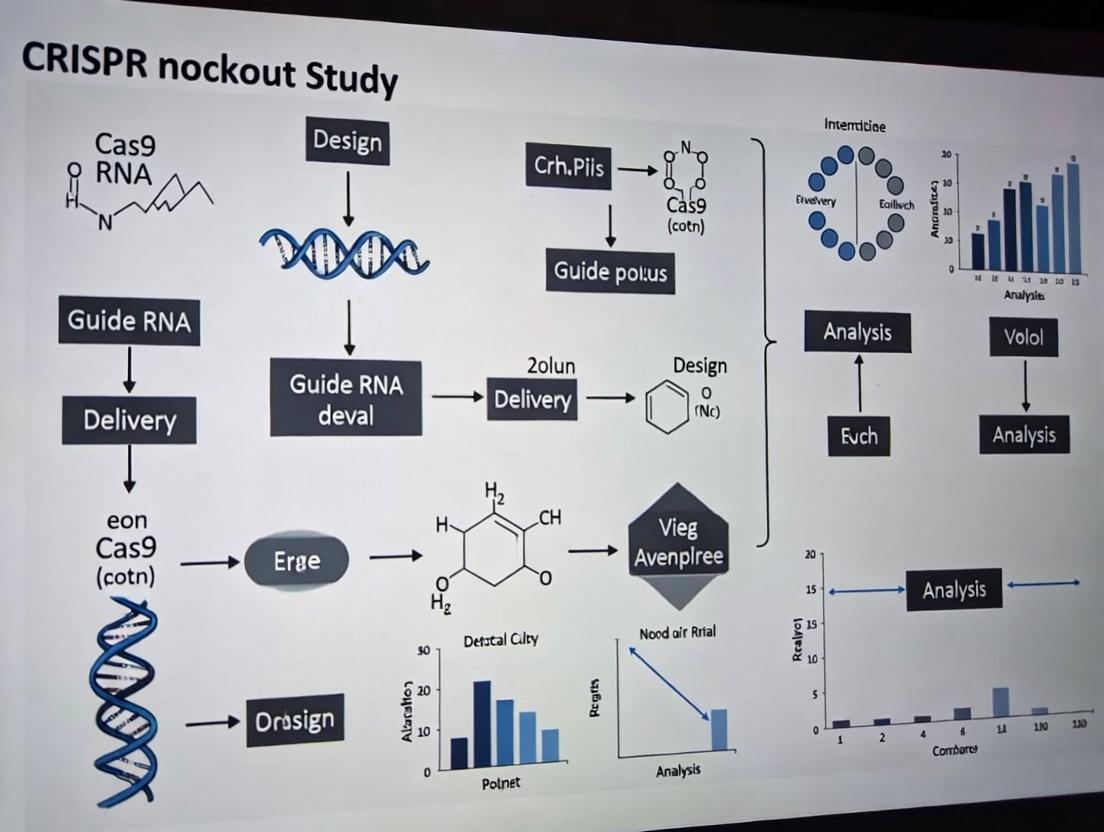
This guide provides a systematic framework for designing robust CRISPR-Cas9 knockout studies to investigate gene function.
CRISPR Gene Knockout: A Comprehensive Guide to Study Design, Best Practices, and Functional Analysis
Abstract
This guide provides a systematic framework for designing robust CRISPR-Cas9 knockout studies to investigate gene function. Tailored for researchers, scientists, and drug development professionals, it details the foundational principles of gene knockout, step-by-step methodological workflows from gRNA design to phenotypic analysis, common troubleshooting and optimization strategies, and essential validation and comparative techniques to ensure data reliability. By integrating the latest advancements and best practices, this article serves as a definitive resource for generating high-quality, interpretable loss-of-function data to accelerate target identification and validation in biomedical research.
The Essential Guide to CRISPR Knockout Basics: From Theory to Experimental Goals
Within the context of CRISPR-based gene function study design research, precise genetic manipulation is foundational. Gene knockout (KO) refers to the complete, permanent elimination of a gene's function, typically via CRISPR-Cas9-induced frameshift mutations or deletion of the entire genomic locus. In contrast, gene knockdown (KD) describes the partial, temporary reduction of gene expression at the RNA level, commonly achieved via RNA interference (RNAi) or antisense oligonucleotides.
The choice between knockout and knockdown is a critical determinant in experimental design, influencing phenotypic interpretation, validation of drug targets, and understanding of adaptive compensation.
The fundamental difference lies in the level and permanence of intervention.
Gene Knockout (CRISPR-Cas9 Example):
- A single-guide RNA (sgRNA) directs the Cas9 endonuclease to a specific DNA sequence.
- Cas9 creates a double-strand break (DSB).
- The cell's error-prone non-homologous end joining (NHEJ) repair pathway introduces small insertions or deletions (indels).
- If the indel occurs within a coding exon and is not a multiple of three, it causes a frameshift mutation, leading to a premature stop codon and complete loss of functional protein.
Gene Knockdown (RNAi Example):
- Exogenous small interfering RNA (siRNA) or short hairpin RNA (shRNA) is introduced.
- The RNA-induced silencing complex (RISC) loads the siRNA.
- The guide strand binds to complementary messenger RNA (mRNA).
- Argonaute (Ago2), a component of RISC, cleaves the target mRNA.
- The degraded mRNA cannot be translated, leading to reduced protein levels, but the genomic DNA remains unaltered.
Key Quantitative Comparisons
Table 1: Core Characteristics of Knockout vs. Knockdown
| Feature | Gene Knockout (CRISPR-Cas9) | Gene Knockdown (siRNA/shRNA) |
|---|---|---|
| Target | Genomic DNA | Messenger RNA (mRNA) |
| Mechanism | NHEJ/HDR-induced mutation | RNA interference (RISC-mediated cleavage) |
| Effect Duration | Permanent, heritable | Transient (days to weeks) |
| Effect Level | Complete loss of function | Partial reduction (typically 70-95%) |
| Onset of Effect | Slower (requires cell division/turnover) | Rapid (hours to days) |
| Off-Target Effects | DNA-level off-target cuts | miRNA-like off-target transcript effects |
| Primary Use | Functional genomics, generating stable cell lines, in vivo models | Screening, acute functional studies, therapeutic KD |
Table 2: Typical Efficiency and Practical Metrics
| Parameter | Typical Range (Knockout) | Typical Range (Knockdown) |
|---|---|---|
| Editing/Efficiency | 10-80% indels (varies by delivery & cell type) | 70-95% mRNA reduction (at optimal dose) |
| Experimental Timeline | Weeks to months (for clonal selection) | 3-7 days (transfection to assay) |
| Phenotype Stability | Stable across passages | Diminishes over time |
| Common Validation | Sanger sequencing/TIDE, NGS, Western blot (for absence) | qRT-PCR, Western blot (for reduction) |
Detailed Experimental Protocols
Protocol 1: CRISPR-Cas9 Mediated Gene Knockout in Mammalian Cells
Aim: Generate a stable, clonal cell population with a frameshift mutation in a target gene.
Key Reagents:
- sgRNA expression plasmid (e.g., pSpCas9(BB)-2A-Puro, Addgene #62988) or synthetic sgRNA + Cas9 protein/mRNA.
- Target cell line (HEK293T, HeLa, iPSCs, etc.).
- Transfection reagent (e.g., Lipofectamine CRISPRMAX) or nucleofection kit.
- Puromycin or appropriate selection antibiotic.
- Lysis buffer for genomic DNA (gDNA) extraction.
- PCR primers flanking the target site.
- T7 Endonuclease I or surveyor nuclease for initial screening.
- Western blot antibodies for target protein.
Methodology:
- Design & Cloning: Design a 20-nt sgRNA sequence targeting an early coding exon. Clone into the Cas9/sgRNA expression vector.
- Delivery: Transfect/nucleofect cells with the plasmid or RNP complex (synthetic sgRNA + Cas9 protein).
- Selection & Enrichment: 48h post-transfection, begin puromycin selection (e.g., 1-5 μg/mL, 3-7 days) to eliminate non-transfected cells.
- Single-Cell Cloning: Seed cells at low density (<1 cell/well) in a 96-well plate. Expand colonies for 2-3 weeks.
- Genotype Screening: Isolate gDNA from clones. PCR-amplify the target region. Analyze by:
- T7E1 Assay: Denature/anneal PCR products; cleave heteroduplexes with T7E1; run on gel to detect cleavage.
- Sanger Sequencing & TIDE Analysis: Sequence PCR products and use the TIDE web tool (https://tide.nki.nl) to quantify editing efficiency and indel profiles.
- Phenotype Validation: Validate protein loss via Western blot in promising clones.
Protocol 2: siRNA-Mediated Gene Knockdown in Mammalian Cells
Aim: Achieve transient, potent reduction of target gene expression.
Key Reagents:
- Validated siRNA duplexes (e.g., from Dharmacon SMARTpool or Qiagen).
- Transfection reagent (e.g., Lipofectamine RNAiMAX).
- Opti-MEM or similar reduced-serum medium.
- Cells in logarithmic growth phase.
- RNA lysis buffer (e.g., TRIzol) and protein lysis buffer (RIPA).
Methodology:
- Reverse Transfection:
- Dilute siRNA (final concentration 10-50 nM) in Opti-MEM.
- Dilute RNAiMAX in Opti-MEM.
- Combine diluted siRNA and RNAiMAX, incubate 5-20 min.
- Add mixture to wells of a culture plate.
- Trypsinize and count cells. Seed cells directly onto the lipid-siRNA complex.
- Incubation: Assay cells 48-96 hours post-transfection.
- Efficiency Validation:
- qRT-PCR: Extract total RNA, reverse transcribe to cDNA, perform qPCR with target-specific primers. Normalize to housekeeping genes (GAPDH, ACTB). Calculate fold-change using the ΔΔCt method.
- Western Blot: Harvest protein lysates 72-96h post-transfection. Detect target protein levels normalized to a loading control (e.g., β-Actin).
Applications in Research and Drug Development
Knockout Applications:
- Functional Genomics: Generation of knockout cell pools via lentiviral CRISPR for genome-wide screens.
- Disease Modeling: Creating isogenic cell lines or animal models with patient-relevant null mutations.
- Identifying Essential Genes: Distinguishing core fitness genes where knockout is lethal.
- Target Validation: Confirming that complete, irreversible target loss yields a therapeutic phenotype.
Knockdown Applications:
- High-Throughput Screening: siRNA libraries for rapid target identification and validation.
- Acute Phenotype Analysis: Studying the immediate consequence of protein depletion without compensatory adaptation.
- Therapeutic Mimicry: Modeling the effect of inhibitory drugs that reduce, but do not eliminate, protein function.
- Studying Essential Genes: Where knockout is lethal, knockdown can permit analysis of hypomorphic phenotypes.
The Scientist's Toolkit: Research Reagent Solutions
Table 3: Essential Reagents for Genetic Perturbation Experiments
| Reagent Category | Example Product/Kit | Primary Function |
|---|---|---|
| CRISPR-Cas9 Delivery | Lipofectamine CRISPRMAX (Thermo Fisher) | Lipid-based transfection of CRISPR RNPs or plasmids. |
| sgRNA Synthesis | Synthego CRISPR sgRNA EZ Kit | High-quality, chemically modified synthetic sgRNA production. |
| Knockout Validation | T7 Endonuclease I (NEB) | Detects mismatches in heteroduplex DNA for initial editing screening. |
| NGS for Editing | Illumina MiSeq Amplicon Sequencing | Gold-standard for quantifying editing efficiency and profiling indels. |
| siRNA Libraries | Dharmacon siRNA Genome-Scale Libraries | Pre-designed, arrayed siRNA sets for high-throughput screening. |
| RNAi Transfection | Lipofectamine RNAiMAX (Thermo Fisher) | Specialized lipid reagent for high-efficiency siRNA delivery. |
| Knockdown Validation | TaqMan Gene Expression Assays (Thermo Fisher) | Probe-based qRT-PCR for precise mRNA quantification. |
| Control Reagents | Non-targeting siRNA/scrambled sgRNA | Critical negative controls for off-target effect assessment. |
CRISPR Knockout Experimental Workflow
Mechanistic Comparison: Knockout vs. Knockdown
Within the framework of a thesis on CRISPR knockout gene function study design, selecting the appropriate gene-editing tool is foundational. The choice between Cas9, Cas12a, and Base Editors dictates experimental outcomes, affecting efficiency, specificity, and the type of knockout generated. This guide provides a technical comparison and protocols to inform robust research and therapeutic development.
Quantitative Comparison of Core Systems
Table 1: Core Characteristics of Knockout Systems
| Feature | SpCas9 | Cas12a (e.g., LbCas12a) | Adenine Base Editor (ABE) | Cytosine Base Editor (CBE) |
|---|---|---|---|---|
| Mechanism | Creates DSBs via blunt ends. | Creates DSBs via staggered ends with 5' overhangs. | Catalyzes A•T to G•C conversion without DSB. | Catalyzes C•G to T•A conversion without DSB. |
| PAM Requirement | 5'-NGG-3' (SpCas9). | 5'-TTTV-3' (LbCas12a). | Varies by fused nuclease (e.g., NGG for SpCas9-derived). | Varies by fused nuclease (e.g., NGG for SpCas9-derived). |
| Guide RNA | crRNA + tracrRNA (or single gRNA). | Single crRNA. | Single gRNA (for Cas9-dCas9 fusion). | Single gRNA (for Cas9-dCas9 fusion). |
| Editing Outcome | NHEJ-mediated indels (knockout). | NHEJ-mediated indels (knockout). | Point mutation (knockout via stop codon introduction). | Point mutation (knockout via stop codon introduction). |
| Typical Indel Efficiency | 40-80% in cultured mammalian cells. | 30-70% in cultured mammalian cells. | Not applicable (no indels). | Not applicable (no indels). |
| Primary Off-Target Risk | DSB at off-target sites. | DSB at off-target sites. | Off-target base editing (sgRNA-dependent). | Off-target base editing & bystander edits. |
| Key Advantage | High efficiency, well-characterized. | Compact crRNA, staggered cuts may aid knockout. | Precise, no DSB, reduced translocations. | Precise, no DSB, reduced translocations. |
Table 2: Application Context for Knockout Studies
| Parameter | Cas9 | Cas12a | Base Editors |
|---|---|---|---|
| Ideal For | Complete gene disruption, large deletions, high-throughput screens. | Knockout in AT-rich genomic regions, multiplexing with short crRNAs. | Introducing precise premature stop codons (e.g., TAG, TAA, TGA). |
| Limitations | PAM restriction, high off-target potential with wild-type. | Lower efficiency in some cell types, fewer validated variants. | Restricted to specific base changes; requires pre-existing targetable codons. |
| Best Paired With | NHEJ inhibitors/enhancers for efficiency control; HDR for knock-in. | Delivery methods optimized for shorter crRNAs. | Predictive algorithms for identifying optimal target codons. |
Detailed Experimental Protocols
Protocol 1: Standard Cas9/sgRNA Knockout in Mammalian Cells
Objective: Generate frameshift mutations via NHEJ to disrupt a target gene.
- Design & Cloning: Design sgRNA targeting an early coding exon. Clone sequence into a plasmid vector (e.g., pSpCas9(BB)-2A-Puro, Addgene #62988) via BbsI restriction sites.
- Delivery: Seed HEK293T or target cells in a 24-well plate. At 70-80% confluency, transfect with 500 ng of sgRNA plasmid using a suitable transfection reagent (e.g., Lipofectamine 3000).
- Selection & Expansion: 48h post-transfection, apply puromycin (1-2 µg/mL) for 48-72h. Allow surviving cells to expand for 5-7 days.
- Analysis: Harvest genomic DNA. Amplify target region by PCR. Assess knockout efficiency via T7 Endonuclease I assay or Sanger sequencing followed by decomposition tracking (e.g., using TIDE analysis).
Protocol 2: Cas12a-Mediated Knockout Workflow
Objective: Utilize Cas12a's distinct cleavage pattern for gene disruption.
- crRNA Design: Design 20-24 nt spacer targeting a region with a 5'-TTTV PAM. Order synthetic crRNA.
- RiboRNP Complex Formation: Complex purified LbCas12a protein (10 pmol) with synthetic crRNA (12 pmol) in buffer at room temperature for 15 min.
- Delivery: Deliver the ribonucleoprotein (RNP) complex into cells via nucleofection (e.g., Lonza 4D-Nucleofector), optimized for your cell type.
- Analysis: Culture cells for 72h, then harvest genomic DNA. PCR amplify and analyze editing via electrophoresis (staggered cut pattern may alter product migration) or next-generation sequencing.
Protocol 3: Knockout via Base Editor-Induced Stop Codon
Objective: Install a premature stop codon without inducing a DSB.
- Target Site Identification: Using a tool like BE-Hive or snptarget, identify a targetable C within a CAA (Gln), CAG (Gln), CGA (Arg), or TGG (Trp) codon for CBE (creating TAA, TAG, or TGA). For ABE, target an A in AAG (Lys), ATG (Met), or AGA (Arg) codons.
- Plasmid Delivery: Co-transfect cells with a base editor plasmid (e.g., BE4max for CBE or ABEmax for ABE) and the designed sgRNA plasmid at a 1:1 mass ratio.
- Harvest & Sequence: Harvest cells 72-96h post-transfection. Isolate genomic DNA and PCR amplify the target locus. Clone PCR products and perform Sanger sequencing of multiple clones to quantify the percentage of alleles with the intended stop codon.
Visualized Workflows and Pathways
Title: Cas9-Mediated Knockout Experimental Workflow
Title: Base Editor-Induced Knockout via Stop Codon
The Scientist's Toolkit: Research Reagent Solutions
Table 3: Essential Reagents for CRISPR Knockout Studies
| Reagent Category | Specific Example(s) | Function in Experiment |
|---|---|---|
| Nuclease Expression Plasmids | pSpCas9(BB)-2A-Puro (Addgene #62988), pCMV-BE4max (Addgene #112093), pY010 (Addgene #99275 for AsCas12a). | Provides stable, in-cell expression of the CRISPR nuclease or editor. |
| Guide RNA Cloning Vectors | pUC19-sgRNA (Addgene #51132), pRG2 (for Cas12a crRNA, Addgene #136469). | Backbone for custom sgRNA/crRNA insertion and amplification. |
| Purified Cas Protein | Recombinant SpCas9 Nuclease (e.g., Thermo Fisher Scientific), Alt-R S.p. Cas9 Nuclease V3 (IDT). | For forming RNP complexes for highly specific, transient delivery. |
| Synthetic Guide RNA | Alt-R CRISPR-Cas9 sgRNA (IDT), CRISPR-Cas12a crRNA (IDT). | High-purity, modified RNAs for enhanced stability and reduced immunogenicity. |
| Delivery Reagents | Lipofectamine CRISPRMAX (Thermo Fisher), Neon Nucleofection System (Thermo Fisher). | Enables efficient intracellular delivery of plasmids, RNAs, or RNPs. |
| Editing Detection Kits | T7 Endonuclease I (NEB), Alt-R Genome Editing Detection Kit (IDT, for T7E1), ICE Analysis (Synthego). | Tools for quantifying indel frequencies post-editing. |
| Cell Culture Modulators | SCR7 (NHEJ inhibitor), RS-1 (HDR enhancer). | Chemical agents to bias DNA repair pathways for desired outcomes. |
| Validated Controls | Positive Control crRNA (e.g., targeting human AAVS1 safe harbor), Non-targeting Control crRNA. | Essential for experimental validation and establishing baseline noise. |
A robust CRISPR knockout (KO) screen begins with a meticulously defined biological question and a falsifiable hypothesis. This foundational step dictates all subsequent experimental design, data interpretation, and, ultimately, the success or failure of a functional genomics study within drug development. This guide outlines the formal process of hypothesis generation and refinement in the context of genome-wide or focused CRISPR-Cas9 KO screening.
From Broad Inquiry to Testable Hypothesis
The transition from a general biological interest to a precise, actionable hypothesis is critical. The following table summarizes the key components and their evolution.
Table 1: Evolution from Question to Hypothesis
| Stage | Description | Example in CRISPR KO Context |
|---|---|---|
| Observational Question | Broad inquiry about a biological phenomenon. | "Why is this cancer cell line resistant to Drug X?" |
| Defined Biological Question | A focused question specifying the model, intervention, and measurable outcome. | "Which gene knockouts confer resistance or sensitivity to Drug X in our isogenic colorectal cancer cell model?" |
| Research Hypothesis | A predictive statement proposing a mechanism or relationship. | "Knockout of genes in the apoptotic signaling pathway will confer resistance to Drug X." |
| Null Hypothesis (H₀) | The default position to be tested against; that the intervention has no effect. | "Knockout of any gene will not alter cell viability in the presence of Drug X compared to the non-targeting control guide RNA population." |
| Experimental Hypothesis | The formal, testable prediction derived from the research hypothesis. | "Cells transduced with a sgRNA targeting gene ABC1 will exhibit a statistically significant increase in viability after 14 days of treatment with 1 µM Drug X, compared to cells transduced with non-targeting control sgRNAs." |
Quantitative Frameworks for Hypothesis-Driven Screen Design
The parameters of your hypothesis directly inform the statistical power and design of the CRISPR screen. Key quantitative considerations are summarized below.
Table 2: Key Quantitative Parameters for Screen Design
| Parameter | Typical Range / Value | Impact on Hypothesis Testing |
|---|---|---|
| Library Size | Genome-wide: ~60,000 sgRNAs; Sub-library: 500-5,000 sgRNAs | Defines the scale of discovery and multiple-testing burden. |
| Screen Biological Replicates | Minimum n=3, ideally n=4-6 per condition | Increases statistical power and reproducibility for hit calling. |
| sgRNA-Level Read Depth | >500 reads per sgRNA at baseline | Ensures detection of low-abundance clones; reduces sampling noise. |
| Fold-Change Threshold | Typically >2 or <0.5 (log₂ >1 or <-1) for viability screens | Sets the biological effect size considered meaningful. |
| False Discovery Rate (FDR) | Commonly set at q < 0.05 - 0.1 | Controls for type I errors (false positives) when testing thousands of hypotheses (genes). |
| Phenotypic Assay Duration | 5-20 cell doublings post-selection | Must be sufficient for phenotypic (e.g., viability) differences to manifest. |
Core Experimental Protocols for Hypothesis Validation
Protocol: Pilot Toxicity/Dose-Finding Assay
Purpose: To establish the optimal selective pressure (e.g., drug concentration) for the main screen, as implied by the hypothesis.
- Cell Preparation: Seed wild-type cells in 96-well plates at 20-30% confluence.
- Dose Titration: Treat cells with a 10-point, 1:3 serial dilution of the perturbagen (e.g., Drug X). Include DMSO/vehicle controls.
- Incubation: Incubate for a duration equivalent to the planned main screen (e.g., 14 days), refreshing media/drug every 3-4 days.
- Viability Assessment: At endpoint, assay viability using CellTiter-Glo 3D. Luminescence is measured on a plate reader.
- Data Analysis: Plot normalized viability (%) vs. log10[Drug]. Calculate IC₅₀ or IC₇₀. The concentration that induces 70-90% lethality is often selected for the positive selection screen to identify resistance genes.
Protocol: Essential Gene Positive Control Validation
Purpose: To empirically validate sgRNA library and screening workflow performance.
- Control Transduction: Transduce cells with a sub-library containing sgRNAs targeting known pan-essential genes (e.g., ribosomal proteins) and non-targeting controls.
- Selection & Passaging: Apply puromycin selection (1-3 µg/mL, 48-72 hrs). Passage cells for 14-21 doublings.
- Sequencing Library Prep: Harvest genomic DNA at Day 4 (baseline) and endpoint. Amplify integrated sgRNA sequences via a two-step PCR using barcoded primers for multiplexing.
- Sequencing & Analysis: Sequence on an Illumina NextSeq. Align reads to the sgRNA library reference. Using a tool like MAGeCK, calculate log₂ fold-change and p-value for each sgRNA. A successful validation shows strong depletion (log₂FC < -3) of essential gene-targeting sgRNAs.
Signaling Pathways & Experimental Workflow
CRISPR KO Screen Workflow from Hypothesis
Hypothesis: KO of Apoptotic Genes Confers Drug Resistance
The Scientist's Toolkit: Research Reagent Solutions
Table 3: Essential Reagents for Hypothesis-Driven CRISPR-KO Screens
| Reagent / Material | Function & Rationale |
|---|---|
| Validated CRISPR Knockout Library (e.g., Brunello, Brie) | Pre-designed, pooled sgRNA libraries with high on-target efficiency and reduced off-target effects. Enables systematic testing of hypotheses across the genome or a gene subset. |
| Lentiviral Packaging Mix (psPAX2, pMD2.G) | Second-generation packaging plasmids for production of replication-incompetent lentivirus to deliver the sgRNA and Cas9. |
| Polybrene (Hexadimethrine bromide) | A cationic polymer that enhances viral transduction efficiency by neutralizing charge repulsion between virions and the cell membrane. |
| Puromycin / Blasticidin / Other Selection Agents | Antibiotics for stable selection of successfully transduced cells, ensuring a pure population for the screen. Choice depends on the resistance marker on the lentiviral construct. |
| Cas9-Expressing Cell Line (Stable or Transient) | The cellular effector for DNA cleavage. Stable lines (e.g., Cas9+ HEK293T) provide consistency; transient expression allows flexibility. |
| Cell Viability Assay Kit (e.g., CellTiter-Glo) | A bioluminescent ATP quantitation assay to measure cell viability and cytotoxicity during pilot dose-finding and endpoint validation. |
| Genomic DNA Extraction Kit (High-Yield, 96-well) | For efficient, parallel isolation of high-quality gDNA from screen samples prior to NGS library preparation. |
| Q5 High-Fidelity DNA Polymerase | A low-error-rate PCR enzyme for accurate amplification of integrated sgRNA sequences from gDNA, minimizing amplification bias. |
| Illumina-Compatible Indexed Primers | Custom primers containing unique dual indices (i7/i5) and adapters for multiplexed, high-throughput sequencing of sgRNA amplicons. |
| Next-Generation Sequencing Platform (e.g., Illumina NextSeq) | Provides the deep, quantitative read count data required for statistical analysis of sgRNA enrichment/depletion. |
Within the context of CRISPR knockout gene function study design research, the design of the guide RNA (gRNA) is the most critical determinant of experimental success. A poorly designed gRNA can lead to low knockout efficiency, high off-target effects, and confounding experimental results. This technical guide details the fundamental principles for selecting target sites and ensuring specificity in the design of gRNAs for CRISPR-Cas9-mediated knockout studies, synthesizing current best practices and data.
Core Principles of Target Site Selection
Target site selection involves balancing on-target activity with minimal off-target potential. Key sequence-specific factors have been quantified through large-scale screening studies.
Table 1: Quantitative Parameters for Optimal gRNA Target Sequence Selection
| Parameter | Optimal Feature / Value | Rationale & Impact on Efficiency |
|---|---|---|
| Protospacer Adjacent Motif (PAM) | NGG for S. pyogenes Cas9 (SpCas9) | Cas9 nuclease binding requirement. |
| GC Content | 40-60% | GC content <20% or >80% correlates with significantly reduced activity. |
| gRNA Length | 20 nucleotides (nt) | Standard for SpCas9; truncated gRNAs (17-18nt) can increase specificity. |
| Position within Gene | Early coding exons, common to all isoforms | Maximizes probability of frameshift and functional knockout via NMD. |
| Poly-T Tracts | Avoid 4+ consecutive T's | Can act as premature termination signal for Pol III U6 promoter. |
| SNP Presence | Avoid common SNPs (MAF >0.1%) in seed region | Prevents loss of activity in specific genetic backgrounds. |
| Specificity Score | CFD score >0.2, MIT specificity score >50 | Higher scores predict lower off-target effects. |
Assessing and Ensuring gRNA Specificity
Off-target effects remain the primary concern for interpreting knockout phenotypes. Specificity is governed by the complementarity between the gRNA spacer and genomic DNA, especially in the "seed" region (positions 1-12 proximal to PAM). Mismatches in the distal region are more tolerated.
Table 2: Off-Target Mismatch Tolerance (SpCas9)
| Mismatch Position (5' → 3', PAM at 21-23) | Tolerance Level | Relative Cleavage Efficiency* |
|---|---|---|
| Seed Region (1-12) | Low | <10% remaining activity with ≥2 mismatches |
| Middle (13-17) | Intermediate | Up to 40% activity retained with single mismatches |
| Distal (18-20) | High | Up to 80% activity retained with single mismatches |
| PAM | Very Low | Virtually eliminates cleavage |
*Data aggregated from multiple studies (e.g., Doench et al., 2016; Hsu et al., 2013).
Experimental Protocol: In Silico Off-Target Prediction
Objective: Identify potential off-target genomic sites for a candidate gRNA sequence. Method:
- Sequence Input: Define the 20nt spacer sequence and the PAM (e.g., NGG).
- Algorithm Selection: Use established algorithms (e.g., Cas-OFFinder, CRISPOR, CHOPCHOP) that allow for user-defined mismatch numbers (typically up to 3-4 mismatches).
- Parameter Setting:
- Set genome assembly (e.g., GRCh38/hg38).
- Specify maximum number of mismatches (recommend 3 for initial screen).
- Include DNA bulge variants if using Cas9 nucleases known to tolerate them.
- Analysis: Execute search. The tool returns a ranked list of potential off-target loci with mismatch count, position, and genomic context.
- Prioritization: Prioritize off-targets within coding exons, promoters, or enhancers of other genes. A candidate gRNA with high-scoring off-targets in functionally relevant regions of unrelated genes should be discarded.
The Scientist's Toolkit: Research Reagent Solutions
Table 3: Essential Reagents and Materials for gRNA Design & Validation
| Item / Reagent | Function & Application |
|---|---|
| CRISPR Design Tools (e.g., CRISPOR, Benchling, IDT) | In silico gRNA design, on-/off-target scoring, and oligonucleotide design. |
| Synthetic Single-Guide RNA (sgRNA) | Chemically synthesized, ready-to-use gRNA; ensures consistency and avoids cloning. |
| gRNA Cloning Vector (e.g., pSpCas9(BB)-2A-Puro, pX459) | Plasmid for expression of gRNA and Cas9 nuclease; allows for antibiotic selection. |
| High-Fidelity Cas9 Variant (e.g., SpCas9-HF1, eSpCas9) | Engineered nuclease with reduced non-specific DNA binding, lowering off-target effects. |
| T7 Endonuclease I (T7E1) or Surveyor Assay Kit | Detects Cas9-induced indel mutations at the target locus via mismatch cleavage. |
| Next-Generation Sequencing (NGS) Library Prep Kit for Amplicon Sequencing | Gold-standard for quantifying knockout efficiency and profiling off-target edits genome-wide. |
| Cell Line with High Transfection Efficiency (e.g., HEK293T) | Standard workhorse for initial gRNA activity validation. |
Workflow for gRNA Design and Validation
The following diagram illustrates the logical workflow for designing and selecting a high-specificity gRNA for a knockout study.
Experimental Protocol: Validating gRNA On-Target Efficiency
Objective: Empirically measure the indel formation efficiency of selected gRNAs. Method: T7 Endonuclease I (T7E1) Assay
- Transfection: Deliver Cas9 and the candidate gRNA (via plasmid or RNP) into target cells.
- Harvest Genomic DNA: 72 hours post-transfection, extract genomic DNA.
- PCR Amplification: Design primers ~200-400bp flanking the target site. Amplify the target locus from the mixed-population genomic DNA.
- DNA Denaturation & Re-annealing: Purify the PCR product. Denature at 95°C and slowly re-anneal to form heteroduplexes between wild-type and mutant strands.
- T7E1 Digestion: Incubate the re-annealed DNA with T7E1 enzyme, which cleaves mismatched heteroduplexes.
- Analysis: Run digested products on an agarose gel. Cleavage products indicate presence of indels. Estimate efficiency by band intensity using gel analysis software.
Advanced Strategies for Enhancing Specificity
High-fidelity Cas9 variants and modified gRNA formats are critical tools for functional studies requiring high precision. The relationship between these components is shown below.
In conclusion, rigorous gRNA design, grounded in the principles of target site selection and specificity analysis outlined here, forms the foundational pillar of any robust CRISPR knockout gene function study. By adhering to these fundamentals and employing the recommended experimental validations, researchers can generate reliable, interpretable knockout phenotypes essential for both basic research and drug development.
This technical guide provides an in-depth examination of three pivotal delivery methods—Lentivirus, Electroporation, and Ribonucleoprotein (RNP) Complexes—within the specific context of CRISPR-Cas9 knockout gene function study design. The selection of an optimal delivery system is a critical determinant of experimental outcomes, influencing editing efficiency, specificity, cellular toxicity, and applicability across diverse cell types. This whitepaper synthesizes current data and methodologies to empower researchers in making informed decisions for their functional genomics and drug development pipelines.
Lentiviral Delivery
Lentiviral vectors are engineered, replication-incompetent viruses derived from HIV-1. They are a mainstay for stable genomic integration and long-term gene expression, making them ideal for pooled CRISPR library screens and studies requiring sustained knockdown/knockout.
Mechanism and Workflow
Lentiviruses deliver CRISPR components as DNA sequences (typically sgRNA with or without Cas9) integrated into the host genome. The viral RNA genome is reverse-transcribed into DNA and integrated via the viral integrase enzyme.
Title: Lentiviral CRISPR Workflow
Key Considerations & Quantitative Data
Table 1: Lentiviral Delivery Characteristics
| Parameter | Typical Value/Range | Notes |
|---|---|---|
| Titer | 10^7 - 10^9 IU/mL | Functional titer (infectious units/mL) is critical. |
| Transduction Efficiency | 20-95% | Highly dependent on cell type (dividing/non-dividing). |
| Integration | Stable, Random | Risk of insertional mutagenesis; not suitable for therapeutic editing. |
| Time to Phenotype | Slow (days-weeks) | Requires integration, transcription, and protein turnover. |
| Multiplexing Capacity | High | Ideal for library delivery (10^3-10^5 sgRNAs). |
| Immunogenicity | Moderate | Pre-existing immunity possible; higher in vivo. |
| Cellular Toxicity | Low-Moderate | Related to viral entry and integration stress. |
| Typical Applications | Pooled/arrayed screens, hard-to-transfect cells (e.g., neurons), in vivo delivery. |
Detailed Protocol: Production of Lentivirus for CRISPR Knockout
Materials:
- Transfer Plasmid: LV vector expressing sgRNA and often a Puromycin resistance gene.
- Packaging Plasmids: psPAX2 (gag/pol/rev) and pMD2.G (VSV-G envelope).
- Cells: HEK293T/17 (high transfection efficiency).
- Transfection Reagent: Polyethylenimine (PEI) or commercial alternatives.
- Media: DMEM + 10% FBS, serum-free collection media.
- Concentration: Lenti-X Concentrator or ultracentrifugation.
Method:
- Day 0: Seed HEK293T cells in a 10cm dish to reach 70-80% confluence the next day.
- Day 1: Transfect using PEI:
- Prepare DNA mix: Transfer plasmid (10 µg), psPAX2 (7.5 µg), pMD2.G (2.5 µg) in 500 µL serum-free media.
- Prepare PEI mix: 40 µL PEI (1 mg/mL) in 500 µL serum-free media. Vortex.
- Combine mixes, incubate 15-20 min at RT, add dropwise to cells.
- Day 2: Replace media with fresh complete media.
- Day 3 & 4: Harvest viral supernatant (48h and 72h post-transfection), filter through a 0.45 µm PES filter, and concentrate per manufacturer's instructions.
- Titer Determination: Perform serial dilution on HEK293T cells and assay for fluorescence (if reporter present) or puromycin resistance.
Electroporation
Electroporation uses short, high-voltage electrical pulses to create transient pores in the cell membrane, allowing for the direct intracellular delivery of nucleic acids (plasmid DNA, in vitro transcribed mRNA) or proteins (RNP).
Mechanism and Workflow
The applied electrical field disturbs the phospholipid bilayer, forming hydrophilic pores. Cargo in the surrounding buffer enters the cell via diffusion and electrophoretic movement.
Title: Electroporation Process Flow
Key Considerations & Quantitative Data
Table 2: Electroporation Delivery Characteristics
| Parameter | Typical Value/Range | Notes |
|---|---|---|
| Delivery Format | DNA, mRNA, RNP | Most flexible; RNP offers fastest editing. |
| Efficiency (Hard-to-Transfect) | 50-90% | Primary T cells, iPSCs, NK cells. Highly system-dependent. |
| Integration | Transient (for RNP/mRNA) | No viral DNA residue; RNP is fastest and shortest-lived. |
| Time to Knockout | Fast (hours-days) | RNP acts immediately; DNA requires transcription. |
| Multiplexing Capacity | Low-Moderate | Co-delivery of multiple sgRNAs possible but limited by cargo size/toxicity. |
| Immunogenicity | Low (RNP) | RNP avoids exogenous DNA/RNA, reducing immune activation. |
| Cellular Toxicity | Moderate-High | Cell stress from electrical pulse; optimization of parameters is key. |
| Typical Applications | Primary cells (T cells, HSPCs), clinical-grade editing, high-efficiency RNP delivery. |
Detailed Protocol: CRISPR-Cas9 RNP Electroporation of Primary Human T Cells
Materials:
- Cells: Activated human primary CD4+ T cells.
- CRISPR Components: Recombinant S.p. Cas9 protein and synthetic sgRNA (or crRNA+tracrRNA).
- Electroporation System: Neon Transfection System (Thermo) or Lonza 4D-Nucleofector.
- Electroporation Buffer: System-specific buffer (e.g., Neon Buffer R, P3 Primary Cell Solution).
- Recovery Media: Pre-warmed RPMI-1640 + 10% FBS + IL-2 (100-200 U/mL).
Method:
- RNP Complex Formation: Complex purified Cas9 protein (30-60 pmol) with sgRNA (at a 1:2 molar ratio) in duplex buffer. Incubate at room temperature for 10-20 minutes.
- Cell Preparation: Harvest activated T cells, wash with PBS, and resuspend at 10-20 x 10^6 cells/mL in the recommended electroporation buffer. Do not use antibiotic-containing media.
- Electroporation Setup: Mix 10 µL cell suspension (100k-200k cells) with 2-5 µL pre-formed RNP complex. Load into a Neon tip (10 µL) or Nucleocuvette.
- Pulse Conditions (Example for Neon): 1600V, 10ms, 3 pulses. Conditions MUST be optimized per cell type.
- Recovery: Immediately transfer electroporated cells to pre-warmed recovery media in a 24-well plate.
- Analysis: Assess viability at 24h (expect 50-80%). Harvest genomic DNA for NGS-based indel analysis at 72-96 hours post-electroporation.
Ribonucleoprotein (RNP) Complex Delivery
RNP delivery involves the direct introduction of pre-assembled, functional Cas protein complexed with guide RNA. This method has gained prominence for its speed, reduced off-target effects, and lack of DNA-based genetic material.
Mechanism and Advantages
The pre-formed Cas9:sgRNA complex is delivered via electroporation, lipofection, or nanoparticle carriers. It enters the nucleus rapidly and executes cleavage immediately, degrading quickly thereafter.
Title: RNP Complex Assembly and Action
Key Advantages:
- Speed: Editing detectable within hours.
- Specificity: Reduced off-target effects due to short intracellular lifetime.
- Safety: No DNA integration risk; minimal immunogenic footprint.
- Versatility: Can be coupled with various delivery methods.
Table 3: Comparative Analysis of Delivery Methods
| Feature | Lentivirus | Electroporation (DNA/mRNA) | Electroporation (RNP) |
|---|---|---|---|
| Editing Onset | Days | 1-2 days (DNA), hours (mRNA) | 2-6 hours |
| Persistence | Stable, indefinite | Transient (days) | Very transient (<24-48h) |
| Off-Target Risk | Higher (sustained expression) | Moderate (DNA), Lower (mRNA) | Lowest |
| Cell Type Range | Very Broad (incl. non-dividing) | Broad, but limited by toxicity | Broad, but limited by delivery method |
| Ease of Use | Moderate (biosafety, production) | High (commercial systems) | High (commercial components) |
| Cost | Moderate (production) | High (cuvettes/kits) | High (protein, sgRNA, kits) |
| Therapeutic Suitability | Low (genotoxicity concerns) | Moderate (DNA concerns) | High (leading clinical format) |
The Scientist's Toolkit: Essential Reagent Solutions
Table 4: Key Research Reagents for CRISPR Delivery
| Reagent | Function & Role | Example Applications |
|---|---|---|
| Lenti-X Concentrator | Polymers that precipitate lentivirus for 100x concentration. | High-titer virus production for in vivo or difficult-to-transduce cells. |
| Polybrene | Cationic polymer that neutralizes charge repulsion between virus and cell membrane. | Enhancing lentiviral transduction efficiency in many cell lines. |
| VSV-G Envelope Plasmid | Provides pantropic viral envelope protein for broad host range. | Standard for producing lentivirus targeting diverse mammalian cells. |
| Recombinant Cas9 Protein | High-purity, endotoxin-free Cas9 for RNP assembly. | Direct RNP delivery via electroporation or lipofection. |
| Synthetic sgRNA (2-part) | Chemically modified crRNA and tracrRNA for enhanced stability. | RNP formation with higher efficiency and lower cost than full sgRNA. |
| Neon Transfection System Buffer | Cell-type optimized electroporation buffers. | Maximizing viability and delivery efficiency in primary cells. |
| Lipofectamine CRISPRMAX | Lipid nanoparticles designed for Cas9 plasmid or RNP delivery. | Transfection of adherent cell lines with RNP, avoiding electroporation. |
| Puromycin Dihydrochloride | Antibiotic for selecting cells stably expressing resistance genes. | Enriching transduced/transfected cell populations post-lentivirus or plasmid delivery. |
| IL-2 Cytokine | T-cell growth factor essential for primary T cell survival and proliferation. | Recovery and expansion of primary T cells post-electroporation. |
Within the framework of CRISPR knockout study design, the choice of delivery method is a foundational decision that dictates experimental timelines, data quality, and translational potential.
- Choose Lentivirus for: Large-scale pooled genetic screens, engineering stable cell lines, or targeting non-dividing or hard-to-transfect cells where other methods fail. It is the workhorse for discovery-phase functional genomics.
- Choose Electroporation (with RNP) for: Precise, efficient editing in primary and sensitive cells (T cells, HSPCs, iPSCs), clinical/compliance-driven applications requiring no DNA integration, or when speed and reduced off-target effects are paramount.
- Choose Electroporation (with DNA/mRNA) for: Scenarios where RNP is not feasible (e.g., large Cas variants, base editor mRNA) or when transient expression with DNA is acceptable and cost is a major factor.
The convergence of these methods, particularly the adoption of RNP electroporation, represents the current gold standard for high-fidelity, therapeutically relevant knockout studies, effectively balancing efficiency, specificity, and cellular health.
Within the context of CRISPR-Cas9 knockout gene function studies, the selection of an appropriate biological model is a foundational decision that directly impacts the physiological relevance, reproducibility, and translational potential of research findings. This guide provides an in-depth technical comparison of three core model systems—immortalized cell lines, primary cells, and organoids—framed specifically for researchers designing gene knockout studies in functional genomics and drug development.
Quantitative Comparison of Model Systems
The table below summarizes key quantitative and qualitative attributes critical for experimental design in CRISPR knockout studies.
Table 1: Comparative Analysis of Model Systems for CRISPR Knockout Studies
| Parameter | Immortalized Cell Lines | Primary Cells | Organoids |
|---|---|---|---|
| Genetic Stability | High, but often aneuploid | High, diploid (limited passages) | High, but can acquire culture-driven mutations |
| Culturing Complexity | Low (simple media, high robustness) | Medium to High (specialized media, limited lifespan) | High (extracellular matrix, specialized media, long-term culture) |
| Physiological Relevance | Low (de-differentiated, adapted to 2D) | High (ex vivo, but 2D culture alters phenotype) | Very High (3D architecture, cell heterogeneity, tissue-like function) |
| Cost per Experiment | Low ($10s - $100s) | Medium to High ($100s - $1000s) | High ($1000s - $10,000s) |
| Throughput Potential | Very High (amenable to 384-well plates) | Low to Medium | Low (complex assays possible) |
| CRISPR Editing Efficiency | Typically High (≥80% indel rates common) | Variable, often lower (30-70%) | Variable by region; often requires optimization (20-60%) |
| Clonal Expansion Ease | High (easy single-cell cloning) | Very Low (limited proliferation) | Medium (passagable, but clonal derivation is challenging) |
| Key Applications in KO Studies | Initial gene screening, mechanistic studies in a controlled system | Validation of hits in a physiologically normal genetic background | Studying gene function in tissue context, epithelial-stromal interactions, disease modeling |
Experimental Protocols for CRISPR Knockout
Protocol 2.1: CRISPR-Cas9 Knockout in Adherent Cell Lines (e.g., HEK293T, HeLa)
- Design & Cloning: Design sgRNAs targeting early exons of the gene of interest (GOI) using tools like CHOPCHOP or Benchling. Clone sgRNA sequence into a lentiviral plasmid (e.g., lentiCRISPRv2) or a Cas9/sgRNA expression plasmid.
- Delivery: For transient transfection, use lipid-based transfection (e.g., Lipofectamine 3000) with 500 ng plasmid per well of a 24-well plate. For stable pools, produce lentivirus and transduce cells with polybrene (8 µg/mL).
- Selection & Expansion: 48h post-transfection/transduction, apply appropriate antibiotic (e.g., 1-2 µg/mL puromycin) for 3-5 days. Expand surviving polyclonal population.
- Validation: Harvest genomic DNA. Amplify target region by PCR (using primers flanking the cut site) and analyze indel formation by T7 Endonuclease I assay or Sanger sequencing followed by ICE analysis.
- Clonal Derivation: For isogenic lines, single-cell sort polyclonal population into 96-well plates. Expand clones for 2-3 weeks, then screen via western blot (protein loss) and sequencing.
Protocol 2.2: CRISPR-Cas9 Knockout in Primary Cells (e.g., Human Dermal Fibroblasts)
- Culture: Maintain primary cells in specialized, serum-rich media with low passage number (P3-P6).
- Delivery: Use ribonucleoprotein (RNP) electroporation for high efficiency and minimal off-targets. Complex 30 pmol of purified Cas9 protein with 60 pmol of synthetic sgRNA (Alt-R CRISPR-Cas9 System) for 10 min at room temperature.
- Electroporation: Resuspend 2x10^5 cells in 20 µL P3 Primary Cell Nucleofector Solution (Lonza). Add RNP complex, transfer to a Nucleocuvette, and electroporate using the 4D-Nucleofector (program: CA-137).
- Recovery & Analysis: Immediately add pre-warmed media, plate cells, and culture. Analyze editing efficiency at 72h post-electroporation by next-generation sequencing of the target locus.
Protocol 2.3: CRISPR-Cas9 Knockout in Epithelial Organoids (e.g., Intestinal Organoids)
- Culture: Maintain organoids in Matrigel domes with organoid-specific growth medium (containing Wnt3a, R-spondin, Noggin).
- Dissociation: Dissociate organoids into single cells or small clusters using TrypLE for 5-10 min at 37°C.
- Delivery by Electroporation: Use RNP complexes as in Protocol 2.2. Electroporate 1x10^5 single cells using program EN-150. Alternatively, use lentiviral transduction for hard-to-transfect organoids.
- Re-plating & Selection: Post-electroporation, mix cells with Matrigel and plate. For lentiviral delivery, add antibiotic (e.g., G418) to the medium 48h later.
- Expansion & Phenotyping: Allow organoids to regrow for 7-10 days. Passage and expand edited pool. Phenotype via bright-field microscopy (crypt budding, morphology), immunohistochemistry, or single-cell RNA-seq.
Visualizing Experimental Workflows and Pathways
Title: Workflow for Model Selection in CRISPR KO Studies
Title: Example Pathway: PTEN KO Effect on PI3K/AKT/mTOR
The Scientist's Toolkit: Research Reagent Solutions
Table 2: Essential Reagents for CRISPR KO Across Model Systems
| Reagent / Material | Primary Function | Key Considerations for Model Selection |
|---|---|---|
| LentiCRISPRv2 Plasmid (Addgene #52961) | All-in-one lentiviral vector for stable sgRNA expression and Cas9 delivery. | Ideal for cell lines; used in organoids with careful titration. Less suitable for sensitive primary cells. |
| Alt-R CRISPR-Cas9 crRNA & tracrRNA (IDT) | Synthetic sgRNA components for forming RNP complexes with Cas9 protein. | Gold standard for primary cells and organoids due to high efficiency, rapid action, and reduced off-targets. |
| Recombinant Cas9 Nuclease | Purified Cas9 protein for RNP assembly. | Essential for primary cell electroporation. Allows dose control and avoids DNA integration. |
| Matrigel (Corning) | Basement membrane extract for 3D organoid culture. | Critical for organoid growth and polarity. Lot variability requires pre-testing for organoid formation efficiency. |
| P3 Primary Cell 4D-Nucleofector Kit (Lonza) | Optimized buffer and cuvettes for electroporation of hard-to-transfect cells. | Maximizes viability and editing efficiency in primary cells and single-cell organoid preparations. |
| CloneR (Stemcell Technologies) | Supplement to enhance single-cell survival in clonal derivation. | Crucial for improving plating efficiency after CRISPR editing of organoids or fragile cell lines. |
| T7 Endonuclease I (NEB) | Enzyme for detecting indel mutations via mismatch cleavage. | Quick, cost-effective validation tool for initial screening of edited polyclonal pools in all systems. |
| ViaStain AOPI Staining Solution (Nexcelom) | Acridine Orange/Propidium Iodide for automated live/dead cell counting. | Vital for assessing viability post-electroporation in primary cells and organoid-derived cells. |
Ethical Considerations and Biosafety for Genome Editing Research
This whitepaper addresses the critical ethical and biosafety frameworks that must be integrated into the design and execution of CRISPR-Cas9 knockout gene function studies. Within the broader thesis on study design, these considerations are not ancillary but foundational, ensuring scientific rigor, reproducibility, and societal trust. The power to permanently disable gene function necessitates a proactive assessment of off-target effects, unintended phenotypic consequences, and the long-term implications of creating genetically altered cellular or organismal models.
Core Ethical Principles in Genome Editing Research
The application of CRISPR for knockout studies is guided by four cardinal principles:
- Beneficence & Non-Maleficence: Research must aim to produce knowledge that benefits human health and the environment while minimizing harm. This involves rigorous off-target analysis to prevent misleading biological conclusions from unintended edits.
- Autonomy & Informed Consent: When research involves human-derived cells (e.g., iPSCs), clear protocols for donor consent regarding genetic manipulation are mandatory. Consent must cover the scope, potential outcomes, and future use of edited materials.
- Justice: The benefits and burdens of research should be distributed fairly. Access to therapies developed from such research and the selection of target diseases should consider global health equity.
- Scientific Integrity & Transparency: Full disclosure of methodologies, including guide RNA sequences, delivery methods, and validation protocols, is essential for reproducibility and accurate interpretation of knockout phenotypes.
Biosafety Risk Assessment and Containment
Risk assessment for CRISPR knockout experiments is based on the target gene, model system, and potential phenotypic changes.
Table 1: Biosafety Level (BSL) Guidelines for Common CRISPR Knockout Models
| Model System | Typical BSL | Primary Risk Considerations | Key Containment Practices |
|---|---|---|---|
| Prokaryotic Cells | BSL-1/2 | Generation of antibiotic resistance, disruption of metabolic pathways potentially altering virulence. | Standard microbiological practices; higher containment if manipulating toxin or virulence factor genes. |
| Immortalized Cell Lines | BSL-1/2 | Unintended creation of oncogenic or toxic phenotypes; handling of viral delivery vectors. | Biosafety cabinets for all procedures; inactivation of waste; vector-specific precautions (e.g., lentiviral BSL-2). |
| Primary Human Cells | BSL-2 | Potential presence of human pathogens; altered cellular behavior. | BSL-2 standard practices: lab coats, gloves, eye protection; decontamination of all waste. |
| Animal Models (Rodents) | BSL-1/2 | Generation of novel phenotypes (immunodeficiency, altered behavior, pathogen susceptibility). | Animal facility compliance; cage-level containment for immunodeficient strains; strict protocol review. |
| Organoids/Complex Co-Cultures | BSL-1/2 | Increased complexity predicting phenotypic outcome; potential for cross-contamination. | Enhanced aseptic technique; validated sterilization of culture vessels; phenotypic monitoring protocols. |
Key Experimental Protocols for Ethical & Safe Validation
Comprehensive Off-Target Analysis Protocol
Purpose: To identify and quantify unintended genomic modifications caused by CRISPR-Cas9 activity, a core ethical requirement for data validity.
Methodology:
- In Silico Prediction: Utilize tools like CHOPCHOP, Cas-OFFinder to predict top 10-20 potential off-target sites with up to 5 mismatches or bulges.
- Targeted Deep Sequencing (For Validated Sites):
- PCR Amplification: Design primers flanking each predicted off-target site and the on-target site.
- Library Preparation: Use a high-fidelity polymerase for amplicon generation. Attach dual-indexed sequencing adapters.
- Sequencing: Perform next-generation sequencing (NGS) to a depth of >100,000x coverage per site.
- Analysis: Use pipelines (CRISPResso2, CRISPR-SURF) to quantify insertion/deletion (indel) frequencies at each locus. An acceptable threshold is typically <0.1% indel frequency at off-target sites.
- Genome-Wide Methods (For Discovery):
- Circularization for In Vitro Reporting of Cleavage Effects (CIRCLE-Seq): Isolate and shear genomic DNA. Cas9-gRNA ribonucleoprotein (RNP) is added in vitro to cut exposed DNA ends. Cleaved fragments are circularized, PCR-amplified, and sequenced to identify all potential cut sites.
- Digested Genome Sequencing (Digenome-seq): Genomic DNA is treated with Cas9 RNP in vitro, completely digested, and whole-genome sequenced. Computational analysis maps double-strand break ends across the entire genome.
Phenotypic Screening & Biosafety Protocol for Edited Cell Pools
Purpose: To screen for hazardous unintended phenotypes prior to large-scale expansion.
Methodology:
- Transfection & Selection: Perform CRISPR knockout in the target cell line. Apply appropriate selection (e.g., puromycin for 72h) if using a viral delivery system.
- Limited Expansion & Banking: Expand edited polyclonal pool for 1-2 passages only. Create a cryogenically preserved master bank.
- Biosafety and Phenotypic Assay Battery:
- Growth Kinetics: Compare doubling time to parental line. Rapid proliferation may indicate tumor suppressor knockout.
- Metabolic Profile: Assess glucose consumption/lactate production. Sudden shifts can indicate metabolic reprogramming.
- Secretome Analysis (Optional): Use a cytokine array to check for unexpected inflammatory or pathogenic factor secretion.
- Pathogen Susceptibility Test: If relevant, challenge with a low MOI of a common lab pathogen (e.g., VSV) to rule out acquired immunodeficiency.
- Containment Decision: If all assays are within normal variance, proceed to single-cell cloning. If anomalies are detected, halt expansion, investigate cause, and consult biosafety committee.
Visualization of Workflows and Pathways
Diagram Title: Ethical & Biosafety Workflow for CRISPR KO Studies
Diagram Title: DNA Repair Pathways After CRISPR-Cas9 Cleavage
The Scientist's Toolkit: Essential Research Reagent Solutions
Table 2: Key Reagents for Ethical and Robust CRISPR Knockout Research
| Reagent Category | Specific Example(s) | Function & Ethical/Biosafety Relevance |
|---|---|---|
| High-Specificity Cas9 | HiFi Cas9, eSpCas9(1.1) | Engineered protein variants with reduced off-target activity, directly addressing the ethical principle of non-maleficence. |
| Validated gRNA Libraries | Human GeCKO v2, Mouse Brunello, sgRNA design tools | Pre-validated reagents improve reproducibility (scientific integrity) and reduce wasted resources. |
| Off-Target Analysis Kits | CIRCLE-Seq Kit, GUIDE-seq Kit, Targeted NGS Amplicon Panels | Essential tools for fulfilling the ethical obligation to assess unintended effects, providing quantitative safety data. |
| Control gRNAs | Non-targeting Control, Targeting Safe Locus (e.g., AAVS1) | Critical experimental controls to distinguish specific from non-specific phenotypic effects, upholding data integrity. |
| Safety-Enhanced Vectors | Lentiviral 3rd Generation (VSV-G), SEND (non-viral) | Packaging systems with improved biosafety profiles (self-inactivating, reduced mobilization risk) for BSL-2 compliance. |
| Phenotypic Screening Assays | Real-Time Cell Analyzers (e.g., xCELLigence), Metabolic Flux Kits (Seahorse) | Enable the biosafety screening protocol for detecting hazardous unintended phenotypes in edited cell pools before large-scale use. |
| Antibiotics for Selection | Puromycin, Blasticidin, Geneticin (G418) | Allow for efficient selection of successfully transfected/transduced cells, but require careful waste inactivation per biosafety rules. |
Step-by-Step CRISPR Knockout Protocol: From Design to Phenotypic Analysis
Within the framework of CRISPR knockout gene function study design, the precision of genetic perturbation hinges on the initial selection of a guide RNA (gRNA). Maximizing on-target efficiency while mitigating off-target effects is a fundamental computational challenge. This technical guide explores advanced algorithms and tools that underpin modern gRNA design, providing researchers and drug development professionals with the methodologies to engineer more reliable and interpretable knockout studies.
Core Algorithmic Principles for On-Target Efficiency
Modern gRNA design tools integrate multiple predictive features derived from high-throughput screening data and biophysical modeling. Key principles include:
- Sequence-Dependent Features: GC content, specific nucleotide preferences at defined positions (e.g., positions 4-14, the "seed" region), and the absence of homopolymer runs.
- Thermodynamic Stability: Predictions of DNA-RNA heteroduplex stability and the binding energy of the Cas9-gRNA complex to the target DNA.
- Chromatin Accessibility: Incorporation of epigenetic markers such as DNase I hypersensitivity (DHS) and histone modification data (H3K4me3, H3K27ac) to predict target site openness.
- Machine Learning Integration: Supervised models (e.g., random forests, gradient boosting, deep neural networks) trained on empirical knockout efficiency data from libraries like Brunello or Rule Set 2.
Quantitative Comparison of Leading Design Tools
The table below summarizes key features, scoring algorithms, and outputs of prominent contemporary gRNA design tools.
Table 1: Comparison of Advanced gRNA Design Tools and Algorithms
| Tool Name | Core Algorithm / Model | Key Predictive Features | Primary Output | Off-Target Scoring | Accessibility/Format |
|---|---|---|---|---|---|
| CRISPick (Broad) | Rule Set 2, machine learning models | Sequence composition, chromatin state (from ENCODE), empirical on-target activity data | On-target efficiency score (0-1), off-target specificity list | MIT specificity score, aggregates off-target sites by mismatch count | Web server, CLI, integrated into CHOPCHOP |
| CHOPCHOP v3 | Multiple (Rule Set 2, CFD, DeepCRISPR) | GC content, melting temperature, genomic context, exon/intron position | Efficiency scores from selected models, visualizes off-targets | CFD score, MIT score | Web server, standalone Python |
| CRISPRscan | Gradient Boosting Model trained in zebrafish, adapted for human | Nucleotide sequence context (-50 to +50 bp around PAM), GC content | Normalized activity score (0-100) | Does not directly provide | Web server |
| DeepCRISPR | Convolutional Neural Network (CNN) | Raw sequence (one-hot encoding), epigenetic features (DNase-seq) | Probabilistic activity score | Integrated on- and off-target prediction | Requires local implementation |
| SgRNA Scorer 2.0 | Random Forest & Gaussian Process | 60+ features including DNA duplex stability, sgRNA secondary structure | Calibrated activity score | Includes a separate off-target classifier | Web server, standalone Java |
| CROP-IT | Support Vector Machine (SVM) | Energy-based features (folding, binding), sequence features | High/Medium/Low efficiency classification | Provides potential off-target sites | Web server |
Detailed Methodology for Validating gRNA Efficiency
The following protocol outlines a standard experimental pipeline for validating computationally designed gRNAs in a knockout study context.
Protocol: High-Throughput Validation of gRNA On-Target Efficiency
Objective: To empirically measure the indel formation efficiency of candidate gRNAs in a relevant cell line.
Materials (Research Reagent Solutions):
- Table 2: Essential Research Reagent Solutions
Item Function Chemically Competent E. coli For plasmid library amplification. Lentiviral Packaging Plasmids (psPAX2, pMD2.G) For production of lentiviral particles to deliver gRNA library. Lentiviral Transfection Reagent (e.g., PEI) For co-transfection of packaging and library plasmids into HEK293T cells. Polybrene Enhances viral transduction efficiency in target cells. Puromycin or other Selection Antibiotic For selecting cells successfully transduced with the gRNA library. Genomic DNA Extraction Kit For high-quality gDNA isolation from pelleted cells. High-Fidelity PCR Mix (e.g., KAPA HiFi) For accurate amplification of integrated gRNA sequences from genomic DNA for NGS. Illumina-Compatible Indexing Primers To barcode samples for multiplexed next-generation sequencing. Nucleofection Kit for Primary Cells For efficient delivery of RNP complexes if using non-lentiviral methods.
Procedure:
- Library Cloning: Clone a pooled library of 5-10 candidate gRNAs per target gene, along with non-targeting controls, into a lentiviral sgRNA expression vector (e.g., lentiGuide-Puro).
- Lentivirus Production: In HEK293T cells, co-transfect the pooled library plasmid with psPAX2 (packaging) and pMD2.G (VSV-G envelope) plasmids using a transfection reagent. Harvest viral supernatant at 48 and 72 hours post-transfection.
- Target Cell Transduction: Transduce the cell line of interest (e.g., a cancer cell line for a functional study) with the pooled virus at a low MOI (<0.3) to ensure single gRNA integration. Include polybrene. After 24 hours, replace with fresh medium.
- Selection: Begin puromycin selection (or other appropriate antibiotic) 48 hours post-transduction. Maintain selection for 5-7 days to eliminate non-transduced cells.
- Genomic DNA Extraction: Harvest a minimum of 1x10^7 cells (representing >1000x coverage per gRNA) at a defined time point (e.g., day 7 post-selection). Isolate genomic DNA using a commercial kit.
- Amplification & Sequencing: Perform a two-step PCR. PCR1: Amplify the integrated gRNA cassette from 1-2 µg of gDNA using vector-specific primers. PCR2: Add Illumina adapters and sample-indexing barcodes using a limited cycle reaction. Purify the final library and quantify via qPCR.
- Next-Generation Sequencing (NGS): Sequence the library on an Illumina MiSeq or HiSeq platform to obtain >500 reads per gRNA.
- Data Analysis: Process FASTQ files to count the read number for each gRNA in the initial plasmid library (Day 0) and the final cell population (Day 7). Calculate the log2 fold-change depletion for each gRNA. Highly efficient gRNAs will be significantly depleted from the population due to Cas9-induced cell death or growth arrest from successful knockout.
Visualization of Workflows and Logical Relationships
gRNA Design & Validation Workflow
Principles of gRNA Efficiency Prediction
The strategic selection of gRNAs via advanced computational tools is a critical first step in robust CRISPR knockout study design. By leveraging algorithms that synthesize sequence, epigenetic, and energy-based features, researchers can prioritize guides with the highest predicted on-target activity. Subsequent empirical validation, as outlined, remains essential to confirm computational predictions in the specific biological context. This integrated computational and experimental approach maximizes the probability of achieving a complete loss-of-function phenotype, thereby strengthening downstream functional analyses in gene knockout research.
Within the context of designing CRISPR-Cas9 knockout gene function studies, the selection of an appropriate cloning strategy and delivery vector is a foundational step that dictates experimental efficiency, flexibility, and reliability. This technical guide provides an in-depth comparison of two predominant paradigms: integrated All-in-One systems and customizable Modular Systems. The choice between these approaches directly impacts the workflow from construct assembly to functional validation in target cells.
Core System Architectures: A Comparative Analysis
All-in-One Systems
All-in-One vectors consolidate all necessary components for CRISPR-mediated knockout—including the Cas9 nuclease expression cassette, guide RNA (gRNA) scaffold, and selectable marker—onto a single plasmid. This design prioritizes transactional simplicity and reduces the risk of component stoichiometric imbalance.
Modular Systems
Modular Systems employ separate vectors or assembly strategies for the Cas9 nuclease and the gRNA expression cassette(s). This separation allows for independent optimization, multiplexing, and the use of pre-existing Cas9 cell lines, offering greater experimental flexibility.
Quantitative System Comparison
Table 1: Key Feature Comparison of All-in-One vs. Modular Cloning Systems
| Feature | All-in-One System | Modular System |
|---|---|---|
| Typical Assembly Steps | 1 (gRNA insert ligation) | 2+ (separate Cas9 & gRNA assembly) |
| Time to Clonal Line (avg.) | 3-4 weeks | 4-5 weeks (may be reduced with pre-existing Cas9 lines) |
| Multiplexing Capacity | Limited (typically 1-2 gRNAs) | High (via gRNA array or co-transfection of multiple vectors) |
| Flexibility for Vector Swap | Low (entire system must be re-cloned) | High (individual components can be exchanged) |
| Titer for Viral Production | High (~1x10^8 TU/mL for lentivirus) | Variable (Cas9 vector often lower titer) |
| Primary Application | Rapid, single-gene knockout in a new cell line | Complex edits, screening, or use in engineered Cas9-expressing lines |
Detailed Experimental Protocols
Protocol 1: Generating a Knockout Using an All-in-One Lentiviral Vector
This protocol details the creation of a polyclonal knockout cell population using a commercially available All-in-One lentiviral vector system.
Materials:
- All-in-One CRISPR plasmid (e.g., lentiCRISPRv2)
- Target-specific oligos for gRNA
- BsmBI-v2 restriction enzyme
- T4 DNA Ligase
- HEK293T packaging cells
- Lentiviral packaging plasmids (psPAX2, pMD2.G)
- Polybrene (8 µg/mL)
- Puromycin (concentration optimized for target cell line)
Method:
- gRNA Cloning:
- Anneal and phosphorylate complementary oligos encoding the 20-nt target sequence.
- Digest the All-in-One plasmid with BsmBI-v2 to linearize the gRNA scaffold insertion site.
- Ligate the annealed oligo duplex into the digested backbone using T4 DNA Ligase.
- Transform into competent E. coli and sequence-validate clones.
Lentivirus Production (in HEK293T cells):
- Co-transfect the validated All-in-One plasmid (4 µg), psPAX2 (3 µg), and pMD2.G (1 µg) into a 70% confluent 10-cm dish of HEK293T cells using a transfection reagent like PEI.
- Replace media 6 hours post-transfection.
- Harvest viral supernatant at 48 and 72 hours post-transfection, filter through a 0.45 µm PES filter, and concentrate via ultracentrifugation.
Target Cell Transduction and Selection:
- Transduce target cells with viral supernatant in the presence of 8 µg/mL Polybrene.
- 48 hours post-transduction, begin selection with puromycin. Maintain selection for 5-7 days to establish a polyclonal knockout population.
Protocol 2: Multiplexed Knockout Using a Modular gRNA Expression System
This protocol is for creating double knockouts using a modular, lentiviral gRNA expression vector in a cell line already stably expressing Cas9.
Materials:
- Modular gRNA cloning vector (e.g., pLKO.5-sgRNA, with puromycin resistance)
- Two pairs of target-specific oligos
- Esp3I (BsmBI isoschizomer) restriction enzyme
- T7 DNA Ligase
- Validated Cas9-expressing target cell line
Method:
- Tandem gRNA Vector Assembly:
- Perform sequential cloning of two gRNA expression cassettes into the modular vector using Golden Gate assembly with Esp3I.
- Mix the Esp3I-digested vector, two pairs of annealed oligo duplexes (designed with appropriate overhangs for sequential insertion), and T7 DNA Ligase in a single reaction.
- Incubate cycle: 37°C (5 min), 16°C (10 min), for 30 cycles, then final Esp3I digest at 37°C (30 min).
- Transform and sequence-validate the tandem gRNA construct.
- Generation of Double-Knockout Cell Line:
- Produce lentivirus from the tandem gRNA vector as in Protocol 1, Step 2.
- Transduce the stable Cas9-expressing target cell line.
- Select transduced cells with puromycin for 5-7 days.
- Confirm double knockout via western blot or targeted next-generation sequencing (NGS) of the edited loci.
Visualizing Workflows and Logical Design
Title: CRISPR Knockout Vector Selection Workflow
Title: All-in-One vs. Modular Vector Architecture
The Scientist's Toolkit: Research Reagent Solutions
Table 2: Essential Reagents for CRISPR Knockout Construct Generation
| Reagent Category | Specific Example(s) | Function in Workflow |
|---|---|---|
| All-in-One Backbone | lentiCRISPRv2, pX459 | Single vector for Cas9 and gRNA expression; often includes puromycin resistance for selection. |
| Modular Backbones | pLenti-Cas9 (for Cas9), pLKO.5-sgRNA (for gRNA) | Separate vectors allowing independent modification and use of pre-existing Cas9 lines. |
| Restriction Enzymes | BsmBI-v2, Esp3I | Used in Golden Gate or standard cloning to linearize the vector and create compatible ends for gRNA insert ligation. |
| Cloning Kit | T4 DNA Ligase Kit, Gibson Assembly Master Mix | Facilitates the ligation or assembly of gRNA oligos into the vector backbone. |
| Viral Packaging System | psPAX2 (gag/pol), pMD2.G (VSV-G) | Second-generation lentiviral packaging plasmids required to produce infectious viral particles from lentiviral vectors. |
| Transfection Reagent | PEI, Lipofectamine 3000 | For transfection of packaging cells (e.g., HEK293T) with CRISPR and packaging plasmids. |
| Selection Agents | Puromycin, Blasticidin | Antibiotics for selecting cells that have successfully integrated the CRISPR vector(s). Concentration must be pre-determined for each cell line. |
| Validation Reagents | T7 Endonuclease I, NGS amplicon sequencing kits, Cas9 antibodies (for WB) | Tools to confirm editing efficiency and Cas9 expression prior to functional assays. |
The decision between an All-in-One and a Modular cloning system hinges on the specific requirements of the CRISPR knockout study within a broader functional genomics research thesis. All-in-One systems offer a streamlined, robust path for single-gene knockouts, ideal for initial functional studies. Modular systems provide the necessary flexibility for complex, multiplexed experiments and enable the strategic use of stable Cas9-expressing cell lines, which can enhance reproducibility and scale. Integrating the quantitative data, standardized protocols, and visual workflows provided here will enable researchers to make an informed, strategic selection, thereby strengthening the experimental design foundation of their CRISPR-mediated gene function research.
This technical guide details optimized delivery protocols for CRISPR-Cas9 gene editing, specifically within the context of knockout (KO) gene function studies. The efficiency of a KO screen hinges on maximal editing efficiency and minimal off-target effects. Selecting and optimizing the appropriate delivery method—transfection, viral transduction, or direct RNP delivery—is therefore a critical first step in experimental design.
Core Delivery Methods: Comparison & Selection Criteria
The choice of delivery method is dictated by cell type, desired editing outcome, and experimental timeline.
Table 1: Quantitative Comparison of CRISPR-Cas9 Delivery Methods
| Parameter | Plasmid Transfection | Lentiviral Transduction | AAV Transduction | Ribonucleoprotein (RNP) |
|---|---|---|---|---|
| Typical Editing Efficiency* | 30-70% | >80% | 30-70% | 70-90% |
| Time to Onset of Editing | 24-48 hrs | 48-72 hrs | 24-48 hrs | 1-24 hrs |
| Duration of Cas9 Expression | Transient (days) | Stable (weeks) | Prolonged (weeks) | Very Transient (hrs) |
| Risk of Off-Target Effects | High | High | Moderate | Low |
| Immunogenicity Risk | Moderate | High | Moderate | Low |
| Cell Type Suitability | Easy-to-transfect lines | Broad (incl. primary, in vivo) | Broad (incl. primary, in vivo) | Broad (incl. primary, difficult cells) |
| Packaging Capacity | High (>10 kb) | ~8 kb | ~4.7 kb | N/A |
| Screening Application | Small-scale/arrayed | Pooled/library | In vivo / specific tissues | Arrayed/primary cells |
*Efficiencies are cell-type dependent and represent common ranges for HEK293T, HeLa, or primary T-cells.
Detailed Experimental Protocols
Lipid-Mediated Plasmid Transfection for Arrayed Screens
Application: Fast, cost-effective KO in easy-to-transfect cell lines (e.g., HEK293, HeLa) for small-scale or arrayed validation studies.
Protocol:
- Day 0: Seed cells in a 24-well plate to achieve 70-80% confluence at the time of transfection.
- Day 1 (Transfection): a. For each well, dilute 500 ng of CRISPR plasmid (expressing Cas9 and sgRNA) in 50 µL of serum-free Opti-MEM. Vortex gently. b. In a separate tube, dilute 1.5 µL of Lipofectamine 3000 reagent in 50 µL of serum-free Opti-MEM. Incubate for 5 minutes at RT. c. Combine the diluted DNA and Lipofectamine 3000. Mix by pipetting. Incubate the complex for 15-20 minutes at RT. d. Add the 100 µL complex dropwise to the cell well containing 500 µL of complete medium. Gently rock the plate.
- Day 2: Replace medium with fresh complete medium.
- Day 3-5: Assay editing efficiency via flow cytometry (for fluorescent reporter) or genomic DNA extraction for T7E1 assay or NGS.
Lentiviral Transduction for Pooled Knockout Screens
Application: Generation of stable KO cell pools for positive selection or genome-wide/library screens.
Protocol:
- Virus Production (HEK293T cells): a. Seed 2x10^6 cells in a 6-cm dish. Incubate overnight. b. Co-transfect using PEI Max: 2 µg psPAX2 (packaging), 1 µg pMD2.G (VSV-G envelope), and 3 µg of lentiviral sgRNA vector (e.g., lentiCRISPRv2). c. Replace medium 6-8 hrs post-transfection. d. Harvest viral supernatant at 48 and 72 hrs post-transfection. Pool, filter through a 0.45 µm PES filter, and aliquot. Store at -80°C.
- Target Cell Transduction: a. Seed target cells in a 12-well plate (e.g., 1x10^5 cells/well). b. Add viral supernatant + polybrene (final 8 µg/mL). Spinoculate by centrifugation at 800-1000 x g for 30-60 mins at 32°C. c. Replace with fresh medium after 24 hrs. d. Begin puromycin selection (e.g., 1-3 µg/mL, cell-dependent) 48 hrs post-transduction for 3-7 days to select transduced cells.
Electroporation of CRISPR-Cas9 RNP Complexes
Application: High-efficiency, low-toxicity editing in primary and hard-to-transfect cells (e.g., T cells, iPSCs, neurons).
Protocol (for Neon Transfection System, 10 µL tip, primary human T cells):
- RNP Complex Formation: a. Resuspend 5 nmol of chemically synthesized sgRNA (or tracrRNA:crRNA duplex) in nuclease-free duplex buffer to 160 µM. b. Mix 1.5 µL of 160 µM sgRNA (240 pmol) with 3 µL of 40 µM Cas9 protein (120 pmol) for a 1:2 sgRNA:Cas9 molar ratio. c. Incubate at room temperature for 10-20 minutes to form RNP complexes.
- Cell Preparation: a. Isolate and activate T cells as per standard protocols. b. Wash 1x10^6 cells once with PBS and once with Resuspension Buffer R. c. Resuspend cell pellet in the 4.5 µL pre-formed RNP complex.
- Electroporation: a. Load the 10 µL cell/RNP mixture into a Neon tip. b. Electroporate using preset protocol: 1600V, 10ms, 3 pulses. c. Immediately transfer cells to pre-warmed complete medium in a 24-well plate.
- Analysis: Editing efficiency can be assessed by flow cytometry (if co-electroporated with a fluorescent marker) or by genomic extraction for NGS 48-72 hrs post-electroporation.
The Scientist's Toolkit: Essential Reagents & Materials
Table 2: Research Reagent Solutions for CRISPR Delivery
| Reagent / Material | Supplier Examples | Function in CRISPR KO Studies |
|---|---|---|
| Lipofectamine 3000 | Thermo Fisher Scientific | Lipid-based reagent for efficient plasmid/siRNA transfection in adherent cells. |
| Polyethylenimine (PEI Max) | Polysciences, Inc. | Cost-effective cationic polymer for large-scale plasmid transfections (e.g., lentivirus production). |
| Hexadimethrine Bromide (Polybrene) | Sigma-Aldrich | Cationic polymer that enhances viral transduction efficiency by neutralizing charge repulsion. |
| Puromycin Dihydrochloride | Thermo Fisher Scientific | Antibiotic for selecting cells stably expressing constructs with a puromycin resistance gene. |
| Recombinant Cas9 Nuclease | IDT, Synthego, Thermo Fisher | High-purity protein for forming RNP complexes, enabling rapid, DNA-free editing. |
| Chemically Modified sgRNA | Synthego, IDT | Synthetic guide RNA with chemical modifications enhancing stability and reducing immunogenicity. |
| Neon Transfection System | Thermo Fisher Scientific | Electroporation device optimized for high-efficiency RNP delivery into sensitive cell types. |
| Nucleofector Kits (e.g., P3) | Lonza | Cell-type specific electroporation kits for primary and hard-to-transfect cells. |
| LentiCRISPRv2 Vector | Addgene (#52961) | All-in-one lentiviral plasmid for constitutive expression of Cas9 and sgRNA. |
| psPAX2 & pMD2.G | Addgene (#12260, #12259) | Essential 2nd/3rd generation lentiviral packaging plasmids for producing replication-incompetent virus. |
Validation & Quality Control
Regardless of the method, validation is crucial for KO study integrity.
- Assess Editing Efficiency: Use T7 Endonuclease I (T7E1) or Surveyor assay for quick validation, or deep sequencing (e.g., ICE Analysis, IDT) for precise quantification of indel percentages.
- Confirm Functional Knockout: Perform Western blot to confirm loss of target protein, or a functional assay (e.g., proliferation, reporter) relevant to the gene's function.
- Check for Off-Target Effects: Use in silico prediction tools (e.g., CRISPOR) to identify top potential off-target sites, followed by targeted NGS of those loci in edited pools.
Optimizing delivery is the foundational step in a robust CRISPR knockout study. Transfection offers speed for simple systems, lentiviral transduction enables stable and pooled screening, and RNP delivery provides high efficiency with low off-target risk in challenging cells. The protocol selected must align with the cellular model and the specific functional genomics question, ensuring that the observed phenotype can be confidently attributed to the targeted gene knockout.
Efficient Single-Cell Cloning and Expansion Strategies
Within the context of CRISPR-Cas9 knockout gene function studies, the generation of clonal, genetically homogeneous cell populations is a critical, yet often inefficient, step. This technical guide provides an in-depth analysis of modern methodologies for single-cell cloning and expansion, focusing on maximizing efficiency, ensuring monoclonality, and preserving cell health to enable robust downstream phenotypic analysis.
Following successful CRISPR-Cas9-mediated gene editing in a bulk population, a mosaic of edited and unedited cells remains. To attribute an observed phenotype to a specific genetic alteration, researchers must isolate and expand single-cell-derived clones. The efficiency of this cloning step directly impacts the scale, timeline, and statistical power of the overall functional study.
Quantitative Comparison of Single-Cell Cloning Methods
The following table summarizes the key performance metrics of prevalent single-cell cloning techniques, based on current literature and product data sheets.
Table 1: Comparative Analysis of Single-Cell Cloning Methods
| Method | Principle | Cloning Efficiency (%) | Throughput | Monoclonality Assurance | Typical Cost | Best Suited For |
|---|---|---|---|---|---|---|
| Limiting Dilution | Serial dilution to ≤1 cell/well in plates. | 1-30 (Highly cell line-dependent) | Low to Medium | Statistical, requires confirmation (e.g., 0.5 cells/well yields ~30% wells with 1 cell) | Low | Robust, adherent cell lines; labs with standard equipment. |
| FACS-Assisted Cloning | Fluorescence-activated cell sorting of single cells into plates. | 20-50 | High | High (with instrument validation and proper gating) | High (instrument access) | Sensitive or non-adherent cells; when co-sorting for a marker (e.g., GFP). |
| CloneSelect Imager / Single-Cell Printers | Imaging and/or piezoelectric dispensing of single cells. | 50-80 | Medium to High | Very High (visual documentation of single cell deposition) | High | Critical applications (therapeutic development); fragile cells. |
| Microfluidic Platforms | Isolation of single cells in nanoliter droplets or chambers. | 50-70 | Very High | High | High | Ultra-high-throughput cloning; integrated culture. |
| Semi-Solid Media (Methocel) | Suspension in viscous methylcellulose medium. | 10-40 | Medium | High (colonies arise from immobilized single cells) | Medium | Non-adherent cells (e.g., hematopoietic lines). |
Detailed Experimental Protocols
Protocol A: FACS-Assisted Single-Cell Cloning for CRISPR-Edited Pools
Objective: To isolate single-cell clones from a CRISPR-edited pool, potentially using a fluorescent marker (e.g., a co-transfected GFP plasmid or a fluorescent antibody) to enrich for edited cells.
Materials: CRISPR-edited bulk cell population, FACS sorter (sterilized), 96-well or 384-well plates pre-filled with conditioned growth medium, appropriate cell culture reagents.
Procedure:
- Preparation: 24 hours pre-sort, prepare assay plates by adding 100-150 µL (for 96-well) of conditioned medium (50% fresh medium + 50% medium from a confluent culture of feeder cells or the parent cell line). Alternatively, use a commercially available cloning supplement.
- Cell Harvest & Staining: Harvest cells to create a single-cell suspension. Filter through a 35-40 µm cell strainer. If using a fluorescent marker for enrichment, stain cells accordingly (e.g., antibody staining for a surface marker if HDR was used to introduce a tag).
- FACS Gating Strategy: Set up the sorter with a 100 µm nozzle. Gate on single cells using FSC-H vs FSC-A and SSC-H vs SSC-A plots. If applicable, gate on the fluorescent-positive population.
- Single-Cell Sort: Sort one event per well into the center of each well's medium. Utilize the instrument's "single-cell mask" or "1 droplet envelope" setting. Include a control plate where water is sorted to check for contamination.
- Documentation: Save the sort layout log file and a snapshot of the final gating as proof of single-cell deposition.
- Post-Sort Culture: Centrifuge plates gently (300 x g, 5 min) to submerge cells. Incubate at 37°C, 5% CO2. Do not disturb for 7-10 days.
- Monitoring & Expansion: After 7 days, check for colony formation under a microscope. Begin feeding with 50-100 µL fresh medium weekly. Expand positive wells to larger vessels.
Protocol B: Limiting Dilution Cloning with Conditioned Medium
Objective: A cost-effective method to derive clones without specialized equipment, relying on statistical distribution and optimized culture conditions.
Materials: Parental cell line for conditioning, cloning rings (optional), standard tissue culture plates.
Procedure:
- Conditioned Medium (CM) Generation: Culture parental cells to ~80% confluency in standard growth medium. Collect supernatant, centrifuge (500 x g, 5 min) to remove debris, and filter-sterilize (0.22 µm). Mix 1:1 with fresh medium. Store at 4°C for up to 2 weeks.
- Cell Suspension & Counting: Create a highly viable (>95%) single-cell suspension. Count accurately using an automated cell counter or hemocytometer.
- Theoretical Dilution: Perform serial dilutions in CM to target concentrations of 10, 5, 2, 1, and 0.5 cells per 100 µL. Plate 100 µL/well into a 96-well plate. Plate multiple plates per dilution.
- Incubation & Analysis: Incubate undisturbed for 10-14 days. Calculate the percentage of wells with growth. Use the Poisson distribution formula to estimate the probability of monoclonality: P(0) = e^−λ, where λ is the average number of cells per well. A λ of 0.5-1.0 is ideal.
- Clonal Expansion: Identify wells containing a single, discrete colony. Mark their location. Use trypsinization within a cloning ring or carefully aspirate and transfer the entire well's contents to a larger well for expansion.
Key Pathways and Workflows Visualized
Title: Workflow for Clonal Isolation Post-CRISPR Editing
Title: Key Signaling Pathways Affecting Cloning Survival
The Scientist's Toolkit: Research Reagent Solutions
Table 2: Essential Materials for Efficient Single-Cell Cloning
| Item | Function & Rationale |
|---|---|
| CloneR or ClonePlus Supplements | Chemically defined supplements that mimic conditioned medium, increasing cloning efficiency by reducing apoptosis and providing survival signals. |
| Laminin-511 or Recombinant Vitronectin | Recombinant extracellular matrix proteins coating plates to enhance attachment and survival of sensitive cells (e.g., iPSCs, primary cells). |
| 96-/384-Well Low-Attachment Spheroid Plates | For suspension cloning methods; prevents attachment, promoting colony formation in a single focal plane for easier imaging. |
| Y-27632 (ROCK Inhibitor) | A small molecule that inhibits apoptosis induced by dissociation (anoikis), critical for cloning single cells of epithelial or stem cell origin. |
| Methocel Methylcellulose | Forms a viscous, semi-solid matrix for non-adherent cells, preventing cell migration and ensuring colony clonality. |
| LIVE/DEAD or Calcein-AM Viability Dyes | For pre-sort viability assessment or post-cloning health monitoring without lysing precious cells. |
| CloneSelect Imager or Equivalent | Provides phase-contrast time-lapse imaging to document single-cell origin of colonies, a gold standard for regulatory submission. |
| Anti-Mycoplasma Reagent (e.g., Plasmocin) | Essential prophylactic, as mycoplasma contamination is a major cause of cloning failure and invalidates functional data. |
| Single-Cell Grade FBS or BSA | Ultra-low immunoglobulin and endotoxin sera or albumin to minimize batch-dependent variability and cell stress. |
Expansion Strategies for Clonal Populations
Once a colony is identified, careful expansion is required to generate sufficient material for genomic validation (e.g., Sanger sequencing, T7E1 assay, NGS) and subsequent experiments.
- Scale-Out Approach: Systematically move from 96-well → 24-well → 6-well → T25 flask. Always maintain a backup culture at the previous stage.
- Cryopreservation at Early Passage: Create a master cell bank from the earliest possible passage (e.g., after the 6-well stage) to preserve the genotype and minimize drift.
- Parallel Validation: Use a fraction of cells from a confluent 24-well for genomic DNA extraction and validation while continuing to expand the rest.
Integrating efficient, verifiable single-cell cloning strategies is non-negotiable for rigorous CRISPR knockout research. The choice of method balances throughput, cost, and required proof of clonality. Coupled with optimized culture reagents and careful expansion, these strategies form the foundational step that links a CRISPR-mediated genetic alteration to a reliable functional phenotype, ensuring the integrity of the entire study.
Within the context of a comprehensive CRISPR knockout gene function study, the accurate and efficient genotyping of edited cell populations is a critical, non-negotiable step. Genotyping confirms the presence, type, and frequency of intended genetic modifications, enabling researchers to correlate phenotypic observations with specific genotypes. This technical guide explores three cornerstone methodologies: the T7 Endonuclease I (T7E1) assay, Sanger sequencing, and Next-Generation Sequencing (NGS). Each method offers a unique balance of throughput, resolution, cost, and technical demand, making them suitable for different phases of a knockout study—from initial clone screening to deep characterization of heterogeneous populations.
T7 Endonuclease I (T7E1) Assay
The T7E1 assay is a rapid, PCR-based, and gel-electrophoresis method for detecting small insertions and deletions (indels) introduced by CRISPR-Cas9 without the need for sequencing. It is ideal for preliminary screening to assess editing efficiency in bulk cell populations or early-stage clonal pools.
Detailed Protocol
- Genomic DNA Extraction: Harvest cells 48-72 hours post-transfection/transduction. Isolate genomic DNA using a commercial kit, ensuring high purity (A260/A280 ~1.8).
- PCR Amplification: Design primers flanking the target site (amplicon size 300-800 bp). Perform PCR using a high-fidelity polymerase.
- Reaction Mix: 50-100 ng gDNA, 0.5 µM each primer, 1x PCR buffer, 200 µM dNTPs, 1-2 U polymerase. Nuclease-free water to 50 µL.
- Thermocycling: Initial denaturation: 95°C for 2 min; 35 cycles of: 95°C for 30 sec, 60°C (primer-specific) for 30 sec, 72°C for 45 sec/kb; final extension: 72°C for 5 min.
- Heteroduplex Formation: Purify PCR product. Denature and reanneal to form heteroduplexes between wild-type and indel-containing strands.
- Program: 95°C for 5 min, ramp down to 85°C at -2°C/sec, then to 25°C at -0.3°C/sec. Hold at 4°C.
- T7E1 Digestion: Digest reannealed DNA with T7 Endonuclease I, which cleaves mismatched heteroduplex DNA.
- Reaction: Mix 200-400 ng purified PCR product, 1x NEBuffer 2.1, 5-10 units T7E1 enzyme. Incubate at 37°C for 30 minutes.
- Analysis: Run digested products on a 2% agarose gel. Cleavage products indicate presence of indels. Editing efficiency can be estimated from band intensities.
Key Reagents & Materials
| Research Reagent Solution | Function in Assay |
|---|---|
| High-Fidelity PCR Polymerase | Accurately amplifies the target genomic locus with minimal error. |
| T7 Endonuclease I (T7E1) | Cleaves DNA at mismatches in heteroduplexes formed between WT and edited sequences. |
| Agarose Gel Electrophoresis System | Separates digested DNA fragments by size to visualize cleavage products. |
| Genomic DNA Isolation Kit | Purifies high-quality, intact genomic DNA from cultured cells. |
Sanger Sequencing
Sanger sequencing provides definitive, base-by-base sequence information for a specific amplicon. It is the gold standard for validating the exact sequence of edits in individual clonal cell lines derived from CRISPR knockout experiments.
Detailed Protocol
- Clonal Isolation: After transfection, single cells are isolated via limiting dilution or FACS into 96- or 384-well plates. Allow clonal expansion for 2-3 weeks.
- Genomic DNA Preparation: Harvest a fraction of cells from each clonal population. Extract gDNA (often using a quick lysis buffer like alkaline lysis or a mini-prep kit).
- PCR and Purification: Amplify the target region as in the T7E1 protocol. Purify the PCR product thoroughly using a spin-column or enzymatic clean-up kit to remove primers and dNTPs.
- Sequencing Reaction: Perform the cycle sequencing reaction using a fluorescently labeled dideoxy terminator mix (BigDye or equivalent) and a single primer (forward or reverse).
- Reaction Mix: 1-10 ng purified PCR product, 1x Sequencing Buffer, 0.5 µM primer, 0.5-1 µL BigDye Terminator v3.1. Water to 10 µL.
- Thermocycling: 25 cycles of: 96°C for 10 sec, 50°C for 5 sec, 60°C for 4 min.
- Post-Reaction Clean-up: Remove unincorporated dyes using a column-based or ethanol/sodium acetate precipitation method.
- Capillary Electrophoresis: Load samples onto a genetic analyzer. The instrument separates fragments by size, detecting the fluorescent dye at each termination point.
- Data Analysis: Use software (e.g., SnapGene, ICE Synthego, TIDE) to compare chromatograms to the reference sequence, identifying indels and calculating frameshift status.
Key Reagents & Materials
| Research Reagent Solution | Function in Assay |
|---|---|
| Sanger Sequencing Kit (BigDye) | Provides fluorescently labeled ddNTPs for chain-termination sequencing. |
| PCR Purification Kit | Removes primers, salts, and dNTPs from PCR products prior to sequencing. |
| Capillary Electrophoresis Instrument | Separates terminated DNA fragments by size for fluorescent detection. |
| Clonal Analysis Software (e.g., ICE, TIDE) | Deconvolutes chromatograms to quantify editing efficiency and identify indels. |
Next-Generation Sequencing (NGS)
NGS enables deep, quantitative analysis of editing outcomes across entire cell populations or hundreds of clones simultaneously. It provides a comprehensive view of the spectrum and frequency of all indels, essential for assessing polyclonal pools or off-target effects.
Detailed Protocol (Amplicon-Seq)
- Library Preparation (Two-Step PCR):
- Step 1 (Target Amplification): Amplify the target locus from gDNA (bulk or clonal) using primers containing universal adapter overhangs.
- Step 2 (Indexing PCR): Add unique dual indices (i5 and i7) and full sequencing adapters (Illumina) via a second, limited-cycle PCR.
- Library Quantification & Normalization: Precisely quantify libraries using fluorometry (Qubit) and qPCR (KAPA Library Quant). Pool libraries at equimolar concentrations.
- Sequencing: Load the pooled library onto an NGS platform (e.g., Illumina MiSeq, NextSeq). Use paired-end sequencing (2x150 bp or 2x250 bp) to cover the amplicon and the edit site.
- Bioinformatics Analysis:
- Demultiplexing: Assign reads to samples based on their unique indices.
- Alignment: Map reads to the reference genome/amplicon sequence.
- Variant Calling: Identify insertions, deletions, and substitutions relative to the reference at the target site.
- Quantification: Calculate the percentage of reads supporting each unique indel sequence.
Key Reagents & Materials
| Research Reagent Solution | Function in Assay |
|---|---|
| High-Throughput NGS Platform (e.g., MiSeq) | Performs massively parallel sequencing of millions of DNA fragments. |
| Amplicon Library Prep Kit | Provides enzymes and buffers for two-step PCR to attach adapters and indices. |
| DNA Quantitation Kit (Fluorometric/qPCR) | Accurately measures DNA concentration for precise library pooling. |
| CRISPR NGS Analysis Suite (e.g., CRISPResso2) | Specialized software for aligning reads and quantifying CRISPR edits. |
Quantitative Comparison of Genotyping Methods
| Parameter | T7E1 Assay | Sanger Sequencing | Next-Generation Sequencing (Amplicon) |
|---|---|---|---|
| Primary Application | Bulk population editing efficiency screening. | Validation of homozygous/heterozygous edits in clonal lines. | Deep characterization of edit spectrum in pools or multi-clonal analysis. |
| Throughput | Medium (10s of samples per gel). | Low to Medium (10s-100s of clones). | Very High (100s-1000s of amplicons per run). |
| Resolution | Detects presence of indels, not sequence. | Exact sequence of the dominant allele(s) in a sample. | Exact sequence and frequency of all alleles in a population. |
| Quantification | Semi-quantitative (from gel band intensity). | Qualitative; quantitative only with special analysis (TIDE/ICE). | Highly quantitative (% reads for each variant). |
| Turnaround Time | Fast (1-2 days). | Medium (2-5 days). | Slow (3 days to 2 weeks, includes analysis). |
| Cost per Sample | Low ($2-$5). | Medium ($5-$15). | High ($20-$100, depends on scale). |
| Key Advantage | Fast, inexpensive, no specialized equipment beyond a thermocycler and gel box. | Definitive sequence confirmation; accessible. | Unparalleled depth, multiplexing, and quantitative data. |
| Key Limitation | No sequence information; low sensitivity for low-frequency edits (<2-5%). | Limited detection of minor alleles in mixed populations. | Higher cost, complex data analysis, requires bioinformatics expertise. |
The choice of genotyping method in a CRISPR knockout study is dictated by the experimental phase and the required data resolution. The T7E1 assay serves as an excellent first-pass tool for optimizing editing conditions. Sanger sequencing remains indispensable for the final validation of clonal cell lines intended for functional assays. Finally, NGS provides the comprehensive, quantitative analysis necessary for understanding complex polyclonal populations, assessing allele distribution, and rigorously evaluating potential off-target effects. A well-designed knockout study will strategically employ a combination of these techniques to ensure both efficiency and accuracy from initial editing to final phenotypic characterization.
Within the rigorous framework of CRISPR-Cas9-mediated knockout research, confirming the loss of target protein expression and its functional consequences is not a single-step verification but a multi-layered analytical cascade. This guide details the core confirmation triad—Western Blot, Flow Cytometry, and Functional Assays—which together provide complementary and irrefutable evidence for successful gene ablation, moving from molecular detection to phenotypic validation. This process is fundamental to any thesis investigating gene function, ensuring that observed phenotypic changes are directly attributable to the intended genetic modification.
Western Blot: Confirming Protein Absence at the Molecular Level
Western blotting remains the gold standard for directly assessing the presence or absence of a target protein in a heterogeneous sample.
Detailed Protocol:
- Sample Preparation: Lyse knockout and wild-type control cells (e.g., 5-10 x 10^6) in RIPA buffer with protease/phosphatase inhibitors. Quantify total protein using a BCA assay.
- Gel Electrophoresis: Load 20-40 µg of total protein per lane onto a 4-20% gradient SDS-PAGE gel. Include a pre-stained protein ladder. Run at constant voltage (100-120V) until the dye front reaches the bottom.
- Protein Transfer: Perform wet or semi-dry transfer to a PVDF or nitrocellulose membrane. Confirm transfer with Ponceau S staining.
- Blocking & Antibody Incubation: Block membrane with 5% non-fat dry milk in TBST for 1 hour. Incubate with primary antibody (target protein and loading control, e.g., GAPDH, β-Actin) diluted in blocking buffer overnight at 4°C. Wash (3 x 5 min TBST). Incubate with species-matched HRP-conjugated secondary antibody for 1 hour at RT. Wash thoroughly.
- Detection: Use chemiluminescent substrate and image with a CCD-based system. Analyze band intensity densitometrically.
Data Presentation & Interpretation: A successful knockout shows a complete absence of the target protein band at the expected molecular weight in the knockout lane, while loading control bands remain consistent.
Table 1: Example Western Blot Quantitative Densitometry Data
| Cell Line | Target Protein Band Intensity (AU) | GAPDH Band Intensity (AU) | Normalized Expression (Target/GAPDH) | Knockout Efficiency |
|---|---|---|---|---|
| Wild-type Control | 15,200 | 10,100 | 1.51 | 0% |
| CRISPR Clone #1 | 450 | 10,500 | 0.04 | 97.4% |
| CRISPR Clone #2 | 0 | 9,800 | 0.00 | 100% |
| CRISPR Clone #3 | 12,300 | 10,200 | 1.21 | 19.9% |
Flow Cytometry: Quantifying Knockout at the Single-Cell Level
Flow cytometry is critical for assessing the homogeneity of the knockout population and for analyzing proteins not easily resolved by Western blot (e.g., cell surface receptors).
Detailed Protocol (Intracellular Staining):
- Cell Harvest & Fixation: Harvest 0.5-1 x 10^6 knockout and control cells. Fix with 4% paraformaldehyde for 10-15 minutes at RT.
- Permeabilization: Pellet cells, resuspend in ice-cold 90% methanol or a commercial permeabilization buffer, and incubate for 30 minutes on ice.
- Staining: Wash cells twice in staining buffer (PBS + 2% FBS). Incubate with fluorophore-conjugated primary antibody against the target protein (or an isotype control) in 100 µL staining buffer for 30 minutes at 4°C in the dark.
- Analysis: Wash cells twice, resuspend in staining buffer, and analyze immediately on a flow cytometer. Collect data for at least 10,000 singlet events.
Data Presentation & Interpretation: The percentage of target protein-negative cells defines the knockout efficiency within a polyclonal population or confirms clonal purity.
Table 2: Flow Cytometry Analysis of Knockout Efficiency in a Polyclonal Population
| Sample | Mean Fluorescence Intensity (MFI) | % Positive Cells (vs. Isotype) | Population Purity (Target-Negative) |
|---|---|---|---|
| Isotype Control | 520 | 0.5% | -- |
| Wild-type Cells | 45,800 | 99.2% | 0.8% |
| CRISPR Pool | 1,150 | 8.7% | 91.3% |
Functional Assays: Validating Phenotypic Consequences
Functional assays confirm that the molecular knockout translates to the expected biological defect, linking genotype to phenotype.
Common Assay Examples:
- Cell Proliferation/Survival (MTT Assay):
- Protocol: Seed 2,000-5,000 cells/well in a 96-well plate. Culture for 1-5 days. Add MTT reagent (0.5 mg/mL final) for 2-4 hours. Solubilize formazan crystals with DMSO or SDS buffer. Measure absorbance at 570 nm.
- Migration (Wound Healing/Scratch Assay):
- Protocol: Create a confluent monolayer. Scratch with a sterile pipette tip. Wash away debris. Image at 0h, 12h, 24h. Quantify gap closure using image analysis software.
- Pathway-Specific Reporter Assays:
- Protocol: Co-transfect knockout and control cells with a pathway-specific luciferase reporter plasmid (e.g., NF-κB, STAT) and a Renilla control plasmid. After appropriate stimulation, measure firefly and Renilla luminescence. Normalize firefly to Renilla.
Data Presentation: Table 3: Example Functional Assay Results for a Pro-Apoptotic Gene Knockout
| Assay | Wild-type Control | Knockout Clone | Measurement | P-value |
|---|---|---|---|---|
| MTT (Day 5) | 1.00 ± 0.08 | 1.42 ± 0.10 | Normalized Viability | <0.01 |
| Caspase-3/7 Activity | 1.00 ± 0.15 | 0.35 ± 0.07 | Relative Luminescence Units | <0.001 |
| Annexin V+ Cells | 12.3% ± 2.1% | 4.1% ± 1.2% | % of Population | <0.01 |
The Scientist's Toolkit: Research Reagent Solutions
Table 4: Essential Reagents for Knockout Confirmation
| Reagent/Material | Function & Application | Key Considerations |
|---|---|---|
| Validated Primary Antibodies | Highly specific detection of target protein for WB/Flow. | Choose antibodies with knockout-validated specificity. Check for application (WB, ICC, Flow). |
| HRP or Fluorophore-conjugated Secondaries | Signal amplification and detection for WB or Flow. | Match host species of primary. Select fluorophores compatible with your flow cytometer's lasers. |
| CRISPR Control Kits (e.g., Scrambled sgRNA) | Provides a genetically similar control for non-specific editing effects. | Essential for distinguishing on-target from off-target phenotypic effects. |
| Cell Viability/Proliferation Kits (MTT, CCK-8) | Quantify changes in metabolic activity post-knockout. | Choose assays compatible with your cell type and culture conditions. |
| Pathway-Specific Reporter Plasmids | Mechanistically link the knocked-out gene to downstream signaling activity. | Use with a co-transfected normalization control (e.g., Renilla luciferase). |
| Single-Cell Cloning Reagents | Isolate pure monoclonal populations from edited pools. | Includes dilution media, cloning rings, or semi-solid matrices like methylcellulose. |
Visualizing the Knockout Confirmation Workflow and Biological Impact
Knockout Confirmation Experimental Cascade
Example Signaling Pathway Impact of Gene Knockout
This whitepaper outlines rigorous methodologies for downstream phenotypic analysis following CRISPR-Cas9-mediated gene knockout. Framed within the context of a broader thesis on gene function study design, this guide details the assays and analytical frameworks essential for validating gene function and elucidating mechanism of action in biomedical research and drug development.
Core Phenotypic Assays: Protocols and Data Quantification
Cell Proliferation Assays
Protocol: Real-Time Cell Proliferation via Live-Cell Imaging
- Seed Cells: Plate isogenic control and knockout cells in a 96-well image-locked plate at a density of 2,000 cells per well in 100 µL of complete medium. Include technical triplicates.
- Stain Nuclei: Add 2 µM of a fluorescent nuclear dye (e.g., Hoechst 33342) to the medium.
- Image Acquisition: Place plate in a live-cell imager maintained at 37°C and 5% CO₂. Acquire images from 5 non-overlapping fields per well every 4 hours for 72-96 hours.
- Image Analysis: Use segmentation algorithms to count nuclei per field over time. Calculate confluence or cell count.
- Data Normalization: Normalize counts to the initial time point (T=0) for each well.
Quantitative Data Output: Table 1: Representative Proliferation Data for Gene X Knockout vs. Control
| Cell Line | Doubling Time (hours) | Area Under Curve (0-72h) | Max Proliferation Rate (cells/hour) |
|---|---|---|---|
| Wild-Type | 24.5 ± 1.2 | 1.00 ± 0.05 | 185 ± 12 |
| KO Clone 1 | 38.7 ± 2.1 | 0.62 ± 0.04 | 94 ± 8 |
| KO Clone 2 | 41.2 ± 1.8 | 0.58 ± 0.03 | 88 ± 7 |
Cell Migration and Invasion Assays
Protocol: Modified Boyden Chamber (Transwell) Assay for Migration
- Prepare Chambers: Hydrate transwell inserts (8.0 µm pore size) with serum-free medium for 1 hour at 37°C.
- Seed Cells: Trypsinize, count, and resuspend knockout and control cells in serum-free medium. Add 50,000 cells in 200 µL to the top chamber.
- Add Chemoattractant: Add 500 µL of complete medium with 10% FBS to the bottom well.
- Incubate: Incubate for 16-24 hours at 37°C, 5% CO₂.
- Fix and Stain: Remove non-migrated cells from the top chamber with a cotton swab. Fix cells on the membrane with 4% PFA for 10 minutes. Stain with 0.1% crystal violet for 15 minutes.
- Quantify: Image 5 random fields per insert under 20x magnification. Count migrated cells manually or using image analysis software (e.g., ImageJ).
Quantitative Data Output: Table 2: Migration and Invasion Metrics
| Assay | Cell Line | Mean Cells/Field | % of Control | p-value |
|---|---|---|---|---|
| Migration | Wild-Type | 145 ± 18 | 100% | -- |
| Migration | Gene X KO | 67 ± 11 | 46.2% | <0.001 |
| Invasion (Matrigel-coated) | Wild-Type | 89 ± 14 | 100% | -- |
| Invasion (Matrigel-coated) | Gene X KO | 32 ± 7 | 36.0% | <0.001 |
Pathway Interrogation: Phosphoprotein and Transcriptomic Analysis
Protocol: High-Throughput Phosphoprotein Profiling via Luminex/xMAP
- Cell Stimulation: Serum-starve cells for 6 hours. Stimulate with relevant growth factor (e.g., 50 ng/mL EGF) for 0, 5, 15, and 30 minutes.
- Lysis: Lyse cells in a validated, compatible lysis buffer containing phosphatase and protease inhibitors.
- Assay Setup: Use a pre-configured magnetic bead-based multiplex panel (e.g., phospho-ERK1/2, phospho-AKT, phospho-STAT3). Follow manufacturer's protocol for incubation, washing, and detection with a biotinylated detection antibody and streptavidin-PE.
- Acquisition & Analysis: Run plate on a Luminex MAGPIX or FLEXMAP 3D. Analyze median fluorescence intensity (MFI) data with software, normalizing to total protein or a housekeeping protein.
Table 3: Phospho-Signal Fold Change (15min EGF Stimulation)
| Phospho-Target | Wild-Type (Fold Change) | Gene X KO (Fold Change) | % Pathway Inhibition |
|---|---|---|---|
| p-ERK1/2 (Thr202/Tyr204) | 8.5 ± 0.9 | 2.1 ± 0.4 | 75.3% |
| p-AKT (Ser473) | 6.2 ± 0.7 | 5.8 ± 0.6 | 6.5% |
| p-STAT3 (Tyr705) | 4.3 ± 0.5 | 5.9 ± 0.8 | -37.2% (Activation) |
Visualizing Signaling Pathways and Experimental Workflow
Figure 1: Gene X Modulates Key Signaling Pathways
Figure 2: Downstream Analysis Workflow Post-Knockout
The Scientist's Toolkit: Key Research Reagent Solutions
Table 4: Essential Reagents and Materials for Phenotypic Analysis
| Reagent/Material | Function & Application | Example Vendor/Product |
|---|---|---|
| Live-Cell Imaging Dye (Nuclear) | Non-toxic staining for longitudinal proliferation tracking. | Thermo Fisher Scientific, Hoechst 33342 |
| Matrigel Matrix | Basement membrane extract for 3D culture and invasion assays. | Corning, Matrigel Growth Factor Reduced |
| Transwell Inserts | Permeable supports for migration and invasion assays. | Corning, Costar Transwell |
| Multiplex Phosphoprotein Panel | Quantify multiple phospho-targets from a single small sample. | R&D Systems, Luminex Performance Assay |
| CRISPR-Cas9 Negative Control sgRNA | Control for non-targeting effects in knockout studies. | Horizon Discovery, Edit-R Negative Control |
| Recombinant Growth Factors | For precise pathway stimulation in interrogation assays. | PeproTech, EGF Recombinant Human Protein |
| Cell Viability Assay Reagent (ATP-based) | Endpoint proliferation/cytotoxicity quantification. | Promega, CellTiter-Glo |
| RNA Stabilization Reagent | Preserve transcriptome for downstream RNA-seq. | Qiagen, RNAlater |
Designing High-Throughput CRISPR Screens for Functional Genomics
Within the broader thesis on CRISPR knockout gene function study design research, high-throughput screening stands as the pivotal methodology for systematic, genome-scale functional interrogation. This whitepaper provides an in-depth technical guide for researchers and drug development professionals to design and execute robust, high-throughput CRISPR screens, moving from target discovery to validation.
Core Principles and Screen Types
High-throughput CRISPR screens enable the systematic perturbation of thousands of genes to identify those involved in a specific phenotype. The core design choice lies in selecting the appropriate screen type based on the biological question.
Diagram Title: CRISPR High-Throughput Screen Type Selection Logic
Quantitative Parameters for Screen Design
Critical quantitative parameters must be defined a priori to ensure statistical power and library coverage.
Table 1: Key Quantitative Parameters for Library Design
| Parameter | Typical Value/Range | Rationale & Impact |
|---|---|---|
| Library Size (Genes) | 18,000 - 20,000 (Whole Genome) | Covers all protein-coding genes; subset libraries (e.g., kinome) are common. |
| sgRNAs per Gene | 3 - 6 | Balances redundancy (to mitigate off-targets) with library complexity. |
| Control sgRNAs | 100 - 1000 non-targeting & essential genes | Essential for normalization and hit identification. |
| Library Coverage | 500 - 1000x (Cells per sgRNA) | Ensures each guide is represented sufficiently to avoid stochastic dropout. |
| Viral Transduction MOI | 0.3 - 0.6 | Optimizes for single-integration events, minimizing multiple guides per cell. |
| Selection Timepoint | 5 - 14 cell doublings post-transduction | Allows phenotype (e.g., proliferation defect) to manifest. |
Experimental Protocol: A Standard Pooled Negative Selection Screen
Protocol 1: Lentiviral Pooled Library Production & Titering
- Library Reconstitution: Transform high-complexity plasmid library (e.g., Brunello, Calabrese) into electrocompetent E. coli. Plate on large-format LB+Ampicillin plates to maintain >500x coverage of the sgRNA pool. Harvest colonies via scraping.
- Maxiprep: Isolate plasmid DNA using an endotoxin-free maxiprep kit. Quantify by fluorometry. Validate library distribution by next-generation sequencing (NGS) of the sgRNA region.
- Lentivirus Production: In a 10cm dish, co-transfect 293T cells using polyethylenimine (PEI) with:
- 3 µg Library plasmid (contains sgRNA expression cassette)
- 2 µg psPAX2 (packaging plasmid)
- 1 µg pMD2.G (VSV-G envelope plasmid)
- Opti-MEM + 12 µL PEI (1 mg/mL).
- Change media after 6-8 hours. Harvest supernatant at 48h and 72h post-transfection.
- Concentration & Titering: Concentrate virus using Lenti-X Concentrator. Titrate on target cell line via puromycin selection or by transducing with a GFP reporter virus and analyzing by flow cytometry. Aim for a functional titer >1 x 10^7 IU/mL.
Protocol 2: Cell Line Transduction & Screening
- Cell Preparation: Culture your target cell line (e.g., A549, HeLa) in appropriate media. Ensure cells are healthy and proliferating exponentially.
- Pilot Transduction: Perform a kill curve with puromycin to determine the minimum concentration that kills 100% of non-transduced cells in 3-5 days.
- Library Transduction: Seed 2 x 10^7 cells per replicate. Transduce cells at an MOI of ~0.3 in the presence of 8 µg/mL polybrene. Spinoculate by centrifugation at 1000 x g for 30-60 mins at 32°C.
- Selection & Passage: 24h post-transduction, add puromycin to select for transduced cells. Maintain selection for 3-7 days. After selection, passage cells, maintaining a minimum of 500 cells per sgRNA (e.g., for a 60,000-guide library, maintain >30 million cells per replicate). Passage every 2-3 days for the duration of the screen (e.g., 14-21 days).
- Harvest & Genomic DNA (gDNA) Extraction: Harvest a sample of cells at the initial timepoint (T0) after puromycin selection and at the final experimental endpoint (Tf). Pellet 1 x 10^7 cells per sample. Extract high-molecular-weight gDNA using a large-scale kit (e.g., Qiagen Blood & Cell Culture DNA Maxi Kit). Quantify and assess purity.
Protocol 3: sgRNA Amplification & Next-Generation Sequencing
- PCR Amplification: Perform a two-step PCR to amplify the sgRNA region from genomic DNA and add Illumina adapters/indexes.
- Step 1 (sgRNA Locus Amplification): Use Herculase II polymerase. Set up 100 µL reactions per sample with 4-8 µg gDNA as template. Cycle: 98°C 2 min; 22-28 cycles of (98°C 20s, 60°C 20s, 72°C 30s); 72°C 3 min.
- Step 2 (Indexing): Clean up Step 1 product. Use 2 µL as template in a 50 µL reaction with primers adding full Illumina adapters and dual indices. Cycle: 98°C 30s; 10-12 cycles of (98°C 10s, 65°C 20s, 72°C 20s); 72°C 3 min.
- Library Purification & Pooling: Clean up indexed libraries with SPRI beads. Quantify by qPCR or bioanalyzer. Pool libraries equimolarly.
- Sequencing: Sequence on an Illumina platform (e.g., NextSeq 500/550, HiSeq). Use a 75-100 bp single-read run. Aim for >300 reads per sgRNA for robust quantification.
Diagram Title: Standard Workflow for a Pooled CRISPR Knockout Screen
The Scientist's Toolkit: Research Reagent Solutions
Table 2: Essential Materials for High-Throughput CRISPR Screens
| Item | Function & Key Features |
|---|---|
| Validated sgRNA Library (Plasmid) | Pre-cloned, sequence-validated pooled libraries (e.g., Brunello, Calabrese) ensure comprehensive coverage and minimal bias. |
| Lentiviral Packaging Plasmids | psPAX2 (packaging) and pMD2.G (VSV-G envelope) for producing pseudotyped, high-titer viral particles. |
| Polyethylenimine (PEI), 1 mg/mL | High-efficiency, low-cost transfection reagent for 293T cell transfection during virus production. |
| Lenti-X Concentrator | Chemical reagent for gently concentrating lentivirus, increasing titer 100-fold with good recovery of infectivity. |
| Polybrene (Hexadimethrine bromide) | Cationic polymer that reduces charge repulsion between virus and cell membrane, enhancing transduction efficiency. |
| Puromycin Dihydrochloride | Selection antibiotic for cells expressing the puromycin N-acetyl-transferase (PAC) gene present in most CRISPR vectors. |
| Large-Scale gDNA Extraction Kit | Enables high-yield, high-purity genomic DNA isolation from millions of cells (critical for representative PCR). |
| Herculase II Fusion DNA Polymerase | High-fidelity, high-processivity enzyme for efficient and accurate amplification of sgRNAs from complex gDNA. |
| SPRI (Solid Phase Reversible Immobilization) Beads | Magnetic beads for rapid, high-throughput PCR clean-up and size selection during NGS library preparation. |
| Bioinformatic Analysis Software (MAGeCK) | Robust computational tool for identifying positively and negatively selected genes from screen count data. |
Data Analysis and Hit Identification
The raw sequencing output (FASTQ files) is processed to quantify sgRNA abundance. Essential steps include alignment to the reference library and counting reads per sgRNA.
Table 3: Key Metrics and Statistical Analysis Outputs
| Analysis Step | Tool/Method | Output & Interpretation |
|---|---|---|
| Read Alignment & Counting | MAGeCK count, Bowtie | A count table: sgRNA, T0count, Tfcount. |
| Normalization | Median scaling, Control sgRNA | Adjusts for differences in total read depth between samples. |
| Gene-Level Score Calculation | MAGeCK test (RRA algorithm) | Ranks genes based on sgRNA enrichment/depletion. Primary output: beta score (phenotype effect size) and p-value/FDR. |
| Hit Threshold | FDR < 0.05 (or 0.1), |beta| > 1 | Commonly used thresholds for significant hits. "Essential genes" have negative beta; "enriched genes" have positive beta. |
| Positive Control Recovery | Comparison to known core essential genes (CEG) | Quality metric: A robust screen should deplete CEG guides (e.g., from DepMap). |
Designing a high-throughput CRISPR screen requires meticulous planning of library parameters, robust viral and cell culture protocols, and a defined bioinformatic pipeline. When executed within the rigorous framework of functional genomics thesis research, this approach delivers a powerful, unbiased method for connecting genotype to phenotype, accelerating target discovery in basic research and drug development.
Troubleshooting CRISPR Knockout Experiments: Solving Common Pitfalls
Within the framework of CRISPR knockout (KO) gene function study design, low editing efficiency is a primary bottleneck. It compromises data integrity by fostering phenotypic heterogeneity and necessitating excessive screening. This whitepaper provides an in-depth technical guide to addressing this core issue through optimized gRNA design and advanced delivery strategies, ensuring reliable and interpretable functional genomics data.
Optimizing gRNA Design: From Sequence to Specificity
The cornerstone of high-efficiency editing is a highly active and specific single guide RNA (sgRNA).
Quantitative Design Parameters
Key algorithms (e.g., DeepCRISPR, Rule Set 2) score gRNAs based on features predictive of activity. The following table summarizes critical parameters and their optimal ranges:
Table 1: Quantitative Parameters for gRNA Design Optimization
| Parameter | Optimal Feature / Range | Impact on Efficiency |
|---|---|---|
| GC Content | 40-60% | Very High; affects stability and RNP formation. |
| Specificity (Off-Target) | ≤3 potential off-targets with 0-3 mismatches | High; minimizes false-positive phenotypes. |
| On-Target Efficiency Score | >60 (tool-specific, e.g., from IDT, Broad) | Direct correlation with intended cut rate. |
| Poly-T/TTTT | Avoid | Prevents premature transcriptional termination. |
| Seed Region (8-12 bp PAM-proximal) | High stability, no secondary structure | Critical for target DNA recognition. |
| 5' G Nucleotide (for U6 promoter) | Strongly preferred | Enhances transcription initiation. |
Experimental Protocol: gRNA Activity Validation via T7E1 Assay
Before full-scale KO studies, validate gRNA efficiency in your cell model.
Materials: Validated gRNA/Cas9 expression plasmid or RNP; target cells; genomic DNA extraction kit; PCR reagents; T7 Endonuclease I (T7E1); agarose gel electrophoresis system.
Procedure:
- Transfection: Deliver gRNA and Cas9 to cells. Include a non-targeting control.
- Harvest: At 48-72 hours post-delivery, extract genomic DNA.
- PCR Amplification: Amplify the target region (~500-800 bp flanking the cut site).
- Heteroduplex Formation: Denature and reanneal PCR products (95°C for 5 min, ramp down to 25°C at -0.1°C/sec).
- T7E1 Digestion: Incubate reannealed DNA with T7E1 enzyme for 15-30 min at 37°C.
- Analysis: Run digested products on an agarose gel. Cleaved bands indicate indel formation. Calculate efficiency: % Indel = 100 × (1 - √(1 - (b+c)/(a+b+c))), where a is uncut band intensity, and b+c are cleavage product intensities.
Diagram: gRNA Design & Validation Workflow
Title: gRNA Design and Experimental Validation Pipeline
Enhancing Delivery Efficiency
The optimal delivery method is cell-type dependent and decisive for editing outcomes.
Delivery Method Comparison
Table 2: Quantitative Comparison of CRISPR Delivery Methods
| Method | Typical Efficiency in Difficult Cells | Key Advantage | Primary Limitation | Best For |
|---|---|---|---|---|
| Electroporation (RNP) | 60-90% (Primary T/NK) | High efficiency, rapid turnover, low off-target | High cell mortality, requires optimization | Immune cells, stem cells, difficult-to-transfect lines. |
| Lentiviral Transduction | 30-70% (depending on MOI) | Stable integration, effective in vivo | Size limits, long-term expression raises off-target risk | Creating stable KO pools, in vivo studies, hard-to-transfect cells. |
| Lipid Nanoparticles (LNP) | 40-80% (varies by cell) | High in vivo efficiency, low immunogenicity | Cytotoxicity at high doses, complex formulation | In vivo delivery, some primary cells in vitro. |
| Chemical Transfection (Plasmid) | 10-50% (immortalized lines) | Simple, low cost | Low efficiency in primary/non-dividing cells | Easy-to-transfect cell lines (HEK293, HeLa). |
| Adeno-Associated Virus (AAV) | 20-60% ( in vivo) | High serotype tropism, low pathogenicity | Cargo size limit (<4.7 kb), pre-existing immunity | In vivo gene editing, primary neurons. |
Experimental Protocol: Ribonucleoprotein (RNP) Electroporation for Primary T Cells
A high-efficiency protocol for immune cell editing.
Materials: Recombinant S. pyogenes Cas9 protein; synthetic crRNA and tracrRNA; Electroporation system (e.g., Lonza 4D-Nucleofector); Primary T cells; P3 Primary Cell Nucleofector Kit; RPMI-1640 medium with IL-2.
Procedure:
- RNP Complex Formation: Mix crRNA and tracrRNA (1:1 molar ratio), heat at 95°C for 5 min, cool. Combine with Cas9 protein (final molar ratio 1:1.2, gRNA:Cas9) and incubate at 25°C for 10-20 min.
- Cell Preparation: Isolate and count primary human T cells. Centrifuge and resuspend in supplemented P3 Nucleofector Solution.
- Electroporation: Mix 1-2e6 cells with RNP complex (e.g., 10-30 pmol) in a nucleofection cuvette. Run the appropriate pulse code (e.g., EH-115 for T cells).
- Recovery: Immediately add pre-warmed medium and transfer cells to a culture plate pre-coated with RetroNectin and anti-CD3/CD28 antibodies.
- Analysis: Assess viability at 24h. Evaluate editing efficiency at 72-96h via flow cytometry (if targeting a surface protein) or genomic extraction (for T7E1/NGS).
Diagram: Decision Pathway for Delivery Method Selection
Title: CRISPR Delivery Method Selection Guide
The Scientist's Toolkit: Research Reagent Solutions
Table 3: Essential Reagents for High-Efficiency CRISPR KO Studies
| Reagent / Material | Function & Rationale | Example Vendor(s) |
|---|---|---|
| Alt-R S.p. Cas9 Nuclease V3 | High-activity, high-fidelity Cas9 protein for RNP assembly. Reduces off-target effects. | Integrated DNA Technologies (IDT) |
| TrueCut Cas9 Protein v2 | Recombinant Cas9 optimized for high-efficiency RNP delivery. | Thermo Fisher Scientific |
| Lipofectamine CRISPRMAX | Lipid-based transfection reagent specifically optimized for CRISPR RNP delivery. | Thermo Fisher Scientific |
| LentiCRISPR v2 Vector | All-in-one lentiviral vector for stable gRNA expression and Cas9 co-delivery. | Addgene (deposited by Feng Zhang lab) |
| 4D-Nucleofector X Unit | Electroporation system with optimized protocols for primary and stem cells. | Lonza |
| T7 Endonuclease I | Enzyme for detecting indel mutations via mismatch cleavage (validation assay). | New England Biolabs (NEB) |
| Guide-it Genotype Confirmation Kit | Complete kit for PCR amplification and T7E1 analysis of edited cell populations. | Takara Bio |
| Illumina CRISPR Amplicon Sequencing | NGS-based service for deep, quantitative analysis of on- and off-target editing. | Illumina |
Systematic optimization of both gRNA design and delivery methodology is non-negotiable for robust CRISPR KO study design. By employing predictive algorithms, validating guides with functional assays, and selecting a delivery method matched to the biological model, researchers can overcome low editing efficiency. This ensures the generation of clean, interpretable genetic data, thereby strengthening downstream functional analyses and accelerating drug target validation.
Within the design of a CRISPR-Cas9 knockout gene function study, mitigating off-target effects is not optional; it is a foundational requirement for data integrity. Off-target mutagenesis can confound phenotypic observations, leading to erroneous conclusions about gene function. This guide provides a technical roadmap for predicting and experimentally validating off-target effects, ensuring that observed phenotypes are attributable to the intended on-target genomic modification.
Computational Prediction of Off-Target Sites
The first line of defense is in silico prediction to identify loci susceptible to off-target cleavage.
Core Prediction Algorithms:
- Rule-based Scoring (CFD, MIT): The Cutting Frequency Determination (CFD) score and MIT specificity score are based on experimentally determined weights for mismatches and their positions relative to the PAM. They are fast and integrate into guide RNA design tools.
- Machine Learning Models: Tools like Elevation and DeepCRISPR use ensemble learning or deep neural networks trained on large-scale off-target datasets to predict cleavage likelihood with higher accuracy, especially for non-canonical PAMs.
Key Prediction Tools & Databases: A live search confirms the following as current, widely-used resources.
| Tool Name | Algorithm Basis | Key Features | Accessibility |
|---|---|---|---|
| CRISPOR | CFD, MIT, Doench '16 | Integrates multiple scores, recommends guides, provides off-target lists with genomic context. | Web server, command line |
| CHOPCHOP | MIT, CFD | User-friendly, includes visualization, in-frame score, and primer design. | Web server, API |
| Cas-OFFinder | String search for mismatches/ bulges | Genome-wide search for potential off-targets with user-defined mismatch/ bulge tolerance. | Web server, standalone |
| CCTop | MIT score, rule set | Limits searches to sites with <=4 mismatches in seed region, prioritizes likely off-targets. | Web server |
Quantitative Performance Data: Recent benchmarking studies provide the following comparative accuracy data (AUC-ROC).
| Prediction Tool | AUC-ROC (High-Throughput Data) | Notes on Performance |
|---|---|---|
| CFD Score | 0.86 | Robust, consistently high performance across diverse datasets. |
| MIT Score | 0.78 | Less accurate than CFD for variants with mismatches at PAM-distal positions. |
| Elevation (ensemble) | 0.89 | Superior for complex mismatch patterns; computationally intensive. |
| DeepCRISPR | 0.91 | High accuracy but dependent on training data quality and scope. |
Experimental Validation Strategies
Prediction requires empirical confirmation. A tiered validation strategy is recommended.
Primary Screening: Mismatch-Tolerant Assays
Protocol: T7 Endonuclease I (T7EI) or Surveyor Assay
- Principle: Detects heteroduplex DNA formed by annealing wild-type and mutant strands from a PCR-amplified off-target locus.
- Workflow:
- Genomic DNA Extraction: Harvest cells 72+ hours post-transfection/transduction.
- PCR Amplification: Design primers (~200-400bp amplicon) flanking each predicted off-target locus. Use high-fidelity polymerase.
- Heteroduplex Formation: Denature and re-anneal PCR products: 95°C for 10 min, ramp down to 85°C at -2°C/sec, then to 25°C at -0.1°C/sec.
- Digestion: Treat with T7EI or Surveyor nuclease at recommended conditions (e.g., 37°C, 1 hr).
- Analysis: Run products on agarose gel. Cleaved bands indicate indel presence. Sensitivity: ~1-5% indel frequency.
Comprehensive Profiling: Genome-Wide Methods
Protocol: GUIDE-seq (Genome-wide, Unbiased Identification of DSBs Enabled by Sequencing)
- Principle: Captures double-strand breaks (DSBs) via integration of a blunt, double-stranded oligonucleotide tag.
- Detailed Methodology:
- Co-delivery: Co-transfect cells with Cas9/gRNA RNP and the GUIDE-seq dsODN tag (typically 34-36 bp, phosphorothioate-modified).
- Genomic DNA Extraction & Shearing: Extract genomic DNA 72 hrs post-transfection. Shear to ~500 bp.
- Library Preparation:
- End-repair, A-tail, and ligate sequencing adapters.
- Perform two nested PCRs using one primer specific to the integrated GUIDE-seq tag and another specific to the adapter.
- This selectively enriches tag-integrated genomic fragments.
- Sequencing & Analysis: High-throughput sequencing. Process reads to map tag integration sites, which correspond to DSB locations. Peak-calling software identifies significant off-target sites.
Comparison of Genome-Wide Methods:
| Method | Principle | Sensitivity | Key Requirement | Bias |
|---|---|---|---|---|
| GUIDE-seq | Tag integration at DSBs | High (detects ~0.1% freq.) | Efficient dsODN delivery | Minimal |
| Digenome-seq | In vitro Cas9 digestion of genomic DNA, whole-genome seq. | Very High | High sequencing depth | None (cell-free) |
| CIRCLE-seq | In vitro digestion of circularized genomic DNA, high-depth seq. | Extremely High | Complex library prep | None (cell-free) |
| SITE-Seq | In vitro digestion, biotinylated capture of ends, sequencing. | High | Biotinylated adapters | Minimal |
The Scientist's Toolkit: Research Reagent Solutions
| Item | Function in Off-Target Analysis |
|---|---|
| High-Fidelity Cas9 Nuclease | Reduces off-target cleavage by maintaining high on-target activity with greater specificity compared to wild-type SpCas9. |
| Alt-R S.p. HiFi Cas9 Nuclease (IDT) | Engineered variant with significantly reduced off-target activity while maintaining robust on-target cutting. |
| Synthetic gRNA (chemically modified) | Modified (e.g., 2'-O-methyl, phosphorothioate) gRNAs increase stability and can reduce off-target effects. |
| Alt-R CRISPR-Cas9 crRNA & tracrRNA | Two-part system offering flexibility; chemical modification options available for enhanced performance. |
| GUIDE-seq dsODN Tag (Integrated DNA Tech) | Double-stranded oligodeoxynucleotide for unbiased, genome-wide off-target detection via tag integration. |
| T7 Endonuclease I (Surveyor Nuclease) | Enzyme for mismatch cleavage assays, enabling rapid, low-cost validation of predicted off-target sites. |
| KAPA HiFi HotStart ReadyMix | High-fidelity PCR polymerase essential for accurate amplification of genomic loci for validation assays. |
| Next-Generation Sequencing Kit (Illumina) | For deep sequencing of PCR amplicons (amplicon-seq) or GUIDE-seq libraries to quantify indel frequencies. |
Pathway & Workflow Visualizations
Title: CRISPR Off-Target Validation Workflow
Title: On vs. Off-Target Effects on Observed Phenotype
Title: GUIDE-seq Experimental Protocol Flow
Overcoming Challenges in Single-Cell Cloning and Cell Line Recovery
The generation of isogenic clonal cell lines is a cornerstone of rigorous CRISPR-Cas9 knockout (KO) studies. Isolating and expanding a single cell with a precisely engineered genotype eliminates genetic heterogeneity, ensuring that observed phenotypic changes are directly attributable to the target gene's loss of function. However, the processes of single-cell cloning and the subsequent recovery of stable, high-quality clones present significant technical bottlenecks, including low cloning efficiency, clonal heterogeneity, and phenotypic drift. This guide details current methodologies to overcome these challenges, thereby enhancing the reliability and reproducibility of gene function research.
Critical Challenges & Quantitative Analysis
The inefficiencies in clonal line development are well-documented. The table below summarizes key quantitative hurdles and their impact on CRISPR-KO workflow success.
Table 1: Quantitative Challenges in Single-Cell Cloning Post-CRISPR Editing
| Challenge | Typical Efficiency Range | Primary Consequence for CRISPR Studies |
|---|---|---|
| Transfection/Nucleofection Efficiency | 50-90% (cell-type dependent) | Initial pool contains mixed edited/wild-type cells. |
| Single-Cell Seeding Survival | 1-30% | Massive cell loss necessitates large-scale seeding. |
| Clonal Expansion Success Rate | 10-60% of seeded wells | Low yield of expandable clones increases screening burden. |
| Biallelic Knockout Efficiency | Varies by gene (e.g., 10-70% of clones) | Requires genotyping of multiple clones to find complete KO. |
| Phenotypic Drift in Culture | N/A (Time-dependent) | Expanded clone may not reflect original phenotype. |
Detailed Experimental Protocols
Protocol: Limiting Dilution Cloning with Conditioned Media
This remains the gold standard for generating monoclonal lines without specialized equipment.
- Preparation of Conditioned Media: Culture parental cells to ~70% confluence. Collect supernatant, centrifuge (300 x g, 5 min) to remove debris, and filter-sterilize (0.22 µm). Mix 1:1 with fresh complete growth medium.
- Cell Detachment & Counting: Create a single-cell suspension using a gentle dissociation reagent. Perform an accurate cell count using an automated cell counter.
- Serial Dilution: Dilute cells to a final concentration of 0.5 cells/100 µL in the conditioned media mixture. This statistically yields 0.5 cells per well in a 96-well plate.
- Plate Seeding: Seed 100 µL per well into a 96-well plate. Use a minimum of two 96-well plates per clone derivation.
- Microscopic Validation & Expansion: At 24h and 7 days post-seeding, microscopically identify wells containing exactly one colony. Flag wells with zero or multiple colonies. Expand positive wells until sufficient for cryopreservation and genotyping.
Protocol: FACS-Assisted Single-Cell Sorting
Fluorescence-Activated Cell Sorting (FACS) provides precise, verifiable single-cell deposition.
- Cell Preparation: After CRISPR editing, dissociate cells to a single-cell suspension. Resuspend in sorting buffer (PBS + 2% FBS + 1mM EDTA). Filter through a 35-40 µm cell strainer.
- Instrument Setup: Use a sorter equipped with an index sorting function. Set nozzle size to 100 µm for most mammalian cells. Use a "single-cell" sort mask and the "single-cell" sort mode.
- Sorting: Directly sort single cells into individual wells of a 96-well plate pre-filled with 150 µL of recovery medium (conditioned media or medium supplemented with 10% FBS and Rho-associated kinase (ROCK) inhibitor Y-27632 at 10 µM).
- Post-Sort Handling: Centrifuge plates at low speed (200 x g for 1 min) to settle cells. Return to incubator. Do not disturb for 48-72 hours. Begin microscopic screening at day 5.
Protocol: Genotypic Validation of CRISPR-KO Clones
Essential steps to confirm successful gene editing before phenotypic assays.
- Genomic DNA (gDNA) Extraction: From a sub-confluent well of a 24- or 48-well plate, extract gDNA using a quick alkaline lysis method or column-based kit.
- PCR Amplification: Design primers flanking the CRISPR target site (amplicon size: 400-600 bp). Use a high-fidelity polymerase.
- Analysis of Indels:
- T7 Endonuclease I (T7EI) or Surveyor Assay: Digest heteroduplexed PCR products per manufacturer's protocol. Analyze fragments by gel electrophoresis. Provides initial screening but not sequence detail.
- Sanger Sequencing & Trace Deconvolution: Sequence PCR products. Analyze chromatograms using tools like ICE (Inference of CRISPR Edits) or TIDE to quantify editing efficiency and predict alleles.
- Next-Generation Sequencing (NGS): For definitive confirmation, prepare NGS libraries from purified PCR amplicons. This provides exact indel sequences and frequencies for all alleles in the clone.
Visualizing Key Workflows and Pathways
Diagram 1: CRISPR KO Clone Generation & Validation Workflow
Diagram 2: Anoikis Pathway & ROCK Inhibition in Single Cells
The Scientist's Toolkit: Essential Reagent Solutions
Table 2: Key Reagents for Successful Single-Cell Cloning and Recovery
| Reagent/Material | Function & Rationale |
|---|---|
| Rho-associated kinase (ROCK) Inhibitor (Y-27632) | Suppresses dissociation-induced anoikis by inhibiting actomyosin contraction, dramatically improving single-cell survival. |
| Conditioned Media | Contains autocrine and paracrine growth factors secreted by parent cells, providing a supportive microenvironment for isolated cells. |
| Reduced-Serum Cloning Media | Specialized formulations (e.g., Opti-MEM) with defined components that reduce metabolic stress on sparse cells. |
| Extracellular Matrix (ECM) Coatings | Gelatin, Matrigel, or collagen coatings in wells provide adhesion signals that mimic the natural niche, promoting survival. |
| Low-Adhesion/Ultra-Low Attachment Plates | Prevents unwanted cell attachment during FACS collection or initial recovery, maintaining single-cell status. |
| CloneDetection Reagents (e.g., CellTiter-Glo) | Luminescent assays to quantify metabolic activity in micro-well formats, aiding in the identification of growing clones. |
| High-Fidelity PCR Polymerase | Critical for accurate amplification of the edited genomic locus from minimal clone material for genotyping. |
| NGS Amplicon-Sequencing Kit | Provides definitive, quantitative analysis of indel patterns to confirm biallelic knockout and rule out mosaicism. |
Dealing with Mosaic Populations and Heterozygous Edits
This guide addresses a critical and pervasive challenge in CRISPR-Cas9 knockout (KO) gene function studies: the generation of mosaic populations (containing multiple distinct genotypes) and heterozygous edits. Within the broader thesis on optimizing CRISPR KO study design, effective management of this heterogeneity is paramount for generating interpretable, reproducible, and biologically relevant data. Failure to account for genetic mosaicism and heterozygosity can confound phenotypic analysis, leading to false conclusions about gene function.
Quantitative Impact of Mosaicism and Heterozygosity
The efficiency of CRISPR-induced editing is rarely 100% in a single-cell derived clone, and outcomes can vary significantly.
Table 1: Typical CRISPR-Cas9 Editing Outcomes in a Treated Cell Population
| Outcome Class | Approximate Frequency | Description | Impact on KO Studies |
|---|---|---|---|
| Wild-Type | 10-40% | No edit at target locus. | Background noise; dilutes phenotype. |
| Heterozygous KO | 20-60% | Mono-allelic frameshift/mutation. | Partial or dominant-negative effects possible. |
| Homozygous KO | 10-40% | Bi-allelic frameshift/mutation. | Desired complete loss-of-function. |
| Mosaic (Multi-Genotype) | High in bulk, <5% in clones* | Multiple genotypes within one entity (organism/clone). | High phenotypic variability; severe data confounder. |
| Other Edits (InDel Heterogeneity) | ~90% of edited alleles | Diverse insertion/deletion patterns at the target site. | Can affect protein stability/function differently. |
*Frequency of mosaicism persists even in sub-cloned populations if editing occurred post-cell division.
Detailed Experimental Protocols
Protocol 1: Isolation of Clonal Populations via Single-Cell Sorting or Dilution
Purpose: To eliminate mosaicism by deriving populations from a single progenitor cell.
- Day 0: Transfect or electroporate target cells with CRISPR-Cas9 ribonucleoprotein (RNP) complexes.
- Day 2-3: Harvest cells and seed into 96-well plates via Fluorescence-Activated Cell Sorting (FACS) for single cell per well or by limiting dilution (theoretically 0.5 cells/well). Include a feeder cell layer or conditioned media for sensitive lines.
- Days 3-21: Monitor wells for single-colony growth. Expand positive clones.
- Genotype Analysis: Harvest a portion of cells from each expanding clone for genomic DNA extraction. Perform PCR amplification of the target locus and sequence via Sanger or Next-Generation Sequencing (NGS). Analyze chromatograms for heterogeneity or use decomposition tools (e.g., TIDE, ICE Synthego) to quantify editing efficiency and mosaicism within the clone.
Protocol 2: Genotypic Characterization by NGS Amplicon Sequencing
Purpose: To accurately quantify heterozygosity, homozygosity, and indel diversity.
- Primer Design: Design primers with overhangs to amplify a ~200-300bp region surrounding the CRISPR target site.
- PCR Amplification: Perform two-step PCR. First, amplify from genomic DNA. Second, add Illumina sequencing adapters and sample barcodes.
- Library Purification & Quantification: Clean PCR products using magnetic beads and quantify via fluorometry.
- Sequencing: Pool libraries and run on a MiSeq or similar platform (minimum 10,000 reads/sample).
- Data Analysis: Use pipelines like CRISPResso2 to align reads to a reference, quantify indel frequencies, and determine the percentage of wild-type, heterozygous, and homozygous reads per sample.
Protocol 3: Phenotypic Validation in a Mixed Population
Purpose: To correlate genotype with phenotype in a mosaic/heterozygous pool.
- Generate Edited Pool: Create a bulk-edited cell population.
- FACS-Based Linkage: Use a co-transfected fluorescent marker (e.g., GFP) or an antibody against a cell surface marker to sort cells into bins (e.g., High, Medium, Low GFP). Alternatively, sort single cells directly into 96-well lysis plates.
- Linked Genotype-Phenotype Analysis:
- For bins: Extract gDNA from each bin for NGS amplicon sequencing to determine the average edit rate per bin.
- For single cells: Perform multiplexed PCR and NGS (e.g., using the Smart-seq2 protocol adapted for gDNA) to genotype each single cell. In parallel, measure the phenotype of interest (e.g., via secreted markers, morphology) from the same well.
Visualizations
Title: Experimental Workflow for Resolving Mosaic CRISPR Edits
Title: Impact of Genetic Mosaicism on Phenotypic Data
The Scientist's Toolkit: Research Reagent Solutions
Table 2: Essential Materials for Managing Mosaicism and Heterozygosity
| Item | Function & Rationale |
|---|---|
| RNP Complexes (S. pyogenes Cas9 + sgRNA) | Direct delivery of pre-assembled complexes increases editing speed and reduces mosaicism by acting quickly and degrading rapidly, unlike plasmid DNA. |
| CloneSelect Single-Cell Printer or FACS Sorter | Instrumentation for precise, high-viability deposition of single cells into culture plates to ensure clonal derivation. |
| CloneR or RevitaCell Supplement | Chemical supplements that improve single-cell survival and cloning efficiency by reducing apoptosis and cellular stress. |
| NGS Amplicon-EH Ready Mix (Illumina) | Optimized polymerase mix for highly uniform amplification of genomic target loci prior to NGS library construction. |
| CRISPResso2 Software | Standardized, open-source computational pipeline for quantifying CRISPR editing outcomes from NGS data, including heterozygosity calculations. |
| IDT xGen UDI Primer Pools | Unique Dual Indexed (UDI) primers for high-throughput, multiplexed NGS amplicon sequencing with minimal index hopping. |
| 10X Genomics Single Cell Immune Profiling | For complex systems, this platform enables linked single-cell genotyping (VDJ/CRISPR) and transcriptomic phenotyping. |
Within the framework of rigorous CRISPR KO study design, proactively dealing with mosaic populations and heterozygous edits is non-negotiable. The protocols and tools outlined herein—centered on rapid RNP delivery, mandatory clonal isolation, deep NGS genotyping, and linked genotype-phenotype analysis—provide a robust pathway to convert genetic noise into clear, actionable data. Adherence to this paradigm is essential for advancing from descriptive editing events to definitive gene function understanding in both basic research and drug development pipelines.
Optimizing PCR and Sequencing for Accurate Genotyping
Within CRISPR-Cas9 knockout studies, accurate genotyping is the critical gateway to validating gene function. It confirms the intended genetic modification, distinguishes homozygous from heterozygous clones, and screens for off-target effects. This technical guide details optimized protocols for endpoint PCR, qPCR, and Sanger sequencing to ensure robust, reliable genotyping, thereby underpinning the integrity of downstream phenotypic analyses in functional genomics research.
Table 1: Key Optimization Parameters for Genotyping PCR
| Parameter | Recommended Range / Value | Impact on Specificity & Yield |
|---|---|---|
| Template Quantity (Genomic DNA) | 10-100 ng (human/mouse) | Too high can inhibit reaction; too low yields weak product. |
| Primer Concentration | 0.2 - 0.5 µM each | Higher can increase mispriming and primer-dimer formation. |
| Annealing Temperature (Ta) | Optimize via gradient (often 58-65°C) | Critical for specificity; use Tm of primers minus 3-5°C as start. |
| Extension Time | 30-60 sec/kb (polymerase-dependent) | Insufficient time leads to truncated products. |
| MgCl₂ Concentration | 1.5 - 2.5 mM (varies with polymerase) | Cofactor for polymerase; affects primer annealing and fidelity. |
| Cycle Number | 30-35 cycles | >35 cycles increases nonspecific amplification and errors. |
| Polymerase Choice | High-fidelity (e.g., Q5, Phusion) | Reduces misincorporation errors crucial for sequencing. |
Table 2: Sanger Sequencing Quality Metrics for Genotyping
| Metric | Target Value | Purpose in Genotyping |
|---|---|---|
| Sequence Read Length (QV≥20) | >500 bp past target site | Ensures coverage of CRISPR cut site and homology arms. |
| Average Phred Quality Score (QV) | ≥30 | Lowers probability of base-calling error to <0.001. |
| Peak Signal Intensity | >500 RFU (relative fluorescence units) | Ensures strong, readable signal across the entire trace. |
| Peak Spacing / Resolution | Uniform, single peaks | Indicates pure template; multiple peaks suggest mixed alleles. |
Experimental Protocols
Protocol 1: Optimized Endpoint PCR for CRISPR Allele Screening
Objective: Amplify the genomic region flanking the CRISPR-Cas9 target site from purified genomic DNA to generate template for sequencing analysis.
Materials:
- Purified genomic DNA (concentration: 20-100 ng/µL).
- High-fidelity DNA polymerase (e.g., NEB Q5 Hot Start).
- dNTP mix (10 mM each).
- Forward and Reverse genotyping primers (10 µM each).
- Nuclease-free water.
- Thermocycler.
Procedure:
- Primer Design:
- Design primers 200-400 bp upstream and downstream of the predicted Cas9 cut site.
- Ensure amplicon size is 500-800 bp for optimal Sanger sequencing.
- Check specificity via in silico PCR (e.g., UCSC Genome Browser).
- Reaction Setup (25 µL total volume):
- Nuclease-free water: to 25 µL
- 5X Q5 Reaction Buffer: 5 µL
- 10 mM dNTPs: 0.5 µL
- 10 µM Forward Primer: 1.25 µL
- 10 µM Reverse Primer: 1.25 µL
- Genomic DNA (50 ng): 1-5 µL
- Q5 Hot Start High-Fidelity DNA Polymerase: 0.25 µL
- Thermocycling Conditions:
- Initial Denaturation: 98°C for 30 sec.
- 35 Cycles:
- Denaturation: 98°C for 10 sec.
- Annealing: Optimized Ta (gradient from 60-68°C) for 30 sec.
- Extension: 72°C for 30 sec/kb.
- Final Extension: 72°C for 2 min.
- Hold: 4°C.
- Analysis:
- Run 5 µL of product on a 1-2% agarose/TAE gel with appropriate DNA ladder.
- Purify the remaining product using a PCR clean-up kit for sequencing.
Protocol 2: Purification and Sanger Sequencing for Indel Characterization
Objective: Generate high-quality sequence chromatograms to precisely identify insertions, deletions (indels), and homozygous/heterozygous states.
Materials:
- Purified PCR product (from Protocol 1).
- PCR purification kit (e.g., silica membrane-based).
- Sequencing primer (one of the PCR primers, typically 3.2 µM).
- Sanger sequencing service or capillary sequencer.
Procedure:
- PCR Product Purification:
- Follow manufacturer's protocol for PCR clean-up.
- Elute DNA in 15-30 µL nuclease-free water or provided elution buffer.
- Quantify using a Nanodrop or fluorometer.
- Sequencing Reaction Submission:
- Dilute purified PCR product to 5-10 ng/µL.
- For a standard 10 µL sequencing reaction: Mix 1-3 µL of primer (3.2 µM) with 5-15 ng of template DNA (total volume with water: 10 µL).
- Submit to sequencing facility or run on in-house instrument.
- Sequence Analysis:
- Analyze raw
.ab1chromatogram files using specialized software (e.g., SnapGene, EditR, TIDE, or ICE Synthego). - For wild-type/homozygous mutant: Sequence will be clean with single peaks after the cut site.
- For heterozygous indels: Mixed sequence will appear as overlapping peaks starting precisely at the cut site.
- Analyze raw
Diagrams
Diagram 1: Genotyping workflow for CRISPR validation
Diagram 2: Sanger seq trace interpretation of CRISPR edits
The Scientist's Toolkit: Research Reagent Solutions
Table 3: Essential Reagents for PCR & Sequencing Genotyping
| Item | Function & Rationale | Example Products |
|---|---|---|
| High-Fidelity DNA Polymerase | Amplifies target locus with minimal error rates, crucial for accurate sequencing. Reduces false indel calls from PCR artifacts. | Q5 Hot Start (NEB), Phusion (Thermo), KAPA HiFi |
| PCR Purification Kit | Removes primers, dNTPs, enzymes, and salts from PCR reactions to prepare pure template for sequencing. | QIAquick PCR Purification Kit (Qiagen), NucleoSpin Gel and PCR Clean-up (Macherey-Nagel) |
| Gel Extraction Kit | Isolates the specific PCR amplicon from agarose gel, removing nonspecific products and primer-dimers. | QIAquick Gel Extraction Kit (Qiagen) |
| Sanger Sequencing Service | Provides reliable, high-throughput capillary electrophoresis. Key for consistent, high-quality traces. | Genewiz, Eurofins, Azenta |
| Chromatogram Analysis Software | Deconvolutes complex Sanger traces, quantifies indel efficiency, and identifies heterozygous/homozygous clones. | ICE Synthego (web), TIDE (web), EditR (web), SnapGene (commercial) |
| Quantitative DNA Assay | Accurately measures DNA concentration for optimal PCR and sequencing template input. | Qubit dsDNA HS Assay (Thermo), NanoDrop (Thermo) |
Solving Problems with Phenotype Penetrance and Variable Expressivity
1. Introduction: A Core Challenge in Functional Genomics Within CRISPR knockout (KO) gene function studies, inconsistent phenotypic outcomes across genetically identical cell populations present a major interpretative hurdle. These inconsistencies often stem from the biological phenomena of incomplete penetrance (the proportion of individuals with a genotype who exhibit the associated phenotype) and variable expressivity (the range of phenotypic severity among penetrant individuals). In a CRISPR-Cas9 KO experiment, these effects can manifest due to genetic compensation, epigenetic heterogeneity, cellular adaptation, and technical noise, confounding the assignment of gene function. This whitepaper provides a technical guide for designing and interpreting CRISPR KO studies to dissect and account for these variables, ensuring robust conclusions within functional genomics research.
2. Quantifying Phenotypic Heterogeneity in CRISPR KO Pools Post-CRISPR editing, a population of cells is rarely phenotypically uniform. Quantifying this heterogeneity is the first critical step. Key metrics must be captured and structured.
Table 1: Quantitative Metrics for Assessing Penetrance & Expressivity in CRISPR KO Models
| Metric | Measurement Method | Typical Range in Clonal KO | Interpretation |
|---|---|---|---|
| Penetrance (%) | (Number of cells/clones with phenotype > threshold / Total KO cells/clones) * 100 | 20% - 100% | High penetrance suggests a strong, non-redundant gene function. Low penetrance implies compensation or context-dependency. |
| Expressivity Index | Coefficient of Variation (CV = SD/Mean) of a continuous phenotypic readout (e.g., fluorescence intensity, cell size) within the KO population. | CV: 0.1 - 0.8 | A high CV indicates high variable expressivity, prompting investigation into modifying factors. |
| Bimodality Score | Hartigan's Dip Test statistic or visual inspection of distribution. | p-value < 0.05 suggests bimodality | Suggests distinct subpopulations (e.g., compensatory mechanisms engaged in only a subset). |
3. Experimental Protocols to Decouple Sources of Variation
Protocol 1: Single-Cell Cloning & Longitudinal Phenotyping Objective: To distinguish cell-intrinsic adaptive responses from pre-existing heterogeneity. Methodology:
- KO & Delivery: Transfect a polyclonal cell population with a CRISPR-Cas9 ribonucleoprotein (RNP) complex targeting the gene of interest and a fluorescent reporter (e.g., GFP).
- Single-Cell Sorting: 72 hours post-transfection, use FACS to deposit single GFP+ cells into individual wells of a 96-well plate. Include control (non-targeting RNP) cells.
- Clonal Expansion: Culture clones for 2-3 weeks.
- Genotype Validation: Perform next-generation sequencing (NGS) of the target locus from each clone to confirm frameshift indels.
- Phenotypic Assay: Subject each validated clone to the relevant phenotypic assay (e.g., proliferation, differentiation, drug sensitivity). Perform assays in technical replicates.
- Data Analysis: Calculate penetrance as the fraction of KO clones exhibiting the phenotype. Calculate expressivity from the distribution of phenotypic severity among penetrant clones.
Protocol 2: CRISPR-KO with Single-Cell RNA-Seq (scRNA-seq) Integration Objective: To correlate transcriptional heterogeneity with phenotypic variability and identify compensatory pathways. Methodology:
- Pooled KO & Phenotype Sorting: Use a pooled CRISPR KO library. Apply the phenotypic selection pressure (e.g., drug treatment, nutrient stress).
- Single-Cell Capture: Harvest treated and untreated control cells. Prepare a single-cell suspension.
- Multimodal Sequencing: Use a platform like CITE-seq or ASAP-seq that allows simultaneous capture of transcriptomes and surface protein markers (for a proxy of phenotype).
- Bioinformatic Analysis: Cluster cells based on transcriptomes. Assess the distribution of KO cells (via detected sgRNA barcodes) across clusters. Perform differential expression and pathway analysis (e.g., GSEA) on KO cells in a "resistant" cluster versus a "sensitive" cluster to uncover compensatory gene networks.
4. The Scientist's Toolkit: Research Reagent Solutions
Table 2: Essential Reagents for Penetrance/Expressivity Studies
| Reagent / Tool | Function | Key Consideration |
|---|---|---|
| CRISPR-Cas9 RNP Complex | Direct delivery of Cas9 protein and sgRNA for rapid, transient editing. Reduces off-target effects and clone-to-clone variability from plasmid integration. | High-purity Cas9 protein and chemically modified sgRNAs improve efficiency and consistency. |
| CloneSelect Imager / Live-Cell Analysis | Automated, label-free monitoring of single-cell growth and viability during clonal expansion. Quantifies proliferative expressivity. | Enables longitudinal tracking without disturbing cells, providing kinetic phenotypic data. |
| Cell Hashtag Oligonucleotides (HTOs) | Allows multiplexing of up to 12 cell populations in a single scRNA-seq run, controlling for batch effects. | Critical for directly comparing transcriptional states of WT and KO cells under identical processing conditions. |
| Phenotypic Surface Marker Antibodies (for CITE-seq) | Enables direct correlation of a surface protein phenotype (e.g., receptor expression) with the transcriptional state of the same cell. | Validated, clone-specific antibodies conjugated to distinct oligo tags are required. |
| CRISPRi/a (dCas9-KRAB/dCas9-VPR) | Allows tunable knockdown or activation without genomic cleavage. Useful for probing dosage-sensitive expressivity and modeling hypomorphs. | Enables study of partial loss-of-function, which may more accurately model some disease states than full KO. |
5. Visualizing Experimental Strategy and Compensatory Networks
Strategy for Dissecting Phenotype Sources
Transcriptional Compensation After KO
6. Conclusion and Integration into Study Design Effectively addressing penetrance and expressivity transforms a confounding problem into a discovery opportunity. By implementing single-cell cloning, multimodal omics integration, and the analytical frameworks described, researchers can move beyond binary phenotypic calls. This refined approach allows for the mapping of genetic buffering networks, the identification of subpopulations with differential vulnerability, and the development of more predictive models of gene function—ultimately strengthening the foundational insights derived from CRISPR knockout research for therapeutic target validation.
Adapting Protocols for Difficult-to-Edit Cell Types (e.g., Primary, Senescent)
CRISPR-Cas9-mediated knockout studies are foundational for establishing gene function. However, the broader thesis of robust gene function research is critically limited by the technical challenge of editing difficult cell types. Primary cells, which maintain in vivo physiology, and senescent cells, a key state in aging and disease, often exhibit low transfection efficiency, heightened sensitivity to DNA damage, and inefficient repair pathways. This guide details adapted protocols to overcome these barriers, ensuring that functional genomics research encompasses the most biologically relevant cellular contexts.
The following table summarizes the primary challenges and their prevalence across difficult-to-edit cell types.
Table 1: Key Barriers to CRISPR Editing in Difficult Cell Types
| Barrier Category | Primary Cells | Senescent Cells | Impact on CRISPR Efficiency |
|---|---|---|---|
| Delivery Efficiency | Low (Varies by origin; immune cells often <30% via electroporation) | Very Low (Proliferation halt reduces nuclear entry) | Directly limits editing rate. |
| Cellular Toxicity & Stress Response | High (p53 activation, apoptosis) | Extremely High (Already in stress state, SASP) | Reduces viable cell recovery post-editing. |
| DNA Repair Pathway Bias | Predominantly NHEJ; HDR often <1% | Skewed, often dysfunctional | Limits precise edits; favors indels. |
| Proliferation Status | Slow or non-dividing | Irreversible cell cycle arrest | Essential for HDR; slows clonal expansion. |
| Senescence-Associated Beta-Galactosidase (SA-β-Gal) Activity | Negative (unless aged donor) | Positive (>70% in induced senescence) | Marker of editing-induced stress. |
Adapted Experimental Protocols
Protocol: RNP Electroporation for Primary Immune Cells
This protocol optimizes delivery and minimizes toxicity for sensitive primary cells like T cells or hematopoietic stem cells (HSCs).
Materials:
- Primary cells (e.g., isolated PBMCs).
- Cas9 Nuclease (e.g., Alt-R S.p. HiFi Cas9).
- Chemically synthesized sgRNA (with modified bases for stability).
- Electroporation buffer (P3 Primary Cell 4D-Nucleofector Kit or equivalent).
- Pre-warmed, cytokine-supplemented culture medium.
- 96-well or 24-well tissue culture plates.
Method:
- Complex Formation: Resuspend 2 nmol of sgRNA and 1 nmol of Cas9 protein in electroporation buffer to form RNP complexes. Incubate at room temperature for 10-20 minutes.
- Cell Preparation: Isolate and count target primary cells. Centrifuge and resuspend in electroporation buffer at a high density (e.g., 1-2 x 10^6 cells per 20 µL reaction).
- Electroporation: Mix cell suspension with pre-formed RNP complex. Transfer to a certified cuvette or strip. Electroporate using a cell-type-specific program (e.g., [EH-100] for T cells, [EO-115] for HSCs on a 4D-Nucleofector).
- Recovery: Immediately add pre-warmed medium to the cuvette. Transfer cells to a culture plate pre-coated with recombinant fibronectin or RetroNectin.
- Culture & Analysis: Culture with appropriate cytokines (e.g., IL-2 for T cells, SCF/TPO for HSCs). Assess viability at 24h and editing efficiency via T7EI or ICE analysis at 72-96h.
Protocol: Lentiviral Delivery of CRISPR Components for Senescent Cells
Viral delivery can overcome the barrier of non-dividing cells. This protocol uses a all-in-one, Cas9/sgRNA-expressing lentivirus.
Materials:
- Target senescent cells (e.g., etoposide-induced senescent fibroblasts).
- Lentiviral particles (VSV-G pseudotyped) expressing SpCas9 and sgRNA.
- Polybrene (hexadimethrine bromide, 8 µg/mL final).
- Complete cell culture medium.
- Puromycin or appropriate selection antibiotic.
Method:
- Viral Transduction: Plate senescent cells at ~30-50% confluency. Prepare viral dilutions in medium containing polybrene.
- Infection: Replace medium with virus/polybrene mixture. Centrifuge plates at 800-1000 x g for 30-60 minutes at 32°C (spinoculation) to enhance infection of non-dividing cells.
- Post-Transduction: After 12-24 hours, replace with fresh medium.
- Selection & Expansion: 48 hours post-transduction, begin antibiotic selection (e.g., puromycin) for 5-7 days to eliminate uninfected cells. Expand the polyclonal population for functional assays.
Protocol: Using HDR-Inhibitors to Enhance Knockout Efficiency
Promoting NHEJ over HDR can increase indel formation in slowly dividing cells.
Method:
- Inhibitor Treatment: 1 hour prior to CRISPR delivery (RNP or viral), add an NHEJ-promoting small molecule (e.g., SCR7, 1 µM) or an HDR inhibitor (e.g., NU7026, 10 µM) to the cell culture medium.
- CRISPR Delivery: Perform delivery (electroporation, transfection, transduction) as per standard protocol.
- Post-Editing Culture: Maintain inhibitor in the culture medium for 48-72 hours post-editing.
- Analysis: Wash out inhibitor and allow recovery. Assess editing efficiency via NGS of the target locus compared to a DMSO-treated control.
The Scientist's Toolkit: Research Reagent Solutions
Table 2: Essential Reagents for Editing Difficult Cell Types
| Reagent / Material | Function & Rationale | Example Product/Catalog |
|---|---|---|
| High-Fidelity Cas9 Variant | Reduces off-target effects, crucial for stress-prone primary/senescent cells. | Alt-R S.p. HiFi Cas9 V3, TrueCut Cas9 Protein v2 |
| Chemically Modified sgRNA | Enhances stability and reduces immune activation (e.g., avoids IFN response). | Alt-R CRISPR-Cas9 sgRNA, Synthego sgRNA EZ Kit |
| NHEJ-Promoting Small Molecules | Enhances indel formation by biasing repair toward NHEJ, boosting knockout rates. | SCR7 pyrazine, NU7026 (DNA-PK inhibitor) |
| Cell-Specific Electroporation Kits | Optimized buffers/nucleofection programs for maximum viability & delivery. | Lonza P3 Primary Cell 4D-Nucleofector Kit, Neon Transfection System Kit |
| Recombinant Coating Proteins | Enhances attachment, survival, and expansion of fragile edited primary cells. | RetroNectin, Recombinant Human Fibronectin |
| Inhibitors of Cell Death | Transient p53 or caspase inhibition to improve post-editing viability. | p53i (PFT-α), Z-VAD-FMK (pan-caspase inhibitor) |
| Lentiviral All-in-One Constructs | Enables stable Cas9/sgRNA expression in non-dividing senescent cells. | lentiCRISPR v2, pLV-U6-sgRNA-SFFV-Cas9-2A-Puro |
| Viability-Enhancing Cytokines | Supports recovery and proliferation of edited primary cells (cell-type specific). | IL-2 (T cells), SCF/TPO/FLT3L (HSCs), FGF2 (MSCs) |
Visualizations
Title: Decision Workflow for Editing Difficult Cells
Title: DNA Repair Pathway Bias After CRISPR Cut
Budget and Time Management for Knockout Projects
In the realm of functional genomics for drug discovery, CRISPR-mediated knockout (KO) studies are pivotal. Within the broader thesis on CRISPR knockout gene function study design, efficient resource allocation is not merely administrative but a critical scientific variable that dictates project feasibility, scalability, and reproducibility. This guide provides a technical framework for managing the budget and timeline of a knockout project from initial design to validated phenotype, addressing the core challenges faced by researchers and drug development professionals.
Part 1: Project Phasing and Timeline Estimation
A standard knockout project can be segmented into discrete, sequential phases. The following table outlines a typical workflow with time estimates, assuming a single gene target in a common mammalian cell line (e.g., HEK293, HeLa).
Table 1: Standardized Project Timeline for a Single-Gene Knockout
| Phase | Key Activities | Estimated Duration (Weeks) | Critical Dependencies |
|---|---|---|---|
| 1. Design & Planning | gRNA design, oligo synthesis, plasmid selection/cloning, experimental design finalization. | 2-3 | Bioinformatics tools, reagent availability. |
| 2. Delivery & Selection | Cell transfection/transduction, antibiotic/puromycin selection, recovery. | 2-3 | Cell line growth rate, selection agent efficiency. |
| 3. Screening & Validation | Clonal isolation, genomic DNA extraction, PCR, Sanger sequencing, or T7E1 assay. | 3-5 | Cloning efficiency, screening method throughput. |
| 4. Phenotypic Analysis | Western blot (protein loss confirmation), functional assays (e.g., proliferation, migration, reporter assays). | 2-4 | Antibody specificity, assay optimization. |
| 5. Data Analysis & Reporting | Data consolidation, statistical analysis, figure generation. | 1-2 | Bioinformatics/statistics support. |
| Total Estimated Timeline | 10-17 Weeks |
Diagram 1: CRISPR KO Project Workflow
Part 2: Budgetary Breakdown and Cost Drivers
The primary cost drivers are reagents, sequencing, and labor. Bulk purchasing, shared lab resources, and strategic outsourcing can optimize costs.
Table 2: Detailed Budget Breakdown for a Single-Gene Knockout Project
| Cost Category | Specific Item/Service | Estimated Cost Range (USD) | Notes & Cost-Saving Tips |
|---|---|---|---|
| Reagents & Kits | gRNA oligos, cloning kit, CRISPR plasmid backbone | $200 - $500 | Use pooled gRNA libraries for multiple targets to reduce per-target cost. |
| Mammalian cell culture media, sera, antibiotics | $150 - $300 | Estimate based on 2-3 months of culture. | |
| Transfection reagent (e.g., Lipofectamine) | $200 - $450 | Compare efficiency vs. cost; consider electroporation for hard-to-transfect cells. | |
| Genomic DNA extraction kit, PCR reagents | $100 - $250 | ||
| Validation | Sanger Sequencing (per clone, 2 amplicons) | $80 - $150 | Screen 6-12 clones. Use T7E1/Surveyor assay for initial low-cost screening. |
| Western blot antibodies & detection | $300 - $600 | Validate protein knockout; a major variable cost. | |
| Cell Lines & Services | Parental cell line | $0 - $500 | If purchased from a repository. |
| Outsourced clonal selection (optional) | $1,500 - $4,000 | Can save significant labor time. | |
| Labor | Research Associate/Postdoc time | $3,000 - $6,000 | Calculated as % effort over 3-4 months. Major hidden cost. |
| Estimated Total Project Cost | $5,530 - $12,850 | Highly variable based on institutional overheads and existing core facilities. |
Part 3: Core Experimental Protocols
Protocol 1: gRNA Cloning into a Lentiviral CRISPR Vector (LentiCRISPRv2) via BsmBI Digestion
- Materials: LentiCRISPRv2 plasmid, annealed gRNA oligos, BsmBI-v2 enzyme, T4 DNA Ligase, competent bacteria.
- Method:
- Digest 2 µg of vector with BsmBI at 55°C for 15 minutes. Gel-purify the linearized backbone.
- Anneal complementary gRNA oligos (94°C for 2 min, ramp down to 25°C at 5°C/min).
- Dilute annealed oligos 1:200 and ligate 2 µL into 50 ng of purified backbone using T4 DNA Ligase (room temp, 10 min).
- Transform into Stbl3 competent cells, plate on ampicillin, and sequence-verify colonies.
Protocol 2: Genotypic Validation by T7 Endonuclease I (T7E1) Assay
- Materials: PCR reagents, T7E1 enzyme (NEB), genomic DNA from pooled edited cells.
- Method:
- PCR amplify a ~500-bp region surrounding the target site from test and wild-type control gDNA.
- Hybridize: Mix 200 ng of test PCR product with 200 ng of control product in 1X NEBuffer 2. Denature at 95°C for 5 min, re-anneal by ramping down to 25°C at -2°C/sec.
- Digest with 5 units of T7E1 enzyme at 37°C for 30 min.
- Analyze fragments on a 2% agarose gel. Indels are indicated by cleaved bands (e.g., 500bp → 300bp + 200bp).
Part 4: The Scientist's Toolkit: Research Reagent Solutions
Table 3: Essential Materials for CRISPR Knockout Projects
| Item | Function & Rationale | Key Considerations |
|---|---|---|
| CRISPR Plasmid Backbone (e.g., LentiCRISPRv2, pSpCas9(BB)) | Delivers Cas9 and gRNA expression cassettes. Lentiviral versions enable stable integration in hard-to-transfect cells. | Choose between all-in-one or separate Cas9/gRNA vectors. NLS-tagged Cas9 for nuclear localization is essential. |
| Validated Control gRNAs (e.g., Non-targeting, Targeting safe-harbor locus) | Critical for differentiating on-target effects from off-target or experimental noise. | Non-targeting gRNA is the primary negative control. A positive control gRNA (e.g., for a known essential gene) validates system functionality. |
| Selection Antibiotics (e.g., Puromycin, Blasticidin) | Enriches for cells that have successfully incorporated the CRISPR construct. | Titrate kill curves for each new cell line. Puromycin is common for lentiviral vectors. |
| Genotyping Primers | Flank the target site by ~100-200bp for PCR amplification prior to sequencing or T7E1 assay. | Design primers with Tm ~60°C, product size 400-600bp. Check specificity via in silico PCR. |
| Validation Antibodies | Confirm protein-level knockout, a necessity as frameshifts may not guarantee null phenotype. | Choose antibodies targeting an epitope upstream of the predicted cut site for clear negative readout. |
Diagram 2: CRISPR-Cas9 Knockout Mechanism & Validation Pathway
Effective budget and time management for knockout projects hinges on meticulous planning, realistic estimation of iterative validation steps, and strategic allocation of funds towards critical path reagents and validation. Integrating the protocols and frameworks outlined here into the broader thesis of CRISPR study design ensures that functional genomics projects are not only scientifically robust but also executed with the operational efficiency demanded by modern drug discovery pipelines.
Validating Your Knockout: Essential Controls and Comparative Methods
This whitepaper details the essential controls required for rigorous design and interpretation of CRISPR-Cas9 knockout (KO) studies. Framed within the broader thesis on gene function study design, we contend that the biological conclusions drawn from any CRISPR experiment are only as robust as the control strategies employed. The failure to implement proper controls remains a primary source of irreproducibility and misinterpretation in functional genomics.
The Triad of Essential Controls
Non-Targeting gRNA Controls
These controls account for cellular responses to the process of introducing the CRISPR-Cas9 machinery itself, independent of any specific genomic alteration.
Function: To control for:
- DNA damage response (DDR) activation from double-strand breaks (DSBs).
- Off-target effects at unintended genomic loci.
- Non-specific cellular stress from transfection/nucleofection and gRNA expression.
Design & Protocol:
- Design: Use a gRNA sequence with no significant homology (typically ≤12 bp of contiguous homology) to any locus in the target genome. Validated scrambled sequences or sequences targeting non-functional genomic sites (e.g., safe harbor loci like AAVS1 without cutting) are common.
- Cloning: Clone into the same delivery vector (lentiviral, plasmid) as the targeting gRNAs.
- Delivery: Transduce/transfect cells under identical conditions (MOI, reagent, timing) as experimental samples.
- Analysis: Always include these cells in all downstream phenotypic assays (e.g., proliferation, migration, transcriptomics).
Current Best Practice: Use a pool of 2-3 distinct non-targeting gRNAs to average out any sequence-specific, non-target effects.
Wild-Type (Unmodified) Controls
These are the baseline, untreated cells.
Function: To establish the normal phenotypic and molecular baseline for the cell line used.
Design & Protocol:
- Culture: Maintain the parental cell line in parallel under identical culture conditions (passage number, media, confluency).
- Processing: Subject them to the same "mock" treatment procedures (e.g., addition of transfection reagent without cargo, pseudovirus infection).
- Analysis: Serve as the reference point for all comparisons to determine the absolute magnitude of any effect.
Isogenic Controls
The most critical yet often neglected control. These are clonal cell lines derived from the same editing procedure as the KO line but which have undergone repair without the intended functional knockout.
Function: To control for:
- Clonal variation and genetic drift.
- Off-target edits introduced during the editing process.
- The impact of single-cell cloning and expansion.
Design & Protocol:
- Workflow: Following delivery of CRISPR-Cas9 and the targeting gRNA, single cells are cloned and expanded.
- Genotyping: Screen clones via PCR of the target locus and Sanger sequencing.
- KO Clone: Identified by frameshift indels causing premature stop codons.
- Isogenic Control Clone: Identified by one of two outcomes:
- Wild-Type Sequence: No modification at the target locus.
- Silent/In-Frame Edit: An in-frame indel or synonymous mutation that does not alter the protein's amino acid sequence.
- Validation: Perform functional validation (e.g., Western blot for protein nullification in KO, intact expression in isogenic control) and orthogonal assays to confirm the phenotype is due to the loss of the target gene.
Quantitative Impact of Inadequate Controls
Recent studies highlight the consequences of omitting these controls.
Table 1: Phenotypic Discrepancies Attributed to Lack of Proper Controls
| Study Focus | Finding with Targeting gRNA Only | Finding with Isogenic Controls | Implication |
|---|---|---|---|
| Cell Fitness Genes (Shifrut et al., 2023)* | ~15% of genes showed proliferation defects. | Only ~5% of defects were reproducible in isogenic comparisons. | Clonal variation and editing artifacts account for ~66% of false-positive fitness hits. |
| Transcriptomic Changes (Abolhassani et al., 2024)* | Hundreds of differentially expressed genes (DEGs) post-editing. | >80% of DEGs were also present in isogenic vs. wild-type comparisons. | The majority of transcriptional changes are due to the cellular response to editing/cloning, not gene loss. |
| Drug Sensitivity | Apparent sensitization to compound X in pooled KO population. | No significant difference between KO clone and its isogenic control. | Observed effect was due to an off-target edit affecting a transporter gene, not the target. |
*Synthesized from current literature and conference proceedings.
Experimental Protocol: Generating and Validating an Isogenic Control Clone
A. Materials & Reagents
- Parental cell line (e.g., HEK293T, HAP1, RPE1-hTERT)
- CRISPR-Cas9 ribonucleoprotein (RNP) complex or delivery plasmid
- Target-specific and non-targeting gRNAs
- Cloning medium (conditioned media optional)
- 96-well or 384-well plates for limiting dilution
- Lysis buffer for genomic DNA (e.g., DirectPCR Lysis Reagent)
- PCR reagents, primers flanking target site
- Sanger sequencing reagents
- Antibodies for Western blot validation
B. Step-by-Step Methodology
- Delivery: Introduce CRISPR-Cas9 (as RNP or plasmid) with the target-specific gRNA into the parental cell population.
- Recovery: Culture cells for 5-7 days to allow for editing and repair.
- Single-Cell Cloning: Harvest cells and perform limiting dilution to ~0.5 cells/well in a 96-well plate. Confirm single-cell origin microscopically.
- Clone Expansion: Expand clones over 3-4 weeks.
- Genomic DNA Extraction: Lyse a portion of cells from each clone.
- PCR & Sequencing: Amplify the target locus and sequence. Align sequences to the reference.
- Clone Selection:
- Select KO Clone(s): With frameshift mutations (indels not a multiple of 3).
- Select Isogenic Control Clone(s): With no mutation OR an in-frame mutation. Prefer a clone with no mutation if available.
- Functional Validation:
- Perform Western blot to confirm protein ablation in KO and normal expression in isogenic.
- Conduct a preliminary phenotypic assay to confirm the expected phenotype is specific to the KO clone.
The Scientist's Toolkit: Research Reagent Solutions
Table 2: Essential Materials for Controlled CRISPR-KO Studies
| Item | Function & Rationale |
|---|---|
| Validated Non-Targeting gRNA Libraries (e.g., from Horizon, Synthego) | Pre-designed, sequenced-confirmed gRNAs with minimal genomic homology. Removes design burden and ensures consistency. |
| HAP1 or RPE1-hTERT Near-Haploid Cells | Simplify genotyping (one allele) and reduce chances of heterozygous confounding effects. Excellent for generating isogenic pairs. |
| Pre-complexed Cas9 RNP | Enables rapid, transient delivery with reduced off-targets and cellular stress compared to plasmid-based expression. |
| CloneSelect Imager or Similar | Automates and documents single-cell cloning, ensuring clonality for rigorous isogenic control generation. |
| T7 Endonuclease I or ICE Analysis Software (Synthego) | Enables initial, rapid assessment of editing efficiency in bulk populations before cloning. |
| Long-Range PCR & Next-Gen Sequencing Kits | For comprehensive on-target and off-target analysis across candidate KO and isogenic clones. |
| Cell Painting Assay Kits | A morphological profiling assay to identify gross phenotypic changes/drifting in isogenic controls versus parental lines. |
Visualizing Control Strategies
Control Strategy Workflow for CRISPR-KO
How Controls Isolate the True Gene Effect
Integrating non-targeting gRNA controls, wild-type baselines, and, most critically, properly defined isogenic controls is non-negotiable for robust CRISPR-KO research. This triad isolates the phenotypic consequences of losing a specific gene from the substantial noise introduced by the experimental process itself. Adherence to this framework elevates study validity, ensures reproducibility, and provides the foundational integrity required for translational drug development.
Within the framework of CRISPR knockout (KO) gene function studies, a multi-modal validation strategy is paramount. Relying on a single readout is insufficient to conclusively demonstrate gene ablation and its functional consequences. Genomic editing can be imperfect, leading to heterogeneous outcomes such as indels that do not result in a frameshift, or partial editing that allows for residual protein function. This technical guide details a rigorous, tripartite validation approach combining DNA, RNA, and protein-level analyses to confirm complete and functional knockout, thereby ensuring the integrity of downstream phenotypic observations.
DNA-Level Confirmation: Verifying Genomic Disruption
The first line of validation confirms the intended edit at the genomic locus.
Experimental Protocol: Next-Generation Sequencing (NGS) Amplicon Analysis
Principle: Deep sequencing of PCR amplicons spanning the CRISPR target site(s) quantifies editing efficiency and characterizes the spectrum of induced indels.
Detailed Methodology:
- Genomic DNA Extraction: Harvest cells at least 72-96 hours post-transfection/transduction. Use a column- or magnetic bead-based gDNA extraction kit.
- PCR Amplification: Design primers ~150-200 bp upstream and downstream of the target site. Use a high-fidelity polymerase. Include sample-specific barcodes for multiplexing.
- Library Preparation & Purification: Clean PCR amplicons using dual-sided size selection magnetic beads (e.g., SPRIselect) to remove primer dimers.
- Quantification & Pooling: Quantify libraries using a fluorometric method (e.g., Qubit). Pool equimolar amounts of barcoded libraries.
- Sequencing: Run on an Illumina MiSeq or NextSeq platform (2x150 bp or 2x250 bp recommended).
- Data Analysis: Use CRISPR-specific analysis tools (e.g., CRISPResso2, ICE Analysis [Synthego]). Key outputs include:
- % Editing Efficiency: Percentage of reads with any indel at the cut site.
- % Frameshift Efficiency: Percentage of reads with indels not divisible by three, leading to a premature stop codon.
- Indel Spectrum: Distribution of specific insertion/deletion sequences.
Table 1: Representative NGS Amplicon Data for a CRISPR-Cas9 Knockout Clone
| Target Gene | Total Reads | Unmodified Reads (%) | Total Edited Reads (%) | Frameshift Indels (%) | Predominant Indel (% of Edited) |
|---|---|---|---|---|---|
| Gene X | 150,000 | 2.1 | 97.9 | 96.5 | -1 bp deletion (82.3%) |
| Gene Y | 145,500 | 45.7 | 54.3 | 48.1 | +1 bp insertion (61.2%) |
| Non-Targeting Control | 155,000 | 99.8 | 0.2 | 0.1 | N/A |
Title: Workflow for DNA-Level NGS Validation of CRISPR Knockouts
RNA-Level Confirmation: Assessing Transcriptional Consequences
DNA edits must lead to the degradation or truncation of the mRNA transcript.
Experimental Protocol: RT-qPCR with Frameshift-Sensitive Assays
Principle: Quantitative PCR assays are designed to detect the wild-type transcript. A significant reduction in its level indicates successful knockout. Assays targeting exons upstream and downstream of the cut site can detect nonsense-mediated decay (NMD).
Detailed Methodology:
- Total RNA Extraction: Use a guanidinium thiocyanate-phenol-based method (e.g., TRIzol) or silica-membrane columns. Include DNase I treatment.
- cDNA Synthesis: Use 0.5-1 µg total RNA with a reverse transcriptase and oligo(dT) and/or random hexamer primers.
- qPCR Assay Design:
- Assay 1 (KO Confirmatory): Amplify an exon-exon junction spanning the CRISPR cut site. In a perfect KO, this signal should be drastically reduced.
- Assay 2 (NMD Indicator): Place primers in exons downstream of the premature stop codon induced by the frameshift. NMD will degrade this transcript fragment.
- Control Assay: Amplify a stable housekeeping gene (e.g., GAPDH, ACTB, HPRT1).
- qPCR Run: Use a SYBR Green or probe-based master mix. Run in technical triplicates.
- Data Analysis: Calculate ΔΔCq. Express data as relative expression (fold-change) compared to a non-targeting control sample.
Table 2: RT-qPCR Analysis of mRNA Levels Post-Knockout
| Sample | Assay Target | Mean Cq | ΔCq (vs. Housekeeping) | Normalized Expression (2^-ΔΔCq) |
|---|---|---|---|---|
| Non-Targeting Control | Target Gene (Cut Site) | 22.1 | 5.3 | 1.00 (Reference) |
| Gene X KO Clone | Target Gene (Cut Site) | 30.5 | 13.7 | 0.006 |
| Non-Targeting Control | Downstream Exon | 21.8 | 5.0 | 1.00 |
| Gene X KO Clone | Downstream Exon | 29.9 | 13.1 | 0.008 |
Title: RNA-Level Validation Strategy with RT-qPCR Assays
Protein-Level Confirmation: The Definitive Functional Readout
The ultimate goal is the loss of the target protein, which is not always correlated perfectly with mRNA loss.
Experimental Protocol: Western Blotting & Flow Cytometry
Principle: Direct detection of the target protein using specific antibodies confirms its absence. Flow cytometry is ideal for cell surface proteins, while Western blotting is suitable for intracellular targets.
Detailed Methodology - Western Blot:
- Protein Lysate Preparation: Lyse cells in RIPA buffer + protease inhibitors. Quantify using a BCA assay.
- Gel Electrophoresis: Load 10-30 µg protein per lane on an SDS-PAGE gel.
- Transfer: Wet or semi-dry transfer to PVDF membrane.
- Blocking & Incubation: Block with 5% non-fat milk or BSA. Incubate with primary antibody (target protein) overnight at 4°C, then with HRP-conjugated secondary antibody.
- Detection: Use chemiluminescent substrate and image.
- Loading Control: Re-probe membrane for a housekeeping protein (e.g., β-Actin, GAPDH, Vinculin).
Detailed Methodology - Flow Cytometry (for surface proteins):
- Cell Harvesting: Gently dissociate cells.
- Staining: Wash cells, resuspend in FACS buffer. Incubate with fluorophore-conjugated primary antibody or primary + secondary antibody. Include isotype control.
- Analysis: Acquire on a flow cytometer. Analyze data to determine the percentage of protein-positive cells and mean fluorescence intensity (MFI) shift.
Table 3: Protein-Level Analysis of CRISPR Knockout Clones
| Assay Method | Target Protein | Non-Targeting Control Result | Gene KO Clone Result | Key Metric |
|---|---|---|---|---|
| Western Blot | Intracellular Protein A | Strong band at 75 kDa | No detectable band | Band intensity normalized to loading control: <1% residual. |
| Flow Cytometry | Cell Surface Receptor B | 99.2% positive, MFI: 45,000 | 0.8% positive, MFI: 520 | % Positive Population & MFI Reduction. |
Title: Protein-Level Validation Decision Workflow
The Scientist's Toolkit: Research Reagent Solutions
Table 4: Essential Reagents for Multi-Modal CRISPR Knockout Validation
| Reagent Category | Specific Item | Function & Rationale |
|---|---|---|
| Genomic Analysis | High-Fidelity PCR Master Mix (e.g., Q5, KAPA HiFi) | Ensures accurate amplification of target locus for NGS with minimal errors. |
| NGS Amplicon Library Prep Kit (e.g., Illumina DNA Prep) | Streamlines adapter ligation and indexing for multiplexed sequencing. | |
| Transcript Analysis | DNase I, RNase-free | Removes genomic DNA contamination from RNA preps, critical for accurate RT-qPCR. |
| Reverse Transcriptase Kit (e.g., SuperScript IV) | High-efficiency cDNA synthesis from complex RNA templates, even with high GC content. | |
| qPCR Master Mix (e.g., SYBR Green or TaqMan) | Sensitive and specific detection of cDNA targets for quantitative expression analysis. | |
| Protein Analysis | RIPA Lysis Buffer with Protease Inhibitors | Comprehensive extraction of total cellular proteins for Western blotting. |
| Validated Primary Antibody for Target Protein | Specific detection of the protein of interest; validation for KO applications is key. | |
| HRP-conjugated Secondary Antibody | Enables chemiluminescent detection of the primary antibody on Western blots. | |
| Fluorophore-conjugated Antibody for Flow | Direct or indirect staining of surface or intracellular antigens for flow cytometry. | |
| Controls | Non-Targeting sgRNA Control | Distinguishes on-target effects from non-specific cellular responses to transfection/CRISPR machinery. |
| Silencing/Editing Positive Control (e.g., AAVS1 sgRNA) | Validates overall CRISPR workflow efficiency in the experimental cell line. |
This whitepaper provides a critical, technical comparison of three primary modalities for probing gene function: CRISPR-mediated knockout, RNA interference (RNAi)-mediated knockdown, and small molecule inhibition. The analysis is framed within the comprehensive thesis on "CRISPR Knockout Gene Function Study Design Research," serving as a foundational reference for selecting the optimal perturbation strategy. The choice among these tools dictates the resolution, duration, and mechanistic insights of any functional study, directly impacting the validation of genetic targets and the trajectory of therapeutic development.
Core Mechanisms and Temporal Dynamics
CRISPR Knockout (KO): Utilizes the CRISPR-Cas9 system to create double-strand breaks (DSBs) in the genomic DNA of a target gene. Repair via error-prone non-homologous end joining (NHEJ) leads to insertion/deletion (indel) mutations, resulting in frameshifts and premature stop codons. This achieves permanent, complete ablation of gene function at the DNA level.
RNAi Knockdown (KD): Employs introduced small interfering RNA (siRNA) or short hairpin RNA (shRNA) that is processed and loaded into the RNA-induced silencing complex (RISC). RISC guides sequence-specific cleavage and degradation of complementary mRNA transcripts, leading to reduced protein levels. This is a transient, reversible reduction (typically 70-95%) at the post-transcriptional level.
Small Molecule Inhibition: Uses a synthetic or natural chemical compound that binds to and alters the function of a target protein, often by competitively occupying an active site or an allosteric regulatory site. This results in rapid, dose-dependent, and typically reversible modulation of protein activity, without affecting mRNA or protein abundance.
Diagram 1: Core mechanisms of the three perturbation modalities.
Quantitative Comparison Table
| Parameter | CRISPR Knockout | RNAi Knockdown | Small Molecule Inhibition |
|---|---|---|---|
| Target Level | Genomic DNA | mRNA (Cytoplasm) | Functional Protein |
| Primary Effect | Indel mutations | mRNA degradation | Protein binding & inhibition |
| Efficacy (Typical) | >95% protein loss | 70-95% protein reduction | IC50/EC50 dependent (nM-µM) |
| Onset of Effect | 24-72 hrs (post-transfection) | 24-48 hrs | Minutes to hours |
| Duration | Permanent (stable) | 3-7 days (transient) | Reversible (hours, dose-dependent) |
| Off-Target Risk | Low (but possible sgRNA-dependent) | High (seed-sequence mediated) | Moderate (structural homologs) |
| Phenotype Specificity | High for genetic necessity | Moderate (partial knockdown) | High for pharmacological inhibition |
| Throughput | High (arrayed/pooled screens) | Very High (arrayed screens) | High (compound libraries) |
| Key Advantages | Complete, permanent loss; studies of essential genes; can model loss-of-function mutations. | Fast, tunable, reversible; can target multi-gene families; suitable for acute studies. | Rapid, titratable, reversible; targets specific protein domains/activities; clinical relevance. |
| Key Limitations | Cannot study essential genes in proliferating cells; compensatory adaptations possible. | Incomplete knockdown; off-target effects; transient nature. | Requires a druggable protein; specific inhibitor may not exist; potential for non-specific toxicity. |
Detailed Experimental Protocols
Protocol A: CRISPR-Cas9 Knockout via Lentiviral Delivery & Clonal Selection Objective: Generate a homozygous, stable knockout cell line.
- sgRNA Design & Cloning: Design two sgRNAs targeting early exons of the gene of interest (GOI). Clone oligonucleotides into a lentiviral Cas9/sgRNA expression vector (e.g., lentiCRISPRv2).
- Lentivirus Production: Co-transfect the transfer plasmid with packaging plasmids (psPAX2, pMD2.G) into HEK293T cells using PEI transfection reagent. Harvest virus-containing supernatant at 48 and 72 hours.
- Target Cell Transduction: Incubate target cells with lentiviral supernatant and polybrene (8 µg/mL) for 24 hours.
- Selection & Expansion: Replace media with selection media containing puromycin (1-5 µg/mL, dose determined by kill curve) for 5-7 days. Maintain polyclonal population.
- Single-Cell Cloning: Serially dilute polyclonal cells to 0.5 cells/well in a 96-well plate. Expand individual clones for 2-3 weeks.
- Genotype Validation: Isolate genomic DNA from clones. Perform PCR amplification of the target region and analyze by Sanger sequencing (or T7 Endonuclease I assay) to confirm biallelic frameshift indels.
- Phenotype Validation: Confirm loss of protein via western blot (≥95% reduction).
Protocol B: RNAi Knockdown via Reverse Transfection of siRNA Objective: Achieve acute, transient knockdown of the target gene.
- siRNA Design: Select 3-4 validated siRNA duplexes targeting distinct regions of the GOI's mRNA, plus a non-targeting control (NTC) siRNA.
- Plate Preparation: In an opti-MEM medium, dilute Lipofectamine RNAiMAX reagent (0.3 µL/well for 96-well plate). In a separate tube, dilute siRNA to a final concentration of 10-50 nM. Combine diluted reagent and siRNA (1:1 ratio), incubate 5 min at RT.
- Reverse Transfection: Add the complex to empty wells of a culture plate. Seed cells directly onto the complex at 70-80% confluency in antibiotic-free media.
- Incubation: Assay cells 48-72 hours post-transfection for optimal knockdown.
- Validation: Quantify knockdown efficiency via qRT-PCR (mRNA level, expecting 70-90% reduction) and/or western blot (protein level, 48-72 hrs post-transfection).
Protocol C: Small Molecule Inhibition Dose-Response Analysis Objective: Determine the potency (IC50) and functional impact of a chemical inhibitor.
- Compound Preparation: Prepare a 10 mM stock of inhibitor in DMSO. Generate a 10-point, 1:3 serial dilution series in DMSO, ensuring the final DMSO concentration is constant (typically ≤0.1%) across all wells.
- Cell Treatment: Plate cells in 96-well plates. After 24 hours, treat cells with the dilution series, a vehicle (DMSO) control, and a positive control (e.g., staurosporine for cytotoxicity).
- Incubation & Assay: Incubate for a predetermined time (e.g., 2, 24, 72 hours). Perform the relevant functional assay (e.g., CellTiter-Glo for viability, phospho-specific ELISA for pathway inhibition).
- Data Analysis: Normalize data to vehicle control. Fit the dose-response curve using a four-parameter logistic (4PL) model in software like GraphPad Prism to calculate IC50/EC50 values.
Decision Pathway for Method Selection
Diagram 2: Logical decision pathway for selecting a perturbation method.
The Scientist's Toolkit: Key Research Reagent Solutions
| Reagent / Material | Primary Function | Perturbation Context |
|---|---|---|
| lentiCRISPRv2 Plasmid | All-in-one lentiviral vector expressing SpCas9, a sgRNA, and a puromycin resistance gene. | CRISPR KO: Enables stable integration and selection of Cas9 and sgRNA in target cells. |
| Lipofectamine RNAiMAX | A cationic lipid reagent specifically optimized for high-efficiency delivery of siRNA and miRNA mimics/inhibitors. | RNAi KD: The gold-standard transfection reagent for robust, low-toxicity siRNA knockdown in adherent cells. |
| ON-TARGETplus siRNA | A curated suite of siRNA duplexes with chemical modifications to reduce off-target effects mediated by the seed sequence. | RNAi KD: Provides higher specificity knockdown compared to traditional siRNA, critical for phenotypic interpretation. |
| CellTiter-Glo Luminescent Assay | A homogeneous method to determine the number of viable cells based on quantitation of ATP, an indicator of metabolically active cells. | All Modalities: The primary readout for viability/proliferation screens (e.g., essential gene or drug sensitivity screens). |
| Puromycin Dihydrochloride | An aminonucleoside antibiotic that inhibits protein synthesis by causing premature chain termination during translation. | CRISPR KO/Screening: Used as a selection agent for cells successfully transduced with puromycin-resistance-containing vectors. |
| Polybrene (Hexadimethrine Bromide) | A cationic polymer that reduces charge repulsion between viral particles and the cell membrane, enhancing viral transduction efficiency. | CRISPR KO (Lentiviral): Critical for improving lentiviral infection rates, especially in hard-to-transduce cells. |
| T7 Endonuclease I | An enzyme that cleaves heteroduplex DNA formed by annealing strands with mismatches (indels). | CRISPR KO: Enables rapid, low-cost validation of editing efficiency at the target locus before clonal isolation. |
| 4-Parameter Logistic (4PL) Curve Fit Software (e.g., GraphPad Prism) | Statistical tool for modeling symmetric sigmoidal dose-response data to determine IC50, EC50, hill slope, and plateaus. | Small Molecule Inhibition: Essential for quantifying compound potency and efficacy from dose-response experiments. |
Within the broader thesis on CRISPR-Cas9 knockout (KO) gene function study design, establishing causal and specific relationships between a genetic perturbation and an observed phenotype is paramount. A primary pitfall is the confounding influence of off-target effects, clonal variation, and adaptive responses. Rescue experiments, specifically re-expression and complementation assays, serve as the definitive gold-standard control to confirm phenotype specificity. This guide details the design, execution, and interpretation of these critical experiments, arguing that their integration is non-negotiable for rigorous functional genomics in both basic research and target validation for drug development.
Conceptual Framework and Experimental Logic
Rescue experiments operate on a straightforward logical principle: if the phenotypic consequence (P) of knocking out Gene X is specifically due to the loss of that gene's function, then reintroducing a functional copy of Gene X into the KO background should restore the wild-type (WT) condition. Failure to rescue implicates off-target effects or secondary mutations.
Core Rescue Strategies
| Strategy | Description | Key Application |
|---|---|---|
| Re-expression | Reintroduction of the wild-type cDNA of the knocked-out gene into the KO cell line. | Confirm gene function and phenotype specificity in an isogenic background. |
| Complementation | Introduction of a functional, often tagged or mutated, version of the gene to test structure-function relationships or ortholog function. | Test specific protein domains, catalytic activity, or species-specific functional conservation. |
| Conditional Rescue | Use of inducible expression systems (e.g., Tet-On/Off) to control the timing and level of gene re-expression. | Study essential genes or differentiate primary from compensatory effects. |
Diagram Title: Logical Workflow for a Rescue Experiment
Detailed Experimental Protocols
Protocol: Re-expression Rescue in CRISPR-Generated Clonal Cell Lines
Objective: To confirm the specificity of a proliferation defect phenotype observed in a clonal HeLa cell line with a CRISPR-mediated knockout of MYC.
Materials: See "The Scientist's Toolkit" below.
Procedure:
Vector Preparation:
- Clone the full-length human MYC cDNA (ORF) into a mammalian expression vector (e.g., pcDNA3.1+) containing a selectable marker (e.g., puromycin resistance) distinct from the CRISPR selection marker.
- Critical Control: Generate a parallel vector expressing a catalytically dead mutant or a non-functional truncated form of MYC.
- Purify plasmid DNA using an endotoxin-free maxiprep kit.
Cell Transfection/Transduction:
- Culture the clonal MYC KO HeLa line and an isogenic WT control line.
- For lentiviral transduction: Produce lentivirus carrying the MYC expression construct or empty vector control in Lenti-X 293T cells. Transduce the MYC KO cells at a low MOI (<5) to favor single-copy integration. Select with puromycin (e.g., 2 µg/mL) for 5-7 days.
- For transient transfection: Use a high-efficiency method (e.g., nucleofection) and analyze cells 48-72 hours post-transfection.
Validation of Rescue:
- Molecular Validation: 72 hrs post-transduction/transfection, confirm MYC re-expression via:
- qRT-PCR: Measure MYC mRNA levels relative to GAPDH. KO+Rescue should show restored levels comparable to WT.
- Western Blot: Detect MYC protein using anti-MYC antibody. The KO+Rescue lane should show a band at the correct molecular weight.
- Functional Validation (Phenotypic Readout):
- Perform a Cell Titer-Glo proliferation assay daily for 5 days.
- Seed triplicate wells of a 96-well plate with 2,000 cells per well for each condition (WT, WT+EV, KO, KO+EV, KO+MYC-WT, KO+MYC-Mutant).
- Lyse cells and measure luminescence according to the manufacturer's protocol.
- Plot growth curves and calculate population doubling times.
- Molecular Validation: 72 hrs post-transduction/transfection, confirm MYC re-expression via:
Data Analysis & Interpretation:
- Successful rescue: The proliferation rate of the KO+MYC-WT group should be statistically indistinguishable from the WT control, while the KO and KO+EV groups show the defect.
- The KO+MYC-Mutant group should fail to rescue, demonstrating the requirement for specific functional domains.
Protocol: Complementation with Orthologs or Domain-Specific Mutants
Objective: To test if the mouse Myc ortholog can complement the human MYC KO phenotype and to map the essential functional domain.
Procedure:
Construct Design:
- Clone the following cDNAs into identical expression backbones:
- Human MYC (wild-type, positive control)
- Mouse Myc (ortholog test)
- Human MYC ΔbHLH (deletion of the basic Helix-Loop-Helix domain)
- Empty vector (negative control)
- Clone the following cDNAs into identical expression backbones:
Experimental Execution:
- Transduce the human MYC KO HeLa clonal line as in Protocol 3.1.
- Perform the proliferation assay (Cell Titer-Glo) and a downstream reporter assay for a known MYC target gene (e.g., CCND1 promoter-luciferase).
Interpretation:
- Complementation by the mouse ortholog suggests deep functional conservation.
- Failure of the ΔbHLH mutant to rescue pinpoints the essential domain for the observed phenotype.
Data Presentation and Analysis
Table 1: Example Quantitative Data from a MYC KO Rescue Experiment (Proliferation Assay)
| Cell Line Genotype | Treatment (Vector) | Population Doubling Time (hrs) [Mean ± SD, n=3] | % Proliferation vs. WT (Day 5) | p-value (vs. KO+EV) |
|---|---|---|---|---|
| WT | None | 22.1 ± 1.5 | 100% | - |
| WT | Empty Vector (EV) | 22.8 ± 1.7 | 98% | NS |
| MYC KO | EV | 45.3 ± 3.2 | 35% | - |
| MYC KO | MYC (Wild-type) | 24.5 ± 2.1 | 92% | <0.001 |
| MYC KO | MYC (ΔbHLH Mutant) | 42.8 ± 4.0 | 38% | NS |
| MYC KO | Mouse Myc (Ortholog) | 26.0 ± 1.9 | 88% | <0.001 |
NS: Not Significant. Statistical analysis by one-way ANOVA with Dunnett's post-test.
Diagram Title: Rescue Experiment in a Signaling Pathway Context
The Scientist's Toolkit
Table 2: Key Research Reagent Solutions for Rescue Experiments
| Reagent / Material | Function & Purpose in Rescue Experiments | Example Product/Catalog |
|---|---|---|
| CRISPR-Generated KO Clonal Line | Isogenic background for rescue; must be fully characterized (sequencing, WB). | Generated in-house via lentiviral sgRNA/Cas9 or RNPs. |
| Mammalian Expression Vector | Backbone for cDNA re-expression; requires promoter, MCS, and selectable marker. | pcDNA3.1(+), pLX304 (Gateway), pMIG (retroviral). |
| cDNA ORF Clone | Wild-type and mutant template for cloning. | Human ORFeome collections (e.g., Dharmacon). |
| Lentiviral Packaging System | For stable, integrative gene delivery into difficult-to-transfect cells. | Lenti-X 293T Cell Line + psPAX2/pMD2.G. |
| Transfection Reagent | For transient or stable transfection of expression constructs. | Lipofectamine 3000, FuGENE HD, Nucleofector Kits. |
| Selection Antibiotics | To select for successfully transduced/transfected cells. | Puromycin, Blasticidin, G418/Geneticin. |
| Tag-Specific Antibodies | To detect re-expressed protein (if tagged) and confirm expression level. | Anti-FLAG M2, Anti-HA, Anti-GFP. |
| Gene-Specific Antibodies | To confirm endogenous KO and re-expression of the native protein. | Validate via KO-validated antibodies from CST. |
| Phenotypic Assay Kits | Quantitatively measure the phenotype being rescued. | Cell Titer-Glo (Viability), Caspase-Glo (Apoptosis). |
| qRT-PCR Reagents | Quantify mRNA re-expression levels of the target gene. | TaqMan Gene Expression Assays, SYBR Green mixes. |
Utilizing Public Databases (DepMap, OGEE) to Contextualize Your Knockout Phenotype
Within the broader thesis on optimizing CRISPR knockout gene function study design, a critical phase is the biological interpretation of observed phenotypes. A knockout screen may identify genes essential for cell proliferation in a specific cancer line, but is this effect cell-type-specific or pan-essential? Is the gene part of a known synthetic lethal interaction? Publicly available, large-scale functional genomics databases provide the essential comparative context to answer these questions, transforming isolated findings into biologically and therapeutically meaningful insights.
The Cancer Dependency Map (DepMap)
DepMap is a systematic effort to identify genetic and pharmacologic dependencies across a vast panel of cancer cell lines using CRISPR-Cas9 knockout and other perturbational screens.
- Primary Portal: depmap.org
- Key Data Types:
- Dependency Scores (Chronos or CERES): Gene-effect scores quantifying how essential a gene is for cell proliferation/survival. Lower scores indicate stronger essentiality.
- Gene Expression (RNA-seq): Transcriptome profiles for all cell lines.
- Genetic Alterations: Mutations, copy number variations.
- Lineage and Metadata: Tissue type, cancer subtype.
Protocol 2.1.1: Querying Gene Dependency in DepMap
- Navigate to the DepMap portal and select "Gene" search.
- Input your gene of interest (e.g., BRCA1). The summary page displays the distribution of dependency scores across all cell lines.
- Download the full dataset (e.g.,
CRISPRGeneEffect.csv) via the "Download" tab for offline analysis. - To identify correlated dependencies (potential synthetic lethal partners), use the "Gene Correlate" tool, which calculates Pearson correlations between your gene's effect profile and all others.
OGEE (The Online Gene Essentiality Database)
OGEE aggregates experimentally tested essential and non-essential genes across multiple species and experimental conditions, providing a curated benchmark for gene essentiality calls.
- Primary Portal: ogee.medgenius.info
- Key Data Types:
- Condition-Specific Essentiality: Essentiality calls under specific genetic/environmental perturbations.
- Housekeeping/Essential Gene Lists: Curated sets of commonly essential genes.
- Phenotype Ontology: Standardized descriptions of knockout outcomes.
Protocol 2.2.1: Validating Essentiality Status in OGEE
- On the OGEE homepage, select the organism (e.g., Homo sapiens).
- Search by gene symbol. The result page lists all experimental conditions from source studies (e.g., "CRISPR screen in HAP1 cells").
- Note the essentiality call (Essential/Non-essential) and the associated phenotype. Compare this to your experimental condition to identify context-specific effects.
Quantitative Data Comparison from Public Databases
Table 3.1: Comparative Analysis of Hypothetical Gene X Dependency Across Cell Line Lineages (DepMap Data)
| Cell Line Lineage | Number of Lines Tested | Mean Gene-Effect Score (Chronos) | Standard Deviation | % of Lines with Score < -1 (Strongly Essential) |
|---|---|---|---|---|
| Breast Carcinoma | 45 | -0.75 | 0.41 | 62% |
| Lung Adenocarcinoma | 32 | -0.15 | 0.28 | 6% |
| Pancreatic Ductal Adenocarcinoma | 25 | -1.12 | 0.22 | 92% |
| All Lines | ~800 | -0.45 | 0.62 | 38% |
Table 3.2: Essentiality Status of Gene X Across Public Studies (OGEE Curation)
| Source Study | Cell Line / Model | Experimental Condition | OGEE Essentiality Call | Reported Phenotype |
|---|---|---|---|---|
| Hart et al. | HAP1 | Standard culture | Essential | Lethal |
| Wang et al. | HeLa | High glucose media | Non-essential | Reduced proliferation |
| Your Study | A549 (Lung) | Serum starvation | To Contextualize | G2/M arrest |
Integrated Workflow for Phenotype Contextualization
Workflow for Contextualizing Knockout Data
The Scientist's Toolkit: Research Reagent Solutions
Table 5.1: Essential Materials and Tools for Database-Integrated Analysis
| Item / Resource | Function / Purpose | Example / Source |
|---|---|---|
| DepMap Data Files | Bulk download of dependency scores, expression, and metadata for custom offline analysis. | CRISPRGeneEffect.csv, OmicsExpressionProteinCodingGenesTPMLogp1.csv from depmap.org |
| OGEE API | Programmatic access to query essentiality data for multiple genes, enabling batch processing. | REST API endpoints documented at ogee.medgenius.info/api |
| CRISPR Clean Analysis Toolkit (CCAT) | Software package for analyzing CRISPR screen data and comparing results to DepMap benchmarks. | Available on GitHub (e.g., broadinstitute/ccat) |
| Gene Set Enrichment Analysis (GSEA) Software | To determine if genes with similar dependency patterns in DepMap are enriched in known biological pathways. | Broad Institute GSEA tool |
R depmap package |
An R interface to seamlessly query and analyze DepMap data within a bioinformatics pipeline. | Available via Bioconductor |
| Cell Line Authentication STR Profiles | Critical to confirm the identity of your experimental cell line matches the DepMap reference line for valid comparison. | ATCC or DSMZ STR profiling services |
Identifying Co-Dependency from Public Data
Systematic interrogation of DepMap and OGEE transforms a singular knockout observation into a multidimensional understanding of gene function. By benchmarking against hundreds of cell lines and curated experimental conditions, researchers can robustly distinguish common from context-specific vulnerabilities, generate mechanistic hypotheses through co-dependency networks, and ultimately prioritize targets with the highest potential for translational impact, thereby fulfilling a key objective of modern CRISPR functional genomics research.
The systematic interrogation of gene function using CRISPR-Cas9 knockout technology provides a foundational perturbation. However, a comprehensive understanding requires moving beyond genotypic confirmation to characterize the consequent molecular phenotypes. Integrating transcriptomics and proteomics post-knockout is critical for bridging the gap between genetic disruption and its functional outcomes. This multi-omics approach, framed within a robust thesis on CRISPR study design, decouples direct from compensatory changes, identifies stable protein complexes versus transient mRNA effects, and validates on-target efficacy. It is essential for drug development professionals seeking to understand mechanism-of-action and for researchers building causal networks in biological systems.
Core Methodologies and Experimental Protocols
CRISPR-Cas9 Knockout Generation & Validation
Protocol: Design sgRNAs targeting the gene of interest using tools like CRISPick or CHOPCHOP. Transfect/transduce cells (e.g., HEK293T, HeLa) with a Cas9-sgRNA ribonucleoprotein complex or lentiviral vector. Apply selection (e.g., puromycin) if using stable expression systems. Expand clonal populations via single-cell sorting. Validate knockout via:
- Genomic DNA PCR & Sanger Sequencing: Amplify target locus, sequence, and analyze using TIDE or ICE for indel efficiency.
- Western Blot: Confirm absence of target protein. Key Controls: Include a non-targeting sgRNA control (scramble) and an unedited wild-type cell line.
Transcriptomic Profiling (RNA-Seq)
Protocol: Extract total RNA from knockout and control cells (triplicate biological replicates) using a column-based kit with DNase I treatment. Assess RNA integrity (RIN > 9.0). Prepare libraries with a stranded mRNA-seq kit (e.g., Illumina TruSeq). Sequence on a platform like NovaSeq to a depth of 30-50 million paired-end reads per sample. Analysis Pipeline: Quality control (FastQC), read alignment (STAR to GRCh38), gene quantification (featureCounts), differential expression analysis (DESeq2). Significant genes: adjusted p-value < 0.05, |log2(fold change)| > 1.
Proteomic Profiling (Liquid Chromatography-Tandem Mass Spectrometry - LC-MS/MS)
Protocol: Lyse cells in RIPA buffer. Digest proteins with trypsin/Lys-C. Desalt peptides. For label-free quantification (LFQ), analyze peptides directly via LC-MS/MS on a high-resolution instrument (e.g., Q Exactive HF). For multiplexing, use TMT or SILAC labeling prior to pooling. Analysis Pipeline: Process raw files with MaxQuant or FragPipe. Search against a human UniProt database. Use LFQ or reporter ion intensities for quantification. Differential analysis via Limma (R package). Significant proteins: adjusted p-value < 0.05, |log2(fold change)| > 0.5.
Integrative Bioinformatics Analysis
Protocol: Perform correlation analysis (mRNA vs. protein fold-changes). Conduct pathway over-representation analysis (using KEGG, Reactome) on: i) concordantly changed mRNA-protein pairs, ii) discordant changes (e.g., mRNA changed, protein unchanged). Use tools like Ingenuity Pathway Analysis (IPA) or custom R scripts (ggplot2, pathview).
Table 1: Summary of Post-Knockout Multi-Omics Data Output (Hypothetical Study on Kinase X KO)
| Metric | Transcriptomics (RNA-Seq) | Proteomics (LC-MS/MS) |
|---|---|---|
| Total Features Detected | ~60,000 transcripts | ~8,000 proteins |
| Significantly Altered (vs. Control) | 1,250 genes (850 up, 400 down) | 420 proteins (300 up, 120 down) |
| Correlation (r) of Log2FC | 0.68 (for ~6,000 matched gene-protein pairs) | |
| Concordant Changes | 280 gene-protein pairs (same direction) | |
| Discordant Changes | 140 pairs (mRNA significant, protein not) |
Table 2: Key Pathway Enrichment from Integrated Analysis
| Pathway Name (KEGG) | Enrichment FDR (Transcriptome) | Enrichment FDR (Proteome) | Key Concordant Molecules |
|---|---|---|---|
| MAPK signaling pathway | 1.2e-5 | 3.8e-3 | DUSP4, DUSP6, SPRED2 |
| mTOR signaling pathway | 4.5e-4 | 2.1e-2 | AKT1S1, RPS6KA1, ULK1 |
| Apoptosis | 7.8e-3 | 0.12 | BCL2, CASP7, XIAP |
Visualizations: Pathways and Workflows
Diagram Title: CRISPR-Cas9 Knockout Mechanism
Diagram Title: Integrated Transcriptomics & Proteomics Workflow
Diagram Title: Key Signaling Pathway Post-Kinase Knockout
The Scientist's Toolkit: Research Reagent Solutions
Table 3: Essential Materials for Post-Knockout Omics Integration
| Item / Reagent | Function & Application | Example Product/Brand |
|---|---|---|
| CRISPR-Cas9 Knockout Kit | Delivers Cas9 and sgRNA for precise gene editing. | Synthego Knockout Kit, Horizon Discovery Edit-R |
| RNA Extraction Kit (with DNase) | Isolates high-integrity, DNA-free total RNA for RNA-seq. | Qiagen RNeasy Plus, Zymo Quick-RNA |
| Stranded mRNA Library Prep Kit | Converts mRNA to sequencer-ready, strand-preserving libraries. | Illumina Stranded mRNA Prep, NEB NEBNext Ultra II |
| Trypsin/Lys-C Mix | Enzymatically digests proteins into peptides for MS analysis. | Promega Trypsin/Lys-C Mix, Thermo Scientific Pierce |
| Tandem Mass Tag (TMT) Reagents | Multiplexes up to 16 samples for quantitative proteomics. | Thermo Scientific TMTpro 16plex |
| LC-MS/MS System | High-resolution separation and identification of peptides. | Thermo Scientific Orbitrap Eclipse, Bruker timsTOF |
| Differential Analysis Software | Statistical identification of significant changes in omics data. | DESeq2 (RNA-seq), Limma-Voom (Proteomics) |
| Pathway Analysis Platform | Interprets gene/protein lists in biological context. | QIAGEN IPA, Cytoscape with ClueGO |
In the rigorous field of CRISPR-Cas9 knockout gene function research, establishing robust and reproducible findings is paramount. The core challenge lies in differentiating true phenotypic consequences of gene loss from technical artifacts, model-specific idiosyncrasies, or off-target effects. This technical guide outlines a systematic framework for benchmarking results, emphasizing reproducibility practices and cross-validation across distinct biological models. This process is critical for translating in vitro findings into reliable insights for therapeutic target validation in drug development.
Foundational Concepts: Reproducibility vs. Cross-Validation
Reproducibility ensures that the same experiment, conducted within the same model system using identical protocols, yields consistent results. In CRISPR studies, this involves controlling for guide RNA design, delivery efficiency, clonal selection, and phenotypic assay conditions.
Cross-Validation strengthens biological conclusions by verifying that a gene knockout phenotype is consistent across different, orthogonal models (e.g., different cell lines, organoids, in vivo models). It mitigates the risk that an observed effect is contingent on a specific genetic background or experimental context.
Experimental Protocols for Key Benchmarking Experiments
Protocol for Assessing CRISPR Knockout Reproducibility
Objective: To determine the intra-model consistency of a knockout phenotype.
- Guide RNA Design & Cloning: Design at least 3 independent sgRNAs targeting different exons of the gene of interest. Clone into a lentiviral CRISPR-Cas9 vector (e.g., lentiCRISPRv2).
- Viral Production & Transduction: Produce lentivirus for each sgRNA and a non-targeting control (NTC). Transduce target cells at a low MOI to ensure single integration.
- Clonal Isolation: Perform limiting dilution to generate single-cell clones. Expand for 2-3 weeks.
- Knockout Validation:
- Genomic DNA PCR & T7 Endonuclease I Assay: Initial screen for indel formation.
- Sanger Sequencing & ICE Analysis: Confirm biallelic frameshift mutations in selected clones.
- Western Blot or Flow Cytometry: Confirm loss of protein expression.
- Phenotypic Re-Assay: Subject at least 3-5 independent knockout clones (per sgRNA) to the primary phenotypic assay (e.g., proliferation, migration, drug sensitivity). Include the parental line and NTC clones as controls.
- Statistical Analysis: Compare phenotype variance across clones derived from the same sgRNA versus across different sgRNAs.
Protocol for Cross-Model Phenotypic Cross-Validation
Objective: To validate a gene-essentiality phenotype across distinct biological models.
- Model Selection: Choose 2-3 mechanistically relevant models. Example for an oncology target:
- Model 1: A panel of immortalized cancer cell lines (e.g., A549, MCF-7).
- Model 2: Patient-derived organoids (PDOs) from relevant tissue.
- Model 3: A genetically engineered mouse model (GEMM) or xenograft for in vivo validation.
- Standardized Knockout Generation: Apply the same sgRNAs (where possible) using model-appropriate delivery (lentivirus for cells, electroporation for some organoids, in utero delivery for GEMMs).
- Context-Appropriate Phenotyping:
- Cell Lines: High-throughput viability assays (CellTiter-Glo).
- Organoids: Measure organoid formation efficiency and size quantification.
- In Vivo: Tumor growth kinetics, survival analysis, or immunohistochemistry.
- Data Integration: Normalize phenotypic readouts (e.g., % inhibition vs. control) and compare effect size and directionality across models.
Data Presentation: Quantitative Comparisons
Table 1: Intra-Model Reproducibility Analysis for MYC Knockout in HCT116 Cells
| sgRNA ID | Clone ID | Indel Efficiency (%) | Protein Loss (WB, % of Ctrl) | Proliferation Rate (Doubling Time, hrs) | Phenotype Consistency (CV across clones for same sgRNA) |
|---|---|---|---|---|---|
| MYC-g1 | Clone A1 | 95 | <5% | 48.2 ± 3.1 | 6.4% |
| MYC-g1 | Clone A2 | 92 | <5% | 46.5 ± 2.8 | |
| MYC-g2 | Clone B1 | 98 | <5% | 50.1 ± 4.0 | 8.1% |
| MYC-g2 | Clone B2 | 90 | <5% | 47.2 ± 3.5 | |
| NTC | NTC-C1 | 0 | 100% | 24.0 ± 1.5 | 5.2% |
Table 2: Cross-Model Validation of Essential Gene EGFR Knockout Phenotype
| Model System | Delivery Method | Phenotypic Assay | Phenotype Metric (Mean ± SD) | Effect Size (Cohen's d) vs. Control | Concordance |
|---|---|---|---|---|---|
| A549 Cell Line | Lentivirus | Cell Viability (72h) | 22% ± 5% of Ctrl | 15.6 | Reference |
| NSCLC PD Organoid | Electroporation | Organoid Area (Day 7) | 31% ± 8% of Ctrl | 8.6 | Strong |
| PDX Mouse Model | In vivo RNP | Tumor Volume (Day 21) | 40% ± 12% of Ctrl | 5.0 | Moderate |
Mandatory Visualizations
Cross-Validation Workflow for CRISPR Knockout Studies
Hierarchy of Evidence in Knockout Benchmarking
The Scientist's Toolkit: Research Reagent Solutions
Table 3: Essential Reagents for Benchmarking CRISPR Knockout Studies
| Item | Function in Benchmarking | Example Product/Supplier |
|---|---|---|
| Validated CRISPR-Cas9 Vectors | Ensure consistent, high-efficiency knockout generation across experiments. | lentiCRISPRv2 (Addgene), Edit-R Inducible Cas9 (Horizon) |
| Multi-guide Kits | Facilitate testing of multiple independent sgRNAs for reproducibility. | Synthego Gene Knockout Kit, Santa Cruz CRISPR sgRNA Libraries |
| T7 Endonuclease I / Surveyor Nuclease | Quick, initial validation of indel formation at target locus. | NEB T7E1, IDT Surveyor Mutation Detection Kit |
| Next-Gen Sequencing (NGS) Kits | Gold-standard for quantifying knockout efficiency and assessing off-targets. | Illumina CRISPR Amplicon Sequencing, IDT xGen NGS panels |
| Clonal Isolation Medium | Enable generation of isogenic knockout clones for clean phenotypic readout. | Limiting Dilution Reagents, StemCell Technologies CloneR |
| Cell Viability Assays | Standardized, quantitative phenotypic readout for cross-model comparison. | Promega CellTiter-Glo, Roche RealTime-Glo MT Cell Viability |
| Organoid Culture Matrices | Provide physiological 3D context for cross-validation. | Corning Matrigel, Cultrex BME, STEMCELL Matrigel |
| In Vivo CRISPR Delivery Tools | Allow direct gene knockout in animal models for highest-order validation. | Alt-R S.p. Cas9 Nuclease V3 (IDT) for RNP complexes, in vivo jetPEI (Polyplus) |
Within the broader thesis on CRISPR knockout gene function study design, rigorous reporting standards are non-negotiable for ensuring scientific integrity, facilitating replication, and securing funding. This guide details the essential data, methodologies, and reagent solutions required for publication and competitive grant applications in this field.
Essential Data Reporting Tables
Table 1: Minimum Information for CRISPR Knockout Studies
| Data Category | Specific Requirements for Publication | Recommended for Grant Applications |
|---|---|---|
| Target Gene & Locus | Official gene symbol, NCBI RefSeq ID, genomic coordinates (GRCh38/hg38), target exon(s). | Justification for target selection (e.g., protein domain, known variants). |
| gRNA Design | At least 2 gRNA sequences, PAM, source/design tool, predicted on/off-target scores (e.g., CFD, MIT specificity). | In vitro validation data (e.g., T7E1 or Sanger trace deconvolution) prior to grant submission. |
| Delivery System | Cas9 variant (e.g., SpCas9), vector backbone (Addgene #), promoter, delivery method (e.g., nucleofection, viral). | Titration data for delivery (e.g., MOI, transfection efficiency). |
| Cell Line/Model | Species, cell line name/ATCC #, culture conditions, karyotype/authentication data, mycoplasma status. | Preliminary data showing model relevance to disease pathway. |
| Editing Validation | Method (NGS, indels by decomposition), timepoint post-editing, PCR primer sequences. | Quantification of editing efficiency (%) and biallelic knockout rate. |
| Phenotypic Assays | Assay type (e.g., proliferation, Western, RNA-seq), timepoints, biological & technical replicates (n≥3). | Power analysis for proposed replicate number. Key positive/negative controls. |
| Off-Target Analysis | Method (e.g., GUIDE-seq, CIRCLE-seq, or in silico top 5-10 predicted sites). Sequencing confirmation of top predicted sites. | Plan for comprehensive off-target assessment (budget justification). |
| Measurement | Required Descriptive Statistics | Required Inferential Statistics | Data Deposition |
|---|---|---|---|
| Editing Efficiency | Mean %, SD, total N (cells/alleles sequenced). | Comparison to controls (e.g., t-test). NGS data to SRA (BioProject ID). | |
| mRNA/Protein Knockdown | Fold-change vs. control, absolute quantification if possible. | ANOVA with post-hoc test for multiple comparisons. qPCR data to GEO. | |
| Phenotypic Readout (e.g., Growth Rate) | Dose-response curves, IC50 values with 95% CI, individual data points plotted. | Appropriate non-linear regression analysis. | |
| Off-Target Events | Read counts, indel frequencies at each interrogated locus. | Threshold for significance (e.g., >0.1% with p<0.05). | NGS data to SRA. |
Detailed Experimental Protocols
Protocol 1: Validation of CRISPR-Cas9 Knockout via Next-Generation Sequencing
Objective: To quantitatively assess indel formation at the target locus. Materials: Purified genomic DNA (QIAamp DNA Mini Kit), locus-specific primers with Illumina adapters, High-Fidelity DNA polymerase (e.g., Q5), NEBNext Ultra II DNA Library Prep Kit, sequencer (e.g., Illumina MiSeq). Procedure:
- Amplify Target Locus: Design primers ~200-300bp flanking the cut site. Perform PCR with 50ng gDNA.
- Attach Indexes & Adaptors: Use a limited-cycle PCR with Illumina indexing primers to create sequencing-ready libraries.
- Pool & Purify: Pool amplified libraries equimolarly and clean using SPRIselect beads.
- Sequencing: Run on a MiSeq with a minimum of 50,000 paired-end reads per sample.
- Analysis: Use CRISPResso2 or similar pipeline. Input gRNA sequence and amplicon details. Output includes indel distribution, efficiency %, and allele-specific visualization.
Protocol 2: Functional Phenotypic Assay – Cell Viability/ Proliferation Post-Knockout
Objective: To determine the impact of gene knockout on cell growth. Materials: Validated knockout and control cells, cell culture media, 96-well plates, cell viability reagent (e.g., CellTiter-Glo). Procedure:
- Seed Cells: Plate cells in triplicate at a density of 500-2000 cells/well in a 96-well plate.
- Incubate: Culture for 1, 3, 5, and 7 days.
- Assay: At each timepoint, equilibrate plate to room temp, add CellTiter-Glo reagent, shake, and incubate for 10 minutes.
- Measure: Record luminescence on a plate reader.
- Analysis: Normalize luminescence to Day 0 for each cell line. Plot growth curves and calculate area under the curve (AUC) for statistical comparison.
Visualizations
Diagram Title: CRISPR Knockout Study Experimental Workflow
Diagram Title: Generic Signaling Pathway for a Gene Knockout Study
The Scientist's Toolkit: Research Reagent Solutions
| Reagent/Material | Function & Importance | Example Product/Catalog |
|---|---|---|
| High-Fidelity DNA Polymerase | Accurate amplification of target loci for NGS validation. Reduces PCR errors. | Q5 High-Fidelity (NEB M0491) |
| NGS Amplicon Library Prep Kit | Efficient, streamlined attachment of sequencing adapters and indexes. | NEBNext Ultra II DNA Library Prep (NEB E7645) |
| Validated CRISPR-Cas9 Vector | Consistent, high-efficiency delivery of Cas9 and gRNA. | lentiCRISPR v2 (Addgene #52961) |
| Synthetic gRNA or Oligos | For RNP complex delivery; reduces DNA integration risk. | Synthego CRISPR gRNA (Modified) |
| Genomic DNA Extraction Kit | High-quality, inhibitor-free DNA essential for PCR and NGS. | DNeasy Blood & Tissue Kit (Qiagen 69504) |
| Cell Viability Assay Kit | Sensitive, luminescence-based quantification of cell number/health. | CellTiter-Glo (Promega G7571) |
| Anti-Cas9 Antibody | Confirm Cas9 protein expression post-delivery (Western). | Anti-CRISPR-Cas9 (Abcam ab191468) |
| Reference Genomic DNA | Positive control for PCR and sequencing assays. | Human Genomic DNA (e.g., ATCC) |
| Mycoplasma Detection Kit | Essential for routine cell culture contamination checks. | MycoAlert (Lonza LT07-318) |
| Guide RNA Design Tool Subscription | For optimized, specific gRNA selection with off-target predictions. | IDT Alt-R CRISPR-Cas9 guide RNA design tool |
Conclusion
A successful CRISPR knockout study hinges on a holistic design that integrates clear foundational goals, a robust and optimized methodological pipeline, proactive troubleshooting, and rigorous multi-layered validation. As CRISPR technology evolves with improved editors (e.g., high-fidelity Cas9, prime editing) and delivery methods, the potential for uncovering gene function and identifying therapeutic targets grows exponentially. Future directions point toward more complex in vivo knockout models, multiplexed editing for pathway analysis, and the integration of knockout data with AI-driven functional predictions. For biomedical and clinical research, mastering these principles is not merely a technical exercise but a critical pathway to generating reliable, actionable biological insights that can accelerate the journey from gene discovery to novel therapeutic strategies.