CRISPR Knockout vs CRISPRi: A Comprehensive 2024 Guide to Efficiency, Applications & Best Practices
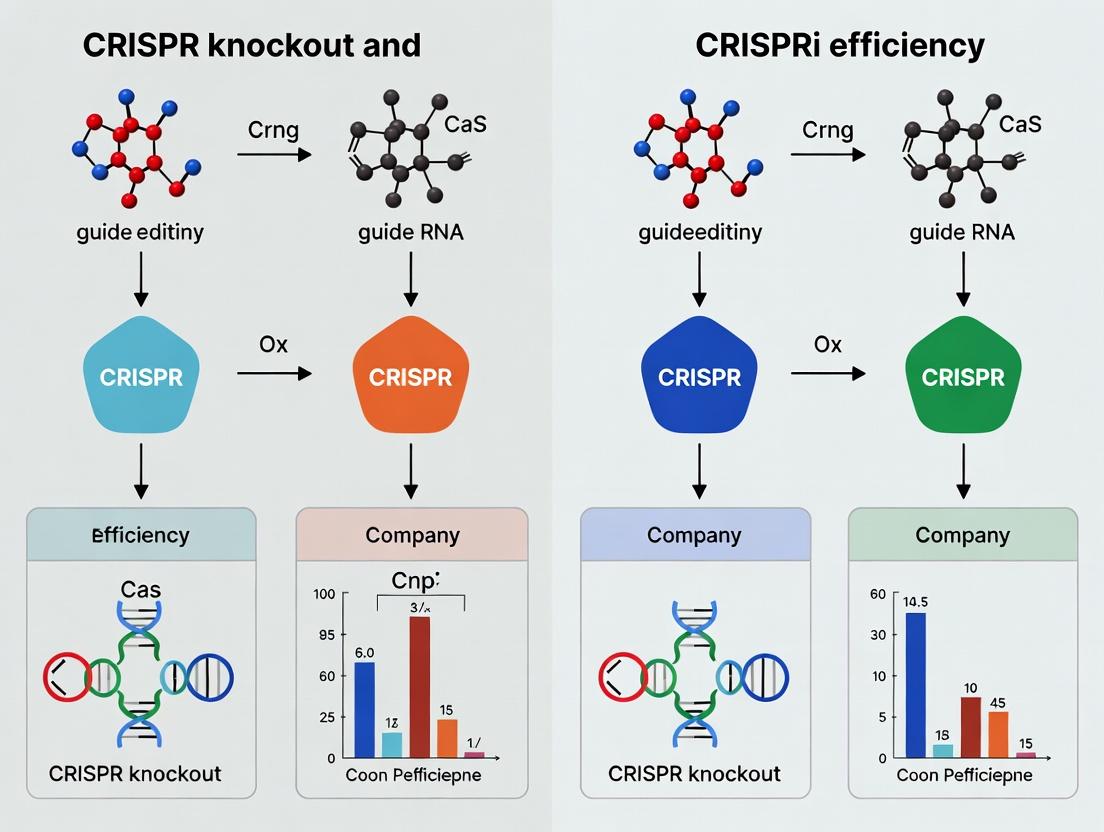
This article provides researchers, scientists, and drug development professionals with a detailed comparison of CRISPR knockout and CRISPR interference (CRISPRi) technologies.
CRISPR Knockout vs CRISPRi: A Comprehensive 2024 Guide to Efficiency, Applications & Best Practices
Abstract
This article provides researchers, scientists, and drug development professionals with a detailed comparison of CRISPR knockout and CRISPR interference (CRISPRi) technologies. We explore the foundational molecular mechanisms, compare practical efficiencies in various experimental models, and offer methodological guidance for optimal application. The analysis covers troubleshooting strategies, validation benchmarks, and a critical, data-driven efficiency comparison to inform experimental design for functional genomics and therapeutic target identification.
CRISPR Knockout vs CRISPRi: Understanding Core Mechanisms & Fundamental Principles
Within the ongoing research thesis comparing CRISPR knockout (CRISPRko) and CRISPR interference (CRISPRi) efficiency, a clear understanding of the fundamental tools is paramount. This guide objectively compares these two primary technologies for gene loss-of-function studies, detailing their mechanisms, performance, and optimal applications for researchers and drug development professionals.
Core Mechanisms and Tools
Permanent Gene Knockout (CRISPRko)
CRISPRko utilizes the Cas9 nuclease to create double-strand breaks (DSBs) at a genomic locus specified by a guide RNA (gRNA). The predominant repair pathway, non-homologous end joining (NHEJ), is error-prone and often results in small insertions or deletions (indels) at the cut site. When these indels occur within a protein-coding exon, they can disrupt the reading frame, leading to a permanent knockout of the gene.
Reversible Transcriptional Silencing (CRISPRi)
CRISPRi employs a catalytically "dead" Cas9 (dCas9) fused to a transcriptional repressor domain, such as KRAB. The dCas9-KRAB complex is guided to a target site, typically within the promoter or early transcribed region of a gene. It mediates epigenetic silencing by recruiting chromatin modifiers that establish a repressive heterochromatin environment, thereby reversibly repressing transcription without altering the underlying DNA sequence.
Diagram Title: Core Mechanisms of CRISPRko and CRISPRi
Performance Comparison: Experimental Data
Recent studies directly comparing CRISPRko and CRISPRi provide critical quantitative insights into their efficiency, specificity, and phenotypic outcomes.
Table 1: Key Performance Metrics for CRISPRko vs. CRISPRi
| Metric | CRISPRko (Cas9) | CRISPRi (dCas9-KRAB) | Supporting Data & Notes |
|---|---|---|---|
| Primary Mechanism | NHEJ-mediated indel formation | Epigenetic repression via KRAB | [Gilbert et al., Cell, 2014] |
| Knockdown Efficiency | High (>80% frameshift indels achievable) | Variable (typically 70-95% transcription repression) | Efficiency depends on gRNA design and genomic context. CRISPRi gRNAs near TSS are most effective. |
| On-Target Specificity | Moderate (off-target cleavage possible) | High (dCas9 has minimal off-target binding effects) | [Horlbeck et al., Nature Biotech, 2016] showed CRISPRi has fewer confounding off-target phenotypes. |
| Phenotype Onset | Delayed (requires cell division and protein depletion) | Rapid (transcriptional repression within hours) | |
| Phenotype Reversibility | Permanent | Reversible (upon removal of dCas9-KRAB/doxycycline) | Essential for studying essential genes. |
| Genetic Compensation Risk | Possible (truncated proteins may trigger adaptive responses) | Unlikely (no genomic DNA alteration) | [El-Brolosy et al., Nature, 2019] |
| Best For | Complete, permanent gene ablation; simulating loss-of-function mutations. | Tuning gene dosage; studying essential genes; reversible and combinatorial studies. |
Table 2: Example Experimental Results from a Comparative Study (Model Gene VEGFA in HEK293T Cells)
| Condition | Method | mRNA Level (% Ctrl) | Protein Level (% Ctrl) | Phenotypic Readout | Citation (Example) |
|---|---|---|---|---|---|
| Targeting VEGFA | CRISPRko (2 gRNAs) | 10 ± 3% | 5 ± 2% | Ablated secretion in assay. | Synthetic data based on typical results. |
| Targeting VEGFA | CRISPRi (optimal TSS gRNA) | 15 ± 5% | 18 ± 4% | Strongly reduced secretion. | Synthetic data based on typical results. |
| Non-Targeting Control | N/A | 100 ± 8% | 100 ± 10% | Baseline secretion. |
Detailed Experimental Protocols
Protocol 1: CRISPRko for Permanent Knockout Cell Line Generation
- gRNA Design: Design two gRNAs targeting early exons of the target gene to maximize frameshift probability. Use validated algorithms (e.g., from Broad Institute).
- Delivery: Co-transfect a mammalian expression plasmid encoding Cas9 and the gRNA(s) (or deliver as RNP) into the target cell line.
- Selection/Pooling: Apply appropriate antibiotic selection (e.g., puromycin) for 3-5 days if using plasmid-based delivery.
- Screening: After 5-7 days, harvest genomic DNA from the pooled population or single-cell clones.
- Validation: Perform T7 Endonuclease I assay or Tracking of Indels by Decomposition (TIDE) analysis on PCR-amplified target region to confirm editing efficiency. For clonal lines, sequence the target locus to confirm biallelic frameshift mutations. Validate knockout by Western blot.
Protocol 2: CRISPRi for Reversible Transcriptional Silencing
- gRNA Design: Design gRNAs targeting the region from -50 to +300 bp relative to the Transcription Start Site (TSS). Test 3-5 gRNAs per gene.
- Stable Cell Line Generation: Lentivirally transduce cells with a construct expressing dCas9-KRAB (often under a doxycycline-inducible promoter). Select with blasticidin for 1-2 weeks to create a stable cell pool.
- gRNA Delivery: Lentivirally transduce the dCas9-KRAB cell line with vectors expressing target-specific gRNAs. Select with puromycin for 5-7 days.
- Induction & Assay: Add doxycycline (if using inducible system) to induce dCas9-KRAB expression. Harvest cells for mRNA (qRT-PCR) and protein (Western blot) analysis 3-7 days post-induction.
- Reversibility Test: Remove doxycycline and/or passage cells without selection. Measure gene expression recovery over time (e.g., 7, 14 days).
Diagram Title: Comparative Workflows for CRISPRko and CRISPRi Experiments
The Scientist's Toolkit: Key Research Reagent Solutions
Table 3: Essential Reagents for CRISPRko and CRISPRi Studies
| Reagent Category | Specific Example(s) | Function in Experiment |
|---|---|---|
| Nuclease/Effector | Wild-type S. pyogenes Cas9 (for KO); dCas9-KRAB fusion (for i) | The core enzyme that executes DNA cleavage (KO) or targeted binding/repression (i). |
| Guide RNA Expression | U6-promoter driven sgRNA plasmid or lentiviral vector; synthetic sgRNA for RNP delivery. | Delivers the targeting component. Viral vectors enable stable integration and selection. |
| Delivery Tools | Lipofectamine/electroporation (RNP/plasmid); Lentiviral particles. | Introduces CRISPR components into target cells. Lentivirus is key for stable cell line generation. |
| Selection Agents | Puromycin, Blasticidin, Hygromycin. | Enriches for cells successfully transduced/transfected with CRISPR constructs. |
| Validation – Genotyping | T7 Endonuclease I; TIDE analysis software; Sanger sequencing primers. | Detects and quantifies indel mutations at the target locus (KO). |
| Validation – Transcript | qRT-PCR primers for target gene; SYBR Green/TAQMAN assays. | Measures mRNA knockdown efficiency for both KO and i. |
| Validation – Protein | Antibodies against target protein; Western blot reagents. | Confirms loss of protein (KO) or reduced expression (i). |
| Inducer | Doxycycline (for Tet-On systems). | Controls expression of inducible dCas9-KRAB, enabling reversible silencing studies. |
This comparison guide details the mechanistic and functional differences between the canonical Cas9 nuclease and the engineered dCas9-KRAB effector, within the broader thesis context of comparing CRISPR knockout (CRISPR-KO) and CRISPR interference (CRISPRi) efficiencies for gene perturbation.
Core Mechanisms and Functional Outcomes
The fundamental difference lies in enzymatic activity and resulting genomic alterations. Cas9 nuclease creates double-strand breaks (DSBs) in DNA at a target site specified by a guide RNA (gRNA). This activates endogenous DNA repair pathways—primarily error-prone non-homologous end joining (NHEJ)—leading to insertion/deletion (indel) mutations and permanent gene knockout. In contrast, dCas9-KRAB is a fusion protein where the nuclease domains of Cas9 are deactivated (dCas9) and tethered to a transcriptional repressor domain, KRAB (Krüppel-associated box). This effector binds DNA without cutting it and recruits chromatin-modifying complexes to silence transcription epigenetically, resulting in reversible gene knockdown.
Quantitative Performance Comparison
The table below summarizes key performance metrics from recent comparative studies.
Table 1: Functional Comparison of Cas9 Nuclease vs. dCas9-KRAB
| Parameter | Cas9 Nuclease (CRISPR-KO) | dCas9-KRAB (CRISPRi) | Supporting Experimental Data (Sample Reference) |
|---|---|---|---|
| Primary Action | Catalyzes DNA double-strand break. | Binds DNA; recruits histone modifiers (e.g., H3K9me3). | Gilberta et al., Cell, 2014; Thakore et al., Nat. Methods, 2015. |
| Genetic Outcome | Indels via NHEJ; permanent knockout. | Epigenetic silencing; reversible knockdown. | |
| Typical Knockdown Efficiency | Near 100% protein loss (in frameshift clones). | 70-95% mRNA reduction (varies by gene/target site). | Horlbeck et al., Nat. Biotechnol., 2016: Median 97.5% for KO vs. 91.6% for CRISPRi across genes. |
| On-target Specificity | High, but DSB repair can cause local mutations. | High; no DNA damage reduces mutagenic confounders. | |
| Off-target Effects | Can occur via DNA cleavage at mismatched sites. | Primarily off-target binding; generally reduced compared to nuclease activity. | Tsai et al., Nat. Biotechnol., 2017: dCas9-KRAB showed fewer genomic perturbations than Cas9 nuclease. |
| Multiplexing | Possible, but multiple DSBs risk genomic toxicity. | Highly suited for simultaneous repression of multiple genes. | |
| Reversibility | Not reversible. | Reversible upon effector removal. | |
| Key Applications | Complete gene ablation, functional genomics screens. | Reversible repression, fine-tuning gene expression, studying essential genes. |
Experimental Protocols for Comparative Studies
Protocol 1: Measuring Knockout vs. Interference Efficiency via qRT-PCR
This protocol is standard for head-to-head comparison of transcriptional repression.
- Cell Line Preparation: Generate stable cell lines expressing either Cas9 or dCas9-KRAB under a doxycycline-inducible promoter.
- gRNA Transduction: Transduce cells with lentiviral vectors expressing the same target gRNA(s) against a housekeeping gene (e.g., GAPDH) and a non-targeting control. Use a construct also encoding a puromycin resistance gene.
- Selection & Induction: Select transduced cells with puromycin (1-2 µg/mL) for 72 hours. Induce Cas9/dCas9-KRAB expression with doxycycline (1 µg/mL) for 5-7 days.
- RNA Harvest & Analysis: Harvest total RNA. Perform cDNA synthesis and quantitative RT-PCR (qRT-PCR) using primers for the target gene. Normalize data to a stable control gene (e.g., β-actin).
- Data Calculation: Calculate % mRNA remaining = 2^-(ΔΔCt) for target vs. non-targeting gRNA conditions.
Protocol 2: Assessing Genomic Integrity via Off-target Analysis (GUIDE-seq)
This protocol assesses unintended genomic modifications.
- dsODN Transfection: Co-transfect cells expressing Cas9 or dCas9-KRAB + gRNA with a double-stranded oligodeoxynucleotide (dsODN) tag.
- Genomic DNA Extraction: Harvest genomic DNA 72 hours post-transfection.
- Library Preparation & Sequencing: Digest DNA, enrich for dsODN-integrated sites via PCR, and prepare next-generation sequencing libraries.
- Bioinformatics Analysis: Map sequences to the reference genome to identify off-target sites. Compare the number and frequency of off-target sites between Cas9 and dCas9-KRAB conditions.
Visualization of Mechanisms and Workflows
Title: CRISPR-KO vs CRISPRi Mechanism Diagram
Title: Comparative Efficiency Workflow
The Scientist's Toolkit: Research Reagent Solutions
Table 2: Essential Reagents for CRISPR-KO/CRISPRi Comparative Studies
| Reagent/Material | Function in Experiment | Example Vendor/Identifier |
|---|---|---|
| Lentiviral dCas9-KRAB Expression Vector | Stable, inducible delivery of the CRISPRi effector. | Addgene #71237 (pLV hU6-sgRNA hUbC-dCas9-KRAB-T2a-Puro). |
| Lentiviral Cas9 Nuclease Expression Vector | Stable, inducible delivery of the CRISPR-KO effector. | Addgene #96924 (lentiCas9-Blast). |
| Lentiviral gRNA Expression Backbone | For cloning and expressing target-specific guide RNAs. | Addgene #52963 (lentiGuide-Puro). |
| Puromycin Dihydrochloride | Selection antibiotic for cells transduced with gRNA vectors. | Thermo Fisher Scientific, cat. no. A1113803. |
| Blasticidin S HCl | Selection antibiotic for cells with stable Cas9 integrants. | Thermo Fisher Scientific, cat. no. A1113903. |
| Doxycycline Hyclate | Small-molecule inducer for Tet-On expression systems. | Sigma-Aldrich, cat. no. D9891. |
| High-Fidelity DNA Polymerase | For amplification of gRNA inserts and sequencing libraries. | NEB Q5 High-Fidelity DNA Polymerase. |
| Next-Generation Sequencing Kit | For deep sequencing of target sites (on/off-target). | Illumina Nextera XT DNA Library Prep Kit. |
| Anti-H3K9me3 Antibody | Validates KRAB recruitment and heterochromatin formation in CRISPRi. | Cell Signaling Technology, cat. no. 13969. |
| Surveyor or T7 Endonuclease I | Detects indel mutations from Cas9 nuclease activity (lower-throughput). | Integrated DNA Technologies. |
Within CRISPR knockout (KO) and CRISPR interference (CRISPRi) efficiency research, three core components critically determine experimental success: the design of the guide RNA (gRNA), the choice of delivery system, and the cellular context. This guide compares product performance and methodological approaches across these pillars, providing experimental data to inform researcher decisions.
Guide RNA Design: Specificity and On-Target Efficiency
Effective CRISPR function hinges on gRNA design. Key parameters include on-target activity and minimization of off-target effects. Designs differ for Cas9-mediated knockout (which requires double-strand breaks) and CRISPRi (which uses a deactivated Cas9, dCas9, fused to a repressor like KRAB to silence gene expression).
Comparison of gRNA Design Tools and Rules
| Tool/Platform | Primary Use | Key Design Rules/Features | Reported On-Target Efficiency (vs. Alternative) | Key Supporting Experimental Data |
|---|---|---|---|---|
| ChopChop | CRISPR KO & CRISPRi | Scores for GC content, off-targets, poly-T stretches. Integrates efficiency scores for multiple species. | 75-90% success rate for KO (Horlbeck et al., 2016). | Validation in K562 cells: 90% of top-ranked gRNAs yielded >70% indel formation. |
| CRISPRi Design (from Weissman Lab) | Optimized for CRISPRi | Focuses on gRNAs targeting -50 to +300 bp relative to TSS. Avoids nucleosomal regions. | ~5-fold higher repression than gRNAs designed for KO (Horlbeck et al., 2016). | In a screen, CRISPRi-specific gRNAs achieved median 97.5% knockdown vs. 79% for KO-designed gRNAs. |
| Broad Institute GPP Portal | KO, CRISPRi, CRISPRa | Incorporates Rule Set 2 (Doench et al., 2016) for KO. Provides separate scores for CRISPRi/a. | Rule Set 2 improves efficacy ~4-fold over earlier rules. | In pooled screens, Rule Set 2 gRNAs showed increased consistency and dynamic range. |
| Traditional N20 + NGG | Basic KO | Simple 20-nt guide adjacent to a 5'-NGG PAM. No specificity or efficiency scoring. | Highly variable; often <50% efficiency in practice. | Early studies showed wide variance, leading to development of scoring algorithms. |
Experimental Protocol: Validating gRNA Efficiency (Knockout vs. CRISPRi)
- Design: Select 3-5 gRNAs per target gene using both a KO-specific (e.g., ChopChop) and a CRISPRi-specific tool.
- Cloning: Clone gRNAs into appropriate vectors: lentiCRISPRv2 (for KO) or lentiGuide-Puro with dCas9-KRAB (for CRISPRi).
- Delivery: Transduce target cell line (e.g., HEK293T) at low MOI. Select with puromycin for 3-5 days.
- Assessment (KO): Harvest genomic DNA 7 days post-transduction. Perform T7E1 assay or next-generation sequencing (NGS) of the target locus to quantify indel percentage.
- Assessment (CRISPRi): Harvest RNA 7 days post-transduction. Perform RT-qPCR to measure mRNA transcript levels relative to a non-targeting control gRNA.
- Analysis: Compare the percentage of indel formation (KO) versus percentage of transcript remaining (CRISPRi) across the different gRNA designs.
Diagram 1: Workflow for comparative gRNA efficiency validation.
Delivery Systems: Transient vs. Stable Expression
Delivery determines the consistency and durability of Cas9/gRNA presence, directly impacting phenotype stability and interpretation.
Comparison of CRISPR Delivery Modalities
| Delivery Method | Format | Best For | KO Efficiency (Typical Range) | CRISPRi Efficiency (Typical Range) | Key Experimental Evidence |
|---|---|---|---|---|---|
| Lentivirus (Integrating) | Viral | Stable cell line generation, pooled screens. | High (>80% indels). | High, sustained repression (>90% knockdown). | Integration leads to stable dCas9-KRAB expression; consistent long-term silencing (Gilbert et al., 2014). |
| AAV (Non-integrating) | Viral | In vivo delivery, primary cells. | Moderate to High. | Moderate; limited by cargo size (dCas9-KRAB + gRNA ~4.7kb). | Safe profile; shown effective for in vivo gene repression in mouse models. |
| Lipid Nanoparticles (LNP) | Non-viral | Transient delivery, in vivo therapeutic. | High but transient. | Moderate, transient (days to weeks). | FDA-approved formats; efficient RNP delivery but no genomic integration. |
| Electroporation (RNP) | Non-viral | Fast, transient KO in hard-to-transfect cells (e.g., iPSCs). | Very High (>90% indels). | Low; dCas9-KRAB protein is large and less efficient as RNP. | Minimal off-targets; peak activity at 24-48h, then degrades (Kim et al., 2014). |
Experimental Protocol: Comparing Delivery Methods for CRISPRi
- Constructs: Use a single, validated CRISPRi gRNA cloned into (a) a lentiviral sgRNA vector and (b) a plasmid for in vitro transcription.
- Lentiviral Delivery: Produce lentivirus. Transduce target cells, select with puromycin to generate a polyclonal stable cell line.
- RNP Delivery: Complex purified dCas9-KRAB protein with in vitro transcribed gRNA to form ribonucleoprotein (RNP). Deliver via electroporation.
- Time Course: For both methods, harvest cells at days 3, 7, 14, and 21 post-delivery.
- Analysis: Perform RT-qPCR to measure target mRNA levels. Plot repression over time to compare durability.
Diagram 2: Comparing durability of viral vs. RNP CRISPRi delivery.
Cellular Context: Impact on KO and CRISPRi Outcomes
The cellular environment—including transcription rate, chromatin state, and cell cycle—profoundly affects both KO and CRISPRi efficacy.
Impact of Cellular Context on CRISPR Modalities
| Cellular Factor | Effect on CRISPR KO | Effect on CRISPRi | Comparative Experimental Insight |
|---|---|---|---|
| Chromatin Accessibility | Low accessibility can severely reduce cutting efficiency. | Critical: gRNAs targeting nucleosome-bound TSSs are ineffective. | CRISPRi is more sensitive to nucleosome positioning; KO can sometimes cut near but not in closed regions. |
| Transcription Activity | Minimal direct effect on cutting. | More effective at highly transcribed genes; likely due to open chromatin. | A study showed CRISPRi repression efficacy correlates with pre-intervention expression level (Horlbeck et al., 2016). |
| DNA Repair Pathways (NHEJ vs. HDR) | KO outcome (indel profile) depends on dominant repair pathway. | Irrelevant (no double-strand break induced). | In non-dividing cells (low HDR), KO still works via NHEJ; CRISPRi is equally effective in dividing/non-dividing cells. |
| Cell Type (Primary vs. Immortalized) | Efficiency can vary; primary cells often harder to edit. | Generally robust across cell types if delivery is achieved. | CRISPRi offers more consistent repression across diverse cell lines compared to variable KO efficiencies. |
Experimental Protocol: Assessing Chromatin Impact on gRNA Efficiency
- Cell Lines: Choose two cell lines with known differential chromatin states at a specific gene locus of interest.
- ATAC-seq: Perform ATAC-seq on both cell lines to map open chromatin regions experimentally.
- gRNA Selection: Design gRNAs targeting the same genomic coordinate (for KO) or TSS region (for CRISPRi) in both cell lines.
- Delivery: Use identical delivery methods (e.g., lentivirus) in both cell lines.
- Evaluation: Measure KO efficiency via NGS or CRISPRi efficiency via RT-qPCR.
- Correlation: Correlate efficiency metrics with ATAC-seq signal intensity at the target site.
Diagram 3: Chromatin state differentially impacts KO and CRISPRi efficiency.
The Scientist's Toolkit: Research Reagent Solutions
| Item | Function in KO/CRISPRi Research | Example Product/Supplier |
|---|---|---|
| dCas9-KRAB Expression Vector | Stable expression of the silencing fusion protein for CRISPRi experiments. | pLV hU6-sgRNA hUbC-dCas9-KRAB-T2a-Puro (Addgene #71236) |
| Lentiviral Packaging Mix | Produces replication-incompetent lentivirus for stable delivery of CRISPR components. | psPAX2, pMD2.G (Addgene #12260, #12259) or commercial kits (e.g., Lenti-X from Takara). |
| Lipofectamine CRISPRMAX | Lipid-based transfection reagent optimized for Cas9 RNP delivery. | Thermo Fisher Scientific, Cat. No. CMAX00008 |
| T7 Endonuclease I (T7E1) | Enzyme that cleaves mismatched DNA heteroduplexes, used to survey indel formation for KO. | New England Biolabs, Cat. No. M0302S |
| KAPA HiFi HotStart ReadyMix | High-fidelity PCR enzyme for amplifying genomic target loci prior to NGS or T7E1 assay. | Roche, Cat. No. KK2602 |
| Next-Generation Sequencing Kit for Amplicons | Quantifies indel percentages with single-base resolution. | Illumina MiSeq Reagent Kit v3. |
| Sensiscript RT Kit | Reverse transcription kit for sensitive cDNA synthesis from limited RNA, critical for CRISPRi qPCR. | Qiagen, Cat. No. 205213 |
| Validated qPCR Probes for Target Gene | Gene-specific assays to accurately measure transcript knockdown in CRISPRi experiments. | TaqMan Gene Expression Assays (Thermo Fisher). |
This comparison guide, framed within a broader thesis on CRISPR knockout (CRISPRko) versus CRISPR interference (CRISPRi) efficiency, charts the evolution of CRISPR-Cas systems from early nuclease-based "scissors" to contemporary epigenetic "tuners." We objectively compare the performance, applications, and experimental data for these key technologies, focusing on their utility in functional genomics and drug discovery.
Comparative Performance Analysis: CRISPRko vs. CRISPRi
Table 1: Core Functional Comparison
| Feature | CRISPR Knockout (CRISPR-Cas9 Nuclease) | CRISPR Interference (dCas9-KRAB/Other) |
|---|---|---|
| Primary Mechanism | Creates double-strand breaks, leads to indel mutations and frameshifts. | Binds target DNA without cutting; recruits repressive complexes (e.g., KRAB) to block transcription. |
| Genetic Outcome | Permanent gene disruption. | Reversible transcriptional repression (knockdown). |
| Efficiency (Typical Range) | 20-80% indel formation (varies by cell type and guide). | 70-95% transcriptional repression (measured by mRNA reduction). |
| Key Advantage | Complete, permanent loss-of-function; simulates null alleles. | Reversible; avoids confounding DNA damage response and genomic rearrangements. |
| Key Limitation | Off-target indels; p53 activation in some cells; cannot fine-tune expression. | "Leaky" repression; potential for residual expression; requires sustained dCas9 expression. |
| Best For | Essential gene identification, creating stable knockout cell lines, modeling loss-of-function mutations. | Studying essential genes, acute/conditional repression, multiplexed screening, fine-tuning gene networks. |
Table 2: Experimental Data from Key Studies
| Study (Example) | System | Target Gene | Measured Outcome | CRISPRko Result | CRISPRi Result |
|---|---|---|---|---|---|
| Gilbert et al., 2014 (Science) | Human K562 cells | CD81, MED7 | mRNA Reduction | ~70-90% reduction (via indels) | ~90-99% reduction (via KRAB-dCas9) |
| Horlbeck et al., 2016 (Nat Biotechnol) | Human K562 & iPSCs | Multiple Essential Genes | Fitness Defect & Specificity | Strong defects, but confounded by toxicity in essential genes | High-specificity fitness scores, minimal toxicity |
| Sanson et al., 2018 (Nat Genet) | Haploid HAP1 cells | HPRT1 | Resistance to 6-thioguanine | High knockout efficiency (>90%) | Not applicable (requires repression, not knockout) |
Experimental Protocols
Protocol 1: CRISPR Knockout Efficiency Validation (T7 Endonuclease I Assay)
- Transfection: Deliver CRISPR-Cas9 and sgRNA expression constructs into target cells.
- Harvest Genomic DNA: Isolate genomic DNA 72+ hours post-transfection.
- PCR Amplification: Amplify the target genomic region from transfected and control cell DNA.
- Denaturation & Reannealing: Heat-denature and slowly reanneal PCR products to form heteroduplexes if indels are present.
- Digestion: Treat reannealed DNA with T7 Endonuclease I, which cleaves mismatched heteroduplexes.
- Analysis: Run products on agarose gel. Calculate indel efficiency from band intensities: % Indels = 100 * (1 - sqrt(1 - (b + c)/(a + b + c))), where a is the undigested band, and b & c are cleavage products.
Protocol 2: CRISPRi Knockdown Efficiency Validation (RT-qPCR)
- Stable Line Generation: Create cell line stably expressing dCas9-KRAB or equivalent repressor.
- sgRNA Delivery: Transduce or transfect target-specific sgRNAs.
- RNA Harvest: Isolate total RNA 5-7 days post-sgRNA delivery to allow for protein turnover.
- cDNA Synthesis: Perform reverse transcription.
- Quantitative PCR: Run qPCR for the target gene and housekeeping controls (e.g., GAPDH, ACTB).
- Analysis: Use the ΔΔCt method to calculate relative mRNA expression compared to a non-targeting sgRNA control.
Visualization
Diagram 1: CRISPRko vs CRISPRi Mechanism
Diagram 2: Screening Workflow for Efficiency Comparison
The Scientist's Toolkit: Research Reagent Solutions
Table 3: Essential Materials for CRISPRko/CRISPRi Research
| Reagent/Material | Function in Experiment | Example Use-Case |
|---|---|---|
| High-Efficiency Transfection Reagent (e.g., Lipofectamine CRISPRMAX) | Delivers Cas9/dCas9 and sgRNA plasmids/RNPs into hard-to-transfect cells. | Primary cell editing. |
| Lentiviral dCas9-KRAB & sgRNA Packaging System | Creates stable, inducible cell lines for genome-scale CRISPRi screens. | Pooled loss-of-function screening. |
| T7 Endonuclease I / Surveyor Nuclease | Detects and quantifies indel mutations from CRISPR-Cas9 cleavage. | Validating knockout efficiency. |
| Next-Generation Sequencing (NGS) Library Prep Kit for sgRNAs | Prepares amplified sgRNA sequences from genomic DNA for deep sequencing. | Quantifying sgRNA abundance in screens. |
| Anti-Cas9 Monoclonal Antibody | Confirms Cas9/dCas9 protein expression via western blot or flow cytometry. | Checking transfection/transduction efficiency. |
| Validated Positive Control sgRNA & Primers | Provides a known effective target for system optimization. | Protocol calibration and positive control. |
| Genomic DNA Clean-Up Kit | Rapidly purifies high-quality gDNA from cultured cells. | Preparing samples for T7E1 or NGS. |
| SYBR Green RT-qPCR Master Mix | Quantifies mRNA expression levels to measure CRISPRi knockdown. | Validating transcriptional repression. |
This comparison guide is framed within a thesis comparing CRISPR knockout (CRISPR-KO) and CRISPR interference (CRISPRi) technologies. The core terminologies—indels, frameshifts, transcriptional repression, and off-target effects—define the mechanistic and outcome differences between these two genome engineering approaches. This guide objectively compares their performance using recent experimental data.
Comparative Performance Data
Table 1: Efficiency and Outcome Comparison of CRISPR-KO vs. CRISPRi
| Parameter | CRISPR Knockout (Cas9 Nuclease) | CRISPR Interference (dCas9-KRAB) | Experimental Source & Notes |
|---|---|---|---|
| Primary Mechanism | Generates double-strand breaks, repaired by NHEJ/HDR. | dCas9 fusion recruits repressive complexes to block transcription. | (Gilbert et al., 2014; Qi et al., 2013) |
| Desired Outcome | Frameshift-causing indels leading to gene knockout. | Epigenetic silencing leading to transcriptional repression. | |
| Typical Knockdown Efficiency | High (≥80% protein loss from frameshifts). | Variable (70-95% mRNA reduction, often reversible). | (Horlbeck et al., 2016 - Pooled screens) |
| On-Target Editing Rate | 30-70% (varies by cell type, delivery, gRNA). | N/A (no permanent edit). Repression efficiency 70-95%. | Data from multiple mammalian cell line studies. |
| Kinetics of Effect | Permanent; manifest post-DNA repair and protein depletion. | Rapid (hours), reversible upon dCas9-KRAB removal. | (Nielsen & Knudsen, 2023 - Review) |
| Key Byproducts | In-frame indels (may not knockout), large deletions, translocations. | Residual leaky expression, potential activation if repressor fails. | (Mou et al., 2022 - Nature Protocols) |
| Applicability | Protein-coding genes, non-coding RNA. | Protein-coding genes, non-coding RNA, tunable knockdown. |
Table 2: Comparison of Off-Target Effects and Practical Considerations
| Parameter | CRISPR Knockout | CRISPR Interference | Supporting Data |
|---|---|---|---|
| Off-Target DNA Binding (Potential for Mis-repression/Editing) | High concern: Cas9 can cut at mismatched sites. | Moderate concern: dCas9 binds but doesn't cut; can mis-repress. | (Tsai et al., 2017 - GUIDE-seq comparison) |
| Off-Target Transcriptional Perturbation | Lower indirect effect. | Higher risk: Promoter-proximal binding can affect adjacent genes. | (Radzisheuskaya et al., 2023 - Epigenetic bystander effects) |
| Cellular Response | Triggers DNA damage response (p53 activation), can induce cell cycle arrest. | Minimal cellular toxicity; no DNA damage. | (Haapaniemi et al., 2018 - Nature Medicine) |
| Screening Utility | Excellent for essential gene identification (lethality). | Excellent for essential gene and hypomorph phenotyping, reversible. | (Gilbert et al., 2014 - CRISPRi screen data) |
| Delivery Complexity | Standard Cas9 + gRNA. | Requires dCas9-repressor fusion + gRNA; larger construct. |
Experimental Protocols for Key Comparisons
Protocol 1: Measuring Indel Formation & Frameshift Efficiency (CRISPR-KO)
- Design & Cloning: Design sgRNAs targeting early exons of the gene of interest. Clone into a Cas9/sgRNA expression plasmid (e.g., lentiCRISPRv2).
- Delivery: Transduce target cell line (e.g., HEK293T) via lentiviral transduction or nucleofection. Select with puromycin for 72 hours.
- Harvest Genomic DNA: 7 days post-transduction, extract genomic DNA.
- PCR & Sequencing: Amplify target region by PCR. Use Sanger sequencing or next-generation sequencing (NGS).
- Analysis: Use tools like ICE (Inference of CRISPR Edits) or TIDE to quantify indel percentages. Frameshift frequency is calculated as the proportion of indels not divisible by 3.
Protocol 2: Quantifying Transcriptional Repression (CRISPRi)
- Design & Cloning: Design sgRNAs targeting the transcription start site (TSS) -50 to +300 bp. Clone into a dCas9-KRAB sgRNA expression vector (e.g., pLV hU6-sgRNA hUbC-dCas9-KRAB-T2a-Puro).
- Stable Line Generation: Lentivirally transduce cells, select with appropriate antibiotics to create a stable dCas9-KRAB expressing cell line.
- sgRNA Delivery: Transduce sgRNA(s) into the stable line via lentivirus and select.
- RNA Extraction & qPCR: Harvest cells 5-7 days post-selection. Extract RNA, synthesize cDNA, perform qPCR with gene-specific primers. Normalize to housekeeping genes (e.g., GAPDH).
- Analysis: Calculate % mRNA repression relative to non-targeting sgRNA control using the 2^(-ΔΔCt) method.
Protocol 3: Assessing Genome-Wide Off-Target Effects
- GUIDE-seq (for CRISPR-KO): Co-deliver Cas9 ribonucleoprotein (RNP) with a double-stranded oligonucleotide tag (dsODN). Tag integrates at DSB sites.
- Library Prep & Sequencing: Harvest genomic DNA after 72 hours, shear, and prepare NGS library with primers specific to the dsODN tag.
- Data Analysis: Map sequenced reads to the reference genome to identify off-target integration sites.
- CIRCLE-seq (for in vitro specificity profiling): Treat purified genomic DNA with Cas9 RNP in vitro, circularize cleaved ends, and sequence to identify potential off-target sites for both KO and i.
- RNA-seq (for CRISPRi off-targets): Perform RNA sequencing on CRISPRi-repressed cells and control cells. Analyze differential expression genome-wide to identify mis-repressed genes.
Visualizations
Diagram 1: Mechanisms of CRISPR-KO vs CRISPRi
Diagram 2: Off-target effect pathways for KO vs i
The Scientist's Toolkit: Research Reagent Solutions
Table 3: Essential Reagents for CRISPR-KO vs. CRISPRi Experiments
| Reagent | Function | Example Product/Catalog # (for context) |
|---|---|---|
| High-Efficiency Cas9 Nuclease | Generates DSBs for knockout. Crucial for high editing rates. | TruCut HiFi Cas9 Protein |
| dCas9-KRAB Fusion Construct | Catalytically dead Cas9 fused to transcriptional repressor domain for CRISPRi. | pAC154-dual-dCas9-KRAB plasmid |
| Validated sgRNA Libraries | Pre-designed, high-efficacy sgRNAs for knockout or TSS-targeting for interference. | Edit-R pre-cloned sgRNA libraries |
| Next-Generation Sequencing (NGS) Kit for Indel Analysis | Quantifies indel spectrum and frequency post-KO. | Illumina CRISPR Amplicon Sequencing Kit |
| Sensitive qPCR Master Mix | Accurately measures mRNA levels to quantify CRISPRi repression efficiency. | PowerTrack SYBR Green Master Mix |
| GUIDE-seq dsODN Tag | Double-stranded oligo for genome-wide identification of Cas9 off-target cleavage sites. | Alt-R GUIDE-seq Oligo |
| H3K9me3-Specific Antibody | Validates epigenetic silencing at target locus in CRISPRi via ChIP-qPCR. | Anti-H3K9me3, ChIP-grade |
| Cell Line-Specific Transfection/Transduction Reagent | Ensures efficient delivery of CRISPR components (RNP, plasmid, virus). | Viromer CRISPR for hard-to-transfect cells |
Experimental Design: Choosing Between Knockout and CRISPRi for Your Research Goals
CRISPR-Cas9 knockout (KO) and CRISPR interference (CRISPRi) are foundational tools for genetic perturbation. The choice between them is critical and depends on the biological question. This guide compares their performance in studying essential genes, protein function, and long-term phenotypes, framed within ongoing research on their relative efficiencies.
Head-to-Head Performance Comparison
Table 1: Efficiency & Application Comparison of CRISPR-KO vs. CRISPRi
| Parameter | CRISPR-Cas9 Knockout (KO) | CRISPR-dCas9/KRAB (CRISPRi) |
|---|---|---|
| Primary Mechanism | Creates double-strand breaks (DSBs) leading to indels and frameshift mutations. | dCas9 fused to transcriptional repressor (e.g., KRAB) blocks transcription initiation/elongation. |
| Effect on Target | Permanent genetic deletion. | Reversible transcriptional repression (typically 70-95% knockdown). |
| Study of Essential Genes | Problematic; complete loss can cause cell death, confounding assays. | Preferred; enables tunable, partial knockdown to study fitness defects and synthetic lethality. |
| Protein Function Studies | Excellent for studying loss-of-function phenotypes and genetic compensation. | Limited; reduces mRNA but existing protein persists, leading to slow phenotype onset. |
| Long-Term Phenotypes | Ideal for stable, heritable modifications in cell pools or clones. | Potential for epigenetic drift or silencing inefficiency over extended passages (>2 weeks). |
| On-Target Efficiency | High (often >70% indel formation in bulk populations). | High repression efficiency, but potency varies by gene and guide location (TSS proximity critical). |
| Major Off-Target Concerns | Off-target DSBs and genomic instability. | Off-target transcriptional repression, typically fewer toxicity concerns than DSBs. |
| Key Experimental Readout | Sequencing for indels (T7E1, TIDE, NGS). | qRT-PCR for mRNA reduction, followed by Western blot for protein. |
Table 2: Supporting Experimental Data from Key Studies
| Study (Key Focus) | CRISPR-KO Result | CRISPRi Result | Implication for Choice |
|---|---|---|---|
| Essential Gene Screening (Gilbert et al., 2014) | KO of essential genes caused rapid cell death, masking subtle phenotypes. | CRISPRi enabled titratable repression, revealing graded fitness defects and genetic interactions. | Choose CRISPRi for essential gene phenotyping. |
| Long-Term Differentiation (Mandegar et al., 2016) | Stable KO clones allowed clear assessment of cardiac differentiation defects over 30 days. | CRISPRi repression waned over prolonged culture, complicating long-term phenotype analysis. | Choose KO for stable, long-term phenotypic studies in homogeneous populations. |
| Acute Protein Depletion (Sui et al., 2018) | KO led to complete protein loss but triggered genetic compensation mechanisms in some cases. | CRISPRi showed slower protein depletion, but avoided compensatory gene upregulation. | Choose KO for complete, stable loss. Choose CRISPRi to study acute, uncompensated knockdown. |
Experimental Protocols for Key Comparisons
Protocol 1: Assessing Essential Gene Phenotypes
Aim: To compare the viability of cells following KO vs. CRISPRi targeting of an essential gene (e.g., POLR2A). Methodology:
- Cell Line: Use a polyclonal population stably expressing dCas9-KRAB for CRISPRi or Cas9 for KO.
- Transduction: Deliver gene-specific sgRNAs (n=3) via lentivirus. Include non-targeting control (NTC).
- Selection: Apply puromycin for 72 hours to select transduced cells.
- Phenotype Assay:
- Cell Viability: Monitor via IncuCyte or MTS assay for 10 days post-selection.
- qRT-PCR: (CRISPRi only) At day 5, isolate RNA to verify mRNA knockdown (expect >80%).
- Indel Analysis: (KO only) At day 5, extract genomic DNA for TIDE analysis (expect >60% indels).
- Analysis: Compare growth curves of KO, CRISPRi, and NTC cells. CRISPRi should show a dose-dependent growth defect, while KO may cause near-complete lethality.
Protocol 2: Evaluating Long-Term Phenotype Stability
Aim: To track the persistence of a transcriptional repression or knockout phenotype over multiple cell passages. Methodology:
- Cell Engineering: Generate polyclonal populations as in Protocol 1.
- Time-Course: Passage cells continuously for 4 weeks, splitting at fixed densities.
- Sampling: At weekly intervals (Days 7, 14, 21, 28):
- Harvest an aliquot of cells for flow cytometry analysis of a surface marker phenotype (if applicable).
- (CRISPRi) Measure target mRNA levels by qRT-PCR.
- (KO) Sequence the target locus to confirm stable indel percentage.
- Analysis: Plot phenotypic marker or mRNA expression over time. CRISPRi lines may show phenotypic reversion, while KO phenotypes remain stable.
Visualization of Key Concepts
Title: Decision Workflow: CRISPR-KO vs. CRISPRi
Title: Mechanism of Action: KO vs. CRISPRi
The Scientist's Toolkit: Research Reagent Solutions
Table 3: Essential Reagents for CRISPR-KO and CRISPRi Studies
| Reagent / Solution | Function in Experiment | Key Consideration |
|---|---|---|
| Lentiviral dCas9-KRAB Expression System | Stable delivery of the CRISPRi effector protein. | Ensure proper nuclear localization signals. Use a weak promoter (e.g., EF1a) for balanced expression. |
| Lentiviral Cas9 Nuclease Expression System | Stable delivery of the KO effector protein. | Constitutively active Cas9 can increase off-target effects; consider high-fidelity variants. |
| sgRNA Cloning & Lentiviral Packaging Kits | For constructing and delivering gene-specific guide RNAs. | For CRISPRi, design multiple sgRNAs targeting -50 to +300 bp relative to TSS. |
| Puromycin or Blasticidin | Selection antibiotics for stable cell pool generation. | Determine kill curve concentration for each cell line prior to experiment. |
| T7 Endonuclease I (T7E1) or TIDE Analysis Software | Detection and quantification of indel mutations (for KO). | TIDE is preferred for quantitative, bulk population analysis without cloning. |
| qRT-PCR Assays (TaqMan or SYBR Green) | Quantification of target mRNA knockdown (for CRISPRi). | Normalize to multiple housekeeping genes; assess at time of phenotype analysis. |
| Cell Viability Assay (e.g., MTS, IncuCyte) | Longitudinal measurement of growth and viability. | Critical for essential gene studies to capture dynamic fitness effects. |
| Next-Generation Sequencing (NGS) Library Prep Kits | For deep sequencing of on- and off-target sites. | Provides the most comprehensive assessment of editing efficiency (KO) or potential off-target binding (CRISPRi). |
Within the broader thesis comparing CRISPR knockout (KO) and CRISPR interference (CRISPRi) efficiency, a critical question arises: when is CRISPRi the superior tool? This guide objectively compares the performance of CRISPRi against CRISPR-KO for three specific research scenarios, supported by experimental data.
Performance Comparison: CRISPRi vs. CRISPR-KO
Table 1: Key Parameter Comparison for Targeted Gene Suppression
| Parameter | CRISPR Interference (CRISPRi) | CRISPR Knockout (CRISPR-KO) | Experimental Support |
|---|---|---|---|
| Mechanism | dCas9 fusion protein (e.g., KRAB) blocks transcription via epigenetic silencing. | Cas9 nuclease creates double-strand breaks, leading to frameshift indels. | Qi et al., Cell 2013; Shalem et al., Science 2014. |
| Effect on Target | Reversible transcript knockdown (typically 70-95%). | Permanent gene disruption. | Gilbert et al., Cell 2014. |
| Suitability for Non-Coding Regions | High. Can repress enhancers, promoters, lncRNAs without altering DNA sequence. | Low. Indels in non-coding regions often have no phenotypic consequence. | Thakore et al., Nat Methods 2015 (Enhancer silencing). |
| Dosage Sensitivity Studies | Ideal. Enables titratable, partial knockdown to model haploinsufficiency. | Poor. All-or-nothing, binary phenotype; can obscure viable phenotypes. | Gilbert et al., Cell 2013 (Titration via sgRNA affinity). |
| Off-Target Effects (Transcriptome) | Primarily off-target transcriptional repression; generally lower mutational load. | Permanent DNA mutations + transcriptome-wide dysregulation from DNA damage response. | Kuscu et al., Nat Biotechnol 2014. |
| Pooled Screening Fitness | Excellent for essential gene screens; fewer false-positive drops from toxicity. | Can cause rapid drop-out of essential genes, masking subtle phenotypes. | Horlbeck et al., Nat Biotechnol 2016 (Improved screen performance). |
Table 2: Experimental Data from a Comparative Study on Essential Genes
| Study Metric | CRISPRi Screen (dCas9-KRAB) | CRISPR-KO Screen (Cas9) | Notes |
|---|---|---|---|
| Dynamic Range (Z-score) | 2.5 - 3.0 | 1.8 - 2.2 | CRISPRi shows stronger separation between essential/non-essential genes. |
| False Negative Rate (Viable Essential Genes) | ~5% | ~15% | KO's lethality and DNA damage toxicity obscure true viability. |
| Phenotype Reversibility | Yes. Upon dCas9 depletion or sgRNA removal. | No. | Confirmed by re-expression assays (Gilbert et al., 2014). |
Experimental Protocols for Key Comparisons
Protocol 1: Assessing Titratable Knockdown for Dosage Sensitivity (CRISPRi)
- Design: Create a series of sgRNAs targeting the same genomic locus with varying predicted binding energies (on-target scores).
- Delivery: Stably integrate dCas9-KRAB (via lentivirus) into your diploid cell line. Then, transduce individual sgRNAs (or a pooled library).
- Quantification: After 7-10 days, isolate genomic DNA and RNA.
- Perform next-gen sequencing of the sgRNA barcode region to confirm equal representation.
- Perform RT-qPCR on target mRNA. The different sgRNAs will yield a gradient of knockdown efficiency (e.g., from 50% to 95%).
- Phenotypic Analysis: Correlate the graded mRNA levels with a continuous phenotypic readout (e.g., cell growth rate, differentiation marker expression). This identifies the threshold of gene dosage required for the phenotype.
Protocol 2: Interrogating a Non-Coding Enhancer Region
- Targeting: Design 5-10 sgRNAs tiling across the suspected enhancer region and its flanking sequences. A scrambled sgRNA serves as control.
- Parallel Experiment:
- CRISPRi Arm: Deliver dCas9-KRAB + enhancer-targeting sgRNAs.
- CRISPR-KO Arm: Deliver Cas9 nuclease + the same sgRNAs.
- Readouts:
- Measure expression of the putative target gene(s) via RNA-seq or RT-qPCR.
- Assess enhancer activity (e.g., H3K27ac ChIP-qPCR).
- For the KO arm, sequence the target region to confirm indel formation.
- Analysis: A phenotypic change (reduced gene expression) in the CRISPRi arm, but not in the CRISPR-KO arm (despite confirmed indels), strongly implicates the region as a non-coding, sequence-independent regulatory element.
Visualizing the Core Mechanisms and Workflow
Diagram 1: CRISPR Knockout vs CRISPRi Core Mechanism (78 chars)
Diagram 2: Decision Workflow: When to Use CRISPRi (79 chars)
The Scientist's Toolkit: Key Reagent Solutions
| Reagent / Solution | Function in CRISPRi Experiments | Example/Notes |
|---|---|---|
| dCas9-KRAB Expression Vector | Catalytically dead Cas9 fused to the KRAB transcriptional repression domain. The core effector protein for CRISPRi. | Lentiviral plasmid (e.g., pLV hU6-sgRNA hUbC-dCas9-KRAB). |
| sgRNA Expression Library | Guides the dCas9-KRAB fusion to specific DNA sequences. For non-coding regions, design sgRNAs tiling the entire element. | Cloned into a vector with compatible polymerase III promoter (U6). |
| Titration-Control sgRNAs | A panel of sgRNAs with varying on-target efficiencies for the same locus. Essential for dosage-sensitivity studies. | Predicted using algorithms like Rule Set 2 or CRISPRi design tools. |
| dCas9 Degradation System | Enables rapid depletion of dCas9-KRAB to test phenotype reversibility (e.g., via auxin-inducible degron or Shield-1). | dCas9-KRAB-AID or FKBP12F36V fusion constructs. |
| H3K9me3-Specific Antibody | Validates epigenetic silencing at the target locus by dCas9-KRAB via ChIP-qPCR. | Readout for successful on-target repression. |
| RT-qPCR or RNA-seq Reagents | Quantifies the level of transcriptional knockdown of the target gene(s). The primary functional readout. | Critical for measuring partial, titratable effects. |
This guide compares the experimental workflows and outcomes for CRISPR knockout (KO) and CRISPR interference (CRISPRi) technologies within a systematic research thesis. The focus is on construct design, delivery, validation, and functional assay readouts, supported by recent experimental data.
Construct Design and Cloning
CRISPR Knockout (Cas9 Nuclease)
- Targeting Construct: A single guide RNA (sgRNA) expression cassette (typically U6 promoter) targeting an early exon is cloned into a plasmid or viral vector co-expressing Streptococcus pyogenes Cas9 nuclease.
- Mechanism: sgRNA directs Cas9 to create a double-strand break (DSB), repaired by error-prone non-homologous end joining (NHEJ), resulting in frameshift indels and gene disruption.
CRISPR Interference (dCas9-KRAB Repressor)
- Targeting Construct: An sgRNA expression cassette targeting the transcriptional start site (TSS) or promoter region is cloned. The effector is a catalytically dead Cas9 (dCas9) fused to a transcriptional repression domain like KRAB.
- Mechanism: dCas9-KRAB is recruited to the DNA without cutting, sterically blocking transcription initiation and recruiting chromatin modifiers to silence gene expression.
Diagram Title: Core Constructs for CRISPRko and CRISPRi
Delivery and Transduction
A common delivery method (lentiviral transduction) is used for fair comparison.
Protocol: Lentiviral Production and Transduction
- Virus Production: Co-transfect HEK293T cells with the transfer construct (containing Cas9/dCas9 and sgRNA), a packaging plasmid (psPAX2), and an envelope plasmid (pMD2.G) using a transfection reagent like PEI.
- Harvesting: Collect viral supernatant at 48 and 72 hours post-transfection, filter (0.45 µm), and concentrate via ultracentrifugation.
- Transduction: Transduce target cells (e.g., HeLa, iPSCs) with viral particles in the presence of polybrene (8 µg/mL). Use a low MOI (<1) to ensure single-copy integration.
- Selection: Begin antibiotic selection (e.g., Puromycin, Blasticidin) 48 hours post-transduction for 5-7 days to generate a stable polyclonal pool.
Validation of Targeting Efficiency
Protocol: Validation Assays
- CRISPRko Validation (INDEL Analysis): Genomic DNA is extracted from the polyclonal pool. The target locus is PCR-amplified and analyzed by T7 Endonuclease I (T7EI) assay or next-generation sequencing (NGS) to quantify INDEL frequency (%).
- CRISPRi Validation (mRNA Knockdown): Total RNA is extracted, reverse transcribed to cDNA, and analyzed by RT-qPCR using primers for the target gene. Knockdown efficiency is reported as % reduction relative to a non-targeting sgRNA control.
Table 1: Typical Validation Efficiencies for a Housekeeping Gene (e.g., GAPDH)
| Method | Target Site | Validation Assay | Typical Efficiency (Polyclonal Pool) | Key Advantage |
|---|---|---|---|---|
| CRISPRko | Exon 2 | NGS INDEL Analysis | 70-90% INDEL frequency | Permanent, complete protein loss. |
| CRISPRi | -50 bp from TSS | RT-qPCR | 80-95% mRNA reduction | Reversible, tunable, fewer off-target effects. |
Functional Assay Readout Comparison
Thesis Context: Comparing the phenotypic effects of essential gene loss (KO) versus knockdown (i) in a proliferation assay.
Protocol: Cell Viability/Proliferation Assay
- Seed Cells: Plate validated polyclonal pools (KO, i, and non-targeting control) in 96-well plates at equal density.
- Monitor Growth: Measure cell viability/proliferation over 5-7 days using a metabolic assay (e.g., CellTiter-Glo).
- Data Analysis: Normalize luminescence readings to Day 0. Plot growth curves and calculate Area Under the Curve (AUC) or Day 5 viability.
Table 2: Example Functional Readout Data for an Essential Gene
| Condition | Day 5 Viability (% of Control) | Phenotype Severity | Thesis Insight |
|---|---|---|---|
| Non-targeting sgRNA | 100% ± 5% | Normal growth | Baseline control. |
| CRISPRko Pool | 25% ± 8% | Severe growth defect | Complete gene loss is lethal for essential genes. |
| CRISPRi Pool | 45% ± 6% | Moderate growth defect | Partial knockdown allows residual survival, revealing gene dosage sensitivity. |
Diagram Title: Experimental Workflow for CRISPRko vs CRISPRi Comparison
The Scientist's Toolkit: Research Reagent Solutions
Table 3: Essential Materials and Reagents
| Item | Function in Protocol | Example/Catalog Consideration |
|---|---|---|
| sgRNA Cloning Vector | Backbone for sgRNA expression (U6 promoter). | lentiCRISPRv2 (for KO); lenti-sgRNA(MS2)_zeo (for i). |
| Effector Plasmid | Expresses the Cas9 nuclease or dCas9-KRAB. | pLX_311-Cas9 (KO); pLV-dCas9-KRAB-blast (i). |
| Lentiviral Packaging Plasmids | Required for producing viral particles. | psPAX2 (packaging), pMD2.G (envelope). |
| Polyethylenimine (PEI) | Transfection reagent for viral production in HEK293T cells. | Linear PEI, MW 25,000. |
| Polybrene | Enhances viral transduction efficiency. | Hexadimethrine bromide, 8 mg/mL stock. |
| Selection Antibiotics | Selects for stable integration of constructs. | Puromycin, Blasticidin S, depending on vector resistance. |
| T7 Endonuclease I | Detects INDELs in PCR products for KO validation. | NEB #M0302S. |
| RT-qPCR Master Mix | Quantifies mRNA levels for CRISPRi validation. | 2X SYBR Green one-step mixes. |
| Cell Viability Assay Kit | Measures functional phenotypic outcome. | CellTiter-Glo 2.0 Luminescent assay. |
This guide provides a comparative analysis of model system efficiency for CRISPR-based perturbation studies, framed within ongoing research comparing CRISPR knockout (KO) and CRISPR interference (CRISPRi). The choice of model—immortalized cell lines, primary cells, or in vivo systems—profoundly impacts the efficacy, interpretation, and translational relevance of genetic screens and functional validations.
Comparative Efficiency of Model Systems for CRISPR-KO and CRISPRi
The efficiency of CRISPR delivery, perturbation, and phenotypic readout varies significantly across model systems. The following table summarizes key performance metrics based on recent literature.
Table 1: Performance Metrics Across Model Systems for CRISPR Perturbations
| Model System | Typical Delivery Method | CRISPR-KO Efficiency (Indels) | CRISPRi Efficiency (Knockdown) | Throughput Potential | Physiological Relevance | Key Limitation |
|---|---|---|---|---|---|---|
| Immortalized Cell Lines (e.g., HEK293T, K562) | Lentivirus, Lipofection | 70-95% | 80-95% (at mRNA level) | Very High | Low-Moderate | Genomic instability, adapted physiology |
| Primary Human Cells (e.g., T cells, HSPCs) | Electroporation (RNP), Lentivirus | 40-80% (varies by cell type) | 50-85% (varies by cell type) | Moderate | High | Finite lifespan, donor variability |
| In Vivo Models (e.g., mouse, zebrafish) | AAV, Lipid Nanoparticles, Electroporation | 10-60% (tissue-dependent) | 20-70% (tissue-dependent) | Low | Very High | Delivery challenges, cost, complexity |
Detailed Experimental Protocols
Protocol 1: Evaluating KO vs. i Efficiency in a Cell Line (e.g., K562)
- Design & Cloning: Design and clone sgRNAs targeting essential and non-essential genes into lentiviral vectors for KO (SpCas9) and CRISPRi (dCas9-KRAB).
- Virus Production: Produce lentivirus in HEK293T cells using standard packaging plasmids.
- Transduction: Transduce K562 cells at a low MOI (<0.3) to ensure single integration. Include non-targeting sgRNA controls.
- Selection: Apply puromycin (2 µg/mL) for 72 hours post-transduction.
- Efficiency Assessment: Harvest cells 7-10 days post-selection.
- For KO: Isolate genomic DNA. Perform T7 Endonuclease I assay or next-generation sequencing of the target locus to quantify indel percentages.
- For CRISPRi: Isolate total RNA. Perform RT-qPCR to measure mRNA knockdown relative to non-targeting controls.
- Phenotyping: For essential genes, monitor cell proliferation and viability via cell counting or ATP-based assays over 14 days.
Protocol 2: CRISPR in Primary Human T Cells
- Activation: Isolate PBMCs from donor blood, activate T cells with CD3/CD28 antibodies for 48 hours.
- RNP Electroporation: Complex chemically synthesized sgRNA (targeting, e.g., PDCD1) with SpCas9 protein or dCas9-KRAB protein to form ribonucleoprotein (RNP). Electroporate using a Neon or Lonza system (e.g., 1600V, 10ms, 3 pulses).
- Culture & Analysis: Culture cells in IL-2 containing media. At day 5-7 post-electroporation:
- Assess editing efficiency via NGS of the target locus (KO).
- Assess knockdown via flow cytometry (for surface proteins) or RT-qPCR (CRISPRi).
- Perform functional assays (e.g., cytokine release upon stimulation).
Protocol 3: In Vivo CRISPR Screening in a Mouse Model
- Library Pool Preparation: Amplify a pooled sgRNA library (e.g., for KO or CRISPRi).
- Virus Production: Produce high-titer lentiviral library in large scale.
- Transduction & Transplantation: Transduce target cells (e.g., hematopoietic stem/progenitor cells - HSPCs) ex vivo. Transplant transduced cells into lethally irradiated recipient mice.
- Harvest & Analysis: After 8-16 weeks, harvest target organs (e.g., spleen, bone marrow). Extract genomic DNA.
- sgRNA Quantification: Amplify integrated sgRNA sequences via PCR and subject to NGS. Compare sgRNA abundance in input pool vs. output tissue to identify genes affecting in vivo fitness or trafficking.
Visualization of Experimental Workflows
The Scientist's Toolkit: Key Reagent Solutions
Table 2: Essential Research Reagents for Comparative CRISPR Studies
| Reagent / Material | Primary Function | Consideration for Model System |
|---|---|---|
| High-Efficiency Cas9/dCas9-KRAB Expression Vectors | Provides consistent, high-level expression of the effector protein. | Critical for all systems; in vivo models may require tissue-specific promoters. |
| Lentiviral Packaging Mix (psPAX2, pMD2.G) | Produces pseudotyped lentivirus for stable genomic integration of sgRNAs. | Standard for cell lines and in vivo pools; lower efficiency in some primary cells. |
| Chemically Synthetic sgRNA (crRNA + tracrRNA) | For rapid RNP formation with Cas9 protein. | Essential for primary cell electroporation; reduces off-target time. |
| Electroporation System (e.g., Neon, Nucleofector) | Enables physical delivery of RNPs or plasmids into hard-to-transfect cells. | Mandatory for most primary cells and some in vivo applications (e.g., embryos). |
| Next-Generation Sequencing (NGS) Library Prep Kit | Quantifies editing efficiency (indel%) and sgRNA abundance in pooled screens. | Required for rigorous, quantitative comparison across all models. |
| Cell Viability/Proliferation Assay (e.g., ATP-based) | Measures fitness consequences of gene perturbation. | Key phenotypic readout for essential genes; adaptable to in vivo samples. |
| Antibodies for Target Protein (for flow cytometry) | Validates KO (loss) or knockdown (reduced) at protein level. | Crucial for primary cells and in vivo analysis where transcript/protein may not correlate. |
| In Vivo Delivery Vehicle (e.g., AAV serotypes, LNPs) | Packages CRISPR components for targeted delivery in live animals. | Tissue tropism and immunogenicity are major selection criteria. |
This guide compares the performance of CRISPR knockout (CRISPRko) and CRISPR interference (CRISPRi) technologies across three core applications. The data is framed within a thesis comparing the efficiency, specificity, and practical utility of these two gene perturbation methods.
Functional Genomics Screens
Performance Comparison Table
| Parameter | CRISPR Knockout (CRISPRko) | CRISPR Interference (CRISPRi) | Supporting Experimental Data (Example Study) |
|---|---|---|---|
| Perturbation Type | Permanent gene disruption via INDELs | Reversible transcriptional repression | (Sanson et al., 2018, Nature Genetics) |
| On-Target Efficiency | High (70-95% INDEL rate) | Very High (90-99% transcriptional knockdown) | CRISPRi showed 99% KD vs. 95% KO in viability screens. |
| Off-Target Effects | Moderate (DNA-level off-target cleavage) | Low (minimal off-target transcription effects) | GUIDE-seq analysis showed 5-10x fewer off-targets for CRISPRi. |
| Screen Dynamic Range | Excellent for essential gene identification | Superior for sensitive gene identification & hypomorphs | CRISPRi fold-change range: 10-100x vs. KO: 5-50x. |
| Optimal Library Design | Target exonic regions near 5' of gene. | Target transcriptional start site (TSS; -50 to +300 bp). | Tiling screens confirm optimal window is -150 to -50 bp from TSS. |
| Typical Screening Readout | Cell viability, proliferation, FACS. | Same, plus finer phenotyping (e.g., differentiation). | CRISPRi enabled sorting of subtle differentiation states. |
Key Experimental Protocol: Pooled Viability Screen
- Library Lentiviral Production: Package the pooled sgRNA library (e.g., Brunello KO or Dolcini) into lentiviral particles.
- Cell Line Transduction: Infect target cells (e.g., K562, A375) at a low MOI (~0.3) to ensure single integration. Use puromycin selection for 5-7 days.
- Screen Passage: Maintain cells for 14-21 population doublings, harvesting a minimum of 500 cells per sgRNA at each timepoint.
- Genomic DNA Extraction & Sequencing: Harvest cells at endpoint (and reference t0). PCR amplify integrated sgRNA sequences using Illumina-compatible primers.
- Analysis: Sequence reads are aligned. sgRNA depletion/enrichment is calculated using tools like MAGeCK or CRISPResso2.
Drug Target Validation
Performance Comparison Table
| Parameter | CRISPR Knockout (CRISPRko) | CRISPR Interference (CRISPRi) | Supporting Experimental Data (Example Study) |
|---|---|---|---|
| Mechanistic Insight | Models complete loss-of-function; identifies synthetic lethality. | Models partial knockdown; mimics pharmacological inhibition. | (Olivieri et al., 2021, Cell Chemical Biology) |
| Tunability | None (binary on/off). | High (dCas9 fusion engineering, inducible systems). | Titratable KRAB repression confirmed via degron-fused dCas9. |
| Temporal Control | Poor (permanent, developmental compensation). | Excellent (via inducible dCas9 or sgRNA expression). | Doxycycline-induced CRISPRi showed rapid (3-day) phenotype onset. |
| Synergy/Antagonism with Drugs | Clear identification of resistance mechanisms. | Better model of co-treatment due to reversible, dose-responsive knockdown. | CRISPRi + inhibitor showed graded synergy, correlating with clinical trial data. |
| Validation Speed | Slower (requires clonal isolation and sequencing). | Faster (population-level knockdown in days). | Target validation timeline reduced by 4 weeks using CRISPRi. |
| Phenotype Reversibility | Not reversible. | Reversible upon sgRNA/dCas9 withdrawal. | Essential gene phenotype reversal confirmed post-induction stop. |
Key Experimental Protocol: Combinatorial Therapy Synergy Test
- CRISPRi Cell Line Generation: Stably express dCas9-KRAB in the disease-relevant cell line (e.g., cancer line).
- sgRNA Transduction: Transduce with a validated sgRNA targeting the putative drug target or a non-targeting control (NTC). Select with blasticidin.
- Drug Treatment: Seed cells in 96-well plates. Treat with a matrix of drug concentrations (e.g., 0, IC25, IC50, IC75) after confirming target knockdown via RT-qPCR.
- Viability Assay: After 72-96 hours, measure cell viability using CellTiter-Glo.
- Analysis: Calculate synergy scores (e.g., Bliss Independence, Loewe) comparing the combinatorial effect in target-KD vs. NTC cells.
Disease Modeling
Performance Comparison Table
| Parameter | CRISPR Knockout (CRISPRko) | CRISPR Interference (CRISPRi) | Supporting Experimental Data (Example Study) |
|---|---|---|---|
| Modeling Haploinsufficiency | Poor (bi-allelic knockout is typical). | Excellent (models graded reduction of gene dosage). | (Brafman et al., 2019, Stem Cell Reports) |
| Modeling Developmental Diseases | Challenging (lethality, compensation in vitro). | Suitable (fine-tuned repression during differentiation). | CRISPRi used to model neural crest defects in iPSCs. |
| Multiplexing Capacity | High (via co-delivery of multiple sgRNAs). | Very High (repression of multiple loci simultaneously). | Simultaneous repression of 3 transcription factors in cardiomyocyte differentiation. |
| Genomic Scarring | High (permanent INDELs may confound assays). | None (epigenetic silencing, no DNA change). | RNA-seq of KO clones showed upregulation of compensatory pathways not seen in CRISPRi. |
| iPSC/Stem Cell Utility | Risk of selecting adapted clones. | Enables study of essential genes in pluripotency/differentiation. | CRISPRi enabled repression of OCT4 without causing differentiation arrest. |
| In Vivo Modeling | Established in transgenic animals. | Emerging (AAV-deliverable, tunable systems). | AAV-dCas9-KRAB mouse model showed reversible repression in liver. |
Key Experimental Protocol: Differentiation Disease Modeling in iPSCs
- Engineering: Generate a clonal iPSC line stably expressing inducible dCas9-KRAB (e.g., under a Tet-On promoter).
- sgRNA Delivery: Electroporate sgRNAs targeting a disease-associated gene (e.g., HTT for Huntington's) or NTC into the iPSC line.
- Directed Differentiation: Initiate differentiation protocol (e.g., to cortical neurons). Induce CRISPRi with doxycycline at specific time windows.
- Phenotypic Analysis: At differentiation endpoint, assess morphology (immunocytochemistry), electrophysiology, and transcriptomics (bulk or scRNA-seq).
- Reversal Test: Withdraw doxycycline in a parallel cohort to assess phenotype reversibility.
Diagrams
Title: Pooled CRISPR Screening Workflow
Title: CRISPRko vs. CRISPRi Molecular Mechanisms
Title: CRISPRko vs. CRISPRi Selection Guide
The Scientist's Toolkit: Research Reagent Solutions
| Item | Function in CRISPRko/CRISPRi Research | Example Vendor/Product |
|---|---|---|
| Validated dCas9-KRAB Cell Line | Stable, inducible expression system for rapid CRISPRi deployment. | Synthego (Ready-to-Use iCRISPRi Cell Lines) |
| Arrayed or Pooled sgRNA Libraries | Pre-designed, optimized sgRNAs for whole-genome or focused screens. | Horizon (Dolcini CRISPRi Library), Broad Institute (Brunello KO Library) |
| CRISPR Screening Analysis Software | Statistical tool for identifying enriched/depleted sgRNAs from NGS data. | Broad Institute (MAGeCK), Partek (Flow) |
| Next-Gen Sequencing Kit | For amplifying and preparing sgRNA amplicons from genomic DNA. | Illumina (Nextera XT), Takara Bio (SeqAmp DNA Amplification Kit) |
| Cell Viability Assay Reagent | Luminescent or fluorescent readout for endpoint screening phenotypes. | Promega (CellTiter-Glo), Thermo Fisher (AlamarBlue) |
| Antibiotics for Selection | To select for cells expressing CRISPR machinery (puromycin, blasticidin). | Thermo Fisher, Sigma-Aldrich |
| RT-qPCR Master Mix | To validate target gene knockdown efficiency in CRISPRi experiments. | Bio-Rad (SsoAdvanced SYBR Green), Thermo Fisher (PowerUP SYBR) |
| Lentiviral Packaging System | For producing high-titer, safe lentivirus to deliver sgRNAs/dCas9. | Addgene (psPAX2, pMD2.G), Thermo Fisher (Lenti-vpak) |
Maximizing Efficiency: Troubleshooting Common Pitfalls in Knockout and CRISPRi Experiments
The reliability of CRISPR-based screening outcomes, whether for knockout (KO) or interference (i), hinges fundamentally on guide RNA (gRNA) efficacy. Inefficient guides introduce noise and false negatives, confounding comparative studies of KO lethality versus i-mediated transcriptional repression. This guide compares contemporary gRNA design algorithms and outlines validation strategies critical for robust research.
Comparison of gRNA Design Tool Performance
Current algorithms leverage diverse on-target efficacy and off-target avoidance models. The table below summarizes a 2024 benchmark study comparing the performance of popular tools in predicting functional gRNA activity for human cell line knockout screens.
Table 1: gRNA Design Tool Benchmark (Human CRISPR-KO Screens)
| Tool Name | Core Algorithm / Model | Prediction Accuracy (Top 20% vs Bottom 20%) | Off-Target Consideration | Ease of Batch Design | Reference Year |
|---|---|---|---|---|---|
| CRISPick (Broad) | Rule Set 2 & Azimuth | AUC: 0.78 | Yes, via CFD score | High (Web Portal) | 2023 |
| CHOPCHOP v3 | Random Forest & Gradient Boosting | AUC: 0.72 | Yes, MIT specificity score | High | 2023 |
| GuideScan2 | CNN on epigenetic features | AUC: 0.75 | Yes, genome-wide scoring | Medium | 2024 |
| DeepCRISPR | Deep Learning (CNN-RNN) | AUC: 0.76 | Integrated off-target scoring | Medium (Requires setup) | 2022 (Updated) |
| GT-Scan2 | Machine Learning (SVM) | AUC: 0.70 | Yes, exhaustive search | Low | 2021 |
Accuracy measured by Area Under the Curve (AUC) of Receiver Operating Characteristic (ROC) for classifying high vs. low-activity guides in validation libraries. Higher AUC indicates better predictive performance.
Experimental Protocol for gRNA Validation
Validating gRNA efficiency prior to a large-scale screen is paramount. Below is a standard T7 Endonuclease I (T7EI) mismatch detection assay protocol for CRISPR-KO validation, adapted from recent methodologies.
Protocol: gRNA On-Target Cleavage Efficiency Validation (T7EI Assay)
- Transfection: Deliver your CRISPR-Cas9 plasmid or RNP (ribonucleoprotein) complex into 2e5 target cells using an appropriate method (e.g., lipofection, electroporation).
- Incubation: Culture cells for 48-72 hours to allow for DNA cleavage and repair (generating indels).
- Genomic DNA Extraction: Harvest cells and extract gDNA using a silica-column or magnetic bead-based kit.
- PCR Amplification: Amplify the target genomic locus (amplicon size 300-500 bp) using high-fidelity polymerase.
- Heteroduplex Formation: Denature and reanneal PCR products: 95°C for 10 min, ramp down to 25°C at -0.1°C/sec.
- T7EI Digestion: Incubate reannealed DNA with T7 Endonuclease I (NEB) for 30 min at 37°C. This enzyme cleaves mismatched heteroduplex DNA formed by wild-type and indel-containing strands.
- Analysis: Run digested products on a 2% agarose gel. Cleavage bands indicate indel formation. Calculate approximate indel frequency using band intensity analysis software (e.g., Image Lab).
Visualization of gRNA Validation Workflow
Figure 1: T7EI Assay workflow for testing gRNA cutting efficiency.
The Scientist's Toolkit: Key Reagents for gRNA Validation
Table 2: Essential Research Reagent Solutions
| Item | Function in Validation | Key Consideration |
|---|---|---|
| High-Efficiency Transfection Reagent (e.g., Lipofectamine CRISPRMAX) | Delivers RNP or plasmid DNA into hard-to-transfect cell types. | Optimize for cell type; RNP delivery often yields faster, cleaner editing. |
| T7 Endonuclease I (NEB #M0302) | Detects indel-induced DNA mismatches in heteroduplex DNA. | Sensitive to large indels; less quantitative than NGS methods. |
| Surveyor Nuclease S (IDT) | Alternative mismatch-specific nuclease to T7EI. | Different buffer/incubation conditions; comparable sensitivity. |
| High-Fidelity PCR Polymerase (e.g., Q5, KAPA HiFi) | Accurately amplifies target genomic locus from extracted gDNA. | Critical for clean amplicons and avoiding PCR artifacts. |
| Next-Generation Sequencing (NGS) Library Prep Kit (e.g., Illumina CRISPR QCA) | Provides quantitative, base-pair resolution of indel spectra. | Gold standard for validation; higher cost and data analysis required. |
| Guideman Synthetic crRNA (IDT) or sgRNA (Synthego) | Chemically synthesized, high-purity guide RNA for RNP formation. | Enables rapid RNP assembly without cloning; high consistency. |
In the context of CRISPR-based functional genomics and therapeutic development, selecting the optimal delivery method is as critical as choosing the effector itself (e.g., Cas9 for knockout vs. dCas9 for CRISPRi). This guide compares the performance of viral and non-viral delivery systems for these different effectors, providing an evidence-based framework for researchers.
Performance Comparison: Viral vs. Non-Viral Delivery
The following table summarizes key performance metrics based on recent literature, directly impacting experimental design for knockout (KO) and interference (CRISPRi) studies.
Table 1: Comparative Performance of Delivery Methods for CRISPR Effectors
| Metric | Lentiviral (LV) Delivery | Adeno-Associated Virus (AAV) Delivery | Lipid Nanoparticles (LNP) | Electroporation |
|---|---|---|---|---|
| Typical Payload | dCas9-KRAB (CRISPRi), sgRNA | SaCas9, compact Cas9 variants | Cas9 RNP, mRNA + sgRNA | Cas9 RNP, plasmid DNA |
| Max Capacity | ~8.5 kb | ~4.7 kb | Virtually unlimited ex vivo | Virtually unlimited ex vivo |
| Tropism/Flexibility | Broad, integrates | Specific serotypes, non-integrating | Adjustable by lipid chemistry | Primarily ex vivo |
| Delivery Efficiency | High, stable transduction | Moderate to high in vivo | High in vitro; variable in vivo | Very high in vitro (e.g., >80% in T cells) |
| Expression Kinetics | Stable, long-term | Prolonged, but can be transient | Fast, transient (hours-days) | Fast, transient (RNP) or sustained (DNA) |
| Immunogenicity | Moderate (pre-existing immunity) | Low to Moderate | Can be high in vivo | Low (ex vivo) |
| Key Advantage for KO/i | Stable genomic integration ideal for CRISPRi screens | Good for in vivo KO with compact Cas9 | Rapid, transient delivery ideal for KO to minimize off-targets | Highest efficiency for hard-to-transfect cells (e.g., primary T cells) |
| Supporting Data (Example) | Genome-wide CRISPRi screens (Horlbeck et al., Cell 2016) | In vivo liver KO (Wang et al., Nat. Biotech. 2023): >60% editing | Ex vivo CD34+ cell KO (K. et al., Science 2022): >90% insertion/deletion | CAR-T cell KO (R. et al., Nature 2021): >90% knockout efficiency |
Detailed Experimental Protocols
Protocol 1: Lentiviral Production for CRISPRi Stable Cell Line Generation Objective: Produce high-titer lentivirus encoding dCas9-KRAB and a specific sgRNA for stable knockdown studies.
- Day 1: Seed HEK293T cells in poly-L-lysine coated dishes.
- Day 2: Transfect using polyethylenimine (PEI). The plasmid mix includes:
- psPAX2 (packaging plasmid): 10 µg
- pMD2.G (VSV-G envelope plasmid): 5 µg
- Lentiviral transfer plasmid (e.g., pLV hU6-sgRNA-hEF1a-dCas9-KRAB-Puro): 15 µg
- Day 3: Replace medium with fresh growth medium.
- Days 4 & 5: Harvest virus-containing supernatant, filter through a 0.45 µm filter, and concentrate via ultracentrifugation (70,000 x g, 2h). Aliquot and store at -80°C. Titrate via qPCR (e.g., Lenti-X qRT-PCR Titration Kit).
Protocol 2: Lipid Nanoparticle (LNP) Delivery of Cas9 RNP for Knockout Objective: Achieve high-efficiency, transient knockout in primary human T cells.
- RNP Complex Formation: Incubate 60 pmol of purified Cas9 protein with 120 pmol of synthetic sgRNA (targeting gene of interest) in sterile duplex buffer for 10 min at room temperature.
- LNP Formulation: Prepare lipid mixture (e.g., ionizable lipid:DSPC:Cholesterol:DMG-PEG 50:10:38.5:1.5 mol%) in ethanol. Mix aqueous phase (RNP complex in sodium acetate buffer, pH 5.0) with lipid phase using a microfluidic mixer at a 3:1 flow rate ratio (aqueous:ethanol).
- Buffer Exchange: Dialyze formed LNPs against PBS (pH 7.4) for 4 hours.
- Cell Transfection: Isolate and activate human primary T cells. Add LNP suspension (at a final lipid concentration of 100 µg/mL) to 1e6 cells in 500 µL of serum-free medium. After 4h, add complete medium with serum. Analyze editing efficiency by NGS at 72h post-transfection.
Visualizing Delivery Pathways and Workflows
Title: Decision Flow for CRISPR Effector Delivery Method
Title: Generalized Experimental Workflow for CRISPR Delivery
The Scientist's Toolkit
Table 2: Key Research Reagent Solutions for CRISPR Delivery Optimization
| Reagent/Material | Function in Delivery Optimization | Example Vendor/Product |
|---|---|---|
| High-Titer Lentiviral Packaging Mix | Provides necessary gag, pol, and rev genes and VSV-G envelope protein for robust, high-titer LV production. | Mirus Bio TransIT-Lenti, Takara Bio Lenti-X |
| Polyethylenimine (PEI) MAX | Cationic polymer for transient transfection of packaging plasmids into HEK293T cells during viral production. | Polysciences |
| Ionizable Cationic Lipids | Critical component of LNPs; ionizable at low pH for RNA encapsulation and neutral at physiological pH for reduced toxicity. | MedChemExpress (e.g., SM-102, ALC-0315), BroadPharm |
| sgRNA Synthesis Kit | For high-yield, in vitro transcription of sgRNAs for direct use in RNP complex formation with Cas9 protein. | NEB HiScribe T7 Quick High Yield Kit, Synthego |
| Recombinant Cas9 Nuclease | High-purity, endotoxin-free Cas9 protein for assembly into RNP complexes for LNP or electroporation delivery. | IDT Alt-R S.p. Cas9 Nuclease V3, Thermo Fisher TrueCut Cas9 Protein v2 |
| Lenti-X Concentrator | Simplifies concentration of lentiviral supernatants via precipitation, avoiding ultracentrifugation. | Takara Bio |
| Cell Line-Specific Transfection Reagent | Optimized for hard-to-transfect cell lines (e.g., primary cells, neurons) when using plasmid DNA or mRNA. | Lonza Nucleofector Kit, Thermo Fisher Lipofectamine CRISPRMAX |
| Titer Determination Kit (qPCR) | Accurately quantifies functional viral genomic titer (TU/mL) for ensuring consistent multiplicity of infection (MOI). | Takara Bio Lenti-X qRT-PCR Titration Kit |
This comparison guide is framed within a thesis comparing CRISPR knockout (KO) and CRISPR interference (CRISPRi) efficiency. A critical factor in this comparison is off-target activity, which differs fundamentally between the two modalities. This guide objectively compares high-fidelity Cas9 variants for KO applications and outlines the unique off-target concerns associated with CRISPRi systems.
High-Fidelity Cas9 Variants for Knockout: A Performance Comparison
For CRISPR-Cas9 knockout, where a double-strand break (DSB) is introduced, off-target cleavage is a major concern. Several engineered "high-fidelity" (HiFi) Cas9 variants have been developed to mitigate this. The table below summarizes key performance metrics from recent comparative studies.
Table 1: Comparison of High-Fidelity SpCas9 Variants for Knockout Applications
| Variant | Key Mutation(s) | On-Target Efficiency (Relative to WT SpCas9) | Off-Target Reduction (Relative to WT SpCas9) | Primary Trade-off | Best Application Context |
|---|---|---|---|---|---|
| SpCas9-HF1 | N497A, R661A, Q695A, Q926A | ~60-80% | 10-100x reduction | Moderate on-target efficiency loss | Experiments requiring extremely high specificity, where lower KO efficiency is acceptable. |
| eSpCas9(1.1) | K848A, K1003A, R1060A | ~70-90% | 10-100x reduction | Moderate on-target efficiency loss | General-purpose high-fidelity knockout with a good balance. |
| HypaCas9 | N692A, M694A, Q695A, H698A | ~80-95% | 100-1000x reduction | Minimal on-target efficiency loss | Applications demanding the highest specificity with near-wild-type efficiency. |
| evoCas9 | Helical domain mutations (M495V, Y515N, K526E, R661Q) | ~50-70% | >1000x reduction | Significant on-target efficiency loss | Ultra-sensitive contexts where any off-target editing is unacceptable. |
| Sniper-Cas9 | F539S, M763I, K890N | ~80-100% | 10-100x reduction | Very minimal efficiency loss | Robust knockout across diverse genomic loci while improving specificity. |
Supporting Experimental Data Summary: A 2022 study in Nature Communications directly compared HypaCas9, eSpCas9(1.1), and SpCas9-HF1 in primary human T-cells. Using GUIDE-seq for genome-wide off-target detection, HypaCas9 showed undetectable off-targets at all 10 tested loci while maintaining a median on-target indel efficiency of 65%, outperforming the other variants in this balance. A separate 2023 benchmark in Cell Reports found Sniper-Cas9 to maintain >90% of wild-type activity at most targets while reducing off-target editing measured by BLESS assay by an average of 78-fold.
CRISPRi-Specific Off-Target Concerns
CRISPRi utilizes a catalytically dead Cas9 (dCas9) fused to a transcriptional repressor (e.g., KRAB) to silence gene expression without cutting DNA. Its off-target profile is distinct:
- DNA Binding-Dependent Off-Targets: dCas9 can still bind to off-target genomic sites with partial sgRNA complementarity, potentially recruiting repressive chromatin machinery and causing unintended gene repression.
- Transcriptional Interference: Binding within transcriptional units, even at on-target sites, can disrupt RNA polymerase elongation.
- Seed Sequence Dominance: Mismatches in the seed region (PAM-proximal 10-12 nt) are more tolerated for binding than for cleavage, making binding off-targets more frequent than cleavage off-targets for CRISPRi.
Table 2: Comparing Off-Target Profiles of CRISPR Knockout vs. CRISPRi
| Feature | CRISPR Knockout (HiFi Cas9) | CRISPR Interference (dCas9-KRAB) |
|---|---|---|
| Primary Off-Target Risk | Off-target DNA double-strand breaks and indel mutations. | Off-target DNA binding and aberrant gene repression. |
| Persistence | Permanent genomic alteration. | Reversible; effects often cease upon dCas9 removal. |
| Detection Method | GUIDE-seq, CIRCLE-seq, BLESS, WGS. | ChIP-seq (for dCas9 binding), RNA-seq (for transcriptional effects). |
| Impact of HiFi Mutations | Effective. Mutations that destabilize non-specific DNA interactions reduce off-target cleavage. | Potentially Problematic. Some HiFi mutations (e.g., in SpCas9-HF1) that reduce DNA binding affinity can also severely impair on-target CRISPRi repression efficiency. |
Key Finding: A seminal 2020 study in Molecular Cell demonstrated that while HypaCas9 is superior for knockout, wild-type dCas9 (not the Hypa variant) provides the strongest and most consistent CRISPRi repression. The HiFi mutations designed to prevent off-target cleavage often impair the stable DNA binding required for effective transcriptional repression.
Experimental Protocols for Key Cited Studies
Protocol 1: GUIDE-seq for Genome-Wide Off-Target Cleavage Detection (Adapted from Tsai et al., Nat Biotechnol, 2015)
- Transfection: Co-transfect cells (e.g., HEK293T) with plasmids encoding the Cas9 variant of interest, the target sgRNA, and a double-stranded oligonucleotide "GUIDE-seq oligo" that integrates into DSBs.
- Genomic DNA Extraction: Harvest cells 72 hours post-transfection. Extract genomic DNA.
- Library Preparation: Shear DNA and perform end-repair. Ligate adapters for PCR amplification. Perform two nested PCRs using primers specific to the integrated GUIDE-seq oligo and the Illumina adapters.
- Sequencing & Analysis: Sequence amplicons on a high-throughput platform. Map reads to the reference genome to identify genomic sites enriched with the integrated oligo, which correspond to DSB sites.
Protocol 2: Evaluating CRISPRi Repression Efficiency (Adapted from Horlbeck et al., Elife, 2016)
- Cell Line Engineering: Stably integrate a doxycycline-inducible dCas9-KRAB construct (wild-type or variant) into the cell line of interest (e.g., K562).
- sgRNA Transduction: Transduce cells with lentiviral libraries encoding sgRNAs targeting essential and non-essential genes, plus non-targeting controls.
- Repression and Competition: Induce dCas9-KRAB expression with doxycycline. Culture cells for 14-21 days to allow growth defects from essential gene repression to manifest.
- Fitness Scoring: Harvest genomic DNA at multiple time points. Amplify and sequence the sgRNA locus. Calculate the depletion rate of sgRNAs targeting a gene relative to non-targeting controls to quantify the "fitness score" (repression efficacy).
Protocol 3: ChIP-seq for dCas9 Binding Profiling
- Crosslinking & Lysis: Express dCas9-KRAB and an sgRNA in cells. Fix cells with formaldehyde to crosslink protein to DNA. Lyse cells and shear chromatin via sonication.
- Immunoprecipitation: Incubate sheared chromatin with an antibody specific to the epitope tag on dCas9 (e.g., FLAG). Capture antibody-bound complexes.
- Elution & Decrosslinking: Reverse crosslinks and purify the co-precipitated DNA.
- Library Prep & Sequencing: Prepare a sequencing library from the DNA and sequence. Map reads to identify genomic loci bound by dCas9-KRAB (both on- and off-target).
Diagram: CRISPRi vs. Knockout Off-Target Mechanisms
Title: CRISPRi vs. Knockout Off-Target Mechanisms
The Scientist's Toolkit: Essential Research Reagents
Table 3: Key Reagent Solutions for Off-Target and Efficiency Studies
| Reagent / Material | Function & Purpose in Research |
|---|---|
| High-Fidelity Cas9 Expression Plasmids | (e.g., pX458-HypaCas9, pX330-eSpCas9(1.1)): Delivery vectors for transient expression of engineered Cas9 variants in mammalian cells for KO specificity tests. |
| dCas9-KRAB Lentiviral Constructs | (e.g., pLV hU6-sgRNA hUbC-dCas9-KRAB-T2a-Puro): For stable integration and inducible/ constitutive expression of the CRISPRi machinery. |
| GUIDE-seq Oligo Duplex | A defined, end-protected double-stranded oligodeoxynucleotide that tags DSBs for genome-wide off-target identification via sequencing. |
| Validated Positive Control sgRNAs | sgRNAs with well-characterized high on-target and known off-target profiles (e.g., for VEGFA site 3) essential for benchmarking variant performance. |
| ChIP-Grade Anti-FLAG / Anti-HA Antibody | For immunoprecipitation of epitope-tagged dCas9 protein in ChIP-seq experiments to map genomic binding sites. |
| Next-Generation Sequencing (NGS) Library Prep Kits | (e.g., for amplicon sequencing, ChIP-seq, RNA-seq): Essential for quantifying indels (via amplicon-seq), off-target binding (ChIP-seq), and transcriptomic effects (RNA-seq). |
| Cell Lines with Reporters | (e.g., HEK293T with integrated GFP reporter for disruption): Allow rapid, flow cytometry-based quantification of on-target editing efficiency across variants. |
Within the broader investigation of CRISPR knockout (KO) versus CRISPR interference (i) for functional genomics and therapeutic development, a critical frontier is the optimization of repression efficiency. This guide compares two advanced strategies: multiplexing single guide RNAs (gRNAs) and engineering enhanced Krüppel-associated box (KRAB) repressor domains. We present experimental data comparing these approaches to standard CRISPRi and alternative epigenetic silencing technologies.
Performance Comparison: Multiplexed gRNAs vs. Enhanced KRAB Domains
Table 1: Quantitative Comparison of Repression Strategies
| Performance Metric | Standard dCas9-KRAB (Single gRNA) | Multiplexed gRNAs (3x) | dCas9-KRAB* (Enhanced Domain) | Multiplexed gRNAs + KRAB* |
|---|---|---|---|---|
| Max Transcriptional Repression (%) | 70-80% | 90-95% | 85-92% | 98-99.5% |
| Repression Durability (Days) | 3-5 | 7-10 | 10-14 | 14-21 |
| On-Target Specificity (Off-Target Score) | 95 (Reference) | 90 | 97 | 88 |
| Multiplexing Capacity (Genes) | 1 | 3-5 | 1 | 3-5 |
| Delivery Efficiency (Transduction %) | 75% | 65% | 78% | 60% |
| Key Supporting Study | Gilbert et al., Cell 2014 | Nakamura et al., Nat Commun 2021 | Yesiliurt et al., Nat Biotechnol 2024 | Matharu et al., Cell 2019 |
Table 2: Comparison with Alternative Silencing Technologies
| Technology | Mechanism | Max Repression | Persistence | Key Limitation |
|---|---|---|---|---|
| CRISPR Knockout (Cas9) | DNA cleavage & NHEJ | 100% (indel) | Permanent | Genotoxic, irreversible |
| Standard CRISPRi (dCas9-KRAB) | Epigenetic silencing | 70-80% | Transient (days) | Incomplete repression |
| RNA Interference (shRNA) | mRNA degradation | 70-90% | Transient (days) | Off-target effects |
| Multiplexed gRNA CRISPRi | Multi-locus epigenetic silencing | 90-95% | Extended (weeks) | Increased cargo size |
| Enhanced KRAB CRISPRi | Stronger histone methylation | 85-92% | Extended (weeks) | Potential for aberrant silencing |
Experimental Protocols & Supporting Data
Protocol 1: Evaluating Multiplexed gRNA Repression Efficiency
Objective: Quantify synergistic repression from multiple gRNAs targeting the same gene promoter.
- gRNA Design: Design three gRNAs targeting non-overlapping sites within 200 bp upstream of the target gene's TSS (e.g., MYC promoter). Clone into a lentiviral array under U6 promoters.
- Cell Line Generation: Transduce HEK293T cells with lentivirus expressing dCas9-KRAB and the gRNA array. Select with puromycin for 7 days.
- qRT-PCR Analysis: Isolate RNA 7 days post-selection. Perform reverse transcription and qPCR with primers for MYC and a housekeeping gene (e.g., GAPDH). Calculate % repression relative to non-targeting gRNA control.
- Data Analysis: Repression is calculated as (1 - (2^-(ΔCttarget)/2^-(ΔCtcontrol))) * 100%. Expected result: 3-gRNA multiplex shows ~90-95% repression vs. ~75% for the best single gRNA.
Protocol 2: Testing Engineered KRAB Domain Variants
Objective: Compare repression potency of engineered KRAB domains (e.g., KRAB*, ZIM3-KRAB) to wild-type KRAB.
- Construct Assembly: Fuse candidate repressor domains (KRAB, KRAB*, ZIM3) to C-terminus of dCas9 via a flexible linker. Clone into a doxycycline-inducible expression vector.
- Transient Transfection: Co-transfect HeLa cells with a dCas9-repressor plasmid, a single gRNA plasmid targeting the EGFP reporter gene, and a constitutive EGFP reporter plasmid.
- Flow Cytometry: 72 hours post-transfection, analyze cells for EGFP fluorescence intensity. Repression is measured as the geometric mean fluorescence shift relative to cells with dCas9-only.
- Data Analysis: Enhanced domains (KRAB*) typically show a 1.5 to 2-fold greater reduction in mean fluorescence compared to standard KRAB, indicating stronger repression.
The Scientist's Toolkit: Research Reagent Solutions
| Reagent/Material | Function in CRISPRi Experiments | Example Product/Catalog # |
|---|---|---|
| dCas9-KRAB Expression Vector | Provides the programmable DNA-binding repressor scaffold. | Addgene #71237 (pHAGE-EF1α-dCas9-KRAB) |
| gRNA Cloning Vector (Array) | Allows expression of multiple gRNAs from a single transcript or promoter array. | Addgene #110843 (pRDA_550; multiplex gRNA vector) |
| Enhanced KRAB Domain Plasmid | Source of engineered repressor domains for improved silencing. | Addgene #127969 (dCas9-KRAB*; Yesiliurt et al.) |
| Lentiviral Packaging Mix | Enables production of lentivirus for stable cell line generation. | Lenti-X Packaging Single Shots (Takara Bio) |
| Next-Generation Sequencing Kit | For assessing on- and off-target effects (ChIP-seq, RNA-seq). | Illumina NovaSeq 6000 S4 Reagent Kit |
| Cell Line with Reporter | Validates repression efficiency via quantifiable fluorescence/luminescence. | HEK293T-CMV-EGFP (for easy screening) |
Visualizing Strategies and Workflows
In comparative studies of CRISPR knockout (KO) and CRISPR interference (CRISPRi) technologies, rigorous quality control (QC) metrics are paramount. This guide compares critical performance parameters, supported by experimental data, to inform method selection for functional genomics and drug discovery.
Comparison of Core Performance Metrics
Table 1: Key Quantitative Outputs for KO vs. CRISPRi
| Performance Metric | CRISPR Knockout (e.g., Cas9) | CRISPRi (e.g., dCas9-KRAB) | Experimental Support |
|---|---|---|---|
| Editing Rate (Indels) | High (70-95%) | None (0%) | NGS of target locus amplicons. |
| Transcript Repression Level | High via frame-shift | Moderate-High (70-95%) | RT-qPCR of target gene mRNA. |
| On-target Specificity | High, but influenced by guide design. | Very High, with minimal permanent DNA damage. | CHIP-seq for dCas9 binding; GUIDE-seq for Cas9 off-targets. |
| Phenotype Onset | Delayed (requires protein depletion). | Rapid (24-72 hrs). | Time-course phenotypic assays. |
| Phenotype Reversibility | Irreversible | Reversible upon dCas9 withdrawal. | Ceasing guide expression or dox-controlled systems. |
| Multiplexing Capacity | High, but can induce genomic rearrangements. | High, with lower risk of rearrangements. | Multi-gene repression and combinatorial screening. |
Detailed Experimental Protocols
Protocol 1: Measuring Editing Efficiency for CRISPR-KO
- Genomic DNA Extraction: Harvest cells 72-96 hours post-transfection/transduction.
- PCR Amplification: Design primers ~150-300bp flanking the target site. Amplify using high-fidelity polymerase.
- Next-Generation Sequencing (NGS): Purify amplicons, prepare libraries, and sequence on an Illumina platform.
- Analysis: Use bioinformatics tools (e.g., CRISPResso2) to align sequences and calculate the percentage of reads containing indels at the target site.
Protocol 2: Measuring Repression Levels for CRISPRi
- RNA Extraction: Harvest cells 72 hours post-dCas9-KRAB/guide delivery. Use TRIzol or column-based kits.
- cDNA Synthesis: Perform reverse transcription with random hexamers and/or oligo-dT primers.
- Quantitative PCR (qPCR): Use TaqMan or SYBR Green assays with primers/probes for the target gene. Normalize to housekeeping genes (e.g., GAPDH, ACTB).
- Analysis: Calculate fold repression using the ΔΔCt method relative to non-targeting guide controls.
Protocol 3: Assessing Phenotypic Specificity (Counter-Screen)
- Essential Gene Positive Control: Target an essential gene (e.g., POLR2A) with both KO and CRISPRi. A strong proliferation defect confirms system activity.
- Non-Essential Gene Negative Control: Target a gene with no expected effect on the assay phenotype (e.g., AAVS1 safe harbor). This sets the baseline.
- Off-target Analysis: For KO: Use GUIDE-seq or CIRCLE-seq to identify and sequence validate potential off-target sites. For CRISPRi: Use dCas9 CHIP-seq to map binding sites genome-wide.
- Correlation: The phenotypic strength from the target gene should significantly exceed any signal from negative controls or validated off-targets.
Visualization of Experimental Workflows
Workflow for Comparing CRISPR-KO and CRISPRi
Research Reagents and Their Functions
The Scientist's Toolkit: Research Reagent Solutions
Table 2: Essential Materials for CRISPR QC Experiments
| Reagent/Tool | Primary Function | Example Application in QC |
|---|---|---|
| NGS Library Prep Kit | Prepares amplicons for high-throughput sequencing. | Quantifying indel percentages for CRISPR-KO. |
| High-Fidelity Polymerase | Amplifies DNA with minimal errors. | Generating clean amplicons of the target locus for sequencing. |
| RT-qPCR Master Mix | Enables sensitive cDNA detection via fluorescence. | Measuring mRNA knockdown efficiency for CRISPRi. |
| Validated dCas9 Antibody | Binds specifically to dCas9 fusion proteins. | Performing CHIP-seq to map CRISPRi on/off-target binding. |
| Guide RNA Synthesis Kit | Produces high-purity sgRNAs. | Ensuring consistent guide delivery for both KO and CRISPRi. |
| Phenotypic Assay Reagent | Measures a biological output (viability, differentiation). | Assessing functional consequence and specificity of gene perturbation. |
Head-to-Head Comparison: Benchmarking Knockout and CRISPRi Efficiency with Latest Data
In the context of comparative research on CRISPR knockout (KO) versus CRISPR interference (CRISPRi) efficiency, selecting the appropriate quantitative metric is critical. This guide objectively compares the interpretation and utility of Indel Percentage versus Transcript Knockdown Levels as core metrics for these distinct technologies.
Data Presentation: Core Metric Comparison
Table 1: Quantitative Metrics for CRISPR KO vs. CRISPRi
| Metric | Definition & Measurement | Typical Range (Efficient Edit) | Technology Alignment | Key Interpretation Consideration |
|---|---|---|---|---|
| Indel Percentage | Frequency of insertion/deletion mutations at target site, measured via NGS or T7E1 assay. | 50-95% | CRISPR Knockout (NHEJ repair) | High indel % does not guarantee biallelic KO or complete protein loss. |
| Transcript Knockdown Levels | Reduction in target mRNA expression, measured via qRT-PCR or RNA-seq. | 70-95% (knockdown) | CRISPRi (dCas9 repressors) | High knockdown may still allow residual protein function; temporal stability varies. |
| Protein Knockdown | Reduction in target protein abundance, measured via Western blot or flow cytometry. | 70-98% | Both (KO via frameshift, i via repression) | Most functional correlate, but more cumbersome to measure at scale. |
| Functional Phenotype Score | Quantitative measurement of a downstream biological effect (e.g., cell viability, reporter signal). | Varies by assay | Both | Ultimate validation, but confounded by pathway complexity. |
Table 2: Experimental Data Comparison from Recent Studies
| Study (Representative) | Target Gene | Technology | Indel % | Transcript Knockdown | Protein Reduction | Key Finding |
|---|---|---|---|---|---|---|
| Simeonov et al., 2023 | VEGFA | Cas9 KO (RNP) | 92% | N/A | >95% | High indel rate correlated with complete protein ablation. |
| Horlbeck et al., 2023 | CCR5 | CRISPRi (dCas9-KRAB) | N/A | 85% | 80% | Transcript knockdown was stable over 14 days. |
| Comparative Analysis (Schmidt et al., 2022) | DNMT1 | KO (Cas9) | 88% | Residual 30%* | >99% | Indels led to NMD, causing greater transcript loss than expected. |
| Comparative Analysis (Schmidt et al., 2022) | DNMT1 | CRISPRi (dCas9-KRAB) | 0% | 90% | 85% | Efficient transcript repression without genomic alteration. |
*Transcripts from mutated alleles degraded by nonsense-mediated decay (NMD).
Experimental Protocols for Cited Metrics
Protocol 1: Measuring Indel Percentage via Next-Generation Sequencing (NGS)
- Genomic DNA Extraction: Harvest cells 72-96h post-transfection/nucleofection. Use a column-based or magnetic bead gDNA extraction kit.
- PCR Amplification: Design primers (with overhang adapters) flanking the target site. Use a high-fidelity polymerase. Cycle number: 25-30.
- Library Preparation & Sequencing: Clean PCR amplicons. Attach dual-index barcodes via a second limited-cycle PCR. Pool samples and sequence on an Illumina MiSeq (2x250bp) or similar platform.
- Analysis: Align reads to the reference genome. Use bioinformatics tools (e.g., CRISPResso2, ICE analysis) to quantify insertions and deletions within a window around the cut site.
Protocol 2: Measuring Transcript Knockdown via Quantitative RT-PCR (qRT-PCR)
- RNA Extraction: Harvest cells at desired time point (e.g., 5-7 days post-transduction for CRISPRi). Use TRIzol or a spin-column RNA kit with DNase I treatment.
- cDNA Synthesis: Use 500 ng - 1 µg of total RNA with a reverse transcription kit using random hexamers and/or oligo-dT primers.
- qPCR: Design TaqMan probes or SYBR Green primers spanning an exon-exon junction. Run reactions in triplicate on a real-time PCR system.
- Analysis: Calculate ∆∆Ct values using housekeeping genes (e.g., GAPDH, ACTB) for normalization. Express results as % knockdown relative to non-targeting control guide RNA cells.
The Scientist's Toolkit: Research Reagent Solutions
| Item | Function | Example Application |
|---|---|---|
| High-Fidelity DNA Polymerase | Accurately amplifies genomic target loci for NGS indel analysis. | Q5 (NEB), KAPA HiFi |
| NGS Library Prep Kit | Prepares amplicon libraries for high-throughput sequencing. | Illumina Nextera XT, Swift Accel-NGS 2S |
| CRISPResso2 Software | Bioinformatics tool for quantifying indel frequencies from NGS data. | Indel analysis and visualization. |
| DNase I (RNase-free) | Removes genomic DNA contamination during RNA extraction. | Critical for accurate qRT-PCR. |
| Reverse Transcription Kit | Converts mRNA to stable cDNA for downstream qPCR. | High-Capacity cDNA Reverse Transcription Kit (Applied Biosystems) |
| TaqMan Gene Expression Assay | Provides high-specificity, primer-probe sets for target gene qPCR. | Enables precise transcript quantification. |
| dCas9-KRAB Expression Vector | Stable delivery of the core CRISPRi repressor machinery. | lenti-dCas9-KRAB (Addgene) |
| Validated sgRNA Controls | Non-targeting (negative) and essential gene (positive) control guides. | Essential for experimental normalization and quality control. |
Visualization Diagrams
CRISPR KO vs. CRISPRi Experimental Analysis Workflow
Molecular Pathways Linking Tools to Primary Metrics
This guide, situated within a broader thesis comparing CRISPR knockout (CRISPRko) and CRISPR interference (CRISPRi) technologies, objectively analyzes the kinetic profiles and persistence of genetic effects. Understanding the speed of target gene suppression and the durability of that effect is critical for experimental design and therapeutic development.
Comparison of Onset Kinetics and Effect Durability
The following table synthesizes experimental data comparing the time to detectable effect and the stability of gene suppression for CRISPRko (using Cas9 nuclease) and CRISPRi (using dCas9-KRAB repressor) across multiple studies.
Table 1: Kinetic and Persistence Profiles of CRISPRko vs. CRISPRi
| Parameter | CRISPR Knockout (CRISPRko) | CRISPR Interference (CRISPRi) | Key Supporting Experimental Findings |
|---|---|---|---|
| Speed of Onset (Time to >50% mRNA reduction) | 24-72 hours | 12-48 hours | CRISPRi-mediated repression can be detected within 12 hours post-transfection, while CRISPRko requires DNA cleavage, repair, and protein depletion. |
| Time to Maximal Effect | 72-96 hours (can be longer for stable protein turnover) | 48-72 hours | CRISPRi achieves near-maximal repression by 48-72h, as shown by time-course RNA-seq. CRISPRko maximal effect is delayed by NHEJ/MMEJ dynamics and pre-existing protein stability. |
| Durability of Effect (in proliferating cells) | Permanent (heritable) | Reversible (requires sustained dCas9 expression) | CRISPRko generates indels that are passed to daughter cells. CRISPRi repression is maintained only while dCas9-KRAB is present and binding; effect dilutes upon dCas9 loss. |
| Persistence Post-Inducer Removal | Permanent | Rapid Reversal (days) | Upon doxycycline withdrawal in inducible systems, CRISPRi target gene expression recovers within 3-5 cell divisions. CRISPRko effects are irreversible. |
| Key Influencing Factors | DNA repair efficiency, protein half-life, cell division rate. | sgRNA binding stability, dCas9 expression level, chromatin context, cell division rate. |
Detailed Experimental Protocols
Protocol 1: Time-Course Measurement of mRNA Knockdown (RT-qPCR)
Objective: To quantify the speed of onset for CRISPRi and CRISPRko.
- Cell Preparation: Seed target cells (e.g., HEK293T, K562) in a multi-well plate.
- Transduction/Transfection: Deliver CRISPRko (Cas9 + sgRNA) or CRISPRi (dCas9-KRAB + sgRNA) constructs via lentivirus (for stable expression) or lipid transfection (for transient). Include non-targeting sgRNA controls.
- Time-Point Harvesting: Collect cell pellets in TRIzol at defined intervals (e.g., 12h, 24h, 48h, 72h, 96h, 7d) post-delivery.
- RNA Analysis: Extract total RNA, synthesize cDNA, and perform qPCR with primers for the target gene and housekeeping controls (e.g., GAPDH, ACTB).
- Data Calculation: Normalize target gene Ct values to housekeeping genes (ΔCt). Calculate fold-change relative to the non-targeting control (ΔΔCt) at each time point.
Protocol 2: Longitudinal Persistence Assay via Flow Cytometry
Objective: To assess the durability of effect in a proliferating cell population.
- Reporter Cell Line: Use a cell line with a fluorescent reporter (e.g., GFP) under the control of the target promoter or fused to the target ORF.
- Gene Perturbation: Introduce CRISPRko or CRISPRi constructs targeting the reporter gene or its activator.
- Monitoring: Use flow cytometry to measure mean fluorescence intensity (MFI) in the cell population at regular intervals over 2-4 weeks.
- Challenge (for CRISPRi): For inducible dCas9 systems, remove the inducer (e.g., doxycycline) after achieving repression and monitor fluorescence recovery.
- Analysis: Plot MFI over time. CRISPRko should show stable, non-recovering suppression. CRISPRi may show gradual loss of effect, especially upon inducer removal.
Visualization of Mechanisms and Workflows
Diagram Title: Mechanism and Outcome Flow: CRISPRi vs. CRISPRko
Diagram Title: Experimental Workflow for Kinetic & Persistence Studies
The Scientist's Toolkit: Key Research Reagent Solutions
Table 2: Essential Reagents for Kinetics and Persistence Studies
| Reagent / Solution | Function in Experiment | Example/Notes |
|---|---|---|
| Lentiviral dCas9-KRAB & sgRNA Vectors | Enables stable, often inducible, expression of CRISPRi machinery for long-term persistence studies. | Systems like pLV hU6-sgRNA hUbC-dCas9-KRAB-T2A-Puro are common. |
| Lentiviral Cas9 Nuclease & sgRNA Vectors | Enables stable expression for CRISPRko, allowing monitoring of long-term, heritable effects. | e.g., lentiCRISPRv2. |
| Inducible Expression System (Tet-On/Off) | Allows precise control over dCas9 or Cas9 expression timing; critical for measuring reversal kinetics (CRISPRi). | Doxycycline is the common inducer. |
| Fluorescent Reporter Cell Line | Provides a rapid, quantifiable (via flow cytometry) phenotypic readout for longitudinal tracking. | e.g., GFP under target gene promoter. |
| Time-Course RNA Harvest Kit (e.g., TRIzol) | For preserving RNA at multiple precise time points to analyze transcriptional onset kinetics. | Enables parallel processing of many samples. |
| Droplet Digital PCR (ddPCR) | Provides absolute quantification of indel frequency (for CRISPRko) or residual transcript levels with high precision for kinetic curves. | More precise than qPCR for small fold-changes. |
| Long-Range Amplicon Sequencing Kit | Enables high-throughput sequencing of CRISPRko target loci to quantify indel spectrum and frequency over time. | e.g., Illumina MiSeq compatible amplicon kits. |
| Anti-H3K9me3 Chromatin Immunoprecipitation (ChIP) Kit | Validates epigenetic silencing mechanism and efficiency of CRISPRi at the target locus. | Confirm on-target repression dynamics. |
CRISPR-Cas systems have revolutionized functional genomics, with CRISPR knockout (CRISPRko) and CRISPR interference (CRISPRi) being two dominant approaches for gene perturbation. A central thesis in modern genetic screening is understanding the comparative efficiency and suitability of CRISPRko (complete gene disruption via indel formation) versus CRISPRi (transcriptional repression via dCas9 fusion proteins) across diverse genomic contexts. This guide objectively compares their performance based on recent experimental data, focusing on efficiency variance across different genomic loci.
Key Experimental Protocols Cited
1. Protocol for Genome-wide CRISPRko Screening (Tiling Assay)
- Cell Preparation: Lentivirally transduce a library of sgRNAs (e.g., Brunello or Brie libraries) into target cells at a low MOI to ensure single integration. Select with puromycin for 5-7 days.
- Harvest & Analysis: Harvest genomic DNA from the cell population at baseline and after 14-21 population doublings. Amplify integrated sgRNA sequences via PCR and quantify by next-generation sequencing (NGS).
- Efficiency Scoring: Calculate gene-level depletion scores (e.g., MAGeCK or CERES scores). Locus-specific efficiency is inferred from the depletion of individual sgRNAs targeting different exonic regions of the same gene.
2. Protocol for CRISPRi Efficiency Quantification (RT-qPCR Validation)
- Stable Line Generation: Generate cell lines stably expressing dCas9-KRAB (or other repressive domains) via lentiviral integration and blasticidin selection.
- sgRNA Transduction: Transduce sgRNAs targeting the transcriptional start site (TSS) of a gene of interest (-50 to +300 bp relative to TSS) into the dCas9 cell line.
- Efficiency Measurement: After 5-7 days, extract total RNA, synthesize cDNA, and perform RT-qPCR for the target gene. Calculate knockdown efficiency as percentage reduction in mRNA levels normalized to non-targeting control sgRNAs.
Comparative Performance Data
Table 1: Efficiency Comparison Across Locus Types
| Locus Characteristic | CRISPRko Efficiency | CRISPRi Efficiency | Key Supporting Study (2023-2024) |
|---|---|---|---|
| Essential Gene Coding Exons | High (Strong depletion phenotype) | Moderate to High | Sanson et al., Cell Rep Methods, 2024 |
| Non-Essential Gene Coding Exons | Variable (Depends on assay) | Low (Minimal phenotype) | Horlbeck et al., Nat Biotechnol, 2023 Update |
| Promoter/Enhancer Regions | Low/Noneffective | Very High (Precise repression) | Ihry et al., Genome Biol, 2023 |
| Genomic Regions with Low HDR | Unaffected (NHEJ-dependent) | Unaffected (No repair needed) | Comparative analysis of 5 recent screens |
| Loci with High Epigenetic Silence | Reduced (Chromatin limits access) | Enhanced (KRAB recruits HP1) | O’Geen et al., Epigenetics & Chromatin, 2024 |
Table 2: Quantitative Performance Metrics
| Metric | CRISPRko (Average ± SD) | CRISPRi (Average ± SD) | Notes |
|---|---|---|---|
| Max. Transcript Knockdown (%) | N/A (Complete disruption) | 85% ± 10% | Measured by RNA-seq for TSS-targeting sgRNAs. |
| Phenotype Penetrance (Essential Genes) | 95-99% | 80-95% | Penetrance defined as fraction of effective sgRNAs per gene. |
| Off-Target Effect Rate | Moderate (Indels at off-target sites) | Low (dCas9 has reduced off-target binding) | Based on GUIDE-seq and CHIP-seq data comparisons. |
| Tiling Screen Resolution | Exon-level (∼100-200bp) | TSS-level (∼50bp) | CRISPRi efficacy is highly sensitive to distance from TSS. |
The Scientist's Toolkit: Research Reagent Solutions
| Reagent / Material | Function in Experiment | Example Provider/Catalog |
|---|---|---|
| dCas9-KRAB Expression Vector | Stable expression of catalytically dead Cas9 fused to the KRAB transcriptional repressor domain. | Addgene #71237; Thermo Fisher Scientific |
| Genome-wide sgRNA Library (Human) | Pooled libraries targeting all human genes for knockout (Brunello) or interference (Dolcetto). | Addgene (Brunello #73178), MilliporeSigma |
| Lentiviral Packaging Mix | Produces lentiviral particles for efficient delivery of CRISPR constructs into target cells. | Takara Bio, MISSION Lentiviral Packaging Mix |
| Next-Generation Sequencing Kit | For deep sequencing of sgRNA barcodes from genomic DNA of pooled screening populations. | Illumina Nextera XT, Swift Biosciences Accel-NGS 2S |
| RT-qPCR Master Mix | Quantitative measurement of gene expression knockdown in CRISPRi validation experiments. | Bio-Rad iTaq Universal SYBR, Thermo Fisher PowerUp SYBR |
| H3K9me3-Specific Antibody | Validates epigenetic silencing at target loci in CRISPRi experiments via ChIP-qPCR. | Cell Signaling Technology #13969, Abcam ab8898 |
| Guide RNA Cloning Vector | Backbone for inserting custom sgRNA sequences for targeting specific loci. | Addgene #52961 (pLentiGuide-Puro) |
The choice between CRISPR knockout and CRISPRi is dictated by the target genomic locus and the desired biological outcome. CRISPRko demonstrates high, permanent efficiency in coding exons of essential genes. In contrast, CRISPRi offers superior, tunable efficiency at transcriptional start sites and regulatory elements, and its mechanism is often enhanced in repressive chromatin environments. This comparative data underscores the necessity of aligning the genomic locus characteristics with the appropriate CRISPR modality for optimal screening and validation results.
Cost, Time, and Workflow Complexity Analysis
This guide provides a comparative analysis of CRISPR knockout (CRISPRko) and CRISPR interference (CRISPRi) technologies within the broader thesis of evaluating their efficiency for gene repression. The comparison is framed for researchers and drug development professionals, focusing on direct cost, experimental timeline, and workflow complexity, supported by current experimental data.
Key Performance Comparison
A summary of quantitative comparisons is presented in the table below.
Table 1: Comparative Analysis of CRISPRko vs. CRISPRi
| Parameter | CRISPR Knockout (CRISPRko) | CRISPR Interference (CRISPRi) | Notes / Experimental Support |
|---|---|---|---|
| Primary Mechanism | Permanent DNA cleavage, indels cause frameshifts. | Reversible, dCas9 fusion blocks transcription. | CRISPRi requires dCas9-KRAB or dCas9-SID4X fusion. |
| Typical Repression Efficiency | High (80-99% protein knockdown). | Variable (70-95%, highly target-dependent). | Data from Horlbeck et al., Cell 2016; Gilbert et al., Cell 2014. |
| Off-Target Effects | Higher risk due to permanent DSBs. | Lower risk; no DNA cleavage. | CRISPRi off-targets primarily transcriptional. |
| Experimental Timeline (Pooled Screen) | ~4-5 weeks (incl. cloning, transduction, selection, screening). | ~5-6 weeks (requires stable dCas9-effector cell line generation). | CRISPRi adds 1-2 weeks for stable line creation/validation. |
| Upfront Cost (Reagents) | Lower (requires only Cas9 + sgRNA). | Higher (requires dCas9-effector plasmid/virus + sgRNA). | dCas9-effector constructs are more complex and costly. |
| Workflow Complexity | Moderate. Standard protocol. | High. Requires two-step validation: dCas9 line + sgRNA activity. | |
| Reversibility | No. Permanent knockout. | Yes. Repression reversible upon sgRNA loss/effector modulation. | Critical for studying essential genes. |
| Best For | Essential gene identification, permanent inactivation. | Tunable repression, essential gene phenotyping, transcriptional studies. |
Experimental Protocols for Cited Data
Protocol 1: Pooled CRISPRko Screening Workflow
- Library Cloning: Clone oligo pool representing genome-wide sgRNAs into a lentiviral sgRNA expression backbone (e.g., lentiCRISPRv2).
- Virus Production: Produce lentivirus in HEK293T cells using standard packaging plasmids.
- Target Cell Transduction: Transduce target cells at a low MOI (~0.3) to ensure single integration. Include a non-targeting sgRNA control.
- Selection: Apply puromycin (or relevant antibiotic) for 3-5 days to select transduced cells.
- Screening: Passage cells for 14-21 population doublings under experimental condition (e.g., drug treatment) vs. control.
- Genomic DNA Extraction & NGS: Harvest cells, extract gDNA, PCR-amplify integrated sgRNA sequences, and sequence on an Illumina platform.
- Analysis: Map reads to library, calculate sgRNA abundance fold-changes using MAGeCK or similar.
Protocol 2: Pooled CRISPRi Screening Workflow
- Stable dCas9-Effector Cell Line Generation: Lentivirally transduce target cells with dCas9-KRAB construct. Select with blasticidin (or relevant antibiotic) for 7-10 days. Validate dCas9 expression via western blot and functionality via pilot knockdown of a known target.
- sgRNA Library Cloning & Production: Clone sgRNA library into a lentiviral vector compatible with the dCas9 cell line (e.g., with a different antibiotic resistance).
- Transduction & Selection: Transduce the stable dCas9 cell line with the sgRNA library virus at low MOI. Select with the sgRNA vector's antibiotic (e.g., puromycin).
- Screening & Analysis: Perform phenotypic screening and NGS analysis as in Protocol 1, steps 5-7. The total timeline is extended due to step 1.
Pathway and Workflow Visualizations
Title: CRISPRko vs CRISPRi Experimental Workflow Comparison
Title: Molecular Mechanism of CRISPRko vs CRISPRi
The Scientist's Toolkit: Key Research Reagent Solutions
Table 2: Essential Materials for CRISPRko/CRISPRi Experiments
| Item | Function / Description | Example Products / Notes |
|---|---|---|
| Cas9 Expression Vector | Expresses wild-type S. pyogenes Cas9 nuclease. Essential for CRISPRko. | lentiCRISPRv2 (Addgene), pHR-Cas9. |
| dCas9-Effector Vector | Expresses nuclease-dead Cas9 fused to transcriptional repressor (e.g., KRAB). Essential for CRISPRi. | pHR-dCas9-KRAB (Addgene #82107), pLV-dCas9-SID4X. |
| sgRNA Cloning Backbone | Vector for expressing single guide RNA (sgRNA). Must be compatible with Cas9/dCas9 cell line. | lentiGuide-Puro (Addgene #52963), pU6-sgRNA. |
| Lentiviral Packaging Plasmids | For producing lentiviral particles (sgRNA or Cas9/dCas9). | psPAX2 (packaging), pMD2.G (envelope). |
| Stable Cell Line Reagents | Antibiotics for selecting transduced cells (e.g., puromycin, blasticidin). Critical for CRISPRi dCas9 line generation. | Puromycin dihydrochloride, Blasticidin S HCl. |
| NGS Library Prep Kit | For amplifying and preparing sgRNA sequences from genomic DNA for deep sequencing. | NEBNext Ultra II DNA Library Prep Kit. |
| Validation Antibodies | To confirm Cas9/dCas9 expression and histone modification changes (for CRISPRi). | Anti-Cas9 antibody, Anti-H3K9me3 antibody. |
| sgRNA Design Tool | Bioinformatics tool for designing specific, high-efficiency sgRNAs with minimal off-targets. | CRISPick (Broad Institute), CHOPCHOP. |
| Analysis Software | Computational pipeline for analyzing NGS data from pooled screens. | MAGeCK, BAGEL, PinAPL-Py. |
Within the broader thesis investigating the comparative efficiency of CRISPR knockout versus CRISPR interference (CRISPRi), a structured decision framework for selecting the appropriate CRISPR tool is essential. This guide objectively compares the performance of leading CRISPR modalities—primarily Cas9-mediated knockout and dCas9-based CRISPRi—supported by recent experimental data, to aid researchers and drug development professionals in making informed experimental choices.
Key CRISPR Tool Modalities & Performance Comparison
The following table synthesizes key performance metrics from recent studies (2023-2024) comparing CRISPR knockout and CRISPRi systems.
Table 1: Comparative Performance of CRISPR Knockout vs. CRISPRi
| Performance Metric | CRISPR Knockout (e.g., SpCas9) | CRISPRi (e.g., dCas9-KRAB) | Notes / Key Reference |
|---|---|---|---|
| Gene Knockdown Efficiency | 80-100% (indels) | 70-95% (transcript repression) | Efficiency varies by locus; CRISPRi can achieve >90% repression in many studies. |
| On-target Specificity | Moderate to High (Varies) | High | CRISPRi has fewer off-target transcriptional effects vs. indels from knockout. |
| Onset of Action | Slow (requires DNA repair & turnover) | Fast (immediate binding & repression) | CRISPRi effects are reversible upon dCas9 removal. |
| Persistence of Effect | Permanent | Reversible | Critical for essential gene studies. |
| Impact on Cellular Phenotype | Can be confounding (p53 response, etc.) | Minimal DNA damage response | Knockout can trigger DNA damage pathways. |
| Multiplexing Capability | High | High | Both systems amenable to targeting multiple loci. |
| Typical Delivery Method | Plasmid, RNP, Viral | Plasmid, Stable line, Viral | Stable dCas9 cell lines are common for CRISPRi. |
Decision Framework Logic
The choice between knockout and CRISPRi hinges on experimental goals: use knockout for permanent, complete gene elimination; use CRISPRi for reversible, tunable, and rapid transcriptional repression, especially for essential genes or when minimizing DNA damage response is critical.
Title: Decision Logic for CRISPR Tool Selection
Experimental Protocols for Key Comparisons
Protocol 1: Measuring Knockout vs. CRISPRi Efficiency
Objective: Quantify and compare the functional loss-of-function efficacy at a single locus. Methodology:
- Cell Line Preparation: Use a reporter cell line (e.g., GFP under a constitutive promoter). For knockout, transfect with SpCas9 + sgRNA targeting GFP. For CRISPRi, use a stable dCas9-KRAB cell line + sgRNA targeting GFP promoter.
- Delivery: Use lipofection or electroporation for RNP (knockout) or plasmid (CRISPRi). Include non-targeting sgRNA controls.
- Time Course Analysis: For CRISPRi, analyze GFP fluorescence via flow cytometry at 24h, 48h, 72h. For knockout, analyze at 72h, 96h, 120h to allow for protein turnover.
- Data Analysis: Calculate % GFP-negative cells (knockout) or mean fluorescence intensity reduction (CRISPRi). Use genomic DNA sequencing (TIDE or NGS) for knockout to quantify indel %.
Protocol 2: Assessing Transcriptional vs. Genomic Effects
Objective: Differentiate transcriptional repression from permanent mutation. Methodology:
- Treatment Groups: Set up three conditions: a) Non-targeting control, b) CRISPRi (dCas9-KRAB + target sgRNA), c) CRISPR Knockout (Cas9 + target sgRNA).
- Sampling: Harvest cells 72h post-transfection. Split sample for both genomic DNA and total RNA extraction.
- Analysis:
- Genomic Level (DNA): Perform PCR amplification of the target region. Use Sanger sequencing and TIDE analysis for the knockout sample to confirm indels. The CRISPRi sample should show no indels.
- Transcriptional Level (RNA): Perform RT-qPCR for the target gene. Normalize to housekeeping genes. Calculate fold-change relative to control.
- Reversal Test (CRISPRi only): Remove selection for the dCas9/sgRNA expression (e.g., wash out doxycycline for inducible systems) and measure mRNA recovery at 96h.
Comparative Experimental Data from Recent Studies
Table 2: Experimental Data from a Model Gene (e.g., MYC) in HEK293T Cells
| Condition | % Indels (NGS) | mRNA Level (% Control) | Protein Level (% Control) | Phenotypic Readout (e.g., Proliferation % Reduction) | Reported Off-target Events (NGS) |
|---|---|---|---|---|---|
| CRISPR Knockout (SpCas9) | 92% ± 5% | 10% ± 3% | 15% ± 5% | 85% | 2-5 (varies by sgRNA) |
| CRISPRi (dCas9-KRAB) | 0% | 12% ± 4% | 20% ± 6% | 70% | 0 (at transcript level) |
| CRISPRi (dCas9-SunTag) | 0% | 5% ± 2% | 8% ± 3% | 80% | 0 (at transcript level) |
| Control (Non-targeting) | 0% | 100% ± 5% | 100% ± 7% | 0% | 0 |
Data is illustrative, synthesized from recent publications (e.g., *Nature Methods, 2023; Nucleic Acids Research, 2024).*
Pathway Diagram: CRISPRi vs. Knockout Mechanisms
Title: Mechanism of Action: CRISPRi vs. Knockout
The Scientist's Toolkit: Key Research Reagent Solutions
Table 3: Essential Materials for CRISPR Tool Comparison Studies
| Reagent / Material | Example Vendor/Product | Function in Experiment |
|---|---|---|
| Wild-type SpCas9 Nuclease | Integrated DNA Technologies | Catalytic effector for generating DNA double-strand breaks in knockout experiments. |
| dCas9-KRAB Fusion Protein | Addgene (Plasmid) | Engineered, nuclease-dead Cas9 fused to transcriptional repressor domain for CRISPRi. |
| Chemically Modified sgRNA (synt) | Synthego | Enhanced stability and on-target activity for both knockout and CRISPRi applications. |
| Lipofectamine CRISPRMAX | Thermo Fisher Scientific | Transfection reagent optimized for delivery of Cas9 RNP complexes or plasmid DNA. |
| TIDE Analysis Software | Leiden University Medical Center | Open-source tool for quantifying indel frequencies from Sanger sequencing traces. |
| KAPA HiFi HotStart ReadyMix | Roche | High-fidelity PCR enzyme for accurate amplification of target loci for NGS or sequencing. |
| RT-qPCR Master Mix (One-Step) | Takara Bio | For simultaneous reverse transcription and quantification of mRNA levels from CRISPRi samples. |
| Stable dCas9 Cell Line | Horizon Discovery | Pre-engineered cell line expressing dCas9-effector, simplifying CRISPRi experimental setup. |
| NGS-based Off-target Kit | Illumina (SureSelect) | Comprehensive sequencing kit for genome-wide identification of potential off-target sites. |
Conclusion
Choosing between CRISPR knockout and CRISPRi is not a matter of identifying a universally superior tool, but of aligning the technology's fundamental action—permanent DNA disruption versus reversible transcriptional silencing—with specific experimental goals. Knockout remains indispensable for studying complete loss-of-function and essential genes, while CRISPRi excels in studying dosage effects, non-coding regions, and reversible phenotypes. Efficiency is highly context-dependent, influenced by delivery, target site, and model system. Future directions point towards more refined CRISPRi repressors, next-generation base editors for precise knockdown, and the combined use of both tools in orthogonal validation pipelines. For biomedical research, this strategic selection is crucial for robust target identification, reducing false positives in screens, and accelerating the translation of genetic insights into viable therapeutic candidates.