CRISPR Screening in Drug Discovery: Unlocking Novel Targets and Accelerating Therapeutic Development
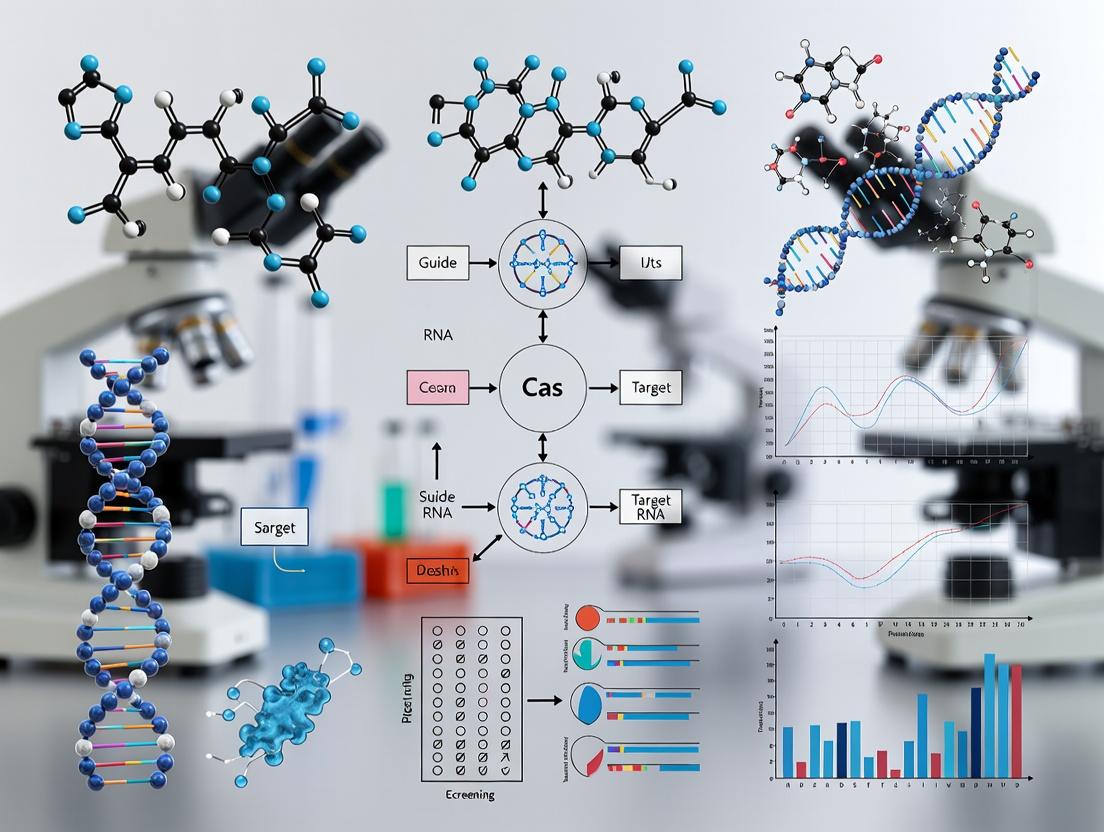
This article provides a comprehensive guide to leveraging CRISPR screening for drug discovery and target identification.
CRISPR Screening in Drug Discovery: Unlocking Novel Targets and Accelerating Therapeutic Development
Abstract
This article provides a comprehensive guide to leveraging CRISPR screening for drug discovery and target identification. It begins with foundational principles, explaining how pooled and arrayed screens interrogate gene function. We then detail methodological workflows, from gRNA library design and delivery to phenotypic readouts in oncology, immuno-oncology, and infectious disease models. To ensure robust results, the guide addresses critical troubleshooting steps for off-target effects, screen validation, and data analysis pitfalls. Finally, we compare CRISPR screening to traditional methods like RNAi and assess validation strategies for translating hits into druggable targets. This resource is essential for researchers and drug developers seeking to implement this transformative technology in their pipeline.
CRISPR Screening 101: Core Principles for Unbiased Target Discovery in Biology and Disease
The transition from candidate gene approaches to systematic genome-wide screening represents a foundational shift in biomedical research, particularly for drug discovery. This paradigm is driven by CRISPR-based functional genomics, which enables unbiased identification of genes essential for disease phenotypes and therapeutic responses.
Application Notes
The Limitations of the Candidate-Gene Era
The candidate-gene approach was hypothesis-driven, relying on prior knowledge from linkage studies, expression data, or known biology. This led to high rates of non-reproducible associations and missed novel, mechanistically important targets. Genome-wide association studies (GWAS) provided correlative data but fell short of establishing direct causal function.
CRISPR Screening: Enabling Systematic Interrogation
CRISPR knockout (CRISPRko), activation (CRISPRa), and inhibition (CRISPRi) libraries allow for loss- and gain-of-function screens across the entire genome. This facilitates:
- Target Identification: Discovery of genes essential for cell viability or disease-specific processes (e.g., tumor growth, pathogen infection).
- Mechanism of Action (MoA) Elucidation: Uncovering genes and pathways that modulate drug response, including resistance mechanisms.
- Biomarker Discovery: Identifying genetic modifiers of therapeutic sensitivity.
Key Screening Modalities in Drug Discovery
Table 1: Primary CRISPR Screening Modalities for Target ID
| Modality | Library Type | Primary Application in Drug Discovery | Key Readout |
|---|---|---|---|
| Negative Selection | Knockout (KO) | Identify essential genes for cell survival/proliferation; discover vulnerabilities in disease models. | Depletion of gRNA sequences over time. |
| Positive Selection | Knockout (KO) | Identify gene knockouts conferring resistance or survival under selective pressure (e.g., drug treatment). | Enrichment of gRNA sequences. |
| Modifier Screening | Knockout/Activation/Inhibition | Identify genes that synergize with or antagonize a drug of interest. | Altered gRNA abundance relative to control. |
| In Vivo Screening | Knockout (KO) | Identify genes essential for tumor growth or metastasis in animal models. | gRNA abundance in harvested tumors vs. input. |
Table 2: Quantitative Outcomes from Representative CRISPR Screens
| Study Focus | Library Size (genes) | Hit Threshold (FDR) | Key Findings | Reference (Example) |
|---|---|---|---|---|
| Cancer Dependencies | ~18,000 | 5% | Identified ~2,000 core essential genes and ~600 context-specific dependencies. | Hart et al., 2017 |
| Drug Resistance | ~7,500 | 10% | Found 25 known and 50 novel mediators of resistance to a targeted therapy. | Shalem et al., 2014 |
| Immuno-Oncology | ~12,000 | 1% | Discovered 5 key regulatory pathways governing T-cell mediated tumor killing. | Patel et al., 2017 |
| Infectious Disease | ~20,000 | 5% | Mapped >100 host factors required for viral entry/replication. | Puschnik et al., 2017 |
Experimental Protocols
Protocol 1: Genome-Scale CRISPRko Dropout Screen for Essential Genes
Objective: Identify genes essential for the proliferation of a cancer cell line.
Materials: (See "Scientist's Toolkit" below)
Procedure:
- Library Design & Preparation: Use a validated genome-scale knockout library (e.g., Brunello, ~77k gRNAs targeting ~19k genes). Amplify the plasmid library and purify high-quality DNA.
- Lentiviral Production: Co-transfect library DNA with packaging plasmids (psPAX2, pMD2.G) into HEK293T cells using a transfection reagent. Harvest viral supernatant at 48h and 72h, concentrate via ultracentrifugation, and titer.
- Cell Infection & Selection:
- Seed the target cancer cell line. Transduce cells at a low MOI (~0.3) to ensure most cells receive a single gRNA. Include a non-targeting control virus.
- At 48h post-transduction, add puromycin (1-2 µg/mL) for 5-7 days to select successfully transduced cells.
- Screen Propagation & Harvest:
- Maintain cells in culture for ~14 population doublings, ensuring a minimum of 500x library coverage at each passage.
- Harvest genomic DNA from a minimum of 50 million cells at the initial timepoint (T0) and the final timepoint (Tfinal) using a large-scale gDNA kit.
- gRNA Amplification & Sequencing:
- Amplify integrated gRNA sequences from gDNA via a two-step PCR. Step 1 adds Illumina adapter handles. Step 2 adds unique sample indexes and full sequencing adapters.
- Purify PCR products, quantify, pool equimolar amounts, and sequence on an Illumina NextSeq (75bp single-end).
- Data Analysis:
- Demultiplex reads and align to the reference gRNA library using a tool like
MAGeCK. - Calculate gRNA depletion/enrichment by comparing read counts (Tfinal vs. T0).
- Perform robust rank aggregation (RRA) or similar statistical tests at the gene level to identify significantly depleted essential genes (FDR < 5%).
- Demultiplex reads and align to the reference gRNA library using a tool like
Protocol 2: CRISPR Modifier Screen for Drug Synergy/Resistance
Objective: Identify genes whose knockout confers resistance to Drug X.
Materials: As in Protocol 1, plus Drug X.
Procedure:
- Infection & Selection: Perform steps 1-3 from Protocol 1 to generate a polyclonal, selected cell population.
- Screen Arms & Treatment:
- Split cells into two arms: Drug Treatment and Vehicle Control.
- For the treatment arm, determine IC70-IC90 concentration of Drug X. Treat cells continuously, refreshing drug/media every 3-4 days.
- Passage both arms in parallel, maintaining library coverage.
- Harvest & Sequencing: After ~10-14 doublings (or when control arm is confluent), harvest gDNA from both arms. Process for sequencing as in Protocol 1.
- Data Analysis:
- Compare gRNA abundance in the Drug Treatment arm versus the Vehicle Control arm.
- Identify significantly enriched gRNAs/genes, which represent knockouts that confer a survival advantage (resistance) in the presence of Drug X.
Visualization
Title: Paradigm Shift in Gene Discovery Workflows
Title: CRISPR Screening Protocol Core Workflow
Title: Immune Cell Signaling & CRISPR Screen Hit Mapping
The Scientist's Toolkit: Research Reagent Solutions
Table 3: Essential Materials for CRISPR Screening
| Item | Function & Rationale | Example/Supplier |
|---|---|---|
| Validated gRNA Library | Pre-designed, pooled sets of gRNAs ensuring high on-target activity and minimal off-target effects for whole-genome or focused screens. | Brunello (Addgene #73179), Human CRISPRa v2 (Addgene #1000000096). |
| Lentiviral Packaging Plasmids | Essential for producing replication-incompetent lentivirus to deliver CRISPR constructs into target cells (dividing and non-dividing). | psPAX2 (packaging), pMD2.G (VSV-G envelope). |
| Transfection Reagent | For high-efficiency co-transfection of packaging plasmids into producer cells (HEK293T) to generate viral particles. | PEI MAX, Lipofectamine 3000. |
| Polybrene / Protamine Sulfate | Cationic polymers that enhance viral transduction efficiency by neutralizing charge repulsion between virus and cell membrane. | Sigma-Aldrich. |
| Puromycin / Appropriate Antibiotic | Selective agent for cells stably expressing the CRISPR vector, which contains a resistance cassette. Critical for removing non-transduced cells. | Thermo Fisher. |
| gDNA Extraction Kit (Large Scale) | Reliable isolation of high-quality, high-molecular-weight genomic DNA from millions of cells for accurate gRNA representation. | Qiagen Blood & Cell Culture DNA Maxi Kit. |
| High-Fidelity PCR Master Mix | For accurate, low-bias amplification of integrated gRNA sequences from genomic DNA prior to NGS. | KAPA HiFi HotStart ReadyMix, NEB Next Ultra II Q5. |
| Illumina Sequencing Kit | For high-throughput sequencing of amplified gRNA libraries. | NextSeq 500/550 High Output Kit v2.5 (75 cycles). |
| Analysis Software | Computational tools to align sequences, count gRNAs, and perform statistical analysis to identify significant hits. | MAGeCK, CRISPResso2, PinAPL-Py. |
| Validation Reagents | Orthogonal tools to confirm screen hits (e.g., individual gRNAs/CRISPR plasmids, siRNA, small-molecule inhibitors). | Synthego, Dharmacon, Horizon Discovery. |
Within the framework of a thesis on CRISPR screening for drug discovery and target identification, the selection and optimization of three core components—Cas nucleases, gRNA libraries, and delivery systems—are paramount. These elements collectively determine the efficiency, specificity, and scalability of functional genomic screens aimed at unraveling disease mechanisms and identifying novel therapeutic targets.
Cas Nucleases: Enzymatic Engines for Genome Editing
Cas nucleases create targeted double-strand breaks (DSBs) in the genome, leading to gene knockout via error-prone non-homologous end joining (NHEJ) or precise edits via homology-directed repair (HDR).
Application Notes
- SpCas9: The most widely used nuclease, recognizing a 5'-NGG-3' PAM. Ideal for broad, genome-wide screens but has limitations in targeting AT-rich regions.
- SaCas9: Smaller size (~1 kb shorter than SpCas9) facilitates AAV delivery. Recognizes a 5'-NNGRRT-3' PAM, expanding targeting range.
- Cas12a (Cpf1): Creates staggered DNA ends, uses a T-rich PAM (5'-TTTV-3'), and processes its own crRNA arrays, enabling multiplexed editing from a single transcript.
- High-Fidelity Variants (e.g., SpCas9-HF1, eSpCas9): Engineered to reduce off-target effects, critical for phenotype-specific screening where specificity is crucial.
- Nickases (Cas9n): Introduce single-strand breaks. Used in paired configurations for enhanced specificity, reducing off-target indels.
- Base Editors & Prime Editors: Enable precise nucleotide conversions (C>T, A>G) or small insertions/deletions without requiring DSBs, suitable for modeling and correcting point mutations relevant to disease.
Protocol: Validation of Nuclease Activity via T7E1 Assay
Objective: Assess cleavage efficiency of a Cas nuclease at a target genomic locus.
- Transfection: Deliver Cas nuclease and target-specific gRNA expression constructs into cultured cells (e.g., HEK293T) using a suitable method (lipofection, nucleofection).
- Harvest Genomic DNA: 72 hours post-transfection, extract genomic DNA using a silica-membrane column kit.
- PCR Amplification: Amplify the target genomic region (400-800 bp) using high-fidelity polymerase.
- Hybridization & Digestion: Purify PCR product. Denature and reanneal (95°C for 10 min, ramp down to 25°C at -0.1°C/sec) to form heteroduplexes. Digest with T7 Endonuclease I (NEB) for 1 hour at 37°C.
- Analysis: Run digested products on a 2% agarose gel. Cleavage efficiency (%) = (1 - sqrt(1 - (b+c)/(a+b+c))) * 100, where a is the integrated intensity of the undigested band, and b & c are the digested bands.
gRNA Libraries: The Targeting Blueprint
gRNA libraries define the genetic elements interrogated in a screen. Their design dictates screen coverage and interpretability.
Application Notes
- Genome-Wide Libraries: Target every gene in the genome (e.g., Human Brunello, Mouse Brie). Typically contain 4-6 gRNAs per gene to ensure statistical robustness.
- Sub-Libraries: Focus on specific gene families (kinases, GPCRs, epigenetic regulators) or disease-associated genomic regions (GWAS hits), increasing screening depth and reducing cost.
- Non-coding Libraries: Target enhancers, promoters, or lncRNA loci, often tiling across regions of interest.
- Format: Delivered as cloned plasmids in E. coli or as ready-to-use lentiviral vector preparations.
Protocol: Lentiviral Production for gRNA Library Amplification
Objective: Produce high-titer, high-diversity lentivirus from a pooled gRNA library plasmid stock.
- Seed HEK293T Cells: Plate 8 x 10^6 cells in a 10 cm poly-D-lysine coated dish in DMEM + 10% FBS. Incubate overnight to reach ~80% confluency.
- Transfection: For one dish, prepare DNA mix in Opti-MEM: 5 µg library plasmid (pLX-sgRNA), 3.75 µg psPAX2 (packaging), 1.25 µg pMD2.G (VSV-G envelope). Add PEI MAX transfection reagent (40 kDa) at a 3:1 PEI:DNA ratio. Vortex, incubate 15 min, add dropwise to cells.
- Virus Harvest: Replace media 6 hours post-transfection. Collect supernatant at 48 and 72 hours, filter through a 0.45 µm PES filter, and pool.
- Concentration: Concentrate virus 100x using Lenti-X Concentrator (Takara Bio) per manufacturer's instructions. Aliquot and store at -80°C.
- Titer Determination: Transduce HEK293T cells with serial dilutions of virus in the presence of 8 µg/mL polybrene. 72 hours later, select with appropriate antibiotic (e.g., puromycin). Count resistant colonies to calculate TU/mL.
Quantitative Data: Common gRNA Library Features
| Library Name | Species | Target | gRNAs/Gene | Total gRNAs | Format | Primary Use |
|---|---|---|---|---|---|---|
| Brunello | Human | Protein-coding | 4 | 77,441 | Lentiviral | Genome-wide KO |
| Brie | Mouse | Protein-coding | 4 | 78,637 | Lentiviral | Genome-wide KO |
| Kinome | Human | Kinases | ~10/gene | ~3,000 | Lentiviral | Focused screening |
| Dolcetto | Human | Non-coding | N/A | 57,831 | Lentiviral | Enhancer screening |
| Calabrese | Human | Genome-wide | 4 | 121,562 | Lentiviral | Dual CRISPRa/i |
Delivery Systems: Vehicles for Cellular Transformation
Efficient delivery is critical for introducing CRISPR components into target cells, especially for pooled screens.
Application Notes
- Lentivirus (LV): The gold standard for stable genomic integration in pooled screens. Infects dividing and non-dividing cells. Safety Note: Use 3rd generation packaging systems and biosafety level 2+ containment.
- Adeno-Associated Virus (AAV): Excellent for in vivo delivery due to low immunogenicity and serotype-specific tropism. Limited packaging capacity (~4.7 kb) necessitates use of compact Cas9 variants like SaCas9.
- Electroporation/Nucleofection: High-efficiency delivery of RNP complexes (Cas9 protein + gRNA) into immune cells, stem cells, and other hard-to-transfect types. Enables rapid editing with minimal off-targets.
- Lipid Nanoparticles (LNPs): Clinically relevant for systemic in vivo delivery of mRNA encoding Cas9 and gRNA. Highly efficient in hepatocytes and evolving for other tissues.
- Transient Transfection: Suitable for arrayed screens where each gRNA is delivered separately, often using chemical reagents.
Protocol: Lentiviral Transduction for Pooled Screening
Objective: Achieve low-MOI (Multiplicity of Infection) transduction to ensure most cells receive a single gRNA.
- Cell Preparation: Harvest and count your target cells (e.g., cancer cell line). Seed a pilot cell batch for titer determination and optimization.
- MOI Determination: Perform a kill curve with puromycin to determine the minimum concentration and duration needed to kill 100% of non-transduced cells (e.g., 2 µg/mL for 5-7 days).
- Pilot Transduction: Transduce cells at varying MOIs (0.2, 0.3, 0.5) in the presence of 8 µg/mL polybrene. Apply selection pressure 24 hours later. Choose the MOI yielding ~30-50% survival to maximize single-integration events.
- Library Scale Transduction: For the main screen, transduce at least 200 cells per gRNA in the library (e.g., for a 77k library, transduce 1.5 x 10^7 cells) at the optimized MOI. Maintain coverage of >500 cells per gRNA post-selection.
- Harvest & Selection: 24h post-transduction, replace media with fresh media containing selection antibiotic. Maintain selection for 5-7 days until non-transduced control cells are fully dead. This is your T0 population for the screen.
The Scientist's Toolkit: Research Reagent Solutions
| Item | Function & Application |
|---|---|
| Lenti-X Concentrator | Rapid, spin-column-free concentration of lentiviral particles for high-titer stocks. |
| Alt-R S.p. Cas9 Nuclease V3 | High-fidelity, recombinant Cas9 protein for RNP complex formation and nucleofection. |
| FuGENE HD Transfection Reagent | Low-toxicity reagent for high-efficiency plasmid delivery in arrayed formats. |
| Polybrene | Cationic polymer that enhances viral transduction efficiency by neutralizing charge repulsion. |
| Puromycin Dihydrochloride | Selection antibiotic for cells transduced with puromycin resistance-bearing vectors. |
| QuickExtract DNA Solution | Rapid, single-step solution for extracting PCR-ready genomic DNA from cell pellets. |
| NEBNext Ultra II Q5 Master Mix | High-fidelity PCR master mix for amplifying genomic loci from screen samples for NGS. |
| Cell Counting Kit-8 (CCK-8) | Colorimetric assay for monitoring cell proliferation and viability during screen validation. |
Visualization
Title: Pooled CRISPR Screening Workflow
Title: Core Component Interplay & Output
Within a broader thesis on CRISPR screening for drug discovery and target identification, selecting the appropriate screen format is foundational. Pooled and arrayed CRISPR screens represent two distinct paradigms, each optimized for different phenotypic readouts and discovery applications. The choice dictates experimental design, reagent solutions, and analytical pathways, directly impacting the success of target ID and validation campaigns in pharmaceutical research.
| Feature | Pooled CRISPR Screen | Arrayed CRISPR Screen |
|---|---|---|
| Primary Application | Target discovery for selective growth/viability phenotypes (e.g., survival, proliferation). | Target discovery & validation for complex phenotypes (e.g., high-content imaging, morphology, specific signaling outputs). |
| Library Format | Mixed pool of lentiviral sgRNAs transduced at low MOI into a bulk cell population. | Individual sgRNAs or constructs delivered in a well-by-well format (e.g., multi-well plates). |
| Phenotype Readout | Bulk, population-level. Enrichment/depletion of sgRNA sequences determined by NGS. | Single-well, cell-level. Measured by imaging, FACS, luminescence, or other assays per well. |
| Typical Throughput | Very High (Genome-wide, ~60-100k sgRNAs). | Moderate to High (Focused libraries, ~100s - 10k genes). |
| Key Advantage | Cost-effective, scalable, minimal hands-on time for large libraries. | Enables complex, multi-parameter assays; direct link between phenotype and target per well. |
| Key Limitation | Restricted to phenotypes compatible with cell survival or sorting (proliferation, death, FACS markers). | Higher cost, reagent consumption, and infrastructure requirements (e.g., automation). |
| Primary Analysis | Statistical comparison of sgRNA read counts (NGS) between conditions (e.g., MAGeCK, CRISPResso2). | Per-well statistical analysis (e.g., Z-score, SSMD) across measured parameters. |
| Optimal for Drug Discovery Phase | Early, unbiased hit discovery. | Secondary validation, mechanistic follow-up, and dose-response studies. |
Application Notes & Detailed Protocols
Protocol 1: Pooled CRISPR Screen for Essential Genes in Cell Proliferation
Application: Identify genes essential for cancer cell survival under standard culture or treatment conditions.
Workflow:
- Library Design & Cloning: Use a genome-wide lentiviral sgRNA library (e.g., Brunello, ~76k sgRNAs). Clone into a lentiviral backbone with puromycin resistance.
- Virus Production: Generate lentivirus in HEK293T cells via transfection of library plasmid with packaging plasmids (psPAX2, pMD2.G).
- Cell Transduction & Selection:
- Harvest target cells (e.g., a cancer cell line). Transduce at an MOI of ~0.3-0.4 to ensure most cells receive one sgRNA. Include a non-targeting control sgRNA population.
- Culture for 24-48 hrs, then select with puromycin (e.g., 2 µg/mL) for 5-7 days.
- Phenotype Propagation:
- Harvest a sample as the "T0" reference time point (Day 0 post-selection).
- Split remaining cells and passage for ~14-21 population doublings to allow phenotype manifestation.
- Harvest the final "T_end" population.
- Genomic DNA (gDNA) Extraction & NGS Library Prep:
- Extract gDNA from ≥50 million cells per sample (T0 and T_end) using a large-scale kit.
- Amplify integrated sgRNA sequences via a two-step PCR: 1st PCR with primers targeting the constant backbone regions; 2nd PCR to add Illumina adapters and sample indexes.
- Sequencing & Data Analysis:
- Sequence on an Illumina platform (MiSeq/NextSeq) to a depth of >500 reads per sgRNA.
- Align reads to the reference library. Use MAGeCK (v0.5.9) to compare sgRNA abundance between T0 and T_end, identifying significantly depleted (essential) genes.
Visualization: Pooled CRISPR Screen Workflow
Protocol 2: Arrayed CRISPR Screen for Altered Inflammatory Signaling (NF-κB)
Application: Identify novel regulators of a specific signaling pathway using a high-content reporter assay.
Workflow:
- Cell Line Engineering: Generate a stable reporter cell line (e.g., HEK293 or relevant immune cells) with an NF-κB response element driving GFP or luciferase.
- Arrayed Library Format: Obtain a focused sgRNA library (e.g., kinase/phosphatase library) in individual wells of 96- or 384-well plates, pre-complexed with CRISPR ribonucleoprotein (RNP) or as lentiviral particles.
- Reverse Transfection/Delivery (Automated):
- Using a liquid handler, transfer 20-50 nL of sgRNA (or RNP complex) per well to assay plates.
- Seed reporter cells directly into each well (e.g., 1000-2000 cells/well in 384-format).
- For lentiviral delivery, spinfect plates and then add cells.
- Phenotypic Stimulation & Assay:
- After 72-96 hours for gene editing, stimulate cells with TNF-α (10 ng/mL) for 6-8 hours.
- Fix cells and stain nuclei (Hoechst) and for a marker (e.g., Phalloidin for cytoskeleton).
- Image plates using a high-content imager (e.g., ImageXpress Micro). Acquire 4-9 fields/well.
- Image & Data Analysis:
- Use integrated software (e.g., MetaXpress, CellProfiler) to segment nuclei and cytoplasm, and quantify GFP mean intensity per cell.
- Calculate a robust Z-score or strictly standardized mean difference (SSMD) for each sgRNA well compared to non-targeting controls on the same plate. Identify significant hits that augment or suppress the NF-κB reporter signal.
Visualization: Arrayed CRISPR Screen Workflow
Visualization: NF-κB Signaling Pathway for Phenotype Context
The Scientist's Toolkit: Research Reagent Solutions
| Reagent / Material | Function in CRISPR Screens |
|---|---|
| Lentiviral sgRNA Library (e.g., Brunello, GeCKO) | Delivers sgRNA and Cas9 (if all-in-one) into target cells for stable, genomic integration. Essential for pooled screens and some arrayed formats. |
| CRISPR Ribonucleoprotein (RNP) Complexes | Pre-formed complexes of Cas9 protein and synthetic sgRNA. Used in arrayed screens for rapid, transient editing with reduced off-target effects. |
| Lipofectamine CRISPRMAX | A lipid-based transfection reagent optimized for delivery of RNP complexes into a wide range of cell lines in arrayed formats. |
| Puromycin Dihydrochloride | Antibiotic selection agent for cells transduced with lentiviral vectors containing a puromycin resistance gene. Enriches for successfully edited cells. |
| Nextera XT DNA Library Prep Kit | Facilitates the rapid preparation of sequencing-ready amplicon libraries from amplified sgRNA inserts in pooled screens. |
| CellTiter-Glo Luminescent Assay | Measures cell viability based on ATP content. Used as a readout in arrayed screens for proliferation/cytotoxicity phenotypes. |
| Hoechst 33342 Stain | Cell-permeable nuclear dye. Essential for segmenting and identifying individual nuclei in high-content image analysis. |
| High-Content Imaging System (e.g., ImageXpress) | Automated microscope for acquiring multi-parameter, single-cell data from arrayed screens in multi-well plates. |
Within the framework of CRISPR screening for drug discovery and target identification, interpreting screening outcomes is paramount. Three principal phenotypic readouts—Fitness, Resistance/Sensitivity, and Reporter-Based—form the cornerstone of data interpretation, guiding the prioritization of high-confidence therapeutic targets. These readouts enable researchers to distinguish essential genes, identify synthetic lethal interactions, and understand mechanisms of drug action and resistance.
Fitness-Based Selection
Fitness-based screens identify genes essential for cellular proliferation or survival under standard culture conditions. A significant depletion of specific single-guide RNAs (sgRNAs) in a population over time indicates that the targeted gene is critical for fitness.
Key Applications
- Identification of core essential genes in specific cell lineages.
- Discovery of tumor-specific dependencies for oncology target ID.
- Benchmarking screening performance and library coverage.
Table 1: Common Metrics in Fitness Screens
| Metric | Description | Typical Threshold | Interpretation |
|---|---|---|---|
| Log2 Fold Change (LFC) | sgRNA abundance change from initial to final timepoint. | < -1 | Indicates potential essentiality. |
| p-value | Statistical significance of sgRNA/gene depletion. | < 0.05 | Significant depletion. |
| False Discovery Rate (FDR) | Corrected probability of false positive. | < 0.05 or 0.1 | High-confidence hit. |
| RRA Score (Robust Rank Aggregation) | Rank-based gene-level statistic from MAGeCK. | < 0.05 | Significant essential gene. |
| CERES Score | Score correcting for copy-number-specific effects. | < -0.5 | Confident fitness gene call. |
Experimental Protocol: Pooled Fitness Screen
Objective: Identify genes essential for the proliferation of a cancer cell line.
- Cell Line Preparation: Culture target cells (e.g., A549 lung carcinoma) to ensure >90% viability and active log-phase growth.
- Lentiviral Transduction: Transduce cells with a genome-wide CRISPR knockout (e.g., Brunello) library at a low Multiplicity of Infection (MOI ~0.3) to ensure most cells receive one sgRNA. Include a non-targeting control sgRNA pool.
- Selection: 24 hours post-transduction, add puromycin (1-2 µg/mL) for 48-72 hours to select successfully transduced cells.
- Harvest T0 Sample: Harvest 50-100x library coverage of cells as the "Day 0" reference timepoint. Pellet, wash with PBS, and store at -80°C.
- Population Passaging: Culture the remaining pooled population, maintaining a minimum of 500x library coverage at each passage to prevent stochastic sgRNA loss.
- Harvest Endpoint Samples: Harvest cells at a final timepoint (typically 14-21 population doublings post-selection).
- Genomic DNA Extraction & NGS Prep: Isolate gDNA from T0 and endpoint pellets. Perform a two-step PCR to amplify the integrated sgRNA cassette and attach Illumina sequencing adapters and sample barcodes.
- Sequencing & Analysis: Sequence on an Illumina platform. Align reads to the library reference, count sgRNAs, and use analysis pipelines (MAGeCK, CRISPResso2) to calculate depletion statistics.
Resistance/Sensitivity-Based Selection
These screens interrogate genetic modifiers of response to a perturbation, typically a drug, pathogen, or other environmental stress. sgRNAs that become enriched (resistance) or depleted (sensitization) in the treated versus control population pinpoint genes involved in drug mechanism or resistance pathways.
Key Applications
- Uncovering mechanisms of action and resistance to clinical and preclinical compounds.
- Identifying synthetic lethal partners for targeted therapies.
- Finding host factors critical for pathogen infection.
Table 2: Key Outputs in Resistance/Sensitivity Screens
| Output | Calculation | Interpretation |
|---|---|---|
| Drug Resistance Score | LFC (Treated / Control) | Positive score = gene knockout confers resistance. |
| Drug Sensitivity Score | LFC (Treated / Control) | Negative score = gene knockout sensitizes cells. |
| Synergistic Lethality | Enhanced lethality beyond additive effect of gene knockout + drug. | Identifies promising combo therapy targets. |
| Gene Set Enrichment | Pathway analysis of top resistance/sensitivity hits. | Reveals affected biological processes. |
Experimental Protocol: Drug Modifier Screen
Objective: Find genes whose knockout confers resistance to drug X.
- Steps 1-4 from Fitness Protocol: Generate a pooled knockout cell population and harvest T0 reference.
- Treatment Arm Setup: Split the pooled population into two arms: Vehicle Control (DMSO) and Drug Treatment (at IC50-IC90 concentration).
- Perturbation & Passaging: Culture arms separately, maintaining >500x library coverage, for 10-14 doublings. Replenish drug/vehicle at each passage.
- Endpoint Harvest: Harvest cell pellets from both arms at the same final cell doubling as each other.
- NGS & Analysis: Process samples as in Fitness Protocol. Analyze by directly comparing sgRNA abundances in Drug vs. Control arms using MAGeCK or BAGEL2 to generate resistance/sensitivity scores.
Reporter-Based Selection
Reporter screens utilize a measurable signal (fluorescence, luminescence, surface marker) linked to a pathway or cellular state of interest. Cells are sorted based on this signal (e.g., FACS), and sgRNA distributions in sorted populations are compared to identify genetic regulators.
Key Applications
- Dissecting signaling pathways (Wnt, NF-κB, IFN response).
- Identifying regulators of cell state transitions (differentiation, senescence).
- Screening for modulators of cell surface protein expression.
Table 3: Common Elements in Reporter Screen Analysis
| Element | Description | Application |
|---|---|---|
| Reporter Construct | GFP/Luciferase under control of responsive elements. | Pathway activity readout. |
| FACS Gates | Defined populations (e.g., Top 10% High, Bottom 10% Low). | Physical separation of phenotypes. |
| Enrichment Analysis | Compare sgRNA abundance in High vs. Low vs. Unsorted. | Quantifies genetic impact on reporter. |
| Hit Validation | Flow cytometry on individual knockout clones. | Confirms screening phenotype. |
Experimental Protocol: FACS-Based Reporter Screen
Objective: Find genes that activate or repress the Wnt/β-catenin signaling pathway.
- Stable Reporter Line Generation: Generate a cell line stably expressing a TCF/LEF-GFP reporter. Validate with Wnt agonist (e.g., CHIR99021) and antagonist.
- CRISPR Library Transduction: Transduce the reporter line with a targeted or genome-wide sgRNA library as in Step 2 of the Fitness Protocol.
- Selection & Expansion: Select with puromycin and expand cells, maintaining coverage.
- Fluorescence-Activated Cell Sorting (FACS): Harvest cells, resuspend in sorting buffer. Sort into three bins: High GFP (top 10-20%), Low GFP (bottom 10-20%), and an Unsorted reference population. Collect >500x coverage per bin.
- NGS & Analysis: Extract gDNA from all three bins. Prepare NGS libraries and sequence. Analyze by comparing sgRNA distributions in High vs. Unsorted and Low vs. Unsorted bins to find enhancers and suppressors of pathway activity.
The Scientist's Toolkit
Table 4: Key Research Reagent Solutions
| Reagent / Material | Function & Importance |
|---|---|
| Genome-Wide CRISPR Knockout Library (e.g., Brunello, TorontoKO) | Pooled collection of sgRNAs targeting all human genes. Foundational tool for discovery screens. |
| Lentiviral Packaging Mix (psPAX2, pMD2.G) | Produces high-titer, infectable lentiviral particles for efficient sgRNA delivery. |
| Polybrene (Hexadimethrine Bromide) | Enhances viral transduction efficiency by neutralizing charge repulsion. |
| Puromycin Dihydrochloride | Selectable antibiotic for enriching transduced cells post-CRISPR library delivery. |
| Next-Generation Sequencing Kit (Illumina) | For accurate quantification of sgRNA abundance from genomic DNA of screen populations. |
| MAGeCK (Model-based Analysis of Genome-wide CRISPR-Cas9 Knockouts) | Computational pipeline for analyzing fitness and differential screens. Standard for hit calling. |
| Fluorescent Reporter Plasmid (e.g., TCF/LEF-GFP) | Enables monitoring and sorting of cells based on specific pathway activity. |
| FACS Aria or Similar Cell Sorter | Precisely isolates cell populations based on reporter signal for functional genomics. |
| CRISPResso2 | Software for quantifying CRISPR-induced indels from NGS data, validating editing efficiency. |
| Validated Control sgRNAs (Non-targeting & Positive Essential) | Critical controls for normalizing screen data and assessing assay quality. |
Visualizations
CRISPR Resistance/Sensitivity Screening Workflow
Wnt/β-catenin Pathway & Reporter Activation
Within the broader thesis of leveraging CRISPR screening for drug discovery and target identification, this document details the central workflow connecting genetic perturbations (genotype) to measurable cellular outcomes (phenotype). Pooled CRISPR-Cas9 knockout screens represent a foundational method for unbiased, genome-scale investigation of gene function and genetic interactions, directly informing therapeutic target prioritization and mechanism of action studies.
The Central Workflow: From Library to Hit Gene
Diagram Title: Core Steps in a Pooled CRISPR Knockout Screen
Detailed Application Notes & Protocols
sgRNA Library Design & Cloning
Objective: To construct a pooled lentiviral library targeting genes of interest with high specificity and efficiency.
Protocol:
- sgRNA Selection: For a genome-wide human library (e.g., Brunello, Brie), use established resources (Doench et al., 2016). For focused libraries, design 4-6 sgRNAs per gene targeting early exons.
- Oligo Pool Synthesis: Order a pooled oligonucleotide library containing the sgRNA sequences flanked by cloning adapters.
- Cloning into Lentiviral Vector:
- Digest the lentiviral backbone (e.g., lentiCRISPRv2, pLCKO) with BsmBI.
- Perform a Golden Gate assembly with the annealed oligo pool.
- Transform the assembly reaction into electrocompetent E. coli (e.g., Endura ElectroCompetent Cells).
- Plate on large-format agar plates to ensure >200x library representation. Harvest plasmid DNA via maxiprep.
Key Considerations: Maintain high transformation efficiency to preserve library diversity. Validate representation by sequencing a sample of the plasmid pool.
Lentivirus Production & Cell Line Transduction
Objective: To generate a high-titer, diverse viral library and create a genetically perturbed cell pool.
Protocol:
- Virus Production: Co-transfect HEK293T cells (in 10-cm dishes) with the sgRNA library plasmid (10 µg), psPAX2 (packaging, 7.5 µg), and pMD2.G (VSV-G envelope, 2.5 µg) using polyethylenimine (PEI).
- Harvest: Collect viral supernatants at 48h and 72h post-transfection. Pool, filter (0.45 µm), and concentrate via ultracentrifugation or PEG-it.
- Titration: Transduce target cells with serial dilutions of virus in the presence of polybrene (8 µg/mL). After 48h, select with puromycin (or relevant antibiotic) for 3-4 days. Calculate titer (TU/mL) based on surviving cell counts.
- Library Transduction: Scale transduction to infect >10^7 cells at a low Multiplicity of Infection (MOI ~0.3) to ensure most cells receive one sgRNA. Include a non-transduced control.
- Selection: Treat cells with puromycin (dose determined by kill curve) for 5-7 days to eliminate non-transduced cells.
Key Considerations: The goal is >500x library coverage at the cell level post-selection to avoid stochastic dropout.
Phenotypic Screening & Sample Collection
Objective: To apply selective pressure and isolate cells based on the phenotype of interest.
Protocol:
- Proliferation/Viability Screen: Passage cells continuously for 14-21 population doublings. Maintain >500x coverage at each passage. Harvest cells at the initial timepoint (T0) and final (T_final).
- Drug Resistance Screen: Treat the cell pool with the drug at a relevant concentration (e.g., IC50-IC90). Harvest surviving cells after 7-14 days of treatment. Include a DMSO-treated control pool.
- Sample Collection: Pellet 1x10^7 cells (representing >500x coverage) per sample. Wash with PBS and store at -80°C for genomic DNA extraction.
Genomic DNA Extraction & NGS Library Preparation
Objective: To recover and amplify integrated sgRNA sequences for deep sequencing.
Protocol:
- gDNA Extraction: Use a column-based or phenol-chloroform method to extract high-quality gDNA from cell pellets. Quantify via fluorometry.
- PCR Amplification of sgRNAs: Perform a two-step PCR protocol.
- Primary PCR: Amplify the sgRNA region from 50-100 µg of gDNA per sample using Herculase II polymerase. Use vector-specific primers. Pool multiple reactions per sample to limit bias. Run 20-25 cycles.
- Secondary PCR (Indexing): Add Illumina adapters and sample barcodes using 5-8 cycles. Clean up PCR products with SPRI beads.
- Sequencing: Pool libraries and sequence on an Illumina platform (e.g., NextSeq 500/550, 75bp single-end). Aim for >500 reads per sgRNA.
Bioinformatic Analysis & Hit Identification
Objective: To quantify sgRNA abundance changes and identify significantly enriched or depleted genes.
Protocol:
- Read Alignment: Demultiplex FASTQ files. Align reads to the reference sgRNA library using a simple string match (e.g., Bowtie, BWA).
- Count Matrix Generation: Generate a counts-per-sgRNA matrix for all samples (T0, Control, Treated).
- Statistical Analysis: Use specialized tools (MAGeCK, CRISPhieRmix) to compare sgRNA abundances between conditions.
- Normalize read counts.
- Calculate log2 fold-change for each sgRNA.
- Perform robust rank aggregation or negative binomial testing to identify genes with significantly depleted or enriched sgRNAs (FDR < 0.25 for discovery, <0.1 for validation).
Table 1: Example MAGeCK RRA Output for a Drug Resistance Screen
| Gene | sgRNAs | Neg | Score | Pos | Score | FDR (Neg) | Phenotype |
|---|---|---|---|---|---|---|---|
| TP53 | 6 | 0.45 | - | 0.002 | Sensitizer | ||
| BCL2 | 6 | - | 0.38 | 0.005 | Resistor | ||
| KRAS | 6 | - | 0.21 | 0.021 | Resistor | ||
| CDK2 | 6 | 0.15 | - | 0.048 | Sensitizer |
The Scientist's Toolkit: Key Research Reagent Solutions
Table 2: Essential Materials for a CRISPR Screen Workflow
| Item | Function & Critical Features |
|---|---|
| Validated sgRNA Library (e.g., Brunello) | Pre-designed, high-efficiency library; ensures on-target efficacy and minimizes off-target effects. |
| Lentiviral Backbone (e.g., lentiCRISPRv2) | All-in-one vector expressing Cas9, sgRNA, and a selection marker (e.g., puromycin). |
| HEK293T Cells | Standard cell line for high-titer lentivirus production due to high transfection efficiency. |
| Polyethylenimine (PEI), Linear | Cost-effective, high-efficiency transfection reagent for viral packaging. |
| Puromycin Dihydrochloride | Selection antibiotic to eliminate non-transduced cells; critical dose must be predetermined. |
| Next-Generation Sequencer (Illumina) | Enables deep, quantitative sequencing of sgRNA abundance from complex pools. |
| MAGeCK (Model-based Analysis of Genome-wide CRISPR-Cas9 Knockout) | Primary bioinformatics algorithm for robust statistical identification of significant hits. |
| Cell Viability Assay (e.g., CellTiter-Glo) | Used for drug kill curves and phenotypic validation of hit genes in follow-up assays. |
Diagram Title: Genotype to Phenotype Logic in Target ID
From Library to Lead: A Step-by-Step Guide to Implementing CRISPR Screens in Drug Development
Within the thesis framework of utilizing CRISPR screening for drug discovery and target identification, the strategic design and selection of gRNA libraries is a foundational step. The choice between genome-wide, focused, and custom libraries directly impacts the cost, scale, statistical power, and ultimate success of a screen in identifying novel therapeutic targets or genetic modifiers of drug response.
Library Design Strategies: A Comparative Analysis
The selection of a gRNA library type depends on the research hypothesis, available resources, and desired depth of analysis.
| Library Type | Scale (Typical # of Genes) | Primary Application | Key Advantages | Key Considerations |
|---|---|---|---|---|
| Genome-Wide | ~18,000 - 20,000 | Unbiased discovery of novel targets; phenotypic screening. | Hypothesis-free; maximum coverage. | High cost; requires extensive sequencing depth; complex data analysis. |
| Focused/Subset | 100 - 5,000 | Validating pathways; screening gene families (e.g., kinases, GPCRs). | Increased gRNA density per gene; lower cost; simpler analysis. | Limited to known biology; requires prior knowledge. |
| Custom | Variable (1 - 1,000+) | Investigating specific loci, non-coding regions, or SNP variants. | Ultimate flexibility; tailored to precise hypothesis. | Design complexity; requires rigorous validation. |
Application Notes
Genome-Wide Libraries for De Novo Target Discovery
Genome-wide libraries, such as the Brunello or Brie libraries, are optimized for high on-target activity and minimal off-target effects. In drug discovery, they are deployed in positive selection screens (e.g., for identifying genes whose loss confers drug resistance) or negative selection screens (e.g., for identifying essential genes or synthetic lethal partners). Recent advances in library design incorporate rules for improved specificity and algorithms to predict gRNA efficiency.
Focused Libraries for Pathway-Centric Interrogation
Focused libraries enable deep interrogation of specific biological pathways implicated in disease. For example, a library targeting all chromatin-modifying enzymes can identify novel epigenetic regulators of oncogene expression. The increased gRNA count per gene (e.g., 8-10 gRNAs/gene) improves statistical confidence in hit identification from pooled screens.
Custom Libraries for Precision Investigations
Custom designs are essential for probing specific genomic elements, such as enhancer regions, or for introducing precise point mutations to model patient-specific SNPs. This approach is critical for target identification in diseases with well-defined but genetically diverse drivers.
Detailed Protocols
Protocol 1: Transduction and Screening with a Pooled Lentiviral gRNA Library
This protocol outlines the steps for a genome-wide dropout screen to identify essential genes for cell viability.
Materials:
- HEK293T or similar packaging cell line
- Lentiviral library plasmid pool (e.g., Brunello)
- Packaging plasmids (psPAX2, pMD2.G)
- Polybrene (8 µg/mL)
- Puromycin or appropriate selection antibiotic
- Target cells for screening
Procedure:
- Library Amplification & Lentivirus Production: Transform the library plasmid pool into competent E. coli and culture on large-format agar plates to maintain library complexity. Harvest plasmid DNA. Co-transfect HEK293T cells with the library plasmid and packaging plasmids using PEI or a commercial reagent.
- Transduction of Target Cells: 48-72 hours post-transfection, harvest lentiviral supernatant. Determine the viral titer via puromycin kill curve or qPCR. Transduce target cells at a low Multiplicity of Infection (MOI < 0.3) to ensure most cells receive a single gRNA. Include polybrene to enhance transduction.
- Selection and Expansion: 48 hours post-transduction, begin selection with puromycin (or appropriate antibiotic) for 5-7 days. Ensure >90% cell death in a non-transduced control.
- Screen Execution: Passage cells for the duration of the screen (typically 14-21 population doublings). Maintain a minimum of 500 cells per gRNA representation at each passage to prevent library drop-out.
- Genomic DNA Harvest & NGS Library Prep: Harvest a minimum of 20 million cells at the initial (T0) and final (Tf) timepoints. Extract genomic DNA. Amplify integrated gRNA sequences via a two-step PCR: First PCR with primers flanking the gRNA scaffold; second PCR adds Illumina adapters and sample barcodes.
- Sequencing & Analysis: Sequence on an Illumina platform. Align reads to the library reference, count gRNA abundances, and use statistical packages (MAGeCK, CRISPResso2) to identify significantly depleted or enriched gRNAs between T0 and Tf.
Protocol 2: Design and Cloning of a Custom gRNA Library
This protocol details the generation of a custom library targeting specific single nucleotide variants (SNVs).
Materials:
- Oligonucleotide pool (custom-synthesized, containing variable gRNA sequences and constant flanking regions)
- Backbone vector (e.g., lentiCRISPR v2, BsmBI-digested)
- T4 DNA Ligase
- Gibson Assembly Master Mix
- Electrocompetent E. coli
Procedure:
- gRNA Design & Oligo Synthesis: Use tools like CHOPCHOP or CRISPick to design gRNAs targeting the SNV loci, prioritizing sequences where the variant is within the PAM-proximal seed region. Include a 4-nucleotide overhang complementary to the BsmBI-digested backbone at both ends. Order as an oligo pool.
- Library Cloning: Phosphorylate and anneal the oligo pool. Perform a Golden Gate assembly by mixing the annealed oligos with BsmBI-digested backbone vector and T4 DNA Ligase in a thermocycler (5 min at 37°C, 5 min at 16°C, for 30 cycles). Alternatively, use Gibson Assembly if designed accordingly.
- Transformation & Amplification: Transform the assembled product into electrocompetent E. coli. Plate the entire transformation on large bioassay dishes with appropriate antibiotic. Scrape all colonies to ensure representation. Isolate plasmid DNA to create the final library pool.
- Quality Control: Validate library complexity by deep sequencing a sample of the plasmid prep. Ensure even distribution of intended gRNA sequences.
Visualizations
Title: Decision Flowchart for CRISPR Library Selection
Title: Workflow for a Pooled CRISPR Knockout Screen
The Scientist's Toolkit
Table 2: Essential Research Reagents & Solutions
| Item | Function/Application | Example/Notes |
|---|---|---|
| Optimized gRNA Library | Provides the genetic perturbation agents. | Broad Institute's Brunello (genome-wide), Kinase-focused libraries. |
| Lentiviral Packaging System | Produces high-titer, infectious lentiviral particles to deliver gRNAs. | psPAX2 (packaging), pMD2.G (VSV-G envelope) plasmids. |
| Transfection Reagent | For co-transfection of library and packaging plasmids in producer cells. | PEI, Lipofectamine 3000. |
| Polybrene | A cationic polymer that enhances viral transduction efficiency. | Typically used at 4-8 µg/mL. |
| Selection Antibiotic | Selects for cells successfully transduced with the gRNA vector. | Puromycin, Blasticidin, Hygromycin B. |
| Next-Generation Sequencing Kit | For preparation of gRNA amplicon libraries from genomic DNA. | Illumina Nextera XT, NEBNext Ultra II. |
| Bioinformatics Software | For analysis of sequencing data to identify hit genes. | MAGeCK, CRISPResso2, PinAPL-Py. |
Within CRISPR screening for drug discovery and target identification, efficient and consistent lentiviral transduction is a foundational step. It enables the stable delivery of guide RNA libraries into diverse cellular models, allowing for large-scale functional genomics to uncover novel therapeutic targets. This application note details optimized protocols and critical parameters to achieve high transduction efficiency while maintaining cell viability.
Key Parameters for Optimization
Successful transduction depends on several interdependent factors. The table below summarizes the quantitative impact of key variables on transduction efficiency (TE) in common cell models used in drug discovery research.
Table 1: Optimization Parameters and Their Quantitative Impact
| Parameter | Typical Range Tested | Effect on Transduction Efficiency (TE) | Recommended Starting Point for Difficult Cells* |
|---|---|---|---|
| Multiplicity of Infection (MOI) | 0.5 - 20 | TE increases with MOI, but cytotoxicity rises above MOI 10. | MOI 5-10 |
| Polybrene Concentration | 0 - 8 µg/mL | Increases TE by neutralizing charge repulsion. Can be cytotoxic >8 µg/mL. | 4-6 µg/mL |
| Spinoculation Speed & Time | 400 - 1200 x g, 30-120 min | Significant boost (often 2-5 fold) by centrifuging virus onto cells. | 800 x g, 90 min at 32°C |
| Incubation Time with Virus | 6 - 24 hours | Longer exposure increases TE but can stress cells. | 12-16 hours |
| Cell Seeding Density | 20 - 80% confluency | Optimal at 40-60% confluency for most cell types. | 40-50% confluency |
*Difficult cells: primary cells, stem cells, or non-dividing cells.
Detailed Experimental Protocols
Protocol 1: Standard Lentiviral Transduction with Polybrene and Spinoculation
This protocol is optimized for adherent cells commonly used in CRISPR screening (e.g., HEK293T, HeLa, various cancer cell lines).
Materials:
- Target cells in log-phase growth.
- High-titer lentiviral supernatant (e.g., CRISPR gRNA library aliquot).
- Appropriate complete growth medium.
- Polybrene stock solution (4 mg/mL in PBS, filter-sterilized).
- 6-well or 12-well tissue culture plates.
- Low-speed centrifuge with plate adapters.
Procedure:
- Day 0: Cell Seeding
- Trypsinize and count cells.
- Seed cells at 1.5 x 10^5 cells/well in a 12-well plate (or proportional density for other formats) in 1 mL of complete growth medium. Target 40-50% confluency at the time of transduction.
- Incubate overnight at 37°C, 5% CO2.
Day 1: Transduction
- Prepare the viral mixture in a sterile tube:
- Complete medium to a final volume of 500 µL.
- Polybrene to a final concentration of 6 µg/mL.
- Lentiviral supernatant to achieve the desired MOI (calculate based on functional titer).
- Remove medium from cells and gently add the 500 µL viral mixture.
- Centrifuge plate at 800 x g for 90 minutes at 32°C (spinoculation).
- After spin, carefully return plate to incubator.
- Incubate for 12-16 hours at 37°C, 5% CO2.
- Prepare the viral mixture in a sterile tube:
Day 2: Post-Transduction
- Carefully remove the viral-containing medium.
- Wash cells once with 1 mL PBS.
- Add 1 mL of fresh, pre-warmed complete growth medium.
- Return to incubator.
Day 3 Onward: Selection & Analysis
- Begin appropriate antibiotic selection (e.g., Puromycin, Blasticidin) 48-72 hours post-transduction to eliminate non-transduced cells. Determine kill-curve for each cell line beforehand.
- Assay for transduction efficiency via fluorescence (if vector encodes GFP/RFP) or by survival count after selection.
Protocol 2: Enhanced Transduction for Difficult Cells (Primary/Stem Cells)
For sensitive cell models, gentler but effective enhancers replace polybrene.
Key Modification - Use of Transduction Enhancers:
- Replace Polybrene with a commercial enhancer like Hexadimethrine bromide (RetroNectin, LentiGo, or equivalent).
- Plate pre-coating: Dilute enhancer in PBS to 15-20 µg/mL. Coat culture vessel for 2 hours at room temperature. Block with 2% BSA in PBS for 30 min. Wash once with PBS before seeding cells.
- Proceed with spinoculation as in Protocol 1, but using the enhancer-coated plate.
- Reduced incubation time: Limit virus-cell contact to 6-8 hours post-spinoculation to minimize stress.
The Scientist's Toolkit: Key Research Reagent Solutions
Table 2: Essential Materials for Lentiviral Transduction
| Reagent/Solution | Function & Rationale |
|---|---|
| Lenti-X or similar Concentrator | Polyethylene glycol (PEG) solution to concentrate low-titer viral supernatants, increasing effective MOI. |
| Hexadimethrine bromide (Polybrene) | Cationic polymer that neutralizes charge repulsion between viral particles and cell membrane, enhancing binding. |
| RetroNectin (Recombinant Fibronectin) | Coats plates, binding both virus and cell to co-localize them, significantly boosting TE in hard-to-transduce cells. |
| Pro-tropin or Vectofusin-1 | Peptide-based transduction enhancers; effective alternatives to polybrene with potentially lower cytotoxicity. |
| Polycationic Lipids (e.g., Lipofectamine) | Not for transduction itself, but essential for co-transfecting packaging/transfer plasmids during initial virus production. |
| Puromycin Dihydrochloride | Common selection antibiotic for stable cell line generation post-transduction; requires prior kill-curve determination. |
| qPCR Lentiviral Titer Kit (e.g., Lenti-X qRT-PCR) | Accurately quantifies functional viral particle titer (TU/mL), critical for calculating precise MOI. |
Visualizing the Workflow and Pathways
Lentiviral Transduction Experimental Workflow
Lentiviral Infection and Integration Pathway
Application Notes
The Paradigm of Selective Pressure in Functional Genomics
In the context of CRISPR screening for drug discovery, the application of selective pressure is a cornerstone for identifying genetic vulnerabilities and synergistic interactions. Selective pressure—whether from a chemotherapeutic agent, a targeted inhibitor, or co-culture with immune effector cells—enriches for genetically modified cells whose survival or death reveals critical gene functions. This approach directly models the in vivo tumor microenvironment, where cancer cells face simultaneous pressures from treatment and immune surveillance. The integration of these combinatorial pressures in a screening platform accelerates the deconvolution of complex resistance mechanisms and the discovery of novel therapeutic targets, particularly for immuno-oncology.
Quantitative Insights from Combinatorial Screening
Recent studies utilizing pooled CRISPR screens under dual selective pressures (e.g., drug + immune cells) have yielded quantifiable data on gene essentiality and synthetic lethality. Key metrics include gene enrichment/depletion scores (represented as log2 fold-change and p-values) and synergy scores (like the Bliss Independence score) quantifying interaction effects.
Table 1: Representative Quantitative Outcomes from Combinatorial CRISPR Screens
| Selective Pressure Model | Key Identified Gene/Pathway | Enrichment/Depletion Score (log2FC) | Proposed Mechanism | Primary Reference (Year) |
|---|---|---|---|---|
| Anti-PD-1 Therapy + CD8+ T-cell Co-culture | PTPN2 | -3.2 (Depletion) | Loss enhances IFNγ-mediated tumor cell killing | Manguso et al., Nature (2017) |
| BRAF Inhibitor (Vemurafenib) Treatment | MED12 | 2.8 (Enrichment) | Loss confers resistance via TGFβ pathway activation | Shalem et al., Science (2014) |
| TNFα + Smac Mimetic | BIRC2, BIRC3 | -4.5 (Depletion) | Loss induces necroptosis via RIPK1 activation | Giampazolias et al., Cell (2021) |
| CAR-T Cell Co-culture | APLNR | -2.9 (Depletion) | Loss increases susceptibility to CAR-T cytotoxicity | Ye et al., Cancer Cell (2023) |
Key Signaling Pathways Unveiled
Screens have elucidated critical nodes in pathways governing cell death, immune recognition, and drug resistance. Two primary pathways frequently identified are the IFNγ Signaling/JAK-STAT Pathway and the Intrinsic Apoptosis/Necroptosis Regulation Pathway.
Experimental Protocols
Protocol 1: Pooled CRISPR-Cas9 Screen Under Drug and Immune Cell Dual Pressure
Objective: To identify genes whose loss sensitizes or confers resistance to tumor cells undergoing simultaneous drug treatment and immune effector cell killing.
Materials: See "Research Reagent Solutions" table.
Methodology:
- Library Transduction & Selection: Transduce target cells (e.g., A375 melanoma line) with a genome-wide CRISPR knockout (GeCKO v2 or Brunello) lentiviral library at an MOI of ~0.3 to ensure single integration. Select with puromycin (2 µg/mL) for 7 days.
- Population Expansion: Expand transduced cells for 10-14 days to achieve >1000x representation of the library.
- Application of Selective Pressure:
- Pre-treatment Arm: Split cells. Treat one arm with IC50 dose of drug (e.g., Vemurafenib, 1 µM) for 24h.
- Co-culture Arm: Seed both untreated and pre-treated cells. Add primary human CD8+ T-cells (activated with anti-CD3/CD28 beads) at an Effector:Target (E:T) ratio of 5:1.
- Control Arm: Maintain cells without drug or immune cells.
- Pressure Duration & Harvest: Co-culture for 72 hours. Harvest surviving adherent tumor cells by trypsinization. Isulate genomic DNA using a maxi-prep kit.
- Amplification & Sequencing: Amplify integrated sgRNA sequences via two-step PCR (PCR1: add Illumina adaptors; PCR2: add sample indexes and flow cell binding sites). Purify amplicons and sequence on an Illumina NextSeq (75bp single-end).
- Bioinformatic Analysis:
- Align reads to the reference sgRNA library using MAGeCK or BAGEL2.
- Calculate log2 fold-change and false discovery rate (FDR) for each sgRNA/gene between pressure and control conditions.
- For synergy analysis, compare observed dual-pressure effects to expected additive effects using MAGeCK-VISPR or a custom Bliss Independence model.
Protocol 2: Validation via Arrayed CRISPR Knockout & Real-Time Cytotoxicity
Objective: To validate hits from Protocol 1 in an arrayed format with real-time kinetic monitoring.
Methodology:
- Arrayed Knockout Generation: Transduce target cells individually with lentiviruses carrying validated sgRNAs against hit genes and a non-targeting control (NTC) in a 96-well format.
- Selection & Confirmation: Select with puromycin. Confirm knockout via western blot (if antibody available) or T7E1 assay.
- Real-Time Cytotoxicity Assay: Seed knockout clones in a 96-well E-plate. Treat with drug, add immune effector cells (e.g., CAR-T, NK cells), and monitor cell index every 15 minutes using an xCELLigence or Incucyte system.
- Data Analysis: Calculate normalized cell index over time. Determine area under the curve (AUC) for each condition. Compare AUC of gene knockout vs. NTC under each pressure to calculate percent survival and synergy.
Visualizations
Title: IFNγ JAK-STAT Pathway & CRISPR Screen Hit PTPN2
Title: Combinatorial CRISPR Screening Workflow
Title: Hit Triage Logic from Dual-Pressure Screens
The Scientist's Toolkit: Research Reagent Solutions
Table 2: Essential Materials for Selective Pressure CRISPR Screens
| Item | Function / Rationale | Example Product / Identifier |
|---|---|---|
| Genome-wide CRISPR Knockout Library | Enables systematic loss-of-function screening. High-quality design minimizes false positives. | Brunello human genome-wide library (Addgene #73178) |
| Lentiviral Packaging Mix | Produces high-titer, infectious lentivirus for efficient sgRNA delivery. | psPAX2 (Addgene #12260) & pMD2.G (Addgene #12259) |
| Polybrene / Hexadimethrine Bromide | Enhances viral transduction efficiency by neutralizing charge repulsion. | Sigma-Aldrich, H9268 |
| Puromycin Dihydrochloride | Selects for cells successfully transduced with the CRISPR vector carrying the puromycin resistance gene. | Gibco, A1113803 |
| Cytotoxic Drug (Small Molecule Inhibitor) | Applies pharmacological selective pressure to model treatment. | Vemurafenib (BRAFi), Selleckchem, S1267 |
| Primary Immune Effector Cells | Provides physiologically relevant immune pressure (e.g., cytotoxic T-cells, NK cells). | Human CD8+ T-cells, isolated from PBMCs |
| Cell Cytotoxicity Assay Kit (Real-Time) | Quantifies cell death kinetics under combinatorial pressure without endpoint labeling. | xCELLigence RTCA or Incucyte Cytotox Dye |
| gDNA Isolation Kit (Maxi-Prep) | High-yield, high-purity genomic DNA isolation required for accurate NGS library prep. | QIAGEN Blood & Cell Culture DNA Maxi Kit, 13362 |
| NGS Library Prep Kit for sgRNA Amplification | Streamlines PCR amplification and barcoding of sgRNAs for multiplexed sequencing. | NEBNext Ultra II Q5 Master Mix, M0544 |
| Bioinformatics Software | Robust statistical analysis of screen data to identify essential and synergistic genes. | MAGeCK (https://sourceforge.net/p/mageck), BAGEL2 |
Within the broader thesis of leveraging CRISPR screening for drug discovery and target identification, this document provides specific application notes and protocols. CRISPR-based genetic perturbation screens are a cornerstone of functional genomics, enabling the systematic identification of genes essential for cell survival under specific conditions. This facilitates the discovery of synthetic lethal interactions for targeted cancer therapies, resistance mechanisms to existing treatments, and host dependency factors for infectious diseases and oncology. The following case studies and detailed protocols illustrate the practical application of these screens.
Case Study 1: Identifying PARP Inhibitor Synthetic Lethality
Objective: To identify genes whose loss confers synthetic lethality with PARP inhibition (PARPi) in BRCA1-deficient ovarian cancer cells.
Application Note: A genome-wide CRISPR knockout (CRISPRko) screen was performed in isogenic BRCA1-wildtype (WT) and BRCA1-knockout (KO) ovarian cancer cell lines treated with a sub-lethal dose of the PARP inhibitor olaparib. The screen aimed to identify genes whose knockout specifically sensitized BRCA1-KO cells to PARPi.
Key Quantitative Data: Table 1: Top Hit Genes from PARPi Synthetic Lethality Screen (BRCA1-KO vs. WT, Log2 Fold Change in sgRNA Depletion).
| Gene Target | Known Function | Log2 Fold Change (BRCA1-KO + PARPi) | p-value (FDR corrected) | Validation Outcome |
|---|---|---|---|---|
| BRCA2 | Homologous recombination repair | -3.85 | 1.2e-12 | Confirmed synthetic lethal |
| PALB2 | BRCA1/2 interactor, HR repair | -2.91 | 4.5e-09 | Confirmed synthetic lethal |
| RAD51C | Homologous recombination | -2.45 | 2.1e-07 | Confirmed synthetic lethal |
| CDK12 | Transcriptional regulation, HR | -1.98 | 3.4e-05 | Confirmed synthetic lethal |
| Gene X | Novel DNA repair factor | -3.21 | 6.7e-11 | Under investigation |
Experimental Protocol:
- Library Transduction: Infect BRCA1-WT and BRCA1-KO OVCAR-8 cells with the Brunello genome-wide sgRNA library (~74,000 sgRNAs) at an MOI of ~0.3, ensuring >500x coverage per sgRNA.
- Selection and Expansion: Treat cells with puromycin (2 µg/mL) for 7 days to select for transduced cells. Expand the population for 10 days to allow for gene knockout.
- Treatment Arm Setup: Split cells into DMSO (vehicle) and olaparib (100 nM) treatment arms. Culture cells for 14 population doublings, maintaining library representation and drug concentration.
- Genomic DNA Extraction & Sequencing: Harvest ~50 million cells per condition at endpoint. Extract gDNA (Qiagen Maxi Prep). Amplify integrated sgRNA sequences via PCR with barcoded primers for multiplexing. Perform deep sequencing (Illumina NextSeq).
- Data Analysis: Align sequences to the sgRNA library. Calculate read counts per sgRNA per condition. Use MAGeCK or CRISPhieRmix to compare sgRNA depletion/enrichment between DMSO and olaparib-treated arms within each genetic background. Hits are genes with significantly depleted sgRNAs specifically in the BRCA1-KO + PARPi condition.
Case Study 2: Uncovering Resistance Mechanisms to EGFR Inhibitors
Objective: To discover genes whose loss confers resistance to the EGFR tyrosine kinase inhibitor (TKI) osimertinib in non-small cell lung cancer (NSCLC) cells.
Application Note: A CRISPRko negative selection screen was conducted in EGFR-mutant PC-9 NSCLC cells under continuous osimertinib treatment. sgRNAs enriched in the drug-treated population versus DMSO control indicate gene knockouts that promote cell survival (resistance).
Key Quantitative Data: Table 2: Top Enriched Gene Hits from EGFR TKI Resistance Screen.
| Gene Target | Known Function | Log2 Fold Change (Enrichment) | p-value (FDR corrected) | Proposed Resistance Mechanism |
|---|---|---|---|---|
| MED12 | Transcriptional Mediator complex subunit | +2.78 | 8.9e-10 | Altered TGF-β signaling & receptor tyrosine kinase (RTK) adaptation |
| NF1 | GTPase-activating protein, RAS negative regulator | +2.15 | 5.6e-07 | RAS/MAPK pathway hyperactivation |
| SMAD4 | TGF-β signaling transducer | +1.89 | 2.3e-05 | Altered TGF-β signaling & epithelial-mesenchymal transition (EMT) |
| CASP8 | Apoptosis initiator | +1.76 | 1.1e-04 | Suppression of apoptotic cell death |
Experimental Protocol:
- Screen Execution: Transduce PC-9 cells with the genome-wide sgRNA library as in Case Study 1. After selection and expansion, split cells into DMSO and osimertinib (50 nM) arms. Culture for 16-18 doublings, passaging and harvesting cells for gDNA at multiple time points (e.g., T0, T14, T21 days).
- Longitudinal Analysis: Sequence sgRNAs from all time points. Analyze the trajectory of sgRNA enrichment over time. Genes whose sgRNAs progressively enrich are high-confidence resistance drivers.
- Validation: Perform individual knockout of top hits (e.g., MED12) via lentiviral CRISPR. Conduct dose-response curves to osimertinib via CellTiter-Glo assay to confirm increased IC50.
Case Study 3: Mapping Host Dependency Factors for Viral Infection
Objective: To identify host genes required for SARS-CoV-2 viral entry and replication.
Application Note: A CRISPRko screen in human lung epithelial cells (A549 expressing ACE2) was performed, infecting with a pseudo-typed lentivirus expressing the SARS-CoV-2 spike protein. Cells surviving infection (due to knockout of a host dependency factor) were enriched for specific sgRNAs.
Key Quantitative Data: Table 3: Key Host Dependency Factors for SARS-CoV-2 Identified by CRISPR Screening.
| Host Gene | Protein Function | Log2 Fold Change (Enrichment in Surviving Cells) | p-value (FDR corrected) | Role in Viral Lifecycle |
|---|---|---|---|---|
| ACE2 | Viral receptor | +4.12 | <1e-15 | Viral entry |
| TMPRSS2 | Serine protease | +3.05 | 2.4e-11 | Spike protein priming |
| CTSL | Cathepsin protease | +1.88 | 7.8e-05 | Alternative entry pathway |
| VIPAR | Endosomal trafficking | +1.45 | 3.2e-03 | Endocytic trafficking |
Experimental Protocol:
- Specialized Library Transduction: Transduce A549-ACE2 cells with the CRISPRko library.
- Challenge with Viral Surrogate: At full library representation, challenge cells with a VSV-G pseudotyped lentivirus encoding GFP and the SARS-CoV-2 spike protein at a high MOI (~5) to infect >90% of control cells.
- FACS-Based Selection: 72 hours post-infection, use fluorescence-activated cell sorting (FACS) to isolate the uninfected (GFP-negative) cell population.
- Analysis: Extract gDNA from the pre-infection population (T0) and the sorted GFP-negative population. Amplify and sequence sgRNAs. Identify sgRNAs significantly enriched in the GFP-negative population, indicating knockout of genes essential for infection.
Detailed Protocol: Genome-Wide CRISPRko Screen for Drug-Gene Interactions
Title: Protocol for a Pooled CRISPRko Screen with Drug Treatment.
Materials: The Scientist's Toolkit Table 4: Essential Research Reagents and Materials.
| Item | Function/Description | Example Vendor/Catalog |
|---|---|---|
| Genome-wide sgRNA Library | Pooled lentiviral library targeting all human genes with multiple sgRNAs per gene. | Addgene (Brunello or similar) |
| Lentiviral Packaging Mix | Plasmids (psPAX2, pMD2.G) for producing lentiviral particles. | Addgene |
| HEK293T Cells | Highly transfectable cell line for lentiviral production. | ATCC |
| Polybrene (Hexadimethrine bromide) | Enhances lentiviral transduction efficiency. | Sigma-Aldrich |
| Puromycin | Selective antibiotic for cells expressing the sgRNA vector's resistance marker. | Thermo Fisher |
| PCR Purification Kit | For purifying amplified sgRNA sequences for sequencing. | Qiagen |
| Next-Generation Sequencer | For high-throughput sequencing of sgRNA amplicons. | Illumina NextSeq |
| MAGeCK Software | Computational tool for analyzing CRISPR screen data. | Public GitHub repository |
Procedure:
- Lentivirus Production: Co-transfect HEK293T cells with the sgRNA library plasmid and packaging plasmids using PEI. Harvest virus-containing supernatant at 48 and 72 hours. Concentrate via ultracentrifugation. Titre the virus.
- Cell Line Preparation: Culture your target cell line (e.g., cancer cell line of interest). Perform a kill curve to determine the optimal puromycin concentration for complete selection.
- Library Transduction: Infect cells at an MOI of ~0.3 to ensure most cells receive a single sgRNA. Include a non-transduced control for puromycin selection. Spinfect at 1000g for 90 minutes at 32°C with 8 µg/mL polybrene.
- Selection and Expansion: 24 hours post-transduction, begin puromycin selection. Maintain until control cells are dead. Expand transduced cells for a minimum of 10-14 days, always maintaining >500x library coverage (e.g., >50 million cells for a 75,000 sgRNA library).
- Treatment Arm Setup: Harvest cells for a genomic DNA "T0" reference sample. Split the remaining population into vehicle and drug-treated arms. Culture cells for 14-21 doublings, passaging and maintaining representation. Harvest endpoint samples.
- Next-Generation Sequencing Prep: Extract gDNA. Perform a two-step PCR: (i) Amplify integrated sgRNA cassette from genomic DNA. (ii) Add Illumina adapters and sample barcodes. Purify and pool libraries for sequencing. Aim for >500 reads per sgRNA.
- Bioinformatic Analysis: Demultiplex sequences. Align to the reference sgRNA library using
MAGeCK count. Perform essentiality analysis comparing treatment to control or T0 usingMAGeCK test. Visualize results (e.g., volcano plots, rank plots).
Pathway and Workflow Visualizations
Title: CRISPR Pooled Screen Workflow
Title: PARPi Synthetic Lethality Mechanism
Title: EGFR TKI Resistance Mechanisms Map
Within the broader thesis on leveraging CRISPR screening for drug discovery and target identification, the transition from raw sequencing data to high-confidence hits is critical. This application note details the downstream analytical pipeline following a CRISPR-Cas9 knockout screen, focusing on Next-Generation Sequencing (NGS) data processing, statistical analysis with MAGeCK, and correction of copy-number-specific false positives using CERES. This integrated approach enables the precise identification of genes essential for cell survival or drug response, directly informing therapeutic target prioritization.
NGS Sequencing Data Processing for CRISPR Screens
Following genomic DNA extraction and sequencing of the sgRNA library, the primary task is to quantify sgRNA abundance from FASTQ files.
Protocol 1.1: From FASTQ to sgRNA Count Table
- Demultiplexing: Use
bcl2fastq(Illumina) to generate FASTQ files per sample if starting from base calls. - Read Alignment/Extraction: For each sample FASTQ file, map reads to the reference sgRNA library sequence using a lightweight aligner like
Bowtie 2or perform direct pattern matching.- Command example (Bowtie 2):
bowtie2 -x sgRNA_library_index -U sample.fastq -S sample.sam --local -N 1 -L 20
- Command example (Bowtie 2):
- Count Generation: Parse the SAM file or matched sequences to count the occurrences of each unique sgRNA identifier.
- A custom Python script or tools like
count_spacers.pyfrom MAGeCK are typically used.
- A custom Python script or tools like
- Compilation: Combine counts from all samples into a single count matrix (sgRNAs x Samples).
Table 1: Example sgRNA Count Matrix (Head)
| sgRNA_ID | Gene_Target | Control_Rep1 | Control_Rep2 | Treatment_Rep1 | Treatment_Rep2 |
|---|---|---|---|---|---|
| AATCGCTGGAGACTA | Gene_A | 1256 | 1189 | 1050 | 1102 |
| TAGCTAGACCTAGCA | Gene_A | 987 | 1023 | 450 | 401 |
| GCCATAGCTAGCATA | Gene_B | 2056 | 1987 | 2100 | 2155 |
Hit Identification with MAGeCK
Model-based Analysis of Genome-wide CRISPR-Cas9 Knockout (MAGeCK) robustly identifies positively and negatively selected sgRNAs/genes by comparing read counts between conditions.
Protocol 1.2: Essential Gene Identification using MAGeCK FLUTE
- Run MAGeCK test: Execute the
mageck testcommand to compare treatment vs. control.- Command example:
mageck test -k sample_count_matrix.txt -t Treatment_Rep1,Treatment_Rep2 -c Control_Rep1,Control_Rep2 --norm-method median -n mageck_output --gene-lfc-method median
- Command example:
- Interpret Output: Key output files include:
gene_summary.txt: Contains per-gene statistics: β-score (log2 fold-change), p-value, and FDR.sgRNA_summary.txt: Contains statistics for individual sgRNAs.
- Hit Calling: Genes with a negative β-score (depletion in treatment) and FDR < 0.05 (or 0.1) are typically considered essential hits for viability screens.
Table 2: MAGeCK Gene Summary Output (Top Hits)
| Gene | β-score | p-value | FDR | Neg|score | Pos|score |
|---|---|---|---|---|---|
| Gene_X | -3.45 | 2.1e-07 | 0.001 | 580 | 5.2 |
| Gene_Y | -2.89 | 5.7e-06 | 0.008 | 450 | 12.1 |
| Gene_Z | 1.52 | 0.03 | 0.098 | 15.5 | 310 |
False Positive Correction with CERES
CERES is a computational model that estimates the effect of copy-number-specific false positives in CRISPR knockout screens and corrects gene-level fitness scores accordingly.
Protocol 1.3: Integrating Copy-Number Correction with CERES
- Input Preparation: Prepare two files:
- A sgRNA count matrix (as in Table 1).
- A segmented copy number alteration (CNA) file (e.g., from SNP arrays or whole-genome sequencing) for the cell line used.
- Run CERES: Execute the CERES algorithm (available as a Python package).
- Command example (simplified):
ceres [options] --cnv_file cell_line_cnv.csv sample_count_matrix.txt output/
- Command example (simplified):
- Output Analysis: CERES generates a corrected gene effect matrix. A more negative CERES score indicates stronger gene essentiality. Compare CERES-corrected scores to raw MAGeCK β-scores to identify genes whose apparent essentiality was driven by genomic copy number.
Table 3: Comparison of MAGeCK vs. CERES Scores for Selected Genes
| Gene | Chromosomal Arm | CNA Status | MAGeCK β-score | CERES Score | Interpretation Change |
|---|---|---|---|---|---|
| Gene_M | 1q | Amplification | -2.95 (FDR<0.01) | -0.21 (Not Sig.) | False Positive, removed |
| Gene_N | 13q | Deletion | -1.05 (Not Sig.) | -2.11 (Sig.) | False Negative, now a hit |
| Gene_O | 5p | Neutral | -3.10 (Sig.) | -3.05 (Sig.) | Confirmed true essential |
The Scientist's Toolkit: Key Research Reagent Solutions
Table 4: Essential Materials and Tools for Downstream Analysis
| Item | Function/Benefit |
|---|---|
| NGS Platform (e.g., Illumina NextSeq) | High-throughput sequencing of sgRNA amplicons. |
| sgRNA Library Plasmid Pool | Reference for sequence alignment and sgRNA identity. |
| Bowtie 2 / BWA | Lightweight aligners for mapping sequencing reads to the sgRNA library. |
| MAGeCK Software Suite | Statistical toolkit for identifying enriched/depleted sgRNAs and genes from count data. |
| CERES Algorithm | Corrects gene fitness scores for copy-number effect, reducing false positives/negatives. |
| R/Bioconductor (edgeR, DESeq2) | Alternative/companion tools for count data normalization and differential analysis. |
| Cell Line Genomic CNA Profile | Essential input for CERES; often from DepMap or in-house WGS. |
Visualizations
Title: NGS to Hit ID Workflow with CERES
Title: How Copy Number Biases CRISPR Readouts
Ensuring Robust Results: Troubleshooting Common Pitfalls and Optimizing CRISPR Screen Performance
Within the paradigm of CRISPR-based functional genomics for drug discovery, the specificity of genetic perturbation is paramount. Off-target effects can lead to misleading phenotypes, confounding target identification and validation. This Application Note details contemporary strategies centered on high-fidelity Cas variants and refined gRNA design rules to ensure high-confidence screening outcomes.
High-Fidelity Cas Variants: Mechanisms and Performance
Recent protein engineering efforts have yielded Cas9 and Cas12a variants with dramatically reduced off-target activity while maintaining robust on-target cleavage. These variants primarily work by destabilizing non-canonical DNA interactions, increasing dependency on perfect complementarity between the gRNA and target DNA.
Table 1: Comparison of High-Fidelity Cas Variants
| Variant (Base Editor) | Parent Nuclease | Key Mutations | Reported Off-Target Reduction (vs. Wild-Type) | Primary Application in Screening |
|---|---|---|---|---|
| SpCas9-HF1 | S. pyogenes Cas9 | N497A, R661A, Q695A, Q926A | >85% (by GUIDE-seq) | Genome-wide KO screens |
| eSpCas9(1.1) | S. pyogenes Cas9 | K848A, K1003A, R1060A | >90% (by BLISS) | Pooled negative selection screens |
| HypaCas9 | S. pyogenes Cas9 | N692A, M694A, Q695A, H698A | ~70-80% (by CIRCLE-seq) | In vivo & in vitro screens |
| enAsCas12a | Acidaminococcus Cas12a | S542R, K548R, N552R | >50-fold (by Digenome-seq) | AT-rich region targeting |
| evoCas9 | S. pyogenes Cas9 | M495V, Y515N, K526E, R661Q | ~93% (by GUIDE-seq) | High-complexity pooled screens |
| Sniper-Cas9 | S. pyogenes Cas9 | F539S, M763I, K890N | >90% (by targeted sequencing) | Sensitized genetic interaction maps |
| BE4max-R33A | BE4max (Adenine BE) | R33A in Anc689 deaminase | ~20-40 fold (by sequencing) | High-fidelity adenine base editing screens |
Advanced gRNA Design Rules for Enhanced Specificity
Modern design algorithms integrate multiple parameters beyond the simple seed sequence and NGG PAM. They now include thermodynamic properties, chromatin accessibility data (from ATAC-seq or DNase-seq), and comprehensive off-target prediction using genome-wide scoring.
Table 2: Key Parameters in Modern gRNA Design Algorithms
| Design Tool / Rule | Core Specificity Parameters | Output Metric | Integration in Screening Workflow |
|---|---|---|---|
| Rule Set 2 (Doench et al.) | Sequence composition (Positions 1-14, 16-20), Tm, GC content | On-target efficacy score | Pre-screen library design |
| CRISPRoff | Chromatin accessibility (nucleosome position), DNA methylation | Specificity score | Epigenetic context-aware design |
| DeepCRISPR | Convolutional Neural Network (CNN) on sequence & epigenetic features | Combined on/off-target score | For focused, high-confidence libraries |
| CROP-IT | Mismatch tolerance, DNA breathing dynamics, PAM-distal effects | Off-target risk score | Post-hoc validation guide selection |
| Cas-OFFinder | Genome-wide exhaustive search for up to 6 mismatches/bulges | List of potential off-target sites | Essential for therapeutics-oriented designs |
Protocols
Protocol 1: Validating Specificity of High-Fidelity Variants Using CIRCLE-seq
Objective: To comprehensively profile the in vitro off-target cleavage landscape of a high-fidelity Cas variant.
Materials:
- Purified high-fidelity Cas9 nuclease protein (e.g., HypaCas9).
- Synthetic target gRNA with T7 promoter sequence.
- Genomic DNA (gDNA) from relevant cell line (e.g., HEK293T).
- CIRCLE-seq kit (or components: Circligase, phi29 polymerase, T7 Endonuclease I, NGS adapters).
- Next-generation sequencing platform.
Methodology:
- Genomic DNA Circularization: Fragment 5 µg of gDNA via sonication to ~300 bp. Repair ends and ligate using Circligase to form single-stranded DNA circles.
- In Vitro Cleavage Reaction: Incubate 500 ng of circularized DNA with 100 nM Cas9-gRNA RNP complex in NEBuffer r3.1 at 37°C for 16 hours.
- Enrichment of Cleaved Fragments: Treat reaction with exonuclease to degrade linear DNA, enriching intact circles. Linearize off-target cleaved fragments by denaturation and annealing.
- Library Preparation & Sequencing: Amplify linearized fragments using phi29 polymerase. Add Illumina adapters via PCR and sequence on a MiSeq (2x150 bp).
- Data Analysis: Map reads to reference genome. Identify sites with significant read start/end clusters, indicating cleavage. Compare site number and intensity to wild-type SpCas9 control.
Protocol 2: Conducting a High-Fidelity CRISPR Knockout Screen
Objective: To perform a genome-wide loss-of-function screen with minimized off-target confounding.
Materials:
- Lentiviral packaging plasmids (psPAX2, pMD2.G).
- Lentiviral vector expressing high-fidelity Cas9 (e.g., lentiCas9-HF1).
- Pooled lentiviral gRNA library (designed with Rule Set 2 and CRISPRoff).
- HEK293T cells for virus production.
- Target cells (e.g., cancer cell line for drug discovery).
- Selection antibiotics (Puromycin, Blasticidin).
- Drug of interest for positive selection screen.
- NGS library prep kit.
Methodology:
- Generate Stable Cas9-Expressing Cell Line: Transduce target cells with lentiCas9-HF1 virus, select with blasticidin for 7 days. Validate expression and activity by Surveyor assay on a known locus.
- Library Transduction at Low MOI: Transduce Cas9-expressing cells with the pooled gRNA library virus at MOI ~0.3 to ensure most cells receive a single gRNA. Select with puromycin for 7 days. Maintain a representation of >500 cells per gRNA.
- Screen Execution: Split cells into treatment (e.g., drug) and vehicle control arms. Passage cells for 14-21 population doublings, maintaining sufficient representation.
- Genomic DNA Extraction & gRNA Amplification: Harvest at least 50 million cells per arm at endpoint. Extract gDNA. Perform PCR in multiplex to amplify gRNA sequences, adding sample barcodes and Illumina adapters.
- Sequencing & Analysis: Sequence on NextSeq. Align reads to library manifest. Using MAGeCK or similar, compare gRNA abundance between treatment and control to identify genes whose knockout confers resistance/sensitivity (FDR < 0.1).
Visualizations
Title: High-Fidelity CRISPR Knockout Screening Workflow
Title: Mechanism of High-Fidelity Cas Variants
The Scientist's Toolkit: Research Reagent Solutions
Table 3: Essential Reagents for High-Fidelity CRISPR Screening
| Reagent / Solution | Function & Importance in Specificity | Example Product/Catalog |
|---|---|---|
| High-Fidelity Cas9 Expression Plasmid | Stable, inducible, or transient expression of engineered nuclease (e.g., eSpCas9). Critical for all downstream steps. | lentiCas9-HF1 (Addgene #114876) |
| Validated Pooled gRNA Library | Pre-designed library using updated specificity rules. Ensures high on-target, low off-target activity from the start. | Human Brunello KO Library (Broad) |
| Lentiviral Packaging Mix | For safe, high-titer production of gRNA library virus. Essential for consistent, low-MOI transduction. | Lenti-X Packaging Single Shots (Takara) |
| Cas9 Nuclease Protein (Hi-Fi) | For in vitro validation assays (CIRCLE-seq, T7E1) and RNP transfection in hard-to-transduce cells. | Alt-R HiFi S.p. Cas9 Nuclease V3 (IDT) |
| Next-Gen Sequencing Kit | For accurate quantification of gRNA abundance from genomic DNA. Required for screen deconvolution. | NEBNext Ultra II DNA Library Prep Kit |
| Off-Target Prediction Software | Identifies potential off-target sites for individual guides post-hoc. Key for validating screening hits. | Cas-OFFinder web tool |
| Genomic DNA Isolation Kit (Large Scale) | For high-yield, high-quality gDNA from millions of screened cells. | QIAamp DNA Blood Maxi Kit (Qiagen) |
Application Notes
CRISPR knockout (CRISPRko) screening has become a cornerstone of functional genomics in drug discovery, enabling systematic identification of genes essential for cell survival, drug response, and pathway function. However, screen noise arising from technical and biological variability can obscure true hits. Three principal sources of noise are inadequate library coverage, insufficient replication, and biases from core essential genes. This document outlines strategies and protocols to mitigate these confounders, ensuring robust target identification.
1. Library Coverage and Design High-confidence screening requires that each single-guide RNA (sgRNA) is represented sufficiently in the initial plasmid library and throughout the screen to distinguish true signal from stochastic dropout. Inadequate coverage leads to high false-negative rates.
Table 1: Recommended Library Coverage Guidelines
| Parameter | Minimum Recommendation | Ideal Target | Rationale |
|---|---|---|---|
| Library Representation (Cells/sgRNA at T0) | 200x | 500-1000x | Minimizes bottleneck effects & stochastic loss. |
| sgRNAs per Gene | 3-4 | 5-7 (or more) | Accounts for sgRNA efficacy variability. |
| Total Sequencing Depth (Reads/sgRNA) | 100-200x | 300-500x | Enables accurate fold-change calculation. |
2. Experimental Replication Biological replicates (independent infections and selections) are non-negotiable for statistical rigor. Technical replicates (sequencing replicates) are insufficient to control for biological variability.
Table 2: Replication Strategy for Screening
| Replicate Type | Purpose | Minimum Number | Best Practice |
|---|---|---|---|
| Biological | Control for biological variability in infection, selection, and population dynamics. | 2 | 3 or more independent infections. |
| Sequencing (Technical) | Control for sequencing depth and sampling error. | 2 | Per biological sample. |
3. Controlling for Essential Gene Biases In positive selection screens (e.g., for drug resistance), the depletion of essential genes can create a high background, masking weaker resistance signals. In negative selection fitness screens, the strong signal from pan-essential genes can dominate analysis.
Strategy A: "Toxic Gene" Filtering. Remove sgRNAs targeting common essential genes (e.g., from the DepMap database) from the analysis of positive selection screens. Strategy B: Use of Non-Targeting Controls (NTCs). A large set (≥100) of NTC sgRNAs models the null distribution of sgRNA abundance changes, providing a robust empirical baseline for statistical testing. Strategy C: Normalization Methods. Employ analytical methods like median normalization to the NTCs or BAGEL2, which uses a Bayesian framework with a reference set of essential and non-essential genes to calculate precise Bayes Factors for gene essentiality.
Protocols
Protocol 1: High-Coverage Library Production and Transduction
Objective: Generate a lentiviral sgRNA library pool with high diversity and infect target cells at optimal MOI to ensure high coverage.
Materials:
- Research Reagent Solutions Table
| Item | Function |
|---|---|
| GeCKO v2, Brunello, or similar CRISPRko Library | Optimized, high-confidence sgRNA plasmid pool. |
| High-Efficiency Lentiviral Packaging Mix (e.g., psPAX2, pMD2.G) | For production of replication-incompetent lentivirus. |
| HEK293T/17 Cells | Highly transfectable cell line for lentiviral production. |
| Polybrene (Hexadimethrine bromide) | Enhances viral transduction efficiency. |
| Puromycin or appropriate antibiotic | For stable selection of transduced cells. |
| QIAamp DNA Blood Maxi Kit | For high-quality genomic DNA extraction from cell pellets. |
Procedure:
- Library Amplification: Transform the electrocompetent E. coli with 100 ng of library plasmid. Plate on large LB-ampicillin plates to obtain at least 500 colonies per sgRNA. Scrape and maxi-prep plasmid DNA. Verify complexity by NGS.
- Lentivirus Production: In a 15-cm dish of 70% confluent HEK293T cells, co-transfect 18 µg library plasmid, 12 µg psPAX2, and 6 µg pMD2.G using a transfection reagent. Harvest supernatant at 48 and 72 hours post-transfection. Concentrate using PEG-it or ultracentrifugation. Titer virus on target cells.
- Cell Transduction: Infect target cells at an MOI of ~0.3-0.4 to ensure most cells receive only 1 sgRNA. Include polybrene (e.g., 8 µg/mL). 24 hours post-transduction, replace with fresh media.
- Selection and Harvest: 48 hours post-transduction, begin antibiotic selection (e.g., puromycin, 1-5 µg/mL) for 5-7 days. Maintain cells for the duration of the screen, ensuring coverage is never below 200x cells/sgRNA. Harvest a minimum of 5e6 cells for genomic DNA extraction at T0 (post-selection) and at each experimental endpoint (Tfinal).
Protocol 2: gDNA Extraction, Amplification, and NGS Library Prep
Objective: Recover sgRNA representations from cell populations for sequencing.
Procedure:
- gDNA Extraction: Isolate gDNA from cell pellets using the QIAamp Maxi Kit. Elute in nuclease-free water. Quantify by Qubit.
- Primary PCR (Amplify sgRNA cassette): Set up 100 µL reactions per sample. Use 5-10 µg gDNA per reaction to maintain complexity. Amplify with primers adding partial Illumina adapters. Use a high-fidelity polymerase and minimal cycles (14-18).
- Primer Example (Fwd): AATGATACGGCGACCACCGAGATCTACAC[i5 index]ACACTCTTTCCCTACACGACGCT
- Primer Example (Rev): CAAGCAGAAGACGGCATACGAGAT[i7 index]GTGACTGGAGTTCAGACGTGTGCT
- Purification: Pool PCR reactions per sample and purify using SPRISelect beads (0.8x ratio).
- Secondary PCR (Add Full Adapters & Indices): Use 2-5 µL of purified primary PCR product as template. Perform 8-10 cycles with primers adding full Illumina P5/P7 flow cell binding sites and unique dual indices.
- Final Purification & Quantification: Purify with SPRISelect beads (0.8x). Quantify by qPCR (KAPA Library Quant Kit) and pool libraries equimolarly. Sequence on an Illumina NextSeq 550 or HiSeq platform (75bp single-end is sufficient).
Protocol 3: Analytical Pipeline for Controlling Essential Gene Bias
Objective: Analyze sequencing data to identify hits while minimizing contamination from essential gene effects.
Procedure:
- Read Alignment & Count: Align reads to the reference sgRNA library using
bowtieorMAGeCK. Generate raw count tables for each sample (T0, Tfinal replicates). - Quality Control: Assess replicate correlation (Pearson R > 0.9 is ideal). Check distribution of NTC sgRNAs.
- Normalization & Scoring:
- For negative selection (fitness) screens: Use
MAGeCK-RRAorBAGEL2. BAGEL2 is specifically recommended as it uses a curated set of essential and non-essential genes as a reference, directly controlling for this bias and outputting a precise false-discovery rate (FDR). - For positive selection (resistance) screens: First, filter out sgRNAs targeting genes in a core essential gene list (e.g., from DepMap). Then, use
MAGeCK-RRAwith normalization to the median log2 fold-change of the NTC sgRNAs.
- For negative selection (fitness) screens: Use
- Hit Calling: For fitness screens, genes with FDR < 5% (BAGEL2 BF > 0) are considered hits. For resistance screens, genes with FDR < 5% and positive log2 fold-change are hits. Visualize using rank plots and volcano plots.
Mandatory Visualizations
Title: CRISPR Screening Experimental Workflow
Title: Screen Noise Sources and Mitigation Strategies
In the era of functional genomics, CRISPR screening has revolutionized target identification for drug discovery. The success of these campaigns is critically dependent on the downstream phenotypic assays used to interrogate cellular or organismal models. An optimized assay requires the careful selection of endpoints that are both sensitive enough to detect subtle genetic perturbations and biologically relevant to the disease pathophysiology. This document provides application notes and detailed protocols for establishing such assays, framed within a CRISPR screening workflow for oncology and neurodegenerative disease models.
Core Principles of Endpoint Selection
Sensitivity vs. Relevance
The ideal endpoint resides at the intersection of technical sensitivity (signal-to-noise, Z'-factor) and biological relevance (clinical translatability). For CRISPR screening, where phenotypes may be subtle due to single gene knockouts, sensitivity is paramount.
Table 1: Quantitative Metrics for Endpoint Evaluation
| Endpoint Category | Typical Z'-Factor Range | Time to Readout (Hours) | Cost per 384-well | Relevance Score* (1-5) |
|---|---|---|---|---|
| Cell Viability (ATP) | 0.5 - 0.8 | 24-72 | $0.20 | 3 |
| High-Content Imaging (Cell Count) | 0.4 - 0.7 | 48-96 | $1.50 | 4 |
| Caspase-3/7 Activity (Apoptosis) | 0.3 - 0.6 | 24-48 | $0.40 | 4 |
| Neurite Outgrowth (Automated) | 0.2 - 0.5 | 72-120 | $2.00 | 5 |
| Secreted Cytokine (IL-6 ELISA) | 0.6 - 0.9 | 48-72 | $1.00 | 4 |
| Note: Relevance Score: 1=Low (surrogate only), 5=High (directly related to clinical pathology) |
Endpoint Classification for Common Disease Models
Table 2: Endpoint Recommendations by Disease Model
| Disease Model (CRISPR Context) | Primary Endpoint | Secondary Endpoint(s) | Critical Validation Step |
|---|---|---|---|
| Oncology (Cell Line) | Long-term Clonogenic Survival (7-14 days) | Real-time Cell Death (Incucyte) | Orthogonal validation with rescue (cDNA) |
| Alzheimer's (iPSC-derived neurons) | Aβ42/Aβ40 Ratio (MSD/ELISA) | Phospho-Tau Immunofluorescence | Isogenic control comparison |
| Inflammatory Disease (Primary Macrophages) | Secreted TNF-α (Luminex) | NF-κB Nuclear Translocation (HCI) | Stimulation with relevant agonist (e.g., LPS) |
| Metabolic Disease (Hepatocyte Model) | Lipid Accumulation (Oil Red O, HCI) | Glucose Uptake (Fluorescent analog) | Functional rescue with pharmacological agent |
Detailed Protocols
Protocol: High-Content Imaging for Neurite Outgrowth in iPSC-Derived Neurons (Relevant for Neurodegenerative Disease Screening)
Application: Measuring subtle changes in neuronal morphology following CRISPR knockout of Parkinson's or Alzheimer's risk genes.
Materials:
- iPSC-derived cortical neurons (day 35+ of differentiation)
- 384-well poly-D-lysine coated imaging plates
- Live-cell staining solution: CellMask Deep Red (1:2000 in maintenance media)
- Fixation solution: 4% PFA in PBS
- Permeabilization/Blocking buffer: 0.1% Triton X-100, 5% normal goat serum in PBS
- Primary antibody: Anti-β-III-Tubulin (TUJ1), mouse monoclonal
- Secondary antibody: Alexa Fluor 488 goat anti-mouse
- Hoechst 33342 nuclear stain
- High-content imaging system (e.g., ImageXpress Micro)
Procedure:
- Cell Seeding & CRISPR: Reverse transfect neurons with lentiviral sgRNAs (in pooled format) at MOI <0.3 in 384-well plates. Include non-targeting sgRNA and essential gene (e.g., RPL9) knockout controls.
- Incubation: Culture for 14 days post-transduction with 50% media changes every 3 days.
- Live Staining: Add CellMask Deep Red (final 0.5 µg/mL) directly to culture media. Incubate for 15 min at 37°C to label plasma membranes.
- Fixation: Aspirate media, add 50 µL of 4% PFA. Incubate 20 min at RT.
- Immunostaining:
- Wash 3x with 60 µL PBS.
- Permeabilize/Block with 30 µL buffer for 60 min.
- Add primary antibody (1:1000 in blocking buffer) for 2h at RT.
- Wash 3x with PBS.
- Add secondary antibody + Hoechst (1 µg/mL) for 1h at RT, protected from light.
- Wash 3x, leave in 50 µL PBS for imaging.
- Image Acquisition: Acquire 9 fields per well using a 20x objective. Capture channels: DAPI (nuclei), FITC (TUJ1, neurites), Cy5 (CellMask, whole cell).
- Analysis: Use granularity analysis (for neurite detection) and cell segmentation modules in MetaXpress or CellProfiler. Key metrics: Total neurite length per neuron, number of branch points, soma size.
Protocol: Kinetic Caspase-3/7 Apoptosis Assay for Oncology Screens
Application: Identifying genes whose knockout induces or protects from apoptosis in a tumor spheroid model.
Materials:
- U-2 OS osteosarcoma cells expressing Cas9
- Ultra-low attachment 384-well spheroid plates
- Caspase-3/7 reagent (e.g., CellEvent, a fluorogenic substrate)
- Propidium Iodide (PI) stock solution (1 mg/mL)
- Real-time plate reader or Incucyte Live-Cell Analysis System
Procedure:
- Spheroid Formation & CRISPR: Seed 500 cells/well in 50 µL complete media. Centrifuge plates at 300 x g for 3 min to aggregate cells. Incubate for 72h to form compact spheroids.
- Transduction: Add lentiviral sgRNA particles (in pooled library format) directly to each well. Spinoculate at 1000 x g for 30 min.
- Kinetic Assay Setup: At 96h post-transduction, add 5 µL of a reagent mix containing CellEvent (final 2 µM) and PI (final 1 µg/mL).
- Data Acquisition: Place plate in Incucyte. Acquire fluorescence (Green: 520 nm, Red: 620 nm) and brightfield images every 4 hours for 72h.
- Analysis:
- Calculate Green/Red fluorescence ratio over time for each well.
- Derive two key parameters: Time to 50% Max Caspase Activity (T½) and Maximum Rate of Activity Change (slope).
- Normalize all values to the median of non-targeting sgRNA control wells on the same plate.
The Scientist's Toolkit: Key Research Reagent Solutions
Table 3: Essential Materials for Phenotypic Assay Development
| Item | Function in CRISPR Phenotypic Screening | Example Product/Catalog # |
|---|---|---|
| Pooled CRISPR Knockout Library | Enables genome-wide screening in a single experiment | Brunello Human Genome-Wide Library (Addgene #73179) |
| Cas9-Expressing Cell Line | Provides stable, uniform nuclease expression for consistent editing | HEK293T Cas9 Stable Cell Line (Sigma #CAS9THEK) |
| Lipid-based Transfection Reagent | For efficient delivery of RNPs or plasmids into difficult cells | Lipofectamine CRISPRMAX (Invitrogen) |
| Viability Assay Reagent (ATP-based) | Quantifies metabolic activity as a proxy for cell health/numbers | CellTiter-Glo 3D (Promega #G9683) |
| Live-Cell, No-Wash Dyes | Enables kinetic tracking of phenotypes without perturbation | Incucyte Cytolight Rapid Red (for nuclei) |
| Multiplexed Bead-Based Immunoassay | Measures multiple secreted proteins from limited supernatant | Luminex Discovery Assay (for 10+ cytokines) |
| Validated Isogenic Control Cell Pair | Critical for validating disease-relevance of a phenotype | iPSC line pair: Wild-Type vs. APOE ε4/ε4 (Coriell) |
| High-Content Analysis Software | Extracts quantitative morphological features from images | CellProfiler 4.0 (Open Source) |
Pathway and Workflow Visualizations
Title: CRISPR Screening Workflow with Assay Optimization Loop
Title: Parkinson's Disease Model Phenotypic Cascade
Within the paradigm of CRISPR-Cas9 functional genomics for drug discovery and target identification, rigorous experimental controls are paramount. The reliability of a screening campaign, aimed at identifying novel therapeutic targets or genetic modifiers of drug response, hinges on the implementation of three foundational control classes: Non-Targeting gRNAs, Essential Gene Sets, and standardized Benchmarking practices. These controls empower researchers to distinguish true biological signals from technical noise, assess screening quality, and enable cross-study comparisons. This application note details their rationale, implementation, and analysis within the context of target identification research.
Non-Targeting gRNAs: Defining the Null Background
Non-targeting gRNAs (NT-gRNAs) are designed to have no perfect sequence complementarity to any genomic locus in the target organism. They control for the non-specific cellular responses to the act of introducing a ribonucleoprotein complex and inducing a DNA double-strand break.
Protocol: Design and Implementation of NT-gRNA Controls
Objective: To generate and utilize a set of NT-gRNAs for background signal determination and normalization.
Materials:
- Design Tool: CRISPR gRNA design software (e.g., CHOPCHOP, Broad GPP Portal).
- Criteria: 20-nt sequences lacking homology (≤12 nt contiguous match) to the reference genome (e.g., hg38, mm10). BLAST against the relevant genome is mandatory.
- Number: A minimum of 50-100 unique NT-gRNAs per library is recommended for robust statistical modeling.
- Cloning: NT-gRNAs are cloned into the same vector backbone as targeting gRNAs using the same polymerase chain reaction (PCR) and array cloning protocols.
Methodology:
- Design: Use bioinformatic tools to generate a pool of candidate 20mer sequences. Filter rigorously for minimal genomic homology.
- Integration: Incorporate NT-gRNAs uniformly distributed throughout the screening library alongside targeting gRNAs.
- Analysis: During screen deconvolution, the read count distribution of NT-gRNAs is used to model the null hypothesis. The median or mean fold-change of NT-gRNAs often serves as the baseline (log2 fold-change ~ 0) for calculating differential fitness scores of targeting gRNAs.
- Quality Control: The distribution of NT-gRNA abundances should remain consistent between pre- and post-screen samples, indicating a lack of selective pressure.
Core Essential Gene Sets: Positive Controls for Screen Viability
Core essential genes are those required for fundamental cellular processes (e.g., ribosomal proteins, spliceosome components). Their depletion in a viability screen provides a positive control for CRISPR-Cas9 activity and screen sensitivity.
Protocol: Employing Essential Gene Sets for Quality Metrics
Objective: To calculate screen quality metrics (e.g., SSMD, Gini Index) based on the depletion of core essential genes.
Materials:
- Reference Sets: Curated lists of core essential and non-essential genes. Commonly used sets include:
- Hart2015 Core Fitness Genes: A pan-cancer essential gene set.
- Broad DepMap Core Essential Genes: Derived from Project Achilles data.
- Non-Essential Gene Set: Typically genes with minimal fitness effect across many cell lines (e.g., olfactory receptors).
Methodology:
- Selection: Embed gRNAs targeting 50-100 core essential genes and 50-100 non-essential genes within the library.
- Post-Screen Analysis:
- Calculate log2 fold-changes for all gRNAs/genes.
- Compare the distribution of fold-changes for essential vs. non-essential genes. A clear separation indicates a high-quality screen.
- Quality Metric Calculation:
- Strictly Standardized Mean Difference (SSMD): Measures the strength of the essential gene depletion signal.
SSMD = (Mean_Essential - Mean_NonEssential) / sqrt(SD_Essential² + SD_NonEssential²) - An SSMD < -3 indicates an excellent screen.
- Gini Index: Assesses the inequality of gRNA fold-change distribution within a gene; lower values for essential genes indicate consistent depletion across all targeting gRNAs.
- Strictly Standardized Mean Difference (SSMD): Measures the strength of the essential gene depletion signal.
Table 1: Standardized Quality Metrics for CRISPR Screens
| Metric | Formula/Description | Ideal Value | Interpretation |
|---|---|---|---|
| SSMD | (μE - μNE) / √(σ²E + σ²NE) | < -3 | Strong, reproducible separation between essential and non-essential gene phenotypes. |
| Gini Index (Essential Genes) | Measures inequality among gRNA fold-changes per gene. | < 0.2 | High consistency between replicate gRNAs targeting the same essential gene. |
| NT-gRNA Log2 FC Spread | Median Absolute Deviation (MAD) of NT-gRNA fold-changes. | Low (e.g., < 0.5) | Low technical noise in the screen. |
| Pearson R (Replicates) | Correlation of gene-level scores between replicate screens. | > 0.9 | High technical reproducibility. |
Benchmarking: Establishing Performance Standards
Benchmarking involves comparing the results of a new screening method or analysis pipeline against a "gold standard" reference dataset to validate its accuracy and precision.
Protocol: Benchmarking a New Screening Protocol or Analysis Tool
Objective: To validate a novel screening condition (e.g., new Cas9 variant, delivery method) or analysis algorithm.
Materials:
- Reference Dataset: A publicly available, high-quality screening dataset (e.g., from DepMap, GenomeCRISPR) performed in a similar cell model.
- Benchmarking Gene List: A union of known positives (essential genes) and known negatives (non-essential genes) for the cell line used.
Methodology:
- Perform Screen: Conduct the experimental screen using the new protocol.
- Generate Gene Scores: Calculate gene essentiality scores (e.g., MAGeCK RRA score, CERES score).
- Compare to Reference: For the benchmarking gene list, compare the rank order or statistical significance of genes between the new screen and the reference.
- Calculate Performance Statistics:
- Receiver Operating Characteristic (ROC) Curve: Plot True Positive Rate vs. False Positive Rate for classifying essential genes.
- Precision-Recall (PR) Curve: More informative than ROC for imbalanced datasets (few essential genes among many).
- Area Under the Curve (AUC): Quantifies overall classification performance. AUC > 0.9 indicates excellent agreement with reference.
Table 2: Example Benchmarking Results vs. DepMap Reference
| Gene Set | Reference Essential Count (DepMap) | Novel Screen Essential Count | Overlap | Jaccard Index | AUC (ROC) |
|---|---|---|---|---|---|
| Core Essential | 1,500 | 1,550 | 1,420 | 0.88 | 0.96 |
| Cell Line-Specific Essential | 300 | 280 | 220 | 0.61 | 0.85 |
The Scientist's Toolkit: Research Reagent Solutions
Table 3: Essential Reagents for Controlled CRISPR Screening
| Reagent / Material | Function & Importance | Example Vendor/Product |
|---|---|---|
| Validated gRNA Library | Pre-designed, array-synthesized libraries with embedded NT-gRNAs and control genes ensure consistency and comparability. | Synthego Knockout Library, Twist Bioscience Custom Library |
| Core Essential Gene gRNA Set | A pre-selected set of gRNAs targeting pan-essential genes for positive control and QC metric calculation. | Addgene (e.g., Human Core Essential gRNA set, #1000000111) |
| Cas9-Expressing Cell Line | A stable, clonal cell line with consistent Cas9 expression is critical for uniform cutting efficiency. | ATCC (e.g., HEK293-Cas9), in-house generation. |
| Next-Generation Sequencing (NGS) Kit | For accurate amplification and quantification of gRNA abundance from genomic DNA. | Illumina Nextera XT, New England Biolabs NEBNext Ultra II |
| Analysis Software/Pipeline | Tools for read alignment, count normalization, and gene-level statistical testing incorporating control guides. | MAGeCK, CERES, PinAPL-Py, CRISPhieRmix |
| Benchmarking Datasets | Publicly available reference data for validation and comparison of screen results. | DepMap Portal, GenomeCRISPR.io, Project Achilles Data |
Experimental Visualizations
Title: CRISPR Screen Control & Benchmarking Workflow
Title: Logic of Controls in CRISPR Screening
Application Notes: A Thesis Context
Within the broader thesis of CRISPR screening for drug discovery and target identification, the central challenge is the accurate interpretation of high-throughput data. False positives—genes whose perturbation appears to confer a phenotype but is due to experimental artifact or off-target effects—can misdirect entire research programs. These notes outline strategies and protocols to enhance confidence in true biological hits.
Key Sources of False Positives & Mitigation Strategies Table 1: Common False Positive Sources and Validation Approaches
| Source of False Positive | Description | Primary Mitigation Strategy | Validation Protocol |
|---|---|---|---|
| Off-Target Effects | gRNA activity at unintended genomic loci. | Use high-fidelity Cas9 (e.g., SpCas9-HF1), multiple gRNAs per gene, and bioinformatic off-target prediction. | Off-target sequencing (GUIDE-seq, CIRCLE-seq). |
| Copy Number Effects | Targeting essential genes in genomically unstable (e.g., cancer) cell lines can select for pre-existing copy number variations. | Analyze screening data with copy number correction algorithms (e.g., CRISPRcleanR, BAGEL). | FISH or qPCR to validate ploidy in selected clones. |
| Variant Effects | Single nucleotide polymorphisms (SNPs) in the gRNA target sequence can reduce cutting, creating false resistance hits. | Design gRNAs using reference genomes matched to cell line ancestry; use pooled gRNA libraries. | Sanger sequence the target locus in the parental cell line. |
| Toxic gRNAs | Some gRNA sequences cause cell death independently of their target, mimicking a true essential gene hit. | Use tiling designs across non-coding regions as negative controls; filter gRNAs with high scores in non-targeting controls. | Re-test individual gRNAs in viability assays with rescue via cDNA complementation. |
| Screen-Specific Artifacts | Phenotypes driven by the delivery method (e.g., viral integration sites) or selection pressure. | Include non-targeting gRNA controls (≥1000) and essential/ non-essential gene controls for normalization. | orthogonal assay (e.g., RNAi, small molecule inhibitor) without viral transduction. |
Detailed Experimental Protocols
Protocol 1: Orthogonal Validation Using siRNA/RNAi Objective: Confirm hits from a CRISPR knockout screen using an independent gene perturbation modality.
- Hit Selection: Select top candidate genes (e.g., 20-50 genes) from the primary CRISPR screen, including a mix of high-confidence and borderline hits.
- Cell Seeding: Seed appropriate cells (e.g., HeLa, A549) in 96-well plates at 30-40% confluence in antibiotic-free medium.
- Reverse Transfection: For each gene, use a pool of 3-4 distinct siRNA duplexes. Dilute siRNA in opti-MEM. Mix with diluted lipid-based transfection reagent (e.g., Lipofectamine RNAiMAX). Incubate 20 min.
- Transfection: Add complex to cells. Include non-targeting siRNA (scramble) and positive control (e.g., PLK1) siRNA.
- Phenotype Assay: 72-96h post-transfection, assay the relevant phenotype (e.g., CellTiter-Glo for viability, imaging for morphology).
- Analysis: Normalize luminescence to scramble control. A hit is validated if ≥2 independent siRNA pools recapitulate the CRISPR phenotype.
Protocol 2: cDNA Complementation Rescue Objective: Confirm on-target activity by rescuing the phenotype with a CRISPR-resistant cDNA.
- Design: For the target gene, synthesize a cDNA variant with silent mutations in the PAM/protospacer region targeted by the validated gRNA. Clone into a lentiviral expression vector.
- Generate Stable Cell Line: Transduce the cell line used in the original screen with the rescue construct or empty vector control. Select with appropriate antibiotic.
- CRISPR Perturbation: Transduce the stable polyclonal lines with lentivirus encoding the original gRNA (or a non-targeting control) and a selection marker (e.g., Blasticidin).
- Functional Assay: After selection, perform the endpoint assay (e.g., proliferation, drug sensitivity). A true on-target hit will show phenotype reversal specifically in the cDNA-expressing line, not the empty vector line.
Visualizations
Title: Multi-Step Validation Workflow for CRISPR Hits
Title: Root Causes of False Positives in CRISPR Screens
The Scientist's Toolkit: Research Reagent Solutions
Table 2: Essential Reagents for Hit Validation
| Reagent / Material | Function & Application | Key Consideration |
|---|---|---|
| High-Fidelity Cas9 Variants (e.g., SpCas9-HF1, eSpCas9) | Reduces off-target cleavage while maintaining on-target activity. Essential for follow-up validation of individual hits. | Verify efficiency in your cell line. |
| Pooled Non-Targeting Control gRNA Library | Provides a robust distribution of negative controls for statistical modeling and background noise estimation in primary screens. | Should contain >1000 distinct gRNAs with no target in the genome. |
| Whole Genome CRISPR Knockout Library (e.g., Brunello, TorontoKO) | Gold-standard for genome-wide loss-of-function screens. Contains multiple gRNAs per gene for redundancy. | Use latest version with improved on/off-target scores. |
| cDNA Rescue Constructs with Silent Mutations | Confirms on-target effect by expressing a CRISPR-resistant version of the target gene. The definitive rescue experiment. | Must alter the PAM or protospacer without changing amino acid sequence. |
| Orthogonal siRNA Pools | Independent modality (RNAi) to confirm gene-level phenotype, ruling out gRNA-specific artifacts. | Use pools of 3-4 siRNAs to mitigate RNAi off-targets. |
| Phenotypic Assay Kits (e.g., CellTiter-Glo, Caspase-Glo) | Quantifies functional outcomes (viability, apoptosis) in a high-throughput microplate format for validation studies. | Choose assay relevant to primary screen phenotype (e.g., proliferation vs. migration). |
| Next-Gen Sequencing Reagents | For amplicon sequencing of gRNA representation in pooled screens and for off-target validation methods (GUIDE-seq). | Critical for primary screen deconvolution and artifact detection. |
From Screen Hit to Druggable Target: Validation Strategies and Comparative Technology Assessment
Within the paradigm of CRISPR-based functional genomics for drug discovery and target identification, primary screening hits represent only the starting point. False positives arising from off-target effects, screening noise, and context-dependent phenotypes necessitate rigorous, multi-layered validation. This application note details a comprehensive validation framework, integrating orthogonal CRISPR tools, phenotypic rescue, and secondary assays to build high-confidence target portfolios essential for downstream therapeutic development.
Part 1: Orthogonal CRISPR Validation Approaches
Primary pooled CRISPR-KO screens using Streptococcus pyogenes Cas9 (SpCas9) and single-guide RNAs (sgRNAs) can yield hits requiring confirmation through independent genetic perturbations.
CRISPRi/a for Transcriptional Modulation
CRISPR interference (CRISPRi) and activation (CRISPRa) provide orthogonal validation by modulating gene expression without cleaving genomic DNA, mitigating confounding DNA damage response effects.
Protocol: CRISPRi Validation of Essential Gene Hit
- Objective: Confirm that transcriptional knockdown of a primary screen hit phenocopies the CRISPR-KO effect.
- Materials: Lentiviral vectors encoding dCas9-KRAB (for CRISPRi) and gene-specific sgRNAs (targeting transcription start sites), target cells, puromycin, assay reagents for phenotypic readout (e.g., CellTiter-Glo for viability).
- Procedure:
- sgRNA Design: Design 2-3 sgRNAs per target gene, proximal to (<100 bp downstream of) the TSS. Use established algorithms (e.g., CRISPRi/a design tools from Broad Institute).
- Lentivirus Production: Produce lentivirus for each sgRNA and a non-targeting control (NTC) in HEK293T cells using standard packaging protocols.
- Cell Infection & Selection: Infect target cells at an MOI of ~0.3. Select with puromycin (e.g., 1-2 µg/mL) for 5-7 days.
- Phenotypic Assessment: Perform the relevant assay (e.g., viability, reporter activity) 10-14 days post-infection. Compare to NTC and positive control sgRNAs.
- Data Interpretation: ≥2 sgRNAs producing a statistically significant (p<0.01) phenotype in the same direction as the primary KO screen validate the hit.
Table 1: Comparison of Orthogonal CRISPR Modalities
| Modality | Effector | Primary Mechanism | Key Use in Validation | Typical Phenotype Lag vs. KO |
|---|---|---|---|---|
| CRISPR-KO | Cas9 nuclease | Indels → Frameshift/NMD | Primary Screening | Baseline (acute) |
| CRISPRi | dCas9-KRAB | Epigenetic repression → Transcriptional knockdown | Confirm KO phenotype; reduce off-target risk | Slower (7-10 days) |
| CRISPRa | dCas9-VPR | Epigenetic activation → Transcriptional overexpression | Rescue KO phenotype; assess sufficiency | Slower (7-10 days) |
| Base Editing | dCas9-cytidine/deaminase | Point mutation (C→T, A→G) | Disrupt specific protein domains; mimic SNP | Intermediate |
| Prime Editing | PE2/PE3 | Precise small edits/insertions | Introduce specific resistant mutations | Intermediate |
High-Efficiency Arrayed Validation
Validation in an arrayed format using ribonucleoprotein (RNP) complexes allows for acute, high-efficiency editing and single-cell clone analysis.
Protocol: Arrayed RNP Transfection for Hit Confirmation
- Objective: Achieve high editing efficiency in a target gene to assess acute phenotypic consequences.
- Materials: Synthetic crRNA and tracrRNA, purified SpCas9 protein, lipid-based transfection reagent (e.g., Lipofectamine CRISPRMAX), target cells, genomic DNA extraction kit, T7E1 or ICE analysis reagents.
- Procedure:
- RNP Complex Formation: For each target, complex 30 pmol Cas9 protein with 36 pmol of crRNA:tracrRNA duplex (pre-annealed at 1:1 ratio) in 20 µL buffer. Incubate 10-20 min at 25°C.
- Reverse Transfection: Seed cells in a 96-well plate. Dilute RNP complex in Opti-MEM, mix with transfection reagent, and add to cells.
- Efficiency QC: 72h post-transfection, extract genomic DNA from a parallel well. Amplify target locus by PCR and analyze editing efficiency via T7 Endonuclease I assay or Sanger sequencing (ICE analysis).
- Phenotyping: At 5-7 days post-transfection, perform the relevant cell-based assay (e.g., high-content imaging, flow cytometry).
Diagram Title: Multi-Layer Hit Validation Workflow
Part 2: Rescue Experiments
Rescue experiments provide causal evidence linking the target gene to the observed phenotype by reversing the genetic perturbation.
cDNA Overexpression Rescue
Protocol: KO Rescue with CRISPR-Resistant cDNA
- Objective: Demonstrate that re-expression of the wild-type target protein rescues the CRISPR-KO phenotype.
- Key Steps:
- Design Resistant cDNA: Clone the target gene's ORF into an expression vector. Introduce silent mutations in the PAM and seed region of the sgRNA used for KO to prevent re-cleavage.
- Generate Stable KO Line: Create a polyclonal or clonal population of KO cells using the primary screen sgRNA.
- Re-express: Transduce the KO cells with lentivirus encoding the resistant cDNA or an empty vector control.
- Assay: Quantify the phenotype. Successful rescue (i.e., phenotype reverts to wild-type) confirms target specificity.
Chemical Rescue with Tool Compounds
For hits where a known pharmacological inhibitor exists, rescue with a tool compound can validate the target and the screening phenotype.
Table 2: Rescue Experiment Strategies
| Rescue Type | Genetic Background | Rescue Agent | Control | Positive Outcome |
|---|---|---|---|---|
| cDNA Overexpression | Clonal KO cell line | CRISPR-resistant WT cDNA | Empty vector | Phenotype reverts to WT |
| Mutant cDNA | Clonal KO cell line | CRISPR-resistant disease mutant cDNA | Empty vector | Tests variant function |
| Chemical/Inhibitor | Wild-type cells | Known target inhibitor | Vehicle (DMSO) | Phenocopies genetic KO |
| Conditional Expression | Inducible KO system | Doxycycline-induced cDNA | No doxycycline | Tunable rescue |
Part 3: Secondary Functional Assays
Secondary assays assess hit function in more physiologically or therapeutically relevant contexts.
In Vitro Functional Assays
- Proliferation & Viability: Long-term clonogenic assays.
- Migration/Invasion: Boyden chamber or wound healing assays.
- Biochemical Pathway Engagement: Western blot for pathway markers (e.g., p-ERK, cleaved caspase-3).
- Transcriptional Profiling: RNA-seq on KO vs. WT cells to identify downstream consequences.
Ex Vivo & In Vivo Models
- Co-culture Systems: Validate hits in tumor/immune cell co-cultures.
- 3D Organoid Models: Assess genetic dependency in a more complex tissue context.
- In Vivo Validation: Use CRISPR-engineered xenografts or syngeneic models for in vivo essentiality testing.
Protocol: Secondary Assessment via Downstream Pathway Analysis
- Objective: Determine the molecular mechanism linking target gene KO to phenotype.
- Materials: Validated KO and control cells, RIPA buffer, phosphatase/protease inhibitors, antibodies for target protein and relevant phospho-proteins.
- Procedure:
- Generate cell lysates from log-phase KO and control cells.
- Perform Western blotting for the target protein (confirm loss) and key signaling nodes (e.g., AKT, MAPK, apoptotic markers).
- Quantify band intensity. Identify pathways significantly altered upon target loss.
Diagram Title: Downstream Pathway Analysis After Target KO
The Scientist's Toolkit
Table 3: Essential Research Reagent Solutions for CRISPR Hit Validation
| Reagent / Solution | Supplier Examples | Function in Validation |
|---|---|---|
| Lentiviral dCas9-KRAB/i/a Systems | Addgene, Sigma-Aldrich, Takara | Enables transcriptional repression/activation for orthogonal validation. |
| Purified Cas9 Nuclease Protein | IDT, Thermo Fisher, Synthego | For arrayed RNP transfection, ensuring high, acute editing efficiency. |
| CRISPR sgRNA Libraries (Sub-pools) | Horizon Discovery, Cellecta | Allows validation of hit gene sets in smaller, manageable secondary screens. |
| CRISPR-Resistant cDNA Clones | GenScript, Twist Bioscience | Essential for designing and performing cDNA rescue experiments. |
| Next-Generation Sequencing Kits | Illumina, Qiagen | For confirming editing efficiency and tracking sgRNA abundance in rescue models. |
| Cell Viability/Phenotyping Assays | Promega (CellTiter-Glo), Sartorius (Incucyte) | Quantitative, scalable readouts for proliferation, cytotoxicity, and death. |
| High-Content Imaging Systems | PerkinElmer, Thermo Fisher | Enables multiplexed phenotypic analysis (morphology, fluorescence) in arrayed formats. |
| Pathway-Specific Antibody Panels | Cell Signaling Technology, Abcam | For Western blot or flow cytometry analysis of downstream molecular events post-KO. |
This application note, framed within a thesis on CRISPR screening for drug discovery and target identification, provides a direct comparison of CRISPR-Cas and RNA interference (RNAi) technologies. The analysis focuses on specificity, efficiency, and application scope, offering protocols and resources to guide researchers in selecting and implementing the appropriate functional genomics tool for target validation and identification workflows.
Core Technology Comparison
Mechanism of Action
RNAi (typically via siRNA or shRNA) mediates gene knockdown at the post-transcriptional level. The RNA-induced silencing complex (RISC) binds to complementary mRNA sequences, leading to cleavage or translational inhibition. CRISPR-Cas (typically Cas9 or Cas12) mediates gene knockout at the DNA level. A guide RNA (gRNA) directs the Cas nuclease to a specific genomic locus, creating a double-strand break (DSB) that is repaired by error-prone non-homologous end joining (NHEJ), often resulting in frameshift mutations and a null allele.
Diagram 1: Mechanism of Action: RNAi vs CRISPR-Cas9
Quantitative Comparison Tables
Table 1: Comparison of Specificity and Efficiency
| Parameter | RNAi (siRNA) | CRISPR-Cas9 (Knockout) | CRISPR-Cas13/CasRx (Knockdown) | Notes |
|---|---|---|---|---|
| Target Level | mRNA | DNA (Genomic) | mRNA | CRISPRi (dCas9) also targets DNA for repression. |
| Primary Effect | Transcript Degradation / Translational Block | Frameshift Mutations via NHEJ | Transcript Degradation | |
| Efficiency (Typical) | 70-90% protein knockdown | 50-90% indel frequency (varies by cell type) | 70-90% transcript knockdown | Efficiency is highly dependent on reagent design/delivery. |
| On-target Specificity | Moderate; seed-region off-targets common | High; requires precise 20-nt guide + PAM | High; requires precise guide sequence | CRISPR DNA targeting has superior specificity. |
| Off-target Effects | High (via miRNA-like seed region binding) | Lower, but sequence-dependent; validated by ChIP-seq & GUIDE-seq | Lower, but requires careful design | High-fidelity Cas9 variants reduce off-targets. |
| Duration of Effect | Transient (5-7 days for siRNA) | Permanent (heritable) | Transient to semi-permanent | CRISPR knockout is ideal for long-term studies. |
| Kinetics | Rapid (protein knockdown in 24-72h) | Slower (requires cell division for NHEJ, phenotype in 3-7 days) | Rapid (similar to RNAi) | |
| Multiplexing Capacity | Moderate (co-transfection of multiple siRNAs) | High (delivery of multiple gRNAs via array or library) | High (multiple crRNAs) | CRISPR excels in genome-wide screens. |
Table 2: Application Scope in Drug Discovery
| Application | RNAi Suitability | CRISPR Suitability | Preferred Technology & Rationale |
|---|---|---|---|
| High-Throughput Loss-of-Function Screening | Moderate | High | CRISPR (uniform KO, fewer false positives/negatives, permanent effect). |
| Rapid Target Validation (Acute Knockdown) | High | Moderate (use CRISPRi/CRISPRa or Cas13) | RNAi for speed; CRISPRi for specificity in non-dividing cells. |
| Essential Gene Identification | Low (partial knockdown can mask essentiality) | High | CRISPR KO for complete ablation, revealing true essential genes. |
| Gene Activation/Repression (CRISPRa/i) | Not Applicable | High | CRISPR is exclusive for programmable transcriptional modulation. |
| In Vivo Therapeutic Development | Challenging (delivery, stability) | High (active clinical trials) | CRISPR for ex vivo editing (e.g., CAR-T) and in vivo therapies. |
| Non-Coding RNA/Enhancer Studies | Limited | High | CRISPR knockout/inactivation is optimal for non-coding regions. |
| Synthetic Lethality Screening | Moderate | High | CRISPR for clean, biallelic knockout to uncover robust interactions. |
Detailed Protocols
Protocol 1: CRISPR-Cas9 Knockout for Target Validation
Objective: Generate a clonal or polyclonal cell population with a knockout of a target gene of interest for phenotypic assessment in drug discovery.
Materials (See Reagent Toolkit Table 3):
- Design: Using an online tool (e.g., CRISPick, CHOPCHOP), design two high-scoring gRNAs targeting early exons of the target gene. Include a positive control (e.g., essential gene) and non-targeting control gRNA.
- Cloning/Assembly: Clone gRNA sequences into a lentiviral Cas9/gRNA expression plasmid (e.g., lentiCRISPRv2) or order as synthetic crRNA/tracrRNA for RNP formation.
- Delivery:
- Lentiviral Transduction: Produce lentivirus in HEK293T cells. Transduce target cells (e.g., cancer cell line) at low MOI (<0.3) to ensure single integration. Select with puromycin for 3-5 days.
- RNP Electroporation: Complex synthetic crRNA, tracrRNA, and HiFi Cas9 protein to form RNP. Electroporate into cells using a nucleofection system.
- Validation & Analysis:
- Genomic DNA Extraction: Harvest cells 5-7 days post-delivery.
- PCR & T7 Endonuclease I Assay: PCR amplify the target region. Hybridize, digest with T7E1, and analyze on agarose gel to estimate indel efficiency.
- Sanger Sequencing & TIDE Analysis: Sequence PCR products and analyze via TIDE web tool to quantify indel spectrum and frequency.
- Phenotypic Assay: Perform relevant assays (e.g., cell viability, migration, drug sensitivity) 7-14 days post-editing.
Diagram 2: CRISPR-Cas9 Knockout Validation Workflow
Protocol 2: RNAi Knockdown for Acute Functional Assessment
Objective: Achieve rapid, transient knockdown of a target gene to assess acute phenotypic consequences.
Materials (See Reagent Toolkit Table 3):
- Design: Use validated siRNA libraries (e.g., Dharmacon ON-TARGETplus) or design 3-4 independent siRNAs per target using algorithms. Include non-targeting and positive control siRNAs.
- Reverse Transfection:
- Dilute Lipofectamine RNAiMAX reagent in Opti-MEM. In a separate tube, dilute siRNA (final concentration 10-50 nM) in Opti-MEM.
- Combine diluted reagent and siRNA, incubate 5-20 min at RT to form complexes.
- Add complexes to wells of a culture plate. Immediately seed target cells in complete medium without antibiotics.
- Incubation & Harvest: Incubate cells for 48-96 hours. Optimal knockdown is typically assessed at 72 hours.
- Validation & Analysis:
- mRNA Analysis (qRT-PCR): Isolate RNA, synthesize cDNA, and perform qPCR with target-specific primers. Normalize to housekeeping genes.
- Protein Analysis (Western Blot): Harvest cell lysates, run SDS-PAGE, and probe with target-specific antibody.
- Phenotypic Assay: Perform functional assays 72-96 hours post-transfection.
The Scientist's Toolkit: Research Reagent Solutions
Table 3: Essential Materials for CRISPR and RNAi Experiments
| Category | Item | Function & Key Considerations | Example Providers/Brands |
|---|---|---|---|
| CRISPR Core | High-Fidelity Cas9 Nuclease | Reduces off-target editing while maintaining on-target efficiency. | Integrated DNA Technologies (IDT), Thermo Fisher, Horizon Discovery |
| Lentiviral CRISPR Vectors | For stable integration and selection of gRNA/Cas9; enables library screening. | Addgene (lentiCRISPRv2), Sigma (MISSION), Cellecta | |
| Synthetic crRNA & tracrRNA | For flexible RNP complex formation; no cloning required, rapid. | IDT Alt-R, Synthego | |
| RNAi Core | Validated siRNA Libraries | Pre-designed, pooled siRNAs with reduced off-target effects. | Dharmacon (ON-TARGETplus), Qiagen (FlexiTube), Ambion Silencer Select |
| Lipid-Based Transfection Reagent | For efficient delivery of siRNA into a wide range of mammalian cells. | Invitrogen RNAiMAX, DharmaFECT | |
| Screening | Genome-wide gRNA/siRNA Libraries | Pooled or arrayed libraries for high-throughput functional screens. | Broad Institute GPP, Dharmacon (siGENOME), Cellecta (Decipher) |
| Validation | T7 Endonuclease I (T7E1) / Surveyor Assay | Detects and quantifies indels from heteroduplex DNA. | NEB, IDT |
| NGS for Amplicon Sequencing (Illumina) | Gold standard for quantifying editing efficiency and spectrum. | Illumina MiSeq, Amplicon-EZ service (Genewiz) | |
| Controls | Non-Targeting Control gRNA/siRNA | Controls for non-specific effects of nucleic acid delivery and RISC/RNP formation. | Essential for both technologies. |
| Essential Gene Positive Control (e.g., PLK1) | Confirms experimental system is functional. | ||
| Cell Lines | Cas9-Expressing Stable Cell Line | Simplifies knockout studies to gRNA delivery only. | Horizon Discovery (U-2 OS Cas9), ATCC |
| Difficult-to-Transfect Cells | May require specialized delivery (e.g., Nucleofection). | Primary cells, neurons, some immune cells. |
For drug discovery and target identification within a CRISPR screening thesis, the choice between CRISPR and RNAi is context-dependent. CRISPR knockout is superior for definitive loss-of-function studies, identification of essential genes, and genome-wide screens due to its permanence, specificity, and consistency. RNAi remains valuable for rapid, transient knockdown, studying dose-dependent effects, and targeting genes where knockout is lethal or not practical. A synergistic approach—using RNAi for initial hit validation and CRISPR for definitive mechanistic studies—is often the most robust strategy for prioritizing high-confidence therapeutic targets.
Within the thesis framework of CRISPR screening for drug discovery and target identification, the integration of CRISPR-mediated genetic perturbation with single-cell RNA sequencing (scRNA-seq) has emerged as a transformative methodology. Technologies such as CRISPR-screening with single-cell transcriptomics readout (CRISPR-sci) and Perturb-seq enable the systematic elucidation of gene function and drug mechanism of action by linking genetic perturbations to comprehensive transcriptomic profiles at single-cell resolution. This application note details protocols and considerations for deploying these integrated approaches to deconvolve complex biological networks and identify novel therapeutic targets.
The core principle involves delivering a library of CRISPR guide RNAs (gRNAs) to a population of cells, followed by scRNA-seq. The transcriptome of each cell is linked to its specific genetic perturbation, building a high-resolution map from genotype to phenotype.
Table 1: Comparison of Key Integrated CRISPR-Transcriptomics Platforms
| Feature | Perturb-seq (CRISPR-droplet seq) | CRISPR-sci (CRISPR-single-cell combinatorial indexing) | CROP-seq |
|---|---|---|---|
| Perturbation Scale | ~10-1000s of genes | ~1000s - 10,000s of genes (highly scalable) | ~10-100s of genes |
| Cell Throughput | 10,000 - 100,000+ cells | 100,000 - 1,000,000+ cells | 1,000 - 10,000 cells |
| gRNA Detection Method | Captured in same droplet/dataset as transcriptome | Detected via sci-ATAC-seq adapters or in situ amplification | Expressed from polyA transcript |
| Key Advantage | High-quality transcriptomes, established protocols | Extreme scalability, cost-effective per cell | Flexible vector design |
| Primary Use Case | In-depth mechanism for defined gene sets | Genome-scale screening with transcriptomic readout | Focused pathway screening |
Detailed Application Protocols
Protocol A: Perturb-seq Workflow for Target Validation
Objective: To define the transcriptional consequences of perturbing a shortlist of candidate drug targets (e.g., 50-100 genes) identified from a primary survival screen.
Materials & Reagents:
- Lentiviral gRNA library (targeting candidate genes + non-targeting controls).
- Cas9-expressing cell line (e.g., A375, K562).
- Commercial scRNA-seq platform (e.g., 10x Genomics Chromium).
- Perturb-seq-specific reverse transcription and amplification primers.
- Next-generation sequencing (NGS) reagents.
Procedure:
- Library Transduction: Infect Cas9+ cells with the lentiviral gRNA library at a low MOI (<0.3) to ensure most cells receive ≤1 gRNA. Include a non-infected control.
- Selection & Expansion: Apply appropriate selection (e.g., puromycin) for 3-5 days. Expand cells for 7-10 days post-infection to allow for transcriptomic effects to manifest.
- Sample Preparation: Harvest ~1x10^6 cells. Target cell viability >90%. Follow the cell suspension protocol for your chosen scRNA-seq platform.
- Single-Cell Library Preparation: Use a modified 10x Genomics 3’ Gene Expression protocol. The custom RT primers enable the capture of both mRNA and the gRNA transcript. Generate separate but linked libraries for gene expression and gRNA amplification.
- Sequencing: Pool libraries and sequence on an Illumina platform. Aim for ~50,000 reads/cell for gene expression and sufficient depth for gRNA detection.
- Data Analysis: Use dedicated pipelines (e.g., Cell Ranger, Seurat, ArchR with perturbation modules) to:
- Align reads, count UMIs, and call cells.
- Link each cell’s transcriptome to its assigned gRNA.
- Perform differential expression analysis between cells with a target gRNA vs. non-targeting controls.
- Conduct gene set enrichment analysis (GSEA) and/or construct affected pathways.
Protocol B: CRISPR-sci for Large-Scale Mechanistic Screening
Objective: To perform a genome-scale loss-of-function screen with a transcriptomic readout, identifying genes that regulate specific pathways of therapeutic interest (e.g., immune activation, senescence).
Materials & Reagents:
- Genome-scale lentiviral gRNA library (e.g., Brunello, human).
- Custom sci-ATAC-seq reagents (Tn5 transposase, indexed primers).
- Low-binding tubes and plates.
- High-fidelity PCR enzymes.
Procedure:
- Large-Scale Perturbation: Transduce a large population of Cas9-expressing cells (>50 million) with the genome-scale gRNA library. Maintain representation (>500 cells/gRNA). Expand for 14 days.
- Nuclei Isolation: Harvest cells and isolate nuclei using a hypotonic lysis buffer. Quality check nuclei integrity.
- Combinatorial Indexing:
- Round 1 Indexing: Distribute nuclei into a 96-well plate. Each well contains a unique Tn5 transposase complex loaded with indexed adapters (i5), performing simultaneous fragmentation and tagging.
- Pool and Redistribute: Pool all nuclei, then redistribute into a new 96-well plate.
- Round 2 Indexing: In each new well, perform a low-cycle PCR using primers containing a unique i7 index and sequences compatible with the i5 adapter. This step also amplifies the integrated gRNA sequence.
- Library Purification and Sequencing: Pool wells, purify the library, and sequence on an Illumina NovaSeq (paired-end). The combinatorial indexes (i5 + i7) uniquely label each nucleus's transcripts and gRNA.
- Data Analysis: Demultiplex cells based on dual indexes. Align reads to the reference genome and gRNA library. Aggregate reads per cell barcode. Proceed with clustering, visualization, and differential expression analysis at scale.
The Scientist's Toolkit: Essential Reagents & Solutions
Table 2: Key Research Reagent Solutions
| Item | Function | Example/Note |
|---|---|---|
| Cas9-Expressing Cell Line | Provides constitutive CRISPR machinery for genetic perturbation. | Lentiviral stable integration or using a parental line like K562-Cas9. |
| Lentiviral gRNA Library | Delivers heritable genetic perturbations to the cell population. | Brunello (human) or Brie (mouse) libraries for genome-scale screens; custom for focused studies. |
| scRNA-seq Kit (Perturb-seq) | Enables capture of both mRNA and gRNA in droplets. | 10x Genomics Feature Barcode technology with custom PCR primers for gRNA amplification. |
| sci-ATAC-seq Reagent Set | Enables combinatorial indexing for CRISPR-sci. | Custom Tn5 transposomes and indexed PCR primers are essential for in-nucleus tagging. |
| Cell Staining Antibodies | For surface protein detection (CITE-seq) to add a proteomic dimension. | TotalSeq antibodies from BioLegend. |
| NGS Sequencing Reagents | For final library sequencing. | Illumina sequencing kits (e.g., NovaSeq 6000 S4). |
| Analysis Software | For processing raw data into perturbation signatures. | Cell Ranger, Seurat, Scanpy, Perturb-seq pipeline. |
Visualized Workflows and Pathways
Perturb-seq Experimental Workflow
Transcriptional Mechanism from Genetic Perturbation
CRISPR-Transcriptomics Data Analysis Pipeline
Within the thesis of advancing CRISPR screening for drug discovery, in vivo genetic screens and Patient-Derived Xenograft (PDX) models represent critical validation bridges. Moving from in vitro hit identification to in vivo target validation de-prioritizes artifacts and highlights targets functional in complex tumor microenvironments. This application note details integrated protocols for in vivo CRISPR screening followed by orthogonal validation in established PDX models, creating a robust pipeline for translational oncology research.
Application Notes
1. In Vivo CRISPR Screening for Target Discovery In vivo pooled CRISPR knockout screens directly interrogate gene function within an immunocompetent or metastatic setting. A library of single-guide RNAs (sgRNAs) is transduced into a tumor cell line, which is then implanted into host mice. Tumor growth is monitored, and sgRNA abundance pre- and post-selection is sequenced to identify genes whose loss confers a competitive advantage or disadvantage in vivo.
Key Quantitative Outcomes: Table 1 summarizes typical data from an in vivo CRISPR screen identifying tumor suppressors and essential genes.
Table 1: Representative Data from an In Vivo CRISPR-KO Screen
| Gene Target | sgRNA Log2(Fold-Change) | p-value | FDR | Interpretation |
|---|---|---|---|---|
| Known Tumor Suppressor | +3.2 | 1.5e-7 | 0.001 | Enriched; loss promotes growth |
| Essential Metabolic Gene | -4.8 | 2.3e-9 | <0.001 | Depleted; essential for survival |
| Candidate Target A | +2.1 | 4.7e-5 | 0.032 | Enriched; potential drug target |
| Non-targeting Control | 0.0 ± 0.3 | N/A | N/A | Baseline |
2. Orthogonal Validation in PDX Models Top candidate genes from the in vivo screen require validation in more clinically relevant models. PDX models, which retain patient tumor histopathology and genetics, are ideal. CRISPR-mediated knockout or inhibition of the target in established PDX-derived cells, followed by re-implantation, tests target necessity in a patient-specific context.
Key Quantitative Outcomes: Table 2 compares validation metrics in PDX models versus the primary screen.
Table 2: PDX Validation Metrics for Screen Hits
| Validation Model | Assay | Metric | Value for Hit Gene | Control Value |
|---|---|---|---|---|
| PDX Model 1 (Lung ADC) | Tumor Growth Curve | Final Tumor Volume (mm³) | 450 ± 60 | 1200 ± 150 |
| PDX Model 1 (Lung ADC) | Ex Vivo Analysis | % Cleaved Caspase-3 IHC | 25% ± 4% | 8% ± 2% |
| PDX Model 2 (CRC) | Survival Study | Median Survival (days) | 55 | 38 |
Experimental Protocols
Protocol 1: Pooled In Vivo CRISPR Screening in Mouse Xenografts
Objective: Identify genes affecting tumor growth and metastasis in vivo.
Materials: See "Scientist's Toolkit" below.
Methodology:
- Library Preparation: Amplify your chosen CRISPR knockout library (e.g., Mouse GeCKOv2, Brunello) and clone into a lentiviral vector with a fluorescent marker (e.g., GFP).
- Virus Production: Generate high-titer lentivirus in HEK293T cells using standard packaging plasmids.
- Cell Infection: Infect your target cancer cell line (e.g., murine melanoma B16-F10) at a low MOI (~0.3) to ensure single sgRNA integration. Culture for 3-5 days under puromycin selection.
- Implantation: Harvest 1x10^6 viable, selected cells. Inject subcutaneously (for bulk tumor growth) or intravenously (for metastasis) into 8-10 week old immunodeficient (NSG) or syngeneic mice (n=5 per group). Retain an aliquot of the pre-implantation cell pool for genomic DNA (gDNA) extraction.
- Tumor Harvest: Monitor tumor volume. Harvest tumors at endpoint (e.g., 1000 mm³) or at specified time points for metastasis studies.
- gDNA Extraction & NGS: Isolate gDNA from pre-implantation cells and harvested tumors using a kit optimized for tough tissue. Perform a two-step PCR to amplify the integrated sgRNA cassette and add Illumina sequencing adapters and barcodes.
- Data Analysis: Sequence libraries to a depth of >500 reads per sgRNA. Align reads to the reference library. Use MAGeCK or similar algorithms to compare sgRNA abundance between pre-implantation and tumor samples, calculating log2 fold-changes and statistical significance.
Protocol 2: PDX Model Validation via CRISPR-Cas9 Knockout
Objective: Validate a specific gene target's role in tumor growth using a PDX model.
Materials: See "Scientist's Toolkit" below.
Methodology:
- PDX-Derived Cell Culture: Establish a short-term in vitro culture from a minced PDX tumor fragment using a defined, serum-free medium supportive of the tumor type.
- sgRNA Transfection/Transduction: Design 2-3 specific sgRNAs targeting your gene of interest. Clone into an all-in-one Cas9-GFP lentiviral vector. Produce virus and transduce PDX-derived cells. Sort GFP+ cells 72 hours post-transduction.
- Knockout Validation: Extract protein/western blot or perform T7E1/Sanger sequencing assay on the target region 5-7 days post-transduction to confirm editing efficiency.
- Re-implantation: Harvest 0.5-1x10^6 edited (GFP+) PDX cells. Implant them subcutaneously into a new cohort of NSG mice (n=6-8 per group, including non-targeting sgRNA control).
- Phenotypic Monitoring: Measure tumor volume twice weekly. At study endpoint, harvest tumors, weigh them, and process for IHC (e.g., Ki-67, Cleaved Caspase-3) and downstream molecular analysis (RNA-seq).
- Statistical Analysis: Compare tumor growth curves (mixed-effects model) and final weights (Student's t-test) between target knockout and control groups.
Visualizations
Title: In Vivo CRISPR to PDX Validation Workflow
Title: Example Pathway of a Validated Target
The Scientist's Toolkit: Key Research Reagent Solutions
Table 3: Essential Materials for In Vivo CRISPR & PDX Validation
| Reagent/Material | Function & Application | Example Product/Type |
|---|---|---|
| Pooled CRISPR Library | Contains thousands of sgRNAs for genome-wide or focused screening in vivo. | Brunello human library, Mouse GeCKOv2 library |
| Lentiviral Packaging Plasmids | Required for production of VSV-G pseudotyped lentivirus to deliver CRISPR components. | psPAX2, pMD2.G |
| All-in-one CRISPR Vector | Expresses Cas9, sgRNA, and a selection marker (e.g., GFP, puromycin R) from a single lentiviral construct for PDX validation. | lentiCRISPRv2, pLenti-Guide-Puro |
| Immunodeficient Mice | Host for human PDX models or in vivo screens with human cells. Must lack T, B, and NK cell activity. | NOD-scid IL2Rgammanull (NSG) mice |
| Syngeneic Mouse Cell Line | For in vivo CRISPR screens in an immunocompetent microenvironment. | B16-F10 (melanoma), MC38 (colon carcinoma) |
| Tissue Dissociation Kit | For deriving single-cell suspensions from PDX tumors for ex vivo culture and editing. | GentleMACS dissociator with enzyme cocktails |
| gDNA Extraction Kit (Tissue) | High-yield, pure genomic DNA extraction from tumor tissues for NGS library prep. | DNeasy Blood & Tissue Kit |
| NGS Library Prep Kit | For amplifying and barcoding sgRNA sequences from gDNA for deep sequencing. | NEBNext Ultra II DNA Library Prep |
| Analysis Software | Computationally identifies enriched/depleted sgRNAs and genes from NGS data. | MAGeCK, CRISPhieRmix |
Introduction and Thesis Context Within the paradigm of CRISPR-based functional genomics for drug discovery, high-throughput screens yield numerous putative therapeutic targets. The critical subsequent step is the systematic assessment and prioritization of these hits based on their "druggability"—the likelihood of being modulated by a drug-like molecule or biologic. This protocol provides a framework for evaluating screened targets to guide rational investment into small molecule, antibody, or other modality development, directly addressing a key bottleneck in the translational pipeline from CRISPR screen data to viable drug discovery programs.
Application Note 1: Multi-Parameter Druggability Scoring Matrix
A quantitative, multi-criteria scoring system is essential for objective comparison. The following table integrates genomic, biochemical, and structural data to generate a composite druggability priority score (DPS) for each target.
Table 1: Druggability Priority Scoring Matrix (DPS)
| Criterion | Sub-criterion | Score (0-3) | Weight | Notes |
|---|---|---|---|---|
| Genomic & Human Evidence | GWAS/pQTL association strength | 0 (Weak) - 3 (Strong) | 1.5 | Data from Open Targets, GWAS Catalog |
| Loss-of-Function (LoF) tolerance (pLI score) | 0 (pLI<0.9) - 3 (pLI>0.99) | 1.0 | High pLI suggests non-redundant, essential function | |
| Target Class & Structure | Presence of known druggable domain (e.g., kinase, GPCR) | 0 (No) - 3 (Yes, with co-crystal) | 2.0 | Use PDB, ChEMBL, DrugBank |
| Deep, hydrophobic pocket predicted | 0 (No) - 3 (Yes) | 1.5 | Computational analysis (e.g., PockDrug, SiteMap) | |
| Bioactivity & Safety | Genetic perturbation phenotype concordance with desired therapeutic effect | 0 (Discordant) - 3 (Highly Concordant) | 2.0 | From primary CRISPR screen validation |
| Tissue expression specificity (RNA/protein) | 0 (Ubiquitous) - 3 (Restricted) | 1.0 | Data from GTEx, HPA | |
| Chemical & Biological Tractability | Known binders (small molecule or antibody) in literature/databases | 0 (None) - 3 (Multiple lead series) | 2.0 | ChEMBL, IEDB, Patents |
| Assayability (e.g., enzymatic activity, binding assay) | 0 (Difficult) - 3 (High-throughput ready) | 1.0 | Feasibility for HTS |
Formula: DPS = Σ(Score × Weight). Targets are then ranked: High Priority (DPS > 20), Medium (10-20), Low (<10).
Protocol 1: In Silico Druggability Assessment Pipeline
Objective: To computationally evaluate the structural and chemical tractability of protein targets from a CRISPR hit list.
Materials & Reagents:
- Input: List of prioritized gene symbols/UniProt IDs.
- Software/Tools: Protein Data Bank (PDB) API, AlphaFold2 model database (via EBI), CASTp/SiteMap for pocket detection, ChEMBL web resource/client.
- Output: A structured report detailing pockets, known ligands, and tractability predictions.
Procedure:
- Data Retrieval: For each target, query the PDB and AlphaFold2 database to obtain a high-confidence 3D structure. Prioritize experimental structures (X-ray, cryo-EM) over models.
- Binding Site Analysis: Submit the structure file (PDB format) to a pocket detection server (e.g., CASTp 3.0). Identify top predicted pockets based on volume, depth, and hydrophobicity.
- Known Ligand Cross-Reference: Query the ChEMBL database using the target's UniProt ID. Extract all reported small molecule bioactivities (Ki, IC50 < 10 µM). Note the chemical diversity and potency of existing ligands.
- Antibody Feasibility Check: For extracellular targets, query the IgG epitope database (IEDB) and Therapeutic Target Database (TTD) for known monoclonal antibodies (mAbs) against the target or its homologs.
- Compile Report: For each target, generate a summary containing: top predicted binding pocket coordinates/SASA, chemical matter from ChEMBL (if any), and binary flags for small molecule/antibody tractability.
Visualization 1: Druggability Assessment Workflow
Diagram Title: Integrated Druggability Assessment and Modality Selection Workflow
Protocol 2: Experimental Tractability Assay for Protein-Protein Interaction (PPI) Targets
Objective: To determine if a target protein, involved in a PPI, is biophysically competent to bind to a peptide or small molecule inhibitor, using a Surface Plasmon Resonance (SPR) screening assay.
Materials & Reagents:
- Recombinant Proteins: Purified, tagged target protein and its binding partner.
- Biosensor Chip: Series S Sensor Chip SA for capture (Cytiva).
- Running Buffer: HBS-EP+ (10 mM HEPES, 150 mM NaCl, 3 mM EDTA, 0.05% v/v Surfactant P20, pH 7.4).
- Screening Library: Fragment library or peptide library representing the interaction interface.
- Instrument: Biacore 8K or comparable SPR system.
Procedure:
- Immobilization: Dilute biotinylated target protein to 5 µg/mL in HBS-EP+. Inject over a streptavidin (SA) chip to achieve a capture level of ~5000-8000 Response Units (RU).
- Binding Partner Verification: Inject the binding partner at a range of concentrations (e.g., 10 nM - 1 µM) over the target and reference flow cells to confirm interaction and determine kinetics (ka, kd, KD).
- Fragment Screening: Using single-cycle kinetics, sequentially inject fragments from the library (at 200-500 µM) over the target surface. Use DMSO solvent correction.
- Data Analysis: Identify hits as fragments producing a significant, concentration-dependent binding response (>10 RU shift) that is specific to the target flow cell. Secondary validation includes competition assays with the native binding partner.
- Output: A list of confirmed fragment hits. A successful screen with multiple hits indicates small molecule tractability for the PPI.
Visualization 2: Key Signaling Pathway Nodes for Modality Choice
Diagram Title: Common Signaling Pathway and Modality Intervention Points
The Scientist's Toolkit: Key Research Reagent Solutions
Table 2: Essential Materials for Druggability Assessment Experiments
| Item | Function/Application | Example Vendor/Cat# |
|---|---|---|
| CRISPRa/i Validated sgRNA Libraries | For follow-up functional validation of primary screen hits in relevant cellular models. | Synthego (Arrayed libraries) |
| HaloTag ORF Clones | Enable rapid expression and purification of tagged human proteins for structural and biophysical studies. | Promega (Kazusa cDNA) |
| Recombinant Human Proteins (Active) | Essential for establishing biochemical (enzyme) or biophysical (binding) assays to test compound engagement. | R&D Systems, Sino Biological |
| Fragment Library for Screening | A diverse collection of low molecular weight compounds (<300 Da) used in SPR or NMR to probe target tractability. | Life Chemicals (Fragments of Life), Enamine |
| AlphaFold2 Protein Structure Database | Provides high-accuracy predicted protein models for targets lacking experimental structures. | EMBL-EBI (https://alphafold.ebi.ac.uk/) |
| Biacore Series S Sensor Chips | Gold-standard biosensors for label-free, real-time kinetic analysis of biomolecular interactions (SPR). | Cytiva (Series S SA chip) |
| Open Targets Platform | Integrates public genomic, genetic, and drug data to assess target association with disease. | https://platform.opentargets.org/ |
| ChEMBL Database | Manually curated database of bioactive molecules with drug-like properties, containing binding and functional data. | https://www.ebi.ac.uk/chembl/ |
Conclusion
CRISPR screening has revolutionized the early-stage drug discovery pipeline by providing an unparalleled, systematic approach to identifying novel therapeutic targets and understanding disease mechanisms. By mastering the foundational principles, rigorous methodologies, and robust validation frameworks outlined herein, researchers can transform high-confidence genetic hits into actionable drug discovery programs. The future lies in integrating these screens with advanced multi-omics modalities, complex in vivo and organoid models, and AI-driven target prioritization. As the technology continues to evolve with base editing, CRISPRi/a, and spatial functional genomics, its role in de-risking clinical development and delivering precision medicines will only expand, cementing CRISPR screening as an indispensable tool for biomedical innovation.