CRISPRa vs. CRISPRi: A Complete Guide to Precision Gene Activation and Interference for Researchers
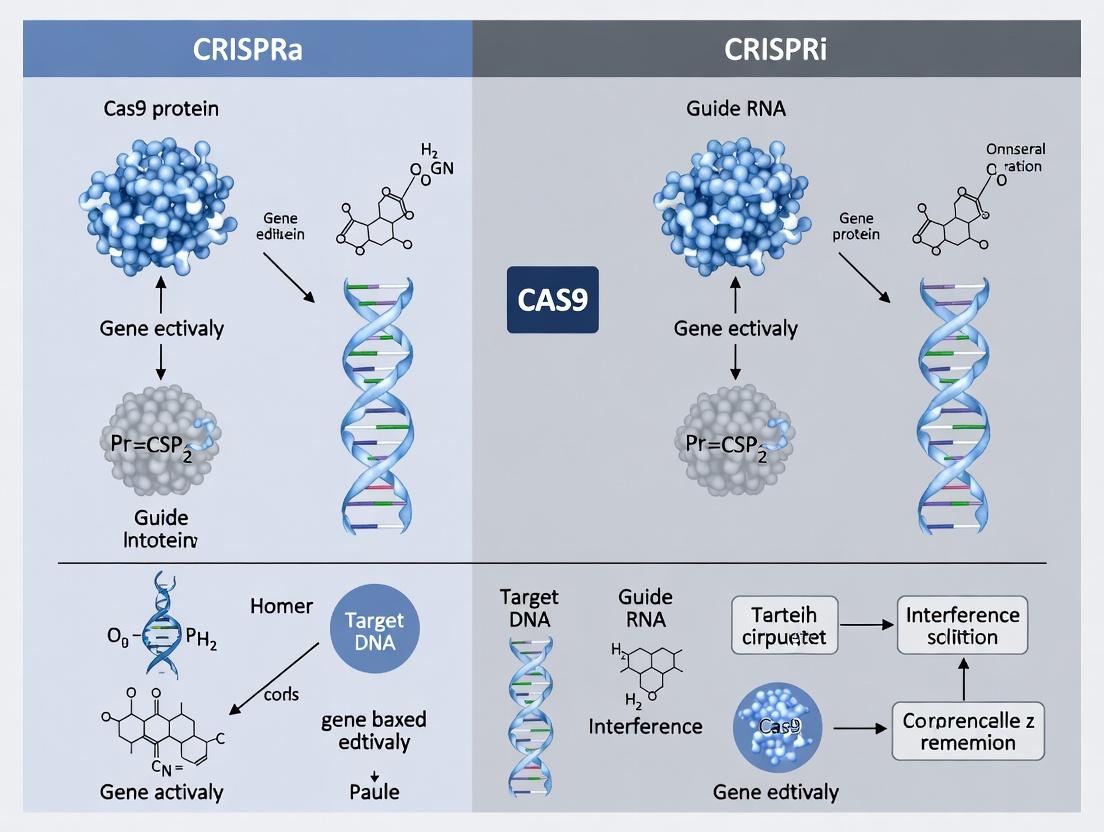
This comprehensive guide details the principles, methodologies, and applications of CRISPR activation (CRISPRa) and CRISPR interference (CRISPRi) technologies.
CRISPRa vs. CRISPRi: A Complete Guide to Precision Gene Activation and Interference for Researchers
Abstract
This comprehensive guide details the principles, methodologies, and applications of CRISPR activation (CRISPRa) and CRISPR interference (CRISPRi) technologies. Aimed at researchers and drug development professionals, it explores the foundational molecular mechanisms, provides step-by-step protocols for experimental design and implementation, offers troubleshooting and optimization strategies for common challenges, and validates approaches through comparative analysis with other gene regulation tools. The article synthesizes current best practices to empower precise transcriptional control in functional genomics screens, disease modeling, and therapeutic development.
CRISPRa and CRISPRi Explained: From dCas9 to Precision Transcriptional Control
The catalytic core of Streptococcus pyogenes Cas9 is defined by two nuclease domains: HNH, which cleaves the complementary DNA strand, and RuvC, which cleaves the non-complementary strand. A nuclease-dead Cas9 (dCas9) is generated through targeted point mutations that inactivate these domains while preserving the protein's ability to bind DNA via guide RNA (gRNA) complementarity. This fundamental transformation from a DNA-cutting enzyme to a programmable DNA-binding protein forms the cornerstone of CRISPR-based transcriptional regulation—CRISPR activation (CRISPRa) and interference (CRISPRi)—within a broader thesis on precision gene control.
Key Mutations for Generating dCas9
| Cas9 Variant | Mutations (S. pyogenes) | Functional Consequence | Primary Application |
|---|---|---|---|
| Wild-type Cas9 | None | Cleaves both DNA strands (DSB) | Gene knockout, editing |
| dCas9 | D10A (RuvC) & H840A (HNH) | DNA binding only, no cleavage | CRISPRi, imaging, pulldown |
| Nickase (nCas9) | D10A or H840A | Cuts single strand only ("nick") | Base editing, HDR enhancement |
Quantitative Performance Metrics: CRISPRa/i vs. RNAi
| Parameter | CRISPRi (dCas9-KRAB) | CRISPRa (dCas9-VPR) | Traditional siRNA/shRNA |
|---|---|---|---|
| Typical Knockdown Efficiency | 80-95% | N/A | 70-90% |
| Typical Activation Fold-Change | N/A | 10x - 1000x+ | N/A |
| Off-Target Effects | Low (transcriptional) | Low (transcriptional) | High (seed-based) |
| Duration of Effect (Dividing Cells) | Days to weeks | Days to weeks | 3-7 days |
| Multiplexing Capacity | High (multiple gRNAs) | High (multiple gRNAs) | Limited |
Protocol 1: Establishing Stable dCas9 Effector Cell Lines for CRISPRa/i Screens
Objective: Generate a mammalian cell line (e.g., HEK293T) stably expressing dCas9 fused to a transcriptional repressor (KRAB) or activator (VPR).
Materials:
- Lentiviral Transfer Plasmid: e.g., pLV-dCas9-KRAB-T2A-Puro or pLV-dCas9-VPR-T2A-Blast.
- Packaging Plasmids: psPAX2 and pMD2.G.
- HEK293T Cells: For lentivirus production.
- Polyethylenimine (PEI), 1 mg/ml.
- Target Cell Line: e.g., HeLa, K562.
- Appropriate Selection Antibiotics: Puromycin (1-5 µg/ml), Blasticidin (5-10 µg/ml).
Procedure:
- Day 1: Seed 2x10^6 HEK293T cells in a 6-cm dish in complete medium (no antibiotics).
- Day 2: Transfect with PEI mixture: 2.5 µg transfer plasmid, 1.875 µg psPAX2, 0.625 µg pMD2.G in Opti-MEM.
- Day 3: Replace medium with fresh complete medium.
- Day 4 & 5: Harvest viral supernatant (48h & 72h post-transfection), filter through a 0.45 µm filter.
- Transduce Target Cells: Plate target cells (e.g., 1x10^5/well in 12-well). Add filtered viral supernatant + polybrene (8 µg/ml). Spinfect at 1000xg for 60 min at 32°C (optional).
- Day 6: Replace with fresh complete medium.
- Day 7: Begin selection with appropriate antibiotic. Maintain selection for at least 5-7 days until control cells (non-transduced) are dead. Validate dCas9 expression via western blot or functional assay.
Protocol 2: Design, Cloning, and Validation of gRNA Libraries for Transcriptional Control
Objective: Clone gRNAs targeting promoter-proximal regions for CRISPRi (or upstream enhancers for CRISPRa) into a lentiviral gRNA expression vector.
Materials:
- gRNA Design Tool: CHOPCHOP, CRISPick, or design manually.
- Oligos: Forward and reverse oligonucleotides encoding your 20nt spacer sequence.
- Cloning Vector: e.g., lentiGuide-Puro (Addgene #52963).
- Enzymes: BsmBI-v2, T4 DNA Ligase, T7 DNA Ligase.
- Competent Cells: Stable E. coli (e.g., Stbl3).
Procedure:
- Design: For CRISPRi, design gRNAs targeting -50 to +300 bp relative to the TSS. For CRISPRa, target -400 to -50 bp upstream of TSS. Select top 2-4 gRNAs per gene.
- Annealing & Phosphorylation: Mix 1 µl of each 100 µM oligo, 1 µl 10x T4 Ligation Buffer, 0.5 µl T4 PNK, 6.5 µl H2O. Run program: 37°C 30min; 95°C 5min; ramp to 25°C at 5°C/min.
- Digestion: Digest 2 µg lentiGuide vector with BsmBI at 55°C for 1 hour.
- Ligation: Set up ligation (20 µl): 50 ng digested vector, 1 µl diluted annealed oligo (1:200), 1 µl T7 DNA Ligase, 2 µl 10x T7 Ligase Buffer. Incubate at room temp for 10 min.
- Transformation & Sequencing: Transform 2 µl ligation into Stbl3 cells, plate on ampicillin. Pick colonies, isolate plasmid, and Sanger sequence using a U6 promoter primer.
- Viral Production & Transduction: Produce lentivirus as in Protocol 1. Transduce your stable dCas9-effector cell line at low MOI (<0.3) to ensure single gRNA integration.
- Validation: 72h post-transduction/selection, harvest RNA for qRT-PCR to assess gene expression changes. Use a non-targeting gRNA control.
The Scientist's Toolkit: Essential Reagents for dCas9-mediated Transcriptional Control
| Reagent Category | Specific Example(s) | Function & Notes |
|---|---|---|
| dCas9 Effector Plasmids | pLV-dCas9-KRAB-Puro, pHR-dCas9-VPR-Blast | Constitutive expression of the dCas9-transcriptional regulator fusion. |
| gRNA Expression Backbone | lentiGuide-Puro, lenti sgRNA(MS2)_zeo | Delivers the targeting component. Often includes MS2 loops for recruiting additional effectors (e.g., in synergistic activation mediators, SAM). |
| Viral Packaging System | psPAX2, pMD2.G; pSPAX2, pVSV-G | Required for efficient delivery of constructs via lentivirus, essential for hard-to-transfect cells and in vivo work. |
| Selection Antibiotics | Puromycin, Blasticidin S, Hygromycin B | For selecting and maintaining stable cell lines expressing dCas9 effectors and gRNAs. |
| Transcriptional Effector Domains | KRAB (Krüppel-associated box), VPR (VP64-p65-Rta), SunTag | KRAB recruits repressive complexes for CRISPRi. VPR or SunTag systems recruit strong activators for CRISPRa. |
| Validated Control gRNAs | Non-targeting scramble, Targeting housekeeping gene (e.g., GAPDH, ACTB) | Essential negative and positive controls for experimental validation. |
| qRT-PCR Assay Kits | TaqMan Gene Expression Assays, SYBR Green Master Mix | Gold-standard for quantitative validation of transcriptional changes. |
Title: dCas9 Creation and Core Applications
Title: CRISPRi Mechanistic Pathway
Title: CRISPRa/i Screening Workflow
CRISPR activation (CRISPRa) and CRISPR interference (CRISPRi) represent two complementary methodologies for the precise, programmable control of eukaryotic gene expression, forming the core of modern functional genomics and therapeutic discovery. Within this thesis, CRISPRi utilizes a catalytically dead Cas9 (dCas9) fused to transcriptional repressors (e.g., KRAB, Mxi1) to silence target genes by blocking RNA polymerase or recruiting chromatin-condensing machinery. Conversely, the focus of this document, CRISPRa, reverses this logic. It leverages the same programmable targeting of dCas9 but recruits transcriptional activators to gene promoters or enhancers, thereby upregulating gene expression. This mechanism enables gain-of-function studies, genetic screening for phenotypic rescue, and the potential reactivation of silenced therapeutic genes, establishing a powerful duality with CRISPRi for comprehensive gene regulation research and drug target validation.
Core Mechanism: Components and Architectures
The fundamental CRISPRa mechanism involves guiding a dCas9-activator fusion protein to a specific genomic locus via a single-guide RNA (sgRNA). The activator domain then recruits endogenous transcriptional machinery to initiate gene expression. Multiple engineered architectures have been developed to enhance activation potency and specificity.
- Direct Fusion: dCas9 is directly fused to a strong transcriptional activation domain (AD), such as VP64 (a tetramer of the Herpes Simplex Viral Protein 16).
- SunTag Systems: dCas9 is fused to an array of peptide epitopes (GCN4). Co-expressed single-chain variable fragment (scFv) antibodies, fused to the VP64 AD, bind to these epitopes, recruiting multiple activators per dCas9 molecule for synergistic effects.
- SAM & VP64-p65-Rta (VPR) Systems: The Synergistic Activation Mediator (SAM) system is a three-component platform. A dCas9-VP64 fusion is combined with an sgRNA containing two MS2 RNA aptamers. Co-expressed MS2 coat protein (MCP) fused to the p65 and HSF1 ADs binds these aptamers, recruiting additional activators. The VPR system is a more compact, direct fusion of dCas9 to a tripartite activator (VP64-p65-Rta), offering high potency in a single protein.
Key Quantitative Comparison of Major CRISPRa Systems:
Table 1: Comparison of Primary CRISPRa Architectures
| System Name | Core Components | Typical Fold Activation Range | Key Advantages | Key Limitations |
|---|---|---|---|---|
| dCas9-VP64 | dCas9-VP64 fusion, standard sgRNA. | 2x - 50x | Simple, minimal construct size. | Often weak activation; highly dependent on sgRNA target site. |
| SunTag | dCas9-GCN4 array, scFv-VP64, standard sgRNA. | 50x - 200x+ | High potency via avidity effect; scalable by varying epitope repeats. | Larger construct size; potential for immunogenicity. |
| SAM | dCas9-VP64, MS2-modified sgRNA, MCP-p65-HSF1. | 100x - 1000x+ | Extremely potent; modular RNA-based recruitment. | Requires three components; larger sgRNA may affect packaging. |
| dCas9-VPR | dCas9-VP64-p65-Rta fusion, standard sgRNA. | 50x - 500x | High potency in a single fusion protein; robust across many cell types. | May increase off-target binding burden; larger protein size. |
Detailed Application Notes & Protocols
Protocol 1: Activation of an Endogenous Gene for Functional Rescue Screening
Aim: To perform a CRISPRa-based genetic screen to identify genes whose overexpression rescues a cellular phenotype (e.g., drug sensitivity, oxidative stress).
Materials:
- Target cells (e.g., HEK293T, primary fibroblasts).
- Lentiviral CRISPRa library (e.g., SAM-based whole-genome sgRNA library targeting promoter regions).
- Polybrene, puromycin, selective agent (e.g., drug, H₂O₂).
- Lysis buffer, DNA purification kits, PCR reagents, NGS sequencing platform.
Methodology:
- Library Transduction: Transduce target cells at a low MOI (~0.3) with the lentiviral CRISPRa library to ensure single sgRNA integration. Include a non-targeting control sgRNA population.
- Selection: 48 hours post-transduction, select transduced cells with puromycin (e.g., 2 µg/mL) for 5-7 days.
- Phenotypic Challenge: Split the selected cell pool. Treat one population with the selective agent (e.g., cytotoxic drug) and maintain another as an untreated control. Culture for 10-14 population doublings to allow phenotypic selection.
- Genomic DNA Extraction: Harvest genomic DNA from both treated and control cell populations using a column-based purification method.
- sgRNA Amplification & Sequencing: Amplify integrated sgRNA cassettes from genomic DNA via PCR using primers containing Illumina adaptor and barcode sequences. Purify the PCR product and perform deep sequencing.
- Data Analysis: Align sequencing reads to the sgRNA library reference. For each sgRNA, calculate its enrichment (log2 fold-change) in the treated population versus the control using algorithms like MAGeCK or PinAPL-Py. Significantly enriched sgRNAs indicate genes whose activation confers a selective advantage (rescue).
Protocol 2: Targeted Activation for Gene Expression Analysis (RT-qPCR)
Aim: To validate the overexpression of a specific endogenous gene using a defined CRISPRa construct.
Materials:
- Plasmids: pLV-dCas9-VPR (or pSAM system components: pLV-dCas9-VP64, pLV-MS2-p65-HSF1), pLV-sgRNA (targeting promoter of gene of interest).
- Transfection reagent (e.g., Lipofectamine 3000).
- TRIzol reagent, reverse transcription kit, SYBR Green qPCR master mix.
- Primers specific for the target gene and a housekeeping gene (e.g., GAPDH).
Methodology:
- Cell Seeding & Transfection: Seed HEK293T cells in a 24-well plate. At 70-80% confluency, co-transfect with 250 ng of dCas9-activator plasmid and 250 ng of the target-specific sgRNA plasmid. Include controls: activator + non-targeting sgRNA; sgRNA alone.
- Incubation: Incubate cells for 48-72 hours to allow for protein expression, genomic targeting, and transcriptional activation.
- RNA Isolation: Harvest cells using TRIzol and isolate total RNA following the manufacturer's protocol. Perform DNase I treatment.
- cDNA Synthesis: Reverse transcribe 1 µg of total RNA using an oligo(dT) or random hexamer primer kit.
- Quantitative PCR: Prepare qPCR reactions with SYBR Green master mix, cDNA template, and gene-specific primers. Run in triplicate on a real-time PCR machine. Use the ΔΔCt method to calculate the fold activation of the target gene relative to the non-targeting sgRNA control, normalized to the housekeeping gene.
The Scientist's Toolkit: Essential Research Reagents
Table 2: Key Reagents for CRISPRa Experiments
| Reagent / Material | Function & Role in CRISPRa Mechanism |
|---|---|
| dCas9-Activator Plasmid | Encodes the dead Cas9 protein fused to an activator domain (VP64, VPR) or epitope array (SunTag). The core effector protein. |
| sgRNA Expression Plasmid | Encodes the single-guide RNA. The 20-nt spacer sequence dictates genomic targeting specificity, guiding dCas9 to the promoter. |
| MS2-Modified sgRNA (for SAM) | sgRNA with two MS2 RNA aptamer loops. Enables recruitment of additional MCP-fused activator proteins, enhancing potency. |
| Lentiviral Packaging Plasmids (psPAX2, pMD2.G) | For producing lentiviral particles to deliver CRISPRa components, especially critical for hard-to-transfect cells and genetic screens. |
| Puromycin or Blasticidin | Selection antibiotics used to generate stable cell lines expressing dCas9-activator and/or sgRNA constructs. |
| RT-qPCR Reagents (Primers, SYBR Green) | For quantifying the mRNA output resulting from CRISPRa-mediated transcriptional activation at target genes. |
| Next-Generation Sequencing (NGS) Platform | For deep sequencing of sgRNAs in pooled genetic screens to identify hits based on abundance changes. |
Visualizations of Mechanisms and Workflows
Within the broader thesis on CRISPRa and CRISPRi for gene activation and interference research, CRISPR interference (CRISPRi) represents a precise method for gene silencing. Unlike CRISPR-Cas9 knockouts, CRISPRi reversibly represses transcription by targeting a catalytically dead Cas9 (dCas9) fused to transcriptional repressor domains to specific genomic loci. This application note provides detailed protocols and resources for implementing CRISPRi in mammalian cells.
CRISPRi utilizes a guide RNA (gRNA) to direct a dCas9-repressor fusion protein to a target gene's promoter or early transcriptional region. The repressor domain recruits endogenous chromatin-modifying complexes, leading to epigenetic silencing and reduced mRNA output. Common repressor domains include the Krüppel-associated box (KRAB) from human KOX1, which recruits heterochromatin-forming machinery via proteins like HP1 and SETDB1.
Key Research Reagent Solutions
| Item | Function & Explanation |
|---|---|
| dCas9-KRAB Expression Vector | Expresses catalytically dead S. pyogenes Cas9 fused to the KRAB repressor domain. The backbone for all CRISPRi silencing. |
| gRNA Expression System | Delivers the targeting guide RNA. Often part of a dual-expression (all-in-one) vector or co-transfected separately. |
| Delivery Vehicle (Lentivirus) | For stable, long-term silencing in hard-to-transfect cells. Enables generation of stable cell pools or lines. |
| Positive Control gRNA | Targets a constitutively expressed gene (e.g., GAPDH, PPIB). Essential for validating system efficacy. |
| Negative Control gRNA | Non-targeting scrambled guide. Critical for establishing baseline transcriptional noise. |
| qPCR Primers | For quantifying mRNA levels of the target gene post-silencing. Confirms transcriptional knockdown. |
| Cell Viability Assay Kit | (e.g., MTT, CellTiter-Glo) To assess phenotypic consequences of gene silencing, especially for essential genes. |
CRISPRi efficiency is highly dependent on target site selection within the promoter or 5' transcriptional start site (TSS). Published data indicate optimal silencing occurs when targeting regions -50 to +300 bp relative to the TSS.
Table 1: Typical CRISPRi Efficacy Metrics in HEK293T Cells
| Parameter | Typical Result Range | Notes |
|---|---|---|
| Maximal Transcriptional Knockdown | 80% - 99% (mRNA reduction) | Varies by gene and guide RNA efficiency. |
| Optimal Targeting Window | -50 to +300 bp from TSS | Guides within this window show highest success rate. |
| Time to Maximal Knockdown | 72 - 96 hours post-transfection | For transient delivery. Lentiviral systems require 5-7 days post-selection. |
| Off-Target Transcriptional Effects | Typically < 2-fold change | Significantly lower than RNAi due to precise DNA targeting. |
Detailed Experimental Protocols
Protocol 1: Transient CRISPRi Knockdown in Adherent Cells
Objective: To achieve rapid, transient gene silencing using plasmid transfection.
Materials: dCas9-KRAB expression plasmid, gRNA expression plasmid (or all-in-one vector), transfection reagent, appropriate cell line, qRT-PCR reagents.
Method:
- Day 1: Seed cells in a 24-well plate to reach 60-70% confluency at transfection.
- Day 2: Co-transfect 250 ng dCas9-KRAB plasmid and 250 ng gRNA plasmid (or 500 ng all-in-one plasmid) using a preferred transfection reagent (e.g., Lipofectamine 3000). Include non-targeting gRNA and no-gRNA controls.
- Day 5 (72 hrs post-transfection): Harvest cells for RNA extraction.
- Analysis: Perform qRT-PCR to quantify target gene mRNA levels normalized to housekeeping genes (e.g., ACTB). Calculate percentage knockdown relative to non-targeting control.
Protocol 2: Stable CRISPRi Cell Line Generation via Lentivirus
Objective: To create a polyclonal cell population with durable gene repression.
Materials: Lentiviral dCas9-KRAB and gRNA packaging plasmids (psPAX2, pMD2.G), HEK293T packaging cells, polybrene, appropriate selection antibiotic (e.g., puromycin).
Method:
- Lentivirus Production: Co-transfect HEK293T cells in a 6-well plate with the lentiviral transfer plasmid (dCas9-KRAB + gRNA) and packaging plasmids. Harvest viral supernatant at 48 and 72 hours.
- Target Cell Transduction: Filter supernatant (0.45 µm), add polybrene (8 µg/mL), and apply to target cells for 24 hours.
- Selection: Begin antibiotic selection (e.g., 1-2 µg/mL puromycin) 48 hours post-transduction. Maintain selection for 5-7 days until control (untransduced) cells are dead.
- Validation: Expand polyclonal pool and assay for target gene knockdown via qPCR (typically 7-10 days post-selection start).
Diagrams
Title: CRISPRi Transcriptional Repression Pathway
Title: CRISPRi Experimental Workflow
sgRNA Design: Principles and Quantitative Parameters
The single-guide RNA (sgRNA) is the targeting component that determines the specificity of CRISPRa/i systems. Optimal design balances on-target efficiency and minimizes off-target effects.
Table 1: Key Quantitative Parameters for CRISPRa/i sgRNA Design
| Parameter | Target Range (Optimal) | Impact on Activity | Measurement Method |
|---|---|---|---|
| GC Content | 40-60% | High GC increases stability; low GC reduces specificity. | In silico calculation. |
| On-Target Score | >60 (tool-dependent) | Predicts sgRNA binding and cutting efficiency. | Algorithms (e.g., Doench ‘16, Azimuth). |
| Off-Target Score | Max 3 mismatches, avoid seed region | Predicts potential binding to unintended genomic loci. | CFD score, MIT specificity score. |
| Distance to TSS (CRISPRa) | -50 to -500 bp upstream of TSS | Determines activation efficiency. Peak ~ -200 bp. | Genomic annotation (RefSeq, ENSEMBL). |
| Target Region (CRISPRi) | -50 to +300 bp relative to TSS | Highest repression efficiency near TSS. | Genomic annotation. |
| Poly-T Stretch | Avoid ≥4 consecutive T's | Premature termination by RNA Pol III. | Sequence scan. |
Protocol 1: Design of sgRNAs for CRISPRa/i Experiments Objective: To design high-efficacy, specific sgRNAs for targeted gene activation or repression.
- Gene Target Identification: Using resources like NCBI or ENSEMBL, identify the official gene symbol and all annotated Transcriptional Start Sites (TSSs).
- Target Region Definition:
- For CRISPRa: Extract genomic sequence from -500 bp to +50 bp relative to the primary TSS.
- For CRISPRi: Extract genomic sequence from -50 bp to +300 bp relative to the TSS.
- sgRNA Candidate Generation: Using design tools (e.g., Broad Institute's GPP Portal, CRISPick), input the target sequence to generate all possible 20-nt sgRNA sequences (preceding a 5'-NGG-3' PAM for SpCas9).
- Ranking and Selection: Filter and rank candidates based on:
- High on-target activity score.
- Minimal off-target sites (allow 0-3 mismatches, check seed region 8-12 bp proximal to PAM).
- GC content between 40-60%.
- Absence of homopolymer runs.
- Specificity Validation: Perform in silico validation by BLASTing the selected 20-nt spacer against the appropriate genome (e.g., hg38) to identify potential off-target loci.
- Control Design: Include at least one non-targeting control sgRNA (scrambled sequence with no genomic match) and a positive control sgRNA targeting a known, efficiently regulated gene.
Effector Domains: Functional Modules for Activation and Interference
CRISPRa and CRISPRi repurpose a catalytically "dead" Cas9 (dCas9) fused to effector protein domains to modulate transcription without altering DNA sequence.
Table 2: Common Effector Domains for CRISPRa and CRISPRi
| System | Effector Domain(s) | Origin | Mechanism of Action | Typical Assembly |
|---|---|---|---|---|
| CRISPRi | KRAB (Krüppel-associated box) | Homo sapiens | Recruits heterochromatin-forming complexes, silences transcription. | dCas9-KRAB fusion protein. |
| CRISPRa (VPR) | VP64, p65, Rta | Herpesvirus, Homo sapiens | Strong synergistic activation. VP64 recruits p300/CBP. | dCas9-VP64-p65-Rta tripartite fusion. |
| CRISPRa (SAM) | MS2, p65, HSF1 | Bacteriophage, Homo sapiens | Scaffold system. MS2 stems on sgRNA recruit MCP-p65-HSF1 fusion proteins. | dCas9-VP64 + sgRNA(MS2) + MCP-p65-HSF1. |
| CRISPRa (SunTag) | GCN4 peptide array, scFv-VP64 | Yeast, Homo sapiens | Recruits multiple copies of activator. 10xGCN4 array recruits up to 10 scFv-VP64 effectors. | dCas9-SunTag (GCN4 array) + scFv-VP64. |
Protocol 2: Cloning and Validation of dCas9-Effector Constructs Objective: To assemble and validate a plasmid expressing a dCas9-effector fusion protein.
- Vector Selection: Choose a mammalian expression plasmid containing a constitutive (e.g., EF1α) or inducible promoter, with appropriate resistance markers (e.g., puromycin, blasticidin).
- Gibson Assembly/Cloning:
- Amplify the gene fragment encoding your selected effector domain (e.g., KRAB, VPR) with primers containing 20-30 bp homology arms to the destination vector's dCas9 C- or N-terminus.
- Linearize the dCas9 base vector by PCR or restriction digest.
- Perform Gibson Assembly using a 2:1 insert:vector molar ratio. Incubate at 50°C for 1 hour.
- Transformation: Transform the assembled product into competent E. coli, plate on selective antibiotic agar, and incubate overnight at 37°C.
- Colony Screening: Pick 5-10 colonies, culture in LB broth, and isolate plasmid DNA via miniprep.
- Validation by Sequencing: Perform Sanger sequencing using primers that anneal within the dCas9 and effector regions to confirm in-frame fusion and absence of mutations.
- Functional Validation (Qualitative): Co-transfect the validated dCas9-effector plasmid with a validated targeting sgRNA and a reporter plasmid (e.g., with a minimal promoter driving GFP) into HEK293T cells. Assess GFP expression via fluorescence microscopy after 48-72 hours compared to non-targeting controls.
Delivery Systems: Modes of In Vitro and In Vivo Transduction
Effective delivery is critical for introducing CRISPRa/i components into target cells. Choice depends on cell type, experiment duration, and application (in vitro vs. in vivo).
Table 3: Comparison of Key Delivery Systems for CRISPRa/i
| System | Max Capacity | Primary Cell Efficiency | Immunogenicity | Persistence | Key Applications |
|---|---|---|---|---|---|
| Lentivirus (LV) | ~8 kb | High (dividing & non-dividing) | Low | Stable integration | Pooled library screens, stable cell line generation. |
| Adeno-Associated Virus (AAV) | ~4.7 kb | Moderate to High | Very Low | Episomal (long-term) | In vivo delivery, primary neurons, retinal cells. |
| Lipid Nanoparticles (LNP) | Virtually unlimited | Moderate to High (in vitro) | Moderate (in vivo) | Transient | In vivo systemic delivery, hard-to-transfect cells in vitro. |
| Electroporation (Nucleofection) | Virtually unlimited | High for immune/primary cells | N/A | Transient/Stable | Primary T cells, hematopoietic stem cells, iPSCs. |
Protocol 3: Lentiviral Production and Transduction for Stable Cell Line Generation Objective: To produce lentivirus encoding dCas9-effector and sgRNA for creating stable, polyclonal cell populations.
Part A: Lentiviral Production (in HEK293T cells)
- Day 1: Seed 3x10^6 HEK293T cells in a 6-cm dish in DMEM + 10% FBS (no antibiotics).
- Day 2 (Morning): Prepare transfection mix in two tubes:
- Tube A (DNA): 2 µg packaging plasmid (psPAX2), 1 µg envelope plasmid (pMD2.G), 3 µg transfer plasmid (dCas9-effector or sgRNA expression), in 500 µL Opti-MEM.
- Tube B (Reagent): 18 µL polyethylenimine (PEI, 1 mg/mL) in 500 µL Opti-MEM.
- Incubate Tube B for 5 min, then add dropwise to Tube A. Vortex and incubate 20 min at RT.
- Day 2 (After Incubation): Add the 1 mL DNA-PEI complex dropwise to the HEK293T cells. Gently swirl.
- Day 3 (24h post-transfection): Replace medium with 4 mL fresh, pre-warmed complete medium.
- Day 4 & 5 (48h & 72h post-transfection): Harvest viral supernatant, filter through a 0.45 µm PVDF filter. Aliquot and store at -80°C or use immediately.
Part B: Target Cell Transduction and Selection
- Day 1: Seed target cells in a 12-well plate at 30-50% confluence.
- Day 2: Thaw viral supernatant. Prepare transduction mix: 500 µL fresh medium + 500 µL viral supernatant + 8 µg/mL polybrene.
- Transduce: Remove medium from cells, add the 1 mL transduction mix.
- Day 3 (24h post-transduction): Replace with fresh, complete medium.
- Day 4 (48h post-transduction): Begin antibiotic selection (e.g., 2 µg/mL puromycin for dCas9, 1 µg/mL blasticidin for sgRNA). Maintain selection for 5-7 days until all cells in an un-transduced control well are dead.
- Validation: Harvest polyclonal population for genomic DNA extraction and surveyor assay/T7E1 (if using Cas9) or RNA extraction for qRT-PCR to assess gene expression modulation.
The Scientist's Toolkit: Research Reagent Solutions
| Item | Function & Application |
|---|---|
| dCas9-VPR Plasmid | All-in-one vector for strong transcriptional activation. Used in CRISPRa experiments. |
| dCas9-KRAB Plasmid | Core repressor vector for CRISPRi-mediated gene silencing. |
| Lenti sgRNA(MS2) Plasmid | Lentiviral sgRNA expression plasmid with MS2 stem loops for use with SAM CRISPRa system. |
| MCP-p65-HSF1 Plasmid | Effector component for SAM system; binds MS2 loops to recruit activators. |
| Polybrene (Hexadimethrine bromide) | Cationic polymer that enhances viral transduction efficiency by neutralizing charge repulsion. |
| Puromycin Dihydrochloride | Antibiotic for selection of cells successfully transduced with plasmids containing puromycin N-acetyltransferase. |
| Lipofectamine CRISPRMAX | Lipid-based transfection reagent optimized for delivery of CRISPR ribonucleoprotein (RNP) complexes and plasmids. |
| AAVpro Purification Kit | For purifying high-titer, high-purity AAV particles for in vivo or sensitive in vitro delivery. |
| Nucleofector Kit for Primary Cells | Cell-type specific kits for high-efficiency transfection of difficult primary cells via electroporation. |
CRISPR activation (CRISPRa) and interference (CRISPRi) represent a transformative approach for precise transcriptional control within functional genomics and therapeutic development. Moving beyond foundational CRISPR-Cas9 knockout, CRISPRa/i systems offer reversible, tunable, and multiplexable regulation of endogenous gene expression without altering the underlying DNA sequence. This application note details the experimental realization of these core advantages, providing protocols and resources for researchers leveraging these tools for target validation, pathway dissection, and drug discovery.
Core Advantages: Experimental Realization and Data
Reversibility
Reversibility refers to the ability to return gene expression to its baseline state following intervention. This is intrinsic to CRISPRa/i as they are catalytically inactive (dCas9-based) and do not cause DNA cleavage.
- Experimental Paradigm: Inducible/Withdrawal Systems.
- Key Data: Time-course measurements of target gene mRNA (by qRT-PCR) following induction and subsequent withdrawal of the CRISPRa/i effector (e.g., via doxycycline control).
Table 1: Quantitative Reversibility Data for dCas9-KRAB (CRISPRi) on Gene X
| Time Post-Induction (days) | mRNA Level (% of Untreated Control) | Time Post-Effector Withdrawal (days) | mRNA Level (% of Untreated Control) |
|---|---|---|---|
| 1 | 25% ± 5% | 1 | 65% ± 8% |
| 3 | 10% ± 3% | 3 | 92% ± 6% |
| 7 | 8% ± 2% | 7 | 101% ± 5% |
Protocol 2.1: Assessing Reversibility with a Doxycycline-Inducible System
- Cell Line Preparation: Generate a stable cell line expressing dCas9-effector fusion (e.g., dCas9-KRAB for i, dCas9-VPR for a) under a Tet-On promoter. Alternatively, use a lentiviral system for transient delivery.
- sgRNA Transduction: Introduce lentivirus encoding a target-specific sgRNA (with appropriate selection).
- Induction Phase: Add doxycycline (e.g., 1 µg/mL) to culture media. Refresh doxycycline every 2-3 days.
- Withdrawal Phase: On day 7, wash cells 3x with PBS and maintain in doxycycline-free medium.
- Sampling: Harvest cells for total RNA extraction at induction days 1, 3, 7 and post-withdrawal days 1, 3, 7.
- Analysis: Perform qRT-PCR for the target gene and housekeeping controls. Normalize data to untreated cells (0 ng/mL doxycycline).
Tunability
Tunability enables precise control over the magnitude of gene expression, from subtle modulation to strong activation/repression.
- Experimental Paradigms: (a) Effector Dosage, (b) sgRNA Positioning, (c) Multi-Effector Systems.
- Key Data: Dose-response curves of target gene expression vs. inducer concentration or vs. sgRNA genomic position.
Table 2: Tunability via Inducer Dosage and sgRNA Position
| Tunability Method | Variable | Output Range (Fold-Change) | Optimal Condition |
|---|---|---|---|
| Effector Dosage | Doxycycline (ng/mL) | 1.0x to 25x (Activation) | 1000 ng/mL for max response |
| sgRNA Position (CRISPRa) | Distance from TSS (bp) | 1.0x to 150x | -50 to -150 bp upstream of TSS |
| sgRNA Position (CRISPRi) | Distance from TSS (bp) | 0.1x to 1.0x | -50 to +300 bp relative to TSS |
Protocol 2.2: Mapping Optimal sgRNA Binding Sites for Tunable Control
- Design: Synthesize a library of sgRNAs tiling the region from -500 bp to +500 bp relative to the transcription start site (TSS) of your target gene.
- Delivery: Co-transfect a constant amount of dCas9-effector plasmid (e.g., dCas9-VPR) with individual sgRNA plasmids (or a pooled library) into your cell line of interest.
- Control: Include non-targeting sgRNA controls.
- Analysis: After 48-72 hours, harvest cells for qRT-PCR or RNA-seq. Plot gene expression fold-change against sgRNA genomic coordinate to identify "hotspots" for maximal effect.
Multiplexability
Multiplexability allows simultaneous regulation of multiple genes within a single cell, enabling pathway-level analysis and synthetic genetic interactions.
- Experimental Paradigm: Arrayed sgRNA cocktails or pooled libraries.
- Key Data: High-throughput sequencing readouts confirming coordinated expression changes across multiple targets.
Table 3: Multiplexed CRISPRi Screen Results for a Synthetic Lethal Interaction
| Gene Target A (sgRNA) | Gene Target B (sgRNA) | Single Knockdown Viability | Co-Knockdown Viability | Interaction Score |
|---|---|---|---|---|
| Non-Targeting | Non-Targeting | 100% ± 3% | 100% ± 3% | 0.0 |
| Gene A | Non-Targeting | 95% ± 5% | - | - |
| Non-Targeting | Gene B | 90% ± 4% | - | - |
| Gene A | Gene B | - | 40% ± 7% | -1.2 (Synthetic Lethal) |
Protocol 2.3: Pooled Multiplexed CRISPRa/i Screening
- Library Design: Select a pooled library of sgRNAs targeting your genes of interest (e.g., a kinase library) with multiple sgRNAs per gene. Clone into a lentiviral sgRNA expression backbone.
- Virus Production: Generate lentivirus from the pooled sgRNA library at low MOI to ensure one integration per cell.
- Cell Infection & Selection: Infect cells stably expressing dCas9-effector (e.g., dCas9-KRAB) with the sgRNA library at a coverage of >500x. Apply selection (e.g., puromycin).
- Phenotypic Selection: Culture cells for 14-21 days under a selective condition (e.g., drug treatment) or simply passage to monitor proliferation.
- Genomic DNA Extraction & Sequencing: Harvest cells at baseline (T0) and endpoint (T_end). Extract gDNA, amplify the sgRNA region via PCR, and sequence on a HiSeq platform.
- Analysis: Align reads to the sgRNA library. Use MAGeCK or similar tools to identify sgRNAs/genes enriched or depleted under selection.
Visualizations
Workflow: CRISPRa/i Core Regulation & Advantages
Pathway: Multiplexed CRISPRa/i for Pathway Dissection
The Scientist's Toolkit: Research Reagent Solutions
Table 4: Essential Materials for CRISPRa/i Experiments
| Item | Function & Explanation | Example Product/Catalog |
|---|---|---|
| dCas9-Effector Plasmids | Core tools. Plasmid encoding nuclease-dead Cas9 fused to transcriptional effector domains (e.g., KRAB for repression, VPR/SAM for activation). | Addgene: #71237 (dCas9-KRAB), #63798 (dCas9-VPR) |
| sgRNA Cloning Backbone | Vector for expression of single-guide RNA (sgRNA) under a U6 or similar promoter. | Addgene: #65655 (lentiGuide-Puro) |
| Lentiviral Packaging System | Essential for efficient delivery, especially in hard-to-transfect cells. Produces replication-incompetent virus. | psPAX2 (packaging), pMD2.G (envelope) |
| Inducible System Components | Enables reversibility/tunability. Tet-On 3G transactivator and corresponding response element (TRE3G) for doxycycline control. | Takara Bio: 631168 (Tet-On 3G) |
| Next-Generation Sequencing (NGS) Library Prep Kit | Required for deconvolution of pooled multiplexed screens. Prepares sgRNA amplicons for sequencing. | Illumina: Nextera XT DNA Library Prep |
| Validated Antibody for Target Protein | Confirm phenotypic outcomes via western blot or flow cytometry alongside mRNA measurements. | Manufacturer-specific (e.g., CST, Abcam) |
| qRT-PCR Master Mix | Quantify target gene mRNA expression changes with high sensitivity and accuracy. | Thermo Fisher: Power SYBR Green Cells-to-Ct |
| Cell Line-Specific Transfection Reagent | For plasmid delivery in arrayed experiments. Optimization is critical for efficiency. | Lipofectamine 3000, FuGENE HD, or electroporation systems |
Implementing CRISPRa/i: Protocols, Screens, and Therapeutic Applications
Within the thesis exploring CRISPRa (CRISPR activation) and CRISPRi (CRISPR interference) for gene regulation research, the strategic selection of perturbation modality is paramount. CRISPRa, typically utilizing a catalytically dead Cas9 (dCas9) fused to transcriptional activators (e.g., VPR, SunTag), upregulates target gene expression. CRISPRi, employing dCas9 fused to transcriptional repressors (e.g., KRAB, SID4x), downregulates expression. The choice between activation, interference, or combinatorial perturbation is dictated by the biological question, desired phenotypic readout, and experimental validation requirements. This document provides application notes and protocols to guide this decision-making process.
Comparative Strategy Analysis & Data Presentation
Table 1: Core Characteristics of CRISPRa, CRISPRi, and Combinatorial Perturbation
| Feature | CRISPRa (Activation) | CRISPRi (Interference) | Combinatorial Perturbation |
|---|---|---|---|
| Primary Molecule | dCas9-VPR, dCas9-SunTag | dCas9-KRAB | Pooled dCas9-effectors |
| Typical Efficiency | 2- to 50-fold induction | 60-95% knockdown | Variable, dependent on design |
| On-Target Specificity | High (requires precise promoter targeting) | High (targets transcription initiation) | Must be validated per target |
| Common Applications | Functional rescue, gain-of-function screens, differentiation induction | Loss-of-function screens, modeling haploinsufficiency, pathway inhibition | Synthetic lethality, pathway mapping, network analysis |
| Key Limitations | Potential for supraphysiological expression, off-target activation | May not achieve complete knockout, efficacy depends on chromatin state | Increased experimental complexity, potential for confounding interactions |
| Optimal sgRNA Location | -200 to -50 bp upstream of TSS | -50 to +300 bp relative to TSS | Strategy-specific |
Table 2: Quantitative Performance Metrics from Recent Studies (2023-2024)
| Study (Source) | System | Perturbation | Avg. Fold Change / Knockdown | Key Metric (e.g., Z'-score) | Recommended Use Case |
|---|---|---|---|---|---|
| Fleck et al., 2023 | HEK293T | dCas9-VPR | 25x induction | Signal-to-Noise: 12:1 | Single-gene activation for rescue |
| Liao et al., 2024 | iPSC-Cardiomyocytes | dCas9-KRAB | 85% knockdown | Dynamic Range: 3.8 logs | High-penetrance phenotypic screening |
| Petrocellis et al., 2024 | A549 (Pooled Screen) | Dual CRISPRa/i | Varies by pair | Synergy Score > 2.0 | Identifying genetic interactions |
Detailed Experimental Protocols
Protocol 1: CRISPRa for Single-Gene Activation and Phenotypic Rescue
Objective: To rescue a disease-relevant phenotype by activating a compensatory gene. Materials: sgRNA plasmid targeting promoter of gene X, dCas9-VPR expression plasmid, target cell line with reporter/disease phenotype, transfection reagent, qRT-PCR reagents, phenotyping assay (e.g., viability, fluorescence). Procedure:
- Design and clone sgRNA targeting -150 bp upstream of the TSS of the compensatory gene.
- Co-transfect target cells with dCas9-VPR and sgRNA plasmids at a 1:2 ratio.
- At 48-72 hours post-transfection, harvest cells. 3.1. For validation: Isolate RNA, perform qRT-PCR to confirm gene X mRNA upregulation. 3.2. For phenotyping: Perform the relevant functional assay (e.g., cell viability assay using CellTiter-Glo).
- Compare to controls: cells transfected with non-targeting sgRNA + dCas9-VPR.
Protocol 2: Genome-Wide CRISPRi Knockdown Screening
Objective: To identify genes whose loss confers resistance to a chemotherapeutic agent. Materials: Genome-wide CRISPRi library (e.g., hCRISPRi-v2), lentiviral packaging plasmids, target cell line stably expressing dCas9-KRAB, selection antibiotic (e.g., puromycin), chemotherapeutic drug. Procedure:
- Generate high-titer lentivirus of the CRISPRi library in HEK293T cells.
- Infect dCas9-KRAB-expressing target cells at a low MOI (<0.3) to ensure single integration. Maintain >500x coverage per sgRNA.
- Select with puromycin (2-5 µg/mL) for 7 days.
- Split cells into treated (chemotherapeutic at IC50) and untreated control arms. Culture for 14-21 days, maintaining library representation.
- Harvest genomic DNA, PCR-amplify integrated sgRNA sequences, and sequence via NGS.
- Analyze sequencing data using MAGeCK or similar to identify sgRNAs enriched in the treated condition (resistance genes).
Protocol 3: Combinatorial Perturbation for Synthetic Lethality
Objective: To test for synergistic cell death upon simultaneous activation of gene A and interference of gene B. Materials: Two sgRNA expression vectors (for Gene A promoter and Gene B TSS), dCas9-VPR plasmid, dCas9-KRAB plasmid, fluorescent cell viability marker. Procedure:
- Construct a dual-expression system or co-transfect four plasmids: sgRNAA, sgRNAB, dCas9-VPR, dCas9-KRAB.
- Include critical controls: each perturbation alone and non-targeting sgRNAs.
- At 96 hours post-transfection, measure cell viability via flow cytometry (e.g., annexin V/PI staining).
- Calculate the combination index (CI) using the Chou-Talalay method. CI < 1 indicates synergy.
Signaling Pathway & Workflow Visualizations
Title: Decision Workflow for Perturbation Strategy Selection
Title: CRISPRi and CRISPRa Molecular Pathways
The Scientist's Toolkit: Research Reagent Solutions
Table 3: Essential Reagents for CRISPRa/i Experimental Workflows
| Reagent / Solution | Function & Description | Example Product/Catalog # (Representative) |
|---|---|---|
| dCas9 Effector Plasmids | Core expression vectors for dCas9 fused to activator or repressor domains. | dCas9-VPR (Addgene #63798), dCas9-KRAB (Addgene #71237) |
| sgRNA Cloning Backbone | Vector for high-efficiency expression of target-specific guide RNA. | lentiGuide-Puro (Addgene #52963) |
| Lentiviral Packaging Mix | Plasmids (psPAX2, pMD2.G) for producing lentiviral particles to deliver constructs. | psPAX2 (Addgene #12260), pMD2.G (Addgene #12259) |
| Polycation Transfection Reagent | For plasmid delivery in hard-to-transfect cells (e.g., primary cells). | Lipofectamine 3000, Polyethylenimine (PEI) |
| Stable Cell Line Selection Antibiotics | To select for cells with integrated dCas9 or sgRNA constructs. | Puromycin, Blasticidin, Hygromycin B |
| NGS Library Prep Kit for sgRNAs | For amplifying and preparing sgRNA sequences from genomic DNA for deep sequencing. | Illumina Nextera XT, Custom Primer Sets |
| Cell Viability Assay Kit | Quantitative readout for phenotypic screening (e.g., cytotoxicity, proliferation). | CellTiter-Glo 3D, Annexin V FITC Apoptosis Kit |
| qRT-PCR Master Mix | Gold-standard validation of transcriptional changes post-perturbation. | SYBR Green or TaqMan One-Step RT-PCR Master Mix |
This application note details a comprehensive pipeline for functional genomics screens using CRISPR activation (CRISPRa) or interference (CRISPRi). Framed within the broader thesis of utilizing programmable transcriptional regulators for target discovery and validation, this protocol is essential for researchers investigating gene function, signaling networks, and therapeutic targets in drug development.
Part 1: sgRNA Library Design and Synthesis
Design Principles
The design of single guide RNA (sgRNA) libraries for CRISPRa/i diverges from standard CRISPR-KO. Libraries must target specific regions proximal to the transcriptional start site (TSS) to maximize efficacy.
- CRISPRa: sgRNAs are designed to target regions from -400 bp to +50 bp relative to the TSS, with optimal activity often observed between -150 to -50 bp. The use of a strong activator like dCas9-VP64 is common, sometimes with synergistic activation mediators (SAM).
- CRISPRi: sgRNAs are designed to target regions from -50 bp to +300 bp downstream of the TSS, with the highest repression typically achieved within the +1 to +100 bp region. A repressor domain like KRAB is fused to dCas9.
Quantitative Design Parameters
Table 1: Key Design Parameters for CRISPRa/i sgRNA Libraries
| Parameter | CRISPRa Target Window | CRISPRi Target Window | Recommended Guides/Gene | Control Guides | Library Scale |
|---|---|---|---|---|---|
| Genomic Location | -400 to +50 bp from TSS | -50 to +300 bp from TSS | 3-10 | ≥ 100 non-targeting | Varies by goal |
| Optimal Zone | -150 to -50 bp | +1 to +100 bp | |||
| On-Target Score | >0.6 (using CRISPick, CHOPCHOP) | >0.6 | Per design tool | N/A | Genome-wide: 50-100k |
| Off-Target Rules | ≤3 mismatches in seed region | ≤3 mismatches in seed region | N/A | Designed to match GC% | Sub-library: 1-10k |
Protocol: sgRNA Library Design
- Obtain TSS Annotations: Use a reliable database (e.g., Ensembl, RefSeq) for your organism. Note that many genes have multiple TSSs.
- Define Target Windows: For CRISPRa, extract sequences from -400 to +50 bp of each canonical TSS. For CRISPRi, extract sequences from -50 to +300 bp.
- Identify Protospacer Adjacent Motif (PAM): Scan the extracted sequences for NGG PAM sequences (for S. pyogenes Cas9).
- Select Candidate sgRNAs: Extract the 20 bp protospacer sequence immediately 5' to each PAM.
- Filter and Score: Use design tools (e.g., CRISPick, CHOPCHOP) to score sgRNAs for on-target efficiency and predict off-targets. Filter out guides with significant off-target potential.
- Finalize Library: Select the top 3-10 sgRNAs per gene. Include a minimum of 100 non-targeting control sgRNAs with matched GC content. Add flanking cloning sequences (e.g., for BsmBI sites) for downstream cloning.
- Synthesis: Order the library as an oligonucleotide pool from a commercial supplier.
Title: Computational sgRNA Library Design Workflow
Part 2: Library Cloning and Lentiviral Production
Research Reagent Solutions
Table 2: Essential Reagents for Library Cloning & Production
| Item | Function | Example/Details |
|---|---|---|
| BsmBI-v2 Restriction Enzyme | Golden Gate assembly; digests vector and inserts for seamless cloning. | NEB #E0732 |
| Lentiviral Backbone | Plasmid with dCas9 activator/repressor, sgRNA scaffold, and selection markers. | lenti-sgRNA, pHR-SFFV-dCas9-VP64 |
| Competent Cells | High-efficiency bacteria for library transformation to maintain diversity. | Endura ElectroCompetent Cells |
| Plasmid Midiprep Kit | High-quality, endotoxin-free plasmid preparation for transfection. | Qiagen EndoFree Plasmid Kit |
| Lentiviral Packaging Plasmids | psPAX2 (gag/pol/rev) and pMD2.G (VSV-G envelope) for virus production. | Addgene #12260, #12259 |
| Transfection Reagent | For HEK293T cell transfection with packaging mix. | PEI Max, Lipofectamine 3000 |
| HEK293T/17 Cells | Robust cell line for high-titer lentiviral production. | ATCC CRL-11268 |
| Ultracentrifugation Reagents | PEG-it Virus Precipitation Solution or equivalent for concentration. | System Biosciences LV810A-1 |
Protocol: sgRNA Library Cloning
- Prepare Vector Backbone: Digest 5 µg of lentiviral sgRNA expression plasmid (e.g., lentiGuide-Puro) with BsmBI-v2. Purify the linearized backbone via gel electrophoresis.
- Amplify Oligo Pool: Perform a limited-cycle PCR (5-8 cycles) to amplify the sgRNA insert pool from the synthesized oligos, adding the appropriate overhangs.
- Golden Gate Assembly: Set up a reaction with BsmBI-v2 digested backbone, PCR-amplified insert, T4 DNA Ligase, and ATP. Cycle between digestion (37°C) and ligation (16°C) for 30-60 cycles.
- Ethanol Precipitation: Precipitate the assembled DNA to remove salts and concentrate.
- Electroporation: Transform the entire assembly reaction into high-efficiency electrocompetent cells. Plate a dilution series to assess library coverage and harvest the remainder for maxiprep. Critical: Ensure transformation yield is at least 200x the library size to maintain diversity.
- Plasmid Library Preparation: Perform maxipreps on the pooled colonies to obtain the high-quality plasmid library for virus production.
Protocol: Lentiviral Production
- Seed HEK293T Cells: Seed 10 million cells in a 15 cm dish the day before transfection for ~70% confluency.
- Prepare Transfection Mix: For one dish, mix: 10 µg library plasmid, 7.5 µg psPAX2, 2.5 µg pMD2.G in Opti-MEM. Add PEI Max at a 3:1 ratio (PEI:Total DNA). Incubate 15 min.
- Transfect: Add mixture dropwise to cells with fresh medium.
- Harvest Virus: Collect supernatant at 48 and 72 hours post-transfection. Pool and filter through a 0.45 µm PES filter.
- Concentrate: Concentrate virus via ultracentrifugation (e.g., 50,000 x g for 2h at 4°C) or using commercial precipitation solutions. Resuspend in PBS/0.1% BSA, aliquot, and store at -80°C.
- Titer Determination: Serially dilute virus on target cells with puromycin selection. Count colonies to calculate TU/mL. Aim for a titer >1x10^8 TU/mL.
Title: Lentiviral sgRNA Library Production
Part 3: Cell Line Engineering and Screening
Generating Stable dCas9-Expressing Cells
A stable, inducible, or constitutive dCas9-VP64/KRAB cell line is a prerequisite.
Protocol:
- Lentiviral Transduction: Transduce your target cell line (e.g., HEK293, K562) with lentivirus carrying the dCas9-activator/repressor and a blasticidin resistance gene.
- Selection: Begin blasticidin selection (e.g., 5-10 µg/mL) 48 hours post-transduction for 7-10 days.
- Validation: Perform western blot for dCas9 and functional validation via qPCR of known target genes using validated sgRNAs.
Library Transduction and Stable Cell Line Generation
Critical: Maintain a high representation (≥500x library size) at each step to prevent bottlenecking.
Protocol:
- Determine MOI: Perform a pilot transduction with a small set of fluorescent sgRNAs to determine the Multiplicity of Infection (MOI) that yields ~30-40% infection efficiency. This ensures most cells receive only one sgRNA.
- Large-Scale Transduction: Scale up to transduce the entire library into the stable dCas9 cell line. Use enough cells to maintain >500x coverage.
- Selection: Begin puromycin selection (e.g., 1-3 µg/mL) 48 hours post-transduction. Select for 5-7 days until all non-transduced control cells are dead.
- Harvest Baseline Sample (T0): Harvest at least 10 million cells (maintaining 500x coverage) for genomic DNA extraction as the pre-selection reference.
- Apply Phenotypic Selection: For a positive selection screen (e.g., drug resistance), apply the selective pressure. For a negative selection screen (e.g., cell death), continue culture for enough population doublings (e.g., 14-21 days) to deplete essential genes. Include an unselected control arm.
- Harvest Endpoint Sample (T1): Harvest the selected cell population.
Part 4: Genomic DNA Extraction, Sequencing & Analysis
Protocol: sgRNA Amplification & Sequencing
- Extract Genomic DNA: Use a large-scale gDNA extraction kit from T0 and T1 cell pellets.
- Primary PCR (Amplify sgRNA region): Perform PCR using primers that bind the constant flanking regions of the integrated sgRNA. Use a high-fidelity polymerase and limit cycles (≤20) to prevent bias.
- Secondary PCR (Add Sequencing Adaptors): Use a second, limited-cycle PCR to add Illumina P5/P7 adaptors and sample barcodes.
- Sequencing: Pool samples and perform 75bp single-end sequencing on an Illumina platform. Sequence to a depth of ≥200 reads per sgRNA for the T0 sample.
Data Analysis Workflow
- Demultiplex & Map Reads: Demultiplex by sample barcode. Align reads to the reference sgRNA library list using a simple string match (e.g., Bowtie, MAGeCK count).
- Quantify sgRNA Abundance: Count the number of reads for each sgRNA in each sample.
- Statistical Analysis for Enrichment/Depletion: Use specialized algorithms (e.g., MAGeCK, BAGEL) to compare sgRNA frequencies between T0 and T1. These tools rank genes based on the collective behavior of their targeting sgRNAs.
- Hit Identification: For a positive selection screen, hits are genes whose targeting sgRNAs are significantly enriched in T1. For negative selection, hits are genes whose sgRNAs are significantly depleted.
Title: sgRNA Recovery & Analysis Workflow
This detailed workflow from sgRNA library design to the generation of stably transduced cell pools enables genome-wide or targeted transcriptional modulation screens. When executed with careful attention to quality controls—particularly library coverage—this pipeline provides researchers with a powerful method for identifying genes that drive or suppress phenotypes of interest, directly supporting target discovery and validation in the CRISPRa/i research thesis.
Within the thesis framework on CRISPRa (activation) and CRISPRi (interference) for gene regulation research, genome-wide functional screens represent a paradigm shift. These screens systematically interrogate gene function across the entire genome, enabling the unbiased discovery of genes involved in biological processes and disease phenotypes. CRISPRa screens (gain-of-function, GOF) identify genes whose overexpression confers a selective advantage or specific phenotype, while CRISPRi screens (loss-of-function, LOF) pinpoint essential genes or those whose suppression leads to a phenotype of interest. This application note details current protocols and key considerations for executing these powerful assays in drug discovery and functional genomics.
Core Principles and Quantitative Comparisons
Table 1: Comparison of Genome-wide CRISPRa and CRISPRi Screening Approaches
| Parameter | CRISPRi (LOF) Screen | CRISPRa (GOF) Screen | Notes |
|---|---|---|---|
| CRISPR System | dCas9 fused to repressive domains (e.g., KRAB, SID4x) | dCas9 fused to activators (e.g., VPR, SAM, SunTag) | |
| Library Type | sgRNA targeting gene coding regions/TSS | sgRNA targeting promoter regions ( -200 to +50 bp from TSS) | ~3-10 sgRNAs/gene |
| Typical Library Size | ~70,000 - 120,000 sgRNAs (e.g., Brunello, TorontoKO) | ~70,000 - 120,000 sgRNAs (e.g., Calabrese, SAM) | Human genome coverage |
| Fold Coverage | 500-1000x | 500-1000x | Critical for statistical power |
| Primary Readout | Depletion (Negative Selection) | Enrichment (Positive Selection) | Measured by NGS |
| Key Applications | Identify essential genes, drug targets, resistance mechanisms | Identify tumor suppressors, genes compensating for pathway inhibition, differentiation drivers | |
| Typical Hit Rate | 5-15% of screened genes | 1-10% of screened genes | Varies by screen design & selection |
| False Positive Sources | Off-target effects, sgRNA inefficiency | Off-target activation, epigenetic context | |
| Common Validation | Individual sgRNA/k/o, small-molecule inhibitors (if available) | Individual sgRNA/a, cDNA overexpression, target agonist |
Table 2: Quantitative Data from Representative Published Screens (2022-2024)
| Study (Year) | Screen Type | Phenotype | Library Size (sgRNAs) | Key Hits Identified | Hit Validation Rate |
|---|---|---|---|---|---|
| Dempster et al., Nat. Genet. (2024) | CRISPRi (LOF) | Cancer cell line essentiality (625 lines) | 87,600 sgRNAs (TKOv3) | 2,900 core essential genes | >80% (orthogonal assays) |
| Replogle et al., Science (2022) | CRISPRi (LOF) | Neuronal differentiation | 91,320 sgRNAs (iBAR) | 175 high-confidence regulators | ~70% (individual differentiation assays) |
| Simeonov et al., Cell (2023) | CRISPRa (GOF) | Resistance to T cell-mediated killing | 70,290 sgRNAs (Calabrese) | CIITA, CD74 (MHC-II pathway) | 100% (flow cytometry) |
| Wong et al., Nat. Comm. (2023) | CRISPRa (GOF) | Senescence escape | 67,450 sgRNAs (SAM) | CCND1, MYC | ~85% (replication in 3 cell models) |
Detailed Experimental Protocols
Protocol 1: Genome-wide CRISPRi Screen for Essential Genes (Negative Selection)
This protocol is adapted for a 500x coverage screen in HeLa cells using the Brunello CRISPRi library.
A. Pre-Screen Preparation
- Library Amplification & Preparation: Transform the Brunello plasmid library (Addgene #73179) into Endura Electrocompetent cells. Recover for 1 hour, then plate across >50 LB-Ampicillin plates to maintain complexity. Pool colonies, maxiprep, and confirm library distribution by shallow sequencing.
- Lentivirus Production: In a HEK293T cell 15cm dish, co-transfect 18 µg library plasmid, 12 µg psPAX2, and 6 µg pMD2.G using PEIpro. Harvest supernatant at 48h and 72h, concentrate via ultracentrifugation, and titer on target cells using puromycin selection.
- Cell Line Engineering: Stably express dCas9-KRAB in HeLa cells via lentiviral transduction and blasticidin selection. Clone and validate repression efficiency at model loci (e.g., EGFP).
B. Screening Workflow
- Viral Transduction at Low MOI: Transduce dCas9-KRAB HeLa cells at MOI ~0.3 to ensure majority receive 1 sgRNA. Include 500x coverage of each sgRNA (e.g., for 77,441 sgRNA library, transduce ~39 million cells).
- Puromycin Selection: Begin selection with 2 µg/mL puromycin at 48h post-transduction for 5-7 days until non-transduced control is dead.
- Passaging & Harvesting:
- Designate this day as Day 0. Harvest 50 million cells (representing ~500x coverage) as the "T0" reference sample.
- Split remaining cells into experimental arms (e.g., control vs drug-treated). Maintain at 500x coverage at each passage.
- Passage cells every 3-4 days for a total of 21 days (14-21 population doublings).
- Harvest 50 million cells from each arm at Day 21.
C. Next-Generation Sequencing & Analysis
- Genomic DNA Extraction & sgRNA Amplification: Extract gDNA (Qiagen Maxi Prep). Perform a 2-step PCR: (1) Amplify sgRNA region from 100 µg gDNA per sample (24 reactions) with indexing primers. (2) Add Illumina adapters and barcodes in a second PCR.
- Sequencing: Pool samples and sequence on an Illumina NextSeq 500/2000 (75 bp single-end, minimum 50 reads/sgRNA).
- Bioinformatic Analysis: Align reads to the Brunello library. Calculate read counts per sgRNA. Use MAGeCK (v0.5.9.5) or CRISPResso2 to compare Day 21 vs T0 counts, identifying significantly depleted sgRNAs/genes (FDR < 0.05).
Protocol 2: Genome-wide CRISPRa Screen for Drug Resistance (Positive Selection)
This protocol is adapted for identifying genes conferring resistance to a targeted therapy (e.g., BRAF inhibitor) using the SAM library.
A. Pre-Screen Preparation
- Library & Cell Line: Use the human SAM v1 library (Addgene #1000000076). The cell line (e.g., A375 melanoma) must stably express the SAM system: dCas9-VP64, MS2-P65-HSF1, and the sgRNA(MS2).
- Virus Production & Titering: As in Protocol 1, but using the SAM library plasmid.
B. Screening Workflow
- Transduction & Selection: Transduce A375-SAM cells at MOI=0.3, select with puromycin (1 µg/mL) for 7 days. Harvest T0 reference (50 million cells).
- Positive Selection: Split cells into two arms: DMSO vehicle and BRAF inhibitor (e.g., vemurafenib, 1 µM). Maintain drug pressure continuously.
- Passage cells, keeping >500x coverage.
- The resistant pool will emerge in the drug arm after 14-28 days.
- Harvest: Harvest all cells from the drug arm once control (DMSO) arm shows significant cell death (~Day 28). Also harvest the DMSO control.
C. NGS & Analysis
- Sequencing Library Prep: As in Protocol 1.
- Analysis: Use MAGeCK or BAGEL2 to identify sgRNAs significantly enriched in the drug-treated arm compared to T0 and DMSO control. Rank genes by aggregate sgRNA enrichment scores.
Signaling Pathways and Workflows
Genome-wide CRISPRa/i Screening Workflow
Mechanism of CRISPRi Repression vs CRISPRa Activation
The Scientist's Toolkit: Key Research Reagent Solutions
Table 3: Essential Materials for CRISPRa/i Genome-wide Screens
| Item / Reagent | Function / Role | Example Product / Source |
|---|---|---|
| Genome-wide sgRNA Library | Contains pooled sgRNAs targeting all human genes; backbone compatible with dCas9-effector. | Brunello (CRISPRi), Calabrese (CRISPRa) from Addgene. |
| Lentiviral Packaging Plasmids | Required for production of lentiviral particles carrying the sgRNA library. | psPAX2 (gag/pol), pMD2.G (VSV-G) from Addgene. |
| dCas9-Effector Cell Line | Stable cell line expressing dCas9 fused to KRAB (i) or VPR/SAM (a). | Commercially available from ATCC or generated in-house. |
| Transfection Reagent | For co-transfection of packaging plasmids in HEK293T cells to produce virus. | PEIpro (Polyplus), Lipofectamine 3000 (Thermo). |
| Puromycin / Selection Antibiotic | Selects for cells successfully transduced with the sgRNA library. | Puromycin dihydrochloride (Gibco). |
| Next-Generation Sequencer | For deep sequencing of sgRNA abundance pre- and post-selection. | Illumina NextSeq 2000, NovaSeq 6000. |
| gDNA Extraction Kit | High-yield, high-quality genomic DNA extraction from millions of cells. | Qiagen Blood & Cell Culture DNA Maxi Kit. |
| sgRNA Amplification Primers | Indexed PCR primers for preparing NGS libraries from amplified sgRNA regions. | Custom Illumina-compatible primers. |
| Bioinformatics Software | For statistical analysis of sgRNA read counts and hit identification. | MAGeCK, CRISPResso2, BAGEL2 (open source). |
| Validation Reagents | For orthogonal confirmation of screening hits. | Individual sgRNA clones, cDNA ORFs, siRNA pools, small-molecule modulators. |
Within the broader thesis on utilizing CRISPR activation (CRISPRa) and CRISPR interference (CRISPRi) for gene regulation research, this document provides application notes and protocols for modeling complex polygenic diseases. The focus is on deconstructing disease-associated pathways through combinatorial gene perturbation to elucidate contribution weights and identify therapeutic nodes. This approach moves beyond single-gene studies to capture the multifactorial nature of diseases like cancer, metabolic syndrome, and neurodegenerative disorders.
Table 1: Common Complex Disease Pathways Amenable to CRISPRa/i Modeling
| Disease Area | Candidate Pathway | Key Regulatory Genes | Typical Perturbation Approach |
|---|---|---|---|
| Oncology | PI3K-AKT-mTOR | PIK3CA, PTEN, AKT1, mTOR | CRISPRi on oncogenes; CRISPRa on tumor suppressors |
| Metabolic Disorder | Insulin Signaling | IRS1, PI3K, AKT, GLUT4 | Combinatorial CRISPRi to model resistance |
| Neurodegeneration | Inflammatory Response | TREM2, PROCR, CD33 | CRISPRa on protective variants; CRISPRi on risk alleles |
| Autoimmune | JAK-STAT Signaling | JAK1, JAK2, STAT3, SOCS | Tiered CRISPRi to dissect cytokine effects |
Table 2: Quantitative Outcomes from Combinatorial Perturbation Studies (Representative Data)
| Study Focus | # Genes Targeted | Perturbation Type | Readout | Key Metric Change | Synergy Detected? |
|---|---|---|---|---|---|
| Breast Cancer Cell Invasion | 4 (EGFR, MYC, HIF1A, TWIST1) | CRISPRi | Transwell Assay | Invasion ↓ 87% ± 4% | Yes, for EGFR+HIF1A |
| Adipocyte Insulin Sensitivity | 3 (IRS1, PIK3R1, SLC2A4) | CRISPRa & i | Glucose Uptake | Uptake ↑ 2.3-fold ± 0.3 | Yes, for IRS1a + SLC2A4a |
| Microglia Activation | 5 (TREM2, CD33, INPP5D, etc.) | CRISPRi | Cytokine Secretion | IL-1β ↓ 65%; TNF-α ↓ 72% | Partial (TREM2+INPP5D) |
Detailed Protocols
Protocol 1: Designing Combinatorial CRISPRa/i Libraries for Pathway Analysis
Objective: To construct a pooled or arrayed CRISPR library targeting multiple nodes within a defined signaling pathway.
Materials:
- Software Tools: CRISPick (Broad Institute) for guide RNA design, specificity checking.
- Cloning Backbone: lentiSAMv2 or lentiMPHv2 for CRISPRa; lentiGuide-Puro for CRISPRi.
- Oligo Pools: Custom-synthesized oligo pools encoding 3-5 sgRNAs per target gene.
- Cells: Disease-relevant cell line (e.g., HepG2 for metabolic disease, iPSC-derived neurons).
Methodology:
- Target Selection: From pathway databases (KEGG, Reactome), select 5-10 core and regulatory genes.
- sgRNA Design: Using CRISPick, select 5 sgRNAs per gene targeting promoter regions (for CRISPRa, within -200 to +50 bp of TSS) or early exons (for CRISPRi). Filter for off-target score < 60.
- Library Cloning: a. Amplify the oligo pool via PCR to add appropriate overhangs. b. Perform a Golden Gate assembly into the BsmBI-digested lentiviral backbone. c. Transform into Endura Electrocompetent cells and plate on large-format LB-ampicillin plates. Aim for >200x library representation coverage. d. Isolate plasmid DNA (Maxiprep) to form the final library stock.
- Validation: Sequence 20-50 random colonies via Sanger sequencing to confirm library diversity and integrity.
Protocol 2: Functional Screening & Phenotypic Readout for Pathway Activity
Objective: To transduce the library, apply selection, and quantify pathway-specific phenotypic changes.
Materials:
- Viral Production: HEK293T cells, psPAX2, pMD2.G, PEI transfection reagent.
- Cell Staining: Phospho-specific antibodies for flow cytometry (e.g., p-AKT, p-STAT3), CellTiter-Glo, Glucose Uptake Assay Kit (Cayman Chemical).
Methodology:
- Cell Line Preparation: Seed target cells at 25% confluence one day prior to transduction.
- Viral Transduction: Transduce cells at an MOI of ~0.3-0.4 to ensure most cells receive a single construct. Include a non-targeting sgRNA control.
- Selection: Apply appropriate antibiotic (e.g., Puromycin, Blasticidin) 48 hours post-transduction for 5-7 days.
- Phenotypic Assay: a. For Pooled Screens: After selection, split cells into experimental arms (e.g., +/- growth factor, drug). Harvest genomic DNA after 10-14 population doublings. Amplify the sgRNA region and submit for NGS. Depletion/enrichment is analyzed with MAGeCK. b. For Arrayed Screens: In a 96-well format, measure pathway activity. For insulin signaling, serum-starve cells for 6h, stimulate with 100nM insulin for 15 min, fix, and stain for p-AKT (S473) for high-content imaging or flow cytometry.
- Data Analysis: Normalize reads (pooled) or fluorescence intensity (arrayed) to non-targeting controls. Calculate Z-scores or log2 fold changes. Synergy is assessed using tools like SynergyFinder.
Visualization of Pathways and Workflows
Workflow for Combinatorial Perturbation Studies
The Scientist's Toolkit: Research Reagent Solutions
Table 3: Essential Materials for Pathway Modeling with CRISPRa/i
| Item Name | Supplier (Example) | Function in Protocol |
|---|---|---|
| lentiSAMv2 Plasmid | Addgene (#75112) | All-in-one CRISPRa backbone with MS2-p65-HSF1 activation domains. |
| lentiGuide-Puro | Addgene (#52963) | CRISPRi backbone for expression of sgRNA with puromycin resistance. |
| Endura Electrocompetent Cells | Lucigen | High-efficiency transformation for library cloning. |
| psPAX2 & pMD2.G | Addgene (#12260, #12259) | Lentiviral packaging plasmids. |
| Polybrene (Hexadimethrine Bromide) | Sigma-Aldrich | Enhances viral transduction efficiency. |
| Puromycin Dihydrochloride | Thermo Fisher | Selection antibiotic for cells with stably integrated constructs. |
| Phospho-AKT (Ser473) Antibody | Cell Signaling Technology | Key reagent for measuring insulin/PI3K pathway activity via flow cytometry. |
| CellTiter-Glo 2.0 Assay | Promega | Luminescent cell viability assay for proliferation/growth readouts. |
| MAGeCK Software | Open Source | Computational tool for analyzing pooled CRISPR screen NGS data. |
| SynergyFinder Web Tool | Open Source | Quantifies synergistic interactions from combinatorial perturbation data. |
Application Notes
The advent of CRISPR activation (CRISPRa) and interference (CRISPRi) technologies has revolutionized the targeted modulation of transcription, offering unprecedented precision for therapeutic research. These systems function without creating double-strand DNA breaks, making them ideal for long-term, reversible gene regulation. This is particularly relevant for complex diseases where transcriptional dysregulation is a hallmark.
Cancer: Oncogenic pathways often rely on the overexpression of specific genes (e.g., MYC, KRAS) or the silencing of tumor suppressors (e.g., TP53). CRISPRi can be deployed to repress oncogene transcription, while CRISPRa can reactivate silenced tumor suppressor genes or genes involved in immune cell activation (e.g., in CAR-T therapy).
Neurodegeneration: Diseases like Alzheimer's (AD), Huntington's (HD), and Parkinson's (PD) involve loss-of-function of protective proteins or gain-of-function of toxic aggregates. CRISPRa can upregulate genes like PGC-1α (involved in mitochondrial biogenesis) or BDNF (neurotrophic support). CRISPRi can be used to repress the mutant HTT allele or the gene for Tau (MAPT).
Genetic Disorders: For monogenic disorders, CRISPRa offers a strategy for haploinsufficiency diseases (e.g., upregulating the remaining functional allele in Rett syndrome (MECP2)) or activating compensatory pathways. CRISPRi can silence dominant-negative mutant alleles, as explored in some forms of familial ALS (e.g., SOD1).
Key Quantitative Findings from Recent Studies (2023-2024):
Table 1: Summary of Key In Vivo/Preclinical Studies Targeting Transcription
| Disease Model | Target Gene | Technology (CRISPRa/i) | Key Quantitative Outcome | Reference (Type) |
|---|---|---|---|---|
| Glioblastoma (Mouse) | MGMT | CRISPRi (dCas9-KRAB) | ~70% repression; 2.5-fold increase in tumor sensitivity to temozolomide; 60% increase in median survival. | Nature Comm. 2023 |
| Alzheimer's (3xTg Mouse) | IDE (Insulin-degrading enzyme) | CRISPRa (dCas9-VPR) | 1.8-fold IDE upregulation; 40% reduction in Aβ plaques; 35% improvement in maze test performance. | Sci. Adv. 2024 |
| Huntington's (Q140 Mouse) | Mutant HTT | Allele-specific CRISPRi (dCas9-KRAB) | ~50% reduction in mutant HTT protein; 30% improvement in motor coordination; 25% reduction in striatal atrophy. | Cell Rep. 2023 |
| Rett Syndrome (MECP2 deficient Neurons) | MECP2 | CRISPRa (dCas9-SunTag/p65-HSF1) | 3-4 fold MECP2 reactivation; Restoration of neuronal bursting activity in 70% of treated cultures. | PNAS. 2023 |
| Familial ALS (SOD1G93A Mouse) | Mutant SOD1 | CRISPRi (dCas9-KRAB) | ~60% reduction in mutant SOD1 protein in spinal cord; Delay in disease onset by 15 days; 20% extension of survival. | Mol. Ther. 2024 |
Experimental Protocols
Protocol 1: CRISPRi-Mediated Oncogene Repression for In Vitro Chemosensitization
Aim: To enhance chemotherapeutic efficacy in a glioblastoma cell line by repressing the DNA repair gene MGMT. Materials: U87-MG cells, lentiviral vectors for dCas9-KRAB and sgRNA targeting MGMT promoter, puromycin, temozolomide (TMZ), qPCR reagents, immunoblotting reagents. Procedure:
- Design & Cloning: Design three sgRNAs targeting the core promoter region (-200 to +1) of human MGMT. Clone into a lentiviral sgRNA expression vector.
- Stable Cell Line Generation: Co-transduce U87-MG cells with lentiviruses encoding dCas9-KRAB and the MGMT-targeting sgRNA. Use a non-targeting sgRNA as control. Select with puromycin (2 μg/mL) for 7 days.
- Validation: Harvest cells 10 days post-selection.
- qPCR: Isolate RNA, synthesize cDNA. Measure MGMT mRNA levels relative to GAPDH. Expect ~70% knockdown.
- Immunoblot: Confirm reduction in MGMT protein.
- Chemosensitivity Assay: Seed validated cells in 96-well plates (3000 cells/well). Treat with a gradient of TMZ (0-1000 μM) for 72 hours. Perform CellTiter-Glo assay to measure viability. Calculate IC50 values. Expected outcome: >2-fold reduction in IC50 for CRISPRi cells.
- Data Analysis: Compare IC50 values and gene expression data between targeted and control sgRNA groups using a two-tailed t-test.
Protocol 2: CRISPRa for Neuroprotective Gene Activation in a Neurodegenerative Model
Aim: To ameliorate amyloid-β pathology in a neuronal cell model of Alzheimer's by activating the IDE gene. Materials: SH-SY5Y cells or iPSC-derived neurons, lentiviral vectors for dCas9-VPR and sgRNA targeting IDE enhancer region, Aβ42 peptides, ELISA kit for Aβ40/42, RNA-seq library prep kit. Procedure:
- sgRNA Design: Design sgRNAs targeting known enhancer regions upstream of the IDE gene locus, identified from H3K27ac ChIP-seq data.
- Transduction & Activation: Transduce cells with dCas9-VPR and enhancer-targeting sgRNAs. Use a scramble sgRNA as control. Assay after 7 days.
- Phenotypic Assessment:
- Gene Expression: Confirm IDE mRNA upregulation via qRT-PCR.
- Functional Assay: Treat cells with 5 μM exogenous Aβ42 for 48 hours. Harvest conditioned media. Quantify remaining Aβ42 levels via ELISA. Expect a significant decrease in Aβ42 in the CRISPRa group due to enhanced IDE-mediated degradation.
- Global Transcriptomics (Optional): Perform RNA-seq to assess the specificity of the CRISPRa intervention and identify off-target transcriptional changes.
- Validation: Repeat experiments with at least two independent sgRNAs. Statistical significance assessed via one-way ANOVA with post-hoc tests.
Signaling Pathway & Workflow Visualizations
Title: CRISPRi and CRISPRa Mechanisms in Disease
Title: Workflow for Therapeutic Transcription Targeting
The Scientist's Toolkit: Research Reagent Solutions
Table 2: Essential Materials for CRISPRa/i Therapeutic Research
| Item | Function & Application | Example Product/System |
|---|---|---|
| dCas9 Effector Fusion Vectors | Core protein scaffold for recruitment of transcriptional modulators. | Lentiviral dCas9-KRAB (for CRISPRi), dCas9-VPR (for CRISPRa). |
| sgRNA Cloning & Expression Kits | For efficient design, synthesis, and delivery of target-specific guide RNAs. | Addgene vectors (e.g., lentiGuide-Puro), Synthego sgRNA synthesis. |
| Target Cell/Animal Models | Disease-relevant models for functional testing. | Patient-derived iPSC neurons, PDX cancer models, transgenic mice (e.g., 3xTg-AD). |
| Delivery Vehicles | For safe and efficient in vivo or in vitro delivery of CRISPR components. | AAV serotypes (e.g., AAV9 for CNS), lipid nanoparticles (LNPs). |
| Transcriptomic Analysis Kits | To validate on-target effects and assess genome-wide off-target transcription. | RNA-seq library prep kits (e.g., Illumina Stranded mRNA), qRT-PCR reagents. |
| Phenotypic Assay Kits | To measure disease-relevant functional outcomes. | Cell viability/toxicity assays (CellTiter-Glo), Aβ42 ELISA, HTT aggregate detection assays. |
| Next-Generation Sequencing | For verifying sgRNA specificity and analyzing chromatin changes. | ChIP-seq kits for H3K9me3 (CRISPRi) or H3K27ac (CRISPRa). |
Optimizing CRISPRa/i Experiments: Solving Off-Target Effects and Boosting Efficiency
Application Notes: Optimizing CRISPRa/i for Robust Research and Drug Discovery
CRISPR activation (CRISPRa) and interference (CRISPRi) are powerful tools for programmable gene regulation. However, their application is frequently hindered by low efficiency, inconsistent results, and sensitivity to the epigenetic context. These challenges directly impact data reliability and translational potential in drug development. The following notes and protocols address these pitfalls systematically.
Table 1: Common Pitfalls and Their Impact on Efficiency
| Pitfall Category | Specific Issue | Typical Impact on Efficacy (Range) | Primary Mitigation Strategy |
|---|---|---|---|
| Guide RNA Design | Off-target binding | Activation/Repression: 10-50% off-target effect | Use of high-specificity algorithms (e.g., CFD score > 0.7) |
| Epigenetic Context | Closed Chromatin (H3K9me3, DNA methylation) | Reduction in efficiency: 60-90% | Co-delivery with chromatin remodelers (e.g., DNMT/HDAC inhibitors) |
| Delivery & Expression | Insufficient effector delivery (viral titer/transfection) | Transduction variance: 20-80% cell positivity | Optimize MOI/transfection reagent; Use robust promoters (EF1α, Cbh) |
| Effector Choice | Suboptimal activator/repressor domain | Fold-change variance: 2x - 100x | Match effector to context (e.g., VPR for strong, SAM for tunable activation) |
| Cell Health & Context | Toxicity from over-expression or high gRNA levels | Cell viability reduction: 15-60% | Titrate components; Use inducible systems |
Table 2: Reagent Solutions for Epigenetic Barrier Overcoming
| Reagent/Solution | Function | Example Product/Catalog | Application Protocol Note |
|---|---|---|---|
| HDAC Inhibitor | Opens chromatin by increasing histone acetylation | Trichostatin A (TSA) | Pre-treat cells 24h pre-transduction; 0.1-1 µM final concentration. |
| DNMT Inhibitor | Reduces DNA methylation, promoting accessibility | 5-Azacytidine (5-Aza) | Pre-treat cells 48-72h pre-experiment; 1-5 µM, refresh daily. |
| Brd4/p300 Enhancer | Recruits endogenous transcriptional coactivators | dCas9-p300 Core | Used in place of dCas9-VPR in refractory loci. |
| Krab Domain | Robust repression via heterochromatin spreading | dCas9-KRAB (Standard CRISPRi) | Gold-standard for interference; effective within ~200bp of TSS. |
| SunTag Array | Amplifies signal via scaffolded antibody recruitment | dCas9-SunTag with scFv-effectors | Improves efficiency at low-expressivity loci. |
Experimental Protocols
Protocol 1: Pre-Screening for Epigenetic Context Using ATAC-seq
Objective: Identify target gene chromatin accessibility prior to CRISPRa/i design. Materials: Cells of interest, ATAC-seq Kit (e.g., Illumina TruePrep Tagment), Bioanalyzer, NGS reagents. Procedure:
- Cell Preparation: Harvest 50,000 viable cells. Wash with cold PBS. Lyse with cold lysis buffer (10mM Tris-Cl pH7.4, 10mM NaCl, 3mM MgCl2, 0.1% IGEPAL CA-630). Pellet nuclei.
- Tagmentation: Resuspend nuclei in transposase reaction mix (25 µL 2x TD Buffer, 2.5 µL TDE1, 22.5 µL nuclease-free water). Incubate 30 min at 37°C.
- DNA Purification: Clean up reaction using a DNA Clean & Concentrator kit. Elute in 20 µL.
- Library Prep & Sequencing: Amplify tagmented DNA with 1-12 cycles using indexed primers. Size-select for fragments 100-700bp using SPRI beads. Sequence on an Illumina platform (≥ 50M paired-end reads).
- Analysis: Align reads (Bowtie2), call peaks (MACS2). Annotate peaks to target gene Transcription Start Site (TSS). Proceed to gRNA design only if TSS is in an accessible region (ATAC-seq peak present).
Protocol 2: Validated CRISPRa/i Workflow for Consistent Results
Objective: Deliver CRISPRa/i components and quantify gene expression changes robustly. Materials:
- Plasmids: 1. Effector (e.g., dCas9-VPR for a, dCas9-KRAB for i). 2. gRNA expression vector (U6 promoter).
- Cells: HEK293T or relevant cell line (maintained at low passage).
- Delivery: Lipofectamine 3000 or lentiviral particles (pre-titered).
- Assay: RT-qPCR reagents (TaqMan probes recommended).
Procedure: Day 0: Seed cells in 24-well plate at 70% confluency. Day 1: Transfection. Option A (Lentiviral): Transduce with pre-mixed lentivirus (dCas9-effector + gRNA) at optimized MOI in media containing 8 µg/mL polybrene. Spinfect at 800 x g for 30 min at 32°C. Replace media after 6h. Option B (Plasmid Transfection): Co-transfect 500 ng effector plasmid and 250 ng gRNA plasmid per well using Lipofectamine 3000 per manufacturer's protocol. Day 3-4: Assay Readout.
- RNA Isolation: Harvest cells, extract total RNA (e.g., with TRIzol). DNase treat.
- Reverse Transcription: Synthesize cDNA using High-Capacity cDNA Reverse Transcription Kit with random primers.
- qPCR: Perform in triplicate using TaqMan Gene Expression Assays for target and 3 reference genes (e.g., GAPDH, ACTB, HPRT1). Use ΔΔCt method for analysis.
- Quality Control: Include non-targeting gRNA control and no-effector control. Efficiency threshold: ≥5-fold change (activation) or ≤0.2-fold change (interference) for a validated positive control gRNA.
Protocol 3: Titration of Epigenetic Modulators to Overcome Low Efficiency
Objective: Co-apply chromatin-modifying drugs to rescue CRISPRa/i at refractory loci. Materials: Target cell line, 5-Azacytidine (5-Aza), Trichostatin A (TSA), CRISPRa/i components from Protocol 2. Procedure:
- Pre-treatment: Seed cells. 24h later, add fresh media containing 5-Aza at 1 µM. Refresh media with fresh 5-Aza every 24h for 72h total.
- CRISPR Delivery: On the final day of 5-Aza treatment, deliver CRISPRa/i components (as in Protocol 2, Day 1).
- Post-treatment: 24h post-transduction, add TSA at a titrated concentration (0, 0.1, 0.5, 1.0 µM) for 24h.
- Recovery & Assay: Replace with standard media. Harvest cells for RNA/protein analysis 72h post-transduction (Protocol 2, Day 3-4). Note: Include cytotoxicity assay (e.g., MTS) to determine optimal drug window.
The Scientist's Toolkit: Research Reagent Solutions
Table 3: Essential Toolkit for CRISPRa/i Experiments
| Item | Function | Example/Details |
|---|---|---|
| dCas9 Effector Plasmids | Core programmable DNA-binding protein fused to transcriptional domains. | dCas9-VPR (strong activator), dCas9-SunTag (modular activator), dCas9-KRAB (strong repressor). |
| gRNA Cloning Vector | Backbone for expressing single guide RNA (sgRNA) targeting specific loci. | lentiGuide-Puro (U6-sgRNA-EF1α-Puro), allows viral production and selection. |
| Chromatin Modifiers | Small molecules to alter epigenetic state and improve target accessibility. | 5-Azacytidine (DNMT inhibitor), Trichostatin A (Class I/II HDAC inhibitor). |
| Lentiviral Packaging Mix | Produces recombinant lentivirus for stable, efficient delivery in hard-to-transfect cells. | psPAX2 (packaging) and pMD2.G (VSV-G envelope) 3rd generation system. |
| TaqMan Gene Expression Assays | Highly specific, fluorescent probe-based qPCR for precise transcript quantification. | Use FAM-labeled probes for target gene, VIC-labeled for endogenous controls. |
| Validated Positive Control gRNAs | Guides targeting known, highly responsive loci to benchmark system performance. | e.g., Targeting MYOD1 TSS for activation in HEK293T; EGFP for repression. |
| Cell Health Assay | Monitor potential toxicity from effector/drug overexpression. | MTS, CellTiter-Glo Luminescent Cell Viability Assay. |
Diagrams
Title: CRISPRa/i Experimental Workflow
Title: Pitfalls, Causes, and Solution Pathways
Title: CRISPRa/i Mechanism and Epigenetic Block
Within the thesis framework of CRISPR activation (CRISPRa) and CRISPR interference (CRISPRi) for precise gene regulation, sgRNA optimization is paramount. Effective CRISPRa/i depends on sustained, specific binding of the CRISPR complex to target promoter regions. Poorly designed sgRNAs lead to insufficient gene modulation (low on-target efficacy) or unintended transcriptional changes (off-target binding), confounding phenotypic studies and therapeutic development. This document outlines application notes and protocols for designing and validating high-performance sgRNAs for robust gene regulation.
Key Principles & Quantitative Design Rules
Optimal sgRNA design integrates sequence, epigenetic, and structural features. The following rules are synthesized from current literature and algorithm benchmarks.
Table 1: Key Sequence Features Influencing sgRNA Efficacy for CRISPRa/i
| Feature | Optimal Characteristic for CRISPRa/i | Impact on Efficacy (Relative Weight) | Rationale |
|---|---|---|---|
| GC Content | 40-60% | High | Stabilizes DNA:RNA hybrid; critical for long-term occupancy in regulation. |
| Poly-T/TTTT | Avoid | High | Acts as premature termination signal for Pol III U6 promoter. |
| Seed Region (PAM-proximal 8-12nt) | High specificity, no mismatches | Critical | Dictates initial recognition and binding specificity. |
| Epigenetic Context | Open chromatin (DNase I hypersensitivity, H3K27ac) | High | dCas9 fusion proteins require accessible DNA. |
| Target Position | Within -50 to -400 bp upstream of TSS for CRISPRa; near TSS for CRISPRi | High | Determines steric compatibility with transcriptional machinery. |
| Off-Target Mismatches | >3 mismatches, especially in seed region | Critical for specificity | Minimizes dCas9 binding at unintended loci. |
Table 2: Comparative Performance of Public sgRNA Design Tools (2023-2024)
| Tool Name | Primary Algorithm/Model | Best For | On-Target Prediction (Pearson r) | Off-Target Sensitivity | CRISPRa/i Specific? |
|---|---|---|---|---|---|
| CRISPRon | Deep learning on massive libraries | Overall efficacy | 0.65-0.72 | High | Yes (has separate models) |
| DeepSpCas9 | Deep learning | SpCas9 specificity | 0.61 | Very High | No |
| SgRNA Scorer 2.0 | Random Forest ensemble | Broad usability | 0.58 | Medium | No |
| CHOPCHOP v3 | Rule-based + linear model | Quick design & visualization | 0.55 | Medium | Yes (includes epigenetic data) |
| CRISPick (Broad) | Rule-based + Doench et al. rules | Clinical/ therapeutic focus | 0.60 | High | Limited |
Experimental Protocols
Protocol 1:In SilicoDesign and Selection of CRISPRa/i sgRNAs
Objective: To design a prioritized list of sgRNAs for a target gene promoter.
Materials: Computer with internet access, gene ID or genomic coordinates.
Procedure:
- Define Target Region: For CRISPRa, identify the region from -50 to -400 bp relative to the Transcriptional Start Site (TSS). For CRISPRi, target -50 to +300 bp around the TSS. Use Ensembl or UCSC Genome Browser.
- Generate Candidate sgRNAs: Input the target genomic sequence into at least two design tools (e.g., CRISPick and CHOPCHOP). Compile all unique sgRNA sequences (20nt protospacer) with an appropriate PAM (e.g., NGG for SpCas9).
- Filter and Rank: Apply sequential filters:
- Remove sgRNAs with poly-T tracts (4 or more consecutive T's).
- Remove sgRNAs with extreme GC content (<20% or >80%).
- Rank remaining sgRNAs by their predicted on-target score from the design tools.
- For the top 10 candidates, perform a genome-wide off-target search using tools like Cas-OFFinder or the tool's built-in function. Allow up to 3 mismatches. Prioritize sgRNAs with zero off-targets in coding/promoter regions, or those where the closest off-target has ≥3 mismatches in the seed region.
- Final Selection: Select 3-5 sgRNAs with the highest on-target rank and cleanest off-target profile for experimental validation. Include a negative control sgRNA targeting a safe genomic locus (e.g., AAVS1).
Protocol 2: Experimental Validation of On-Target Efficacy (RT-qPCR)
Objective: To measure changes in target gene mRNA expression following CRISPRa or CRISPRi delivery.
Materials:
- Cells harboring stable dCas9-VPR (for CRISPRa) or dCas9-KRAB (for CRISPRi) expression, or cells for transient co-transfection.
- Lipofectamine 3000 or appropriate transfection reagent.
- sgRNA expression plasmids (e.g., U6-driven) for selected candidates.
- TRIzol Reagent, Reverse Transcription kit, qPCR SYBR Green Master Mix.
- Primers for target gene and housekeeping genes (e.g., GAPDH, ACTB).
Procedure:
- Transfection: Seed cells in 24-well plates. At 60-70% confluency, transfect with 500 ng of each sgRNA plasmid per well. Include a non-targeting control (NTC) sgRNA and a no-sgRNA control.
- Incubation: Incubate cells for 48-72 hours to allow for gene modulation.
- RNA Isolation: Lyse cells directly with TRIzol. Perform chloroform extraction, isopropanol precipitation, and RNA wash per manufacturer's protocol.
- cDNA Synthesis: Treat RNA with DNase I. Use 1 µg of total RNA for reverse transcription using random hexamers and a reverse transcriptase kit.
- qPCR: Perform qPCR in triplicate using SYBR Green. Use a standard two-step cycling protocol. Calculate ΔΔCt values relative to the NTC and housekeeping gene.
- Analysis: The sgRNA inducing the highest fold-change (CRISPRa) or strongest knockdown (CRISPRi) is the most efficacious on-target candidate.
Protocol 3: Assessment of Genome-Wide Off-Target Effects (GUIDE-seq)
Objective: To empirically identify off-target binding sites of a validated sgRNA.
Materials:
- Cells amenable to nucleofection (e.g., HEK293T).
- sgRNA/Cas9 expression construct (using wild-type Cas9 for cleavage-based capture).
- GUIDE-seq oligonucleotide duplex (as described in Tsai et al., Nat. Biotechnol. 2015).
- Nucleofector device and kit.
- PCR reagents, NGS library prep kit, sequencing platform.
Procedure:
- Co-delivery: Co-nucleofect 1x10^6 cells with 100 pmol of sgRNA expression construct, 100 pmol of Cas9 expression construct (if not already present), and 100 pmol of GUIDE-seq oligo duplex.
- Genomic DNA Harvest: Incubate for 72 hours. Harvest genomic DNA using a DNeasy Blood & Tissue Kit.
- Library Preparation: Shear 5 µg of gDNA. Perform blunt-end repair, A-tailing, and ligation of sequencing adaptors with a barcode. Perform two nested PCRs using primers specific to the integrated GUIDE-seq oligo and the adaptors to enrich for off-target sites.
- Sequencing & Analysis: Pool libraries and sequence on an Illumina MiSeq. Process reads using the publicly available GUIDE-seq analysis software to map double-strand break sites (as proxies for dCas9 binding) genome-wide.
Diagrams
Title: sgRNA Design & Selection Workflow
Title: CRISPRa vs CRISPRi Mechanism
The Scientist's Toolkit
Table 3: Essential Research Reagent Solutions for sgRNA Optimization
| Item | Function & Relevance | Example Product/Kit |
|---|---|---|
| dCas9-VPR/KRAB Stable Cell Line | Provides consistent, stable expression of the CRISPRa/i effector protein, reducing experimental variability. | TFReady Cell Lines (Systems Biosciences), GenCRISPR dCas9 Modulator Lines (GenScript). |
| sgRNA Cloning Kit | Streamlines the insertion of designed sgRNA sequences into a U6-driven expression vector. | GeneArt Precision gRNA Synthesis Kit (Thermo Fisher), CRISPR sgRNA Synthesis Kit (Takara Bio). |
| High-Efficiency Transfection Reagent | Essential for delivering sgRNA plasmids into hard-to-transfect primary or stem cells. | Lipofectamine CRISPRMAX (Thermo Fisher), ViaFect (Promega). |
| RT-qPCR Master Mix with ROX | Accurate quantification of gene expression changes resulting from CRISPRa/i. | PowerUp SYBR Green Master Mix (Thermo Fisher), SsoAdvanced Universal SYBR Green Supermix (Bio-Rad). |
| GUIDE-seq Oligo Duplex | Double-stranded oligo for capture and subsequent sequencing of Cas9-induced double-strand breaks to find off-targets. | Custom synthesized PAGE-purified oligos (IDT). |
| NGS Library Prep Kit for Amplicons | Prepares GUIDE-seq or other amplicon-based validation libraries for sequencing. | KAPA HyperPlus Kit (Roche), NEBNext Ultra II DNA Library Prep Kit (NEB). |
| sgRNA Design Software | Critical in silico tool for predicting efficacy and specificity. | CRISPick (Broad), CHOPCHOP. |
Within the broader thesis on CRISPR activation (CRISPRa) and interference (CRISPRi) for precise gene regulation, minimizing off-target effects is paramount for research and therapeutic development. This application note details a combined strategy employing high-fidelity deactivated Cas9 (dCas9) variants and truncated sgRNA scaffolds (tru-sgRNAs) to achieve enhanced specificity in gene regulation experiments.
Key Concepts and Rationale
High-Fidelity dCas9 (dCas9-HF): Engineered dCas9 variants (e.g., dCas9-HF1, hypoCas9) contain point mutations that reduce non-specific electrostatic interactions with the DNA phosphate backbone. This preserves on-target binding affinity while significantly diminishing off-target binding.
Truncated sgRNA Scaffolds (tru-sgRNA): Shortening the sgRNA scaffold from the 3' end (typically to 14-15 nucleotides after the spacer sequence) reduces its stability and affinity for Cas9. This kinetic perturbation is tolerated at on-target sites with perfect complementarity but exacerbates the energy penalty for mismatched off-target binding.
Synergistic Effect: Combining dCas9-HF with tru-sgRNAs produces a multiplicative improvement in specificity, as the two approaches operate via distinct mechanisms to destabilize off-target complexes.
Table 1: Specificity Enhancement of dCas9-HF Variants vs. Wild-type dCas9
| dCas9 Variant | Key Mutations | Relative On-target Activity (%)* | Off-target Reduction Factor | Primary Application |
|---|---|---|---|---|
| dCas9 (WT) | None | 100 | 1x | Baseline |
| dCas9-HF1 | N497A/R661A/Q695A/Q926A | 75-90 | 10-50x | CRISPRi/a, imaging |
| hypoCas9 | K848A/K1003A/R1060A | 70-85 | 50-100x | High-specificity CRISPRi |
| eCas9(1.1) | K848A/K1003A/R1060A (contextual) | 80-95 | 20-80x | General purpose |
Activity relative to dCas9(WT) in a reporter assay. *Factor by which off-target binding/signals are reduced, as measured by ChIP-seq or GUIDE-seq.
Table 2: Impact of sgRNA Truncation on Specificity
| sgRNA Type | Scaffold Length (nt) | On-target Efficiency (%)* | Specificity Index | Recommended Use |
|---|---|---|---|---|
| Full-length | 42 | 100 | 1.0 | Standard applications |
| tru-sgRNA-18 | 18 | 60-80 | 5-10 | With dCas9-HF for high-fidelity work |
| tru-sgRNA-17 | 17 | 50-70 | 10-50 | With hypoCas9 for maximal specificity |
| tru-sgRNA-15 | 15 | 20-40 | >50 | For ultra-sensitive off-target screening |
Efficiency relative to full-length sgRNA with dCas9(WT). *Relative measure of on-target vs. off-target ratio.
Detailed Protocols
Protocol 1: Cloning tru-sgRNA Constructs for CRISPRi/a
Objective: Generate a plasmid expressing a tru-sgRNA under a U6 promoter for use with dCas9-HF fusion proteins (e.g., dCas9-KRAB for i, dCas9-VPR for a).
Materials:
- Template: pRG2 (Addgene #104174) or similar U6-sgRNA plasmid.
- Oligos: Forward oligo containing target-specific 20nt spacer. Reverse tru-sgRNA scaffold oligo (5'-AAAAGCACCGACTCGG-3' for tru-17).
- Enzymes: BsmBI-v2, T4 DNA Ligase, T7 DNA Polymerase.
- Protocol:
- Digest backbone plasmid with BsmBI at 55°C for 1 hour. Gel-purify.
- Phosphorylate and anneal oligonucleotides: 10 µM each oligo in 1x T4 Ligase Buffer, 95°C for 2 min, ramp to 25°C at 0.1°C/sec.
- Assemble Golden Gate reaction: 50 ng backbone, 1 µL annealed oligos (1:200 dilution), 1x T4 Ligase Buffer, 0.5 µL BsmBI-v2, 1 µL T4 DNA Ligase, in 10 µL total. Cycle: (37°C 5 min, 20°C 5 min) x 6, then 55°C 5 min, 80°C 5 min.
- Transform 2 µL into competent E. coli, plate on ampicillin, and sequence-verify clones with U6-F primer.
Protocol 2: Evaluating Specificity via GUIDE-seq
Objective: Genome-wide profiling of off-target sites for a dCas9-HF1/tru-sgRNA complex.
Materials:
- Cells: HEK293T cells.
- Reagents: dCas9-HF1-KRAB expression plasmid, tru-sgRNA plasmid, GUIDE-seq oligonucleotide duplex, lipofectamine 3000, lysis buffer.
- Protocol:
- Seed 2e5 HEK293T cells per well in a 24-well plate.
- Co-transfect: 250 ng dCas9-HF1-KRAB plasmid, 250 ng tru-sgRNA plasmid, 100 pmol GUIDE-seq oligo duplex using lipofectamine 3000.
- Harvest cells 72h post-transfection. Extract genomic DNA.
- Prepare sequencing libraries per the original GUIDE-seq method (Tsai et al., Nat Biotechnol, 2015) using primers specific to the GUIDE-seq oligo integration.
- Sequence on an Illumina MiSeq. Analyze reads using the GUIDE-seq computational pipeline to identify off-target sites. Compare to a control (full-length sgRNA with dCas9-WT).
The Scientist's Toolkit: Research Reagent Solutions
Table 3: Essential Reagents for High-Specificity CRISPRa/i
| Reagent | Function | Example Source/Catalog |
|---|---|---|
| dCas9-HF1 Expression Plasmid | Engineered, high-fidelity nuclease-dead Cas9 backbone for effector fusion. | Addgene #104174 (dCas9-HF1-KRAB) |
| hypoCas9-VPR Plasmid | Ultra-high-fidelity dCas9 variant fused to VPR activation domain. | Addgene #104175 |
| BsmBI-v2 Restriction Enzyme | Type IIS enzyme for efficient Golden Gate assembly of sgRNA inserts. | NEB #R0739S |
| GUIDE-seq Oligo Duplex | Double-stranded oligonucleotide for genome-wide off-target detection. | Integrated DNA Technologies (Custom) |
| Lipofectamine 3000 | High-efficiency transfection reagent for plasmid delivery. | Thermo Fisher #L3000015 |
| KAPA HiFi HotStart ReadyMix | High-fidelity polymerase for amplification of genomic loci for off-target validation. | Roche #07958935001 |
| NEBNext Ultra II DNA Library Prep Kit | For preparation of sequencing libraries from GUIDE-seq amplicons. | NEB #E7645S |
Diagrams
Title: Mechanism of Enhanced Specificity via dCas9-HF and tru-sgRNA
Title: Experimental Workflow for High-Fidelity CRISPRa/i
Within the broader thesis on CRISPRa (activation) and CRISPRi (interference) for gene modulation research, precise control over the level of target gene expression is paramount. The efficacy of transcriptional reprogramming hinges on the careful selection of promoters to drive effector expression, the dosage of effector domains (e.g., VP64, p65, KRAB), and the implementation of inducible systems for temporal control. This application note details protocols and strategies for systematically tuning expression outputs in CRISPR-based functional genomics and drug discovery pipelines.
Promoter Choice for Effector Expression
The strength and cell-type specificity of the promoter driving the dCas9-effector fusion directly influence the magnitude of gene activation or repression.
Quantitative Comparison of Common Promoters
Live search data indicates the following relative strengths of constitutive promoters frequently used in lentiviral delivery systems for CRISPRa/i.
Table 1: Relative Strength and Properties of Common Promoters for dCas9-Effector Expression
| Promoter | Relative Strength* | Key Properties | Best For |
|---|---|---|---|
| EF1α | High (1.0) | Constitutive, broad cell type activity | Stable, high-level expression in most mammalian cells |
| CAG | Very High (~1.5-2.0) | Strong hybrid (CMV enhancer + chicken β-actin) | Maximum effector dosage; difficult-to-transfect cells |
| CMV | High (~1.2) | Strong, viral origin; can be silenced in some cell types | Epithelial cells, primary cells (short-term) |
| PGK | Moderate (~0.6) | Weaker, mammalian origin; less prone to silencing | When lower effector levels are desired; stem cells |
| U6 | N/A | RNA Polymerase III; drives gRNA expression | gRNA expression only, not for dCas9-effector |
*Normalized to EF1α in HEK293T cells; relative values can vary by cell line.
Protocol: Assessing Promoter Impact on CRISPRa/i Efficiency
Aim: To compare the gene modulation efficiency driven by different dCas9-effector promoters.
Materials:
- Lentiviral plasmids: dCas9-VP64-p65-Rta (VPR) or dCas9-KRAB under test promoters (EF1α, CAG, PGK).
- Lentiviral packaging plasmids (psPAX2, pMD2.G).
- Target cell line (e.g., HEK293T with a stably integrated reporter gene like EGFP under a minimal promoter).
- qPCR reagents for endogenous target gene (e.g., IL1RN for activation, MYC for interference).
Procedure:
- Virus Production: For each promoter construct, produce lentivirus in HEK293T cells via standard calcium phosphate or PEI transfection of the effector plasmid with psPAX2 and pMD2.G. Harvest supernatant at 48 and 72 hours.
- Cell Infection: Infect target reporter cells with each virus at a fixed MOI (e.g., MOI=3) in the presence of polybrene (8 µg/mL). Include a non-targeting gRNA control.
- Analysis (Day 5 post-infection):
- Flow Cytometry: For reporter cells, measure mean fluorescence intensity (MFI) of EGFP.
- qPCR: For endogenous genes, extract RNA, synthesize cDNA, and perform qPCR. Calculate fold-change relative to non-targeting gRNA control normalized to a housekeeping gene (e.g., GAPDH).
- Data Interpretation: Correlate promoter strength (from Table 1) with observed fold-activation/repression. Note that excessively high effector dosage may increase off-target effects.
Diagram Title: Promoter Comparison Workflow
Effector Domain Dosage Optimization
In CRISPRa, synergistic activation mediators (SAMs) like VPR require optimal stoichiometry. For CRISPRi, KRAB domain copy number can affect repression depth.
Dosage Strategies & Data
Table 2: Effector Domain Configurations and Typical Effects on Expression
| Effector System | Domain Composition | Typical Fold Activation (Repression) Range* | Notes on Dosage |
|---|---|---|---|
| CRISPRa-VP64 | 4x VP64 | 5-50x | Additional MS2/PP7 RNA aptamers in gRNA can recruit more activators. |
| CRISPRa-SAM | dCas9-VP64 + MS2-p65-HSF1 | 100-1000x | Effector dosage is split between dCas9 and MS2-fused proteins. |
| CRISPRa-VPR | dCas9-VP64-p65-Rta (single polypeptide) | 200-2000x | Fixed, high dosage of three domains. Tunable via promoter strength. |
| CRISPRi-KRAB | dCas9-KRAB (1x) | 2-10x (repression) | Additional KRAB domains can deepen repression but may increase toxicity. |
Highly gene- and context-dependent. SAM and VPR data from Gilbert et al., *Cell 2014 & Chavez et al., Nat Methods 2016.
Protocol: Titrating Effector Dosage via gRNA Scaffold Engineering
Aim: To tune activation level by varying the number of MS2 aptamers in the gRNA scaffold to recruit auxiliary effectors.
Materials:
- Plasmid encoding dCas9-VP64 (constitutive promoter).
- Plasmids encoding gRNAs with 0, 2, 4, or 6 MS2 aptamer loops in the tetraloop and stemloop 2 positions.
- Plasmid encoding MCP-p65-HSF1 (the auxiliary activator).
- HEK293T reporter cell line.
Procedure:
- Transfection: Co-transfect HEK293T reporter cells with a constant amount of dCas9-VP64 plasmid, MCP-p65-HSF1 plasmid, and one of the variant gRNA plasmids targeting the reporter.
- Control: Include a transfection with a non-targeting gRNA (with MS2 scaffolds).
- Analysis: 48 hours post-transfection, analyze reporter signal via flow cytometry or luminescence.
- Optimization: Plot signal intensity vs. MS2 copy number. The optimal number often saturates; 2-4 copies are typical to balance potency and gRNA stability.
Diagram Title: gRNA Scaffold Dosage Titration
Implementing Inducible Systems for Temporal Control
Inducible systems allow precise timing of CRISPRa/i activity, essential for studying gene function dynamics.
Comparison of Inducible Systems
Table 3: Characteristics of Inducible Systems for dCas9-Effector Control
| System | Inducer | Mechanism | Key Advantage | Potential Drawback |
|---|---|---|---|---|
| Doxycycline (Tet-On) | Doxycycline | Inducer binds rtTA, activates TRE promoter driving effector. | Tight, reversible, widely used. | Background leakiness; slow off-kinetics. |
| 4-Hydroxytamoxifen (ER T2) | 4-OHT | Inducer causes nuclear translocation of dCas9-effector-ERT2 fusion. | Low background; fast nuclear import. | Cytoplasmic retention may reduce effective dosage. |
| Blue Light | Blue Light | Light-sensitive protein dimerization (e.g., CRY2/CIB1) recruits effector. | Extremely fast, reversible, spatially precise. | Requires specialized equipment; potential phototoxicity. |
| Chemical Dimerizers (e.g., A/C) | AP1903/Rapalog | Inducer dimerizes FKBP/FRB domains, bringing effector to dCas9. | Rapid, tunable by inducer concentration. | Requires two-component expression; cost. |
Protocol: Establishing a Doxycycline-Inducible CRISPRa System (Tet-On)
Aim: To achieve inducible control of gene activation using a Tet-On 3G system.
Materials:
- Plasmid 1: pLVX-TRE3G-dCas9-VPR (response plasmid).
- Plasmid 2: pLVX-EF1α-Tet3G (transactivator plasmid).
- Doxycycline hyclate stock (1 mg/mL in water, sterile filtered).
- Target cells.
Procedure:
- Stable Line Generation: a. Co-transduce target cells with lentiviruses produced from Plasmid 1 and Plasmid 2. b. Select with appropriate antibiotics (e.g., puromycin for TRE3G, hygromycin for Tet3G) for 7-10 days to generate a polyclonal stable pool.
- Induction Experiment: a. Seed stable cells. The next day, add doxycycline to medium at a range of concentrations (e.g., 0, 10, 100, 1000 ng/mL). b. Include a non-induced control (0 ng/mL) and a non-targeting gRNA control. c. Harvest cells at 24, 48, and 72 hours post-induction for time-course analysis.
- Analysis: Perform qPCR or reporter assays. Plot expression fold-change vs. doxycycline concentration/time. Determine EC50 and optimal induction window.
Diagram Title: Doxycycline-Inducible CRISPRa Mechanism
The Scientist's Toolkit: Research Reagent Solutions
Table 4: Essential Materials for Tuning CRISPRa/i Expression
| Item | Function | Example/Catalog # (Representative) |
|---|---|---|
| dCas9 Effector Plasmids | Core vector for dCas9 fused to activation (VP64, VPR) or repression (KRAB) domains. | Addgene #61425 (dCas9-VP64), #63798 (dCas9-KRAB). |
| Promoter Variant Cloning Kit | To shuttle dCas9-effector into different promoter backbones (EF1α, CAG, PGK). | Takara In-Fusion Snap Assembly. |
| Lentiviral Packaging Mix | For producing replication-incompetent lentivirus to deliver constructs. | Sigma Mission Lentiviral Packaging Mix. |
| Tetracycline-Inducible System | For doxycycline-regulated expression of effector. | Takara Tet-On 3G Inducible Gene Expression System. |
| Chemically Inducible Dimerization System | For rapalog/AP1903-controlled recruitment of effectors. | Takara QiTa-i Dimerization System. |
| MS2/GRNA Scaffold Plasmids | Vectors to express gRNAs with MS2 aptamers for effector recruitment. | Addgene #61424 (with MS2). |
| qPCR Probe/Primer Assays | To quantify endogenous mRNA expression changes of target genes. | Thermo Fisher TaqMan Gene Expression Assays. |
| Flow Cytometer | To analyze fluorescent reporter gene output at single-cell level. | BD FACSMelody. |
In the functional genomics field, CRISPR activation (CRISPRa) and CRISPR interference (CRISPRi) have become indispensable tools for programmable gene regulation. A core thesis in this domain posits that precise transcriptional perturbation—upregulation via CRISPRa or downregulation via CRISPRi—must be rigorously validated by direct measurement of mRNA abundance. RT-qPCR and RNA-seq are the two cornerstone assays for this confirmation. This document provides application notes and detailed protocols for implementing these validation controls within CRISPRa/i research workflows, ensuring accurate interpretation of gene expression phenotypes for basic research and drug target validation.
Application Notes
Assay Selection and Rationale
The choice between RT-qPCR and RNA-seq depends on the experimental scope and required throughput.
- RT-qPCR: Best for validating changes in a small, predefined set of target genes (e.g., the direct target of a single guide RNA (sgRNA) and a few putative downstream effectors). It offers high sensitivity, a wide dynamic range, and cost-effectiveness for low-plex analysis.
- RNA-seq: Essential for genome-wide discovery and validation. It confirms on-target effects, identifies off-target transcriptional changes, and elucidates broader pathway responses following CRISPRa/i perturbation. Bulk RNA-seq is standard; single-cell RNA-seq (scRNA-seq) can validate effects in heterogeneous cell populations.
Critical Validation Controls for CRISPRa/i Experiments
- Biological Replicates: Minimum of n=3 independent biological replicates (e.g., separate transductions/transfections) to account for experimental variability.
- Technical Replicates: For RT-qPCR, triplicate wells per biological sample are standard.
- Negative Controls:
- Non-targeting sgRNA: Cells transduced with a sgRNA that does not target any genomic locus.
- Wild-type (Cas9-negative) cells: Treated with the same delivery vehicle.
- Positive Controls: (When available) sgRNAs with known, strong activation or repression phenotypes for the model system.
- Endogenous Reference Genes: For RT-qPCR normalization, genes confirmed to be stable under the experimental conditions (see Table 1).
Key Performance Metrics & Data Interpretation
Table 1: Comparative Summary of RT-qPCR and RNA-seq for Transcriptional Validation
| Parameter | RT-qPCR | Bulk RNA-seq |
|---|---|---|
| Primary Use | Targeted, high-precision validation | Discovery & genome-wide validation |
| Genes Analyzed | 1-100 targets | All expressed genes (~10,000-20,000) |
| Throughput | Low to medium | High |
| Sensitivity | Very High (can detect single copies) | High (limited by sequencing depth) |
| Dynamic Range | ~8-10 logs | ~5 logs |
| Key Output | Cycle threshold (Ct), ∆∆Ct, fold-change | Reads, FPKM/TPM, differential expression |
| Typical Sequencing Depth | N/A | 20-50 million reads per sample |
| Critical Controls | Stable reference genes, no-RT control | Spike-in RNAs (e.g., ERCC), sequencing depth |
| Data Analysis Complexity | Low to Medium | High (requires bioinformatics pipeline) |
Table 2: Essential qPCR Validation Controls
| Control Type | Purpose | Expected Outcome |
|---|---|---|
| No Template Control (NTC) | Detects primer-dimer or contamination. | No amplification (Ct > 40 or undetermined). |
| No Reverse Transcriptase (-RT) | Assesses genomic DNA contamination. | Ct value >5 cycles higher than +RT sample. |
| Inter-plate Calibrator | Normalizes across multiple qPCR runs. | Stable Ct value across plates. |
| Positive PCR Control | Verifies PCR reaction efficiency. | Consistent amplification of control template. |
Detailed Protocols
Protocol 1: RT-qPCR for Validating CRISPRa/i-Mediated Expression Changes
I. RNA Isolation (Post 72h Perturbation)
- Lyse cells in TRIzol Reagent.
- Phase separation with chloroform.
- Precipitate RNA with isopropanol, wash with 75% ethanol.
- Resuspend RNA in nuclease-free water.
- Quantify using a Nanodrop or Qubit. Assess integrity via TapeStation (RIN > 8.0 recommended).
II. cDNA Synthesis (Reverse Transcription)
- Reagent Kit: High-Capacity cDNA Reverse Transcription Kit.
- Reaction Setup: Combine 1 µg total RNA, 10 µL 2x RT Buffer, 1 µL 20x Enzyme Mix, up to 20 µL with nuclease-free water.
- Thermocycler Program: 25°C for 10 min, 37°C for 120 min, 85°C for 5 min, hold at 4°C.
- Critical Step: Include a -RT control for each sample (replace Enzyme Mix with water).
III. Quantitative PCR (qPCR)
- Reagent: SYBR Green or TaqMan Master Mix.
- Primer Design: Amplicons 80-150 bp, span an exon-exon junction. Validate primer efficiency (90-110%).
- Reaction Setup (10 µL): 5 µL 2x Master Mix, 0.5 µL each primer (10 µM), 1 µL cDNA (diluted 1:10), 3 µL water.
- Plate Layout: Include all samples, controls (NTC, -RT), and technical triplicates.
- Run Protocol: 95°C for 2 min; [95°C for 15 sec, 60°C for 1 min] x 40 cycles; melt curve analysis.
IV. Data Analysis (∆∆Ct Method)
- Calculate average Ct for technical replicates.
- Normalize target gene Ct to reference gene(s) Ct: ∆Ct = Ct(target) - Ct(reference).
- Calculate ∆∆Ct: ∆∆Ct = ∆Ct(experimental) - ∆∆Ct(control) (e.g., non-targeting sgRNA).
- Calculate Fold-Change: 2^(-∆∆Ct).
Protocol 2: RNA-seq Library Prep & Analysis for CRISPRa/i Validation
I. Library Preparation (Poly-A Selection)
- Use 500 ng - 1 µg of high-quality total RNA (RIN > 8).
- mRNA Enrichment: Use poly-dT magnetic beads.
- Fragmentation: Fragment mRNA using divalent cations at elevated temperature (e.g., 85°C for 8 min).
- cDNA Synthesis: Generate first strand with reverse transcriptase and random primers. Synthesize second strand with dUTP for strand specificity.
- End Repair, A-tailing, and Adapter Ligation: Use a commercial kit (e.g., Illumina TruSeq).
- Library Amplification: Perform PCR with index primers (typically 10-12 cycles).
- Clean-up & QC: Purify with beads. Quantify by Qubit and check size profile by Bioanalyzer (peak ~350 bp).
II. Sequencing & Primary Analysis
- Sequence on an Illumina platform (NovaSeq 6000, NextSeq 2000) to a minimum depth of 30 million paired-end 150bp reads per sample.
- Quality Control: Use FastQC to assess read quality.
- Alignment: Map reads to the human/mouse reference genome (GRCh38/mm39) using a splice-aware aligner like STAR.
- Quantification: Generate gene-level counts using featureCounts (from the Subread package), aligning to a reference annotation (e.g., GENCODE).
III. Differential Expression Analysis
- Import count matrices into R/Bioconductor.
- Use DESeq2 for statistical analysis. Model:
~ batch + condition. - Contrast: CRISPRa/i sgRNA vs. Non-targeting sgRNA control.
- Results: Genes with |log2FoldChange| > 1 and adjusted p-value (FDR) < 0.05 are considered differentially expressed. The direct target gene should be a top hit.
Visualization of Workflows
RT-qPCR Validation Workflow for CRISPRa/i
RNA-seq Validation Workflow for CRISPRa/i
Decision Logic for Validation Assay Selection
The Scientist's Toolkit: Research Reagent Solutions
Table 3: Essential Reagents for Transcriptional Validation
| Reagent / Kit | Function in Validation | Key Considerations |
|---|---|---|
| TRIzol Reagent or Silica-membrane Columns | Total RNA isolation from cells. | TRIzol handles difficult samples; columns offer speed and consistency. |
| DNase I (RNase-free) | Removal of genomic DNA contamination prior to RT-qPCR. | Critical for accurate cDNA synthesis. Use on-column or in-solution. |
| High-Capacity cDNA Reverse Transcription Kit | Converts RNA to stable cDNA for qPCR. | Contains random hexamers and oligo-dT primers for comprehensive conversion. |
| SYBR Green or TaqMan Master Mix | Enables real-time detection of PCR amplification. | SYBR is cost-effective; TaqMan probes offer higher specificity for splicing variants. |
| Validated qPCR Primers | Amplify specific target and reference genes. | Must be efficiency-tested. Commercial "PrimeTime" assays are highly reliable. |
| Stranded mRNA-seq Library Prep Kit | Prepares RNA-seq libraries for Illumina sequencing. | Maintains strand information. Poly-A selection enriches for mRNA. |
| ERCC RNA Spike-In Mix | External controls for RNA-seq normalization. | Added prior to library prep to monitor technical variation. |
| STAR Aligner Software | Maps RNA-seq reads to the reference genome. | Fast, accurate handling of spliced alignments. Requires significant RAM. |
| DESeq2 R Package | Statistical analysis of differential gene expression. | Models counts with negative binomial distribution, robust to small n. |
CRISPRa/i vs. Alternatives: Benchmarking Performance and Validating Data
Within the broader thesis on the utility of CRISPRa (activation) and CRISPRi (interference) for gene function studies, it is essential to contextualize these technologies against established gene modulation tools: RNA interference (RNAi) and traditional CRISPR knockout (CRISPR-KO). This application note provides a direct comparison, detailing protocols and reagent solutions for each approach.
Comparison of Gene Perturbation Technologies
Table 1: Head-to-Head Comparison of Key Parameters
| Parameter | RNAi (siRNA/shRNA) | Traditional CRISPR-KO | CRISPRi (dCas9-KRAB) | CRISPRa (dCas9-VPR) |
|---|---|---|---|---|
| Primary Mechanism | Cytoplasmic mRNA degradation/translational repression | DNA double-strand break, error-prone repair leading to indels | Epigenetic repression via histone methylation (KRAB) | Epigenetic activation via VP64-p65-Rta (VPR) |
| Targeting Level | Transcript (mRNA) | Genome (DNA) | Genome (Epigenetic) | Genome (Epigenetic) |
| Typical Knockdown Efficiency | 70-90% (high variability) | >90% (clonal) | 70-85% (reversible) | 2- to 100-fold activation |
| On-Target Specificity | Moderate (seed-based off-targets) | High (gRNA dependent) | Very High | Very High |
| Phenotype Onset | Hours to days | Days to weeks (requires cell division) | Hours to days | Hours to days |
| Phenotype Durability | Transient (days) | Permanent | Reversible | Reversible |
| Key Advantage | Fast, established workflows | Complete, permanent loss-of-function | Reversible, specific, minimal off-targets | Tunable, endogenous gene activation |
| Key Limitation | Off-target effects, incomplete knockdown | Genomic scarring, p53 activation, non-reversible | Requires sustained expression, residual expression | Context-dependent activation levels |
Detailed Experimental Protocols
Protocol 1: RNAi-Mediated Gene Knockdown (siRNA Transfection) Objective: Achieve transient knockdown of a target gene in adherent mammalian cells (e.g., HEK293T). Materials: Target-specific siRNA, scramble control siRNA, lipid-based transfection reagent, Opti-MEM, complete growth medium. Procedure:
- Seed cells in a 24-well plate to reach 60-70% confluency at transfection.
- Dilute 5 pmol of siRNA in 50 µL Opti-MEM (Tube A).
- Dilute 1.5 µL transfection reagent in 50 µL Opti-MEM (Tube B), incubate 5 min.
- Combine Tube A and B, mix gently, incubate 20 min at RT.
- Add the 100 µL siRNA-lipid complex dropwise to cells with 500 µL fresh medium.
- Assay knockdown efficiency by qPCR (24-48h) or immunoblot (48-72h).
Protocol 2: Traditional CRISPR-KO via NHEJ Objective: Generate a clonal cell line with a frameshift mutation in the target gene. Materials: Cas9 expression plasmid or RNP, target-specific gRNA, transfection reagent, puromycin (if selecting), cloning discs. Procedure:
- Design gRNAs flanking the 5' coding exon of the target gene.
- Co-transfect cells with Cas9 and gRNA constructs (or nucleofect with RNP).
- At 48h post-transfection, select with puromycin (if applicable) for 3-5 days.
- Single-cell sort or dilute to 0.5 cells/well in a 96-well plate for clonal expansion.
- Screen clones by genomic PCR of target locus and Sanger sequencing for indels. Validate by immunoblot.
Protocol 3: CRISPRi/a for Reversible Gene Modulation Objective: Use dCas9-KRAB (CRISPRi) or dCas9-VPR (CRISPRa) for tunable gene repression or activation. Materials: Stable cell line expressing dCas9-KRAB or dCas9-VPR, lentiviral sgRNA vectors (with appropriate marker), polybrene. Procedure:
- Generate a polyclonal population stably expressing dCas9-effector via lentiviral transduction and antibiotic selection.
- Transduce dCas9-expressing cells with lentiviral particles encoding target-specific sgRNAs (MOI <1 to ensure single integration). Include non-targeting sgRNA control.
- Select transduced cells with appropriate antibiotic (e.g., blasticidin for sgRNA).
- At 5-7 days post-selection, assay phenotype. For CRISPRi, measure mRNA levels by qRT-PCR. For CRISPRa, measure mRNA and/or protein output.
- To demonstrate reversibility, passage cells without sgRNA selector and re-assay expression.
Visualizations
Diagram 1: RNAi Mechanism and Outcomes
Diagram 2: CRISPR-KO vs. CRISPRi/a Workflows
Diagram 3: Technology Selection Workflow
The Scientist's Toolkit: Research Reagent Solutions
Table 2: Essential Reagents for Gene Perturbation Experiments
| Reagent Category | Specific Example(s) | Function & Application Notes |
|---|---|---|
| RNAi Reagents | Silencer Select siRNAs (Thermo Fisher), ON-TARGETplus siRNAs (Dharmacon) | Chemically modified for enhanced specificity and stability; include validated negative controls. |
| CRISPR Nucleases | Wild-type SpCas9 (NLS-tagged), HiFi Cas9 | DNA endonuclease. HiFi variants reduce off-target cleavage for KO studies. |
| CRISPR Effectors | dCas9-KRAB (repression), dCas9-VPR (activation) | Catalytically dead Cas9 fused to epigenetic modulators for CRISPRi/a. |
| Delivery Vectors | Lentiviral sgRNA vectors (e.g., lentiGuide-puro), All-in-one Cas9/sgRNA plasmids | Enable stable integration and long-term expression. Critical for CRISPRi/a cell line generation. |
| Synthetic gRNA | Chemically modified sgRNA (2'-O-methyl, phosphorothioate) | For RNP complex delivery; enhances stability and reduces immunogenicity. |
| Transfection Reagents | Lipofectamine RNAiMAX (for siRNA), Lipofectamine 3000 (for plasmids), Nucleofector kits (for RNPs) | Optimized lipid formulations or electroporation for specific payloads (RNA/DNA/RNP). |
| Selection Agents | Puromycin, Blasticidin S, Geneticin (G418) | Antibiotics for selecting cells stably expressing resistance markers from transfected/transduced constructs. |
| Validation Tools | T7 Endonuclease I (for indel screening), Anti-Cas9 antibody, qPCR assays for gene expression | Essential for confirming editing efficiency, protein expression, and functional knockdown/activation. |
Application Notes
CRISPR activation (CRISPRa) and interference (CRISPRi) have revolutionized transcriptional perturbation research by offering targeted gene modulation without altering the underlying DNA sequence. A core thesis in their application asserts that these tools provide precise, specific, and reversible control. This document outlines protocols and analyses for empirically testing these claims, which are critical for functional genomics and therapeutic development.
Key Performance Metrics:
- Specificity: Measured by off-target transcriptional changes via RNA-seq. True precision requires minimal genome-wide expression alterations outside the intended target.
- Reversibility: Quantified by measuring target gene expression at multiple time points following the withdrawal of the CRISPRa/i effector (e.g., doxycycline for inducible systems).
- Dynamic Range: The fold-change between maximal activation/repression and baseline expression.
Quantitative Benchmarking Data (Representative Values from Recent Studies)
Table 1: Performance Metrics of CRISPRa/i Systems (SAM & dCas9-KRAB)
| Metric | CRISPRa (SAM) | CRISPRi (dCas9-KRAB) | Measurement Method |
|---|---|---|---|
| Maximal Fold-Change | 10x - 1,000x | 10x - 100x (repression) | RT-qPCR (Target Gene) |
| Onset Kinetics (50% max effect) | 24 - 48 hours | 12 - 24 hours | Time-course RT-qPCR |
| Reversal Kinetics (50% wash-out) | 48 - 72 hours | 24 - 48 hours | Time-course RT-qPCR after effector removal |
| Off-Target Genes >2x Changed | Typically < 1% of expressed genes | Typically < 0.5% of expressed genes | Genome-wide RNA-seq |
| Key Influencing Factors | sgRNA proximity to TSS, chromatin context, effector concentration | sgRNA positioning within -50 to +300 bp of TSS, chromatin context | Design & Epigenetics |
Detailed Experimental Protocols
Protocol 1: Assessing Specificity via RNA-seq
Objective: To genome-widely identify off-target transcriptional changes induced by CRISPRa/i. Workflow:
- Cell Line Preparation: Stably integrate dCas9-VP64-p65-Rta (SAM) or dCas9-KRAB into your cell line of choice. Use a clonal population for consistency.
- Transduction & Selection: Transduce cells with lentivirus delivering a target-specific sgRNA and a non-targeting control (NTC) sgRNA. Apply appropriate selection (e.g., puromycin) for 5-7 days.
- Induction & Harvest: For inducible systems, add doxycycline (500 ng/mL) for 72 hours. Harvest total RNA in triplicate using a column-based kit with on-column DNase I treatment.
- Library Prep & Sequencing: Assess RNA integrity (RIN > 8.5). Prepare stranded mRNA-seq libraries. Sequence on a platform like Illumina NovaSeq to a depth of ~25-30 million paired-end reads per sample.
- Bioinformatic Analysis: Align reads to the reference genome (e.g., STAR aligner). Quantify gene expression (e.g., featureCounts). Perform differential expression analysis (e.g., DESeq2) comparing target sgRNA to NTC sgRNA. Off-targets are defined as significantly differentially expressed genes (FDR < 0.05, |log2FC| > 1) excluding the direct target.
Protocol 2: Quantifying Reversibility
Objective: To measure the kinetics of transcriptional reversal after removal of the CRISPRa/i effector. Workflow:
- Setup & Induction: Seed cells stably expressing the inducible CRISPRa/i system and target sgRNA. At ~70% confluency, induce with doxycycline (500 ng/mL) for 96 hours to reach steady-state perturbation.
- Effector Wash-Out: Thoroughly wash cells 3x with pre-warmed PBS. Re-feed with standard medium without doxycycline. Designate this as Time = 0 hours.
- Time-Course Harvest: Harvest total RNA from triplicate wells at defined time points (e.g., 0, 6, 12, 24, 48, 72, 120h post-wash-out).
- RT-qPCR Analysis: Synthesize cDNA from 500 ng total RNA per sample. Perform qPCR in technical triplicates using TaqMan or SYBR Green assays for the target gene and 2-3 stable housekeeping genes (e.g., GAPDH, HPRT1).
- Data Modeling: Calculate relative expression (ΔΔCq). Plot normalized expression vs. time. Fit a decay curve to determine the half-life (t1/2) of the transcriptional reversal.
Diagrams
Title: Reversibility Assay Workflow
Title: Core CRISPRi vs CRISPRa Mechanisms
The Scientist's Toolkit: Essential Research Reagents
Table 2: Key Reagent Solutions for Precision Assessment
| Reagent / Material | Function & Rationale | Example Catalog # |
|---|---|---|
| Stable Cell Line (Inducible dCas9) | Provides uniform, controllable baseline for perturbation studies. Enables reversibility assays. | Custom engineering required. |
| Lentiviral sgRNA Vectors | Enables efficient, stable delivery of targeting guides. Must include Non-Targeting Control (NTC). | Addgene #104487 (sgNTC). |
| Doxycycline Hyclate | Inducer for Tet-On systems. Critical for synchronized onset and wash-out experiments. | Sigma, D9891-1G. |
| DNase I, RNase-free | Essential for removing genomic DNA contamination during RNA isolation for accurate RNA-seq. | Thermo Fisher, EN0521. |
| Stranded mRNA-seq Kit | Maintains strand information, improving transcriptome mapping accuracy for specificity analysis. | Illumina, 20040529. |
| High-Sensitivity DNA Kit | Accurate quantification and sizing of sequencing libraries is critical for optimal cluster generation. | Agilent, 5067-4626. |
| TaqMan Gene Expression Assays | Gold-standard for precise, reproducible quantification of target gene expression in reversibility studies. | Thermo Fisher (Assay-specific). |
| RT-qPCR Master Mix | Sensitive, reliable detection for kinetics studies. SYBR Green is cost-effective; TaqMan is more specific. | Bio-Rad, 1725121 (SYBR). |
| DESeq2 R Package | Industry-standard for differential expression analysis from RNA-seq count data, robust to outliers. | Bioconductor. |
Within the framework of a thesis investigating CRISPR activation (CRISPRa) and CRISPR interference (CRISPRi) for targeted gene regulation, a critical challenge lies in robustly validating the resulting cellular phenotypes. Transcriptomics and proteomics provide essential orthogonal validation layers, moving beyond single-gene readouts to capture genome-wide expression changes and their translation into functional proteins. This application note details protocols for integrating omics data to confirm and characterize phenotypes induced by CRISPRa/i perturbations, ensuring mechanistic understanding and reducing off-target concerns.
Core Principles for Omics Validation of CRISPRa/i Phenotypes
CRISPRa/i experiments create specific transcriptional perturbations. Validation requires correlating the intended gene expression change with downstream molecular consequences.
- Transcriptomics (RNA-seq): Confirms direct transcriptional outcome (upregulation for CRISPRa, downregulation for CRISPRi) of the target gene and maps genome-wide secondary effects.
- Proteomics (LC-MS/MS): Verifies that transcriptional changes translate to corresponding protein abundance alterations, confirming functional impact.
- Integration: Combined analysis strengthens phenotypic validation, distinguishes compensatory mechanisms, and identifies robust biomarkers.
Experimental Protocols
Protocol 3.1: Sample Preparation for Transcriptomic Analysis Post-CRISPRa/i
Objective: Harvest high-quality RNA from CRISPRa/i-modified cells for RNA-sequencing.
Materials: CRISPRa/i-modified cell line, appropriate cell culture reagents, TRIzol or equivalent, DNase I (RNase-free), magnetic bead-based RNA clean-up kit, Qubit Fluorometer, Bioanalyzer.
Procedure:
- Cell Harvest: 72-96 hours post-transfection/transduction, wash cells with PBS and lyse directly in culture dish using TRIzol (1 ml per 10 cm²).
- RNA Extraction: Follow standard phase-separation protocol with chloroform. Precipitate RNA with isopropanol.
- DNA Digestion: Treat RNA sample with DNase I (15 min, room temp) to eliminate genomic DNA contamination.
- RNA Clean-up: Purify RNA using magnetic beads. Elute in 30-50 µl RNase-free water.
- Quality Control (QC):
- Quantify using Qubit RNA HS Assay.
- Assess integrity via Bioanalyzer RNA Nano Chip. RIN (RNA Integrity Number) > 8.5 is required.
Table 1: QC Metrics for RNA-seq Library Preparation
| Metric | Target Value | Purpose |
|---|---|---|
| Total RNA | ≥ 100 ng | Sufficient input material |
| RIN (Bioanalyzer) | ≥ 8.5 | High integrity, minimal degradation |
| 260/280 Ratio | 1.8 - 2.1 | Purity from protein/phenol |
| 260/230 Ratio | ≥ 2.0 | Purity from salts/organics |
Protocol 3.2: TMT-based Proteomic Sample Preparation
Objective: Prepare multiplexed protein samples for quantitative mass spectrometry.
Materials: Cell lysis buffer (8M Urea, 50mM TEAB, pH 8.5), BCA assay kit, reduction/alkylation reagents, trypsin, TMTpro 16plex kit, C18 desalting columns.
Procedure:
- Lysis: Lyse cell pellets in urea buffer. Sonicate on ice (3x10 sec pulses). Centrifuge (16,000 x g, 15 min, 4°C).
- Quantification: Determine protein concentration via BCA assay.
- Reduction & Alkylation: Reduce with 5mM DTT (30 min, 55°C). Alkylate with 15mM iodoacetamide (20 min, RT in dark).
- Digestion: Dilute urea to <2M with 50mM TEAB. Digest with trypsin (1:50 w/w) overnight at 37°C.
- TMT Labeling: Desalt peptides. Label 50 µg peptides per sample with unique TMTpro channel reagent (1 hr, RT). Quench with hydroxylamine.
- Pooling & Clean-up: Combine all TMT-labeled samples in equal amounts. Pooled sample is desalted via C18 column.
Table 2: Key Steps in TMT Proteomics Workflow
| Step | Key Parameter | Typical Yield/Output |
|---|---|---|
| Protein Input | 50 µg per channel | Ensures robust quantification |
| Trypsin Digestion | Overnight, 37°C | Complete proteolysis |
| TMT Labeling Efficiency | > 98.5% | Checked by precursor ion scan |
| MS3 Synchronous Precursor Selection | SPS = 10 | Reduces ratio compression |
Data Integration and Analysis Workflow
Diagram 1: Omics Validation Workflow for CRISPR Screens
The Scientist's Toolkit: Key Research Reagents & Materials
Table 3: Essential Reagents for Omics Validation of CRISPRa/i Experiments
| Item | Function | Example/Supplier |
|---|---|---|
| dCas9 Activator/Repressor | Core CRISPRa/i protein (e.g., dCas9-VPR, dCas9-KRAB). | Custom cloning or from addgene.org |
| sgRNA Delivery Vector | Expresses target-specific guide RNA. | Lentiviral sgRNA plasmid (e.g., pLV-sgRNA) |
| TRIzol Reagent | Monophasic solution for simultaneous RNA/DNA/protein isolation from cells. | Thermo Fisher Scientific, 15596026 |
| RNase Inhibitor | Protects RNA samples from degradation during processing. | New England Biolabs, M0314L |
| TMTpro 16plex Kit | Isobaric labeling reagents for multiplexed quantitative proteomics. | Thermo Fisher Scientific, A44520 |
| Trypsin, MS Grade | Protease for specific digestion of proteins into peptides for LC-MS/MS. | Promega, V5280 |
| C18 Desalting Tips/Columns | For purification and desalting of peptide samples prior to MS. | Pierce, 84850 |
| Next-Gen Sequencing Kit | For preparation of RNA-seq libraries (e.g., poly-A selection). | Illumina TruSeq Stranded mRNA |
| Pathway Analysis Software | For integrative bioinformatics (e.g., GSEA, Ingenuity IPA). | Broad Institute GSEA, QIAGEN IPA |
Signaling Pathway Impact Analysis
A common phenotype in CRISPRa/i studies is altered cell proliferation, often regulated by the MAPK/ERK and PI3K/AKT pathways. The diagram below illustrates how omics data can validate changes in these pathways.
Diagram 2: Omics Validation of Proliferation Pathway Activity
Application Notes: Key Benchmarks and Findings
CRISPR activation (CRISPRa) and interference (CRISPRi) have emerged as powerful tools for genome-scale functional genomics in drug target identification. By enabling tunable, specific gene overexpression or repression without altering the DNA sequence, these technologies facilitate high-throughput screening for therapeutic targets and resistance mechanisms. Published benchmarks consistently highlight their superiority in specificity and minimal off-target effects compared to RNAi.
The table below summarizes quantitative outcomes from seminal large-scale screens, illustrating the impact of CRISPRa/i in oncology and neurodegenerative disease models.
Table 1: Benchmarking CRISPRa/i Screens in Drug Target Identification
| Study & Disease Context | Screen Scale (Genes) | Primary Technology | Key Quantitative Hit Rate | Validation Rate (Functional/Genetic) | Key Identified Target(s) |
|---|---|---|---|---|---|
| Gilbert et al., Cell 2014 (Proof-of-Concept) | ~7,000 (lncRNAs) | CRISPRi (dCas9-KRAB) | ~10% of genes affected proliferation | High (by orthogonal shRNA) | Multiple essential genes |
| Kampmann et al., Cell Reports 2015 (Neurodegeneration) | All druggable genes (~5,000) | CRISPRi/a (dual) | CRISPRi: 877 hits; CRISPRa: 283 hits | >80% confirmed | RAB7L1 (Parkinson's) |
| Simeonov et al., Nature 2017 (Immuno-oncology) | ~12,000 | CRISPRa (SAM) | 50+ hits enhancing anti-PD1 response | Confirmed in vivo in mice | ADAR1, PTPN2 |
| Bester et al., Science 2018 (Cancer Therapy Resistance) | 19,050 | CRISPRa (VP64-p65-Rta) | Multiple enhancers of 6-Thioguanine resistance | High correlation with patient data | IMPDH1, IMPDH2 |
| Horlbeck et al., Nature Biotechnology 2016 (Specificity Benchmark) | Paired gene sets | CRISPRi vs. RNAi | CRISPRi specificity: >84%; RNAi: ~60% | Validated by RNA-seq | N/A (Methodology focus) |
Key insights from these benchmarks include:
- Higher Specificity: CRISPRi demonstrates significantly lower false-positive rates than RNAi, leading to more reliable hit identification.
- Dual Screening Power: Paired CRISPRa/i screens can identify both loss-of-function and gain-of-function vulnerabilities in parallel.
- Complex Phenotype Interrogation: Successfully applied to identify genes modulating drug sensitivity, immunotherapy response, and synthetic lethal interactions.
- Reproducibility: High validation rates in orthogonal assays (e.g., in vivo models, patient data correlation) underscore robustness.
Detailed Experimental Protocols
Protocol 1: Genome-Scale CRISPRi/a Pooled Screening for Drug Target Identification
Objective: To identify genes whose overexpression (CRISPRa) or repression (CRISPRi) confer resistance or sensitivity to a drug of interest.
I. Library Design and Cloning
- Design: Use established genome-wide libraries (e.g., Calabrese, hCRISPRi-v2, or SAM libraries). For targeted screens, design sgRNAs (typically 5-10 per gene) targeting promoter regions from -50 to -300 bp relative to TSS for CRISPRi, or within -400 bp upstream of TSS for CRISPRa.
- Cloning: Perform array-based oligo synthesis, amplify, and clone into the appropriate lentiviral backbone (e.g., lentiGuide-Puro for CRISPRi; lentiSAMv2 for CRISPRa) via Golden Gate assembly.
II. Lentivirus Production & Cell Line Engineering
- Stable Cell Line Generation: For CRISPRi, transduce target cells (e.g., A375 melanoma cells) with lentivirus expressing dCas9-KRAB and select with blasticidin. For CRISPRa, transduce with dCas9-VP64-p65-Rta (SAM system) and MS2-P65-HSF1, selecting with appropriate antibiotics.
- Virus Production: Package sgRNA library plasmids in HEK293T cells using third-generation packaging plasmids (psPAX2, pMD2.G). Harvest virus supernatant at 48h and 72h post-transfection.
- Library Transduction: Transduce the engineered cell line at a low MOI (~0.3) to ensure single sgRNA integration. Maintain at >500x coverage of the library. Select with puromycin (2-5 µg/mL) for 5-7 days.
III. Pooled Screening & Phenotypic Selection
- Screen Initiation: Split cells into treatment (drug) and control (DMSO) arms. Use a cell number that maintains >500x library coverage throughout.
- Drug Challenge: Treat cells with the drug at a predetermined IC50-IC80 concentration. Passage cells every 3-4 days, maintaining coverage.
- Harvest & Sequencing: Harvest genomic DNA from ~50-100 million cells per arm at the start (T0) and after 14-21 population doublings (Tend). Perform PCR amplification of the integrated sgRNA cassette using barcoded primers.
- Sequencing: Perform next-generation sequencing (Illumina) to a depth of >5 million reads per sample.
IV. Data Analysis
- Read Alignment & Count: Align sequences to the reference sgRNA library. Count reads per sgRNA.
- Enrichment Analysis: Use specialized algorithms (MAGeCK, PinAPL-Py) to compare sgRNA abundance between T0/Tend and treatment/control. Calculate log2 fold changes and statistical significance (FDR).
- Hit Calling: Genes with multiple significantly enriched or depleted sgRNAs (FDR < 0.05, log2FC > |1|) are considered candidate hits.
Protocol 2: Validation via Individual sgRNA Knockdown/Activation
- Cloning: Clone 2-3 top sgRNAs per hit gene into the appropriate lentiviral vector.
- Functional Assay: Generate stable polyclonal cell lines for each sgRNA. Treat with drug and measure viability (CellTiter-Glo) or specific phenotype (flow cytometry) after 5-7 days.
- Orthogonal Validation: Confirm phenotype using siRNA, small-molecule inhibitors, or cDNA rescue (for CRISPRi hits).
Pathway and Workflow Visualizations
Workflow for a CRISPRa/i Pooled Drug Screen
Mechanism of Target ID via CRISPRa/i Modulation
The Scientist's Toolkit: Research Reagent Solutions
Table 2: Essential Reagents for CRISPRa/i Screening
| Reagent / Solution | Function & Application | Example Product/System |
|---|---|---|
| dCas9 Effector Plasmids | Constitutive expression of the engineered Cas9. CRISPRi: dCas9-KRAB (repressor). CRISPRa: dCas9-VP64-p65-Rta (VPR) or SAM system (dCas9-VP64 + MS2-P65-HSF1). | lenti-dCas9-KRAB-blast (Addgene #89567); lenti-dCas9-VP64-blast (Addgene #125869). |
| sgRNA Library & Backbone | Delivers target-specific guide RNA. Libraries are available genome-wide or for specific gene families. | Human CRISPRi-v2 library (Addgene #83969); Calabrese SAM library (Addgene #127994). lentiGuide-Puro (Addgene #52963). |
| Lentiviral Packaging Mix | Third-generation system for safe, high-titer virus production. | psPAX2 (Addgene #12260), pMD2.G (Addgene #12259). Commercial kits (e.g., Lenti-X from Takara). |
| Selection Antibiotics | For stable cell line generation and maintenance of sgRNA/dCas9 expression. | Puromycin (for sgRNA selection), Blasticidin (for dCas9 selection), Hygromycin (for SAM helper). |
| Next-Gen Sequencing Kit | For preparation of sgRNA amplicon libraries from genomic DNA. | Illumina Nextera XT; NEBNext Ultra II DNA Library Prep. |
| Analysis Software | For statistical analysis of sgRNA read counts to identify enriched/depleted hits. | MAGeCK (Broad Institute), PinAPL-Py (Bioinformatics tool). |
| Cell Viability Assay | For validating individual hits in follow-up experiments. | CellTiter-Glo 2.0 (Promega) for ATP-based luminescence. |
Application Notes: Integration of CRISPR Epigenetic and Base Editing Platforms
The evolution of CRISPR technology beyond simple double-strand breaks has led to the development of CRISPRa (activation) and CRISPRi (interference) for programmable transcriptional control. The convergence of these systems with epigenetic silencing/activation tools (CRISPRoff/on) and base editors creates a multi-layered, future-proofed toolkit for functional genomics and therapeutic discovery. This suite allows researchers to modulate gene expression reversibly (epigenetic editors) or make permanent sequence corrections (base editors) without inducing DNA double-strand breaks, minimizing genotoxic risk.
Table 1: Comparison of CRISPR-Based Transcriptional and Epigenetic Modulators
| Tool | Core Component(s) | Primary Modification | Reversibility | Typical Editing Window/Scope | Key Applications |
|---|---|---|---|---|---|
| CRISPRa | dCas9 fused to transcriptional activators (e.g., VPR, SAM) | Histone acetylation, recruitment of RNA Pol II | Transient (upon loss of effector) | Targets promoter/enhancer regions | Gain-of-function screens, gene upregulation |
| CRISPRi | dCas9 fused to repressors (e.g., KRAB, SID4x) | Histone methylation (H3K9me3), chromatin compaction | Transient (upon loss of effector) | Targets promoter/TSS regions | Loss-of-function screens, gene knockdown |
| CRISPRoff | dCas9 fused to DNMT3A/3L | DNA methylation (CpG) | Yes (by CRISPRon) | Targets gene promoters | Stable, heritable gene silencing |
| CRISPRon | dCas9 fused to TET1 catalytic domain | DNA demethylation | N/A (reversal tool) | Targets methylated promoters | Erasure of CRISPRoff-induced silencing |
| Base Editors (CBE/ABE) | dCas9 or nickase fused to deaminase | C•G to T•A or A•T to G•C point mutations | Permanent (sequence change) | ~5 nucleotide window within protospacer | Disease modeling, correction of point mutations |
Table 2: Performance Metrics of Convergent Technologies (Representative Data)
| Experiment Type | Tool Used | Efficiency Range (Reported) | Duration of Effect | Key Readout |
|---|---|---|---|---|
| Transcriptional Activation | CRISPRa (dCas9-VPR) | 2- to 50-fold induction | Days to weeks | mRNA (qRT-PCR), reporter signal |
| Transcriptional Repression | CRISPRi (dCas9-KRAB) | 60-95% knockdown | Days to weeks | mRNA reduction, protein loss |
| Stable Epigenetic Silencing | CRISPRoff v2.0 | >90% silencing in >90% of cells | Months, heritable over cell divisions | Methylation (bisulfite-seq), mRNA/protein loss |
| Erasure of Silencing | CRISPRon (dCas9-TET1) | ~80% reactivation | Stable after erasure | mRNA recovery, loss of methylation |
| Base Editing (HEK3 site) | BE4max (CBE) | ~50% editing (bulk population) | Permanent | Next-gen sequencing |
Detailed Experimental Protocols
Protocol 1: CRISPRoff for Stable Gene Silencing in Mammalian Cells
Objective: To achieve durable, heritable transcriptional silencing via targeted DNA methylation.
Materials & Reagents:
- Plasmid: pCRISPRoff-v2 (expresses dCas9-DNMT3A-DNMT3L fusion and sgRNA).
- Target cells: HEK293T or other proliferating mammalian cell line.
- Transfection reagent (e.g., Lipofectamine 3000).
- Puromycin or appropriate selection antibiotic.
- Bisulfite conversion kit.
- qPCR reagents for transcriptional analysis.
Methodology:
- Design & Cloning: Design two sgRNAs targeting the promoter region (within -50 to -500 bp from TSS) of your gene of interest. Clone them into the pCRISPRoff-v2 plasmid.
- Transfection: Seed cells in a 6-well plate. At 70-80% confluency, co-transfect 1.5 µg of pCRISPRoff-v2 plasmid and 0.5 µg of a puromycin resistance marker (if not included) per well.
- Selection: 48 hours post-transfection, apply puromycin (1-2 µg/mL) for 5-7 days to select for stably integrated/expressing cells.
- Analysis:
- Day 10-14: Harvest cells for RNA extraction. Perform qRT-PCR to assess mRNA knockdown.
- Day 14-21: Perform genomic DNA extraction. Conduct bisulfite sequencing on the targeted promoter region to confirm CpG methylation.
- Persistence Assay: Culture cells for 4+ weeks without selection, then re-assay mRNA and methylation to confirm heritability of the silent state.
Protocol 2: CRISPRon for Erasure of CRISPRoff-Induced Silencing
Objective: To reactivate a gene silenced by CRISPRoff via targeted DNA demethylation.
Materials & Reagents:
- Stable cell line with CRISPRoff-silenced gene (from Protocol 1).
- Plasmid: pCRISPRon (expresses dCas9-TET1 catalytic domain and sgRNA).
- sgRNA designed for the same promoter region targeted by CRISPRoff.
- Doxycycline (if using inducible system).
Methodology:
- Targeting: Use the same sgRNA sequence used for CRISPRoff or design new sgRNAs flanking the methylated region.
- Delivery: Transfect the pCRISPRon plasmid (2 µg/well in 6-well plate) into the silenced cell line. An inducible (doxycycline) system is preferred for controlled expression.
- Induction: If using inducible system, add doxycycline (1 µg/mL) for 7-10 days. Refresh medium with doxycycline every 2-3 days.
- Analysis:
- Harvest cells post-induction for RNA extraction and qRT-PCR to measure gene reactivation.
- Perform bisulfite sequencing to confirm loss of CpG methylation at the target site.
- Validation: To confirm epigenetic (not genetic) reversal, passage cells for 2 weeks without doxycycline and ensure reactivated state is maintained.
Protocol 3: Sequential Base Editing Following CRISPRi Screens
Objective: To validate a hit from a CRISPRi screen by introducing a specific loss-of-function point mutation using a base editor.
Materials & Reagents:
- Cell line identified from CRISPRi screen with phenotype of interest.
- Plasmid: ABEmax or BE4max (Addgene) encoding appropriate base editor and sgRNA.
- sgRNA designed to create a premature stop codon (for CBE) or splice-site mutation (for ABE) in the target gene's early exons.
- Flow sorter or antibiotic selection markers.
- T7 Endonuclease I or next-generation sequencing (NGS) reagents.
Methodology:
- Hit Validation: Confirm the CRISPRi phenotype with 2-3 independent sgRNAs.
- Base Editor Design: Design an sgRNA to place the target nucleotide within the editing window (positions 4-10, counting PAM as 21-23) of the base editor. Confirm specificity using off-target prediction tools.
- Delivery: Electroporate or lipofect the base editor plasmid (or RNP complex) into the target cells.
- Editing Analysis:
- 72 hrs post-delivery: Extract genomic DNA. Amplify the target region by PCR.
- Assess editing efficiency by T7E1 assay or, preferably, by NGS.
- Phenotypic Correlation: Isolate single-cell clones or a bulk-edited population. Re-assay the original phenotype (e.g., proliferation, differentiation) and correlate with editing efficiency and zygosity.
Visualizations
Title: Tool Selection Workflow for CRISPR Modulation
Title: CRISPRoff vs CRISPRon Epigenetic Editing Mechanism
The Scientist's Toolkit: Research Reagent Solutions
Table 3: Essential Reagents for Convergent CRISPR Epigenetics & Editing
| Reagent / Solution | Function & Purpose | Example Product / Cat. No. (Representative) |
|---|---|---|
| dCas9 Fusion Plasmids | Core vectors expressing epigenetically-active dCas9 fusions. | pCRISPRoff-v2 (Addgene #165882); pCRISPRon (Addgene #165883) |
| Base Editor Plasmids | Express cytidine (CBE) or adenosine (ABE) base editors. | ABEmax (Addgene #112402); BE4max (Addgene #112403) |
| sgRNA Cloning Vector | Backbone for expressing target-specific sgRNAs. | pGL3-U6-sgRNA (Addgene #51133) |
| High-Efficiency Transfection Reagent | For plasmid delivery into hard-to-transfect cells. | Lipofectamine 3000 (Thermo Fisher L3000015) |
| Bisulfite Conversion Kit | To analyze DNA methylation changes induced by CRISPRoff/on. | EZ DNA Methylation-Lightning Kit (Zymo Research D5030) |
| T7 Endonuclease I | For quick validation of base editing indels (though less efficient for base edits). | NEB #M0302S |
| NGS Library Prep Kit | For accurate quantification of base editing efficiency and off-target analysis. | Illumina DNA Prep Kit |
| Puromycin Dihydrochloride | Selection antibiotic for stable cell line generation with integrated constructs. | Thermo Fisher A1113803 |
| Anti-5mC Antibody | For immunofluorescence or dot-blot assessment of global/local methylation changes. | Diagenode C15200081 |
| qRT-PCR Master Mix | To quantify transcriptional changes from CRISPRa/i/off/on. | Power SYBR Green RNA-to-CT Kit (Thermo Fisher 4391178) |
Conclusion
CRISPRa and CRISPRi have fundamentally expanded the CRISPR toolkit beyond gene editing, providing researchers with powerful, reversible, and multiplexable methods for precise transcriptional control. Mastering these technologies requires a deep understanding of their foundational mechanisms, meticulous experimental design, rigorous optimization to mitigate off-target effects, and robust validation against established methods. For biomedical research, they accelerate functional genomics, complex disease modeling, and the identification of novel therapeutic targets. The future lies in the continued refinement of specificity, the development of more compact and efficient effector systems, and their integration with other modalities to achieve spatiotemporally controlled gene regulation, paving the way for sophisticated cell therapies and next-generation transcriptional medicines.