CRISPR-Cas9, Base Editing, and Lentiviral Transduction: A 2024 Comparative Analysis for Precision Gene Editing
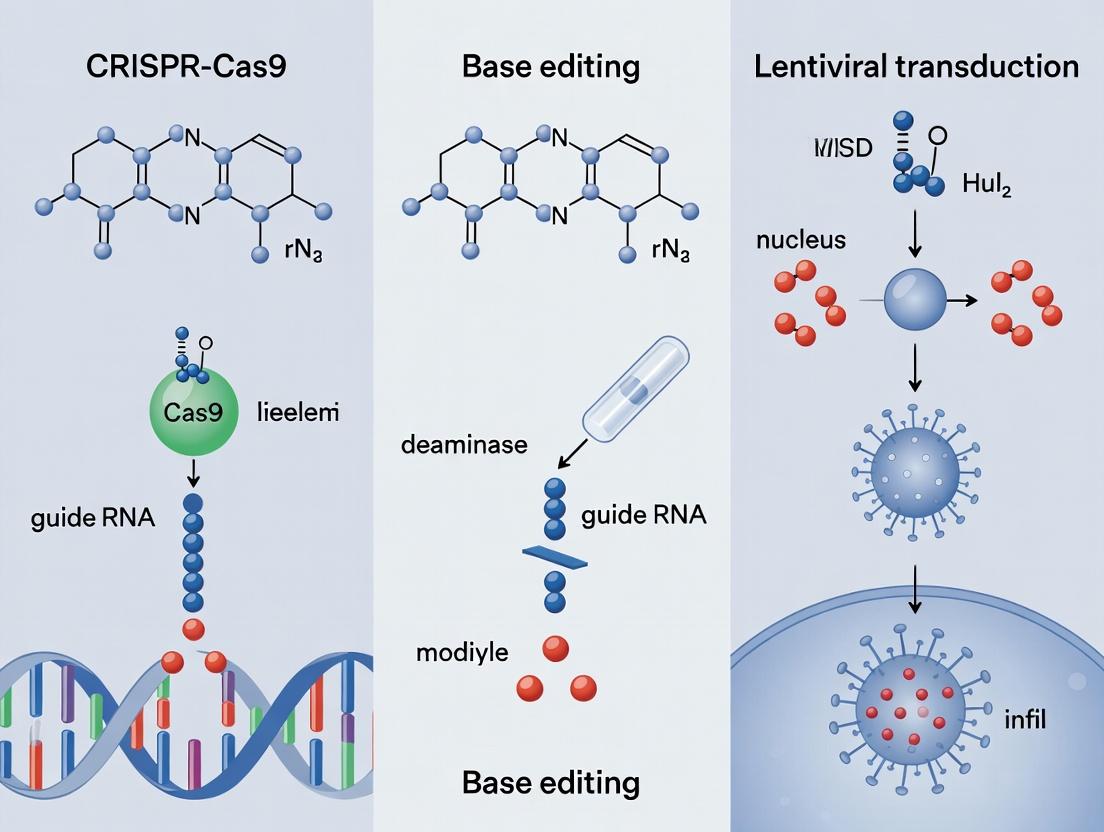
This comprehensive analysis provides researchers, scientists, and drug development professionals with a critical comparison of three cornerstone gene-editing and delivery technologies: CRISPR-Cas9 nuclease editing, DNA base editing, and lentiviral transduction.
CRISPR-Cas9, Base Editing, and Lentiviral Transduction: A 2024 Comparative Analysis for Precision Gene Editing
Abstract
This comprehensive analysis provides researchers, scientists, and drug development professionals with a critical comparison of three cornerstone gene-editing and delivery technologies: CRISPR-Cas9 nuclease editing, DNA base editing, and lentiviral transduction. We explore their foundational molecular mechanisms, detailed methodological workflows for research and therapeutic applications, key troubleshooting and optimization strategies, and a rigorous side-by-side validation of their efficiency, precision, and safety profiles. This guide serves as a decision-making framework for selecting the optimal technology based on experimental goals, from basic research to clinical development.
Core Principles: Deconstructing the Molecular Mechanisms of CRISPR, Base Editors, and Lentiviruses
This guide, framed within a comparative analysis of CRISPR-Cas9, base editing, and lentiviral transduction, focuses on the core mechanism of CRISPR-Cas9: the generation of RNA-guided double-strand breaks (DSBs) and their subsequent repair via Non-Homologous End Joining (NHEJ) or Homology-Directed Repair (HDR). Understanding the efficiency and fidelity of these two competing pathways is critical for researchers selecting a genome engineering strategy.
Mechanism: DSB Generation and Repair Pathway Competition
Upon delivery into a cell, the Cas9 nuclease complexed with a single guide RNA (sgRNA) induces a site-specific DSB. The cell responds by rapidly engaging one of two primary repair pathways.
Diagram 1: CRISPR-Cas9 DSB Repair Pathway Competition
Comparative Performance: NHEJ vs. HDR
The choice between NHEJ and HDR depends on the experimental goal. The table below summarizes their key characteristics.
Table 1: Comparison of NHEJ and HDR Pathways in CRISPR-Cas9 Editing
| Parameter | Non-Homologous End Joining (NHEJ) | Homology-Directed Repair (HDR) |
|---|---|---|
| Primary Experimental Goal | Gene knockout, frameshift mutations | Precise knock-in, point correction |
| Requires Donor Template | No | Yes (ssODN or dsDNA) |
| Cell Cycle Preference | Active throughout, dominant in G0/G1/S | Restricted to S/G2 phase |
| Typical Efficiency in Mammalian Cells | High (20-80% indel formation) | Low (0.5-20%, often <5% without synchronization) |
| Fidelity/Precision | Low (generates random indels) | High (uses template for precise edit) |
| Primary Competing Pathway | HDR | NHEJ |
| Key Limiting Factors | Sequence context, sgRNA activity | Donor delivery, cell cycle, donor design |
Experimental Protocols for Quantifying Editing Outcomes
Protocol 1: T7 Endonuclease I (T7E1) or Surveyor Nuclease Assay for NHEJ Efficiency
This mismatch cleavage assay quantifies indel formation from NHEJ.
- Genomic DNA Extraction: Harvest cells 48-72h post-CRISPR delivery. Isolate gDNA using a commercial kit.
- PCR Amplification: Amplify the target region (200-500bp) using high-fidelity PCR.
- DNA Denaturation & Re-annealing: Purify PCR product. Denature at 95°C for 10 min, then slowly cool to 25°C (ramp rate: -0.1°C/sec) to form heteroduplex DNA if indels are present.
- Nuclease Digestion: Digest re-annealed DNA with T7E1 or Surveyor enzyme for 1 hour at 37°C.
- Analysis: Run products on agarose gel. Cleaved bands indicate indel presence. Calculate indel frequency using band intensity: % indel = 100 × (1 - sqrt(1 - (b + c)/(a + b + c))), where a is undigested band intensity, b and c are cleavage products.
Protocol 2: Flow Cytometry-Based Reporter Assay for HDR Efficiency
This assay uses a fluorescent reporter to measure HDR activity in live cells.
- Reporter Construction: Use a cell line stably expressing a silent, out-of-frame fluorescent protein (e.g., GFP) cassette interrupted by the target sequence and a restriction site.
- Editing: Transfect cells with Cas9, sgRNA targeting the interruption site, and an ssODN donor template designed to restore the GFP reading frame via HDR.
- Analysis: 5-7 days post-editing, analyze cells by flow cytometry. The percentage of GFP-positive cells quantifies successful HDR events. Control for NHEJ-mediated frameshift restoration.
The Scientist's Toolkit: Research Reagent Solutions
Table 2: Essential Reagents for CRISPR-Cas9 DSB Repair Studies
| Reagent / Material | Function & Explanation |
|---|---|
| SpCas9 Nuclease (WT) | Wild-type Streptococcus pyogenes Cas9. Generates blunt DSBs at target sites. |
| Chemically Modified sgRNA | Enhances stability and reduces immunogenicity in cells compared to in vitro transcribed RNA. |
| Single-Stranded Oligodeoxynucleotide (ssODN) | A short synthetic DNA template (~100-200 nt) for introducing point mutations or small tags via HDR. |
| Electroporation Enhancer (e.g., Alt-R Cas9 Electroporation Enhancer) | A small molecule that improves knock-in efficiency by transiently inhibiting NHEJ, favoring HDR. |
| Cell Cycle Synchronization Agents (e.g., Aphidicolin, Nocodazole) | Chemicals used to arrest cells at specific phases (S/G2) to boost HDR efficiency. |
| T7 Endonuclease I | Enzyme that cleaves mismatched heteroduplex DNA, used to detect and quantify indel frequencies. |
| HDR Fluorescent Reporter Plasmid | A ready-to-use plasmid containing a disrupted fluorescent gene to rapidly benchmark HDR efficiency in a new cell type. |
Comparative Data: Pathway Efficiencies Across Delivery Methods
Recent studies highlight how delivery method impacts the balance between NHEJ and HDR outcomes.
Table 3: Editing Efficiencies by Delivery Method and Repair Pathway (Representative Data)
| Delivery Method | Typical NHEJ Efficiency (Indel %) | Typical HDR Efficiency (Precise Edit %) | Key Experimental Insight |
|---|---|---|---|
| Lipid Nanoparticle (LNP) - RNP | 40-75% in primary T cells | 5-15% (with ssODN) | Low toxicity, high protein-level editing; HDR enhanced with NHEJ inhibitors. |
| Electroporation - RNP | 60-90% in iPSCs | 10-30% (with dsDNA donor) | High efficiency but cell stress; HDR rates improve with cell cycle synchronization. |
| Lentiviral (Stable Expression) | >90% after selection | <2% (without selection) | Chronic Cas9 expression increases off-target risk and favors NHEJ; used for pooled knockout screens. |
| AAV (Donor Delivery) | N/A | Can exceed 50% in certain tissues in vivo | Highly efficient for HDR with long dsDNA donors; minimal immunogenicity compared to lentiviral vectors. |
Diagram 2: Logic Flow for Selecting Genome Editing Tools
1. Introduction: Positioning Base Editors in the Genome Engineering Landscape
Within the comparative analysis of CRISPR-Cas9, base editing, and lentiviral transduction, each technology occupies a distinct niche. Lentiviral transduction offers high delivery efficiency but results in random genomic integration. CRISPR-Cas9 enables targeted double-strand breaks (DSBs), relying on endogenous repair pathways (NHEJ or HDR) which often produce indels or require donor templates. Base editors (BEs) bridge a critical gap: they facilitate direct, precise chemical conversion of one DNA base pair to another without requiring a DSB or donor DNA template, dramatically reducing indel byproducts and increasing the efficiency of point mutation corrections or introductions.
2. Core Mechanics of Cytosine and Adenine Base Editors
Base editors are fusion proteins comprising a catalytically impaired Cas9 nickase (nCas9) or dead Cas9 (dCas9) tethered to a nucleobase deaminase enzyme. The Cas9 component confers DNA targeting via a guide RNA (gRNA), while the deaminase performs the chemical conversion on single-stranded DNA within the R-loop complex.
- Cytosine Base Editors (CBEs): Convert C•G to T•A. A representative architecture is BE4max, which fuses nCas9 (D10A) to an engineered rat APOBEC1 deaminase. This deaminase converts cytosine (C) to uracil (U) within a narrow editing window (typically ~5 nucleotides wide, positioned ~15-18 bases from the PAM). The subsequent U•G is treated as a T•G mismatch by cellular machinery. The attached uracil glycosylase inhibitor (UGI) prevents U excision, while the nickase activity nicks the non-edited strand to encourage repair to T•A.
- Adenine Base Editors (ABEs): Convert A•T to G•C. ABE8e is a high-efficiency variant, fusing nCas9 (D10A) to an engineered TadA-8e deaminase (evolved from E. coli TadA). TadA-8e deaminates adenine (A) to inosine (I) within a similar editing window. Inosine is read as guanine (G) by polymerases, leading to an I•C intermediate. Nicking the non-edited strand prompts repair to a G•C base pair.
3. Comparative Performance Data: Base Editors vs. CRISPR-Cas9 HDR
The primary advantage of base editors over standard CRISPR-Cas9/HDR is the efficiency of precise point mutation installation and the drastic reduction in DSB-associated byproducts. The following table summarizes key comparative metrics from recent studies.
Table 1: Performance Comparison of Base Editing vs. CRISPR-Cas9 HDR for Point Mutation Installation
| Metric | CRISPR-Cas9 + HDR (with donor) | Cytosine Base Editor (e.g., BE4max) | Adenine Base Editor (e.g., ABE8e) | Notes & Experimental Source |
|---|---|---|---|---|
| Precise Editing Efficiency | Typically 1-20%, highly variable | Often 10-50% (can exceed 80% in optimal contexts) | Often 10-50% (can exceed 80% in optimal contexts) | HDR is cell-cycle dependent and inefficient in primary/non-dividing cells. BE efficiency is highly sequence-context dependent. |
| Indel Formation Rate | High (5-40%), due to NHEJ at the DSB | Very Low (<1%) | Very Low (<1%) | The nCas9 nick generates fewer indels than a DSB. UGI in CBEs further suppresses indel formation. |
| Product Purity (% of edits being desired change) | Low; mixed pool of indels, HDR, no edit. | High for C->T | High for A->G | Defined as (desired edits)/(desired edits + indels + other edits). BEs excel here. |
| Dependency on Donor Template | Required | Not Required | Not Required | Eliminates the challenge of co-delivering large donor DNA. |
| Cell Cycle Dependency | S/G2 phase (HDR active) | Largely Independent | Largely Independent | Enables editing in post-mitotic cells (e.g., neurons, cardiomyocytes). |
Supporting Experimental Protocol (Representative): Measurement of Editing Efficiency and Byproducts
- Cell Line: HEK293T cells cultured in DMEM + 10% FBS.
- Transfection: Lipofectamine 3000 used to co-deliver plasmids expressing BE4max (or ABE8e) and a target-specific sgRNA. A CRISPR-Cas9 + ssODN HDR donor condition is run in parallel.
- Harvest & Analysis: Genomic DNA is extracted 72-96 hours post-transfection.
- Amplicon Sequencing: The target locus is PCR-amplified, and products are subjected to next-generation sequencing (NGS).
- Data Analysis: Editing efficiency is calculated as the percentage of reads containing the desired base conversion. Indel percentage is calculated from reads containing insertions or deletions. Product purity = (desired base edit reads) / (desired edits + indel reads + other substitution reads) * 100.
4. Essential Research Toolkit for Base Editing Experiments
Table 2: Key Research Reagent Solutions for Base Editing
| Reagent/Material | Function in Base Editing Experiments |
|---|---|
| Base Editor Plasmids | Mammalian expression vectors for BE proteins (e.g., pCMVBE4max, pCMVABE8e). Provide the core editing machinery. |
| sgRNA Expression Constructs | U6-promoter driven vectors or synthesized gRNAs for target site specification. |
| Delivery Vehicles (Lipo/RNP) | Chemical transfection reagents (e.g., Lipofectamine) or electroporation kits for nucleofection of RNP complexes (pre-formed BE protein + sgRNA). |
| NGS Library Prep Kit | Kits for amplifying and preparing target amplicons for deep sequencing (e.g., Illumina-based). Critical for quantitative assessment. |
| Editing Outcome Analysis Software | Tools like CRISPResso2, BE-Analyzer, or custom pipelines to quantify base conversion frequencies and indels from NGS data. |
| Positive Control gRNA Plasmid | A well-characterized gRNA targeting a site known to yield high editing efficiency (e.g., within HEK293 site 4 for CBE validation). |
| Cell Line with Known Targetable Mutation | Disease-relevant cell lines (e.g., F508del in CFTR for C->T correction) for functional validation. |
5. Visualizing Base Editor Mechanisms and Comparative Workflows
Title: CBE Chemical Conversion and Repair Pathway
Title: ABE Chemical Conversion and Repair Pathway
Title: Genome Editing Strategy Decision Logic
Comparative Analysis in Genome Engineering
This guide positions lentiviral transduction within the modern genome engineering toolkit, directly comparing its core performance characteristics—stable genomic integration and persistent expression—against CRISPR-Cas9-mediated knock-in and base editing. The data underscores the unique niche of lentiviral vectors for sustained, high-efficiency transgene delivery, distinct from precise, targeted genome modification.
Performance Comparison Table: Integration & Expression
| Feature | Lentiviral Transduction | CRISPR-Cas9 HDR Knock-in | Base Editing |
|---|---|---|---|
| Primary Mechanism | Random integration via viral integrase. | Targeted integration via Homology-Directed Repair (HDR). | Targeted point mutation without double-strand break. |
| Genomic Alteration | Stable, semi-random insertion of full transgene cassettes. | Precise, targeted insertion of donor DNA. | Precise, targeted single base pair conversion (C>T or A>G). |
| Typical Efficiency | Very High (60-95%) in susceptible cells. | Low to Moderate (1-20%), highly cell-type dependent. | Moderate to High (10-50% for amenable targets). |
| Transgene Capacity | Large (>10 kb possible), ideal for complex expression units. | Moderate, limited by HDR donor construct size. | Very Small (single nucleotide change). |
| Expression Persistence | Long-term, stable across cell divisions due to integration. | Long-term if integrated. | Permanent point mutation. |
| Key Advantage | Robust, reliable delivery and sustained expression in dividing cells. | Precision and control over genomic locus. | Clean, precise point mutations without donor template. |
| Major Limitation | Random integration risk (insertional mutagenesis), large cargo can reduce titer. | Low efficiency, requires cell division and repair pathways, donor design. | Restricted to specific base changes, requires precise PAM site, bystander edits. |
| Ideal Application | Stable cell line generation, long-term in vivo studies, hard-to-transfect cells. | Functional genomics, precise allele replacement, tagging endogenous genes. | Disease modeling, correcting point mutations, introducing stop codons. |
Experimental Data: Transduction Efficiency & Stability
The following data is compiled from recent comparative studies (2023-2024) using HEK293T cells and primary human T-cells.
| Parameter | Lentivirus (VSV-G pseudotyped) | CRISPR-Cas9 RNP + AAV6 Donor (for HDR) |
|---|---|---|
| HEK293T - % GFP+ Cells (Day 3) | 98.2% ± 1.1% | 45.3% ± 5.7% (HDR-specific) |
| Primary T-Cells - % GFP+ Cells (Day 7) | 82.5% ± 4.3% | 18.9% ± 3.2% (HDR-specific) |
| Expression Stability (HEK293T, % GFP+ at Day 30) | 96.8% ± 2.0% | 41.5% ± 6.8%* |
| Vector Copy Number (VCN) per cell | 3-8 (MOI-dependent) | 1 (if heterozygous) |
Note: CRISPR-Cas9 HDR stability can be high for pure populations but is conflated by transient expression from non-integrated donors and low HDR efficiency.
Detailed Experimental Protocols
Protocol 1: Standard Lentiviral Transduction for Stable Cell Line Generation
Objective: Achieve stable genomic integration and long-term expression of a transgene in adherent cells.
- Day -3: Seed HEK293T producer cells in high-glucose DMEM + 10% FBS in a poly-L-lysine coated dish.
- Day 0: Transfect producer cells using polyethylenimine (PEI) with:
- Transfer plasmid (psPAX2, packaging)
- Envelope plasmid (pMD2.G, VSV-G)
- Your gene-of-interest transfer plasmid (e.g., pLV-EF1a-GFP-Puro).
- Day 1 & 2: Replace media with fresh complete media.
- Day 3: Harvest viral supernatant (48h and 72h post-transfection), filter through a 0.45μm PES filter. Concentrate via ultracentrifugation (50,000 x g, 2h, 4°C) if needed.
- Day 3: Transduce target cells in the presence of polybrene (8μg/mL). Spinoculate (centrifuge at 800 x g, 30min, 32°C).
- Day 4: Replace transduction media with fresh complete media.
- Day 5 onwards: Begin selection with appropriate antibiotic (e.g., Puromycin, 1-2μg/mL) for 5-7 days. Maintain and assay polyclonal stable pool.
Protocol 2: Comparative Assessment of Expression Persistence
Objective: Quantify the durability of transgene expression from lentiviral integration vs. CRISPR-Cas9 HDR.
- Generate two populations:
- Lenti-GFP: Transduce cells as in Protocol 1.
- CRISPR-KI-GFP: Electroporate cells with Cas9 RNP targeting a safe harbor (e.g., AAVS1) and an AAV6 donor template containing a GFP-PuroR cassette flanked by homology arms.
- Perform antibiotic selection for both populations simultaneously.
- At Day 7 post-selection, use flow cytometry to measure the initial percentage of GFP-positive cells. Normalize both populations to 100% GFP+ by FACS sorting.
- Passage the sorted, 100% GFP+ populations for 30 days (~15 population doublings) without selection pressure.
- At Days 10, 20, and 30, sample cells and analyze by flow cytometry for the percentage of GFP-positive cells.
- Expected Outcome: The lentiviral population will maintain >95% GFP+ due to genomic integration. The CRISPR HDR population may show a decline if the initial pool contained cells with random, non-integrated donor DNA expressing GFP transiently.
Visualization: Key Mechanisms and Workflows
Title: Lentiviral Transduction Pathway to Stable Integration
Title: Decision Workflow for Genome Engineering Methods
The Scientist's Toolkit: Research Reagent Solutions
| Reagent / Material | Function in Lentiviral Transduction |
|---|---|
| Packaging Plasmid (psPAX2) | Provides essential viral genes (gag, pol, rev) for particle production, but is itself not packaged. |
| Envelope Plasmid (pMD2.G) | Encodes the VSV-G glycoprotein, enabling broad tropism by binding ubiquitously expressed LDL receptors. |
| Transfer Plasmid (e.g., pLVX) | Contains the transgene of interest and necessary viral elements (LTRs, Ψ pack signal) for genome packaging. |
| Polyethylenimine (PEI), linear | A cationic polymer used for high-efficiency co-transfection of plasmids into producer cells (e.g., HEK293T). |
| Polybrene (Hexadimethrine bromide) | A cationic polymer that reduces charge repulsion between viral particles and the cell membrane, enhancing transduction efficiency. |
| Puromycin Dihydrochloride | A selective antibiotic commonly used to eliminate non-transduced cells following integration of a resistance gene. |
| Lenti-X Concentrator | A commercial reagent (PEG-based) for gentle, non-ultracentrifuge concentration of viral supernatants. |
| qPCR Lentiviral Titer Kit | Quantifies the number of functional viral genomes per mL by detecting integrated proviral sequences relative to a standard. |
This guide objectively compares the core mechanisms, performance metrics, and experimental applications of three foundational genome-editing and gene-delivery technologies: CRISPR-Cas9 nuclease, base editors, and lentiviral transduction. The analysis is framed within a thesis evaluating their roles in research and therapeutic development, emphasizing precision, efficiency, and outcome.
Core Mechanism Comparison
| Feature | CRISPR-Cas9 (Cleavage) | Base Editing (Chemical Conversion) | Lentiviral Transduction (Viral Integration) |
|---|---|---|---|
| Primary Action | Creates double-strand breaks (DSBs) | Directly converts one base pair to another without DSBs | Stably integrates a transgene into the host genome |
| Molecular Machinery | Cas9 nuclease, sgRNA | Cas9 nickase (or dead Cas9) fused to deaminase, sgRNA | VSV-G pseudotyped lentiviral particles |
| Key Outcome | Relies on cellular repair (NHEJ/HDR) for edits | Permanent point mutation (C•G to T•A or A•T to G•C) | Stable, long-term gene expression |
| Therapeutic Ideal For | Gene knockouts, large deletions, exon excision | Correcting point mutations (e.g., sickle cell disease) | Gene addition (e.g., CAR-T, SCID) |
| Typical Editing Efficiency | 20-80% (indels) | 20-60% (point edits), can exceed 90% in ideal cases | Varies by MOI; can approach 100% transduction |
| Primary Byproducts/ Risks | Indels, large deletions, translocations, p53 activation | Off-target deamination, bystander edits, small indels | Semi-random integration (insertional mutagenesis), silencing |
| Throughput | High (for screening) | Moderate to High | High (for delivery) |
Table 1: Quantitative Comparison in a Model Human Cell Line (HEK293T) Experiment
| Parameter | CRISPR-Cas9 (targeting EMX1) | Base Editor (BE4max, targeting HEK3) | Lentivirus (EF1α-GFP transgene) |
|---|---|---|---|
| Modification Rate | 65% indels (T7E1 assay) | 42% C•G to T•A conversion (NGS) | >95% GFP+ cells (flow cytometry) |
| HDR-Mediated Knock-in | 12% (with dsDNA donor) | N/A | N/A (itself is an integration method) |
| Purity of Desired Product | Low (<1% precise HDR) | High (>99% of edited alleles are point mutations) | High (nearly all transduced cells express transgene) |
| Cell Viability (vs. Control) | 70% (due to DSB toxicity) | 92% | 85% (dependent on MOI & transgene) |
| Off-Target Activity | Detected at 3/10 predicted sites (NGS) | Detected as RNA and DNA deamination (NGS) | Integration site analysis required |
Detailed Experimental Protocols
Protocol 1: CRISPR-Cas9 Knockout via NHEJ
- Design: Select a sgRNA targeting an early exon of the gene of interest using design tools (e.g., CRISPick).
- Delivery: Co-transfect 500 ng of Cas9 expression plasmid (or use 100 pmol of RNP) with 250 ng of sgRNA plasmid into 2e5 HEK293T cells using a transfection reagent.
- Harvest: Extract genomic DNA 72 hours post-transfection.
- Analysis: Amplify the target region by PCR. Assess indel frequency via T7 Endonuclease I (T7E1) assay or next-generation sequencing (NGS).
Protocol 2: Base Editing for Point Mutation Correction
- Design: Identify target base within the editing window (typically positions 4-10 of the protospacer). Use an appropriate base editor (ABE for A•T>G•C, CBE for C•G>T•A).
- Delivery: Transfect 500 ng of base editor plasmid (e.g., BE4max) with 250 ng of sgRNA plasmid into target cells.
- Harvest: Isolate genomic DNA 72-96 hours post-transfection.
- Analysis: PCR-amplify the target locus. Quantify editing efficiency by Sanger sequencing trace decomposition or, for high accuracy, targeted NGS.
Protocol 3: Stable Gene Expression via Lentiviral Transduction
- Production: Co-transfect HEK293T packaging cells with lentiviral transfer plasmid (containing transgene), psPAX2 (packaging), and pMD2.G (VSV-G envelope) plasmids.
- Collection: Harvest virus-containing supernatant at 48 and 72 hours, filter through a 0.45 μm membrane.
- Transduction: Incubate target cells with viral supernatant and polybrene (8 μg/mL) for 24 hours.
- Selection/Analysis: 48 hours post-transduction, begin antibiotic selection (e.g., puromycin) or analyze transgene expression via flow cytometry.
Pathway & Workflow Visualizations
Title: CRISPR-Cas9 Double-Strand Break Repair Pathways
Title: Base Editor Mechanism of Chemical Conversion
Title: Lentiviral Transduction and Integration Pathway
The Scientist's Toolkit: Key Research Reagent Solutions
Table 2: Essential Materials for Comparative Genome Editing Studies
| Reagent / Solution | Function in Experiments | Example Vendor/Product |
|---|---|---|
| Lipofectamine 3000 | Lipid-based transfection reagent for plasmid and RNP delivery into mammalian cells. | Thermo Fisher Scientific |
| Alt-R S.p. Cas9 Nuclease V3 | High-activity, recombinant Cas9 protein for RNP complex formation. | Integrated DNA Technologies (IDT) |
| BE4max Plasmid | A high-efficiency cytosine base editor (CBE) plasmid for C•G to T•A conversions. | Addgene (#112093) |
| Lenti-X 293T Cells | Optimized HEK293T cells for high-titer lentiviral production. | Takara Bio |
| VSV-G Pseudotyping Plasmid (pMD2.G) | Provides vesicular stomatitis virus G protein for broad tropism lentivirus. | Addgene (#12259) |
| Polybrene (Hexadimethrine bromide) | A cationic polymer that enhances viral transduction efficiency. | Sigma-Aldrich |
| T7 Endonuclease I (T7E1) | Enzyme for detecting indel mutations via mismatch cleavage assay. | New England Biolabs (NEB) |
| KAPA HiFi HotStart ReadyMix | High-fidelity PCR polymerase for accurate amplification of target loci for NGS. | Roche |
| Puromycin Dihydrochloride | Antibiotic for selecting cells successfully transduced with puromycin-resistance carrying lentivirus. | Gibco |
From Bench to Bedside: Experimental Protocols and Cutting-Edge Applications in Research & Therapy
Base editing is a precise genome editing technology that enables the direct, irreversible conversion of one DNA base pair to another without requiring double-stranded DNA breaks (DSBs). Its practical application hinges on three critical factors: the design of the guide RNA (gRNA), the definition of the "window of editing," and the selection of an appropriate delivery method. This guide compares the performance of base editing systems, primarily cytosine base editors (CBEs) and adenine base editors (ABEs), with conventional CRISPR-Cas9 nuclease and lentiviral transduction, within a broader comparative analysis.
Guide RNA Design: Specificity and Efficiency
Guide RNA design for base editing shares similarities with CRISPR-Cas9 but has distinct constraints. The protospacer must position the target base within the enzyme's catalytic window.
Key Comparison: Off-Target Effects
- CRISPR-Cas9: High risk of off-target DSBs at genomic loci with sequence homology to the gRNA.
- Base Editing (CBEs/ABEs): Primarily risk of bystander editing within the catalytic window and off-target single-nucleotide variants (SNVs) in the genome due to deaminase activity. Newer generations (e.g., high-fidelity BE4, ABEmax) show reduced off-target SNVs.
- Lentiviral Transduction: Random genomic integration leads to insertional mutagenesis risk; no sequence-specific off-targets.
Supporting Data: A 2021 study in Nature Communications compared the specificity of BE4max-CBE, ABEmax, and SpCas9. Whole-genome sequencing revealed BE4max induced a median of 20 SNVs per experiment, while ABEmax induced only 1.5, comparable to background. In contrast, SpCas9 generated numerous indels at predicted off-target sites.
Experimental Protocol for Off-Target Assessment (GOTI-seq):
- Generate Embryos: Create mouse zygotes with a constitutively expressed Cre-dependent Cas9 or base editor.
- Edit and Isolate: Inject gRNA at the two-cell stage. At E14.5, dissociate edited (GFP+) and non-edited (GFP-) cells from the same embryo via FACS.
- Whole-Genome Sequencing: Perform deep WGS (≥100X) on both cell populations from individual embryos.
- Bioinformatic Analysis: Somatic mutations are identified by comparing the edited and non-edmented cell sequences from the same embryo, filtering out germline and background artifacts.
Window of Editing: Precision and Flexibility
The "window of editing" is the narrow region within the gRNA-target DNA heteroduplex where the deaminase is active. For common BE architectures, this is typically positions 4-8 (1-based indexing from the PAM-distal end) for SpCas9-derived editors.
Key Comparison: Editing Outcome Precision
- CRISPR-Cas9: Relies on error-prone non-homologous end joining (NHEJ), generating stochastic indels. Homology-directed repair (HDR) can be precise but is inefficient and active only in dividing cells.
- Base Editing: Enables precise, predictable point mutations (C•G to T•A or A•T to G•C) without DSBs. Efficiency is high in both dividing and non-dividing cells but is constrained by the PAM and editing window.
- Lentiviral Transduction: Delivers a precise transgene sequence, but integration site is uncontrolled. It does not edit endogenous sequences.
Table 1: Performance Comparison of Genome Modification Technologies
| Feature | CRISPR-Cas9 Nuclease | Cytosine Base Editor (CBE) | Adenine Base Editor (ABE) | Lentiviral Transduction |
|---|---|---|---|---|
| Primary Action | Creates DSB | Converts C•G to T•A | Converts A•T to G•C | Integrates cDNA |
| Precision | Low (indels) / Moderate (HDR) | High (within window) | High (within window) | High (transgene sequence) |
| Typical Efficiency | High (indels) / Low (HDR) | Moderate to High | Moderate to High | High (transduction) |
| Window Constraint | PAM only | PAM + Editing Window (e.g., 4-8) | PAM + Editing Window (e.g., 4-8) | None (for targeting) |
| Key Risk | Off-target DSBs, large deletions | Bystander edits, off-target SNVs (CBE>ABE) | Bystander edits, off-target SNVs | Insertional mutagenesis, immunogenicity |
| Ideal Use Case | Gene knockouts, large deletions | Pathogenic SNP correction (C•G to T•A) | Pathogenic SNP correction (A•T to G•C) | Large transgene delivery, stable expression |
Delivery Considerations: From Bench to Therapy
Delivery is a major translational challenge. Each platform has distinct implications for cargo size, immunogenicity, and persistence.
Key Comparison: Delivery In Vivo
- CRISPR-Cas9: Commonly delivered as ribonucleoprotein (RNP) complexes (low immunogenicity, transient) or via AAV (cargo size limited, potential humoral immunity).
- Base Editing: Larger cargo size (Cas9+deaminase) often exceeds AAV capacity. Split systems, smaller Cas variants (e.g., SaCas9), or lipid nanoparticles (LNPs) are used.
- Lentiviral Transduction: Efficient delivery of large transgenes, stable integration. Major safety concern: Risk of oncogenic insertional mutagenesis, leading to strict regulatory scrutiny for in vivo use.
Table 2: Delivery Method Comparison for Therapeutic Application
| Delivery Method | Max Cargo Size | Immunogenicity | Editing Duration | Best Suited For |
|---|---|---|---|---|
| AAV | ~4.7 kb | Moderate (pre-existing/induced antibodies) | Long-term (episomal) | In vivo delivery of BE components using compact editors. |
| LNP (mRNA/gRNA) | Very Large (modular) | Moderate (reactogenic) | Transient (days) | In vivo delivery of large/base editors; clinical success for liver targets. |
| Lentivirus | ~8 kb | Low (pseudotyped) | Permanent (integrated) | Ex vivo cell therapy (e.g., base editing of hematopoietic stem cells). |
| Electroporation (RNP) | N/A (protein) | Very Low | Very Transient (hours) | Ex vivo editing of primary cells (T cells, HSPCs). |
The Scientist's Toolkit: Research Reagent Solutions
| Item | Function in Base Editing Research |
|---|---|
| High-Fidelity Base Editor Plasmid (e.g., BE4max, ABE8e) | Third/fourth-generation editor constructs with engineered deaminases and UGIs for improved efficiency/product purity. |
| Synthetic gRNA (chemically modified) | Enhances stability and editing efficiency, especially for LNP or RNP delivery in vivo. |
| Target-Amp Sequencing Kit | Enables deep amplicon sequencing for quantifying base editing efficiency and bystander edits at the target locus. |
| LNP Formulation Kit | For packaging base editor mRNA and gRNA into lipid nanoparticles for efficient in vitro or in vivo delivery. |
| Off-Target Prediction Software (e.g., Cas-OFFinder) | Identifies potential off-target sites for gRNA design, though less predictive for deaminase-dependent off-targets. |
| Cell Line with Integrated Reporter (e.g., GFP→BFP) | Rapid, flow cytometry-based functional validation of base editor activity and optimization. |
Visualizing Base Editor Architecture and Workflow
Base Editor Structure and In Vitro Workflow Diagram
Technology Selection Logic for Genome Modification
Lentiviral Vector Production, Titration, and Transduction Protocols for Stable Cell Line Generation
This guide compares methodologies and tools for lentiviral transduction within the context of advanced genetic engineering. In comparative research on CRISPR-Cas9, base editing, and lentiviral transduction, lentiviral vectors remain the gold standard for efficient, stable integration and long-term transgene expression in dividing and non-dividing cells, essential for generating stable cell lines for functional studies and drug development.
Lentiviral Production Systems: Third-Generation vs. Alternative Packaging Systems
The safety and efficiency of lentiviral production hinges on the packaging system. Third-generation, split-genome systems are the current standard, but alternative commercial kits offer simplified protocols.
Table 1: Comparison of Lentiviral Production Systems
| Feature | Third-Generation System (4-Plasmid) | Second-Generation System (3-Plasmid) | Commercial Transfection Kits (e.g., Lipofectamine 3000, PolyJet) |
|---|---|---|---|
| Safety | Highest (Biosafety Level 2). Rev gene separated; envelope provided in trans; deleted accessory genes. | Moderate (BSL2). Uses a packaging plasmid with gag/pol and accessory genes. | Dependent on the plasmid system used with the kit. |
| Titer Yield | High (typically 10^7 - 10^8 TU/mL from 293T cells). | Comparable to third-generation. | Variable; can be optimized for high yield but may be reagent/cell-line dependent. |
| Experimental Complexity | Requires co-transfection of 4 plasmids. More optimization needed for plasmid ratios. | Simpler (3 plasmids). | Simplified protocol, often with proprietary reagents. |
| Cost | Lower reagent cost, higher labor/time cost. | Lower reagent cost. | Higher per-transfection cost, but may save time. |
| Primary Use Case | Research requiring highest safety profile (e.g., clinical precursor work, institutional mandates). | General lab research where highest biosafety is not mandated. | Rapid production, labs with less viral experience, or for difficult-to-transfect packaging cells. |
Experimental Protocol: Third-Generation Lentivirus Production in HEK293T Cells Day 1: Seed HEK293T cells in poly-L-lysine coated 10 cm dishes at 6x10^6 cells/dish in DMEM + 10% FBS (no antibiotics) to reach 70-80% confluence the next day. Day 2: Prepare transfection mix. For one dish, combine in Opti-MEM: 1. Transfer Plasmid (10 µg), 2. pMDLg/pRRE (6.5 µg), 3. pRSV-Rev (2.5 µg), 4. pMD2.G (3.5 µg). Add transfection reagent (e.g., PEI, 1 mg/mL, 55 µL). Vortex, incubate 15 min, add dropwise to cells. Swap medium 6-8 hours post-transfection. Day 3 & 4: Harvest viral supernatant at 48 and 72 hours post-transfection. Pool harvests, centrifuge at 500 x g to remove cell debris, filter through a 0.45 µm PVDF filter. Concentrate via ultracentrifugation (50,000 x g, 2 hours, 4°C) or using commercial concentrators. Aliquot and store at -80°C.
Lentiviral Titer Determination Methods: qPCR vs. Flow Cytometry
Accurate titering is critical for determining multiplicity of infection (MOI). Quantitative PCR (qPCR) and flow cytometry are the most common methods.
Table 2: Comparison of Lentiviral Titering Methods
| Method | Principle | Advantages | Limitations | Typical Output |
|---|---|---|---|---|
| qPCR (Physical Titer) | Quantifies viral RNA or integrated DNA copies. | Measures total viral particles, fast, scalable, not cell-type dependent. | Does not measure functional, infectious units. Overestimates usable titer. | Viral genomes/mL (vg/mL). |
| Flow Cytometry (Functional Titer) | Measures % of transduced (e.g., GFP+) cells at a known dilution. | Directly measures infectious units, most relevant for experiments. | Requires reporter gene, cell-type dependent, slower. | Transducing Units/mL (TU/mL). |
Experimental Protocol: Functional Titering by Flow Cytometry
- Day 1: Seed HEK293T or target cells in a 24-well plate at 1x10^5 cells/well.
- Day 2: Prepare serial dilutions of the viral stock (e.g., 10^-2 to 10^-5) in fresh medium containing 8 µg/mL polybrene.
- Aspirate medium from cells and add 250 µL of each viral dilution in duplicate. Include a no-virus control.
- Incubate for 72 hours. If using a fluorescent reporter, analyze cells by flow cytometry.
- Calculate TU/mL: (Percentage of GFP+ cells / 100) x (Number of cells at transduction) x (Dilution Factor) / (Volume of virus in mL). Use data from the well where <30% of cells are positive for linearity.
Transduction Protocols: Standard vs. Spinoculation
Optimizing transduction efficiency is key for stable cell line generation. Spinoculation (centrifugal enhancement) is widely used to improve gene transfer.
Table 3: Comparison of Standard vs. Spinoculation Transduction Protocols
| Parameter | Standard Transduction | Spinoculation |
|---|---|---|
| Method | Virus incubated with cells under normal culture conditions. | Virus and cells are centrifuged at low speed (e.g., 800-1200 x g). |
| Efficiency Boost | Baseline. | Can increase transduction efficiency 2-10 fold, especially for difficult-to-transduce cells. |
| Mechanism | Relies on diffusion and natural receptor binding. | Forces virus-cell interaction, potentially overcoming limited receptor availability. |
| Time | Longer incubation periods (e.g., overnight). | Shorter incubation (e.g., 30-90 min centrifugation). |
| Risk | Lower mechanical stress on cells. | Potential for increased cell death if speed/duration is not optimized. |
Experimental Protocol: Spinoculation for Stable Cell Line Generation
- Plate target cells in a 24-well plate the day before to achieve 50-60% confluence at transduction.
- Prepare virus-polybrene mixture in fresh growth medium. The MOI should be determined from pilot titering experiments (often MOI 5-10 for stable line generation).
- Replace medium on cells with 250 µL of the virus mixture.
- Seal plate with parafilm and place in a plate-compatible centrifuge. Centrifuge at 800 x g for 90 minutes at 32°C (optimal for many viral envelopes).
- Post-centrifugation, incubate plate at 37°C for an additional 2-4 hours.
- Carefully remove virus-containing medium and replace with fresh growth medium.
- 48-72 hours post-transduction, begin antibiotic selection (e.g., puromycin, blasticidin) to isolate stably transduced pools or clones. Determine optimal antibiotic kill curve for your cell line beforehand.
The Scientist's Toolkit: Key Research Reagent Solutions
| Item | Function in Lentiviral Workflow |
|---|---|
| HEK293T/293FT Cells | Standard packaging cell line for high-titer virus production due to high transfectability and SV40 T-antigen expression. |
| Polyethylenimine (PEI), Linear | Cationic polymer transfection reagent; cost-effective for co-transfecting multiple plasmids in 293T cells. |
| Polybrene (Hexadimethrine Bromide) | Cationic polymer that reduces electrostatic repulsion between viral particles and cell membrane, enhancing transduction. |
| Puromycin Dihydrochloride | Common antibiotic for selecting stably transduced mammalian cells; kills non-transduced cells within 2-5 days. |
| Lenti-X Concentrator | Commercial polyethylene glycol (PEG)-based solution for gentle, non-ultracentrifuge viral concentration. |
| qPCR Lentiviral Titer Kit | Commercial kits containing primers/probes for conserved lentiviral sequences (e.g., psi region, WPRE) to determine physical titer. |
| RetroNectin | Recombinant fibronectin fragment used to coat plates; enhances transduction of hematopoietic cells by co-localizing virus and target cells. |
Visualizations
Workflow for Choosing a Genetic Modification Method
Lentiviral Production to Stable Line Workflow
This comparison guide evaluates three leading therapeutic platforms—In Vivo Gene Correction, Ex Vivo Cell Therapy, and Gene Addition—within the broader research context comparing CRISPR-Cas9, base editing, and lentiviral transduction. Data is compiled from recent preclinical and clinical studies (2022-2024).
Performance Comparison of Therapeutic Modalities
Table 1: Key Performance Metrics Across Therapeutic Platforms
| Metric | In Vivo Gene Correction (CRISPR/Base Editing) | Ex Vivo Cell Therapy (e.g., CAR-T) | Gene Addition (Lentiviral/Adeno-associated) |
|---|---|---|---|
| Primary Use Case | Correct point mutations in situ (e.g., liver, eye) | Engineer immune cells for oncology/immunology | Add functional gene copies for monogenic disorders |
| Typical Delivery | Lipid nanoparticles (LNP), AAV | Electroporation, Viral Transduction | Lentiviral vector (LV), AAV |
| Editing Precision | High (Base Editor) to Moderate (CRISPR) | High (if using precise editing) | N/A (Random integration for LV) |
| Persistence | Potentially permanent correction | Long-term engraftment of modified cells | Stable, long-term expression |
| Immunogenicity Risk | High (anti-Cas9, anti-Editor) | Moderate (related to viral vectors) | High (anti-capsid, transgene) |
| Manufacturing Complexity | Low (synthetic material) | Very High (cell product) | Moderate (viral vector production) |
| Clinical Approval Status | Early-phase trials (e.g., NTLA-2001) | Multiple approved products (e.g., Kymriah) | Approved products (e.g., Zolgensma, Skysona) |
| Therapeutic Onset | Weeks to months | 2-4 weeks post-infusion | Months for full expression |
| Key Limitation | Delivery efficiency, immune response | Cost, complex logistics, cytokine release syndrome | Insertional mutagenesis risk, size limits |
Table 2: Comparative Experimental Data from Recent Studies (2023-2024)
| Study & System | Editing Tool | Target | Efficiency (In Vivo/Ex Vivo) | Key Outcome | Reference (Type) |
|---|---|---|---|---|---|
| Transthyretin Amyloidosis | Base Editor (AAV) | TTR gene in hepatocytes | ~70% allele modification in NHP | >90% serum TTR reduction for >1 year | Nature, 2023 |
| B-cell Acute Lymphoblastic Leukemia | CRISPR-Cas9 (Ex Vivo) | CD19-specific CAR-T cells | >95% knockout of endogenous TCR | Reduced alloreactivity, improved persistence | Sci. Transl. Med., 2024 |
| Severe Combined Immunodeficiency (SCID) | Lentiviral Transduction (Ex Vivo) | IL2RG cDNA to CD34+ cells | ~60% vector copy number in engrafted cells | 100% survival (10/10) at 2 years in trial | NEJM, 2023 |
| Proprotein Convertase Subtilisin/Kexin Type 9 (PCSK9) | CRISPR-Cas9 (LNP) | PCSK9 in liver | ~70% editing in mouse hepatocytes | 75% reduction in plasma PCSK9, sustained | Cell, 2024 |
| Sickle Cell Disease | CRISPR-Cas9 (Ex Vivo) | BCL11A enhancer in HSCs | ~80% allele modification in engrafted cells | >50% fetal hemoglobin in patients | JAMA, 2023 |
Detailed Experimental Protocols
Protocol 1: In Vivo Gene Correction using LNP-delivered Base Editors
- Design & Synthesis: Design adenine base editor (ABE) mRNA and single-guide RNA (sgRNA) targeting the disease-associated SNP. Synthesize ABE mRNA via in vitro transcription with N1-methylpseudouridine modification.
- Formulation: Co-encapsulate ABE mRNA and sgRNA in biodegradable lipid nanoparticles (LNPs) using a microfluidic mixing device.
- Animal Administration: Inject LNP formulation intravenously into mouse or non-human primate model at a dose of 1-3 mg mRNA/kg body weight.
- Tissue Analysis: Harvest target tissue (e.g., liver) 2-4 weeks post-injection. Extract genomic DNA.
- Efficiency Assessment: Quantify editing efficiency via next-generation sequencing (NGS) of PCR-amplified target locus. Assess phenotypic correction (e.g., protein level by ELISA, histology).
Protocol 2: Ex Vivo Generation of CRISPR-Engineered CAR-T Cells
- Cell Isolation: Isolate primary human T cells from leukapheresis product using Ficoll density gradient and CD3+ magnetic bead selection.
- CRISPR RNP Complex Formation: Combine purified SpCas9 protein with synthesized sgRNA targeting the T-cell receptor alpha constant (TRAC) locus. Incubate 10 mins at room temperature to form ribonucleoprotein (RNP).
- Electroporation: Mix T cells with RNP complex and a single-stranded DNA (ssDNA) homology-directed repair (HDR) template encoding the CAR transgene. Electroporate using a 4D-Nucleofector (program EO-115).
- Viral Transduction (Optional): If not using HDR, transduce cells with a lentiviral vector encoding the CAR 24 hours post-electroporation.
- Expansion & Validation: Culture cells in IL-7/IL-15 containing media for 10-14 days. Validate TRAC knockout by flow cytometry (loss of TCRαβ) and NGS. Assess CAR expression and cytotoxic function via co-culture with antigen-positive tumor cells.
Protocol 3: Ex Vivo Gene Addition for HSCs using Lentiviral Transduction
- CD34+ HSC Mobilization & Collection: Mobilize hematopoietic stem cells (HSCs) into peripheral blood of a patient/donor using granulocyte colony-stimulating factor (G-CSF). Collect via apheresis.
- HSC Enrichment: Isulate CD34+ cells using immunomagnetic cell sorting (CliniMACS system).
- Pre-stimulation: Culture CD34+ cells in serum-free medium supplemented with SCF, TPO, and FLT3L for 24-48 hours.
- Lentiviral Transduction: Incubate cells with a clinical-grade, self-inactivating (SIN) lentiviral vector at a multiplicity of infection (MOI) of 5-20 in the presence of protamine sulfate (4 µg/mL). Perform two rounds of spinoculation (centrifuge at 2000 x g for 90 mins at 32°C).
- Transplantation: Infuse transduced cells back into the patient after myeloablative conditioning.
- Monitoring: Monitor vector copy number (VCN) in peripheral blood and bone marrow by qPCR, and assess therapeutic transgene expression and functional reconstitution over time.
Visualizations
Title: In Vivo Gene Correction Therapeutic Workflow
Title: Ex Vivo CAR-T Cell Therapy Manufacturing & Administration
Title: Technology Application in Therapeutic Modalities
The Scientist's Toolkit: Key Research Reagent Solutions
Table 3: Essential Materials for Featured Experiments
| Item | Function & Application | Example Vendor/Product |
|---|---|---|
| Modified Nucleoside mRNA | Template for in vivo protein expression (e.g., Cas9, Base Editor). N1-methylpseudouridine reduces immunogenicity and increases stability. | TriLink BioTechnologies (CleanCap) |
| Ionizable Cationic Lipid | Critical LNP component for encapsulating nucleic acids and enabling in vivo delivery to target tissues (e.g., liver). | MedChemExpress (SM-102, ALC-0315) |
| Recombinant SpCas9 Protein | Ready-to-use, high-activity nuclease for forming RNP complexes for ex vivo CRISPR editing. Minimizes off-target effects vs. plasmid expression. | IDT (Alt-R S.p. Cas9 Nuclease V3) |
| Clinical-grade Lentiviral Vector | GMP-produced, self-inactivating (SIN) vector for safe gene addition in ex vivo cell therapies. | Oxford BioMedica (LentiVector) |
| CD3/CD28 Activator Beads | Artificial antigen-presenting cells for robust ex vivo T cell activation and expansion prior to genetic modification. | Thermo Fisher (Dynabeads) |
| StemSpan SFEM II | Serum-free, cytokine-supplemented medium optimized for ex vivo culture of hematopoietic stem cells (HSCs). | StemCell Technologies |
| NGS-based Editing Analysis Kit | All-in-one kit for amplicon sequencing to quantify editing efficiency, indels, and base conversions at target loci. | Takara Bio (Guide-it) |
| Anti-Cas9 ELISA Kit | Detects host humoral immune response (anti-Cas9 antibodies) in serum following in vivo gene editing therapies. | Cellaria SA |
Navigating Pitfalls: Optimization Strategies for Efficiency, Specificity, and Safety
Within the comparative landscape of gene-editing technologies—encompassing standard CRISPR-Cas9, base editing, and lentiviral transduction—specificity remains the paramount challenge for CRISPR-Cas9's therapeutic translation. Off-target editing can lead to deleterious mutations and confound experimental results. This guide compares contemporary solutions: high-fidelity Cas9 variants and small-molecule or protein-based specificity enhancers, providing objective performance data and methodologies.
Comparison of High-Fidelity Cas9 Variants
High-fidelity variants are engineered forms of Streptococcus pyogenes Cas9 (SpCas9) with reduced non-specific DNA binding, thereby decreasing off-target cleavage while retaining robust on-target activity.
Table 1: Performance Comparison of High-Fidelity SpCas9 Variants
| Variant (Year) | Key Mutations | On-Target Efficacy (vs. WT SpCas9) | Off-Target Reduction (vs. WT SpCas9) | Primary Validation Method | Key Reference |
|---|---|---|---|---|---|
| SpCas9-HF1 (2016) | N497A, R661A, Q695A, Q926A | ~50-70% on average | 10- to 100-fold | GUIDE-seq, BLESS | Kleinstiver et al., Nature, 2016 |
| eSpCas9(1.1) (2016) | K848A, K1003A, R1060A | ~60-80% on average | 10- to 100-fold | BLISS, targeted NGS | Slaymaker et al., Science, 2016 |
| HypaCas9 (2017) | N692A, M694A, Q695A, H698A | ~70-90% on average | 10- to 1000-fold | Digenome-seq, targeted NGS | Chen et al., Nature, 2017 |
| Sniper-Cas9 (2018) | F539S, M763I, K890N | ~80-100% on average | 10- to 100-fold | GUIDE-seq, Digenome-seq | Lee et al., Nat Commun, 2018 |
| evoCas9 (2018) | M495V, Y515N, K526E, R661Q | ~70% on average | >100-fold | Digenome-seq | Casini et al., Nat Biotechnol, 2018 |
| SuperFi-Cas9 (2022) | Non-RVD mutations (e.g., A262T) | ~90-100% on average | >3,000-fold on problematic sites | in vitro cleavage, ONE-seq | Bravo et al., Science, 2022 |
Experimental Protocol: GUIDE-seq for Off-Target Detection
- Transfection: Co-deliver Cas9/sgRNA ribonucleoprotein (RNP) and a double-stranded oligonucleotide (dsODN) tag into target cells.
- Integration: The dsODN tag integrates into double-strand break (DSB) sites via non-homologous end joining (NHEJ).
- Genomic DNA Extraction & Shearing: Harvest cells after 48-72 hours, extract genomic DNA, and shear it to ~500 bp fragments.
- Library Preparation: Perform adaptor ligation and PCR amplification using one primer specific to the integrated dsODN tag and another to the adaptor.
- Sequencing & Analysis: Perform high-throughput sequencing. Map all reads containing the tag sequence to the reference genome to identify potential off-target sites. Validate top candidates by targeted deep sequencing.
Comparison of Specificity Enhancers
These are ancillary compounds or proteins that modulate Cas9 kinetics or cellular repair pathways to favor on-target editing.
Table 2: Performance Comparison of Specificity Enhancers
| Enhancer | Type | Mechanism of Action | Effect on On-Target | Off-Target Reduction | Key Reference |
|---|---|---|---|---|---|
| RCB-1-8 | Small Molecule | Binds SpCas9, stabilizes DNA-RNA heteroduplex, inhibits conformational change | Minimal impact | ~10-fold (WT SpCas9) | Huang et al., Mol Cell, 2023 |
| CRISPRoff / NuEase | Engineered Chromatin Modifier | Fuses inactive dCas9 to chromatin repressors (e.g., DNMT3A), silencing without DSBs | N/A (epigenetic silencing) | Greatly reduces off-target transcriptional effects | Nuñez et al., Nat Biotechnol, 2021 |
| Cas9-CHK1 Inhibitor | Small Molecule (Prexasertib) | Inhibits CHK1, delays NHEJ, extends Cas9 DNA binding interrogation time | Can enhance HDR efficiency | ~2- to 5-fold | Wienert et al., Nat Commun, 2020 |
| Truncated sgRNAs (tru-gRNAs) | Modified Guide RNA | 17-18 nt guide sequence, reduces non-perfect match stability | Can be reduced | ~5,000-fold for some sites | Fu et al., Nat Biotechnol, 2014 |
| Chemical Modifications (S. aureus Cas9) | sgRNA with 2'-O-Methyl, Phosphorothioate | Increases nuclease resistance, may alter binding kinetics | Maintained or improved | Up to ~10,000-fold | Ryan et al., Nat Commun, 2018 |
Experimental Protocol: Digenome-seq for Genome-Wide Off-Target Profiling
- In Vitro Cleavage: Incubate purified genomic DNA with the Cas9 RNP complex of interest in vitro.
- Whole-Genome Sequencing: Sequence the entire treated genome at high depth (e.g., 50-100x coverage).
- Bioinformatic Analysis: Map all sequencing reads and identify sites with mismatched ends (indicative of DSBs). Compare to untreated control DNA to filter background noise.
- Validation: Rank identified sites and confirm cleavage activity in cells via targeted NGS.
Visualization of Key Concepts
Title: Strategies to Reduce CRISPR Off-Target Effects
Title: GUIDE-seq Experimental Workflow
The Scientist's Toolkit: Key Research Reagent Solutions
| Item | Function in Specificity Research | Example/Vendor |
|---|---|---|
| High-Fidelity Cas9 Nuclease | Engineered protein for reduced off-target cleavage in gene knockout experiments. | Alt-R S.p. HiFi Cas9 (IDT), TrueCut HiFi Cas9 Protein (Thermo Fisher). |
| Chemically Modified Synthetic sgRNA | Enhanced stability and potential improved specificity; used with Cas9 protein for RNP delivery. | Alt-R CRISPR-Cas9 sgRNA (IDT), Synthego sgRNA. |
| Off-Target Detection Kit | All-in-one solution for library prep to identify DSBs via methods like GUIDE-seq. | GUIDE-seq Kit (NEB), CIRCLE-seq Kit (IDT). |
| CHK1 Inhibitor (Prexasertib) | Small molecule used to perturb DNA repair pathways and study its effect on editing specificity. | Selleckchem, MedChemExpress. |
| Next-Generation Sequencing Kit for Amplicons | Validating suspected off-target sites via deep sequencing of PCR amplicons. | Illumina DNA Prep, QIAseq DirecteePCR Kit (Qiagen). |
| Inactive dCas9 Fusion Proteins | For epigenetic silencing (CRISPRoff) studies as an alternative to nuclease-based editing. | dCas9-DNMT3A constructs (Addgene). |
When positioned against base editing (which has its own distinct off-target profiles) and lentiviral transduction (which risks insertional mutagenesis), enhancing CRISPR-Cas9 specificity is critical. The choice between high-fidelity variants and specificity enhancers is context-dependent. For new experimental systems, starting with a variant like HypaCas9 or evoCas9 provides a robust baseline of improved specificity. For applications requiring wild-type Cas9's maximum on-target activity, augmenting with small-molecule enhancers like RCB-1-8 offers a compelling strategy. Rigorous off-target assessment using GUIDE-seq or Digenome-seq remains essential for therapeutic development.
Comparative Performance Analysis of Modern Base Editors
Base editing technologies enable precise nucleotide conversion without generating double-strand breaks (DSBs), a key advantage over standard CRISPR-Cas9 nuclease. However, their application is challenged by undesired byproducts: indels from residual nicking activity and off-target deamination. This guide compares the latest engineered base editor variants aimed at mitigating these issues, contextualized within a broader evaluation of CRISPR-Cas9, base editing, and lentiviral transduction for therapeutic development.
Product Purity & Byproduct Comparison Table
The following table summarizes the latest performance data for high-fidelity base editor variants, as reported in recent literature (2023-2024).
Table 1: Performance of Engineered Base Editor Variants
| Base Editor Variant | Target Conversion (%) | Indel Frequency (%) | Off-Target Deamination (Relative to BE4max) | Primary Study / Developer |
|---|---|---|---|---|
| BE4max (Baseline) | ~50-60 | 1.0 - 3.0 | 1.0 | Rees & Liu, 2017 |
| HF-CBE (High-Fidelity CBE) | ~45-55 | 0.1 - 0.5 | 0.2 | Doman et al., Nature Biotech, 2023 |
| SECURE-ABE (ABE with reduced off-target RNA editing) | ~40-50 | 0.5 - 1.2 | <0.1 (RNA off-targets) | Grünewald et al., Science, 2023 |
| eA3A-CBE (Engineered A3A cytidine deaminase) | ~30-40 | <0.3 | 0.05 (genomic DNA) | Lee et al., Cell, 2024 |
| Target-ACEmax (Dual-deaminase editor) | ~55-65 (C-to-T & A-to-G) | 0.8 - 1.5 | 0.4 | Koblan et al., Nature, 2023 |
Key Insight: New deaminase engineering (e.g., eA3A, HF) dramatically reduces both indels and off-target effects, albeit sometimes at a cost to on-target efficiency. This represents a critical trade-off for therapeutic applications where purity is paramount.
Experimental Protocol: Assessing Byproducts and Purity
The standard methodology for generating the data in Table 1 involves a consolidated workflow.
Diagram Title: Workflow for Base Editor Byproduct Analysis
Detailed Protocol:
- Cell Transfection: Deliver base editor plasmid (or RNP) and sgRNA expression construct into HEK293T or relevant target cells via lipid-based transfection or electroporation.
- Genomic DNA Harvest: At 72 hours post-transfection, extract genomic DNA using a commercial kit (e.g., QIAamp DNA Mini Kit).
- On-Target Amplification: Design primers flanking the target site (amplicon size: 300-500 bp). Perform PCR using a high-fidelity polymerase (e.g., Q5 Hot Start). Purify amplicons.
- Off-Target Site Identification & Amplification: Identify potential off-target sites using predictive algorithms (e.g., Cas-OFFinder) combined with empirical methods like GUIDE-seq or CIRCLE-seq. Amplify these genomic loci.
- Next-Generation Sequencing (NGS) Library Preparation: Use a two-step PCR protocol: first, amplify target regions with barcoded primers; second, add Illumina adapters. Purify libraries and quantify.
- Sequencing & Analysis: Perform paired-end sequencing (MiSeq, NovaSeq). Analyze reads using specialized pipelines (e.g., CRISPResso2, BE-Analyzer) to quantify:
- Base Editing Efficiency: (% C-to-T or A-to-G in the editing window).
- Indel Frequency: (% of reads containing insertions/deletions).
- Off-Target Deamination: (% editing at known off-target loci vs. negative control).
The Scientist's Toolkit: Essential Reagents
Table 2: Key Research Reagent Solutions
| Item | Function | Example Product/Catalog |
|---|---|---|
| High-Fidelity Base Editor Plasmids | Expression vectors for BE variants (e.g., HF-CBE, eA3A-CBE). Critical for testing new architectures. | Addgene kits #163647, #191165 |
| Nuclease-Free Uracil-DNA Glycosylase (UDG) | Enzyme used in SElective (or SECURE) base editors to remove unwanted uracils, reducing off-target editing. | NEB M0280 |
| CRISPResso2 Software | Bioinformatics tool specifically designed to quantify base editing and indel outcomes from NGS data. | https://github.com/pinellolab/CRISPResso2 |
| BE-Analyzer Web Tool | User-friendly web portal for analyzing base editing NGS data without command-line expertise. | https://www.sanger.ac.uk/tool/be-analyzer/ |
| C-to-T and A-to-G Positive Control gRNAs | Validated guides for standard loci (e.g., HEK site 4, EMX1). Essential for benchmarking editor performance. | Synthego, IDT |
| Next-Generation Sequencing Kit | For preparing high-quality, barcoded libraries from PCR amplicons for multiplexed analysis. | Illumina DNA Prep |
Technology Pathway Comparison
Within the thesis context of comparing gene editing and delivery modalities, the following diagram outlines the fundamental molecular pathways that distinguish these technologies.
Diagram Title: Gene Modification Pathways & Byproducts
Conclusion for Drug Development: The data demonstrate that while first-generation base editors reduced indels compared to CRISPR-Cas9 nucleases, they introduced unique off-target deamination risks. The latest variants (HF-CBE, eA3A-CBE, SECURE-ABE) address this, significantly enhancing product purity. For therapeutic development, the choice between high-efficiency/higher-byproduct editors and high-fidelity/lower-efficiency editors must be guided by the specific tolerance for off-target effects in the target tissue. This positions modern base editing as a superior choice for precise point mutation correction over both error-prone HDR with Cas9 and non-targeted lentiviral integration.
This guide provides an objective performance comparison of lentiviral transduction, framed within the broader CRISPR-Cas9 vs. base editing vs. lentiviral transduction research landscape. It focuses on three persistent lentiviral challenges, benchmarking performance against modern alternatives and citing supporting experimental data.
Insertional Mutagenesis Risk: Comparing Vector Integration Profiles
The risk of oncogene activation remains a primary safety concern for lentiviral (LV) vectors. Table 1 compares the integration profile and associated risks of standard LV with self-inactivating (SIN) LV designs and non-integrating lentiviral vectors (NILVs).
Table 1: Insertional Mutagenesis Risk Comparison
| Vector Type | Integration Preference | Mechanism of Genotoxicity | Key Experimental Finding (Study) | Relative Risk Level |
|---|---|---|---|---|
| Standard LV (2nd Gen) | Active transcription units | Enhancer-mediated activation of proximal oncogenes (insertional activation) | Clonal expansion and transformation in mouse HSC models (Montini et al., Nat. Biotechnol., 2009) | High |
| SIN LV | Active transcription units | Primarily promoter-driven; reduced enhancer activity from LTRs | Significant reduction in genotoxicity in murine leukemia models (Zufferey et al., J. Virol., 1998) | Moderate |
| Non-Integrating LV (NILV) | Non-integrating (episomal) | Minimal; requires cell division for dilution | Sustained transgene expression in non-dividing cells (e.g., neurons) without integration (Yáñez-Muñoz et al., Nat. Biotechnol., 2006) | Very Low |
| CRISPR-Cas9 (HDR) | Targeted (site-specific) | Off-target double-strand breaks; on-target large deletions | Unwanted on-target chromosomal rearrangements (Kosicki et al., Nat. Biotechnol., 2018) | Variable (Target-Dependent) |
| Base Editing | Non-integrating (edits in situ) | Off-target single-nucleotide edits; bystander edits | High-fidelity variants show minimal genome-wide off-targets (Gaudelli et al., Nature, 2020) | Low |
Experimental Protocol (Assessing Integration Site Bias):
- Method: Linear Amplification-Mediated PCR (LAM-PCR) or Next-Generation Sequencing-based integration site analysis.
- Steps: 1) Transduce target cells (e.g., HEK293T, primary T-cells) at low MOI. 2) Culture for 14+ days. 3) Extract genomic DNA. 4) Perform LAM-PCR using biotinylated LV LTR-specific primers. 5) Sequence amplicons and map to reference genome (e.g., hg38). 6) Analyze hotspots relative to genomic features (TSS, oncogenes).
Diagram 1: Comparative genotoxicity mechanisms of gene delivery tools.
Transgene Silencing: Comparing Epigenetic Stability
Transgene silencing in LV systems, particularly in stem cells, undermines long-term efficacy. Table 2 compares LV performance with alternative systems.
Table 2: Epigenetic Stability & Long-Term Expression
| System | Key Silencing Challenge | Regulatory Elements to Mitigate Silencing | Experimental Evidence of Stability | Typical Expression Durability |
|---|---|---|---|---|
| Standard LV | Heterochromatin formation at integration site; DNA methylation | None (baseline) | Progressive silencing in >50% of transduced iPSC clones over 20 passages (Xie et al., Cell Stem Cell, 2013) | Short-Medium |
| LV with Insulators | Position-effect variegation | cHS4 insulators, ubiquitous chromatin opening elements (UCOEs) | cHS4 elements reduce variegation by ~70% in murine hematopoietic progenitors (Emery, Mol. Ther., 2011) | Medium |
| LV with Scaffold/Matrix Attachment Regions (S/MARs) | Epigenetic silencing | S/MAR elements (e.g., from human IFN-β gene) | Maintains episomal state and prevents CpG methylation in CHO cells over 100+ generations (Harraghy et al., Curr. Gene Ther., 2008) | Long |
| CRISPRa/i (Epigenetic Editing) | Re-silencing after cell division | Catalytically dead Cas9 fused to epigenetic modulators (e.g., p300, DNMT3A) | Sustained endogenous gene activation (>3 months) without DNA sequence change (Thakore et al., Nat. Methods, 2015) | Persistent |
| AAV Vectors | Primarily episomal loss in dividing cells | Strong synthetic promoters (e.g., CAG) | Stable expression in post-mitotic tissues (e.g., retina, CNS) for years in clinical trials | Very Long (Non-Dividing Cells) |
Experimental Protocol (Assessing Transgene Silencing):
- Method: Longitudinal flow cytometry combined with bisulfite sequencing.
- Steps: 1) Transduce cells with LV carrying a fluorescent reporter (e.g., GFP). 2) Sort high-GFP population. 3) Passage cells regularly, sampling at each passage (e.g., 5, 10, 15, 20). 4) Analyze GFP MFI and percent-positive by flow cytometry. 5) Extract genomic DNA from each time point. 6) Perform bisulfite conversion and PCR of the LV promoter region. 7) Clone and sequence PCR products to quantify CpG methylation percentage.
Biosafety Containment: Production & Handling Requirements
Lentiviral vectors are classified as Risk Group 2 agents, mandating specific containment. Table 3 compares biosafety levels and practical handling requirements.
Table 3: Biosafety & Practical Handling Comparison
| Aspect | Lentiviral Vector (Replication-Incompetent) | Adenoviral Vector | AAV Vector | CRISPR RNP (Ribonucleoprotein) |
|---|---|---|---|---|
| Primary Biosafety Risk | Recombination to generate RCR; insertional mutagenesis | High immunogenicity; transient inflammation | Low pathogenicity; very low risk of integration | Off-target editing; no viral risk |
| Standard Required BSL | BSL-2 for production and handling | BSL-1/2 | BSL-1 | BSL-1 |
| Key Containment Features | BSL-2 lab; sealed centrifuge rotors; aerosol-proof containers | BSL-2 for concentrated prep | Open bench handling possible | Open bench handling standard |
| Waste Treatment | Chemical inactivation (e.g., bleach, Virkon) or autoclaving | Chemical inactivation or autoclaving | Chemical inactivation or autoclaving | Standard biohazard disposal |
| Production Complexity | High (requires 3-4 plasmid co-transfection in packaging cell line) | Moderate | Moderate (requires helper virus/plasmid) | Very Low (in vitro complexing) |
Diagram 2: Standard BSL-2 lentiviral handling workflow.
The Scientist's Toolkit: Research Reagent Solutions
| Item | Function in Lentiviral Research |
|---|---|
| VSV-G Envelope Plasmid | Provides broad tropism via binding to LDL receptor; essential for pseudotyping LV particles. |
| 3rd Generation Packaging Plasmids | Split gag/pol, rev, and transfer vector to minimize recombination risk for RCR. |
| Polybrene (Hexadimethrine Bromide) | A cationic polymer that neutralizes charge repulsion between viral particles and cell membrane, enhancing transduction efficiency. |
| Lenti-X Concentrator | A solution containing proprietary polymers that precipitate lentiviral particles for easy ultracentrifugation-free concentration. |
| p24 ELISA Kit | Quantifies the HIV-1 p24 capsid protein antigen, providing a standard measure of lentiviral vector physical titer. |
| Puromycin/Diptheria Toxin | Selection antibiotics used post-transduction to eliminate non-transduced cells, based on resistance genes in the LV construct. |
| cHS4 Insulator Element | A chromatin insulator cloned into LV LTRs to reduce position-effect variegation and transgene silencing. |
| RCR Detection Kit | Assay (often via qPCR for gag) to test supernatant for Replication-Competent Recombinants, a critical safety release test. |
This guide, framed within a thesis comparing CRISPR-Cas9, base editing, and lentiviral transduction, provides a performance analysis of the primary delivery methods for genome-editing agents. Efficient intracellular delivery remains a critical bottleneck in research and therapeutic development. We objectively compare physical, chemical, and viral strategies, focusing on efficiency, payload capacity, cytotoxicity, and applicability across editing modalities.
Comparative Analysis of Delivery Methods
Table 1: Performance Metrics Across Delivery Methods
| Delivery Method | Typical Efficiency (in vitro) | Max Payload Size | Primary Cell Suitability | Key Advantages | Key Limitations |
|---|---|---|---|---|---|
| Physical (Electroporation) | 70-90% (Cell lines) | Virtually unlimited (RNP, plasmid) | Moderate to High | High efficiency, direct delivery, RNP compatible | High cytotoxicity, requires specialized equipment |
| Chemical (Lipid Nanoparticles - LNPs) | 50-80% (Cell lines) | ~10 kb (mRNA) | Low to Moderate | Clinically validated, scalable, low immunogenicity | Limited organ/tissue targeting, endosomal trapping risk |
| Viral (Lentiviral - LV) | >90% (Dividing cells) | ~8 kb (with SIN design) | High | Stable transduction, high efficiency in vivo | Integration risks, size constraints, immunogenicity |
| Viral (Adeno-Associated - AAV) | Variable (Tissue-dependent) | ~4.7 kb (single-stranded) | High (post-mitotic) | Excellent in vivo tropism, low immunogenicity | Very small cargo capacity, pre-existing immunity |
| Chemical (Polyethyleneimine - PEI) | 30-70% (Cell lines) | Large (plasmid) | Low | Low cost, simple to use | High cytotoxicity, aggregation, poor serum stability |
Table 2: Suitability for Editing Modalities
| Editing Modality | Optimal Delivery Method(s) | Rationale | Reported Editing Efficiency* |
|---|---|---|---|
| CRISPR-Cas9 (Plasmid DNA) | Electroporation, PEI, LV | Large cargo required for SpCas9 + gRNA expression. LV allows stable expression. | 20-60% (PEI), >80% (Electroporation) |
| CRISPR-Cas9 (RNP) | Electroporation, Microfluidics | Direct delivery of pre-complexed protein/RNA minimizes off-targets, requires physical force. | 70-95% (Electroporation) |
| Base Editor (mRNA) | LNPs, Electroporation | mRNA delivery reduces duration of editor presence, lowering off-target base edits. LNPs offer clinical pathway. | 40-70% (LNP in hepatocytes) |
| Prime Editor (mRNA + pegRNA) | LNPs, Dual AAV | Large, complex payload. LNPs co-encapsulate components; dual AAV splits system. | ~30% (LNP in vivo), up to 55% (dual AAV) |
| Lentiviral Transduction (cDNA) | Lentivirus (self) | Integrated, stable expression is the goal of the modality itself. | N/A (Transduction efficiency >90%) |
*Efficiencies are highly cell-type and target dependent.
Experimental Protocols for Key Comparisons
Protocol 1: Evaluating Electroporation vs. LNP for RNP Delivery in T-Cells
Objective: Compare editing efficiency and cell viability for CRISPR-Cas9 RNP delivery. Materials: Primary human T-cells, Cas9-gRNA RNP complex, Neon Electroporation System, proprietary CRISPR-LNP formulation. Method:
- Electroporation: Resuspend 1e5 T-cells in Buffer R with 5 µL of 40 µM RNP. Electroporate (1700V, 20ms, 1 pulse). Plate in pre-warmed media.
- LNP Delivery: Incubate 1e5 T-cells with LNP-RNP at 50nM final concentration in 96-well plate.
- Analysis (72h post-delivery): Assess viability via flow cytometry (Annexin V/PI staining). Assess editing efficiency via T7E1 assay or NGS on target genomic locus.
Protocol 2: Assessing Lentiviral vs. AAV for Base Editor Delivery In Vivo
Objective: Compare long-term editing and safety profiles in mouse liver. Materials: ABE8e editor packaged in LV (VSV-G) or AAV9, C57BL/6 mice. Method:
- Dosing: Administer 1e11 vg (AAV) or 1e8 TU (LV) via tail vein injection to separate mouse cohorts (n=5).
- Time Points: Collect liver tissue at 1-week, 4-weeks, and 12-weeks.
- Analysis: Quantify editing efficiency via targeted deep sequencing. Assess genomic integration (LV) via linear-amplification mediated PCR (LAM-PCR). Monitor serum biomarkers for liver toxicity.
Visualizing Delivery Pathways and Workflows
Title: Core Intracellular Delivery Pathways
Title: Generalized Delivery Workflow
The Scientist's Toolkit: Research Reagent Solutions
| Reagent/Material | Function | Example Supplier/Catalog |
|---|---|---|
| Neon Transfection System | Electroporation device optimized for high efficiency in hard-to-transfect cells (e.g., primary T-cells, stem cells). | Thermo Fisher Scientific |
| Lipofectamine CRISPRMAX | Lipid-based transfection reagent specifically formulated for CRISPR-Cas9 RNP or plasmid delivery. | Thermo Fisher Scientific |
| Polyethylenimine (PEI) Max | High-efficiency, linear polycationic polymer for transient plasmid DNA transfection at low cost. | Polysciences, Inc. |
| Lenti-X Concentrator | Quickly concentrates lentiviral supernatants to achieve high-titer stocks for transduction. | Takara Bio |
| AAVpro Purification Kit | All-in-one kit for purification and concentration of AAV vectors from producer cell culture media. | Takara Bio |
| sgRNA Synthesis Kit | In vitro transcription kit for high-yield, pure sgRNA production for RNP assembly. | New England Biolabs |
| Cas9 Nuclease (HiFi) | High-fidelity Cas9 protein with reduced off-target effects for RNP delivery. | Integrated DNA Technologies |
| Cell Viability Assay Kit | Fluorometric assay (e.g., based on resazurin) to quantify cytotoxicity post-delivery. | Promega, Abcam |
| Genome Editing Detection Kit | T7 Endonuclease I or Guide-it kits for initial quantification of indel efficiency. | Takara Bio |
| Next-Gen Sequencing Library Prep Kit | For targeted amplicon deep sequencing to quantify precise editing and off-target effects. | Illumina, Paragon Genomics |
Head-to-Head Analysis: Validating Efficiency, Precision, and Clinical Translation Potential
This guide provides a comparative analysis of three primary genetic engineering technologies: CRISPR-Cas9 nuclease editing, base editing, and lentiviral transduction. The evaluation is framed by quantitative metrics critical for experimental and therapeutic design: editing efficiency, the balance between targeted knock-in (KI) and point mutation (PM) rates, and transduction efficiency. The data presented synthesizes findings from recent, peer-reviewed literature to aid researchers in selecting the optimal tool for their specific application.
The following tables summarize key performance metrics from recent comparative studies. Protocols for generating this data are detailed in the subsequent section.
Table 1: Primary Quantitative Metrics Comparison
| Technology | Avg. Editing Efficiency (%) | Typical Point Mutation Rate (Desired) | Typical Knock-in Rate (HDR) | Transduction Efficiency (Cell Type Dependent) | Primary Outcome |
|---|---|---|---|---|---|
| CRISPR-Cas9 (Nuclease) | 40-80% (Indels) | Low (NHEJ-mediated) | 5-30% (with donor) | N/A (co-delivery of RNP/mRNA) | Disruptive indels; precise KI with donor. |
| Base Editors (e.g., BE4, ABE) | 20-60% (Point Mutation) | 30-50% (C•G to T•A or A•T to G•C) | <1% | N/A (co-delivery of RNP/mRNA) | Precise point mutations without DSBs or donor. |
| Lentiviral Transduction | N/A (Random Integration) | N/A | ~100% (Random KI) | >80% (in permissive cells) | Stable, random genomic integration of transgene. |
Table 2: Key Considerations and Experimental Parameters
| Parameter | CRISPR-Cas9 | Base Editing | Lentiviral Transduction |
|---|---|---|---|
| DNA Break Type | Double-Strand Break (DSB) | Single-Strand Nick or no break | None (integrase-mediated) |
| Donor Template Required for KI/PM? | Yes, for HDR-mediated KI/PM | No, for targeted point mutations | Yes, packaged in vector |
| Purity of Product | Mixed population (indels + HDR) | High (low indel contamination) | Homogeneous (but random integration) |
| Key Limiting Factor | HDR efficiency, cell cycle dependence | Editing window (~5nt), PAM requirement | Random integration, size limit (~8kb) |
| Primary Risk | Off-target indels, chromosomal rearrangements | Off-target point mutations, bystander edits | Insertional mutagenesis, silencing |
Experimental Protocols for Cited Comparisons
Protocol 1: Measuring CRISPR-Cas9 & Base Editing Efficiency
Aim: Quantify editing and point mutation rates in HEK293T cells.
- Cell Preparation: Seed 2e5 HEK293T cells per well in a 24-well plate.
- Transfection: For each target locus (e.g., EMX1, HEK4), co-transfect 500 ng of plasmid encoding SpCas9 or BE4max with a 200 ng sgRNA plasmid using a PEI-based reagent.
- Harvest: Collect cells 72 hours post-transfection.
- Analysis: Isolate genomic DNA. Amplify target region by PCR. Submit amplicons for Sanger sequencing. Quantify editing efficiency by decomposition of sequencing traces using tools like Inference of CRISPR Edits (ICE) or BE-Analyzer.
- Knock-in Assessment: For KI experiments, include a 100-200 nt single-stranded DNA donor template (with homologous arms) during transfection. Analyze via PCR for junction site amplification and sequencing.
Protocol 2: Measuring Lentiviral Transduction Efficiency
Aim: Determine titer and transduction efficiency in a difficult-to-transfect cell line (e.g., primary T-cells).
- Virus Production: Co-transfect Lenti-X 293T cells with a lentiviral transfer plasmid (e.g., encoding GFP), a packaging plasmid (psPAX2), and an envelope plasmid (pMD2.G) using PEI.
- Collection & Concentration: Harvest supernatant at 48 and 72 hours. Concentrate via ultracentrifugation.
- Titration: Perform serial dilution on HEK293T cells. Count GFP+ cells via flow cytometry after 96 hours to calculate TU/mL.
- Transduction: Activate primary human T-cells with CD3/CD28 beads. Transduce with lentivirus at an MOI of 5-10 in the presence of 8 µg/mL polybrene.
- Efficiency Measurement: Analyze the percentage of GFP+ cells by flow cytometry 96-120 hours post-transduction.
Protocol 3: Side-by-Side Comparison Workflow
A standardized workflow enables direct comparison between technologies.
Diagram Title: Comparative Genetic Editing Workflow
The Scientist's Toolkit: Research Reagent Solutions
| Item | Function in Experiments | Example Product/Type |
|---|---|---|
| CRISPR-Cas9 Nuclease | Generates DSB at target genomic locus. | Alt-R S.p. Cas9 Nuclease V3 (IDT), recombinant SpCas9 protein. |
| Base Editor Plasmid | Expresses fusion protein for precise point mutation. | BE4max or ABE8e plasmid (Addgene). |
| Lentiviral Packaging System | Produces replication-incompetent lentiviral particles. | psPAX2 (packaging), pMD2.G (VSV-G envelope) plasmids. |
| NGS-based Off-target Assay | Comprehensively identifies unintended edits. | GUIDE-seq, CIRCLE-seq, or commercial targeted deep sequencing panels. |
| HDR Enhancer Molecule | Increases knock-in efficiency by modulating DNA repair. | Alt-R HDR Enhancer V2 (IDT), RS-1 (small molecule). |
| Flow Cytometry Antibodies | Assesses transduction efficiency and cell phenotype. | Anti-human CD3, CD4, CD8 with fluorescent conjugates. |
| Single-stranded DNA Donor | Serves as a template for HDR-mediated precise editing. | Ultramer DNA Oligos (IDT), custom ssDNA synthesis. |
| Cell Line-Specific Media | Supports growth and maintains pluripotency of sensitive cells. | mTeSR Plus for iPSCs, X-VIVO 15 for primary immune cells. |
Key Signaling and Editing Pathways
Understanding the underlying DNA repair pathways is crucial for interpreting efficiency metrics.
Diagram Title: CRISPR-Cas9 Repair Pathways
Diagram Title: Base Editing Mechanism
The development of genetic perturbation tools has created a landscape rich with alternatives, each presenting a unique profile of on-target precision, purity, and molecular outcome. This guide compares the performance of CRISPR-Cas9 nuclease, Cytosine Base Editors (CBE), and Lentiviral Transduction (LVT) in key experimental parameters, providing a framework for tool selection in therapeutic and functional genomics research.
Comparative Analysis of Genetic Perturbation Tools
Table 1: Summary of Core Performance Metrics
| Feature | CRISPR-Cas9 Nuclease | Cytosine Base Editor (BE4max) | Lentiviral Transduction |
|---|---|---|---|
| Primary Mechanism | Double-strand break (DSB) | Direct chemical conversion (C•G to T•A) | Semi-random viral DNA integration |
| Desired On-Target Product | Precise Knockout via small indels | Point mutation without DSB | Stable transgene expression |
| Typical Editing Efficiency | 40-80% | 30-70% | >80% (transduction) |
| Purity Metric | Percentage of HDR vs. NHEJ | Percentage of intended base change vs. indels | Copy number & integration site profile |
| Key Purity Challenge | Unpredictable indel spectrum, HDR often <10% | Off-target deamination, bystander edits | Clonal variation, insertional mutagenesis risk |
| Major DNA Lesion | DSB (highly genotoxic) | Single-strand nick (less genotoxic) | None at target site (pre-integration) |
| Common Readout | NGS indel analysis, T7E1 | NGS for base conversion frequencies | qPCR for copy number, LAM-PCR/NGS for integration sites |
Table 2: Experimental Data from a Model HEK293T HPRT1 Locus Study
| Parameter | CRISPR-Cas9 (sgRNA1) | CBE (BE4max-sgRNA1) | Lentivirus (EF1α-GFP) |
|---|---|---|---|
| On-Target Modification Rate | 65% ± 5% | 58% ± 7% | 95% ± 3% (Transduction) |
| Precise Intended Product | <5% (HDR-mediated repair) | 42% ± 6% (C to T at target base) | 100% (Transgene delivery) |
| Unintended On-Target Outcome | >95% indels (frameshift >70%) | 16% ± 4% indels; 35% bystander edits | N/A |
| Clonal Heterogeneity | High (diverse indel alleles) | Moderate (mix of pure/edit+bystander) | High (variable integration sites/copy) |
| Detected Off-Target Events | 2 sites (NGS, GUIDE-seq) | 1 site (NGS, rhAmpSeq) | >10,000 unique integration sites (LAM-PCR) |
Detailed Experimental Protocols
Protocol 1: Indel Profile Analysis via Next-Generation Sequencing (NGS)
- Purpose: Quantify efficiency and purity of CRISPR-Cas9 editing by characterizing the spectrum of insertions and deletions (indels).
- Steps:
- Genomic DNA Extraction: Harvest cells 72h post-transfection and extract gDNA.
- PCR Amplification: Design primers with overhangs to amplify a ~300-400bp region flanking the target site.
- Library Preparation: Use a dual-indexing PCR approach to attach Illumina sequencing adapters.
- Sequencing: Run on a MiSeq or similar platform for high-depth amplicon sequencing (>50,000x coverage).
- Analysis: Use CRISPResso2 or similar tool to align reads to a reference and quantify percentages of perfect match, indels, and specific alleles.
Protocol 2: On-Target Base Editing Purity Assessment
- Purpose: Determine the percentage of intended single-base conversion versus bystander edits or indels at the CBE target window.
- Steps:
- Follow Protocol 1 for amplicon generation and NGS.
- Bioinformatic Analysis: Use BE-Analyzer or custom scripts. Classify reads into: (a) Pure Product (only the intended C-to-T change), (b) Product with Bystander Edits (intended + other C-to-T in window), (c) Indel-Containing, and (d) Unedited.
Protocol 3: Lentiviral Integration Site Analysis (LAM-PCR)
- Purpose: Map the genomic locations of lentiviral insertions to assess clonality and risk of insertional mutagenesis.
- Steps:
- Digestion: Digest 1µg of genomic DNA with a restriction enzyme that cuts frequently in the genome but not in the viral LTR.
- Linker Ligation: Ligate a biotinylated linker to the digested ends.
- Nested PCR: Perform two sequential PCRs using primers binding to the linker and the viral LTR.
- Sequencing & Mapping: Purify, sequence PCR products, and align to the reference genome to identify integration sites.
Visualizations
Title: Genetic Tool Actions and Outcome Classes
Title: DNA Repair Pathways After Cas9 Cleavage
The Scientist's Toolkit: Research Reagent Solutions
| Item | Function in Analysis |
|---|---|
| High-Fidelity DNA Polymerase (e.g., Q5) | For error-free amplification of genomic target loci prior to NGS. |
| T7 Endonuclease I (T7E1) / Surveyor Nuclease | Quick, gel-based assays for initial detection of nuclease-induced indels. |
| Illumina Amplicon Sequencing Kit | Prepares PCR amplicons for high-depth NGS on Illumina platforms. |
| CRISPResso2 Software | Standard bioinformatics tool for quantifying indels and base editing from NGS data. |
| rhAmpSeq Kit | Targeted NGS panel system for highly multiplexed, sensitive off-target profiling. |
| LAM-PCR Kit | Streamlined workflow for amplification and identification of viral integration sites. |
| Digital PCR (dPCR) Assay | Absolute quantification of viral copy number per genome without standards. |
| Next-Generation Sequencing Platform | Essential for deep amplicon sequencing, GUIDE-seq, and integration site analysis. |
This guide provides a comparative safety assessment of three primary genome-editing and gene-delivery technologies: CRISPR-Cas9 nuclease editing, DNA base editing, and lentiviral transduction. The evaluation is structured around three critical safety parameters: genomic stability, immunogenicity, and long-term risk. As these technologies transition from research to clinical therapeutics, a rigorous comparison of their safety profiles is essential for researchers and drug development professionals.
Genomic Stability and Off-Target Effects
Experimental Protocol for Off-Target Analysis (GUIDE-seq/Digenome-seq):
- Treatment: Cells are transfected with the editing tool (CRISPR-Cas9 RNP, base editor mRNA/protein, or lentiviral vector) and a target-specific guide RNA.
- Genome-Wide DSB Capture (for CRISPR-Cas9): For methods like GUIDE-seq, a short, double-stranded oligonucleotide tag is co-delivered to integrate into genomic double-strand breaks (DSBs).
- Genomic DNA Extraction: High molecular weight genomic DNA is harvested 48-72 hours post-treatment.
- Library Preparation & Sequencing: For GUIDE-seq, tagged DSB sites are enriched via PCR and sequenced. For Digenome-seq, purified genomic DNA is treated in vitro with the editing tool, followed by whole-genome sequencing to detect cleavage sites.
- Bioinformatics Analysis: Sequencing reads are aligned to the reference genome. Off-target sites are identified by searching for genomic loci with sequence homology to the guide RNA, bearing characteristic indels (CRISPR-Cas9) or base conversions (base editors).
Table 1: Comparison of Genomic Stability Profiles
| Technology | Primary Mechanism | Off-Target Risk | On-Target Genomic Aberrations | Key Detection Methods |
|---|---|---|---|---|
| CRISPR-Cas9 Nuclease | Creates DNA double-strand breaks (DSBs) | High; dependent on gRNA specificity. Can cut at sites with 3-5 bp mismatches. | Significant risk of large deletions, chromosomal rearrangements, and p53 activation due to DSB repair. | GUIDE-seq, CIRCLE-seq, Digenome-seq, long-read sequencing. |
| DNA Base Editors (BE4, ABE8e) | Direct chemical conversion of bases without DSBs. | Lower than Cas9 nuclease, but risk exists via guide-dependent (non-Cas9) or guide-independent (Cas9 nickase) deamination. | Minimal indels. Risk of bystander editing at proximal bases and spurious sgRNA-independent off-target RNA editing. | Targeted deep sequencing, Digenome-seq, RNA-seq. |
| Lentiviral Transduction | Semi-random viral DNA integration into host genome. | Not applicable in the same sense. Risk is from insertional mutagenesis—disruption of tumor suppressors or activation of oncogenes. | Clonal variation, potential for genotoxicity dependent on integration site profile. | LAM-PCR, next-generation sequencing (NGS) integration site analysis. |
Diagram 1: Genomic stability risk pathways
Immunogenicity Profile
Experimental Protocol for Cellular Immune Response Assay (ELISpot/Intracellular Cytokine Staining):
- Immune Cell Isolation: Peripheral blood mononuclear cells (PBMCs) are isolated from donor blood.
- Antigen Exposure: PBMCs are exposed to the therapeutic component (e.g., Cas9 protein, base editor protein, lentiviral capsid proteins) or peptides derived from them. Controls include mock treatment and a mitogen positive control.
- Incubation & Detection (ELISpot): Cells are incubated in cytokine (IFN-γ, IL-2)-capture antibody-coated plates for 24-48 hours. Secreted cytokine is captured and detected via a biotinylated detection antibody, streptavidin-enzyme conjugate, and a precipitating substrate, forming spots.
- Analysis: Each spot represents a cytokine-secreting reactive T-cell. Spot counts are normalized to cell number to quantify the frequency of antigen-reactive T-cells.
Table 2: Comparison of Immunogenicity Risks
| Technology | Foreign Component | Preexisting Immunity (General Population) | Humoral Response | Cellular (T-cell) Response | Mitigation Strategies |
|---|---|---|---|---|---|
| CRISPR-Cas9 | Bacterial Streptococcus pyogenes Cas9 (SpCas9) protein. | High; anti-Cas9 antibodies and T-cells found in ~50-80% of adults. | High-titer neutralizing antibodies common. | Memory T-cell responses detected. | Use of less immunogenic orthologs (e.g., SaCas9), engineered variants, or transient delivery (mRNA/RNP). |
| DNA Base Editors | Bacterial Cas9-derived nickase + deaminase (e.g., rAPOBEC1, TadA) fusion protein. | High for Cas9 domain. Deaminases may also be immunogenic. | Antibodies against both components likely. | T-cell responses against both components possible. | Similar to Cas9. Delivery via lipid nanoparticles (LNPs) may alter immune recognition. |
| Lentiviral Transduction | Viral capsid (Gag) and envelope (e.g., VSV-G) proteins. | Moderate; widespread exposure to lentiviruses is less common. | Neutralizing antibodies against envelope can develop. | Cytotoxic T-lymphocytes (CTLs) can eliminate transduced cells. | Pseudotyping with different envelopes, use of safer viral backbones (e.g., SIN designs), ex vivo cell engineering. |
Long-Term Risk Assessment
Experimental Protocol for Long-Term Clonal Tracking (Integration Site Analysis):
- Engineered Cell Propagation: Hematopoietic stem cells or T-cells are transduced/edited and cultured in vitro or transplanted into immunodeficient mice.
- Longitudinal Sampling: Genomic DNA is harvested from expanding cell populations at multiple time points (weeks to months).
- Integration Site Amplification: Using methods like LAM-PCR or tagmentation-based NGS, host-genome/viral-junction fragments are amplified.
- Sequencing & Bioinformatics: Unique integration sites are identified and mapped to the genome. Clonal abundance is tracked by the number of sequencing reads per unique site. Sites near oncogenes (e.g., LMO2, CCND2) are flagged.
Table 3: Long-Term Risk and Monitoring Considerations
| Parameter | CRISPR-Cas9 Editing | Base Editing | Lentiviral Transduction |
|---|---|---|---|
| Persistence of Editing Tool | Transient (RNP/mRNA). Persistent if delivered via AAV or lentiviral vector. | Transient (mRNA/protein). | Integrated transgene provides permanent expression. |
| Risk of Late Malignancy | Moderate. Driven by off-target mutations or on-target genomic rearrangements that confer clonal advantage. | Lower. Absence of DSBs reduces risk, but bystander edits or RNA off-targets remain a concern. | Historically high (e.g., SCID-X1 trials). Modern SIN vectors and insulators have reduced, but not eliminated, risk. |
| Clonal Dominance Monitoring | PCR and NGS for on-target modifications in polyclonal populations. | Deep sequencing of target and potential bystander sites. | Essential. Requires sensitive NGS-based integration site analysis to detect expanding clones pre-malignancy. |
| Germline Alteration Risk | High if administered in vivo to gonads. Mitigated by ex vivo editing. | High if administered in vivo to gonads. Mitigated by ex vivo editing. | Low for ex vivo therapy. Non-integrating lentiviral vectors available. |
Diagram 2: Long-term risk assessment workflow
The Scientist's Toolkit: Key Research Reagent Solutions
| Reagent / Material | Primary Function in Safety Assessment | Example Vendor/Catalog |
|---|---|---|
| Recombinant SpCas9 Nuclease | Positive control for immunogenicity assays and off-target cleavage studies. | Thermo Fisher Scientific, Cat# A36498 |
| BE4max and ABE8e Plasmid Kits | Standard base editors for benchmarking on-target efficiency and off-target deamination profiles. | Addgene, Kit #1000000078 & #1000000083 |
| 3rd Generation Lentiviral Packaging System (psPAX2, pMD2.G) | Production of research-grade lentiviral particles for integration site analysis. | Addgene, #12260 & #12259 |
| GUIDE-seq Kit | Comprehensive mapping of CRISPR-Cas9 double-strand breaks genome-wide. | Integrated DNA Technologies, Cat# 1078531 |
| HTGTS (BLESS) Reagents | Detects chromosomal translocations and large deletions from on-target DSBs. | Custom protocol; requires Tr5 transposase, NGS adapters. |
| IFN-γ/IL-2 ELISpot Kit (Human) | Quantifies T-cell reactivity to Cas9, base editors, or viral proteins. | Mabtech, Cat# 3420-2H & 3440-2H |
| Anti-Cas9 Antibody (ELISA) | Measures preexisting or treatment-induced humoral immunity to Cas9. | Invitrogen, Cat# MA5-35657 |
| NGS Integration Site Analysis Service | Standardized, sensitive profiling of lentiviral vector insertion sites for clonal tracking. | Eurofins Genomics, LentiSIRA |
| Long-Read Sequencing Platform (PacBio/Oxford Nanopore) | Critical for identifying large, complex on-target edits and structural variants. | Pacific Biosciences, Sequel IIe System |
Selecting the appropriate genome engineering technology is critical for experimental success. This guide compares CRISPR-Cas9 nuclease editing, base editing, prime editing, and lentiviral transduction across key applications, providing a data-driven framework for tool selection.
Technology Comparison & Performance Metrics
Table 1: Core Technology Capabilities
| Feature | CRISPR-Cas9 Nuclease | Base Editing (e.g., BE4max) | Prime Editing (e.g., PE2) | Lentiviral Transduction |
|---|---|---|---|---|
| Primary Use | Gene Knockout, Large Deletions, Knock-in (w/ HDR) | Point Correction (C•G to T•A, A•T to G•C) | Point Correction, Small Insertions/Deletions | Stable Overexpression, shRNA Knockdown |
| Editing Efficiency (Typical Range) | 20-80% (indels) / 1-20% (HDR) | 10-50% (product purity) | 1-30% (product purity) | >90% (transduction) |
| Indel Formation at Target | High (primary outcome) | Very Low (<1%) | Very Low (<1%) | N/A |
| DSB Requirement | Yes (Potentially Toxic) | No | No | N/A |
| Delivery Format | RNP, plasmid, mRNA + gRNA | RNP, mRNA + gRNA | RNP, mRNA + pegRNA | Viral Particles |
| Throughput | High (arrayed/screened) | High | Medium | High (for pooled screens) |
| Multiplexing Potential | High (multiple gRNAs) | Medium | Low | High (multiple expression cassettes) |
| Primary Experimental Data Support | T7E1 assay (30% indels), NGS (40% HDR in HEK293T) | NGS: 45% C•G to T•A conversion in HEK cells, <0.1% indels | NGS: 25% correction of sickle cell allele, 1% bystander edits | Flow cytometry: >90% GFP+ cells, stable over 20 passages |
Table 2: Application-Specific Decision Matrix
| Desired Genetic Outcome | Recommended Tool(s) | Key Considerations & Supporting Data |
|---|---|---|
| Complete Gene Knockout | CRISPR-Cas9 Nuclease | Highest indel efficiency. Use 2-3 gRNAs for exonic deletions to ensure frameshift. Data: NGS shows >90% frameshift rate with dual-gRNA strategy in iPSCs. |
| Specific Point Mutation (e.g., SNV) | Base Editor or Prime Editor | Choose Base Editor for transition mutations (C>T, A>G) if PAM site available. Use Prime Editor for transversions or all possible single-base changes. Data: BE4max achieved 58% correction of a pathogenic CHEK2 variant. |
| Small Precise Knock-in (<50 bp) | CRISPR-Cas9 HDR or Prime Editor | For precise templated insertions, use HDR with ssODN donors. Efficiency is cell-type dependent (higher in cycling cells). Data: 25% KI efficiency in HeLa with electroporation and ssODN. |
| Large Fragment Knock-in (>1 kb) | CRISPR-Cas9 HDR | Requires long dsDNA donor (e.g., plasmid, AAV). Couple with positive/negative selection. Data: 10% efficiency for 3-kb GFP tag knock-in at ACTB locus using AAV6 donor. |
| Stable Overexpression | Lentiviral Transduction | Ensures consistent, long-term expression across dividing cells. Ideal for in vivo studies and pooled screens. Data: Consistent >100-fold protein overexpression maintained for 4 weeks post-transduction. |
| Gene Correction in Post-mitotic Cells | Base Editor or Prime Editor | Avoids need for DSB and active cell division. In vivo data: ABE8e corrected Tyr mutation in mouse retina with 44% efficiency. |
Experimental Protocols
Protocol 1: Evaluating CRISPR-Cas9 Knockout Efficiency via T7 Endonuclease I (T7E1) Assay
- Design & Cloning: Design two gRNAs targeting early exons of the gene of interest. Clone into a U6-driven expression plasmid (e.g., pSpCas9(BB)-2A-Puro).
- Delivery: Transfect target cells (e.g., HEK293T) using Lipofectamine 3000.
- Selection & Expansion: Apply puromycin (1-2 µg/mL) 48h post-transfection for 3-5 days. Expand surviving cells.
- Genomic DNA Extraction: Harvest cells, extract gDNA using a commercial kit.
- PCR Amplification: PCR the target region (amplicon size: 400-600 bp) using high-fidelity polymerase.
- Heteroduplex Formation: Denature and reanneal PCR products (95°C for 10 min, ramp down to 25°C at -0.1°C/sec).
- Digestion: Treat with T7E1 enzyme (NEB) at 37°C for 30 minutes.
- Analysis: Run on 2% agarose gel. Calculate indel percentage: % Indels = 100 × (1 - √(1 - (b+c)/(a+b+c))), where a=uncut band, b and c=cut products.
Protocol 2: Measuring Base Editing Efficiency via Next-Generation Sequencing (NGS)
- Editor Delivery: Transfect cells with base editor mRNA (e.g., BE4max) and synthetic sgRNA via electroporation.
- Genomic Harvest: 72 hours post-editing, extract gDNA.
- Target Amplification: Perform two-step PCR. First PCR: Amplify target locus with overhang primers. Second PCR: Add Illumina sequencing adapters and sample indices.
- Library Purification & Quantification: Clean amplicons with magnetic beads, quantify by qPCR.
- Sequencing: Run on Illumina MiSeq (2x150 bp).
- Data Analysis: Use CRISPResso2 or BEAT to quantify base conversion percentages and indel frequencies from sequencing reads.
Protocol 3: Establishing Stable Overexpression via Lentiviral Transduction
- Virus Production: Co-transfect Lenti-X 293T cells with your gene-of-interest transfer plasmid (e.g., pLX304), psPAX2 (packaging), and pMD2.G (VSV-G envelope) plasmids using PEI transfection reagent.
- Harvest: Collect viral supernatant at 48 and 72 hours post-transfection, filter through 0.45 µm PVDF filter.
- Transduction: In the presence of 8 µg/mL polybrene, add viral supernatant to target cells. Spinoculate at 1000 × g for 60 minutes at 32°C.
- Selection: 48 hours later, apply appropriate antibiotic (e.g., blasticidin, puromycin) for 5-7 days.
- Validation: Assess overexpression via western blot or flow cytometry (if using a fluorescent tag).
Visualizations
Title: Tool Selection Decision Flow for Genetic Engineering
Title: CRISPR-Cas9 vs Base Editing Molecular Pathways
The Scientist's Toolkit: Research Reagent Solutions
Table 3: Essential Reagents for Genome Engineering
| Reagent / Solution | Primary Function | Key Consideration / Example |
|---|---|---|
| High-Efficiency Transfection Reagent (e.g., Lipofectamine CRISPRMAX) | Delivers RNP, plasmid, or mRNA/gRNA complexes into hard-to-transfect cells. | Optimized for RNP delivery; reduces cytotoxicity compared to standard lipids. |
| Cas9 Nuclease (NLS-tagged), Base Editor Protein (e.g., BE4max), Prime Editor Protein (e.g., PE2) | The core editing enzyme. Using purified protein (RNP) reduces off-target effects and speeds editing. | Aliquot and store at -80°C. RNP delivery enables editing in non-dividing cells. |
| Chemically Modified Synthetic sgRNA (e.g., Alt-R CRISPR-Cas9 sgRNA) | Guides the editor to the target genomic locus. Chemical modifications (2'-O-methyl, phosphorothioate) enhance stability and reduce immune response. | More consistent and potent than in vitro transcribed gRNA. |
| ssODN or dsDNA HDR Donor Template | Provides homology template for precise repair. For point mutations, use 100-200 nt ssODN with phosphorothioate ends. | Center the edit, include silent mutations to prevent re-cutting if possible. |
| Lentiviral Packaging Mix (2nd/3rd Generation) | Produces high-titer, replication-incompetent lentivirus for stable integration. Essential for overexpression or in vivo delivery. | 3rd gen systems (pMD2.G + psPAX2) improve safety. Always follow biosafety level 2+ protocols. |
| Next-Generation Sequencing Kit (Amplicon-EZ) | Quantifies editing outcomes (indel %, conversion efficiency, purity) with high accuracy. Gold standard for validation. | Requires ~200-400 bp amplicon covering the target site. Use unique dual indices to prevent cross-talk. |
| T7 Endonuclease I | Rapid, cost-effective detection of indel mutations by cleaving heteroduplex DNA at mismatch sites. | Semi-quantitative. Less sensitive for edits <5% or for detecting precise HDR outcomes. |
| Selection Antibiotics (e.g., Puromycin, Blasticidin) | Enriches for successfully transfected/transduced cells. Critical for generating stable pools. | Determine kill curve for each new cell line. Lentiviral vectors often contain a resistance gene. |
| Cell Type-Specific Nucleofection Kit | Electroporation-based delivery for primary cells, stem cells, and other sensitive cell types where lipids fail. | Program and buffer are cell-type specific. Higher cell death requires optimization. |
Conclusion
The choice between CRISPR-Cas9, base editing, and lentiviral transduction is not a matter of identifying a single superior technology, but of strategically matching the tool to the specific genetic engineering objective. CRISPR-Cas9 excels at complete gene knockouts and large insertions via HDR, base editing offers unparalleled precision for point mutations without double-strand breaks, and lentiviral transduction remains unmatched for efficient, stable gene addition in hard-to-transfect cells. Future directions hinge on converging their strengths—such as integrating base editors into advanced viral vectors or combining CRISPR's targeting with safer integration sites. As clinical trials progress, the evolving safety and efficacy data for each platform will further refine their roles, driving a new era of personalized genomic medicine where multiple editing technologies work in concert to overcome complex diseases.