CRISPR-Cas9: Definition, Mechanisms, and Clinical Applications in Therapeutic Development
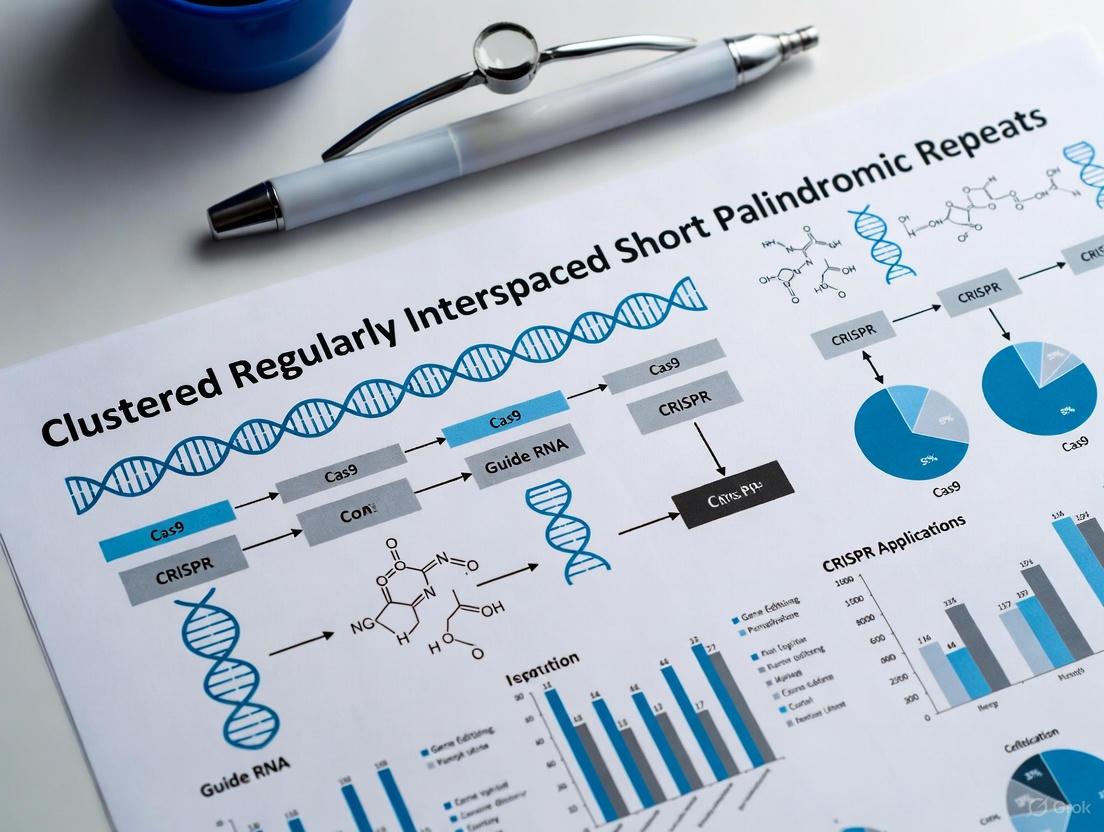
This article provides a comprehensive overview of the CRISPR-Cas9 genome-editing system, detailing its foundational biology as a bacterial adaptive immune mechanism and its transformative application in biomedical research and drug...
CRISPR-Cas9: Definition, Mechanisms, and Clinical Applications in Therapeutic Development
Abstract
This article provides a comprehensive overview of the CRISPR-Cas9 genome-editing system, detailing its foundational biology as a bacterial adaptive immune mechanism and its transformative application in biomedical research and drug development. It explores the core components and molecular mechanisms of CRISPR-Cas9, including the guide RNA and Cas9 nuclease, and examines advanced derivative systems like base editing and prime editing. The content addresses key methodological considerations for therapeutic application, including delivery challenges using viral vectors and lipid nanoparticles (LNPs), and strategies to mitigate off-target effects. It further analyzes the current landscape of clinical trials for conditions such as sickle cell disease, hereditary transthyretin amyloidosis, and cancer, validating its efficacy and comparing it to earlier gene-editing technologies. Tailored for researchers, scientists, and drug development professionals, this review synthesizes the current state and future trajectory of CRISPR-based therapeutics.
The Biological Origins and Core Mechanics of CRISPR-Cas9
Clustered Regularly Interspaced Short Palindromic Repeats (CRISPR) represents a transformative technology in molecular biology that enables researchers to selectively modify the DNA of living organisms with unprecedented precision [1]. Originally identified as an adaptive immune system in prokaryotes, CRISPR has been repurposed as a programmable genome-editing tool that has revolutionized biomedical research and therapeutic development [2] [3]. This whitepaper provides an in-depth technical examination of CRISPR systems, from their fundamental biological mechanisms to their application in research and clinical settings, framed within the context of ongoing definitional research into this powerful technology.
The significance of CRISPR technology is underscored by the 2020 Nobel Prize in Chemistry awarded to its developers, Dr. Emmanuelle Charpentier and Dr. Jennifer Doudna [4]. Unlike previous gene-editing tools such as zinc finger nucleases (ZFN) and transcription activator-like effector nucleases (TALENs), which required tedious protein redesign for each new target sequence, CRISPR systems achieve target specificity through easily programmable RNA components, dramatically reducing the time and cost associated with genome editing while increasing precision [2] [5].
The Origins: CRISPR as a Bacterial Immune System
Historical Discovery
CRISPR was first accidentally identified in 1987 by Japanese scientist Ishino and his team while analyzing a gene for alkaline phosphatase in Escherichia coli, where they observed unusual repetitive palindromic DNA sequences interrupted by spacers [2]. Francisco Mojica later identified similar sequences in other prokaryotes and coined the term CRISPR in the 1990s, though its biological function remained initially mysterious [2]. By 2007, experimental evidence established CRISPR as a key component of the adaptive immune system in prokaryotes, protecting them from viral infections [2].
Native Biological Function
In its natural context, CRISPR functions as an adaptive immune defense mechanism that enables bacteria and archaea to defend themselves against viruses or bacteriophages [2] [5]. When infected by viruses, bacterial cells incorporate small fragments of viral DNA (spacers) into their own genome at a specific region called the CRISPR array [2]. These spacers serve as a genetic memory of previous infections [2]. Upon subsequent viral attacks, the bacteria transcribe these spacer sequences into RNA molecules that guide CRISPR-associated (Cas) proteins to recognize and cleave the matching viral DNA, thereby disabling the pathogen [3] [5].
The CRISPR defense mechanism operates through three fundamental stages:
- Adaptation (Spacer Acquisition): Foreign DNA fragments are incorporated into the host's CRISPR array as new spacers [2].
- crRNA Synthesis (Expression): The CRISPR array is transcribed and processed into short CRISPR RNA (crRNA) molecules [2].
- Target Interference: crRNAs guide Cas proteins to complementary foreign DNA sequences, which are then cleaved and neutralized [2].
Figure 1: The Native CRISPR-Cas Bacterial Immune Mechanism
The CRISPR-Cas9 System: Components and Mechanism
Molecular Architecture
The repurposed CRISPR-Cas9 genome editing system consists of two fundamental molecular components:
Cas9 Nuclease: A large (1368 amino acids) multi-domain DNA endonuclease that functions as "molecular scissors" to cut target DNA [6] [2] [4]. The Cas9 protein contains two primary lobes: the recognition (REC) lobe, consisting of REC1 and REC2 domains responsible for binding guide RNA; and the nuclease (NUC) lobe, composed of RuvC, HNH, and Protospacer Adjacent Motif (PAM) interacting domains [2].
Guide RNA (gRNA): A synthetic RNA molecule created by fusing two naturally occurring RNAs - CRISPR RNA (crRNA) and trans-activating CRISPR RNA (tracrRNA) [6] [2]. The gRNA contains a 18-20 nucleotide target sequence that specifies the genomic target through complementary base pairing, and a scaffolding sequence that facilitates binding to the Cas9 nuclease [6] [2].
Genome Editing Mechanism
The CRISPR-Cas9 genome editing process can be divided into three sequential steps:
Step 1: Recognition The designed sgRNA directs Cas9 to recognize the target sequence in the gene of interest through its 5' crRNA complementary base pair component [2]. The Cas9 protein remains inactive in the absence of sgRNA [6].
Step 2: Cleavage The Cas9 nuclease makes double-stranded breaks (DSBs) at a site 3 base pairs upstream of the Protospacer Adjacent Motif (PAM) [2]. The PAM sequence is a short (2-5 base pair) conserved DNA sequence downstream of the cut site that varies depending on the bacterial species of the Cas9 protein [6]. For the most commonly used nuclease from Streptococcus pyogenes (SpCas9), the PAM sequence is 5'-NGG-3' (where N can be any nucleotide base) [2]. Once Cas9 recognizes the PAM sequence, it triggers local DNA melting, followed by the formation of an RNA-DNA hybrid [2]. The HNH domain cleaves the complementary strand, while the RuvC domain cleaves the non-complementary strand of the target DNA, producing predominantly blunt-ended double-stranded breaks [2].
Step 3: Repair The DSB is repaired by the host cellular machinery through one of two primary pathways [2]:
- Non-Homologous End Joining (NHEJ): An error-prone mechanism that directly ligates broken ends, often resulting in small insertions or deletions (indels) that can disrupt gene function [2].
- Homology-Directed Repair (HDR): A precise mechanism that uses a donor DNA template to facilitate accurate gene correction or insertion [2].
Figure 2: CRISPR-Cas9 Genome Editing Mechanism
PAM Requirements and Cas9 Variants
The PAM requirement is a critical aspect of CRISPR target recognition, and different Cas9 homologs have distinct PAM specificities that expand the targeting range of CRISPR technology [6]. The table below summarizes several important Cas9 species and variants along with their respective PAM sequences.
Table 1: Cas9 Species/Variants and Their PAM Sequences
| Species/Variant of Cas9 | PAM Sequence |
|---|---|
| Streptococcus pyogenes (SpCas9) | 3' NGG |
| Streptococcus pyogenes High Fidelity (SpCas9-HF1) | 3' NGG (reduced NAG binding) |
| Streptococcus pyogenes (eSpCas9) | 3' NGG |
| xCas9 | 3' NG, GAA, or GAT |
| SpCas9-NG | 3' NG |
| Staphylococcus aureus (SaCas9) | 3' NNGRRT or NNGRR(N) |
| Campylobacter jejuni (CjCas9) | 3' NNNNRYAC |
| Neisseria meningitidis (NmCas9) | 3' NNNNGATT |
Research Implementation: Experimental Considerations
Research Reagent Solutions
Successful implementation of CRISPR-Cas9 technology requires several key reagents and molecular tools. The table below details essential materials and their functions in typical CRISPR experiments.
Table 2: Essential Research Reagents for CRISPR-Cas9 Experiments
| Research Reagent | Function | Technical Considerations |
|---|---|---|
| Cas9 Expression Vector | Expresses Cas9 nuclease in target cells | Choose between wild-type, nickase, or catalytically dead variants depending on application |
| Guide RNA Cloning Vector | Expresses target-specific gRNA | Customizable 18-20 nt spacer sequence defines genomic target |
| Delivery Vehicle (Viral/LNP) | Introduces CRISPR components into cells | Lentivirus, AAV, adenovirus, or lipid nanoparticles offer different advantages |
| Donor DNA Template | Provides homology for HDR repair | Single-stranded or double-stranded DNA with homology arms |
| Cell Line Validation Tools | Verifies successful genome editing | Surveyor assay, T7E1, sequencing, functional assays |
| Antibiotic Selection Markers | Enriches for successfully transfected cells | Puromycin, blasticidin, G418 for stable cell line development |
Technical Workflow
A standard CRISPR-Cas9 genome editing experiment follows a systematic workflow:
- Target Selection: Identify 20-nucleotide target sequence adjacent to appropriate PAM [6].
- gRNA Design and Cloning: Synthesize and clone gRNA sequence into expression vector [6].
- Component Delivery: Introduce CRISPR components into target cells via appropriate method [4].
- Validation and Screening: Assess editing efficiency and isolate successfully modified cells [6].
- Functional Analysis: Characterize phenotypic consequences of genetic modification [6].
Current Applications and Clinical Translation
Therapeutic Applications
CRISPR-Cas9 technology has demonstrated remarkable potential across diverse therapeutic areas:
Genetic Diseases: CRISPR is being investigated for numerous monogenic disorders, including sickle cell disease, β-thalassemia, cystic fibrosis, and Duchenne muscular dystrophy [2]. The first FDA-approved CRISPR therapy, Casgevy, treats sickle cell disease and transfusion-dependent beta thalassemia by disrupting the BCL11A gene to reactivate fetal hemoglobin production [7] [4] [5].
Oncology: CRISPR is enhancing cancer immunotherapy by engineering next-generation chimeric antigen receptor (CAR) T-cells with improved efficacy, safety, and persistence [4] [5]. Additionally, CRISPR screens are identifying novel therapeutic targets and resistance mechanisms across various cancer types [8].
Infectious Diseases: Researchers are developing CRISPR-based approaches to target persistent viral infections, including HIV, and creating phage therapies enhanced with CRISPR proteins to treat antibiotic-resistant bacterial infections [7].
Clinical Trial Landscape
The clinical translation of CRISPR technology has accelerated rapidly, with numerous ongoing clinical trials across diverse disease areas. Notable developments include:
Intellia Therapeutics' Phase I Trial for Hereditary Transthyretin Amyloidosis (hATTR): The first clinical trial for a CRISPR-Cas9 therapy delivered by lipid nanoparticle (LNP), demonstrating ~90% reduction in disease-related TTR protein levels sustained over two years [7].
Intellia Therapeutics' Phase I/II Trial for Hereditary Angioedema (HAE): Showing 86% reduction in kallikrein protein and significant reduction in inflammatory attacks, with 8 of 11 participants in the high-dose group being attack-free during the 16-week study period [7].
Personalized In Vivo CRISPR Treatment: A landmark case in 2025 documented the development and delivery of a bespoke CRISPR therapy for an infant with CPS1 deficiency within just six months, demonstrating the potential for rapid development of personalized genetic medicines [7].
Challenges and Future Perspectives
Despite remarkable progress, several challenges remain in the broad clinical implementation of CRISPR technology:
Delivery Efficiency: Effectively delivering CRISPR components to target tissues and cells in vivo remains a significant hurdle [2] [8]. While viral vectors offer high transduction efficiency, they can trigger immune responses and have limited packaging capacity [7]. Lipid nanoparticles (LNPs) have emerged as a promising alternative, particularly for liver-targeted therapies, with the additional advantage of enabling redosing [7].
Off-Target Effects: The potential for Cas9 to cleave at unintended genomic sites with similar sequences remains a concern for therapeutic applications [2] [8]. Ongoing efforts to engineer high-fidelity Cas9 variants with improved specificity and develop improved prediction algorithms are addressing this challenge [6] [8].
Immunogenicity: Pre-existing immunity to bacterial-derived Cas proteins in human populations may limit the efficacy and safety of CRISPR therapies [2] [8]. Strategies to overcome this include using Cas orthologs from non-pathogenic bacteria or engineering humanized versions with reduced immunogenicity [8].
Ethical Considerations: The ability to manipulate the human genome raises important ethical questions, particularly regarding germline editing, which is currently illegal in the United States and many other countries [3]. The scientific community continues to engage in thoughtful discussion about appropriate boundaries and regulations for different applications of CRISPR technology [9] [3].
Future developments in CRISPR technology will likely focus on expanding the editing toolbox through novel systems like base editing and prime editing, improving delivery technologies for non-liver tissues, and advancing personalized genetic medicines for rare diseases [7] [5]. As the field matures, addressing challenges of accessibility and affordability will be crucial to ensuring equitable benefit from these transformative therapies [7] [9].
The partnership between the guide RNA (gRNA) and the Cas9 nuclease constitutes the functional core of the CRISPR-Cas9 genome editing system. This programmable ribonucleoprotein complex has revolutionized biological research and therapeutic development by enabling precise targeting and modification of DNA sequences. The CRISPR-Cas system functions as an adaptive immune mechanism in bacteria and archaea, protecting them from viral DNA and other foreign genetic elements [10]. In biotechnology, this system has been repurposed such that the Cas9 nuclease serves as a programmable DNA-cutting enzyme, while the guide RNA provides the targeting specificity, directing Cas9 to specific genomic loci with complementary sequences [11] [10]. This review examines the structural and functional mechanisms of this partnership, its experimental applications, and recent advancements enhancing its precision and utility in research and drug development.
Molecular Architecture and Mechanism of Action
Structural Components and Their Roles
The CRISPR-Cas9 system derives from Streptococcus pyogenes (SpCas9) and consists of two core components: the Cas9 nuclease and a guide RNA (gRNA) [12] [10]. The Cas9 protein contains two primary lobes: a recognition lobe responsible for target binding and verification, and a nuclease lobe that executes DNA cleavage [12]. The guide RNA is a synthetic fusion of two natural RNA molecules: the CRISPR RNA (crRNA), which contains the target-specific spacer sequence, and the trans-activating CRISPR RNA (tracrRNA), which serves as a structural scaffold for Cas9 binding [10].
Table 1: Core Components of the CRISPR-Cas9 System
| Component | Structure | Function | Key Features |
|---|---|---|---|
| Cas9 Nuclease | Two-lobed protein structure (~160 kDa) | DNA cleavage enzyme | Recognition lobe verifies target complementarity; nuclease lobe creates double-strand breaks (DSBs) using HNH and RuvC domains [12]. |
| Guide RNA (gRNA) | Single-chain RNA molecule (~100 nt) | Targeting specificity | 5' end (~20 nt) provides target complementarity; 3' end forms hairpin structures that bind Cas9 [10]. |
| Protospacer Adjacent Motif (PAM) | Short DNA sequence (5'-NGG-3' for SpCas9) | Self vs. non-self discrimination | Essential for target recognition; sequences lacking PAM are excluded from editing [10]. |
The Targeting and Cleavage Mechanism
The mechanism of DNA targeting and cleavage follows a precise, multi-step pathway. The process begins with the formation of the Cas9-gRNA ribonucleoprotein complex, after which it scans the genome for complementary DNA sequences adjacent to a protospacer adjacent motif (PAM) [11] [10]. The PAM sequence, which for SpCas9 is 5'-NGG-3' (where "N" is any nucleotide), is essential for initiation and serves as a recognition signal for non-self DNA [10].
Upon PAM recognition, the Cas9 protein unwinds the DNA duplex, allowing the gRNA spacer sequence to form complementary base pairs with the target DNA strand [12]. The recognition lobe of Cas9 performs a final verification of the complementarity between the gRNA and DNA target. Once a successful match is confirmed, the nuclease lobe catalyzes the creation of a double-strand break (DSB) approximately 3-4 nucleotides upstream of the PAM site. This is achieved through two distinct catalytic domains: the HNH domain cleaves the complementary DNA strand, while the RuvC domain cleaves the non-complementary strand [10].
The following diagram illustrates this sequential mechanism:
DNA Repair Pathways and Editing Outcomes
The cellular response to CRISPR-induced double-strand breaks leads to different genetic outcomes through distinct repair pathways. Non-homologous end joining (NHEJ) is an error-prone repair mechanism that directly ligates broken DNA ends, often resulting in small insertions or deletions (indels) that disrupt the target gene and create knockouts [11] [12]. Alternatively, homology-directed repair (HDR) can be employed in the presence of a donor DNA template to facilitate precise gene corrections or insertions, though this pathway is primarily active during the S and G2 phases of the cell cycle [11].
Advancements in gRNA Design and Cas9 Engineering
Enhancing Specificity and Reducing Off-Target Effects
A significant challenge in CRISPR-Cas9 applications is the potential for off-target effects, where editing occurs at unintended genomic sites with sequence similarity to the target. These off-target interactions are influenced by factors including gRNA-DNA mismatch tolerance, DNA context, gRNA secondary structure, and enzyme concentration [13]. Advances in gRNA design have substantially mitigated these concerns through several strategies:
- Computational gRNA Design Tools: State-of-the-art algorithms identify highly specific guide sequences with minimal predicted off-target activity [12].
- Chemically Modified sgRNAs: Synthetic guide RNAs with specific chemical modifications demonstrate enhanced stability and reduced off-target effects compared to plasmid-derived or in vitro transcribed guides [12].
- Optimized Delivery Formats: The ribonucleoprotein (RNP) format, where preassembled Cas9-gRNA complexes are delivered directly to cells, enables high editing efficiencies and reduces off-target effects by limiting the temporal window of nuclease activity [12].
Artificial Intelligence and Novel Editor Design
Recent breakthroughs have leveraged artificial intelligence to design novel CRISPR systems with expanded capabilities. Large language models (LMs) trained on vast datasets of natural CRISPR sequences can now generate artificial Cas9-like proteins with optimal properties. One such AI-designed editor, OpenCRISPR-1, exhibits comparable or improved activity and specificity relative to SpCas9, despite being "400 mutations away in sequence" from any known natural protein [14]. These AI-powered editors represent a significant divergence from natural sequences while maintaining or enhancing functionality, opening new possibilities for therapeutic applications.
Table 2: Evolution of CRISPR-Cas9 Specificity and Delivery
| Feature | Early Methods | Advanced Solutions | Key Benefits |
|---|---|---|---|
| gRNA Design | Basic sequence matching | AI-powered tools & specificity scoring [14] | Predicts and minimizes off-target effects; expands targetable genomic space. |
| gRNA Format | Plasmid-based or IVT RNA | Chemically modified synthetic sgRNAs [12] | Enhanced stability; reduced immune stimulation; improved editing efficiency. |
| Delivery System | Plasmid transfection | Ribonucleoprotein (RNP) complexes [12] | Immediate activity; short cellular exposure; highest editing efficiency; reduced off-targets. |
| Nuclease Engineering | Wild-type SpCas9 | High-fidelity variants & AI-designed editors (e.g., OpenCRISPR-1) [14] | Reduced off-target activity while maintaining robust on-target editing. |
Experimental Workflows and Methodologies
Standard CRISPR-Cas9 Workflow
A typical CRISPR-Cas9 experiment involves a series of standardized steps, from design to validation. The critical first step is designing highly specific gRNA sequences using specialized bioinformatic tools to maximize on-target efficiency and minimize potential off-target effects [12]. Subsequently, researchers select a delivery method, with options including plasmid vectors, in vitro transcribed RNAs (IVT), or preassembled ribonucleoprotein (RNP) complexes, the latter being increasingly favored for its high efficiency and reproducibility [12]. Following delivery into target cells, editing efficiency must be rigorously analyzed using methods such as Sanger sequencing, next-generation sequencing (NGS), or the Inference of CRISPR Edits (ICE) assay [12] [15].
The workflow is summarized in the diagram below:
Advanced Screening and Validation Techniques
Innovative screening methods have been developed to identify successfully edited cells more efficiently. For instance, a Native Visual Screening Reporter (NVSR) system uses endogenous genes, such as the FveMYB10 anthocyanin regulator in strawberries, to visually identify transgenic lines through pigment accumulation without specialized equipment [15]. In mammalian cells, advanced multi-omic approaches like CRAFTseq enable simultaneous detection of genomic edits, transcriptome changes, and cell-surface protein expression in single cells, providing a comprehensive view of editing outcomes and functional effects [16].
The Scientist's Toolkit: Research Reagent Solutions
Table 3: Essential Reagents for CRISPR-Cas9 Research
| Reagent / Tool | Function | Application Notes |
|---|---|---|
| Cas9 Nuclease | Executes DNA cleavage | Wild-type SpCas9 is standard; high-fidelity variants (e.g., SpCas9-HF1) or AI-designed editors (OpenCRISPR-1) reduce off-target effects [14] [12]. |
| Synthetic gRNA | Targets Cas9 to specific genomic loci | Chemically modified sgRNAs offer superior performance over plasmid-based or IVT guides [12]. |
| Delivery Vectors | Introduces components into cells | Plasmids (low efficiency), viral vectors (e.g., AAV, lentivirus), or lipid nanoparticles (LNPs) for RNP delivery [7] [10]. |
| Repair Templates | Enables precise HDR editing | Single-stranded or double-stranded DNA donors for specific nucleotide changes or gene insertions. |
| Validation Assays | Confirms editing efficiency | Sanger sequencing, T7E1 assay, NGS, ICE analysis, or functional phenotypic assays [12] [16]. |
The synergistic partnership between gRNA and Cas9 nuclease continues to evolve, driven by innovations in protein engineering, computational design, and delivery technologies. The integration of artificial intelligence is particularly transformative, enabling the generation of novel genome-editing enzymes beyond natural evolutionary constraints [17] [14]. Furthermore, the application of advanced single-cell multi-omic technologies, such as CRAFTseq, allows researchers to precisely link specific genomic edits to their functional consequences, bridging a crucial gap in understanding complex disease genetics [16].
Future developments will likely focus on expanding editing capabilities through base editing and prime editing systems that offer greater precision without requiring double-strand breaks [17]. Simultaneously, ongoing efforts to optimize delivery vectors, particularly lipid nanoparticles (LNPs) that enable in vivo delivery and potential redosing, are rapidly translating CRISPR technology from a powerful research tool into a promising therapeutic platform for treating genetic diseases, cancers, and infectious diseases [17] [7]. As these advancements mature, the core gRNA-Cas9 partnership will undoubtedly remain central to the expanding genome-editing landscape.
Clustered Regularly Interspaced Short Palindromic Repeats (CRISPR) and their associated protein (Cas-9) constitute a highly precise and programmable genome-editing tool derived from the adaptive immune system of prokaryotes [2]. This technology has revolutionized biological research and therapeutic development by enabling targeted modifications to the genome of living cells. The CRISPR-Cas9 system functions through a unified mechanism comprising three core stages: target recognition, DNA cleavage, and cellular repair [2] [18]. This guide provides an in-depth technical examination of these molecular processes, framed within the context of advanced research and drug development. Understanding these mechanisms is critical for optimizing editing efficiency, minimizing off-target effects, and developing safe, effective clinical applications.
System Components and Their Functions
The CRISPR-Cas9 system requires two fundamental components: the Cas9 nuclease and a guide RNA (gRNA) [2] [19].
- The Cas9 Nuclease: The Cas9 protein is a multi-domain DNA endonuclease often called "genetic scissors." The most commonly used variant, derived from Streptococcus pyogenes (SpCas9), is a 1368-amino-acid protein comprising two primary lobes [2]:
- The Recognition Lobe (REC Lobe): Responsible for binding to the guide RNA.
- The Nuclease Lobe (NUC Lobe): Contains the catalytic domains for DNA cleavage and the PAM-interacting domain.
- The Guide RNA (gRNA): This is a synthetic, single RNA molecule formed by fusing two natural RNA components: the CRISPR RNA (crRNA) and the trans-activating CRISPR RNA (tracrRNA) [2] [19]. The gRNA includes a customizable ∼20-nucleotide spacer sequence that determines the genomic target through Watson-Crick base pairing, and a scaffold sequence that binds to the Cas9 protein [19].
Table 1: Core Components of the CRISPR-Cas9 System
| Component | Structure/Composition | Primary Function |
|---|---|---|
| Cas9 Nuclease | Multi-domain enzyme (e.g., SpCas9: 1368 amino acids) [2] | Binds gRNA and cleaves target DNA to create Double-Strand Breaks (DSBs). |
| Guide RNA (gRNA) | Single chimeric RNA; 18-20 nt spacer + scaffold [2] [19] | Directs Cas9 to a specific genomic locus via spacer sequence complementarity. |
The Mechanism of Target Recognition
The journey to DNA cleavage begins with the Cas9 protein in an inactive conformation. The binding of the gRNA induces a structural change, shifting Cas9 into an active, DNA-binding state [19]. The recognition process is a critical step for ensuring specificity and involves two key sequential checks:
- Protospacer Adjacent Motif (PAM) Recognition: The Cas9 protein first scans the DNA double helix for a short, conserved sequence adjacent to the target site, known as the PAM [2] [18]. For SpCas9, the PAM sequence is 5'-NGG-3', where 'N' is any nucleotide [2] [19]. The PAM is not part of the gRNA-matching sequence and is essential for initiating the binding process. The PAM-interacting domain within the Cas9 protein recognizes this motif, triggering local DNA melting and enabling the next stage of interrogation [2].
- Target DNA Interrogation by gRNA: Once a valid PAM is identified, the Cas9 enzyme unwinds the DNA duplex, allowing the "seed sequence" (the 8-10 nucleotides at the 3' end of the gRNA spacer) to anneal to the target DNA [19]. If perfect complementarity is achieved in the seed region, annealing continues in a 3' to 5' direction along the entire spacer sequence. This two-step verification ensures that Cas9 cleavage only occurs at sites with both the correct PAM and sufficient gRNA complementarity, thereby safeguarding against off-target activity [19].
The following diagram illustrates this sequential recognition and cleavage process:
Figure 1: Sequential Process of CRISPR-Cas9 Target Recognition and DNA Cleavage.
The Process of DNA Cleavage
Following successful target recognition and full gRNA-DNA pairing, the Cas9 protein undergoes a second conformational shift to activate its catalytic centers [19]. The Cas9 nuclease contains two distinct active domains that function together to create a Double-Strand Break (DSB):
- The HNH Nuclease Domain cleaves the DNA strand that is complementary to the gRNA spacer sequence.
- The RuvC-like Nuclease Domain cleaves the non-complementary DNA strand [2] [18].
This coordinated action results in a blunt-ended DSB located 3-4 base pairs upstream of the PAM sequence [19]. The DSB is the triggering event that activates the cell's innate DNA repair machinery, which is then harnessed to achieve the desired genetic outcome.
Cellular Repair Pathways
The cellular response to a DSB is mediated primarily by two competing repair pathways: the error-prone Non-Homologous End Joining (NHEJ) and the high-fidelity Homology-Directed Repair (HDR). The choice between these pathways has profound implications for the final genetic outcome and is a major consideration in experimental design [2].
Table 2: Comparison of Cellular DNA Repair Pathways after CRISPR-Cas9 Cleavage
| Feature | Non-Homologous End Joining (NHEJ) | Homology-Directed Repair (HDR) |
|---|---|---|
| Mechanism | Direct re-ligation of broken DNA ends without a template [2]. | Requires a homologous DNA donor template (exogenous or sister chromatid) to precisely repair the break [2]. |
| Primary Use | Gene knockouts, gene disruption, screening [19]. | Precise gene correction, insertion of new sequences (e.g., reporter genes) [2]. |
| Efficiency | Highly efficient and active throughout the cell cycle [2]. | Inefficient; most active in late S and G2 phases [2]. |
| Fidelity | Error-prone; often results in small insertions or deletions (indels) [2] [19]. | High-fidelity; enables precise, pre-determined edits [2]. |
| Key Reagents | CRISPR-Cas9 and gRNA only. | CRISPR-Cas9, gRNA, and a donor DNA template containing the desired edit flanked by homology arms [2]. |
The logical relationship between the CRISPR-induced break and the subsequent repair pathways is summarized below:
Figure 2: Cellular Repair Pathways Activated by a CRISPR-Cas9-Induced Double-Strand Break.
Advanced Engineered Cas Variants
The wild-type SpCas9 system has been extensively engineered to overcome limitations such as PAM restriction, off-target effects, and the inability to perform precise edits without DSBs. These advanced tools have significantly expanded the therapeutic and research applications of CRISPR technology.
Table 3: Engineered Cas Variants and Their Applications
| Cas Variant | Key Engineering Feature | Primary Application/Advantage | Example Enzymes |
|---|---|---|---|
| Cas9 Nickase (Cas9n) | One nuclease domain (usually RuvC) is inactivated (D10A mutation), creating single-strand "nicks" [19]. | Improved specificity; requires two adjacent nickases to create a DSB, reducing off-target cleavage [19]. | D10A SpCas9 |
| dead Cas9 (dCas9) | Both nuclease domains are inactivated (D10A and H840A mutations); binds DNA without cutting [19] [18]. | Platform for gene regulation (CRISPRi/a), epigenetic editing, and live-cell imaging when fused to effector domains [19] [18]. | dCas9 |
| High-Fidelity Cas9 | Mutations that reduce non-specific interactions with the DNA backbone, enhancing proofreading [19]. | Dramatically reduced off-target editing while maintaining robust on-target activity [19]. | eSpCas9(1.1), SpCas9-HF1, HypaCas9 [19] |
| PAM-Flexible Cas9 | Mutations in the PAM-interacting domain to recognize alternative, often less restrictive, PAM sequences [19]. | Expands the targeting space of the genome, allowing editing at sites inaccessible to wild-type SpCas9. | xCas9, SpCas9-NG (NG PAM), SpRY (NRN PAM) [19] |
| Base Editors (BE) | Fusion of dCas9 or Cas9n to a deaminase enzyme (e.g., converts C•G to T•A or A•T to G•C) [20] [17]. | Direct, precise single-base changes without creating a DSB or requiring a donor template, minimizing indel byproducts [20]. | ABE, CBE |
| Prime Editors (PE) | Fusion of Cas9n to a reverse transcriptase, programmed with a prime editing guide RNA (pegRNA) [17]. | Versatile "search-and-replace" editing; can install all 12 possible base substitutions, small insertions, and deletions without DSBs [17]. | PE1, PE2 |
Essential Research Reagents and Experimental Protocols
The Scientist's Toolkit: Key Research Reagent Solutions
Successful CRISPR experimentation relies on a suite of well-characterized reagents. The table below details essential materials and their functions for setting up a typical CRISPR-Cas9 experiment.
Table 4: Essential Reagents for CRISPR-Cas9 Research
| Reagent / Material | Function / Explanation | Key Considerations |
|---|---|---|
| Cas9 Source | The nuclease enzyme. Can be delivered as a plasmid encoding the Cas9 gene, in vitro transcribed mRNA, or pre-complexed as a Ribonucleoprotein (RNP) [18]. | RNP delivery offers rapid kinetics and reduced off-target effects due to transient activity. |
| gRNA Expression Vector | A plasmid containing the scaffold sequence and a cloning site for inserting the 20-nt spacer sequence [19]. | Enables stable, long-term expression. For multiplexing, vectors can express multiple gRNAs from a single plasmid [19]. |
| Delivery Vehicle | Method to introduce CRISPR components into target cells. Includes viral vectors (AAV, Lentivirus) and non-viral methods (electroporation, lipid nanoparticles (LNPs)) [18] [21]. | Choice depends on target cell type (e.g., easy-to-transfect vs. primary cells), application (in vivo vs. in vitro), and cargo size. |
| Donor DNA Template | A single-stranded or double-stranded DNA oligonucleotide containing the desired edit flanked by homology arms (for HDR) [2]. | Homology arm length and optimization are critical for HDR efficiency. |
| Cell Line / Primary Cells | The target system for genetic modification. | Editing efficiency varies greatly between cell types. Primary cells and stem cells often require optimized delivery methods. |
| Validation Assays | Methods to confirm editing, including T7E1 or TIDE assays, Sanger sequencing, and next-generation sequencing (NGS) [19]. | NGS is the gold standard for quantifying editing efficiency and comprehensively assessing off-target effects. |
Detailed Protocol: CRISPR-Cas9 Mediated Gene Knockout via NHEJ
This protocol outlines a standard workflow for generating a gene knockout in mammalian cells using plasmid-based delivery of CRISPR components, leveraging the error-prone NHEJ repair pathway.
gRNA Design and Cloning
- Design: Select a 20-nucleotide target sequence of the form
5'-(N)20-NGG-3'within an early exon of your target gene. Use online tools (e.g., from the Broad Institute) to minimize predicted off-target effects [19]. - Cloning: Synthesize oligonucleotides corresponding to your target sequence and anneal them. Ligate the duplex into a gRNA expression vector that has been digested with the appropriate restriction enzyme (e.g., BsmBI for the pX330 series of vectors) [19].
- Validation: Sequence the final plasmid construct to confirm the correct insertion of the gRNA spacer.
- Design: Select a 20-nucleotide target sequence of the form
Cell Transfection
- Culture your target mammalian cells (e.g., HEK293T) according to standard protocols.
- Co-transfect the cells with the constructed gRNA plasmid and a plasmid expressing the Cas9 nuclease. If using an all-in-one vector (where gRNA and Cas9 are on the same plasmid), transfect only that single plasmid.
- Use a transfection method suitable for your cell line (e.g., lipid-based transfection reagents, electroporation). Include appropriate controls (e.g., a non-targeting gRNA plasmid).
Harvesting and Validation
- Harvest: 48-72 hours post-transfection, harvest the cells.
- Efficiency Check: Isolate genomic DNA from a portion of the harvested cells. Amplify the target genomic region by PCR and analyze the editing efficiency using the T7 Endonuclease I (T7E1) assay, which detects heteroduplex DNA formed by indels, or by Sanger sequencing followed by analysis with tools like TIDE or ICE.
- Clonal Isolation: For a pure population of knockout cells, dilute the transfected cells and seed them at low density to allow for the growth of single-cell clones. After 1-2 weeks, pick individual clones and expand them.
- Genotypic Validation: Screen the expanded clonal lines by PCR and sequencing to identify clones with frameshift mutations (indels that are not multiples of 3) in the target gene.
- Phenotypic Validation: Confirm the knockout at the protein level (e.g., by Western blot) and/or through a functional assay to demonstrate loss of gene function.
The molecular mechanism of the CRISPR-Cas9 system—comprising programmable target recognition, precise DNA cleavage, and the harnessing of endogenous cellular repair pathways—provides researchers with an unprecedented ability to manipulate the genome. From the fundamental process of creating a gene knockout via NHEJ to the sophisticated, template-driven precise editing via HDR, a deep understanding of these core principles is the foundation of effective experimental design. Continued advancements in Cas enzyme engineering, such as the development of base editing and prime editing, are further expanding the toolkit, allowing for even greater precision and versatility. As the field progresses, overcoming challenges related to delivery efficiency and off-target effects will be paramount for fully realizing the therapeutic potential of CRISPR-based technologies in drug development and clinical applications.
Clustered Regularly Interspaced Short Palindromic Repeats (CRISPR) and CRISPR-associated (Cas) proteins constitute an adaptive immune system in bacteria and archaea that defends against invading viruses and mobile genetic elements [1] [22]. This system exhibits remarkable molecular diversity, which researchers have categorized into distinct classes and types based on evolutionary relationships, genetic architecture, and mechanistic principles [23] [24]. The most fundamental division separates all CRISPR-Cas systems into two classes: Class 1 systems utilize multi-subunit effector complexes, while Class 2 systems employ single-protein effector modules [25] [26]. This classification framework provides researchers with a systematic approach to understanding the functional capabilities and evolutionary relationships of the growing number of documented CRISPR systems.
The expanding diversity of CRISPR-Cas systems represents a rich resource for biotechnology development, particularly in therapeutic applications [27] [5]. Class 2 systems, with their simpler single-effector organization, have been widely adopted for genome engineering applications [26]. However, Class 1 systems, which are more prevalent in prokaryotes, are now yielding novel molecular tools with unique properties [23] [24]. This technical guide examines the classification principles, molecular mechanisms, and experimental characterization of both effector classes, providing researchers with a comprehensive reference for selecting and utilizing these systems in basic research and drug development.
Hierarchical Classification Framework
Classification Principles and Nomenclature
The current CRISPR-Cas classification system employs a polythetic approach that incorporates phylogenetic analysis of conserved Cas proteins, gene locus organization, and effector module composition [23] [24]. This hierarchical framework organizes systems into 2 classes, 7 types, and 46 subtypes based on evolutionary relationships and mechanistic features [23]. Classes distinguish multi-subunit versus single-effector complexes, while types are defined by signature genes and effector mechanisms. Subtypes represent variations within types, often characterized by distinct gene compositions or architectural features [24].
A key classification principle involves the identification of signature proteins: Cas3 for type I, Cas9 for type II, Cas10 for type III, Csf1 (Cas8-like) for type IV, Cas12 for type V, Cas13 for type VI, and Cas14 for the newly identified type VII systems [23] [26] [28]. This classification continues to evolve as novel systems are discovered through genomic and metagenomic sequencing, with recent updates adding 13 additional subtypes since the 2020 classification [23].
Comparative Analysis of CRISPR-Cas Classes
Table 1: Fundamental Characteristics of Class 1 and Class 2 CRISPR Systems
| Feature | Class 1 Systems | Class 2 Systems |
|---|---|---|
| Effector Complexity | Multi-subunit complexes | Single effector protein |
| Representative Types | I, III, IV, VII | II, V, VI |
| Abundance in Prokaryotes | ~90% of bacteria, nearly 100% of archaea [24] | ~10% of bacteria, rare in archaea |
| Signature Proteins | Cas3 (Type I), Cas10 (Type III), Csf1 (Type IV), Cas14 (Type VII) [23] [24] | Cas9 (Type II), Cas12 (Type V), Cas13 (Type VI) [26] |
| Experimental Handling | Complex (requires coordinated expression of multiple subunits) | Simplified (single protein expression) |
| Therapeutic Applications | Emerging (e.g., type I for large deletions) [24] | Established (e.g., Cas9 for gene correction) [27] [5] |
Figure 1: CRISPR-Cas System Classification Hierarchy. The diagram illustrates the organizational structure from classes to types and their signature effector proteins.
In-Depth Analysis of Class 1 Effector Systems
Type I Systems: The Cascade Complex and Cas3 Helicase-Nuclease
Type I systems represent the most prevalent CRISPR type found in prokaryotes [24]. These systems employ the Cascade (CRISPR-associated complex for antiviral defense) complex for target recognition, which then recruits the signature Cas3 protein for destruction of invading DNA [24]. Cas3 possesses both helicase and nuclease activities, enabling it to unwind and processively degrade large sections of DNA following recruitment by Cascade [24]. This process results in extensive degradation of target DNA, making type I systems particularly useful for applications requiring large genomic deletions.
The type I systems are subdivided into seven subtypes (I-A through I-G) based on variations in their Cascade complex composition [24]. These subtypes share core functional mechanisms but exhibit differences in their protein components and structural arrangements. Recent engineering efforts have developed type I systems for CRISPR transposase systems by omitting Cas3, demonstrating how understanding native mechanisms enables biotechnological innovation [24].
Type III Systems: Complex Regulation and Dual Targeting
Type III systems represent perhaps the most complex CRISPR systems and are considered evolutionary ancestors to other CRISPR types [24]. These systems utilize Cas10 as their signature protein and exhibit the unique capability to target both RNA and DNA, though DNA cleavage is considered their primary immune function [24]. The type III systems encompass nine subtypes (III-A through III-I), each defined by accessory Cas proteins within the Cascade complex [23].
A distinctive feature of type III systems is their association with cyclic oligoadenylate (cOA) signaling pathways [23]. Many type III systems generate cOA second messengers that activate ancillary effector proteins containing CRISPR-associated Rossmann fold (CARF) or SAVED domains, which often possess non-specific RNase activity [23]. Recent discoveries have revealed reductive evolution in some subtypes, including III-G and III-H, which have inactivated cyclase domains and lost associated cOA signaling components [23]. The recently identified subtype III-I features an extremely diverged Cas10 protein and a multidomain effector protein termed Cas7-11i, which resembles the Cas7-11 effector of subtype III-E but originated independently [23].
Type IV and VII Systems: Minimal and Novel Variants
Type IV systems represent atypical CRISPR systems that lack complete adaptive modules and exhibit unusual genomic organizations [24]. These systems, with subtypes IV-A, IV-B, and IV-C, are often plasmid-encoded and may function in plasmid competition rather than canonical antiviral defense [24]. Type IV systems typically lack nucleases but contain distinct Cas7-type proteins, with IV-C systems encoding a helicase domain resembling Cas10 [24].
The newly classified type VII systems contain Cas14 as their signature effector, a β-CASP family nuclease [23]. These systems are found predominantly in archaea and lack adaptation modules. Structural analysis reveals that Cas14 contains a C-terminal domain structurally similar to the C-terminal domain of Cas10, suggesting an evolutionary connection between types III and VII [23]. Type VII systems function as RNA-targeting complexes and have been shown to cleave target RNA through Cas14's nuclease activity [23].
Comprehensive Guide to Class 2 Effector Systems
Type II Systems: The Cas9 Paradigm
Type II systems utilize Cas9 as their signature effector and represent the most extensively characterized and widely adopted CRISPR system for genome engineering applications [26] [27]. The Cas9 protein contains two nuclease domains: RuvC and HNH, each cleaving one strand of target DNA to generate double-stranded breaks [25] [27]. Type II systems require both crRNA and a separate tracrRNA for function, though these are often combined into a single-guide RNA (sgRNA) for experimental applications [27] [22].
Type II systems are subdivided into three subtypes (II-A, II-B, and II-C) based on variations in Cas9 and associated proteins [24]. The most widely used variant, SpCas9 from Streptococcus pyogenes, belongs to subtype II-A and recognizes a 5'-NGG-3' protospacer adjacent motif (PAM) [27]. Cas9 has been extensively engineered to alter PAM specificity, reduce off-target effects, and enable novel functions such as base editing and transcriptional regulation [27].
Type V Systems: Diverse Cas12 Effectors
Type V systems encompass a rapidly expanding family of Cas12 effectors with distinct properties and applications [26]. These effectors contain a single RuvC-like nuclease domain that cleaves both strands of DNA, resulting in staggered cuts with short overhangs rather than the blunt ends generated by Cas9 [26] [22]. This cleavage pattern can enhance the efficiency of precise genetic modifications through homology-directed repair.
Table 2: Characteristics of Major Type V Effector Proteins
| Effector | Former Name | Size Range | tracrRNA Requirement | PAM Preference | Key Features |
|---|---|---|---|---|---|
| Cas12a | Cpf1 | ~1,300 aa | No [26] | 5' T-rich [26] [27] | Self-processes pre-crRNA arrays [26] |
| Cas12b | C2c1 | ~1,100 aa | Yes [26] | 5' T-rich [26] | Thermostable, used in diagnostic applications |
| Cas12c | C2c3 | ~1,100-1,500 aa | No [26] | Not determined | Predicted dsDNA targeting [26] |
| Cas12d | CasY | ~900-1,200 aa | No [26] | T-rich [26] | Compact size for viral delivery |
| Cas12e | CasX | ~1,000 aa | Yes [26] | T-rich [26] | Very compact, minimal off-target effects |
| Cas14 | - | 400-700 aa | Varies | - | Targets ssDNA non-specifically [24] |
Type V systems include at least ten subtypes (V-A through V-I and V-U) with diverse molecular properties [24]. The V-A subtype (Cas12a/Cpf1) has been particularly valuable for multiplexed genome engineering due to its ability to process its own pre-crRNA arrays [26]. The V-U subtype includes compact effectors such as Cas12f (Cas14), which are among the smallest known Cas enzymes (400-700 amino acids) and enable packaging into viral vectors with limited capacity [24].
Type VI Systems: RNA-Targeting Cas13 Effectors
Type VI systems employ Cas13 effectors that exclusively target single-stranded RNA rather than DNA [26] [28]. These effectors contain two higher eukaryotes and prokaryotes nucleotide-binding (HEPN) domains that confer RNase activity [25] [28]. Upon target recognition, Cas13 exhibits collateral RNase activity that non-specifically degrades nearby RNA molecules, a property leveraged for sensitive diagnostic applications such as SHERLOCK [22] [28].
The type VI systems include six subtypes (VI-A to VI-D, plus Cas13X and Cas13Y) with varying properties and applications [28]. Cas13a (VI-A) was the first characterized and remains the best-understood subtype, while Cas13d exhibits particularly compact architecture and high efficiency in mammalian cells [28]. Engineered catalytically inactive versions (dCas13) enable RNA binding without cleavage, facilitating applications in transcript imaging, localization, and base editing [28].
Experimental Characterization and Methodology
Computational Discovery Pipeline for Novel Systems
The identification of novel CRISPR-Cas systems relies on computational pipelines that mine microbial genomic and metagenomic sequence data [25] [23]. The foundational approach utilizes Cas1 as an anchor protein due to its conservation across most CRISPR systems and its central role in adaptation [25]. The standard discovery workflow involves multiple bioinformatic steps:
- Cas1 Homology Search: Identify cas1 genes in genomic databases using sequence similarity tools such as BLAST or HMMER [25]
- Locus Analysis: Examine genomic regions surrounding cas1 for additional cas genes and CRISPR arrays [25]
- Effector Identification: Identify large genes (>500 aa) encoding putative effector proteins [25]
- Sequence Similarity Analysis: Use PSI-BLAST and HHpred to characterize domain architecture and classify putative effectors [25]
- Metagenomic Mining: Extend searches to metagenomic databases to identify additional homologs [25]
- CRISPR Array Analysis: Examine repeat-spacer organizations and identify potential phage targets through spacer matching [25]
This pipeline led to the discovery of novel Class 2 effectors including C2c1 (Cas12b), C2c2 (Cas13a), and C2c3 (Cas12c) [25]. Recent advances incorporate deep learning methods and large-scale clustering algorithms to identify rare systems in the "long tail" of CRISPR diversity [23] [17].
Figure 2: Computational Pipeline for CRISPR System Discovery. The workflow illustrates the bioinformatic steps from initial database mining to novel effector classification.
Functional Characterization of Novel Effectors
Once identified computationally, novel CRISPR effectors require experimental validation to confirm their biochemical activities and functional mechanisms. Standard characterization protocols include:
crRNA Processing Analysis
- Method: Express effector protein with native CRISPR array in heterologous system (e.g., E. coli)
- Analysis: Northern blotting or RNA sequencing to identify mature crRNA products
- Interpretation: TracrRNA-dependence determined by presence/absence of processed crRNAs in absence of tracrRNA [25]
Nucleic Acid Interference Assays
- Method: Transform effector plasmids with CRISPR arrays targeting reporter constructs or phage genomes
- Analysis: Measure protection against target nucleic acids through plaque assays or fluorescence reporters
- Interpretation: Confirmation of immune function and identification of target preferences (DNA vs. RNA) [25]
PAM Identification
- Method: Phage library selection or reporter assays with randomized PAM sequences
- Analysis: High-throughput sequencing of protected targets to identify conserved PAM motifs [25] [26]
Biochemical Characterization
- Method: Purify recombinant effector protein and perform in vitro cleavage assays with synthetic crRNAs and target substrates
- Analysis: Gel electrophoresis or FRET-based assays to determine cleavage kinetics and specificity [25]
Essential Research Reagents and Tools
Table 3: Key Research Reagents for CRISPR System Characterization
| Reagent Category | Specific Examples | Research Application | Technical Considerations |
|---|---|---|---|
| Expression Vectors | pET system (bacterial), pcDNA3 (mammalian), custom CRISPR clones | Heterologous expression of Cas effectors | Codon optimization, promoter selection, nuclear localization signals (eukaryotes) |
| Guide RNA Systems | Native crRNA-tracrRNA, engineered sgRNA, multiplexed arrays [26] | Target recognition and cleavage | Processing requirements (e.g., Cas12a self-processing), chemical modifications for stability |
| Target Reporters | Fluorescent proteins (GFP, RFP), luciferase, antibiotic resistance genes | Functional validation and efficiency quantification | PAM compatibility, target sequence design to minimize off-target effects |
| Detection Assays | Northern blot, RNA-seq, gel electrophoresis, SHERLOCK [22] | Nucleic acid cleavage confirmation | Sensitivity requirements, collateral activity detection (Cas13) |
| Cell Lines | HEK293T (human), N2a (mouse), BL21(DE3) (bacterial) | Functional testing in cellular environments | Delivery efficiency (electroporation, lipofection, viral transduction) |
The systematic classification of CRISPR-Cas systems into Class 1 and Class 2 effectors provides a fundamental framework for understanding their biological diversity and technological applications. Class 2 systems, with their single-effector architecture, have revolutionized genome engineering through tools like Cas9 and Cas12 [26] [27]. However, Class 1 systems are emerging as valuable resources for novel applications, including large-scale genomic deletions and transcriptional regulation [23] [24].
The continuing discovery of novel CRISPR variants, particularly from the "long tail" of microbial diversity, promises to expand the molecular toolkit available for basic research and therapeutic development [23]. The integration of artificial intelligence and deep learning approaches is accelerating both the discovery of new systems and the engineering of enhanced variants with improved properties [17]. As CRISPR classification continues to evolve with the identification of new types and subtypes, this framework will remain essential for organizing functional diversity and guiding the selection of appropriate systems for specific research and therapeutic applications.
From Lab to Clinic: Therapeutic Strategies and Delivery Systems
The discovery of Clustered Regularly Interspaced Short Palindromic Repeats (CRISPR) has marked a revolutionary advance in the field of genetic engineering. Initially identified as a bacterial immune system against viruses, CRISPR technology provides an unprecedented ability to modify genomes with high precision [29] [1]. While the native CRISPR-Cas9 system functions as a powerful gene-editing tool, its reliance on creating double-strand breaks (DSBs) in DNA introduces limitations, including unintended mutations and potential off-target effects [30] [2]. These challenges have driven the development of a new generation of precision editing tools—catalytically impaired or "dead" Cas9 (dCas9), base editors, and prime editors—that significantly expand the capabilities and safety of genome manipulation for research and therapeutic applications [30] [31] [32].
This technical guide provides an in-depth analysis of these innovative CRISPR toolkits, focusing on their molecular architectures, mechanistic principles, and experimental protocols. Framed within the broader context of CRISPR definition research, this review is designed to equip researchers, scientists, and drug development professionals with the knowledge necessary to leverage these advanced tools in their work, from basic research to clinical translation.
The Core Components: From CRISPR-Cas9 to Precision Editors
The Fundamental CRISPR-Cas9 System
The foundational CRISPR-Cas9 system consists of two essential components: the Cas9 nuclease, which acts as a "molecular scissor" to cut DNA, and a guide RNA (gRNA), which directs Cas9 to a specific genomic locus through complementary base pairing [2] [33]. The system's cutting activity is initiated when Cas9 recognizes a short Protospacer Adjacent Motif (PAM), typically 5'-NGG-3' for the most commonly used Streptococcus pyogenes Cas9 [2]. Upon binding, the Cas9 enzyme introduces a double-strand break (DSB) approximately 3 base pairs upstream of the PAM site [2]. The cell then attempts to repair this break through one of two primary pathways: Non-Homologous End Joining (NHEJ), which often results in small insertions or deletions (indels), or Homology-Directed Repair (HDR), which can incorporate precise genetic changes using a donor DNA template [2].
The Advent of Precision Editing Tools
Although powerful, the DSBs generated by standard CRISPR-Cas9 can lead to unpredictable outcomes, including unwanted indels, chromosomal rearrangements, and activation of cellular stress responses such as p53 [30] [2]. To overcome these limitations, three major classes of precision editing tools have been developed:
- dCas9 (catalytically "dead" Cas9): Created through point mutations (D10A and H840A) that inactivate the nuclease activity of Cas9 while preserving its DNA-binding capability [31]. dCas9 serves as a programmable DNA-binding platform that can be fused to various effector domains for applications beyond cutting, including gene regulation and epigenetic modification [29].
- Base Editors: Fusion proteins that combine a Cas9 nickase (which cuts only one DNA strand) with a deaminase enzyme to directly convert one base pair to another without creating DSBs [31] [32].
- Prime Editors: More versatile systems that utilize a Cas9 nickase fused to a reverse transcriptase and are programmed with a specialized prime editing guide RNA (pegRNA) to mediate precise insertions, deletions, and all 12 possible base-to-base conversions without DSBs [30] [31].
The following diagram illustrates the fundamental mechanism of the standard CRISPR-Cas9 system, which provides the foundation for these more precise editing tools:
dCas9: The Programmable DNA-Binding Platform
Molecular Architecture and Mechanism
dCas9 is engineered through targeted point mutations (D10A and H840A) in the RuvC and HNH nuclease domains of the native Cas9 protein, rendering it catalytically inactive while preserving its ability to bind DNA in a gRNA-programmed manner [31]. This transformation converts Cas9 from a DNA-cutting enzyme into a programmable DNA-binding platform that can be fused to various functional domains for multiple applications beyond genome cutting [29].
The core function of dCas9 relies on its preserved capacity to form a complex with gRNA, recognize target DNA sequences through complementary base pairing, and bind specifically to genomic loci guided by the PAM sequence. Without nuclease activity, dCas9 binding physically occupies the DNA site, which alone can sterically hinder transcription machinery, a application known as CRISPR interference (CRISPRi) [29].
Applications and Experimental Implementations
The true utility of dCas9 emerges when fused to various effector domains, enabling diverse genomic applications:
- Transcriptional Regulation: Fusion of dCas9 to transcriptional repressor domains (e.g., KRAB) creates a powerful CRISPRi system that can downregulate gene expression. Conversely, fusing dCas9 to transcriptional activators (e.g., VP64, p65) enables CRISPRa for targeted gene activation [29].
- Epigenetic Engineering: dCas9 can be fused to epigenetic modifier domains such as DNA methyltransferases (DNMTs) or histone acetyltransferases (HATs) to program specific epigenetic changes at targeted genomic loci, enabling studies of epigenetic memory and regulation without altering the underlying DNA sequence [29].
- Genomic Imaging: Fusion of dCas9 to fluorescent proteins (e.g., GFP) enables live imaging of specific genomic loci in cells, allowing researchers to visualize chromatin organization and dynamics in real-time [29].
Table: dCas9 Fusion Systems and Their Applications
| dCas9 Fusion Partner | Function | Primary Application | Key Considerations |
|---|---|---|---|
| KRAB repressor domain | Recruits repressive complexes | Gene silencing (CRISPRi) | Effective repression up to 1000 bp from TSS |
| VP64/p65 activator domains | Recruits transcriptional machinery | Gene activation (CRISPRa) | Multiple activator domains often combined |
| DNMT3A (DNA methyltransferase) | Adds methyl groups to cytosine | DNA methylation studies | Can establish stable epigenetic marks |
| p300 core (histone acetyltransferase) | Adds acetyl groups to histones | Histone modification studies | Creates open chromatin configuration |
| GFP (fluorescent protein) | Fluorescent tagging | Live-cell imaging | Requires optimized expression levels |
Protocol: dCas9-Mediated Gene Repression
Objective: Implement dCas9-KRAB fusion for targeted gene repression.
Materials:
- dCas9-KRAB expression plasmid
- gRNA expression vector or synthetic gRNA
- Appropriate transfection reagents (lipofectamine, electroporation)
- Target cells (adherent or suspension)
- qRT-PCR reagents for validation
- Antibodies for protein-level validation (optional)
Procedure:
- gRNA Design: Design gRNAs targeting the promoter region or transcription start site (TSS) of your gene of interest. Optimal targets are typically within -50 to +300 bp relative to the TSS.
- Vector Preparation: Co-transfect the dCas9-KRAB expression plasmid and gRNA expression vector into your target cells at a 1:1 molar ratio. For synthetic gRNAs, use 2 μg dCas9-KRAB plasmid and 100 pmol gRNA per well in a 6-well plate.
- Transfection: Use appropriate transfection method for your cell type. For HEK293T cells, use lipofection with 2 μL Lipofectamine 3000 per μg DNA.
- Incubation: Allow 48-72 hours for protein expression and target repression.
- Validation: Harvest cells and assess repression efficiency using qRT-PCR to measure mRNA levels and/or Western blot to measure protein levels.
Troubleshooting Tips:
- If repression efficiency is low, test multiple gRNAs targeting different regions of the promoter.
- Optimize the dCas9:gRNA ratio, as excess gRNA can saturate the system.
- Consider using synergistic activation mediator (SAM) systems for enhanced repression.
Base Editors: Precision Chemical Conversion of DNA Bases
Molecular Architecture and Mechanism
Base editors represent a significant advancement in precision editing by enabling direct chemical conversion of one DNA base to another without creating DSBs [31] [32]. These sophisticated tools combine a catalytically impaired Cas protein (either dCas9 or Cas9 nickase) with a nucleobase deaminase enzyme, creating a fusion protein that can precisely alter single nucleotides.
The two primary classes of base editors are:
Cytosine Base Editors (CBEs): Convert C•G base pairs to T•A through deamination of cytosine to uracil, which is then replicated as thymine [31] [32]. The first-generation CBE (BE3) consists of:
- Cas9 nickase (D10A)
- Cytidine deaminase (e.g., rAPOBEC1)
- Uracil glycosylase inhibitor (UGI)
Adenine Base Editors (ABEs): Convert A•T base pairs to G•C through deamination of adenine to inosine, which is replicated as guanine [32]. ABEs were particularly challenging to develop as no natural DNA adenine deaminases exist, requiring extensive protein engineering to evolve a DNA-compatible adenine deaminase from the RNA-editing enzyme TadA [32].
The editing process for both CBEs and ABEs occurs within a defined "editing window" typically spanning positions 4-8 in the protospacer (counting the PAM as positions 21-23) [32]. This window is determined by the spatial constraints of the deaminase enzyme relative to the Cas9 domain.
The following diagram illustrates the comparative mechanisms of cytosine and adenine base editors:
Evolution and Improvements in Base Editing Technology
Since their initial development, base editors have undergone significant optimization to improve their efficiency, precision, and targeting scope:
- BE4 and BE4max: Fourth-generation cytosine base editors that incorporate additional UGI domains and optimized nuclear localization signals, resulting in higher editing efficiency and reduced indel formation [32].
- ABE8e and ABE8s: Advanced adenine base editors with approximately 590-fold faster editing kinetics compared to early ABE7.10, achieving up to 98-99% editing efficiency in primary T-cells [32].
- Dual Base Editors: Recently developed editors that combine cytosine and adenine deaminase activity in a single protein, enabling simultaneous C-to-T and A-to-G conversions [32].
Table: Evolution of Base Editor Systems
| Base Editor | Type | Key Features | Editing Efficiency | Indel Formation |
|---|---|---|---|---|
| BE3 | CBE | First functional CBE with Cas9n + rAPOBEC1 + UGI | ~30% in human cells | ~1.1% |
| BE4 | CBE | Additional UGI domain, improved linkers | Similar to BE3 | 2.3-fold reduction vs BE3 |
| BE4max | CBE | Optimized nuclear localization, codon usage | 4.2-6.0× improvement over BE4 | Similar to BE4 |
| ABE7.10 | ABE | First evolved adenine base editor | ~53% average | ~1.2% |
| ABE8e | ABE | 590× faster editing kinetics | >90% in many targets | No increase vs ABE7.10 |
Protocol: Base Editing for Point Mutation Correction
Objective: Correct a disease-relevant point mutation using adenine base editing.
Materials:
- ABE8e expression plasmid (e.g., pCMV-ABE8e)
- sgRNA expression vector (e.g., pU6-sgRNA)
- Target cells with known A•T to G•C correctable mutation
- Transfection reagents
- Genomic DNA extraction kit
- PCR reagents for amplification of target region
- Sequencing primers and Sanger sequencing service
- T7 Endonuclease I or TIDE analysis reagents (optional)
Procedure:
- sgRNA Design: Design sgRNAs placing the target adenine within the editing window (positions 4-8) relative to the PAM site. Use multiple bioinformatic tools to predict off-target potential.
- Vector Preparation: Clone sgRNA into expression vector and verify by sequencing. Prepare endotoxin-free plasmid DNA for transfection.
- Cell Transfection: Transfect target cells with ABE8e plasmid and sgRNA vector at 2:1 ratio (e.g., 2 μg ABE8e:1 μg sgRNA plasmid in 6-well format). Include controls (sgRNA only, ABE only).
- Harvest and Extract DNA: Culture cells for 72-96 hours post-transfection, then harvest and extract genomic DNA.
- Editing Analysis: Amplify target region by PCR and submit for Sanger sequencing. Analyze editing efficiency using chromatogram decomposition or next-generation sequencing.
Validation Methods:
- Sanger sequencing with decomposition analysis (TIDE, EditR)
- Next-generation sequencing amplicon sequencing for precise quantification
- Functional assays specific to the target gene (e.g., protein analysis, phenotypic assays)
Safety Considerations:
- Monitor for potential off-target editing, particularly in transcriptomes when using base editors
- Assess bystander editing within the editing window
- Use appropriate controls to distinguish specific from nonspecific effects
Prime Editing: The Most Versatile Precision Editing Tool
Molecular Architecture and Mechanism
Prime editing represents a monumental leap in precision genome engineering, enabling virtually all possible types of DNA edits—including point mutations, insertions, deletions, and combinations—without requiring double-strand breaks or donor DNA templates [30] [31]. This "search-and-replace" technology significantly expands the capabilities of previous precision editing tools.
The prime editing system consists of three core components:
- Prime Editor Protein: A fusion of Cas9 nickase (H840A) with an engineered reverse transcriptase (RT) from Moloney Murine Leukemia Virus (M-MLV) [30].
- Prime Editing Guide RNA (pegRNA): A specialized guide RNA that both specifies the target site and encodes the desired edit. The pegRNA contains:
- Spacer sequence: Guides the complex to the target DNA
- Primer binding site (PBS): Hybridizes to the nicked DNA strand to prime reverse transcription
- RT template: Encodes the desired edit(s) to be introduced [30]
The multi-step mechanism of prime editing involves:
- Target Binding and Nicking: The prime editor complex binds to the target DNA and the Cas9 nickase creates a single-strand nick in the PAM-containing strand.
- Reverse Transcription: The PBS hybridizes to the nicked DNA strand, and the reverse transcriptase uses the RT template to synthesize DNA containing the desired edit.
- Flap Resolution: Cellular machinery resolves the resulting DNA flap structure, favoring incorporation of the edited strand through DNA repair processes.
- Repair and Incorporation: The cell repairs the remaining nicks, resulting in permanent incorporation of the edit into the genome [30].
Evolution of Prime Editing Systems
Since the initial development of PE1, prime editors have undergone substantial optimization, dramatically improving their editing efficiency:
- PE2: Incorporated engineered reverse transcriptase variants with improved thermostability and processivity, approximately doubling editing efficiency compared to PE1 [30].
- PE3: Added a second nicking sgRNA to target the non-edited strand, encouraging the cell to use the edited strand as a repair template and further increasing efficiency [30].
- PE4/PE5: Integrated dominant-negative MMR proteins (MLH1dn) to suppress mismatch repair, which often disfavors incorporation of the edited strand, resulting in 50-80% editing efficiency in human cells [30].
- PE6: Featured compact RT variants and stabilized pegRNAs (epegRNAs) with RNA motifs that reduce degradation, achieving 70-90% editing efficiency [30].
Table: Evolution of Prime Editor Systems
| Prime Editor Version | Key Components | Editing Efficiency | Notable Features |
|---|---|---|---|
| PE1 | Cas9n (H840A) + M-MLV RT | ~10-20% in HEK293T | Proof-of-concept system |
| PE2 | Cas9n + engineered RT | ~20-40% in HEK293T | Improved RT processivity and stability |
| PE3 | PE2 + additional sgRNA | ~30-50% in HEK293T | Dual nicking strategy enhances efficiency |
| PE4 | PE2 + MLH1dn | ~50-70% in HEK293T | MMR inhibition reduces indel formation |
| PE5 | PE3 + MLH1dn | ~60-80% in HEK293T | Combines dual nicking with MMR inhibition |
| PE6 | Compact RT variants + epegRNAs | ~70-90% in HEK293T | Improved delivery and stability |
| Cas12a PE | Cas12a-based + circular pegRNA | Up to 40.75% | Smaller size, T-rich PAM targeting |
The following diagram illustrates the sophisticated mechanism of prime editing:
Protocol: Prime Editing for Disease Mutation Correction
Objective: Correct a pathogenic point mutation using the PE5 system.
Materials:
- PE5 expression plasmid (e.g., pCMV-PE5)
- pegRNA expression vector (e.g., pU6-pegRNA)
- Additional nicking sgRNA expression vector (for PE5 system)
- Target cells with disease-relevant mutation
- Lipofection or electroporation equipment
- Genomic DNA extraction kit
- PCR amplification reagents
- Next-generation sequencing platform
Procedure:
- pegRNA Design:
- Design the spacer sequence (20 nt) to target the genomic locus of interest
- Design the PBS sequence (typically 10-15 nt) with Tm ~30-45°C
- Design the RT template (typically 10-30 nt) to encode the desired edit with sufficient homology arms (at least 5-10 nt on each side)
- For PE3/PE5 systems, design an additional sgRNA to nick the non-edited strand, positioned to avoid re-nicking the edited strand
Vector Construction:
- Clone pegRNA into appropriate expression vector
- Verify sequence integrity through Sanger sequencing
- Prepare high-purity plasmid DNA for transfection
Cell Transfection:
- Transfect cells with PE5, pegRNA, and nicking sgRNA vectors at optimized ratios (typically 2:1:1)
- For hard-to-transfect cells, consider using ribonucleoprotein (RNP) delivery of purified protein and synthetic pegRNA
- Include appropriate controls (untransfected, editor-only, pegRNA-only)
Editing Analysis:
- Harvest cells 72-96 hours post-transfection
- Extract genomic DNA and amplify target region
- Analyze editing efficiency using next-generation sequencing for accurate quantification
- Assess potential off-target effects at predicted off-target sites
Optimization Strategies:
- Test multiple pegRNA designs with varying PBS lengths and RT template configurations
- Optimize delivery method and DNA/RNA ratios
- For difficult edits, consider using epegRNAs with structured RNA motifs to enhance stability
- Use MMR inhibition (PE4/PE5 systems) for edits involving multiple nucleotides
Comparative Analysis and Applications
Technical Comparison of Precision Editing Tools
Table: Comparative Analysis of Precision CRISPR Toolkits
| Parameter | dCas9 Fusions | Base Editors | Prime Editors |
|---|---|---|---|
| DNA Cleavage | No cleavage | Single-strand nick | Single-strand nick |
| Editing Types | No direct DNA changes; epigenetic/transcriptional modulation | C→T, G→A, A→G, T→C transitions | All 12 base substitutions, insertions, deletions |
| Theoretical Targeting Scope | ~1/16 bp (NGG PAM) | ~1/4-1/8 bp (considering editing window constraints) | ~1/4-1/8 bp (considering editing window constraints) |
| Typical Efficiency | High for binding, variable for functional effects | 30-90% for optimal targets | 10-80% (highly target-dependent) |
| Indel Formation | None | Low (0.1-5%) | Very low (<1% in optimized systems) |
| Bystander Editing | Not applicable | Common within editing window | Minimal with proper design |
| Delivery Considerations | Standard Cas9 delivery methods | Large construct size (~5.2-6.0 kb) | Very large construct size (~6.3-6.8 kb) |
| Key Applications | Gene regulation, epigenome editing, imaging | Point mutation correction, stop codon introduction, splice site alteration | Comprehensive correction of pathogenic variants, protein engineering |
Therapeutic Applications and Clinical Translation
The precision editing capabilities of these tools have accelerated their translation toward therapeutic applications, with several notable successes:
- Sickle Cell Disease and β-Thalassemia: Both base editing and prime editing have demonstrated successful correction of the HBB gene mutations responsible for these hemoglobinopathies. Prime editing has shown particular promise by enabling full correction of the sickle cell mutation in patient-derived stem cells with up to 40% efficiency [31].
- Hereditary Transthyretin Amyloidosis (hATTR): CRISPR therapies delivered via lipid nanoparticles (LNPs) have shown remarkable success in clinical trials, reducing disease-related protein levels by approximately 90% with sustained effects over two years [7].
- Rare Genetic Disorders: The landmark case of an infant with CPS1 deficiency treated with a personalized in vivo CRISPR therapy developed in just six months demonstrates the potential for rapid development of therapies for rare genetic conditions [7].
- Oncology: CRISPR-edited CAR-T cells have shown promise in treating hematological malignancies, with ongoing research expanding to solid tumors [7] [33].
The Scientist's Toolkit: Essential Research Reagents
Table: Key Research Reagent Solutions for Precision Genome Editing
| Reagent Category | Specific Examples | Function | Considerations |
|---|---|---|---|
| Editor Plasmids | pCMV-BE4max, pCMV-ABE8e, pCMV-PE2 | Express base editor or prime editor proteins | Mammalian expression promoters, selection markers, AAV-ITR for viral packaging |
| Guide RNA Vectors | pU6-sgRNA, pegRNA-cloning vectors | Express sgRNA or pegRNA transcripts | U6/T7 promoters, terminator sequences, cloning sites |
| Delivery Tools | Lipofectamine 3000, electroporation systems, AAV/LV vectors | Introduce editing components into cells | Cell type-specific optimization, toxicity considerations |
| Validation Reagents | T7E1, Surveyor nucleases, Sanger/NGS services | Detect and quantify editing outcomes | Sensitivity, specificity, cost, and throughput requirements |
| Cell Lines | HEK293T, HAP1, iPSCs, primary cells | Experimental systems for editing | Editing efficiency, culture requirements, relevance to biological questions |
The field of precision genome editing continues to advance at an extraordinary pace, with several emerging trends shaping its future trajectory:
- Advanced Delivery Systems: The development of more efficient and cell-type-specific delivery methods, particularly lipid nanoparticles (LNPs) that enable redosing without significant immune reactions, is expanding the therapeutic potential of precision editors [7].
- AI-Powered Design Tools: Artificial intelligence platforms like CRISPR-GPT are dramatically accelerating experimental design, optimizing editing strategies, and predicting off-target effects, making these technologies more accessible to non-specialists [34].
- Expanded Editing Capabilities: Continued engineering of novel Cas proteins with diverse PAM preferences, smaller sizes for improved delivery, and enhanced specificity is progressively expanding the targeting scope of all precision editing platforms [30] [32].
- Clinical Translation: With multiple therapies in clinical trials and the first approvals for CRISPR-based medicines, the focus is shifting toward addressing challenges related to manufacturing, delivery, and safety monitoring at scale [7].
In conclusion, the development of dCas9 platforms, base editors, and prime editors represents a transformative progression in genome engineering capabilities. Each technology offers distinct advantages and is suited to particular applications, collectively providing researchers with an unprecedented toolkit for precise genetic manipulation. As these technologies continue to mature and converge with advances in delivery and computational design, they hold tremendous promise for both basic research and therapeutic applications, potentially enabling the treatment of thousands of genetic disorders that have previously been intractable to conventional approaches.
The advent of Clustered Regularly Interspaced Short Palindromic Repeats (CRISPR)-based technologies has ushered in a transformative era for therapeutic genome editing. This powerful tool, derived from a bacterial immune system, enables precise modification of DNA sequences to treat the root cause of genetic diseases [35] [36]. The therapeutic application of CRISPR hinges on two fundamentally distinct delivery strategies: in vivo and ex vivo gene editing. The choice between these routes profoundly impacts the design, development, manufacturing, and clinical application of genomic medicines [35] [37].
In vivo gene editing involves the direct administration of CRISPR therapeutic agents into the patient's body. The editing machinery is delivered systemically or locally to target specific tissues or organs, where it performs genetic modifications inside the patient's own cells [35] [7]. In contrast, ex vivo gene editing is a multi-step process where the target cells (e.g., hematopoietic stem cells or T cells) are first extracted from the patient. These cells are then engineered and genetically modified outside the body in a controlled laboratory setting before being infused back into the patient [35] [38]. This technical guide will delve into the mechanisms, applications, methodologies, and challenges of these two pivotal routes, providing a framework for their strategic implementation in therapeutic development.
Comparative Analysis: Core Principles and Clinical Applications
The fundamental distinction between in vivo and ex vivo editing lies in the location where the genetic modification occurs. This core difference dictates every subsequent aspect of the therapeutic approach, from preclinical development to clinical deployment and long-term monitoring.
Table 1: Fundamental Characteristics of In Vivo vs. Ex Vivo Genome Editing
| Characteristic | In Vivo Editing | Ex Vivo Editing |
|---|---|---|
| Site of Editing | Inside the patient's body [35] | Outside the body, in a laboratory setting [35] |
| Key Delivery Vehicles | Lipid Nanoparticles (LNPs), Adeno-Associated Viruses (AAVs) [37] [7] | Electroporation, Viral Vectors (Lentivirus, AAV) [37] [38] |
| Primary Cargo Formats | mRNA, DNA (for viral delivery) [37] [39] | Ribonucleoprotein (RNP), mRNA, DNA [37] [38] |
| Therapeutic Typical Dosing | Often single dose, but redosing is possible with LNPs [7] | Typically a one-time cell infusion [35] |
| Manufacturing Complexity | Centralized; focuses on biologics/drug production [40] | Decentralized and complex; involves cell harvesting, editing, and quality control [35] [40] |
| Major Advantages | Can target organs like the liver; less complex logistics for some diseases [7] | High editing efficiency; direct quality control of edited cells; reduced risk of off-target effects in the body [35] [38] |
| Major Limitations & Risks | Potential immune responses to delivery vehicles or Cas9; limited tropism of delivery vehicles; unknown long-term fate of edited tissues [36] [39] | Highly invasive (e.g., requires bone marrow ablation); only applicable to cells that can be removed and re-infused; costly and time-consuming [35] [40] |
Clinical Applications and Trial Landscape
The choice of editing route is primarily driven by the biology of the target disease and the nature of the target cells.
Ex Vivo Applications: This approach is the foundation for cell-based therapies, most notably for hematological diseases and cancer immunotherapies. The first approved CRISPR-based therapy, Casgevy (exagamglogene autotemcel), is an ex vivo treatment for sickle cell disease and transfusion-dependent beta-thalassemia [35] [7]. It works by harvesting a patient's hematopoietic stem cells, using CRISPR-Cas9 to edit them ex vivo to increase fetal hemoglobin production, and then reinfusing the edited cells back into the patient after myeloablative conditioning [35]. Ex vivo editing is also widely used to generate Chimeric Antigen Receptor (CAR) T-cells for cancer immunotherapy, where a patient's T-cells are engineered to better target and destroy tumors [35] [41].
In Vivo Applications: This strategy is indispensable for treating genetic diseases affecting solid organs or tissues that cannot be easily removed and reintroduced. Pioneering efforts focus on the liver, as delivery vehicles like LNPs naturally accumulate there [7]. Key candidates in advanced clinical trials include:
- NTLA-2001 (nexiguran ziclumeran) from Intellia Therapeutics: An LNP-delivered therapy for transthyretin amyloidosis (ATTR) that knocks out the TTR gene in the liver, showing sustained protein reduction in patients [7] [41] [42].
- Verve Therapeutics' VERVE-101 and VERVE-102: In vivo base editors that target the PCSK9 gene in the liver to lower cholesterol for cardiovascular disease [42].
Table 2: Select Clinical-Stage CRISPR Therapies Highlighting the In Vivo/Ex Vivo Divide
| Therapy/Code | Target Condition | Editing Route | Key Technology | Development Phase (as of 2025) |
|---|---|---|---|---|
| Casgevy (exa-cel) | Sickle Cell Disease, Beta-Thalassemia [35] | Ex Vivo | CRISPR-Cas9 RNP electroporation into HSCs [35] | Approved (US, UK, Canada) [35] [7] |
| NTLA-2001 (nex-z) | Hereditary ATTR Amyloidosis [7] [42] | In Vivo | LNP delivering CRISPR-Cas9 mRNA & gRNA [7] | Phase III [42] |
| NTLA-2002 | Hereditary Angioedema (HAE) [7] [42] | In Vivo | LNP delivering CRISPR-Cas9 mRNA & gRNA [7] | Phase I/II [42] |
| VERVE-101/102 | Heterozygous Familial Hypercholesterolemia [42] | In Vivo | LNP delivering Base Editor mRNA & gRNA [42] | Phase Ib (Paused for VERVE-101, active for VERVE-102) [42] |
| CTX310 | Dyslipidemias [42] | In Vivo | LNP delivering CRISPR-Cas9 mRNA & gRNA [42] | Phase I [42] |
| PM359 | Chronic Granulomatous Disease (CGD) [42] | Ex Vivo | Prime Editing of CD34+ HSCs [42] | Phase I (planned for 2025) [42] |
Diagram 1: Decision workflow for selecting between in vivo and ex vivo therapeutic genome editing strategies.
Delivery Systems and Cargo Formats for Each Route
Efficient delivery of CRISPR components is a critical determinant of success and varies significantly between the two routes.
Delivery Vehicles and Their Applications
Table 3: Comparison of Key CRISPR Delivery Methods by Editing Route
| Delivery Method | Primary Editing Route | Mechanism | Advantages | Disadvantages & Challenges |
|---|---|---|---|---|
| Lipid Nanoparticles (LNPs) | Predominantly In Vivo [37] [7] | Synthetic particles that encapsulate CRISPR cargo and fuse with cell membranes [37]. | Low immunogenicity; history of FDA approval; potential for redosing; natural tropism for liver [37] [7]. | Can trigger infusion reactions; reliance on endosomal escape; editing efficiency can be variable [37] [39]. |
| Adeno-Associated Virus (AAV) | Predominantly In Vivo [37] [38] | Non-pathogenic virus that delivers DNA encoding CRISPR components [37]. | Low immunogenicity; high tissue specificity via different serotypes; long-term expression [37] [38]. | Very limited cargo capacity (~4.7 kb); risk of immune response; potential for long-term Cas9 expression increasing off-target risk [37] [36]. |
| Electroporation | Exclusively Ex Vivo [38] [39] | Electrical pulses create temporary pores in cell membranes for cargo entry [38]. | Highly efficient for many cell types; works with DNA, mRNA, and RNP cargo [38] [39]. | Can be damaging to cells, causing significant stress and death [38] [39]. |
| Lentivirus (LV) | Primarily Ex Vivo [37] [38] | Retrovirus that integrates a DNA copy of the CRISPR machinery into the host genome [37]. | High gene delivery efficiency; stable, long-term expression; ideal for library screens [37] [38]. | Risk of insertional mutagenesis; persistent Cas9 expression can increase off-target effects; less suited for in vivo use due to safety concerns [37] [38]. |
CRISPR Cargo Formats
The form in which the CRISPR-Cas system is delivered—DNA, RNA, or protein—affects its kinetics, efficiency, and safety.
- Plasmid DNA (pDNA): A DNA plasmid encoding both Cas9 and the gRNA. This is a simple and inexpensive format but leads to prolonged Cas9 expression, increasing the risk of off-target effects. It also carries a risk of genomic integration (insertional mutagenesis) and is rarely used in clinical therapies [37] [38].
- Messenger RNA (mRNA): mRNA encoding the Cas9 protein, co-delivered with a separate gRNA. This format bypasses the need for nuclear entry for transcription, leading to faster onset of editing than pDNA. Expression is transient, reducing off-target risks. It is a preferred cargo for LNP-based in vivo therapies like NTLA-2001 and VERVE-101 [37] [38] [42].
- Ribonucleoprotein (RNP): A preassembled complex of the Cas9 protein and gRNA. RNP editing is immediate upon nuclear entry and has the shortest activity window, leading to high efficiency and the lowest risk of off-target effects [37] [38]. It is the cargo of choice for many ex vivo applications, including the approved therapy Casgevy, as it allows for precise control over the editing reaction [35] [38].
Detailed Experimental and Clinical Protocols
Ex Vivo Workflow: Protocol for Hematopoietic Stem Cell (HSC) Editing (e.g., Casgevy)
The following protocol outlines the key steps for an ex vivo CRISPR therapy analogous to Casgevy for sickle cell disease [35].
Patient Conditioning and Cell Harvesting (Apheresis): The patient undergoes mobilization therapy to move hematopoietic stem cells (HSCs) from the bone marrow into the bloodstream, followed by apheresis to collect these peripheral blood cells. Concurrently, the patient begins a myeloablative conditioning regimen (e.g., with busulfan) to clear the bone marrow niche for the forthcoming edited cells [35].
Ex Vivo Genome Editing:
- Isolation and Activation: CD34+ HSCs are isolated from the collected apheresis product using clinical-grade magnetic bead separation.
- Electroporation of RNP Complex: The cells are resuspended in an electroporation buffer. The CRISPR-Cas9 RNP complex—comprising high-fidelity Cas9 protein and synthetic sgRNA targeting the BCL11A gene enhancer—is introduced into the cells via electroporation [35] [38].
- Culture and Expansion: The electroporated cells are transferred to culture media and incubated for a short period (24-48 hours) to allow for genome editing and recovery. The cells may be expanded in culture to achieve the target cell dose.
Quality Control (QC) and Release Testing: A sample of the final cell product is tested for critical quality attributes before infusion. This includes:
- Viability and Potency: Cell viability is assessed (e.g., via flow cytometry). Editing efficiency is quantified using next-generation sequencing (NGS) to measure the percentage of indels at the target locus.
- Safety: Tests are performed to ensure sterility (mycoplasma, endotoxin) and to check for the absence of replication-competent viruses if viral vectors were used [40].
Re-infusion and Patient Monitoring: The edited CD34+ HSC product is cryopreserved, transported to the clinic, and thawed at the bedside. The cells are then infused back into the patient. The patient is monitored closely for engraftment (through neutrophil and platelet counts) and for potential adverse events, both short-term (e.g., infections) and long-term (e.g., off-target editing) [35].
In Vivo Workflow: Protocol for Systemic LNP Delivery (e.g., for Liver Targets)
This protocol describes the general process for an in vivo CRISPR-LNP therapy, as used in trials for ATTR and HAE [7].
CRISPR Payload Formulation: The therapeutic is formulated as a stable, frozen liquid. The LNP encapsulates two key RNA components: in vitro transcribed (IVT) mRNA encoding the Cas9 nuclease and a synthetic sgRNA targeting the therapeutic gene (e.g., TTR or KLKB1) [7]. The LNPs are manufactured under Good Manufacturing Practice (GMP) conditions to ensure purity, potency, and safety [40].
Systemic Administration: The patient receives a single dose of the LNP formulation via intravenous (IV) infusion in a clinical setting. The dose is calculated based on the patient's body weight or surface area, as determined by prior preclinical and phase I clinical trials [7].
In Vivo Trafficking and Editing:
- Hepatocyte Transduction: After IV infusion, the LNPs circulate and preferentially accumulate in hepatocytes in the liver due to natural tropism [7].
- Cargo Release and Gene Knockout: Within the hepatocytes, the LNPs release their mRNA payload into the cytoplasm. The host ribosomes translate the mRNA to produce functional Cas9 protein. The Cas9 protein complexes with the sgRNA, enters the nucleus, and creates a double-strand break in the target gene. The cell's error-prone non-homologous end joining (NHEJ) repair pathway introduces insertions or deletions (indels), leading to a permanent knockout of the gene [35] [7].
Efficacy and Safety Monitoring: Patients are followed for years to assess:
- Biomarker of Efficacy: Blood is regularly drawn to measure the reduction in the concentration of the target protein (e.g., TTR for ATTR, kallikrein for HAE) [7].
- Clinical Outcomes: Disease-specific symptoms and quality of life measures are tracked (e.g., neuropathy for ATTR, rate of swelling attacks for HAE) [7] [41].
- Safety Profile: Patients are monitored for infusion-related reactions, liver function tests (LFTs), and potential immune responses. The possibility of off-target editing is assessed through bioinformatic prediction and, in some cases, dedicated assays [36] [7].
The Scientist's Toolkit: Essential Reagents and Materials
The development and execution of CRISPR therapies rely on a suite of critical reagents and technologies, each subject to rigorous quality control, especially for clinical use [40].
Table 4: Key Research Reagent Solutions for Therapeutic Genome Editing
| Reagent / Material | Critical Function | Key Considerations for Clinical Translation |
|---|---|---|
| Cas Nuclease | The enzyme that creates the double-strand break in DNA at the target site [35]. | High-specificity variants (e.g., HiFi Cas9) are preferred to minimize off-targets. Must be GMP-grade for clinical use, requiring extensive documentation of purity and activity [40] [43]. |
| Guide RNA (gRNA) | A synthetic RNA molecule that directs the Cas nuclease to the specific genomic target sequence [35]. | Design is critical for efficiency and specificity. Clinical-grade gRNA must be highly pure, sterile, and free of contaminants. Modified bases can enhance stability [40]. |
| Delivery Vehicle | The system (viral or non-viral) that transports CRISPR cargo into target cells [37]. | Must be manufactured to GMP standards. For LNPs, lipid composition affects tropism and safety. For viral vectors, ensuring absence of replication-competent viruses is mandatory [37] [40]. |
| Donor DNA Template | A DNA sequence that serves as a repair template for Homology-Directed Repair (HDR) to insert a new sequence [35]. | Used in knock-in strategies. Can be a single-stranded oligodeoxynucleotide (ssODN) or a double-stranded DNA vector. Purity and sequence fidelity are paramount [35] [38]. |
| Cell Culture Media & Supplements | Supports the growth and viability of cells during ex vivo manipulation [35] [40]. | Must be xeno-free and GMP-grade to ensure patient safety and consistent cell product quality. Specific cytokine cocktails are needed for HSC and T-cell expansion [40]. |
| Analytical Tools (NGS, Flow Cytometry) | Used for quality control, including assessing editing efficiency (% indels), cell phenotype, and purity [40]. | Requires validated, robust assays. NGS is used to confirm on-target editing and screen for off-target events. Flow cytometry checks cell surface markers and viability [40]. |
Diagram 2: Relationship between CRISPR cargo format, activity kinetics, safety profile, and primary therapeutic applications.
The parallel development of in vivo and ex vivo therapeutic genome editing represents two robust and complementary paths toward curing genetic diseases. The ex vivo route, validated by the approval of Casgevy, offers unparalleled control for engineering cellular products, particularly for hematological and immunological applications. The in vivo route, spearheaded by LNP-delivered therapies to the liver, holds the promise of minimally invasive, systemic cures for a wide array of genetic disorders affecting solid organs.
Future progress will be fueled by advancements in delivery vehicle engineering—such as developing LNPs with tropism for tissues beyond the liver—and the integration of more precise editing systems like base and prime editors. As the clinical landscape expands, addressing challenges related to manufacturing scalability, regulatory clarity, and ensuring equitable access to these potentially curative, high-cost therapies will be paramount [7] [40]. The strategic choice between in vivo and ex vivo editing will continue to be guided by the fundamental biology of the target disease, pushing the boundaries of medicine toward a future of definitive genomic therapies.
Clustered Regularly Interspaced Short Palindromic Repeats (CRISPR) technology has revolutionized biomedical research and therapeutic development by enabling precise genome editing. Derived from a naturally occurring immune system in bacteria [1] [5], CRISPR-based systems allow researchers to modify DNA sequences in living organisms with unprecedented accuracy and flexibility. The core CRISPR-Cas9 system consists of two fundamental components: a guide RNA (gRNA) that specifies the target DNA sequence through complementary base pairing, and the Cas9 nuclease enzyme that creates double-stranded breaks in the DNA at the designated location [44] [33]. This simple yet powerful mechanism has opened transformative possibilities for treating genetic disorders, advancing cancer therapies, and combating infectious diseases.
Despite this remarkable potential, the clinical translation of CRISPR technologies faces a significant bottleneck: efficient and safe delivery of CRISPR components to target cells and tissues [45] [46]. The delivery vehicle must not only transport large, complex molecular machinery into cells but also do so with minimal off-target effects, immunogenicity, and toxicity. The challenges are multifaceted, involving cargo packaging limitations, cellular uptake barriers, endosomal escape, nuclear localization, and precise temporal control of gene-editing activity [45] [37]. This technical guide examines the three primary delivery platforms—viral vectors, lipid nanoparticles (LNPs), and other non-viral systems—within the context of ongoing CRISPR research, providing researchers with a comprehensive framework for selecting and optimizing delivery strategies for therapeutic applications.
CRISPR Cargo Formats and Delivery Considerations
The format in which CRISPR components are delivered significantly impacts editing efficiency, specificity, and safety profiles. Researchers have three principal cargo options, each with distinct advantages and limitations:
DNA Plasmid Delivery
Plasmid DNA encoding both Cas9 and gRNA sequences was among the earliest delivery formats used in CRISPR research. While plasmids offer manufacturing simplicity and stable expression, they present several challenges including cytotoxicity, variable editing efficiency, prolonged Cas9 expression that increases off-target effects, and the need for nuclear entry [37]. Additionally, the large size of Cas9 genes (typically 4-5 kb) creates packaging constraints, particularly for viral vectors with limited cargo capacity [44].
mRNA/sgRNA Delivery
Delivering in vitro transcribed mRNA encoding Cas9 protein along with synthetic single-guide RNA (sgRNA) bypasses the need for nuclear import for transcription and reduces the duration of Cas9 expression compared to DNA plasmids. However, mRNA molecules are susceptible to rapid degradation by nucleases and can trigger immune responses through Toll-like receptor activation [47]. The necessity for intracellular translation of mRNA also introduces delays in genome editing activity and variable expression levels.
Ribonucleoprotein (RNP) Complexes
Delivery of preassembled complexes of Cas9 protein and sgRNA represents the most advanced approach for transient CRISPR activity. RNP delivery offers immediate activity upon cellular entry, shortened exposure time that minimizes off-target effects, and avoidance of transcriptional and translational variability [37] [47] [48]. The precomplexed nature of RNPs also eliminates the risk of genomic integration of Cas9-coding sequences. However, RNP delivery faces challenges in maintaining complex stability and achieving efficient cellular uptake without degradation [47].
Table 1: Comparison of CRISPR Cargo Formats
| Cargo Format | Advantages | Disadvantages | Ideal Applications |
|---|---|---|---|
| DNA Plasmid | Stable expression; manufacturing simplicity; long-term editing | Cytotoxicity; prolonged Cas9 expression; nuclear entry required; large size | In vitro research; ex vivo editing where sustained expression is needed |
| mRNA/sgRNA | No nuclear import needed; reduced off-target risk vs. DNA | Immune activation; nuclease sensitivity; translation required | In vivo editing with viral or non-viral vectors; therapeutic applications |
| RNP Complex | Immediate activity; minimal off-target effects; no immune activation | Complex stability; cellular delivery challenges; rapid clearance | High-precision editing; clinical applications; sensitive cell types |
Viral Vector Delivery Systems
Viral vectors remain the most efficient delivery vehicles for CRISPR components, leveraging natural viral mechanisms for cellular entry and gene transfer. The three primary viral platforms each offer distinct advantages and limitations for specific research and therapeutic contexts.
Adeno-Associated Viral Vectors (AAVs)
AAVs have emerged as the leading viral platform for in vivo CRISPR delivery due to their favorable safety profile, low immunogenicity, and minimal pathogenicity [44] [37]. These single-stranded DNA viruses can infect both dividing and non-dividing cells and provide long-term transgene expression without integrating into the host genome, especially in their recombinant form (rAAV) that lacks Rep genes responsible for site-specific integration [44].
The most significant limitation of AAVs is their constrained packaging capacity of approximately 4.7 kb, which is insufficient for the commonly used Streptococcus pyogenes Cas9 (SpCas9) and its sgRNA, which together exceed 5 kb [44] [37]. Researchers have developed multiple strategies to overcome this limitation:
Dual AAV Systems: The Cas9 nuclease and sgRNA are packaged into separate AAV vectors with unique tags, requiring co-transfection and screening for successful co-infection [44] [37]. While functional, this approach necessitates high viral titers and reduces overall editing efficiency.
Smaller Cas9 Orthologs: Compact Cas9 variants such as Staphylococcus aureus Cas9 (SaCas9) and Geobacillus stearothermophilus Cas9 (GeoCas9) enable packaging of both Cas9 and sgRNA within a single AAV [44] [47]. Recent protein engineering efforts have enhanced the efficiency and expanded the targeting range of these smaller nucleases.
Intein-Mediated Trans-Splicing: This approach splits large Cas proteins into two fragments that are reconstituted post-delivery through protein trans-splicing, effectively expanding the payload capacity [44].
AAVs offer additional advantages through their natural serotype diversity, with different serotypes exhibiting distinct tissue tropisms (e.g., AAV8 for liver, AAV9 for central nervous system) that enable tissue-specific targeting [44].
Adenoviral Vectors (AdVs)
Adenoviruses are double-stranded DNA viruses with a substantially larger packaging capacity (~36 kb) than AAVs, making them suitable for delivering larger CRISPR payloads including multiple sgRNAs or base editors [37]. Their ability to infect both dividing and non-dividing cells and produce high transgene expression levels makes them valuable for research applications.
However, the high prevalence of adenoviruses in the human population means pre-existing immunity is common, potentially neutralizing the vectors before they reach target cells [37]. AdVs can also trigger robust inflammatory responses and exhibit cytotoxicity at higher multiplicities of infection, limiting their therapeutic utility.
Lentiviral Vectors (LVs)
Lentiviruses are RNA retroviruses that integrate into the host genome, enabling long-term stable expression of CRISPR components—particularly advantageous for developmental studies and lineage tracing [37]. Their flexible packaging capacity and ability to be pseudotyped with various viral envelopes facilitate cell-type-specific targeting.
The primary safety concern with LVs is insertional mutagenesis, as random integration can disrupt tumor suppressor genes or activate oncogenes [37]. The HIV backbone also raises regulatory challenges for clinical translation, though self-inactivating designs have improved their safety profile.
Table 2: Characteristics of Viral Vector Delivery Systems
| Vector Type | Packaging Capacity | Integration | Advantages | Key Limitations |
|---|---|---|---|---|
| AAV | ~4.7 kb | Low (especially rAAV) | Excellent safety profile; diverse serotypes; infects non-dividing cells | Limited payload capacity; pre-existing immunity in population |
| Adenovirus | Up to ~36 kb | Non-integrating | Large payload capacity; high transduction efficiency; broad tropism | Significant immunogenicity; pre-existing immunity common |
| Lentivirus | ~8 kb | Integrating | Stable long-term expression; pseudotyping flexibility; infects non-dividing cells | Insertional mutagenesis risk; more complex biosafety requirements |
Lipid Nanoparticle (LNP) Delivery Systems
Lipid nanoparticles have emerged as a leading non-viral platform for CRISPR delivery, particularly following their successful clinical implementation in mRNA COVID-19 vaccines. LNPs are synthetic, spherical vesicles composed of ionizable lipids, phospholipids, cholesterol, and PEG-lipids that self-assemble into particles capable of encapsulating and protecting nucleic acids or proteins [49].
LNP Formulation and Mechanism
The core structure of LNPs features ionizable lipids that become positively charged in acidic environments, enabling efficient encapsulation of negatively charged CRISPR cargo (mRNA, sgRNA, or RNPs) and facilitating endosomal escape through the proton sponge effect [49]. The phospholipids and cholesterol contribute to membrane integrity and stability, while PEG-lipids reduce aggregation and extend circulation time.
LNPs enter cells primarily through endocytosis. Following cellular uptake, the acidic environment of endosomes protonates the ionizable lipids, inducing a transition from lamellar to hexagonal phase that disrupts the endosomal membrane and releases the CRISPR payload into the cytoplasm [49] [47]. For DNA-targeting applications, the cargo must then traffic to the nucleus, a process that occurs passively during cell division or requires nuclear localization signals for non-dividing cells.
Advances in LNP-Mediated RNP Delivery
Traditional LNP approaches have focused on encapsulating mRNA encoding Cas9 along with sgRNA. However, recent breakthroughs have demonstrated the feasibility of directly delivering preassembled Cas9 RNP complexes via specially engineered LNPs, overcoming previous challenges with protein instability during formulation [47].
A landmark study published in Nature Biotechnology in 2024 reported the development of thermostable Cas9 (iGeoCas9) from Geobacillus stearothermophilus that maintains functionality under LNP formulation conditions [47]. By engineering iGeoCas9 variants through directed evolution and optimizing LNP composition with pH-sensitive PEGylated and cationic lipids, researchers achieved unprecedented editing efficiencies in multiple tissues:
- Liver editing: 37% efficiency in Ai9 reporter mice following single intravenous injection
- Lung editing: 16% efficiency in Ai9 mice and 19% efficiency in editing the disease-causing SFTPC gene
- Neural progenitor cells: 4% to 99% efficiency depending on the target locus
This RNP-LNP platform combines the precision of RNP delivery with the clinical scalability of LNPs, representing a significant advancement for therapeutic genome editing [47].
Selective Organ Targeting (SORT) Technology
A major innovation in LNP technology is the development of Selective Organ Targeting (SORT) systems, which incorporate additional lipid components to direct nanoparticles to specific tissues beyond the natural liver tropism of conventional LNPs [37]. By adjusting the lipid composition and surface charge, SORT LNPs can be engineered to target the lungs, spleen, or specific cell types within these organs, dramatically expanding the therapeutic potential of CRISPR-LNP formulations.
Other Non-Viral Delivery Platforms
Beyond LNPs, researchers have developed diverse non-viral materials for CRISPR delivery, each with unique properties suited to specific applications.
Polymer-Based Systems
Cationic polymers represent a versatile class of non-viral vectors that can condense CRISPR cargo through electrostatic interactions. Recent advances include highly branched poly(β-amino ester) polymers (HPAE-EBs), which demonstrate superior gene delivery capabilities compared to their linear counterparts due to enhanced complexation with nucleic acids and improved buffering capacity for endosomal escape [48].
In a 2022 study, HPAE-EB polymers successfully mediated CRISPR-Cas9 delivery for targeted excision of exon 80 in the COL7A1 gene, achieving 15-20% genomic deletion in HEK293 cells with DNA constructs and over 40% deletion in recessive dystrophic epidermolysis bullosa (RDEB) keratinocytes with RNP complexes [48]. The flexibility of polymer synthesis enables fine-tuning of properties such as molecular weight, branching architecture, and functional groups to optimize delivery efficiency and cell viability.
Virus-Like Particles (VLPs)
VLPs are engineered particles that mimic viral structure without containing viral genetic material, offering the cellular entry mechanisms of viruses without the risks of integration or replication [37]. These empty viral capsids can be loaded with CRISPR RNP complexes and designed for cell-specific targeting through surface modifications. Recent VLP platforms have demonstrated efficient delivery of base editors and prime editors, with transient expression profiles that minimize off-target effects [37]. However, manufacturing challenges and stability issues remain barriers to widespread clinical implementation.
Experimental Protocols and Methodologies
LNP Formulation for RNP Delivery
The following protocol adapts methods from the landmark 2024 Nature Biotechnology study on iGeoCas9 RNP-LNP complexes [47]:
Materials:
- Thermostable Cas9 protein (e.g., iGeoCas9 variants)
- Synthetic sgRNA with modified chemical architecture for enhanced stability
- Ionizable lipid (e.g., DLin-MC3-DMA or biodegradable alternatives)
- Phospholipid (DSPC)
- Cholesterol
- PEG-lipid (DMG-PEG2000)
- Ethanol and acetate buffer (pH 4.0) solutions
Method:
- RNP Complex Formation: Incubate iGeoCas9 protein with sgRNA at a 1:1.2 molar ratio in duplex buffer for 10 minutes at room temperature.
- Lipid Mixture Preparation: Combine ionizable lipid, DSPC, cholesterol, and PEG-lipid at optimal molar ratios (typically 50:10:38.5:1.5) in ethanol.
- Microfluidic Mixing: Use a microfluidic device to mix the aqueous RNP solution with the ethanol-lipid solution at a 3:1 flow rate ratio (aqueous:ethanol).
- Dialyze and Concentrate: Dialyze the resulting LNP formulation against PBS (pH 7.4) for 24 hours using a 100 kDa molecular weight cutoff membrane to remove ethanol and concentrate particles.
- Characterization: Determine particle size (Z-average diameter) and polydispersity index via dynamic light scattering, measure zeta potential using electrophoretic light scattering, and quantify encapsulation efficiency with RiboGreen assay.
Critical Parameters:
- Maintain RNP integrity by avoiding organic solvent exposure during formulation
- Optimize lipid:RNP ratio for maximum encapsulation efficiency
- Ensure sterile conditions for in vivo applications
- Validate RNP functionality post-formulation using in vitro cleavage assays
Polymer-Based RNP Delivery Protocol
This protocol for HPAE-EB polymer delivery of RNPs is adapted from the 2022 Gene Therapy study [48]:
Materials:
- Highly branched poly(β-amino ester) polymer (HPAE-EB)
- HiFi Cas9 nuclease
- crRNA and tracrRNA (or synthetic sgRNA)
- Sodium acetate buffer (25 mM, pH 5.2)
- Target cells (e.g., HEK293, RDEB keratinocytes)
Method:
- RNP Complex Preparation: Complex crRNA and tracrRNA (or use pre-annealed sgRNA) with Cas9 nuclease at a 6.6:1 molar ratio (sgRNA:Cas9) in duplex buffer, incubate 10-20 minutes at room temperature.
- Polyplex Formation: Dilute HPAE-EB polymer and RNP complexes separately in 25 mM sodium acetate buffer.
- Complexation: Mix polymer and RNP solutions at optimal weight/weight ratios (typically 10:1 to 50:1), vortex immediately for 30 seconds.
- Incubation: Allow polyplex formation for 10-30 minutes at room temperature.
- Transfection: Add polyplexes to cells at 60-70% confluence in complete medium.
- Medium Exchange: Replace transfection medium with fresh medium 4-6 hours post-transfection.
- Analysis: Assess editing efficiency 48-72 hours post-transfection via T7E1 assay, TIDE analysis, or next-generation sequencing.
The Scientist's Toolkit: Essential Research Reagents
Table 3: Key Research Reagents for CRISPR Delivery Studies
| Reagent/Category | Function | Examples/Specifications | Application Notes |
|---|---|---|---|
| Cas9 Nuclease Variants | DNA cleavage at target sites | SpCas9, SaCas9, iGeoCas9 | Select based on size, PAM requirements, and specificity; iGeoCas9 offers thermostability for LNP formulation |
| Guide RNA Components | Target recognition and Cas binding | crRNA, tracrRNA, sgRNA | Chemical modifications enhance stability; validated designs reduce off-target effects |
| Ionizable Lipids | LNP core structure and endosomal escape | DLin-MC3-DMA, biodegradable variants | Critical for encapsulation efficiency and endosomal release; next-generation lipids improve tissue targeting |
| Cationic Polymers | Nucleic acid/protein complexation and delivery | HPAE-EB, linear PAEs, PEI | Branching architecture enhances complexation; molecular weight affects toxicity and efficiency |
| Cell-Specific Ligands | Tissue and cell-type targeting | Antibodies, peptides, carbohydrates | Conjugate to LNPs or polymers for targeted delivery; reduces off-target editing |
| Analytical Tools | Characterization of delivery systems and editing outcomes | DLS, NGS, TIDE analysis | Essential for quality control and efficacy assessment; NGS provides comprehensive off-target profiling |
The rapidly evolving landscape of CRISPR delivery systems continues to address the fundamental challenge of safely and efficiently transporting genome-editing machinery to target cells. Viral vectors, particularly AAVs, remain indispensable for certain applications requiring high transduction efficiency and sustained expression, but their limitations in cargo capacity and immunogenicity have stimulated robust development of non-viral alternatives.
LNPs have emerged as the leading non-viral platform, with recent advances in RNP delivery overcoming previous barriers to clinical translation. The development of thermostable Cas9 variants and selective organ targeting technologies represents particularly promising directions that address long-standing challenges in tissue-specific delivery and editing efficiency. Simultaneously, polymer-based systems and VLPs offer complementary approaches with unique advantages for specific applications and cell types.
As CRISPR research progresses toward increasingly sophisticated therapeutic applications, the ideal delivery platform will likely be application-specific, balancing considerations of efficiency, specificity, safety, manufacturability, and route of administration. The ongoing convergence of biomaterials science, protein engineering, and molecular biology promises to yield increasingly sophisticated solutions to the delivery challenge, ultimately fulfilling the transformative potential of CRISPR-based medicines across a broad spectrum of genetic disorders.
Clustered Regularly Interspaced Short Palindromic Repeats (CRISPR) systems, derived from an adaptive immune mechanism in bacteria and archaea, have revolutionized the potential for precise genetic manipulation [50] [11]. The core of this technology involves an endonuclease, such as Cas9, which is directed by a guide RNA (gRNA) to a specific DNA sequence adjacent to a protospacer adjacent motif (PAM), where it creates a double-strand break (DSB) [11]. The cell's subsequent repair of this break—via error-prone non-homologous end joining (NHEJ) leading to gene knockouts, or the more precise homology-directed repair (HDR) enabling specific corrections—forms the basis for therapeutic intervention [50] [11]. This technical overview details the current clinical translation of CRISPR-based therapies, focusing on their application in monogenic disorders and oncology, and is framed within the broader thesis that computational design and advanced delivery systems are pushing CRISPR from a research tool into a mainstream therapeutic modality [14].
Clinical Applications in Monogenic Disorders
The therapeutic paradigm for monogenic diseases has been fundamentally reshaped by the advent of CRISPR, moving from symptomatic management to potentially curative treatments. These applications proceed via two primary pathways: ex vivo editing, where a patient's cells are modified outside the body before reinfusion, and in vivo editing, where the CRISPR machinery is delivered directly into the patient.
Approved Therapy and Clinical Milestones
The most significant milestone to date is the regulatory approval of CASGEVY (exagamglogene autotemcel [exa-cel]) for the treatment of sickle cell disease (SCD) and transfusion-dependent beta thalassemia (TBT) [7] [51]. This therapy employs an ex vivo strategy:
- Mechanism: Patient hematopoietic stem cells (HSCs) are collected and edited to disrupt the BCL11A gene, a repressor of fetal hemoglobin. This disruption leads to the production of fetal hemoglobin, which compensates for the defective adult hemoglobin in SCD and TBT [7].
- Clinical Status: As of the first quarter of 2025, CASGEVY is approved in the U.S., Great Britain, the European Union, and several other countries. More than 65 authorized treatment centers have been activated globally, and over 90 patients have had cells collected, with new patient initiations expected to grow significantly throughout 2025 [51].
A landmark case in in vivo editing was reported in early 2025, involving a personalized CRISPR treatment for an infant with CPS1 deficiency, a rare, life-threatening metabolic disorder [7].
- Development and Delivery: The therapy was developed and delivered in just six months. It was administered via lipid nanoparticles (LNPs), which encapsulated the CRISPR components and were delivered by IV infusion [7].
- Dosing Strategy: The use of LNPs, which do not trigger the same immune responses as viral vectors, allowed for multiple administrations. The patient safely received three doses, with each dose leading to further clinical improvement and a reduced dependence on medications [7].
- Significance: This case serves as a proof-of-concept for rapid, on-demand, and redosable in vivo CRISPR therapies for rare genetic conditions.
Investigational In Vivo Therapies for Liver-Targeted Disorders
The liver is a prime target for in vivo CRISPR therapies due to the natural tropism of systemically delivered LNPs for hepatocytes. Several programs targeting genes expressed in the liver have shown promising early results.
Table 1: Selected Investigational In Vivo CRISPR Therapies for Monogenic and Metabolic Disorders
| Therapy / Target | Condition | Mechanism of Action | Key Clinical Findings (as of 2025) | Trial Phase |
|---|---|---|---|---|
| Intellia's hATTR therapy [7] | Hereditary transthyretin amyloidosis (hATTR) | LNP-delivered Cas9 to knock out the TTR gene in hepatocytes. | ~90% sustained reduction in disease-related TTR protein levels over 2 years; functional stability or improvement. | Phase III |
| Intellia's HAE therapy [7] | Hereditary angioedema (HAE) | LNP-delivered Cas9 to knock out the kallikrein B1 (KLKB1) gene. | 86% avg. reduction in kallikrein; 8 of 11 high-dose participants were attack-free for 16 weeks. | Phase I/II |
| CTX310 (ANGPTL3) [51] | Mixed dyslipidemias, HoFH, HeFH, sHTG | Single-dose LNP to disrupt ANGPTL3, a regulator of LDL and triglycerides. | Dose-dependent reductions: up to 82% in triglycerides and 81% in LDL; well-tolerated. | Phase I |
| CTX320 (LPA) [51] | Elevated Lipoprotein(a) | Single-dose LNP to target the LPA gene, a key cardiovascular risk factor. | Dose escalation ongoing; data update expected Q2 2025. | Phase I |
The ability to redose in vivo therapies, as demonstrated in the hATTR and CPS1 deficiency trials, marks a significant advantage of LNP-based delivery over viral vector-based methods, where re-dosing is often impractical due to immune responses [7].
Clinical Applications in Oncology
CRISPR is making profound advances in oncology, primarily through the engineering of immune cells to enhance their inherent anti-tumor capabilities. The most advanced application is the creation of allogeneic and autologous chimeric antigen receptor (CAR)-T cells.
Next-Generation CAR-T Cell Therapies
CRISPR is used to engineer CAR-T cells with enhanced potency and persistence. Key strategies include:
- Knockout of Endogenous T-cell Receptors: This is critical for creating "allogeneic" or "off-the-shelf" CAR-T cells from healthy donors, reducing the risk of graft-versus-host disease (GvHD) [50] [51].
- Knockout of Immune Checkpoints: Disrupting genes such as PD-1 prevents T-cell exhaustion and improves their ability to attack tumors, especially in the immunosuppressive tumor microenvironment [50] [11].
- Novel Potency Edits: Incorporating edits that lead to "significantly higher CAR T cell expansion and cytotoxicity," potentially creating best-in-class products [51].
Table 2: Selected CRISPR-Engineered CAR-T Cell Therapies in Clinical Development
| Therapy / Target | Cancer Indications | CRISPR Engineering Strategy | Key Clinical Findings (as of 2025) | Trial Phase |
|---|---|---|---|---|
| CTX112 (CD19) [51] | Relapsed/refractory B-cell malignancies; Autoimmune diseases | Next-gen allogeneic CAR-T with "novel potency edits". | Data supported FDA's Regenerative Medicine Advanced Therapy (RMAT) designation for lymphoma. | Phase 1/2 |
| CTX131 (CD70) [51] | Solid tumors and hematologic malignancies | Next-gen allogeneic CAR-T targeting CD70 with potency edits. | Clinical trials ongoing; updates expected in 2025. | Phase 1 |
The application of CRISPR-edited CAR-T cells is also expanding into autoimmune diseases. CTX112 is being investigated in a Phase 1 clinical trial for conditions including systemic lupus erythematosus (SLE), systemic sclerosis, and inflammatory myositis, with updates expected in mid-2025 [51].
The Scientist's Toolkit: Essential Reagents and Protocols
The translation of CRISPR from bench to bedside relies on a core set of reagents and standardized protocols.
Key Research Reagent Solutions
Table 3: Essential Reagents for CRISPR-based Research and Therapy Development
| Reagent / Tool | Function and Importance | Technical Considerations |
|---|---|---|
| CRISPR Nuclease [50] [14] | The effector protein (e.g., Cas9) that creates the DSB. | Selection is based on PAM requirement, size (for viral packaging), and specificity. AI-designed nucleases like OpenCRISPR-1 offer new options [14]. |
| Guide RNA (gRNA) [50] [52] | A synthetic RNA complex (crRNA:tracrRNA or sgRNA) that directs the nuclease to the target DNA. | Design is critical for efficiency and minimizing off-target effects. Specificity can be enhanced using modified bases or optimized algorithms [50]. |
| Repair Template [52] | A DNA template containing the desired edit, used for HDR. | For high efficiency in some systems, linear ssODNs with ~35 nt homology arms are preferred. The edit should be placed close to the DSB and include silent mutations to prevent re-cutting [52]. |
| Delivery Vehicle [7] [11] | A system to introduce CRISPR components into cells. | Ex vivo: Electroporation of RNP complexes is highly efficient. In vivo: LNPs (for liver) and AAVs (for other tissues) are leading platforms, with LNPs enabling re-dosing [7] [11]. |
Detailed Experimental Protocol: A Representative Workflow for Ex Vivo Cell Editing
The following workflow, adapted from a C. elegans protocol that demonstrates key universal principles, outlines the critical steps for engineering therapeutic cells, such as CAR-T cells or HSCs [52]:
Diagram 1: Workflow for ex vivo cell engineering. Key design principles include using RNP complexes for reduced off-target effects and short homology arms in linear repair templates for efficient HDR [52].
Key Technical Steps from the Protocol:
Reagent Design and Synthesis:
- crRNA Selection: Choose a guide RNA sequence where the DSB (typically -3 nt from the PAM) is within 30 nucleotides of the desired edit. Guides with a G or GG preceding the PAM and 50-70% GC content are generally more efficient. Always check for potential off-target sites [52].
- Repair Template Design: For HDR, design a single-stranded oligodeoxynucleotide (ssODN) repair template with the desired edit (e.g., a CAR transgene knock-in) flanked by ~35 nt homology arms. Incorporate silent mutations in the PAM or seed sequence to prevent Cas9 from re-cleaving the successfully edited locus [52].
RNP Complex Assembly and Delivery:
- Complex purified Cas9 protein with the synthetic crRNA and tracrRNA in vitro to form a ribonucleoprotein (RNP) complex. Direct delivery of RNPs, as opposed to plasmid DNA, reduces off-target effects and can increase editing efficiency [52].
- Introduce the RNP complex and repair template into the target primary cells (e.g., T cells or HSCs) via electroporation. This is the gold standard for ex vivo clinical applications [51].
Validation and Functional Testing:
- Molecular Validation: Confirm editing efficiency using Sanger sequencing or next-generation sequencing (NGS) to detect intended edits and profile potential off-target events. Techniques like GUIDE-seq or computational predictions can be employed for comprehensive off-target assessment [50] [11].
- Functional Potency Assays: For CAR-T products, this includes flow cytometry to confirm CAR surface expression, in vitro co-culture assays to measure tumor cell killing (cytotoxicity) and cytokine release, and in vivo models to assess anti-tumor activity and persistence [51].
Technical and Regulatory Challenges
Despite the promising clinical progress, several hurdles remain for the widespread adoption of CRISPR-based therapies.
- Delivery Efficiency and Targeting: While LNPs are effective for liver-directed therapies, targeting other organs and tissues remains a significant challenge. Research is focused on engineering LNPs with tropism for different organs and developing other delivery platforms, such as viral vectors (AAVs) and novel lipid hybrids [7] [11].
- Off-Target Effects: Unintended editing at genomic sites with sequence similarity to the gRNA remains a primary safety concern. Mitigation strategies include the use of high-fidelity Cas9 variants, careful gRNA design with computational tools, and the delivery of RNP complexes with a short cellular half-life [50] [11] [14].
- Immune Responses: Pre-existing or treatment-induced immune responses to bacterial-derived Cas proteins or delivery vehicles (e.g., AAV capsids) can limit efficacy and prevent re-dosing. The use of LNP delivery and potentially AI-designed humanized Cas proteins are strategies to overcome this [7] [11].
- Manufacturing and Accessibility: The ex vivo cell therapy process is complex and costly, limiting patient access. The high price of approved therapies like CASGEVY presents a major barrier. Efforts to streamline manufacturing, develop in vivo approaches that bypass cell culture, and establish reimbursement models are critical to improving accessibility [7] [51].
CRISPR technology has unequivocally transitioned from a powerful research tool to a validated clinical modality, with approved therapies for monogenic disorders and a robust pipeline of investigational products for cancer and other diseases. The field is rapidly evolving beyond the canonical Cas9 nuclease. The integration of artificial intelligence is now enabling the de novo design of novel, highly functional genome editors like OpenCRISPR-1, which exhibit optimal properties not constrained by natural evolution [14]. Furthermore, the advent of base editing and prime editing offers more precise genetic correction without inducing DSBs, expanding the scope of addressable mutations and potentially improving safety profiles [50] [11] [20]. As delivery technologies mature and the precision of editing systems continues to advance, the clinical landscape is poised to expand beyond monogenic diseases and oncology into complex common diseases, truly unlocking the potential of personalized genomic medicine.
Addressing Technical Hurdles: Off-Target Effects and Editing Efficiency
Understanding and Minimizing Off-Target Effects with High-Fidelity Cas9 Variants
Clustered Regularly Interspaced Short Palindromic Repeats (CRISPR) and their associated proteins (Cas) represent a revolutionary genome-editing technology derived from bacterial adaptive immune systems [1]. The CRISPR-Cas9 system functions as a precise molecular scissor, enabling researchers to modify genetic information with unprecedented ease and accuracy. This technology centers on a simple two-component system: the Cas9 endonuclease, which creates double-stranded breaks in DNA, and a guide RNA (gRNA), which directs the nuclease to a specific genomic locus complementary to its sequence [33]. The system requires a short protospacer adjacent motif (PAM) sequence adjacent to the target site, which for the most commonly used Streptococcus pyogenes Cas9 (SpCas9) is 5'-NGG-3' [53].
Despite its transformative potential, a significant challenge impeding the clinical translation of CRISPR-Cas9 technology is the occurrence of off-target effects [54] [55]. These effects refer to non-specific activity of the Cas9 nuclease at genomic sites other than the intended target, leading to unintended DNA cleavage [56]. Off-target activity arises primarily from the system's inherent tolerance for mismatches between the guide RNA and genomic DNA, particularly in the PAM-distal region [13] [55]. Wild-type SpCas9 can tolerate between three and five base pair mismatches, potentially creating double-stranded breaks at numerous sites across the genome that bear similarity to the intended target [56]. The erroneous editing of tumor suppressors and oncogenes poses substantial safety risks in therapeutic contexts, potentially leading to adverse outcomes including malignant transformation [13] [56]. Consequently, developing strategies to minimize off-target effects has become a paramount focus in the field, leading to the engineering of high-fidelity Cas9 variants with enhanced specificity.
Mechanisms of Off-Target Effects and Rationale for High-Fidelity Variants
Understanding the structural and mechanistic basis of off-target effects is crucial for developing effective solutions. The Cas9-sgRNA complex undergoes a series of conformational changes upon encountering potential target DNA. The process initiates with PAM recognition, followed by DNA melting and R-loop formation where the target DNA strand displaces to hybridize with the guide RNA [13]. Off-target binding and cleavage occur when this complex tolerates non-perfect matches, influenced by several factors:
- Mismatch Position and Tolerance: Mismatches are more easily tolerated in the 5' end of the gRNA (PAM-distal region) compared to the 3' end (seed region) adjacent to the PAM [53]. The seed region typically requires perfect or near-perfect complementarity for efficient cleavage.
- DNA Context and Chromatin Environment: The epigenetic state, including chromatin accessibility and DNA methylation, can influence off-target activity [55]. Open chromatin regions are more susceptible to both on-target and off-target editing.
- Guide RNA Secondary Structure: The structural configuration of the sgRNA itself affects binding specificity, as certain formations may promote or inhibit non-specific interactions [13].
- Cellular Factors: Enzyme concentration, exposure time, and cellular DNA repair machinery all contribute to the frequency and nature of off-target events [13] [56].
The rational design of high-fidelity variants stems from elucidating the structural mechanisms that govern Cas9's specificity. Biochemical and structural studies have revealed that non-specific binding to off-target sites involves prolonged interactions between Cas9 and non-target DNA strands [53]. Engineering efforts have therefore focused on modifying Cas9 to reduce these non-specific interactions while maintaining robust on-target activity.
High-Fidelity Cas9 Variants: Engineering Approaches and Comparative Analysis
Several protein engineering strategies have yielded enhanced-fidelity Cas9 variants with significantly reduced off-target effects. The table below summarizes the key high-fidelity Cas9 variants, their engineering approaches, and performance characteristics.
Table 1: High-Fidelity Cas9 Variants and Their Characteristics
| Variant Name | Engineering Approach | Key Mutations | Off-Target Reduction | On-Target Efficiency |
|---|---|---|---|---|
| SpCas9-HF1 | Rational design targeting DNA-binding residues | N497A, R661A, Q695A, Q926A | >85% reduction compared to wtSpCas9 [53] | Maintained with >85% of sgRNAs [53] |
| eSpCas9 | Rational design to reduce non-specific binding | K848A, K1003A, R1060A [53] | Significant reduction in off-target editing [53] | Similar to wtSpCas9 for most targets [53] |
| HiFi Cas9 | Structure-guided engineering | Not specified in sources | Dramatically reduced off-target activity [57] | Well-preserved across multiple targets [57] |
| evoCas9 | Directed evolution | Multiple mutations across structure | Improved specificity profile [58] | Maintained high efficiency [58] |
| xCas9 | Phage-assisted continuous evolution | Not specified in sources | Broad PAM compatibility with improved fidelity [58] | Varies depending on PAM sequence [58] |
These high-fidelity variants employ distinct molecular strategies to enhance specificity. SpCas9-HF1 (High-Fidelity 1) incorporates four mutations (N497A, R661A, Q695A, Q926A) that disrupt Cas9's interactions with the DNA phosphate backbone, thereby increasing dependency on precise guide RNA:DNA complementarity [53]. Similarly, eSpCas9 (enhanced Specificity Cas9) features mutations (K848A, K1003A, R1060A) that destabilize non-target strand binding, particularly in the presence of mismatches [53]. HiFi Cas9 represents a more recently engineered variant that demonstrates dramatically reduced off-target activity while maintaining high on-target efficiency, making it particularly suitable for therapeutic applications [57].
The following diagram illustrates the structural mechanism of high-fidelity Cas9 variants:
Beyond engineered SpCas9 variants, alternative Cas nucleases from other bacterial species offer inherent specificity advantages. For instance, Staphylococcus aureus Cas9 (SaCas9) requires a longer, more complex PAM sequence (5'-NNGRRT-3'), statistically reducing the number of potential off-target sites in the genome [53]. Additionally, the smaller size of SaCas9 makes it more suitable for viral delivery in therapeutic contexts.
Detection and Quantification of Off-Target Effects: Experimental Methodologies
Comprehensive assessment of off-target effects requires sophisticated experimental methodologies capable of detecting both predicted and unpredicted editing events. These methods can be broadly categorized into cell-based and cell-free approaches, each with distinct advantages and limitations.
Table 2: Methods for Detecting CRISPR Off-Target Effects
| Method | Principle | Sensitivity | Advantages | Limitations |
|---|---|---|---|---|
| GUIDE-seq [55] | Integration of double-stranded oligodeoxynucleotides (dsODNs) into DSBs | High | Highly sensitive, cost-effective, low false positive rate | Limited by transfection efficiency |
| CIRCLE-seq [55] | Cell-free; circularized genomic DNA incubated with Cas9 RNP, then linearized for sequencing | Very high (can detect low-frequency events) | Ultra-sensitive, works with any cell type | Does not account for cellular context |
| Digenome-seq [55] | Cell-free; Cas9-digested genomic DNA subjected to whole-genome sequencing | High | Highly sensitive, comprehensive | Expensive, requires high sequencing coverage |
| DISCOVER-Seq [55] | Utilizes DNA repair protein MRE11 as bait for ChIP-seq | High | Works in vivo, high precision in cells | May have false positives |
| SITE-Seq [55] | Biochemical method with selective biotinylation and enrichment of Cas9-cleaved fragments | Moderate | Minimal read depth, eliminates background | Lower sensitivity and validation rate |
| Whole Genome Sequencing (WGS) [56] [55] | Comprehensive sequencing of entire genome before and after editing | Detection limited by coverage depth | Most comprehensive analysis | Very expensive, limited number of clones analyzed |
The experimental workflow for off-target assessment typically begins with in silico prediction using tools like Cas-OFFinder, CRISPOR, or DeepCRISPR, which identify potential off-target sites based on sequence similarity to the guide RNA [55]. These computational predictions then inform the selection of experimental validation methods. For therapeutic development, regulatory agencies such as the FDA and EMA often require multiple orthogonal methods to comprehensively evaluate off-target risks [57].
The following diagram outlines a recommended experimental workflow for off-target assessment:
Recent studies have revealed that CRISPR editing can induce not only small insertions and deletions (indels) but also larger structural variations (SVs) including chromosomal translocations and megabase-scale deletions [57]. These unintended genomic alterations pose substantial safety concerns for clinical applications. Methods like CAST-Seq and LAM-HTGTS have been specifically developed to detect such structural variations [57]. Notably, strategies aimed at enhancing homology-directed repair (HDR), such as using DNA-PKcs inhibitors, have been found to exacerbate these large-scale genomic aberrations, highlighting the importance of comprehensive genotoxicity assessment beyond conventional indel analysis [57].
Integrated Strategies for Minimizing Off-Target Effects in Practice
While high-fidelity Cas9 variants represent a significant advancement, maximizing specificity requires an integrated approach combining multiple strategies:
Guide RNA Design and Optimization
Careful gRNA design is fundamental to reducing off-target effects. Key considerations include:
- GC Content: Maintaining GC content between 40-60% in the guide sequence improves specificity by stabilizing the DNA:RNA duplex [53].
- Guide Length: Truncated sgRNAs with 17-19 nucleotides instead of the standard 20 can reduce off-target activity while maintaining on-target efficiency [56] [53].
- Specificity Modifications: Chemical modifications such as 2'-O-methyl-3'-phosphonoacetate' at specific positions in the sgRNA backbone can significantly reduce off-target cleavage while preserving on-target activity [53].
- Bioinformatic Screening: Using multiple design tools to select guides with minimal off-target potential across the genome.
Delivery Strategies and Dosage Control
The method and duration of CRISPR component delivery significantly impact off-target effects:
- Transient Delivery: Using ribonucleoprotein (RNP) complexes rather than plasmid DNA ensures shorter Cas9 activity, reducing off-target potential [56].
- Dose Optimization: Titrating Cas9-gRNA concentrations to the minimum required for efficient on-target editing minimizes off-target activity [56].
- Cell Cycle Considerations: Synchronizing cells or targeting specific cell cycle phases can influence repair pathway choice and editing outcomes.
Alternative Editing Platforms
Beyond standard CRISPR-Cas9 systems, several emerging technologies offer reduced off-target potential:
- Base Editing: Utilizes catalytically impaired Cas9 fused to deaminase enzymes for direct chemical conversion of bases without double-strand breaks, significantly reducing off-target effects [56] [53].
- Prime Editing: Employs a reverse transcriptase fused to nickase Cas9 and a prime editing guide RNA (pegRNA) to directly write new genetic information into a target DNA site without double-strand breaks, demonstrating very low off-target profiles [53].
- Cas9 Nickases: Using paired nickases that create single-strand breaks instead of double-strand breaks requires two adjacent binding events for DNA cleavage, dramatically increasing specificity [53].
Table 3: Research Reagent Solutions for High-Fidelity CRISPR Research
| Reagent/Method | Function | Application Context |
|---|---|---|
| HiFi Cas9 [57] | High-fidelity nuclease with minimal off-target activity | Therapeutic development and sensitive applications |
| SpCas9-HF1 [53] | Engineered variant with disrupted non-specific DNA contacts | General research requiring enhanced specificity |
| Chemically modified sgRNAs [53] | Enhanced stability and specificity guides | Experiments requiring maximal precision |
| GUIDE-seq Kit [55] | Comprehensive off-target detection in cells | Safety assessment for therapeutic candidates |
| CIRCLE-seq Kit [55] | Ultra-sensitive in vitro off-target identification | Preclinical screening of guide RNA specificity |
| Cas9 Nickase [53] | Creates single-strand breaks for paired nicking approaches | Applications requiring maximal specificity with paired guides |
| Prime Editor Systems [53] | Search-and-replace editing without double-strand breaks | Precise nucleotide conversions with minimal off-target risk |
The development of high-fidelity Cas9 variants represents a significant milestone in the evolution of CRISPR-based genome editing, addressing one of the most pressing challenges in therapeutic applications. These engineered nucleases, combined with optimized guide RNA design, refined delivery methods, and comprehensive off-target assessment protocols, have substantially improved the safety profile of gene editing. The integration of artificial intelligence and machine learning approaches, such as the Protein Mutational Effect Predictor (ProMEP), is further advancing the field by enabling data-driven protein engineering and prediction of mutation effects [58] [17].
Despite these advancements, important challenges remain. The trade-off between specificity and efficiency continues to complicate editor selection, and our understanding of the cellular DNA damage response to CRISPR-induced breaks is still evolving [57]. Emerging risks such as structural variations and chromosomal abnormalities underscore the need for continued innovation in both editor engineering and safety assessment methodologies [57]. As the field progresses, the integration of AI-powered prediction tools, structural biology insights, and high-throughput screening methods will likely yield next-generation editors with unprecedented precision, ultimately fulfilling the therapeutic promise of CRISPR-based genome editing for treating human genetic diseases.
Optimizing Guide RNA (gRNA) Design for Enhanced Specificity and Efficiency
Guide RNA (gRNA) design represents the foundational step in Clustered Regularly Interspaced Short Palindromic Repeats (CRISPR)-based genome editing, directly determining the specificity and efficiency of the editing action [59]. The programmable nature of the CRISPR/Cas9 system enables precise targeting of DNA sequences within the genome by altering the gRNA sequence [60]. While CRISPR technologies have revolutionized biological research and modern medicine by enabling precise, programmable modification of the genome, their success hinges overwhelmingly on the selection of appropriate gRNA sequences [17]. Inappropriate gRNA leads to the production of sub-optimal, unintended, and ambiguous results that pose a bottleneck in the progress of editing the desired gene [61].
The core challenge in gRNA design lies in balancing two critical parameters: on-target efficiency (achieving the desired edit at the intended genomic location) and specificity (minimizing off-target effects at unintended locations) [62]. Off-target effects remain a significant challenge in the CRISPR field, hindering its broader clinical application [62]. Unwanted gRNA off-targets can cause inefficient targeting as well as genotoxicity, and incomplete information about off-targets can result in misinterpretation of experimental results [63]. This technical guide provides a comprehensive framework for optimizing gRNA design to maximize both parameters, framed within the context of advanced CRISPR research for therapeutic and research applications.
Core Principles of gRNA Design
The gRNA sequence defines the region to be recognized by Cas9 for cleavage [61]. Designing gRNA that is highly specific (high on-target activity) and possessing low off-target hits is thus a pre-requisite for successful gene editing [61]. The process involves careful consideration of multiple sequence-specific and structural factors.
Sequence-Based Parameters
The sequence of the gRNA itself fundamentally influences its binding characteristics and editing outcomes. Research indicates that several sequence-specific factors significantly impact gRNA activity:
- GC Content: The proportion of guanine and cytosine bases in the gRNA sequence affects binding stability. Both excessively high and low GC content can impair performance.
- Positional Nucleotide Preferences: The identity of specific nucleotides at key positions within the gRNA sequence, particularly those proximal to the Protospacer Adjacent Motif (PAM), influences Cas9 binding and cleavage efficiency.
- Polymerase III Transcription Requirements: For designs expressing gRNA from RNA Polymerase III promoters, the initial 5' nucleotide must typically be a guanine (G) for optimal transcription initiation, while the absence of extended poly-T tracts (which can serve as termination signals) is essential.
Structural Considerations
Beyond the primary sequence, the secondary structure of both the gRNA and the target DNA plays a crucial role in editing efficiency:
- gRNA Self-Complementarity: Regions within the gRNA that are self-complementary can form internal secondary structures that may occlude the target-binding region or interfere with Cas protein binding, thereby reducing efficiency.
- Target DNA Accessibility: The local chromatin state and DNA methylation at the target site can physically block gRNA access. Target sites within open chromatin regions are typically more accessible and editable.
Specificity and Off-Target Considerations
The specificity of a gRNA is quantified by the uniqueness of its target sequence within the genome. Key strategies to enhance specificity include:
- Minimizing Off-Target Sites: Selecting target sites that have few genetically similar off-target sites throughout the genome can minimize off-target activity [61]. This requires comprehensive genome-wide alignment to identify sequences with significant homology to the intended target.
- Specificity Scoring: Computational tools calculate specificity scores based on the number and quality of potential off-target sites, considering the number of mismatches, their positions, and the presence of non-canonical PAM sequences [63].
Computational Tools and Design Strategies
Advanced computational tools are indispensable for modern gRNA design, enabling researchers to navigate the complexity of genomic sequences and predict gRNA behavior before experimental validation.
Various bioinformatic tools have been developed to facilitate the design of highly specific and efficient gRNAs, each with unique strengths and applications [61]. The table below summarizes key computational resources for gRNA design:
Table 1: Computational Tools for gRNA Design and Analysis
| Tool Name | Primary Function | Key Features | Access |
|---|---|---|---|
| GuideScan2 [63] | gRNA design & specificity analysis | Genome-wide design; accounts for off-targets with mismatches/DNA bulges; enables allele-specific design | Command-line & web interface |
| WheatCRISPR [61] | gRNA designing | Specialized for complex wheat genome; considers polyploidy | Web-based |
| BE-Designer [59] | Base editing gRNA design | Supports ABE and CBE design | Web-based |
| BE-Hive [59] | Base editing gRNA design | Prediction of base editing outcomes | Web-based |
| CHOPCHOP [59] | Cas9/Cas12 guide design | User-friendly; on-target efficiency scoring | Web-based |
| Benchling [59] | Cas9/Cas12 guide design | Integrates with molecular biology suite | Web-based |
| CRISPOR [59] | Cas9/Cas12 guide design | Comprehensive on-target and off-target analysis | Web-based |
| GenScript gRNA Tool [64] | gRNA design | Provides on-target and off-target scores | Web-based |
Advanced Design Strategies for Complex Genomes
The general principles of gRNA design require refinement for organisms with complex genomic architectures. In polyploid crops like wheat, which has a complex allopolyploid genome (2n = 6x = 42) and huge genome size (17.1 Gb) compared to other crops, designing specific gRNAs is particularly challenging [61]. The polyploidy nature of the crop increases the possibility of off-target mutations and decreases genome editing specificity [61]. Tailored strategies include:
- Homoeolog-Specific Targeting: Designing gRNAs that target identical sequences across all sub-genomes (A, B, and D in wheat) to simultaneously edit all copies of a gene.
- Selective Targeting: Exploiting single nucleotide polymorphisms (SNPs) or indels between sub-genomes to design gRNAs that selectively target specific homoeologs while avoiding others.
- Leveraging Pan-Genome Data: Utilizing resources like the Wheat PanGenome database to design cultivar-specific gRNAs or target conserved regions across diverse cultivars [61].
The following diagram illustrates the comprehensive, multi-phase workflow for designing efficient gRNAs in complex genomes:
Quantitative Frameworks for gRNA Evaluation
Rigorous quantitative assessment is essential for selecting optimal gRNAs. Both computational predictions and experimental metrics provide critical data for informed decision-making.
Key Performance Metrics
The performance of designed gRNAs can be evaluated against several quantitative metrics, which are often provided by computational design tools:
Table 2: Key Quantitative Metrics for gRNA Evaluation
| Metric | Description | Ideal Range/Value | Interpretation |
|---|---|---|---|
| On-Target Score | Predicts cleavage efficiency at the intended target site. | Varies by algorithm; higher is better. | Indicates likelihood of successful editing. |
| Off-Target Score | Predicts the likelihood of cleavage at unintended sites. | Varies by algorithm; lower is better. | Lower scores suggest higher specificity. |
| Specificity Score | Measures gRNA uniqueness in the genome (e.g., number of off-target sites). | GuideScan2 reports specificities correlated with experiments (Spearman correlation 0.44, p<0.001) [63]. | Fewer off-targets indicate higher specificity. |
| GC Content | Percentage of Guanine and Cytosine nucleotides in the spacer. | Typically 40-60%. | Values outside this range may reduce efficiency. |
| Secondary Structure ΔG | Gibbs Free Energy of gRNA self-folding; indicates stability. | Higher (less negative) ΔG is preferred. | Highly negative ΔG suggests stable misfolding. |
Impact of gRNA Specificity in Functional Genomics
The critical importance of gRNA specificity is powerfully demonstrated in genome-wide screening applications. GuideScan2 analysis of published CRISPR knockout (CRISPRko) and CRISPR inhibition (CRISPRi) screens revealed widespread confounding effects from low-specificity gRNAs [63].
- In CRISPRko screens, gRNAs with particularly low specificity can produce strong negative cell fitness effects even for non-essential genes, likely through toxicity due to a large number of non-specific cuts [63].
- In CRISPRi screens, a previously unobserved confounding effect was identified: genes targeted by gRNAs with lower average specificity were systematically less likely to be called as hits. This may occur because the dCas9 effector is diluted across an excessively large set of off-targets, reducing inhibition efficiency at the intended primary target [63].
These findings underscore that careful gRNA design is not merely a technical optimization but is fundamental to the correct biological interpretation of CRISPR-based experiments.
Experimental Validation and Analysis Protocols
Computational predictions require experimental validation to confirm gRNA performance. The following protocols outline standard methodologies for assessing gRNA efficiency and specificity.
Protocol for Assessing On-Target Editing Efficiency
Objective: To quantitatively measure the rate of intended edits introduced by a CRISPR system at the target locus.
Materials:
- Cells or model organism (e.g., zebrafish, mouse)
- CRISPR reagents (Cas9/gRNA ribonucleoprotein complex or expression plasmid)
- PCR reagents and Sanger sequencing platform OR Next-Generation Sequencing (NGS) platform
Methodology:
- Delivery: Introduce the CRISPR components (e.g., by microinjection in zebrafish embryos or transfection in mammalian cells) [65].
- Harvest Genomic DNA: After a suitable incubation period (e.g., 48-72 hours for cells), extract genomic DNA from the treated samples.
- Target Amplification: Design PCR primers flanking the target site and amplify the genomic region of interest.
- Editing Analysis:
- For Sanger Sequencing: Purify PCR products and sequence. Use software like ICE (Inference of CRISPR Edits) or EditR to decompose the chromatogram and calculate the percentage of indels [59].
- For NGS: Purify and barcode PCR amplicons from multiple samples. Pool and sequence on an NGS platform. Use tools like CRISPResso2 to align reads and precisely quantify the spectrum of insertion/deletion mutations (indels) or precise edits at the target site [59].
Protocol for Identifying Off-Target Effects
Objective: To genome-widely identify and quantify unintended edits at loci with sequence similarity to the gRNA.
Materials:
- Genomic DNA from edited samples
- Whole Genome Sequencing (WGS) services OR specific off-target amplification primers
- NGS library preparation reagents
Methodology:
- In Silico Prediction: Use GuideScan2 or similar tools to generate a list of potential off-target sites based on sequence similarity, allowing for mismatches and/or bulges [63].
- Targeted Interrogation:
- Amplify the top predicted off-target sites by PCR and analyze by Sanger sequencing or deep sequencing.
- Genome-Wide Interrogation:
- WGS: Perform deep (~30x coverage) whole genome sequencing on edited and control samples. Use specialized variant callers designed to detect CRISPR-induced mutations to identify off-target sites across the entire genome.
- Methods like DISCOVER-Seq: Utilize molecular techniques that specifically capture Cas9-cleaved sites for sequencing, providing a direct readout of off-target activity with minimal bias [66].
Successful CRISPR experimentation relies on a suite of specialized reagents and tools. The following table catalogs essential components for gRNA design and validation.
Table 3: Research Reagent Solutions for gRNA Design and Validation
| Item/Category | Function | Examples & Notes |
|---|---|---|
| gRNA Design Software | Identifies potential gRNA targets and predicts their efficiency/specificity. | GuideScan2, CHOPCHOP, Benchling, CRISPOR, BE-Designer (for base editing) [59] [63]. |
| Specificity Analysis Tool | Evaluates potential off-target effects across the genome. | GuideScan2 (enumerates off-targets with mismatches/bulges) [63]. |
| Editing Outcome Analysis Software | Analyzes Sanger or NGS data to quantify editing efficiency. | ICE, EditR, CRISPResso2 [59]. |
| Cas Enzyme Variants | Provides the nuclease activity; engineered variants can alter PAM requirements or enhance fidelity. | eSpOT-ON (NGG PAM), hfCas12Max (TTN/TN PAM), AccuBase (NGG PAM) [59]. Enhanced compact editors (Cas12f1Super, TnpBSuper) show higher efficiency [66]. |
| gRNA Cloning & Synthesis | Produces the functional gRNA for experimentation. | Synthego (synthetic gRNA), GenScript (gRNA design tool and synthesis), molecular cloning into expression vectors [59] [64]. |
| Delivery Methods | Introduces CRISPR components into target cells. | Microinjection (e.g., for zebrafish F0 "Crispants" [65]), electroporation, viral vectors (e.g., AAV, lentivirus), lipid nanoparticles (LNP) [60]. |
Emerging Technologies and Future Directions
The field of gRNA design and optimization is being rapidly advanced through the integration of artificial intelligence and the discovery of novel CRISPR systems.
Artificial Intelligence in gRNA Optimization
Machine learning (ML) and deep learning (DL) models are now further advancing the field by accelerating the optimization of gene editors for diverse targets, guiding the engineering of existing tools and supporting the discovery of novel genome-editing enzymes [17]. These technologies are projected to become the leading methods for predicting CRISPR on-target and off-target activity [62].
- Predictive Modeling: AI models, trained on large datasets of gRNA sequences and their experimentally measured on-target and off-target activities, can learn complex sequence-function relationships that elude traditional rule-based design. This includes the use of recurrent neural networks (RNN-GRU) and feedforward architectures for off-target prediction [66].
- Protein Structure Prediction: Tools like AlphaFold2 and AlphaFold3 have revolutionized protein structure prediction, enabling the structure-guided engineering of novel or enhanced Cas proteins with altered PAM specificities, reduced sizes, or higher fidelity [17].
- Similarity-Based Transfer Learning: Recent research has developed frameworks using cosine, Euclidean, and Manhattan distance metrics to identify optimal source datasets for transfer learning in CRISPR-Cas9 off-target prediction, significantly improving prediction accuracy [66].
Novel CRISPR Systems and Applications
Beyond the canonical Cas9, new CRISPR systems are expanding the toolbox for genome editors, each requiring tailored gRNA design strategies:
- Cas12 Variants: Cas12 enzymes (type V) often have different PAM requirements and can be more compact than SpCas9, making them advantageous for certain delivery applications [60]. For example, an enhanced AsCas12f-based compact editor has been developed, and Cas12f1Super shows dramatically improved editing efficiency [17] [66].
- Cas13 Systems: Targeting RNA rather than DNA, Cas13 (type VI) opens possibilities for transcriptome engineering and requires gRNA design rules adapted for RNA targeting [60].
- TnpB and IscB: These are considered ancestors of Cas12 and Cas9, respectively. They are ultra-compact systems (e.g., ISDra2 TnpB) that are being engineered for human cell gene therapy due to their small size, which is compatible with viral delivery vectors [17].
The following diagram illustrates how AI integrates with the experimental workflow to create a predictive, iterative cycle for gRNA optimization:
The optimization of guide RNA design is a multi-faceted process that stands as a critical determinant of success in CRISPR-based research and therapeutic development. As the field progresses, the integration of sophisticated computational tools like GuideScan2, adherence to rigorous experimental validation protocols, and the adoption of emerging artificial intelligence methodologies will collectively enhance the precision, efficiency, and safety of genome editing. By systematically applying the principles and strategies outlined in this guide—from initial gene verification and careful computational design to thorough experimental validation—researchers can significantly advance their CRISPR projects, contributing to the broader mission of harnessing genome editing for biological discovery and therapeutic innovation.
The Clustered Regularly Interspaced Short Palindromic Repeats (CRISPR) system represents a transformative technology in genome engineering, derived from a natural defense mechanism in bacteria [1]. This RNA-guided system enables precise modification of DNA sequences, offering unprecedented potential for treating genetic diseases and cancer [67] [68]. Despite remarkable progress, including the first FDA-approved CRISPR therapy for sickle cell disease (Casgevy), the full therapeutic potential of CRISPR remains constrained by two fundamental delivery challenges: achieving organ-specific targeting and evading host immune responses [7] [67].
The efficacy and safety of CRISPR-based therapies are critically dependent on overcoming these biological barriers. The challenge of delivery extends beyond simply transporting CRISPR components into the body; it requires precise navigation to target tissues, efficient cellular uptake, and avoidance of immune surveillance that can clear edited cells or trigger adverse reactions [67] [69]. This technical guide examines the most advanced strategies addressing these challenges, providing researchers with methodologies and frameworks to advance CRISPR therapeutics.
Organ-Specific Targeting Strategies
Selective ORgan Targeting (SORT) Nanoparticles
A groundbreaking advancement in tissue-specific delivery is the Selective ORgan Targeting (SORT) methodology, which systemically engineers lipid nanoparticles (LNPs) to achieve precise tropism for extrahepatic tissues [70]. Conventional LNPs predominantly accumulate in the liver, severely limiting applications for diseases affecting other organs. The SORT strategy overcomes this limitation through the rational incorporation of supplemental SORT molecules that alter the internal charge and biological destination of LNPs without compromising their core structure or function.
Table 1: SORT Molecule Classes and Their Targeting Profiles
| SORT Molecule Class | Example Molecules | Optimal Percentage | Primary Target Tissue | Therapeutically Relevant Cell Types |
|---|---|---|---|---|
| Permanently Cationic | DOTAP, DDAB, EPC | 50% | Lungs | Epithelial cells, Endothelial cells |
| Anionic | 18PA | 10-40% | Spleen | B cells, T cells |
| Ionizable Cationic | DLin-MC3-DMA, C12-200 | 0% (Base) | Liver | Hepatocytes |
The SORT methodology demonstrates remarkable generalizability across multiple LNP systems, including those based on degradable dendrimer ions (5A2-SC8), stable nucleic acid lipid nanoparticles (SNALPs with DLin-MC3-DMA), and lipid-like nanoparticles (LLNPs with C12-200) [70]. This versatility enables researchers to adapt existing liver-targeting LNP platforms for pulmonary or splenic applications through straightforward formulation adjustments. The approach maintains compatibility with diverse CRISPR payloads, including mRNA, Cas9 mRNA/sgRNA, and Cas9 ribonucleoprotein (RNP) complexes, providing flexibility for different editing strategies.
Figure 1: SORT-LNP Engineering Workflow. Addition of supplemental SORT molecules to base LNP compositions enables precise tissue tropism based on molecule chemistry and percentage.
Experimental Protocol: SORT LNP Formulation and Validation
Materials Required:
- Base ionizable cationic lipid (e.g., 5A2-SC8, DLin-MC3-DMA, or C12-200)
- Structural lipids (DOPE, DSPC)
- Cholesterol
- PEG-lipid (DMG-PEG)
- SORT molecules (DOTAP for lung, 18PA for spleen)
- CRISPR payload (mRNA, RNP)
- Microfluidic mixer (NanoAssemblr, Precision NanoSystems)
- Animal models (e.g., C57BL/6 mice)
Methodology:
- Prepare lipid mixtures: Dissolve individual lipid components in ethanol at predetermined molar ratios. For lung-targeted SORT LNPs, incorporate DOTAP at 50% of total lipid composition. For spleen-targeted SORT LNPs, incorporate 18PA at 10-40% of total lipid composition.
Formulate LNPs using microfluidics: Mix the lipid solution with an aqueous solution containing CRISPR payloads (e.g., mRNA at 0.1 mg/kg dose) using a microfluidic device with a total flow rate of 12 mL/min and 3:1 aqueous-to-organic volume ratio.
Dialyze and characterize: Dialyze formed LNPs against phosphate-buffered saline (pH 7.4) for 2 hours to remove ethanol. Characterize particle size (should be 80-100 nm), polydispersity index (<0.2), and encapsulation efficiency (>90%) using dynamic light scattering and Ribogreen assays.
Validate targeting efficiency: Administer SORT LNPs intravenously to animal models (0.1 mg/kg mRNA dose). After 24 hours, quantify protein expression or gene editing efficiency in target tissues using luciferase assays, next-generation sequencing, or immunohistochemistry.
Key Technical Considerations:
- SORT molecule percentage represents the critical parameter determining tissue specificity
- In vitro and in vivo delivery efficacy does not always correlate - prioritize in vivo validation
- Maintain constant total lipid concentration while varying SORT percentage
- Include base LNP (0% SORT) as liver-targeting control
Immune System Evasion Strategies
CRISPR-Mediated Immune Checkpoint Disruption
The immune system presents a formidable barrier to CRISPR therapies through multiple mechanisms, including clearance of edited cells and inhibition of therapeutic efficacy. CRISPR technology itself can be harnessed to overcome these immune barriers through precise genetic modifications that enhance immune evasion and persistence of therapeutic cells.
Table 2: CRISPR-Based Immune Evasion Strategies
| Strategy | Target | Mechanism | Application | Efficacy Outcomes |
|---|---|---|---|---|
| PD-1 Knockout | PDCD1 gene | Prevents exhaustion signaling | T-cells, CAR-T cells | Enhanced proliferation, cytokine production (IFN-γ, IL-2), and cytotoxicity [69] |
| PD-L1 Disruption | CD274 gene | Reduces ligand engagement | Tumor cells | Improved T-cell infiltration and function in tumor microenvironment [69] |
| Multiplexed Editing | Multiple checkpoints | Simultaneously targets PD-1, CTLA-4, TIM-3 | Allogeneic CAR-T platforms | Reduced exhaustion, enhanced persistence, and sustained tumor control [69] |
The programmed cell death protein 1 (PD-1)/programmed death-ligand 1 (PD-L1) axis represents one of the most critical immune checkpoints exploited by cancers to evade immune surveillance [69]. PD-1 expression on activated T cells transmits inhibitory signals that reduce T cell proliferation, cytokine production, and cytotoxic function when engaged by PD-L1 on tumor cells. CRISPR-mediated disruption of this pathway at the genetic level provides permanent attenuation of inhibitory signaling compared to transient antibody-based blockade.
Figure 2: CRISPR-Mediated PD-1 Disruption for Immune Enhancement. Genetic knockout of PD-1 prevents exhaustion signaling and enhances T-cell anti-tumor functionality.
Experimental Protocol: PD-1 Knockout in T-Cells for Enhanced Anti-Tumor Immunity
Materials Required:
- Primary human T-cells from donors or patients
- CRISPR-Cas9 components (Cas9 protein/gRNA or plasmid/viral vector)
- PD-1 specific gRNA: 5'-GACTGGGCAGCGGCAGATTC-3' (validated sequence)
- Cell culture media (RPMI-1640 with IL-2)
- Activation beads (anti-CD3/CD28)
- Flow cytometry antibodies (anti-CD3, CD8, PD-1)
- Tumor cell lines for cytotoxicity assays
Methodology:
- T-cell activation: Isolate PBMCs from whole blood using Ficoll density gradient centrifugation. Activate T-cells with anti-CD3/CD28 beads in complete media supplemented with 100 U/mL IL-2 for 48 hours.
CRISPR delivery: Electroporate activated T-cells with Cas9 ribonucleoprotein (RNP) complexes comprising recombinant Cas9 protein and PD-1-specific sgRNA. Use 2-4 μg Cas9 and 1-2 μg sgRNA per 10^6 cells with optimized electroporation parameters (1600V, 3 pulses, 10ms interval).
Validate editing efficiency: After 72 hours, assess PD-1 knockout efficiency by flow cytometry using anti-PD-1 antibodies and by tracking indel formation at the PDCD1 locus via T7E1 assay or next-generation sequencing. Target >70% knockout efficiency.
Functional assays:
- Proliferation: Label T-cells with CFSE and track division history over 5 days
- Cytokine production: Measure IFN-γ and IL-2 secretion by ELISA after anti-CD3 stimulation
- Cytotoxicity: Co-culture with tumor cells at various E:T ratios and measure specific lysis via LDH release or real-time cell analysis
- Exhaustion markers: Quantify TIM-3, LAG-3 expression after repeated antigen stimulation
Key Technical Considerations:
- Use RNP delivery for minimal off-target effects and rapid clearance
- Include non-targeting sgRNA controls to distinguish specific effects
- Monitor genomic integrity through G-band karyotyping or off-target prediction tools
- Validate persistence of PD-1 knockout through multiple cell divisions
Quantitative Assessment of Delivery Systems
Comparative Efficacy of Delivery Platforms
The field has developed multiple delivery platforms with varying characteristics for CRISPR component delivery. Understanding the performance metrics of these systems is essential for selecting appropriate technologies for specific therapeutic applications.
Table 3: Performance Metrics of CRISPR Delivery Systems
| Delivery System | Editing Efficiency | Immune Evasion Capacity | Tropism | Therapeutic Applications | Clinical Status |
|---|---|---|---|---|---|
| SORT LNPs | 40% (lung epithelial), 65% (lung endothelial), 93% (hepatocytes) [70] | Limited without modification | Tunable (lung, spleen, liver) | Monogenic diseases, cancer | Preclinical |
| PD-1 KO T-cells | >70% target knockout [69] | High (evades exhaustion) | Tumor microenvironment | Solid tumors, hematologic malignancies | Phase I/II trials |
| Lipid Nanoparticles (LNPs) | ~90% protein reduction (TTR) [7] | Moderate (avoid viral immunity) | Primarily liver | Hereditary transthyretin amyloidosis | Phase III (NCT05120830) |
| Viral Vectors (AAV) | Varies by serotype | Low (neutralizing antibodies) | Broad or specific | Rare genetic diseases | Approved (Zolgensma) |
Recent clinical data demonstrates the translational potential of these technologies. In Intellia Therapeutics' phase I trial for hereditary transthyretin amyloidosis (hATTR), CRISPR-LNP treatment mediated an average of 90% reduction in disease-causing TTR protein levels, sustained over two years of follow-up [7]. Similarly, in a landmark case reported in 2025, an infant with CPS1 deficiency received a personalized in vivo CRISPR therapy developed in just six months and delivered via LNP, demonstrating symptom improvement with no serious side effects [7].
The Scientist's Toolkit: Research Reagent Solutions
Table 4: Essential Research Reagents for CRISPR Delivery Studies
| Reagent Category | Specific Examples | Function | Key Characteristics |
|---|---|---|---|
| SORT Molecules | DOTAP, 18PA, DDAB | Tissue tropism modification | Charge-defined (cationic/anionic), percentage-dependent activity |
| Base Lipids | DLin-MC3-DMA, 5A2-SC8, C12-200 | Nucleic acid encapsulation | Ionizable amines (pKa 6.0-6.5), biodegradable linkages |
| CRISPR Payloads | Cas9 mRNA, sgRNA, RNP complexes | Genome editing execution | Modified nucleotides for stability, chemical modifications for reduced immunogenicity |
| gRNA Design Tools | Rule Set 2, STARS algorithm | On-target efficiency prediction | Incorporates sequence features, chromatin accessibility, minimizes off-target sites [71] |
| Immune Checkpoint gRNAs | PD-1, PD-L1, CTLA-4 specific | Immune evasion engineering | Validated sequences with high knockout efficiency and minimal off-target effects [69] |
| Delivery Vectors | Lentivirus, AAV, Electroporation systems | Cellular internalization | Viral serotypes with specific tropism, optimized electrical parameters |
The convergence of organ-specific delivery technologies like SORT nanoparticles with sophisticated immune evasion strategies represents the next frontier in CRISPR-based therapeutics. While significant challenges remain—including optimization of delivery efficiency, minimization of off-target effects, and comprehensive safety validation—the tools and methodologies outlined in this technical guide provide a robust foundation for advancing these promising approaches. The integration of rational nanoparticle design with precise genetic modifications of immune pathways creates a powerful synergy that may ultimately unlock the full potential of CRISPR medicine for treating diverse genetic diseases and cancers. As the field progresses, continued refinement of these technologies will be essential for translating preclinical successes into safe, effective, and broadly accessible therapies.
The development of Clustered Regularly Interspaced Short Palindromic Repeat (CRISPR)-based therapeutics represents a paradigm shift in biomedical science, offering potential cures for genetic disorders that were previously untreatable [1] [72]. CRISPR systems, adapted from bacterial immune defenses, enable precise modification of DNA sequences through RNA-guided nucleases, most commonly Cas9 [73] [74]. This technology has rapidly progressed from basic research to clinical application, culminating in the first approved CRISPR medicine, Casgevy (exagamglogene autotemcel), for sickle cell disease and transfusion-dependent beta thalassemia [75] [7].
Despite these remarkable advances, a significant limitation has persisted in the field: the predominant single-dose treatment model. Traditional gene therapies utilizing viral vectors, particularly adeno-associated viruses (AAVs), have been largely constrained to one-time administration due to immunogenicity concerns. These vectors can trigger host immune responses against the viral capsid, potentially leading to reduced efficacy upon subsequent administrations and serious adverse effects [73] [76]. The emergence of lipid nanoparticle (LNP) delivery systems has revolutionized this landscape, enabling the possibility of safe and effective redosing strategies that could dramatically enhance the therapeutic potential of CRISPR-based interventions [77] [7].
Scientific Rationale: LNP Properties Enabling Redosing
Structural and Functional Composition of LNPs
Lipid nanoparticles represent a sophisticated delivery platform characterized by their unique multicomponent architecture. Unlike viral vectors, LNPs are synthetic assemblies comprising four key lipid components, each serving distinct functional roles in the delivery process [77]:
- Ionizable lipids: Critical for nucleic acid complexation and endosomal release; positively charged at low pH for RNA encapsulation but neutral at physiological pH to reduce toxicity
- Phospholipids: Provide structural integrity to the nanoparticle; saturated lipids (e.g., DSPC) enhance stability while unsaturated lipids (e.g., DOPE) promote endosomal disruption
- Cholesterol: Enhances membrane integrity and facilitates endosomal escape through modulation of membrane fluidity
- PEGylated lipids: Confer steric stabilization, reduce nonspecific interactions, and prolong circulation half-life through "stealth" properties
This carefully engineered composition enables LNPs to overcome fundamental biological barriers that have historically challenged nucleic acid delivery, including serum nuclease degradation, renal clearance, immune recognition, and intracellular trafficking to the target site of action [77] [76].
Comparative Immunogenicity Profiles
The fundamental advantage of LNPs over viral vectors for redosing applications stems from their markedly different immunogenicity profiles. Viral vectors, particularly AAVs, present foreign protein capsids that can elicit robust and persistent neutralizing antibody responses as well as cell-mediated immunity [73] [76]. These immune responses not only limit the possibility of repeated administration but can also eliminate transduced cells, thereby diminishing therapeutic efficacy.
In contrast, LNP systems demonstrate significantly reduced immunogenicity. While PEGylated lipids can potentially generate anti-PEG antibodies, this response is generally less pronounced and more manageable than immunity against viral capsids [77]. The synthetic nature of LNPs allows for component modification to further mitigate immune recognition, creating a more favorable profile for therapeutic redosing [7]. Clinical evidence has confirmed that LNPs do not trigger the same potent immune memory responses as viral vectors, making them uniquely suited for repeated administration [7].
Clinical Validation: Evidence Supporting the Redosing Paradigm
Pioneering Cases in Genetic Disorders
The clinical feasibility of LNP-mediated redosing has transitioned from theoretical concept to validated reality through several landmark cases reported in 2024-2025:
Table 1: Clinical Evidence Supporting LNP Redosing
| Case/Therapy | Condition | Dosing Regimen | Outcomes | Significance |
|---|---|---|---|---|
| Intellia Therapeutics hATTR program | Hereditary transthyretin amyloidosis | Multiple participants received second infusion at higher dose | Well-tolerated with sustained protein reduction | First reported redosing of in vivo CRISPR therapy in clinical trial [7] |
| Personalized CPS1 deficiency treatment | Rare metabolic disorder (infant patient) | Three LNP doses administered via IV infusion | Additional editing with each dose; symptom improvement | Proof-of-concept for personalized, redosable CRISPR therapeutics [7] |
| CTX310 Phase 1 trial | Homozygous familial hypercholesterolemia | Single-course IV administration advancing to Phase 1b | Safe and durable lipid reduction | Demonstrates LNP durability and redosing potential for cardiovascular targets [75] |
These cases establish crucial precedent for the redosing paradigm. The Intellia Therapeutics trial represents particularly compelling evidence, as participants voluntarily opted for second infusions to achieve higher therapeutic benefit, demonstrating both clinician and patient confidence in the safety profile of repeated LNP administration [7].
Therapeutic Advantages of Titratable Dosing
The capacity for redosing transforms treatment approaches for genetic disorders in several fundamental ways:
- Dose optimization: Enables careful titration to therapeutic effect while minimizing off-target risks
- Overcoming variable editing efficiency: Addresses the natural variation in editing rates between patients
- Managing large disease burdens: Allows sequential editing of target cell populations in disorders requiring high correction percentages
- Adaptive treatment strategies: Permits regimen adjustments based on individual patient response and tolerance
In the landmark case of infant KJ with CPS1 deficiency, the multi-dose regimen directly addressed the challenge of achieving sufficient editing levels in a critically ill patient. Each successive administration increased the percentage of corrected cells, ultimately leading to clinical improvement and reduced medication dependence [7]. This case exemplifies how redosing capability transforms CRISPR therapeutics from a one-time intervention to a manageable, titratable treatment protocol.
Technical Protocols: Methodologies for Redosing Applications
LNP Formulation for Repeated Administration
The development of LNP formulations optimized for redosing requires careful attention to composition parameters that influence both efficacy and immunogenicity:
Table 2: LNP Formulation Components and Functions for Redosing Applications
| Component | Recommended Specifications | Function in Redosing Context | Considerations for Repeated Administration |
|---|---|---|---|
| Ionizable lipid | SM-102 or ALC-0315 analogues; pKa ~6.0-6.5 | Nucleic acid encapsulation; endosomal escape | Low immunogenicity; minimal cellular stress with repeated exposure [77] |
| Phospholipid | DSPC or DOPE (approximately 10 mol%) | Structural stability; membrane fusion | Consistent biodistribution across doses [77] |
| Cholesterol | 38-40 mol% with C-24 alkyl phytosterols | Membrane integrity; endosomal release | Maintains LNP stability and PK profile consistency [77] |
| PEGylated lipid | PEG-DMG or ALC-0159 (1.5-2 mol%) | Steric stabilization; particle size control | Potential for anti-PEG antibodies; consider alternating PEG chemistries [77] |
Critical formulation parameters include:
- Particle size control: Maintain 70-100 nm diameter for consistent biodistribution across doses
- Polydispersity index: <0.2 ensures homogeneous population and predictable pharmacokinetics
- Encapsulation efficiency: >90% protects CRISPR payload and reduces nonspecific immune activation
- pKa optimization: 6.0-6.5 range maximizes endosomal escape while minimizing cytotoxicity
Preclinical Assessment of Redosing Safety
A comprehensive preclinical safety assessment for redosing applications should include:
Immunogenicity Profiling Protocol:
- Neutralizing antibody assessment: Measure anti-LNP antibodies after initial dose in relevant animal models
- Cytokine profiling: Monitor pro-inflammatory cytokines (IFN-γ, TNF-α, IL-6) following each administration
- Complement activation assessment: Evaluate C3a and C5a levels as markers of infusion-related reactions
- T-cell activation assays: Measure CD4+ and CD8+ T-cell responses against LNP components
Toxicology Studies:
- Repeat-dose toxicity: Administer 2-3 times the proposed human dose at 2-4 week intervals in two animal species
- Histopathological examination: Focus on liver, spleen, and immune organs for accumulation or toxicity signs
- Biodistribution consistency: Verify similar tissue distribution patterns across multiple doses using radiolabeled LNPs
These protocols ensure thorough characterization of the safety profile specific to repeated LNP administration, identifying potential concerns before clinical translation [78] [77].
Mechanisms and Workflows: Visualizing the Redosing Advantage
LNP Redosing Mechanism of Action
The following diagram illustrates the intracellular mechanism of LNP-mediated CRISPR delivery and how repeated administration enhances editing efficiency:
This mechanism highlights how sequential LNP administrations leverage the same efficient intracellular pathway while avoiding the immune activation that limits viral vector redosing. Each administration increases the percentage of edited cells, resulting in a cumulative therapeutic effect [77] [7].
Comparative Workflow: Viral Vectors vs. LNP Platforms
The fundamental differences between viral vector and LNP delivery systems create distinct developmental pathways for therapeutic applications:
The LNP workflow demonstrates the iterative nature of the redosing paradigm, where therapeutic effect can be monitored and additional doses administered based on individual patient response [7] [76].
Research Toolkit: Essential Reagents and Methodologies
Table 3: Research Reagent Solutions for LNP Redosing Studies
| Reagent/Method | Function | Application in Redosing Research |
|---|---|---|
| Ionizable lipids (SM-102, ALC-0315) | Nucleic acid complexation | Formulate LNPs with optimized encapsulation efficiency and endosomal escape [77] |
| PEGylated lipids (ALC-0159, PEG-DMG) | Particle stability and stealth properties | Modulate pharmacokinetics and reduce immune recognition for repeat dosing [77] |
| CIRCLE-seq / GUIDE-seq | Genome-wide off-target detection | Assess editing fidelity after single vs. multiple doses [55] [78] |
| Anti-PEG antibody ELISA | Immunogenicity assessment | Measure host immune response to LNP components between doses [77] |
| Droplet digital PCR | Quantitative biodistribution analysis | Verify consistent tissue targeting across multiple administrations [77] |
| Next-generation sequencing | On-target editing efficiency quantification | Precisely measure editing percentages achieved with each dose [72] [78] |
This research toolkit enables comprehensive characterization of LNP performance in redosing scenarios, particularly focusing on editing efficiency, specificity, and immune compatibility across multiple administrations.
The establishment of LNP-mediated redosing represents a transformative advancement in CRISPR therapeutics, fundamentally altering treatment paradigms from fixed one-time interventions to titratable, manageable regimens. Clinical evidence from pioneering cases in 2024-2025 has validated both the feasibility and therapeutic value of this approach [7]. The synthetic nature of LNPs, coupled with their reduced immunogenicity profile compared to viral vectors, creates an ideal platform for repeated administration.
Future development will focus on optimizing LNP formulations specifically for redosing applications, potentially including strategies to further minimize immunogenicity and enhance tissue specificity. As the field progresses, standardized protocols for assessing inter-dose intervals, monitoring immune responses, and determining optimal dosing regimens will be essential for broad clinical adoption. The redosing paradigm enabled by LNP technology ultimately expands the therapeutic window for CRISPR interventions, potentially benefiting patients with genetic disorders requiring precise dose titration to achieve optimal outcomes while maintaining an exemplary safety profile.
Clinical Validation and Comparative Analysis with ZFNs and TALENs
Clustered Regularly Interspaced Short Palindromic Repeats (CRISPR) and CRISPR-associated (Cas) proteins constitute an adaptive immune system in prokaryotes that has been repurposed as a powerful technology for selectively modifying DNA in living organisms [1]. The therapeutic application of CRISPR-based systems represents a paradigm shift in precision medicine, moving from theoretical promise to demonstrated clinical reality. This whitepaper provides an in-depth technical analysis of two landmark clinical developments that exemplify this transition: the application of CRISPR-Cas9 in sickle cell disease (SCD) and hereditary transthyretin amyloidosis (hATTR). These trials showcase both ex vivo and in vivo therapeutic approaches, demonstrating the versatility of genome editing platforms while highlighting distinct methodological considerations for hematopoietic versus systemic disorders.
The fundamental CRISPR-Cas mechanism involves a Cas nuclease directed by a guide RNA to create precise double-strand breaks at targeted genomic loci, enabling permanent genetic modification [1]. Natural CRISPR-Cas systems demonstrate unprecedented complexity and diversity, currently classified into three distinct types (I, II, and III) and multiple subtypes based on their phylogenetic relationships and gene arrangements [79]. Type II systems, which utilize the single-component Cas9 nuclease, have been most widely adapted for therapeutic applications due to their relative simplicity and efficiency [79].
CRISPR-Cas Systems: Definition and Classification Framework
CRISPR-Cas systems function through a coordinated mechanism comprising three primary stages: (1) adaptation, where fragments of foreign DNA (spacers) are integrated into the CRISPR cassette; (2) expression and processing, involving transcription of the CRISPR array and maturation into guide crRNAs; and (3) interference, where Cas effector complexes utilize crRNAs to target and cleave complementary nucleic acids [79]. The Cas1 and Cas2 proteins form a highly conserved adaptation module responsible for spacer acquisition, functioning quasi-autonomously from the interference machinery [79].
Classification of CRISPR-Cas systems employs a multipronged phylogenetic approach that analyzes conserved Cas proteins, gene repertoires, and genomic arrangements [79]. The three major types are distinguished by signature proteins: Cas3 for type I systems, Cas9 for type II, and Cas10 for type III [79]. This classification framework provides the foundational understanding for selecting appropriate systems for therapeutic development, with type II Cas9-based systems currently dominating clinical applications due to their simplicity and efficiency.
Table: Classification of Major CRISPR-Cas Systems
| System Type | Signature Gene | Effector Complex | Target Material | Key Features |
|---|---|---|---|---|
| Type I | Cas3 | Cascade (Multi-protein) | DNA | Contains Cas5, Cas6, Cas7, Cas8 proteins; Cas3 performs degradation |
| Type II | Cas9 | Single Cas9 protein | DNA | Requires tracrRNA for crRNA processing; single-protein effector |
| Type III | Cas10 | Multi-protein | RNA/DNA | Can target both RNA and DNA; complex regulation |
Landmark Trial in Sickle Cell Disease: Casgevy (Ex Vivo Approach)
Trial Design and Patient Demographics
The Casgevy clinical trial (NCT03745287) employed a single-arm, multi-center design to evaluate safety and efficacy in patients 12 years and older with severe SCD characterized by recurrent vaso-occlusive crises (VOCs) [80]. The primary efficacy outcome measured freedom from severe VOC episodes for at least 12 consecutive months during the 24-month follow-up period [80]. The trial enrolled patients with a history of at least two protocol-defined severe VOCs annually for the two years preceding screening, establishing a robust baseline for efficacy assessment.
Experimental Protocol and Methodology
The Casgevy therapeutic protocol involves a sophisticated ex vivo genome editing approach:
- Hematopoietic Stem Cell (HSC) Collection: Patients undergo mobilization and apheresis to collect autologous CD34+ hematopoietic stem and progenitor cells.
- Ex Vivo Genome Editing: Collected cells are transfected with CRISPR-Cas9 components designed to disrupt the BCL11A gene erythroid-specific enhancer region. This targeted edit disrupts the repressive function of BCL11A, a transcriptional regulator that suppresses fetal hemoglobin (HbF) expression in adult erythrocytes.
- Myeloablative Conditioning: Patients receive busulfan-based conditioning to create niche space in the bone marrow for engraftment of edited cells.
- Reinfusion: CRISPR-edited CD34+ cells are infused back into the patient where they engraft in the bone marrow and reconstitute the hematopoietic system.
The molecular outcome of this precise genetic intervention is the reactivation of fetal hemoglobin synthesis in red blood cells. Elevated HbF levels prevent the sickling of erythrocytes by inhibiting the polymerization of mutant hemoglobin S (HbS), thereby addressing the fundamental pathophysiology of SCD [80].
Efficacy Data and Clinical Outcomes
The trial demonstrated remarkable clinical efficacy. Of the 31 patients with sufficient follow-up time for evaluation, 29 (93.5%) achieved the primary endpoint of freedom from severe VOCs for at least 12 consecutive months [80]. All treated patients achieved successful engraftment with no instances of graft failure or rejection reported [80]. These results represent a potentially curative outcome for the majority of trial participants, with sustained clinical benefits observed throughout the monitoring period.
Table: Efficacy Outcomes from SCD and hATTR Clinical Trials
| Parameter | Casgevy (SCD) | Casgevy (TDT) | hATTR (Intellia) |
|---|---|---|---|
| Patients Evaluated | 31 | 27 | 27 (2-year follow-up) |
| Primary Endpoint Achievement | 29/31 (93.5%) | 25/27 (92.6%) | 27/27 (100%) |
| Molecular Efficacy | Increased fetal hemoglobin | Increased fetal hemoglobin | ~90% reduction in TTR protein |
| Durability of Effect | Maintained during 24-month follow-up | Maintained beyond 36 months | Sustained for 2+ years |
| Key Clinical Benefit | Freedom from vaso-occlusive crises | Transfusion independence | Stabilization or improvement of symptoms |
SCD Trial Workflow
Landmark Trial in hATTR: Intellia Therapeutics (In Vivo Approach)
Trial Design and Patient Selection
The Intellia Therapeutics phase 1 trial (NCT04601051) for hereditary transthyretin amyloidosis represents a pioneering in vivo CRISPR-Cas9 therapeutic application. This open-label study enrolled adults with hereditary ATTR amyloidosis with polyneuropathy, targeting both patients with cardiomyopathy symptoms and those with neuropathy manifestations [7] [81]. The trial employed a dose-escalation design to evaluate safety, tolerability, and preliminary efficacy of NTLA-2001, the investigational therapy.
Experimental Protocol and Methodology
The hATTR trial methodology fundamentally differs from the SCD approach through its use of systemic in vivo genome editing:
- Lipid Nanoparticle (LNP) Formulation: CRISPR-Cas9 components (Cas9 mRNA and guide RNA targeting the TTR gene) are encapsulated in liver-tropic lipid nanoparticles optimized for hepatocyte delivery.
- Systemic Administration: Patients receive a single intravenous infusion of NTLA-2001, enabling targeted delivery to hepatocytes through natural LNP tropism.
- Hepatocyte Genome Editing: LNPs are internalized by hepatocytes, releasing CRISPR components that disrupt the TTR gene and permanently reduce production of both mutant and wild-type transthyretin protein.
This approach directly targets the disease mechanism in hATTR, where misfolded TTR protein accumulates as amyloid fibrils in tissues. By reducing TTR production at its primary source (the liver), the treatment addresses the underlying pathophysiology rather than just managing symptoms [7] [81].
Efficacy Data and Clinical Outcomes
The hATTR trial demonstrated profound molecular efficacy with a mean reduction of approximately 90% in serum TTR protein levels observed across all dose cohorts [7]. This protein reduction was rapid, occurring within weeks after administration, and proved durable with all 27 participants who reached two years of follow-up maintaining sustained TTR reduction with no evidence of effect attenuation [7]. Clinical assessments showed stabilization or improvement in disease-related symptoms and quality of life measures, suggesting the potential to alter disease progression in this fatal disorder [7] [81].
Comparative Analysis of Methodological Approaches
Delivery Strategies and Technical Considerations
The contrasting delivery methodologies between these trials highlight complementary approaches in the CRISPR therapeutic toolbox:
Ex Vivo (SCD) Advantages:
- Enables precise quality control of edited cells before administration
- Permits complex manipulation and selection of target cell populations
- Eliminates potential immune responses to editing components
- Allows use of viral vectors without systemic exposure concerns
In Vivo (hATTR) Advantages:
- Avoids invasive cell collection and myeloablative conditioning
- Eliminates complex cell manufacturing infrastructure requirements
- Enables targeting of tissues not amenable to ex vivo manipulation
- Offers potential for broader patient accessibility and treatment scalability
The hATTR trial also pioneered the use of lipid nanoparticle (LNP) delivery for CRISPR components, demonstrating the importance of advanced formulation science in therapeutic genome editing [7]. LNPs provide protection of nucleic acid payloads, enhance biodistribution, and facilitate intracellular delivery while avoiding the immunogenicity concerns associated with viral vectors.
Safety Profiles and Adverse Events
Both trials demonstrated generally favorable safety profiles with distinct adverse event patterns reflecting their different methodologies:
Casgevy (SCD) safety concerns centered primarily on the obligatory myeloablative conditioning, with common adverse events including febrile neutropenia, decreased platelet and white blood cell counts, and mucosal inflammation [80]. These effects are consistent with standard hematopoietic stem cell transplantation protocols rather than being directly attributable to the genome editing component.
The hATTR trial reported predominantly mild to moderate infusion-related reactions, with no serious adverse events attributed to the CRISPR-LNP therapeutic itself [7] [81]. The absence of off-target editing concerns in both trials, as assessed by multiple analytical methods, provides important preliminary evidence for the specificity of CRISPR-based interventions in human therapeutics.
hATTR In Vivo Delivery
Research Reagent Solutions: Essential Materials for Therapeutic Genome Editing
The successful translation of CRISPR-based therapies from concept to clinic relies on specialized reagents and methodologies. The following table details key research solutions employed in these landmark trials and their critical functions in therapeutic development.
Table: Essential Research Reagents for CRISPR Therapeutic Development
| Reagent Category | Specific Examples | Function in Therapeutic Development | Application in Featured Trials |
|---|---|---|---|
| CRISPR Nucleases | Cas9, Cas12a (Cpf1) | Creates targeted double-strand breaks in DNA | Cas9 in both SCD and hATTR trials; Cas12a in Editas SCD trial |
| Delivery Systems | Lipid Nanoparticles (LNPs), AAV vectors | Enables intracellular delivery of CRISPR components | LNP delivery of Cas9 mRNA and gRNA in hATTR trial |
| Stem Cell Media | Serum-free expansion media | Supports ex vivo maintenance and proliferation of HSCs | Used in Casgevy manufacturing process |
| Gene Editing Tools | Base editors, Prime editors | Enables precise nucleotide changes without double-strand breaks | Beam Therapeutics SCD trial using base editing |
| Analytical Tools | NGS off-target assays, digital PCR | Assesses editing efficiency and specificity | Used in safety assessment for both trials |
Future Directions and Clinical Translation Challenges
Expanding Therapeutic Applications
The success of CRISPR in SCD and hATTR has accelerated clinical development across diverse disease areas. As of February 2025, the gene editing clinical landscape includes approximately 250 active trials spanning blood disorders, oncology, monogenic diseases, infectious diseases, and common complex disorders [82]. Notable expansions include phase 3 trials in hereditary amyloidosis and immunodeficiencies, alongside early-stage investigations in autoimmune conditions (lupus nephritis, multiple sclerosis) and cardiovascular diseases (familial hypercholesterolemia) [82].
Recent breakthroughs include the first personalized in vivo CRISPR treatment for an infant with CPS1 deficiency, developed and delivered in just six months [7]. This landmark case establishes a regulatory precedent for rapid approval of bespoke therapies for ultra-rare genetic disorders, dramatically expanding potential applications of genome editing technology.
Technical Innovations and Manufacturing Considerations
The field continues to evolve with several key technological advances:
Delivery Optimization: Research continues on improving LNP tropism to tissues beyond the liver and developing alternative delivery modalities including virus-like particles and conjugates.
Editing Precision: Next-generation editors including base editors and prime editors offer enhanced safety profiles by avoiding double-strand breaks while maintaining efficiency [83].
AI-Driven Editor Design: Machine learning approaches now generate novel CRISPR effectors with optimized properties. The OpenCRISPR-1 system, designed using large language models trained on 1 million CRISPR operons, demonstrates comparable activity to natural Cas9 despite being 400 mutations distant in sequence space [14].
Redosability: Early evidence suggests LNP-delivered CRISPR therapies may permit redosing, as demonstrated in the hATTR trial where participants receiving multiple doses showed increased editing efficiency without significant adverse effects [7].
Manufacturing scalability remains a critical challenge, particularly for ex vivo therapies requiring complex cell processing infrastructure. Efforts to develop in vivo approaches for hematopoietic disorders aim to circumvent these limitations but introduce new challenges related to delivery efficiency and safety monitoring without ex vivo quality control steps [83].
The landmark clinical trials in sickle cell disease and hATTR amyloidosis demonstrate the transformative potential of CRISPR-based therapeutics across diverse disease mechanisms and delivery paradigms. The ex vivo approach exemplified by Casgevy establishes a durable curative option for hemoglobinopathies, while the in vivo strategy pioneered in the hATTR trial opens new possibilities for systemic administration of genome editing therapeutics. Both trials demonstrate compelling efficacy with manageable safety profiles, supporting continued development of CRISPR-based interventions across expanding therapeutic areas.
These successes also highlight ongoing challenges in manufacturing scalability, equitable access, and therapeutic optimization. Future directions will likely focus on enhancing delivery efficiency, expanding tissue targeting capabilities, and developing next-generation editors with improved safety and precision profiles. As the field progresses from these pioneering studies to broader clinical implementation, CRISPR-based medicines hold exceptional promise for addressing previously untreatable genetic disorders across medicine.
The advent of genome editing has ushered in a transformative era for molecular biology, enabling precise modifications to DNA sequences that have profound implications for research, therapeutics, and agricultural biotechnology. Within the context of Clustered Regularly Interspaced Short Palindromic Repeats (CRISPR) definition research, understanding the comparative landscape of editing technologies is fundamental. CRISPR systems, originally identified as adaptive immune mechanisms in bacteria and archaea, have been repurposed into programmable genome engineering tools that recognize DNA via RNA-DNA interactions rather than the protein-DNA interactions that characterize traditional editors like Zinc Finger Nucleases (ZFNs) and Transcription Activator-Like Effector Nucleases (TALENs). This foundational difference in targeting mechanism creates divergent profiles in design complexity, cost efficiency, and editing performance that merit detailed technical analysis. This whitepaper provides an in-depth comparative analysis of these platforms, focusing on their operational parameters, experimental workflows, and current standing in biomedical research to inform the strategic decisions of researchers, scientists, and drug development professionals.
Traditional Gene Editing Platforms (ZFNs and TALENs)
Traditional gene-editing platforms rely on the engineering of custom protein domains for sequence-specific DNA recognition:
- Zinc Finger Nucleases (ZFNs): These are fusion proteins comprising a DNA-binding domain, composed of multiple zinc finger motifs (each recognizing approximately 3 base pairs), and the cleavage domain of the FokI endonuclease. ZFNs function in pairs, binding to opposite DNA strands with a specific spacer sequence between them to enable FokI dimerization and subsequent double-strand break (DSB) induction [43].
- Transcription Activator-Like Effector Nucleases (TALENs): Similar to ZFNs in architecture, TALENs also fuse a DNA-binding domain to the FokI nuclease. However, their DNA-binding domain consists of TALE repeats, where each repeat recognizes a single nucleotide. This simpler code (one-repeat-to-one-base-pair) offers greater design flexibility and targeting range compared to ZFNs [43] [10].
Both ZFNs and TALENs create DSBs at targeted genomic locations, which are then repaired by the cell's endogenous DNA repair machinery—primarily through the error-prone Non-Homologous End Joining (NHEJ) pathway, leading to insertions or deletions (indels) that disrupt gene function, or via the Homology-Directed Repair (HDR) pathway, which can introduce precise predefined changes using a donor DNA template [43].
The CRISPR-Cas9 System
The CRISPR-Cas system functions as an RNA-guided DNA targeting platform. The most widely used system, CRISPR-Cas9, originates from Streptococcus pyogenes and requires two core components: the Cas9 endonuclease and a single-guide RNA (sgRNA). The sgRNA is a synthetic fusion of a CRISPR RNA (crRNA), which contains a ~20 nucleotide sequence complementary to the target DNA, and a trans-activating crRNA (tracrRNA), which facilitates complex formation with Cas9 [10].
The mechanism involves:
- Recognition and Binding: The Cas9-sgRNA ribonucleoprotein complex scans the genome for a Protospacer Adjacent Motif (PAM), a short sequence (NGG for standard Cas9) adjacent to the target site. Upon PAM recognition, the sgRNA base-pairs with the complementary DNA strand.
- Cleavage: Successful base-pairing triggers a conformational change in Cas9, activating its nuclease domains to create a blunt-ended DSB.
- Repair: Similar to traditional editors, the DSB is resolved by NHEJ or HDR pathways, resulting in gene knockouts or precise edits, respectively [43] [10].
This RNA-guided mechanism bypasses the need for complex protein engineering, as targeting a new genomic locus requires only the synthesis of a new sgRNA with a complementary sequence.
Quantitative Comparative Analysis
The fundamental differences in the design and action of ZFNs, TALENs, and CRISPR translate into distinct performance metrics across several key parameters, as summarized in the table below.
Table 1: Comparative Analysis of Genome Editing Platforms
| Feature | CRISPR-Cas9 | Zinc Finger Nucleases (ZFNs) | TALENs |
|---|---|---|---|
| Targeting Mechanism | RNA-DNA (sgRNA guide) [10] | Protein-DNA (Zinc finger domains) [43] [10] | Protein-DNA (TALE repeats) [43] [10] |
| Ease of Design & Cloning | Simple (sgRNA design and cloning) [43] | Difficult (Complex protein engineering for each target) [43] [10] | Difficult (Labor-intensive assembly of repetitive TALE sequences) [43] [10] |
| Targeting Specificity | Moderate to High (Subject to off-target effects; improved by high-fidelity variants) [43] [84] | High (Well-characterized, lower off-target risks) [43] | High (Proven precision, lower off-target risks) [43] |
| Editing Efficiency | High (0–81%) [10] | Low (0–12%) [10] | Moderate (0–76%) [10] |
| Multiplexing Potential | High (Simultaneous editing with multiple sgRNAs) [43] [10] | Limited (Challenging and costly protein engineering) [10] | Limited (Challenging and costly protein engineering) [10] |
| Cost | Low [43] | High [43] | High [43] |
| Optimal Applications | Functional genomics, high-throughput screening, disease modeling, therapeutics [43] [85] | Niche applications requiring validated high-specificity edits, stable cell line generation [43] | Niche applications requiring high precision, small-scale edits [43] |
| Common Delivery Methods | Viral vectors (Lentivirus, AAV), lipid nanoparticles (LNPs), electroporation [43] [7] | Primarily plasmid vectors, AAV [43] [10] | Primarily plasmid vectors, AAV [43] [10] |
Table 2: CRISPR Editing Efficiency by Cell Model
| Cell Model | Reported Editing Ease | Key Challenges |
|---|---|---|
| Immortalized Cell Lines | Easy (Reported by a majority of researchers) [85] | Standardized protocols, high efficiency. |
| Primary T Cells | Difficult (Reported by 50% of researchers) [85] | Harder to transfect, more sensitive to manipulation. |
| iPS Cells | Variable (Depends on cell origin and other factors) [85] | Varies based on protocol and specific cell line. |
Key Experimental Protocols and Workflows
A Standard Workflow for CRISPR-Cas9 Gene Knockout
The following diagram outlines a generalized protocol for performing a CRISPR-Cas9 gene knockout experiment, a common application in functional genomics.
Diagram 1: CRISPR knockout workflow.
Detailed Methodologies:
- sgRNA Design and Synthesis: Identify a 20-nucleotide target sequence adjacent to a 5'-NGG PAM sequence in the exon of the target gene. Use established bioinformatics tools (e.g., from the Broad Institute or Synthego) to minimize predicted off-target effects. The sgRNA can be synthesized chemically or cloned into a plasmid vector that also expresses the Cas9 nuclease [43] [84].
- Delivery System Preparation: The editing machinery can be delivered as:
- Plasmid DNA: Encoding both Cas9 and the sgRNA.
- RNA: In vitro transcribed mRNA for Cas9 and synthetic sgRNA.
- Ribonucleoprotein (RNP) Complex: Pre-complexed purified Cas9 protein and synthetic sgRNA. RNP delivery is favored for its rapid activity and reduced off-target effects [86].
- Delivery to Cells: Transfer the delivery system into the target cells using methods appropriate for the cell type:
- Lipofection: For plasmid or RNA delivery into immortalized cell lines.
- Electroporation: Effective for hard-to-transfect cells like primary T cells and stem cells.
- Viral Vectors: Lentivirus (for stable integration) or Adeno-Associated Virus (AAV, for transient expression) for in vivo studies or sensitive cells [43] [7].
- Virus-Like Particles (VLPs): Engineered particles for efficient in vivo delivery of Cas9 RNP, as demonstrated in studies using human iPSC-derived neurons [86].
- Validation of Editing: After 48-72 hours, harvest a portion of the cells to assess editing efficiency.
- T7 Endonuclease I Assay or Tracking of Indels by Decomposition (TIDE): PCR-based methods to detect the presence of indels in a heterogeneous cell population.
- Next-Generation Sequencing (NGS): The gold standard for quantifying editing efficiency and characterizing the spectrum of indel mutations with high accuracy [87] [84].
- Clonal Isolation and Expansion: For generating a uniform cell population, single cells are isolated using fluorescence-activated cell sorting (FACS) or limiting dilution and expanded into clonal populations. This step is often a major bottleneck; survey data indicates researchers repeat the clonal isolation step a median of 3 times before achieving the desired edit [84] [85].
- Functional Assay: Genotypically validated clonal lines are then subjected to phenotypic assays (e.g., Western blot, immunofluorescence, or cell-based functional assays) to confirm the loss of gene function [84].
Protocol for Genome-Wide Off-Target Analysis
A critical validation step, especially for therapeutic applications, is the unbiased identification of off-target edits.
Experimental Workflow for Genome-Wide Off-Target Analysis [87]:
- Sample Preparation: Extract genomic DNA from CRISPR-edited cells and a matched unedited control sample. Ensure DNA quality and quantity meet sequencing standards (e.g., ≥1μg for PCR-free whole-genome sequencing libraries).
- Library Construction and Sequencing: Prepare sequencing libraries compatible with high-coverage Whole Genome Sequencing (WGS). WGS is an unbiased approach capable of surveying the entire genome for potential off-target sites. Sequencing is typically performed on platforms like the DNBSEQ or Illumina to achieve high-depth coverage (e.g., 30-50x) [87].
- Bioinformatics Analysis:
- Alignment: Map the sequencing reads to the reference genome.
- Variant Calling: Identify single nucleotide polymorphisms (SNPs) and insertions/deletions (InDels) present in the edited sample but absent in the control.
- Off-target Detection: Filter these variants against a list of in silico predicted off-target sites for the sgRNA used. Additionally, tools can analyze reads with indels at loci homologous to the sgRNA sequence to identify unpredicted off-target sites [87].
- Annotation and Visualization: Annotate the potential off-target sites with genomic features (e.g., exons, regulatory elements) and visualize the results.
The Scientist's Toolkit: Essential Reagents and Materials
Successful execution of gene-editing experiments relies on a suite of specialized reagents and tools.
Table 3: Key Research Reagent Solutions for Gene Editing
| Item | Function | Example/Note |
|---|---|---|
| Cas9 Nuclease | The engine of the CRISPR system; creates DSBs. | Available as purified protein (for RNP), mRNA, or encoded in plasmid/viral vectors. High-fidelity variants (e.g., HiFi Cas9) reduce off-target effects [43] [17]. |
| sgRNA | Guides Cas9 to the specific DNA target. | Synthetic sgRNA is preferred for RNP delivery; can be ordered from commercial suppliers with various chemical modifications to enhance stability [43]. |
| Delivery Vectors | Vehicles for introducing editing components into cells. | Plasmids, Lentivirus, AAV, Lipid Nanoparticles (LNPs). LNPs show great promise for in vivo liver editing [7] [88]. |
| Cell Culture Reagents | Support the growth and maintenance of target cells. | Cell-specific media, transfection reagents (e.g., lipofectamine), and electroporation kits. |
| Selection Markers | Enrich for successfully transfected/transduced cells. | Antibiotics (e.g., puromycin) for plasmids; fluorescent markers (e.g., GFP) for FACS sorting. |
| Genotyping Tools | Confirm and characterize edits at the DNA level. | PCR kits, Sanger sequencing services, NGS library prep kits, and analysis software (e.g., ICE from Synthego) [87] [85]. |
| Control Reagents | Essential for validating experimental results. | Non-targeting sgRNA (negative control), and validated positive control sgRNAs for a known essential gene. |
Current Research and Future Directions
Advancements in CRISPR Technology
The field is rapidly evolving beyond the standard CRISPR-Cas9 system to enhance precision and safety:
- Base Editing: Allows for the direct, irreversible conversion of one DNA base pair to another (e.g., C•G to T•A) without inducing a DSB, thereby minimizing indel formation. This is achieved by fusing a catalytically impaired Cas nuclease to a deaminase enzyme [43] [17].
- Prime Editing: A "search-and-replace" technology that can mediate all 12 possible base-to-base conversions, as well as small insertions and deletions, without requiring DSBs or donor DNA templates. It uses a Cas9 nickase fused to a reverse transcriptase and is programmed with a prime editing guide RNA (pegRNA) [89] [17].
- Novel Delivery Systems: Lipid Nanoparticles (LNPs) have proven highly effective for systemic in vivo delivery of CRISPR components to the liver, as demonstrated in clinical trials for hereditary transthyretin amyloidosis (hATTR) and angiopoietin-like protein 3 (ANGPTL3) inhibition, safely reducing cholesterol and triglycerides [7] [88]. Virus-like particles (VLPs) are also being refined for efficient RNP delivery to non-dividing cells like neurons [86].
- Artificial Intelligence (AI): Machine learning models are being harnessed to predict sgRNA on-target and off-target activity, engineer novel Cas variants with improved properties (e.g., altered PAM specificity, smaller size), and model complex editing outcomes, accelerating the optimization of CRISPR tools [17].
Persistent Challenges and Limitations
Despite its advantages, CRISPR faces several challenges:
- Off-Target Effects: The potential for unintended edits at sites with sequence similarity to the target remains a primary concern, especially for therapeutic applications, necessitating rigorous off-target analysis [87] [84].
- Delivery Efficiency: Getting the editing machinery to the right cells in vivo, particularly to tissues beyond the liver, remains a significant hurdle. Delivery is often cited as one of the three biggest challenges in CRISPR medicine [7] [84].
- DNA Repair Pathway Control: The outcome of CRISPR editing is ultimately determined by the cell's innate DNA repair machinery, which can be heterogeneous and inefficient, especially in non-dividing cells like neurons. This can lead to low HDR efficiency or unpredictable indel patterns [86] [84].
- Immune Responses: Pre-existing immunity to bacterial Cas proteins in human patients could potentially compromise the efficacy and safety of CRISPR therapies [43].
- Mosaicism: When editing is performed directly in embryos or primary cells, a mixture of edited and unedited cells (mosaicism) can occur, complicating phenotypic analysis and therapeutic outcomes [84].
The comparative analysis of gene-editing platforms reveals a clear paradigm shift driven by CRISPR-Cas9. Its simplicity of design, cost-effectiveness, and unparalleled multiplexing capacity have democratized genome editing, making it the predominant tool for high-throughput functional genomics and a promising platform for next-generation therapeutics. While traditional methods like ZFNs and TALENs retain value in niche applications requiring exceptionally high, pre-validated precision, their complexity and cost have largely relegated them to specialized use cases. The future of CRISPR research lies in overcoming its current limitations—particularly in the areas of delivery, precision, and the control of repair outcomes—through innovations like base editing, prime editing, and AI-driven design. As these technologies mature, they will further solidify CRISPR's role as the cornerstone tool for both basic research and clinical translation, advancing the broader thesis of CRISPR as a definitive and versatile system for genetic manipulation.
The advent of Clustered Regularly Interspaced Short Palindromic Repeats (CRISPR)-based therapeutics represents a paradigm shift in precision medicine, moving from theoretical concept to clinical reality. With the first regulatory approvals achieved and over 100 clinical trials underway, the field is rapidly generating critical safety and efficacy data [67] [90]. This whitepaper provides a comprehensive technical review of recent clinical outcomes, focusing on quantitative efficacy metrics, safety profiles, and methodological advances that inform both current applications and future research directions. The data reveal a technology in transition, demonstrating remarkable therapeutic potential while confronting significant biological challenges that require continued scientific innovation.
Clinical Trial Outcomes: Quantitative Efficacy Data
Recent clinical trials have generated substantial efficacy data across multiple disease areas, demonstrating the therapeutic potential of CRISPR-based interventions. The table below summarizes key efficacy endpoints from prominent clinical studies.
Table 1: Efficacy Outcomes from Recent CRISPR Clinical Trials
| Therapeutic Candidate | Target Condition | Target Gene | Key Efficacy Endpoints | Results | Reference |
|---|---|---|---|---|---|
| CTX310 (CRISPR Therapeutics) | Hypercholesterolemia, Severe Hypertriglyceridemia | ANGPTL3 | Reduction in triglycerides (TG) and low-density lipoprotein (LDL) | Dose-dependent reductions: Up to 82% TG reduction, Up to 86% LDL reduction at highest dose | [91] [75] |
| NTLA-2002 (Intellia Therapeutics) | Hereditary Angioedema (HAE) | KLKB1 | Reduction in kallikrein protein and inflammatory attacks | 86% reduction in kallikrein, 8 of 11 patients attack-free (16-week period) | [7] |
| Intellia's hATTR Program | Hereditary Transthyretin Amyloidosis | TTR | Reduction in disease-related TTR protein | ~90% reduction in TTR protein sustained over 2 years in all 27 participants | [7] |
| CASGEVY (exa-cel) | Sickle Cell Disease (SCD) & Transfusion-Dependent Beta Thalassemia (TDT) | BCL11A | Elimination of vaso-occlusive crises (VOCs) or transfusion requirements | Approved therapy demonstrating elimination of VOCs and transfusion requirements | [7] [91] |
| Personalized CPS1 Therapy | CPS1 Deficiency | CPS1 | Clinical improvement and medication reduction | Successful symptom improvement and decreased medication dependence | [7] |
The efficacy data demonstrate particularly strong outcomes in liver-targeted therapies, where lipid nanoparticles (LNPs) efficiently deliver editing components to hepatocytes. The dose-dependent responses observed across multiple trials, particularly with CTX310 targeting ANGPTL3, provide clear evidence of biological activity and target engagement [91] [75]. For hereditary transthyretin amyloidosis (hATTR), the sustained ~90% reduction in TTR protein levels over two years represents a potentially durable treatment effect that could modify disease progression [7].
Safety Profiles and Adverse Events
Comprehensive safety assessment remains paramount for CRISPR-based therapies, with recent data revealing both expected toxicities and emerging safety concerns that require careful monitoring.
Table 2: Safety Profiles and Adverse Events in Recent Clinical Trials
| Therapeutic Candidate | Most Common Adverse Events | Serious Adverse Events | Notable Safety Findings | Reference |
|---|---|---|---|---|
| CTX310 (ANGPTL3 targeting) | No treatment-related SAEs; No Grade ≥3 AEs | None reported | No clinically significant changes in liver enzymes (ALT, AST), bilirubin, or platelets | [75] [92] |
| NTLA-2002 (HAE) | Mild or moderate infusion-related events | Not specified | Well-tolerated safety profile with multiple dosing possible due to LNP delivery | [7] |
| Intellia's hATTR Program | Mild or moderate infusion-related events | Not specified | Sustained effect with no evidence of weakening over 2 years | [7] |
| Nex-z (Intellia) | Not specified | Grade 4 liver toxicity (elevated enzymes and bilirubin) | Trial paused due to severe hepatotoxicity; delivery vectors not suspected | [66] |
| Various Programs | Structural variations (SVs) including chromosomal translocations, megabase-scale deletions | Potential long-term genotoxicity | SVs particularly noted in cells treated with DNA-PKcs inhibitors; concerns about oncogenic potential | [90] |
The safety data reveal several important patterns. Infusion-related reactions appear common with systemically administered CRISPR therapies, particularly those utilizing LNP delivery platforms [7]. The recent case of Grade 4 liver toxicity in Intellia's nexiguran ziclumeran (nex-z) trial highlights the potential for serious organ toxicity, though interestingly, delivery vectors are not currently suspected in this event [66]. Perhaps most significantly, advanced detection methods have revealed large structural variations (SVs) including chromosomal translocations and megabase-scale deletions as potentially serious, underappreciated risks that extend beyond simple off-target edits [90].
DNA Repair Mechanisms and Experimental Workflows
Understanding DNA repair mechanisms is fundamental to predicting and controlling CRISPR editing outcomes, particularly given the differential repair pathways operating in various cell types.
DNA Repair Pathways
The cellular response to CRISPR-induced double-strand breaks (DSBs) varies significantly based on cell type, cell cycle status, and the specific DNA repair machinery available [86] [67]. Non-homologous end joining (NHEJ) is the predominant pathway in somatic cells and operates throughout the cell cycle, typically resulting in small insertions or deletions (indels) that can produce gene knockouts [67]. Homology-directed repair (HDR) is more precise but restricted to late S and G2 phases of the cell cycle, making it inefficient in non-dividing cells such as neurons and cardiomyocytes [86] [67]. Microhomology-mediated end joining (MMEJ) represents an alternative, more error-prone pathway that can generate larger deletions and is more active in dividing cells [86].
Differential Repair in Dividing vs. Non-Dividing Cells
Recent research has revealed fundamental differences in how dividing and non-dividing cells process CRISPR-induced DNA damage, with significant implications for therapeutic editing strategies.
Studies comparing induced pluripotent stem cells (iPSCs) to iPSC-derived neurons have demonstrated strikingly different editing outcomes. Dividing cells (iPSCs) predominantly utilize MMEJ-like pathways, generating larger deletions and achieving maximal editing within days. In contrast, postmitotic neurons favor NHEJ-like repair, resulting in smaller indels and exhibiting dramatically prolonged editing timelines—with indels continuing to accumulate for up to two weeks post-transduction [86]. This extended repair timeline in neurons correlates with upregulated expression of non-canonical DNA repair factors not observed in dividing cells [86].
Advanced Methodologies in CRISPR Research
Experimental Workflow for Studying DNA Repair
The investigation of cell-type-specific DNA repair mechanisms requires specialized methodologies capable of delivering editing components and assessing outcomes in clinically relevant cell models.
The methodology involves establishing isogenic pairs of dividing and non-dividing cells, typically using human induced pluripotent stem cells (iPSCs) and their differentiated counterparts (neurons, cardiomyocytes) [86]. Efficient delivery of CRISPR components to non-dividing cells remains challenging; virus-like particles (VLPs) pseudotyped with VSVG and/or BaEVRless (BRL) glycoproteins have demonstrated excellent transduction efficiency (up to 97%) in human iPSC-derived neurons [86]. These VLPs are engineered to deliver Cas9 ribonucleoprotein (RNP) complexes rather than nucleic acids, enabling transient editing activity without viral integration [86]. Outcome assessment typically combines immunocytochemistry for DNA damage markers (γH2AX, 53BP1) with advanced sequencing methods to characterize indel profiles and structural variations over extended timecourses [86] [90].
Research Reagent Solutions
The following table details essential research reagents and their applications in contemporary CRISPR research, particularly for studying DNA repair mechanisms and editing outcomes.
Table 3: Essential Research Reagents for CRISPR DNA Repair Studies
| Reagent / Tool | Function | Application in CRISPR Research |
|---|---|---|
| Virus-Like Particles (VLPs) | Delivery of Cas9 RNP to difficult-to-transfect cells | Enables efficient transduction of postmitotic neurons (up to 97% efficiency); allows controlled dosing [86] |
| iPSC-Derived Neurons | Clinically relevant non-dividing cell model | Provides human neuronal model for studying DNA repair in postmitotic cells; demonstrates prolonged indel accumulation [86] |
| Isogenic iPSC Lines | Genetically identical dividing and non-dividing cells | Enables direct comparison of repair mechanisms without genetic confounding [86] |
| DNA-PKcs Inhibitors (e.g., AZD7648) | Enhances HDR efficiency by suppressing NHEJ | Increases precise editing but risk of exacerbating genomic aberrations (large deletions, translocations) [90] |
| CAST-Seq, LAM-HTGTS | Genome-wide structural variation detection | Identifies large-scale on-target aberrations and chromosomal translocations missed by amplicon sequencing [90] |
| Lipid Nanoparticles (LNPs) | In vivo delivery of CRISPR components | Liver-targeted editing; enables redosing due to reduced immunogenicity compared to viral vectors [7] [21] |
| HiFi Cas9 Variants | Enhanced specificity Cas9 | Reduces off-target effects but does not eliminate on-target structural variations [90] |
| SyNTase Editing Platform | AI-optimized polymerase for gene correction | Enables precise in vivo gene correction; demonstrated >70% mRNA correction in AATD models [93] [75] |
Emerging Safety Concerns: Structural Variations and Genomic Integrity
Beyond the well-documented concerns about off-target effects, recent studies have revealed more substantial genomic safety concerns involving large structural variations (SVs) at both on-target and off-target sites. These SVs include chromosomal translocations, megabase-scale deletions, and chromosomal arm losses that traditional short-read sequencing methods often miss because they delete primer-binding sites [90].
Particularly concerning is the finding that strategies to enhance HDR efficiency—such as using DNA-PKcs inhibitors—can dramatically increase the frequency of these hazardous SVs. One study reported that the DNA-PKcs inhibitor AZD7648 caused a thousand-fold increase in chromosomal translocation frequency while also promoting megabase-scale deletions [90]. These findings question the quantitative accuracy of earlier editing assessments, as traditional sequencing approaches likely overestimated HDR efficiency while underestimating these significant deleterious outcomes.
Not all HDR-enhancing strategies exhibit the same risk profile. Transient inhibition of 53BP1, for instance, has not been associated with increased translocation frequencies, suggesting pathway-specific safety considerations [90]. Additionally, the cell's p53-mediated DNA damage response presents a complex trade-off: while transient p53 suppression can reduce chromosomal aberrations, it raises oncogenic concerns due to potential selection for p53-deficient clones [90].
The accumulating clinical data demonstrate that CRISPR-based therapies can achieve potent, durable therapeutic effects across multiple disease domains, particularly for monogenic disorders amenable to gene disruption strategies. However, the field must contend with emerging safety concerns that extend beyond simple off-target effects to include on-target structural variations and cell-type-specific repair dynamics. The differential DNA repair mechanisms operating in dividing versus non-dividing cells present both challenges and opportunities for therapeutic optimization. Future progress will depend on continued innovation in delivery technologies, editing precision, and comprehensive safety assessment methods that fully capture the genomic consequences of CRISPR interventions. As the clinical landscape expands, maintaining rigorous focus on both efficacy and long-term safety will be essential for realizing the full potential of this transformative technology.
The Regulatory and Commercial Landscape for CRISPR-Based Therapies
Clustered Regularly Interspaced Short Palindromic Repeats (CRISPR) technology represents a paradigm shift in genetic engineering, originating from a prokaryotic immune system that utilizes Cas enzymes to cleave DNA at specific sites guided by RNA sequences [21]. Since its adaptation for laboratory use, CRISPR has evolved from a basic research tool to a platform for developing transformative therapies, with the first CRISPR-based medicines receiving regulatory approval in recent years [7] [5]. The technology's precision, flexibility, and relatively low cost have positioned it as a cornerstone of modern biomedical research and therapeutic development [33] [5].
This technical guide examines the current regulatory frameworks governing CRISPR-based therapies, analyzes the commercial landscape and market dynamics, explores the technical challenges and innovations in therapeutic development, and highlights emerging trends and future directions. Aimed at researchers, scientists, and drug development professionals, this review synthesizes the most recent developments in the field through 2025, providing both a comprehensive overview and detailed technical insights for those working at the forefront of gene editing therapeutics.
The CRISPR market has demonstrated remarkable growth trajectories, with various segments showing strong expansion driven by technological advancements, increasing R&D investments, and the first regulatory approvals of CRISPR-based therapies.
Table 1: Global CRISPR Market Size Projections
| Source | 2024 Value | 2025 Value | 2030 Projection | 2035 Projection | CAGR |
|---|---|---|---|---|---|
| MarketsandMarkets | $2.90 billion | $3.21 billion | $5.47 billion | - | 11.2% (2025-2030) |
| Future Market Insights | - | $4.60 billion | - | $19.30 billion | 15.3% (2025-2035) |
The market encompasses diverse segments, each contributing differently to the overall landscape:
Product vs. Service Offerings: Products, particularly CRISPR kits & enzymes, dominated the market in 2024, accounting for approximately 15.8% share of the products and services category [94]. This segment's growth is driven by the commercialization of ready-to-use CRISPR tools, reagents, and kits that have reduced technical barriers for researchers [94].
Application Segments: Drug discovery & development represents the largest application segment, holding 51.2% market share in 2025 [94]. This dominance reflects the extensive use of CRISPR technologies in identifying, validating, and optimizing therapeutic targets, as well as creating disease models for drug screening.
End Users: Pharmaceutical & biotechnology companies are the highest revenue-generating end-user segment, holding approximately 42.5% share in 2024 [94]. These organizations leverage CRISPR technologies extensively for developing cell therapies, genomic medicines, and bioprocess optimization strategies.
Geographically, North America maintains leadership in the CRISPR market, driven by a robust research ecosystem, early adoption of gene editing technologies, and strong funding environments [95]. However, the Asia-Pacific region is expected to witness the highest growth rate, with a projected CAGR of 12.3% during the forecast period, attributed to increased pharmaceutical and biotechnology investments and rising demand for personalized medicine [95].
Regulatory Landscape for CRISPR Therapies
Current Regulatory Framework
The regulatory environment for CRISPR-based therapies continues to evolve as agencies worldwide develop specialized frameworks to address the unique challenges posed by gene editing technologies. The existing clinical development framework, originally designed for small molecule drugs, has proven to be a suboptimal fit for the pace and scope of innovation in the CRISPR field [40]. Regulatory bodies face the complex task of balancing the potential benefits of CRISPR with concerns about off-target mutations, long-term safety, and ethical considerations [95].
In the United States, the Food and Drug Administration (FDA) has implemented adaptive regulatory pathways to accommodate CRISPR therapies. The agency has granted various designations to accelerate promising treatments, including Regenerative Medicine Advanced Therapy (RMAT) designation for Intellia Therapeutics' NTLA-2002 for hereditary angioedema, which also received Orphan Drug designation [21]. Similarly, the UK's Medicines and Healthcare products Regulatory Agency (MHRA) and the European Medicines Agency (EMA) have established specialized pathways, with the EMA awarding PRIME designation to NTLA-2002 [21].
Recent Regulatory Milestones
The regulatory landscape reached a pivotal moment with the approval of the first CRISPR-based therapies:
Casgevy (exagamglogene autotemcel): In late 2023 and early 2024, Casgevy received approval from regulatory bodies in the UK and US for treating sickle cell disease (SCD) and transfusion-dependent beta thalassemia (TBT) [7] [95]. This milestone marked the first CRISPR-based therapy to gain regulatory approval, establishing a crucial precedent for the field.
Accelerated Regulatory Pathways: The landmark case of an infant with CPS1 deficiency treated with a personalized CRISPR therapy demonstrated the potential for rapid regulatory approval. The FDA approved the bespoke therapy in just six months from development to delivery, suggesting a potential pathway for accelerated approval of platform therapies for rare genetic diseases [7].
Regional Regulatory Variations
Significant regional variations exist in regulatory approaches to CRISPR technologies:
North America: The US maintains a leadership position with relatively clear regulatory pathways, though oversight is distributed among multiple agencies including the FDA, USDA, and EPA depending on the application [96].
Europe: The European Union has adopted a more cautious approach, with stringent regulations and ongoing patent disputes creating some uncertainty. The European patent landscape has been particularly contentious, with the University of California withdrawing its European patents EP2800811 and EP3401400 after an unfavourable opinion from the Board of Appeal [21].
Asia-Pacific: Regulatory frameworks in the Asia-Pacific region vary significantly by country, with China implementing substantial government support and funding for biotechnology research, while Japan and South Korea are emerging as strong contenders with CAGRs of 17.2% and 17.6% respectively [94].
Technical Challenges and Innovations
Delivery Systems
The success of CRISPR-based therapies depends critically on efficient delivery systems that can transport genome-editing components to target cells with precision and minimal off-target effects [21].
Table 2: CRISPR Delivery Systems and Applications
| Delivery System | Mechanism | Advantages | Limitations | Therapeutic Applications |
|---|---|---|---|---|
| Lipid Nanoparticles (LNPs) | Fatty particles forming droplets around CRISPR molecules | Liver-targeting affinity, potential for redosing, lower immunogenicity | Primarily targets liver cells, limited tissue specificity | hATTR, HAE, CPS1 deficiency [7] [21] |
| Adeno-associated Viruses (AAVs) | Viral vectors delivering genetic material | Proven gene delivery platform, tissue-specific targeting | Potential immune reactions, limited payload capacity | Leber's congenital amaurosis [40] |
| Viral Vectors (Lentiviruses) | RNA viruses integrating into host genome | Stable long-term expression, broad cell tropism | Insertional mutagenesis risk, complex manufacturing | Ex vivo cell therapies (CAR-T) [66] |
Recent innovations in delivery systems have focused on improving specificity and safety. Biodegradable ionizable lipids developed using the Passerini reaction have shown improved mRNA delivery efficiency compared to previous benchmarks like SM-102 [21]. Additionally, tissue-specific modulation approaches such as CRISPR MiRAGE (miRNA-activated genome editing) leverage miRNA signatures to restrict editing to particular cell types, successfully demonstrated in Duchenne muscular dystrophy mouse models [21].
Editing Precision and Safety
Enhancing the precision and safety of CRISPR editing remains a central focus of technical development:
Novel Cas Variants: Research has yielded improved versions of compact gene-editing enzymes like Cas12f1Super and TnpBSuper, which are small enough for viral delivery yet show up to 11-fold better DNA editing efficiency in human cells [66].
Advanced Editing Approaches: Base editing and prime editing technologies have demonstrated advantages over conventional CRISPR-Cas9 in certain applications. In sickle cell disease models, base editing outperformed CRISPR-Cas9 in reducing red cell sickling with higher editing efficiency and fewer genotoxicity concerns [66]. Prime editing has achieved up to 60% editing efficiency in correcting pathogenic COL17A1 variants causing junctional epidermolysis bullosa [66].
Off-Target Detection: New methods like AutoDISCO, a CRISPR-Cas-based tool for clinically detecting off-target genome edits using minimal patient tissue, address regulatory demands for comprehensive safety profiling [66].
CRISPR Therapy Development Workflow: This diagram illustrates the core components of CRISPR therapeutic development, including delivery systems, editing technologies, and safety considerations that must be integrated for successful clinical translation.
Manufacturing and Standardization
The transition from research to clinical applications requires stringent manufacturing standards and quality control:
GMP-Grade Reagents: CRISPR therapies intended for clinical trials must utilize reagents produced under current Good Manufacturing Practice (cGMP) regulations to ensure purity, safety, and efficacy [40]. However, the limited number of suppliers offering true GMP gRNAs has created supply constraints as demand increases [40].
Standardization Challenges: The inherent variability of cell and gene therapies presents significant standardization challenges. Consistency between research-grade and clinical-grade materials is essential, as discrepancies can lead to non-comparable clinical results and additional patient risks [40].
Clinical Trial Landscape and Therapeutic Applications
Current Clinical Trials
The clinical trial landscape for CRISPR-based therapies has expanded significantly, with investigations spanning genetic disorders, oncological applications, infectious diseases, and other conditions. These trials employ both in vivo and ex vivo approaches, with varying stages of clinical development.
Table 3: Selected CRISPR Clinical Trials and Status (2025)
| Condition | Therapy/Developer | Approach | Phase | Key Developments |
|---|---|---|---|---|
| Sickle Cell Disease & β-thalassemia | Casgevy (exa-cel) | Ex vivo CRISPR-Cas9 editing of hematopoietic stem cells | Approved | First CRISPR-based therapy approved; showed transfusion independence in 88% of TDT patients and abolished vaso-occlusive crises in SCD patients [95] |
| Hereditary Transthyretin Amyloidosis (hATTR) | NTLA-2001 (Intellia) | In vivo LNP delivery targeting TTR gene | Phase 3 | ~90% reduction in TTR protein sustained over 2 years; trials paused due to liver toxicity event [7] [66] |
| Hereditary Angioedema (HAE) | NTLA-2002 (Intellia) | In vivo LNP delivery targeting KLKB1 gene | Phase 3 | 86% reduction in kallikrein; 8 of 11 participants attack-free; received multiple regulatory designations [7] [21] |
| CPS1 Deficiency | Personalized therapy (CHOP/IGI) | Bespoke in vivo base editing | Case Study | First personalized CRISPR treatment; developed and delivered in 6 months; patient showed improvement [7] |
| Systemic Lupus Erythematosus | FT819 (Fate Therapeutics) | Off-the-shelf CAR T-cell therapy | Phase 1 | Significant disease improvements in all 10 patients; favourable safety profile [66] |
Emerging Therapeutic Approaches
Recent clinical developments have showcased novel applications of CRISPR technology:
Oncological Applications: CRISPR-engineered chimeric antigen receptor natural killer (CAR-NK) cells have been developed by integrating CAR sequences into the GAPDH 3'UTR locus of NK-92MI cells. This site-specific integration enhances receptor expression, improves anti-tumor activity, and reduces metabolic reliance compared to lentiviral CAR-NKs [21].
Epigenetic Editing: A single LNP-administered dose of mRNA-encoded epigenetic editors has silenced Pcsk9 in mice, reducing PCSK9 by ~83% and LDL-C by ~51% for six months. This approach offers a clinically viable platform for long-term gene modulation via transient mRNA delivery [66].
In Vivo Redosing: Intellia Therapeutics reported the first instances of patients receiving multiple doses of an in vivo CRISPR therapy for hATTR. Unlike viral vectors, LNPs don't trigger the same immune responses, potentially enabling redosing to enhance efficacy [7].
Intellectual Property and Commercialization
The CRISPR landscape features complex intellectual property dynamics that significantly impact commercialization strategies. The high-value therapeutics market has led to extensive patenting of CRISPR systems and methods, with ongoing disputes among key stakeholders [21].
Recent developments in the intellectual property landscape include:
Patent Disputes: The ongoing patent battle among early CRISPR pioneers saw the University of California withdraw its European patents EP2800811 and EP3400811 after an unfavourable opinion from the Board of Appeal [21]. In a significant development, ToolGen has sued Vertex, Lonza and Roslin Cell Therapies in the UK Patents Court for alleged infringement of its CRISPR-Cas9 patent EP4357457 in relation to Casgevy [21].
Licensing Agreements: Editas Medicine, a licensee of the Broad Institute's CRISPR patents, reached a licensing agreement with Vertex Pharmaceuticals involving an upfront $50 million fee and annual payments between $10 million and $40 million until 2034 [21].
Strategic Acquisitions: The industry has witnessed significant mergers and acquisitions activity, including Merck KGaA's acquisition of Mirus Bio to enhance viral vector manufacturing capabilities and Agilent Technologies' acquisition of BioVectra to strengthen its biopharma solutions [95].
The intellectual property landscape continues to evolve, with recent patent analysis showing that of patents relating to LNPs that deliver siRNA, the percentage specifically claiming cationic lipid structure has risen from 9% in 2003 to 50% in 2021, indicating intensified protection of key delivery technologies [21].
Future Directions and Emerging Trends
Technological Advancements
Several emerging technologies are poised to shape the future of CRISPR-based therapies:
Enhanced Delivery Systems: Research continues to develop LNPs with affinity for organs beyond the liver, though these have not yet reached clinical trials [7]. Receptor-targeted RNA delivery approaches represent another promising direction for improving tissue specificity [21].
Editing Platform Evolution: Novel editing platforms continue to emerge, including compact Cas12f-based cytosine base editors that unexpectedly gained the ability to edit both target and non-target DNA strands, expanding the editable space beyond conventional base editors [66].
Artificial Intelligence Integration: AI-driven approaches are enhancing CRISPR-based epigenetic editing, with machine learning significantly improving guide RNA design, off-target prediction, and therapeutic efficacy [66]. A similarity-based pre-evaluation methodology using distance metrics has been developed to identify optimal source datasets for transfer learning in CRISPR-Cas9 off-target prediction [66].
Expanding Applications
The scope of CRISPR applications continues to broaden beyond initial therapeutic targets:
Neuropsychiatric Applications: Researchers have developed CRISPR-dCas9-based tools to precisely edit the epigenetic state of the Arc gene in specific memory-encoding neurons, demonstrating that targeted chromatin modifications can bidirectionally control memory expression [66].
Infectious Disease Management: CRISPR-based approaches are being developed for malaria control, including self-limiting genetic systems that cause female sterility while driving through mosquito populations via fertile males, demonstrating population elimination in laboratory cages [66].
Diagnostic Applications: Technologies like ACRE (an ultra-rapid one-pot isothermal assay combining rolling circle amplification with CRISPR-Cas12a) can detect respiratory viruses with exceptional sensitivity down to attomole levels within just 2.5 minutes [66].
Market Evolution
The commercial landscape for CRISPR therapies is expected to evolve significantly:
Therapeutic Expansion: While current therapies focus primarily on monogenic diseases, future applications are likely to address more complex genetic disorders and common conditions. CRISPR epigenetic editing is expanding the scope to treat more types of muscular dystrophy, retina disorders, and brain diseases [5].
Geographic Shift: Although North America currently dominates the CRISPR market, the Asia-Pacific region is expected to witness the highest growth rate, propelled by increased pharmaceutical and biotechnology investments and rising demand for personalized medicine [95].
Economic Challenges: The high cost of CRISPR therapies presents a significant barrier to widespread adoption. Casgevy is priced at approximately $2.2 million per treatment, raising questions about accessibility and reimbursement strategies [7]. Additionally, market forces have reduced venture capital investment in biotechnology, creating financial pressures that have led to significant layoffs in CRISPR-focused companies [7].
Essential Research Reagents and Materials
Table 4: Key Research Reagent Solutions for CRISPR Therapeutics
| Reagent/Material | Function | Application Notes | GMP Requirements |
|---|---|---|---|
| CRISPR Cas Nucleases (Cas9, Cas12) | DNA cleavage at target sites | High-fidelity variants reduce off-target effects; Cas12f variants enable viral delivery | Required for clinical use; true GMP grade essential [40] |
| Guide RNA (gRNA) | Target recognition via complementary base pairing | Chemical modifications enhance stability; miRNA-responsive designs enable tissue specificity | Among most challenging GMP reagents; supply constraints exist [40] |
| Lipid Nanoparticles (LNPs) | In vivo delivery of CRISPR components | Liver-targeting affinity; biodegradable ionizable lipids improve safety profile | Formulation ratios critical; novel lipids heavily patented [21] |
| Viral Vectors (AAV, Lentivirus) | Delivery of CRISPR constructs | AAV limited by payload size; lentivirus enables genomic integration | cGMP production complex; scalability challenges [40] |
| Cell Culture Media | Ex vivo cell manipulation | Serum-free, xeno-free formulations preferred for clinical applications | Strict quality control essential for batch-to-batch consistency [40] |
| Screening Libraries | Genome-wide functional screens | CRISPRko, CRISPRa, CRISPRi libraries available; focused libraries for specific pathways | Validation critical; should include positive/negative controls [66] |
Therapeutic Development Pathway: This workflow outlines the key stages in translating CRISPR therapies from research to clinical application, highlighting the increasing regulatory and manufacturing requirements at each stage.
The regulatory and commercial landscape for CRISPR-based therapies has evolved dramatically, transitioning from theoretical potential to clinical reality with the approval of the first therapies. The field continues to navigate complex regulatory pathways, intellectual property disputes, and technical challenges related to delivery, specificity, and manufacturing. However, recent advancements in editing precision, delivery systems, and therapeutic applications suggest a promising future for CRISPR-based medicines.
For researchers, scientists, and drug development professionals, success in this rapidly evolving landscape requires careful attention to regulatory guidance, strategic navigation of intellectual property considerations, and rigorous attention to manufacturing standards. As the technology continues to mature, CRISPR-based therapies are poised to address an increasingly broad spectrum of genetic diseases, potentially transforming treatment paradigms across medicine. The ongoing innovation in both editing platforms and delivery systems, coupled with evolving regulatory frameworks, suggests that the coming decade will witness significant expansion in both the scope and commercial impact of CRISPR-based therapeutics.
Conclusion
CRISPR-Cas9 has unequivocally revolutionized biomedical science, evolving from a fundamental bacterial defense mechanism into a versatile and precise platform for therapeutic genome editing. The development of advanced editors like base and prime editors has expanded its capabilities beyond simple gene knockout to include precise nucleotide changes, while innovations in delivery, particularly LNPs, have enabled systemic in vivo administration and even re-dosing. Despite significant progress, challenges remain in achieving perfect specificity, ensuring safe and efficient delivery to non-liver tissues, and navigating the complex regulatory and economic landscape. Future directions will focus on refining editing precision, developing novel delivery vectors for broader tissue targeting, and scaling personalized therapies for rare diseases. For researchers and drug developers, the ongoing integration of AI for gRNA design and the steady stream of clinical validation data promise to accelerate the transition of CRISPR technologies from powerful lab tools to mainstream, life-changing medicines.
References
- 1. CRISPR [https://www.genome.gov/genetics-glossary/CRISPR]
- 2. Mechanism and Applications of CRISPR/Cas-9-Mediated ... [https://pmc.ncbi.nlm.nih.gov/articles/PMC8388126/]
- 3. What are genome editing and CRISPR-Cas9? [https://medlineplus.gov/genetics/understanding/genomicresearch/genomeediting/]
- 4. Gene Editing - CRISPR/Cas9 [https://crisprtx.com/gene-editing]
- 5. What is CRISPR? A bioengineer explains - Stanford Report [https://news.stanford.edu/stories/2024/06/stanford-explainer-crispr-gene-editing-and-beyond]
- 6. Components of CRISPR/Cas9 [https://blog.addgene.org/components-of-crispr/cas9-our-new-crispr-101-ebook]
- 7. CRISPR Clinical Trials: A 2025 Update [https://innovativegenomics.org/news/crispr-clinical-trials-2025/]
- 8. Recent applications, future perspectives, and limitations of ... [https://www.sciencedirect.com/science/article/pii/S216225312500188X]
- 9. What is CRISPR? [https://innovativegenomics.org/what-is-crispr/]
- 10. Exploring CRISPR-Cas: The transformative impact of gene ... [https://pmc.ncbi.nlm.nih.gov/articles/PMC12506487/]
- 11. CRISPR Technology in Disease Management: An Updated ... [https://pmc.ncbi.nlm.nih.gov/articles/PMC12584872/]
- 12. RNAi vs. CRISPR: Guide to Selecting the Best Gene ... [https://www.synthego.com/blog/rnai-vs-crispr-guide/]
- 13. Off-target interactions in the CRISPR-Cas9 Machinery [https://www.sciencedirect.com/science/article/pii/S2405580825002213]
- 14. Design of highly functional genome editors by modelling ... [https://www.nature.com/articles/s41586-025-09298-z]
- 15. A native visual screening reporter-assisted CRISPR/Cas9 ... [https://molhort.biomedcentral.com/articles/10.1186/s43897-025-00151-5]
- 16. Precisely defining disease variant effects in CRISPR-edited ... [https://www.nature.com/articles/s41586-025-09313-3]
- 17. Harnessing artificial intelligence to advance CRISPR ... [https://www.nature.com/articles/s41576-025-00907-1]
- 18. CRISPR/Cas9 therapeutics: progress and prospects [https://www.nature.com/articles/s41392-023-01309-7]
- 19. CRISPR Guide [https://www.addgene.org/guides/crispr/]
- 20. Scientific breakthroughs: 2025 emerging trends to watch [https://www.cas.org/resources/cas-insights/scientific-breakthroughs-2025-emerging-trends-watch]
- 21. The CRISPR therapeutics landscape in 2025 [https://www.kilburnstrode.com/knowledge/european-ip/the-crispr-therapeutics-landscape-in-2025]
- 22. Questions and Answers about CRISPR [https://www.broadinstitute.org/what-broad/areas-focus/project-spotlight/questions-and-answers-about-crispr]
- 23. An updated evolutionary classification of CRISPR–Cas ... [https://www.nature.com/articles/s41564-025-02180-8]
- 24. Typing CRISPR Systems [https://blog.addgene.org/typing-crispr-systems]
- 25. Discovery and functional characterization of diverse Class ... [https://pmc.ncbi.nlm.nih.gov/articles/PMC4660269/]
- 26. Diverse Class 2 CRISPR-Cas Effector Proteins for Genome ... [https://pmc.ncbi.nlm.nih.gov/articles/PMC6768076/]
- 27. CRISPR-Cas systems: Overview, innovations and applications ... [https://pmc.ncbi.nlm.nih.gov/articles/PMC7508700/]
- 28. Current updates on the structural and functional aspects of the ... [https://pmc.ncbi.nlm.nih.gov/articles/PMC12068846/]
- 29. The CRISPR tool kit for genome editing and beyond [https://www.nature.com/articles/s41467-018-04252-2]
- 30. Emerging trends in prime editing for precision genome ... [https://pmc.ncbi.nlm.nih.gov/articles/PMC12322275/]
- 31. Back to Basics - Base & Prime Editing [https://frontlinegenomics.com/back-to-basics-base-and-prime-editing/]
- 32. CRISPR 101: Cytosine and Adenine Base Editors [https://blog.addgene.org/single-base-editing-with-crispr]
- 33. What is CRISPR/Cas9? - PMC [https://pmc.ncbi.nlm.nih.gov/articles/PMC4975809/]
- 34. AI-powered CRISPR could lead to faster gene therapies ... [https://med.stanford.edu/news/all-news/2025/09/ai-crispr-gene-therapy.html]
- 35. CRISPR Technologies for In Vivo and Ex Vivo Gene Editing [https://www.ncbi.nlm.nih.gov/books/NBK609557/]
- 36. CRISPR Gene Therapy: Applications, Limitations, and ... [https://pmc.ncbi.nlm.nih.gov/articles/PMC7427626/]
- 37. CRISPR Delivery Methods: Cargo, Vehicles, and Challenges [https://www.synthego.com/blog/delivery-crispr-cas9/]
- 38. CRISPR This Way: Choosing Between Delivery System [https://en.vectorbuilder.com/resources/vector-academy/lessons/crispr-delivery-systems.html]
- 39. Advances in CRISPR Delivery Methods - PubMed Central - NIH [https://pmc.ncbi.nlm.nih.gov/articles/PMC9835311/]
- 40. CRISPR Cell and Gene Therapies: Key Challenges in ... [https://www.synthego.com/blog/crispr-cell-gene-therapy-obstacles/]
- 41. CMN Weekly (26 September 2025) [https://crisprmedicinenews.com/news/cmn-weekly-26-september-2025-your-weekly-crispr-medicine-news/]
- 42. CRISPR Clinical Trials to Follow [https://www.synthego.com/blog/crispr-clinical-trials/]
- 43. Comparing Gene Editing Platforms: CRISPR vs. Traditional ... [https://blog.crownbio.com/comparing-gene-editing-platforms-crispr-vs-traditional-methods]
- 44. Viral Vectors for the in Vivo Delivery of CRISPR Components [https://www.frontiersin.org/journals/bioengineering-and-biotechnology/articles/10.3389/fbioe.2022.895713/full]
- 45. Challenges in delivery systems for CRISPR-based genome ... [https://pmc.ncbi.nlm.nih.gov/articles/PMC8316527/]
- 46. Non-viral delivery systems for CRISPR/Cas9-based genome ... [https://pmc.ncbi.nlm.nih.gov/articles/PMC5944364/]
- 47. Lung and liver editing by lipid nanoparticle delivery of a ... [https://www.nature.com/articles/s41587-024-02437-3]
- 48. Non-viral delivery of CRISPR–Cas9 complexes for targeted ... [https://www.nature.com/articles/s41434-021-00282-6]
- 49. Lipid nanoparticles: The game-changer in CRISPR-Cas9 ... [https://pmc.ncbi.nlm.nih.gov/articles/PMC10823087/]
- 50. Frontiers | Unraveling the future of genomics: CRISPR , single-cell... [https://www.frontiersin.org/journals/genome-editing/articles/10.3389/fgeed.2025.1565387/full]
- 51. CRISPR Therapeutics Provides First Quarter 2025… [https://crisprtx.com/about-us/press-releases-and-presentations/crispr-therapeutics-provides-first-quarter-2025-financial-results-and-announces-positive-top-line-data-from-phase-1-clinical-trial-of-ctx310-targeting-angptl3]
- 52. Precision genome editing using CRISPR-Cas9 and linear ... [https://pmc.ncbi.nlm.nih.gov/articles/PMC6788293/]
- 53. Recent Advancements in Reducing the Off-Target Effect of ... [https://pmc.ncbi.nlm.nih.gov/articles/PMC10802171/]
- 54. Off-target effects in CRISPR-Cas genome editing for ... [https://www.sciencedirect.com/science/article/pii/S2162253125001908]
- 55. Off-target effects in CRISPR/Cas9 gene editing - PMC [https://pmc.ncbi.nlm.nih.gov/articles/PMC10034092/]
- 56. CRISPR Off-Target Editing: Prediction, Analysis, and More [https://www.synthego.com/blog/crispr-off-target-editing/]
- 57. The hidden risks of CRISPR/Cas: structural variations and ... [https://pmc.ncbi.nlm.nih.gov/articles/PMC12325979/]
- 58. AI-guided Cas9 engineering provides an effective strategy ... [https://pmc.ncbi.nlm.nih.gov/articles/PMC12583830/]
- 59. CRISPR Design Tools [https://www.synthego.com/crispr-design-tools/]
- 60. Target gene selection, sgRNA optimization, delivery ... [https://www.sciencedirect.com/science/article/abs/pii/S0001868625001083]
- 61. Comprehensive approaches to design efficient gRNA for ... [https://pmc.ncbi.nlm.nih.gov/articles/PMC12259558/]
- 62. Review Advancing CRISPR with deep learning [https://www.sciencedirect.com/science/article/pii/S2162253125002458]
- 63. Genome-wide CRISPR guide RNA design and specificity ... [https://genomebiology.biomedcentral.com/articles/10.1186/s13059-025-03488-8]
- 64. GenCRISPR gRNA Design Tool [https://www.genscript.com/tools/gRNA-design-tool]
- 65. Optimizing gRNA selection for high-penetrance F0 ... [https://pubmed.ncbi.nlm.nih.gov/40103232/]
- 66. CMN Weekly (31 October 2025) [https://crisprmedicinenews.com/news/cmn-weekly-31-october-2025-your-weekly-crispr-medicine-news/]
- 67. Advancing CRISPR genome editing into gene therapy clinical ... [https://pmc.ncbi.nlm.nih.gov/articles/PMC12094669/]
- 68. Comprehensive review of CRISPR-based gene editing [https://molecular-cancer.biomedcentral.com/articles/10.1186/s12943-023-01925-5]
- 69. CRISPR-Mediated PD-1 Inhibition in Cancer [https://www.sciencedirect.com/science/article/abs/pii/S0093775425001307]
- 70. Selective ORgan Targeting (SORT) nanoparticles for tissue ... [https://pmc.ncbi.nlm.nih.gov/articles/PMC7735425/]
- 71. Optimized sgRNA design to maximize activity and minimize ... [https://pmc.ncbi.nlm.nih.gov/articles/PMC4744125/]
- 72. CRISPR-based therapeutics: current challenges and future ... [https://pmc.ncbi.nlm.nih.gov/articles/PMC9726229/]
- 73. CRISPR-Based Therapeutic Genome Editing: Strategies ... [https://pmc.ncbi.nlm.nih.gov/articles/PMC7236621/]
- 74. Nanoparticle based delivery of CRISPR/Cas9 genome editing ... [https://pmc.ncbi.nlm.nih.gov/articles/PMC6398936/]
- 75. Press Release [https://ir.crisprtx.com/news-releases/news-release-details/crispr-therapeutics-provides-business-update-and-reports-third-6]
- 76. Nanoparticle Delivery of CRISPR/Cas9 for Genome Editing [https://www.frontiersin.org/journals/genetics/articles/10.3389/fgene.2021.673286/full]
- 77. Lipid nanoparticles for delivery of RNA therapeutics [https://pmc.ncbi.nlm.nih.gov/articles/PMC9691360/]
- 78. evaluating and mitigating off-target effects in CRISPR gene ... [https://www.frontiersin.org/journals/bioengineering-and-biotechnology/articles/10.3389/fbioe.2023.1339189/full]
- 79. Annotation and Classification of CRISPR-Cas Systems - PMC [https://pmc.ncbi.nlm.nih.gov/articles/PMC5901762/]
- 80. FDA Approves First Gene Therapies to Treat Patients with ... [https://www.fda.gov/news-events/press-announcements/fda-approves-first-gene-therapies-treat-patients-sickle-cell-disease]
- 81. Early Findings from Novel CRISPR Therapy Show Promise ... [https://arci.org/nobel-prize-winning-science-being-applied-in-attr-amyloidosis/]
- 82. Overview CRISPR Clinical Trials 2025 - Learn | Innovate [https://crisprmedicinenews.com/clinical-trials/]
- 83. CRISPR Clinical Trials: A 2024 Update [https://innovativegenomics.org/news/crispr-clinical-trials-2024/]
- 84. CRISPR Genome Engineering: Advantages and Limitations [https://www.taconic.com/resources/crispr-genome-engineering-advantages-limitations]
- 85. State of CRISPR Gene Editing in the Drug Discovery Sector [https://www.synthego.com/blog/survey-report-crispr-therapeutics/]
- 86. Characterizing and controlling CRISPR repair outcomes in ... [https://www.nature.com/articles/s41467-025-66058-3]
- 87. CRISPR Genome-Wide Off-Target Analysis [https://www.bgi.com/global/service/crispr-genome-wide-off-target-analysis]
- 88. First-in-human trial of CRISPR gene-editing therapy safely ... [https://newsroom.heart.org/news/first-in-human-trial-of-crispr-gene-editing-therapy-safely-lowered-cholesterol-triglycerides]
- 89. Single prime editing system could potentially treat multiple ... [https://www.broadinstitute.org/news/single-prime-editing-system-could-potentially-treat-multiple-genetic-diseases]
- 90. The hidden risks of CRISPR/Cas: structural variations and ... [https://www.nature.com/articles/s41467-025-62606-z]
- 91. Press Release [https://ir.crisprtx.com/news-releases/news-release-details/crispr-therapeutics-provides-business-update-and-reports-13]
- 92. Press Release - CRISPR Therapeutics [https://crisprtx.gcs-web.com/news-releases/news-release-details/crispr-therapeutics-provides-first-quarter-2025-financial]
- 93. Press Release [https://ir.crisprtx.com/news-releases/news-release-details/crispr-therapeutics-present-preclinical-data-alpha-1-antitrypsin]
- 94. CRISPR Market | Global Market Analysis Report - 2035 [https://www.futuremarketinsights.com/reports/crispr-market]
- 95. CRISPR Market Growth, Drivers, and Opportunities [https://www.marketsandmarkets.com/Market-Reports/crispr-technology-market-134401204.html]
- 96. Genome Editing Market Report 2025: CRISPR and Beyond [https://finance.yahoo.com/news/genome-editing-market-report-2025-151500990.html]