CRISPR-Cas9 Gene Therapy Protocols for Sickle Cell Anemia: From Mechanism to Clinical Application
This comprehensive review examines current CRISPR-Cas9 gene therapy protocols for sickle cell anemia, targeting researchers and drug development professionals.
CRISPR-Cas9 Gene Therapy Protocols for Sickle Cell Anemia: From Mechanism to Clinical Application
Abstract
This comprehensive review examines current CRISPR-Cas9 gene therapy protocols for sickle cell anemia, targeting researchers and drug development professionals. It covers the foundational science behind BCL11A disruption and fetal hemoglobin reactivation, details methodological approaches including ex vivo stem cell editing and delivery systems, explores optimization strategies for enhancing editing efficiency and safety, and provides comparative clinical validation of leading therapies. The analysis synthesizes recent clinical trial data, technical advancements, and emerging alternative strategies to present a complete picture of the rapidly evolving therapeutic landscape for this genetic disorder.
The Genetic Basis of Sickle Cell Anemia and CRISPR Therapeutic Mechanisms
β-thalassemia and sickle cell disease (SCD) are monogenic hereditary disorders with an autosomal recessive pattern of inheritance, primarily caused by mutations in the beta-globin gene (HBB) on chromosome 11p15.4 [1] [2]. The HBB gene spans 1,600 base pairs, consists of three exons and two introns, and encodes the 146-amino-acid β-globin protein [1]. Single nucleotide mutations in this gene can lead to faulty expression, resulting in a profound imbalance in the α/β globin chain ratio, which is the primary molecular pathogenesis behind these diseases [1] [3]. These mutations are categorized as β0, resulting in a complete absence of β-globin production, β+, leading to a severe reduction (around 10% residual production), or β++, causing a very mild reduction [1]. To date, over 400 different HBB gene mutations have been documented worldwide, with each population exhibiting a distinct spectrum of prevalent mutations [2] [3]. A comprehensive understanding of these mutations is indispensable for accurate diagnosis, prognosis, and the development of advanced therapies like CRISPR-based gene editing.
Spectrum and Distribution of Pathogenic Mutations
The spectrum of β-globin mutations exhibits significant geographical and ethnic variation. A 2025 study in Duhok, Iraq, identified 26 distinct mutations in β-thalassemia major patients, including seven novel variants [1] [2]. Concurrently, large-scale sequencing in Southern China of 20,222 individuals revealed distinct haplotype backgrounds and evolutionary origins for 13 prevalent mutations in that region [3].
Table 1: Common and Novel Pathogenic Mutations in the β-globin Gene
| Mutation Name (HGVS Notation) | Location | Type | Prevalence / Key Finding | Clinical Effect |
|---|---|---|---|---|
| Cd5 -CT [HBB:c.17_18delCT] | Exon 1 | Deletion | 17.5% (Duhok) [1] | Pathogenic (β0) |
| Cd39 C>T [HBB:c.118C>T] | Exon 2 | Nonsense | 5% (Duhok) [1] | Pathogenic (β0) |
| IVS I-1 G>A | Intron 1 | Splice-site | 15% (Duhok) [1] | Pathogenic |
| IVS I-5 G>C | Intron 1 | Splice-site | 17.5% (Duhok) [1] | Pathogenic |
| CD41/42 [HBB:c.126_129del] | Exon 2 | Deletion | Prevalent in Southern China [3] | Pathogenic (β0) |
| HbE [HBB:c.79G>A] | Exon 1 | Missense | Prevalent in Southeast Asia; substantial haplotype heterogeneity in Yunnan, China [3] | Pathogenic (β+) |
| Cd44 C>T [HBB:c.134C>T] | Exon 2 | Missense | Novel variant (Duhok) [1] | Likely Pathogenic |
| Cd47 –G [HBB:c.142delG] | Exon 2 | Deletion | Novel variant (Duhok) [1] | Likely Pathogenic |
| HBB: c.-23A>G | 5' UTR | Substitution | Carrier frequency of 3.89/10,000 (Gannan, China); likely benign [4] | Likely Benign |
The discovery of novel mutations, such as the exonic variants Cd44 C>T and Cd47 –G in Duhok, underscores the genetic variability of the HBB gene and highlights that conventional diagnostic techniques may miss uncommon variants, complicating diagnosis and genetic counseling [1]. Furthermore, research into mutations in regulatory regions, like the 5' Untranslated Region (5' UTR), reveals a complex landscape of phenotypic outcomes. For instance, the HBB: c.-23A>G mutation was found to be a likely benign variant with no significant hematological changes in heterozygotes, illustrating that not all identified sequence changes are pathogenic [4].
Application in CRISPR-Cas9 Gene Therapy for Sickle Cell Disease
The precise molecular understanding of HBB mutations directly enables the development of transformative gene therapies. In 2024, the FDA approved Casgevy, the first CRISPR/Cas9-based gene therapy for patients 12 years and older with sickle cell disease (SCD) and recurrent vaso-occlusive crises [5]. SCD is caused by a specific single nucleotide mutation (Cd6 A>T, HBB:c.20A>T) that leads to the production of abnormal hemoglobin S (HbS) [1] [5].
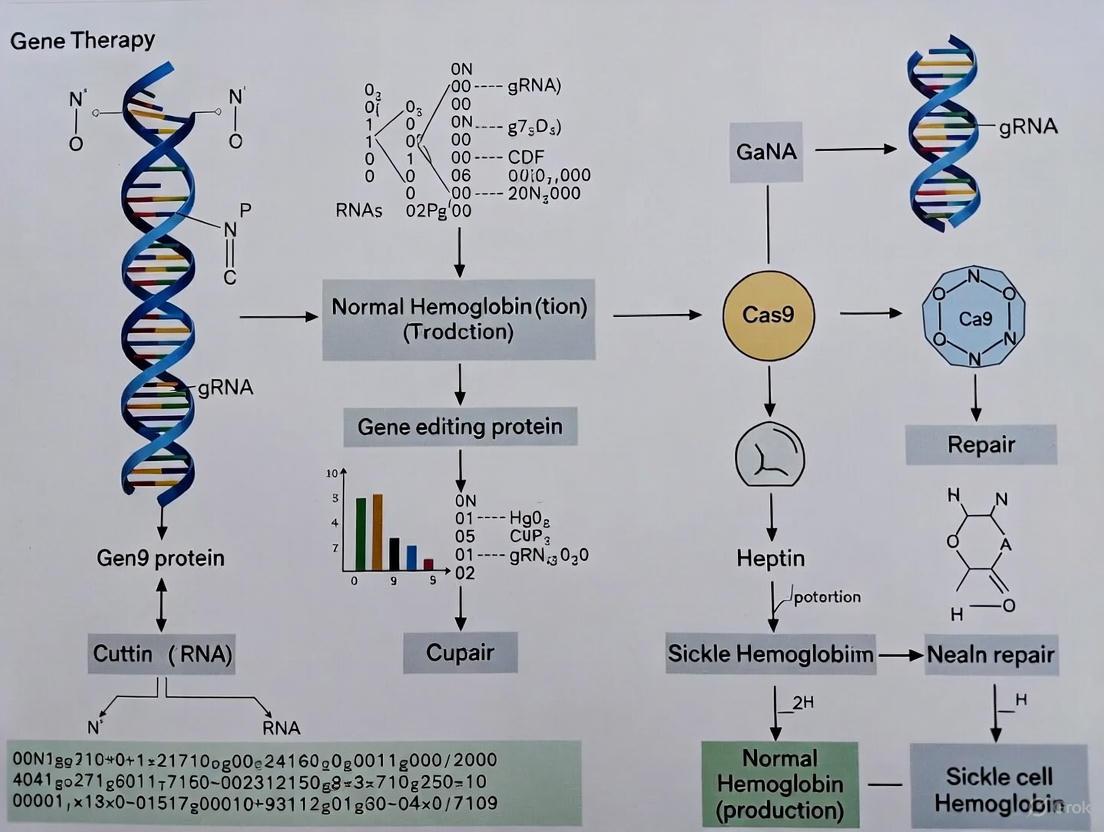
Therapeutic Strategy: Casgevy is an autologous ex vivo therapy. The protocol involves collecting a patient's CD34+ hematopoietic stem cells (HSCs), which are then genetically modified using CRISPR-Cas9. The therapeutic strategy involves the following key steps, which are also depicted in Figure 1:
- Target Selection: The CRISPR-Cas9 system is designed to make a precise cut in a specific genomic location, the BCL11A gene enhancer region [5] [6].
- Genetic Modification: Disruption of the BCL11A enhancer reduces production of the BCL11A protein, a key repressor of fetal hemoglobin (HbF) [5].
- Therapeutic Effect: The resulting engineered HSCs, when reinfused into the patient, engraft in the bone marrow and produce red blood cells with elevated levels of HbF. HbF prevents the sickling of red blood cells that is characteristic of SCD, thereby alleviating the disease [5].
Clinical Trial Data: In the pivotal clinical trial for Casgevy, 29 of the 31 evaluable patients (93.5%) with SCD achieved freedom from severe vaso-occlusive crises for at least 12 consecutive months during the 24-month follow-up period. All treated patients achieved successful engraftment with no graft failure or rejection reported [5].
Figure 1: CRISPR-Cas9 Gene Therapy Workflow for Sickle Cell Disease. The diagram outlines the key steps in the autologous ex vivo therapy process, from hematopoietic Stem Cell (HSC) collection to the therapeutic outcome mediated by fetal hemoglobin (HbF) elevation.
Detailed Experimental Protocol for Mutation Identification
Accurate characterization of HBB mutations is the foundation of genetic counseling and personalized treatment. The following protocol, adapted from recent studies, details the identification of mutations via direct DNA sequencing [1] [2] [4].
4.1 Sample Collection and DNA Extraction
- Sample Type: Collect 2-5 mL of peripheral blood in EDTA anticoagulant tubes [1] [4].
- DNA Extraction: Use a commercial gDNA extraction kit (e.g., Presto Mini gDNA Extraction Kit or QIAamp DNA Blood Mini Kit) following the manufacturer's instructions [1] [4].
- Quality Control: Assess DNA concentration and purity using a spectrophotometer (e.g., NanoDrop2000). Acceptable samples should have an A260/A280 ratio between 1.8 and 2.0 and concentration >10 ng/μL [1] [4].
4.2 PCR Amplification of the HBB Gene
- Primer Design: Design primers to amplify the entire HBB gene, including three exons, two introns, and promoter/UTR regions. Example primer sets are described in the literature [2].
- Reaction Setup: Prepare a 20μL PCR mixture containing:
- 1X TaqMaster mix
- 10 pmol of forward primer
- 10 pmol of reverse primer
- 20 ng of template DNA [2].
- Thermal Cycling: Perform PCR with parameters such as: initial denaturation at 95°C for 3 min; 30 cycles of 95°C for 30 sec, 58°C for 30 sec, 72°C for 30 sec; and a final extension at 72°C for 3 min [2].
- Product Verification: Confirm successful amplification by electrophoresis on a 1.5% agarose gel stained with safe dye, visualized under UV light [2].
4.3 DNA Sequencing and Analysis
- Purification: Purify PCR products using a commercial kit (e.g., MinElute PCR Purification Kit) [2].
- Sequencing: Perform bidirectional Sanger sequencing of the purified products using an automated genetic analyzer (e.g., ABI3730XL) [2].
- Variant Calling: Compare the sequenced data to the reference sequence (e.g., NCBI NG_000007.3) using alignment software (e.g., Multalin) [2].
- Variant Annotation and Pathogenicity Assessment:
- Check frequency and classification in specialized databases such as HbVar, IthaGenes, dbSNP, and ClinVar [2] [4].
- A variant is considered novel if it is absent from all major databases [2].
- Correlate the genotype with clinical and hematological data from the patient to determine phenotypic impact [4].
The Scientist's Toolkit: Essential Research Reagents
Table 2: Key Reagents for HBB Gene Mutation Analysis and Gene Therapy Development
| Research Reagent / Solution | Function / Application | Example Product / Note |
|---|---|---|
| gDNA Extraction Kit | Isolation of high-quality genomic DNA from whole blood for downstream molecular analysis. | Presto Mini gDNA Extraction Kit; QIAamp DNA Blood Mini Kit [1] [4] |
| PCR Master Mix | Amplification of specific target sequences of the HBB gene for sequencing. | TaqMaster Mix [2] |
| Sanger Sequencing Kit | Determining the nucleotide sequence of PCR-amplified HBB gene fragments to identify mutations. | Service provided by sequencing facilities [2] |
| Agarose Gel Electrophoresis System | Verification of successful PCR amplification and assessment of amplicon size and quality. | Standard laboratory equipment [2] |
| Next-Generation Sequencing (NGS) Kit | High-throughput, comprehensive screening for known and novel mutations across the HBB gene locus. | MGISEQ-200 chip (MGI) for NGS [4] |
| CRISPR-Cas9 Ribonucleoprotein (RNP) | The core genome-editing complex for making precise cuts in the DNA of patient HSCs during ex vivo therapy. | Critical component of Casgevy [5] [6] |
| Lentiviral Vector | A gene delivery vehicle used in some gene therapies (e.g., Lyfgenia for SCD) for genetic modification of cells. | Used to produce HbAT87Q hemoglobin [5] |
The precise characterization of single nucleotide mutations in the β-globin gene is a cornerstone of molecular hematology. It enables accurate diagnosis, informs genetic counseling, and paves the way for targeted therapeutics. The recent approval of CRISPR-based gene therapy for SCD marks a paradigm shift, demonstrating how deep knowledge of molecular pathogenesis can be directly translated into a one-time, potentially curative treatment. Continued research into the spectrum and functional impact of HBB mutations, especially novel and population-specific variants, remains critical for expanding the reach and efficacy of these advanced molecular medicines.
BCL11A as Master Regulator of Fetal Hemoglobin Switching
BCL11A has been identified as a master transcriptional repressor of fetal hemoglobin (HbF) and a critical mediator of the developmental switch from fetal (γ-globin) to adult (β-globin) hemoglobin production [7]. This zinc-finger transcriptional repressor is expressed in erythroid precursors and actively silences γ-globin gene expression in adult-stage red blood cells [7]. The mechanism involves BCL11A participating in multiprotein transcriptional complexes with DNA-binding erythroid transcription factors (including GATA1, FOG1, RUNX1, IKZF1, and SOX6) and various chromatin regulators [7]. These complexes occupy erythroid chromatin at the β-globin gene cluster, where BCL11A promotes long-range interactions between the locus control region (LCR) and the β-globin gene at the expense of LCR–γ-globin interactions, effectively repressing γ-globin expression at a distance [7].
The clinical significance of BCL11A lies in its potential as a therapeutic target for β-hemoglobin disorders, particularly sickle cell disease (SCD) and β-thalassemia. In both conditions, increased levels of γ-globin can substitute for defective or absent β-globin, mitigating disease severity [7]. Genetic evidence from genome-wide association studies (GWAS) initially implicated BCL11A in HbF regulation, and subsequent validation studies confirmed that BCL11A inhibition effectively reactivates fetal hemoglobin production [7]. This discovery has paved the way for novel gene therapy approaches that target BCL11A to treat sickle cell disease and β-thalassemia.
Key Quantitative Data on BCL11A-Targeting Strategies
Table 1: Comparative Efficacy of BCL11A-Targeting Gene Editing Strategies
| Editing Strategy | Target Site | Editing Efficiency | HbF Induction | Disease Model | Key Outcomes |
|---|---|---|---|---|---|
| BCL11A Enhancer Editing | BCL11A Erythroid Enhancer | High (75-92% indels) [8] | 26.2 ± 1.4% in healthy donors; 62.7 ± 0.9% in β-thalassemia/HbE cells [8] | SCD, β-thalassemia, β0-thalassemia/HbE [5] [8] | 93.5% of SCD patients free from severe vaso-occlusive crises for ≥12 months; robust quality of life improvements [5] [9] |
| HBG Promoter Editing (BCL11A binding site) | HBG -115 BCL11A binding site | 84.9 ± 17.1% in healthy donors; 88.5 ± 3.1% in β-thalassemia/HbE cells [8] | 26.17 ± 1.4% in healthy donors; 62.7 ± 0.9% in β-thalassemia/HbE cells [8] | β0-thalassemia/HbE [8] | Significant γ-globin transcript increase (2.7-3.2 fold); no significant effect on erythroid differentiation [8] |
| ZBTB7A/LRF Binding Site Editing (Comparative Approach) | HBG -197 ZBTB7A/LRF binding site | 57-60% (69.4 ± 7.4% in healthy donors; 68.2 ± 12.2% in β-thalassemia/HbE cells) [8] | 27.9 ± 1.5% in healthy donors; 64.0 ± 1.6% in β-thalassemia/HbE cells [8] | β0-thalassemia/HbE [8] | Comparable HbF induction to BCL11A site editing; low-frequency off-target effects observed [8] |
Table 2: Clinical Trial Outcomes for BCL11A-Targeted Gene Therapies
| Therapy Name | Technology Platform | Target | Patient Population | Efficacy Results | Safety Profile |
|---|---|---|---|---|---|
| Casgevy (exa-cel) | CRISPR/Cas9 | BCL11A Erythroid Enhancer | SCD patients ≥12 years with recurrent VOEs [5] | 93.5% (29/31) free from severe VOC for ≥12 months; significant HbF increase [5] | Low platelets/white blood cells, mouth sores, nausea, musculoskeletal pain; no graft failure/rejection [5] |
| Lyfgenia | Lentiviral Vector | BCL11A (indirect) - Addition of anti-sickling β-globin variant | SCD patients ≥12 years with history of VOEs [5] | 88% (28/32) achieved complete resolution of VOEs (6-18 months post-infusion) [5] | Mouth sores, low blood cell counts, febrile neutropenia; hematologic malignancy risk (boxed warning) [5] |
Detailed Experimental Protocols
Protocol: CRISPR/Cas9-Mediated BCL11A Enhancer Editing in Human CD34+ HSPCs
Principle: This protocol describes the disruption of the erythroid-specific enhancer of BCL11A in human CD34+ hematopoietic stem and progenitor cells (HSPCs) using CRISPR/Cas9 ribonucleoprotein (RNP) complexes, leading to downregulation of BCL11A expression and subsequent reactivation of fetal hemoglobin [8].
Materials: See "Research Reagent Solutions" table for specific reagents.
Procedure:
- CD34+ HSPC Isolation and Culture: Isolate CD34+ HSPCs from mobilized peripheral blood, bone marrow, or cord blood using immunomagnetic selection. Culture cells in serum-free expansion medium supplemented with recombinant human SCF, TPO, and FLT3-L at 37°C with 5% CO₂ for 24-48 hours before editing [10].
- RNP Complex Formation:
- Design and synthesize sgRNA targeting the +58 DNase I hypersensitive site in the BCL11A erythroid-specific enhancer (sequence: as used in clinical trials) [8].
- Complex high-fidelity Cas9 protein with sgRNA at a molar ratio of 1:2 (Cas9:sgRNA) in nuclease-free buffer.
- Incubate at room temperature for 10-20 minutes to form functional RNP complexes.
- Electroporation:
- Harvest CD34+ HSPCs and resuspend in appropriate electroporation buffer at 1×10⁶ cells per 100μL.
- Mix cell suspension with pre-formed RNP complexes.
- Electroporate using a neon electroporation system (1400V, 10ms, 3 pulses) or comparable system.
- Post-Editing Culture and Analysis:
- Immediately transfer electroporated cells to pre-warmed culture medium.
- Assess editing efficiency 48-72 hours post-electroporation by tracking indel formation by deep sequencing.
- Differentiate edited HSPCs in erythroid differentiation medium for 18-21 days.
- Analyze HbF production by HPLC and FACS analysis at days 14-21 of differentiation [8].
Validation Methods:
- Indel Efficiency: Deep sequencing of the target region to quantify insertion/deletion mutations.
- HbF Quantification: Cation-exchange HPLC to measure hemoglobin tetramer composition.
- γ-globin mRNA Expression: RT-qPCR to assess γ-globin transcript levels.
- Erythroid Differentiation Capacity: Flow cytometric analysis of CD235a/CD71 expression throughout differentiation.
Protocol: Assessment of BCL11A Editing Efficacy and Safety in Preclinical Models
Principle: Evaluate the functional consequences of BCL11A enhancer editing through xenotransplantation assays and comprehensive off-target analysis.
Procedure:
- Xenotransplantation of Edited HSPCs:
- Transplant 2-5×10⁵ edited CD34+ HSPCs into sublethally irradiated immunodeficient NSG mice via tail vein injection.
- After 12-16 weeks, analyze human cell engraftment in bone marrow by flow cytometry using anti-human CD45 antibodies.
- Assess lineage distribution of edited cells in peripheral blood and bone marrow.
- Isolate human CD45+ cells for secondary transplantation to evaluate long-term hematopoietic stem cell activity [10].
- Off-Target Analysis:
- Identify in silico predicted off-target sites with high sequence similarity to the sgRNA target sequence.
- Perform CIRCLE-seq or similar genome-wide methods to identify potential off-target sites.
- Amplify and deep sequence top candidate off-target loci from edited cell populations.
- Consider using high-fidelity Cas9 variants to minimize off-target effects [8].
Mechanism and Workflow Visualization
Diagram Title: BCL11A Mechanism in Hemoglobin Switching
Diagram Title: BCL11A Gene Therapy Workflow
Research Reagent Solutions
Table 3: Essential Research Reagents for BCL11A-Targeted Gene Editing Studies
| Reagent/Category | Specific Examples | Function/Application | Technical Notes |
|---|---|---|---|
| CRISPR Nucleases | High-fidelity SpCas9, Cas9 protein | Creates DNA double-strand breaks at target sites | High-fidelity variants reduce off-target effects; protein form enables RNP delivery [8] |
| Guide RNA Designs | sgRNA targeting BCL11A enhancer (+58 DHS) or HBG promoter (-115) | Directs Cas9 to specific genomic loci | Clinically validated sequences available; chemical modifications improve stability [8] |
| Cell Culture Media | Serum-free expansion media, Erythroid differentiation media | Supports HSPC maintenance and directed differentiation | cytokine combinations (SCF, EPO, IL-3) critical for efficient erythroid maturation [10] |
| Delivery Systems | Electroporation systems (Neon, Amaxa) | Introduces editing components into cells | RNP electroporation minimizes off-targets; high viability recovery essential [8] |
| Analytical Tools | Deep sequencing platforms, HPLC systems, Flow cytometers | Assesses editing efficiency and functional outcomes | Multi-platform validation recommended; long-term follow-up crucial [8] |
| Animal Models | Immunodeficient mice (NSG) | Preclinical validation of edited HSPCs | Xenotransplantation assesses long-term engraftment and safety [10] |
Clinical Applications and Therapeutic Development
The targeting of BCL11A has culminated in the first FDA-approved CRISPR-based therapies for sickle cell disease. Casgevy (exagamglogene autotemcel), approved in December 2023, represents a landmark advancement in gene therapy [5]. This autologous cell-based therapy involves ex vivo genome editing of patient-derived CD34+ HSPCs to disrupt the BCL11A erythroid-specific enhancer, resulting in sustained HbF induction and dramatic clinical improvement [5].
Clinical trial data demonstrate that 93.5% of patients with severe sickle cell disease achieved freedom from severe vaso-occlusive crises for at least 12 consecutive months following treatment with Casgevy [5]. Beyond laboratory parameters, patients have reported robust improvements in quality of life across physical, social, emotional, and functional domains, with benefits sustained for over three years post-treatment [9].
Recent research has further elucidated the mechanistic basis for this therapeutic success, revealing that CRISPR editing disrupts a critical three-dimensional chromatin "rosette" structure that maintains high-level BCL11A expression in erythroid precursors [11]. This structural disruption enables silencing of BCL11A and subsequent HbF reactivation. This enhanced understanding has prompted exploration of alternative approaches, including antisense oligonucleotides that target enhancer RNAs, potentially offering more accessible and cost-effective therapeutic options in the future [11].
The CRISPR-Cas9 system has emerged as a revolutionary genome engineering technology, offering unprecedented precision in modifying DNA sequences. This application note details the mechanistic pathway of CRISPR-Cas9, from its fundamental DNA cleavage activity to its therapeutic application in disrupting the BCL11A gene for treating sickle cell disease (SCD). We provide experimental protocols, quantitative data analyses, and visualization tools to support researchers in implementing these methodologies for drug development applications. The content is framed within the context of developing gene therapy protocols for sickle cell anemia, with specific emphasis on the recently FDA-approved Casgevy therapy, which represents the first FDA-approved treatment utilizing CRISPR-Cas9 technology [5].
Fundamental CRISPR-Cas9 Mechanism
Molecular Components and DNA Recognition
The CRISPR-Cas9 system consists of two core components: the Cas9 endonuclease and a guide RNA (gRNA) that directs Cas9 to a specific DNA sequence complementary to the gRNA [12] [13]. The mechanism initiates with the formation of the Cas9-gRNA complex, which scans the genome for protospacer adjacent motif (PAM) sequences - typically 5'-NGG-3' for Streptococcus pyogenes Cas9 [14].
High-speed atomic force microscopy (HS-AFM) studies have revealed that apo-Cas9 adopts flexible conformations, but forms a stable bilobed architecture upon gRNA binding [14]. This complex interrogates target DNA sites through three-dimensional diffusion, with the REC lobe facilitating DNA recognition and the NUC lobe containing the nuclease domains [14].
DNA Cleavage Process
Upon PAM recognition and target site binding, Cas9 mediates local DNA melting and directional R-loop formation, where the target DNA strand hybridizes with the gRNA while displacing the non-target strand [14]. The nuclease activity is facilitated by two distinct domains:
- HNH domain: Cleaves the target DNA strand complementary to the gRNA
- RuvC domain: Cleaves the non-target DNA strand [14]
Real-time HS-AFM visualization has captured the dynamic conformational changes of the HNH domain, which fluctuates between different states before adopting an active conformation where its active site docks at the cleavage site on the target DNA [14]. This cleavage generates a double-strand break (DSB) approximately 3-4 nucleotides upstream of the PAM site [12].
Table 1: CRISPR-Cas9 System Components and Functions
| Component | Type/Variant | Function | Key Characteristics |
|---|---|---|---|
| Cas9 | Wild-type | Creates DSBs in DNA | Contains RuvC and HNH nuclease domains |
| dCas9 | Catalytically inactive | DNA binding without cleavage | Used for CRISPRa/i and epigenetic modulation [12] |
| Base Editors | Cas9 nickase fused to deaminase | Direct nucleotide conversion without DSBs | Enables C•G to T•A or A•T to G•C conversions [12] |
| Prime Editors | Cas9 nickase fused to reverse transcriptase | Targeted insertions, deletions, and all point mutations | Uses pegRNA template; no DSBs or donor DNA required [12] |
| gRNA | Single guide RNA (sgRNA) | Targets Cas9 to specific genomic loci | 20-nucleotide spacer sequence determines targeting specificity |
BCL11A Disruption for Sickle Cell Therapy
Therapeutic Rationale
Sickle cell disease is caused by a point mutation in the β-globin gene (HBB) that leads to production of abnormal sickle hemoglobin (HbS) [15]. The therapeutic strategy for Casgevy involves reactivating fetal hemoglobin (HbF), which is naturally produced during fetal development but silenced postnatally, by disrupting the BCL11A gene, a master transcriptional repressor of HbF [5] [11].
BCL11A represses γ-globin expression and facilitates the developmental switch from fetal to adult hemoglobin [11]. CRISPR-mediated disruption of its erythroid-specific enhancer disrupts a three-dimensional chromatin "rosette" structure required for high-level BCL11A expression in red blood cell precursors [11]. This disruption allows repressive proteins to silence BCL11A, leading to HbF reactivation [11].
Molecular Consequences
The elevated HbF levels compensate for the defective adult hemoglobin in SCD by preventing the polymerization of HbS and subsequent sickling of red blood cells [15]. Clinical trials demonstrated that 93.5% (29/31) of evaluable patients with SCD achieved freedom from severe vaso-occlusive crises for at least 12 consecutive months following treatment with Casgevy [5].
Experimental Protocols
Protocol 1: BCL11A Enhancer Targeting in Hematopoietic Stem Cells
Objective: To disrupt the BCL11A enhancer in human CD34+ hematopoietic stem and progenitor cells (HSPCs) using CRISPR-Cas9 to induce fetal hemoglobin expression.
Materials:
- Human mobilized peripheral blood CD34+ cells
- CRISPR-Cas9 ribonucleoprotein (RNP) complex:
- Recombinant S. pyogenes Cas9 protein
- sgRNA targeting the BCL11A erythroid-specific enhancer (sequence: 5'-GCCACCTGCAGCCTCCCCAC-3') [11]
- Electroporation system (e.g., Lonza 4D-Nucleofector)
- StemSpan serum-free expansion medium
- Cytokines (SCF, TPO, FLT3-L)
- Erythroid differentiation medium
Procedure:
- sgRNA Preparation: Resuspend sgRNA in nuclease-free buffer to 100 μM stock concentration.
- RNP Complex Formation: Incubate 60 μg of Cas9 protein with 200 pmol of sgRNA in a total volume of 100 μL for 10 minutes at room temperature.
- Cell Preparation: Thaw and wash 1×10^6 CD34+ cells, resuspend in 100 μL of pre-warmed electroporation buffer.
- Electroporation: Mix cells with RNP complex and electroporate using the DS-137 program on the 4D-Nucleofector.
- Recovery and Expansion: Transfer cells to pre-warmed StemSpan medium supplemented with cytokines (100 ng/mL SCF, 100 ng/mL TPO, 100 ng/mL FLT3-L). Culture at 37°C, 5% CO2.
- Erythroid Differentiation: After 3 days, transfer cells to erythroid differentiation medium containing EPO (3 U/mL), SCF (50 ng/mL), and dexamethasone (1 μM).
- Analysis: After 14 days of differentiation, harvest cells for:
- Indel frequency analysis by T7E1 assay or next-generation sequencing
- HbF expression measurement by FACS or HPLC
- BCL11A expression analysis by Western blot
Protocol 2: Assessment of Gene Editing Efficiency and Functional Outcomes
Objective: To quantify editing efficiency and functional consequences of BCL11A enhancer disruption.
Materials:
- Genomic DNA extraction kit
- T7 Endonuclease I
- PCR reagents
- Next-generation sequencing library preparation kit
- Flow cytometer with violet laser
- Anti-HbF antibody (PE-conjugated)
- HPLC system for hemoglobin separation
Procedure: Editing Efficiency Assessment:
- Extract genomic DNA from edited and control cells after 7 days of culture.
- Amplify the targeted BCL11A enhancer region by PCR.
- Perform T7E1 assay by denaturing and reannealing PCR products, then digest with T7E1 enzyme for 30 minutes at 37°C.
- Analyze fragments by agarose gel electrophoresis; calculate indel frequency using formula: % indel = 100 × (1 - √(1 - (a+b)/(a+b+c))), where a and b are cleaved band intensities and c is uncleaved band intensity.
- Confirm by next-generation sequencing of the PCR amplicon.
Functional Assessment:
- After 14 days of erythroid differentiation, fix and permeabilize cells.
- Stain with anti-HbF-PE antibody and analyze by flow cytometry.
- For HPLC analysis, prepare hemoglobin lysate and separate on a PolyCAT A cation-exchange column.
- Quantify the percentage of HbF relative to total hemoglobin.
Table 2: Quantitative Outcomes from BCL11A-Targeted Clinical Trials
| Parameter | Pre-Treatment Baseline | Post-Treatment Outcome | Timeframe | Clinical Significance |
|---|---|---|---|---|
| Severe VOC Events | ≥2 per year | 93.5% freedom from severe VOCs [5] | 12 consecutive months | Primary efficacy endpoint met |
| Fetal Hemoglobin (HbF) | <10% of total Hb | >20% of total Hb | Sustained at 24 months | Prevents HbS polymerization |
| BCL11A Expression | Normal expression in erythroid cells | Significantly reduced | Measured at engraftment | Confirms mechanism of action |
| Successful Engraftment | N/A | 100% in clinical trial [5] | 3-4 weeks post-infusion | Safety and feasibility |
| Transfusion Independence | Regular transfusions required | Eliminated in TDT patients | Sustained at 12+ months | Curative potential |
The Scientist's Toolkit: Research Reagent Solutions
Table 3: Essential Research Reagents for CRISPR-Based BCL11A Targeting
| Reagent/Category | Specific Examples | Function/Application | Considerations for Use |
|---|---|---|---|
| Delivery Systems | Lipid nanoparticles (LNPs) [6], AAV vectors, Electroporation | Deliver CRISPR components to target cells | LNPs preferred for in vivo use; electroporation for ex vivo approaches |
| Cas9 Variants | Wild-type Cas9, dCas9, Base editors, Prime editors [12] | Genome editing, gene regulation, precise nucleotide conversion | Choose based on desired outcome: knockout (Cas9), repression (dCas9), or precise edit (base/prime editors) |
| Guide RNA Design | BCL11A enhancer-targeting sgRNA, Control sgRNAs | Target specificity | Validate efficiency and off-target effects; use predictive algorithms |
| Cell Culture Supplements | StemSpan cytokines, Erythroid differentiation factors | Support HSPC expansion and differentiation | Maintain stemness during expansion; optimize differentiation efficiency |
| Analytical Tools | T7E1 assay, NGS platforms, Flow cytometry, HPLC | Assess editing efficiency and functional outcomes | Use orthogonal methods for validation; NGS for comprehensive off-target analysis |
Visualization of CRISPR-Cas9 Workflow for SCD Therapy
The mechanistic pathway from CRISPR-Cas9 DNA cleavage to BCL11A disruption represents a paradigm shift in therapeutic approaches for sickle cell disease. The precise targeting of the BCL11A enhancer disrupts critical chromatin architecture, leading to fetal hemoglobin reactivation and subsequent amelioration of disease pathology. The protocols and data presented herein provide researchers with comprehensive methodological guidance for implementing these approaches, supported by clinical evidence from approved therapies. As CRISPR-based technologies continue to evolve, with emerging approaches like base editing and prime editing offering additional precision, the potential for developing enhanced therapeutic options for hemoglobinopathies continues to expand. The successful clinical application of Casgevy establishes a foundation for further innovation in gene therapy protocols for genetic disorders.
Three-Dimensional Genome Structure Alterations in Gene Therapy
The three-dimensional (3D) organization of the genome is a fundamental regulator of gene expression, determining cellular identity and function. In eukaryotic nuclei, chromatin is folded into a hierarchical architecture consisting of chromosome territories, A/B compartments, topologically associating domains (TADs), and chromatin loops [16]. These structures create precise spatial environments that either facilitate or hinder interactions between genes and their regulatory elements, such as enhancers and promoters.
In the context of sickle cell anemia, the β-globin gene locus and its regulatory elements form a specific 3D conformation in hematopoietic stem and progenitor cells (HSPCs) and their erythroid descendants. This spatial arrangement ensures the coordinated, developmental-stage-specific expression of globin genes. The β-globin locus control region (LCR), located distantly from the structural globin genes, interacts through chromatin looping to regulate transcription [16] [17]. Disruption of this delicate architectural system can have profound implications for globin gene expression and, consequently, for the effectiveness of gene therapies aimed at correcting the sickle cell disease (SCD) mutation.
Advanced genome engineering technologies, particularly CRISPR-based systems, are now being deployed not only to correct the primary HBB gene mutation but also to manipulate the 3D genome structure to achieve therapeutic outcomes. Understanding and intentionally modulating this architecture is thus becoming an integral component of next-generation gene therapy protocols for sickle cell anemia.
Quantitative Analysis of Genome Editing Platforms for SCD
The development of CRISPR-based gene therapies for sickle cell anemia has progressed beyond traditional nuclease editors to include more precise platforms such as base editing and prime editing. The table below summarizes the key quantitative performance metrics of these different platforms from recent studies.
Table 1: Performance Comparison of Genome Editing Platforms in SCD Patient HSPCs
| Editing Platform | Editing Efficiency | Indel Frequency | Therapeutic Outcome | Key Advantage |
|---|---|---|---|---|
| Prime Editing [18] | 15% - 41% (HBBS to HBBA) | Minimal | 42% of engrafted erythroid cells expressed HBBA; 28%-43% normal HbA levels; Reduced sickling | Most physiological correction; No double-strand breaks (DSBs) or donor DNA |
| Adenine Base Editing [19] | ~80% (HBBS to HBBG) | 1.2% - 2.8% | 68% HBBG in vivo; 5.1-fold decrease in βS protein; >3-fold reduction in sickling | No DSBs; Converts HbS to non-pathogenic Hb Makassar |
| Cas9 Nuclease HDR [18] | Variable | High (Uncontrolled indels) | Clinical trial halted due to pancytopenia | Traditional approach; High risk of genotoxicity |
The choice of editing platform involves a critical trade-off between the precision of the correction and the efficiency achieved in engrafting HSPCs. Prime editing corrects the sickle cell allele back to the wild-type sequence, representing the most physiological approach [18]. In contrast, adenine base editing installs a benign, non-pathogenic variant (Hb Makassar) rather than the true wild-type allele [19]. Both methods offer a superior safety profile by avoiding double-strand breaks, which are associated with undesirable consequences such as p53 activation, chromosomal abnormalities, and a complex mixture of indel byproducts [18] [19].
Table 2: Analysis of Byproducts and Off-Target Effects
| Parameter | Prime Editing [18] | Adenine Base Editing [19] |
|---|---|---|
| On-Target Byproducts | Minimal indel formation | <2% other missense bystander alleles |
| Genome-Wide Off-Target Analysis | CIRCLE-seq nominated >100 sites; minimal editing detected | 54 off-target sites detected (mostly intergenic/intronic); CIRCLE-seq more effective than computational prediction |
| Genomic Impact | No evidence of p53 activation or large deletions | Avoided p53 activation and larger deletions observed with Cas9 nuclease |
Experimental Protocols for 3D Genome Engineering and Analysis
Protocol 1: Ex Vivo Prime Editing of SCD Patient HSPCs
This protocol details the methodology for correcting the SCD mutation in patient hematopoietic stem and progenitor cells using prime editing technology [18].
Key Research Reagents:
- PE System: PEmax mRNA (improved prime editor architecture).
- Guide RNAs: Synthetic epegRNA (engineered pegRNA with 3' structured motif) and nicking sgRNA.
- Cells: Mobilized peripheral blood CD34+ HSPCs from SCD patients.
- Delivery Method: Electroporation of RNA components.
Step-by-Step Procedure:
- Cell Preparation: Isolate and purify CD34+ HSPCs from SCD patient peripheral blood apheresis samples using immunomagnetic selection. Maintain cells in serum-free expansion media supplemented with cytokines (SCF, TPO, FLT3-L).
- RNA Complex Formation: Combine PEmax mRNA, epegRNA (designed to correct the A•T-to-T•A transversion), and nicking sgRNA in an optimized buffer.
- Electroporation: Electroporate the RNA mixture into the HSPCs using a clinically relevant electroporation system.
- Post-Transplantation Culture: Immediately following electroporation, culture cells for 48 hours in cytokine-rich media to allow editing to occur and for cell recovery.
- Assessment of Editing Efficiency: At 48-72 hours post-electroporation, harvest a sample of cells for genomic DNA extraction. Perform next-generation sequencing of the HBB locus to quantify the percentage of HBBS-to-HBBA conversion and to screen for any byproduct indels.
- Transplantation: Transplant the edited CD34+ cells into immunodeficient mice (e.g., NSG mice) to assess engraftment potential and long-term stability of the edit.
- In Vivo Analysis: Analyze bone marrow and peripheral blood of engrafted mice at 17 weeks post-transplantation for human cell chimerism, lineage differentiation, and persistence of the HBBA allele in human erythroblasts and reticulocytes.
Protocol 2: Assessing 3D Genome Architecture with Perturb-Tracing Screening
This protocol describes an image-based high-content screening platform for identifying regulators of multi-scale 3D chromatin organization, which can be adapted to study the effects of gene editing in hematopoietic cells [20].
Key Research Reagents:
- CRISPR Library: Pooled lentiviral sgRNA library targeting candidate 3D genome regulators (e.g., CTCF, NIPBL), each paired with a unique 10-digit RNA barcode.
- Cells: A549-Cas9 cells or other Cas9-expressing cell lines of interest. For SCD-specific studies, engineered HSPCs with stable Cas9 expression could be used.
- Imaging Reagents: Probes for BARC-FISH and chromatin tracing.
Step-by-Step Procedure:
- Library Transduction: Transduce the pooled sgRNA-barcode lentiviral library into the target cells at a low MOI to ensure most cells receive a single sgRNA. Select with puromycin.
- BARC-FISH (Barcode Readout):
- Fix a sample of the pooled cell population.
- For each of the ten digits in the RNA barcode, perform sequential rounds of fluorescence in situ hybridization (FISH).
- For each digit, hybridize a linear probe and a padlock probe. Ligate the padlock probe to create a circular RCA template.
- Perform rolling circle amplification (RCA) to generate a localized, amplified signal.
- Hybridize dye-labeled secondary probes to the RCA product and image. Strip fluorescence signals between rounds.
- Chromatin Tracing: Following BARC-FISH, perform highly multiplexed DNA FISH (e.g., chromatin tracing) on the same cells to map the 3D conformation of a target chromosome (e.g., chromosome 22) at high resolution. This involves sequentially labeling and imaging the central regions of all TADs on the chromosome.
- Computational Image Analysis and Integration:
- Reconstruct the 3D chromatin folding conformation from the chromatin tracing data for each cell.
- Decode the sgRNA barcode identity from the ten rounds of BARC-FISH imaging for each cell.
- Correlate the specific genetic perturbation (sgRNA) with the resulting 3D genome phenotype (e.g., changes in TAD distances, compartmentalization) across thousands of single cells.
Protocol 3: In Vivo Functional Assessment of Edited Erythrocytes
This protocol outlines the critical functional assays to confirm the therapeutic efficacy of edited cells, specifically the reduction of the sickling phenotype [18] [19].
Key Research Reagents:
- Differentiation Media: Cytokine cocktails for ex vivo erythroid differentiation (SCF, EPO, IL-3, etc.).
- Hypoxia Chamber: A controlled atmospheric chamber for maintaining low oxygen tension (e.g., 2% O2).
- Flow Cytometry Antibodies: Antibodies against erythroid surface markers (CD49d, CD235a, Band3).
Step-by-Step Procedure:
- Ex Vivo Erythroid Differentiation: Differentiate edited and control HSPCs in vitro towards the erythroid lineage using a staged cytokine protocol. Monitor differentiation progression using flow cytometry for surface markers (CD49d, CD235a, Band3) and enucleation with Hoechst staining.
- Reticulocyte Purification: Islate late-stage erythroid precursors and reticulocytes from the differentiation culture using density gradient centrifugation or cell sorting.
- Hypoxia-Induced Sickling Assay:
- Resuspend purified reticulocytes in culture medium.
- Place the cell suspension in a hypoxia chamber flushed with a gas mixture containing 2% oxygen, 5% carbon dioxide, and balance nitrogen.
- Incubate for 2-4 hours to induce deoxygenation and HbS polymerization.
- Fix an aliquot of cells from both normoxic and hypoxic conditions.
- Sickling Quantification:
- Analyze fixed cells by microscopy (bright-field or phase-contrast).
- Count the percentage of cells exhibiting the characteristic sickle morphology (elongated, crescent-shaped) versus normal biconcave disc morphology. A significant reduction in the percentage of sickled cells in the edited population compared to the unedited SCD control confirms functional rescue.
Visualization of 3D Genome Engineering Workflows
Workflow for Prime Editing in SCD Therapy
Diagram 1: The workflow for prime editing in SCD therapy.
3D Genome Screening with Perturb-Tracing
Diagram 2: The workflow for 3D genome screening with Perturb-Tracing.
Functional Validation of Edited Erythrocytes
Diagram 3: The workflow for functional validation of edited erythrocytes.
The Scientist's Toolkit: Essential Reagents and Materials
Table 3: Key Research Reagent Solutions for 3D Genome Engineering Studies
| Reagent/Material | Function/Application | Example/Specification |
|---|---|---|
| Prime Editor System [18] | Precise genome editing without DSBs; corrects HBBS to HBBA. | PEmax mRNA + engineered epegRNA (epegRNA) + nicking sgRNA. |
| Adenine Base Editor System [19] | Converts A•T to G•C without DSBs; converts HBBS to HBBG. | ABE8e-NRCH mRNA or RNP + targeting sgRNA. |
| CD34+ HSPCs [18] [19] | Target cell population for ex vivo editing and transplantation. | Isolated from patient peripheral blood or bone marrow. |
| Electroporation System [18] | Clinically relevant method for delivering editing components into HSPCs. | e.g., Lonza 4D-Nucleofector. |
| BARC-FISH Probes [20] | Decoding pooled CRISPR perturbations in single cells via in situ barcode amplification. | Padlock and linear probes for 10-digit RNA barcode; fluorescently labeled secondary probes. |
| Chromatin Tracing Oligonucleotides [20] | Highly multiplexed DNA FISH for mapping 3D chromatin conformation at TAD-to-chromosome scale. | Oligonucleotide pools targeting central regions of all TADs in a chromosome. |
| Erythroid Differentiation Media [18] [19] | Ex vivo differentiation of HSPCs into erythroid lineage for functional testing. | Serum-free media with staged cytokine addition (SCF, EPO, IL-3, etc.). |
| Hypoxia Chamber [18] [19] | Inducing deoxygenation to trigger HbS polymerization and sickling in functional assays. | Chamber maintaining 2% O₂, 5% CO₂, balance N₂. |
Fetal Hemoglobin Reactivation as Primary Therapeutic Endpoint
Sickle cell disease (SCD) is a monogenic autosomal recessive disorder caused by a specific point mutation in the β-globin gene (HBB), where adenine is replaced by thymine at codon 6, substituting valine for glutamic acid (Glu6Val) [15]. This mutation results in the production of abnormal sickle hemoglobin (HbS), which polymerizes under deoxygenated conditions, distorting red blood cells into a characteristic sickle shape [15] [21]. These sickled cells are fragile, leading to chronic hemolytic anemia, and cause vaso-occlusion, resulting in painful crises, progressive organ damage, and reduced life expectancy [15].
The natural persistence or reactivation of fetal hemoglobin (HbF, α2γ2) has long been recognized as a potent modifier of SCD severity. HbF interferes with HbS polymerization, reducing sickling and its clinical sequelae [15] [22]. Consequently, therapeutic strategies aimed at reactivating HbF synthesis in adult erythroid cells have emerged as a primary endpoint in developing curative gene therapies for SCD [15] [21] [23]. These approaches leverage advanced gene editing technologies to disrupt repressive elements in the γ-globin gene promoters or their key regulators, such as BCL11A, thereby promoting endogenous HbF production [15] [24] [23].
Current Therapeutic Landscape and Quantitative Outcomes
The therapeutic landscape for SCD has evolved from symptom management to potentially curative treatments. The following table summarizes the efficacy data for approved and investigational therapies focusing on fetal hemoglobin reactivation.
Table 1: Clinical Outcomes of Approved and Investigational Gene Therapies for Sickle Cell Disease
| Therapy Name | Technology Platform | Molecular Target | Key Efficacy Outcomes | Clinical Trial Phase / Status |
|---|---|---|---|---|
| Casgevy (exa-cel) [6] [25] | CRISPR-Cas9 Editing | BCL11A Erythroid Enhancer | 93% of evaluable patients free of severe vaso-occlusive crises (VOCs) for ≥12 months [25]. | FDA Approved (2023) |
| Lyfgenia (lovo-cel) [25] | Lentiviral Vector Gene Addition | β-globin gene (anti-sickling variant HbAT87Q) | 94% of evaluable patients free of severe VOCs; 88% free of all VOCs between 6-18 months post-infusion [25]. | FDA Approved (2023) |
| Reni-cel (EDIT-301) [25] | CRISPR-Cas12a Editing | γ-globin gene (HBG1/2) promoters | 27 of 28 patients free of vaso-occlusive events post-infusion; robust increases in HbF [25]. | Phase 1/2/3 |
| BEAM-101 [25] | Adenine Base Editing | HBG1/2 promoters | 17 patients showed robust increases in HbF, reduced sickling, and improved markers of hemolysis [25]. | Phase 1/2 |
| BIVV003 [23] | Zinc Finger Nuclease (ZFN) Editing | BCL11A Erythroid Enhancer | 5 of 6 patients with >3 months follow-up showed increased total hemoglobin and HbF; no severe VOCs [23]. | Phase 1/2 |
The development of these therapies involves rigorous preclinical comparison. A 2024 study in a humanized mouse model directly compared CRISPR-Cas9 editing, base editing, and lentiviral transduction [26]. Under competitive transplantation, base editing and lentiviral transduction provided superior outcomes in long-term engraftment and reduction of RBC sickling compared to CRISPR-Cas9-mediated editing of the BCL11A enhancer [26]. This highlights the importance of the specific editing strategy and target on functional outcomes.
Experimental Protocols for HbF Reactivation
This section provides detailed methodologies for key experiments in developing and validating HbF-reactivating therapies.
Protocol: CD34+ Hematopoietic Stem and Progenitor Cell (HSPC) Mobilization, Collection, and Editing
This protocol is foundational for ex vivo gene therapy applications and is adapted from clinical trials for BIVV003, Casgevy, and others [23] [22].
1. Patient Mobilization and Apheresis:
- Mobilization: Administer plerixafor (a CXCR4 antagonist) subcutaneously at 0.24 mg/kg. Note: Granulocyte colony-stimulating factor (G-CSF) is contraindicated in SCD due to the risk of provoking vaso-occlusive crises [23] [22].
- Apheresis: Perform leukapheresis 6-10 hours after plerixafor administration to collect mobilized peripheral blood cells.
2. CD34+ Cell Selection:
- Isolate CD34+ HSPCs from the leukapheresis product using clinical-grade immunomagnetic selection systems (e.g., CliniMACS Prodigy).
- Determine the purity and viability of the CD34+ cell population via flow cytometry and trypan blue exclusion, respectively. A purity of >90% is typically targeted.
3. Ex Vivo Gene Editing/Transduction:
- For CRISPR-based editing (e.g., BCL11A enhancer): Electroporate approximately 1x10^6 cells/mL with a ribonucleoprotein (RNP) complex comprising Cas9 nuclease and a single-guide RNA (sgRNA) targeting the desired locus. Use a square-wave electroporation system with optimized parameters (e.g., 1500V, 10ms pulse width) [24] [21].
- For Lentiviral Transduction (e.g., Lyfgenia): Culture CD34+ cells in serum-free medium supplemented with cytokines (SCF, TPO, FLT3-L). Add the lentiviral vector (e.g., encoding HbAT87Q) at a predetermined multiplicity of infection (MOI). Enhance transduction by using a retronectin-coated surface [15].
4. Cell Harvest and Infusion:
- Post-editing/transduction, harvest cells, perform quality control checks (viability, sterility, editing efficiency), and cryopreserve the product.
- The patient undergoes myeloablative conditioning with busulfan [22].
- Thaw the engineered cell product and administer it to the patient via intravenous infusion.
Protocol: Assessing Editing Efficiency and HbF ReactivationIn Vitro
This protocol is used for quality control post-editing and functional validation [24] [23].
1. Measurement of Editing Efficiency:
- Genomic DNA Extraction: Isolate gDNA from an aliquot of edited cells using a commercial kit.
- Next-Generation Sequencing (NGS): Design primers to amplify the on-target region (e.g., the BCL11A enhancer or HBG promoter). Prepare NGS libraries and sequence on a platform such as Illumina MiSeq. Analyze the resulting data with a bioinformatics pipeline (e.g., CRISPResso2) to quantify the percentage of insertion/deletion (indel) mutations [23].
- Off-Target Analysis: Use in silico prediction tools (e.g., Cas-OFFinder) to identify potential off-target sites. Amplify these loci from gDNA and analyze by NGS to confirm the absence of significant off-target editing [24].
2. Erythroid Differentiation and HbF Analysis:
- In Vitro Erythroid Differentiation: Culture the edited CD34+ cells in a multi-phase erythroid differentiation medium. The culture typically lasts 18-21 days, with medium changes and cytokine additions (SCF, EPO, IL-3) at specific timepoints [23].
- Flow Cytometry for F-cells: Around day 18, harvest the differentiated erythroid cells. Fix and permeabilize the cells, then stain with a fluorescently labeled antibody against HbF. Analyze by flow cytometry to determine the percentage of HbF-positive cells (F-cells) [23].
- HPLC for Hemoglobin Analysis: Lyse the erythroid cells and analyze the hemoglobin composition by High-Performance Liquid Chromatography (HPLC). This quantifies the relative percentages of HbF, HbS, and HbA, and can detect therapeutic hemoglobins like HbAT87Q [15].
Protocol: Functional Assessment of Sickling
This functional assay directly measures the therapeutic effect of HbF reactivation [23].
1. Sample Preparation:
- Generate erythroid cells from edited and control (unedited) HSPCs via in vitro differentiation as described in Protocol 3.2.
- On day 18 of differentiation, harvest the cells and resuspend them at a standardized concentration (e.g., 2x10^6 cells/mL) in a culture medium containing 2% fetal bovine serum.
2. Induction of Sickling:
- Transfer aliquots of the cell suspension to a 96-well plate.
- Place the plate in a hypoxic chamber flushed with a gas mixture containing 2% O2 and 5% CO2 (balanced N2) for 2-4 hours. A parallel set of samples should be maintained under normoxic conditions (21% O2) as a control.
- Alternative method: Add a chemical inducer of deoxygenation, such as sodium metabisulfite (2% w/v), to the cell suspension and incubate under normoxic conditions for 1 hour [23].
3. Quantification and Analysis:
- After the hypoxic/induction period, fix an aliquot of cells immediately with 1% glutaraldehyde.
- Using a hemocytometer or automated cell counter, count the total number of cells and the number of sickled cells (identified by their characteristic crescent or elongated shape).
- Calculate the percentage of sickled cells as (Number of sickled cells / Total number of cells) x 100.
- A significant reduction in the percentage of sickled cells in the edited sample compared to the unedited control demonstrates the functional efficacy of the therapy.
Signaling Pathways and Workflows in HbF Reactivation
Molecular Pathway of HbF Regulation and Therapeutic Editing
The following diagram illustrates the key molecular regulators of the fetal-to-adult hemoglobin switch and the points of intervention for different gene-editing modalities.
Figure 1: Molecular Pathway of Fetal Hemoglobin Regulation and Therapeutic Intervention Strategies.
Workflow for Ex Vivo Gene Therapy in Sickle Cell Disease
This diagram outlines the comprehensive clinical workflow for an ex vivo gene therapy product, from cell collection to patient follow-up.
Figure 2: Clinical Workflow for Ex Vivo Gene Therapy in Sickle Cell Disease.
The Scientist's Toolkit: Key Research Reagents
The following table catalogues essential materials and reagents required for the experimental protocols outlined in this document.
Table 2: Essential Research Reagents for HbF Reactivation Studies
| Reagent / Material | Function / Application | Specific Example / Note |
|---|---|---|
| Plerixafor (Mozobil) | CXCR4 antagonist for mobilizing CD34+ HSPCs from bone marrow to peripheral blood for collection. | Preferred over G-CSF for SCD patients due to safety profile [23] [22]. |
| Clinical-Grade CD34+ Selection Kit | Immunomagnetic positive selection of hematopoietic stem and progenitor cells from apheresis product. | e.g., CliniMACS CD34 Reagent system [22]. |
| CRISPR-Cas9 RNP Complex | The core editing machinery for creating targeted DNA double-strand breaks. | Comprises recombinant Cas9 protein and synthetic sgRNA. Purity is critical for efficiency and reducing immunogenicity [24] [21]. |
| Lentiviral Vector | Viral vector for stable integration of a therapeutic transgene into the host cell genome. | e.g., Vector encoding an anti-sickling β-globin variant (HbAT87Q) for Lyfgenia [15] [25]. |
| Electroporation System | Device for delivering macromolecules (like RNP complexes) into cells via electrical pulses. | e.g., Lonza 4D-Nucleofector or Thermo Fisher Neon System. Optimization of program and buffer is essential [24]. |
| Myeloablative Conditioning Agent | Cytotoxic drug to ablate bone marrow and create niche space for engrafted, modified cells. | e.g., Busulfan. Dosing is critical for successful engraftment and managing toxicity [22]. |
| Erythroid Differentiation Media & Cytokines | A defined culture medium with specific growth factors to drive CD34+ HSPCs to become mature red blood cells in vitro. | Includes SCF, EPO, and IL-3 in a staged protocol [23]. |
| Anti-HbF Antibody | reagent for detecting fetal hemoglobin protein in fixed/permeabilized erythroid cells via flow cytometry. | Used to quantify the population of F-cells, a key efficacy metric [23]. |
Ex Vivo CRISPR Editing Protocols and Clinical Translation
CD34+ Hematopoietic Stem Cell Collection and Preparation
CD34+ hematopoietic stem cells (HSCs) serve as the fundamental cellular starting material for ex vivo CRISPR-based gene therapies targeting sickle cell anemia. The successful isolation, characterization, and preparation of these cells directly impact the efficacy and safety of the entire therapeutic pipeline. Recent FDA approvals of CRISPR/Cas9-based therapies like Casgevy for sickle cell disease underscore the critical importance of robust and reproducible cell collection and preparation protocols [5] [27]. These autologous therapies involve harvesting a patient's own CD34+ HSCs, genetically modifying them ex vivo to correct the underlying genetic defect, and reinfusing them to establish a lifelong supply of healthy red blood cells [5] [15]. This document outlines detailed application notes and protocols for the collection and preparation of CD34+ HSCs, framed within the context of developing gene therapies for sickle cell anemia.
Source Tissues and Selection
CD34+ HSCs can be obtained from several sources, each with distinct advantages and procedural considerations for gene therapy manufacturing.
- Bone Marrow (BM): The classic source of HSCs, harvested directly from the bone marrow cavity. This method provides a high concentration of CD34+ cells but requires an invasive surgical procedure under general anesthesia [28].
- Mobilized Peripheral Blood (PB): CD34+ cells can be "mobilized" from the bone marrow into the peripheral bloodstream using agents like granulocyte colony-stimulating factor (G-CSF). Cells are then collected via apheresis, a less invasive process that can yield a large number of cells, making it a common choice for gene therapy trials [29] [30].
- Umbilical Cord Blood (CB): Cord blood is a rich source of highly proliferative HSCs [31]. However, the limited volume and total cell count per unit can be a constraint for adult gene therapy applications, unless multiple units are used or cells are expanded ex vivo.
Enrichment and Isolation Techniques
The frequency of CD34+ cells in these sources is low, necessitating robust enrichment strategies. The table below summarizes the core phenotypic markers used to identify and isolate primitive human HSCs.
Table 1: Key Surface Markers for Human Hematopoietic Stem Cell Identification and Isolation
| Marker | Expression in HSCs | Function/Role in Isolation |
|---|---|---|
| CD34 | Positive | Primary selection antigen; a transmembrane phosphoglycoprotein expressed on hematopoietic stem and progenitor cells [28] [31]. |
| CD90 (Thy-1) | Positive | A glycosylphosphatidylinositol-anchored glycoprotein; enriches for a primitive subset with long-term engraftment potential [29]. |
| CD133 | Positive | A pentaspan transmembrane glycoprotein; an alternative marker for primitive progenitors [29]. |
| CD38 | Negative/Low | Its absence or low expression helps distinguish primitive HSCs from more committed progenitors [28] [29]. |
| Lineage (Lin) Markers | Negative | A cocktail of antibodies against mature blood cell markers (e.g., CD2, CD3, CD14, CD19, etc.) is used to deplete differentiated cells [28]. |
Isolation is typically achieved through two main methodologies:
- Immunomagnetic Selection: This is the most common method for clinical-scale isolation. Cells are labeled with magnetic beads conjugated to an anti-CD34 antibody and passed through a column in a magnetic field. CD34+ cells are retained and then eluted after the magnet is removed. Kits like the EasySep Human CD34 Positive Selection Kit are designed for this purpose and can be automated [31].
- Fluorescence-Activated Cell Sorting (FACS): This method offers higher purity and the ability to isolate specific subpopulations, such as CD34+CD90+CD38- cells, based on multiple surface markers simultaneously. While it provides superior resolution, it is generally slower and less amenable to large-scale clinical processing than immunomagnetic selection [29].
Recent research highlights that further purification of HSC subsets, such as CD34+CD90+ cells, can significantly improve gene therapy outcomes. This subset is highly enriched for true long-term HSCs, leading to higher transduction efficiency, more predictable engraftment, and a substantial reduction in the quantity of costly viral vectors or gene-editing reagents required [29].
Detailed Experimental Protocols
Protocol 1: Isolation of CD34+ Cells from Mobilized Peripheral Blood or Bone Marrow
This protocol describes a standard two-step process for obtaining high-purity CD34+ cells, suitable for downstream genetic manipulation.
Workflow Overview:
Materials:
- Source Material: Mobilized peripheral blood apheresis product or bone marrow aspirate.
- Reagents: Ficoll-Paque PLUS or Lymphoprep; Phosphate-Buffered Saline (PBS); Ammonium-Chloride-Potassium (ACK) lysing buffer; EasySep Human CD34 Positive Selection Kit (or equivalent); Viability dye (e.g., Propidium Iodide).
- Equipment: Centrifuge; Cell culture hood; EasySep magnet (or equivalent automated system); Hemocytometer or automated cell counter; Flow cytometer.
Step-by-Step Methodology:
- Sample Collection and Dilution: Collect blood or marrow in anticoagulant (e.g., heparin). Dilute the sample 1:1 with PBS without Ca2+/Mg2+ [28].
- Density Gradient Centrifugation: Carefully layer the diluted sample over Ficoll in a centrifuge tube. Centrifuge at 400-800 × g for 20-30 minutes at room temperature with the brake turned off. After centrifugation, carefully collect the mononuclear cell (MNC) layer at the plasma-Ficoll interface [28] [31].
- Red Blood Cell (RBC) Lysis: Wash the collected MNCs twice with PBS. Resuspend the cell pellet in 3-4 volumes of cold ACK lysing buffer and incubate on ice for 10 minutes to lyse residual RBCs. Stop the reaction by adding excess PBS and centrifuge. Wash the cells twice more with PBS [28].
- Immunomagnetic Selection of CD34+ Cells:
- Resuspend the RBC-depleted MNCs in selection buffer (e.g., PBS with 2% FBS and 1 mM EDTA) at a recommended concentration (e.g., 1 × 10^8 cells/mL).
- Add the provided anti-CD34 antibody cocktail and mix. Incubate at room temperature for a specified time (e.g., 10-20 minutes).
- Add the magnetic particles and incubate again.
- Place the tube into the magnet and incubate for the specified time (e.g., 5-10 minutes).
- In one smooth motion, pour off the supernatant containing unbound (CD34-) cells. The CD34+ cells are retained on the wall of the tube by the magnet.
- While the tube remains in the magnet, wash the cells with buffer 2-3 times.
- Remove the tube from the magnet and resuspend the positively selected CD34+ cells in appropriate media [31].
- Quality Control:
- Cell Counting and Viability: Count the cells using a hemocytometer or automated counter with a viability stain (e.g., Trypan Blue). Viability should typically be >90%.
- Purity Assessment: Analyze a sample of the isolated cells by flow cytometry using an anti-CD34 antibody. Purity of >90% is generally targeted for gene therapy applications [31] [29].
- Sterility Testing: Perform tests for bacterial and fungal contamination.
Protocol 2: Flow Cytometric Characterization of Isolated CD34+ HSCs
This protocol confirms the identity and primitive nature of the isolated cell population, providing critical quality control data.
Materials:
- Isolated CD34+ cells from Protocol 1.
- Antibodies: Fluorescently conjugated antibodies against CD34, CD45, CD90, CD38, and lineage markers (see Table 1).
- Reagents: FACS buffer (PBS with 2% FBS); Viability dye (e.g., Propidium Iodide or DAPI); Fixation buffer (if needed).
- Equipment: Flow cytometer.
Step-by-Step Methodology:
- Cell Staining: Aliquot approximately 1-5 × 10^5 cells into FACS tubes. Include unstained and single-color compensation controls.
- Viability Staining: Resuspend cells in FACS buffer containing a viability dye to exclude dead cells from the analysis.
- Surface Marker Staining: Add the predetermined optimal concentration of fluorescent antibody cocktails to the cell pellets. A typical panel for characterizing primitive HSCs might include: CD34-APC, CD45-FITC, CD90-PE, CD38-PE-Cy7, and a viability dye.
- Incubation and Washing: Incubate the cells for 30 minutes at 4°C in the dark. Wash the cells twice with FACS buffer to remove unbound antibody.
- Acquisition and Analysis: Resuspend the cells in FACS buffer and acquire data on a flow cytometer. Analyze the data to determine:
The Scientist's Toolkit: Key Research Reagents
Table 2: Essential Reagents for CD34+ HSC Isolation and Culture
| Category | Reagent/Kit | Primary Function | Application Note |
|---|---|---|---|
| Isolation Kits | EasySep Human CD34 Positive Selection Kit | Immunomagnetic isolation of CD34+ cells from various sources | For use with mobilized PB, bone marrow, or cord blood MNCs; closed-system versions support GMP [31]. |
| RosetteSep Human Cord Blood CD34 Pre-Enrichment Cocktail | Pre-enrichment by cross-linking unwanted cells to RBCs during density gradient centrifugation | Used prior to immunomagnetic selection, especially for cord blood with high platelet content [31]. | |
| Cell Culture Media | StemSpan SFEM | Serum-free expansion medium for HSPCs | Serves as a base medium; requires supplementation with cytokines [31]. |
| Culture Supplements | Cytokine Mixes (SCF, TPO, Flt-3 Ligand) | Promotes survival and expansion of primitive HSCs in culture | Critical for maintaining stemness during pre-transduction culture and expansion phases [28]. |
| Characterization | CFU Assay (MethoCult) | Functional in vitro assay to quantify clonogenic progenitor capacity | Validates the functional potential of isolated CD34+ cells post-isolation and/or post-genetic modification [28]. |
Integration with CRISPR Gene Therapy Workflow
The prepared CD34+ HSCs are the direct substrate for CRISPR/Cas9 genome editing. For sickle cell disease, two primary strategies are employed, both targeting the production of non-sickling hemoglobin:
- BCL11A Gene Knockout (e.g., Casgevy): The isolated CD34+ HSCs are electroporated with CRISPR/Cas9 ribonucleoprotein (RNP) complexes designed to disrupt an erythroid-specific enhancer of the BCL11A gene, a repressor of fetal hemoglobin (HbF). This leads to sustained HbF production, which dilutes the mutant hemoglobin S and prevents sickling [5] [27] [21].
- Direct Correction of the HBB Gene: An alternative strategy uses CRISPR to directly correct the causative point mutation in the β-globin (HBB) gene via homology-directed repair (HDR), restoring normal adult hemoglobin production [15] [21].
Following gene editing, the cells are typically cultured briefly and then infused back into the patient, who has undergone myeloablative conditioning (e.g., with busulfan) to create niche space in the bone marrow for the engraftment and expansion of the corrected HSCs [5] [15]. The entire process, from cell collection to reinfusion, underscores the foundational role that high-quality CD34+ HSC preparation plays in the success of curative gene therapies for sickle cell anemia.
Ribonucleoprotein (RNP) Complex Delivery via Electroporation
The delivery of the CRISPR-Cas9 system as a pre-assembled ribonucleoprotein (RNP) complex via electroporation represents a pivotal methodology in the development of advanced gene therapies for sickle cell anemia (SCA). This approach involves the direct introduction of the Cas9 protein complexed with its guide RNA (gRNA) into target cells, enabling highly efficient and precise genome editing. For SCA, an inherited monogenic blood disorder caused by a point mutation in the β-globin gene (HBB), this technique is being leveraged in ex vivo autologous hematopoietic stem and progenitor cell (HSPC) transplantation strategies to correct the underlying genetic defect [10].
The RNP electroporation method offers significant advantages over alternative delivery modalities, including plasmid DNA. Its transient activity within cells minimizes off-target effects and reduces cellular toxicity, which is crucial for maintaining the viability and engraftment potential of precious HSPCs [32]. The clinical relevance of this approach is underscored by its use in pioneering therapies. For instance, Casgevy, the first FDA-approved CRISPR-based therapy for SCA, utilizes an ex vivo editing process where patient-derived CD34+ cells are modified, a process that commonly employs RNP electroporation to disrupt the BCL11A gene and reactivate fetal hemoglobin (HbF) production [5] [21].
Advantages of RNP Electroporation
The choice of RNP delivery via electroporation is grounded in its distinct operational and safety benefits, which are critical for therapeutic applications.
- Reduced Off-Target Effects: The transient nature of the RNP complex limits its activity to a short window post-electroporation, typically 24-48 hours. This contrasts with plasmid-based systems, which can persist and express Cas9 for extended periods, increasing the probability of unintended genomic modifications. Studies have demonstrated a 28-fold lower ratio of off-target to on-target mutations when using RNPs compared to plasmid DNA [32].
- High Editing Efficiency and Cell Viability: Electroporation of RNPs enables direct and rapid delivery of the editing machinery into the cell nucleus, bypassing the need for transcription and translation. This results in high rates of on-target editing. Furthermore, this method is less cytotoxic than plasmid transfection. Research shows that primary cells, including hematopoietic cells, exhibit significantly higher viability post-electroporation with RNPs compared to plasmids [33] [32].
- Elimination of Vector DNA Integration: Unlike viral vectors or plasmid DNA, the RNP complex is a DNA-free entity. This completely avoids the risk of random integration of foreign DNA into the host genome, a key safety concern in gene therapy that could potentially lead to insertional mutagenesis and oncogenesis [32].
- Accelerated Experimental Workflow: Utilizing pre-complexed RNPs streamlines the genome editing pipeline. One comparative analysis noted that RNP-based workflows can reduce overall experimental duration by 50% by eliminating the waiting period for intracellular transcription and translation required by plasmid-based systems [32].
The following diagram illustrates the logical decision pathway for selecting RNP electroporation, highlighting its key advantages.
Key Experimental Protocols
RNP Complex Assembly and Validation
The initial and critical step is the in vitro formation of the CRISPR-Cas9 RNP complex.
- gRNA Preparation: Synthetic single-guide RNA (sgRNA) is resuspended in nuclease-free buffer. For tracking and enrichment of transfected cells, the sgRNA can be fluorescently labeled. One protocol involves ligating a pCp-Cy5 fluorophore to the 3' end of the sgRNA using T4 RNA ligase, followed by purification [33].
- Complex Assembly: The sgRNA is incubated with recombinant Cas9 protein at a molar ratio typically between 1:1 to 1:2 (Cas9:gRNA) for 15-20 minutes at room temperature. This allows for the stable formation of the RNP complex [33].
- Validation (Electrophoretic Mobility Shift Assay - EMSA): The successful formation of the RNP can be confirmed by EMSA. The assembled complex is loaded onto an agarose gel. A shift in mobility compared to the free sgRNA or Cas9 protein alone indicates successful complex formation [33].
Isolation and Culture of Target HSPCs
For SCA therapy, CD34+ hematopoietic stem and progenitor cells (HSPCs) are the primary target.
- Cell Source: HSPCs can be isolated from mobilized peripheral blood, bone marrow, or cord blood using immunomagnetic selection kits (e.g., EasySep Human CD34 Positive Selection Kit II) [33] [10].
- Culture Media: Isolated CD34+ cells are maintained in specialized serum-free media such as StemSpan SFEM II, supplemented with a cytokine cocktail typically including thrombopoietin (TPO, 100 ng/mL), stem cell factor (SCF, 100 ng/mL), and FMS-like tyrosine kinase 3 ligand (Flt3L, 100 ng/mL) to maintain viability and stemness during the editing process [33].
Electroporation of HSPCs
Electroporation parameters must be optimized for high efficiency and low cytotoxicity in sensitive primary HSPCs.
- System: The Neon Transfection System (Thermo Fisher Scientific) is widely used and cited for HSPC electroporation [33] [34].
- Parameters: A typical protocol for CD34+ cells involves using Buffer R, with pulses of 1300 V for 30 ms [33]. Other studies on bovine embryos, which involve delicate cells, have used parameters like 700 V for 20 ms as a lower-energy alternative [34].
- Procedure: The cell pellet is resuspended in the provided electroporation buffer. The pre-assembled RNP complex is then added to the cell suspension immediately before electroporation. Post-electroporation, cells are quickly transferred to pre-warmed recovery media [33].
Post-Electroporation Processing and Analysis
- Cell Sorting: If fluorescently labeled sgRNA was used, successfully electroporated cells can be enriched 24-48 hours later using fluorescence-activated cell sorting (FACS). Sorted Cy5-positive populations show higher knockout efficiency [33].
- Assessment of Editing Efficiency: Genomic DNA is extracted from edited cells after 72-96 hours. Editing efficiency is assessed by tracking indels via T7 Endonuclease I assay or, more accurately, by Sanger sequencing followed by computational analysis with tools like TIDE or ICE [33] [10].
- Functional Validation (Erythroid Differentiation): For SCA research, edited HSPCs are differentiated into erythroid lineages in vitro over 2-3 weeks. The production of fetal hemoglobin (HbF) is quantified using HPLC or flow cytometry to confirm the functional reactivation of γ-globin expression, a key therapeutic goal [10].
The workflow below summarizes the complete protocol from cell isolation to functional validation.
The performance of RNP electroporation is quantified through editing efficiency, cell viability, and functional outcomes, as summarized in the tables below.
Table 1: Editing Efficiency and Functional Outcomes in Sickle Cell Disease Models
| Target Gene / Strategy | Cell Type | Editing Efficiency (Indels %) | Functional Outcome | Source |
|---|---|---|---|---|
| BCL11A Erythroid Enhancer (Knockout) | Human HSPCs | High (Specific % not reported) | ~93.5% (29/31) of patients free from severe vaso-occlusive crises for ≥12 months in Casgevy trial [5] | [5] [21] |
| LRF Binding Site (Knockout) | SCD Patient HSPCs | Higher in SCD vs. Healthy Donor cells | Potent HbF synthesis in erythroid progeny [35] | [35] |
| EGFP (Model Knockout) | Primary CD34+ Cells | Increased in sorted Cy5+ fluorescent cells | Higher knockout efficiency in sorted transfected cells [33] | [33] |
Table 2: Cell Viability and Transfection Efficiency Across Cell Types
| Cell Type | Delivery Method | Cell Viability Post-Electroporation | Transfection/Editing Efficiency | Source |
|---|---|---|---|---|
| Primary CD34+ Cells | CRISPR/Cas9 RNP | Higher than plasmid electroporation | Demonstrated high efficiency [33] | [33] |
| Primary CD34+ Cells | CRISPR/Cas9 all-in-one plasmid | Reduced viability compared to RNP | Lower efficiency compared to RNP | [33] |
| Bovine Zygotes | Neon-5 (700V, 20ms, 1 pulse) | Reduced embryo development rate (trade-off) | 65.2% editing efficiency (highest in study) [34] | [34] |
The Scientist's Toolkit: Essential Reagents and Materials
Successful implementation of this protocol relies on a suite of specialized reagents and equipment.
Table 3: Key Research Reagent Solutions for RNP Electroporation
| Item | Function / Description | Example Product / Specification |
|---|---|---|
| Recombinant Cas9 Protein | High-purity, research or GMP-grade Cas9 nuclease for RNP complex formation. | PNA Bio; GMP-grade from various manufacturers |
| Synthetic sgRNA | Chemically synthesized, single-guide RNA targeting specific genomic loci (e.g., BCL11A enhancer). Can be modified to enhance stability. | Synthego (research-grade); GMP-grade from specialized manufacturers |
| CD34+ Cell Isolation Kit | Immunomagnetic selection for purifying target HSPCs from source material. | EasySep Human CD34 Positive Selection Kit II (STEMCELL Technologies) [33] |
| Serum-Free Expansion Medium | Specialized medium for culturing HSPCs, maintaining stemness and viability. | StemSpan SFEM II (STEMCELL Technologies) [33] |
| Cytokine Cocktail | Essential growth factors for HSPC survival and proliferation during ex vivo culture. | Recombinant human SCF, TPO, Flt3L (each at 100 ng/mL) [33] |
| Electroporation System & Kit | Instrument and optimized buffers for delivering RNPs into sensitive primary cells. | Neon Transfection System & 100 µL Kit (Thermo Fisher Scientific) [33] [34] |
| pCp-Cy5 & T4 RNA Ligase | Reagents for fluorescently labeling sgRNA to enable tracking and sorting of transfected cells. | pCp-Cy5 (Sangon Biotechnology), T4 RNA Ligase (NEB) [33] |
Troubleshooting and Technical Notes
- Optimizing Electroporation Parameters: Cell type is the primary determinant for optimization. Test voltages between 900-1600 V and pulse durations from 10-40 ms. Higher efficiency often correlates with increased cell death, requiring a balance [33] [34].
- Minimizing Off-Target Effects: Utilize computational tools to design highly specific sgRNAs with minimal predicted off-target sites. Consider using high-fidelity Cas9 variants (e.g., eSpCas9, SpCas9-HF1) to further enhance specificity [10].
- Ensuring High Cell Viability: Maintain cells at high density and in optimal health before electroporation. Use pre-warmed recovery media and minimize the time between cell harvesting and electroporation. The use of RNPs, as opposed to plasmid DNA, is inherently less cytotoxic [33] [32].
- GMP Translation: For clinical applications like SCA therapy, all steps must transition to Good Manufacturing Practice (GMP)-grade reagents, closed-system processing, and rigorous quality control testing to ensure product safety and efficacy [36].
BCL11A Erythroid Enhancer Targeting with gRNA-68
Sickle cell disease (SCD) is a monogenic blood disorder caused by a single nucleotide mutation in the β-globin gene (HBB), resulting in production of sickle hemoglobin (HbS) that polymerizes under hypoxic conditions, distorting red blood cells into a sickle shape [37] [10]. This leads to chronic hemolysis, vaso-occlusive crises, end-organ damage, and reduced lifespan. The fetal hemoglobin (HbF, α2γ2) is naturally present during fetal development but is largely replaced by adult hemoglobin (HbA, α2β2) after birth due to a developmental switching process [37]. Crucially, elevated HbF levels in adults with SCD correlate strongly with reduced disease severity, as HbF incorporation into red blood cells inhibits HbS polymerization [37] [10].
BCL11A has been validated as a master transcriptional repressor of HbF through genome-wide association studies and functional validation [38] [37]. While global BCL11A deficiency causes developmental defects in non-erythroid lineages, erythroid-specific disruption de-represses γ-globin expression and reverses the sickling phenotype without apparent detrimental effects on erythropoiesis [38] [37]. The erythroid-specific enhancer in BCL11A's second intron, marked by DNase I hypersensitive sites (+62, +58, +55 kb from transcription start site) with characteristic histone modifications (H3K4me1, H3K27ac) and transcription factor binding (GATA1, TAL1), provides an ideal therapeutic target for CRISPR/Cas9 genome editing [38]. This application note details a protocol for targeting this enhancer region using a specific guide RNA (gRNA-68) to disrupt BCL11A expression in erythroid cells and induce therapeutic HbF levels.
gRNA-68 Design and Validation
Target Selection and Rationale
gRNA-68 was designed to target the erythroid-specific enhancer in the second intron of BCL11A, specifically within the +62 kb DNase I hypersensitive site. This region contains common genetic variants (e.g., rs1427407) associated with reduced BCL11A expression and elevated HbF levels in genome-wide association studies [38]. The enhancer exhibits:
- Erythroid-specific chromatin signature: H3K4me1 and H3K27ac modifications with absence of H3K4me3 and H3K27me3 marks [38]
- Transcription factor occupancy: GATA1 and TAL1 binding peaks within discrete regions of the enhancer [38]
- Long-range interactions: Strong physical interaction with the BCL11A promoter based on chromosome conformation capture assays [38]
- Developmental regulation: Functional specifically in definitive (adult) erythropoiesis rather than primitive (embryonic) erythropoiesis [38]
- Lineage restriction: Essential for BCL11A expression in erythroid cells but dispensable in B-lymphoid cells [38]
The specific target sequence for gRNA-68 was selected to minimize potential off-target effects while maximizing on-target editing efficiency, following comprehensive genomic analysis and similarity scoring against the reference genome.
gRNA Design Parameters and Optimization
gRNA-68 was designed and optimized according to the following parameters to ensure high activity and specificity:
Table 1: gRNA-68 Design Specifications
| Parameter | Specification | Rationale |
|---|---|---|
| Target sequence | Custom 20-nucleotide spacer | Targets functional SNP region in +62 DHS |
| PAM sequence | 5'-NGG-3' | Compatible with SpCas9 nuclease |
| GC content | 40-60% | Balanced stability and specificity |
| Off-target score | >90 | Minimizes off-target activity |
| On-target score | >80 | Ensures high editing efficiency |
| 5' modifications | 2'-O-methyl-3'-thiophosphonoacetate | Enhanced nuclease stability [39] |
| 3' modifications | 2'-O-methyl-3'-thiophosphonoacetate | Protection against exonuclease [39] |
| Synthesis method | Chemical synthesis | Avoids transcription biases [40] |
Chemical synthesis with terminal modifications significantly enhances gRNA stability and performance compared to in vitro transcribed alternatives [40] [39]. The 2'-O-methyl-3'-thiophosphonoacetate modifications at both 5' and 3' ends protect against nuclease degradation and reduce immune activation in target cells.
Experimental Protocols
Ribonucleoprotein Complex Preparation and Delivery
Materials:
- Chemically synthesized gRNA-68 (100 µM stock solution)
- High-fidelity SpCas9 nuclease (10 µg/µL)
- Nucleofection buffer P3 (Lonza)
- BEL-A erythroid cell line or CD34+ hematopoietic stem/progenitor cells
Protocol:
- RNP Complex Assembly:
- Combine 3 µg SpCas9 protein with gRNA-68 at 1:2.5 molar ratio (Cas9:gRNA) in nuclease-free buffer
- Incubate at room temperature for 15-20 minutes to allow RNP complex formation [41]
Cell Preparation:
- Expand BEL-A cells in PGM1 medium or isolate CD34+ cells from mobilized peripheral blood
- For BEL-A cells: culture in erythroid differentiation medium for 5-7 days prior to editing
- Harvest 5 × 10^4 cells per condition, wash with PBS, and resuspend in nucleofection buffer [41]
Nucleofection:
- Mix cell suspension with pre-formed RNP complexes
- Transfer to nucleocuvette strips and electroporate using DZ-100 program on 4D-Nucleofector system [41]
- Immediately add pre-warmed culture medium and transfer to culture plates
- Incubate at 37°C with 5% CO₂
Post-nucleofection Processing:
- For HDR enhancement: Add 0.25 µM Nedisertib (DNA-PK inhibitor) immediately after nucleofection [41]
- Culture cells for 48-72 hours before assessing editing efficiency
Editing Efficiency Analysis and Validation
Genomic DNA Extraction and INDEL Quantification:
- Extract genomic DNA 72 hours post-nucleofection using commercial kits
- Amplify target region by PCR using BCL11A enhancer-specific primers
- Purify PCR products and subject to Sanger sequencing
- Analyze sequencing chromatograms using ICE (Inference of CRISPR Edits) or TIDE (Tracking of Indels by Decomposition) algorithms to quantify insertion/deletion frequencies [39]
Functional Validation Assays:
- BCL11A Expression Analysis:
HbF Induction Measurement:
Sickling Assay:
- Differentiate edited cells for 14 days in erythroid differentiation medium
- Expose to hypoxic conditions (2% O₂) for 4 hours
- Fix cells and quantify sickled morphology by microscopy [41]
Results and Data Analysis
Quantitative Editing Efficiency Metrics
Table 2: Editing Efficiency and Functional Outcomes of BCL11A Enhancer Targeting
| Parameter | gRNA-68 | Control gRNA | Measurement Method |
|---|---|---|---|
| INDEL frequency | 82-93% | <5% | ICE analysis [39] |
| BCL11A mRNA reduction | 4.2-fold | 1.1-fold | RT-qPCR [38] |
| HbF induction | 25-30% | <2% | HPLC [41] |
| F-cell population | >70% | <5% | Flow cytometry [41] |
| Sickling reduction | 73.4% | 8.2% | Hypoxic sickling assay [41] |
| Cell viability | 74% | 88% | Resazurin assay [41] |
| Off-target index | <0.1% | N/A | GUIDE-seq [43] |
The data demonstrate highly efficient editing of the BCL11A erythroid enhancer with gRNA-68, resulting in substantial BCL11A downregulation and concomitant HbF induction. The reduction in sickling phenotype confirms the functional efficacy of this approach for SCD therapy.
Specificity Validation and Safety Assessment
Comprehensive off-target analysis revealed minimal off-target editing with gRNA-68:
- In Silico Prediction: Computational analysis using Cas-OFFinder identified 23 potential off-target sites with up to 3 mismatches, none of which were in coding regions [43] [40]
- Empirical Validation: GUIDE-seq analysis in target cells detected no significant off-target events at the top predicted sites [43]
- Cellular Toxicity: No significant increase in p53 activation or apoptosis observed in edited cells compared to controls [40]
The high specificity of gRNA-68 is attributed to its unique spacer sequence with minimal homology to other genomic regions and the use of RNP delivery which reduces temporal exposure to nuclease activity [43] [40].
The Scientist's Toolkit: Essential Research Reagents
Table 3: Key Reagents for BCL11A Enhancer Targeting Experiments
| Reagent | Function | Source/Catalog |
|---|---|---|
| High-fidelity SpCas9 | CRISPR nuclease for DNA cleavage | IDT, Thermo Fisher |
| gRNA-68 (chemically synthesized) | Targets BCL11A erythroid enhancer | Custom synthesis [39] |
| BEL-A cell line | Immortalized human erythroid cells | NHS Blood and Transplant [41] |
| CD34+ HSPCs | Primary human hematopoietic stem cells | Lonza, AllCells |
| Nedisertib | DNA-PK inhibitor enhances HDR efficiency | Selleck Chemicals [41] |
| Anti-BCL11A antibody | BCL11A protein detection | Abcam ab191401 [42] |
| HbF antibody | F-cell quantification by flow cytometry | BD Biosciences |
| Nucleofector P3 Kit | Electroporation buffer for delivery | Lonza [41] |
Visual Experimental Workflow
BCL11A Targeting Workflow: This diagram illustrates the complete experimental workflow from gRNA preparation to functional validation, highlighting key steps in the protocol.
Mechanism of Action Visualization
Mechanism of BCL11A Targeting: This diagram illustrates the molecular mechanism by which gRNA-68-mediated disruption of the BCL11A erythroid enhancer leads to therapeutic HbF induction.
The protocol for BCL11A erythroid enhancer targeting with gRNA-68 provides an efficient and specific approach for inducing therapeutic levels of fetal hemoglobin in sickle cell disease models. The key advantages of this system include:
- Erythroid-specificity: Targeting the enhancer rather than coding sequence maintains BCL11A function in non-erythroid lineages where it is essential for development [38] [37]
- High efficiency: RNP delivery with chemically modified gRNA-68 achieves >80% editing efficiency in target cells [41] [39]
- Favorable safety profile: Minimal off-target effects and preservation of non-erythroid BCL11A function [38] [43]
- Therapeutic efficacy: Significant HbF induction (25-30%) and reduction in sickling phenotype (73.4%) [41]
For clinical translation, further optimization may include:
- Testing in primary CD34+ cells from SCD patients
- Assessing long-term engraftment and HbF persistence in xenotransplantation models
- Evaluating potential impacts on erythroid differentiation and enucleation
- Conducting comprehensive genomic safety assessment including chromosomal abnormalities
This protocol establishes a robust foundation for developing BCL11A-targeted therapies for sickle cell disease and represents a promising curative strategy currently under clinical investigation [10] [44].
Myeloablative Conditioning with Busulfan Pre-Infusion
Myeloablative conditioning with busulfan is a critical preparatory step in autologous hematopoietic stem cell (HSC) gene therapy for sickle cell disease (SCD). The primary physiological objective is to eliminate the patient's endogenous, sickle-prone hematopoietic stem cells from the bone marrow niche. This creates "space" for the subsequent engraftment and expansion of genetically modified CD34+ hematopoietic stem and progenitor cells (HSPCs) that have been corrected ex vivo using CRISPR-Cas9 genome editing [15] [45]. The success of the entire therapeutic procedure is contingent upon achieving sufficient myeloablation to enable robust and durable engraftment of the corrected cells, thereby establishing a new, healthy hematopoietic system capable of producing non-sickling red blood cells [46].
The rationale for this approach stems from the monogenic nature of SCD, caused by an A-to-T point mutation in the β-globin gene (HBB), which leads to the production of abnormal sickle hemoglobin (HbS) [15] [45]. Current CRISPR-based therapies like Casgevy (exagamglogene autotemcel) aim to correct this defect by editing autologous HSCs to reactivate the production of fetal hemoglobin (HbF), which effectively prevents HbS polymerization and the subsequent vaso-occlusive pathology [15] [46]. Without effective conditioning, the infused, corrected cells would lack a competitive advantage and fail to achieve therapeutically relevant levels of engraftment.
The following tables summarize key efficacy and safety data associated with busulfan-based conditioning regimens in hematopoietic cell transplantation and gene therapy contexts.
Table 1: Engraftment and Efficacy Outcomes Post-Conditioning and Transplant
| Outcome Measure | Busulfan/Cyclophosphamide (Bu/Cy) Regimen | Busulfan/Fludarabine (Bu/Flu) Regimen | Clinical Context |
|---|---|---|---|
| Neutrophil Engraftment (Median Days) | Data Not Available | 11 days [47] | Fanconi Anemia Trial (with Briquilimab) |
| 5-Year Overall Survival (OS) | 92.9% [46] | Comparable to Bu/Cy [48] | Matched Sibling Donor HSCT for SCD |
| 5-Year Event-Free Survival (EFS) | 91.4% [46] | Comparable to Bu/Cy [48] | Matched Sibling Donor HSCT for SCD |
| Robust Donor Chimerism | Observed [46] | Observed up to 2 years post-procedure [47] | Fanconi Anemia & SCID Trials |
Table 2: Incidence of Selected Adverse Events and Long-Term Complications
| Adverse Event / Complication | Incidence in Bu/Cy Regimen | Incidence in Bu/Flu Regimen | P-Value |
|---|---|---|---|
| Primary Hypothyroidism | 13.3% [48] | 11.1% [48] | 0.230 |
| Pulmonary Disease | 4.4% [48] | 6.6% [48] | 0.223 |
| Cardiac Regurgitation | 8.9% [48] | 11.1% [48] | 0.189 |
| Acute/Chronic GVHD (skin/liver) | 32.2% [48] | 34.4% [48] | 0.235 |
| Infertility or Gonadal Dysfunction | 0% [48] | 0% [48] | Not Significant |
| Mucositis/Stomatitis | Associated with high-dose regimens [47] | Lower risk profile [47] | Not Specified |
Established Experimental Protocol
This protocol details the myeloablative conditioning process preceding the infusion of CRISPR-edited autologous HSPCs for SCD.
Pre-Conditioning Patient Evaluation
- Confirm Eligibility: Verify patient status for autologous gene therapy, including age (typically ≥12 years for approved therapies) and history of severe vaso-occlusive crises [46].
- Baseline Assessments:
- Cardiopulmonary: Echocardiogram and pulmonary function tests to assess baseline status [48].
- Endocrine: Thyroid function tests (TSH, T4) [48].
- Renal and Hepatic: Comprehensive metabolic panel to assess organ function and drug clearance capability.
- Fertility Counseling: Offer fertility preservation options due to the risk of busulfan-induced infertility [47].
Busulfan Dosing and Administration
- Standard Dosing Regimen:
- Therapeutic Drug Monitoring (TDM): It is critical to perform therapeutic drug monitoring of busulfan, often aiming for a target area under the curve (AUC), to minimize pharmacokinetic variability and the risk of over- or under-dosing, which can lead to increased toxicity or poor engraftment, respectively.
Concomitant Medications and Supportive Care
- Anticonvulsant Prophylaxis: Administer phenytoin or levetiracetam starting 24 hours before the first busulfan dose and continuing until 24-48 hours after the last dose to prevent busulfan-induced seizures.
- Antiemetics: Administer 5-HT3 receptor antagonists (e.g., ondansetron) for prophylaxis against nausea and vomiting.
- Hydration: Ensure adequate intravenous hydration to promote drug excretion and mitigate side effects like hemorrhagic cystitis, particularly when combined with cyclophosphamide.
- Infection Prophylaxis: Implement prophylactic antibacterial, antiviral, and antifungal medications.
HSPC Infusion
- Timing: The infusion of CRISPR-edited autologous CD34+ cells (e.g., Casgevy) occurs on Day 0, after the clearance of busulfan from the system.
- Procedure: The cell product is thawed at the bedside and administered via a central venous catheter, similar to a blood transfusion.
Signaling Pathways and Workflow
The following diagram illustrates the sequence of procedures from stem cell mobilization to engraftment of CRISPR-edited cells, highlighting the role of myeloablative conditioning within the overall therapeutic workflow.
CRISPR SCD Therapy Workflow
The mechanism of myeloablation and subsequent therapeutic effect involves key biological processes, as shown in the following diagram.
Mechanism of Myeloablation and Engraftment
The Scientist's Toolkit: Research Reagent Solutions
Table 3: Essential Reagents and Materials for Conditioning and Therapy
| Reagent/Material | Function/Application in Protocol |
|---|---|
| Busulfan (IV Formulation) | Myeloablative alkylating agent; depletes bone marrow HSCs to create niche space for engraftment of edited cells [48] [47]. |
| CRISPR-Cas9 System (e.g., Casgevy) | Genome editing machinery; precisely modifies the BCL11A erythroid enhancer in CD34+ HSPCs to reactivate fetal hemoglobin (HbF) production [15] [46] [49]. |
| CD34+ Hematopoietic Stem/Progenitor Cells | Autologous cell source; harvested from the patient via apheresis, genetically modified ex vivo, and reinfused to reconstitute the blood system [15] [25]. |
| Phenytoin or Levetiracetam | Anticonvulsant prophylaxis; prevents busulfan-induced seizures during and shortly after the conditioning regimen. |
| Granulocyte Colony-Stimulating Factor (G-CSF) | Hematopoietic growth factor; used prior to apheresis to mobilize CD34+ HSCs from the bone marrow into the peripheral blood for collection [45]. |
| Therapeutic Drug Monitoring (TDM) Kits | Diagnostic tools; measure busulfan plasma levels to ensure target exposure is achieved, optimizing efficacy and minimizing toxicity [48]. |
| Lentiviral Vectors (e.g., in Lyfgenia) | Gene delivery system; an alternative approach using a viral vector to add a functional anti-sickling β-globin gene (HbAT87Q) to HSCs [15] [45]. |
Emerging Research and Novel Strategies
While busulfan remains a cornerstone of current conditioning regimens, its significant acute and long-term toxicities—including organ damage, infertility, and secondary malignancies—drive the search for safer alternatives [47]. A consensus is forming within the field to move beyond busulfan where feasible [47].
- Antibody-Based Conditioning: A promising strategy employs briquilimab (an anti-CD117 monoclonal antibody). By targeting the CD117 receptor on HSCs, it selectively clears host HSCs without genotoxic damage. Early-phase trials show robust myeloid engraftment with minimal toxicity and suitability for outpatient therapy [47].
- The 'ESCAPE' Strategy: This innovative, non-genotoxic approach uses multiplex base editing of autologous HSCs. Edited cells have a modified CD117 binding site, allowing them to "escape" depletion by a subsequent anti-CD117 antibody, which clears unedited host cells. This fertility-preserving strategy has demonstrated >90% editing efficiency and durable engraftment in pre-clinical models [47].
- Alternative Chemotherapy Regimens: Combinations like melphalan and fludarabine are being explored for other genetic diseases (e.g., hemophilia A), showing efficacy with a reduced intensity profile and less mucositis compared to traditional regimens [47].
Autologous Stem Cell Transplantation and Engraftment Monitoring
Autologous stem cell transplantation (ASCT) is a cornerstone procedure for the delivery of emerging gene therapies for sickle cell disease (SCD). This process involves harvesting a patient's own hematopoietic stem cells (HSCs), genetically modifying them ex vivo using CRISPR-based approaches, and reinfusing them following myeloablative conditioning to establish a new, genetically-corrected hematopoietic system [15]. For SCD, the primary therapeutic goals are to eliminate the production of pathological sickle hemoglobin (HbS) and prevent its devastating clinical consequences, including vaso-occlusive crises, chronic hemolytic anemia, and progressive organ damage [50] [15]. Engraftment monitoring is critical for confirming successful establishment of the edited cell population and evaluating treatment efficacy. This protocol details the standardized procedures for autologous stem cell transplantation and comprehensive engraftment monitoring within the context of CRISPR-based gene therapy clinical trials for sickle cell disease.
Background and Therapeutic Context
Sickle cell disease is a monogenic disorder caused by an A•T point mutation in the β-globin gene (HBB), resulting in a Glu6Val substitution and the production of abnormal sickle hemoglobin (HbS) [50] [15]. Current CRISPR-based therapeutic strategies primarily aim to reactivate fetal hemoglobin (HbF), which does not sickle and effectively inhibits HbS polymerization [21] [15].
The two predominant CRISPR approaches being utilized in clinical trials are:
- BCL11A Knockout: Using CRISPR-Cas9 to disrupt an erythroid-specific enhancer of BCL11A, a key transcriptional repressor of fetal hemoglobin [21] [15]. This is the mechanism behind Casgevy (exa-cel), the first FDA-approved CRISPR-based therapy for SCD [6] [50].
- Direct Gene Correction: Employing CRISPR homology-directed repair to correct the pathogenic HBB mutation directly, though this approach is less clinically advanced [21].
These edited CD34+ hematopoietic stem cells serve as the starting material for the autologous transplantation process described herein.
Pre-Transplantation Procedures
Stem Cell Mobilization and Harvesting
The initial phase involves collecting sufficient CD34+ hematopoietic stem cells for genetic manipulation.
- Mobilization: Administer granulocyte colony-stimulating factor (G-CSF) to mobilize hematopoietic stem cells from the bone marrow into the peripheral blood. In SCD patients, G-CSF alone may be contraindicated due to the risk of vaso-occlusive crises; therefore, Plerixafor (a CXCR4 antagonist) is often used alone or in combination with low-dose G-CSF [51] [15].
- Collection: Perform apheresis to collect peripheral blood mononuclear cells. The target CD34+ cell dose is typically >5 × 10^6 cells/kg patient weight to ensure adequate yield for processing and editing [52].
- Cryopreservation: Cells are cryopreserved and transported to a Good Manufacturing Practice (GMP) facility for genetic modification.
Ex Vivo Genetic Modification
This critical step occurs in a specialized GMP facility.
- Thawing and Culture: Thaw the collected CD34+ cells and place in culture medium supplemented with cytokines (SCF, TPO, FLT3-L) to maintain stemness and promote survival [51].
- CRISPR-Cas9 Editing: For BCL11A-targeting approaches (e.g., Casgevy), electroporate cells with CRISPR-Cas9 ribonucleoprotein (RNP) complexes designed to create a double-strand break in the BCL11A erythroid-specific enhancer [6] [21].
- Quality Control: Post-editing, assess cell viability, vector copy number (if using viral delivery for other approaches), and editing efficiency via next-generation sequencing to confirm on-target modification.
Transplantation Protocol
Patient Conditioning
Prior to reinfusion of edited cells, patients must undergo myeloablative conditioning to create marrow "space" and eliminate residual, unedited HSCs that could otherwise outcompete the therapeutic product.
- Regimen: Busulfan is the standard conditioning agent, administered intravenously over several days to achieve myeloablation [15]. Dosing is typically weight-based (e.g., 0.8 mg/kg) but should be personalized using therapeutic drug monitoring to achieve a target area-under-the-curve (AUC).
- Supportive Care: Provide aggressive supportive care during the neutropenic period, including infection prophylaxis, antiemetics, and seizure prophylaxis (due to busulfan's epileptogenic potential).
Stem Cell Infusion
- Product Preparation: Thaw the cryopreserved, CRISPR-edited CD34+ cell product at the bedside using a rapid-thaw method.
- Infusion: Administer the cell product intravenously, similar to a blood transfusion. Pre-medicate with an antihistamine and corticosteroid to minimize potential infusion-related reactions.
- Dosing: The minimum recommended dose of viable CD34+ cells is >2.0 × 10^6 cells/kg, though higher doses (>5.0 × 10^6 cells/kg) are associated with more rapid neutrophil and platelet engraftment [52].
Engraftment Monitoring
Monitoring engraftment is a multiparameter process that confirms the successful establishment of the new hematopoietic system and provides early indicators of therapeutic efficacy.
Hematologic Recovery
The most immediate sign of successful engraftment is the recovery of peripheral blood counts. Monitor complete blood counts (CBC) daily following transplantation.
Table 1: Key Hematologic Engraftment Milestones
| Parameter | Definition | Expected Timeframe (Post-Infusion) | Clinical Significance |
|---|---|---|---|
| Neutrophil Engraftment | Absolute neutrophil count (ANC) ≥ 500/µL for 3 consecutive days | 15 - 22 days | Indicates initial myeloid recovery; allows for discontinuation of G-CSF and reduction in infection risk. |
| Platelet Engraftment | Platelets ≥ 20,000/µL (or ≥ 50,000/µL) without transfusion for 7 days | 18 - 28 days | Reflects megakaryocyte recovery; reduces risk of spontaneous bleeding. |
| RBC Transfusion Independence | Hemoglobin stability without RBC transfusions for a defined period | 30 - 60 days | Signals robust erythropoietic output from the graft. |
Molecular and Cellular Engraftment
These assays confirm the presence and persistence of the genetically modified cells.
- Chimerism Analysis: Use Short Tandem Repeat (STR) PCR or similar techniques to confirm that the hematopoietic system is 100% donor-derived (in this case, derived from the re-infused autologous product). This distinguishes it from allogeneic transplant, where mixed chimerism can occur [15].
- Vector Copy Number (VCN) Analysis: For therapies using lentiviral vectors (e.g., Lyfgenia), perform qPCR to assess the average number of vector integrations per cell. A stable VCN over time indicates successful transduction of long-term repopulating HSCs [51].
- Editing Efficiency Assessment: For CRISPR-edited products, track the percentage of alleles with the intended modification in peripheral blood and bone marrow cells over time using droplet digital PCR (ddPCR) or next-generation sequencing (NGS).
Efficacy Biomarkers
The ultimate success of the therapy is gauged by biomarkers that correlate with clinical improvement in SCD.
Table 2: Key Biomarkers for Efficacy Monitoring in SCD Gene Therapy
| Biomarker | Method of Analysis | Therapeutic Target & Interpretation |
|---|---|---|
| Total Hemoglobin (Hb) | Complete Blood Count (CBC) | Target: Stable Hb >9-10 g/dL without transfusions. Indicates successful erythropoietic output. |
| Fetal Hemoglobin (HbF) | High-Performance Liquid Chromatography (HPLC) | Target: >20-30% HbF. For BCL11A-edited therapies (Casgevy), HbF is the primary therapeutic protein. Levels >20-30% are associated with absence of vaso-occlusive crises [6] [21]. |
| HbF-containing Erythrocytes (F-cells) | Flow Cytometry | Target: >70% F-cells. Measures the proportion of red blood cells that contain HbF. A high percentage indicates pancellular distribution of the therapeutic effect. |
| Sickle Hemoglobin (HbS) | HPLC | Target: Significant reduction from baseline. As edited cells produce non-sickling hemoglobin, the percentage of HbS should decrease proportionally. |
| Absolute Reticulocyte Count | CBC with manual review | Target: Normalization. A high reticulocyte count is a marker of hemolytic stress in SCD. Normalization indicates reduced hemolysis. |
Diagram 1: SCD Gene Therapy Workflow. This diagram outlines the comprehensive process from stem cell mobilization through final engraftment monitoring.
The Scientist's Toolkit: Essential Reagents and Materials
Table 3: Key Research Reagent Solutions for CRISPR-ASCT Protocols
| Reagent/Material | Function/Application | Example/Catalog Considerations |
|---|---|---|
| G-CSF / Plerixafor | Mobilizing agents to stimulate release of CD34+ HSCs from bone marrow into peripheral blood for collection. | Clinical-grade G-CSF (Filgrastim); Plerixafor (Mozobil). For SCD, Plerixafor is often preferred due to safety profile [15]. |
| CRISPR-Cas9 RNP | The gene editing machinery. Comprises a recombinant Cas9 protein complexed with a synthetic single-guide RNA (sgRNA) targeting the therapeutic locus (e.g., BCL11A enhancer). | Custom-designed, research-grade or GMP-grade RNP complexes. sgRNA must be validated for high on-target and low off-target activity. |
| StemSpan SFEM II | Serum-free, cytokine-supplemented medium for the ex vivo culture and expansion of hematopoietic stem cells prior to and during editing. | Provides an optimized, defined environment for maintaining HSC viability and potency. |
| Lonza CD34+ Isolation Kit | Immunomagnetic selection kit for purifying CD34+ hematopoietic stem cells from the apheresis product. | Critical for enriching the target cell population for editing, improving efficiency and reducing non-specific effects. |
| Busulfan | Myeloablative alkylating agent used for pre-transplant conditioning to eliminate resident bone marrow. | Clinical-grade, injectable formulation. Therapeutic drug monitoring is essential for dose optimization. |
| HPLC System | For detailed hemoglobin variant analysis (HbS, HbA, HbF). The primary tool for quantifying therapeutic efficacy. | Enables precise measurement of the percentage of fetal hemoglobin (HbF), a key biomarker of success. |
| ddPCR/NGS Assays | For ultra-sensitive quantification of editing efficiency (indel%), vector copy number, and monitoring potential off-target edits. | Provides critical quality control data for the cell product and long-term safety monitoring. |
The integration of autologous stem cell transplantation with CRISPR-based gene editing represents a transformative advance in the treatment of sickle cell disease. The successful execution of this protocol hinges on meticulous attention to each step: from the safe mobilization and high-efficiency editing of HSCs, through the careful management of myeloablative conditioning, to the comprehensive and multi-parametric monitoring of engraftment and therapeutic efficacy. As these therapies evolve, standardized protocols like this one are essential for ensuring patient safety, validating clinical outcomes, and facilitating the broader application of curative genetic strategies for monogenic diseases.
In the development of CRISPR-based gene therapies for sickle cell disease (SCD), rigorous quality control (QC) is paramount to ensuring product safety and efficacy. Two critical analytical parameters are editing efficiency, which confirms the intended genetic modification has occurred, and vector copy number (VCN), which assesses the number of integrated vector constructs per cell in lentiviral-based therapies. This document details standardized protocols for assessing these parameters, providing a critical framework for researchers and drug development professionals. The FDA-approved therapies Casgevy (exagamglogene autotemcel) and Lyfgenia (lovotibeglogene autotemcel) exemplify the successful application of such QC measures in clinical products [5].
Assessing Editing Efficiency
Editing efficiency quantifies the percentage of alleles that have been successfully modified by the CRISPR-Cas system. Accurate measurement is essential for correlating the dose of edited cells with therapeutic outcomes, such as the production of fetal hemoglobin (HbF) in SCD.
Method Selection Guide
The choice of method depends on the required resolution, throughput, and application stage.
Table 1: Comparison of Editing Efficiency Assessment Methods
| Method | Principle | Key Output | Throughput | Stage of Use | Pros and Cons |
|---|---|---|---|---|---|
| Genomic Cleavage Detection (GCD) [53] | Detects indels via PCR and heteroduplex formation. | Cleavage efficiency (%) | Medium | Early-stage screening, guide RNA validation | Pro: Rapid, cost-effective.Con: Less accurate, no detail on mutation type. |
| Sanger Sequencing [53] | Sequencing of cloned PCR amplicons from edited cell populations. | Editing efficiency (%), indel spectrum. | Low | Small-scale experiments, initial characterization | Pro: Direct sequence confirmation.Con: Low-throughput, labor-intensive. |
| Next-Generation Sequencing (NGS) [54] | High-throughput sequencing of target amplicons from a pooled cell population. | Precise editing efficiency (%), full spectrum of indel identities and frequencies. | High | Pre-clinical and clinical QC, definitive characterization | Pro: Highly accurate, quantitative, provides full mutation profile.Con: Higher cost, requires bioinformatics. |
Detailed Experimental Protocols
Genomic Cleavage Detection (GCD) Assay
The GCD assay is an effective method for the initial, rapid estimation of nuclease activity [53].
- Genomic DNA Extraction: Extract high-quality genomic DNA from the pooled, CRISPR-edited cell population (e.g., CD34+ hematopoietic stem and progenitor cells) using a commercial kit. Include an unedited control.
- PCR Amplification: Design and synthesize primers that flank the target editing site (e.g., within the BCL11A enhancer or HBB gene). Perform PCR amplification using a high-fidelity polymerase.
- Heteroduplex Formation:
- Denature the PCR products at 95°C for 10 minutes.
- Gradually reanneal by ramping down the temperature from 95°C to 25°C at a rate of -0.1°C per second. This allows the formation of heteroduplexes between wild-type and indel-containing strands.
- Detection via Gel Electrophoresis: Resolve the reannealed products on a 2% agarose gel. The presence of indels is indicated by heteroduplex bands with retarded migration compared to the homoduplex (wild-type) band.
- Calculation: Use the band intensities to estimate the cleavage efficiency using software provided with kits like the GeneArt Genomic Cleavage Detection Kit [53].
Next-Generation Sequencing (NGS) for Definitive Quantification
For clinical-grade material, NGS provides the most comprehensive analysis [54].
- Library Preparation:
- Amplify the target genomic locus from extracted DNA using primers with overhangs containing NGS adapter sequences.
- Incorporate sample-specific barcodes to enable multiplexing.
- Purify the amplicon library.
- Sequencing: Load the pooled, barcoded libraries onto an NGS platform (e.g., Illumina MiSeq) for high-coverage sequencing (~100,000x read depth per sample).
- Bioinformatic Analysis: Process the raw FASTQ files using a specialized tool.
- Tool Recommendation: CrisprStitch, a server-less web application, can quickly map reads, identify mutations, and calculate editing efficiency without uploading data to external servers, ensuring data security [54].
- Output: The tool generates a detailed report including the percentage of reads with indels (editing efficiency), the spectrum and frequency of specific insertion and deletion mutations, and visualization plots.
Clinical Benchmark
In the pivotal trial for Casgevy, an on-target editing frequency of 85.8% ± 14.7% was achieved in cells from patients with SCD, which correlated with the observed clinical efficacy [5] [55].
Determining Vector Copy Number
For gene therapies using lentiviral vectors (e.g., Lyfgenia), VCN must be precisely controlled to ensure sufficient transgene expression while minimizing the risk of genotoxicity from multiple integrations.
Droplet Digital PCR (ddPCR) Protocol
ddPCR is the gold-standard method for VCN assessment due to its absolute quantification and high precision [56] [55].
- Sample and Assay Design:
- Genomic DNA: Extract DNA from the transduced cell population.
- Target Assay: Design primers and a probe specific to a unique, non-regulatory sequence within the integrated vector (e.g., the HbAT87Q transgene in Lyfgenia).
- Reference Assay: Design a primer/probe set for a diploid single-copy endogenous reference gene (e.g., RPP30).
- Droplet Generation and PCR:
- Prepare a reaction mix containing genomic DNA, both assays, and ddPCR supermix.
- Generate thousands of nanoliter-sized droplets from the reaction mix, effectively partitioning the DNA samples.
- Perform endpoint PCR on the droplet emulsion.
- Quantification and Analysis:
- Run the post-PCR droplets on a droplet reader, which counts the fluorescent-positive (containing the target) and negative droplets for each channel.
- The software uses Poisson statistics to calculate the absolute concentration (copies/μL) of the target and reference genes from the fraction of positive droplets.
- VCN Calculation:
- The VCN is calculated as the ratio of the vector concentration to the reference gene concentration (VCN = [vector] / [reference gene]). A VCN of 1.0 indicates, on average, one vector integration per diploid genome.
Clinical Benchmark and Safety
In clinical studies for LentiGlobin, a stable VCN of approximately 1.0 - 1.2 copies per cell was maintained in transduced patient cells, which was sufficient to produce therapeutic levels of HbAT87Q [55]. It is critical to monitor for the risk of hematologic malignancy, a known risk associated with lentiviral transduction, as highlighted in the black box warning for Lyfgenia [5].
Table 2: Key QC Parameters and Benchmarks for Approved SCD Therapies
| Therapy / Platform | Target | Key QC Metric | Clinical Benchmark | Associated Clinical Outcome |
|---|---|---|---|---|
| Casgevy (exa-cel)CRISPR-Cas9 | BCL11A Erythroid Enhancer | On-target editing efficiency | 85.8% ± 14.7% [55] | 93.5% (29/31) of patients free of severe VOCs [5] |
| Lyfgenia (lovo-cel)Lentiviral Vector | HBB (adds HbAT87Q) | Vector Copy Number (VCN) | ~1.0 - 1.2 copies/cell [55] | 88% (28/32) of patients with complete resolution of VOEs [5] |
The Scientist's Toolkit: Essential Research Reagents
Table 3: Key Reagents for Editing Efficiency and VCN Analysis
| Research Reagent / Solution | Function | Example Use Case |
|---|---|---|
| High-Fidelity Polymerase | Accurate amplification of target loci for GCD and NGS library prep. | Generating amplicons for cleavage detection or NGS sequencing [53]. |
| Genomic Cleavage Detection Kit (e.g., GeneArt GCD) | Provides optimized reagents for heteroduplex formation and analysis. | Rapid estimation of CRISPR-Cas9 indel efficiency in a pooled population [53]. |
| NGS Amplicon Library Prep Kit | Prepares sequencing-ready libraries from PCR amplicons. | Creating barcoded libraries for high-throughput sequencing on platforms like Illumina [54]. |
| ddPCR Supermix for Probes | Enables precise partitioning and PCR amplification for absolute quantification. | Quantifying VCN in lentivirally transduced cell products [56]. |
| Bioinformatics Software (e.g., CrisprStitch, CRISPResso2) | Analyzes NGS data to quantify editing outcomes and efficiency. | Determining the precise spectrum and frequency of indels in an edited cell population [54]. |
Workflow Visualization
The following diagram illustrates the integrated workflow for the quality control of a CRISPR-based gene therapy product, from cell editing to final QC.
Diagram 1: Integrated QC workflow for SCD gene therapies. HSPCs are edited or transduced, then sampled for genomic DNA. CRISPR-modified products are analyzed for editing efficiency, while lentiviral products are analyzed for VCN. Both paths lead to a fully characterized final product. GCD: Genomic Cleavage Detection; NGS: Next-Generation Sequencing; ddPCR: Droplet Digital PCR; VCN: Vector Copy Number.
The following diagram details the procedural steps for the two primary molecular biology techniques used in quality control.
Diagram 2: Detailed workflows for NGS and ddPCR. Path A (NGS) involves amplifying the target site, preparing a sequencing library, and using bioinformatics to analyze editing outcomes. Path B (ddPCR) involves partitioning the sample into droplets for PCR and using Poisson statistics to absolutely quantify the vector copy number relative to a reference gene.
Enhancing Editing Efficiency and Addressing Technical Challenges
Optimizing HDR Efficiency with DNA-PK Inhibitors (Nedisertib)
The development of CRISPR-based gene therapies for sickle cell anemia (SCD) represents a breakthrough in molecular medicine. A critical challenge in this process is achieving high-efficiency Homology-Directed Repair (HDR), the precise editing pathway necessary for correcting the single-nucleotide E6V mutation in the β-globin gene (HBB) that causes SCD. The dominant Non-Homologous End Joining (NHEJ) pathway often outcompetes HDR, leading to low rates of precise gene correction. This application note details a validated protocol using Nedisertib, a selective DNA-PKcs inhibitor, to suppress NHEJ and significantly enhance HDR efficiency in an erythroid cell model, providing a robust methodology for therapeutic SCD research [41].
Scientific Rationale: Targeting the DNA Repair Pathway
Cellular repair of CRISPR-Cas9-induced double-strand breaks (DSBs) is a competitive process between the error-prone NHEJ and the precise HDR pathway. DNA-dependent protein kinase catalytic subunit (DNA-PKcs) is a crucial serine/threonine kinase in the NHEJ pathway. Its inhibition shifts the repair balance toward HDR, which is particularly active in the late S and G2/M phases of the cell cycle [41] [57]. Nedisertib (also known as M3814) is a potent and selective DNA-PKcs inhibitor that has demonstrated significant promise in enhancing HDR efficiency for precise genome editing [41] [57].
The diagram below illustrates how Nedisertib biases DNA repair towards HDR.
Quantitative Optimization of Nedisertib
Systematic optimization is critical for maximizing HDR efficiency while maintaining cell health. The data below summarize key parameters and the effect of Nedisertib concentration on editing outcomes in BEL-A erythroid cells [41].
Table 1: Optimized Parameters for RNP-based CRISPR Editing in BEL-A Cells
| Parameter | Optimized Condition | Experimental Range Tested | Impact on HDR |
|---|---|---|---|
| Cas9 Protein | 3 µg | 1-5 µg | Critical concentration dependence |
| gRNA:Cas9 Ratio | 1:2.5 | 1:1 - 1:5 | Moderate impact |
| ssODN Donor | 100 pmol | 50-200 pmol | Saturation above 100 pmol |
| Cell Number | 5 x 10⁴ | 2x10⁴ - 1x10⁵ | High impact on viability |
| Nucleofector Program | DZ-100 | Multiple programs | Highest efficiency (52%) & viability (88%) |
Table 2: HDR Efficiency and Viability with Nedisertib Concentration
| Nedisertib Concentration | HDR Efficiency (%) | Cell Viability (%) | Recommendation |
|---|---|---|---|
| 0 µM (Control) | ~48 | ~95 | Baseline reference |
| 0.25 µM | 73 | 74 | Optimal |
| 1 µM | ~69 | ~80 | Effective |
| 2 µM | ~69 | ~66 | Reduced viability |
Experimental Protocol: HDR Enhancement with Nedisertib for SCD Mutation
This protocol is optimized for introducing the E6V point mutation into the HBB gene in the human erythroid cell line BEL-A via Cas9 RNP nucleofection [41].
Materials and Reagents
The Scientist's Toolkit
Table 3: Essential Research Reagents and Solutions
| Item | Function/Description | Example/Source |
|---|---|---|
| CRISPR-Cas9 RNP | Ribonucleoprotein complex for DNA cleavage | Cas9 protein + target-specific gRNA |
| ssODN Donor Template | Single-stranded DNA template with desired edit (E6V) and homology arms | 127-nt oligo, 36-nt/91-nt homology arms |
| Nedisertib (M3814) | DNA-PKcs inhibitor to suppress NHEJ and enhance HDR | Prepared as stock solution in DMSO |
| Nucleofector System | Device for efficient RNP delivery via electroporation | Amaxa 4D-Nucleofector with 16-well strips |
| Cell Culture Media | For expansion and maintenance of erythroid cells | Appropriate medium for BEL-A cells |
| FACS Sorter | For isolation of single-cell clones post-editing | Fluorescence-activated cell sorter |
Pre-Nucleofection Steps
- Cell Preparation: Culture BEL-A cells under standard conditions. On the day of nucleofection, harvest and count the cells to prepare a suspension of 5 x 10⁴ cells per reaction in the recommended nucleofection solution [41].
- RNP Complex Formation: Combine 3 µg of high-fidelity Cas9 protein with a 1:2.5 molar ratio of target-specific gRNA (e.g., targeting 1 bp upstream of the HBB E6V codon). Incubate at room temperature for 10-20 minutes to form the RNP complex.
- Donor and Inhibitor Preparation: Thaw the 127-nucleotide ssODN donor template (100 pmol per reaction) and prepare a working dilution of Nedisertib.
Nucleofection and Nedisertib Treatment
- Nucleofection: Combine the cell suspension, pre-formed RNP complex, and ssODN donor template in a nucleofection cuvette strip. Mix gently. Perform nucleofection using the DZ-100 program on the 4D-Nucleofector system [41].
- Nedisertib Application: Immediately after nucleofection, add pre-warmed culture medium containing 0.25 µM Nedisertib to the transfected cells. Transfer the cells to a culture plate.
- Incubation: Incubate the cells at 37°C, 5% CO₂ for 24-48 hours to allow for genome editing and repair in the presence of the inhibitor.
Post-Editing Analysis and Clonal Isolation
- Inhibitor Removal: After 24-48 hours, replace the medium with standard culture medium without Nedisertib to allow recovery and expansion.
- Efficiency Assessment: Analyze a sample of the bulk edited population 3-5 days post-nucleofection to assess HDR efficiency. This can be done via Sanger sequencing, next-generation sequencing (NGS), or a fluorescent reporter assay [41].
- Clonal Isolation: To generate pure clonal cell lines, perform single-cell sorting into 96-well plates using Fluorescence-Activated Cell Sorting (FACS) after the cells have recovered.
- Genotype Validation: Expand single-cell clones for 2-3 weeks. Screen for the desired E6V mutation using PCR amplification of the target locus followed by Sanger sequencing or NGS.
The complete experimental workflow from cell preparation to validated clones is summarized below.
Results and Validation
Applying this optimized protocol to introduce the E6V SCD mutation in BEL-A cells yielded the following outcomes in a representative experiment [41]:
- Overall HDR Efficiency: 73% (32 out of 44 clones sequenced contained the E6V mutation).
- Biallelic (Homozygous) Editing Efficiency: 48% (21 out of 44 clones were homozygous for the E6V mutation).
- Indel Formation: 25% (11 clones contained small insertions/deletions from NHEJ).
- Unedited Clones: 2% (only 1 clone was unmodified).
Phenotypic validation of the edited SCA BEL-A line confirmed production of HbS tetramers and sickle globin. Upon exposure to hypoxia, these cells exhibited the characteristic sickled morphology, which was not observed in wild-type controls. Furthermore, increasing fetal hemoglobin (g-globin) levels in the edited cells reduced the percentage of sickled cells, validating the model's relevance for studying SCD pathophysiology and therapeutic interventions [41].
Discussion
The data presented confirm that the transient inhibition of DNA-PKcs with Nedisertib is a highly effective strategy for optimizing HDR-dependent genome editing in erythroid cells. The achieved biallelic correction rate of ~50% represents a substantial improvement over previously reported efficiencies in comparable cell lines, highlighting the critical importance of fine-tuning both physical and chemical parameters in the editing protocol [41].
This protocol provides a robust framework for generating high-fidelity cellular models of sickle cell anemia, which are invaluable for studying disease mechanisms, validating new drug targets, and screening potential therapeutics. The HDR enhancement strategy described can also be adapted and optimized for other cell types and genetic targets beyond SCD, accelerating the broader field of precision gene therapy.
{#topic}
Cell Cycle Synchronization Strategies for Improved HDR
The development of CRISPR-based gene therapies for sickle cell anemia represents a landmark achievement in modern medicine. At the heart of this therapeutic approach lies the need for precise genome editing through Homology-Directed Repair (HDR). Unlike error-prone non-homologous end joining (NHEJ) that often results in disruptive insertions or deletions (indels), HDR enables researchers to incorporate specific, designed genetic changes using an exogenous donor template [58] [59]. For sickle cell disease, which is caused by a single nucleotide substitution (E6V) in the β-globin gene (HBB), the therapeutic goal is to correct this point mutation or install compensatory genetic changes, making HDR the preferred repair pathway [21].
However, a significant biological constraint limits HDR efficiency: its restriction to specific cell cycle phases. The HDR pathway is primarily active during the S and G2/M phases of the cell cycle, as these stages provide the necessary homologous template—the sister chromatid—for precise repair [58] [59]. In contrast, NHEJ operates throughout the cell cycle, dominating in G0/G1 phases, and often outcompetes HDR in asynchronous cell populations [60]. This competition substantially reduces the yield of correctly edited cells, presenting a major bottleneck for developing efficient therapies.
This Application Note addresses this challenge by providing detailed protocols for cell cycle synchronization strategies that enrich cell populations in HDR-permissive phases. By optimizing these methods, researchers can significantly enhance the efficiency of precise genome editing in hematopoietic stem cells and erythroid lineages, accelerating the development of curative treatments for sickle cell anemia.
Scientific Background: DNA Repair Pathways and Cell Cycle Dependence
The HDR-NHEJ Competition in CRISPR Editing
When CRISPR-Cas9 induces a double-strand break (DSB), it triggers a race between two major DNA repair pathways [60]. The NHEJ pathway rapidly ligates broken ends without a template, frequently introducing semi-random indels at the cleavage site [58]. This pathway involves a cascade of proteins including Ku heterodimers, DNA-PKcs, and DNA Ligase IV [60]. While useful for gene knockouts, NHEJ is counterproductive for precise correction of the sickle cell mutation.
The HDR pathway offers template-dependent repair but involves a more complex biochemical process requiring end resection, homology search, and strand invasion [60]. This pathway depends on mediators like BRCA1, CtIP, and the MRN complex (MRE11-RAD50-NBS1) [60]. The mechanistic complexity of HDR, combined with its cell cycle restriction, explains its typically lower efficiency compared to NHEJ in most experimental systems.
Molecular Basis of Cell Cycle Regulation of HDR
The sister chromatid availability during S and G2 phases provides the essential homologous template that HDR mechanisms require [59]. Additionally, key HDR enzymes, such as those in the RAD52 epistasis group, are cyclically expressed and activated by CDK-mediated phosphorylation, creating a window of opportunity for precise genome editing that is both narrow and predictable [60].
Table 1: DNA Repair Pathway Activity Across Cell Cycle Phases
| Cell Cycle Phase | HDR Activity | NHEJ Activity | Key Regulatory Factors |
|---|---|---|---|
| G0/G1 | Minimal | High | 53BP1, RIF1, Shieldin complex |
| S | High | Moderate | BRCA1, CtIP, RAD51 |
| G2/M | High | Moderate | CDK1/2, PLK1 |
| M | Declining | High | Cyclin B degradation |
Cell Cycle Synchronization Methodologies
Pharmacological Synchronization with Nocodazole
Principle: Nocodazole inhibits microtubule polymerization, preventing mitotic spindle formation and arresting cells at the G2/M boundary [41], which is highly permissive for HDR.
Detailed Protocol:
- Cell Preparation: Culture BEL-A erythroid cells or CD34+ hematopoietic stem/progenitor cells (HSPCs) in appropriate medium at 0.5-1×10^6 cells/mL.
- Nocodazole Treatment: Add nocodazole to a final concentration of 100 ng/mL. Incubate for 16-18 hours.
- Cell Cycle Analysis: Harvest an aliquot of cells for analysis by flow cytometry using propidium iodide staining to verify ≥80% arrest at G2/M.
- Release and Transfection: Wash cells twice with pre-warmed PBS to remove nocodazole. Resuspend in fresh complete medium and proceed with CRISPR RNP nucleofection immediately.
- Post-Transfection Handling: Return cells to standard culture conditions. Monitor cell cycle progression and editing efficiency at 24-72 hours post-transfection.
Troubleshooting Notes:
- Excessive cell death: Reduce nocodazole concentration to 50 ng/mL or decrease treatment duration to 12 hours.
- Incomplete synchronization: Optimize cell density before treatment; avoid overconfluent cultures.
- Poor viability post-release: Ensure thorough washing and use conditioned medium for recovery.
Combined Pharmacological Approaches
Recent evidence suggests that combining cell cycle synchronization with small molecule inhibitors of NHEJ can synergistically enhance HDR efficiency [41].
Nedisertib (DNA-PKcs Inhibitor) Protocol:
- Synchronize cells using nocodazole protocol as described above.
- At the time of nucleofection, add Nedisertib to a final concentration of 0.25-1 μM.
- Maintain Nedisertib in culture for 24 hours post-transfection before washing out.
This combined approach demonstrated a 21% increase in precise gene editing efficiency in BEL-A cells compared to non-treated controls [41].
Table 2: Small Molecule Enhancers of HDR Efficiency
| Compound | Target | Mechanism | Optimal Concentration | Reported HDR Enhancement |
|---|---|---|---|---|
| Nedisertib | DNA-PKcs | NHEJ inhibition | 0.25-1 μM | 21% increase [41] |
| NU7441 | DNA-PKcs | NHEJ inhibition | 1 μM | 11% increase [41] |
| NU7026 | DNA-PKcs | NHEJ inhibition | 10 μM | Modest increase [41] |
| Alt-R HDR Enhancer | Unknown | Proposed HDR stimulation | Manufacturer's recommendation | No significant improvement [41] |
| SCR-7 | DNA Ligase IV | NHEJ inhibition | 1 μM | No significant improvement [41] |
Experimental Workflow for HDR Enhancement
Diagram 1: HDR Enhancement Workflow. This diagram outlines the complete experimental workflow from cell culture to analysis of editing efficiency.
Signaling Pathways in DNA Repair Regulation
Diagram 2: DNA Repair Pathway Regulation. This diagram illustrates the competitive relationship between NHEJ and HDR pathways and their regulation by cell cycle position.
Research Reagent Solutions
Table 3: Essential Research Reagents for HDR Enhancement
| Reagent/Category | Specific Examples | Function & Mechanism | Application Notes |
|---|---|---|---|
| Cell Cycle Inhibitors | Nocodazole, RO-3306 (CDK1 inhibitor) | Reversibly arrests cells at G2/M boundary | Nocodazole: 100 ng/mL, 16-18h treatment; verify arrest by flow cytometry |
| NHEJ Pathway Inhibitors | Nedisertib, NU7441, NU7026 | Inhibit DNA-PKcs, reducing competing NHEJ | Nedisertib: 0.25-1 μM during/after editing; optimal at 0.25 μM for balance of efficiency and viability [41] |
| CRISPR Delivery System | Cas9 RNP complexes with synthetic gRNA | Enables precise DSB formation without DNA integration | Ribonucleoprotein (RNP) delivery reduces off-target effects and enables rapid editing |
| HDR Donor Templates | Single-stranded ODNs (ssODNs), double-stranded donors | Provides homologous template for precise repair | For point mutations (e.g., E6V): 127-nt ssODN with 36-nt/91-nt asymmetric homology arms [41] |
| Cell Lines | BEL-A erythroid cells, CD34+ HSPCs, HUDEP-2 cells | Physiologically relevant models for sickle cell therapy | BEL-A cells show normal erythroid differentiation; maintain at 0.5-1×10^6 cells/mL for optimal health |
Validation & Analysis Methods
Assessing Synchronization Efficiency
Flow Cytometry Protocol for Cell Cycle Analysis:
- Cell Fixation: Harvest 0.5-1×10^6 cells, wash with PBS, and fix in 70% ethanol at 4°C for 2 hours.
- Staining: Centrifuge fixed cells, resuspend in PBS containing 0.1% Triton X-100, 0.2 mg/mL RNase A, and 50 μg/mL propidium iodide.
- Analysis: Acquire data on flow cytometer with 488 nm excitation, measure fluorescence at >570 nm.
- Gating Strategy: Use forward scatter area vs. height to exclude doublets. Analyze DNA content histograms to quantify G1, S, and G2/M populations.
Success Criteria: Effective synchronization should yield ≥80% of cells in G2/M phase prior to nucleofection.
Quantifying HDR Efficiency
Sequencing-Based Methods:
- Sanger Sequencing with Deconvolution: PCR-amplify target region, clone products, sequence multiple clones (≥44 recommended) to calculate HDR percentage [41].
- Next-Generation Sequencing (NGS): Design amplicons spanning the edit site, perform deep sequencing (≥10,000x coverage), and bioinformatically quantify HDR vs. NHEJ outcomes.
Functional Assays for Sickle Cell Models:
- Hemoglobin Tetramer Analysis: Use RP-HPLC to detect hemoglobin S production in differentiated erythroid cells [41].
- Hypoxic Sickling Assay: Expose differentiated erythroblasts to 1% O2 for 4 hours and quantify percentage of sickled cells [41].
Limitations and Safety Considerations
While cell cycle synchronization significantly enhances HDR efficiency, several important limitations and safety considerations must be addressed:
Genomic Instability Risks: Recent studies have revealed that CRISPR editing, particularly when combined with DNA repair modulation, can induce large structural variations (SVs) including kilobase- to megabase-scale deletions and chromosomal translocations [61]. These undervalued genomic alterations raise substantial safety concerns for clinical translation of CRISPR-based therapies.
Therapeutic Implications: In the context of sickle cell therapy using BCL11A-targeting approaches (e.g., Casgevy), frequent occurrence of large kilobase-scale deletions upon editing in hematopoietic stem cells warrants close scrutiny [61]. Aberrant BCL11A expression has been associated with impaired lymphoid development and reduced engraftment potential [61].
Mitigation Strategies:
- Employ comprehensive genomic integrity assessment using CAST-Seq, LAM-HTGTS, or whole-genome sequencing to detect SVs [61].
- Avoid prolonged NHEJ inhibition that may exacerbate genomic aberrations.
- Implement rigorous clonal screening to exclude cells with detrimental chromosomal rearrangements.
Cell cycle synchronization through pharmacological interventions like nocodazole, particularly when combined with targeted NHEJ inhibition using compounds such as Nedisertib, provides a powerful methodology for enhancing HDR efficiency in sickle cell gene therapy research. The protocols outlined in this Application Note enable researchers to achieve high rates of precise genome editing in therapeutically relevant cell types.
Future developments in this field will likely focus on novel small molecule enhancers identified through high-throughput screening, refined timing approaches for reagent delivery, and improved safety profiling to minimize genomic instability risks. As CRISPR-based therapies continue to advance toward clinical application, optimizing the balance between editing efficiency and safety remains paramount for successful translation of these groundbreaking technologies.
Minimizing Off-Target Effects through RNP Modification
The advent of CRISPR-Cas9 systems has revolutionized genome editing, enabling precise modification of target genes for therapeutic applications [62]. However, the clinical translation of these technologies, particularly for genetic disorders such as sickle cell anemia, is significantly challenged by off-target effects—unintended edits at genomic sites with sequence similarity to the target [63] [64]. These off-target activities can confound experimental results and pose substantial safety risks in therapeutic contexts, including potential activation of oncogenes [64].
A particularly promising strategy to mitigate these risks involves the use of preassembled ribonucleoprotein (RNP) complexes, which consist of a Cas nuclease complexed with a single-guide RNA (sgRNA). Delivering CRISPR components as RNPs rather than through plasmid-based expression reduces the temporal window of nuclease activity inside cells, thereby inherently limiting opportunities for off-target cleavage [64]. This application note details protocols for the design, assembly, and validation of RNP complexes engineered to minimize off-target effects, specifically within the context of developing gene therapies for sickle cell anemia.
Strategic Approaches for RNP Optimization
Minimizing off-target editing requires a multi-faceted strategy focusing on the core components of the CRISPR system and their delivery. The following table summarizes the key strategic pillars for optimizing RNP complexes.
Table 1: Strategic Approaches for Minimizing Off-Target Effects in RNP-Based Editing
| Strategic Pillar | Key Considerations | Impact on Off-Target Effects |
|---|---|---|
| Nuclease Selection | Use high-fidelity Cas9 variants (e.g., eSpCas9, SpCas9-HF1, HypaCas9) [65] or alternative nucleases (e.g., Cas12a) [64]. | Engineered high-fidelity variants disrupt non-specific interactions with the DNA backbone, enhancing discrimination against off-target sites [65]. |
| gRNA Design & Modification | Select gRNAs with high on/off-target specificity scores using prediction tools [66] [64]. Incorporate chemical modifications (e.g., 2'-O-methyl analogs) [64]. | Optimal gRNA sequence minimizes homology to non-target sites. Chemical modifications improve gRNA stability and can reduce off-target binding [64]. |
| RNP Delivery | Utilize preassembled RNP complexes via electroporation (for ex vivo editing) [66]. | Transient activity of the nuclease, as it is degraded after delivery, sharply reduces the window for off-target editing compared to plasmid-based expression [64]. |
| Dosage Optimization | Titrate the RNP complex to find the lowest concentration that yields high on-target efficiency. | Lower concentrations of the RNP complex reduce the likelihood of cleavage at secondary, off-target sites [64]. |
Detailed Experimental Protocols
Protocol 1: Design and In Vitro Transcription of High-Specificity gRNAs
Function: The gRNA directs the Cas nuclease to the specific genomic target. Careful design is the first and most critical step in minimizing off-target effects [66] [64].
Procedure:
- Target Identification: Identify the specific genomic target site for sickle cell disease therapy (e.g., the BCL11A erythroid enhancer) [5].
- gRNA Design: Use specialized bioinformatic tools (e.g., CRISPOR, CHOPCHOP) to design gRNAs targeting your locus of interest [66]. Input the genomic sequence and select for gRNAs with:
- gRNA Generation (Cloning or IVT):
- Cloning into Expression Vectors: For plasmid-based RNP production, clone the top-ranked sgRNA sequences into an appropriate expression vector [66].
- In Vitro Transcription (IVT): For synthetic gRNA, incorporate the T7 promoter sequence into the gRNA template via PCR. Use the T7 RNA polymerase kit to transcribe the gRNA. Purify the transcript using phenol-chloroform extraction and alcohol precipitation [66].
- Chemical Modification (Optional but Recommended): For synthetic gRNAs, incorporate chemical modifications such as 2'-O-methyl analogs (2'-O-Me) and 3' phosphorothioate bonds (PS) at the terminal three nucleotides of the gRNA. This enhances stability and can further reduce off-target activity [64].
Protocol 2: Assembly and Purification of RNP Complexes
Function: Preassembling the Cas9 protein and sgRNA into a ribonucleoprotein (RNP) complex before delivery ensures immediate activity upon cell entry and transient presence, which is key to reducing off-target effects [64].
Procedure:
- Complex Assembly:
- In a nuclease-free microcentrifuge tube, combine the following:
- 4µL of Cas9 protein (10µM stock, e.g., Alt-R S.p. HiFi Cas9 Nuclease 3NLS)
- 4µL of synthesized and modified sgRNA (10µM stock)
- 2µL of 10X Cas9 Buffer
- Mix gently by pipetting. Do not vortex.
- In a nuclease-free microcentrifuge tube, combine the following:
- Incubation: Incubate the mixture at room temperature for 10-20 minutes to allow for complete RNP complex formation.
- Purification (Optional): For critical applications, purify the assembled RNP complex using a centrifugal filter unit (e.g., 100kDa MWCO) to remove unbound sgRNA and buffer components. This step can improve editing efficiency and consistency.
Protocol 3: RNP Delivery via Electroporation for Ex Vivo Editing
Function: Electroporation is an efficient method for delivering RNP complexes into hematopoietic stem and progenitor cells (HSPCs) for ex vivo gene therapy, as demonstrated in the Casgevy therapy for sickle cell disease [5].
Procedure:
- Cell Preparation: Isolate CD34+ HSPCs from a patient's mobilized peripheral blood or bone marrow. Count and resuspend the cells in an electroporation-compatible buffer (e.g., P3 buffer for Lonza 4D-Nucleofector) at a concentration of 1-2 x 10^7 cells/mL.
- Electroporation:
- Mix 2-5µL of the assembled RNP complex (from Protocol 2) with 100µL of cell suspension.
- Transfer the cell-RNP mixture to a certified electroporation cuvette.
- Electroporate using a pre-optimized program for HSPCs (e.g., Lonza 4D-Nucleofector, program DZ-100 or similar).
- Post-Transfection Recovery: Immediately after electroporation, add pre-warmed culture medium to the cuvette and transfer the cells to a culture plate pre-coated with retronectin. Incubate the cells at 37°C in a 5% CO2 incubator.
- Dosage Optimization: Perform a dose-response experiment. Titrate the RNP concentration (e.g., 1, 2, and 4µM final concentration) to identify the lowest dose that achieves high on-target editing with minimal off-target effects, as determined by the methods in Protocol 4.
The following workflow diagram summarizes the key steps from gRNA design to validation.
Validation and Analysis of Editing Fidelity
After editing, it is crucial to validate both on-target efficiency and the absence of significant off-target effects. The following table compares common methods for detecting off-target activity.
Table 2: Methods for Detection and Analysis of CRISPR Off-Target Effects
| Method | Principle | Throughput | Key Advantage | Key Limitation |
|---|---|---|---|---|
| GUIDE-seq [63] | Integrates double-stranded oligodeoxynucleotides (dsODNs) into DSBs in living cells, followed by sequencing. | Medium | Highly sensitive; captures in-cell off-target landscape. | Limited by transfection efficiency of dsODN. |
| CIRCLE-seq [63] | Circularizes sheared genomic DNA, incubates with RNP, and sequences linearized fragments. | High | Ultra-sensitive; cell-free method with low background. | Performed in vitro, may not reflect cellular chromatin state. |
| Next-Generation Sequencing (NGS) of Candidate Sites [64] | PCR-amplification and deep sequencing of genomic loci nominated by in silico prediction tools. | Medium to High | Cost-effective; straightforward for validating predicted sites. | Can miss unpredicted off-target sites. |
| Whole Genome Sequencing (WGS) [63] [64] | Sequences the entire genome of edited and control cells to identify all mutations. | Low | Comprehensive and unbiased. | Very expensive; requires high sequencing coverage; complex data analysis. |
Recommended Validation Protocol:
- On-Target Efficiency Assessment: Use targeted PCR amplification followed by Sanger sequencing or NGS of the edited locus (e.g., the BCL11A enhancer). Analyze the sequencing data with tools like Inference of CRISPR Edits (ICE) to determine the indel percentage [64].
- Off-Target Screening:
- Primary Screen: Use an in silico tool (e.g., Cas-OFFinder) to generate a list of top potential off-target sites based on sequence similarity to your gRNA [63]. Perform amplicon-based NGS on these candidate loci.
- Secondary/Comprehensive Screen: For preclinical therapeutic development, employ an unbiased method like GUIDE-seq or CIRCLE-seq to genome-widely profile the off-target activity of your specific RNP complex [63].
The Scientist's Toolkit: Essential Reagents and Materials
Table 3: Key Research Reagent Solutions for RNP-Based Gene Editing
| Reagent/Material | Function | Example Products / Notes |
|---|---|---|
| High-Fidelity Cas9 Nuclease | Engineered protein for targeted DNA cleavage with reduced off-target activity. | Alt-R S.p. HiFi Cas9, eSpCas9(1.1), SpCas9-HF1 [65] [64]. |
| Chemically Modified Synthetic gRNA | In vitro transcribed guide RNA with chemical modifications for enhanced stability and reduced immunogenicity/off-target effects. | Synthego sgRNA with 2'-O-Me and PS modifications [64]. |
| Electroporation System | Instrument for delivering RNP complexes into hard-to-transfect cells like HSPCs. | Lonza 4D-Nucleofector System [66]. |
| gRNA Design Software | Bioinformatics tools for selecting gRNAs with high on-target and low off-target potential. | CRISPOR, CHOPCHOP, CRISPR Design Tool [66] [64]. |
| NGS Library Prep Kit | Reagents for preparing sequencing libraries from amplified target sites for editing efficiency and off-target analysis. | Kits from Illumina, Thermo Fisher. |
| Off-Target Detection Kit | Commercial kits for unbiased off-target detection. | GUIDE-seq or CIRCLE-seq kits [63]. |
The strategic modification and use of RNP complexes represent a cornerstone in the development of safe and effective CRISPR-based gene therapies. By integrating high-fidelity nucleases, optimally designed gRNAs, and transient RNP delivery, researchers can significantly minimize off-target effects [64]. This is paramount for clinical applications, as evidenced by the rigorous off-target assessments required for FDA approvals, such as that for Casgevy, the first CRISPR-based therapy for sickle cell disease [5] [64]. The protocols outlined herein provide a robust framework for researchers and drug development professionals to advance gene editing therapies from bench to bedside, ensuring a favorable risk-benefit profile for patients.
Addressing Variable Fetal Hemoglobin Response
Fetal hemoglobin (HbF) reactivation represents a promising therapeutic strategy for sickle cell disease (SCD). The inherent variability in patient response to HbF-inducing therapies, however, presents a significant challenge in clinical translation. This application note details standardized protocols for investigating and addressing the molecular determinants of variable HbF response in the context of CRISPR-based gene therapies for SCD. The variability in HbF elevation following genetic intervention necessitates rigorous assessment protocols to ensure predictable therapeutic outcomes for patients. These methodologies provide a framework for researchers to systematically evaluate factors influencing HbF reactivation, from genetic modifiers to cellular engraftment efficiency, enabling more precise correlation between editing strategies and clinical results.
Molecular Mechanisms of HbF Regulation
HbF expression is primarily suppressed in adulthood by the transcriptional regulator BCL11A, which acts as a repressor of γ-globin gene expression. Recent investigations have revealed that the BCL11A enhancer forms a specific three-dimensional chromatin structure described as a 'rosette,' which maintains high-level BCL11A expression in erythroid precursors [11]. Disruption of this chromatin architecture via CRISPR-Cas9 targeting prevents BCL11A silencing, leading to HbF reactivation. This mechanism underpins the therapeutic action of approved therapies like Casgevy [67] [21].
The discovery of enhancer-derived RNAs (eRNAs) critical for maintaining this chromatin structure provides an alternative therapeutic target. Studies demonstrate that targeted degradation of these eRNAs using antisense oligonucleotides can achieve BCL11A silencing and HbF reactivation without permanent genomic modification, potentially offering a more accessible therapeutic modality [11].
Figure 1: Molecular Pathways for HbF Reactivation. This diagram illustrates the normal developmental silencing of HbF and two therapeutic strategies for its reactivation: CRISPR-Cas9-mediated disruption of the BCL11A enhancer and antisense oligonucleotide targeting of enhancer RNA.
Quantitative Assessment of HbF Response
Key Response Metrics
Table 1: Key Quantitative Metrics for Assessing HbF Response to Gene Therapy
| Parameter | Measurement Technique | Typical Baseline | Therapeutic Target | Clinical Significance |
|---|---|---|---|---|
| HbF Percentage | HPLC / Electrophoresis | 1-5% in adults | >20% | Primary efficacy endpoint; >20% associated with clinical improvement |
| HbF-containing Cells (F-cells) | Flow Cytometry | 1-10% | >70% | Proportion of RBCs containing HbF |
| BCL11A Editing Efficiency | NGS / T7E1 Assay | 0% | >70% | Correlates with HbF reactivation |
| γ-globin mRNA Expression | qRT-PCR | Low | 10-50x increase | Direct measure of transcriptional reactivation |
| Chromatin Accessibility | ATAC-seq | Closed at γ-globin loci | Increased accessibility | Confirms epigenetic changes |
Factors Contributing to Response Variability
Table 2: Factors Influencing Variable HbF Response to CRISPR-Based Therapies
| Factor Category | Specific Variables | Impact Level | Modulation Strategies |
|---|---|---|---|
| Genetic Factors | BCL11A haploinsufficiency, HPFH mutations, Xmn1 polymorphism | High | Patient stratification based on genetic profiling |
| Cellular Factors | HSC engraftment efficiency, myeloid bias in SCD HSPCs, HSC quality and viability | High | Optimized conditioning regimen, HSC selection methods |
| Editing Efficiency | Delivery efficiency, Cas9 activity, gRNA design, target accessibility | Critical | Vector optimization, gRNA screening, delivery enhancement |
| Patient-Specific Factors | Age, disease severity, previous treatments, bone marrow microenvironment | Moderate | Inclusion criteria optimization, pretreatment conditioning |
Recent studies indicate that editing efficiency varies between healthy donor and SCD-derived hematopoietic stem and progenitor cells (HSPCs), with SCD cells demonstrating higher editing efficiency but reduced engraftment capacity and myeloid bias [35]. This cellular context-dependent variability underscores the importance of patient-specific preclinical safety and efficacy studies.
Experimental Protocols
Protocol 1: BCL11A Enhancer Editing in HSPCs
Objective: To achieve consistent HbF reactivation through precise editing of the BCL11A enhancer region in human HSPCs.
Materials:
- Mobilized peripheral blood or bone marrow-derived CD34+ HSPCs
- CRISPR-Cas9 components: Cas9 protein, sgRNA targeting BCL11A enhancer
- Electroporation system (e.g., Neon Transfection System)
- StemSpan SFEM II medium with cytokines (SCF, TPO, FLT3-L)
- Erythroid differentiation medium
Procedure:
- HSPC Isolation and Culture: Isolate CD34+ cells using immunomagnetic selection. Maintain cells in StemSpan SFEM II supplemented with 100 ng/mL SCF, 100 ng/mL TPO, and 100 ng/mL FLT3-L at 37°C, 5% CO₂.
- RNP Complex Formation: Complex 60 µg of purified Cas9 protein with 120 pmol of sgRNA targeting the BCL11A enhancer (sequence: 5'-GAGTCTGTGCTCCTGCCTGG-3') in 20 µL buffer. Incubate 10 min at room temperature.
- Electroporation: Wash 1×10⁶ CD34+ cells and resuspend in 100 µL R buffer. Mix with RNP complex and electroporate using Neon System (1600V, 10ms, 3 pulses). Plate immediately in pre-warmed medium.
- Assessment of Editing Efficiency: At 48-72 hours post-electroporation, extract genomic DNA and assess indel formation at target site using T7 Endonuclease I assay or next-generation sequencing.
- Erythroid Differentiation: Culture edited HSPCs in erythroid differentiation medium (3 U/mL EPO, 5% AB human serum, 10 µg/mL insulin) for 14-21 days.
- HbF Analysis: On day 21 of differentiation, harvest cells for:
- HPLC analysis of hemoglobin types
- Flow cytometry for F-cells using anti-HbF antibody
- qRT-PCR for γ-globin mRNA expression
Troubleshooting:
- Low editing efficiency: Optimize RNP concentration and electroporation parameters
- Poor cell viability: Reduce RNP concentration, add caspase inhibitor to culture
- Incomplete erythroid differentiation: Verify cytokine quality and concentration
Protocol 2: Comprehensive Safety Assessment
Objective: To evaluate off-target effects and genomic instability in edited HSPCs.
Materials:
- GUIDE-seq or CIRCLE-seq kits
- RNA sequencing library preparation kits
- Cytogenetic analysis materials
Procedure:
- Off-target Analysis: Perform GUIDE-seq or CIRCLE-seq to identify potential off-target sites. Design PCR primers for top 10-20 predicted off-target sites.
- Transcriptomic Profiling: Conduct RNA sequencing of edited and control HSPCs after 7 days of culture. Analyze differential expression of DNA damage response and inflammatory genes.
- Karyotypic Analysis: Perform metaphase spread and spectral karyotyping to detect chromosomal rearrangements, with particular attention to chromosome 2 (BCL11A locus) and 11 (β-globin locus).
- Long-term Culture: Maintain edited HSPCs in culture for 8+ weeks with periodic sampling to assess genomic stability over time.
Studies have demonstrated that editing procedures can upregulate genes involved in DNA damage and inflammatory responses, particularly in SCD HSPCs, highlighting the necessity of comprehensive safety profiling [35].
The Scientist's Toolkit
Table 3: Essential Research Reagents for HbF Response Studies
| Reagent/Category | Specific Examples | Function/Application | Key Considerations |
|---|---|---|---|
| Gene Editing Systems | CRISPR-Cas9 (SpCas9), Base editors, Prime editors | Targeted genome modification | Editing efficiency, off-target profile, delivery method |
| Delivery Vehicles | AAV6, Lentivirus, Electroporation (RNP) | Introduction of editing components | Cellular toxicity, payload size, transduction efficiency |
| HSPC Culture Supplements | StemRegenin1, UM171, SR1, Polybrene | Maintenance and expansion of stem cells | Impact on differentiation potential, engraftment capacity |
| Analytical Tools | Anti-HbF antibodies, BCL11A-specific antibodies, NGS panels | Assessment of editing outcomes and phenotypic effects | Specificity, sensitivity, quantitative accuracy |
| Specialized Media | StemSpan SFEM II, Erythroid Differentiation Media | Support of specific cell populations and differentiation stages | Batch-to-batch consistency, cytokine composition |
Workflow Integration
Figure 2: Experimental Workflow for HbF Response Analysis. This integrated workflow outlines the key steps from cell collection through response classification, with parallel assessment pathways for comprehensive evaluation.
Addressing variable HbF response requires a multifaceted approach integrating precise molecular tools, standardized analytical methods, and comprehensive safety assessments. The protocols detailed herein provide a framework for systematic investigation of the factors governing HbF reactivation, enabling researchers to better predict and optimize therapeutic outcomes. As CRISPR-based therapies advance toward broader clinical application, understanding and mitigating response variability will be crucial for ensuring consistent therapeutic benefits across diverse patient populations. The continued refinement of these protocols will support the development of next-generation therapies with improved efficacy and accessibility profiles.
{Application Notes and Protocols}
Novel Delivery Systems: Lipid Nanoparticles vs Viral Vectors
The development of effective delivery systems is a pivotal challenge in advancing CRISPR-based gene therapies for sickle cell disease (SCD). The two most prominent technologies for delivering genetic cargo are viral vectors, the historical backbone of gene therapy, and lipid nanoparticles (LNPs), an emerging non-viral platform. Viral vectors, particularly lentiviral vectors (LVVs), enable permanent gene addition through the integration of a therapeutic transgene. In contrast, LNPs offer a highly versatile and non-integrative method for delivering various payloads, including mRNA encoding CRISPR-Cas9 components, directly in vivo. This document provides a detailed comparison of these systems and outlines specific experimental protocols for their application in SCD research, contextualized within the current clinical landscape marked by the recent approvals of both LVV-based (Lyfgenia) and CRISPR-based (Casgevy) ex vivo therapies [5].
Technical Comparison: LNP vs. Lentiviral Vector
The table below summarizes the core characteristics of these two delivery systems for hematopoietic stem cell (HSC) gene therapy in SCD.
Table 1: Quantitative and Qualitative Comparison of Delivery Systems for SCD Gene Therapy
| Feature | Lipid Nanoparticles (LNPs) | Lentiviral Vectors (LVVs) |
|---|---|---|
| Core Mechanism | Non-viral delivery of mRNA/protein for transient gene editing [6] | Viral vector for permanent integration of a therapeutic gene [68] |
| Therapeutic Approach | Gene Editing (e.g., BCL11A knockdown, direct HBB correction) [6] [69] | Gene Addition (e.g., addition of anti-sickling hemoglobin gene) [5] [68] |
| Typical Workflow | In vivo infusion or ex vivo HSC treatment [6] [69] | Ex vivo HSC transduction followed by reinfusion [5] |
| Integration into Host Genome | Non-integrative; transient action reduces long-term mutagenesis risk [6] | Integrative; carries a risk of insertional oncogenesis [5] [68] |
| Immunogenicity | Lower risk of pre-existing immunity; infusion-related reactions are manageable [6] | Higher risk of immune reaction to the viral capsid [6] |
| Manufacturing & Scalability | Highly scalable and synthetically produced; cost-effective [70] | Complex biological production; less scalable and more costly [70] |
| Tropism / Targeting | Naturally targets liver; requires functionalization (e.g., with anti-CD117) for HSC targeting [6] [69] | Naturally high tropism for HSCs, which is exploitable for ex vivo work [68] |
| Key Advantages | Potential for redosing [6], safer profile, rapid development | Established, durable transgene expression, proven in approved therapies |
| Key Limitations | HSC targeting requires optimization, transient activity | Limited cargo capacity, risk of genotoxicity, cannot be redosed |
Experimental Protocols
This section details specific methodologies for implementing both delivery systems in a research setting focused on SCD.
Protocol: Targeted LNP Delivery forIn VivoHSC Gene Editing
This protocol describes a methodology for using antibody-conjugated LNPs to deliver CRISPR mRNA to HSCs for in vivo gene editing, based on recent preclinical advances [69].
3.1.1. Key Reagent Solutions
- CD117-Targeted LNPs: Lipid nanoparticles composed of ionizable lipid, phospholipid, cholesterol, and PEG-lipid, conjugated to an anti-CD117 antibody to target HSCs [69].
- CRISPR mRNA Payload: LNPs are loaded with mRNA encoding the Cas9 nuclease and a synthetic guide RNA (sgRNA) targeting the BCL11A gene or the pathogenic HBB allele [69].
- Control LNPs: LNPs loaded with non-targeting sgRNA or fluorescent reporter mRNA (e.g., eGFP mRNA) to assess delivery efficiency and specificity.
3.1.2. Detailed Workflow
- LNP Formulation: Prepare CD117-targeted LNPs using a microfluidic mixer to encapsulate the CRISPR mRNA payload. Purify formulated LNPs via tangential flow filtration and characterize for size, polydispersity, and encapsulation efficiency [70] [69].
- In Vivo Administration: Adminribute a single intravenous dose of CD117-targeted CRISPR-LNPs (at a dose of, for example, 1-3 mg mRNA/kg) to a murine model of SCD. Include control groups receiving PBS, untargeted LNPs, or control LNPs.
- Efficacy Assessment:
- Peripheral Blood Analysis: At 4, 8, and 16 weeks post-injection, collect blood to assess fetal hemoglobin (HbF) levels via HPLC and the percentage of healthy, biconcave red blood cells via smear analysis. A successful edit should show >90% correction of cell morphology [69].
- Genomic Analysis: Isolate bone marrow HSCs at endpoint. Use next-generation sequencing (NGS) to quantify on-target editing efficiency at the BCL11A or HBB locus and to screen for potential off-target effects.
- Safety and Biodistribution: Monitor animals for acute toxicity. Quantify LNP biodistribution and HSC-specific targeting efficiency by measuring Cas9 mRNA or protein in bone marrow, liver, and spleen.
Diagram: LNP In Vivo HSC Gene Editing Workflow
Protocol:Ex VivoHSC Transduction for Autologous Therapy
This protocol outlines the standardized ex vivo process used for both the Casgevy (CRISPR-edited) and Lyfgenia (LVV-transduced) therapies, from cell collection to reinfusion [22] [5].
3.2.1. Key Reagent Solutions
- Lentiviral Vector: A replication-incompetent lentiviral vector (e.g., for Lyfgenia, encoding HbAT87Q) or a CRISPR-Cas9 construct (for ex vivo editing à la Casgevy) [5] [68].
- Mobilization Agent: Plerixafor, a CXCR4 antagonist, for mobilizing HSCs from bone marrow to peripheral blood for collection. Note: Granulocyte Colony-Stimulating Factor (G-CSF) is contraindicated in SCD [22].
- Myeloablative Conditioning Agent: Busulfan, used to clear the bone marrow niche to enable engraftment of modified HSCs [22] [5].
- Cell Culture Media: Serum-free medium supplemented with cytokines (SCF, TPO, FLT-3 ligand) to maintain HSC viability and proliferation during ex vivo culture [22].
3.2.2. Detailed Workflow
- HSC Mobilization & Collection (Apheresis):
- Administer plerixafor to the patient to mobilize CD34+ HSCs.
- Collect HSCs via leukapheresis. Multiple rounds may be required to obtain a sufficient cell count (>5 x 10^6 CD34+ cells/kg) [22].
- Ex Vivo Modification:
- For LVV (Gene Addition): Transduce the purified CD34+ HSCs with the lentiviral vector at a pre-optimized Multiplicity of Infection (MOI) in the presence of transduction enhancers.
- For CRISPR (Gene Editing): Electroporate the CD34+ HSCs with CRISPR-Cas9 ribonucleoprotein (RNP) complexes targeting BCL11A [21].
- Myeloablative Conditioning & Reinfusion:
- While the cells are being manufactured, administer myeloablative busulfan to the patient over several days.
- After conditioning, infuse the gene-modified CD34+ HSCs back into the patient via a central venous catheter.
- Post-Infusion Monitoring:
- Monitor for successful engraftment, defined as an absolute neutrophil count (ANC) > 500/μL for three consecutive days, typically occurring within 2-4 weeks [22].
- Track Vector Copy Number (VCN) for LVV-based therapies and editing efficiency in peripheral blood over the long term. Monitor for adverse events, including insertional oncogenesis for LVV therapies [5].
Diagram: Ex Vivo HSC Gene Therapy Clinical Workflow
The Scientist's Toolkit: Essential Research Reagents
The table below catalogs critical reagents and their functions for developing LNP and viral vector systems for SCD gene therapy.
Table 2: Essential Reagents for SCD Gene Therapy Research
| Reagent / Material | Function in Protocol | Specific Example / Target |
|---|---|---|
| Anti-CD117 Antibody | Conjugates to LNP surface to target HSCs for in vivo delivery [69] | c-Kit (CD117) receptor on HSCs |
| Ionizable Lipid | Critical LNP component; binds to and releases mRNA in endosome [70] | ALC-0315 (Comirnaty), SM-102 (SpikeVax) |
| Lentiviral Vector | Delivers therapeutic genetic payload for permanent integration [68] | LVV encoding HbAT87Q (Lyfgenia) |
| CRISPR RNP Complex | For ex vivo editing; Cas9 protein + sgRNA for precise gene knockout [21] | RNP targeting BCL11A enhancer (Casgevy) |
| Plerixafor | Mobilizes HSCs from bone marrow to peripheral blood for collection [22] | CXCR4 receptor antagonist |
| Busulfan | Myeloablative agent; clears bone marrow niche before modified HSC infusion [22] [5] | DNA alkylating agent |
| Cytokine Cocktail | Maintains HSC viability and promotes proliferation during ex vivo culture [22] | SCF, TPO, FLT-3 ligand |
The choice between lipid nanoparticles and viral vectors is fundamental to defining the safety, efficacy, and accessibility of next-generation SCD therapies. Lentiviral vectors represent a mature technology with proven, durable clinical success but carry inherent risks related to genomic integration. Lipid nanoparticles offer a safer, more versatile, and potentially more accessible platform, especially as in vivo targeting methodologies advance. The future of SCD treatment will likely see a diversification of approaches, where the selection of a delivery system is tailored to the specific therapeutic strategy, patient population, and healthcare infrastructure. The protocols and data herein provide a foundation for researchers to critically evaluate and implement these powerful technologies.
While the first CRISPR-based therapies for sickle cell disease (SCD) have gained regulatory approval, the field continues to advance with next-generation technologies that offer enhanced precision and safety. These alternative approaches, namely base editing and epigenetic modulation, aim to correct the root cause of SCD or induce therapeutic fetal hemoglobin (HbF) without introducing double-stranded DNA breaks (DSBs), which are associated with potential genotoxic risks [19] [10] [21]. This application note details the experimental protocols, quantitative outcomes, and essential research tools for these emerging strategies, providing a framework for their implementation in preclinical SCD research.
Base Editing for Direct Mutation Correction
Base editing enables the direct, irreversible conversion of one DNA base pair into another without requiring DSBs. For SCD, the strategy is not to revert the pathogenic E6V mutation directly but to install an alternative, non-pathogenic amino acid.
- Therapeutic Strategy: The SCD mutation is an A•T to T•A transversion. An Adenine Base Editor (ABE) can be used to convert the pathogenic codon (GTG, encoding valine) to GCG, encoding alanine [19]. This results in the production of the Makassar β-globin (HBBG) variant, a naturally occurring, non-pathogenic hemoglobin variant that does not polymerize like HbS [19] [21].
- Key Quantitative Findings: Preclinical studies have demonstrated the high efficacy of this approach. The table below summarizes key outcomes from a seminal study using the evolved editor ABE8e-NRCH.
Table 1: Quantitative Outcomes of SCD Patient HSPCs Treated with ABE8e-NRCH [19]
| Metric | Delivery Method | Efficiency | Outcome in Mouse Model |
|---|---|---|---|
| HBBS-to-HBBG Conversion | ABE8e-NRCH mRNA + sgRNA | 80% ± 2.1% | 68% HBBG frequency 16 weeks post-transplant |
| Indel Formation | ABE8e-NRCH mRNA + sgRNA | 2.8% ± 0.50% | - |
| Pathogenic βS Protein | After editing & differentiation | 5.1-fold decrease | - |
| Reduction in Sickling | After editing & differentiation | From 47.7% to 16.3% | 3-fold reduction in hypoxia-induced sickling |
Detailed Protocol: Base Editing of Human CD34+ HSPCs
This protocol outlines the ex vivo base editing of hematopoietic stem and progenitor cells (HSPCs) from SCD patients for autologous transplantation studies.
- Objective: To achieve high-efficiency conversion of HBBS to HBBG in human CD34+ HSPCs with minimal indel formation.
- Materials:
- Cells: CD34+ HSPCs mobilized from peripheral blood of SCD patients.
- Base Editor: ABE8e-NRCH mRNA.
- Guide RNA: Synthetic sgRNA targeting the sickle cell allele (e.g., 5'-GCCUUGGACCCAGAGGUCUC-3').
- Electroporation System: Neon NxT or Lonza 4D-Nucleofector.
- Culture Media: SFEM II supplemented with cytokines (SCF, TPO, FLT3-L).
- Procedure:
- Cell Preparation: Isolate and pre-stimulate CD34+ HSPCs for 48 hours in cytokine-rich media.
- Ribonucleoprotein (RNP) Complex Formation (Optional): For RNP delivery, complex purified ABE8e-NRCH protein with sgRNA and incubate for 10-20 minutes at room temperature.
- Electroporation:
- Use 1-2x10^5 cells per reaction.
- For mRNA delivery: Resuspend cells in a solution containing ABE8e-NRCH mRNA (e.g., 2 µg/µL) and sgRNA (e.g., 2 µg/µL).
- For RNP delivery: Resuspend cells in the prepared RNP complex.
- Electroporate using a validated program (e.g., Lonza program DZ-100).
- Post-Electroporation Recovery: Immediately transfer cells to pre-warmed culture medium and incubate at 37°C, 5% CO2.
- Assessment:
- Editing Efficiency: 3-5 days post-electroporation, extract genomic DNA and perform Sanger or next-generation sequencing (NGS) of the HBB target site to calculate HBBS-to-HBBG conversion rates.
- In vitro Differentiation: Differentiate edited HSPCs into erythroid lineage cells and analyze hemoglobin profiles via HPLC to quantify βG and βS protein production.
- Sickling Assay: Expose differentiated reticulocytes to low oxygen (2% O2) and measure the percentage of sickled cells.
- Troubleshooting:
- Low Editing Efficiency: Optimize the sgRNA sequence, mRNA/RNP concentration, and electroporation parameters.
- High Cell Death: Ensure cells are healthy pre-stimulation; titrate down the amount of nucleic acid or RNP.
Diagram 1: Workflow for base editing of SCD patient HSPCs.
Epigenetic Modulation for Fetal Hemoglobin Reactivation
Epigenetic modulation seeks to reactivate the endogenous genes for γ-globin (HBG1/HBG2), which form fetal hemoglobin (HbF), by altering the chromatin state without changing the underlying DNA sequence.
- Therapeutic Strategy: This approach uses a catalytically dead Cas9 (dCas9) fused to epigenetic effector domains (e.g., KRAB for repression, p300 for activation). The most advanced strategy involves disrupting the binding site of the BCL11A repressor in the γ-globin gene (HBG) promoter [71] [21]. This prevents BCL11A-mediated repression, leading to sustained HbF expression in adult red blood cells, which counteracts HbS polymerization.
- Key Quantitative Findings: Clinical and preclinical programs have validated this strategy. The approved therapy Casgevy utilizes a Cas9 nuclease to disrupt the BCL11A erythroid enhancer, while newer approaches aim for more precise epigenetic control.
Table 2: Quantitative Outcomes of Epigenetic Modulation Strategies in SCD
| Therapy / Approach | Target | Key Quantitative Result | Stage |
|---|---|---|---|
| Casgevy (CTX001) [21] | Disrupt BCL11A enhancer (Cas9 nuclease) | High HbF levels (>40%), elimination of VOEs in treated patients | FDA Approved |
| BEAM-101 [71] | Base edit HBG promoters to disrupt BCL11A binding | Robust HbF induction, improvement of anemia and hemolysis | Phase 1/2 |
| dCas9-Epigenetic Editor [72] | Silencing of Pcsk9 (model) | ~83% protein reduction for 6 months after single LNP dose | Preclinical |
Detailed Protocol: Epigenetic Editing of the HBG Promoter
This protocol describes the use of dCas9-based transcriptional activators to reactivate fetal hemoglobin in SCD patient-derived HSPCs.
- Objective: To specifically increase HBG gene expression and HbF production by targeting transcriptional activators to the HBG promoter region.
- Materials:
- Epigenetic Effector: mRNA encoding dCas9 fused to a transcriptional activation domain (e.g., dCas9-p300 core or dCas9-VPR).
- Guide RNAs: Synthetic sgRNAs designed to target hypersensitive site regions in the HBG promoters.
- Delivery Vector: Lipid nanoparticles (LNPs) optimized for mRNA/sgRNA delivery to hematopoietic cells, or electroporation.
- Analysis: RT-qPCR primers for HBG, flow cytometry antibodies for HbF (F-cells).
- Procedure:
- Cell Preparation: Isolate and pre-stimulate CD34+ HSPCs as in Section 1.1.
- Delivery of Epigenetic Machinery:
- Co-electroporate cells with dCas9-activator mRNA and a pool of HBG-targeting sgRNAs.
- Alternatively, package the mRNA and sgRNAs into LNPs and transduce the cells.
- Culture and Differentiation: After delivery, continue culturing cells for a brief period before analyzing immediate changes, or differentiate them into erythroid cells over 14-21 days.
- Assessment:
- Molecular Analysis: Perform RT-qPCR on RNA extracted from differentiated cells to quantify HBG mRNA levels relative to housekeeping genes.
- Flow Cytometry: Stain cells for intracellular HbF to determine the percentage of F-cells.
- HbF Quantification: Use HPLC to measure the percentage of total hemoglobin that is HbF.
- Troubleshooting:
- Low HbF Reactivation: Test multiple sgRNAs targeting different regulatory regions upstream of the HBG genes; optimize the ratio of dCas9-activator to sgRNAs.
- Off-Target Transcriptional Activation: Perform RNA-seq to assess genome-wide changes in gene expression.
Diagram 2: Mechanism of epigenetic reactivation of fetal hemoglobin.
The Scientist's Toolkit: Essential Research Reagents
The table below catalogs critical reagents and their functions for implementing the protocols described above.
Table 3: Key Research Reagent Solutions for SCD Gene Editing
| Reagent / Tool | Function / Application | Example / Note |
|---|---|---|
| Adenine Base Editor (ABE) | Converts A•T to G•C for installing HBBG variant. | ABE8e-NRCH [19] |
| dCas9-Epigenetic Effectors | Modifies chromatin state for gene activation/repression. | dCas9-p300 (activation), dCas9-KRAB (repression) |
| CD34+ HSPCs | Target cell population for ex vivo editing. | Isolated from mobilized peripheral blood or bone marrow [22]. |
| Plerixafor | Mobilizing agent for HSC collection in SCD patients. | Preferred over G-CSF due to safety profile [22]. |
| Electroporation System | Physical delivery of editing components into HSPCs. | Neon NxT (Thermo Fisher) or 4D-Nucleofector (Lonza). |
| Lipid Nanoparticles (LNPs) | Non-viral delivery of mRNA/sgRNA for in vivo or in vitro use. | Enables in vivo delivery and potential re-dosing [6]. |
| Cytokine Cocktail | Supports HSC survival, proliferation, and maintenance. | SCF, TPO, FLT3-L [19]. |
| HbF Antibody | Detection of HbF-producing cells (F-cells) via flow cytometry. | Critical for evaluating efficacy of HbF-inducing therapies. |
Clinical Outcomes, Safety Profiles, and Therapeutic Comparisons
CASGEVY (exagamglogene autotemcel, also known as exa-cel) represents a landmark advancement in genetic medicine as the first FDA-approved therapy utilizing CRISPR-Cas9 genome editing technology for the treatment of sickle cell disease (SCD) [5]. This non-viral, ex vivo cell-based gene therapy is designed to address the root cause of SCD by targeting the erythroid-specific enhancer region of the BCL11A gene, a key transcriptional repressor of fetal hemoglobin (HbF) production [73]. The therapeutic strategy leverages the natural protective effect of HbF, which does not sickle and can effectively oxygenate tissues while inhibiting the polymerization of pathological hemoglobin S (HbS) [15]. CASGEVY is approved for patients aged 12 years and older with SCD who experience recurrent vaso-occlusive crises (VOCs), with clinical trials demonstrating unprecedented efficacy in eliminating these debilitating events [74] [5].
Comprehensive Efficacy Data Analysis
Clinical data from multiple trials consistently demonstrate the profound efficacy of CASGEVY in eliminating severe vaso-occlusive crises in sickle cell disease patients. The tables below summarize key efficacy endpoints from clinical trials with varying follow-up durations.
Table 1: Primary Efficacy Endpoints from CASGEVY Clinical Trials
| Trial Period/Data Cut | Patients Evaluable (N) | Freedom from Severe VOCs for ≥12 Months | Freedom from Hospitalizations for Severe VOCs for ≥12 Months |
|---|---|---|---|
| June 2023 (Interim) [74] [75] | 31 | 29/31 (93.5%) | 30/30 (100%)* |
| February 2025 (Updated) [75] | 45 | 43/45 (95.6%) | 45/45 (100%) |
| Longest Follow-up [73] | 45 | Mean VOC-free duration: 35.0 months (Range: 14.4-66.2 months) | Mean hospitalization-free duration: 36.1 months (Range: 14.5-66.2 months) |
Note: *One of the 31 participants was evaluable for severe VOCs but not for hospitalizations [74].
Table 2: Hemoglobin Profile and Editing Metrics in Clinical Trials
| Parameter | Baseline Values | Post-Treatment Values | Significance |
|---|---|---|---|
| Fetal Hemoglobin (HbF) [73] | Minimal expression | Stable elevation sustained through mean follow-up of 39.4 months | Prevents HbS polymerization |
| Total Hemoglobin [74] | Not specified | Increased to normal/near-normal levels | Resolves chronic anemia |
| Allelic Editing [73] | Not applicable | Stable persistence demonstrated | Confirms durable genetic modification |
| On-target Editing Frequency [55] | Not applicable | 85.8±14.7% in SCD patients | Ensures high efficiency of therapeutic approach |
The durability of response is particularly noteworthy, with the longest follow-up data extending beyond 5.5 years post-treatment [73]. Among the 29 patients who achieved the primary efficacy endpoint in the initial analysis, the median time without severe VOCs was 22.2 months, with one patient experiencing a single severe VOC at month 22.8 associated with a parvovirus B19 infection [74] [75]. This sustained treatment effect correlates with stable levels of fetal hemoglobin and persistent allelic editing observed in long-term follow-up [73].
Detailed Experimental Protocols
Clinical Trial Design and Patient Selection
The efficacy of CASGEVY was evaluated in ongoing Phase 1/2/3 open-label trials (CLIMB-121 and CLIMB-131) designed to assess the safety and efficacy of a single dose of CASGEVY in patients with SCD and recurrent VOCs [73]. The trials employed a single-arm design without placebo control, which is ethically and practically justified for a transformative therapy requiring myeloablative conditioning [74].
Key Inclusion Criteria:
- Ages 12-35 years with confirmed diagnosis of sickle cell disease
- History of at least 2 severe VOCs per year in the 2 years preceding the study
- Severe VOCs were defined as pain events requiring medical facility visit and pain medication, red blood cell transfusion, acute chest syndrome, priapism, or splenic sequestration [74]
Primary Efficacy Outcome:
- Freedom from severe VOC episodes for at least 12 consecutive months during the 24-month follow-up period [5]
Endpoint Adjudication:
- All severe VOCs before and after CASGEVY infusion underwent independent review by an Endpoint Adjudication Committee (EAC) to determine whether they met protocol criteria for severe VOCs [75]
- This rigorous endpoint validation strengthens the reliability of the efficacy data
CASGEVY Manufacturing and Treatment Protocol
The CASGEVY treatment protocol involves a multi-step ex vivo process that requires careful coordination between clinical collection sites and manufacturing facilities. The complete workflow typically spans 4-6 months from cell collection to infusion.
Table 3: CASGEVY Manufacturing and Treatment Timeline
| Step | Process Description | Duration | Key Quality Controls |
|---|---|---|---|
| 1. Stem Cell Mobilization & Collection | Administration of mobilization medicine followed by apheresis to collect CD34+ hematopoietic stem cells [74] | Up to 1 week (may require multiple cycles) | CD34+ cell count and viability assessment |
| 2. CRISPR-Cas9 Genome Editing | Ex vivo editing of BCL11A erythroid-specific enhancer using CRISPR-Cas9 ribonucleoprotein complex [55] | Included in total manufacturing time | On-target editing efficiency (85.8±14.7%) [55] |
| 3. Manufacturing & Quality Testing | Expansion and verification of edited cells; safety testing including sterility [74] | Up to 6 months | Viability, potency, and absence of contamination |
| 4. Myeloablative Conditioning | Administration of busulfan to clear bone marrow niche [74] | Several days | Dose optimization to minimize toxicity |
| 5. CASGEVY Infusion | Intravenous administration of edited cells [74] | Short procedure | Cell count and viability confirmation |
| 6. Engraftment Monitoring | Hospitalization for monitoring of neutrophil and platelet recovery [74] | 4-6 weeks | Daily blood counts until engraftment |
Critical Protocol Considerations:
- Rescue Cells: During the initial cell collection, a portion of the patient's stem cells are reserved as unmodified "rescue cells" to be administered if CASGEVY cannot be given after conditioning or if engraftment fails [74]
- Bone Marrow Conditioning: Myeloablative conditioning with busulfan is essential to create niche space for the edited cells and is associated with predictable hematologic toxicity requiring managed care during the recovery period [74]
- Engraftment Parameters: Successful treatment requires engraftment of modified cells, with median time to neutrophil engraftment of 26-28 days and platelet engraftment of 32-45 days across age groups [75]
Molecular Mechanism and Signaling Pathways
CASGEVY employs a sophisticated gene editing approach that leverages fundamental principles of developmental hemoglobin biology. The therapeutic mechanism involves precise genomic manipulation of the BCL11A gene, which encodes a transcriptional repressor that normally silences fetal hemoglobin expression after birth.
Diagram 1: CASGEVY molecular mechanism of action.
The CRISPR-Cas9 system in CASGEVY utilizes a ribonucleoprotein complex consisting of Streptococcus pyogenes Cas9 protein and a single guide RNA (gRNA-68) that targets a specific sequence in the erythroid-specific enhancer region of BCL11A [55]. This precise editing creates double-strand breaks that are repaired through non-homologous end joining, resulting in disruptive insertions or deletions that impair BCL11A function specifically in the erythroid lineage [55]. The edited hematopoietic stem cells, when reinfused, engraft in the bone marrow and give rise to erythroid precursors that produce high levels of HbF, effectively competing with and compensating for the pathological HbS [15].
Research Reagent Solutions
The development and implementation of CASGEVY required specialized reagents and platform technologies that enabled efficient, precise genome editing and cell manufacturing. The table below outlines critical research reagents and their functions in the CASGEVY protocol.
Table 4: Essential Research Reagents for CASGEVY-like Genome Editing Protocols
| Reagent Category | Specific Examples | Function in Protocol | Considerations for Implementation |
|---|---|---|---|
| Genome Editing System | CRISPR-Cas9 ribonucleoprotein complex with gRNA-68 [55] | Creates precise double-strand break in BCL11A enhancer | Pre-complexed RNP reduces off-target effects; gRNA-68 specifically targets HBG1/HBG2 promoters |
| Stem Cell Mobilization | Plerixafor or other mobilization agents [55] | Mobilizes CD34+ hematopoietic stem cells to peripheral blood for collection | Optimization required for patient-specific factors; may require multiple apheresis sessions |
| Cell Culture Media | Serum-free hematopoietic stem cell media [74] | Maintains viability and stemness during ex vivo manipulation | Composition critical for preserving engraftment potential; must be GMP-grade |
| Myeloablative Conditioning | Busulfan [74] | Clears bone marrow niche to enable engraftment of edited cells | Narrow therapeutic index requires precise dosing and monitoring |
| Analytical Tools | Next-generation sequencing, flow cytometry, HbF quantification [75] [73] | Quality control and potency assessment | On-target editing efficiency (>85%), HbF production, and CD34+ cell viability are critical release criteria |
CASGEVY represents a paradigm shift in the treatment of sickle cell disease, demonstrating remarkable efficacy with 93.5-95.6% of patients achieving freedom from severe vaso-occlusive crises for at least 12 consecutive months [74] [75] [73]. The durable response, maintained for up to 5.5 years in the longest-followed patients, confirms the potential of CRISPR-based therapies to provide transformative benefits for genetic disorders [73]. The rigorous clinical trial protocol, featuring careful patient selection, precise CRISPR-Cas9 genome editing, and comprehensive safety monitoring, provides a template for developing future gene therapies for hematologic diseases.
Current research efforts are focused on expanding this platform to younger patient populations, with ongoing Phase 3 studies in children aged 5-11 years with SCD or transfusion-dependent beta thalassemia already completing enrollment [76]. Additionally, efforts to streamline manufacturing and reduce the burden of treatment continue, potentially incorporating next-generation genome editing technologies such as base editing or prime editing that could offer enhanced precision [21]. As more patients receive CASGEVY through commercial use, real-world evidence will complement the clinical trial data and further refine protocols for optimal patient outcomes. The success of CASGEVY validates a new therapeutic modality and establishes a foundation for addressing other genetic disorders through precision genome editing.
The efficacy and safety of Lyfgenia (lovotibeglogene autotemcel) are supported by a single-arm, 24-month multicenter study. The primary outcome measure was the complete resolution of vaso-occlusive events (VOEs) [5].
Table 1: Lyfgenia Efficacy and Safety Data from Clinical Trials
| Parameter | Result / Value |
|---|---|
| Study Design | Single-arm, 24-month multicenter trial [5] |
| Patient Population | Patients aged 12-50 with sickle cell disease and history of VOEs [5] |
| Primary Efficacy Outcome | Complete resolution of VOEs (VOE-CR) between 6 and 18 months post-infusion [5] |
| Efficacy Result | 28 out of 32 patients (88%) achieved VOE-CR [5] |
| Key Safety Observations | Stomatitis (mouth sores), thrombocytopenia (low platelets), leukopenia (low white blood cells), anemia, febrile neutropenia (fever with low neutrophils) [5] |
| Black Box Warning | Includes risk of hematologic malignancy (blood cancer); patients require lifelong monitoring [5] |
Experimental Protocol: Lyfgenia Administration
This protocol details the key methodological steps for the ex vivo manufacture and administration of Lyfgenia, from hematopoietic stem cell (HSC) collection to patient follow-up [77] [5].
Patient Selection and Preparation
- Inclusion Criteria: Select patients 12 years of age or older with a history of vaso-occlusive events [5].
- Pre-harvest Preparation: For patients with SCD, manage risks associated with HSC harvest through hydration and, if necessary, red blood cell (RBC) transfusion to prevent sickling complications during apheresis [77].
- HSC Mobilization and Collection: Use the HSC mobilizing agent plerixafor to collect cells via apheresis. Avoid granulocyte colony-stimulating factor (G-CSF) due to the risk of life-threatening sickling events in SCD patients [77]. Collect sufficient CD34+ cells to serve as the starting material for gene modification and to reserve unmodified cells as a backup.
Lentiviral Vector Transduction
- Gene Modification Vector: Use a self-inactivating (SIN) lentiviral vector (LVV) carrying the gene for HbAT87Q hemoglobin [5].
- Transduction Process:
- Isolate CD34+ HSCs from the collected apheresis product.
- Culture cells in a medium supplemented with cytokines (e.g., SCF, TPO, FLT-3 ligand) to promote survival and proliferation.
- Transduce the HSCs with the LVV in the presence of a transduction enhancer such as poloxamer to achieve high vector copy number per cell [77].
- Quality Control: Confirm the vector copy number and viability of the gene-modified cells (Lyfgenia) before infusion. The final product is cryopreserved.
Myeloablative Conditioning and Product Infusion
- Conditioning Regimen: Following HSC collection, patients must undergo myeloablative conditioning with high-dose chemotherapy (e.g., busulfan) to create marrow space for the engraftment of the gene-modified cells [5].
- Product Administration:
- Thaw the Lyfgenia product.
- Administer as a one-time, single-dose intravenous infusion [5].
- Engraftment Monitoring: Monitor blood counts for neutrophil and platelet recovery, indicating successful engraftment.
Post-Infusion Monitoring and Support
- Short-Term Support: Provide supportive care for side effects, such as managing mouth sores and febrile neutropenia [5].
- Long-Term Monitoring: Enroll patients in a long-term follow-up study to monitor the durability of the treatment and long-term safety. This includes lifelong surveillance for hematologic malignancy per the FDA black box warning [5].
Workflow Visualization
Lyfgenia Therapeutic Workflow
Research Reagent Solutions
Table 2: Essential Reagents and Materials for Lyfgenia-like Protocol Development
| Research Reagent / Material | Function in Protocol |
|---|---|
| Lentiviral Vector (LVV) | Self-inactivating viral vector encoding the therapeutic HbAT87Q globin gene for stable integration into host cell DNA [77] [5]. |
| Plerixafor | Hematopoietic stem cell mobilizing agent used to mobilize CD34+ cells from bone marrow to peripheral blood for collection via apheresis [77]. |
| Poloxamer | Transduction enhancer; improves the efficiency of lentiviral vector entry into target hematopoietic stem cells during ex vivo culture [77]. |
| Cytokine Cocktail (SCF, TPO, FLT-3L) | Essential growth factors added to ex vivo cell culture media to promote survival and proliferation of hematopoietic stem cells during transduction [77]. |
| Myeloablative Agent (e.g., Busulfan) | Conditioning chemotherapy used to ablate bone marrow, creating "space" for the engraftment and proliferation of the infused, gene-modified cells [5]. |
Hemoglobin F Levels: CRISPR (19-26.8%) vs Gene Addition Outcomes
Sickle Cell Disease (SCD) is a monogenic disorder caused by an A>T point mutation in the β-globin gene (HBB), leading to the production of sickle hemoglobin (HbS) that polymerizes under deoxygenated conditions, resulting in red blood cell sickling, vaso-occlusive crises (VOCs), and progressive organ damage [15] [21]. Curative gene therapy strategies primarily focus on reactivating fetal hemoglobin (HbF, α2γ2), which does not polymerize with HbS and effectively inhibits sickling [15] [78]. Two principal therapeutic paradigms have achieved FDA approval: CRISPR-Cas9-mediated gene editing and lentiviral vector-based gene addition [5]. This application note provides a detailed quantitative comparison of HbF outcomes between these approaches and outlines the essential protocols for their implementation in a research setting, framed within a broader thesis on gene therapy for SCD.
Therapeutic Mechanisms and Signaling Pathways
The two approaches employ fundamentally distinct biological mechanisms to achieve a therapeutic effect, as illustrated below.
CRISPR-Cas9 Gene Editing (e.g., CASGEVY/Exa-cel)
This strategy disrupts a key repressor of fetal hemoglobin, BCL11A, by targeting its erythroid-specific enhancer region [78] [55]. The disruption prevents BCL11A from repressing the genes encoding the γ-globin chains of HbF, thereby reactivating its production in patient red blood cells [78].
Diagram 1: CRISPR mechanism for HbF induction.
Lentiviral Gene Addition (e.g., LYFGENIA/Lovotibeglogene autotemcel)
This approach introduces a functional, engineered β-globin gene (β^A-T87Q) into the hematopoietic stem cell genome via a lentiviral vector [5] [55]. The transgene produces HbA^T87Q, an anti-sickling hemoglobin variant with a single amino acid substitution (Threonine to Glutamine at position 87) that sterically hinders HbS polymerization [15] [55].
Diagram 2: Lentiviral gene addition mechanism.
Quantitative Outcomes Comparison
Clinical outcomes demonstrate significant differences in hemoglobin profiles and clinical efficacy between the two therapeutic strategies, as summarized in the table below.
Table 1: Comparative Clinical Outcomes of CRISPR vs. Gene Addition Therapies
| Parameter | CRISPR-Cas9 (CASGEVY) | Lentiviral Gene Addition (LYFGENIA) |
|---|---|---|
| Therapeutic Hemoglobin | Endogenous Fetal Hemoglobin (HbF) [55] | Engineered Adult Hemoglobin (HbAT87Q) [55] |
| Mechanism | Disruption of BCL11A enhancer to de-repress HbF [78] | Addition of anti-sickling β-globin gene variant [55] |
| Therapeutic Hb Level | 19.0 – 26.8% of total hemoglobin [55] | Median HbAT87Q: ≥5.1 g/dL (≈40% of total Hb) [55] |
| F-Cells (HbF+ RBCs) | 69.7 – 87.8% of total red cells [55] | Minimal endogenous HbF production [55] |
| Total Hemoglobin | Increased from baseline [55] | Increased from ~8.5 g/dL to ≥11.0 g/dL [55] |
| VOC Resolution | 93.5% (29/31) free of severe VOCs for ≥12 months [5] | 88% (28/32) achieved complete VOC resolution (6-18 mo) [5] |
| Key Considerations | Near-pancellular HbF distribution; potential for off-target editing [24] [15] | Risk of genomic integration (black box warning for hematologic malignancy) [5] [15] |
Detailed Experimental Protocols
The following section outlines core experimental workflows for developing and analyzing these therapies.
Ex Vivo HSC Gene Therapy Workflow
Both CRISPR and lentiviral approaches share a common overarching workflow for autologous HSC gene therapy, from cell collection to patient monitoring [22] [5] [21].
Diagram 3: Overall gene therapy workflow.
Protocol A: CRISPR-Cas9 Gene Editing of CD34+ HSPCs
This protocol details the specific genetic modification process for the CRISPR-based approach, which targets the BCL11A enhancer [24] [78] [55].
- Objective: To achieve precise knockout of the BCL11A erythroid-specific enhancer in SCD patient-derived CD34+ Hematopoietic Stem and Progenitor Cells (HSPCs) to induce HbF production.
- Materials: See Section 5, "The Scientist's Toolkit".
- Procedure:
- CD34+ HSPC Isolation and Culture: Isolate CD34+ cells from leukapheresis product using clinical-grade immunomagnetic beads. Culture cells in serum-free expansion medium supplemented with cytokines (SCF, TPO, FLT3-L) [22].
- Ribonucleoprotein (RNP) Complex Formation: Complex a chemically synthesized, high-fidelity Cas9 protein with a single guide RNA (e.g., gRNA-68 targeting the BCL11A enhancer) at a molar ratio of 1:2 in an appropriate buffer. Incubate for 10-20 minutes at room temperature to allow RNP formation [55].
- Electroporation: Wash the cultured CD34+ HSPCs and resuspend in electroporation buffer. Electroporate the cells with the pre-formed RNP complex using a clinical-grade electroporator. Include a sample of non-electroporated cells as a control [55].
- Post-Editing Culture and Analysis: Following electroporation, immediately transfer cells to recovery medium. After 48 hours, analyze a sample for:
- Editing Efficiency: Use T7 Endonuclease I assay or next-generation sequencing (NGS) to quantify indel frequency at the BCL11A enhancer target site. Target >80% editing efficiency [55].
- Viability: Assess using trypan blue exclusion.
- Cryopreservation: Cryopreserve the edited CD34+ cells for future infusion.
Protocol B: Lentiviral Transduction of CD34+ HSPCs
This protocol outlines the process for introducing the anti-sickling β-globin gene into HSCs using a lentiviral vector [22] [55].
- Objective: To stably introduce the BB305 lentiviral vector encoding HbA^T87Q into SCD patient-derived CD34+ HSPCs.
- Materials: See Section 5, "The Scientist's Toolkit".
- Procedure:
- CD34+ HSPC Pre-stimulation: Isolate CD34+ cells as in Protocol A. Pre-stimulate the cells for 24-48 hours in cytokine-rich serum-free medium to promote cell cycle entry, which enhances lentiviral integration [22].
- Lentiviral Transduction: On RetroNectin-coated plates, incubate the pre-stimulated CD34+ cells with the BB305 lentiviral vector at a predetermined Multiplicity of Infection (MOI) in the presence of protamine sulfate (4-8 µg/mL). Perform transduction over 24 hours [55].
- Post-Transduction Culture and Analysis: After transduction, wash the cells to remove free viral particles and continue culture for another 24-48 hours. Analyze a sample for:
- Transduction Efficiency: Determine by qPCR for Vector Copy Number (VCN). Target a VCN of 1.0-1.2 copies per diploid genome [55].
- Cell Viability: Assess using trypan blue exclusion.
- Cryopreservation: Cryopreserve the transduced CD34+ cells for future infusion.
The Scientist's Toolkit: Essential Research Reagents
The table below lists critical reagents and their functions for implementing the protocols described above.
Table 2: Key Research Reagent Solutions for SCD Gene Therapy
| Reagent / Material | Function / Application | Example / Note |
|---|---|---|
| G-CSF / Plerixafor | Mobilizes CD34+ HSCs from bone marrow to peripheral blood for collection [22]. | Plerixafor (CXCR4 antagonist) is preferred in SCD to avoid G-CSF-induced VOEs [22]. |
| Clinical-Grade CD34+ Isolation Kit | Immunomagnetic positive selection of HSCs from leukapheresis product [22]. | Essential for enriching the target cell population for modification. |
| CRISPR-Cas9 RNP Components | The active editing machinery for precise genome editing. | High-fidelity Cas9 protein and synthetic sgRNA (e.g., targeting BCL11A enhancer) [55]. |
| Lentiviral Vector | Vehicle for stable integration of the therapeutic transgene. | BB305 LV vector encoding the HbA^T87Q transgene [55]. |
| Serum-Free Cell Culture Medium | Supports ex vivo survival and proliferation of HSCs. | Contains essential cytokines (SCF, TPO, FLT3-Ligand) [22]. |
| Clinical Electroporator | Enables efficient delivery of RNP complexes into HSCs. | Critical for high editing efficiency with minimal cytotoxicity [55]. |
| Myeloablative Agent (Busulfan) | Conditioning regimen to create marrow niche for engrafted, modified HSCs [22] [5]. | Required for successful engraftment in both therapeutic pathways. |
CRISPR-based editing and lentiviral gene addition represent two powerful, clinically validated strategies for curing SCD, albeit through distinct molecular pathways and with differing hemoglobin outcome profiles. CRISPR induces high levels of endogenous HbF (19-26.8%), while gene addition establishes sustained production of engineered anti-sickling hemoglobin (≥5.1 g/dL). The choice of strategy involves a complex risk-benefit analysis weighing efficacy, safety profile, and manufacturing considerations. The detailed protocols and reagents outlined herein provide a foundational framework for research and development in this rapidly advancing field. Future directions include optimizing editing efficiency, developing safer conditioning regimens, and investigating novel approaches like base editing and in vivo delivery to improve accessibility and reduce complexity [22] [15] [26].
The advent of CRISPR-based gene therapies like Casgevy (exa-cel) for sickle cell disease (SCD) represents a transformative advancement in hematologic treatment [6] [5]. However, comprehensive safety monitoring for hematologic malignancies is paramount, necessitating structured risk assessment protocols. This requirement is underscored by the elevated baseline risk of hematologic cancers in SCD patients and the theoretical risks associated with CRISPR-based genome editing, which can include structural variations and off-target effects [79] [61]. This document provides detailed application notes and experimental protocols for researchers and drug development professionals to systematically assess these risks throughout preclinical and clinical development.
Background and Rationale
Baseline Risk in Sickle Cell Disease Populations
Epidemiological studies have established that patients with SCD have an inherently elevated risk of developing hematologic malignancies compared to the general population. A large retrospective cohort study in England demonstrated significantly increased rate ratios for several cancers when comparing SCD patients to a control cohort, confining analyses to individuals recorded as Black [79]. The quantitative findings are summarized below:
Table 1: Elevated Cancer Risks in Sickle Cell Disease Patients (Adapted from [79])
| Malignancy Type | Rate Ratio (95% Confidence Interval) |
|---|---|
| All Cancers Combined | 2.1 (1.7 - 2.5) |
| Multiple Myeloma | 5.5 (2.8 - 10.1) |
| Myeloid Leukaemia | 10.0 (4.6 - 21.5) |
| Lymphoid Leukaemia | 3.3 (1.3 - 8.0) |
| Non-Hodgkin's Lymphoma | 2.6 (1.3 - 4.8) |
| Hodgkin's Lymphoma | 3.7 (1.5 - 8.4) |
This predisposed risk profile necessitates that any novel therapy, including CRISPR-based treatments, be monitored for potential additive or synergistic oncogenic effects.
CRISPR-Specific Genotoxic Risks
While CRISPR/Cas9 enables precise genome editing, its application carries potential genotoxic risks that must be evaluated [61] [80]. The primary concerns include:
- On-Target Structural Variations: Beyond small insertions or deletions (indels), CRISPR editing can lead to large, on-target genomic aberrations, including megabase-scale deletions and chromosomal rearrangements [61]. In the context of SCD therapy targeting the BCL11A gene, kilobase-scale deletions have been observed in edited hematopoietic stem cells (HSCs) [61].
- Off-Target Editing: The Cas nuclease can cleave DNA at sites other than the intended target due to partial complementarity between the guide RNA and genomic DNA [81]. These off-target edits, if they occur in proto-oncogenes or tumor suppressor genes, could initiate malignant transformation.
- Impact of DNA Repair Pathway Modulation: Strategies to enhance Homology-Directed Repair (HDR) efficiency, such as the use of DNA-PKcs inhibitors, have been shown in recent studies to dramatically increase the frequency of large structural variations and chromosomal translocations, both on-target and off-target [61].
The following workflow outlines the core risk assessment strategy integrating these considerations:
Preclinical Assessment Protocols
A comprehensive preclinical safety assessment is critical before administering CRISPR therapies in clinical trials. The following protocols are designed to characterize editing outcomes and genotoxicity.
Protocol for Genome-Wide Off-Target Analysis
This protocol utilizes GUIDE-seq to identify off-target sites in a cellular context [81].
- Primary Objective: To empirically identify potential off-target cleavage sites genome-wide for a given guide RNA.
- Experimental Workflow:
- Cell Preparation: Culture relevant human cell lines (e.g., K562, HEK293) or primary human CD34+ hematopoietic stem/progenitor cells (HSPCs).
- Transfection: Co-deliver the following via nucleofection:
- CRISPR RNP complex (Cas9 protein + sgRNA targeting the therapeutic locus, e.g., BCL11A).
- GUIDE-seq oligonucleotide (dsODN) tag [81].
- Genomic DNA Extraction: Harvest cells 3-7 days post-transfection. Extract high-molecular-weight genomic DNA.
- Library Preparation & Sequencing:
- Fragment DNA and prepare sequencing libraries.
- Enrich for dsODN-integrated fragments via PCR.
- Perform high-throughput sequencing.
- Bioinformatic Analysis:
- Map sequencing reads to the reference genome to identify dsODN integration sites, which represent DSB locations.
- Compare identified sites to in silico predicted off-targets using tools like Cas-OFFinder [81].
- Key Reagents:
- CRISPR RNP Complex
- GUIDE-seq dsODN tag
- Nucleofector Device and Reagents
- High-Fidelity DNA Polymerase for PCR
- Next-Generation Sequencing Platform
Protocol for On-Target Structural Variation Analysis
This protocol uses LAM-HTGTS to detect large-scale chromosomal aberrations, including translocations and deletions, at the intended target site [61].
- Primary Objective: To characterize balanced and unbalanced structural variations, specifically translocations, originating from the on-target cut site.
- Experimental Workflow:
- Cell Editing: Edit target cells (e.g., HSPCs) with the CRISPR/Cas9 system.
- Fixation and Lysis: Harvest cells and embed them in agarose plugs. Lyse cells in situ to preserve chromosomal structures.
- Proximity Ligation: Digest chromatin with a restriction enzyme and perform intra-nuclear proximity ligation to covalently link DNA ends that were spatially close during the editing event.
- DNA Extraction and Shearing: Recover cross-linked DNA from the plugs and shear it to an appropriate size for sequencing.
- PCR Enrichment: Use primers specific to the on-target site to enrich for translocation junctions involving the target locus.
- Sequencing and Analysis: Perform next-generation sequencing and analyze data with specialized pipelines to map translocation partners and frequencies.
- Key Reagents:
- Agarose Plugs
- Restriction Enzymes (e.g., 4-cutter)
- T4 DNA Ligase
- Primers specific to the on-target genomic locus
- NGS Library Preparation Kit
Table 2: Methods for Detecting CRISPR-Induced Genomic Alterations
| Method | Targeted Alteration | Key Strength | Key Weakness |
|---|---|---|---|
| GUIDE-seq [81] | Off-target DSBs | High sensitivity in cellulo; genome-wide | Requires efficient dsODN delivery |
| LAM-HTGTS [61] | Translocations, Structural Variations | High sensitivity; applicable in vivo | Requires a large amount of input DNA |
| Digenome-seq [81] | Off-target DSBs | High sensitivity in vitro; uses purified genomic DNA | Lacks cellular context; requires in cellulo validation |
| Long-Range PCR + LRS | Large On-Target Deletions | Detects megabase-scale events missed by short-read sequencing | Targeted approach (not genome-wide) |
Clinical Monitoring Protocol
Post-treatment clinical monitoring is essential for long-term patient safety. The following protocol outlines a standardized approach for patients receiving CRISPR-based therapies for SCD.
- Monitoring Schedule:
- Months 1-12: Monthly complete blood count (CBC) with differential.
- Months 12-60: Quarterly CBC with differential.
- Annually after Year 5: Annual CBC with differential and peripheral blood flow cytometry.
- Clonal Monitoring:
- Timepoints: Baseline, 6 months, 12 months, and annually thereafter.
- Method: Use Next-Generation Sequencing (NGS)-based assays to track clonal dynamics in edited cell populations. Monitor for the emergence and expansion of specific clones that could indicate pre-malignant selection.
- Triggered Further Investigation:
- Unexplained Cytopenias: Perform bone marrow aspiration and biopsy with morphological assessment, cytogenetics (karyotype and FISH), and targeted NGS for myeloid malignancy-associated genes.
- Clonal Expansion: If NGS monitoring identifies a dominant clone with progressive expansion, initiate a full hematologic workup, including bone marrow examination.
The clinical monitoring pathway is summarized below:
The Scientist's Toolkit: Research Reagent Solutions
Table 3: Essential Reagents for Hematologic Malignancy Risk Assessment
| Research Reagent / Tool | Function / Application | Example / Note |
|---|---|---|
| High-Fidelity Cas9 Variants | Reduces off-target editing while maintaining on-target efficiency [61]. | HiFi Cas9 [61]. |
| Lipid Nanoparticles (LNPs) | Enables in vivo delivery of CRISPR components; potential for re-dosing due to lower immunogenicity than viral vectors [6]. | Used in Intellia's in vivo trials for hATTR and HAE [6]. |
| GUIDE-seq dsODN Tag | A short double-stranded oligodeoxynucleotide that incorporates into double-strand breaks for genome-wide off-target identification [81]. | Critical for empirical off-target profiling in relevant cell types [81]. |
| DNA-PKcs Inhibitors | Enhances HDR efficiency by suppressing the NHEJ repair pathway. Warning: Recent studies show they can exacerbate large structural variations [61]. | AZD7648; use with caution and employ comprehensive SV screening if applied [61]. |
| CAST-Seq Kit | Detects CRISPR-induced translocations and structural variations in a targeted manner [61]. | Validated method for assessing genotoxic risk in clinical development [61]. |
| NGS Panels for Clonal Hematopoiesis | Tracks clonal dynamics in patient samples post-treatment to monitor for pre-malignant outgrowth. | Should include genes commonly mutated in myeloid neoplasms (e.g., DNMT3A, TET2, ASXL1). |
Patient-Reported Outcomes and Quality of Life Improvements
The approval of the first CRISPR-based gene therapies for sickle cell disease (SCD) marks a transformative advancement in hematology, moving the treatment paradigm beyond purely clinical metrics to encompass patient-centered outcomes [5]. For researchers and drug development professionals, quantifying the impact of these transformative therapies through Patient-Reported Outcomes (PROs) is essential for a comprehensive understanding of their value. These data capture the direct, lived experience of patients, providing critical insights into how treatments affect physical, emotional, and social well-being—dimensions that traditional biomarkers cannot fully assess [82] [83]. This Application Note details the PRO methodologies and results from pivotal CRISPR gene therapy trials, providing a framework for their integration into future clinical protocols to demonstrate holistic treatment efficacy.
Quantitative Outcomes from Clinical Trials
Data from the pivotal CLIMB-SCD-121 and CLIMB-THAL-111 trials for exagamglogene autotemcel (exa-cel, marketed as Casgevy) demonstrate robust and sustained improvements in quality of life (QoL), as measured by validated PRO instruments [9]. The following tables summarize the key PRO results from these studies.
Table 1: Quality of Life Improvements in SCD Patients Treated with Exa-cel (Adults)
| PRO Measure | Domain | Baseline (Mean) | Post-Treatment Improvement (Mean) | Clinical Significance |
|---|---|---|---|---|
| ASCQ-Me | Social Impact | Below population norm | +16.5 points | Exceeded MCID |
| ASCQ-Me | Emotional Impact | Below population norm | +8.5 points | Exceeded MCID |
| ASCQ-Me | Sleep Impact | Below population norm | +5.7 points | Exceeded MCID |
| PROMIS/NeuroQoL | Global Health | Not specified | Sustained improvements at 33.6 months | Surpassed population norms |
Table 2: Quality of Life Improvements in TDT Patients Treated with Exa-cel
| Patient Group | PRO Measure | Baseline (Mean) | Improvement at 24-48 Months | Clinical Significance |
|---|---|---|---|---|
| Adults | EQ-5D-5L | 82.2 | +14.0 points at 48 months | Clinically meaningful |
| Adolescents | EQ-5D-5L | 81.3 | +6.1 points at 24 months | Clinically meaningful |
Table 3: Key PRO Instruments and Their Application in SCD Research
| Instrument | Type | Domains Measured | Relevance to SCD |
|---|---|---|---|
| ASCQ-Me | Disease-Specific | Pain, Sleep, Social, Emotional Impact | Measures SCD-specific outcomes |
| PROMIS Global Health | Generic | Physical, Mental Health | Reliable assessment of global health |
| EQ-5D-5L | Generic | Overall Health Status | Provides a quantitative measure of health |
| PedsQL | Pediatric | School, Social, Emotional Functioning | Assesses QoL in adolescent populations |
The data show that treatment with exa-cel led to clinically meaningful improvements across all measured QoL domains, with scores not only improving from baseline but also exceeding general population norms [9]. These sustained improvements, observed with a median follow-up of over 33 months in SCD patients and 38 months in TDT patients, underscore the transformative potential of this therapy on patients' daily lives [9].
Experimental Protocol for PRO Collection
Integrating PRO assessment into gene therapy clinical trials requires a standardized protocol to ensure data consistency, reliability, and regulatory compliance.
PRO Assessment Schedule
- Screening/Baseline: Administer full PRO battery within 4 weeks prior to stem cell apheresis.
- Post-Treatment Follow-up: Conduct PRO assessments at Months 1, 3, 6, 12, 18, and 24 after exa-cel infusion, then annually thereafter for long-term follow-up studies.
- Data Collection Method: Utilize standardized electronic data capture (EDC) systems in clinical settings to maximize compliance and data quality.
Core PRO Measures for SCD Trials
- ASCQ-Me: Administer the full item bank or selected short forms to assess SCD-specific impacts on pain, sleep, social functioning, and emotional well-being [82] [83].
- PROMIS Global Health: Utilize the 10-item short form to evaluate overall physical and mental health components for comparison with population norms [83].
- PROMIS Fatigue: Include the 4-item short form to measure tiredness, a critical symptom in SCD [82].
- Pain Frequency and Impact: Use the ASCQ-Me pain frequency measure (e.g., "How often did you have very severe pain?") and a separate pain intensity scale [82] [83].
- EQ-5D-5L: Incorporate this generic preference-based measure for health economic evaluations and quality-adjusted life year (QALY) calculations [84] [9].
Data Management and Analysis
- Training: Standardize administrator training across all clinical trial sites to ensure consistent PRO administration.
- Scoring: Utilize automated scoring services where available (e.g., HealthMeasures Scoring Service) to generate T-scores for ASCQ-Me and PROMIS instruments, ensuring comparability with reference populations [82].
- Statistical Analysis: Plan for longitudinal mixed-effects models to analyze PRO data over time, accounting for missing data and covariates such as age, sex, and baseline clinical severity.
PRO Assessment Framework
The relationship between gene therapy, clinical outcomes, and patient-reported quality of life involves a multi-faceted assessment framework. The diagram below illustrates the key components and their interactions in measuring therapeutic success.
The Scientist's Toolkit: Research Reagent Solutions
The following reagents and systems are critical for implementing PRO measures in gene therapy clinical trials and for conducting related basic research on disease mechanisms.
Table 4: Essential Research Reagents and Tools
| Item | Function/Application | Specific Examples/Notes |
|---|---|---|
| ASCQ-Me & PROMIS Instruments | Validated PRO data collection | Obtain license & training from HealthMeasures; critical for regulatory submission |
| HealthMeasures Scoring Service | Automated PRO data processing | Converts raw item responses into standardized T-scores for analysis |
| CRISPR/Cas9 System | Gene editing for SCD therapy | Casgevy uses Cas9 nuclease & sgRNA to target BCL11A gene [5] [21] |
| Lentiviral Vector | Gene delivery in cell therapy | Lyfgenia uses LVV to add functional hemoglobin gene [5] |
| Guide RNA (sgRNA) | Targets CRISPR complex to DNA | Designed for BCL11A gene or HBB mutation correction [21] [80] |
| Hematopoietic Stem Cell Media | Ex vivo cell culture & editing | Supports extraction and maintenance of patient stem cells pre-infusion |
The integration of robust PRO measures into the clinical development of CRISPR-based gene therapies for SCD is no longer optional but essential. The data conclusively show that successful gene therapy translates into profound, clinically meaningful improvements in patient quality of life across physical, emotional, and social domains [9]. For researchers and drug developers, adhering to the detailed protocols and assessment frameworks outlined in this document is critical for comprehensively capturing the therapeutic value of these advanced treatments, ultimately ensuring that new therapies address the full spectrum of needs expressed by patients living with sickle cell disease.
Sickle cell disease (SCD) is a monogenic hereditary hemoglobinopathy affecting approximately 100,000 Americans and millions worldwide [10] [5]. It is caused by a point mutation in the β-globin gene (HBB), replacing glutamic acid with valine at codon 6, resulting in hemoglobin S (HbS) that polymerizes under hypoxic conditions, distorting red blood cells into a sickle shape [10] [15]. This leads to chronic hemolytic anemia, vaso-occlusive crises, progressive multiorgan damage, and reduced life expectancy [10] [15].
The recent advent of CRISPR-based genomic therapies represents a paradigm shift from chronic disease management to potential cure. The December 2023 FDA approval of Casgevy (exagamglogene autotemcel), the first CRISPR-Cas9-based therapy for SCD, marked a historic milestone in gene editing therapeutics [6] [5]. However, these transformative therapies present significant challenges regarding affordability and accessibility, creating a critical tension between their curative potential and real-world implementation [85] [86]. This analysis examines the cost-benefit landscape of CRISPR therapies for SCD, providing evidence-based insights for researchers and drug development professionals.
Therapeutic Mechanisms and Efficacy Profiles
CRISPR-Cas9 Genome Editing Approaches
Current CRISPR-based strategies for SCD primarily utilize ex vivo editing of autologous CD34+ hematopoietic stem and progenitor cells (HSPCs) [10] [15]. Two principal mechanistic approaches have been developed:
BCL11A Erythroid Enhancer Disruption: Casgevy employs CRISPR-Cas9 to target a specific enhancer region in the BCL11A gene, a transcriptional repressor of fetal hemoglobin (HbF) [11] [87]. Disruption of this enhancer prevents silencing of HbF production in erythroid cells. The therapeutic mechanism involves breaking a chromatin "rosette" structure essential for high-level BCL11A expression, leading to epigenetic silencing of the gene and consequent HbF reactivation [11]. HbF compensates for defective adult hemoglobin by inhibiting HbS polymerization, thereby preventing sickling of red blood cells [11] [87].
Direct Genetic Correction: Alternative strategies aim to correct the causative HBB mutation directly through homology-directed repair (HDR) or use base editors to convert the pathogenic single nucleotide variant without creating double-strand DNA breaks [10] [15]. These approaches seek to restore normal adult hemoglobin synthesis but face technical challenges in achieving high correction efficiencies in HSPCs.
Lentiviral Gene Addition Therapy
An alternative gene therapy approach, exemplified by Lyfgenia (lovotibeglogene autotemcel), utilizes lentiviral vectors to introduce a functional modified β-globin gene (HbAT87Q) into patient HSPCs [15] [5]. This gene addition strategy produces an anti-sickling hemoglobin variant that interferes with HbS polymerization, but does not eliminate production of endogenous HbS [55].
Table 1: Comparison of Approved Gene Therapies for Sickle Cell Disease
| Parameter | Casgevy (exa-cel) | Lyfgenia |
|---|---|---|
| Technology | CRISPR-Cas9 genome editing | Lentiviral gene addition |
| Molecular Target | BCL11A erythroid enhancer | β-globin gene locus |
| Therapeutic Mechanism | HbF reactivation via BCL11A disruption | Expression of anti-sickling HbAT87Q |
| FDA Approval Date | December 2023 | December 2023 |
| Efficacy Outcome | 93.5% (29/31) freedom from severe VOCs for ≥12 consecutive months [5] | 88% (28/32) complete resolution of VOEs [5] |
| Key Safety Concerns | Myeloablative conditioning toxicity, theoretical off-target effects | Hematologic malignancy risk (Black box warning) [5] |
| Manufacturing Process | Ex vivo editing of CD34+ HSPCs | Ex vivo transduction of CD34+ HSPCs |
Diagram 1: Therapeutic mechanisms of CRISPR editing versus lentiviral gene therapy. Created using Graphviz.
Economic Analysis: Costs Versus Benefits
Treatment Costs and Budget Impact
The transformative potential of CRISPR therapies comes with substantial economic challenges. Current gene therapies for SCD are priced at approximately $1.85-$2.2 million per treatment [85] [87]. A budget impact analysis projected that a gene therapy priced at $1.85 million would result in a mean 1-year budget impact of $29.96 million per state Medicaid program, or $1.91 per member per month increase in spending [85]. With an estimated 5,464 Medicaid enrollees eligible for gene therapy nationally, the total cost to Medicaid would be approximately $55 billion [86].
Table 2: Economic Considerations for SCD Gene Therapies
| Cost Factor | Quantitative Impact | Context & Implications |
|---|---|---|
| Therapy Price | $1.85-2.2 million per treatment [85] [87] | Exceeds most conventional chronic therapies; comparable to other gene therapies |
| Medicaid Budget Impact | $29.96 million per state program annually [85] | Significant strain on public insurance programs that cover disproportionate SCD population |
| Eligible Patient Population | 5,464 Medicaid enrollees nationally [85] | Represents patients aged 13-45 with severe disease (≥4 VOC/year) |
| Routine Care Cost Offset | $42,200-$67,250 annually per patient [85] | Potential long-term savings from reduced hospitalizations, transfusions, and complications |
| Break-even Timeline | Not well established | Requires long-term follow-up to determine cost-effectiveness relative to lifetime conventional care |
Cost-Benefit Considerations
Despite high upfront costs, gene therapies may offer long-term economic benefits through multiple pathways:
- Reduced Chronic Care Costs: Patients with SCD incur substantial lifetime healthcare expenditures exceeding $550,000 per person [85]. Successful gene therapy can eliminate or significantly reduce these costs.
- Productivity Gains: By preventing disease complications and hospitalizations, curative therapies may enable patients to maintain employment and contribute economically.
- Conditional Cost-Effectiveness: The high cure rates demonstrated in clinical trials (93.5% freedom from severe VOCs for Casgevy) improve the value proposition despite premium pricing [5].
The economic viability of these therapies depends on their durability. Current evidence suggests sustained treatment effects, with patients maintaining high HbF levels and VOC reduction through several years of follow-up [6] [55].
Experimental and Manufacturing Protocols
CRISPR-Based Therapeutic Protocol
The production of CRISPR therapies for SCD involves a multi-step manufacturing process requiring specialized facilities and expertise:
Stage 1: Hematopoietic Stem Cell Collection
Stage 2: Ex Vivo Genome Editing
- Electroporation of CD34+ HSPCs with CRISPR-Cas9 ribonucleoprotein complex (gRNA-68 targeting BCL11A enhancer) [11] [55].
- Editing conditions: 2×10^6 cells/mL in electroporation buffer, 1 pulse at 1500V for 20ms.
- Culture in serum-free medium with cytokines (SCF, TPO, FLT3-L) for 48 hours pre-transplant.
Stage 3: Myeloablative Conditioning and Transplantation
- Administer busulfan myeloablative conditioning (dose: 0.8-1.2 mg/kg) [55].
- Infuse CRISPR-edited CD34+ cells via intravenous injection.
- Monitor for engraftment: neutrophil recovery (>500/μL) typically within 3-4 weeks.
Stage 4: Post-Transplant Monitoring
- Assess HbF levels monthly for 6 months, then quarterly.
- Monitor for resolution of VOCs and hemolytic markers.
- Long-term follow-up for potential off-target effects and clonal dominance.
Alternative Protocol: Antisense Oligonucleotide Strategy
Research indicates that targeting enhancer-derived RNAs with antisense oligonucleotides may achieve similar therapeutic effects to CRISPR editing at potentially lower cost [11]:
- Design antisense oligonucleotides complementary to BCL11A enhancer RNA.
- Deliver to red blood cell precursors via lipid nanoparticles.
- Measure enhancer RNA degradation and subsequent BCL11A silencing.
- Quantify HbF reactivation by HPLC and F-cell analysis by flow cytometry.
This alternative approach could potentially offer a more scalable and affordable therapeutic strategy while leveraging the same biological mechanism.
Diagram 2: CRISPR therapy workflow from patient selection to long-term follow-up. Created using Graphviz.
Research Reagent Solutions
Table 3: Essential Research Reagents for SCD Gene Therapy Development
| Reagent/Category | Specific Examples | Research Application |
|---|---|---|
| Genome Editing Systems | S. pyogenes Cas9 protein, gRNA-68 [55] | Targeted disruption of BCL11A erythroid enhancer; optimal editing efficiency: 80-86% [55] |
| Stem Cell Culture | Serum-free medium (StemSpan), cytokine cocktails (SCF, TPO, FLT3-L) [10] | Maintenance and expansion of CD34+ HSPCs during manufacturing process |
| Delivery Vehicles | Electroporation systems (Nucleofector), lentiviral vectors (BB305) [10] [55] | Introduction of editing components or therapeutic genes into target cells |
| Analytical Tools | HbF HPLC, flow cytometry (F-cells), NGS for off-target analysis [11] [10] | Assessment of editing efficiency, therapeutic efficacy, and safety profiling |
| Animal Models | Immune-deficient mice (NSG) [10] | Preclinical evaluation of engraftment potential and durability of edited HSPCs |
CRISPR-based therapies represent a transformative advancement in the treatment of sickle cell disease, demonstrating remarkable efficacy in clinical trials with 93.5% of patients achieving freedom from severe vaso-occlusive crises [5]. The therapeutic approach of reactivating fetal hemoglobin through BCL11A enhancer disruption has validated both the scientific rationale and clinical potential of genome editing [11].
However, significant challenges remain in balancing the curative potential of these therapies with their accessibility. The current cost of approximately $2 million per treatment creates substantial barriers for healthcare systems and patients [85] [87]. Potential solutions include the development of alternative therapeutic approaches like antisense oligonucleotides [11], implementation of innovative payment models [86], advancement of point-of-care manufacturing technologies that could reduce production costs [86], and exploration of public-benefit corporate structures for drug development [86].
For researchers and drug development professionals, priorities include optimizing editing efficiency, reducing manufacturing complexity, demonstrating long-term durability and safety, and creating sustainable business models that ensure equitable access to these groundbreaking therapies without compromising healthcare system stability.
Conclusion
CRISPR-Cas9 gene therapy represents a paradigm shift in sickle cell anemia treatment, demonstrating durable clinical efficacy through precise genomic editing. The foundational science of BCL11A disruption has successfully translated into validated protocols showing remarkable patient outcomes, with 93.5% of treated individuals achieving freedom from vaso-occlusive crises. While current methodologies face challenges including complex manufacturing, high costs, and need for myeloablative conditioning, ongoing optimization efforts using novel enhancers and delivery systems promise to improve accessibility and efficiency. Future directions should focus on developing in vivo approaches, expanding patient eligibility, reducing costs through streamlined protocols, and exploring combinatorial strategies with pharmacological agents. The success of CRISPR-based therapies for sickle cell disease establishes a robust framework for applying gene editing technologies to other monogenic disorders, heralding a new era in precision genetic medicine.
References
- 1. Complete molecular spectrum of β-globin gene mutations via ... [https://pmc.ncbi.nlm.nih.gov/articles/PMC12594352/]
- 2. Complete molecular spectrum of β-globin gene mutations via ... [https://journals.plos.org/plosone/article?id=10.1371/journal.pone.0336610]
- 3. Multi-centric origins and gene flow shape the diversity of β- ... [https://www.nature.com/articles/s41467-025-65019-0]
- 4. Molecular identification and phenotypic study of a novel HBB [https://www.frontiersin.org/journals/medicine/articles/10.3389/fmed.2025.1675600/full]
- 5. FDA Approves First Gene Therapies to Treat Patients with ... [https://www.fda.gov/news-events/press-announcements/fda-approves-first-gene-therapies-treat-patients-sickle-cell-disease]
- 6. CRISPR Clinical Trials: A 2025 Update [https://innovativegenomics.org/news/crispr-clinical-trials-2025/]
- 7. Hemoglobin switching's surprise - PubMed Central - NIH [https://pmc.ncbi.nlm.nih.gov/articles/PMC4705561/]
- 8. Disrupting ZBTB7A or BCL11A binding sites reactivates ... [https://pmc.ncbi.nlm.nih.gov/articles/PMC12264176/]
- 9. Gene Therapy Leads to Improved Quality of Life in Patients ... [https://www.hematology.org/newsroom/press-releases/2025/gene-therapy-leads-to-improved-quality-of-life]
- 10. CRISPR/Cas9 gene editing for curing sickle cell disease [https://pmc.ncbi.nlm.nih.gov/articles/PMC8049447/]
- 11. Gene therapy for sickle cell and β-thalassemia works by ... [https://www.stjude.org/media-resources/news-releases/2025-medicine-science-news/gene-therapy-for-sickle-cell-and-beta-thalassemia-works-by-disrupting-three-dimensional-genome-structure.html]
- 12. Advances in β-Thalassemia Gene Therapy: CRISPR/Cas ... [https://pmc.ncbi.nlm.nih.gov/articles/PMC12562837/]
- 13. Using CRISPR to understand and manipulate gene ... [https://pmc.ncbi.nlm.nih.gov/articles/PMC8126405/]
- 14. Real-space and real-time dynamics of CRISPR-Cas9 ... [https://www.nature.com/articles/s41467-017-01466-8]
- 15. Emerging Gene Therapies in Sickle Cell Disease [https://pmc.ncbi.nlm.nih.gov/articles/PMC12599223/]
- 16. 3D Genome Engineering: Current Advances and Therapeutic ... [https://pmc.ncbi.nlm.nih.gov/articles/PMC12399806/]
- 17. Three-dimensional genome architecture coordinates key ... [https://www.sciencedirect.com/science/article/pii/S2666979X23002501]
- 18. Ex vivo prime editing of patient haematopoietic stem cells ... [https://www.nature.com/articles/s41551-023-01026-0]
- 19. Base editing of hematopoietic stem cells rescues sickle ... [https://pmc.ncbi.nlm.nih.gov/articles/PMC8266759/]
- 20. Perturb-tracing enables high-content screening of multi ... [https://www.nature.com/articles/s41592-025-02652-z]
- 21. Sickle Cell Gene Therapy Using CRISPR [https://www.synthego.com/crispr-sickle-cell-disease/]
- 22. Hematopoietic stem cell therapy with gene modification to ... [https://pmc.ncbi.nlm.nih.gov/articles/PMC12445678/]
- 23. Zinc finger nuclease-mediated gene editing in ... [https://www.nature.com/articles/s41598-024-74716-7]
- 24. Safety and efficacy studies of CRISPR-Cas9 treatment ... [https://pubmed.ncbi.nlm.nih.gov/39044427/]
- 25. New treatment for sickle : cell pipeline highlights disease 2025 [https://www.labiotech.eu/in-depth/sickle-cell-disease-treatment/]
- 26. Comparative Analysis of CRISPR-Cas9, lentiviral ... [https://www.sciencedirect.com/science/article/pii/S2473952925006627]
- 27. First CRISPR Therapies Approved for Sickle Cell Disease ... [https://www.goldbio.com/blogs/articles/crispr-therapies-sickle-cell-disease-thalassemia?srsltid=AfmBOortBuYiNfUxrD6tluLQdRGJb3daWxOtvKT52bn13SxsYHnQbswO]
- 28. Hematopoietic Stem Cell Culture Methods [https://www.sigmaaldrich.com/US/en/technical-documents/protocol/cell-culture-and-cell-culture-analysis/stem-cell-culture/hematopoietic-stem-cell-culture-protocols?srsltid=AfmBOoq7mLJ1PBYRzbI2zHejCgziyLuBvnEq-IvqBlqWYuyq4IkUTDmz]
- 29. Purification of Human CD34+CD90+ HSCs Reduces ... [https://pmc.ncbi.nlm.nih.gov/articles/PMC7424231/]
- 30. A systematic review and meta-analysis of gene therapy ... [https://www.nature.com/articles/s41467-022-28762-2]
- 31. Isolation of CD34+ Cells from Human Cord Blood [https://www.stemcell.com/isolation-of-cd34-cells-from-human-cord-blood.html]
- 32. 5 Reasons Why Ribonucleoproteins Are a Better ... [https://www.synthego.com/blog/crispr-plasmid-pitfalls/]
- 33. CRISPR/Cas9 ribonucleoprotein (RNP) complex enables ... [https://pmc.ncbi.nlm.nih.gov/articles/PMC9469150/]
- 34. Optimizing the delivery of CRISPR/Cas9 ... [https://www.sciencedirect.com/science/article/abs/pii/S0378111925005049]
- 35. Safety and efficacy studies of CRISPR-Cas9 treatment ... [https://www.sciencedirect.com/science/article/pii/S1525001624004702]
- 36. Understanding FDA Cell and Gene Therapy Guidance [https://www.synthego.com/blog/fda-cell-and-gene-therapy-guidance/]
- 37. Therapeutic gene editing strategies using CRISPR-Cas9 for ... [https://pmc.ncbi.nlm.nih.gov/articles/PMC8038529/]
- 38. An erythroid enhancer of BCL11A subject to genetic variation ... [https://pmc.ncbi.nlm.nih.gov/articles/PMC4018826/]
- 39. Optimization of gene knockout approaches and sgRNA ... [https://www.nature.com/articles/s41598-025-24184-4]
- 40. Robust prediction of synthetic gRNA activity and cryptic ... [https://pmc.ncbi.nlm.nih.gov/articles/PMC12095496/]
- 41. Optimizing CRISPR methodology for precise gene editing ... [https://pmc.ncbi.nlm.nih.gov/articles/PMC12580712/]
- 42. Structural insights into the DNA-binding mechanism of ... [https://www.sciencedirect.com/science/article/abs/pii/S0969212624004222]
- 43. Selection of extended CRISPR RNAs with enhanced ... [https://www.nature.com/articles/s42003-024-05776-8]
- 44. A Review of CRISPR Cas9 for SCA [https://oamjms.eu/index.php/mjms/article/view/11435]
- 45. Current and future treatments for sickle cell disease [https://www.sciencedirect.com/science/article/pii/S152500162500190X]
- 46. Revolutionary breakthrough: FDA approves CASGEVY, the first... [https://pmc.ncbi.nlm.nih.gov/articles/PMC11305803/]
- 47. Novel Conditioning Strategies Emerge in Gene Therapy ... [https://www.pharmacytimes.com/view/novel-conditioning-strategies-emerge-in-gene-therapy-leaving-busulfan-and-toxicities-behind]
- 48. Adverse Effects of Busulfan Plus Cyclophosphamide ... [https://pmc.ncbi.nlm.nih.gov/articles/PMC8408385/]
- 49. What is CRISPR ? A bioengineer explains | Stanford Report [https://news.stanford.edu/stories/2024/06/stanford-explainer-crispr-gene-editing-and-beyond]
- 50. Sickle Cell Disease: A 2025 Update [https://frontlinegenomics.com/sickle-cell-disease-a-2024-update/]
- 51. An Optimized Lentiviral Vector Efficiently Corrects the Human Sickle ... [https://pmc.ncbi.nlm.nih.gov/articles/PMC6105766/]
- 52. : A Guide for Patients & Caregivers Autologous Stem Cell Transplant [https://www.mskcc.org/cancer-care/patient-education/autologous-stem-cell-transplant-guide-patients-caregivers]
- 53. Verification of CRISPR Gene Editing Efficiency [https://www.thermofisher.com/us/en/home/life-science/genome-editing/genome-editing-learning-center/genome-editing-resource-library/crispr-validated-protocols/verification-crispr-gene-editing-efficiency.html]
- 54. CrisprStitch: Fast evaluation of the efficiency of CRISPR ... [https://pmc.ncbi.nlm.nih.gov/articles/PMC10943576/]
- 55. CRISPR vs Gene Therapy for Sickle Cell: Which Treatment ... [https://globalrph.com/2025/10/crispr-vs-gene-therapy-for-sickle-cell-which-treatment-works-better/]
- 56. CRISPR/Cas9- and Cas3-mediated modification of copy ... [https://pmc.ncbi.nlm.nih.gov/articles/PMC12537685/]
- 57. Identification and Validation of New DNA-PKcs Inhibitors ... [https://pmc.ncbi.nlm.nih.gov/articles/PMC11277333/]
- 58. CRISPR-Cas9-mediated homology-directed repair for ... [https://pmc.ncbi.nlm.nih.gov/articles/PMC11531618/]
- 59. Optimized CRISPR Knock-In via HDR | IDT [https://www.idtdna.com/pages/applications/hdr-for-introducing-mutations]
- 60. Advance trends in targeting homology-directed repair for ... [https://pmc.ncbi.nlm.nih.gov/articles/PMC9376165/]
- 61. The hidden risks of CRISPR/Cas: structural variations and ... [https://www.nature.com/articles/s41467-025-62606-z]
- 62. Off-target effects in CRISPR-Cas genome editing for ... [https://www.sciencedirect.com/science/article/pii/S2162253125001908]
- 63. Off-target effects in CRISPR/Cas9 gene editing - PMC [https://pmc.ncbi.nlm.nih.gov/articles/PMC10034092/]
- 64. CRISPR Off-Target Editing: Prediction, Analysis, and More [https://www.synthego.com/blog/crispr-off-target-editing/]
- 65. CRISPR Guide [https://www.addgene.org/guides/crispr/]
- 66. Comprehensive protocols for CRISPR/Cas9-based gene ... [https://pmc.ncbi.nlm.nih.gov/articles/PMC4988528/]
- 67. CRISPR/Cas9 in the treatment of sickle cell disease (SCD) ... [https://pmc.ncbi.nlm.nih.gov/articles/PMC11444630/]
- 68. Gene Therapy in Sickle Cell Disease - Change for SCD [https://www.changeforscd.com/gene-therapy-in-sickle-cell]
- 69. mRNA-loaded lipid nanoparticles reprogram cells and edit ... [https://cen.acs.org/pharmaceuticals/gene-therapy/mRNA-loaded-lipid-nanoparticles-reprogram-cells/101/web/2023/08]
- 70. The Hope for Lipid-Based Nanoparticles in Blood Disorders [https://www.sciencedirect.com/science/article/pii/S2452318625000546]
- 71. Press Release [https://investors.beamtx.com/news-releases/news-release-details/beam-therapeutics-present-updated-data-beacon-phase-12-trial]
- 72. CMN Weekly (31 October 2025) [https://crisprmedicinenews.com/news/cmn-weekly-31-october-2025-your-weekly-crispr-medicine-news/]
- 73. Vertex Presents Longer-Term Data at the 2025 European ... [https://investors.vrtx.com/news-releases/news-release-details/vertex-presents-longer-term-data-2025-european-hematology]
- 74. CASGEVY® Clinical Trial and Results [https://www.casgevy.com/sickle-cell-disease/study-information]
- 75. Efficacy of CASGEVY® (exagamglogene autotemcel) in Trial 1 ... [https://www.casgevyhcp.com/sickle-cell-disease/efficacy]
- 76. Press Release [https://ir.crisprtx.com/news-releases/news-release-details/crispr-therapeutics-provides-business-update-and-reports-third-6]
- 77. Gene therapy for sickle cell disease: moving from the bench to ... [https://pmc.ncbi.nlm.nih.gov/articles/PMC9069474/]
- 78. Precise Gene 's Impact on Editing | IDT Sickle Cell Disease [https://www.idtdna.com/page/support-and-education/decoded-plus/tackling-sickle-cell-disease-with-precise-and-efficient-gene-editing/]
- 79. Risk of individual malignant neoplasms in patients with sickle ... [https://pmc.ncbi.nlm.nih.gov/articles/PMC4976723/]
- 80. CRISPR Gene Therapy: Applications, Limitations, and ... [https://pmc.ncbi.nlm.nih.gov/articles/PMC7427626/]
- 81. Assessing and advancing the safety of CRISPR-Cas tools [https://pmc.ncbi.nlm.nih.gov/articles/PMC9838544/]
- 82. Patient-reported Outcomes in Sickle Cell Disease and ... [https://pmc.ncbi.nlm.nih.gov/articles/PMC8141351/]
- 83. A Holistic Approach to Sickle Cell Disease Severity Using ... [https://www.sciencedirect.com/science/article/abs/pii/S0006497124038151]
- 84. Gene Therapy versus Common Care for Eligible ... [https://pmc.ncbi.nlm.nih.gov/articles/PMC11657757/]
- 85. A Budget Impact Analysis of Gene Therapy for Sickle Cell ... [https://pmc.ncbi.nlm.nih.gov/articles/PMC7985816/]
- 86. Towards affordable CRISPR genomic therapies: a task ... [https://www.nature.com/articles/s41434-023-00392-3]
- 87. New Frontiers in Sickle Cell Disease: CRISPR-Based Cures [https://globalrph.com/2025/08/new-frontiers-in-sickle-cell-disease-crispr-based-cures/]