CRISPR-Cas9 Guide: From Foundational Genetics to Precision Therapeutics for Research Professionals
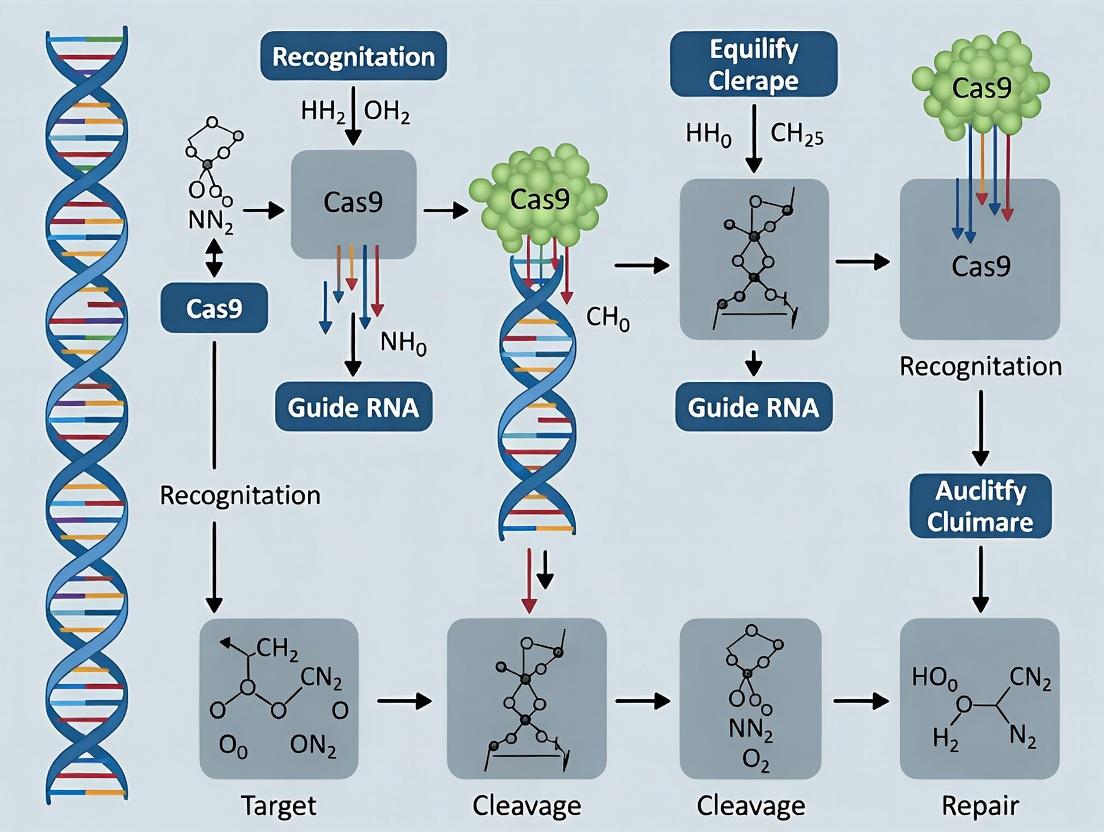
This comprehensive guide for researchers, scientists, and drug development professionals details CRISPR-Cas technology, from its foundational biology to advanced clinical applications.
CRISPR-Cas9 Guide: From Foundational Genetics to Precision Therapeutics for Research Professionals
Abstract
This comprehensive guide for researchers, scientists, and drug development professionals details CRISPR-Cas technology, from its foundational biology to advanced clinical applications. It explores the molecular mechanics of CRISPR-Cas systems, best-practice methodologies for genomic editing, troubleshooting strategies for enhanced specificity and efficiency, and rigorous validation frameworks. The article synthesizes current advancements and future trajectories in therapeutic development, providing a critical resource for integrating CRISPR into high-impact research pipelines.
Decoding CRISPR: The Foundational Biology of a Bacterial Immune System Turned Genetic Tool
This in-depth technical guide is framed within a broader thesis on CRISPR clustered regularly interspaced short palindromic repeats definition research, aiming to provide a precise, mechanistic, and contemporary definition that transcends the acronym and captures its transformative role as a programmable nuclease system.
The Core Definition: A Molecular Adaptive Immune System and Its Repurposing
CRISPR-Cas is a prokaryotic adaptive immune system that confers resistance to foreign genetic elements. Its operational definition for genome editing is: A two-component molecular machinery, consisting of a guide RNA (gRNA) for sequence-specific target recognition and a Cas (CRISPR-associated) nuclease for directed DNA cleavage, that can be programmed to create double-strand breaks at precise genomic loci. This programmability, derived from the system's natural function of storing viral DNA snippets (spacers) within the host genome's CRISPR array to guide subsequent interference, is the foundation of the revolution.
Quantitative Landscape of Key CRISPR-Cas Systems
The field is dominated by several systems differentiated by Cas protein architecture, guide RNA structure, and cleavage mechanics.
Table 1: Comparison of Primary CRISPR-Cas Systems for Genome Editing
| System | Representative Nuclease | Guide RNA Component | Protospacer Adjacent Motif (PAM) | Cleavage Type | Primary Repair Pathway Exploited |
|---|---|---|---|---|---|
| Class 2 Type II | Cas9 (SpCas9) | crRNA + tracrRNA (or fused sgRNA) | 5'-NGG-3' (SpCas9) | Blunt DSB | NHEJ, HDR |
| Class 2 Type V | Cas12a (Cpfl) | crRNA only | 5'-TTTV-3' (AsCas12a) | Staggered DSB (5' overhang) | NHEJ, HDR |
| Class 2 Type VI | Cas13a | crRNA only | Non-DNA target (Targets RNA) | RNA cleavage | N/A (RNA knockdown) |
| Class 1 Type I | Cascade + Cas3 | crRNA complex | 5'-ATG-3' (E. coli) | Processive DNA degradation | Not typically used for precise editing |
Experimental Protocol: A Standard Workflow for CRISPR-Cas9 Mediated Knockout in Mammalian Cells
This protocol details the creation of a gene knockout via non-homologous end joining (NHEJ).
1. Design and Synthesis:
- Target Selection: Identify a 20-nucleotide (nt) target sequence within the first constitutive exons of the gene of interest. The sequence must be immediately 5' of a PAM (e.g., NGG for SpCas9). Use tools like CRISPOR or CHOPCHOP to assess specificity and potential off-targets.
- gRNA Cloning: Synthesize oligonucleotides corresponding to the target, anneal, and clone into a plasmid vector containing the gRNA scaffold (e.g., pSpCas9(BB)).
- Nuclease Delivery Plasmid: If not using an all-in-one vector, a separate plasmid expressing the Cas9 nuclease (human-codon optimized) is required.
2. Cell Transfection & Editing:
- Cell Preparation: Seed HEK293T or other relevant cell line at 60-80% confluency in a 24-well plate.
- Transfection Complex: For a single well, mix 500 ng of gRNA plasmid + 500 ng of Cas9 plasmid (or 1 µg of all-in-one plasmid) with 100 µL of serum-free medium. Add 3 µL of a transfection reagent (e.g., PEI Max). Incubate 15-20 minutes.
- Delivery: Add complex dropwise to cells with fresh medium. Include a non-targeting gRNA control.
3. Analysis and Validation:
- Harvesting: 72 hours post-transfection, harvest genomic DNA.
- T7 Endonuclease I (T7EI) Assay: PCR-amplify the target region (300-500 bp). Hybridize and re-anneal PCR products. Treat with T7EI, which cleaves heteroduplex DNA formed by wild-type and indel-containing strands. Analyze fragments by agarose gel electrophoresis.
- Next-Generation Sequencing (NGS) Validation: Perform targeted PCR amplification of the locus from genomic DNA, prepare sequencing libraries, and run on an NGS platform (e.g., Illumina MiSeq). Analyze reads for indel spectrum and frequency using CRISPResso2.
Key Signaling Pathways and Workflow Visualization
Diagram 1: CRISPR-Cas9 DNA Targeting & Cellular Repair Pathways
Diagram 2: CRISPR Experiment Workflow for Knockout Generation
The Scientist's Toolkit: Key Research Reagent Solutions
Table 2: Essential Materials for CRISPR-Cas9 Genome Editing Experiments
| Item | Function & Explanation |
|---|---|
| gRNA Expression Vector (e.g., pSpCas9(BB)-2A-GFP) | Plasmid backbone containing U6 promoter for gRNA transcription, Cas9 coding sequence, and a fluorescent reporter for tracking transfection. |
| High-Fidelity DNA Polymerase (e.g., Q5, KAPA HiFi) | For error-free amplification of target genomic regions during gRNA validation and analysis steps. |
| T7 Endonuclease I / Surveyor Nuclease | Mismatch-specific endonucleases used for initial, low-cost detection of indel mutations at the target site. |
| Lipofectamine CRISPRMAX | A lipid-based transfection reagent specifically optimized for the delivery of CRISPR RNP complexes or plasmids into eukaryotic cells. |
| NGS Library Prep Kit for Amplicons (e.g., Illumina DNA Prep) | Enables preparation of sequencing libraries from PCR-amplified target loci for deep, quantitative analysis of editing outcomes. |
| Recombinant SpCas9 Nuclease (NLS-tagged) | Purified Cas9 protein for forming Ribonucleoprotein (RNP) complexes with synthetic gRNA, enabling rapid, trace-free editing. |
| Synthetic crRNA & tracrRNA | Chemically synthesized RNA components for RNP assembly, offering rapid deployment and avoiding cloning steps. |
| Homology-Directed Repair (HDR) Donor Template | Single-stranded oligodeoxynucleotide (ssODN) or double-stranded DNA vector containing the desired edit flanked by homology arms for precise repair. |
This whitepaper situates itself within a broader thesis on CRISPR (Clustered Regularly Interspaced Short Palindromic Repeats) definition research, positing that the technology's revolutionary impact stems from the precise re-engineering of a prokaryotic adaptive immune system into a programmable DNA-binding and editing platform. The journey from a curious genetic locus in archaea to a Nobel Prize-winning (Chemistry, 2020) technology exemplifies the transformative power of fundamental research.
Evolution of CRISPR-Cas Systems: Key Quantitative Milestones
The development of CRISPR technology is marked by pivotal discoveries, summarized in the table below.
Table 1: Historical Timeline and Key Quantitative Milestones in CRISPR Research
| Year | Discovery/Event | Key Quantitative Data or Significance |
|---|---|---|
| 1987 | Identification of unusual repeats in E. coli | First report of CRISPR locus (14 repeats, 29 bp each, interspaced by 32-33 bp spacers). |
| 2005 | Spacer sequences derived from phage/plasmid DNA | ~45% of spacers in Streptococcus thermophilus matched viral sequences, suggesting an adaptive immune function. |
| 2007 | First experimental proof of adaptive immunity | S. thermophilus phage resistance increased from 1% to 10^3-10^5-fold upon spacer acquisition. |
| 2012 | In vitro reconstitution of Cas9 DNA targeting | Doudna & Charpentier showed programmable dsDNA cleavage using chimeric RNA (crRNA:tracrRNA fusion). |
| 2013 | First demonstrations of genome editing in human cells | Editing efficiency reported at ~2-25% depending on target and cell type. |
| 2020 | Nobel Prize in Chemistry awarded to Emmanuelle Charpentier and Jennifer A. Doudna | Recognized the development of a method for genome editing. |
| 2023-2024 | Clinical trial advancements (e.g., CASGEVY/exa-cel) | FDA/EMA approval for sickle cell disease; >90% of patients free of severe vaso-occlusive crises in trials. |
Core Mechanism: From Bacterial Defense to Genome Engineering
The Type II CRISPR-Cas9 system from Streptococcus pyogenes is the foundational platform.
Detailed Protocol: In Vitro DNA Cleavage Assay (Adapted from Jinek et al., 2012)
- Objective: To demonstrate programmable, sequence-specific dsDNA cleavage by reconstituted Cas9 protein and engineered guide RNA.
- Reagents:
- Purified S. pyogenes Cas9 nuclease.
- In vitro transcribed single guide RNA (sgRNA), 100 nt, complementary to target DNA.
- Linearized plasmid DNA (3 kb) containing target sequence (5'-N20-NGG-3').
- Reaction Buffer: 20 mM HEPES pH 7.5, 150 mM KCl, 10 mM MgCl2, 1 mM DTT, 5% glycerol.
- Methodology:
- Set up 20 µL reactions containing 100 nM Cas9, 120 nM sgRNA, and 10 nM target plasmid DNA in Reaction Buffer.
- Pre-incubate Cas9 and sgRNA at 37°C for 10 min to form ribonucleoprotein (RNP) complex.
- Initiate cleavage by adding target DNA. Incubate at 37°C for 1 hour.
- Terminate reaction with Proteinase K (0.5 mg/mL) and EDTA (10 mM) at 56°C for 15 min.
- Analyze products by 1% agarose gel electrophoresis. Successful cleavage yields two fragments (e.g., 1 kb and 2 kb).
Diagram 1: From Bacterial Immunity to Genome Editing Tool
The Scientist's Toolkit: Key Research Reagent Solutions
Table 2: Essential Reagents for CRISPR-Cas9 Genome Editing Experiments
| Reagent / Material | Function & Critical Features |
|---|---|
| Cas9 Nuclease (Wild-type) | Creates a blunt-ended double-strand break 3 bp upstream of the PAM (5'-NGG-3'). The workhorse for knockout generation via NHEJ. |
| Cas9 Nickase (D10A mutant) | Creates a single-strand nick. Used in pairs with offset sgRNAs for improved specificity to reduce off-target effects. |
| Dead Cas9 (dCas9, D10A/H840A) | Catalytically inactive. Serves as a programmable DNA-binding platform for transcriptional activation/repression (CRISPRa/i) or base editing fusions. |
| Single Guide RNA (sgRNA) | Chimeric RNA combining crRNA and tracrRNA. The 20-nt 5' guide sequence confers target specificity. Can be delivered as RNA or encoded in a plasmid. |
| Homology-Directed Repair (HDR) Template | Single-stranded oligodeoxynucleotide (ssODN) or plasmid donor DNA containing desired edits flanked by homology arms (70-100 nt each). Essential for precise knock-ins. |
| NHEJ Inhibitor (e.g., SCR7) | Small molecule inhibitor of DNA Ligase IV. Can be used to temporarily shift repair balance towards HDR in some cell types. |
| Next-Generation Sequencing (NGS) Library Prep Kit | For deep-sequencing of target loci to quantitatively assess editing efficiency, allelic heterogeneity, and off-target profiles. |
| Validated Cell Line with High HDR Efficiency (e.g., HEK293T) | A well-characterized, easily transfected model system for initial protocol optimization and validation. |
| RNP Complex (Pre-formed Cas9 + sgRNA) | Direct delivery of ribonucleoprotein complex offers rapid action, reduced off-targets, and avoids DNA integration, favored for clinical applications. |
Advanced Applications & Experimental Workflows
Current research focuses on precision editing and therapeutic delivery. A key protocol for base editing illustrates the evolution beyond wild-type Cas9.
Detailed Protocol: Prime Editing (Adapted from Anzalone et al., 2019)
- Objective: To install targeted point mutations, small insertions, or deletions without requiring double-strand breaks or donor DNA templates.
- Reagents:
- Prime Editor (PE) protein (fusion of Cas9 nickase-M-MLV reverse transcriptase).
- Prime Editing Guide RNA (pegRNA): contains primer binding site (PBS, 8-15 nt) and reverse transcriptase template (RTT) with desired edit.
- Optional: Nicking sgRNA (ngRNA) to nick the non-edited strand to favor permanent integration.
- Target cells and appropriate delivery method (e.g., electroporation for RNP).
- Methodology:
- Design: For a target locus, design pegRNA with PBS length and RTT sequence optimized for secondary structure and editing efficiency.
- Complex Formation: Pre-form Prime Editor RNP by combining PE protein (100-200 nM) with pegRNA (1.2-1.5x molar ratio) and ngRNA (equimolar to pegRNA) in buffer. Incubate 10 min at 25°C.
- Delivery: Deliver RNP complex into target cells (e.g., 2x10^5 HEK293T cells via nucleofection).
- Analysis: Harvest genomic DNA 72-96 hrs post-delivery. Amplify target region via PCR and analyze by NGS or Sanger sequencing with decomposition tools (e.g., EditR, BEAT).
Diagram 2: Prime Editing Workflow for Precise Edits
Quantitative Analysis & Safety Assessment
Robust assessment of editing outcomes and off-target effects is critical for research and therapy.
Table 3: Key Metrics for CRISPR Experiment Analysis
| Metric | Method of Analysis | Typical Acceptable Range (Research) | Notes |
|---|---|---|---|
| On-Target Editing Efficiency | NGS of amplicons, T7E1/Surveyor assay | 20-80% (cell line dependent) | HDR efficiency is typically 10-30% of NHEJ. |
| Indel Pattern Distribution | NGS with decomposition (CRISPResso2) | N/A | Important for knockout studies; can reveal microhomology patterns. |
| Off-Target Cleavage | Genome-wide: GUIDE-seq, CIRCLE-seq. In silico: Predictor tools. | Top predicted sites should show <0.1% editing via NGS. | High-fidelity Cas9 variants (e.g., HiFi Cas9, SpCas9-NG) reduce this. |
| HDR vs. NHEJ Ratio | NGS with haplotype phasing or droplet digital PCR (ddPCR). | Varies by application. For knock-ins, aim for HDR >10%. | Influenced by cell cycle, donor design, and use of small molecule modulators. |
| Transformation Efficiency (Bacterial) | Colony counting post-plasmid transformation. | >10^8 CFU/µg for standard cloning. | Critical for library construction (e.g., sgRNA library). |
The functional definition of CRISPR-Cas systems as adaptive immune mechanisms in prokaryotes hinges on the precise molecular interplay of three core components: the guide RNA (gRNA), the Cas nuclease, and the Protospacer Adjacent Motif (PAM). This whitepaper deconstructs these elements within the broader thesis of CRISPR research, which seeks to define the rules governing target recognition, cleavage specificity, and system evolution. Understanding these components is foundational for therapeutic genome engineering, where predictability and fidelity are paramount.
In-Depth Technical Guide
Guide RNA (gRNA)
The gRNA is a chimeric, synthetic RNA molecule that programs the Cas nuclease's target specificity. It comprises two essential parts:
- CRISPR RNA (crRNA): A 17-24 nucleotide sequence complementary to the target DNA (protospacer). This region determines the target site via Watson-Crick base pairing.
- Trans-Activating CRISPR RNA (tracrRNA): A scaffold that binds the Cas nuclease, facilitating its recruitment and activation. In most engineered systems (e.g., Streptococcus pyogenes Cas9), the crRNA and tracrRNA are fused into a single-guide RNA (sgRNA).
Key Design Parameters:
- GC Content: Optimal between 40-60% to balance stability and specificity.
- Off-Target Potential: Mismatches, especially in the "seed region" (positions 1-12 proximal to the PAM), can lead to off-target cleavage.
- Secondary Structure: Internal structure in the gRNA can impair Cas binding and reduce efficiency.
Cas Nuclease
Cas nucleases are effector proteins that execute DNA (or RNA) cleavage. They are classified into two main classes and multiple types (I-VI). Cas9 (Class 2, Type II) is the most widely characterized.
- Function: Upon gRNA-mediated recognition of a complementary PAM-flanked DNA sequence, the Cas nuclease induces a double-strand break (DSB).
- Domains: Cas9 contains two nuclease domains: HNH (cleaves the target strand complementary to the gRNA) and RuvC-like (cleaves the non-target strand).
- Variants: Engineered variants like Cas9-HF1 (high-fidelity) and eSpCas9 reduce off-target effects. Other nucleases (e.g., Cas12a/Cpf1) have distinct properties, such as creating staggered cuts.
Protospacer Adjacent Motif (PAM)
The PAM is a short (2-6 bp), conserved DNA sequence immediately adjacent to the target protospacer. It is a critical self vs. non-self discriminator.
- Function: It is required for target recognition by the Cas nuclease but is not part of the gRNA sequence. This prevents the CRISPR system from auto-targeting its own genomic CRISPR array, where the spacer sequence lacks a flanking PAM.
- Specificity: The PAM sequence is specific to each Cas nuclease. For S. pyogenes Cas9 (SpCas9), the canonical PAM is 5'-NGG-3' (where N is any nucleotide).
Table 1: Comparison of Common Cas Nucleases and Their PAM Requirements
| Cas Nuclease | Source Organism | PAM Sequence (5'→3')* | PAM Length | Cleavage Type | Typical Size (aa) | Primary Application |
|---|---|---|---|---|---|---|
| SpCas9 | S. pyogenes | NGG (canonical) | 3 bp | Blunt-end DSB | ~1368 | Mammalian genome editing |
| SaCas9 | S. aureus | NNGRRT (or NNGRR) | 5-6 bp | Blunt-end DSB | ~1053 | In vivo therapy (smaller size) |
| Cas12a (Cpf1) | F. novicida | TTTV | 4-5 bp | Staggered DSB | ~1300 | Multiplex editing, mammalian cells |
| Cas12b (C2c1) | Alicyclobacillus | TTN | 3 bp | Staggered DSB | ~1128 | Diagnostics, plant genome editing |
| Cas13a | Leptotrichia wadei | Non-DNA target (RNA) | N/A | SS RNA cleavage | ~1350 | RNA knockdown, detection |
*V = A, C, G; R = A, G. PAM is located on the non-target strand.
Table 2: Impact of gRNA Design Parameters on Editing Efficiency and Specificity
| Parameter | Optimal Range | Effect on Efficiency | Effect on Specificity | Measurement Method |
|---|---|---|---|---|
| GC Content | 40-60% | High GC increases stability & often efficiency. | Very high GC may increase off-targets. | NGS, T7E1 assay |
| Seed Region Mismatches | 0 tolerated | Drastically reduces on-target cleavage. | Primary determinant of specificity. | GUIDE-seq, CIRCLE-seq |
| gRNA Length (SpCas9) | 20 nt | 17-18 nt can increase specificity but may lower efficiency. | Shorter gRNAs can improve specificity. | Targeted deep sequencing |
| Chemical Modifications | 2'-O-Methyl, PS backbone | Increases nuclease resistance for in vivo use. | Can slightly alter specificity profile. | HPLC, mass spectrometry |
Experimental Protocols
Protocol 1: Determining PAM Requirements (PAM-SCREEN Assay)
Objective: Empirically define the permissive PAM sequences for a novel or engineered Cas nuclease. Methodology:
- Library Construction: Synthesize a plasmid library containing a randomized PAM region (e.g., NNNN) flanking a constant protospacer sequence adjacent to a reporter gene (e.g., GFP).
- Transformation: Co-transform the PAM library plasmid and a Cas/gRNA expression plasmid targeting the constant protospacer into E. coli.
- Selection: Apply selection pressure (e.g., antibiotic resistance only upon successful cleavage and repair). Surviving colonies have plasmids that were not cleaved, implying a non-functional PAM.
- Sequencing & Analysis: Isolve plasmids from the pre-selection (input) and post-selection (output) pools. Perform high-throughput sequencing of the randomized PAM region. Enrichment analysis (output/input) identifies depleted PAM sequences, which are those permitting Cas cleavage.
Key Reagents: Randomized oligo library, High-fidelity DNA polymerase, Competent E. coli, Selective media, Sequencing primers.
Protocol 2: Assessing On- and Off-Target Activity (GUIDE-seq)
Objective: Genome-wide profiling of double-strand breaks induced by a specific Cas9-gRNA complex. Methodology:
- Delivery: Co-deliver the SpCas9 protein/gRNA RNP along with a double-stranded, end-protected oligonucleotide (GUIDE-seq tag) into mammalian cells via nucleofection.
- Integration: During repair of Cas9-induced DSBs via non-homologous end joining (NHEJ), the GUIDE-seq tag is integrated into break sites.
- Genomic DNA Preparation & Enrichment: Harvest genomic DNA 72 hours post-delivery. Shear DNA and perform PCR to enrich for tag-integrated fragments using a tag-specific primer.
- Sequencing & Analysis: Perform paired-end sequencing. Map reads to the reference genome to identify all tag integration sites, which correspond to both on-target and off-target DSB locations. Analyze sequence homology at off-target sites.
Key Reagents: Cas9 nuclease protein, In vitro transcribed gRNA, GUIDE-seq dsODN tag, Nucleofection kit, Tag-specific PCR primers, NGS platform.
Visualizations
The Scientist's Toolkit: Key Research Reagent Solutions
| Reagent / Material | Function & Rationale | Example Vendor/Product |
|---|---|---|
| High-Fidelity Cas9 Nuclease (WT & Variants) | Executes DNA cleavage. HF variants reduce off-target effects for therapeutic applications. | IDT Alt-R S.p. Cas9 Nuclease V3, Thermo Fisher TrueCut Cas9 Protein v2. |
| Synthetic sgRNA (chemically modified) | Guides Cas9 to target. Chemical modifications (2'-O-methyl, phosphorothioate) enhance stability for in vivo delivery. | Synthego sgRNA EZ Kit, Trilink CleanCap sgRNA. |
| PAM Screening Library Kits | Pre-made randomized PAM libraries for empirical determination of novel nuclease PAM requirements. | ToolGen PAM Discovery Kit. |
| Off-Target Detection Kits | All-in-one kits for genome-wide identification of DSBs (e.g., GUIDE-seq, CIRCLE-seq). | Integrated DNA Technologies GUIDE-seq Kit, CIRCLE-seq Kit. |
| Nuclease-Free Electrocompetent Cells | Essential for high-efficiency transformation in bacterial-based screening assays (PAM-SCREEN). | NEB 10-beta Electrocompetent E. coli. |
| Next-Generation Sequencing (NGS) Library Prep Kits | For deep sequencing of PAM libraries or off-target enriched genomic DNA. | Illumina Nextera XT, Swift Biosciences Accel-NGS 2S. |
| Cell Line Nucleofection Kits | High-efficiency delivery of RNP complexes and oligonucleotide tags into mammalian cells. | Lonza 4D-Nucleofector X Kit S. |
The elucidation of CRISPR-Cas9 function represents a pivotal thesis within the broader field of CRISPR (Clustered Regularly Interspaced Short Palindromic Repeats) research. This whitepaper details the precise molecular mechanics by which the Cas9 endonuclease, guided by a single-guide RNA (sgRNA), executes targeted double-stranded DNA cleavage. Understanding this atomic-level orchestration is fundamental for researchers and drug development professionals aiming to refine specificity, develop novel editors, and design therapeutic interventions.
Structural Components and Quantitative Parameters
The Streptococcus pyogenes Cas9 (SpCas9) system is the archetype. Its function relies on specific, quantifiable interactions between its components and target DNA.
Table 1: Core Components of the CRISPR-Cas9 Complex
| Component | Description | Key Functional Domains/Roles |
|---|---|---|
| Cas9 Protein | A large multidomain endonuclease. | REC lobes (REC1, REC2): sgRNA binding and target DNA verification. HNH nuclease domain: Cleaves the DNA strand complementary to the crRNA (target strand). RuvC nuclease domain: Cleaves the non-complementary DNA strand. PAM-interacting (PI) domain: Recognizes the protospacer adjacent motif (PAM). |
| Single-Guide RNA (sgRNA) | A synthetic fusion of CRISPR RNA (crRNA) and trans-activating crRNA (tracrRNA). | crRNA segment (∼20 nt): Provides sequence complementarity for target DNA binding. tracrRNA segment: Forms a duplex with the crRNA, stabilizing the structure for Cas9 binding. |
| Target DNA | The genomic DNA site intended for cleavage. | Protospacer: The 20-nucleotide sequence immediately 5' of the PAM, complementary to the crRNA. PAM (Protospacer Adjacent Motif): A short, conserved sequence (5'-NGG-3' for SpCas9) essential for initiation. |
Table 2: Key Quantitative Parameters of SpCas9 Activity
| Parameter | Typical Value/Range | Experimental Context & Notes |
|---|---|---|
| sgRNA Length (SpCas9) | 20 nucleotides (protospacer) | Can be truncated (tru-gRNAs, 17-18 nt) to increase specificity or extended to alter kinetics. |
| PAM Sequence (SpCas9) | 5'-NGG-3' | N can be any nucleotide; GGG is also functional. Engineered variants recognize alternative PAMs (e.g., NG, NNG). |
| Cleavage Position | 3 bp upstream of PAM | Creates a blunt-ended double-strand break (DSB). |
| Dissociation Constant (Kd) | ∼0.5 - 5 nM | For the Cas9:sgRNA:target DNA ternary complex. Varies with sequence complementarity and supercoiling. |
| Turnover Rate (kcat) | Low (∼0.1 - 1 min⁻¹) | Cas9 is often considered a single-turnover enzyme, remaining tightly bound to the product. |
| Target Search Time | Hours (in cells) | Diffusion-limited; involves 3D diffusion and 1D sliding along DNA. |
Molecular Mechanism of Targeted Cleavage
The process is a multi-step conformational cascade.
Step 1: PAM Recognition and DNA Melting. The Cas9:sgRNA complex scans DNA via facilitated diffusion. The PI domain recognizes the canonical 5'-NGG-3' PAM. PAM binding induces local DNA distortion and unwinding, creating a "seed" region (positions 1-5 proximal to the PAM) for initial RNA-DNA pairing.
Step 2: sgRNA-DNA Heteroduplex Formation. If seed pairing is complementary, DNA melting propagates, and the remainder of the crRNA sequentially base-pairs with the target DNA strand, displacing the non-target strand. This results in an R-loop structure.
Step 3: Conformational Activation and Catalysis. Full heteroduplex formation triggers large-scale conformational changes in Cas9. The REC lobes rotate, the HNH domain swings into position to cleave the target DNA strand. Concurrently, the RuvC domain, already positioned near the non-target strand, cleaves it. This coordinated action produces a blunt-ended DSB 3 nucleotides upstream of the PAM.
Diagram 1: CRISPR-Cas9 Targeted Cleavage Cascade
Detailed Experimental Protocol:In VitroCleavage Assay
This protocol verifies the biochemical activity and specificity of a purified CRISPR-Cas9 complex.
A. Materials & Reagents:
- Purified Cas9 Nuclease: Recombinantly expressed and purified (e.g., His-tagged SpCas9).
- Synthetic sgRNA: In vitro transcribed or chemically synthesized, targeting a specific sequence.
- Target DNA Plasmid: Supercoiled plasmid containing the target protospacer and PAM.
- Control DNA Plasmid: Plasmid with a mismatched target or no PAM.
- Nuclease-Free Duplex Buffer: 10 mM Tris-HCl, pH 7.5, 50 mM NaCl, 1 mM DTT, 10 mM MgCl₂.
- Proteinase K Solution: To stop the reaction.
- Agarose Gel Electrophoresis system with SYBR Safe stain.
B. Procedure:
- Complex Formation: Pre-incubate 100 nM Cas9 with 120 nM sgRNA in duplex buffer (without Mg²⁺) for 10 min at 25°C to form the ribonucleoprotein (RNP) complex.
- Reaction Setup: In separate tubes, add 10 nM of target or control plasmid DNA to the pre-formed RNP.
- Initiate Cleavage: Add MgCl₂ to a final concentration of 10 mM to start the cleavage reaction. Incubate at 37°C for 60 min.
- Reaction Termination: Add Proteinase K and SDS (final 0.1% w/v) and incubate at 56°C for 15 min to degrade Cas9 and stop cleavage.
- Analysis: Resolve the DNA products on a 1% agarose gel. Successful cleavage converts supercoiled plasmid (fastest migrating) to linearized (middle band) and, if cleavage is highly efficient, potentially nicked open-circular (slowest band) forms.
Diagram 2: In Vitro Cleavage Assay Workflow
The Scientist's Toolkit: Key Research Reagent Solutions
Table 3: Essential Reagents for CRISPR-Cas9 Molecular Mechanics Research
| Reagent Solution | Function & Application | Key Considerations |
|---|---|---|
| Recombinant Cas9 Nuclease (Wild-type & Variants) | Provides the catalytic core for in vitro cleavage assays, kinetic studies, and structural biology. | High purity (>95%), verified endonuclease activity, available as WT, HiFi (enhanced specificity), or PAM-relaxed variants. |
| Chemically Modified sgRNAs | Enhances stability, reduces off-target effects, and improves editing efficiency in cellular environments. | Common modifications: 2'-O-methyl (M), 2'-fluoro (F), and phosphorothioate (PS) linkages at the 3' and 5' ends. |
| Synthetic Target DNA Duplexes | Short, double-stranded oligonucleotides containing the protospacer and PAM for rapid binding assays (e.g., EMSA, fluorescence anisotropy). | Allows precise control of sequence, including mismatches for specificity profiling. Often labeled with fluorophores or biotin. |
| PAM Discovery Libraries (e.g., Plasmid or Oligo Libraries) | Used in high-throughput screens to determine the specificity and flexibility of PAM recognition for engineered Cas9 variants. | Contains randomized sequences adjacent to a fixed protospacer; survival after cleavage indicates non-functional PAMs. |
| Single-Molecule Imaging Reagents (for FRET or TIRF) | Enable real-time observation of Cas9 search, binding, and cleavage kinetics. | Includes dye-labeled Cas9 (e.g., via SNAP/CLIP-tags), fluorescently labeled DNA, and immobilized flow cell systems. |
| Cellular Delivery Vehicles (for in cellulo validation) | Transfect or transduce RNP complexes into target cells to confirm activity in a physiological context. | Includes electroporation kits, lipid nanoparticles (LNPs), and cell-penetrating peptide (CPP) conjugates. |
Within the broader thesis on CRISPR (Clustered Regularly Interspaced Short Palindromic Repeats) definition research, understanding the fundamental division into Class 1 (multi-subunit effector complexes) and Class 2 (single-protein effectors) is paramount. This natural diversity underpins the adaptability of prokaryotic immune systems and dictates their applicability in biotechnology and drug development. This whitepaper provides a technical overview of the core Class 2 systems (Cas9, Cas12, Cas13), with reference to Class 1, focusing on mechanism, quantitative characteristics, and experimental protocols.
Core System Classification and Mechanisms
System Classification and Key Characteristics
Table 1: Comparative Overview of Major CRISPR-Cas Systems
| Feature | Class 1 (Type I, III, IV) | Class 2 - Type II (Cas9) | Class 2 - Type V (Cas12) | Class 2 - Type VI (Cas13) |
|---|---|---|---|---|
| Effector Complex | Multi-subunit (e.g., Cascade) | Single crRNA-guided nuclease | Single crRNA-guided nuclease | Single crRNA-guided nuclease |
| Target Nucleic Acid | DNA | DNA | DNA (ss/ds) | RNA |
| Protospacer Adjacent Motif (PAM) | Variable (e.g., 3-5 bp for Type I) | 3'-NGG (SpCas9) | 5'-TTTV (AsCas12a) | Protospacer Flanking Site (PFS) |
| Cleavage Mechanism | DNA degradation by Cas3 | Blunt dsDNA breaks | Staggered dsDNA cuts with 5' overhangs | RNA cleavage; collateral ssRNA trans-cleavage |
| Guide RNA Structure | crRNA | crRNA:tracrRNA duplex or sgRNA | crRNA | crRNA |
| Collateral Activity | No | Limited/No | Promiscuous ssDNA trans-cleavage post-activation | Promiscuous ssRNA trans-cleavage post-activation |
| Primary Applications | Genome editing (less common), sensing | Genome editing, gene regulation, screening | Genome editing, DNA detection (DETECTR) | RNA editing, knockdown, RNA detection (SHERLOCK) |
Detailed Mechanism Diagrams
Diagram 1: Class 1 vs. Class 2 CRISPR-Cas Mechanism Overview
Diagram 2: Nucleic Acid Detection via Collateral Cleavage
Experimental Protocols
Protocol 1: Mammalian Genome Editing Using SpCas9 (Class 2, Type II)
Objective: Generate a targeted double-strand break (DSB) in a genomic locus for gene knockout via non-homologous end joining (NHEJ) or precise editing via homology-directed repair (HDR).
sgRNA Design and Synthesis:
- Design a 20-nt spacer sequence immediately 5' to a 5'-NGG-3' PAM on the target DNA strand.
- Synthesize DNA oligonucleotides, anneal, and clone into a sgRNA expression plasmid (e.g., pSpCas9(BB)).
- Alternatively: Synthesize sgRNA as a single guide in vitro using T7 RNA polymerase.
Delivery into Mammalian Cells:
- Transfection: For HEK293T or similar, use lipofection (e.g., Lipofectamine 3000). Prepare complexes with 1 µg of Cas9 expression plasmid and 0.5-1 µg of sgRNA plasmid per well in a 24-well plate.
- Electroporation: For primary or hard-to-transfect cells, use nucleofection with system-specific protocols.
Analysis of Editing Efficiency (48-72h post-delivery):
- Genomic DNA Extraction: Use a silica-column or salt-precipitation method.
- PCR Amplification: Amplify the target locus (200-500 bp flanking the cut site).
- Assessment: Use T7 Endonuclease I (T7EI) or Surveyor assay to detect mismatches from indels, or next-generation sequencing (NGS) for quantitative analysis.
Protocol 2: DNA Detection using Cas12a (DETECTR Assay)
Objective: Sensitive and specific detection of target dsDNA via Cas12a's collateral ssDNase activity.
Reagent Setup:
- Cas12a Effector: Purified LbCas12a or AsCas12a protein (final ~50 nM).
- Guide RNA: crRNA targeting the sequence of interest (final ~50 nM).
- Reporter Molecule: Fluorescently quenched ssDNA reporter (e.g., 5'-6-FAM/TTATT/3'-Iowa Black FQ) (final ~500 nM).
- Amplified Sample: Target DNA is pre-amplified using Recombinase Polymerase Amplification (RPA) at 37-42°C for 15-30 min.
Detection Reaction Assembly:
- Combine in a well or tube: 10 µL of amplified RPA product, Cas12a protein, crRNA, and reporter in a suitable buffer (e.g., NEBuffer 2.1).
- Total reaction volume: 20 µL.
Signal Measurement:
- Incubate at 37°C and monitor real-time fluorescence (FAM channel) in a plate reader for 30-60 minutes.
- A positive sample triggers exponential increase in fluorescence due to reporter cleavage.
Protocol 3: RNA Knockdown and Detection using Cas13 (SHERLOCK)
Objective: Detect specific RNA targets via Cas13's collateral RNase activity.
Sample Preparation and Amplification:
- Extract total RNA from the sample.
- Perform reverse transcription followed by T7 transcription-based isothermal amplification (e.g., RPA with T7 promoter primers or RT-RPA). This step converts target RNA to amplified RNA (aRNA).
Cas13 Detection Reaction:
- Reagents: LwaCas13a protein (final ~50 nM), specific crRNA (final ~50 nM), fluorescent quenched ssRNA reporter (e.g., 5'-6-FAM/rUrUrUrUrU/3'-Iowa Black FQ) (final ~500 nM).
- Combine Cas13a, crRNA, reporter, and 2 µL of amplified aRNA in a reaction buffer.
- Total volume: 20 µL.
Incubation and Readout:
- Incubate at 37°C for 1-2 hours. Measure endpoint or kinetic fluorescence.
- For multiplexing, use different Cas13 orthologs (e.g., LwaCas13a, PsmCas13b) with distinct reporter sequences.
The Scientist's Toolkit
Table 2: Key Research Reagent Solutions for CRISPR-Cas Experiments
| Reagent / Material | Function / Application | Key Considerations |
|---|---|---|
| SpCas9 Nuclease (S. pyogenes) | The canonical Class 2 effector for creating blunt DSBs in dsDNA. | Requires NGG PAM. Available as wild-type, HiFi (reduced off-target), and nickase variants. |
| AsCas12a (Cpf1) Nuclease | Class 2 effector for staggered DSBs. Used in editing and DETECTR assays. | Requires T-rich PAM (TTTV). Generates 5' overhangs. Has collateral ssDNase activity. |
| LwaCas13a Nuclease | Class 2 effector for targeting and cleaving ssRNA. Used in SHERLOCK. | Mediates RNA knockdown and collateral RNase activity for detection. No PAM but requires a PFS. |
| Chemically Modified sgRNA/crRNA | Synthetic guide RNAs with 2'-O-methyl, phosphorothioate bonds at termini. | Increases stability, reduces immunogenicity, and improves editing efficiency in vivo. |
| Recombinase Polymerase Amplification (RPA) Kit | Isothermal nucleic acid amplification (37-42°C). | Enables rapid target pre-amplification for Cas12/Cas13 detection assays without thermal cyclers. |
| T7 Endonuclease I (T7EI) | Mismatch-specific endonuclease. | Detects indels at target sites by cleaving heteroduplex DNA in Surveyor/T7EI assays. |
| Fluorescent Quenched ssDNA/RNA Reporters | Oligonucleotides with fluorophore and quencher. | Serve as substrates for collateral cleavage; signal generation indicates target presence (e.g., for DETECTR/SHERLOCK). |
| HDR Donor Template | Single-stranded oligodeoxynucleotide (ssODN) or double-stranded DNA (dsDNA) donor. | Provides homology template for precise genome editing via HDR after Cas9-induced DSB. |
| Next-Generation Sequencing (NGS) Library Prep Kit | For deep sequencing of target loci. | Enables unbiased, quantitative assessment of on-target editing efficiency and off-target profile. |
CRISPR-Cas systems have revolutionized genetic and epigenetic engineering. This whitepaper details five core terminologies—NHEJ, HDR, Knockout, Knock-in, and Epigenetic Modulation—which are fundamental to designing and interpreting CRISPR-based experiments within a broader research thesis. Mastery of these concepts is critical for researchers and drug development professionals aiming to precisely alter genomes and transcriptional programs.
Core Terminology and Mechanisms
NHEJ (Non-Homologous End Joining) A dominant, error-prone cellular repair pathway for DNA double-strand breaks (DSBs). It directly ligates broken ends, often resulting in small insertions or deletions (indels) that can disrupt a gene's open reading frame, making it a primary mechanism for gene knockout.
HDR (Homology-Directed Repair) A precise repair pathway that uses a donor DNA template with homology arms to the target site to copy genetic information into the break. It is the basis for precise gene editing, including knock-in of specific sequences.
Knockout The disruption of a target gene's function, typically achieved via CRISPR-Cas9-induced DSB repaired by NHEJ, generating loss-of-function mutations.
Knock-in The targeted insertion of an exogenous DNA sequence (e.g., a reporter gene, SNP, or therapeutic cassette) into a specific genomic locus via HDR using a donor template.
Epigenetic Modulation Using catalytically inactive or modified CRISPR systems (e.g., dCas9 fused to effector domains) to recruit epigenetic modifiers (like methyltransferases or acetyltransferases) to specific loci. This alters gene expression without changing the underlying DNA sequence, enabling reversible transcriptional control.
Table 1: Comparison of Key CRISPR-Mediated Editing Outcomes
| Parameter | NHEJ-Mediated Knockout | HDR-Mediated Knock-in | Epigenetic Modulation |
|---|---|---|---|
| Primary Mechanism | Error-prone end joining | Template-dependent repair | Recruitment of effectors |
| DNA Template Required? | No | Yes | No |
| Editing Precision | Low (indels) | High (specific sequence) | N/A (no sequence change) |
| Typical Efficiency (in cultured mammalian cells) | 20-80% (varies by target) | 1-20% (varies by cell type & delivery) | 2- to 10-fold expression change |
| Primary Outcome | Gene disruption | Sequence insertion/replacement | Transcriptional activation/repression |
| Permanence | Permanent (genetic) | Permanent (genetic) | Often reversible (epigenetic) |
Table 2: Common Effector Domains for Epigenetic Modulation
| Effector Domain | Modification Catalyzed | Typical Outcome on Transcription |
|---|---|---|
| p300 core | Histone H3K27 acetylation | Activation |
| LSD1 | Histone H3K4 demethylation | Repression |
| DNMT3A | DNA methylation | Long-term repression |
| TET1 | DNA demethylation | Activation |
Experimental Protocols
Protocol 1: CRISPR-Cas9-Mediated Gene Knockout via NHEJ
Objective: Generate a frameshift mutation in a protein-coding exon.
- gRNA Design: Design a 20-nt guide RNA targeting an early exon of the gene of interest. Verify specificity using tools like CRISPOR.
- Component Delivery: Co-transfect mammalian cells with:
- A plasmid expressing Cas9 and the target gRNA, or
- Cas9 mRNA and synthetic gRNA (for primary cells).
- Analysis (48-72 hrs post-transfection):
- Genomic DNA Extraction: Isolate gDNA.
- PCR Amplification: Amplify the target region (~500-800 bp).
- Assessment: Use T7 Endonuclease I assay or Sanger sequencing followed by ICE analysis to quantify indel frequency.
Protocol 2: CRISPR-Cas9-Mediated Precise Knock-in via HDR
Objective: Insert a FLAG-tag sequence into the C-terminus of a gene.
- Donor Template Design: Create a single-stranded oligodeoxynucleotide (ssODN) donor template containing the FLAG sequence flanked by ~60-nt homology arms identical to the sequence immediately surrounding the Cas9 cut site.
- Component Delivery: Co-deliver into cells:
- Cas9 protein or mRNA,
- Synthetic gRNA,
- ssODN donor template (at a 10:1 molar ratio to Cas9:gRNA RNP).
- Enhancement: Use HDR-enhancing small molecules (e.g., SCR7 or RS-1) or synchronize cells in S-phase.
- Analysis (1 week post-delivery):
- Expand cells clonally.
- Screen clones by junction PCR and confirm via Sanger sequencing of the modified allele.
Protocol 3: CRISPR-dCas9-Mediated Epigenetic Activation
Objective: Upregulate transcription of a target gene using dCas9-p300.
- System Assembly: Use a plasmid expressing dCas9 fused to the p300 core histone acetyltransferase domain and a target-specific gRNA.
- Delivery: Transfect the plasmid(s) into target cells.
- Analysis (72-96 hrs post-transfection):
- mRNA Level: Quantify target gene expression via RT-qPCR.
- Epigenetic Mark: Perform ChIP-qPCR for H3K27ac at the target locus.
- Phenotypic Assay: Perform relevant functional assay (e.g., ELISA for secreted protein).
Visualizations
Title: CRISPR-Induced DNA Break Repair Pathways
Title: Workflow for CRISPR Epigenetic Modulation
The Scientist's Toolkit: Research Reagent Solutions
Table 3: Essential Reagents for CRISPR Genome and Epigenome Editing
| Reagent / Solution | Function & Application | Key Consideration |
|---|---|---|
| High-Fidelity Cas9 Nuclease | Reduces off-target editing; critical for therapeutic and precise research applications. | Use instead of wild-type SpCas9 for improved specificity. |
| Synthetic sgRNA (chemically modified) | Increases stability and editing efficiency, especially in hard-to-transfect cells (e.g., primary cells). | Chemical modifications (e.g., 2'-O-methyl, phosphorothioate) boost performance. |
| HDR Donor Templates (ssODN or dsDNA) | Provides homology-directed repair blueprint for knock-ins. ssODNs are ideal for <200 bp insertions. | Optimize homology arm length (typically 60-120 nt for ssODNs). |
| Electroporation/Nucleofection Reagents | Enables efficient delivery of CRISPR RNP (ribonucleoprotein) complexes into a wide range of cell types. | RNP delivery is fast, reduces off-targets, and is ideal for primary cells. |
| HDR-Enhancing Small Molecules (e.g., SCR7, RS-1) | Temporarily inhibit NHEJ or promote Rad51 activity to tilt repair balance toward HDR, increasing knock-in rates. | Add during and after editing; toxicity must be empirically determined. |
| dCas9-Effector Fusion Plasmids (e.g., dCas9-p300, dCas9-KRAB) | Enables targeted epigenetic modulation without DNA cleavage. | Choice of effector dictates outcome (activation vs. repression). |
| Next-Gen Sequencing Library Prep Kits for Editing Analysis | For comprehensive, quantitative assessment of on- and off-target editing efficiencies (e.g., amplicon sequencing). | Essential for characterizing editing outcomes beyond the target site. |
CRISPR in Action: Experimental Design, Delivery Methods, and Therapeutic Applications
This whitepaper serves as a critical technical component of a broader thesis on CRISPR (Clustered Regularly Interspaced Short Palindromic Repeats) definition research. While foundational work defined CRISPR as a bacterial adaptive immune system, the translation of this discovery into a precise genome-editing toolkit necessitates a deep, functional understanding of its core component: the guide RNA (gRNA). The design of the gRNA is the primary determinant of success, sitting at the intersection of on-target efficiency and off-target fidelity. This guide synthesizes current principles and protocols for designing gRNAs that meet the stringent demands of modern research and therapeutic development.
Core Principles of gRNA Design
Sequence Determinants for Efficiency
Efficient gRNA design requires optimizing the sequence for Cas protein loading, stability, and target DNA recognition. Key parameters include:
- GC Content: Optimal between 40-60%. A mid-range GC content promotes stability without excessive secondary structure.
- Position-Specific Nucleotide Preferences: For the commonly used Streptococcus pyogenes Cas9 (SpCas9), a guanine (G) at the first position of the 5' end of the spacer and a protospacer adjacent motif (PAM) of NGG are required. Preference for specific bases at other positions (e.g., a purine at position 4) can enhance cleavage.
- Secondary Structure: Minimal self-complementarity within the spacer and between the spacer and the scaffold is critical to prevent gRNA misfolding and impaired Cas binding.
Principles for Maximizing Specificity and Minimizing Off-Targets
Off-target editing occurs due to gRNA tolerance for mismatches, especially if distal from the PAM and if accompanied by DNA/RNA bulges.
- Seed Region Integrity: The 8-12 nucleotides proximal to the PAM (the "seed" region) are most sensitive to mismatches. Designs should ensure perfect complementarity in this region across the genome.
- Specificity Scoring: Computational algorithms predict off-target sites by scanning the genome for sequences with homology to the gRNA spacer, allowing for a limited number of mismatches and bulges.
- Truncated gRNAs (tru-gRNAs): Using a 17-18nt spacer instead of the standard 20nt can increase specificity by reducing binding energy, albeit sometimes at the cost of on-target efficiency.
- Chemical Modifications: Incorporation of specific chemical modifications (e.g., 2'-O-methyl-3'-phosphonoacetate) at gRNA termini can enhance stability and potentially reduce off-target binding.
Table 1: Quantitative Comparison of gRNA Design Parameters and Their Impact
| Design Parameter | Optimal Range/Value | Impact on Efficiency | Impact on Specificity |
|---|---|---|---|
| Spacer Length | 20 nt (standard), 17-18 nt (tru-gRNA) | ↓ with truncation | ↑ with truncation |
| GC Content | 40% - 60% | ↑ within optimal range | Optimal range reduces promiscuity |
| Seed Region (from PAM) | 8-12 nt | Critical for R-loop initiation | Single mismatch often abolishes cleavage |
| 5' Terminal Nucleotide (SpCas9) | Guanine (G) | Required for transcription from U6 promoter | No direct impact |
| Thermodynamic Stability (ΔG) | > -10 kcal/mol (spacer self-folding) | ↓ with highly negative ΔG | Can be improved by avoiding stable secondary structures |
Experimental Protocols for gRNA Validation
Protocol: In Vitro Cleavage Assay for Initial Efficiency Screening
This biochemical assay provides a rapid, cell-free assessment of gRNA/Cas nuclease activity.
- gRNA Transcription: Synthesize gRNAs by in vitro transcription (IVT) using T7 RNA polymerase and a DNA template containing the T7 promoter and gRNA sequence. Purify using RNA clean-up kits.
- Target DNA Template Preparation: Generate a linear DNA substrate (~500-1000 bp) via PCR, containing the target sequence and PAM.
- RiboNucleoProtein (RNP) Complex Formation: Incubate purified Cas9 protein (e.g., 50 nM) with each gRNA (e.g., 75 nM) in reaction buffer (20 mM HEPES pH 7.5, 150 mM KCl, 1 mM DTT, 10 mM MgCl2) at 25°C for 10 minutes.
- Cleavage Reaction: Add the target DNA (e.g., 20 nM) to the RNP complex. Incubate at 37°C for 30-60 minutes.
- Analysis: Stop the reaction with Proteinase K and EDTA. Analyze the products by agarose gel electrophoresis. Quantify the percentage of cleaved product using gel densitometry software.
Protocol: CIRCLE-seq for Comprehensive Off-Target Profiling
CIRCLE-seq (Circularization for In vitro Reporting of Cleavage Effects by Sequencing) is a highly sensitive, cell-free method to identify off-target sites.
- Genomic DNA (gDNA) Preparation: Extract high-molecular-weight gDNA from relevant cell lines.
- Fragment and Circularize: Shear gDNA, repair ends, and ligate adapters. Perform intramolecular circularization to create a library of covalently closed, double-stranded DNA circles.
- In Vitro Digestion: Digest the circularized library with the Cas9:gRNA RNP complex. Linear DNA fragments are generated only at sites of Cas9 cleavage.
- Linear Fragment Recovery: Treat with a 5'->3' exonuclease to degrade all non-cleaved, nicked, or incompletely circularized DNA. Only fragments liberated by Cas9 cleavage (with 5' phosphates) are protected.
- Library Prep & Sequencing: Add sequencing adapters to the recovered linear fragments, amplify, and perform high-throughput sequencing.
- Bioinformatic Analysis: Map sequenced reads to the reference genome. Peak-calling algorithms identify genomic loci enriched for cleavage events, revealing potential off-target sites.
Visualization of Key Concepts
Diagram 1: gRNA Design and Selection Workflow
Diagram 2: Determinants of On- vs. Off-Target Cleavage
The Scientist's Toolkit: Essential Research Reagent Solutions
Table 2: Key Reagents and Materials for gRNA Design & Validation Experiments
| Reagent/Material | Function/Description | Example Vendor/Product |
|---|---|---|
| High-Fidelity DNA Polymerase | Accurate amplification of target DNA templates for in vitro assays and gRNA expression vectors. | New England Biolabs (Q5), Thermo Fisher (Platinum SuperFi II) |
| T7 RNA Polymerase Kit | In vitro transcription (IVT) for generating high yields of functional gRNA. | Thermo Fisher (MEGAscript), New England Biolabs (HiScribe) |
| Purified Recombinant Cas9 Nuclease | For forming RNP complexes in in vitro cleavage assays and CIRCLE-seq. | IDT (Alt-R S.p. Cas9 Nuclease), Thermo Fisher (TrueCut Cas9) |
| Next-Generation Sequencing (NGS) Library Prep Kit | Preparation of sequencing libraries for CIRCLE-seq and deep sequencing of on-/off-target sites. | Illumina (Nextera XT), New England Biolabs (NEBNext Ultra II) |
| Genomic DNA Extraction Kit (Magnetic Beads) | Isolation of high-quality, high-molecular-weight gDNA for CIRCLE-seq input. | Qiagen (MagAttract HMW), Promega (Maxwell RSC) |
| Cell Line with Defined Diploid Genome | A standard reference cell line (e.g., HEK293) for controlled off-target profiling. | ATCC (HEK293T/17) |
| gRNA Design & Off-Target Prediction Software | Computational tools for candidate selection and specificity scoring. | Benchling, ChopChop, CRISPOR, IDT (Alt-R Custom Design) |
The defining paradigm of CRISPR-Cas systems as adaptive immune mechanisms in prokaryotes has evolved into a foundational thesis for programmable genome engineering. Central to this thesis is the Cas nuclease, most commonly Streptococcus pyogenes Cas9 (SpCas9). The functional diversification of this core enzyme—into wild-type nucleases, nickases, and catalytically deactivated variants—represents a critical expansion of the thesis, enabling precise hypothesis testing from gene knockout to transcriptional regulation and beyond.
Core Cas Variants: Mechanisms and Applications
Wild-type Cas9 introduces a double-strand break (DSB), primarily repaired by error-prone non-homologous end joining (NHEJ) or homology-directed repair (HDR). Cas9 Nickase (nCas9) is engineered (commonly via D10A or H840A mutations in SpCas9) to cleave only one DNA strand, promoting high-fidelity HDR or base editing when paired with a reverse transcriptase. Dead Cas9 (dCas9) is rendered catalytically inert (via D10A and H840A mutations), serving as a programmable DNA-binding platform for transcriptional modulators, epigenetic editors, or imaging complexes.
Table 1: Quantitative Comparison of Primary SpCas9 Variants
| Variant | Key Mutations (SpCas9) | DNA Cleavage Activity | Primary Repair Pathway | Primary Applications | Typical Editing Efficiency Range |
|---|---|---|---|---|---|
| Wild-type | None | DSB | NHEJ, HDR | Gene knockout, gene insertion (with donor) | 20-80% (NHEJ), <10-20% (HDR) |
| Nickase (nCas9) | D10A or H840A | Single-strand nick | BER, HDR (high-fidelity) | Base editing, reduced off-target cleavage | 20-60% (Base Editing, Varies by editor) |
| Dead Cas (dCas9) | D10A & H840A | None | N/A | Transcription modulation, epigenetic editing, imaging | N/A (Efficacy measured by expression fold-change) |
Experimental Protocols for Key Applications
Protocol 1: Gene Knockout Using Wild-type Cas9
- Objective: Generate frameshift mutations via NHEJ.
- Materials: Wild-type SpCas9 expression plasmid or RNP, sgRNA targeting gene of interest, target cells, transfection reagent.
- Steps:
- Design sgRNA using current tools (e.g., CRISPick) targeting early exons.
- Deliver Cas9-sgRNA complex (as plasmid, mRNA, or ribonucleoprotein (RNP)) into cells.
- Culture cells for 48-72 hours to allow editing and expression loss.
- Assess editing: Genomic DNA extraction, T7E1 or Surveyor nuclease assay, or next-generation sequencing (NGS) for indels.
- Validate knockout via Western blot or functional assay.
Protocol 2: Base Editing Using nCas9
- Objective: Install a point mutation without a DSB.
- Materials: Cytosine Base Editor (CBE, e.g., BE4) or Adenine Base Editor (ABE) plasmid, targeting sgRNA, target cells.
- Steps:
- Design sgRNA to position target base within the editing window (typically protospacer positions 4-8 for SpCas9-derived editors).
- Co-deliver base editor and sgRNA.
- Harvest cells after 48-72 hours.
- Extract genomic DNA and amplify target region by PCR.
- Analyze editing efficiency by Sanger sequencing (decoded with BE-Analyzer) or NGS.
Protocol 3: Transcriptional Activation Using dCas9
- Objective: Upregulate endogenous gene expression.
- Materials: dCas9-VPR activator plasmid (VPR = VP64, p65, Rta), sgRNAs targeting promoter/enhancer regions, target cells.
- Steps:
- Design multiple sgRNAs within -400 to +1 bp from transcription start site.
- Transfect cells with dCas9-activator and pooled sgRNAs.
- Incubate for 48-96 hours to allow gene activation.
- Quantify mRNA levels via qRT-PCR or protein levels via immunofluorescence/flow cytometry.
Visualizing Workflows and Mechanisms
Title: Cas Variant Selection Workflow
Title: Cleavage Mechanisms of Cas Variants
The Scientist's Toolkit: Key Research Reagent Solutions
Table 2: Essential Reagents for Cas-Based Experiments
| Reagent/Material | Function/Description | Example Vendor/Product |
|---|---|---|
| Wild-type SpCas9 Nuclease | Standard nuclease for creating DSBs. Offered as protein, mRNA, or expression plasmid. | IDT: Alt-R S.p. Cas9 Nuclease V3; Addgene: px458 (plasmid). |
| Base Editor Plasmids | All-in-one constructs fusing nCas9 with deaminase enzymes (CBE or ABE). | Addgene: BE4 (CBE), ABE8e (ABE). |
| dCas9 Effector Fusion Plasmids | dCas9 fused to transcriptional activators (VPR), repressors (KRAB), or epigenetic modifiers. | Addgene: dCas9-VPR, dCas9-KRAB. |
| Synthetic sgRNA | Chemically modified, high-purity RNA for complex formation with Cas protein (RNP delivery). | Synthego: Synthetic sgRNA; IDT: Alt-R CRISPR-Cas9 sgRNA. |
| HDR Donor Template | Single-stranded or double-stranded DNA template containing desired edits and homology arms. | IDT: Ultramer DNA Oligo; Integrated DNA Technologies. |
| Editing Efficiency Assay Kits | For rapid quantification of indel formation post-wild-type Cas9 editing. | Takara: T7 Endonuclease I Kit; NEB: Surveyor Mutation Detection Kit. |
| NGS-based Validation Kit | For comprehensive, quantitative analysis of editing outcomes (indels, base edits). | Illumina: CRISPR Amplicon Sequencing. |
| Cell Line-Specific Transfection Reagent | For efficient delivery of CRISPR components (RNP, plasmid) into target cells. | Thermo Fisher: Lipofectamine CRISPRMAX. |
The advent of CRISPR-Cas9 gene editing has revolutionized biomedical research and therapeutic development. However, the clinical and research efficacy of CRISPR is fundamentally constrained by the delivery system. The cargo—Cas nuclease and guide RNA—must be efficiently, safely, and precisely delivered to target cells. This whitepaper provides an in-depth technical comparison of four dominant delivery platforms: Adeno-Associated Virus (AAV), Lentivirus, Lipid Nanoparticles (LNPs), and Electroporation, within the context of CRISPR research and therapeutic development.
Core Delivery Technologies: Mechanisms and Applications
Viral Vectors
Adeno-Associated Virus (AAV): AAV is a non-enveloped, single-stranded DNA parvovirus. Engineered to be replication-incompetent, it offers low immunogenicity and long-term transgene expression in non-dividing cells. Its primary use in CRISPR is for delivery of all components (e.g., SaCas9) or, more commonly, for homology-directed repair (HDR) templates. Recent advances involve self-complementary AAV (scAAV) and dual-vector systems to overcome cargo size limitations (<~4.7 kb).
Lentivirus: A genus of retroviruses, lentiviral vectors are enveloped, single-stranded RNA vectors capable of integrating into the host genome of both dividing and non-dividing cells. This enables stable, long-term expression, making them ideal for in vitro screening and engineering of cell therapies (e.g., CAR-T). For CRISPR, they are used to deliver Cas9 and gRNA as integrated transgenes. A key safety development is the use of integrase-deficient lentiviral vectors (IDLVs) for transient expression.
Non-Viral Methods
Lipid Nanoparticles (LNPs): LNPs are sophisticated, multi-component vesicles that encapsulate nucleic acids (mRNA for Cas9, sgRNA) within a hydrophobic core surrounded by ionizable lipids, phospholipids, cholesterol, and PEG-lipids. The ionizable lipids facilitate endosomal escape, a critical bottleneck. LNPs represent the leading platform for in vivo systemic delivery of CRISPR components, offering high payload capacity, transient expression, and reduced immunogenicity compared to viral vectors.
Electroporation/Nucleofection: This physical method applies an external electrical field to create transient pores in the cell membrane, allowing nucleic acids or RNPs (ribonucleoproteins) to enter the cytoplasm directly. It is the gold standard for ex vivo manipulation of hard-to-transfect primary cells (e.g., T cells, hematopoietic stem cells). Delivery of pre-assembled Cas9-gRNA RNP complexes minimizes off-target effects and accelerates editing kinetics.
Comparative Quantitative Analysis
Table 1: Core Characteristics of CRISPR Delivery Systems
| Parameter | AAV | Lentivirus | Lipid Nanoparticles (LNP) | Electroporation (RNP) |
|---|---|---|---|---|
| Max Cargo Size | ~4.7 kb (single vector) | ~8 kb | >10 kb (theoretically high) | Limited by RNP complex size |
| Typical Payload | DNA (ss or sc) | RNA (converted to DNA) | mRNA, sgRNA | Cas9 Protein + sgRNA (RNP) |
| Expression Kinetics | Onset: Weeks; Duration: Persistent | Onset: Days; Duration: Persistent | Onset: Hours; Duration: Days | Onset: Minutes; Duration: Hours |
| Immunogenicity Risk | Moderate (capsid, anti-Cas9) | Moderate (viral envelope) | Low-Moderate (PEG, ionizable lipid) | Low (minimal foreign protein) |
| Genome Integration | Rare, mostly episomal | Common (site-unspecific) | None | None |
| Titer/Concentration | High (1e13-1e14 vg/mL) | High (1e8-1e9 TU/mL) | Variable (mg/mL RNA) | N/A (µM RNP) |
| Primary Application | In vivo somatic cell editing | Ex/in vivo stable integration | In vivo systemic delivery | Ex vivo cell therapy |
| Key Advantage | Long-term expression, tropism | Stable integration, large cargo | Scalable, transient, large cargo | Fast, precise, no DNA involved |
| Key Limitation | Small cargo, pre-existing immunity | Insertional mutagenesis, complex production | Endosomal escape efficiency, LNP optimization | Cytotoxicity, not suitable for in vivo |
Table 2: Key Metrics in Common CRISPR-Cas9 Delivery Experiments (Representative Data)
| System | Target Cell | Editing Efficiency | Cell Viability | Off-Target Effect (vs. RNP) | Citation (Example) |
|---|---|---|---|---|---|
| AAV (Dual Vector) | Mouse Hepatocytes | 10-40% | >90% | Higher | Wang et al., 2023 |
| Lentivirus | HEK293T | >80% | 70-85% | Highest | Bressan et al., 2022 |
| LNP (mRNA) | Mouse Liver (in vivo) | ~60% (in liver) | High | Moderate | Cheng et al., 2023 |
| Electroporation (RNP) | Primary Human T Cells | 70-90% | 50-70% | Lowest (Benchmark) | Roth et al., 2024 |
Detailed Experimental Protocols
Protocol: LNP Formulation for CRISPR mRNA/sgRNA Delivery
Objective: To prepare ionizable LNPs encapsulating Cas9 mRNA and sgRNA.
- Lipid Stock Preparation: Dissolve ionizable lipid (e.g., DLin-MC3-DMA), DSPC, cholesterol, and PEG-lipid in ethanol at molar ratios (e.g., 50:10:38.5:1.5). Warm to 50°C.
- Aqueous Phase Preparation: Dilute Cas9 mRNA and sgRNA in citrate buffer (pH 4.0) at a defined ratio (e.g., 1:1 w/w).
- Nanoparticle Formation: Use a microfluidic mixer (e.g., NanoAssemblr). Simultaneously pump the ethanol lipid phase and aqueous RNA phase (3:1 flow rate ratio) into a mixing chamber. Total flow rate: 12 mL/min.
- Buffer Exchange & Dialysis: Collect LNP suspension in PBS. Dialyze against PBS (pH 7.4) for 24h at 4°C to remove ethanol and establish neutral pH.
- Characterization: Measure particle size (DLS, target 70-100 nm), PDI (<0.2), encapsulation efficiency (RiboGreen assay, target >90%), and concentration (NTA).
Protocol: Electroporation of Cas9 RNP into Primary T Cells
Objective: To achieve high-efficiency gene knockout in human primary T cells.
- RNP Complex Assembly: Incubate purified recombinant Cas9 protein (30-60 pmol) with synthetic sgRNA (at a 1:1.2 molar ratio) in Opti-MEM for 10 min at room temperature.
- T Cell Preparation: Isolate CD3+ T cells via negative selection. Activate with CD3/CD28 beads for 48h. Wash and resuspend in electroporation buffer (e.g., P3 buffer) at 1e6 cells/20 µL.
- Electroporation: Mix cell suspension with pre-assembled RNP. Transfer to a 96-well electroporation cuvette. Electroporate using a 4D-Nucleofector (Pulse Code: EH-115 or FF-120). The pulse applies specific voltage and duration (e.g., 1500V, 10 ms).
- Recovery: Immediately add pre-warmed complete medium (RPMI+10% FBS+IL-2) and transfer cells to a plate. Incubate at 37°C, 5% CO2.
- Analysis: Assess viability (Trypan Blue) at 24h. Evaluate editing efficiency (T7E1 assay or NGS) at 72-96h post-electroporation.
Visualizations
Diagram 1: CRISPR Delivery System Selection Workflow
Diagram 2: LNP-mRNA Intracellular Trafficking Pathway
The Scientist's Toolkit: Key Research Reagent Solutions
Table 3: Essential Reagents for CRISPR Delivery Research
| Reagent/Material | Supplier Examples | Function in CRISPR Delivery |
|---|---|---|
| Recombinant Cas9 Protein | IDT, Thermo Fisher, Aldevron | For RNP assembly in electroporation; ensures rapid, DNA-free editing. |
| Synthetic sgRNA (chemically modified) | Synthego, Dharmacon | Enhanced stability and reduced immunogenicity; used in RNP and LNP payloads. |
| Ionizable Lipid (e.g., SM-102, DLin-MC3-DMA) | Avanti, BroadPharm | Core component of LNPs; enables encapsulation and endosomal escape. |
| Cas9 mRNA (modified, e.g., Ψ, 5' cap) | TriLink, Aldevron | Template for transient Cas9 expression in LNP delivery; modifications increase translation. |
| AAV Serotype Library (e.g., AAV9, AAV-DJ) | Addgene, Vigene | Enables tropism screening for optimal in vivo targeting of specific tissues (liver, CNS, muscle). |
| Lentiviral Packaging Plasmids (2nd/3rd Gen) | Addgene | For production of replication-incompetent lentiviral vectors carrying CRISPR constructs. |
| Nucleofector/Kits (e.g., P3, SG) | Lonza | Optimized buffers and protocols for electroporation of sensitive primary cells. |
| T7 Endonuclease I / NGS Assay Kits | NEB, IDT | Standard tools for quantifying genome editing efficiency and specificity. |
This whitepaper details the evolution of genetic medicine, positioned within the broader thesis that CRISPR-Cas systems represent a paradigm shift in therapeutic development. The journey from complex, personalized ex-vivo cell therapies to streamlined, systemic in-vivo genetic correction encapsulates the field's trajectory toward scalable, precise interventions. This progression is fundamentally enabled by continuous CRISPR research, which expands the toolkit from simple gene disruption to sophisticated gene writing, epigenetic modulation, and targeted integration.
TheEx-VivoCell Therapy Paradigm: Autologous CAR-T
Autologous chimeric antigen receptor T-cell (CAR-T) therapy is the clinical precedent for ex-vivo gene therapy. Patient T-cells are genetically engineered outside the body to express a synthetic receptor targeting a specific tumor antigen.
Core Quantitative Data: FDA-Approved CAR-T Therapies (as of early 2025)
Table 1: Overview of Approved Autologous CAR-T Cell Therapies
| Therapy (Trade Name) | Target Antigen | Indication (FDA-Approved) | Reported ORR/CR Rates | Key Genetic Modification Method |
|---|---|---|---|---|
| Tisagenlecleucel (Kymriah) | CD19 | B-cell ALL, DLBCL | ALL: CR ~81%; DLBCL: ORR ~52% | Lentiviral vector (LV) transduction |
| Axicabtagene ciloleucel (Yescarta) | CD19 | LBCL, FL | LBCL: ORR ~83%, CR ~58% | Retroviral vector (RV) transduction |
| Brexucabtagene autoleucel (Tecartus) | CD19 | Mantle Cell Lymphoma | ORR ~93%, CR ~67% | Retroviral vector (RV) transduction |
| Lisocabtagene maraleucel (Breyanzi) | CD19 | LBCL | ORR ~73%, CR ~53% | Lentiviral vector (LV) transduction |
| Idecabtagene vicleucel (Abecma) | BCMA | Multiple Myeloma | ORR ~73%, CR ~33% | Lentiviral vector (LV) transduction |
| Ciltacabtagene autoleucel (Carvykti) | BCMA | Multiple Myeloma | ORR ~98%, CR ~83% | Lentiviral vector (LV) transduction |
Detailed Experimental Protocol: Standard Manufacturing of Autologous CAR-T Cells
Protocol Title: GMP-Compliant Production of Anti-CD19 CAR-T Cells via Lentiviral Transduction.
Key Steps:
- Leukapheresis & Selection: Peripheral blood mononuclear cells (PBMCs) are collected from the patient via leukapheresis. T-cells are isolated using immunomagnetic selection (e.g., CD4+/CD8+ beads).
- Activation: Isolated T-cells are activated using anti-CD3/CD28 antibody-coated beads or recombinant cytokines (IL-2) for 24-48 hours.
- Genetic Modification:
- A replication-incompetent, self-inactivating (SIN) lentiviral vector encoding the CAR construct (scFv-CD28-4-1BB-CD3ζ) is produced in HEK293T cells.
- Activated T-cells are transduced at an MOI (Multiplicity of Infection) of 3-5 in the presence of a transduction enhancer (e.g., protamine sulfate).
- Spinoculation (centrifugation at 1000 × g for 90 minutes at 32°C) is often employed to increase transduction efficiency.
- Expansion: Transduced cells are cultured in bioreactors (e.g., G-Rex vessels) in serum-free medium supplemented with IL-2 (50-100 IU/mL) for 7-10 days to achieve the target cell dose (≥ 2 × 10^8 CAR+ T-cells).
- Formulation & Cryopreservation: Cells are harvested, washed, formulated in cryomedium containing DMSO, and cryopreserved in liquid nitrogen. The final product undergoes rigorous QC testing (sterility, potency, identity, CAR expression by flow cytometry, vector copy number by qPCR).
CAR-T Cell Activation and Cytotoxicity Signaling Pathway
The Scientist's Toolkit: Core Reagents for CAR-T Development
Table 2: Key Research Reagent Solutions for CAR-T Cell Therapy R&D
| Reagent/Material | Function/Purpose | Example Vendor/Product |
|---|---|---|
| Immunomagnetic Cell Separation Kits | Isolation of specific T-cell subsets (CD4+, CD8+, naive) from PBMCs with high purity. | Miltenyi Biotec MACS Kits; STEMCELL Technologies EasySep |
| T-cell Activation Beads/Reagents | Mimic antigen presentation to provide Signal 1 (CD3) and Signal 2 (CD28) for initial T-cell activation and priming for transduction. | Thermo Fisher Gibco Dynabeads CD3/CD28; ImmunoCult Human CD3/CD28 T Cell Activator |
| Lentiviral/Retroviral Vector Systems | Delivery of CAR transgene into target T-cells. Third-generation SIN lentiviral systems are preferred for safety. | Takara Bio Lenti-X; Oxford Genetics OXGENE LV systems |
| Cell Culture Media & Supplements | Serum-free, xeno-free media optimized for T-cell expansion, often with added cytokines (IL-2, IL-7, IL-15). | Thermo Fisher Gibco CTS OpTmizer; Miltenyi Biotec TexMACS |
| Flow Cytometry Antibodies | Detection of CAR expression (via F(ab')2 anti-lgG), T-cell phenotyping (CD3, CD4, CD8, PD-1, LAG-3), and viability assessment. | BioLegend; BD Biosciences |
| qPCR Assay for Vector Copy Number (VCN) | Safety testing to quantify average number of viral vector integrations per cell genome to assess risk of insertional mutagenesis. | qPCR assays targeting WPRE or psi regions of the vector. |
The Transition toIn-VivoGenetic Correction
In-vivo genetic correction aims to deliver the corrective gene editing machinery directly to target cells within the patient's body, bypassing complex ex-vivo manufacturing. CRISPR-Cas systems are the central enabling technology.
Core Quantitative Data: CRISPR-BasedIn-VivoTherapies in Clinical Development
Table 3: Select Clinical-Stage *In-Vivo CRISPR Therapeutics (as of early 2025)*
| Therapy/Developer | Target Gene/Disease | Delivery Platform | Clinical Phase | Primary Endpoint (Trial Identifier) |
|---|---|---|---|---|
| NTLA-2001 (Intellia/Regeneron) | TTR / Hereditary Transthyretin Amyloidosis | Lipid Nanoparticle (LNP) | Phase 3 | Serum TTR reduction (NCT06128629) |
| VERVE-101 (Verve Therapeutics) | PCSK9 / Heterozygous FH | LNP (GalNAc-targeted) | Phase 1b | Serum LDL-C reduction (NCT05398029) |
| CTX001 (Vertex/CRISPR Tx) | BCL11A / Sickle Cell Disease (Ex-Vivo) | Electroporation of CD34+ HSPCs (Benchmark) | Approved (Casgevy) | Freedom from severe vaso-occlusive crises |
| EDIT-101 (Editas Medicine) | CEP290 / LCA10 | AAV5 (Subretinal) | Phase 1/2 | Visual acuity improvement (NCT03872479) |
Detailed Experimental Protocol:In-VivoGene Knockout via LNP-delivered CRISPR-Cas9
Protocol Title: Systemic Delivery of CRISPR-Cas9 Ribonucleoprotein (RNP) for Liver-Specific Gene Knockout in Mice.
Key Steps:
- RNP Complex Formation:
- Synthesize or purchase high-purity, chemically modified sgRNA (e.g., with 2'-O-methyl 3' phosphorothioate ends).
- Reconstitute Cas9 protein (SpCas9) and sgRNA in nuclease-free duplex buffer.
- Incubate at room temperature for 10-20 minutes to form RNP complexes at a molar ratio of 1:2 (Cas9:sgRNA).
- LNP Formulation:
- Prepare an ethanol phase containing ionizable cationic lipid (e.g., DLin-MC3-DMA), DSPC, cholesterol, and PEG-lipid.
- Prepare an aqueous phase containing the RNP complexes in citrate buffer (pH 4.0).
- Use a microfluidic mixer to rapidly combine the two phases at a defined flow rate ratio (e.g., 3:1 aqueous:ethanol), enabling spontaneous formation of LNPs encapsulating the RNP.
- Dialyze the formed LNP suspension against PBS (pH 7.4) to remove ethanol and raise the pH.
- In-Vivo Administration & Analysis:
- Inject LNPs intravenously into mice via the tail vein at a dose of 1-3 mg sgRNA/kg body weight.
- For hepatocyte-specific expression, utilize an LNP formulation that preferentially targets the liver.
- After 7-14 days, sacrifice animals and harvest target tissues (liver).
- Isolate genomic DNA. Assess editing efficiency via:
- T7 Endonuclease I (T7E1) or Surveyor Assay: PCR amplify target region, denature/renature DNA to form heteroduplexes, digest with mismatch-cleaving enzyme, analyze by gel electrophoresis.
- Next-Generation Sequencing (NGS): Amplify target locus with barcoded primers and perform deep sequencing to quantify indels and specific edit profiles.
Workflow: From Ex-Vivo CAR-T to In-Vivo CRISPR Therapy
The Scientist's Toolkit: Core Reagents forIn-VivoCRISPR Research
Table 4: Key Research Reagent Solutions for In-Vivo CRISPR Therapy Development
| Reagent/Material | Function/Purpose | Example Vendor/Product |
|---|---|---|
| Chemically Modified sgRNAs | Enhance stability in-vivo, reduce immunogenicity, and improve editing efficiency. Modifications include 2'-O-methyl, 2'-fluoro, phosphorothioate backbones. | Synthego; Trilink BioTechnologies CleanCap sgRNA |
| Purified Cas9/Nuclease Proteins | High-purity, endotoxin-free Cas9 (SpCas9, SaCas9) or base editor proteins for RNP complex formation. | IDT Alt-R S.p. Cas9 Nuclease; Thermo Fisher TrueCut Cas9 Protein |
| Ionizable Lipid Nanoparticles (LNPs) | The leading non-viral delivery platform for systemic in-vivo delivery of CRISPR RNP or mRNA, enabling liver tropism. Customizable formulations. | PreciGenome LNP Kit; Broad Institute LNP formulations (MC3, SM-102) |
| AAV Serotype Libraries | Viral vectors for persistent expression of CRISPR components, especially for non-dividing cells (e.g., eye, CNS). Different serotypes (AAV8, AAV9, AAV-PHP.eB) confer tissue tropism. | Addgene; Vigene Biosciences |
| T7 Endonuclease I / Surveyor Nuclease | Enzymes for initial, rapid quantification of indel formation efficiency at a target genomic locus via mismatch cleavage assay. | NEB T7E1; IDT Alt-R Surveyor Assay |
| NGS-Based Off-Target Analysis Kits | Comprehensive kits for identifying and quantifying potential off-target editing events (e.g., CIRCLE-seq, GUIDE-seq, or amplicon-based targeted sequencing). | Takara Bio GUIDE-seq Kit; Illumina for sequencing |
The therapeutic pipeline is evolving from resource-intensive ex-vivo autologous products toward potentially universal, off-the-shelf in-vivo treatments. This trajectory is inextricably linked to advancements in CRISPR research, which provides the precision tools—from nucleases to base editors—and a growing understanding of DNA repair mechanisms. The enduring challenges of both paradigms (manufacturing for ex-vivo, delivery and specificity for in-vivo) define the current frontier. The continued integration of CRISPR innovations, such as hyper-precise editors and novel delivery vectors, into both pipelines promises to expand the reach of genetic medicine to a broader array of diseases.
Within the broader thesis of CRISPR (Clustered Regularly Interspaced Short Palindromic Repeats) research, the definition has expanded beyond programmable DNA cleavage. CRISPR-Cas systems have been engineered to target nucleic acids without causing double-strand breaks, enabling precise transcriptional modulation and sensitive in vitro diagnostics. This whitepaper details the mechanisms, protocols, and applications of CRISPR activation/inhibition (CRISPRa/i) and CRISPR-based diagnostics (CRISPR-Dx), representing a pivotal evolution in the field.
Core Mechanisms: From Cas9 Nuclease to Transcriptional Modulators
The canonical CRISPR-Cas9 system relies on the nuclease activity of Cas9 guided by a single guide RNA (sgRNA) to create targeted DNA breaks. CRISPRa/i repurposes a catalytically "dead" Cas9 (dCas9) that retains DNA-binding ability but lacks cleavage function.
2.1 CRISPR Interference (CRISPRi) dCas9 is fused to transcriptional repressor domains (e.g., KRAB, Mxi1). Upon binding to a target promoter or coding sequence, it sterically blocks RNA polymerase or recruits chromatin-condensing machinery, leading to gene knockdown.
2.2 CRISPR Activation (CRISPRa) dCas9 is fused to transcriptional activator domains. Systems are optimized for robust gene upregulation:
- dCas9-VPR: A tripartite activator (VP64, p65, Rta).
- Synergistic Activation Mediator (SAM): A more complex system where the sgRNA contains MS2 RNA aptamers that recruit MS2 coat protein (MCP) fused to activator domains (p65-HSF1), creating a multi-component activation complex.
Diagram 1: CRISPRa/i Core Mechanisms
Detailed Methodologies for Key Experiments
3.1 Protocol: CRISPRi Knockdown of a Housekeeping Gene in HEK293T Cells
- Design: Generate sgRNAs targeting the Transcription Start Site (TSS) of the gene of interest (e.g., GAPDH). Use a non-targeting sgRNA as control.
- Cloning: Clone sgRNA sequences into a lentiviral vector expressing both the sgRNA and dCas9-KRAB (e.g., lenti sgRNA(MS2)_zeo backbone + lenti dCas9-KRAB-Blast).
- Transduction: Co-transfect HEK293T cells with sgRNA and dCas9-KRAB lentiviruses. Select with Zeocin (200 µg/mL) and Blasticidin (5 µg/mL) for 7 days.
- Validation: Harvest RNA 72h post-selection. Perform RT-qPCR using gene-specific primers. Normalize to a control gene (e.g., ACTB). Expected knockdown: 70-90% reduction in mRNA.
3.2 Protocol: CRISPRa Activation using the SAM System
- Design: Design sgRNAs with MS2 aptamer loops targeting -200 to -50 bp upstream of the TSS.
- Plasmids: Use a 3-plasmid SAM system: 1) dCas9-VP64, 2) MS2-p65-HSF1 (activation helper), 3) sgRNA(MS2).
- Transfection: Transfect HEK293T cells (70% confluent) with the three plasmids at a 1:1:1 molar ratio using a reagent like PEI Max.
- Analysis: Harvest RNA 48h post-transfection. Perform RT-qPCR. Expected activation: 10- to 1000-fold mRNA increase, depending on the endogenous chromatin state.
3.3 Protocol: SHERLOCK for SARS-CoV-2 RNA Detection
- Sample Prep: Extract RNA from nasopharyngeal swabs. Perform isothermal amplification (RPA or RT-RPA) with primers for the SARS-CoV-2 N gene.
- Cas13a Reaction:
- Prepare a 20 µL reaction: 10 µL amplified product, 1 µL LwaCas13a (100 nM), 1 µL specific crRNA (50 nM), 1 µL fluorescent RNA reporter (quencher/fluorophore, 500 nM), and 7 µL buffer.
- Detection: Incubate at 37°C for 30-60 min in a plate reader or lateral flow strip.
- Fluorometric: Measure fluorescence (FAM channel) every 2 min. A positive sample shows a steep increase.
- Lateral Flow: Dip strip into reaction. A positive sample shows both control and test lines.
Diagnostic Applications: SHERLOCK and DETECTR Workflows
CRISPR diagnostics leverage the collateral cleavage activity of Cas13 (RNA-targeting) or Cas12 (DNA-targeting). Upon recognizing its target, these enzymes become promiscuous nucleases, cleaving surrounding reporter molecules to generate a signal.
Diagram 2: CRISPR-Dx (SHERLOCK/DETECTR) Workflow
Table 1: Comparison of Major CRISPR Diagnostic Platforms
| Feature | SHERLOCK (Cas13) | DETECTR (Cas12) |
|---|---|---|
| Cas Enzyme | LwaCas13a or PsmCas13b | Lachnospiraceae bacterium Cas12a (LbCas12a) |
| Target | Single-stranded RNA (ssRNA) | Single-stranded DNA (ssDNA) |
| Amplification Method | RT-RPA or RT-LAMP | RPA or LAMP |
| Reporter Molecule | Fluorescent/quenched ssRNA (e.g., FAM-UU-3BHQ) | Fluorescent/quenched ssDNA (e.g., FAM-TTATT-BHQ1) |
| Primary Readout | Fluorescence or lateral flow strip | Fluorescence or lateral flow strip |
| Reported Sensitivity | ~2 attomolar (aM) | ~aM to single-digit femtomolar (fM) |
| Time-to-Result | ~30-60 minutes post-amplification | ~30 minutes post-amplification |
| Key Advantage | Direct RNA detection, multiplexing possible | Robust DNA detection, often simpler reaction system |
Research Reagent Solutions: The Scientist's Toolkit
Table 2: Essential Reagents for CRISPRa/i & Diagnostic Research
| Reagent / Material | Function / Explanation | Example Vendor/Catalog |
|---|---|---|
| dCas9-KRAB Expression Plasmid | Stable delivery of the transcriptional repressor fusion protein for CRISPRi. | Addgene #71237 (lenti dCas9-KRAB-Blast) |
| dCas9-VPR Expression Plasmid | Delivers the potent tripartite activator for robust CRISPRa. | Addgene #63800 |
| SAM System Plasmids (3-plasmid) | Integrated system (dCas9-VP64, MS2-p65-HSF1, sgRNA(MS2)) for high-level activation. | Addgene kits #1000000056 |
| Lentiviral Packaging Mix | For generating lentiviral particles to stably transduce dCas9 and sgRNA constructs into cell lines. | Invitrogen Lenti-Vpak |
| Isothermal Amplification Kit | Enzymes and buffers for RPA/LAMP, critical for pre-amplifying target nucleic acids in CRISPR-Dx. | TwistAmp Basic (RPA) or WarmStart LAMP |
| Recombinant LwaCas13a/Cas12a | Purified Cas enzymes for setting up in vitro diagnostic reactions. | IDT, New England Biolabs |
| Fluorescent-Quenched Reporter | ssRNA (for Cas13) or ssDNA (for Cas12) oligo with fluorophore and quencher; cleavage generates fluorescence. | Custom synthesis (e.g., IDT, Eurofins) |
| Lateral Flow Strips (FAM/Biotin) | For visual, instrument-free readout of CRISPR-Dx reactions (e.g., Milenia HybriDetect). | Milenia Biotec HybriDetect 1 or 2 |
| RT-qPCR Master Mix | Gold-standard validation of transcriptional changes induced by CRISPRa/i in cells. | Bio-Rad iTaq Universal SYBR Green |
CRISPR technology has decisively transcended its original definition as a gene-editing tool. CRISPRa/i provides a powerful, programmable platform for gain- and loss-of-function studies without altering the genome, accelerating functional genomics and drug target validation. Concurrently, the collateral activity of Cas13 and Cas12 has been harnessed to create rapid, sensitive, and field-deployable diagnostic tests (SHERLOCK, DETECTR). These advancements underscore the transformative and expanding utility of CRISPR systems in both basic research and applied biotechnology.
The central thesis of modern CRISPR research has evolved from understanding a prokaryotic immune system to harnessing it as a programmable genome engineering toolkit. This evolution has culminated in high-throughput functional genomics, where CRISPR-Cas systems are deployed at scale to systematically interrogate gene function across the entire genome. CRISPR screens represent the apotheosis of this thesis, enabling the transition from studying single genes to elucidating complex genetic networks and dependencies. For drug development, this translates into an unbiased, genome-wide method for identifying and validating therapeutic targets, dramatically accelerating the pipeline from discovery to clinic.
Core Principles and Screen Types
CRISPR screens utilize pooled libraries of single-guide RNAs (sgRNAs) delivered via lentiviral vectors to stably express the Cas9 nuclease (or other effectors) in a cell population. The phenotypic selection of this pool reveals genes critical for a given biological process.
| Screen Type | Cas Enzyme | Phenotypic Readout | Primary Application |
|---|---|---|---|
| Knockout (KO) | Cas9 (Nuclease) | Cell proliferation/survival (Drop-out) or Fluorescence (FACS) | Identifying essential genes, fitness genes, drug targets. |
| Activation (CRISPRa) | dCas9-VP64/p65/SunTag | Transcriptional upregulation & phenotypic selection | Identifying genes whose overexpression confers a phenotype (e.g., drug resistance). |
| Inhibition (CRISPRi) | dCas9-KRAB/MeCP2 | Transcriptional repression & phenotypic selection | Mimicking pharmacological inhibition; identifying synthetic lethal partners. |
| Base Editing/Prime Editing | deaminase-fused Cas9 nickase | Precise point mutation & selection | Modeling and studying specific pathogenic variants or resistance mutations. |
Key Experimental Protocols
Protocol 1: Pooled CRISPR-KO Screen for Essential Genes
- 1. Library Design & Cloning: Select a genome-wide sgRNA library (e.g., Brunello, Brie). Synthesize oligo pool, clone into lentiviral sgRNA backbone, and transform to generate high-complexity plasmid library.
- 2. Lentivirus Production: Co-transfect library plasmid with packaging plasmids (psPAX2, pMD2.G) into HEK293T cells. Harvest supernatant, concentrate virus, and titer via puromycin selection or qPCR.
- 3. Cell Line Engineering & Infection: Generate Cas9-expressing cell line (lentiviral or stable). Infect cells at low MOI (~0.3) to ensure single integration, with coverage of >500 cells per sgRNA. Select with puromycin.
- 4. Phenotypic Selection: Passage cells for ~14-21 population doublings. Maintain representation by keeping >500x coverage at each passage. For positive selection (e.g., drug resistance), apply selective pressure.
- 5. Sequencing & Analysis: Harvest genomic DNA at endpoint (and T0 baseline). PCR-amplify integrated sgRNA sequences, sequence on a HiSeq platform. Align reads to the library reference. Use MAGeCK or CERES algorithms to identify significantly enriched or depleted sgRNAs/genes.
Protocol 2: CRISPRi/a Screen with Fluorescent Sorting
- 1. Stable Cell Line: Generate cell line stably expressing dCas9-KRAB (CRISPRi) or dCas9-VPR (CRISPRa) and a fluorescent marker.
- 2. Infection & Selection: Infect with sgRNA library as in Protocol 1.
- 3. FACS-Based Sorting: After applying experimental conditions, sort cells based on fluorescent reporter intensity (e.g., GFP for cell cycle, apoptosis dye, surface marker). Collect top/bottom 10-20% of the distribution.
- 4. Analysis: Extract gDNA from sorted populations, sequence sgRNAs. Compare enrichment/depletion between high and low fluorescent populations to identify hits regulating the marker.
Signaling Pathways & Workflow Visualization
Diagram Title: Pooled CRISPR Screen Workflow
Diagram Title: Gene Hits Modulating PI3K/AKT/mTOR Pathway
The Scientist's Toolkit: Key Research Reagent Solutions
| Reagent / Material | Function & Purpose | Example Vendor/Product |
|---|---|---|
| Genome-wide sgRNA Library | Pre-designed, pooled set of sgRNAs targeting all human genes with multiple guides/gene for statistical robustness. | Broad Institute GPP (Brunello), Addgene (Mouse Brie). |
| Lentiviral Packaging Plasmids | Third-generation system (e.g., psPAX2, pMD2.G) for producing replication-incompetent viral particles with high titer and safety. | Addgene. |
| Cas9/dCas9-Expressing Cell Line | Stable cell line expressing the Cas effector, providing a consistent background for screening. Can be in-house generated or commercially sourced. | Synthego (Ready-to-use lines), ATCC (Parental lines). |
| Next-Generation Sequencing (NGS) Kit | For high-throughput sequencing of amplified sgRNA inserts from genomic DNA. Essential for hit identification. | Illumina (NovaSeq), Thermo Fisher (Ion GeneStudio). |
| Bioinformatics Software | Specialized algorithms to analyze NGS read counts, normalize for copy number, and calculate gene essentiality scores. | MAGeCK, CERES, CRISPRcleanR. |
| Positive Control sgRNAs | sgRNAs targeting known essential (e.g., ribosomal proteins) and non-essential genes (e.g., safe-harbor loci) for screen quality control. | Integrated DNA Technologies (IDT). |
| Pooled Screen Deconvolution Service | End-to-end service from library cloning to bioinformatic analysis, outsourcing complex steps. | Horizon Discovery, Cellecta. |
Optimizing CRISPR Fidelity: Strategies to Mitigate Off-Target Effects and Enhance Editing Efficiency
The precision of CRISPR-Cas9 genome editing is paramount for its therapeutic and research applications. A core thesis in modern CRISPR research posits that while on-target activity can be optimized, comprehensive identification of off-target cleavages is critical for assessing specificity and safety. This guide details three pivotal, high-sensitivity methods—GUIDE-seq, CIRCLE-seq, and broader NGS-based analyses—for the unbiased detection and quantification of off-target events, providing the experimental framework necessary to validate and advance CRISPR-Cas systems.
Table 1: Core Characteristics of Off-Target Detection Methods
| Method | Core Principle | Key Advantages | Key Limitations | Typical Detection Sensitivity |
|---|---|---|---|---|
| GUIDE-seq | Captures DSBs in vivo via integration of a blunt, double-stranded oligonucleotide tag. | Performed in living cells; detects off-targets in relevant chromatin context; relatively low background. | Requires tag delivery; may miss low-frequency or inaccessible site events. | ~0.1% of sequencing reads (for a given site). |
| CIRCLE-seq | In vitro circularization and enzymatic cleavage of genomic DNA followed by Cas9 nuclease treatment. | Extremely sensitive; works on any genome; no cellular delivery constraints; high signal-to-noise. | Purely in vitro; does not account for cellular chromatin or repair factors. | Can detect sites with frequencies <0.01%. |
| NGS-based Amplicon Sequencing | Deep sequencing of PCR amplicons from genomic regions flanking predicted or suspected off-target sites. | Quantitative; high throughput for validated sites; cost-effective for targeted analysis. | Biased; requires prior knowledge of potential off-target loci from prediction algorithms. | Varies; can reliably detect indels at ~0.1-0.5% allele frequency. |
Table 2: Quantitative Comparison of Typical Experimental Outputs
| Metric | GUIDE-seq | CIRCLE-seq | Targeted NGS (Amplicon) |
|---|---|---|---|
| Time to Data (Workflow Days) | 10-14 days | 7-10 days | 5-7 days |
| Typical Sequencing Depth Required | 50-100 million reads per sample | 30-50 million reads per library | 100,000 - 1 million reads per amplicon |
| Detectable Off-Target Frequency Range | 0.1% - 100% (relative to input tag) | 0.001% - 100% (of cleaved circles) | 0.1% - 100% (indel frequency) |
| Genome-Wide/Unbiased? | Yes | Yes | No (Targeted) |
| Primary Readout | Genomic integration sites of oligonucleotide tag. | Breaks in linearized, sequenced circles. | Insertion/Deletion (indel) frequency at sequenced amplicon. |
Detailed Experimental Protocols
GUIDE-seq Protocol
Principle: A blunt, double-stranded oligodeoxynucleotide (dsODN) tag is integrated into DNA double-strand breaks (DSBs) generated by Cas9 in cells via the non-homologous end joining (NHEJ) pathway. Tagged sites are then amplified and sequenced.
Key Steps:
- Cell Transfection: Co-deliver Cas9 (as plasmid, mRNA, or protein) and sgRNA along with the GUIDE-seq dsODN tag into target cells (e.g., via nucleofection).
- Genomic DNA Extraction: Harvest cells 72 hours post-transfection. Extract high-molecular-weight genomic DNA.
- Tag-Specific Amplification: Fragment DNA (e.g., by sonication). Perform two sequential PCRs using a tag-specific primer and a primer binding to an adapter ligated to fragmented DNA.
- Library Preparation & Sequencing: Add sequencing adapters via PCR. Purify and sequence on an Illumina platform.
- Data Analysis: Map reads to reference genome. Identify genomic locations where tag sequences are joined. Cluster sites to identify off-target loci.
CIRCLE-seq Protocol
Principle: Genomic DNA is fragmented, circularized, and enzymatically cleaved to remove pre-existing breaks. Cas9-sgRNA ribonucleoprotein (RNP) is then used to cleave in vitro, linearizing circles only at sites complementary to the sgRNA. These linearized fragments are prepared for sequencing.
Key Steps:
- Genomic DNA Isolation & Shearing: Extract genomic DNA from cells of interest and shear to ~300 bp.
- Circularization: Blunt-end and 5'-phosphorylate fragments. Use a high-activity ligase to form circular DNA under dilute conditions.
- Remove Linear DNA: Treat with plasmid-safe ATP-dependent exonuclease to degrade remaining linear DNA (uncircularized fragments).
- In vitro Cleavage: Incubate purified circles with pre-assembled Cas9-sgRNA RNP.
- Library Construction: Fragment the DNA post-cleavage, add sequencing adapters, and amplify via PCR. Sequence on an Illumina platform.
- Data Analysis: Map junction-spanning reads to identify precise Cas9 cut sites, which represent potential on- and off-target loci.
Targeted Amplicon Sequencing for Off-Target Validation
Principle: Deep sequencing of PCR amplicons from genomic regions surrounding predicted off-target loci to quantify indel frequencies.
Key Steps:
- Off-Target Prediction & Primer Design: Use algorithms (e.g., Cas-OFFinder) to generate list of potential off-target sites. Design PCR primers flanking each site.
- Genomic DNA Extraction & Amplification: Extract DNA from edited cells. Perform first-round PCR with site-specific primers containing partial adapter sequences.
- Indexing PCR: Add full Illumina adapters and sample-specific barcodes via a second PCR.
- Pooling & Sequencing: Pool libraries and sequence on a MiSeq or HiSeq platform.
- Analysis: Use tools like CRISPResso2 to align reads to reference and quantify indel percentages at each locus.
Visualization of Workflows and Relationships
Title: GUIDE-seq Experimental Workflow
Title: CIRCLE-seq Experimental Workflow
Title: Method Roles in CRISPR Specificity Research
The Scientist's Toolkit: Research Reagent Solutions
Table 3: Essential Reagents for Off-Target Detection Assays
| Reagent / Kit | Primary Function | Typical Application |
|---|---|---|
| GUIDE-seq dsODN Tag | A blunt, double-stranded oligodeoxynucleotide that integrates into Cas9-induced DSBs via NHEJ. Serves as a molecular tag for break site identification. | GUIDE-seq |
| High-Fidelity DNA Ligase (e.g., Circligase) | Catalyzes the intramolecular circularization of single-stranded or blunt-ended double-stranded DNA. Critical for circle formation. | CIRCLE-seq |
| Plasmid-Safe ATP-Dependent DNase | Digests linear double-stranded DNA but not circular or single-stranded DNA. Used to enrich for circularized DNA. | CIRCLE-seq |
| Recombinant S. pyogenes Cas9 Nuclease | High-purity, ready-to-use nuclease for formation of RNP complexes for in vitro cleavage. | CIRCLE-seq, in vitro validation |
| Next-Generation Sequencing Library Prep Kit (Illumina-compatible) | For adding sequencing adapters and barcodes to DNA fragments. Essential for all NGS-based methods. | GUIDE-seq, CIRCLE-seq, Amplicon Seq |
| CRISPR Off-Target Prediction Software (e.g., Cas-OFFinder) | Scans a genome for potential off-target sites given a sgRNA sequence and a mismatch tolerance. Generates list for targeted validation. | Amplicon Seq Design |
| Genomic DNA Extraction Kit (Cell Culture) | Isulates high-quality, high-molecular-weight genomic DNA from transfected cells. | All Methods |
| PCR Enzyme for High-Fidelity & GC-Rich Amplicons | Amplifies target regions with low error rates, essential for accurate representation of sequences. | Amplicon Seq, GUIDE-seq |
This whitepaper examines engineered high-fidelity Cas9 variants, a critical advancement in CRISPR-Cas9 genome editing research. Within the broader thesis of defining CRISPR's functional parameters, these variants address the fundamental limitation of off-target effects. By systematically reducing non-specific DNA interactions, eSpCas9, SpCas9-HF1, and HypaCas9 refine the CRISPR-Cas9 definition from a robust but error-prone nuclease to a more precise tool, enabling more reliable genotype-phenotype studies and therapeutic applications.
Structural Rationale and Design Principles
High-fidelity variants are engineered through structure-guided mutagenesis targeting the Cas9-DNA interface. The goal is to destabilize non-cognate interactions while preserving on-target cleavage efficiency.
- eSpCas9 (enhanced Specificity): Features alanine substitutions (K848A, K1003A, R1060A) in positively charged residues within the non-target strand groove. This reduces electrostatic interactions with the DNA phosphate backbone, increasing dependency on correct sgRNA-DNA pairing.
- SpCas9-HF1 (High-Fidelity 1): Incorporates four mutations (N497A, R661A, Q695A, Q926A) that disrupt hydrogen bonding between Cas9 and the DNA strand not complementary to the sgRNA (non-target strand). This enforces stricter recognition of the target sequence.
- HypaCas9 (Hyper-accurate): Combines the mutations from SpCas9-HF1 with additional alterations (e.g., from structure-guided evolution). It achieves high fidelity by stabilizing the reconciled conformational state of Cas9, which occurs only upon perfect target recognition, thereby suppressing cleavage in mismatched conditions.
Quantitative Performance Comparison
Table 1: Comparison of Key High-Fidelity Cas9 Variants
| Variant | Key Mutations (Positions relative to SpCas9) | Primary Design Strategy | Reported On-Target Efficiency (vs. WT SpCas9)* | Off-Target Reduction (vs. WT SpCas9)* | Key Validation Methods |
|---|---|---|---|---|---|
| eSpCas9(1.1) | K848A, K1003A, R1060A | Weaken non-target strand backbone binding | ~70-90% | 10- to 100-fold | GUIDE-seq, BLESS, NGS |
| SpCas9-HF1 | N497A, R661A, Q695A, Q926A | Disrupt non-target strand H-bonding | ~60-80% | >85% reduction at known sites | Digenome-seq, Targeted NGS |
| HypaCas9 | N497A, R661A, Q695A, Q926A + additional (e.g., from evoCas9) | Stabilize reconciled, active conformation | ~50-70% | Undetectable levels by GUIDE-seq | GUIDE-seq, CIRCLE-seq, NGS |
*Ranges are approximate and highly dependent on target site and cell type.
Table 2: Experimental Readouts from Foundational Studies
| Assay | Purpose | Measurement Output | Typical Result for High-Fidelity vs. WT |
|---|---|---|---|
| GUIDE-seq | Genome-wide, unbiased off-target detection | Identified off-target site sequences & frequencies | Drastic reduction or elimination of detectable off-target sites. |
| CIRCLE-seq | In vitro, sensitive off-target profiling | Comprehensive list of potential cleavage sites | >90% reduction in in vitro cleavage at mismatched sites. |
| NGS Amplicon Sequencing | Quantification of on-target indel efficiency | % Indels at the target locus | Modest reduction (10-50%) compared to WT at many sites. |
| Digenome-seq | Cell-free, whole-genome off-target mapping | Cleavage peaks in genomic DNA | Significant decrease in off-target cleavage peaks. |
Detailed Experimental Protocols
Protocol 1: Evaluation of On/Off-Target Activity Using GUIDE-seq
This protocol is used for unbiased, genome-wide identification of off-target cleavages in living cells.
- Design & Cloning: Design sgRNA for target locus. Clone into a mammalian expression plasmid containing the Cas9 variant of interest.
- Oligonucleotide Preparation: Synthesize the GUIDE-seq oligonucleotide, a 34-bp double-stranded, phosphorothioate-modified DNA duplex.
- Cell Transfection: Co-transfect HEK293T or other relevant cells with:
- Cas9 variant expression plasmid (500 ng)
- sgRNA expression plasmid (500 ng)
- GUIDE-seq oligonucleotide (100 pmol) using a standard transfection reagent (e.g., Lipofectamine 3000).
- Genomic DNA Harvest: 72 hours post-transfection, harvest cells and extract genomic DNA using a silica-membrane column kit.
- Library Preparation & Sequencing:
- Shear genomic DNA to ~500 bp.
- End-repair, A-tail, and ligate sequencing adaptors.
- Perform two successive rounds of PCR: (i) enrichment of fragments containing the integrated GUIDE-seq oligo, (ii) addition of Illumina indices and flow-cell binding sequences.
- Data Analysis: Map sequencing reads to the reference genome. Identify genomic junctions containing the GUIDE-seq oligo sequence as potential off-target sites. Validate sites by targeted amplicon sequencing.
Protocol 2: In Vitro Cleavage Assay for Specificity Assessment
A biochemical method to compare variant fidelity under controlled conditions.
- Protein Purification: Express and purify WT and variant Cas9 proteins (fused to a His/MBP tag) from E. coli using affinity chromatography.
- RNP Complex Formation: Incubate purified Cas9 (100 nM) with in vitro transcribed sgRNA (120 nM) in NEBuffer 3.1 at 25°C for 10 minutes to form the ribonucleoprotein (RNP).
- Substrate Preparation: Generate a PCR-amplified DNA substrate (~500 bp) containing the target sequence. Include a matched substrate and substrates with 1-3 mismatches at various positions.
- Cleavage Reaction: Add DNA substrate (10 nM) to the RNP mixture. Incubate at 37°C for 1 hour.
- Analysis: Stop reaction with Proteinase K. Run products on a 2% agarose gel. Quantify cleaved vs. uncut product bands using gel imaging software. Calculate cleavage efficiency for matched and mismatched substrates.
Visualizations
Diagram 1: Design logic for engineering high-fidelity Cas9 variants.
Diagram 2: Key steps in the GUIDE-seq protocol for off-target detection.
The Scientist's Toolkit: Research Reagent Solutions
Table 3: Essential Materials for High-Fidelity Cas9 Research
| Item | Function/Description | Example (Vendor Non-Specific) |
|---|---|---|
| High-Fidelity Cas9 Expression Plasmids | Mammalian expression vectors for eSpCas9(1.1), SpCas9-HF1, HypaCas9. Basis for transfection. | pX458-derived plasmids with variant sequences. |
| sgRNA Cloning Kit | System for efficiently inserting target-specific sequences into expression vectors. | BbsI or BsaI-based restriction/ligation kits. |
| GUIDE-seq dsODN | Double-stranded, end-protected oligonucleotide for tagging DSBs in vivo. Critical for unbiased off-target mapping. | 34-bp duplex with phosphorothioate modifications. |
| Next-Gen Sequencing Library Prep Kit | For preparing sequencing libraries from genomic DNA for GUIDE-seq or amplicon sequencing. | Illumina-compatible, ligation-based kit. |
| In Vitro Transcription Kit | For producing high-yield, pure sgRNA for biochemical cleavage assays. | T7 polymerase-based transcription kits. |
| Recombinant Cas9 Protein (WT & Variants) | Purified protein for biochemical kinetics, structural studies, or RNP delivery. | N-terminally tagged (His6-MBP) for purification. |
| High-Sensitivity DNA Assay Kits | For accurate quantification of low-concentration nucleic acids (gDNA, libraries). | Fluorometric dsDNA assays. |
| Transfection Reagent | For efficient delivery of plasmids or RNP complexes into mammalian cell lines. | Cationic lipid/polymer-based reagents. |
| Surveyor/Nuclease Assay Kit | Enzymatic mismatch detection for initial, low-throughput on-target editing assessment. | Cel-I or T7 Endonuclease I-based kits. |
| Deep Sequencing Amplicon PCR Primers | Designed to flank target and potential off-target sites for quantitative NGS validation. | Custom primers with Illumina adapter overhangs. |
Within the broader thesis of CRISPR-Cas9 research, the central challenge is not merely inducing a double-strand break (DSB) but precisely controlling its repair. While non-homologous end joining (NHEJ) is error-prone and dominant, homology-directed repair (HDR) enables precise gene editing—a cornerstone for advanced therapeutic development. This technical guide details synergistic methodologies to shift the repair balance toward HDR by integrating cell cycle synchronization, strategic inhibitor use, and optimized donor template design.
Core Strategy for Enhancing HDR
HDR is restricted to the S and G2 phases of the cell cycle when sister chromatids are available as templates. Conversely, NHEJ operates throughout the cycle. The three-pronged optimization strategy involves: 1) Enriching for S/G2-phase cells, 2) Chemically inhibiting key NHEJ pathway components, and 3) Designing donor templates to maximize homology and engagement with the replication machinery.
Table 1: Impact of Cell Cycle Synchronization on HDR Efficiency
| Synchronization Method | Target Cell Type | HDR Efficiency Increase (vs. Async) | Key Readout | Citation (Recent) |
|---|---|---|---|---|
| Nocodazole (M-phase arrest, release) | Human iPSCs | 3.1-fold | GFP knock-in, flow cytometry | Wang et al., 2023 |
| Lovastatin (G1/S arrest, release) | HEK293T | 2.8-fold | mCherry reporter correction | Li et al., 2024 |
| Aphidicolin (S-phase arrest) | Primary T cells | 4.0-fold | TCRα knockout & replacement | Sweeney et al., 2023 |
| Serum Starvation (G0/G1) + Release | RPE1 | 2.5-fold | 2A-GFP tag knock-in | Braun et al., 2024 |
Table 2: Efficacy of DNA Repair Pathway Inhibitors
| Inhibitor | Target Pathway | Recommended Conc. | HDR Boost | NHEJ Reduction | Notes |
|---|---|---|---|---|---|
| SCR7 | DNA Ligase IV (NHEJ) | 1 µM | ~2.5-fold | ~60% | Specificity debated; may have off-target effects. |
| NU7026 | DNA-PKcs (NHEJ) | 10 µM | 3.2-fold | ~70% | Potent, but can be cytotoxic at higher doses. |
| RS-1 | Rad51 stimulator (HDR) | 7.5 µM | 4.0-fold | Minimal | Directly enhances Rad51 nucleoprotein filament stability. |
| Alt-R HDR Enhancer (Idtdna) | Proprietary | 0.5 µM | Up to 4.5-fold | ~50% | Commercial small molecule; optimized for RNP delivery. |
Table 3: Donor Template Design Parameters
| Design Feature | Optimal Specification | Impact on HDR Efficiency | Rationale |
|---|---|---|---|
| Homology Arm Length | 50-100 bp (ssODN) 500-1000 bp (dsDNA) | Plateaus beyond ~1kb | Balances recombination rate and ease of synthesis. |
| Strand Preference (for ssODN) | Targeting lagging strand (PAM-distal) | Up to 2-fold increase | Better accessibility to replication machinery. |
| Chemical Modification (ssODN) | 5' & 3' phosphorothioate bonds | ~1.8-fold increase | Protects from exonuclease degradation. |
| Cas9 Target Site | Retain PAM/spacer in donor? No | Prevents re-cleavage of integrated donor. | |
| Viral vs. Non-viral Delivery | AAV vs. Plasmid vs. ssODN | AAV: High in dividing cells ssODN: Fast, transient | AAV provides high nuclear delivery; ssODN is synthetic and non-integrating. |
Experimental Protocols
Protocol 1: S-Phase Synchronization with Aphidicolin for HDR Enhancement
- Seed cells: Plate adherent cells (e.g., HEK293) at 40-50% confluence.
- Arrest: 24h post-seeding, add 2 µM Aphidicolin (dissolved in DMSO) to complete growth medium.
- Incubate: Treat cells for 16-24 hours to achieve S-phase block.
- Release & Transfect: Wash cells 2x with PBS and provide fresh, drug-free medium. Immediately proceed with CRISPR-Cas9 and donor template delivery (e.g., lipofection of RNP + ssODN).
- Analyze: Allow 48-72 hours for repair and transgene expression before assaying HDR via flow cytometry or sequencing.
Protocol 2: Combined NHEJ Inhibition and HDR Stimulation
- Pre-treatment: 1 hour prior to CRISPR delivery, add a combination of inhibitors to the cell medium. A common cocktail: 10 µM NU7026 (DNA-PKcs inhibitor) + 7.5 µM RS-1 (Rad51 stimulator).
- Gene Editing: Deliver CRISPR-Cas9 as ribonucleoprotein (RNP) complexes via nucleofection for primary cells or lipofection for cell lines. Co-deliver the dsDNA or ssODN donor template.
- Post-treatment: Maintain inhibitors in the culture medium for 24 hours post-transfection.
- Wash & Recovery: Replace medium with standard growth medium and culture cells for the required duration before analysis.
Protocol 3: Asymmetric ssODN Design and Delivery for Point Mutations
- Design: For a point mutation, design a single-stranded oligodeoxynucleotide (ssODN) of 100-200 nucleotides.
- Center the desired point mutation.
- Use homology arms of 50-90 bp on each side.
- Select the strand complementary to the lagging strand during replication (PAM-distal strand). Tools like CHOPCHOP can predict this.
- Incorporate 2-3 phosphorothioate linkages at the 5' and 3' ends.
- Delivery: Co-deliver the purified ssODN with pre-assembled Cas9-gRNA RNP at a molar ratio of 10:1 (ssODN:RNP) using a high-efficiency transfection method appropriate for the cell type.
- Validation: Harvest genomic DNA 72 hours post-delivery. Analyze by next-generation sequencing (NGS) of the target locus to quantify precise HDR.
Visualizations
The Scientist's Toolkit: Research Reagent Solutions
| Reagent / Material | Function in HDR Optimization | Example Product / Vendor |
|---|---|---|
| Cell Cycle Synchronization Agents | Chemically arrest cells at specific phases to enrich for HDR-competent (S/G2) populations. | Aphidicolin (Sigma A4487), Nocodazole (Sigma M1404) |
| NHEJ Pathway Inhibitors | Temporarily suppress the dominant NHEJ repair pathway to reduce indels. | NU7026 (Selleckchem S2893), SCR7 (Active) (Selleckchem S7742) |
| HDR Enhancer Molecules | Stimulate Rad51 activity or otherwise promote the homologous recombination machinery. | RS-1 (Tocris 4350), Alt-R HDR Enhancer (IDT) |
| Chemically Modified ssODNs | Single-stranded donor templates with backbone modifications for increased stability and uptake. | Ultramer DNA Oligos (IDT), Gene Blocks (IDT) with Phosphorothioate bonds |
| High-Efficiency Transfection Reagents | Deliver RNP complexes and donor templates, especially into difficult cell types. | Lipofectamine CRISPRMAX (Thermo Fisher), Nucleofector Kits (Lonza) |
| Cas9 Nuclease (HiFi Variants) | Engineered Cas9 with reduced off-target effects, crucial for therapeutic contexts. | Alt-R S.p. HiFi Cas9 (IDT), TrueCut Cas9 Protein (Thermo Fisher) |
| AAV Serotype Vectors (e.g., AAV6) | High-efficiency delivery of long dsDNA donor templates for knock-in. | AAV6 particles (Vigene, SignaGen) |
| HDR-Reporter Cell Lines | Rapid quantification of HDR efficiency via fluorescent or selectable markers. | U2OS DR-GFP reporter (Horizon Discovery), GeneArt HDR reporters (Thermo Fisher) |
Addressing Challenges in Primary and Difficult-to-Transfect Cells
The advent of CRISPR-Cas9 technology has revolutionized functional genomics and therapeutic development. A core thesis in modern CRISPR research is that unlocking its full potential requires not just understanding its molecular mechanics, but also achieving precise, efficient, and safe delivery across all relevant cell types. This challenge is most acute in primary cells (e.g., T cells, hematopoietic stem cells, neurons) and difficult-to-transfect cell lines (e.g., macrophages, some cancer lines). These cells are often the most biologically relevant but are recalcitrant to standard transfection methods due to factors like non-dividing status, complex morphology, sensitive viability, and robust innate immune responses. This guide details advanced strategies to overcome these barriers, framing them within the essential pursuit of rigorous, reproducible CRISPR research.
Quantitative Comparison of Delivery Methods
The efficacy of delivery methods varies significantly based on cell type. The table below summarizes key performance metrics from recent studies.
Table 1: Comparison of Delivery Methods for Challenging Cells
| Method | Typical Efficiency (Primary T Cells) | Typical Efficiency (iPSC-derived Neurons) | Viability Impact | Key Limitation | Best Use Case |
|---|---|---|---|---|---|
| Electroporation (Nucleofection) | 70-90% | 40-70% | Moderate to High | High cell stress, optimization required | High-efficiency editing in immune cells, stem cells |
| Lipid Nanoparticles (LNPs) | 50-80% | 20-50% | Low to Moderate | Cytoplasm-restricted, size limitations | In vivo delivery, siRNA/mRNA delivery |
| Viral Vectors (Lentivirus) | 30-60% (dividing) | 60-90% | Low | Integration concerns, size limit for Cas9 | Stable cell line generation, large-scale screens |
| Viral Vectors (AAV) | Low (<10%) | 40-80% (in vitro) | Low | Ultra-small cargo capacity (≤4.7 kb) | Knock-in with donor templates, in vivo delivery |
| Mechanical (Microinjection) | >95% | >95% | High (per cell) | Extremely low throughput | Zygote editing, single-cell analysis |
| Cell-Penetrating Peptides (CPPs) | 10-40% | 10-30% | Low | Low efficiency, endosomal trapping | Protein (RNP) delivery with minimal toxicity |
Detailed Experimental Protocols
Protocol 1: CRISPR-Cas9 RNP Nucleofection for Primary Human T Cells
This protocol is optimized for high knock-out efficiency with minimal cytotoxicity.
Reagent Preparation:
- Synthesize or purchase high-quality Cas9 nuclease and target-specific sgRNA (chemically modified for stability).
- Complex RNP by incubating 30-60 pmol Cas9 with 60-120 pmol sgRNA in 10 µL of sterile nucleofection buffer (provided in kit) for 10 minutes at room temperature.
- Isolate primary human T cells from peripheral blood using a negative selection kit. Rest in complete media (RPMI-1640, 10% FBS, 100 U/mL IL-2) for 2-4 hours.
Cell Processing and Transfection:
- Count cells and pellet 1-2 x 10⁶ cells per condition.
- Resuspend cell pellet thoroughly in 100 µL of room-temperature Primary Cell Nucleofector Solution (e.g., Lonza P3).
- Mix cell suspension with pre-complexed RNP. Transfer the entire mixture to a certified nucleofection cuvette.
- Nucleofect using the recommended program (e.g., EO-115 for human T cells).
- Immediately add 500 µL of pre-warmed complete media with IL-2 to the cuvette and transfer cells to a 24-well plate.
Post-Transfection Culture & Analysis:
- Culture cells at 37°C, 5% CO₂.
- Assess editing efficiency at 72-96 hours post-nucleofection via T7 Endonuclease I assay or next-generation sequencing of the target locus.
- Flow cytometry for surface protein knock-out can be assessed at 5-7 days.
Protocol 2: AAV-Mediated Homology-Directed Repair (HDR) in Neuronal Cultures
This protocol facilitates precise knock-in in post-mitotic neurons.
Vector Design and Production:
- Design AAV vectors: 1) AAV-Cas9 (SaCas9 or compact Cas9 variant if size permits) or use pre-existing Cas9-expressing cells; 2) AAV-HDR Donor containing homology arms (≥400 bp), the desired insertion, and silent blocking mutations for the PAM site/sgRNA binding site.
- Produce both AAVs (serotypes 1, 2, 5, 6, 9, or PHP.eB for neurons) via triple-transfection, purify by iodixanol gradient, and titrate via ddPCR.
Cell Transduction:
- Plate human iPSC-derived neurons or primary rodent neurons at appropriate density.
- At Day in vitro (DIV) 7-10, transduce cells with a co-mixture of AAV-Cas9 and AAV-HDR Donor. A typical multiplicity of infection (MOI) range is 1x10⁵ - 1x10⁶ vg/cell for each.
- Include controls: AAV-Cas9 only, AAV-Donor only, and untreated.
Analysis of Knock-in:
- Harvest genomic DNA at 14-21 days post-transduction.
- Perform long-range PCR across the homology arms to detect targeted integration.
- Quantify precise HDR efficiency via digital PCR (dPCR) using a probe specific to the novel junction or by NGS amplicon sequencing.
Pathway and Workflow Visualizations
Decision Workflow for CRISPR Delivery in Challenging Cells
Intracellular Trafficking Pathway for CRISPR-Cas9 RNP
The Scientist's Toolkit: Key Research Reagent Solutions
Table 2: Essential Reagents for CRISPR in Difficult Cells
| Item | Function & Rationale |
|---|---|
| CRISPR-Cas9 RNP Complex | Pre-assembled ribonucleoprotein. Offers rapid action, reduced off-target effects, and no immunogenicity from DNA/RNA, ideal for sensitive primary cells. |
| Nucleofector System & Kits | Electroporation technology optimized for specific cell types. Provides the highest efficiency for non-dividing cells by directly delivering cargo to the nucleus. |
| Chemically Modified sgRNA | sgRNA with 2'-O-methyl 3' phosphorothioate modifications. Increases nuclease resistance and reduces innate immune activation (e.g., IFN response). |
| AAV Serotypes (e.g., 6, 9, PHP.eB) | Adeno-associated virus variants with tropism for specific cell types (e.g., neurons, muscle). Enables long-term gene expression and HDR in non-dividing cells. |
| Lipid Nanoparticles (LNPs) | Formulations for in vivo or in vitro mRNA/sgRNA delivery. Biodegradable, highly efficient for cytoplasmic delivery, clinically translatable. |
| HDR Enhancers (e.g., Alt-R HDR) | Small molecules or engineered donor templates designed to temporarily inhibit NHEJ or enhance HDR pathways, improving precise edit rates. |
| Cas9 Variants (SaCas9, Cas12f) | Compact orthologs small enough for AAV packaging (<4.7 kb), expanding in vivo and viral delivery options. |
| Cell-Specific Culture Media | Optimized basal media and supplements (e.g., IL-2 for T cells, BDNF for neurons) critical for maintaining viability and function post-transfection. |
Managing Immune Responses to CRISPR Components in Therapeutic Contexts
The therapeutic application of CRISPR-Cas systems is fundamentally dependent on the delivery of exogenous, often bacterially derived, components into human cells and tissues. This introduction represents a component of a broader thesis on CRISPR definition research, which posits that the long-term clinical success of gene editing technologies hinges not only on editing efficiency but equally on achieving immune tolerance. The adaptive immune system can mount responses against the Cas nuclease (a common bacterial protein) and the delivery vector (e.g., AAV capsids), while the innate immune system is triggered by nucleic acids (gRNA, DNA). These responses can lead to rapid clearance of edited cells, reduced efficacy, and potential adverse events, creating a significant translational barrier.
The immune response to CRISPR components is multi-faceted. The table below summarizes key quantitative findings from recent pre-clinical and clinical studies.
Table 1: Quantified Immune Challenges in CRISPR Therapeutics
| Immune Target | Reported Prevalence/Incidence | Key Consequence | Supporting Study (Example) |
|---|---|---|---|
| Pre-existing Anti-Cas9 Antibodies (SpCas9) | 58-78% of healthy donors (IgG) | Neutralization of systemically delivered Cas9 protein/RNP; potential hypersensitivity. | Charlesworth et al., Nat Med, 2019 |
| Pre-existing Anti-AAV Capsid Antibodies (AAV serotypes) | ~30-60% of population (varies by serotype and region) | Blockade of vector transduction; risk of immune complex-mediated toxicity. | Louis Jeune et al., Gene Ther, 2013 |
| Cas9-Specific T Cells (Cellular immunity) | Detectable in 46-89% of individuals (varies by assay) | Clearance of transduced/edited cells expressing Cas9. | Wagner et al., Nat Med, 2019 |
| Innate Immune Activation (gRNA, DNA sensing) | Dose-dependent cytokine release (e.g., IFN-α, IL-6) in in vivo models | Acute inflammatory toxicity; potential impact on tissue microenvironment. | Kim et al., Nat Biotechnol, 2018 |
| Post-Treatment Antibody Rise (Anti-Cas9/Anti-AAV) | Near-universal following high-dose systemic AAV-CRISPR delivery | Precludes effective re-dosing with the same components. | Ongoing clinical trial data (e.g., NCT04601051) |
Core Experimental Protocols for Immune Assessment
Protocol: Detection of Pre-existing Anti-Cas Humoral Immunity
Objective: To quantify antigen-specific IgG antibodies against a Cas nuclease (e.g., SpCas9) in human serum/plasma. Materials: See "The Scientist's Toolkit" (Section 6). Methodology:
- ELISA Plate Coating: Coat a 96-well high-binding plate with 100 µL/well of recombinant SpCas9 protein (1 µg/mL in PBS). Incubate overnight at 4°C.
- Blocking: Aspirate and block with 200 µL/well of blocking buffer (PBS with 5% non-fat dry milk, 0.05% Tween-20) for 2 hours at room temperature (RT).
- Serum Incubation: Serially dilute test sera (1:50 starting dilution, 3-fold dilutions) in blocking buffer. Add 100 µL/well to coated plate. Incubate 2 hours at RT. Include negative (naïve serum) and positive (spiked anti-Cas9 antibody) controls.
- Detection Antibody: Wash plate 5x with PBS-T. Add 100 µL/well of horseradish peroxidase (HRP)-conjugated anti-human IgG (Fc-specific) antibody diluted in blocking buffer. Incubate 1 hour at RT.
- Signal Development: Wash plate 5x. Add 100 µL/well of TMB substrate. Incubate for 10-15 minutes in the dark.
- Stop & Read: Stop reaction with 100 µL/well of 1M H₂SO₄. Immediately read absorbance at 450 nm with a reference at 570 nm.
- Analysis: Determine endpoint titer as the highest dilution yielding an absorbance value >2.1 times the mean of the negative control wells.
Protocol:Ex VivoT Cell Reactivity Assay (ELISpot)
Objective: To detect Cas9-specific memory T cell responses via interferon-gamma (IFN-γ) secretion. Methodology:
- PBMC Isolation: Isolate peripheral blood mononuclear cells (PBMCs) from donor blood via density gradient centrifugation (Ficoll-Paque).
- Plate Preparation: Coat a 96-well PVDF membrane plate with 100 µL/well of anti-human IFN-γ capture antibody (15 µg/mL in PBS). Incubate overnight at 4°C.
- Cell Stimulation: Block plate for 2 hours. Seed PBMCs (2-3 x 10⁵ cells/well) in R10 media (RPMI-1640, 10% FBS, Pen/Strep). Stimulate with overlapping peptide pools (15-mers overlapping by 11 aa) spanning the full SpCas9 protein (1 µg/mL/peptide). Use phytohemagglutinin (PHA) as a positive control and DMSO/peptide diluent as a negative control. Perform in triplicate.
- Incubation: Incubate plate for 40-48 hours at 37°C, 5% CO₂ in a humidified incubator.
- Detection: Wash plate thoroughly with PBS-T. Add biotinylated anti-human IFN-γ detection antibody (1 µg/mL) for 2 hours at RT. Wash, then add streptavidin-HRP conjugate for 1 hour at RT.
- Spot Development: Wash and add AEC (3-amino-9-ethylcarbazole) chromogen substrate. Develop for 5-20 minutes until distinct spots emerge.
- Analysis: Stop development with water, air-dry plate, and count spots using an automated ELISpot reader. Report results as spot-forming cells (SFC) per 10⁶ PBMCs. A response is typically considered positive if >50 SFC/10⁶ PBMCs and at least twice the mean of the negative control.
Mitigation Strategies and Their Biological Pathways
Immune mitigation strategies operate at distinct points in the immune activation cascade. The diagram below illustrates the key pathways of immune recognition and the points of intervention for major strategies.
Diagram Title: CRISPR Immune Recognition Pathways and Mitigation Strategies
Experimental Workflow for Preclinical Immune Safety Assessment
A comprehensive preclinical immune safety assessment requires a staged workflow integrating in vitro, ex vivo, and in vivo analyses.
Diagram Title: Preclinical Immune Safety Assessment Workflow
The Scientist's Toolkit: Essential Reagents & Materials
Table 2: Key Research Reagent Solutions for Immune Assessment of CRISPR Therapeutics
| Reagent / Material | Provider Examples | Function in Immune Assays |
|---|---|---|
| Recombinant Cas9 Proteins | Sino Biological, Origene, Thermo Fisher | Antigen for coating ELISA plates; stimulus for T cell assays. Critical for detecting humoral and cellular immunity. |
| Overlapping Peptide Pools (SpCas9) | JPT Peptide Technologies, GenScript, Aalto Bio | Comprehensive set of 15-20mer peptides covering the entire protein. Used to stimulate antigen-specific T cells in ELISpot. |
| Anti-Human IFN-γ ELISpot Kit | Mabtech, R&D Systems, Thermo Fisher | Pre-coated, validated kit for detecting IFN-γ secreting T cells. Includes capture/detection antibodies and substrate. |
| HRP-conjugated Anti-Human IgG (Fc) | Jackson ImmunoResearch, Abcam, Sigma-Aldrich | Secondary antibody for detecting human IgG bound to Cas9 antigen in ELISA. |
| Human PBMCs (Fresh or Frozen) | STEMCELL Technologies, AllCells, HemaCare | Primary immune cells from healthy or patient donors. Used as responders in ex vivo T cell and cytokine release assays. |
| cGAS/STING Pathway Inhibitors | Cayman Chemical, MedChemExpress, InvivoGen | Small molecules (e.g., RU.521, H-151) to inhibit innate DNA sensing pathways in in vitro immunogenicity models. |
| LNP Formulation Kits | Precision NanoSystems, Sigma-Aldrich (Mirus Bio) | For packaging CRISPR ribonucleoprotein (RNP) or mRNA to test alternative delivery and its immunogenicity profile. |
| Anti-Cas9 Monoclonal Antibodies | Cell Signaling Technology, Abcam, GeneTex | Positive controls and detection tools for immunoassays and in vivo studies. |
| AAV Neutralization Assay Kits | Vigene Biosciences, Particle Tech Labs | Cell-based assays to quantify serum antibodies that block AAV transduction. |
| Multiplex Cytokine Array Kits | Luminex (R&D Systems, Millipore), Meso Scale Discovery | To profile a broad panel of pro-inflammatory and anti-inflammatory cytokines released upon CRISPR component exposure. |
Software and Algorithmic Tools for Enhanced gRNA Design and Outcome Prediction
The canonical definition of CRISPR—Clustered Regularly Interspaced Short Palindromic Repeats—describes a prokaryotic adaptive immune system. Modern research has expanded this definition to encompass a programmable genome engineering toolkit, where the single-guide RNA (gRNA) is the critical determinant of specificity and efficacy. This whitepaper details the computational and experimental framework for optimal gRNA design, a cornerstone of robust CRISPR research and therapeutic development.
Core Algorithmic Principles for gRNA Design
Effective gRNA design algorithms integrate multiple predictive models to score candidate guides. Core principles include:
- On-Target Efficacy Prediction: Models use sequence features (e.g., GC content, nucleotide composition, chromatin accessibility data) to predict cleavage efficiency.
- Off-Target Specificity Assessment: Algorithms scan the genome for potential mismatches, bulges, and their genomic context to predict off-target risk.
- SNP and Genetic Variant Awareness: Advanced tools cross-reference candidate gRNAs with population databases to avoid common genetic variants.
Quantitative Comparison of Leading Software Platforms
The table below summarizes key metrics and features of contemporary, widely-used gRNA design platforms.
Table 1: Feature Comparison of Primary gRNA Design & Prediction Tools
| Software/Tool | Primary Developer/Affiliation | Key Algorithmic Features | Primary Outputs | Access |
|---|---|---|---|---|
| CRISPick | Broad Institute | Rule Set 2 (Azimuth model), integrates off-target scanning (CFD score), variant-aware design. | Ranked gRNAs with on/off-target scores, amplicon sequences. | Web server |
| CHOPCHOP | University of Oslo | Multiple scoring models, inDelphi prediction, visualizes target loci. | Efficiency & specificity scores, restriction sites, primer design. | Web server, API, stand-alone |
| CRISPRscan | CRG, Barcelona | Trained on zebrafish data; emphasizes nucleotide context 5' of the protospacer. | Efficacy score, predicted mutation spectrum. | Web server, stand-alone |
| CRISPOR | Concordia University & Stanford | Integrates multiple scoring methods (Doench ‘16, Moreno-Mateos, etc.), detailed off-target analysis. | Comprehensive report with all scores, off-target lists, primers. | Web server, stand-alone |
| GuideScan | Hannon/Elledge Labs | Designs gRNAs for non-coding regions, considers genomic context and chromatin state. | gRNAs for coding/non-coding regions, genome-wide libraries. | Web server, Python package |
| CCTop | University of Heidelberg | CFD score for off-targets, predicts potential microhomologies. | On/off-target tables, potential knockout outcomes. | Web server |
Detailed Experimental Protocol for In Vitro gRNA Validation
This protocol outlines a standard workflow for validating gRNA efficacy and specificity prior to in vivo use.
Title: Standardized In Vitro Validation of gRNA Efficacy and Specificity
A. Materials (Research Reagent Solutions) Table 2: Essential Reagents for gRNA Validation Experiments
| Reagent/Material | Function & Critical Notes |
|---|---|
| HEK293T Cell Line | Robust, easily transfected mammalian cell line; a standard model for initial gRNA testing. |
| Lipofectamine 3000 Transfection Reagent | High-efficiency lipid-based reagent for delivering RNP or plasmid DNA into mammalian cells. |
| Plasmid: px458 (pSpCas9(BB)-2A-GFP) | Expresses SpCas9, the gRNA scaffold, and GFP. GFP+ cells indicate successful transfection. |
| Nucleofector Kit (e.g., Lonza) | Electroporation-based system for high-efficiency delivery, critical for primary or hard-to-transfect cells. |
| T7 Endonuclease I (T7EI) or Surveyor Nuclease | Detects heteroduplex DNA formed by indel mutations; a standard for initial efficiency quantification. |
| Next-Generation Sequencing (NGS) Library Prep Kit (e.g., Illumina) | For deep sequencing of the target locus, providing the gold-standard quantification of efficacy and mutation spectrum. |
| PCR Purification & Gel Extraction Kits | For clean-up of genomic DNA amplicons prior to nuclease assay or NGS library preparation. |
B. Step-by-Step Protocol
- gRNA Cloning: Clone synthesized oligos encoding the 20nt spacer sequence into the BbsI site of the px458 plasmid. Verify by Sanger sequencing.
- Cell Transfection: Seed HEK293T cells in a 24-well plate. At 70-80% confluency, transfect with 500 ng of purified plasmid using Lipofectamine 3000 per manufacturer’s protocol.
- Genomic DNA Harvest: 72 hours post-transfection, harvest cells and extract genomic DNA using a silica-column-based kit.
- Target Site Amplification: Perform PCR using primers flanking the target site (amplicon size: 300-500 bp). Purify the PCR product.
- T7 Endonuclease I Assay: a. Heteroduplex Formation: Denature and reanneal 200 ng of purified PCR product in a thermocycler (95°C for 10 min, ramp down to 25°C at -0.1°C/sec). b. Digestion: Treat the reannealed product with T7EI enzyme for 30 minutes at 37°C. c. Analysis: Run digested products on a 2% agarose gel. Cleaved bands indicate indel formation. Estimate efficiency via band intensity using ImageJ software.
- NGS Validation (Gold Standard): a. Library Prep: Amplify the target locus with barcoded primers. Pool and purify amplicons. b. Sequencing: Perform paired-end sequencing on an Illumina MiSeq or equivalent. c. Analysis: Use computational pipelines (CRISPResso2, BATCH-GE) to align reads and quantify the percentage of indels and their spectra.
Visualization of Core Concepts and Workflows
Title: Computational gRNA Design and Validation Workflow
Title: Algorithmic Off-Target Prediction Logic
Benchmarks and Validation: Comparing CRISPR to Legacy Technologies and Establishing Rigor
This technical guide provides a comparative analysis of the three primary genome editing platforms: Zinc Finger Nucleases (ZFNs), Transcription Activator-Like Effector Nucleases (TALENs), and Clustered Regularly Interspaced Short Palindromic Repeats (CRISPR) and CRISPR-associated (Cas) systems. Framed within the broader thesis of CRISPR definition research—which aims to precisely characterize the mechanisms, specificities, and potentials of CRISPR systems—this document evaluates each technology on the critical parameters of specificity, cost, and ease of use for research and therapeutic development.
Core Technology & Mechanism
- ZFNs: Engineered fusions of a zinc finger DNA-binding domain (typically 3-6 fingers, each recognizing a 3-bp sequence) to the FokI nuclease cleavage domain. FokI must dimerize to cut, necessitating the design of a pair of ZFNs binding opposite DNA strands.
- TALENs: Similar modular architecture to ZFNs, using Transcription Activator-Like Effector (TALE) DNA-binding domains. Each TALE repeat recognizes a single nucleotide, allowing more straightforward design. TALENs are also fused to the FokI nuclease, requiring dimerization.
- CRISPR-Cas: A two-component system: a guide RNA (gRNA, ~20 nucleotides of sequence complementarity) directs the Cas9 (or other Cas) nuclease to the target genomic DNA adjacent to a Protospacer Adjacent Motif (PAM). Cas9 induces a double-strand break as a monomer.
Title: Mechanism of Action for ZFNs, TALENs, and CRISPR.
Comparative Analysis: Specificity, Cost, and Ease of Use
Table 1: Quantitative Comparison of Genome Editing Platforms
| Parameter | ZFNs | TALENs | CRISPR-Cas9 |
|---|---|---|---|
| Targeting Specificity | Very High (context-dependent) | Very High | High (prone to more off-targets) |
| Off-Target Rate (Typical Range) | Very Low (< 1%) | Very Low (< 1%) | Variable (1-50%+) |
| DNA Recognition | Protein-based (3 bp/finger) | Protein-based (1 bp/repeat) | RNA-based (20-nt gRNA) |
| Design Ease | Difficult (context effects) | Moderate (modular) | Very Easy (base pairing) |
| Construction Time | Weeks-months | 1-2 weeks | < 1 week |
| Multiplexing Capacity | Difficult | Difficult | Straightforward |
| Average Cost per Target (Lab) | $5,000 - $25,000+ | $500 - $2,000 | $20 - $200 |
| Throughput | Low | Medium | High |
Specificity
Specificity is paramount for therapeutic applications and clean research models.
- ZFNs/TALENs: Exhibit high inherent specificity due to the long, specific protein-DNA recognition interface (18-36 bp) and the requirement for FokI dimerization. Off-target effects are rare but can occur at homologous sites.
- CRISPR-Cas9: More susceptible to off-target cleavage due to tolerance of mismatches, especially in the 5' end of the gRNA. This is a central focus of CRISPR definition research. Solutions include:
- High-fidelity Cas9 variants (e.g., SpCas9-HF1, eSpCas9).
- Truncated or chemically modified gRNAs.
- Paired nickases (Cas9n) creating two single-strand breaks instead of one DSB.
- Protocol: GUIDE-seq for Off-Target Detection (Tsai et al., 2015).
- Transfect cells with Cas9/gRNA and a double-stranded oligonucleotide tagged with a defined end sequence.
- During repair, this tag integrates into DSB sites (on- and off-target).
- Perform genome-wide sequencing using a primer specific to the tag.
- Bioinformatic identification of all integration sites reveals the off-target profile.
Cost
Cost includes design, reagent synthesis, and validation.
- ZFNs: Most expensive due to complex protein engineering, often requiring proprietary platforms and extensive screening.
- TALENs: Lower cost than ZFNs due to modular TALE assembly (e.g., Golden Gate cloning), but protein synthesis remains costly.
- CRISPR-Cas9: Dramatically lower cost. Synthetic gRNAs are inexpensive, and Cas9 expression plasmids are widely available. Commercial Cas9 proteins and synthetic crRNA/tracrRNA further streamline workflows.
Ease of Use
- Design & Construction:
- CRISPR: Requires only the design of a ~20 nt gRNA sequence complementary to the target (with PAM). Cloning into a standard vector is trivial.
- TALENs: Requires assembly of repetitive TALE modules (10-20 repeats), which is more laborious than CRISPR but standardized.
- ZFNs: Design is hindered by context-dependent effects of zinc finger arrays; optimal design often requires screening.
- Multiplexing:
- CRISPR excels at simultaneously targeting multiple loci by expressing multiple gRNAs from a single construct.
- ZFNs/TALENs: Multiplexing requires co-expression of multiple large proteins, which is technically challenging.
Title: Simplified Workflow Comparison for CRISPR, TALENs, and ZFNs.
The Scientist's Toolkit: Essential Research Reagents
Table 2: Key Research Reagent Solutions
| Item | Function in Genome Editing | Common Example/Format |
|---|---|---|
| Cas9 Nuclease | The effector protein that creates double-strand breaks. | SpCas9 expression plasmid, mRNA, or recombinant protein. |
| Guide RNA (gRNA) | Directs Cas9 to the specific genomic locus. | Synthetic sgRNA, or crRNA+tracrRNA duplex. |
| TALE Array Plasmids | Backbone vectors for assembling TALE repeat modules. | Golden Gate assembly kits (e.g., Addgene Kit #1000000019). |
| ZFN Expression Vectors | Plasmids encoding the left and right ZFN proteins. | Commercial or custom-designed vectors. |
| Delivery Vehicle | Introduces editing components into cells. | Lipofectamine (chemical), Electroporation (physical), AAV/Lentivirus (viral). |
| HDR Donor Template | Provides the correct template for precise gene correction/insertion. | Single-stranded oligodeoxynucleotide (ssODN) or double-stranded DNA donor. |
| Surveyor/Nuclease Assay Kit | Detects indel mutations at the target site by detecting mismatches in reannealed PCR products. | Cel-I or T7 Endonuclease I-based kits. |
| Next-Gen Sequencing Kit | For deep sequencing of the target locus to quantify editing efficiency and profile off-targets. | Amplicon-EZ or similar targeted sequencing services. |
| High-Fidelity Cas9 Variant | Engineered Cas9 with reduced off-target activity. | SpCas9-HF1 or HypaCas9 expression plasmids. |
| Reporter Cell Line | Validates nuclease activity (e.g., GFP reconstitution upon HDR). | HEK293-GFP reporter lines. |
While ZFNs and TALENs pioneered the field and retain advantages in absolute specificity for certain high-stakes applications, CRISPR-Cas9 has overwhelmingly become the default platform for most research due to its unparalleled ease of use, low cost, and multiplexing capability. The primary challenge for CRISPR—off-target effects—is the driving force behind intense CRISPR definition research, leading to a new generation of enhanced nucleases and refined protocols. The choice of platform ultimately depends on the application's specific requirements for precision, budget, and timeline.
CRISPR-Cas systems represent a paradigm shift in genetic engineering, enabling precise genomic modifications. As the applications in therapeutic development and functional genomics expand, robust validation of editing outcomes is paramount. This whitepaper details the four core validation assays—Sanger sequencing, T7E1/Surveyor nuclease assay, Inference of CRISPR Edits (ICE) analysis, and deep sequencing—within the framework of rigorous CRISPR research. These methodologies collectively enable researchers to confirm on-target edits, quantify efficiencies, and characterize the spectrum of unintended modifications, forming the analytical backbone of any serious CRISPR-based investigation or therapeutic development pipeline.
Sanger Sequencing
Principle: The gold standard for confirming intended DNA sequences. PCR-amplified target loci from edited cell populations are sequenced. The resulting chromatograms show overlapping peaks after the cut site in heterogenous samples, which can be deconvoluted using specialized software to infer edit types and frequencies. Primary Use: Confirmation of precise edits (e.g., point mutations, small insertions/deletions) in clonal populations. Provides qualitative and semi-quantitative data for mixed samples. Throughput: Low. Suitable for validation of a few clones or bulk population assessment.
T7 Endonuclease I (T7E1) and Surveyor Nuclease Assay
Principle: Mismatch cleavage assays. Heteroduplex DNA formed by annealing PCR products from edited and wild-type genomes is cleaved by nucleases (T7E1 or Surveyor) at mismatches caused by indels. Cleavage products are resolved by gel electrophoresis. Primary Use: Rapid, gel-based quantification of total editing efficiency (% indels) in a heterogeneous population. Does not identify specific sequences. Throughput: Medium. Amenable to screening multiple gRNAs or conditions.
Inference of CRISPR Edits (ICE) Analysis
Principle: A computational tool (Synthego's ICE) that analyzes Sanger sequencing chromatogram data from mixed populations. It decomposes the complex trace into its constituent sequences, quantifying the percentage of wild-type and major edit alleles present. Primary Use: Quantitative analysis of editing efficiency and identification of predominant indel sequences from standard Sanger data, without requiring deep sequencing. Throughput: Medium. Leverages accessible Sanger data for deeper analysis.
Deep Sequencing (Next-Generation Sequencing, NGS)
Principle: High-throughput sequencing of PCR-amplified target loci from edited populations. Thousands to millions of sequencing reads provide a comprehensive, base-pair-resolution view of all editing outcomes. Primary Use: Gold standard for quantifying editing efficiency, characterizing the full spectrum of indels (including precise percentages of each variant), and detecting low-frequency off-target events. Throughput: High. Scalable for multiple targets and high-sample-number experiments.
Table 1: Quantitative Comparison of Core Validation Assays
| Assay | Typical Time to Result | Approximate Cost per Sample | Detection Limit for Minor Variants | Quantitative Output? | Identifies Specific Sequence? |
|---|---|---|---|---|---|
| Sanger Sequencing | 1-2 days | $10 - $20 | ~15-20% | Semi-quantitative (with ICE) | Yes (for clonal samples) |
| T7E1/Surveyor | 1 day | $5 - $15 | ~5% | Yes (total indel %) | No |
| ICE Analysis | <1 day (post-seq) | ~$0 (analysis) | ~5-10% | Yes (efficiency & major indels) | Yes (major alleles) |
| Deep Sequencing (NGS) | 3-7 days | $50 - $200+ | <0.1% - 1% | Yes (comprehensive) | Yes (all variants) |
Detailed Experimental Protocols
Protocol: T7 Endonuclease I (T7E1) Mismatch Cleavage Assay
- Genomic DNA Extraction: Harvest cells 48-72h post-transfection/transduction. Extract gDNA using a silica-membrane column or phenol-chloroform method.
- PCR Amplification: Amplify the target region (200-500bp) using high-fidelity PCR. Design primers ~100-150bp upstream/downstream of the expected cut site.
- DNA Hybridization:
- Purify PCR product.
- Heteroduplex Formation: Use a thermocycler: 95°C for 5 min, ramp down to 85°C at -2°C/sec, then to 25°C at -0.1°C/sec. Hold at 4°C.
- Nuclease Digestion:
- Prepare reaction mix: 200ng re-annealed PCR product, 1μL NEB T7E1 buffer (10X), 1 unit T7 Endonuclease I, add H₂O to 10μL.
- Incubate at 37°C for 25-60 minutes.
- Analysis: Run digested products on a 2-2.5% agarose or 6-10% PAGE gel. Stain with EtBr or SYBR Safe.
- Quantification: Calculate indel percentage using formula: % Indels = 100 × (1 - sqrt(1 - (b+c)/(a+b+c))), where a is integrated intensity of undigested band, and b & c are digested fragment intensities.
Protocol: Amplicon Deep Sequencing for CRISPR Validation
- Library Preparation (Two-Step PCR):
- PCR1: Amplify target locus from gDNA (as in 3.1.2) using primers containing universal adapter overhangs.
- Clean-up: Purify PCR1 product.
- PCR2 (Indexing): Amplify purified PCR1 product using primers containing full Illumina adapter sequences (P5/P7), sample-specific indexes (i5/i7), and sequencing primers.
- Library Quantification & Pooling: Quantify libraries via qPCR or fluorometry. Pool equimolar amounts of uniquely indexed samples.
- Sequencing: Run on an Illumina MiSeq or HiSeq platform (2x150bp or 2x250bp recommended) with a minimum of 50,000 reads per amplicon sample to ensure statistical power for low-frequency variant detection.
- Bioinformatic Analysis: Process reads through a pipeline: demultiplex, trim adapters, align to reference genome (e.g., using BWA), and call variants (e.g., using CRISPResso2, CRISPRSURF, or custom scripts) to quantify indel spectra and frequencies.
The Scientist's Toolkit: Key Research Reagent Solutions
Table 2: Essential Materials and Reagents
| Item | Function/Application | Example Vendor/Product |
|---|---|---|
| High-Fidelity DNA Polymerase | Accurate amplification of target locus for all downstream assays. Critical for NGS to prevent polymerase-induced errors. | NEB Q5, Takara PrimeSTAR GXL |
| T7 Endonuclease I | Enzyme for mismatch cleavage assay; recognizes and cuts non-perfectly matched DNA heteroduplexes. | NEB #M0302S |
| Surveyor Nuclease | Alternative mismatch-specific endonuclease for indel detection. | Integrated DNA Technologies |
| Gel Electrophoresis System | Size separation of DNA fragments for T7E1 and Surveyor assays. | Bio-Rad agarose systems, Thermo Fisher Owl gels |
| Sanger Sequencing Service | Outsourced capillary electrophoresis for sequence confirmation. | Genewiz, Eurofins, Azenta |
| NGS Library Prep Kit | Streamlined reagents for adding Illumina-compatible adapters and indexes to amplicons. | Illumina TruSeq DNA LT, Nextera XT |
| CRISPR Analysis Software (ICE) | Web-based tool for quantifying editing from Sanger traces. | Synthego ICE Tool (ice.synthego.com) |
| CRISPR Analysis Software (NGS) | Open-source tools for deep sequencing analysis. | CRISPResso2, CRISPRSURF |
Visualization: Assay Selection and Workflow
Diagram Title: Decision Workflow for Selecting CRISPR Validation Assays
Diagram Title: Parallel Workflows for T7E1 and NGS Validation Assays
Within the thesis of CRISPR (Clustered Regularly Interspaced Short Palindromic Repeats) research, functional validation is the critical bridge between target identification and biological understanding. Following CRISPR-mediated genome editing—be it gene knockout, knockdown, or precise mutation—a rigorous, multi-layered validation strategy is required to confirm that observed phenotypes are directly attributable to the intended genetic perturbation. This guide details the core experimental pillars of this strategy: phenotypic assays, confirmation of protein knockdown, and definitive rescue experiments.
Phenotypic Assays: Quantifying Biological Consequence
Phenotypic assays measure the cellular or organismal outcome of a genetic modification. The choice of assay is hypothesis-driven and depends on the gene's predicted function.
Core Assay Methodologies
Proliferation & Viability Assays (Detailed Protocol):
- Reagent: CellTiter-Glo 2.0 (ATP-based luminescence).
- Procedure:
- Seed cells (e.g., HeLa, HEK293) in white-walled 96-well plates at 1,000-5,000 cells/well 24h post-transfection/transduction with CRISPR guide RNA (gRNA) or non-targeting control (NTC).
- Culture for desired duration (e.g., 72h, 120h).
- Equilibrate plate and CellTiter-Glo 2.0 reagent to room temperature for 30 min.
- Add equal volume of reagent to cell culture medium.
- Mix on orbital shaker for 2 min, incubate for 10 min to stabilize luminescent signal.
- Record luminescence (RLU) using a plate reader.
- Validation: Normalize RLU of test wells to NTC wells (set to 100%). Perform in biological triplicate, minimum.
High-Content Imaging for Morphological Phenotypes (Detailed Protocol):
- Reagents: Hoechst 33342 (nuclear stain), Phalloidin-Alexa Fluor 488 (F-actin), anti-α-tubulin antibody (microtubules).
- Procedure:
- Seed cells in 96-well imaging plates. Perform CRISPR editing.
- At assay endpoint, fix with 4% PFA for 15 min, permeabilize with 0.1% Triton X-100 for 10 min.
- Block with 1% BSA for 1h.
- Incubate with primary antibody (1:1000) overnight at 4°C, then fluorescent secondary antibody (1:500) for 1h at RT. Include fluorescent dyes.
- Acquire 20+ fields per well using a 20x objective on an automated microscope (e.g., ImageXpress).
- Analyze images using software (e.g., CellProfiler) to extract features: nuclear size/texture, cell area, cytoskeletal integrity.
Migration/Invasion Assay (Transwell, Detailed Protocol):
- Reagent: Matrigel-coated Transwell chambers (8 µm pores).
- Procedure:
- Hydrate Matrigel-coated inserts with serum-free medium for 2h.
- Harvest CRISPR-edited cells, seed 50,000 cells in serum-free medium into top chamber.
- Add medium with 10% FBS (chemoattractant) to bottom chamber.
- Incubate 24-48h at 37°C.
- Remove non-invading cells from top with cotton swab.
- Fix and stain cells on bottom membrane with 0.1% crystal violet for 20 min.
- Image and count cells in 5 random fields per insert.
Table 1: Representative Phenotypic Data from CRISPR-Cas9 Knockout of a Putative Tumor Suppressor Gene (72h post-selection).
| Cell Line | gRNA Target | Viability (% of NTC) | Mean Cell Area (µm²) | Invasion (Cells/Field) | N= |
|---|---|---|---|---|---|
| HeLa | NTC | 100.0 ± 5.2 | 985 ± 125 | 45.2 ± 8.1 | 6 |
| HeLa | Gene X #1 | 152.3 ± 8.7* | 1250 ± 140* | 112.5 ± 15.3* | 6 |
| HeLa | Gene X #2 | 145.6 ± 9.1* | 1180 ± 135* | 98.7 ± 12.4* | 6 |
| HEK293 | NTC | 100.0 ± 4.1 | 750 ± 95 | N/A | 3 |
| HEK293 | Gene X #1 | 108.5 ± 6.3 | 755 ± 105 | N/A | 3 |
(Data is illustrative. *p < 0.01, Student's t-test)
Protein Knockdown Confirmation: Validating the Molecular Event
Phenotypes must be linked to loss of target protein, not off-target effects. Genomic DNA sequencing (Sanger, NGS) confirms editing but does not quantify protein loss.
Western Blotting: Gold-Standard Protocol
Detailed Protocol:
- Lysis: Harvest CRISPR and control cells. Lyse in RIPA buffer + protease inhibitors on ice for 30 min. Centrifuge at 14,000g, 15 min, 4°C.
- Quantification: Use BCA assay to determine protein concentration. Dilute samples in Laemmli buffer.
- Electrophoresis: Load 20-30 µg protein per lane on 4-12% Bis-Tris gel. Run at 120V for ~90 min.
- Transfer: Use PVDF membrane, transfer at 100V for 60 min (wet transfer) or 25V for 7 min (semi-dry).
- Blocking & Probing: Block with 5% non-fat milk in TBST for 1h. Incubate with primary antibody (e.g., Anti-Gene X, 1:1000; Anti-β-Actin, 1:5000) overnight at 4°C. Wash, incubate with HRP-conjugated secondary antibody (1:5000) for 1h at RT.
- Detection: Use ECL reagent and chemiluminescent imager.
Critical Controls:
- Include a non-targeting control (NTC) gRNA.
- Include a known positive control (e.g., cell line expressing target protein).
- Use a loading control (β-Actin, GAPDH, Vinculin) for normalization.
Quantitative Protein Analysis Data
Table 2: Densitometry Analysis of Western Blots for Target Protein Knockdown.
| Sample Condition | Target Protein Level (Relative to NTC) | Normalized to β-Actin | Knockdown Efficiency |
|---|---|---|---|
| NTC gRNA | 1.00 ± 0.12 | 1.00 ± 0.08 | 0% |
| CRISPRi (dCas9-KRAB) gRNA #1 | 0.15 ± 0.05* | 0.14 ± 0.04* | 86% |
| CRISPRko (Cas9) gRNA #2 | 0.02 ± 0.01* | 0.03 ± 0.01* | 97% |
| CRISPRko (Cas9) gRNA #3 | 0.25 ± 0.07* | 0.22 ± 0.06* | 78% |
(n=3 independent lysates; *p < 0.001)
Rescue Experiments: The Definitive Causality Test
Rescue (or reconstitution) experiments are the ultimate functional validation. They aim to revert the CRISPR-induced phenotype by reintroducing a functional version of the target gene, proving the phenotype is specific to the loss of that gene.
Rescue Experiment Design & Protocol
Core Principle: Introduce a "rescue construct" into the CRISPR-edited cell line. The construct must be resistant to the initial gRNA (via silent mutations in the PAM/protospacer) and can be:
- A cDNA encoding the wild-type protein.
- A specific mutant to test function (for structure-function studies).
Detailed Protocol for Transient Rescue:
- Generate Edited Cell Pool: Create stable Cas9-expressing cell line, transduce with target gRNA, select with puromycin.
- Clone Rescue Construct: Clone Gene X cDNA (with silent mutations) into a mammalian expression vector (e.g., pcDNA3.1, with fluorescent tag optional).
- Transfection: Transfect the CRISPR-edited cell pool with:
- a) Empty vector (EV) control.
- b) Gene X-rescue vector.
- Include a non-edited cell line + EV as baseline control.
- Validation & Assay:
- Confirm protein re-expression via Western blot 48h post-transfection.
- In parallel, seed cells for the original phenotypic assay (e.g., viability, invasion).
- Perform assay 72-96h post-transfection.
Rescue Data Interpretation
Table 3: Results from a Rescue Experiment in CRISPRko Cells (Gene X).
| Cell Background | Transfected Construct | Target Protein Level | Viability (RLU) | Phenotype Rescued? |
|---|---|---|---|---|
| Wild-Type (No CRISPR) | Empty Vector (EV) | 1.00 (Endogenous) | 100.0 ± 5.1 | N/A |
| Gene X KO Pool | EV | 0.05 | 155.2 ± 7.8* | No (Hyperproliferative) |
| Gene X KO Pool | Gene X-WT (Resistant) | 1.20 (Exogenous) | 105.3 ± 6.2 | Yes |
| Gene X KO Pool | Gene X-Mutant (D175A) | 1.15 (Exogenous) | 148.9 ± 8.1* | No |
(Viability normalized to Wild-Type + EV; *p < 0.01 vs. Wild-Type + EV)
The Scientist's Toolkit: Research Reagent Solutions
Table 4: Essential Materials for CRISPR Functional Validation.
| Reagent / Material | Function / Purpose | Example Product / Vendor |
|---|---|---|
| Anti-Gene X Validated Antibody | Detect target protein knockdown via Western Blot, IF. | Cell Signaling Technology, Abcam |
| CRISPR-Cas9 Knockout Kit (Gene X) | Pre-designed, validated gRNA plasmids for reliable KO. | Synthego, Horizon Discovery |
| dCas9-KRAB CRISPRi Virus | For transcriptional repression (knockdown) without DNA cleavage. | Addgene (Plasmid #110821), VectorBuilder |
| CellTiter-Glo 2.0 Assay | Luminescent, homogenous assay for quantifying viable cells (ATP). | Promega (Cat.# G9242) |
| Matrigel Matrix | Basement membrane extract for 3D culture and invasion assays. | Corning (Cat.# 356234) |
| FuGENE HD Transfection Reagent | Low-toxicity, high-efficiency reagent for plasmid delivery in rescue experiments. | Promega (Cat.# E2311) |
| Q5 Site-Directed Mutagenesis Kit | Introduce silent mutations into rescue construct cDNA to prevent re-cutting by Cas9. | NEB (Cat.# E0554S) |
| Nucleofector Kit for Primary Cells | High-efficiency delivery of CRISPR RNP or plasmids into hard-to-transfect cells. | Lonza |
Visualizing Workflows and Pathways
Diagram 1: Core Functional Validation Workflow.
Diagram 2: Gene X in a Hypothetical Signaling Pathway.
Regulatory and Safety Considerations for Preclinical and Clinical-Grade CRISPR Applications
CRISPR (Clustered Regularly Interspaced Short Palindromic Repeats) systems have revolutionized gene editing. This whitepaper, framed within the broader thesis of CRISPR definition and mechanism research, details the regulatory and safety frameworks essential for translating laboratory discoveries into preclinical and clinical applications. The transition from research-grade to clinical-grade editing necessitates rigorous adherence to evolving guidelines from agencies like the FDA, EMA, and international bodies.
Preclinical Development: Safety and Efficacy Benchmarks
Preclinical studies must establish proof-of-concept, specificity, and initial safety profiles. Key quantitative benchmarks from recent studies (2023-2024) are summarized below.
Table 1: Key Preclinical Safety & Efficacy Benchmarks (2023-2024)
| Parameter | Target Threshold (In Vivo) | Typical Measurement Method | Reference Study Focus |
|---|---|---|---|
| On-Target Editing Efficiency | >70% (disease model-dependent) | NGS of target locus (amplicon-seq) | Sickle Cell Disease (CD34+ HSCs) |
| Major Off-Target Rate | <0.1% of total reads at any predicted site | GUIDE-seq, CIRCLE-seq, or CHANGE-seq | CAR-T Cell Therapies |
| Indel Pattern Consistency | >80% predictable outcomes (e.g., frameshift) | ICE Analysis (Inference of CRISPR Edits) | Transthyretin Amyloidosis |
| Immunogenicity Risk (Anti-Cas9) | <20% increase in reactive T-cells vs. control | IFN-γ ELISpot, Humoral response assay | In Vivo Liver Delivery (LNP) |
| Tumorigenicity Risk (p53 activation) | No significant clonal expansion in colony-forming assays | p53 phosphorylation assay, RNA-seq of DNA damage response | Pluripotent Stem Cell Editing |
Experimental Protocol: Comprehensive Off-Target Analysis (CHANGE-seq)
Objective: To identify and quantify genome-wide, unbiased off-target sites for a given sgRNA. Materials: See "The Scientist's Toolkit" below. Methodology:
- Library Preparation: Synthesize a double-stranded oligodeoxynucleotide (dsODN) substrate containing the sgRNA target site. Ligate adapters to create a circular substrate.
- In Vitro Cleavage: Incubate the circular library with the ribonucleoprotein (RNP) complex (Cas9 nuclease + sgRNA) under optimal reaction conditions (37°C, 60 min).
- Blunt-End Ligation: Purify the cleaved, linearized DNA fragments. Perform blunt-end ligation with a biotinylated adapter to label cleavage events.
- Pull-Down and Amplification: Capture biotinylated fragments using streptavidin beads. Perform PCR amplification to add sequencing indices.
- Sequencing & Bioinformatic Analysis: Perform high-throughput sequencing (Illumina). Map reads to the reference genome to identify all cleavage sites. Compare to in silico predicted sites (e.g., from CFD or MIT scores).
Regulatory Pathway to Clinical Trials
Transitioning to clinical trials requires an Investigational New Drug (IND) or Clinical Trial Application (CTA) package. The core elements are visualized in the workflow below.
Diagram Title: Key IND/CTA Module Development Workflow
Table 2: Core CMC Requirements for Clinical-Grade CRISPR Therapeutics
| Component | Critical Quality Attribute (CQA) | Analytical Test Method |
|---|---|---|
| sgRNA (Synthetic) | Purity (>90%), Identity (Mass Spec), Sterility, Endotoxin (<5 EU/mg) | HPLC, LC-MS, LAL Assay, Mycoplasma PCR |
| Cas9 Protein (Purified) | Activity (Cell-Free Cleavage Assay), Purity (SDS-PAGE), Identity (WES), Host Cell DNA/Protein Residue | Gel Electrophoresis, ELISA, qPCR |
| Delivery Vector (e.g., LV, AAV, LNP) | Titer/Potency (TU/mL), Empty/Full Ratio, Sterility, Vector Identity (qPCR for ITR/Genome) | ddPCR, AUC/EM, Transduction Assay |
| Final Drug Product (e.g., Edited Cells) | Viability, Editing Efficiency (% indels), Purity, Potency (Functional Assay), Sterility | Flow Cytometry, NGS, Colony-Forming Unit Assay |
Key Clinical Safety Considerations and Monitoring
Clinical-grade applications must implement stringent safety monitoring for off-target effects, immunogenicity, and long-term follow-up.
Experimental Protocol: Monitoring Vector Shedding and Biodistribution
Objective: To track the persistence and potential dissemination of CRISPR delivery vectors (e.g., AAV, LNPs) in patient biofluids and tissues. Materials: Patient serum, plasma, saliva, semen, and stool samples; DNA extraction kits; ddPCR reagents (probes/primers for vector sequence). Methodology:
- Sample Collection: Collect serial biofluid samples pre-dose, and at days 1, 7, 28, and 90 post-administration.
- DNA Extraction: Isolate total DNA from each sample using a validated column-based method. Include a spiked positive control.
- Digital Droplet PCR (ddPCR): Prepare reaction mix with target-specific FAM-labeled probe (for vector genome) and HEX-labeled reference gene probe. Generate droplets and perform PCR.
- Quantification: Use a droplet reader to count positive and negative droplets. Apply Poisson statistics to calculate the absolute copy number of vector genomes per mL of biofluid or µg of tissue DNA. Report results against a pre-defined safety threshold.
Diagram Title: Post-Administration Safety Monitoring Logic
The Scientist's Toolkit: Key Research Reagent Solutions
Table 3: Essential Reagents for CRISPR Preclinical Safety Assessment
| Reagent/Material | Function in Safety/Regulatory Studies | Example Vendor/Product |
|---|---|---|
| GMP-Grade Cas9 Nuclease | Provides the editing enzyme under quality systems suitable for clinical manufacturing. | Aldevron, Thermo Fisher Scientific |
| CHANGE-seq or GUIDE-seq Kits | All-in-one kits for unbiased, genome-wide off-target profiling. | Integrated DNA Technologies (IDT), Twist Bioscience |
| Digital Droplet PCR (ddPCR) Supermix | Absolute quantification of vector copy number, editing efficiency, and biodistribution with high precision. | Bio-Rad Laboratories |
| p53 Activation Cell-Based Assay | Screens for potential DNA damage response and oncogenic risk associated with editing. | Promega (p53 HTRF Assay) |
| Residual Host Cell DNA/Protein Kits | Quantifies process-related impurities in viral vector or protein drug substance. | Cygnus Technologies (ELISA Kits) |
| Cell Sorting Magnetic Beads (Clinical Grade) | For purification of target cell populations (e.g., CD34+, CD3+) under potential GMP conditions. | Miltenyi Biotec, STEMCELL Technologies |
| Next-Generation Sequencing (NGS) Validation Panel | Validated, targeted panels for deep sequencing of on-target and predicted off-target loci. | Illumina (TruSeq), ArcherDX |
Introduction This review situates the clinical translation of CRISPR-based therapies within the broader thesis of CRISPR/Cas research: moving from a prokaryotic adaptive immune system to a programmable genome engineering platform for curing monogenic diseases. Sickle Cell Disease (SCD) and Hereditary Transthyretin (TTR) Amyloidosis serve as seminal case studies, demonstrating distinct in vivo and ex vivo therapeutic paradigms.
Quantitative Outcomes from Pivotal Early-Phase Trials
Table 1: Key Efficacy and Safety Data from Early-Phase Trials
| Disease & Therapy (Target Gene) | Trial Identifier | Intervention Type | Primary Endpoint & Key Efficacy Data | Key Safety Observations |
|---|---|---|---|---|
| Sickle Cell Disease (BCL11A) | NCT03745287 (CLIMB SCD-121) | Ex vivo CRISPR-Cas9 edit of CD34+ HSPCs | Proportion of patients free from severe VOCs for ≥12 months: 97.7% (42/43). Mean fetal hemoglobin (HbF) fraction: ~40%. | No off-target editing events per prespecified assay. 4 serious adverse events (none related to drug product). Myeloablative conditioning-related cytopenias expected. |
| Transthyretin Amyloidosis (TTR) | NCT04601051 | In vivo CRISPR-Cas9 editing via lipid nanoparticle (LNP) delivery | Mean reduction in serum TTR concentration at 28 days: ~87% (0.3 mg/kg) and ~96% (0.7 mg/kg). Effects sustained over 12 months. | Majority of AEs mild/moderate. Infusion-related reactions (nausea, headache, fever) common. Elevated serum aspartate aminotransferase in some patients. |
Experimental Protocols: Core Methodologies
Protocol 1: Ex Vivo Hematopoietic Stem Cell Gene Editing for SCD
- Objective: Disrupt the erythroid-specific enhancer of BCL11A to de-repress fetal hemoglobin (HbF).
- Cell Source: Mobilized peripheral blood CD34+ hematopoietic stem and progenitor cells (HSPCs).
- Electroporation: HSPCs are electroporated with CRISPR-Cas9 ribonucleoprotein (RNP) complex (SpCas9 protein + single guide RNA targeting the BCL11A enhancer).
- Culture & QC: Edited cells are cultured briefly in cytokine-supplemented media. Key quality control assays include: 1) Indel frequency via NGS, 2) Cell viability, and 3) In vitro progenitor colony-forming unit (CFU) assays.
- Patient Conditioning & Infusion: Patients undergo myeloablative busulfan conditioning. The CRISPR-edited CD34+ cell product is administered via intravenous infusion.
Protocol 2: In Vivo Gene Knockdown via LNP Delivery for TTR Amyloidosis
- Objective: Achieve targeted knockout of the TTR gene in hepatocytes via non-homologous end joining (NHEJ).
- Drug Product: LNPs encapsulating mRNA encoding SaCas9 and a single guide RNA (sgRNA) targeting the human TTR gene.
- Administration: Single intravenous infusion at escalating dose levels.
- Pharmacodynamic Monitoring: Serum TTR protein concentration is quantified by immunoturbidimetric assay at baseline and serial timepoints post-infusion.
- Safety & Off-Target Assessment: Standard clinical safety monitoring. Potential off-target editing assessed via NGS of predicted genomic sites from human hepatocyte-derived cell lines and primary hepatocytes.
Visualizations
Diagram 1: Ex vivo gene therapy workflow for SCD
Diagram 2: In vivo LNP delivery for TTR amyloidosis
Diagram 3: Molecular mechanism of BCL11A targeting
The Scientist's Toolkit: Key Research Reagent Solutions
Table 2: Essential Reagents and Materials for CRISPR-Based Therapeutic Development
| Reagent/Material | Function/Application | Key Considerations |
|---|---|---|
| High-Purity sgRNA (synthetic or in vitro transcribed) | Guides Cas9 to specific genomic locus. | Requires stringent QC for sequence accuracy, lack of contamination (e.g., endotoxin), and stability. Chemical modifications can enhance performance. |
| Recombinant Cas9 Protein (for RNP) | Catalyzes DNA double-strand break. | Must be nuclease-free, high-activity, and low in immunostimulatory contaminants (for ex vivo use). |
| Clinical-Grade Electroporation System (e.g., Lonza 4D-Nucleofector) | Enables efficient, non-viral delivery of RNP into primary cells (HSPCs). | Optimization of program and buffer is critical for cell viability and editing efficiency. |
| Lipid Nanoparticles (LNPs) | In vivo delivery vehicle for nucleic acids (mRNA, sgRNA). | Ionizable lipid composition dictates tropism (e.g., hepatocyte), potency, and reactogenicity. |
| CD34+ Cell Selection Kits (CliniMACS) | Isolation of target HSPC population from apheresis product. | Purity and recovery impact final product dose and consistency. |
| Myeloablative Conditioning Agent (e.g., Busulfan) | Creates niche space in bone marrow for engrafted, edited HSPCs. | Therapeutic drug monitoring is essential to achieve target exposure and minimize toxicity. |
| ddPCR/NGS Off-Target Assay Kits | Quantification of on-target edits and screening for potential off-target events. | Requires validated in silico prediction tools and sequencing of candidate sites in relevant cell types. |
Conclusion These case studies validate distinct CRISPR delivery paradigms within the field's thesis. SCD exemplifies successful ex vivo editing, demanding integrated cell manufacturing. TTR amyloidosis pioneers systemic in vivo editing, highlighting LNP delivery and hepatocyte tropism. Both underscore the necessity of predictive off-target assays and long-term safety monitoring, setting the template for the next generation of genomic medicines.
The evolution of CRISPR-Cas systems from simple RNA-guided nucleases to precision editors defines the current trajectory of genome engineering research. The foundational CRISPR-Cas9 system, characterized by its ability to create targeted double-strand breaks (DSBs), revolutionized biology but is limited by reliance on endogenous DNA repair pathways, which introduce unpredictable indels and are inefficient for precise nucleotide changes. This whitepaper details the next-generation precision tools—base editing, prime editing, and RNA editing—that have emerged directly from CRISPR research to address these limitations, enabling programmable, predictable, and precise alteration of genetic information without requiring DSBs.
Core Technologies: Mechanisms and Components
Base Editing
Base editors (BEs) are fusion proteins that combine a catalytically impaired Cas nuclease (Cas9 nickase or dead Cas9) with a nucleobase deaminase enzyme. They enable the direct, irreversible conversion of one base pair to another without DSBs. There are two primary classes:
- Cytosine Base Editors (CBEs): Convert C•G to T•A. They use a cytidine deaminase to convert cytidine (C) to uridine (U) in DNA, which is then replicated as thymidine (T).
- Adenine Base Editors (ABEs): Convert A•T to G•C. They use an engineered adenine deaminase to convert adenosine (A) to inosine (I), which is replicated as guanosine (G).
Prime Editing
Prime editors (PEs) are fusion proteins comprising a Cas9 nickase (H840A) reverse-transcriptase (RT) enzyme tethered to a prime editing guide RNA (pegRNA). The pegRNA both specifies the target site and contains the desired edit within its RT template sequence. The system performs a "search-and-replace" function: it nicks the target strand, uses the pegRNA's 3' extension as a primer for reverse transcription directly at the genomic site, and then resolves the resulting DNA flap to install the edit.
RNA Editing
RNA editing tools, such as the CRISPR-directed adenosine deaminase acting on RNA (CRISPR-ADAR) system, use a catalytically dead Cas protein (dCas) or Cas13 to target an RNA deaminase (e.g., ADAR1 or ADAR2) to specific transcripts. This enables the conversion of adenosine (A) to inosine (I), which is interpreted as guanosine (G) by cellular machinery. This approach offers transient, reversible modulation of gene expression or correction of mutations without altering the genome.
Quantitative Performance Comparison
The following table summarizes key quantitative metrics for each technology, compiled from recent literature (2023-2024).
Table 1: Performance Metrics of Next-Generation Precision Editors
| Metric | Base Editing (CBE/ABE) | Prime Editing (PE2/PE3) | RNA Editing (CRISPR-ADAR) |
|---|---|---|---|
| Theoretical Edit Types | C•G > T•A; A•T > G•C | All 12 possible point mutations, small insertions (<45bp), deletions (<80bp) | A > I (functionally A > G) in RNA |
| Typical Editing Efficiency (in cultured mammalian cells) | 30-60% (can be >90% optimized) | 10-50% (varies greatly by locus and edit) | 20-80% (dependent on endogenous ADAR expression) |
| Indel Byproduct Rate | Low (<1-10% for ABE; higher for CBE) | Very Low (<1% for PE2; slightly higher for PE3) | Not applicable (RNA is not replicated) |
| PAM Requirement | SpCas9-derived: NGG (relaxed variants available) | SpCas9-derived: NGG | dCas13: protospacer flanking sequence (PFS) free; dCas9: NGG |
| Off-Target (DNA) | Low; but can cause sgRNA-independent off-target deamination | Very low observed to date | None (targets RNA); potential for transcriptome-wide off-targets |
| Product Purity | Moderate; can have undesired base conversions (e.g., C->G, C->A) | High (>95% desired edit among edited alleles) | High |
| Delivery Vehicle Size | ~5.2-6.3 kb (BE + sgRNA) | ~6.5-7.0 kb (PE + pegRNA + nicking sgRNA) | ~4.5-5.5 kb (dCas-ADAR + guide) |
Detailed Experimental Protocols
Protocol: Installing a Point Mutation with a Prime Editor in HEK293T Cells
Objective: To install a specific T•A to C•G point mutation in the HEK293 site 4 genomic locus.
Materials: See "Research Reagent Solutions" below.
Method:
- pegRNA Design: Design a 130-nt pegRNA using online design tools (e.g., PrimeDesign). The spacer sequence (20 nt) should target the NGG PAM-containing strand. The 3' extension should contain: a 10-13 nt primer binding site (PBS) complementary to the 3' end of the nicked genomic DNA, and an RT template (∼15-25 nt) encoding the desired C (instead of T) and any necessary silent mutations to prevent re-cutting.
- Construct Cloning: Clone the prime editor (PE2) expression construct (Addgene #132775) and the designed pegRNA into a U6-expression vector (Addgene #132777) using Golden Gate assembly.
- Cell Transfection: Seed HEK293T cells in a 24-well plate to reach 70-80% confluency at transfection. For each well, prepare a transfection mix containing 500 ng PE2 plasmid, 250 ng pegRNA plasmid, and 1.5 µL of polyethylenimine (PEI) reagent in 50 µL Opti-MEM. Incubate for 15 min, then add dropwise to cells.
- Harvest and Analysis: Harvest cells 72 hours post-transfection. Extract genomic DNA using a quick lysis buffer (e.g., 50mM NaOH, then neutralization with Tris-HCl). Amplify the target locus by PCR.
- Editing Assessment: Purify the PCR product and perform Sanger sequencing. Quantify editing efficiency by decomposing the sequencing trace using computational tools (e.g., EditR or BEAT). For high-fidelity analysis, perform next-generation sequencing (NGS) amplicon sequencing of the target locus.
Protocol: In vitro RNA Editing Assessment with dCas13b-ADAR2dd
Objective: To measure A-to-I editing efficiency on a synthetic FLuc reporter mRNA in HEK293T cells.
Method:
- Reporter and Editor Constructs: Obtain a reporter plasmid encoding Firefly Luciferase (FLuc) with a single premature termination codon (PTC) created by an A-to-T mutation. Co-transfect with a plasmid expressing the dCas13b-ADAR2dd fusion and a guide RNA targeting the PTC site.
- Transfection: Seed HEK293 cells in a 96-well plate. Transfect with 50 ng reporter, 100 ng editor, and 50 ng guide RNA plasmids per well using a lipid-based transfection reagent. Include a Renilla Luciferase (RLuc) plasmid (10 ng) for normalization.
- Dual-Luciferase Assay: 48 hours post-transfection, lyse cells using Passive Lysis Buffer. Measure Firefly and Renilla luminescence sequentially using a dual-luciferase reporter assay system. The restoration of Firefly signal indicates successful A-to-I editing that corrects the PTC.
- RT-PCR Validation: In parallel, extract total RNA, treat with DNase I, and perform reverse transcription. Amplify the FLuc region and subject the product to Sanger sequencing or NGS to directly quantify the A-to-G conversion at the RNA level.
Visualization of Mechanisms and Workflows
Title: Core Mechanisms of Base, Prime, and RNA Editing
Title: Decision Workflow for Selecting a Precision Editor
The Scientist's Toolkit: Research Reagent Solutions
Table 2: Essential Reagents for Precision Editing Experiments
| Reagent / Material | Example Product/Catalog # | Primary Function in Experiments |
|---|---|---|
| Prime Editor 2 (PE2) Plasmid | Addgene #132775 | Expresses the canonical SpCas9(H840A)-M-MLV RT fusion protein for prime editing. |
| pegRNA Cloning Vector | Addgene #132777 | Backbone for cloning and expressing pegRNAs from a U6 promoter. |
| Cytosine Base Editor 4 (BE4) Plasmid | Addgene #100806 | Expresses a high-performance CBE (nCas9-APOBEC1-UGI) for C•G to T•A conversions. |
| Adenine Base Editor 8e (ABE8e) Plasmid | Addgene #138495 | Expresses a high-activity ABE (nCas9-TadA-8e) for A•T to G•C conversions. |
| dCas13b-ADAR2dd Fusion Plasmid | Addgene #138159 | Expresses the fusion protein for programmable A-to-I RNA editing. |
| Polyethylenimine (PEI) Max | Polysciences #24765-1 | High-efficiency, low-cost transfection reagent for plasmid delivery into HEK293 and other cell lines. |
| Lipofectamine 3000 | Invitrogen #L3000001 | Lipid-based transfection reagent for sensitive or hard-to-transfect cell types. |
| KAPA HiFi HotStart ReadyMix | Roche #7958935001 | High-fidelity PCR enzyme for accurate amplification of genomic target loci for sequencing analysis. |
| Next-Generation Sequencing Library Prep Kit | Illumina DNA Prep | For preparing amplicon libraries from edited genomic regions to quantify editing efficiency and byproducts. |
| Sanger Sequencing Service | Various providers | For initial, cost-effective validation of editing success at the target locus. |
| EditR Software / BEAT Analysis Tool | Online/Open Source | Bioinformatic tools for quantifying base editing percentages from Sanger sequencing trace files. |
| Synthetic crRNA & tracrRNA | IDT, Synthego | For rapid, vector-free assembly of editing complexes, especially in RNP format for base editors. |
Conclusion
CRISPR technology has matured from a foundational discovery into a versatile and indispensable platform for biomedical research and drug development. Mastery requires understanding its core biology, implementing rigorous and optimized methodologies, proactively troubleshooting for fidelity, and employing comprehensive validation frameworks. While challenges in delivery, specificity, and immunogenicity persist, the rapid evolution towards base and prime editing promises unprecedented precision. For researchers and drug developers, the future lies in strategically integrating these CRISPR-based tools to unlock novel therapeutic modalities, validate genetic targets at scale, and ultimately translate genomic insights into safe, effective, and durable clinical interventions, reshaping the treatment paradigm for genetic and acquired diseases.