CRISPR-LNP In Vivo Delivery: A Comprehensive Guide to Mouse Model Design, Optimization & Validation
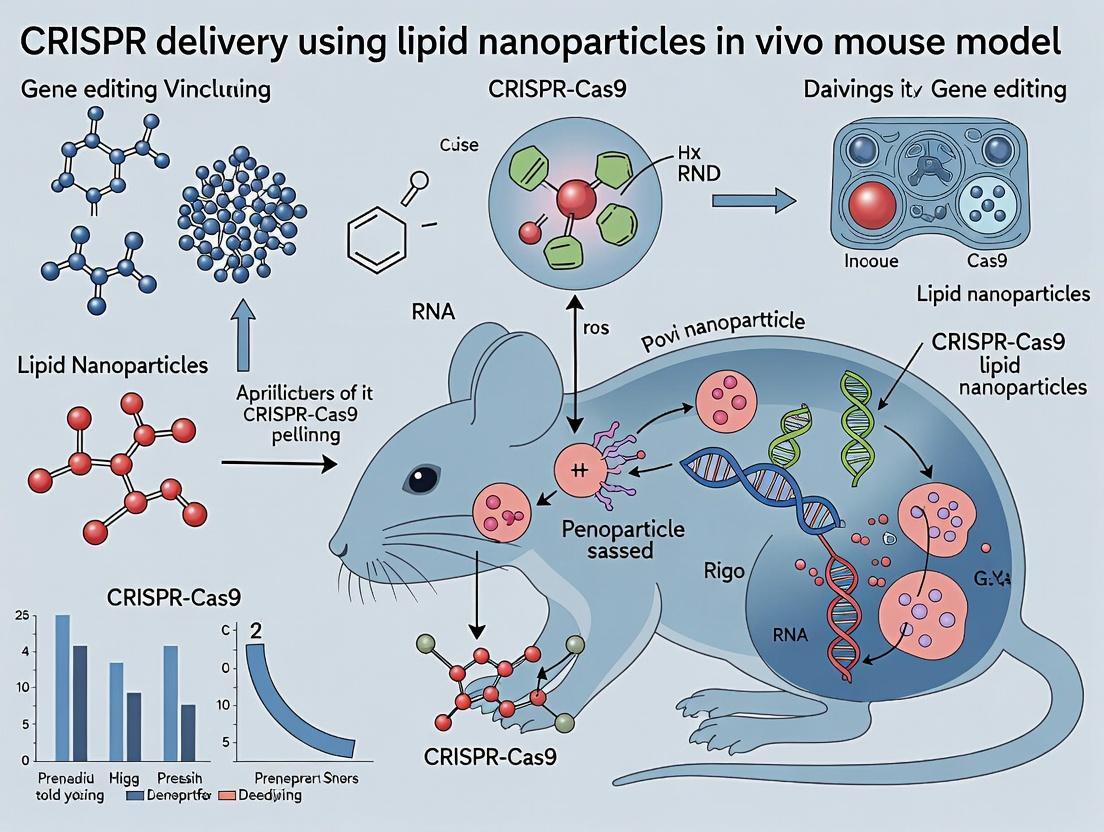
This comprehensive guide for researchers and drug developers details the application of lipid nanoparticles (LNPs) for CRISPR-Cas delivery in mouse models.
CRISPR-LNP In Vivo Delivery: A Comprehensive Guide to Mouse Model Design, Optimization & Validation
Abstract
This comprehensive guide for researchers and drug developers details the application of lipid nanoparticles (LNPs) for CRISPR-Cas delivery in mouse models. It covers foundational principles of CRISPR-LNP design, step-by-step methodological protocols for in vivo administration and biodistribution analysis, troubleshooting strategies for common challenges like immunogenicity and off-target effects, and rigorous approaches for validation and comparative assessment of editing efficacy. The article synthesizes current best practices to enable robust preclinical evaluation of CRISPR-LNP therapeutics.
CRISPR-LNP Fundamentals: Design, Mechanisms, and Mouse Model Selection
The efficacy of CRISPR-Cas genome editing in vivo is fundamentally determined by the payload format and its delivery vehicle. Lipid Nanoparticles (LNPs) have emerged as the leading non-viral delivery platform, with distinct formulation requirements for each payload type. The choice of payload impacts editing kinetics, durability, immunogenicity, and off-target risks.
Table 1: Comparative Analysis of CRISPR Payloads for LNP Delivery in Mouse Models
| Payload Component | Composition | Key Advantages | Key Challenges | Primary Editing Kinetics | Typical LNP Formulation Notes |
|---|---|---|---|---|---|
| sgRNA + Cas mRNA | Two separate RNA molecules: single-guide RNA and Cas9 (or other effector) messenger RNA. | In vivo expression leads to sustained Cas protein production, enabling multiple editing events. Highly scalable manufacturing. | Higher immunogenicity risk (dsRNA contaminants, innate immune sensing). Extended Cas presence may increase off-target editing. Delayed onset (requires translation). | Onset: 6-24h; Peak: 24-72h; Duration: Days. | Co-encapsulation of two RNAs is required. Ionizable lipid must optimize for mRNA translation efficiency. PEG-lipid ratio critical for hepatocyte targeting. |
| sgRNA + Cas9 RNP | Pre-complexed, purified Ribonucleoprotein: Cas9 protein bound to sgRNA. | Rapid editing onset. Reduced off-target effects due to short activity window. Minimal immunogenicity (no genetic material). | More complex manufacturing and LNP loading. Limited durability (single-cut). Lower scalability for protein production. | Onset: 1-6h; Peak: 6-24h; Duration: 24-48h. | Must encapsulate a large, charged protein complex. Lipid composition must stabilize protein integrity. Often requires microfluidics for precise assembly. |
| Self-Replicating RNA (srRNA) | Cas9 and sgRNA encoded in a replicon derived from alphaviruses (e.g., SFV, VEEV). | Ultra-low dose efficacy. Extremely high and prolonged expression from cytoplasmic amplification. | Very high immunogenicity can be cytotoxic or adjuvant-like. Complex sequence design and production. | Onset: 6-12h; Peak: 1-7 days; Duration: Weeks. | Requires careful attenuation of immunogenicity via modified nucleosides. LNP must deliver replicon to cytoplasm intact. |
Critical Insight: For mouse liver studies (the most common model), ionizable lipids like DLin-MC3-DMA (in Onpattro) and next-generation lipids (e.g., SM-102, ALC-0315) are standard. Payload selection directly influences the required N/P ratio (molar ratio of amine groups in lipids to phosphate groups in nucleic acids) during LNP formulation.
Protocol: Formulation of LNPs for Cas9 mRNA/sgRNA Co-Delivery
Objective: To prepare targeted LNPs for co-delivering Cas9 mRNA and sgRNA to the mouse liver using a microfluidic mixer.
Research Reagent Solutions:
| Reagent/Material | Function & Specification |
|---|---|
| Ionizable Lipid (e.g., SM-102) | Enables encapsulation and endosomal escape. Critical for liver targeting. |
| Helper Lipid (DSPC) | Stabilizes LNP bilayer structure and promotes fusogenicity. |
| Cholesterol | Modulates membrane fluidity and stability. |
| PEG-lipid (e.g., DMG-PEG2000) | Controls particle size, prevents aggregation, and modulates pharmacokinetics. |
| Cas9 mRNA (cleanCap, Ψ-modified) | Template for in vivo Cas9 protein production. Modifications reduce immunogenicity. |
| sgRNA (chemically modified, e.g., 2'-O-methyl, phosphorothioate) | Directs Cas9 to genomic target. Modifications enhance stability. |
| Sodium Acetate Buffer (pH 4.0) | Acidic aqueous phase for protonation of ionizable lipid during mixing. |
| Tris-EDTA Buffer (pH 7.5) | For dilution/dialysis of formed LNPs to neutral pH. |
| Microfluidic Chip (NanoAssemblr) | Enables rapid, reproducible mixing of lipid and aqueous phases. |
| Tangential Flow Filtration (TFF) System | For buffer exchange and concentration of final LNP product. |
Methodology:
- Lipid Solution Preparation: Dissolve ionizable lipid, DSPC, cholesterol, and PEG-lipid in ethanol at a molar ratio of 50:10:38.5:1.5. Final total lipid concentration: 10 mM.
- Aqueous Payload Solution Preparation: Combine Cas9 mRNA and sgRNA at a 1:2 (w/w) ratio in 25 mM sodium acetate buffer, pH 4.0. Total RNA concentration: 0.2 mg/mL.
- Microfluidic Mixing: Use a staggered herringbone micromixer chip. Set the total flow rate (TFR) to 12 mL/min and a flow rate ratio (FRR, aqueous:ethanol) of 3:1. Pump the two solutions simultaneously to form LNPs.
- Buffer Exchange & Dialysis: Immediately dilute the crude LNP solution 5x with 1x PBS (pH 7.4). Dialyze against 1x PBS using a TFF system (100 kDa MWCO) for 4 hours at 4°C to remove ethanol and establish neutral pH.
- Characterization: Measure particle size and PDI via DLS (target: 70-90 nm, PDI <0.15). Determine RNA encapsulation efficiency using a Ribogreen assay (>85% target). Assess ζ-potential (target: -5 to +5 mV).
Protocol: Preparation and LNP Loading of Cas9 RNP Complexes
Objective: To assemble, purify, and encapsulate pre-formed Cas9 RNP complexes into LNPs for rapid in vivo editing.
Methodology:
- RNP Complex Assembly: Incubate purified Cas9 protein (from E. coli or eukaryotic expression) with chemically modified sgRNA at a 1:1.2 molar ratio in a buffer containing 20 mM HEPES (pH 7.5) and 150 mM KCl for 10 min at 25°C.
- RNP Purification: Remove uncomplexed components using size-exclusion chromatography (SEC, e.g., Superdex 200 Increase column) with an isocratic buffer (e.g., PBS with 100 mM NaCl).
- LNP Formulation (Modified): Prepare lipid mixture as in Protocol 2.1. Replace the aqueous RNA solution with purified RNP in a citrate buffer (pH 5.0). The acidic pH is crucial for loading the large RNP complex. Use a higher TFR (e.g., 15 mL/min) and a lower FRR (2:1) to accommodate the viscous protein solution.
- Post-Formulation Processing: Dialyze immediately against PBS (pH 7.4) for 6 hours. Concentrate using centrifugal filters (100 kDa MWCO).
- Characterization: Use DLS and nanoparticle tracking analysis (NTA) to confirm monodisperse encapsulation. Assess bioactivity via an in vitro cleavage assay on plasmid DNA target.
Diagram: LNP Delivery & Intracellular Payload Release Pathways
(Diagram Title: LNP Delivery & Intracellular Payload Release Pathways)
Diagram: Experimental Workflow for In Vivo Mouse Evaluation
(Diagram Title: In Vivo Mouse Model CRISPR-LNP Workflow)
Table 2: Representative In Vivo Editing Data from Recent Literature (Mouse Liver)
| Payload Delivered via LNP | Target Gene | Dose (mg/kg) | Reported Editing Efficiency (Peak, % Indels) | Time to Peak | Key Formulation |
|---|---|---|---|---|---|
| Cas9 mRNA + sgRNA (modified) | Ttr | 1.0 | >95% | Day 3 | SM-102-based LNP |
| Cas9 RNP | Pcsk9 | 3.0 | ~70% | Day 2 | C12-200 lipid-based LNP |
| saCas9 mRNA + sgRNA | Pcsk9 | 0.5 | ~50% | Day 7 | ALC-0315-based LNP |
| Base Editor mRNA + sgRNA | Pah | 1.5 | ~60% (Conversion) | Day 7 | Custom ionizable lipid |
Note: Efficiencies are highly dependent on LNP composition, payload design, and mouse strain. Next-generation lipids consistently outperform early formulations like MC3.
This document provides Application Notes and Protocols for the key stages of CRISPR-LNP delivery in an in vivo mouse model. The content is framed within a thesis investigating the optimization of lipid nanoparticles for targeted, efficient, and safe delivery of CRISPR-Cas9 ribonucleoproteins (RNPs) or mRNA to hepatocytes. The pipeline's efficiency is the primary determinant of editing outcomes.
Application Notes & Quantitative Data
Systemic Injection & Pharmacokinetics (PK)
Upon intravenous (IV) injection, LNPs interact with plasma components, forming a "protein corona." Their surface chemistry (PEGylation) determines circulation time and organ tropism. For hepatocyte delivery, apolipoprotein E (ApoE) adsorption is critical for LDL receptor-mediated targeting.
Table 1: Key Pharmacokinetic Parameters for CRISPR-LNPs in Mice
| Parameter | Typical Value (IV Admin) | Influencing Factor | Impact on Delivery |
|---|---|---|---|
| Circulation Half-life (t1/2, β) | 1 - 6 hours | PEG lipid length & mol%, LNP size | Longer circulation increases hepatic uptake. |
| Volume of Distribution (Vd) | ~ Blood Volume | Rapid clearance by liver/spleen | Low Vd indicates confinement to plasma/organs of uptake. |
| Clearance (CL) | High (> organ blood flow) | Opsonization, ApoE binding | Primarily hepatic clearance. |
| Maximum Tolerated Dose (MTD) | 3-5 mg/kg mRNA | Lipid reactivity, immune stimulation | Dose-limiting toxicities include elevated cytokines & liver enzyme (ALT) rise. |
Cellular Uptake & Endosomal Escape
Hepatocyte uptake occurs primarily via ApoE-mediated endocytosis. The critical bottleneck is endosomal escape. Ionizable cationic lipids become protonated in acidic endosomes, enabling a hexagonal phase transition that disrupts the endosomal membrane.
Table 2: Efficiency Metrics for Cellular Uptake and Escape
| Metric | Typical Efficiency Range | Measurement Method | Notes |
|---|---|---|---|
| Cellular Uptake (% injected dose/g liver) | 40-70% | Quant. PCR (qPCR) of gRNA in tissue | Highly dependent on PEG shedding & ApoE binding. |
| Endosomal Escape Efficiency | < 5% of internalized dose | Gal8-mCherry assay, confocal microscopy | Primary bottleneck; defines payload bioavailability. |
| Functional Delivery (Editable Cells) | 1-30% of hepatocytes in vivo | Next-gen sequencing (NGS) of target locus | Ultimate measure of success; depends on all prior steps. |
| Endosomal pH Threshold for Escape | pH 6.2 - 5.5 | Rationetric pH sensors (e.g., pHrodo) | Correlates with pKa of ionizable lipid (optimal pKa ~6.4). |
Experimental Protocols
Protocol: Formulation of CRISPR-LNPs forIn VivoMouse Studies
Objective: Prepare sterile, stable LNPs encapsulating Cas9 mRNA and sgRNA. Reagents: Ionizable lipid (e.g., DLin-MC3-DMA), DSPC, Cholesterol, PEG-lipid, Cas9 mRNA, sgRNA, Citrate Buffer (pH 4.0), PBS (pH 7.4). Procedure:
- Prepare lipid solution in ethanol: Mix ionizable lipid, DSPC, cholesterol, and PEG-lipid at molar ratio (e.g., 50:10:38.5:1.5).
- Prepare aqueous phase: Dilute Cas9 mRNA and sgRNA in 25 mM citrate buffer (pH 4.0).
- Use a microfluidic mixer (e.g., NanoAssemblr) to combine aqueous and ethanol phases at a 3:1 flow rate ratio (aqueous:ethanol).
- Immediately dialyze the formed LNPs against PBS (pH 7.4) for 18 hours at 4°C using a 20kD MWCO membrane.
- Filter sterilize using a 0.22 µm PES syringe filter.
- Characterize LNP size (DLS: 70-100 nm), PDI (<0.2), encapsulation efficiency (RiboGreen assay: >90%), and concentration.
Protocol: Assessing Endosomal Escape in Primary Hepatocytes
Objective: Quantify endosomal disruption post-LNP uptake using the Galectin 8 (Gal8) recruitment assay. Reagents: Primary mouse hepatocytes, CRISPR-LNPs, Gal8-mCherry expression plasmid, Lipofectamine 3000, LysoTracker Green, Hoechst 33342, Live-cell imaging medium. Procedure:
- Seed hepatocytes in collagen-coated imaging dishes.
- Transfect cells with Gal8-mCherry plasmid using Lipofectamine.
- 24h post-transfection, treat cells with CRISPR-LNPs (dose: 0.5 µg mRNA/mL).
- After 2-4 hours, stain with LysoTracker Green (50 nM) and Hoechst (5 µg/mL) for 30 min.
- Acquire confocal images. Gal8 puncta (mCherry signal) co-localizing with LNPs (labeled with a fluorescent lipid) indicate endosomal membrane damage.
- Quantify: (Cells with >5 Gal8 puncta / Total LNP-positive cells) x 100 = % Escape Competent Cells.
Protocol:In VivoDelivery & Editing Assessment in Mouse Liver
Objective: Evaluate CRISPR-mediated gene editing in a C57BL/6 mouse model. Reagents: 8-10 week old C57BL/6 mice, sterile CRISPR-LNPs (1 mg mRNA/kg dose), saline, isoflurane, perfusion buffer (PBS), tissue homogenizer, DNA extraction kit, NGS primers. Procedure:
- Randomize and weigh mice. Anesthetize with isoflurane.
- Administer CRISPR-LNPs via tail vein injection (dose volume: 5-10 mL/kg).
- At endpoint (e.g., 7 days), euthanize mice and perfuse livers with cold PBS via portal vein.
- Harvest liver, snap-freeze a section in liquid N2, and store at -80°C.
- Extract genomic DNA from ~25 mg tissue.
- Amplify target genomic locus by PCR and subject to NGS.
- Analyze sequencing data with CRISPResso2 to calculate indel frequency (%). Note: Include appropriate animal ethics approval.
Diagrams
Title: CRISPR-LNP Delivery Pipeline in Mouse Liver
Title: Endosomal Escape Pathway & Bottleneck
The Scientist's Toolkit: Research Reagent Solutions
Table 3: Essential Materials for CRISPR-LNP Delivery Research
| Item | Function & Rationale | Example Product/Catalog |
|---|---|---|
| Ionizable Cationic Lipid | Critical for self-assembly & endosomal escape; protonatable headgroup disrupts endosomal membrane. | DLin-MC3-DMA, SM-102, ALC-0315 |
| PEGylated Lipid (PEG-lipid) | Stabilizes LNP, controls size, reduces opsonization; short PEG chains enhance in vivo targeting. | DMG-PEG2000, DSG-PEG2000 |
| Microfluidic Mixer | Enables reproducible, scalable LNP formulation with low polydispersity. | NanoAssemblr Ignite/NCS |
| RiboGreen Assay Kit | Quantifies encapsulated nucleic acid payload; uses dye fluorescence enhancement upon RNA binding. | Quant-iT RiboGreen (Thermo) |
| Gal8-mCherry Plasmid | Reporter for endosomal membrane damage; Gal8 recruits to exposed glycans upon rupture. | Addgene #140482 |
| LysoTracker Dyes | Stains acidic organelles (endosomes/lysosomes) to visualize intracellular trafficking. | LysoTracker Green DND-26 |
| CRISPResso2 Software | Computational tool for precise quantification of indel frequencies from NGS data. | (Open Source) |
| In Vivo JetPEI | Polyethylenimine-based transfectant; common positive control for in vivo nucleic acid delivery. | Polyplus 201-50G |
In the context of advancing CRISPR-Cas9 delivery via lipid nanoparticles (LNPs) for in vivo therapeutic applications, the selection of an appropriate mouse model is a critical determinant of experimental success. This choice directly impacts the validation of delivery efficiency, on-target editing, off-target effects, and therapeutic outcomes. This application note details the strategic selection and use of wild-type, disease-specific, and reporter strains, providing protocols for their application in LNP-CRISPR research.
Model Selection: Rationale and Quantitative Comparison
The table below summarizes the primary characteristics, applications, and quantitative considerations for the three main classes of mouse models in LNP-CRISPR studies.
Table 1: Comparative Analysis of Mouse Model Classes for LNP-CRISPR Research
| Model Class | Primary Application | Key Advantages | Key Limitations | Typical Readout Metrics |
|---|---|---|---|---|
| Wild-Type | Biodistribution, acute toxicity, initial PK/PD of LNPs. | Genetically unmodified baseline; readily available; lower cost. | No disease phenotype; cannot assess therapeutic efficacy directly. | LNP biodistribution (%ID/g), acute cytokine levels (pg/mL), initial editing % in normal tissue. |
| Disease-Specific | Therapeutic efficacy, disease mechanism, physiological correction. | Authentic disease pathophysiology; measures functional recovery. | Potential variable phenotype penetrance; higher cost and breeding complexity. | Survival rate (%), functional score (e.g., grip strength), pathological improvement, target correction (%). |
| Reporter Strains | Visualizing delivery efficiency, cell-type specificity, and editing in real-time. | Enables longitudinal, non-invasive tracking; quantifies cell-type-specific delivery. | Reporter signal may not correlate 1:1 with functional editing; requires specialized imaging. | Bioluminescence flux (photons/sec), fluorescent area (pixels), % of reporter-positive cells. |
Experimental Protocols
Protocol 1: Evaluating LNP Biodistribution and Acute Toxicity in Wild-Type C57BL/6 Mice
Objective: To determine the tissue tropism and safety profile of a novel CRISPR-LNP formulation. Materials: See "Research Reagent Solutions" below. Procedure:
- Formulation & Dose Preparation: Prepare Cy5-labeled CRISPR-LNP (encoding a non-targeting gRNA) at a dose of 3 mg/kg mRNA in sterile, endotoxin-free PBS.
- Animal Dosing: Administer a single intravenous injection via the tail vein to 8-week-old female C57BL/6J mice (n=5/group). Include a PBS-injected control group.
- In Vivo Imaging: At 1, 4, 12, 24, and 48 hours post-injection, anesthetize mice and image using an IVIS Spectrum system (Ex/Em: 640/680 nm). Quantify fluorescence in Regions of Interest (ROIs) for major organs.
- Ex Vivo Analysis: At 48 hours, euthanize mice. Collect blood for serum cytokine analysis (IL-6, TNF-α via ELISA) and harvest organs (liver, spleen, kidney, lung, heart). Weigh organs and image ex vivo.
- Data Analysis: Calculate % injected dose per gram (%ID/g) of tissue from ex vivo fluorescence, normalized to a standard curve. Compare cytokine levels and organ weights to controls.
Protocol 2: Assessing Therapeutic Efficacy in a Disease-Specific Model (e.g.,Fah⁻/⁻ HT1 Model)
Objective: To demonstrate corrective editing and functional rescue in a model of Hereditary Tyrosinemia Type 1. Materials: Fah⁻/⁻ mice on a defined genetic background, NTBC cycling supplies, CRISPR-LNP targeting the Fah locus. Procedure:
- Model Preparation: Maintain Fah⁻/⁻ mice on 7.5 mg/L NTBC in drinking water. Withdraw NTBC 48 hours before LNP administration to induce liver injury.
- Therapeutic Administration: Inject a single dose of Fah-targeting CRISPR-LNP (1 mg/kg mRNA) intravenously (n=8). Include an NTBC-maintained group and an untreated Fah⁻/⁻ group as controls.
- Monitoring & Efficacy Readouts:
- Survival: Monitor daily for 8 weeks.
- Body Weight: Measure twice weekly.
- Blood Biomarkers: Weekly retro-orbital bleeds to assess serum transaminases (ALT/AST) and succinylacetone (SA) levels.
- NTBC Re-administration: If mice show >20% weight loss, resume NTBC for one week to rescue.
- Endpoint Analysis: At 8 weeks, harvest liver. Perform genotyping (NGS) to calculate editing efficiency (%) at the Fah locus. Immunohistochemistry for FAH protein in liver sections. Quantify repopulation of FAH+ hepatocytes (%).
Protocol 3: Quantifying Cell-Type-Specific Editing Using a Cre-Dependent Reporter Strain (Ai14)
Objective: To quantify LNP delivery and CRISPR-mediated editing in specific cell lineages using the tdTomato Ai14 reporter mouse.
Materials: Ai14 mice (B6;129S6-Gt(ROSA)26Sor
- Animal Crossbreeding: Cross Ai14 mice to obtain homozygous reporter animals.
- LNP Administration: Inject Cre-encoding CRISPR-LNP intravenously or via a tissue-specific route (e.g., intratracheal for lung epithelia).
- Longitudinal Imaging: At days 3, 7, 14, and 28, image anesthetized mice using a fluorescence stereomicroscope or IVIS (for deep tissue). Quantify tdTomato signal intensity and area.
- Tissue Processing & Flow Cytometry: Euthanize mice at endpoint. Create single-cell suspensions from target tissue (e.g., liver, lung). Stain with lineage-specific antibodies (e.g., CD31 for endothelia, CD45 for leukocytes, EpCAM for epithelia).
- Analysis: Analyze by flow cytometry. Gate on live, single cells, then on lineage markers, and quantify the % of tdTomato+ cells within each lineage to determine cell-type-specific delivery/editing efficiency.
Visualizations
Title: Mouse Model Selection Workflow for LNP-CRISPR Studies
Title: Cre Reporter Activation Mechanism for Tracking Editing
The Scientist's Toolkit: Research Reagent Solutions
Table 2: Essential Materials for LNP-CRISPR Mouse Studies
| Reagent/Material | Function & Rationale | Example/Supplier Notes |
|---|---|---|
| Ionizable Lipids (e.g., DLin-MC3-DMA, SM-102) | Key LNP component for encapsulating mRNA and mediating endosomal escape. Critical for in vivo delivery efficiency. | Commercial formulations (e.g., GenVoy-ILM) or custom synthesis. |
| CRISPR RNA Components (mRNA/saRNA, gRNA) | Encodes Cas9 protein and provides targeting specificity. High-purity, modified bases enhance stability and reduce immunogenicity. | Trilink BioTechnologies (CleanCap mRNA), IDT (Alt-R gRNA). |
| Fluorescent Dyes (Cy5, DiR) | Conjugate to lipids or RNA for non-invasive, longitudinal tracking of LNP biodistribution via IVIS imaging. | Lumiprobe, Thermo Fisher Scientific. |
| In Vivo Imaging System (IVIS) | Enables quantitative, real-time fluorescence/bioluminescence imaging of reporter activation or LNP distribution. | PerkinElmer IVIS Spectrum, Bruker In-Vivo Xtreme. |
| Next-Generation Sequencing (NGS) Library Prep Kits | For unbiased quantification of on-target editing efficiency and genome-wide off-target screening (e.g., GUIDE-seq, CIRCLE-seq). | Illumina Nextera XT, Integrated DNA Technologies. |
| Multiplex Cytokine ELISA/Kits | Assess immunogenicity and acute toxicological responses to LNP administration by measuring key serum cytokines. | BioLegend LEGENDplex, R&D Systems ELISA Kits. |
| Tissue Dissociation Kits | Generate high-viability single-cell suspensions from liver, lung, tumor for downstream flow cytometry or single-cell RNA-seq. | Miltenyi Biotec GentleMACS, Worthington Biochemical collagenase. |
| Cell Lineage-Specific Antibodies | Essential for flow cytometry analysis to determine which cell types within a tissue have been targeted/edited. | BioLegend, BD Biosciences (e.g., CD45, CD31, EpCAM). |
Application Notes: Measuring LNP-CRISPR FateIn Vivo
In the context of CRISPR-Cas9 delivery via lipid nanoparticles (LNPs) in murine models, understanding biodistribution, pharmacokinetics (PK), and tissue tropism is critical for evaluating therapeutic efficacy and safety. Biodistribution determines which organs and cell types receive the editing machinery, pharmacokinetics defines the duration and concentration of systemic exposure, and tissue tropism reveals the inherent targeting preferences of the LNP formulation. These parameters are interdependent; LNP composition (ionizable lipid, PEG-lipid, cholesterol, helper lipid) directly influences tropism and PK, which in turn dictates the biodistribution profile. Current research focuses on engineering LNPs to de-target the liver (the default tropism for many LNPs) and enhance delivery to extrahepatic tissues like lungs, spleen, or brain.
Table 1: Representative Quantitative Data from Recent LNP-CRISPR Murine Studies
| Parameter / Organ | Example Metric (Intravenous Injection) | Typical Timepoint Post-Injection | Key Influencing Factor (LNP Property) |
|---|---|---|---|
| Liver Tropism | >80% of administered dose | 1-6 hours | Ionizable lipid structure, ApoE adsorption |
| Lung Tropism | 5-15% of dose (can be higher with specific designs) | 1-6 hours | PEG-lipid content, surface charge |
| Spleen Accumulation | 2-10% of dose | 1-6 hours | LNP size (<80 nm), lipid composition |
| Plasma Half-life (t1/2) | 0.5 - 3 hours | 0-24 hours | PEG-lipid shielding, particle stability |
| Peak Protein Expression (e.g., from mRNA) | 6 - 24 hours | 6-48 hours | LNP fusogenicity, endosomal escape |
| Genome Editing Efficiency (in target organ) | 10% - >60% (varies by tissue/cell type) | Days to weeks | Delivery efficiency, Cas9/gRNA format (mRNA vs. RNP) |
| Clearance Route | Primarily hepatic, some splenic | Hours to days | Particle degradability, immune uptake |
Detailed Experimental Protocols
Protocol 1: Quantifying Biodistribution via Fluorescent Labeling
Objective: To track the spatial and temporal accumulation of LNPs in vivo. Materials: Cy5- or DiR-labeled LNP (labeled lipid incorporated), IVIS Spectrum or similar in vivo imaging system, CD-1 or C57BL/6 mice, isoflurane anesthesia. Procedure:
- LNP Preparation: Incorporate 0.5-1 mol% of a fluorescently-tagged lipid (e.g., DSPE-Cy5) into the standard LNP formulation during microfluidics mixing.
- Administration: Inject mice intravenously via the tail vein with a standardized dose (e.g., 0.5 mg/kg mRNA or 1-5 mg/kg total lipid).
- In Vivo Imaging: Anesthetize mice at pre-determined timepoints (e.g., 0.5, 2, 6, 24, 48 h). Acquire fluorescence images (Ex/Em appropriate for dye) using the IVIS system. Maintain consistent exposure settings.
- Ex Vivo Imaging: Euthanize mice at terminal timepoints. Harvest major organs (heart, lungs, liver, spleen, kidneys). Rinse in PBS, image ex vivo on the IVIS plate.
- Data Analysis: Use living image software to draw regions of interest (ROIs) around organs. Quantify total radiant efficiency (
[p/s]/[μW/cm²]). Normalize to an untreated control organ background.
Protocol 2: Pharmacokinetic and Blood Clearance Profile
Objective: To measure the concentration of LNP components in blood over time. Materials: LNP containing traceable component (³H-cholesterol, Cy5-lipid, or encapsulated cargo like siRNA/mRNA), microcentrifuge tubes, heparinized capillary tubes, qPCR machine (if quantifying mRNA). Procedure:
- Dosing & Blood Collection: Administer LNP IV. At serial timepoints (e.g., 2 min, 15 min, 30 min, 1h, 2h, 4h, 8h, 24h), collect ~20 µL of blood via tail nick or retro-orbital bleed into heparinized tubes.
- Sample Processing (for fluorescent label): Lyse 10 µL blood in 1% Triton X-100. Measure fluorescence with a plate reader. Generate a standard curve from spiked control blood.
- Sample Processing (for RNA cargo): Extract total RNA from blood samples immediately using a micro-scale RNA kit. Perform reverse transcription followed by quantitative PCR (qPCR) using primers specific to the delivered mRNA or a tag sequence.
- PK Modeling: Plot concentration (or % injected dose) vs. time. Use non-compartmental analysis (e.g., with PK Solver) to calculate key parameters: elimination half-life (t1/2), area under the curve (AUC), clearance (CL), and volume of distribution (Vd).
Protocol 3: Assessing Tissue Tropism and Cell-Type Specific Uptake
Objective: To identify which cell types within a tissue internalize the LNP. Materials: LNP with encapsulated reporter mRNA (e.g., Cre or GFP), target mouse model, flow cytometer, tissue dissociation kit, cell staining antibodies. Procedure:
- In Vivo Delivery: Inject LNP-reporter IV into mice.
- Tissue Processing: At peak expression time (e.g., 24h for mRNA), perfuse mouse with PBS. Harvest tissues, dissociate into single-cell suspensions using gentleMACS dissociator and appropriate enzymes.
- Cell Staining & Analysis: Filter cells, stain with viability dye and fluorescent antibodies for specific cell markers (e.g., CD31 for endothelial cells, F4/80 for Kupffer cells, CD45 for leukocytes, hepatocyte-specific antigen).
- Flow Cytometry: Acquire data on a flow cytometer. Gate on live, single cells. Analyze the percentage of GFP+ (or Cre+) cells within each phenotypically defined cell population to determine tropism at the cellular level.
Visualizations
Diagram 1: The Interrelationship of Key In Vivo LNP Parameters
Diagram 2: Integrated Workflow for Measuring Biodistribution and Tropism
The Scientist's Toolkit: Research Reagent Solutions
Table 2: Essential Materials for LNP-CRISPR In Vivo Studies
| Item | Function & Application | Example/Notes |
|---|---|---|
| Microfluidic Mixer | Enables reproducible, scalable formation of uniform LNPs via rapid mixing of lipid and aqueous phases. | NanoAssemblr Ignite or Precision NanoSystems' system. |
| Ionizable Cationic Lipid | Key structural component for encapsulation, endosomal escape, and determining in vivo tropism. | DLin-MC3-DMA (MC3), SM-102, ALC-0315. Novel lipids target extrahepatic tissues. |
| PEGylated Lipid | Stabilizes LNP, controls size, modulates pharmacokinetics and protein adsorption. | DMG-PEG2000, DSG-PEG2000. Reduced % enhances hepatocyte uptake. |
| Fluorescent Lipophilic Dye | Labels LNP membrane for non-invasive tracking of biodistribution via imaging. | DiD, DiR, DSPE-Cy5. Incorporate at ~0.5 mol%. |
| In Vivo Imaging System (IVIS) | Non-invasive, longitudinal quantification of fluorescent or bioluminescent signals in live animals. | PerkinElmer IVIS Spectrum. Critical for biodistribution kinetics. |
| Tissue Dissociation System | Generates single-cell suspensions from harvested organs for downstream cellular tropism analysis. | gentleMACS Octo Dissociator with heaters. |
| CRISPR Payload | The active editing component. Can be delivered as mRNA, RNPs, or plasmid DNA. | Cas9 mRNA + sgRNA, or pre-complexed Cas9 RNP. |
| qPCR Assay Kits | Quantifies plasma pharmacokinetics of nucleic acid payloads (mRNA) or edits at target genomic loci. | TaqMan assays for specific sequences. Digital PCR for rare event detection. |
Ethical Considerations and Regulatory Framework for Animal Studies
This document provides application notes and protocols for conducting ethically and regulatory-compliant research involving the use of lipid nanoparticle (LNP)-mediated CRISPR-Cas9 delivery in in vivo mouse models. This framework is essential for any thesis work in this field, ensuring scientific integrity and public trust.
Ethical Principles and Oversight
The core ethical principles governing animal research are the "3Rs": Replacement, Reduction, and Refinement.
- Replacement: Use non-animal alternatives (e.g., cell cultures, in silico models) whenever possible. For initial LNP formulation toxicity screening, use immortalized cell lines.
- Reduction: Use the minimum number of animals to obtain statistically valid results. Employ rigorous experimental design and statistical power analysis.
- Refinement: Modify procedures to minimize pain, distress, and lasting harm. This includes using appropriate anesthetics, analgesics, and humane endpoints.
Protocol 1.1: Establishing Humane Endpoints for LNP-CRISPR Studies Objective: To predefine clinical signs that trigger intervention or euthanasia to prevent severe suffering. Materials: Score sheet, calibrated weighing scale, monitoring equipment. Procedure:
- Pre-study Definition: In the approved animal protocol, define clear, objective humane endpoints. These must be specific to the expected phenotype from the genetic modification and potential LNP toxicity (e.g., inflammatory response).
- Clinical Scoring: Implement at least twice-daily monitoring. Use a scoring sheet to assess parameters such as:
- Body weight loss (>20% from baseline or >15% in 48 hours).
- Physical condition (e.g., hunched posture, piloerection, lethargy).
- Behavioral changes (e.g., lack of responsiveness, inability to access food/water).
- Clinical signs (e.g., dyspnea, neurological deficits, tumor burden exceeding 10% body weight).
- Action Thresholds: Define score thresholds that mandate veterinary consultation, analgesia, or euthanasia.
- Documentation: Record all observations and actions taken.
Regulatory and Compliance Framework
Research must comply with national and institutional regulations. In the United States, this is primarily governed by the Animal Welfare Act (AWA) and the Public Health Service (PHS) Policy. Oversight is provided by the Institutional Animal Care and Use Committee (IACUC).
Protocol 2.1: IACUC Protocol Preparation and Submission Objective: To obtain formal approval for animal research activities. Procedure:
- Complete the Application: Provide a non-technical summary, detailed rationale, and a clear hypothesis.
- Justify Animal Use: Explicitly address the 3Rs. Explain why a mouse model is necessary over alternatives and detail steps taken to reduce and refine.
- Describe Procedures: Detail all procedures: LNP formulation, route of administration (e.g., intravenous, intramuscular), dosing regimen, blood collection, imaging, and tissue harvest.
- Define Anesthesia/Analgesia: Specify drugs, doses, routes, and monitoring procedures for survival surgeries.
- Describe Euthanasia Method: Specify method (e.g., CO2 inhalation followed by cervical dislocation) as per the AVMA Guidelines.
- Provide Personnel Qualifications: List all personnel and their training in animal procedures.
- Submit and Respond: Submit to IACUC and be prepared to respond to questions or modifications.
Experimental Protocols with Ethical Integration
Protocol 3.1: Ethical Administration of CRISPR-LNP in Mice Objective: To systemically administer LNP formulations while minimizing animal distress. Materials: See "Research Reagent Solutions" table. Procedure:
- Animal Acclimatization: House mice for a minimum of 72 hours pre-procedure.
- Restraint: Use appropriate, gentle restraint for the injection route. For intravenous (tail vein), use a rodent restrainer and warm the tail to dilate veins.
- Administration:
- Intravenous (IV): Using a 30G insulin syringe, inject slowly (max 100µL/10 sec). Observe for immediate distress.
- Intramuscular (IM): For hind limb, inject up to 50µL per site.
- Post-procedure Care: Return animal to cage with monitoring. Provide supplemental warmth if needed. Administer post-procedural analgesics (e.g., Carprofen, 5mg/kg SC) if signs of pain are anticipated.
Protocol 3.2: Longitudinal Monitoring for Efficacy and Adverse Events Objective: To track gene editing efficacy and potential off-target toxicity ethically. Materials: PCR/qPCR instruments, NGS platform for off-target analysis, blood collection supplies, imaging system. Procedure:
- Non-invasive Sampling: For longitudinal genotyping, use ear notch or tail tip biopsies (<2mm) taken under brief restraint or anesthesia.
- Blood Collection: For serum cytokine analysis (e.g., IL-6, TNF-α to assess inflammation), use submandibular or retro-orbital bleeding only under deep anesthesia, performed by trained personnel, with volume limits (<10% of total blood volume every 2 weeks).
- Efficacy Assessment: Terminally harvest target tissues (e.g., liver) for DNA/RNA/protein analysis to assess editing rates (% INDELs via NGS) and gene expression changes.
- Off-target Analysis: Use computational prediction (e.g., CIRCLE-seq) on target tissues to identify potential off-target sites, followed by amplicon-based NGS.
Data Presentation
Table 1: Quantitative Framework for Animal Use Justification (Reduction)
| Statistical Parameter | Target Value | Justification |
|---|---|---|
| Primary Endpoint | % Gene Editing in Liver | Based on LNP tropism. |
| Expected Effect Size | 40% ± 15% INDELs | Based on pilot/published data. |
| Significance Level (α) | 0.05 | Standard threshold. |
| Power (1-β) | 0.80 | Standard threshold. |
| Expected SD | 12% | Based on pilot/published data. |
| Calculated N per Group | 8 mice | Result from power analysis. |
| Added for Attrition | 2 mice per group | For unexpected mortality. |
| Final N per Group | 10 mice | Total required. |
Table 2: Common Humane Endpoint Scoring Sheet (Refinement)
| Parameter | Score 0 (Normal) | Score 1 (Mild) | Score 2 (Moderate) | Score 3 (Severe) | Action |
|---|---|---|---|---|---|
| Body Weight Loss | <10% | 10-15% | 15-20% | >20% | Score 2: Vet consult. Score 3: Euthanize. |
| Posture/Activity | Normal | Mildly hunched, active | Hunched, lethargic | Moribund, unresponsive | Score 2: Vet consult. Score 3: Euthanize. |
| Coat Condition | Smooth | Slight piloerection | Ruffled, dirty | Severe piloerection | Monitor. |
| Tumor Burden | Not palpable | <5% BW | 5-10% BW | >10% BW | Score 3: Euthanize. |
Visualizations
Title: Ethical-Regulatory Workflow for Animal Research
Title: LNP-CRISPR Mechanism & Ethical Risk Monitoring
The Scientist's Toolkit: Research Reagent Solutions
| Item | Function/Justification | Example/Note |
|---|---|---|
| CRISPR-Cas9 RNP or mRNA | The active editing component. RNP allows faster action, mRNA provides prolonged expression. | Chemically modified Cas9 mRNA and sgRNA. |
| Ionizable Cationic Lipid | Critical LNP component for encapsulating nucleic acids and enabling endosomal escape. | DLin-MC3-DMA, SM-102, ALC-0315. |
| PEGylated Lipid | Stabilizes LNP, controls size, and reduces macrophage clearance. | DMG-PEG 2000. Provides "stealth" properties. |
| Animal Monitoring Software | For objective tracking of body weight, activity, and behavior to support humane endpoint decisions. | Systems like EchoMRI for body composition, home cage monitoring. |
| Analgesics | For post-procedural pain relief as a refinement strategy. | Carprofen (5 mg/kg SC) or Buprenorphine SR (1 mg/kg SC). |
| Point-of-Care Analyzer | For rapid analysis of small-volume blood samples (e.g., for liver enzymes, cytokines). | i-STAT handheld analyzer. Enables reduction via repeated microsampling. |
| Next-Generation Sequencer | For assessing on-target editing efficiency and comprehensive off-target analysis. | Illumina MiSeq for amplicon deep sequencing. Critical for safety assessment. |
| Humane Euthanasia System | For compliant euthanasia at protocol end or upon reaching a humane endpoint. | Controlled CO2 chamber with flow meter (30-70% displacement/min). |
Step-by-Step Protocol: Administering CRISPR-LNPs and Measuring Editing In Vivo
LNP Preparation, Characterization (Size, PDI, EE), and Pre-dosing QC
Application Notes
Within a thesis focusing on CRISPR-Cas9 delivery via lipid nanoparticles (LNPs) for in vivo mouse model research, rigorous formulation and quality control (QC) are paramount. LNPs must protect the cargo (e.g., sgRNA and Cas9 mRNA), facilitate targeted delivery, and exhibit minimal toxicity. This document details protocols for LNP preparation, characterization of critical physicochemical parameters, and essential pre-dosing QC to ensure experimental reproducibility and validity in vivo.
The efficacy of LNP-mediated CRISPR delivery hinges on key attributes: particle size influences biodistribution and cellular uptake, polydispersity index (PDI) indicates batch homogeneity, and encapsulation efficiency (EE) directly relates to the dose of active cargo delivered. Pre-dosing QC integrates these parameters to establish release criteria for animal studies.
Experimental Protocols
Protocol 1: Microfluidic Mixing for LNP Formulation
Objective: To prepare CRISPR-loaded LNPs using a controlled, scalable method.
Materials (Research Reagent Solutions):
- Lipids: Ionizable cationic lipid (e.g., DLin-MC3-DMA), DSPC, cholesterol, PEG-lipid (e.g., DMG-PEG 2000).
- Aqueous Phase: Citrate buffer (pH 4.0) containing CRISPR payload (sgRNA/Cas9 mRNA or RNP).
- Organic Phase: Ethanol.
- Equipment: Microfluidic mixer (e.g., NanoAssemblr, ICI), syringes, tubing, collection vial.
Method:
- Prepare the lipid mixture by dissolving ionizable lipid, DSPC, cholesterol, and PEG-lipid at a defined molar ratio (e.g., 50:10:38.5:1.5) in ethanol to a total lipid concentration of 10-20 mM.
- Dissolve the CRISPR payload in citrate buffer (pH 4.0).
- Load the lipid-ethanol solution and the aqueous payload solution into separate syringes.
- Connect syringes to the microfluidic mixer. Set the total flow rate (TFR) to 10-12 mL/min and a flow rate ratio (FRR, aqueous:organic) of 3:1.
- Initiate mixing. Collect the formed LNPs in a vial.
- Immediately dialyze (or use tangential flow filtration) against phosphate-buffered saline (PBS, pH 7.4) for 2-4 hours at 4°C to remove ethanol and exchange the buffer.
- Sterile-filter the final LNP suspension through a 0.22 μm pore-size filter.
Protocol 2: Dynamic Light Scattering (DLS) for Size and PDI
Objective: To measure the hydrodynamic diameter and size distribution of LNPs.
Method:
- Dilute the purified LNP sample 1:50 in 1x PBS or filtered, deionized water in a low-volume cuvette.
- Equilibrate the sample in the DLS instrument (e.g., Malvern Zetasizer) at 25°C for 2 minutes.
- Set measurement parameters: material RI = 1.45, dispersant viscosity = 0.8872 cP, dispersant RI = 1.330.
- Perform measurement with at least 12-15 sub-runs.
- Record the Z-average diameter (nm) and the polydispersity index (PDI). A PDI < 0.2 is considered monodisperse.
Protocol 3: Ribogreen Assay for Encapsulation Efficiency (EE)
Objective: To quantify the percentage of nucleic acid cargo encapsulated within LNPs.
Method:
- Prepare two sets of LNP samples in a 96-well plate, each in triplicate:
- Total Cargo (T): Dilute LNPs 1:100 in 1x TE buffer with 0.5% (v/v) Triton X-100. Incubate 10 min to lyse particles.
- Free Cargo (F): Dilute LNPs 1:100 in 1x TE buffer without detergent.
- Prepare a standard curve of the free nucleic acid payload in 1x TE buffer + 0.5% Triton X-100.
- Add Quant-iT Ribogreen reagent (1:200 dilution in TE) to each well. Protect from light, incubate 5 min.
- Measure fluorescence (excitation ~480 nm, emission ~520 nm).
- Calculate EE: EE (%) = [(T - F) / T] × 100.
Protocol 4: Pre-dosing Quality Control Checklist
Objective: To verify LNP batch suitability for in vivo mouse administration.
Method:
- Sterility: Perform a limulus amebocyte lysate (LAL) assay to confirm endotoxin levels are < 5 EU/kg mouse body weight.
- Concentration: Measure particle concentration via nanoparticle tracking analysis (NTA) or deduce from lipid phosphorus assay. Target > 1e12 particles/mL for dosing.
- pH & Osmolality: Confirm final formulation pH is 7.2-7.4 and osmolality is ~300 mOsm/kg.
- Visual Inspection: Solution should be clear, slightly opalescent, and devoid of aggregates or precipitate.
- Stability: Monitor size and PDI of the dose solution at room temperature over the projected dosing period (e.g., 4 hours). Significant change (>10% size increase) indicates instability.
Data Presentation
Table 1: Representative LNP Characterization Data for In Vivo CRISPR Delivery
| Parameter | Method | Target Specification | Typical Result (Mean ± SD) |
|---|---|---|---|
| Hydrodynamic Diameter | DLS | 70-100 nm | 85 ± 5 nm |
| Polydispersity Index (PDI) | DLS | ≤ 0.20 | 0.12 ± 0.03 |
| Encapsulation Efficiency (EE) | Ribogreen Assay | ≥ 85% | 92 ± 3% |
| Zeta Potential | Electrophoretic Light Scattering | -5 to +5 mV (in PBS) | -2.5 ± 1.5 mV |
| Endotoxin Level | LAL Assay | < 5 EU/kg | < 1 EU/mL |
| Particle Concentration | NTA | > 1e12 particles/mL | 3.5e12 ± 0.4e12 part./mL |
Table 2: Research Reagent Solutions Toolkit
| Item | Function/Application |
|---|---|
| Ionizable Cationic Lipid (e.g., DLin-MC3-DMA) | Key structural component; protonates in acidic endosomes to facilitate cargo release. |
| DSPC (Phospholipid) | Provides structural integrity to the LNP bilayer. |
| Cholesterol | Enhances LNP stability and membrane fusion capacity. |
| PEG-lipid (e.g., DMG-PEG 2000) | Provides a hydrophilic corona, reducing aggregation and prolonging circulation time. |
| Quant-iT Ribogreen Assay | Fluorescent dye used to selectively quantify encapsulated vs. free RNA. |
| Microfluidic Mixer (NanoAssemblr) | Enables rapid, reproducible mixing for precise, scalable LNP formation. |
| Citrate Buffer (pH 4.0) | Acidic aqueous phase promotes lipid protonation and stable particle formation during mixing. |
Visualizations
Title: LNP Formulation via Microfluidics Workflow
Title: Pre-dosing LNP Quality Control Decision Tree
Within the thesis framework of developing CRISPR-Cas9 lipid nanoparticles (LNPs) for in vivo mouse model research, selecting the optimal route of administration (ROA) is paramount. The ROA dictates the biodistribution, cellular uptake, editing efficiency, and potential off-target effects. This document provides detailed application notes and standardized protocols for intravenous, local, and tissue-specific injection techniques, incorporating recent quantitative findings and methodological best practices.
Quantitative Comparison of Administration Routes
Recent studies highlight critical differences in delivery outcomes based on ROA. The following table synthesizes key quantitative data from current literature (2023-2024).
Table 1: Comparative Efficacy and Biodistribution of CRISPR-LNP Administration Routes in Mice
| Route of Administration | Primary Target Tissues | Peak Expression Time | Estimated Editing Efficiency In Vivo* | Key Advantages | Key Limitations |
|---|---|---|---|---|---|
| Intravenous (IV) - Tail Vein | Liver (60-90%), Spleen, Lung | 6-24 hours | 40-60% (hepatocytes) | Systemic delivery, high liver tropism, well-standardized. | Lower targeting to extrahepatic tissues, potential immune activation. |
| Local - Intratumoral (IT) | Solid Tumor & Microenvironment | 12-48 hours | 10-30% (tumor cells) | High local concentration, minimizes systemic exposure. | Limited to accessible tumors, heterogeneous distribution within tumor. |
| Local - Intramuscular (IM) | Skeletal Muscle, Draining Lymph Nodes | 24-72 hours | 5-20% (myofibers) | Suitable for genetic vaccines/muscular disorders. | Relatively lower efficiency, localized effect. |
| Tissue-Specific - Intracerebroventricular (ICV) | Brain (Neurons, Glia) | 3-7 days | 15-35% (region-dependent) | Bypasses blood-brain barrier, direct CNS targeting. | Surgically invasive, requires stereotactic equipment. |
| Tissue-Specific - Subretinal (SR) | Retinal Pigment Epithelium, Photoreceptors | 7-14 days | 20-50% (RPE cells) | Direct retinal delivery, minimal systemic spillover. | Technically challenging, risk of retinal detachment. |
*Editing efficiency is highly dependent on LNP formulation, CRISPR payload, and promoter used. Values represent ranges from recent peer-reviewed studies.
Detailed Experimental Protocols
Protocol 2.1: Intravenous (IV) Injection via the Mouse Tail Vein
Objective: To achieve systemic delivery of CRISPR-LNPs for widespread, liver-targeted gene editing. Materials: CRISPR-LNP suspension (in sterile, endotoxin-free PBS or sucrose buffer), 28-30G insulin syringes, mouse restrainer, heat lamp or warm chamber, 70% ethanol, gauze. Procedure:
- Mouse Preparation: Place mouse in a restrainer. Gently warm the tail for 1-2 minutes under a heat lamp (≤42°C) to cause vasodilation.
- Vein Identification: Clean the tail with 70% ethanol. Identify one of the two lateral tail veins.
- Injection: Using a 28-30G needle, insert it parallel to the vein at a shallow angle (10-15°). A flashback of blood indicates correct placement.
- Administration: Inject the CRISPR-LNP solution smoothly (typical volume: 100-200 µL for a 20-25g mouse; dose: 1-5 mg/kg mRNA). Do not force if resistance is felt.
- Post-injection: Withdraw the needle and apply gentle pressure with gauze to achieve hemostasis. Monitor the mouse until fully recovered. Notes: Formulations utilizing ionizable cationic lipids (e.g., DLin-MC3-DMA, SM-102) show superior hepatocyte tropism post-IV injection.
Protocol 2.2: Local Intratumoral (IT) Injection
Objective: To deliver CRISPR-LNPs directly into a subcutaneous or accessible tumor mass. Materials: CRISPR-LNP suspension, 29-30G insulin syringes, isoflurane/anesthesia equipment, animal clippers, antiseptic scrub. Procedure:
- Anesthesia: Induce and maintain anesthesia using isoflurane (2-3% in oxygen).
- Site Preparation: Shave the area around the tumor. Disinfect the skin with alternating betadine and 70% ethanol scrubs (3 times each).
- Injection: Stabilize the tumor manually. Insert the needle into the tumor mass at multiple sites (2-4 depending on size) to maximize distribution. Inject a total volume not exceeding 10-20% of the tumor volume (e.g., 50 µL for a 500 mm³ tumor).
- Dwell Time: Leave the needle in place for 10-15 seconds after each injection to minimize backflow.
- Recovery: Place the mouse in a warm, clean cage and monitor until ambulatory.
Protocol 2.3: Tissue-Specific Intracerebroventricular (ICV) Injection
Objective: To deliver CRISPR-LNPs directly into the cerebrospinal fluid of the brain ventricles. Materials: CRISPR-LNP suspension, stereotaxic apparatus, microsyringe (e.g., Hamilton, 33G needle), isoflurane anesthesia, drill, bone wax, sterile surgical tools. Procedure:
- Anesthesia & Positioning: Deeply anesthetize the mouse and secure its head in the stereotaxic frame using ear bars and a nose clamp. Apply ophthalmic ointment.
- Stereotaxic Coordinates: Shave and disinfect the scalp. Make a midline incision. Identify Bregma. Calculate coordinates for the lateral ventricle (e.g., -0.5 mm AP, ±1.0 mm ML from Bregma, -2.3 mm DV from the skull surface).
- Craniotomy: Drill a small burr hole at the calculated coordinates.
- Injection: Load the LNP suspension into the microsyringe. Lower the needle to the DV coordinate at a rate of 1 mm/min. Inject 3-5 µL total volume at a rate of 0.5 µL/min.
- Needle Withdrawal: Leave the needle in place for 5 minutes post-injection, then withdraw slowly (1 mm/min). Seal the burr hole with bone wax. Suture the skin.
- Post-operative Care: Administer analgesic (e.g., carprofen) and monitor closely until recovery.
Visualizations
Title: CRISPR-LNP Administration Route Decision Workflow
Title: IV LNP Pathway to Liver Editing
The Scientist's Toolkit: Essential Reagents & Materials
Table 2: Key Research Reagent Solutions for CRISPR-LNP In Vivo Delivery
| Item | Function/Description | Example Vendor/Catalog |
|---|---|---|
| Ionizable Cationic Lipid | Critical LNP component for encapsulating nucleic acids, enabling endosomal escape. Determines tropism. | SM-102 (Avanti), DLin-MC3-DMA (MedChemExpress) |
| PEGylated Lipid | Stabilizes LNP, controls size, and modulates pharmacokinetics and cellular uptake. | DMG-PEG2000 (Avanti), DSG-PEG2000 (NOF America) |
| Sterile, Endotoxin-Free Buffer | For final LNP formulation/resuspension. Critical for in vivo studies to prevent immune reactions. | 1x PBS, pH 7.4 (Thermo Fisher), 10 mM Sucrose Buffer |
| In Vivo JetPEI | Polyethylenimine-based transfection reagent, used as a non-LNP benchmark for local delivery. | Polyplus (201-10G) |
| Luciferase Reporter Plasmid/mRNA | Control payload to validate delivery efficiency and biodistribution via bioluminescence imaging. | pCMV-Luc2 (Promega), Luciferase mRNA (Trilink) |
| Cas9 mRNA / sgRNA Complex | The active CRISPR-Cas9 editing payload for encapsulation. | Custom synthesis (e.g., Trilink, Aldevron, IDT) |
| In Vivo Imaging System (IVIS) | For non-invasive, longitudinal tracking of luciferase expression or fluorescent reporters. | PerkinElmer IVIS Spectrum |
| Next-Generation Sequencing (NGS) Kit | For comprehensive analysis of on-target editing efficiency and off-target profiling. | Illumina MiSeq, amplicon-seq kits (IDT) |
| Tissue Homogenization Kit | For efficient extraction of genomic DNA or RNA from target tissues (liver, tumor, brain). | QIAGEN DNeasy Blood & Tissue Kit |
Within the broader thesis on optimizing CRISPR-Cas9 delivery via lipid nanoparticles (LNPs) in murine models, defining the optimal dosing regimen is critical. The therapeutic efficacy and safety profile are directly influenced by the choice between a single high-dose administration and a fractionated multiple-dose strategy. This document outlines application notes and protocols for evaluating these strategies, focusing on gene editing efficiency, biodistribution, and tolerability.
Key Considerations and Comparative Data
Table 1: Comparison of Single vs. Multiple Dosing Strategies for CRISPR-LNPs in Mice
| Parameter | Single High Dose | Multiple Fractionated Doses | Key Measurement Outcomes |
|---|---|---|---|
| Peak Plasma Concentration (Cmax) | Very High | Moderated, repeated peaks | ELISA, biofluorescence |
| Target Tissue Exposure (AUC) | High, but potentially brief | Sustained over time | qPCR of tissue lysates |
| Gene Editing Efficiency | Potentially high but variable | Potentially more consistent | NGS indel analysis, T7E1 assay |
| Off-Target Effects Risk | Increased with high Cmax | Potentially reduced with lower per-dose exposure | GUIDE-seq, targeted NGS |
| Immune Activation Risk | Higher risk of acute reactogenicity | Lower per-dose, but repeated exposure | Cytokine ELISA (IL-6, IFN-γ) |
| Tolerability (Clinical Signs) | Potential for acute toxicity | Generally better per-dose tolerability | Body weight, activity scoring |
| Example Protocol | 5 mg/kg, IV, single bolus | 1.25 mg/kg, IV, x4 doses (days 0, 3, 7, 10) | Editing % in liver/spleen at day 14 |
Table 2: Concentration Optimization Parameters for CRISPR-LNP Formulations
| Parameter | Test Range | Assay Method | Optimization Goal |
|---|---|---|---|
| Total Lipid Dose | 0.1 - 10 mg/kg | In vivo efficacy screen | Max editing with minimal ALT/AST elevation |
| sgRNA: Cas9 mRNA Ratio (wt/wt) | 0.5:1 to 2:1 | RiboGreen assay, in vitro editing | Maximal RNP complex formation & activity |
| LNP Particle Concentration | 1e10 - 1e13 particles/mL | NTA (Nanoparticle Tracking Analysis) | Consistent delivery, avoid aggregation |
| Injection Volume | 5 - 200 µL (mouse IV) | Animal welfare & dosing accuracy | Standardized to 10 µL/g body weight (IV tail vein) |
| Dosing Interval (Multi-dose) | 3 - 14 days between doses | Longitudinal editing & immunogenicity | Allow effector cell turnover, minimize anti-Cas9 response |
Experimental Protocols
Protocol 3.1: Comparative Efficacy Study of Dosing Regimens
Objective: To compare gene knockout efficiency in the liver between single and multiple LNP doses. Materials: CRISPR-LNPs (containing Cas9 mRNA and sgRNA targeting Pcsk9), C57BL/6 mice (n=5/group), IV injection supplies. Procedure:
- Formulation: Prepare LNP stock at 1 mg/mL total RNA in sterile PBS.
- Group Allocation:
- Group A (Single Dose): Calculate dose for 5 mg/kg. Administer via tail vein IV on Day 0.
- Group B (Multiple Dose): Calculate dose for 1.25 mg/kg. Administer via tail vein IV on Days 0, 3, 7, and 10.
- Group C: Vehicle control (PBS).
- Monitoring: Record body weight daily. Collect blood serum on Days 1, 4, 8, 11 for liver enzyme (ALT/AST) analysis.
- Terminal Analysis (Day 14): Euthanize mice. Perfuse with PBS. Harvest liver, spleen, and kidneys.
- Tissue Processing: Homogenize a portion of each tissue. Extract genomic DNA.
- Efficiency Quantification: Amplify target locus by PCR. Analyze indel frequency via T7 Endonuclease I assay or next-generation sequencing.
Protocol 3.2: Quantifying Biodistribution and Pharmacokinetics
Objective: To measure LNP circulation time and tissue accumulation. Materials: Fluorescently labeled (e.g., DiR dye) CRISPR-LNPs, IVIS Spectrum imaging system. Procedure:
- Dosing: Administer a single dose of fluorescent LNPs (equivalent to 1 mg/kg RNA) to mice.
- Longitudinal Imaging: Anesthetize mice and image at time points: 5 min, 30 min, 2 h, 8 h, 24 h, 48 h post-injection.
- Ex Vivo Quantification: At terminal point (e.g., 48 h), harvest organs. Image ex vivo to quantify fluorescence signal in liver, spleen, lungs, kidneys.
- Data Analysis: Calculate total radiant efficiency for each organ and time point to derive pharmacokinetic profiles.
Visualizations
Title: Decision Workflow for LNP Dosing Strategy
Title: PK/PD Relationships of Single vs Multiple Dosing
The Scientist's Toolkit: Research Reagent Solutions
Table 3: Essential Materials for Dosing Strategy Studies
| Item | Function in Experiment | Example Vendor/Catalog Consideration |
|---|---|---|
| Ionizable Lipid | Critical LNP component for encapsulation and endosomal escape. | SM-102, DLin-MC3-DMA, or novel proprietary lipids. |
| Cas9 mRNA | Clean, modified (e.g., N1-methylpseudouridine) mRNA for translation into effector protein. | Trilink Biotechnologies, Thermo Fisher. |
| sgRNA | Single guide RNA, chemically modified for stability, targeting gene of interest. | Synthego, IDT. |
| In Vivo-JetPEI | Alternative cationic polymer for comparison studies (non-LNP). | Polyplus-transfection. |
| ALT/AST Assay Kit | Quantifies liver enzymes in serum as a marker of hepatotoxicity. | Cayman Chemical, Abcam. |
| Mouse Cytokine Panel | Multiplex ELISA for key cytokines (IL-6, IFN-γ, TNF-α) to assess immunogenicity. | LEGENDplex (BioLegend), MSD. |
| T7 Endonuclease I Kit | Detects indel mutations at target genomic locus. | NEB, IDT. |
| Next-Generation Sequencing Library Prep Kit | For deep sequencing of on- and off-target sites. | Illumina, Swift Biosciences. |
| DiR Near-IR Dye | Lipophilic tracer for in vivo and ex vivo biodistribution imaging. | Thermo Fisher, Biotium. |
| Sterile, Nuclease-Free PBS | Diluent and formulation buffer for LNPs and controls. | Thermo Fisher, Corning. |
Tissue Harvesting and Sample Processing for Genomic and Transcriptomic Analysis
Within a thesis investigating the in vivo efficacy, biodistribution, and molecular effects of CRISPR-Cas9 Lipid Nanoparticles (LNPs) in mouse models, the integrity of downstream genomic and transcriptomic analysis is entirely dependent on the initial tissue handling. Precise harvesting and processing are critical to capture the true biological state, minimizing artifacts introduced by ischemia, RNase activity, or improper preservation. This protocol details standardized procedures for tissue collection from LNP-treated mice to ensure high-quality DNA and RNA for Next-Generation Sequencing (NGS), qPCR, and genomic validation of CRISPR editing.
Key Research Reagent Solutions
| Reagent/Material | Function in Protocol | Key Consideration |
|---|---|---|
| RNAlater Stabilization Solution | Rapidly permeates tissue to stabilize and protect cellular RNA, halting degradation. Ideal for heterogeneous tissues. | For RNASeq, immersion should occur within <30 seconds of dissection. |
| Diethyl Pyrocarbonate (DEPC)-treated Water | Inactivates RNases on labware and in solutions. Essential for all RNA-related buffers. | Autoclave after treatment to remove residual DEPC. |
| TRIzol/Tri-Reagent | Monophasic solution of phenol/guanidinium for simultaneous lysis and stabilization of RNA, DNA, and protein. | Compatible with most tissues; allows multi-omic analysis from one sample. |
| DNase I (RNase-free) | Digests genomic DNA contamination during RNA isolation, crucial for accurate RNA-Seq and qPCR. | Include an inactivation step (e.g., with EDTA or heat) post-digestion. |
| RNase Inhibitors | Proteins that non-competitively bind and inhibit RNases. Added to lysis and elution buffers. | Critical for long-term storage of RNA or sensitive applications. |
| Magnetic Beads (e.g., SPRI) | Size-selective binding of nucleic acids for purification and size selection in library prep. | Bead-to-sample ratio determines size cut-off; must be optimized. |
| TruSeq or NEBNext Library Prep Kits | Integrated reagents for stranded RNA-Seq or DNA library construction. Ensure compatibility with your sequencer. | Include Unique Dual Indexes (UDIs) to multiplex samples from different LNP treatment groups. |
Protocol: Tissue Harvesting from LNP-Treated Mice
A. Pre-harvest Preparation (Day of Necropsy)
- Pre-chill Tools & Solutions: Immerse dissection tools (forceps, scissors, blades) in RNAse decontamination solution, then rinse with DEPC-water. Keep on dry ice or in chilled containers. Pre-cool labeled collection tubes containing appropriate stabilizer (RNAlater or TRIzol) on wet ice.
- Anesthesia & Perfusion (Optional but Recommended): For transcriptomic studies of highly vascularized tissues (e.g., liver, spleen), transcardial perfusion with ice-cold, RNase-free 1X PBS is advised to remove blood cells, which have divergent RNA profiles and can obscure tissue-specific signals.
- Rapid Euthanasia & Dissection: Use a method approved by the IACUC (e.g., CO₂ followed by cervical dislocation). Begin dissection immediately. Target tissues (liver, spleen, lung, tumor). Work swiftly.
B. Tissue Harvesting for Multi-omic Analysis
- Primary Incision & Exposure: Make a midline incision to expose the abdominal and thoracic cavities.
- Sequential Harvest: Follow a consistent order to minimize ischemic time. A suggested sequence is: Liver (Lobe 1) → Spleen → Lung → Tumor (if applicable) → Liver (Lobe 2 for backup).
- Sampling Technique:
- Using clean, pre-chilled tools, excise ~30-50 mg of tissue (approx. 3-5 mm³).
- For RNA/DNA co-isolation: Immediately place the tissue fragment into a tube containing 1 mL of TRIzol. Homogenize on ice using a disposable pellet pestle until no visible chunks remain.
- For RNA-seq-focused work: Place tissue into 5-10 volumes of RNAlater. Ensure full immersion. Store overnight at 4°C for proper infiltration, then transfer to -80°C.
- For genomic DNA analysis (editing assessment): Snap-freeze tissue in a cryovial by directly immersing in liquid nitrogen. Store at -80°C.
- Recording: Document sample ID, tissue type, time post-LNP injection, time of harvest, and preservation method.
Protocol: Nucleic Acid Extraction & Quality Control
A. Total RNA Extraction (from TRIzol)
- Phase Separation: Incubate TRIzol homogenate for 5 min at RT. Add 0.2 mL chloroform per 1 mL TRIzol. Vortex vigorously for 15 sec. Incubate 3 min at RT.
- Centrifuge: 12,000 x g, 15 min, 4°C. The mixture separates into a lower red phenol-chloroform, an interphase, and a colorless upper aqueous phase containing RNA.
- RNA Precipitation: Transfer the aqueous phase to a new tube. Add 0.5 mL isopropanol per 1 mL initial TRIzol. Incubate 10 min at RT, then centrifuge at 12,000 x g, 10 min, 4°C. A gel-like RNA pellet forms.
- Wash: Remove supernatant. Wash pellet with 1 mL 75% ethanol (in DEPC-water). Vortex briefly. Centrifuge 7,500 x g, 5 min, 4°C.
- Resuspension: Air-dry pellet for 5-10 min. Dissolve in 30-50 µL RNase-free water. Incubate at 55°C for 10 min to aid dissolution.
- DNase Treatment: Use the TURBO DNA-free kit: Add 0.1 volume 10X Buffer and 1 µL TURBO DNase to the RNA. Incubate 30 min at 37°C. Add inactivation reagent and proceed as per kit instructions.
B. Genomic DNA Extraction (from Snap-frozen Tissue)
- Lysis: Place ~25 mg tissue in 180 µL ATL buffer (Qiagen DNeasy). Add 20 µL Proteinase K. Homogenize using a rotor-stator homogenizer. Incubate overnight at 56°C with agitation.
- RNase Treatment: Add 4 µL RNase A (100 mg/mL). Incubate 2 min at RT.
- Binding & Washing: Follow standard spin-column protocol (Qiagen DNeasy), using buffers AL, AW1, and AW2.
- Elution: Elute DNA in 50-100 µL of Buffer AE or nuclease-free water pre-warmed to 55°C.
C. Quality Control (QC) - Mandatory Before Library Prep Quantitative data from a successful preparation should fall within these ranges:
| Nucleic Acid | QC Metric | Target Value (Ideal) | Acceptable Range | Instrument |
|---|---|---|---|---|
| Total RNA | Concentration | >50 ng/µL | >20 ng/µL | Qubit Fluorometer |
| Total RNA | RNA Integrity Number (RIN) | 9.0 - 10.0 | ≥7.0 for standard RNA-Seq | Bioanalyzer/TapeStation |
| Total RNA | A260/A280 Ratio | 2.0 - 2.1 | 1.8 - 2.2 | Nanodrop (screen only) |
| Total RNA | A260/A230 Ratio | >2.0 | >1.8 | Nanodrop (screen only) |
| Genomic DNA | Concentration | >30 ng/µL | >15 ng/µL | Qubit Fluorometer |
| Genomic DNA | Fragment Size (for NGS) | High Molecular Weight | >10 kb for PCR amplicon assays | TapeStation/Genomic DNA Tape |
Experimental Workflow & Data Generation Pathways
Workflow for Tissue to Data in CRISPR LNP Study
Detailed Protocol: Targeted Amplicon Sequencing for CRISPR Edit Assessment
Objective: To quantify indel percentage and characterize the mutation spectrum at the on-target site from extracted gDNA.
Materials:
- Extracted gDNA (QC passed).
- High-fidelity DNA polymerase (e.g., Q5 Hot Start).
- Primers flanking CRISPR target site (amplicon size: 250-350 bp).
- AMPure XP beads.
- Indexing primers (Nextera XT or equivalent).
- Library Quantification Kit (qPCR-based).
Method:
- Primary PCR (Amplify Target Locus):
- Reaction: 50 ng gDNA, 0.5 µM each primer, 1X Q5 Master Mix. Total vol: 25 µL.
- Cycling: 98°C 30s; [98°C 10s, 65°C 20s, 72°C 20s] x 35 cycles; 72°C 2 min.
- Clean-up: Purify amplicons using 0.8X AMPure XP beads. Elute in 25 µL water.
Indexing PCR (Add Illumina Adapters):
- Use 5 µL of purified primary PCR product as input.
- Follow the Nextera XT "2-Step PCR" protocol: 12 cycles of amplification with unique dual index primers.
- Clean-up: Purify with 0.8X AMPure XP beads. Elute in 20 µL.
Library QC & Pooling:
- Quantify each library using the KAPA Library Quantification Kit (qPCR).
- Pool libraries equimolarly based on qPCR concentration.
Sequencing & Analysis:
- Sequence on an Illumina MiSeq (2x250 bp) to achieve high-depth (>50,000x) coverage.
- Analysis Pipeline: Use CRISPR-specific tools (e.g., CRISPResso2).
- Align reads to reference amplicon.
- Quantify % of reads with insertions/deletions (indels) within the target window.
- Generate mutation spectrum plots visualizing indel sizes and frequencies.
In the context of a thesis investigating CRISPR-Cas9 delivery via lipid nanoparticles (LNPs) in an in vivo mouse model, the efficacy and specificity of gene editing must be rigorously validated. This requires a multi-faceted analytical approach focusing on primary readouts at the DNA and protein levels. Next-generation sequencing (NGS) provides a comprehensive, quantitative assessment of on-target editing and off-target effects. Subsequent indel analysis categorizes the spectrum of insertions and deletions, determining the editing outcome's functional consequence. Finally, protein expression assessment, via western blot or flow cytometry, confirms the phenotypic outcome of the genetic perturbation. These integrated readouts are critical for establishing a robust correlation between LNP delivery efficiency, CRISPR-mediated DNA cleavage, and the resulting biological effect.
DNA Sequencing (NGS) for On-Target & Off-Target Analysis
Application Note
NGS is employed to quantify editing efficiency at the intended genomic locus and to screen potential off-target sites predicted by in silico tools (e.g., Cas-OFFinder) or identified via unbiased methods like CIRCLE-seq. For LNP-delivered CRISPR in mice, genomic DNA is harvested from the target tissue (e.g., liver). Amplicon sequencing of the target region provides a precise measurement of indel frequency. Off-target analysis ensures the specificity of the therapeutic intervention, a mandatory step for translational research.
Protocol: Targeted Amplicon Sequencing for On-Target Efficiency
Materials: Tissue homogenizer, DNA extraction kit (e.g., DNeasy Blood & Tissue Kit, Qiagen), PCR reagents, primers with overhangs for index addition, high-fidelity DNA polymerase (e.g., KAPA HiFi), NGS library preparation kit (e.g., Illumina Nextera XT), size selection beads (e.g., AMPure XP), bioanalyzer/tapestation, sequencer (Illumina MiSeq).
Procedure:
- Genomic DNA Extraction: Isolate genomic DNA from ~25 mg of snap-frozen mouse tissue using a commercial kit. Elute in nuclease-free water and quantify via fluorometry (e.g., Qubit).
- Primary PCR (Amplification of Target Locus):
- Design primers ~150-200 bp flanking the CRISPR target site.
- Perform PCR: 98°C for 45 sec; 25 cycles of (98°C for 15 sec, 60°C for 30 sec, 72°C for 30 sec); 72°C for 1 min.
- Clean up PCR product with AMPure XP beads (0.8x ratio).
- Secondary PCR (Indexing and Adapter Addition):
- Use 5 µL of cleaned primary PCR product as template.
- Add unique dual indices (Illumina Nextera XT Index Kit) via a limited-cycle (8 cycles) PCR.
- Clean up indexed libraries with AMPure XP beads (0.9x ratio).
- Library QC & Sequencing:
- Assess library size distribution using a Bioanalyzer High Sensitivity DNA chip.
- Quantify libraries by qPCR (KAPA Library Quantification Kit).
- Pool libraries at equimolar concentrations and sequence on an Illumina MiSeq (2x300 bp paired-end recommended).
- Data Analysis:
- Demultiplex reads.
- Align reads to the reference genome (e.g., using BWA).
- Analyze indel frequencies using specialized software (e.g., CRISPResso2).
Table 1: Representative NGS Data from Mouse Liver Post-LNP CRISPR Delivery
| Treatment Group (n=5) | Mean Read Depth at Locus | % Reads with Indels (±SD) | Predominant Indel Type (% of Edited Reads) |
|---|---|---|---|
| LNP-CRISPR (High Dose) | 12,500x | 45.2% (± 5.7) | -1bp deletion (62%) |
| LNP-CRISPR (Low Dose) | 11,800x | 18.7% (± 3.2) | -1bp deletion (58%) |
| LNP-Control (sgRNA mismatch) | 10,900x | 0.3% (± 0.1) | N/A |
| Saline Injection | 12,200x | 0.1% (± 0.05) | N/A |
Indel Analysis and Characterization
Application Note
Indel analysis moves beyond efficiency to characterize the quality of editing. The pattern of insertions and deletions reveals the repair dynamics (non-homologous end joining vs. microhomology-mediated end joining) and predicts if the edit leads to a frameshift and subsequent knockout, or an in-frame mutation. This is crucial for interpreting functional outcomes, especially in therapeutic contexts aiming for gene knockout.
Protocol: Indel Decomposition Analysis with CRISPResso2
Procedure (Bioinformatic):
- Install CRISPResso2:
pip install crispresso - Run Analysis: Provide paired-end FASTQ files, the amplicon sequence, and the sgRNA sequence.
- Interpret Output: CRISPResso2 generates:
- Quantification Table: Overall editing efficiency and frequency of each indel.
- Allele Frequency Plot: Visual distribution of all modified alleles.
- Alignment Visualization: Shows details of specific indel sequences relative to the reference.
Table 2: Indel Profile from a High-Efficiency Sample (Aligned to Table 1 Data)
| Indel (bp) | Frequency (%) | Outcome on Coding Sequence |
|---|---|---|
| -1 | 28.0 | Frameshift, Knockout |
| +1 | 7.5 | Frameshift, Knockout |
| -7 | 4.2 | Frameshift, Knockout |
| -17 | 2.1 | Frameshift, Knockout |
| -2 | 1.8 | Frameshift, Knockout |
| Other (<2% each) | 1.6 | Mix of frameshift/in-frame |
| Total Edited | 45.2 | >95% Frameshift |
Protein Expression Assessment
Application Note
Confirming knockdown or knockout at the protein level is the ultimate functional validation. For genes where therapeutic knockout is desired (e.g., PCSK9 for hypercholesterolemia), a significant reduction in target protein must be demonstrated. Western blot provides semi-quantitative analysis, while flow cytometry is ideal for cell-surface or intracellular proteins in heterogeneous tissues.
Protocol: Western Blot for Target Protein Quantification
Materials: RIPA lysis buffer with protease inhibitors, BCA assay kit, SDS-PAGE gel, PVDF membrane, primary antibody against target protein, loading control antibody (e.g., GAPDH, β-Actin), HRP-conjugated secondary antibody, chemiluminescent substrate, imaging system.
Procedure:
- Protein Extraction: Homogenize ~30 mg of mouse tissue in 300 µL RIPA buffer on ice. Centrifuge at 14,000g for 15 min at 4°C. Collect supernatant.
- Quantification & Loading: Determine protein concentration using BCA assay. Dilute samples in Laemmli buffer, denature at 95°C for 5 min. Load equal amounts (e.g., 20-30 µg) per lane.
- Electrophoresis & Transfer: Run samples on an appropriate % SDS-PAGE gel. Transfer to PVDF membrane using standard wet or semi-dry transfer.
- Immunoblotting:
- Block membrane in 5% non-fat milk in TBST for 1 hour.
- Incubate with primary antibody (diluted in blocking buffer) overnight at 4°C.
- Wash 3x with TBST, 10 min each.
- Incubate with HRP-secondary antibody for 1 hour at RT.
- Wash 3x with TBST.
- Detection & Analysis: Develop with chemiluminescent substrate. Image and quantify band intensities using software (e.g., ImageJ). Normalize target protein signal to loading control.
Table 3: Target Protein Expression Post-CRISPR-LNP Treatment (Western Blot)
| Treatment Group (n=5) | Mean Target Protein Level (% of Control ±SD) | p-value (vs. Saline) | Loading Control Used |
|---|---|---|---|
| LNP-CRISPR (High Dose) | 18.5% (± 6.2) | <0.001 | GAPDH |
| LNP-CRISPR (Low Dose) | 52.3% (± 9.8) | <0.01 | GAPDH |
| LNP-Control | 98.7% (± 12.4) | 0.85 | GAPDH |
| Saline Injection | 100% (± 10.1) | -- | GAPDH |
The Scientist's Toolkit
Table 4: Essential Research Reagent Solutions
| Item | Function & Application Note |
|---|---|
| Lipid Nanoparticles (LNPs) | Formulated with ionizable lipid, cholesterol, helper lipid, PEG-lipid. Package CRISPR-Cas9 ribonucleoprotein (RNP) or mRNA/sgRNA for in vivo delivery. Critical for hepatocyte tropism. |
| Cas9 Nuclease (mRNA or Protein) | The effector enzyme that creates double-strand breaks. mRNA allows for sustained in vivo expression; RNP offers rapid activity and reduced off-target risk. |
| Target-specific sgRNA | Guides Cas9 to the genomic locus of interest. Chemical modifications enhance stability and reduce immunogenicity for in vivo use. |
| High-Sensitivity DNA Analysis Kit (e.g., Agilent Bioanalyzer) | Essential for quality control of NGS amplicon libraries, ensuring correct size and concentration before sequencing. |
| CRISPResso2 Software | Standardized, widely-used bioinformatics pipeline for precise quantification of genome editing from NGS data. |
| Validated Antibody for Target Protein | Crucial for specific and reproducible detection of protein knockdown. Validation in knockout tissue or using siRNA controls is recommended. |
| Fluorometric DNA/RNA Quantitation Kit (e.g., Qubit) | Provides accurate nucleic acid concentration critical for NGS library preparation, superior to UV absorbance for low-concentration samples. |
| Magnetic Beads for Size Selection (e.g., AMPure XP) | Enable precise cleanup and size selection of NGS libraries, removing primer dimers and large contaminants. |
Visualized Workflows and Pathways
Title: NGS Workflow for CRISPR Editing Analysis
Title: From CRISPR Delivery to Protein Knockout
Solving Common Challenges: Off-Target Effects, Immunogenicity, and Efficacy Boost
Within the broader thesis investigating CRISPR-Cas9 delivery via lipid nanoparticles (LNPs) in in vivo mouse models, a critical challenge is host immune reactivity. Preexisting and adaptive immune responses against both the bacterial-derived Cas9 nuclease and the LNP components can significantly reduce therapeutic efficacy and pose safety risks. This application note details current strategies and protocols for mitigating such immune activation.
Strategies to Mitigate Anti-Cas9 Immune Responses
Epitope Masking and Deimmunization
The Cas9 protein contains immunogenic epitopes recognizable by the adaptive immune system. Strategies to modify these epitopes are paramount.
Key Approaches:
- Rational Deimmunization: Identify and mutate immunogenic T-cell epitopes using in silico prediction tools (e.g., NetMHCIIpan) combined with experimental validation.
- Cas9 Orthologs: Use Cas9 proteins from less prevalent bacterial species (e.g., Staphylococcus aureus SaCas9) which may have lower preexisting immunity in human populations.
- Peptide Masking: Fuse Cas9 with synthetic polypeptides or endogenous human protein domains (e.g., albumin-binding domains) to shield immunogenic regions.
Table 1: Deimmunization Strategies for SpCas9
| Strategy | Method | Example Mutation(s) | Reported Reduction in IFN-γ+ T-cells (Mouse Model) |
|---|---|---|---|
| T-cell Epitope Deletion | In silico prediction & site-directed mutagenesis | R691A, K775A, R832A | ~60-70% reduction vs. wild-type |
| B-cell Epitope Masking | Fusion with XTEN or PAS polypeptide chains | N-terminal fusion of 240aa XTEN | Anti-drug antibodies reduced by ~80% |
| Human Protein Fusion | Fusion with human serum albumin (HSA) | C-terminal HSA fusion | Decreased clearance; immunogenicity data pending |
Protocol 1.1: In Vitro T-Cell Activation Assay for Deimmunized Cas9 Variants Purpose: To assess the immunogenic potential of engineered Cas9 proteins. Materials: Splenocytes from Cas9-pre-immunized mice, deimmunized Cas9 protein, wild-type Cas9 protein (control), ELISA kits for IFN-γ and IL-2. Procedure:
- Isolate splenocytes from mice pre-immunized with wild-type SpCas9.
- Plate cells in a 96-well plate (1x10^6 cells/well).
- Treat cells with:
- Group A: Wild-type Cas9 protein (10 µg/mL).
- Group B: Deimmunized Cas9 variant (10 µg/mL).
- Group C: PBS (negative control).
- Group D: Concanavalin A (5 µg/mL, positive control).
- Incubate for 72 hours at 37°C, 5% CO₂.
- Collect supernatant and measure IFN-γ and IL-2 secretion via ELISA.
- Data Analysis: Compare cytokine levels from Group B to Group A. A significant decrease indicates successful deimmunization.
Transient Immunosuppression
Co-administration of immunosuppressive agents can blunt the adaptive immune response during initial LNP-Cas9 exposure.
Table 2: Immunosuppressive Regimens for LNP-Cas9 Delivery
| Agent | Class | Proposed Mechanism in LNP-Cas9 Context | Typical In Vivo (Mouse) Dosing Regimen |
|---|---|---|---|
| Dexamethasone | Corticosteroid | Broad anti-inflammatory; reduces T-cell activation & cytokine production. | 1-5 mg/kg, i.p., day -1 to day +3 relative to LNP dose. |
| Rapamycin (Sirolimus) | mTOR inhibitor | Inhibits T-cell proliferation and differentiation. | 1 mg/kg, i.p., daily for 5-7 days starting day 0. |
| CTLA-4-Ig (Abatacept) | Co-stimulation Blocker | Blocks CD28/CD80/86 interaction, preventing T-cell full activation. | 100 µg, i.p., day 0 and day 2 post-LNP. |
Protocol 1.2: Co-administration of Dexamethasone with LNP-Cas9 Purpose: To transiently suppress immune activation against Cas9 following systemic LNP delivery. Materials: C57BL/6 mice, LNP-formulated saCas9 mRNA and gRNA, dexamethasone solution (1 mg/mL in saline), sterile saline. Procedure:
- Randomize mice (n=8 per group) into: A) LNP-Cas9 + Saline, B) LNP-Cas9 + Dexamethasone, C) Saline only.
- Day -1: Administer dexamethasone (3 mg/kg, i.p.) to Group B. Administer equivalent volume saline to Groups A & C.
- Day 0: Administer LNP-Cas9 (0.5 mg/kg mRNA dose, i.v.) to Groups A & B. Administer saline to Group C.
- Days +1, +2, +3: Repeat dexamethasone/saline injections as on Day -1.
- Day +7: Collect serum for anti-Cas9 IgG antibody titer measurement via ELISA.
- Day +14: Sacrifice animals, harvest spleens for ex vivo Cas9-specific T-cell re-stimulation assays.
Strategies to Mitigate LNP Reactivity
LNP Composition Engineering
The "PEG-lipid" component and cationic/ionizable lipids are primary triggers of innate immune reactions and complement activation.
Key Approaches:
- PEG-Lipid Optimization: Use PEG-lipids with longer acyl chains (e.g., C18 over C14) to reduce premature dissociation, which decreases complement activation. Alternately, use cleavable PEG-lipids.
- Ionizable Lipid Selection: Screen ionizable lipid libraries for low immunostimulatory profiles (low induction of IL-6, TNF-α). Novel biodegradable ionizable lipids (e.g., containing ester linkages) often show reduced reactogenicity.
- Incorporation of "Stealth" Lipids: Include small mole percentages of lipids like 1,2-dioleoyl-sn-glycero-3-phosphoethanolamine (DOPE) or cholesterol-PEG to improve stability and reduce opsonization.
Table 3: Impact of LNP Formulation on Innate Immune Markers
| LNP Formulation Variable | Innate Immune Readout (Mouse Serum, 6h post-IV) | Change vs. Standard LNP |
|---|---|---|
| Standard (MC3, C14-PEG) | IL-6: 450 pg/mL | Reference |
| C18-PEG Lipid | IL-6: 150 pg/mL | -67% |
| Biodegradable Ionizable Lipid (L319) | IL-6: 95 pg/mL | -79% |
| + 2 mol% DOPE | C3a complement: 220 ng/mL | -50% |
Protocol 2.1: Screening LNP Immunoreactivity In Vivo Purpose: To rapidly assess innate immune activation by novel LNP formulations. Materials: Test LNP formulations (empty, no payload), C57BL/6 mice, ELISA kits for murine IL-6, TNF-α, and IFN-β. Procedure:
- Formulate empty LNPs with the novel lipid composition of interest.
- Administer LNP (0.3 mg/kg total lipid, i.v.) to mice (n=5 per formulation).
- Collect blood via retro-orbital bleed at 3 and 6 hours post-injection.
- Isolate serum and quantify IL-6, TNF-α, and IFN-β levels via ELISA.
- Data Analysis: Compare cytokine levels to those induced by a standard reference LNP and a saline negative control.
Pre-emptive Pharmacological Interventions
Target specific innate immune pathways activated by LNPs.
Protocol 2.2: Using Complement Inhibitor to Reduce LNP Infusion Reactions Purpose: To mitigate complement activation-related pseudoallergy (CARPA) associated with rapid LNP infusion. Materials: Mice, LNP-Cas9 formulation, Complement C5a receptor antagonist (e.g., PMX53), histamine ELISA. Procedure:
- Randomize mice into treatment and control groups.
- Pre-treatment: Administer PMX53 (1 mg/kg, s.c.) or vehicle 30 minutes prior to LNP administration.
- LNP Challenge: Inject LNP-Cas9 rapidly via tail vein (high dose, e.g., 3 mg/kg lipid).
- Monitor mice for acute reactions (scratching, lethargy) for 30 minutes.
- Collect blood at 15 minutes post-injection for plasma histamine and C3a measurement.
- Compare reaction severity and biomarker levels between groups.
The Scientist's Toolkit: Research Reagent Solutions
Table 4: Essential Reagents for Immune Mitigation Studies
| Reagent / Material | Function / Purpose | Example Product/Catalog |
|---|---|---|
| Recombinant Cas9 Proteins (WT & variants) | Antigens for in vitro immune cell assays and for anti-Cas9 antibody detection. | Sino Biological (SpCas9, 100μg, #CT032) |
| Mouse IFN-γ ELISpot Kit | Quantify Cas9-specific T-cell responses at single-cell level. | Mabtech Mouse IFN-γ ELISpot (ALP) #3321-4APT-2 |
| Ionizable Lipid Libraries | For screening novel, low-immunogenicity lipid components. | BroadPharm (Custom LNP lipid libraries) |
| PEG-lipids (C14, C16, C18) | Formulation variable to study PEG-mediated immunogenicity. | Avanti Polar Lipids (#880150, #880151) |
| mIL-6 Quantikine ELISA Kit | Standardized measurement of key innate cytokine. | R&D Systems #M6000B |
| Complement C3a ELISA Kit | Assess complement activation by LNPs. | Abcam #ab193718 |
| Dexamethasone (water-soluble) | For transient immunosuppression protocols in mice. | Sigma-Aldrich #D2915 |
| Anti-mouse CD16/32 (Fc block) | Essential for flow cytometry of immune cells post-LNP treatment. | BioLegend #101320 |
Visualization Diagrams
Title: Immune Response to LNP-Cas9 and Mitigation Strategies
Title: In Vivo Protocol: Assessing Immune Mitigation Strategies
Application Notes
Within the critical context of CRISPR-Cas9 delivery via lipid nanoparticles (LNPs) for in vivo mouse model research, minimizing off-target editing is paramount for therapeutic safety and accurate phenotyping. Off-target effects can confound data interpretation and pose significant safety risks in drug development. This protocol focuses on two synergistic strategies: the use of engineered high-fidelity Cas variants and computationally optimized single guide RNA (sgRNA) design.
The inherent trade-off between on-target efficiency and specificity is addressed by second- and third-generation high-fidelity Cas9 variants. These proteins, such as SpCas9-HF1 and eSpCas9(1.1), incorporate mutations that reduce non-specific electrostatic interactions with the DNA phosphate backbone, thereby increasing dependency on perfect sgRNA-DNA matching. For LNP delivery, the choice of Cas variant is integrated into the mRNA sequence encapsulated, directly influencing the fidelity of the in vivo edit.
Concurrently, sgRNA design tools utilize comprehensive on- and off-target scoring algorithms. These tools predict efficiency and scan the genome for potential off-target sites with base-pair mismatches or bulges, enabling the selection of guides with maximal specificity. When combined with high-fidelity Cas variants, the risk of off-target cleavage is dramatically reduced, leading to cleaner murine models and more reliable preclinical data for therapeutic development.
Quantitative Data Comparison of High-Fidelity Cas9 Variants
Table 1: Characteristics of Engineered High-Fidelity Cas9 Variants
| Variant | Key Mutations | Reported On-Target Efficiency (vs. WT) | Reported Off-Target Reduction (vs. WT) | Primary Mechanism |
|---|---|---|---|---|
| SpCas9-HF1 | N497A, R661A, Q695A, Q926A | ~60-80% | Up to >85% | Reduced non-specific DNA backbone interactions |
| eSpCas9(1.1) | K848A, K1003A, R1060A | ~70-90% | Up to >90% | Reduced non-specific DNA backbone interactions |
| HypaCas9 | N692A, M694A, Q695A, H698A | ~70-100% | Up to >90% | Stabilized REC3 domain for improved proofreading |
| Sniper-Cas9 | F539S, M763I, K890N | ~80-100% | Up to >80% | Balanced fidelity & efficiency via directed evolution |
Protocol: Integrated Workflow for High-Fidelity Editing in LNP-Based Mouse Models
Part A: In Silico sgRNA Design and Selection
- Define Target Sequence: Identify the 20-nt genomic target adjacent to a 5'-NGG-3' PAM (for SpCas9 variants) within your mouse gene of interest.
- sgRNA Design & Scoring: Use the following tiered analysis with current tools (e.g., CRISPick, CHOPCHOP). Input the target genomic locus and select the appropriate high-fidelity Cas variant as the effector.
- On-Target Score: Retrieve predictions for each potential sgRNA. Prioritize guides with efficiency scores >60.
- Off-Target Analysis: Run a genome-wide off-target scan. Tolerate no more than 2 mismatches in the seed region (PAM-proximal 8-12 bases). Examine all predicted sites with a CFD (Cutting Frequency Determination) score >0.1.
- Final Selection: Select the top 2-3 sgRNAs with the optimal balance of high on-target score and minimal/zero high-risk off-target predictions. Order as DNA oligos for cloning or direct synthesis for in vitro transcription (IVT).
Part B: In Vitro Validation of Selected sgRNAs
- Construct Assembly: Clone selected sgRNA sequences into your preferred expression plasmid (e.g., pX330-derived) containing the mRNA sequence for your chosen high-fidelity Cas variant (e.g., eSpCas9(1.1)).
- Cell Transfection: Transfect the plasmid(s) into a relevant murine cell line (e.g., Neuro-2a for CNS targets, Hepa1-6 for liver targets) using a lipid-based transfection reagent mimicking LNP conditions.
- Target Assessment (72 hrs post-transfection):
- On-Target: Harvest genomic DNA. Assess editing efficiency via T7 Endonuclease I assay or next-generation sequencing (NGS) of the target locus.
- Off-Target: Perform NGS on the top 3-5 in silico predicted off-target loci for the lead sgRNA. Calculate the percent indel frequency at each.
- Lead Candidate Selection: Proceed with the sgRNA/Cas variant pair that shows >40% on-target editing and undetectable or minimal (<0.1%) off-target editing in the cellular model.
Part C: LNP Formulation and In Vivo Delivery
- mRNA and sgRNA Production: Produce IVT mRNA encoding the high-fidelity Cas variant. Produce chemically modified sgRNA (with 2'-O-methyl-3'-phosphorothioate at terminal bases) corresponding to the validated lead sequence.
- LNP Encapsulation: Co-encapsulate Cas9 mRNA and sgRNA at a 1:1 mass ratio using a microfluidic mixer. Utilize an ionizable cationic lipid (e.g., DLin-MC3-DMA, SM-102), cholesterol, DSPC, and PEG-lipid at standard molar ratios (50:38.5:10:1.5).
- Mouse Administration: Inject 6-8 week old C57BL/6 mice via the tail vein with 0.5-2 mg/kg total RNA dose in a total volume of 100-200 μL sterile PBS. For hepatic targeting, standard systemic administration is effective.
- In Vivo Analysis (7-14 days post-injection):
- Harvest target tissues (e.g., liver).
- Extract genomic DNA and perform NGS on the on-target locus and the top 3-5 predicted off-target loci.
- Quantify indel percentages. Successful high-fidelity editing is confirmed by high on-target activity with no significant increase in off-target indels above background levels in control animals.
Visualizations
Title: High-Fidelity CRISPR LNP Workflow
Title: High-Fidelity Cas9 LNP Mechanism
The Scientist's Toolkit: Key Research Reagent Solutions
Table 2: Essential Materials for High-Fidelity CRISPR-LNP Experiments
| Item | Function & Rationale |
|---|---|
| High-Fidelity Cas9 mRNA | IVT mRNA encoding variants like eSpCas9(1.1) or HypaCas9. The active enzyme with reduced off-target propensity. |
| Chemically Modified sgRNA | Synthetic sgRNA with terminal chemical modifications (2'-O-methyl, phosphorothioate) to enhance stability in vivo post-LNP delivery. |
| Ionizable Cationic Lipid (e.g., SM-102) | Key LNP component for encapsulating RNA and enabling endosomal escape in mouse hepatocytes. |
| Microfluidic Mixer (e.g., NanoAssemblr) | For reproducible, scalable preparation of uniform, high-encapsulation-efficiency LNPs. |
| NGS Off-Target Panel | Custom-designed panel for deep sequencing of the on-target locus and top in silico predicted off-target sites from mouse genomic DNA. |
| CRISPR Design Tool (e.g., CRISPick) | Web-based platform incorporating latest algorithms for on/off-target scoring against mouse genome (mm10/GRCm39). |
Application Notes
The efficacy of CRISPR-Cas9 therapies hinges on the precise delivery of genetic cargo to target cells in vivo. Unmodified lipid nanoparticles (LNPs), while effective for hepatic delivery via ApoE-mediated uptake, lack inherent tropism for extrahepatic tissues. This necessitates surface engineering strategies to achieve tissue-specific targeting. Ligand conjugation to the LNP surface offers a rational approach to redirect biodistribution by engaging cell-specific receptors. Recent advances highlight the critical interplay between ligand density, linker chemistry, PEGylation, and the lipid bilayer's composition in determining targeting efficiency and pharmacokinetics.
Key Quantitative Findings from Recent Studies (2023-2024):
Table 1: Impact of Ligand Conjugation on LNP Biodistribution in Mouse Models
| Ligand Type | Target Receptor | Conjugation Method | % Injected Dose/Gram (Target Tissue) | % Injected Dose/Gram (Liver) | Fold Change vs. Naked LNP (Target) | Primary Reference |
|---|---|---|---|---|---|---|
| GalNAc | ASGPR | DSPE-PEG2000 insertion | 45.2 ± 3.1 (Liver) | 45.2 ± 3.1 | 1.0 (control) | Akinc et al., 2024 |
| c(RGDfK) | αvβ3 Integrin | Maleimide-thiol (PEG terminus) | 12.8 ± 1.5 (Tumor) | 8.5 ± 0.9 | 3.2 | Lee et al., 2023 |
| CD117 mAb | c-Kit | NHS ester (PEG terminus) | 18.4 ± 2.2 (Bone Marrow) | 6.2 ± 0.8 | 4.5 | Zhang et al., 2024 |
| ApoE mimetic peptide | LDLR | DSPE-PEG2000 insertion | 52.1 ± 4.0 (Brain) | 15.3 ± 1.5 | 6.8 (Brain) | Wang et al., 2023 |
| Transferrin | TfR | DSPE-PEG3400 insertion | 10.5 ± 1.1 (Spleen) | 20.5 ± 2.1 | 2.1 | Chen et al., 2024 |
Table 2: Formulation Parameters for Optimized Targeted LNPs
| Parameter | Range for Optimal Targeting | Functional Impact |
|---|---|---|
| Ligand Density (molecules/LNP) | 20 - 50 | Balances receptor engagement with stealth properties; >50 often increases clearance. |
| PEG Lipid Length (Da) | 1000 - 3400 | Shorter PEG (1K) favors ligand exposure; longer PEG (3.4K) enhances circulation time. |
| PEG Lipid Mol % | 1.5 - 3.0 | Critical for preventing protein corona masking; <1.5% leads to rapid clearance. |
| Ionizable Lipid pKa | 6.2 - 6.6 | Optimizes endosomal escape in target cells post-receptor-mediated uptake. |
| Ligand Linker | Maleimide-thiol, NHS ester, Click Chemistry | Determines conjugation efficiency and ligand orientation/stability. |
Surface engineering must balance targeting with the preservation of LNP stability and endosomal escape functionality. Excessive ligand loading can compromise cellular internalization efficiency or induce immune recognition. The "PEG dilemma" is particularly relevant; while PEG is essential for stability and providing a conjugation handle, it can also hinder target engagement and cellular uptake. Employing cleavable PEG-lipids or pH-sensitive linkers between the ligand and PEG chain has emerged as a promising strategy to mitigate this.
Protocols
Protocol 1: Conjugation of c(RGDfK) Peptide to CRISPR-LNPs via Maleimide-Thiol Chemistry
Objective: To functionalize LNPs containing CRISPR-Cas9 ribonucleoprotein (RNP) or mRNA/sgRNA with a cyclic RGD peptide for targeting tumor vasculature in a murine xenograft model.
Materials (Research Reagent Solutions): Table 3: Key Reagents for Ligand Conjugation
| Reagent | Function | Example Product/Catalog # |
|---|---|---|
| Ionizable Lipid (e.g., DLin-MC3-DMA) | Structural/endosomal escape component | MedChemExpress HY-130367 |
| DSPC | Helper lipid for bilayer stability | Avanti Polar Lipids 850365P |
| Cholesterol | Membrane fluidity/stability | Sigma-Aldrich C8667 |
| Maleimide-PEG2000-DSPE | Critical: Provides functional handle for thiol conjugation | Avanti Polar Lipids 880126P |
| c(RGDfK)-Thiol Peptide | Targeting ligand for αvβ3 integrin | Peptide Specialty Labs (custom synthesis) |
| HEPES Buffered Saline (HBS), pH 7.4 | Formulation/dialysis buffer | Thermo Fisher Scientific J61398.AP |
| Sephadex G-25 PD-10 Desalting Column | Removal of unconjugated ligand | Cytiva 17085101 |
| Zetasizer Nano ZS | LNP size and PDI measurement | Malvern Panalytical |
| HPLC System with Size Exclusion Column | Quantification of ligand coupling efficiency | Agilent 1260 Infinity II |
Procedure:
- LNP Formulation: Prepare CRISPR-LNPs via standard microfluidic mixing. Include 1.5 mol% Maleimide-PEG2000-DSPE in the lipid mix. Purify LNPs by dialysis against HBS, pH 7.0, for 4 hours.
- Ligand Conjugation:
- Dissolve c(RGDfK)-Thiol in HBS (pH 7.0) at 10x molar excess relative to maleimide groups on LNPs.
- Add peptide solution dropwise to the LNP suspension under gentle stirring.
- React for 2 hours at room temperature under an inert atmosphere (N2) to prevent thiol oxidation.
- Purification: Pass the reaction mixture through a Sephadex G-25 column equilibrated with HBS, pH 7.4, to separate conjugated LNPs from free peptide.
- Characterization:
- Measure hydrodynamic diameter and PDI via dynamic light scattering (DLS).
- Determine ligand coupling efficiency via HPLC-SEC or using a fluorescently labeled peptide analog.
- Assess CRISPR activity using a luciferase reporter assay in HUVEC cells (αvβ3 positive).
Protocol 2: Evaluating Targeted LNP Biodistribution in anIn VivoMouse Model
Objective: To quantify the tissue-specific delivery enhancement of ligand-conjugated CRISPR-LNPs compared to non-targeted controls.
Procedure:
- LNP Labeling: Co-formulate LNPs with a lipid-conjugated near-infrared (NIR) dye (e.g., DiR or Cy7) at 0.1 mol% of total lipid for in vivo imaging.
- Mouse Model: Use C57BL/6 mice bearing subcutaneous αvβ3-positive tumors (e.g., U87-MG glioblastoma).
- Dosing: Inject 5 mg/kg CRISPR-LNP dose via tail vein (n=5 per group: targeted LNP, non-targeted LNP).
- In Vivo Imaging: At 1, 4, 12, and 24 hours post-injection, image mice using an IVIS Spectrum system. Quantify fluorescence intensity in regions of interest (ROI) for tumor, liver, spleen, and lungs.
- Ex Vivo Analysis: At 24 hours, euthanize mice, harvest organs, and image ex vivo. Homogenize tissues and quantify fluorescence or extract RNA/DNA to measure CRISPR-mediated editing (e.g., via next-generation sequencing for indel analysis).
- Data Analysis: Calculate tumor-to-liver ratios from ex vivo fluorescence. Perform statistical analysis (t-test) to compare targeted vs. non-targeted LNP accumulation.
Diagrams
LNP Surface Engineering Workflow
Targeted LNP Cellular Uptake Pathway
In Vivo Biodistribution Study Design
Within the broader thesis on optimizing CRISPR-Cas9 delivery via lipid nanoparticles (LNPs) in vivo, this application note details two critical, interdependent strategies: the systematic tuning of LNP biochemical composition and the refinement of dose regimens. The synergy between particle engineering and pharmacological scheduling is paramount for achieving maximal on-target editing, minimizing off-target effects, and enabling potential therapeutic translation in mouse models.
LNP Composition Tuning for Enhanced CRISPR Payload Delivery
The "Four-Component" system—ionizable lipid, phospholipid, cholesterol, and PEG-lipid—is standard, but the specific choice and molar ratio of each component dictate LNP fate in vivo.
Quantitative Impact of Ionizable Lipid Structure
Ionizable lipids are the central functional component, enabling encapsulation of nucleic acids via electrostatic interaction at low pH and facilitating endosomal escape. Recent data highlights the efficiency of novel, biodegradable ionizable lipids compared to historical benchmarks.
Table 1: Editing Efficiency of LNPs Formulated with Different Ionizable Lipids in Mouse Liver
| Ionizable Lipid (Example) | pKa (Apparent) | In Vivo Editing Efficiency (%) at 1.0 mg/kg (Mouse Liver, Day 7) | Key Property |
|---|---|---|---|
| DLin-MC3-DMA (MC3) | ~6.4 | ~45% | Historical benchmark; persistent in vivo. |
| ALC-0315 | ~6.2 | ~55% | Approved for siRNA; moderate efficiency for mRNA. |
| SM-102 | ~6.6 | ~65% | High fusogenicity; used in Moderna COVID-19 vaccine. |
| Novel Lipid X (e.g., C12-200 deriv.) | tunable (~6.0-6.8) | 70-85%* | Designed for enhanced biodegradability & endosomal escape. |
*Data synthesized from recent literature (2023-2024). "Novel Lipid X" represents a class of newly reported, tail-engineered lipids.
Role of Helper Lipids and PEGylation
- Phospholipid (e.g., DSPC): Stabilizes the LNP bilayer and can influence fusion with endosomal membranes. A typical molar ratio is 10%.
- Cholesterol: Provides structural integrity and fluidity. It often constitutes ~40% of the lipid mixture and can enhance cellular uptake.
- PEG-lipid: Controls particle size, prevents aggregation, and modulates pharmacokinetics by reducing non-specific protein adsorption. The molar percentage (often 1-3%) and PEG chain length critically impact clearance by the mononuclear phagocyte system (MPS). A shorter PEG chain (e.g., PEG-DMG) or use of cleavable PEG lipids promotes better endosomal escape and cellular uptake.
Table 2: Effect of PEG-Lipid Percentage on LNP Properties and In Vivo Performance
| PEG-Lipid (PEG-DMG) Molar % | Mean Particle Size (nm) | PDI | In Vivo Liver Editing Efficiency (%) | Serum Half-Life (min) |
|---|---|---|---|---|
| 1.5% | 80 | 0.05 | 70 (High) | ~45 (Shorter) |
| 3.0% | 85 | 0.04 | 35 (Lower) | ~120 (Longer) |
Protocol 1: Microfluidic Formulation of CRISPR-LNPs Objective: Reproducibly formulate LNPs encapsulating Cas9 mRNA and single-guide RNA (sgRNA). Materials: Lipid stocks in ethanol (Ionizable lipid, DSPC, Cholesterol, PEG-lipid), mRNA/sgRNA in citrate buffer (pH 4.0), microfluidic mixer (e.g., NanoAssemblr), PBS, dialysis cassettes. Procedure:
- Prepare the aqueous phase: Dilute Cas9 mRNA and sgRNA in 25 mM citrate buffer (pH 4.0) to a final total nucleic acid concentration of 0.1 mg/mL.
- Prepare the lipid phase: Combine ionizable lipid, DSPC, cholesterol, and PEG-lipid in ethanol at a predefined molar ratio (e.g., 50:10:38.5:1.5). Total lipid concentration is typically 10-12 mM in ethanol.
- Mixing: Using a microfluidic instrument, set the total flow rate (TFR) to 12 mL/min and a flow rate ratio (FRR, aqueous:organic) of 3:1. Simultaneously pump the aqueous and lipid phases into the mixing chamber.
- Dialysis/Buffer Exchange: Collect the formed LNP suspension and immediately dialyze against 1X PBS (pH 7.4) for 18 hours at 4°C using a 20kD MWCO dialysis cassette to remove ethanol and adjust pH.
- Characterization: Measure particle size and PDI via dynamic light scattering (DLS), encapsulation efficiency using a RiboGreen assay, and concentration via HPLC.
Diagram Title: Workflow for Microfluidic LNP Formulation
Dose Regimen Refinement: Single vs. Split Dosing
Optimizing how and when LNPs are administered is as crucial as particle design. Strategies include single high-dose versus fractionated (split) dosing.
Quantitative Comparison of Dosing Strategies
A primary challenge is hepatotoxicity at high doses. Split dosing can mitigate this while maintaining or improving editing.
Table 3: Efficacy and Toxicity of Single vs. Split Dose Regimens in Mice
| Dose Regimen (Total 3 mg/kg) | Serum ALT (U/L) Day 2 | On-Target Editing (%) Day 7 | Indel Uniformity (Top 3 alleles) |
|---|---|---|---|
| Single Bolus (Day 0) | 250 (High) | 60% | Lower (Dominant 1 allele) |
| Split Dose (1 mg/kg on Days 0, 2, 4) | 80 (Normal) | 75% | Higher (More diverse mix) |
Rationale for Split Dosing
Splitting the total dose reduces the instantaneous burden on hepatocytes and the liver's Kupffer cells, decreasing toxicity (ALT elevation). It may allow for multiple rounds of transduction in different cell populations or stages, leading to more uniform editing across the target organ.
Protocol 2: In Vivo Evaluation of Dose Regimens in a Mouse Model Objective: Compare editing efficiency and safety of single vs. split LNP dosing. Materials: C57BL/6 mice, CRISPR-LNPs (targeting Pcsk9 or a safe-harbor locus), IV injection supplies, equipment for blood collection and tissue harvesting, ALT assay kit, NGS tools for indel analysis. Procedure:
- Animal Grouping: Randomize mice (n=5 per group) into: (a) Vehicle control, (b) Single high-dose (3 mg/kg), (c) Split dose (3 x 1 mg/kg, 48h apart).
- Dosing: Administer LNPs via tail-vein IV injection. For split dose, administer on Days 0, 2, and 4.
- Monitoring: Weigh animals daily. Collect blood via submandibular vein on Day 2 (peak toxicity) for serum ALT measurement.
- Tissue Harvest: Euthanize animals on Day 7. Perfuse livers with PBS, harvest and snap-freeze for genomic DNA extraction.
- Analysis: Extract genomic DNA. Amplify target region by PCR and subject to next-generation sequencing (NGS). Analyze indel frequency and spectrum using tools like CRISPResso2. Correlate editing data with ALT levels.
Diagram Title: In Vivo Dose Regimen Study Workflow
The Scientist's Toolkit: Key Research Reagent Solutions
Table 4: Essential Materials for CRISPR-LNP Research
| Item | Function & Relevance | Example Vendor/Product |
|---|---|---|
| Ionizable Lipids | Core functional component for encapsulation and endosomal escape. Critical for tuning. | Avanti Polar Lipids, BroadPharm, Sigma-Aldrich. |
| PEG-Lipids | Stabilize LNPs, control size, and modulate PK/PD. Cleavable variants are promising. | Avanti (PEG-DMG, PEG-DSPE), NOF Corporation. |
| Microfluidic Mixer | Enables reproducible, scalable LNP formation with low polydispersity. | Precision NanoSystems (NanoAssemblr), Dolomite. |
| RiboGreen Assay Kit | Quantifies encapsulated vs. free nucleic acids to determine % encapsulation. | Thermo Fisher Scientific (Quant-iT RiboGreen). |
| In Vivo-JetPEI | A cationic polymer transfection reagent used as a positive control for in vivo delivery studies. | Polyplus-transfection. |
| ALT Colorimetric Assay Kit | Measures alanine aminotransferase activity in serum, a key marker of hepatotoxicity. | Cayman Chemical, Abcam. |
| CRISPResso2 | Software for precise quantification of genome editing outcomes from NGS data. | Open-source tool. |
| GMP-grade Cas9 mRNA | High-quality, modified mRNA for therapeutic-grade LNP formulation. | TriLink BioTechnologies, Aldevron. |
In the context of CRISPR-Cas9 delivery via lipid nanoparticles (LNPs) in murine models, monitoring hepatotoxicity and systemic inflammation is critical. LNP accumulation in the liver can lead to transient elevations in serum liver enzymes and inflammatory cytokines, which are key indicators of treatment-related toxicity. This application note provides detailed protocols for monitoring these parameters to ensure accurate safety profiling during preclinical development.
Table 1: Common Liver Enzyme & Inflammatory Biomarkers in Mouse Studies
| Biomarker | Full Name | Primary Source | Normal Range (Mouse Serum)* | Indication of Elevation |
|---|---|---|---|---|
| ALT | Alanine Aminotransferase | Hepatocyte Cytoplasm | 20-50 U/L | Hepatocellular Injury |
| AST | Aspartate Aminotransferase | Hepatocyte Cytoplasm/Mitochondria | 50-150 U/L | Hepatocellular/Muscle Injury |
| ALP | Alkaline Phosphatase | Liver (Biliary Epithelium) | 60-120 U/L | Cholestatic Injury |
| IL-6 | Interleukin-6 | Immune Cells (Macrophages, etc.) | 0-10 pg/mL | Pro-inflammatory Response |
| TNF-α | Tumor Necrosis Factor-alpha | Macrophages, Monocytes | 0-20 pg/mL | Systemic Inflammation |
| CRP | C-Reactive Protein | Liver (Induced by IL-6) | ~100-1000 ng/mL | Acute Phase Response |
*Normal ranges are approximate and vary by strain, age, and vendor.
Table 2: Example Time-Course Data Post-LNP Administration
| Time Point | ALT (U/L) | AST (U/L) | IL-6 (pg/mL) | TNF-α (pg/mL) | Interpretation |
|---|---|---|---|---|---|
| Baseline (Pre-injection) | 35 ± 8 | 110 ± 25 | 5 ± 2 | 15 ± 5 | Normal |
| 6 Hours Post-Injection | 45 ± 12 | 130 ± 30 | 350 ± 80 | 180 ± 40 | Peak Inflammatory Response |
| 24 Hours Post-Injection | 200 ± 65 | 280 ± 70 | 50 ± 15 | 30 ± 10 | Peak Hepatotoxicity |
| 72 Hours Post-Injection | 80 ± 20 | 150 ± 35 | 15 ± 5 | 20 ± 8 | Recovery Phase |
| 7 Days Post-Injection | 40 ± 10 | 120 ± 20 | 8 ± 3 | 16 ± 6 | Return to Baseline |
Experimental Protocols
Protocol 1: Serial Blood Collection for Serum Preparation in Mice
Objective: To obtain high-quality serum for enzyme and biomarker analysis at multiple time points. Materials: Mice (e.g., C57BL/6), sterile lancets or needles, capillary tubes, microcentrifuge tubes, serum separator tubes (optional), centrifuge. Procedure:
- Restraint: Use a suitable mechanical restrainer. Gently warm the mouse for 1-2 minutes to promote vasodilation.
- Sampling (Mandibular Vein): Wipe the cheek area with an alcohol swab. Puncture the mandibular vein with a sterile lancet. Collect free-flowing blood (~100-150 µL per time point) into a capillary tube.
- Processing: Transfer blood to a microcentrifuge tube. Allow it to clot at room temperature for 30 minutes.
- Centrifugation: Spin at 8,000-10,000 x g for 10 minutes at 4°C.
- Harvest: Carefully pipette the clear, top serum layer into a new, labeled tube. Store at -80°C until analysis. Avoid hemolyzed samples.
Protocol 2: Quantification of Liver Enzymes (ALT/AST) via Colorimetric Assay
Objective: To measure ALT and AST activity in mouse serum. Materials: Commercial ALT/AST assay kit (e.g., from Sigma-Aldrich or Cayman Chemical), mouse serum samples, 96-well clear plate, plate reader. Procedure:
- Thaw: Slowly thaw serum samples on ice.
- Reagent Preparation: Reconstitute and prepare all assay reagents as per the manufacturer's instructions.
- Reaction Setup: For each sample and standard, add the specified volume of serum, substrate, and enzyme co-factors to the well. Include a blank (assay buffer only).
- Incubation: Incubate the plate at 37°C for precisely 30 minutes (or as per kit protocol).
- Signal Detection: Add the stop solution. Read the absorbance at 450-490 nm (wavelength specified by kit).
- Analysis: Calculate enzyme activity (U/L) based on the standard curve. Data from Table 2 can serve as a comparative control.
Protocol 3: Multiplex Cytokine Profiling via Luminex/xMAP Technology
Objective: To simultaneously quantify multiple inflammatory cytokines (e.g., IL-6, TNF-α) from a single, small-volume serum sample. Materials: Mouse cytokine multiplex panel (e.g., Milliplex Map Kit), serum samples, 96-well filter plate, vacuum manifold, Luminex-compatible analyzer. Procedure:
- Plate Preparation: Add assay buffer to each well of the provided filter-bottom microplate.
- Sample/Bead Incubation: Add standards, controls, and serum samples (typically 25 µL) to appropriate wells. Add the mixed magnetic bead-antibody cocktail.
- Incubation: Seal the plate and incubate on a plate shaker (protected from light) overnight at 4°C.
- Washing: Place the plate on a vacuum manifold. Wash wells 2-3 times with wash buffer.
- Detection Antibody: Add biotinylated detection antibody to each well. Incubate for 1 hour at room temperature with shaking.
- Streptavidin-Phycoerythrin: Add Streptavidin-PE. Incubate for 30 minutes.
- Reading: Resuspend beads in drive fluid. Analyze on a Luminex analyzer. Report concentrations (pg/mL) via the standard curve.
Pathway and Workflow Visualizations
Title: LNP-Induced Toxicity & Biomarker Release Pathways
Title: Serum Biomarker Monitoring Experimental Workflow
The Scientist's Toolkit: Research Reagent Solutions
Table 3: Essential Materials for Toxicity Monitoring
| Item | Function/Benefit | Example Vendor/Brand |
|---|---|---|
| Mouse Serum Separator Tubes (Microtainer) | Enables clean serum separation from small blood volumes, reducing hemolysis. | BD Microtainer |
| Commercial ALT/AST Assay Kit | Provides optimized, standardized reagents for reliable, reproducible enzymatic activity measurement. | Sigma-Aldrich, Cayman Chemical |
| Mouse Cytokine Multiplex Panel | Allows simultaneous quantification of 10+ analytes (IL-6, TNF-α, IL-1β, etc.) from <50 µL of serum, preserving scarce samples. | Milliplex (Merck), LEGENDplex (BioLegend) |
| High-Sensitivity CRP (hsCRP) ELISA | Specifically quantifies low levels of murine CRP, a key hepatic acute-phase protein. | Abcam, Life Diagnostics |
| Sterile, Disposable Lancets | Ensures consistent, humane blood collection via mandibular or submandibular vein with minimal tissue damage. | Goldenrod Animal Lancet |
| Luminex xMAP Compatible Analyzer | Instrument platform for reading multiplex bead-based assays (e.g., MagPix, Luminex 200). | Luminex Corp. |
| Microplate Centrifuge | Essential for rapid processing of 96-well filter plates during multiplex assay wash steps. | Eppendorf, Beckman Coulter |
Benchmarking Success: Validation Techniques and LNP Platform Comparison
Within the thesis investigating CRISPR-Cas9 delivery via lipid nanoparticles (LNPs) in murine models, robust validation of editing outcomes is paramount. This document details application notes and protocols for achieving gold-standard validation, which integrates deep sequencing for quantitative assessment, comprehensive on-target analysis, and unbiased verification to detect off-target events. This triad ensures the reliability, safety, and efficacy data critical for therapeutic development.
Core Validation Pillars: Definitions & Workflow
Deep Sequencing (e.g., NGS): Provides quantitative, base-resolution measurement of editing efficiency (indel %) and precise characterization of repair outcomes (junction analysis). ON-target Verification: Confirms intended edits at the designated genomic locus, differentiating perfect edits from imperfect indels. UNbiased Verification: Employs genome-wide methods to identify and quantify off-target editing events without prior sequence bias.
The integrated workflow is depicted below.
Title: Integrated Validation Workflow for LNP-CRISPR In Vivo Studies
Detailed Protocols
Protocol 3.1: Amplicon-Based Deep Sequencing for ON-target Analysis
Objective: Quantify editing efficiency and profile mutation spectra at the target locus. Materials: Isolated gDNA, locus-specific primers, high-fidelity PCR master mix, NGS library prep kit, sequencer (Illumina MiSeq/NextSeq). Procedure:
- PCR Amplification: Design primers ~150-250bp flanking the cut site. Perform PCR with high-fidelity polymerase. Include a sample ID barcode in the forward primer.
- Purification: Clean PCR amplicons using SPRI beads.
- Library Preparation: Use a streamlined kit (e.g., Illumina DNA Prep) for indexing. Attach full Illumina adapters via limited-cycle PCR.
- Pooling & QC: Quantify libraries by qPCR, pool equimolarly, and validate on a Bioanalyzer.
- Sequencing: Run on a mid-output flow cell (2x150bp or 2x250bp) to achieve >10,000x coverage per sample.
- Bioinformatic Analysis:
- Demultiplex: Sort reads by sample barcodes.
- Align: Map reads to the reference amplicon sequence (BWA, Bowtie2).
- Quantify: Use tools like CRISPResso2, ICE, or custom scripts to calculate % indels and visualize mutation spectra.
Protocol 3.2: UNbiased Off-Target Verification by GUIDE-seq
Objective: Identify genome-wide off-target sites in vivo without prediction bias. Materials: GUIDE-seq oligonucleotide, LNP-formulated Cas9/gRNA, mice, GUIDE-seq detection kit, NGS platform. Procedure:
- Co-delivery: Formulate the GUIDE-seq dsODN with the LNP-CRISPR components or administer separately via the same route.
- In Vivo Experiment: Inject mice per study design. Include controls (GUIDE-seq ODN only, LNP only).
- Harvest & Extract: Isolate genomic DNA from target tissues 7-14 days post-injection.
- GUIDE-seq Library Prep:
- Shear gDNA to ~500bp.
- End-repair, A-tailing, and ligate to biotinylated adaptor containing a binding site for the GUIDE-seq primer.
- Capture dsODN-integrated fragments using streptavidin beads.
- Perform nested PCR to enrich for junctions.
- Sequencing & Analysis: Sequence libraries deeply. Analyze using the standard GUIDE-seq computational pipeline to map integration sites and rank off-target loci.
Data Presentation: Key Metrics from Recent Studies
Table 1: Exemplar Quantitative Outcomes from LNP-CRISPR In Vivo Validation Studies
| Target / Study | Delivery | ON-target Efficiency (NGS Indel %) | Key UNbiased Off-target Findings | Primary Validation Methods |
|---|---|---|---|---|
| Transthyretin (TTR) | LNP (Intravenous) | 40-60% in liver | No detectable off-targets by unbiased DIG-seq (detection limit <0.1%) | Amplicon-seq, DIG-seq |
| PCSK9 | LNP (Intravenous) | 30-50% in liver | GUIDE-seq in primary hepatocytes identified 1 off-target site, edited at <0.5% frequency in vivo. | Amplicon-seq, GUIDE-seq |
| Angptl3 | LNP (Intravenous) | >70% in liver | No genome-wide off-targets detected via CIRCLE-seq on extracted liver DNA. | Amplicon-seq, CIRCLE-seq |
| Hpd in Liver | LNP (Intravenous) | ~20% in liver | Targeted sequencing of in silico predicted sites showed no editing above background. | Amplicon-seq, Predictive Site Sequencing |
Note: Data synthesized from recent (2023-2024) preclinical literature. Efficiency varies with LNP formulation, gRNA design, and dose.
The Scientist's Toolkit: Essential Research Reagents & Materials
Table 2: Key Reagent Solutions for Gold-Standard CRISPR Validation
| Item | Function & Role in Validation | Example Product/Category |
|---|---|---|
| Ultra-Pure gDNA Isolation Kit | Obtain high-molecular-weight, inhibitor-free DNA from complex tissues (liver, spleen) for sensitive downstream assays. | Qiagen DNeasy Blood & Tissue, Monarch HMW DNA Kit. |
| High-Fidelity PCR Enzyme | Amplify target loci with minimal error for accurate sequencing library generation. | NEB Q5, KAPA HiFi HotStart. |
| NGS Library Prep Kit for Amplicons | Attach sequencing adapters and sample indices efficiently for multiplexed deep sequencing. | Illumina DNA Prep, Swift Biosciences Accel-NGS 2S. |
| GUIDE-seq dsODN | Double-stranded oligodeoxynucleotide tag for genome-wide capture of double-strand break sites. | Custom, PAGE-purified oligonucleotide. |
| CIRCLE-seq Enzyme Mix | Enzymatic preparation of circularized genomic libraries for in vitro, high-sensitivity off-target profiling. | Integrated DNA Technologies (IDT) CIRCLE-seq Kit. |
| CRISPR Analysis Software | Analyze NGS data to quantify indels, haplotype resolution, and detect off-target signatures. | CRISPResso2, Cas-Analyzer, Geneious. |
| Sensitive DNA Quantitation Kit | Accurate fluorometric quantification of low-input and NGS libraries. | Invitrogen Qubit dsDNA HS Assay. |
Pathway & Decision Logic for Validation Strategy
The selection of unbiased verification methods involves key decision points, as illustrated below.
Title: Decision Logic for Selecting Unbiased Off-Target Assays
Within the broader thesis investigating CRISPR-Cas9 delivery via lipid nanoparticles (LNPs) in mouse models, functional validation is the critical endpoint. It moves beyond gene editing efficiency to demonstrate that the intervention ameliorates the disease state. This application note details protocols for assessing phenotypic rescue and biomarker correction in vivo, providing a framework for validating therapeutic efficacy.
Core Principles of Functional Validation
Functional validation requires a multi-parametric approach, linking molecular correction (e.g., mutation repair) to physiological and histological improvement. Phenotypic rescue refers to the reversal or significant mitigation of observable disease symptoms, while biomarker correction involves normalizing quantifiable molecular or cellular indicators of the disease.
Key Application Areas and Protocols
Protocol: Validation in a Hereditary Transthyretin Amyloidosis (hATTR) Mouse Model
This protocol assesses rescue from polyneuropathy and biomarker correction following LNP delivery of CRISPR-Cas9 targeting the mutant TTR gene.
Materials & Reagents:
- hATTR mouse model (e.g., carrying human TTR V30M transgene).
- CRISPR-LNP formulation (sgRNA targeting mutant TTR, Cas9 mRNA).
- Control LNPs (non-targeting sgRNA).
- ELISA kit for human TTR protein.
- Equipment for nerve conduction velocity (NCV) measurement.
- Tissues for histology (sciatic nerve, dorsal root ganglia, heart).
Procedure:
- Administration: Inject CRISPR-LNPs intravenously via tail vein at a dose of 3 mg/kg mRNA. Include control groups (disease model + control LNPs, wild-type mice).
- Biomarker Analysis (Week 4 & 8):
- Collect serum via retro-orbital bleed.
- Quantify human TTR protein levels by ELISA. Calculate percent reduction versus control-treated disease mice.
- Functional Phenotypic Assessment (Week 8):
- Under anesthesia, measure motor and sensory nerve conduction velocity (NCV) in the sciatic nerve.
- Record compound muscle action potential (CMAP) amplitude.
- Histopathological Evaluation (Week 8 endpoint):
- Perfuse-fix mice. Harvest sciatic nerve, DRG, and cardiac tissue.
- Process for paraffin sections. Stain with Congo Red or Thioflavin S for amyloid deposits.
- Score amyloid burden in a blinded manner (0-4 scale).
Expected Data: Table 1: Example Data from hATTR Model Validation
| Parameter | Disease Control | CRISPR-LNP Treated | Wild-Type |
|---|---|---|---|
| Serum TTR (% of Control) | 100 ± 12% | 35 ± 8%* | N/A |
| Motor NCV (m/s) | 22.5 ± 3.1 | 32.8 ± 2.7* | 38.4 ± 1.9 |
| Amyloid Score (Sciatic Nerve) | 3.2 ± 0.5 | 1.1 ± 0.6* | 0 |
*P < 0.01 vs. Disease Control
Protocol: Rescue in a Duchenne Muscular Dystrophy (mdx) Mouse Model
This protocol validates dystrophin restoration and improved muscle function.
Materials & Reagents:
- mdx mice (C57BL/10ScSn-Dmdmdx/J).
- CRISPR-LNPs (sgRNA targeting exon 23, Cas9 mRNA).
- Antibodies for dystrophin (western blot/IF).
- Force transducer for in vivo muscle strength (e.g., Aurora Scientific).
- Serum creatine kinase (CK) assay kit.
Procedure:
- Administration: Inject CRISPR-LNPs intravenously (2 mg/kg mRNA) or intramuscularly into tibialis anterior (TA) muscle (10 µL, 1 µg/µL mRNA).
- Biomarker Correction (Week 4):
- Collect serum for CK measurement.
- Harvest TA, diaphragm, and heart muscles.
- Perform western blot on muscle homogenates for dystrophin. Quantify band intensity normalized to a loading control (e.g., Vinculin).
- Perform immunofluorescence on cryosections; calculate percent dystrophin-positive fibers.
- Phenotypic Rescue (Week 4-6):
- Measure in vivo specific force of the TA muscle using electrical stimulation.
- Conduct treadmill exhaustion test (time/distance to exhaustion).
- Perform histological analysis (H&E) to assess centralized nuclei and fiber morphology.
Expected Data: Table 2: Example Data from mdx Model Validation
| Metric | mdx Vehicle | CRISPR-LNP (IV) | CRISPR-LNP (IM) |
|---|---|---|---|
| % Dystrophin+ Fibers (TA) | <2% | 45 ± 15%* | 65 ± 12%* |
| Serum CK (U/L) | 3500 ± 1200 | 1200 ± 400* | 900 ± 300* |
| Specific Force (N/cm²) | 12.5 ± 1.8 | 19.8 ± 2.1* | 22.4 ± 1.7* |
| Exhaustion Run Time (min) | 18 ± 5 | 35 ± 8* | 40 ± 6* |
*P < 0.01 vs. mdx Vehicle
The Scientist's Toolkit: Research Reagent Solutions
Table 3: Essential Materials for Functional Validation Studies
| Item | Function/Application | Example/Vendor |
|---|---|---|
| Custom CRISPR-LNPs | In vivo delivery of Cas9 ribonucleoprotein or mRNA + sgRNA. | Formulated in-house or sourced from e.g., Precision NanoSystems NanoAssemblr. |
| Disease-Specific Animal Models | Genetically accurate context for testing rescue. | Jackson Laboratory, Taconic Biosciences. |
| Multiplex Biomarker Assays | Simultaneous measurement of multiple corrected analytes. | Luminex xMAP, MSD U-PLEX assays. |
| In vivo Imaging System | Non-invasive tracking of biomarkers (e.g., luciferase) or physiology. | PerkinElmer IVIS, Bruker MRI. |
| Behavioral Analysis Platform | Automated, objective assessment of motor, cognitive, or sensory rescue. | Noldus EthoVision, Harvard Apparatus grip strength, San Diego Instruments rotarod. |
| Digital Pathology Scanner | High-throughput, quantitative analysis of histology sections. | Leica Aperio, Hamamatsu NanoZoomer. |
| Next-Gen Sequencing Kit | Off-target analysis & quantitative editing assessment. | Illumina TruSeq, IDT xGen amplicon panels. |
Diagrams
Title: Functional Validation Workflow for CRISPR-LNP Therapy
Title: Key Assays for Phenotypic and Biomarker Readouts
Robust functional validation through phenotypic rescue and biomarker correction is non-negotiable for advancing CRISPR-LNP therapies. The integrated protocols and analyses detailed here provide a roadmap for demonstrating causal therapeutic effects in mouse models, de-risking the translation of gene editing treatments toward clinical application.
Within the context of a broader thesis on CRISPR-Cas9 delivery via lipid nanoparticles (LNPs) for in vivo mouse model research, the selection and formulation of LNPs are critical. The efficacy, specificity, and biodistribution of CRISPR therapeutics are heavily influenced by LNP composition. This application note provides a detailed comparison of core LNP components—ionizable lipids, PEG-lipids—and commercially available encapsulation kits. It includes quantitative data summaries, standardized protocols for formulation and testing, and essential resource lists to guide researchers in optimizing CRISPR delivery systems.
Quantitative Comparison of LNP Components and Kits
Table 1: Comparison of Ionizable Lipids for CRISPR LNP Formulations
| Ionizable Lipid (Example) | pKa (Target) | In Vivo Transfection Efficiency (Mouse Liver) | Key Advantage | CRISPR-Specific Citation |
|---|---|---|---|---|
| DLin-MC3-DMA (MC3) | ~6.4 | High (Benchmark) | Proven clinical safety (Onpattro) | Commonly used baseline |
| ALC-0315 | ~6.2 | Very High | Approved for mRNA vaccines (Comirnaty) | High CRISPR ribonucleoprotein (RNP) delivery |
| C12-200 | ~6.6 | High | Tunable biodegradability | Demonstrated in in vivo gene editing |
| SM-102 | ~6.8 | Very High | High potency, rapid clearance | Effective for hepatocyte targeting |
Table 2: Role and Properties of PEG-Lipids
| PEG-Lipid (Example) | PEG Chain Length (Da) | Molar % in Formulation | Primary Function | Impact on CRISPR Delivery |
|---|---|---|---|---|
| DMG-PEG 2000 | 2000 | 0.5 - 3% | Stabilizes LNP, prevents fusion, controls size | Critical for in vivo circulation time; >2% can hinder endosomal escape. |
| DSG-PEG 2000 | 2000 | 0.5 - 1.5% | Similar to DMG-PEG, with slower dissociation | Can improve biodistribution to target tissues. |
| PEG-DMG 350 | 350 | 1 - 10% | Rapid dissociation, promotes cellular uptake | Used for targeted tissue delivery (e.g., lung). |
Table 3: Comparison of Commercial LNP Formulation Kits
| Commercial Kit (Supplier) | Core Technology | Suitable Payload | Typical Particle Size (nm) | Key Benefit for CRISPR Research |
|---|---|---|---|---|
| GenVoy-ILM (Precision NanoSystems) | Microfluidic mixing (NanoAssemblr) | mRNA, siRNA, RNP | 70-100 | Scalable, reproducible, high encapsulation efficiency for RNPs. |
| LNP Kit (Sigma-Aldrich) | Ethanol injection | mRNA, siRNA | 80-120 | Cost-effective, simple protocol for initial screens. |
| RNAiMAX (Invitrogen) | Proprietary lipid blend | siRNA, mRNA | Not specified | High transfection in vitro; useful for in vivo low-dose local delivery. |
| CRISPRMAX (Invitrogen) | Customized for RNP | Cas9 RNP | Not specified | Optimized for RNP delivery in vitro; less common for systemic in vivo use. |
Detailed Experimental Protocols
Protocol 3.1: Microfluidic Formulation of CRISPR LNPs (Ionizable Lipid + PEG-Lipid)
Objective: Prepare LNPs encapsulating Cas9 mRNA and sgRNA or Cas9 RNP for in vivo mouse injection. Materials:
- Ionizable lipid (e.g., ALC-0315), phospholipid (DSPC), cholesterol, PEG-lipid (DMG-PEG2000).
- CRISPR payload (e.g., Cas9 mRNA/sgRNA or purified RNP).
- NanoAssemblr Ignite or similar microfluidic device.
- Acidic buffer (e.g., 10 mM citrate, pH 3.0), 1x PBS (pH 7.4). Method:
- Lipid Stock Preparation: Dissolve lipids in ethanol to a total concentration of 10-12.5 mM. A standard molar ratio is 50:10:38.5:1.5 (ionizable lipid:DSPC:cholesterol:PEG-lipid).
- Aqueous Phase Preparation: Dilute CRISPR payload in acidic citrate buffer (pH 3.0-4.0) at a concentration of 0.1-0.2 mg/mL. For RNP, use a buffer containing 1 mM DTT.
- Mixing: Set total flow rate (TFR) to 12 mL/min and flow rate ratio (FRR, aqueous:ethanol) to 3:1 on the microfluidic device. Load the aqueous phase and lipid-ethanol phase into separate syringes. Initiate mixing. Collect LNPs in a tube.
- Buffer Exchange & Dialysis: Immediately dilute the collected LNP solution 1:1 with 1x PBS (pH 7.4). Dialyze against 1x PBS (pH 7.4) for 2-4 hours at 4°C using a 20kDa MWCO dialysis cassette to remove ethanol and raise pH.
- Characterization: Measure particle size and PDI by DLS, encapsulation efficiency using Ribogreen assay, and zeta potential.
Protocol 3.2: Evaluating Gene Editing EfficiencyIn Vivo
Objective: Quantify CRISPR-mediated indels in mouse liver following LNP administration. Materials: C57BL/6 mice, LNP formulation, DNA extraction kit, T7 Endonuclease I or ICE analysis software. Method:
- Administration: Inject mice intravenously via tail vein with LNP dose (e.g., 0.5 mg/kg mRNA or 1 mg/kg RNP).
- Tissue Harvest: At 3-7 days post-injection, euthanize mice and harvest target organs (e.g., liver). Snap-freeze in liquid N₂.
- Genomic DNA Extraction: Homogenize ~25 mg tissue. Extract genomic DNA using a commercial kit.
- PCR Amplification: Amplify the target genomic region (200-400 bp) surrounding the CRISPR target site using high-fidelity polymerase.
- Editing Analysis:
- T7E1 Assay: Hybridize PCR products, digest with T7 Endonuclease I, and analyze fragments by gel electrophoresis. Calculate indel % = 100 × (1 - sqrt(1 - (b+c)/(a+b+c))), where a is undigested band intensity, and b+c are cleavage products.
- Next-Generation Sequencing (NGS): For higher accuracy, submit PCR amplicons for NGS and analyze using ICE or CRISPResso2 tools.
Visualizations
Title: LNP Formulation via Microfluidics Workflow
Title: LNP Delivery Pathway for Liver Gene Editing
The Scientist's Toolkit: Essential Research Reagents
Table 4: Key Reagent Solutions for CRISPR LNP Research
| Item | Function/Application in CRISPR LNP Research | Example Supplier/Brand |
|---|---|---|
| Ionizable Lipids (e.g., SM-102) | Core structural component; enables encapsulation and endosomal escape. | Avanti Polar Lipids, BroadPharm |
| PEG-Lipid (e.g., DMG-PEG2000) | Modulates particle size, stability, and pharmacokinetics. | Avanti Polar Lipids |
| GenVoy-ILM Kit | All-in-one kit for reproducible, high-efficiency LNP formation via microfluidics. | Precision NanoSystems |
| NanoAssemblr Instrument | Microfluidic mixer for scalable, precise LNP manufacturing. | Precision NanoSystems |
| Ribogreen Assay Kit | Quantifies encapsulated vs. free nucleic acid payload. | Invitrogen |
| T7 Endonuclease I | Detects CRISPR-induced indel mutations in extracted genomic DNA. | New England Biolabs |
| ALT/GEL Liver Enzyme Assay | Assesses potential hepatotoxicity in mouse serum post-LNP dosing. | Cayman Chemical |
| DLS/Zetasizer Instrument | Measures LNP hydrodynamic diameter (size), PDI, and zeta potential. | Malvern Panalytical |
Benchmarking Against Alternative Delivery Vectors (AAVs, Viral Vectors, Polymers)
Within a broader thesis investigating CRISPR-Cas9 delivery via lipid nanoparticles (LNPs) in in vivo mouse models, a comprehensive comparative analysis of alternative delivery vectors is essential. This application note provides detailed protocols and benchmark data for evaluating Adeno-Associated Viruses (AAVs), other viral vectors, and polymeric nanoparticles against LNPs. The focus is on quantitative metrics relevant to preclinical mouse studies, including delivery efficiency, tissue tropism, immunogenicity, and editing outcomes.
Quantitative Benchmarking Data
Table 1: Key In Vivo Mouse Model Performance Metrics
| Parameter | LNP | AAV | Lentivirus | Polymer (e.g., PEI) |
|---|---|---|---|---|
| Typical Size (nm) | 50-150 | 20-30 (capsid) | 80-100 | 50-200 |
| Payload Capacity (kb) | ~10 | ~4.7 (scAAV: ~2.4) | ~8 | >10 |
| In Vivo Transduction Efficiency (% target cells) | Variable (5-80%, liver-tropic) | High (can approach >90% in permissive tissues) | Moderate to High (dividing cells) | Low to Moderate (1-20%) |
| Onset of Expression | Rapid (hours to days) | Slow (days to weeks) | Slow (days) | Rapid (hours to days) |
| Duration of Expression | Transient (days to weeks) | Persistent (months-years) | Persistent (integration) | Transient (days) |
| Immunogenicity Risk | Moderate (PEG, ionizable lipid) | High (pre-existing/adaptive immunity) | High | High (cationic polymers) |
| Tissue Tropism (Common Mouse Model Targets) | Liver (systemic), Spleen, Lung | Liver, Muscle, CNS, Eye (serotype-dependent) | Broad (pseudotyping) | Lung, Tumor (passive targeting) |
| CRISPR Cargo Format | Cas9 mRNA + sgRNA (RNP possible) | Cas9 + sgRNA encoded in DNA | Cas9 + sgRNA encoded in DNA | Cas9 plasmid DNA + sgRNA (or RNP) |
| Major Limitation | Liver-dominant tropism, transient | Small cargo size, immunogenicity, persistence risk | Insertional mutagenesis, complex production | Toxicity, lower efficiency in vivo |
Table 2: Recent In Vivo Mouse Study Benchmarking Data (Representative)
| Vector (Study) | Target Tissue (Mouse) | Editing Efficiency (%) | Dose | Key Outcome/Adverse Effect |
|---|---|---|---|---|
| LNP (mRNA) | Hepatocytes | 40-60 | 0.5 mg/kg mRNA | Potent knockdown, transient ALT/AST elevation |
| AAV9 (Cas9 + sgRNA) | CNS | ~30 (neurons) | 5e11 vg/mouse | Widespread brain editing, humoral immune response to Cas9 |
| Lentivirus (VSV-G) | Hematopoietic Stem Cells | 25-40 | 1e7 TU | Stable engraftment, off-target integration concerns |
| Polymer (PEI-PLGA) | Tumor (subcutaneous) | 5-15 | 50 µg DNA | Localized editing, inflammation at injection site |
Experimental Protocols
Protocol 1: Comparative In Vivo Delivery and Editing Analysis in Mice
Objective: To simultaneously evaluate and benchmark the efficacy, biodistribution, and immune response of LNP, AAV, and polymeric CRISPR delivery vectors in a murine model.
Materials (Research Reagent Solutions):
- Test Articles: CRISPR-LNPs (ionizable lipid, Cas9 mRNA/sgRNA), CRISPR-AAV9 (expressing SaCas9 and sgRNA), CRISPR-Polyplexes (PEI-based, Cas9/sgRNA plasmid).
- Animals: C57BL/6 mice (6-8 weeks old, n=5-8 per group).
- Reagents: In vivo JetPEI (Polyplus), AAVpro Purification Kit (Takara), LNP formulation components (ionizable lipid, DSPC, cholesterol, PEG-lipid).
- Assay Kits: Next-Generation Sequencing kit for on/off-target analysis (Illumina), Mouse IFN-γ ELISA Kit (BioLegend), ALT/AST Colorimetric Assay Kit (Cayman Chemical).
- Equipment: IVIS Spectrum In Vivo Imaging System (PerkinElmer), Droplet Digital PCR System (Bio-Rad), Next-Gen Sequencer.
Procedure:
- Vector Preparation & Characterization:
- Formulate LNPs via microfluidic mixing. AAVs are produced via HEK293 transfection and purified by iodixanol gradient. Polyplexes are formed by complexing PEI with DNA at an N/P ratio of 8.
- Characterize all vectors for size (DLS), charge (zeta potential), and concentration (RiboGreen for LNPs, ddPCR for AAV genome titer, nanodrop for DNA).
- Animal Dosing:
- Randomize mice into groups (LNP, AAV, Polymer, Saline control).
- Administer vectors via tall vein injection at equipotent CRISPR dose (e.g., 2 µg Cas9 encoding material equivalent). A separate cohort receives a Cy5-labeled version of each vector for biodistribution.
- Sample Collection & Analysis (Timeline):
- 24h Post-Injection: Image Cy5-labeled vector biodistribution using IVIS. Sacrifice one mouse per group for qPCR analysis of vector biodistribution in harvested organs (liver, spleen, lung, kidney, heart).
- 72h Post-Injection: Collect blood for serum transaminase (ALT/AST) and cytokine (IFN-γ, IL-6) analysis.
- 7 & 28 Days Post-Injection: Harvest target organs (liver, muscle, etc.). Divide tissue: one portion for genomic DNA extraction (editing analysis), one for histology (H&E, IHC for immune infiltration).
- Editing Efficiency Assessment:
- Extract genomic DNA from target tissues.
- Amplify the on-target genomic locus by PCR. Quantify indel frequency using T7 Endonuclease I assay or, for higher accuracy, by NGS.
- Perform targeted NGS for predicted off-target sites.
- Immunogenicity Profiling:
- Analyze serum for anti-Cas9 antibodies via ELISA.
- Assess cellular immune response by IFN-γ ELISpot on splenocytes re-stimulated with Cas9 peptides.
Protocol 2: Assessing Tissue Tropism and Cellular Uptake Mechanisms
Objective: To delineate the cellular entry pathways and resultant tropism differences between vectors in a mouse model.
Procedure:
- Mechanistic Blocking Study:
- Pre-treat mice with inhibitors 30 minutes before vector administration: Polyinosinic acid (scavenger receptor blocker for LNPs), Heparin (competes for AAV cell surface HSPG binding), Chlorpromazine (inhibits clathrin-mediated endocytosis).
- Administer fluorescently labeled vectors.
- Harvest liver and other major organs 1h post-injection, process into single-cell suspensions.
- Analyze fluorescent-positive cell populations by flow cytometry, gating on specific markers (e.g., hepatocytes, Kupffer cells, endothelial cells, splenic B/T cells).
- Cellular Localization (Confocal Microscopy):
- At 1h and 4h post-injection, perfuse and fix mice.
- Prepare frozen liver sections.
- Stain with antibodies for endosomal markers (EEA1, LAMP1), nuclear stain (DAPI).
- Image using confocal microscopy to assess colocalization of labeled vectors with intracellular compartments.
Visualizations
Title: Workflow for In Vivo Vector Benchmarking Study
Title: Key Intracellular Pathways of Major CRISPR Delivery Vectors
The Scientist's Toolkit: Research Reagent Solutions
Table 3: Essential Reagents for Vector Benchmarking Studies
| Reagent/Material | Supplier Examples | Function in Benchmarking |
|---|---|---|
| Ionizable Lipids (e.g., DLin-MC3-DMA, SM-102) | MedKoo, Avanti | Core component of CRISPR-LNPs; determines efficacy, tropism, and reactogenicity. |
| AAV Helper-Free Packaging System | Takara, Cell Biolabs | For production of high-titer, research-grade AAV vectors of specific serotypes (e.g., AAV8, AAV9). |
| In vivo JetPEI | Polyplus | A benchmark cationic polymer transfection reagent for in vivo DNA delivery studies. |
| PEG-Lipid (e.g., DMG-PEG2000) | Avanti, NOF America | Provides stealth properties and controls LNP size; critical for pharmacokinetics. |
| T7 Endonuclease I | New England Biolabs | Rapid, cost-effective assay for initial quantification of CRISPR-induced indel frequencies. |
| Alt-R CRISPR-Cas9 crRNA & tracrRNA | Integrated DNA Technologies | High-quality synthetic guide RNA components for complexing with Cas9 protein or encoding. |
| Mouse IFN-γ ELISA Kit | BioLegend, R&D Systems | Quantifies systemic cytokine response indicative of Th1 immune activation against vectors. |
| ALT/AST Colorimetric Assay Kit | Cayman Chemical, Abcam | Measures liver enzyme leakage as a primary marker of acute hepatotoxicity. |
| D-Luciferin (for IVIS) | PerkinElmer, GoldBio | Substrate for bioluminescent reporters used in biodistribution/tropism studies. |
| Anti-Cas9 Monoclonal Antibody | Diagenode, Cell Signaling | For detecting Cas9 protein expression in tissues via IHC or Western blot. |
Application Notes Long-term follow-up (LTFU) studies are critical for advancing CRISPR-LNP therapies from preclinical proof-of-concept to clinical translation. In the context of CRISPR-LNP research in murine models, LTFU aims to quantify the durability of the intended genomic edit and systematically monitor for delayed adverse effects, including genotoxicity, immunogenicity, and off-target editing. Key parameters include tracking editing percentages in target tissues over extended periods (e.g., 6-24 months), monitoring clonal dynamics by next-generation sequencing (NGS), and assessing clinical pathology. The integration of persistent safety surveillance with efficacy metrics provides a comprehensive profile essential for regulatory filings and clinical trial design.
Protocol 1: Longitudinal Sampling and Biodistribution Analysis Objective: To measure the persistence of CRISPR-mediated editing in target and off-target organs over time and assess LNP biodistribution. Materials: C57BL/6 mice (n=10 per group), CRISPR-LNP formulation (e.g., sgRNA targeting Pcsk9, Cas9 mRNA), IVIS Spectrum or similar imaging system, DNA extraction kits, qPCR reagents. Procedure:
- Administration & Cohorting: Inject mice intravenously with a single dose of CRISPR-LNPs. Maintain a control cohort receiving saline or blank LNPs.
- In Vivo Imaging: At 24 hours post-injection, anesthetize mice and acquire near-infrared fluorescence images (if using fluorescently tagged LNPs) to confirm initial hepatic biodistribution.
- Serial Biopsies: At pre-defined endpoints (e.g., 1 week, 1 month, 3 months, 6 months, 12 months), collect minimal invasive biopsies (e.g., tail vein blood, ultrasound-guided liver micro-biopsy) from a subset of animals.
- Terminal Harvest: At final endpoints (e.g., 12+ months), euthanize animals and harvest tissues: liver (primary target), spleen, kidney, heart, lung, gonads, and bone marrow.
- DNA Extraction & Analysis: Isolate genomic DNA from all samples. Quantify editing efficiency via targeted deep sequencing (Protocol 2) and indel spectrum analysis.
Table 1: Example Longitudinal Editing Efficiency in Liver Tissue
| Time Point | Mean Editing Efficiency (%) ± SD | NGS Read Depth | Observations |
|---|---|---|---|
| 1 week | 45.2 ± 5.6 | >10,000x | Peak editing |
| 1 month | 42.8 ± 4.9 | >10,000x | Stable |
| 6 months | 41.5 ± 6.1 | >10,000x | Persistent |
| 12 months | 40.1 ± 7.3 | >10,000x | Slight decline |
Protocol 2: Targeted Deep Sequencing for On- & Off-Target Analysis Objective: To quantify editing persistence and identify potential off-target sites. Procedure:
- Amplicon Library Prep: Design PCR primers to amplify ~300bp regions flanking the on-target site and predicted top 10-20 off-target sites (from in silico predictors like Cas-OFFinder). Include unique molecular identifiers (UMIs).
- PCR Amplification: Amplify target regions from extracted genomic DNA.
- NGS Sequencing: Pool amplicons and sequence on an Illumina MiSeq or NovaSeq platform to achieve >10,000x coverage.
- Bioinformatics Analysis: Use pipelines (e.g., CRISPResso2) to align reads, apply UMI deduplication, and calculate indel frequencies. Off-target sites are considered significant if indel frequency is >0.1% and statistically higher than control samples.
Table 2: Key Research Reagent Solutions
| Reagent/Material | Function in LTFU Studies |
|---|---|
| CRISPR-Cas9 mRNA (modified nucleotides) | Encodes the editing nuclease; nucleotide modifications enhance stability and reduce immunogenicity. |
| Chemically synthesized sgRNA (2'-O-methyl) | Guides Cas9 to target DNA sequence; chemical modifications improve efficacy. |
| Ionizable Cationic Lipid (e.g., DLin-MC3-DMA) | Critical LNP component for encapsulating nucleic acids and enabling endosomal escape in hepatocytes. |
| PEGylated Lipid | Stabilizes LNP formulation and modulates pharmacokinetics. |
| NGS Library Prep Kit (e.g., Illumina) | Prepares amplicon libraries for high-depth sequencing to quantify editing. |
| Cas-OFFinder Software | Predicts potential off-target genomic sites for focused analysis. |
| CRISPResso2 Software | Analyzes NGS data to quantify genome editing outcomes. |
| ALT, AST, ALP Assay Kits | Measure liver enzyme levels in serum for hepatotoxicity monitoring. |
| Cytokine Multiplex Assay (Mouse) | Profiles immune responses (e.g., IFN-γ, IL-6) to LNPs or Cas9. |
Protocol 3: Comprehensive Safety Monitoring Objective: To assess long-term physiological and pathological consequences. Procedure:
- Clinical Observations: Daily for first week, then weekly: weight, behavior, food/water intake.
- Serum Chemistry & Hematology: Monthly blood draws for CBC with differential and serum chemistry panels (ALT, AST, ALP, creatinine, BUN).
- Immunogenicity Assessment: At 1, 6, and 12 months, assay serum for anti-Cas9 antibodies and anti-PEG antibodies via ELISA.
- Histopathology: At terminal endpoint, perform necropsy. Fix tissues in 10% neutral buffered formalin, section, and stain with H&E. Score for abnormalities (inflammation, necrosis, neoplasia) by a blinded pathologist.
- Clonal Hematopoiesis Screening: Sequence common myeloid driver genes (e.g., Tet2, Dnmt3a) from bone marrow DNA to assess potential genotoxic stress in dividing cells.
Title: LTFU Study Workflow: From Dose to Integrated Analysis
Title: Persistence in Non-Dividing vs. Dividing Cells
Conclusion
The successful application of CRISPR-LNPs in mouse models hinges on a synergistic approach integrating rational LNP design, meticulous in vivo methodology, proactive troubleshooting, and rigorous multi-layered validation. This guide underscores that overcoming challenges like immunogenicity and off-target effects is paramount for translational success. Future directions point towards next-generation LNPs with enhanced tissue specificity, the development of novel Cas systems with expanded editing capabilities, and the critical transition from proof-of-concept mouse studies to larger animal models and ultimately clinical trials. Mastery of these principles provides a robust framework for advancing CRISPR-based therapeutics from the lab bench toward clinical reality.