Engineering Cas9 for Enhanced CRISPR Activity and Specificity: Strategies and Advances
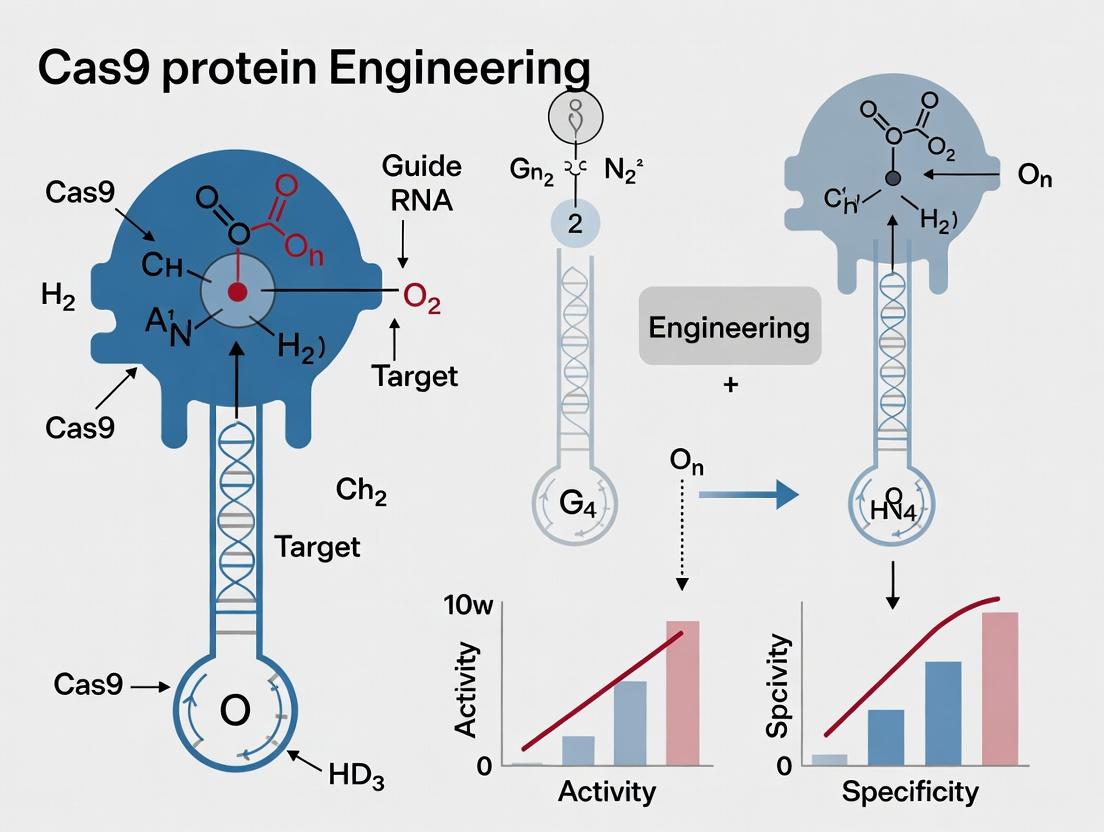
This article provides a comprehensive review of contemporary Cas9 protein engineering strategies aimed at overcoming key limitations in CRISPR-Cas9 technology for research and therapeutic applications.
Engineering Cas9 for Enhanced CRISPR Activity and Specificity: Strategies and Advances
Abstract
This article provides a comprehensive review of contemporary Cas9 protein engineering strategies aimed at overcoming key limitations in CRISPR-Cas9 technology for research and therapeutic applications. We first explore the foundational structure-activity relationships of wild-type Cas9 and the rationale for engineering. We then detail methodological approaches—including directed evolution, rational design, and domain swapping—used to create variants with enhanced on-target activity, reduced off-target effects, and altered PAM requirements. The article addresses common challenges in protein engineering workflows, such as balancing activity with specificity and maintaining protein stability. Finally, we present a comparative analysis of engineered variants like SpCas9-HF1, eSpCas9, xCas9, and SpRY, evaluating their validation benchmarks and suitability for different applications. This guide is intended for researchers and drug development professionals seeking to select or develop the optimal Cas9 variant for their specific genomic editing goals.
The Blueprint of Cas9: Understanding Structure, Function, and the Need for Engineering
Technical Support Center: Troubleshooting Guide & FAQs
This support center addresses common experimental challenges when studying the canonical SpCas9 mechanism, within the context of protein engineering for enhanced activity and specificity.
Frequently Asked Questions (FAQs)
Q1: My in vitro cleavage assay shows no product formation. What are the primary points of failure? A: This typically stems from three sources: 1) sgRNA Integrity: Degraded or incorrectly synthesized sgRNA, particularly a missing or misfolded crRNA:tracrRNA duplex. 2) Magnesium Cofactor: Use of incorrect buffer (e.g., EDTA-containing) chelating the essential Mg²⁺. 3) Target DNA State: Supercoiled plasmid DNA is a poorer substrate than linearized DNA for initial assays. Always include a positive control sgRNA/DNA pair.
Q2: How can I distinguish between binding and cleavage defects in my engineered Cas9 variant? A: Perform a stepwise biochemical analysis. First, conduct an Electrophoretic Mobility Shift Assay (EMSA) to confirm DNA binding. If binding is intact, proceed to a cleavage assay. If cleavage is impaired but binding is not, the issue likely lies in the RuvC or HNH nuclease domains' activation or conformational positioning.
Q3: I observe non-specific cleavage in my gel-based assays. How can I reduce this? A: Wild-type SpCas9 has known off-target activity. For mechanism studies, ensure: 1) Time Course: Do not over-incubate reactions; take time points (e.g., 1, 5, 15, 30 min). 2) Salt Conditions: Optimize KCl concentration (typically 100-150 mM) to stabilize specific interactions. 3) Enzyme Concentration: Avoid high stoichiometric excess of Cas9 over DNA target.
Q4: What is the best method to confirm DNA unwinding (R-loop formation) has occurred? A: A Forster Resonance Energy Transfer (FRET)-based assay using dual-labeled DNA is the gold standard for real-time unwinding measurement. A more accessible alternative is a P1 Nuclease Assay, which cleaves single-stranded DNA within the R-loop, producing a characteristic gel shift.
Troubleshooting Guides
Issue: Low DNA Binding Efficiency in EMSA
- Check 1: sgRNA Maturation. Ensure proper annealing of crRNA and tracrRNA (heat to 95°C, slow-cool).
- Check 2: Cas9:sgRNA Incubation. Pre-complex Cas9 and sgRNA for 10 min at 25°C before adding DNA.
- Check 3: Buffer Composition. Use a binding-optimized buffer (e.g., 20 mM HEPES pH 7.5, 100 mM KCl, 5 mM MgCl₂, 1 mM DTT, 5% glycerol).
- Protocol: EMSA for Cas9-DNA Complex.
- Form Cas9:sgRNA ribonucleoprotein (RNP) by incubating 100 nM SpCas9 with 120 nM sgRNA in binding buffer for 10 min.
- Add 1 nM of fluorescently end-labeled target DNA duplex.
- Incubate reaction at 37°C for 30 minutes.
- Load on a pre-run 6% non-denaturing polyacrylamide gel in 0.5x TBE at 4°C.
- Run at 80V for 60-90 min, visualize using a fluorescence gel imager.
Issue: Inconsistent Cleavage Efficiency Between Batches
- Check 1: Mg²⁺ Concentration. Titrate MgCl₂ from 5-10 mM in 1 mM increments. The standard 5 mM may be suboptimal for some engineered variants.
- Check 2: Target DNA PAM. Absolutely verify the target sequence has a canonical 5'-NGG-3' PAM immediately downstream.
- Check 3: Protein Activity. Use a validated, positive-control DNA target with every new Cas9 prep to benchmark activity.
- Protocol: In Vitro Cleavage Assay.
- Prepare RNP as in EMSA protocol.
- Add target DNA (e.g., 100-500 ng of linearized plasmid or PCR amplicon).
- Initiate cleavage by adding MgCl₂ to a final concentration of 5-10 mM.
- Incubate at 37°C. Remove aliquots at t=0, 5, 15, 30, 60 min.
- Quench with 2X STOP buffer (95% formamide, 20 mM EDTA, 0.025% SDS).
- Heat denature at 95°C for 5 min, resolve products on a denaturing urea-PAGE gel or high-percentage agarose gel.
Table 1: Key Kinetic and Biophysical Parameters of Wild-Type SpCas9
| Parameter | Typical Value | Measurement Method | Notes for Engineering Context |
|---|---|---|---|
| Dissociation Constant (Kd) for Target DNA | ~0.5 - 5 nM | EMSA, FRET | Engineering for tighter binding can increase on-target but may raise off-target risk. |
| R-loop Formation Rate | ~0.5 - 2.0 s-1 | Stopped-flow FRET | A target for engineering to accelerate catalysis. |
| HNH Cleavage Rate (kcat) | ~0.05 - 0.1 s-1 | Quenched-flow, gel analysis | Often the rate-limiting step; primary target for activity enhancement. |
| RuvC Cleavage Rate (kcat) | ~0.1 - 0.2 s-1 | Quenched-flow, gel analysis | Generally faster than HNH. |
| Total Catalytic Turnover (kcat) | ~0.05 s-1 | Continuous assay | Highlights SpCas9 is a slow enzyme; engineering goal is to increase this value. |
| PAM Recognition Specificity | NGG (optimal) | SELEX, NGS | Engineering efforts focus on relaxing to NGN or altering PAM specificity entirely. |
Table 2: Common SpCas9 Mutants and Their Mechanistic Impact
| Variant Name | Key Mutation(s) | Mechanistic Effect | Primary Use in Research |
|---|---|---|---|
| dCas9 | D10A, H840A | Abolishes both nuclease activities; retains binding/unwinding. | Transcriptional control, imaging, binding studies. |
| Nickase (nCas9) | D10A (or H840A) | Cuts only one DNA strand (RuvC- or HNH-inactive). | Paired nickases for improved specificity; base editing. |
| eSpCas9(1.1) | K848A, K1003A, R1060A | Reduces non-specific electrostatic interactions with DNA backbone. | High-specificity variant; reduced off-target cleavage. |
| SpCas9-HF1 | N497A, R661A, Q695A, Q926A | Mutates DNA contact points to require more perfect complementarity. | High-fidelity variant; benchmark for specificity engineering. |
Mechanism & Experimental Workflow Diagrams
The Scientist's Toolkit: Research Reagent Solutions
Table 3: Essential Reagents for Studying SpCas9 Mechanism
| Item | Function & Rationale | Example/Notes |
|---|---|---|
| Recombinant Wild-Type SpCas9 Protein | Core enzyme for in vitro studies. Purified from E. coli or purchased commercially. Essential for baseline kinetics. | NEB #M0386, Thermo Fisher #A36498, or in-house His-tagged purification. |
| Synthetic crRNA & tracrRNA | For controlled RNP assembly. Chemically synthesized, HPLC-purified to ensure consistency in binding/unwinding assays. | IDT, Sigma. Avoid long RNA transcripts with variable ends. |
| Fluorescently-Labeled DNA Oligos | For EMSA and FRET-based unwinding/cleavage assays. Cy3/Cy5 labels on DNA ends or internal bases. | HPLC-purified duplexes with precise labeling. |
| P1 Nuclease | An assay reagent to detect R-loop formation by digesting displaced, single-stranded DNA. | Thermo Fisher #EN0601. |
| Quick-Load ssDNA/Ladder | For accurately sizing nicked, linear, and supercoiled DNA forms on agarose gels post-cleavage assay. | NEB #N0551. |
| MgCl₂ Stock (1M, Nuclease-Free) | The essential catalytic cofactor. Must be high-quality, sterile, and prepared in nuclease-free water. | Thermo Fisher #AM9530G. |
| High-Fidelity DNA Polymerase | To generate pristine, ultrapure target DNA amplicons for cleavage assays, minimizing substrate variability. | NEB Q5 (#M0491), Phusion (#M0530). |
| Non-denaturing PAGE Gel Kit | For EMSA analysis of Cas9-DNA complexes. Requires clear separation of large nucleoprotein complexes. | Bio-Rad #4568033 or Invitrogen #EC6365BOX. |
Technical Support Center
Troubleshooting Guides & FAQs
Q1: We observe significant cell death in our culture post-CRISPR-Cas9 transfection, despite using a validated gRNA with no predicted off-targets. What could be the cause? A: High Cas9 expression levels can induce a p53-mediated DNA damage response and cellular toxicity, often mistaken for off-target effects. This is a common confounding factor in specificity assays.
- Troubleshooting Steps:
- Titrate Cas9: Reduce the amount of Cas9 plasmid or RNP delivered. Use a reporter assay to find the minimum effective dose.
- Switch Delivery Method: Consider using Ribonucleoprotein (RNP) delivery instead of plasmid DNA, as it reduces exposure time and can lower toxicity.
- Use a High-Fidelity Variant: Employ engineered Cas9 variants like eSpCas9(1.1) or SpCas9-HF1, which are designed to reduce non-specific DNA binding.
- Control: Include a catalytically dead Cas9 (dCas9) control treated identically to differentiate between delivery/expression toxicity and DNA damage toxicity.
Q2: Our target genomic site lacks an NGG Protospacer Adjacent Motif (PAM). What are the primary engineering strategies to address this? A: PAM restriction is a major limitation. Solutions stem from protein engineering efforts.
- Troubleshooting Steps:
- Alternative Cas9 Orthologs: Use Cas9 proteins with different native PAM requirements (e.g., SaCas9 requires NNGRRT, NmCas9 requires NNNNGATT).
- Engineered PAM-relaxed Variants: Utilize lab-evolved broad PAM SpCas9 variants such as SpCas9-NG (NG PAM) or SpRY (NRN > NYN PAM).
- Phage-Assisted Continuous Evolution (PACE): This is a key method for developing new PAM specificities. Consider using published PACE-evolved variants like xCas9-3.7.
- Consider Base or Prime Editors: These systems often have different or reduced PAM constraints compared to standard nuclease Cas9.
Q3: Our in vivo delivery of CRISPR components to mouse liver is inefficient. What are the critical parameters to optimize for AAV-based delivery? A: AAV delivery faces challenges of packaging capacity, immunogenicity, and tropism.
- Troubleshooting Steps:
- Size Constraint: SpCas9 is too large for AAV. Use smaller alternatives like SaCas9 or engineered compact Cas9 variants (e.g., SauriCas9).
- Dual-Vector Systems: For larger constructs, split the Cas9 and gRNA expression cassettes across two AAVs using intein splitting (for Cas9) or dual-vector trans-splicing.
- Serotype Selection: Choose AAV serotype for optimal tissue tropism (e.g., AAV8 or AAV9 for liver).
- Promoter Selection: Use a tissue-specific promoter (e.g., Albumin for hepatocytes) to restrict expression and potential off-targets in non-target cells.
Q4: Our deep-sequencing off-target analysis shows unexpected cleavage at sites with >3 mismatches. How should we proceed to validate and mitigate this? A: Biochemical off-target prediction tools can miss structurally permissive sites.
- Troubleshooting Steps:
- Empirical Identification: Perform an unbiased off-target discovery assay such as GUIDE-seq, CIRCLE-seq, or DISCOVER-Seq. These are considered gold-standard methods.
- Validate Candidate Sites: Use targeted amplicon sequencing of the top candidate off-target loci from the empirical screen in your specific cell samples.
- Mitigation Strategy: Re-design the gRNA if possible. If the target site is fixed, use high-fidelity Cas9 variants (see Table 1) or increase the RNP delivery precision.
Experimental Protocols
Protocol 1: GUIDE-seq for Unbiased Off-Target Detection Principle: A double-stranded oligodeoxynucleotide (dsODN) tag is integrated into CRISPR-Cas9-induced double-strand breaks (DSBs), enabling PCR enrichment and sequencing of off-target sites.
- Transfection: Co-transfect cells with Cas9-gRNA expression constructs (or deliver as RNP) and the GUIDE-seq dsODN tag using your standard method (e.g., lipofection, electroporation).
- Genomic DNA Extraction: Harvest cells 72 hours post-transfection. Extract gDNA using a silica-column based method.
- Library Preparation: Shear gDNA to ~500 bp. Perform end-repair, A-tailing, and ligation with sequencing adapters containing a PCR handle.
- Enrichment of Tag-Integrated Sites: Perform PCR using one primer specific to the integrated dsODN tag and another primer specific to the ligated adapter.
- Sequencing & Analysis: Sequence the PCR amplicons on a high-throughput platform. Analyze using the published GUIDE-seq computational pipeline to map integration sites.
Protocol 2: Phage-Assisted Continuous Evolution (PACE) for PAM Relaxation Principle: This method rapidly evolves protein variants in E. coli by linking desired Cas9 function (binding to a new PAM) to the propagation of a bacteriophage.
- Setup: The host E. coli strain contains an "accessory plasmid" expressing the gRNA and a "selection plasmid" where phage propagation gene III is under the control of a desired non-canonical PAM sequence.
- Initiation: A "mutagenesis plasmid" expressing an error-prone polymerase and the starting SpCas9 gene library is introduced.
- Evolution: The lagoon is continuously diluted with fresh host cells. Only phage encoding Cas9 variants that bind and cleave the new PAM site on the selection plasmid will produce pIII, allowing phage propagation and harvest from the lagoon outflow.
- Harvest & Screening: Phage from the outflow are used to infect fresh cells to isolate the evolved Cas9 variants for sequencing and downstream biochemical validation.
Data Presentation
Table 1: Engineered Cas9 Variants for Enhanced Specificity and Altered PAM
| Variant Name | Parent Protein | Key Engineering Strategy | Primary Advantage | Common PAM | Reference Year |
|---|---|---|---|---|---|
| eSpCas9(1.1) | SpCas9 | Electrostatic engineering (K848A, K1003A, R1060A) | Reduced off-targets (≥10-fold) | NGG | 2015 |
| SpCas9-HF1 | SpCas9 | Residue engineering to reduce non-covalent interactions (N497A, R661A, Q695A, Q926A) | High-fidelity, reduced off-targets | NGG | 2016 |
| HypaCas9 | SpCas9 | Structure-guided (N692A, M694A, Q695A, H698A) | Improved specificity while retaining on-target activity | NGG | 2017 |
| xCas9-3.7 | SpCas9 | Phage-assisted continuous evolution (PACE) | Broad PAM recognition (NG, GAA, GAT) | NG, GAA, GAT | 2018 |
| SpCas9-NG | SpCas9 | Structure-guided (R1335V/L1111R/D1135V/G1218R/E1219F/A1322R/T1337R) | Relaxed PAM recognition | NG | 2018 |
| SpRY | SpCas9 | Engineered from SpCas9-NG variant | Near-PAMless recognition (NRN > NYN) | NRN, NYN | 2020 |
Table 2: Common Delivery Methods for CRISPR-Cas9 Components
| Method | Format | Max Payload Size | Key Advantage | Primary Limitation | Best For |
|---|---|---|---|---|---|
| AAV | Viral Vector | ~4.7 kb | High in vivo delivery efficiency; long-term expression in non-dividing cells | Limited cargo capacity; immunogenicity concerns | In vivo gene therapy |
| Lentivirus | Viral Vector | ~8 kb | Stable genomic integration; infects dividing & non-dividing cells | Random integration risk; long-term expression can increase off-target risk | Creating stable cell lines |
| Lipid Nanoparticle (LNP) | RNP or mRNA | Large | High efficiency in vitro/vivo; transient expression reduces off-target risk | Can be cytotoxic; variable tropism | Primary cell editing; clinical therapeutics |
| Electroporation | Plasmid, mRNA, RNP | Large | High efficiency in hard-to-transfect cells (e.g., T-cells, iPSCs) | High cell mortality; requires specialized equipment | Ex vivo clinical applications (e.g., CAR-T) |
Diagrams
Title: Engineering Solutions to Key CRISPR Limitations
Title: p53-Mediated Toxicity from CRISPR Overload
The Scientist's Toolkit: Research Reagent Solutions
| Reagent / Material | Function & Relevance to Cas9 Engineering Research |
|---|---|
| SpCas9 Nuclease (WT) | Wild-type baseline protein for comparative analysis of engineered variants in specificity and activity assays. |
| High-Fidelity Cas9 Variants (e.g., SpCas9-HF1) | Positive control for experiments aiming to reduce off-target editing while maintaining on-target efficiency. |
| PAM-relaxed Variants (e.g., SpCas9-NG) | Essential tools for targeting genomic sites lacking the canonical NGG PAM sequence. |
| GUIDE-seq dsODN Oligo | Key reagent for unbiased, genome-wide identification of off-target cleavage sites in cells. |
| CIRCLE-seq Kit | In vitro biochemical method for comprehensive profiling of Cas9 nuclease off-target activities using circularized genomic DNA. |
| AAV Serotype Kit (e.g., AAV8, AAV9) | For testing in vivo delivery efficiency and tropism of size-optimized Cas9 constructs in animal models. |
| Lipid Nanoparticle (LNP) Formulation Kit | For encapsulating and delivering Cas9 mRNA or RNPs with high efficiency into primary cells and in vivo. |
| Error-Prone PCR Kit | For generating diverse mutant libraries of the cas9 gene as a starting point for directed evolution experiments. |
| Next-Generation Sequencing (NGS) Library Prep Kit | Mandatory for deep sequencing of on-target and off-target loci to quantify editing efficiency and specificity. |
Technical Support Center
Troubleshooting Guides & FAQs
Q1: Our engineered Cas9 variant with mutations in the REC lobe shows drastically reduced cleavage activity in vitro, despite computational predictions suggesting minimal impact. What could be the cause? A: Reduced activity from REC lobe mutations often stems from impaired allosteric communication to the catalytic cores. The REC lobe (particularly REC2 and REC3) is critical for coupling target DNA binding to HNH/RuvC activation.
- Troubleshooting Steps:
- Verify dsDNA Binding: Perform an EMSA or fluorescence polarization assay to confirm your variant retains wild-type affinity for the target DNA duplex. Loss of binding indicates the mutation disrupts DNA interaction, not just allostery.
- Check R-Loop Formation: Use a gel-based R-loop formation assay or single-molecule FRET. The REC lobe facilitates DNA strand separation; impaired R-loop formation is a common failure point.
- Test HNH/RuvC Conformational State: Use a FRET pair or cysteine-crosslinking assay specific for the "pre-active" vs. "active" state of the HNH domain. A stalled HNH suggests broken allosteric signaling from the REC lobe.
- Experimental Protocol: R-loop Formation Assay (Gel-based)
- Reagents: 5'-P32 radiolabeled target DNA strand, complementary non-target strand, sgRNA, purified Cas9 variant, supercoiled plasmid with target site.
- Method: Form Cas9 RNP, incubate with supercoiled plasmid. Stop reaction with stop buffer (SDS, Proteinase K). Run products on a 1% agarose gel in TBE. Visualize via ethidium bromide.
- Expected Results: Wild-type Cas9 converts supercoiled (SC) plasmid to nicked (Open Circular, OC) and linear forms. REC mutants may show only the SC band, indicating R-loop failure.
- Quantitative Data Summary: Common REC3 Mutation Effects:
| Mutation (REC3) | dsDNA Binding (% of WT) | R-loop Formation Efficiency | Cleavage Activity (% of WT) | Primary Defect Inferred |
|---|---|---|---|---|
| K848A | 95% ± 5% | 25% ± 8% | 15% ± 5% | Allosteric communication |
| N854A | 40% ± 10% | <5% | <2% | DNA binding & allostery |
| R859A | 110% ± 15% | 90% ± 10% | 5% ± 3% | HNH domain activation |
Q2: We are designing a "nickase" by mutating the HNH domain. How do we confirm the RuvC domain is still functionally folded and not perturbed by the HNH mutation? A: A true nickase requires an inactivated HNH with a fully intact RuvC. Use a combination of activity and structural probes.
- Troubleshooting Steps:
- Dual-Reported Cleavage Assay: Use a target plasmid with two distinct restriction sites, one on each strand within the cleavage zone. After Cas9 reaction, purify DNA and digest with each restriction enzyme. If only one strand is nicked by Cas9, only the corresponding restriction enzyme will cut efficiently.
- Metal Ion Dependency Assay: Titrate Mg²⁺ (essential for RuvC) and Mn²⁺ (can rescue some HNH mutants). Persistent Mn²⁺-dependent activity suggests residual, misfolded HNH activity.
- Limited Proteolysis: Treat wild-type and mutant Cas9 with a protease like trypsin. Compare the digestion pattern on an SDS-PAGE gel. A altered pattern for the RuvC lobe region indicates conformational changes.
- Experimental Protocol: Metal Ion Dependency Assay for Nickase Validation
- Reagents: Purified Cas9 HNH mutant (e.g., H840A), target DNA duplex, reaction buffer (20mM HEPES pH 7.5, 100mM KCl, 1mM DTT) with varied divalent cations.
- Method: Set up cleavage reactions with 100nM Cas9 RNP and 10nM target DNA. Use buffers with: A) 10mM MgCl₂, B) 10mM MnCl₂, C) 1mM MgCl₂ + 9mM EDTA (low cation control). Incubate 1h at 37°C. Quench with EDTA and Proteinase K. Analyze products on a denaturing urea-PAGE gel for ssDNA nicking or agarose for dsDNA breaks.
- Expected Results: A clean nickase (HNH-inact, RuvC-active) will show Mg²⁺-dependent nicking of the target strand only. Activity in Mn²⁺ but not Mg²⁺ suggests a destabilized HNH domain.
Q3: Engineered high-fidelity (HiFi) Cas9 variants with RuvC mutations sometimes exhibit severe "star" activity (off-target cleavage) under high concentrations. Is this related to the PI domain? A: Yes. The PI (PAM-Interacting) domain is a key determinant of specificity. Some HiFi mutations in the RuvC lobe can indirectly alter PI domain dynamics or reduce on-target binding affinity. This lowers the energy difference between on- and off-target binding, allowing off-targets to be cleaved at high enzyme concentrations.
- Troubleshooting Steps:
- PAM Interference Assay: Test cleavage efficiency on targets with non-canonical PAMs (e.g., NAG, NGA for SpCas9) at high (e.g., 200nM) Cas9 concentration. HiFi variants should show stronger suppression of non-NGG cleavage than wild-type.
- Single-Molecule Binding Assay (if available): Measure residence times on target vs. off-target DNA. HiFi variants with problematic star activity may show similar residence times on both at high concentrations.
- Rational Re-engineering: Introduce a second-site stabilizing mutation in the PI domain (e.g., from structure-guided design) to tighten PAM recognition without compromising high-fidelity RuvC mutations.
- Quantitative Data Summary: HiFi Variant Star Activity Profile:
| Cas9 Variant | Primary Mutation Location | On-target Activity (% of WT) | Specificity Index (CIRCLE-seq) | Star Activity at 200nM (Relative to WT) |
|---|---|---|---|---|
| Wild-type SpCas9 | N/A | 100% | 1x | 1x (Baseline) |
| SpCas9-HF1 | RuvC (D10A) & REC | 25% ± 7% | >100x | 0.5x |
| eSpCas9(1.1) | RuvC (K848A, etc.) | 30% ± 5% | >50x | 0.3x |
| Problematic HiFi | RuvC only | 15% ± 10% | 20x | 3x |
The Scientist's Toolkit: Research Reagent Solutions
| Item & Vendor Example | Function in Cas9 Domain Engineering |
|---|---|
| Fluorophore-labeled dUTPs (e.g., Cy3-dUTP) | Incorporate into DNA substrates for FRET-based assays to monitor HNH/RuvC conformational dynamics or DNA bending/unwinding. |
| Maleimide-based Crosslinkers (e.g., BMOE) | For cysteine-crosslinking studies. Introduce cysteines at specific domain interfaces (e.g., HNH-REC) to trap conformational states. |
| BLI Biosensors (e.g., Streptavidin tips) | Measure real-time binding kinetics (ka, kd) of Cas9 variants to biotinylated DNA, quantifying impacts of REC or PI domain mutations. |
| Non-hydrolyzable NTP analogs (e.g., AMP-PNP) | Used in structural studies (cryo-EM) to trap Cas9 in pre-catalytic states, revealing domain arrangements before cleavage. |
| Phosphorothioate-modified DNA Oligos | Create cleavage-resistant bonds at specific positions to dissect sequential cleavage by HNH vs. RuvC (strand-specific inhibition). |
| Thermostable Ligands (e.g., Csy4 Fusion Tags) | Used to stabilize inherently flexible domains like HNH for improved crystallography or to prevent premature conformational change. |
Visualization: Cas9 Domain Engineering Workflow
Diagram Title: Cas9 Domain Engineering & Validation Pipeline
Visualization: Cas9 Allosteric Activation Pathway
Diagram Title: Cas9 Allosteric Activation from PAM to Cleavage
Troubleshooting Guide & FAQs for Cas9 Engineering Experiments
This support center addresses common technical challenges in research aimed at engineering Cas9 proteins for enhanced activity and specificity, leveraging insights from orthologous Cas9 variants and anti-CRISPR (Acr) systems.
FAQ & Troubleshooting
Q1: Our engineered Streptococcus pyogenes Cas9 (SpCas9) variant shows high on-target activity but persistent off-target effects. What natural diversity-informed strategies can we implement?
A1: Consider these steps:
- Utilize Orthologue-Derived Insights: Engineer the REC3 domain using motifs from Staphylococcus aureus Cas9 (SaCas9), which has a more compact and specific recognition groove. A table of key residues to graft is below.
- Employ Acr-Based Specificity Controls: Co-express AcrIIA4, which binds to the REC lobe of SpCas9 and stabilizes its inactive state. Titrate AcrIIA4 expression to fine-tune off-target silencing without completely abolishing on-target activity.
- Protocol - Specificity Profiling: Perform a CIRCLE-seq assay. Digest 100 ng of genomic DNA with a cocktail of 3-4 restriction enzymes lacking recognition sites in your target region. Ligate the fragments into circles using T4 DNA ligase. Perform in vitro cleavage with your engineered Cas9:sgRNA complex (50 nM) for 1 hour at 37°C. Linearize cleaved circles and prepare next-generation sequencing libraries. Compare off-target sites to the positive control (wild-type SpCas9).
Q2: We are expressing a chimeric Cas9 from Streptococcus thermophilus (St1Cas9) and Neisseria meningitidis Cas9 (Nme2Cas9) PAM domains, but protein solubility in E. coli is very poor. How can we improve yield?
A2: This is common when fusing domains from thermophilic and mesophilic orthologues.
- Strategy 1 - Fusion Tags: Switch from a His6-tag to a dual MBP-SUMO tag. MBP improves solubility, and SUMO allows for a clean, precise cleavage with SenP2 protease post-purification.
- Strategy 2 - Expression Conditions: Reduce the induction temperature to 18°C and extend induction time to 16-20 hours using 0.1 mM IPTG. Use auto-induction media supplemented with 2% (v/v) ethanol.
- Strategy 3 - Construct Design: Insert a flexible linker (GGGGS)x4 between the chimeric domains to reduce steric hindrance. Codon-optimize the entire sequence for E. coli.
Q3: How can we validate that an anti-CRISPR protein is effectively inhibiting our novel engineered Cas9 variant in human cells?
A3: Use a dual-fluorescence reporter assay.
- Protocol: Co-transfect HEK293T cells with:
- A plasmid expressing your engineered Cas9 and a sgRNA targeting EGFP.
- A plasmid expressing the Acr protein (e.g., AcrIIC1, AcrIIA4).
- A reporter plasmid expressing EGFP and an unaffected mCherry (transfection control).
- Analysis: Measure EGFP fluorescence via flow cytometry 48-72 hours post-transfection. Normalize EGFP signal to mCherry. Effective inhibition will result in high EGFP retention. Include a no-Acr control (full EGFP knockout) and a no-Cas9 control (max EGFP).
Q4: What are the key quantitative differences between commonly used orthologous Cas9 proteins relevant to engineering?
A4:
| Cas9 Orthologue | Size (aa) | PAM Requirement (5'->3') | Cleavage Pattern (Blunt/Staggered) | Relative On-Target Activity (vs. SpCas9) | Reported Fidelity (Fold > SpCas9) |
|---|---|---|---|---|---|
| SpCas9 (S. pyogenes) | 1368 | NGG | Blunt | 1.0 (Reference) | 1.0 (Reference) |
| SaCas9 (S. aureus) | 1053 | NNGRRT | Blunt | ~0.7-0.8 | ~10-100x |
| Nme2Cas9 (N. meningitidis) | 1082 | NNNNGATT | Staggered (5-nt overhang) | ~0.6-0.7 | ~100-500x |
| St1Cas9 (S. thermophilus) | 1121 | NNAGAAW | Blunt | ~0.5 | ~50-200x |
| ScCas9 (S. canis) | 1370 | NNG | Blunt | ~1.1 | ~5-10x |
Experimental Protocol: Engineering a Chimeric High-Fidelity Cas9
Objective: Create a SpCas9 variant with enhanced specificity by grafting the REC3 domain from SaCas9 and introducing a destabilizing mutation inspired by AcrIIA4 binding.
Materials & Workflow:
Title: Chimeric HiFi Cas9 Engineering Workflow
Detailed Steps:
Design (Steps 1-4):
- Perform Clustal Omega alignment of SpCas9 (UniProt: Q99ZW2) and SaCas9 (UniProt: J7RUA5). Identify the REC3 boundary residues (SpCas9: 720-850).
- Synthesize a gene fragment encoding SaCas9 REC3 (aa 550-680) with flanking homology to replace the SpCas9 sequence.
- Introduce the E1019K (Glu->Lys) mutation via primer extension, mimicking the charge disruption caused by AcrIIA4 binding.
- Run ROSETTA ddG_monomer protocol to assess folding stability.
Cloning & Expression (Steps 5-6):
- Use Gibson Assembly to insert the chimeric fragment into a pET-28b(+) vector backbone containing the remaining SpCas9 sequence and a C-terminal His-SUMO tag.
- Transform into E. coli BL21(DE3) Rosetta2 cells. Express in auto-induction media at 18°C for 20 hrs.
- Lyse cells via sonication in Lysis Buffer (50 mM Tris-HCl pH 7.5, 500 mM NaCl, 5% glycerol, 1 mM TCEP, 20 mM Imidazole, protease inhibitors).
- Purify via Ni-NTA affinity chromatography. Cleave the SUMO tag with SenP2 protease overnight at 4°C. Perform size-exclusion chromatography (Superdex 200) in Storage Buffer (20 mM HEPES pH 7.5, 150 mM KCl, 1 mM DTT, 10% glycerol).
Validation (Step 7):
- Perform CIRCLE-seq as described in Q1A1.
- Conduct the dual-fluorescence reporter assay in HEK293T cells as described in Q3A3.
The Scientist's Toolkit: Research Reagent Solutions
| Item | Function in Cas9 Engineering Research |
|---|---|
| pET-28b-SUMO Vector | Bacterial expression vector providing a solubility-enhancing, cleavable SUMO tag for difficult-to-express chimeric proteins. |
| SenP2 Protease | Highly specific protease that cleaves after the C-terminal glycine of the SUMO tag, leaving no extraneous residues on the target Cas9 protein. |
| CIRCLE-seq Kit | Commercial kit (e.g., from IDT) providing optimized reagents for sensitive, genome-wide off-target profiling. |
| HEK293T Dual-Fluorescence Reporter Plasmid | Validated plasmid expressing EGFP (with target sites) and mCherry for rapid, quantitative assessment of Cas9 activity/inhibition in cellulo. |
| Rosetta2(DE3) E. coli Cells | Expression strain providing rare tRNAs for improved yield of GC-rich, codon-optimized Cas9 genes from diverse bacterial orthologues. |
| Structure Prediction Software (ROSETTA) | Suite for computational modeling of chimeric protein stability and domain orientation prior to synthesis. |
Title: Anti-CRISPR Inhibition of Cas9 Activity
Building a Better Cas9: Core Protein Engineering Strategies and Their Outputs
Troubleshooting Guides and FAQs
This technical support center addresses common experimental challenges encountered when working with high-fidelity Cas9 variants like SpCas9-HF1 and eSpCas9, engineered through structure-guided mutagenesis to reduce off-target effects. The content is framed within ongoing research in Cas9 protein engineering for enhanced specificity and activity.
FAQ 1: My high-fidelity Cas9 variant (e.g., SpCas9-HF1) shows drastically reduced on-target cleavage efficiency. What could be the cause and how can I troubleshoot this?
Answer: Reduced on-target activity is a known trade-off in early-generation high-fidelity variants. Follow this troubleshooting guide:
- Verify sgRNA Design: Ensure your single-guide RNA (sgRNA) has high predicted on-target efficiency. Use validated design tools (e.g., from Broad Institute or Chop-Chop). Test multiple sgRNAs for your target.
- Check Expression & Delivery: Confirm robust expression of the Cas9 variant and sgRNA in your system via Western blot and RNA analysis. For viral delivery, ensure titers are sufficient.
- Optimize Reaction Conditions: Increase the concentration of the RNP complex if delivering ribonucleoprotein. For plasmid-based delivery, consider time-course analyses.
- Employ Fidelity-Efficiency Balanced Variants: Consider newer variants like HypaCas9 or Sniper-Cas9 that better balance specificity and efficiency.
- Positive Control: Always include a well-characterized target site with wild-type SpCas9 as a benchmark for maximum achievable efficiency in your system.
FAQ 2: How do I quantitatively assess and compare the specificity improvements of different high-fidelity Cas9 mutants in my experimental system?
Answer: You need to measure off-target cleavage quantitatively. The standard methods are:
- Targeted Deep Sequencing: Perform sequencing on predicted off-target sites (from tools like GUIDE-seq or CIRCLE-seq) for both wild-type and high-fidelity Cas9.
- Genome-Wide Assays: Use methods like GUIDE-seq, Digenome-seq, or BLISS to identify off-targets in an unbiased manner. The key is to perform these assays side-by-side under identical conditions. Summarize the data as below:
Table 1: Example Off-Target Analysis Data for Cas9 Variants
| Cas9 Variant | On-Target Indel % (Site A) | Number of Detected Off-Target Sites | Mean Off-Target Indel % at Top 5 Sites | Specificity Index (On/Off Ratio) |
|---|---|---|---|---|
| Wild-Type SpCas9 | 42.5% ± 3.2 | 15 | 8.7% ± 4.1 | 4.9 |
| SpCas9-HF1 | 28.1% ± 2.8 | 3 | 0.4% ± 0.2 | 70.3 |
| eSpCas9(1.1) | 35.6% ± 2.5 | 5 | 0.9% ± 0.5 | 39.6 |
FAQ 3: What is the detailed protocol for conducting a cell-based specificity comparison using targeted deep sequencing?
Answer: Protocol: Cell-Based Off-Target Assessment via Targeted Amplicon Sequencing
- Design: Identify your primary on-target and top 10-20 bioinformatically predicted off-target loci for your sgRNA.
- Transfection: Co-transfect HEK293T cells (or your relevant cell line) in triplicate with plasmids expressing your sgRNA and either wild-type SpCas9, SpCas9-HF1, or eSpCas9.
- Harvest: Extract genomic DNA 72 hours post-transfection.
- Amplification: Perform two-step PCR.
- Primary PCR: Amplify each target locus (on- and off-targets) from gDNA using locus-specific primers with overhangs.
- Secondary PCR: Add Illumina sequencing adapters and sample barcodes.
- Sequencing: Pool purified amplicons and perform paired-end sequencing on a MiSeq or HiSeq platform.
- Analysis: Use pipelines like CRISPResso2 to align sequences and calculate indel frequencies at each locus.
FAQ 4: What are the underlying structural principles that guided the creation of SpCas9-HF1 and eSpCas9?
Answer: Both variants were designed using the crystal structure of SpCas9 bound to DNA. The principle was to destabilize non-specific DNA contacts while preserving specific interactions with the target strand.
- SpCas9-HF1 (K848A, K1003A, R1060A): Targets positively charged residues in the REC3 domain that form non-specific hydrogen bonds with the phosphate backbone of the target DNA strand.
- eSpCas9 (K848A, K1003A, R1060A for v1.1; also includes N497A, R661A, Q695A, Q926A for later versions): Expands on HF1 by also mutating residues in the REC2 and HNH domains that stabilize non-target strand DNA, thereby promoting its release and reducing off-target binding.
The Scientist's Toolkit: Key Research Reagent Solutions
Table 2: Essential Reagents for High-Fidelity Cas9 Engineering & Validation
| Item | Function in Experiment | Example/Catalog Consideration |
|---|---|---|
| Wild-Type SpCas9 Expression Plasmid | Baseline control for all specificity and activity comparisons. | Addgene #42230 (pX330). |
| High-Fidelity Cas9 Expression Plasmids | Source of engineered proteins for testing. | Addgene: SpCas9-HF1 (#72247), eSpCas9(1.1) (#71814). |
| sgRNA Cloning Backbone | For expressing your target-specific guide RNA. | Addgene #41824 (pU6-(BbsI)_CBh-Cas9-T2A-mCherry). |
| HEK293T Cell Line | A standard, highly transfectable cell line for initial benchmarking. | ATCC CRL-3216. |
| Transfection Reagent | For plasmid delivery into mammalian cells. | Lipofectamine 3000, Polyethylenimine (PEI). |
| Genomic DNA Extraction Kit | To harvest DNA for downstream sequencing analysis. | Qiagen DNeasy Blood & Tissue Kit. |
| High-Fidelity PCR Polymerase | For accurate amplification of on- and off-target loci. | NEB Q5, KAPA HiFi. |
| Illumina-Compatible Index Primers | To barcode amplicons for multiplexed deep sequencing. | NEB NEBNext Multiplex Oligos. |
| CRISPR Analysis Software | To quantify indel frequencies from sequencing data. | CRISPResso2, Cas-Analyzer. |
| Predicted Off-Target Site List | Generated by bioinformatics tools to guide targeted sequencing. | From GUIDE-seq data or web tools (Cas-OFFinder, Benchling). |
Troubleshooting Guide & FAQs
FAQ 1: During PACE for Cas9 PAM relaxation, my phage titer is dropping precipitously in the lagoon. What are the likely causes and solutions?
- Possible Cause 1: Insufficient Host Cell (E. coli) Growth or Health. The continuous culture (lagoon) must maintain a robust, log-phase population of host cells.
- Troubleshooting: Check optical density (OD600). Ensure fresh medium is being supplied correctly and waste is being removed. Verify the antibiotic selection for the accessory plasmids is appropriate and that the cells are not under excessive metabolic burden.
- Possible Cause 2: Lack of Functional Selection Pressure. If the evolving Cas9 variant fails to provide the essential gene (e.g., gIII) for phage propagation, phage will be lost.
- Troubleshooting: Validate the activity of the selection circuit. Sequence the target PAM site on the selection plasmid to confirm it matches the intended stringency. Ensure the mutagenesis plasmid (MP) is present and functional to drive diversity.
FAQ 2: After a PACE run aimed at evolving a Cas9 with a relaxed PAM (like NG), my evolved variant shows no binding or cleavage activity in vitro. What went wrong?
- Possible Cause: Selection for Parasitic Survival Mechanisms. Phage may evolve through bypass mutations (e.g., in the selection plasmid or host genome) rather than through desired Cas9 mutations.
- Troubleshooting: Always include stringent downstream validation. Re-clone the mutated cas9 gene from the phage genome into a clean expression vector for testing. Perform deep sequencing on the entire pool to identify common mutations outside the cas9 gene that may indicate a bypass route.
FAQ 3: The evolved Cas9 variant (e.g., SpCas9-NG) exhibits high on-target activity but also shows increased off-target effects. How can this be addressed within the PACE framework?
- Solution: Implement a Dual or Toggle Selection Strategy. Incorporate negative selection pressure against off-target binding in subsequent PACE rounds.
- Protocol: Use a second essential gene under the control of a promoter that is repressed by Cas9 binding to an off-target site. Phage encoding Cas9 variants that bind this off-target site will fail to propagate, enriching for specific variants.
FAQ 4: What are the critical parameters to optimize when setting up a new PACE experiment for DNA-binding protein engineering?
- Key Parameters:
- Lagoon Dilution Rate: Typically 1-2 volumes per hour to maintain host cell growth.
- Host Cell Strain: Use an E. coli strain deficient in non-homologous end joining (e.g., ΔrecA, ΔendA) to preserve phage genomes.
- Selection Stringency: Tune by varying the number and positioning of required PAM sites on the accessory plasmid.
- Mutagenesis Rate: Control via the MP plasmid's expression level of mutagenesis genes (e.g., dnaQ926).
Experimental Protocol: PACE for SpCas9 PAM Relaxation
Objective: To evolve SpCas9 variants that recognize relaxed PAM sequences using Phage-Assisted Continuous Evolution.
Materials: See "Research Reagent Solutions" table.
Procedure:
- Prepare Host Cells: Transform E. coli with the necessary accessory plasmids (AP): one expressing the wild-type Cas9 protein and another containing the selection circuit (essential gene gIII under control of a promoter activated by Cas9 at a specific, restrictive PAM).
- Initiate Lagoon Culture: Start a continuous culture with the transformed E. coli in a bioreactor. Maintain OD600 ~0.4-0.6 with constant medium inflow and waste removal.
- Infect with M13 Phage: Introduce an M13 bacteriophage vector containing the gene for wild-type SpCas9 into the lagoon.
- Initiate Evolution: Introduce the Mutagenesis Plasmid (MP) into the lagoon system. This plasmid expresses genes that increase the mutation rate specifically for the phage DNA, creating diversity in the cas9 gene.
- Continuous Propagation: Allow phage to replicate for ≥100 hours. Phage encoding Cas9 variants that can recognize the new, desired PAM and activate gIII expression will propagate. Others will be washed out.
- Sampling and Isolation: Periodically sample lagoon effluent. Plate phage on selective cells to isolate plaques. Sequence the cas9 gene from phage DNA.
- Validation: Clone candidate cas9 sequences into a standard expression vector. Purify protein and test binding/cleavage activity against a panel of DNA sequences containing the evolved PAM and original PAM.
Table 1: Comparison of Evolved Cas9 Variants with Altered PAM Specificity
| Variant Name | Evolved PAM Specificity | Key Mutations (Relative to SpCas9) | On-Target Efficiency (vs. NGG) | Notable Trade-offs | Primary Reference |
|---|---|---|---|---|---|
| SpCas9-NG | NG (N= A/C/G/T) | R1335V/L1111R/D1135V/G1218R/ E1219F/A1322R/T1337R | ~70% for NGH (H=A/C/T) | Reduced activity for some NGs; size unchanged. | Nishimasu et al., Science (2018) |
| xCas9(3.7) | NG, GAA, GAT | A262T/R324L/S409I/E480K/E543D/ M694I/E1219V | ~30-70% across NG, GAA | Broad PAM but generally lower activity than SpCas9-NG. | Hu et al., Nature (2018) |
| SpCas9-NRRH | NRRH (R=A/G) | A61R/L1111R/G1218K/E1219Q/ A1322R/R1335Q/T1337R | High for NRNH | Engineered via structure-guided design, not pure PACE. | Miller et al., Nature Biotech (2020) |
| Sc++ | NNG | D1135L/S1136W/G1218K/E1219Q/ A1322R/R1335Q/T1337R | High for NNG | Evolved from SpCas9-NG background. | Chatterjee et al., Mol Cell (2020) |
Table 2: Key Parameters for a Typical PACE Experiment
| Parameter | Typical Setting/Range | Purpose/Effect |
|---|---|---|
| Lagoon Volume | 10-50 mL | Maintains continuous culture for phage propagation. |
| Dilution Rate | 1-2 vol/hr | Controls host cell growth phase and washout of non-evolved phage. |
| Experiment Duration | 100-250 hours | Allows for multiple phage lifecycles and accumulation of beneficial mutations. |
| Host Cell OD600 | 0.4 - 0.6 | Keeps cells in log-phase growth for optimal phage infection. |
| Mutagenesis Rate | Variable via MP | Higher rate increases diversity but also deleterious mutations. |
Visualizations
PACE Experimental Workflow for Cas9 Evolution
PACE Selection Logic for Cas9 PAM Recognition
The Scientist's Toolkit: Research Reagent Solutions
| Item | Function in PACE for Cas9 Engineering | Example/Notes |
|---|---|---|
| M13 Bacteriophage | Viral vector carrying the gene of interest (cas9) to be evolved. | Engineered to lack gene III (gIII). Propagation depends on complementation via the selection circuit. |
| Accessory Plasmid (AP) | Host-cell plasmid encoding the selection circuit. Contains the essential phage gene (gIII) under transcriptional control of a Cas9-activatable promoter with the target PAM. | The core of selection. Changing the PAM sequence on this plasmid changes evolutionary pressure. |
| Mutagenesis Plasmid (MP) | Plasmid expressing mutagenesis genes (e.g., error-prone DNA polymerase subunit) to increase mutation rate specifically in the phage genome. | Drives diversity. Can be tuned or removed to "freeze" evolution. |
| Lagoon Bioreactor | Continuous culture device for maintaining host E. coli growth and phage evolution under constant dilution. | Allows for long-term evolution (days to weeks) without manual intervention. |
| Specialized E. coli Strain | Host cells for phage propagation. Often RecA- to prevent homologous recombination of phage DNA. | Must contain the AP and MP plasmids and be susceptible to M13 infection. |
| Selection Plasmid Library | A pool of APs with variations in the number, identity, or context of the required PAM site(s). | Used to tune selection stringency or evolve toward multiple PAMs simultaneously. |
Troubleshooting Guide & FAQs
Q1: My Cas9-deaminase fusion (e.g., BE, PE) shows very low base editing efficiency. What are the primary causes and solutions?
A: Low efficiency is often due to suboptimal linker design, nuclear localization, or deaminase activity.
- Check Nuclear Localization Signals (NLS): Ensure robust NLS sequences (e.g., SV40 NLS, c-Myc NLS) are present on both the Cas9 and the fused deaminase domain. Use a bipartite NLS for larger fusions.
- Optimize Linker Length/Composition: The linker between Cas9 and the deaminase is critical. Test flexible linkers (e.g., (GGGGS)ₙ, where n=2-4) or rigid linkers (e.g., (EAAAK)ₙ). A table of common linkers is provided below.
- Verify Deaminase Activity: Clone and express the deaminase domain (e.g., rAPOBEC1, hAID) alone with a constitutive promoter to confirm its intrinsic activity is not compromised.
- Check sgRNA Design: Ensure the sgRNA positions the deaminase within its optimal "activity window" (typically nucleotides 4-10 for cytidine deaminases). Redesign sgRNAs if the target site is too far from the PAM.
Q2: The fusion of Cas9 with a reverse transcriptase (RT) domain (e.g., for prime editing) results in cellular toxicity. How can I mitigate this?
A: Toxicity often stems from uncontrolled reverse transcriptase expression or activity.
- Use Inducible Expression Systems: Switch from constitutive promoters (CMV, EF1α) to inducible ones (Tetracycline/doxycycline-inducible, Cumate). This allows you to control the timing and level of fusion protein expression.
- Consider Domain Truncation: Some RT domains have inherent RNase H activity that can degrade the pegRNA. Use engineered RT variants (e.g M-MLV RT mutants) with reduced RNase H activity.
- Optimize Delivery Ratios: If delivering via plasmids, the ratio of fusion plasmid to pegRNA plasmid is crucial. Titrate the pegRNA plasmid to the lowest effective amount to reduce metabolic burden.
- Assess Off-target Integration: Perform whole-genome sequencing or specialized assays (e.g., GUIDE-seq adapted for PE) to check for random integration of RT products, which can cause toxicity.
Q3: My designed Cas9-transcriptional regulator fusion (activator/repressor) shows inconsistent or weak modulation of target gene expression. What should I troubleshoot?
A: Inconsistent activity relates to effector domain potency, recruitment efficiency, and chromatin context.
- Multimerize Effector Domains: Single VP64 or KRAB domains are often weak. Use tandem repeats (e.g., VP64-p65-Rta or SunTag systems for activation; concatenated KRAB domains for repression).
- Validate sgRNA Targeting: Ensure sgRNAs are designed for the correct DNA strand to position the effector domain optimally. For activators, target within 200bp upstream of the transcription start site (TSS). For repressors, target near the TSS or within the promoter.
- Check Epigenetic Barriers: Dense heterochromatin can block access. Co-express chromatin remodeling factors (e.g., histone acetyltransferases for activation) or target using dCas9 fused to pioneer factors (e.g., dCas9-Sox2).
- Employ Synergistic Activation Mediators (SAM): Use a system where dCas9-VP64 recruits additional activator proteins via aptamer sequences in the sgRNA scaffold (e.g., MS2, PP7 loops).
Q4: In de novo designed fusions, protein aggregation and insolubility are common. What strategies can I use during cloning and expression?
A: This is a challenge in E. coli expression for purification.
- Test Fusion Orientation: Swap the order of domains (e.g., Cas9-N-terminus-deaminase vs. deaminase-N-terminus-Cas9). One orientation may be more stable.
- Introduce Solubility Tags: Clone with N-terminal tags like Maltose-Binding Protein (MBP) or Glutathione-S-transferase (GST) to enhance solubility during purification.
- Optimize Expression Conditions: Use lower induction temperatures (18-25°C), lower IPTG concentrations (0.1-0.5 mM), and shorter induction times (4-16 hours).
- Employ Split-Intein Systems: For persistently insoluble fusions, express domains separately with split intein tags that facilitate post-translational, precise ligation.
Experimental Protocols
Protocol 1: Testing Base Editing Efficiency of a New Cas9-Deaminase Fusion
- Clone Fusion: Assemble your fusion construct (dCas9 or nCas9-linker-deaminase) in a mammalian expression vector with appropriate NLSs.
- Cell Transfection: Seed HEK293T cells in a 24-well plate. Co-transfect 500ng of fusion plasmid and 250ng of sgRNA plasmid per well using a preferred transfection reagent (e.g., Lipofectamine 3000).
- Harvest Genomic DNA: 72 hours post-transfection, harvest cells and extract genomic DNA using a commercial kit.
- PCR Amplification: Amplify the target genomic region (~300-500bp) using high-fidelity PCR.
- Next-Generation Sequencing (NGS): Purify PCR products, prepare NGS libraries, and sequence on an Illumina MiSeq. Analyze sequencing reads for C-to-T (or A-to-G) conversions within the expected activity window. Calculate editing efficiency as (edited reads / total reads) * 100%.
Protocol 2: Assessing Prime Editing Efficiency and Fidelity
- Construct pegRNA: Design and synthesize a pegRNA containing the RT template and primer binding site (PBS). Clone into a U6 expression vector.
- Delivery: Co-transfect HEK293T cells with your Cas9-RT fusion plasmid and the pegRNA plasmid. Include a transfection control with a non-targeting pegRNA.
- Genomic Analysis: Harvest cells at day 5-7 post-transfection. Isolate genomic DNA and amplify the target locus.
- Deep Sequencing & Analysis: Perform NGS as in Protocol 1. Use computational tools (e.g., PE-Analyzer) to quantify precise edits, indel byproducts, and large deletions. Compare to negative control to assess off-target effects.
Data Presentation
Table 1: Common Linker Sequences for Domain Fusions
| Linker Name | Sequence (5' to 3') | Length (aa) | Property | Best Use Case |
|---|---|---|---|---|
| GGGGS Linker | GGGGS | 5 | Flexible, unstructured | Connecting large, independently folding domains (e.g., Cas9 to deaminase). |
| XTEN Linker | (SGSS)ₙ | Variable (e.g., 24) | Flexible, proteolysis-resistant | Enhancing solubility and half-life of therapeutic fusions. |
| EAAAK Linker | EAAAK | 5 | Rigid, alpha-helical | Preventing unwanted domain interaction, maintaining fixed separation. |
| (G₄S)₃ | GGGGSGGGGSGGGGS | 15 | Standard flexible linker | A longer version of GGGGS for greater separation. |
| PT Linker | PSTPPG | 6 | Rigid, proline-rich | Used in some published base editor architectures. |
Table 2: Comparison of Common Effector Domains for Transcriptional Regulation
| Effector Domain | Origin/Type | Primary Function | Typical Fusion Construct | Approximate Fold Change |
|---|---|---|---|---|
| VP64 | Herpes Simplex Virus | Transcriptional Activator | dCas9-VP64 | 2 - 10x |
| p65 | Human (NF-κB) | Transcriptional Activator | dCas9-VP64-p65-Rta | 10 - 100x |
| KRAB | Human (Kox1) | Transcriptional Repressor | dCas9-KRAB | 5 - 50x (repression) |
| DNMT3A | Human | DNA Methyltransferase | dCas9-DNMT3A | Epigenetic silencing |
| TET1 | Human | DNA Demethylase | dCas9-TET1cd | Epigenetic activation |
Visualizations
Title: dCas9-VP64 Activator Fusion Recruitment
Title: Fusion Protein Development Workflow
The Scientist's Toolkit: Research Reagent Solutions
| Item | Function & Description |
|---|---|
| Nuclease-deficient Cas9 (dCas9) Plasmid | Backbone for fusions; provides DNA targeting without cleavage (e.g., Addgene #47320, D10A/H840A mutations). |
| APOBEC1/rAPOBEC1 Deaminase Domain | Cytidine deaminase for C>T base editing. Key component of BE1, BE2, BE3 systems. |
| TadA Variants (TadA-8e) | Engineered adenosine deaminase for A>G base editing. Used in ABE systems. |
| M-MLV Reverse Transcriptase Domain | Reverse transcriptase for prime editing. Mutations (D200N, L603W, T330P, T306K) reduce RNase H activity. |
| VP64/p65/Rta (VPR) Activation Triad | Potent synthetic transcriptional activation module for robust gene upregulation. |
| KRAB Repression Domain | Potent transcriptional repression domain from Kox1 protein, recruits heterochromatin-forming complexes. |
| MS2/PP7 Stem-Loops & MCP/PCP Proteins | RNA aptamer-protein pair for recruiting multiple effector molecules to a dCas9-sgRNA complex (e.g., SAM system). |
| Flexible Linker Oligonucleotides | Pre-annealed dsDNA fragments encoding (GGGGS)n or other linkers for Gibson/ Golden Gate assembly. |
| Nuclear Localization Signal (NLS) Peptides | SV40 or c-Myc NLS sequences to ensure robust nuclear import of large fusion proteins. |
| Prime Editor gRNA (pegRNA) Cloning Vector | Specialized vector (e.g., Addgene #132777) for expressing pegRNAs with RT template and PBS. |
Technical Support Center: Troubleshooting for Cas9 Chimera Engineering Experiments
Frequently Asked Questions (FAQs)
Q1: Our ML model for predicting functional chimeric Cas9 variants shows high training accuracy but poor performance on new ortholog domain combinations. What could be the cause? A1: This is a classic case of overfitting. Ensure your training dataset is large and diverse, encompassing a wide range of orthologs (e.g., from Streptococcus pyogenes, Staphylococcus aureus, Campylobacter jejuni). Implement rigorous cross-validation and consider techniques like dropout in neural networks or regularization. Augment data with in silico mutagenesis of known functional sequences.
Q2: During chimera assembly via Golden Gate or Gibson Assembly, we consistently get low transformation efficiency in E. coli. What are the primary troubleshooting steps? A2: Follow this checklist:
- Verify Fragment Design: Ensure domain junctions (e.g., between REC3 and HNH from different orthologs) do not create internal BsaI/BsmBI sites used in cloning. Re-calculate using software like SnapGene.
- Purify Fragments: Gel-purify all PCR-amplified ortholog domain fragments to remove primers and non-specific products.
- Optimize Molar Ratios: Use a 1:2 vector-to-insert molar ratio as a starting point. Adjust using a gradient from 1:1 to 1:5.
- Control Assembly: Always include a positive control assembly with known fragments and a negative control (water).
Q3: Our purified chimeric Cas9 protein shows negligible in vitro cleavage activity despite correct folding (confirmed by CD spectroscopy). How should we diagnose this? A3: Systematically test components of the cleavage assay:
- Guide RNA Integrity: Run gRNA on a denaturing urea-PAGE gel. Re-synthesize if degraded.
- Target DNA Substrate: Verify it contains the correct PAM sequence for the chimeric Cas9's PAM-interacting domain (PID). A chimera may have an altered PAM specificity.
- Buffer Conditions: Screen divalent cation (Mg²⁺) concentration from 1-10 mM. Optimize pH and KCl/NaCl concentration.
- Positive Control: Test the assay with a wild-type Cas9 protein and its cognate gRNA/target to confirm reagent functionality.
Q4: Deep sequencing analysis of chimeric Cas9 specificity (e.g., via GUIDE-seq or CIRCLE-seq) reveals high background noise. How can we improve signal-to-noise ratio? A4: High background often stems from:
- Adapter Dimer Contamination: Use double-sided size selection (SPRI beads) during NGS library prep to rigorously exclude fragments <100 bp.
- Overamplification: Reduce the number of PCR cycles during library amplification. Use high-fidelity polymerase.
- Cell Death Artifacts (for GUIDE-seq): Titrate the delivery amount of the dsODN (GUIDE-seq tag) to minimize cytotoxicity, which causes non-specific integration.
Q5: When training our AI model, how should we handle imbalanced datasets where non-functional variants vastly outnumber functional ones? A5: Employ imbalanced learning techniques:
- Algorithmic: Use models like XGBoost with scaleposweight parameter or neural networks with weighted loss functions (e.g., focal loss).
- Data-level: Apply strategic oversampling of the functional variant class (using SMOTE variants) or undersampling of the non-functional class.
- Evaluation Metrics: Do not rely on accuracy. Use Precision-Recall AUC, F1-score, or Matthews Correlation Coefficient (MCC) to evaluate model performance.
Detailed Experimental Protocols
Protocol 1: Generating a Training Dataset for ML via High-Throughput Domain Shuffling Objective: Create a library of Cas9 chimeras by recombining domains from diverse orthologs.
- Design: Select 5-10 Cas9 orthologs. Define domain boundaries (REC I, REC II, REC III, Bridge Helix, PAM-interacting (PID), HNH, RuvC).
- PCR Amplification: Amplify each domain from genomic or synthetic DNA using primers with 20-30 bp homologous overhangs for adjacent domains.
- Assembly: Use a one-pot Golden Gate Assembly with BsaI-HFv2 enzyme. Reaction: 50 fmol vector backbone, 10 fmol each PCR fragment, 1 µL BsaI-HFv2, 1 µL T4 DNA Ligase, 1X T4 Ligase Buffer, 37°C for 1 hour, then 50°C for 5 minutes, 80°C for 5 minutes.
- Transformation: Electroporate 2 µL assembly into NEB 10-beta electrocompetent E. coli. Plate on large LB-agar + antibiotic plates. Aim for >10⁵ colonies.
- Phenotyping: Pool colonies, isolate plasmid library. Transfert HEK293T cells with library and a GFP-reporter plasmid containing a target site. Sort GFP+ (active) and GFP- (inactive) cells via FACS after 48h. Isitate plasmids from each pool for sequencing.
- Sequencing & Labeling: Perform deep sequencing of the chimeric region. Variants enriched in GFP+ pool are labeled "functional"; those in GFP- pool are labeled "non-functional."
Protocol 2: In Vitro Cleavage Assay for Chimeric Cas9 Validation Objective: Quantitatively assess DNA cleavage efficiency of AI-predicted functional variants.
- Protein Purification: Express His6-tagged chimeric Cas9 in BL21(DE3) E. coli. Purify via Ni-NTA affinity chromatography followed by size-exclusion chromatography (Superdex 200 Increase).
- gRNA Transcription: Synthesize dsDNA template with T7 promoter via annealing oligonucleotides. Perform in vitro transcription using HiScribe T7 Quick High Yield Kit. Purify via phenol-chloroform extraction and isopropanol precipitation.
- Assay Setup: Assemble 20 µL reaction: 100 nM chimeric Cas9, 120 nM gRNA, 10 nM target DNA plasmid (linearized), 20 mM HEPES (pH 7.5), 100 mM KCl, 5 mM MgCl₂, 1 mM DTT, 5% glycerol.
- Incubation: Incubate at 37°C for 1 hour.
- Analysis: Stop reaction with Proteinase K (0.5 mg/mL) for 15 min at 55°C. Run products on a 1% agarose/TBE gel. Stain with GelRed and image. Quantify cleavage percentage using ImageJ: (Intensity of Cleaved Bands) / (Total Intensity) * 100%.
Table 1: Performance Metrics of ML Models for Predicting Functional Cas9 Chimeras
| Model Type | Training Set Size | Precision | Recall | F1-Score | PR-AUC | Test Set Accuracy |
|---|---|---|---|---|---|---|
| Random Forest | 5,000 variants | 0.78 | 0.65 | 0.71 | 0.75 | 68% |
| Gradient Boosting (XGBoost) | 5,000 variants | 0.82 | 0.70 | 0.76 | 0.79 | 72% |
| 1D Convolutional Neural Network | 5,000 variants | 0.85 | 0.75 | 0.80 | 0.82 | 76% |
| Transformer Encoder | 5,000 variants | 0.88 | 0.82 | 0.85 | 0.87 | 81% |
Table 2: In Vitro Cleavage Efficiency of Top AI-Predicted Cas9 Chimeras
| Chimera ID | REC Domain Source | Nuclease Domain Source | PID Source | Cleavage Efficiency (%) | Specificity Index (On-target/Off-target) |
|---|---|---|---|---|---|
| WT SpCas9 | S. pyogenes | S. pyogenes | S. pyogenes | 95 ± 3 | 1.0 |
| Chimera-07 | S. canis | S. pyogenes | S. aureus | 88 ± 5 | 15.2 |
| Chimera-12 | S. thermophilus | C. jejuni | S. pyogenes | 45 ± 7 | 0.8 |
| Chimera-19 | S. aureus | S. pyogenes | N. meningitidis | 92 ± 4 | 8.7 |
| Chimera-24 | S. pyogenes | S. thermophilus | S. canis | 12 ± 3 | N/A |
Diagrams
Title: AI-Driven Cas9 Chimera Engineering Workflow
Title: Chimeric Cas9 Activity Assay Troubleshooting
The Scientist's Toolkit: Key Research Reagent Solutions
| Reagent/Material | Supplier Examples | Function in Experiment |
|---|---|---|
| BsaI-HFv2 Restriction Enzyme | NEB, Thermo Fisher | High-fidelity Type IIS enzyme for scarless Golden Gate assembly of DNA domains. |
| NEB 10-beta Electrocompetent E. coli | New England Biolabs | High-efficiency cells for transformation of large, complex plasmid libraries (>10⁵ variants). |
| Superdex 200 Increase 10/300 GL Column | Cytiva | Size-exclusion chromatography for polishing purified Cas9 chimeras, removing aggregates. |
| HiScribe T7 Quick High Yield Kit | New England Biolabs | Robust in vitro transcription for producing large quantities of guide RNA for cleavage assays. |
| S.pyogenes Cas9 Positive Control | IDT, ToolGen | Wild-type protein and validated gRNA for benchmarking chimeric Cas9 activity and specificity. |
| GUIDE-seq / CIRCLE-seq Kit | Custom or published protocols | For genome-wide profiling of off-target effects of engineered chimeric nucleases. |
| ImageJ with Gel Analyzer Plugin | Open Source (NIH) | Quantification of DNA band intensities from agarose gels to calculate cleavage efficiency. |
| OneTaq Hot Start DNA Polymerase | NEB | Reliable PCR amplification of ortholog domains from GC-rich or complex genomic templates. |
Navigating Engineering Challenges: Balancing Activity, Specificity, and Practical Use
Technical Support Center: Troubleshooting Guides & FAQs for Cas9 Engineering Experiments
This support center addresses common experimental challenges in Cas9 protein engineering aimed at enhancing on-target activity while reducing off-target effects. The guidance is framed within ongoing research to engineer high-fidelity Cas9 variants.
Frequently Asked Questions (FAQs)
Q1: Our newly engineered high-fidelity Cas9 variant (e.g., eSpCas9 or SpCas9-HF1) shows a severe drop in on-target cleavage efficiency. What could be the cause and how can we troubleshoot this? A: This is a classic manifestation of the specificity-activity trade-off. Reduced non-specific DNA contacts often decrease catalytic rate. Troubleshooting steps:
- Verify gRNA Design: Re-evaluate your single-guide RNA (sgRNA) sequence. High-fidelity variants are more sensitive to suboptimal gRNA designs. Use tools like Chop-Chop or CRISPRscan to score and select gRNAs with high predicted on-target efficiency.
- Optimize Delivery & Dosage: Increase the concentration of the RNP complex (Cas9 protein + sgRNA) delivered. High-fidelity variants may require a higher molar ratio to achieve wild-type level activity at certain loci.
- Check Mismatch Tolerance: Perform an in vitro cleavage assay with a series of mismatched target DNA substrates. Confirm that the variant's off-target profile is improved, validating the engineering success, and then proceed to optimize conditions for the specific on-target.
Q2: During off-target assessment using GUIDE-seq, we detect a high number of unexpected off-target sites even with a high-fidelity variant. How should we proceed? A: Unexpected GUIDE-seq hits can arise from several sources:
- Experimental Artifact Control: Ensure you have included a negative control (e.g., a catalytically dead Cas9, dCas9, with the same sgRNA). Any sites appearing in the dCas9 control are likely assay artifacts (e.g., polymerase errors during library prep).
- Sequencing Depth & Analysis: Re-analyze raw data with the latest version of the GUIDE-seq analysis software, ensuring sufficient sequencing depth (>20 million reads per sample) and using appropriate statistical cutoffs (e.g., read count threshold, uniqueness filter).
- sgRNA Specificity: Re-design the sgRNA if the off-targets are biologically concerning. Focus on avoiding seed regions (nucleotides 8-12) with high homology to other genomic sequences.
Q3: What is the recommended protocol for a side-by-side comparison of the on-target vs. off-target profile for a novel engineered Cas9 variant? A: A standardized comparative workflow is essential.
Title: Comparative On vs Off-Target Analysis Workflow
Experimental Protocol: Comparative On/Off-Target Profiling
- Cell Preparation: Culture HEK293T cells in standard conditions.
- Transfection: Co-transfect cells with:
- 500 ng plasmid encoding the Cas9 variant (wild-type control and engineered).
- 200 ng plasmid expressing the target sgRNA (with a constant sequence).
- 50 ng GFP reporter plasmid for normalization. Use a consistent, high-efficiency transfection reagent (e.g., Lipofectamine 3000).
- Cell Sorting: 48 hours post-transfection, harvest and use FACS to collect a pool of GFP-positive cells.
- Genomic DNA Extraction: Extract gDNA from the sorted pool using a column-based kit.
- Parallel Analysis:
- On-Target: Amplify the target locus from 100 ng gDNA. Quantify indel frequency using TIDE analysis (tide.nki.nl) or deep sequencing.
- Off-Target: Perform GUIDE-seq (for cellular context) or CIRCLE-seq (for in vitro, comprehensive profiling) using 1 µg of the same gDNA, following published protocols.
Q4: How do we quantitatively decide if a new variant has successfully improved the specificity-activity trade-off? A: You must calculate a Specificity Index that integrates both measurements. A common metric is (On-Target Efficiency) / (Off-Target Event Frequency) for a set of validated off-target sites. A successful variant increases this ratio.
Table 1: Example Quantitative Comparison of Cas9 Variants at a Model Locus
| Cas9 Variant | Average On-Target Indel % (N=3) | Validated Off-Target Sites (NGS) | Highest Off-Target Indel % | Specificity Index* |
|---|---|---|---|---|
| Wild-Type SpCas9 | 42.5 ± 3.2% | 8 | 15.7% | 2.7 |
| SpCas9-HF1 | 31.0 ± 4.1% | 2 | 1.2% | 25.8 |
| eSpCas9(1.1) | 35.6 ± 2.8% | 3 | 0.8% | 44.5 |
| Hypothetical Engineered Cas9-X | 40.1 ± 2.5% | 1 | 0.5% | 80.2 |
*Specificity Index = (On-Target %) / (Highest Off-Target %). Higher is better.
The Scientist's Toolkit: Research Reagent Solutions
Table 2: Essential Reagents for Cas9 Specificity-Activity Research
| Item | Function & Rationale |
|---|---|
| High-Fidelity DNA Polymerase (e.g., Q5, KAPA HiFi) | For error-free amplification of target loci for NGS library prep and amplicon analysis. Critical for reducing false-positive variant calls. |
| Recombinant Wild-Type & Engineered Cas9 Proteins | For forming RNP complexes for direct delivery, which reduces off-targets and allows precise concentration control compared to plasmid delivery. |
| Chemically Modified sgRNA (e.g., 2'-O-methyl 3' phosphorothioate) | Increases nucleic acid stability and can reduce immune responses in cells, leading to more consistent activity measurements. |
| GUIDE-seq Oligonucleotide (tagmented dsODN) | The double-stranded oligodeoxynucleotide tag that integrates into double-strand breaks, enabling genome-wide, unbiased off-target identification. |
| T7 Endonuclease I (T7E1) or Surveyor Nuclease | Enzymes for fast, initial detection of indel mutations at predicted on- and off-target sites via mismatch cleavage assays. |
| Next-Generation Sequencing (NGS) Kit for Amplicon Sequencing | Required for high-depth, quantitative measurement of both on-target editing efficiency and low-frequency off-target events. |
| Cell Line with Stable GFP Reporter | Enables normalization of transfection/editing efficiency across experiments by allowing sorting or selection of successfully transfected cell populations. |
Title: The Core Specificity-Activity Trade-off
Technical Support Center: Troubleshooting for Cas9 Protein Engineering Research
FAQs & Troubleshooting Guides
Q1: Our codon-optimized Cas9 gene shows very poor expression in the target mammalian cell line after AAV delivery. What are the primary causes and solutions?
A: Poor expression from a codon-optimized sequence can stem from several factors.
- Cause 1: Over-Optimization. Excessive GC content (>60%) from aggressive optimization can form stable secondary structures in mRNA, impeding ribosome scanning.
- Solution: Re-optimize using an algorithm that balances codon adaptation index (CAI) with GC content control. Aim for a GC content of 45-55%. Verify mRNA secondary structure using tools like mFold.
- Cause 2: Cryptical Splice Sites. The new sequence may have inadvertently created donor/acceptor splice sites.
- Solution: Use sequence analysis tools (e.g., Splice Site Prediction by Neural Network) to scan the optimized DNA sequence and remove cryptic sites via silent mutation.
- Cause 3: Insufficient Kozak Sequence. The translation initiation context around the start codon is suboptimal.
- Solution: Ensure a strong Kozak sequence (gccRccAUGG, where R is purine) is placed immediately upstream of the Cas9 start codon.
Q2: We added a canonical SV40 NLS to our engineered Cas9 protein, but nuclear localization appears weak and inconsistent in our reporter assay. How can we improve this?
A: A single NLS is often insufficient for large proteins like Cas9 (~160 kDa).
- Cause: The canonical SV40 NLS may be masked by protein folding or insufficient for active nuclear import against diffusion.
- Solution: Implement a dual NLS strategy. Fuse two different NLS peptides (e.g., one SV40 and one nucleoplasmin-derived) at the N- and C-termini of Cas9. This significantly enhances nuclear import efficiency. Ensure the NLS sequences are placed in accessible, flexible linker regions (e.g., GS-linkers).
Q3: Our AAV vector titers are consistently low after packaging our Cas9 expression construct. What steps can we take to troubleshoot packaging efficiency?
A: Low AAV titers are frequently linked to genome size and cis-acting elements.
- Cause 1: Genome Size Exceeds Capacity. The total size of your ITR-flanked expression cassette (promoter, Cas9, NLS, polyA) may be near or exceed the ~4.7 kb packaging limit of AAV, causing inefficient packaging or truncation.
- Solution: Use a smaller promoter (e.g., truncated CBh, synapsin) and a compact polyA signal (e.g., bGH, minimal SV40). See Table 1 for size comparisons. Consider using a split-intein or dual-vector system if the cassette remains too large.
- Cause 2: Cis-Acting Inhibitory Sequences. The expression cassette may contain sequences that interfere with replication or packaging (e.g., cryptic AAV rep gene origins, high GC palindromes).
- Solution: Re-sequence the plasmid and analyze the cis cassette for known inhibitory motifs. Re-synthesize problematic regions with slight sequence variation while maintaining amino acid sequence.
Q4: In our specificity screen, our engineered high-fidelity Cas9 variant shows drastically reduced on-target editing despite good nuclear localization. Could codon optimization or vector design be responsible?
A: Yes, particularly if the optimization affected translation kinetics.
- Cause: Over-optimization using exclusively the most frequent codons can lead to too-rapid translation, causing improper protein folding and loss of activity, especially in sensitive engineered variants.
- Solution: Generate a new construct using a "harmonized" codon optimization strategy that considers the natural codon usage of the host cell while also modulating translation elongation rates to aid proper folding. Compare activity with a non-optimized (but lower-expressing) control to isolate the issue.
Data Presentation
Table 1: Comparison of Promoter and PolyA Signal Sizes for AAV Cassette Design
| Element | Type | Example | Typical Size (bp) | Notes for Cas9 Engineering |
|---|---|---|---|---|
| Promoter | Strong Constitutive | CMV | ~600-800 | Large size; may silence in some cell types. |
| Promoter | Strong Constitutive | CAG | ~1300-1900 | Very large; often prohibitive for AAV-Cas9. |
| Promoter | Strong Constitutive | CBh (truncated) | ~300-400 | Good balance of strength and compact size. |
| Promoter | Neuron-Specific | Synapsin | ~470 | Compact, cell-type specific expression. |
| PolyA Signal | Standard | SV40 late | ~120-200 | Reliable, but larger. |
| PolyA Signal | Compact | bGH | ~130 | Commonly used, efficient. |
| PolyA Signal | Minimal | SV40 minimal | ~60 | Very small, may be slightly less efficient. |
Table 2: Common Nuclear Localization Signals for Cas9 Fusion
| NLS Type | Sequence (One-Letter Code) | Typical Fusion Site(s) | Notes |
|---|---|---|---|
| Monopartite (Classical) | PKKKRKV (SV40 large T-antigen) | C-terminus, N-terminus | Canonical; can be used in tandem. |
| Monopartite | KRPAATKKAGQAKKKK (Nucleoplasmin) | C-terminus, N-terminus | Often used in combination with SV40. |
| Bipartite | KRxxxxxxxxxxKKKK (e.g., from nucleoplasmin) | C-terminus | Requires longer, specific spacer. |
| Heterologous Dual | SV40 + Nucleoplasmin sequences | One at N-term, one at C-term | Recommended for robust Cas9 nuclear import. |
Experimental Protocols
Protocol 1: Validating Nuclear Localization of NLS-Fused Cas9 Variants
- Objective: Qualitatively and quantitatively assess nuclear import efficiency.
- Method:
- Transfection: Transfect HEK293T cells (or relevant cell line) with plasmids expressing your Cas9 variant fused to a C-terminal fluorescent tag (e.g., EGFP) and the NLS configuration of interest.
- Fixation & Staining: At 24-48h post-transfection, fix cells with 4% PFA, permeabilize with 0.1% Triton X-100, and stain nuclei with DAPI (300 nM).
- Imaging: Capture high-resolution confocal microscopy images.
- Analysis: Calculate the Nuclear-to-Cytoplasmic (N:C) fluorescence ratio using image analysis software (e.g., ImageJ). Measure mean fluorescence intensity in a defined nuclear region (DAPI mask) and an adjacent cytoplasmic region for at least 50 cells per construct. A ratio >3 typically indicates strong nuclear localization.
Protocol 2: Determining AAV Vector Genome Titer via ddPCR
- Objective: Accurately quantify packaged, DNase-resistant vector genomes (vg/mL).
- Method:
- DNase Treatment: Incubate 5-10 µL of purified AAV vector with DNase I (1 U/µL) for 30min at 37°C to degrade unpackaged DNA.
- Heat Inactivation & Digestion: Inactivate DNase at 75°C for 10min. Add Proteinase K (final 0.5 mg/mL) with SDS (final 0.5%) and incubate at 56°C for 1h to degrade capsid and release vector genome.
- ddPCR Setup: Prepare a QX200 ddPCR reaction mix with probes targeting a conserved region of your expression cassette (e.g., WPRE or polyA). Include serial dilutions of a linearized plasmid standard of known concentration.
- Run & Analyze: Generate droplets, perform PCR, and read on a QX200 droplet reader. Use QuantaSoft software to calculate the concentration (copies/µL) of the target sequence in the reaction, then back-calculate to vg/mL of the original vector stock.
Diagrams
Title: Cas9 Vector Design & Test Workflow
Title: Enhanced Nuclear Import via Dual NLS
The Scientist's Toolkit: Research Reagent Solutions
| Item | Function in Cas9 Vector Optimization |
|---|---|
| Codon Optimization Software (e.g., IDT Codon Optimization Tool, GeneArt) | Algorithms to redesign DNA sequence for optimal expression in target species while controlling for GC content and secondary structures. |
| AAVpro Helper Free System (Takara Bio) | A comprehensive set of plasmids for producing AAV vectors without helper virus contamination, crucial for packaging Cas9 constructs. |
| Droplet Digital PCR (ddPCR) System (Bio-Rad) | For absolute quantification of viral genome titers with high precision, essential for standardizing vector doses in experiments. |
| Anti-Cas9 Monoclonal Antibody (7A9-3A3, Cell Signaling Tech) | Validated antibody for detecting Cas9 protein expression via Western blot or immunofluorescence, confirming translation. |
| Nuclear Extraction Kit (NE-PER, Thermo Fisher) | Isolates nuclear and cytoplasmic fractions to biochemically quantify N:C ratio of engineered Cas9 proteins. |
| Flexible Peptide Linkers (e.g., GGS or (G4S)n repeats) | Synthetic DNA sequences encoding flexible linkers to separate functional domains (e.g., NLS from Cas9 core) ensuring proper presentation. |
| ITR-flanked AAV Transfer Plasmid (e.g., pAAV-MCS) | Standardized backbone containing AAV2 inverted terminal repeats essential for packaging; used to clone the Cas9 expression cassette. |
Technical Support Center: Troubleshooting Guides & FAQs
FAQ 1: How do I determine if pre-existing immunity is affecting my in vivo editing outcomes in a murine model?
- Symptoms: Reduced editing efficiency compared to in vitro controls, elevated inflammatory cytokines (e.g., IL-6, IFN-γ), infiltration of immune cells at the delivery site, and neutralization of Cas9 activity upon re-administration.
- Troubleshooting Steps:
- Pre-screen: Use an ELISA or ELISpot assay to check for pre-existing anti-Cas9 antibodies or T-cells in the serum of your mouse strain against the S. pyogenes Cas9 (SpCas9) you are using.
- Control Experiment: Co-administer a potent immunosuppressant (e.g., dexamethasone) with your Cas9 delivery vehicle in a subset of animals. A significant increase in editing efficiency in this group suggests an immune-mediated barrier.
- Analyze Outcomes: Quantify editing (via NGS) and immune markers (via cytokine multiplex assay) from target tissue and serum 72 hours post-delivery. Compare results to a negative control group receiving vehicle only.
FAQ 2: I am observing cytotoxicity in primary human T-cells during CRISPR editing, unrelated to off-target effects. Could this be due to an immune response?
- Likely Cause: Yes. Primary human immune cells, especially dendritic cells and CD4+ T-cells, can have strong pre-existing adaptive and innate immune responses to bacterial Cas9. This can trigger apoptosis or an anti-viral state, reducing cell viability and expansion.
- Solution:
- Switch Protein Variant: Immediately transition from wild-type SpCas9 to a published low-immunogenicity variant (e.g., HypaCas9, eSpCas9) or a fully humanized Cas9 (e.g., enCas9).
- Modulate Delivery: If using mRNA, ensure it is purified to eliminate double-stranded RNA contaminants that activate innate sensors (MDA5, RIG-I). Use 5-methylcytidine and pseudouridine modifications.
- Protocol Adjustment: Refer to the experimental protocol for "Assessing Cas9-Specific T-cell Activation in Human PBMCs" below to validate the reduced immunogenicity of your new Cas9 variant before proceeding.
FAQ 3: My low-immunogenicity Cas9 variant shows reduced editing efficiency. How can I recover activity without restoring immunogenicity?
- Root Cause: Mutations introduced to remove immunodominant epitopes can sometimes destabilize the protein or interfere with DNA binding/cleavage kinetics.
- Actionable Steps:
- Confirm Specificity: First, verify via GUIDE-seq or CIRCLE-seq that the specificity of your variant is maintained or improved. A trade-off for higher fidelity may be acceptable.
- Delivery Optimization: Increase the RNP dosage empirically. For AAV delivery, consider using a more potent promoter (e.g., Cbh) to increase expression, compensating for lower specific activity.
- Use Directed Evolution: Implement the protocol for "Directed Evolution to Restore Activity in Deimmunized Cas9 Variants" (cited below) to screen for compensatory mutations that restore function without re-introducing T-cell epitopes.
Experimental Protocols
Protocol 1: In Vitro T-cell Activation Assay for Cas9 Immunogenicity Screening Purpose: To quantify human CD4+ and CD8+ T-cell responses to wild-type and engineered Cas9 variants. Methodology:
- PBMC Isolation: Isolate PBMCs from healthy human donors using Ficoll density gradient centrifugation.
- Antigen Presentation: Differentiate naive monocytes into dendritic cells (DCs) with IL-4 and GM-CSF over 7 days. Pulse DCs with 10µg/mL of the Cas9 protein variant for 24 hours.
- Co-culture: Co-culture pulsed DCs with autologous CFSE-labeled CD4+ or CD8+ T-cells at a 1:10 ratio (DC:T-cells) in RPMI-1640 complete media.
- Analysis: After 6 days, analyze T-cell proliferation by CFSE dilution via flow cytometry. Simultaneously, measure activation markers (CD25, CD69) and intracellular cytokine staining (IFN-γ, TNF-α). Key Controls: Negative control (unpulsed DCs), positive control (DCs pulsed with a mix of recall antigens like CEF peptide pool).
Protocol 2: Directed Evolution to Restore Activity in Deimmunized Cas9 Variants Purpose: To identify mutations that restore high enzymatic activity in epitope-depleted Cas9 scaffolds. Methodology:
- Library Construction: Create an error-prone PCR library of your low-immunogenicity parent Cas9 gene. Clone into a bacterial expression vector.
- Positive Selection in E. coli: Use a published bacterial selection system (e.g., toxin-antitoxin or GFP disruption) where cell survival is linked to Cas9 cleavage activity. Transform the library and select on inducing plates.
- Screening: Pick surviving colonies, sequence, and purify plasmid DNA. Test in vitro cleavage activity using a standardized GFP reporter assay in HEK293T cells.
- Secondary Immunogenicity Screen: Pass top candidates from step 3 through the In Vitro T-cell Activation Assay (Protocol 1) to confirm low immunogenicity is retained.
Table 1: Comparison of Engineered Low-Immunogenicity Cas9 Variants
| Variant Name | Key Mutations/Modifications | Relative Editing Efficiency (% of WT SpCas9) in vivo | Reduction in Anti-Cas9 Antibody Titer (%) | Reduction in T-cell Response (IFN-γ+) (%) | Primary Citation |
|---|---|---|---|---|---|
| HypaCas9 | K848A, K1003A, R1060A | ~70-80% | ~50% | ~60% | Vakulskas et al., Nat Med, 2018 |
| eSpCas9 | K810A, K1003A, R1060A | ~60-70% | ~40% | ~55% | Slaymaker et al., Science, 2016 |
| Cas9 Humanized (enCas9) | Codon-optimized, 15 surface residue changes to human homologs | ~90-95% | ~90% | ~85% | Chew et al., Nat Methods, 2016 |
| xCas9 | A262T, R324L, S409I, E480K, E543D, M694I, E1219V | ~50-60% (broad PAM) | ~30% | Data Not Extensive | Hu et al., Nature, 2018 |
Table 2: Immune Cell Reactivity to Cas9 in Healthy Human Donors
| Immune Parameter | % of Donors with Pre-Existing Reactivity (to WT SpCas9) | Average Magnitude of Response | Common Epitopes Identified |
|---|---|---|---|
| Antibodies (IgG) | ~78% | 1:100 - 1:1000 serum dilution | Recurrent linear epitopes in REC2, HNH, PI domains |
| CD4+ T-cells | ~46% | 0.1 - 0.5% of total CD4+ T-cells | Dominant HLA-DR-restricted peptides |
| CD8+ T-cells | ~31% | 0.01 - 0.1% of total CD8+ T-cells | Less common, HLA-A/B restricted |
Visualizations
Diagram 1: Immune Recognition Pathway of Bacterial Cas9
Diagram 2: Engineering Workflow for Low-Immunogenicity Cas9
The Scientist's Toolkit: Research Reagent Solutions
| Item | Function in Cas9 Immunogenicity Research |
|---|---|
| Recombinant S. pyogenes Cas9 Protein | Positive control antigen for in vitro immune assays and for generating standard curves in antibody tests. |
| Human HLA-DR Tetramers (e.g., DRB1*04:01) | To directly identify and isolate Cas9-specific CD4+ T-cells from donor PBMCs for epitope mapping. |
| IFN-γ ELISpot Kit | A sensitive assay to quantify the frequency of Cas9-reactive T-cells after antigen stimulation. |
| Anti-Cas9 Monoclonal Antibody | Essential standard for developing quantitative immunoassays (ELISA) to measure anti-Cas9 antibody titers in serum. |
| Cas9 Human IFN-γ Primers/Assay | For quantifying IFN-γ mRNA expression levels via qRT-PCR as a measure of T-cell activation in mixed cultures. |
| Programmed Death Ligand-1 (PD-L1) Antibody | Immune checkpoint marker; its upregulation on antigen-presenting cells post-Cas9 exposure indicates immune activation. |
| Lenti-X p24 Rapid Titer Kit | When using lentiviral Cas9 delivery, accurate viral titer measurement is crucial to ensure immune responses are dose-dependent. |
Troubleshooting Guides & FAQs
Q1: My engineered Cas9 variant shows high activity in our in vitro cleavage assay but fails to edit efficiently in our cellular reporter assay. What could be the cause? A: This common issue often relates to cellular delivery, stability, or nuclear localization. First, verify the nuclear localization signal (NLS) integrity on your construct. Second, assess protein stability in a cellular context using a western blot against a tag on your variant. Third, ensure your plasmid or mRNA delivery method is efficient; consider using a GFP-positive control plasmid to measure transfection efficiency. The mismatch between biochemical and cellular activity can also stem from the reporter assay itself—confirm that your cellular reporter (e.g., GFP disruption, luciferase) is sensitive and has appropriate controls.
Q2: How do I choose between a GFP-disruption flow cytometry assay and a T7E1 mismatch cleavage assay for measuring editing efficiency? A: The choice depends on your need for throughput, quantitative accuracy, and resource availability.
| Assay | Throughput | Quantitative Accuracy | Key Advantage | Best For |
|---|---|---|---|---|
| GFP-Disruption / Flow Cytometry | High | High (Single-cell resolution) | Delivers precise efficiency percentage without cloning. | Screening many variants or conditions. |
| T7E1 Mismatch Cleavage | Low to Medium | Semi-Quantitative (Gel band intensity) | Low cost, no need for specialized reporters. | Initial validation when flow cytometer is unavailable. |
| Next-Generation Sequencing (NGS) | Medium (after setup) | Very High (Base-pair resolution) | Detects indels and precise sequences; reveals product profiles. | Definitive characterization of specificity and product distribution. |
Protocol: GFP-Disruption Flow Cytometry Assay
- Cell Seeding: Seed HEK293T cells (or your target cell line) in a 24-well plate at 70% confluence.
- Transfection: Co-transfect 500 ng of your engineered Cas9 expression plasmid (with NLS) and 250 ng of a plasmid containing a GFP gene with a target site, using your preferred transfection reagent (e.g., Lipofectamine 3000). Include a non-targeting gRNA control.
- Incubation: Culture cells for 72 hours to allow for editing and GFP degradation.
- Analysis: Harvest cells, wash with PBS, and resuspend in flow cytometry buffer. Analyze on a flow cytometer. Gate on live cells and measure the percentage of GFP-negative cells. Editing efficiency = (% GFP- in sample) - (% GFP- in non-targeting control).
Q3: Our high-fidelity Cas9 variant shows reduced off-target activity in an in vitro GUIDE-seq assay, but we see toxicity in primary cells. How should we troubleshoot? A: Toxicity unrelated to off-target cleavage may arise from aberrant DNA binding, residual nuclease activity triggering p53 response, or immunogenic reactions to the protein. Perform the following:
- p53 Activation Assay: Transfert cells with your variant and a p53-responsive luciferase reporter. Compare to wild-type SpCas9 and a nuclease-dead (dCas9) control. Elevated p53 activity suggests genotoxic stress.
- Cytokine PCR Array: Treat primary cells (e.g., PBMCs) with Cas9 mRNA or protein and measure expression of key cytokines (IFN-γ, IL-6, TNF-α) via qRT-PCR after 24h.
- Cell Viability Assay: Perform a longitudinal assay (e.g., CellTiter-Glo) over 96 hours comparing your variant to controls.
Q4: What are the key in vitro assays to rank-order engineered Cas9 variants for enhanced specificity? A: A tiered approach is most efficient. Start with high-throughput biochemical assays, then move to more complex cellular systems.
- Primary In Vitro Screen: In Vitro Cleavage Specificity Assay. Using purified Cas9:gRNA ribonucleoproteins (RNPs), perform cleavage reactions on a pool of synthetic DNA targets containing the on-target and a panel of known off-target sequences. Quantify cleavage efficiency via NGS of the products. This rapidly identifies variants with improved discrimination.
- Secondary Cellular Confirmation: CIRCLE-seq or SITE-seq. These in vitro assays use genomic DNA as input to identify off-targets biochemically in a genome-wide, unbiased manner. They are more predictive than purely synthetic assays.
- Tertiary Cellular Validation: GUIDE-seq or Digenome-seq. Performed in living cells, these provide the definitive gold-standard assessment of genome-wide specificity under physiological conditions.
Protocol: Rapid In Vitro Cleavage Specificity Screen
- Template Preparation: Generate a dsDNA amplicon (via PCR) containing the on-target site flanked by Illumina adapter sequences. Synthesize separate amplicons for key predicted off-target sites.
- RNP Formation: Incubate 100 nM of purified Cas9 variant with 120 nM of chemically synthesized gRNA (tracrRNA + crRNA) for 10 min at 25°C in reaction buffer (20 mM HEPES pH 7.5, 150 mM KCl, 1 mM DTT, 10 mM MgCl2).
- Cleavage Reaction: Add 10 nM of pooled DNA amplicons to the RNP complex. Incubate at 37°C for 1 hour.
- Analysis: Purify DNA and prepare for NGS. Editing efficiency is calculated as the fraction of reads with indels at the cut site for each target.
Diagrams
Diagram 1: Specificity Screening Workflow
Diagram 2: Cellular Toxicity Assessment Pathways
The Scientist's Toolkit: Research Reagent Solutions
| Reagent / Material | Function in Cas9 Engineering Characterization | Example Vendor/Catalog |
|---|---|---|
| Purified Wild-type SpCas9 Protein | Gold-standard control for all in vitro activity and specificity assays. | Thermo Fisher Scientific, Cat. A36496 |
| Chemically Synthetic gRNAs (tracrRNA + crRNA) | Ensures consistent RNP complex formation without transfection bias from U6-driven expression. | Integrated DNA Technologies (IDT) |
| HEK293T-EGFP Reporter Cell Line | Stably expresses EGFP with an embedded Cas9 target site; essential for high-throughput cellular activity flow assays. | Custom generated or available from ATCC (parent line) |
| Lipofectamine CRISPRMAX | Optimized lipid nanoparticle transfection reagent for Cas9 RNP delivery into a wide range of cell types. | Thermo Fisher Scientific, Cat. CMAX00008 |
| CELLECTA Bioinformatics-designed gRNA Libraries | Provides pre-designed, validated on-target and off-target gRNA sequences for specificity screening. | Cellecta, Inc. |
| Illumina DNA Prep with Enrichment | Kit for preparation of NGS libraries from amplicons of cleavage sites for high-accuracy indel quantification. | Illumina, Cat. 20025523 |
| pMAX-GFP Expression Plasmid | Control for monitoring transfection efficiency in cellular assays, crucial for normalizing editing data. | Lonza, part of kit V4XC-2012 |
| Recombinant Cas9 Antibody (for Western) | Allows detection of engineered Cas9 variant expression and stability in cell lysates. | Cell Signaling Technology, Cat. 14697S |
Benchmarking Engineered Cas9 Variants: Performance Metrics and Application Suitability
This technical support center is framed within a thesis on Cas9 protein engineering for enhanced activity and specificity. The development of high-fidelity Cas9 variants, such as SpCas9-HF1, eSpCas9(1.1), and HypaCas9, represents critical milestones in reducing off-target editing while maintaining robust on-target activity—a paramount concern for therapeutic applications.
Table 1: Key Characteristics of High-Fidelity Cas9 Variants
| Variant | Key Engineering Principle | Reported On-Target Efficiency (Relative to WT SpCas9) | Reported Reduction in Off-Target Effects | Key References |
|---|---|---|---|---|
| SpCas9-HF1 | Weakening non-specific interactions via four mutations (N497A/R661A/Q695A/Q926A) in residues that contact the DNA phosphate backbone. | ~20-70% of WT, highly target-dependent. | 85-99% reduction for some problematic off-target sites. | Kleinstiver et al., Nature, 2016. |
| eSpCas9(1.1) | Reducing non-specific DNA contacts via three mutations (K848A/K1003A/R1060A) to destabilize off-target binding. | ~50-80% of WT, varies by guide. | ~70-95% reduction across multiple validated off-target sites. | Slaymaker et al., Science, 2016. |
| HypaCas9 | Enhanced proofreading via mutations (N692A/M694A/Q695A/H698A) that increase energetic discrimination against mismatched targets. | Often >70% of WT; can outperform HF1 & eSpCas9(1.1) on some targets. | >93% reduction; superior specificity profile in high-fidelity screens. | Chen et al., Nature, 2017. |
Table 2: Practical Experimental Considerations
| Parameter | SpCas9-HF1 | eSpCas9(1.1) | HypaCas9 |
|---|---|---|---|
| Recommended Expression System | CMV or EF1a promoter in mammalian cells; T7/U6 for sgRNA. | Identical to SpCas9-HF1. | Identical; robust expression confirmed. |
| Delivery Method | Plasmid transfection, mRNA, RNP. | Plasmid transfection, mRNA, RNP. | Plasmid transfection, mRNA, RNP. |
| Critical Buffer Component | Standard NEBuffer 3.1 for in vitro assays. | Standard NEBuffer 3.1 for in vitro assays. | Standard NEBuffer 3.1 for in vitro assays. |
| Common Validation Assay | T7EI or Surveyor Nuclease; NGS for off-target analysis. | T7EI or Surveyor Nuclease; NGS for off-target analysis. | T7EI or Surveyor Nuclease; NGS for off-target analysis. |
| Typical Positive Control Guide | A well-validated site (e.g., EMX1, VEGFA site 2) with known high efficiency for WT SpCas9. | Same as HF1. Use the same guides for direct comparison. | Same as HF1. Performance may differ. |
Troubleshooting Guides & FAQs
Q1: I observed very low on-target editing efficiency with SpCas9-HF1 compared to wild-type SpCas9. What could be the cause?
A: This is a common issue. SpCas9-HF1's efficiency is highly guide-sequence dependent.
- Solution 1: Redesign your sgRNA. Ensure it has a high-quality score from prediction tools (e.g., from Benchling or Chop-Chop) specifically calibrated for high-fidelity variants. Avoid guides with known secondary structure.
- Solution 2: Titrate the amount of Cas9/sgRNA plasmid or RNP. Higher concentrations may be needed compared to WT. Perform a dose-response experiment.
- Solution 3: Use a positive control guide (e.g., to a well-characterized locus like VEGFA site 2) to confirm your experimental system is working.
Q2: How do I choose between eSpCas9(1.1) and HypaCas9 for myin vivotherapeutic study?
A: The choice depends on the priority balance between activity and specificity.
- Consider eSpCas9(1.1) if: Your target site is known to be efficiently cut by it, and you have moderate off-target concerns. It is a well-established, stable variant.
- Consider HypaCas9 if: Ultimate specificity is the primary goal, especially for sensitive therapeutic applications. Recent studies often rank HypaCas9 highest for fidelity while maintaining good activity. Required Action: You must test all three variants side-by-side on your specific target and predicted off-target sites using a sensitive method like NGS.
Q3: My off-target analysis (e.g., GUIDE-seq) still shows detectable off-target sites with eSpCas9(1.1). Is this normal?
A: Yes. No high-fidelity variant is perfectly specific. "Reduction" is not "elimination."
- Solution 1: The residual off-target sites are often sequence-dependent. Analyze the mismatch tolerance pattern—eSpCas9(1.1) is most sensitive to mismatches in the seed region but may tolerate distal mismatches.
- Solution 2: Consider using an ultra-high-fidelity variant like evoCas9 or SpCas9-HF1 in combination with truncated guides (tru-gRNAs) for an additive effect, or switch to HypaCas9.
- Solution 3: For clinical applications, a comprehensive off-target assessment using multiple methods (GUIDE-seq, CIRCLE-seq, SITE-seq) is non-negotiable, regardless of the variant used.
Q4: What is the recommended protocol for comparing the fidelity of these variants side-by-sidein vitro?
A: Follow this modified biochemical cleavage assay protocol:
- Cloning: Subclone the sequences for SpCas9-HF1, eSpCas9(1.1), and HypaCas9 into an identical expression vector (e.g., pET-based for bacterial expression) with an N-terminal His-tag.
- Protein Purification: Express in E. coli BL21(DE3) and purify using Ni-NTA affinity chromatography, followed by size-exclusion chromatography (SEC) in storage buffer (20 mM HEPES pH 7.5, 150 mM KCl, 10% glycerol, 1 mM DTT).
- sgRNA Preparation: Synthesize the target sgRNA in vitro using T7 RNA polymerase and purify.
- Cleavage Reaction:
- Assemble RNP by incubating 100 nM Cas9 variant with 120 nM sgRNA in reaction buffer (20 mM HEPES pH 7.5, 100 mM KCl, 5 mM MgCl2, 1 mM DTT, 5% glycerol) for 10 min at 37°C.
- Add 10 nM of purified, PCR-amplified target DNA substrate (containing both on-target and a known problematic off-target sequence).
- Incubate at 37°C. Take aliquots at 0, 5, 15, 30, 60 minutes.
- Quench with Proteinase K and EDTA.
- Analysis: Run products on a 10% TBE PAGE gel, stain with SYBR Gold, and quantify cleavage efficiency using gel imaging software. Plot kinetics for on-target vs. off-target cleavage.
Visualization: Experimental Workflow for Specificity Assessment
Diagram Title: Workflow for Cas9 Variant Specificity Testing
The Scientist's Toolkit: Research Reagent Solutions
| Reagent / Material | Function & Importance in High-Fidelity Studies |
|---|---|
| NEBuffer 3.1 | Standard reaction buffer for in vitro cleavage assays. Provides optimal Mg2+ and salt conditions for Cas9 nuclease activity. |
| T7 Endonuclease I (T7EI) | Mismatch-specific endonuclease for quick, gel-based quantification of indel efficiency at a target site. Cost-effective for initial screening. |
| KAPA HiFi HotStart ReadyMix | High-fidelity PCR enzyme for generating deep sequencing amplicons with minimal error from genomic DNA. Critical for NGS prep. |
| Alt-R S.p. HiFi Cas9 Nuclease V3 (IDT) | Commercial, purified HypaCas9 protein. Essential for RNP delivery experiments and standardized in vitro comparisons. |
| Lipofectamine CRISPRMAX | Lipid-based transfection reagent optimized for Cas9/sgRNA RNP or plasmid delivery into hard-to-transfect mammalian cells. |
| Illumina MiSeq Reagent Kit v3 | Provides sufficient read length (2x300bp) and depth for multiplexed, high-accuracy amplicon sequencing of on- and off-target loci. |
| CircLigase II ssDNA Ligase | Essential enzyme for CIRCLE-seq library preparation, enabling genome-wide, unbiased off-target profiling. |
| Polyethylenimine (PEI), Linear | Cost-effective chemical transfection method for high-throughput plasmid-based screening of Cas9 variants in cell lines. |
Technical Support Center
Troubleshooting Guides & FAQs
Q1: I am observing very low editing efficiency with SpRY in my primary cell line. What are the primary factors to check? A: SpRY's extremely relaxed PAM (NRN > NYN) can lead to increased off-target binding, which may sequester the ribonucleoprotein (RNP) complex. First, verify delivery efficiency (e.g., via GFP reporter). If delivery is sufficient, consider:
- RNP Concentration: Titrate the sgRNA and protein concentration. A common starting point is 100-200 pmol of each component for electroporation.
- sgRNA Design: Use truncated sgRNAs (17-18 nt) or modified sgRNAs with secondary structure motifs (e.g., eGP, C4) to enhance specificity and potentially improve on-target engagement.
- Target Validation: Use a mismatch-sensitive nuclease assay (e.g., T7E1 or GUIDE-seq) to confirm on-target activity is occurring, albeit at low efficiency. Switch to a more sensitive detection method like amplicon sequencing.
Q2: How does the specificity of xCas9 3.7 compare to wild-type SpCas9, and what assays are recommended to assess it? A: xCas9 3.7 generally exhibits higher specificity than wild-type SpCas9 due to reduced non-specific DNA interactions. For assessment, use these methods in order of rigor:
- In vitro Mismatch Tolerance Assay: Perform cleavage on a panel of synthetic DNA substrates containing single mismatches across the spacer. Quantitative data often shows xCas9 has a sharper drop-off in activity with mismatches compared to WT.
- Cell-Based NGS Off-Target Screening: Employ GUIDE-seq or CIRCLE-seq to identify genome-wide off-target sites. A typical finding is that xCas9 3.7 shows fewer off-target sites than WT SpCas9 for a given target, though this is context-dependent.
- High-Fidelity (HiFi) Controls: Always run a parallel experiment with SpCas9-HF1 or eSpCas9(1.1) as a high-specificity benchmark.
Q3: Cas9-NG is not cleaving my target with an NG PAM, despite in silico prediction showing activity. What could be wrong? A: Cas9-NG's activity is highly sequence-context dependent beyond the NG PAM.
- Check the -4 to -1 Region (Upstream of PAM): Positions immediately 5' of the NG PAM significantly influence efficiency. For example, a 'G' at the -4 position (i.e., GNGN) can severely reduce or abolish activity. Redesign targets to avoid G at -4.
- Verify Protein Purity & Activity: Perform an in vitro cleavage assay using a synthetic DNA fragment with a known, validated NG PAM target as a positive control to confirm the RNP batch is active.
- Optimize sgRNA Length: For some problematic NG PAM targets, using a lengthened sgRNA (21-22 nt spacer) can restore activity.
Q4: When should I choose SpRY over Cas9-NG for a saturation mutagenesis screen? A: The choice depends on PAM coverage and required efficiency.
- Choose Cas9-NG if your target regions are rich in NG PAMs (every 8-16 bp). It offers higher average editing efficiency and is more suitable for systematic, high-efficiency screening.
- Choose SpRY when you require true PAM-less targeting or when your essential residues are not flanked by NG PAMs. Be prepared for lower overall efficiency and implement deeper sequencing coverage to compensate.
Q5: Are there compatible base editors or prime editors for these Broad-PAM variants? A: Yes, but availability and efficiency vary.
- Cas9-NG: BE-NG (cytosine base editor) and PE-NG (prime editor) are well-established and show robust activity comparable to their SpCas9 counterparts.
- SpRY: BE-SpRY and PE-SpRY have been reported. PE-SpRY enables prime editing at nearly any genomic locus but requires extensive pegRNA optimization and can exhibit lower editing efficiency than PE-NG for NG PAM sites.
- xCas9: Base editor fusions (xCas9-BE) exist but are less commonly used due to the dominance of the NG and SpRY platforms for PAM expansion.
Quantitative Comparison of Broad-PAM Variants
Table 1: Key Characteristics of Broad-PAM Cas9 Variants
| Variant | Key Mutations (vs. SpCas9) | Recognized PAM | Targeting Flexibility (vs. SpCas9) | Typical On-Target Efficiency (vs. SpCas9) | Specificity (vs. SpCas9) | Primary Application |
|---|---|---|---|---|---|---|
| xCas9 3.7 | A262T, R324L, S409I, E480K, E543D, M694I, E1219V | NG, GAA, GAT | ~4-8x increase | Variable: 10-80% of WT; highly sequence dependent | Higher | Targeting relaxed NG/GAA/GAT PAMs where high fidelity is critical. |
| Cas9-NG | R1335V, L1111R, D1135V, G1218R, E1219F, A1322R, T1337R | NG (NGG→NG) | ~4x increase | 20-70% of WT for NG; near-WT for some NGH | Similar or Slightly Higher | High-efficiency editing at NG PAM sites; preferred for base/prime editor fusions. |
| SpRY | D1135L, S1136W, G1218K, E1219Q, R1335Q, T1337R | NRN >> NYN (effectively PAM-less) | ~8-16x increase | Variable: 5-50% of WT; highly context-dependent | Lower (due to pervasive binding) | Truly PAM-less targeting for saturation mutagenesis or editing in PAM-scarce regions. |
Table 2: Recommended Experimental Conditions for High-Efficiency Editing
| Parameter | xCas9 3.7 | Cas9-NG | SpRY |
|---|---|---|---|
| Common Delivery Format | mRNA or RNP | RNP (recommended) | RNP (critical for specificity) |
| sgRNA Scaffold | Standard or eGP | Standard or modified (e.g., C4) | Truncated (17-18nt) or eGP |
| Key Design Rule | Avoid G at -4 position for NG PAM | Avoid G at -4 position for NG PAM | Prioritize NRN > NYN; avoid long homopolymers |
| Primary Control | WT SpCas9 at NGG site | WT SpCas9 at NGG site | Cas9-NG at an NG site (if possible) |
| Specificity Validation | GUIDE-seq or CIRCLE-seq | GUIDE-seq or Digenome-seq | CIRCLE-seq (comprehensive) required |
Experimental Protocols
Protocol 1: In Vitro PAM Depletion Assay (PAMDA) for Variant Characterization Objective: Quantitatively determine the PAM preference of a novel Cas9 variant. Steps:
- Library Preparation: Generate a randomized PAM library (e.g., NNNNNN) within a plasmid containing a constant protospacer sequence.
- Cleavage Reaction: Incubate the plasmid library (100 ng) with purified Cas9 variant (50 nM) and sgRNA (100 nM) in NEBuffer r3.1 at 37°C for 1 hour.
- Digestion & Size Selection: Treat with Plasmid-Safe ATP-Dependent DNase to degrade linearized DNA. Recover intact circular plasmids (uncut due to disfavored PAMs) via a column-based cleanup.
- Amplification & Sequencing: PCR-amplify the PAM region from the recovered plasmids and subject to high-throughput sequencing.
- Analysis: Compare the frequency of each PAM sequence before and after cleavage. Enrichment scores are calculated as log2(Readspost / Readspre).
Protocol 2: Cell-Based Editing Efficiency Validation via Amplicon Sequencing Objective: Accurately measure indel formation efficiency of a Broad-PAM variant at multiple target sites. Steps:
- Cell Transfection: Seed HEK293T cells in a 96-well plate. Transfect with 250 ng of Cas9 expression plasmid (or 50 pmol of RNP) and 150 ng of sgRNA expression plasmid (or 75 pmol of synthetic sgRNA) per well using Lipofectamine 3000.
- Genomic DNA Extraction: 72 hours post-transfection, extract genomic DNA using a quick lysis buffer (e.g., 50mM NaOH, followed by neutralization with Tris-HCl).
- PCR Amplification: Perform a two-step PCR. First PCR amplifies the target locus (≤300bp). Second PCR adds Illumina adapters and sample barcodes.
- Sequencing & Analysis: Pool amplicons, sequence on a MiSeq. Analyze using CRISPResso2 to calculate the percentage of reads with indels at the predicted cut site.
The Scientist's Toolkit: Research Reagent Solutions
| Item | Function & Rationale |
|---|---|
| Purified Broad-PAM Cas9 Protein (RNP Grade) | Essential for RNP delivery, which minimizes off-target effects and provides rapid kinetics. Critical for SpRY applications. |
| Chemically Modified Synthetic sgRNA (e.g., 2'-O-methyl, phosphorothioate) | Increases nuclease resistance and enhances RNP stability, improving editing efficiency, especially in hard-to-transfect cells. |
| High-Specificity Polymerase for Amplicon Seq (e.g., Q5, KAPA HiFi) | Minimizes PCR errors during NGS library prep, ensuring accurate quantification of low-frequency indels. |
| Commercial Off-Target Discovery Kit (e.g., GUIDE-seq Kit) | Standardized reagents and protocols for unbiased genome-wide off-target profiling, enabling comparative specificity studies. |
| Broad-PAM Compatible Base/Prime Editor Plasmids | Validated all-in-one expression constructs for CBE, ABE, or PE applications with NG or SpRY variants, saving cloning time. |
Diagrams
Title: Decision Workflow for Selecting a Broad-PAM Cas9 Variant
Title: RNP Delivery Improves Specificity of Broad-PAM Variants
Technical Support Center: Troubleshooting Cas9 Delivery & Activity in Primary Cells
FAQs and Troubleshooting Guides
Q1: Our engineered high-fidelity Cas9 variant shows excellent editing in HEK293T cells but very low efficiency in human primary T-cells. What could be the cause? A: This is a common issue when transitioning from immortalized to primary cell systems. Primary cells have more restrictive chromatin, lower proliferation rates, and innate immune sensors. First, verify your delivery method. For T-cells, electroporation of Cas9-gRNA RNP complexes is standard. Ensure your Cas9 protein is purified endotoxin-free. Check the cell health and activation status; resting primary T-cells are notoriously hard to edit. Pre-activation with CD3/CD28 beads for 24-48 hours can dramatically improve outcomes.
Q2: We observe high toxicity in primary hepatocytes after nucleofection with our Cas9 protein. How can we mitigate this? A: Toxicity in sensitive primary cells often stems from excessive Cas9/gRNA amounts or impurity of the RNP preparation. Perform a dose-response titration of both Cas9 and gRNA. Use a viability stain (e.g., propidium iodide) 24 hours post-nucleofection to quantify death. Consider using engineered Cas9 variants with reduced non-specific DNA binding, which can lower cellular stress. Always include a mock-nucleofected control and a cells-only control to distinguish tool-related toxicity from procedure-related toxicity.
Q3: How do we accurately measure off-target effects in primary cells, which have limited expandability? A: For therapeutic validation, this is critical. Use in silico prediction (e.g., CIRCLE-seq) to identify potential off-target sites in vitro. For primary cell validation, employ targeted amplicon sequencing. Due to cell number constraints, you can pool amplicons for the top predicted off-target loci and the on-target site in a single NGS run. For a broader, unbiased screen in limited cells, consider GUIDE-seq, but note it requires additional oligonucleotide delivery and may be less efficient in slow-dividing primary cells.
Q4: Our editing outcomes (indel spectra) differ between a cancer cell line and primary cells targeting the same genomic locus. Why? A: The DNA repair landscape (NHEJ vs. MMEJ vs. HDR prevalence) is cell-type dependent and influenced by cell state, metabolic activity, and differentiation status. Primary cells often have a more skewed repair outcome than rapidly dividing, transformed cell lines. To characterize this, sequence the on-target locus from a pooled population (Sanger sequencing followed by decomposition tools like ICE or TIDE) or from multiple single-cell clones.
Q5: How can we validate the biological relevance of a gene knockout in a primary cell model for therapeutic development? A: Beyond sequencing confirmation, a functional assay is mandatory. For example, if knocking out PD-1 in primary T-cells:
- Flow Cytometry: Confirm loss of PD-1 surface protein post-editing and expansion.
- Functional Assay: Co-culture edited T-cells with target cancer cells expressing PD-L1. Measure T-cell reactivation (e.g., IFN-γ ELISA) and target cell killing. Compare to non-edited and wild-type T-cells.
- Proliferation/Survival: Track the expansion and persistence of edited cells over 2-3 weeks.
Key Experimental Protocols
Protocol 1: Delivery of Cas9 RNP into Primary Human T-cells via Electroporation
- Materials: Activated primary human T-cells, endotoxin-free Cas9 protein, synthetic crRNA and tracrRNA or sgRNA, electroporation buffer (e.g., P3 buffer), electroporator (e.g., Lonza 4D-Nucleofector), pre-warmed culture medium with IL-2.
- Steps:
- Complex Formation: Assemble Cas9 RNP by mixing Cas9 protein with crRNA:tracrRNA duplex (at a 1:2 molar ratio, e.g., 100 pmol Cas9:200 pmol RNA) in a nuclease-free buffer. Incubate at room temperature for 10-20 minutes.
- Cell Preparation: Harvest activated T-cells, count, and centrifuge. Resuspend cells in the recommended electroporation buffer at a concentration of 1-2e7 cells/mL.
- Electroporation: Combine 20 µL cell suspension (2e5-4e5 cells) with 2-5 µL of RNP complex. Transfer to a certified cuvette. Run the appropriate pre-optimized program (e.g., EH-115 for activated T-cells).
- Recovery: Immediately add 80 µL of pre-warmed medium to the cuvette. Gently transfer cells to a plate with pre-warmed complete medium containing IL-2 (100-200 U/mL).
- Analysis: Assess editing efficiency by genomic extraction and T7E1 assay or NGS at 72-96 hours post-electroporation.
Protocol 2: Assessing Cell Viability and Editing Efficiency in Parallel
- Method: Use a flow cytometry-based dual assay. Co-electroporate the Cas9 RNP with a fluorescent oligonucleotide (e.g., FAM-labeled 20-nt ssDNA). At 48 hours post-delivery:
- Measure FAM+ cells by flow cytometry to determine delivery efficiency.
- Fix and permeabilize the same sample.
- Stain with an antibody against a proliferation marker (e.g., Ki-67) and a viability dye (e.g., DAPI).
- For the edited population (FAM+), gate on viable (DAPI-) cells and analyze Ki-67 expression to assess proliferative health.
Table 1: Comparison of Cas9 Delivery Methods in Primary vs. Immortalized Cells
| Delivery Method | HEK293T Efficiency (%) | Primary T-Cell Efficiency (%) | Primary Cell Viability (Day 3) | Key Consideration for Therapeutics |
|---|---|---|---|---|
| Lipofection | >80 | <5 | Low | High toxicity, unreliable. |
| Electroporation (RNP) | >90 | 70-85 | Medium-High | Gold standard for lymphocytes. |
| Viral (Lentiviral) | >95 | 60-80 | High | Immunogenicity, insertional risk. |
| Viral (AAV) | 40-70 | 10-30* | High | Limited cargo size, immunogenic. |
*Highly dependent on serotype and cell type.
Table 2: Performance Metrics of Cas9 Variants in Primary Hepatocytes
| Cas9 Variant | On-Target Editing (%) | Predicted Off-Target Events (CIRCLE-seq) | Relative Cell Health (vs. Wild-type Cas9) | Recommended Application |
|---|---|---|---|---|
| Wild-type SpCas9 | 65 | 15 | 1.0 (baseline) | Research, robust cell lines. |
| High-Fidelity (SpCas9-HF1) | 55 | 2 | 1.2 | Therapeutic safety critical. |
| Enhanced Specificity (eSpCas9) | 58 | 3 | 1.1 | Balance of activity/specificity. |
| Hyper-Active (xCas9) | 40 | 8 | 0.9 | Not recommended for primaries. |
Research Reagent Solutions Toolkit
| Reagent/Material | Function & Rationale |
|---|---|
| Endotoxin-Free Cas9 Protein | Minimizes immune activation and toxicity in sensitive primary immune cells. |
| Synthetic crRNA & tracrRNA | Higher purity and consistency than plasmid-derived sgRNA; reduced immunostimulation. |
| CD3/CD28 T-Cell Activator Beads | Pre-activates primary T-cells, crucial for enabling high-efficiency RNP delivery. |
| Recombinant Human IL-2 | Supports survival and proliferation of edited primary T-cells post-electroporation. |
| Electroporation Buffer (P3/P5) | Cell-type specific formulations to maximize viability and delivery efficiency. |
| Nuclease-Free Duplex Buffer | For complexing Cas9 protein with RNA without degradation. |
| Viability Dye (e.g., Propidium Iodide) | Rapid assessment of post-delivery cell health by flow cytometry or microscopy. |
| Genomic DNA Extraction Kit (Magnetic Bead-Based) | Efficient DNA extraction from low cell numbers (e.g., 50,000 primary cells). |
| GUIDE-seq Oligonucleotide | Unbiased genome-wide off-target detection in the cellular context of interest. |
Diagrams
Diagram 1: Therapeutic vs. Research Model Validation Workflow
Diagram 2: Key Pathways Influencing CRISPR Efficacy in Primary Cells
Troubleshooting Guides & FAQs
FAQ 1: My base editor (BE) experiment is resulting in low editing efficiency. What could be the cause?
- A: Low BE efficiency is a common issue. First, verify the sgRNA design and ensure it positions the target base within the enzyme's activity window (typically positions 4-8 for cytosine BEs and 4-10 for adenine BEs). Check the expression and nuclear localization of your BE construct via Western blot. Optimize the delivery method (e.g., use a different transfection reagent or viral titer). Consider the chromatin state of your target locus; some regions may be less accessible. Finally, use a positive control sgRNA to confirm system functionality.
FAQ 2: My prime editing experiment yields high levels of indels instead of the desired precise edit. How can I minimize this?
- A: Excessive indels often stem from nicking of the non-edited strand by the Cas9 (H840A) nickase component of the prime editor (PE). To mitigate this, ensure your pegRNA is correctly designed with a PBS length (typically 8-16 nt) and RT template length (10-25 nt) optimized for your target. Extending the PBS or RT template length can improve binding and processivity. Using a dual-pegRNA strategy or co-delivering an nicking sgRNA to nick the non-edited strand after PE action (PE3/PE5 systems) can bias repair toward the edited strand, but may increase indel rates; tune the timing of the second nick.
FAQ 3: I am observing significant off-target effects with my engineered Cas9 scaffold. How can I assess and reduce this?
- A: Off-targets remain a critical concern. For profiling, use unbiased methods like GUIDE-seq, CIRCLE-seq, or SITE-seq. To reduce off-targets, employ high-fidelity Cas9 variants (e.g., SpCas9-HF1, eSpCas9) as the scaffold for your editor. For base editors, use versions with narrower activity windows (e.g., YE1, YE2). For prime editors, the requirement for extended homology from the pegRNA inherently increases specificity, but off-target prime editing can still occur. Always use the most specific Cas9 variant available for your application.
FAQ 4: My prime editor is showing no activity. What are the key steps to debug?
- A: Follow this systematic check:
- Sequence Verification: Confirm the sequences of your PE construct, pegRNA, and target locus.
- pegRNA Design: Validate the pegRNA's spacer sequence, primer binding site (PBS), and reverse transcription (RT) template. The edit should be within the RT template, and the PBS should not have significant secondary structure.
- Expression Check: Verify expression of the PE protein and pegRNA (via Northern blot or RT-qPCR).
- System Validation: Test your PE system with a positive control target and pegRNA known to work in your cell type.
- Detection Sensitivity: Ensure your assay (e.g., deep sequencing, capillary electrophoresis) is sensitive enough to detect low levels of editing initially.
Quantitative Data Comparison
Table 1: Key Performance Metrics of Base Editors vs. Prime Editors
| Feature | Cytosine Base Editor (CBE) | Adenine Base Editor (ABE) | Prime Editor (PE) |
|---|---|---|---|
| Cas9 Scaffold | Cas9n (D10A) nickase | Cas9n (D10A) nickase | Cas9n (H840A) nickase |
| Catalytic Domain | rAPOBEC1 (deaminase) + UGI | TadA* (deaminase) | M-MLV RT (reverse transcriptase) |
| Edit Types | C•G to T•A | A•T to G•C | All 12 possible base-to-base conversions, small insertions, deletions |
| Typical Efficiency (in cells) | 10-50% (can be >90%) | 10-50% (can be >90%) | 5-30% (varies widely) |
| Product Purity | Medium (byproducts: indels, C•G to G•C, A•T) | High | High (with optimized conditions) |
| Indel Rate | Low-Medium (<5%) | Very Low (<1%) | Low-Medium (PE2: low; PE3: can be higher) |
| Primary Byproducts | Unwanted transversions, indels | Few | Indels, point mutations within edit |
| Multiplexing Potential | High | High | Moderate (pegRNA size/complexity) |
Table 2: Comparison of Common Engineered High-Fidelity Cas9 Scaffolds
| Cas9 Variant | Key Mutations | Relative On-Target Activity (vs. WT) | Relative Specificity (vs. WT) | Common Use in Engineered Editors |
|---|---|---|---|---|
| SpCas9-HF1 | N497A, R661A, Q695A, Q926A | ~25% | >85% reduction in off-targets | BE, PE scaffolds for enhanced specificity |
| eSpCas9(1.1) | K848A, K1003A, R1060A | ~70% | >90% reduction in off-targets | BE, PE scaffolds for enhanced specificity |
| HypaCas9 | N692A, M694A, Q695A, H698A | ~70% | High-fidelity | Emerging use in BE/PE scaffolds |
| xCas9 | A262T, R324L, S409I, E480K, E543D, M694I, E1219V | Variable (broad PAM: SpRY) | High-fidelity | Useful for expanding PAM range in editors |
Experimental Protocols
Protocol 1: Assessing Base Editor Efficiency and Purity by Deep Sequencing
Objective: Quantify the percentage of target C•G to T•A (or A•T to G•C) conversion and indel formation. Materials: Genomic DNA extraction kit, PCR primers flanking target site, high-fidelity PCR mix, NGS library prep kit, sequencer. Steps:
- Transfection & Harvest: Transfect cells with BE and sgRNA plasmids. Harvest genomic DNA 72 hours post-transfection.
- PCR Amplification: Amplify the target locus (~300-400 bp amplicon) using barcoded primers.
- Library Preparation & Sequencing: Purify PCR products, pool equimolar amounts, and prepare NGS library. Sequence on an Illumina MiSeq or similar platform.
- Data Analysis: Use computational pipelines (e.g., CRISPResso2, BE-Analyzer) to align reads and calculate the percentage of base conversion and indels.
Protocol 2: Prime Editing and PE3 Strategy Workflow
Objective: Perform a precise point mutation or small insertion using the PE3 system. Materials: PE2 plasmid (e.g., pCMV-PE2), pegRNA expression plasmid (e.g., pU6-pegRNA-GG-acceptor), optional nicking sgRNA plasmid, HEK293T or target cell line, transfection reagent. Steps:
- Design: Design pegRNA with spacer, PBS (8-16 nt), RT template (10-25 nt containing the edit), and scaffold. Design an nicking sgRNA (for PE3) to bind the non-edited strand, 40-90 nt 5' or 3' of the pegRNA nick site.
- Cloning: Clone the pegRNA and nicking sgRNA into appropriate expression vectors.
- Delivery: Co-transfect cells with the PE2 plasmid, pegRNA plasmid, and nicking sgRNA plasmid (for PE3). For PE2, omit the nicking sgRNA.
- Analysis: Harvest cells at 72 hrs. Analyze editing efficiency by targeted deep sequencing (as in Protocol 1, but use PE-specific analysis tools like PE-Analyzer).
Diagrams
Title: Engineering Pathways from Cas9 to BEs and PEs
Title: Prime Editing Molecular Mechanism Steps
The Scientist's Toolkit: Research Reagent Solutions
| Item | Function in BE/PE Experiments | Key Considerations |
|---|---|---|
| High-Fidelity Cas9 Scaffold Plasmids (e.g., pCMV-BE4max, pCMV-ABE8e, pCMV-PE2) | Provide the core editor machinery with optimized nuclear localization and expression for mammalian cells. | Choose variant (SpCas9, HF-Cas9) based on specificity needs. PE2 is the core protein for prime editing. |
| pegRNA Cloning Vectors (e.g., pU6-pegRNA-GG-acceptor) | Enable efficient Golden Gate or other assembly of pegRNA components (spacer, PBS, RT template, scaffold). | Ensure compatibility with your PE protein plasmid's expression system (e.g., U6 promoter). |
| Positive Control gRNAs/pegRNAs | Essential for troubleshooting and validating editor activity in your cell line. | Use well-characterized targets (e.g., EMX1, HEK3 site 4 for BEs; HEK4 site for PEs). |
| High-Sensitivity DNA Polymerase for Amplicon Seq (e.g., Q5, KAPA HiFi) | Amplify target loci with minimal error for accurate NGS-based quantification of editing outcomes. | Critical for detecting low-frequency edits and byproducts. |
| CRISPR Editing Analysis Software (CRISPResso2, BE-Analyzer, PE-Analyzer) | Precisely quantify base conversions, indels, and editing purity from NGS data. | Must be version-matched to the editor type for accurate parsing of complex outcomes. |
| Chemically Competent Cells for Cloning (e.g., NEB Stable, Stbl3) | For stable propagation of repetitive or complex plasmid constructs (e.g., pegRNA, lentiviral editors). | Reduces recombination of repetitive sequences like pegRNA templates. |
Conclusion
The engineering of Cas9 has evolved from simple point mutations to sophisticated strategies combining structural biology, directed evolution, and computational design. The field has successfully generated a toolkit of variants that address the primary limitations of the wild-type enzyme, offering researchers tailored solutions for high-fidelity editing, relaxed PAM targeting, and novel functions like base editing. Key takeaways include the importance of defining the precise application need before selecting a variant, the ongoing challenge of perfectly balancing maximal on-target activity with absolute specificity, and the critical role of robust validation in relevant cellular contexts. Future directions point toward the development of fully human-optimized, compact, and immunologically stealthy Cas9 proteins for in vivo therapy, as well as the integration of machine learning to predict next-generation editors with bespoke properties. These advances are poised to accelerate the transition of CRISPR-Cas9 from a powerful research tool into a safe and effective clinical modality for treating genetic diseases.