From Bacterial Immunity to Clinical Breakthroughs: The Comprehensive Guide to CRISPR-Cas9 Gene Editing
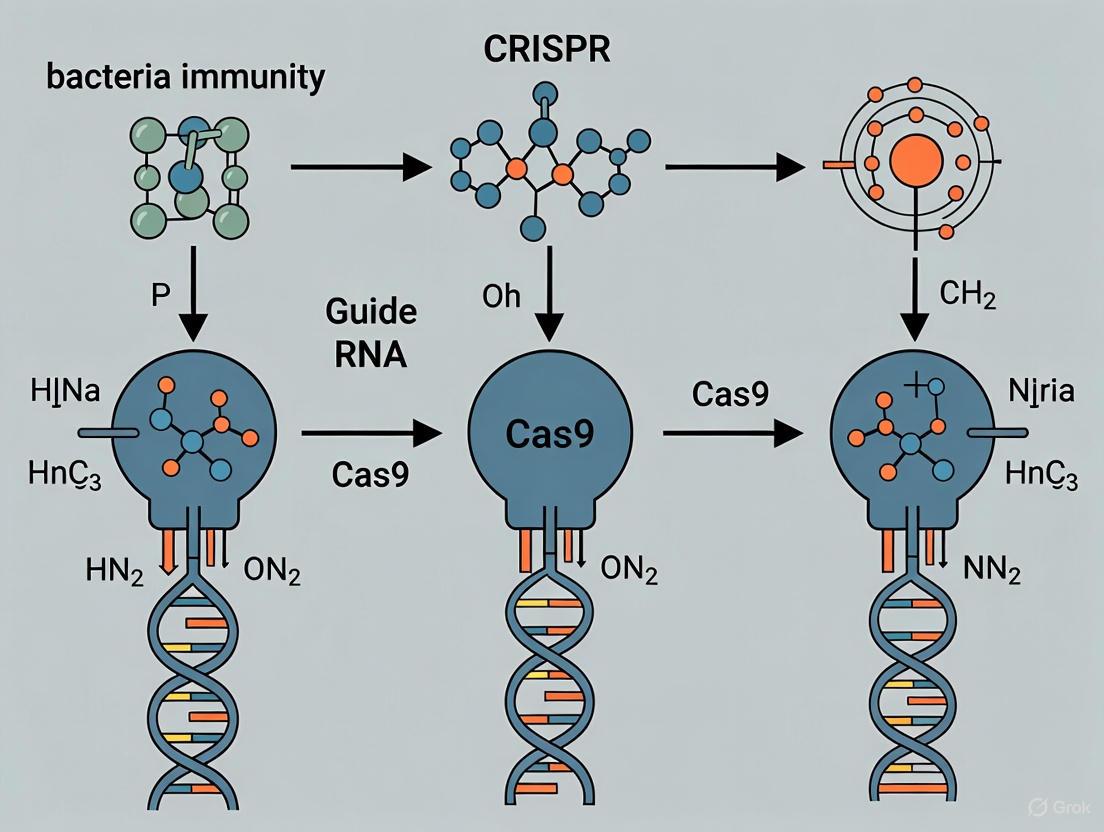
This article provides a comprehensive overview of CRISPR-Cas9 technology, tracing its evolution from a prokaryotic immune mechanism to a revolutionary gene-editing tool.
From Bacterial Immunity to Clinical Breakthroughs: The Comprehensive Guide to CRISPR-Cas9 Gene Editing
Abstract
This article provides a comprehensive overview of CRISPR-Cas9 technology, tracing its evolution from a prokaryotic immune mechanism to a revolutionary gene-editing tool. Tailored for researchers, scientists, and drug development professionals, it explores the fundamental principles of CRISPR systems, their diverse methodological applications in biomedicine and agriculture, current strategies for optimizing specificity and delivery, and a comparative analysis with other editing platforms. The scope extends to the latest clinical advancements, including recently approved therapies and ongoing trials, offering a validated perspective on the technology's current landscape and future potential in therapeutic development.
The Natural Origin and Fundamental Mechanics of CRISPR Systems
The Clustered Regularly Interspaced Short Palindromic Repeats (CRISPR) and their associated (Cas) proteins constitute an adaptive immune system in prokaryotes that confers sequence-specific protection against mobile genetic elements. This mechanism involves three distinct functional stages: adaptation, expression, and interference. The system's ability to acquire immunological memory from past infections and execute precise nucleic acid cleavage has not only revolutionized our understanding of prokaryotic defense but has also been repurposed as a versatile tool for genome editing. This whitepaper provides a comprehensive technical overview of the CRISPR-Cas system's biology, mechanisms, and its transformative impact on biomedical research and therapeutic development, framing it within its journey from a bacterial immune mechanism to a cornerstone of modern genetic engineering.
The discovery of CRISPR-Cas represents a paradigm shift in molecular biology. Initially observed as peculiar genetic loci in prokaryotes, these systems are now recognized as adaptive immune mechanisms that provide heritable, sequence-specific immunity against viruses and plasmids [1] [2]. The conceptual breakthrough that these sequences function as a biological memory system paved the way for their development into powerful technologies [3]. The subsequent domestication of the Type II CRISPR-Cas9 system into a programmable gene-editing tool has fundamentally transformed biomedical research, drug discovery, and therapeutic development [4] [5]. This report details the core biology of this system, its molecular mechanisms, and its experimental applications, providing a foundation for its use in research and clinical contexts.
Biological Foundations and Molecular Mechanisms
CRISPR-Cas systems are widely distributed, found in approximately 45% of sequenced bacterial genomes and 83% of archaeal genomes [1]. These systems are genetically diverse and have been classified into two major classes, six types, and numerous subtypes based on their genetic content and architectural features [3].
Core Genomic Architecture
The CRISPR locus is characterized by several key components, as illustrated in Figure 1:
- Direct Repeats: Short, partially palindromic DNA sequences (typically 28-37 base pairs) that are repeated at regular intervals and form the structural backbone of the locus [1].
- Spacers: Variable sequences (32-38 base pairs) interspersed between repeats. These sequences are derived from past invasions of mobile genetic elements, such as bacteriophages or plasmids, and serve as the immunological memory of the system [1] [3].
- Leader Sequence: An AT-rich region upstream of the CRISPR array that often contains a promoter and serves as the site for the integration of new spacers during adaptation [3].
- cas Genes: Genes encoding CRISPR-associated proteins, which are responsible for the various biochemical activities of the immune response, including the acquisition of new spacers and the cleavage of target nucleic acids [1].
The Three Stages of CRISPR-Cas Immunity
CRISPR-mediated immunity proceeds through three functionally distinct stages: adaptation, expression, and interference [1].
Stage 1: Adaptation
The adaptation or "spacer acquisition" phase involves the integration of novel spacers derived from invading nucleic acids into the CRISPR array. This process is mediated by the conserved Cas1-Cas2 protein complex, which captures fragments of foreign DNA (protospacers) and catalyzes their integration into the leader end of the CRISPR array as new spacers, flanked by new repeats [1]. A critical requirement for spacer acquisition in most systems is the presence of a short, conserved sequence adjacent to the protospacer in the invading DNA, known as the Protospacer Adjacent Motif (PAM) [1] [3]. The PAM is essential for distinguishing self from non-self, preventing the CRISPR system from targeting the bacterial chromosome.
Stage 2: crRNA Biogenesis
In the expression stage, the CRISPR locus is transcribed as a long precursor CRISPR RNA (pre-crRNA). This primary transcript is then processed into short, mature CRISPR RNAs (crRNAs), each containing a single spacer sequence that guides the Cas machinery to complementary foreign nucleic acids [1]. In Type II systems, a trans-activating crRNA (tracrRNA) hybridizes with the repeat regions of the pre-crRNA, facilitating its processing by Cas9 and RNase III into mature crRNAs [3].
Stage 3: Interference
In the final interference stage, the mature crRNA, complexed with Cas proteins, scans the cell for nucleic acids complementary to the spacer sequence. Upon recognition of a matching sequence adjacent to a valid PAM, the Cas nucleases are activated to cleave the target, leading to the degradation of the invading genetic element [1]. The molecular machinery involved in interference varies by system type, as detailed in Table 1.
System Classification and Functional Diversity
CRISPR-Cas systems exhibit remarkable diversity, which is reflected in their classification. The two main classes are defined by the architecture of their interference modules:
- Class 1 (Types I, III, IV) utilize multi-subunit effector complexes for nucleic acid targeting [3].
- Class 2 (Types II, V, VI) employ a single, large Cas protein (such as Cas9, Cas12, or Cas13) for the same function [3].
Table 1: Major Types of CRISPR-Cas Systems and Their Key Characteristics
| Type | Class | Signature Gene | Effector Complex | Target | PAM Requirement | Notes |
|---|---|---|---|---|---|---|
| Type I | Class 1 | cas3 |
Multi-subunit (Cascade) | DNA | Yes (5' of protospacer) | Most common in bacteria [1] |
| Type II | Class 2 | cas9 |
Single protein (Cas9) | DNA | Yes (3' of protospacer) | Source of CRISPR-Cas9 tool; requires tracrRNA [1] [3] |
| Type III | Class 1 | cas10 |
Multi-subunit | DNA/RNA | No | Common in archaea; can target RNA transcripts [1] |
Quantitative Analysis of CRISPR System Efficacy
The application of CRISPR systems, both as a native immune system and as a biotechnology tool, can be quantified through various metrics. Recent comparative studies have evaluated the efficacy of different Cas nucleases for specific applications, such as the eradication of antibiotic resistance genes.
Eradication Efficiency of Antibiotic Resistance Genes
A 2025 study systematically compared the ability of three CRISPR systems—Cas9, Cas12f1, and Cas3—to eliminate the carbapenem resistance genes KPC-2 and IMP-4 from Escherichia coli [6]. The target sites were designed within specific regions of these genes (542–576 bp for KPC-2 and 213–248 bp for IMP-4), and the elimination efficiency was assessed.
Table 2: Comparative Efficacy of CRISPR Systems Against Carbapenem Resistance Genes
| CRISPR System | Signature Nuclease | PAM Sequence | Eradication Efficiency (KPC-2/IMP-4) | Resensitization to Ampicillin | Blocking of Plasmid Transfer | Relative Copy Number Reduction (qPCR) |
|---|---|---|---|---|---|---|
| CRISPR-Cas9 | Cas9 | NGG | 100% / 100% | Yes | ~99% | Baseline |
| CRISPR-Cas12f1 | Cas12f1 | TTTN | 100% / 100% | Yes | ~99% | Baseline |
| CRISPR-Cas3 | Cas3 | GAA | 100% / 100% | Yes | ~99% | Highest |
The study found that while all three systems were 100% effective in eradicating the resistance genes and resensitizing the bacteria to antibiotics, quantitative PCR (qPCR) analysis revealed that the CRISPR-Cas3 system showed the highest eradication efficiency in terms of reducing the copy number of the drug-resistant plasmid [6]. This highlights the importance of selecting the appropriate CRISPR system based on the specific application and desired outcome.
Experimental Protocols for Key Applications
The following section outlines detailed methodologies for leveraging CRISPR systems in research, from studying bacterial immunity to combating antibiotic resistance.
Protocol: Eradicating Plasmid-Borne Antibiotic Resistance Genes
This protocol is adapted from a 2025 study demonstrating the use of CRISPR systems to resensitize resistant bacteria [6].
Objective: To eliminate carbapenem resistance genes (e.g., KPC-2, IMP-4) from a model bacterium (E. coli) using a plasmid-based CRISPR system.
Materials:
- Bacterial Strains: E. coli DH5α chemically competent cells harboring the resistant plasmid (e.g., pKPC-2 or pIMP-4).
- CRISPR Plasmids: Recombinant plasmids expressing a Cas nuclease (e.g., pCas9, pCas3, pCas12f1) and the corresponding guide RNA(s) targeting the resistance gene.
- Growth Media: Luria-Bertani (LB) broth and agar plates.
- Antibiotics: As required for selection (e.g., Tetracycline, Chloramphenicol, Gentamicin, Kanamycin), prepared at standard concentrations.
- Equipment: Thermocycler, electrophoresis system, spectrophotometer for OD600 measurement.
Procedure:
Target Design and Cloning:
- Design spacer sequences (sgRNAs) targeting the resistance gene according to the PAM requirements of the chosen Cas nuclease.
- For Cas9: Select a 30-nt sequence directly upstream of an NGG PAM.
- For Cas12f1: Select a 20-nt sequence directly upstream of a TTTN PAM.
- For Cas3: Select a 34-nt sequence on the antisense strand upstream of a GAA PAM.
- Synthesize oligonucleotides corresponding to the spacer sequences with appropriate overhangs for cloning.
- Digest the recipient CRISPR plasmid with the restriction enzyme BsaI.
- Ligate the annealed oligonucleotides into the digested plasmid backbone to generate the final CRISPR plasmid.
- Design spacer sequences (sgRNAs) targeting the resistance gene according to the PAM requirements of the chosen Cas nuclease.
Transformation:
- Prepare competent cells from the E. coli strain carrying the target resistance plasmid.
- Transform the prepared competent cells with the constructed CRISPR plasmid.
- Plate the transformation mixture on LB agar containing the antibiotics that select for both the resistance plasmid and the CRISPR plasmid.
- Incubate plates overnight at 37°C.
Validation and Analysis:
- Colony PCR: Pick individual transformant colonies and perform colony PCR using primers flanking the target site within the resistance gene. Analyze the PCR products by gel electrophoresis to confirm the loss of the resistance gene.
- Drug Sensitivity Test: Inoculate PCR-positive clones into liquid media without antibiotic selection and grow to saturation. Perform a spot assay or measure the minimum inhibitory concentration (MIC) to confirm restored sensitivity to the relevant antibiotic (e.g., ampicillin).
- Conjugation Assay: To assess the blocking of horizontal transfer, perform a conjugation mating assay with a recipient strain. Calculate the conjugation frequency and compare it to a control without the CRISPR system to confirm the ~99% blocking rate.
- qPCR Confirmation: Perform quantitative PCR with primers specific for the resistance gene and a chromosomal control gene to quantify the reduction in plasmid copy number, confirming the eradication efficiency.
The Scientist's Toolkit: Essential Research Reagents
The application of CRISPR technology, both for studying its native function and for its biotechnological repurposing, relies on a core set of reagents and tools.
Table 3: Essential Reagents for CRISPR-Based Research
| Reagent / Tool | Function / Description | Example Use-Case |
|---|---|---|
| Cas Expression Plasmid | A vector encoding the Cas nuclease (e.g., Cas9, Cas12f, Cas3). Provides the catalytic component for DNA cleavage. | pCas9 (Addgene #42876) for Type II system editing [6]. |
| Guide RNA (gRNA) Vector | A plasmid or DNA fragment encoding the custom guide RNA (sgRNA or crRNA). Provides the targeting specificity. | Custom plasmid with a BsaI cloning site for sgRNA insertion [6]. |
| Target DNA | The plasmid or genomic locus containing the protospacer and PAM sequence to be targeted. | Plasmid pKPC-2 carrying the KPC-2 carbapenemase gene [6]. |
| Competent Cells | Chemically or electrocompetent bacterial cells ready for plasmid transformation. | E. coli DH5α competent cells prepared for transformation [6]. |
| Selection Antibiotics | Antibiotics used in growth media to maintain selective pressure for plasmids with resistance markers. | Tetracycline, Chloramphenicol, Kanamycin for plasmid selection [6]. |
| AI Design Tools (e.g., CRISPR-GPT) | AI-powered platforms that assist in experimental design, gRNA selection, and prediction of off-target effects. | Accelerating guide RNA design and troubleshooting for complex edits [7]. |
The CRISPR-Cas system is a quintessential example of how understanding a fundamental biological mechanism in prokaryotes can catalyze a technological and therapeutic revolution. Its intrinsic function as an adaptive immune system, characterized by its three-stage mechanism and diverse molecular architectures, provides a rich framework for scientific inquiry. The repurposing of this system, particularly the Class 2 Type II CRISPR-Cas9 system, into a programmable gene-editing tool has created a paradigm shift across biology and medicine. It has accelerated drug target discovery, enabled the creation of precise disease models, and paved the way for a new class of gene therapies for genetic disorders, cancers, and infectious diseases [4] [5]. As the field advances with new editors like Cas12f1 and Cas3, and leverages AI to overcome design challenges, the core principles of prokaryotic immunity remain the foundation upon which these innovations are built [6] [7]. Future progress will depend on continued rigorous research to address challenges related to delivery, efficacy, and safety, ensuring this powerful technology reaches its full potential to transform human health.
The transformation of the CRISPR-Cas system from an obscure bacterial immune mechanism into a revolutionary programmable gene-editing tool represents one of the most significant breakthroughs in modern biotechnology. This technical guide examines the fundamental principles underlying this technology, its molecular mechanisms, and its extensive applications in biomedical research and therapeutic development. We provide a comprehensive analysis of the core components, quantitative data on system performance, detailed experimental protocols, and visualization of key workflows to equip researchers and drug development professionals with the foundational knowledge necessary to leverage this technology in their own work. The content is framed within the broader thesis of CRISPR's evolution from a bacterial adaptive immune system to a precision tool that is reshaping drug discovery and therapeutic intervention.
The clustered regularly interspaced short palindromic repeats (CRISPR) and CRISPR-associated (Cas) system represents a paradigm shift in genetic engineering capabilities. Originally identified as an adaptive immune mechanism in bacteria and archaea, this system protects prokaryotes from viral infection by recognizing and cleaving foreign genetic elements [8]. The groundbreaking realization that this system could be repurposed as a programmable gene-editing tool has revolutionized biomedical research and therapeutic development [4] [5].
The core innovation lies in the system's programmability: a guide RNA directs Cas nucleases to specific DNA sequences, enabling precise genetic modifications [5]. This technology has overcome previous limitations in genetic engineering, providing researchers with an unprecedented ability to modify, correct, or modulate precise regions of genomic DNA across diverse cell types and organisms [4]. For drug development professionals, CRISPR-Cas systems have accelerated target identification and validation, enabled the creation of sophisticated disease models, and opened new therapeutic avenues for genetic disorders, cancers, and infectious diseases [4] [9].
Molecular Mechanisms: From Bacterial Immunity to Programmable Editing
Core Components and Mechanisms
The CRISPR-Cas system functions as a two-component complex consisting of a Cas nuclease and a guide RNA (gRNA) [5]. The gRNA contains a sequence that binds to Cas9 and a customizable ~20-nucleotide spacer that specifies the target DNA site through complementary base pairing [8] [5]. Upon target recognition, Cas nucleases induce double-strand breaks in DNA, which are subsequently repaired by cellular mechanisms [4] [5].
Two primary DNA repair pathways are harnessed for genome editing:
- Non-Homologous End Joining (NHEJ): An error-prone repair mechanism that often results in insertions or deletions (indels) at the cleavage site, leading to gene disruption [4] [9].
- Homology-Directed Repair (HDR): A precise repair pathway that uses a template to introduce specific genetic modifications, enabling gene correction or insertion [4].
Table 1: CRISPR-Cas System Components and Functions
| Component | Type/Variant | Function | Applications |
|---|---|---|---|
| Cas Nuclease | Cas9 | RNA-guided DNA endonuclease creating double-strand breaks | Gene knockout, disruption |
| dCas9 (catalytically inactive) | DNA binding without cleavage | CRISPRi, CRISPRa, gene regulation | |
| Cas12a (Cpf1) | DNA cleavage with different PAM requirement; exhibits trans-cleavage activity | DNA editing, diagnostics [8] | |
| Cas13 | RNA-guided RNase; exhibits trans-cleavage activity | RNA targeting, diagnostics [8] | |
| Guide RNA | crRNA | Contains target-complementary spacer | Target recognition [8] |
| tracrRNA | Facilitates crRNA processing (Type II systems) | Cas9 recruitment | |
| sgRNA | Single-guide RNA combining crRNA and tracrRNA | Simplified editing [4] | |
| Repair Template | ssODN | Single-stranded oligodeoxynucleotide | Small insertions, corrections |
| dsDNA | Double-stranded DNA vector | Large insertions, gene replacements |
CRISPR System Diversity and Applications
Beyond the canonical Cas9 system, various CRISPR nucleases with distinct properties have been identified and harnessed:
- Cas9: The most widely used nuclease, requiring an NGG protospacer adjacent motif (PAM) and creating blunt-ended double-strand breaks [4].
- Cas12a: Recognizes T-rich PAM sequences, creates staggered DNA cuts, and exhibits trans-cleavage activity that has been exploited for diagnostic applications [8].
- Cas13: Targets RNA rather than DNA and demonstrates trans-cleavage activity that has been leveraged for RNA detection and manipulation [8].
The development of catalytically inactive dCas9 has further expanded CRISPR applications beyond editing. When fused to effector domains, dCas9 can be used for transcriptional activation (CRISPRa), repression (CRISPRi), epigenetic modification, and base editing without creating DNA double-strand breaks [4] [9].
Diagram 1: CRISPR from bacterial immunity to programmable tool. This diagram illustrates the transition of CRISPR-Cas systems from their natural function in bacterial immunity to their repurposing as programmable gene-editing tools with diverse applications.
Quantitative Analysis of CRISPR Systems
Performance Metrics Across Cas Variants
The efficacy of CRISPR systems is quantified through multiple parameters, including editing efficiency, specificity, and sensitivity. Different Cas variants exhibit distinct performance characteristics that make them suitable for various applications.
Table 2: Performance Characteristics of CRISPR-Cas Systems
| System | Target | PAM Requirement | Cleavage Type | Efficiency Range | Key Applications |
|---|---|---|---|---|---|
| Cas9 | DNA | NGG (SpyCas9) | Blunt ends | 30-80% (varies by cell type) | Gene knockout, large deletions [4] |
| Cas12a | DNA | T-rich (TTTV) | Staggered ends | 20-60% | DNA editing, diagnostics (DETECTR) [8] |
| Cas13 | RNA | Protospacer Flanking Site | RNA cleavage | aM level sensitivity | RNA detection (SHERLOCK), RNA editing [8] |
| dCas9 | DNA | NGG | No cleavage | N/A | Gene regulation, epigen editing [4] [9] |
| Base Editors | DNA | NGG | Chemical conversion | 10-50% | Point mutations without DSBs [4] |
Diagnostic Performance Comparison
CRISPR-based diagnostic platforms have demonstrated exceptional sensitivity and specificity compared to traditional methods, enabling rapid detection of pathogens and genetic variants.
Table 3: Diagnostic Performance Comparison
| Method | Detection Limit | Time to Result | Equipment Needs | Cost per Test |
|---|---|---|---|---|
| Culture-Based | Varies by pathogen | 24-72 hours | Incubators, microscopes | Medium |
| PCR | ~100 copies | 1-4 hours | Thermal cycler, real-time PCR | Medium-High |
| Immunoassay | ng-pg/mL | 1-2 hours | Plate readers, washers | Low-Medium |
| CRISPR-DETECTR | aM levels | 30-60 minutes | Minimal (isothermal) | Low [8] |
| CRISPR-SHERLOCK | aM levels | <60 minutes | Minimal (isothermal) | Low [8] |
Experimental Framework: CRISPR Screening Methodologies
Pooled CRISPR Screening Workflow
Functional genomic screening with CRISPR-Cas9 has become a powerful approach for systematic identification of genes associated with various phenotypes [10] [9]. The pooled screening approach enables genome-wide interrogation of gene function in a highly parallelized manner.
Diagram 2: Pooled CRISPR screening workflow. This diagram outlines the key steps in a typical pooled CRISPR screen, from library design to hit validation.
Detailed Screening Protocol
Library Design and Preparation
sgRNA Library Design:
Library Cloning:
- Clone oligo pool into lentiviral backbone using Golden Gate assembly
- Transform into electrocompetent E. coli and plate on large-format bioassay dishes
- Harvest library with maxiprep kit, ensuring >500x coverage of library diversity
Cell Transduction and Selection
Virus Production:
- Transfect HEK293T cells with lentiviral packaging plasmids and library vector
- Harvest virus supernatant at 48h and 72h post-transfection, concentrate if necessary
Cell Transduction:
- Transduce Cas9-expressing target cells at low MOI (MOI=0.3-0.5) to ensure single integration
- Include non-transduced control for selection optimization
- Spinfect at 1000g for 2h at 32°C to enhance transduction efficiency
Selection and Expansion:
- Apply appropriate selection (e.g., puromycin 1-5μg/mL) 24h post-transduction
- Maintain selection for 5-7 days until control cells are completely dead
- Expand cells to maintain >500x library coverage at each passage
Phenotypic Screening and Analysis
Phenotypic Application:
- For negative selection screens: Passage cells for 14-21 days to allow dropout of essential genes
- For positive selection screens: Apply selective pressure (e.g., drug treatment) and collect surviving cells
- Collect timepoints at Day 0 (post-selection), Day 7, Day 14, and Day 21 for longitudinal analysis
Sequencing Library Preparation:
- Extract genomic DNA using maxiprep kits with RNase A treatment
- Amplify sgRNA region with 18 PCR cycles using barcoded primers for multiplexing
- Purify PCR products with SPRI beads and quantify by qPCR before sequencing
Data Analysis with MAGeCK-VISPR:
Research Reagent Solutions
Successful implementation of CRISPR technologies requires a comprehensive set of specialized reagents and tools. The following table outlines essential components for CRISPR-based research.
Table 4: Essential Research Reagents for CRISPR Applications
| Reagent Category | Specific Examples | Function | Considerations |
|---|---|---|---|
| Nuclease Systems | S. pyogenes Cas9, AsCas12a, LwaCas13a | Target recognition and cleavage | PAM requirements, specificity, delivery format (RNP, mRNA) |
| Delivery Vehicles | Lentiviral particles, AAV, Lipid Nanoparticles (LNPs) | Intracellular delivery of editing components | Tropism, payload size, immunogenicity, transduction efficiency [11] |
| Guide RNA Formats | sgRNA expression vectors, synthetic crRNA:tracrRNA | Target specification | Chemical modifications for stability, expression promoter (U6, H1) |
| Detection Tools | CRISPR-detector, T7E1 assay, NGS panels | Editing efficiency and specificity validation | Sensitivity, throughput, cost [12] |
| Cell Culture Models | iPSCs, Primary cells, Organoids | Physiological context for editing | Editability, expansion capacity, relevance to disease |
| Screening Libraries | Genome-wide knockout, CRISPRa/i, focused sublibraries | Functional genomics | Coverage, validation status, application-specific design [9] |
Clinical Translation and Therapeutic Applications
The transition of CRISPR technology from basic research to clinical applications has accelerated rapidly, with multiple therapeutic programs now in clinical trials and approved treatments emerging.
Clinical Trial Advancements
Recent clinical developments demonstrate the therapeutic potential of CRISPR-based interventions:
- Casgevy (exagamglogene autotemcel): The first FDA-approved CRISPR-based medicine for sickle cell disease (SCD) and transfusion-dependent beta thalassemia (TBT), representing a landmark validation of the technology [11].
- In vivo CRISPR therapies: The first personalized in vivo CRISPR treatment was administered to an infant with CPS1 deficiency, developed and delivered in just six months using lipid nanoparticles (LNPs) [11].
- Hereditary transthyretin amyloidosis (hATTR): Intellia Therapeutics' phase I trial demonstrated ~90% reduction in disease-related TTR protein levels sustained over two years of follow-up [11].
- Hereditary angioedema (HAE): CRISPR-Cas9 therapy targeting kallikrein resulted in 86% reduction in target protein and significant reduction in inflammatory attacks [11].
Delivery System Advancements
Delivery remains a critical challenge for CRISPR therapeutics, with significant advances in:
- Lipid Nanoparticles (LNPs): Demonstrated success in liver-directed editing with potential for redosing due to reduced immunogenicity compared to viral vectors [11].
- Viral Vectors: AAV vectors optimized for cargo size and tissue specificity.
- Ex vivo Approaches: Cell therapies engineered outside the body and reintroduced, as exemplified by Casgevy for SCD.
The CRISPR therapeutic landscape continues to expand, with applications in genetic diseases, oncology, infectious diseases, and regenerative medicine, positioning CRISPR at the forefront of the next generation of precision medicines [11] [5].
From Bacterial Immunity to Gene-Editing Revolution
Clustered Regularly Interspaced Short Palindromic Repeats (CRISPR) and CRISPR-associated (Cas) proteins function as an adaptive immune system in bacteria and archaea, protecting them from viral infections [13] [14] [15]. This natural system has been repurposed into a revolutionary genome engineering tool that allows researchers to precisely edit any sequence in an organism's genome [16].
The core components of this system are Cas nucleases, guide RNA (gRNA), and the Protospacer Adjacent Motif (PAM) sequence [16] [14]. The system's versatility stems from its programmability; by simply changing the ~20-nucleotide targeting sequence within the gRNA, researchers can redirect the Cas nuclease to virtually any genomic location [14]. This guide details the function and characteristics of these core components, providing a technical foundation for researchers and drug development professionals.
The Core Functional Units
Cas Nucleases: The DNA Cutting Machinery
Cas nucleases are enzymes that create double-strand breaks (DSBs) in DNA. They are the executive effectors of the CRISPR system. The specific Cas protein used determines the system's properties, including its PAM requirement, size, and cutting mechanism [16] [14].
CRISPR-Cas systems are broadly classified into two classes. Class 1 (types I, III, IV, and VII) utilize multi-protein effector complexes, while Class 2 (types II, V, and VI) employ single-protein effectors like Cas9 and Cas12a, which are more commonly adapted for gene-editing applications due to their simplicity [13] [15]. The known diversity of these systems is rapidly expanding, with a current classification encompassing 2 classes, 7 types, and 46 subtypes [13].
Guide RNA (gRNA): The Targeting System
The guide RNA is a synthetic RNA molecule composed of two key parts:
- Scaffold Sequence: Necessary for binding the Cas nuclease [14].
- Spacer Sequence: A user-defined ~20-nucleotide sequence that is complementary to the target DNA and specifies where the Cas nuclease will bind and cut [14].
The gRNA directs the Cas nuclease to the target locus through Watson-Crick base pairing. The location of any mismatches between the gRNA and the target DNA matters significantly; mismatches in the seed sequence (the 8-10 bases at the 3' end of the gRNA targeting sequence) are more likely to inhibit cleavage than mismatches farther away [14].
The Protospacer Adjacent Motif (PAM): The Self vs. Non-Self Discriminator
The PAM is a short, specific DNA sequence (usually 2-6 base pairs) that follows the DNA region targeted for cleavage by the CRISPR system [16] [15]. Its primary role is to allow the CRISPR system to distinguish between foreign DNA (a valid target) and the bacterium's own CRISPR array (which must not be cleaved) [16] [17].
The spacer sequences stored in the bacterial CRISPR locus are derived from viral DNA but do not include the PAM. Therefore, when the Cas nuclease scans the cell for matching sequences, it will only cleave DNA that has both a complementary protospacer and the correct PAM sequence immediately downstream, thus avoiding autoimmunity [16] [15]. In genome engineering, the presence and location of the PAM sequence are absolute requirements for editing to occur and thus dictate where in the genome a Cas nuclease can be targeted [16] [17].
The Mechanism of CRISPR-Based Immunity and Gene Editing
The core function of the CRISPR-Cas9 system in both bacterial immunity and gene editing involves a sequence of molecular events triggered by the formation of the Cas-gRNA ribonucleoprotein complex.
Diagram 1: Core CRISPR-Cas9 DNA targeting and cleavage mechanism. The process begins with complex formation and proceeds through PAM-dependent scanning, R-loop formation, and complementarity checks before culminating in DNA cleavage, enabling both bacterial immunity and gene-editing applications.
Quantitative Landscape of CRISPR Nucleases
The choice of Cas nuclease is a critical experimental decision. Different nucleases have unique PAM requirements, sizes, and cleavage mechanisms, making them suitable for different applications.
Table 1: Key Characteristics of Commonly Used and Emerging CRISPR Nucleases
| CRISPR Nuclease | Organism Isolated From | PAM Sequence (5' to 3') | Size (aa, ~) | Cleavage Mechanism | Primary Applications |
|---|---|---|---|---|---|
| SpCas9 | Streptococcus pyogenes | NGG [16] [14] [17] | ~1,360 | Blunt DSB, RuvC & HNH domains cut target & non-target strands [14] | Knockout, Knock-in, Activation/Repression |
| SaCas9 | Staphylococcus aureus | NNGRR(T) [16] | ~1,050 | Blunt DSB | In vivo delivery where size is a constraint |
| NmeCas9 | Neisseria meningitidis | NNNNGATT [16] | ~1,100 | Blunt DSB | Editing with longer PAM requirement |
| Cas12a (Cpf1) | Lachnospiraceae bacterium | TTTV [16] | ~1,300 | Staggered DSB, single RuvC domain cuts both strands [15] | Knock-in, multiplexed editing |
| Cas12f1 | Engineered | TN and/or TNN [16] [6] | ~400-500 | Staggered DSB | In vivo delivery (extremely small size) |
| Cas14 | Uncultivated archaea | T-rich (e.g., TTTA) for dsDNA [16] | ~400-700 | ssDNA/ssRNA cleavage | Diagnostics, ssDNA targeting |
| Cas3 | Various Prokaryotes | No strict PAM requirement [16] [6] | Large, multi-protein | Processive degradation, large deletions [6] | Large genomic deletions, anti-plasmid applications |
Table 2: Experimentally Measured Eradication Efficiency of CRISPR Systems Against Antibiotic Resistance Genes
| CRISPR System | Target Gene | Eradication Efficiency (Colony PCR) | Resensitization to Antibiotic | Relative Efficiency (qPCR, vs. Cas9) |
|---|---|---|---|---|
| CRISPR-Cas9 | KPC-2 & IMP-4 | 100% [6] | Successful (Ampicillin) [6] | Baseline |
| CRISPR-Cas12f1 | KPC-2 & IMP-4 | 100% [6] | Successful (Ampicillin) [6] | Lower than Cas9 [6] |
| CRISPR-Cas3 | KPC-2 & IMP-4 | 100% [6] | Successful (Ampicillin) [6] | Higher than Cas9 [6] |
Advanced Nuclease Engineering
To overcome limitations like PAM restrictions, large size, and off-target effects, researchers have engineered numerous variants of Cas nucleases.
- High-Fidelity Cas9s: Variants like eSpCas9(1.1), SpCas9-HF1, and HypaCas9 contain mutations that reduce off-target editing by weakening non-specific interactions with the DNA backbone or enhancing proofreading capabilities [14].
- PAM-Flexible Cas9s: Engineered variants such as xCas9 and SpRY recognize non-NGG PAMs (e.g., NG, GAA, GAT, NRN, NYN), vastly expanding the targetable genome space [14].
- Special-Function Cas9s:
- Immunoevading Cas Proteins: Recently engineered versions of Cas9 and Cas12a have specific immunogenic amino acid sequences masked, reducing immune responses in mice—a crucial advancement for human therapies [18].
Detailed Experimental Protocol: Eradicating Antibiotic Resistance Plasmids
The following protocol, adapted from a 2025 study, details the steps to eradicate carbapenem resistance genes (KPC-2 and IMP-4) from E. coli using three different CRISPR systems (Cas9, Cas12f1, Cas3), enabling a direct comparison of their efficacy [6].
Materials and Reagents
- Bacterial Strains: E. coli DH5α chemically competent cells.
- Resistant Model Plasmids: pKPC-2 and pIMP-4 (constructed by cloning KPC-2 or IMP-4 gene fragments into a vector like pSEVA551 with a tetracycline resistance marker) [6].
- CRISPR Plasmids: pCas9 (Addgene #42876), pCas12f1, and pCas3cRh (Addgene #133773), each containing a compatible antibiotic marker (e.g., chloramphenicol or kanamycin resistance) [6].
- Growth Media: Luria-Bertani (LB) broth and LB agar plates.
- Antibiotics: Tetracycline (10 mg/mL), Chloramphenicol (50 mg/mL), Gentamicin (15 mg/mL), Kanamycin (50 mg/mL), Ampicillin.
- Oligonucleotides: Designed spacers for gRNAs targeting regions within the KPC-2 (542–576 bp) and IMP-4 (213–248 bp) genes.
- Restriction Enzyme: BsaI.
- Ligation Kit.
- Competent Cell Preparation Kit (e.g., TransEasy kit from GeneCopoeia).
Methodology
Part 1: CRISPR Plasmid Construction
- Spacer Design:
- Oligo Annealing: Synthesize and anneal oligonucleotide pairs for each spacer, adding the appropriate sticky ends for the respective BsaI-digested backbone [6].
- Digestion and Ligation: Digest the destination CRISPR plasmids (pCas9, pCas12f1, pCas3) with BsaI. Ligate the annealed spacer fragments into the digested backbones using a rapid ligation kit [6].
- Transformation: Transform the ligation products into competent E. coli DH5α cells and plate on selective media to obtain the final recombinant CRISPR plasmids.
Part 2: Eradication Efficiency Assay
- Prepare Model Bacteria: Transform the pKPC-2 or pIMP-4 plasmid into E. coli DH5α to generate the model drug-resistant bacteria. Select on tetracycline plates [6].
- Make Competent Cells: Prepare competent cells from the model drug-resistant E. coli strain [6].
- Transform CRISPR System: Transform the recombinant CRISPR plasmids (from Part 1) into the competent, drug-resistant E. coli. Plate the transformation on media containing both the CRISPR plasmid antibiotic (e.g., chloramphenicol) and the resistant plasmid antibiotic (tetracycline) [6].
- Screen for Eradication:
- Pick transformant colonies and perform colony PCR using primers flanking the target site within the KPC-2 or IMP-4 gene.
- Successful eradication is indicated by the absence of a PCR product or a size shift. The study reported 100% eradication efficiency for all three systems via this method [6].
- Drug Sensitivity Test: Inoculate eradication-positive colonies into liquid media with the CRISPR plasmid antibiotic but without tetracycline. Perform a disk diffusion or MIC assay with ampicillin. Successful resensitization confirms functional loss of the β-lactamase gene [6].
Part 3: Quantitative Efficiency Comparison (qPCR)
- Extract DNA: Extract total DNA from E. coli cells harboring both the resistant plasmid and the CRISPR plasmid, and from control cells with the resistant plasmid only.
- Perform qPCR: Perform quantitative PCR using primers specific for the resistance gene and a reference gene (e.g., a chromosomal housekeeping gene).
- Analyze Data: Calculate the relative copy number of the resistant plasmid in the CRISPR-containing cells compared to the control. The 2025 study found that CRISPR-Cas3 showed the highest eradication efficiency via this metric, followed by Cas9 and then Cas12f1 [6].
The Scientist's Toolkit: Essential Research Reagents
Table 3: Key Research Reagent Solutions for CRISPR Experiments
| Reagent / Material | Function / Application | Examples / Key Characteristics |
|---|---|---|
| CRISPR Plasmids | Delivery of Cas and gRNA genes into cells. | pCas9 (Addgene #42876), pCas3cRh (Addgene #133773) [6]. Often contain mammalian resistance markers (e.g., puromycin) for stable selection. |
| Vector-based Cas | Stable delivery of Cas nuclease via viral vectors. | Lentiviruses, Adeno-associated viruses (AAVs). Ideal for long-term expression and hard-to-transfect cells. Market estimated at ~$600M annually [19]. |
| DNA-free Cas Systems | Transient editing with reduced off-target risk. | Cas9-gRNA Ribonucleoprotein (RNP) complexes. No DNA integration, higher editing efficiency, favored for therapeutic development [19]. |
| Synthetic gRNAs | Define targeting specificity for the Cas nuclease. | Chemically synthesized sgRNAs. High purity, reduced immune activation in cells compared to in vitro transcription products [16]. |
| Validated Cell Lines | Models for disease research and editing efficiency testing. | Human cell lines (e.g., A549, HEK293). Used in functional validation of gRNAs and Cas variants [20]. |
| Homing Guide RNAs (hgRNAs) | Cellular barcoding and lineage tracing. | gRNAs that include the PAM sequence to target their own DNA, generating diverse mutational profiles to track cell fate [16]. |
The sophisticated interplay between Cas nucleases, guide RNA, and the PAM sequence forms the foundation of CRISPR technology, from its origins in bacterial immunity to its current status as a transformative gene-editing tool. Ongoing research continues to expand the CRISPR toolkit through the discovery of novel systems like Type VII and engineered variants with enhanced precision, flexibility, and safety profiles [13] [14] [18]. For the research and drug development professional, a deep understanding of these core components—their mechanisms, diversity, and quantitative performance—is essential for designing effective experiments and developing the next generation of genetic therapies.
The discovery of CRISPR-Cas systems, adaptive immune mechanisms in bacteria that cleave foreign DNA, has revolutionized genome engineering [21] [22]. At the heart of both bacterial immunity and precision gene editing lies the DNA double-strand break (DSB)—one of the most cytotoxic forms of DNA damage that, if unrepaired, can lead to genomic instability, carcinogenesis, and cell death [23]. Eukaryotic cells have evolved two primary pathways to repair DSBs: the error-prone non-homologous end joining (NHEJ) and the high-fidelity homology-directed repair (HDR) [21]. The competitive balance between these pathways is crucial for maintaining genomic integrity and represents a critical determinant for the outcomes of CRISPR-based gene editing [24]. This technical guide provides an in-depth analysis of the NHEJ and HDR mechanisms, their regulatory interplay, and their exploitation in therapeutic genome editing, framed within the broader thesis of CRISPR's journey from bacterial immunity to transformative research technology.
Core Mechanisms of NHEJ and HDR
Non-Homologous End Joining (NHEJ)
NHEJ is the dominant DSB repair pathway in human somatic cells, operating throughout the cell cycle but most prominently in G1 phase [21] [25]. It functions through direct ligation of broken DNA ends without requiring a homologous template, making it inherently error-prone but fast and efficient [25].
Key Molecular Steps:
- DSB Recognition: The Ku70-Ku80 heterodimer rapidly binds to exposed DSB ends, protecting them from excessive resection and degradation [23] [25].
- Pathway Activation: DNA-PKcs (DNA-dependent protein kinase catalytic subunit) is recruited, forming the DNA-PK holoenzyme that activates downstream signaling [25].
- End Processing: Artemis nuclease processes damaged or incompatible DNA ends. Polymerases μ and λ fill small gaps, while polynucleotide kinase/phosphatase (PNKP) prepares termini for ligation [21].
- Ligation: The XRCC4-DNA Ligase IV complex, stabilized by XLF, catalyzes final ligation [25].
NHEJ is actively suppressed in transcribed genomic regions through RNA-mediated mechanisms. Nascent RNA transcripts can guide repair through RNA-mediated NHEJ (R-NHEJ), where RNA:DNA hybrids form at break sites to facilitate sequence-specific reconstitution of broken ends [25].
Homology-Directed Repair (HDR)
HDR is a precise, template-dependent repair pathway restricted primarily to the S and G2 phases of the cell cycle when a sister chromatid is available [21]. It utilizes homologous DNA sequences as templates for error-free repair.
Key Molecular Steps:
- 5'-3' DNA End Resection: The MRE11-RAD50-NBS1 (MRN) complex initiates resection, generating short 3' single-stranded DNA (ssDNA) overhangs. CtIP, BRCA1, EXO1, and DNA2/BLM extend these overhangs to several hundred nucleotides [23].
- RPA Coating: Replication Protein A (RPA) coats ssDNA tails, protecting them from degradation and preventing secondary structure formation.
- RAD51 Nucleoprotein Filament Formation: BRCA2 mediates replacement of RPA with RAD51, forming a helical filament on ssDNA that catalyzes homology search and strand invasion into the sister chromatid or homologous template [23].
- DNA Synthesis and Resolution: DNA polymerase extends the invading strand using the homologous template, followed by resolution of the Holliday junction structure to complete repair.
RNA molecules play underappreciated roles in HDR, serving as structural scaffolds, facilitating repair factor recruitment, and even acting as templates for DNA synthesis via reverse transcriptase activity of DNA polymerase ζ [25].
Table 1: Comparative Features of NHEJ and HDR Pathways
| Feature | NHEJ | HDR |
|---|---|---|
| Template Requirement | None (error-prone) | Homologous template (high-fidelity) |
| Primary Catalysts | Ku70/80, DNA-PKcs, XRCC4-LigIV | MRN complex, BRCA1, BRCA2, RAD51 |
| Cell Cycle Phase | All phases (predominant in G1) | S and G2 phases |
| Repair Fidelity | Low (often introduces indels) | High (precise, error-free) |
| CRISPR Application | Gene knockout via indel mutations | Precise gene correction or insertion |
| Key Inhibitors | 53BP1, RIF1, Shieldin complex | C8orf33 (via H4K16ac regulation) [23] |
| RNA Involvement | RNA bridging, RNA-templated synthesis [25] | RNA-templated repair, hybrid formation [25] |
Pathway Regulation and Choice
The critical decision between NHEJ and HDR pathways is regulated by a complex interplay of cell cycle checkpoints, chromatin modifications, and competitive binding of repair factors at damage sites.
Chromatin and Acetylation Regulation
Histone modifications, particularly histone H4 lysine 16 acetylation (H4K16ac), play a decisive role in repair pathway choice. H4K16ac is predominantly catalyzed by KAT8 (lysine acetyltransferase 8) and creates a chromatin environment that inhibits 53BP1 binding while promoting BRCA1 recruitment, thereby favoring HDR over NHEJ [23].
Recent research has identified C8orf33 as a novel regulator that antagonizes KAT8-mediated H4K16 acetylation at DSB sites. By reducing H4K16ac levels, C8orf33 promotes 53BP1 recruitment and NHEJ while inhibiting DNA end resection and RAD51 accumulation, thereby channeling repair toward NHEJ. Consequently, C8orf33 deficiency enhances HDR activity, leading to increased ribosomal DNA repeat loss and genomic instability [23].
Key Regulatory Competition
The balance between 53BP1 and BRCA1 represents a crucial competition point that determines repair pathway choice. 53BP1 and its downstream effectors (RIF1, shieldin complex) protect DNA ends from resection, promoting NHEJ. In contrast, BRCA1 promotes end resection and counteracts 53BP1, initiating the HDR pathway [23].
Diagram 1: DSB Repair Pathway Regulation
Alternative Repair Pathways
Beyond canonical NHEJ and HDR, alternative repair pathways contribute to DSB repair, particularly in CRISPR editing contexts:
- Microhomology-Mediated End Joining (MMEJ): Utilizes 2-20 nucleotide microhomologous sequences flanking the break site for alignment, resulting in deletions [24] [25]. Key effector: POLQ (DNA polymerase theta).
- Single-Strand Annealing (SSA): Requires longer homologous sequences (≥30 nt) and deletes intervening sequence. Key effector: Rad52 [24].
- RNA-Templated Repair: Emerging evidence shows RNA molecules can template DSB repair via reverse transcriptase activity of Pol η and Pol θ, challenging the central dogma of DNA-exclusive genetic information transfer [25].
CRISPR Applications and Experimental Methodologies
Exploiting End-Joining for Genome Engineering
CRISPR-based gene knockout strategies predominantly exploit the NHEJ pathway. Following Cas9-induced DSBs, error-prone NHEJ repair introduces insertion/deletion mutations (indels) that disrupt gene function [21]. The efficiency of CRISPR knockouts has been dramatically improved through NHEJ inhibition using compounds like Alt-R HDR Enhancer V2, which increases precise knock-in efficiency by approximately 3-fold (from 5.2% to 16.8% for Cpf1-mediated knock-in and 6.9% to 22.1% for Cas9-mediated knock-in) [24].
Enhancing Precision Editing via HDR
Precise genome editing requires HDR using exogenously supplied donor DNA templates containing desired modifications flanked by homology arms. However, HDR efficiency remains challenging due to competitive dominance of NHEJ and cell cycle dependence.
Advanced HDR Enhancement Strategies:
- NHEJ Pathway Inhibition: Chemical inhibition (e.g., Scr7, Nu7441) or genetic knockdown of core NHEJ factors (Ku70/80, DNA-PKcs) enhances HDR efficiency [24].
- MMEJ and SSA Pathway Suppression: Inhibiting POLQ with ART558 reduces large deletions (≥50 nt) and complex indels, while Rad52 inhibition with D-I03 decreases asymmetric HDR events [24].
- Cell Cycle Synchronization: Forcing Cas9 expression in S/G2 phases using geminin- or cyclin B1-derived degrons improves HDR efficiency [21].
- Regulatory Factor Modulation: Depleting C8orf33 enhances HDR by increasing KAT8-mediated H4K16 acetylation, promoting BRCA1 recruitment over 53BP1 [23].
Table 2: Experimental Reagents for Manipulating DSB Repair Pathways
| Reagent | Target Pathway | Mechanism of Action | Application in CRISPR Editing |
|---|---|---|---|
| Alt-R HDR Enhancer V2 | NHEJ inhibitor | Potent chemical inhibition of NHEJ pathway | Increases precise knock-in efficiency ~3-fold [24] |
| ART558 | MMEJ inhibitor | Selective inhibition of POLQ (DNA polymerase theta) | Reduces large deletions and complex indels [24] |
| D-I03 | SSA inhibitor | Specific inhibition of Rad52 annealing activity | Decreases asymmetric HDR and donor mis-integration [24] |
| Cas9-START | Cell cycle regulation | Cas9 fused to geminin-derived degron for S/G2-specific expression | Enhances HDR efficiency by restricting editing to permissive phases |
| C8orf33 siRNA | Regulatory factor | Knockdown enhances KAT8-mediated H4K16ac | Promotes HR over NHEJ by altering chromatin state [23] |
| Lipid Nanoparticles (LNPs) | Delivery system | Non-viral delivery of CRISPR components | Enables in vivo editing and potential redosing [11] |
DSB Repair Analysis Methodologies
Genotyping Repair Outcomes:
- Long-read amplicon sequencing (PacBio) with computational frameworks like knock-knock enables comprehensive classification of repair patterns (perfect HDR, indels, imprecise integration) [24].
- Traffic light reporter (TLR) systems allow simultaneous quantification of HDR and NHEJ efficiencies at defined genomic loci [23].
Functional Assays:
- EJ5-GFP reporter: Quantifies NHEJ integrity and efficiency [23].
- Immunofluorescence for repair factors: Monitoring 53BP1, BRCA1, RAD51, or γH2AX foci formation at damage sites reveals pathway utilization [23] [26].
- Spatio-temporal analysis frameworks: Live imaging of tumor spheroids via Light Sheet Fluorescence Microscopy with DNA damage sensors (e.g., mCherry-53BP1) generates quantitative maps of DSB repair dynamics in 3D microenvironments [26].
Diagram 2: DSB Repair Analysis Workflow
Clinical Translation and Therapeutic Applications
The manipulation of DSB repair pathways has enabled groundbreaking clinical applications. Casgevy, the first FDA-approved CRISPR-based medicine for sickle cell disease and transfusion-dependent beta thalassemia, utilizes ex vivo HDR-mediated editing of hematopoietic stem cells [11] [21]. Clinical trials have demonstrated the efficacy of NHEJ-mediated gene disruption for hereditary transthyretin amyloidosis (hATTR), with lipid nanoparticle-delivered CRISPR achieving ~90% reduction in disease-causing TTR protein levels sustained over two years [11].
Emerging strategies include:
- In vivo base editing: CRISPR components delivered via LNPs to correct point mutations without inducing DSBs, avoiding repair pathway competition altogether [21].
- Prime editing: Utilizes reverse transcriptase activity to write genetic information directly into target sites using RNA templates, harnessing cellular repair mechanisms similar to natural RNA-templated repair [25].
- Immuno-oncology applications: DDR gene mutations influence tumor immunogenicity and response to checkpoint inhibitors. BRCA-deficient tumors exhibit enhanced neoantigen presentation and improved response to PD-1/PD-L1 blockade therapies [27].
The intricate balance between NHEJ and HDR pathways represents a fundamental cellular process that maintains genomic stability while creating evolutionary flexibility. The journey from understanding bacterial CRISPR immunity to harnessing these mechanisms for precision genome editing has revealed the profound complexity of DSB repair regulation. As we continue to elucidate the nuanced interplay between chromatin modifications, repair factor competition, and RNA-mediated processes, new opportunities emerge for increasingly sophisticated control over repair outcomes. The strategic modulation of these pathways—through chemical inhibition, temporal control, or regulatory factor manipulation—will undoubtedly unlock new therapeutic possibilities and further cement CRISPR-based technologies as transformative tools in biomedical research and clinical medicine.
From Lab to Clinic: Therapeutic Applications and Clinical Trial Progress
Ex Vivo vs. In Vivo Editing Approaches
Clustered Regularly Interspaced Short Palindromic Repeats (CRISPR) technology represents a transformative breakthrough in genetic engineering, repurposing an ancient bacterial immune system into a precise gene-editing tool. First discovered in bacterial immune systems and described in the seminal 2012 publication by Dr. Jennifer Doudna and Dr. Emmanuelle Charpentier, the CRISPR-Cas system originated as a defense mechanism that bacteria use to cut and disable invading bacteriophage DNA [28]. This natural system comprises two key components: a guide RNA (gRNA) sequence that directs the CRISPR-associated (Cas) nuclease to a specific target DNA sequence, and the Cas nuclease itself that creates the double-stranded break in the DNA [28]. The repurposing of this bacterial immune mechanism into a programmable gene-editing tool earned Doudna and Charpentier the 2020 Nobel Prize in Chemistry and launched a new era in genetic medicine [28].
As CRISPR technologies have evolved from basic research tools to therapeutic applications, two primary delivery approaches have emerged: ex vivo and in vivo gene editing. These approaches represent fundamentally different strategies for implementing genetic modifications, each with distinct advantages, limitations, and technical considerations. This review provides a comprehensive technical comparison of ex vivo and in vivo editing approaches, examining their underlying mechanisms, current applications, methodologies, and future directions in therapeutic development.
Fundamental Mechanisms and Definitions
Ex Vivo Gene Editing
Ex vivo gene editing involves extracting cells from a patient, genetically modifying them outside the body using CRISPR technology, and then reinfusing the edited cells back into the patient [28]. This approach essentially transforms the patient's own cells into living therapies that have been engineered for specific therapeutic purposes. The most prominent example of ex vivo editing is exagamglogene autotemcel (exa-cel), marketed as Casgevy, which received regulatory approval for treating sickle cell disease and transfusion-dependent beta-thalassemia [28]. This therapy involves harvesting hematopoietic stem cells from the patient, editing them using CRISPR-Cas9 to disrupt the BCL11A gene enhancer, thereby increasing fetal hemoglobin production, and reinfusing them after the patient receives conditioning chemotherapy to clear bone marrow space [28].
In Vivo Gene Editing
In vivo gene editing occurs when the instructions for the CRISPR gene editor are injected directly into a patient, where the editing components navigate to the target cells and perform genetic modifications inside the body [28] [11]. This approach utilizes various delivery vehicles, most commonly recombinant adeno-associated virus (rAAV) vectors or lipid nanoparticles (LNPs), to transport CRISPR components to specific tissues [29]. A landmark example of in vivo editing is the personalized CRISPR treatment developed for an infant with CPS1 deficiency, where lipid nanoparticles delivered the editing machinery directly to the patient's cells via intravenous infusion [11]. This case demonstrated the potential for rapid development of bespoke in vivo therapies for rare genetic conditions.
Technical Comparison and Clinical Applications
Table 1: Comparative Analysis of Ex Vivo and In Vivo Editing Approaches
| Parameter | Ex Vivo Editing | In Vivo Editing |
|---|---|---|
| Definition | Cells edited outside the body and reinfused | Genetic editing occurs inside the body |
| Delivery Method | Electroporation, chemical transfection of extracted cells | Viral vectors (rAAV), Lipid Nanoparticles (LNPs) |
| Therapeutic Examples | Casgevy (SCD, TDT), CAR-T cells | EDIT-101 (LCA10), hATTR therapy |
| Key Advantages | Precise control over editing conditions; Lower immunogenicity risk; Ability to select and validate edited cells | Less invasive; Potential to target inaccessible tissues; Broader applicability |
| Major Challenges | Complex manufacturing; High cost; Requires cell transplantation | Delivery efficiency; Immune responses; Limited packaging capacity |
| Editing Efficiency | High (can be validated pre-infusion) | Variable (depends on delivery and tissue targeting) |
| Manufacturing Complexity | High (requires GMP cell processing facilities) | Medium (biological manufacturing of vectors) |
| Therapeutic Durability | Potentially lifelong (with stem cell editing) | May require redosing (LNPs allow this) |
Table 2: Current Clinical Applications and Trial Status
| Disease Area | Ex Vivo Approach | In Vivo Approach | Development Stage |
|---|---|---|---|
| Sickle Cell Disease | Casgevy (approved) | N/A | Market approval [28] |
| Beta-Thalassemia | Casgevy (approved) | N/A | Market approval [28] |
| hATTR | N/A | NTLA-2001 (Intellia) | Phase III [11] |
| Hereditary Angioedema | N/A | Intellia program | Phase I/II [11] |
| Leber Congenital Amaurosis | N/A | EDIT-101 | Phase I/II [29] |
| Autoimmune Diseases | Multiple programs (CRISPR Therapeutics) | N/A | Phase I/II [30] |
| Oncology | CAR-T cell therapies | N/A | Multiple Phase I/II [30] |
The clinical trial landscape for CRISPR therapies has expanded dramatically, with approximately 250 clinical trials involving gene-editing therapeutic candidates currently tracked, more than 150 of which are active as of February 2025 [30]. These span multiple therapeutic areas including blood disorders, cancers, infectious diseases, metabolic disorders, and rare genetic conditions [30].
Experimental Protocols and Methodologies
Ex Vivo Editing Workflow
The standard protocol for ex vivo gene editing involves multiple meticulously controlled steps:
- Cell Collection: Apheresis is performed to collect target cells (e.g., hematopoietic stem cells, T cells) from the patient [28].
- Cell Processing and Activation: Cells are processed and activated to make them receptive to genetic modification.
- CRISPR Delivery: CRISPR components (Cas protein and guide RNA) are introduced into the isolated cells via electroporation, which uses electrical pulses to create temporary pores in cell membranes [31].
- Editing Verification: A sample of edited cells is analyzed using methods like Sanger sequencing, next-generation sequencing, or functional assays to confirm editing efficiency and specificity [32].
- Cell Expansion: Successfully edited cells are expanded in culture to achieve therapeutic quantities.
- Patient Conditioning: The patient receives conditioning chemotherapy (e.g., busulfan) to create space in the bone marrow for the edited cells [28].
- Reinfusion: The engineered cells are infused back into the patient where they engraft and produce the therapeutic effect.
In Vivo Editing Workflow
In vivo editing follows a different pathway that relies on sophisticated delivery systems:
- Vector Production: CRISPR-Cas system is packaged into delivery vehicles. For rAAV vectors, this involves plasmid transfection into producer cells; for LNPs, CRISPR mRNA and gRNA are encapsulated in lipid nanoparticles [29].
- Quality Control: Vector products undergo rigorous testing for potency, purity, and safety.
- Administration: The formulated CRISPR therapeutic is administered directly to the patient via route appropriate to the target tissue (e.g., intravenous injection, subretinal injection) [29].
- Cellular Uptake: Delivery vehicles are taken up by target cells through endocytosis or membrane fusion.
- Component Release and Editing: CRISPR components are released into the cytoplasm and traffic to the nucleus where genome editing occurs.
- Therapeutic Effect Assessment: Patients are monitored for editing efficiency (e.g., through biomarker changes) and therapeutic outcomes.
In Vivo CRISPR Workflow
Delivery Systems and Vector Engineering
Viral Vector Systems for In Vivo Delivery
Recombinant adeno-associated virus (rAAV) vectors have emerged as prominent vehicles for in vivo CRISPR delivery due to their favorable safety profile, high tissue specificity, and ability to induce sustained transgene expression [29]. However, their limited packaging capacity (<4.7 kb) presents significant challenges for delivering larger CRISPR components. Several innovative strategies have been developed to overcome this limitation:
- Compact Cas Orthologs: Utilization of smaller Cas proteins such as Campylobacter jejuni Cas9 (CjCas9), Staphylococcus aureus Cas9 (SaCas9), and the ultra-compact Cas12f enable packaging into single rAAV vectors [29].
- Dual rAAV Vector Systems: Splitting CRISPR components across two separate rAAV vectors that recombine inside target cells to reconstitute functional editing machinery [29].
- Trans-splicing rAAV Vectors: Employing intein-mediated protein trans-splicing to reassemble split Cas proteins after delivery [29].
Recent advances have identified even smaller effectors such as IscB and TnpB, putative ancestors of modern Cas proteins, as promising tools for ultra-compact genome editing due to their small molecular size and potentially reduced immunogenicity [29].
Non-Viral Delivery Systems
Lipid nanoparticles (LNPs) have emerged as a powerful alternative to viral delivery systems, particularly for liver-directed therapies. LNPs are tiny lipid particles that naturally form droplets around CRISPR components and have a natural affinity for liver cells when delivered systemically [11]. A significant advantage of LNPs is their reduced immunogenicity compared to viral vectors, which enables redosing - as demonstrated in the cases of the hATTR trial and the personalized CPS1 deficiency treatment where patients safely received multiple doses [11].
CRISPR Delivery System Classification
The Scientist's Toolkit: Research Reagent Solutions
Table 3: Essential Research Reagents for CRISPR Experiments
| Reagent Category | Specific Examples | Function and Application |
|---|---|---|
| CRISPR Nucleases | SpCas9, SaCas9, CjCas9, Cas12a | DNA cleavage enzymes with different PAM requirements and sizes |
| Base Editors | BE4max, ABE8e | Catalyze specific base conversions without double-strand breaks |
| Prime Editors | PE2, PEmax | Enable precise insertions, deletions, and all base-to-base conversions |
| Delivery Vehicles | rAAV serotypes, LNPs, Electroporation systems | Transport CRISPR components into target cells |
| Control gRNAs | TRAC, RELA, ROSA26 (mouse) | Validated positive controls for editing efficiency [32] |
| Validation Tools | ICE Analysis, NGS assays, T7E1 assay | Assess editing efficiency and specificity |
| Cell Culture Media | Stem cell media, T-cell activation media | Support maintenance and expansion of primary cells |
When planning CRISPR experiments, researchers must select appropriate controls to validate their findings. Essential controls include:
- Positive Editing Controls: Validated guide RNAs targeting standard genomic regions (e.g., TRAC, RELA in human cells; ROSA26 in mouse models) that demonstrate high editing efficiencies and confirm optimized workflow conditions [32].
- Negative Editing Controls: Include scramble guide RNAs with no genomic targets, guide RNA only (no Cas nuclease), or Cas nuclease only (no guide RNA) to establish baseline cellular responses to transfection stress [32].
- Transfection Controls: Fluorescence reporters (e.g., GFP mRNA) to visualize and quantify delivery efficiency into target cells [32].
- Mock Controls: Cells subjected to transfection conditions without any CRISPR components to distinguish true editing phenotypes from cellular stress responses [32].
Current Challenges and Future Perspectives
Technical and Manufacturing Challenges
Both ex vivo and in vivo approaches face significant technical hurdles. For ex vivo therapies, the complex manufacturing process requiring specialized facilities and the high costs present barriers to widespread accessibility [28]. Additionally, the conditioning chemotherapy needed for stem cell engraftment carries significant toxicity risks [28].
For in vivo approaches, delivery efficiency remains a primary challenge, with limited tissue targeting capabilities beyond the liver [11] [29]. Immune responses to CRISPR components or delivery vehicles can reduce efficacy and prevent redosing, particularly with viral vectors [29]. The limited packaging capacity of preferred viral vectors also restricts the size of CRISPR machinery that can be delivered [29].
Financial and Regulatory Landscape
The CRISPR medicine landscape has shifted significantly in recent years, with market forces reducing venture capital investment in biotechnology [11]. This has led companies to narrow their pipelines and focus on getting a smaller set of products to market more quickly rather than creating broader therapeutic pipelines [11]. Additionally, the first half of 2025 saw major cuts in US government funding for basic and applied scientific research, potentially slowing the development of new therapies in the future [11].
Future Directions
Despite these challenges, the field continues to advance with several promising developments:
- Redosing Capabilities: The demonstration that LNP-delivered CRISPR therapies can be safely redosed opens new possibilities for titrating editing levels and addressing diseases requiring multiple treatments [11].
- Personalized Therapies: The successful development of a bespoke CRISPR treatment for a single patient with CPS1 deficiency in just six months establishes a precedent for rapid development of personalized in vivo therapies for rare genetic conditions [11].
- Expanded Delivery Options: Research continues on creating LNPs with affinity for organs beyond the liver and improving viral vector targeting capabilities [11].
- Novel Editing Platforms: The exploration of compact ancestral effectors like IscB and TnpB may lead to more efficient delivery and reduced immunogenicity [29].
The evolution of CRISPR from a bacterial immune mechanism to a powerful gene-editing technology has opened transformative possibilities for treating genetic diseases. Both ex vivo and in vivo editing approaches have demonstrated remarkable clinical successes, from the approved ex vivo therapy Casgevy for hemoglobinopathies to the pioneering in vivo treatments for hATTR and rare genetic conditions. The choice between ex vivo and in vivo approaches depends on multiple factors including the target tissue, disease pathophysiology, manufacturing capabilities, and therapeutic goals.
As the field advances, key challenges remain in improving delivery efficiency, reducing immunogenicity, expanding tissue targeting, and making these innovative therapies more accessible. The ongoing development of more compact editors, improved delivery vehicles, and personalized approaches promises to expand the therapeutic landscape and bring CRISPR-based treatments to more patients with genetic diseases.
The journey of CRISPR from a fundamental bacterial immune system to a revolutionary clinical tool represents a paradigm shift in biomedical science. Clustered Regularly Interspaced Short Palindromic Repeats (CRISPR) and their associated proteins (Cas) function as an adaptive immune system in prokaryotes, protecting against viral invaders by capturing and storing fragments of foreign DNA. This natural system has been harnessed into a precise genome-editing technology that is now delivering therapeutic breakthroughs across multiple disease areas [21]. As of February 2025, the CRISPR clinical landscape encompasses approximately 250 clinical trials involving gene-editing therapeutic candidates, with more than 150 trials currently active, spanning hematologic, metabolic, and infectious diseases [30]. This technical guide examines the key therapeutic applications, experimental methodologies, and clinical progress of CRISPR-based interventions in these three pivotal areas.
Hematologic Diseases
Clinical Landscape and Therapeutic Approaches
CRISPR-based therapies for hematologic diseases have led the clinical translation of gene editing, with the first approved CRISPR therapy, CASGEVY (exagamglogene autotemcel), now approved for both sickle cell disease (SCD) and transfusion-dependent beta thalassemia (TBT) [30] [11]. The therapeutic strategy primarily involves ex vivo editing of hematopoietic stem cells (HSCs) or T-cells followed by reinfusion into patients.
Table 1: Key CRISPR Clinical Trials in Hematologic Diseases
| Indication | Therapy/Candidate | Editing Approach | Phase | Key Target | Sponsor/Institution |
|---|---|---|---|---|---|
| Sickle Cell Disease & Beta Thalassemia | CASGEVY | ex vivo CRISPR-Cas9 | Approved | BCL11A enhancer | CRISPR Therapeutics/Verve |
| B-cell Acute Lymphoblastic Leukaemia (B-ALL) | N/A | ex vivo CRISPR-Cas9 | I/II | CD19 | Servier, Great Ormond Street Hospital |
| Acute Myeloid Leukaemia (AML) | N/A | ex vivo CRISPR-Cas9 | I | Multiple | Intellia Therapeutics |
| B-Cell Non-Hodgkin Lymphoma (NHL) | N/A | ex vivo CRISPR-Cas9 | I/II | CD19 | Bioray Laboratories, Precision BioSciences |
| Multiple Myeloma | N/A | ex vivo CRISPR-Cas9 | I | BCMA | University of Pennsylvania, Fate Therapeutics |
| Relapsed/Refractory B-cell Malignancies | N/A | ex vivo CRISPR-Cas9 | I | CD19 | Chinese PLA General Hospital |
The majority of Phase 3 trials in the gene editing field continue to focus on hematologic disorders, particularly sickle cell disease and beta thalassemia [30]. Beyond these monogenic blood disorders, the field has expanded to include hematologic malignancies, with approaches focusing on engineering immune cells to enhance their anti-tumor capabilities.
Key Experimental Protocols
Ex Vivo HSC Editing for Hemoglobinopathies:
- HSC Collection: CD34+ hematopoietic stem and progenitor cells are collected from patient via apheresis following mobilization [11]
- Electroporation: Cells are transfected with CRISPR-Cas9 components (typically as ribonucleoprotein complexes) via electroporation [33]
- Targeted Editing: The BCL11A enhancer is targeted to disrupt the repressive binding that suppresses fetal hemoglobin production [11]
- Myeloablative Conditioning: Patients receive busulfan conditioning to clear bone marrow niche
- Reinfusion: Edited cells are infused back into the patient where they engraft and reconstitute hematopoiesis
- Validation: Editing efficiency is confirmed using NGS-based methods (ICE analysis or targeted NGS) [34]
Chimeric Antigen Receptor (CAR) T-cell Engineering:
- T-cell Isolation: T-cells are collected from patient via leukapheresis
- CRISPR-Mediated Knockout: Endogenous T-cell receptor genes (TRAC, TRBC) and/or HLA genes are disrupted to reduce graft-versus-host disease potential [30]
- CAR Integration: A CAR transgene is integrated into a specific genomic locus using HDR
- Expansion: Engineered CAR T-cells are expanded ex vivo
- Lymphodepletion: Patient receives lymphodepleting chemotherapy
- Infusion: CAR T-cells are administered to patient
- Quality Control: Multiplex qPCR and flow cytometry assess CAR expression and phenotype
Research Reagent Solutions
Table 2: Essential Research Reagents for Hematologic Disease Modeling
| Reagent/Category | Specific Examples | Function/Application |
|---|---|---|
| Delivery Method | Neon Transfection System, Nucleofector | Electroporation for ex vivo editing of HSCs and primary T-cells |
| CRISPR Nuclease | High-fidelity Cas9, Cas12a variants | Improved specificity for clinical applications |
| Stem Cell Media | StemSpan, ImmunoCult | Maintenance and expansion of hematopoietic stem cells |
| Cytokines/Growth Factors | SCF, TPO, FLT3-L, IL-3, IL-6, IL-7, IL-15 | Support differentiation and expansion of blood lineages |
| Analysis Tools | ICE (Inference of CRISPR Edits), TIDE, NGS | Quantification of editing efficiency and specificity |
Figure 1: Ex Vivo CRISPR Workflow for Hematologic Diseases
Metabolic Diseases
Clinical Landscape and Therapeutic Approaches
Metabolic diseases represent a rapidly advancing area for CRISPR therapeutics, particularly with the development of in vivo delivery systems, most notably lipid nanoparticles (LNPs) that preferentially target the liver [11] [33]. The liver's central role in metabolism and the efficiency of LNP-mediated delivery have enabled successful clinical programs for multiple metabolic disorders.
Table 3: Key CRISPR Clinical Trials in Metabolic Diseases
| Indication | Therapy/Candidate | Editing Approach | Phase | Key Target | Sponsor |
|---|---|---|---|---|---|
| Hereditary Transthyretin Amyloidosis (hATTR) | NTLA-2001 | in vivo CRISPR-Cas9 LNP | III | TTR | Intellia Therapeutics |
| Hereditary Angioedema (HAE) | NTLA-2002 | in vivo CRISPR-Cas9 LNP | I/II | KLKB1 | Intellia Therapeutics |
| Heterozygous Familial Hypercholesterolemia (HeFH) | VERVE-101, VERVE-102 | in vivo Base Editing LNP | Ib | PCSK9 | Verve Therapeutics |
| Homozygous Familial Hypercholesterolemia (HoFH) | VERVE-201 | in vivo Base Editing LNP | Ib | ANGPTL3 | Verve Therapeutics |
| Severe Hypertriglyceridemia | CTX310 | in vivo CRISPR-Cas9 LNP | I | ANGPTL3 | CRISPR Therapeutics |
| High Lipoprotein(a) | CTX320 | in vivo CRISPR-Cas9 LNP | I | Lp(a) gene | CRISPR Therapeutics |
| CPS1 Deficiency | Bespoke Therapy | in vivo Base Editing LNP | Case Study | CPS1 | CHOP/Penn |
A landmark case reported in 2025 demonstrated the potential for personalized CRISPR therapeutics for ultra-rare metabolic diseases. An infant with severe carbamoyl phosphate synthetase 1 (CPS1) deficiency was treated with a bespoke base editing therapy developed and delivered in just six months [35]. This case establishes a regulatory and manufacturing precedent for personalized gene editing approaches.
Key Experimental Protocols
In Vivo LNP Delivery for Liver-Targeted Metabolic Diseases:
- LNP Formulation: CRISPR-Cas9 mRNA and sgRNA are encapsulated in lipid nanoparticles optimized for hepatic delivery [11]
- Dose Determination: Preclinical studies in non-human primates establish effective dosing ranges [36]
- Administration: LNPs are administered via intravenous infusion
- Hepatocyte Transfection: LNPs are taken up by hepatocytes, releasing CRISPR components
- Target Gene Modification: Cas9 induces DSBs in the target gene (e.g., TTR, PCSK9, ANGPTL3)
- Therapeutic Effect: Reduction in pathogenic protein levels measured in serum
- Safety Monitoring: Assessment of liver enzymes, off-target effects, and immune response
Personalized Therapy Development (as demonstrated for CPS1 deficiency):
- Variant Identification: Specific disease-causing mutation identified via clinical sequencing [35]
- gRNA Design: Guide RNA designed to target the specific pathogenic variant
- Editor Selection: Appropriate base editor chosen based on required nucleotide change
- LNP Manufacturing: GMP-compliant production of bespoke LNP formulation
- Preclinical Validation: Editing efficiency and safety assessed in relevant cell models
- Regulatory Approval: IND application submitted to FDA under emergency use pathway
- Clinical Administration: Multiple LNP doses administered via IV infusion with monitoring
Research Reagent Solutions
Table 4: Essential Research Reagents for Metabolic Disease Applications
| Reagent/Category | Specific Examples | Function/Application |
|---|---|---|
| Delivery Vehicle | LNP formulations, GalNAc-LNPs, AAV | In vivo delivery to hepatocytes |
| Editor Platform | ABE, CBE, Prime Editors | Precise nucleotide conversion without DSBs |
| Animal Models | Non-human primates, humanized mice | Preclinical efficacy and safety testing |
| Biomarker Assays | ELISA, MSD, SIMOA | Quantification of protein reduction in serum |
| Off-Target Assessment | CHANGE-seq, GUIDE-seq, ONE-seq | Genome-wide identification of off-target edits |
Figure 2: In Vivo LNP Delivery Pathway for Metabolic Liver Diseases
Infectious Diseases
Clinical Landscape and Therapeutic Approaches
CRISPR applications in infectious diseases leverage the technology's origins as an adaptive immune system, deploying it against human pathogens through multiple mechanisms: direct pathogen targeting, host factor manipulation, and engineering of therapeutic cells [37].
Table 5: Key CRISPR Clinical Trials in Infectious Diseases
| Indication | Therapy/Candidate | Editing Approach | Phase | Key Target | Sponsor |
|---|---|---|---|---|---|
| E. coli Infections | crPhage Cocktail | CRISPR-Cas3 Engineered Bacteriophage | I/II | E. coli genomic sequences | SNIPR Biome |
| Urinary Tract Infections (UTI) | crPhage Cocktail | CRISPR-Cas3 Engineered Bacteriophage | I/II | E. coli genomic sequences | Locus Biosciences |
| HIV-1 | EBT-101 | in vivo CRISPR-Cas9 AAV | I | HIV Proviral DNA | Excision BioTherapeutics |
| HPV-associated Cancer | N/A | in vivo CRISPR-Cas9 LNP | Preclinical | E6/E7 oncogenes | Multiple |
The application of CRISPR-engineered bacteriophages to target pathogenic bacteria represents a particularly innovative approach that directly harnesses the original biological function of CRISPR systems. Clinical trials are investigating CRISPR-enhanced bacteriophages targeting Escherichia coli in the gut to prevent bloodstream infections in hematologic patients and to treat urinary tract infections [30] [37].
Key Experimental Protocols
CRISPR-Engineered Bacteriophage for Bacterial Infections:
- Bacteriophage Selection: Lytic bacteriophages with specificity for target bacterial species are isolated
- CRISPR-Cas System Engineering: Cas genes (typically Cas3) and designed guide RNAs targeting essential bacterial genes are inserted into phage genome [37]
- Phage Propagation: Engineered CRISPR-phages are amplified in bacterial cultures
- Purification: Phages are purified and formulated for clinical administration
- Administration: Phage cocktail is administered orally (for gut decolonization) or intravenously
- Mechanism of Action: Phages infect target bacteria and deliver CRISPR system which degrades bacterial genome
- Efficacy Assessment: Bacterial load quantification in target tissues/fluids
Host-Directed Antiviral Approaches:
- Host Factor Identification: CRISPR knockout screens identify host factors essential for viral entry/replication [37]
- Therapeutic Target Validation: Candidate host factors are validated in relevant cell and animal models
- gRNA Design: Guides designed to disrupt host factor gene without compromising essential functions
- Delivery Optimization: LNP or AAV vectors optimized for target tissue delivery
- In Vivo Testing: Antiviral efficacy and safety assessed in animal challenge models
- Biomarker Development: Surrogate endpoints for target engagement established
Research Reagent Solutions
Table 6: Essential Research Reagents for Infectious Disease Applications
| Reagent/Category | Specific Examples | Function/Application |
|---|---|---|
| Cas Variants | Cas3, Cas13, Cas7-11 | Specific applications for DNA/RNA targeting of pathogens |
| Delivery Systems | Bacteriophage, LNPs, AAV, Conjugative Plasmids | Pathogen-specific delivery approaches |
| Cell Models | Primary CD4+ T cells, Airway epithelial cells, Hepatocytes | Modeling host-pathogen interactions |
| Screening Libraries | Genome-wide CRISPR knockout libraries | Identification of host factors for viral infection |
| Diagnostic Components | Cas12, Cas13, Reporter molecules | Development of CRISPR-based diagnostics |
Figure 3: CRISPR-Engineered Bacteriophage Mechanism for Bacterial Infections
Technical Considerations and Methodologies
Analytical Methods for CRISPR Editing Assessment
Robust assessment of editing efficiency and specificity is crucial for therapeutic development. Multiple methods have been developed with varying capabilities:
Next-Generation Sequencing (NGS):
- Application: Gold standard for comprehensive editing assessment [34]
- Protocol: Targeted amplification of edited regions followed by high-depth sequencing
- Advantages: Quantitative, detects all mutation types, identifies precise sequences
- Limitations: Cost, time, bioinformatics requirements
qEva-CRISPR:
- Application: Quantitative evaluation of CRISPR editing efficiency [38]
- Protocol: Ligation-based dosage-sensitive method using MLPA principle
- Advantages: Detects all mutation types, multiplex capability, works with difficult genomic regions
- Limitations: Requires specific probe design, less common than NGS
Inference of CRISPR Edits (ICE):
- Application: Analysis of Sanger sequencing data to determine editing efficiency [34]
- Protocol: Decomposition of Sanger sequencing chromatograms from edited populations
- Advantages: Cost-effective, user-friendly, high correlation with NGS (R² = 0.96)
- Limitations: Limited multiplex capability, indirect measurement
T7 Endonuclease 1 (T7E1) Assay:
- Application: Rapid, qualitative assessment of editing [34]
- Protocol: PCR amplification, heteroduplex formation, cleavage by T7E1, gel electrophoresis
- Advantages: Fast, inexpensive, minimal equipment needs
- Limitations: Not quantitative, insensitive to some mutation types
Off-Target Assessment and Safety Evaluation
Comprehensive off-target profiling is essential for clinical development. The field has moved beyond purely computational prediction to empirical methods:
CHANGE-seq: In vitro method that maps Cas9 cleavage sites across the entire genome using cell-free genomic DNA [39] GUIDE-seq: In vivo method that captures off-target sites by integrating double-stranded oligodeoxynucleotides at DSB sites [39] ONE-seq: Recent advancement enabling population-specific off-target profiling accounting for human genetic diversity [39] DISCOVER-Seq: In vivo method that identifies off-target edits by mapping endogenous DNA repair factors [39]
A balanced framework for evaluating off-target risk considers that "perfect" therapeutics do not exist, and risk-benefit assessments must be contextualized for each disease indication [39].
CRISPR-based therapeutics have transitioned from bacterial immunity to clinical reality across hematologic, metabolic, and infectious diseases. The field has expanded from ex vivo cell therapies to sophisticated in vivo approaches, with delivery technologies—particularly LNPs for liver-directed therapies—playing a pivotal role. As the clinical landscape evolves, key challenges remain in optimizing delivery specificity, minimizing off-target effects, and ensuring long-term safety and efficacy. The recent demonstration of personalized CRISPR therapy for an ultra-rare disease [35] points toward a future where gene editing therapeutics can be tailored to individual genetic variations, potentially expanding treatment options for diverse patient populations across these three key therapeutic areas.
The development of Casgevy (exagamglogene autotemcel) represents a pivotal moment in medical science, marking the clinical translation of the CRISPR-Cas bacterial immune system into an approved human therapeutic. Originally identified as an adaptive immune defense in bacteria and archaea against invading viruses and plasmids, the CRISPR-Cas system has been repurposed into a precise gene-editing tool [40]. This journey from fundamental bacteriological research to transformative medicine exemplifies how understanding basic microbial mechanisms can yield revolutionary therapeutic platforms. Casgevy, the first FDA-approved CRISPR-Cas9-based therapy, demonstrates this transition by directly modifying human hematopoietic stem cells to treat two inherited hemoglobinopathies: sickle cell disease (SCD) and transfusion-dependent beta thalassemia (TDT) [41] [42].
Molecular Mechanism of Action
Therapeutic Strategy: Fetal Hemoglobin Reactivation
Casgevy employs an ex vivo gene editing approach that targets the BCL11A gene, a master transcriptional regulator of the fetal-to-adult hemoglobin switch [43] [42]. Rather than correcting the underlying genetic mutations in the β-globin gene (HBB) that cause SCD or TDT, this strategy reactivates the production of fetal hemoglobin (HbF), which is naturally present during fetal development but silenced after birth [42]. Elevated HbF levels inhibit the polymerization of sickle hemoglobin and compensate for the deficient β-globin production in thalassemia, thereby addressing the fundamental pathophysiology of both diseases [43].
CRISPR-Cas9 Gene Editing Mechanism
The therapeutic effect is achieved through precise CRISPR-Cas9-mediated genome editing of autologous CD34+ hematopoietic stem and progenitor cells (HSPCs). The engineered Cas9 nuclease creates a double-strand break in the erythroid-specific enhancer region of the BCL11A gene [42]. This disruption prevents the expression of BCL11A specifically in erythroid lineage cells, lifting its suppressive effect on γ-globin gene expression and enabling robust HbF production in red blood cells [43]. The process leverages the cell's endogenous DNA repair mechanisms, primarily non-homologous end joining (NHEJ), to introduce insertions or deletions (indels) that disrupt the enhancer function [44].
Figure 1: Casgevy Therapeutic Workflow and Molecular Mechanism. This diagram illustrates the ex vivo gene editing process from cell collection to therapeutic effect, including the molecular pathway of fetal hemoglobin reactivation through BCL11A enhancer disruption.
Clinical Trial Data and Efficacy Outcomes
Clinical Trial Designs
The efficacy and safety of Casgevy were evaluated in separate but methodologically similar clinical trials for SCD and TDT. The CLIMB-SCD-121 trial (NCT03745287) enrolled patients with severe SCD and a history of recurrent vaso-occlusive crises (VOCs), while the CLIMB-Thal-111 trial (NCT03655678) enrolled patients with TDT requiring regular blood transfusions [45] [42]. Both trials were open-label, single-arm studies following patients for approximately two years after infusion, with participants subsequently enrolled in a long-term follow-up trial (CLIMB-131) designed to monitor safety and efficacy for up to 15 years [45] [42].
Efficacy Results
Updated interim analyses from these trials demonstrate durable and transformative clinical benefits for both patient populations, with the longest follow-up now extending beyond 5.5 years for SCD and 6 years for TDT patients [42].
Table 1: Efficacy Outcomes from CASGEVY Clinical Trials (2025 Updated Analysis)
| Disease & Parameter | Patient Population | Efficacy Results | Follow-up Duration |
|---|---|---|---|
| Sickle Cell Disease | 45 evaluable patients (≥16 months follow-up) | 95.6% (43/45) free from vaso-occlusive crises for ≥12 consecutive months (VF12) | Mean VOC-free duration: 35.0 months (range: 14.4-66.2) |
| Sickle Cell Disease | 45 evaluable patients (≥16 months follow-up) | 100% (45/45) free from hospitalization for severe VOCs for ≥12 consecutive months (HF12) | Mean hospitalization-free: 36.1 months (range: 14.5-66.2) |
| Transfusion-Dependent Beta Thalassemia | 55 evaluable patients (≥16 months follow-up) | 98.2% (54/55) achieved transfusion independence for ≥12 consecutive months with weighted average Hb ≥9 g/dL (TI12) | Mean transfusion-free duration: 40.5 months (range: 13.6-70.8) |
| Transfusion-Dependent Beta Thalassemia | 56 treated patients | 69.6% (39/56) discontinued iron removal therapy for >6 months with sustained improvements in ferritin and liver iron content | Demonstrates correction of ineffective erythropoiesis |
The exceptional efficacy of Casgevy stems from its ability to produce stable, durable elevations of fetal hemoglobin. Clinical data show consistent HbF expression with allelic editing maintained throughout the follow-up period, indicating permanent genetic modification of the hematopoietic stem cell compartment [42]. This stable editing translates to sustained clinical benefits, with the majority of patients achieving freedom from disease-specific complications.
Safety Profile and Adverse Events
The safety profile of Casgevy has been extensively characterized in clinical trials and is primarily consistent with the known toxicities of myeloablative conditioning with busulfan and autologous hematopoietic stem cell transplantation [46] [47] [42]. The adverse events observed reflect the intensity of the conditioning regimen rather than the gene editing process itself.
Table 2: Safety Profile of CASGEVY from Clinical Trials
| Safety Parameter | Sickle Cell Disease (N=44) | Transfusion-Dependent Beta Thalassemia (N=52) |
|---|---|---|
| Serious Adverse Reactions | 45% of patients | 33% of patients |
| Most Common Serious Adverse Reactions (≥2 patients) | Cholelithiasis, pneumonia, abdominal pain, constipation, pyrexia, upper abdominal pain, non-cardiac chest pain, oropharyngeal pain, pain, sepsis | Veno-occlusive liver disease, pneumonia, hypoxia, thrombocytopenia, viral infection, upper respiratory tract infection |
| Grade 3/4 Adverse Reactions (≥10% patients) | Febrile neutropenia (93%), stomatitis (25%), nausea (16%), vomiting (16%), decreased appetite (14%) | Febrile neutropenia (96%), stomatitis (31%), nausea (12%), vomiting (10%) |
| Infusion-Related Reactions | 14% of patients (primarily abdominal pain) | 23% of patients (primarily abdominal pain and nausea) |
| Hematologic Recovery | Median neutrophil engraftment: 27 days (range: 15-40)Median platelet engraftment: 35 days (range: 23-126) | Median neutrophil engraftment: 29 days (range: 12-56)Median platelet engraftment: 44 days (range: 20-200) |
| Notable Safety Events | No graft failure, rejection, or GVHD; 1 patient death due to COVID-19 (unrelated to therapy) | No graft failure, rejection, or GVHD; rare cases of hemophagocytic lymphohistiocytosis (2%) and intracranial hemorrhage (2%) |
The absence of graft-versus-host disease (GVHD), graft failure, or graft rejection reflects the autologous nature of the therapy [46] [47]. No malignancies related to the gene editing process have been reported, alleviating initial concerns about off-target effects and insertional mutagenesis that theoretically accompany some gene therapy approaches [43].
Detailed Experimental and Manufacturing Protocol
Cell Processing and Gene Editing Methodology
The manufacturing process for Casgevy represents a sophisticated integration of cell biology and genetic engineering techniques, requiring precise execution at each stage to ensure product quality and therapeutic efficacy.
HSPC Mobilization and Collection: Patients undergo granulocyte colony-stimulating factor (G-CSF) mobilization to increase the number of CD34+ hematopoietic stem and progenitor cells in peripheral blood, followed by apheresis collection to obtain the cellular raw material for manufacturing [45].
Ex Vivo CRISPR-Cas9 Editing:
- Electroporation is used to introduce the CRISPR-Cas9 ribonucleoprotein (RNP) complex into the isolated CD34+ cells [45].
- The RNP complex consists of:
- Single-guide RNA (sgRNA): Specifically designed to target the erythroid-specific enhancer region of the BCL11A gene on chromosome 2.
- Cas9 nuclease: The engineered enzyme that creates a double-strand break at the precise genomic location specified by the sgRNA.
- Following electroporation, cells are cultured under controlled conditions to allow for DNA repair via non-homologous end joining, which introduces disruptive indels at the target site.
Myeloablative Conditioning: While the edited cells are undergoing manufacturing, patients receive busulfan conditioning (dosed to achieve a target AUC of 15-20 mg·h/L per day) to create marrow space for the engraftment of the modified cells [46] [47].
Product Formulation and Infusion: The final cellular product is formulated in cryopreservation medium, and after quality control release testing, the cryopreserved bag is thawed at the bedside and administered via intravenous infusion [45].
Quality Control and Release Testing
Rigorous quality control measures are implemented throughout the manufacturing process, including:
- Viability testing and cell counting to ensure adequate dose (target ≥5×10^6 CD34+ cells/kg)
- Sterility testing to exclude microbial contamination
- Potency assays to confirm BCL11A editing efficiency
- Vector copy number and residual reagent testing to ensure product safety
The Scientist's Toolkit: Essential Research Reagents
The development and manufacturing of Casgevy relies on specialized reagents and technologies that enable precise genetic modification and cell processing.
Table 3: Essential Research Reagents for CRISPR-Based Cell Therapy
| Reagent/Technology | Function | Application in CASGEVY |
|---|---|---|
| CRISPR-Cas9 RNP Complex | Creates precise double-strand breaks at target genomic loci | Disruption of BCL11A erythroid enhancer via electroporation into CD34+ cells |
| CD34+ Cell Selection Kits | Immunomagnetic separation of hematopoietic stem/progenitor cells | Isolation of target cell population from apheresis product |
| Busulfan Myeloablative Conditioning | Ablates bone marrow to create niche space | Enables engraftment of edited cells in patient marrow |
| Lentiviral Vectors | Gene delivery vehicles (not used in Casgevy) | Used in alternative gene addition therapies for hemoglobinopathies |
| Lipid Nanoparticles (LNPs) | Non-viral delivery system for nucleic acids | Used in other CRISPR therapies (e.g., Intellia's hATTR treatment) for in vivo delivery |
| Electroporation Systems | Physical method for intracellular delivery of macromolecules | Introduction of CRISPR RNP complexes into CD34+ cells |
| Cell Culture Media Formulations | Supports ex vivo cell survival, proliferation, and maintenance | Culture of CD34+ cells during and after gene editing process |
Figure 2: CRISPR Technology Evolution from Bacterial Immunity to Therapeutic Applications. This diagram illustrates the progression from the native bacterial immune system to optimized therapeutic platforms, highlighting the parallel development of delivery systems.
Casgevy exemplifies the successful translation of CRISPR-based gene editing from a prokaryotic immune mechanism to a transformative human therapeutic [40]. Its approval for both sickle cell disease and transfusion-dependent beta thalassemia demonstrates how precise genetic manipulation can address the root cause of monogenic disorders. The durable clinical benefits observed in long-term follow-up, with patients remaining free from vaso-occlusive crises or transfusion requirements for several years, underscore the potential of this approach to provide functional cures for previously intractable genetic diseases [42].
The development of Casgevy has also paved the way for next-generation CRISPR therapies, including:
- Novel editing platforms like the SyNTase technology showing promise in preclinical models of alpha-1 antititrypsin deficiency, achieving up to 95% editing efficiency with undetectable off-target effects [48].
- Advanced delivery systems including lipid nanoparticles that enable in vivo gene editing without the need for ex vivo cell manipulation, as demonstrated in ongoing trials for hATTR and hereditary angioedema [41].
- Personalized CRISPR approaches such as the bespoke therapy developed for an infant with CPS1 deficiency, which was developed, FDA-approved, and delivered to the patient in just six months [41] [11].
As the field advances, ongoing challenges include optimizing manufacturing processes, expanding global access through reimbursement agreements [42], and developing strategies to mitigate the financial toxicity associated with these transformative therapies. Nevertheless, Casgevy stands as a landmark achievement that has fundamentally expanded the therapeutic landscape for genetic disorders and established a new paradigm for molecular medicine.
The transition of CRISPR-Cas9 from a bacterial immune mechanism to a revolutionary gene-editing technology represents a pivotal advancement in biomedicine [49]. In bacterial immunity, CRISPR systems utilize RNA-guided Cas nucleases to cleave foreign genetic material, providing adaptive defense against pathogens [49]. Adapted for therapeutic use, this system enables precise modification of disease-causing genes. However, the clinical success of CRISPR hinges on overcoming a critical barrier: the safe and efficient delivery of its molecular components—Cas nucleases and guide RNAs (gRNAs)—into target cells [50] [51]. Viral vectors, particularly recombinant adeno-associated viruses (rAAVs), and non-viral lipid nanoparticles (LNPs) have emerged as the leading delivery platforms, each with distinct advantages and limitations [50] [29]. This whitepaper provides a technical comparison of these systems, details experimental methodologies, and highlights recent clinical progress, offering a resource for researchers and drug development professionals.
Comparative Analysis of LNP and Viral Vector Platforms
The selection of a delivery system is governed by key parameters, including packaging capacity, immunogenicity, manufacturing complexity, and editing persistence. The table below summarizes the core characteristics of LNP and rAAV platforms.
Table 1: Technical Comparison of LNP and rAAV Delivery Systems for CRISPR
| Feature | Lipid Nanoparticles (LNPs) | rAAV Vectors |
|---|---|---|
| Packaging Capacity | High flexibility; suitable for large CRISPR ribonucleoproteins (RNPs) or mRNA [50] [51]. | Limited (<4.7 kb), requiring compact Cas variants or dual-vector systems [29]. |
| Immunogenicity | Lower immunogenicity; enables safe re-dosing in clinical settings [50] [11]. | Higher risk; pre-existing immunity can neutralize efficacy and prevent re-administration [50] [29]. |
| Manufacturing & Scalability | Rapid, scalable production (days); established via microfluidic mixing [50]. | Complex, lengthy process (weeks) involving cell culture and purification [50]. |
| Editing Expression | Transient; reduces off-target editing risks [50]. | Long-term, stable expression; potential for sustained off-target activity [51] [29]. |
| Primary Tropism | Natural affinity for hepatocytes; extrahepatic targeting requires formulation engineering [50] [52]. | Broad tissue tropism achievable with different serotypes (e.g., AAV5 for retina, AAV9 for liver) [29]. |
| Clinical Dosing | Supports multiple doses, as demonstrated in recent trials [50] [11]. | Typically a one-time treatment due to immune response [50]. |
Mechanism of Action and Intracellular Barriers
Understanding the intracellular journey of these vectors is crucial for optimizing delivery efficiency.
LNP-Mediated Delivery and Endosomal Escape
LNPs are complex, multi-component systems typically composed of an ionizable lipid, phospholipid, cholesterol, and a PEG-lipid [50] [51]. The ionizable lipid is the functional core, possessing pH-dependent properties that are critical for encapsulation and endosomal escape.
Experimental Protocol: Analyzing LNP Endosomal Escape Efficiency
- LNP Formulation: Prepare LNPs using a microfluidic device. Standard formulations often use a molar ratio of 50:10:38.5:1.5 (ionizable lipid:DSPC:cholesterol:PEG-lipid) at a nitrogen-to-phosphate (N/P) ratio of 6-12 [51] [53].
- Fluorescent Labeling: Incorporate fluorescently labeled RNA (e.g., Cy5-siRNA) and a tagged ionizable lipid (e.g., BODIPY-MC3) to track cargo and carrier separately [52].
- Live-Cell Imaging: Treat cells (e.g., HeLa or HEK293) with LNPs and image using confocal or super-resolution microscopy. Co-stain with endosomal markers (e.g., Rab5, Rab7) and a membrane damage sensor like galectin-9 [52].
- Quantitative Analysis: Track individual vesicles over time to quantify the fraction of galectin-9-positive endosomes that contain RNA cargo. This "hit rate" is a key metric of escape efficiency, which recent studies show can be as low as ~20% for mRNA-LNPs [52].
The diagram below illustrates the pathway and major barriers to LNP-mediated cytosolic delivery.
Diagram 1: Intracellular Pathway of LNP Delivery. The pathway shows key steps from endocytosis to cytosolic release. Critical barriers include ESCRT-mediated membrane repair, lysosomal degradation, and payload-lipid segregation, which collectively limit efficient endosomal escape [52].
rAAV-Mediated Delivery and Strategies for CRISPR
rAAVs are engineered for safety by removing viral replication genes. Their primary challenge for delivering CRISPR is the limited packaging capacity. Several innovative strategies have been developed to overcome this:
- Compact Cas Orthologs: Using smaller Cas proteins like Staphylococcus aureus Cas9 (SaCas9) or Cas12f allows all components (Cas and gRNA) to fit into a single rAAV vector [29].
- Dual rAAV Vectors: The Cas9 nuclease and its gRNA are delivered using two separate rAAV vectors, co-infecting the same cell to reconstitute the functional editor [29].
- Trans-Splicing rAAV Vectors: Large genes are split between two vectors that recombine via homologous recombination or intein-mediated protein splicing after co-infection [29].
Table 2: Key Research Reagent Solutions for Delivery System Development
| Reagent / Material | Function in Research | Example & Notes |
|---|---|---|
| Ionizable Lipids | Core functional component of LNPs; enables encapsulation and endosomal escape. | ALC-0315, SM-102, MC3. Novel lipids (e.g., "Lipid 7" [53]) are designed to reduce liver accumulation and improve safety. |
| PEG-Lipids | Stabilizes LNP surface, controls particle size, and modulates pharmacokinetics. | ALC-0159. Critical for reducing opsonization and controlling in vivo fate [50]. |
| Compact Cas Orthologs | Enables packaging of CRISPR machinery into size-limited rAAV vectors. | SaCas9, CjCas9, Cas12f. Their discovery was vital for all-in-one rAAV-CRISPR therapies [29]. |
| Galectin-9 Biosensor | Live-cell imaging marker for detecting endosomal membrane damage, a proxy for escape. | A sensitive reporter for quantifying LNP-mediated endosomal disruption [52]. |
| Microfluidic Mixer | Essential equipment for reproducible, scalable LNP preparation. | Standardizes the rapid mixing of lipid and aqueous phases to form homogeneous particles [51] [53]. |
Clinical Translation and Emerging Applications
Both platforms have demonstrated remarkable success in recent clinical trials, validating their therapeutic potential.
Table 3: Select Clinical Trials Demonstrating LNP and rAAV Delivery
| Therapy / Trial | Delivery System | Target / Indication | Key Outcome (as of 2025) |
|---|---|---|---|
| Intellia's hATTR Therapy | LNP (Systemic) | TTR gene for hereditary transthyretin amyloidosis [11]. | ~90% sustained reduction in disease-causing TTR protein levels; re-dosing proven feasible [11]. |
| Personalized CPS1 Therapy | LNP (Acuitas) | CPS1 gene for carbamoyl-phosphate synthetase 1 deficiency [50] [11]. | World's first personalized in vivo CRISPR therapy (2025); infant received three escalating doses safely with symptom improvement [50]. |
| EDIT-101 | rAAV5 (Subretinal) | CEP290 gene for Leber Congenital Amaurosis (LCA10) [29]. | Favorable safety and improved photoreceptor function in 11/14 participants; proof-of-concept for in vivo retinal editing [29]. |
The landmark case of the personalized CRISPR therapy for CPS1 deficiency in an infant exemplifies the power of LNPs. The therapy was developed and administered in just six months, highlighting the agility of the LNP platform for rapid-response applications [50] [11]. Furthermore, the ability to administer multiple LNP doses without severe immune reactions enables "dosing to effect," a significant advantage over viral vectors [50].
The complementary strengths of LNPs and viral vectors are expanding the frontiers of CRISPR-based medicine. LNPs excel in transient editing, re-dosing capability, and scalable manufacturing, while rAAVs offer long-term expression and refined tissue tropism. Future progress depends on overcoming remaining hurdles: for LNPs, enhancing extrahepatic delivery efficiency [52]; for rAAVs, circumventing packaging constraints and pre-existing immunity [29]. The ongoing integration of mechanistic insights with innovative material science promises to yield next-generation delivery platforms, ultimately fulfilling the therapeutic potential of gene editing for a broader range of diseases.
Abstract Clustered Regularly Interspaced Short Palindromic Repeats (CRISPR)-Cas systems, evolved as adaptive immune defenses in bacteria and archaea, have been repurposed into a revolutionary gene-editing toolkit. This whitepaper provides an in-depth technical guide on the application of CRISPR technologies in three key therapeutic areas: cardiovascular disease, oncology, and rare genetic disorders. We synthesize the latest clinical trial data, present detailed experimental protocols, and provide a suite of visual and reagent resources to support researchers and drug development professionals in advancing these transformative therapies.
Originally functioning as a prokaryotic defense system that recognizes and cleaves foreign genetic elements, CRISPR-Cas mechanisms are characterized by their modularity, diversity, and programmability [13]. The natural diversity of these systems is vast, with current classifications encompassing 2 classes, 7 types, and 46 subtypes [13]. This evolutionary foundation has been harnessed for precise genome engineering. The core components—a Cas nuclease and a guide RNA (gRNA)—form a complex that can be programmed to target specific DNA sequences, creating double-strand breaks (DSBs) that are repaired by the cell's machinery to achieve gene knockout, correction, or insertion [54]. This transition from a bacterial immune function to a programmable gene-editing platform underpins its current expansion into clinical therapeutics.
CRISPR in Cardiovascular Disease (CVD) Management
Cardiovascular diseases, a leading global cause of mortality, are increasingly being targeted by in vivo CRISPR therapies that address underlying genetic risk factors.
2.1. Key Targets and Clinical Trial Data Therapies focus on genes regulating lipid metabolism. The table below summarizes quantitative data from recent clinical trials for leading investigational therapies.
Table 1: Clinical Trial Data for In Vivo CRISPR Cardiovascular Therapies
| Therapy / Target | Indication | Phase | Key Efficacy Findings | Key Safety Findings | Citation |
|---|---|---|---|---|---|
| CTX310 / ANGPTL3 | Uncontrolled hypercholesterolemia, mixed dyslipidemia | Phase 1 | ▼ LDL-C by ~50%; ▼ Triglycerides by ~55% (up to ~60% at highest dose). Effects sustained at 60-day follow-up. | Serious AEs in 13% (2/15 pts); no dose-limiting toxicities. | [55] |
| NTLA-2001 / TTR (Intellia Therapeutics) | Hereditary Transthyretin Amyloidosis (hATTR) | Phase 1 (Phase 3 ongoing) | ▼ Serum TTR protein by ~90%; effect sustained for 2+ years. Disease symptoms stabilized/improved. | Mild/moderate infusion-related reactions. | [11] |
| CTX320 / LPA | Elevated Lipoprotein(a) | In Trials | Updates anticipated H1 2025. | Updates anticipated H1 2025. | [56] |
2.2. Experimental Protocol: In Vivo CRISPR-Cas9 Targeting of ANGPTL3 The following methodology is adapted from the phase 1 trial of CTX310 [55].
- Objective: To assess the safety and efficacy of a single intravenous dose of CTX310 in patients with uncontrolled hypercholesterolemia.
- Materials:
- CRISPR Component: CTX310, an LNP-formulated mRNA encoding Cas9 and a gRNA targeting the ANGPTL3 gene.
- Patients: 15 participants with uncontrolled hypercholesterolemia, hypertriglyceridemia, or mixed dyslipidemia on maximally tolerated lipid-lowering therapy.
- Procedure:
- Screening & Consent: Obtain informed consent. Confirm eligibility via lipid panels and medical history.
- Dosing: Administer a single IV infusion of CTX310 at assigned dose levels (0.1, 0.3, 0.6, 0.7, or 0.8 mg per kg body weight).
- Monitoring:
- Safety: Monitor for adverse events (AEs), serious AEs (SAEs), and dose-limiting toxicities for at least 60 days.
- Efficacy: Measure serum levels of LDL cholesterol and triglycerides at baseline, weeks 1, 2, 4, and 8.
- Analysis:
- Assess the percentage reduction from baseline in LDL-C and triglycerides.
- Sequence the ANGPTL3 locus in circulating lymphocytes to confirm editing.
The logical workflow and key components of this in vivo approach are visualized below.
Diagram 1: In vivo CRISPR therapy for cardiovascular disease.
CRISPR in Oncology: Overcoming Drug Resistance
CRISPR is being deployed in immuno-oncology and to reverse chemotherapy resistance, a major challenge in cancer treatment.
3.1. Key Targets and Clinical Trial Data Research spans both cell therapies and direct in vivo tumor editing.
Table 2: CRISPR Applications in Oncology
| Therapy / Target | Cancer Type | Approach | Key Findings | Citation |
|---|---|---|---|---|
| NRF2 Gene Knockout | Lung Squamous Cell Carcinoma | In vivo CRISPR-Cas9 via LNP | Re-sensitized tumors to carboplatin/paclitaxel. Slowed tumor growth in mice, even with only 20-40% of cells edited. | [57] |
| CTX112 / CD19 | B-cell Malignancies, Autoimmune Diseases | Allogeneic CAR-T Cell Therapy | Demonstrated strong efficacy, tolerable safety, robust cell expansion. Awarded RMAT designation by FDA. | [56] |
| CTX131 / CD70 | Solid Tumors, Hematologic Malignancies | Allogeneic CAR-T Cell Therapy | Clinical trials ongoing; updates expected in 2025. | [56] |
3.2. Experimental Protocol: CRISPR-Mediated Re-sensitization of Lung Cancer This protocol is derived from the study using CRISPR to target the NRF2 gene in lung squamous cell carcinoma [57].
- Objective: To reverse chemotherapy resistance in lung cancer by knocking out the NRF2 (R34G mutant) gene using CRISPR-Cas9.
- Materials:
- Cell Line: Human lung squamous cell carcinoma cell line harboring the NRF2 R34G mutation.
- CRISPR Component: CRISPR/Cas9 plasmid or ribonucleoprotein (RNP) complex with gRNA targeting NRF2.
- Delivery: Lipid nanoparticles (LNPs) for in vivo delivery.
- Chemotherapy: Carboplatin and paclitaxel.
- Animal Model: Immunodeficient mice for xenograft tumor studies.
- Procedure:
- In Vitro Transfection: Transfect cancer cells with CRISPR construct via electroporation.
- Validation: Confirm NRF2 knockout via DNA sequencing and Western blot.
- Chemo-Sensitivity Assay:
- Treat edited and control cells with carboplatin/paclitaxel.
- Measure cell viability (e.g., MTT assay) and apoptosis (e.g., caspase activation) after 72 hours.
- In Vivo Validation:
- Implant cancer cells subcutaneously in mice to form tumors.
- Once tumors reach ~100mm³, administer CRISPR-LNPs via IV or intratumoral injection.
- Treat mice with chemotherapy.
- Monitor tumor volume and animal survival over 4-6 weeks.
- Analysis:
- Sequence tumor DNA to confirm editing efficiency and assess off-target effects.
- Perform IHC staining for NRF2 and apoptosis markers in excised tumors.
The experimental workflow for this combinatorial approach is outlined below.
Diagram 2: CRISPR to reverse cancer chemotherapy resistance.
CRISPR for Rare Genetic Disorders
CRISPR offers hope for rare monogenic diseases by enabling precise correction of pathogenic mutations, with both ex vivo and in vivo strategies showing success.
4.1. Key Targets and Clinical Trial Data Progress ranges from approved ex vivo therapies to landmark in vivo personalized treatments.
Table 3: CRISPR Therapies for Rare Genetic Disorders
| Therapy / Target | Disease | Approach | Key Findings | Citation |
|---|---|---|---|---|
| CASGEVY / BCL11A | Sickle Cell Disease (SCD), Transfusion-Dependent Beta Thalassemia (TBT) | Ex vivo HSC Editing | Approved therapy. Eliminates VOCs in SCD, transfusion independence in TBT. Over 50 patients initiated cell collection. | [11] [56] |
| Personalized CPS1 Editing | Carbamoyl Phosphate Synthetase 1 (CPS1) Deficiency | In vivo CRISPR via LNP | First personalized CRISPR therapy. Infant received 3 doses, showed symptom improvement, tolerated common illnesses. | [11] [58] |
| NTLA-2002 / KLKB1 (Intellia Therapeutics) | Hereditary Angioedema (HAE) | In vivo CRISPR via LNP | ▼ Kallikrein by 86%; 8 of 11 high-dose participants were attack-free for 16 weeks. | [11] |
4.2. Experimental Protocol: In Vivo Personalized CRISPR for CPS1 Deficiency This protocol details the first-in-human personalized in vivo CRISPR therapy [11] [58].
- Objective: To develop and administer a patient-specific in vivo CRISPR therapy to correct a point mutation in the CPS1 gene in an infant with CPS1 deficiency.
- Materials:
- Patient Cells: Sequencing of the patient's CPS1 gene to identify the specific mutation.
- CRISPR Component: Patient-specific gRNA and Cas9 mRNA, co-encapsulated in immunologically stealth Lipid Nanoparticles (LNPs). An ssDNA donor template for homology-directed repair (HDR) is included.
- Formulation: LNPs optimized for hepatocyte tropism.
- Procedure:
- Diagnosis & Design (2 months): Confirm CPS1 deficiency via genetic sequencing. Design and validate a gRNA and HDR donor template specific to the patient's mutation.
- Manufacturing & Toxicity (3 months): Manufacture GMP-grade LNP formulation. Conduct safety and efficacy testing in relevant cell and animal models.
- Regulatory Approval (1 month): Submit data to FDA under a single-patient Investigational New Drug (IND) application.
- Dosing & Monitoring:
- Administer a low initial dose of the therapy via IV infusion to ensure safety.
- Monitor plasma ammonia levels, protein tolerance, and overall clinical status.
- Administer subsequent higher doses (redosing is possible due to low immunogenicity of LNPs) to increase the proportion of edited hepatocytes.
- Analysis:
- Clinical: Monitor ammonia levels, reduction in nitrogen-scavenging medications, and ability to tolerate dietary protein.
- Molecular: Use droplet digital PCR (ddPCR) or next-generation sequencing (NGS) on circulating cell-free DNA to quantify editing efficiency in the liver.
The end-to-end workflow for creating a bespoke therapy is shown below.
Diagram 3: Personalized in vivo CRISPR therapy workflow.
The Scientist's Toolkit: Essential Research Reagents
Successful CRISPR-based research and therapy development relies on a core set of tools and reagents.
Table 4: Key Research Reagent Solutions for CRISPR Experiments
| Reagent / Tool | Function | Example Use Case | Citation |
|---|---|---|---|
| Lipid Nanoparticles (LNPs) | In vivo delivery of CRISPR payload (e.g., mRNA, RNPs) to target organs, particularly the liver. | Delivery of CTX310 for ANGPTL3 knockout; personalized CPS1 therapy. | [11] [55] [58] |
| CRISPR Nucleases (Cas9, Cas12) | Engineered enzymes that create DSBs in target DNA. "Minimally immunogenic" versions are in development. | Core nuclease for gene knockout (e.g., NRF2) or HDR-mediated correction (e.g., CPS1). | [18] [54] |
| Guide RNA (gRNA) | A synthetic RNA molecule that directs the Cas nuclease to a specific genomic locus. | Targeting ANGPTL3, TTR, LPA, or patient-specific CPS1 mutations. | [54] |
| Adeno-Associated Viral (AAV) Vectors | Viral delivery of CRISPR components; useful for hard-to-transfect cells but has packaging limits. | Used in cardiac gene editing research (e.g., PCSK9). | [54] |
| Allogeneic CAR-T Cells | Off-the-shelf, gene-edited immune cells (e.g., CTX112) for cancer immunotherapy. | Treatment of relapsed/refractory B-cell malignancies. | [56] |
| Bioinformatics & AI Tools (e.g., CRISPR-GPT) | AI agents for automated experiment planning, gRNA design, off-target prediction, and data analysis. | Assisting researchers in designing end-to-end gene-editing experiments. | [20] |
Technical Challenges and Innovative Solutions
The clinical translation of CRISPR faces several hurdles, which are being actively addressed by ongoing research.
- Delivery: The primary challenge remains efficient and tissue-specific delivery. LNPs have emerged as a leading solution for liver-directed therapies and allow for redosing, unlike viral vectors [11]. Research is focused on engineering LNPs with tropism for other organs.
- Immunogenicity: Pre-existing immunity to bacterial Cas proteins can reduce therapy efficacy and cause adverse effects. Solutions include engineering "minimally immunogenic" Cas9 and Cas12 variants by identifying and removing immune-triggering peptide sequences [18].
- Specificity & Off-Target Effects: Unintended editing at off-target sites remains a safety concern. Strategies to mitigate this include using high-fidelity Cas variants, careful gRNA design with computational tools, and rigorous off-target assessment via NGS [54] [57].
- Manufacturing & Scalability: Producing therapies like CASGEVY is complex and costly. The field is moving towards in vivo approaches and platform-based manufacturing, as demonstrated by the rapid six-month development of the personalized CPS1 therapy, to improve scalability and access [11] [58].
The horizon of CRISPR-based medicine is expanding at an unprecedented pace. From its origins in bacterial immunity, CRISPR has matured into a clinical tool with validated efficacy in treating sickle cell disease and is demonstrating profound potential across cardiovascular disease, oncology, and rare genetic disorders. The convergence of advanced delivery systems like LNPs, improved gene-editing enzymes, and AI-driven experimental design is poised to accelerate this progress further. While challenges in delivery, immunogenicity, and manufacturing persist, the ongoing innovation in the field promises a new era of precision medicine, enabling the development of one-time, potentially curative treatments for a wide spectrum of genetically defined diseases.
Overcoming Technical Hurdles: Safety, Specificity, and Delivery Optimization
Addressing Off-Target Effects and Enhancing Nuclease Fidelity
The Clustered Regularly Interspaced Short Palindromic Repeats (CRISPR)-Cas system originated as an adaptive immune system in bacteria and archaea, providing defense against viral infections through a sequence-specific mechanism. In this natural system, bacteria capture fragments of viral DNA and integrate them as spacers into their CRISPR arrays, creating a genetic memory of past infections [59]. Upon re-exposure, these sequences are transcribed into guide RNAs that direct Cas nucleases to cleave matching viral DNA, thus disabling the pathogen [59]. The repurposing of this biological system for genome engineering represents one of the most significant biotechnology revolutions, enabling targeted DNA modifications with unprecedented ease and programmability across diverse organisms [60] [61].
However, a major challenge persists in the translational application of CRISPR technology: off-target effects. These occur when the CRISPR system acts on untargeted genomic sites with sequence similarity to the intended target, potentially leading to unintended cleavages that may cause adverse functional consequences [60] [62]. This technical whitepaper examines the mechanisms underlying off-target effects, summarizes advanced detection methodologies, and presents comprehensive strategies to enhance the fidelity of CRISPR nucleases for research and therapeutic applications.
Mechanisms and Origins of Off-Target Effects
Molecular Basis of Off-Target Activity
The specificity of CRISPR systems is primarily governed by the guide RNA (gRNA), which typically contains a 20-nucleotide spacer sequence that directs the Cas nuclease to complementary DNA sites adjacent to a protospacer adjacent motif (PAM) [63] [62]. Off-target effects arise from the inherent flexibility of this recognition system, which can tolerate imperfect matches between the gRNA and genomic DNA [60].
The CRISPR-Cas9 system can tolerate up to three mismatches between the gRNA spacer and genomic DNA, depending on their position and distribution [60]. Mismatches in the seed region (positions closest to the PAM) are typically less tolerated than those in the distal region, though this varies among Cas enzyme variants [64]. Additionally, bulge formations—where either the DNA or RNA forms unpaired loops—can also lead to off-target cleavage despite structural imperfections in the gRNA-DNA duplex [60].
Table 1: Factors Contributing to CRISPR Off-Target Effects
| Factor Category | Specific Elements | Impact on Off-Target Activity |
|---|---|---|
| Sequence-Related Factors | Number of mismatches | Tolerance for up to 3-5 mismatches depending on Cas variant |
| Position of mismatches | Seed region mismatches less tolerated than distal ones | |
| Bulge formations | DNA or RNA bulges can permit off-target cleavage | |
| GC content | Higher GC content may increase stability of imperfect matches | |
| Protein-Related Factors | Cas nuclease variant | Wild-type vs. high-fidelity variants exhibit different specificities |
| PAM specificity | Stringent PAM requirements reduce off-target sites | |
| Catalytic activity | Nickases reduce off-target rates compared to nucleases | |
| Cellular Context | Chromatin accessibility | Open chromatin regions more susceptible to off-target effects |
| DNA repair mechanisms | NHEJ vs. HDR balance affects mutation outcomes | |
| Cell type | Dividing vs. non-dividing cells show different editing profiles |
gRNA-Dependent and Independent Effects
Off-target effects are broadly categorized as either gRNA-dependent or gRNA-independent. gRNA-dependent off-targets occur at genomic loci with significant sequence homology to the intended target and represent the majority of characterized off-target events [60]. gRNA-independent off-targets occur through more complex mechanisms that may involve non-specific nuclease activity or interactions with DNA repair machinery, though these appear to be less frequent [60].
The following diagram illustrates the molecular mechanisms distinguishing on-target from off-target editing:
Figure 1: Molecular Mechanisms of On-Target vs. Off-Target Editing
Computational Prediction of Off-Target Sites
In Silico Prediction Tools and Algorithms
Bioinformatic prediction represents the first line of defense against off-target effects in CRISPR experimental design. Multiple computational tools have been developed that employ different algorithms to nominate potential off-target sites based on sequence similarity to the intended target [60].
These tools generally fall into two categories: alignment-based models that identify genomic sites with homology to the gRNA, and scoring-based models that incorporate additional features to predict the likelihood of cleavage at these sites [60]. The performance of these tools varies significantly in both sensitivity and positive predictive value [63].
Table 2: Comparison of Major Off-Target Prediction Tools
| Tool Name | Algorithm Type | Key Features | Advantages | Limitations |
|---|---|---|---|---|
| CasOT | Alignment-based | Adjustable PAM and mismatch parameters (up to 6 mismatches) | First exhaustive off-target prediction tool | Limited to gRNA-dependent predictions |
| Cas-OFFinder | Alignment-based | High tolerance for sgRNA length, PAM types, mismatches or bulges | Widely applicable with flexible parameters | Does not consider epigenetic context |
| CCTop | Scoring-based | Based on distance of mismatches to PAM | User-friendly interface | Limited to reference genome sequences |
| FlashFry | Alignment-based | High-throughput analysis, provides GC content information | Fast processing of large target sets | Primarily homology-based |
| CRISPRon | AI/Deep Learning | Integrates sequence and epigenetic features | Higher accuracy through multimodal data | Requires computational resources |
| DeepCRISPR | AI/Deep Learning | Considers sequence and epigenetic features | Incorporates chromatin accessibility | Complex model architecture |
Performance Comparison of Prediction Methods
A comprehensive comparative analysis of off-target discovery tools revealed important performance characteristics when applied to primary human hematopoietic stem and progenitor cells (HSPCs) edited with high-fidelity Cas9 [63]. The study found that sites identified by multiple prediction methods had higher validation rates, and that bioinformatic methods successfully identified the majority of experimentally validated off-target sites [63].
Notably, the study reported an average of less than one off-target site per gRNA when using high-fidelity Cas9 in primary cells, significantly lower than earlier reports from cell line models [63]. COSMID, DISCOVER-Seq, and GUIDE-Seq attained the highest positive predictive value among the methods tested [63].
The following workflow illustrates the integrated approach for comprehensive off-target assessment:
Figure 2: Integrated Workflow for Off-Target Assessment
Experimental Detection and Validation Methods
Cell-Free Detection Methods
Cell-free methods utilize purified genomic DNA or chromatin incubated with Cas9-gRNA ribonucleoprotein (RNP) complexes to identify potential cleavage sites without the confounding variables of cellular context.
Digenome-seq employs whole-genome sequencing of Cas9-digested genomic DNA to identify cleavage sites through bioinformatic analysis of sequencing breaks [60]. This method offers high sensitivity but requires high sequencing coverage and a reference genome [60].
CIRCLE-seq circularizes sheared genomic DNA followed by incubation with Cas9-gRNA RNP, with linearized DNA fragments subsequently sequenced to identify cleavage sites [60] [63]. This method demonstrates low miss rates and false positive rates but may not detect large deletions or chromosomal rearrangements [60].
SITE-seq is a biochemical method that uses selective biotinylation and enrichment of fragments after Cas9-gRNA digestion, requiring minimal read depth and eliminating background noise [60] [63]. However, it has relatively low sensitivity and validation rates compared to other methods [60].
Cell-Based Detection Methods
Cell-based methods capture the complexity of intracellular environments, including chromatin organization, DNA repair mechanisms, and nuclear localization.
GUIDE-seq integrates double-stranded oligodeoxynucleotides (dsODNs) into DNA double-strand breaks, allowing amplification and sequencing of off-target sites [60] [63]. This method is highly sensitive, cost-effective, and has low false positive rates, though it is limited by transfection efficiency [60].
DISCOVER-Seq utilizes the DNA repair protein MRE11 as bait to perform chromatin immunoprecipitation followed by sequencing (ChIP-seq) at sites of CRISPR-mediated DNA breaks [60]. This method offers high sensitivity and precision in cells, though it may generate some false positives [60].
Whole Genome Sequencing (WGS) provides the most comprehensive analysis by sequencing the entire genome before and after gene editing [60] [65]. While considered the gold standard for unbiased detection, WGS is expensive and typically limited in the number of clones that can be practically analyzed [60] [62].
Table 3: Comparison of Major Experimental Off-Target Detection Methods
| Method | Type | Principle | Sensitivity | Advantages | Limitations |
|---|---|---|---|---|---|
| Digenome-seq | Cell-free | WGS of Cas9-digested DNA | High | Highly sensitive; no cellular biases | Expensive; high coverage needed |
| CIRCLE-seq | Cell-free | Circular DNA linearized by Cas9 cleavage | High | Low miss rate; low false positives | Misses large deletions |
| SITE-seq | Cell-free | Biotin enrichment of cleavage sites | Moderate | Minimal read depth; no reference genome needed | Lower validation rate |
| GUIDE-seq | Cell-based | dsODN integration into DSBs | High | Highly sensitive; cost-effective | Limited by transfection efficiency |
| DISCOVER-Seq | Cell-based | MRE11 ChIP-seq at break sites | High | Sensitive; works in vivo | Some false positives |
| WGS | Cell-based | Comprehensive genome sequencing | Ultimate | Unbiased; comprehensive | Expensive; low throughput |
Detailed Experimental Protocol: GUIDE-Seq
For researchers implementing off-target validation, here is a detailed protocol for GUIDE-seq, one of the most widely adopted methods:
Transfection Preparation: Complex the Cas9 protein with sgRNA to form ribonucleoprotein (RNP) complexes. Simultaneously, prepare the dsODN tag, typically a 34-bp duplex with phosphorothioate modifications on the first and last three bases at each end for stability [60].
Co-transfection: Deliver both the RNP complexes and dsODN tags into cells using an appropriate transfection method (electroporation recommended for high efficiency). For human primary cells, use ~100,000 cells, 100 pmol Cas9 protein, 120 pmol sgRNA, and 100 pmol dsODN tag [63].
Genomic DNA Extraction: Harvest cells 72 hours post-transfection and extract genomic DNA using standard phenol-chloroform or column-based methods. Ensure DNA quality and quantity by spectrophotometry.
Library Preparation: Fragment genomic DNA by sonication to ~500 bp fragments. End-repair, A-tail, and ligate with sequencing adaptors. Perform PCR enrichment using one primer specific to the dsODN tag and another to the adaptor sequence.
Sequencing and Analysis: Sequence the amplified libraries on an appropriate next-generation sequencing platform. Align sequences to the reference genome and identify GUIDE-seq tags, considering sites with at least two unique tags as potential off-target sites.
Validation: Validate top candidate off-target sites by targeted amplicon sequencing in independent samples to confirm editing frequencies.
Strategies for Enhancing Nuclease Fidelity
High-Fidelity Cas Variants
Protein engineering has yielded several enhanced-fidelity Cas9 variants with reduced off-target activity while maintaining robust on-target editing:
HypaCas9, eSpCas9(1.1), SpCas9-HF1, and evoCas9 represent first-generation high-fidelity variants that incorporate mutations to reduce non-specific interactions with the DNA backbone, thereby increasing dependency on precise gRNA-DNA pairing [62]. These variants typically demonstrate 10- to 100-fold reductions in off-target activity while retaining efficient on-target editing [63] [62].
HiFi Cas9 has shown particularly promising performance in primary human cells, with studies reporting minimal off-target editing in hematopoietic stem and progenitor cells across multiple gRNAs [63]. When using HiFi Cas9 with a 20-nt gRNA, virtually all off-target sites were identified by multiple prediction methods, supporting comprehensive risk assessment [63].
gRNA Engineering and Design Optimization
Strategic gRNA design represents a crucial approach for minimizing off-target effects:
Optimal gRNA selection involves choosing target sequences with minimal homology to other genomic regions. Computational tools can score gRNAs based on their potential for off-target activity, prioritizing those with unique sequences across the genome [62].
Truncated gRNAs with shorter spacer sequences (17-18 nt instead of 20 nt) have been shown to increase specificity by reducing tolerance to mismatches, though this may come at the cost of reduced on-target efficiency [64].
Chemical modifications of gRNAs, including specific nucleotide substitutions and incorporation of locked nucleic acids (LNAs), can enhance stability and specificity, though these approaches require empirical optimization for different applications [64].
The following diagram illustrates strategic approaches to enhance CRISPR specificity:
Figure 3: Strategic Approaches to Enhance CRISPR Specificity
Delivery Optimization and System Selection
The method and timing of CRISPR component delivery significantly impact off-target profiles:
Ribonucleoprotein (RNP) delivery of pre-complexed Cas protein and gRNA enables rapid editing and degradation of components, reducing the window for off-target activity compared to plasmid-based expression [63] [62].
Dosage optimization involves using the minimum effective concentration of CRISPR components to achieve the desired editing while minimizing off-target effects. Titration experiments are recommended to establish optimal conditions for each application [62].
Dual nicking systems employ two Cas9 nickase mutants that each create single-strand breaks on opposite strands, with a double-strand break only occurring when both gRNAs bind in close proximity. This approach can reduce off-target activity by 10- to 100-fold since off-target sites rarely accommodate two adjacent gRNAs simultaneously [62].
The Scientist's Toolkit: Essential Research Reagents
Table 4: Essential Research Reagents for Off-Target Assessment
| Reagent Category | Specific Examples | Function and Application |
|---|---|---|
| High-Fidelity Cas Variants | HiFi Cas9, HypaCas9, eSpCas9(1.1), evoCas9 | Engineered nucleases with reduced off-target activity while maintaining on-target efficiency |
| Detection Kits | GUIDE-seq kit, CIRCLE-seq reagents | Complete reagent sets for empirical off-target detection methods |
| gRNA Synthesis Systems | T7 in vitro transcription kits, synthetic sgRNA | Production of high-quality guide RNAs with optional chemical modifications |
| Control gRNAs | Non-targeting controls, validated positive controls | Benchmarking and standardization of editing experiments |
| Delivery Reagents | Electroporation kits, lipid nanoparticles | Efficient delivery of CRISPR components to target cells |
| Sequencing Kits | Library prep kits for WGS, amplicon sequencing | Detection and quantification of editing outcomes |
| Bioinformatics Tools | Cas-OFFinder, CRISPResso2, COSMID | Computational analysis of editing specificity and efficiency |
| Cell Lines | Validated reporter lines, DNA repair-deficient lines | Model systems for specificity profiling |
The journey of CRISPR from a bacterial immune mechanism to a precision genome engineering tool represents a remarkable convergence of basic science and technological application. While off-target effects remain a significant consideration for therapeutic applications, considerable progress has been made in understanding their mechanisms and developing effective mitigation strategies.
Recent advances in artificial intelligence and deep learning have dramatically improved gRNA design algorithms, enabling more accurate prediction of both on-target efficiency and off-target potential [66]. These models can integrate multiple data types, including sequence features and epigenetic context, to generate holistic assessments of gRNA performance [66]. The emergence of explainable AI approaches further enhances the utility of these tools by providing insights into the molecular features driving specificity [66].
For therapeutic applications, comprehensive off-target assessment should employ a tiered approach combining multiple bioinformatic prediction tools with empirical validation using sensitive detection methods appropriate for the specific application [63] [65]. The field continues to evolve with new Cas variants, enhanced detection methods, and improved design algorithms collectively advancing the goal of achieving maximal specificity for safe and effective genome editing applications.
The journey of CRISPR from a bacterial immune system to a revolutionary gene-editing technology represents one of the most significant advancements in modern biotechnology. Originally functioning as adaptive immune defense in prokaryotes against viral invaders, CRISPR-Cas systems have been repurposed as precise molecular scissors for genome engineering [21] [67]. However, the very origin of these systems presents a fundamental translational challenge: bacterial Cas enzymes are foreign to the human body and can trigger detrimental immune responses in patients [18] [68].
Approximately 80% of people possess pre-existing immunity to Cas proteins from common bacterial species like Staphylococcus aureus and Streptococcus pyogenes, creating a significant barrier to safe and effective therapeutic application [69]. This pre-existing immunity includes both antibody-mediated (humoral) and T-cell-mediated (cellular) responses that can neutralize CRISPR therapies before they achieve their therapeutic effect or cause adverse inflammatory reactions [69]. This review comprehensively examines the strategies being developed to engineer minimally immunogenic Cas enzymes, focusing on the identification and removal of immunogenic epitopes while preserving enzymatic function.
Understanding Cas Immunogenicity
The human immune system recognizes Cas proteins as foreign primarily through their peptide sequences, which contain epitopes that can be presented by major histocompatibility complex (MHC) molecules to T-cells. MHC class I molecules present intracellularly processed peptides to CD8+ T-cells, which can then eliminate cells expressing the foreign Cas protein. Simultaneously, B-cells can produce antibodies that recognize conformational epitopes on Cas proteins, leading to humoral responses that can clear the enzymes from circulation [69].
The prevalence of pre-existing immunity stems from ubiquitous exposure to commensal and pathogenic bacteria throughout life. Studies profiling blood from healthy human donors have revealed that 78% had class-switched immunoglobulin G (IgG) antibodies against SaCas9 and 58% had antibodies against SpCas9. All donors positive for cellular immunity against Cas9 also demonstrated antibody activity, indicating high concordance between adaptive and humoral immunity [69].
Impact on Therapeutic Efficacy and Safety
Pre-existing immunity can compromise CRISPR therapies through multiple mechanisms. Antibodies can bind to Cas proteins immediately upon administration, promoting rapid clearance and reducing bioavailability. T-cells can eliminate treated cells that successfully express and use Cas proteins, undermining long-term therapeutic benefits. Additionally, immune activation can cause inflammatory toxicity, presenting significant safety concerns [18] [69]. These challenges are particularly pronounced for in vivo delivery approaches where Cas proteins are introduced directly into the body, as opposed to ex vivo approaches where cells are edited outside the body before transplantation.
Rational Engineering of Minimally Immunogenic Cas Enzymes
Epitope Mapping and Identification
The foundation of engineering minimally immunogenic Cas enzymes lies in precisely identifying the immunogenic epitopes responsible for immune recognition. Researchers at the Broad Institute have employed MHC-associated peptide proteomics (MAPPs), a specialized mass spectrometry technique, to identify and analyze the Cas9 and Cas12 protein fragments recognized by immune cells [18] [69].
For each of two clinically relevant nucleases—SaCas9 from Staphylococcus aureus and AsCas12a from Acidaminococcus species—the team identified three short sequences, approximately eight amino acids long, that evoked immune responses [69]. The specific immunodominant epitopes identified were:
Table 1: Immunodominant Epitopes in Cas Nucleases
| Nuclease | Epitope 1 | Epitope 2 | Epitope 3 |
|---|---|---|---|
| SaCas9 | 8-GLDIGITSV-16 | 926-VTVKNLDVI-934 | 1034-ILGNLYEVK-1050 |
| AsCas12a | 210-RLITAVPSL-218 | 277-LNEVLNLAI-285 | 971-YLSQVIHEI-979 |
These epitopes were identified by transfecting HLA-A0201-expressing MDA-MB-231 cells with plasmids expressing either SaCas9 or AsCas12a, then identifying peptides bound to MHC class I molecules through mass spectrometry [69]. HLA-A0201 was focused on because peptide-MHC binding was most pronounced for this allele, though the approach can be extended to other HLA alleles.
Computational Protein Design
After identifying immunogenic epitopes, researchers partnered with computational biologists to design modified versions that evade immune detection. Using the Rosetta protein design package, they introduced mutations into nuclease models to reduce MHC-binding propensity of all peptide subsequences around the epitopes for a representative set of 14 HLA alleles [69].
The computational design process aimed to:
- Eliminate known MHC-binding epitopes
- Avoid creating new predicted epitopes
- Maintain protein stability and catalytic function
- Ensure mutations did not disrupt DNA or RNA binding regions or catalytic sites
For each immunogenic epitope, three or four variants containing single point mutations were designed. All mutations were modeled in silico to ensure adequate shape complementarity and avoid structural clashes that would disrupt native nuclease function [69].
Experimental Validation of Reduced Immunogenicity
The engineered nuclease variants underwent rigorous experimental validation to confirm reduced immunogenicity while maintaining editing function. NetMHCpan 4.1, a neural network tool that predicts peptide-MHC class I binding, verified that mutant peptides had decreased binding strength between peptide and MHC compared to wild-type peptides [69].
ELISpot assays, which measure T-cell recognition following peptide binding to MHC class I molecules, demonstrated significantly reduced immune responses to the mutant peptides. For SaCas9, robust immune responses to wild-type peptide epitopes 1 and 2 were observed, with a more muted response to epitope 3. The single-mutant peptide variants for epitopes 1 and 2 produced significantly fewer spots, indicating reduced immune reactions. Similar results were observed for AsCas12a variants [69].
Table 2: Performance of SaCas9 Redi Variants
| Variant Name | Mutations | Immunogenicity Reduction | Editing Efficiency | Specificity |
|---|---|---|---|---|
| SaCas9.Redi.1 | L9A/I934T/L1035A | Significant reduction in humoral and cellular immune responses | Comparable to wild-type | Maintained wild-type specificity |
| SaCas9.Redi.2 | L9S/I934K/L1035V | Significant reduction in humoral and cellular immune responses | Comparable to wild-type | Maintained wild-type specificity |
| SaCas9.Redi.3 | V16A/I934K/L1035V | Significant reduction in humoral and cellular immune responses | Comparable to wild-type | Maintained wild-type specificity |
In immunocompetent MHC class I/II humanized mouse models, the SaCas9 Redi variants effectively reduced both humoral and cellular immune reactions compared to wild-type nucleases. Importantly, in vivo editing of PCSK9 with SaCas9.Redi.1 was comparable in efficiency to wild-type SaCas9 while significantly reducing undesired immune responses [69].
Methodologies for Evaluating Immunogenicity and Function
MHC-Associated Peptide Proteomics (MAPPs)
Protocol Objective: Identification of immunogenic epitopes presented by MHC class I molecules.
Materials and Reagents:
- HLA-A*0201-expressing MDA-MB-231 cell line
- Plasmids expressing Cas nucleases (SaCas9 or AsCas12a)
- Cell culture media and transfection reagents
- Lysis buffer containing protease inhibitors
- Antibodies for MHC class I immunoprecipitation
- Mass spectrometry-grade solvents and reagents
Procedure:
- Transfect MDA-MB-231 cells with Cas nuclease-expressing plasmids
- Harvest cells 24-48 hours post-transfection
- Lyse cells and immunoprecipitate MHC class I complexes using specific antibodies
- Elute bound peptides from MHC molecules
- Analyze peptides by liquid chromatography-tandem mass spectrometry (LC-MS/MS)
- Identify Cas-derived peptides through database searching against the nuclease sequence
This approach allows for direct identification of naturally processed and presented epitopes rather than relying solely on predictive algorithms [69].
T-Cell Response Assays
ELISpot Protocol for CD8+ T-Cell Recognition:
Materials:
- Peripheral blood mononuclear cells (PBMCs) from healthy donors (HLA-A*0201 positive)
- Synthetic peptides corresponding to wild-type and mutant epitopes
- IFN-γ ELISpot plates and detection reagents
- Cell culture media and supplements
Procedure:
- Isolate PBMCs from donor blood using density gradient centrifugation
- Plate PBMCs in IFN-γ pre-coated ELISpot plates
- Add wild-type or mutant peptides to respective wells
- Incubate plates for 24-48 hours at 37°C, 5% CO2
- Develop plates according to manufacturer's instructions
- Count spots representing IFN-γ-secreting T-cells
- Compare response between wild-type and mutant peptides
Significantly reduced spot formation with mutant peptides indicates successful reduction of CD8+ T-cell reactivity [69].
Nuclease Activity and Specificity Profiling
Editing Efficiency Assessment:
Materials:
- Human cell lines (HEK293T or other relevant models)
- Plasmids expressing wild-type or engineered Cas nucleases with guide RNAs
- Genomic DNA extraction kit
- Next-generation sequencing platform
- Analysis software for indel quantification
Procedure:
- Transfect cells with nuclease-expression plasmids targeting defined genomic sites
- Harvest cells 3-5 days post-transfection
- Extract genomic DNA and amplify target regions by PCR
- Prepare sequencing libraries and perform next-generation sequencing
- Analyze sequencing data for indel frequencies at on-target sites
- Compare editing efficiency of variants to wild-type nucleases
Specificity Assessment:
- Perform genome-wide off-target analysis using GUIDE-seq or similar methods
- Compare off-target profiles of engineered variants to wild-type nucleases
- Confirm maintenance of specificity while reducing immunogenicity [69]
Research Reagent Solutions
Table 3: Essential Research Reagents for Immune Evasion Studies
| Reagent/Category | Specific Examples | Function/Application |
|---|---|---|
| Cell Lines | HLA-A*0201-expressing MDA-MB-231, HEK293T | Antigen presentation studies, editing efficiency testing |
| Nuclease Variants | SaCas9.Redi.1, SaCas9.Redi.2, SaCas9.Redi.3 | Engineered low-immunogenicity nucleases for therapeutic development |
| Assay Kits | IFN-γ ELISpot kit, MHC immunoprecipitation kits | T-cell response measurement, epitope identification |
| Computational Tools | Rosetta protein design package, NetMHCpan 4.1 | Protein engineering, epitope prediction |
| Animal Models | Immunocompetent MHC class I/II humanized mice | In vivo validation of immune evasion and editing efficiency |
Integration with Delivery Strategies
The development of minimally immunogenic Cas enzymes complements advances in delivery technologies, particularly lipid nanoparticles (LNPs). LNPs have emerged as promising delivery vehicles because they don't trigger immune responses as strongly as viral vectors and allow for potential redosing [11]. The convergence of engineered low-immunogenicity nucleases with advanced delivery systems creates synergistic benefits for therapeutic applications.
Recent clinical advances demonstrate this integration. In the first personalized in vivo CRISPR treatment for an infant with CPS1 deficiency, the therapy was delivered via LNPs and administered by IV infusion [11]. Because the treatment used LNPs instead of viral vectors, clinicians could safely administer multiple doses to increase editing efficiency—an approach that would be risky with viral vectors due to immune reactions [11]. Similarly, Intellia Therapeutics has reported cases where participants received multiple doses of their LNP-delivered CRISPR treatment for hATTR, marking the first report of individuals receiving multiple doses of an in vivo CRISPR therapy [11].
The engineering of minimally immunogenic Cas enzymes represents a crucial advancement in realizing the full therapeutic potential of CRISPR-based gene editing. By combining detailed epitope mapping, computational protein design, and rigorous experimental validation, researchers have created Cas variants that maintain editing efficiency while evading immune detection.
As these engineered nucleases progress toward clinical application, they will likely be integrated with other emerging technologies such as CRISPR-GPT, an LLM agent system designed to automate and enhance CRISPR-based gene-editing design and data analysis [20]. Additionally, the discovery of novel CRISPR systems like the miniature CRISPR–Cas10 enzyme that confers immunity through inhibitory signaling continues to expand the molecular toolbox available for therapeutic development [70].
The successful development of these immune-evasive Cas enzymes marks a significant milestone in the journey of CRISPR from bacterial immune system to transformative therapeutic platform, addressing one of the most significant barriers to safe and effective in vivo gene editing in humans.
The journey of CRISPR from a bacterial immune system to a revolutionary gene-editing tool represents a paradigm shift in genetic engineering. In bacteria and archaea, the CRISPR-Cas system functions as an adaptive immune defense, recognizing and cleaving foreign genetic elements from bacteriophages and plasmids [71]. This natural system has been repurposed for precise genome editing in human cells, creating unprecedented opportunities for treating genetic disorders. However, the transition from bacterial immunity to human therapeutics faces a critical bottleneck: the efficient and specific delivery of CRISPR components to target cells and tissues in vivo.
The core components of the CRISPR-Cas9 system—the Cas enzyme and guide RNA (gRNA)—must co-localize in the nucleus of target cells to function [14]. While ex vivo approaches, where cells are edited outside the body and reintroduced, have shown remarkable success, in vivo therapeutic applications require sophisticated delivery vehicles that can navigate the complex human body, evade immune detection, and precisely home to specific tissues [71]. This delivery challenge remains the single greatest barrier to the widespread clinical application of CRISPR-based gene therapies.
Delivery Landscape: Current Methods and Technical Specifications
The delivery methods for CRISPR systems can be broadly categorized into viral vectors, non-viral nanoparticles, and physical approaches. Each method presents distinct advantages and limitations for tissue-specific targeting, payload capacity, and clinical applicability.
Table 1: Comparison of Primary CRISPR Delivery Methods
| Delivery Method | Mechanism | Payload Capacity | Targeting Specificity | Key Advantages | Primary Limitations |
|---|---|---|---|---|---|
| Adeno-Associated Virus (AAV) | Viral transduction | Limited (~4.7 kb) | Moderate (serotype-dependent) | High transduction efficiency; Long-lasting expression | Small payload size; Pre-existing immunity; Potential immunogenicity |
| Lentivirus | Viral integration | Large (~8 kb) | Moderate (pseudotyping) | Stable long-term expression; Broad tropism | Random integration risks; More complex production |
| Lipid Nanoparticles (LNPs) | Membrane fusion | Large | Primarily liver-tropic (standard LNPs) | Modular design; Low immunogenicity; Large payload | Limited tissue specificity; Rapid clearance |
| Electroporation | Electrical field perturbation | Large | Ex vivo only | High efficiency for ex vivo applications | Not suitable for in vivo use; Cell toxicity |
| Microinjection | Physical injection | Large | Direct precision | Maximum control over delivery | Low throughput; Technically demanding |
The payload capacity is particularly critical when selecting a delivery method. The commonly used SpCas9 protein has a cDNA size of approximately 4.2 kb, which alone nearly exceeds the packaging capacity of AAV vectors when combined with necessary promoters and other regulatory elements [71]. This limitation has driven the development of smaller Cas variants and alternative delivery strategies.
Advances in Tissue-Specific Targeting Strategies
Organ-Selective Lipid Nanoparticles
Recent innovations in lipid nanoparticle design have enabled improved tissue specificity beyond natural tropisms. Standard LNPs naturally accumulate in the liver due to apolipoprotein E adsorption and uptake via low-density lipoprotein receptors, making them ideal for hepatotropic applications but limiting for other tissues [11]. Two groundbreaking approaches reported in 2025 demonstrate how this limitation is being overcome:
Peptide Ionizable Lipids: Researchers have developed novel ionizable lipids incorporating artificial and natural amino acids that enable organ-selective mRNA delivery. These specialized lipids facilitate targeted delivery to lungs, liver, spleen, thymus, and bone tissues. Liver-targeting formulations have demonstrated comparable efficacy and safety to FDA-approved versions, successfully delivering mRNA and prime-editing guide RNA for gene editing in liver and lung tissues [72].
Peptide-Encoded Organ-Selective Targeting (POST): This method utilizes specific amino acid sequences to modify LNP surfaces for precise delivery following systemic administration. The technique works by forming distinct protein coronas around peptide-modified LNPs through optimized binding interactions between particular peptide sequences and plasma proteins. This modular platform can transport various ribonucleoproteins and gene-editing tools to different extrahepatic organs, significantly expanding the range of targetable tissues [72].
Advanced Viral Vector Engineering
Viral vectors remain the most efficient delivery vehicles for CRISPR components, with ongoing engineering focused on improving their targeting capabilities:
AAV Serotype Selection: Different AAV serotypes exhibit natural tropism for specific tissues. For example, AAV9 shows strong affinity for cardiac and skeletal muscle, while AAVrh.10 efficiently crosses the blood-brain barrier [71]. Strategic selection of serotypes enables preliminary tissue targeting.
Capsid Engineering: Molecular engineering of AAV capsids enables retargeting to specific tissues and cell types. This includes inserting targeting peptides into surface loops or using directed evolution to generate novel capsid variants with enhanced specificity [71].
Dual-Vector Systems: To overcome AAV payload limitations, split-intein systems allow packaging of large Cas proteins across two separate AAV vectors that reconstitute inside target cells [71].
Table 2: Quantitative Performance of Novel Delivery Systems
| Delivery System | Editing Efficiency | Specificity Enhancement | Cellular Uptake | Key Application |
|---|---|---|---|---|
| CRISPR LNP-SNAs | 2-3× higher indel rates; 21% HDR efficiency | Not specified | 2-3× higher vs standard LNPs | Versatile platform for multiple cell types |
| Peptide Ionizable Lipids | Successful gene editing in liver/lung | Tissue-specific targeting | Comparable to FDA-approved LNPs | Extrahepatic delivery |
| POST Method | Effective ribonucleoprotein delivery | Modular organ-selective targeting | Dependent on peptide sequence | Extrahepatic organ delivery |
| LNP (Standard) | ~90% protein reduction in hATTR [11] | Primarily hepatic | Baseline | Liver-focused diseases |
Hybrid and Novel Delivery Platforms
The field is increasingly exploring hybrid approaches that combine the advantages of multiple technologies:
LNP-Spherical Nucleic Acids (LNP-SNAs): This novel system incorporates LNPs surrounded by a dense DNA shell that enhances cellular targeting and uptake. Compared to standard LNPs, LNP-SNAs demonstrate 2-3-fold higher cellular uptake, reduced cytotoxicity, and superior gene-editing performance across multiple cell lines. The system achieved insertion-deletion mutations 2-3 times more frequently and enabled homology-directed repair at 21% efficiency versus 8% for conventional LNPs [72].
Extracellular Vesicles (EVs): These cell-derived membrane structures function as natural carriers for various therapeutic cargos, facilitating transport to target cells. Due to their biocompatibility and efficiency, EVs serve as safe and potent vectors in cellular applications, including genome editing [71].
Experimental Protocols for Targeted Delivery
LNP-Mediated CRISPR Delivery to Neurons
The following protocol details LNP-based delivery of CRISPR components to hippocampal neurons, adapted from recent methodology with applications for tissue-specific targeting [73]:
Materials Required:
- CRISPR-Cas9 plasmid or ribonucleoprotein (RNP) complex
- Ionizable lipids, phospholipids, cholesterol, and PEG-lipid for LNP formulation
- Neuronal culture media (Neurobasal medium supplemented with B27, penicillin-streptomycin, and GlutaMAX)
- PBS/sucrose buffer (36 mL Milli-Q H2O, 4 mL 10X PBS, 1.64 g sucrose)
- Sterile tissue culture plates and transfection equipment
Procedure:
- LNP Formulation: Prepare LNPs using microfluidic mixing with the following lipid composition: ionizable lipid (50%), phospholipid (10%), cholesterol (38.5%), and PEG-lipid (1.5%). Encapsulate CRISPR mRNA or RNP complexes during the formulation process.
Surface Modification: For tissue targeting, conjugate targeting peptides to the PEG-lipid component prior to formulation. Use peptides identified through phage display or rational design for specific tissue tropism.
Particle Characterization: Measure LNP size (target 80-100 nm) using dynamic light scattering and determine encapsulation efficiency via RiboGreen assay.
Cellular Treatment: Add LNPs to neuronal cultures at 0.5-1.0 μg/μL total lipid concentration. Incubate for 48-72 hours before analysis.
Editing Validation: Harvest cells for genomic DNA extraction. Amplify target region and sequence using Sanger or next-generation sequencing. Analyze editing efficiency with tools such as ICE (Inference of CRISPR Edits) [74].
Tissue-Specific LNP Validation in Animal Models
This protocol outlines the evaluation of targeted LNPs in murine models:
Materials Required:
- Peptide-modified LNPs containing CRISPR payload
- Control LNPs (non-targeted)
- Animal model (appropriate for disease context)
- IV injection equipment
- Tissue collection and processing supplies
- PCR/western blot materials for editing assessment
Procedure:
- LNP Administration: Inject mice intravenously with targeted or control LNPs at 1-5 mg/kg mRNA dose via tail vein.
Biodistribution Analysis: Sacrifice animals at predetermined time points (e.g., 6h, 24h, 72h post-injection). Collect tissues of interest (liver, lung, spleen, etc.).
Editing Assessment: Extract genomic DNA from homogenized tissues. Amplify target regions and quantify editing efficiency via T7E1 assay or sequencing.
Off-Target Analysis: Process non-target tissues to assess specificity of editing. Compare editing rates in target versus non-target organs.
Functional Validation: For disease models, assess physiological or biochemical markers of functional improvement (e.g., protein levels, metabolic markers).
The Scientist's Toolkit: Essential Reagents for Targeted CRISPR Delivery
Table 3: Key Research Reagents for Tissue-Specific CRISPR Delivery
| Reagent/Category | Function | Example Products/Sources | Application Notes |
|---|---|---|---|
| Ionizable Lipids | LNP core component for nucleic acid encapsulation | SM-102, ALC-0315, novel peptide-lipids | Critical for encapsulation efficiency and endosomal escape |
| Targeting Peptides | Direct vehicles to specific tissues | RGD peptides, neurotensin derivatives, phage display-derived sequences | Conjugate to nanoparticle surface or lipid components |
| AAV Serotypes | Viral delivery with inherent tissue tropism | AAV2 (broad), AAV9 (muscle/CNS), AAVrh.10 (CNS) | Select based on natural tropism; can be engineered |
| Cas9 Variants | Genome editing effectors with size/activity profiles | SpCas9, SaCas9, Cas12, AI-designed OpenCRISPR-1 | Consider size constraints and PAM requirements |
| Chemical Transfection | Non-viral delivery for in vitro testing | Lipofectamine, jetOPTIMUS, PEI-based reagents | Useful for initial screening before nanoparticle development |
| Analytical Tools | Assess editing efficiency and specificity | ICE, T7E1 assay, NGS, GUIDE-seq | ICE provides NGS-quality data from Sanger sequencing [74] |
The future of tissue-specific CRISPR delivery lies in the convergence of multiple disciplines, including synthetic biology, materials science, and computational design. Artificial intelligence and machine learning are playing an increasingly important role in designing novel delivery systems and CRISPR effectors. Recently, AI-generated gene editors such as OpenCRISPR-1 have demonstrated comparable or improved activity and specificity relative to SpCas9 while being 400 mutations away in sequence [75]. This AI-driven approach represents a paradigm shift in how we design both the editors and their delivery vehicles.
The ongoing clinical success of LNP-delivered CRISPR therapies for liver-specific targets, such as Intellia Therapeutics' treatment for hereditary transthyretin amyloidosis (hATTR) which achieved approximately 90% reduction in disease-related protein levels [11], provides a roadmap for extending these successes to other tissues. As targeting technologies mature, we anticipate a new generation of CRISPR therapies that can precisely edit genes in specific cell types throughout the body, ultimately fulfilling the promise of this revolutionary technology that began as a simple bacterial immune mechanism.
The journey of CRISPR from a bacterial immune system to a revolutionary gene-editing technology represents one of the most significant breakthroughs in modern biology. CRISPR-Cas systems evolved in bacteria and archaea as adaptive immune defenses, capable of recognizing and cleaving foreign genetic elements from viruses and plasmids [20]. This natural molecular machinery has been harnessed and reprogrammed for precise genome manipulation in eukaryotic cells, culminating in the development of CRISPR-Cas9 nucleases that create double-strand breaks (DSBs) at specified genomic locations [76]. While powerful, these nucleases face limitations for therapeutic applications, primarily due to their reliance on cellular repair mechanisms that often generate unintended insertions/deletions (indels) and the potential for off-target effects [76] [77].
The need for greater precision spurred the development of two revolutionary technologies: base editing and prime editing. These "precision gene editing" tools build upon the programmable targeting of CRISPR systems while overcoming fundamental limitations of early CRISPR nucleases [78]. Rather than creating DSBs, these newer modalities perform direct chemical conversions of DNA bases or use reverse transcription to write new genetic information, enabling unprecedented control over genomic sequences with reduced unwanted byproducts [76] [77]. This evolution from bacterial immunity to precision genome surgery marks a transformative period in genetic research and therapeutic development.
Base Editing: Precision Chemistry on the Genome
Molecular Mechanism and Architecture
Base editing represents a significant advancement beyond DSB-dependent editing by enabling direct, irreversible chemical conversion of one DNA base into another without cleaving the DNA backbone [79] [80]. This approach utilizes components from CRISPR systems together with other enzymes to install point mutations into cellular DNA without making double-stranded breaks [80].
The core architecture of a base editor consists of three key components:
- A catalytically impaired Cas protein (either catalytically dead Cas9/dCas9 or nickase Cas9/nCas9) that maintains DNA targeting capability but cannot create DSBs [79].
- A nucleobase deaminase enzyme that catalyzes the chemical conversion of one base to another. Cytosine base editors (CBEs) contain cytidine deaminases that convert cytosine (C) to uracil (U), while adenine base editors (ABEs) use engineered adenosine deaminases to convert adenine (A) to inosine (I) [79] [80].
- Additional modifying components such as uracil glycosylase inhibitor (UGI) in CBEs, which prevents excision of the edited base by cellular repair pathways, thereby increasing editing efficiency [79] [80].
The editing process occurs within a defined "editing window" of approximately 5-10 nucleotides in the single-stranded DNA bubble formed when the Cas protein binds its target [79]. Within this window, the deaminase enzyme modifies specific bases in the exposed non-target strand. The modified base is then processed by cellular DNA repair and replication machinery to permanently install the desired point mutation [80].
Table 1: Evolution and Components of Major Base Editing Systems
| Editor Type | Cas Protein | Deaminase Enzyme | Additional Components | Key Conversion | Editing Window |
|---|---|---|---|---|---|
| CBE (BE1) | dCas9 | APOBEC1 | None | C→T (C•G to T•A) | ~5nt (positions 4-8) |
| CBE (BE2) | dCas9 | APOBEC1 | UGI | C→T (C•G to T•A) | ~5nt (positions 4-8) |
| CBE (BE3) | nCas9 (D10A) | APOBEC1 | UGI | C→T (C•G to T•A) | ~5nt (positions 4-8) |
| ABE | nCas9 (D10A) | engineered TadA | None | A→G (A•T to G•C) | ~5nt (positions 4-8) |
| Target-AID | nCas9 (D10A) | CDA1 | UGI | C→T (C•G to T•A) | ~5nt (positions 2-6) |
Diagram 1: Base editing mechanism and key components
Experimental Design and Protocol
Implementing base editing experiments requires careful planning and optimization. The following protocol outlines key steps for conducting base editing in mammalian cells:
Stage 1: Target Selection and gRNA Design
- Identify the target base and genomic context, ensuring the PAM sequence is appropriately positioned relative to the target base [79].
- Design gRNA spacer sequences to position the target base within the optimal editing window (typically nucleotides 4-8 for SpCas9-based editors) [79] [80].
- Evaluate potential off-target sites using specialized prediction software and design gRNAs with maximal on-target and minimal off-target activity.
Stage 2: Editor Selection and Delivery
- Select appropriate base editor: CBE for C→T or G→A conversions; ABE for A→G or T→C conversions [79].
- Choose delivery method based on experimental system:
- Plasmid transfection: Suitable for easily transfectable cell lines; co-deliver editor and gRNA plasmids.
- Viral delivery: Use lentiviral or adenoviral vectors for hard-to-transfect cells or in vivo applications.
- Ribonucleoprotein (RNP) complexes: Precomplex editor protein with gRNA for transient activity with reduced off-target effects.
- mRNA delivery: In vitro transcribed mRNA encoding base editor with synthetic gRNA [11].
Stage 3: Validation and Analysis
- Harvest cells 48-72 hours post-editing for genomic DNA extraction.
- Amplify target region by PCR and analyze editing efficiency using next-generation sequencing or Sanger sequencing with decomposition tools.
- Assess indel formation frequency at target site using specialized assays (T7E1 or TIDE).
- Evaluate potential off-target editing at predicted sites and genome-wide if necessary.
Table 2: Base Editing Applications and Therapeutic Examples
| Disease Target | Genetic Modification | Editor Type | Delivery Method | Development Stage |
|---|---|---|---|---|
| Familial Hypercholesterolemia | Disrupt PCSK9 gene | ABE | LNP-mRNA | Clinical Trial (2022) |
| Spinal Muscular Atrophy | A→G edit in SMN2 gene | ABE | Not specified | Preclinical |
| HIV Resistance | Disrupt CCR5 and CCRX4 receptors | Base Editor | Not specified | Preclinical |
| Hereditary Transthyretin Amyloidosis | Reduce TTR protein | ABE | LNP | Clinical Trial |
Prime Editing: Search-and-Replace Genome Editing
Molecular Mechanism and Architecture
Prime editing represents a more versatile precision editing technology that directly writes new genetic information into a specified DNA site without requiring DSBs or donor DNA templates [76] [81]. Developed in 2019 by David Liu's group, this "search-and-replace" editing system can theoretically correct up to 89% of known pathogenic human genetic variants [81] [77].
The prime editing system consists of three fundamental components:
- A prime editor protein: A fusion of Cas9 nickase (H840A) with an engineered reverse transcriptase (RT) from the Moloney murine leukemia virus (M-MLV) [76] [81].
- A prime editing guide RNA (pegRNA): A specialized guide that both directs the editor to the target locus and encodes the desired edit [76] [78].
- An optional nicking sgRNA: Used in PE3 and PE3b systems to nick the non-edited strand and increase editing efficiency [76] [77].
The pegRNA contains two critical extensions beyond a standard sgRNA: a primer binding site (PBS) that anneals to the nicked DNA strand and serves as a primer for reverse transcription, and an RT template encoding the desired edit [81] [78]. The multi-step prime editing process begins with the pegRNA directing the prime editor to the target DNA site, where Cas9 nickase nicks one DNA strand. The PBS hybridizes to the 3' end of the nicked DNA, and the reverse transcriptase synthesizes DNA using the RT template, directly incorporating the edit into the newly synthesized DNA flap. Cellular repair mechanisms then resolve this intermediate structure to permanently incorporate the edit into the genome [76] [81].
Diagram 2: Prime editing mechanism and pegRNA structure
Evolution of Prime Editing Systems
Since the initial development of prime editing, multiple enhanced systems have been developed to improve editing efficiency and specificity:
PE1: The original prime editor with wild-type M-MLV reverse transcriptase, demonstrating proof-of-concept but with modest editing efficiency (10-20% in HEK293T cells) [76].
PE2: Incorporates an engineered reverse transcriptase with mutations that improve stability and binding affinity, doubling editing efficiency (20-40% in HEK293T cells) while maintaining low indel rates [76].
PE3: Adds a second nicking sgRNA to nick the non-edited strand, encouraging cellular repair systems to use the edited strand as a template. This increases editing efficiency (30-50% in HEK293T cells) but may slightly increase indel formation if both nicks occur simultaneously [76] [77].
PE3b: A refined version that uses a sgRNA designed to nick the non-edited strand only after the initial edit has been incorporated, reducing indel formation while maintaining high efficiency [77].
PE4/PE5: Incorporate dominant-negative MLH1 (MLH1dn) to suppress mismatch repair, which can otherwise reverse prime edits. PE5 combines this with the PE3 strategy, achieving 60-80% editing efficiency in HEK293T cells [76].
PE6: Includes compact RT variants and stabilized pegRNAs (epegRNAs) for improved delivery and efficiency (70-90% in HEK293T cells) [76].
PE7: Fuses La protein to the prime editor complex to enhance pegRNA stability and editing outcomes, particularly in challenging cell types (80-95% in HEK293T cells) [76].
Table 3: Evolution of Prime Editing Systems and Performance
| Editor Version | Key Components | Editing Efficiency in HEK293T | Indel Formation | Notable Features |
|---|---|---|---|---|
| PE1 | nCas9-H840A + WT M-MLV RT | ~10-20% | Very Low | Initial proof-of-concept |
| PE2 | nCas9-H840A + engineered RT | ~20-40% | Very Low | Improved RT efficiency |
| PE3 | PE2 + additional nicking sgRNA | ~30-50% | Low | Dual nicking strategy |
| PE4 | PE2 + MLH1dn | ~50-70% | Very Low | MMR inhibition |
| PE5 | PE3 + MLH1dn | ~60-80% | Low | Combined strategies |
| PE6 | Modified RT + epegRNAs | ~70-90% | Very Low | Enhanced pegRNA stability |
| PE7 | PE with La fusion | ~80-95% | Very Low | Improved challenging cells |
Experimental Design and Protocol
Implementing prime editing requires careful optimization of multiple components. The following protocol outlines key considerations:
Stage 1: pegRNA Design and Optimization
- Design the spacer sequence (typically 20 nucleotides) to target the desired genomic locus with high specificity and minimal off-target potential.
- Optimize the primer binding site (PBS) length: Test variations between 10-15 nucleotides to maximize binding efficiency without impeding reverse transcription.
- Design the RT template: Include the desired edit(s) flanked by sufficient homologous sequence (typically 10-15 nucleotides) to facilitate recombination.
- Consider using engineered pegRNAs (epegRNAs) with 3' structural motifs to enhance stability and prevent degradation [76] [78].
- Test multiple pegRNA designs for each target, as efficiency can vary significantly based on sequence context.
Stage 2: Prime Editor Delivery
- Select appropriate prime editor version based on application: PE2 for minimal indels, PE3 for higher efficiency, or newer versions (PE5/PE6) for optimal performance.
- Choose delivery method considering size constraints and application:
- Plasmid transfection: Suitable for testing multiple pegRNAs in easily transfectable cells.
- Viral delivery: Use lentiviral or adenoviral vectors for challenging cell types or in vivo applications; consider size limitations for packaging.
- mRNA/protein delivery: Deliver editor as mRNA or protein with synthetic pegRNA for transient expression with reduced off-target risks [78].
- For in vivo delivery, lipid nanoparticles (LNPs) have shown success for liver-targeted applications [11] [82].
Stage 3: Efficiency Enhancement Strategies
- For PE3/PE3b systems, design the nicking sgRNA to target the non-edited strand after edit incorporation.
- Consider co-expression of mismatch repair inhibitors (e.g., MLH1dn) to prevent edit reversal, particularly for installations requiring multiple nucleotide changes.
- For difficult edits, testing multiple pegRNAs with varying PBS lengths and RT template designs significantly improves success rates.
Stage 4: Validation and Analysis
- Analyze editing efficiency 72-96 hours post-delivery using next-generation sequencing.
- Assess both desired edit incorporation and byproduct formation (indels, spurious edits).
- Evaluate potential off-target effects using targeted or genome-wide methods.
- For therapeutic applications, perform functional validation to confirm phenotypic correction.
Comparative Analysis and Applications
Therapeutic Applications and Clinical Translation
Both base editing and prime editing have rapidly advanced toward clinical applications, with recent breakthroughs demonstrating their therapeutic potential:
Base Editing Clinical Progress:
- Verve Therapeutics initiated clinical trials in 2022 for familial hypercholesterolemia using an ABE targeting PCSK9, delivered via lipid nanoparticles [79].
- Beam Therapeutics has multiple base editing programs in preclinical development for genetic disorders [79].
- Approaches for HIV resistance using base editors to disrupt CCR5 and CCRX4 receptors in CD4+ T cells have shown promise in preclinical models [79].
Prime Editing Clinical Breakthrough:
- In May 2025, Prime Medicine announced breakthrough clinical data for PM359, the first prime editor administered to humans for chronic granulomatous disease (CGD) [82]. This ex vivo therapy corrected the disease-causing mutation in hematopoietic stem cells, with the first patient showing 58% correction by Day 15 and 66% by Day 30 - well above the 20% threshold believed to be curative [82]. The treatment demonstrated rapid engraftment and an encouraging safety profile with no serious adverse events related to PM359 [82].
Research and Preclinical Applications:
- Prime editing has successfully corrected mutations in animal models of genetic diseases including Leber's congenital amaurosis, hereditary tyrosinemia, and phenylketonuria via in vivo delivery [81].
- Both technologies are being applied to generate disease models, screen for functional variants, and develop engineered cell therapies [81] [77].
The Scientist's Toolkit: Essential Research Reagents
Table 4: Essential Research Reagents for Precision Gene Editing
| Reagent Category | Specific Examples | Function and Application | Considerations |
|---|---|---|---|
| Editor Plasmids | PE2, PE3, PE5, BE3, BE4, ABE8e | Encoding editor proteins for delivery | Choose version based on required efficiency and edit type |
| pegRNA/gRNA Expression | pegRNA vectors, U6-promoter vectors | Express targeting RNA components | pegRNA requires special scaffolds and extensions |
| Delivery Tools | Lipid nanoparticles (LNPs), AAV vectors, Lentiviral vectors, Electroporation systems | Deliver editing components to cells | LNP preferred for in vivo; viral vectors for ex vivo |
| Validation Assays | Next-generation sequencing, T7E1 assay, Sanger sequencing, Flow cytometry | Assess editing efficiency and outcomes | NGS provides most comprehensive analysis |
| Cell Lines | HEK293T, iPSCs, Target-specific cell models | Provide cellular context for editing | Editing efficiency varies by cell type |
| Optimization Tools | epegRNA scaffolds, MMR inhibitors, Codon optimization | Enhance editing efficiency | Particularly important for challenging edits |
The evolution from bacterial immune systems to precision genome editing tools represents a remarkable convergence of basic science and technological innovation. Base editing and prime editing have fundamentally expanded the capabilities of genetic manipulation, enabling corrections that were previously impossible or inefficient with earlier CRISPR systems. As these technologies continue to advance through iterative engineering and optimization, they are poised to transform therapeutic development for genetic diseases. The recent clinical validation of prime editing in humans marks a pivotal milestone, confirming that these precise editing approaches can safely and effectively correct disease-causing mutations. While challenges remain in optimizing delivery and efficiency across diverse tissue types, the rapid progress in this field suggests that precision genome editing will soon become a mainstay of genetic medicine, fulfilling the promise of CRISPR as a transformative therapeutic platform.
Navigating Scalability and Manufacturing for Widespread Clinical Use
The journey of CRISPR from a prokaryotic adaptive immune system to a revolutionary gene-editing technology represents one of the most significant advancements in modern biotechnology [71]. This natural defense mechanism, first identified in Escherichia coli in 1987, has been repurposed to correct defective genes through precise DNA modifications [71]. The simplicity of the system—relying primarily on a Cas nuclease and guide RNA (gRNA) for targeted DNA cleavage—has essentially democratized gene editing, enabling researchers to address problems previously considered intractable [83].
However, translating this technological promise from research laboratories to widespread clinical application presents substantial manufacturing and scalability challenges. While CRISPR offers advantages over previous genome engineering technologies like ZFNs and TALENs in efficiency, customizability, and cost-effectiveness, developing these therapies requires overcoming obstacles rarely encountered with traditional small-molecule drugs [83]. The field now stands at a critical juncture where addressing these production bottlenecks will determine whether CRISPR-based therapies can fulfill their potential to transform treatment for genetic disorders, cancer, and infectious diseases.
Current Clinical Landscape and Scalability Demands
The CRISPR clinical pipeline has expanded dramatically, with therapies now being tested for various genetic disorders, infectious diseases, and cancers [83]. The first CRISPR-based medicine, Casgevy, received approval for sickle cell disease (SCD) and transfusion-dependent beta thalassemia (TBT), marking a watershed moment for the technology [11]. As of 2025, more than 65 authorized treatment centers have been activated globally for Casgevy, with approximately 90 patients having undergone cell collection—numbers expected to grow significantly throughout 2025 [84].
This clinical progress comes amid both exciting advances and concerning headwinds. The first half of 2025 has seen major cuts in U.S. government funding for basic and applied scientific research, with National Science Foundation funding cut in half and potentially devastating 40% cuts proposed for the National Institutes of Health budget [11]. Simultaneously, market forces have reduced venture capital investment in biotechnology, creating financial pressures that have led to significant layoffs in CRISPR-focused companies [11]. These economic constraints make solving manufacturing challenges even more urgent for the field's continued progression.
Clinical Trial Progress and Manufacturing Implications
Table: Select CRISPR Clinical Programs and Manufacturing Considerations
| Program/Indication | Developer | Phase | Delivery Method | Key Manufacturing Considerations |
|---|---|---|---|---|
| CTX310 (ANGPTL3) | CRISPR Therapeutics | Phase 1 | LNP (in vivo) | Lipid nanoparticle formulation, liver tropism, dosing optimization |
| CTX320 (LPA) | CRISPR Therapeutics | Phase 1 | LNP (in vivo) | Lipid nanoparticle production, tissue-specific delivery |
| Casgevy (SCD/TBT) | CRISPR Therapeutics/Vertex | Approved | Ex vivo HSC editing | Cell collection, transport logistics, ex vivo manipulation, QC |
| hATTR | Intellia Therapeutics | Phase 3 | LNP (in vivo) | Redosing capability, LNP optimization, potency monitoring |
| Hereditary Angioedema | Intellia Therapeutics | Phase 1/2 | LNP (in vivo) | Liver editing efficiency, protein reduction monitoring |
| Allogeneic CAR-T | Multiple companies | Phase 1/2 | Ex vivo editing | Multiplex editing, cell expansion, cryopreservation, distribution |
Recent clinical successes highlight both progress and persistent challenges. For in vivo applications, Intellia Therapeutics' Phase I trial for hereditary transthyretin amyloidosis (hATTR) demonstrated that lipid nanoparticles (LNPs) can successfully deliver CRISPR components systemically, with participants showing ~90% reduction in disease-related TTR protein sustained over two years [11]. Notably, the LNP delivery method has enabled the first-ever reports of redosing in vivo CRISPR therapy, as three participants in the lowest dosage group opted to receive a second infusion at higher doses [11]. This redosing capability—difficult or impossible with viral vectors due to immune reactions—represents a significant advancement for clinical scalability and dose optimization.
Key Manufacturing Challenges and Technical Hurdles
GMP Reagent Production and Supply Chain
Producing GMP-grade reagents remains one of the most significant bottlenecks in CRISPR therapy manufacturing. Any cell and gene therapy product expected to enter human clinical trials must contain reagents that adhere to current Good Manufacturing Practice (cGMP) regulations, ensuring the product is pure, safe, and effective [83]. The primary CRISPR components—the Cas nuclease and guide RNA—along with any donor DNA used for gene knock-ins, must meet these stringent standards.
The complexity of GMP requirements has created a supply crisis. There are relatively few companies currently offering true GMP gRNAs (as opposed to "GMP-like"), and increasing demand is rapidly outstripping supply [83]. This shortage has led to significant issues for developers in both obtaining true GMP CRISPR reagents and procuring them in a timely manner. The problem is exacerbated when changing vendors between research and clinical stages, as reagent inequivalence can lead to unintended process changes, potentially compromising clinical results and patient safety [83].
Delivery System Manufacturing Complexities
Delivery represents what many consider the three biggest challenges in CRISPR medicine: "delivery, delivery, and delivery" [11]. In this context, delivery means getting genome-editing components to the right cells while avoiding unnecessary cells [11]. The manufacturing implications vary significantly between delivery methods:
Viral Vector Production: Viral vectors like AAV and lentiviruses are effective delivery vehicles but present manufacturing challenges. AAVs have a limited packaging capacity (~4.7 kb) that can complicate delivery of the Cas9 gene (~4.2 kb) along with promoters and other necessary sequences [71]. Lentiviral vectors offer greater capacity but raise additional safety concerns requiring rigorous testing. Both require sophisticated production systems and extensive purification processes.
Lipid Nanoparticle Manufacturing: LNPs have emerged as a promising alternative, particularly for liver-targeted therapies [11]. These nanoscale fat particles naturally accumulate in the liver when delivered systemically, making them ideal for diseases where relevant proteins are primarily produced in hepatocytes [11]. However, LNP manufacturing requires precise control over particle size, composition, and encapsulation efficiency—parameters that must be consistently maintained across production batches.
Ex Vivo Cell Processing: For ex vivo therapies like Casgevy, manufacturing involves complex cell handling including collection, transport, genetic modification, expansion, and reinfusion [11]. This requires specialized facilities, stringent environmental controls, and extensive quality testing at each step. The logistics of cell collection from patients and transportation to manufacturing centers adds another layer of complexity, particularly for treating global patient populations.
Analytical and Quality Control Challenges
The complexity of CRISPR therapies demands equally sophisticated analytical methods. Unlike small-molecule drugs with well-characterized structures, cell and gene therapies require multiple orthogonal methods to assess identity, purity, potency, and safety. Key analytical challenges include:
- On-target and off-target editing assessment: Next-generation sequencing (NGS) methods like the rhAmpSeq CRISPR Analysis System provide end-to-end solutions for on- and off-target interrogation but require validation for clinical applications [85].
- Vector and template characterization: Ensuring proper sequence, integrity, and potency of gRNAs, donor templates, and delivery vectors.
- Cell product quality attributes: For ex vivo therapies, assessing viability, potency, identity, and freedom from contamination.
Technical Solutions and Emerging Methodologies
Experimental Protocols for Manufacturing Process Development
Protocol 1: Ribonucleoprotein (RNP) Complex Formation for Ex Vivo Editing This protocol outlines RNP formation for clinical manufacturing, optimizing editing efficiency while minimizing off-target effects [85]:
- Complex Formation: Combine purified Cas protein (e.g., Alt-R S.p. Cas9) with synthetic gRNA at a 1:1.2-1.5 molar ratio in a GMP-compatible buffer.
- Incubation: Allow complex formation for 10-20 minutes at room temperature.
- Delivery: Introduce RNP complexes to cells via electroporation using optimized clinical-scale parameters.
- Quality Assessment: Verify editing efficiency via NGS and assess cell viability post-electroporation.
Protocol 2: LNP Formulation for In Vivo Delivery This method details LNP encapsulation of CRISPR components for liver-targeted therapies [11]:
- mRNA Preparation: Generate Cas9 mRNA and gRNA using in vitro transcription with modified nucleotides to enhance stability and reduce immunogenicity.
- Lipid Mixture Preparation: Combine ionizable lipids, phospholipids, cholesterol, and PEG-lipids at optimized ratios in ethanol.
- Nanoparticle Formation: Mix aqueous RNA solution with lipid solution using microfluidic mixing technology with precise control over flow rates and temperature.
- Buffer Exchange and Purification: Dialyze or use tangential flow filtration to remove ethanol and exchange buffer.
- Sterile Filtration: Filter through 0.22μm membrane and fill into vials under aseptic conditions.
Advanced Delivery System Engineering
Recent advances in delivery systems address critical manufacturing challenges:
LNP Optimization for Tissue-Specific Delivery: While current LNPs naturally target the liver, researchers are developing versions with affinity for different organs, though these have not yet reached clinical trials [11]. Manufacturing these specialized LNPs requires modifying lipid compositions and surface properties to achieve desired tissue tropism.
Viral Vector Engineering: To overcome AAV packaging limitations, researchers are developing compact Cas variants like Cas12f-based editors that maintain editing efficiency while fitting within viral vector constraints [86]. These smaller enzymes enable more efficient packaging and potentially higher yields in viral vector production.
Allogeneic (Off-the-Shelf) Approaches: For cell therapies, allogeneic approaches create universal products that can be manufactured at scale. For example, universal regulatory T cells for transplant therapy are created by using CRISPR to disrupt HLA class I and II genes while inserting an HLA-E fusion protein, creating hypo-immunogenic cells that evade immune rejection [87]. This approach enables large-scale batch production rather than patient-specific manufacturing.
Process Automation and Standardization
Automating manual processes is critical for scaling CRISPR therapy manufacturing. Closed-system automated bioreactors, automated cell processing systems, and high-throughput analytical methods reduce variability and increase production capacity. Standardizing processes across development stages—from research to clinical manufacturing—ensures consistency and reduces risks associated with process changes.
The Scientist's Toolkit: Essential Research Reagent Solutions
Table: Key Research Reagents for CRISPR Manufacturing Development
| Reagent/Category | Function | Manufacturing Considerations |
|---|---|---|
| GMP-grade Cas Nucleases | DNA cleavage at target sites | Require high purity, endotoxin testing, activity validation, lot-to-lot consistency |
| GMP-grade Guide RNAs | Target specificity | Modified nucleotides for stability, HPLC purification, specificity validation, scale-up synthesis |
| Alt-R CRISPR Systems | Optimized editing efficiency | Pre-complexed RNP formats, enhanced specificity modifications, reduced immunogenicity |
| HDR Donor Templates | Precise gene insertion | DNA synthesis quality, homology arm design, modification options (ssDNA/dsDNA) |
| Electroporation Enhancers | Improved delivery efficiency | GMP-compatible formulations, cell-type specific optimization, toxicity profiling |
| rhAmpSeq Analysis System | On/off-target assessment | NGS-based quantification, multiplexing capability, validation for regulatory submissions |
| Lipid Nanoparticles | In vivo delivery | Formulation consistency, encapsulation efficiency, stability profiling, sterility assurance |
Future Directions and Strategic Implementation
Next-Generation Manufacturing Platforms
The future of CRISPR manufacturing lies in platforms that enhance scalability, reduce costs, and improve accessibility:
Artificial Intelligence and Machine Learning: AI-driven approaches are revolutionizing CRISPR manufacturing. Large language models trained on biological diversity can generate novel Cas proteins with optimal properties [75]. For example, the AI-generated editor OpenCRISPR-1 exhibits comparable or improved activity and specificity relative to SpCas9 while being 400 mutations away in sequence [75]. These computational approaches can predict optimal gRNA designs, predict off-target effects, and optimize manufacturing parameters.
In Vivo Editing Advancements: Next-generation approaches aim to eliminate ex vivo manufacturing complexity. CRISPR Therapeutics is developing an in vivo editing platform for hematopoietic stem cells that could enable direct editing without conditioning regimens [84]. This approach would dramatically simplify treatment logistics and potentially unlock access for larger patient populations.
Continuous Manufacturing: Transitioning from batch to continuous manufacturing processes could improve productivity and consistency. Integrated systems with real-time monitoring and control would enable more efficient production of CRISPR components and cell products.
Regulatory Strategy and Quality Systems
Navigating the regulatory landscape requires careful planning and robust quality systems:
Platform Technology Approaches: The first personalized in vivo CRISPR treatment for an infant with CPS1 deficiency, developed and delivered in just six months, sets precedent for a regulatory pathway for rapid approval of platform therapies [11]. This approach treats the manufacturing and delivery system as a platform, potentially streamlining development of multiple therapies.
Comparability Protocols: Given the rapid pace of technological advancement, establishing protocols for assessing comparability after process changes is essential. This includes demonstrating equivalent safety, purity, and potency when modifying manufacturing processes.
Supply Chain Redundancy: Establishing multiple qualified sources for critical raw materials prevents disruptions. This is particularly important for GMP reagents currently facing supply constraints.
The path to widespread clinical use of CRISPR therapies requires solving complex manufacturing and scalability challenges. While significant progress has been made—evidenced by approved therapies and advancing clinical trials—the field must address critical bottlenecks in GMP reagent production, delivery system manufacturing, and quality control. Emerging technologies like AI-generated editors, advanced LNP formulations, and allogeneic approaches promise to enhance scalability and reduce costs. Success will depend on collaborative efforts between researchers, manufacturers, and regulators to establish robust, scalable production systems that maintain the precision and promise of CRISPR technology while making these transformative therapies accessible to patients worldwide. The journey from bacterial immune system to clinical application now enters its most challenging phase: translating revolutionary science into practical medicine at scale.
Benchmarking Success: Clinical Validation and Comparative Platform Analysis
The field of genetic engineering has been revolutionized by the development of programmable nucleases, tools that have transformed our ability to manipulate DNA with precision. This journey has its roots in an ancient bacterial immune system. CRISPR-Cas (Clustered Regularly Interspaced Short Palindromic Repeats and CRISPR-associated proteins) originated as a defense mechanism in bacteria and archaea, protecting them from viral infections by capturing and storing snippets of foreign DNA to recognize and cleave subsequent invasions [88] [89]. The adaptation of this system into a programmable gene-editing technology has redefined the boundaries of biological research and therapeutic development. Alongside CRISPR-Cas9, two other technologies—Zinc Finger Nucleases (ZFNs) and Transcription Activator-Like Effector Nucleases (TALENs)—paved the way for targeted genome engineering. Each of these tools represents a different approach to solving the same fundamental challenge: how to reliably and accurately target a specific sequence in the vast expanse of the genome. This whitepaper provides an in-depth technical comparison of these three major gene-editing platforms, focusing on their specificity and ease of use for researchers, scientists, and drug development professionals.
Understanding the fundamental mechanisms by which ZFNs, TALENs, and CRISPR-Cas9 recognize DNA and induce double-strand breaks is crucial for selecting the appropriate tool for a given application.
Zinc Finger Nucleases (ZFNs)
ZFNs are fusion proteins that combine a custom-designed zinc-finger DNA-binding domain with the cleavage domain of the FokI restriction enzyme [90] [91]. Each zinc finger domain recognizes a specific 3-base pair DNA triplet. Multiple fingers are assembled in tandem to recognize a longer, unique sequence (typically 9-18 bp). A key feature of ZFNs is that the FokI cleavage domain must dimerize to become active. Consequently, a pair of ZFNs are designed to bind opposite strands of the DNA at the target site, with their binding sites separated by a short spacer (5-7 bp). The dimerization of the FokI domains then introduces a double-strand break (DSB) in the DNA between the binding sites [92] [90].
Transcription Activator-Like Effector Nucleases (TALENs)
Like ZFNs, TALENs are also chimeric proteins fusing a DNA-binding domain to the FokI nuclease domain [88] [91]. However, their DNA-binding domain is derived from Transcription Activator-Like Effectors (TALEs), proteins secreted by plant-pathogenic bacteria. The DNA-binding domain comprises a series of highly conserved 33-35 amino acid repeats. The specificity is determined by two variable amino acids at positions 12 and 13 within each repeat, known as the Repeat Variable Diresidue (RVD). Each RVD recognizes a single specific nucleotide (e.g., NI for A, NG for T, HD for C, NN for G) [91]. This one-to-one correspondence makes TALEN design more straightforward than ZFN design. Similar to ZFNs, TALENs also function as pairs, binding to opposite DNA strands and requiring FokI dimerization to create a DSB in the intervening spacer sequence [92].
CRISPR-Cas9
The CRISPR-Cas9 system operates on a fundamentally different principle. Instead of using a protein-DNA interaction for recognition, it uses a guide RNA (gRNA) that pairs with the target DNA via Watson-Crick base pairing [88] [92]. The system consists of two key components: the Cas9 nuclease and the gRNA. The ~20-nucleotide sequence at the 5' end of the gRNA is programmable and directs Cas9 to a complementary genomic DNA locus. A critical requirement for cleavage is the presence of a short Protospacer Adjacent Motif (PAM), a 2-6 base pair sequence immediately following the target DNA, which varies depending on the specific Cas protein used (e.g., 5'-NGG-3' for Streptococcus pyogenes Cas9) [92]. Upon gRNA binding to the complementary DNA and PAM recognition, Cas9 undergoes a conformational change that activates its two nuclease domains (RuvC and HNH), which together generate a blunt-ended DSB [89].
Comparative Analysis: Specificity and Ease of Use
A direct comparison of ZFNs, TALENs, and CRISPR-Cas9 reveals distinct profiles of advantages and limitations, which are critical for experimental design.
Table 1: Core Characteristics of Major Gene-Editing Nucleases
| Feature | ZFNs | TALENs | CRISPR-Cas9 |
|---|---|---|---|
| DNA Recognition Mechanism | Protein-DNA [92] | Protein-DNA [92] | RNA-DNA [88] [92] |
| Recognition Site Length | 9–18 bp (per monomer) [92] [90] | 30–40 bp (per monomer) [92] | 20 bp gRNA + PAM [92] |
| Nuclease | FokI (requires dimerization) [92] [90] | FokI (requires dimerization) [92] | Cas9 (single enzyme) [92] |
| Ease of Design & Cloning | Challenging; context-dependent assembly [88] [90] | Moderate; modular TALE repeats [88] [91] | Simple; guide RNA synthesis [88] [93] |
| Targeting Flexibility | Lower (limited by finger availability) [90] | High (1 RVD per bp) [91] | Very High (any sequence with PAM) [88] |
| Multiplexing Potential | Low [93] | Low [93] | High (multiple gRNAs) [93] |
| Typical Delivery Format | Plasmid DNA, mRNA, Protein [90] | Plasmid DNA, mRNA [91] | Plasmid DNA, mRNA, ribonucleoprotein (RNP) [11] |
In-Depth Discussion on Specificity
Specificity, or the ability to edit only the intended target site, is paramount for research accuracy and therapeutic safety.
ZFNs and TALENs: Both platforms achieve high specificity through a dual mechanism. First, their relatively long DNA-binding sites (18-40 bp for the pair) reduce the statistical probability of a similar sequence existing elsewhere in the genome. Second, the requirement for two independent monomeric nucleases to bind in correct orientation and spacing for FokI dimerization adds a significant layer of specificity [92] [90]. However, ZFNs can suffer from context-dependent effects where the specificity of one zinc finger is influenced by its neighbors, making off-target activity difficult to predict purely by design [90] [91]. TALENs, with their more modular one-RVD-to-one-bp recognition, are generally considered to have more predictable binding and higher specificity.
CRISPR-Cas9: The RNA-guided DNA recognition of CRISPR-Cas9 is both its greatest strength and a primary source of its specificity challenge. Off-target effects can occur when the gRNA binds to genomic loci with partial complementarity, especially in regions with mismatches in the distal 5' end (the "seed" region is critical) [89] [93]. Factors such as gRNA structure, enzyme concentration, and the energetics of the RNA-DNA hybrid all influence mismatch tolerance [89]. While the target site is shorter than for TALENs or ZFNs, significant efforts have been made to engineer high-fidelity Cas9 variants (e.g., eSpCas9, SpCas9-HF1, HypaCas9) with reduced off-target activity [92] [89] [93]. Furthermore, using a Cas9 nickase mutant (nCas9) in a paired configuration to create a DSB only when two adjacent single-strand nicks occur can dramatically improve specificity [92]. Recent studies also highlight concerns beyond simple off-target indels, including large structural variations (SVs) such as chromosomal translocations and megabase-scale deletions at both on-target and off-target sites, a risk shared with ZFNs and TALENs but more extensively studied in the context of CRISPR [94].
Table 2: Summary of Specificity and Key Challenges
| Platform | Specificity Profile | Primary Specificity Challenge | Common Mitigation Strategies |
|---|---|---|---|
| ZFNs | High (with validated designs) [88] | Context-dependent finger effects; potential toxicity [90] [91] | Obligate heterodimer FokI domains [90]; Protein delivery [90] |
| TALENs | Very High [88] | Labor-intensive validation of large proteins | Optimal spacer length design; mRNA delivery |
| CRISPR-Cas9 | Moderate to High (dependent on gRNA and Cas variant) [93] | RNA-DNA mismatch tolerance; PAM requirement [89] | High-fidelity Cas9 variants [89] [18]; Paired nickases [92]; Truncated gRNAs [89]; RNP delivery [11] |
In-Depth Discussion on Ease of Use
Ease of use encompasses the design, cloning, and implementation of the editing tools.
CRISPR-Cas9 is distinguished by its unparalleled simplicity and speed. Designing a new target requires only the synthesis of a short ~20 nt gRNA sequence, which can be cloned into a standard expression vector or even delivered as a synthetic RNA [88] [93]. This process can be completed in days, making CRISPR the most accessible and cost-effective platform. Its ability to target multiple genes simultaneously (multiplexing) by co-expressing several gRNAs is a unique advantage for studying gene networks [93].
TALENs offer a modular design based on the simple RVD code, but their cloning is technically challenging due to the highly repetitive nature of the TALE arrays, which makes them prone to recombination during cloning. While methods like Golden Gate assembly have streamlined this process, it remains more laborious and time-consuming than CRISPR gRNA design [92] [91].
ZFNs are historically the most difficult to engineer. Although modular assembly is possible, the context-dependent effects between zinc fingers often necessitate sophisticated screening methods (e.g., OPEN) to develop effective ZFN pairs with high affinity and specificity. This process can take months for non-specialists, and commercial ZFNs are expensive [90] [91].
Clinical Translation and Therapeutic Applications
The progression of these technologies from research tools to clinical therapies highlights their transformative potential and inherent challenges.
CRISPR-Cas9 has seen rapid clinical advancement, exemplified by the 2023 approval of Casgevy (exa-cel), a therapy for sickle cell disease and transfusion-dependent beta thalassemia [11]. This therapy involves ex vivo editing of hematopoietic stem cells to disrupt the BCL11A gene, thereby reactivating fetal hemoglobin production. As of 2025, over 50 active clinical sites are administering this treatment [11]. Furthermore, landmark cases like the personalized in vivo CRISPR treatment for an infant with CPS1 deficiency demonstrate the potential for rapid development of bespoke therapies for rare genetic diseases [11].
A significant focus of clinical development is on in vivo delivery, with Lipid Nanoparticles (LNPs) emerging as a key vehicle, particularly for liver-targeted therapies. For example, Intellia Therapeutics has reported sustained, deep (>90%) reduction of disease-causing protein levels in trials for hereditary transthyretin amyloidosis (hATTR) and hereditary angioedema (HAE), with the possibility of redosing—an advantage over viral vector delivery [11].
However, clinical translation also underscores the safety challenges. Beyond off-target effects, concerns about on-target structural variations and immune responses to bacterial-derived Cas proteins are active areas of investigation [18] [94]. Strategies to mitigate these include engineering immuno-stealth Cas enzymes and developing sensitive assays like CAST-Seq to comprehensively assess genomic integrity after editing [18] [94].
Essential Reagents and Research Toolkit
Successful gene-editing experiments require a suite of carefully selected reagents and tools.
Table 3: Key Research Reagent Solutions for Gene-Editing Experiments
| Reagent / Tool | Function | Example/Note |
|---|---|---|
| Programmable Nuclease | Induces site-specific DNA double-strand break. | ZFN pair, TALEN pair, or Cas9 protein/gRNA complex (RNP) [92]. |
| Guide RNA (for CRISPR) | Directs Cas nuclease to target genomic locus. | Can be synthesized chemically or transcribed in vitro [92]. |
| Delivery Vehicle | Introduces editing components into cells. | Lipid Nanoparticles (LNPs) for in vivo liver targeting [11]; Viral vectors (e.g., AAV, Lentivirus); Electroporation. |
| Repair Template | Enables precise knock-in via HDR. | Single-stranded oligodeoxynucleotide (ssODN) or double-stranded DNA donor vector [90]. |
| Validation Assays | Confirms on-target editing and assesses off-target effects. | Sanger sequencing; Next-Generation Sequencing (NGS); Amplicon sequencing; CAST-Seq for structural variations [94]. |
| AI-Assisted Design Tools | Automates and optimizes experimental design. | CRISPR-GPT for end-to-end experiment planning, gRNA design, and protocol selection [20]. |
The comparison of CRISPR-Cas9, ZFNs, and TALENs reveals a trade-off between ease of use and potentially higher specificity. CRISPR-Cas9 stands out for its simplicity, versatility, and cost-effectiveness, making it the default choice for most research applications, particularly those requiring high-throughput or multiplexed editing. TALENs offer high precision with potentially lower off-target effects in some contexts, making them suitable for projects where the highest level of validated specificity is required. ZFNs, as the pioneers, have proven therapeutic efficacy but are less accessible due to their complexity.
The future of gene editing lies not in a single technology dominating, but in having a diversified toolkit. Continued innovation is enhancing all platforms: engineered CRISPR-Cas variants with minimal immunogenicity and ultra-high fidelity are entering the clinic [18], while improvements in protein engineering may streamline the use of ZFNs and TALENs for niche applications. Furthermore, the integration of AI, as exemplified by CRISPR-GPT, is poised to democratize and optimize the design of gene-editing experiments for all platforms [20]. As these powerful technologies continue to evolve, the choice among them will remain dependent on the specific requirements of the target locus, the desired outcome, and the necessary balance between efficiency, precision, and safety for each unique research or therapeutic endeavor.
The journey of Clustered Regularly Interspaced Short Palindromic Repeats (CRISPR) from a prokaryotic immune system to a revolutionary gene-editing technology represents one of the most significant advancements in modern biotechnology. Originally discovered as an adaptive immune mechanism in bacteria and archaea that provides resistance to invading viruses and plasmids [95], CRISPR systems have been harnessed for precise genome engineering in eukaryotic cells. The domestication of these systems, particularly the Type II CRISPR-Cas9 system from Streptococcus pyogenes, has catalyzed a new era in therapeutic development, enabling researchers to move from target identification to clinical applications with unprecedented speed [4] [21].
This transformation from basic biological mechanism to therapeutic tool has culminated in numerous clinical trials addressing everything from rare monogenic disorders to common complex diseases. The recent approval of CASGEVY (exagamglogene autotemcel), the first CRISPR-based medicine for sickle cell disease (SCD) and transfusion-dependent beta thalassemia (TBT), marks a historic milestone in this journey [11]. This review comprehensively examines the efficacy and safety data emerging from late-stage clinical trials of CRISPR-based therapies, documenting the translation of this technology from bacterial immunity to human gene therapy.
Technical Foundations of CRISPR Clinical Trials
Core Genome Editing Platforms
The clinical application of CRISPR technology relies on several distinct editing platforms, each with unique molecular mechanisms and therapeutic applications:
CRISPR-Cas9 Nucleases: The most widely deployed system uses the Cas9 endonuclease complexed with a single-guide RNA (sgRNA) to create double-strand breaks (DSBs) at specific genomic loci [21] [95]. These breaks are then repaired primarily through one of two cellular pathways:
- Non-Homologous End Joining (NHEJ): An error-prone repair pathway that often results in small insertions or deletions (indels) that disrupt gene function, enabling gene knockout strategies [21].
- Homology-Directed Repair (HDR): A precise repair pathway that uses a DNA template to introduce specific genetic modifications, allowing for gene correction or insertion [4].
Base Editing Systems: These systems fuse catalytically impaired Cas proteins (nickases) to nucleobase deaminase enzymes, enabling direct chemical conversion of one DNA base to another without creating DSBs [21] [95]. Cytosine Base Editors (CBEs) convert C•G to T•A base pairs, while Adenine Base Editors (ABEs) convert A•T to G•C base pairs, significantly expanding the therapeutic scope for point mutation corrections.
Prime Editing Systems: A more recent innovation that uses Cas9-reverse transcriptase fusions guided by specialized prime editing guide RNAs (pegRNAs) capable of introducing all possible base-to-base conversions, small insertions, and small deletions without requiring DSBs or separate donor DNA templates [95].
CRISPR-Cas12a Systems: An alternative to Cas9 that offers distinct molecular properties, including different Protospacer Adjacent Motif (PAM) requirements (TTTV instead of NGG), staggered DNA cuts creating "sticky ends," and a single RNA guide structure that simplifies multiplexed editing applications [96].
Delivery Technologies for Clinical Applications
Effective in vivo delivery remains one of the most significant challenges for CRISPR therapeutics. Current clinical approaches utilize two primary delivery strategies:
Ex Vivo Delivery: Cells (typically hematopoietic stem cells or immune cells) are extracted from patients, edited in culture, and then reinfused back into the patient. This approach has been successfully employed in CASGEVY, where CD34+ hematopoietic stem cells are edited to disrupt the BCL11A gene enhancer to reactivate fetal hemoglobin production [11] [56].
In Vivo Delivery: Editing components are delivered directly to target tissues within the patient body. The most advanced clinical approaches use:
- Lipid Nanoparticles (LNPs): Synthetic nanoparticles that encapsulate CRISPR components (typically as mRNA and sgRNA) and deliver them preferentially to hepatocytes after intravenous administration [11] [97]. LNPs have demonstrated efficient editing in clinical trials for liver-directed therapies such as CTX310 for dyslipidemias [97].
- Viral Vectors: Primarily adeno-associated viruses (AAVs) that can deliver CRISPR components as DNA cassettes, though immunogenicity concerns have limited their clinical application for redosable therapies [11].
Figure 1: CRISPR Clinical Development Pathway from basic research to approved therapy
Efficacy Outcomes in Late-Stage Clinical Trials
Hematologic Disorders
The most advanced clinical success for CRISPR therapeutics has been achieved in hematologic diseases, with CASGEVY demonstrating transformative outcomes in pivotal trials:
Sickle Cell Disease (SCD): In patients with severe SCD, a single administration of CASGEVY resulted in complete resolution of vaso-occlusive crises (VOCs) in the vast majority of patients, with sustained clinical benefits maintained through long-term follow-up [11]. The therapy achieves this by editing autologous CD34+ hematopoietic stem cells to disrupt the BCL11A gene enhancer, leading to reactivation of fetal hemoglobin (HbF) production, which compensates for the defective adult hemoglobin [56].
Transfusion-Dependent Beta Thalassemia (TBT): Patients treated with CASGEVY demonstrated independence from packed red blood cell transfusions, a transformative outcome for individuals who previously required lifelong regular transfusions [11] [56]. The sustained production of HbF following a single administration of edited cells demonstrates the durable nature of the therapeutic effect.
Hereditary Transthyretin Amyloidosis (hATTR)
Intellia Therapeutics' Phase I trial for hATTR represents a landmark for in vivo CRISPR therapies, demonstrating robust and durable protein reduction:
TTR Reduction: Participants receiving the LNP-delivered CRISPR therapy showed rapid, deep, and sustained reduction in serum transthyretin (TTR) protein levels, with an average reduction of approximately 90% from baseline [11]. This reduction was maintained throughout the length of the trial, with all 27 participants who reached two years of follow-up showing sustained response.
Clinical Correlations: Reduced TTR levels correlated with stabilization or improvement of disease-related symptoms in both cardiomyopathy and neuropathy manifestations of hATTR [11]. The therapy works by introducing disruptive mutations in the TTR gene in hepatocytes, reducing production of the misfolding-prone protein.
Cardiovascular Disease
Novel CRISPR approaches are demonstrating significant potential for addressing cardiovascular risk factors:
ANGPTL3-Targeted Therapy (CTX310): In a Phase I trial for patients with severe dyslipidemias, a single course of CTX310, which targets the ANGPTL3 gene in hepatocytes, produced dose-dependent reductions in key cardiovascular risk factors [97] [98]:
- Triglycerides: Mean reduction of 55% (maximum 84%) at the highest dose
- LDL Cholesterol: Mean reduction of 49% (maximum 87%) at the highest dose
- ANGPTL3 Protein: Mean reduction of 73% (maximum 89%) at the highest dose
Patient Subgroup Analysis: Participants with elevated baseline triglycerides (>150 mg/dL) showed even more pronounced responses, with mean reductions of 60% in triglycerides at therapeutic dose levels [97]. These effects were achieved with a single-course treatment, suggesting the potential for durable management of cardiovascular risk factors.
Table 1: Efficacy Outcomes from Late-Stage CRISPR Clinical Trials
| Therapeutic Area | Product/Candidate | Target | Key Efficacy Outcomes | Trial Phase |
|---|---|---|---|---|
| Hematologic Disorders | CASGEVY | BCL11A enhancer | Elimination of VOCs in SCD; transfusion independence in TBT | Approved [11] |
| Hereditary ATTR Amyloidosis | NTLA-2001 | TTR | ~90% reduction in serum TTR protein; symptom stabilization/improvement | Phase III [11] |
| Cardiovascular Disease | CTX310 | ANGPTL3 | 55% mean TG reduction; 49% mean LDL reduction | Phase I [97] |
| Hereditary Angioedema | NTLA-2002 | KLKB1 | 86% reduction in kallikrein; 8/11 patients attack-free | Phase I/II [11] |
| Immuno-Oncology | CTX112 | CD19+ malignancies | Strong efficacy comparable to autologous therapies; RMAT designation | Phase I/II [56] |
Hereditary Angioedema (HAE)
Early-phase trials for HAE demonstrate the potential of CRISPR to target inflammatory mediators:
Kallikrein Reduction: Intellia Therapeutics' HAE program achieved an average 86% reduction in kallikrein protein levels in participants receiving the higher dose, with corresponding significant reductions in inflammatory attacks [11].
Clinical Benefit: Eight of eleven participants in the higher dose group were completely free of HAE attacks during the 16-week observation period following treatment, demonstrating the profound biological impact of durable kallikrein reduction [11].
Safety Profiles Across Clinical Trial Programs
General Safety Observations
The collective experience from multiple CRISPR clinical trials reveals several consistent safety observations:
Ex Vivo Therapies: CASGEVY and other ex vivo-edited cell therapies have demonstrated manageable safety profiles consistent with those of autologous stem cell transplantation, with the most significant adverse events relating to the conditioning regimen rather than the gene editing process itself [11] [56].
In Vivo Therapies: Systemically administered LNP-delivered CRISPR therapies have shown generally favorable safety profiles, with the most common adverse events being mild-to-moderate infusion-related reactions that typically resolve without intervention [11] [97]. These reactions are consistent with those observed with other LNP-based therapies.
Specific Safety Findings by Therapeutic Area
Table 2: Safety Profiles of Advanced CRISPR Therapeutics
| Therapy | Delivery Method | Most Common AEs | Serious AEs | Liver/Lab Findings |
|---|---|---|---|---|
| CASGEVY | Ex vivo HSC editing | Conditioning-related | Related to conditioning regimen | No consistent pattern of laboratory abnormalities [11] |
| CTX310 (ANGPTL3) | LNP in vivo | Mild-moderate infusion reactions (20%) | No treatment-related SAEs | No ≥Grade 3 changes in transaminases [97] |
| hATTR Therapy | LNP in vivo | Mild-moderate infusion reactions | None reported | No evidence of hepatotoxicity [11] |
| HAE Therapy | LNP in vivo | Infusion-related events | None reported | No significant laboratory abnormalities [11] |
Novel Safety Considerations for CRISPR Therapies
The unique mechanisms of CRISPR therapies necessitate specialized safety assessments:
Off-Target Editing Analysis: Clinical trials have incorporated comprehensive assessments of potential off-target editing using a combination of bioinformatic prediction and experimental validation methods. To date, no clinical trials have reported adverse events attributable to off-target editing, though monitoring remains a standard component of safety assessment [21] [95].
Immunogenicity: Both viral vectors and the bacterial-derived Cas proteins can potentially elicit immune responses. However, LNP delivery of mRNA-encoded Cas9 appears to minimize these concerns, as evidenced by the ability to redose participants in both the Intellia hATTR trial and the personalized therapy for infant KJ with CPS1 deficiency [11].
Long-Term Follow-Up: Participants in CRISPR clinical trials undergo extended monitoring to assess the persistence of edited cells and potential long-term consequences. For ex vivo therapies like CASGEVY, follow-up extends to 15 years according to regulatory requirements [99].
Experimental Protocols and Methodologies
Clinical-Grade Genome Editing Workflow
The translation of CRISPR therapies from research to clinic requires standardized, robust protocols:
Guide RNA Design and Validation: Clinical-grade sgRNAs undergo rigorous selection processes including:
- Specificity Analysis: Comprehensive bioinformatic screening against reference genomes to minimize off-target potential
- Efficiency Validation: In vitro testing in relevant cell models to confirm on-target activity
- Manufacturing Quality Control: Synthesis under GMP conditions with extensive purity and quality documentation [99]
Delivery Vector Manufacturing: LNP formulations for clinical use require:
- Component Characterization: Precise biochemical characterization of lipid components and nucleic acid payloads
- Stability Testing: Demonstrating consistent editing efficiency across manufacturing lots
- Sterility and Purity: Meeting stringent standards for absence of contaminants [97]
Clinical Trial Endpoint Assessment
Late-stage CRISPR trials employ specialized endpoint assessments:
Biomarker Validation: For therapies targeting proteins like TTR, ANGPTL3, or kallikrein, serial measurement of protein levels serves as a pharmacodynamic biomarker confirming target engagement [11] [97].
Functional Outcomes: Disease-specific functional assessments include:
- Vaso-occlusive crisis frequency for SCD
- Transfusion requirements for TBT
- Inflammatory attack frequency for HAE
- Quality of life measures across multiple domains [11]
Molecular Confirmation: For ex vivo therapies, vector copy number analysis and editing efficiency quantification at the genomic level confirm successful engineering of administered cells [99].
Figure 2: Molecular Mechanism of CRISPR-Cas9 Genome Editing
Table 3: Key Research Reagent Solutions for CRISPR Clinical Translation
| Reagent/Resource | Function | Clinical-Grade Requirements |
|---|---|---|
| sgRNAs | Guides Cas protein to specific genomic loci | GMP-grade with full traceability and purity documentation [99] |
| Cas9 mRNA | Encodes the nuclease enzyme | Highly purified, modified nucleotides for enhanced stability [97] |
| Lipid Nanoparticles (LNPs) | In vivo delivery of CRISPR components | Defined composition, stable encapsulation, target tissue tropism [11] |
| Electroporation Systems | Ex vivo delivery to hematopoietic cells | Clinical-grade instruments with optimized parameters [99] |
| Cell Culture Media | Expansion and maintenance of therapeutic cells | Xeno-free formulations, defined components [99] |
| Analytical Assays | Assessment of editing efficiency and safety | Validated methods for on-target/off-target analysis [21] |
The accumulation of efficacy and safety data from late-stage clinical trials demonstrates that CRISPR-based therapies have transitioned from theoretical possibility to clinical reality. The consistent findings across multiple trials and therapeutic areas suggest that CRISPR technology can provide durable benefits for patients with serious genetic diseases, often with single-course treatments.
The ongoing evolution of CRISPR technology—including base editing, prime editing, and enhanced delivery systems—promises to expand the therapeutic scope while potentially improving safety profiles [21] [95]. As the field advances, key areas of focus will include:
- Expanding In Vivo Applications: Moving beyond liver-directed therapies to target additional organs and tissues
- Reducing Treatment Burden: Streamlining ex vivo therapies through improved conditioning regimens
- Increasing Accessibility: Addressing the economic challenges of transformative but expensive therapies
- Demonstrating Long-Term Safety: Continuing surveillance of trial participants to fully characterize the risk-benefit profile
The journey of CRISPR from bacterial immune system to clinical application represents a paradigm shift in therapeutic development, offering new hope for patients with previously untreatable genetic diseases.
Regulatory Landscape and Approval Pathways for Gene Therapies
The journey of CRISPR from a bacterial immune system to a revolutionary clinical tool represents one of the most significant advancements in modern biotechnology. Originally functioning as adaptive immune defense in prokaryotes against viral invaders, CRISPR-Cas systems have been harnessed for precise genome editing in human therapeutics. This transformation from basic biological mechanism to therapeutic application has necessitated equally innovative regulatory frameworks to ensure both safety and efficacy while accelerating patient access to breakthrough treatments. The rapid evolution of gene editing technologies has pushed regulatory bodies worldwide to develop novel approval pathways that balance rigorous safety assessment with the urgent need for treatments for severe genetic diseases, particularly those affecting small patient populations with unmet medical needs.
Current Regulatory Framework for Gene Therapies
Traditional Pathways and Emerging Alternatives
The regulatory landscape for gene therapies is characterized by a dynamic tension between established approval pathways and innovative approaches designed to address the unique challenges of genetic medicines. The "plausible mechanism" pathway (PM pathway) represents one such innovation, recently outlined by FDA Commissioner Martin Makary and CBER Director Vinay Prasad [100]. This approach allows certain bespoke, personalized therapies to obtain marketing authorization based on a phased operational model that begins with treating consecutive patients with bespoke therapies [100]. The PM pathway was developed in response to concerns from patient advocates and industry stakeholders that FDA's existing product approval pathways lack sufficient flexibility for individualized therapies where randomized trials are often not feasible or practical [100].
Eligibility for the PM pathway requires five key characteristics [100]:
- Identification of a specific molecular or cellular abnormality with direct causal link to disease
- Interventions that target the underlying biological alteration itself
- Availability of well-characterized natural history data
- Evidence of successful target engagement or editing
- Demonstration of durable clinical improvement consistent with disease biology
The FDA has also implemented other initiatives to support rare disease therapy development, including the Rare Disease Endpoint Advancement (RDEA) Program focused on clinical endpoints and the Support for clinical Trials Advancing Rare disease Therapeutics (START) Program providing enhanced communication between FDA and sponsors [101]. Additionally, the Bespoke Gene Therapy Consortium, a public-private partnership, focuses on developing frameworks for individualized therapies [101].
Statistical and Evidence Considerations
For rare diseases affecting very small populations, traditional statistical approaches and evidence standards present significant challenges. The "totality of evidence" approach has gained prominence, leveraging all possible data sources including biomarkers, natural history comparisons, and real-world evidence [101]. This is particularly critical for small, heterogeneous patient populations where the risks of Type 2 errors (not approving an effective drug) are substantial [101].
The mechanistic rationale underlying many gene therapies supports using protein expression as a robust surrogate endpoint reasonably likely to predict clinical benefit, especially for monogenic diseases where gene therapy addresses the root cause [101]. In such cases, protein expression at a minimum threshold supported by nonclinical data should generally be considered sufficient as the basis for approval [101].
Table 1: Key Regulatory Pathways and Programs for Gene Therapies
| Pathway/Program | Key Features | Target Population | Evidence Requirements |
|---|---|---|---|
| Plausible Mechanism Pathway [100] | Phased model beginning with consecutive patients; focuses on molecular causality | Rare diseases, fatal/severe childhood diseases | Target engagement evidence + clinical improvement |
| Accelerated Approval [101] | Surrogate endpoints reasonably likely to predict benefit; post-market confirmation | Serious conditions with unmet need | Surrogate endpoint acceptance varies case-by-case |
| Rare Disease Endpoint Advancement [101] | Develops novel endpoints for rare diseases | Rare disease populations | Focus on endpoint validation |
| START Program [101] | Enhanced FDA-sponsor communication | Rare disease therapeutics | Flexible based on program specifics |
Clinical Trial Designs for Small Populations
Innovative Trial Methodologies
The development of gene therapies for rare diseases requires innovative clinical trial designs that can generate robust evidence from small patient populations. The FDA's draft guidance "Innovative Designs for Clinical Trials of Cellular and Gene Therapy Products in Small Populations" provides recommendations for planning, design, conduct, and analysis of these trials [102]. Key considerations include the use of external controls, adaptive designs, and novel endpoint selection strategies that account for the unique challenges of small populations [101].
Traditional randomized controlled trials are often impractical for rare diseases due to [101]:
- Extremely small, heterogeneous patient populations
- Ethical concerns regarding placebos for irreversible progressive diseases
- Geographic dispersion of patients
- Lack of established endpoints for novel diseases
The single-arm trial with historical control has emerged as a valuable design, particularly when supplemented with natural history data [101]. FDA has expressed preferences for traditional trial designs in some cases and set strict criteria for external controls that may be impractical for ultrarare diseases [101].
Clinical Trial Landscape for CRISPR Therapies
As of February 2025, CRISPR Medicine News monitors approximately 250 clinical trials involving gene-editing therapeutic candidates, with more than 150 trials currently active [30]. These span multiple therapeutic areas, with blood disorders continuing to lead the field [30].
Table 2: CRISPR Clinical Trials by Therapeutic Area (as of February 2025) [30]
| Therapeutic Area | Number of Trials | Key Indications | Development Stage |
|---|---|---|---|
| Blood Disorders | ~30% of total trials | Sickle cell disease, beta thalassemia | Phase 3 trials ongoing |
| Oncology | ~25% of total trials | B-cell malignancies, AML, multiple myeloma | All phases, including approved products |
| Metabolic Disorders | ~15% of total trials | Familial hypercholesterolemia, hyperlipidemia | Phase 1-2 trials predominant |
| Autoimmune Diseases | ~10% of total trials | SLE, lupus nephritis, multiple sclerosis | Early phase trials |
| Other Rare Diseases | ~20% of total trials | hATTR, HAE, muscular dystrophy | Varied phases |
The clinical pipeline has expanded significantly from early focus on hematological diseases to include cardiovascular conditions, autoimmune disorders, and various rare genetic diseases [11] [36]. Recent trials have demonstrated particularly promising results in liver-editing targets and cardiovascular disease [11].
Key Considerations for Regulatory Submissions
Chemistry, Manufacturing and Controls (CMC)
Manufacturing gene therapies presents unique challenges that differ significantly from traditional pharmaceutical processes. The complexity and dynamic nature of gene therapy manufacturing requires continued innovation throughout a product's lifecycle [101]. This is particularly true for rare diseases, where product-specific knowledge evolves as more patients are treated over time [101].
Current regulatory expectations that sponsors cement manufacturing processes prior to clinical investigation, or potentially require new INDs when significant manufacturing improvements are made, can impede continuous product improvement that ultimately benefits patients [101]. More flexible approaches that allow for iterative manufacturing improvements while maintaining safety standards would better serve patients and developers alike [101].
Safety Monitoring and Risk Assessment
Comprehensive safety assessment remains paramount in gene therapy development. Recent clinical developments highlight both progress and challenges in this area. In one notable case, Intellia Therapeutics paused two Phase 3 trials of its CRISPR-Cas therapy, nexiguran ziclumeran (nex-z), for transthyretin amyloidosis after a patient experienced severe liver toxicity characterized by elevated enzymes and bilirubin [86]. This Grade 4 event raised safety concerns, though delivery vectors were not immediately suspected [86]. The case underscores the importance of robust safety monitoring throughout clinical development.
Conversely, positive safety data has been reported for other approaches. Fate Therapeutics presented promising Phase 1 data for FT819, an off-the-shelf CAR T-cell therapy for systemic lupus erythematosus, demonstrating significant disease improvements in all 10 treated patients with a favourable safety profile that enabled same-day discharge [86].
Case Studies: Regulatory Successes and Challenges
Landmark Approvals and Clinical Successes
The CRISPR field achieved a historic milestone with the approval of CASGEVY (exagamglogene autotemcel), the first CRISPR-based medicine approved for sickle cell disease (SCD) and transfusion-dependent beta thalassemia (TBT) [11]. The ongoing launch of CASGEVY has gained significant momentum, with strong global patient demand and progress in activating authorized treatment centers (ATCs) [56]. As of the end of 2024, more than 50 patients have initiated cell collection, and more than 50 ATCs have been activated globally [56]. Strong payer support has been established in regions where CASGEVY is approved, including a first-of-its-kind voluntary agreement with CMS for a single outcomes-based arrangement available to all state Medicaid programs [56].
Another landmark case involved the first personalized in vivo CRISPR treatment for an infant with CPS1 deficiency [11]. This bespoke therapy was developed, approved by the FDA, and delivered to the patient in just six months [11]. The treatment was delivered by lipid nanoparticles (LNPs), allowing doctors to administer multiple additional doses to increase the percentage of edited cells [11]. The infant showed no serious side effects, demonstrated improvement in symptoms, decreased dependence on medications, and was growing well at home with his parents [11]. This case serves as a proof of concept for the industry and regulators, paving the way for on-demand gene-editing therapies for individuals with rare, untreatable genetic diseases [11].
Recent Clinical Developments and Setbacks
The clinical development landscape for CRISPR therapies continues to evolve with both promising results and significant challenges. Intellia Therapeutics' phase I trial for hereditary transthyretin amyloidosis (hATTR) demonstrated quick, deep, and long-lasting reductions in TTR protein levels, with participants showing an average of ~90% reduction sustained throughout the trial [11]. All 27 participants who reached two years of follow-up showed sustained response with no evidence of the effect weakening over time [11].
However, the field has also experienced setbacks that highlight the importance of safety monitoring. As previously mentioned, Intellia Therapeutics paused two Phase 3 trials of nexiguran ziclumeran after a patient experienced severe liver toxicity [86]. Similarly, Verve Therapeutics decided to pause enrollment and suspend the heart-1 clinical trial of VERVE-101 after observing laboratory abnormalities associated with the treatment, instead focusing on VERVE-102 which uses a different delivery system [36].
Table 3: Recent Clinical Developments in CRISPR Therapeutics
| Therapy | Developer | Indication | Phase | Key Results/Status |
|---|---|---|---|---|
| CASGEVY [56] | CRISPR Therapeutics/Vertex | SCD, TBT | Approved | Commercial launch; >50 patients in cell collection |
| NTLA-2001 [86] | Intellia Therapeutics | hATTR amyloidosis | Phase 3 | Trials paused after Grade 4 liver toxicity event |
| VERVE-101 [36] | Verve Therapeutics | HeFH, ASCVD | Phase 1b | Enrollment paused due to lab abnormalities |
| VERVE-102 [36] | Verve Therapeutics | HeFH, CAD | Phase 1b | Well-tolerated in initial cohorts; no serious adverse events |
| FT819 [86] | Fate Therapeutics | SLE, lupus nephritis | Phase 1 | Significant improvements in all 10 patients; favorable safety |
| CTX112 [56] | CRISPR Therapeutics | B-cell malignancies, SLE | Phase 1/2 | RMAT designation; strong efficacy and tolerable safety |
Experimental Protocols and Methodologies
Preclinical Development and Safety Assessment
The development of CRISPR therapies requires rigorous preclinical assessment to establish proof of concept and evaluate potential risks. Key methodological considerations include:
Target Engagement Validation: Evidence of successful target editing must be demonstrated through multiple approaches. For the Baby KJ case, this involved confirmatory evidence showing that the product successfully edited the target [100]. This evidence may come from animal models, nonanimal models, or clinical biopsies, and in certain cases, FDA may accept evidence of successful target editing for a subset of patients or even from the first-in-class subject dosed [100].
Delivery System Optimization: The choice of delivery system significantly impacts both efficacy and safety. Lipid nanoparticles (LNPs) have emerged as a promising delivery method, particularly for liver-targeted therapies [11]. LNPs have a natural affinity for the liver when delivered systemically and accumulate in liver cells, making them efficient for diseases where relevant proteins are primarily made in liver cells [11]. Unlike viral vectors, LNPs don't trigger the same immune reactions, opening the possibility for redosing [11].
Off-Target Editing Assessment: Comprehensive evaluation of potential off-target effects is crucial. Researchers have developed similarity-based pre-evaluation methodologies using cosine, Euclidean, and Manhattan distance metrics to identify optimal source datasets for transfer learning in CRISPR-Cas9 off-target prediction [86]. Testing multiple machine learning architectures revealed that RNN-GRU, 5-layer feedforward neural networks, and MLP variants provided the best prediction results [86].
AI-Enhanced CRISPR Experimental Design
Recent advances in artificial intelligence are accelerating and improving CRISPR experimental design. CRISPR-GPT, a large language model developed at Stanford Medicine, acts as a gene-editing "copilot" supported by AI to help researchers generate designs, analyze data and troubleshoot design flaws [7]. The tool uses years of published data to hone experimental design and can predict off-target edits and their likelihood of causing damage [7].
The model is trained with 11 years' worth of expert discussions from CRISPR experiments and information published in scientific papers, creating an AI model that "thinks" like a scientist [7]. When using CRISPR-GPT, researchers provide experimental goals, context and relevant gene sequences through a text chat box, and the AI creates a plan suggesting experimental approaches and identifying problems that have occurred in similar experiments [7].
The Scientist's Toolkit: Essential Research Reagents
The development and implementation of CRISPR-based therapies requires specialized reagents and tools to ensure precise editing, efficient delivery, and comprehensive assessment of outcomes.
Table 4: Essential Research Reagents for CRISPR Therapy Development
| Reagent/Tool | Function | Application Examples | Key Considerations |
|---|---|---|---|
| CRISPR-GPT AI Tool [7] | AI-assisted experimental design | gRNA design, troubleshooting | Reduces design time from months to hours |
| Lipid Nanoparticles (LNPs) [11] | In vivo delivery of editing components | Liver-targeted therapies (hATTR, HAE) | Enables redosing; liver-tropic |
| AAV Vectors [36] | In vivo gene delivery | Muscular dystrophy therapies | Size constraints; immunogenicity concerns |
| Cas Variants (Cas9, Cas12) [36] [86] | Genome editing nucleases | Various editing approaches | Size, specificity, PAM requirements |
| Base Editors [86] | Chemical conversion of DNA bases | Reducing red cell sickling in SCD | Higher editing efficiency than Cas9 in some contexts |
| Prime Editors [86] | Precise editing without double-strand breaks | Correcting COL17A1 variants in epidermolysis bullosa | Versatile but efficiency challenges |
| Epigenetic Editors [86] | Modulation of gene expression without DNA cutting | Silencing Pcsk9 in mice | Durable repression; transient delivery |
| Off-target Assessment Tools [86] | Detection of unintended edits | DISCOVER-Seq, Guide-Seq | Essential for safety profiling |
The regulatory landscape for gene therapies continues to evolve rapidly alongside scientific advancements in CRISPR technology. The development of novel pathways such as the "plausible mechanism" approach represents significant progress in adapting regulatory frameworks to the unique challenges of genetic medicines. However, important questions remain regarding how FDA will operationalize and implement these new pathways, particularly regarding alignment with existing statutory standards, submission expectations for initial patients, and CMC requirements [100].
Future success will depend on continued collaboration between regulators, researchers, industry, and patient advocates to develop frameworks that balance innovation with safety. The promise of CRISPR-based therapies is substantial, with the potential to transform treatment for thousands of genetic diseases. Realizing this potential requires regulatory pathways that are both rigorous and flexible, ensuring that safe, effective treatments can reach patients in a timely manner while maintaining the highest standards of evidence and quality.
The journey of CRISPR from a curious bacterial immune system to a revolutionary clinical tool represents one of the most significant advancements in modern medicine. Initially identified as clustered regularly interspaced short palindromic repeats in bacterial genomes, this adaptive immune system protects bacteria from viral invaders by storing viral DNA fragments and using them to guide subsequent targeting and cleavage of matching viral sequences [103]. The seminal 2012 publication demonstrating that this system could be programmed for precise DNA editing in any organism marked the beginning of the CRISPR revolution [104]. This breakthrough, honored with the 2020 Nobel Prize in Chemistry, laid the foundation for developing therapeutic applications that now span hundreds of clinical trials [104].
Today, the field has matured exponentially. As of February 2025, the clinical landscape encompasses approximately 250 clinical trials involving gene-editing therapeutic candidates, with more than 150 trials currently active across numerous disease areas [30]. The first approved CRISPR-based medicine, Casgevy (exagamglogene autotemcel), received regulatory approval for sickle cell disease and transfusion-dependent beta thalassemia in late 2023, cementing gene editing's transition from research tool to therapeutic reality [11] [30]. This approval demonstrated that CRISPR could successfully edit human hematopoietic stem cells to produce therapeutic benefits, validating the entire field and accelerating clinical development across multiple therapeutic areas.
The expansion has been both quantitative and qualitative. While early trials focused primarily on ex vivo editing of cells for blood disorders and cancers, the pipeline has diversified to include in vivo editing approaches where the genetic medicine is delivered directly into the patient's body [11] [105]. Technological evolution has also progressed beyond standard CRISPR-Cas9 to include base editing, prime editing, and epigenetic editing platforms that offer greater precision and expanded therapeutic possibilities [106] [103]. This overview examines the current state of this rapidly expanding clinical pipeline, its technological foundations, and its future directions.
The Expanding Clinical Trial Landscape
The gene-editing clinical trial landscape has seen remarkable growth in both scale and complexity. As of February 2025, comprehensive tracking identifies approximately 250 clinical trials involving gene-editing therapeutic candidates globally, with more than 150 currently active studies [30]. This represents a significant expansion from just a few years ago, driven by increasing confidence in the technology's safety and efficacy profile.
The therapeutic areas under investigation have broadened considerably. While blood disorders and hematological malignancies initially dominated the field, current trials now target cardiovascular diseases, autoimmune conditions, metabolic disorders, infectious diseases, neurological conditions, and rare inherited diseases [30] [107]. Phase 3 trials, which are critical for regulatory approval, are currently underway not only in sickle cell disease and beta thalassemia but also in hereditary amyloidosis and immunodeficiencies [30].
The distribution of trials across development phases reflects a maturing pipeline. Early-stage trials (Phase I) primarily focus on establishing safety and appropriate dosing, while later-stage trials (Phase II and III) assess efficacy and gather the comprehensive data needed for regulatory approval [11]. The recent initiation of multiple Phase III trials indicates that more gene-editing therapies may reach patients in the coming years.
Table: Distribution of Gene-Editing Clinical Trials by Therapeutic Area
| Therapeutic Area | Number of Active Trials | Representative Indications | Noteworthy Developments |
|---|---|---|---|
| Blood Disorders | Numerous active trials | Sickle cell disease, beta thalassemia | First approved CRISPR therapy (Casgevy); Phase 3 trials ongoing [11] [30] |
| Cardiovascular Diseases | Multiple active programs | Familial hypercholesterolemia, elevated Lp(a) | Positive early-phase results for multiple in vivo candidates [11] [84] |
| Autoimmune Diseases | Growing number of trials | Systemic lupus erythematosus, lupus nephritis | CAR-T approaches being repurposed for autoimmune conditions [30] [84] |
| Hematological Malignancies | Extensive trial activity | B-cell lymphomas, multiple myeloma, leukemias | Allogeneic CAR-T platforms showing promise [30] [107] |
| Rare Genetic Diseases | Diverse trials ongoing | Hereditary ATTR amyloidosis, hereditary angioedema | Positive Phase 1/2 results for multiple in vivo approaches [11] |
| Ophthalmic Diseases | Several active trials | Leber congenital amaurosis | Positive proof-of-concept data from BRILLIANCE trial [105] |
Key Companies and Their Clinical Pipelines
The clinical development of gene-editing therapies is being driven by both established pharmaceutical companies and specialized biotechnology firms. These organizations represent different technological approaches and therapeutic focuses within the broader field.
Table: Leading Gene-Editing Companies and Their Clinical Pipelines
| Company | Primary Technology | Key Clinical Programs | Development Phase |
|---|---|---|---|
| CRISPR Therapeutics | CRISPR-Cas9 | Casgevy (SCD/TDT), CTX310 (ANGPTL3), CTX112 (CD19 CAR-T) | Approved (Casgevy); Phase 1 (CTX310); Phase 1/2 (CTX112) [84] [108] |
| Intellia Therapeutics | LNP-delivered CRISPR-Cas9 | NTLA-2001 (ATTR), NTLA-2002 (HAE) | Phase 3 (NTLA-2001); Phase 3 (NTLA-2002) [11] [105] |
| Beam Therapeutics | Base editing | BEAM-101 (SCD), BEAM-302 (AATD) | Phase 1/2 (BEAM-101); Preclinical (BEAM-302) [105] [103] |
| Editas Medicine | CRISPR-Cas9 | EDIT-301 (SCD/TDT) | Phase 1/2/3 (RUBY trial); Phase 1/2 (EdiTHAL trial) [105] |
| Caribou Biosciences | chRDNA | CB-010 (B-NHL), CB-011 (multiple myeloma) | Phase 1 (CB-010); Phase 1 (CB-011) [105] [103] |
| Verve Therapeutics | Base editing | VERVE-101, VERVE-102 (HeFH) | Phase 1b (enrollment paused for VERVE-101); Phase 1b (VERVE-102) [105] [36] |
The landscape also includes companies developing innovative approaches beyond standard CRISPR-Cas9 editing. Beam Therapeutics specializes in base editing, which enables single-nucleotide changes without double-strand DNA breaks [105] [103]. Prime Medicine is advancing prime editing technology, while nChroma Bio (formed from the merger of Chroma Medicine and Nvelop Therapeutics) focuses on epigenetic editing that modifies gene expression without changing the underlying DNA sequence [103]. Eligo Bioscience is pioneering microbiome editing using CRISPR to target specific bacterial genes within the human microbiome [103].
Technological Foundations of Modern Gene-Editing Trials
Editing Platforms: Beyond CRISPR-Cas9
While CRISPR-Cas9 remains the most widely used gene-editing platform, the clinical pipeline now incorporates multiple editing technologies, each with distinct mechanisms and advantages:
CRISPR-Cas9: Utilizes the Cas9 nuclease guided by RNA to create precise double-strand breaks in DNA, which are then repaired by the cell's natural repair mechanisms [103]. This approach can achieve gene knockout through non-homologous end joining or precise insertion of new sequences when combined with donor DNA templates through homology-directed repair.
Base Editing: Employs modified CRISPR systems that chemically convert one DNA base to another without creating double-strand breaks, reducing the risk of unwanted insertions, deletions, or chromosomal rearrangements [105] [103]. Beam Therapeutics' BEAM-101 for sickle cell disease represents the most advanced clinical application of this technology.
Prime Editing: Uses a Cas9 nickase fused to a reverse transcriptase enzyme that can directly write new genetic information into a target DNA site, offering greater precision and versatility than previous approaches [36]. Prime Medicine's PM359 for chronic granulomatous disease, which received FDA IND clearance in 2024, will be among the first prime editing therapies to enter clinical trials [36].
Epigenetic Editing: Rather than changing the DNA sequence itself, this approach modifies epigenetic marks such as DNA methylation or histone acetylation to alter gene expression levels [103]. nChroma Bio is developing this technology for applications including hepatitis B/D treatment.
Other Nuclease Platforms: Though less common in new trials, earlier gene-editing technologies including TALENs (Transcription Activator-Like Effector Nucleases) and ZFNs (Zinc Finger Nucleases) continue to be used in some clinical applications [106] [30].
Delivery Technologies: The Critical Bottleneck
Effective delivery of gene-editing components to target cells remains one of the most significant challenges in the field. Current clinical approaches can be broadly categorized into two main strategies:
Ex Vivo Delivery
Ex vivo approaches involve extracting cells from the patient, editing them in a controlled laboratory environment, and then reinfusing the modified cells back into the patient. This strategy offers several advantages, including precise control over editing efficiency and thorough quality assessment before administration. The process typically involves:
- Cell Collection: Apheresis for blood cells or tissue biopsy for solid organs
- Cell Activation and Expansion: Stimulating cells to enter active growth phase
- Gene Editing: Introducing editing components via electroporation or other methods
- Quality Control: Assessing editing efficiency, viability, and safety
- Reinfusion: Administering edited cells back to the patient, often following conditioning chemotherapy
Ex vivo delivery has proven highly successful for hematological diseases, as demonstrated by Casgevy for sickle cell disease and beta thalassemia, and for cancer immunotherapy through CAR-T cell approaches [105] [107].
In Vivo Delivery
In vivo delivery involves administering the gene-editing therapy directly into the patient's body, where editing occurs internally. This approach is less invasive and potentially applicable to a wider range of diseases but faces significant delivery challenges. The primary delivery vehicles used in clinical trials include:
Lipid Nanoparticles (LNPs): These are tiny lipid particles that form droplets around CRISPR molecules and have shown particular effectiveness for liver-targeted therapies [11]. LNPs naturally accumulate in the liver after intravenous administration, making them ideal for diseases where the therapeutic protein is produced primarily in the liver. Importantly, LNPs do not trigger the same immune responses as viral vectors and allow for potential redosing, as demonstrated in trials for hATTR and hereditary angioedema [11].
Adeno-Associated Viruses (AAVs): These viral vectors provide efficient delivery to certain tissues, particularly the eye, muscle, and central nervous system. Their use in gene editing is somewhat limited by their small packaging capacity and potential for immune responses that may prevent redosing.
Viral Vectors for Ex Vivo Delivery: Lentiviral and retroviral vectors are commonly used for introducing CAR transgenes into T cells and hematopoietic stem cells in ex vivo applications, offering stable genomic integration.
The following diagram illustrates the two primary delivery approaches and their applications:
Delivery Approaches for Gene Editing Therapies
Detailed Analysis of Key Clinical Programs
Approved Therapies and Late-Stage Candidates
Casgevy (exagamglogene autotemcel)
Casgevy, developed by CRISPR Therapeutics and Vertex Pharmaceuticals, represents the first FDA-approved CRISPR-based therapy. It is indicated for sickle cell disease (SCD) and transfusion-dependent beta thalassemia (TDT) [11] [105]. The therapy uses ex vivo CRISPR-Cas9 editing to disrupt the BCL11A gene in autologous CD34+ hematopoietic stem and progenitor cells, which increases production of fetal hemoglobin (HbF) [107]. Elevated HbF levels substitute for the defective adult hemoglobin in SCD and TDT patients, reducing or eliminating disease symptoms.
The approval was based on clinical trials demonstrating that most treated patients achieved freedom from severe vaso-occlusive crises in SCD or transfusion independence in TDT [11]. As of May 2025, more than 65 authorized treatment centers have been activated globally, and approximately 90 patients have undergone cell collection, with numbers expected to grow significantly throughout 2025 [84].
NTLA-2001 (nexiguran ziclumeran)
Intellia Therapeutics' NTLA-2001 is a pioneering in vivo CRISPR therapy currently in Phase III trials for transthyretin amyloidosis (ATTR) with cardiomyopathy (ATTR-CM) and hereditary ATTR with polyneuropathy (ATTRv-PN) [11] [105]. This systemic therapy uses lipid nanoparticles to deliver CRISPR-Cas9 components that target and knockout the TTR gene in liver cells, reducing production of the disease-causing transthyretin protein.
Phase I results published in November 2024 demonstrated rapid, deep, and durable reductions in TTR protein levels, with participants showing an average of approximately 90% reduction that was sustained throughout the trial [11]. All 27 participants who reached two years of follow-up maintained their response with no evidence of waning effect. The global Phase III MAGNITUDE trial aims to enroll at least 500 participants and compare the therapy's effect to a placebo [11].
NTLA-2002 (lonvoguran ziclumeran)
Intellia's second lead candidate, NTLA-2002, targets hereditary angioedema (HAE) and is also in Phase III trials [11] [103]. This in vivo therapy uses CRISPR-Cas9 delivered via LNPs to disable the KLKB1 gene in the liver, reducing levels of plasma kallikrein, which drives the inflammatory pathways responsible for HAE attacks.
Phase I/II results published in October 2024 showed that participants receiving the higher dose had an average 86% reduction in kallikrein and a significant reduction in the number of HAE attacks [11]. Eight of 11 participants in the higher dose group were attack-free during the 16-week observation period reported. The company completed enrollment in its Phase III trial in 2025 and expects to file for regulatory approval as early as 2026 [103].
Emerging Clinical Programs Across Therapeutic Areas
Cardiovascular Disease Programs
The application of gene editing to cardiovascular disease represents one of the most promising new frontiers. Multiple companies have programs targeting genes involved in lipid metabolism and cardiovascular risk:
Verve Therapeutics has developed VERVE-101 and VERVE-102, both base editors targeting the PCSK9 gene to lower LDL cholesterol in patients with heterozygous familial hypercholesterolemia (HeFH) [36]. VERVE-101 was the first base-editing therapy to reach the clinic, though enrollment was paused after laboratory abnormalities were observed in one participant. VERVE-102 uses a different GalNAc-LNP delivery system and has shown a favorable safety profile in early dosing cohorts [36].
CRISPR Therapeutics is advancing CTX310, which targets the ANGPTL3 gene to regulate LDL and triglyceride levels [84] [36]. Initial Phase I data reported in 2025 demonstrated dose-dependent decreases in triglycerides and LDL, with peak reductions of up to 82% in triglycerides and 81% in LDL, with a well-tolerated safety profile [84]. The company is also developing CTX320, which targets lipoprotein(a) (Lp(a)), a genetically determined risk factor for cardiovascular events [84].
The following diagram illustrates the therapeutic targets and mechanisms for cardiovascular gene editing approaches:
Cardiovascular Gene Editing Targets and Therapies
Oncology Programs
Gene-editing approaches for cancer have primarily focused on engineered cell therapies, particularly allogeneic (off-the-shelf) CAR-T cells that can be manufactured from healthy donors rather than requiring custom production for each patient:
CRISPR Therapeutics is developing next-generation CAR-T product candidates CTX112 (targeting CD19) and CTX131 (targeting CD70) for hematologic malignancies and solid tumors [84]. These candidates incorporate novel potency edits that lead to significantly higher CAR-T cell expansion and cytotoxicity. CTX112 has received RMAT designation from the FDA for relapsed or refractory follicular lymphoma and marginal zone lymphoma [84].
Caribou Biosciences is advancing CB-010 (anti-CD19 CAR-T) for B-cell non-Hodgkin lymphoma and CB-011 (anti-BCMA CAR-T) for multiple myeloma using its chRDNA (CRISPR hybrid RNA-DNA) platform, which aims to reduce off-target effects [105] [103].
Allogeneic CAR-T approaches typically involve multiple edits to prevent graft-versus-host disease and rejections, such as disrupting the TCRα constant (TRAC) locus to eliminate endogenous T-cell receptor expression and sometimes incorporating edits to enhance persistence and efficacy.
Autoimmune Disease Programs
The success of CD19-directed CAR-T cells in B-cell malignancies has inspired their application to autoimmune diseases driven by B cells:
CRISPR Therapeutics has an ongoing Phase 1 clinical trial of CTX112 in autoimmune diseases including systemic lupus erythematosus (SLE), systemic sclerosis, and inflammatory myositis [84]. Preliminary safety, pharmacokinetic, and pharmacodynamic data from oncology trials support its potential in autoimmune indications.
Caribou Biosciences expects to launch its Phase 1 GALLOP trial assessing CB-010 in lupus nephritis and extrarenal lupus by the end of 2025, representing an expansion of its clinical development for this allogeneic anti-CD19 CAR-T cell therapy [105].
These approaches aim to provide long-term remission or potentially even cures for autoimmune conditions by resetting the immune system through elimination of pathogenic B-cell populations.
Experimental Protocols and Methodologies
In Vivo Gene Editing Protocol Using LNPs
The development of in vivo gene editing therapies requires carefully optimized protocols for both the manufacturing of editing components and their administration. The following detailed protocol is representative of approaches used in clinical trials for liver-targeted therapies such as NTLA-2001 and CTX310:
Manufacturing of LNP-Formulated CRISPR Components
Guide RNA Design and Synthesis:
- Design guide RNA sequences with high on-target activity and minimal off-target potential using computational algorithms
- Synthesize guide RNA using in vitro transcription with modified nucleotides to enhance stability
- Purify using HPLC or affinity chromatography and confirm sequence integrity by mass spectrometry
Cas9 mRNA Preparation:
- Engineer Cas9 mRNA with optimized codons for human expression and 5' cap structure (CleanCap)
- Incorporate modified nucleotides (e.g., pseudouridine) to reduce immunogenicity
- Include poly(A) tail of approximately 100-150 nucleotides for stability
- Purify using HPLC and confirm integrity by gel electrophoresis
Lipid Nanoparticle Formulation:
- Prepare lipid mixture containing ionizable cationic lipid, phospholipid, cholesterol, and PEG-lipid in specific molar ratios (typically ~50:10:38.5:1.5)
- Dissolve lipids in ethanol phase
- Prepare aqueous phase containing CRISPR components (guide RNA and Cas9 mRNA) in citrate buffer at specific ratio (typically 3:1 RNA to total lipid ratio)
- Use microfluidic mixing to combine ethanol and aqueous phases with rapid mixing, enabling spontaneous LNP formation
- Dialyze against PBS to remove ethanol and establish neutral pH
- Concentrate to target concentration using tangential flow filtration
- Perform sterile filtration (0.2μm) and fill into vials under aseptic conditions
Quality Control Testing:
- Measure particle size and polydispersity by dynamic light scattering (target: 70-100 nm, PDI <0.2)
- Determine encapsulation efficiency using RiboGreen assay (>90% typically required)
- Assess endotoxin levels (<5 EU/mL)
- Confirm sterility according to pharmacopeial methods
- Verify RNA integrity by capillary electrophoresis
Administration and Monitoring in Clinical Trials
Pre-treatment Assessment:
- Confirm diagnosis through genetic testing and clinical criteria
- Screen for pre-existing antibodies against Cas9 (though LNP delivery may be less affected than viral delivery)
- Assess baseline disease biomarkers (e.g., TTR levels for ATTR, ANGPTL3 for CTX310)
- Evaluate liver function through standard clinical chemistry panels
Dosing Protocol:
- Administer premedication (acetaminophen, antihistamine, corticosteroid) to prevent infusion-related reactions
- Prepare LNP formulation for intravenous infusion
- Administer via controlled IV infusion over 2-4 hours with careful monitoring of vital signs
- Observe patients for several hours post-infusion for acute reactions
Post-treatment Monitoring:
- Monitor for infusion reactions and laboratory abnormalities daily for first week
- Assess liver enzymes (ALT, AST), bilirubin, and platelets regularly for several weeks
- Measure target protein reduction at regular intervals (e.g., days 7, 14, 30, then monthly)
- Evaluate clinical endpoints specific to the disease (e.g., neuropathy assessments for ATTR, angioedema attacks for HAE)
- Monitor for potential immunogenicity against Cas9 protein
- Assess long-term persistence of editing effect through periodic biomarker measurements
Ex Vivo Hematopoietic Stem Cell Editing Protocol
Ex vivo editing of hematopoietic stem cells (HSCs) represents the approach used for Casgevy and other therapies targeting blood disorders. The following detailed protocol outlines the key steps:
Cell Collection and Processing
Stem Cell Mobilization and Collection:
- Administer granulocyte colony-stimulating factor (G-CSF) and plerixafor to mobilize CD34+ HSCs from bone marrow to peripheral blood
- Perform apheresis to collect mobilized cells, typically processing 2-3 blood volumes over multiple days if needed
- Target collection of ≥5 × 10^6 CD34+ cells/kg patient weight
CD34+ Cell Selection:
- Process apheresis product using immunomagnetic selection for CD34+ cells (e.g., CliniMACS system)
- Assess CD34+ cell purity by flow cytometry (>90% typically required)
- Determine cell viability by trypan blue exclusion (>95% required)
- Cryopreserve cells if not proceeding immediately to editing
Genome Editing Process
Cell Thawing and Activation:
- Rapidly thaw cryopreserved CD34+ cells in a 37°C water bath
- Wash cells to remove cryoprotectant and debris
- Culture cells in serum-free medium supplemented with cytokines (SCF, TPO, FLT3-L) for 24-48 hours to activate cell cycle
Electroporation of CRISPR Components:
- Prepare ribonucleoprotein (RNP) complex by combining purified Cas9 protein with synthetic guide RNA at molar ratio of 1:2
- Incubate RNP complex for 10-15 minutes at room temperature to allow formation
- Wash cells and resuspend in electroporation buffer at concentration of 1-2 × 10^8 cells/mL
- Electroporate using optimized parameters (e.g., 1600V, 3 pulses, 10ms interval for Lonza 4D-Nucleofector)
- Immediately transfer cells to recovery medium with cytokines
Post-editing Culture and Quality Control:
- Culture edited cells for 24-48 hours to allow recovery and editing to occur
- Sample cells for quality control assessments:
- Editing efficiency: Assess by next-generation sequencing of target locus
- Viability: Measure by flow cytometry with viability dyes
- Sterility: Perform Gram stain and microbial culture
- Endotoxin: Test using LAL assay
Patient Conditioning and Cell Reinfusion
Myeloablative Conditioning:
- Administer busulfan conditioning regimen (dosed to achieve target AUC)
- Monitor drug levels and adjust dosing as needed
- Allow appropriate clearance time (typically 1-2 days) after last dose before cell infusion
Cell Infusion:
- Transport edited cells to bedside in approved shipping container maintaining appropriate temperature
- Administer cells via intravenous infusion over 20-30 minutes
- Monitor vital signs closely during and for several hours after infusion
Engraftment Monitoring and Supportive Care:
- Provide standard supportive care during neutropenic period
- Monitor blood counts daily until engraftment (typically ANC >500/μL for 3 consecutive days)
- Assess hematopoietic recovery through chimerism analysis if applicable
- Monitor for potential adverse events including infection, bleeding, and organ toxicity
- Evaluate efficacy endpoints at predefined timepoints (e.g., hemoglobin levels, transfusion requirements, vaso-occlusive crises)
The Scientist's Toolkit: Essential Research Reagents and Materials
The development and implementation of gene-editing therapies rely on specialized reagents and materials that enable precise genetic manipulation. The following table details key components of the gene-editing toolkit and their functions in both research and clinical development:
Table: Essential Research Reagents and Materials for Gene Editing
| Reagent/Material | Function | Examples/Formulations | Clinical Applications |
|---|---|---|---|
| CRISPR Nucleases | Enzymes that create specific DNA breaks | Cas9, Cas12a, base editors, prime editors | Cas9 used in multiple clinical programs; base editors in VERVE-101/102 [36] [103] |
| Guide RNAs | Molecular guides that direct nucleases to specific DNA sequences | Synthetic sgRNA, crRNA:tracrRNA complexes, chemically modified variants | Optimized for specificity and stability in LNP formulations [11] |
| Delivery Vehicles | Systems for introducing editing components into cells | LNPs, AAVs, electroporation systems, viral vectors | LNPs for liver delivery; electroporation for ex vivo editing [11] [105] |
| Cell Culture Media | Optimized formulations for maintaining and expanding cells | Serum-free media with specific cytokine cocktails | StemSpan for HSCs; TexMACS for T cells [107] |
| Cell Selection Systems | Technologies for isolating specific cell populations | Immunomagnetic beads (CD34, CD3, CD19) | CliniMACS CD34 reagent for stem cell isolation [107] |
| Analytical Tools | Methods for assessing editing outcomes | NGS panels, digital PCR, Sanger sequencing, GUIDE-seq | Targeted NGS for on-target editing assessment; NGS for off-target screening |
The toolkit continues to evolve with emerging technologies. Lipid nanoparticles have become particularly important for in vivo delivery, with formulations optimized for different target tissues [11]. For liver-targeted therapies, LNPs with specific lipid compositions naturally accumulate in hepatocytes after intravenous administration. Companies are developing LNPs with affinity for other organs, though these have not yet reached clinical trials [11].
For ex vivo applications, electroporation systems have been optimized to deliver ribonucleoprotein complexes (preassembled Cas protein with guide RNA) efficiently while maintaining cell viability. The move to RNP delivery rather than plasmid or mRNA delivery has reduced off-target effects and potential immunogenicity [107].
Advanced analytical methods are critical for characterizing editing outcomes. Next-generation sequencing approaches can quantify editing efficiency at the intended target site and screen for potential off-target editing at related sequences throughout the genome. Functional assays specific to each therapeutic approach (e.g., hemoglobin electrophoresis for sickle cell disease, protein quantification for knockdown approaches) are essential for correlating genetic modifications with physiological effects.
Challenges and Future Directions
Current Challenges in Clinical Development
Despite the remarkable progress in gene-editing therapies, several significant challenges remain:
Delivery Limitations: While LNPs have proven effective for liver-targeted therapies, delivery to other tissues and organs remains challenging [105]. The blood-brain barrier presents a particular obstacle for neurological diseases, and efficient delivery to muscle, lung, and other solid tissues requires further development of specialized delivery vehicles.
Immunogenicity: Pre-existing immunity to bacterial-derived Cas proteins and immune responses to editing components can potentially limit efficacy or cause adverse effects [11]. While LNP delivery may be less immunogenic than viral delivery, immune responses still need to be carefully monitored.
Manufacturing Complexity: The production of gene-editing therapies, particularly ex vivo approaches, involves complex manufacturing processes that can be difficult to scale [11]. Maintaining consistency and quality control across multiple steps from cell collection to reinfusion presents significant logistical challenges.
Financial Pressures: The high cost of clinical trials and recent reductions in venture capital investment have created financial pressures that have led to layoffs in CRISPR-focused companies and narrowed pipelines [11]. Companies are increasingly focusing on getting a smaller set of products to market quickly rather than maintaining broad therapeutic pipelines.
Regulatory Hurdles: As personalized CRISPR treatments emerge, such as the bespoke therapy developed for an infant with CPS1 deficiency, regulatory pathways need to adapt to accommodate platform approaches that can be rapidly customized for individual patients [11].
Future Directions and Emerging Trends
The field of gene-editing therapeutics continues to evolve rapidly, with several promising directions emerging:
Personalized CRISPR Therapies: The development of a bespoke in vivo CRISPR therapy for an infant with CPS1 deficiency, created and delivered in just six months, demonstrates the potential for on-demand gene-editing therapies for individuals with rare, untreatable genetic diseases [11]. This approach sets a precedent for a regulatory pathway for rapid approval of platform therapies.
Redosable Therapies: The demonstration that LNP-delivered CRISPR therapies can be administered multiple times (as shown in Intellia's hATTR trial and the personalized CPS1 deficiency treatment) opens possibilities for titrating doses to achieve optimal effect or treating progressive diseases requiring periodic intervention [11].
Next-Generation Editing Platforms: Base editing, prime editing, and epigenetic editing technologies offer increasingly precise genetic manipulation with reduced risks of off-target effects [103]. As these platforms advance through clinical development, they will expand the range of addressable genetic mutations.
Expanded Delivery Options: Research continues on developing LNPs with affinity for organs beyond the liver and on alternative delivery modalities such as virus-like particles and novel viral vectors that can target specific tissues [11].
Combination Approaches: Integrating gene editing with other modalities, such as cell therapy (CAR-T) for oncology and autoimmune diseases, represents a powerful approach that leverages the strengths of multiple technologies [84].
Improved Accessibility: Efforts to develop next-generation approaches that eliminate the need for conditioning chemotherapy (such as CRISPR Therapeutics' in vivo editing platform for hematopoietic stem cells) could significantly broaden patient access by reducing the complexity and toxicity of treatment [84].
As the field addresses current challenges and capitalizes on emerging opportunities, the clinical pipeline of gene-editing therapies is poised to continue its expansion, potentially bringing transformative treatments to patients with a wide range of serious diseases.
Economic and Access Considerations for CRISPR-Based Medicines
The journey of CRISPR from a bacterial immune system to a revolutionary gene-editing technology represents one of the most significant advances in modern biotechnology. Originally identified as clustered regularly interspaced short palindromic repeats in bacteria and archaea, this adaptive immune system protects microorganisms from viral invasions by incorporating snippets of viral DNA into their own genomes, creating a molecular memory that guides future defenses [109] [110]. The repurposing of this system into the CRISPR-Cas9 gene-editing tool has fundamentally transformed genetic engineering, enabling precise modification of DNA sequences across diverse organisms [109].
This transformative technology now stands at the intersection of profound therapeutic potential and significant economic challenges. The recent approval of the first CRISPR-based medicines, such as Casgevy for sickle cell disease and transfusion-dependent beta thalassemia, marks a milestone in clinical application [11] [111]. However, with price tags exceeding $2 million per patient, these therapies raise critical questions regarding sustainable development, equitable access, and health justice that must be addressed to fulfill CRISPR's potential to revolutionize medicine [112].
Market Landscape and Economic Analysis
Global Market Projections
The CRISPR-based gene editing market demonstrates robust growth, fueled by accelerating therapeutic applications, agricultural innovations, and continued technological advancements. Market projections vary slightly among analysts but consistently indicate strong expansion trajectories.
Table 1: CRISPR-Based Gene Editing Market Projections
| Metric | Precedence Research [113] | Nova One Advisor [114] | Towards Healthcare [115] |
|---|---|---|---|
| 2024 Market Size | $3.06 billion | N/A | $2.94 billion |
| 2025 Market Size | $4.46 billion | $7.06 billion | $3.27 billion |
| 2034 Projection | $13.39 billion | $24.37 billion | $8.58 billion |
| CAGR (2025-2034) | 13.00% | 14.76% | 11.24% |
Market Segmentation Analysis
The market structure reveals distinct patterns in product dominance, application areas, and end-user engagement, providing insights into the economic drivers of CRISPR technology.
Table 2: CRISPR Market Segmentation Analysis (2024)
| Segment | Leading Category | Market Share | Fastest-Growing Category | Projected CAGR |
|---|---|---|---|---|
| Product Type | Kits & Reagents [113] | 74-77% [113] [114] | Services [113] | 14.4-15.77% [113] [114] |
| Application | Therapeutic Applications [113] | 64.05% [113] | Agriculture & Food [113] | 14.3% [113] |
| End User | Pharma & Biotech Companies [113] [114] | 42-46.51% [113] [114] | Agriculture & Food Tech [115] | 14.3% [113] |
| Editing Modality | Ex Vivo Editing [113] | 53% [113] | In Vivo Editing [113] | 12.5% [113] |
Regional Market Dynamics
The geographic distribution of the CRISPR market reflects established research infrastructure and emerging innovation hubs:
- North America dominates with approximately 41-48% market share, driven by strong biotechnology innovation, premier research institutions, and significant government and private investment [113] [114] [115].
- Asia-Pacific represents the fastest-growing region with a projected CAGR of 15.18-16.96%, fueled by substantial investments in genetic research, supportive government policies, and rising healthcare demand in countries like China, Japan, South Korea, and India [113] [114].
- Europe maintains a significant market presence, with recent reimbursement agreements for CRISPR therapies in countries like Italy expanding patient access [111].
The Cost Structure of CRISPR Therapies
Current Pricing of Approved Therapies
The first generation of CRISPR-based therapies has established a concerning pricing precedent. Casgevy (exagamglogene autotemcel), approved for sickle cell disease and transfusion-dependent beta thalassemia, carries a price tag of $2.2 million per patient [112]. This pricing model presents substantial challenges for healthcare systems and raises urgent ethical questions regarding equitable access [112].
Factors Driving High Costs
Multiple technical and economic factors contribute to the elevated costs of current CRISPR therapies:
- Complex Manufacturing Processes: Ex vivo therapies like Casgevy require individualized cell collection, CRISPR editing, and reinfusion, creating a patient-specific manufacturing pipeline [111].
- Specialized Infrastructure Requirements: Treatment necessitates Authorized Treatment Centers (ATCs) with specialized equipment and trained personnel, with current global infrastructure supporting only approximately 60,000 eligible patients across approved markets [111].
- Research and Development Recoupment: Companies face pressure to recover significant R&D investments, particularly given the high failure rate of experimental therapies and substantial regulatory compliance costs.
- Limited Patient Populations: For rare diseases, development costs must be amortized across smaller patient populations, increasing per-treatment costs.
Technical Barriers and Solutions Impacting Economics
Delivery System Challenges and Innovations
Efficient delivery of CRISPR components to target cells remains a fundamental technical challenge with significant economic implications. The development of effective delivery systems directly impacts therapeutic efficacy, manufacturing complexity, and ultimately treatment costs.
Table 3: CRISPR Delivery Systems and Economic Implications
| Delivery Method | Mechanism | Advantages | Economic Challenges |
|---|---|---|---|
| Viral Vectors (AAV) | Engineered viruses deliver CRISPR components to cells [11] | High efficiency for certain tissues; established manufacturing | Immune reactions prevent redosing; high production costs; size limitations [11] |
| Lipid Nanoparticles (LNP) | Lipid-based particles encapsulate CRISPR machinery for systemic delivery [11] | Enables redosing (multiple doses demonstrated safe in clinical trials); liver tropism; reduced immunogenicity [11] | Limited tissue specificity beyond liver; optimization required for other organs |
| Ex Vivo Editing | Cells removed from patient, edited in laboratory, and reinfused [111] | High control over editing process; patient-specific | Complex manufacturing logistics; high labor costs; requires specialized medical centers [111] |
Recent clinical advances demonstrate the economic potential of LNP-based delivery systems. Intellia Therapeutics has shown that LNPs enable redosing of CRISPR therapies, a significant advantage over viral vectors which typically trigger immune responses that prevent repeated administration [11]. This approach was further validated in a landmark case where an infant with CPS1 deficiency safely received three doses of LNP-delivered CRISPR therapy, with each dose providing additional therapeutic benefit [11].
Experimental Workflows and Research Reagents
The development of CRISPR therapies relies on specialized research tools and experimental protocols. Understanding these methodologies is essential for assessing technical challenges and their economic implications.
Research Reagent Solutions
Table 4: Essential Research Reagents for CRISPR Therapeutic Development
| Research Reagent | Function | Application in Therapy Development |
|---|---|---|
| CRISPR Kits & Reagents | Pre-packaged macromolecule drugs and editing components [113] | Standardized tools for efficient gene editing in research settings |
| CRISPR Libraries | Collections of guide RNAs targeting multiple genes [113] | High-throughput screening for target identification and validation |
| Cas9 Nuclease | Molecular "scissors" that cuts DNA at specific locations [114] | Core enzyme for creating gene knockouts and facilitating DNA edits |
| Lipid Nanoparticles (LNPs) | Delivery vehicles for in vivo CRISPR component transport [11] | Therapeutic delivery system for systemic administration |
| Guide RNA (gRNA) | RNA molecule that directs Cas protein to target DNA sequence [109] | Targeting component providing specificity to gene editing |
| Base Editors | Modified CRISPR systems that chemically change DNA bases without cutting [86] | More precise editing with reduced risk of DNA damage |
Key Experimental Protocols
Protocol 1: Ex Vivo Cell Therapy Editing (e.g., Casgevy)
- Hematopoietic Stem Cell Collection: CD34+ hematopoietic stem and progenitor cells (HSPCs) are collected from patient via apheresis [111]
- CRISPR-Cas9 Editing: Cells are electroporated with CRISPR-Cas9 components targeting the BCL11A gene to reactivate fetal hemoglobin production [111]
- Quality Control and Expansion: Edited cells undergo rigorous quality testing, including assessment of editing efficiency and viability
- Patient Conditioning: Patients receive myeloablative conditioning (busulfan) to clear bone marrow niche [111]
- Reinfusion: Edited cells are infused back into the patient, where they engraft in the bone marrow [111]
Protocol 2: In Vivo LNP-Mediated Therapy (e.g., Intellia's hATTR program)
- LNP Formulation: CRISPR-Cas9 mRNA and guide RNA are encapsulated in liver-tropic lipid nanoparticles [11]
- Systemic Administration: LNPs are administered via intravenous infusion [11]
- Hepatocyte Transfection: LNPs are taken up by liver cells, releasing CRISPR components which edit the target gene (TTR for hATTR)
- Therapeutic Protein Reduction: Successful editing reduces production of disease-causing transthyretin protein by approximately 90% [11]
- Efficacy Monitoring: Serum protein levels monitored as biomarker for editing efficiency [11]
Technology Evolution and Efficiency Improvements
Next-generation CRISPR technologies are addressing key limitations of first-generation systems, with significant implications for both efficacy and economics:
- Base and Prime Editing: These newer platforms enable more precise genetic changes without creating double-strand DNA breaks, reducing potential genotoxicity and improving safety profiles [113] [86]. Recent studies suggest base editing may outperform CRISPR-Cas9 in reducing red cell sickling in sickle cell disease models, demonstrating higher editing efficiency with fewer genotoxicity concerns [86].
- Compact Editing Systems: Novel Cas proteins like Cas12f are significantly smaller than Cas9, enabling packaging into more efficient viral delivery vectors while maintaining editing capability [86]. Enhanced versions such as Cas12f1Super show 11-fold better DNA editing efficiency while remaining small enough for therapeutic viral delivery [86].
- AI-Enhanced Experimental Design: Tools like CRISPR-GPT use artificial intelligence to help researchers design CRISPR experiments more efficiently, potentially reducing the trial-and-error phase that typically consumes significant time and resources [7]. This AI copilot can automate experimental design and predict off-target effects, accelerating the development timeline [7].
Ethical Imperatives and Equity Considerations
Health Equity Challenges
The translation of CRISPR technologies into clinical practice raises significant ethical concerns that directly impact research priorities and access paradigms:
- Minority Underrepresentation in Genomics: Most participants in genomic studies are of European ancestry, creating potential disparities in the effectiveness and applicability of CRISPR therapies across diverse populations [109]. This underrepresentation may lead to less effective and accepted CRISPR tools for minority groups [109].
- Historical Disparities in Genetic Disease Investment: Sickle cell disease (SCD), which primarily affects individuals of African ancestry, has historically received limited research and clinical funding compared to genetic conditions more prevalent in European ancestry populations, despite its significant global burden [109].
- Geographic Access Disparities: Early CRISPR therapies are available primarily in wealthy Western countries, with limited access in developing regions where certain genetic diseases may be more prevalent [110].
Economic Barriers to Access
The high cost of CRISPR therapies creates substantial barriers to equitable access:
- Insurance Coverage Challenges: Public and private insurers may deny coverage for multi-million dollar therapies, limiting access to the wealthiest patients [110].
- Healthcare System Burden: The high cost of CRISPR treatments places significant strain on healthcare systems, particularly those with universal coverage models, potentially diverting resources from other essential services [112].
- Intergenerational Equity Concerns: Should germline editing become feasible and accessible only to the wealthy, it could potentially create genetic advantages that are passed through generations, fundamentally altering concepts of equality of opportunity [110].
Strategies for Improving Affordability and Access
Technical Innovations for Cost Reduction
Several technological approaches show promise for reducing the cost of future CRISPR therapies:
- In Vivo Versus Ex Vivo Approaches: While current approved therapies use complex ex vivo editing, in vivo approaches (where editing occurs directly inside the patient's body) could significantly simplify treatment logistics and reduce costs [11]. Intellia Therapeutics' LNP-delivered therapy for hATTR demonstrates the potential of this approach [11].
- Platform Technology Development: Creating standardized CRISPR platforms that can be adapted for multiple diseases could spread development costs across multiple indications, reducing the cost burden for each specific therapy [111].
- Manufacturing Process Optimization: Improving the efficiency of guide RNA production, Cas protein expression, and delivery system manufacturing could substantially reduce production costs as technologies mature and scale increases [113].
Economic and Policy Solutions
Addressing the access challenges posed by high-cost therapies requires innovative economic models and policy approaches:
- Value-Based Pricing Agreements: Linking payment to demonstrated therapeutic outcomes and long-term efficacy could align pricing with delivered value while managing financial risk for payers.
- Innovative Financing Mechanisms: Potential solutions include annuity-based payments that spread costs over time, subscription models for health systems, and development impact bonds that leverage private capital for therapy development [112].
- Public-Sector Research Leverage: The Chan Zuckerberg Initiative's funding of the Center for Pediatric CRISPR Cures represents an alternative model where philanthropic support aims to advance cures for severe pediatric genetic diseases while potentially addressing access considerations [114].
- Generic/Biosimilar Pathways: Establishing regulatory pathways for follow-on CRISPR therapies once patents expire could introduce competition and lower prices, similar to traditional pharmaceutical markets.
The economic and access considerations surrounding CRISPR-based medicines represent critical challenges that will significantly influence the ultimate impact of this transformative technology. While current pricing models threaten to exacerbate healthcare disparities, numerous technical and policy solutions offer promising pathways toward more equitable access. The continued evolution of CRISPR delivery systems, editing efficiency, and manufacturing processes—coupled with innovative pricing models and inclusive research practices—may enable the fulfillment of CRISPR's potential to revolutionize medicine without widening existing health inequities. The scientific community, industry leaders, policymakers, and patient advocates must collaborate to ensure that the remarkable journey of CRISPR from bacterial immune system to therapeutic tool culminates in broadly accessible medical breakthroughs.
Conclusion
CRISPR technology has unequivocally transitioned from a fundamental biological discovery to a validated therapeutic platform, marked by approved drugs and an extensive clinical pipeline. The journey has involved refining the system's core components, overcoming significant delivery and safety challenges, and demonstrating durable clinical benefits. Future directions will focus on expanding the scope of treatable diseases, particularly common complex disorders, through improved in vivo delivery and next-generation editors like base and prime editors. The ongoing development of immune-stealth enzymes and more efficient delivery vehicles promises to enhance both the safety and efficacy of these treatments. For biomedical research and drug development, CRISPR is poised to move beyond monogenic diseases, enabling novel cell therapies, functional genomics for target discovery, and potentially cures for a wide array of intractable conditions, solidifying its role as a foundational pillar of 21st-century medicine.
References
- 1. CRISPR-Cas systems: prokaryotes upgrade to adaptive ... [https://pmc.ncbi.nlm.nih.gov/articles/PMC4025954/]
- 2. The CRISPR-Cas immune system: Biology, mechanisms ... [https://www.sciencedirect.com/science/article/pii/S0300908415001042]
- 3. Harnessing bacterial immunity: CRISPR-Cas system as a ... [https://www.frontiersin.org/journals/cellular-and-infection-microbiology/articles/10.3389/fcimb.2025.1588446/full]
- 4. Cornerstones of CRISPR-Cas in drug development and therapy [https://pmc.ncbi.nlm.nih.gov/articles/PMC5459481/]
- 5. Gene Editing [https://crisprtx.com/gene-editing]
- 6. Comparison of CRISPR-Cas9, CRISPR-Cas12f1, and ... [https://pmc.ncbi.nlm.nih.gov/articles/PMC12131857/]
- 7. AI-powered CRISPR could lead to faster gene therapies ... [https://med.stanford.edu/news/all-news/2025/09/ai-crispr-gene-therapy.html]
- 8. CRISPR‐driven diagnostics: Molecular mechanisms, clinical ... [https://pmc.ncbi.nlm.nih.gov/articles/PMC12464570/]
- 9. CRISPR: A Screener's Guide - PMC [https://pmc.ncbi.nlm.nih.gov/articles/PMC7036479/]
- 10. Quality control, modeling, and visualization of CRISPR ... [https://genomebiology.biomedcentral.com/articles/10.1186/s13059-015-0843-6]
- 11. CRISPR Clinical Trials: A 2025 Update [https://innovativegenomics.org/news/crispr-clinical-trials-2025/]
- 12. CRISPR-detector: fast and accurate detection, visualization ... [https://www.sciencedirect.com/science/article/pii/S1673852723000747]
- 13. An updated evolutionary classification of CRISPR–Cas ... [https://www.nature.com/articles/s41564-025-02180-8]
- 14. CRISPR Guide [https://www.addgene.org/guides/crispr/]
- 15. PAM identification by CRISPR-Cas effector complexes [https://pmc.ncbi.nlm.nih.gov/articles/PMC6546366/]
- 16. Importance of the PAM Sequence in CRISPR Experiments [https://www.synthego.com/guide/how-to-use-crispr/pam-sequence/]
- 17. What Is the PAM Sequence for CRISPR and Where Is It? | IDT [https://www.idtdna.com/pages/support/faqs/what-is-a-pam-sequence-and-where-is-it-located]
- 18. Scientists engineer CRISPR enzymes that evade ... [https://www.broadinstitute.org/news/scientists-engineer-crispr-enzymes-evade-immune-system]
- 19. CRISPR and Cas Genes Analysis 2025 and Forecasts 2033 [https://www.archivemarketresearch.com/reports/crispr-and-cas-genes-144303]
- 20. CRISPR-GPT for agentic automation of gene-editing ... [https://www.nature.com/articles/s41551-025-01463-z]
- 21. Advancing CRISPR genome editing into gene therapy clinical ... [https://pmc.ncbi.nlm.nih.gov/articles/PMC12094669/]
- 22. How three Clemson scientists are using the revolutionary ... [https://news.clemson.edu/how-three-clemson-scientists-are-using-the-revolutionary-gene-editing-technology-crispr-to-advance-human-health/]
- 23. C8orf33 dictates DNA double-strand break repair choice by ... [https://www.nature.com/articles/s41419-025-08194-8]
- 24. Comparative analysis of multiple DNA double-strand break ... [https://pmc.ncbi.nlm.nih.gov/articles/PMC12075812/]
- 25. The multiple layers of RNA response in double-strand ... [https://www.nature.com/articles/s12276-025-01572-4]
- 26. A comprehensive framework for Spatio-temporal analysis ... [https://www.sciencedirect.com/science/article/pii/S2405844025021152]
- 27. Pancancer analysis of DNA damage repair gene mutations ... [https://pmc.ncbi.nlm.nih.gov/articles/PMC12052996/]
- 28. CRISPR Technologies for In Vivo and Ex Vivo Gene Editing [https://www.ncbi.nlm.nih.gov/books/NBK609557/]
- 29. innovations and challenges in rAAV vector-based CRISPR ... [https://www.nature.com/articles/s41434-025-00573-2]
- 30. Overview CRISPR Clinical Trials 2025 - Learn | Innovate [https://crisprmedicinenews.com/clinical-trials/]
- 31. Plan Your CRISPR Experiment [https://www.addgene.org/guides/crispr/plan-your-experiment/]
- 32. Ensure Proper Controls in Your CRISPR Experiments [https://www.synthego.com/blog/controls-crispr-experiments/]
- 33. Advancing gene editing therapeutics: Clinical trials and ... [https://www.sciencedirect.com/science/article/pii/S2162253125002203]
- 34. How to Pick the Best CRISPR Data Analysis Method for ... [https://www.synthego.com/guide/how-to-use-crispr/analysis-methods/]
- 35. World's First Patient Treated with Personalized CRISPR ... [https://www.chop.edu/news/worlds-first-patient-treated-personalized-crispr-gene-editing-therapy-childrens-hospital]
- 36. CRISPR Clinical Trials to Follow [https://www.synthego.com/blog/crispr-clinical-trials/]
- 37. Fighting Infectious Disease with CRISPR [https://www.synthego.com/blog/crispr-infectious-disease/]
- 38. qEva-CRISPR: a method for quantitative evaluation of ... [https://pmc.ncbi.nlm.nih.gov/articles/PMC6158505/]
- 39. Measurement and clinical interpretation of CRISPR off- ... [https://www.nature.com/articles/s41588-025-02428-3]
- 40. CRISPR-Cas系统及anti-CRISPR蛋白在微生物中的研究进展 [https://actamicro.ijournals.cn/html/actamicrocn/2021/8/20210802.htm]
- 41. CRISPR 临床试验:2025 年更新- 创新基因组学研究所(IGI) [https://innovativegenomics.org/zh-CN/%E6%96%B0%E9%97%BB/Crispr-%E4%B8%B4%E5%BA%8A%E8%AF%95%E9%AA%8C-2025/]
- 42. Vertex Presents Longer-Term Data at the 2025 European ... [https://investors.vrtx.com/news-releases/news-release-details/vertex-presents-longer-term-data-2025-european-hematology]
- 43. Emerging Gene Therapies in Sickle Cell Disease [https://pmc.ncbi.nlm.nih.gov/articles/PMC12599223/]
- 44. Advances in β-Thalassemia Gene Therapy: CRISPR/Cas ... [https://pmc.ncbi.nlm.nih.gov/articles/PMC12562837/]
- 45. Vertex and CRISPR Therapeutics to Present New… [https://crisprtx.com/about-us/press-releases-and-presentations/vertex-and-crispr-therapeutics-to-present-new-clinical-data-on-investigational-crispr-cas9-gene-editing-therapy-ctx001-for-severe-hemoglobinopathies-at-the-annual-european-hematology-association-virtual-congress]
- 46. Safety profile in patients with SCD [https://www.casgevyhcp.com/sickle-cell-disease/safety]
- 47. Safety profile in patients with TDT [https://www.casgevyhcp.com/transfusion-dependent-beta-thalassemia/safety]
- 48. CRISPR Therapeutics 将在2025 年欧洲基因与细胞治疗 ... [https://www.moomoo.com/hans/news/post/59225266/crispr-therapeutics-to-present-preclinical-data-on-alpha-1-antitrypsin]
- 49. Overcoming the Delivery Challenges in CRISPR/Cas9 Gene ... [https://pmc.ncbi.nlm.nih.gov/articles/PMC12434829/]
- 50. Advancing gene editing: the role of lipid nanoparticles in ... [https://www.drugtargetreview.com/article/188056/advancing-gene-editing-the-role-of-lipid-nanoparticles-in-crispr-delivery/]
- 51. Lipid-Nanoparticle-Based Delivery of CRISPR/Cas9 Genome ... [https://pmc.ncbi.nlm.nih.gov/articles/PMC9176214/]
- 52. Cellular and biophysical barriers to lipid nanoparticle ... [https://www.nature.com/articles/s41467-025-60959-z]
- 53. Low-liver-accumulation lipid nanoparticles enhance the ... [https://translational-medicine.biomedcentral.com/articles/10.1186/s12967-025-06924-2]
- 54. CRISPR-Cas9 in Cardiovascular Medicine: Unlocking New ... [https://pmc.ncbi.nlm.nih.gov/articles/PMC11763404/]
- 55. First-in-Human Trial Suggests CRISPR-Cas9 Therapy ... [https://www.acc.org/Latest-in-Cardiology/Articles/2025/11/03/16/19/sat-956am-crispr-aha-2025]
- 56. CRISPR Therapeutics Highlights Strategic Priorities and ... [https://ir.crisprtx.com/news-releases/news-release-details/crispr-therapeutics-highlights-strategic-priorities-and]
- 57. CRISPR unlocks a new way to defeat resistant lung cancer [https://www.sciencedaily.com/releases/2025/11/251117095637.htm]
- 58. Infant with rare, incurable disease is first to successfully ... [https://www.nih.gov/news-events/news-releases/infant-rare-incurable-disease-first-successfully-receive-personalized-gene-therapy-treatment]
- 59. Guide to CRISPR Gene Editing [https://www.cd-genomics.com/blog/guide-to-crispr-gene-editing/]
- 60. Off-target effects in CRISPR/Cas9 gene editing - PMC [https://pmc.ncbi.nlm.nih.gov/articles/PMC10034092/]
- 61. Recent applications, future perspectives, and limitations of ... [https://www.sciencedirect.com/science/article/pii/S216225312500188X]
- 62. CRISPR 101: Off-Target Effects [https://blog.addgene.org/crispr-101-off-target-effects]
- 63. Comparative analysis of CRISPR off-target discovery tools ... [https://pmc.ncbi.nlm.nih.gov/articles/PMC10124080/]
- 64. Recent advances in CRISPR-based single-nucleotide ... [https://www.nature.com/articles/s43856-025-00933-4]
- 65. Comprehensive analysis of off-target and on-target effects ... [https://www.sciencedirect.com/science/article/pii/S2329050124001815]
- 66. Artificial Intelligence for CRISPR Guide RNA Design [https://arxiv.org/html/2508.20130v1]
- 67. Precision gene editing: The power of CRISPR-Cas in ... [https://pmc.ncbi.nlm.nih.gov/articles/PMC12590234/]
- 68. Scientists engineer CRISPR enzymes that evade ... [https://mcgovern.mit.edu/2025/01/10/scientists-engineer-crispr-enzymes-that-evade-the-immune-system/]
- 69. Rational engineering of minimally immunogenic nucleases ... [https://www.nature.com/articles/s41467-024-55522-1]
- 70. A miniature CRISPR–Cas10 enzyme confers immunity by ... [https://www.nature.com/articles/s41586-025-09569-9]
- 71. Challenges and Opportunities in the Application of CRISPR ... [https://pmc.ncbi.nlm.nih.gov/articles/PMC12503735/]
- 72. CMN Weekly (5 September 2025) [https://crisprmedicinenews.com/news/cmn-weekly-5-september-2025-your-weekly-crispr-medicine-news/]
- 73. Protocol for CRISPR-based manipulation and visualization of ... [https://pmc.ncbi.nlm.nih.gov/articles/PMC12305205/]
- 74. How To Use ICE: A Detailed Guide for Analyzing CRISPR ... [https://www.synthego.com/guide/how-to-use-crispr/ice-analysis-guide/]
- 75. Design of highly functional genome editors by modelling ... [https://www.nature.com/articles/s41586-025-09298-z]
- 76. Emerging trends in prime editing for precision genome ... [https://pmc.ncbi.nlm.nih.gov/articles/PMC12322275/]
- 77. Prime editing – an update on the field | Gene Therapy [https://www.nature.com/articles/s41434-021-00263-9]
- 78. Prime Editing as a Precision Gene Editing Tool [https://www.synthego.com/guide/crispr-methods/prime-editing/]
- 79. Explainer: What Are Base Editors and How Do They Work? [https://crisprmedicinenews.com/news/explainer-what-are-base-editors-and-how-do-they-work/]
- 80. Base editing: precision chemistry on the genome and ... [https://pmc.ncbi.nlm.nih.gov/articles/PMC6535181/]
- 81. Explainer: What Is Prime Editing and What Is It Used For? [https://crisprmedicinenews.com/news/explainer-what-is-prime-editing-and-what-is-it-used-for/]
- 82. Prime Medicine Announces Breakthrough Clinical Data ... [https://investors.primemedicine.com/news-releases/news-release-details/prime-medicine-announces-breakthrough-clinical-data-showing]
- 83. CRISPR Cell and Gene Therapies: Key Challenges in ... [https://www.synthego.com/blog/crispr-cell-gene-therapy-obstacles/]
- 84. CRISPR Therapeutics Provides First Quarter 2025… [https://crisprtx.com/about-us/press-releases-and-presentations/crispr-therapeutics-provides-first-quarter-2025-financial-results-and-announces-positive-top-line-data-from-phase-1-clinical-trial-of-ctx310-targeting-angptl3]
- 85. CRISPR workflow for genome editing | IDT [https://www.idtdna.com/pages/technology/crispr/crispr-workflow]
- 86. CMN Weekly (31 October 2025) [https://crisprmedicinenews.com/news/cmn-weekly-31-october-2025-your-weekly-crispr-medicine-news/]
- 87. CMN Weekly (17 October 2025) [https://crisprmedicinenews.com/news/cmn-weekly-17-october-2025-your-weekly-crispr-medicine-news/]
- 88. CRISPR-Cas9 vs TALEN vs ZFN: Precision Gene Editing ... [https://synapse.patsnap.com/article/crispr-cas9-vs-talen-vs-zfn-precision-gene-editing-compared]
- 89. Off-target interactions in the CRISPR-Cas9 Machinery [https://pubmed.ncbi.nlm.nih.gov/40688512/]
- 90. Expanding the genetic editing tool kit: ZFNs, TALENs, and ... [https://www.jci.org/articles/view/72992]
- 91. ZFN, TALEN and CRISPR/Cas-based methods for genome ... [https://pmc.ncbi.nlm.nih.gov/articles/PMC3694601/]
- 92. CRISPR-Cas9, TALENs and ZFNs - the battle in gene editing [https://www.ptglab.com/news/blog/crispr-cas9-talens-and-zfns-the-battle-in-gene-editing/?srsltid=AfmBOoq0R3K1Yn93TPMIWnrILH_sdFtJeMFkc0S0TjO5ELbrJf8E5D-a]
- 93. Comparing Gene Editing Platforms: CRISPR vs. Traditional ... [https://blog.crownbio.com/comparing-gene-editing-platforms-crispr-vs-traditional-methods]
- 94. The hidden risks of CRISPR/Cas: structural variations and ... [https://www.nature.com/articles/s41467-025-62606-z]
- 95. Current trends of clinical trials involving CRISPR/Cas ... [https://pmc.ncbi.nlm.nih.gov/articles/PMC10666174/]
- 96. Leveraging CRISPR gene editing technology to optimize ... [https://www.nature.com/articles/s41375-024-02444-y]
- 97. Press Release [https://ir.crisprtx.com/news-releases/news-release-details/crispr-therapeutics-announces-positive-phase-1-clinical-data]
- 98. Press Release - CRISPR Therapeutics [https://crisprtx.gcs-web.com/news-releases/news-release-details/crispr-therapeutics-provides-first-quarter-2025-financial]
- 99. Understanding CRISPR Clinical Trials [https://www.synthego.com/blog/understanding-crispr-clinical-trials/]
- 100. FDA Outlines “Plausible Mechanism” Approval Pathway for ... [https://www.ropesgray.com/en/insights/alerts/2025/11/fda-outlines-plausible-mechanism-approval-pathway-for-personalized-therapies-but-significant]
- 101. Optimizing Regulatory Frameworks for Gene Therapies in ... [https://www.asgct.org/advocacy/policy-statements/optimizing-regulatory-frameworks-for-gene-therapies-in-rare-diseases-challenges-and-solutions]
- 102. Innovative Designs for Clinical Trials of Cellular and Gene ... [https://www.fda.gov/regulatory-information/search-fda-guidance-documents/innovative-designs-clinical-trials-cellular-and-gene-therapy-products-small-populations]
- 103. Ten CRISPR companies to watch in 2025 [https://www.labiotech.eu/best-biotech/crispr-companies/]
- 104. Who We Are [https://crisprtx.com/who-we-are]
- 105. Top 10 Publicly Owned Gene Editing Therapy Companies [https://www.genengnews.com/topics/genome-editing/top-10-publicly-owned-gene-editing-therapy-companies/]
- 106. Genome Editing Market Report 2025: CRISPR and Beyond [https://finance.yahoo.com/news/genome-editing-market-report-2025-151500990.html]
- 107. Current Clinical Research [https://crisprtx.com/patients/current-clinical-research]
- 108. CRISPR Therapeutics: Home [https://crisprtx.com/]
- 109. CRISPR in Public Health: The Health Equity Implications and ... [https://pmc.ncbi.nlm.nih.gov/articles/PMC10323846/]
- 110. CRISPR & Ethics [https://innovativegenomics.org/crisprpedia/crispr-ethics/]
- 111. Press Release [https://ir.crisprtx.com/news-releases/news-release-details/crispr-therapeutics-provides-business-update-and-reports-third-6]
- 112. Affordable Pricing of CRISPR Treatments is a Pressing ... [https://pubmed.ncbi.nlm.nih.gov/39392045/]
- 113. CRISPR-Based Gene Editing Market Size to Surpass USD ... [https://finance.yahoo.com/news/crispr-based-gene-editing-market-135500181.html]
- 114. CRISPR-based Gene Editing Market Size to Reach USD ... [https://www.biospace.com/press-releases/crispr-based-gene-editing-market-size-to-reach-usd-24-37-billion-by-2034]
- 115. CRISPR Market Size Hits USD 3.27 Billion in 2025 [https://www.towardshealthcare.com/insights/crispr-market-sizing]