Optimizing Electroporation Parameters for CRISPR-Cas9 Delivery: A Complete Protocol Guide for Researchers
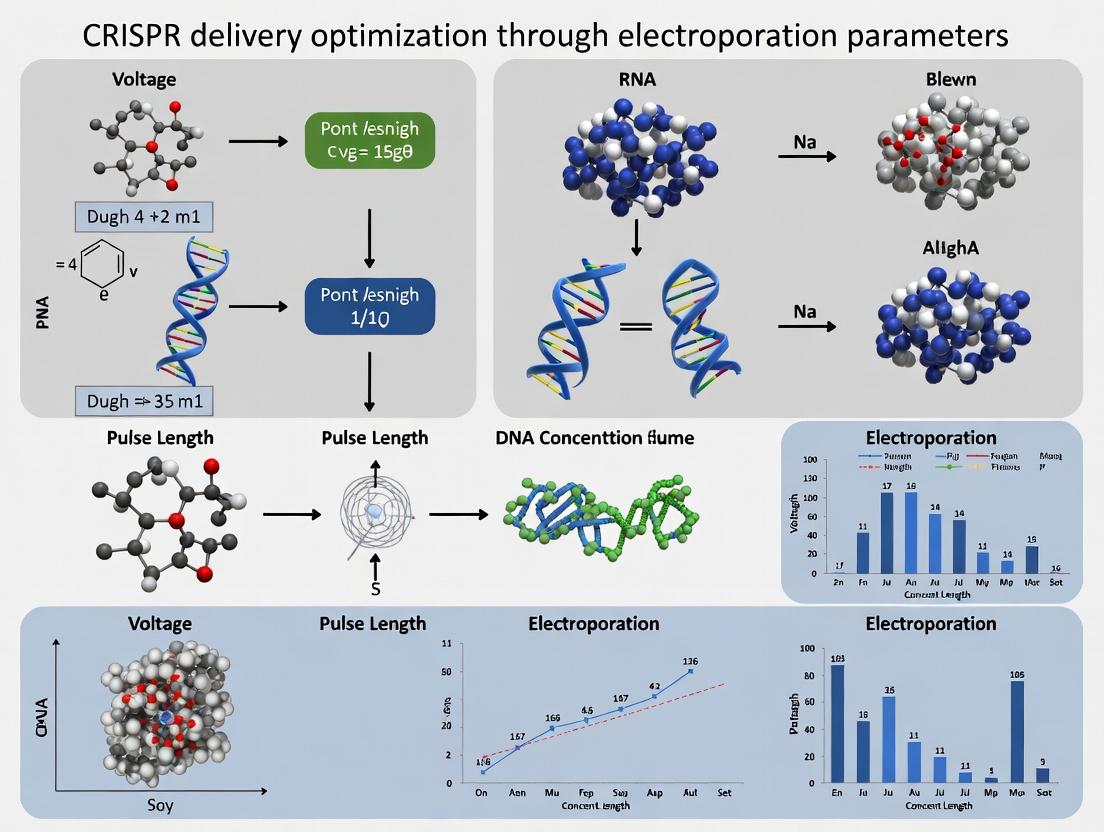
This comprehensive guide details the critical process of optimizing electroporation parameters for efficient and safe CRISPR-Cas9 delivery into target cells.
Optimizing Electroporation Parameters for CRISPR-Cas9 Delivery: A Complete Protocol Guide for Researchers
Abstract
This comprehensive guide details the critical process of optimizing electroporation parameters for efficient and safe CRISPR-Cas9 delivery into target cells. We explore the foundational science behind electrical cell membrane permeabilization, provide step-by-step methodological protocols for various cell types, and present systematic troubleshooting strategies to maximize editing efficiency while minimizing cell toxicity. By comparing leading commercial electroporation systems and validation techniques, this article equips researchers and drug development professionals with the knowledge to design robust, reproducible experiments that accelerate therapeutic development and basic research applications.
The Science of Shock: Understanding Electroporation Fundamentals for CRISPR Delivery
Technical Support Center: Troubleshooting Electroporation for CRISPR Delivery Optimization
FAQs & Troubleshooting Guides
Q1: Why is my cell viability post-electroporation so low for my primary T-cells? A: Low viability is often due to excessive electrical energy delivery. For sensitive primary cells like T-cells, optimize these parameters:
- Pulse Voltage: Start with low field strengths (e.g., 700-900 V/cm for many Nucleofector protocols).
- Pulse Length & Number: Use shorter pulse durations (e.g., 1-5 ms square waves) and fewer pulses. A single pulse can be sufficient.
- Buffer: Use cell-type specific, low-conductivity electroporation buffers. High salt concentrations cause arcing and heat generation.
- Temperature: Perform electroporation on ice or with pre-chilled cuvettes, but transfer cells to pre-warmed media immediately after the pulse.
Q2: My CRISPR ribonucleoprotein (RNP) editing efficiency is inconsistent. What parameters most directly affect uptake? A: RNP delivery requires rapid pore formation and rescaling. Focus on:
- Pulse Parameters: Very short, high-voltage pulses (e.g., 100-500 µs) are often effective for small RNP complexes.
- RNP Concentration: Ensure a sufficient molar excess of RNP to target DNA. Typical concentrations range from 2 to 10 µM.
- Cell Preparation: Use fresh, high-viability cells and keep them in log-phase growth. Wash cells thoroughly to remove residual serum that can interfere.
Q3: I observe arcing/sparking during electroporation. What causes this and how can I prevent it? A: Arcing indicates a sudden current discharge, often caused by:
- Bubbles in the cuvette: Tap the cuvette gently after loading the cell-sample mix.
- High salt concentration: Ensure your electroporation buffer or nucleic acid solution is low-conductivity. Dialyze DNA/RNP if necessary.
- Volume mismatch: Do not underfill or overfill the cuvette. Use the precise volume recommended (e.g., 100 µL for a 2-mm gap cuvette).
- Contaminated cuvettes: Use sterile, disposable cuvettes. Do not reuse.
Q4: How do I choose between exponential decay and square wave pulses for my CRISPR plasmid delivery? A: The choice depends on the cargo and cell type.
- Exponential Decay Pulses: Deliver a high initial voltage that decays over time. Better for hard-to-transfect cells and for larger cargoes like plasmids, as the "tail" of the pulse may facilitate entry.
- Square Wave Pulses: Maintain a constant voltage for a set time. Provide more precise control over pulse duration and are often superior for primary cells and RNP delivery, minimizing unnecessary energy exposure.
Table 1: Optimization Parameters for Common Cell Types in CRISPR Delivery
| Cell Type | Recommended Voltage (Field Strength) | Pulse Type & Duration | Key Buffer Component | Optimal Temperature |
|---|---|---|---|---|
| HEK293T | 1000-1300 V/cm | Square, 5-20 ms | Standard ionic solutions | Room Temp |
| Primary Human T-cells | 700-900 V/cm* | Square, 1-5 ms | Non-ionic supplements (e.g., Nucleofector) | On ice, then 37°C |
| Jurkat | 950-1050 V/cm | Square, 5-10 ms | Low-conductivity salts | Room Temp |
| Mouse Embryonic Stem Cells (mESCs) | 800-1000 V/cm | Exponential, 250-350 µs | Specific commercial kits | Room Temp |
| K562 | 850-950 V/cm | Square, 5-15 ms | Standard ionic solutions | Room Temp |
Note: Values are illustrative starting points. Optimal parameters vary by specific device and buffer system.
Table 2: Troubleshooting Matrix: Symptoms, Causes, and Solutions
| Symptom | Likely Cause | Recommended Solution |
|---|---|---|
| High Cell Death | Excessive pulse energy, wrong buffer, poor cell health | Lower voltage/pulse length; switch to cell-specific buffer; check cell viability pre-EP. |
| Low Editing Efficiency | Inadequate pore formation, low cargo dose, slow rescaling | Increase voltage/duration slightly; optimize cargo concentration; adjust buffer cations (Mg²⁺, Ca²⁺). |
| High Efficiency but Low Viability | Pulse parameters too harsh | Implement a "recovery pulse" protocol (lower voltage after high-voltage pulse) or use pulse trains. |
| Inconsistent Results Between Replicates | Variable cell counts, temperature fluctuations, cuvette filling errors | Standardize cell counting; control temperature precisely; use consistent sample volume. |
Experimental Protocol: Optimizing Square Wave Electroporation for RNP Delivery into Jurkat Cells
Objective: To deliver CRISPR-Cas9 RNP complexes into Jurkat cells for gene knockout, optimizing for >70% editing efficiency with >80% viability.
Materials: See "The Scientist's Toolkit" below.
Method:
- RNP Complex Formation: Combine 5 µL of 60 µM sgRNA with 5 µL of 40 µM Cas9 protein (commercial, recombinant). Incubate at room temperature for 10-20 minutes to form the RNP complex.
- Cell Preparation: Culture Jurkat cells to a density of 5-8 x 10⁵ cells/mL. Harvest 1 x 10⁶ cells per condition by centrifugation (300 x g, 5 min). Wash once with 1x PBS. Resuspend cell pellet in 100 µL of pre-warmed, low-conductivity electroporation buffer.
- Electroporation Setup: Mix 100 µL of cell suspension with 10 µL of prepared RNP complex (final RNP concentration ~2-4 µM). Transfer the entire 110 µL to a 2-mm gap electroporation cuvette, ensuring no bubbles.
- Pulse Delivery: Place cuvette in the electroporator. Deliver a single square wave pulse at 950 V/cm with a 10 ms duration. The time constant should be recorded.
- Post-Pulse Recovery: Immediately after the pulse, add 500 µL of pre-warmed complete media (RPMI-1640 + 10% FBS) directly into the cuvette. Gently transfer the cells to a 12-well plate containing 1.5 mL of pre-warmed media.
- Incubation & Analysis: Culture cells at 37°C, 5% CO₂. Assess viability at 24 hours using trypan blue exclusion. Harvest cells at 72-96 hours post-electroporation for genomic DNA extraction and editing efficiency analysis via T7 Endonuclease I assay or next-generation sequencing.
Visualizations
Title: Electroporation Experimental Workflow for CRISPR Delivery
Title: Principles of Membrane Permeabilization and Cargo Uptake
The Scientist's Toolkit: Essential Reagents for CRISPR Electroporation
| Item | Function & Importance in CRISPR Delivery |
|---|---|
| Cell-Type Specific Electroporation Buffer | Low-conductivity solution with specific ions to maintain cell homeostasis during pulse and promote resealing. Critical for primary cell viability. |
| Recombinant Cas9 Protein | High-purity, endotoxin-free protein for RNP formation. Avoids timing and toxicity issues associated with plasmid DNA. |
| Chemically Modified sgRNA | Synthetic sgRNA with phosphorothioate bonds/2'-O-methyl modifications increases stability and reduces immune response in primary cells. |
| Low-Conductivity Resuspension Buffer (e.g., PBS-/-) | For washing cells prior to electroporation. Removes high-salt culture media that can cause arcing. |
| Pre-Warmed Recovery Media | Culture media supplemented with serum, sometimes containing small molecules (e.g., ROCK inhibitor) to enhance post-pulse survival. |
| Sterile, Disposable Electroporation Cuvettes (2mm gap) | Ensures consistent distance between electrodes for accurate field strength (V/cm) calculation. Prevents cross-contamination. |
Technical Support Center: Ex Vivo CRISPR Electroporation
Troubleshooting Guides
Issue 1: Low Cell Viability Post-Electroporation
- Symptoms: >40% cell death 24 hours after electroporation.
- Likely Causes & Solutions:
- Excessive Electrical Energy: Pulse voltage, length, or number is too high. Solution: Perform a killing curve by titrating voltage (e.g., from 1200V to 1600V in 50V steps) while keeping other parameters constant.
- Suboptimal Buffer: Using inappropriate electroporation buffer. Solution: Switch to a cell-type-specific, low-conductivity buffer with additives like recombinant albumin. Ensure components are at room temperature.
- Cell Health: Starting with poor-quality or high-passage-number cells. Solution: Use early-passage, log-phase cells with >95% viability pre-electroporation. Let cells recover in complete media with small molecules (e.g., ROCK inhibitor Y-27632).
Issue 2: Low Editing Efficiency
- Symptoms: High viability but <20% INDELs or knockout as measured by NGS or T7E1 assay.
- Likely Causes & Solutions:
- RNP Delivery Failure: RNP complex may have degraded or precipitated. Solution: Freshly assemble RNP complex just prior to electroporation. Ensure sgRNA is HPLC-purified and Cas9 protein is nuclease-free.
- Suboptimal RNP Concentration: Too little RNP delivered. Solution: Titrate RNP concentration (e.g., 20-80 pmol of Cas9-sgRNA complex per 100k cells). See Table 1 for reference ranges.
- Insufficient Pulse Parameters: Pores not open long enough for RNP entry. Solution: Optimize pulse length (e.g., increase from 10ms to 20ms for a square wave protocol) for your cell type.
Issue 3: High Genomic Instability or Off-Target Effects
- Symptoms: Unintended chromosomal rearrangements or edits at predicted off-target sites.
- Likely Causes & Solutions:
- Prolonged Cas9 Activity: Long-lived Cas9 increases off-target risk. Solution: Use high-fidelity Cas9 variants (e.g., SpCas9-HF1, eSpCas9). Deliver as RNP (not mRNA/DNA) for transient activity.
- Excessive RNP Concentration: Over-saturation increases off-target binding. Solution: Reduce RNP amount to the minimum required for on-target efficacy.
- sgRNA Design: Poor specificity sgRNA. Solution: Re-design sgRNA using latest algorithms (e.g., from ChopChop, Broad Institute) with high on- and low off-target scores.
Frequently Asked Questions (FAQs)
Q1: What is the critical advantage of electroporation over viral delivery for ex vivo CRISPR editing? A: Electroporation, especially for ribonucleoprotein (RNP) delivery, offers transient, high-efficiency delivery with minimal risk of viral integration, immunogenicity, or long-term transgene expression. This reduces off-target effects and accelerates translational timelines for clinical applications.
Q2: How do I choose between a square wave and an exponential decay wave pulse for my primary T cells? A: Square wave pulses (fixed voltage over a set time) generally provide better control and higher viability for sensitive primary cells like T cells and HSCs. Exponential decay pulses are often used for hard-to-transfect cell lines. Consult your electroporator manual and recent literature for your specific cell type. See Table 2 for a comparison.
Q3: My edited cells show poor expansion post-electroporation. What can I do? A: This is often due to cellular stress. Ensure recovery media is optimized with 10-20% FBS, IL-2 (for T cells), and small molecule survival enhancers like ROCK inhibitors. Allow 48-72 hours of recovery before applying any selection pressure. Perform a viability count and re-seed at optimal density.
Q4: Can I co-deliver CRISPR RNP and a HDR template via electroporation? A: Yes, this is a standard approach for knock-ins. Use a single-stranded oligodeoxynucleotide (ssODN) or a double-stranded DNA (dsDNA) donor. Key optimizations include: increasing the donor:RNP molar ratio (e.g., 3:1 to 10:1), using electroporation buffers designed for co-delivery, and potentially synchronizing cells in S-phase for higher HDR efficiency.
Table 1: Optimized RNP & Pulse Parameters for Common Cell Types (Reference)
| Cell Type | Cas9 Protein (pmol/100k cells) | sgRNA (pmol/100k cells) | Voltage (V) | Pulse Width (ms) | # Pulses | Approx. Efficiency (% INDEL) | Approx. Viability (%) |
|---|---|---|---|---|---|---|---|
| Primary Human T Cells | 30-60 | 36-72 | 1350-1500 | 10-20 (Square) | 1 | 70-85 | 50-70 |
| CD34+ HSPCs | 20-40 | 24-48 | 1300-1450 | 10-15 (Square) | 1 | 60-80 | 60-80 |
| HEK293T (Cell Line) | 10-20 | 12-24 | 1300V (Exp. Decay)* | N/A | 1 | >90 | >80 |
| iPSCs | 15-30 | 18-36 | 1100-1300 | 5-10 (Square) | 1-2 | 40-70 | 40-60 |
*Exponential decay pulse: Capacitance = 950μF, Resistance = ∞.
Table 2: Square Wave vs. Exponential Decay Pulse Comparison
| Parameter | Square Wave Pulse | Exponential Decay Pulse |
|---|---|---|
| Waveform | Constant voltage over set time. | Rapid peak voltage followed by exponential decay. |
| Key Controls | Voltage, Pulse Length, Number of Pulses. | Voltage, Capacitance, Resistance. |
| Primary Advantage | Better control; often higher viability for sensitive cells. | Effective for hard-to-transfect cell lines. |
| Typical Use Case | Primary cells (T cells, HSCs), stem cells. | Adherent cell lines (HEK293, K562). |
Detailed Experimental Protocols
Protocol 1: CRISPR-Cas9 RNP Electroporation of Primary Human T Cells (Neon Transfection System) This protocol is optimized for high knockout efficiency in activated T cells.
- Day -2: T Cell Activation. Isolate PBMCs and activate CD3+ T cells using CD3/CD28 activation beads in RPMI-1640 + 10% FBS + 100 U/mL IL-2.
- Day 0: Electroporation Preparation.
- RNP Complex Formation: For 1x10^6 cells, mix 300 pmol Alt-R S.p. HiFi Cas9 protein with 360 pmol sgRNA (crRNA:tracrRNA duplex) in a low-bind tube. Incubate at room temperature for 20 minutes.
- Cell Harvest: Collect activated T cells, count, and wash once with 1X PBS. Resuspend cells at 10x10^6 cells/mL in Buffer R (Neon system).
- Electroporation. Combine 10μL cell suspension (100k cells) with 2μL RNP complex. Aspirate into a Neon tip. Electroporate with parameters: 1400V, 20ms, 1 pulse. Immediately transfer cells to pre-warmed recovery media (RPMI+30% FBS+IL-2) in a 24-well plate.
- Post-Transfection Culture. Incubate at 37°C, 5% CO2. After 48 hours, replace media with complete RPMI+IL-2. Expand cells as needed. Assess editing at day 5-7 via flow cytometry (for protein knockout) or NGS.
Protocol 2: HDR-Mediated Knock-in in iPSCs (4D-Nucleofector) This protocol is for precise insertion of a small tag using an ssODN donor.
- Cell Preparation. Culture and maintain iPSCs in feeder-free conditions. Harvest healthy colonies using gentle enzyme dissociation to create single cells. Count and ensure >95% viability.
- Nucleofection Solution Prep. For one reaction (1x10^6 cells):
- RNP Complex: Assemble 40 pmol Cas9 protein + 48 pmol sgRNA. Incubate 10 min at RT.
- HDR Donor: Add 200 pmol of ultramer ssODN (homology arms 60-90nt) to the RNP complex.
- Cell Mixture: Centrifuge cells. Completely aspirate supernatant. Add 100μL of P3 Primary Cell Solution (Lonza) to the cell pellet. Add the RNP+donor mix.
- Nucleofection. Transfer entire mix to a certified cuvette. Use the 4D-Nucleofector with program CA-137. Immediately add 500μL pre-warmed culture medium post-pulse.
- Recovery & Analysis. Transfer cells to a Matrigel-coated well with recovery medium + 1μM ROCK inhibitor. Change media daily. After 5-7 days, harvest for genotyping (PCR + sequencing) or single-cell cloning.
Visualizations
Title: Ex Vivo CRISPR Electroporation Workflow
Title: Post-Electroporation Cell Stress & Survival Pathways
The Scientist's Toolkit: Key Research Reagent Solutions
| Item | Function & Importance |
|---|---|
| High-Fidelity Cas9 Protein | Recombinant, endotoxin-free Cas9 (e.g., SpyFi, HiFi) for RNP assembly. Reduces off-target effects. Crucial for clinical-grade editing. |
| Chemically Modified sgRNA | sgRNA with 2'-O-methyl 3' phosphorothioate modifications. Increases stability and reduces immune response in primary cells. |
| Cell-Type Specific Electroporation Buffer | Low-conductivity, non-cytotoxic buffers (e.g., Lonza P3/Kits, BTXpress). Maximizes viability and delivery efficiency. |
| ROCK Inhibitor (Y-27632) | Small molecule that inhibits Rho-associated kinase. Added to recovery media to decrease anoikis and improve survival of single cells post-electroporation. |
| Recombinant Albumin (rAlbumin) | Used as an additive in electroporation buffers or recovery media. Stabilizes cells and reduces shear stress, improving viability. |
| Recovery Media Additives | Cytokines (IL-2 for T cells, SCF/TPO for HSCs) and high serum (20-30% FBS). Supports proliferation and recovery post-electroporation stress. |
| HDR Donor Templates | Ultramer ssODNs or AAV6 donors for knock-ins. Designed with long homology arms (>60nt) and modified to resist exonuclease degradation. |
| Viability & Editing Assay Kits | Flow cytometry-based dead cell stains, NGS library prep kits for amplicon sequencing, T7E1/Cel-I enzymes for initial efficiency checks. |
Troubleshooting Guides & FAQs
Q1: My CRISPR-Cas9 electroporation experiment resulted in very low cell viability post-pulse. Which parameters should I adjust first? A: Low viability is often linked to excessive field strength (voltage/distance) or excessive pulse duration. For adherent mammalian cells (e.g., HEK-293), first reduce the voltage by 50-100 V from your initial setting. If using a square-wave generator, reduce the pulse length incrementally (e.g., from 5 ms to 2 ms). Ensure your cuvette gap (1-2 mm) is appropriate for the voltage. High viability (>70%) for primary cells often requires exponential decay waveforms with lower capacitance settings.
Q2: I am getting high efficiency but also high off-target effects with CRISPR RNP electroporation. Could pulse parameters influence this? A: Yes. Recent studies indicate that overly harsh electroporation conditions can cause prolonged nuclear membrane disruption and increased non-homologous end joining (NHEJ), potentially exacerbating off-target integration. Optimize for a balance by using multiple shorter pulses (e.g., 3-5 pulses of 1-2 ms at 900-1100 V/cm) instead of a single long pulse, which can improve precise HDR while limiting cytotoxic stress.
Q3: After electroporation, my cells are not expressing the delivered construct, even though viability is good. What could be wrong? A: This suggests poor delivery efficiency despite survival. Key fixes:
- Increase Pulse Number: For hard-to-transfect cells like primary T cells, apply 2-3 pulses instead of one.
- Verify Waveform: Ensure you are using the correct waveform (square wave for mRNA/RNP; exponential decay for large plasmids).
- Check Reagent Preparation: For RNP delivery, ensure the RNP complex is freshly assembled and not aggregating. Use a resuspension buffer with appropriate ionic strength (e.g., low-conductivity buffer).
Q4: My results are inconsistent between replicates. How can I standardize my electroporation protocol? A: Inconsistency often stems from variable cell preparation. Standardize by:
- Cell State: Use cells in identical growth phases (log phase).
- Buffer Conductivity: Use pre-chilled, low-conductivity electroporation buffers consistently. Do not use full culture medium.
- Temperature Control: Keep cells and cuvettes on ice before pulsing, and use the post-pulse recovery incubation at 37°C without delay.
- Cuvette Handling: Ensure no air bubbles are present when transferring the cell mix to the cuvette.
Quantitative Parameter Tables
Table 1: Recommended Square-Wave Parameters for Common Cell Types in CRISPR Delivery
| Cell Type | Application | Field Strength (V/cm) | Pulse Length (ms) | Number of Pulses | Waveform | Typical Efficiency (Viability) |
|---|---|---|---|---|---|---|
| HEK-293 | Plasmid DNA | 800-1000 | 5-10 | 1 | Square | ~80% (~60%) |
| Primary T Cells | RNP (Cas9/gRNA) | 900-1100 | 1-3 | 2-3 | Square | >70% (>70%) |
| iPSCs | RNP | 750-850 | 2-5 | 1-2 | Square | ~60% (~70%) |
| Jurkat | Plasmid DNA | 1000-1300 | 5-7 | 1 | Square | ~75% (~65%) |
Table 2: Exponential Decay Waveform Parameters
| Cell Type | Voltage (V)* | Capacitance (µF) | Resistance (Ω) | Expected Time Constant (τ) |
|---|---|---|---|---|
| CHO-K1 | 250-300 | 950-1000 | ∞ | ~20-25 ms |
| Mammalian Fibroblasts | 200-250 | 500-800 | ∞ | ~10-15 ms |
| *For a 2 mm gap cuvette. Field Strength = Voltage / Gap (0.2 cm). |
Detailed Experimental Protocol: CRISPR RNP Electroporation of Primary Human T Cells
Title: Optimized Nucleofection for High-Efficiency CRISPR-Cas9 Knockout in T Cells.
Objective: To achieve high knockout efficiency in primary human T cells with preserved viability for cell therapy research.
Materials: See "Research Reagent Solutions" below.
Methodology:
- Cell Preparation: Isolate and activate primary human T cells. 48 hours post-activation, harvest and wash cells twice with 1X PBS. Resuspend cell pellet in pre-chilled, low-conductivity electroporation buffer at a concentration of 1-2 x 10^7 cells/mL.
- RNP Complex Formation: For each reaction, incubate 5 µg of purified S. pyogenes Cas9 protein with 2 µg of synthetic sgRNA (targeting your gene of interest) at room temperature for 10-20 minutes to form the RNP complex.
- Electroporation Mix: Combine 20 µL of cell suspension (2-4 x 10^5 cells) with the pre-formed RNP complex. Mix gently and transfer the entire volume to a 2 mm gap electroporation cuvette.
- Pulse Delivery: Place the cuvette in the electroporator. Apply 3 sequential square-wave pulses with the following parameters: 1100 V/cm, 2 ms pulse length, 0.1 s interval. A slight arcing/spark may be visible.
- Immediate Recovery: Immediately after pulsing, add 500 µL of pre-warmed (37°C) complete culture medium (with 10% FBS) directly to the cuvette. Gently transfer the cells to a 24-well plate containing pre-warmed medium.
- Post-Transfection Culture: Incubate cells at 37°C, 5% CO2. Assess viability and editing efficiency via flow cytometry (e.g., using a surrogate reporter or T7E1 assay) at 48-72 hours post-electroporation.
Diagrams
Title: CRISPR RNP Electroporation Workflow for T Cells
Title: How Key Parameters Influence Electroporation Outcomes
Research Reagent Solutions
| Item | Function in CRISPR Electroporation | Example/Note |
|---|---|---|
| Low-Conductivity Electroporation Buffer | Minimizes current/heat generation, allowing higher field strengths for permeabilization with less cell death. | P3 Primary Cell Solution, Opti-MEM, custom sucrose-based buffers. |
| Recombinant S. pyogenes Cas9 Protein | The effector enzyme for genome cutting. Direct protein delivery via RNP is fast, precise, and reduces off-targets vs. plasmid DNA. | Commercial Cas9, often with nuclear localization signals (NLS). |
| Synthetic sgRNA | Guides the Cas9 protein to the specific genomic DNA target sequence. Chemically modified for stability. | Chemically synthesized, two-part (tracrRNA:crRNA) or single-guide RNA. |
| Electroporation Cuvettes (2 mm gap) | Disposable chambers with aluminum electrodes to hold cell sample during pulse. Gap determines field strength (V/cm = V / 0.2 cm). | Sterile, pre-chilled. Ensure no air bubbles in sample. |
| Square-Wave Electroporator | Delivers precise, controlled pulses of defined length and voltage. Essential for sensitive primary cells and RNP delivery. | Systems like the Lonza 4D-Nucleofector, BTX ECM 830. |
| Cell Viability Assay | Critical for optimizing parameters. Measures cytotoxicity of the electroporation conditions. | Trypan blue exclusion, flow cytometry with Annexin V/PI, automated cell counters. |
| Editing Efficiency Assay | Quantifies the percentage of alleles with intended edits post-electroporation. | T7 Endonuclease I (T7E1) assay, next-generation sequencing (NGS), flow cytometry for protein loss. |
Welcome to the Technical Support Center for CRISPR Delivery Optimization via Electroporation. This resource provides targeted troubleshooting for challenges specific to working with diverse cell types within our core research on optimizing electroporation parameters.
Troubleshooting Guides & FAQs
Q1: During CRISPR-Cas9 ribonucleoprotein (RNP) electroporation of primary human fibroblasts, I observe very high cell death (>80%) despite using published voltage parameters. What is the likely cause and how can I adjust my protocol? A: Primary cells, especially from tissue, have lower membrane stability than immortalized lines. Your voltage is likely too high for their delicate state.
- Solution: Implement a voltage titration. Reduce the pulse voltage in 50V increments from the published protocol. Prioritize shorter pulse durations (e.g., 1-3 ms) over amplitude. Always use cells at low passage and pre-equilibrate all reagents and cells to room temperature before electroporation to reduce osmotic shock.
- Protocol Adjustment:
- Prepare your CRISPR RNP complex.
- Resuspend 1x10^5 primary fibroblasts in 100 µL of room-temperature, serum-free electroporation buffer.
- Mix with RNP and transfer to a 2mm cuvette.
- Test the following square-wave parameters: 1050V, 1100V, 1150V, and 1200V, keeping pulse width (1-3 ms) and pulse number (1-2) constant.
- Immediately add pre-warmed recovery medium and plate. Assess viability at 24h using an automated cell counter with trypan blue.
Q2: When electroporating human primary T cells for CAR-T engineering, my gene editing efficiency is high, but the cells fail to expand properly in subsequent culture. What could be inhibiting proliferation? A: Immune cells are exquisitely sensitive to DNA damage and metabolic stress. High-efficiency editing often correlates with excessive p53 activation or metabolic disruption from electroporation.
- Solution: Lower the RNP concentration. Excessive Cas9 can cause off-target DNA damage and trigger a persistent p53 response. Use a validated, low-toxicity electroporation buffer formulated for immune cells. Supplement culture medium immediately after electroporation with antioxidants (e.g., N-acetylcysteine) and IL-2 at optimal concentration (e.g., 100 IU/mL).
- Key Check: Verify endotoxin levels in all prep reagents; trace endotoxin can cause anergy in immune cells.
Q3: For editing human induced pluripotent stem cells (iPSCs), electroporation results in high viability but very low knock-in efficiency via HDR, even with the use of ssODN donors. How can I improve HDR? A: Stem cells have unique cell cycle dynamics; HDR is predominantly active in the S/G2 phases. Standard electroporation protocols do not synchronize the cell cycle.
- Solution: Implement cell cycle synchronization prior to electroporation.
- Detailed Protocol:
- Synchronization: Treat confluent iPSC cultures with 10 µM Thymidine for 12-14 hours. Wash thoroughly and release into fresh, pre-warmed medium for 3-5 hours. This enriches for S-phase cells.
- Electroporation: Use a CRISPR RNP complex with a chemically modified, high-fidelity ssODN donor. Electroporate using a multi-pulse, low-voltage protocol (e.g., 2 pulses of 600V, 1ms interval) in a stem-cell-specific buffer.
- Post-Editing: Immediately add small molecule HDR enhancers (e.g., 1 µM SCR7 or 5 µM L755507) for 24-48 hours. Plate cells at high density on Matrigel with 10 µM Y-27632 ROCK inhibitor.
Q4: My electroporation efficiency between different primary cell types (e.g., hepatocytes vs. endothelial cells) is highly variable using the same instrument settings. How should I systematically approach parameter optimization? A: Different primary cell types have vastly different sizes, membrane cholesterol content, and cytoskeletal organization, which directly affect their "electroporability."
- Systematic Approach: Perform a multi-factorial optimization using a simple reporter (e.g., GFP mRNA).
- Create a Test Matrix: Vary voltage (800-1500V) and pulse length (1-5 ms) for square wave. For exponential decay waves, vary capacitance (e.g., 950-1350 µF) and voltage (e.g., 200-350V). Always keep pulses low (1-2).
- Quantitative Analysis: Measure delivery efficiency (e.g., % GFP+ cells) and viability (% of viable cells relative to non-electroporated control) at 24 hours. Calculate a "Editing Fitness Score" = (% Viability * % Efficiency) / 100. Use the parameters yielding the highest score for your specific cell type and CRISPR application.
Table 1: Recommended Starting Electroporation Parameters for CRISPR RNP Delivery
| Cell Type | Example | Suggested Buffer | Wave Type | Key Parameter Starting Point | Viability Expectation (24h) | Editing Efficiency Expectation (INDELs) |
|---|---|---|---|---|---|---|
| Primary Cells | Human Dermal Fibroblasts | Commercial Serum-Free Buffer | Square Wave | 1100V, 1x 20ms pulse | 50-70% | 40-60% |
| Immune Cells | Human Primary T Cells | Commercial Immune Cell Buffer | Square Wave | 1300V, 1x 10ms pulse | 60-80% | 70-85% |
| Stem Cells | Human iPSCs | Commercial Stem Cell Buffer | Square Wave | 2 pulses of 600V, 1ms interval | 70-90% | 60-80% (Transfection) |
Table 2: Impact of Cell Cycle on HDR Efficiency in Human iPSCs
| Cell Cycle Stage | Synchronization Method | Approximate % Population Post-Sync | Relative HDR Efficiency (vs. Async) | Recommended Donor Type |
|---|---|---|---|---|
| G1/S Border | Double Thymidine Block | ~85% | Baseline (1x) | ssODN, dsDNA |
| Early S Phase | Thymidine Release (3-5h) | ~65% | High (3-5x) | Chemically modified ssODN |
| G2/M | Nocodazole Arrest | ~75% | Moderate (2-3x) | dsDNA, AAV6 |
| Asynchronous | None (Standard Culture) | Mixed | Low (1x) | Any |
Experimental Visualization
The Scientist's Toolkit: Research Reagent Solutions
| Reagent / Material | Primary Function | Key Consideration for Cell Type |
|---|---|---|
| CRISPR-Cas9 RNP Complex | Precise DNA cleavage. Using recombinant Cas9 protein and synthetic sgRNA reduces off-targets and immune stimulation vs. plasmid DNA. | Immune Cells: Use high-specificity Cas9 variants (HiFi). All Types: Titrate RNP concentration (e.g., 10-60 pmol) to balance efficiency and toxicity. |
| Cell-Type Specific Electroporation Buffer | Provides optimal ionic conductivity and pH with minimal cytotoxicity. | Primary/Stem Cells: Use low-conductivity, serum-free buffers. Immune Cells: Use proprietary, low-toxicity buffers designed for activation. |
| HDR Donor Template (ssODN) | Template for precise knock-in via Homology-Directed Repair. | Stem Cells: Use chemically modified (phosphorothioate) ssODNs to resist nuclease degradation during S-phase. |
| Small Molecule HDR Enhancers (e.g., L755507) | Temporarily inhibits NHEJ pathway or stimulates HDR machinery. | Stem Cells: Critical for improving knock-in efficiency. Add immediately post-EP for 24-48h. |
| ROCK Inhibitor (Y-27632) | Inhibits Rho-associated kinase, reducing apoptosis in dissociated cells. | Stem Cells: Essential for post-electroporation survival of iPSCs. Add to medium for first 24-48h. |
| Recombinant Human IL-2 | Promotes T cell survival and proliferation. | Immune Cells: Must be titrated (50-300 IU/mL). High doses can exhaust cells. |
| Cell Cycle Synchronization Agents (e.g., Thymidine) | Arrests cells at specific cell cycle phases. | Stem Cells: Thymidine block/release enriches S-phase cells, maximizing HDR potential. |
Welcome to the Electroporation Optimization Technical Support Center
This center provides targeted troubleshooting and FAQs for researchers optimizing CRISPR-Cas delivery via electroporation. The guidance is framed within our core thesis: that precise calibration of electroporation parameters is the key to maximizing editing efficiency while preserving cell viability.
Troubleshooting Guides
Issue: High Cell Death Post-Electroporation
- Check 1: Pulse Parameters. Excessively high voltage or long pulse duration causes irreversible membrane damage. Refer to Table 1 for recommended starting points.
- Check 2: Cell Health & Concentration. Ensure cells are in log-phase growth and electroporated at an optimal density (e.g., 1-1.5x10^6 cells/mL). High density can lead to arcing.
- Check 3: Electroporation Buffer. Use a low-conductivity, cell-specific buffer. High salt concentrations generate excessive heat and Joule heating.
- Check 4: Post-Electroporation Recovery. Immediately transfer cells to pre-warmed, enriched recovery medium (e.g., with 10-20% FBS, ROCK inhibitor for stem cells).
Issue: Low Editing Efficiency Despite High Viability
- Check 1: RNP Complex Quality & Amount. Verify the molar ratio of sgRNA to Cas9 protein (typically 1.2:1 to 1.5:1) and ensure complex assembly time is sufficient (≥10 min at room temperature).
- Check 2: Pulse Parameters. Pulse voltage may be too low to permit RNP entry. Consider a higher voltage or an additional pulse. See Table 1.
- Check 3: Guide RNA Design. Confirm on-target activity of your sgRNA using pre-validated resources.
- Check 4: Timing of Analysis. Allow adequate time for turnover of the target protein (≥72 hours) before efficiency assessment via flow cytometry or sequencing.
Issue: Inconsistent Results Between Replicates
- Check 1: Cell Preparation Consistency. Maintain uniform cell washing and resuspension in electroporation buffer. Cell state is critical.
- Check 2: Electroporation Cuvette/Plate Handling. Ensure consistent sample volume across replicates. Avoid air bubbles in the cuvette chamber.
- Check 3: Instrument Calibration. Periodically calibrate your electroporator according to manufacturer specifications.
- Check 4: RNP Complex Freshness. Assemble RNP complexes fresh for each experiment; do not refreeze.
Frequently Asked Questions (FAQs)
Q1: What is the single most important parameter to adjust first when optimizing a new cell type? A: Voltage. It is the primary driver of pore formation. Begin with manufacturer or literature-recommended voltage for your cell type and perform a voltage titration (e.g., ±50V increments) while holding other parameters constant. Assess viability and efficiency 24-72 hours post-electroporation.
Q2: Should I use a square wave or exponential decay pulse for CRISPR RNP delivery? A: For primary cells and difficult-to-transfect cells, square wave pulses are often preferred for RNP delivery. They provide more controlled, sustained pore opening, which can improve RNP uptake with less toxicity compared to the rapid, high-energy exponential decay pulses often used for plasmid DNA.
Q3: How crucial is temperature control during electroporation? A: Critical. Pre-chilling components (cuvettes, buffer) and performing electroporation on ice can enhance viability by reducing heat generation. However, some protocols for sensitive cells recommend recovery at room temperature for 10 minutes post-pulse before moving to 37°C, to allow membrane resealing.
Q4: How much CRISPR RNP should I use per electroporation reaction? A: A typical starting point is 2-5 µM final concentration of Cas9 protein in the electroporation mix. Titrate from 1-10 µM. Higher concentrations increase efficiency but can also increase toxicity. Always include a fluorescently tagged negative control RNP to assess delivery success.
Q5: What is the recommended control for distinguishing electroporation toxicity from RNP toxicity? A: Always run a "Mock Electroporation" control (cells + buffer, no RNP) and a "Negative Control RNP" (cells + non-targeting RNP). Comparing viability between these controls isolates the toxicity contribution of the electroporation process itself vs. the RNP cargo.
Data Presentation
Table 1: Exemplary Electroporation Parameters for Common Cell Types (CRISPR RNP Delivery) Data synthesized from current literature and manufacturer protocols (e.g., Lonza, Bio-Rad).
| Cell Type | Instrument Type | Waveform | Voltage (V) | Pulse Width (ms) | # of Pulses | Primary Buffer | Expected Viability (Range) |
|---|---|---|---|---|---|---|---|
| Human T Cells (Primary) | Lonza 4D-Nucleofector | Square | 1500-1700 | 10-20 | 1 | P3 or SF | 40-70% |
| Human CD34+ HSCs | Lonza 4D-Nucleofector | Square | 1600 | 20 | 1 | P3 | 50-75% |
| K562 Cell Line | Bio-Rad Gene Pulser | Square | 250-300 | 10-15 | 1 | RPMI + 1mM MgCl2 | 70-90% |
| HEK293T Cell Line | Bio-Rad Gene Pulser | Square | 200-250 | 15-20 | 1 | Opti-MEM | 80-95% |
| iPSCs (Clump) | Neon (Thermo) | Square | 1100 | 30 | 2 | Resuspension Buffer R | 60-80% |
Table 2: Key Optimization Trade-offs: Parameter Impact on Efficiency vs. Viability
| Parameter | Increase Typically Leads To... | Rationale & Risk |
|---|---|---|
| Voltage | Higher Efficiency (more pores), Lower Viability (irreversible damage) | Exceeding the critical voltage threshold causes permanent membrane disruption. |
| Pulse Duration | Higher Efficiency (longer cargo uptake), Lower Viability (slower resealing) | Prolonged pore openness impedes homeostasis, leading to apoptosis. |
| Number of Pulses | Higher Efficiency (multiple entry chances), Lower Viability (cumulative damage) | Each pulse adds cumulative thermal and membrane stress. |
| RNP Concentration | Higher Efficiency (more editors delivered), Potential Lower Viability (cargo toxicity) | High intracellular protein can trigger stress responses and innate immunity. |
| Cell Concentration | Variable Impact. Too low: poor viability. Too high: arcing, uneven pulses. | Optimal density ensures proper current flow and cell-cell cushioning. |
Experimental Protocols
Protocol 1: Voltage & Pulse Width Titration for Primary T Cells (Using 4D-Nucleofector) Objective: Systematically identify the optimal voltage and pulse width for CRISPR RNP delivery into primary human T cells.
- Isolate and activate PBMCs or purified T cells for 48-72 hours.
- Prepare RNP complex: Assemble Cas9 protein (3µM final) and sgRNA (3.6µM final) in duplex buffer. Incubate 10-20 min at RT.
- Prepare cell samples: For each condition, aliquot 2e5 cells, wash once in PBS, and resuspend in 20µL of P3 buffer.
- Mix and electroporate: Combine cells with RNP mix. Transfer to a 16-well Nucleocuvette Strip. Electroporate using the EN-150 program as a baseline.
- Titration Matrix: Design a 3x3 experiment. Test Voltages: 1400V, 1550V, 1700V. Test Pulse Widths: 10ms, 15ms, 20ms. Include a mock control (no RNP) for each voltage/pulse combo.
- Recovery: Immediately add 80µL pre-warmed RPMI-1640 + 10% FBS to the cuvette. Transfer cells to a 96-well plate with 200µL pre-warmed medium. Add IL-2 (50-100 U/mL).
- Analysis: At 24h, assay viability via flow cytometry (Annexin V/PI). At 72-96h, assess editing efficiency (T7E1 assay, NGS, or flow for reporters).
Protocol 2: Assessing Delivery and Editing Kinetics via Fluorescent RNP Control Objective: To decouple delivery efficiency from on-target editing.
- Prepare fluorescent control: Assemble RNP using a non-targeting sgRNA and fluorescently labeled Cas9 protein (e.g., Cas9-GFP, Cas9-Alexa Fluor).
- Electroporate test cells (e.g., K562) with the fluorescent RNP using your standard protocol.
- Flow Cytometry Analysis:
- At 2-4 hours: Measure fluorescence intensity. The percentage of GFP+ cells indicates delivery efficiency.
- At 24 hours: Re-measure. A stable or slightly decreased GFP+ percentage indicates successful delivery; a sharp drop may indicate rapid protein degradation or cell death.
- Parallel Experiment: In parallel, electroporate cells with your target-specific RNP (unlabeled).
- At 72 hours: Harvest cells from the specific RNP experiment. Assess editing efficiency via genomic DNA extraction and T7 Endonuclease I assay or targeted NGS.
- Correlate Data: Plot delivery efficiency (%) against editing efficiency (%) across different electroporation conditions to find the condition with the optimal balance.
Mandatory Visualization
Diagram 1: CRISPR Electroporation Optimization Workflow
Diagram 2: Editing Efficiency vs. Cell Viability Pathways
The Scientist's Toolkit: Key Research Reagent Solutions
| Item | Function & Rationale |
|---|---|
| CRISPR-Cas9 RNP Complex | Pre-assembled ribonucleoprotein of recombinant Cas9 protein and synthetic sgRNA. Direct delivery bypasses transcription/translation, enabling rapid editing and reduced off-target effects. |
| Cell-Type Specific Electroporation Buffer (e.g., P3, SF) | Low-conductivity, chemically defined solutions designed to maintain cell health during electroporation for specific sensitive cell types (e.g., primary cells, stem cells). |
| ROCK Inhibitor (Y-27632) | A small molecule that inhibits Rho-associated kinase. Added to recovery medium for pluripotent stem cells and some primary cells to reduce anoikis (detachment-induced apoptosis). |
| Recombinant IL-2 (for T Cells) | Critical cytokine added to culture medium post-electroporation of T cells to promote survival, recovery, and proliferation during the editing window. |
| Fluorescently Labeled Cas9 Protein (e.g., Cas9-GFP) | Essential tool for quantitative assessment of intracellular delivery efficiency via flow cytometry, independent of editing outcomes. |
| T7 Endonuclease I Assay Kit | A rapid, accessible method for initial quantification of editing efficiency at the target locus by detecting mismatches in heteroduplex DNA. |
| Annexin V / Propidium Iodide (PI) Apoptosis Kit | Standard flow cytometry-based assay to distinguish early apoptotic (Annexin V+/PI-), late apoptotic/necrotic (Annexin V+/PI+), and live (double negative) cells post-electroporation. |
| High-Fidelity DNA Polymerase for NGS Amplicons | Required for accurate amplification of the target genomic region from edited cell populations in preparation for deep sequencing to quantify editing spectrum and frequency. |
From Theory to Bench: A Step-by-Step Protocol for CRISPR Electroporation
Troubleshooting Guides & FAQs
Q1: Why is my CRISPR RNP causing high cytotoxicity post-electroporation, even with high editing efficiency? A: High cytotoxicity with RNP often stems from excessive Cas9 protein concentration or impurities. For primary cells, do not exceed 60 µg of recombinant Cas9 protein per 1e6 cells. Ensure the protein is endotoxin-free (<0.1 EU/µg) and in a non-cytotoxic buffer (e.g., PBS without imidazole). Perform a dose-response curve (20-100 pmol of RNP) to find the optimal balance.
Q2: My mRNA-transfected cells show poor protein expression. What are the key quality control steps for in vitro transcribed (IVT) mRNA? A: Poor expression commonly results from mRNA degradation or innate immune activation. Perform the following QC:
- Purity: Use capillary electrophoresis (e.g., Fragment Analyzer) to confirm a single, intact band. The RNA Integrity Number (RIN) should be >9.0.
- Capping Efficiency: Use reverse-phase HPLC to verify cap analog incorporation. Efficiency must be >90%.
- Contaminant Testing: Test for residual dsRNA contaminants via ELISA or gel shift assay, as they trigger PKR and reduce translation.
Q3: After plasmid DNA electroporation, I observe low editing and high cell death. What plasmid design and preparation factors should I check? A: This points to issues with plasmid backbone or purity.
- Backbone: Use a high-copy origin (e.g., pUC) and avoid large bacterial genomic sequences. Keep total size <9 kb.
- Promoter: For electroporation, a strong, ubiquitous promoter like CAG or EF1α is preferred over U6 for long-term expression.
- Purification: Use endotoxin-free maxiprep or midiprep kits. Confirm A260/A280 ratio of 1.8-2.0 and A260/A230 >2.2. Run on an agarose gel to check for supercoiled conformation (>90%).
Q4: How do I determine the correct molar ratio for sgRNA to Cas9 in RNP complexes? A: A slight molar excess of sgRNA ensures all Cas9 is active. A standard protocol is to incubate a 1:1.2 to 1:2 molar ratio of Cas9:sgRNA for 10-20 minutes at 25°C before electroporation. For example, for 5 µg of SpyCas9 (160 kDa), use 1.2-1.5 µg of a 100-nt sgRNA.
Table 1: Comparison of CRISPR Delivery Modalities for Electroporation
| Parameter | RNP | mRNA + sgRNA | Plasmid DNA |
|---|---|---|---|
| Onset of Activity | 0-2 hours | 2-6 hours | 12-24 hours |
| Duration of Activity | 24-48 hours | 24-72 hours | Days to weeks |
| Typical Editing Efficiency | 70-90% (primary cells) | 60-85% (cell lines) | 40-80% (stable lines) |
| Cytotoxicity Risk | Low to Moderate | Moderate | High (Transfection & Immune) |
| Immunogenicity | Low | High (if unpurified) | Very High |
| Key QC Metric | Endotoxin level, Cas9 activity gel | Capping efficiency, dsRNA contamination | Supercoiled percentage, endotoxin level |
| Optimal Electroporation Concentration | 2-5 µM RNP complex | 100-500 ng/µL mRNA | 50-100 ng/µL plasmid |
Table 2: Essential Quality Control Assays and Target Values
| Material | QC Assay | Method | Acceptance Criteria |
|---|---|---|---|
| Cas9 Protein | Endotoxin | LAL assay | < 0.1 EU/µg |
| Purity & Size | SDS-PAGE / Mass Spec | >95% purity, correct molecular weight | |
| sgRNA (synthetic) | Full-length purity | Denaturing PAGE or UHPLC | >90% full-length product |
| Sterility | Microbial culture | No growth after 72h | |
| IVT mRNA | Capping Efficiency | RP-HPLC or LC-MS | >90% cap1 structure |
| Poly-A Tail Length | Gel Electrophoresis | >100 nucleotides | |
| Plasmid DNA | Topology | Agarose Gel with EtBr | >90% supercoiled |
| Genomic DNA Contamination | qPCR for E. coli genes | Not detectable |
Detailed Experimental Protocols
Protocol 1: CRISPR RNP Complex Assembly and QC
- Thaw Components: Thaw purified Cas9 protein and synthetic sgRNA on ice.
- Complex Formation: In a nuclease-free tube, combine Cas9 protein and sgRNA at a 1:1.2 molar ratio in sterile duplex buffer (e.g., 30 mM HEPES, 100 mM KCl, pH 7.5). Example: For 5 µL reaction, mix 3 µg Cas9 (0.01875 nmol) with 0.27 µg of a 100-nt sgRNA (0.0225 nmol).
- Incubation: Incubate at 25°C for 10 minutes.
- QC Gel Shift Assay (Optional but Recommended):
- Prepare a 6% native polyacrylamide gel in 0.5X TBE.
- Mix 2 µL of RNP complex with 6 µL of loading dye (no SDS).
- Load alongside Cas9 and sgRNA alone controls.
- Run at 100 V for 45-60 minutes in a cold room.
- Stain with SYBR Gold and image. A successful complex shows a shifted band with reduced free sgRNA.
Protocol 2: Assessment of mRNA Purity and Integrity
- Capillary Electrophoresis:
- Use an Agilent 2100 Bioanalyzer or equivalent with an RNA Nano Chip.
- Dilute 1 µL of mRNA sample to ~50 ng/µL.
- Load 1 µL per well according to manufacturer's instructions.
- Analyze electropherogram. A sharp peak at the expected size indicates integrity. Calculate RNA Integrity Number (RIN) if software permits.
- dsRNA Contamination ELISA:
- Use a commercial dsRNA detection kit (e.g., J2 antibody-based).
- Dilute mRNA sample in the provided buffer.
- Follow kit protocol for plate-based chemiluminescent or colorimetric detection.
- Compare to a dsRNA standard curve. Aim for contamination below 0.1 ng/µg of mRNA.
The Scientist's Toolkit: Research Reagent Solutions
Table 3: Essential Materials for Pre-Electroporation Preparation
| Item | Function | Example Product/Catalog |
|---|---|---|
| Endotoxin-Free Cas9 Protein | The effector nuclease for genome editing; purity is critical for cell health. | TruCut Cas9 Protein (Thermo), SpyCas9 NLS (Aldevron) |
| Chemically Modified sgRNA | Guides Cas9 to target DNA; modifications enhance stability and reduce immunogenicity. | Synthego sgRNA, IDT Alt-R CRISPR-Cas9 sgRNA |
| RNase Inhibitor | Protects mRNA and sgRNA from degradation during handling. | Recombinant RNasin (Promega) |
| IVT mRNA Kit with CleanCap | Produces high-yield, co-transcriptionally capped mRNA with reduced immunogenicity. | CleanCap AG (3' OMe) Kit (TriLink) |
| Endotoxin-Free Plasmid Prep Kit | Isolates pure, supercoiled plasmid DNA without TLR4-activating contaminants. | ZymoPURE II Plasmid Maxiprep Kit |
| Gel Shift Assay Kit | Validates proper RNP complex formation. | NativePAGE Novex Bis-Tris Gels (Thermo) |
| dsRNA Removal Kit | Removes immunogenic dsRNA contaminants from IVT mRNA. | dsRNA Removal Kit (Biolytic) |
| Fluorometric RNA Quantitation Kit | Accurately measures mRNA/sgRNA concentration without nucleotide bias. | Qubit RNA BR Assay Kit (Thermo) |
Diagrams
Diagram 1: CRISPR Delivery Modality Decision Workflow
Diagram 2: Critical Quality Control Checkpoints
Troubleshooting Guides and FAQs
Q1: Why is my post-electroporation cell viability consistently below 50% despite optimized voltage parameters?
A: This is commonly a buffer-related issue. Electroporation buffers are not merely conductive solutions; their ionic composition and osmolality critically affect pore resealing and metabolic shock. In the context of CRISPR delivery, the buffer must also protect ribonucleoprotein (RNP) complexes. High concentrations of chloride ions (e.g., in standard PBS) can lead to excessive Joule heating and irreparable membrane damage. Switch to a low-ionic-strength, non-chloride buffer like an isotonic sucrose-based buffer or a specialized commercial RNP electroporation buffer. Ensure the buffer is at room temperature (not 4°C) to facilitate membrane fluidity and recovery.
Q2: My gene editing efficiency is high, but cell proliferation post-editing is severely impaired. What buffer factor should I investigate?
A: This points to cytotoxicity from chemical byproducts or imbalanced pH recovery. Some zwitterionic buffers (e.g., HEPES) can generate reactive oxygen species (ROS) under electrical pulse conditions. Furthermore, buffers lacking specific components to maintain post-pulse pH homeostasis can lead to intracellular acidification. Use a buffer system with confirmed redox-stabilizing agents (e.g., glutathione) and good buffering capacity at physiological pH (7.2-7.4). Refer to Table 1 for comparative data on proliferation outcomes.
Q3: How does buffer choice impact the delivery efficiency of CRISPR RNP versus plasmid DNA?
A: The cargo type dictates optimal buffer composition. RNPs are sensitive to divalent cations and require immediate cytosolic release to avoid degradation.
- For RNP Delivery: Use Mg²⁺-free, Ca²⁺-free buffers. K⁺-based buffers (e.g., with potassium glutamate) often outperform Na⁺-based ones, as K⁺ promotes faster membrane resealing. The buffer should include a carrier molecule like albumin to stabilize the RNP.
- For Plasmid DNA: Small amounts of Mg²⁺ can help shield the negative charge of DNA, facilitating complexation with the membrane during electroporation. However, concentration is critical; too high leads to aggregation.
Q4: After harvesting cells for electroporation, I observe clumping in certain buffers. How can I prevent this?
A: Clumping indicates activation of adhesion proteins or cellular stress responses upon resuspension. Ensure your harvesting protocol includes a gentle dissociation enzyme (like Accutase over trypsin) and a wash step to remove serum proteins. The electroporation buffer itself should contain a mild chelator (e.g., EDTA at low concentration) or a non-enzymatic dissociating agent to keep cells in suspension without damaging surface receptors crucial for post-electroporation survival.
Key Experimental Protocol: Evaluating Buffer Performance for CRISPR RNP Delivery
Objective: Systematically compare cell viability, editing efficiency, and functional knockout across four electroporation buffers.
Methodology:
- Cell Harvesting: Culture HEK293T or primary T cells to 70-80% confluence/viability. Harvest using a gentle, non-enzymatic cell dissociation reagent. Wash cells 2x in a serum-free, non-buffered wash solution (e.g., D-PBS without Ca²⁺/Mg²⁺). Count and resuspend at a high density (e.g., 1 x 10⁷ cells/mL) in each test electroporation buffer (Buffer A-D, see Table 1).
- RNP Complex Formation: Pre-complex Alt-R S.p. Cas9 nuclease with a target-specific crRNA/tracrRNA duplex at a 1:2 molar ratio in a separate, neutral buffer. Incubate 10-20 minutes at room temperature.
- Electroporation Setup: Mix 20 µL of cell suspension with 2 µL of RNP complex (final RNP dose 2 µM) in a 2 mm cuvette. Perform electroporation using a square-wave pulse (e.g., 1 pulse, 1500V, 20ms for mammalian cells). Immediately add 200 µL of pre-warmed, serum-containing recovery medium.
- Post-Electroporation Culture: Transfer cells to a 24-well plate. After 24 hours, assess viability via flow cytometry using Annexin V/7-AAD. At 72-96 hours, harvest genomic DNA for T7E1 or NGS analysis of indels. For functional assays (e.g., knockout of a surface receptor), analyze by flow cytometry at day 5-7.
Data Presentation
Table 1: Comparative Performance of Electroporation Buffers for CRISPR RNP Delivery in HEK293T Cells
| Buffer | Key Components | Osmolality (mOsm/kg) | Conductivity (mS/cm) | Avg. Viability @24h (%) | Avg. Editing Efficiency (%) | Relative Proliferation Rate (Day 5) |
|---|---|---|---|---|---|---|
| Buffer A | PBS (Cl⁻-based) | 290 | 14.0 | 35 ± 8 | 65 ± 10 | 0.2x |
| Buffer B | Sucrose, K-Glutamate, HEPES | 310 | 2.5 | 82 ± 5 | 85 ± 7 | 1.0x (Ref) |
| Buffer C | Commercial RNP Buffer | 300 | 3.1 | 78 ± 6 | 92 ± 4 | 0.9x |
| Buffer D | Inositol, Trehalose, Low Na⁺ | 305 | 2.0 | 70 ± 9 | 80 ± 8 | 0.7x |
Data derived from triplicate experiments (n=3). Pulse condition: 1500V, 20ms, 1 pulse.
Mandatory Visualizations
Buffer Impact on CRISPR Electroporation Workflow
Electroporation Buffer Composition Breakdown
The Scientist's Toolkit: Research Reagent Solutions
| Item | Function in CRISPR Electroporation |
|---|---|
| Gentle Cell Dissociation Reagent | Harvests adherent cells while preserving surface proteins crucial for post-electroporation signaling and viability. Superior to trypsin for sensitive cells. |
| Low-Ionic-Strength Electroporation Buffer | Foundation of the assay. Provides optimal conductivity for efficient pore formation while minimizing cytotoxicity, Joule heating, and cargo damage. |
| CRISPR RNP Complex (Cas9 + gRNA) | The active editing cargo. Pre-complexing ensures immediate availability post-electroporation, reducing timing variables. |
| Nuclease-Free Water & Buffers | Used for resuspending gRNAs and forming RNP complexes. Essential to prevent degradation of RNA components. |
| Electroporation Cuvettes (2mm gap) | Standard format for mammalian cell electroporation. Consistent gap width is critical for reproducible field strength (V/cm). |
| Recovery Medium with Serum | Post-pulse, cells are fragile. Immediate transfer to nutrient-rich, serum-containing medium supports membrane repair and survival. |
| Annexin V / 7-AAD Apoptosis Kit | Gold-standard for quantifying early (Annexin V+) and late (7-AAD+) apoptosis/necrosis at 24 hours post-electroporation. |
| Genomic DNA Extraction Kit | Required for downstream analysis of editing efficiency via T7E1 assay, PCR, or next-generation sequencing (NGS). |
FAQs & Troubleshooting
Q1: Why is my post-electroporation cell viability for primary T cells consistently below 40%? A: Low T cell viability is often due to excessive electrical pulse energy. Recommended starting parameters use a low voltage (e.g., 500-700V for Neon system, 1300-1500V for 4D-Nucleofector) with a short pulse width (10-30ms). Ensure cells are rested and healthy pre-electroporation, and use cell-specific buffers (e.g., P3 or SG for Lonza; Buffer T for Thermo Fisher). Immediate post-pulse incubation in pre-warmed, serum-containing medium is critical.
Q2: My iPSCs show poor editing efficiency and high clumping after electroporation. What can I optimize? A: iPSCs are highly sensitive. Use a high-fidelity Cas9 variant and a ribonucleoprotein (RNP) complex. A single-pulse protocol at lower voltage (e.g., 1200-1350V for 4D-Nucleofector, 10ms pulse width) in a dedicated buffer (e.g., P3) is effective. Plate cells at high density on Matrigel-coated plates in media supplemented with ROCK inhibitor (Y-27632) for 24 hours post-electroporation to reduce apoptosis.
Q3: For HSPCs, what parameters balance high editing in CD34+ cells with maintained engraftment potential? A: Preserving stemness is paramount. Use an RNP delivery approach. A starting point for the Lonza 4D-Nucleofector (program DZ-100) or a square-wave protocol on BTX ECM 830 (1 pulse, 500V, 5ms) in Buffer P3 is recommended. Perform editing on freshly isolated, non-expanded cells and limit ex vivo culture time post-electroporation to <48 hours to maintain multipotency.
Q4: How do I improve NK cell transfection efficiency without inducing excessive activation or cytotoxicity? A: NK cells are resistant to transfection. Use expanded, IL-2-activated NK cells for better results. A recommended starting point for the 4D-Nucleofector is program EO-115. Electroporation with RNP complexes in Buffer P3 yields higher efficiency than plasmid DNA. Monitor activation markers post-electroporation, as excessive electrical stress can lead to aberrant cytokine release and reduced proliferation.
Q5: My control cells show high death after electroporation even without CRISPR components. What's wrong? A: This indicates a fundamental issue with the electroporation process itself. Verify cell health and concentration (1e6 cells per 100µL buffer is a common starting point). Ensure the electroporation buffer is at room temperature and the cuvette/plate is free of bubbles. Confirm the instrument is calibrated and the correct electrode type is used. Titrate the voltage downward in 50-100V increments.
Recommended Starting Parameters Table
| Cell Type | System (Example) | Program / Voltage | Pulse Width / # Pulses | Recommended Buffer | Key Post-Protocol Step |
|---|---|---|---|---|---|
| Primary T Cells | Lonza 4D-Nucleofector | Program EO-115 | 1 pulse, 10ms | P3 Kit or SG Kit | Immediate transfer to pre-warmed RPMM+10% FBS, rest 30min before culture. |
| Primary T Cells | Thermo Fisher Neon | 1350-1700V | 3 pulses, 10ms each | Resuspension Buffer T | Plate in IL-2 supplemented medium. |
| NK Cells | Lonza 4D-Nucleofector | Program EO-115 | 1 pulse, 10ms | P3 Kit | Add IL-2 (100-200 U/mL) and IL-15 (10-20 ng/mL) immediately after. |
| HSPCs (CD34+) | Lonza 4D-Nucleofector | Program DZ-100 | 1 pulse, 5ms | P3 Kit | Culture in StemSpan with SCF, TPO, FLT3L; limit culture to <48h. |
| iPSCs | Lonza 4D-Nucleofector | Program CB-150 | 1 pulse, 10ms | P3 Kit | Plate on Matrigel with RevitaCell or 10µM Y-27632. |
| iPSCs | Bio-Rad Gene Pulser MXcell | Square wave, 250V | 1 pulse, 5ms | Proprietary IPS buffer | Same as above. |
Experimental Protocol: CRISPR-Cas9 RNP Electroporation of Primary Human T Cells
Objective: To achieve high-efficiency gene editing in primary human T cells via electroporation of CRISPR-Cas9 ribonucleoprotein (RNP) complexes.
Materials:
- Isolated human PBMCs or purified T cells.
- P3 Primary Cell 4D-Nucleofector X Kit (Lonza) or Buffer T (Neon).
- Recombinant S. pyogenes Cas9 protein.
- Synthetic sgRNA, resuspended in nuclease-free buffer.
- Pre-warmed complete T cell medium (e.g., RPMI-1640 + 10% FBS + 100U/mL IL-2).
- 4D-Nucleofector Unit with X Unit or Neon Electroporation System.
Method:
- Cell Preparation: Isolate T cells from PBMCs using a negative selection kit. Rest cells overnight in complete medium + IL-2. On the day of electroporation, count and ensure viability >95%.
- RNP Complex Formation: For 1e6 cells, combine 5µg (≈30pmol) of Cas9 protein with 3µg (≈60pmol) of sgRNA in a low-binding tube. Incubate at room temperature for 10-20 minutes.
- Cell/RNP Mixture: Centrifuge required number of cells (1-2e6 per reaction). Aspirate supernatant. Resuspend cell pellet in 20µL of room-temperature P3 Buffer. Mix gently with the pre-formed RNP complex.
- Electroporation: Transfer the entire cell-RNP mixture into a Nucleocuvette strip (Lonza) or Neon Tip (Thermo Fisher). Place in the device and run the pre-optimized program (e.g., EO-115 for 4D).
- Recovery: Immediately after the pulse, add 80µL of pre-warmed complete medium (without IL-2) directly to the cuvette. Gently transfer the cells to a pre-warmed culture plate containing 1mL of complete medium + IL-2.
- Culture & Analysis: Place cells in incubator (37°C, 5% CO2). Assess viability at 24h using trypan blue. Analyze editing efficiency via T7E1 assay or NGS at 72-96 hours post-electroporation.
Visualizing the Electroporation Optimization Workflow
Title: CRISPR Electroporation Parameter Optimization Decision Tree
The Scientist's Toolkit: Essential Research Reagents
| Reagent / Material | Primary Function in CRISPR Electroporation |
|---|---|
| Ribonucleoprotein (RNP) Complex | Pre-assembled Cas9 protein + sgRNA. Direct delivery minimizes DNA integration risk and speeds editing, critical for sensitive primary cells. |
| Cell-Type Specific Nucleofection Buffer (e.g., P3, SG, Buffer T) | Proprietary ionic solutions designed to maintain cell health during electrical pulse and facilitate macromolecule delivery. |
| Recombinant Human Cytokines (IL-2, IL-15, SCF, TPO) | Support recovery, survival, and proliferation of immune and stem cells post-electroporation stress. |
| ROCK Inhibitor (Y-27632) | A small molecule that inhibits apoptosis in single-cell suspensions, dramatically improving survival of iPSCs and other fragile cells after electroporation. |
| High-Viability FBS or Serum Replacement | Provides essential growth factors and protects cells during the critical recovery phase post-pulse. |
| Cas9 Protein (High-Capacity, NLS-tagged) | The engineered endonuclease. High-purity, nuclear localization signal (NLS)-tagged versions ensure efficient nuclear delivery for genomic editing. |
| Synthetic, Chemically Modified sgRNA | Guides Cas9 to target DNA sequence. Chemical modifications (e.g., 2'-O-methyl, phosphorothioate) increase stability and reduce immune activation in cells. |
FAQs & Troubleshooting Guide
Q1: During electroporation of primary T-cells for CRISPR editing, I observe very low viability (<40%) post-pulse. What are the most critical parameters to adjust?
A: Low viability is often due to excessive thermal or electrical stress. The key parameters to optimize are:
- Pulse Voltage/Length: Lower the voltage or shorten the pulse duration. For primary cells, square wave protocols are generally gentler than exponential decay.
- Buffer Conductivity: Ensure you are using a low-conductivity, isotonic electroporation buffer. High salt concentrations cause arcing and heat generation.
- Cell Density and Health: Start with highly viable (>90%), freshly rested cells at the recommended density (e.g., 1-2e7 cells/mL). Over-concentration increases local heating.
- Post-Pulse Recovery: Add recovery medium with antioxidants immediately after the pulse and incubate cells at room temperature for 10-15 minutes before moving to 37°C.
Q2: My electroporation efficiency (measured by %GFP+ or editing%) is high, but the cell proliferation rate is severely hampered afterwards. How can I decouple efficiency from toxicity?
A: This indicates sub-lethal cellular injury. Focus on post-electroporation health:
- Recovery Medium: Use specialized recovery media containing pyruvate, antioxidants, and Rho-associated kinase (ROCK) inhibitors for sensitive primary cells.
- CRISPR RNP Complex Stability: Ensure your ribonucleoprotein (RNP) complex is freshly prepared. Excess Cas9 or gRNA can cause off-target effects and stress. Titrate RNP concentration to the minimum required for efficient editing.
- Pulse Waveform: Switch to a square wave protocol if using exponential decay. Square waves offer better control over pulse length, which correlates with membrane resealing and survival.
Q3: I keep getting arcing in my cuvette, which ruins the experiment. What causes this and how do I prevent it?
A: Arcing is a sudden electrical discharge caused by a conductive path. Common causes and fixes:
- Liquid on the Cuvette Exterior: Thoroughly wipe the cuvette with a lint-free lab wipe before placing it in the chamber.
- Air Bubbles in the Sample: Tap the cuvette gently after loading to dislodge bubbles. Do not overfill or underfill.
- Buffer Conductivity Too High: Always use ice-cold, low-conductivity buffers. Avoid using PBS.
- Sample Volume Incorrect: Use the exact volume specified for the cuvette gap (e.g., 100 µL for a 2-mm gap).
- Electroporator Settings: Voltages that are too high for a given cuvette gap can cause arcing. Verify instrument settings.
Q4: For optimizing CRISPR-Cas9 RNP delivery, should I use a square wave or exponential decay pulse? What are the typical starting parameters for a K562 cell line?
A: For hard-to-transfect and sensitive cells (like primary cells), square wave pulses are preferred due to better control and often higher viability. For more robust cell lines, exponential decay can be effective. Here are typical starting parameters for K562 cells:
| Parameter | Square Wave Pulse | Exponential Decay Pulse |
|---|---|---|
| Voltage | 250 - 350 V | 250 - 300 V |
| Pulse Length | 10 - 20 ms | 10 - 15 ms (time constant) |
| Number of Pulses | 1 | 1 |
| Buffer | Low-conductivity R Buffer | Low-conductivity R Buffer |
| Cell Concentration | 1 x 10^7 cells/mL | 1 x 10^7 cells/mL |
Always perform a voltage/pace length matrix around these starting points.
Key Experimental Protocol: Optimizing Electroporation for Primary Human T-Cell CRISPR Editing
Objective: To deliver CRISPR-Cas9 Ribonucleoprotein (RNP) complexes into primary human T-cells with high editing efficiency and viability.
Materials: See "Research Reagent Solutions" table below.
Procedure:
- T-Cell Isolation & Activation: Isolate CD3+ T-cells from PBMCs using a negative selection kit. Activate cells with anti-CD3/CD28 beads for 48-72 hours in complete TexMACS medium with IL-2 (100 U/mL).
- RNP Complex Formation: For a single reaction, incubate 6 µg of high-purity Cas9 protein with 3 µg of synthetic sgRNA (at a 1:2 molar ratio) in nuclease-free duplex buffer. Incubate at room temperature for 10-20 minutes.
- Cell Preparation: Harvest activated T-cells, count, and assess viability (>95%). Wash once with 1X PBS and resuspend in ice-cold, low-conductivity electroporation buffer at a density of 1-2 x 10^7 cells/mL.
- Electroporation Setup: Combine 10 µL of RNP complex with 90 µL of cell suspension (total 100 µL) in a pre-chilled 2-mm gap cuvette. Gently tap to disperse.
- Pulse Delivery: Place cuvette in the electroporator. Deliver one square wave pulse at optimized conditions (e.g., 500V, 2ms for the Lonza 4D-Nucleofector X-unit, using the "EH-115" program).
- Immediate Recovery: Immediately after the pulse, add 500 µL of pre-warmed recovery medium (complete TexMACS + 10% FBS) directly to the cuvette. Gently transfer cells to a pre-warmed 24-well plate.
- Post-Electroporation Culture: Incubate cells at 37°C, 5% CO2. Analyze editing efficiency via T7E1 assay or NGS at 72 hours post-electroporation. Monitor viability with flow cytometry using Annexin V/PI staining at 24 hours.
Research Reagent Solutions
| Item | Function in Experiment | Example/Note |
|---|---|---|
| Electroporator | Applies controlled electrical pulses to create transient pores. | Lonza 4D-Nucleofector, BTX ECM 830. Ensure square wave capability. |
| Low-Conductivity Buffer | Maintains cell osmolarity with minimal ions to reduce joule heating and arcing. | Lonza P3 Buffer, BTXpress Cytoporation Medium, or in-house sucrose-based buffers. |
| High-Purity Cas9 Nuclease | The CRISPR effector protein. Must be endotoxin-free and highly active. | Recombinant Spy Cas9, commercial sources (IDT, Thermo). |
| Synthetic sgRNA | Guides Cas9 to the specific genomic locus. Chemically modified for stability. | Alt-R CRISPR-Cas9 sgRNA, Synthego sgRNA. |
| ROCK Inhibitor (Y-27632) | Improves viability of single cells post-transfection by inhibiting apoptosis. | Add to recovery medium at 10 µM for sensitive primary cells. |
| IL-2 Cytokine | Supports T-cell proliferation and health during post-pulse recovery. | Use at 100-200 U/mL in culture medium. |
| Anti-CD3/CD28 Beads | Activates primary T-cells, making them more receptive to transfection. | Dynabeads or similar, used for 48-72 hour pre-stimulation. |
Workflow & Pathway Diagrams
Title: Primary T-Cell CRISPR Electroporation Workflow
Title: Mechanism of CRISPR Delivery via Electroporation
Welcome to the Technical Support Center for Post-Electroporation Recovery. This guide addresses common challenges in the critical hours and days following nucleofection, framed within CRISPR delivery optimization research. Proper recovery is essential for maintaining cell viability, ensuring accurate assessment of editing outcomes, and reducing experimental variability.
Troubleshooting Guides & FAQs
Q1: Post-electroporation, my primary cell viability is consistently below 40%. What are the critical parameters to check? A: Low viability often stems from post-pulse stress. Immediately verify:
- Recovery Medium Temperature: Ensure pre-warmed (37°C) recovery medium is used. Cold medium shocks cells.
- Incubation Delay: Cells should be transferred to a pre-equilibrated incubator (37°C, 5% CO₂) within 5-10 minutes post-pulse.
- Medium Composition: The recovery medium is crucial. For sensitive cells (e.g., T-cells, HSCs), use complete medium supplemented with 10-20% FBS, 1x non-essential amino acids, and 1mM sodium pyruvate. For some cell types, adding a Rho-associated kinase (ROCK) inhibitor (Y-27632, at 10-50 µM) for the first 24-48 hours can dramatically improve survival.
- Electroporation Buffer: Confirm you are using a cell-type-specific, low-conductivity electroporation buffer, not standard culture medium.
Q2: I observe high levels of unintended apoptosis in my recovered cell pool. How can I mitigate this? A: Apoptosis is a common post-electroporation stress response. Implement a pro-survival protocol:
- Supplement with Anti-Apoptotic Agents: Add a caspase inhibitor (e.g., Z-VAD-FMK, 20-50 µM) directly to the recovery medium for the first 24 hours.
- Optimize Seeding Density: Seed cells at a higher density (e.g., 1-2x10⁶ cells/mL) to promote cell-cell contact and survival signaling.
- Avoid Immediate Analysis: Do not perform flow cytometry or any stressful assay for at least 24 hours post-electroporation. Allow cells to enter a stable recovery phase.
Q3: My editing efficiency (as measured by NGS) seems to decrease significantly between day 3 and day 7 post-electroporation. Is this normal? A: A perceived drop can be an artifact of cell population dynamics, not necessarily loss of edits. The issue is often differential proliferation.
- Root Cause: Successfully edited cells, especially with double-strand breaks, may undergo transient cell cycle arrest or proliferate more slowly than non-edited cells in the initial days.
- Assessment Protocol: Always harvest genomic DNA for analysis from a population that has been allowed to recover and proliferate uniformly for at least 5-7 days. Analyze results normalized to a reference gene to account for cell number. Consider using a competitive proliferation assay or a fluorescent reporter to track the relative growth of edited vs. non-edited cells over time.
Q4: What is the optimal timeline for key post-electroporation assessments to get a true picture of cell health and editing? A: Follow a staged assessment protocol to avoid confounding stress responses with true outcomes.
| Time Point | Primary Assessment | Method | Purpose & Note |
|---|---|---|---|
| Hour 2-4 | Membrane Integrity / Immediate Death | Trypan Blue Exclusion | Assess immediate pulse toxicity. Viability <70% suggests pulse parameters are too harsh. |
| Day 1-2 | Early Apoptosis & Metabolic Stress | Flow Cytometry (Annexin V/PI), ATP-based assays (e.g., CellTiter-Glo) | Gauges recovery trajectory. High Annexin V+ signals the need for better pro-survival medium. |
| Day 3-4 | Early Editing Signature | T7E1 assay, Surveyor Nuclease, or rapid DNA extraction for PCR | Initial qualitative check for indels. Efficiency may be underestimated due to mixed cell states. |
| Day 5-7 | Stable Editing Efficiency & Phenotype | NGS (amplicon-seq), Flow for protein expression (if applicable) | Gold standard for quantitative efficiency and specificity analysis. Population stabilized. |
| Day 7+ | Clonal Expansion & Functional Assays | Limiting dilution, single-cell cloning, functional assays (e.g., cytokine release) | Critical for therapeutically relevant outcomes. Ensures edits are stable and functional. |
Detailed Experimental Protocol: Staged Recovery & Assessment for Primary Human T-Cells
This protocol is optimized within a CRISPR-Cas9 RNP electroporation workflow.
1. Post-Pulse Immediate Recovery (Day 0):
- Pre-warm 1 mL of complete T-cell medium (e.g., TexMACS + 5-10% human AB serum + 100 IU/mL IL-2) in a 12-well plate in a 37°C, 5% CO₂ incubator for at least 30 minutes.
- Immediately after electroporation, gently transfer the cell-electroporation mix (typically 20-100 µL) into the pre-warmed medium.
- Critical Step: Add ROCK inhibitor Y-27632 (final conc. 10 µM) and caspase inhibitor Z-VAD-FMK (final conc. 20 µM) directly to the well.
- Return plate to the incubator. Do not disturb for 18-24 hours.
2. Medium Refresh & Expansion (Day 1):
- Gently resuspend cells and transfer to a 15 mL conical tube.
- Add 5 mL of fresh, pre-warmed complete medium (with IL-2, without inhibitors).
- Centrifuge at 300 x g for 8 minutes.
- Aspirate supernatant and resuspend cell pellet in 2 mL of fresh complete medium + IL-2.
- Transfer to a new 12-well plate. Count cells and assess viability via trypan blue. Expect 50-80% viability for optimized conditions.
- Adjust cell density to 0.5-1x10⁶ cells/mL with fresh medium + IL-2.
3. Genomic DNA Harvest for PCR (Day 3 or 5):
- Pellet 2-5x10⁵ cells from the culture.
- Use a quick-extraction gDNA kit (e.g., QuickExtract DNA Solution) following manufacturer instructions. Elute in 30-50 µL of nuclease-free water.
- Use 1-2 µL of this extract as template for a locus-specific PCR to generate amplicons for NGS library preparation or T7E1 assay.
4. Flow Cytometry for Surface Marker or Reporter Analysis (Day 5-7):
- Ensure cells are in log-phase growth. Pellet 2-5x10⁵ cells per staining condition.
- Perform standard surface stain protocol. Include a viability dye (e.g., Zombie NIR) to exclude dead cells from analysis.
- For intracellular staining (e.g., for cytokines post-stimulation), use a fixation/permeabilization kit.
Visualizations
Title: Post-Pulse Recovery & Assessment Timeline
Title: Post-Pulse Stress Pathway & Inhibitor Action
The Scientist's Toolkit: Research Reagent Solutions
| Reagent / Material | Function in Post-Pulse Recovery | Example Product / Note |
|---|---|---|
| ROCK Inhibitor (Y-27632 dihydrochloride) | Inhibits Rho-associated kinase, reducing apoptosis triggered by cytoskeletal disruption post-electroporation. Critical for single cells and primary cells. | Selleckchem S1049; Use at 10-50 µM for first 24-48h. |
| Pan-Caspase Inhibitor (Z-VAD-FMK) | Irreversibly inhibits caspase activity, blocking the execution phase of apoptosis. | Selleckchem S7023; Use at 20-50 µM in recovery medium. |
| Recombinant Human IL-2 | Supports proliferation and survival of T-cells and NK cells post-electroporation. Essential for maintaining edited immune cells. | PeproTech 200-02; Typical dose: 100-300 IU/mL. |
| High-Quality Fetal Bovine Serum (FBS) or Human AB Serum | Provides essential growth factors, hormones, and lipids to support metabolic recovery and membrane repair. | Use heat-inactivated, characterized serum. For clinical prep, use Human AB Serum. |
| Cell Recovery Medium Supplements | Sodium Pyruvate provides an energy substrate. Non-essential amino acids reduce metabolic burden. | Corning 25-000-CI & 25-025-CI. Add to base medium. |
| Rapid Genomic DNA Extraction Solution | Allows quick PCR-ready DNA extraction from small cell aliquots for early efficiency check without requiring column-based kits. | Lucigen QuickExtract DNA Solution. |
| ATP-Based Cell Viability Assay | Quantifies metabolically active cells, providing a more functional readout than membrane integrity dyes post-electroporation. | Promega CellTiter-Glo Luminescent Assay. |
Solving the Puzzle: Troubleshooting Low Efficiency and High Toxicity in CRISPR Electroporation
Troubleshooting Guides & FAQs
Q: After electroporation of CRISPR RNP, my cell viability is extremely low (<10%). What is the most likely cause and how can I fix it? A: Extremely low viability immediately post-electroporation strongly points to electroporation-induced cytotoxicity. This is typically due to non-optimized electrical parameters. To resolve:
- Reduce Pulse Voltage/Field Strength: Lower the voltage by 50-100V increments. The optimal voltage is cell-type specific.
- Shorten Pulse Duration: If using multiple pulses, reduce the pulse width (e.g., from 10ms to 5ms).
- Optimize Buffer Conductivity: Ensure your electroporation buffer has low ionic strength. Use specialized, low-conductivity buffers instead of PBS or culture media.
- Verify Cell Health: Start with a highly viable (>95%), actively dividing cell population.
Q: I have good cell survival (>70%) but observe no editing via T7E1 or NGS. What should I check? A: High viability with no editing suggests a delivery or RNP activity issue. Follow this checklist:
- Confirm RNP Complex Formation: Incubate Cas9 protein and sgRNA at room temperature for at least 10 minutes prior to electroporation.
- Verify RNP Concentration: Ensure a final concentration of 60-120 nM of pre-complexed RNP in the electroporation cuvette/mix. Too low a concentration yields no editing.
- Check sgRNA Activity: Validate the sgRNA sequence and purity. Test it in a positive control cell line if possible.
- Assess Delivery Efficiency: Use a fluorescently labeled tracer RNA or a GFP-expression plasmid co-delivery to confirm nucleic acid uptake.
Q: I detect indels via NGS, but the knock-in efficiency of my HDR template is negligible. Why? A: Low HDR efficiency is common and stems from competition with the dominant NHEJ pathway and cell cycle timing.
- Synchronize Cell Cycle: HDR occurs in S/G2 phases. Use cell cycle-arresting agents (e.g., nocodazole) to enrich for these phases pre-electroporation.
- Optimize Template Design & Delivery: Use single-stranded DNA (ssODN) templates with long homology arms (≥60nt). Ensure a high molar ratio of donor to RNP (e.g., 3:1 to 5:1).
- Inhibit NHEJ: Temporarily inhibit key NHEJ proteins (e.g., with small molecule inhibitors like SCR7) post-electroporation to favor HDR. (Note: Efficacy is cell-type dependent).
- Validate Template Quality: Ensure the HDR template is purified and free of contaminants.
Q: My edited cells show severe proliferation defects post-editing. Is this an on-target or off-target effect? A: Proliferation defects could be due to on-target genotoxicity (p53 activation, large deletions) or poor cell health recovery. Differentiate as follows:
- Isolate Single Clones: Determine if the defect is present in all cells (likely culture health) or specific clones (likely genotype-related).
- Perform PCR & Sequencing: Check for large, on-target deletions or chromosomal rearrangements that could disrupt essential genes.
- Assess Off-Targets: Use unbiased methods like GUIDE-seq or CIRCLE-seq to identify and sequence top predicted off-target sites.
- Monitor p53 Pathway: In sensitive cell types (e.g., pluripotent stem cells), CRISPR can induce p53-mediated cell cycle arrest. Consider using modified "hi-fi" Cas9 variants.
Table 1: Common Electroporation Parameters for Cell Types
| Cell Type | Instrument | Voltage (V) | Pulse Width (ms) | Pulses (#) | Viability Target | Editing Target |
|---|---|---|---|---|---|---|
| Jurkat (T-cell) | Neon/Nucleofector | 1350-1450 | 10 | 3 | 60-80% | 70-90% |
| HEK293 | Neon/Nucleofector | 1050-1150 | 10 | 3 | 70-85% | 80-95% |
| iPSCs | Neon (100μL tip) | 1100-1200 | 5 | 2 | 50-70% | 40-70% |
| Primary T-cells | Lonza Nucleofector | 1500-1700* | 10 | 1 | >50% | 60-80% |
| K562 | Bio-Rad Gene Pulser | 250-300 V* | 10-15 | 1 | >70% | 60-85% |
*Cell line-specific protocols vary. *Field strength (V/cm) shown for square-wave systems.
Table 2: Troubleshooting Metrics & Benchmarks
| Problem Indicator | Quantitative Threshold | Likely Primary Cause | Secondary Check |
|---|---|---|---|
| Immediate Viability | < 40% | Electroporation Toxicity | Buffer, cell prep, parameters |
| Day 3 Viability | < 30% of control | Genotoxicity / On-target effect | p53 activation, karyotype |
| Editing Efficiency (Indels) | < 5% | RNP Delivery/Activity | sgRNA QC, complex formation |
| HDR Efficiency | < 1% of total alleles | Cell Cycle / Template Design | ssODN quality, NHEJ inhibition |
| Clonal Variation | > 50% difference in growth | On-target genomic damage | Clone sequencing, MFI |
Experimental Protocols
Protocol 1: Optimizing Electroporation Parameters for a New Cell Line
- Prepare Cells: Harvest and wash 1x10^6 cells in 1X PBS. Resuspend in low-conductivity electroporation buffer.
- Prepare RNP Complex: Complex 5μg of high-purity SpCas9 protein with a 1.2x molar ratio of sgRNA (targeting a safe-harbor locus like AAVS1) in a total volume of 10μL. Incubate 10 min at RT.
- Parameter Matrix: Combine cells + RNP. Test a voltage matrix (e.g., 1100V, 1300V, 1500V) and a pulse width matrix (e.g., 5ms, 10ms, 20ms) in triplicate.
- Electroporate: Use manufacturer-recommended cuvettes/tips.
- Assess: At 24 hours, measure viability via flow cytometry (Annexin V/PI). At 72 hours, harvest genomic DNA and assess editing via T7E1 or ICE analysis.
Protocol 2: Differentiating On-target vs. Off-target Proliferation Defects
- Generate Edited Pool: Electroporate cells with RNP targeting your gene of interest (GOI) and a non-targeting control (NTC) RNP.
- Long-term Culture: Passage cells for 2-3 weeks, monitoring population doubling times.
- Single-Cell Clone Isolation: If proliferation defect is observed in the GOI pool, seed at 0.5 cells/well in a 96-well plate. Expand clones.
- Genotype-Phenotype Correlation:
- Extract gDNA from ~20 clones.
- Perform PCR flanking the on-target site. Analyze by gel electrophoresis for large deletions.
- Sanger sequence to determine exact indel genotypes.
- Correlate specific indels (e.g., frameshift, in-frame) with the proliferation rate of each clone.
Visualizations
Title: CRISPR Editing Troubleshooting Decision Flowchart
Title: p53-Mediated Response to CRISPR-Induced DNA Damage
The Scientist's Toolkit: Research Reagent Solutions
| Item | Function | Key Considerations |
|---|---|---|
| Recombinant SpCas9 Protein | Catalytic component for RNP formation. Enables rapid, tunable delivery without genomic integration risk. | High purity (>95%), endotoxin-free, store in aliquots at -80°C. |
| Chemically Modified sgRNA | Guides Cas9 to target DNA sequence. Chemical modifications (e.g., 2'-O-methyl, phosphorothioate) enhance stability and reduce immune responses. | HPLC-purified, validate modification pattern, resuspend in nuclease-free buffer. |
| Low-Conductivity Electroporation Buffer | Specialized buffer for electroporation. Low ionic strength reduces arcing and heat generation, improving viability. | Use manufacturer-recommended buffers (e.g., Neon Buffer, SE Cell Line Solution). |
| ssODN HDR Donor Template | Single-stranded oligodeoxynucleotide for precise knock-in. Optimal for introducing point mutations or short tags. | PAGE-purified, design with 60-120nt homology arms, phosphorylate 5' end. |
| NHEJ Inhibitor (e.g., SCR7) | Small molecule inhibitor of DNA Ligase IV. Can transiently shift repair balance towards HDR. | Toxicity is cell-type specific; perform dose and timing optimization. |
| p53 Inhibitor (e.g., pifithrin-α) | Transiently inhibits p53 pathway activity. Can improve viability in p53-sensitive cells (e.g., iPSCs) post-editing. | Use with caution; short-term treatment only to avoid masking genotoxicity. |
| Cell Viability Dye (e.g., Annexin V/ PI) | For accurate post-electroporation viability assessment via flow cytometry. Distinguishes early apoptotic and necrotic cells. | Perform assay 24-48 hours post-electroporation for accurate recovery metrics. |
| Digital PCR (ddPCR) / NGS Assay | For absolute quantification of editing and HDR efficiency. Provides sensitive, quantitative data without standard curves. | Design probes/primers to detect the precise edit; allows detection of low-frequency events. |
Troubleshooting Guides and FAQs
Q1: During systematic single-parameter optimization for electroporation, I see high cell viability but very low transfection efficiency. What is the likely cause and how can I fix it? A: This indicates the electric field strength (voltage or field strength) is likely too low to form effective pores for CRISPR complex entry.
- Troubleshooting Steps:
- Verify Parameter: Confirm you are testing a sufficient range. For many mammalian cell lines (e.g., HEK293, Jurkat), a pulse voltage range of 1000V to 1600V for a 1-2 mm cuvette is a common starting point.
- Check Reagent: Ensure your CRISPR ribonucleoprotein (RNP) complex or plasmid is properly assembled and at a high enough concentration. Use a fluorescent control (e.g., FITC-dextran) to visually confirm delivery.
- Adjust Protocol: Increase voltage in increments of 50-100V in subsequent experiments, while monitoring viability. Refer to the protocol table below.
Q2: My DoE results show a significant interaction between pulse length and DNA concentration. How should I interpret this for protocol optimization? A: A significant interaction means the effect of pulse length on editing efficiency depends on the concentration of CRISPR material used (and vice versa). A common finding is that higher concentrations may require shorter pulses to maintain viability, or that lower concentrations require longer pulses for adequate delivery.
- Actionable Insight: The optimal setting is not at the extreme of either parameter but at a specific combination. Use the DoE response surface model to predict the optimal pair. Perform a confirmation run at the predicted optimal conditions.
Q3: I'm encountering excessive cell death (>70%) across all tested electroporation conditions. What systemic issue should I investigate? A: This suggests a fundamental problem with the electroporation buffer or cell health.
- Systematic Check:
- Buffer Osmolarity: Ensure the electroporation buffer (e.g., Opti-MEM, specialized electroporation buffers) is isotonic and at room temperature. Cold buffer can increase arcing.
- Cell Preparation: Cells must be in log-phase growth, properly washed, and resuspended in the electroporation buffer—not growth medium, as its salts can cause excessive heating/arcing.
- Pulse Count: Reduce the number of pulses. Start with a single pulse.
- Equipment: Check the electroporation cuvette for correct electrode alignment and ensure it is not cracked.
Q4: How do I choose between a Full Factorial and a Response Surface Methodology (RSM) DoE design for electroporation optimization? A: The choice depends on your optimization goal.
- Full Factorial (2-3 levels): Best for screening which parameters (e.g., Voltage, Pulse Length, [RNP]) have the most significant effect on outcomes (Efficiency, Viability). It identifies main effects and interactions.
- RSM (Central Composite Design): Used for optimization after screening. It models curvilinear relationships to find the precise parameter set that maximizes a desired response (e.g., "Maximum efficiency with viability >60%").
Table 1: Typical Single-Parameter Ranges for CRISPR Electroporation in Common Cell Lines
| Parameter | Typical Test Range | Common Optimal Zone (Cell-Type Dependent) | Key Consideration |
|---|---|---|---|
| Voltage / Field Strength | 1000 - 1800 V / 500 - 1000 V/cm | 1200 - 1600 V / ~625 V/cm | Higher voltage increases efficiency but reduces viability. |
| Pulse Length | 1 - 20 ms | 5 - 10 ms | Longer pulses increase delivery but also heat and stress. |
| Pulse Number | 1 - 4 pulses | 1 - 2 pulses | Multiple pulses can improve delivery but cumulatively harm cells. |
| CRISPR RNP Concentration | 1 - 10 µM | 2 - 5 µM | Higher concentration can saturate system and increase toxicity. |
| Cell Density | 1e5 - 1e7 cells/mL | ~1e6 cells/mL | Too high can cause arcing; too low reduces recovery. |
Table 2: Comparison of Common DoE Designs for Electroporation Optimization
| Design Type | Factors | Runs (Example) | Best For | Key Output |
|---|---|---|---|---|
| Full Factorial (2^3) | 3 | 8 (+ replicates) | Initial screening of critical factors | Main effects & interaction plots |
| Fractional Factorial | 4-5 | 8-16 | Screening many factors with limited runs | Identifies dominant factors only |
| Central Composite (RSM) | 2-3 | 13-20 (with center points) | Final stage optimization | Polynomial model, 3D response surface |
Experimental Protocols
Protocol 1: Systematic Single-Parameter Optimization for Pulse Voltage Objective: To determine the optimal pulse voltage for maximizing CRISPR editing efficiency while maintaining acceptable cell viability.
- Cell Preparation: Harvest log-phase HEK293T cells. Wash 2x with PBS and resuspend in room-temperature electroporation buffer at 1x10^6 cells/mL.
- CRISPR RNP Formation: Complex 5 µM of purified Cas9 protein with 5 µM sgRNA (targeting your gene of interest) for 10 minutes at 25°C.
- Electroporation Setup: Mix 20 µL of cell suspension with 2 µL of RNP complex. Transfer to a 1-mm gap electroporation cuvette.
- Parameter Testing: Using a square-wave electroporator, apply a single pulse with a constant pulse length of 5 ms. Test voltages: 1000V, 1200V, 1400V, 1600V, 1800V.
- Post-Processing: Immediately add 200 µL of pre-warmed medium. Transfer to a 24-well plate. Assess viability at 24h (e.g., via trypan blue) and editing efficiency at 72h (e.g., via T7E1 assay or NGS).
Protocol 2: Response Surface Methodology (RSM) DoE for Multi-Parameter Optimization Objective: To model the interaction between Voltage (V) and Pulse Length (L) and find their optimal combination.
- Design: Establish a Central Composite Design (CCD) with two factors. Define low (-1) and high (+1) levels (e.g., V: 1200V, 1600V; L: 3ms, 8ms).
- Experimental Runs: Perform all experiments dictated by the CCD (typically 9-13 conditions, including center points). Keep all other parameters (cell prep, RNP concentration) constant.
- Response Measurement: For each run, quantify two key responses: Editing Efficiency (%) and Cell Viability (%).
- Analysis: Use statistical software (e.g., JMP, Minitab) to fit a second-order polynomial model (e.g., Efficiency = β0 + β1V + β2L + β11V² + β22L² + β12V*L).
- Optimization: Use the model's response surface and desirability functions to predict the parameter set that maximizes efficiency subject to viability >60%.
Visualizations
Title: Single-Parameter vs DoE Optimization Workflow
Title: Cellular Response Pathways to Electroporation Stress
The Scientist's Toolkit: Research Reagent Solutions
Table 3: Essential Materials for CRISPR Electroporation Optimization
| Item | Function & Rationale | Example Product/Brand |
|---|---|---|
| Electroporation Buffer (Low Conductivity) | Provides an optimal ionic environment to facilitate pore formation and reduce joule heating/arcing during the pulse. | Opti-MEM, P3 Primary Cell Buffer (Lonza), Neon Electroporation Buffer (Thermo). |
| CRISPR RNP Complex | The direct, editable-active cargo. Pre-complexing purified Cas9 protein with sgRNA reduces off-target effects and speeds activity post-delivery. | Alt-R S.p. Cas9 Nuclease V3 (IDT), TrueCut Cas9 Protein v2 (Thermo). |
| Fluorescent Delivery Control | Allows rapid, visual confirmation of electroporation efficiency independent of editing, useful for troubleshooting. | FITC-Dextran, Alt-R CRISPR-Cas9 GFP Positive Control (IDT). |
| Cell Viability Assay | Quantifies the immediate cytotoxic impact of electroporation parameters. Critical for balancing efficiency with cell health. | Trypan Blue (manual), Cell Counting Kit-8 (CCK-8) (metabolic), Annexin V/PI (flow cytometry for apoptosis). |
| Editing Efficiency Assay | Measures the genomic modification outcome at the target locus to gauge experimental success. | T7 Endonuclease I (T7E1) Surveyor assay, ICE Analysis (Synthego), Next-Generation Sequencing (NGS). |
| Electroporation Cuvettes (1mm gap) | Standardized chambers that ensure consistent distance between electrodes for reproducible field strength. | Gene Pulser/MicroPulser Cuvettes (Bio-Rad). |
Troubleshooting Guide & FAQs
Q1: What are the primary pulse parameters I should adjust first to reduce electroporation-induced cell death? A: The primary parameters are voltage (field strength), pulse duration, and number of pulses. Excessive electrical energy disrupts the plasma membrane irreversibly. Begin by reducing the voltage in 10-20 V increments while monitoring delivery efficiency. Alternatively, consider shortening pulse duration, especially for sensitive cell types like primary T cells or stem cells.
Q2: Which post-transfection conditions are most critical for improving cell viability? A: Immediate post-transfection handling is crucial. The top three conditions are: 1) Using pre-warmed, antibiotic-free recovery medium, 2) Optimizing the post-transfection incubation temperature (e.g., room temperature vs. 37°C), and 3) Timely removal of the electroporation cocktail and careful reseeding at appropriate densities.
Q3: My delivery efficiency is good but viability is poor (<50%). What is a systematic troubleshooting approach? A: Follow this logical troubleshooting pathway:
Diagram Title: Systematic Troubleshooting for High Cell Death
Q4: Are there specific buffer components that can enhance viability? A: Yes. Buffers with specific ionic compositions and additives can stabilize membranes. For example, magnesium-containing buffers or those with antioxidants can reduce reactive oxygen species generated during pulsing.
Quantitative Parameter Adjustments
Table 1: Recommended Pulse Parameter Adjustments for Common Cell Types
| Cell Type | Typical Issue | Voltage Adjust | Pulse Width Adjust | Pulse Number Adjust | Expected Viability Gain |
|---|---|---|---|---|---|
| Primary Human T Cells | High apoptosis | Reduce by 20-30V | Keep short (≤5ms) | Reduce to 1 pulse | +20-40% |
| iPSCs | Membrane fragility | Reduce by 15-25V | Moderate (10-20ms) | 1-2 pulses | +25-35% |
| HEK293 | Moderate death | Reduce by 10-15V | Can increase slightly | 1-3 pulses | +10-20% |
| Primary Neurons | Extreme sensitivity | Reduce by 40-50V | Very short (1-2ms) | 1 pulse only | +30-50% |
Table 2: Post-Transfection Protocol Optimization
| Condition | Standard Protocol | Optimized Protocol | Purpose |
|---|---|---|---|
| Recovery Medium | Complete growth medium | Pre-warmed, antibiotic-free, +10% FBS, ±Rho-kinase inhibitor | Reduces stress & prevents infection from membrane pores |
| Post-Pulse Incubation | Immediate transfer to 37°C | 10 min at room temp first | Allows membrane resealing |
| Reseeding Density | 1x10^5 cells/mL | 2-5x10^5 cells/mL | Provides cell-cell contact signals promoting survival |
| Medium Change Timing | 24 hours post | 4-6 hours post (gentle) | Removes toxic components promptly |
Detailed Experimental Protocols
Protocol 1: Stepwise Pulse Optimization for Sensitive Cells
- Seed cells to achieve 70-80% confluence on day of electroporation.
- Prepare RNP complex or DNA in an electroporation buffer optimized for viability (e.g., with trehalose).
- Starting Parameters: Use manufacturer's recommended settings as baseline.
- Test Matrix: Create a 3x3 matrix testing 90%, 100%, and 110% of baseline voltage against 1, 2, and 3 pulses.
- Electroporate using 100 µL reactions, transferring immediately to 1 mL recovery medium.
- Assess viability at 24h using trypan blue exclusion and flow cytometry (Annexin V/PI).
- Select the condition with viability >70% and acceptable efficiency.
Protocol 2: Post-Transfection Recovery Enhancement
- Pre-warm recovery medium to 37°C. Optionally supplement with 10 µM Y-27632 (for stem cells).
- Post-pulse incubation: Hold electroporated cells in cuvette/slide for 10 minutes at room temperature.
- Gentle transfer: Using wide-bore pipette tips, transfer cells to recovery medium.
- Short-term culture: Plate cells in a tissue culture plate. Incubate at 37°C, 5% CO₂ for 4-6 hours.
- Gentle medium exchange: Carefully aspirate old medium (containing debris and toxins) and replace with fresh, pre-warmed complete medium.
- Monitor daily: Check morphology and confluence for 72 hours.
The Scientist's Toolkit: Research Reagent Solutions
Table 3: Essential Materials for Viability Optimization
| Item | Function | Example/Note |
|---|---|---|
| Electroporation Buffer with Trehalose | Osmoprotectant stabilizing membranes during electrical stress | P3 Primary Cell Buffer (Lonza) |
| Rho-Kinase (ROCK) Inhibitor (Y-27632) | Inhibits apoptosis in dissociated cells, especially stem cells | Use at 5-10 µM in recovery medium |
| Annexin V / Propidium Iodide Apoptosis Kit | Quantifies early/late apoptosis and necrosis post-electroporation | Flow cytometry analysis at 24h |
| High-Cloning Efficiency Recovery Medium | Rich medium with extra nutrients and growth factors for stressed cells | Gibco Opti-MEM Reduced Serum Medium |
| Membrane-staining Dye (e.g., FM 1-43FX) | Visualizes membrane resealing post-pulse | Confocal imaging at 0, 15, 60 min |
| Automated Cell Counter with Viability Staining | Provides rapid, accurate post-transfection viability assessment | Trypan blue or acridine orange/propidium iodide |
Key Signaling Pathways in Electroporation-Induced Death
Diagram Title: Apoptosis Pathways Activated by Electroporation Stress
Troubleshooting Guides & FAQs
FAQ: CRISPR Complex Stability
Q1: Our ribonucleoprotein (RNP) complexes appear to degrade or dissociate before delivery, leading to inconsistent editing. What are the primary factors affecting RNP stability? A: RNP stability is primarily influenced by the molar ratio of Cas9 to sgRNA, incubation conditions, and buffer composition. A 1:1.2 to 1:1.5 (Cas9:sgRNA) molar ratio is optimal for complex formation. Always prepare complexes in a nuclease-free, neutral pH buffer (e.g., PBS or Opti-MEM) with 0.1-1 mM DTT to maintain reducing conditions. Incubate at room temperature for 10-20 minutes immediately before use; do not store pre-formed complexes on ice for extended periods as this can promote dissociation.
Q2: How can we experimentally verify RNP complex formation and stability before electroporation? A: Use a gel shift assay (EMSA). Prepare your RNP complex and run it on a 0.8-1% agarose gel in 0.5x TBE buffer at 80-100V for 30-45 minutes. Stain with SYBR Gold. Free sgRNA will migrate faster, while the RNP complex will be retarded. A successful complex shows a clear band shift.
Q3: We suspect our editing efficiency is low due to poor cellular uptake of RNPs post-electroporation. How can we improve this? A: Cellular uptake and endosomal escape are critical. Consider incorporating cell-penetrating peptides (CPPs) like TAT or PF14 into your RNP formulation. Alternatively, use commercial transfection reagents designed for RNP delivery that contain endosomolytic compounds. Post-electroporation, immediately resuspend cells in pre-warmed, serum-free recovery medium for 15-30 minutes before transferring to complete growth medium.
FAQ: Electroporation Optimization
Q4: During electroporation of primary T cells, we observe high cell death. Which parameters should we adjust first? A: High mortality is often due to excessive pulse length or voltage. For primary immune cells, use a square-wave protocol over an exponential decay waveform. Start with lower voltages and shorter pulse times.
Table 1: Suggested Electroporation Parameters for Common Cell Types
| Cell Type | System | Voltage | Pulse Length | Number of Pulses | Buffer |
|---|---|---|---|---|---|
| Primary Human T Cells | Neon, 4D-Nucleofector | 1350-1600V | 10-20ms | 1-2 | P3, SF |
| HEK293T | Bio-Rad Gene Pulser | 250-300V | 5-10ms | 1 | Resuspension Buffer R |
| iPSCs | Neon | 1100V | 30ms | 1 | P3 |
| K562 | 4D-Nucleofector | 1300V | 10ms | 1 | SE |
Q5: What is the optimal cell concentration and RNP amount for electroporation to balance efficiency and viability? A: The optimal range is typically 1e5 to 1e7 cells per 100 µL reaction. For RNP amount, a final concentration of 2-5 µM Cas9-RNP complex works for most cell types. A higher concentration (>10 µM) can increase toxicity without significantly improving editing.
Table 2: Quantitative Outcomes of RNP Concentration Optimization in HEK293T Cells
| Cas9-RNP Concentration (µM) | Editing Efficiency (%) | Cell Viability at 24h (%) | Notes |
|---|---|---|---|
| 1 | 25 ± 4 | 85 ± 3 | Low efficiency |
| 2 | 58 ± 6 | 80 ± 4 | Optimal balance |
| 5 | 65 ± 5 | 65 ± 5 | Good edit, higher death |
| 10 | 68 ± 4 | 40 ± 6 | Marginal gain, high toxicity |
Experimental Protocols
Protocol 1: Optimized RNP Complex Assembly & Stability Check
Materials: Purified Cas9 protein, chemically synthesized sgRNA, Nuclease-Free Duplex Buffer, DTT (1M stock). Method:
- sgRNA preparation: Resuspend sgRNA in nuclease-free duplex buffer to 100 µM. Heat at 95°C for 5 minutes, then cool to room temperature.
- Complex Assembly: Mix Cas9 protein with sgRNA at a 1:1.2 molar ratio in a buffer containing final concentrations of 20 mM HEPES (pH 7.5), 150 mM KCl, 1 mM DTT, and 5% glycerol.
- Incubation: Incubate the mixture at room temperature for 15 minutes.
- Verification (EMSA): Load 2 µL of complex + loading dye onto a 1% agarose gel. Run at 100V for 35 minutes in 0.5x TBE. Image with SYBR Gold stain.
Protocol 2: Electroporation of Adherent Cells for CRISPR RNP Delivery
Materials: Trypsin, appropriate Nucleofector/Neon kit buffer, pre-assembled RNP complex, pre-warmed complete medium. Method:
- Harvest and count cells. Centrifuge at 200 x g for 5 minutes.
- Critical Step: Completely aspirate the supernatant. Resuspend cell pellet in the recommended electroporation buffer at a density of 1e7 cells per 100 µL.
- Add 2-5 µL of pre-assembled RNP complex (from 10 µM stock) per 100 µL cell suspension. Mix gently.
- Transfer 100 µL of cell+RNP mixture to a certified cuvette/electrode. Apply the optimized electrical pulse (see Table 1).
- Immediate Post-Electroporation: Immediately add 500 µL of pre-warmed, serum-free medium to the cuvette. Gently transfer cells to a culture plate with 2 mL complete medium.
- Assess viability and editing efficiency at 48-72 hours post-transfection.
Visualizations
Diagram 1: CRISPR RNP Delivery & Key Bottleneck Pathway
Diagram 2: Systematic Troubleshooting Workflow
The Scientist's Toolkit: Research Reagent Solutions
Table 3: Essential Materials for CRISPR RNP Delivery Optimization
| Item | Function & Rationale | Example Product/Buffer |
|---|---|---|
| Nuclease-Free Cas9 Protein | High-purity, endotoxin-free protein ensures consistent RNP formation and reduces cellular toxicity. | Alt-R S.p. Cas9 Nuclease V3, ThermoFisher TrueCut Cas9 Protein v2. |
| Chemically Modified sgRNA | 2'-O-methyl and phosphorothioate modifications enhance stability against cellular nucleases. | Synthego sgRNA EZ, Alt-R CRISPR-Cas9 sgRNA. |
| Electroporation Buffer System | Cell-type specific buffers maintain viability and facilitate macromolecule uptake during pulse. | Lonza P3 Primary Cell Kit, Neon Resuspension Buffer R, Bio-Rad Gene Pulser Electroporation Buffer. |
| Cell-Penetrating/Endosomolytic Peptide | Promotes endosomal escape, a major bottleneck for functional RNP delivery. | TAT peptide, "PF" family peptides, Endo-Porter. |
| Recovery Medium | Serum-free, antibiotic-free medium used immediately post-pulse to support membrane resealing. | Opti-MEM, RPMI-1640 + 10% FBS (after 30 min serum-free). |
| Viability & Editing Assay Kits | For quantitative analysis of electroporation outcomes and success. | Trypan Blue, CellTiter-Glo (viability), T7 Endonuclease I (mismatch), Next-Gen Sequencing kits. |
Technical Support Center
Troubleshooting Guides & FAQs
Q1: Our post-electroporation viability is consistently below 40% for primary T-cells, even with optimized voltage and pulse length. What protocol refinements should we prioritize? A: Low viability often stems from oxidative stress and apoptosis triggered by electroporation. Prioritize these refinements:
- Additive: Incorporate 1mM N-acetylcysteine (NAC) or a comparable antioxidant into the electroporation buffer. This mitigates reactive oxygen species (ROS) generation.
- Temperature: Perform the electroporation pulse at 4°C (on ice) and pre-cool all buffers. This reduces Joule heating and thermal damage.
- Cell Density: Adjust cell density to 1-2 x 10⁷ cells/mL in the electroporation cuvette. Higher densities can lead to excessive arcing and non-uniform electric field distribution.
Q2: We observe high transfection efficiency but poor long-term proliferation and function of edited CAR-T cells. Could additives in the recovery medium help? A: Yes. The recovery phase is critical for long-term outcomes. Implement these changes:
- Additive: Supplement recovery medium with 10µM ROCK inhibitor (Y-27632) for the first 24 hours. This enhances single-cell survival by inhibiting apoptosis.
- Temperature: Maintain cells at 30°C for a 24-hour "rest" phase post-electroporation before returning to 37°C. This mild hypothermia reduces metabolic stress.
- Cell Density: Plate recovered cells at a moderate density (5 x 10⁵ cells/mL) to prevent nutrient depletion and contact inhibition.
Q3: Our gene knock-in efficiency in iPSCs is highly variable. Which parameters related to cell state should we control more tightly? A: iPSCs are exceptionally sensitive to dissociation and electroporation stress. Refine your protocol by focusing on:
- Cell Density: Use a high cell density (1-2 x 10⁷ cells/mL) to increase the probability of homologous recombination, but ensure cells are in a healthy, log-phase growth state (>90% viability pre-nucleofection).
- Additive: Include 1µM SCR7 pyrazine, a DNA Ligase IV inhibitor, in the culture medium for 72 hours post-electroporation. This favors homology-directed repair (HDR) over non-homologous end joining (NHEJ).
- Temperature: Pre-warm all recovery components to 37°C to minimize thermal shock when transferring cells from the cold electroporation cuvette.
Data Presentation Tables
Table 1: Impact of Key Additives on Electroporation Outcomes in Immune Cells
| Additive | Concentration | Primary Function | Effect on Viability | Effect on Editing Efficiency | Key Consideration |
|---|---|---|---|---|---|
| N-Acetylcysteine (NAC) | 0.5 - 1 mM | Antioxidant, reduces ROS | Increases by 15-25% | Neutral or slight increase | Add fresh to electroporation buffer. |
| ROCK Inhibitor (Y-27632) | 5 - 10 µM | Inhibits apoptosis, enhances single-cell survival | Increases by 20-30% | Neutral | Use in post-electroporation recovery medium only (24-48h). |
| Alt-R Cas9 Electroporation Enhancer | 2 µL per 20 µL reaction | Proprietary polymer, stabilizes RNP | Increases by 10-20% | Increases by ~2-fold | Compatible with RNP delivery. Optimize dose. |
| Cytokine Cocktail (e.g., IL-2, IL-7/IL-15) | 10-100 IU/mL | Promotes cell activation/proliferation | Increases long-term recovery | Supports functional output | Essential for primary T-cell protocols post-editing. |
Table 2: Optimized Temperature and Cell Density Parameters by Cell Type
| Cell Type | Optimal Electroporation Density (cells/mL) | Optimal Pulse Temperature | Optimal Post-Pulse "Rest" Temperature | Key Rationale |
|---|---|---|---|---|
| Primary Human T-cells | 1.0 - 1.5 x 10⁷ | 4°C (on ice) | 30°C for 24h | Minimizes Joule heating; hypothermic rest reduces apoptosis. |
| Induced Pluripotent Stem Cells (iPSCs) | 1.0 - 2.0 x 10⁷ | Room Temp (20-25°C) | 37°C | High density aids HDR; avoid cold shock to fragile cells. |
| K562 Cell Line | 0.8 - 1.0 x 10⁷ | 4°C (on ice) | 37°C | Standardized line tolerates lower density; cold pulse improves efficiency. |
Experimental Protocols
Protocol: Evaluating the Effect of ROCK Inhibitor on Post-Electroporation T-Cell Recovery
- Electroporate primary human T-cells (1x10⁷ cells/mL) with CRISPR RNP using your standard parameters.
- Immediately post-pulse, transfer cells to pre-warmed recovery medium.
- Divide the cell pool into two aliquots.
- Condition A (Control): Recovery medium only.
- Condition B (Test): Recovery medium + 10µM Y-27632.
- Culture cells for 48 hours at 37°C, 5% CO₂.
- Assess viability at 24h and 48h using trypan blue exclusion or flow cytometry with a viability dye (e.g., 7-AAD).
- Quantify proliferation at day 5 by counting total live cells from a seeded equal number.
Protocol: Testing the Impact of Hypothermic Recovery on Editing Efficiency
- Electroporate cells as usual and pool.
- Split the pool into two equal volumes post-pulse.
- Temperature Conditions:
- Group 1: Incubate at standard 37°C.
- Group 2: Incubate at 30°C for 24 hours, then shift to 37°C.
- Maintain both groups for 72 hours post-electroporation, feeding as needed.
- Harvest cells and extract genomic DNA.
- Analyze editing efficiency via next-generation sequencing (NGS) of the target site or T7 Endonuclease I (T7E1) assay. Compare efficiency and cell morphology between groups.
Visualizations
The Scientist's Toolkit: Research Reagent Solutions
| Item | Category | Function & Rationale |
|---|---|---|
| Alt-R Cas9 Electroporation Enhancer | Additive | A proprietary polymer that stabilizes the Cas9 RNP complex, improving delivery and reducing aggregation during electroporation, leading to higher efficiency and viability. |
| N-Acetylcysteine (NAC) | Additive | An antioxidant added to the electroporation buffer to scavenge reactive oxygen species (ROS) generated during electrical pulses, thereby reducing oxidative stress and improving cell recovery. |
| Y-27632 (ROCK Inhibitor) | Additive | A small molecule inhibitor of Rho-associated coiled-coil kinase (ROCK). Added to recovery medium to inhibit dissociation-induced apoptosis (anoikis), crucial for single-cell survival post-electroporation. |
| Recombinant Human IL-2 & IL-7/IL-15 | Additive | Cytokines essential for T-cell culture. Added post-editing to maintain activation, promote survival, and drive proliferation of edited T-cells, ensuring robust functional output. |
| SCR7 Pyrazine | Additive | A DNA Ligase IV inhibitor that favors homology-directed repair (HDR) over NHEJ. Used post-electroporation in knock-in experiments to improve precise gene integration rates. |
| Programmable Water Bath | Equipment | Allows precise control of post-electroporation "rest" phases at hypothermic temperatures (e.g., 30°C), a key refinement parameter for sensitive cell types. |
| Precision Cell Counter & Viability Analyzer | Equipment | Essential for accurately preparing the optimal cell density for electroporation and for assessing pre- and post-electroporation viability with high reproducibility. |
| Electroporation Cuvettes with 4mm Gap | Consumable | The standard for mammalian cell electroporation. Ensuring consistent cuvette type is critical for reproducibility of electric field strength (V/cm). |
Benchmarking Success: Validating Edits and Comparing Electroporation Systems
Troubleshooting Guides & FAQs
Q1: After electroporation of CRISPR-Cas9 components into our primary T-cell line, the T7 Endonuclease I (T7E1) assay shows a faint or non-existent cleavage band. What could be wrong?
A: This is a common issue in electroporation-based delivery optimization. Potential causes and solutions include:
- Low Electroporation Efficiency: The primary cause. Re-visit your electroporation parameters (voltage, pulse length, buffer). For many primary cells, a high-voltage, short-pulse protocol is less effective than a lower-voltage, longer-pulse "exponential decay" protocol. Ensure the RNP or plasmid concentration is optimized for your specific electroporation device and cell type.
- Suboptimal Genomic DNA (gDNA) Harvesting: Harvest cells at the correct time point (typically 48-72h post-electroporation). Use sufficient cell numbers (≥1e5). Ensure gDNA is pure and concentrated (A260/A280 ~1.8).
- PCR Efficiency: The amplicon must be highly specific and robust. Re-optimize PCR conditions using a control gDNA sample. Ensure the amplicon length is between 400-800 bp for clear resolution of cleavage products. Run a gel to confirm a single, strong PCR product before the T7E1 digest.
- T7E1 Digestion Conditions: Ensure the PCR products are properly re-annealed (95°C cool-down to 25°C at -0.1°C/sec). Use a positive control (e.g., a known heteroduplex sample) to verify enzyme activity.
Q2: When using TIDE (Tracking of Indels by Decomposition) analysis, the decomposition algorithm fails or reports low R² values (<0.9). How can I improve data quality?
A: TIDE failure often stems from poor-quality sequencing trace data.
- Sanger Sequencing Quality: The input chromatogram must be impeccable. Ensure the sequencing primer is at least 50 bp away from the cut site and generates a clean, high-peak trace with low background noise past the editing window. Use column-purified PCR products for sequencing. Always submit the unedited control sample from the same experiment in parallel.
- Analysis Window Selection: Manually adjust the analysis window within the TIDE software to exclude poor-quality sequence data at the start or end of the trace and to tightly bracket the expected indel region (typically from ~20 bp upstream to 60 bp downstream of the cut site).
- Electroporation Heterogeneity: If editing efficiency is very low (<2%), TIDE sensitivity is exceeded. Consider using a more sensitive assay like digital PCR or NGS. Conversely, if efficiency is extremely high (>80%), the reference trace becomes too small for reliable decomposition.
Q3: For NGS-based validation, what are the key considerations when designing amplicons for sequencing after electroporation experiments?
A: NGS library preparation is critical.
- Amplicon Design: Design primers at least 50-100 bp away from the cut site to capture large deletions. Keep amplicon size compatible with your sequencing platform (e.g., ≤300 bp for Illumina MiSeq). Use dual-indexed primers to enable multiplexing and prevent index hopping artifacts.
- Controlling PCR Artifacts: Use a high-fidelity polymerase and minimize PCR cycle number (typically 20-25 cycles) to prevent chimeric amplicons ("PCR recombination"). Include a unique molecular identifier (UMI) in the initial reverse transcription or first PCR step to correct for amplification bias and errors.
- Sequencing Depth: For confident detection of low-frequency indels (e.g., in pooled electroporation condition screens), aim for a minimum depth of 50,000x reads per sample. For clonal analysis, 5,000-10,000x per clone is sufficient.
Q4: How do we definitively distinguish true on-target editing from background noise or PCR/sequencing errors in NGS data?
A: Implement a rigorous bioinformatic pipeline.
- Experimental Controls: Always sequence an unedited control (mock electroporated) sample processed identically. This defines your background error rate.
- Alignment & Analysis: Use specialized tools (e.g., CRISPResso2, amplicon-DIVider) that align reads to a reference, quantify insertions/deletions (indels) precisely from the cut site, and apply statistical thresholds. True editing is characterized by a clear peak of indel frequencies precisely at the Cas9 cut site (typically 3 bp upstream of the PAM).
- Noise Threshold: Set a minimum variant frequency threshold, often 3-5 times the mean frequency of that specific indel in the negative control, or an absolute threshold of 0.1-0.5%.
Summarized Quantitative Data
Table 1: Comparison of Key On-Target Validation Assays
| Assay | Typical Detection Limit | Key Advantage | Key Limitation | Optimal Use Case in Electroporation Optimization |
|---|---|---|---|---|
| T7E1 / Surveyor | ~2-5% | Low cost, simple, no specialized equipment. | Semi-quantitative, low sensitivity, blind to precise indel sequences. | Initial, rapid screening of multiple electroporation buffer/voltage conditions. |
| TIDE | ~2-5% | Quantitative, provides indel spectrum from Sanger data. | Requires clean sequencing traces, low sensitivity for rare edits. | Medium-throughput optimization of gRNA design or RNP concentration post-electroporation. |
| Digital PCR (ddPCR) | 0.1-0.5% | Highly sensitive, absolute quantification, no NGS needed. | Detects only pre-defined indels (probe-based), low plexity. | Validating ultra-low editing in sensitive cell types or measuring HDR/NHEJ ratios. |
| Next-Generation Sequencing (NGS) | <0.1% | Gold standard. Fully quantitative, reveals full indel spectrum. | Higher cost, complex data analysis, longer turnaround time. | Final, definitive validation of top electroporation parameters; detecting complex structural variants. |
Experimental Protocols
Protocol 1: T7 Endonuclease I Assay for Rapid Electroporation Screening
- Harvest gDNA: 72 hours post-electroporation, harvest ≥1e5 cells. Isolate gDNA using a silica-column kit. Elute in 30-50 µL TE buffer.
- PCR Amplification: Amplify the target locus using a high-fidelity polymerase. Use 50-100 ng gDNA in a 50 µL reaction. Verify a single, clean amplicon (~500 bp) on a 1.5% agarose gel.
- Heteroduplex Formation: Dilute 10 µL of PCR product with 1.5 µL 10X NEBuffer 2. Denature at 95°C for 5 min, then re-anneal by ramping down to 25°C at -0.1°C/sec in a thermocycler.
- T7E1 Digestion: Add 1 µL of T7 Endonuclease I (NEB #M0302S) directly to the re-annealed product. Incubate at 37°C for 30 minutes.
- Analysis: Run the entire digest on a 2% agarose gel. Cleavage products (two lower bands) indicate presence of indels. Estimate efficiency: (1 - sqrt(1 - (b+c)/(a+b+c))) * 100, where a=parental band intensity, b & c=cleavage product intensities.
Protocol 2: Amplicon-Based NGS Library Preparation for Deep Editing Analysis
- Primary PCR (Amplification with UMI): Perform the first PCR using gene-specific primers containing partial Illumina adapter sequences and a random UMI (e.g., NNNNNN). Use 100 ng gDNA and 12-15 cycles.
- Cleanup: Purify PCR products using a double-sided bead-based cleanup (e.g., 0.6x then 1.0x SPRI ratio) to remove primers and concentrate.
- Indexing PCR (Add Full Adapters & Indices): Amplify the purified product using a second primer pair containing full Illumina P5/P7 flow cell adapters and unique dual indices (i5 and i7). Use 5-8 cycles.
- Final Cleanup & Quantification: Purify the final library with a 0.8x bead ratio. Quantify using a fluorometric method (e.g., Qubit). Check fragment size on a Bioanalyzer.
- Sequencing: Pool libraries at equimolar ratios. Sequence on an Illumina MiSeq or NextSeq platform with 2x150 bp or 2x250 bp paired-end reads to span the entire amplicon.
- Analysis: Process raw FASTQ files with CRISPResso2:
CRISPResso2 -r1 read1.fastq.gz -r2 read2.fastq.gz -a YOUR_AMPLICON_SEQ -g YOUR_GUIDE_SEQ --exclude_bp_from_left 10 --exclude_bp_from_right 10.
Diagrams
On-Target Validation Assay Selection Workflow
The Scientist's Toolkit: Research Reagent Solutions
Table 2: Essential Materials for CRISPR On-Target Analysis
| Item | Function & Rationale | Example (Supplier) |
|---|---|---|
| High-Fidelity PCR Polymerase | To accurately amplify the target locus from gDNA without introducing errors that could be mistaken for edits. | Q5 Hot Start (NEB), KAPA HiFi (Roche) |
| T7 Endonuclease I | Recognizes and cleaves mismatches in heteroduplex DNA formed by re-annealing of wild-type and edited strands. | Surveyor Mutation Detect Kit (IDT), T7E1 (NEB) |
| Column-Based gDNA Kit | For rapid, consistent isolation of high-quality, PCR-ready genomic DNA from limited cell numbers post-electroporation. | DNeasy Blood & Tissue (Qiagen), Quick-DNA Kit (Zymo) |
| Sanger Sequencing Service | Provides the raw sequencing trace data required for TIDE analysis. Must offer clean, high-quality traces. | In-house facility or commercial provider (Genewiz, Eurofins) |
| Dual-Indexed UMI Adapters | For multiplexed, high-sensitivity NGS. UMIs correct for PCR amplification bias and errors. | Unique Dual Index UMI Sets (IDT), NEBNext Multiplex Oligos (NEB) |
| SPRI Beads | For size selection and clean-up of PCR products and NGS libraries. Critical for removing primer dimers. | AMPure XP (Beckman Coulter), Sera-Mag Select (Cytiva) |
| Fluorometric DNA Quant Kit | Accurate quantification of NGS libraries prior to pooling and sequencing. More accurate than absorbance (A260). | Qubit dsDNA HS Assay (Thermo Fisher) |
| Bioinformatic Software | To align sequencing reads, call variants relative to the cut site, and quantify editing efficiency and spectrum. | CRISPResso2, ICE (Synthego), ampliconDIVider |
Technical Support Center: Troubleshooting & FAQs
FAQ 1: After CRISPR electroporation, my targeted sequencing shows no indels, but my karyotype analysis reveals structural variations. What does this mean?
- Answer: This suggests potential large-scale, off-target genomic damage rather than specific on-target editing. The electroporation parameters (e.g., voltage, pulse length) may have been too harsh, causing DNA damage and chromosomal rearrangements unrelated to the CRISPR-Cas9 activity. Focus on optimizing electroporation settings (see Protocol 1) and employ a genome-wide method like WGS or mFISH (see Protocol 2) to characterize the abnormalities.
FAQ 2: My GUIDE-seq experiment to detect off-targets yields an overwhelming number of potential sites. How do I prioritize them for validation?
- Answer: High numbers can result from non-specific dsDNA breaks from electroporation stress or Cas9/sgRNA excess. First, filter sites by read count and alignment quality. Then, cross-reference with in silico prediction tools (e.g., Cas-OFFinder) to prioritize sites with sequence homology to your guide RNA. Validate top candidates (<20) using targeted amplicon sequencing. Ensure your electroporation control (cells + RNP without sgRNA) is included to subtract background noise.
FAQ 3: During routine karyotyping post-electroporation, I see an increase in chromatid breaks. Is this a CRISPR off-target effect?
- Answer: Not necessarily. Chromatid breaks are often a signature of acute physical or chemical DNA damage. In the context of electroporation optimization, this is highly indicative of suboptimal electrical parameters causing direct DNA shearing. This is a delivery artifact, not a programmability issue. Titrate down the voltage and pulse duration, and compare against a non-electroporated CRISPR control (e.g., lipofection).
FAQ 4: For my drug development pipeline, which off-target detection method is most suitable for preclinical safety assessment?
- Answer: A tiered approach is recommended for comprehensive assessment.
| Method | Detection Principle | Genomic Scope | Pros for Drug Development | Cons |
|---|---|---|---|---|
| CIRCLE-seq | In vitro enriched NGS | Genome-wide, unbiased | Highly sensitive; no cell culture artifacts from delivery. | In vitro only; may overpredict. |
| DISCOVER-Seq | In vivo MRE11 binding via NGS | Genome-wide, in living cells | Identifies active off-target cuts in relevant cellular context. | Requires engineered cell line (MRE11 fusion). |
| Targeted NGS Panel | Amplicon sequencing of predicted sites | Limited, targeted | Cost-effective, high-depth validation for lead candidates. | Misses unpredicted sites. |
| G-banding Karyotype | Microscopy of metaphase chromosomes | Genome-wide, large-scale (>5-10 Mb) | Gold standard for detecting aneuploidy, large rearrangements. | Low resolution; labor-intensive. |
Experimental Protocols
Protocol 1: Optimizing Electroporation Parameters to Minimize Genomic Stress
- Objective: To identify electroporation conditions that maximize delivery efficiency while minimizing karyotypic disruption.
- Materials: Cell line of interest, CRISPR RNP complex, electroporation system (e.g., Neon, Nucleofector), pre-warmed recovery media, genomic DNA extraction kit.
- Method:
- Prepare cells and CRISPR RNP according to standard protocols.
- Titration Matrix: Perform electroporation using a matrix of voltages (e.g., 1000V, 1300V, 1600V) and pulse widths (e.g., 10ms, 20ms, 30ms). Include an RNP-only (no pulse) and a pulse-only (no RNP) control.
- Plate cells in recovery media and incubate for 48 hours.
- Harvest one aliquot for assessing editing efficiency (via T7E1 or NGS).
- Harvest a second aliquot for metaphase spread preparation and G-banding (see Protocol 2).
- Analysis: Plot editing efficiency vs. the percentage of metaphases with chromosomal abnormalities. The optimal parameter set is where editing is high, and aberrations are at or near baseline (pulse-only control) levels.
Protocol 2: mFISH for Karyotypic Abnormality Detection Post-Editing
- Objective: To detect and quantify structural chromosomal abnormalities (translocations, deletions) at high resolution.
- Materials: Treated cells, colcemid, hypotonic solution (0.075M KCl), fixative (3:1 methanol:acetic acid), 24XCyte mFISH probe kit (MetaSystems), hybridization system, fluorescence microscope with appropriate filters.
- Method:
- Metaphase Arrest: Treat cells with colcemid (0.1 µg/mL) for 1-2 hours.
- Harvest: Detach cells, incubate in pre-warmed hypotonic solution for 20 minutes, and fix in cold fixative 3x.
- Slide Preparation: Drop fixed cell suspension onto clean slides and age.
- Denaturation/Hybridization: Co-denature slides and probe at 75°C for 5 min, then hybridize at 37°C in a humid chamber for 48 hours.
- Washing & Detection: Wash per kit protocol to remove unbound probe. Counterstain with DAPI.
- Imaging/Analysis: Acquire images for each fluorophore using a microscope. Use mFISH analysis software to generate a karyotype and identify structural variations.
Visualizations
Title: Post-Electroporation Genomic Integrity Assessment Workflow
Title: Troubleshooting Root Cause of Genomic Damage
The Scientist's Toolkit: Key Research Reagent Solutions
| Reagent/Material | Function in Assessment | Example Product/Brand |
|---|---|---|
| Recombinant HiFi Cas9 Protein | High-fidelity nuclease variant to reduce off-target cleavage during RNP delivery. | Integrated DNA Technologies (IDT) Alt-R S.p. HiFi Cas9 |
| Electroporation Enhancement Buffer | Cell-type specific buffer to improve viability & editing efficiency during electrical delivery. | Thermo Fisher Neon Buffer / Lonza Nucleofector Solution |
| GUIDE-seq Oligonucleotide | Double-stranded oligo tag for integration into DNA breaks, enabling genome-wide off-target mapping. | Trillium GUIDE-seq Tag |
| 24XCyte mFISH Probe Kit | Multi-fluorophore labeled chromosome painting probes for identifying complex structural variations. | MetaSystems 24XCyte |
| Digenome-seq Kit | In vitro whole-genome sequencing kit for unbiased, sensitive off-target profiling of CRISPR nucleases. | ToolGen Digenome-seq Kit v2 |
| Next-Generation Sequencing Library Prep Kit | For preparing targeted amplicon or whole-genome libraries from edited samples. | Illumina DNA Prep |
Technical Support Center
Frequently Asked Questions (FAQs)
Q1: My primary cells show very low viability after Nucleofection. What parameters should I adjust first? A: First, verify you are using the correct, cell-type-specific Nucleofector Kit and program. Low viability often stems from excessive electrical pulse energy. We recommend systematically reducing the pulse length (duration) while keeping voltage constant in a parameter optimization experiment. For sensitive primary cells like T cells or neurons, using the "Cell-Specific" or "High-Viability" program options from Lonza's latest protocols is crucial. Ensure cell preparation does not involve over-trypsinization and that the Nucleofector Solution is at room temperature.
Q2: I am using the Neon Transfection System for CRISPR RNP delivery into HEK-293 cells, but my editing efficiency is inconsistent. What are the critical factors? A: Inconsistent editing with the Neon System often relates to the RNP complex preparation and electroporation buffer. Ensure the CRISPR ribonucleoprotein (RNP) complex is freshly assembled and not subjected to freeze-thaw cycles. For HEK-293 cells, use the 100 µL Neon Tip with the recommended buffer (Resuspension Buffer R). The key electroporation parameters (pulse voltage, width, and number) must be optimized. A common starting point is 1100V, 20ms, 2 pulses. Always include an untreated control and a fluorescence control (e.g., GFP mRNA) to distinguish between delivery failure and guide RNA/RNP activity issues.
Q3: With the Bio-Rad Gene Pulser Xcell, I get arcing during electroporation of my mammalian cell line in a cuvette. How can I prevent this? A: Arcing is typically caused by the presence of ions in the electroporation buffer, creating excessive conductivity. Switch to a low-ionic-strength buffer, such as Bio-Rad's Gene Pulser Electroporation Buffer or a sucrose-based buffer. Ensure the cuvette exterior is completely dry and free of fingerprints or condensation. Avoid introducing air bubbles when pipetting the cell-DNA mixture into the cuvette. Let the cuvette sit on the bench for 30-60 seconds after pipetting to allow cells to settle and bubbles to rise before applying the pulse.
Q4: When transfecting hard-to-transfect suspension cells (e.g., Jurkat) with the Nucleofector, should I use the provided supplement? A: Yes. The supplement provided in many Nucleofector Kits (e.g., for Primary T Cells, Jurkat Cells) contains components that enhance cell viability and transfection efficiency. It should be added to the Nucleofector Solution immediately before use, as directed in the kit protocol. Do not store the supplemented solution.
Q5: I need to transfert a large number of samples. Which system is most suited for higher throughput? A: The Bio-Rad Gene Pulser Xcell with a Multiplate Electroporation Module supports 24-well plates, enabling parallel processing of up to 24 samples. The Lonza Nucleofector 96-well Shuttle System is specifically designed for high-throughput screening with 96-well plates. The Neon Transfection System uses single tips (10 µL or 100 µL) and is best suited for lower throughput, critical optimization experiments.
Troubleshooting Guides
Issue: Low Transfection/Edition Efficiency Across All Systems
- Check Cell Health: Use low-passage, high-viability (>90%) cells. Passage cells 24-48 hours before electroporation to ensure they are in log-phase growth.
- Verify Nucleic Acid/RNP Quality: Use spectrophotometry (A260/A280 ratio) and gel electrophoresis to confirm purity and integrity. For CRISPR RNP, check Cas9 protein activity and sgRNA purity.
- Optimize Parameters Systematically: Perform a matrix experiment varying voltage and pulse width/duration. Use a reporter plasmid (e.g., GFP) to isolate delivery efficiency from functional assay readouts.
- Confirm Post-Transfection Handling: Add pre-warmed, complete culture media immediately after electroporation. Allow adequate recovery time (24-72 hours) before assaying.
Issue: High Cell Death Post-Electroporation
- Reduce Electrical Stress: Decrease pulse duration or voltage. Increase the interval between pulses in multi-pulse protocols.
- Optimize Buffer: Ensure you are using the manufacturer-recommended, cell-type-specific buffer. The osmolality and ion composition are critical.
- Temperature Control: Perform electroporation at room temperature unless specified otherwise. Plate cells in pre-warmed media immediately after pulse delivery.
- Handling: Be gentle during resuspension and transfer. Use recommended recovery media, which may contain antioxidants or survival enhancers.
Issue: High Variability Between Replicates
- Standardize Cell Preparation: Use a consistent cell counting method and ensure single-cell suspensions without clumps. Maintain consistent time between resuspension in electroporation buffer and pulse delivery.
- Master Mix Preparation: Prepare a single master mix of nucleic acid/RNP and cells for all replicates to minimize pipetting error.
- Equipment Calibration: Regularly service and calibrate the electroporator according to the manufacturer's schedule. For cuvette-based systems, ensure consistent cuvette electrode contact.
Quantitative System Comparison
Table 1: Core System Specifications & Typical CRISPR Delivery Parameters
| Feature | Neon Transfection System (Thermo Fisher) | Nucleofector Technology (Lonza) | Gene Pulser Xcell (Bio-Rad) |
|---|---|---|---|
| Core Mechanism | Pipette tip-based electrodes; transient pulse in small volume. | Combination of electrical parameters & cell-type-specific solutions. | Cuvette/plate-based; square-wave or exponential decay pulses. |
| Sample Volume | 10 µL, 100 µL (Neon Tip) | 20 µL (standard), 100 µL (4D-Nucleofector X Kit) | 10-400 µL (cuvette); 20-100 µL/well (96-well plate) |
| Throughput | Low to Medium (sequential) | Medium (96-well shuttle available) | Medium to High (24-well plate module) |
| Key Parameter Control | Voltage, Pulse Width, Number of Pulses | Pre-set "Programs" (code-based) + Kit solutions | Voltage, Capacitance, Resistance (τ constant) |
| Typical Primary Cell Target | HSCs, iPSCs, T cells | Primary T cells, PBMCs, Neurons, HSCs | Primary fibroblasts, some immune cells |
| Typical CRISPR Format | Plasmid, siRNA, mRNA, RNP | Plasmid, mRNA, RNP | Plasmid, RNP |
| Example Parameters for HEK-293T (CRISPR RNP) | Buffer: Resuspension Buffer R Pulse: 1100V, 20ms, 2 pulses | Kit: SE Cell Line Kit Program: DS-138 | Buffer: Gene Pulser Buffer Pulse: 250V, 950µF (exponential decay) |
Table 2: Performance Metrics in CRISPR Delivery (Representative Data from Literature)
| Metric | Neon System | Nucleofector System | Gene Pulser System |
|---|---|---|---|
| Editing Efficiency (HEK-293, RNP) | 70-90% | 60-85% | 50-80% |
| Cell Viability Post-Pulse (HEK-293) | 60-80% | 50-75% | 40-70% |
| Transfection Efficiency (Jurkat, plasmid) | 40-60% | 50-80%* | 20-50% |
| Relative Cost per Sample | High | High | Medium |
| Ease of Parameter Optimization | Direct control, flexible | Program-based, requires kit changes | Direct control, flexible |
Note: Jurkat efficiency highly dependent on use of specific supplement.
Experimental Protocols
Protocol 1: Optimizing CRISPR-Cas9 RNP Delivery in Adherent Cells using the Neon System This protocol is designed for systematic optimization of electroporation parameters for a new cell line.
- Cell Preparation: Culture HEK-293 cells to ~80% confluency. Harvest with trypsin-EDTA, neutralize with complete media, and wash once with 1x PBS. Count cells.
- RNP Complex Formation: For one reaction, complex 3 µg of Alt-R S.p. Cas9 Nuclease V3 with 1.2 µg of synthetic sgRNA (total volume 5 µL in duplex buffer). Incubate at room temperature for 10-20 minutes.
- Electroporation Setup: Resuspend 1e5 cells in 9 µL of Resuspension Buffer R. Mix with the 5 µL RNP complex. Aspirate the entire volume into a 10 µL Neon Tip.
- Parameter Matrix Electroporation: Use the Neon Pipette Station. Test a matrix of parameters (e.g., Voltages: 1000V, 1100V, 1200V; Widths: 10ms, 20ms, 30ms; 2 pulses constant). Record specific settings for each sample.
- Recovery & Plating: Immediately transfer the electroporated cells from the tip into a pre-warmed 24-well plate containing 500 µL of complete media. Incubate at 37°C, 5% CO2.
- Analysis: At 48-72 hours post-electroporation, harvest genomic DNA and perform T7 Endonuclease I assay or next-generation sequencing to quantify indel formation.
Protocol 2: Transfection of Human Primary T Cells using the 4D-Nucleofector System and CRISPR mRNA This protocol is adapted from Lonza's application notes for gene editing in primary immune cells.
- T Cell Activation & Preparation: Isolate PBMCs and activate CD3+ T cells with Human T-Activator CD3/CD28 Dynabeads for 48-72 hours in IL-2 containing media. On day of transfection, ensure cells are blasting and >95% viable.
- Reagent Preparation: Pre-warm RPMI-1640 media. Thaw the provided Supplement at room temperature and add it to the Nucleofector Solution (from the P3 Primary Cell Kit) to create the complete mixture.
- Sample Assembly: For one reaction in a 16-well strip, centrifuge 1e6 cells. Completely aspirate supernatant. Add 20 µL of the supplemented Nucleofector Solution. Add 2 µg of Cas9 mRNA and 2 µg of sgRNA (or 2 µg of each for dual sgRNA transfections). Do not mix by pipetting.
- Nucleofection: Transfer the cell/nucleic acid mixture into a well of the 16-well strip. Cap the strip. Insert into the 4D-Nucleofector X Unit and run the recommended program (e.g., EO-115 for unstimulated T cells, EH-115 for stimulated T cells).
- Immediate Recovery: Immediately after the pulse, add 80 µL of pre-warmed complete media (with IL-2) directly into the well. Gently transfer the entire 100 µL to a pre-warmed culture plate with additional media. Remove Dynabeads 24 hours post-nucleofection.
- Flow Cytometry Analysis: At 48-96 hours, analyze cells for surface marker expression or intracellular edits via flow cytometry. Genomic analysis can be performed after 5-7 days of expansion.
Visualizations
Title: Neon System CRISPR RNP Delivery Workflow
Title: Key Parameters Influencing Electroporation Outcome
Title: Decision Logic for Electroporation System Selection
The Scientist's Toolkit: CRISPR Electroporation Essentials
Table 3: Key Research Reagent Solutions for CRISPR Electroporation
| Item | Function & Importance | Example Product/Buffer |
|---|---|---|
| Cell-Type Specific Electroporation Buffer | Optimized ionic composition and osmolality to maintain cell health during electrical shock, critical for efficiency and viability. | Lonza Nucleofector Solution (Kit-specific), Thermo Fisher Resuspension Buffers (R, T, E), Bio-Rad Gene Pulser Electroporation Buffer. |
| CRISPR-Cas9 RNP Complex | Pre-assembled Cas9 protein and synthetic guide RNA. Direct delivery reduces off-target effects and avoids DNA integration. | Alt-R S.p. Cas9 Nuclease (IDT), TruCut Cas9 Protein (Thermo Fisher). |
| High-Purity, Nuclease-Free sgRNA | Chemically synthesized, modified sgRNA with enhanced stability and reduced immunogenicity. Essential for RNP formation. | Alt-R CRISPR-Cas9 sgRNA (IDT), Synthego sgRNA. |
| Post-Electroporation Recovery Media | Complete growth media, often supplemented with antioxidants (e.g., N-acetylcysteine), cytokines (e.g., IL-2 for T cells), or serum to support cell survival. | RPMI-1640 + 10% FBS + 100U/mL IL-2 (for T cells). |
| Viability & Transfection Reporter | Control molecules to decouple delivery efficiency from functional editing in optimization experiments. | GFP mRNA, Fluorescently labeled siRNA (e.g., Cy3-siRNA). |
| Genomic DNA Extraction Kit | For harvesting high-quality gDNA post-editing for downstream analysis. | QuickExtract DNA Solution (Lucigen), DNeasy Blood & Tissue Kit (Qiagen). |
| Edit Detection Reagents | To quantify the percentage of indels or specific edits introduced. | T7 Endonuclease I (for surveyor assay), Tracking of Indels by Decomposition (TIDE) analysis tool, NGS library prep kits. |
Technical Support Center: CRISPR Delivery via Electroporation
This support center provides targeted troubleshooting for common issues encountered during CRISPR-Cas component delivery via electroporation, framed within the parameters of optimization research for different scales (from research to clinical manufacturing).
Troubleshooting Guides & FAQs
FAQ 1: Low cell viability post-electroporation is compromising my editing efficiency. What parameters should I prioritize adjusting?
- Answer: Low viability often stems from excessive electrical stress. Follow this diagnostic protocol:
- Verify Pulse Parameters: Excessively long pulse duration or high voltage is the most common cause. Refer to the optimization table below for starting points.
- Check Buffer Conductivity: Using a high-conductivity buffer (e.g., standard PBS) can lead to excessive current and heat generation. Switch to a low-conductivity, cell-specific electroporation buffer.
- Assess Cargo Preparation: Ensure your RNP or plasmid DNA is endotoxin-free and in a low-ionic-strength solution (e.g., TE buffer). High salt concentrations in the cargo mix increase arcing risk.
- Protocol Step: Post-Pulse Recovery: Immediately after pulsing, add 1 mL of pre-warmed, serum-containing recovery medium to the cuvette/electroporation strip. Transfer cells to a culture plate after a 10-minute incubation at 37°C. This gradual recovery reduces osmotic shock.
FAQ 2: My editing efficiency is highly variable between replicates, even with the same cell line and parameters.
- Answer: Inconsistency typically points to sample preparation or instrument calibration issues.
- Cell State Consistency: Ensure cells are harvested in mid-log phase and are >95% viable pre-electroporation. Passage number and confluence dramatically affect transfection competency.
- Cargo Stability: For RNP electroporation, complex the Cas9 protein and sgRNA immediately before use (incubate 10-20 mins at room temperature) and use within 1 hour.
- Instrument Check: Clean electrodes according to manufacturer guidelines. For cuvette-based systems, ensure the cuvette is properly seated and the contacts are clean. For high-throughput plate-based systems, confirm liquid handler precision for cell/cargo dispensing.
- Protocol Step: Master Mix Preparation: Prepare a single master mix of cells and electroporation buffer for all replicates in an experiment. Aliquot this mix, then add specific cargo to each aliquot. This controls for cell handling variability.
FAQ 3: How do I scale electroporation from a 96-well plate format for screening to a larger scale for producing edited cell pools?
- Answer: Scaling is not linear. Key considerations shift from throughput to cost and viability.
- 96-Well Screen: Optimize for throughput and reagent cost using low cell numbers (e.g., 2e4 cells/well) and pre-optimized vendor kits. Data is shown in the table below.
- Large-Scale (e.g., T-flask yield): Shift to a cuvette-based or closed-system flow electroporator. Optimize for cell viability and per-cell cost. Pulse parameters often need reduction (lower voltage/longer time) compared to micro-scale protocols to maintain viability at higher cell densities (>1e7 cells/mL).
Table 1: Comparative Analysis of Electroporation Scales for CRISPR Delivery
| Scale / Application | Typical Device | Cell Number Range | Approx. Cost per 10^6 Cells (Reagents Only) | Throughput (Samples per Hour) | Key Usability Considerations | Target Viability (%) | Typical Editing Efficiency (%)* |
|---|---|---|---|---|---|---|---|
| High-Throughput Screening | 96-well Plate Systems | 1e4 - 5e4 | $50 - $150 | 48 - 96 | Rapid pipetting, software integration, minimal cross-talk. | 40-60 | 60-80 |
| Bench-Scale Optimization | Single Cuvette Systems | 1e5 - 5e6 | $20 - $80 | 6 - 12 | Parameter flexibility, ease of cleaning, requires manual handling. | 60-80 | 70-90 |
| Pre-Clinical / Cell Therapy Process Dev. | Closed/Flow-Through Systems | 1e7 - 1e9 | $10 - $40 | 1 - 4 | Sterility, scalability, compliance (GMP), process control. | >80 | 60-80 |
*Efficiency is cell-line and target dependent. Data compiled from current manufacturer protocols and recent literature (2023-2024).
Experimental Protocol: Optimizing Pulse Parameters for a New Cell Line
Objective: Systematically determine the voltage and pulse length that maximize editing efficiency while maintaining viability >70% for a hard-to-transfect primary cell.
Materials: See "The Scientist's Toolkit" below. Method:
- Cell Preparation: Harvest target cells, wash 2x in PBS, and resuspend in appropriate electroporation buffer at 1e7 cells/mL.
- Cargo Preparation: Complex CRISPR-Cas9 RNP at a 2:1 molar ratio (sgRNA:Cas9) in nuclease-free duplex buffer. Incubate 10 min at RT.
- Experimental Matrix: In a 96-well electroporation plate, mix 10 µL cell suspension (1e5 cells) with 2 µL RNP complex per well.
- Electroporation: Apply a single square-wave pulse. Test a matrix of voltages (V) and pulse widths (ms). Suggested range: V = 1000-1600V, ms = 10-30ms.
- Recovery: Immediately add 150 µL pre-warmed recovery medium to each well. Transfer plate to 37°C incubator for 10 min, then transfer cells to a 48-well culture plate.
- Analysis:
- Viability: Measure at 24h post-electroporation using flow cytometry (e.g., propidium iodide exclusion).
- Efficiency: Harvest cells at 72h. Isolate genomic DNA and assess editing via T7 Endonuclease I assay or next-generation sequencing (NGS).
Visualizations
Diagram 1: CRISPR Electroporation Parameter Optimization Logic
Diagram 2: Workflow Comparison for Different Lab Scales
The Scientist's Toolkit: Research Reagent Solutions
Table 2: Essential Materials for CRISPR RNP Electroporation
| Item | Function & Rationale |
|---|---|
| Cell-Type Specific Electroporation Buffer | Low-conductivity solution designed to maintain cell health during electrical pulse, minimizing arcing and maximizing viability. |
| Endotoxin-Free Cas9 Nuclease | High-purity protein ensures maximal activity and minimizes immune/toxicity responses in sensitive primary cells. |
| Chemically Modified sgRNA | Modified RNA backbone (e.g., 2'-O-methyl) increases resistance to nucleases, enhancing RNP stability and editing efficiency. |
| Electroporation Cuvettes/Plates (Nucleofector-compatible or system-specific) | Specially designed vessels with precise electrode gaps to ensure consistent, reproducible electrical field application. |
| Post-Electroporation Recovery Medium | Pre-warmed, nutrient-rich medium often supplemented with serum or recovery factors to aid membrane resealing and cell survival. |
| Viability Stain (e.g., Propidium Iodide) | For rapid, quantitative assessment of cell health post-electroporation via flow cytometry. |
| Genomic DNA Isolation Kit (Column-Based) | Enables efficient DNA extraction from 1e4 - 1e6 cells for downstream editing analysis (T7E1, PCR, NGS). |
| T7 Endonuclease I Assay Kit | Fast, cost-effective method for initial quantification of indel formation at the target locus. |
Technical Support Center & Troubleshooting Hub
Thesis Context: This support content is framed within ongoing research for a thesis on CRISPR Delivery Optimization via Electroporation Parameters. The following FAQs and guides address common experimental hurdles in this specific domain.
FAQs & Troubleshooting Guides
Q1: During CRISPR-Cas9 electroporation of primary human T-cells, we observe very high cell death (>70%). What parameters should we adjust first? A: High mortality in primary T-cells is often linked to excessive electrical stress. Based on recent studies (2023-2024), prioritize these adjustments:
- Reduce Pulse Voltage/Field Strength: Start by lowering the field strength by 50-100 V/cm from your current setting. Primary cells are more sensitive than cell lines.
- Shorten Pulse Duration: If using a single square wave pulse, try reducing the duration from 10-20 ms to 5-10 ms.
- Optimize Buffer Conductivity: Ensure you are using a low-conductivity, cell-specific electroporation buffer. High salt concentrations cause arcing and heat generation.
- Critical Post-Protocol: Add pre-warmed recovery medium with 10-20% FBS immediately after pulsing, and incubate cells at 37°C for 10-15 minutes before transferring to culture plates.
Q2: Our editing efficiency in NK-92 cells is consistently low (<20%) despite high viability. How can we improve knockout rates? A: This indicates successful delivery but insufficient CRISPR machinery activity. Focus on enhancing RNP delivery and health:
- Increase RNP Concentration: Titrate your Cas9-RNP complex. For NK cells, recent protocols often use 2-4 µM of recombinant Cas9 protein.
- Modify Pulse Parameters: Switch to or optimize using multiple pulses (e.g., 2-3 pulses of 1300V, 10 ms with 50 ms intervals). This can increase membrane permeabilization without killing cells.
- Check Cell Health: Ensure cells are in mid-log growth phase and have >95% viability pre-electroporation. Use high-viability sorting if necessary.
- Add Carrier DNA: Inclusion of 10-20 µg/ml of inert carrier DNA (e.g., salmon sperm DNA) in the electroporation mix can improve RNP uptake.
Q3: We get variable editing outcomes between replicates using the same electroporator settings. What are the key sources of this inconsistency? A: Replicate variability often stems from pre-electroporation sample handling and instrument calibration.
- Cell State Consistency: Standardize passage number, confluence, and time since last feeding. Use cell counters that measure viability (e.g., via Trypan Blue).
- Temperature Control: Always use pre-chilled electroporation cuvettes/kits and perform steps on ice. After pulsing, return cells to ice for 5 minutes. Invest in a thermal attachment for your electroporator.
- Electroporation Mix Homogeneity: Ensure the cell-RNP mix is thoroughly mixed before transferring to the cuvette. Avoid bubbles.
- Instrument Check: Calibrate your electroporator annually. For critical work, verify pulse delivery with an oscilloscope.
Q4: What are the optimized electroporation parameters for delivering large CAR constructs (>4kb) into primary human T-cells? A: Large DNA payloads require parameters that balance pore size/durability and cell survival. Current best practices (2024) from clinical manufacturing studies suggest:
Table 1: Optimized Parameters for Large Plasmid DNA Delivery to Primary T-Cells
| Parameter | Recommended Setting for Large DNA | Rationale |
|---|---|---|
| Electroporation System | 4D-Nucleofector (Lonza) or BTX ECM 830 | Specialized protocols for primary cells. |
| Program/Protocol | EH-115 or DS-137 (Lonza); 500V, 5 ms, 2 pulses (BTX) | Longer pulse times facilitate large DNA entry. |
| DNA Amount | 2-5 µg per 1e6 cells | Higher amounts needed for stable expression but can increase toxicity. |
| Cofactor | Plasmid-Safe ATP-Dependent DNase (optional) | Degrades linear bacterial DNA contaminants, reduces immune response in cells. |
| Post-Pulse Recovery | Immediate transfer to pre-warmed, IL-2 supplemented medium. | Critical for membrane resealing and cell health. |
Detailed Experimental Protocol: CRISPR-Cas9 RNP Electroporation of Primary Human T-Cells
This protocol is optimized for high efficiency and viability based on current literature.
1. Reagent Preparation:
- Cas9-RNP Complex: Complex Alt-R S.p. Cas9 Nuclease V3 (IDT) with synthetic crRNA and tracrRNA at a 1:1:1 molar ratio (e.g., 60 pmol each) in duplex buffer. Incubate at 37°C for 10 minutes.
- Electroporation Buffer: Use P3 Primary Cell 4D-Nucleofector Solution (Lonza) or similar, kept at room temperature.
- Recovery Medium: RPMI-1640 with 20% FBS, 1% Pen/Strep, and 100 U/mL recombinant IL-2.
2. Cell Preparation:
- Isolate CD3+ T-cells from PBMCs using a negative selection kit.
- Activate cells with CD3/CD28 Dynabeads for 48 hours.
- On the day of electroporation, count cells. Ensure viability >95%.
3. Electroporation Procedure:
- For each sample, prepare 1-2e6 cells in 1.5 mL microcentrifuge tube.
- Centrifuge at 300 x g for 5 minutes. Aspirate supernatant completely.
- Resuspend cell pellet in 100 µL of room temperature electroporation buffer.
- Add the pre-complexed 10 µL RNP mix (and 2 µL of 100 µM HDR template if performing knock-in). Mix gently by pipetting.
- Transfer the entire 112 µL mix to a certified 100 µL nucleofection cuvette, ensuring no bubbles.
- Insert cuvette into the nucleofector and run the pre-optimized program (e.g., EO-115 for unstimulated, EH-115 for activated T-cells).
- Immediately after the pulse, add 500 µL of pre-warmed recovery medium directly to the cuvette using the provided pipette.
- Gently transfer the cell suspension to a 12-well plate containing 1.5 mL of pre-warmed recovery medium.
- Incubate at 37°C, 5% CO2. Remove activation beads after 24 hours. Assess editing at 72-96 hours.
Signaling Pathways & Experimental Workflows
Title: CRISPR Electroporation Workflow & Cellular Outcomes
Title: Post-Electroporation Stress & Survival Signaling
The Scientist's Toolkit: Key Research Reagent Solutions
Table 2: Essential Materials for CRISPR Electroporation of Immune Cells
| Reagent/Material | Function & Importance | Example Product (Research-Use) |
|---|---|---|
| Primary Cell Electroporation Kit | Low-conductivity, cell-specific buffers that maximize viability and delivery efficiency. | Lonza P3 Primary Cell 4D-Nucleofector Kit, Thermo Fisher Neon Transfection System Kit. |
| High-Activity Cas9 Nuclease | Recombinant Cas9 protein (RNP format) for rapid, DNA-free editing with reduced off-target effects. | IDT Alt-R S.p. Cas9 Nuclease V3, Thermo Fisher TrueCut Cas9 Protein v2. |
| Synthetic crRNA & tracrRNA | Chemically modified RNAs that enhance stability and reduce immune activation in primary cells. | IDT Alt-R CRISPR-Cas9 crRNA & tracrRNA. |
| Cell Activation Beads | For robust, consistent activation and expansion of primary T-cells pre-editing, crucial for high efficiency. | Thermo Fisher Dynabeads Human T-Activator CD3/CD28. |
| Recombinant Human IL-2 | Critical cytokine for post-electroporation T-cell survival, recovery, and expansion. | PeproTech IL-2, BioLegend recombinant IL-2. |
| Viability-Enhancing Additives | Small molecules added pre- or post-pulse to inhibit apoptosis and improve recovery. | TaKaRa ClonePlus Reagent, RevitaCell Supplement. |
| NGS-based Editing Analysis Kit | For accurate, quantitative measurement of indel and HDR efficiency at the target locus. | IDT Alt-R Genome Editing Detection Kit, Illumina CRISPResso2 analysis pipeline. |
Conclusion
Mastering electroporation parameter optimization is not a one-time task but an iterative, cell-type-specific process fundamental to successful CRISPR-based research and therapy development. This guide has synthesized the journey from foundational principles through methodological execution, troubleshooting, and rigorous validation. The key takeaway is that optimal parameters strike a precise balance between maximum delivery efficiency and minimum cellular stress, a balance that must be empirically determined for each new cell system. As the field advances, future directions point toward the increasing use of high-throughput microfluidic electroporation, closed automated systems for clinical manufacturing, and AI-driven predictive models for parameter selection. By rigorously applying these optimization and validation frameworks, researchers can achieve more reproducible, efficient, and safe genome editing, directly accelerating the translation of CRISPR technologies from bench to bedside.