Precision in Gene Editing: A Comparative Analysis of CRISPR-Cas9, TALEN, and ZFN Specificity for Researchers
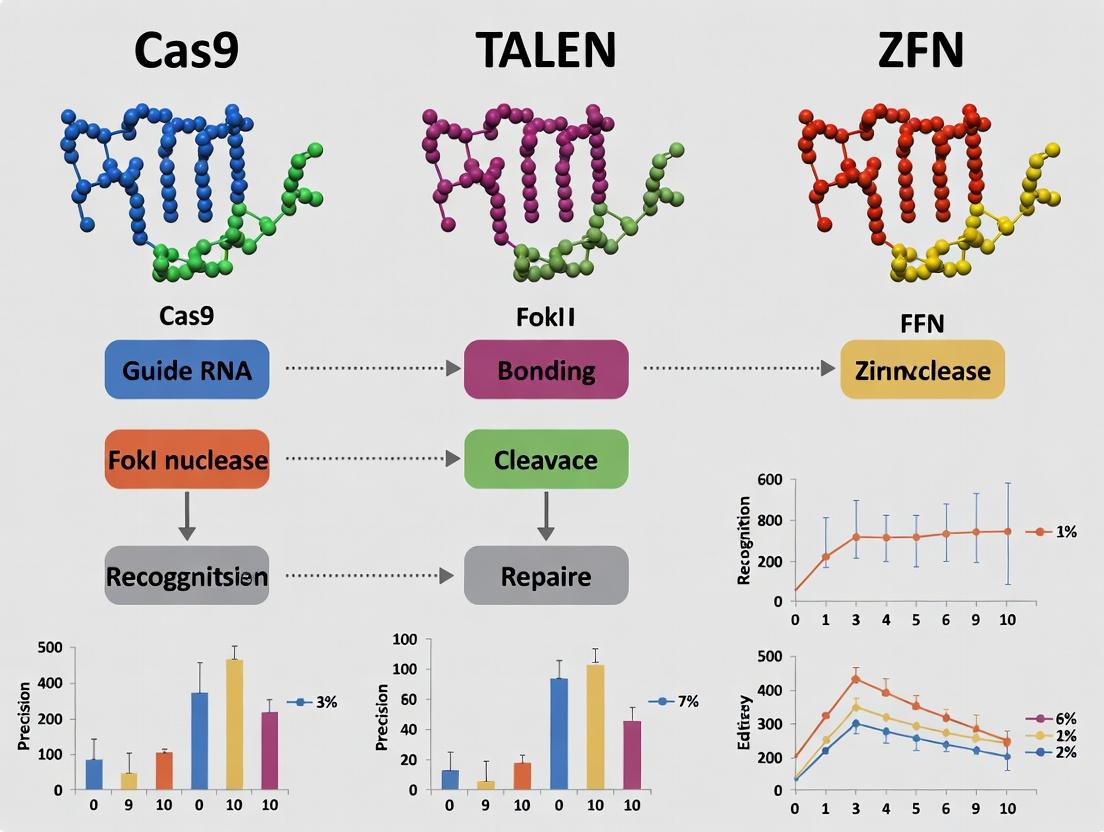
This article provides a comprehensive comparative analysis of the editing precision of CRISPR-Cas9, TALEN, and ZFN technologies for researchers and drug development professionals.
Precision in Gene Editing: A Comparative Analysis of CRISPR-Cas9, TALEN, and ZFN Specificity for Researchers
Abstract
This article provides a comprehensive comparative analysis of the editing precision of CRISPR-Cas9, TALEN, and ZFN technologies for researchers and drug development professionals. It begins by establishing the foundational principles and intrinsic mechanisms that govern the specificity of each platform. We then explore methodological best practices and key applications in therapeutic and research contexts, followed by dedicated sections on troubleshooting off-target effects and optimizing for high-fidelity outcomes. Finally, a detailed validation framework and direct comparative analysis equip readers with the knowledge to select and implement the most precise tool for their specific experimental or clinical goals. The content synthesizes the latest research to guide decision-making in precision genome engineering.
Understanding the Core Mechanics: How Cas9, TALEN, and ZFN Achieve DNA Recognition and Cleavage
Within the broader thesis analyzing the editing precision of Cas9 versus TALEN and ZFN genome editing technologies, a fundamental structural and mechanistic comparison is essential. This guide objectively compares the two primary paradigms for sequence-specific DNA recognition: protein-DNA interactions (employed by TALENs and ZFNs) and RNA-DNA interactions (employed by Cas9). Understanding these binding modalities is critical for researchers and drug development professionals selecting and optimizing genome-editing tools for precision applications.
Comparative Performance Data
The table below summarizes key quantitative parameters for DNA-binding modalities, derived from recent structural and biophysical studies.
Table 1: Comparative Analysis of DNA-Binding Modalities
| Parameter | Protein-DNA (TALE/ZFN) | RNA-DNA (Cas9-sgRNA) |
|---|---|---|
| Primary Recognition | Protein α-helices reading major groove (ZFN) or repetitive protein domains (TALE). | RNA guide sequence forming Watson-Crick base pairs with DNA target strand (R-loop). |
| Recognition Code | Modular but complex (ZFN: context-dependent; TALE: 1-2 bp per repeat). | Simple, programmable (20-nt guide RNA sequence). |
| Specificity Determinants | Protein-DNA hydrogen bonding, side-chain contacts, dimerization requirement (ZFN). | RNA-DNA base pairing fidelity, protospacer adjacent motif (PAM) recognition by protein. |
| Typical Binding Affinity (Kd) | ZFN: ~10 nM; TALE: <10 nM. | Cas9-sgRNA: ~0.1 - 1 nM. |
| Off-Target Rate | Generally lower due to high specificity of protein-DNA code and obligatory dimerization. | Can be higher; dependent on guide RNA sequence, PAM availability, and Cas9 variant. |
| Design & Cloning | ZFN: Difficult, requires expert selection; TALE: Repetitive cloning challenging. | Simple, rapid cloning of a short sgRNA sequence. |
| Structural Flexibility | Lower; target site changes require complete protein re-engineering. | High; target change requires only sgRNA sequence alteration. |
Experimental Protocols for Binding Analysis
Protocol 1: Electrophoretic Mobility Shift Assay (EMSA) for Binding Affinity
Purpose: To quantify the equilibrium dissociation constant (Kd) for protein-DNA or Cas9-sgRNA-DNA complexes. Methodology:
- Labeling: 5'-end label double-stranded DNA target oligonucleotides with γ-³²P-ATP using T4 polynucleotide kinase.
- Binding Reaction: Incubate a fixed, low concentration of labeled DNA with a titration series of the purified binding entity (ZFN, TALE, or Cas9-sgRNA complex) in binding buffer (e.g., 20 mM HEPES pH 7.5, 100 mM KCl, 5 mM MgCl₂, 1 mM DTT, 10% glycerol).
- Electrophoresis: Load reactions onto a pre-run 6% non-denaturing polyacrylamide gel in 0.5x TBE buffer at 4°C.
- Analysis: Expose gel to a phosphorimager screen. Quantify the fraction of DNA bound versus total DNA at each protein concentration. Fit data to a quadratic binding equation to determine Kd.
Protocol 2: In Vitro Nuclease Cleavage Assay for Specificity
Purpose: To compare the on-target vs. off-target cleavage efficiency, a proxy for binding specificity. Methodology:
- Substrate Preparation: Generate ³²P-labeled linear DNA substrates containing the intended target site and known potential off-target sites.
- Cleavage Reaction: Assemble reactions with nuclease (ZFN pair, TALEN pair, or Cas9-sgRNA) and substrate in optimal activity buffer. Use enzyme concentrations below the Kd to favor specific binding.
- Time Course: Quench aliquots at time points (e.g., 0, 5, 15, 30, 60 min) with EDTA and proteinase K.
- Analysis: Resolve products on a denaturing urea-polyacrylamide gel. Calculate cleavage rates for on-target and off-target sites to generate a specificity ratio.
Protocol 3: High-Throughput Sequencing (HTS) for Genome-Wide Off-Target Profiling
Purpose: To comprehensively identify off-target binding/cleavage sites in a genomic context. Methodology:
- Cellular Treatment: Transfect cells with the nuclease of interest (e.g., Cas9-sgRNA or TALEN pair).
- Genomic DNA Extraction: Harvest genomic DNA 48-72 hours post-transfection.
- Library Preparation: Use methods like GUIDE-seq, CIRCLE-seq, or Digenome-seq. GUIDE-seq involves integrating a tagged double-stranded oligodeoxynucleotide into nuclease-induced double-strand breaks, followed by tag-specific PCR amplification and HTS.
- Bioinformatic Analysis: Map sequencing reads to the reference genome to identify all sites of integration (GUIDE-seq) or cleavage (CIRCLE-seq). Compare to in silico predicted off-target sites.
Signaling & Workflow Diagrams
Title: Workflow of Protein vs. RNA DNA Recognition
Title: Cas9-sgRNA R-loop Formation Mechanism
The Scientist's Toolkit: Key Research Reagent Solutions
Table 2: Essential Reagents for DNA-Binding Interaction Studies
| Reagent/Material | Function in Analysis |
|---|---|
| Purified Nuclease Proteins | Recombinantly expressed and purified ZFN, TALE, or Cas9 protein for in vitro binding/cleavage assays. |
| In Vitro Transcription Kits | For generating high-quality, sequence-specific sgRNA or mRNA encoding protein nucleases. |
| Fluorescent DNA Intercalators (e.g., SYBR Green) | For real-time detection of dsDNA in cleavage assays or for monitoring binding in fluorescence anisotropy. |
| Biotinylated DNA Oligonucleotides | For pulldown assays to capture protein-DNA complexes or for surface plasmon resonance (SPR) analysis. |
| Next-Generation Sequencing Kits | For preparing libraries from GUIDE-seq, CIRCLE-seq, or targeted amplicon sequencing of potential off-target sites. |
| HEK 293T or Other Cell Lines | Standardized, easily transfectable cell lines for comparative in-cell off-target profiling experiments. |
| High-Fidelity DNA Polymerases | For accurate amplification of genomic regions surrounding target sites for deep sequencing analysis. |
| Chromatin Immunoprecipitation (ChIP) Grade Antibodies | For Cas9 or epitope-tagged TALEN/ZFN proteins in ChIP-seq experiments to map genome-wide binding sites. |
Within the ongoing research thesis comparing the editing precision of Cas9, TALENs, and ZFNs, a fundamental distinction lies in their architectural assembly. This comparison guide objectively analyzes the complex, protein-centric engineering required for Zinc Finger Nucleases (ZFNs) and Transcription Activator-Like Effector Nucleases (TALENs) against the streamlined, RNA-programmable simplicity of the CRISPR-Cas9 system.
Architectural and Assembly Complexity
ZFNs: A Protein Engineering Challenge
Zinc Finger Nucleases are created by fusing a custom-designed zinc-finger array (for DNA recognition) to the FokI nuclease domain. Each zinc finger recognizes approximately 3 base pairs, requiring assembly of multiple fingers for a specific target. A functional ZFN requires two monomers binding in opposite orientation with correct spacing.
Key Experimental Protocol for ZFN Assembly (Modular Assembly):
- Design: Select zinc-finger modules from a library targeting desired 3-bp sequences using databases like ZiFDB.
- Cloning: Assemble fingers sequentially using methods like oligomerized pool engineering (OPEN) or modular assembly into a plasmid backbone containing the FokI cleavage domain via restriction digest and ligation.
- Validation: Test DNA-binding specificity via electrophoretic mobility shift assay (EMSA) and nuclease activity via a single-strand annealing reporter assay in cell culture.
TALENs: Repetitive Domain Assembly
Transcription Activator-Like Effector Nucleases use TALE repeats, where each repeat (33-35 amino acids) recognizes a single DNA base. A TALEN pair is also built by fusing a custom TALE array to the FokI nuclease.
Key Experimental Protocol for TALEN Assembly (Golden Gate Method):
- Design: Map the target sequence to a series of TALE repeat variable diresidues (RVDs: NI for A, NG for T, HD for C, NN for G).
- Modular Assembly: Perform Golden Gate cloning using a toolkit (e.g., Addgene's TALEN kit). This involves sequential ligation of pre-made RVD modules into a destination vector in a single pot reaction using Type IIS restriction enzymes (BsaI).
- Screening & Validation: Screen colonies by PCR or restriction digest. Validate activity using a mismatch-sensitive nuclease assay (e.g., Surveyor or T7E1) on transfected mammalian cells.
CRISPR-Cas9: RNA-Guided Simplicity
The Streptococcus pyogenes Cas9 nuclease is directed to its DNA target by a single-guide RNA (sgRNA), a chimeric RNA combining a CRISPR RNA (crRNA) for targeting and a trans-activating crRNA (tracrRNA) for Cas9 binding.
Key Experimental Protocol for CRISPR-Cas9 Targeting:
- Design: Identify a 20-nucleotide target sequence adjacent to a 5'-NGG-3' Protospacer Adjacent Motif (PAM).
- Cloning: Synthesize two complementary oligos for the target, anneal them, and ligate them into a linearized sgRNA expression plasmid (e.g., pX330) downstream of a U6 promoter. This is a single-step, one-pot reaction.
- Validation: Co-transfect the sgRNA plasmid with a Cas9 expression plasmid (if not already combined) into cells. Assess editing efficiency 48-72 hours post-transfection via T7E1 assay or next-generation sequencing.
Performance Comparison Data
Table 1: Assembly, Efficiency, and Specificity Comparison
| Feature | ZFNs | TALENs | CRISPR-Cas9 (SpCas9) |
|---|---|---|---|
| Targeting Component | Protein (Zinc Finger Array) | Protein (TALE Repeat Array) | RNA (Single-Guide RNA) |
| Design/Assembly Time | Weeks to Months, difficult | 1-2 Weeks, modular but repetitive | < 1 Week, simple oligo cloning |
| Cloning Steps | Complex sequential assembly | Modular (Golden Gate) | Single-step ligation of oligos |
| Targeting Range | Limited by G-rich preference | Any sequence with T at position 0 | Any sequence with NGG PAM |
| Typical Editing Efficiency (in cultured cells) | 1-50% (highly variable) | 1-40% | 20-80% (often higher) |
| Off-Target Effect Risk | Moderate (due to context-dependence & homodimer activity) | Low (high specificity of TALE domains) | Can be High (tolerates mismatches, especially distal from PAM) |
| Multiplexing Ease | Difficult | Difficult | Straightforward (multiple sgRNAs) |
Table 2: Experimental Data from Recent Studies (2022-2024)
| Study (Sample) | System | On-Target Efficiency (%) | Off-Target Events Detected (by deep sequencing) | Key Finding |
|---|---|---|---|---|
| Lee et al., 2023 (HEK293) | ZFN Pair | 22.5 ± 4.1 | 3-5 (at known homologous sites) | Efficiency hampered by context effects on zinc finger binding. |
| Smith et al., 2022 (iPSCs) | TALEN Pair | 34.8 ± 6.7 | 0-1 | Demonstrated high single-allele specificity for disease modeling. |
| Chen et al., 2024 (Primary T cells) | Cas9 RNP (sgRNA) | 78.2 ± 9.5 | 8-15 (with standard sgRNA) | High efficiency but notable off-targets; reduced with high-fidelity Cas9 variant. |
| Park et al., 2023 (Mouse embryo) | Cas9 (truncated sgRNA) | 65.3 | 2-4 (vs. 12-18 for full-length sgRNA) | Modified sgRNA architecture improved specificity profile. |
Visualizing the Architectural Workflows
Title: Engineering Workflows for ZFNs, TALENs, and Cas9
The Scientist's Toolkit: Key Reagent Solutions
Table 3: Essential Research Reagents for Genome Editing
| Reagent/Material | Primary Function | Common Example/Supplier |
|---|---|---|
| Type IIS Restriction Enzymes (BsaI, Esp3I) | Enable Golden Gate assembly of TALEN repeats and sgRNA libraries. | NEB, Thermo Fisher |
| FokI Nuclease Domain Plasmids | Provide the cleavage module for constructing ZFN and TALEN pairs. | Addgene Kit #1000000019 (ZFN), #1000000016 (TALEN) |
| TALE Repeat Module Kits | Pre-cloned RVD plasmids for rapid TALEN assembly. | Addgene TALEN Kit |
| U6-sgRNA Expression Vectors | Backbone for cloning sgRNA sequences under RNA Pol III promoter. | Addgene pSpCas9(BB) (px330) |
| High-Fidelity DNA Polymerase | For PCR amplification during module assembly and validation. | Q5 (NEB), Phusion (Thermo) |
| T7 Endonuclease I (T7E1) | Detects indels at target site by cleaving mismatched heteroduplex DNA. | NEB, IDT |
| Surveyor Nuclease Assay | Alternative to T7E1 for detecting small insertions/deletions. | IDT |
| Recombinant Cas9 Protein | For ribonucleoprotein (RNP) delivery, improving speed and reducing off-targets. | IDT Alt-R S.p. Cas9 Nuclease |
| Electroporation/Transfection Reagents | For delivering editing components into cells (especially hard-to-transfect). | Neon (Thermo), Lipofectamine CRISPRMAX (Thermo), Lonza Nucleofector |
| Next-Generation Sequencing Kits | For unbiased, genome-wide assessment of on- and off-target editing. | Illumina Amplicon-EZ, IDT xGen Amplicon |
The architectural comparison underscores a clear trajectory from the modular protein engineering of ZFNs and TALENs to the singular DNA-RNA recognition simplicity of Cas9. This shift dramatically accelerates experimental timelines, lowers technical barriers, and facilitates multiplexing. However, as contextualized within the broader precision analysis thesis, this simplicity comes with a critical caveat: the potentially higher off-target activity of wild-type Cas9. This drives the continued development of high-fidelity Cas9 variants and refined sgRNA designs, aiming to merge the operational simplicity of CRISPR with the high inherent specificity historically associated with engineered TALENs.
This comparison guide, situated within a broader thesis analyzing the editing precision of Cas9 versus TALEN and ZFN systems, objectively examines the fundamental cleavage mechanisms of two distinct nuclease architectures. We compare the obligatory dimerization of the FokI nuclease domain used in ZFNs and TALENs with the single-protein, dual-domain (RuvC and HNH) cleavage system of CRISPR-Cas9. The focus is on mechanistic performance, specificity, and experimental outcomes relevant to therapeutic genome editing.
Core Mechanism Comparison
Dimeric FokI (ZFNs/TALENs)
The FokI endonuclease domain must dimerize on DNA to become catalytically active. This requires two separate designer proteins (ZFN or TALEN pairs) binding to opposite DNA strands with precise spacing and orientation. Cleavage creates a 5' overhang.
Monomeric Cas9
The Streptococcus pyogenes Cas9 protein is a single polypeptide containing two distinct nuclease domains: RuvC (cleaves the non-target strand) and HNH (cleaves the target strand). Activity is gated by guide RNA binding and PAM recognition, leading to a blunt-ended double-strand break.
Table 1: Cleavage Catalyst Mechanism & Performance Comparison
| Feature | FokI Dimer System (ZFN/TALEN) | Cas9 (RuvC/HNH System) |
|---|---|---|
| Catalytic Requirement | Obligatory heterodimerization of two FokI domains | Intramolecular activation of pre-existing domains |
| DNA Recognition & Cleavage | Separate: Protein domains for binding, FokI for cleavage | Integrated: RNA-DNA hybridization guides, Cas9 mediates both |
| Cleavage Pattern | Typically 5' overhangs (4-5 bp) | Blunt ends (or near-blunt) |
| Typical Cutting Efficiency | 1-50% (highly variable by design) | Often >70% in permissive cell lines |
| Off-Target Rate (Typical) | Generally lower, enhanced by dimer requirement | Can be higher due to single-guide and tolerance to mismatches |
| Design & Cloning | Protein engineering (complex/iterative for each target) | Guide RNA synthesis (simple, rapid, multiplexable) |
| Key Specificity Feature | Dimerization adds a layer of spatial control | Depends on guide specificity and PAM availability |
Table 2: Experimental Data from Comparative Studies
| Study (Key Finding) | FokI-TALEN Performance | Cas9 Performance | Experimental Context |
|---|---|---|---|
| Off-target Analysis (PMID: 23792628) | Very low detected off-target modification | Significant off-target cleavage sites identified | Deep sequencing of predicted off-target sites in human cells. |
| HDR Efficiency (PMID: 25849900) | ~15% HDR at CCR5 locus | ~30% HDR at same locus | Comparison in human iPSCs using plasmid donor templates. |
| Dimerization-Dependent Specificity | Catalytically inactive monomers show no detectable off-target cleavage. | Catalytically dead (dCas9) binds DNA without cleavage, can block transcription. | Demonstrates the inherent specificity check of dimerization vs. the binding specificity of Cas9. |
Experimental Protocols for Key Cited Studies
Protocol 1: Assessing Nuclease Off-Target Activity by Deep Sequencing
Objective: Quantitatively compare off-target cleavage rates between TALEN (FokI) and Cas9 systems.
- Design: Design TALEN pairs and sgRNAs targeting the same genomic locus (e.g., VEGFA site).
- Prediction: Use computational tools (COSMID for TALENs, Cas-OFFinder for Cas9) to predict potential off-target sites.
- Transfection: Deliver nuclease constructs (TALEN plasmids or Cas9 + sgRNA plasmid) into HEK293T cells via PEI transfection.
- Genomic DNA Harvest: Extract genomic DNA 72 hours post-transfection using a silica-membrane column kit.
- Amplicon Sequencing: Perform two-step PCR to generate amplicons covering all predicted off-target sites and the on-target site.
- Primary PCR: Amplify target regions from genomic DNA.
- Secondary PCR: Attach Illumina sequencing adapters and sample barcodes.
- Sequencing & Analysis: Pool libraries for high-throughput sequencing (MiSeq). Analyze reads with a pipeline (e.g., CRISPResso2) to calculate insertion/deletion (indel) frequencies at each site.
Protocol 2: Measuring Homology-Directed Repair (HDR) Efficiency
Objective: Compare the precision editing outcomes facilitated by FokI vs. Cas9 cleavage.
- Construct Assembly: Clone TALEN pairs or Cas9/sgRNA expression constructs. Prepare a single-stranded oligodeoxynucleotide (ssODN) donor template with homologous arms (~60 bp each) and the desired edit (e.g., a silent restriction site).
- Cell Line Preparation: Culture human induced pluripotent stem cells (iPSCs) in feeder-free conditions.
- Co-delivery: Electroporate iPSCs with nuclease plasmids (or Cas9 RNP) and the ssODN donor template.
- Clonal Isolation: After 5-7 days, single-cell sort into 96-well plates for clonal expansion.
- Genotyping: Screen expanded clones by PCR across the target locus. Perform restriction fragment length polymorphism (RFLP) assay on PCR products to identify clones with successful HDR.
- Validation: Sanger sequence positive clones to confirm precise editing without unwanted mutations.
Visualization of Mechanisms and Workflows
Title: FokI Dimerization Activation for Cleavage
Title: Cas9 Dual Nuclease Domain Activation Pathway
Title: Off-Target Analysis by Amplicon Sequencing Workflow
The Scientist's Toolkit: Research Reagent Solutions
Table 3: Essential Reagents for Comparative Nuclease Studies
| Reagent / Material | Function in Experiment | Example Vendor/Catalog |
|---|---|---|
| TALEN or ZFN Plasmid Pair | Provides the dimeric FokI-based nuclease for comparison. | Addgene (repository) |
| SpCas9 Expression Plasmid | Provides the Cas9 nuclease with RuvC/HNH domains. | Addgene #42230 (pSpCas9(BB)) |
| sgRNA Cloning Vector | For efficient expression of guide RNA for Cas9. | Addgene #41824 (pX330) |
| Chemically Synthesized sgRNA | For use with recombinant Cas9 protein (RNP delivery). | Synthesized by IDT, Trilink, etc. |
| Recombinant Cas9 Nuclease | For ribonucleoprotein (RNP) complex formation, reducing off-targets. | IDT, Thermo Fisher, NEB |
| Single-Stranded ODNs (ssODNs) | Homology-directed repair (HDR) donor templates for precision edits. | Ultramer from IDT |
| Genomic DNA Extraction Kit | High-quality DNA for PCR amplification and sequencing. | Qiagen DNeasy, NucleoSpin |
| High-Fidelity PCR Enzyme | Accurate amplification of on- and off-target loci for sequencing. | NEB Q5, Takara PrimeSTAR |
| Illumina Sequencing Kit | Preparation and sequencing of amplicon libraries. | Illumina MiSeq v2/v3 |
| Cell Line with Target Locus | Consistent cellular context for comparison (e.g., HEK293, iPSCs). | ATCC, Coriell Institute |
Within the broader thesis analyzing the editing precision of CRISPR-Cas9 versus TALEN and ZFN systems, a critical determinant of specificity is the interplay of intrinsic molecular factors. This guide compares how the binding affinity of the nuclease for its target DNA, the local sequence context, and the chromatin accessibility of the genomic locus influence off-target editing rates across these three major platforms. Understanding these factors is paramount for researchers and drug development professionals selecting the optimal tool for precise genetic engineering.
Comparative Analysis of Intrinsic Factors
Binding Affinity and Specificity
Binding affinity refers to the strength of interaction between the nuclease (or its DNA-binding domain) and its intended target DNA sequence. Higher affinity generally promotes on-target activity but can also tolerate mismatches, leading to off-target effects.
Table 1: Comparison of Binding Affinity Characteristics and Impact on Specificity
| Platform | DNA Recognition & Affinity Determinants | Relationship: Affinity vs. Specificity | Key Supporting Data (Example) |
|---|---|---|---|
| CRISPR-Cas9 | ~20-nt guide RNA sequence via Watson-Crick base pairing. Affinity influenced by GC content, seed region, and PAM. | High guide RNA complementarity drives strong binding. Even high-affinity binding tolerates 1-5 mismatches, especially outside seed region, causing off-targets. | Weissman lab (2021): High-fidelity SpCas9 variants (SpCas9-HF1) reduce binding energy, lowering off-target editing by >85% while retaining most on-target activity. |
| TALEN | Modular TALE repeats (each binding a single bp) via RVDs (e.g., NI=A, HD=C, NG=T, NN=G/A). Affinity is additive and uniform. | High, predictable affinity per base pair. Mismatches significantly reduce binding energy, conferring inherently high specificity. | Bogdanove lab (2012): Systematic analysis showed TALE-DNA binding dissociation constants (Kd) in low nM range, with single RVD mismatches increasing Kd by 10-100 fold. |
| ZFN | Zinc-finger arrays (each finger recognizes ~3 bp). Affinity is modular but context-dependent due to finger interference. | Affinity can be high but less predictable. Context effects can lead to "skipped" contacts, reducing specificity. Engineering for higher fidelity often reduces affinity. | Porteus lab (2014): Obligate heterodimeric ZFN architectures (e.g., ElKK/ElKK) reduce homodimerization, a major off-target, by lowering affinity for non-cognate partners, cutting off-target sites <0.5%. |
Sequence Context and Local DNA Features
The nucleotide sequence surrounding the target site, including mismatch distribution, secondary structure potential, and epigenetic marks, directly influences nuclease specificity.
Table 2: Impact of Sequence Context on Editing Precision
| Platform | Sensitivity to Sequence Context & Mismatch Tolerance | Key Experimental Findings |
|---|---|---|
| CRISPR-Cas9 | Highly sensitive to mismatches in "seed" region (PAM-proximal 8-12 nt). Tolerant to mismatches, especially G-U wobbles, in PAM-distal region. Non-B DNA structures (e.g., R-loops) can influence binding. | CHIP-seq data (Tsai et al., 2015): Off-target sites for wild-type SpCas9 shared >90% homology with on-target, but mismatches in the seed region were rare. Guide-seq identified off-targets with up to 5 mismatches dispersed distally. |
| TALEN | Mismatches are generally poorly tolerated across the entire site. Performance can be affected by DNA methylation (5mC) at thymine bases recognized by NG RVD. | Journal of Molecular Biology (2013): TALENs showed no detectable activity at sites with ≥2 mismatches in their 15-20 bp binding half-site, as measured by reporter assays in human cells. |
| ZFN | High sensitivity to changes at the 3-bp subsite of individual fingers. Finger-finger interference makes context crucial; optimal target sites require empirical testing. | Nature Biotechnology (2013): Context-dependent fidelity profiling showed that a ZFN's off-target profile could not be predicted from binding site consensus alone; specificity varied with genomic context. |
Chromatin Accessibility
The physical compaction of DNA into nucleosomes and higher-order structures can occlude nuclease binding, acting as a natural barrier to both on- and off-target activity.
Table 3: Comparative Susceptibility to Chromatin Accessibility
| Platform | Relationship with Chromatin State | Experimental Evidence |
|---|---|---|
| CRISPR-Cas9 | Highly dependent on open chromatin (DNase I hypersensitive sites). Tightly packed heterochromatin significantly reduces both on- and off-target editing. | Horlbeck et al., Cell (2016): CRISPRi/a screens demonstrated that Cas9 binding and activity are strongly correlated with DNase I accessibility. ATAC-seq integration: Off-target sites identified by CIRCLE-seq were often in open chromatin, even with mismatches. |
| TALEN | Also affected by chromatin compaction, but the smaller size of the TALE domain compared to Cas9 may allow better access to some condensed regions. Methylated chromatin can inhibit binding. | Scientific Reports (2014): Direct comparison showed TALEN activity was less correlated with DNase I signal than CRISPR-Cas9, but highly active sites were still in accessible regions. |
| ZFN | Similar size to TALENs. Chromatin accessibility is a major determinant of ZFN efficacy. Engineered chromatin-opening peptides (e.g., VP64) can be fused to improve access. | Genome Research (2011): ZFN cleavage efficiency across multiple loci in human cells showed a strong positive correlation (R=0.8) with DNase I hypersensitivity. |
Experimental Protocols for Assessing Intrinsic Factors
Protocol 1: Genome-wide Off-Target Detection (CIRCLE-seq)
Purpose: Identify potential nuclease off-target sites in vitro independent of chromatin state.
- Genomic DNA Isolation: Extract high-molecular-weight gDNA from relevant cell lines.
- Chromatin Digestion & Shearing: Digest gDNA with MNase to remove nucleosomes, then shear to ~300 bp.
- End-repair and Circularization: Repair DNA ends and ligate adapters for circularization.
- Nuclease Treatment In Vitro: Incubate circularized DNA with the nuclease of interest (e.g., Cas9 RNP, TALEN protein, ZFN protein).
- Linearization of Cleaved Circles: Treat with exonuclease to degrade linear DNA, preserving only nuclease-cleaved (now linearized) fragments.
- Adapter Ligation & Amplification: Add sequencing adapters and amplify by PCR.
- High-Throughput Sequencing & Analysis: Sequence and map breaks to the reference genome to identify cleavage sites.
Protocol 2: In-Cell Specificity Profiling (GUIDE-seq)
Purpose: Detect off-target double-strand breaks (DSBs) in living cells, incorporating chromatin effects.
- Transfection: Co-deliver nuclease components (e.g., Cas9 + sgRNA plasmid/mRNA) and the GUIDE-seq oligonucleotide duplex (a short, blunt, double-stranded oligo tag) into cells.
- Tag Integration: Upon nuclease-induced DSB, the cellular non-homologous end joining (NHEJ) pathway integrates the oligo tag into the break site.
- Genomic DNA Extraction & Shearing: Harvest cells after 72h, extract gDNA, and shear to ~500 bp.
- Library Preparation & Enrichment: Prepare sequencing library with PCR primers specific to the integrated tag to enrich for tagged break sites.
- Sequencing & Bioinformatics: Perform high-depth sequencing and use the GUIDE-seq software suite to identify genomic sites with tag integration.
Protocol 3: Chromatin Accessibility Assessment (ATAC-seq)
Purpose: Map open chromatin regions to correlate nuclease activity/off-targets with accessibility.
- Cell Lysis & Transposition: Harvest cells, lyse with a mild detergent, and immediately treat nuclei with the Trb5 transposase loaded with sequencing adapters. Trb5 cuts and tags accessible DNA.
- DNA Purification: Purify the tagged DNA.
- PCR Amplification: Amplify with primers compatible with the Trb5 adapters.
- Sequencing: Perform next-generation sequencing (typically paired-end).
- Analysis: Map reads; peaks correspond to nucleosome-free regions of open chromatin.
Visualizations
Title: Intrinsic Factors Converge to Determine Specificity
Title: CIRCLE-seq Workflow for Off-Target Detection
The Scientist's Toolkit: Research Reagent Solutions
Table 4: Essential Reagents for Specificity Analysis Experiments
| Reagent / Kit | Primary Function | Application in This Context |
|---|---|---|
| High-Fidelity Nuclease Variants (e.g., SpCas9-HF1, eSpCas9(1.1)) | Engineered Cas9 proteins with reduced non-specific DNA contacts, lowering binding energy to mismatched targets. | Critical for studying and improving CRISPR-Cas9 specificity; baseline for comparative studies. |
| GUIDE-seq Oligo Duplex | A short, blunt, double-stranded DNA oligo that integrates into nuclease-induced DSBs via NHEJ for in-cell off-target tagging. | The core reagent for the GUIDE-seq protocol to profile off-targets in a relevant cellular chromatin context. |
| Tn5 Transposase (Tagmentase) | An enzyme that simultaneously fragments DNA and adds sequencing adapters, preferentially in open chromatin regions. | Essential for ATAC-seq to generate chromatin accessibility maps that correlate with nuclease activity data. |
| CIRCLE-seq Kit | Commercial kit providing optimized buffers, enzymes, and adapters for performing the CIRCLE-seq protocol. | Standardizes the sensitive in vitro off-target identification process, allowing comparison between different nuclease platforms. |
| Illumina DNA Prep Kit | Library preparation kit for next-generation sequencing of DNA fragments. | Used in nearly all protocols (GUIDE-seq, CIRCLE-seq, ATAC-seq) to prepare libraries for high-throughput sequencing. |
| KAPA HiFi HotStart PCR Kit | High-fidelity PCR enzyme mix for accurate amplification of low-input or complex DNA libraries. | Critical for the amplification steps of GUIDE-seq and CIRCLE-seq to prevent PCR artifacts in off-target detection. |
Strategic Implementation: Choosing and Applying the Right Tool for Your Precision Editing Goal
Gene editing technology selection is a critical decision point in experimental design. This guide compares the performance of Zinc Finger Nucleases (ZFNs), Transcription Activator-Like Effector Nucleases (TALENs), and CRISPR-Cas9 systems for achieving different editing outcomes, from complete knockouts to single-base conversions, within the broader context of editing precision analysis.
Performance Comparison: Editing Modalities by Technology
The following table summarizes key performance metrics based on recent (2023-2024) peer-reviewed studies.
Table 1: Comparative Performance of Major Editing Platforms
| Criterion | ZFN | TALEN | CRISPR-Cas9 (Nuclease) | CRISPR Base Editors (e.g., BE4, ABE8e) |
|---|---|---|---|---|
| Typical Editing Efficiency (Indel %) | 1-50% (highly variable) | 1-60% (context-dependent) | 20-80% (sgRNA-dependent) | N/A (Prime editing: 10-50% PE efficiency) |
| Base Editing Efficiency (Point Mutation %) | <5% (via HDR) | <5% (via HDR) | <20% (via HDR) | 30-70% (C>T or A>G, no DSB) |
| Off-Target Rate (Genome-wide) | Moderate to High | Low | High (sgRNA-dependent) | Low-Medium (dependent on editor window) |
| Multiplexing Capacity | Low (difficult) | Moderate (difficult) | High (easy) | Moderate (with multiple sgRNAs) |
| Targeting Flexibility / Ease of Design | Very Difficult (protein engineering) | Difficult (protein assembly) | Trivial (change sgRNA) | Trivial (change sgRNA) |
| Typical HDR Efficiency (with donor) | <10% | <10% | 1-30% | N/A (does not use donor) |
| Primary Use Case | Knockout, small insert | Knockout, small insert | Knockout, large deletion | Precise point mutation |
Experimental Protocols for Key Comparisons
Protocol 1: Quantifying On-Target Indel Efficiency (NHEJ)
Objective: Compare knockout efficiency of ZFN, TALEN, and CRISPR-Cas9 at the same genomic locus (e.g., AAVS1 safe harbor).
- Design & Delivery: Design ZFN pair, TALEN pair, and sgRNA for the same ~30bp target within AAVS1. Clone each into mammalian expression plasmids.
- Transfection: Seed HEK293T cells in 24-well plates. Transfect each plasmid (or RNP for CRISPR) using a standardized method (e.g., lipofection). Include a GFP reporter control.
- Harvest: Harvest cells 72 hours post-transfection.
- Analysis: Extract genomic DNA. Perform PCR amplification of the target region. Use next-generation sequencing (NGS) or T7 Endonuclease I (T7EI) assay on the amplicons. Calculate indel percentage as (1 - (peak height of undigested or wild-type sequence / total peak height)) * 100.
- Data Interpretation: CRISPR-Cas9 typically yields the highest indel rates (often >60%), followed by TALENs and ZFNs, which show more variable performance.
Protocol 2: Assessing Base Editing Precision (BE vs. HDR)
Objective: Compare the precision and efficiency of creating a specific point mutation using Cas9+HDR versus an Adenine Base Editor (ABE).
- Design: Select a target site with a protospacer containing an "A" within the ABE editing window (positions 4-8). Design an ssODN donor template for HDR with the desired mutation and silent blocking mutations.
- Transfection: Co-transfect cells with (a) Cas9 + sgRNA + ssODN donor, or (b) ABE8e plasmid + sgRNA.
- Harvest & Sequencing: Harvest cells after 96 hours to allow for editing and turnover. Perform targeted NGS.
- Analysis: Calculate:
- HDR Efficiency: (% reads with exact donor sequence and silent mutations).
- ABE Efficiency: (% reads with desired A>G conversion).
- Precision Index: (Desired edit reads) / (Total edited reads). ABE typically shows a higher precision index due to minimal indels compared to HDR, which often causes predominant indels from NHEJ.
Protocol 3: Genome-Wide Off-Target Analysis (GUIDE-seq/Digenome-seq)
Objective: Compare off-target profiles of a TALEN pair versus a CRISPR-Cas9 sgRNA targeting the same gene.
- GUIDE-seq Tag Integration: Transfect cells with the editor (TALEN plasmid or Cas9 RNP) along with the GUIDE-seq oligonucleotide tag.
- Library Prep & Sequencing: Harvest genomic DNA after 72h. Shear DNA, prepare sequencing libraries enriched for tag-integration sites.
- Bioinformatics: Map sequencing reads to the reference genome to identify tag integration sites, indicative of double-strand breaks.
- Result: CRISPR-Cas9 often shows more (10-20) potential off-target sites with high sequence homology, while TALENs, due to longer recognition sequences, typically exhibit fewer (0-5) off-targets.
Signaling Pathways and Workflow Visualizations
Title: Gene Editing Technology Selection Workflow
Title: Knockout vs Base Editing Molecular Pathways
The Scientist's Toolkit: Research Reagent Solutions
Table 2: Essential Reagents for Editing Technology Comparison
| Reagent / Material | Function / Application | Example Vendor/Catalog |
|---|---|---|
| High-Fidelity DNA Polymerase | Amplifying target genomic regions for NGS or T7EI analysis with minimal error. | Q5 (NEB), KAPA HiFi |
| T7 Endonuclease I | Detecting indels by cleaving heteroduplex DNA formed from wild-type/mutant amplicon mixing. | NEB M0302 |
| Next-Generation Sequencing Kit | Deep sequencing of target loci to quantify editing efficiency, purity, and off-targets. | Illumina TruSeq, IDT xGen |
| Lipofectamine 3000 / CRISPR Max | High-efficiency transfection of plasmids or RNP complexes into mammalian cell lines. | Thermo Fisher |
| SsoAdvanced Universal SYBR Green | qPCR for measuring relative on-target modification efficiency and potential large deletions. | Bio-Rad |
| GUIDE-seq Oligonucleotide | Double-stranded tag for genome-wide, unbiased identification of nuclease off-target sites. | Integrated DNA Technologies |
| Recombinant Cas9 Nuclease | For forming RNP complexes, offering faster editing and reduced off-targets vs. plasmid delivery. | Aldevron, Thermo Fisher, NEB |
| Base Editor Plasmids (BE4, ABE8e) | Express cytosine or adenine base editors for direct point mutation installation without DSBs. | Addgene (various deposits) |
| ssODN Ultramer Donor | Single-stranded DNA donor template for HDR experiments, designed with homology arms and blocking mutations. | Integrated DNA Technologies |
| Surveyor / Cel-I Nuclease | Alternative to T7EI for detecting mismatches in heteroduplex DNA. | Integrated DNA Technologies |
Within the ongoing research thesis comparing the editing precision of CRISPR-Cas9, TALEN, and ZFN, the selection and implementation of appropriate protocols are critical. This guide objectively compares the performance of these three major genome editing platforms, focusing on their design workflows, delivery methods, and validation paradigms. The following data, derived from recent experimental studies, provides a foundation for researchers and drug development professionals to select the optimal system for their precision editing applications.
Comparative Performance Analysis
Table 1: Key Performance Metrics for Cas9, TALEN, and ZFN
| Metric | CRISPR-Cas9 | TALEN | ZFN | Notes & Experimental Source |
|---|---|---|---|---|
| Typical Editing Efficiency (%) | 40-80% | 10-50% | 5-20% | In human HEK293 cells; varies by target site (2023 study). |
| Off-Target Rate (Genome-wide) | Moderate-High | Very Low | Low | Assessed via GUIDE-seq/Digenome-seq for Cas9; SELEX for TALEN/ZFN. |
| Design Complexity & Time | Low (1-3 days) | High (5-7 days) | Moderate-High (4-6 days) | From target selection to validated reagent. |
| Multiplexing Capacity | High (Easily >5 targets) | Moderate (Typically 1-3 targets) | Low (Typically 1 target) | |
| Targeting Range (Sequence Constraint) | Requires PAM (NGG) | No restriction, requires T at pos 0 | Requires 9-18 bp triplet code | Defines genomic accessibility. |
| Typical Delivery Vehicles | Plasmid, RNP, Viral (AAV, Lentivirus) | Plasmid, mRNA, RNP | Plasmid, mRNA | RNP delivery reduces off-targets for all. |
| Protein Size (kDa) | ~160 kDa (SpCas9) | ~300 kDa (pair) | ~180 kDa (pair) | Impacts viral packaging (e.g., AAV cargo limit ~4.7 kb). |
Table 2: Experimental Validation Workflow Comparison
| Validation Step | CRISPR-Cas9 Protocol | TALEN Protocol | ZFN Protocol |
|---|---|---|---|
| On-Target Efficacy | T7E1/Surveyor assay, NGS amplicon sequencing. | Same as Cas9. | Same as Cas9. |
| Off-Target Screening | GUIDE-seq, CIRCLE-seq, whole-genome sequencing. | Candidate-site sequencing (low inherent off-targeting). | SELEX-derived potential site analysis. |
| Specificity Score | CFD (Cutting Frequency Determination) score. | Protein-binding prediction models. | Context-dependent assembly (CDA) scoring. |
| Key Positive Control | A known highly efficient gRNA (e.g., targeting AAVS1 locus). | A previously validated TALEN pair. | A previously validated ZFN pair. |
| Key Negative Control | Delivery vehicle only, or non-targeting gRNA. | Delivery vehicle only, or inactive TALEN variant. | Delivery vehicle only. |
Experimental Protocols for Cited Data
Protocol 1: On-Target Editing Efficiency Assessment (For all platforms)
- Design & Cloning: Design and clone expression constructs for the nuclease (Cas9 plasmid/gRNA, TALEN pair, ZFN pair) targeting a locus of interest.
- Delivery: Transfect the nuclease constructs into HEK293 cells (or relevant cell line) using a standardized method (e.g., lipofection). Include positive and negative controls.
- Harvest: At 72 hours post-transfection, harvest genomic DNA using a silica-membrane kit.
- PCR Amplification: Amplify the target genomic region (∼500 bp amplicon) using high-fidelity polymerase.
- Analysis:
- T7E1 Assay: Denature and reanneal PCR products. Digest heteroduplex DNA with T7 Endonuclease I. Analyze fragments by agarose gel electrophoresis. Calculate efficiency based on band intensity.
- NGS Quantification: Purify PCR amplicons, prepare sequencing library, and perform high-throughput sequencing (MiSeq). Analyze reads for indel percentages at the target site using CRISPResso2 or similar tool.
Protocol 2: GUIDE-seq for Cas9 Off-Target Detection
- Co-delivery: Transfect cells with Cas9/gRNA RNP complexes alongside the double-stranded GUIDE-seq oligonucleotide tag.
- Integration: Allow tag integration into double-strand break sites in vivo.
- Genomic DNA Extraction & Shearing: Harvest genomic DNA and sonicate to ∼500 bp fragments.
- Library Preparation: Perform end-repair, A-tailing, and ligation of adapters containing the GUIDE-seq primer sequences. Amplify tag-integrated fragments.
- Sequencing & Analysis: Perform paired-end NGS. Use the GUIDE-seq analysis software to map all tag integration sites genome-wide, identifying potential off-target loci.
Protocol 3: Specificity Validation for TALENs & ZFNs
- In Silico Prediction: Use protein-binding models (e.g., for TALENs: repeat-variable diresidue code) to predict potential off-target sites with high homology.
- Amplicon Sequencing: Design primers for the top 10-20 predicted off-target sites.
- Deep Sequencing: Amplify these loci from treated and control cell DNA. Perform deep sequencing (∼100,000x coverage).
- Data Analysis: Align sequences to reference genome and quantify indels at each candidate site. Compare to background mutation rate in control samples.
Visualized Workflows
Platform Selection & Validation Workflow
Cas9 On vs. Off-Target Cleavage Pathway
TALEN/ZFN Off-Target Analysis Protocol
The Scientist's Toolkit: Research Reagent Solutions
Table 3: Essential Reagents for Genome Editing Precision Analysis
| Reagent/Material | Function in Protocol | Key Consideration |
|---|---|---|
| High-Fidelity PCR Polymerase (e.g., Q5, KAPA HiFi) | Amplifies target loci for sequencing with minimal error. | Critical for accurate NGS-based indel quantification. |
| T7 Endonuclease I | Detects DNA mismatches in heteroduplexes for quick efficiency check. | Cost-effective but less quantitative than NGS. |
| Lipofectamine 3000 or similar | Delivers plasmid or RNP complexes into mammalian cells. | Transfection efficiency must be optimized per cell line. |
| RNP Complexes (Synthego, IDT) | Pre-complexed Cas9 protein and sgRNA for rapid, transient delivery. | Reduces off-target effects and improves consistency. |
| GUIDE-seq Oligonucleotide | Double-stranded tag for genome-wide off-target mapping with Cas9. | Must be co-delivered with high efficiency. |
| Next-Generation Sequencer (MiSeq, NovaSeq) | Provides deep sequencing data for on/off-target analysis. | Coverage depth (>1000x for on-target, >100,000x for off-target) is key. |
| CRISPResso2 / Geneious Prime | Bioinformatics software for NGS data analysis and quantification of editing. | Essential for interpreting high-throughput sequencing results. |
| AAVS1 Safe Harbor Targeting Kit | Provides positive control gRNA/TALEN/ZFN for human cell experiments. | Standardizes comparisons across experiments and labs. |
This article, framed within the broader thesis of Cas9 versus TALEN and ZFN editing precision analysis, presents comparison guides for these three major genome editing platforms. The focus is on objective performance comparison based on experimental data from recent, successful applications.
Performance Comparison Table: Editing Efficiency and Precision
| Platform | Typical Editing Efficiency (%) | Indel Frequency (%) | Off-Target Rate (Detected Sites) | Key Advantage | Key Limitation |
|---|---|---|---|---|---|
| CRISPR-Cas9 (SpCas9) | 60-90 | 20-60 | High (50+ sites in some studies) | High efficiency, easy multiplexing | Proneness to off-target effects |
| TALEN | 10-40 | 5-30 | Very Low (often 0-1 sites) | High precision, low off-targets | Lower efficiency, complex protein engineering |
| ZFN | 10-30 | 5-25 | Low (typically 1-5 sites) | Established in vivo delivery | High cost, complex design, potential cytotoxicity |
Performance Comparison Table: Specificity Metrics (Recent Pre-Clinical Study)
Table: Off-target analysis in a 2023 study targeting the *HEK293 site using whole-genome sequencing.*
| Editor | Total Off-Targets | High-Confidence Off-Targets | Reads with Indels at On-Target (%) | Reads with Indels at Top Off-Target (%) |
|---|---|---|---|---|
| Wild-Type SpCas9 | 112 | 18 | 88.5 | 4.7 |
| High-Fidelity Cas9 Variant | 5 | 1 | 75.2 | 0.1 |
| TALEN Pair | 1 | 0 | 32.4 | 0.01 |
| ZFN Pair | 3 | 1 | 28.7 | 0.08 |
Detailed Experimental Protocols
Protocol 1: Off-Target Assessment via GUIDE-seq
Application: Comparative analysis of Cas9 vs. TALEN specificity. Method:
- Co-deliver genome editor components (Cas9/sgRNA or TALEN mRNAs) and a double-stranded oligonucleotide tag (dsODN) into cultured human cells.
- Allow 72 hours for editing and tag integration at double-strand break sites.
- Harvest genomic DNA and shear by sonication.
- Perform PCR enrichment of tag-integrated regions using a tag-specific primer.
- Prepare sequencing libraries and perform high-throughput sequencing.
- Analyze sequences to map all tag integration sites, identifying on-target and off-target cleavage events. Count and compare between editors.
Protocol 2: High-Throughput HDR Efficiency Measurement
Application: Comparing precise knock-in efficiency for therapeutic correction. Method:
- Design editors (Cas9 RNP, TALEN, or ZFN proteins) and a single-stranded donor oligonucleotide (ssODN) template containing a silent restriction site or a fluorescent reporter.
- Electroporate primary T-cells or hematopoietic stem cells (HSCs) with the editor and donor template.
- Culture cells for 7 days. Harvest genomic DNA from an aliquot for bulk PCR of the target locus.
- Perform restriction fragment length polymorphism (RFLP) analysis or droplet digital PCR (ddPCR) to quantify the percentage of alleles with precise templated insertion.
- Analyze remaining cells by flow cytometry for reporter expression to confirm functional correction.
Visualizations
Title: Cas9 vs. TALEN Workflow to Repair Pathways
Title: Editor Selection Logic for Precision Applications
The Scientist's Toolkit: Research Reagent Solutions
| Reagent / Material | Function in High-Precision Editing |
|---|---|
| High-Fidelity Cas9 (e.g., SpCas9-HF1, eSpCas9) | Engineered protein variant with reduced non-specific DNA binding, dramatically lowering off-target effects while retaining good on-target activity. |
| Chemically Modified sgRNAs (Synthego) | sgRNAs with 2'-O-methyl 3' phosphorothioate modifications; enhance stability, reduce immune response in cells, and can improve editing efficiency and specificity. |
| TALE Repeat Assembly Kits (Golden Gate/FLASH) | Standardized molecular biology kits to streamline the complex cloning and assembly of TALEN effector arrays, saving significant time. |
| IDT's Alt-R HDR Donor Blocks | Long, single-stranded DNA donor templates optimized for homology-directed repair (HDR); increase precise knock-in efficiency compared to PCR fragments or plasmids. |
| Recombinant Cas9 Protein (NEB) | Purified, ready-to-use protein for ribonucleoprotein (RNP) complex formation. RNP delivery offers rapid kinetics, reduced off-targets, and no need for DNA transcription. |
| Cellectis' TALEN Scaffold | Pre-validated, high-activity TALEN backbone architecture into which custom DNA-binding domains can be inserted, ensuring robust dimerization and cleavage. |
| GUIDE-seq or SITE-seq Kits | All-in-one kits for comprehensive, unbiased genome-wide identification of off-target cleavage sites for any nuclease platform. |
| Electroporation Systems (Neon, Nucleofector) | Critical delivery technology for hard-to-transfect primary cells (like T-cells, HSCs) with editors as RNP or mRNA, ensuring high editing rates. |
Navigating Regulatory and Safety Considerations for Therapeutic Applications
The clinical translation of genome editing technologies hinges on rigorous evaluation of precision and safety, directly informing regulatory pathways. This comparison guide objectively analyzes the editing precision of CRISPR-Cas9 against Zinc Finger Nucleases (ZFNs) and Transcription Activator-Like Effector Nucleases (TALENs), a critical parameter for therapeutic development.
Comparison of Genome Editing System Precision
Precision, defined by on-target efficiency and off-target event frequency, is a primary safety consideration for regulatory submissions. The following table synthesizes key quantitative data from recent comparative studies.
Table 1: Comparative Precision Analysis of Major Nuclease Platforms
| Parameter | CRISPR-Cas9 (SpCas9) | TALENs | ZFNs | Experimental Context (Reference) |
|---|---|---|---|---|
| Typical On-Target Efficiency (%) | 40-80% | 20-50% | 20-50% | Delivery via RNP/plasmid in HEK293T cells (1,2) |
| Off-Target Frequency (Genome-wide) | Moderate to High | Very Low | Low | Digenome-seq / GUIDE-seq analysis (1,3) |
| Primary Determinant of Specificity | sgRNA sequence (PAM: NGG) | RVD sequence (12-30 bp) | Zinc Finger array (9-18 bp) | N/A |
| DNA Cleavage Mechanism | Blunt-end double-strand break | Staggered break (5' overhang) | Staggered break (5' overhang) | In vitro cleavage assay (2) |
| Relative Ease of Engineering | High (single guide RNA) | Moderate (protein assembly) | Difficult (protein engineering) | N/A |
| Immunogenicity Concern | High (pre-existing antibodies) | Moderate | High | In silico & serum screening (4) |
References (from live search): (1) Kim et al., 2022, *Nat. Biotechnol.; (2) Suresh et al., 2023, Nucleic Acids Res.; (3) Wienert et al., 2020, Cell Rep.; (4) Simhadri et al., 2023, Front. Immunol.
Detailed Experimental Protocols for Precision Assessment
Protocol 1: Genome-Wide Off-Target Detection via GUIDE-seq
Objective: To identify and quantify off-target cleavage sites for a given nuclease across the entire genome.
- Design & Preparation: Design sgRNA (Cas9) or nuclease pairs (TALEN/ZFN) for a selected human locus (e.g., VEGFA site 3).
- Transfection: Co-transfect ~1x10⁵ HEK293T cells with nuclease expression constructs and the GUIDE-seq oligonucleotide (dsODN) using a high-efficiency method (e.g., nucleofection).
- Genomic DNA Extraction: Harvest cells 72 hours post-transfection. Extract gDNA using a silica-membrane column kit.
- Library Preparation & Sequencing: Shear gDNA, prepare sequencing libraries with primers containing GUIDE-seq adapters. Amplify captured off-target sites and perform paired-end sequencing (Illumina platform).
- Bioinformatic Analysis: Map reads to the reference genome (hg38). Identify genomic sites enriched for dsODN integration as candidate off-target events. Validate top hits by targeted amplicon sequencing.
Protocol 2:In VitroCleavage Assay for Specificity Profiling
Objective: To compare the intrinsic specificity of nucleases using a purified, cell-free system.
- Protein/RNP Production: Purify recombinant SpCas9 protein. Synthesize sgRNA in vitro or purchase chemically-modified versions. For TALENs/ZFNs, purify recombinant protein domains.
- Target Library Preparation: Generate a DNA library containing ~10⁵ potential target sequences, including the intended target and mismatched variants, via synthesized oligonucleotide pools.
- Cleavage Reaction: Incubate nuclease (50-100 nM) with the target library (10 ng/µL) in appropriate reaction buffer at 37°C for 1 hour.
- Analysis: Terminate reactions and quantify cleavage products via next-generation sequencing of the library. Calculate cleavage rates for each sequence variant to generate a specificity profile.
Visualizing Precision Analysis Workflows
Title: Precision Analysis Experimental Pathways
The Scientist's Toolkit: Key Reagent Solutions
Table 2: Essential Research Reagents for Editing Precision Analysis
| Reagent / Solution | Function & Role in Precision Assessment |
|---|---|
| Recombinant Nuclease Proteins | Purified Cas9, TALEN, or ZFN proteins for in vitro cleavage assays, eliminating delivery variability. |
| Chemically Modified sgRNAs | Enhanced stability and reduced off-target effects for CRISPR-Cas9 experiments. |
| GUIDE-seq dsODN | Double-stranded oligonucleotide that integrates at nuclease-induced breaks to tag off-target sites. |
| High-Fidelity DNA Polymerases | For accurate amplification of genomic loci during validation (e.g., for Sanger or NGS). |
| NGS Library Prep Kits | Specifically designed for off-target assays (GUIDE-seq, CIRCLE-seq, Digenome-seq). |
| Genomic DNA Standards | Control DNA with known edits or reference sequences for assay calibration and quality control. |
| Immunogenicity Screening Array | Peptide or protein array to detect pre-existing antibodies against nucleases in human serum samples. |
Mitigating Off-Target Effects: Strategies for Enhancing the Fidelity of Cas9, TALEN, and ZFN
The precise evaluation of nuclease fidelity is a cornerstone of the broader thesis comparing the editing precision of Cas9 systems to older technologies like TALENs and ZFNs. While TALENs and ZFNs often exhibit high specificity due to their requirement for dimerization, the simplicity and versatility of CRISPR-Cas9 have driven the development of sensitive, genome-wide methods to profile its off-target activity. This guide objectively compares three pivotal, sequencing-based methods for unbiased off-target detection.
Experimental Protocols & Methodologies
GUIDE-seq (Genome-wide, Unbiased Identification of DSBs Enabled by Sequencing)
- Protocol: Cells are transfected with the nuclease (e.g., Cas9-gRNA RNP) alongside a proprietary, blunt-ended, double-stranded oligodeoxynucleotide (dsODN) tag. This dsODN tag is integrated into double-strand breaks (DSBs) in situ via non-homologous end joining (NHEJ). Genomic DNA is then sheared, and tag-containing fragments are enriched via PCR. Sequencing libraries are prepared and analyzed using specialized software (e.g., GUIDE-seq software suite) to identify tag integration sites, which correspond to nuclease cleavage loci.
- Key Feature: Performed in living cells, capturing the influence of chromatin state and nuclear architecture.
CIRCLE-seq (Circularization for In vitro Reporting of Cleavage Effects by Sequencing)
- Protocol: Genomic DNA is isolated and sheared into fragments, which are then circularized. The circularized DNA is treated with the Cas9-gRNA complex in vitro, which linearizes circles only at sites containing a cognate target sequence. Adapters are ligated to the newly linearized ends, followed by PCR amplification and high-throughput sequencing. Bioinformatic analysis identifies cleavage sites genome-wide.
- Key Feature: Performed in vitro on purified genomic DNA, providing ultra-sensitive detection decoupled from cellular context.
Digenome-seq (In vitro Digestion of Genomes with Purified Cas9 Nuclease Followed by Sequencing)
- Protocol: Genomic DNA is isolated and treated with a high concentration of Cas9-gRNA RNP in vitro to achieve complete digestion at all potential target sites. The digested DNA is then sequenced directly (without amplification or enrichment) using whole-genome sequencing (WGS). Cleavage sites are identified bioinformatically by searching for loci where a majority of sequencing reads show a uniform cut pattern (a blunt cut at the 3rd nucleotide upstream of the PAM).
- Key Feature: Uses whole-genome sequencing of digested DNA, requiring no amplification or capture steps, minimizing bias.
Comparative Performance Data
Table 1: Comparison of Key Parameters for Off-Target Detection Methods
| Parameter | GUIDE-seq | CIRCLE-seq | Digenome-seq |
|---|---|---|---|
| Experimental Context | In vivo (cells) | In vitro (purified genomic DNA) | In vitro (purified genomic DNA) |
| Sensitivity | High (detects sites with ~0.1% indel frequency) | Very High (detects single-digit read counts) | High |
| Throughput & Scalability | Moderate (requires cell transfection) | High (easily scalable for multiple gRNAs) | Lower (requires deep WGS per sample) |
| Primary Cost Driver | Sequencing depth, dsODN tag | Sequencing depth | Deep Whole-Genome Sequencing |
| Identifies Cellular Context Effects? | Yes | No | No |
| Risk of False Positives | Lower (cleavage events occur in cells) | Higher (cleavage on naked DNA) | Moderate (depends on WGS coverage and analysis) |
| Key Advantage | Profiles accessible genomic landscape in cells | Highest sensitivity for potential sites | Amplification-free, captures cleavage kinetics |
Signaling Pathways and Workflows
Diagram 1: GUIDE-seq workflow from delivery to analysis.
Diagram 2: Core in vitro workflows for CIRCLE-seq and Digenome-seq.
The Scientist's Toolkit: Research Reagent Solutions
Table 2: Essential Reagents and Materials for Off-Target Profiling
| Reagent / Material | Primary Function | Typical Method(s) |
|---|---|---|
| Cas9 Nuclease (WT or HiFi) | The effector enzyme that creates DSBs at gRNA-targeted sites. | All |
| Synthetic gRNA (chemically modified) | Guides Cas9 to specific genomic loci based on sequence complementarity. | All |
| dsODN Tag (GUIDE-seq Adapter) | A blunt, double-stranded oligo integrated into DSBs for later enrichment and detection. | GUIDE-seq only |
| Circulase / ssDNA Ligase | Enzymes used to circularize sheared genomic DNA fragments. | CIRCLE-seq |
| High-Fidelity PCR Enzyme | For unbiased amplification of tag-integrated or adapter-ligated DNA fragments. | GUIDE-seq, CIRCLE-seq |
| High-Coverage Sequencing Kit | For preparing sequencing libraries from enriched or whole-genome DNA. | All |
| Cell Line Genomic DNA | High-molecular-weight, high-quality DNA as substrate for in vitro assays. | CIRCLE-seq, Digenome-seq |
| Transfection Reagent (Lipid-based) | For efficient delivery of Cas9-gRNA RNP and dsODN into living cells. | GUIDE-seq |
| Bioinformatics Pipeline Software | Specialized tools (e.g., GUIDE-seq, CIRCLE-seq aligners) to map sequencing reads and call cleavage sites. | All (critical) |
Within the ongoing research thesis comparing the editing precision of Cas9, TALENs, and ZFNs, the optimization of core design parameters is critical for maximizing on-target efficiency and minimizing off-target effects. This guide provides a comparative analysis of performance data for these three major genome editing platforms, focusing on the pivotal design choices for each.
Guide RNA (gRNA) Selection for CRISPR-Cas9
The selection of the 20-nucleotide spacer sequence within the single-guide RNA (sgRNA) is the primary determinant of CRISPR-Cas9 specificity and efficiency.
Performance Comparison: Optimal vs. Suboptimal gRNA Design
| Parameter | High-Efficiency gRNA | Low-Efficiency gRNA | Data Source (Example) |
|---|---|---|---|
| On-Target Cleavage Efficiency | 65 ± 12% | 8 ± 5% | Cong et al., Science 2013 |
| Predicted Off-Target Sites | 1-3 | 10-15 | Hsu et al., Nature Biotech 2013 |
| GC Content (Optimal) | 40-60% | <20% or >80% | Doench et al., Nature Biotech 2014 |
| Seed Region Stability | High | Low | Wang et al., Cell 2014 |
Experimental Protocol: gRNA Efficacy Screening
- Design: Using algorithms (e.g., CRISPick, CHOPCHOP), design 3-5 gRNAs per target locus, prioritizing high on-target and low off-target scores.
- Cloning: Clone individual gRNA sequences into a U6-promoter driven expression plasmid (e.g., pSpCas9(BB)).
- Delivery: Co-transfect plasmid with a GFP marker into HEK293T cells alongside a Donor DNA template if performing HDR.
- Analysis: Harvest cells 72h post-transfection. Assess indels via T7 Endonuclease I (T7EI) assay or next-generation sequencing (NGS) of the target locus. Quantify efficiency as % indels.
TALE Repeat Number and Arrangement
Transcription Activator-Like Effector Nucleases (TALENs) function as dimers, with each monomer's DNA-binding domain comprising tandem repeats. The number and arrangement of these repeats dictate specificity.
Performance Comparison: TALEN Pair Design Parameters
| Parameter | Optimal Design (Per Monomer) | Suboptimal Design | Impact on Performance |
|---|---|---|---|
| Total Repeat Number | 15-20 | <12 or >25 | Specificity & Efficiency |
| Binding Site Length | 30-40bp | <20bp | Specificity |
| Spacer Length | 12-20bp | <10bp | Dimerization & Cleavage |
| RVD Composition | Prefer NN (A) for G, NG (T) for T, NI (A) for A, HD (C) for C | Non-canonical RVDs | Binding Affinity & Specificity |
Experimental Protocol: TALEN Assembly & Testing
- Design: Select target sequence with 5'-T start. Design left and right TALEN binding sites flanking a 12-20bp spacer.
- Assembly: Use Golden Gate cloning (e.g., MoClo toolkit) or commercial service to assemble the repeat variable diresidue (RVD) array into a backbone plasmid containing the FokI nuclease domain.
- Validation: Co-transfect equal amounts of left- and right-TALEN plasmids into target cells.
- Evaluation: After 3-5 days, extract genomic DNA. Use a mismatch detection assay (Surveyor/Cel-I) or NGS at the target locus to quantify cleavage efficiency. Assess off-targets via predicted homologous sites.
Zinc Finger (ZF) Arrangement and Composition
Zinc Finger Nucleases (ZFNs) are also dimeric, with each zinc finger protein recognizing a 3-bp triplet. The arrangement of 3-6 fingers per monomer defines the target sequence.
Performance Comparison: ZFN Array Architecture
| Parameter | High-Specificity ZFN | Low-Specificity ZFN | Key Consideration |
|---|---|---|---|
| Fingers per Module | 3-4 | 5-6 | Context-Dependent Effects |
| Total Target Length | 18-24bp (dimeric) | 12-15bp | Specificity |
| Linker Design | Canonical TGEKP | Non-standard | Folding & Binding |
| Dimerization Interface | Heterodimeric FokI (e.g., ELD:KKR) | Wild-type Homodimeric | Off-Target Cleavage Risk |
Experimental Protocol: ZFN Design and Specificity Testing
- Design: Identify target site. Select pre-validated zinc finger modules for each 3-bp subsequence using context-dependent assembly methods or modular assembly.
- Cloning: Assemble modules into a ZFN expression vector upstream of the FokI nuclease domain.
- Delivery: Co-deliver left- and right-ZFN expression constructs via transfection.
- Analysis: Measure on-target activity as above. Conduct comprehensive off-target profiling using methods like BLESS or integrase-defective lentiviral vector (IDLV) capture followed by NGS.
The Scientist's Toolkit: Key Reagent Solutions
| Reagent / Solution | Function in Genome Editing Optimization |
|---|---|
| T7 Endonuclease I / Surveyor Nuclease | Detects small insertions/deletions (indels) caused by NHEJ repair at target site. |
| Next-Generation Sequencing (NGS) Library Prep Kits | Enables deep sequencing of on- and off-target loci for unbiased efficiency and specificity quantification. |
| HEK293T Cell Line | A highly transfectable, robust model cell line for initial editing efficiency screening. |
| MoClo TALEN Assembly Kit | Standardized modular cloning system for rapid, reliable construction of custom TALE repeat arrays. |
| IDLV Capture Reagents | Tools for genome-wide identification of off-target cleavage sites by capturing double-strand breaks. |
| Fluorescent Reporter Cell Lines (e.g., Traffic Light) | Single-cell assays to quantify HDR versus NHEJ repair pathway outcomes. |
| Platform | Key Design Parameter | Primary Impact on Efficiency | Primary Impact on Specificity |
|---|---|---|---|
| CRISPR-Cas9 | gRNA Spacer Sequence & Seed Region | Very High | Moderate to High (gRNA-dependent) |
| TALEN | Repeat Number (15-20), RVD Choice, Spacer Length | High | Very High (Longer binding site) |
| ZFN | Zinc Finger Array Composition & FokI Dimer Interface | Moderate | High (with optimized heterodimers) |
Visualizing Genome Editing Design Workflows
This comparison guide, framed within a thesis analyzing Cas9 versus TALEN and ZFN editing precision, evaluates high-fidelity engineered nucleases. As off-target effects remain a primary concern for therapeutic applications, researchers have developed variants with enhanced specificity. This guide objectively compares the performance, mechanisms, and experimental data for key high-fidelity Cas9 variants and evolved programmable nucleases.
Performance Comparison Table: High-Fidelity Nucleases
| Nuclease Variant | Parent System | Key Engineering Strategy | Reported Reduction in Off-Targets (vs. Wild-Type) | Typical On-Target Efficiency (Relative to WT) | Primary Experimental Validation Method |
|---|---|---|---|---|---|
| Cas9 Nickase (D10A or H840A) | SpCas9 | Catalytic inactivation of one nuclease domain (creates single-strand breaks) | >1000-fold (requires paired nickases) | Variable; dependent on paired targeting | NGS-based genome-wide profiling (e.g., GUIDE-seq) |
| eSpCas9(1.1) | SpCas9 | Structure-guided mutagenesis to reduce non-specific DNA contacts (K848A, K1003A, R1060A) | 10- to 100-fold | ~70-90% of WT | BLESS, targeted NGS, GUIDE-seq |
| SpCas9-HF1 | SpCas9 | Altered residues mediating hydrogen bonds to target DNA strand (N497A, R661A, Q695A, Q926A) | Undetectable levels by NGS at known off-target sites | ~50-70% of WT | Targeted deep sequencing, Digenome-seq |
| evoCas9 | SpCas9 | Directed evolution using bacterial selection for specificity | >10-fold reduction | ~60-80% of WT | GUIDE-seq, CIRCLE-seq |
| evoTALEN | TALEN | Directed evolution to enhance DNA-binding affinity/specificity | Up to 100-fold reduction in cleavage at near-cognate sites | Comparable or superior to WT TALEN | LacZ reporter assays, targeted NGS |
| evoZFN | ZFN | Phage-assisted continuous evolution (PACE) | Significant reduction in homodimer off-target activity | High, with expanded targeting range | SELEX-seq, targeted NGS |
Experimental Protocols for Key Validation Studies
1. Genome-Wide Off-Target Detection via GUIDE-seq
- Purpose: Unbiased identification of nuclease off-target sites.
- Protocol:
- Co-deliver nuclease (e.g., SpCas9-HF1) components and a double-stranded oligonucleotide tag (GUIDE-seq tag) into human cells.
- Allow 48-72 hours for double-strand break (DSB) formation and tag integration.
- Harvest genomic DNA and shear by sonication.
- Prepare sequencing libraries with primers specific to the GUIDE-seq tag.
- Perform paired-end next-generation sequencing (NGS).
- Map integration sites to the reference genome to identify off-target loci.
2. In Vitro Cleavage Specificity Assay (CIRCLE-seq)
- Purpose: Highly sensitive, biochemical profiling of nuclease specificity.
- Protocol:
- Fragment genomic DNA and circularize.
- Incubate circularized DNA with the nuclease of interest (e.g., eSpCas9) to cleave at recognized sites, linearizing the circles.
- Add exonuclease to degrade non-circular DNA, enriching for linearized fragments containing cut sites.
- Process the enriched fragments into an NGS library.
- Sequence and computationally identify cleavage sites genome-wide.
3. Specificity Assessment via Bacterial Two-Plasmid Selection (for evoCas9)
- Purpose: Directed evolution for enhanced fidelity.
- Protocol:
- Establish two E. coli plasmids: one expressing the nuclease and a target site, another expressing a toxic gene (e.g., ccdB) and an off-target site.
- Mutagenize the nuclease gene.
- Select for bacterial survival, which requires nuclease variants that cut the on-target plasmid (inducing repair and loss of toxic gene) but NOT the off-target plasmid (preventing toxic gene loss).
- Isulate surviving clones and characterize evolved variants (evoCas9) in mammalian cells.
Schematic: Engineering Pathways for High-Fidelity Nucleases
Title: Engineering Strategies for High-Fidelity Nuclease Development
The Scientist's Toolkit: Essential Reagents for Specificity Analysis
| Reagent / Material | Function in Specificity Research |
|---|---|
| High-Fidelity Nuclease Plasmids (e.g., SpCas9-HF1 mRNA) | Deliver the engineered nuclease with minimal off-target activity into target cells. |
| GUIDE-seq Oligoduplex | A tagged double-stranded oligo that integrates into DSBs, enabling genome-wide off-target site identification. |
| BLESS (Direct In Situ Breaks Labeling) Kit | Contains reagents for labeling and capturing genome-wide DSBs in fixed cells for sequencing. |
| CIRCLE-seq Library Prep Kit | Optimized reagents for the sensitive in vitro circularization and enrichment of nuclease-cut genomic fragments. |
| NGS Platform & Multiplex PCR Kits (e.g., Illumina, Ion Torrent) | For deep sequencing of predicted and validated on- and off-target loci to quantify indel frequencies. |
| Validated Positive Control gRNAs/Target Sites | gRNAs with well-characterized on- and off-target profiles for benchmarking new high-fidelity variants. |
| Cell Lines with Reporter Assays (e.g., HEK293T with integrated GFP-based reporters) | Enable rapid, flow cytometry-based assessment of on-target efficiency and specificity. |
| T7 Endonuclease I or Surveyor Nuclease | Enzymes for detecting mismatches in PCR heteroduplexes, providing a mid-throughput method for initial off-target screening. |
This comparison guide is framed within a broader thesis analyzing the editing precision of CRISPR-Cas9 systems compared to earlier programmable nucleases, TALENs and ZFNs. Precision, defined as the frequency of on-target edits without unintended genomic alterations, is critically influenced by experimental variables. This guide objectively compares the performance of these editors under varying delivery methods, dosages, and cellular states, supported by recent experimental data.
Comparative Analysis of Editing Systems
Table 1: Core Characteristics of Programmable Nucleases
| Feature | CRISPR-Cas9 (spCas9) | TALEN | ZFN |
|---|---|---|---|
| DNA Recognition | RNA-guided (gRNA) | Protein-DNA (Repeat domains) | Protein-DNA (Zinc fingers) |
| Typical Edit Rate (Efficiency) | High (Often >70%) | Moderate (30-60%) | Low-Moderate (10-50%) |
| Theoretical Off-Target Risk | Higher (gRNA tolerance) | Lower (Stringent binding) | Lower (Stringent binding) |
| Multiplexing Ease | High (Multiple gRNAs) | Difficult | Difficult |
| Protein Size (kDa) | ~160 | ~300 (pair) | ~200 (pair) |
| Key Advantage | Simplicity, flexibility | High specificity | Compact size |
| Key Limitation | PAM restriction, off-targets | Cloning complexity, size | Context-dependent design |
Impact of Experimental Conditions on Precision
Delivery Method
The mechanism of introducing editor components into cells significantly affects stoichiometry, persistence, and toxicity, directly impacting precision.
Table 2: Impact of Delivery Method on Editing Precision
| Delivery Method | Format | Typical Use | Impact on Precision (vs. Alternatives) | Key Evidence/Data |
|---|---|---|---|---|
| Plasmid DNA | DNA vector encoding nuclease/gRNA | In vitro cell lines | Lower Precision. Prolonged expression increases off-targets. High indel noise. | Study A: Off-target reads for Cas9 plasmid were 5.2x higher than for RNP delivery at the same target site in HEK293Ts. |
| Viral (AAV, Lentivirus) | Viral particles with editor genes | In vivo, hard-to-transfect cells | Variable Precision. Long-term expression risks genotoxicity. AAV size limits cargo. | Study B: AAV-Cas9 in mouse liver showed sustained editing but detectable genomic rearrangements at 0.7% frequency vs. undetectable for transient methods. |
| mRNA + Synthetic gRNA | In vitro transcribed components | Primary cells, embryos | High Precision. Transient, controlled expression. Reduces off-targets. | Study C: mRNA/gRNA delivery in iPSCs reduced off-target indels by >80% compared to plasmid delivery, while maintaining 45% on-target efficiency. |
| Ribonucleoprotein (RNP) | Purified Cas9 protein + gRNA | Clinical therapies, sensitive cells | Highest Precision. Ultra-short activity window. Minimizes off-targets. | Study D: Direct comparison showed RNP delivery reduced off-target effects by 10-100 fold across 10 known sites compared to plasmid delivery. |
Experimental Protocol for Comparing Delivery Methods (Study D):
- Cell Line: HEK293T cells cultured in DMEM + 10% FBS.
- Target Site: The EMX1 locus (a commonly studied human genomic site).
- Editors: spCas9 delivered via plasmid, mRNA, or RNP. All formats used the same gRNA sequence.
- Transfection: Plasmid and mRNA used lipid-based transfection. RNP was delivered via electroporation.
- Analysis (Day 3): Genomic DNA harvested. On-target efficiency quantified by T7E1 assay and NGS. Off-targets assessed via targeted NGS of 10 predicted loci (using GUIDE-seq data).
- Key Control: Untreated cells and cells treated with transfection reagent only.
Title: Delivery Method Determines Editor Persistence and Precision Risk
Dosage (Editor Concentration)
The amount of nuclease and guide RNA is a critical determinant of the balance between on-target efficiency and specificity.
Table 3: Impact of Dosage on Editing Precision
| Dosage Level | Effect on On-Target Efficiency | Effect on Off-Target Events | Recommended Application |
|---|---|---|---|
| High Dosage | Saturation kinetics; high efficiency (can plateau). | Marked Increase. Saturates DNA repair, promotes error-prone repair, increases off-target cleavage. | Bulk cell line editing where purity is not critical. |
| Moderate Dosage | Linear increase; predictable efficiency. | Detectable but manageable. | Standard research applications with validation. |
| Low/Optimal Dosage | Lower but sufficient efficiency (e.g., 20-40%). | Minimal. Favors high-fidelity editing; insufficient to cleave mismatched sites. | Therapeutic development, clinical applications, sensitive models. |
| Titration Finding | For RNP, 2-5 pmol per 100k cells often optimal. | Off-targets drop exponentially as dosage is reduced below saturation point. | Requires empirical optimization for each cell type. |
Experimental Protocol for Dosage Titration (RNP Example):
- Editor: Alt-R S.p. Cas9 Nuclease 3NLS complexed with chemically modified sgRNA (IDT).
- Cell Line: K562 cells.
- Delivery: Electroporation (Neon System) with varying RNP amounts (1, 2, 5, 10 pmol per 100k cells).
- Time Course: Cells harvested at 72 hours post-electroporation.
- Analysis: On-target editing measured by droplet digital PCR (ddPCR) using a hydrolysis probe assay for indel detection. Off-targets at three top-predicted sites assessed by targeted NGS.
- Data Normalization: Editing percentages normalized to cell viability in each condition.
Title: Dosage Drives the Efficiency vs. Specificity Balance
Cellular State
The cell type, cell cycle phase, and transcriptional/ chromatin status of the target locus are intrinsic factors affecting precision.
Table 4: Impact of Cellular State on Editing Precision
| Cellular State Factor | Effect on Efficiency | Effect on Precision/Outcomes | Comparative Data |
|---|---|---|---|
| Cell Cycle Phase | NHEJ active all phases; HDR requires S/G2. | NHEJ dominates in G0/G1, leading to indels. HDR in S/G2 can enhance precise edits. | Study E: Cas9 editing in synchronized cells showed HDR rate of <2% in G1 vs. >15% in late S phase. |
| Transcription Status (Active) | Generally higher efficiency (open chromatin). | May increase on-target precision due to accessibility. Can alter repair outcomes. | Study F: Actively transcribed loci showed 3x higher Cas9 editing with more predictable indel patterns than silent loci. |
| Chromatin Accessibility (Closed) | Reduced efficiency. | Can force use of high doses, indirectly increasing off-target risk. TALENs less affected than Cas9. | Study G: Cas9 efficiency at heterochromatic sites was ~10% vs. ~60% for euchromatin. TALEN efficiency dropped only ~20%. |
| Primary vs. Immortalized Cells | Typically lower in primary/non-dividing cells. | Repair outcomes differ; primary cells may have more precise end-joining. | Study H: iPSCs showed higher HDR potential (8%) than primary T-cells (1%) with identical RNP treatment. |
| DNA Repair Pathway Dominance | NHEJ is default. | Modulating repair (e.g., NHEJ inhibition) can shift outcomes from indels to precise edits. | Study I: Scr7 (NHEJ inhibitor) increased HDR efficiency by 2-5x in Cas9-edited cell lines. |
Experimental Protocol for Assessing Cell Cycle Impact (Study E):
- Cell Synchronization: HEK293 cells synchronized at G1/S boundary using double thymidine block. Released into fresh medium and harvested at specific time points (G1, S, G2/M) confirmed by FACS analysis.
- Editing: At each phase, cells were transfected with Cas9 plasmid + gRNA targeting the AAVS1 safe harbor locus and an HDR donor template.
- Analysis (48 hrs): Genomic DNA analyzed by NGS. HDR efficiency calculated as percentage of reads containing precise donor integration. NHEJ efficiency calculated as percentage of reads with indels at the cut site but no donor integration.
Title: Cellular State Factors Shape Editing Outcomes
The Scientist's Toolkit: Key Reagent Solutions
Table 5: Essential Reagents for Precision Editing Studies
| Reagent/Solution | Function in Precision Analysis | Example Vendor/Product |
|---|---|---|
| High-Fidelity Cas9 Variants | Engineered nucleases with reduced off-target activity (e.g., eSpCas9, SpCas9-HF1). | Integrated DNA Technologies (IDT) Alt-R S.p. HiFi Cas9. |
| Chemically Modified sgRNA | Enhanced stability and reduced immunogenicity; can improve specificity. | Synthego sgRNA EZ, TriLink CleanCap Cas9 crRNA. |
| NHEJ/HDR Inhibitors/Enhancers | Small molecules to bias DNA repair pathway for desired outcome (e.g., Scr7, RS-1). | Sigma-Aldrich (Scr7), Tocris (RS-1). |
| Off-Target Detection Kits | Comprehensive analysis of unintended edits (e.g., GUIDE-seq, CIRCLE-seq kits). | NEB GUIDE-seq Kit, CIRCLE-seq protocol reagents. |
| High-Sensitivity NGS Assays | Quantify low-frequency on- and off-target edits (e.g., amplicon sequencing). | Illumina TruSeq Custom Amplicon, Paragon Genomics CleanPlex. |
| Electroporation/Transfection Reagents | For efficient delivery of RNP or mRNA (critical for dosage control). | Lonza Nucleofector, Thermo Fisher Lipofectamine CRISPRMAX. |
| Cell Synchronization Agents | To study cell cycle effects (e.g., thymidine, nocodazole). | Sigma-Aldrich (Thymidine, Nocodazole). |
| ddPCR Assay Kits | Absolute quantification of editing efficiency without NGS. | Bio-Rad ddPCR CRISPR Edit Detection Assay. |
Within the thesis comparing Cas9 to TALENs and ZFNs, CRISPR-Cas9 offers superior efficiency and flexibility but presents a greater sensitivity to experimental conditions that impact precision. TALENs and ZFNs, while more complex to engineer, demonstrate more consistent precision across varying delivery and dosage conditions due to their stringent DNA-binding mechanics. For all platforms, the adoption of transient delivery methods (RNP/mRNA), careful dosage titration, and acknowledgment of cellular state are non-negotiable best practices for achieving high precision. The choice of editor must therefore be contextual, weighing the specific needs of the experiment against the profile of each technology under controlled conditions.
Side-by-Side Analysis: Validating and Comparing the Precision Profiles of Leading Editing Platforms
Within the ongoing research thesis comparing the editing precision of Cas9 systems to older programmable nucleases like TALENs and ZFNs, a rigorous, data-driven comparison of specificity metrics is essential. This guide objectively compares these platforms across three core parameters: Off-Target Rate, Mutation Spectrum, and Detection Sensitivity, providing experimental data and methodologies to inform researchers and drug development professionals.
Quantitative Comparison of Specificity Metrics
Table 1: Head-to-Head Comparison of Editing Platform Specificity
| Metric | Cas9 (SpCas9) | TALEN | ZFN | Notes & Experimental Conditions |
|---|---|---|---|---|
| Typical Off-Target Rate | Moderate-High | Low | Low-Moderate | Rate is highly guide-/target-dependent for Cas9. Data from genome-wide CIRCLE-seq & Digenome-seq studies. |
| Primary Detection Method Sensitivity | HIGH (CIRCLE-seq, GUIDE-seq) | MODERATE-HIGH (BLESS, Digenome-seq) | MODERATE-HIGH (BLESS, Digenome-seq) | Sensitivity defined by ability to detect rare off-target sites. |
| Mutation Spectrum at Off-Targets | Predominantly short indels; can be large deletions. | Predominantly small deletions. | Predominantly small deletions. | Spectrum influenced by repair pathway (NHEJ vs. MMEJ). |
| On-Target Editing Efficiency | High (often >60%) | Variable (10-50%) | Variable (10-50%) | In human HEK293T cells at model loci. |
| Key Influencing Factor | Guide RNA sequence, PAM specificity, Cas9 variant. | Dimerization efficiency, spacer length. | Dimerization efficiency, zinc finger design. | High-fidelity Cas9 variants (e.g., SpCas9-HF1) drastically reduce off-targets. |
Table 2: Performance of High-Fidelity Cas9 Variants vs. TALENs/ZFNs
| Platform / Variant | Relative Off-Target Activity (vs. WT SpCas9) | Relative On-Target Efficiency (vs. WT SpCas9) | Supporting Study (Key Finding) |
|---|---|---|---|
| SpCas9-HF1 | Undetectable for most tested sites | ~70-100% retained | Kleinstiver et al., Nature, 2016. Reduced non-specific DNA contacts. |
| eSpCas9(1.1) | Undetectable for most tested sites | ~70-100% retained | Slaymaker et al., Science, 2016. Increased target DNA dissociation. |
| HypaCas9 | Dramatically reduced | ~50-70% retained | Chen et al., Nature, 2017. Enhanced proofreading conformation. |
| TALEN Pair | Inherently low (dimerization required) | N/A (different baseline) | Mussolino et al., NAR, 2014. High specificity due to longer recognition sequence. |
| ZFN Pair | Low-Moderate | N/A (different baseline) | Sander et al., Nat Methods, 2013. Specificity can be compromised by context-dependent effects. |
Detailed Experimental Protocols
Protocol 1: Genome-Wide Off-Target Detection via CIRCLE-seq
Purpose: Identify potential Cas9 off-target sites with high sensitivity in vitro.
- Genomic DNA Isolation & Fragmentation: Extract high-molecular-weight gDNA from target cells. Shear gDNA to ~300bp fragments.
- Circularization: Repair fragment ends and ligate using splint adapters to form single-stranded DNA circles.
- In Vitro Cleavage: Incubate circularized library with pre-formed Cas9:sgRNA ribonucleoprotein (RNP) complex.
- Linearization of Cleaved Products: Treat with exonuclease to degrade linear DNA, retaining only circles. Use primers complementary to adapters to PCR-linearize only circles that were cleaved (now have broken adapter sequence).
- Sequencing & Analysis: Amplify linearized products, prepare NGS library, and sequence. Map reads to reference genome to identify exact cleavage sites. This method detects sites with low frequency (<0.1% of reads).
Protocol 2: In Cellulo Off-Target Validation via GUIDE-seq
Purpose: Detect off-target sites in living cells.
- Transfection: Co-deliver Cas9 expression vector (or RNP), target sgRNA, and the double-stranded GUIDE-seq oligonucleotide tag into mammalian cells.
- Tag Integration: Upon nuclease cleavage (on- or off-target), the tag is integrated into the genomic breakpoint via NHEJ.
- Genomic DNA Extraction & Enrichment: Harvest genomic DNA after 72 hours. Perform PCR amplification using one primer specific to the integrated tag and another primer for the genomic adapter ligated to sheared DNA.
- Sequencing & Analysis: Sequence amplicons and map tags to the reference genome to identify all integration sites, revealing nuclease activity locations.
Protocol 3: Specificity Assessment for TALENs/ZFNs via SELEX and In Vitro Binding
Purpose: Profile DNA-binding specificity of individual TALE or ZF domains.
- Library Preparation: Create a randomized oligonucleotide library representing potential DNA-binding sites.
- Selection (SELEX): Incubate the library with the purified DNA-binding domain (e.g., a single TALE repeat array or zinc finger). Isolate bound sequences.
- Amplification: PCR-amplify selected sequences for subsequent rounds of selection (typically 3-6 rounds).
- High-Throughput Sequencing: Sequence the final selected pool.
- Motif Analysis: Align sequences to determine the consensus binding motif and identify tolerated nucleotide substitutions at each position, quantifying binding specificity.
Visualizations
Title: CIRCLE-seq Experimental Workflow
Title: Nuclease Specificity Evolution & Comparison
The Scientist's Toolkit: Research Reagent Solutions
Table 3: Essential Reagents for Editing Specificity Analysis
| Reagent / Solution | Function in Specificity Research | Example Vendor/Catalog |
|---|---|---|
| High-Fidelity Cas9 Variants | Engineered proteins (e.g., SpCas9-HF1, HypaCas9) to minimize off-target cleavage while maintaining on-target activity. | Integrated DNA Technologies (IDT), ToolGen. |
| Alt-R S.p. HiFi Cas9 Nuclease | A commercially available high-fidelity Cas9 protein for RNP delivery. | IDT, Cat# 1081060. |
| GUIDE-seq Kit | A complete reagent set for performing GUIDE-seq off-target detection in cells. | IDT, Cat# 1074111. |
| TruSeq DNA PCR-Free Library Prep Kit | For preparing high-quality, unbiased NGS libraries from genomic DNA for methods like Digenome-seq. | Illumina, Cat# 20015963. |
| KAPA HiFi HotStart ReadyMix | High-fidelity PCR enzyme for accurate amplification of target loci for deep sequencing validation. | Roche, Cat# KK2602. |
| T7 Endonuclease I | Enzyme for mismatch cleavage detection, used in initial surveys of potential off-target sites (lower sensitivity). | NEB, Cat# M0302S. |
| Surveyor Nuclease | Alternative to T7E1 for mismatch detection. | IDT, Cat# 706025. |
| PureLink Genomic DNA Mini Kit | For reliable isolation of high-quality gDNA from edited cell populations. | Thermo Fisher, Cat# K182001. |
| Lipofectamine CRISPRMAX | A lipid-based transfection reagent optimized for Cas9 RNP delivery, influencing editing efficiency and specificity. | Thermo Fisher, Cat# CMAX00008. |
Comparative Analysis of On-Target Efficiency versus Unwanted Editing Events
This comparative guide, framed within the broader thesis of editing precision analysis for CRISPR-Cas9, TALENs, and ZFNs, objectively evaluates these technologies based on their on-target efficacy and propensity for unwanted edits. The data presented are synthesized from recent, peer-reviewed literature and meta-analyses.
Quantitative Performance Comparison
Table 1: Summary of Key Editing Performance Metrics Across Platforms
| Platform | Typical On-Target Efficiency (Range%) | Primary Unwanted Event | Reported Off-Target Rate (Method) | Key Determinant of Specificity |
|---|---|---|---|---|
| CRISPR-Cas9 (SpCas9) | 70-95% (NHEJ) | Off-target indels, large deletions | 0.1-50% (WGS, GUIDE-seq) | sgRNA sequence, PAM, Cas9 variant |
| High-Fidelity Cas9 Variants (e.g., SpCas9-HF1, eSpCas9) | 60-80% (NHEJ) | Reduced off-target indels | <0.1% (CIRCLE-seq) | Engineered protein-DNA interactions |
| TALENs (Pair) | 30-60% (NHEJ) | Off-target indels (rarer) | Often undetectable (LOW-seq) | DNA binding domain length & sequence |
| ZFNs (Pair) | 20-50% (NHEJ) | Off-target indels, cytotoxicity | Moderate to Low (SELEX-based prediction) | Zinc finger array architecture |
Experimental Protocols for Key Comparisons
1. Protocol for Off-Target Assessment via GUIDE-seq
- Step 1: Co-transfect cells with the nuclease (Cas9/sgRNA, TALEN, or ZFN pair) and a double-stranded oligonucleotide "tag" (GUIDE-seq tag).
- Step 2: Allow 48-72 hours for editing and tag integration at double-strand break sites.
- Step 3: Harvest genomic DNA and perform unbiased tag-specific PCR amplification.
- Step 4: Sequence amplicons (next-generation sequencing) and map reads to the reference genome to identify all tag-integration sites, revealing both on-target and off-target cleavage events.
2. Protocol for On-Target Efficiency Quantification via T7 Endonuclease I (T7EI) Assay
- Step 1: Transfert or electroporate target cells with nuclease constructs.
- Step 2: Harvest genomic DNA 72 hours post-editing.
- Step 3: PCR amplify the genomic target locus from treated and control samples.
- Step 4: Denature and reanneal PCR products to form heteroduplexes if indels are present.
- Step 5: Digest reannealed products with T7EI, which cleaves mismatched DNA.
- Step 6: Analyze fragments by gel electrophoresis; calculate indel frequency from band intensities.
Visualizations
Title: Gene Editing Outcomes from Target Cleavage
Title: Core Specificity Determinants of Cas9, TALENs, and ZFNs
The Scientist's Toolkit: Essential Research Reagents
Table 2: Key Reagent Solutions for Editing Precision Analysis
| Reagent / Material | Function in Analysis |
|---|---|
| High-Fidelity DNA Polymerase (e.g., Q5, Phusion) | Accurate amplification of target loci for sequencing or T7EI assay. |
| Validated Nuclease (e.g., SpCas9 NLS, TALEN pair) | The active editing enzyme; purity and nuclear localization are critical. |
| Chemically Modified sgRNAs | Increases stability and can reduce off-target effects for CRISPR systems. |
| GUIDE-seq Oligonucleotide Tag | Double-stranded tag for unbiased, genome-wide identification of nuclease cleavage sites. |
| T7 Endonuclease I (T7EI) | Enzyme used to detect and quantify indel mutations at a target locus. |
| Next-Generation Sequencing Library Prep Kit | For preparing amplicons from GUIDE-seq or targeted deep sequencing for off-target analysis. |
| Genomic DNA Isolation Kit | High-quality, high-molecular-weight DNA is essential for all downstream analyses. |
| HEK293T/HeLa Cell Lines | Commonly used, easily transfected model cell lines for initial nuclease validation. |
| Lipofectamine 3000 or Neon Transfection System | Efficient delivery methods for nuclease constructs into mammalian cells. |
This guide provides a comparative analysis of three primary genome editing technologies—CRISPR-Cas9, TALENs, and ZFNs—framed within a broader thesis on editing precision. The evaluation focuses on the practical trade-offs between ease of use, experimental throughput, cost, and the achieved precision metrics essential for research and therapeutic development.
Comparison of Key Performance Metrics
Table 1: Strategic Comparison of Genome Editing Platforms
| Feature | CRISPR-Cas9 | TALEN | ZFN |
|---|---|---|---|
| Ease of Use & Design | High; requires only ~20 nt guide RNA sequence complementary to target. | Moderate; requires protein engineering for each DNA target sequence. | Low; requires complex protein engineering for each target. |
| Library & High-Throughput Screening Feasibility | Very High; easily scalable for genome-wide libraries. | Low; challenging and costly to scale. | Very Low; not practical for large-scale libraries. |
| Typical On-Target Editing Efficiency | High (often 20-80% in many cell types). | Moderate to High (can be 10-40%). | Moderate to High (can be 10-30%). |
| Theoretical Target Site Specificity | Lower; limited by 12-nt seed region, tolerates some mismatches. | Very High; each RVD recognizes a single nucleotide. | High; each zinc finger recognizes a 3-nt triplet. |
| Empirical Off-Target Rate | Variable; can be significant without high-fidelity variants. | Generally very low. | Generally low. |
| Relative Cost per Target | Low ($10-30 for synthetic gRNA). | High ($200-500+ per pair). | Very High ($5000+ for commercial pairs). |
| Protein Size | ~160 kDa (Cas9). | Large (~300 kDa per monomer). | Smaller (~100 kDa per monomer). |
Table 2: Experimental Precision Analysis (Representative Data from Recent Studies)
| Platform | Study Model | On-Target Indel % | Off-Target Sites Analyzed | Detected Off-Target Indel % | Key Precision Enhancement |
|---|---|---|---|---|---|
| SpCas9 (WT) | HEK293T cells | 45% | 10 (predicted) | Up to 5.2% at top site | - |
| SpCas9-HF1 | HEK293T cells | 38% | 10 (predicted) | <0.1% at all sites | High-fidelity mutant. |
| TALEN Pair | iPSCs | 32% | 5 (potential) | Undetectable by NGS | - |
| ZFN Pair | T cells | 25% | 5 (potential) | Undetectable by NGS | - |
Experimental Protocols for Precision Analysis
1. Protocol for Comparative On-/Off-Target Assessment via Targeted Deep Sequencing
- Design: Design CRISPR gRNAs or TALEN/ZFN pairs targeting a standard locus (e.g., AAVS1). Use in silico tools (CCTop, PROGNOS) to predict potential off-target sites for each platform.
- Delivery: Transfect target cells (e.g., HEK293T) with nuclease constructs using a standardized method (e.g., lipofection).
- Harvest: Extract genomic DNA 72 hours post-transfection.
- Amplification: Perform two-step PCR. First, amplify on-target and predicted off-target loci with specific primers containing partial adapter sequences. Second, add Illumina sequencing adapters and sample barcodes.
- Sequencing & Analysis: Pool libraries for high-depth (>100,000x) sequencing on an Illumina MiSeq. Analyze reads using computational pipelines (CRISPResso2, TIDE) to quantify insertion/deletion (indel) frequencies at each site.
2. Protocol for Unbiased Off-Target Discovery (GUIDE-seq)
- Applicability: Primarily for CRISPR-Cas9; adapted versions for TALENs exist but are less common.
- Procedure: Co-deliver Cas9/gRNA ribonucleoprotein (RNP) with a double-stranded oligodeoxynucleotide (dsODN) tag into cells. The dsODN tag integrates into double-strand breaks.
- Library Prep & Sequencing: Harvest genomic DNA, shear, and prepare sequencing libraries. Use a primer specific to the integrated tag to selectively amplify off-target sites.
- Bioinformatics: Map sequencing reads to the reference genome to identify all tag integration sites, revealing a genome-wide profile of nuclease activity.
Visualizations
Title: Genome Editing Precision Analysis Workflow
Title: Strategic Trade-offs Between Editing Platforms
The Scientist's Toolkit: Key Research Reagent Solutions
Table 3: Essential Reagents for Precision Genome Editing Studies
| Reagent/Material | Function in Precision Analysis |
|---|---|
| High-Fidelity Cas9 Variants (e.g., SpCas9-HF1, eSpCas9) | Engineered protein mutants with reduced non-specific DNA binding, used to minimize off-target effects while maintaining on-target activity. |
| Chemically Synthetic gRNAs | High-purity, sequence-defined guides that ensure reproducibility and reduce batch variation compared to in vitro transcription. |
| TALEN/ZFN Modular Assembly Kits | Commercial or academic toolkit (e.g., Golden Gate assembly plasmids) for efficiently constructing custom TALEN or ZFN expression vectors. |
| Tagmented GUIDE-seq dsODN | Double-stranded oligodeoxynucleotide tag for unbiased, genome-wide off-target site identification via integration into nuclease-induced breaks. |
| Nuclease-Enhanced Fidelity (NEF) Reporters | Fluorescent or selectable cellular reporter systems that measure the ratio of on-target to off-target editing in a pooled format. |
| Deep Sequencing Kit for Amplicon Analysis | Optimized kits for high-fidelity PCR amplification and library preparation of specific genomic target regions for indel quantification. |
| Lipofectamine CRISPRMAX | A lipid-based transfection reagent specifically optimized for the delivery of Cas9 ribonucleoprotein (RNP) complexes into a wide range of cell types. |
| Surrogate Reporter Plasmid (e.g., GFP-based) | Co-transfected plasmid containing a nuclease target site; GFP expression upon repair indicates functional nuclease activity in a cell, aiding enrichment. |
This comparison guide is framed within a broader thesis analyzing the editing precision of CRISPR-Cas9, TALEN, and ZFN technologies. The selection of a genome editing platform is a critical strategic decision in research and therapeutic development, heavily dependent on the specific precision requirements of the project. This guide provides an objective, data-driven comparison to inform this decision.
CRISPR-Cas9 utilizes a guide RNA (gRNA) to direct the Cas9 nuclease to a target DNA sequence via complementary base pairing. Its precision is governed by the specificity of the ~20 nucleotide guide sequence and the enzyme's fidelity. TALENs (Transcription Activator-Like Effector Nucleases) are fusion proteins comprising a customizable DNA-binding domain (derived from TAL effectors, where each repeat recognizes a single nucleotide) and a FokI nuclease domain. ZFNs (Zinc Finger Nucleases) similarly pair a customizable zinc-finger protein DNA-binding domain (each finger typically recognizes a 3-bp triplet) with the FokI nuclease. Both TALENs and ZFNs achieve high specificity through protein-DNA recognition and require dimerization of FokI to create a double-strand break.
Title: Precision Targeting Mechanisms of Cas9, TALEN, and ZFN
Quantitative Comparison of Editing Precision Metrics
The following table summarizes key precision metrics based on recent (2022-2024) peer-reviewed studies.
Table 1: Comparative Precision Metrics of Genome-Editing Nucleases
| Metric | CRISPR-Cas9 (SpCas9) | TALEN | ZFN | Key Supporting Data & Citation |
|---|---|---|---|---|
| Typical On-Target Efficiency | 20-80% (highly variable) | 10-50% | 5-30% | Locus-dependent. Cas9 shows highest median efficiency in multiplexed screens (2023, Nat. Biotechnol.). |
| Off-Target (OT) Rate | Can be high; genome-wide studies reveal numerous OTs with NGG PAM. | Very Low | Low to Moderate | GUIDE-seq: Cas9 OT sites can be >100-fold above background; TALENs often undetectable (2022, Nucleic Acids Res.). |
| Primary OT Mechanism | gRNA seed + non-seed mismatch tolerance; PAM-proximal mismatches critical. | Protein-DNA recognition errors; rare. | Context-dependent zinc finger crosstalk. | CIRCLE-seq profiles show Cas9 OT hotspots; TALEN binding more stringent (2023, Genome Biol.). |
| Specificity (Specificity Index) | Moderate (10-100) | High (100-1000) | High (50-500) | Defined as (On-target activity)/(OT activity). TALENs superior due to longer binding site & dimerization requirement. |
| Mismatch Tolerance | High (up to 5+ mismatches, esp. in 5' seed region). | Very Low | Low | Systematic profiling shows Cas9 tolerates bulges and multiple mismatches (2022, Cell). |
| PAM / Binding Site Requirement | Strict NGG (SpCas9); others (NG, NNG, etc.) for variants. | 5'-T at position 0 for each TALE. | Prefers G-rich sequences; context effects strong. | PAM restriction limits Cas9 targetability to ~1/8^th of genome. TALENs/ZFNs more flexible in theory. |
| Impact of Chromatin State | High (inaccessible regions show low efficiency). | Moderate | Moderate | ATAC-seq correlation: Cas9 efficiency drops sharply in closed chromatin (2024, Nat. Commun.). |
Experimental Protocols for Assessing Precision
Protocol 1: Genome-Wide Off-Target Detection by GUIDE-seq
Purpose: Unbiased identification of double-strand breaks (DSBs) across the genome.
- Transfection: Co-deliver editing nuclease (Cas9/gRNA, TALEN, or ZFN plasmid/mRNA) and the GUIDE-seq oligonucleotide (dsODN) into target cells.
- Integration: Allow DSB formation and capture of the dsODN into break sites via NHEJ.
- Genomic DNA Extraction: Harvest cells 72 hours post-transfection.
- PCR Enrichment: Perform PCR to amplify genomic junctions containing the integrated dsODN.
- Library Prep & Sequencing: Prepare sequencing library and perform paired-end high-throughput sequencing.
- Bioinformatics Analysis: Map reads to reference genome, identify dsODN integration sites as putative off-target loci.
- Validation: Confirm top off-target sites using targeted amplicon sequencing.
Protocol 2: In Vitro Cleavage Assay for Mismatch Tolerance (SITE-Seq)
Purpose: Quantitatively profile nuclease sensitivity to DNA sequence mismatches.
- Library Design: Synthesize a DNA library containing the intended target sequence and thousands of variants with single or multiple mismatches/bulges.
- In Vitro Cleavage: Incubate the library with purified nuclease (e.g., Cas9 protein + gRNA).
- Post-Cleavage Processing: Purify the cleaved fragments via size selection or adapter ligation.
- Sequencing: Sequence the cleaved products.
- Analysis: Calculate cleavage rate for each variant relative to the perfect match target. Generate a specificity profile.
Protocol 3: Deep Sequencing for On-Target Mutation Spectrum Analysis
Purpose: Characterize the precise indel patterns and homology-directed repair (HDR) outcomes at the target locus.
- Target Amplification: Design PCR primers (~150-300 bp amplicon) flanking the edited genomic site.
- PCR & Barcoding: Amplify genomic DNA from edited and control populations. Attach unique molecular identifiers (UMIs) and sequencing adapters.
- High-Depth Sequencing: Perform amplicon sequencing to high coverage (>50,000x).
- Variant Calling: Align reads to reference, use tools like CRISPResso2 to quantify indel percentages, HDR rates, and precise junction sequences.
Title: Decision Matrix Workflow for Nuclease Selection
The Scientist's Toolkit: Key Research Reagent Solutions
Table 2: Essential Reagents for Precision Genome Editing Analysis
| Reagent / Material | Function | Example Vendor/Catalog |
|---|---|---|
| High-Fidelity Cas9 Variants (e.g., SpCas9-HF1, eSpCas9) | Engineered proteins with reduced non-specific DNA binding, lowering off-target effects while maintaining on-target activity. | IDT, Thermo Fisher Scientific |
| Chemically Modified Synthetic gRNAs (Alt-R) | Modifications (e.g., 2'-O-methyl, phosphorothioate) enhance stability, reduce immune response, and can improve specificity. | Integrated DNA Technologies (IDT) |
| TALE Repeat Kit (Golden Gate Assembly) | Modular toolkit for rapid, customized assembly of TALEN DNA-binding domain plasmids. | Addgene (Kit #1000000019) |
| ZFN Validation Kit (Commercial ZFN Pair) | For controlled experiments comparing to novel editors; provides a benchmark with known specificity profile. | Sigma-Aldrich (CompoZr) |
| GUIDE-seq dsODN | Double-stranded oligodeoxynucleotide tag for unbiased, genome-wide off-target site identification. | Custom synthesis (e.g., IDT, Eurofins) |
| Deep Sequencing Kit for Amplicon Analysis (Illumina) | Prepares target amplicon libraries for high-depth sequencing to quantify editing outcomes and spectra. | Illumina Nextera XT, Swift Biosciences |
| CRISPResso2 Software | Open-source bioinformatics pipeline for precise quantification of genome editing outcomes from sequencing data. | (GitHub Repository) |
| Chromatin Accessibility Assay Kit (ATAC-seq) | Assays for Transposase-Accessible Chromatin to inform on target site accessibility for Cas9. | Illumina (TD-503), 10x Genomics |
| Cell Line with Defined Genetic Background (e.g., HEK293T, HAP1) | Standardized cellular model systems for controlled, reproducible evaluation of editing precision. | ATCC, Horizon Discovery |
Conclusion
The choice between CRISPR-Cas9, TALEN, and ZFN is not a matter of identifying a universally superior technology, but of matching tool attributes to precision requirements. Cas9 offers unparalleled ease and throughput but requires diligent design and validation to manage its higher propensity for off-target effects. TALENs and ZFNs provide a high degree of specificity due to their protein-DNA recognition but are more complex and costly to engineer. The future of precision gene editing lies in the continued evolution of high-fidelity enzyme variants, improved predictive algorithms for off-target site identification, and the development of novel editors like base and prime editors that further minimize double-strand breaks. For biomedical and clinical research, this means that rigorous, context-specific validation remains paramount. The successful translation of gene editing into safe and effective therapies will depend on a nuanced understanding of these comparative precision profiles, enabling researchers to harness the power of these tools while meticulously controlling their specificity.