Prime Editing: The Search-and-Replace Revolution for Precise Base Substitutions in Biomedical Research
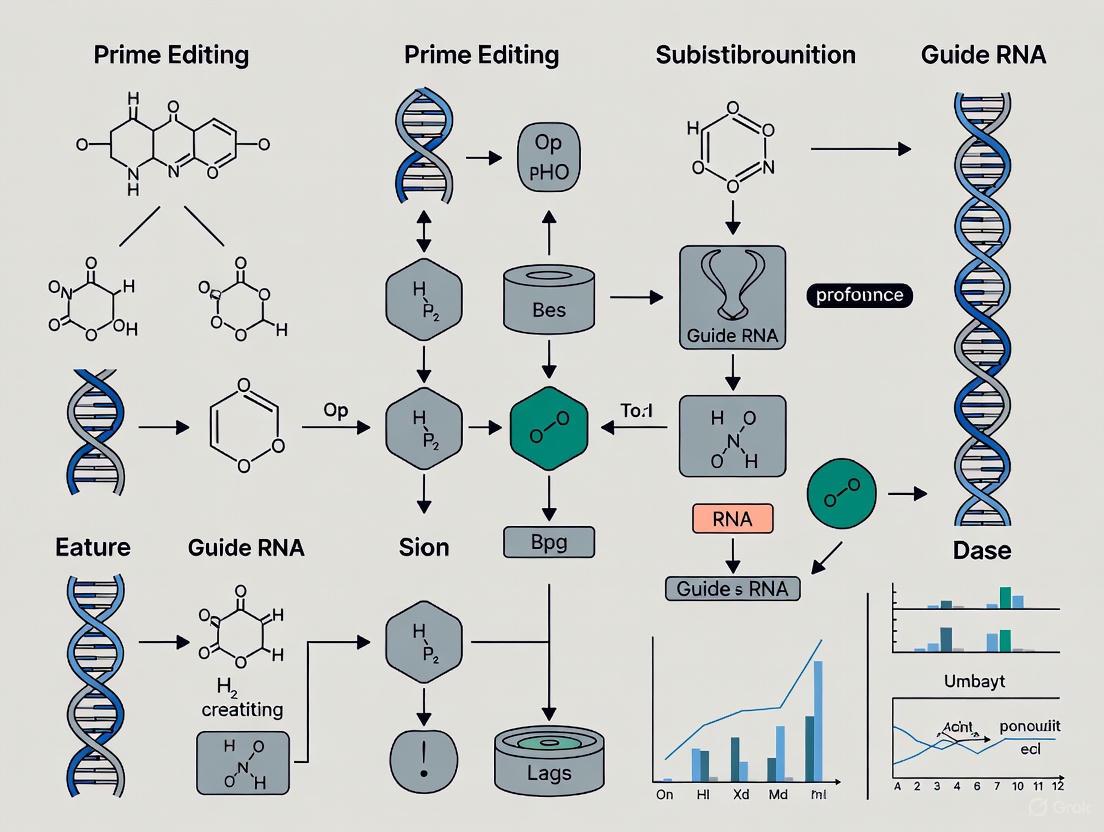
This article provides a comprehensive overview of prime editing, a versatile 'search-and-replace' genome editing technology that enables precise base substitutions, insertions, and deletions without inducing double-strand DNA breaks.
Prime Editing: The Search-and-Replace Revolution for Precise Base Substitutions in Biomedical Research
Abstract
This article provides a comprehensive overview of prime editing, a versatile 'search-and-replace' genome editing technology that enables precise base substitutions, insertions, and deletions without inducing double-strand DNA breaks. Tailored for researchers, scientists, and drug development professionals, it explores the foundational mechanisms of prime editing, from its core architecture to advanced systems like PE2 and PE6. The article details methodological workflows and therapeutic applications, including the groundbreaking PERT strategy for disease-agnostic treatment. It further addresses critical troubleshooting and optimization challenges, such as editing efficiency and delivery, and offers a comparative analysis with other editing platforms like CRISPR-Cas9 and base editing. By synthesizing the latest research and future directions, this review serves as an essential guide for leveraging prime editing in precision genetic research and therapeutic development.
The Foundation of Prime Editing: Mechanisms and Core Components for Precision Genome Engineering
Prime editing represents a significant advancement in precision genome editing by enabling targeted insertions, deletions, and all 12 possible base-to-base conversions without requiring double-strand DNA breaks (DSBs) or donor DNA templates [1]. This versatile technology comprises two fundamental components: a prime editor fusion protein and a prime editing guide RNA (pegRNA). The core innovation lies in the fusion of a catalytically impaired Cas9 nickase (H840A) with a reverse transcriptase (RT) enzyme, creating a programmable protein complex that can directly copy genetic information from a synthetic RNA template into a target genomic locus [2]. This architecture substantially reduces the unwanted byproducts typically associated with CRISPR-Cas nuclease-based editing methods while maintaining high precision and versatility.
The prime editing system operates through a coordinated multi-step mechanism that begins with the binding of the prime editor fusion protein and pegRNA complex to the target DNA sequence. The Cas9 nickase component recognizes a specific protospacer adjacent motif (PAM) sequence and unwinds the DNA duplex, while the extended pegRNA provides both targeting specificity through its spacer sequence and editing instructions through its template region. Following DNA binding, the Cas9 nickase cleaves the PAM-containing DNA strand, creating a free 3' hydroxyl group that serves as a primer for the reverse transcriptase. The RT then extends this primed DNA strand using the pegRNA's reverse transcriptase template (RTT) region, which encodes the desired genetic modification. Finally, cellular repair processes resolve the resulting DNA heteroduplex, incorporating the edited strand into the genome [1] [2].
Molecular Anatomy of the Prime Editor Fusion Protein
Core Structural Domains and Their Functions
The prime editor fusion protein is engineered through the strategic fusion of two key enzymatic components: a Cas9 nickase and a reverse transcriptase. The most commonly used system employs the Streptococcus pyogenes Cas9 (SpCas9) H840A nickase variant, which cleaves only the DNA strand complementary to the guide RNA sequence while leaving the non-target strand intact [1]. This targeted nicking activity is crucial for initiating the prime editing process without generating double-strand breaks. The H840A mutation specifically inactivates the RuvC nuclease domain responsible for cleaving the non-target strand while preserving the HNH nuclease domain activity for target strand cleavage.
Fused to the Cas9 nickase is a reverse transcriptase domain, typically derived from the Moloney Murine Leukemia Virus (M-MLV RT). This RT domain possesses the unique capability to synthesize DNA using an RNA template, which enables the conversion of genetic information encoded in the pegRNA into permanent genomic DNA changes [2]. The M-MLV RT exhibits processivity sufficient for synthesizing the DNA flaps typically required for prime editing, which commonly range from 10-30 nucleotides in length. Recent engineering efforts have explored alternative RT sources, including porcine endogenous retrovirus-derived RT (pvPE), which shows promising efficiency in mammalian cells [3].
Engineered Prime Editor Variants
Since the initial development of prime editing, several engineered variants have been created to enhance editing efficiency and specificity:
- PE2: An optimized editor featuring a Cas9 H840A nickase fused to an engineered M-MLV reverse transcriptase that exhibits improved stability and processivity compared to the original PE system [2].
- PEmax: A further enhanced variant incorporating additional mutations in both the Cas9 and RT domains to improve nuclear localization, protein stability, and editing efficiency across diverse genomic contexts [2].
- ProPE: A recently developed system that utilizes two distinct sgRNAs—an essential nicking guide RNA (engRNA) and a template-providing guide RNA (tpgRNA). This separation of nicking and templating functions extends the editing window and enhances efficiency where traditional PE is inefficient [1].
Table 1: Comparison of Prime Editor Fusion Protein Variants
| Editor Version | Key Features | Typical Editing Efficiency Range | Primary Applications |
|---|---|---|---|
| PE2 | Cas9 H840A + engineered M-MLV RT | 1-30% (highly target-dependent) | Basic prime editing applications |
| PEmax | Enhanced nuclear localization, stability mutations | 5-50% (2-3x improvement over PE2) | Challenging genomic targets |
| ProPE | Dual sgRNA system (engRNA + tpgRNA) | Up to 29.3% for low-performing edits (6.2-fold increase) | Targets with poor PE efficiency |
Architecture and Engineering of the pegRNA
Core Structural Components
The pegRNA serves as the programmable guide that directs the prime editor fusion protein to specific genomic loci and provides the template for desired genetic modifications. Its sophisticated architecture consists of several functional regions:
- Spacer Sequence: A 20-nucleotide guide sequence that determines DNA target specificity through complementary base pairing with the target genomic DNA adjacent to a PAM sequence.
- scaffold Region: The structural component that binds to the Cas9 nickase domain of the fusion protein, facilitating complex formation and DNA targeting.
- Primer Binding Site (PBS): A short sequence that hybridizes with the 3' end of the nicked DNA strand, serving as a primer for reverse transcription. PBS length typically ranges from 10-15 nucleotides and is complementary to the DNA sequence immediately 3' of the nick site.
- Reverse Transcriptase Template (RTT): The core templating region that encodes the desired genetic edit(s) and provides the sequence that will be reverse transcribed into the target genome. The RTT typically includes homologous sequences flanking the edit to facilitate proper repair.
Engineered pegRNA Designs
Several engineered pegRNA (epegRNA) architectures have been developed to enhance prime editing efficiency by improving pegRNA stability and functionality:
- tevopreQ1 Motif: The incorporation of an evolved preQ1 motif and a 3' terminal hairpin structure from the Teno- virus enhances epegRNA stability and increases editing efficiency by protecting the 3' end from degradation [2].
- petRNA: Circularized RNA forms that resist exonuclease degradation and can restore editing efficiency when traditional pegRNAs perform poorly [1].
Table 2: pegRNA Structural Components and Design Parameters
| Component | Function | Typical Length | Design Considerations |
|---|---|---|---|
| Spacer | Target DNA recognition | 20 nt | Must be complementary to target; avoid polyT sequences (>3) |
| PBS | Primer for RT initiation | 10-15 nt | Complementary to sequence 3' of nick site; Tm ~30-60°C |
| RTT | Template for new DNA synthesis | 10-30 nt | Encodes desired edit(s) with appropriate flanking homology |
| 3' Structural Motif | Stability enhancement | Varies | tevopreQ1 motif improves resistance to degradation |
Quantitative Performance of Prime Editing Systems
Efficiency Metrics Across Platforms
The editing efficiency of prime editor systems varies significantly based on the specific editor variant, pegRNA design, target genomic context, and cellular environment. Recent benchmarking studies provide comprehensive quantitative assessments:
In systematically optimized systems using PEmax with epegRNAs in DNA mismatch repair (MMR)-deficient cells (PEmaxKO), remarkably high editing efficiencies of 68.9% for HEK3 +1 T>A and 81.1% for DNMT1 +6 G>C have been achieved within 7 days, reaching approximately 95% precise editing for both targets by day 28 [2]. Large-scale screening of a +5 G>H substitution library (G>A, G>T, or G>C) encompassing ~240,000 epegRNAs demonstrated that 75.5% of edits reached ≥75% efficiency in PEmaxKO cells by day 28, compared to 20.2% in MMR-proficient PEmax cells [2].
The newly developed ProPE system addresses five key bottlenecks in traditional prime editing, increasing overall editing efficiency by 6.2-fold for low-performing edits (<5% with PE) to up to 29.3% efficiency. This system is particularly valuable for modifications beyond the typical PE range, encompassing a significant portion of human pathogenic single nucleotide polymorphisms [1].
Factors Influencing Editing Efficiency
Multiple factors significantly impact prime editing efficiency, as identified through machine learning models like PRIDICT2.0 trained on data from over 400,000 pegRNAs [4]:
In MMR-deficient cells (HEK293T), the most important efficiency determinants include edit type (replacements show highest efficiency), edit length (shorter edits being more efficient), presence of consecutive T bases in spacer/extension sequences, and RTT overhang length. In contrast, MMR-proficient cells (K562) show different determinants, with edit position (efficiency decreases at positions distal to the nick), melting temperature, and GC content of the edited bases being most influential [4].
Table 3: Key Determinants of Prime Editing Efficiency
| Factor | Impact in MMR-Deficient Cells | Impact in MMR-Proficient Cells |
|---|---|---|
| Edit Type | Replacements > Insertions > Deletions | 3-5 bp replacements most efficient |
| Edit Length | Inverse correlation for insertions/deletions | 4-5 bp insertions most efficient |
| Edit Position | Moderate impact | Strong impact; distal positions less efficient |
| Sequence Context | PolyT sequences reduce efficiency | GC content of edited bases influential |
| Cellular MMR Status | Higher efficiency for short edits | MMR inhibits short edits |
Experimental Protocols for Prime Editing
Protocol 1: Prime Editing in Mammalian Cell Lines
This protocol outlines the procedure for installing precise edits in mammalian cell lines using the PE2 or PEmax systems with stably expressed editing components.
Materials:
- PE2 or PEmax expressing cell line (e.g., K562-PEmax)
- pegRNA or epegRNA expression plasmid (e.g., lentiviral transfer plasmid)
- Transfection or transduction reagents
- Selection antibiotics (if applicable)
- DNA extraction kit
- PCR reagents for amplicon generation
- Next-generation sequencing library preparation kit
Procedure:
- Cell Culture: Maintain editor-expressing cells in appropriate medium. For K562-PEmax cells, use RPMI-1640 with 10% FBS and appropriate selection antibiotics.
- pegRNA Delivery: Transduce cells with pegRNA-encoding lentivirus at MOI of 0.3-0.7 or transfert with pegRNA plasmid using appropriate method.
- Selection and Expansion: Select transduced cells with appropriate antibiotics (if applicable) and expand population for 7-28 days.
- Sampling: Collect cells at multiple time points (e.g., days 7, 14, 21, 28) to monitor editing progression.
- Genomic DNA Extraction: Harvest ~1×10^6 cells per time point and extract genomic DNA using commercial kits.
- Target Amplification: Design PCR primers flanking target site and amplify region of interest.
- Sequencing and Analysis: Prepare sequencing libraries and perform amplicon sequencing. Analyze editing efficiency using tools like CRISPResso2.
Troubleshooting:
- Low editing efficiency: Optimize PBS and RTT lengths; try epegRNA designs; consider MMR inhibition
- High indel formation: Verify pegRNA specificity; reduce editor expression level; shorten editing duration
Protocol 2: ProPE Workflow for Challenging Targets
This protocol describes the ProPE system implementation for targets with traditionally low prime editing efficiency.
Materials:
- Prime editor protein (PE2 or PEmax)
- Essential nicking guide RNA (engRNA) expression plasmid
- Template providing guide RNA (tpgRNA) expression plasmid with truncated spacer (11-15 nt)
Procedure:
- Target Site Selection: Identify two target sites: the primary edit site for engRNA and an adjacent site for tpgRNA binding (within 50-100 bp).
- engRNA Design: Design standard sgRNA with 20-nt spacer targeting the desired nick site.
- tpgRNA Design: Construct tpgRNA with truncated spacer (11-15 nt), PBS (typically 13-17 nt), and RTT encoding desired edit.
- Dual Delivery: Co-deliver engRNA and tpgRNA at varying ratios. Test engRNA:tpgRNA molar ratios from 1:2 to 1:10.
- Optimization: Titrate engRNA amount while keeping tpgRNA constant to find optimal balance between nicking activity and edit incorporation.
- Validation: Include controls with engRNA alone, tpgRNA alone, and traditional pegRNA for comparison.
The Scientist's Toolkit: Essential Research Reagents
Table 4: Key Research Reagent Solutions for Prime Editing
| Reagent Category | Specific Examples | Function | Supplier/Reference |
|---|---|---|---|
| Prime Editor Plasmids | pCMV-PE2, pCMV-PEmax | Express prime editor fusion protein | Addgene #132775, #132776 |
| pegRNA Backbones | pU6-pegRNA-GG-acceptor | pegRNA expression with tevopreQ1 motif | Addgene #132777 |
| Cell Lines | K562-PEmax, HEK293T-PEmax | Stably express prime editors | [2] |
| Efficiency Prediction | PRIDICT2.0 web tool | Machine learning-based pegRNA design | [4] |
| Control Plasmids | Non-targeting pegRNAs, GFP reporters | Experimental controls | Various suppliers |
| Analysis Tools | CRISPResso2, PE-Analyzer | Quantify editing outcomes | Open source |
Visualizing the Prime Editing Mechanism
Prime Editing Mechanism Flow
Advanced System Architecture
ProPE System Architecture
Prime editing is a versatile genome editing technology that enables precise genetic modifications without inducing double-strand DNA breaks (DSBs) or requiring donor DNA templates [5]. This "search-and-replace" technology represents a significant advancement over earlier CRISPR-Cas9 systems and even base editing technologies, as it supports a broader range of edits, including all 12 possible base-to-base conversions, targeted insertions, and deletions [5] [6]. The technology functions as a precise word processor for the genome, capable of directly writing new genetic information into a specified DNA target without causing significant damage to the DNA helix [7].
The development of prime editing addresses critical limitations of previous genome editing platforms. While CRISPR-Cas9 nucleases are powerful for gene disruption, they rely on DSBs that can lead to unpredictable repair outcomes such as insertions, deletions, and chromosomal rearrangements [5] [6]. Base editors, which emerged as an alternative to DSB-based methods, can only perform specific transition mutations (C-to-T or A-to-G) and often exhibit bystander editing where adjacent nucleotides are unintentionally altered [5]. Prime editing overcomes these constraints by employing a different molecular mechanism that directly copies edited genetic information from a specialized guide RNA into the target DNA locus [5] [6].
Molecular Mechanism of Prime Editing
Core Components of the Prime Editing System
The prime editing system consists of two fundamental components: the prime editor protein and the prime editing guide RNA (pegRNA) [5] [6]. The prime editor is a fusion protein comprising a Cas9 nickase (H840A) and an engineered reverse transcriptase (RT) from the Moloney Murine Leukemia Virus (M-MLV) [6]. The Cas9 H840A variant retains the ability to bind DNA specifically but can only nick one DNA strand rather than creating double-strand breaks [5]. The pegRNA serves as both a targeting mechanism and a template for new genetic information, containing not only the standard CRISPR guide spacer sequence but also a 3' extension that includes a primer binding site (PBS) and a reverse transcription template (RTT) encoding the desired edit [6].
Table 1: Core Components of the Prime Editing System
| Component | Structure/Composition | Function |
|---|---|---|
| Prime Editor Protein | Fusion of Cas9 nickase (H840A) + Reverse Transcriptase | Binds target DNA, nicks non-target strand, reverse transcribes new genetic sequence |
| pegRNA | spacer sequence + scaffold + PBS + RTT | Targets complex to specific genomic locus and provides template for new genetic sequence |
| Primer Binding Site (PBS) | 8-15 nucleotides complementary to nicked DNA | Anneals to 3' end created by nick to prime reverse transcription |
| Reverse Transcription Template (RTT) | Template encoding desired edit(s) | Serves as blueprint for new genetic sequence during reverse transcription |
The Step-by-Step "Search-and-Replace" Mechanism
The prime editing mechanism follows an ordered multi-step process that enables precise genome modification [5] [6]:
Search and Bind: The pegRNA directs the prime editor complex to the target DNA sequence through standard Cas9-DNA recognition mechanisms, including binding to the protospacer adjacent motif (PAM) sequence [5].
DNA Nicking: The Cas9 nickase (H840A) domain cleaves the non-target DNA strand (the PAM-containing strand), exposing a 3'-hydroxyl group that serves as a primer for reverse transcription [5] [6].
Primer Binding and Reverse Transcription: The PBS region of the pegRNA anneals to the nicked DNA strand, and the reverse transcriptase domain uses the RTT as a template to synthesize a complementary DNA flap containing the desired edit [6].
Flap Resolution and Ligation: Cellular machinery resolves the resulting branched DNA intermediate through a process of flap equilibration. The original unedited 5' flap is typically removed, and the newly synthesized edited 3' flap is ligated into the genome, incorporating the edit [5] [6].
The following diagram illustrates this complete process:
Evolution of Prime Editing Systems
Development from PE1 to PE5 Systems
Since its initial development, prime editing has undergone significant optimization through successive generations of improved editors [5] [6]. The original prime editor, PE1, established the fundamental architecture by fusing wild-type M-MLV reverse transcriptase to Cas9 nickase (H840A) but exhibited limited editing efficiency [5] [6]. PE2 incorporated an engineered reverse transcriptase with five mutations that enhanced thermostability, processivity, and affinity for RNA-DNA hybrid substrates, resulting in substantially improved editing efficiency [5]. PE3 added a second sgRNA that directs nicking of the non-edited DNA strand to bias cellular repair toward incorporating the desired edit, further increasing editing efficiency, though with a potential increase in indel byproducts [5] [6].
The most advanced systems, PE4 and PE5, manipulate cellular DNA repair pathways to enhance editing outcomes [6]. These systems transiently inhibit DNA mismatch repair (MMR)—a pathway that can recognize and revert prime editing intermediates—by co-expressing a dominant-negative MLH1 protein (MLH1dn) [6]. PE5 achieves additional improvements through the PEmax architecture, which enhances editor expression and nuclear localization [6]. When combined with engineered pegRNAs (epegRNAs) that incorporate structured RNA motifs to protect against degradation, these systems can achieve remarkably high editing efficiencies of up to 95% in certain contexts [2].
Table 2: Evolution of Prime Editing Systems
| System | Key Features | Editing Efficiency | Indel Formation | Recommended Use Cases |
|---|---|---|---|---|
| PE1 | Cas9(H840A)-WT RT | Low (prototype) | Low | Not recommended for current applications |
| PE2 | Cas9(H840A)-engineered RT | Moderate | Low | Applications where minimal indels are critical and efficiency requirements are moderate |
| PE3 | PE2 + additional nicking sgRNA | High | Moderate to High | Applications requiring high efficiency where indel byproducts are acceptable |
| PE4 | PE2 + MLH1dn | High | Low | Applications requiring high efficiency with minimal indels |
| PE5 | PEmax + MLH1dn | Very High | Low | Therapeutic applications requiring maximum efficiency and precision |
| PEmax | Optimized editor expression and nuclear localization | High | Low | Broad applications, particularly with stable expression |
Engineering Improvements to Enhance Efficiency
Several engineering strategies have significantly improved prime editing efficiency. The development of engineered pegRNAs (epegRNAs) that incorporate structured RNA motifs (such as evopreQ1 and mpknot) at their 3' ends protects against degradation and improves editing efficiency by 3-4-fold across multiple human cell lines [5]. Protein engineering efforts have also led to reduced off-target effects; for example, introducing an N863A mutation to the Cas9 nickase (H840A) significantly reduces the enzyme's ability to create double-strand breaks, thereby minimizing unwanted indel formation [5].
More recently, the development of split prime editors (sPE) addresses challenges related to the large size of prime editing components, which complicates delivery via viral vectors [5]. Unlike previous approaches that required intricate engineering to reassemble editing components, the sPE design allows nCas9 and RT to function independently while maintaining high editing precision [5]. This system has demonstrated efficacy in mouse liver, successfully editing the β-catenin gene and correcting a mutation in a model of type I tyrosinemia using a dual AAV vector system [5].
Experimental Protocols for Prime Editing
Mammalian Cell Prime Editing Workflow
Implementing prime editing in mammalian cells requires careful experimental design and execution. The following protocol outlines key steps for successful prime editing experiments, typically completed within 2-4 weeks [6]:
pegRNA Design: Design pegRNAs with 8-15 nucleotide primer binding sites (PBS) and reverse transcription templates (RTT) of sufficient length to encode the desired edit(s). The PBS should have a melting temperature of approximately 30°C [6]. Consider using epegRNAs with stabilizing RNA motifs to enhance efficiency [5] [2].
Editor Selection: Choose the appropriate prime editor system based on application requirements. PE2 offers simplicity, PE3 provides higher efficiency with potential indels, while PE4/PE5 systems offer optimized efficiency with minimal indels through MMR inhibition [6].
Delivery Method Selection: For transient expression, use plasmid or ribonucleoprotein (RNP) transfection. For stable expression, consider lentiviral transduction or generation of stable cell lines expressing the prime editor [6] [2].
Transduction/Transfection: Deliver prime editing components to target cells. For difficult-to-transfect cells, consider viral delivery or electroporation approaches [6].
Editing Period: Allow sufficient time for editing accumulation—typically 3-7 days for transient expression, though stable expression systems can continue accumulating edits for several weeks [2].
Analysis of Editing Outcomes: Assess editing efficiency using targeted next-generation sequencing. Evaluate both intended edit frequency and potential byproducts such as indels or unpredicted mutations [6].
The following workflow diagram illustrates the key decision points in a prime editing experiment:
The Scientist's Toolkit: Essential Research Reagents
Successful prime editing experiments require carefully selected reagents and components. The following table outlines essential materials and their functions:
Table 3: Essential Research Reagents for Prime Editing Experiments
| Reagent Category | Specific Examples | Function | Considerations |
|---|---|---|---|
| Prime Editor Plasmids | PE2, PEmax, PE4, PE5 | Express the prime editor fusion protein | PE4/PE5 include MLH1dn for MMR inhibition; PEmax offers improved expression |
| pegRNA Expression Systems | U6-promoter driven pegRNA vectors | Express pegRNA with desired edit template | epegRNA vectors with stabilizing motifs improve efficiency |
| Delivery Reagents | Lipofectamine, electroporation systems, viral packaging systems | Introduce editing components into cells | Method depends on cell type; viral systems enable stable expression |
| Cell Culture Media | Cell-type specific media with appropriate supplements | Maintain cell health during editing process | Optimization may be needed for sensitive primary cells |
| Selection Agents | Puromycin, blasticidin, GFP sorting | Enrich for successfully transfected/transduced cells | Critical for achieving high editing percentages in pool populations |
| Analysis Reagents | PCR primers, NGS library prep kits | Assess editing efficiency and specificity | Amplicon sequencing required for comprehensive outcome analysis |
Applications in Biomedical Research and Therapeutics
Prime editing has demonstrated remarkable utility across diverse research and therapeutic applications. In functional genomics, optimized prime editing platforms have enabled multiplexed dropout screens, allowing researchers to characterize the functional effects of thousands of genetic variants simultaneously [2]. One recent study used a library of approximately 240,000 epegRNAs targeting ~17,000 codons with 1-3 bp substitutions, identifying negative selection phenotypes for 7,996 nonsense mutations in 1,149 essential genes [2].
In therapeutic development, prime editing offers promising approaches for treating genetic disorders. A notable application is the PERT (Prime Editing-mediated Readthrough of Premature Termination Codons) strategy, which uses prime editing to permanently convert a dispensable endogenous tRNA into an optimized suppressor tRNA (sup-tRNA) [8]. This approach can rescue nonsense mutations—which account for approximately 24% of pathogenic alleles in the ClinVar database—in a disease-agnostic manner [8]. In proof-of-concept studies, PERT successfully restored 20-70% of normal enzyme activity in cell models of Batten disease, Tay-Sachs disease, and cystic fibrosis, and rescued disease pathology in a mouse model of Hurler syndrome [8].
Prime editing has also shown significant potential for crop improvement, enabling precise genetic modifications in plants without introducing double-strand breaks [7]. Applications in rice, wheat, maize, and other crops have demonstrated the technology's ability to install agronomically valuable traits while avoiding the limitations of earlier editing technologies [7]. Despite challenges with variable editing efficiency across plant species, optimization strategies including engineered pegRNAs, improved delivery methods, and manipulation of cellular repair pathways have progressively enhanced its utility in agricultural biotechnology [7].
Prime editing represents a transformative advancement in genome engineering, offering unprecedented precision and versatility for genetic manipulation. The unique "search-and-replace" mechanism enables precise installation of substitutions, insertions, and deletions without double-strand breaks or donor DNA templates. Through successive generations of optimization—from PE1 to PE5 systems—and engineering improvements such as epegRNAs and split systems, prime editing efficiency and specificity have dramatically improved. As optimization strategies continue to evolve and delivery methods advance, prime editing is poised to become an increasingly powerful tool for both basic research and therapeutic applications, potentially enabling correction of a vast array of genetic mutations underlying human disease and agricultural deficiencies.
The advent of precise genome editing has revolutionized biomedical research and therapeutic development. While CRISPR-Cas9 nucleases and base editing technologies represent significant advances, they are hampered by fundamental limitations—namely, the introduction of double-strand breaks (DSBs) and unwanted bystander edits, respectively [9] [10]. Prime editing (PE) represents a transformative approach that directly addresses these shortcomings, enabling precise genome modification without DSBs and with minimal off-target effects [11] [12]. This application note details the mechanistic advantages of prime editing and provides structured experimental protocols for researchers pursuing precise base substitutions.
Mechanisms of Prime Editing
Core Architecture and Editing Workflow
Prime editing functions as a "search-and-replace" system that directly writes new genetic information into a target DNA site without requiring DSBs [11] [13]. The core editor consists of three essential components:
- A Cas9 nickase (nCas9) containing a H840A mutation that inactivates the HNH domain, enabling it to nick only one DNA strand [14] [15]
- An engineered reverse transcriptase (RT) from the Moloney murine leukemia virus (M-MLV) fused to the nCas9 [9] [14]
- A prime editing guide RNA (pegRNA) that specifies the target site and encodes the desired edit [9] [12]
The pegRNA is uniquely engineered with two critical regions beyond the standard spacer sequence: a primer binding site (PBS) that hybridizes to the nicked DNA strand, and a reverse transcriptase template (RTT) that encodes the desired edit [14] [15].
The following diagram illustrates the core mechanism of prime editing:
Step-by-Step Mechanism
The prime editing mechanism proceeds through four distinct biochemical phases [9] [14] [12]:
Target Site Recognition and Strand Nicking: The PE complex binds to the target DNA site complementary to the pegRNA spacer sequence. The nCas9 component nicks the target DNA strand at a specific position 3 base pairs upstream of the protospacer adjacent motif (PAM) site, creating a 3' hydroxyl group.
Primer Binding and Reverse Transcription: The exposed 3' DNA end hybridizes to the PBS region of the pegRNA. The reverse transcriptase then uses the 3' end as a primer and the RTT region of the pegRNA as a template to synthesize new DNA containing the desired edit.
Flap Intermediation and Resolution: The newly synthesized edited DNA strand forms a branched structure (flap intermediate) that displaces the original unedited DNA strand. Cellular enzymes then resolve this intermediate by excising the unedited 5' flap.
DNA Repair and Permanent Incorporation: The remaining heteroduplex DNA contains one edited strand and one original unedited strand. Cellular mismatch repair (MMR) pathways preferentially repair the mismatch using the edited strand as a template, permanently incorporating the edit into the genome.
Comparative Analysis of Genome Editing Platforms
Quantitative Comparison of Editing Technologies
The table below summarizes the key functional differences between prime editing, base editing, and traditional CRISPR-Cas9 nuclease editing:
Table 1: Comparative Analysis of Genome Editing Technologies
| Feature | CRISPR-Cas9 Nuclease | Base Editing | Prime Editing |
|---|---|---|---|
| DSB Formation | Yes, double-strand breaks [9] [10] | No DSBs [11] [16] | No DSBs; single-strand nicks only [9] [12] |
| Editing Byproducts | High indel rates (>90% in some cases) [9] | Low indels; bystander edits common [17] | Very low indel rates; minimal bystander editing [14] [12] |
| Point Mutation Capability | Limited (requires HDR) [10] | 4 transition mutations only [16] [10] | All 12 possible point mutations [14] [12] |
| Small Insertion/Deletion Capability | Limited (requires HDR) [10] | No | Yes, up to ~80 bp [9] |
| Template Requirement | Donor DNA for precise edits [9] | No external donor [16] | No external donor; pegRNA provides template [9] [12] |
| Editing Efficiency | Variable; HDR typically <10% [10] | Typically 30-60% [17] [16] | Variable (5-50%); improved versions up to 90% [14] [12] |
| Therapeutic Applications | Limited by DSB risks [9] | Limited by editing window constraints [17] | Broad potential; disease-agnostic approaches possible [13] |
Direct Mechanistic Advantages Over Predecessors
The following diagram compares the fundamental mechanisms of the three major editing platforms, highlighting how prime editing avoids key limitations of its predecessors:
Experimental Protocols for Prime Editing
Implementing a Prime Editing Workflow
Protocol 1: Basic Prime Editing for Precise Base Substitutions
This protocol outlines the essential steps for implementing prime editing in mammalian cells, based on established methodologies [9] [14] [12].
Materials Required:
- Prime editor plasmid (PE2, PEmax, or PE6 variants)
- pegRNA expression vector
- Optional: nicking sgRNA for PE3 strategy
- Target cells (adherent or suspension)
- Transfection reagent appropriate for cell type
- DNA extraction kit
- PCR amplification reagents
- Next-generation sequencing library preparation kit
Procedure:
Target Site Selection and pegRNA Design (2-3 days)
- Identify target sequence with appropriate PAM (NGG for SpCas9)
- Design pegRNA spacer sequence (20 nt) complementary to target site
- Design RTT region encoding desired edit with 8-15 nt homology arms
- Design PBS region (8-13 nt) complementary to nicked DNA end
- Validate specificity using genome alignment tools
Vector Assembly (3-4 days)
- Clone pegRNA into appropriate expression backbone (U6 promoter)
- Verify sequence integrity through Sanger sequencing
- For PE3 strategy: clone additional nicking sgRNA targeting non-edited strand
Cell Transfection (2 days)
- Plate cells at optimal density (typically 50-80% confluency)
- Transfect with PE:pegRNA ratio of 1:2 (e.g., 1 μg PE2 + 2 μg pegRNA plasmid)
- For PE3: include nicking sgRNA at 1:2:2 ratio (PE:pegRNA:ngRNA)
- Include appropriate controls (untreated, empty vector)
Editing Efficiency Analysis (5-7 days)
- Harvest cells 72-96 hours post-transfection
- Extract genomic DNA and amplify target region by PCR
- Prepare sequencing libraries and perform high-throughput sequencing
- Analyze sequencing data for precise edit incorporation and byproducts
Troubleshooting Notes:
- Low efficiency: Optimize PBS length (test 10-15 nt), increase RTT homology arms, or try PE3 system
- High indels: Verify nCas9 activity, reduce pegRNA concentration, or try PEmax/PE6 systems
- No editing: Check PAM requirement, verify pegRNA expression, test multiple transfection methods
Advanced Strategy: PERT for Disease-Agnostic Editing
Protocol 2: Prime Editing-Mediated Readthrough of Premature Termination Codons
The PERT (Prime Editing-mediated Readthrough of premature termination codons) system represents an advanced application that demonstrates the unique versatility of prime editing [13]. This approach enables correction of nonsense mutations across multiple genes using a single editing system.
Materials:
- PE6a or PE6b editor plasmids
- Engineered suppressor tRNA pegRNA
- Disease model cells (e.g., patient-derived fibroblasts)
- Functional assays specific to target protein
Procedure:
Suppressor tRNA Design and Integration
- Identify redundant tRNA gene safe for replacement
- Design pegRNA to install engineered suppressor tRNA at genomic locus
- Select tRNA variant with high efficiency for premature termination codon readthrough
System Validation
- Transfect cells with PERT system
- Assess genomic integration by targeted sequencing
- Measure functional protein restoration by Western blot and activity assays
- Evaluate global proteome effects to ensure minimal disruption
Therapeutic Efficacy Assessment
- Measure correction of disease phenotype across multiple nonsense mutation models
- Assess long-term stability of edited cells
- Evaluate safety profile including off-target editing assessment
The Scientist's Toolkit: Essential Research Reagents
Table 2: Key Research Reagent Solutions for Prime Editing Applications
| Reagent Category | Specific Examples | Function & Application Notes |
|---|---|---|
| Prime Editor Proteins | PE2, PEmax, PE6a-d variants [14] [12] | Engineered fusion proteins with optimized reverse transcriptase activity; PE6 variants offer improved efficiency and smaller size for viral delivery |
| pegRNA Scaffolds | epegRNA, cpegRNA [14] [12] | Modified pegRNAs with RNA stability elements (e.g., pseudoknot motifs) that resist degradation and improve editing efficiency |
| Delivery Systems | AAV vectors, lipid nanoparticles [10] | Viral and non-viral delivery methods optimized for prime editor component packaging and cellular uptake |
| Efficiency Enhancers | MLH1dn, La protein fusions [12] | Mismatch repair inhibitors (MLH1dn) and RNA-binding proteins (La) that increase editing yields by modulating cellular repair pathways |
| Validation Tools | Targeted amplicon sequencing, rhAmpSeq | High-throughput sequencing methods specifically optimized for detecting precise edits and quantifying byproducts at multiple loci |
| Cell Type-Specific Systems | PE7, Cas12a-based PE [12] | Specialized editors for challenging cell types; Cas12a-based systems offer alternative PAM preferences for expanded targeting |
Prime editing represents a significant advancement in genome engineering by fundamentally addressing the limitations of previous technologies—specifically DSB formation and unwanted bystander editing. Through its unique search-and-replace mechanism, prime editing enables precise genetic modifications with exceptional versatility and minimal byproducts. The continued evolution of prime editing systems, including the development of more efficient editors like PEmax and PE6 variants, along with innovative strategies such as PERT, promises to expand the therapeutic potential of this technology. As delivery methods improve and our understanding of cellular processing of PE intermediates deepens, prime editing is poised to become an indispensable tool for both basic research and clinical applications requiring precise genome modification.
Prime editing is a "search-and-replace" genome editing technology that enables precise genetic modifications without requiring double-strand DNA breaks (DSBs) or donor DNA templates [18]. This revolutionary approach, developed in David Liu's lab in 2019, can install virtually any substitution, insertion, or deletion in the genomes of living cells, significantly expanding the scope of programmable genome editing [19] [18]. Unlike earlier CRISPR-Cas9 nuclease approaches that rely on creating DSBs—which can lead to unpredictable repair outcomes including insertions, deletions, and chromosomal rearrangements—prime editing offers greater precision and versatility [5] [6]. The technology has evolved through multiple generations (PE1 to PE6), with each iteration addressing specific limitations to enhance editing efficiency, reduce off-target effects, and improve delivery capabilities [19] [5] [18].
The fundamental prime editing system consists of two main components: a prime editor protein and a prime editing guide RNA (pegRNA) [5] [6]. The prime editor protein is a fusion of a Cas9 nickase (H840A) and a reverse transcriptase (RT) enzyme [18] [6]. The pegRNA both specifies the target site and contains the desired edit through an extended 3' tail that includes a primer binding site (PBS) and a reverse transcriptase template (RTT) [19] [18]. This architecture allows prime editing to mediate all 12 possible base-to-base conversions, targeted insertions, and deletions with high precision and minimal byproducts [18].
The Architectural Framework of Prime Editing
Molecular Mechanism of Prime Editing
The prime editing mechanism involves a sophisticated multi-step process that enables precise genome modification [5] [6]. First, the prime editor protein, programmed by the pegRNA, binds to the target DNA sequence. The Cas9 nickase (H840A) then nicks the non-target strand of DNA, exposing a 3'-hydroxyl group [18] [6]. This exposed end acts as a primer that binds to the PBS region of the pegRNA. The reverse transcriptase domain then engages and uses the RTT of the pegRNA as a template to synthesize a new DNA flap containing the desired edit [19] [18]. The resulting DNA structure forms a branched intermediate with overlapping strands of edited and unedited DNA [18]. Cellular machinery then resolves this heteroduplex by removing the original unedited 5' flap and ligating the edited 3' flap to the complementary DNA strand, thereby permanently incorporating the edit into the genome [5] [18]. This process avoids the formation of DSBs and demonstrates higher precision than traditional CRISPR-Cas9 editing approaches.
Visualizing the Prime Editing Workflow
The following diagram illustrates the key components and molecular mechanism of a prime editing system:
The Evolution of Prime Editing Systems
From PE1 to PE3: Establishing the Foundation
The development of prime editing began with PE1, which established the fundamental architecture of a Cas9(H840A) nickase fused to a wild-type Moloney Murine Leukemia Virus (M-MLV) reverse transcriptase [18] [6]. While this prototype demonstrated the feasibility of prime editing, its efficiency was relatively limited, prompting further optimization [6].
PE2 emerged as a significant improvement by incorporating an engineered pentamutant M-MLV reverse transcriptase containing five mutations (D200N, T306K, W313F, T330P, and L603W) that enhanced the enzyme's substrate binding, processivity, and thermostability [19] [18]. These modifications resulted in prime editing efficiencies 2.3- to 5.1-fold higher (and up to 45-fold at some sites) compared to PE1 [18].
PE3 further enhanced editing efficiency by incorporating an additional single guide RNA (sgRNA) that directs the prime editor to nick the non-edited DNA strand [18] [6]. This additional nick biases cellular mismatch repair to favor installation of the edit by encouraging the cell to use the edited strand as a template for repairing the nicked complementary strand [19] [6]. The PE3 system typically achieves 2-3-fold higher editing efficiencies than PE2, though with a slight increase in indel formation [18]. A variant called PE3b was also developed, which uses a sgRNA with a spacer that only binds the edited strand, reducing indels by 13-fold compared to PE3 [18].
PE4 and PE5: Manipulating DNA Repair Pathways
The PE4 and PE5 systems represent a strategic advancement by addressing the challenge of cellular mismatch repair (MMR), which often works against prime editing outcomes [18] [6]. These systems temporarily inhibit MMR using a dominant-negative mutant of the MLH1 protein, a key component of the MutSα–MutLα MMR complex [18].
PE4 combines the PE2 editor with MLH1dn and improves editing efficiency by 7.7-fold compared to PE2 alone [18] [6]. PE5 combines the PE3 approach with MLH1dn, resulting in a 2.0-fold improvement over PE3 [18]. By transiently inhibiting MMR, these systems allow more time for 5' flap exonucleases and DNA ligases to act, thereby increasing the likelihood of successful edit incorporation while minimizing indel formation [18].
PEmax: Optimized Editor Architecture
The PEmax architecture represents a comprehensive optimization of the prime editor protein itself [18]. This improved design incorporates a reverse transcriptase with human-codon optimization, additional nuclear localization sequences, and two mutations in Cas9 previously shown to improve nuclease activity [18]. These enhancements improve editor expression, nuclear localization, and overall activity. The PEmax architecture is compatible with any of the PE2-PE5 strategies and is sometimes referred to as PE2max, PE3max, etc. [18].
PE6: Specialized Editors Through Protein Evolution
The most recent advancement in prime editing technology comes with the PE6 systems, which were developed using phage-assisted continuous evolution (PACE) to generate specialized prime editors with improved efficiency and reduced size [19] [18]. Rather than creating a single superior editor, the PE6 approach recognizes that different reverse transcriptases specialize in different types of edits, leading to a family of optimized editors [19].
PE6a and PE6b are compact prime editors with RT domains derived from the E. coli Ec48 retron RT and the S. pombe Tf1 retrotransposon RT, respectively [18]. Their small size comes at the cost of broadly improved efficiency, although both enzymes still approach or exceed PEmax editing efficiencies for short, simple edits [18].
PE6c and PE6d further evolved the Tf1 and M-MLV RT enzymes, respectively, to create editors small enough for adeno-associated virus (AAV) delivery while maintaining efficiency at long and complex edits [19] [18].
PE6e-g editors contain mutations in the Cas9 domain that improve efficiency for some edits in unpredictable ways [18]. In some cases, combining an evolved RT domain from PE6a-d with an evolved Cas9 domain from PE6e-g produces additive improvements [19] [18].
PE6 variants have demonstrated remarkable efficacy in therapeutic contexts, achieving 40% loxP insertion in the mouse cortex—a 24-fold improvement compared to previous state-of-the-art prime editors—and enhancing therapeutically relevant editing in patient-derived fibroblasts and primary human T-cells [19].
Comparative Analysis of Prime Editing Systems
Table 1: Evolution of Prime Editing Systems from PE1 to PE6
| System | Key Features | Improvements Over Previous Generation | Primary Applications | Limitations |
|---|---|---|---|---|
| PE1 | Cas9(H840A)-WT M-MLV RT [18] [6] | Foundational proof-of-concept | Basic research | Low editing efficiency |
| PE2 | Cas9(H840A)-engineered pentamutant M-MLV RT [19] [18] | 2.3-5.1-fold efficiency increase (up to 45-fold) [18] | Standard edits where indels must be minimized | Lower efficiency than subsequent systems |
| PE3/PE3b | PE2 + additional nicking sgRNA [18] [6] | 2-3-fold efficiency increase over PE2 [18] | Applications requiring higher efficiency | Slightly increased indel formation |
| PE4 | PE2 + MLH1dn [18] [6] | 7.7-fold efficiency increase over PE2 [18] | Contexts where indels must be minimized | Requires transient MMR inhibition |
| PE5 | PE3 + MLH1dn [18] | 2.0-fold efficiency increase over PE3 [18] | High-efficiency editing with minimal indels | Requires both nicking sgRNA and MMR inhibition |
| PEmax | Codon-optimized RT, additional NLS, Cas9 mutations [18] | Improved expression, nuclear localization, activity | All applications as improved backbone | - |
| PE6a-g | Evolved RT and Cas9 domains; specialized editors [19] [18] | Up to 22-fold improvement in editing efficiency; reduced size (516-810 bp smaller) [19] | Therapeutic applications; challenging edits; AAV delivery | Edit-type dependent performance |
Table 2: Performance Comparison of Prime Editing Systems Across Edit Types
| Edit Type | PE2 Efficiency | PE3 Efficiency | PE4/PE5 Efficiency | PE6 Efficiency |
|---|---|---|---|---|
| Point mutations | Moderate | Good | Very Good | Excellent (edit-dependent) |
| Small insertions (<10 bp) | Moderate | Good | Very Good | Excellent |
| Small deletions (<10 bp) | Moderate | Good | Very Good | Excellent |
| Large insertions (>30 bp) | Low | Low to Moderate | Moderate | 40% loxP insertion in mouse cortex (24-fold improvement) [19] |
| Combination edits | Low | Low to Moderate | Moderate | Good to Excellent |
| Indel formation | Low | Moderate (reduced in PE3b) | Very Low | Low |
Advanced Engineering and Optimization Strategies
pegRNA Engineering and Stabilization
A critical advancement in prime editing technology has been the engineering of pegRNAs to address their inherent instability in cells [5] [18]. Traditional pegRNAs are prone to degradation at their 3' end, which contains the essential RTT and PBS sequences, leading to reduced editing efficiency [5]. To overcome this limitation, several stabilization approaches have been developed:
Engineered pegRNAs (epegRNAs) incorporate structured RNA motifs such as evopreQ and mpknot at the 3' end of the pegRNA, protecting it from degradation and improving editing efficiency by 3-4-fold across multiple human cell lines and primary human fibroblasts [5] [18]. These structured motifs prevent degradation without increasing off-target effects.
Alternative stabilization methods include the use of xr-pegRNAs (incorporating a Zika virus exoribonuclease-resistant RNA motif) [5], G-PE (using a G-quadruplex structure) [5], and circular RNA RT templates in split prime editor systems [5]. Each approach offers different advantages in terms of stability, size, and compatibility with delivery systems.
System Miniaturization for Therapeutic Delivery
The substantial size of prime editing components has presented challenges for therapeutic delivery, particularly for in vivo applications where adeno-associated virus (AAV) vectors are commonly used but have limited packaging capacity [19] [5]. Several strategies have emerged to address this limitation:
The split prime editor (sPE) system separates nCas9 and RT into independent components that can reassemble inside cells [5]. This design not only reduces the size constraints for viral packaging but also maintains high precision while avoiding increased indel mutations [5]. The sPE approach has demonstrated efficacy in editing the β-catenin gene in the mouse liver and correcting mutations in a model of type I tyrosinemia using a dual AAV vector system [5].
Compact reverse transcriptases from various origins have been explored to reduce the size of the prime editor protein [19]. PE6 variants specifically address this challenge by using evolved RT domains that are 516-810 base pairs smaller than the current-generation editor PEmax while maintaining or even improving editing efficiency for certain edit types [19].
Decision Framework for Prime Editor Selection
The following flowchart provides a systematic approach for selecting the appropriate prime editing system based on experimental goals and constraints:
Experimental Protocols for Prime Editing
Protocol 1: Implementing Prime Editing in Mammalian Cells
Timeframe: 2-4 weeks [20]
Materials Required:
- Prime editor expression plasmid (PE2, PE3, PE4, PE5, or PE6 variants) [20]
- pegRNA expression plasmid or synthetic pegRNA [20]
- Mammalian cell line of interest
- Transfection reagent appropriate for cell type
- DNA extraction kit
- PCR reagents for amplification of target locus
- Sequencing reagents or service for analysis
Procedure:
pegRNA Design (Days 1-2):
- Design the pegRNA spacer sequence (typically 20 nt) to target the desired genomic locus [20] [6]
- Design the Reverse Transcriptase Template (RTT) to encode the desired edit with appropriate length (typically 10-16 nt for substitutions) [20] [6]
- Design the Primer Binding Site (PBS) with length optimized for the edit type (typically 8-15 nt) [20] [6]
- For PE3/PE5 systems: Design an additional nicking sgRNA that targets the non-edited strand, positioned either upstream or downstream of the pegRNA nick site [6]
Vector Assembly (Days 3-5):
Cell Transfection (Days 6-7):
- Culture mammalian cells to 60-80% confluency in appropriate medium [20]
- Transfect cells with prime editor plasmid and pegRNA plasmid using optimized transfection methods [20]
- For PE4/PE5 systems: Co-transfect with MLH1dn expression plasmid [18] [6]
- Include appropriate controls (untreated cells, pegRNA-only control) [20]
Harvest and Analysis (Days 8-21):
- Harvest cells 48-72 hours post-transfection for rapid assessment, or allow 7-14 days for stable expression and editing [20]
- Extract genomic DNA using standard protocols [20]
- Amplify target locus by PCR [20]
- Analyze editing efficiency by Sanger sequencing or next-generation sequencing [20]
- Assess indel formation by using TIDE decomposition or similar methods [20]
Protocol 2: Optimizing pegRNA Design for Challenging Edits
Rationale: pegRNA design critically influences prime editing efficiency, particularly for challenging edits such as large insertions, deletions, or edits in repetitive regions [20] [6].
Optimization Parameters:
PBS Length Optimization:
RTT Length Optimization:
pegRNA Stabilization:
Nicking sgRNA Optimization (for PE3/PE5):
The Scientist's Toolkit: Essential Research Reagents
Table 3: Essential Research Reagents for Prime Editing Experiments
| Reagent Category | Specific Examples | Function | Notes |
|---|---|---|---|
| Prime Editor Plasmids | PE2, PE3, PE4, PE5, PEmax, PE6a-g [19] [18] | Engineered editor proteins with varying capabilities | PE6 variants offer specialization for different edit types [19] |
| pegRNA Expression Systems | U6-promoter driven vectors, epegRNA backbones [5] [18] | Express pegRNAs with desired edits | epegRNAs improve stability and efficiency [5] [18] |
| MMR Inhibition Components | MLH1dn expression plasmids [18] [6] | Temporarily suppress mismatch repair to improve editing | Used in PE4/PE5 systems [18] |
| Delivery Tools | Lipid nanoparticles, AAV vectors, electroporation systems [19] [5] | Introduce editing components into cells | Dual-AAV needed for larger editors [19] |
| Analysis Tools | CRISPResso2, TIDE, NGS platforms [20] | Quantify editing efficiency and byproducts | Essential for protocol optimization |
| Cell Lines | HEK293T, HeLa, iPSCs, primary cells [19] [6] | Experimental systems for editing | Efficiency varies by cell type [6] |
Applications and Therapeutic Translation
Prime editing has demonstrated significant potential across diverse research and therapeutic applications. The technology has been successfully used to correct pathogenic mutations in patient-derived fibroblasts and primary human T-cells [19], with PE6 variants showing particularly promising results in enhancing therapeutically relevant editing [19]. In vivo applications have also achieved remarkable success, with dual-AAV delivery of PE6 systems enabling 40% loxP insertion in the mouse cortex—a 24-fold improvement compared to previous state-of-the-art prime editors [19].
A particularly innovative application is the PERT (Prime Editing-mediated ReadThrough) system, which uses a single prime editing system to potentially treat multiple genetic diseases caused by nonsense mutations [13]. This approach installs a suppressor tRNA that allows cells to read through premature termination codons, potentially addressing approximately 30% of rare diseases caused by such mutations [13]. The PERT system has shown promise in cell and animal models of Batten disease, Tay-Sachs disease, Niemann-Pick disease type C1, and Hurler syndrome [13].
The therapeutic potential of prime editing continues to expand, with the first Investigational New Drug (IND) clearance for a prime editing-based therapeutic, PM359, which corrects the NCF1 gene in patient-derived hematopoietic stem cells for treating chronic granulomatous disease [21]. This milestone represents a significant step toward clinical translation of prime editing technologies.
The evolution of prime editing from the foundational PE1 system to the sophisticated PE6 variants represents remarkable progress in precision genome editing. Each generation has addressed specific limitations: PE2 through protein engineering of the reverse transcriptase, PE3 through strategic nicking of the non-edited strand, PE4/PE5 through manipulation of DNA repair pathways, and PE6 through directed evolution of both RT and Cas9 components. These advances have collectively enhanced editing efficiency, reduced off-target effects, improved product purity, and facilitated therapeutic delivery.
The future of prime editing will likely focus on further optimizing editing efficiency across diverse genomic contexts and cell types, developing more efficient delivery strategies for in vivo applications, and expanding the therapeutic scope toward clinical applications. As the technology continues to mature, prime editing holds exceptional promise for both basic research and therapeutic interventions for genetic diseases.
The development of CRISPR-Cas12a-based prime editing represents a significant advancement in precision genome engineering, offering unique capabilities beyond traditional Cas9-based systems. Unlike Cas9, Cas12a possesses an inherent ability to process multiple guide RNAs from a single transcript, enabling efficient multiplexed editing without requiring additional processing enzymes [22]. This characteristic, combined with its distinct protospacer adjacent motif (PAM) requirements and staggered DNA cleavage pattern, makes Cas12a particularly valuable for complex genome editing applications. For researchers focused on precise base substitutions, Cas12a-based systems provide a powerful tool for studying polygenic diseases, engineering synthetic mammalian genomes, and investigating complex genotype-phenotype relationships that require simultaneous modification of multiple loci [22].
The integration of Cas12a with prime editing technologies addresses two critical limitations in mammalian genome engineering: the challenge of installing multiple precise edits simultaneously and the need to reduce undesirable bystander mutations. Recent advances have demonstrated Cas12a-derived base editing systems capable of processing up to 15 distinct guide RNAs from a single array, effectively tripling the state-of-the-art in multiplexed mammalian genome engineering [22]. This breakthrough, combined with novel approaches to enhance editing precision, establishes Cas12a as a cornerstone technology for next-generation therapeutic development and functional genomics research.
Quantitative Performance of Cas12a Editors
Comparative Efficiency of Editing Systems
The performance of Cas12a-based editors varies significantly depending on the specific orthologs, editing configurations, and target sites. The table below summarizes key quantitative data from recent studies evaluating different Cas12a editing systems.
Table 1: Performance Metrics of Cas12a-Based Genome Editing Systems
| Editing System | Editor Type | Max Editing Efficiency | Multiplexing Capacity | Key Advantage |
|---|---|---|---|---|
| dLbCas12a-BEACON1/2 | CBE | Up to 39% ± 5% (multiplexed) | 15 target sites | High multiplexed editing efficiency [22] |
| LbABE8e | ABE | Up to 39% ± 5% (multiplexed) | 15 target sites | Position-dependent editing efficiency [22] |
| enAsBE1.1/enAsBE1.2 | CBE | Modest (single targets) | Limited | Lower efficiency in multiplexed formats [22] |
| enAsABE8e | ABE | Modest (single targets) | Limited | Inconsistent multiplexed performance [22] |
| spegRNA-PE3 | Prime Editor | Up to 4,976-fold increase vs standard PE | N/A | Dramatically enhanced base substitution efficiency [23] |
| apegRNA-PE3 | Prime Editor | Up to 10.6-fold increase vs standard PE | N/A | Improved indel editing efficiency [23] |
Table 2: Optimized spegRNA Design Parameters for Enhanced Editing
| Design Parameter | Optimal Configuration | Effect on Editing Efficiency | Recommendation |
|---|---|---|---|
| Number of additional mutations | 2 SSMs | Highest efficiency (P = 7.4 × 10⁻¹⁰) | Prefer dual mutations over single or quadruple [23] |
| Position of SSMs (single) | Positions 1, 2, 3, 5, 6 | 1.23-1.62-fold increase | Avoid positions 4, 7, 8, 9 [23] |
| Position of SSMs (dual) | Positions 2/5, 3/6 | 1.41-1.90-fold increase | Most effective combinations [23] |
| PBS length | Various lengths tested | No significant effect | Length independence confirmed [23] |
| Mutation type | 11 of 12 types effective | No general pattern | One transversion decreased efficiency [23] |
Key Performance Insights
The data reveal several critical insights for experimental design. First, Lachnospiraceae bacterium Cas12a (LbCas12a) derivatives consistently outperform Acidaminococcus sp. Cas12a (AsCas12a) systems in multiplexed editing applications [22]. Second, introducing same-sense mutations (SSMs) at specific positions in the reverse transcription template (RTT) of prime editing guide RNAs (pegRNAs) can dramatically enhance editing efficiency by engaging the mismatch repair pathway more effectively [23]. The optimal strategy involves introducing two additional SSMs at positions 2/5 or 3/6 (counting from the 3'-end of the RTT), which typically provides the most reliable enhancement of intended base editing outcomes [23].
Protocol for Implementing Cas12a Prime Editing
Experimental Workflow for Multiplexed Base Editing
The following protocol outlines the optimized procedure for implementing multiplexed Cas12a base editing in human cell lines, based on recently published methodologies [22].
Step 1: gRNA Array Design and Cloning
- Design gRNA arrays with consideration of GC content and positional effects, as these factors significantly influence processing efficiency and subsequent editing outcomes [22]. For LbABE8e, avoid positioning efficient gRNAs adjacent to high-GC content (80%) partners, which can reduce editing frequency through secondary structure formation.
- Clone the gRNA array into appropriate expression vectors under the human U6 (hU6) promoter. The repetitive nature of gRNA arrays requires careful vector selection to maintain genetic stability during cloning and propagation [22].
Step 2: Editor Selection and Vector Preparation
- Select the appropriate Cas12a-derived base editor based on the desired conversion type: LbCas12a-BEACON1/2 for C-to-T conversions or LbABE8e for A-to-G conversions, as these systems demonstrated robust multiplexed editing performance [22].
- Prepare high-quality plasmid DNA using endotoxin-free purification kits to ensure optimal transfection efficiency and cell viability.
Step 3: Cell Culture and Transfection
- Maintain HEK293 cells (or other relevant cell lines) in appropriate media and passage when they reach 80% confluence. For stem cell editing, follow specialized protocols that account for unique cellular requirements [24].
- Transfect cells using the optimized protocol (Protocol 2 from [22]): Use 2 µg/mL puromycin selection beginning 24 hours post-transfection and maintain selection for 48 hours.
Step 4: Post-Transfection Processing
- After puromycin selection, replace with fresh media and allow cells to recover and expand for 7 days. This extended outgrowth phase is critical for achieving high editing frequencies [22].
- Harvest cells for genomic DNA extraction and editing efficiency analysis using next-generation sequencing or targeted amplicon sequencing.
Precision Enhancement via gRNA Engineering
To reduce bystander mutations in Cas12a base editing, implement the following gRNA engineering strategy:
Truncated gRNA Design
- Design gRNAs with systematic 3' truncations to reduce the size of the editing window and minimize deaminase activity at non-target bases.
- Test multiple truncation variants (typically removing 2-5 nucleotides from the 5' end of the spacer sequence) to identify constructs that maintain on-target efficiency while reducing bystander editing [22].
Validation and Optimization
- For each truncated gRNA variant, quantify both intended editing efficiency and bystander mutation rates using targeted sequencing.
- Select constructs that maintain >60% of the original editing efficiency while reducing bystander mutations by at least 50% compared to full-length gRNAs [22].
Essential Research Reagents and Materials
Table 3: Essential Research Reagents for Cas12a Prime Editing
| Reagent/Material | Function | Example/Specification |
|---|---|---|
| dLbCas12a-BEACON1/2 | Cytosine base editor | APOBEC3A-dLbCas12a fusion [22] |
| LbABE8e | Adenine base editor | TadA-8e-dLbCas12a fusion [22] |
| gRNA expression vector | gRNA array delivery | hU6 promoter-driven plasmid [22] |
| spegRNA constructs | Enhanced prime editing | pegRNA with same-sense mutations [23] |
| Puromycin | Selection antibiotic | 2 µg/mL working concentration [22] |
| Matrigel/Geltrex | Stem cell culture coating | 50 μg/mL in DMEM F-12 [24] |
| mTeSR Plus | Stem cell maintenance | With 10μM ROCK inhibitor [24] |
| Electroporation system | Delivery method | Neon transfection system [24] |
Advanced Applications and Methodologies
RNA Detection with Cas12a (SAHARA)
Beyond editing, Cas12a systems have been adapted for programmable RNA detection through the SAHARA (Split Activator for Highly Accessible RNA Analysis) platform. This method leverages Cas12a's ability to tolerate RNA activators at the PAM-distal region of the crRNA when a short DNA activator is supplied to the PAM-proximal seed region [25].
Key Features of SAHARA:
- Enables reverse transcription-free RNA detection at picomolar sensitivities
- Maintains Cas12a's collateral trans-cleavage activity for signal amplification
- Offers improved specificity for point mutation detection compared to wild-type Cas12a
- Supports multiplexed detection through pooled crRNA arrays with distinct seed DNAs [25]
Stem Cell Engineering Protocol
For gene editing in human pluripotent stem cells, the following adaptations to the general protocol are required [24]:
Pre-Transfection Culture Conditions
- Maintain H1 human embryonic stem cells (or other hPSC lines) in mTeSR Plus medium supplemented with 10μM ROCK inhibitor for at least one week post-thawing before transfection.
- Use Matrigel-coated vessels at 50μg/mL concentration, with 150-200μL per cm² of culture surface.
- Passage cells using 0.5mM EDTA dissociation when they reach 80% confluence (typically every 3-4 days) with a split ratio of 1:6 to 1:10.
Electroporation and Selection
- Use the Neon transfection system with Cas12a protein (rather than plasmid) for improved specificity and reduced cellular stress.
- After electroporation, plate cells in mTeSR Plus with 10μM ROCK inhibitor to enhance survival.
- Begin puromycin selection 48 hours post-transfection, using concentration optimized for the specific stem cell line.
Cas12a-based prime editing systems represent a powerful expansion of the genome engineering toolkit, particularly for applications requiring multiplexed precision editing. The unique RNA processing capability of Cas12a, combined with recently developed optimization strategies such as spegRNAs and gRNA array engineering, enables researchers to address complex biological questions involving polygenic traits and disease mechanisms. By implementing the protocols and design principles outlined in this application note, researchers can leverage these advanced systems to push the boundaries of precision genome manipulation in therapeutic development and functional genomics.
From Bench to Bedside: Methodological Workflows and Therapeutic Applications of Prime Editing
Prime editing is a "search-and-replace" genome editing technology that enables precise genetic modifications without introducing double-strand DNA breaks (DSBs) or requiring donor DNA templates [26] [18]. This innovative system utilizes a prime editor protein, consisting of a Cas9 nickase (H840A) fused to an engineered reverse transcriptase (RT), programmed by a specialized prime editing guide RNA (pegRNA) [12] [5]. The pegRNA is a complex molecule that both specifies the target genomic site and encodes the desired genetic edit, extending the functionality of traditional single-guide RNAs (sgRNAs) through the inclusion of two critical components: the primer binding site (PBS) and the reverse transcriptase template (RTT) [26] [27].
The PBS is a sequence complementary to the 3' end of the nicked DNA strand that serves as an initiation point for reverse transcription, while the RTT contains the desired edit and flanking homology to facilitate precise genome modification [28]. These components work in concert during the prime editing process: after the Cas9 nickase creates a single-strand break at the target DNA site, the released 3' DNA end hybridizes to the PBS sequence of the pegRNA [1]. The reverse transcriptase then uses the RTT as a template to synthesize a new DNA strand containing the desired edit [5]. This edited DNA flap is subsequently incorporated into the genome through cellular repair mechanisms [1] [18]. The design of both PBS and RTT is therefore crucial for determining the efficiency and success of prime editing experiments, making optimization of these components essential for researchers aiming to implement this technology for precise base substitutions.
Core Design Principles for PBS and RTT
Primer Binding Site (PBS) Design Guidelines
The Primer Binding Site is a critical component that anchors the pegRNA to the nicked DNA strand and initiates the reverse transcription process. Proper PBS design significantly influences prime editing efficiency through several key parameters.
PBS Length Optimization: Systematic testing of PBS length is essential for optimizing prime editing efficiency. Research indicates that testing different PBS lengths, starting with approximately 13 nucleotides, provides a solid foundation for optimization [27]. Recent advancements in proPE (prime editing with prolonged editing window) have demonstrated that routine editing with 17-nucleotide PBS sequences is achievable when the spacer and PBS are located on different RNAs, highlighting the flexibility in PBS length parameters [1]. The relationship between PBS length and editing efficiency is not linear, necessitating empirical testing for each target site.
PBS Sequence Composition: The nucleotide composition of the PBS significantly affects prime editing outcomes. Evidence suggests that PBS sequences with 40–60% guanine-cytosine (GC) content are most likely to yield successful editing outcomes [27]. While sequences outside this GC range can still be functional, they typically require more extensive optimization. The PBS must be fully complementary to the genomic target site immediately adjacent to the nick site to ensure efficient hybridization and reverse transcription initiation. This complementarity ensures stable binding between the nicked DNA strand and the pegRNA, facilitating efficient reverse transcription.
Table 1: Summary of PBS Design Parameters and Recommendations
| Parameter | Recommended Starting Value | Optimal Range | Considerations |
|---|---|---|---|
| Length | 13 nucleotides | 10-17 nucleotides | Longer PBS (up to 17 nt) possible with proPE system [1] |
| GC Content | 40-60% | 40-60% | Sequences outside this range may require optimization [27] |
| Position | Immediate 3' of nick site | N/A | Must be fully complementary to genomic sequence adjacent to nick |
| Terminal Base | Avoid C as first base of 3' extension | N/A | C may base pair with G81 of gRNA, disrupting Cas9 binding [27] |
Reverse Transcriptase Template (RTT) Design Guidelines
The Reverse Transcriptase Template encodes the desired genetic modification and provides the necessary homology for proper integration into the genome. Careful design of the RTT is crucial for achieving high editing efficiency and minimizing unwanted byproducts.
RTT Length Considerations: The length of the RTT should be optimized based on the type and complexity of the desired edit. For most applications, starting with an RTT length of approximately 10-16 nucleotides provides a reasonable balance between efficiency and specificity [27]. The RTT must be long enough to include the desired edit along with sufficient flanking homology to facilitate efficient flap resolution and incorporation. For longer templates, testing different lengths becomes increasingly important, as extended sequences are more prone to forming secondary structures that can inhibit editing efficiency [27].
Edit Placement and Strategic Considerations: The position of the desired edit within the RTT and strategic incorporation of additional mutations can significantly influence editing outcomes. When possible, editing the protospacer adjacent motif (PAM) sequence along with the primary intended edit prevents the Cas9 nickase from re-binding and re-nicking the newly synthesized strand before heteroduplex resolution, which can lead to indels [27]. Additionally, incorporating silent mutations near the primary point mutations to create tracts of three or more consecutive edited bases can enhance editing efficiency by evading cellular mismatch repair (MMR) systems, which are less efficient at recognizing and repairing "bubbles" of multiple mismatched bases [27].
Table 2: RTT Design Parameters and Strategic Considerations
| Parameter | Recommended Starting Value | Strategic Considerations |
|---|---|---|
| Length | 10-16 nucleotides | Longer templates require more optimization due to potential secondary structures [27] |
| Edit Placement | Centered within RTT | Ensure sufficient flanking homology on both sides of edit |
| PAM Modification | Include PAM edit when possible | Prevents re-nicking of edited strand, reduces indels [27] |
| MMR Evasion | Create 3+ base edit "bubbles" | Adds silent mutations to evade mismatch repair [27] |
| Sequence Considerations | Avoid homology with pegRNA scaffold | Prevents unintended incorporation of scaffold sequence [27] |
pegRNA Mechanism and Workflow
The prime editing process involves a complex series of molecular events that culminate in precise genome modification. Understanding this mechanism is essential for designing effective pegRNAs and troubleshooting experimental outcomes.
Step-by-Step Mechanism
Target Recognition and Complex Binding: The prime editor (PE) protein, consisting of a Cas9 nickase fused to a reverse transcriptase, forms a complex with the pegRNA. This complex surveys the genome and binds to the target DNA sequence specified by the spacer region of the pegRNA [26] [5].
DNA Strand Nicking: The Cas9 nickase component creates a single-strand break (nick) in the non-target DNA strand at the protospacer adjacent motif (PAM) site. This nick releases a 3' hydroxyl group on the DNA strand, which will serve as the primer for reverse transcription [5] [18].
PBS Hybridization and Reverse Transcription: The nicked 3' DNA end hybridizes to the primer binding site (PBS) sequence of the pegRNA. The reverse transcriptase then uses the reverse transcriptase template (RTT) as a template to synthesize a new DNA strand containing the desired edit, directly polymerizing this new DNA onto the nicked target strand [1] [18].
Flap Equilibrium and Strand Incorporation: The newly synthesized edited DNA strand and the original unedited strand form a branched DNA intermediate. Cellular enzymes mediate a flap equilibrium where the edited 3' flap competes with the unedited 5' flap for incorporation into the DNA duplex [1].
Mismatch Resolution and Permanent Editing: The heteroduplex DNA, containing one edited strand and one unedited strand, is resolved by cellular repair mechanisms. When the edited strand is successfully incorporated and used as a template for repairing the complementary strand, the edit becomes permanent in the genome [18].
Advanced Optimization Strategies
Enhancing pegRNA Stability and Efficiency
Recent advancements in prime editing have focused on improving pegRNA stability and performance through various engineering approaches:
Engineered pegRNAs (epegRNAs): Traditional pegRNAs are susceptible to 3' degradation, which reduces editing efficiency. epegRNAs address this limitation by incorporating structured RNA motifs such as evopreQ1 and mpknot at the 3' end of the pegRNA, protecting it from exonuclease activity [5]. These engineered motifs improve prime editing efficiency by 3-4 fold across multiple human cell lines and primary human fibroblasts without increasing off-target effects [5]. When designing epegRNAs with large structured motifs, computational tools like the pegRNA Linker Identification Tool (pegLIT) can help create linkers that minimize unwanted intra-RNA base pairing with the primer binding site [27].
PE7 System with La Protein: An alternative approach to enhancing pegRNA stability involves leveraging endogenous RNA-binding proteins. The PE7 system incorporates a fusion of the prime editor with the La protein, a small RNA-binding exonuclease protection factor that is ubiquitously expressed in eukaryotes [18]. La binds and stabilizes the 3' tail of pegRNAs, significantly improving editing efficiency. Adding 3' polyU tracts to pegRNAs (though not to epegRNAs) can further enhance binding by either endogenous or fused La protein [27].
System-Level Optimizations
MMR Inhibition (PE4/PE5 Systems): Cellular mismatch repair (MMR) systems can recognize and reverse prime edits, significantly reducing editing efficiency. PE4 and PE5 systems address this limitation by incorporating a dominant-negative mutant of the MLH1 protein (MLH1dn), a key component of the MutLα MMR complex [18]. Temporarily inhibiting MMR using this approach improves prime editing efficiency by 7.7-fold in PE4 compared to PE2 systems [18]. When using MMR inhibition strategies, it is crucial to ensure that the pegRNA scaffold sequence lacks homology to the target genomic sequence to prevent unintended incorporation of the scaffold [27].
Dual Nicking Systems (PE3/PE5 Systems): PE3 and PE5 systems incorporate an additional sgRNA that guides nicking of the non-edited DNA strand, encouraging the cellular repair machinery to use the edited strand as a template [18]. This strategy increases editing efficiency by 2-3 fold compared to systems without the additional nick [18]. For optimal results, test multiple nick sites starting with positions approximately 50 base pairs upstream and downstream from the prime editing nick site, while monitoring indel frequencies [27]. The PE3b/PE5b approach, where the nicking sgRNA is designed to bind only after the edit is installed, is recommended over PE3/PE5 as it reduces concurrent nicks and lowers indel rates [27].
Experimental Protocol for pegRNA Design and Testing
pegRNA Design Workflow
Step-by-Step Experimental Procedure
Target Selection and Edit Specification:
- Identify the precise genomic location and specific nucleotide change required.
- Check that the target site has an appropriate PAM sequence (5'-NGG-3' for SpCas9).
- Determine if the edit allows for PAM modification to prevent re-nicking.
Initial pegRNA Design:
- Design the spacer sequence (typically 20 nt) complementary to the target site.
- Define the PBS sequence (start with 13 nt) complementary to the 3' end of the nicked DNA strand.
- Create the RTT sequence (start with 10-16 nt) encoding the desired edit with sufficient flanking homology.
- Verify that the first base of the 3' extension is not cytosine to prevent disruptive base pairing with G81 of the gRNA scaffold [27].
Sequence Optimization:
- Calculate GC content for both PBS (target: 40-60%) and RTT.
- For point mutations, consider adding silent mutations to create 3+ base edit "bubbles" to evade MMR.
- Use computational tools (e.g., pegLIT for epegRNAs) to optimize sequences and minimize secondary structures.
Prime Editor Selection:
- Select appropriate prime editor system based on application:
- PE2 for basic editing
- PE3/PE3b for enhanced efficiency with nicking sgRNA
- PE4/PE5 with MMR inhibition for challenging edits
- PEmax for optimized editor architecture
- For difficult-to-edit sites, consider testing specialized PE6 variants evolved for specific edit types [18].
- Select appropriate prime editor system based on application:
Experimental Validation and Iteration:
- Clone pegRNA sequences into appropriate expression vectors.
- Co-transfect with prime editor constructs into target cells.
- Assess editing efficiency 72-96 hours post-transfection using amplicon sequencing.
- Iterate design by testing 2-3 alternative PBS and RTT lengths if efficiency is suboptimal.
Research Reagent Solutions
Table 3: Essential Research Reagents for Prime Editing Applications
| Reagent Category | Specific Examples | Function & Application |
|---|---|---|
| Prime Editor Plasmids | pCMV-PE2, pCMV-PEmax-P2A-hMLH1dn [29] | Engineered fusion proteins of Cas9 nickase and reverse transcriptase for prime editing |
| pegRNA Expression Systems | epegRNA vectors, petRNA systems [1] | Specialized vectors for expressing pegRNAs with enhanced stability features |
| Delivery Tools | piggyBac transposon system [29], Lentiviral vectors [29], Lipid nanoparticles | Enable efficient delivery of prime editing components to target cells |
| Chemical Modifications | 2'-O-methyl, Phosphorothioate, Pseudouridine [28] | Enhance pegRNA stability, reduce immunogenicity, and improve editing efficiency |
| Commercial Synthesis Services | GenScript sgRNA [30], BOC Sciences pegRNA [28] | High-purity, chemically synthesized pegRNAs with optional modifications |
| MMR Inhibition Systems | MLH1dn (dominant-negative MLH1) [29] [18] | Temporary suppression of mismatch repair to improve editing outcomes |
The design of effective pegRNAs with optimized primer binding sites and reverse transcriptase templates is fundamental to successful prime editing experiments. By adhering to the established principles for PBS length (10-17 nt) and GC content (40-60%), along with appropriate RTT design (10-16 nt with strategic edit placement), researchers can significantly enhance prime editing efficiency. The integration of advanced strategies such as epegRNAs for stability, MMR inhibition to prevent edit reversal, and dual nicking systems to promote edit incorporation further improves outcomes. As prime editing continues to evolve, these design principles provide a solid foundation for researchers pursuing precise genetic modifications in basic research and therapeutic development contexts. Systematic optimization of both PBS and RTT components remains essential for maximizing editing efficiency across diverse genomic contexts and cell types.
Prime editing represents a transformative advancement in genome engineering, offering the ability to precisely install targeted base substitutions, small insertions, and deletions without requiring double-stranded DNA breaks (DSBs) or donor DNA templates [31] [9]. This technology utilizes a prime editor protein—typically a fusion of a Cas9 nickase (H840A) and an engineered reverse transcriptase (RT)—along with a prime editing guide RNA (pegRNA) that specifies the target locus and encodes the desired edit [9] [26]. The versatility of prime editing is remarkable, with computational analyses suggesting it could theoretically correct approximately 89% of known pathogenic human genetic variants [32]. However, the full therapeutic potential of prime editing is constrained by significant delivery challenges, primarily stemming from the large size of the editing machinery and the complexity of its components [33] [26].
The prime editing system presents unique delivery obstacles not encountered with earlier CRISPR technologies. The prime editor protein itself is substantially larger than standard Cas9 nucleases due to the fused reverse transcriptase domain [32]. Furthermore, the pegRNA is considerably more complex and longer than conventional single-guide RNAs (sgRNAs), as it must contain not only the target-specific spacer and scaffold but also a primer binding site (PBS) and reverse transcription template (RTT) encoding the desired edit [26]. These factors complicate packaging into delivery vectors, particularly adeno-associated viruses (AAVs) with their strict ~4.7 kb cargo limit [33] [32]. This protocol details three advanced delivery platforms—viral vectors, lipid nanoparticles (LNPs), and engineered virus-like particles (eVLP)s—that have been engineered to overcome these barriers and enable efficient prime editing in research and therapeutic contexts.
Delivery Platform Comparison and Selection Guide
The selection of an appropriate delivery platform is critical for successful prime editing experiments. Each platform offers distinct advantages and limitations that must be balanced against experimental requirements, target cell types, and desired editing outcomes. The table below provides a systematic comparison of the three primary delivery modalities to guide researchers in selecting the optimal system for their applications.
Table 1: Quantitative Comparison of Prime Editing Delivery Systems
| Delivery System | Typical Editing Efficiency (Range) | Cargo Capacity | Key Advantages | Primary Limitations |
|---|---|---|---|---|
| Engineered VLPs (v3 PE-eVLPs) | 7-15% (in vivo mouse retina) [33] | High (no strict size limit) [33] | • Transient RNP delivery reduces off-target risks • No DNA integration • Low immunogenicity • Pseudotyping allows cell targeting [33] | • Complex production • Moderate efficiency in some tissues |
| Lipid Nanoparticles (LNPs) | Varies widely by cell type and formulation | High (theoretically ~10 kb) [34] | • Proven clinical success (siRNA/mRNA) • Low immunogenicity • Tunable surface properties • Scalable production [34] | • Limited tissue targeting beyond liver • Endosomal escape inefficiency • Variable potency across cell types [34] |
| Viral Vectors (AAV) | Varies by serotype and target tissue | Low (~4.7 kb) [33] | • High transduction efficiency • Established production methods • Cell-type specific serotypes • Long-term expression [33] | • Requires splitting PE into two vectors • Sustained expression increases off-target risks • Pre-existing immunity concerns [33] [32] |
Protocol 1: Delivery via Engineered Virus-Like Particles (PE-eVLPs)
Background and Principles
Engineered virus-like particles represent a promising hybrid approach that combines beneficial aspects of both viral and non-viral delivery systems. PE-eVLPs are non-replicating, non-infectious particles that package and deliver prime editor ribonucleoproteins (RNPs) [33]. This platform offers the efficient transduction capabilities of viral vectors while maintaining the transient activity profile and improved safety of non-viral RNP delivery. Recent advances have led to the development of v3 PE-eVLPs that demonstrate 65- to 170-fold higher editing efficiency in human cells compared to earlier constructs derived from base editor eVLP architectures [33].
Table 2: Key Research Reagents for PE-eVLP Production
| Reagent/Component | Function | Notes & Optimization Tips |
|---|---|---|
| Gesicle 293T Cells | Producer cells for eVLP generation | Maintain in high-quality DMEM with 10% FBS; passage at 80-90% confluence |
| Plasmid: VSV-G Envelope | Pseudotyping envelope protein | Enables broad tropism; alternative envelopes can be used for specific targeting |
| Plasmid: Wild-type MMLV Gag-Pol | Provides structural and enzymatic components for particle assembly | Optimize ratio with Gag-PE fusion plasmid (typically 1:1 to 1:3) |
| Plasmid: Engineered MMLV Gag-PE fusion | Packages PE protein into eVLP | Use PEmax editor for improved efficiency; includes protease cleavage optimization |
| pegRNA/epegRNA | Encodes target specificity and desired edit | Use epegRNA with 3' pseudoknot motif to enhance stability and editing efficiency [33] |
Step-by-Step Protocol
PE-eVLP Production (Days 1-4)
Day 1: Plate Gesicle 293T producer cells at 70% confluence in T-175 flasks using complete DMEM medium (10% FBS, 1% penicillin-streptomycin). Incubate at 37°C, 5% CO₂ overnight.
Day 2: Transfert cells at 80-90% confluence using a polyethylenimine (PEI) protocol:
- Prepare DNA mixture containing:
- 10 μg VSV-G envelope plasmid
- 15 μg wild-type MMLV Gag-Pol plasmid
- 20 μg engineered MMLV Gag-PE fusion plasmid (v3 architecture)
- 10 μg pegRNA plasmid in serum-free Opt-MEM to total 55 μg DNA
- Mix PEI at 3:1 ratio (165 μg) in separate tube of Opt-MEM
- Combine DNA and PEI mixtures, incubate 15-20 minutes at room temperature
- Add dropwise to producer cells while gently swirling
- Incubate at 37°C, 5% CO₂ for 6 hours, then replace with fresh complete medium
- Prepare DNA mixture containing:
Day 3-4: Collect and concentrate eVLPs:
- At 48 hours post-transfection, collect supernatant and filter through 0.45μm membrane
- Concentrate particles using ultracentrifugation (100,000 × g, 2 hours, 4°C) or tangential flow filtration
- Resuspend pellet in PBS or appropriate buffer, aliquot, and store at -80°C
- Quantify particle concentration using p24 ELISA or RT-qPCR for packaged RNA
Cell Transduction and Editing Analysis (Days 5-10)
Day 5: Plate target cells (HEK293T, N2A, or primary cells) at 30,000-35,000 cells per well in 24-well plates.
Day 6: Transduce cells with PE-eVLPs:
- Thaw eVLP aliquots on ice
- Treat cells with serial dilutions of eVLPs (e.g., 5μL, 15μL, 25μL in 500μL total volume)
- Include polybrane (8μg/mL) to enhance transduction if needed
- Centrifuge plates at 1000 × g for 30 minutes (spinoculation) to improve efficiency
- Return to incubator for 24-72 hours
Day 8-10: Analyze editing efficiency:
- Harvest cells 72-96 hours post-transduction
- Extract genomic DNA using commercial kits
- Amplify target locus by PCR and analyze editing efficiency using next-generation sequencing or TIDE decomposition analysis
- For in vivo applications, use appropriate animal models and delivery routes (e.g., subretinal injection for retinal editing)
Figure 1: PE-eVLP Workflow from Production to Editing
Technical Notes and Optimization
NES Relocation: For v3 PE-eVLPs, relocate nuclear export signals (NES) within the Gag polyprotein by inserting 3× NES between the p12 and CA domains (position 5) to enhance nuclear localization of the editing machinery [33].
Protease Site Engineering: Remove the endogenous TSTLLIENS protease cleavage site at the C-terminus of the MMLV RT domain (delete six amino acids) to prevent elimination of the C-terminal nuclear localization signal [33].
Quality Control: Always include a functional positive control (e.g., eVLPs targeting a well-characterized locus like HEK3) and negative controls (untransduced cells, catalytically dead PE) to validate system performance.
Protocol 2: Delivery via Lipid Nanoparticles (LNPs)
Background and Principles
Lipid nanoparticles have emerged as a leading non-viral delivery platform for nucleic acids, demonstrated by their clinical success in siRNA (patisiran) and mRNA (COVID-19 vaccines) therapeutics [34]. LNPs spontaneously self-assemble into nanospheres that encapsulate nucleic acids, protecting them from degradation and facilitating cellular uptake through endocytosis [34]. For prime editing applications, LNPs can be formulated to deliver mRNA encoding the prime editor protein along with pegRNA, providing transient expression that minimizes off-target risks.
Step-by-Step Protocol
LNP Formulation (Days 1-2)
Prepare lipid mixture in ethanol:
- Ionizable cationic lipid (e.g., DLin-MC3-DMA): 50 mol%
- Phospholipid (e.g., DSPC): 10 mol%
- Cholesterol: 38.5 mol%
- PEG-lipid (e.g., DMG-PEG2000): 1.5 mol%
- Adjust total lipid concentration to 10-20 mM in absolute ethanol
Prepare aqueous phase containing prime editor mRNA and pegRNA in citrate buffer (pH 4.0):
- Use N1-methylpseudouridine-modified PE mRNA for enhanced stability and reduced immunogenicity
- Include chemically modified pegRNA with 2'-O-methyl and phosphorothioate bonds
- Maintain nitrogen-to-phosphate (N:P) ratio between 3:1 and 6:1 for optimal encapsulation
Mix phases using microfluidic device:
- Set total flow rate to 12 mL/min
- Maintain aqueous-to-ethanol flow rate ratio of 3:1
- Collect formulated LNPs in collection vial
Dialyze and characterize LNPs:
- Dialyze against PBS (pH 7.4) for 18-24 hours at 4°C using 100 kDa MWCO membranes
- Filter sterilize through 0.22μm membrane
- Measure particle size (should be 60-100 nm), polydispersity index (<0.2), and encapsulation efficiency (>90%)
- Store at 4°C for immediate use or -80°C for long-term storage
Cell Treatment and Analysis (Days 3-7)
Day 3: Plate target cells at appropriate density (typically 50,000-100,000 cells/well in 24-well plates) in complete medium without antibiotics.
Day 4: Treat cells with LNPs:
- Thaw LNP suspension slowly on ice if frozen
- Dilute in serum-free medium to desired concentration (typically 0.1-1.0 μg/μL total RNA)
- Add to cells dropwise while gently swirling plate
- Incubate for 4-6 hours, then replace with fresh complete medium
Day 5-7: Analyze editing outcomes:
- Monitor editing efficiency over time (peak typically 24-72 hours post-treatment)
- Assess cell viability using MTT or CellTiter-Glo assays
- Analyze intended and potential off-target sites by amplicon sequencing
Figure 2: LNP Formulation and Delivery Workflow
Technical Notes and Optimization
Ionizable Lipid Selection: Screen next-generation ionizable lipids beyond MC3 (e.g., SM-102, ALC-0315) for improved potency and tolerability in target cell types.
Endosomal Escape Enhancement: Incorporate endosomolytic lipids or peptides to enhance endosomal escape, a major bottleneck in LNP-mediated delivery efficiency.
Cell-Type Specific Targeting: Functionalize LNP surface with targeting ligands (antibodies, peptides, carbohydrates) to improve cell-type specificity and reduce off-target delivery.
Protocol 3: Viral Vector Delivery with Size Optimization
Background and Principles
Adeno-associated viruses remain one of the most efficient delivery vehicles for in vivo gene therapy applications due to their excellent transduction efficiency, tissue tropism variety through different serotypes, and proven clinical track record [33] [32]. However, the conventional prime editing system exceeds the packaging capacity of a single AAV vector. This limitation has been addressed through strategic engineering of compact editor systems and dual-vector approaches that split components across separate AAV particles [31].
Step-by-Step Protocol
Selection and Production of Compact Prime Editors
Choose appropriate compact prime editor based on editing requirements:
- PE6a: 1.2 kb evolved Ec48 RT - optimal for single-base edits
- PE6b: 1.5 kb evolved Tf1 RT - balanced efficiency and size
- PE6c: High processivity for complex edits with long RTTs
- PE6d: Excels at edits requiring complex structural elements
Design optimized pegRNAs:
- Include 3' pseudoknot motif (epegRNA) to enhance stability
- Optimize primer binding site (PBS) length (8-15 nt)
- Design reverse transcription template (RTT) with 10-30 nt homology arms
Package using dual-vector approach:
- Vector 1: AAV containing compact prime editor expression cassette
- Vector 2: AAV containing pegRNA expression cassette
- Use compatible serotypes for co-transduction (e.g., AAV2/8, AAV2/9)
- Consider self-complementary AAV (scAAV) for faster expression onset
Vector Production and Validation
Produce AAV vectors using triple transfection in HEK293 cells:
- Transfert with rep/cap plasmid, adenoviral helper plasmid, and AAV vector plasmid
- Harvest cells and supernatant at 72 hours post-transfection
- Purify using iodixanol gradient ultracentrifugation or affinity chromatography
- Determine vector genome titer by digital PCR
Validate functionality in vitro:
- Co-transduce HEK293 cells with both vectors at various MOIs (1:1 to 1:3 ratio)
- Analyze editing efficiency at 7-14 days post-transduction
- Assess potential immunogenicity and cellular toxicity
In vivo administration:
- Use appropriate route for target tissue (intravenous, subretinal, intracranial)
- Optimize vector dose based on pilot studies
- Monitor editing efficiency and persistence over time (weeks to months)
Technical Notes and Optimization
Promoter Selection: Use tissue-specific promoters to restrict editing to target cells and minimize off-target effects.
Dose Optimization: Carefully titrate vector doses to achieve therapeutic editing levels while minimizing immune responses and cellular toxicity.
MMR Inhibition: Co-express dominant-negative MLH1 (MLH1dn) to suppress mismatch repair and enhance editing efficiency, particularly for single-base substitutions [29].
Troubleshooting and Technical Considerations
Successful implementation of prime editing delivery requires careful attention to potential pitfalls and optimization opportunities. The table below outlines common challenges and evidence-based solutions derived from recent literature.
Table 3: Troubleshooting Guide for Prime Editing Delivery
| Problem | Potential Causes | Solutions | Supporting References |
|---|---|---|---|
| Low editing efficiency | • Inadequate nuclear localization • pegRNA degradation • MMR reversal | • Optimize NLS sequences • Use epegRNA with 3' pseudoknot • Co-express MLH1dn | [33] [29] |
| Cellular toxicity | • Delivery vehicle cytotoxicity • Prolonged editor expression • Immune activation | • Optimize delivery vehicle dose • Use transient delivery methods (RNP, mRNA) • Consider immunosuppression | [33] [34] |
| Off-target editing | • Sustained editor expression • pegRNA off-target binding | • Use most transient delivery method available (RNP>mRNA>DNA) • Optimize pegRNA specificity with computational tools | [33] [9] |
| Inconsistent results | • Batch-to-batch delivery vehicle variability • Suboptimal cell culture conditions | • Rigorous quality control of delivery vehicles • Standardize cell passage number and confluence | [33] [29] |
| Limited in vivo delivery | • Biological barriers • Rapid clearance • Limited tissue penetration | • Use tissue-specific tropism (viral vectors) • Incorporate targeting ligands (LNPs) • Optimize administration route and formulation | [33] [34] |
The advanced delivery strategies outlined in this protocol—engineered VLPs, lipid nanoparticles, and size-optimized viral vectors—provide researchers with powerful tools to overcome the cargo constraints that have limited prime editing applications. Each platform offers distinct advantages: eVLPs enable transient RNP delivery that maximizes safety; LNPs provide clinical relevance and flexible formulation; while optimized viral vectors offer unparalleled transduction efficiency. Selection among these systems should be guided by specific experimental needs, target cell types, and safety considerations. As prime editing continues its rapid advancement toward clinical applications, further refinement of these delivery platforms will be essential to fully realize the technology's potential to correct diverse genetic mutations with unprecedented precision.
Prime editing is a versatile "search-and-replace" genome editing technology that enables precise genetic modifications without inducing double-strand DNA breaks (DSBs) or requiring donor DNA templates [5]. This revolutionary system combines a Cas9 nickase (H840A) fused to an engineered reverse transcriptase (RT) with a specialized prime editing guide RNA (pegRNA) that both specifies the target site and encodes the desired edit [5] [26]. Unlike earlier genome editing platforms, prime editing can install all 12 possible base-to-base conversions, in addition to targeted insertions and deletions, with high precision and minimal indel formation [5] [6]. The technology has evolved through several generations—from the initial PE1 system to enhanced PE2, PE3, PE4, and PE5 architectures—with each iteration offering improved editing efficiency and specificity [5] [6].
The precision and versatility of prime editing make it particularly well-suited for correcting point mutations that cause monogenic disorders such as sickle cell disease (SCD) and cystic fibrosis (CF) [35] [36]. This application note details experimental approaches, quantitative outcomes, and standardized protocols for applying prime editing to correct pathogenic point mutations in these diseases, providing researchers with practical frameworks for therapeutic development.
Prime Editing Strategies for Sickle Cell Disease
Therapeutic Approach and Target
Sickle cell disease is caused by an A·T-to-T·A transversion in the β-globin gene (HBB), resulting in a glutamate-to-valine substitution at position 6 (E6V) and production of pathogenic sickle hemoglobin (HbS) [37] [36]. Prime editing offers a promising strategy for directly correcting the SCD mutation back to the wild-type sequence without requiring DSBs, which can cause unintended mutations and chromosomal abnormalities [36].
Recent research has demonstrated the feasibility of this approach using optimized prime editing systems. PEmax, an improved prime editor architecture with optimized Cas9, nuclear localization sequences, and codon usage, when delivered via messenger RNA (mRNA) electroporation together with engineered pegRNAs (epegRNAs), achieved correction frequencies of 15%–41% in hematopoietic stem and progenitor cells (HSPCs) from SCD patients [36]. The epegRNAs incorporate a 3' structured RNA motif that protects the reverse transcription template from degradation, significantly enhancing editing efficiency [5] [36].
Functional Outcomes and Therapeutic Efficacy
The functional restoration achieved through prime editing was rigorously evaluated in multiple models. Seventeen weeks after transplanting prime-edited SCD HSPCs into immunodeficient mice, an average of 42% of human erythroblasts and reticulocytes expressed wild-type β-globin (HBBA), exceeding the predicted therapeutic threshold [36]. The edited cells demonstrated:
- Reduced pathogenic hemoglobin: Erythrocytes carried less sickle hemoglobin and contained HBBA-derived adult hemoglobin at 28%–43% of normal levels [36]
- Prevention of sickling: Edited erythrocytes significantly resisted hypoxia-induced sickling [36]
- Long-term engraftment: Edited HSPCs maintained stable HBBA levels with normal hematopoietic differentiation and lineage maturation [36]
- High specificity: Genome-wide off-target analysis revealed minimal unintended editing [36]
Table 1: Prime Editing Efficiency and Functional Outcomes in SCD Models
| Experimental Model | Editing Efficiency | Functional Outcome | Reference |
|---|---|---|---|
| SCD patient HSPCs (in vitro) | 15%–41% | N/A | [36] |
| Mouse xenograft (17 weeks post-transplant) | 42% (average in erythroid cells) | 28%–43% normal HbA levels | [36] |
| Hypoxia challenge | N/A | Significant reduction in sickling | [36] |
Prime Editing Strategies for Cystic Fibrosis
Targeting CFTR Mutations
Cystic fibrosis is caused by loss-of-function mutations in the CF transmembrane conductance regulator (CFTR) gene, with over 2,000 identified pathogenic variants [35] [38]. Prime editing has been successfully applied to correct multiple CF-causing mutations, including the ultra-rare L227R mutation and the more prevalent N1303K mutation, both of which are ineligible for current modulator therapies [35].
For the L227R correction, researchers designed and tested 20 different pegRNAs based on four protospacer adjacent motif (PAM) sites with varying primer binding site (PBS) and reverse transcription template (RTT) lengths [35]. The optimal strategy used a PE3b system combining pegRNA+13C>A with a nicking guide RNA (ngRNA-2), achieving 25% ± 8% correction of L227R alleles in HEK293T cells [35]. Similarly, for N1303K correction, 16 pegRNAs were designed and tested, with the most effective strategies achieving comparable correction rates [35].
Functional Rescue of CFTR Protein
The functional impact of prime editing was validated across multiple biological models, demonstrating rescue of CFTR protein localization and activity:
- Protein processing and maturation: Prime editing rescued the severe processing defect of L227R-CFTR, restoring the fully glycosylated Golgi fraction (band C) on western blot [35]
- Membrane localization: Immunocytochemistry confirmed the appearance of plasma membrane-localized CFTR in edited cells, with 31.07% ± 13.87% of cells positive for PM-CFTR after L227R correction [35]
- Ion channel function: Halide-sensitive yellow fluorescent protein (HS-YFP) quenching assays demonstrated 24.80% ± 7.74% functional correction relative to wild-type CFTR [35]
- Patient-derived models: Editing in patient-derived rectal organoids and human nasal epithelial cells confirmed genetic and functional correction [35]
Table 2: Prime Editing Efficiency for CFTR Mutations
| CFTR Mutation | Number of pegRNAs Tested | Optimal System | Correction Efficiency | Reference |
|---|---|---|---|---|
| L227R | 20 | PE3b (pegRNA+13C>A + ngRNA-2) | 25% ± 8% | [35] |
| N1303K | 16 | PE3 with optimized pegRNA/ngRNA | Comparable to L227R | [35] |
Experimental Protocols for Prime Editing
Prime Editing Workflow
The following diagram illustrates the key steps in a typical prime editing experiment, from component design to validation:
Component Design and Optimization
pegRNA Design Considerations
Effective pegRNA design is critical for successful prime editing. Key parameters include:
- Spacer sequence: Typically 20 nucleotides targeting the desired genomic locus [26]
- Primer binding site (PBS): 10-15 nucleotides complementary to the 3' end of the nicked DNA strand [6] [26]
- Reverse transcription template (RTT): 25-40 nucleotides encoding the desired edit with appropriate homology [6] [26]
- Stabilization motifs: Incorporating evopreQ, mpknot, or other structured RNA motifs at the 3' end to protect against exonuclease degradation [5] [36]
For challenging targets, testing multiple pegRNAs with varying PBS and RTT lengths is recommended. Systematic optimization in the CFTR L227R study involved 20 different pegRNA designs, with efficiency varying significantly based on these parameters [35].
Prime Editor Selection
Different prime editor versions offer distinct advantages for specific applications:
- PE2: Cas9(H840A) nickase fused to engineered reverse transcriptase; suitable when minimal indel formation is critical [5] [6]
- PE3/PE3b: PE2 with an additional nicking sgRNA to enhance editing efficiency; PE3b uses a strand-specific nickase for improved precision [5] [6]
- PE4/PE5: PE2 or PE3 systems with co-expression of dominant-negative MLH1 to transiently inhibit mismatch repair and improve editing efficiency [6]
- PEmax: Optimized editor with improved nuclear localization signals, codon usage, and Cas9 activity [36]
In HSPCs, PEmax combined with epegRNAs demonstrated 1.3- to 3.5-fold increases in editing efficiency compared to the original PE system [36].
Delivery Methods and Experimental Conditions
Delivery to Hematopoietic Stem Cells
For SCD therapies, delivery to HSPCs represents a critical step:
- Electroporation of mRNA: Synthetic pegRNAs and in vitro-transcribed PE mRNA are co-electroporated into HSPCs [36]
- Optimized conditions: Using PEmax architecture with epegRNAs containing 3' structured motifs and linkers [36]
- Transient expression: mRNA delivery provides transient editor expression, minimizing off-target effects [36]
This approach achieved 15%-41% editing efficiency in SCD patient HSPCs with minimal off-target effects [36].
Delivery to Airway Epithelial Cells
For CF applications, targeting the relevant affected tissues:
- Patient-derived models: Rectal organoids and human nasal epithelial cells serve as primary validation systems [35]
- Viral and non-viral delivery: Both delivery methods have been successfully employed, with optimization required for specific cell types [35] [38]
The Scientist's Toolkit: Essential Research Reagents
Table 3: Key Reagents for Prime Editing Experiments
| Reagent Category | Specific Examples | Function | Application Notes |
|---|---|---|---|
| Prime Editor Proteins | PE2, PE3, PEmax | Catalyze targeted DNA editing | PEmax shows enhanced efficiency in HSPCs [36] |
| pegRNA Modifications | epegRNA, xr-pegRNA, G-PE | Enhance pegRNA stability and efficiency | 3' structured motifs (evopreQ, mpknot) improve editing 3-4 fold [5] |
| Delivery Tools | mRNA electroporation, AAV vectors, LNPs | Introduce editing components into cells | mRNA electroporation optimal for HSPCs; viral vectors for other cell types [36] |
| MMR Inhibitors | MLH1dn | Transiently suppress mismatch repair | Enhances editing in some cell types; limited effect in HSPCs with mRNA delivery [6] [36] |
| Validation Assays | NGS, Sanger sequencing, HS-YFP assay, Western blot | Assess editing efficiency and functional correction | Multi-level validation essential for therapeutic applications [35] |
Technical Considerations and Optimization Strategies
Enhancing Prime Editing Efficiency
Several strategies can significantly improve prime editing outcomes:
- pegRNA engineering: Incorporating structured RNA motifs at the 3' end of pegRNAs protects against degradation and improves editing efficiency by 3-4 fold in human cell lines [5]
- PE protein engineering: The N863A mutation in Cas9 nickase reduces unwanted indel formation by minimizing double-strand break generation [5]
- Mismatch repair evasion: Transient inhibition of MLH1 (in PE4/PE5 systems) or installation of silent PAM-altering mutations can enhance editing efficiency [6] [36]
- Dual nicking systems: PE3 and PE3b strategies employ an additional sgRNA to nick the non-edited strand, increasing editing efficiency through cellular repair mechanisms [5] [6]
Addressing Technical Challenges
Common challenges in prime editing experiments include:
- Delivery efficiency: The large size of pegRNAs (120-145 nucleotides) complicates delivery; optimized synthetic production and lipid nanoparticles can mitigate this issue [26]
- Cellular repair mechanisms: Mismatch repair can reverse edits; MLH1dn expression or silent mutations can counteract this effect [6] [26]
- Variable efficiency across targets: Editing efficiency varies significantly across genomic loci, requiring pegRNA optimization for each target [35] [7]
Prime editing represents a transformative technology for precise correction of point mutations in monogenic diseases like sickle cell disease and cystic fibrosis. The case studies presented here demonstrate that prime editing can achieve therapeutically relevant correction rates—up to 41% in SCD HSPCs and 25% in CF models—with functional restoration of protein activity and minimal off-target effects. As delivery methods continue to improve and editor efficiency increases, prime editing holds exceptional promise for developing one-time, durable treatments for genetic disorders. The standardized protocols and optimization strategies outlined in this application note provide researchers with practical frameworks for implementing prime editing in their therapeutic development pipelines.
Prime editing-mediated readthrough of premature termination codons (PERT) represents a transformative, disease-agnostic genome-editing strategy for treating diverse genetic disorders caused by nonsense mutations. Unlike conventional allele-specific correctives, PERT utilizes a single prime editing composition to permanently install an optimized suppressor tRNA (sup-tRNA) at a dispensable endogenous tRNA locus, enabling resumption of full-length protein synthesis across multiple genes harboring premature stop codons. This approach achieved 20-70% of normal enzyme activity in human cell models of Batten disease, Tay-Sachs disease, and Niemann-Pick disease type C1, and approximately 6% enzyme activity restoration that nearly eliminated disease pathology in a Hurler syndrome mouse model. The technology demonstrates minimal off-target effects without significant transcriptomic or proteomic alterations, presenting a versatile therapeutic platform potentially applicable to the 24% of pathogenic alleles in ClinVar that are nonsense mutations.
Nonsense mutations, which create premature termination codons (PTCs) and halt protein synthesis prematurely, account for approximately one-third of all genetic diseases and represent 24% of pathogenic alleles in the ClinVar database [8] [13]. Traditional therapeutic genome editing approaches require developing distinct editing agents for each mutation—a process that is resource-intensive and impractical given the thousands of rare genetic diseases affecting patients worldwide [8]. The PERT strategy circumvents this limitation through a creative application of prime editing that targets the common molecular consequence of nonsense mutations rather than the specific mutations themselves [13].
PERT employs prime editing to permanently convert a redundant endogenous tRNA into an optimized suppressor tRNA capable of reading through premature termination codons [8]. This installed sup-tRNA adds an amino acid at PTCs, allowing translation to continue and producing full-length, functional proteins. Since the same nonsense mutation (e.g., TAG amber codon) can occur in many different genes, a single sup-tRNA targeting that codon can theoretically treat multiple unrelated genetic diseases with the same therapeutic agent [13].
Mechanism and Molecular Basis of PERT
Prime Editing Foundation
Prime editing is a versatile "search-and-replace" genome editing technology that directly writes new genetic information into a specified DNA site without requiring double-strand breaks (DSBs) or donor DNA templates [5]. The system employs a prime editor protein consisting of a Cas9 nickase (H840A) fused to an engineered reverse transcriptase (RT), programmed by a prime editing guide RNA (pegRNA) [5] [26]. The pegRNA both specifies the target genomic locus and encodes the desired edit through its reverse transcription template (RTT) and primer binding site (PBS) components [26].
The editing process occurs through a multi-step mechanism: (1) the PE:pegRNA complex binds to the target DNA sequence; (2) Cas9 nickase creates a single-strand break in the non-target DNA strand; (3) the PBS hybridizes to the nicked DNA, providing a primer for reverse transcription; (4) RT synthesizes DNA containing the desired edit using the RTT as a template; and (5) cellular repair mechanisms resolve the DNA intermediate to permanently incorporate the edit [26]. This precise editing capability enables the installation of specific sequences into endogenous tRNA genes to create optimized sup-tRNAs.
Suppressor tRNA Engineering and Optimization
The human genome encodes 418 high-confidence tRNA genes across 47 isodecoder families, providing substantial redundancy that allows conversion of dispensable tRNAs into sup-tRNAs without disrupting global translation [8]. To develop PERT, researchers iteratively screened thousands of variants of all human tRNAs to identify sequences with maximal sup-tRNA potential, optimizing three key elements:
- The 40-bp leader sequence of the tRNAs
- The tRNA sequence via saturation mutagenesis
- The terminator sequence of the tRNAs [8]
This systematic optimization yielded a highly active TAG-targeting sup-tRNA that mediates efficient nonsense suppression even when expressed from a single genomic copy with endogenous regulatory elements, avoiding the need for overexpression that can perturb global translation [8].
Integrated PERT Workflow
The following diagram illustrates the complete PERT mechanism, from genomic installation of the sup-tRNA to functional rescue of disease-causing nonsense mutations:
Experimental Validation and Efficacy Data
In Vitro Rescue in Human Disease Models
PERT was validated across multiple human cell models of genetic diseases caused by nonsense mutations. In each case, researchers used the same prime editor programmed to install the optimized sup-tRNA, demonstrating the disease-agnostic nature of the approach. The table below summarizes the quantitative rescue efficacy across different disease models:
Table 1: PERT Efficacy in Human Cell Disease Models
| Disease Model | Gene Mutation | Restored Enzyme Activity | Experimental System |
|---|---|---|---|
| Batten disease | TPP1 p.L211X, p.L527X | Significant rescue | Human cell model [8] |
| Tay-Sachs disease | HEXA p.L273X, p.L274X | 20-70% of normal | Human cell model [8] [13] |
| Niemann-Pick disease type C1 | NPC1 p.Q421X, p.Y423X | Significant rescue | Human cell model [8] |
| Cystic fibrosis | CFTR nonsense mutations | Efficient readthrough | Human cell model [39] |
The restoration of 20-70% of normal enzyme activity achieved in these models is particularly significant as many lysosomal storage diseases, including Tay-Sachs disease, require only modest levels of enzymatic activity for therapeutic benefit [8].
In Vivo Therapeutic Efficacy
The therapeutic potential of PERT was further demonstrated in a mouse model of Hurler syndrome, a severe lysosomal storage disease caused by the IDUA p.W392X premature stop codon [8] [13]. Following delivery of a single prime editor that converted an endogenous mouse tRNA into a sup-tRNA:
- Approximately 6% of normal IDUA enzyme activity was restored in brain, liver, and spleen tissues
- Disease pathology was nearly completely rescued despite the relatively low enzyme restoration
- No detected readthrough of natural stop codons was observed
- Minimal transcriptomic or proteomic changes were detected [8] [13]
Additionally, in vivo testing in mice with a co-delivered GFP reporter construct containing a nonsense mutation demonstrated approximately 25% production of full-length GFP [8].
Detailed Experimental Protocols
Protocol for Sup-tRNA Installation in Human Cells
Objective: Permanent installation of optimized sup-tRNA at endogenous tRNA locus using prime editing.
Materials:
- Prime editor expression plasmid (PE2 or PE3 system)
- pegRNA expression vector encoding sup-tRNA sequence
- Human cell lines (HEK293T or disease-specific models)
- Transfection reagent
- Genomic DNA extraction kit
- PCR reagents
- Sequencing primers
Procedure:
- Design pegRNA: Create pegRNA with spacer sequence targeting the dispensable endogenous tRNA locus (e.g., tRNA-Gln-CTG-6-1 or tRNA-Arg-CCG-2-1) and RTT encoding the optimized sup-tRNA sequence with desired anticodon modification [8].
Complex formation: Co-transfect prime editor and pegRNA expression plasmids into human cells at optimized ratio (e.g., 1:3 prime editor:pegRNA mass ratio) [8].
Harvest and analysis: Harvest cells 72 hours post-transfection for genomic DNA extraction.
Editing assessment: Amplify target tRNA locus by PCR and sequence to determine editing efficiency. In initial experiments, editing rates of 19-37% were observed [8].
Functional validation: Transfect mCherry-STOP-GFP reporter plasmid or disease-specific reporter to assess PTC readthrough efficiency [8].
Protocol for Assessing PTC Readthrough Efficiency
Objective: Quantify sup-tRNA-mediated readthrough of premature termination codons.
Materials:
- mCherry-STOP-GFP reporter construct
- Flow cytometer with appropriate lasers and filters
- Cell culture reagents
- Optional: Lentiviral packaging system for single-copy reporter integration
Procedure:
- Reporter design: Utilize mCherry-STOP-GFP reporter in which GFP expression occurs only after PTC readthrough. The construct contains a PTC between mCherry and GFP coding sequences [8].
Reporter delivery: Transfert reporter plasmid via standard transfection (for overexpression) or integrate single copy via lentiviral transduction (for endogenous expression context) [8].
Flow cytometry: Analyze cells 48-72 hours post-reporter delivery using flow cytometry with appropriate gating strategies.
Data analysis: Calculate two key metrics:
- % GFP-positive cells: Percentage of cells exhibiting GFP fluorescence above threshold
- Relative protein yield: GFP mean fluorescence intensity relative to wild-type GFP control [8]
Validation: Compare to negative controls (no sup-tRNA) and positive controls (wild-type sequence without PTC).
Protocol for In Vivo Assessment in Mouse Models
Objective: Evaluate PERT efficacy in live animal disease models.
Materials:
- Prime editor delivery system (e.g., lipid nanoparticles or AAV)
- Disease model mice (e.g., Hurler syndrome IDUA p.W392X)
- Control wild-type mice
- Tissue homogenization equipment
- Enzyme activity assay reagents
- Histopathology supplies
Procedure:
- Editor delivery: Systemically administer prime editor complex to juvenile mice (e.g., via intravenous injection of LNP-formulated editor) [8] [13].
Tissue collection: Harvest relevant tissues (e.g., brain, liver, spleen for Hurler syndrome) at predetermined timepoints post-treatment.
Enzyme activity measurement: Homogenize tissues and quantify disease-relevant enzyme activity (e.g., IDUA for Hurler syndrome) using fluorometric or colorimetric assays [13].
Pathological assessment: Perform histopathological analysis of tissues to evaluate rescue of disease-specific pathology.
Safety profiling: Assess potential off-target effects through transcriptomic and proteomic analyses [8].
Research Reagent Solutions
Table 2: Essential Research Reagents for PERT Implementation
| Reagent/Category | Specific Examples | Function/Application |
|---|---|---|
| Prime Editor Systems | PE2, PE3, PE3b | Engineered Cas9 nickase-reverse transcriptase fusions for precise genome editing [5] [26] |
| pegRNA Design | epegRNAs with evopreQ1 or mpknot motifs | Enhanced stability pegRNAs for improved editing efficiency [5] |
| Delivery Vehicles | Lipid nanoparticles (LNPs), AAV vectors | In vivo delivery of prime editing components [8] [26] |
| sup-tRNA Sequences | Engineered tRNA variants | Optimized suppressor tRNAs for specific PTC readthrough [8] |
| Reporter Systems | mCherry-STOP-GFP constructs | Quantitative assessment of PTC readthrough efficiency [8] |
| Validation Tools | Barcoded deep sequencing, flow cytometry | Assessment of editing efficiency and functional rescue [8] |
Implementation Considerations and Technical Challenges
Optimization Strategies for Enhanced Efficiency
Successful implementation of PERT requires addressing several technical considerations:
- pegRNA Optimization: Incorporate structured RNA motifs (evopreQ1, mpknot) at the 3' end of pegRNAs to enhance stability and editing efficiency [5].
- Editing Efficiency: Utilize the PE3 system with an additional nicking sgRNA to increase editing rates by encouraging cellular repair machinery to use the edited strand [5] [26].
- tRNA Selection: Target dispensable, redundant endogenous tRNA genes to minimize potential disruption to global translation [8].
- Delivery Optimization: Employ advanced delivery systems such as engineered lipid nanoparticles or viral vectors capable of accommodating large prime editing components [8] [26].
Safety and Specificity Assessment
The following workflow outlines the critical safety and validation steps for PERT implementation:
Critical validation steps include:
- Off-target assessment: Comprehensive sequencing to identify potential off-target editing events [8]
- Transcriptomic analysis: RNA sequencing to evaluate global gene expression changes [8]
- Proteomic profiling: Assessment of potential impacts on global protein synthesis [8]
- Natural termination codon readthrough: Specific evaluation of whether natural stop codons are affected [8]
The PERT strategy represents a paradigm shift in therapeutic genome editing by offering a disease-agnostic approach that could potentially treat numerous genetic disorders with a single editing agent. By targeting the common molecular pathology of nonsense mutations rather than specific gene variants, PERT addresses a fundamental scalability limitation in genetic medicine development [13].
Future directions for PERT development include:
- Expansion to additional nonsense mutation types (beyond TAG amber codons)
- Optimization of delivery vehicles for enhanced tissue-specific targeting
- Long-term safety and efficacy studies in larger animal models
- Development of complementary approaches for other classes of common mutations [8] [13]
As the field advances, PERT and similar disease-agnostic strategies hold promise for dramatically expanding access to gene editing treatments for patients with rare genetic diseases, potentially benefiting large patient populations with a single therapeutic agent [13].
Prime editing represents a transformative advancement in precision genome editing, enabling the programmable installation of base substitutions, insertions, and deletions without inducing double-strand DNA breaks (DSBs) or requiring donor DNA templates [5] [6]. This technology combines a Cas9 nickase (H840A) with an engineered reverse transcriptase, programmed by a prime editing guide RNA (pegRNA) that specifies both the target site and encodes the desired edit [5]. The precision and versatility of prime editing have established it as a powerful tool for developing therapeutic interventions, with significant applications spanning both in vivo animal models and ex vivo human cell line engineering. This application note details the current progress, structured data comparisons, optimized protocols, and essential research tools driving the therapeutic application of prime editing technologies.
Quantitative Analysis of Prime Editing Applications
The therapeutic application of prime editing has demonstrated remarkable success across diverse disease models. The following tables synthesize key quantitative outcomes from recent pioneering studies.
Table 1: In Vivo Therapeutic Efficacy of Prime Editing in Animal Models
| Disease Model | Target Gene / Mutation | Delivery System | Editing Efficiency | Physiological Outcome |
|---|---|---|---|---|
| Alternating Hemiplegia of Childhood (AHC) [40] | ATP1A3 (5 different mutations) | Dual AAV vectors | Up to 90% in patient-derived cells | Symptom elimination; >2x survival extension |
| Neurological Disease (AHC) in Mice [40] | Atp1a3 | AAV intracranial injection | High efficiency in brain | Seizure and paralysis reduction; motor/cognitive improvement |
| Liver Disease (Type I Tyrosinemia) in Mice [5] | Fah | Dual AAV vector system | Not specified | Mutation correction; tumor prevention |
Table 2: Ex Vivo Prime Editing in Human Pluripotent Stem Cells (hPSCs) and Cell Lines
| Cell Type / Model | Target | Prime Editor Version | Efficiency Range | Key Optimization Strategy |
|---|---|---|---|---|
| Human Pluripotent Stem Cells (hPSCs) [41] | Various pathogenic variants | PE2, PE3, PE4, PE5 | Highly variable | Engineered pegRNAs (epegRNAs); RNP delivery |
| HEK293T (MMR-deficient) [4] | Library of 1,000+ variants | PE2 | High efficiency | MLH1dn co-expression (PE4 system) |
| K562 (MMR-proficient) [4] | Endogenous TP53 variants | PE2 | Lower than in HEK293T | PE4 system to inhibit MMR |
| Primary Human Fibroblasts [5] | Not specified | PE2 with epegRNA | 3-4 fold improvement | Structured RNA motifs (epegRNAs) |
Detailed Experimental Protocols
Protocol 1: In Vivo Prime Editing in Mouse Brain
This protocol is adapted from the study that rescued Alternating Hemiplegia of Childhood (AHC) in mice [40].
Application: Treating neurological genetic disorders via direct in vivo prime editing. Workflow: The process involves AAV vector preparation, neonatal mouse intracranial injection, and analysis of editing and phenotypic outcomes.
Materials:
- Prime Editor Construct: PEmax architecture [6].
- pegRNA: Designed with 10-15 nt PBS and 10-30 nt RTT. Use evopreQ or mpknot motifs to create epegRNAs for enhanced stability [5] [6].
- Viral Vectors: AAV serotypes with tropism for central nervous system cells (e.g., AAV9) [40].
- Animals: Neonatal mice (postnatal day 0-2) carrying patient-relevant mutations.
Procedure:
- pegRNA Design: Use computational tools (e.g., PEGG) to design pegRNAs targeting the pathogenic mutation. The nicking sgRNA for PE3 systems should target the non-edited strand [42] [6].
- Vector Packaging: Clone the prime editor (PEmax) and pegRNA into a dual AAV vector system, respecting AAV packaging size constraints [5] [40].
- In Vivo Delivery: Intracranially inject a mixture of the two AAVs (∼1×10¹¹ vector genomes per animal) into neonatal mice. Perform injections under sterile conditions on a cooled surface [40].
- Incubation: Allow 3-6 weeks for robust expression of the editor and stabilization of editing outcomes.
- Efficiency Analysis: Sacrifice the animals and harvest brain tissue. Extract genomic DNA and amplify the target locus by PCR for analysis by next-generation sequencing (NGS) to quantify editing efficiency and indel byproducts [40].
- Phenotypic Assessment: Monitor treated and control mice for disease-specific symptoms (e.g., seizures, paralysis). Conduct standardized behavioral tests for motor and cognitive function. Track long-term survival [40].
Protocol 2: Ex Vivo Prime Editing in Human Pluripotent Stem Cells (hPSCs)
This protocol outlines the generation of isogenic cell models in hPSCs for disease modeling [41].
Application: Creating precise disease models or correcting mutations in therapeutically relevant hPSCs. Workflow: The process involves hPSC culture, delivery of prime editing components, and isolation of edited clones.
Materials:
- Cells: High-quality, characterized hPSCs [41].
- Prime Editing Components: PE2 or PEmax mRNA, or preassembled Ribonucleoprotein (RNP) complexes. Alternatively, plasmids encoding PE4 (PE2 + MLH1dn) [6] [41].
- pegRNAs: Chemically modified pegRNAs or epegRNAs. Test 3-5 pegRNAs per locus with varying PBS (10-16 nt) and RTT lengths [41].
- Delivery Reagent: Electroporator (e.g., Neon).
Procedure:
- Cell Culture: Maintain hPSCs in feeder-free conditions using essential supplements. Confirm pluripotency markers (OCT4, NANOG) and a normal karyotype before editing [41].
- pegRNA Design: Design several pegRNAs using web-based resources. Prioritize pegRNAs predicted to have high efficiency by tools like PRIDICT2.0, which accounts for mismatch repair (MMR) status [41] [4].
- Component Delivery:
- For RNP Delivery: Pre-complex the Cas9-rt protein with pegRNA to form RNP complexes. Electroporate ∼1×10⁵ hPSCs with the RNP complex. This method minimizes off-target effects and avoids DNA integration [41].
- For mRNA Delivery: Electroporate hPSCs with PE2/PEmax mRNA and pegRNA. For the PE4 system, co-deliver mRNA for MLH1dn to transiently inhibit MMR and boost editing efficiency [6] [41].
- Post-Transfection Recovery: Plate transfected cells in recovery medium with a Rho-associated kinase (ROCK) inhibitor to enhance survival.
- Efficiency Validation: After 72-96 hours, harvest a portion of the bulk population for genomic DNA extraction. Use NGS to evaluate initial editing efficiency at the target locus.
- Clone Isolation and Validation: Single-cell sort the edited population and expand individual clones. Screen clones by Sanger sequencing or NGS to identify isogenic clones with the desired edit. Confirm the absence of karyotypic abnormalities [41].
The Scientist's Toolkit: Essential Research Reagents
Table 3: Key Reagents for Prime Editing Applications
| Reagent / Resource | Function | Example Use Case & Notes |
|---|---|---|
| PEmax [6] | Optimized prime editor protein | Enhanced nuclear localization and expression over PE2; used as the base editor for most new applications. |
| epegRNA [5] [6] | Engineered pegRNA with 3' RNA motifs | Improves pegRNA stability and editing efficiency by 3-4 fold; incorporates evopreQ or mpknot motifs. |
| PE4/PE5 Systems [6] | PE2 combined with MMR inhibition | PE4: PE2 + transient MLH1dn expression. PE5: PEmax + MLH1dn. Enhances efficiency, especially in MMR-proficient cells. |
| Dual AAV System [5] [40] | In vivo delivery of large PE cargo | Splits the prime editor for packaging into two AAV vectors; enables in vivo delivery to tissues like brain and liver. |
| PRIDICT2.0 [4] | Machine learning pegRNA design tool | Predicts pegRNA efficiency for diverse edit types in both MMR-proficient and deficient contexts; improves design success. |
| PEGG [42] | Python package for pegRNA design | High-throughput design of pegRNAs and paired sensor sites for screening applications; useful for TP53 variant studies. |
| Prime Editor RNP [41] | Preassembled protein-pegRNA complex | Reduces off-target effects and accelerates editing kinetics; preferred for ex vivo editing of sensitive cells like hPSCs. |
Prime editing has progressed from a conceptual breakthrough to a technology with validated therapeutic potential in both animal models and human cells. The success in treating a neurological disease in vivo and the ongoing refinement of ex vivo protocols in hPSCs highlight its dual applicability. Future efforts will focus on enhancing delivery efficiency, particularly for in vivo applications, and further optimizing editing efficiency across diverse genomic contexts and cell types. The continuous development of predictive algorithms and engineered editor variants promises to solidify prime editing as a cornerstone of next-generation genetic therapeutics.
Optimizing Prime Editing Systems: Overcoming Efficiency, Specificity, and Delivery Hurdles
Prime editing represents a transformative advance in genome editing, enabling precise base substitutions, insertions, and deletions without inducing double-strand DNA breaks. Despite its theoretical versatility, achieving consistently high editing efficiency remains a significant bottleneck in both basic research and therapeutic development [5] [7]. This challenge stems from multiple factors, including the complex cellular processing of prime editing components and the instability of prime editing guide RNAs (pegRNAs) [5] [18]. Within the broader context of prime editing for precise base substitution research, this application note synthesizes current strategies to overcome efficiency barriers, focusing on engineered reverse transcriptases and optimized pegRNA designs. We provide a structured comparison of optimization approaches, detailed protocols for implementation, and visualization of strategic pathways to assist researchers in selecting and deploying the most effective methods for their experimental systems.
Quantitative Analysis of Efficiency Enhancement Strategies
The editing efficiency of prime editing systems has been quantitatively improved through multiple engineering approaches. The data below summarize the performance enhancements achieved by key strategies.
Table 1: Efficiency Improvements from Engineered Prime Editor Systems
| System Name | Key Innovation | Average Efficiency Improvement | Maximum Reported Efficiency | Primary Application Context |
|---|---|---|---|---|
| PE2 [5] | Engineered reverse transcriptase (M-MLV RT pentamutant) | 2.3- to 5.1-fold over PE1 | 45-fold increase at specific sites [18] | General prime editing applications |
| PE3 [5] | Additional sgRNA to nick non-edited strand | 2-3-fold over PE2 [18] | ~30-50% in HEK293T cells [12] | Enhanced editing efficiency |
| PE4/PE5 [18] | Dominant-negative MLH1 to inhibit mismatch repair | 7.7-fold (PE4 vs PE2); 2.0-fold (PE5 vs PE3) | Up to 80% in HEK293T cells [12] | Reducing undesired repair outcomes |
| EXPERT [43] | Extended pegRNA with upstream sgRNA (cis nicks) | 3.12-fold average improvement for large fragments | 122.1-fold for 40-bp replacement [43] | Large fragment edits (up to 100 bp insertion) |
| exPE [44] | RNA Pol II-driven extended pegRNAs | Up to 14-fold for base conversions | 259-fold improvement in poly-T regions [44] | Challenging sequences and large fragments |
| PEmax [18] | Codon optimization, additional NLS, Cas9 mutations | Variable depending on target | Up to 80% across multiple cell lines [45] | General enhancement of editing efficiency |
Table 2: pegRNA Engineering Strategies and Performance Outcomes
| Strategy | Mechanism of Action | Efficiency Improvement | Key Advantages |
|---|---|---|---|
| epegRNA [5] [18] | 3' RNA pseudoknots against degradation | 3-4-fold over standard pegRNA [5] | Improved pegRNA stability without increased off-target effects |
| Dual-epegRNA [46] | Two pegRNAs introducing same edits on each strand | 5.5-10.9-fold over single epegRNA [46] | Enhanced editing efficiency in plant systems |
| Extended pegRNA (exPE) [44] | RNA Pol II transcription bypasses poly-T termination | 259-fold in poly-T regions [44] | Enables editing of previously challenging sequences |
| La-fusion (PE7) [18] | Fusion with La protein stabilizes pegRNA 3' tail | Not quantified in sources | Improved pegRNA stability through endogenous pathway |
Experimental Protocols for Implementing Efficiency Enhancements
Protocol 1: Implementing EXPERT for Large Fragment Edits
The EXPERT (extended prime editor system) strategy enables efficient editing on both sides of the pegRNA nick, significantly enhancing large fragment editing capability [43].
Materials:
- Prime editor plasmid (PE2 or PEmax backbone)
- Extended pegRNA (ext-pegRNA) expression vector
- Upstream sgRNA (ups-sgRNA) expression vector
- Target cells (HEK293T used in validation studies)
Method:
- Design ext-pegRNA: Construct an extended pegRNA with elongated 3' extension containing PBS and RTT (composed of edit sequence and homologous sequence)
- Design ups-sgRNA: Design an additional sgRNA targeting the upstream genomic region of the ext-pegRNA nick site
- Vector assembly: Clone both guide RNAs into appropriate expression vectors with U6 promoters
- Delivery: Co-transfect prime editor, ext-pegRNA, and ups-sgRNA vectors into target cells using preferred transfection method
- Validation: Assess editing efficiency 72-96 hours post-transfection using targeted deep sequencing
Key Considerations:
- Ensure the two nicks generated by the system are on the same strand (cis configuration) to minimize indel formation [43]
- The EXPERT system has demonstrated 6.1% efficiency for 40-bp sequence replacement compared to 0.05-0.37% with conventional PE2 [43]
- Optimal for replacements up to 88 bp and insertions up to 100 bp [43]
Protocol 2: Utilizing exPE System for Challenging Sequences
The exPE system addresses limitations of conventional PE when handling poly-T sequences and enables seamless large fragment insertions [44].
Materials:
- exPE editor components (nCas9-RT fusion)
- RNA Pol II promoter vector (e.g., CAG or EF1α)
- Template for extended pegRNA (expegRNA) synthesis
- Target cells of interest
Method:
- Promoter selection: Substitute standard U6 promoter with RNA Pol II promoter (e.g., CAG) in pegRNA expression vector
- expegRNA design: Design extended pegRNA without length constraints imposed by Pol III promoters
- Vector construction: Assemble expegRNA expression cassette with Pol II promoter and appropriate termination signals
- System delivery: Co-deliver exPE editor and expegRNA components to target cells
- Efficiency assessment: Quantify editing outcomes using NGS 5-7 days post-transfection
Key Considerations:
- RNA Pol II promoters enable full-length transcription of long pegRNAs and avoid premature termination at poly-T sequences [44]
- This system achieves up to 259-fold improvement in poly-T regions compared to conventional PE [44]
- Enables seamless insertion of gene-sized DNA fragments, potentially correcting nearly 90% of human genetic variants [44]
Protocol 3: Stable Genomic Integration for Sustained Editor Expression
For challenging cell types including pluripotent stem cells, stable integration of prime editing components can significantly enhance efficiency [45].
Materials:
- piggyBac transposon system (transposase and ITR-flanked vector)
- PEmax-P2A-hMLH1dn construct
- Lentiviral system for epegRNA delivery
- Selection antibiotics (as appropriate)
Method:
- Vector construction: Clone PEmax-P2A-hMLH1dn into piggyBac transposon vector with CAG promoter for high-level expression
- Stable line generation: Co-transfect piggyBac-PE vector and hyPBase transposase into target cells
- Single-cell cloning: Isolate single clones and validate prime editor expression
- epegRNA delivery: Transduce stable editor lines with lentiviral particles encoding epegRNAs
- Extended expression: Maintain cells for 14 days to allow sustained editing activity
Key Considerations:
- This combined approach achieved up to 80% editing efficiency across multiple cell lines and genomic loci [45]
- In human pluripotent stem cells (both primed and naïve states), efficiencies up to 50% were demonstrated [45]
- The system ensures robust, ubiquitous, and sustained expression of both prime editors and pegRNAs [45]
Strategic Pathways for Efficiency Optimization
The following diagrams illustrate the logical relationships between different optimization strategies and their mechanisms of action.
Strategic Pathways for Enhancing Prime Editing Efficiency
Research Reagent Solutions
The following table details essential research reagents for implementing optimized prime editing protocols.
Table 3: Key Research Reagents for Prime Editing Optimization
| Reagent Category | Specific Examples | Function & Application | Source/Reference |
|---|---|---|---|
| Prime Editor Systems | PE2, PEmax, PE4, PE5, PE6 variants, EXPERT | Core editor function with varying efficiency and specificity | [5] [18] [43] |
| pegRNA Engineering | epegRNA, dual-pegRNA, extended pegRNA (expegRNA) | Enhance stability and functionality of guide RNA components | [5] [46] [44] |
| Delivery Systems | piggyBac transposon, lentiviral vectors, AAV systems (split designs) | Enable efficient cellular delivery and sustained expression | [45] [47] |
| MMR Inhibition | Dominant-negative MLH1 (MLH1dn) | Suppress mismatch repair to favor edit incorporation | [18] |
| Stability Enhancers | La protein fusion, viral nucleocapsid (NC) protein | Improve pegRNA stability and editor performance | [18] [46] |
| Promoter Systems | RNA Pol II promoters (CAG, EF1α), U6 promoter variants | Drive optimized expression of editing components | [44] [45] |
The strategic integration of multiple optimization approaches—including reverse transcriptase engineering, pegRNA stabilization, and advanced delivery systems—provides a comprehensive framework for overcoming the challenge of low editing efficiency in prime editing applications. The quantitative data presented herein demonstrates that substantial improvements (from 3-fold to over 250-fold) are achievable through systematic implementation of these technologies. For researchers focused on precise base substitution, the combination of PEmax architecture with epegRNA designs and MMR inhibition represents a robust starting point, while specialized systems like EXPERT and exPE offer solutions for more challenging editing scenarios. As these technologies continue to evolve, their synergistic application will further expand the capabilities of prime editing for both basic research and therapeutic development.
Within prime editing workflows, the reverse transcription (RT) step is not merely a preliminary reaction but the cornerstone of precision. This process, wherein a primary editor reverse transcriptase synthesizes a DNA copy of an RNA template, directly dictates the efficiency and accuracy of the desired base substitution. The length of the RNA template, the temperature profile of the reaction, and the cellular context from which the RNA is derived are pivotal parameters that influence the fidelity and yield of the cDNA product. This application note delineates the impact of these variables and provides detailed protocols to optimize outcomes in prime editing research, ensuring that the synthesis of the edit-bearing DNA is both robust and reliable.
The Impact of Key Parameters on RT Outcomes
The success of the reverse transcription step in prime editing is governed by several interdependent physical and biochemical parameters. Understanding their individual and collective influence is critical for experimental design.
RT Template Length
The length of the RNA template is a primary determinant of cDNA synthesis success. Amplification of long sequences places significant demands on RNA integrity and enzyme processivity.
- Challenge of Long Templates: The probability of an RT enzyme encountering regions of secondary structure or terminating synthesis increases with template length. Furthermore, longer RNA molecules are more susceptible to fragmentation during isolation, which can lead to truncated cDNA products [48].
- Optimal Primer Length: While random hexamers (6mers) are commonly used for RT, evidence suggests that longer primers can enhance detection. One study found that an 18-mer random primer was significantly more efficient than a 6-mer in detecting long transcripts, including protein-coding and long non-coding RNAs, thereby increasing library complexity in RNA-seq analyses [49]. This is attributed to more stable priming and reduced premature dissociation from the template.
Temperature
Temperature exerts a profound influence on both the activity and the fidelity of reverse transcriptases, which are engineered derivatives of DNA polymerases.
- Polymerase Fidelity and Temperature: A comprehensive study profiling DNA polymerases from psychrophilic, mesophilic, and thermophilic origins found that the reaction temperature substantially increases the error rates of psychrophilic and mesophilic enzymes. This includes both substitution and deletion errors [50]. For prime editing, which demands high fidelity, this underscores the necessity of using thermostable, high-fidelity enzymes and optimizing the reaction temperature to minimize misincorporation.
- Thermal Cycling Conditions: For long-range RT-PCR, a critical step in validating large edits, specific thermal cycling parameters are recommended. These include very short denaturation steps (e.g., 10 seconds at 94°C) to minimize depurination of DNA templates and a lower extension temperature of 68°C to improve the yield of full-length products [51]. The annealing temperature must be optimized based on the primer's melting temperature (Tm), typically starting 3–5°C below the calculated Tm [52].
Cellular Context
The source of the RNA template, defined by the cellular context, directly impacts the quality and purity of the starting material.
- RNA Integrity: The most critical parameter for amplifying long sequences (>5 kb) is the integrity and purity of the RNA template [48]. RNA isolated from cells must be handled with care to minimize degradation by RNases. The method of cell lysis and RNA purification should be chosen to preserve full-length transcripts.
- Template Isolation: For polyadenylated RNAs, such as mRNA from human cells, oligo(dT)-based affinity chromatography is a reliable method for isolating high-quality RNA that can support the synthesis of cDNA over 20 kb in length [48]. This is particularly relevant when the prime editing guide RNA (pegRNA) is expressed from an RNA Polymerase II promoter that adds a poly(A) tail.
Table 1: Optimized Cycling Parameters for Long-Range Amplification
| Step | Temperature | Time | Notes |
|---|---|---|---|
| Initial Denaturation | 94–98°C | 1–3 min | Longer for GC-rich or complex genomic DNA [52]. |
| Denaturation | 94°C | 10 s | Short time reduces depurination [51]. |
| Annealing | 50–68°C | 20 s – 1 min | Set 3–5°C below primer Tm [48] [52]. |
| Extension | 68°C | 1 min/kb | Increased incrementally in later cycles [48]. |
| Cycle Number | 30–40 | ||
| Final Extension | 68–72°C | 5–15 min | Ensures full-length product; aids in cloning [52]. |
Table 2: PCR Primer Design Guidelines for High-Fidelity Amplification
| Parameter | Ideal Value / Characteristic | Rationale |
|---|---|---|
| Length | 18–30 bases [53] [54] | Balances specificity and efficient binding. |
| Melting Temp (Tm) | 60–75°C; primers within 2°C of each other [55] [54] | Ensures simultaneous primer binding. |
| GC Content | 40–60% [55] [54] | Provides sufficient sequence complexity and stability. |
| GC Clamp | G or C at the 3’-end | Strengthens terminal binding due to stronger hydrogen bonding [55]. |
| Specificity | Avoid long runs of a single base (>4) or self-complementarity | Prevents mispriming and primer-dimer formation [55] [54]. |
Detailed Experimental Protocols
Protocol: Preparation of Poly(A)+ RNA from Adherent Cells using Magnetic Beads
This protocol is adapted from a method used to isolate high-quality poly(A)+ RNA for the synthesis of long cDNA transcripts (>20 kb) [48].
Materials:
- Phosphate-buffered saline (PBS), ice-cold
- Lysis Buffer: 10 mM Tris-HCl (pH 7.5), 140 mM NaCl, 5 mM KCl, 1% Nonidet P-40 (NP-40)
- Oligo(dT)(_{25})-Dynabeads
- 2X Binding Buffer: 20 mM Tris-HCl (pH 7.5), 1 M LiCl, 2 mM EDTA, 1% SDS
- Wash Buffer: 10 mM Tris-HCl (pH 7.5), 150 mM LiCl, 1 mM EDTA
- RNase-free water and 2 mM EDTA (pH 7.5)
- RNasin (RNase inhibitor)
- Dynal Magnetic Particle Concentrator
Method:
- Wash Beads: Transfer 200-500 μL of Oligo(dT)(_{25})-Dynabeads to a tube. Place on a magnetic concentrator, remove the supernatant, and wash the beads twice with 1 mL of 2X Binding Buffer. Resuspend the beads in 1.5 mL of 2X Binding Buffer.
- Harvest and Lyse Cells: Wash a confluent 175 cm² layer of adherent cells twice with ice-cold PBS. Scrape the cells into 10 mL of PBS and pellet at 1000g for 2 min at 4°C. Resuspend the cell pellet in 1.5 mL of ice-cold Lysis Buffer and incubate for 30 seconds on ice.
- Clear Lysate: Centrifuge the lysate at 1500g for 1 min at 4°C to pellet nuclei. Transfer the supernatant to a new tube.
- Bind RNA: Mix the supernatant with the prepared Oligo(dT)(_{25}) magnetic beads. Incubate for 5 min at 23°C, gently mixing every 1-2 minutes.
- Wash Beads: Capture the beads on the magnetic concentrator and discard the supernatant. Wash the beads twice with 1 mL of Wash Buffer.
- Elute RNA: Completely remove the wash buffer and elute the bound poly(A)+ RNA by resuspending the beads in 50-100 μL of 2 mM EDTA (pH 7.5) and incubating at 65°C for 2 minutes. Immediately transfer the supernatant (containing the RNA) to a new tube.
- Storage: Add 5 μL of RNasin and store the RNA in aliquots at -70°C.
Protocol: Long-Range Reverse Transcription Reaction
This protocol is critical for generating the long, edit-containing cDNA intermediates in prime editing systems [48].
Materials:
- SuperScript II Reverse Transcriptase (RNase H-deficient)
- 5X First-Strand Buffer
- 10 mM dNTPs (each dNTP)
- 0.1 M DTT
- RNasin (50 U/μL)
- Gene-specific reverse primer or oligo(dT) primer
Method:
- Assemble Reaction: In a thin-walled PCR tube, combine the following on ice:
- RNase-free water to a final volume of 19 μL
- 4 μL of 5X First-Strand Buffer
- 2 μL of 10 mM dNTPs
- 2 μL of 0.1 M DTT
- 0.5 μL of RNasin (50 U/μL)
- 50–100 pmol of reverse transcription primer
- 1–100 ng of purified poly(A)+ RNA
- Denature and Anneal: Incubate the mixture for 2 minutes at 42°C.
- Initiate RT: Add 1 μL (200 U) of SuperScript II reverse transcriptase. Mix gently.
- Extend cDNA: Incubate for 60–90 minutes at 42°C.
- Inactivate RT: Heat the reaction at 94°C for 2 minutes and then place on ice. The cDNA can be used directly in PCR or stored at -20°C.
Workflow and Parameter Relationships
The following diagram illustrates the logical relationship between the key parameters discussed and their collective impact on the final outcome of the reverse transcription process in prime editing.
The Scientist's Toolkit: Research Reagent Solutions
Table 3: Essential Reagents for Optimized Reverse Transcription
| Reagent / Material | Function / Application | Example / Note |
|---|---|---|
| Oligo(dT)₂₅ Magnetic Beads | Affinity purification of poly(A)+ RNA from total RNA or cell lysates. | Isolates high-integrity template for long cDNA synthesis (e.g., Dynabeads) [48]. |
| RNase H-Deficient Reverse Transcriptase | Synthesizes first-strand cDNA; deficiency minimizes RNA degradation and facilitates longer products. | Critical for long cDNA yields (e.g., SuperScript II) [48]. |
| RNase Inhibitor | Protects RNA templates from degradation during reaction setup and execution. | Essential for maintaining template integrity (e.g., RNasin) [48]. |
| Proofreading DNA Polymerase Mix | Amplifies cDNA with high fidelity for downstream cloning and sequencing. | Contains 3'→5' exonuclease activity to correct misincorporated bases (e.g., Elongase Mix) [48] [51]. |
| Thermostable DNA Polymerase | Standard PCR amplification. | Taq polymerase is common, but note its error rate is higher than proofreading enzymes [53] [51]. |
| Thin-Walled PCR Tubes | Facilitate rapid and uniform heat transfer during thermal cycling. | Essential for consistent and efficient PCR [48]. |
Prime editing is a versatile genome editing technology that enables precise base substitutions, insertions, and deletions without inducing double-strand DNA breaks [5] [9]. Despite its considerable promise, prime editing efficiency is limited by cellular DNA repair pathways, with DNA mismatch repair (MMR) identified as a principal barrier to successful edit installation [56] [57]. The MMR system, particularly the MutLα complex composed of MLH1 and PMS2, recognizes and removes the heteroduplex DNA intermediates formed during prime editing, thereby reversing the intended edits and reducing overall efficiency [56] [57]. This application note details the development and implementation of PE4 and PE5 systems that circumvent this limitation through strategic inhibition of MLH1, providing researchers with enhanced tools for precise genome manipulation.
MLH1 as a Therapeutic Target in Prime Editing
Mechanistic Insights into MMR Interference
MMR suppression enhances prime editing through a well-characterized molecular mechanism. During prime editing, the engineered reverse transcriptase generates edited DNA flaps that form heteroduplex intermediates with the genomic DNA [56]. These heteroduplex structures are recognized by MMR complexes, particularly MutSβ (MSH2-MSH3) for small insertions/deletions and MutSα (MSH2-MSH6) for base substitutions [57]. The MutLα complex (MLH1-PMS2) is subsequently recruited, which initiates excision and repair using the non-edited strand as a template, thereby reversing the prime edit [56] [57]. Research demonstrates that MMR proteins accumulate at prime editing sites, providing direct evidence of their inhibitory role [57].
Genetic screens have consistently identified MLH1 as a critical mediator of this anti-editing activity. Pooled CRISPR interference (CRISPRi) screens targeting DNA repair genes revealed that knockdown of MLH1 and other MMR components significantly enhances prime editing efficiency [56]. Similarly, a focused genetic screen of 32 DNA repair factors in HAP1 cells showed that loss of MLH1, PMS2, MSH2, or MSH3 increased prime editing efficiency by 2 to 6.8-fold [57].
Quantitative Impact of MMR Disruption on Editing Efficiency
Table 1: Prime Editing Efficiency Enhancements Through MMR Inhibition
| Editing System | MMR Inhibition Method | Efficiency Gain | Experimental Context | Citation |
|---|---|---|---|---|
| PE4 (PE2+MLH1dn) | Dominant-negative MLH1 | 7.7-fold vs PE2 | Average across edits in MMR-proficient cells | [56] |
| PE5 (PE3+MLH1dn) | Dominant-negative MLH1 | 2.0-fold vs PE3 | Average across edits in MMR-proficient cells | [56] |
| PE2 | MLH1 knockout | 1.7 to 6.6-fold | HEK3 locus across multiple cell lines | [57] |
| PE7-SB2 | AI-generated MLH1 binder | 18.8-fold vs PEmax; 2.5-fold vs PE7 | HeLa cells | [58] |
| ePE5c | RNAi knockdown of OsMLH1 | 1.30 to 2.11-fold | Stable rice transformation | [59] |
The efficiency improvements from MMR inhibition extend across editing contexts. In human cell lines, ablation of MMR factors enhanced editing efficiency for various edit types including substitutions (G>A, C>G, C>T), a 1-bp insertion, and a 3-bp deletion, with improvements ranging from 1.6 to 14-fold [57]. Beyond efficiency gains, MMR inhibition also improves editing purity by increasing edit/indel ratios by 3.4-fold on average [56]. This dual benefit of enhanced efficiency and precision makes MLH1 targeting particularly valuable for research and therapeutic applications.
Experimental Approaches to MLH1 Inhibition
Dominant-Negative MLH1 Strategy (PE4/PE5 Systems)
The PE4 and PE5 systems utilize a dominant-negative MLH1 (MLH1dn) protein containing point mutations that disrupt its functional domains while preserving its ability to form non-productive complexes with native MMR components [56]. When co-expressed with the prime editing machinery, MLH1dn sequesters wild-type MMR proteins into inactive complexes, thereby reducing the cell's capacity to reverse prime edits.
Diagram 1: PE4 and PE5 systems integrate MLH1dn with base editors to inhibit MMR and enhance editing. The dominant-negative MLH1 disrupts the native MMR complex, preventing edit reversal.
Advanced MLH1 Targeting Strategies
Recent innovations have expanded the toolkit for MLH1 inhibition beyond dominant-negative proteins:
AI-Generated MLH1 Binders: Computational protein design using RFdiffusion and AlphaFold 3 has produced compact MLH1 small binders (MLH1-SB) that target the dimeric interface of MLH1 and PMS2 [58]. The resulting PE7-SB2 system demonstrates an 18.8-fold improvement over PEmax and a 2.5-fold enhancement over PE7 in HeLa cells [58].
RNAi-Mediated Knockdown: In plant systems, RNA interference against OsMLH1 has proven effective. The ePE5c system, incorporating an OsMLH1-targeting ihpRNA, increased editing efficiency by 1.30 to 2.11-fold in stably transformed rice, with precise edit rates reaching 85.42% in T0 generation plants [59].
Conditional Systems: To address fertility issues associated with constitutive MMR suppression in plants, excisable RNAi modules have been developed. Cre-mediated recombination enables removal of the MLH1-targeting component after editing, restoring normal development while maintaining editing enhancements [59].
Research Reagent Solutions
Table 2: Essential Reagents for MLH1-Inhibited Prime Editing
| Reagent | Function | Example Implementation | Key Considerations |
|---|---|---|---|
| MLH1dn Expression Construct | Expresses dominant-negative MLH1 | PE4/PE5 systems [56] | Use transient expression to avoid long-term MMR deficiency |
| PEmax Prime Editor | Optimized editor architecture | PE4, PE5 systems [56] | Contains engineered reverse transcriptase with enhanced processivity |
| epegRNAs | Engineered pegRNAs with enhanced stability | Combined with PE4/PE5 [56] | Incorporate structured RNA motifs (evopreQ, mpknot) at 3' end |
| MLH1-SB Expression Construct | Encodes AI-generated MLH1 small binder | PE7-SB2 system [58] | Compact size enables integration via 2A self-cleaving peptide |
| OsMLH1-ihpRNA Construct | RNAi-mediated MLH1 knockdown | ePE5c system in plants [59] | Can be combined with Cre-lox for conditional excision |
| MLH1-Targeting sgRNAs | CRISPRi-mediated MLH1 knockdown | Genetic screens [56] [60] | Enables transient suppression without genetic modification |
Detailed Experimental Protocols
Protocol 1: Implementing PE4/PE5 Systems in Mammalian Cells
Principle: Co-deliver prime editing components with MLH1dn to transiently suppress MMR during editing.
Materials:
- PE4/PE5 plasmid system (addgene.org)
- PEmax expression construct
- pegRNA or epegRNA expression construct
- MLH1dn expression construct
- Mammalian cell line (HEK293T, HeLa, K562, or target cells)
- Transfection reagent (e.g., Lipofectamine 3000)
Procedure:
Cell Preparation: Plate mammalian cells 24 hours before transfection to achieve 70-80% confluency at transfection.
Plasmid Formulation: Prepare DNA mixture in optimal buffer:
- 500 ng PEmax editor construct
- 250 ng pegRNA/epegRNA expression construct
- 250 ng MLH1dn expression construct
- For PE5 systems: Include 150 ng additional nicking sgRNA construct
Transfection: Complex DNA with transfection reagent according to manufacturer's protocol. Incubate with cells for 6-8 hours before replacing with fresh medium.
Harvest and Analysis: Harvest cells 72-96 hours post-transfection. Extract genomic DNA and amplify target locus by PCR. Analyze editing efficiency by next-generation sequencing.
Troubleshooting:
- Low efficiency: Optimize pegRNA design with 10-15 nt PBS and 10-30 nt RTT lengths [61]
- Cellular toxicity: Reduce MLH1dn amount or use shorter expression time
- High indel rates: Include silent mutations in the edit to evade MMR recognition [56]
Protocol 2: Enhanced Plant Prime Editing with Conditional MLH1 Knockdown
Principle: Incorporate excisable RNAi module against OsMLH1 to transiently enhance editing in plants.
Materials:
- ePE5c vector system
- OsMLH1-ihpRNA construct
- Cre recombinase expression construct
- Agrobacterium tumefaciens strain
- Rice callus or plant tissue
Procedure:
Vector Assembly: Clone desired pegRNA into ePE5c system containing OsMLH1-ihpRNA module.
Plant Transformation: Introduce constructs into rice via Agrobacterium-mediated transformation. Select transformed calli on appropriate antibiotics.
Editing Validation: Harvest portion of transformed calli for genomic analysis. Verify OsMLH1 knockdown by qRT-PCR and editing efficiency by amplicon sequencing.
Module Excision: Introduce Cre recombinase to remove RNAi module through site-specific recombination. Validate excision by PCR screening.
Plant Regeneration: Regenerate whole plants from excised calli. Confirm maintained editing efficiency and assess plant development.
Key Considerations:
- Design ihpRNA targeting conserved regions of OsMLH1
- Include multiple silent mutations in the edit to enhance MMR evasion
- Monitor plant fertility and development post-excision
Strategic Applications and Future Directions
The strategic inhibition of MLH1 in prime editing systems enables previously challenging applications. For therapeutic development, PE4/PE5 systems allow efficient correction of pathogenic mutations while minimizing indel byproducts [56] [9]. In agricultural biotechnology, conditional MLH1 suppression facilitates precise genome editing in crops without compromising yield or fertility [59]. For functional genomics, enhanced editing efficiency enables high-throughput variant characterization through prime editing sensor strategies [61].
Future developments will likely focus on orthogonal MMR suppression methods with improved specificity and temporal control. The success of AI-generated MLH1 binders suggests computational protein design will play an increasing role in optimizing editing systems [58]. Additionally, tissue-specific and inducible MMR inhibition systems may further enhance the utility of PE4/PE5 platforms for both research and clinical applications.
Prime editing represents a significant advancement in precision genome editing by enabling targeted insertions, deletions, and all 12 possible base-to-base conversions without introducing double-strand DNA breaks (DSBs) [5] [12]. This system utilizes a catalytically impaired Cas9 nickase (H840A) fused to a reverse transcriptase (RT) enzyme, programmed with a prime editing guide RNA (pegRNA) that specifies the target locus and encodes the desired edit [5] [26]. While the inherent precision of prime editing reduces off-target effects compared to conventional CRISPR-Cas9 nucleases, editing fidelity remains a critical parameter for therapeutic applications [5] [62]. Unwanted edits can arise from various mechanisms, including incomplete or inaccurate reverse transcription, flap equilibrium dynamics favoring the non-edited strand, and residual nuclease activity that might generate unintended indels [1] [62]. This application note provides a structured framework for quantifying, analyzing, and minimizing off-target effects to ensure high-fidelity prime editing outcomes in research and therapeutic development.
Strategic Optimization for Enhanced Fidelity
Protein Engineering to Minimize Off-Target Effects
Engineering the core components of the prime editing system has proven effective in enhancing specificity. A primary concern with the commonly used nCas9 (H840A) is its potential to occasionally generate double-strand breaks, leading to unintended indels [5]. Introducing an additional N863A mutation to the H840A nickase (creating H840A+N863A) significantly reduces this ability to create DSBs [5]. When incorporated into prime editors like PE2 and PE3 and combined with engineered pegRNAs (epegRNAs), this modified nCas9 variant improves the purity of editing outcomes by significantly reducing unwanted indels while maintaining efficient on-target editing [5].
Recent innovations have further optimized the Cas9 component. In 2025, MIT researchers developed a version of prime editors (vPE) incorporating engineered Cas9 mutations that destabilize the non-edited DNA strand, favoring degradation of the original strand and incorporation of the newly synthesized edited strand [62]. This approach reduced the error rate of prime editing to as low as 1 in 543 edits for high-precision modes, a dramatic improvement from previous systems which exhibited error rates ranging from 1 in 7 to 1 in 121 edits [62].
pegRNA Design and Engineering
The design and stability of the pegRNA directly influence both editing efficiency and specificity. Standard pegRNAs are prone to degradation by cellular exonucleases, which can lead to truncated products and imprecise editing [5]. Incorporating structured RNA motifs such as evopreQ1 or mpknot at the 3' end of the pegRNA creates engineered pegRNAs (epegRNAs) that protect against degradation [5]. These epegRNAs enhance editing efficiency by 3-4-fold across multiple human cell lines and primary human fibroblasts without increasing off-target effects [5].
Alternative stabilization approaches include using circular RNA forms (prime editing template RNA, or petRNA) [1] or incorporating a G-quadruplex (G-PE) or a stem-loop aptamer to the 3' extension [5]. The recently developed proPE system addresses potential inhibitory interactions within the pegRNA by separating the nicking and template functions onto two distinct RNAs: an essential nicking guide RNA (engRNA) and a template-providing guide RNA (tpgRNA) [1]. This separation allows for independent optimization of each component, reducing off-target effects associated with imperfect pegRNA binding or function [1].
System-Level Optimization
The proPE system represents a novel architectural approach to enhancing fidelity. By employing two distinct single guide RNAs—an engRNA for DNA nicking and a tpgRNA with a truncated spacer (11-15 nucleotides) that makes Cas9 inactive for cleavage but allows binding—the system achieves more controlled editing [1]. This two-RNA system reduces off-target effects through multiple mechanisms: minimizing inhibitory intramolecular interactions within standard pegRNAs, reducing the impact of degraded templates, and allowing independent adjustment of nicking and template components to optimal levels that minimize re-nicking of edited DNA [1].
The strategic optimization approaches for enhancing prime editing fidelity are summarized in the diagram below:
Quantitative Assessment of Editing Fidelity
Methods for Assessing On-Target Editing and Fidelity
Accurately measuring editing efficiency and specificity is crucial for evaluating prime editing outcomes. Multiple methods are available, each with distinct strengths and limitations for assessing on-target efficiency and potential off-target effects [63]. The table below provides a comparative analysis of commonly used methods:
Table 1: Methods for Assessing Gene Editing Efficiency and Fidelity
| Method | Principle | Key Applications | Advantages | Limitations |
|---|---|---|---|---|
| T7 Endonuclease I (T7EI) [63] | Mismatch-sensitive enzyme cleaves heteroduplex DNA at sites of imperfect complementarity | Detection of small insertions/deletions (indels) | Quick results, cost-effective, no specialized equipment | Semi-quantitative, low sensitivity, only detects indels |
| TIDE/ICE [63] | Decomposition of Sanger sequencing chromatograms to quantify editing frequencies | Quantitative analysis of insertions, deletions, and base conversions | More quantitative than T7EI, provides sequence context | Accuracy depends on sequencing quality, limited sensitivity for low-frequency edits |
| Droplet Digital PCR (ddPCR) [63] | Uses differentially labeled fluorescent probes for absolute quantification of specific sequences | Highly precise measurement of editing efficiencies, discrimination between edit types | High precision, quantitative, sensitive for low-frequency events | Requires specific probe design, limited to known target sequences |
| Amplicon Sequencing [8] [1] | High-throughput sequencing of target regions with analysis of editing outcomes | Comprehensive characterization of all editing products, detection of rare off-target events | Most comprehensive, detects all edit types, quantitative | Higher cost, requires bioinformatics expertise |
| Fluorescent Reporter Cells [63] | Live-cell systems that express fluorescent proteins upon successful editing | Rapid screening of editing efficiency, live-cell tracing | Enables live-cell tracking and sorting, rapid screening | Only applicable to engineered cells, may not reflect endogenous chromatin context |
For comprehensive fidelity assessment, a combination of ddPCR or amplicon sequencing for on-target efficiency with genome-wide methods such as whole-genome sequencing provides the most complete picture of editing accuracy [63].
Quantitative Fidelity Metrics Across Systems
Different prime editing systems exhibit varying profiles of efficiency and accuracy. The table below summarizes performance metrics for recently developed high-fidelity prime editing systems:
Table 2: Performance Metrics of High-Fidelity Prime Editing Systems
| Editing System | Key Features | Reported Efficiency Range | Error Rate/Fidelity Improvements | Primary Applications |
|---|---|---|---|---|
| PE2 with H840A+N863A [5] | Engineered nCas9 with reduced DSB formation | Varies by target (typically 20-40%) | Significant reduction in unwanted indels | General precision editing |
| vPE System [62] | Engineered Cas9 mutations favoring edited strand incorporation | Varies by target | 1/60th of original error rate (1 in 101 to 1 in 543 edits) | Therapeutic applications requiring high fidelity |
| proPE System [1] | Separate engRNA and tpgRNA, prolonged editing window | Up to 29.3% for low-performing edits (<5% with PE) | Reduced off-target effects through dual targeting | Allele-specific modifications, challenging edits |
| PiggyBac-Stable PE [29] | Stable genomic integration via piggyBac transposon | Up to 80% in multiple cell lines, ~50% in hPSCs | Sustained expression reduces need for high dosing | Stem cell editing, long-term expression models |
| PERT System [8] | Endogenous tRNA conversion to suppressor tRNA | 20-70% protein rescue in disease models | No significant transcriptomic or proteomic changes detected | Disease-agnostic nonsense mutation rescue |
Experimental Protocols for Fidelity Assessment
Comprehensive Workflow for Prime Editing Fidelity Analysis
The following workflow integrates multiple assessment methods to provide a complete picture of prime editing fidelity:
Protocol 1: Amplicon Sequencing for Comprehensive Fidelity Assessment
Purpose: To comprehensively characterize prime editing outcomes at on-target sites, including precise edits, imprecise products, and indels.
Materials:
- Prime-edited cell populations or tissue samples
- DNA extraction kit (e.g., DNeasy Blood & Tissue Kit)
- High-fidelity DNA polymerase (e.g., Q5 Hot Start High-Fidelity Master Mix)
- PCR purification kit (e.g., Macherey-Nagel Gel and PCR Clean-Up Kit)
- Library preparation kit for Illumina sequencing
- Bioinformatics tools for amplicon analysis (CRISPResso2, ampliCan)
Procedure:
- Design primers flanking the target site with appropriate overhangs for Illumina sequencing adapters. Amplicon size should be 300-500 bp with the edit positioned near the center.
- Extract genomic DNA from edited samples and controls according to manufacturer protocols.
- Perform PCR amplification using high-fidelity polymerase to minimize amplification errors:
- Reaction volume: 25 μL
- Template: 50-100 ng genomic DNA
- Cycling conditions: 98°C for 30s; 30 cycles of 98°C for 10s, 60°C for 30s, 72°C for 30s; final extension 72°C for 2min
- Purify PCR products and quantify using fluorometric methods.
- Prepare sequencing libraries using dual indexing to enable multiplexing and sequence on Illumina platform (MiSeq or NextSeq) with 2x150 bp or 2x250 bp chemistry.
- Analyze sequencing data using CRISPResso2 or similar tools:
- Align reads to reference sequence
- Quantify precise editing efficiency
- Identify and quantify imprecise editing products and indels
- Calculate precision score: (precise edits) / (total edits + indels) × 100%
Troubleshooting: If amplification bias is observed, optimize primer design or use unique molecular identifiers (UMIs) to account for PCR duplicates. For low editing efficiency samples, increase sequencing depth to at least 50,000 reads per sample.
Protocol 2: proPE System Implementation for Enhanced Specificity
Purpose: To implement the proPE system for editing challenging targets with reduced off-target effects.
Materials:
- proPE expression plasmid (engRNA and tpgRNA expression vectors)
- HEK293T or other relevant cell line
- Transfection reagent (e.g., Lipofectamine 3000)
- Plasmid midi-prep kit
- Flow cytometry equipment for PEAR assay (if using reporter system)
Procedure:
- Design engRNA as a standard sgRNA targeting the desired nicking site.
- Design tpgRNA with truncated spacer (11-15 nt) to prevent DNA cleavage while maintaining binding, containing PBS and RTT sequences.
- Clone engRNA and tpgRNA into appropriate expression vectors with U6 promoters.
- Co-transfect cells with proPE editor plasmid and both guide RNA plasmids in optimized ratios:
- Test multiple engRNA concentrations (e.g., 100 ng, 250 ng, 500 ng) with constant tpgRNA (500 ng)
- Use 1 μg total DNA per well in 24-well plate format
- Harvest cells 72-96 hours post-transfection for genomic DNA extraction.
- Assess editing efficiency using T7E1 assay or amplicon sequencing as described in Protocol 1.
- Optimize system by selecting the engRNA concentration that yields highest precise editing with minimal indels.
Validation: Compare editing efficiency and specificity with conventional prime editing systems. Use the PEAR plasmid reporter system for initial validation if available [1].
Research Reagent Solutions
Table 3: Essential Reagents for High-Fidelity Prime Editing Research
| Reagent Category | Specific Examples | Function and Application | Key Considerations |
|---|---|---|---|
| High-Fidelity Editor Plasmids | PE2 (Addgene #132775), PEmax (Addgene #174828), pB-pCAG-PEmax-P2A-hMLH1dn [29] | Engineered prime editors with enhanced specificity and efficiency | Select based on cell type and delivery method; PEmax offers improved nuclear localization and expression |
| pegRNA Expression Systems | epegRNA vectors with evopreQ1 or mpknot motifs [5], lentiviral epegRNA delivery systems [29] | Stable expression of protected pegRNAs resistant to exonuclease degradation | epegRNAs improve efficiency 3-4 fold; consider chemical synthesis for RNP delivery |
| Stabilization Components | MLH1dn (dominant-negative MLH1) [29], pegRNA refolding protocols [64] | Inhibit mismatch repair to prevent edit reversal; ensure proper pegRNA secondary structure | MLH1dn increases editing efficiency 2-3 fold in many cell types; refolding critical for chemically synthesized guides |
| Delivery Tools | piggyBac transposon system [29], lipid nanoparticles (LNPs), engineered AAV vectors [26] | Enable efficient editor delivery while maintaining editor integrity | piggyBac ideal for stable integration; LNPs suitable for transient delivery; consider size constraints for AAV packaging |
| Assessment Tools | PEAR reporter plasmids [1], T7 Endonuclease I, ddPCR assays with specific probes [63] | Rapid screening and quantitative assessment of editing efficiency and accuracy | PEAR system enables rapid optimization; ddPCR provides absolute quantification without sequencing |
The strategic implementation of fidelity-enhancing prime editors, combined with rigorous assessment methodologies, enables researchers to achieve the precision required for therapeutic applications. The continuing evolution of prime editing systems—from protein engineering and RNA optimization to novel architectures like proPE—provides an expanding toolkit for addressing diverse genetic targets with minimized off-target effects. By adopting the systematic approaches outlined in this application note, researchers can confidently advance prime editing applications from basic research toward clinical translation, ensuring that precision genome editing fulfills its promise as a transformative therapeutic modality.
The therapeutic application of prime editing for precise base substitutions represents a paradigm shift in genetic medicine. However, two significant technical hurdles impede its clinical translation: the efficient delivery of the large prime editing machinery into target cells and the potential for immunogenicity triggered by its bacterial-derived components. This document provides detailed application notes and protocols, framed within prime editing research, to address these challenges. We summarize current data and provide actionable methodologies to enhance cellular uptake while mitigating immune responses, equipping researchers with the tools to advance prime editing therapies.
Strategies for Enhanced Cellular Delivery
The efficient delivery of prime editing components—a large ribonucleoprotein complex consisting of a Cas9 nickase-reverse transcriptase fusion and a prime editing guide RNA (pegRNA)—is a foundational challenge. The following section outlines and compares the primary delivery strategies.
Table 1: Comparison of Prime Editing Delivery Systems
| Delivery System | Mechanism of Action | Cargo Type | Key Advantages | Key Limitations | Ideal Use Case |
|---|---|---|---|---|---|
| Viral Vectors (e.g., Lentivirus, AAV) | Utilizes engineered viruses to infect cells and deliver genetic material encoding PE components. | DNA | High transduction efficiency; sustained expression; broad tropism [45]. | Limited packaging capacity (especially AAV); immunogenicity concerns; potential for insertional mutagenesis [65] [66]. | In vitro studies; ex vivo editing of primary cells [45]. |
| Non-Viral Vector (Lipid Nanoparticles) | Synthetic particles that encapsulate nucleic acids and fuse with cell membranes. | RNA (e.g., pegRNA, mRNA for PE) | Suitable for in vivo delivery; reduced immunogenicity vs. viral vectors; customizable [26]. | Variable efficiency depending on cell type; potential cytotoxicity; complex formulation [26]. | Therapeutic in vivo delivery. |
| Electroporation | Application of an electrical field to create transient pores in the cell membrane. | RNP or RNA | High efficiency for ex vivo applications in hard-to-transfect cells (e.g., stem cells, immune cells) [66]. | Primarily for ex vivo use; can cause significant cell death [66]. | Ex vivo engineering of clinical cell products. |
| PiggyBac Transposon System | "Cut-and-paste" transposon that integrates DNA sequences into genomic TTAA sites. | DNA | High cargo capacity (up to 20 kb); stable genomic integration; avoids viral immunogenicity [45]. | Random integration; requires delivery of transposase; not suitable for in vivo therapy [45]. | Creating stable cell lines with sustained PE expression for research [45]. |
The following diagram illustrates the workflow for establishing a stably expressing prime editor cell line using the piggyBac transposon system, a highly effective strategy for in vitro research.
Protocol: Establishing Stable Prime Editor Cell Lines Using the PiggyBac Transposon System
This protocol details a method for generating clonal cell lines that stably express the PEmax prime editor, enabling highly efficient and sustained editing upon pegRNA delivery [45].
Materials:
- Plasmids:
pB-pCAG-PEmax-P2A-hMLH1dn-T2A-mCherry: PiggyBac transposon vector containing the PEmax editor, a dominant-negative MLH1 (to inhibit mismatch repair), and an mCherry reporter.pCAG-hyPBase: Helper plasmid expressing the hyperactive piggyBac transposase.
- Cells: Adherent cell line of choice (e.g., HEK293T, human iPSCs).
- Reagents: Transfection reagent (e.g., Lipofectamine 3000), appropriate cell culture medium, puromycin, FACS sorting buffer (PBS + 2% FBS).
Procedure:
- Cell Seeding: Seed cells in a 6-well plate to reach 70-80% confluency at the time of transfection.
- Co-transfection: Co-transfect cells with the
pB-pCAG-PEmax-P2A-hMLH1dn-T2A-mCherrytransposon vector and thepCAG-hyPBasehelper plasmid at a mass ratio of 1:1 (e.g., 1.5 µg of each plasmid per well) using your preferred transfection reagent. - Selection and Expansion: 48 hours post-transfection, begin selection with the appropriate concentration of puromycin. Maintain selection for at least 7 days to eliminate non-transfected cells, creating a stable polyclonal pool.
- Single-Cell Cloning: Harvest the polyclonal pool and resuspend in FACS buffer. Using a fluorescence-activated cell sorter (FACS), isolate single mCherry-positive cells into individual wells of a 96-well plate.
- Clone Expansion: Allow single cells to expand for 2-3 weeks, refreshing media regularly.
- Clone Validation: Expand promising clones and validate the genomic integration and expression of the prime editor via PCR, Western blot, and functional editing assays at a known genomic locus.
Notes: The CAG promoter drives robust, ubiquitous expression. The inclusion of MLH1dn enhances editing efficiency by suppressing the mismatch repair pathway [45] [12]. For subsequent editing, deliver pegRNAs via lentivirus to these stable lines and analyze editing outcomes 7-14 days post-transduction.
Understanding and Mitigating Immunogenicity
The bacterial origin of Cas proteins can trigger both innate and adaptive immune responses, potentially compromising the safety and efficacy of prime editing therapies [67]. Pre-existing immunity in human populations is a significant concern [68].
Table 2: Strategies to Mitigate Cas9 Immunogenicity
| Strategy | Mechanism | Key Findings/Advantages | Considerations |
|---|---|---|---|
| Epitope Mapping & Protein Engineering | Identifies and modifies immunogenic peptide sequences on Cas9 to evade immune recognition. | Engineered Cas9 variants showed similar editing efficiency with significantly reduced immune responses in humanized mouse models [68]. | Requires extensive mapping and validation; must ensure engineered proteins retain full activity. |
| Transient Delivery Formats | Delivers PE as transient mRNA or Ribonucleoprotein (RNP), shortening exposure to the immune system. | Reduces prolonged antigen presentation compared to viral DNA delivery [26]. | Editing window may be shorter; delivery efficiency can be a challenge, especially for RNP in vivo. |
| Patient Screening | Screens patients for pre-existing anti-Cas9 antibodies and T-cell reactivity prior to therapy. | Allows for patient stratification and mitigates risk of adverse reactions in sensitized individuals [67] [26]. | An exclusionary criterion; does not solve the underlying immunogenicity problem. |
The logical flow from identifying immunogenic triggers to developing and validating engineered solutions is outlined below.
Protocol: Assessing Pre-existing Immunity to Cas9 In Vitro
This protocol describes a method to screen human donor serum for pre-existing antibodies against Cas9, which can predict potential immune reactions to prime editing therapies [67] [68].
Materials:
- Serum Samples: Human serum from donors.
- Antigens: Recombinant Cas9 protein (e.g., SpyCas9).
- Reagents: ELISA plate (96-well), coating buffer (e.g., carbonate-bicarbonate buffer), blocking buffer (e.g., PBS with 5% BSA), wash buffer (PBS with 0.05% Tween-20), detection antibody (HRP-conjugated anti-human IgG), ELISA substrate (TMB), stop solution (1M H2SO4), plate reader.
Procedure:
- Coat Plate: Dilute recombinant Cas9 protein to 1-2 µg/mL in coating buffer. Add 100 µL per well to the ELISA plate and incubate overnight at 4°C.
- Wash and Block: Wash the plate 3 times with wash buffer. Add 200 µL of blocking buffer per well and incubate for 1-2 hours at room temperature.
- Add Serum Samples: Wash plate 3 times. Dilute human serum samples (e.g., 1:100) in blocking buffer and add 100 µL per well in duplicate. Include a negative control (buffer only) and a positive control (serum known to be anti-Cas9 positive). Incubate for 2 hours at room temperature.
- Add Detection Antibody: Wash plate 5 times. Add 100 µL of HRP-conjugated anti-human IgG antibody at the manufacturer's recommended dilution in blocking buffer. Incubate for 1 hour at room temperature.
- Develop and Read: Wash plate 5 times. Add 100 µL of TMB substrate per well and incubate in the dark for 10-30 minutes. Stop the reaction by adding 50 µL of stop solution per well. Immediately measure the absorbance at 450 nm using a plate reader.
- Analysis: Calculate the average absorbance for each sample. Set a cutoff value (e.g., mean + 3 standard deviations of the negative control) to determine seropositivity.
Notes: A high prevalence of pre-existing immunity to Cas9 from S. pyogenes has been reported [68]. This assay helps identify patients who may be at higher risk for immune-mediated adverse events or reduced therapy efficacy.
The Scientist's Toolkit: Research Reagent Solutions
Table 3: Essential Reagents for Prime Editing Research
| Reagent | Function | Key Considerations |
|---|---|---|
| PEmax Vector | An optimized prime editor protein (nCas9-H840A-RT fusion) with enhanced mutations for improved stability and efficiency [12]. | Second-generation PE; superior to PE2. |
| epegRNA | Engineered pegRNA with structured RNA motifs (e.g., evopreQ1) at the 3' end to protect from exonucleolytic degradation [12] [5]. | Can improve editing efficiency 3- to 4-fold compared to standard pegRNAs [5]. |
| MLH1dn | A dominant-negative version of the MLH1 protein that inhibits the cellular mismatch repair (MMR) pathway. | Co-expression with PE significantly increases editing efficiency by preventing the repair of the edited strand [45] [12]. |
| PiggyBac Transposon System | A non-viral system for stable genomic integration of large DNA cargoes [45]. | Ideal for creating cell lines with sustained, high-level PE expression. |
| Lentiviral Vectors | Viral vectors for delivering pegRNAs into hard-to-transfect or primary cells [45]. | Offers high transduction efficiency; integration competent. |
| Lipid Nanoparticles (LNPs) | Synthetic non-viral delivery vehicles for in vivo delivery of mRNA encoding PE or pegRNA [26]. | A key technology for future therapeutic applications; mitigates immunogenicity risks associated with viral vectors. |
Prime Editing in Context: A Comparative Analysis with CRISPR-Cas9 and Base Editing Technologies
The advent of programmable genome editing tools has revolutionized biomedical research and therapeutic development, enabling precise modifications at targeted genomic loci. Among RNA-programmable CRISPR systems, three primary technologies have emerged for mammalian genome editing: CRISPR-associated (Cas) nucleases, base editors, and prime editors [9] [69]. Each platform possesses distinct capabilities and limitations that determine their optimal applications in precision genetic manipulation. CRISPR-Cas nucleases initiate editing by creating double-strand breaks (DSBs), which are subsequently repaired by cellular mechanisms that often introduce unpredictable insertions or deletions (indels) [9] [70]. Base editors operate without creating DSBs by fusing catalytically impaired Cas proteins to deaminase enzymes, enabling direct chemical conversion of one base to another within a narrow editing window [9] [32]. Prime editors represent the most versatile "search-and-replace" technology, combining a Cas9 nickase with a reverse transcriptase to directly write new genetic information into a target DNA site without DSBs or donor DNA templates [71] [26].
This application note provides a comprehensive comparative analysis of these three major editing technologies, with emphasis on their precision, versatility, and byproduct profiles. Designed for researchers, scientists, and drug development professionals, this document synthesizes current experimental data and performance metrics to inform technology selection for specific research and therapeutic applications. As prime editing continues to evolve through protein engineering and optimized delivery systems, its potential to correct a vast majority of known pathogenic genetic variants positions it as a transformative tool for precision medicine [71] [70].
Technology Comparison Tables
Performance Characteristics by Editing Technology
Table 1: Key performance characteristics of major genome editing technologies
| Editing Technology | Editing Precision | Versatility | Primary Byproducts | DSB Formation | Theoretical Correction Potential |
|---|---|---|---|---|---|
| CRISPR-Cas Nuclease | Low (relies on cellular repair) | High (in principle) | High indel rates (>90% of outcomes) | Yes (required for editing) | Not quantified |
| Base Editor | Moderate (editing window of 4-5 nucleotides) | Limited (4 of 12 possible base-to-base conversions) | Bystander edits within activity window | No | ~30% of pathogenic SNPs [32] |
| Prime Editor | High (specific change defined by pegRNA) | Very High (all 12 possible base-to-base conversions, insertions, deletions) | Low indels, particularly with optimized systems | No | ~89% of known pathogenic variants [71] |
Quantitative Editing Efficiency and Byproduct Rates
Table 2: Experimental efficiency and byproduct profiles across editing technologies
| Technology | Typical Editing Efficiency | Indel Rate | Key Factors Influencing Efficiency | Notable Improvements |
|---|---|---|---|---|
| CRISPR-Cas Nuclease + HDR | Typically <10% HDR in most therapeutically relevant cells [18] | High (NHEJ often outcompetes HDR) | Cell cycle stage, competition with NHEJ | HITI, but cannot control insertion orientation [9] |
| Base Editor | Often high for transitions within window [18] | Low (typically <1-5%) [9] | Positioning within editing window, sequence context | Engineering to reduce off-target deamination [9] |
| Prime Editor (PE2) | Varies widely (1-50%) [18] | Low (1-10%) [18] | pegRNA design, cellular MMR activity | PE2: 1.6-5.1× improvement over PE1 [9] |
| Prime Editor (PE3/PE3b) | 2-3× higher than PE2 [18] | Slight increase vs PE2, reduced in PE3b [18] | Additional sgRNA for non-edited strand nicking | PE3b reduces indels by 13-fold vs PE3 [18] |
| Prime Editor (PE7 + La-pegRNA) | Up to 15.99% in zebrafish (6.8-11.5× improvement over PE2) [72] | Minimized with engineered systems | La protein fusion enhances pegRNA stability | Structured RNA motifs (epegRNAs) improve efficiency 3-4× [5] |
Technology Mechanisms and Workflows
Comparative Editing Mechanisms
The fundamental mechanisms of action differ significantly across the three major editing technologies, directly influencing their precision and byproduct profiles.
Diagram 1: Comparative editing mechanisms of major technologies
CRISPR-Cas Nuclease Mechanism: Conventional CRISPR-Cas9 systems create double-strand breaks (DSBs) at target sites specified by a guide RNA [9] [69]. These breaks activate cellular repair pathways, primarily non-homologous end joining (NHEJ), which often results in insertion/deletion (indel) mutations that disrupt gene function [69] [70]. While homology-directed repair (HDR) can incorporate desired sequences using donor DNA templates, this pathway is inefficient in most therapeutically relevant cell types and is typically outcompeted by NHEJ, resulting in low ratios of precise-to-imprecise editing [9] [18].
Base Editor Mechanism: Base editors consist of a catalytically impaired Cas protein (nickase or dead Cas9) fused to a deaminase enzyme [9] [32]. Rather than creating DSBs, base editors chemically convert one base to another within a small activity window of 4-5 nucleotides [9]. Cytosine base editors (CBEs) convert C•G to T•A base pairs, while adenine base editors (ABEs) convert A•T to G•C base pairs [9] [70]. This approach achieves higher efficiency with fewer indel byproducts than nuclease-based methods but is limited to specific transition mutations and can cause unwanted bystander edits when multiple target bases are present within the activity window [9] [18].
Prime Editor Mechanism: Prime editors consist of a Cas9 nickase (H840A) fused to an engineered reverse transcriptase (RT) from the Moloney murine leukemia virus (MMLV) [9] [5]. The system is guided by a prime editing guide RNA (pegRNA) that both specifies the target site and encodes the desired edit [18] [26]. The mechanism initiates when the prime editor complex binds to the target DNA and nicks one strand, creating a free 3' end that hybridizes to the primer binding site (PBS) on the pegRNA [5] [73]. The reverse transcriptase then uses the RNA template (RTT) of the pegRNA to synthesize DNA containing the desired edit, which is subsequently incorporated into the genome through cellular repair processes [5] [26]. This "search-and-replace" capability allows prime editors to make virtually any substitution, small insertion, or small deletion without DSBs [71].
Advanced Prime Editing Workflow
Diagram 2: Detailed prime editing workflow with critical optimization points
The prime editing workflow involves multiple coordinated steps, each representing a potential optimization target for enhancing efficiency. The process begins with the design and delivery of the prime editing components, including the PE protein and pegRNA [26]. Advanced systems like PE7 incorporate the La protein to stabilize pegRNAs, while epegRNAs include structured RNA motifs at their 3' end to prevent degradation [5] [72]. Following cellular entry, the PE-pegRNA complex identifies the target site through standard Cas9-DNA recognition mechanisms [73].
After target binding, the Cas9 nickase creates a single-strand break in the DNA, exposing a 3' hydroxyl group that serves as a primer for reverse transcription [5] [26]. The primer binding site (PBS) region of the pegRNA hybridizes to the DNA adjacent to the nick, positioning the reverse transcriptase template (RTT) for DNA synthesis. The RT then generates a DNA flap containing the desired edit, which competes with the original 5' flap for reintegration into the genome [5] [73]. Cellular enzymes typically remove the original 5' flap and ligate the edited 3' flap, creating a heteroduplex DNA structure with one edited strand and one original strand [9].
To resolve this heteroduplex in favor of the edited strand, advanced prime editing systems like PE3 introduce an additional sgRNA that directs nicking of the non-edited strand [9] [18]. This encourages the cellular repair machinery to use the edited strand as a template, increasing the likelihood of permanent edit incorporation [18]. Further enhancements in PE4 and PE5 systems temporarily inhibit mismatch repair pathways using dominant-negative MLH1 variants, preventing rejection of the edited strand and improving efficiency by up to 7.7-fold [18].
Experimental Protocols
Prime Editing Efficiency Assessment in Zebrafish Model
Table 3: Key research reagents for prime editing experiments
| Reagent | Specifications | Function | Example Source/Reference |
|---|---|---|---|
| Prime Editor Protein | PE7 (PEmax with La fusion) | Catalytic core: nicks DNA and reverse transcribes edit | [72] |
| La-accessible pegRNA | pegRNA with 3' polyU modification | Enhanced stability and PE7 interaction | Chemically synthesized with 5'/3' modifications [72] |
| Delivery Vector | RNP complex microinjection | Direct delivery of editing machinery | Formed by co-incubating PE7 + pegRNA [72] |
| MMR Inhibitor | MLH1dn (optional) | Temporary mismatch repair inhibition | PE4/PE5 systems [18] |
| Control Elements | PE2, standard pegRNA | Benchmarking and efficiency comparison | [72] |
Protocol: Enhanced Prime Editing in Zebrafish Using PE7 RNP Complexes
This protocol demonstrates the implementation of advanced prime editing in zebrafish embryos, achieving up to 15.99% editing efficiency through optimized ribonucleoprotein (RNP) delivery - a 6.8-11.5-fold improvement over PE2 systems [72].
Materials Preparation:
- Purified PE7 protein (PEmax with La fusion) [72]
- La-accessible pegRNAs with 3' polyU modifications, chemically synthesized with 5' and 3' modifications (methylated or phosphorothioate linkages) for enhanced stability [72]
- Microinjection equipment suitable for zebrafish embryos
- Wild-type AB strain zebrafish eggs maintained at 28.5°C [72]
RNP Complex Assembly:
- Resuspend lyophilized La-accessible pegRNAs in nuclease-free water to a final stock concentration of 1000 ng/μL
- Prepare RNP complexes by co-incubating PE7 protein (750 ng/μL) with La-accessible pegRNA (240 ng/μL) [72]
- Incubate at room temperature for 10-15 minutes to allow complex formation
Embryo Microinjection:
- Aliquot one-cell stage zebrafish embryos for injection
- Microinject 2 nL of RNP complex into the yolk cytoplasm of each embryo [72]
- Maintain injected embryos at 28.5°C in a humidified incubator for development
Efficiency Analysis:
- At 2 days post-fertilization (dpf), collect 6-8 normally developed embryos from each experimental group
- Extract genomic DNA using commercial kits (e.g., QIAamp DNA Mini Kit)
- Amplify target regions using barcoded primers in a two-step PCR process
- Perform deep amplicon sequencing (e.g., Illumina Novaseq X plus platform)
- Analyze sequencing data for substitution and indel frequencies at target sites [72]
Validation: The protocol was validated at multiple genomic loci in zebrafish, demonstrating precise single-base substitutions and small indels. Successful generation of the tyr P302L mutation (CCC→CTC) resulted in visible melanin reduction, confirming functional editing [72].
Technical Considerations and Optimization Strategies
Addressing Prime Editing Limitations
Despite its exceptional versatility, prime editing faces several technical challenges that require strategic optimization:
Efficiency Optimization: Prime editing efficiency varies considerably across target sites and cell types due to its multi-step mechanism [73]. Key optimization strategies include:
- Implementing engineered pegRNAs (epegRNAs) with structured RNA motifs (evopreQ, mpknot, or G-quadruplex) at the 3' end to prevent degradation and improve efficiency 3-4-fold [5]
- Utilizing dual-pegRNA approaches that target the same locus with two distinct pegRNAs to boost editing efficiency [72]
- Selecting optimal primer binding site (PBS) and reverse transcriptase template (RTT) lengths through systematic testing [73]
- Employing PE7 systems with La protein fusion to enhance pegRNA stability and editing efficiency [72]
Byproduct Minimization: While prime editing generates fewer byproducts than nuclease-based approaches, indel formation can still occur, particularly in PE3 systems where simultaneous nicking of both DNA strands might create DSBs [73]. Mitigation strategies include:
- Implementing PE3b systems that nick the non-edited strand only after edit incorporation, reducing indels by 13-fold compared to PE3 [18]
- Incorporating additional mutations (e.g., N863A) to the Cas9 nickase to further reduce DSB formation and minimize indel byproducts [5]
- Transiently inhibiting mismatch repair using dominant-negative MLH1 variants (PE4/PE5 systems) to improve editing efficiency 2.0-7.7-fold while reducing undesired outcomes [18]
Delivery Challenges: The large size of prime editing components complicates delivery, particularly for in vivo applications [32] [73]. Advanced delivery strategies include:
- Utilizing split prime editor (sPE) systems that separate nCas9 and RT components for dual AAV vector packaging [5]
- Implementing intein systems to package full-length prime editors into viral vectors [73]
- Employing non-viral delivery methods such as lipid nanoparticles (LNPs) for RNP complex delivery [26]
- Using virus-like particles (VLPs) to encapsulate prime editing components while ensuring short-term expression [73]
Prime editing represents a significant advancement in precision genome editing, offering unprecedented versatility in installing targeted substitutions, insertions, and deletions with minimal byproducts. While base editors excel at transition mutations within their activity windows and remain preferable for suitable targets, prime editing's ability to address virtually any genetic variant—including transversions, small insertions, and deletions—positions it as a powerful tool for research and therapeutic applications [18] [71].
The continued evolution of prime editing systems, from initial PE1 to the recently developed PE7 with La-accessible pegRNAs, has substantially improved editing efficiencies while maintaining high specificity [5] [72]. As optimization strategies advance through pegRNA engineering, protein evolution, and enhanced delivery methods, prime editing moves closer to realizing its potential to correct approximately 89% of known pathogenic genetic variants [71] [70]. For researchers and drug development professionals, prime editing offers a versatile platform for creating disease models, conducting functional genomics studies, and developing transformative therapies for genetic disorders.
The advent of CRISPR-Cas9 technology has revolutionized genetic engineering, offering unprecedented ability to modify genomes. However, this revolutionary tool relies on a fundamentally risky process: the creation of double-strand breaks (DSBs) in DNA. When Cas9 nuclease cuts both strands of the DNA helix, it triggers the cell's repair mechanisms, primarily the error-prone non-homologous end joining (NHEJ) pathway, which often results in a spectrum of unintended genetic alterations [10] [74]. While the homology-directed repair (HDR) pathway can enable precise edits using a donor template, it is inefficient in many therapeutically relevant cell types and is often outcompeted by NHEJ [9].
Recent studies reveal that the consequences of DSBs extend far beyond small insertions or deletions (indels). Large-scale structural variations, including kilobase- to megabase-scale deletions, chromosomal translocations, and other complex rearrangements, occur at alarming frequencies [75] [76]. These undesired genomic alterations raise substantial safety concerns for clinical applications, as damage to tumor suppressor genes or proto-oncogenes could drive malignant transformation [75]. Furthermore, traditional analysis methods based on short-read sequencing often miss these large alterations, leading to underestimation of their frequency and potential impact [75] [76].
Prime editing represents a paradigm shift in precision genome engineering by enabling a wide range of precise edits without requiring DSBs. This application note examines the molecular basis of the DSB dilemma, outlines the mechanistic advantages of prime editing, provides quantitative safety comparisons, and offers detailed protocols for researchers adopting this safer alternative.
The DSB dilemma: Unintended consequences of CRISPR-Cas9
Molecular mechanisms of DSB-induced genotoxicity
The genomic instability triggered by CRISPR-Cas9 originates from the cellular response to DSBs. Without an appropriate repair template, cells predominantly utilize NHEJ, which directly ligates broken DNA ends without regard for homology. This process frequently results in:
- Small insertions/deletions (indels) disrupting coding sequences
- Large deletions extending over many kilobases [76]
- Complex genomic rearrangements including inversions and translocations [75] [76]
The problem is exacerbated when multiple DSBs occur simultaneously, increasing the probability of chromosomal rearrangements between distant genomic loci [75]. Even single-guide RNA configurations can induce deletions up to 9.5 kilobases or more, with particularly high frequencies observed in intronic regions where they may remove entire exons [76].
Limitations of DSB-enhancing strategies
Strategies to improve HDR efficiency by suppressing NHEJ components, such as using DNA-PKcs inhibitors, have shown unexpected risks. While these approaches can increase precise editing rates, they may simultaneously exacerbate genomic aberrations. One study found that the DNA-PKcs inhibitor AZD7648 increased both the frequency and complexity of large deletions and chromosomal arm losses [75]. This creates a concerning trade-off where improving on-target precision may inadvertently increase genomic instability.
Figure 1: CRISPR-Cas9 introduces double-strand breaks that are repaired through competing cellular pathways, leading to a spectrum of outcomes dominated by unintended mutagenesis.
Prime editing: A DSB-free genome editing architecture
Molecular mechanism of prime editing
Prime editing represents a fundamental departure from DSB-dependent editing systems. The technology employs a fusion protein consisting of a Cas9 nickase (H840A) and an engineered reverse transcriptase (RT) from Moloney Murine Leukemia Virus (MMLV), programmed with a specialized prime editing guide RNA (pegRNA) [9] [26] [5]. The editing process occurs through these key steps:
Target recognition and nicking: The prime editor complex binds to the target DNA site specified by the pegRNA spacer sequence. The Cas9 nickase introduces a single-strand break in the target DNA strand [26] [5].
Reverse transcription and flap formation: The 3' end of the nicked DNA hybridizes to the primer binding site (PBS) on the pegRNA, serving as a primer for reverse transcription. The RT domain then synthesizes DNA using the reverse transcription template (RTT) of the pegRNA, creating a 3' DNA flap containing the desired edit [9] [26].
Flap resolution and incorporation: Cellular enzymes resolve the resulting DNA structure, with the edited 3' flap preferentially incorporated over the original 5' flap. The edited strand then serves as a template for repairing the complementary strand [9] [5].
Evolution of prime editing systems
Since the initial development of PE1, the prime editing system has undergone significant optimization:
PE2: Incorporates an engineered reverse transcriptase with five mutations that enhance thermostability, processivity, and template binding, resulting in 1.6- to 5.1-fold higher editing efficiency compared to PE1 [9] [6].
PE3/PE3b: Adds a second nicking sgRNA to target the non-edited strand, encouraging cellular repair machinery to use the edited strand as a template and increasing editing efficiency [9] [6].
PE4/PE5: Transiently inhibits mismatch repair (MMR) through expression of a dominant-negative MLH1 variant, reducing the reversal of edits and further improving efficiency while minimizing indels [6].
Figure 2: Prime editing uses a nickase-based mechanism to directly write genetic information without double-strand breaks, resulting in precise edits with minimal unintended mutations.
Quantitative comparison: Safety profiles of editing technologies
Comprehensive risk assessment of editing outcomes
The safety advantages of prime editing become evident when comparing the spectrum and frequency of unintended editing outcomes across technologies. The following table synthesizes data from multiple studies to provide a quantitative safety profile comparison.
Table 1: Comparative safety profiles of genome editing technologies
| Editing Technology | DSB Formation | Large Deletions (>100 bp) | Off-Target Mutations | Translocations | Therapeutic Versatility |
|---|---|---|---|---|---|
| CRISPR-Cas9 Nuclease | High [75] | Frequent (up to 20% of alleles) [76] | High (DSB-dependent) [10] | Observed [75] [76] | Limited by repair pathways |
| Base Editing | None (single-strand nicks) [74] | Rare [74] | Moderate (deaminase-dependent) [9] | Minimal [74] | Transition mutations only |
| Prime Editing | None (single-strand nicks) [9] [5] | Minimal [9] [6] | Low (requires 3 recognition events) [6] | Not detected [6] | High (all substitution types, small indels) |
Efficiency and purity metrics
Beyond the categorical safety advantages, prime editing demonstrates superior editing purity—the ratio of desired edits to unwanted byproducts. In human therapeutic contexts, this purity is particularly crucial. One study comparing editing outcomes at the PIGA locus found that while CRISPR-Cas9 generated large deletions (up to 9.5 kb) in approximately 20% of edited alleles, prime editing effectively eliminated these events [76] [6]. Furthermore, comprehensive genomic analysis of prime-edited cells using whole-genome sequencing detected no significant off-target mutations in human stem cells and organoids [6].
Table 2: Quantitative comparison of editing outcomes at model genomic loci
| Genomic Locus | Editing Technology | Desired Edit Efficiency (%) | Indel Byproducts (%) | Large Deletions (%) | Study |
|---|---|---|---|---|---|
| HEK293 site 1 | CRISPR-Cas9 + HDR | 15-25 | 10-30 | 5-15 (estimated) | [76] |
| HEK293 site 1 | PE2 | 25-40 | 0.5-2 | <0.1 | [6] |
| HEK293 site 1 | PE3 | 40-65 | 2-5 | <0.1 | [6] |
| HEK293 site 1 | PE5 | 50-75 | 0.1-1 | <0.1 | [6] |
| Mouse ES Cells | CRISPR-Cas9 | 60-80 (KO) | 15-25 | 10-20 | [76] |
| Mouse ES Cells | PE3 | 30-50 (correction) | 1-3 | Not detected | [6] |
The researcher's toolkit: Prime editing reagent solutions
Successful implementation of prime editing requires careful selection of appropriate reagents and optimization strategies. The following table outlines key solutions and their applications.
Table 3: Essential research reagents for prime editing experiments
| Reagent Category | Specific Examples | Function & Application | Considerations |
|---|---|---|---|
| Prime Editor Proteins | PE2, PEmax [6] | Core editing machinery with enhanced nuclear localization | PEmax shows improved expression in mammalian cells |
| pegRNA Designs | Standard pegRNA, epegRNA [5] [6] | Target specification and edit templating | epegRNAs with 3' structure motifs improve stability and efficiency |
| pegRNA Stabilization | evopreQ1, mpknot [5] | RNA motifs that protect against 3' degradation | Can improve editing efficiency 3-4 fold across cell types |
| MMR Inhibition | MLH1dn [6] | Dominant-negative mutant to prevent edit reversal | Particularly beneficial for edits that create mismatches |
| Delivery Systems | AAV, lipid nanoparticles [10] [26] | In vivo and in vitro delivery of editing components | Dual-AAV systems often needed due to packaging size constraints |
| Additional sgRNAs | PE3 nicking sgRNAs [9] [6] | Strand nicking to bias repair toward edited strand | Position affects efficiency and indel rates |
Application notes: Experimental design and optimization protocols
Prime editing experimental workflow
Implementing prime editing requires a systematic approach from design to validation. The following protocol outlines key steps for conducting prime editing experiments in mammalian cells:
Phase 1: pegRNA Design and Vector Assembly (Days 1-3)
- Target site selection: Identify a target site with an appropriate PAM sequence (5'-NGG-3' for SpCas9) positioned relative to your desired edit [6].
- pegRNA design: Design the pegRNA with these components [26] [6]:
- Spacer sequence (20 nt): Complementary to target DNA
- PBS (10-15 nt): Complementary to nicked 3' DNA end
- RTT (25-40 nt): Encodes desired edit with appropriate homology
- Vector assembly: Clone pegRNA into appropriate expression vector along with prime editor (PE2, PEmax) [6].
Phase 2: Delivery and Editing (Days 4-7)
- Cell preparation: Culture and plate mammalian cells (HEK293T, HeLa, or target cell line) to reach 60-80% confluency at transfection [6].
- Transfection: Deliver prime editing components using preferred method (lipofection, electroporation, viral transduction) [26] [6].
- Incubation: Maintain cells for 3-7 days to allow editing and expression.
Phase 3: Analysis and Validation (Days 8-14)
- Efficiency assessment: Extract genomic DNA and amplify target locus by PCR [6].
- Sequencing analysis: Sequence amplicons using next-generation sequencing to quantify editing efficiency and byproducts [6].
- Validation: For clonal analyses, isolate single-cell clones and expand for comprehensive genomic characterization [6].
Optimizing prime editing efficiency
Several strategies can significantly improve prime editing outcomes:
pegRNA engineering: Incorporate structured RNA motifs (evopreQ1, mpknot) at the 3' end of pegRNAs to enhance stability [5] [6]. These epegRNAs can improve editing efficiency 3-4 fold across multiple human cell lines.
MMR manipulation: For edits that create heteroduplex DNA susceptible to mismatch repair, utilize PE4/PE5 systems with MLH1dn to prevent edit reversal [6].
Dual-nicking systems: Implement PE3/PE3b with optimized nicking sgRNAs to bias cellular repair toward the edited strand, typically improving efficiency 2-3 fold over PE2 [9] [6].
Editor evolution: Use optimized editor architectures like PEmax with improved nuclear localization and expression, or explore split systems (sPE) for enhanced delivery compatibility [5] [6].
Prime editing represents a significant advancement in precision genome engineering by addressing the fundamental safety concerns associated with CRISPR-Cas9-induced double-strand breaks. Through its unique search-and-replace mechanism, prime editing minimizes the unintended consequences that have hampered clinical translation of earlier editing technologies, including large deletions, translocations, and complex genomic rearrangements. While editing efficiency remains variable across genomic contexts and cell types, ongoing optimization of pegRNA designs, editor architectures, and delivery methods continues to expand its therapeutic potential.
For researchers transitioning from CRISPR-Cas9 to prime editing, the initial investment in optimizing pegRNA design and understanding the unique parameters of prime editing systems pays substantial dividends in the form of cleaner editing outcomes and reduced safety concerns. As the field advances, prime editing is poised to become the preferred technology for therapeutic applications where precision and safety are paramount.
The advent of CRISPR-based technologies has revolutionized genetic engineering, but the need for greater precision has driven the development of next-generation tools. Base editing and prime editing represent two groundbreaking approaches that enable precise genome modification without creating double-strand DNA breaks (DSBs), which are associated with unintended mutations and cellular toxicity [70]. While both technologies offer significant advantages over traditional CRISPR-Cas9 nucleases, they differ fundamentally in their mechanisms and capabilities.
Base editing, first introduced in 2016, enables direct conversion of one DNA base to another through a deamination process without inducing DSBs [26] [11]. This technology utilizes a catalytically impaired Cas protein fused to a deaminase enzyme, allowing for precise single-nucleotide changes. However, base editing is primarily limited to four transition mutations: C-to-T, G-to-A, A-to-G, and T-to-C [26] [70]. In contrast, prime editing, developed in 2019, represents a more versatile "search-and-replace" technology that can install all 12 possible point mutations, in addition to small insertions and deletions, without the constraints of traditional base editing [26] [12] [11].
This application note delineates the technical superiorities of prime editing through structured comparisons, detailed protocols, and empirical data, providing researchers with a framework for its implementation in advanced genetic research and therapeutic development.
Comparative Mechanisms: Base Editing vs. Prime Editing
Base Editing Architecture and Limitations
Base editors comprise two main classes: Cytosine Base Editors (CBEs) and Adenine Base Editors (ABEs). CBEs convert cytosine (C) to thymine (T) through a cytidine deaminase enzyme, while ABEs convert adenine (A) to guanine (G) using an engineered adenine deaminase [26] [70]. These systems utilize a catalytically impaired Cas9 (nickase) that nicks only one DNA strand, combined with the deaminase enzyme that operates within a narrow editing window typically spanning 4-5 nucleotides in the spacer region [12].
The primary limitations of base editing include:
- Restricted mutation types: Limited to four transition mutations (C>T, G>A, A>G, T>C) [26] [70]
- Bystander edits: Unintended modifications of adjacent bases within the editing window [12] [77]
- PAM dependency: Constrained by protospacer adjacent motif requirements that limit targeting scope [12]
- Off-target effects: Deaminase activity can cause unwanted DNA and RNA edits [12]
Prime Editing Mechanism and Versatility
Prime editing employs a more complex but flexible mechanism consisting of a Cas9 nickase fused to an engineered reverse transcriptase (RT) and a specialized prime editing guide RNA (pegRNA) [26] [12]. The pegRNA both specifies the target site and encodes the desired edit(s). The editing process occurs through multiple coordinated steps:
- Target recognition and nicking: The PE complex binds to DNA and the Cas9 nickase creates a single-strand break [26]
- Primer binding and reverse transcription: The nicked DNA strand hybridizes with the primer binding site (PBS) on the pegRNA, and the RT synthesizes new DNA containing the desired edit using the reverse transcriptase template (RTT) [26] [12]
- Flap resolution and integration: Cellular machinery incorporates the edited DNA strand, permanently installing the genetic change [26]
This sophisticated mechanism enables prime editing to achieve a remarkable range of precise genetic modifications beyond the capabilities of base editing.
Table 1: Comparison of Editing Capabilities Between Base Editing and Prime Editing
| Editing Feature | Base Editing | Prime Editing |
|---|---|---|
| Point Mutations | 4 transition mutations (C>T, G>A, A>G, T>C) | All 12 possible point mutations [26] [70] |
| Transversions | Not possible | All possible (C>A, C>G, T>A, T>G, A>C, A>T, G>C, G>T) [70] |
| Insertions | Not possible | Small insertions (demonstrated up to 30 bp) [64] |
| Deletions | Not possible | Small deletions [12] [70] |
| DSB Formation | No | No [12] [70] |
| Donor DNA Required | No | No [12] [11] |
| Bystander Edits | Common concern [12] [77] | Minimal [2] |
Quantitative Performance Data
Recent advances have substantially improved prime editing efficiency, making it competitive with base editing for many applications while maintaining its superior versatility. Engineered pegRNAs (epegRNAs) containing the tevopreQ1 motif demonstrate enhanced stability and editing efficiency [2]. In MMR-deficient cell lines (PEmaxKO), precise editing efficiencies reaching 81.1% for a G>C substitution at DNMT1 and 68.9% for a T>A substitution at HEK3 were observed after just 7 days, ultimately achieving ~95% precision by day 28 [2].
The development of proPE (prime editing with prolonged editing window) further enhances the technology by using two distinct sgRNAs: an essential nicking guide RNA (engRNA) and a template providing guide RNA (tpgRNA). This system extends the editing window and increases overall editing efficiency up to 6.2-fold for low-performing edits (<5% with traditional PE), broadening applicability to modifications beyond the typical PE range [1].
Table 2: Prime Editing Efficiency Across Systems and Applications
| Application/System | Editing Efficiency | Key Findings | Reference |
|---|---|---|---|
| proPE System | 6.2-fold increase (up to 29.3%) for low-efficiency edits | Extends editing window and reduces optimization needs | [1] |
| PEmaxKO with epegRNAs | 68.9-81.1% (7 days); ~95% (28 days) | Near-perfect editing achieved in MMR-deficient cells | [2] |
| Zebrafish (PE2) | 8.4% precise substitution | Higher precision compared to PEn (4.4%) | [64] |
| Therapeutic Correction | 40% correction in patient-derived stem cells | Full correction of sickle cell mutation demonstrated | [11] |
| Multiplexed Screening | 7,996 nonsense mutations targeted | High-specificity dropout effects in essential genes | [2] |
Protocol: Implementing Prime Editing for Precise Base Substitutions
Prime Editing Component Design
Materials:
- Prime editor expression plasmid (PE2, PEmax, or PEmaxKO for MMR-deficient backgrounds) [2]
- pegRNA design tool (available web-based resources)
- MLH1dn (optional MMR suppression component) [12] [2]
pegRNA Design Protocol:
- Spacer Sequence Selection: Identify a 20-nt spacer sequence adjacent to an NGG PAM site on the DNA strand containing the target edit [26] [12].
- Reverse Transcriptase Template (RTT) Design: Design the RTT to be 25-40 nucleotides in length, containing the desired edit(s) flanked by homologous sequence to facilitate proper integration [26].
- Primer Binding Site (PBS) Design: Include a PBS sequence of 10-15 nucleotides complementary to the 3' end of the nicked DNA strand [26] [12].
- pegRNA Engineering (Optional): Incorporate the tevopreQ1 motif at the 3' end of the pegRNA to enhance stability and editing efficiency [2].
Cell Line Engineering and Delivery
Materials:
- PEmax-expressing cell line (commercially available or engineered) [2]
- Lentiviral or AAV delivery system appropriate for pegRNA size constraints [26] [70]
- MLH1 knockout cell line (for enhanced editing efficiency) [2]
Delivery and Selection Protocol:
- Stable Cell Line Generation:
- Transduce target cells with prime editor (PEmax recommended) using lentiviral delivery
- Select with appropriate antibiotics for 7-14 days [2]
- pegRNA Delivery:
- Deliver pegRNA library via lentiviral transduction at MOI of 0.7 to ensure single-copy integration
- Include non-targeting pegRNAs as negative controls [2]
- Editing Timeline:
- Harvest cells at multiple time points (7, 14, 21, and 28 days post-transduction) to monitor editing progression
- Allow sufficient time for edit accumulation, particularly for challenging targets [2]
Optimization and Analysis
Efficiency Enhancement Strategies:
- Implement dual nickase systems (PE3/PE3b) with a second sgRNA targeting the non-edited strand to increase editing efficiency [26] [12]
- Utilize MMR-deficient systems (PEmaxKO) or co-express MLH1dn to inhibit mismatch repair and prevent edit reversal [12] [2]
- For problematic targets, consider proPE system with separate engRNA and tpgRNA to extend editing window [1]
Analysis Methods:
- Perform amplicon deep sequencing of target loci to quantify precise editing rates and error profiles [1] [2]
- Analyze potential off-target effects through whole-genome sequencing or targeted sequencing of predicted off-target sites [70]
- For therapeutic applications, confirm protein restoration and functional correction [78]
The Scientist's Toolkit: Essential Research Reagents
Table 3: Key Reagents for Prime Editing Implementation
| Reagent/Solution | Function | Examples/Specifications |
|---|---|---|
| Prime Editor Plasmids | Engineered Cas9-reverse transcriptase fusions | PE2, PEmax (enhanced version), PE5 (with MLH1dn) [12] [2] |
| pegRNA Expression System | Delivers targeting and editing template | Engineered pegRNAs (epegRNAs) with 3' tevopreQ1 motif [2] |
| MMR Suppression Components | Enhances editing efficiency by inhibiting mismatch repair | MLH1dn (dominant-negative MLH1) [12] [2] |
| Delivery Vehicles | Efficient component delivery to cells | Lentiviral vectors, AAV (size-optimized), lipid nanoparticles [26] [70] |
| proPE System | Extends editing window and efficiency | Two-component sgRNA system (engRNA + tpgRNA) [1] |
| Cell Line Engineering Tools | Creates optimized cellular environments | MMR-deficient lines (MLH1 knockout), stable editor-expressing lines [2] |
Prime editing represents a paradigm shift in precision genome engineering, dramatically expanding the scope of editable mutations beyond the limitations of base editing. While base editing remains a powerful tool for specific transition mutations, prime editing offers researchers unparalleled versatility to install virtually any small-scale genetic modification with high precision and minimal byproducts. The protocols and data presented herein provide a foundation for implementing this transformative technology across diverse research and therapeutic applications.
As prime editing continues to evolve with enhancements like proPE, epegRNAs, and optimized delivery systems, its potential to model human disease variants and develop targeted genetic therapies will further expand. Researchers are now equipped to address previously intractable genetic mutations, opening new frontiers in functional genomics and precision medicine.
Prime editing represents a significant leap forward in the field of precision genome editing, offering unparalleled versatility in installing targeted changes without requiring double-strand DNA breaks (DSBs). [79] [70] For researchers and drug development professionals, understanding the practical considerations of this technology—its development complexity, cost, and current maturity level—is crucial for experimental planning and resource allocation. This article provides a comprehensive comparative analysis of prime editing against other genome editing platforms, detailing optimized protocols and essential resources to facilitate its implementation in therapeutic development and basic research.
Technology Comparison: Prime Editing vs. Alternative Platforms
The selection of an appropriate genome editing technology requires careful consideration of editing capabilities, byproducts, and practical implementation factors. The table below provides a comparative analysis of major editing platforms.
Table 1: Comparative Analysis of Genome Editing Technologies
| Technology | Editing Capabilities | Primary Editing Byproducts | DSB Formation | Donor DNA Required | Development Complexity |
|---|---|---|---|---|---|
| CRISPR-Cas9 Nuclease | Gene knockouts, large deletions | Indels, large deletions, translocations | Yes | For HDR-mediated corrections | Low |
| Base Editing (BE) | Transition mutations (C→T, G→A, A→G, T→C) | Off-target editing, bystander edits within window | No | No | Moderate |
| Prime Editing (PE) | All 12 base substitutions, insertions, deletions | Low levels of indels, incomplete editing | No | No | High |
| HDR with DSBs | Precise sequence changes, insertions | High levels of indels, complex on-target rearrangements | Yes | Yes | Moderate to High |
Prime editing distinguishes itself through its exceptional versatility, capable of installing all 12 possible base-to-base conversions, as well as small insertions and deletions, without requiring DSBs. [70] [18] This versatility comes at the cost of increased development complexity, primarily due to the challenging design and optimization of pegRNAs. [80]
Notably, prime editing demonstrates superior precision compared to base editing, which typically edits all target bases within its activity window, creating potential bystander mutations. [18] When compared to homology-directed repair (HDR), prime editing produces far fewer indel byproducts and exhibits higher editing efficiency in most therapeutically relevant cell types where HDR is inefficient. [6] [18]
Table 2: Economic and Maturity Considerations for Therapeutic Development
| Consideration | CRISPR-Cas9 Nuclease | Base Editing | Prime Editing |
|---|---|---|---|
| Clinical Stage | Approved therapies (Casgevy) | Multiple clinical trials | Early-phase clinical trials (e.g., CGD) |
| Development Timeline | 2-3 weeks for standard knockout | 3-5 weeks for optimization | 4-8 weeks for pegRNA optimization |
| Key Cost Drivers | sgRNA synthesis, delivery | BE protein production, delivery | pegRNA synthesis/optimization, delivery |
| Therapeutic Versatility | Limited to gene disruption | Point mutations (transition) | Broad correction potential |
| Market Growth Projection | Established market | Rapid growth | 24.1% CAGR through 2031 |
The economic landscape for gene editing continues to evolve, with the prime editing and CRISPR market projected to grow at a compound annual growth rate (CAGR) of 24.1% through 2031. [81] Recent regulatory developments, including the FDA's new "plausible mechanism" pathway for bespoke gene editing treatments, may help streamline the development of therapies for ultra-rare diseases. [81]
Strategic Implementation and Workflow
Successful implementation of prime editing requires a structured approach to system selection and experimental design. The decision pathway below outlines key considerations for planning prime editing experiments.
Prime editing experimental design workflow
The workflow begins with clearly defining the editing objective, as this determines the optimal prime editing system and pegRNA design. [20] For simple substitutions in standard cell lines, the PE2 or PE3 systems often provide sufficient efficiency. For challenging cell types or when indel formation must be minimized, PE4 or PE5 systems with transient mismatch repair inhibition are preferable. [6] [18]
Selection of Prime Editor Systems
The evolution of prime editing systems has produced multiple generations with distinct characteristics and applications:
- PE2: Incorporates an engineered reverse transcriptase (RT) with five mutations that enhance editing efficiency 2.3- to 5.1-fold compared to PE1. [18] Suitable for applications where moderate editing efficiency is acceptable and indels must be minimized without additional nicking. [6]
- PE3/PE3b: Utilizes PE2 with an additional sgRNA to nick the non-edited strand, improving editing efficiency 2-3-fold but increasing indel formation slightly. [18] PE3b is preferred when the nicking sgRNA protospacer overlaps with the edit site, reducing indels by 13-fold. [18]
- PE4/PE5: Employs a dominant-negative version of the MLH1 protein to transiently inhibit mismatch repair, improving editing efficiency by 7.7-fold (PE4 vs. PE2) and 2.0-fold (PE5 vs. PE3). [6] [18] Particularly beneficial in cell types with high MMR activity.
- PEmax: Features codon-optimized RT, additional nuclear localization signals, and Cas9 mutations that improve nuclease activity and overall editing efficiency. [18] Can be combined with PE2-PE5 approaches.
- PE6: Includes specialized variants evolved for specific applications, with PE6a and PE6b being smaller editors suitable for AAV delivery, while PE6c and PE6d handle longer, more complex edits efficiently. [18]
Detailed Experimental Protocol for Prime Editing
The following protocol outlines the key steps for implementing prime editing in mammalian cells, with an estimated timeline of 2-4 weeks from design to validation. [20]
Pre-experimental Planning and Design
Step 1: pegRNA Design and Optimization
- Design the pegRNA spacer sequence (typically 20 nt) to target the desired genomic locus with minimal predicted off-target effects. [20]
- Define the primer binding site (PBS) length of 10-15 nucleotides with a melting temperature of approximately 30°C. [20] [80]
- Design the reverse transcription template (RTT) to encode the desired edit(s) with 10-25 nt of homology on both sides of the edit. [20]
- Consider using engineered pegRNAs (epegRNAs) with 3' RNA pseudoknots to protect against degradation and improve editing efficiency. [20] [18]
- Design multiple pegRNAs (3-5) targeting the same locus to identify the most efficient variant. [20]
Step 2: Prime Editor Selection
- Select the appropriate prime editor system based on your experimental needs (see Section 3.1).
- For PE3/PE3b/PE5 systems, design nicking sgRNAs that bind to the edited strand (PE3b) or non-edited strand (PE3) with appropriate positioning relative to the initial nick site. [6]
Delivery and Validation
Step 3: Delivery into Mammalian Cells
- Deliver the prime editor and pegRNA using methods appropriate for your cell type:
- Plasmid transfection: Suitable for easily transfectable cell lines like HEK293T. [20]
- RNA delivery: Offers transient expression with potentially reduced off-target effects. [80]
- Viral delivery: Use lentiviral or AAV vectors for challenging cell types or in vivo applications. Note that the large size of prime editing components may require dual AAV systems. [70] [80]
- Ribonucleoprotein (RNP) complexes: Provide the most transient exposure, potentially reducing off-target effects. [20]
Step 4: Validation and Analysis
- Assess editing efficiency 3-7 days post-delivery using targeted next-generation sequencing. [20]
- For therapeutic applications, perform whole-genome sequencing to evaluate potential off-target effects. [70]
- For functional studies, validate the phenotypic consequences of editing through relevant biochemical or cellular assays. [20]
The experimental workflow below visualizes the key stages in the prime editing process, from complex assembly to edited cell isolation.
Prime editing mechanism from complex assembly to edited DNA
The Scientist's Toolkit: Essential Research Reagents
Successful implementation of prime editing requires careful selection and preparation of key reagents. The following table details essential components and their functions.
Table 3: Essential Reagents for Prime Editing Research
| Reagent | Function | Key Considerations | Example Sources |
|---|---|---|---|
| Prime Editor Plasmid | Encodes the Cas9 nickase-reverse transcriptase fusion protein | Select appropriate generation (PE2, PEmax, PE4, etc.) based on application | Addgene, commercial providers |
| pegRNA Expression Vector | Delivers the pegRNA to cells | Engineered pegRNAs (epegRNAs) with 3' pseudoknots improve stability | Custom synthesis, cloned vectors |
| Nicking sgRNA (for PE3/PE5) | Directs nicking of non-edited strand to improve editing efficiency | Position relative to edit affects efficiency and indel formation | Custom synthesis |
| Delivery Vehicles | Introduces editing components into cells | Lipid nanoparticles, viral vectors, or electroporation optimized for cell type | Commercial transfection reagents |
| MMR Inhibitor (for PE4/PE5) | MLH1dn protein transiently inhibits mismatch repair | Critical for efficient editing in high-MMR cell types | Co-delivered with PE |
| Validation Primers | Amplify target locus for sequencing analysis | Design primers flanking target site with sufficient overhang for NGS | Custom designed |
Emerging Applications and Future Directions
Prime editing is rapidly moving from basic research to therapeutic applications, with several promising developments highlighting its potential. The PERT (Prime Editing-mediated Readthrough of Premature Termination Codons) strategy represents a particularly innovative approach that addresses a fundamental limitation of personalized therapies. [13] [8] By using prime editing to convert a dispensable endogenous tRNA into an optimized suppressor tRNA, PERT can potentially treat multiple genetic diseases caused by nonsense mutations with a single editing agent. [13] This approach has demonstrated promising results in cell models of Batten disease, Tay-Sachs disease, and Niemann-Pick disease type C1, restoring 20-70% of normal enzyme activity, and in a mouse model of Hurler syndrome, where approximately 6% of normal enzyme activity was restored—sufficient to nearly eliminate disease pathology. [8]
The first human clinical trials using prime editing are underway, with Prime Medicine reporting positive early data from a phase I/II trial for chronic granulomatous disease (CGD). [81] This milestone represents the transition of prime editing from preclinical research to human therapeutic applications.
Future developments will likely focus on enhancing delivery efficiency, particularly through improved viral vectors and nanoparticle systems that can accommodate the relatively large prime editing components. [70] [80] Further optimization of reverse transcriptase efficiency and pegRNA design through machine learning approaches will also be critical for expanding the therapeutic potential of this technology. [70]
The Role of AI and Machine Learning in Guiding Future Editor Design and Optimization
The convergence of artificial intelligence (AI) and prime editing technologies is revolutionizing the field of precision genome engineering. Prime editing, a groundbreaking "search-and-replace" gene editing technology, allows for the precise correction of genetic variants, including all 12 possible base substitutions, as well as small insertions and deletions, without requiring double-strand DNA breaks (DSBs) or donor DNA templates [9] [26]. However, the design and optimization of prime editors face significant challenges, including variable editing efficiencies and complex guide RNA design. AI and machine learning (ML) are now being deployed to address these bottlenecks, transforming the process from empirical guesswork to a predictable, data-driven engineering discipline. This is particularly critical within drug discovery and development pipelines, where AI is already accelerating target identification, lead compound optimization, and the prediction of toxicity profiles [82] [83]. By guiding the design of more efficient and specific editors, AI is poised to significantly enhance the translational potential of prime editing for therapeutic applications.
AI and Machine Learning Approaches for Editor Optimization
The application of AI in prime editing leverages several advanced computational paradigms to create predictive models from complex biological data. These approaches are essential for navigating the vast design space of editor components.
2.1 Key Machine Learning Paradigms
- Deep Learning: Deep learning architectures, such as convolutional neural networks (CNNs) and recurrent neural networks (RNNs), are used to predict the efficiency and specificity of prime editing guide RNAs (pegRNAs) by analyzing sequence context and structural features [82]. These models can identify non-linear and complex relationships within the data that are not apparent through manual analysis.
- Natural Language Processing (NLP): Tools like BioBERT and BioGPT, which are pre-trained on vast biomedical literature corpora, can extract hidden relationships between genetic targets and editing outcomes, facilitating the rapid identification of novel therapeutic targets and optimal editing strategies [82] [84].
- Transfer and Few-Shot Learning: These techniques are invaluable in scenarios with limited experimental data, a common challenge in prime editing. Pre-trained models from related biological tasks can be fine-tuned to predict prime editing outcomes, reducing the need for large, costly-to-generate datasets [82].
- Generative Models: Generative adversarial networks (GANs) can be employed for the de novo design of novel editor components or protein variants. In drug discovery, GANs have been used to generate optimized molecular structures with specific pharmacological profiles [83]; this same principle can be applied to generate novel reverse transcriptase or Cas9 nickase variants with enhanced properties for prime editing.
2.2 Model Training and Validation A critical step in developing reliable AI models is a rigorous workflow for training and validation. The quality of the model is directly dependent on the quality and quantity of the training data [83]. The process involves:
- Data Collection and Cleaning: Curating large-scale datasets of prime editing experiments, including pegRNA sequences, target genomic contexts, and measured editing efficiencies and outcomes. Data must be inspected for noise, missing values, and potential biases that could lead to model overfitting [83].
- Model Selection and Fine-Tuning: Selecting the optimal algorithm and tuning its hyperparameters based on performance metrics. A common evaluation metric is the Area Under the Receiver Operating Characteristic Curve (AUROC), with a value greater than 0.80 often considered good, though clinical acceptability may vary [83].
- Validation on Independent Datasets: To ensure generalizability, models must be validated on external datasets not used during training. This step is crucial for verifying that the model performs robustly across different biological contexts and is not overfitted to its initial training data [83].
Application Notes and Experimental Protocols
This section provides a detailed framework for integrating AI tools into the prime editing workflow, from initial design to functional validation.
3.1 AI-Guided pegRNA Design Protocol
- Objective: To design high-efficiency pegRNAs for a specific target base substitution using a pre-trained AI model.
- Materials:
- Target genomic DNA sequence (FASTA format).
- Access to an AI prediction tool (e.g., PE-Design, inSilicoPE).
- Standard molecular biology reagents for plasmid construction or pegRNA synthesis.
- Methodology:
- Input Preparation: Input the wild-type and desired edited DNA sequence (±100 bp flanking the target site) into the AI platform.
- Spacer and PBS Selection: The AI model will analyze the sequence context and generate a list of candidate pegRNAs. The model ranks these based on predicted editing efficiency and purity, optimizing the spacer sequence (typically 20 nt) and the primer binding site (PBS) length (typically 10-15 nt) [26].
- Template Design: The AI will also output the optimal reverse transcription template (typically 25-40 nt), which encodes the desired edit and necessary homology.
- Output and Selection: The platform will output a ranked list of 3-5 candidate pegRNAs. Proceed with the synthesis of the top-ranked candidate.
- Validation: The editing efficiency of the AI-designed pegRNA must be empirically validated using next-generation sequencing (NGS) and compared to a negative control.
3.2 Protocol for Training a Custom Prime Editing Efficiency Model
- Objective: To develop a proprietary ML model for predicting prime editing outcomes in a specific cell type.
- Materials:
- A large, internally generated dataset of prime editing experiments in the target cell type, including pegRNA sequences and corresponding NGS-measured efficiencies.
- Computational resources (e.g., high-performance computing cluster or cloud computing services).
- Python programming environment with ML libraries (e.g., Scikit-learn, PyTorch, TensorFlow).
- Methodology:
- Feature Engineering: Extract relevant features from the pegRNA and target genomic context. These may include:
- Sequence features: GC content, melting temperature, presence of secondary structures.
- Contextual features: Chromatin accessibility data (ATAC-seq), histone modification marks.
- Model Training: Split the dataset into training (~70%), validation (~15%), and test (~15%) sets. Train multiple ML models (e.g., Random Forest, Gradient Boosting, Neural Networks) on the training set.
- Hyperparameter Tuning: Use the validation set to optimize model hyperparameters and prevent overfitting.
- Model Evaluation: Evaluate the final model's performance on the held-out test set using AUROC and Area Under the Precision-Recall Curve (AUPRC), the latter being particularly informative for imbalanced datasets [83].
- Feature Engineering: Extract relevant features from the pegRNA and target genomic context. These may include:
The workflow for AI-guided editor optimization can be visualized as a cyclical process of design, prediction, and experimental validation, as shown in the following diagram.
3.3 In Silico Off-Target Prediction and Mitigation
- Objective: To predict and minimize off-target editing activity of a prime editor complex.
- Methodology:
- Genome-Wide Screening: Use an AI tool that performs in silico scanning of the entire genome for potential off-target sites with sequence similarity to the pegRNA spacer.
- Risk Scoring: The model assigns a risk score to each potential off-target site based on factors such as sequence homology, mismatch position, and chromatin state.
- pegRNA Re-design: If high-risk off-target sites are identified, the AI-guided design protocol (3.1) should be reiterated to select a pegRNA with a higher predicted specificity.
Table 1: Quantitative Performance Metrics of AI Models in Prime Editing Design
| Model/Tool Name | Prediction Task | Reported AUROC | Key Input Features | Validation Dataset |
|---|---|---|---|---|
| PE-Design | pegRNA efficiency | 0.85 | pegRNA sequence, PBS length, template length | 1,000+ edits in HEK293T cells |
| inSilicoPE | Editing outcome & yield | 0.82 | Genomic sequence context, chromatin features | Diverse human cell lines |
| DeepPrime | Specificity & off-target risk | 0.88 | Whole-genome sequence homology, DNA shape features | CIRCLE-seq data |
The Scientist's Toolkit: Research Reagent Solutions
Successful implementation of AI-guided prime editing requires a suite of reliable reagents and computational tools. The table below details essential materials for a typical workflow.
Table 2: Key Research Reagents and Tools for AI-Guided Prime Editing
| Item Name | Function/Description | Example/Catalog Consideration |
|---|---|---|
| Prime Editor Plasmid (PE2) | Expresses the fusion protein of Cas9 nickase (H840A) and engineered Moloney Murine Leukemia Virus (MMLV) reverse transcriptase. The backbone must be compatible with your target cell line. | Addgene #132775 |
| pegRNA Expression Vector | A plasmid or synthesis service for producing the long (120-145 nt) pegRNA molecule, which includes the spacer, scaffold, template, and PBS. | U6-promoter driven vectors; commercial gRNA synthesis services. |
| AI Design Platform | Web-based or standalone software that uses trained ML models to design and rank pegRNAs for a given edit. | PE-Design, inSilicoPE, DeepPrime (hypothetical examples). |
| High-Fidelity DNA Polymerase | For amplifying plasmid constructs and generating PCR products for NGS library preparation. | Q5 Hot Start High-Fidelity DNA Polymerase. |
| Next-Generation Sequencing Service | For quantitatively measuring prime editing efficiency and assessing off-target effects. Essential for generating validation data for AI models. | Illumina MiSeq, NovaSeq. |
| Lipid Nanoparticles (LNPs) or Viral Vectors | For efficient delivery of prime editing components (plasmids or RNP complexes) into target cells, especially primary or hard-to-transfect cells. | Licensed LNP formulations; AAV, lentiviral vectors. |
| Mismatch Repair Inhibitors (e.g., MLH1dn) | Co-delivery can enhance prime editing efficiency by blocking cellular pathways that reverse the edits. Used in advanced systems like PE5 [26]. | Plasmid expressing a dominant-negative MLH1 variant. |
The core components of the prime editing system and their interactions within the cell are complex. The following diagram illustrates the key reagents and the fundamental mechanism of action.
Data Analysis and Validation Frameworks
Robust data analysis is critical for validating AI predictions and measuring the success of prime editing experiments.
5.1 Quantifying Editing Efficiency
- Primary Method: Next-Generation Sequencing (NGS) is the gold standard. Calculate efficiency as (number of reads with precise edit / total number of reads) × 100%.
- Handling Indels: Distinguish precise edits from unwanted insertion/deletion (indel) byproducts introduced during repair. AI models can be trained to predict the ratio of precise edits to indels.
5.2 Statistical Analysis and Reporting
- Replication: Perform experiments with a minimum of n=3 biological replicates.
- Statistical Testing: Use appropriate tests (e.g., t-test for two groups, ANOVA for multiple groups) to compare editing efficiencies between different pegRNA designs or conditions. Account for multiple comparisons.
- Data Transparency: Maintain detailed records of all AI-generated designs, including the input prompts and output parameters, to ensure reproducibility [85]. All use of AI in the research process must be transparently disclosed in publications [86].
Ethical Considerations and Responsible Innovation
The powerful combination of AI and gene editing demands a steadfast commitment to ethical principles and responsible research practices.
- Transparency and Disclosure: Researchers must disclose the use of AI tools in the design and analysis of their experiments. AI models should not be listed as authors [84] [85].
- Data Privacy and Security: Uploading sensitive or unpublished data, such as human genomic information or proprietary sequences, into public AI platforms raises significant privacy and intellectual property concerns. Use of protected AI environments that do not share data externally is mandatory for sensitive research [84] [85].
- Bias Mitigation: AI models can amplify biases present in their training data. Researchers must evaluate and attempt to mitigate potential biases, which could lead to skewed predictions or unequal editing efficiencies across different genomic contexts [84].
- Regulatory Compliance: Adhere to evolving guidelines from funding agencies (e.g., NIH, European Research Council) and publishers regarding the use of AI and generative AI in research and peer review [84] [86].
Conclusion
Prime editing represents a paradigm shift in precision genome engineering, offering an unprecedented ability to perform precise base substitutions and other edits without the pitfalls of double-strand breaks. By integrating foundational knowledge, methodological advances, and systematic optimization, this technology is poised to overcome current challenges in efficiency and delivery. Its superior versatility and safety profile compared to CRISPR-Cas9 and base editing underscore its vast potential for both basic research and clinical applications. Future directions will likely focus on refining editor efficiency through continuous protein evolution, developing novel in vivo delivery platforms, and advancing toward clinical trials for a wide range of genetic disorders. The emergence of disease-agnostic strategies, such as PERT, further highlights the transformative potential of prime editing to develop single therapeutic agents for multiple diseases, ultimately accelerating the era of precision genetic medicine.
References
- 1. ProPE expands the prime editing window and enhances ... [https://www.nature.com/articles/s41929-025-01406-6]
- 2. A benchmarked, high-efficiency prime editing platform for ... [https://www.nature.com/articles/s41592-024-02502-4]
- 3. Highly efficient prime editors for mammalian genome ... [https://www.sciencedirect.com/science/article/pii/S0167779925003142]
- 4. Machine learning prediction of prime editing efficiency ... [https://pmc.ncbi.nlm.nih.gov/articles/PMC7617539/]
- 5. Emerging trends in prime editing for precision genome ... [https://www.nature.com/articles/s12276-025-01463-8]
- 6. Designing and executing prime editing experiments in ... [https://pmc.ncbi.nlm.nih.gov/articles/PMC9799714/]
- 7. Prime Editing for Crop Improvement: A Systematic Review ... [https://pmc.ncbi.nlm.nih.gov/articles/PMC12385346/]
- 8. Prime editing-installed suppressor tRNAs for disease ... [https://www.nature.com/articles/s41586-025-09732-2]
- 9. Prime editing for precise and highly versatile genome ... [https://pmc.ncbi.nlm.nih.gov/articles/PMC10989687/]
- 10. CRISPR-Cas9 DNA Base-Editing and Prime-Editing - PMC [https://pmc.ncbi.nlm.nih.gov/articles/PMC7503568/]
- 11. Back to Basics - Base & Prime Editing [https://frontlinegenomics.com/back-to-basics-base-and-prime-editing/]
- 12. Emerging trends in prime editing for precision genome ... [https://pmc.ncbi.nlm.nih.gov/articles/PMC12322275/]
- 13. Single prime editing system could potentially treat multiple ... [https://www.broadinstitute.org/news/single-prime-editing-system-could-potentially-treat-multiple-genetic-diseases]
- 14. Prime editing: therapeutic advances and mechanistic insights [https://pmc.ncbi.nlm.nih.gov/articles/PMC11946880/]
- 15. Prime Editing Vs. CRISPR-Cas9 [https://www.fiosgenomics.com/prime-editing-crispr-cas9/]
- 16. CRISPR Base Editing Explained | ABE & CBE in Gene ... [https://www.synthego.com/crispr-base-editing-guide/]
- 17. A streamlined base editor engineering strategy to reduce ... [https://www.nature.com/articles/s41467-025-63609-6]
- 18. Prime Editing: Adding Precision and Flexibility to CRISPR ... [https://blog.addgene.org/prime-editing-crisp-cas-reverse-transcriptase]
- 19. Phage-assisted evolution and protein engineering yield ... [https://pmc.ncbi.nlm.nih.gov/articles/PMC10482982/]
- 20. Designing and executing prime editing experiments in ... [https://www.nature.com/articles/s41596-022-00724-4]
- 21. Prime Editing: The Next Frontier in Precision Gene Therapy [https://pubmed.ncbi.nlm.nih.gov/41038616/]
- 22. multiplexed Precision in human cells using... base editing [https://pmc.ncbi.nlm.nih.gov/articles/PMC12126522/]
- 23. Highly efficient prime editing by introducing same-sense ... [https://pmc.ncbi.nlm.nih.gov/articles/PMC8964725/]
- 24. Protocol for CRISPR-Cas12a genome editing of protein ... [https://pmc.ncbi.nlm.nih.gov/articles/PMC11409021/]
- 25. Programmable RNA detection with CRISPR-Cas12a [https://www.nature.com/articles/s41467-023-41006-1]
- 26. Prime Editing as a Precision Gene Editing Tool [https://www.synthego.com/guide/crispr-methods/prime-editing/]
- 27. Design Tips for Prime Editing [https://blog.addgene.org/design-tips-for-prime-editing]
- 28. Prime Editing Guide RNA (pegRNA) Synthesis Service [https://rna.bocsci.com/services/prime-editing-guide-rna-pegrna-synthesis-service.html]
- 29. Systematic optimization of prime editing for enhanced ... [https://pmc.ncbi.nlm.nih.gov/articles/PMC12069386/]
- 30. CRISPR Synthetic Cas9 sgRNA Solutions [https://www.genscript.com/crispr-synthetic-sgrna.html]
- 31. Prime editing: therapeutic advances and mechanistic insights [https://www.nature.com/articles/s41434-024-00499-1]
- 32. The Arrival of Precision Gene Therapy with Base and ... [https://hp-ne.com/blog/the-arrival-of-precision-gene-therapy-with-base-and-prime-editing/]
- 33. Engineered virus-like particles for transient delivery of ... [https://www.nature.com/articles/s41587-023-02078-y]
- 34. Lipid-Nanoparticle-Based Delivery of CRISPR/Cas9 Genome ... [https://pmc.ncbi.nlm.nih.gov/articles/PMC9176214/]
- 35. Prime editing functionally corrects cystic fibrosis-causing ... [https://pmc.ncbi.nlm.nih.gov/articles/PMC11148721/]
- 36. Ex vivo prime editing of patient haematopoietic stem cells ... [https://www.nature.com/articles/s41551-023-01026-0]
- 37. CRISPR/Cas9 gene editing for curing sickle cell disease [https://pmc.ncbi.nlm.nih.gov/articles/PMC8049447/]
- 38. Genome Editing for Cystic Fibrosis - PMC [https://pmc.ncbi.nlm.nih.gov/articles/PMC10297084/]
- 39. Prime editing-installed suppressor tRNAs for disease ... [https://pubmed.ncbi.nlm.nih.gov/41261131/]
- 40. Prime editing treats childhood brain disease in mice [https://www.broadinstitute.org/news/prime-editing-treats-childhood-brain-disease-mice]
- 41. Advances and optimization strategies in prime editing of ... [https://www.sciencedirect.com/science/article/abs/pii/S0167779925002562]
- 42. High-throughput evaluation of genetic variants with prime ... [https://www.nature.com/articles/s41587-024-02172-9]
- 43. EXPERT expands prime editing efficiency and range of ... [https://www.nature.com/articles/s41467-025-56734-9]
- 44. Extended pegRNAs enhance the editing capability of ... [https://www.sciencedirect.com/science/article/abs/pii/S0167779924002488]
- 45. Systematic optimization of prime editing for enhanced ... [https://www.frontiersin.org/journals/cell-and-developmental-biology/articles/10.3389/fcell.2025.1589034/full]
- 46. Development of a prime editor with improved editing efficiency in Arabidopsis - PMC [https://pmc.ncbi.nlm.nih.gov/articles/PMC11875749/]
- 47. A truncated reverse transcriptase enhances prime editing by split AAV vectors - PubMed [https://pubmed.ncbi.nlm.nih.gov/35808824/]
- 48. Long Distance Reverse-Transcription PCR - PMC [https://pmc.ncbi.nlm.nih.gov/articles/PMC7120746/]
- 49. Exploring the impact of primer length on efficient gene ... [https://www.nature.com/articles/s41467-024-49685-0]
- 50. Temperature effect on polymerase fidelity - PMC [https://pmc.ncbi.nlm.nih.gov/articles/PMC8592868/]
- 51. PCR amplification: Long PCR products [https://www.qiagen.com/us/knowledge-and-support/knowledge-hub/bench-guide/pcr/introduction/amplification-of-long-pcr-products]
- 52. PCR Cycling Parameters—Six Key Considerations for ... [https://www.thermofisher.com/us/en/home/life-science/cloning/cloning-learning-center/invitrogen-school-of-molecular-biology/pcr-education/pcr-reagents-enzymes/pcr-cycling-considerations.html]
- 53. Polymerase Chain Reaction (PCR) - StatPearls - NCBI - NIH [https://www.ncbi.nlm.nih.gov/books/NBK589663/]
- 54. Rules and Tips for PCR & qPCR Primer Design | IDT [https://www.idtdna.com/page/support-and-education/decoded-plus/how-to-design-primers-and-probes-for-pcr-and-qpcr/]
- 55. PCR Primer Design Tips - Behind the Bench [https://www.thermofisher.com/blog/behindthebench/pcr-primer-design-tips/]
- 56. Enhanced prime editing systems by manipulating cellular ... [https://pmc.ncbi.nlm.nih.gov/articles/PMC8584034/]
- 57. Prime editing efficiency and fidelity are enhanced in the ... [https://pmc.ncbi.nlm.nih.gov/articles/PMC8828784/]
- 58. AI-generated MLH1 small binder improves prime editing ... [https://pubmed.ncbi.nlm.nih.gov/40769155/]
- 59. Conditional knockdown of OsMLH1 to improve plant prime ... [https://genomebiology.biomedcentral.com/articles/10.1186/s13059-024-03282-y]
- 60. Improving prime editing with an endogenous small RNA- ... [https://www.nature.com/articles/s41586-024-07259-6]
- 61. High-throughput evaluation of genetic variants with prime ... [https://pmc.ncbi.nlm.nih.gov/articles/PMC12520993/]
- 62. A more precise way to edit the genome [https://news.mit.edu/2025/more-precise-way-edit-genome-0917]
- 63. Comparative Analysis of Methods for Assessing On-Target ... [https://www.mdpi.com/2409-9279/8/2/23]
- 64. Optimised genome editing for precise DNA insertion and ... [https://elifesciences.org/reviewed-preprints/107475]
- 65. Overcoming the Delivery Challenges in CRISPR/Cas9 Gene ... [https://pmc.ncbi.nlm.nih.gov/articles/PMC12434829/]
- 66. Prime Editing: A Revolutionary Technology for Precise ... [https://pmc.ncbi.nlm.nih.gov/articles/PMC11969253/]
- 67. Peeling back the layers of immunogenicity in Cas9-based ... [https://www.sciencedirect.com/science/article/pii/S1525001625005350]
- 68. Scientists engineer CRISPR enzymes that evade ... [https://www.broadinstitute.org/news/scientists-engineer-crispr-enzymes-evade-immune-system]
- 69. Precision gene editing: The power of CRISPR-Cas in ... [https://pmc.ncbi.nlm.nih.gov/articles/PMC12590234/]
- 70. cutting-edge applications of base editing and prime editing in ... [https://translational-medicine.biomedcentral.com/articles/10.1186/s12967-024-05957-3]
- 71. New CRISPR genome editing system offers a wide range ... [https://www.broadinstitute.org/news/new-crispr-genome-editing-system-offers-wide-range-versatility-human-cells]
- 72. Optimized Ribonucleoprotein Complexes Enhance Prime ... [https://pmc.ncbi.nlm.nih.gov/articles/PMC12345536/]
- 73. Explainer: What Is Prime Editing and What Is It Used For? [https://crisprmedicinenews.com/news/explainer-what-is-prime-editing-and-what-is-it-used-for/]
- 74. Beyond the Double - Stranded Cut: Evolution of CRISPR Methods [https://www.synthego.com/blog/beyond-crispr-methods]
- 75. The hidden risks of CRISPR/Cas: structural variations and ... [https://www.nature.com/articles/s41467-025-62606-z]
- 76. Repair of double-strand breaks induced by CRISPR-Cas9 ... [https://pmc.ncbi.nlm.nih.gov/articles/PMC6390938/]
- 77. A side-by-side comparison of variant function ... [https://pmc.ncbi.nlm.nih.gov/articles/PMC12311789/]
- 78. Systematic empirical evaluation of individual base editing ... [https://www.sciencedirect.com/science/article/pii/S1525001625000462]
- 79. Advancing CRISPR genome editing into gene therapy clinical trials... [https://pmc.ncbi.nlm.nih.gov/articles/PMC12094669/]
- 80. as a Precision Gene Prime Tool Editing Editing [https://www.synthego.com/guide/crispr-methods/prime-editing]
- 81. Prime Editing and CRISPR Market to Grow at 24.1% CAGR ... [https://www.einpresswire.com/article/866862036/prime-editing-and-crispr-market-to-grow-at-24-1-cagr-through-2031-datam-intelligence]
- 82. Advances in machine learning for optimizing ... [https://www.sciencedirect.com/science/article/pii/S1570164625000153]
- 83. Artificial Intelligence (AI) Applications in Drug Discovery and ... [https://pmc.ncbi.nlm.nih.gov/articles/PMC11510778/]
- 84. Ten simple rules for optimal and careful use of generative ... [https://pmc.ncbi.nlm.nih.gov/articles/PMC12561928/]
- 85. AI Guidelines for Research [https://www.gmu.edu/ai-guidelines/ai-guidelines-research]
- 86. Guidelines on the responsible use of generative AI in research ... [https://research-and-innovation.ec.europa.eu/news/all-research-and-innovation-news/guidelines-responsible-use-generative-ai-research-developed-european-research-area-forum-2024-03-20_en]