The Cas9 Molecular Scissors: A Comprehensive Guide to DNA Cleavage Mechanism and CRISPR Applications
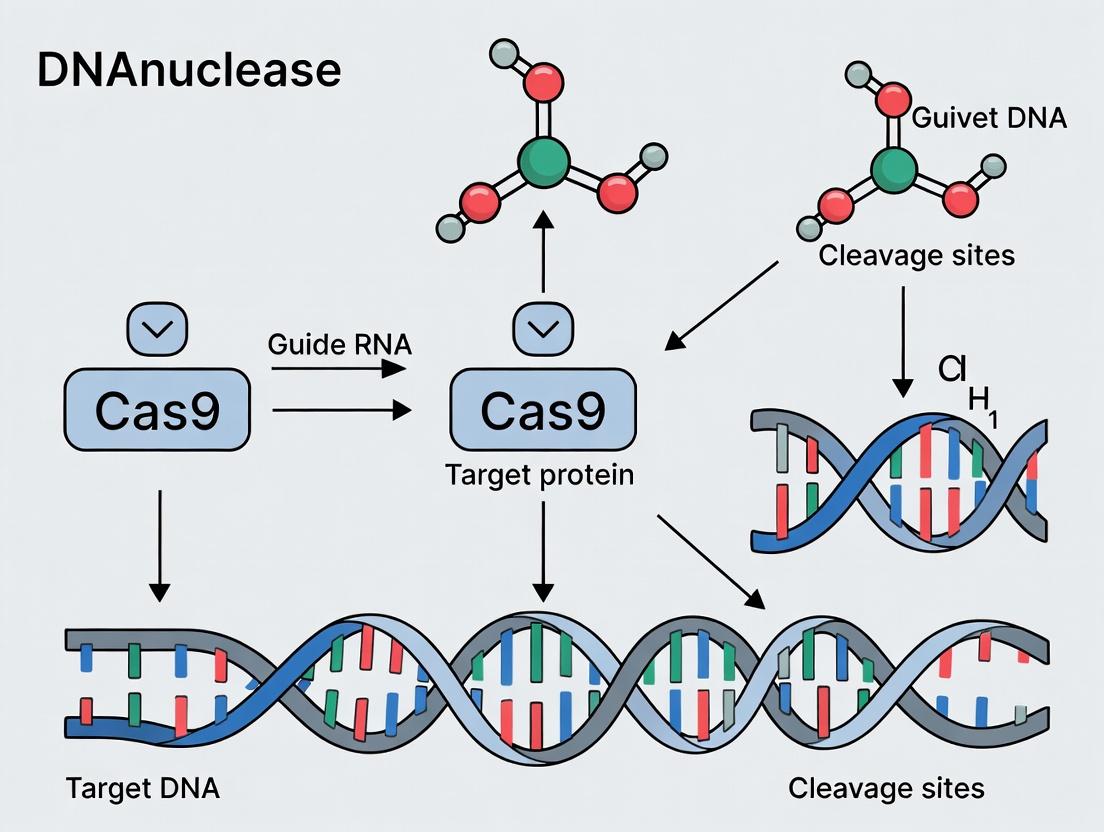
This article provides a detailed mechanistic analysis of the CRISPR-associated protein 9 (Cas9) nuclease, the cornerstone enzyme of CRISPR-Cas9 genome editing.
The Cas9 Molecular Scissors: A Comprehensive Guide to DNA Cleavage Mechanism and CRISPR Applications
Abstract
This article provides a detailed mechanistic analysis of the CRISPR-associated protein 9 (Cas9) nuclease, the cornerstone enzyme of CRISPR-Cas9 genome editing. Targeted at researchers, scientists, and drug development professionals, it explores the foundational structural biology of Cas9, its step-by-step catalytic mechanism for generating double-strand DNA breaks (DSBs), and the critical role of the single-guide RNA (sgRNA). It further details methodological applications in research and therapy, common troubleshooting and optimization strategies for efficiency and specificity, and a comparative validation of Cas9 against other nucleases (e.g., Cas12, nickases, base editors). The synthesis offers a practical resource for leveraging precise DNA cleavage in experimental and clinical workflows.
Decoding the Cas9 Molecular Machine: Structure, sgRNA, and Target Recognition
CRISPR-Cas9 has revolutionized genetic engineering, with the Cas9 nuclease serving as its precise molecular scalpel. This whitepaper, framed within a broader thesis on Cas9's DNA cleavage mechanism, details its core function, experimental analysis, and essential tools for researchers and drug development professionals.
Core Mechanism and Structural Domains
Cas9 is a multi-domain enzyme that performs programmed DNA double-strand breaks (DSBs). Its activity is guided by a single guide RNA (sgRNA). Key domains include:
- REC Lobe (Recognition Lobe): Comprises REC1, REC2, and REC3 domains, responsible for sgRNA binding and target DNA recognition.
- NUC Lobe (Nuclease Lobe): Contains the HNH and RuvC nuclease domains and the PAM-interacting (PI) domain.
- HNH Domain: Cleaves the DNA strand complementary to the sgRNA (target strand).
- RuvC Domain: Cleaves the non-complementary DNA strand (non-target strand).
- PI Domain: Recognizes the Protospacer Adjacent Motif (PAM), a short sequence (5'-NGG-3' for Streptococcus pyogenes Cas9) essential for target site identification.
Cleavage occurs 3 base pairs upstream of the PAM sequence, producing blunt-ended DSBs.
Figure: Cas9-sgRNA Complex and DNA Cleavage Mechanism
Quantitative Analysis of Cas9 Activity and Fidelity
Recent research continues to quantify Cas9's efficiency and specificity. Key parameters are summarized below.
Table 1: Quantitative Metrics for Wild-Type S. pyogenes Cas9 (SpCas9) Activity
| Metric | Typical Value/Range | Measurement Method | Key Determinants |
|---|---|---|---|
| Cleavage Efficiency | 10-80% (varies by locus/cell type) | NGS of indels, T7E1 assay | sgRNA design, chromatin state, delivery method |
| On-Target kcat/Km | ~1.0 x 10⁵ M⁻¹s⁻¹ | In vitro cleavage kinetics | PAM match, seed sequence complementarity |
| Off-Target Cleavage | Varies widely; can be >50% of on-target | GUIDE-seq, CIRCLE-seq, Digenome-seq | Mismatch tolerance (esp. in PAM-distal region) |
| PAM Recognition | 5'-NGG-3' (can relax to NAG) | In vitro selection assays (e.g., PAM-SCAN) | PI domain sequence, DNA deformation energy |
| HNH/RuvC Cleavage Rates | HNH often slower than RuvC | FRET-based kinetics, stopped-flow | Metal cofactor (Mg²⁺), substrate strain |
Table 2: High-Fidelity Cas9 Variant Comparison
| Variant (SpCas9-derived) | Key Mutations | Reported On-Target Efficiency (Relative to WT) | Reported Fidelity Improvement (Fold over WT) | Primary Mechanism |
|---|---|---|---|---|
| SpCas9-HF1 | N497A/R661A/Q695A/Q926A | 60-100% | ~2-5x | Weaker non-specific DNA contacts |
| eSpCas9(1.1) | K848A/K1003A/R1060A | 70-100% | ~5-10x | Destabilizes non-target strand binding |
| HypaCas9 | N692A/M694A/Q695A/H698A | ~50-80% | >100x (in cells) | Alters REC3 conformation for proofreading |
| Sniper-Cas9 | F539S/M763I/K890N | Often >70% | ~10-30x | Comprehensive optimization of fidelity |
Experimental Protocol: In Vitro Cas9 Cleavage Assay
This protocol is foundational for studying Cas9 kinetics, PAM specificity, and inhibitor screening.
Objective: To measure the in vitro cleavage activity of purified Cas9 protein on a linear DNA substrate.
Materials & Reagents:
- Purified Cas9 Nuclease: Recombinantly expressed and purified (e.g., His-tagged from E. coli).
- Synthetic sgRNA: In vitro transcribed or chemically synthesized, targeting the substrate.
- DNA Substrate: Linear PCR-amplified fragment (300-1000 bp) containing the target sequence and PAM.
- 10X Cleavage Buffer: 200 mM HEPES-KOH (pH 7.5), 1 M KCl, 50 mM MgCl₂, 10 mM DTT, 1 mg/mL BSA.
- Stop Solution: 20 mM EDTA, 2% SDS, 20% Ficoll-400, 0.1% Bromophenol Blue.
- Equipment: Thermocycler or water bath, agarose gel electrophoresis system, gel imager.
Procedure:
- RNP Complex Formation: Pre-complex 100 nM Cas9 with 120 nM sgRNA in 1X cleavage buffer (lacking MgCl₂). Incubate at 25°C for 10 minutes.
- Reaction Initiation: Add the DNA substrate (10 nM final concentration) and MgCl₂ (5 mM final) to the RNP complex to initiate cleavage. Total reaction volume: 20 µL.
- Cleavage Incubation: Incubate the reaction at 37°C for a defined time (e.g., 0, 1, 5, 15, 30, 60 minutes).
- Reaction Termination: At each time point, remove a 5 µL aliquot and quench by adding 5 µL of Stop Solution.
- Product Analysis: Load the quenched samples onto a 1.5% agarose gel containing a DNA-intercalating dye. Run electrophoresis at 5-8 V/cm. Visualize and quantify the bands corresponding to the uncut substrate and the cleaved products.
Figure: In Vitro Cas9 Cleavage Assay Workflow
The Scientist's Toolkit: Essential Research Reagents
Table 3: Key Reagents for Cas9 Mechanism and Editing Studies
| Reagent Category | Specific Item | Function & Rationale |
|---|---|---|
| Core Nuclease | Wild-Type SpCas9 (purified protein, mRNA, expression plasmid) | The standard enzyme for establishing baseline activity and structural studies. |
| High-Fidelity Variants | HypaCas9, eSpCas9(1.1) expression plasmids | For applications requiring minimal off-target effects (e.g., therapeutic development). |
| Control sgRNAs | Validated positive control sgRNA (e.g., targeting human AAVS1 safe harbor) | Essential for normalizing experimental editing efficiency across systems. |
| Synthetic Templates | Single-stranded oligodeoxynucleotides (ssODNs) | Serve as donors for homology-directed repair (HDR) to introduce precise edits. |
| Fidelity Assessment | GUIDE-seq or CIRCLE-seq Kit | Comprehensive, unbiased genome-wide profiling of off-target cleavage sites. |
| Cleavage Detection | T7 Endonuclease I (T7E1) or Surveyor Nuclease | Detects indels from error-prone NHEJ by recognizing and cleaving DNA heteroduplexes. |
| Inhibition Studies | Anti-CRISPR Proteins (e.g., AcrIIA4) | Specific inhibitors used to study Cas9 kinetics and as off-switches for editing control. |
| Delivery Agents | Cationic lipid nanoparticles (LNPs), recombinant adeno-associated virus (rAAV) | Critical reagents for efficient intracellular delivery of Cas9 components in in vivo models. |
The CRISPR-Cas9 system has revolutionized genetic engineering, with the Cas9 endonuclease serving as its programmable molecular scissors. A comprehensive understanding of its multi-domain architecture is essential for elucidating its DNA cleavage mechanism and for the rational design of improved genome-editing tools. This whitepaper, framed within a broader thesis on the Cas9 nuclease mechanism of DNA cleavage, provides a detailed architectural overview of its four core functional domains: the Recognition (REC) lobe, the HNH domain, the RuvC domain, and the PAM-interacting (PI) domain.
Domain Architecture and Quantitative Characterization
The canonical Streptococcus pyogenes Cas9 (SpCas9) is a multi-domain protein of approximately 1368 amino acids. Its structure is broadly divided into a REC lobe (REC1-3 domains) and a NUC lobe, which houses the HNH, RuvC, and PI domains.
Table 1: Key Domains of SpCas9 and Their Functional Parameters
| Domain/Lobe | Approx. Residue Range | Primary Function | Key Structural/Mutational Insights |
|---|---|---|---|
| REC Lobe (REC1-3) | 1-180, 310-480, 720-760 | sgRNA binding and conformational activation; facilitates target DNA recognition and cleavage. | D10A mutation inactivates RuvC; H840A mutation inactivates HNH. |
| HNH Domain | 775-908 | Cleaves the complementary (target) DNA strand. Catalytic Mg²⁺-dependent endonuclease. | Rotation of ~180° required for catalysis post-R-loop formation. |
| RuvC Domain | 1-59, 718-769, 909-1098 | Cleaves the non-complementary (non-target) DNA strand. Divergent RNase H-like fold. | Composed of three split subdomains; active site formed by conserved DED motif. |
| PI Domain | 1099-1368 | Binds the NGG Protospacer Adjacent Motif (PAM) in double-stranded DNA. | Major groove readout; induces DNA distortion and unwinding for R-loop initiation. |
| Linker/Helical | 480-717 | Connects REC and NUC lobes; acts as a hinge for domain rearrangements. | Critical for conformational transition from apo to DNA-bound state. |
Experimental Protocols for Domain Functional Analysis
Protocol 1: In Vitro DNA Cleavage Assay to Map Domain-Specific Activity
- Objective: Determine the cleavage activity of wild-type and mutant Cas9 on plasmid DNA.
- Methodology:
- Reagent Preparation: Purify wild-type (WT) SpCas9, catalytically dead dCas9 (D10A/H840A), and single-function mutants (e.g., D10A for nickase-HNH+, H840A for nickase-RuvC+). Prepare a target plasmid containing the specific PAM and protospacer sequence.
- Ribonucleoprotein (RNP) Complex Formation: Pre-incubate 100 nM Cas9 protein with 120 nM sgRNA (tracrRNA:crRNA duplex or single guide) in 1x cleavage buffer (20 mM HEPES pH 7.5, 100 mM KCl, 5 mM MgCl₂, 5% glycerol) at 25°C for 10 minutes.
- Cleavage Reaction: Add 10 nM of target plasmid to the RNP complex. Incubate at 37°C for 1 hour.
- Analysis: Stop reaction with EDTA and Proteinase K. Analyze products via agarose gel electrophoresis (0.8-1%). WT Cas9 generates linearized plasmid; nickases produce nicked open-circular DNA; dCas9 shows no cleavage.
Protocol 2: Förster Resonance Energy Transfer (FRET) Assay for HNH Conformational Dynamics
- Objective: Monitor real-time conformational changes of the HNH domain relative to the RuvC domain during R-loop formation.
- Methodology:
- Labeling: Engineer SpCas9 with two cysteine residues at specific positions: one in the HNH domain (e.g., A790C) and one in a stable region of the RuvC domain (e.g., S867C). Label with maleimide-conjugated donor (Cy3) and acceptor (Cy5) fluorophores.
- FRET Measurement: Use a stopped-flow or cuvette-based fluorometer. Pre-form the Cas9-sgRNA complex.
- Kinetics: Rapidly mix the RNP complex with target DNA containing or lacking a PAM. Excite the donor at 532 nm and monitor emission at 570 nm (donor) and 670 nm (acceptor) over time.
- Data Interpretation: An increase in acceptor emission (and decrease in donor) indicates HNH domain movement closer to RuvC (FRET increase), signifying activation post-R-loop formation.
Domain Interaction and Activation Pathway
Diagram 1: Cas9 Domain Activation Cascade
Title: Cas9 Domain Activation Cascade Leading to DNA Cleavage
The Scientist's Toolkit: Key Research Reagents
Table 2: Essential Reagents for Cas9 Domain Mechanism Research
| Reagent | Function/Application in Research |
|---|---|
| Recombinant Cas9 Proteins (WT, dCas9, Nickase Mutants) | Core enzyme for in vitro cleavage assays, structural studies, and binding kinetics. Mutants dissect domain-specific contributions. |
| Synthetic sgRNAs (tracrRNA + crRNA or single guide) | Guides Cas9 to specific DNA targets. Chemically modified versions enhance stability for cellular assays. |
| Fluorophore-Labeled Cas9 (for FRET/SmFRET) | Engineered variants with site-specific dyes to monitor real-time domain conformational dynamics. |
| Target DNA Substrates (Plasmids, PCR amplicons, oligonucleotides) | Contains PAM and protospacer sequence. Fluorescently or radiolabeled versions enable precise cleavage mapping and binding studies. |
| Mg²⁺-Free and Mn²⁺-Substituted Buffers | Mg²⁺ is the physiological cofactor. Mn²⁺ can support promiscuous cleavage, useful for probing catalytic metal dependence. |
| Anti-Cas9 Monoclonal Antibodies (for ChIP, EMSA) | Used in Chromatin Immunoprecipitation (ChIP) to map genomic binding and in EMSA supershift assays to confirm complex formation. |
| Single-Molecule Imaging Reagents (Biotin-/Digoxigenin-labeled DNA, Streptavidin surfaces) | For tethering DNA molecules in flow cells to observe Cas9 binding and cleavage kinetics at the single-molecule level. |
| Next-Generation Sequencing (NGS) Kits | For genome-wide profiling of Cas9 cleavage specificity (CIRCLE-seq, GUIDE-seq) to assess off-target effects influenced by domain fidelity. |
Within the broader thesis on the Cas9 nuclease mechanism of DNA cleavage, the single-guide RNA (sgRNA) emerges as the quintessential determinant of specificity and efficiency. The evolution from the native dual-RNA system (tracrRNA:crRNA) in Streptococcus pyogenes to a chimeric sgRNA was a pivotal simplification that enabled the CRISPR-Cas9 revolution. This technical guide deconstructs the sgRNA, detailing its structural modules, functional roles in Cas9 interrogation and activation, and providing methodologies for its optimal design and application in research and therapy.
Structural Architecture of sgRNA
The sgRNA is a synthetically fused RNA molecule comprising two essential functional domains derived from the native CRISPR system.
- Spacer Sequence (5' Domain, ~20 nt): This is the user-defined, variable region that provides DNA targeting specificity via Watson-Crick base pairing with the DNA protospacer. It is critically dependent on the presence of an adjacent Protospacer Adjacent Motif (PAM, 5'-NGG-3' for SpCas9) in the target DNA.
- scaffold/Handle (3' Domain, ~80 nt): This invariant structural core is responsible for binding and allosterically activating the Cas9 nuclease. Its complex stem-loop architecture (see Diagram 1) is essential for Cas9 association, stability, and inducing the conformational shift from a DNA surveillance state to a cleavage-competent state.
Diagram 1: Structural Anatomy of an sgRNA for SpCas9
Functional Mechanism: Guiding Cas9 from Search to Cleavage
The sgRNA orchestrates the Cas9 mechanism within a multi-step process:
- Cas9-sgRNA RNP Complex Formation: The sgRNA scaffold binds Cas9, forming a stable ribonucleoprotein (RNP) complex, the functional effector unit.
- PAM-Dependent DNA Interrogation: The Cas9-sgRNA complex scans DNA for the correct PAM sequence. This step is driven by Cas9, but the scaffold is essential for maintaining Cas9 in an active conformation.
- DNA Melting & R-Loop Formation: Upon PAM recognition, Cas9 melts the DNA duplex upstream of the PAM. The sgRNA's spacer sequence progressively base-pairs with the target strand (complementary strand), displacing the non-target strand to form an R-loop structure.
- Nuclease Lobe Activation: Successful R-loop formation, verified by complete spacer:target complementarity, triggers a final conformational change in Cas9. This activates the HNH and RuvC nuclease domains to cleave the target and non-target DNA strands, respectively, generating a double-strand break (DSB).
Diagram 2: sgRNA in the Cas9 DNA Cleavage Pathway
Quantitative Design Parameters for sgRNA Efficiency & Specificity
Optimal sgRNA design is critical for high on-target activity and minimal off-target effects. Key parameters are summarized below.
Table 1: Key sgRNA Design Parameters and Their Impact
| Parameter | Optimal Characteristic | Functional Impact | Rationale & Notes |
|---|---|---|---|
| Spacer Length | 18-22 nt (20 nt standard) | Specificity, Efficiency | Shorter spacers increase off-targets; longer spacers may reduce efficiency. |
| Spacer Sequence | GC Content: 40-60% | Stability, Efficiency | Moderate GC content balances binding stability and reduces off-target promiscuity. |
| 5' Base (SpCas9) | A Guanine (G) preferred | Transcription Efficiency | For U6 polymerase; not a strict requirement for in vitro or T7-transcribed sgRNA. |
| Seed Region (PAM-proximal 8-12 nt) | High complementarity | Specificity, R-loop stability | Mismatches here severely impair cleavage; critical for on-target specificity. |
| Off-Target Prediction | ≥3 mismatches, esp. in seed | Specificity | Use algorithms (e.g., CFD score, MIT specificity score) to predict and rank guides. |
| Chemical Modifications | 3' end stabilization | Nuclease resistance (e.g., in vivo) | 2'-O-methyl 3' phosphorothioate enhances RNP stability and performance in cells. |
Experimental Protocols: Key Methodologies
Protocol 1: In Vitro Transcription (IVT) of sgRNA
- Template Preparation: Generate DNA template via PCR with a T7 promoter sequence upstream of the sgRNA sequence.
- Transcription Reaction: Assemble using a T7 RNA Polymerase Kit (e.g., NEB HiScribe). Component: 1 µg PCR template, 1x Reaction Buffer, 7.5mM each NTP, T7 RNA Polymerase. Incubate 37°C, 2-16 hours.
- DNase I Treatment: Add DNase I (RNase-free) to remove template DNA. Incubate 37°C, 15 min.
- Purification: Purify sgRNA using phenol-chloroform extraction or silica membrane-based kits. Elute in nuclease-free water. Verify integrity via denaturing PAGE or Bioanalyzer.
Protocol 2: sgRNA-Cas9 RNP Complex Formation for Genome Editing
- Components: Purified Cas9 protein (e.g., IDT Alt-R S.p. Cas9 Nuclease), synthetic or IVT sgRNA.
- Annealing/Buffering: Combine sgRNA and Cas9 in a molar ratio of ~1.2:1 to 1.5:1 (sgRNA:Cas9) in duplex buffer (e.g., 30 mM HEPES, 100 mM KCl, pH 7.5).
- Incubation: Mix gently and incubate at room temperature for 10-20 minutes to form active RNP complexes.
- Delivery: Use immediately for electroporation of cells or microinjection into embryos. For lipid-based transfection, use a carrier designed for RNP delivery.
Protocol 3: In Vitro Cleavage Assay to Validate sgRNA Activity
- Substrate: Prepare a PCR-amplified DNA fragment (~200-500 bp) containing the target site with correct PAM.
- Reaction Setup: In a nuclease-free tube, combine: 100 ng DNA substrate, 1x Cas9 Nuclease Reaction Buffer, 20-50 nM pre-assembled RNP complex (from Protocol 2). Adjust volume with water.
- Incubation: 37°C for 1 hour.
- Analysis: Quench with Proteinase K or STOP buffer. Run products on a 2% agarose gel. Successful cleavage yields two smaller, distinct bands.
The Scientist's Toolkit: Essential Reagent Solutions
Table 2: Key Research Reagents for sgRNA Studies
| Reagent / Material | Function & Purpose | Example Vendor/Product |
|---|---|---|
| Custom sgRNA Synthesis Service | High-quality, chemically modified sgRNAs for in vivo applications. | Integrated DNA Technologies (IDT) Alt-R CRISPR-Cas9 sgRNA, Synthego. |
| T7 High-Yield RNA Synthesis Kit | Robust in vitro transcription for large-scale, cost-effective sgRNA production. | New England Biolabs (NEB) HiScribe T7 Kit. |
| Cas9 Nuclease (wild-type) | The effector protein for RNP complex formation in cleavage assays. | IDT Alt-R S.p. Cas9 Nuclease, NEB EnGen Spy Cas9. |
| RNase Inhibitor | Protects sgRNA from degradation during handling and complex formation. | Thermo Fisher Scientific SUPERase•In, NEB RNase Inhibitor. |
| DNA Clean-Up & RNA Purification Kits | For purifying PCR templates and transcribed sgRNA. | Zymo Research Clean & Concentrator kits, Qiagen RNeasy kits. |
| Electroporation System for RNP Delivery | Enables efficient, transient delivery of pre-assembled RNP complexes into hard-to-transfect cells. | Lonza 4D-Nucleofector, Thermo Fisher Neon. |
| Off-Target Prediction Software | In silico tool to design specific sgRNAs and predict potential off-target sites. | Broad Institute's CRISPick, Benchling CRISPR Design Tool. |
The single-guide RNA is far more than a simple targeting device; it is an integral structural and functional component that governs the precision, efficiency, and fidelity of the Cas9 nuclease. Its chimeric design, balancing a variable spacer with a conserved scaffold, provides a programmable interface that has democratized genome engineering. Within the thesis of Cas9 mechanism research, understanding the sgRNA's role in directing DNA interrogation, R-loop dynamics, and allosteric nuclease activation is fundamental. Ongoing research into sgRNA chemical modifications, truncated variants, and engineered scaffolds continues to refine this essential partner, pushing the boundaries of therapeutic and research applications.
Within the broader thesis on the Cas9 nuclease mechanism of DNA cleavage, the initial recognition and unwinding of the target DNA duplex represents the fundamental, rate-limiting step. This process is not a singular event but a cascade of precise, interdependent molecular actions. The canonical CRISPR-Cas9 system’s fidelity and activity are irrevocably governed by the recognition of a short, sequence-specific motif known as the Protospacer Adjacent Motif (PAM), followed by the energetically demanding unwinding of the DNA double helix to permit guide RNA:DNA heteroduplex formation. This technical guide deconstructs these critical initial events, providing a mechanistic overview, quantitative data, experimental protocols, and essential research tools for investigators.
The search for a target DNA site by the Cas9:sgRNA ribonucleoprotein (RNP) complex occurs via three-dimensional diffusion. Upon collision with DNA, Cas9 engages in rapid, nonspecific lateral sliding, enabling efficient scanning of the genome. The PAM serves as the definitive molecular signature that transitions Cas9 from a nonspecific search mode to a sequence-specific interrogation state.
- PAM Recognition: The PAM is read directly by the PAM-interacting (PI) domain of Cas9, a module rich in positively charged residues. For Streptococcus pyogenes Cas9 (SpCas9), the canonical PAM is 5'-NGG-3' on the non-target strand. Recognition involves major groove contacts and the induction of a local DNA distortion, typically a minor bend or kink, which initiates strand separation.
- DNA Unwinding: PAM binding destabilizes the adjacent DNA duplex. A conserved set of residues, often termed the "phosphate lock" and "bridge helix," facilitate the directional unwinding (or "melting") of the DNA, beginning at the PAM-distal end and proceeding towards the PAM. This creates a "R-loop" structure where the target strand (complementary to the crRNA) is displaced and base-paired with the guide sequence of the sgRNA, while the non-target strand is displaced as a single strand.
The energy for this process is derived from the release of binding free energy upon PAM recognition and protein-DNA/RNA interactions, rather than from ATP hydrolysis.
Table 1: Key Biophysical Parameters for Initial Cas9 Target Engagement
| Parameter | SpCas9 Value | Measurement Method | Reference Context |
|---|---|---|---|
| Canonical PAM Sequence | 5'-NGG-3' | In vivo selection (SELEX), in vitro binding | Chen et al., 2014 |
| Off-target PAM Recognition (Common) | 5'-NAG-3' | Mismatch tolerance assays | Zhang et al., 2015 |
| Dissociation Constant (Kd) for PAM-bound State | ~1-5 nM | Surface Plasmon Resonance (SPR) | Sternberg et al., 2015 |
| Rate of R-loop Formation (kon) | ~105 M-1s-1 | Single-molecule FRET | Singh et al., 2016 |
| DNA Unwinding Length | ~10-12 base pairs (seed region) | Cryo-EM structures, biochemical probing | Jiang et al., 2016 |
Table 2: Comparative PAM Specificities of Engineered Cas9 Variants
| Cas9 Variant | Recognized PAM | Relaxation Stringency | Primary Application |
|---|---|---|---|
| Wild-type SpCas9 | 5'-NGG-3' | Baseline | Standard genome editing |
| SpCas9-VQR | 5'-NGAN-3' | Relaxed (alternative) | Targeting AT-rich genomes |
| SpCas9-NG | 5'-NG-3' | Highly Relaxed | Expanded targeting range |
| xCas9(3.7) | 5'-NG, GAA, GAT-3' | Broad Spectrum | High-fidelity, broad targeting |
Experimental Protocols
Protocol 1:In VitroPAM Depletion Assay (PAMDA)
Purpose: To quantitatively determine the PAM specificity and relative binding affinity of a Cas9 protein or variant. Materials: Purified Cas9 protein, sgRNA, dsDNA library containing a randomized PAM region flanked by constant sequences, magnetic streptavidin beads, qPCR reagents. Method:
- Library Preparation: Generate a dsDNA library via PCR where the PAM region (e.g., 4-6 bp) is fully randomized (N4-6).
- Equilibrium Binding: Incubate the dsDNA library with the Cas9:sgRNA RNP complex under specified buffer conditions to reach binding equilibrium.
- Capture and Separation: Pass the reaction mixture over streptavidin beads that capture biotinylated DNA. Cas9-bound DNA (containing favorable PAMs) is retained, while unbound DNA is washed away.
- Elution and Quantification: Elute the bound DNA fraction. Quantify the representation of each PAM sequence in both the input (pre-binding) and bound fractions via high-throughput sequencing.
- Data Analysis: Calculate an enrichment score for each PAM sequence (log2(bound/input)). Generate a sequence logo or heatmap to visualize PAM preference.
Protocol 2: Single-Molecule FRET (smFRET) to Monitor DNA Unwinding
Purpose: To observe the real-time kinetics of DNA unwinding and R-loop formation by Cas9. Materials: DNA oligonucleotides labeled with donor (Cy3) and acceptor (Cy5) fluorophores at precise positions flanking the target site, total internal reflection fluorescence (TIRF) microscope, purified Cas9:sgRNA complex, oxygen-scavenging and triplet-state quenching imaging buffer. Method:
- Substrate Design: Construct a dsDNA substrate where the fluorophore pair is positioned such that their proximity (high FRET) indicates double-stranded DNA, and separation (low FRET) indicates local unwinding.
- Surface Immobilization: Anchor the dsDNA substrate to a passivated microscope slide via a biotin-streptavidin linkage.
- Data Acquisition: Flow in the Cas9:sgRNA complex. Use TIRF microscopy to excite the donor fluorophore and simultaneously record emission from both donor and acceptor channels for individual DNA molecules over time.
- Kinetic Analysis: Identify single-step transitions from high to low FRET efficiency, which report on the DNA unwinding event. Plot dwell times to calculate the rate constant for R-loop formation (kon) and collapse (koff).
Visualization of Mechanisms and Workflows
Diagram 1: Cas9 PAM Recognition and DNA Unwinding Pathway
Diagram 2: PAM Depletion Assay (PAMDA) Workflow
The Scientist's Toolkit: Research Reagent Solutions
Table 3: Essential Reagents for Studying PAM Recognition & DNA Unwinding
| Item | Function in Research | Example/Supplier Note |
|---|---|---|
| High-Purity Recombinant Cas9 Nuclease | Essential for in vitro biophysical and biochemical assays to ensure activity is protein-specific. | Commercially available from Thermo Fisher, NEB, or purified in-house via His-tag systems. |
| Chemically Synthesized sgRNA or In Vitro Transcription Kits | Provides consistent, high-quality guide RNA. Synthetic RNA allows for site-specific chemical modifications. | Dharmacon, IDT, or HiScribe T7 Quick High Yield Kit (NEB). |
| Biotinylated DNA Oligonucleotides & Streptavidin Beads | Core components for pull-down assays (e.g., PAMDA) and single-molecule tethering. | HPLC-purified oligos from IDT; Streptavidin MyOne C1 beads from Thermo Fisher. |
| Fluorophore-Labeled Nucleotides (Cy3, Cy5, ATTO dyes) | Required for constructing FRET probes to monitor conformational changes like DNA unwinding in real time. | Jena Bioscience, Lumiprobe. |
| Surface Plasmon Resonance (SPR) Chips (e.g., SA Chip) | For label-free, quantitative measurement of binding kinetics (Kd, kon, koff) between Cas9 RNP and PAM-containing DNA. | Biacore Series S Sensor Chip SA (Cytiva). |
| Next-Generation Sequencing (NGS) Library Prep Kits | For deep sequencing analysis of PAM depletion assays or genome-wide off-target profiling. | Illumina DNA Prep, Swift Biosciences Accel-NGS 2S. |
| Cryo-EM Grids & Vitrification Systems | For high-resolution structural determination of Cas9 caught in intermediate states (e.g., post-PAM bind, pre-unwound). | Quantifoil grids, Vitrobot (Thermo Fisher). |
This whitepaper details the critical structural transitions during CRISPR-Cas9 target DNA interrogation. Within the broader mechanism of DNA cleavage, the steps from initial recognition to R-loop formation and strand separation represent the decisive fidelity checkpoint and pre-chemical step. This process determines the specificity of the entire genome-editing event, making it a focal point for off-target effect research and therapeutic development.
Structural Stages from PAM Recognition to Strand Separation
PAM Recognition and DNA Destabilization
Upon encountering duplex DNA, the Cas9-sgRNA complex conducts a rapid, bidirectional scan. Recognition of a short Protospacer Adjacent Motif (PAM; 5′-NGG-3′ for SpCas9) by the PAM-interacting (PI) domain is the essential first step. This binding induces a local DNA distortion, destabilizing the adjacent duplex and initiating strand separation.
Seed Sequence Pairing and R-Loop Initiation
The “seed” region (typically nucleotides 2-10 of the 20-nt spacer sequence) of the crRNA begins complementary base-pairing with the target strand (TS, or non-complementary strand). This initial heteroduplex formation is a key fidelity gate. Mismatches here often abort the process.
R-Loop Elongation and Conformational Cascade
As base-pairing propagates towards the distal end of the spacer, the non-target strand (NTS, or complementary strand) is displaced. The growing RNA-DNA hybrid (the R-loop) is accommodated within a positively charged channel in the REC lobe of Cas9. This displacement triggers large-scale conformational changes in Cas9, particularly the rotation of the REC lobes and the formation of the HNH nuclease domain activation site.
Complete Strand Separation and Catalytic Activation
Full R-loop formation (20 base pairs) results in complete separation of the DNA strands. The NTS is diverted into a separate channel. This fully engaged state positions the TS within the RuvC nuclease active site and the NTS near the HNH active site, licensing the double-strand break.
Table 1: Key Structural Parameters During R-Loop Formation (SpCas9)
| Stage | Key Interaction | Free Energy Change (ΔG)* | Timescale* | Structural Outcome |
|---|---|---|---|---|
| PAM Binding | PI domain with 5'-NGG-3' | ~ -9 kcal/mol | Microseconds | Local DNA kinking (~30° bend) |
| Seed Pairing | crRNA nucleotides 2-10 with TS | Critical for ΔG < -5 kcal/mol | Milliseconds | Initial duplex melting; R-loop nucleation |
| Full R-Loop | crRNA 1-20 with TS | ~ -50 to -60 kcal/mol | Tens of milliseconds | Complete strand separation; HNH domain activation |
| Pre-Catalytic | DNA in RuvC & HNH sites | N/A | Milliseconds | DSB competent state |
*Representative values from recent single-molecule and biophysical studies. Actual values vary with sequence context.
Detailed Experimental Protocols for Studying R-Loop Dynamics
Single-Molecule FRET (smFRET) to Monitor Conformational Transitions
Objective: Measure real-time dynamics of DNA unwinding and protein conformational changes. Protocol:
- Labeling: Engineer dual-labeled DNA substrates with donor (Cy3) on the NTS and acceptor (Cy5) on the TS near the PAM. Alternatively, label Cas9 (e.g., on REC lobe and HNH domain) for protein FRET.
- Surface Immobilization: Biotinylate DNA ends and immobilize on a PEG-passivated, streptavidin-coated quartz microfluidic chamber.
- Data Acquisition: Flow in Cas9-sgRNA complex (50-100 pM in reaction buffer: 20 mM HEPES pH 7.5, 100 mM KCl, 5 mM MgCl₂, 1 mM DTT, 5% glycerol). Illuminate with 532 nm laser. Monitor donor and acceptor emission intensities at 100 ms time resolution.
- Analysis: Identify anti-correlated FRET changes indicating DNA unwinding. Construct FRET efficiency histograms and transition density plots.
Cryo-Electron Microscopy (Cryo-EM) for Structural Snapshots
Objective: Obtain high-resolution structures of intermediate states. Protocol:
- Sample Preparation: Form Cas9-sgRNA-DNA complexes using a partially complementary DNA target containing mismatches in the distal region to trap partial R-loops. Use crosslinker (e.g., BS³) if necessary.
- Vitrification: Apply 3.5 μL of complex (~3 mg/mL) to a glow-discharged holey carbon grid. Blot and plunge-freeze in liquid ethane using a Vitrobot (100% humidity, 4°C).
- Data Collection: Image grids on a 300 keV cryo-TEM. Collect 5,000-10,000 movies at a defocus range of -1.0 to -2.5 μm.
- Processing: Use RELION or cryoSPARC for 3D classification. Focused classification on the REC lobe and nucleic acid region can isolate intermediates.
Magnetic Tweezers for Mechanical Unwinding Assays
Objective: Measure the torque and free energy changes during R-loop formation. Protocol:
- DNA Tether Construction: Create a ~3 kbp DNA construct with the target sequence centrally located. Attach one end to a streptavidin-coated magnetic bead and the other to a digoxigenin-anti-dig coated glass surface.
- Instrument Setup: Place chamber on microscope with magnets. Use buffer: 20 mM Tris-HCl pH 7.5, 150 mM NaCl, 5 mM MgCl₂.
- Experiment: Flow in 1 nM Cas9-sgRNA. Apply constant force (e.g., 0.5 pN) to introduce supercoiling. Monitor bead height (extension) in real-time. A sudden increase in extension indicates negative supercoil relaxation due to R-loop formation (unwinding).
- Analysis: Calculate unwinding turns and energy from the change in extension vs. turns applied.
Key Signaling and Mechanistic Pathways
Diagram Title: Cas9 R-Loop Formation Decision Pathway
Diagram Title: Free Energy Landscape of DNA Engagement
The Scientist's Toolkit: Essential Research Reagent Solutions
Table 2: Key Reagents for Studying R-Loop Formation & Strand Separation
| Reagent / Material | Supplier Examples | Function in Experiment |
|---|---|---|
| Endonuclease-deficient Cas9 (dCas9) | IDT, Thermo Fisher, GenScript | Catalytically dead mutant used to trap pre-cleavage complexes for structural studies (e.g., D10A/H840A for SpCas9). |
| Chemically Modified sgRNA | Synthego, Dharmacon, ChemGenes | 2'-O-methyl, phosphorothioate modifications at 3' terminal increase stability for single-molecule experiments. |
| Biotin-/Digoxigenin-labeled DNA Oligos | IDT, Sigma-Aldrich | For surface tethering in single-molecule (smFRET, tweezers) and pull-down assays. |
| Fluorophore-labeled dNTPs/Nucleotides | Jena Bioscience, PerkinElmer | (e.g., Cy3-dUTP, Cy5-dCTP) for constructing labeled DNA substrates for FRET. |
| Anti-6xHis Tag Antibody Coated Beads | Qiagen, Cytiva | For purifying His-tagged Cas9 proteins or immobilizing complexes. |
| PEG-Silane Passivation Reagent | Laysan Bio, Nanocs | Creates inert, non-sticking surface on flow cells or slides for single-molecule microscopy. |
| BS³ Crosslinker | Thermo Fisher | Amine-reactive crosslinker to stabilize transient Cas9-DNA complexes for cryo-EM. |
| Magnetic Beads (Streptavidin) | Dynabeads, NEB | Used in magnetic tweezers and for biochemical pulldowns of biotinylated DNA. |
| High-Fidelity PCR Kit for Substrate Prep | Q5 (NEB), Phusion (Thermo) | Amplify long, precisely sequenced DNA constructs for single-molecule assays. |
| Structured Illumination (SIM) Super-Resolution Microscope | Nikon, Zeiss | Optional for visualizing multiple R-loop formation sites on stretched DNA fibers. |
Implications for Drug Development and Therapeutic Specificity
Understanding the kinetic and thermodynamic barriers of R-loop formation directly informs the design of high-fidelity Cas9 variants (e.g., eSpCas9, HiFi Cas9) and anti-CRISPR proteins that act as off-target switches. Small molecules that modulate the stability of the R-loop intermediate (e.g., by binding displaced NTS) could serve as precision editors to fine-tune activity. Furthermore, traps for the displaced strand in the NTS channel represent novel, unexplored targets for allosteric inhibitors.
Harnessing Cas9 Cleavage: From DSB Generation to Research & Therapeutic Workflows
This technical guide examines the precise spatiotemporal activation mechanisms of the Cas9 nuclease's HNH and RuvC endonuclease domains, which coordinate to produce a double-strand break (DSB) in target DNA. Framed within ongoing research into the Cas9 cleavage mechanism, this whitepaper details the conformational transitions, metal ion coordination, and allosteric communication that ensure synchronous cleavage of both DNA strands. The content is synthesized from current literature to serve as a reference for therapeutic genome editing applications.
The bacterial adaptive immune system protein CRISPR-Cas9 has been repurposed as a precise genome-editing tool. Its efficacy hinges on the formation of a blunt-ended DSB 3-4 nucleotides upstream of the protospacer adjacent motif (PAM). This cut is the product of two distinct catalytic domains: the HNH domain, which cleaves the target DNA strand (complementary to the crRNA), and the RuvC domain, which cleaves the non-target strand. A central question in the field is how the activation of these two domains, which are physically separated and have different structural requirements, is exquisitely coordinated following target DNA recognition and unwinding. This guide dissects the current mechanistic understanding of this process.
Structural Architecture & Pre-Catalytic State
Upon sgRNA loading and PAM recognition, Cas9 undergoes a major conformational change from an apo "inactive" state to a DNA-bound "active" state. Key structural features include:
- Recognition Lobe (REC): Binds the RNA-DNA heteroduplex.
- Nuclease Lobe (NUC): Contains the HNH and RuvC catalytic domains and the PAM-interacting (PI) domain.
- HNH Domain: Resembles a ββα-metal fold found in restriction endonucleases. In the pre-catalytic state, it is positioned away from the cleavage site.
- RuvC Domain: Split into three subdomains (I, II, III) that assemble around the non-target strand. Its active site is incomplete prior to activation.
Table 1: Key Structural Elements of Cas9 Catalytic Domains
| Domain | Catalytic Motif | Putative Catalytic Residues (S. pyogenes) | Metal Ion Cofactor | Target |
|---|---|---|---|---|
| HNH | ββα-metal fold | D839, H840, N863 | Mg²⁺ (likely 1 ion) | Target Strand (compl. to crRNA) |
| RuvC | RNase H-like fold | D10, E762, H983, D986 | Mg²⁺ (typically 2-3 ions) | Non-target Strand |
Domain Activation Pathways
HNH Domain Activation
Activation is triggered by complete base-pairing between the crRNA spacer and the target DNA strand.
- Allosteric Trigger: Successful R-loop formation (strand displacement) is sensed by the REC lobe.
- Conformational Swing: The HNH domain undergoes a ~180° rotation from a distal position to dock onto the RNA-DNA hybrid at the scissile phosphate.
- Active Site Assembly: The rotated domain positions catalytic residues (D839, H840) and recruits a Mg²⁺ ion to coordinate the in-line nucleophilic attack on the target strand phosphate backbone.
RuvC Domain Activation
Activation is more complex due to its discontinuous structure and reliance on HNH positioning.
- Strand Displacement: R-loop formation exposes the non-target strand, threading it into a positively charged groove leading to the RuvC active site.
- Active Site Unification: Conformational changes in RuvC subdomains II and III, potentially facilitated by HNH movement, bring catalytic residues (D10, E762, H983, D986) together.
- Metal Ion Binding: The unified site coordinates 2-3 Mg²⁺ ions for a two-metal-ion catalytic mechanism to cleave the non-target strand.
Coordination Logic
Current models propose that HNH rotation acts as a final checkpoint for RuvC activation. The physical movement of the HNH domain may mechanically promote the conformational unity of the RuvC active site or release inhibitory interactions, ensuring cuts occur only on fully verified targets and that both strands are cut nearly simultaneously to prevent nicked intermediates.
Diagram Title: Cas9 HNH and RuvC Domain Activation Coordination Logic
Experimental Methodologies for Mechanistic Study
Single-Molecule FRET (smFRET) to Monitor Conformational Dynamics
Objective: Track real-time movements of the HNH domain relative to the RuvC domain or DNA. Protocol:
- Labeling: Site-specifically label Cas9 (e.g., on HNH and REC lobe) or DNA substrates with donor (Cy3) and acceptor (Cy5) fluorophores.
- Imaging: Immobilize labeled Cas9:sgRNA complex on a PEG-passivated quartz microscope slide. Initiate reaction by flowing in target DNA.
- Data Acquisition: Use a total internal reflection fluorescence (TIRF) microscope to excite donors and record emission from both channels at 10-100 ms time resolution.
- Analysis: Calculate FRET efficiency (E) over time. Low E = domains apart; High E = domains close. Identify intermediate states and transition kinetics.
Time-Resolved X-ray Crystallography & Cryo-EM
Objective: Capture atomic snapshots of intermediate states. Protocol:
- Trapping Intermediates: Use catalytically inactive dCas9, non-cleavable DNA substrates (phosphorothioates), or metal ion analogs (e.g., Ca²⁺ instead of Mg²⁺) to trap pre- or mid-cleavage states.
- Structure Determination: For crystallography, co-crystallize trapped complexes. For cryo-EM, vitrify samples on grids. For time-resolved studies, use mix-and-spray (crystallography) or stopped-flow plunge-freezing (cryo-EM) techniques.
- Model Building: Solve structures to high resolution (≤3.0 Å) to visualize active site geometry and domain orientations.
Biochemical Cleavage Assays with Modified Substrates
Objective: Decouple strand cleavage events and identify sequence/structural dependencies. Protocol:
- Substrate Preparation: Generate target DNA with single-strand breaks (nicks), gaps, or modified bases (e.g., abasic sites) in either strand.
- Reaction: Incubate wild-type or mutant Cas9:sgRNA with modified DNA in reaction buffer (20 mM HEPES pH 7.5, 100 mM KCl, 10 mM MgCl₂, 1 mM DTT) at 37°C.
- Quenching & Analysis: Stop reactions with EDTA/formamide. Analyze products via denaturing urea-PAGE. Quantify cleavage rates for each strand independently.
Table 2: Quantitative Data from Key Cleavage Studies
| Experimental Approach | Key Finding | Measured Parameter | Value / Observation |
|---|---|---|---|
| smFRET (Dagdas et al., 2017) | HNH rotation correlates with correct R-loop formation. | FRET efficiency shift upon DNA binding | Low-to-high FRET transition (>0.8) only with fully matched target. |
| Time-Resolved Biochem (Sternberg et al., 2015) | Cleavage is sequential but rapid. | Cleavage half-time (t½) for each strand | Target strand (HNH): t½ ≈ 30 ms. Non-target strand (RuvC): t½ ≈ 60 ms. |
| Cryo-EM of Ca²⁺ bound complex (Zhu et al., 2019) | Ca²⁺ supports HNH docking but not RuvC activation. | Distance between catalytic residues | HNH D839 to scissile P: ~4 Å. RuvC D10 to scissile P: >6 Å (inactive). |
The Scientist's Toolkit: Key Research Reagents & Materials
Table 3: Essential Reagents for Cas9 Cleavage Mechanism Studies
| Item | Function & Rationale |
|---|---|
| Wild-type S. pyogenes Cas9 Nuclease | Benchmark enzyme for studying native cleavage kinetics and coordination. |
| Catalytically Dead Cas9 (dCas9: D10A/H840A) | Control for DNA binding and conformational studies without cleavage. |
| Single Catalytic Mutants (D10A or H840A) | Used to isolate and study the activity of the remaining functional domain (nickases). |
| Synthetic sgRNA (or crRNA+tracrRNA) | Enables precise sequence targeting and chemical modification (e.g., fluorophore labeling). |
| Fluorophore-labeled Nucleotides (Cy3, Cy5, Atto dyes) | For site-specific labeling of DNA or protein for smFRET/FCS experiments. |
| Non-cleavable DNA Substrates (Phosphorothioate linkages) | Traps the enzyme-substrate complex for structural analysis. |
| Divalent Cation Alternatives (CaCl₂, MnCl₂, NiCl₂) | Probes metal ion dependence; Ca²⁺ often supports docking but not catalysis. |
| Stopped-Flow Instrumentation | For rapid kinetic measurements of cleavage (millisecond timescale). |
| PEG-passivated Microscope Slides & Chambers | Essential for single-molecule imaging to prevent non-specific surface adsorption. |
| High-purity NTPs & In vitro Transcription Kits | For producing large quantities of consistent, high-activity sgRNA. |
Diagram Title: Experimental Workflow for Studying Cas9 Domain Coordination
The coordinated activation of HNH and RuvC domains is a masterpiece of molecular engineering, ensuring DSB formation only upon perfect target validation. Understanding this mechanism at depth informs the rational design of next-generation genome editors. This includes engineering hyper-accurate "high-fidelity" Cas9 variants with slower, more stringent domain activation, creating "nickase" pairs for reduced off-target effects, and developing conditional Cas9 systems controlled by small molecules or light that modulate this activation pathway. The precise catalytic cut remains the foundation of CRISPR technology, and its continued study is paramount for safe clinical translation.
Within the broader thesis on Cas9 nuclease mechanism of DNA cleavage research, predicting the physical nature of DNA ends post-cleavage is paramount. The canonical Streptococcus pyogenes Cas9 (SpCas9) generates blunt-ended double-strand breaks (DSBs), but engineered variants and orthologs from other bacterial species can produce staggered cuts with 5' overhangs. This technical guide details the structural and biochemical determinants of these cleavage outcomes, a critical factor for downstream applications in genome editing, synthetic biology, and therapeutic drug development. Precise prediction and control of end chemistry influence repair pathway choice (non-homologous end joining vs. homology-directed repair) and the fidelity of genetic insertions.
Structural Determinants of Cleavage Outcome
The geometry of the Cas9-sgRNA-DNA ternary complex dictates the cleavage site. SpCas9 positions its two nuclease domains, HNH and RuvC, to cut the target (complementary) and non-target (non-complementary) strands, respectively, at positions precisely opposite each other within the major groove, resulting in a blunt end.
Key Quantitative Parameters: The distance between the phosphodiester bonds cleaved on each strand is a primary predictor. Blunt ends result from cuts directly opposite each other. 5' overhangs are generated when the cuts are offset, with the RuvC cut (non-target strand) occurring upstream (5') of the HNH cut (target strand).
Table 1: Cleavage Signatures of Selected Cas9 Orthologs and Variants
| Nuclease | Origin/Type | Target Strand Cut (from PAM) | Non-target Strand Cut (from PAM) | Overhang Generated | Overhang Length |
|---|---|---|---|---|---|
| SpCas9 | S. pyogenes (Wild-type) | 3 bp upstream | 3 bp upstream | Blunt | 0 bp |
| SaCas9 | S. aureus (Wild-type) | 3 bp upstream | 3 bp upstream | Blunt | 0 bp |
| FnCas9 | Francisella novicida | 3 bp upstream | 5 bp upstream | 5' Overhang | 2 bp |
| Cas9 nickase (D10A) | Engineered SpCas9 mutant | No cut | 3 bp upstream | Single-strand nick (no DSB) | N/A |
| Cas9 nickase (H840A) | Engineered SpCas9 mutant | 3 bp upstream | No cut | Single-strand nick (no DSB) | N/A |
| "Scissors" variants | Engineered SpCas9 (e.g., K855E,R856E) | Altered (varies) | Altered (varies) | Can be tuned to 5' overhang | 1-4 bp |
Experimental Protocols for Determining Cleavage Products
In VitroCleavage Assay with Fragment Analysis
This protocol determines the precise coordinates of DNA strand scission.
Detailed Methodology:
- Substrate Preparation: Generate a dsDNA substrate (typically 50-100 bp) containing the target sequence and PAM. Radiolabel the 5' end of either the target or non-target strand using T4 Polynucleotide Kinase and [γ-³²P]ATP. Alternatively, use a fluorescent dye label.
- Cleavage Reaction:
- Assemble reaction in 20 µL: 20 nM labeled DNA substrate, 50 nM purified Cas9 protein, 50 nM sgRNA in 1X reaction buffer (20 mM HEPES pH 7.5, 100 mM KCl, 5 mM MgCl₂, 1 mM DTT, 5% glycerol).
- Incubate at 37°C for 30-60 minutes.
- Quench with 2X formamide loading buffer containing 50 mM EDTA.
- Product Analysis:
- Denature samples at 95°C for 5 min and separate on a high-resolution denaturing polyacrylamide gel (e.g., 10-15% urea-PAGE).
- Visualize via autoradiography (for radioactive label) or fluorescence scanning.
- Precise Mapping: Run a dideoxynucleotide (ddNTP) Sanger sequencing ladder of the same labeled strand alongside the cleavage products. The size of the cleaved fragment, compared to the ladder, indicates the exact nucleotide position of the cut.
High-Throughput Sequencing (HTS) of Cleavage Junctions
This method statistically analyzes cleavage outcomes from a pooled library of targets in cells or in vitro.
Detailed Methodology:
- Library Design: Synthesize a DNA oligonucleotide library containing a diverse set of target sequences flanked by universal primer sites.
- Delivery and Cleavage: Deliver the library along with Cas9/sgRNA expression constructs into cells (e.g., via transfection) or perform in vitro cleavage on the pooled library.
- Harvest and Amplification: After 48-72 hours, harvest genomic DNA (for cellular assay) or recover the DNA library. Amplify the region surrounding the target site using PCR with primers containing Illumina adapters.
- Sequencing and Bioinformatic Analysis:
- Perform paired-end sequencing.
- Align reads to the reference library.
- For each target sequence, identify reads with insertions or deletions (indels) and perform microhomology-based analysis of the repair junctions. The distribution of deletion endpoints reveals the predominant cleavage site(s) and any heterogeneity (e.g., a 2-3 bp "fraying" zone). Clustered deletion endpoints offset by 1-5 bp between strands indicate staggered cleavage.
Visualizing Cleavage Determinants and Assay Workflow
Title: Cas9 Cleavage Outcome Decision Logic
Title: In Vitro Cleavage Mapping Workflow
The Scientist's Toolkit: Research Reagent Solutions
Table 2: Essential Materials for Cleavage Outcome Studies
| Item | Function/Description | Example Vendor/Product |
|---|---|---|
| Wild-type & Variant Cas9 Nucleases | Purified recombinant proteins for in vitro assays or expression plasmids for cellular studies. Essential for comparing cleavage signatures. | IDT (Alt-R S.p. Cas9 Nuclease 3NLS), Thermo Fisher (TrueCut Cas9 Protein v2), NEB (HiFi Cas9 Nuclease). |
| Chemically Modified sgRNAs | Synthetic, high-purity sgRNAs with stabilization modifications (e.g., 2'-O-methyl, phosphorothioate) for improved activity and reduced off-target effects in sensitive assays. | Synthego (sgRNA EZ Kit), IDT (Alt-R CRISPR-Cas9 sgRNA). |
| 5'-End Labeling Kit | For introducing radioactive (³²P) or fluorescent (Cy5, FAM) tags onto DNA substrates to enable visualization of cleavage fragments. | Thermo Fisher (T4 Polynucleotide Kinase), Jena Bioscience (Cyanine5-ATP). |
| High-Resolution Urea-PAGE System | Denaturing polyacrylamide gel electrophoresis setup for separating DNA cleavage products with single-nucleotide resolution. | Invitrogen (Novex TBE-urea Gels), C.B.S. Scientific (Sequencing Gel System). |
| ddNTP Sequencing Ladder Kit | Generates a set of DNA fragments terminated at each base for precise size calibration and cut site mapping on gels. | Thermo Fisher (Sequenase Version 2.0 Kit). |
| Next-Generation Sequencing Library Prep Kit | For preparing amplified cleavage junction libraries from cellular or in vitro pools for HTS analysis. | Illumina (Nextera XT), NEB (NEBNext Ultra II FS DNA). |
| Microhomology-Mediated End Joining (MMEJ) Reporter Assay | Plasmid-based fluorescent reporter systems to specifically detect and quantify repair from staggered DSBs with 5' overhangs. | Addgene (Plasmid #113919). |
Thesis Context: This technical guide details the core application of CRISPR-Cas9 within the broader research thesis on the Cas9 nuclease mechanism of DNA cleavage, focusing on the specific exploitation of resultant double-strand breaks (DSBs) to achieve permanent gene knockouts via the non-homologous end joining (NHEJ) repair pathway.
Upon Cas9-mediated DNA cleavage, the dominant repair pathway in most mammalian cells, particularly in post-mitotic cells, is the error-prone NHEJ. This pathway directly ligates the broken DNA ends, often resulting in small insertions or deletions (indels) at the junction. When these indels occur within a protein-coding exon and cause a frameshift mutation, they lead to premature stop codons and the production of a non-functional, truncated protein, effectively knocking out the gene.
Quantitative Analysis of Knockout Efficiency
The efficiency of gene knockout via NHEJ is influenced by multiple factors, including sgRNA design, cell type, and Cas9 delivery method. The following table summarizes key quantitative data from recent studies.
Table 1: Factors Influencing NHEJ-Mediated Knockout Efficiency
| Factor | Typical Range/Value | Impact on Knockout Efficiency | Key Supporting Reference (2023-2024) |
|---|---|---|---|
| sgRNA On-Target Efficiency (Prediction Score) | 0 - 100 (Tool-specific) | Strong positive correlation; scores >60 often yield >40% indels. | (Integrated from CRISPick, CHOPCHOP v3) |
| Indel Rate (Bulk Population) | 20% - 80% | Primary metric for knockout success; varies with locus. | Hsu et al., Nature Protocols, 2023. |
| Frameshift Indel Fraction | ~65% - 75% of total indels | Critical determinant; not all indels cause frameshifts. | Brinkman et al., Nucleic Acids Res, 2024. |
| Cas9 Delivery Method (HEK293T) | Lentivirus: ~70%, Electroporation: ~60%, Lipofection: ~40% | Efficiency correlates with intracellular Cas9/sgRNA concentration. | Kim et al., Cell Reports Methods, 2023. |
| Cell Division Status | Dividing: High, Non-dividing: Moderate | NHEJ is active but slower in non-dividing cells; knockout still achievable. | Zhao et al., Science Advances, 2023. |
Detailed Experimental Protocol for Generating and Validating Knockouts
This protocol outlines a standard workflow for generating clonal knockout cell lines using Cas9 ribonucleoprotein (RNP) electroporation.
A. sgRNA Design and RNP Complex Formation
- Design: Select a 20-nt spacer sequence targeting an early coding exon of your gene of interest (GOI) using a validated algorithm (e.g., CRISPick). Prioritize sequences with high on-target and low off-target scores.
- Synthesis: Chemically synthesize the sgRNA with the required tracrRNA and crRNA components or as a single guide. Alternatively, transcribe in vitro.
- RNP Complex Assembly: Reconstitute purified, recombinant S. pyogenes Cas9 protein (e.g., IDT Alt-R S.p. Cas9 Nuclease V3) and sgRNA. Mix at a molar ratio of 1:2.5 (Cas9:sgRNA) in sterile duplex buffer. Incubate at room temperature for 10-20 minutes to form the active RNP complex.
B. Cell Transfection and Clonal Isolation
- Cell Preparation: Harvest approximately 1x10⁵ to 2x10⁵ mammalian cells (e.g., HEK293, HCT116) in log growth phase. Wash with PBS.
- Electroporation: Resuspend cell pellet in appropriate electroporation buffer (e.g., Neon Buffer R). Add pre-assembled RNP complex (e.g., 5 µg Cas9 + 100 pmol sgRNA). Electroporate using manufacturer-optimized settings (e.g., 1400V, 20ms, 1 pulse for HEK293).
- Recovery & Plating: Immediately transfer cells to pre-warmed, antibiotic-free medium. After 48 hours, trypsinize and seed at a very low density (0.5-1 cell/well) into 96-well plates for clonal expansion. Include a non-treated control.
C. Screening and Validation of Knockout Clones
- Genomic DNA Extraction: After 10-14 days, harvest a portion of each clonal population. Extract genomic DNA using a quick alkaline lysis or column-based method.
- PCR Amplification: PCR amplify a ~300-500bp region surrounding the target site from clonal and control DNA.
- Indel Detection:
- T7 Endonuclease I (T7E1) or Surveyor Assay: Denature and re-anneal PCR products to form heteroduplexes if indels are present. Digest with mismatch-cleaving enzymes and analyze by gel electrophoresis. Clones showing cleavage are candidates.
- Sanger Sequencing: Sequence PCR products from T7E1-positive clones. Analyze chromatograms for overlapping traces downstream of the cut site (~3 bp upstream of PAM).
- Sequence Analysis: Use online tools (e.g., ICE Analysis, Synthego) or manual deconvolution to infer the precise indel sequences. Clones with frameshifting indels (insertions/deletions not a multiple of 3) are primary knockout candidates.
- Functional Validation: Confirm knockout by western blot (loss of protein) or a functional assay specific to the GOI.
Visualizing the Knockout Pathway and Workflow
Diagram 1: NHEJ-Mediated Gene Knockout Pathway (93 chars)
Diagram 2: Knockout Cell Line Generation Workflow (82 chars)
The Scientist's Toolkit: Essential Research Reagents
Table 2: Key Reagents for NHEJ-Mediated Knockout Experiments
| Item | Function & Rationale | Example Product/Supplier |
|---|---|---|
| High-Purity Cas9 Nuclease | Catalytic core for DSB induction. Recombinant, endotoxin-free protein ensures high activity and minimizes cell toxicity. | Alt-R S.p. Cas9 Nuclease V3 (IDT); TruCut Cas9 Protein (Thermo Fisher). |
| Chemically Modified sgRNA | Guides Cas9 to target locus. Chemical modifications (e.g., 2'-O-methyl, phosphorothioate) enhance stability and reduce immunogenicity. | Alt-R CRISPR-Cas9 sgRNA (IDT); Synthego sgRNA. |
| Electroporation System | Efficient delivery of RNP complexes into hard-to-transfect cell types. Provides high efficiency and viability. | Neon (Thermo Fisher); Nucleofector (Lonza). |
| Cloning Medium | Supports the growth of single cells into colonies, often supplemented with growth factors to improve cloning efficiency. | CloneR (STEMCELL Tech); conditioned medium. |
| Mismatch Detection Enzyme | Rapid screening tool for identifying clones with heterogeneous indels by cleaving DNA heteroduplexes. | T7 Endonuclease I (NEB); Surveyor Nuclease (IDT). |
| High-Fidelity PCR Mix | Accurate amplification of the target genomic locus from small amounts of clonal cell DNA for downstream analysis. | Q5 High-Fidelity (NEB); KAPA HiFi HotStart (Roche). |
| Sanger Sequencing Service | Gold standard for determining the exact nucleotide sequence of the modified allele in candidate clones. | In-house capillary sequencer or commercial service. |
| ICE Analysis Software | Web-based tool for deconvoluting Sanger sequencing traces to quantify editing efficiency and predict indel sequences. | ICE (Synthego); TIDE. |
1. Introduction within the Thesis Context
This whitepaper details the application of CRISPR-Cas9-induced double-strand breaks (DSBs) for precise genome editing via Homology-Directed Repair (HDR). It exists within the broader thesis research on the Cas9 nuclease mechanism of DNA cleavage, which posits that the predictable generation of a targeted DSB is the critical, rate-limiting step that enables all subsequent precision editing outcomes. Understanding the kinetics, fidelity, and cellular response to this programmed cleavage event is foundational to optimizing HDR efficiency.
2. Core Mechanism: From DSB to HDR
The Cas9 nuclease, guided by a single-guide RNA (sgRNA), creates a blunt-ended DSB at a target genomic locus. In the absence of a repair template, the error-prone Non-Homologous End Joining (NHEJ) pathway dominates. However, the co-delivery of an exogenous donor template with homology arms directs repair through the HDR pathway, allowing for precise gene correction or insertion.
Diagram 1: HDR vs NHEJ Repair Pathways After Cas9 DSB
3. Quantitative Data on HDR Efficiency and Key Determinants
Table 1: Factors Influencing HDR Efficiency and Typical Ranges
| Factor | Typical Range/Effect | Impact on HDR | Notes |
|---|---|---|---|
| Cell Cycle Phase | HDR active primarily in S/G2 phases | Critical (High) | NHEJ operates in all phases. |
| Donor Template Form | ssODN vs dsDNA (plasmid/viral) | Moderate-High | ssODNs favor small edits; dsDNA for large insertions. |
| Homology Arm Length | ssODN: 30-90 nt; dsDNA: 500-1000+ nt | High | Longer arms generally increase HDR for dsDNA donors. |
| Donor Concentration | ssODN: 1-10 μM; dsDNA: 1-10 μg (transfection) | Moderate | Must be optimized to minimize toxicity. |
| Cas9 Delivery Method | RNP > mRNA > Plasmid | Moderate | RNP (Ribonucleoprotein) gives faster, more transient activity. |
| NHEJ Inhibition | e.g., Scr7, NU7027 | Low-Moderate | Can boost HDR ratio but adds cellular toxicity. |
| HDR Enhancement | RS-1 (Rad51 stimulator), Alt-R HDR Enhancer | Low-Moderate | Cell-type specific results. |
| Edit Size | <10 bp correction vs >1 kb insertion | High | Larger inserts show significantly lower HDR rates. |
4. Detailed Experimental Protocol for HDR-Mediated Knock-in
Protocol: HDR-Mediated Gene Insertion in Adherent Mammalian Cells using Cas9 RNP and dsDNA Donor
A. Materials & Design
- sgRNA Design: Design sgRNA with cut site proximal to desired insertion site. Synthesize as crRNA+tracrRNA or sgRNA.
- Donor Template Design: Clone desired insert (e.g., GFP-P2A-Luciferase) into a plasmid backbone flanked by 800-1000 bp homology arms homologous to the target locus. Ensure no silent mutations in the PAM/protospacer region to prevent re-cutting.
- Cells: HEK293T or other relevant cell line, 70-80% confluent at transfection.
B. RNP Complex Formation (30 min prior to transfection) - For one reaction, mix: 5 μl of 40 μM Alt-R Cas9 electroporation enhancer, 3 μl of 100 μM sgRNA (or equimolar crRNA+tracrRNA), and 4.2 μl of 62 μM Alt-R S.p. Cas9 Nuclease V3. - Incubate at room temperature for 20 minutes.
C. Electroporation (using Neon Transfection System) - Trypsinize and harvest 1e6 cells. Wash with PBS. - Resuspend cell pellet in 100 μl R Buffer. - Mix cells with the pre-formed RNP complex and 2 μg of linearized dsDNA donor plasmid. - Electroporate using appropriate conditions (e.g., 1100 V, 30 ms, 2 pulses for HEK293T). - Immediately transfer cells to pre-warmed culture medium.
D. Analysis (72-96 hours post-editing) 1. Genomic DNA Extraction: Use a quick lysis buffer or column-based kit. 2. PCR Screening: Perform junction PCR using one primer outside the homology arm and one primer inside the inserted sequence. 3. Flow Cytometry: If inserting a fluorescent protein, analyze expression directly. 4. Next-Generation Sequencing (NGS): For quantitative HDR and off-target analysis, amplify target site via PCR and subject to Illumina sequencing. Analyze reads for precise integration.
Diagram 2: Experimental Workflow for HDR Knock-in
5. The Scientist's Toolkit: Key Research Reagent Solutions
Table 2: Essential Reagents for HDR-Based Precision Editing Experiments
| Reagent/Category | Example Product (Supplier) | Primary Function in HDR Experiment |
|---|---|---|
| High-Activity Cas9 Nuclease | Alt-R S.p. Cas9 Nuclease V3 (IDT), HiFi Cas9 (Integrated DNA Technologies) | Generates the initiating DSB with high fidelity and efficiency. |
| Synthetic Guide RNAs | Alt-R CRISPR-Cas9 crRNA & tracrRNA (IDT) | Provides target specificity; synthetic RNA reduces immune response. |
| Electroporation Enhancer | Alt-R Cas9 Electroporation Enhancer (IDT) | Improves delivery efficiency of RNP complexes into hard-to-transfect cells. |
| Single-Stranded Oligodeoxynucleotides (ssODNs) | Ultramer DNA Oligos (IDT), gBlocks (IDT) | Donor template for short corrections (<100 bp); high purity is critical. |
| dsDNA Donor Templates | Custom gene fragments (gBlocks, IDT), Plasmid preparation services | Donor template for larger insertions; requires cloning or synthesis. |
| HDR Enhancer Compounds | Alt-R HDR Enhancer (IDT), RS-1 (Tocris) | Small molecules that transiently promote the HDR pathway over NHEJ. |
| NHEJ Inhibitors | Scr7 (Sigma), NU7027 (Selleckchem) | Used in research to suppress the competing NHEJ pathway. |
| High-Fidelity PCR Mix | Q5 Hot-Start High-Fidelity 2X Master Mix (NEB) | For accurate amplification of target loci and donor construction. |
| NGS Library Prep Kit | Illumina DNA Prep Kit (Illumina) | For deep sequencing analysis of editing outcomes and off-targets. |
The investigation of the Cas9 nuclease mechanism of DNA cleavage, specifically the dynamics of sgRNA binding, R-loop formation, and subsequent site-specific double-strand break (DSB) generation, is foundational to therapeutic genome editing. A critical bottleneck in translating this mechanistic understanding into clinical applications is the efficient, safe, and specific delivery of the CRISPR-Cas9 machinery to target cells in vivo. This technical guide details the three predominant advanced delivery modalities—ribonucleoprotein (RNP) complexes, viral vectors, and lipid nanoparticles (LNPs)—framing their utility and optimization as essential for advancing Cas9 mechanism research and its therapeutic exploitation.
Delivery System Architectures & Quantitative Comparisons
The choice of delivery system dictates key pharmacokinetic and pharmacodynamic parameters, directly influencing experimental outcomes in Cas9 mechanism studies and therapeutic indices.
Table 1: Comparative Analysis of Advanced Cas9-sgRNA Delivery Systems
| Parameter | RNP Complexes | Viral Vectors (AAV) | Lipid Nanoparticles (LNPs) |
|---|---|---|---|
| Payload Format | Pre-assembled Cas9 protein + sgRNA | DNA encoding Cas9 and/or sgRNA | mRNA encoding Cas9 + sgRNA, or RNP complexes |
| Editing Onset | Minutes to hours (fastest) | Days to weeks (slow, requires transcription) | Hours to days (fast, requires translation for mRNA) |
| Editing Duration | Short (days, due to protein degradation) | Very Long (persistent expression) | Moderate (transient, depends on mRNA stability) |
| Risk of Immune Response | Moderate (pre-existing anti-Cas9 antibodies) | High (neutralizing antibodies common) | High (can be immunogenic; PEG lipids can elicit IgE) |
| Risk of Off-Target | Lower (transient presence) | Higher (prolonged expression) | Moderate (transient but can be high with mRNA) |
| Packaging Capacity (kb) | N/A (direct delivery) | ~4.7 (severely limited; requires split systems) | >10 (highly flexible) |
| Manufacturing | Complex, high-cost GMP protein/sgRNA production | Established but lengthy viral production/purification | Scalable, rapid formulation |
| Primary In Vivo Target | Ex vivo cell therapy (e.g., hematopoietic stem cells) | Tissues requiring long-term expression (e.g., liver, eye) | Systemic delivery to liver, solid tumors, lung |
| Therapeutic Examples | CTX001 for β-thalassemia (ex vivo) | NTLA-2001 for ATTR amyloidosis (in vivo) | Ongoing clinical trials for hepatic and oncologic targets |
Detailed Methodologies & Experimental Protocols
Protocol: Formulation of LNP-Encapsulated Cas9-sgRNA RNP
Objective: To encapsulate pre-assembled Cas9 RNP within ionizable LNPs for systemic in vivo delivery. Materials: SpCas9 protein, chemically modified sgRNA, ionizable lipid (e.g., DLin-MC3-DMA), DSPC, cholesterol, DMG-PEG 2000, ethanol, sodium acetate buffer (pH 4.0), PBS. Procedure:
- Lipid Mixture: Dissolve ionizable lipid, DSPC, cholesterol, and DMG-PEG 2000 at a molar ratio (e.g., 50:10:38.5:1.5) in ethanol.
- Aqueous Phase: Dilute purified Cas9-sgRNA RNP complex (at 0.2 mg/mL in nuclease-free water) into 25 mM sodium acetate buffer (pH 4.0).
- Microfluidic Mixing: Using a precision microfluidic mixer (e.g., NanoAssemblr), rapidly mix the ethanol lipid phase with the acidic aqueous RNP phase at a 1:3 flow rate ratio (total flow rate 12 mL/min).
- Dialyze & Formulate: Immediately dilute the formed LNP suspension into 1x PBS (pH 7.4). Dialyze against PBS for 4 hours at 4°C to remove ethanol and raise pH.
- Concentration & QC: Concentrate using centrifugal filters (100kDa MWCO). Characterize particle size (target 70-100 nm via DLS), PDI (<0.2), encapsulation efficiency (RiboGreen assay), and in vitro potency.
Protocol: Assessing DNA Cleavage Kinetics & Specificity Post-Delivery
Objective: To evaluate the functional outcome of delivered Cas9-sgRNA by quantifying target cleavage and off-target effects. Materials: Treated cells, genomic DNA extraction kit, T7 Endonuclease I or TIDE assay reagents, next-generation sequencing (NGS) library prep kit, specific PCR primers. Procedure:
- Genomic DNA Harvest: 72 hours post-delivery, harvest cells and extract genomic DNA.
- On-Target Efficiency (T7E1 Assay):
- PCR-amplify the target genomic locus (~500-800 bp).
- Denature and reanneal the amplicon to form heteroduplexes if indels are present.
- Digest with T7E1 enzyme, which cleaves mismatched DNA.
- Analyze fragments via agarose gel electrophoresis. Calculate indel % = (1 - sqrt(1 - (b+c)/(a+b+c))) * 100, where a is integrated intensity of undigested product, and b & c are cleavage products.
- Off-Target Analysis (NGS-based):
- Perform PCR to amplify the top 10-20 predicted off-target loci (from GUIDE-seq or in silico prediction).
- Prepare NGS libraries and sequence on a MiSeq.
- Analyze reads using CRISPResso2 or similar to quantify indel frequencies at each locus.
Visualizing Delivery Pathways and Workflows
Diagram Title: Ex Vivo & In Vivo CRISPR-Cas9 Delivery Pathways
The Scientist's Toolkit: Research Reagent Solutions
Table 2: Essential Reagents for Cas9 Delivery & Analysis Experiments
| Reagent/Material | Function & Application |
|---|---|
| Recombinant SpyCas9 Nuclease | High-purity, endotoxin-free protein for RNP assembly and in vitro cleavage assays. |
| Chemically Modified sgRNA | Incorporates 2'-O-methyl, phosphorothioate bonds to enhance nuclease resistance and stability in LNPs or serum. |
| Ionizable Cationic Lipid (e.g., DLin-MC3-DMA) | Critical LNP component for RNA encapsulation, endosomal escape via protonation at low pH. |
| PEG-lipid (e.g., DMG-PEG 2000) | Provides LNP surface stealth, modulates pharmacokinetics and cellular uptake. |
| Electroporation System (e.g., Neon, Nucleofector) | Enables efficient RNP delivery to hard-to-transfect primary cells (ex vivo). |
| T7 Endonuclease I (T7E1) | Enzyme for rapid, gel-based quantification of indel formation at target locus. |
| RiboGreen Assay Kit | Fluorescent quantification of RNA encapsulation efficiency in LNPs. |
| Next-Generation Sequencing Kit | For deep sequencing of target and off-target loci to quantify editing precision and accuracy. |
| Anti-Cas9 Antibody (for ELISA) | Used to detect and quantify Cas9 protein expression and persistence post-delivery. |
| Adeno-Associated Virus (Serotype 9) | High-titer, purified AAV9 for in vivo gene delivery to tissues like liver and muscle. |
The elucidation of the Cas9 nuclease mechanism—specifically its RNA-guided DNA cleavage via HNH and RuvC nuclease domains—has provided a programmable framework for precision genome engineering. This foundational knowledge directly enables the creation of sophisticated in vitro and in vivo disease models that recapitulate genetic driver mutations. This case study examines the application of CRISPR-Cas9 in modeling a genetically defined cancer and subsequently leveraging that model for rigorous preclinical validation of a novel therapeutic target.
Case Study: ModelingKRASG12C Mutant Lung Adenocarcinoma
Oncogenic mutations in the KRAS gene, particularly the glycine-to-cysteine substitution at codon 12 (G12C), are prevalent in non-small cell lung cancer (NSCLC). This mutation locks KRAS in a GTP-bound active state, driving constitutive MAPK/ERK pathway signaling. This section details the use of CRISPR-Cas9 to engineer this specific allele for target discovery.
Experimental Protocol 1: Generation of an Isogenic KRAS G12C Cell Model
- Design: Synthesize a single-guide RNA (sgRNA) targeting exon 2 of the wild-type KRAS locus. Design a single-stranded DNA (ssODN) donor template containing the c.34G>T (G12C) mutation along with a synonymous PAM-disrupting mutation to prevent re-cleavage.
- Delivery: Co-transfect human immortalized bronchial epithelial cells (e.g., BEAS-2B) with plasmids encoding S. pyogenes Cas9, the sgRNA, and the ssODN donor via nucleofection.
- Screening: Allow recovery for 72 hours, then plate cells at low density for clonal expansion. Isolate genomic DNA from individual clones.
- Validation: Perform Sanger sequencing of the KRAS target region. Confirm the correct heterozygous or homozygous introduction of the G12C mutation and absence of random indel integrations. Validate at the protein level using western blot and an anti-pan-RAS antibody, noting subtle mobility shifts are not expected.
- Phenotypic Characterization: Conduct assays for hallmark cancer phenotypes: sustained proliferation (MTT assay), anchorage-independent growth (soft agar colony formation), and differential signaling pathway activation (western blot for p-ERK).
Quantitative Data Summary: Phenotypic Characterization of KRAS G12C Clone Table 1: Comparative analysis of engineered isogenic cell lines.
| Parameter | Parental (WT) Line | Engineered KRAS G12C Clone | Assay |
|---|---|---|---|
| Doubling Time (hrs) | 34.2 ± 2.1 | 26.5 ± 1.8* | MTT Growth Curve |
| Soft Agar Colonies (count) | 15 ± 7 | 142 ± 23* | Colony Formation (14 days) |
| p-ERK/Total ERK Ratio | 1.0 ± 0.2 | 3.8 ± 0.4* | Western Blot Densitometry |
| p-AKT/Total AKT Ratio | 1.0 ± 0.3 | 1.2 ± 0.2 | Western Blot Densitometry |
| p < 0.01 vs. Parental line. |
Preclinical Target Validation: SHP2 as a Cooperative Node
SHP2 (encoded by PTPN11) is a phosphatase required for full RAS activation by receptor tyrosine kinases (RTKs). It represents a compelling co-target in KRAS G12C contexts.
Experimental Protocol 2: PTPN11 Knockout for Genetic Target Validation
- Design: Design two sgRNAs targeting early exons of the PTPN11 gene to generate a frameshift knockout via non-homologous end joining (NHEJ).
- Execution: Transfect the validated KRAS G12C clone with a Cas9-sgRNA ribonucleoprotein (RNP) complex.
- Analysis: Perform a functional proliferation assay 96 hours post-transfection (to allow for protein turnover) using real-time cell analysis (RTCA). Confirm knockout efficiency via western blot for SHP2 protein at endpoint.
Experimental Protocol 3: Pharmacologic Inhibition of SHP2
- Treatment: Treat the KRAS G12C clone with a clinical-stage SHP2 allosteric inhibitor (e.g., SHP099 or RMC-4630) across a 8-point dose range (0.1 nM - 10 µM).
- Readouts:
- Viability: Measure cell viability after 72h using CellTiter-Glo luminescent assay.
- Pathway Modulation: Harvest cells after 2h and 24h of treatment for western blot analysis of p-ERK and p-S6K.
- Synergy: Combine the SHP2 inhibitor with a KRAS G12C covalent inhibitor (e.g., sotorasib) in a fixed-ratio matrix and analyze synergy using the Bliss Independence model.
Quantitative Data Summary: SHP2 Inhibition in KRAS G12C Model Table 2: Efficacy metrics of SHP2 inhibition.
| Treatment | IC₅₀ (Viability) | p-ERK Inhibition (EC₅₀) | Combination Index (CI) with Sotorasib (100 nM) |
|---|---|---|---|
| SHP2 Inhibitor (SHP099) | 1.2 µM | 450 nM | 0.65 (Synergistic) |
| KRAS G12C Inhibitor (Sotorasib) | 150 nM | 75 nM | -- |
| Vehicle (DMSO) | N/A | N/A | N/A |
Visualizations
Pathway: Oncogenic KRAS Signaling
Workflow: From Gene Editing to Target Validation
The Scientist's Toolkit: Research Reagent Solutions
Table 3: Essential materials for CRISPR-based disease modeling and validation.
| Reagent/Material | Function | Example/Note |
|---|---|---|
| CRISPR-Cas9 System | Programmable nuclease for creating double-strand breaks. | S. pyogenes Cas9 expression plasmid or recombinant Cas9 protein (RNP). |
| sgRNA | Guides Cas9 to specific genomic locus. | Chemically synthesized crRNA & tracrRNA, or sgRNA expression plasmid. |
| HDR Donor Template | Template for precise nucleotide incorporation via homology-directed repair. | Single-stranded oligodeoxynucleotide (ssODN) or double-stranded DNA fragment. |
| Nucleofection System | High-efficiency delivery of CRISPR components into hard-to-transfect cells. | Lonza 4D-Nucleofector with optimized cell line kits. |
| Cloning Reagents | Isolation and expansion of genetically edited single-cell clones. | Limiting dilution plates, cloning discs, or automated cell pickers. |
| Genomic DNA Isolation Kit | High-quality DNA for genotyping PCR and sequencing. | Spin-column based kits (e.g., from Qiagen or Zymo Research). |
| Sanger Sequencing Service | Gold standard for validation of precise edits at target locus. | Outsourced or in-house capillary electrophoresis. |
| Pathway-Specific Antibodies | Detection of signaling pathway modulation in engineered models. | Phospho-specific antibodies (e.g., p-ERK1/2, p-S6K) and total protein antibodies. |
| Cell Viability Assay | Quantification of proliferation and drug response. | Luminescent (CellTiter-Glo) or colorimetric (MTT) assays. |
| Small Molecule Inhibitors | Pharmacologic tool compounds for target validation. | Clinical-stage or tool compounds (e.g., SHP099, Sotorasib). |
Optimizing the Cut: Enhancing Cas9 Specificity, Efficiency, and Reducing Off-Target Effects
Within the broader thesis on the Cas9 nuclease mechanism of DNA cleavage, the precision of genome editing remains a paramount concern. While the CRISPR-Cas9 system relies on Watson-Crick base pairing between a guide RNA (gRNA) and a target DNA sequence, the enzyme can cleave DNA at sites with imperfect complementarity. These "off-target" events pose significant risks for therapeutic applications, potentially disrupting vital genes and leading to genomic instability. This whitepaper provides an in-depth technical analysis of the sources of off-target cleavage and details current methodologies for their detection, forming a critical foundation for safety assessments in research and drug development.
Off-target cleavage arises from the inherent biochemical flexibility of the Cas9-gRNA complex. The key sources are:
- Sequence-Dependent Factors: Mismatches, bulges, and G-U wobble base pairs between the gRNA and off-target DNA can be tolerated, especially if located distal to the Protospacer Adjacent Motif (PAM). The number, type, and distribution of mismatches are critical determinants.
- gRNA-Dependent Factors: gRNA sequence composition, length, and secondary structure influence specificity. High GC content can increase stability at off-target sites, while truncated gRNAs (tru-gRNAs) with shorter spacer sequences can enhance specificity.
- Enzyme-Dependent Factors: The Cas9 variant used is paramount. Wild-type Streptococcus pyogenes Cas9 (SpCas9) is more permissive than high-fidelity engineered variants (e.g., SpCas9-HF1, eSpCas9). Delivery method (plasmid, mRNA, RNP) and cellular concentration also modulate off-target activity.
- Cellular Context: Chromatin accessibility, local DNA methylation, and the transcriptional state of a locus can affect Cas9 binding and cleavage efficiency, both on- and off-target.
Table 1: Quantitative Tolerance of SpCas9 to Mismatches
| Mismatch Position (PAM-distal 5' end to PAM-proximal 3' end) | Approximate Tolerance (Typical Reduction in Cleavage Efficiency) | Notes |
|---|---|---|
| Seed Region (PAM-proximal ~10-12 bases) | Low Tolerance (>10-100 fold reduction) | Single mismatches often abolish cleavage. |
| Distal Region (5' of seed) | High Tolerance (<10 fold reduction) | Multiple mismatches may be tolerated. |
| Single Mismatch, any position | Variable (2-500 fold reduction) | Depends on mismatch type (rG:dT tolerated more than rA:dC). |
| Bulge (extra nucleotide in DNA) | Low to Moderate Tolerance | DNA bulges of 1-5 nucleotides can be cleaved. |
Detection Methodologies: Experimental Protocols
A robust assessment of off-target activity requires multiple, complementary assays. Below are detailed protocols for key techniques.
In SilicoPrediction and In Vitro Screening
Protocol: DIGENOME-Seq (Digested Genome Sequencing) Principle: Cas9 ribonucleoprotein (RNP) is incubated with genomic DNA in vitro, where it cleaves all accessible sites. Cleaved ends are sequenced and mapped genome-wide.
- Extraction: Isolate genomic DNA from target cells.
- In Vitro Cleavage: Incubate 1-5 µg of gDNA with purified Cas9 RNP (e.g., 50-200 nM) in appropriate reaction buffer for 6-16 hours at 37°C.
- DNA Processing: Purify DNA. Prepare sequencing libraries using a protocol that captures double-strand break ends (e.g., adapter ligation to sheared or blunted ends).
- Sequencing & Analysis: Perform whole-genome sequencing (WGS) to ~30-50x depth. Use bioinformatics tools (e.g., BLESS, Digenome-seq tool) to identify significant peaks of sequencing read starts/ends, which correspond to cleavage sites.
Cell-Based, Hypothesis-Driven Detection
Protocol: Targeted Amplicon Sequencing Principle: PCR amplicons covering predicted off-target sites are deeply sequenced to measure indel frequencies.
- Prediction: Use algorithms (e.g., COSMID, Cas-OFFinder) to generate a list of potential off-target sites based on sequence similarity to the on-target.
- Primer Design: Design PCR primers flanking (within ~150-300 bp) each predicted off-target and the on-target locus.
- Amplification: Extract genomic DNA from edited cells. Perform PCR for each locus.
- Library Prep & Sequencing: Barcode amplicons, pool, and sequence on a high-throughput platform (e.g., MiSeq). Analyze reads using tools like CRISPResso2 or TIDE to quantify indel percentages.
Cell-Based, Unbiased Genome-Wide Detection
Protocol: GUIDE-Seq (Genome-wide, Unbiased Identification of DSBs Enabled by Sequencing) Principle: A double-stranded oligodeoxynucleotide (dsODN) tag is integrated into double-strand breaks (DSBs) during repair, providing a unique marker for sequencing.
- Transfection: Co-deliver Cas9/gRNA expression constructs or RNP with the electroporation-enhanced dsODN tag (typically 50-200 nM) into cultured cells.
- Harvesting: After 48-72 hours, harvest cells and extract genomic DNA.
- Library Preparation: Shear DNA, perform end-repair, and amplify tag-integrated fragments using primers specific to the dsODN tag. Prepare for NGS.
- Sequencing & Analysis: Sequence and map reads. Clusters of tag integrations indicate DSB sites. Use the GUIDE-Seq analysis software to identify significant off-target loci.
Protocol: CIRCLE-Seq (Circularization for In Vitro Reporting of Cleavage Effects by Sequencing) Principle: An in vitro assay with exceptional sensitivity. Genomic DNA is circularized, leaving only Cas9-induced breaks linear; these are selectively amplified and sequenced.
- DNA Circularization: Shear genomic DNA and enzymatically circularize fragments using a ssDNA ligase.
- In Vitro Cleavage: Digest circularized DNA library with Cas9 RNP.
- Linear Fragment Capture: Exonucleases degrade all non-linear DNA (uncut circles, ssDNA), enriching for linearized, Cas9-cleaved fragments.
- Amplification & Sequencing: Add sequencing adapters via PCR and perform high-depth sequencing. Analyze data with the CIRCLE-Seq pipeline.
(Diagram 1: Off-Target Detection Strategy Selection Flowchart)
(Diagram 2: DIGENOME-Seq Experimental Workflow)
The Scientist's Toolkit: Key Research Reagent Solutions
Table 2: Essential Reagents for Off-Target Assessment
| Item | Function & Relevance |
|---|---|
| High-Fidelity Cas9 Variants (e.g., SpCas9-HF1, HiFi Cas9) | Engineered proteins with reduced non-specific DNA interactions, lowering off-target cleavage while maintaining on-target activity. Crucial for therapeutic design. |
| Chemically Modified Synthetic gRNAs | gRNAs with 2'-O-methyl-3'-phosphorothioate (MS) modifications at termini enhance stability and can reduce off-target effects by altering binding kinetics. |
| Purified Wild-type & Engineered Cas9 Proteins | Essential for in vitro assays (DIGENOME-Seq, CIRCLE-Seq) and RNP delivery. Protein quality impacts cleavage specificity. |
| dsODN Electroporation Enhancer (for GUIDE-Seq) | A defined, double-stranded oligonucleotide that enhances capture of DSBs via non-homologous end joining (NHEJ) for unbiased detection in cells. |
| Multiplexed PCR Kits for Amplicon Sequencing | Enable high-efficiency, parallel amplification of dozens of predicted off-target loci from limited genomic DNA for deep sequencing. |
| Positive Control gRNA/Plasmid with Known Off-Targets | Validates the sensitivity and performance of detection assays (e.g., VEGFA site 2 for SpCas9). |
| NGS Library Prep Kits for Double-Strand Break Capture | Optimized kits (e.g., for GUIDE-Seq, CIRCLE-Seq) streamline the complex workflow of selecting and amplifying DSB-derived fragments. |
| Bioinformatics Analysis Pipelines (e.g., CRISPResso2, GUIDE-Seq tools) | Specialized software to accurately map sequencing reads, call indel variants, and identify statistically significant off-target sites from NGS data. |
Accurately defining the challenge of off-target DNA cleavage is a foundational requirement for advancing CRISPR-Cas9 from a powerful research tool to a safe therapeutic modality. This requires a multi-faceted approach: employing high-fidelity enzymes, using sensitive and context-appropriate detection methods (from in silico to in vitro to cell-based), and integrating the resulting data. As the field progresses, emerging techniques like single-cell sequencing and long-read sequencing will provide even deeper resolution of editing outcomes. Ultimately, the rigorous application of these detection frameworks, as detailed in this guide, is essential for de-risking drug development and fulfilling the therapeutic promise of genome editing.
The CRISPR-Cas9 system has revolutionized genetic engineering, with its core function being the Cas9 nuclease's ability to create a double-strand break (DSB) at a DNA site specified by a single guide RNA (sgRNA). This whitepaper, situated within broader mechanistic studies of Cas9-mediated DNA cleavage, details the strategic principles and modern tools for designing sgRNAs that maximize on-target efficiency while minimizing off-target effects. The precision of the sgRNA directly influences the fidelity of the DSB, making its design a critical parameter in both basic research and therapeutic development.
Core Principles of sgRNA Design
Effective sgRNA design hinges on understanding the interaction between the sgRNA:DNA heteroduplex and the Cas9 nuclease. Key principles include:
- Seed Sequence Importance: The 10-12 base pairs proximal to the Protospacer Adjacent Motif (PAM), known as the seed region, are critical for target recognition and cleavage efficiency. Mismatches here drastically reduce activity.
- GC Content: Optimal GC content in the spacer sequence (typically 40-60%) promotes stable heteroduplex formation. Both very high and very low GC content can decrease efficiency.
- Specificity & Off-Target Potential: Minimizing sequence similarity to other genomic loci, especially in the seed region, is paramount. Tiling along the target gene and assessing off-target profiles are standard practices.
- Positional Effects: Efficiency varies depending on the target site's location within a gene exon (for knockout) or relative to a regulatory element (for activation/repression).
Quantitative Design Rules & Predictive Features
Live search data from current algorithms (e.g., DeepCRISPR, CRISPRscan, Rule Set 2) highlight key predictive features for on-target score calculation. The following table summarizes the major contributing factors and their typical weighted impact.
Table 1: Key Predictive Features for sgRNA On-Target Efficiency
| Feature Category | Specific Feature | Impact on Efficiency | Rationale |
|---|---|---|---|
| Sequence Composition | GC Content (40-60%) | High | Stabilizes RNA:DNA duplex; extreme values are detrimental. |
| Nucleotide at Position 4 (G/C) | Positive | Positively correlates with RNP complex stability. | |
| Nucleotide at Position 20 (A/T) | Positive | Favors Cas9 loading/unwinding. | |
| Absence of consecutive T's (esp. at 4-6) | Positive | Prevents premature transcriptional termination for U6-driven sgRNAs. | |
| Position & Context | Distance from Transcription Start Site (for CRISPRa/i) | Variable | Strongly dependent on epigenetic context and effector domain. |
| Target Site within Exon (5' region) | Positive for KO | Increases likelihood of frameshift via NHEJ. | |
| Thermodynamic Properties | Melting Temperature (Tm) of seed region | Moderate | Optimal stability required for initial recognition. |
| Secondary Structure of sgRNA (low free energy) | High | Unstructured sgRNA facilitates Cas9 binding and complex formation. | |
| Chromatin Accessibility | DNase I hypersensitivity / ATAC-seq signal | High | Open chromatin is more accessible to the Cas9 RNP complex. |
Essential Tools for sgRNA Design and Evaluation
Table 2: Selected Modern sgRNA Design and Evaluation Tools
| Tool Name | Primary Function | Key Output | Accessibility |
|---|---|---|---|
| CHOPCHOP | Identifies target sites, scores efficiency, predicts off-targets. | Ranked sgRNA list with visuals. | Web, standalone. |
| CRISPick (Broad) | Designs sgRNAs with optimized on/off-target scores (Rule Set 2). | List with specificity & efficiency scores. | Web portal. |
| CRISPRscan | Optimizes sgRNAs for in vivo applications (zebrafish/mouse models). | Efficiency score, off-target analysis. | Web. |
| DeepCRISPR | Machine-learning platform predicting on/off-target effects. | Probabilistic scores for activity & specificity. | Data/code repository. |
| CRISPOR | Integrates multiple scoring algorithms (Doench ‘16, Moreno-Mateos, etc.) and off-target search. | Consolidated scores, off-target list with predicted cleavage. | Web. |
| UCSC Genome Browser | Visualizes target loci, chromatin marks, and conservation. | Genomic context for informed design. | Web. |
Experimental Protocol: Validating sgRNA Efficiency
A standard protocol for validating sgRNA cleavage efficiency in vitro or in cells is outlined below.
Protocol: sgRNA On-Target Efficiency Validation via T7 Endonuclease I (T7EI) Assay
I. Materials:
- Target Cells: Cultured cell line of interest.
- Transfection Reagent: Lipofectamine CRISPRMAX or similar for RNP or plasmid delivery.
- Cas9 Source: Expression plasmid (e.g., pSpCas9(BB)) or purified Cas9 protein.
- sgRNA Template: Synthesized oligonucleotides for cloning or direct sgRNA for RNP formation.
- PCR Reagents: High-fidelity polymerase, primers flanking the target site (~500-800bp amplicon).
- T7 Endonuclease I Enzyme: Recognizes and cleaves heteroduplex DNA at mismatch sites.
- Gel Electrophoresis System: For analyzing cleavage products.
II. Procedure:
- Design & Cloning: Design sgRNA(s) using tools from Table 2. Clone annealed oligos into the BsmBI site of the Cas9 expression plasmid.
- Delivery: Transfect cells with the Cas9-sgRNA plasmid or pre-complexed RNP (for purified Cas9 + in vitro transcribed sgRNA). Include a negative control (Cas9 only).
- Harvest & Extract: 48-72 hours post-transfection, harvest cells and extract genomic DNA.
- PCR Amplification: Amplify the target genomic region from both transfected and control samples.
- Heteroduplex Formation: Denature and re-anneal the PCR products to allow formation of mismatched heteroduplexes from indel-containing strands.
- T7EI Digestion: Digest the re-annealed products with T7EI enzyme. This enzyme cleaves at the mismatch sites.
- Analysis: Run digested products on an agarose gel. Cleavage efficiency (%) is quantified using band intensities: % Indel = 100 × (1 - sqrt(1 - (b+c)/(a+b+c))), where a is the integrated intensity of the undigested PCR product, and b & c are the digested fragment intensities.
Workflow Diagram: From Design to Validation
Title: Strategic sgRNA Design and Validation Workflow
The Scientist's Toolkit: Research Reagent Solutions
Table 3: Essential Reagents for sgRNA Design & Validation Experiments
| Item | Function/Application | Example/Note |
|---|---|---|
| High-Fidelity DNA Polymerase | Accurate amplification of target genomic loci for validation assays. | Q5, Phusion. Reduces PCR errors. |
| T7 Endonuclease I | Detects indels by cleaving mismatched heteroduplex DNA in validation assays. | Surveyor nuclease is an alternative. |
| Lipofectamine CRISPRMAX | Specialized lipid nanoparticle reagent for efficient delivery of RNP complexes. | Optimized for CRISPR/Cas9 RNP formats. |
| Purified S. pyogenes Cas9 Nuclease | For forming RNP complexes for delivery, offering rapid action and reduced off-targets. | Commercially available from multiple vendors. |
| U6-sgRNA Expression Vector | Backbone for cloning sgRNA sequences for plasmid-based delivery. | pSpCas9(BB)-2A-GFP (Addgene). |
| Next-Generation Sequencing Kit | For deep sequencing of target sites to comprehensively profile editing efficiency and specificity. | Enables NGS-based validation (e.g., GUIDE-seq). |
| DNase I Hypersensitivity Assay Kit | Assess chromatin accessibility at target loci to inform design. | Important for hard-to-edit regions. |
This whitepaper details the mechanistic basis and experimental validation of three high-fidelity engineered variants of Streptococcus pyogenes Cas9 (SpCas9): eSpCas9(1.1), SpCas9-HF1, and HypaCas9. Within the broader thesis on the Cas9 nuclease mechanism of DNA cleavage, these variants represent seminal achievements in structure-guided protein engineering aimed at decoupling on-target efficacy from off-target mutagenesis. The thesis posits that off-target activity is not an immutable property of CRISPR-Cas systems but a tunable parameter governed by specific protein-DNA interaction energetics. The development of these variants directly tests and confirms hypotheses regarding the role of non-target strand stabilization, catalytic residue geometry, and conformational checkpoints in ensuring DNA cleavage fidelity.
Mechanistic Basis of High-Fidelity Cas9 Variants
The wild-type SpCas9 nuclease exhibits significant off-target DNA cleavage, primarily due to its tolerance to mismatches between the guide RNA (gRNA) and the target DNA strand. Structural and biochemical studies revealed that overly stable interactions between Cas9 and the non-target DNA strand (NTS) allow cleavage even when the target strand (TS) pairing is imperfect. The high-fidelity variants were engineered to destabilize these non-specific interactions while preserving on-target catalysis.
- eSpCas9(1.1) (Enhanced Specificity Cas9): Designed based on the "energy compensation" model. It introduces mutations (K848A, K1003A, R1060A) that neutralize positive charges in the groove that binds the non-target DNA strand. This reduces non-specific electrostatic stabilization, making the enzyme more reliant on perfect guide RNA:target DNA hybridization for DNA unwinding and complex stabilization.
- SpCas9-HF1 (High-Fidelity Cas9 1): Engineered under the "minimal contact" hypothesis. It contains four alanine substitution mutations (N497A, R661A, Q695A, Q926A) that disrupt hydrogen bonds between Cas9 and the sugar-phosphate backbone of the target DNA strand. The premise is that by reducing non-specific backbone contacts, the enzyme becomes exquisitely dependent on correct base pairing for catalysis.
- HypaCas9 (Hyper-accurate Cas9): Identified through directed evolution and structural analysis of a fidelity-enhancing mutation (N692A). HypaCas9 combines four mutations (N692A, M694A, Q695A, H698A) that restrain the conformational freedom of the REC3 domain. This is proposed to tighten a "fidelity checkpoint," preventing the nuclease domains (HNH and RuvC) from becoming catalytically active unless the RNA-DNA heteroduplex is perfectly matched.
Comparative Quantitative Data
Table 1: Key Mutations and Proposed Mechanisms
| Variant | Key Mutations | Primary Proposed Mechanism | Year Reported |
|---|---|---|---|
| eSpCas9(1.1) | K848A, K1003A, R1060A | Destabilizes non-target strand binding via reduced electrostatic interactions. | 2016 |
| SpCas9-HF1 | N497A, R661A, Q695A, Q926A | Reduces non-specific hydrogen bonds to target strand DNA backbone. | 2016 |
| HypaCas9 | N692A, M694A, Q695A, H698A | Stabilizes REC3 domain fidelity checkpoint, restricting nuclease activation. | 2017 |
Table 2: Representative Fidelity and Efficacy Metrics
Data normalized to wild-type SpCas9 performance (set to 1.0). Actual values vary by genomic target and detection method.
| Metric / Assay | Wild-Type SpCas9 | eSpCas9(1.1) | SpCas9-HF1 | HypaCas9 |
|---|---|---|---|---|
| On-Target Indel Efficiency (Deep Sequencing) | 1.0 | 0.7 - 0.9 | 0.5 - 0.8 | 0.7 - 0.9 |
| Off-Target Indel Reduction (at known sites, GUIDE-seq) | 1.0 (Baseline) | 10 to >100-fold | 10 to >100-fold | 50 to >1000-fold |
| Tolerance to Mismatches (Biochemical Cleavage) | High (esp. PAM-distal) | Significantly Reduced | Significantly Reduced | Severely Reduced |
| Genome-Wide Specificity (BLISS, Digenome-seq) | High off-target signal | Greatly improved | Greatly improved | Among the best reported |
Key Experimental Protocols for Validation
In Vitro Biochemical Cleavage Assay (PAM Evaluation & Mismatch Tolerance)
Purpose: To quantitatively compare the cleavage kinetics and mismatch sensitivity of wild-type vs. high-fidelity Cas9 variants on defined DNA substrates. Protocol:
- Protein Purification: Purify wild-type and variant SpCas9 proteins (N-terminal 6xHis tag) from E. coli using nickel-NTA affinity chromatography.
- Substrate Preparation: Generate linear, double-stranded DNA substrates (200-500 bp) containing the target sequence and a canonical NGG PAM by PCR. For mismatch assays, synthesize substrates with single or multiple mismatches at specified positions.
- Cleavage Reaction: Assemble 20 µL reactions containing: 1x Cas9 reaction buffer (20 mM HEPES pH 7.5, 100 mM KCl, 5 mM MgCl₂, 1 mM DTT, 5% glycerol), 50 nM pre-assembled Cas9:gRNA ribonucleoprotein (RNP), and 10 nM target DNA substrate.
- Incubation & Time Course: Incubate at 37°C. Remove aliquots at t = 0, 2, 5, 10, 20, 40, 60 minutes. Quench reactions with 2x stop buffer (95% formamide, 20 mM EDTA, 0.02% SDS).
- Analysis: Denature samples at 95°C, separate fragments by denaturing urea-PAGE (10-15%) or capillary electrophoresis (Fragment Analyzer). Quantify cleaved vs. uncleaved substrate using ImageJ or proprietary software (e.g., PROSize). Calculate cleavage rates (k_obs).
Cellular Off-Target Assessment (GUIDE-seq)
Purpose: To empirically identify and quantify off-target sites genome-wide in living cells. Protocol:
- Cell Transfection: Co-transfect HEK293T cells (or other relevant cell line) with: a) plasmid expressing wild-type or variant Cas9, b) plasmid expressing the target-specific gRNA, and c) the GUIDE-seq oligonucleotide duplex (phosphorothioate-modified, blunt-ended dsDNA).
- Genomic DNA (gDNA) Harvest: 72 hours post-transfection, extract gDNA using a silica-column based kit.
- Library Preparation & Sequencing: Shear gDNA. Perform end-repair, A-tailing, and ligation of sequencing adaptors. Perform two rounds of PCR: (i) enrichment of fragments containing the integrated GUIDE-seq oligo using a primer specific to it, (ii) addition of indices and full sequencing adaptors.
- Data Analysis: Sequence libraries on an Illumina platform. Process reads using the GUIDE-seq software pipeline to map double-stranded break (DSB) integration sites. Compare the number and read depth of on-target vs. off-target sites for each Cas9 variant.
Visualizations
Diagram Title: General Mechanism of Fidelity Enhancement in Cas9 Variants
Diagram Title: HypaCas9's Enhanced Fidelity Checkpoint Mechanism
The Scientist's Toolkit: Key Research Reagent Solutions
Table 3: Essential Materials for Cas9 Fidelity Research
| Item | Function & Relevance | Example Vendor/Product |
|---|---|---|
| Nuclease-Free SpCas9 Proteins | Essential for in vitro kinetics and specificity assays. Requires pure, active, endotoxin-low preparations of WT and engineered variants. | ToolGen, IDT (Alt-R S.p. HiFi Cas9 Nuclease), Thermo Fisher (TrueCut Cas9 Protein v2). |
| Chemically Modified sgRNA | Synthetic, chemically modified sgRNAs (e.g., 2'-O-methyl, phosphorothioate) enhance stability and can influence specificity. Crucial for fair comparison of variants. | Synthego, IDT (Alt-R CRISPR-Cas9 sgRNA). |
| GUIDE-seq Oligo Duplex | Defined double-stranded oligonucleotide for tagging and sequencing DSB locations in cellulo. The key reagent for genome-wide off-target profiling. | Integrated DNA Technologies (custom). |
| BLISS Library Prep Kit | Provides optimized reagents for the Breaks Labeling In Situ and Sequencing method, which maps DSBs in fixed cells or tissues. | Available as custom protocols; key components include T4 DNA polymerase, T4 PNK, and bridge adaptors. |
| In Vitro Transcription Kit | For generating unmodified gRNAs for biochemical studies or when using plasmid-based expression systems. | NEB (HiScribe T7 Quick High Yield Kit). |
| Sensitive NGS Library Prep Kit | For preparing deep-sequencing libraries from PCR-amplified on-target/off-target loci or from GUIDE-seq/BLISS fragments. | Illumina (Nextera XT), Takara Bio (SMARTer). |
| Cell Line with Reporter | Engineered cell lines with integrated GFP-BFP or other reporters for quick, fluorescence-based assessment of editing efficiency and specificity. | Available from ATCC or academic repositories (e.g., 293T-Cas9-GFP). |
| High-Sensitivity DNA Assay Kits | For accurate quantification of low-concentration DNA inputs from gDNA or library prep steps (e.g., Qubit dsDNA HS Assay). | Thermo Fisher Scientific. |
Within the broader thesis on Cas9 nuclease DNA cleavage, a central translational challenge emerges: delivering the therapeutic agent to the correct cells at a concentration sufficient for therapeutic effect (efficacy) while minimizing off-target editing and exposure to non-target tissues (specificity). This guide examines the technical parameters governing this balance, focusing on the interplay between Cas9-sgRNA complex delivery, dosage, and the inherent biochemical kinetics of DNA cleavage.
Quantitative Parameters in Delivery & Dosage Optimization
The efficacy and specificity of CRISPR-Cas9 editing are governed by quantifiable variables. The following tables summarize key data points from recent literature.
Table 1: Key Dosage & Efficacy Metrics for Common Delivery Modalities
| Delivery Modality | Typical Dose Range (Cas9 Component) | Primary Target Tissue/Cell | Editing Efficiency Range In Vivo | Key Limiting Factor for Dosage |
|---|---|---|---|---|
| AAV (serotype dependent) | 1e11 - 1e13 vg/kg | Liver, muscle, CNS, eye | 5% - >60% (liver) | Packaging capacity (~4.7 kb), immunogenicity, long-term persistence |
| Lipid Nanoparticles (LNPs) | 0.5 - 3 mg/kg mRNA | Liver (primarily), spleen, immune cells | 10% - 80% (hepatocytes) | Transient expression, innate immune activation, extrahepatic targeting |
| Viral Vectors (Lentivirus) | 1e6 - 1e8 TU/mL in vitro | Ex vivo cell therapy (e.g., HSPCs, T-cells) | 50% - 90% | Insertional mutagenesis risk, long-term expression |
| Electroporation/Nucleofection | 1-10 µg plasmid/1e6 cells | Ex vivo (primary cells, cell lines) | 40% - 90% | Cell viability, scalability |
Table 2: Factors Influencing Specificity and Their Quantitative Relationships
| Factor | Relationship to On-Target Efficacy | Relationship to Off-Target Effects | Optimalization Strategy |
|---|---|---|---|
| Cas9-sgRNA Concentration | Positively correlated up to saturation | Positively correlated; increased [Cas9:sgRNA] elevates off-target binding | Use minimum dose required for therapeutic efficacy (lowest effective dose). |
| Cas9 Variant (e.g., HiFi Cas9, eSpCas9) | Slight reduction (0-30%) vs. WT SpCas9 | 10- to 1000-fold reduction in off-target cleavage | Trade marginal efficacy loss for major specificity gain. |
| sgRNA Chemical Modification (e.g., 2'-O-methyl, phosphorothioate) | Increases stability, can enhance efficacy | Can reduce off-target engagement by altering kinetics | Crucial for LNP-delivered sgRNA; improves pharmacokinetics. |
| Local Concentration at Target Site (Tissue/Cell) | Directly proportional | High local concentration in non-target tissue drives off-target effects there. | Use tissue-specific promoters (e.g., Alb for liver), cell-type specific receptors. |
| Duration of Exposure (Kinetics) | Requires sufficient time for cell entry, nuclear localization, and cleavage | Prolonged exposure increases probability of off-target binding/cleavage. | Use transient delivery systems (mRNA, ribonucleoprotein) over persistent plasmid/AAV where possible. |
Experimental Protocols for Dosage-Specificity Assessment
Protocol 1: In Vitro Dose-Response and Off-Target Profiling (GUIDE-seq) Objective: Determine the relationship between Cas9 RNP concentration and on/off-target editing.
- Cell Preparation: Seed HEK293T or relevant target cells in a 24-well plate.
- RNP Complex Formation: Complex purified SpCas9 protein with chemically modified sgRNA at varying molar ratios in PBS. Final in-well concentrations: 10, 50, 100, 200 nM.
- Transfection: Transfect RNP complexes using a commercial lipid transfection reagent.
- Genomic DNA Extraction: Harvest cells 72h post-transfection. Extract genomic DNA.
- On-Target Analysis: Perform T7 Endonuclease I (T7EI) assay or next-generation sequencing (NGS) of PCR-amplified target locus.
- Off-Target Analysis (GUIDE-seq): a. Co-transfect cells with RNP and GUIDE-seq oligonucleotide duplex. b. Harvest genomic DNA, shear, and prepare sequencing libraries with adaptors containing GUIDE-seq tag complement. c. Enrich tagged fragments via PCR and analyze by NGS. Map integration sites to genome to identify off-target loci.
- Data Analysis: Plot on-target indel % and number of validated off-target sites vs. RNP concentration.
Protocol 2: In Vivo LNP-mRNA Dose Titration and Biodistribution Objective: Establish therapeutic window for liver-targeted editing.
- LNP Formulation: Formulate Cas9 mRNA and sgRNA (targeting Pcsk9 or Ttr) in liver-tropic LNPs.
- Animal Dosing: Administer a single intravenous injection to C57BL/6 mice (n=5/group) at doses of 0.1, 0.5, 1.0, and 2.0 mg mRNA/kg.
- Sample Collection: At 7 and 28 days post-injection, collect blood, liver, spleen, lung, and kidney.
- Efficacy Assessment (Liver): Isolate genomic DNA from liver lobes. Quantify on-target editing by digital PCR or NGS.
- Specificity/Biodistribution: a. qPCR for Biodistribution: Extract total RNA from all tissues. Perform RT-qPCR for Cas9 mRNA to quantify tissue distribution. b. Off-Target Assessment: Perform targeted NGS on top 5-10 predicted off-target sites (from in silico prediction and previous GUIDE-seq data) using DNA from liver and any off-target tissue showing Cas9 mRNA presence.
- Toxicity Monitoring: Measure serum alanine aminotransferase (ALT), aspartate aminotransferase (AST), and cytokines (e.g., IL-6, IFN-α).
Visualization of Key Concepts
Title: CRISPR Delivery Pathways and Dose-Outcome Relationship
Title: Optimization Workflow for CRISPR Therapeutics
The Scientist's Toolkit: Key Reagent Solutions
| Research Reagent / Material | Primary Function in Delivery/Dosage Studies |
|---|---|
| High-Fidelity Cas9 Variant (e.g., SpCas9-HF1, HiFi Cas9) | Engineered protein with reduced non-specific DNA binding, crucial for improving specificity at a given dose. |
| Chemically Modified sgRNA (2'-O-methyl, phosphorothioate) | Enhances nuclease resistance and stability in vivo, improving potency and allowing dose reduction. |
| LNP Formulation Kit (ionizable lipid-based) | Enables encapsulation and efficient in vivo delivery of Cas9 mRNA and sgRNA, primarily to hepatocytes. |
| AAV Serotype Library (e.g., AAV8, AAV9, AAV-DJ) | Provides tropism options for different target tissues (liver, CNS, muscle), influencing local dosage. |
| GUIDE-seq Oligo Duplex & Kit | Unbiased genome-wide method to identify off-target cleavage sites, essential for specificity profiling of any dose. |
| T7 Endonuclease I (T7EI) or Surveyor Assay Kit | Rapid, cost-effective method for initial quantification of on-target editing efficiency across test doses. |
| Digital PCR (dPCR) Assay | Absolute quantification of low-frequency on-target and off-target editing events without NGS, critical for precise dose-response. |
| Next-Generation Sequencing (NGS) Library Prep Kit (amplicon) | Gold-standard for high-depth sequencing of target loci to quantify indel spectra and low-frequency off-target events. |
| Cytotoxicity Assay Kit (e.g., LDH, CellTiter-Glo) | Measures cell viability impacted by delivery method (e.g., transfection, electroporation) and Cas9/sgRNA dose. |
| Cytokine ELISA Kit Panel (IFN-α, IL-6, etc.) | Quantifies immune activation following in vivo delivery (especially by LNPs or AAV), a key toxicity dose-limiting factor. |
This guide details the use of catalytically dead Cas9 (dCas9) fusions for titratable gene regulation. This exploration is framed within a broader thesis investigating the molecular mechanism of wild-type Cas9 nuclease DNA cleavage. Understanding the precise cleavage mechanism—governed by the RuvC and HNH nuclease domains—provides the foundational knowledge required to rationally engineer the Streptococcus pyogenes Cas9 (SpCas9) into a programmable, DNA-binding scaffold. The D10A and H840A mutations, which inactivate the RuvC and HNH domains respectively, render Cas9 catalytically dead while preserving its ability to bind DNA via gRNA complementarity. This dCas9 core becomes a versatile platform for recruiting effector domains, enabling precise, dose-dependent control over transcription and other genomic functions without generating double-strand breaks.
Engineering and Functional Principles of dCas9 Fusions
Core Mutations for Catalytic Inactivation
The generation of dCas9 is predicated on point mutations within the two catalytic domains of SpCas9.
- RuvC Domain Mutation: D10A
- HNH Domain Mutation: H840A These mutations abolish endonuclease activity while maintaining high-affinity, sequence-specific DNA binding guided by a single-guide RNA (sgRNA).
Major dCas9-Effector Fusion Architectures
Effector domains are typically fused to the N- or C-terminus of dCas9 via flexible peptide linkers (e.g., (GGGGS)(_n)).
Table 1: Common dCas9-Effector Fusion Systems
| Fusion System | Effector Domain(s) | Fusion Point | Primary Function | Key Quantitative Metrics |
|---|---|---|---|---|
| dCas9-VP64 | VP64 (tetramer of VP16) | C-terminus | Transcriptional Activation | Can activate genes 10-1000x fold; efficacy depends on sgRNA target site relative to TSS. |
| dCas9-KRAB | KRAB domain from Kox1 | C-terminus | Transcriptional Repression | Can repress gene expression by 5-50x; range varies with chromatin context. |
| dCas9-p300 Core | Catalytic core of p300 | C-terminus | Histone Acetylation (H3K27ac) | Increases H3K27ac signal >10-fold; activates genes resistant to VP64. |
| dCas9-DNMT3A | DNMT3A catalytic domain | N/C-terminus | DNA Methylation | Can achieve 30-80% methylation at CpG sites within target region. |
| dCas9-SunTag | Peptide array (SunTag) + scFv-effector | C-terminus | Recruit multiple effectors | Amplifies output; e.g., SunTag-VP64 can activate >1000x fold via 10x-24x recruitment. |
Diagram Title: Engineering dCas9 Fusions for Titratable Control
Experimental Protocols for dCas9-Mediated Transcription Modulation
Protocol: Titration of dCas9-KRAB for Gene Silencing
Objective: To achieve graded repression of a target gene by varying the amount of dCas9-KRAB effector delivered. Materials: See "The Scientist's Toolkit" below. Procedure:
- sgRNA Design: Design 3-5 sgRNAs targeting the promoter or early exonic regions of the gene of interest (e.g., within -50 to +300 bp relative to TSS). Clone into a U6-driven expression vector.
- Effector Plasmid: Use a mammalian expression vector for dCas9-KRAB (constitutively or inducibly expressed).
- Cell Transfection (Titration):
- Seed HEK293T cells in a 24-well plate.
- For each sgRNA, prepare a co-transfection mix with a constant amount of sgRNA plasmid (e.g., 200 ng) and serially diluted dCas9-KRAB plasmid (e.g., 1000 ng, 500 ng, 250 ng, 100 ng, 0 ng control).
- Include controls: Non-targeting sgRNA + high dCas9-KRAB; target sgRNA + dCas9-only.
- Transfect using a reagent like Lipofectamine 3000.
- Analysis (48-72h post-transfection):
- qRT-PCR: Harvest cells, extract RNA, and perform cDNA synthesis. Measure target gene mRNA levels normalized to housekeeping genes (e.g., GAPDH, ACTB).
- Data Normalization: Express levels as % of expression in the "No dCas9-KRAB" (0 ng) control condition.
Protocol: Assessing Dose-Response with an Inducible dCas9 System
Objective: To establish a precise, time-resolved dose-response relationship for dCas9-effector function. Procedure:
- Use a Chemically Inducible dCas9: Utilize a system where dCas9-effector fusion expression is controlled by a doxycycline (Dox)-inducible promoter (e.g., Tet-On).
- Stable Line Generation: Generate a polyclonal or monoclonal cell line stably expressing the inducible dCas9-effector and a constitutive, effective sgRNA.
- Titration Experiment: Treat cells with a graded concentration range of Dox (e.g., 0, 0.1, 0.5, 1.0, 2.0 µg/mL) for a fixed period (e.g., 48h).
- Multi-modal Readout:
- Western Blot: Assess dCas9-effector protein levels at each Dox dose.
- RNA-seq/qRT-PCR: Quantify transcriptomic changes.
- Epigenetic Analysis (if applicable): Perform CUT&Tag or bisulfite sequencing for histone marks or DNA methylation.
- Fitting Data: Fit the gene expression change (fold-repression/activation) vs. Dox concentration (or dCas9 protein level) to a sigmoidal dose-response curve to calculate EC({50})/IC({50}).
Diagram Title: Experimental Workflow for Titratable dCas9 Studies
Quantitative Data and Key Considerations
Table 2: Quantitative Performance Metrics of dCas9 Systems
| Parameter | dCas9-KRAB (Repression) | dCas9-VP64 (Activation) | dCas9-p300 (Activation) | Notes |
|---|---|---|---|---|
| Typical Dynamic Range | 5 to 50-fold repression | 10 to 1000-fold activation | Up to 100-fold activation | Highly dependent on sgRNA target site, chromatin accessibility, and cell type. |
| Onset/Kinetics | 24-48 hours (mRNA) | 12-48 hours (mRNA) | 24-72 hours (epigenetic priming first) | Slower for epigenetic modifiers. |
| Titratability (EC50/IC50) | Can be tuned via effector dose | Can be tuned via effector dose | Can be tuned via effector dose | Inducible systems provide superior control. |
| Persistency (upon withdrawal) | Reversible (days) | Reversible (days) | Partially persistent (epigenetic memory) | DNA methylation can be heritable. |
| Off-target Effects | Primarily at transcriptome level (binding-dependent) | Primarily at transcriptome level (binding-dependent) | Broader chromatin effects possible | Specificity enhanced by high-fidelity dCas9 variants. |
The Scientist's Toolkit: Key Research Reagent Solutions
Table 3: Essential Materials for dCas9 Titration Experiments
| Item | Function | Example/Supplier Consideration |
|---|---|---|
| dCas9-Effector Plasmids | Source of the programmable DNA-binding effector. | Addgene: pHook-dCas9-KRAB (plasmid #71237), dCas9-VP64 (#47107), pcDNA-dCas9-p300 (#61357). |
| sgRNA Cloning Vector | Backbone for expressing target-specific sgRNA. | Addgene: pRG2 (U6-driven, #71720) or custom synthesis into a suitable backbone. |
| Inducible Expression System | Enables precise temporal and dose control. | Tet-On 3G inducible system (Clontech) used to drive dCas9-effector expression. |
| Delivery Reagent | For introducing plasmids into mammalian cells. | Lipofectamine 3000 (Thermo Fisher), polyethylenimine (PEI), or viral packaging systems (lentivirus). |
| qRT-PCR Assays | Quantify mRNA expression changes of target genes. | TaqMan Gene Expression Assays or SYBR Green with validated primers. |
| Antibody for dCas9 | Detect dCas9 fusion protein expression levels. | Anti-Cas9 antibody (Cell Signaling #14697) for Western Blot. |
| Epigenetic Analysis Kit | Assess chromatin or DNA methylation changes. | EpiQuik CUT&Tag Assay Kit (for histone marks) or EZ DNA Methylation Kit (Zymo Research). |
| Control sgRNAs | Essential for specificity validation. | Non-targeting scramble sgRNA and sgRNA targeting a known, inert genomic locus. |
Diagram Title: Key Factors in dCas9 Titratable Control Efficacy
The development of dCas9-effector fusions represents a direct translational application of fundamental Cas9 cleavage mechanism research. By decoupling DNA binding from cleavage, these tools provide a powerful platform for titratable, reversible, and multiplexable genetic and epigenetic regulation. This capability is invaluable for functional genomics, synthetic biology, and therapeutic development, where precise control over gene expression levels is paramount. Future advancements, including engineered dCas9 variants with improved specificity and expanded effector domains, will further refine this control, enabling ever more sophisticated interrogation and manipulation of biological systems.
1. Introduction: Cleavage Efficiency in Cas9 Nuclease Research
Within the broader thesis on the Cas9 nuclease mechanism of DNA cleavage, cleavage efficiency is the critical quantitative metric defining experimental success. Low efficiency directly obscures mechanistic insights, leading to inconclusive data on kinetics, fidelity, and off-target effects. This guide addresses common pitfalls and provides actionable protocols to diagnose and resolve suboptimal cleavage.
2. Quantitative Analysis of Factors Affecting Cleavage Efficiency
Table 1 summarizes key quantitative data from recent studies on factors influencing in vitro SpyCas9 cleavage efficiency.
Table 1: Quantitative Impact of Experimental Parameters on Cas9 Cleavage Efficiency
| Parameter | Suboptimal Condition | Typical Efficiency Range | Optimized Condition | Typical Efficiency Range | Key Reference (Source: Recent Search) |
|---|---|---|---|---|---|
| sgRNA:DNA Ratio | 1:1 (Cas9-sgRNA:Target DNA) | 20-40% | 5:1 to 10:1 | 75-95% | (Sternberg et al., 2014; Guide Design Tools) |
| Mg²⁺ Concentration | < 2 mM or > 10 mM | < 30% | 5-6 mM | > 85% | (Jinek et al., 2012; NEB Protocol Updates) |
| Reaction Temperature | 25°C | ~40-60% | 37°C | > 80% | (Standardized Protocols) |
| Reaction Time | 5-15 min | 20-50% | 60 min | > 90% | (Commercial Kit Benchmarks) |
| sgRNA Quality | T7 in vitro transcription, unpurified | Highly variable | HPLC- or PAGE-purified | Consistent >90% | (CRISPR Publications 2023-2024) |
| Target Sequence | High secondary structure in DNA/RNA | Can be <10% | Optimized PAM-proximal seed | Up to 98% | (Doench et al., 2016; Deep learning models) |
| Cas9:sgRNA Incubation | Concurrent addition with DNA | 50-70% | Pre-incubate 10min at 37°C (RNP formation) | 85-95% | (CARGO Database, 2024) |
3. Detailed Experimental Protocols for Diagnosis
Protocol 1: In Vitro Cleavage Assay (Benchmarking)
- Purpose: Establish a baseline cleavage efficiency for your system.
- Reagents: Purified Cas9 nuclease, target plasmid (≥ 3kb with target site), validated control sgRNA, Nuclease-Free Water, 10x Reaction Buffer (200 mM HEPES, 1M NaCl, 50 mM MgCl₂, 1 mM EDTA, pH 6.5), Proteinase K, DNA loading dye, Agarose gel electrophoresis supplies.
- Method:
- Prepare RNP: Mix 100 nM Cas9 with 120 nM sgRNA in 1x Reaction Buffer. Incubate 10 min at 37°C.
- Initiate Cleavage: Add target plasmid DNA to 10 nM final concentration in a 20 μL total volume. Mix gently.
- Incubate: 37°C for 60 minutes.
- Stop Reaction: Add 1 μL Proteinase K (20 mg/mL) and incubate at 56°C for 10 min.
- Analyze: Load on agarose gel. Cleavage efficiency = [Intensity of cut bands] / [Intensity of total DNA] x 100%.
Protocol 2: sgRNA Integrity Check via Denaturing PAGE
- Purpose: Verify sgRNA is full-length and undegraded.
- Reagents: Synthetic or transcribed sgRNA, Urea, 40% Acrylamide/Bis (19:1), TBE Buffer, RNA loading dye (formamide-based), SYBR Gold nucleic acid stain.
- Method:
- Prepare 10-15% denaturing urea-polyacrylamide gel.
- Mix sgRNA sample with 2x RNA loading dye, heat denature at 70°C for 3 min, then place on ice.
- Run gel at constant power (15-20W) until sufficient separation.
- Stain with SYBR Gold (1:10,000 in TBE) for 5-10 min, visualize. A single, sharp band at expected size indicates integrity.
4. Visualization of Workflows and Pathways
Title: Diagnostic Workflow for Low Cas9 Cleavage
Title: Core Cas9 DNA Cleavage Mechanism Pathway
5. The Scientist's Toolkit: Research Reagent Solutions
Table 2: Essential Reagents for High-Efficiency Cas9 Cleavage Assays
| Item | Function & Critical Notes |
|---|---|
| High-Purity, Active Cas9 Nuclease | Recombinant, endotoxin-free protein with verified nuclease activity. Aliquot to avoid freeze-thaw cycles. |
| PAGE- or HPLC-Purified sgRNA | Eliminates truncated guides and synthetic impurities that sequester Cas9 or cause off-target binding. |
| Ultra-Pure Nuclease-Free Water | Prevents RNase and DNase contamination that degrades reaction components. |
| Optimized 10x Reaction Buffer | Contains precise MgCl₂, ionic strength (NaCl/KCl), and pH stabilizer (HEPES). Do not substitute arbitrarily. |
| Positive Control Target Plasmid | A well-characterized DNA substrate with a known high-efficiency target site for benchmarking. |
| SYBR Gold Nucleic Acid Stain | Sensitive, safer alternative to ethidium bromide for visualizing cleavage products on gels. |
| Magnetic Bead-based Cleanup Kits | For rapid purification of in vitro transcribed sgRNA, removing abortive transcripts and NTPs. |
| Gel Shift (EMSA) Binding Assay Kit | To visually confirm proper RNP complex formation before cleavage assays. |
| Thermostable DNA Polymerase (for PCR) | To generate linear, purified target DNA fragments from genomic sources when needed. |
Beyond Standard Cas9: Validating and Comparing Evolved Nucleases and Engineered Editors
Within the broader thesis of Cas9 nuclease mechanism of DNA cleavage research, validating the specificity and efficiency of CRISPR-Cas9 editing is paramount. This technical guide details three core methodologies for confirming on-target cleavage and identifying off-target effects, critical for both mechanistic studies and therapeutic development.
Key Validation Methodologies
Next-Generation Sequencing (NGS)
NGS provides the highest resolution and quantitative data for on-target editing efficiency and precise mutation spectrum analysis.
- Protocol: Design PCR primers flanking the target site. Amplify genomic DNA from edited and control samples. Prepare sequencing libraries (e.g., using barcoded adapters for multiplexing). Perform deep sequencing (≥10,000x coverage). Analyze reads for insertions, deletions (indels), and other variants using tools like CRISPResso2 or BWA-GATK.
- Primary Use: Quantitative measurement of on-target editing efficiency and characterization of allelic heterogeneity.
T7 Endonuclease I (T7E1) Mismatch Cleavage Assay
This PCR-based assay detects indels by recognizing and cleaving heteroduplex DNA formed between wild-type and edited strands.
- Protocol: PCR-amplify the target region from genomic DNA. Denature and re-anneal the PCR products to form heteroduplexes. Digest with T7 Endonuclease I, which cleaves at mismatch sites. Analyze fragments by gel electrophoresis. Indel frequency is estimated from band intensities.
- Primary Use: Rapid, cost-effective semi-quantitative assessment of on-target editing, but lacks sensitivity for low-frequency edits and does not define the exact mutation.
Genome-wide, Unbiased Identification of DSBs Enabled by Sequencing (GUIDE-seq)
GUIDE-seq is a global, unbiased method for detecting off-target double-strand breaks (DSBs) in living cells.
- Protocol: Co-deliver Cas9-sgRNA RNP with a blunt, double-stranded oligonucleotide tag (GUIDE-seq tag) into cells. The tag is integrated into DSB sites via NHEJ. Genomic DNA is sheared, and tag-integrated fragments are enriched via PCR. These fragments are sequenced and mapped to the reference genome to identify off-target sites.
- Primary Use: Genome-wide profiling of off-target cleavage sites for a given sgRNA.
Quantitative Comparison of Validation Methods
The table below summarizes the key attributes of each method, aiding in experimental design selection.
Table 1: Quantitative and Functional Comparison of Validation Methods
| Method | Detection Limit (Sensitivity) | Throughput | Quantitative Output | Primary Application | Key Limitation |
|---|---|---|---|---|---|
| NGS (Amplicon) | ≤0.1% (varies with depth) | Medium-High | Yes, precise % indels | On-target efficiency & mutation spectra | Does not directly identify de novo off-targets |
| T7E1 Assay | ~2-5% | High | Semi-quantitative (estimation) | Rapid, low-cost on-target check | Low sensitivity; no sequence data; prone to false positives/negatives |
| GUIDE-seq | ~0.1% for off-targets | Low-Medium | Yes, site-specific read counts | Unbiased, genome-wide off-target discovery | Requires tag integration; lower throughput; complex workflow |
Experimental Protocols in Detail
Detailed Protocol: GUIDE-seq
Materials: GUIDE-seq dsODN tag, Cas9 protein, sgRNA, transfection reagent, genomic DNA extraction kit, PCR reagents, NGS platform.
- Transfection: Co-transfect 20,000-100,000 cells (e.g., HEK293T) with 100-200 ng of Cas9 protein:sgRNA RNP complex and 100 nM of the blunt, double-stranded GUIDE-seq tag using an appropriate transfection method (e.g., electroporation, lipofection).
- Genomic DNA Extraction: Harvest cells 72 hours post-transfection. Extract genomic DNA, ensuring high molecular weight.
- Tag-Capture PCR: Shear 1-2 µg of genomic DNA to ~500 bp. Perform linear amplification with a biotinylated primer specific to the GUIDE-seq tag. Capture amplified strands with streptavidin beads.
- Library Preparation & Sequencing: Perform a second strand synthesis on-bead. Elute and amplify the DNA for NGS library construction. Sequence on a high-throughput platform (e.g., Illumina MiSeq).
- Data Analysis: Process reads by trimming adapter/tag sequences. Align to the reference genome using tools sensitive to small insertions (e.g., BWA-MEM). Identify significant off-target sites using the GUIDE-seq analysis software (e.g., GUIDESeq package in R).
The Scientist's Toolkit: Research Reagent Solutions
Table 2: Essential Reagents for CRISPR-Cas9 Validation Experiments
| Reagent / Solution | Function in Validation |
|---|---|
| High-Fidelity DNA Polymerase (e.g., Q5, KAPA HiFi) | Accurate PCR amplification of target loci for NGS or T7E1, minimizing polymerase-introduced errors. |
| T7 Endonuclease I | Enzyme that cleaves mismatched heteroduplex DNA in the T7E1 assay, enabling indel detection. |
| GUIDE-seq dsODN Tag | A blunt, double-stranded oligodeoxynucleotide that integrates into Cas9-induced DSBs, serving as a molecular tag for off-target site identification. |
| NGS Library Prep Kit (Amplicon) | Streamlined reagent set for attaching sequencing adapters and barcodes to PCR amplicons. |
| CRISPR-Cas9 RNP Complex | Pre-assembled Ribonucleoprotein of purified Cas9 protein and synthetic sgRNA; used for efficient editing in GUIDE-seq and other validation workflows. |
| Genomic DNA Purification Kit | For obtaining high-quality, high-molecular-weight genomic DNA from edited cell populations. |
Visualized Workflows and Relationships
Title: Validation Method Selection After CRISPR Cleavage
Title: GUIDE-seq Protocol for Off-Target Discovery
This analysis is framed within the ongoing research thesis on the Cas9 nuclease mechanism of DNA cleavage, aiming to provide a detailed comparison with the Cas12a (Cpf1) system. Understanding the distinct biochemical properties of these CRISPR-associated nucleases is critical for advancing genome engineering applications in basic research and therapeutic development.
Core Molecular Mechanisms and PAM Requirements
The Protospacer Adjacent Motif (PAM) is a short DNA sequence required for target recognition and binding. Cas9 and Cas12a recognize fundamentally different PAM sequences, which dictates their targeting range and specificity.
Table 1: PAM Requirements and Recognition Characteristics
| Feature | Cas9 (e.g., SpCas9) | Cas12a (e.g., LbCas12a, AsCas12a) |
|---|---|---|
| Primary PAM Sequence | 5'-NGG-3' (SpCas9) | 5'-TTTV-3' (T-rich, where V = A, C, or G) |
| PAM Location | Downstream of the target (3' end of non-template strand) | Upstream of the target (5' end of non-template strand) |
| PAM Specificity | High; primarily G-rich. Engineered variants (xCas9, SpCas9-NG) recognize NG, GAA, etc. | High for T-rich PAMs. Some natural variants (e.g., BhCas12a) recognize TYCV. |
| Guide RNA (gRNA) Structure | Dual RNA: CRISPR RNA (crRNA) + trans-activating crRNA (tracrRNA). Often used as a fused single-guide RNA (sgRNA). | Single crRNA only; no tracrRNA required. |
| Seed Region | ~10-12 bp adjacent to PAM (PAM-proximal). | ~5-8 bp adjacent to PAM (PAM-distal) and a distal seed region. |
DNA Cleavage Patterns and Repair Outcomes
The nature of the DNA ends generated by cleavage influences the DNA repair pathways engaged and the resulting genomic edits.
Table 2: DNA Cleavage Patterns and Repair Outcomes
| Feature | Cas9 | Cas12a |
|---|---|---|
| Nuclease Domains | RuvC and HNH, each cleaving one DNA strand. | Single RuvC-like domain, cleaving both DNA strands. |
| Cut Pattern | Blunt-ended double-strand break (DSB). | Staggered DSB with a 5' overhang (typically 4-5 nt). |
| Cut Site Location | Within the target, 3 bp upstream of the PAM. | Within the target and PAM, ~18-23 bp downstream of PAM. |
| Primary Repair Pathway | Non-Homologous End Joining (NHEJ) or Homology-Directed Repair (HDR). | NHEJ or HDR. The overhang may influence repair outcomes. |
| Indel Signature | Often small deletions/insertions at blunt end. | May result in more predictable deletions due to overhang processing. |
Experimental Protocol: In Vitro Cleavage Assay to Determine Cut Patterns
Objective: To characterize the DNA cleavage products generated by Cas9 and Cas12a nucleases.
Methodology:
- Substrate Preparation: Generate a linear dsDNA substrate (~300-500 bp) containing a single, validated target site with the appropriate PAM for each nuclease. Fluorescently label the 5' ends of both strands.
- RNP Complex Formation: Pre-complex the purified nuclease (100 nM) with its corresponding guide RNA (120 nM) in 1X cleavage buffer (20 mM HEPES pH 7.5, 100 mM KCl, 5 mM MgCl₂, 1 mM DTT) at 25°C for 10 minutes.
- Cleavage Reaction: Add the dsDNA substrate (10 nM) to the RNP complex. Incubate at 37°C for 30-60 minutes.
- Reaction Quenching: Stop the reaction by adding 2X stop buffer (95% formamide, 20 mM EDTA, 0.02% SDS).
- Product Analysis: Denature samples at 95°C for 5 minutes and resolve products on a denaturing polyacrylamide gel (8-10%). Visualize using a fluorescence gel imager.
- Data Interpretation: Compare cleavage product sizes to a DNA ladder. Cas9 generates two fluorescent fragments of predictable size from a blunt cut. Cas12a generates two fragments with a size difference corresponding to the staggered overhang length.
Applications in Research and Therapy
The distinct properties of Cas9 and Cas12a make them suitable for different applications in genome engineering, diagnostics, and therapeutics.
Table 3: Comparative Applications and Considerations
| Application | Cas9 Advantages | Cas12a Advantages |
|---|---|---|
| Gene Knockout (NHEJ) | Mature, high-efficiency system. Wide array of delivery tools and validated guides. | Can be more specific in some genomic contexts. Staggered cuts may alter indel profiles. |
| Precise Gene Editing (HDR) | Standard for HDR, though efficiency is low. Blunt ends are generic substrates for repair. | 5' overhangs may provide an alternative template design for HDR, but efficiency is also low. |
| Multiplex Editing | Requires multiple sgRNA expression cassettes. | Simplified multiplexing via a single crRNA array processed by Cas12a itself (no tracrRNA). |
| Gene Regulation (dCas-fusions) | Widely used dCas9-VP64/p65 for activation, dCas9-KRAB for repression. | dCas12a fusions are effective, particularly for transcriptional repression. |
| Diagnostics (e.g., DETECTR) | Not typically used for non-amplified detection. | Exhibits robust trans-cleavage activity after target recognition, enabling sensitive nucleic acid detection. |
| Therapeutic Delivery | Smaller variants (SaCas9) available for AAV delivery. | Generally larger protein size, posing a challenge for AAV packaging, though compact variants are being engineered. |
Experimental Protocol: Multiplexed Gene Knockout Using Cas12a
Objective: To simultaneously disrupt multiple genes in mammalian cells using a single Cas12a crRNA array.
Methodology:
- crRNA Array Design: Design a single crRNA array where each ~23-25 nt spacer targeting a distinct gene is separated by a direct repeat (DR) sequence (e.g., for LbCas12a: 5'-UUUU-3').
- Plasmid Construction: Clone the synthesized crRNA array into a mammalian expression plasmid under a U6 promoter. Clone the Cas12a nuclease (e.g., LbCas12a) into a separate plasmid under a constitutive (EF1α) or inducible promoter.
- Cell Transfection: Co-transfect HEK293T cells (or target cell line) with the Cas12a expression plasmid and the crRNA array plasmid using a lipid-based transfection reagent. Include controls (no nuclease, single crRNA).
- Harvest and Analysis: Harvest cells 72-96 hours post-transfection.
- Genomic DNA Extraction: Isolate genomic DNA.
- PCR & T7E1/Surveyor Assay: PCR-amplify each target locus from genomic DNA. Hybridize, re-anneal, and treat with mismatch-cleavage enzymes (T7E1 or Surveyor nuclease) to detect indels.
- Next-Generation Sequencing (NGS): For quantitative analysis, perform targeted amplicon sequencing of the PCR products to precisely quantify indel frequencies and spectra at each target site.
The Scientist's Toolkit: Research Reagent Solutions
Table 4: Essential Reagents for Cas9 and Cas12a Research
| Reagent | Function & Description | Example Supplier/Catalog |
|---|---|---|
| Purified Recombinant Nuclease (Cas9 or Cas12a) | High-purity, nuclease-active protein for in vitro assays (RNP delivery, cleavage kinetics). | IDT, Thermo Fisher, NEB |
| Synthetic Guide RNAs (sgRNA or crRNA) | Chemically synthesized, HPLC-purified guides for maximum consistency in experiments. | Synthego, IDT, Horizon Discovery |
| Mammalian Expression Plasmids | Plasmids for constitutive or inducible expression of nucleases and guides in cells. | Addgene (pSpCas9, pLbCas12a variants) |
| AAV Packaging System | Serotype-specific AAV plasmids and helper kits for generating recombinant AAV for in vivo delivery. | Cell Biolabs, Vector Biolabs |
| Mismatch Detection Enzyme (T7E1/Cel-I) | Surveyor or T7 Endonuclease I for detecting indels via mismatch cleavage of heteroduplex DNA. | IDT, NEB |
| Next-Generation Sequencing Library Prep Kit | Kits for preparing targeted amplicon sequencing libraries to analyze editing outcomes. | Illumina, Twist Bioscience |
| Electroporation/Transfection Reagent | Chemical (lipids, polymers) or physical (electroporation) reagents for delivering RNP or plasmids to cells. | Lonza (Nucleofector), Thermo Fisher (Lipofectamine) |
| Positive Control gRNA/crRNA & Target DNA | Validated guide and matching synthetic target DNA for establishing and calibrating assay performance. | Internal design, IDT (gBlocks) |
The canonical CRISPR-Cas9 system utilizes a single Streptococcus pyogenes Cas9 nuclease, guided by a single-guide RNA (sgRNA), to create a blunt double-strand break (DSB) at a target genomic locus. While revolutionary, this mechanism is prone to off-target cleavage due to tolerance for mismatches in the protospacer-adjacent motif (PAM)-distal region of the sgRNA-DNA heteroduplex. This limitation has driven research into high-fidelity variants and alternative cleavage strategies. The nickase strategy emerges from a fundamental understanding of the Cas9 cleavage mechanism: the HNH nuclease domain cleaves the DNA strand complementary to the sgRNA (target strand), while the RuvC-like domain cleaves the non-complementary strand. Mutation of one catalytic domain (e.g., D10A inactivates RuvC; H840A inactivates HNH in SpCas9) converts Cas9 into a nickase (nCas9) that creates a single-strand break (nick). Paired nCas9 molecules, programmed with two adjacent, opposite-strand sgRNAs, can generate staggered DSBs. This strategy dramatically increases specificity because off-target nicks are typically repaired faithfully without mutagenic outcomes, and a DSB only occurs when two off-target nicks improbably co-localize.
Core Mechanism and Quantitative Advantages
Quantitative Comparison of Cleavage Specificity
The following table summarizes key quantitative findings from recent studies comparing wild-type Cas9, high-fidelity Cas9 variants, and the paired nCas9 strategy.
Table 1: Comparison of CRISPR-Cas9 Systems for Specificity and Efficiency
| System | Representative Construct | Reported On-Target Efficiency (Range%) | Reported Off-Target Reduction (vs. wtCas9) | Key Mechanism | Primary Repair Pathway Engaged |
|---|---|---|---|---|---|
| Wild-Type Cas9 | SpCas9 | 20-80% (cell-dependent) | 1x (baseline) | Blunt DSB | NHEJ, HDR |
| High-Fidelity Cas9 | SpCas9-HF1, eSpCas9(1.1) | 15-70% (often reduced) | 10-100x | Reduced non-specific DNA contacts | NHEJ, HDR |
| Paired nCas9 (D10A) | Two SpCas9-D10A nickases | 10-50% (DSB formation) | >100-1000x | Requires coordinated nicking | HDR-favored |
| FokI-dCas9 Nuclease | dCas9-FokI fusion dimer | 5-40% | >100x | Dimeric FokI cleavage | NHEJ, HDR |
Data synthesized from recent studies (Anzalone et al., 2019; Cho et al., 2021; Slaymaker et al., 2016). Efficiency is for intended genomic edits. Off-target reduction is measured by deep sequencing of known off-target sites.
Key Experimental Parameters
Table 2: Critical Experimental Parameters for Paired nCas9 Design
| Parameter | Optimal Range/Value | Rationale & Impact |
|---|---|---|
| Inter-guide Distance (PAM-to-PAM) | 30-100 bp (optimal ~50-70 bp) | Distal nicks >100bp may reduce HDR efficiency. Overlapping guides may cause steric hindrance. |
| sgRNA Length | Standard 20nt spacer | Truncated sgRNAs (17-18nt) can further increase specificity but may reduce on-target nicking efficiency. |
| PAM Orientation | Opposite strands, facing each other | Creates 5' overhangs (sticky ends) which can be designed for specific ligation outcomes. |
| Delivery Molar Ratio | 1:1 (nCas9:sgRNA for each target) | Ensures equal expression/activity of both nickase complexes. |
| Timepoint for Analysis | 48-72 hrs post-transfection (mammalian cells) | Allows for repair and turnover of transient nicks. |
Detailed Experimental Protocol: A Standard Workflow for Paired nCas9 Genome Editing
Protocol: Targeted HDR using Paired nCas9 in HEK293T Cells
Objective: Introduce a precise point mutation via HDR using paired SpCas9-D10A nickases.
Part I: Design and Cloning
- Target Identification: Identify target genomic sequence. Select two 20nt spacer sequences adjacent to NGG PAMs on opposite DNA strands, with PAMs spaced 30-100 bp apart.
- sgRNA Oligo Design: Design oligonucleotides for each spacer: Forward: 5'-CACCG[20nt spacer]-3', Reverse: 5'-AAAC[20nt reverse complement]C-3'.
- Cloning into Expression Vectors: Anneal and phosphorylate oligos. Ligate into BsaI-digested plasmids expressing SpCas9-D10A (e.g., pX335-U6-Chimeric_BB-CBh-hSpCas9n(D10A)). Transform, screen colonies, and sequence-validate.
Part II: Cell Transfection and Editing
- Cell Culture: Maintain HEK293T cells in DMEM + 10% FBS.
- Transfection Complex Formation: For a 6-well plate, prepare two separate complexes:
- Complex A: 1.5 µg Nickase Plasmid A + 1.5 µg Donor DNA (ssODN or plasmid) in 150 µL Opti-MEM.
- Complex B: 1.5 µg Nickase Plasmid B + 1.5 µg Donor DNA in 150 µL Opti-MEM.
- Mix each complex with 9 µL of Polyethylenimine (PEI, 1 µg/µL). Incubate 15 min, then combine the two complexes.
- Transfection: Add combined complexes to cells at 70-80% confluency in 2 mL medium. Replace medium after 6 hours.
Part III: Analysis and Validation
- Genomic DNA Extraction: Harvest cells 72 hrs post-transfection. Extract gDNA using a commercial kit.
- T7 Endonuclease I (T7EI) Surveyor Assay: PCR-amplify target region (amplicon ~500bp). Hybridize and re-anneal PCR products. Digest heteroduplex DNA with T7EI or Surveyor nuclease. Analyze fragments on agarose gel. (Note: This assay is less sensitive for detecting paired nicking due to lower indel rates; deep sequencing is preferred.)
- Deep Sequencing Validation: Design barcoded primers for the target locus. Perform PCR, purify amplicons, and submit for next-generation sequencing (NGS). Analyze reads for precise HDR events and screen a panel of predicted off-target sites for both sgRNAs.
Visualizing the Paired Nickase Strategy
Diagram Title: Paired nCas9 Mechanism from Engineering to DSB
Diagram Title: DSB Repair Pathway Comparison: HDR vs NHEJ
The Scientist's Toolkit: Essential Research Reagents
Table 3: Key Reagent Solutions for Paired nCas9 Experiments
| Reagent / Material | Supplier Examples | Function in Experiment |
|---|---|---|
| SpCas9 Nickase Expression Plasmid | Addgene (#42335, pX335), TaKaRa, Sigma-Aldrich | Provides D10A-mutated Cas9 under a mammalian promoter. The backbone for sgRNA cloning. |
| sgRNA Cloning Kit | ToolGen, Synthego, IDT (Alt-R CRISPR-Cas9 crRNA) | Streamlines annealing and ligation of oligos into the expression vector. Commercial crRNAs enable RNP delivery. |
| Single-Stranded Oligodeoxynucleotide (ssODN) | IDT, Sigma-Aldrich, Genewiz | Serves as the donor template for precise HDR. Typically 100-200 nt with homology arms and the desired edit. |
| Next-Generation Sequencing Kit | Illumina (TruSeq), Thermo Fisher (Ion AmpliSeq) | For comprehensive, quantitative analysis of on-target editing efficiency and off-target profiling. |
| T7 Endonuclease I / Surveyor Nuclease | NEB, IDT | Enzymes for mismatch cleavage assays to preliminarily detect nuclease-induced indels (less ideal for nickases). |
| High-Fidelity DNA Polymerase | NEB (Q5), Takara (PrimeSTAR) | For error-free amplification of target genomic loci from extracted DNA for downstream analysis. |
| Polyethylenimine (PEI) | Polysciences, Sigma-Aldrich | A cost-effective cationic polymer for transient co-transfection of plasmid DNA into mammalian cells. |
| Genomic DNA Extraction Kit | Qiagen (DNeasy), Promega (Wizard) | For clean, high-yield isolation of genomic DNA from transfected cells for PCR and sequencing. |
This whitepaper is framed within the context of an ongoing thesis investigating the Cas9 nuclease's precise mechanism of DNA double-strand break (DSB) induction and the cellular consequences thereof. While the canonical CRISPR-Cas9 system has been revolutionary, its reliance on DSBs and the error-prone repair pathways (non-homologous end joining, NHEJ) presents limitations for precise genome editing. This has spurred the development of "beyond cleavage" technologies—base editors and prime editors—which minimize or eliminate DSB formation. This document provides a technical comparison of these systems, detailing their mechanisms, experimental applications, and quantitative performance.
Mechanisms and Core Architectures
Cas9 Nuclease: The DSB Paradigm
The Streptococcus pyogenes Cas9 (SpCas9) nuclease complexes with a single-guide RNA (sgRNA) to recognize a target DNA sequence via Watson-Crick base pairing adjacent to a protospacer adjacent motif (PAM). Upon binding, the RuvC and HNH nuclease domains of Cas9 each cleave one DNA strand, generating a blunt-ended DSB. Cellular repair ensues, primarily via NHEJ (leading to insertions/deletions, indels) or, in the presence of a donor template, homology-directed repair (HDR).
Base Editors: Chemical Conversion without DSBs
Base Editors (BEs) are fusion proteins of a catalytically impaired Cas9 (nickase, nCas9, or dead, dCas9) and a nucleobase deaminase enzyme. They mediate the direct, irreversible chemical conversion of one base pair to another without requiring a DSB or donor DNA template.
- Cytosine Base Editors (CBEs): Fuse nCas9 (D10A) with a cytidine deaminase (e.g., APOBEC1) and a uracil glycosylase inhibitor (UGI) to convert C•G to T•A.
- Adenine Base Editors (ABEs): Fuse nCas9 (D10A) with an engineered adenine deaminase (e.g., TadA) to convert A•T to G•C.
Prime Editors: Search-and-Replace Editing
Prime Editors (PEs) comprise a fusion of dCas9 (or nCas9-H840A) to a reverse transcriptase (RT) enzyme, programmed with a prime editing guide RNA (pegRNA). The pegRNA contains both a spacer sequence for target binding and an extended 3' sequence encoding the desired edit(s) and a primer binding site (PBS). The system nicks one strand, uses the PBS to hybridize to the nicked strand as a primer, and reverse transcribes the edit-encoding template directly into the target site. A subsequent nick in the non-edited strand encourages repair to incorporate the edit.
Diagram 1: Core Mechanisms of Cas9, Base, and Prime Editors
Quantitative Performance Comparison
Table 1: Key Performance Metrics of CRISPR Editors (Representative Data)
| Metric | Cas9 Nuclease | Cytosine Base Editor (CBE4) | Adenine Base Editor (ABE8e) | Prime Editor (PE2) |
|---|---|---|---|---|
| Primary Edit Type | Indels (NHEJ) or large insertions (HDR) | C•G → T•A transition | A•T → G•C transition | All 12 possible base substitutions, small insertions/deletions |
| Typical Efficiency Range | NHEJ: 20-80% (indels); HDR: 1-20% | 10-50% (pure conversion) | 20-60% (pure conversion) | 5-30% (varies by edit type) |
| Product Purity (%) | Low for HDR (<10% pure HDR common) | High (often >90% desired base change, minimal indels) | Very High (often >99% desired base change, minimal indels) | High (can be >90% with optimized pegRNAs & PEs) |
| Indel Byproduct Rate (%) | High (primary product) | Low (<1% with UGI) | Very Low (<0.1%) | Low (<1-5% with PE3/PE3b systems) |
| Edit Window (bp) | N/A (cleavage at base 3 upstream of PAM) | ~5 nt window (positions 4-8, CBE; 4-7, ABE) | ~5 nt window (positions 4-7) | Flexible, encoded by pegRNA RT template (typically up to 40-80 bp edits) |
| Key Limitation | Reliance on DSB & error-prone repair; low HDR efficiency | Off-target editing (RNA & DNA); requires specific protospacer/PAM | Requires specific protospacer/PAM; bystander edits possible | Lower efficiency; complex pegRNA design; size constraints (packaging) |
Data synthesized from recent literature (2023-2024) including Anzalone et al., Nature 2019/2021; Koblan et al., Nat. Biotechnol. 2021; Newby et al., Nat. Biotechnol. 2021; and subsequent optimization studies.
Experimental Protocols for Comparative Analysis
Protocol: Side-by-Side Editing Efficiency and Outcome Analysis in HEK293T Cells
This protocol allows for the direct comparison of editing outcomes from Cas9, BE, and PE systems at the same genomic locus.
Materials & Transfection:
- Cells: HEK293T cells seeded in 24-well plates.
- Plasmids: Expressing SpCas9, BE (e.g., ABE8e), or PE2/PE3, along with their respective guide RNAs (sgRNA, pegRNA).
- Transfection: Use a polyethylenimine (PEI) or lipofectamine-based method per manufacturer's protocol. Co-transfect 500 ng of editor plasmid and 250 ng of guide RNA plasmid per well.
- Controls: Include a transfection with a GFP-only plasmid for efficiency normalization and an untransfected control.
Harvest and Analysis:
- Genomic DNA Extraction: 72 hours post-transfection, harvest cells and extract gDNA using a silica-column-based kit.
- PCR Amplification: Amplify the target locus (200-300 bp product) using high-fidelity PCR.
- Next-Generation Sequencing (NGS) Library Prep: Purify PCR products and prepare sequencing libraries using a dual-indexing amplicon sequencing kit (e.g., Illumina).
- Sequencing & Analysis: Sequence on a MiSeq or comparable platform. Analyze using specialized pipelines:
- Cas9:
CRISPResso2to quantify indel frequencies and spectra. - Base Editors:
BE-AnalyzerorCRISPResso2to quantify base conversion efficiency and bystander edits. - Prime Editors:
PE-Analyzerorcrispresso2with prime editing option to quantify precise edit incorporation and indel byproducts.
- Cas9:
Protocol: Assessing DNA Damage Response (DDR) Activation
Within the context of Cas9 cleavage research, quantifying DDR activation is critical to contrast with DSB-free editors.
Materials & Staining:
- Cells: Edited cells (from Protocol 4.1) grown on glass coverslips.
- Immunofluorescence: 48 hours post-transfection, fix cells with 4% PFA, permeabilize with 0.5% Triton X-100, and block.
- Primary Antibodies: Incubate with antibodies against γH2AX (DSB marker) and 53BP1 (DDR focus protein).
- Secondary Antibodies: Use fluorescently labeled (e.g., Alexa Fluor 488/594) secondary antibodies.
- Imaging & Quantification: Acquire >50 images per condition using a high-content or confocal microscope. Quantify the number of cells with >5 co-localized γH2AX/53BP1 foci per nucleus.
Diagram 2: Experimental Workflow for Comparative Editor Analysis
The Scientist's Toolkit: Key Research Reagent Solutions
Table 2: Essential Reagents for CRISPR Editing Research
| Reagent / Material | Function & Application | Key Considerations |
|---|---|---|
| High-Fidelity DNA Polymerase (e.g., Q5, KAPA HiFi) | Amplifies target genomic loci for NGS analysis with minimal errors. Critical for accurate quantification of edit frequencies. | Essential for all editing validation workflows. |
| Dual-Indexed Amplicon NGS Kit (Illumina Compatible) | Prepares sequencing libraries from PCR-amplified target sites. Allows multiplexing of hundreds of samples. | Required for deep, quantitative analysis of editing outcomes and byproducts. |
| Polyethylenimine (PEI MAX) or Lipofectamine 3000 | Chemical transfection reagents for delivering plasmid DNA encoding editors and guide RNAs into mammalian cells. | Choice depends on cell line; HEK293T are highly transferable with PEI. |
| Validated Anti-γH2AX (pS139) Antibody | Primary antibody for detecting phosphorylated histone H2AX, a sensitive marker of DNA double-strand breaks. | Use for immunofluorescence to compare DDR activation by Cas9 vs. BE/PE. |
| Silica-Membrane gDNA Miniprep Kits | Rapid isolation of high-quality genomic DNA from cultured mammalian cells for downstream PCR and analysis. | Scalable from 24-well to 6-well plate formats. |
| pegRNA Design Software (e.g., PrimeDesign, pegFinder) | In-silico tools for designing optimal prime editing guide RNAs, including spacer, PBS, and RT template sequences. | Critical for achieving high prime editing efficiency; design is more complex than for standard sgRNAs. |
| Nuclease-Free sgRNA Scaffold Plasmid | Backbone vector for cloning custom spacer sequences for SpCas9, BE, or PE systems. Enables rapid guide RNA testing. | Ensure scaffold is compatible with your specific editor (e.g., for PE, it must express the pegRNA scaffold). |
| Commercial Edit-Rated Cas9, BE, and PE mRNA | Ready-to-use, synthetic mRNA for direct delivery into cells, enabling rapid, transient expression with reduced off-target risk vs. plasmids. | Useful for hard-to-transfect cells (e.g., primary cells, iPSCs). |
This guide is framed within a broader thesis investigating the Cas9 nuclease mechanism of DNA cleavage. The precision of this mechanism is foundational, yet its application bifurcates into two distinct paths: fundamental research and clinical therapeutics. The choice of tool—be it a specific Cas9 variant, delivery system, or validation assay—is dictated by the ultimate application. This framework provides a structured decision-making process to navigate this critical juncture.
Core Decision Parameters: Therapeutic vs. Research
The primary goals of research and therapy impose different constraints and priorities, summarized in the table below.
Table 1: Comparative Priorities for Research vs. Therapeutic Applications
| Parameter | Research Application Priority | Therapeutic Application Priority | Rationale |
|---|---|---|---|
| Efficiency | High | Critical | Therapeutic efficacy requires editing in a high percentage of target cells. |
| Specificity (Off-targets) | Important (characterization needed) | Paramount (must be minimized) | Off-target effects can lead to deleterious clinical outcomes (e.g., oncogenesis). |
| Delivery Method | Flexibility (viral, electroporation, etc.) | Safety & Tropism (clinical-grade vectors) | Research can use highly efficient but immunogenic methods; therapy requires safe, targetable, scalable delivery. |
| Immunogenicity | Often secondary concern | Primary safety concern | Bacterial-derived Cas9 can elicit immune responses, jeopardizing patient safety and treatment durability. |
| Cost & Scalability | Moderate | Critical for accessibility | Manufacturing cost and complexity must support broad patient access. |
| Regulatory Pathway | IBC review | Stringent FDA/EMA oversight | Therapies require Investigational New Drug (IND) applications and phased clinical trials. |
| Editing Outcome | Characterization is key | Precise, predictable, and consistent | Therapeutic product must be a defined, pure entity with validated genomic outcome. |
Tool Selection: Cas9 Variants and Platforms
The choice of nuclease platform is the most consequential decision. Data on key engineered variants is summarized below.
Table 2: Quantitative Comparison of Cas9 Nuclease Variants for Application
| Cas9 Variant | PAM Sequence | On-target Efficiency (Relative) | Off-target Rate (Relative) | Key Feature | Best Suited For |
|---|---|---|---|---|---|
| Wild-type SpCas9 | NGG | High (1.0 baseline) | High (1.0 baseline) | Broad utility, well-characterized | Basic research, screening |
| SpCas9-HF1 | NGG | Moderate-High (~0.8) | Very Low (~0.01) | High-fidelity; reduced non-specific DNA contacts | Therapeutic (where NGG PAM is suitable) |
| eSpCas9(1.1) | NGG | High (~0.9) | Low (~0.02) | Engineered to reduce off-targets | Therapeutic & sensitive research |
| Cas9 Nickase (D10A) | NGG | Low (requires pair) | Extremely Low | Creates single-strand breaks; requires two guides for DSB | High-fidelity Therapeutic applications |
| SaCas9 | NNGRRT | Moderate (~0.7) | Moderate | Smaller size (~3.1 kb), fits in AAV vector | Therapeutic in vivo delivery via AAV |
| xCas9 | Broad (NG, GAA, etc.) | Variable | Low | Expanded PAM recognition | Research with restrictive PAM sites |
Essential Experimental Protocols for Validation
Protocol 1: In Vitro Off-Target Cleavage Assessment (CIRCLE-seq)
Purpose: Genome-wide, unbiased identification of off-target sites for a given sgRNA. Critical for therapeutic lead selection. Methodology:
- Genomic DNA Isolation: Extract high-molecular-weight genomic DNA from relevant cell types.
- Circularization: Shear DNA and use end-repair, A-tailing, and ligation to form circular DNA libraries. This removes free ends that could be misidentified as cleavage sites.
- Cas9 RNP Incubation: Incubate circularized DNA with pre-formed ribonucleoprotein (RNP) complexes of the Cas9 variant and sgRNA of interest.
- Cleavage & Linearization: Cas9 cleaves at its recognition sites, linearizing circular DNA at those points. Use a nicking enzyme to selectively linearize only the cleaved circles.
- Adapter Ligation & PCR: Add adapters to the linearized fragments, amplify via PCR, and prepare for sequencing.
- Sequencing & Analysis: Perform high-throughput sequencing. Map reads to the reference genome. Sites of cleavage appear as junctions between non-contiguous genomic sequences in the circularized library. Computational tools (e.g., CIRCLE-seq analysis pipeline) identify and rank potential off-target loci.
Protocol 2: In Vivo Delivery and Efficacy Assessment (AAV-Mediated Mouse Model)
Purpose: Evaluate the therapeutic potential of a CRISPR-Cas9 system in a living organism. Methodology:
- Vector Design: Clone the expression cassette for SaCas9 (or a split SpCas9) and the sgRNA into an AAV vector (e.g., AAV9 for broad tropism). Use a tissue-specific promoter if needed.
- Vector Production: Produce high-titer, clinical-grade AAV vectors via triple-transfection in HEK293 cells and purification via iodixanol gradient ultracentrifugation.
- Animal Administration: Inject mice systemically (e.g., retro-orbital or tail vein) or locally with the AAV vector. Include control groups (e.g., PBS, AAV encoding a non-targeting guide).
- Biodistribution & Efficacy Analysis: After 4-8 weeks, harvest target tissues (e.g., liver, muscle).
- DNA Analysis: Extract genomic DNA. Assess editing efficiency at the target locus via T7 Endonuclease I (T7EI) assay or next-generation sequencing (NGS).
- RNA/Protein Analysis: If editing is designed to alter gene expression, perform qRT-PCR or Western blot.
- Off-target Analysis: Deep-sequence the top potential off-target sites identified by CIRCLE-seq or in silico prediction from the harvested tissue DNA.
- Phenotypic & Safety Assessment: Monitor animals for physiological or behavioral changes. Perform histopathology on key organs to check for toxicity or immune infiltration.
Visualizing the Decision Framework and Workflows
Title: Decision Framework Flowchart: Research vs. Therapeutic Paths
Title: Key Steps in CRISPR-Cas9 Genome Editing Workflow
The Scientist's Toolkit: Research Reagent Solutions
Table 3: Essential Materials for CRISPR-Cas9 DNA Cleavage Research
| Item | Function & Description | Example Application in Thesis Context |
|---|---|---|
| High-Fidelity DNA Polymerase (Q5, Phusion) | PCR amplification of target genomic loci and HDR templates with ultra-low error rates. | Generating homology-directed repair (HDR) donor templates with precise modifications. |
| T7 Endonuclease I (T7EI) or Surveyor Nuclease | Detects small insertions/deletions (indels) by cleaving mismatched heteroduplex DNA. | Rapid, initial quantification of editing efficiency at the target site. |
| Next-Generation Sequencing (NGS) Library Prep Kit | Prepares amplicons from targeted genomic loci for deep sequencing. | Quantifying on-target editing percentage and analyzing mutation spectra (precise HDR vs. NHEJ indels). |
| Recombinant Cas9 Nuclease (WT & Engineered) | Purified protein for forming Ribonucleoprotein (RNP) complexes. Essential for in vitro assays and some ex vivo deliveries. | Performing CIRCLE-seq or other biochemical assays to study cleavage kinetics/ specificity. |
| In Vitro Transcription Kit | Produces high-quality, capped sgRNA transcripts. | Generating sgRNA for RNP complex formation or for microinjection in model organisms. |
| Lipofectamine CRISPRMAX or Similar | Lipid-based transfection reagent optimized for RNP or plasmid delivery into cultured cells. | Transfecting hard-to-transfect primary cells with CRISPR components. |
| AAV Serotype Vector Plasmids (e.g., AAV9) | Backbone plasmids for packaging CRISPR expression cassettes into Adeno-Associated Virus. | Creating vectors for safe, efficient in vivo gene editing in animal models. |
| Cell Line with Fluorescent Reporter (e.g., HEK293-GFP) | Stably expresses a GFP cassette interrupted by a target site; successful editing restores GFP. | Rapid, flow cytometry-based functional validation of sgRNA activity and nuclease efficiency. |
Conclusion
The Cas9 nuclease mechanism represents a paradigm shift in our ability to interact with the genome, transforming a bacterial defense system into a programmable molecular scalpel. From foundational recognition via PAM and sgRNA to the precise coordination of the HNH and RuvC domains for DSB generation, understanding this mechanism is crucial for effective application. While wild-type Cas9 provides powerful knockout capabilities, ongoing optimization through high-fidelity variants, strategic delivery, and rigorous validation is essential for therapeutic translation. The evolution to nickases, base editors, and comparisons with alternative nucleases like Cas12a expands the toolbox, allowing researchers to select the optimal editor for their specific need—from complete gene disruption to single-nucleotide correction. Future directions point toward improving in vivo delivery efficiency, further minimizing off-target effects, and developing next-generation editors with novel PAM requirements and enhanced precision, paving the way for a new era of genetic medicine and functional genomics.