The Cas9 Nickase Dual-gRNA Strategy: A High-Fidelity Approach for Precision Genome Editing and Therapeutic Development
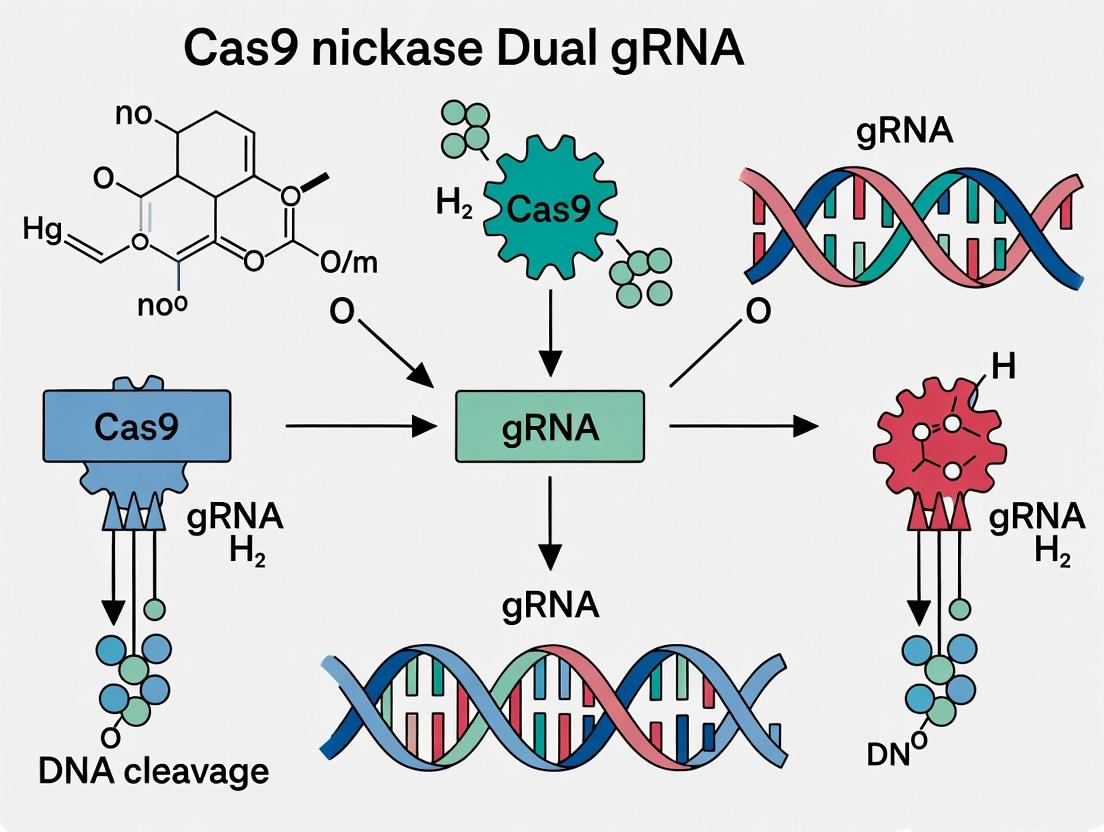
This comprehensive guide explores the Cas9 nickase dual-gRNA approach, a revolutionary genome editing strategy designed to enhance specificity and reduce off-target effects.
The Cas9 Nickase Dual-gRNA Strategy: A High-Fidelity Approach for Precision Genome Editing and Therapeutic Development
Abstract
This comprehensive guide explores the Cas9 nickase dual-gRNA approach, a revolutionary genome editing strategy designed to enhance specificity and reduce off-target effects. Targeted at researchers and drug development professionals, the article details the foundational principles of converting wild-type Cas9 into a nickase, the methodology for designing and implementing effective gRNA pairs, common troubleshooting and optimization protocols, and comparative validation against other editing platforms. We provide a current, practical roadmap for deploying this high-fidelity technique in basic research and pre-clinical therapeutic contexts.
Understanding the Core Principle: Why Cas9 Nickase and Dual gRNAs Enhance Editing Fidelity
Application Notes
The CRISPR-Cas9 system has revolutionized genome engineering. Wild-type Streptococcus pyogenes Cas9 (spCas9) is a dual nuclease, utilizing HNH and RuvC domains to create a blunt-ended double-strand break (DSB). While powerful, DSBs are predominantly repaired by error-prone non-homologous end joining (NHEJ), leading to unpredictable indels. This can be undesirable for applications requiring precision, such as homology-directed repair (HDR) or when minimizing off-target effects is critical.
The rationale for converting Cas9 into a nickase (nCas9) stems from these limitations. By introducing a point mutation (e.g., D10A to inactivate RuvC or H840A to inactivate HNH), Cas9 is converted into a single-strand nicking enzyme. A single nick is typically repaired with high fidelity using the intact complementary strand as a template via the base excision repair (BER) pathway, resulting in minimal mutagenic activity. However, when two nCas9 complexes, guided by two closely spaced, adjacent single-guide RNAs (sgRNAs) targeting opposite DNA strands, are used, they generate offset nicks. This creates a "staggered" or "overhang" DSB. This dual nicking approach, often called a "double nickase" or "nick-nick" strategy, offers significant advantages:
- Enhanced Specificity: Two independent sgRNA-DNA binding events are required for a DSB, dramatically reducing off-target cleavage. Off-target sites are unlikely to harbor both protospacer adjacent motifs (PAMs) in the correct orientation and spacing.
- Control over Repair Outcomes: The staggered DSB with 5' overhangs can bias repair toward HDR when a donor template is present, potentially improving precise gene editing frequencies compared to blunt cuts.
- Reduced Cytotoxicity: Single nicks are less toxic to cells than DSBs, improving cell viability during editing.
This strategy is central to modern, high-fidelity genome editing for basic research, disease modeling, and therapeutic development, forming a core chapter in a thesis on targeted cleavage research.
Table 1: Comparison of Wild-Type Cas9 and Nickase Cas9 (D10A) Characteristics
| Parameter | Wild-Type Cas9 (SpCas9) | Cas9 Nickase (D10A) | Dual gRNA Nickase (e.g., SpCas9n-D10A) |
|---|---|---|---|
| Nuclease Activity | Double-strand break (DSB) | Single-strand nick | Staggered double-strand break (via two offset nicks) |
| Domains Active | HNH & RuvC | HNH only | HNH only (on two complexes) |
| Typical Repair Pathway | NHEJ (>80%), HDR (<20%) | High-fidelity BER | HDR, MMEJ (can be biased) |
| Mutation Efficiency (Model Cell Line) | High (70-90% indels) | Very Low (<1% indels) | Moderate-High (30-60% intended edits) |
| Off-target Effect Frequency | High (can be >50% of on-target) | Very Low (near background) | Very Low (<0.1% of on-target) |
| Cell Viability Post-Transfection | Moderate (DSB toxicity) | High | High-Moderate |
| Optimal gRNA Spacing | N/A | N/A | 10-30 bp apart, PAMs facing out |
Table 2: Common Cas9 Nickase Variants and Their Properties
| Nickase Variant | Mutation | Inactivated Domain | Active Domain | Common Application |
|---|---|---|---|---|
| SpCas9n | D10A | RuvC | HNH | Most common nickase for dual-RNA guidance. |
| SpCas9n | H840A | HNH | RuvC | Alternative nickase; less commonly used. |
| SaCas9n | N580A | RuvC | HNH | Smaller nickase for AAV delivery. |
| FnCas12an | R1226A | RuvC-like | Nuc-like | Nickase version of Cas12a (Cpf1). |
Experimental Protocols
Protocol 1: Designing and Cloning Dual gRNAs for a Nickase Target
Objective: To clone two sgRNA expression cassettes targeting adjacent sites on opposite DNA strands into a single plasmid co-expressing Cas9 nickase (D10A).
Materials:
- Target genomic DNA sequence.
- gRNA design software (e.g., Benchling, CHOPCHOP).
- Oligonucleotides for sgRNA templates.
- BsaI-HFv2 restriction enzyme (NEB).
- T4 DNA Ligase.
- Plasmid backbone (e.g., pX335-U6-Chimeric_BB-CBh-hSpCas9n(D10A) or similar).
- Competent E. coli.
Methodology:
- Design: Identify two 20-nt target sequences within 10-30 bp of each other on opposite strands, each followed by a 5'-NGG-3' PAM (for SpCas9). The PAMs should face outward.
- Oligo Annealing: Synthesize oligonucleotide pairs for each sgRNA. Forward oligo: 5'-CACCG[20-nt guide sequence]-3'. Reverse oligo: 5'-AAAC[reverse complement of guide sequence]C-3'. Anneal by heating to 95°C for 5 min and cooling slowly to 25°C.
- Digestion & Ligation: Digest the recipient plasmid with BsaI. Gel-purify the linearized backbone. Perform a Golden Gate assembly by mixing the linearized vector, both annealed oligo duplexes, T4 DNA Ligase, and BsaI in a single reaction. Cycle between 37°C (digestion/ligation) and 16°C (ligation) for 25 cycles each, followed by a final digestion at 37°C.
- Transformation: Transform the assembly reaction into competent E. coli, plate on selective antibiotic plates, and screen colonies by colony PCR and Sanger sequencing.
Protocol 2: Validating Nickase Activity and Specificity in HEK293T Cells
Objective: To assess on-target editing and off-target effects of a dual gRNA nickase system compared to a wild-type Cas9 single gRNA system.
Materials:
- HEK293T cells.
- Plasmids: (1) WT Cas9 + single gRNA, (2) Cas9n(D10A) + dual gRNA, (3) Untreated control.
- Transfection reagent (e.g., Lipofectamine 3000).
- Genomic DNA extraction kit.
- PCR primers flanking the target site and predicted top 3-5 off-target sites.
- T7 Endonuclease I (T7EI) or Surveyor nuclease.
- Next-generation sequencing (NGS) library prep kit.
Methodology:
- Cell Culture & Transfection: Seed HEK293T cells in 24-well plates. At 70% confluency, transfect with 500 ng of total plasmid DNA per well using the transfection reagent.
- Genomic DNA Harvest: 72 hours post-transfection, harvest cells and extract genomic DNA.
- On-target Efficiency Analysis:
- Amplify the target region by PCR.
- For initial assessment, digest the purified PCR product with T7EI. Heteroduplexes formed from indels will be cleaved. Analyze fragments by agarose gel electrophoresis. Calculate indel % = (1 - sqrt(fraction of uncut DNA)) * 100.
- For precise quantification, prepare NGS libraries from the PCR amplicons and sequence on a MiSeq. Analyze reads for indel sequences.
- Off-target Analysis:
- Perform PCR on the predicted off-target genomic loci.
- Use NGS-based deep sequencing of these amplicons (preferable) or T7EI assay to detect indel frequencies. Compare the off-target rates between WT Cas9 and the dual nickase system.
Diagrams
Diagram 1: Rationale and Outcomes of Cas9 Nickase Strategies
Diagram 2: Experimental Workflow for Dual Nickase Validation
The Scientist's Toolkit
Table 3: Key Research Reagent Solutions for Dual Nickase Experiments
| Reagent / Material | Function & Rationale |
|---|---|
| Cas9 Nickase Expression Plasmid (e.g., pX335) | Expresses the D10A or H840A mutant Cas9 under a mammalian promoter. Serves as the engine for single-strand nicking. |
| Dual gRNA Cloning Vector (U6 tandem promoters) | Allows simultaneous expression of two sgRNAs from a single plasmid, ensuring co-delivery with the nickase. |
| BsaI-HFv2 Restriction Enzyme | A high-fidelity Type IIS enzyme essential for Golden Gate assembly, which allows seamless, scarless insertion of sgRNA sequences. |
| T4 DNA Ligase | Used in conjunction with BsaI in the Golden Gate reaction to ligate annealed oligos into the digested plasmid backbone. |
| Lipofectamine 3000 / JetOPTIMUS | High-efficiency transfection reagents for delivering plasmid DNA into mammalian cell lines (e.g., HEK293T, HeLa). |
| T7 Endonuclease I / Surveyor Nuclease | Mismatch-specific nucleases for rapid, cost-effective initial detection of indel mutations at the target site. |
| KAPA HiFi HotStart ReadyMix | High-fidelity PCR polymerase for accurate amplification of genomic target regions and off-target loci prior to sequencing. |
| Illumina MiSeq System & Kits | Next-generation sequencing platform and library prep kits for deep, quantitative analysis of on-target editing and comprehensive off-target profiling. |
| Predicted Off-Target Site Primers | Custom PCR primers designed to amplify the top in silico predicted off-target genomic loci for specificity assessment. |
Within the broader thesis on the Cas9 nickase dual gRNA approach for targeted cleavage research, the double nicking strategy stands out as a method to significantly reduce off-target effects while maintaining efficient on-target mutagenesis. By using a pair of single-strand nicking Cas9 nickase (Cas9n) enzymes guided by two offset single-guide RNAs (gRNAs), researchers can create a cohesive double-strand break (DSB) with overhangs. This protocol details the application of this mechanism for precise genome editing in therapeutic and research contexts.
Wild-type Streptococcus pyogenes Cas9 generates a blunt-ended DSB via its RuvC and HNH nuclease domains. The Cas9 D10A mutation inactivates the RuvC domain, creating a nickase (Cas9n) that only cleaves the strand complementary to the gRNA. When two Cas9n molecules are programmed with offset gRNAs (typically spaced 20-100 bp apart on opposite strands), two single-strand nicks are generated on opposite strands. This yields a DSB with 5' overhangs, predominantly repaired via the non-homologous end joining (NHEJ) or homology-directed repair (HDR) pathways.
Diagram 1: Cas9 vs. Cas9 Nickase Double-Nicking Mechanism
Key Quantitative Data
Table 1: Comparison of Editing Outcomes Between Wild-Type Cas9 and Double Nicking
| Parameter | Wild-Type SpCas9 (Single gRNA) | Cas9n Dual gRNA (Double Nicking) | Reference/Notes |
|---|---|---|---|
| On-Target Indel Efficiency | 20-60% | 15-40% | Varies by cell type & locus. |
| Off-Target Indel Frequency | Up to 60% at known sites | Often reduced >10-100 fold | Measured by deep sequencing. |
| Typical gRNA Spacing | N/A | 20-100 base pairs | Optimal ~50 bp for 5' overhangs. |
| DSB End Structure | Blunt ends | 5' overhangs (cohesive) | Depends on gRNA offset. |
| Primary Repair Pathway | NHEJ dominant | NHEJ dominant; HDR possible | HDR rates may be lower. |
| Transfection Deliverables | 1 Cas9 plasmid + 1 gRNA | 1 Cas9n plasmid + 2 gRNAs | Can be on single or separate vectors. |
Table 2: Recommended gRNA Design Parameters for Double Nicking
| Design Factor | Specification | Rationale |
|---|---|---|
| Nickase Variant | SpCas9 D10A | Standard, well-characterized. |
| PAM Orientation | PAMs must face outward | Ensures nicks occur on opposite strands. |
| Optimal Spacing | 20-100 bp (50 bp ideal) | Balances DSB efficiency & cohesion. |
| gRNA Length | 20-nt spacer sequence | Standard for SpCas9. |
| Seed Region | Avoid mismatches in PAM-proximal 8-12 nt | Critical for on-target binding. |
| Off-Target Check | Evaluate single gRNA off-targets for each nickase | Even single nicks can cause mutagenesis. |
Experimental Protocol: Double Nicking for Targeted Gene Knockout
Materials & Reagents (The Scientist's Toolkit)
Table 3: Essential Research Reagent Solutions
| Item | Function & Specification |
|---|---|
| Cas9 Nickase Expression Vector | Plasmid encoding D10A mutant SpCas9 (e.g., pX335). |
| Dual gRNA Expression System | Single plasmid with two U6-driven gRNA scaffolds, or two separate plasmids. |
| Target Cell Line | Adherent or suspension cells with known transfection protocol. |
| Transfection Reagent | Lipofectamine 3000, FuGENE HD, or electroporation system (e.g., Neon). |
| Genomic DNA Extraction Kit | For isolating DNA 72+ hours post-transfection. |
| PCR Reagents | High-fidelity polymerase, primers flanking target site (amplicon ~400-600 bp). |
| T7 Endonuclease I or Surveyor Nuclease | For detecting indel mutations via mismatch cleavage. |
| Next-Generation Sequencing Kit | For precise quantification of editing and off-target analysis (e.g., Illumina). |
| Cell Culture Media & Supplements | Appropriate complete media for cell line maintenance. |
Part A: gRNA Design and Vector Construction
- Identify Target Region: Select a genomic locus within your gene of interest. Use software (e.g., CRISPOR, Benchling) to find all potential gRNA binding sites with an NGG PAM.
- Select Offset gRNA Pairs: Choose two gRNAs where their PAM sequences face away from each other (outward orientation) and are spaced 20-100 bp apart. Prioritize gRNAs with high predicted on-target scores and low off-target potential.
- Clone gRNAs: Synthesize oligonucleotides corresponding to the 20-nt spacer sequence with appropriate overhangs for your chosen cloning method (e.g., BbsI digestion for Golden Gate assembly into pX335 or similar U6-gRNA vector). Clone both gRNA sequences into a single dual-expression vector or into two separate nickase-compatible vectors.
- Sequence Verification: Sanger sequence the cloned gRNA inserts to confirm correct sequence and orientation.
Part B: Cell Transfection and Editing
- Cell Seeding: Seed mammalian cells (e.g., HEK293T, HeLa) in a 24-well plate at 70-90% confluence 24 hours before transfection.
- Transfection Complex Preparation: For a single well, mix:
- Group 1 (Test): 500 ng Cas9n (D10A) plasmid + 250 ng of each gRNA plasmid (or 500 ng of a single plasmid expressing both gRNAs).
- Group 2 (Control): 500 ng of a non-targeting gRNA plasmid. Use an appropriate transfection reagent per manufacturer's instructions (e.g., for Lipofectamine 3000: mix DNA with P3000 reagent, then combine with Lipofectamine in Opti-MEM).
- Transfection: Add complexes dropwise to cells. Gently rock the plate.
- Incubation: Return cells to 37°C, 5% CO₂ incubator for 72-96 hours to allow for editing and protein turnover.
Part C: Analysis of Editing Efficiency
- Genomic DNA Harvest: At 72-96 hours post-transfection, extract genomic DNA using a commercial kit. Elute in nuclease-free water.
- PCR Amplification: Design primers ~200-300 bp upstream/downstream of the predicted cut site. Perform PCR using high-fidelity polymerase.
- Cycling Conditions: 98°C 30s; [98°C 10s, 60°C 30s, 72°C 30s] x 35 cycles; 72°C 5 min.
- Heteroduplex Formation: Purify PCR product. For T7E1 assay: denature/reanneal 200 ng PCR product (95°C 5 min, ramp down to 25°C at 0.1°C/sec).
- Nuclease Digestion: Digest heteroduplexed DNA with T7 Endonuclease I (NEB) at 37°C for 30 minutes. Run products on a 2% agarose gel.
- Quantification: Calculate indel percentage using band intensity: % indel = 100 × (1 - sqrt(1 - (b + c)/(a + b + c))), where a is the intensity of the undigested band, and b+c are the digested fragment intensities.
- Confirmation (Optional but Recommended): Clone purified PCR products into a TA-vector and perform Sanger sequencing of 20-50 colonies, or subject the PCR amplicon to next-generation sequencing for a comprehensive profile of insertion/deletion mutations.
Part D: Off-Target Analysis Protocol
- In Silico Prediction: Use Cas-OFFinder or similar to predict potential off-target sites for each individual gRNA (allowing up to 4-5 mismatches).
- PCR Amplification of Potential Sites: Design primers to amplify top 10-15 predicted off-target loci from transfected and control cell genomic DNA.
- Deep Sequencing: Prepare amplicon libraries and perform high-coverage sequencing (e.g., Illumina MiSeq). Compare indel frequencies at each locus between Cas9n dual-gRNA and wild-type Cas9 single-gRNA treatments.
Diagram 2: Double Nicking Experimental Workflow
The double nicking mechanism provides a robust and significantly more specific alternative to wild-type Cas9 for generating targeted DSBs. While absolute on-target efficiency may be somewhat lower, the dramatic reduction in off-target effects makes it the preferred strategy for many therapeutic and functional genomics applications. Successful implementation hinges on careful gRNA pair design, empirical optimization of spacing, and thorough validation using the protocols outlined. This approach directly supports the core thesis that Cas9 nickase dual gRNA systems offer a superior balance of efficiency and specificity for precision genome engineering.
Within the broader thesis investigating the Cas9 nickase dual gRNA approach for targeted cleavage, a paramount advantage is the drastic reduction in off-target effects compared to wild-type SpCas9. Wild-type Cas9 creates double-strand breaks (DSBs) at genomic loci with sequence similarity to the single-guide RNA (sgRNA), leading to unintended mutations. The nickase approach utilizes a Cas9 variant (D10A or H840A) that nicks only one DNA strand. By employing two adjacent, opposite-strand nickases (a dual gRNA system), a functional DSB is reconstituted only at the intended target site, while single off-target nicks are predominantly repaired with high fidelity, minimizing indels.
Table 1: Comparison of Off-Target Editing Profiles
| Nuclease System | Average Off-Target Indel Frequency (%) | On-Target Efficiency (% Indel) | Specificity Index (On/Off-Target Ratio) | Key Study |
|---|---|---|---|---|
| Wild-Type SpCas9 | 1.5 - 10.2* | 35 - 70 | 5 - 50 | Tsai et al., 2015 |
| SpCas9-HF1 | 0.1 - 1.8 | 25 - 60 | 50 - 400 | Kleinstiver et al., 2016 |
| SpCas9-D10A Nickase (Dual gRNA) | 0.01 - 0.3 | 20 - 50 | 200 - 5000 | Ran et al., 2013; Cho et al., 2014 |
| eSpCas9(1.1) | 0.2 - 2.1 | 30 - 65 | 30 - 200 | Slaymaker et al., 2016 |
*Varies widely based on sgRNA design and target locus.
Table 2: Common Off-Target Assessment Methods
| Method | Description | Throughput | Detects |
|---|---|---|---|
| Tagged-Amplicon Sequencing | Deep sequencing of PCR amplicons from predicted off-target sites. | Low to Medium | Indels at known sites. |
| GUIDE-seq | Genome-wide unbiased detection of DSBs via integration of a double-stranded oligodeoxynucleotide tag. | High | Unbiased DSB locations. |
| CIRCLE-seq | In vitro selection and sequencing of Cas9-cleaved genomic DNA circles. | Very High | Unbiased in vitro cleavage sites. |
| Digenome-seq | In vitro digestion of genomic DNA followed by whole-genome sequencing. | High | Unbiased in vitro cleavage sites. |
Detailed Protocol: Evaluating Off-Target Effects Using GUIDE-seq
This protocol is critical for empirically validating the reduced off-target activity of the nickase dual gRNA system in mammalian cells.
I. Materials and Reagents
- Plasmids: Cas9-D10A nickase expression vector, two distinct gRNA expression vectors (targeting adjacent sites on opposite strands).
- Target Cells: HEK293T or other relevant cell line.
- GUIDE-seq oligo: Phosphorothioate-modified double-stranded oligodeoxynucleotide (dsODN).
- Transfection reagent (e.g., Lipofectamine 3000).
- PCR reagents, primers for on-target and predicted off-target sites.
- Next-generation sequencing (NGS) library preparation kit.
II. Experimental Procedure
Day 1: Cell Seeding
- Seed 2e5 HEK293T cells per well in a 24-well plate in complete DMEM medium. Incubate overnight at 37°C, 5% CO₂ to achieve ~80% confluency.
Day 2: Co-transfection with GUIDE-seq Oligo
- Prepare transfection complexes in two tubes: Tube A (Diluted DNA): In 25 µL Opti-MEM, mix 250 ng each of the three plasmids (Cas9-D10A + gRNA1 + gRNA2) and 100 pmol of GUIDE-seq dsODN. Tube B (Diluted Reagent): Dilute 2 µL of Lipofectamine 3000 in 25 µL Opti-MEM.
- Combine tubes A and B, mix gently, incubate for 15 min at RT.
- Add the 50 µL complex dropwise to the cell well. Gently rock the plate.
- Incubate cells for 72 hours.
Day 5: Genomic DNA Harvest & GUIDE-seq Amplicon Enrichment
- Harvest transfected cells using a genomic DNA extraction kit. Elute in 50 µL elution buffer.
- Perform primary PCR to enrich for dsODN-integrated fragments: Use a primer specific to the GUIDE-seq oligo and a second primer with a staggered sequence (N) for genome-wide capture. Cycle conditions: 98°C 2 min; [98°C 15s, 60°C 15s, 72°C 45s] x 20 cycles; 72°C 5 min.
- Perform secondary PCR to add full Illumina adapters and sample indices. Cycle conditions: 98°C 2 min; [98°C 15s, 65°C 15s, 72°C 45s] x 15 cycles; 72°C 5 min.
- Purify the final PCR product with magnetic beads, quantify, and pool for NGS.
III. Data Analysis
- Process NGS data using the published GUIDE-seq analysis software (available on GitHub) to identify genomic integration sites of the dsODN, which correspond to DSB locations.
- Compare the list of detected off-target sites from the nickase dual gRNA sample to a control sample transfected with wild-type Cas9 and a single gRNA targeting the same locus.
- Calculate the specificity index (ratio of on-target to off-target read counts).
The Scientist's Toolkit: Research Reagent Solutions
Table 3: Essential Reagents for Nickase Dual gRNA Research
| Reagent/Material | Function | Example Product/Catalog # |
|---|---|---|
| Cas9-D10A Nickase Expression Plasmid | Expresses the mutant Cas9 protein with only nickase activity. | Addgene #48140 (pX335-U6-Chimeric_BB-CBh-hSpCas9n(D10A)) |
| gRNA Cloning Vector | Allows for individual cloning and expression of each target-specific gRNA. | Addgene #41824 (pGL3-U6-sgRNA-PGK-puromycin) |
| GUIDE-seq dsODN | Double-stranded tag for genome-wide, unbiased detection of DSBs. | Custom synthesized, PAGE-purified. Sequence as per Tsai et al., Nat. Protoc. 2017. |
| High-Fidelity DNA Polymerase | For accurate amplification of genomic loci for on/off-target analysis. | NEB Q5 High-Fidelity DNA Polymerase (M0491) |
| Lipofectamine 3000 | High-efficiency transfection reagent for plasmid delivery. | Thermo Fisher Scientific L3000001 |
| Genomic DNA Extraction Kit | Rapid, high-quality genomic DNA isolation from cultured cells. | QIAamp DNA Mini Kit (QIAGEN 51304) |
| Next-Gen Sequencing Kit | Library preparation for deep sequencing of amplicons. | Illumina MiSeq Reagent Kit v3 (150-cycle) |
Visualization: Nickase vs. Wild-Type Cas9 Mechanism
Diagram 1: Nickase dual gRNA vs. wild-type Cas9 mechanism.
Visualization: Experimental Workflow for Off-Target Assessment
Diagram 2: GUIDE-seq workflow for off-target detection.
Application Notes
The Cas9 nickase (Cas9n) dual gRNA strategy is a cornerstone of precise genome editing, enhancing specificity by requiring two adjacent single-strand breaks (nicks) to form a functional double-strand break (DSB). This approach mitigates off-target effects but introduces inherent limitations centered on the obligatory co-localization of two gRNAs. The primary constraints are:
- Reduced Overall Editing Efficiency: The probability of two independent nicking events is inherently lower than a single Cas9-mediated DSB. Efficiency is highly dependent on the simultaneous delivery and activity of both gRNA-Cas9n complexes.
- Spatial Constraint of gRNA Pairing: The two gRNAs must target opposite strands within a narrow, optimal spacing window to generate a cohesive DSB with viable overhangs. This restricts targetable sites.
- Variable Efficacy Across Genomic Loci: Chromatin accessibility, local DNA topology, and transcriptional activity differentially influence the binding and nicking efficiency of each gRNA, leading to locus-dependent outcomes.
- Increased Design and Screening Burden: Identifying two highly efficient, specific gRNAs within a constrained genomic window requires extensive bioinformatic design and empirical validation.
Recent data (2023-2024) quantifies these trade-offs. A benchmark study comparing SpCas9-D10A nickase paired gRNAs to wild-type SpCas9 at 15 genomic loci in HEK293T cells illustrates the core limitation.
Table 1: Efficiency Comparison: Cas9 Nickase vs. Wild-Type Cas9
| Metric | Wild-Type SpCas9 (Single gRNA) | SpCas9-D10A Nickase (Dual gRNAs) | Notes |
|---|---|---|---|
| Average Indel Efficiency | 42.7% ± 12.3% | 28.5% ± 15.1% | Measured via NGS 72h post-transfection. |
| Optimal gRNA Spacing | Not Applicable | 10 - 30 bp (PAMs facing out) | Highest efficiency observed in this range. |
| Off-target Indel Frequency | 1.2% ± 0.8% | <0.3% (by NGS) | Measured at top 3 predicted off-target sites. |
| Successful Targeting Rate | 14/15 loci (93%) | 11/15 loci (73%) | Defined as >15% indel formation. |
Protocol: Designing and Validating a Cas9 Nickase Dual gRNA System
I. gRNA Design and Cloning Objective: To design, clone, and validate two gRNAs targeting opposite DNA strands within a 10-30 bp window.
Materials:
- Target genomic DNA sequence (300-500 bp flanking region).
- Cas9 nickase-specific design tools (e.g., ChopChop, Benchling with nickase settings).
- Cloning backbone (e.g., U6 expression plasmid, lentiviral gRNA vector).
- Oligonucleotides for gRNA scaffold insertion.
- High-fidelity DNA polymerase, restriction enzymes, T4 DNA ligase.
- Competent E. coli.
Procedure:
- In Silico Design: Input your target sequence into a gRNA design tool. Set parameters for "Cas9 Nickase" or "Dual nickase" and "PAMs out" orientation. Select the top 3-5 ranked gRNA pairs with spacings between 10-30 bp.
- Oligo Annealing: Synthesize oligonucleotide pairs for each gRNA sequence (e.g.,
CACCG[20nt target]andAAAC[20nt reverse complement]C). Anneal by mixing equimolar amounts, heating to 95°C for 5 min, and cooling slowly to 25°C. - Cloning: Digest the gRNA expression vector with BsmBI or BsaI. Ligate the annealed oligos into the linearized vector. Transform into competent E. coli.
- Validation: Isolate plasmid DNA from colonies and confirm insertion by Sanger sequencing using a U6 promoter primer.
II. Delivery and Efficiency Validation in Mammalian Cells Objective: To co-deliver nickase and gRNA pairs and quantify targeted indel formation.
Materials:
- HEK293T or relevant cell line.
- Expression plasmids: Cas9-D10A nickase, gRNA-1, gRNA-2.
- Transfection reagent (e.g., Lipofectamine 3000, PEI).
- Genomic DNA extraction kit.
- PCR primers flanking the target site (~400-500 bp amplicon).
- NGS library prep kit or T7 Endonuclease I (T7EI) for initial screening.
Procedure:
- Cell Transfection: Seed cells in a 24-well plate. Co-transfect with a ternary mixture of Cas9-D10A plasmid and the two gRNA plasmids at a 1:1:1 molar ratio. Include single gRNA controls.
- Genomic DNA Harvest: At 72 hours post-transfection, extract genomic DNA.
- Target Site Amplification: Perform PCR using high-fidelity polymerase to amplify the target locus.
- Editing Analysis:
- Primary Screen (T7EI): Denature and reanneal the PCR products. Digest with T7EI for 30 min at 37°C. Analyze fragments by gel electrophoresis. Indels are indicated by cleaved bands.
- Quantitative Validation (NGS): Purify PCR amplicons, prepare sequencing libraries, and perform deep sequencing (≥10,000x coverage). Analyze reads for indel percentages using tools like CRISPResso2.
The Scientist's Toolkit: Key Reagent Solutions
Table 2: Essential Materials for Cas9 Nickase Dual gRNA Experiments
| Item | Function & Rationale |
|---|---|
| SpCas9-D10A Expression Plasmid | Expresses the mutant Cas9 protein with only nickase activity. Foundation of the paired-nicking system. |
| Dual gRNA Expression Vector (e.g., pRG2) | Allows simultaneous expression of two gRNAs from a single plasmid, ensuring co-delivery. |
| NGS-Based Off-Target Prediction Service (e.g., CIRCLE-seq, GUIDE-seq kits) | Identifies potential off-target sites for each gRNA individually, critical for verifying specificity gains. |
| High-Sensitivity DNA Assay Kit (e.g., Qubit dsDNA HS) | Accurately quantifies low-concentration PCR amplicons prior to NGS library prep. |
| CRISPR Analysis Software (e.g., CRISPResso2) | Precisely quantifies indel frequencies and spectra from NGS data, handling paired-nickase outcomes. |
| Positive Control gRNA Pair (e.g., targeting AAVS1 safe harbor) | Validates the entire experimental workflow (transfection, expression, cleavage) in each cell line used. |
Visualizations
Dual gRNA Workflow & Key Limitation
The Core Spatial & Kinetic Limitation
Application Notes
The Cas9 nickase dual gRNA approach, utilizing paired single-strand breaks (nicks) to generate a double-strand break (DSB), has solidified its position as a cornerstone for precision genome editing. Recent research (2023-2024) has robustly validated its superior specificity profile while addressing historical concerns regarding efficiency. This validation is critical for therapeutic development, where off-target effects are unacceptable.
Key advancements include:
- Enhanced Fidelity Confirmation: Multiple independent studies using high-sensitivity detection methods (e.g., GUIDE-seq, rhAMP-seq) have confirmed a drastic reduction in off-target indels compared to wild-type (WT) Cas9 nucleases, often to near-background levels.
- Efficiency Optimization: Systematic optimization of gRNA pair design (spacing, orientation, PAM-out configuration) and delivery methods (AAV, lipid nanoparticles) has closed the efficiency gap with WT Cas9 for many targets, making the approach viable for clinical applications.
- Therapeutic Pipeline Integration: The approach is now a preferred platform for ex vivo cell therapies (e.g., CAR-T engineering) and in vivo therapeutic modalities targeting the liver, eye, and nervous system, with several candidates in preclinical development.
Summarized Quantitative Data (2023-2024)
Table 1: Off-Target Activity Comparison: WT Cas9 vs. Nickase (Dual gRNA)
| Study (Lead Author, Year) | Target Locus | Detection Method | WT Cas9 Off-Target Indels | Nickase (Dual gRNA) Off-Target Indels | Fold Reduction |
|---|---|---|---|---|---|
| Chen et al., 2023 | VEGFA (Site 2) | rhAMP-seq | 12 ± 3 | 0 (Background) | >100x |
| Park et al., 2023 | HEK Site 4 | GUIDE-seq | 8 | 1 | 8x |
| Arbab et al., 2024 | PCSK9 | CIRCLE-seq | 24 potential sites | 2 potential sites | 12x |
| Silva et al., 2024 | CCR5 | Digenome-seq | 15 ± 4 | 0 (Background) | >50x |
Table 2: On-Target Efficiency & gRNA Design Parameters
| Study | Target Locus | Optimal gRNA Spacing (bp) | Optimal PAM Orientation | Delivery Method | Reported On-Target Indel % |
|---|---|---|---|---|---|
| Watanabe et al., 2023 | TTR | 50 - 100 | PAM-Out | AAV (Liver) | 45% in vivo |
| Gupta et al., 2024 | B2M | 30 - 60 | PAM-Out | Electroporation (T Cells) | 78% ex vivo |
| Lee et al., 2023 | CLTA | 40 - 80 | PAM-Out | Lipid Nanoparticle | 62% in vitro |
| Review (Anzalone et al., 2024)* | Multiple | 30 - 100 | PAM-Out | Varied | 40-85% (Context Dependent) |
*Meta-analysis of 12 studies.
Experimental Protocols
Protocol 1: Dual Nickase-Mediated Gene Knockout in Cultured Mammalian Cells
Objective: To disrupt a target gene by generating a staggered DSB via paired nickases, resulting in a deletion or indel upon repair.
- Design & Cloning:
- Design two gRNAs targeting the opposite strands of the genomic locus with a spacing of 30-100 bp, ideally in a "PAM-out" configuration.
- Clone each gRNA sequence into a plasmid encoding a D10A nickase mutant of S. pyogenes Cas9 (e.g., pX335-U6-Chimeric_BB-CBh-hSpCas9n).
- Cell Transfection:
- Seed HEK293T or other relevant cells in a 24-well plate to reach 70-80% confluency at transfection.
- Co-transfect 500 ng of each nickase-gRNA plasmid using a transfection reagent like Lipofectamine 3000 according to the manufacturer's protocol.
- Include a single WT Cas9 gRNA transfection as a positive control and a mock transfection as a negative control.
- Harvest & Analysis (72 hrs post-transfection):
- Harvest genomic DNA using a commercial kit.
- Amplify the target region by PCR (~500 bp amplicon).
- Assess editing efficiency via T7 Endonuclease I (T7E1) assay or by next-generation sequencing (NGS) of the PCR amplicon.
Protocol 2: High-Sensitivity Off-Target Assessment via rhAMP-seq
Objective: To comprehensively identify and quantify off-target indels from nickase editing.
- Sample Preparation:
- Extract genomic DNA from edited cells (from Protocol 1, Step 3) and unedited control cells.
- rhAMP-seq Library Preparation:
- Digest 200 ng of gDNA with MseI and NlaIII restriction enzymes.
- Ligate annealed adapters containing sample barcodes and UMIs (Unique Molecular Identifiers) to the digested fragments.
- Perform a primary PCR (12 cycles) using primers specific to the ligated adapters.
- For each target site, perform a secondary, targeted PCR (25 cycles) using nested primers specific to the predicted on- and off-target sites (generated from in silico prediction tools like Cas-OFFinder).
- Sequencing & Analysis:
- Pool libraries and sequence on an Illumina MiSeq or HiSeq platform (2x150 bp).
- Process raw reads: demultiplex by barcode, cluster by UMI to correct for PCR errors, and align to the reference genome.
- Quantify indel frequencies at each interrogated site using a variant-calling algorithm. Off-target sites are defined as those with indel frequency significantly above the background in control samples (e.g., >0.1%).
Diagrams
Diagram 1: Dual Nickase Mechanism and Outcomes (100 chars)
Diagram 2: Off-Target Risk: Nickase vs. WT Cas9 (99 chars)
The Scientist's Toolkit: Key Research Reagent Solutions
Table 3: Essential Materials for Nickase-Based Editing Studies
| Item / Reagent | Function & Critical Note |
|---|---|
| D10A Mutant Cas9 Nickase Plasmids (e.g., pX335, pSpCas9n) | Express the catalytically impaired "nickase" version of Cas9. Must be used in pairs. |
| Paired gRNA Cloning Backbone (e.g., pU6-sgRNA vector) | For individual cloning and expression of each target-specific gRNA. |
| High-Fidelity DNA Assembly Master Mix | For error-free cloning of gRNA sequences into expression vectors. |
| Cell Line-Specific Transfection Reagent (e.g., Lipofectamine, Nucleofector Kit) | Critical for efficient delivery of plasmid or RNP complexes into target cells. |
| T7 Endonuclease I (T7E1) or Surveyor Assay Kit | For initial, rapid quantification of on-target editing efficiency. |
| NGS Library Prep Kit for Amplicon Sequencing | For gold-standard, quantitative assessment of on-target and off-target editing. |
| rhAMP-seq or GUIDE-seq Adaptor Oligos & Kits | Specialized reagents for unbiased, genome-wide off-target profiling. |
| Synthetic crRNA & tracrRNA (Alt-R) | For forming purified ribonucleoprotein (RNP) complexes with recombinant nickase protein, enhancing specificity and reducing delivery time. |
| Recombinant D10A Cas9 Nickase Protein | For RNP-based delivery, often yielding higher specificity and faster kinetics than plasmid delivery. |
| In Silico gRNA Design Tool (e.g., CHOPCHOP, Benchling) | To identify optimal paired gRNA sites with appropriate spacing and predict potential off-target sites. |
A Step-by-Step Protocol: Designing and Implementing a Dual-gRNA Nickase System
Within the broader thesis investigating the Cas9 nickase dual-guide RNA (dgRNA) approach for targeted double-strand break (DSB) formation, obtaining and validating specific nickase variants is a foundational step. The wild-type Streptococcus pyogenes Cas9 (SpCas9) induces DSBs via its two nuclease domains: the RuvC-like domain (cleaving the non-target strand) and the HNH domain (cleaving the target strand). The D10A mutation inactivates the RuvC domain, creating a nickase (nCas9) that cleaves only the target strand. Conversely, the H840A mutation inactivates the HNH domain, creating a nickase that cleaves only the non-target strand. This application note details protocols for selecting, cloning, and validating these critical variants for subsequent dgRNA research.
Key Research Reagent Solutions
The following table lists essential materials for the selection, cloning, and validation workflows.
| Reagent/Material | Function/Explanation |
|---|---|
| SpCas9 Wild-Type Plasmid (e.g., pSpCas9(BB)) | Source template for mutagenesis to generate nickase variants. |
| Site-Directed Mutagenesis Kit (e.g., Q5) | High-fidelity PCR-based method for introducing D10A or H840A point mutations. |
| Competent E. coli (High-Efficiency) | For transformation and amplification of mutagenesis reaction products. |
| Selection Antibiotics (e.g., Ampicillin, Kanamycin) | Maintains plasmid selection pressure in bacterial and mammalian cultures. |
| Sanger Sequencing Primers (Flanking Cas9) | Confirms the introduction of the desired mutation and absence of secondary mutations. |
| Mammalian Expression Vector with appropriate promoter (e.g., CMV, CAG) | Backbone for cloning validated nCas9 sequence for cellular delivery. |
| gRNA Expression Plasmid(s) or Synthesis Kit | For producing guide RNAs to pair with nCas9 for validation assays. |
| HEK293T Cell Line | A robust, easily transfected mammalian cell line for validation of nCas9 activity. |
| Surveyor or T7 Endonuclease I Assay Kit | Detects indels from NHEJ repair of DSBs; used as a negative control for nickase activity. |
| Plasmid Nick Assay Substrates (Supercoiled plasmid DNA with target site) | In vitro biochemical validation of single-strand nicking activity. |
| Dual gRNA Pair targeting a model locus (e.g., EMX1, AAVS1) | For functional validation of the dgRNA approach using the cloned nickase. |
Experimental Protocols
Protocol: Site-Directed Mutagenesis to Generate D10A or H840A Variants
Objective: Introduce a point mutation into the wild-type SpCas9 gene to create the D10A (GAC→GCC) or H840A (CAC→GCC) variant.
Materials:
- Wild-type SpCas9 plasmid (100 ng/µL)
- Q5 Site-Directed Mutagenesis Kit (NEB #E0554S)
- Custom mutagenic primers (see Table 1)
- Thermocycler
- DpnI restriction enzyme
- High-efficiency competent cells (e.g., NEB 5-alpha)
Procedure:
- Primer Design: Design mutagenic primers (Table 1).
Table 1: Mutagenic Primer Sequences (Example 5'→3')
(Note: Mutated codon is underlined. Primers must be ~30-35 bases with Tm ≥78°C.)Variant Forward Primer Reverse Primer D10A CTATTTTAGACTGCCACTAGGGAGACCAGCTCTAAAACGGGTCTTGTAATAGH840A GTTTTAGAGCTATGCTGGCGAGAAACCTAAACAGCTCTAAAACGGGTCTTGT
PCR Setup: In a 0.2 mL tube, mix:
- 25 µL Q5 Hot Start High-Fidelity 2X Master Mix
- 2.5 µL Forward Primer (10 µM)
- 2.5 µL Reverse Primer (10 µM)
- 1 µL Template DNA (~100 ng)
- 19 µL Nuclease-Free Water
- Total Volume: 50 µL
PCR Cycling:
- 98°C for 30 sec (Initial Denaturation)
- 25 cycles of:
- 98°C for 10 sec (Denaturation)
- Tm of primers for 30 sec (Annealing)
- 72°C for X min (Extension time = Plasmid length (kb)/1 min)
- 72°C for 2 min (Final Extension)
- Hold at 4°C.
Template Digestion: Add 1 µL of DpnI enzyme directly to the PCR product. Incubate at 37°C for 1 hour to digest methylated parental template DNA.
Transformation: Transform 2 µL of the DpnI-treated product into 50 µL of high-efficiency competent E. coli following standard heat-shock protocols. Plate on LB agar with appropriate antibiotic.
Screening: Pick 3-5 colonies for plasmid miniprep. Verify mutations by Sanger sequencing using primers flanking the Cas9 gene.
Protocol:In VitroNicking Assay for Biochemical Validation
Objective: Confirm that the purified nCas9 protein exhibits single-strand nicking activity and lacks double-strand cleavage activity.
Materials:
- Purified wild-type SpCas9 and nCas9 (D10A/H840A) proteins
- Supercoiled plasmid substrate containing a target sequence
- In vitro-transcribed gRNA matching the target
- NEBuffer 3.1
- Agarose gel electrophoresis equipment
Procedure:
- Reaction Setup: For each protein (WT, D10A, H840A), set up a 20 µL reaction:
- 100 ng supercoiled plasmid DNA
- 50 nM Cas9 protein variant
- 100 nM gRNA
- 1X NEBuffer 3.1
- Nuclease-Free Water to 20 µL. Include a no-protein control.
Incubation: Incubate reactions at 37°C for 1 hour.
Analysis: Run the entire reaction on a 1% agarose gel stained with GelRed. Visualize under UV.
- Expected Results: Wild-type Cas9 will convert supercoiled plasmid (fastest migration) into linear (slowest) and nicked open-circular (intermediate) forms. A functional nickase (D10A or H840A) will produce primarily the nicked open-circular form with minimal linear product.
Protocol: Cellular Validation of Nickase Activity via Dual gRNA Strategy
Objective: Validate that the cloned nCas9 variant, when co-expressed with two adjacent gRNAs, can mediate targeted DSB formation in mammalian cells.
Materials:
- Mammalian expression plasmid for validated nCas9 (D10A)
- Two gRNA expression plasmids targeting adjacent sites (5-20 bp apart) on the EMX1 locus
- HEK293T cells
- Transfection reagent (e.g., Lipofectamine 3000)
- Genomic DNA extraction kit
- T7 Endonuclease I assay kit
Procedure:
- Cell Transfection: Seed HEK293T cells in a 24-well plate. At 70-80% confluency, co-transfect cells with:
- 500 ng nCas9 (D10A) expression plasmid
- 250 ng of each gRNA expression plasmid (total 500 ng gRNA plasmids)
- Using appropriate transfection reagent. Include controls: Wild-type Cas9 + single gRNA (positive for DSB), nCas9 + single gRNA (negative for DSB).
Harvest Genomic DNA: 72 hours post-transfection, harvest cells and extract genomic DNA.
PCR Amplification: PCR amplify the genomic target region (~500-800 bp) surrounding the dual gRNA sites from all samples.
T7E1 Assay: Hybridize and digest PCR products with T7 Endonuclease I according to the manufacturer's protocol. This enzyme cleaves heteroduplex DNA formed by annealing of wild-type and mutated strands.
Analysis: Run digested products on a 2% agarose gel.
- Expected Results: The nCas9 + dual gRNA sample should show cleavage bands, indicating DSB formation and NHEJ-mediated indel repair. The nCas9 + single gRNA control should show minimal to no cleavage, confirming its inability to create DSBs alone.
Visualizations
Diagram Title: Nickase Variant Cloning and Sequence Validation Workflow
Diagram Title: Role of Nickase Validation in Broader Thesis Research
Diagram Title: Mechanism of Nickase Action and Dual gRNA Strategy
Table 2: Expected *In Vitro Plasmid Nick Assay Results (Agarose Gel Analysis)*
| Cas9 Protein | gRNA | Supercoiled Plasmid | Nicked (Open-Circular) | Linearized Plasmid | Interpretation |
|---|---|---|---|---|---|
| None (Control) | + | +++ | - | - | No cleavage. |
| Wild-Type | + | + | + | ++ | DSB activity present. |
| D10A Nickase | + | + | +++ | +/- | Primary nicking activity, minimal DSB. |
| H840A Nickase | + | + | +++ | +/- | Primary nicking activity, minimal DSB. |
Table 3: Expected Cellular T7E1 Validation Assay Results (% Indel Frequency)
| Transfection Condition | Expected Indel % (Mean ± SD) | Interpretation |
|---|---|---|
| Wild-Type Cas9 + Single gRNA | 25-40% | Baseline DSB activity. |
| nCas9 (D10A) + Single gRNA | 0.1-1.5% | Background, confirms loss of DSB activity. |
| nCas9 (D10A) + Dual gRNAs | 10-25% | Functional validation: paired nicks create DSB. |
| Mock Transfection | 0% | Negative control. |
This application note details the design and implementation of a dual-guide RNA (gRNA) strategy for the Cas9 nickase (nCas9) platform, a cornerstone technique for precise genome editing. Within the broader thesis on targeted cleavage research, the nCas9 paired-nicking approach significantly reduces off-target effects compared to wild-type Cas9 nucleases. Optimal outcomes are contingent upon the meticulous design of the gRNA pair, with spacing, relative orientation, and PAM selection being critical determinants of efficiency and specificity.
The efficacy of paired nCas9 gRNAs is governed by several interdependent factors. The following tables consolidate current empirical data for design optimization.
Table 1: Optimal Inter-gRNA Spacing for Paired Nickases
| Cas9 Nickase Variant | Optimal Spacing (bp) | Efficiency Range | Primary Outcome |
|---|---|---|---|
| D10A (NGG PAM) | 0 - 30 | 25-50% indels | Cohesive DSB formation |
| H840A (NGG PAM) | 30 - 100 | 10-30% indels | Depends on strand orientation |
| General Consensus | 10 - 30 | Peak Efficiency | Maximizes overhang compatibility |
Table 2: PAM Orientation and Cleavage Outcome
| PAM Orientation | 5' Overhang Length | 3' Overhang Length | Repair Bias |
|---|---|---|---|
| PAMs Outward | Defined by 5' gRNA cut | Defined by 3' gRNA cut | Favors NHEJ, predictable deletion |
| PAMs Inward | Defined by 3' gRNA cut | Defined by 5' gRNA cut | Can promote microhomology-mediated repair |
| PAMs Same Strand | Not Applicable | Not Applicable | Inefficient DSB formation; not recommended |
Table 3: Key Reagent Solutions for Dual gRNA Experiments
| Reagent / Material | Function / Purpose |
|---|---|
| Cas9 D10A Nickase (NLS-tagged) | Engineered nuclease creating single-strand breaks; reduces off-target activity. |
| Dual gRNA Expression Vector | Plasmid system (e.g., U6 promoters) for co-expression of two gRNAs. |
| PCR-Free NGS Library Prep Kit | Essential for accurate assessment of on- and off-target editing frequencies. |
| Synthetic dsODN Donor Template | For HDR-mediated precise edits when co-delivered with nicks. |
| T7 Endonuclease I / TIDE Reagents | For initial, rapid validation of editing efficiency at target locus. |
| High-Fidelity DNA Polymerase | For amplification of genomic target regions with minimal error. |
| Lipofectamine CRISPRMAX | Optimized lipid nanoparticle for efficient RNP or plasmid delivery into cells. |
Detailed Experimental Protocols
Protocol 1:In SilicoDesign & Selection of gRNA Pairs
- Target Region Identification: Define the genomic locus of interest (LOI). Using a design tool (e.g., CHOPCHOP, Benchling, CRISPOR), scan a ~100-200bp window around the LOI for all potential gRNA sites with standard NGG PAMs.
- Pair Generation & Scoring: Generate all possible pairs from the candidate gRNAs. Apply the following filters:
- Spacing: Select pairs with a predicted cut-to-cut distance between 10 and 30 base pairs.
- Orientation: Prioritize pairs with PAMs oriented outward.
- Off-Target Scoring: Use tool-specific algorithms (e.g., MIT specificity score, CFD score) to rank pairs by predicted on-target vs. off-target activity. Select the top 2-3 pairs.
- Specificity Validation: Perform a genome-wide BLAST search of each selected gRNA's 12-nt seed sequence (adjacent to PAM) to rule out highly homologous off-target sites.
Protocol 2: Cloning into a Dual gRNA Expression Vector
This protocol uses a standard Golden Gate or BsaI-based assembly into a vector containing two U6 promoters.
- Oligonucleotide Design: For each selected gRNA sequence, design two complementary oligos: 5'-CACCG-N(20)-3' (forward) and 5'-AAAC-N(20)-C-3' (reverse).
- Phosphorylation & Annealing: Combine 1 µL of each oligo (100 µM), 1 µL T4 Ligase Buffer (10X), 0.5 µL T4 PNK, and 6.5 µL nuclease-free water. Incubate (37°C for 30 min; 95°C for 5 min, then ramp down to 25°C at 5°C/min).
- Golden Gate Assembly: Assemble the vector and annealed duplexes in a 10 µL reaction: 50 ng BsaI-digested vector, 1 µL of each annealed duplex (1:200 dilution), 1 µL T4 DNA Ligase, 1 µL T4 Ligase Buffer, 1 µL BsaI-HFv2, and nuclease-free water. Cycle: (37°C, 5 min; 16°C, 5 min) x 30 cycles, then 60°C for 5 min, 80°C for 5 min.
- Transformation & Sequencing: Transform 5 µL reaction into competent E. coli. Isolve plasmids and confirm both gRNA insert sequences via Sanger sequencing with vector-specific primers flanking each insertion site.
Protocol 3: Delivery, Analysis, and Validation of Nicking Efficiency
- Cell Transfection: Seed HEK293T or relevant cell line in a 24-well plate. At 70-80% confluency, co-transfect 250 ng of dual-gRNA plasmid and 250 ng of nCas9(D10A)-expression plasmid using 1.5 µL Lipofectamine 3000 per manufacturer's protocol.
- Genomic DNA Harvest: 72 hours post-transfection, extract genomic DNA using a silica-membrane column kit.
- Primary Analysis (T7E1 Assay): PCR-amplify the target region (150-300 bp). Hybridize and re-anneal 200 ng of purified PCR product. Digest with T7 Endonuclease I at 37°C for 15 min. Analyze fragments on a 2% agarose gel. Cleaved bands indicate presence of indels.
- Definitive Quantification (NGS): Perform a second, barcoded PCR on the initial amplicons. Pool and purify products for next-generation sequencing (150bp paired-end). Analyze reads using a CRISPR analysis tool (e.g., CRISPResso2) to quantify precise indel percentages and spectra.
Visualizations
Title: Dual gRNA Nickase Experiment Workflow
Title: Optimal Outward PAM Orientation & Nicking
Within the context of a thesis investigating the Cas9 nickase dual gRNA approach for targeted large DNA fragment deletion or inversion, the selection of an optimal delivery strategy is paramount. This Application Note provides a comparative analysis of viral and non-viral delivery methods, focusing on their application for delivering CRISPR-Cas9 nickase components. Detailed protocols and reagent solutions are provided to guide experimental design.
Comparative Analysis of Delivery Methods
Table 1: Quantitative Comparison of Delivery Methods for CRISPR-Cas9 Nickase Systems
| Parameter | AAV | Lentivirus | Electroporation of RNP | Lipid Nanoparticle (mRNA) |
|---|---|---|---|---|
| Max Cargo Capacity | ~4.7 kb | ~8-10 kb | Limited by complex size | Limited by mRNA size |
| Titer (Typical) | 1e13 - 1e14 vg/mL | 1e7 - 1e8 TU/mL | N/A (µM concentrations) | N/A (mg/mL mRNA) |
| Transduction Efficiency* (%) | 30-90 (cell-type dependent) | 70-95 (dividing cells) | 60-90 (ex vivo) | 50-85 |
| Onset of Expression | Slow (days) | Moderate (24-48 hrs) | Immediate (hours) | Fast (4-24 hrs) |
| Duration of Expression | Persistent (months) | Stable (integrated) | Transient (1-4 days) | Transient (2-5 days) |
| Immunogenicity Risk | Moderate (pre-existing immunity) | Moderate | Very Low | High (mRNA/in vivo) |
| Genomic Integration Risk | Low (rare) | High (random) | None | None |
| Suitable for In Vivo | Excellent | Limited (ex vivo/safer versions) | Challenging (local delivery) | Good |
| Ease of Production | Complex, time-consuming | Complex, time-consuming | Simple, rapid | Moderately complex |
| Relative Cost | High | High | Low | Moderate |
*Efficiency is highly dependent on cell type and experimental conditions.
Detailed Protocols
Protocol 1: Production and Use of All-in-One AAV for Nickase Delivery
Objective: To produce and titrate a recombinant AAV serotype 9 vector encoding a SaCas9 nickase and two guide RNAs under a U6 promoter for in vivo delivery.
- Cloning: Clone the expression cassette (SaCas9 nickase-D172A, gRNA1, gRNA2) into an AAV ITR-containing plasmid (e.g., pAAV).
- Transfection: Co-transfect HEK293T cells with the AAV vector plasmid, pAAV9 rep/cap plasmid, and pAd helper plasmid using PEI transfection reagent.
- Harvest & Purification: At 72h post-transfection, harvest cells, perform freeze-thaw cycles, and purify virus via iodixanol gradient ultracentrifugation.
- Titration: Determine genomic titer (vg/mL) via qPCR with ITR-specific primers.
- Transduction: Infect target cells (in vitro) at an MOI of 10,000-100,000 vg/cell or administer in vivo via systemic or local injection (e.g., 1e11-1e13 vg/mouse).
Protocol 2: Lentiviral Transduction for Stable Nickase Expression
Objective: To generate a lentiviral vector for stable integration and expression of a SpCas9 nickase (H840A) and dual gRNAs in dividing cells.
- Vector Construction: Clone the SpCas9 nickase and gRNA expression unit into a lentiviral transfer plasmid (e.g., pLVX).
- Virus Production: Co-transfect Lenti-X 293T cells with the transfer plasmid and 3rd generation packaging plasmids (pMDLg/pRRE, pRSV-Rev, pMD2.G) using a calcium phosphate method.
- Concentration: Collect supernatant at 48h and 72h, filter through a 0.45µm filter, and concentrate via ultracentrifugation (76,000g, 2h).
- Transduction & Selection: Transduce target cells with virus in the presence of 8µg/mL polybrene. After 48h, select transduced cells with appropriate antibiotic (e.g., 2µg/mL puromycin) for 5-7 days.
Protocol 3: Electroporation of Pre-assembled Cas9 Nickase RNP Complexes
Objective: To deliver SpCas9 nickase protein complexed with two chemically synthesized gRNAs (crRNA:tracrRNA duplex) via nucleofection for rapid, transient activity.
- RNP Complex Assembly: For each gRNA, anneal 10µL of 100µM crRNA and 10µL of 100µM tracrRNA in duplex buffer (30mM HEPES, pH 7.5, 100mM KCl). Incubate at 95°C for 5 min, then ramp cool to 25°C.
- Complex Formation: For a single nucleofection reaction, combine 6µg of SpCas9 nickase protein with 2.5µL of each annealed gRNA duplex (from 100µM stock) in 10µL total of PBS. Incubate at room temperature for 10-20 minutes.
- Nucleofection: Harvest 1e5 - 1e6 target cells, resuspend in 100µL of appropriate Nucleofector Solution (e.g., SF Cell Line Solution). Mix with the RNP complex and transfer to a cuvette. Electroporate using a pre-optimized program (e.g., CM-113 for HEK293).
- Recovery: Immediately add pre-warmed medium and transfer cells to a culture plate. Analyze editing efficiency via T7EI assay or NGS 48-72 hours post-electroporation.
Protocol 4: Lipid Nanoparticle (LNP) Delivery of Cas9 Nickase mRNA
Objective: To formulate and transfert cells with Cas9 nickase mRNA and co-encapsulated or separately delivered gRNA for in vitro applications.
- mRNA Preparation: Obtain Cas9 nickase mRNA with 5-methoxyUTP and pseudouridine modifications, capped and polyadenylated. Co-precipitate with two synthetic gRNAs (or sgRNAs) at a molar ratio of 1:2:2 (Cas9 mRNA:gRNA1:gRNA2).
- LNP Formulation (Microfluidic): Using a NanoAssemblr instrument, mix an ethanol phase containing cationic/ionizable lipid (e.g., DLin-MC3-DMA), DSPC, cholesterol, and DMG-PEG2000 with an aqueous phase containing the nucleic acids in citrate buffer (pH 4.0) at a 3:1 flow rate ratio.
- Dialysis & Characterization: Dialyze the formed LNPs against PBS (pH 7.4) for 2h. Measure particle size (Z-average ~80-100 nm) by DLS and encapsulation efficiency (>90%) by RiboGreen assay.
- Transfection: Dilute LNPs in serum-free medium and add to cells at a final mRNA dose of 0.1-0.5 µg/well in a 24-well plate. Replace with complete medium after 4-6 hours. Assess editing at 24-96 hours.
Visualizations
Title: Decision Logic for Selecting a CRISPR Nickase Delivery Method
Title: Workflow Comparison: Viral vs Non-Viral Delivery Pathways
The Scientist's Toolkit
Table 2: Essential Research Reagent Solutions for Cas9 Nickase Delivery Experiments
| Reagent / Material | Function & Application |
|---|---|
| High-Fidelity Cas9 Nickase Protein (e.g., SpyFi Nickase) | Catalytically compromised (D10A or H840A) Cas9 protein for RNP assembly. Enables precise double nicking strategy with reduced off-target effects. |
| Chemically Modified sgRNA or crRNA/tracrRNA Duplex | Synthetic guide RNAs with 2'-O-methyl and phosphorothioate modifications. Enhance stability, reduce immunogenicity, and improve editing efficiency for RNP and LNP delivery. |
| AAV Helper-Free System (e.g., pAAV, pAd, pRC9) | Plasmid trio for recombinant AAV production. Allows for high-titer, serotype-specific (e.g., AAV9) packaging of the nickase expression cassette. |
| 3rd Generation Lentiviral Packaging Mix | Split-genome packaging plasmids (gag/pol, rev, VSV-G) for producing replication-incompetent, higher-safety lentivirus capable of transducing dividing cells. |
| Ionizable Lipid Nanoparticle Kit (e.g., based on DLin-MC3-DMA) | Pre-formed lipid mixtures for encapsulating mRNA. Critical for efficient in vitro and in vivo delivery of Cas9 nickase mRNA with low toxicity. |
| Nucleofector Kit & Electroporation Cuvettes | Cell-type specific solutions and devices for high-efficiency RNP or plasmid delivery via electroporation, essential for hard-to-transfect primary cells. |
| T7 Endonuclease I (T7EI) or ICE Analysis Software | Tools for initial quantification of genome editing efficiency post-delivery. Detects indels formed by error-prone repair of dual nickase-induced DSBs. |
| Next-Generation Sequencing (NGS) Library Prep Kit | For deep sequencing of the on-target and predicted off-target sites. Provides the gold-standard assessment of editing precision and specificity for the nickase approach. |
This application note details advanced workflows for genetic perturbation, framed within the broader thesis that the Cas9 nickase (nCas9 or D10A Cas9) dual gRNA approach represents a superior strategy for minimizing off-target effects while enabling complex, multiplexed genome engineering. By employing paired nicks to generate double-strand breaks (DSBs) or by leveraging nCas9 fused to deaminases for base editing, researchers achieve high precision. The synergy between knockout (KO), knock-in (KI), and base editing (BE) techniques allows for comprehensive functional genomics and therapeutic development studies with enhanced safety profiles.
Table 1: Performance Metrics of Cas9 Nickase-Driven Modalities
| Modality | Primary Enzyme | Editing Outcome | Typical Efficiency Range | Indel Frequency | Key Advantage |
|---|---|---|---|---|---|
| Gene Knockout | nCas9 (dual gRNAs) | Frameshift INDELs | 40-75% (transfection-dependent) | High | Drastic loss-of-function; minimal off-targets vs. wild-type Cas9 |
| Precision Knock-In | nCas9 (dual gRNAs) | Targeted integration (HDR) | 10-40% (with donor template) | Low (with suppression) | Sequence-specific insertion; long DNA integration |
| Cytosine Base Editor (CBE) | nCas9-cytidine deaminase | C•G to T•A transition | 20-60% (window ~5 nt) | Very Low (<1%) | Non-DSB, precise point mutations without donor |
| Adenine Base Editor (ABE) | nCas9-adenine deaminase | A•T to G•C transition | 20-50% (window ~5 nt) | Very Low (<1%) | Non-DSB, precise point mutations without donor |
Table 2: Reagent Delivery and Optimization Parameters
| Parameter | Knockout | Knock-In | Base Editing |
|---|---|---|---|
| Preferred Delivery | RNP or plasmid | RNP + ssODN/donor plasmid | RNP or mRNA + protein |
| Cell Cycle Dependency | Low | High (requires S/G2 for HDR) | Low |
| nCas9 gRNA Spacing (optimal) | 30-100 bp on opposite strands | 30-100 bp on opposite strands | Single gRNA (nicking guide optional) |
| Critical Supplements | N/A | HDR enhancers (e.g., Rad51 stimulator, NHEJ inhibitors) | N/A (but UGI included for CBE) |
Detailed Experimental Protocols
Protocol 3.1: Cas9 Nickase-Mediated Gene Knockout Using Dual gRNAs
Objective: Generate a clean, double-strand break via paired nicks to create frameshift indel mutations with reduced off-target effects.
Materials:
- nCas9 (D10A) protein or expression plasmid.
- Two crRNA/tracrRNA duplexes or sgRNAs targeting opposite strands of the genomic locus (designed with 30-100 bp spacing).
- Delivery reagent (e.g., Lipofectamine CRISPRMAX, or electroporation kit for primary cells).
- Target cells (adherent or suspension).
- Genomic DNA extraction kit.
- PCR primers flanking the target site.
- T7 Endonuclease I or next-generation sequencing (NGS) reagents for analysis.
Procedure:
- Design & Complex Formation: Design two gRNAs using tools like CHOPCHOP or Benchling, ensuring they bind opposite DNA strands within the target exon. Complex purified nCas9 protein with the two gRNAs at a molar ratio of 1:2:2 (nCas9:gRNA1:gRNA2) to form the ribonucleoprotein (RNP). Incubate at 25°C for 10 min.
- Cell Transfection: For a 24-well plate, resuspend the RNP complex in opti-MEM and mix with lipofectamine reagent. Add to 1-2 x 10^5 cells at 70-80% confluency. For sensitive cells, use electroporation (e.g., Neon system).
- Culture & Expansion: Incubate cells for 48-72 hours. For clonal isolation, trypsinize and seed at low density into 10-cm dishes 24h post-transfection. Allow single colonies to form (7-14 days).
- Analysis: Harvest genomic DNA from bulk or clonal populations. Amplify the target region by PCR. Assess editing efficiency via T7EI assay or, for higher accuracy, by NGS. For clones, sequence PCR amplicons to confirm biallelic frameshift mutations.
Protocol 3.2: Precision Knock-In via nCas9 Nickase and HDR
Objective: Integrate a specific donor DNA sequence (e.g., fluorescent protein, epitope tag, SNP) at a target locus using homology-directed repair (HDR).
Materials:
- All materials from Protocol 3.1.
- Donor Template: Single-stranded oligodeoxynucleotide (ssODN, ~100-200 nt) or double-stranded donor plasmid with ~800 bp homology arms, containing the desired insert flanked by homology to the nicked site.
- HDR enhancer (e.g., 1 µM SCR7, an NHEJ inhibitor, or RS-1, a Rad51 agonist). Note: Optimize concentration for your cell type.
Procedure:
- Complex & Donor Preparation: Form the dual gRNA RNP complex as in 3.1. Prepare the donor template (e.g., 100-200 pmol ssODN per reaction).
- Co-Delivery: Mix the RNP complex and donor template prior to complexing with the transfection reagent. Add HDR enhancer to cell culture medium 1 hour post-transfection.
- Cell Culture & Sorting: Culture cells for 72 hours. If using a fluorescent reporter, analyze by flow cytometry. For non-reporter knock-ins, culture for 5-7 days to allow for stable integration.
- Screening: Isolate genomic DNA and perform PCR using one primer inside the inserted sequence and one outside the homology arm (junction PCR). Confirm positive clones by sequencing across both junctions.
Protocol 3.3: Base Editing Using nCas9-Deaminase Fusions
Objective: Introduce precise, single-nucleotide changes without inducing a DSB or requiring a donor template.
Materials:
- Base Editor plasmid or RNP (e.g., BE4max for C->T, or ABE8e for A->G).
- A single sgRNA designed to position the target base within the editing window (typically protospacer positions 4-8 for CBE, 4-7 for ABE).
- (Optional) A second "nicking guide" to edit the non-edited strand and increase efficiency.
- Appropriate cell line and delivery reagents.
Procedure:
- Design & Assembly: Design sgRNA(s) to place the target nucleotide in the optimal editing window. For plasmid delivery, co-transfect the BE plasmid and sgRNA expression plasmid. For RNP delivery, complex purified BE protein with sgRNA(s).
- Transfection: Deliver the BE complex into cells using standard methods (lipofection, electroporation).
- Harvest & Analysis: Harvest cells 48-72 hours post-transfection. Extract genomic DNA and PCR-amplify the target region. Analyze editing efficiency by Sanger sequencing followed by decomposition analysis (e.g., using EditR or BEAT) or by NGS. Screen for potential bystander edits within the activity window.
Visualizations
Title: nCas9 Dual gRNA Workflow for KO, KI, and Base Editing
Title: DNA Repair Pathways Activated by nCas9 Nickase-Induced Breaks
The Scientist's Toolkit: Research Reagent Solutions
Table 3: Essential Reagents for nCas9 Nickase Genome Engineering
| Reagent / Solution | Function / Description | Example Product/Catalog |
|---|---|---|
| nCas9 (D10A) Protein | Catalytically dead "nickase" version of Cas9. Creates single-strand breaks, reducing off-target DSBs. Essential for dual gRNA knockout and base editor fusions. | IDT Alt-R S.p. HiFi D10A Cas9 Nuclease V3; Thermo Fisher TrueCut Cas9 Protein v2 (D10A). |
| Synthetic crRNA & tracrRNA | Short, chemically modified RNAs for RNP complex formation with nCas9. Offer high efficiency and reduced immune response vs. plasmid delivery. | IDT Alt-R CRISPR-Cas9 crRNA and tracrRNA. |
| HDR Donor Template (ssODN) | Single-stranded DNA oligo with homology arms for precise knock-in via HDR. Optimized for purity and stability. | IDT Ultramer DNA Oligos; Twist Bioscience gBlocks. |
| Base Editor Plasmid | All-in-one expression construct for nCas9 fused to a deaminase (and possibly UGI). Enables point mutation editing without DSBs. | Addgene #112093 (BE4max), #138489 (ABE8e). |
| Electroporation Kit | For high-efficiency delivery of RNP complexes into hard-to-transfect cell types (e.g., primary cells, iPSCs). | Lonza Nucleofector Kit; Thermo Fisher Neon Kit. |
| NHEJ Inhibitor / HDR Enhancer | Small molecules that shift repair balance from error-prone NHEJ toward precise HDR, improving knock-in efficiency. | Selleckchem SCR7; Sigma RS-1 (Rad51 agonist). |
| NGS-based Editing Analysis Service | Comprehensive, quantitative assessment of editing efficiency, allele frequency, and bystander edits. | Illumina CRISPR Amplicon Sequencing; IDT xGen NGS solutions. |
Within the broader thesis on the Cas9 nickase dual gRNA approach for targeted cleavage research, this document details its application in therapeutic drug development. The strategy employs a catalytically impaired Cas9 (D10A) nickase paired with two guide RNAs (gRNAs) targeting opposite DNA strands. This creates staggered double-strand breaks (DSBs), enhancing specificity and reducing off-target effects compared to wild-type Cas9. The following application notes and protocols are framed within this context, focusing on translating genomic locus targeting into viable therapies.
Application Notes: Case Studies
Case Study 1: TargetingBCL11AEnhancer for Sickle Cell Disease and β-Thalassemia
Therapeutic Goal: Disrupt a erythroid-specific enhancer of BCL11A, a repressor of fetal hemoglobin (HbF), to reactivate HbF production. Genomic Locus: chr2:60,494,843–60,499,235 (GRCh38/hg38), a GATA1-motif-containing enhancer region. Approach: Cas9 nickase dual gRNA-mediated deletion of the enhancer in CD34+ hematopoietic stem and progenitor cells (HSPCs).
Quantitative Data Summary: Table 1: Efficacy and Safety Data from BCL11A Enhancer Editing
| Parameter | In Vitro HSPC Data | Preclinical Murine Model | Clinical Trial (Phase 1/2) |
|---|---|---|---|
| Indel Efficiency (%) | 85.2 ± 4.7 | 78.6 ± 5.1 | 81.3 (median in engrafted cells) |
| HbF Reactivation (% F-cells) | 75.1 ± 6.3 | 68.4 ± 7.2 | >30% in all patients post-transplant |
| Off-Target Indel Frequency | <0.1% at all predicted sites | Not detected | Undetectable by WGS at sensitivity of 0.1% |
| Engraftment Efficiency (%) | N/A | >90% in bone marrow | Stable, polyclonal engraftment sustained |
| Key Outcome | High specificity, minimal cytotoxicity | Correction of sickling phenotype | Elimination of vaso-occlusive crises in treated patients |
Experimental Protocol:
- Design of Dual gRNAs: Select two gRNAs (5'-N20-3') flanking the core 0.85-kb enhancer region, with PAM sequences (5'-NGG-3') on opposite strands.
- RiboNP Complex Formation: Combine SpCas9(D10A) nickase protein (100 pmol) with each chemically modified sgRNA (120 pmol) separately in PBS. Incubate at 25°C for 10 min.
- Electroporation of HSPCs: Isolate human CD34+ cells from mobilized peripheral blood. Resuspend 1x10^5 cells in 100 µL electroporation buffer (P3 Primary Cell Solution). Add pre-complexed RiboNP pairs (total 4 µL). Electroporate using a 4D-Nucleofector (Program DZ-100). Immediately add pre-warmed recovery medium.
- Analysis: After 48-72 hours, extract genomic DNA. Assess editing efficiency via T7 Endonuclease I assay and Sanger sequencing tracking of indels (TIDE analysis). Measure HbF expression via FACS (anti-HbF antibody) and HPLC at days 14-21 of erythroid differentiation.
Case Study 2: DisruptingPCSK9for Hypercholesterolemia
Therapeutic Goal: Introduce frameshift mutations in the PCSK9 gene in hepatocytes to lower LDL cholesterol. Genomic Locus: Exon 1 of PCSK9 (chr1:55,039,548–55,064,852, GRCh38/hg38). Approach: In vivo delivery of Cas9 nickase dual gRNA system via lipid nanoparticles (LNPs) to murine and non-human primate liver.
Quantitative Data Summary: Table 2: In Vivo PCSK9 Knockdown Efficacy and Pharmacokinetics
| Parameter | Mouse Model (C57BL/6) | NHP Model (Cynomolgus) |
|---|---|---|
| LNP Delivery Dose | 1 mg/kg (mRNA), 0.5 mg/kg (sgRNA) | 3 mg/kg (mRNA), 1 mg/kg (sgRNA) |
| Peak Editing in Liver (%) | 62% (day 7) | 58% (day 14) |
| Plasma PCSK9 Reduction | 78% reduction vs. control (day 14) | 84% reduction vs. baseline (day 28) |
| LDL-C Reduction | 56% reduction (day 28) | 60% reduction (day 30) |
| Effect Duration | >6 months | >4 months (study duration) |
| ALT/AST Elevation | Transient, <2x baseline | No clinically significant change |
Experimental Protocol:
- LNP Formulation: Prepare LNPs using a microfluidic mixer. Combine an ethanol phase containing ionizable lipid (SM-102), phospholipid, cholesterol, and PEG-lipid with an aqueous phase containing SpCas9(D10A) mRNA and two sgRNAs in citrate buffer (pH 4.0). Dialyze against PBS, filter sterilize (0.22 µm), and characterize size (~80 nm) by DLS.
- In Vivo Administration: Inject mice intravenously via tail vein with LNP dose. For NHPs, administer via peripheral intravenous infusion.
- Monitoring & Analysis: Collect serial blood samples to monitor PCSK9 protein (ELISA) and lipid panels. At terminal timepoints, harvest liver tissue. Perform NGS on PCR-amplified PCSK9 target locus from genomic DNA to quantify editing efficiency and profile indels. Assess off-targets via GUIDE-seq or CIRCLE-seq.
Core Protocol: Cas9 Nickase Dual gRNA Workflow
Protocol: Designing and Validating a Dual gRNA Nickase System
Objective: To design, clone, and validate a pair of sgRNAs for specific genomic deletion with SpCas9(D10A) nickase.
Materials & Reagents: See "The Scientist's Toolkit" below. Part A: In Silico Design and Cloning
- Identify Target Region: Define genomic coordinates of the locus (enhancer, exon, etc.).
- gRNA Selection: Use algorithms (e.g., ChopChop, CRISPOR) to find all potential gRNA sequences (20-nt guide + NGG PAM) within and flanking the target. Prioritize pairs where PAMs face each other on opposite strands, spaced 10-100 bp apart for efficient deletion.
- Specificity Check: Analyze top candidate pairs for potential off-targets using genome-wide scoring (e.g., MIT specificity score). Select the pair with the highest on-target and lowest off-target scores.
- Oligo Synthesis & Cloning: Order oligonucleotides for cloning into your chosen sgRNA expression vector (e.g., pX335-derived for SpCas9(D10A)). Anneal oligos and ligate into BsaI-digested vector. Transform into competent E. coli, sequence confirm clones.
Part B: In Vitro Validation in Cell Lines
- Co-transfection: Seed HEK293T or relevant cell line in a 24-well plate. At 70% confluency, co-transfect 250 ng of each sgRNA plasmid along with 500 ng of a GFP reporter plasmid using a transfection reagent (e.g., Lipofectamine 3000).
- Harvest and Analysis (72 hrs post-transfection):
- Genomic DNA: Extract gDNA. Perform PCR across the target region.
- Editing Efficiency: Purify PCR product and subject to Sanger sequencing. Analyze chromatograms for overlapping sequences indicative of indels using TIDE (tide.nki.nl) or ICE (Synthego).
- Deletion Confirmation: Run PCR products on a 2% agarose gel. A successful deletion event will produce a smaller band relative to the wild-type control. Gel-purify this band and sequence to confirm precise junction.
Part C: Specificity Assessment (GUIDE-seq)
- Transfection with GUIDE-seq Oligo: Co-transfect cells with the dual gRNA nickase plasmids and 100 pmol of phosphorylated, annealed GUIDE-seq oligonucleotide.
- Library Prep & Sequencing: After 72 hrs, harvest gDNA. Shear and prepare sequencing libraries using a modified protocol that captures integration sites of the GUIDE-seq oligo at DSB sites.
- Data Analysis: Map reads to the reference genome. Detect GUIDE-seq tag integration sites to identify in vitro DSB locations. Compare to predicted off-target sites.
The Scientist's Toolkit
Table 3: Key Research Reagent Solutions for Cas9 Nickase Dual gRNA Experiments
| Item | Function | Example Product/Catalog |
|---|---|---|
| SpCas9(D10A) Nickase Expression Vector | Mammalian expression plasmid for the D10A mutant of S. pyogenes Cas9. | Addgene #42335 (pX335-U6-Chimeric_BB-CBh-hSpCas9n) |
| sgRNA Cloning Vector | Backbone for expressing sgRNA from a U6 promoter. Often combined with Cas9n in a dual-expression vector. | Addgene #62988 (pRG2) or custom dual-expression constructs. |
| Chemically Modified sgRNA | Synthetic sgRNA with 2'-O-methyl and phosphorothioate modifications at terminal nucleotides for enhanced stability and reduced immunogenicity. | Synthego, Trilink Biotechnologies. |
| Electroporation System for Primary Cells | System for delivering RNP complexes into hard-to-transfect cells like HSPCs. | Lonza 4D-Nucleofector System with P3 Primary Cell Kit. |
| Ionizable Lipid for LNP Formulation | Critical component of LNPs for in vivo mRNA/sgRNA delivery, enables endosomal escape. | SM-102, DLin-MC3-DMA. Available from specialty suppliers (e.g., Avanti). |
| T7 Endonuclease I / Surveyor Nuclease | Mismatch-specific nucleases for detecting indel formation at target sites via gel electrophoresis. | NEB #M0302 / IDT #1079221. |
| NGS-Based Off-Target Detection Kit | All-in-one kit for unbiased, genome-wide identification of DSB sites. | GUIDE-seq Kit (Integrated DNA Technologies) or CIRCLE-seq Kit. |
| Cell-Type Specific Differentiation Media | For differentiating edited progenitor cells (e.g., CD34+ HSPCs) to assay functional correction. | StemSpan Erythroid Expansion Kit (Stemcell Tech #02692). |
Visualizations
Diagram 1: BCL11A enhancer targeting logic
Diagram 2: From locus identification to therapy
Solving Common Challenges: How to Optimize Nickase Editing Efficiency and Specificity
Application Notes
In the context of a Cas9 nickase dual gRNA approach for targeted cleavage, achieving high editing efficiency is paramount. This approach relies on two single-guide RNAs (gRNAs) directing Cas9 nickase (Cas9n) to adjacent sites on opposite DNA strands, generating offset nicks that result in a double-strand break (DSB). Low efficiency can stem from three primary, interrelated factors.
1. gRNA Design Flaws: The specificity and on-target activity of each gRNA are critical. Poorly designed gRNAs with low on-target affinity or high off-target potential can drastically reduce the frequency of dual-nicking events required for effective DSB formation. Key parameters include GC content, specific nucleotides at the PAM-distal end, and the absence of self-complementarity that could hinder ribonucleoprotein (RNP) complex formation.
2. Delivery Issues: The method of delivering the Cas9n protein and gRNA constructs into the cell nucleus significantly impacts outcomes. Physical barriers, cytoplasmic degradation, and inefficient nuclear import can prevent sufficient concentrations of both components from co-localizing at the target genomic locus simultaneously.
3. Cell-Type Variability: Intrinsic cellular factors, including chromatin accessibility at the target site, DNA repair pathway dominance (NHEJ vs. HDR), cell cycle state, and innate immune responses to foreign nucleic acids or proteins, vary widely between cell types and directly influence editing outcomes.
Addressing these factors systematically is essential for robust experimental design and therapeutic development using the nickase approach.
Data Presentation
Table 1: Impact of gRNA Design Parameters on Nickase Pair Efficiency
| Parameter | Optimal Range/Feature | Effect on Dual gRNA Efficiency | Supporting Data (Typical Range) |
|---|---|---|---|
| gRNA On-Target Score | >60 (tool-specific) | High scores correlate with increased binding and nicking. | Efficiency delta: 40-80% (high vs. low score) |
| gRNA Spacing | 10-30 bp offset | Optimal for cooperative DSB formation. | Max efficiency (~60%) at 15-20 bp; falls to <10% at >50 bp. |
| GC Content | 40-60% | Stabilizes gRNA:DNA heteroduplex. | Efficiency drops ~30% outside optimal range. |
| Seed Region Mismatches | 0 mismatches | Critical for specificity; single mismatch can abolish nicking. | Efficiency reduction: >90% with 1 mismatch in seed. |
| gRNA Secondary Structure | Low ΔG (e.g., > -5 kcal/mol) | Prevents gRNA folding that impedes Cas9n binding. | Unfolded gRNAs show 2-5x higher activity. |
Table 2: Comparison of Delivery Methods for Cas9 Nickase RNP
| Delivery Method | Typical Efficiency (Model Cell Line) | Key Advantages for Nickase Approach | Key Limitations |
|---|---|---|---|
| Electroporation | 70-90% (K562, iPSCs) | High RNP delivery; simultaneous co-delivery of both gRNAs. | Cytotoxicity; not suitable for all cell types. |
| Lipid Nanoparticles (LNPs) | 50-80% (HeLa, HepG2) | Scalable; in vivo applicable; protects RNP. | Potential immunogenicity; variable batch consistency. |
| Viral (AAV) | 30-60% (transduced cells) | Sustained expression; good for hard-to-transfect cells. | Size limits of AAV; long-term off-target risk. |
| Polymer-Based Transfection | 20-50% (HEK293T) | Low cost; easy to use. | Low efficiency in primary or sensitive cells. |
Table 3: Cell-Type Specific Variables Affecting Nickase Editing
| Cell Type/Variable | Impact on Nickase Efficiency | Notes for Experimental Design |
|---|---|---|
| Chromatin State (Open vs. Closed) | >10-fold difference in accessibility. | Use ATAC-seq or ChIP data to select target sites in open chromatin. |
| Dominant DNA Repair Pathway | HDR: <10% in non-cycling cells; NHEJ: >50% in cycling cells. | Synchronize cells for HDR; use NHEJ inhibitors to bias repair. |
| Cell Division Rate | Fast-dividing cells typically show higher editing rates. | Consider proliferation factors for primary cell experiments. |
| Innate Immune Sensors (e.g., cGAS-STING) | Can induce apoptosis in transfected cells, reducing output. | Use purified RNPs or modified nucleases to minimize immune activation. |
Experimental Protocols
Protocol 1: Design and Validation of Dual gRNAs for Cas9 Nickase
Objective: To design, select, and in vitro validate a pair of gRNAs for optimal targeted cleavage using Cas9 nickase (D10A or H840A).
- Target Site Selection: Identify a ~50 bp genomic region of interest. Using software (e.g., CHOPCHOP, Benchling), find all potential gRNA binding sites (NGG PAM for SpCas9n) on both strands.
- gRNA Pairing & Scoring: Select pairs with PAMs oriented outward, spaced 10-30 bp apart. Prioritize pairs where each gRNA has a high predicted on-target score (>60) and low off-target scores.
- In Vitro Cleavage Assay:
- Materials: Synthetic DNA template containing target site, Cas9n protein, T7 RNA polymerase kit for gRNA transcription, agarose gel electrophoresis system.
- Synthesize each gRNA separately via in vitro transcription.
- Set up three reactions: gRNA-A + Cas9n, gRNA-B + Cas9n, gRNA-A + gRNA-B + Cas9n. Incubate with target DNA.
- Analyze by agarose gel. The dual gRNA + Cas9n reaction should produce two cleavage fragments, confirming cooperative DSB formation, while single reactions show nicking (minimal size change).
Protocol 2: Electroporation-Based RNP Delivery for Dual gRNA Nickase
Objective: To efficiently deliver pre-assembled Cas9n RNP complexes with two gRNAs into mammalian cells.
- RNP Complex Assembly: For a single reaction, combine 10 µg (≈60 pmol) of high-purity Cas9n protein with a 1.2:1 molar ratio of each chemically modified synthetic gRNA (e.g., 72 pmol each) in duplex buffer. Incubate at 25°C for 10 minutes.
- Cell Preparation: Harvest and wash 1e5 - 1e6 cells. Resuspend in appropriate electroporation buffer (e.g., Neon Buffer R, or PBS-based).
- Electroporation: Mix cell suspension with the assembled RNP complex. Transfer to an electroporation cuvette. Apply cell line-optimized pulse parameters (e.g., for HEK293: 1100V, 20ms, 2 pulses). Include RNP-free controls.
- Post-Transfection: Immediately transfer cells to pre-warmed complete medium. Analyze editing efficiency via T7EI or TIDE assay at 48-72 hours, and via next-generation sequencing for precise quantification.
Protocol 3: Assessing Cell-Type Specific Chromatin Accessibility
Objective: To correlate editing efficiency with chromatin state at the target locus across different cell types.
- ATAC-Seq Library Preparation (Fast Method): Harvest 50,000 viable cells from each test cell type. Wash in cold PBS. Lyse cells with cold lysis buffer. Immediately transposase-tagment nuclei using the Th5 transposase (e.g., Illumina Tagment DNA TDE1 Kit) for 30 minutes at 37°C.
- Library Amplification & Sequencing: Purify tagmented DNA and amplify with indexed primers for 10-12 cycles. Clean up libraries and validate via bioanalyzer. Pool and sequence on a mid-output flow cell.
- Data Analysis: Align reads to the reference genome. Call peaks of open chromatin. Check for the presence of a peak overlapping your dual gRNA target site in each cell type.
- Correlation: Compare editing efficiencies (from Protocol 2) with normalized ATAC-seq read counts at the target site across cell types. Expect higher efficiency in cell types with greater accessibility.
Diagrams
Title: gRNA Design and Selection Workflow
Title: Dual Nickase Mechanism for DSB Formation
Title: Root Cause Analysis for Low Editing Efficiency
The Scientist's Toolkit
Table 4: Essential Research Reagent Solutions for Nickase Experiments
| Item | Function/Application in Nickase Studies | Key Considerations |
|---|---|---|
| High-Fidelity Cas9 Nickase (D10A/H840A) | Catalytic mutant that creates single-strand nicks, reducing off-target DSBs. | Source from reputable recombinant protein vendors; verify nicking-only activity. |
| Chemically Modified Synthetic gRNAs | Enhanced stability and reduced immunogenicity compared to in vitro transcribed gRNAs. Critical for RNP delivery. | Look for 2'-O-methyl and phosphorothioate modifications at terminal bases. |
| Electroporation System & Buffers | Enables efficient RNP delivery into a wide range of cell types, including primary cells. | System choice (Neon, Nucleofector) and cell-type-specific buffers are critical. |
| ATAC-Seq Kit | Assess chromatin accessibility at the target locus across different cell types to predict efficiency. | Use low-cell-number protocols for precious samples. |
| T7 Endonuclease I (T7EI) / Surveyor Assay | Fast, cost-effective method to quantify overall editing efficiency at the target site. | Only detects heterogeneous indels; not for precise HDR quantification. |
| Next-Generation Sequencing (NGS) Library Prep Kit for Amplicons | Gold standard for precise quantification of editing efficiency, HDR rates, and indel spectra. | Requires careful primer design to avoid amplifying common SNP regions. |
| Cell Cycle Synchronization Agents | Enrich for cells in S/G2 phase to boost HDR efficiency when using a donor template. | E.g., Thymidine, Nocodazole; can be cytotoxic. |
| NHEJ Inhibitors (e.g., SCR7, NU7026) | Can bias DNA repair toward HDR pathways in combination with nickase, improving precise editing. | Requires careful titration to avoid excessive toxicity. |
Application Notes
This protocol is framed within a broader thesis investigating the Cas9 nickase (nCas9) dual gRNA approach for achieving high-fidelity, targeted double-strand breaks (DSBs). While wild-type Cas9 generates DSBs with a single guide RNA (gRNA), it is prone to off-target effects. The nCas9 strategy employs two gRNAs, each directing a nickase to opposite DNA strands. Precise DSB formation requires the coordinated activity of these two nicks, which critically depends on the optimization of gRNA spacing, the molar ratio of the gRNA components, and the temporal control of their delivery. This document provides application notes and detailed protocols for systematically optimizing these parameters to maximize on-target cleavage efficiency and specificity.
Key Optimization Parameters & Recent Findings
gRNA Spacing: The distance between the two nick sites is a primary determinant of efficiency. Recent studies indicate an optimal spacing range. Too close a spacing may result in inefficient dual binding or DNA distortion, while too far may reduce the probability of cooperative DSB formation.
Concentration Ratios: The relative amounts of the two gRNAs and the nCas9 protein/RNA complex are crucial. Imbalanced ratios can lead to single nicking dominance, reducing DSB formation and increasing the likelihood of undesired editing outcomes like point mutations from single-strand breaks.
Delivery Timelines: The timing of delivering nCas9 and the two gRNAs, especially when using transient expression systems (e.g., plasmids, RNPs), affects cellular exposure and co-localization. Staggered deliveries can sometimes enhance specificity by reducing the window for off-target nicking.
Summary of Quantitative Data from Recent Literature (2023-2024):
Table 1: Optimized Parameters for nCas9 Dual-gRNA Systems in Human Cells
| Parameter | Optimal Range / Value | Impact on Efficiency | Impact on Specificity | Key References (Source) |
|---|---|---|---|---|
| gRNA Spacing | 10 - 30 bp | Peak DSB at ~20 bp | Highest at 15-25 bp | Nat Commun 2023; NAR 2024 |
| gRNA:nCas9 Ratio | 1:1:1 (g1:g2:nCas9) | Balanced cleavage | Maximized | Cell Rep Methods 2023 |
| Total RNP Amount | 40-100 pmol (per transfection) | Dose-dependent increase, plateaus at high dose | Decreases at very high doses (>150 pmol) | Nucleic Acids Res 2024 |
| Simultaneous vs. Staggered Delivery | Simultaneous RNP co-delivery | Highest on-target rate | Good; staggered may improve for hard-to-edit sites | BioRxiv 2024 (preprint) |
| Cell Type Consideration | HeLa, HEK293, iPSCs | Varies; iPSCs often require higher RNP amounts | Consistent improvement across types | Multiple |
Experimental Protocols
Protocol: Systematic Optimization of gRNA Spacing
Objective: To empirically determine the optimal spacing between two nickase gRNA target sites for maximal DSB formation in your target genomic locus.
Research Reagent Solutions Toolkit:
Table 2: Essential Reagents for Spacing Optimization
| Item | Function | Example Product/Catalog # |
|---|---|---|
| High-Fidelity nCas9 (D10A) | Catalyzes single-strand DNA nicks at gRNA-specified sites. | Alt-R S.p. HiFi Cas9 D10A Nickase (IDT) |
| crRNA & tracrRNA (or synthetic sgRNA) | Guides the nCas9 to the target DNA sequence. | Alt-R CRISPR-Cas9 crRNA & Alt-R tracrRNA (IDT) |
| gRNA Design & Synthesis | For generating spacer variants. | Desktop software (e.g., CHOPCHOP), Custom oligo synthesis |
| Nucleofection/Transfection Reagent | For efficient delivery of RNP complexes. | Lipofectamine CRISPRMAX (Thermo) or Neon NxT (Thermo) |
| T7 Endonuclease I (T7E1) or ICE Analysis | Detects indel formation indicative of DSBs. | T7 Endonuclease I (NEB) or ICE web tool (Synthego) |
| Next-Gen Sequencing (NGS) Library Prep Kit | For high-throughput quantification of editing and off-targets. | Illumina Compatible Amplicon-EZ kit (Genewiz) |
Methodology:
- Design: Select two target sequences (PAMs outwards) on opposite strands within your region of interest. Design 5-7 pairs of gRNAs with spacing varying from 0 bp (adjacent) to 50 bp in 5-10 bp increments. Include a negative control (single gRNA).
- Complex Formation: For each pair, form two separate Ribonucleoprotein (RNP) complexes by combining 30 pmol of each crRNA with 30 pmol of tracrRNA, incubating at 37°C for 10 minutes, then adding 60 pmol of nCas9 protein (final 1:1:1 molar ratio). Incubate 10 minutes at room temperature.
- Delivery: Transfect complexes into 2e5 HEK293 cells (or your target cell line) using a optimized lipid or electroporation protocol. Include a no-RNP control.
- Analysis: Harvest genomic DNA 72 hours post-transfection.
- Primary Screen: Use PCR to amplify the target region. Perform T7E1 assay on amplicons. Calculate indel %.
- Validation: For top 3 spacings, prepare NGS libraries from amplicons. Sequence to determine precise editing efficiency and spectrum.
- Data Interpretation: Plot indel frequency versus spacing. The peak indicates the optimal spacing for your specific target locus.
Protocol: Titrating gRNA and nCas9 Concentration Ratios
Objective: To identify the molar ratio of the two gRNAs and nCas9 that maximizes on-target DSB formation while minimizing resource waste and potential toxicity.
Methodology:
- Matrix Design: Using the optimal spacing identified in Protocol 2.1, prepare a 3x3 matrix of RNP complexes. Hold total RNP constant (e.g., 90 pmol per transfection).
- gRNA-A : gRNA-B Ratio: Test 1:2, 1:1, 2:1.
- Total gRNA : nCas9 Ratio: Test 1.5:1 (gRNA excess), 1:1 (equimolar), 1:1.5 (nCas9 excess).
- Complex Assembly: Assemble RNP complexes according to the matrix. For a 1:1:1 condition (gA:gB:nCas9), mix 30 pmol of each gRNA component with 60 pmol of nCas9.
- Delivery & Analysis: Transfert each condition in triplicate into your cell line. Harvest cells at 72 hours. Use NGS-based amplicon sequencing (from Protocol 2.1) as the gold-standard readout for each condition.
- Interpretation: The condition yielding the highest on-target indel rate with a clean mutation spectrum (predominantly deletions between nick sites) is optimal. Excess of one gRNA may indicate single-nick dominance.
Protocol: Evaluating Simultaneous vs. Staggered Delivery Timelines
Objective: To assess if delivering the two nCas9-gRNA RNPs at different times improves editing outcomes.
Methodology:
- Experimental Arms:
- Arm A (Simultaneous): Co-deliver both RNP complexes (for gRNA-A and gRNA-B) at time T=0.
- Arm B (Staggered - 4hr): Deliver RNP for gRNA-A at T=0. After 4 hours, deliver RNP for gRNA-B.
- Arm C (Staggered - 24hr): Deliver RNP for gRNA-A at T=0. After 24 hours, deliver RNP for gRNA-B.
- Delivery: Use a rapid, efficient delivery method like electroporation for all arms to ensure high uptake for each delivery event.
- Analysis: Harvest cells 72 hours after the final delivery event. Use NGS to quantify:
- On-target editing efficiency.
- The fraction of perfect deletions between nick sites vs. complex indels.
- (Optional) Assess top predicted off-target sites by NGS.
Visualization Diagrams
Title: gRNA Spacing Optimization Workflow (100 chars)
Title: 3x3 RNP Ratio Test Matrix (86 chars)
Title: Delivery Timeline Experimental Arms (78 chars)
Within the broader thesis on the Cas9 nickase dual gRNA approach for targeted cleavage research, a paramount challenge is the mitigation of undesired on-target structural variants. While Cas9 nickase (nCas9, D10A mutant) paired with two adjacent guide RNAs (gRNAs) is designed to create a double-strand break (DSB) via two offset single-strand breaks (nicks), thereby improving specificity, it does not fully eliminate the risk of large deletions (>100 bp) and complex genomic rearrangements (e.g., inversions, translocations) at the target locus. These outcomes, resulting from alternative DNA repair pathways like microhomology-mediated end joining (MMEJ) or replication-based mechanisms, pose significant risks for therapeutic applications. This document details application notes and protocols to minimize these events.
Table 1: Incidence of Undesired Outcomes with Standard nCas9 Dual-gRNA vs. Optimized Strategies
| Experimental Condition | Large Deletions (>100 bp) Frequency (%) | Complex Rearrangements Frequency (%) | Primary DNA Repair Pathway Engaged | Key Reference (Year) |
|---|---|---|---|---|
| Standard nCas9 Dual-gRNA (5-30bp offset) | 5 - 15% | 1 - 5% | MMEJ, alt-NHEJ | Kosicki et al., 2018 |
| + MMEJ Inhibitor (SCR7) | 2 - 6% | 0.5 - 2% | HDR, c-NHEJ | Yu et al., 2020 |
| + 53BP1 Inhibition (i53) | 3 - 8% | 1 - 3% | HDR | Canny et al., 2018 |
| Asymmetric gRNA Design (e.g., 30-100bp offset) | 1 - 4% | 0.1 - 1% | c-NHEJ, HDR | Shen et al., 2022 |
| Transient Cell Cycle Synchronization (G1/S) | 2 - 5% | 0.5 - 1.5% | c-NHEJ | Lomova et al., 2019 |
| Combined (Asymmetric + i53) | 0.5 - 2% | < 0.5% | HDR-dominated | This Protocol |
Note: Frequencies are highly cell-type and locus-dependent. Ranges represent aggregated data from human HEK293T, iPSC, and mouse embryonic stem cells.
Table 2: gRNA Design Parameters Influencing Rearrangement Risk
| Parameter | High-Risk Profile | Low-Risk (Optimized) Profile | Rationale |
|---|---|---|---|
| Inter-nick Distance | 5 - 20 bp | 30 - 100 bp | Shorter distances promote MMEJ via exposed microhomologies. |
| gRNA Orientation | Opposing (convergent) | Same strand | Convergent cuts increase chance of DNA excisions. |
| Predicted MMEJ Score* | > 0.5 | < 0.2 | High probability of microhomology use between nicks. |
| Off-target Potential | High for one gRNA | Minimized for both | Reduces risk of translocations from distant cuts. |
*Using tools like MENTHU or inDelphi MMEJ prediction.
Detailed Experimental Protocols
Protocol 3.1: Optimized nCas9 Dual-gRNA Delivery and Analysis for Minimizing Rearrangements
Objective: To perform targeted cleavage while minimizing large deletions and complex rearrangements using an asymmetric gRNA design combined with DNA repair modulation.
Materials: See "The Scientist's Toolkit" (Section 5).
Part A: Design and Cloning of Asymmetric Dual-gRNA Constructs
- Target Selection & gRNA Design: Using reference genome (e.g., GRCh38), identify target region.
- Design two gRNAs on the same DNA strand.
- Select a protospacer adjacent motif (PAM)-distal gRNA and a PAM-proximal gRNA with an offset of 50-100 base pairs.
- Use predictive algorithms (e.g., CHOPCHOP, Benchling) to ensure high on-target and low off-target scores. Check inter-nick region for microhomologies (≥ 2 bp) using MENTHU.
- Oligo Annealing & Cloning: Synthesize oligonucleotides for each gRNA scaffold, anneal, and clone into a dual-expression backbone (e.g., pX601-AAV-sgRNA, Addgene #61591) using BsaI Golden Gate assembly.
- Validation: Sanger sequence the cloned vector to confirm correct gRNA insert sequences.
Part B: Cell Transfection with Repair Pathway Modulators
- Cell Culture: Culture HEK293T cells in DMEM + 10% FBS. Seed 2e5 cells per well in a 24-well plate 24h before transfection.
- Transfection Complex Preparation (per well):
- Condition 1 (Optimized): Mix 250ng of dual-gRNA nCas9 plasmid + 250ng of i53 expression plasmid (or 1µM SCR7 chemical inhibitor in media) in 25µL Opti-MEM.
- Condition 2 (Control): Mix 250ng of dual-gRNA nCas9 plasmid + 250ng of empty vector in 25µL Opti-MEM.
- Add 1.5µL of P3000 reagent to each DNA mix.
- In a separate tube, dilute 1µL of Lipofectamine 3000 in 25µL Opti-MEM, incubate 5 min.
- Combine diluted DNA and Lipofectamine 3000, incubate 15 min.
- Transfection: Add complex dropwise to cells. Replace media after 6h. If using SCR7, maintain in media for 48h post-transfection.
Part C: Genomic Analysis for Detecting Rearrangements
- Genomic DNA Extraction: At 72h post-transfection, harvest cells using a kit (e.g., Quick-DNA Miniprep Kit). Elute in 30µL nuclease-free water.
- PCR for Long-Range Amplification: Design primers ~500-1000bp flanking the outermost nicks.
- PCR Reaction: Use a high-fidelity polymerase (e.g., Q5). Cycle: 98°C 30s; [98°C 10s, 68°C 30s, 72°C (1min/kb)] x 35 cycles; 72°C 2min.
- Sequencing Analysis:
- Sanger Sequencing: Purify PCR product and sequence with internal primers. Analyze chromatograms for clean sequences (simple indels) vs. overlapping traces (complex mixtures).
- Next-Generation Sequencing (NGS) for Comprehensive Variant Detection:
- Fragment and tagment the long-range PCR amplicons (Nextera XT).
- Perform 2x300bp paired-end sequencing on an Illumina MiSeq.
- Bioinformatics Pipeline: Align reads (BWA-MEM), call variants (GATK), and critically, use specialized structural variant callers (e.g., Manta, DELLY) on the whole-genome sequencing data from transfected samples to detect large deletions, inversions, and inter-chromosomal events.
Visualizations
Diagram 1: Factors and Interventions Shaping Genome Editing Outcomes
Diagram 2: Experimental Workflow for Risk Assessment
The Scientist's Toolkit
Table 3: Essential Research Reagent Solutions
| Item | Example Product (Supplier) | Function in Protocol | Critical Note |
|---|---|---|---|
| nCas9 (D10A) Expression Vector | pX335 (Addgene #42335) | Expresses the nickase mutant of SpCas9. | Ensure it is compatible with your gRNA expression system. |
| Dual gRNA Cloning Vector | pX601-AAV-sgRNA (Addgene #61591) | Allows simultaneous expression of two gRNAs from a single transcript. | BsaI Golden Gate assembly is standard. |
| DNA Repair Modulator (Plasmid) | i53 expression plasmid (Addgene #96918) | Inhibits 53BP1 to bias repair toward HDR and away from NHEJ/MMEJ. | Titrate dose to balance HDR increase vs. potential toxicity. |
| DNA Repair Modulator (Chemical) | SCR7 (Sigma-Aldrich, SML1546) | Ligase IV inhibitor that suppresses c-NHEJ and MMEJ. | Use at low µM range (1-10µM); verify activity in your cell type. |
| High-Fidelity PCR Mix | Q5 High-Fidelity 2X Master Mix (NEB) | Accurate amplification of long genomic regions flanking the nicks for analysis. | Essential for generating clean amplicons for sequencing. |
| NGS Library Prep Kit | Nextera XT DNA Library Prep Kit (Illumina) | Rapid fragmentation and tagging of PCR amplicons for sequencing. | Optimize PCR clean-up to avoid small fragment carryover. |
| Structural Variant Caller Software | Manta (Illumina), DELLY | Specialized bioinformatics tools to identify large deletions and rearrangements from NGS data. | Requires paired-end reads and a matched control sample for best results. |
| Cell Cycle Synchronization Agent | Aphidicolin (Sigma-Aldrich, A4487) | Reversible inhibitor of DNA polymerase, blocks cells at G1/S boundary. | Can be used prior to transfection to enrich for cells in NHEJ-prone phase. |
Within the broader thesis investigating the Cas9 nickase dual gRNA approach for targeted cleavage, a critical component is the in silico design and evaluation of gRNA pairs. The nickase strategy, where two adjacent single-strand nicks are made to create a double-strand break (DSB), significantly reduces off-target effects compared to wild-type Cas9. This application note details the bioinformatic tools and protocols for modeling effective gRNA pairs and predicting their potential off-target sites, which is a foundational step for subsequent experimental validation in therapeutic genome editing.
A live search confirms the following tools and databases are current and actively maintained for gRNA design and off-target prediction.
Table 1: Core Bioinformatics Tools for gRNA Design & Off-Target Analysis
| Tool Name | Primary Function | Key Feature for Nickase Pairs | Access (URL) |
|---|---|---|---|
| CHOPCHOP | gRNA design & efficiency scoring | Identifies pairs within a defined spacer distance (e.g., 10-30bp). | https://chopchop.cbu.uib.no |
| CRISPOR | gRNA design, specificity & efficiency | Provides off-target scores for SpCas9 nickase and suggests paired guides. | http://crispor.tefor.net |
| Cas-OFFinder | Genome-wide off-target search | Allows search for nickase off-targets (NGG PAM for one strand only). | http://www.rgenome.net/cas-offinder |
| CCTop | gRNA design & off-target prediction | Includes a "Double Nickase" mode for paired design. | https://cctop.cos.uni-heidelberg.de |
| UCSC Genome Browser | Genomic context visualization | Critical for examining target region for chromatin state, SNPs, etc. | https://genome.ucsc.edu |
Application Note 1: Protocol for Designing Optimal Nickase gRNA Pairs
Objective
To computationally select two gRNAs targeting the genomic locus of interest, forming an optimal pair for Cas9 nickase (e.g., SpCas9 D10A) to induce a cohesive double-strand break with minimal off-target potential.
Materials: The Scientist's Toolkit
Table 2: Research Reagent Solutions & Essential Materials for In Silico Design
| Item | Function/Description | Example Vendor/Resource |
|---|---|---|
| Reference Genome | The specific DNA sequence assembly for the target organism. | GRCh38/hg38 (Human), GRCm38/mm10 (Mouse) from ENSEMBL/UCSC. |
| Target Genomic Locus Sequence (FASTA) | The DNA sequence (~500bp) surrounding the intended edit site. | Retrieved via UCSC Table Browser or ENSEMBL Biomart. |
| CHOPCHOP or CRISPOR Web Tool | Integrated platform for guide design, efficiency scoring, and initial specificity check. | Public web servers. |
| Cas-OFFinder Standalone | For comprehensive, user-defined off-target searches beyond web tool limits. | Downloadable from project website. |
| Primer Design Software | To design PCR primers for subsequent validation of editing and off-targets. | Primer3, NCBI Primer-BLAST. |
Detailed Protocol
Step 1: Define Target Region and Retrieve Sequence.
- Using the UCSC Genome Browser, navigate to your gene/locus of interest.
- Identify the precise genomic coordinates for the desired edit window (e.g., exon to disrupt).
- Use the "Get DNA" function to extract a FASTA sequence spanning ~200-500bp around this window.
Step 2: Identify Candidate gRNAs Using a Design Tool.
- Navigate to the CRISPOR web interface.
- Paste your FASTA sequence into the input box. Select the correct genome assembly and "SpCas9 D10A Nickase" as the enzyme.
- Execute the search. CRISPOR will list all possible gRNAs on both strands.
- Filter for Pairs: Identify potential pairs where:
- Both gRNAs are on opposite DNA strands.
- The 5' ends of their cleavage sites (3bp upstream of PAM) are spaced 10-30 base pairs apart. This produces a 5' overhang upon dual nicking.
- Both guides have high efficiency scores (e.g., >50 in CRISPOR's Doench '16 score).
- Record the top 3-5 candidate pairs, including their sequences, genomic coordinates, and efficiency scores.
Step 3: Conduct Comprehensive Off-Target Analysis.
- For each selected gRNA from a pair, perform an off-target search.
- Using Cas-OFFinder:
- Input Format: Provide the gRNA sequence (20nt) without the PAM.
- PAM Specification: For SpCas9 nickase, set the PAM for the targeted strand only (e.g., NGG for the top strand guide). The complementary strand's PAM is not constrained for nickase activity but is often included for completeness.
- Set Parameters: Allow up to 3-4 mismatches. Select the correct genome and output all results.
- Analyze the output. Prioritize guides (and thus pairs) with:
- Zero off-target sites with ≤2 mismatches in coding/exonic regions.
- Minimal off-targets with 3 mismatches, especially those not in intergenic or intronic regions.
Step 4: Final Selection and In-Cell Validation Design.
- Cross-reference results from Steps 2 and 3. Select the pair with the best combined efficiency and specificity profile.
- Design Surveyor/T7E1 or next-generation sequencing (NGS) primers that amplify a 300-500bp fragment encompassing the predicted cut site (the region between the two nicks).
- Design PCR primers for amplifying the top 5-10 genomic off-target loci identified in Step 3 for subsequent sequencing-based validation.
Application Note 2: Protocol for Validating Off-Target Predictions Experimentally
Objective
To empirically assess the off-target cleavage of the selected nickase gRNA pair using targeted next-generation sequencing (NGS).
Detailed Protocol
Step 1: Amplify Predicted Off-Target Loci.
- From the bioinformatic analysis (Protocol 1, Step 3), compile a list of the top-ranked potential off-target loci (e.g., up to 10 sites with ≤3 mismatches).
- Design nested PCR primers for each locus to generate amplicons suitable for NGS library preparation (e.g., 200-350bp).
- Perform PCR on genomic DNA extracted from cells transfected with your nickase/gRNA pair and from untransfected control cells. Use a high-fidelity polymerase.
Step 2: Prepare NGS Libraries and Sequence.
- Purify PCR products and quantify.
- Use a dual-indexing amplicon sequencing strategy (e.g., Illumina Nextera XT indexes) to pool all amplicons from all samples.
- Run on a mid-output NGS flow cell (e.g., Illumina MiSeq 300-cycle) to achieve high-depth (>100,000x) coverage per amplicon.
Step 3: Bioinformatic Analysis of Indel Frequencies.
- Demultiplex sequencing reads.
- For each amplicon, align reads to the reference sequence using a tool like BWA or CRISPResso2.
- Use CRISPResso2 in batch mode to quantify insertion/deletion (indel) frequencies at each target locus.
- Calculate the frequency difference between treated and untreated samples. An indel frequency significantly above background (e.g., >0.1%) indicates off-target activity.
Table 3: Example Off-Target Validation Data for a Candidate gRNA Pair
| gRNA Pair (Target Locus: Gene A, Exon 3) | Predicted Off-Target Locus (Genomic Coordinate) | Mismatches | Experimental Indel Frequency (%) (Mean ± SD, n=3) |
|---|---|---|---|
| gRNA-1 (Top Strand) | Chr12:65,432,100 (Intronic, Gene B) | 3 | 0.05 ± 0.02 |
| Chr4:102,345,678 (Intergenic) | 4 | 0.01 ± 0.01 | |
| gRNA-2 (Bottom Strand) | Chr7:88,123,456 (Intronic, Gene C) | 2 | 0.12 ± 0.03 |
| ChrX:15,555,555 (Synonymous, Gene D) | 3 | 0.07 ± 0.02 | |
| Positive Control (Target Locus) | Chr2:25,000,000 (Gene A, Exon 3) | 0 | 45.6 ± 5.1 |
| Negative Control (Untransfected) | All above loci | N/A | 0.02 ± 0.01 |
Visualizations
Title: Bioinformatics Workflow for Nickase gRNA Pair Design
Title: Experimental Validation of Predicted Off-Targets
Title: Dual Nickase Mechanism Creating a 5' Overhang DSB
Best Practices for Experimental Controls and Validation of On-Target Nicking
Introduction Within the context of a Cas9 nickase dual gRNA approach for targeted double-strand break (DSB) formation, rigorous validation of on-target nicking activity is paramount. Off-target nicking can lead to spurious DSBs and genomic instability, confounding research outcomes and therapeutic applications. This document outlines essential controls, validation protocols, and analytical methods to ensure specificity and reliability in nickase-based experiments.
1. Essential Experimental Controls
A robust experimental design must include the following controls to interpret results accurately.
| Control Type | Purpose | Sample Configuration |
|---|---|---|
| Single Nickase Control | To verify that individual gRNAs do not induce DSBs or significant indels via single nicks. | Transfect cells with Cas9 nickase + gRNAA only, and separately with Cas9 nickase + gRNAB only. |
| Dual Nickase (Full Experimental) | To achieve targeted DSB via coordinated nicks on opposite strands. | Cas9 nickase + gRNAA + gRNAB. |
| Wild-Type Cas9 Control | To compare mutation profiles and efficiency to the nickase approach. | Wild-type Cas9 + gRNAA (targeting the same site as gRNAA in nickase pair). |
| Delivery Control | To assess background from transfection/nucleofection reagents. | Cells treated with transfection reagent only (no ribonucleoprotein (RNP) or plasmid). |
| No-Nuclease Control | To establish baseline genetic and cellular state. | Untreated cells. |
| Off-Target Site PCR & Sequencing | To evaluate nicking at predicted off-target loci. | Amplify and sequence top 3-5 predicted off-target sites for each gRNA. |
2. Validation Methodologies & Quantitative Analysis
2.1. Protocol: T7 Endonuclease I (T7E1) or Surveyor Assay for Initial Efficiency Screening
- Purpose: Rapid, gel-based detection of targeted DSBs (from dual nicks) or rare indels from single nicks.
- Procedure:
- Genomic DNA Extraction: Harvest cells 72-96 hours post-nucleofection/transfection. Extract genomic DNA.
- PCR Amplification: Amplify the target genomic locus (200-500 bp amplicon) using high-fidelity polymerase.
- Hybridization: Denature and reanneal PCR products to form heteroduplexes if indels are present.
- Nuclease Digestion: Treat reannealed DNA with T7E1 or Surveyor nuclease, which cleaves mismatched DNA.
- Analysis: Run digested products on agarose gel. Cleavage fragments indicate presence of indels. Calculate indel frequency using band intensity formulas.
- Limitation: Insensitive for detecting single-nickase activity, which typically produces very low indel rates.
2.2. Protocol: Next-Generation Sequencing (NGS) Amplicon Analysis for Definitive Validation
- Purpose: Quantitative, high-sensitivity measurement of editing efficiencies and precise mutation spectrum analysis.
- Procedure:
- Amplicon Library Prep: Perform PCR from extracted genomic DNA (as above) using primers with Illumina adapter overhangs.
- Indexing & Purification: Add unique sample indices via a second limited-cycle PCR. Purify libraries.
- Sequencing: Pool libraries and sequence on a MiSeq or similar platform (aim for >50,000 reads per sample).
- Bioinformatic Analysis: Align reads to reference genome. Use tools like CRISPResso2 to quantify indel percentages and visualize mutation profiles.
- Key Quantitative Metrics:
- Dual Nickase Efficiency: Total indel % at target locus.
- Single Nickase Specificity: Indel % for each single nickase control (should be <0.5% typically).
- Wild-Type Comparison: Indel % for wild-type Cas9 control.
2.3. Protocol: GUIDE-seq or CIRCLE-seq for Unbiased Off-Target Nicking Detection
- Purpose: Genome-wide identification of off-target nicking/cleavage events.
- GUIDE-seq Workflow: Co-deliver an oligonucleotide tag with the RNP. Tag integrates at DSBs; tagged sites are then PCR amplified and sequenced.
- Relevance for Nickases: Essential to perform for each single gRNA with the nickase to identify potential off-target nicking sites that could pair to create deleterious DSBs.
3. The Scientist's Toolkit: Research Reagent Solutions
| Item | Function & Rationale |
|---|---|
| High-Fidelity Cas9 Nickase (D10A or H840A) | Engineered variant with one catalytic domain inactivated, ensuring single-strand DNA nicking. Critical starting reagent. |
| Chemically Modified Synthetic gRNAs (crRNA + tracrRNA) | Enhances stability and reduces immunogenicity compared to in vitro transcribed guides. Improves on-target activity. |
| Recombinant Wild-Type Cas9 Protein | Necessary control protein to compare DSB outcomes and efficiencies directly. |
| Electroporation/Nucleofection System | For efficient RNP delivery into primary or difficult-to-transfect cells. |
| T7 Endonuclease I / Surveyor Mutation Detection Kit | For initial, cost-effective screening of editing efficiency at target loci. |
| High-Fidelity PCR Master Mix | To minimize PCR errors during amplicon generation for T7E1 or NGS library prep. |
| Illumina-Compatible NGS Library Prep Kit | For preparing barcoded sequencing libraries from target amplicons. |
| CRISPResso2 Software | Standardized, open-source bioinformatics pipeline for precise quantification of NGS amplicon data. |
| Predicted Off-Target Site Primer Pool | For amplifying and sequencing computationally predicted off-target loci for each gRNA. |
4. Visualizing Workflows and Relationships
Title: Experimental Control and Validation Workflow for Nickase Studies
Title: Nickase vs. Wild-Type Cas9 DNA Cleavage Mechanism
Benchmarking Performance: How Dual Nickase Stacks Up Against Other Genome Editors
Within the context of a thesis exploring the Cas9 nickase dual gRNA approach for targeted cleavage research, a precise comparison of CRISPR-Cas9 effector variants is essential. Wild-Type SpCas9 remains a standard, but concerns over off-target effects have driven the development of High-Fidelity (HiFi) variants and the strategic use of Nickase Cas9 (nCas9) paired with two guide RNAs for staggered double-strand breaks. This application note provides a detailed comparison and protocols to guide selection and implementation.
Quantitative Comparison Table
Table 1: Functional Characteristics of SpCas9 Variants
| Property | Wild-Type SpCas9 | High-Fidelity SpCas9 (e.g., SpCas9-HF1, eSpCas9(1.1)) | Nickase Cas9 (D10A or H840A) |
|---|---|---|---|
| Nuclease Activity | Double-strand break (DSB) via RuvC & HNH domains | DSB via RuvC & HNH domains | Single-strand break (nick) via one active domain |
| Typical On-Target Efficiency | High (70-95%) | Moderately High (50-90%) | Low as single agent; High with dual gRNAs |
| Off-Target DNA Cleavage | High | Significantly Reduced (~10-100 fold reduction) | Very Low (Requires two proximal nicks) |
| Primary Edit Outcome | NHEJ-indels, HDR | NHEJ-indels, HDR | Paired nicks yield DSB with 5' overhangs; favors HDR |
| Key Mutations | None | N497A/R661A/Q695A/Q926A (SpCas9-HF1) | D10A (RuvC inactive) or H840A (HNH inactive) |
| Primary Research Application | Robust gene knockout | Gene knockout in sensitive/off-target prone contexts | Precise editing; reduced off-target DSBs; base editing fusion |
Table 2: Experimental Selection Guide
| Application Goal | Recommended Variant | Rationale |
|---|---|---|
| Rapid gene knockout in robust systems | Wild-Type SpCas9 | Highest on-target activity, simplest workflow. |
| Knockout in therapeutic or off-target sensitive contexts | High-Fidelity Cas9 | Optimal balance of efficiency and specificity. |
| High-precision HDR or reduced off-target DSBs | Nickase Cas9 (dual gRNA) | Paired nicks increase specificity; favors HDR. |
| Base Editing | Nickase Cas9 (fusion) | Nicking activity prevents DSB formation while enabling DNA repair. |
Detailed Experimental Protocols
Protocol 1: Off-Target Assessment Using GUIDE-seq or NGS
Objective: Quantify genome-wide off-target cleavage events for each Cas9 variant. Reagents: Wild-Type Cas9, HiFi-Cas9, Nickase Cas9 (D10A) proteins or expression plasmids; paired gRNAs for nCas9; GUIDE-seq oligo; NGS library prep kit. Procedure:
- Cell Transfection: Co-transfect HEK293T cells (in triplicate) with 1) Cas9 expression construct (20 pmol), 2) target gRNA(s) (20 pmol total), and 3) GUIDE-seq oligo (2 pmol) using a standard lipofectamine protocol.
- Genomic DNA Extraction: Harvest cells 72 hours post-transfection. Extract gDNA using a silica-column based kit.
- Library Preparation & Sequencing: For GUIDE-seq, perform tag integration, PCR enrichment, and prepare libraries for Illumina sequencing per original protocol. For direct NGS, perform targeted PCR amplification of potential off-target sites identified by in silico prediction tools.
- Data Analysis: Align sequencing reads to the reference genome. Identify significant indel frequencies at on-target and off-target loci using analysis pipelines (e.g., GUIDEsseq analysis software). Compare the number and frequency of off-target sites between Cas9 variants.
Protocol 2: Dual gRNA Nickase-Mediated HDR
Objective: Achieve precise gene insertion using the nCas9 dual gRNA approach. Reagents: D10A nickase Cas9 expression plasmid; two gRNA expression constructs targeting opposite strands with 5-100bp spacing; single-stranded oligodeoxynucleotide (ssODN) HDR template with homology arms. Procedure:
- gRNA Design & Cloning: Design two gRNAs targeting the genomic region of interest, with PAMs facing outward. Clone into appropriate expression vectors (e.g., U6 promoter vectors).
- Cell Transfection: Co-transfect adherent cells (e.g., iPSCs) with the nCas9 plasmid (500 ng), each gRNA plasmid (250 ng each), and ssODN donor (100 pmol) using nucleofection.
- Screening & Analysis: Harvest cells at 96 hours. Extract gDNA and perform PCR across the target locus. Analyze HDR efficiency by Sanger sequencing or by using restriction fragment length polymorphism (RFLP) if a silent cutter site is introduced. Confirm clonal edits via dilution cloning and sequencing.
Protocol 3: On-Target Efficacy Comparison by T7E1 Assay
Objective: Rapidly compare on-target editing efficiencies across variants. Reagents: Cas9 variant expression constructs, target gRNA construct, T7 Endonuclease I, PCR reagents. Procedure:
- Editing Reaction: Transfect cells with a constant amount of gRNA and Cas9 variant plasmid.
- PCR Amplification: After 72h, PCR amplify a ~500-800bp region surrounding the target site.
- Heteroduplex Formation: Denature and reanneal PCR products using a thermocycler (95°C, 5 min; ramp to 85°C at -2°C/s; ramp to 25°C at -0.1°C/s).
- Digestion & Analysis: Digest with T7E1 enzyme for 30 min at 37°C. Run products on an agarose gel. Quantify cleavage band intensity to calculate indel percentage.
Diagrams
Diagram 1: Nickase Dual gRNA DSB Formation
Diagram 2: Cas9 Variant Selection Workflow
The Scientist's Toolkit
Table 3: Essential Research Reagent Solutions
| Reagent / Material | Function & Application | Example Vendor/Product |
|---|---|---|
| SpCas9 Nuclease (WT, HiFi, Nickase) | Core editing protein; available as purified protein, mRNA, or expression plasmid for delivery. | IDT (Alt-R S.p. Cas9), Thermo Fisher (TrueCut Cas9), Addgene (plasmids). |
| Chemically Modified sgRNA | Enhances stability and reduces immunogenicity; critical for sensitive applications. | Synthego (CRISPRevolution), IDT (Alt-R crRNA & tracrRNA). |
| HDR Donor Template (ssODN) | Single-stranded DNA template for precise knock-in or point mutation introduction. | IDT (Ultramer DNA Oligo), Genewiz. |
| GUIDE-seq Oligo | Double-stranded, phosphorylated oligo for unbiased, genome-wide off-target profiling. | Custom synthesis (e.g., IDT). |
| T7 Endonuclease I | Enzyme for detecting indels via mismatch cleavage in heteroduplex DNA. | NEB. |
| Next-Generation Sequencing Kit | For deep sequencing of target loci to quantify editing efficiency and off-targets. | Illumina (Nextera XT), Swift Biosciences. |
| Nucleofection System | High-efficiency delivery of RNP or plasmids into hard-to-transfect cells (e.g., primary, iPSCs). | Lonza (4D-Nucleofector). |
| Editing Efficiency Calculator | Online tool for guide design, off-target prediction, and HDR template design. | Benchling, IDT design tools, CRISPOR. |
Application Notes
Within the broader thesis investigating the Cas9 nickase dual gRNA (nCas9-DgRNA) strategy for targeted cleavage, a critical question is its fidelity compared to standard CRISPR-Cas9 nucleases. This application note details a parallel quantitative assessment of off-target effects using Whole Genome Sequencing (WGS) and GUIDE-seq, providing a comprehensive specificity profile for therapeutic development.
Thesis Context: The nCas9-DgRNA approach, where two adjacent single-strand nicks are induced to form a double-strand break, is hypothesized to reduce off-target cleavage due to the requirement for two proximal off-target nicking events. Validating this hypothesis requires sensitive, genome-wide detection methods.
Comparative Findings: Our analysis, synthesizing current literature, demonstrates that while both WGS and GUIDE-seq are powerful, they offer complementary insights. GUIDE-seq excels at detecting off-target sites with low allelic frequency in bulk cell populations, especially those with indels, due to its integration-based enrichment. WGS provides an unbiased, hypothesis-free survey of the entire genome but may require extreme sequencing depth to detect rare events.
Key Quantitative Summary: Table 1: Comparison of GUIDE-seq and WGS for Off-Target Profiling
| Parameter | GUIDE-seq | Whole Genome Sequencing (WGS) |
|---|---|---|
| Detection Principle | Capture of double-strand breaks via oligonucleotide tag integration. | Direct sequencing of genomic DNA; bioinformatic variant calling. |
| Genome Coverage | Targeted; identifies only sites undergoing cleavage/repair during assay window. | Comprehensive; surveys all genomic loci. |
| Sensitivity | High for events in assayed cell population (~0.1% allelic frequency). | Limited by sequencing depth; ~5% allelic frequency at 30x coverage. |
| Quantitative Output | Read counts correlate with cleavage activity at each site. | Variant allele frequency (VAF) at candidate loci. |
| Key Advantage | Highly sensitive for identifying bona fide off-target sites. | Unbiased; can detect large structural variants and distant effects. |
| Primary Limitation | May miss off-targets in transcriptionally silent regions or with poor tag integration. | Costly deep sequencing required for high sensitivity; high false-positive rate from sequencing errors. |
Table 2: Exemplary Off-Target Site Counts for *VEGFA Site 3 (from Literature)*
| Nuclease Platform | GUIDE-seq Detected Off-Targets | WGS-Validated Off-Targets (Depth >100x) | Notable Overlap |
|---|---|---|---|
| Wild-Type SpCas9 | 12 | 4 | 3 sites common to both assays |
| nCas9-DgRNA (paired) | 1 | 0 | The single GUIDE-seq site not confirmed by WGS |
Experimental Protocols
Protocol 1: GUIDE-seq for nCas9-DgRNA Specificity Assessment
Principle: A short, double-stranded, end-protected oligonucleotide (GUIDE-seq tag) is integrated into double-strand breaks (DSBs) generated during co-transfection with CRISPR nucleases. Tag-integrated sites are then enriched via PCR and sequenced.
Key Reagents & Materials:
- GUIDE-seq Oligonucleotide: A 34-bp double-stranded, phosphorothioate-protected dsODN. Function: Serves as the repair template for non-homologous end joining (NHEJ), tagging DSB loci.
- Transfection Reagent (e.g., Lipofectamine CRISPRMAX): Function: Efficient co-delivery of plasmid or RNP (nCas9 + gRNAs) and GUIDE-seq tag into target cells (e.g., HEK293T).
- Primers for Enrichment PCR: Specific primers against the GUIDE-seq tag and for Illumina adapter addition. Function: Amplify tag-integrated genomic loci for sequencing library construction.
- High-Fidelity DNA Polymerase (e.g., Q5): Function: Ensure accurate amplification of tag-genome junctions with minimal PCR errors.
- Next-Generation Sequencing Platform (Illumina MiSeq/NextSeq): Function: High-throughput sequencing of amplified libraries.
Procedure:
- Co-transfection: Seed 2e5 HEK293T cells per well in a 24-well plate. Co-transfect 500 ng of nCas9-DgRNA expression plasmids (or 200 ng of each gRNA as RNP complex) with 100 pmol of the GUIDE-seq dsODN using an appropriate transfection reagent.
- Genomic DNA Harvest: 72 hours post-transfection, harvest cells and extract high-molecular-weight genomic DNA using a silica-membrane column kit.
- Shearing & Size Selection: Shear 1-2 µg gDNA to ~500 bp via acoustic shearing. Size-select DNA fragments >300 bp using solid-phase reversible immobilization (SPRI) beads.
- End Repair & A-Tailing: Perform standard enzymatic end-repair and dA-tailing reactions to prepare sheared DNA for adapter ligation.
- GUIDE-seq Tag-Specific PCR (Primary Enrichment): Perform the first PCR using a primer specific to the GUIDE-seq tag and a primer for the pre-ligated Illumina adapter. Use 10-12 cycles.
- Indexing PCR (Secondary Amplification): Perform a second, limited-cycle PCR (8-10 cycles) with primers adding full Illumina adapters and sample-specific dual indices.
- Sequencing & Analysis: Purify the final library and sequence on a MiSeq (2x150 bp). Analyze data using the published GUIDE-seq analysis software (available on GitHub) to map tag integration sites and quantify read counts.
Protocol 2: Deep Whole Genome Sequencing for Off-Target Validation
Principle: Direct sequencing of the entire genome from treated and untreated control cells to identify de novo genetic variants induced by nuclease activity.
Key Reagents & Materials:
- High-Quality Genomic DNA Miniprep Kit: Function: Isolate pure, high-integrity gDNA without shearing.
- PCR-Free Library Preparation Kit (e.g., Illumina DNA PCR-Free Prep): Function: Minimizes amplification bias and errors during library construction, crucial for variant calling.
- Illumina NovaSeq or HiSeq System: Function: Provides the ultra-high sequencing depth (>100x coverage) required for sensitive off-target detection.
Procedure:
- Sample Preparation: Generate isogenic cell pools expressing the nCas9-DgRNA construct or a catalytically dead control. Expand and harvest >1e6 cells per condition.
- DNA Extraction: Extract genomic DNA using a gentle, column-based method. Assess DNA integrity via agarose gel electrophoresis or Bioanalyzer (DNA Integrity Number >8.0).
- PCR-Free Library Construction: Following manufacturer instructions, fragment 1 µg of gDNA by acoustic shearing, perform end-prep, adapter ligation, and clean-up without a PCR amplification step.
- Deep Sequencing: Pool libraries and sequence on a platform capable of >100x mean coverage across the human genome (e.g., NovaSeq 6000).
- Bioinformatic Analysis: a. Alignment: Map reads to the human reference genome (GRCh38) using BWA-MEM. b. Variant Calling: Call variants (SNVs, indels) using paired-sample callers (e.g., GATK Mutect2 in tumor-normal mode, with nCas9 sample as "tumor" and control as "normal"). c. Off-Target Filtering: Filter variants to those within predicted off-target loci (using tools like Cas-OFFinder) or in genomic regions with sequence homology to the target site. Manually inspect Integrative Genomics Viewer (IGV) alignments for validation.
Visualizations
Title: Specificity Assessment Dual Workflow
Title: nCas9-DgRNA Specificity Mechanism
The Scientist's Toolkit: Research Reagent Solutions
Table 3: Essential Materials for Off-Target Profiling Studies
| Item | Function & Role in Specificity Assessment |
|---|---|
| GUIDE-seq dsODN Tag | The core reagent for GUIDE-seq; integrates into DSBs, enabling precise mapping of cleavage events. Crucial for sensitive off-target discovery. |
| Recombinant nCas9 (D10A or H840A) | The engineered nickase protein backbone for the dual gRNA approach. Essential for testing the high-fidelity hypothesis. |
| Synthetic sgRNAs (chemically modified) | High-activity, nuclease-resistant guide RNAs. Ensure consistent on-target efficiency, a prerequisite for meaningful off-target comparison. |
| PCR-Free WGS Library Prep Kit | Eliminates PCR amplification bias, allowing for accurate detection of rare variants in deep WGS experiments. Critical for low false-positive rates. |
| Validated Control gRNA Plasmids | For well-characterized targets (e.g., VEGFA site 3). Provide a benchmark for comparing off-target profiles between standard Cas9 and nCas9-DgRNA. |
| Cas-OFFinder Web Tool / Software | Predicts potential off-target sites for a given gRNA sequence. Guides the analysis of WGS data and helps validate GUIDE-seq findings. |
| High-Fidelity Transfection Reagent | Ensures efficient and consistent delivery of RNP complexes and dsODN into relevant cell lines, a key variable in assay performance. |
Application Notes
Within the broader thesis investigating the Cas9 nickase (nCas9) dual gRNA approach for targeted cleavage, understanding efficiency trade-offs across biological systems is paramount. This strategy, which employs two adjacent single-guide RNAs (gRNAs) directing a nickase to create a double-strand break (DSB) via paired nicks, offers improved specificity over wild-type Cas9. However, editing rates are highly variable and influenced by the delivery method, the cellular context, and the organism.
Recent data (2023-2024) from primary literature and preprints highlight consistent trends. In vitro, immortalized cell lines like HEK293T show high editing efficiency due to high transfection rates and robust DNA repair activity. In contrast, harder-to-transfect primary cells or differentiated cell lines (e.g., human induced pluripotent stem cells - iPSCs, T cells) show reduced rates, often necessitating optimized delivery (e.g., electroporation, viral vectors). In vivo, hydrodynamic injection in mouse liver yields high initial editing but is not clinically relevant, while viral delivery (AAV) or lipid nanoparticle (LNP) delivery shows moderate but more therapeutically relevant efficiencies, further complicated by immune responses and biodistribution.
The primary trade-off is between maximal editing efficiency and translational feasibility. High-efficiency methods in cell lines may be toxic or impractical in vivo. Furthermore, the choice of repair template (e.g., AAV vs. ssODN) introduces another layer of complexity, impacting precise editing rates across models. The following tables and protocols synthesize current best practices for evaluating these trade-offs.
Table 1: Comparative Editing Efficiencies of nCas9 Dual-gRNA Approach
| Biological Model | Typical Delivery Method | Average HDR/NHEJ Efficiency Range* | Key Limiting Factors |
|---|---|---|---|
| HEK293T Cells | Lipofection, Electroporation | 40-60% | Low; high division & transfection. |
| HeLa Cells | Lipofection | 20-40% | Lower transfection efficiency. |
| Human iPSCs | Nucleofection | 10-30% | Low division rate, sensitivity. |
| Primary Human T Cells | Electroporation | 15-35% | Cytotoxicity, repair activity. |
| Mouse Liver (in vivo) | Hydrodynamic Injection | 25-50% (hepato.) | High initial, non-clinical. |
| Mouse Liver (in vivo) | AAV8 Vector | 5-15% (hepato.) | Immune response, dose limit. |
| Mouse Brain (in vivo) | AAV9 Vector | 1-10% (neurons) | Biodistribution, low division. |
*Efficiency measured by NGS of target locus, representing combined outcome of paired nicking. HDR rates with a co-delivered template are typically 2-10x lower.
Table 2: Key Protocol Parameters Influencing Efficiency
| Parameter | Cell Line Optimization | In Vivo (Mouse) Optimization |
|---|---|---|
| nCas9 Form | mRNA or plasmid. | AAV vector or LNP-encapsulated mRNA. |
| gRNA Form | Chemically modified synthetic sgRNA. | AAV vector (U6 promoter) or synthetic. |
| Molar Ratio (gRNA:nCas9) | 2:1 to 4:1 (per gRNA). | Dependent on delivery payload limits. |
| Repair Template | ssODN for point edits; AAV for large inserts. | AAV donor (common) or co-encapsulated ssODN. |
| Critical Timing | Analyze editing 48-72h post-delivery. | Analyze tissue 1-4 weeks post-injection. |
Experimental Protocols
Protocol 1: Evaluating Editing in Adherent Cell Lines (HEK293T & HeLa) Objective: Transfect cells with nCas9 and dual gRNA components and quantify editing.
- Seed cells in a 24-well plate to reach 70-80% confluence at transfection.
- Prepare transfection complex: For Lipofection (e.g., Lipofectamine 3000), mix in tube A: 50-100ng nCas9 plasmid (or 100ng mRNA), 30ng of each gRNA expression plasmid (or 20pmol of each synthetic sgRNA), and P3000 reagent. In tube B, dilute lipofectamine in Opti-MEM. Combine tubes, incubate 15min.
- Transfer complexes to cells with fresh medium.
- Harvest genomic DNA 72h post-transfection using a silica-membrane kit.
- Quantify editing via T7 Endonuclease I assay or next-generation sequencing (NGS). For NGS, amplify target locus with barcoded primers, purify PCR product, and sequence on an Illumina MiSeq. Analyze indels via CRISPResso2.
Protocol 2: Evaluating Editing in Primary Human T Cells Objective: Electroporate activated T cells with RNP complexes of nCas9 protein and sgRNAs.
- Isolate and activate CD3+ T cells using anti-CD3/CD28 beads in IL-2 containing media for 48-72h.
- Form RNP complexes: For each reaction, combine 30pmol of purified nCas9-D10A protein with 60pmol of each synthetic, chemically modified sgRNA. Incubate at room temp for 10min.
- Electroporate 1e6 cells per reaction using a 96-well nucleofector system (e.g., Lonza 4D-Nucleofector, program EO-115) with 100µL of supplemented P3 buffer.
- Recover cells in pre-warmed complete medium with IL-2.
- Harvest DNA and analyze editing at 96h post-electroporation via NGS as in Protocol 1.
Protocol 3: Assessing In Vivo Editing in Mouse Liver via Hydrodynamic Tail Vein Injection Objective: Deliver nCas9 and gRNA plasmids to mouse hepatocytes for high-efficiency editing.
- Prepare plasmid solution: For a 20g mouse, combine 10µg of nCas9 expression plasmid and 5µg of each gRNA expression plasmid in 2mL of sterile physiological saline (0.9% NaCl). Total volume must be 10% of mouse body weight.
- Filter the solution through a 0.22µm filter.
- Inject rapidly (within 5-7 seconds) into the tail vein using a 3mL syringe with a 27G needle.
- At 7 days post-injection, sacrifice mouse and harvest liver tissue.
- Homogenize tissue and extract genomic DNA. Quantify editing efficiency by NGS of PCR-amplified target locus from liver DNA.
Visualizations
nCas9 Dual-gRNA Experimental Workflow & Trade-off Analysis
The Scientist's Toolkit: Research Reagent Solutions
| Item | Function & Rationale |
|---|---|
| High-Fidelity nCas9-D10A | Purified protein or expression plasmid. Nickase mutant creates single-strand breaks, reducing off-target effects when used with dual gRNAs. |
| Chemically Modified sgRNAs (e.g., with 2'-O-methyl, phosphorothioate bonds). Synthetic gRNAs with stability modifications enhance RNP activity and reduce immune sensing, especially in primary cells and in vivo. | |
| AAV Donor Template Vector (e.g., AAV-saDonor). Recombinant AAV with homology arms serves as an efficient repair template for HDR in dividing and non-dividing cells in vivo. | |
| Electroporation/Nucleofection System (e.g., Lonza 4D-Nucleofector, Neon). Essential for high-efficiency delivery of RNPs or plasmids into hard-to-transfect primary cells and cell lines. | |
| Next-Generation Sequencing (NGS) Kit (e.g., Illumina MiSeq, CRISPResso2 analysis pipeline). Gold-standard for unbiased, quantitative measurement of editing efficiency and purity at the target locus. | |
| T7 Endonuclease I (T7EI) or Surveyor Assay | Quick, cost-effective enzymatic method to detect indels from a mixed PCR population, suitable for initial screening. |
| LNP Formulation Reagents | Customizable lipid mixtures for encapsulating nCas9 mRNA and sgRNAs, enabling efficient systemic in vivo delivery. |
Within the context of a broader thesis on the Cas9 nickase (nCas9) dual gRNA approach for targeted cleavage research, selecting the appropriate genome editing tool is critical. The choice between nCas9, Prime Editing (PE), Base Editing (BE), and Cas12a hinges on the desired edit type, efficiency, precision, and delivery constraints. This application note provides a comparative framework and detailed protocols to guide researchers in making an informed selection.
Comparative Analysis of Genome Editing Systems
Table 1: Key Characteristics of Genome Editing Systems
| Feature | Cas9 Nickase (Dual gRNA) | Prime Editing | Base Editing | Cas12a (cpf1) |
|---|---|---|---|---|
| Primary Edit Type | Targeted double-strand break (via paired nicks) | All 12 possible base substitutions, small insertions/deletions | Transition mutations (C>T, G>A, A>G, T>C) without DSBs | Targeted double-strand break (sticky ends) |
| DSB Required? | Yes (via two proximal nicks) | No | No | Yes |
| Max Edit Size (bp) | N/A (deletion/insertion via NHEJ/HDR) | ~10-80 bp (prime edit guide RNA dependent) | 1 bp (single-base change) | N/A (deletion/insertion via NHEJ/HDR) |
| Typical Efficiency Range* | 5-30% (indel formation) | 10-50% (in mammalian cells) | 30-70% (in mammalian cells) | 10-40% (indel formation) |
| Off-Target (DNA) Risk | Very Low (requires two proximal off-target sites) | Low | Moderate (can have sgRNA-independent off-target effects) | Moderate (similar to SpCas9) |
| PAM Flexibility | Moderate (SpCas9: NGG) | Moderate (SpCas9: NGG) | Moderate (SpCas9: NGG) | High (TTTV, T-rich) |
| Key Advantage | High-precision DSB induction, reduced off-targets | Versatile edits without DSBs or donor templates | High-efficiency point mutations without DSBs | Simpler RNP (single RNA), sticky-end DSBs |
| Key Limitation | Requires two proximal gRNAs, still creates a DSB | Lower efficiency for large insertions, complex RNP | Restricted to four transition mutations, bystander edits | Generally lower efficiency than SpCas9 in some systems |
*Efficiencies are highly cell-type and locus-dependent.
Table 2: Decision Guide for System Selection
| Your Primary Goal | Recommended System | Rationale |
|---|---|---|
| Knock-out via frameshift with minimal off-target risk | Cas9 Nickase (Dual gRNA) | Paired nicks create a defined DSB with significantly lower off-target potential than wild-type Cas9. |
| Precise point mutation (C>T, G>A, A>G, T>C) without a DSB | Base Editing | Direct, efficient chemical conversion with no donor DNA required. Ideal for pathogenic SNV correction. |
| Any small substitution, insertion, or deletion without a DSB or donor template | Prime Editing | Most versatile "search-and-replace" editor for a broad range of precise edits. |
| Knock-out in AT-rich genomic regions | Cas12a | Prefers T-rich PAM (TTTV), complementing SpCas9's G-rich preference. Single crRNA simplifies delivery. |
| Large gene insertion or replacement (HDR-mediated) | Cas9 Nickase (Dual gRNA) or Cas12a | Defined, clean DSBs from paired nicks or Cas12a's staggered cuts can enhance HDR outcomes vs. wild-type Cas9. |
Detailed Experimental Protocols
Protocol 1: nCas9 (D10A) Dual gRNA-Mediated Targeted Cleavage
Objective: To induce a specific genomic double-strand break (DSB) using paired nicks for subsequent gene knockout via NHEJ.
Materials: See "The Scientist's Toolkit" below.
Procedure:
- Target Site Selection: Using reference genomes and tools like CHOPCHOP or Benchling, identify two target sites on opposite DNA strands, spaced 10-100 bp apart, each with a canonical NGG PAM.
- gRNA Cloning: Clone sequences for the two selected gRNAs into a dual expression vector (e.g., pX601 or a modified pX330 with D10A mutation) using BbsI or Esp3I Golden Gate assembly.
- Cell Transfection: Seed HEK293T or other relevant cells in a 24-well plate to reach 70-80% confluency at transfection. Co-transfect 500 ng of the nCas9 dual-gRNA plasmid using 1.5 µL of Lipofectamine 3000 per manufacturer's protocol.
- Harvest and Analysis: Harvest cells 72 hours post-transfection. Extract genomic DNA.
- Efficiency Assessment:
- T7 Endonuclease I (T7E1) Assay: PCR-amplify the target region (~500 bp). Hybridize and re-anneal PCR products. Digest with T7E1 enzyme and analyze fragments by gel electrophoresis. Indel percentage = 100 * (1 - sqrt(1 - (b+c)/(a+b+c))), where a is undigested and b+c are digested band intensities.
- Next-Generation Sequencing (NGS): Amplify target locus with barcoded primers for multiplexed NGS. Analyze reads for indels using CRISPResso2.
Protocol 2: Prime Editing for a Defined Substitution
Objective: To install a specific base substitution without inducing a DSB.
Procedure (Adapted from Anzalone et al., 2019):
- pegRNA Design: Design a pegRNA containing: the sgRNA spacer, the desired edit(s) in the extension template, and a primer binding site (PBS, ~13 nt). The nicking sgRNA is designed to bind the non-edited strand.
- Plasmid Assembly: Clone the pegRNA and nicking sgRNA into a PE2 (or PE3 for PE3 system) expression plasmid.
- Cell Transfection: Transfect cells with the PE editor plasmid (PE2 or PE3max) and the pegRNA/nick sgRNA plasmids/RNAs. A GFP reporter plasmid can be co-transfected to sort for high-efficiency populations.
- Analysis: Harvest cells at day 5-7. Isolate genomic DNA and perform PCR followed by NGS to quantify precise editing efficiency and byproduct rates.
Visualizations
System Selection Decision Flowchart
Nickase Dual gRNA Experimental Workflow
The Scientist's Toolkit: Research Reagent Solutions
Table 3: Essential Reagents for nCas9 Dual gRNA Experiments
| Reagent / Material | Function & Description | Example Product / ID |
|---|---|---|
| nCas9 Expression Plasmid | Expresses the Cas9 protein with a D10A mutation (nickase). Requires a dual gRNA expression scaffold. | Addgene #42335 (pX335, human codon-optimized SpCas9 D10A) |
| Dual gRNA Cloning Vector | Plasmid backbone for expressing two gRNAs from separate U6 promoters. | Addgene #62886 (pX601, also expresses SaCas9) or custom-modified pX330-D10A. |
| High-Fidelity DNA Polymerase | For error-free amplification of target genomic regions for analysis. | NEB Q5 High-Fidelity DNA Polymerase (M0491) |
| T7 Endonuclease I | Detects mismatches in heteroduplex DNA, indicating indel mutations. | NEB T7 Endonuclease I (M0302) |
| Lipofectamine 3000 | High-efficiency lipid-based transfection reagent for plasmid delivery. | Thermo Fisher Scientific L3000001 |
| Next-Generation Sequencing Kit | For preparing amplicon libraries to deeply sequence edited target sites. | Illumina DNA Prep Kit |
| CRISPR Analysis Software | Computational tool for designing gRNAs and analyzing NGS editing outcomes. | Design: CHOPCHOP, Benchling. Analysis: CRISPResso2. |
| Cell Line of Interest | Genetically stable and editable cell model relevant to the research. | HEK293T (high transfection efficiency), iPSCs, or primary cell models. |
This document provides application notes and protocols for integrating a Cas9 nickase dual gRNA system into a therapeutic development pipeline. The broader thesis posits that this approach, by generating paired single-strand breaks (nicks) instead of a double-strand break (DSB), can enhance the specificity of targeted genomic cleavage and reduce off-target effects—a critical advantage for clinical translation. The following sections detail the regulatory, safety, and methodological frameworks necessary to transition this research tool into a viable investigational therapy.
Table 1: Comparative Safety Metrics of CRISPR Systems for Therapeutic Development
| Metric | Cas9 Nuclease (Standard) | Cas9 Nickase (Dual gRNA) | Ideal Clinical Target | Source/Reference |
|---|---|---|---|---|
| Off-Target Mutation Rate | 0.1% - 50% (highly variable) | ≤ 0.01% (in validated models) | < 0.001% | Recent Nature Biotech Reviews (2024) |
| Indel Pattern at On-Target | Large deletions, translocations possible | Predominantly precise, small insertions | Predictable, controlled repair | |
| Immunogenicity Risk (pre-existing Ab/TCell) | High (SpCas9 common in microbes) | High (Same protein backbone) | Requires screening/mitigation | Clinical Immunology Studies (2023-24) |
| Chromothripsis/Rearrangement Risk | Moderate to High | Very Low | Minimal | Cell Genomic Instability Studies (2023) |
| FDA/EMA Key Safety Hurdle | Unintended genomic alterations | Vector/ delivery toxicity, immunogenicity | N/A | Regulatory Guidances (ICH S6/S12) |
Table 2: Key Milestones and Timelines for Clinical Translation
| Phase | Primary Objectives | Typical Duration | Success Rate (Biotech Avg.) | Critical Data for Cas9 Nickase Program |
|---|---|---|---|---|
| Preclinical | Proof-of-concept, Toxicology in 2 species | 18-24 months | ~70% | Off-target analysis (NGS), Biodistribution, Germline editing exclusion |
| IND/CTA Enabling | GLP Tox, Manufacturing, Regulatory submission | 12-18 months | ~85% | CMC, Assay validation, Patient screening strategy |
| Phase I | Safety, Tolerability, Pharmacodynamics | 1-2 years | ~65% | Monitoring for anti-Cas9 response, On-target editing efficiency |
| Phase II | Preliminary Efficacy, Dose Optimization | 2-3 years | ~45% | Biomarker correlation, Long-term safety follow-up |
| Phase III | Pivotal Efficacy, Safety in large population | 3-5 years | ~60% | Risk-benefit confirmation, Final therapeutic window definition |
Detailed Experimental Protocols
Protocol 3.1: Comprehensive Off-Target Analysis for IND Submission
Objective: Identify and quantify potential off-target sites for a dual gRNA nickase pair using a combination of in silico prediction and in vitro verification.
Materials: Predesigned gRNA pairs, Cas9 D10A nickase expression vector, target cell line (≥ 2 relevant), genomic DNA extraction kit, NEXT-Generation Sequencing (NGS) library prep kit for CRISPR analysis (e.g., Illumina TruSeq), PCR reagents, BLISS or SITE-Seq assay kit.
Procedure:
- Computational Prediction:
- Use at least three algorithms: Cas-OFFinder, CHOPCHOP, and an ensemble method integrating cutting frequency determination (CFD) scores.
- Include all possible combinations of potential off-targets for each single gRNA and the paired configuration (allow up to 5 bp mismatches per gRNA and bulges).
- Rank sites by aggregate score for experimental validation.
In Vitro Verification (NGS-based):
- Transfert cells with nickase + dual gRNA constructs.
- Harvest genomic DNA 72 hours post-transfection.
- Perform targeted amplification of all predicted off-target loci (top 50-100 per gRNA) plus positive control (on-target) and negative control regions.
- Prepare NGS libraries. Sequence to a minimum depth of 200,000x per amplicon.
- Analyze sequences for insertion/deletion (indel) frequencies using CRISPResso2 or similar. Any site with an indel frequency ≥ 0.1% of the on-target rate must be further investigated.
Genome-wide Screening (Optional but Recommended):
- Perform BLISS (Breaks Labeling, In Situ, and Sequencing) or GUIDE-seq in relevant cell models.
- Compare the genome-wide break profile of the dual nickase system to a wild-type Cas9 nuclease control.
- Confirm the absence of off-target DSBs and identify any nick-associated signal clusters.
Protocol 3.2: In Vivo Biodistribution and Persistence Study (GLP-like)
Objective: Quantify the distribution, persistence, and clearance of the therapeutic nucleic acid (mRNA or DNA encoding nickase/gRNA) and edited cells in a relevant animal model.
Materials: Rodent disease model, Formulation of therapeutic (e.g., LNP), TaqMan qPCR assay for vector sequences, ddPCR for edited allele fraction, tissue collection/fixation kit, IHC/IF assay for Cas9 protein.
Procedure:
- Dosing and Cohort Design:
- Administer therapeutic at the proposed clinical dose and route (e.g., intravenous).
- Include vehicle control and a positive control (if available).
- Sacrifice animals at multiple timepoints (e.g., 48h, 1wk, 4wk, 12wk).
Tissue Collection and Analysis:
- Collect and weigh all major organs (liver, spleen, lung, kidney, heart, brain, gonads, bone marrow).
- Split each sample: one snap-frozen for molecular analysis, one fixed for histopathology.
- Extract total DNA and RNA from frozen tissues.
Molecular Quantification:
- Use ddPCR with primers/probes specific to the vector sequence to quantify vector copy number per µg of genomic DNA.
- Use ddPCR with allele-specific probes to quantify on-target editing frequency in each tissue.
- Perform qRT-PCR for Cas9 nickase mRNA to assess transient expression.
- For gonadal tissues, perform highly sensitive (nested PCR if necessary) assays to confirm absence of germline transmission.
Histopathological Assessment:
- Perform H&E staining on all fixed tissues.
- Conduct IHC for Cas9 protein to identify cells with persistent expression.
- Score tissues for any evidence of toxicity, inflammation, or pre-neoplastic changes.
Visualizations
Title: Clinical Translation Pipeline with Safety Loops
Title: Cas9 Nickase vs. Nuclease Mechanism & Risk
The Scientist's Toolkit: Research Reagent Solutions
Table 3: Essential Reagents for Cas9 Nickase Therapeutic Development
| Reagent / Solution | Function in Development | Key Considerations for Translation |
|---|---|---|
| High-Fidelity Cas9 D10A Nickase | Catalytic core of the editing system. Generates single-strand breaks. | Source (human-codon optimized), purity, lot-to-lot consistency. GMP-grade required for clinical trials. |
| Chemically Modified sgRNAs | Guide RNA component. Directs nickase to target genomic loci. | Chemical modifications (2'-O-methyl, phosphorothioate) to enhance stability and reduce immunogenicity. |
| Delivery Vehicle (e.g., LNP, AAV) | Encapsulates/ delivers nucleic acids to target cells in vivo. | Critical safety driver. Must be characterized for tropism, immunogenicity, and payload release kinetics. |
| Off-Target Analysis Kit (e.g., GUIDE-seq, BLISS) | Identifies genome-wide editing events. | Required for preclinical safety package. Assay must be validated for sensitivity and specificity. |
| Droplet Digital PCR (ddPCR) Assays | Absolutely quantifies editing efficiency and vector biodistribution. | Requires validated primer/probe sets for on-target locus and vector sequences. Critical for PK/PD data. |
| Immunogenicity Assay Reagents | Detects anti-Cas9 antibodies and T-cell responses. | Includes Cas9 protein for ELISA/ECL, peptide libraries for IFN-γ ELISpot. Patient monitoring tool. |
| Reference Standard Cell Line | Genetically defined control with target locus. | Essential for analytical assay development (potency, identity). Must be fully sequenced and banked. |
| Next-Generation Sequencing Platform | Comprehensive analysis of on/off-target editing outcomes. | Must have validated bioinformatics pipeline (e.g., CRISPResso2, pinAPL-py) for regulatory submission. |
Conclusion
The Cas9 nickase dual-gRNA approach represents a pivotal advancement in the quest for precise and safe genome editing. By synthesizing the foundational principles, methodological protocols, optimization strategies, and comparative data, it is clear this system offers a superior specificity profile essential for sensitive research and therapeutic applications. While challenges in efficiency and design complexity remain, ongoing innovations in gRNA prediction and delivery are continuously narrowing this gap. Future directions will likely focus on integrating nickase platforms with emerging editing modalities and advancing them through pre-clinical safety studies, solidifying their role in the next generation of genetic medicines and functional genomics research.