The CEL-I Nuclease Assay: A Definitive Guide to Quantifying CRISPR Editing Efficiency for Researchers
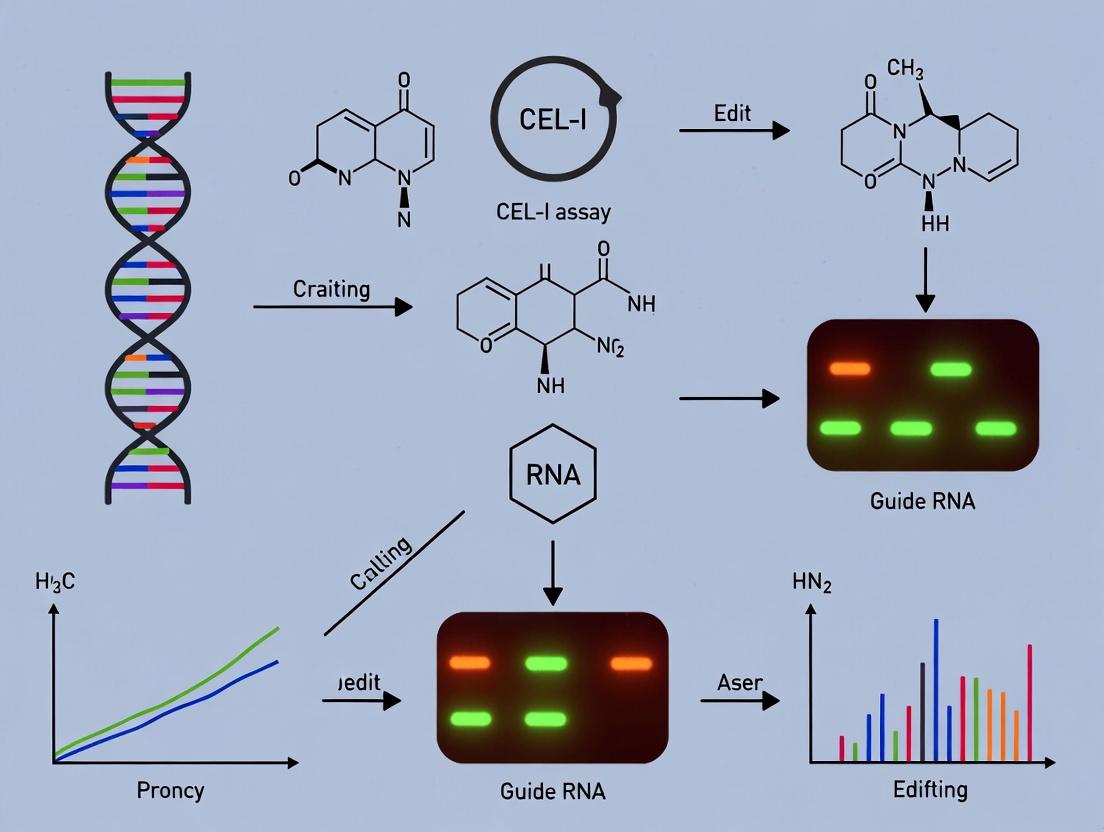
This comprehensive guide explores the CEL-I (Surveyor) nuclease assay, a robust gel electrophoresis-based method for quantifying CRISPR-Cas9 genome editing efficiency.
The CEL-I Nuclease Assay: A Definitive Guide to Quantifying CRISPR Editing Efficiency for Researchers
Abstract
This comprehensive guide explores the CEL-I (Surveyor) nuclease assay, a robust gel electrophoresis-based method for quantifying CRISPR-Cas9 genome editing efficiency. Tailored for researchers and drug development professionals, we cover the foundational biology of CEL-I, provide a step-by-step methodological protocol, address common troubleshooting and optimization challenges, and validate its performance against next-generation sequencing (NGS) and other quantitative techniques. The article synthesizes the assay's role in preclinical validation, its cost-effectiveness for screening, and its enduring relevance in the modern CRISPR toolkit.
Understanding CEL-I Assay: The Core Principles Behind CRISPR Efficiency Measurement
What is CEL-I (Surveyor) Nuclease? Origin and Enzymatic Specificity
CEL-I nuclease, often marketed under the name Surveyor Nuclease, is a mismatch-specific endonuclease derived from the edible jelly fungus Cucumaria echinata (a sea cucumber). It is a type of glycosylase-deficient member of the S1/P1 nuclease family. Its primary enzymatic specificity is for recognizing and cleaving DNA at sites of base pair mismatches, insertions, or deletions. It introduces a double-strand break precisely at the 3' side of the mismatched nucleotide, generating cleavage products with overhangs. This inherent specificity for non-perfectly matched DNA duplexes makes it a powerful tool for detecting genetic variations, such as those introduced by CRISPR-Cas9 genome editing.
Application Notes and Protocols in CRISPR Editing Efficiency Research
Within the context of evaluating CRISPR-Cas9 editing efficiency, the CEL-I (Surveyor) nuclease assay is a foundational method for detecting and quantifying targeted mutagenesis, particularly small insertions and deletions (indels). It serves as a gold-standard validation step before deeper sequencing analysis.
Table 1: Key Enzymatic Properties of CEL-I Nuclease
| Property | Specification |
|---|---|
| Origin | Cucumaria echinata (sea cucumber) |
| Enzyme Family | S1/P1 nuclease family (glycosylase-deficient) |
| Substrate | Double-stranded DNA with mismatches, insertions, or deletions |
| Cleavage Site | At the 3' side of the mismatch, in both strands |
| Optimal Temperature | 42°C |
| Optimal pH | pH 7.0 - 8.5 (Tris-HCl buffer) |
| Divalent Cation Requirement | Zn²⁺ |
| Key Application | Detection of indel mutations from CRISPR/Cas9 activity |
Table 2: Typical Surveyor Assay Results Interpretation
| Observation (Gel Electrophoresis) | Interpretation |
|---|---|
| Single, high-molecular-weight band only | No detectable indels (homogeneous PCR product). |
| Parental band + two smaller cleavage bands | Positive detection of indels. Cleavage efficiency can be calculated. |
| Fainter parental band with cleavage bands | High editing efficiency in the bulk population. |
Detailed Experimental Protocols
Protocol 1: Surveyor Nuclease Assay for CRISPR Indel Detection
Objective: To detect and semi-quantify the efficiency of CRISPR-Cas9 induced indels in a targeted genomic region.
Materials (Research Reagent Solutions):
- PCR Reagents: High-fidelity DNA polymerase, dNTPs, primers flanking the CRISPR target site (200-500 bp product).
- Hybridization Buffer: 0.1 M NaCl, 10 mM MgCl₂ in a compatible buffer (often provided in kits).
- CEL-I / Surveyor Nuclease Solution: Commercially available enzyme (e.g., from IDT or Transgenomic).
- Stop Solution: Typically 0.225 M EDTA.
- Gel Electrophoresis System: Agarose or polyacrylamide gel setup, DNA stain, size ladder.
Methodology:
- PCR Amplification: Amplify the target genomic locus from both edited and unedited (control) cell populations using a high-fidelity polymerase.
- DNA Denaturation & Reannealing: Purify PCR products. Mix 200-400 ng of test PCR product with an equal amount of control PCR product. In a thermal cycler, denature at 95°C for 10 min, then slowly reanneal by ramping down to 85°C at -2°C/sec, then to 25°C at -0.1°C/sec. This forms heteroduplexes if indels are present.
- Nuclease Digestion: To the hybridized DNA, add Surveyor Nuclease S and Surveyor Enhancer S (per manufacturer's instructions). Incubate at 42°C for 20-60 minutes.
- Reaction Termination: Add the EDTA-based stop solution.
- Analysis: Analyze digestion products alongside an undigested control on a 2-4% agarose gel or 10% polyacrylamide gel. Cleavage products indicate successful editing.
- Efficiency Calculation: Quantify band intensities using gel analysis software. The approximate indel frequency is calculated as:
fcut = (b + c) / (a + b + c), where a is the intensity of the undigested PCR product and b & c are the cleavage products.
Protocol 2: Alternative Protocol Using Crude Cell Lysates For rapid screening, PCR can be performed directly on lysates of transfected cells, followed by the standard heteroduplex formation and Surveyor digestion steps as above.
Visualizations
Diagram 1: CEL-I Assay Workflow for CRISPR Editing.
Diagram 2: CEL-I Recognition and Cleavage Mechanism.
The Scientist's Toolkit: Key Research Reagent Solutions
Table 3: Essential Materials for the CEL-I (Surveyor) Assay
| Item | Function & Explanation |
|---|---|
| Surveyor Mutation Detection Kits (e.g., from IDT) | Commercial kit providing optimized buffers, enhancer, and the CEL-I enzyme for robust and reproducible results. |
| High-Fidelity DNA Polymerase (e.g., Phusion, Q5) | Critical for generating pristine, error-free PCR amplicons to avoid false-positive cleavage from PCR errors. |
| Gel Electrophoresis System with high-resolution agarose or PAGE | Required for separation and visualization of cleavage fragments. PAGE offers superior resolution for small indels. |
| Genomic DNA Isolation Kit | For obtaining high-quality, intact template DNA from edited and control cell populations. |
| Fluorescent DNA Stain (e.g., SYBR Safe, GelRed) | Safer and often more sensitive alternative to ethidium bromide for visualizing DNA bands. |
| Gel Imaging & Densitometry Software | Necessary for capturing gel images and quantifying band intensities to calculate precise indel percentages. |
| Positive Control Plasmid or DNA | A known heteroduplex sample is essential for validating the assay performance in each run. |
Within CRISPR editing efficiency research, validating on-target edits and quantifying unwanted indels is critical. This application note details the fundamental biology and protocol for using CEL-I (also known as Surveyor nuclease or T7 Endonuclease I), a mismatch-specific endonuclease, to detect and measure DNA heteroduplexes formed from CRISPR-Cas9-induced mutations. The assay is a cornerstone for preliminary, cost-effective genotyping, fitting into a broader thesis that CEL-I provides a rapid, gel-based phenotypic readout of editing efficiency prior to deep sequencing.
Fundamental Biology: Mechanism of Action
CEL-I is a member of the S1 nuclease family, purified from celery. It recognizes and cleaves the phosphodiester backbone at the 3' side of mismatched sites in double-stranded DNA (dsDNA) heteroduplexes.
Process:
- Heteroduplex Formation: After CRISPR-Cas9 generates a double-strand break (DSB), cellular repair via non-homologous end joining (NHEJ) creates a pool of insertions and deletions (indels). PCR amplification of the target locus from a mixed population yields a mixture of amplicons.
- Denaturation and Reannealing: The PCR products are denatured and slowly reannealed. This allows strands from differently sized alleles (wild-type and mutant) to hybridize, forming heteroduplexes with bulges (mismatches) at the indel sites.
- Mismatch Recognition and Cleavage: CEL-I scans dsDNA and introduces a single-strand nick precisely at the distorted site of the mismatch.
- Fragment Analysis: Cleavage products are resolved by gel electrophoresis. The pattern of cleaved fragments allows for the identification of the edit site, and the band intensities can be used to estimate the overall indel frequency.
Diagram 1: CEL-I Assay Workflow for CRISPR Analysis
Diagram 2: Heteroduplex Formation from Reannealed PCR Products
Application Notes: Key Considerations and Data
Advantages:
- Cost-Effective & Rapid: Lower cost per sample than NGS for initial screening.
- Sensitive: Can detect indels at frequencies as low as ~1-5%.
- Gel-Based Phenotype: Provides visual confirmation of editing.
Limitations:
- Sequence Context Bias: Cleavage efficiency varies based on mismatch type and sequence.
- Semi-Quantitative: Provides an estimate, not an absolute quantification.
- Amplicon Size Dependent: Optimal for fragments 200-1500 bp with edits >50 bp from ends.
- Does Not Identify Sequence: Only indicates presence of a mismatch, not the specific edit.
Quantitative Performance Data (Typical Range):
Table 1: CEL-I Assay Performance Characteristics
| Parameter | Typical Range / Specification | Notes |
|---|---|---|
| Detection Sensitivity | 1% - 5% indel frequency | Dependent on gel resolution and imaging. |
| Optimal Amplicon Length | 200 - 1500 bp | Shorter/longer fragments reduce resolution or efficiency. |
| Optimal Mismatch Position | >50 bp from fragment ends | Internal mismatches are cleaved more efficiently. |
| Cleavage Efficiency by Mismatch Type | Variable | C/C, T/T, T/G mismatches often cleaved best; A/C less efficiently. |
| Reaction Time | 15 - 60 minutes | 30 minutes is standard. |
| Sample Input | 50 - 500 ng heteroduplex DNA | From reannealed PCR product. |
Table 2: Comparison of CEL-I with Other Genotyping Methods
| Method | Cost | Time | Quantitative | Identifies Sequence | Best For |
|---|---|---|---|---|---|
| CEL-I / T7E1 Assay | Low | ~1 Day | Semi-Quantitative | No | Initial screening, bulk population efficiency. |
| Sanger Sequencing + Deconvolution | Medium | 1-2 Days | Quantitative (to ~15-20%) | Yes | Low-throughput validation, specific allele identification. |
| Next-Generation Sequencing (NGS) | High | 3-7 Days | Highly Quantitative | Yes | Comprehensive profiling, off-target analysis, clone validation. |
| HRM Analysis | Low | ~1 Day | Semi-Quantitative | No | Screening for presence of variants, no cleavage step. |
Detailed Experimental Protocol
Protocol: CEL-I Assay for CRISPR Editing Efficiency
I. PCR Amplification of Target Locus
- Design primers flanking the CRISPR cut site to generate a 200-500 bp amplicon.
- Perform PCR on genomic DNA from CRISPR-treated and untreated control cells using a high-fidelity polymerase.
- Purify PCR products using a spin column or magnetic bead-based cleanup system. Quantify DNA.
II. Heteroduplex Formation
- Dilute purified PCR product to 50-100 ng/µL in 1X Taq buffer or similar.
- Denature and Reanneal in a thermocycler:
- 95°C for 10 minutes.
- Cool from 95°C to 85°C at -2°C/second.
- Cool from 85°C to 25°C at -0.3°C/second.
- Hold at 4°C.
III. CEL-I / T7 Endonuclease I Digestion * Reaction Setup (20 µL Total Volume): * Heteroduplex DNA: 150-300 ng (up to 10 µL volume) * 10X Reaction Buffer (supplied): 2 µL * Nuclease-Free Water: X µL * CEL-I or T7 Endonuclease I: 1 µL (typically 5-10 units) * Negative Control: Set up a duplicate reaction replacing enzyme with water. 3. Incubate at 42°C for 30-60 minutes. 4. Stop Reaction by adding 2 µL of 0.25 M EDTA (pH 8.0) or a commercial stop solution.
IV. Analysis by Gel Electrophoresis
- Prepare a 2-3% agarose gel with a DNA-intercalating stain (e.g., GelRed, SYBR Safe).
- Load the entire digestion reaction alongside a 50-100 bp DNA ladder and the uncut negative control.
- Run gel at 5-8 V/cm until sufficient separation is achieved.
- Image the gel using a gel documentation system.
V. Quantification of Editing Efficiency
- Measure band intensities for the uncut parental band and the cleaved fragments using image analysis software (e.g., ImageJ, ImageLab).
- Calculate the fraction of cleaved DNA using the formula:
f_cut = (Intensity_sum(cleaved_bands)) / (Intensity_parental + Intensity_sum(cleaved_bands)) - Estimate indel frequency using the following derived formula, which accounts for the binomial distribution of heteroduplex formation:
% Indel = 100 * (1 - sqrt(1 - f_cut))
The Scientist's Toolkit: Research Reagent Solutions
Table 3: Essential Materials for CEL-I Assay
| Item | Function / Role | Example Product / Specification |
|---|---|---|
| High-Fidelity PCR Polymerase | Amplifies target locus with minimal error. | Q5 Hot-Start Polymerase, KAPA HiFi. |
| PCR Purification Kit | Removes primers, dNTPs, and enzyme post-amplification. | Spin columns or magnetic bead-based kits. |
| CEL-I / T7 Endonuclease I | The mismatch-cleaving enzyme. | Surveyor Nuclease, T7 Endonuclease I. |
| 10X Reaction Buffer | Optimized buffer for nuclease activity and stability. | Supplied with the enzyme. |
| Agarose, Electrophoresis Grade | Matrix for separating DNA fragments by size. | Standard or high-resolution agarose. |
| DNA Gel Stain, Safe | For visualizing DNA bands under blue light. | SYBR Safe, GelRed. |
| DNA Ladder (50-1000 bp) | For determining fragment sizes on the gel. | 50 bp or 100 bp incremental ladders. |
| Gel Imaging System | For capturing and quantifying band intensities. | CCD-based gel doc with analysis software. |
Within the broader thesis investigating methodologies for CRISPR-Cas9 editing efficiency research, the choice of analytical tool is critical. While next-generation sequencing (NGS) is the gold standard for comprehensive variant analysis, it is resource-intensive. The CEL-I (Surveyor) nuclease assay emerges as a rapid, cost-effective, and accessible method for the initial detection and semi-quantification of targeted indel mutations, particularly in early-stage screening and optimization phases.
Comparative Advantages: When to Choose CEL-I
The CEL-I assay is derived from celery and cleaves heteroduplex DNA at mismatches formed by annealing wild-type and mutant strands. Its key applications are defined by specific research needs.
Table 1: Decision Matrix: CEL-I Assay vs. Other Common Methods
| Parameter | CEL-I (Surveyor) Assay | Sanger Sequencing + TIDE/ICE | Next-Generation Sequencing (NGS) | RFLP / PCR-RFLP |
|---|---|---|---|---|
| Primary Use Case | Initial, rapid screening of editing efficiency; optimization of RNP/sgRNA conditions. | Detailed decomposition of indel profiles and precise efficiency calculation from Sanger data. | Comprehensive, base-pair resolution analysis of all variants, including complex edits. | Detection of specific, predefined edits that create or destroy a restriction site. |
| Quantitative Output | Semi-quantitative (estimates % indels). | Quantitative (% efficiency with indel spectrum). | Fully quantitative (% efficiency with full variant spectrum). | Semi-quantitative. |
| Sensitivity | Moderate (~1-5% indel detection). | Moderate (~1-5%). | High (<0.1%). | Low to Moderate (depends on digestion efficiency). |
| Throughput | Medium (gel-based) to High (capillary electrophoresis). | Low to Medium. | Very High (multiplexed). | Low. |
| Time to Result | ~8-24 hours post-PCR. | 1-3 days (includes sequencing). | 3-7+ days. | ~6-12 hours post-PCR. |
| Cost per Sample | Low. | Low to Medium. | High. | Very Low. |
| Key Advantage | Fast, inexpensive, gel-visual proof of editing. | Good balance of cost, detail, and quantitation. | Gold standard for depth and accuracy. | Extremely simple and cheap for known edits. |
| Key Limitation | No sequence detail; lower sensitivity. | Deconvolution algorithms can miss complex patterns. | Cost, complexity, data analysis burden. | Only works for edits altering a specific restriction site. |
Choose CEL-I Assay When:
- Rapidly testing multiple sgRNA designs or CRISPR delivery conditions.
- Performing initial optimization of CRISPR-Cas9 ribonucleoprotein (RNP) concentrations.
- Resources or access to NGS is limited, but gel-based confirmation is required.
- The research question is binary: "Did editing occur at this target site?"
Detailed CEL-I Assay Protocol
This protocol is adapted for a 96-well format, suitable for screening.
A. Genomic DNA Isolation & PCR Amplification
- Isolate gDNA: Harvest cells 48-72h post-transfection/electroporation. Use a column-based or magnetic bead gDNA isolation kit. Elute in nuclease-free water or TE buffer.
- Design PCR Primers: Design primers flanking the CRISPR target site. Amplicon size: 300-800 bp. Ensure primers are >100 bp from cut site.
- PCR Setup:
- Use a high-fidelity DNA polymerase.
- Reaction Mix (50µL):
- gDNA template: 50-100 ng
- Forward/Reverse Primer (10µM): 2.5 µL each
- dNTP Mix (10mM): 1 µL
- 5X High-Fidelity Buffer: 10 µL
- Polymerase: 1 µL
- Nuclease-free H₂O: to 50 µL
- PCR Cycling:
- 98°C for 30s (initial denaturation)
- 35 cycles of: 98°C for 10s, 60-65°C (Tm-specific) for 30s, 72°C for 30s/kb
- 72°C for 5 min (final extension)
- PCR Clean-up: Purify PCR products using a PCR clean-up kit. Quantify DNA concentration.
B. Heteroduplex Formation & CEL-I Digestion
- Heteroduplex Formation:
- Dilute purified PCR product to 20-40 ng/µL.
- In a PCR tube, combine 8 µL of PCR product.
- Use a thermal cycler: 95°C for 10 min (denature), then cool from 95°C to 85°C at -2°C/s, then from 85°C to 25°C at -0.1°C/s (re-anneal). This forms heteroduplexes between wild-type and mutant strands.
- CEL-I Nuclease Digestion:
- Prepare digestion mix on ice. Components per reaction:
- Nuclease-free H₂O: 6.5 µL
- 0.15 M MgCl₂: 0.5 µL
- 10X Surveyor Nuclease Reaction Buffer: 1 µL
- Surveyor Nuclease S (CEL-I): 1 µL (dilute as per manufacturer's instructions)
- Add 9 µL of digestion mix directly to each 8 µL re-annealed PCR product. Mix gently by pipetting.
- Incubate at 42°C for 30-60 minutes.
- Prepare digestion mix on ice. Components per reaction:
C. Analysis by Agarose Gel Electrophoresis
- Prepare Gel: Cast a 2-3% agarose gel with a DNA-intercalating dye.
- Load Samples: Mix 5 µL of digested product with 2 µL of 6X DNA loading dye. Load alongside an undigested control PCR product and a DNA ladder.
- Electrophoresis: Run at 5-8 V/cm in 1X TAE buffer until bands are sufficiently resolved.
- Imaging & Quantification: Image gel under UV. Cleavage products (two lower bands) indicate successful editing.
- Semi-Quantification:
- Use gel analysis software (e.g., ImageJ) to measure band intensities.
- Calculate indel frequency using the formula:
% Indel = (1 - sqrt(1 - (b+c)/(a+b+c))) * 100wherea= integrated intensity of the undigested parent band, andb&c= intensities of the cleavage products.
Visualization: CEL-I Assay Workflow
Diagram Title: CEL-I Assay Experimental Workflow & Principle
The Scientist's Toolkit: Key Research Reagent Solutions
Table 2: Essential Materials for the CEL-I Assay
| Reagent/Material | Function & Importance | Example/Notes |
|---|---|---|
| CEL-I (Surveyor) Nuclease | The core enzyme that recognizes and cleaves mismatched DNA in heteroduplexes. | Surveyor Nuclease S Kit (Integrated DNA Technologies) is the commercial standard. |
| High-Fidelity DNA Polymerase | Amplifies the target genomic locus with minimal error to prevent background cleavage. | KAPA HiFi, Q5, or Phusion polymerases. |
| PCR Purification Kit | Removes primers, dNTPs, and enzymes post-amplification to ensure clean substrate for CEL-I. | Magnetic bead-based or column-based kits (e.g., from Thermo Fisher, Qiagen). |
| Agarose Gel Electrophoresis System | Separates and visualizes digestion products (cleaved vs. parent bands). | High-resolution gels (2-3%) with sensitive DNA stains (e.g., SYBR Safe, GelRed). |
| Gel Imaging & Analysis Software | Captures gel image and enables semi-quantitative densitometry for % indel calculation. | ChemiDoc/Bio-Rad Image Lab, AzureSpot, or freeware (ImageJ/Fiji). |
| Thermal Cycler with Ramping Control | Essential for the precise denaturation and slow re-annealing step to form heteroduplexes. | Must support programmable ramp rates (e.g., -0.1°C/s). |
Advantages and Inherent Limitations of Gel-Based Genotyping
Gel-based genotyping remains a foundational technique in molecular biology, serving as a critical validation and primary screening tool within CRISPR-Cas9 editing efficiency research. When integrated into a thesis focusing on the CEL-I (Surveyor) endonuclease mismatch cleavage assay, gel-based methods provide the initial, visual confirmation of indel formation necessary before proceeding to more sensitive, but often more expensive and complex, quantification methods like CEL-I digestion and fragment analysis. This application note details the role, protocols, advantages, and limitations of gel-based genotyping in this workflow.
Advantages of Gel-Based Genotyping
Accessibility and Low Cost: The primary advantage is its low barrier to entry. Standard agarose gel electrophoresis requires minimal equipment (power supply, gel tank, imaging system) found in virtually all molecular biology labs. Reagent costs per sample are exceptionally low.
Simplicity and Speed: For quick confirmation of CRISPR-induced double-strand breaks (DSBs) and subsequent non-homologous end joining (NHEJ), a simple PCR followed by standard gel electrophoresis can indicate success within hours. Large deletions or insertions are readily apparent as size shifts.
Direct Visualization: It provides an immediate, tangible result. The presence of a heteroduplex band (a slower-migrating, diffuse band above the main amplicon band) on a non-denaturing gel is a classic, visual indicator of sequence heterogeneity within the PCR product, suggesting successful editing and the formation of indel mixtures.
Qualitative Assessment of Editing Efficiency: While not strictly quantitative, the relative intensity of heteroduplex versus homoduplex bands can offer a rough, comparative estimate of editing efficiency across samples.
Table 1: Key Advantages of Gel-Based Genotyping
| Advantage | Description | Relevance to CRISPR/CEL-I Workflow |
|---|---|---|
| Cost-Effectiveness | Very low per-sample cost for reagents. | Ideal for initial screening of large numbers of clones or gRNAs before CEL-I assay. |
| Rapid Turnaround | From PCR to result in 3-4 hours. | Enables quick "go/no-go" decisions for subsequent experiments. |
| Heteroduplex Detection | Visual identification of sequence mosaicism. | Direct evidence of indels, prompting further analysis with CEL-I. |
| Minimal Equipment | Requires only basic molecular biology lab equipment. | Accessible to all research tiers, facilitating protocol standardization. |
Inherent Limitations of Gel-Based Genotyping
Poor Sensitivity: The major limitation is its inability to detect small indels (particularly single-base changes). Detection typically requires indels of >5-10 bp to cause a visible gel shift. Heteroduplex analysis is more sensitive but still misses low-frequency edits and small changes.
Lack of Quantification: It is a qualitative or semi-quantitative technique at best. It cannot provide the precise percentage of editing efficiency required for robust comparative studies, which is the forte of the CEL-I assay or next-generation sequencing (NGS).
Low Throughput: Manual sample loading, gel running, and imaging make it cumbersome for high-throughput screening of hundreds of samples.
Inability to Characterize Sequences: It reveals the presence of variation but provides zero information about the nature of the sequence change. The exact indel sequence remains unknown.
Subjectivity and Artefacts: Band interpretation can be subjective. PCR artefacts, primer-dimer, or partial digestion can be mistaken for editing events, leading to false positives.
Table 2: Key Limitations of Gel-Based Genotyping
| Limitation | Impact on Research | Mitigation in CRISPR/CEL-I Workflow |
|---|---|---|
| Low Sensitivity | Misses small indels and low-efficiency editing. | Mandates follow-up with CEL-I assay or NGS for accurate efficiency measurement. |
| Non-Quantitative | Cannot yield precise % indel frequency. | Serves as a binary filter; quantitative data derived from CEL-I or sequencing. |
| Low Throughput | Not scalable for large-scale screens. | Used for initial validation of system and small-scale clone checking. |
| No Sequence Data | Indel identity remains unknown. | Requires Sanger sequencing (with decomposition tools) or NGS for characterization. |
Detailed Protocols
Protocol 4.1: Rapid PCR Screening for CRISPR Edits
Purpose: To amplify the target genomic locus from edited cells for initial gel-based analysis. Materials: Genomic DNA, target-specific primers (flanking the cut site by 150-300 bp), high-fidelity PCR mix, standard agarose gel reagents. Procedure:
- PCR Setup: In a 25 µL reaction, combine:
- 50-100 ng genomic DNA.
- 0.5 µM each forward and reverse primer.
- 1X high-fidelity PCR master mix.
- Thermocycling:
- 98°C for 30s (initial denaturation).
- 35 cycles of: 98°C for 10s, 60°C (primer-specific) for 20s, 72°C for 20s/kb.
- 72°C for 2 min (final extension).
- Analysis: Run 10 µL of the PCR product on a 2-3% agarose gel stained with ethidium bromide or safer alternative (e.g., SYBR Safe). Include a wild-type control.
- Interpretation: Look for (a) a slight gel shift (large indels) or (b) a main band with a fainter, higher molecular weight heteroduplex band (indel mixture).
Protocol 4.2: Heteroduplex Formation and Enhanced Detection
Purpose: To enhance the detection of heteroduplexes for better visual identification of edited samples. Materials: PCR products from Protocol 4.1, thermal cycler, high-percentage agarose (3-4%) or polyacrylamide gel equipment. Procedure:
- Heteroduplex Formation: After PCR, run a re-annealing step:
- 95°C for 5 min (denature all dsDNA).
- Cool slowly from 95°C to 25°C over 30-45 min (ramp at 1-2°C/min) in the thermal cycler. This promotes heteroduplex formation between wild-type and mutant strands.
- Gel Electrophoresis:
- Prepare a 3-4% high-resolution agarose gel (e.g., MetaPhor) or a non-denaturing 8-10% polyacrylamide gel (PAGE). PAGE offers superior resolution.
- Load the re-annealed products. Run at low voltage for extended time (e.g., 80V for 3-4 hours for PAGE) for optimal separation.
- Imaging and Analysis: Stain and image. Edited samples show a clear, diffuse heteroduplex band above the sharp homoduplex band. Wild-type samples show a single band.
The Scientist's Toolkit: Research Reagent Solutions
Table 3: Essential Materials for Gel-Based CRISPR Genotyping
| Item | Function & Specification | Example Product/Brand |
|---|---|---|
| High-Fidelity DNA Polymerase | Ensures accurate amplification of the target locus from genomic DNA, minimizing PCR errors. | Phusion HF, Q5 Hot Start. |
| Agarose (Standard & High-Res) | Standard (1-2%) for size check; high-resolution (3-4%) for heteroduplex separation. | Regular Agarose, MetaPhor Agarose. |
| Nucleic Acid Gel Stain | For visualizing DNA bands under blue light. Safer alternatives to ethidium bromide are preferred. | SYBR Safe, GelGreen. |
| DNA Size Ladder | Critical for accurately determining amplicon size and identifying shifts. | 100 bp ladder, 50 bp ladder. |
| Polyacrylamide Gel System | For superior resolution of heteroduplex bands (alternative to high-% agarose). | Mini-PROTEAN Tetra Cell, Casting system. |
| Genomic DNA Isolation Kit | Reliable, high-quality DNA extraction from transfected/transduced cells. | DNeasy Blood & Tissue Kit. |
| Target-Specific Primers | Designed to flank CRISPR cut site by 150-300 bp for optimal resolution of small shifts. | HPLC-purified primers. |
Visualizations
Title: Gel-Based Genotyping Workflow for CRISPR Screening
Title: Gel Genotyping's Role in CRISPR Analysis Workflow
Essential Reagents and Equipment Setup for the Assay
Within the broader thesis investigating CRISPR-Cas9 editing efficiency and specificity, the CEL-I (Surveyor) nuclease assay remains a critical, gel-based method for detecting and quantifying small insertions and deletions (indels) at targeted genomic loci. This protocol details the essential reagents, equipment, and setup required for a robust and reproducible CEL-I assay, enabling researchers and drug development professionals to validate editing outcomes prior to deep sequencing.
Essential Reagents and Solutions
The following table summarizes the core reagents required for the amplification, heteroduplex formation, and digestion phases of the CEL-I assay.
Table 1: Core Reagent Solutions for the CEL-I Assay
| Reagent/Solution | Function & Critical Notes | Typical Supplier/Example |
|---|---|---|
| PCR Amplification Reagents | ||
| High-Fidelity DNA Polymerase (e.g., Q5, KAPA HiFi) | Amplifies the target genomic region with minimal error. Fidelity is critical. | NEB, Roche |
| Target-Specific Primers (~20-25 bp) | Flank the CRISPR target site (amplicon size 300-700 bp). Must be HPLC-purified. | IDT, Sigma |
| Genomic DNA Template (≥50 ng/µL) | Purified from edited and control cell populations/pellet. | In-house preparation |
| Heteroduplex Formation Reagents | ||
| Nuclease-Free Water | Dilution and reconstitution of DNA. | Thermo Fisher, MilliporeSigma |
| CEL-I Digestion Reagents | ||
| Surveyor Nuclease S (CEL-I) | Cleaves mismatches in heteroduplex DNA. Store at -80°C. | Integrated DNA Technologies |
| Surveyor Enhancer S | Optimizes digestion reaction conditions. | Integrated DNA Technologies |
| Analysis Reagents | ||
| Agarose (High-Resolution, e.g., 2-4%) | For gel electrophoresis of digested fragments. | Lonza, Bio-Rad |
| DNA Gel Stain (e.g., SYBR Safe, EtBr) | For visualization of DNA fragments under UV. | Thermo Fisher |
| DNA Size Standard (100 bp ladder) | For accurate sizing of cleavage products. | Thermo Fisher, NEB |
| Gel Loading Dye (6X) | Contains tracking dyes for electrophoresis. | Thermo Fisher |
Equipment Setup
Table 2: Essential Equipment List
| Equipment | Specification/Model Example | Purpose in Assay |
|---|---|---|
| Thermal Cycler | Applied Biosystems Veriti, Bio-Rad C1000 | PCR amplification and heteroduplex annealing. |
| Microcentrifuge | Eppendorf 5424 | Pellet and mix small-volume reactions. |
| Vortex Mixer & Microtube Rotator | Scientific Industries | Thorough mixing of reagents. |
| Electrophoresis System | Bio-Rad Mini-Sub Cell GT | Separation of DNA fragments by size. |
| Power Supply | Consort EV243 | Provide constant voltage for gel run. |
| Gel Imaging System | Bio-Rad Gel Doc XR+ | Visualize and quantify DNA bands. |
| Nanodrop/Spectrophotometer | Thermo Fisher NanoDrop One | Quantify genomic DNA and PCR product concentration. |
| Precision Heated Block or Water Bath | Set to 42°C & 94°C | For CEL-I digestion and stop steps. |
Detailed Protocol
Target Amplification and PCR Cleanup
- PCR Reaction Setup: In a 0.2 mL PCR tube, assemble a 50 µL reaction on ice:
- Nuclease-Free Water: To 50 µL final volume.
- 10X High-Fidelity PCR Buffer: 5 µL.
- 10 mM dNTPs: 1 µL.
- 10 µM Forward Primer: 2.5 µL.
- 10 µM Reverse Primer: 2.5 µL.
- Genomic DNA (50-100 ng): 2 µL.
- High-Fidelity DNA Polymerase (1-2 U/µL): 0.5 µL.
- Thermocycling:
- Initial Denaturation: 98°C for 30 sec.
- Denature: 98°C for 10 sec.
- Anneal: 60-65°C (primer-specific) for 20 sec. Cycle 35x
- Extend: 72°C for 30 sec/kb.
- Final Extension: 72°C for 2 min.
- Hold: 4°C.
- PCR Product Verification & Quantification: Run 5 µL of PCR product on a 2% agarose gel to confirm a single amplicon of correct size. Quantify the remaining product using a spectrophotometer. Normalize all samples to a uniform concentration (e.g., 20 ng/µL) with nuclease-free water.
Heteroduplex Formation & CEL-I Digestion
- Heteroduplex Annealing: In a PCR tube, combine 8 µL (e.g., 160 ng) of the normalized PCR product from the edited sample with 8 µL of the un-edited control PCR product. For a non-digested control, use 8 µL of control PCR product + 8 µL water. Place in a thermal cycler.
- Denature: 94°C for 2 min.
- Hybridize: Cool from 94°C to 25°C at a slow ramp rate of -0.3°C/sec. This promotes heteroduplex formation between wild-type and indel-containing strands. Hold at 4°C.
- CEL-I Digestion Reaction Setup: On ice, prepare the digestion mix per sample. Keep Surveyor Nuclease S on ice at all times.
- Nuclease-Free Water: 8.5 µL
- Surveyor Enhancer S: 1 µL
- Surveyor Nuclease S: 0.5 µL
- Total Digestion Mix: 10 µL
- Digestion: Add 10 µL of the digestion mix directly to the 16 µL of annealed DNA from step 4.2.1. Mix gently by pipetting. Incubate at 42°C for 60 minutes in a heated block or thermal cycler.
- Reaction Termination: Add 4 µL of Stop Solution (0.225 M EDTA, pH 8.0) to each 26 µL digestion reaction to chelate magnesium and halt nuclease activity. Mix thoroughly. Proceed to gel analysis or store at -20°C.
Gel Electrophoresis and Analysis
- Prepare a 2-4% high-resolution agarose gel with an appropriate DNA stain (e.g., 1X SYBR Safe) in 1X TAE buffer.
- Load 20 µL of each terminated digestion reaction alongside a 100 bp DNA ladder.
- Run the gel at 5-6 V/cm in 1X TAE until the dye front has migrated sufficiently (~60-90 min).
- Image the gel under the appropriate UV or blue light transilluminator.
- Quantification: Use densitometry software (e.g., Image Lab, ImageJ) to quantify band intensities. The indel frequency can be estimated using the formula:
- % Indel = 100 × (1 - sqrt(1 - (b + c)/(a + b + c)))
- Where: a = integrated intensity of the uncut parent band, b and c = intensities of the cleavage products.
Title: CEL-I Assay Workflow from PCR to Analysis
Title: Gel Band Quantification for Indel Calculation
Step-by-Step Protocol: Performing the CEL-I Assay from PCR to Gel Analysis
Application Notes Within the broader thesis on utilizing the CEL-I (Surveyor) assay for CRISPR-Cas9 editing efficiency research, the initial amplification of the target genomic locus is the critical foundational step. This stage's success dictates the sensitivity and accuracy of all subsequent heteroduplex formation and mismatch cleavage analyses. Precise primer design and robust PCR amplification are paramount to generate a high-fidelity, specific amplicon that faithfully represents the edited and unedited alleles from the cellular pool. The objective is to produce sufficient quantities of a single, well-defined product encompassing the CRISPR target site for downstream enzymatic digestion. Failure at this stage, through non-specific amplification or primer-dimer formation, introduces noise that can severely compromise the quantification of indel frequencies.
Protocol: Primer Design and PCR Amplification
1. Primer Design Protocol
- Target Region: Identify a genomic region of 400-800 bp centered on the CRISPR-Cas9 cut site. This ensures the cleaved heteroduplex products from the CEL-I assay will be of resolvable sizes (typically 100-500 bp) on standard agarose gels.
- Primer Length: Design primers 20-30 nucleotides in length.
- Melting Temperature (Tm): Calculate Tm using the nearest-neighbor method. Aim for a Tm of 58-62°C, with a maximum difference of 1°C between forward and reverse primers.
- GC Content: Maintain GC content between 40-60%.
- 3' End Stability: Avoid stretches of 3 or more G/C nucleotides at the 3' end to minimize mis-priming.
- Specificity Check: Perform in silico PCR using tools like UCSC In-Silico PCR or NCBI Primer-BLAST against the relevant genome database to ensure primer pair specificity and predict a single, unique amplicon.
- Avoid Secondary Structures: Check for potential primer-dimer formation and hairpin structures using oligonucleotide analysis software (e.g., OligoAnalyzer Tool).
2. Genomic DNA (gDNA) Isolation and Quantification
- Isolate high-quality gDNA from CRISPR-treated and untreated control cells using a silica-column or magnetic bead-based kit suitable for PCR. Ensure minimal RNA and protein contamination.
- Precisely quantify gDNA using a fluorometric method (e.g., Qubit dsDNA HS Assay). Normalize all samples to a uniform concentration (e.g., 10-50 ng/µL) for PCR input.
3. Touchdown PCR Amplification Protocol This method enhances specificity for amplifying genomic targets.
- Reaction Setup (50 µL):
- High-Fidelity PCR Master Mix (2X): 25 µL
- Forward Primer (10 µM): 1.25 µL
- Reverse Primer (10 µM): 1.25 µL
- Normalized gDNA (e.g., 20 ng/µL): 2.5 µL (50 ng total)
- Nuclease-free H₂O: to 50 µL
- Thermocycling Program:
- Initial Denaturation: 98°C for 2 min.
- Touchdown Cycles (10 cycles):
- Denature: 98°C for 10 sec.
- Anneal: Start at 65°C, decrease by 0.5°C per cycle for 10 cycles.
- Extend: 72°C for 30 sec/kb.
- Standard Cycles (25 cycles):
- Denature: 98°C for 10 sec.
- Anneal: 60°C for 20 sec.
- Extend: 72°C for 30 sec/kb.
- Final Extension: 72°C for 5 min.
- Hold: 4°C.
4. Post-PCR Analysis
- Verify PCR success by analyzing 5 µL of the product on a 1.5% agarose gel. A single, sharp band of the expected size should be present.
- Purify the remaining PCR product using a PCR clean-up kit to remove primers, enzymes, and salts. Elute in nuclease-free water or a low-EDTA TE buffer.
- Quantify the purified amplicon via fluorometry. Typical yields range from 20-100 ng/µL depending on amplification efficiency.
Data Presentation
Table 1: Quantitative Parameters for Primer Design and PCR Amplification
| Parameter | Optimal Target Range | Purpose/Rationale |
|---|---|---|
| Amplicon Size | 400 - 800 bp | Generates CEL-I cleavage fragments resolvable on standard agarose gels. |
| Primer Length | 20 - 30 nt | Balances specificity and efficient binding. |
| Primer Tm | 58 - 62°C | Ensures efficient and specific annealing during PCR. |
| Tm Difference | ≤ 1°C | Synchronizes primer annealing efficiency. |
| GC Content | 40 - 60% | Promotes stable primer-template binding. |
| gDNA Input per PCR | 50 - 100 ng | Sufficient template for robust yield while minimizing inhibitor carryover. |
| Purified Amplicon Yield | 20 - 100 ng/µL | Provides ample material for heteroduplex formation and CEL-I digestion. |
Visualization
Title: Stage 1: PCR Workflow for CEL-I Assay
The Scientist's Toolkit: Research Reagent Solutions
Table 2: Essential Materials for Target Locus Amplification
| Item | Function & Rationale |
|---|---|
| High-Fidelity DNA Polymerase Master Mix | Provides thermostable polymerase, dNTPs, and optimized buffer. High fidelity is crucial to avoid polymerase-introduced errors that could be misinterpreted as indels. |
| Ultra-Pure PCR-Grade Nucleotides (dNTPs) | Building blocks for DNA synthesis. High purity reduces PCR errors and improves yield. |
| Nuclease-Free Water | Solvent for all reactions; ensures no RNase/DNase contamination that would degrade primers or templates. |
| Genomic DNA Isolation Kit | For rapid, consistent isolation of high-quality, PCR-ready gDNA from mammalian cells. |
| Fluorometric DNA Quantification Kit (dsDNA HS) | Enables accurate, specific quantification of low-concentration gDNA and purified amplicons, superior to absorbance (A260) methods. |
| PCR Product Purification Kit | Removes spent primers, dNTPs, salts, and enzymes from the amplification reaction, yielding clean amplicons for downstream enzymatic steps. |
| Thermocycler with Gradient Function | Essential for precise execution of touchdown and standard PCR protocols; gradient function aids in initial primer optimization. |
| Agarose Gel Electrophoresis System | Standard method for visual confirmation of PCR product specificity, size, and yield. |
Within the context of a CRISPR-Cas editing efficiency analysis using the CEL-I (Surveyor) assay, Stage 2 is a critical preparatory step. Following the PCR amplification of the target genomic locus from edited and unedited cell populations, this stage involves the deliberate hybridization of potentially mismatched DNA strands to form heteroduplexes. These heteroduplexes, which contain base pair mismatches or small indels at the CRISPR cut site, are the specific substrates for the subsequent CEL-I endonuclease cleavage in Stage 3. The efficiency and specificity of heteroduplex formation directly impact the sensitivity and accuracy of the overall editing efficiency quantification.
Protocol: DNA Denaturation and Hybridization for Heteroduplex Formation
Objective: To denature and re-anneal a mixture of PCR products from edited and unedited samples, promoting the formation of heteroduplex DNA where sequences differ due to CRISPR-induced mutations.
Principle: Heating the DNA mixture completely denatures double-stranded PCR products into single strands. A controlled, slow cooling allows strands to re-anneal. When wild-type and mutated strands pair, they form heteroduplexes with mismatches at the site of mutation.
Materials and Reagents
- PCR-amplified target DNA from putative CRISPR-edited sample.
- PCR-amplified target DNA from a confirmed wild-type (un-edited) control sample.
- Nuclease-free water or appropriate hybridization buffer (e.g., 10 mM Tris-HCl, pH 8.5).
- Thermocycler with heated lid.
Detailed Procedure
- Quantification: Precisely measure the concentration of the edited (test) and wild-type (control) PCR products using a spectrophotometer or fluorometer. Normalize both to the same concentration (e.g., 20-50 ng/µL) using nuclease-free water or hybridization buffer.
- Mixing: Combine equal volumes of the normalized edited and wild-type PCR products in a thin-walled PCR tube. A typical reaction uses 8 µL of the mixed DNA. For a negative control, mix wild-type PCR product with itself.
- Denaturation and Hybridization:
- Place the tubes in a thermocycler.
- Run the following program:
- 95°C for 10 minutes (Denaturation: separates all DNA into single strands).
- Cool from 95°C to 85°C at a rate of -2.0°C per second (Rapid initial cooling).
- Cool from 85°C to 25°C at a rate of -0.3°C per second (Slow, controlled re-annealing to favor heteroduplex formation).
- Hold at 4°C.
- Product Storage: The hybridized product can be used immediately in the CEL-I cleavage reaction (Stage 3) or stored at -20°C for up to one week.
The Scientist's Toolkit: Research Reagent Solutions
| Item | Function in Heteroduplex Formation |
|---|---|
| High-Fidelity PCR Master Mix | Generates clean, high-yield, and accurate amplicons from edited/wild-type genomic DNA, providing the pure substrate for hybridization. |
| DNA Quantification Kit (Fluorometric) | Enables precise normalization of edited and wild-type PCR product concentrations, which is critical for achieving a 1:1 stoichiometry for optimal heteroduplex yield. |
| Nuclease-Free Water/Buffer | Provides an ionic environment suitable for DNA strand annealing without degrading the nucleic acid or interfering with subsequent enzymatic steps. |
| Programmable Thermocycler | Precisely executes the defined denaturation and slow-ramp annealing program, ensuring consistent and reproducible heteroduplex formation across experiments. |
Table 1: Effect of Annealing Ramp Rate on Heteroduplex Formation and Subsequent CEL-I Assay Sensitivity.
| Annealing Ramp Rate (°C/sec) | Heteroduplex Yield (Relative) | CEL-I Cleavage Efficiency (Relative Band Intensity) | Notes |
|---|---|---|---|
| -0.1 | High (1.2) | High (1.15) | Maximum yield but very time-consuming protocol. |
| -0.3 | Optimal (1.0) | Optimal (1.0) | Standard recommended rate; best balance of yield and time. |
| -1.0 | Moderate (0.7) | Reduced (0.65) | Faster but yields fewer heteroduplexes, reducing assay signal. |
| -2.0 (Instant block cooling) | Low (0.4) | Low (0.3) | Leads primarily to homoduplex re-formation; not recommended. |
Table 2: Troubleshooting Common Issues in DNA Hybridization.
| Problem | Possible Cause | Recommended Solution |
|---|---|---|
| Low cleavage signal in CEL-I assay | Unequal concentration of edited/wild-type DNA | Re-quantify and precisely normalize PCR products before mixing. |
| High background in negative control | PCR product contamination or degradation | Re-perform PCR with fresh, pure reagents. Ensure separate pre- and post-PCR work areas. |
| Irreproducible results | Inconsistent thermocycler ramp rates | Verify and calibrate thermocycler performance. Use the same machine for all experiments. |
Visualizing the Workflow and Key Relationships
Diagram 1: Workflow of Heteroduplex Formation.
Diagram 2: Molecular Outcome of Hybridization.
Within the methodology of assessing CRISPR-Cas9 editing efficiency, the CEL-I nuclease assay serves as a critical, enzyme-mediated detection step for identifying and quantifying site-specific mismatches in heteroduplex DNA. This stage follows PCR amplification of the target locus from a mixed, edited/unedited cellular population and the subsequent reannealing to form heteroduplexes. The core principle relies on the ability of CEL-I (also known as Surveyor nuclease) to recognize and cleave at the 3' side of any mismatch site in double-stranded DNA, including insertions, deletions, and base substitutions. For a thesis investigating the optimization and application of CRISPR editing efficiency research, this step provides a gel-electrophoresis or capillary electrophoresis-based quantitative measure of indel frequency, bridging the gap between initial cellular editing and final sequencing validation.
CEL-I, a single-stranded specific endonuclease purified from celery, cleaves at the 3' side of any mismatch in double-stranded DNA. Its activity is dependent on the presence of divalent cations (Mg²⁺ or Mn²⁺) and is optimal at slightly acidic pH.
Table 1: Optimized Reaction Conditions for CEL-I Digestion
| Parameter | Optimal Condition | Typical Range Tested | Effect of Deviation |
|---|---|---|---|
| Temperature | 42°C | 37°C - 45°C | Reduced cleavage efficiency outside range. |
| Incubation Time | 30 minutes | 15 - 60 minutes | Longer times increase risk of non-specific digestion. |
| pH (Buffer) | ~6.8 - 7.2 (Proprietary buffer) | N/A | Alkaline pH significantly reduces activity. |
| Divalent Cation | 10 mM MgCl₂ | 0.1 - 20 mM MgCl₂ | Essential for catalysis; Mn²⁺ can substitute. |
| Enzyme Unit per µg DNA | 0.5 - 1 unit | 0.1 - 2 units | Lower units yield incomplete digestion; higher units increase background. |
Table 2: Expected Quantitative Outcomes from a Model CRISPR Experiment
| Input Heteroduplex DNA | CEL-I Unit | Expected Cleavage Products (bp) | Calculated Editing Efficiency* |
|---|---|---|---|
| 400 bp amplicon, mismatch at 150 bp | 1 U / µg | Fragments of ~150 bp & ~250 bp | 25% - 40% (gel densitometry) |
| 600 bp amplicon, mismatch at 450 bp | 0.75 U / µg | Fragments of ~450 bp & ~150 bp | 10% - 60% (capillary electrophoresis) |
*Editing efficiency (%) = 100 × (1 - sqrt(1 - (b + c)/(a + b + c))), where a is integrated intensity of undigested band, b and c are digested fragment intensities.
Detailed Experimental Protocol
Materials Required:
- Purified heteroduplex DNA (from reannealed PCR product).
- CEL-I or Surveyor Nuclease kit (e.g., from Integrated DNA Technologies or Transgenomic).
- Nuclease-free water.
- Thermal cycler or precise heating block.
Procedure:
Step 3.1: Reaction Setup
- On ice, assemble the following in a 0.2 mL PCR tube:
XµL Heteroduplex DNA (100 - 200 ng total)1µL CEL-I Nuclease (diluted or as per kit specification to ~0.5-1 U/µL)1µL 10X CEL-I Reaction Buffer (Mg²⁺ containing)- Nuclease-free water to a final volume of
10µL.
- Mix gently by pipetting. Do not vortex. Centrifuge briefly.
Step 3.2: Digestion Incubation
- Place the reaction tube in a preheated thermal cycler or block.
- Incubate at 42°C for 30 minutes.
- Critical: Immediately proceed to termination or place on ice.
Step 3.3: Reaction Termination
- Add
2µL of the provided Stop Solution (or 0.25 M EDTA, pH 8.0) to the reaction. - Mix gently. The sample is now ready for analysis via agarose gel electrophoresis (2-4% high-resolution gel) or capillary electrophoresis (e.g., Fragment Analyzer, Bioanalyzer).
Troubleshooting Notes:
- Low Cleavage Signal: Ensure heteroduplex formation by controlled reannealing (95°C down to 25°C at 0.1-0.5°C/sec). Titrate enzyme amount.
- High Background/Smearing: Reduce enzyme amount or incubation time. Ensure DNA is clean and free of primers/dNTPs.
- No Signal: Verify enzyme activity with a positive control heteroduplex DNA. Check Mg²⁺ concentration.
Visualization of Workflow & Pathway
Diagram Title: CEL-I Assay Workflow for CRISPR Efficiency
Diagram Title: CEL-I Mismatch Recognition and Cleavage Mechanism
The Scientist's Toolkit: Research Reagent Solutions
Table 3: Essential Materials for CEL-I Digestion Assay
| Item | Function & Rationale | Example Product/Catalog |
|---|---|---|
| CEL-I / Surveyor Nuclease | The core enzyme that recognizes and cleaves DNA at mismatch sites. | Surveyor Nuclease S, Integrated DNA Technologies. |
| 10X CEL-I Reaction Buffer | Provides optimal pH (~6.8-7.2) and MgCl₂ concentration for enzyme activity. | Supplied with Surveyor Nuclease kits. |
| Heteroduplex DNA Substrate | The DNA target for digestion, formed by reannealing PCR products from a mixed population. | Prepared in-house from edited cell pool PCR. |
| Nuclease-Free Water | Prevents degradation of enzyme and DNA substrates by environmental nucleases. | Ambion Nuclease-Free Water. |
| Stop Solution (0.25M EDTA) | Chelates Mg²⁺ ions, irreversibly halting CEL-I nuclease activity post-incubation. | Supplied in kits or prepared separately. |
| High-Resolution DNA Gel Matrix | For separation and visualization of cleaved vs. uncleaved DNA fragments. | 2-4% Agarose gels or commercial CE kits (Advance Analytical). |
| Positive Control DNA | DNA with a known mismatch, used to validate enzyme activity and reaction conditions. | Often supplied with commercial kits or generated via defined oligo mixing. |
Within the workflow of assessing CRISPR-Cas9 editing efficiency via the CEL-I (Surveyor) endonuclease assay, gel electrophoresis for fragment separation is the critical fourth stage. Following enzymatic cleavage of heteroduplex DNA at mismatch sites, the resulting DNA fragments must be resolved and visualized to quantify indel frequencies. The choice between Agarose Gel Electrophoresis (AGE) and Polyacrylamide Gel Electrophoresis (PAGE) is pivotal, impacting resolution, sensitivity, and suitability for downstream analysis.
Agarose vs. PAGE: A Comparative Analysis for CEL-I Assay
Table 1: Comparative Analysis of Agarose Gel Electrophoresis vs. Polyacrylamide Gel Electrophoresis for CEL-I Fragment Separation
| Parameter | Agarose Gel Electrophoresis (AGE) | Polyacrylamide Gel Electrophoresis (PAGE) |
|---|---|---|
| Typical Gel Percentage | 2-4% (standard), up to 6% (high-resolution agarose) | 6-15% (non-denaturing) |
| Effective Size Separation Range | 100 bp - 25 kbp | 10 bp - 1 kbp |
| Optimal Resolution for CEL-I Fragments | Moderate. Suitable for larger expected cleavages (>100 bp difference). | High. Essential for resolving small fragment differences (<50 bp). |
| Throughput & Ease of Use | High. Faster casting and run times; easier post-staining. | Moderate to Low. Longer protocol; requires specialized equipment. |
| Detection Method | Intercalating dyes (e.g., EtBr, SYBR Safe, GelRed). | Intercalating dyes or, preferably, silver staining or fluorescently-labeled primers. |
| Sensitivity & Quantification | Lower sensitivity; semi-quantitative with image analysis software. | High sensitivity; more reliable for precise densitometric quantification. |
| Best Suited for CEL-I Assay When: | Screening initial edits where large indels are expected. | Precise quantification of editing efficiency, especially for small indels. |
| Approximate Run Time | 45-60 minutes (at 100-120V) | 60-90 minutes (at 100-150V, non-denaturing conditions) |
Detailed Experimental Protocols
Protocol 1: Agarose Gel Electrophoresis for CEL-I Fragment Analysis
Application: Rapid screening of CEL-I digested PCR products from CRISPR-treated samples.
Materials (Research Reagent Solutions):
- High-Resolution Agarose: A purified agarose matrix for forming gels with enhanced resolution in the 100-1000 bp range.
- 1X TAE Buffer (40 mM Tris-acetate, 1 mM EDTA): The running buffer that maintains pH and conductivity during electrophoresis.
- DNA Intercalating Dye (e.g., SYBR Safe): A non-mutagenic fluorescent dye that binds dsDNA for visualization under blue light.
- DNA Molecular Weight Ladder: A precise mixture of DNA fragments of known sizes (e.g., 100 bp ladder) for fragment size determination.
- 6X DNA Loading Dye: Contains glycerol for well loading and tracking dyes (bromophenol blue/xylene cyanol) to monitor migration.
- Post-Staining Solution (if required): Diluted dye in buffer for staining after electrophoresis if not pre-cast.
Methodology:
- Gel Preparation: Mix high-resolution agarose with 1X TAE buffer to a final concentration of 2.5-3.5% (w/v). Microwave to dissolve completely. Cool to ~60°C, add DNA intercalating dye as per manufacturer's instructions (e.g., 1X SYBR Safe). Pour into a casting tray with a comb and allow to polymerize for 30 minutes.
- Sample Preparation: Combine 10-15 µL of the CEL-I cleavage reaction product with 2-3 µL of 6X DNA loading dye.
- Electrophoresis: Place the solidified gel in an electrophoresis tank filled with 1X TAE buffer. Load samples and an appropriate DNA ladder into wells. Run at 5-8 V/cm (e.g., 100V constant) for 45-60 minutes, or until the bromophenol blue dye front has migrated 70-80% of the gel length.
- Visualization & Analysis: Image the gel using a blue light transilluminator and a gel documentation system. Use software (e.g., ImageJ, Image Lab) to quantify band intensities. The editing efficiency (%) is calculated as: [Intensity of cleavage products / (Intensity of cleavage products + Intensity of parent band)] x 100.
Protocol 2: Non-Denaturing PAGE for High-Resolution CEL-I Analysis
Application: Accurate resolution and quantification of small indel fragments (<50 bp difference) from the CEL-I assay.
Materials (Research Reagent Solutions):
- Acrylamide/Bis-Acrylamide (29:1 or 37.5:1): The monomer solution that polymerizes to form a sieving matrix; ratio determines gel porosity.
- TEMED (Tetramethylethylenediamine): A catalyst that, with ammonium persulfate, initiates acrylamide polymerization.
- 10% Ammonium Persulfate (APS): The free-radical initiator for acrylamide polymerization.
- 10X TBE Buffer (890 mM Tris-borate, 20 mM EDTA): Provides higher buffering capacity than TAE, preferred for PAGE.
- Non-Denaturing Loading Buffer: Contains glycerol and tracking dyes but no denaturants (e.g., SDS, formamide).
- High-Sensitivity Stain (e.g., Silver Stain Kit or SYBR Gold): For detecting low nanogram amounts of DNA post-electrophoresis.
Methodology:
- Gel Casting: For an 8% resolving gel, mix 5.3 mL of 30% acrylamide/bis (29:1), 2.0 mL of 10X TBE, and 12.7 mL of dH₂O. Degas for 5 minutes. Add 200 µL of 10% APS and 20 µL of TEMED, mix gently, and pour immediately between glass plates. Overlay with isopropanol for a flat interface. After polymerization (20-30 min), pour a stacking gel (4-5% acrylamide) with wells.
- Sample Preparation: Mix 10-15 µL of CEL-I reaction with an equal volume of non-denaturing 2X loading buffer.
- Electrophoresis: Assemble the gel in a vertical electrophoresis unit. Fill chambers with 1X TBE buffer. Pre-run the gel at 100V for 30 minutes to establish equilibrium. Load samples and a low molecular weight ladder (e.g., 25/50 bp ladder). Run at 150-200V constant voltage for 60-90 minutes, maintaining temperature below 30°C.
- Staining & Visualization: For Silver Staining: Follow a standard DNA silver staining protocol (fixation in 10% ethanol/0.5% acetic acid, sensitization, silver nitrate incubation, development in formaldehyde/NaOH). For SYBR Gold: Gently shake the gel in 1X SYBR Gold dye diluted in 1X TBE for 30 minutes in the dark.
- Quantification: Image the gel and perform densitometric analysis. The higher resolution allows for clear separation of the parental band from cleaved fragments, enabling more accurate efficiency calculations.
Visualizations
Title: CEL-I Assay Workflow with Gel Electrophoresis Decision Point
Title: Key Characteristics of Agarose Gel vs. PAGE
Within the broader thesis on using the CEL-I (Surveyor) nuclease assay for measuring CRISPR-Cas9 editing efficiency, Stage 5 is critical for translating raw gel data into quantitative, statistically relevant indel frequencies. Following PCR amplification of the target locus and digestion with the mismatch-sensitive CEL-I enzyme, the separation of digested and undigested products via gel electrophoresis yields band patterns whose intensities are directly proportional to the abundance of heteroduplex DNA, and thus, to the frequency of induced mutations. Accurate quantification of these band intensities is the final, essential step for determining the editing efficiency of a given gRNA or experimental condition, providing a key metric for downstream research and development in therapeutic gene editing.
Core Principles of Intensity-Based Quantification
The CEL-I enzyme cleaves DNA at sites of base pair mismatch. In a heterozygous indel population, reannealing of PCR products generates heteroduplexes (containing mismatches) and homoduplexes (perfectly matched). The intensity ratio of the cleaved fragments (resulting from heteroduplex digestion) to the total PCR product provides an estimate of the indel frequency.
Key Formula: Indel Frequency (%) ≈ [ (b + c) / (a + b + c) ] * 100 Where:
- a = Intensity of the undigested, full-length parent band.
- b & c = Intensities of the cleaved fragment bands.
Detailed Protocol: From Gel Image to Indel Percentage
Materials & Equipment
- Agarose or polyacrylamide gel with separated CEL-I assay products (stained with SYBR Safe, EtBr, or similar).
- Gel documentation system (CCD or scanner-based).
- Image analysis software (e.g., ImageJ/Fiji, Image Lab, GeneTools).
- Statistical software (e.g., Excel, Prism, R).
Step-by-Step Procedure
A. Image Acquisition:
- Image the gel under appropriate excitation/emission settings for your stain.
- Ensure the image is not saturated (no pure white pixels). Adjust exposure time to keep band intensities within the linear dynamic range of the camera.
- Save image in a lossless format (e.g., TIFF, PNG).
B. Band Intensity Analysis Using ImageJ/Fiji:
- Open the image in ImageJ.
- Define Lanes: Use the "Rectangular" selection tool to draw a box encompassing the first lane from top to bottom. Go to
Analyze > Gels > Select First Lane(Ctrl+1). Move the selection to the next lane and pressNext Lane(Ctrl+2). Repeat for all lanes. - Plot Lanes: Go to
Analyze > Gels > Plot Lanes. The software generates a profile plot for each lane, with peaks corresponding to bands. - Measure Peaks: Use the "Straight Line" selection tool to draw a baseline below the peaks. Then, use the "Wand" tool to click on each peak. Record the intensity value (the area under the peak) for each band.
- Document Values: Label each measured intensity according to its band identity (parent band a, fragment b, fragment c) and sample.
C. Calculation of Indel Frequency:
- For each experimental lane, sum the intensities of the two cleavage fragments (b + c).
- Sum this value with the intensity of the parent band (a) to get the total PCR product intensity.
- Divide the sum of fragment intensities by the total intensity.
- Multiply by 100 to obtain the percentage indel frequency.
- Correct for Background: Subtract the average intensity of a blank region of the gel from each band measurement before calculation.
D. Replicates and Statistics:
- Perform the assay and analysis on a minimum of n=3 independent biological replicates.
- Report the mean indel frequency ± Standard Deviation (SD) or Standard Error of the Mean (SEM).
- Include appropriate controls (untreated, transfection-only) in every experiment.
Quantitative Data Presentation
Table 1: Example Gel Band Intensity Data and Calculated Indel Frequencies Experiment: HEK293T cells edited with CRISPR-Cas9 targeting the AAVS1 locus. CEL-I assay performed 72h post-transfection.
| Sample & Replicate | Parent Band (a) Intensity (AU) | Frag. Band (b) Intensity (AU) | Frag. Band (c) Intensity (AU) | Σ Fragments (b+c) | Total (a+b+c) | Indel Frequency (%) |
|---|---|---|---|---|---|---|
| gRNA-1, Rep 1 | 15520 | 4520 | 4980 | 9500 | 25020 | 38.0 |
| gRNA-1, Rep 2 | 16850 | 5150 | 5610 | 10760 | 27610 | 39.0 |
| gRNA-1, Rep 3 | 16200 | 4800 | 5200 | 10000 | 26200 | 38.2 |
| gRNA-2, Rep 1 | 20500 | 1250 | 1350 | 2600 | 23100 | 11.3 |
| gRNA-2, Rep 2 | 19800 | 1100 | 1450 | 2550 | 22350 | 11.4 |
| gRNA-2, Rep 3 | 21050 | 1400 | 1300 | 2700 | 23750 | 11.4 |
| Untreated Ctrl | 24500 | 150 | 200 | 350 | 24850 | 1.4 |
Table 2: Summary Indel Frequencies for Experimental Conditions
| Experimental Condition | Mean Indel Frequency (%) | ± SD | n |
|---|---|---|---|
| gRNA-1 | 38.4 | 0.5 | 3 |
| gRNA-2 | 11.3 | 0.1 | 3 |
| Untreated Control | 1.4 | - | 1 |
The Scientist's Toolkit: Key Research Reagent Solutions
Table 3: Essential Materials for CEL-I Assay Quantification
| Item | Function/Benefit |
|---|---|
| CEL-I / Surveyor Nuclease Kit (Integrated DNA Technologies) | Contains optimized enzyme and buffers for specific cleavage of heteroduplex DNA. The industry-standard reagent. |
| High-Fidelity DNA Polymerase (e.g., Q5, Phusion) | For error-free PCR amplification of the target locus prior to CEL-I digestion, minimizing background. |
| Fluorescent DNA Gel Stain (e.g., SYBR Safe) | Safer, more sensitive alternative to ethidium bromide for visualizing DNA bands; compatible with blue light transillumination. |
| Precast Polyacrylamide Gels (e.g., Novex TBE Gels) | Provide superior resolution for small cleavage fragments (<100 bp) compared to agarose, essential for accurate quantification. |
| Precision Molecular Weight Marker | Allows accurate sizing of parent and cleavage fragments to confirm expected digestion pattern. |
| Image Analysis Software (e.g., ImageLab, GeneTools) | Dedicated software for gel quantification often includes lane/band detection algorithms and background subtraction tools. |
Visualizations
Title: CEL-I Assay Quantification Workflow
Title: Indel Calculation Logic from Band Intensities
This protocol details the critical upstream application steps for a comprehensive thesis on utilizing the CEL-I (Surveyor) nuclease assay to measure CRISPR-Cas9 genome editing efficiency. The reliability of CEL-I assay data is fundamentally dependent on two factors: the inherent activity of the single-guide RNA (sgRNA) and the efficiency of delivering CRISPR components into the target cell type. This document provides a standardized workflow for sgRNA screening and delivery parameter optimization to establish a robust foundation for subsequent CEL-I analysis.
Protocol: High-Throughput sgRNA Screening via NGS
Objective: To quantitatively rank candidate sgRNAs based on their indel-induction efficiency prior to CEL-I assay validation.
Materials & Workflow:
Title: sgRNA Screening via NGS Workflow
Detailed Protocol:
2.1 sgRNA Design & Pool Construction (Week 1)
- Design 3-6 sgRNAs per target locus using current tools (e.g., CRISPick, CHOPCHOP). Include positive and negative control sgRNAs.
- Clone sgRNA sequences into your chosen CRISPR plasmid (e.g., lentiCRISPRv2, pSpCas9(BB)-2A-GFP). Perform sequence verification.
2.2 Arrayed Transfection (Day 1)
- Seed target cells in a 96-well plate at 20-30% confluence.
- The next day, transfert each well with 50 ng of sgRNA plasmid + 150 ng of Cas9 plasmid (if using separate vectors) or 200 ng of all-in-one plasmid using a transfection reagent optimized for your cell line.
- Positive Control: Transfect with a plasmid encoding a validated sgRNA.
- Negative Control: Transfect with a non-targeting sgRNA plasmid or mock transfection.
- Include technical triplicates for each sgRNA.
2.3 Genomic DNA Harvest (Day 4)
- Aspirate medium and lyse cells directly in each well using 50 µL of lysis buffer (e.g., 50 mM Tris-HCl pH 8.0, 1 mM EDTA, 0.5% Tween-20, 200 µg/mL Proteinase K).
- Incubate at 56°C for 2 hours, then heat-inactivate at 95°C for 10 minutes. Cool and use 2-5 µL as PCR template.
2.4 Amplicon Sequencing Library Preparation (Day 4-5)
- Perform a two-step PCR protocol.
- PCR1: Amplify the target region from gDNA using barcoded forward and reverse primers that add partial Illumina adapter sequences. Pool equimolar amounts of each PCR1 product.
- PCR2: Amplify the pooled product using primers that add full Illumina flow cell binding sites and unique dual indices.
- Purify the final library and quantify via qPCR. Sequence on an Illumina MiSeq or NextSeq platform (2x150 bp or 2x250 bp).
2.5 Bioinformatic Analysis (Day 6-7)
- Process raw FASTQ files using a pipeline (e.g., CRISPResso2, MAGeCK).
- Align reads to the reference amplicon sequence and quantify the percentage of reads containing insertions or deletions (indels) at the expected cut site.
2.6 Data Interpretation & Selection
Table 1: Example sgRNA Screening Data Output
| Target Gene | sgRNA ID | Genomic Target Sequence (PAM) | NGS Read Count | Indel Frequency (%) | Rank |
|---|---|---|---|---|---|
| EMX1 | sg01 | GAGTCCGAGCAGAAGAAGAAGGG | 125,450 | 78.5 | 1 |
| EMX1 | sg02 | GTGCAGCAAGATGGAGTCAGTGG | 118,900 | 65.2 | 2 |
| EMX1 | sg03 | GACACCGGGTCAGCTTCCACCGG | 122,300 | 12.1 | 5 |
| VEGFA (Pos Ctrl) | sgPC | GACCGGGAGCGCGGCGGGGGTGG | 130,100 | 85.7 | - |
| Non-Targeting (Neg Ctrl) | sgNT | GTCGCGGTTCCAACGGCGGACGG | 127,800 | 0.3 | - |
- Select the top 1-2 sgRNAs based on indel frequency for downstream CEL-I assay validation. Discard sgRNAs with low efficiency (<20%) or high predicted off-target scores.
Protocol: Optimizing Delivery Parameters
Objective: To determine the optimal transfection conditions (reagent:DNA ratio and DNA amount) that maximize editing efficiency while minimizing cytotoxicity for a given cell line and selected sgRNA.
Materials & Workflow:
Title: Delivery Optimization Experimental Design
Detailed Protocol:
3.1 Experimental Matrix Setup (Day 1)
- Use the top-performing sgRNA from Section 2. Seed cells in a 48-well plate.
- Prepare a two-parameter matrix. Constant: use a fixed total DNA amount per well for the initial screen.
- Parameter A: DNA Mass: Test 100 ng, 250 ng, 500 ng, 750 ng of CRISPR plasmid per well.
- Parameter B: Reagent Ratio: Test three reagent-specific ratios (e.g., for Lipofectamine 3000, test 1:1, 2:1, and 3:1 reagent (µL):DNA (µg) ratios).
- Include untreated and mock-transfected controls.
3.2 Multi-Endpoint Analysis (Day 4)
- 3.2.1 Viability Assay (MTT): Measure cell metabolic activity as a proxy for health. Calculate viability relative to untreated controls.
- 3.2.2 Transfection Efficiency (Microscopy/Flow): If using a fluorescent reporter (e.g., GFP), quantify the percentage of GFP-positive cells.
- 3.2.3 Editing Efficiency (Preliminary CEL-I Assay): Harvest gDNA from pooled triplicate wells. Perform the CEL-I assay as per thesis methodology to quantify indel formation.
3.3 Data Integration and Decision
Table 2: Delivery Optimization Results Matrix (Example for HEK293T)
| DNA (ng) | Reagent:DNA Ratio | Viability (%) | Transfection (% GFP+) | CEL-I Indel (%) | Optimal Score |
|---|---|---|---|---|---|
| 100 | 1:1 | 98 | 65 | 22 | 62.0 |
| 250 | 1:1 | 95 | 85 | 45 | 81.7 |
| 500 | 1:1 | 90 | 88 | 52 | 76.7 |
| 500 | 2:1 | 85 | 92 | 60 | 79.0 |
| 500 | 3:1 | 70 | 93 | 58 | 73.7 |
| 750 | 2:1 | 65 | 92 | 55 | 70.7 |
| Untreated | - | 100 | 0 | 0 | - |
Optimal Score = (Viability% + Transfection% + CEL-I%) / 3. The condition with the highest composite score (balancing high editing with good health) is selected for all subsequent CEL-I thesis experiments.
The Scientist's Toolkit: Research Reagent Solutions
Table 3: Essential Materials for sgRNA Screening & Delivery Optimization
| Item | Example Product/Type | Function in Protocol |
|---|---|---|
| CRISPR Vector | lentiCRISPRv2, pX458 | All-in-one plasmid expressing Cas9, sgRNA, and often a fluorescent marker (e.g., GFP). |
| sgRNA Cloning Kit | ToolGen U-6 Oligo Kit, Custom oligos | For efficient insertion of annealed sgRNA oligos into the CRISPR vector backbone. |
| Transfection Reagent | Lipofectamine 3000, FuGENE HD, Nucleofector System | Facilitates the delivery of CRISPR plasmids into hard-to-transfect cell lines. |
| NGS Library Prep Kit | Illumina TruSeq DNA PCR-Free, KAPA HTP | For preparing barcoded amplicon libraries for high-throughput sequencing. |
| Bioinformatics Tool | CRISPResso2, MAGeCK | Analyzes NGS data to align sequences and quantify indel percentages accurately. |
| Cell Viability Assay | MTT, CellTiter-Glo | Measures cytotoxicity of transfection reagents and DNA to identify optimal, healthy conditions. |
| gDNA Isolation Kit | QuickExtract, DNeasy Blood & Tissue Kit | Rapid, high-throughput isolation of PCR-ready genomic DNA from transfected cells. |
| CEL-I / Surveyor Nuclease | IDT Surveyor Mutation Detection Kit | The core enzyme for the thesis method, cleaving mismatched heteroduplex DNA formed by indels. |
Troubleshooting the CEL-I Assay: Solving Common Pitfalls for Accurate Results
Weak or No Digestion Bands - Optimizing Hybridization and Enzyme Activity
Within the broader thesis investigating the CEL-I endonuclease (Surveyor nuclease) assay for precise quantification of CRISPR-Cas9 genome editing efficiency, the frequent occurrence of weak or absent digestion bands presents a significant analytical challenge. This issue directly impacts the accurate calculation of indel percentages, which is critical for downstream applications in therapeutic development. This Application Note systematically addresses the primary culprits—suboptimal heteroduplex DNA formation and compromised enzyme activity—and provides optimized, detailed protocols to ensure robust and reproducible results.
Key Factors and Optimized Solutions
Heteroduplex Formation (Hybridization)
The formation of a perfect heteroduplex between wild-type and mutant DNA strands is the absolute prerequisite for CEL-I recognition and cleavage. Inefficient hybridization is the most common cause of assay failure.
Optimized Protocol: Hybridization
- Sample: 200-400 ng of total PCR product in a thin-walled PCR tube. Ensure PCR amplification is specific and robust.
- Denaturation: Heat to 95°C for 10 minutes in a thermal cycler with a heated lid (105°C) to prevent evaporation.
- Hybridization: Program the cycler to ramp down from 95°C to 85°C at a rate of -2.0°C/second. Then, ramp from 85°C to 25°C at a steady rate of -0.3°C/second. This slow, controlled annealing is critical for promoting accurate strand re-annealing into mismatched heteroduplexes.
- Hold: Hold at 4°C. Process immediately or store at -20°C for short-term.
Enzyme Activity and Reaction Conditions
CEL-I is a sensitive thermolabile enzyme. Inappropriate handling or suboptimal reaction conditions lead to rapid loss of activity.
Optimized Protocol: CEL-I Digestion
- Prepare the reaction mixture on ice:
- Heteroduplex DNA: X µL (up to 200 ng)
- 10X CEL-I Reaction Buffer (provided): 2 µL
- CEL-I / Surveyor Nuclease (Stock conc. typically 1 U/µL): 1 µL
- Nuclease-free water to a final volume of 20 µL.
- Mix gently by pipetting. Do not vortex.
- Incubate at 42°C for 60 minutes in a thermal cycler.
- Stop the reaction immediately by adding 2 µL of Stop Solution (EDTA-based) or by placing on ice.
- Proceed immediately to gel electrophoresis or store at -20°C for analysis within 24 hours.
Data Presentation: Troubleshooting Quantitative Guide
Table 1: Quantitative Optimization Parameters for the CEL-I Assay
| Factor | Suboptimal Condition | Optimized Condition | Impact on Digestion Band Intensity |
|---|---|---|---|
| DNA Input | < 100 ng | 200 - 400 ng | Directly proportional to band visibility. |
| Hybridization Ramp Rate | Fast cooling (> -1°C/sec) | Slow ramp (-0.3°C/sec) | Critical for heteroduplex yield; slow ramp increases signal. |
| Enzyme Amount | < 0.5 U per rxn | 1 U per 20 µL rxn | Insufficient enzyme leads to partial digestion. |
| Digestion Temperature | 37°C | 42°C | Optimal for CEL-I mismatch specificity and activity. |
| Digestion Time | 30 min | 45 - 60 min | Longer incubation ensures complete cleavage. |
| Gel Loading | < 50% of rxn vol. | 100% of rxn vol. | Maximizes signal detection on gel. |
| Post-Digestion Delay | >2 hrs before gel | Immediate analysis | Enzyme may degrade DNA over time. |
Experimental Workflow Visualization
Diagram Title: Optimized CEL-I Assay Workflow
The Scientist's Toolkit: Key Reagents & Materials
Table 2: Essential Research Reagent Solutions for the CEL-I Assay
| Item | Function & Importance in Optimization |
|---|---|
| High-Fidelity PCR Master Mix | Generates high-yield, specific amplicons with minimal error, providing clean substrate. |
| CEL-I / Surveyor Nuclease Kit | Contains the optimized enzyme, reaction buffer, and stop solution for standardized cleavage. |
| Thermal Cycler (Programmable) | Essential for executing the precise, slow-ramp hybridization protocol. |
| 10X CEL-I Reaction Buffer | Provides optimal Mg²⁺ and co-factor concentration for maximum enzyme activity. |
| High-Sensitivity DNA Gel Stain | (e.g., SYBR Safe, GelRed) Critical for visualizing faint digestion bands. |
| Precast Polyacrylamide Gels (TBE) | 10-15% gradient gels provide superior resolution for small cleavage fragments. |
| DNA Ladder (Low Range) | 50-1000 bp ladder essential for sizing digested fragments and confirming cleavage. |
| Nuclease-Free Water & Tubes | Prevents enzymatic degradation of substrate DNA and the CEL-I enzyme itself. |
Within the broader thesis investigating CEL-I endonuclease assays for quantifying CRISPR-Cas9 editing efficiency, a critical technical hurdle is obtaining pure, specific PCR amplicons. High background or non-specific cleavage in subsequent CEL-I assays often originates from impure or non-specific PCR products. These artifacts lead to inaccurate quantification of indel frequencies, compromising research and therapeutic development. This application note details protocols and optimizations to enhance PCR purity, thereby increasing the reliability of the CEL-I assay.
Key Factors Contributing to PCR Artifacts & Solutions
The following table consolidates data from current literature on the impact of various parameters on PCR specificity for CRISPR amplicons used in enzymatic mismatch detection assays.
Table 1: PCR Optimization Parameters for CEL-I Assay Amplicons
| Parameter | Sub-Optimal Condition | Optimal Range/Choice | Observed Improvement in Specificity (Quantitative) | Impact on CEL-I Background |
|---|---|---|---|---|
| Annealing Temperature | Low (e.g., 3-5°C below Tm) | Gradient-tested, 1-2°C below Tm | Up to 95% reduction in non-specific bands (gel analysis) | High: Reduces false-positive cleavage. |
| Cycle Number | High (>35 cycles) | Minimal required (25-30 cycles) | 60-70% decrease in primer-dimer formation (qPCR melt curve) | Medium: Limits amplification of low-level artifacts. |
| Mg²⁺ Concentration | High (>2.5 mM) | Titrated (1.5 - 2.0 mM typical) | 5-fold increase in target-to-non-target product ratio (Qubit/bioanalyzer) | High: Critical for polymerase fidelity and CEL-I activity. |
| Polymerase Choice | Standard Taq | High-Fidelity Polymerase (e.g., Q5, Phusion) | Error rate reduction from ~10⁻⁵ to ~10⁻⁶ (per base) | High: Minimizes sequence heterogeneity misinterpreted as indels. |
| Template Quality/Amount | High conc. genomic DNA (>250 ng/rxn) | Purified, 50-100 ng per 50 µL rxn | 40% reduction in smearing (capillary electrophoresis) | Medium: Reduces complex background. |
| Touchdown Protocol | Not used | Implemented (Start 5°C above Tm, decrease 0.5°C/cycle) | Up to 90% specificity increase for complex loci | High: Enforces early specific primer binding. |
Detailed Experimental Protocols
Protocol 1: Optimized High-Fidelity PCR for CEL-I Template Generation
Objective: To generate a pure, specific amplicon spanning the CRISPR target site. Reagents:
- High-fidelity DNA Polymerase 2X Master Mix
- Forward/Reverse Primers (designed 150-300bp flanking cut site)
- Purified genomic DNA (from edited cells/ tissue)
- Nuclease-free water Procedure:
- Reaction Setup (50 µL):
- Template Genomic DNA: 50-100 ng
- 2X High-Fidelity Master Mix: 25 µL
- Forward Primer (10 µM): 2.5 µL
- Reverse Primer (10 µM): 2.5 µL
- Nuclease-free water: to 50 µL
- Thermocycling:
- Initial Denaturation: 98°C for 30 sec.
- Touchdown Cycles (10 cycles):
- Denature: 98°C for 10 sec.
- Anneal: Start at Tm + 5°C, decrease by 0.5°C per cycle (72°C to 67°C): 30 sec.
- Extend: 72°C for 20 sec/kb.
- Standard Cycles (25 cycles):
- Denature: 98°C for 10 sec.
- Anneal: Tm - 2°C (e.g., 65°C): 30 sec.
- Extend: 72°C for 20 sec/kb.
- Final Extension: 72°C for 2 min.
- Hold: 4°C.
- Purification: Purify amplicon using a spin column-based PCR purification kit. Elute in 30 µL nuclease-free water or 1X TE buffer.
- QC: Quantify yield (e.g., Nanodrop). Assess purity via 2% agarose gel electrophoresis or capillary electrophoresis (e.g., Bioanalyzer). A single, sharp band at expected size is critical.
Protocol 2: Post-PCR Purification Using Solid-Phase Reversible Immobilization (SPRI) Beads
Objective: To remove primers, primer-dimers, and non-specific fragments prior to CEL-I assay. Reagents:
- SPRI (magnetic) beads
- Freshly prepared 80% ethanol
- Nuclease-free water or TE buffer Procedure:
- Vortex SPRI bead stock to resuspend.
- Add beads to PCR product at a 0.8X sample volume ratio (e.g., 40 µL beads to 50 µL PCR). This ratio selectively binds fragments >100 bp.
- Mix thoroughly by pipetting. Incubate at room temperature for 5 min.
- Place tube on a magnetic stand until supernatant is clear (2-5 min).
- Carefully remove and discard supernatant.
- With tube on magnet, add 200 µL 80% ethanol. Incubate 30 sec, then remove ethanol.
- Repeat ethanol wash once. Ensure all ethanol is removed.
- Air-dry pellet on magnet for 5-7 min (do not over-dry).
- Remove tube from magnet. Elute DNA by adding 30-50 µL nuclease-free water/TE, mixing well, and incubating for 2 min.
- Place back on magnet. Transfer purified supernatant to a new tube.
- Quantify DNA concentration.
Visualizing the Workflow and Problem-Solution Relationship
Title: PCR Optimization Workflow for Reliable CEL-I Assay
Title: How PCR Impurities Lead to High CEL-I Assay Background
The Scientist's Toolkit: Key Research Reagent Solutions
Table 2: Essential Reagents for High-Purity CRISPR Amplicon Generation
| Reagent Category | Specific Example(s) | Function & Rationale |
|---|---|---|
| High-Fidelity Polymerase | Q5 High-Fidelity (NEB), Phusion Plus (Thermo), KAPA HiFi | Possesses 3'→5' exonuclease (proofreading) activity, drastically reducing polymerase errors that create spurious mismatches for CEL-I. |
| Hot-Start Polymerase | Immobilized or antibody-bound formats | Prevents non-specific primer extension during reaction setup and initial denaturation, reducing primer-dimer formation. |
| PCR Purification Beads | AMPure XP, Sera-Mag SpeedBeads | Selective binding of DNA by size (via PEG/NaCl). A 0.8X ratio cleans up primers/dimers; crucial for clean CEL-I input. |
| Gel Extraction Kit | QIAquick Gel Extraction (Qiagen), Zymoclean Gel | Recovers only the specific band of interest from an agarose gel, removing all non-specific amplification products. |
| High-Purity Primers | HPLC- or PAGE-purified primers | Reduces chance of truncated or failed synthesis products acting as random primers, lowering background. |
| Nuclease-Free Buffers | TE buffer (pH 8.0), Nuclease-free water | Prevents degradation of PCR products and CEL-I enzyme, ensuring reaction integrity. |
| DMSO or Betaine | Molecular biology grade | Additives that destabilize secondary structures in GC-rich templates, improving primer access and specificity. |
Within the broader thesis investigating the application of the CEL-I endonuclease (Surveyor) assay for measuring CRISPR-Cas9 genome editing efficiency, a critical methodological bottleneck is inconsistent quantification. Gel electrophoresis of CEL-I-digested heteroduplex DNA yields band patterns whose intensity must be accurately measured via densitometry to calculate indel percentages. Variability in imaging systems, software settings, and analysis protocols leads to significant inter-experimental and inter-laboratory discrepancies, undermining data reliability for drug development decisions. This document provides standardized application notes and protocols to mitigate these issues.
Table 1: Common Sources of Error and Their Impact on Quantification
| Source of Variability | Typical Effect on Calculated Indel % | Recommended Tolerance/Standard |
|---|---|---|
| Image Saturation | Underestimation of band intensity; Non-linear response | Keep maximum pixel intensity ≤ 70% of scanner's dynamic range (e.g., ≤ 35,000 for 16-bit image). |
| Background Subtraction Method | +/- 10-15% absolute difference in final value | Use rolling disc or local background correction instead of global lane averaging. |
| Band Detection Sensitivity | Failure to detect faint bands; +/- 5% error | Set sensitivity to detect bands at >3% of total lane intensity in control samples. |
| Lane Profile vs. Volume Tool | Up to 20% discrepancy in integrated intensity | Use volume rectangle/contour tools over lane profile for irregular bands. |
| Staining Linearity (SYBR Safe vs. EtBr) | Non-linearity at high DNA loads; affects calibration | Use SYBR Gold/Safe and ensure load is within linear range (validated with standard curve). |
| Image File Format | Data loss with JPEG; preserved data with TIFF/16-bit | Acquire and analyze only uncompressed TIFF or proprietary 16-bit formats. |
Table 2: Inter-Lab Comparison of CEL-I Assay Results from Shared Sample (Theoretical Data)
| Laboratory | Imaging System | Analysis Software | Reported Indel % | Background Method |
|---|---|---|---|---|
| Lab A | Typhoon FLA 9500 | ImageQuant TL | 24.5% +/- 1.2 | Rolling Disc (50px) |
| Lab B | UVP GelDoc-It | ImageJ (Gel Analyzer) | 31.2% +/- 3.5 | Manual Lane Borders |
| Lab C | Azure c600 | AzureSpot | 26.8% +/- 0.8 | Local Background Contour |
| Standardized Protocol | Any, with calibration | As per SOP | 25.7% +/- 0.9 | Rolling Disc (50px) |
Standardized Experimental Protocols
Protocol 1: Gel Image Acquisition for CEL-I Assay Products
Objective: To capture a digital image of the agarose gel containing CEL-I-digested PCR products with optimal linear dynamic range for densitometry.
- Post-Electrophoresis: Run 2-3% agarose gel with SYBR Safe DNA Gel Stain (1:10,000 dilution in 1X TAE) at 5V/cm until sufficient separation.
- Imager Setup:
- Turn on imaging system (preferably a laser scanner or CCD-based system with cooled camera) 15 minutes prior.
- For Fluorescent Scanners (e.g., Typhoon): Set excitation/emission appropriate for dye (e.g., SYBR Safe: 488nm/526nm BP). Select pixel size to 50-100µm. Set photomultiplier tube (PMT) voltage to a level where the brightest band is not saturated.
- For UV/Blue Light Transilluminators with CCD: Use a short exposure time (0.5-5 sec). Enable "High Dynamic Range" or multiple exposure capture if available. Avoid over-exposure.
- Image Capture: Acquire image in 16-bit TIFF format. Do not use JPEG. Include a lane with a DNA mass ladder of known quantities for optional linearity verification.
- Quality Control: Open image in analysis software. Check histogram: pixel values should span a range without a spike at maximum value (indicating saturation).
Protocol 2: Densitometric Analysis of CEL-I Gel Images
Objective: To consistently quantify the intensity of uncut (parental) and cut (indel-containing) bands to calculate editing efficiency.
- Software Opening: Open the 16-bit TIFF gel image in dedicated densitometry software (e.g., ImageLab, ImageQuant TL, ImageJ with Gel Analyzer plugin).
- Lane Definition: Manually define lanes and bands, or use auto-lane/band detection with manual review. Ensure each CEL-I digestion lane has three primary bands: upper (uncut heteroduplex/nicked), middle (re-annealed homoduplex), and lower (cleaved products).
- Background Subtraction: Apply a rolling disc background subtraction with a radius approximately 2-3x the band width. Avoid global "lane average" subtraction.
- Band Volume Quantification: For each lane, use the volume contour/rectangle tool to integrate the intensity (sum of pixel values) for:
- P: Parental (uncut) band(s) – typically the upper two bands combined.
- C: Cut (cleaved) bands – the lower fragment band(s).
- Calculation: Apply the formula derived from Chou et al. (Nucleic Acids Res., 2013):
- Fraction Cut (fcut) = (C) / (P + C)
- Indel Frequency (%) = 100 * (1 - sqrt(1 - fcut))
- This calculation corrects for the heteroduplex nature of the substrate.
- Validation: Include a positive control (sample with known indel frequency) and a negative control (un-edited sample) on every gel. The negative control fcut value represents background and should be subtracted if significant (>2%).
Visualizations
Diagram 1: CEL-I Assay Workflow & Quantification Pathway
Title: CEL-I Assay Steps to Indel Calculation
Diagram 2: Standardized Image Analysis Pipeline
Title: Gel Image Analysis Standard Operating Procedure
The Scientist's Toolkit: Research Reagent Solutions
Table 3: Essential Materials for Standardized CEL-I Gel Densitometry
| Item | Function & Importance for Standardization | Example Product/Note |
|---|---|---|
| High-Fidelity DNA Polymerase | Generates clean, specific PCR product from edited genomic DNA for CEL-I assay. Reduces non-specific bands that confound analysis. | Takara PrimeSTAR GXL, NEB Q5. |
| CEL-I Endonuclease / Surveyor Kit | Enzyme mixture that specifically cleaves mismatched heteroduplex DNA at indel sites. | Integrated DNA Technologies (IDT) Surveyor Mutation Detection Kit. |
| Fluorescent Nucleic Acid Gel Stain | Sensitive, linear-range stain compatible with laser scanners. Safer than EtBr. | Invitrogen SYBR Safe, SYBR Gold. |
| DNA Mass Ladder | Allows verification of staining linearity and gel loading consistency across lanes. | NEB Quick-Load 100 bp DNA Ladder. |
| Pre-Cast Agarose Gels | Provide consistent gel matrix density and well formation, reducing lane-to-lane running variability. | BioRad E-Gel EX, Invitrogen NuPAGE. |
| Calibrated Fluorescent Imaging System | Instrument with linear response and high dynamic range (16-bit) for accurate intensity capture. | GE Typhoon series, Azure Biosystems cSeries, BioRad ChemiDoc MP. |
| Densitometry Software with Volume Tools | Enables precise integrated intensity measurement with advanced background correction. | BioRad Image Lab, Cytiva ImageQuant TL, Open-source: ImageJ/Fiji. |
| Positive Control gRNA/DNA | CRISPR-edited cell line or synthetic DNA with known indel frequency for assay calibration and validation. | Synthego Performance-Matched Synthetic RNA, or in-house characterized cell line. |
Within the broader thesis on utilizing the CEL-I (Surveyor) nuclease assay for CRISPR editing efficiency research, a significant challenge arises when quantifying low-efficiency edits. Standard protocols often lack the sensitivity to reliably detect indels below 2-5%. This application note details optimized protocols and reagent solutions to enhance the sensitivity of the CEL-I assay, enabling robust detection of editing efficiencies down to 0.5-1%, which is critical for assessing difficult-to-edit cell types or novel editor variants.
Research Reagent Solutions Toolkit
| Reagent/Material | Function & Optimization Rationale |
|---|---|
| High-Fidelity PCR Polymerase (e.g., Q5, Phusion) | Minimizes PCR-introduced errors that create false-positive cleavage signals. Essential for background reduction. |
| Enhanced Gel Stain (e.g., SYBR Gold, GelGreen) | Offers 5-10x higher sensitivity for detecting faint nucleic acid bands compared to traditional ethidium bromide. |
| Optimized CEL-I/Nuclease S Buffer | A commercial, stabilized buffer system ensures consistent nuclease activity, reducing batch-to-batch variability. |
| Post-PCR Purification Columns/Kits | Removal of primer dimers and PCR reagents prior to heteroduplex formation increases assay precision. |
| Capillary Electrophoresis System (e.g., Fragment Analyzer, Bioanalyzer) | Provides digital, quantitative data with higher resolution and sensitivity than agarose gels for fragment analysis. |
| Densitometry/Quantification Software (e.g., ImageJ, Bioanalyzer Software) | Enables precise quantification of cleavage band intensities for calculating low-percentage indels. |
Table 1: Comparison of Key Performance Metrics.
| Parameter | Standard Protocol | Optimized Protocol (This Guide) |
|---|---|---|
| Lower Detection Limit | ~2-5% indel frequency | ~0.5-1% indel frequency |
| PCR Template Amount | 50-100 ng | 150-200 ng |
| CEL-I Incubation Time | 20-30 min | 45-60 min |
| Heteroduplex Annealing Ramp Rate | -1.9°C/sec | -0.1°C/sec |
| Gel Imaging Method | Standard EtBr, trans-UV | SYBR Gold stain, blue-light transilluminator |
| Data Output | Semi-quantitative (gel bands) | Quantitative (densitometry or capillary electropherograms) |
| Key Limitation Addressed | High background, faint bands | Low signal-to-noise ratio for minor indels |
Detailed Optimized Protocol for High-Sensitivity Detection
Protocol 4.1: PCR Amplification & Purification
- Primer Design: Design primers to amplify a 300-500 bp fragment surrounding the target site. Ensure they are positioned at least 50 bp from the predicted cut site.
- High-Fidelity PCR:
- Reaction Mix: 1X High-Fidelity Buffer, 200 µM dNTPs, 0.5 µM each primer, 150-200 ng genomic DNA template, 1 U high-fidelity polymerase.
- Cycling: Initial denaturation: 98°C for 30 sec; 35 cycles: 98°C for 10 sec, 60-65°C (Tm-specific) for 20 sec, 72°C for 20 sec/kb; Final extension: 72°C for 2 min.
- PCR Product Purification: Use a PCR purification kit to remove residual primers and enzymes. Elute in 30 µL nuclease-free water. Quantify concentration.
Protocol 4.2: Heteroduplex Formation with Slow Annealing
- Denature & Reanneal: Combine 200-400 ng of purified PCR product in 1X CEL-I buffer (total vol. 10 µL).
- Thermal Cycler Program:
- 95°C for 5 min (denaturation)
- Ramp from 95°C to 85°C at -1.0°C/sec.
- Ramp from 85°C to 25°C at -0.1°C/sec (CRITICAL STEP).
- Hold at 4°C.
Protocol 4.3: CEL-I Nuclease Digestion & Detection
- Digestion Setup: To the 10 µL heteroduplex, add 0.5 µL (or units as per manufacturer) of CEL-I nuclease. Mix gently and centrifuge.
- Incubation: Incubate at 42°C for 45-60 minutes to increase cleavage of mismatched DNA.
- Reaction Stop: Add 2 µL of 150 mM EDTA (pH 8.0) to stop the reaction.
- Analysis:
- Option A (Agarose Gel): Load entire product on a 2-2.5% high-resolution agarose gel. Use SYBR Gold stain and image with a blue-light transilluminator.
- Option B (Capillary Electrophoresis): Dilute 2 µL of product in sample buffer and run according to system protocol for highest quantitative accuracy.
Protocol 4.4: Quantification via Densitometry
- Image Analysis: Using ImageJ or similar, measure the integrated intensity (volume) of the parent (uncut) and cleaved fragment bands.
- Calculation: Apply the formula:
- Cleavage Product Intensity = (Intensity of Cleaved Band 1 + Intensity of Cleaved Band 2)
- Total Product Intensity = Intensity of Parent Band + Cleavage Product Intensity
- % Gene Modification = (Cleavage Product Intensity / Total Product Intensity) x 100.
Visualizations
Title: High-Sensitivity CEL-I Assay Workflow
Title: Low-Efficiency Edit Detection: Problems & Optimized Solutions
Within CRISPR editing efficiency research using the CEL-I (Surveyor) nuclease assay, validating assay specificity is paramount. Non-specific cleavage or misinterpretation of gel bands can lead to inaccurate quantification of indel frequencies. This application note details a protocol for establishing critical controls using known, pre-validated samples to confirm that the CEL-I assay specifically detects CRISPR-Cas9-induced mismatches in heteroduplex DNA, and not other non-specific DNA structures or contaminants.
The Necessity of Specificity Controls
The CEL-I enzyme cleaves DNA at sites of base pair mismatch. In a CRISPR context, these mismatches arise from heteroduplexes formed between wild-type and indel-containing strands. However, potential artifacts can arise from:
- Non-specific nuclease activity in cell lysates or recombinant enzyme preps.
- Cleavage of single-stranded DNA regions.
- False positives from primer-dimer or PCR artifact heteroduplexes. Using known positive and negative control samples isolates the signal stemming solely from CRISPR-induced mutations.
Research Reagent Solutions Toolkit
| Reagent / Material | Function in Specificity Validation |
|---|---|
| Validated Positive Control DNA | Genomic DNA from a cell line with a known, sequenced indel at the target locus. Provides the expected cleavage signal. |
| Validated Negative Control DNA | Genomic DNA from an unedited wild-type cell line. Confirms absence of cleavage from natural polymorphisms. |
| Heteroduplex Formation Buffer | High-salt buffer (e.g., with MgCl₂) to promote precise reannealing of PCR strands into perfect homoduplexes or mismatched heteroduplexes. |
| CEL-I / Surveyor Nuclease Mix | The core detection enzyme. Must be titrated to optimize specificity. |
| Gel Loading Dye with Trackers | Contains markers (e.g., 50bp ladder fragments) to distinguish true cleavage bands from dye artifacts. |
| Capillary Electrophoresis System | Platform (e.g., Fragment Analyzer, TapeStation) for high-resolution, quantitative analysis of cleavage fragments. |
Experimental Protocol: Specificity Validation Workflow
Step 1: Preparation of Known Control Samples
- Source Cells: Obtain a clonal cell line edited at your target locus (Positive Control) and its parental, unedited counterpart (Negative Control).
- Extract Genomic DNA: Use a column-based kit for high-purity DNA. Quantify via fluorometry.
- Sequence Validation: Confirm the indel sequence of the positive control by Sanger sequencing and trace decomposition analysis (e.g., using TIDE or ICE analysis).
Step 2: Target Amplification & Heteroduplex Formation
- PCR Amplification: Amplify the target region from both control DNA samples using high-fidelity polymerase.
- Reaction Mix: 50 ng gDNA, 0.5 µM primers, 200 µM dNTPs, 1X Polymerase Buffer, 1 U polymerase. Cycle per manufacturer's guidelines.
- PCR Purification: Clean amplicons using a PCR purification kit. Elute in nuclease-free water or TE buffer.
- Heteroduplex Formation:
- Mix 10 µL of purified positive control PCR product with 10 µL of purified negative control PCR product.
- Denature at 95°C for 10 minutes.
- Reanneal by ramping down to 85°C at -2°C/sec, then to 25°C at -0.1°C/sec. This creates a mixture containing heteroduplexes (with mismatches) and homoduplexes.
Step 3: CEL-I Nuclease Digestion & Analysis
- Digestion Setup:
- Test Reaction: 10 µL of the formed heteroduplex mix.
- Negative Control Reaction: 10 µL of reannealed negative control PCR product only.
- Positive Control Reaction: 10 µL of reannealed positive control PCR product only.
- Add 1 µL of CEL-I Nuclease S (Surveyor) and 1 µL of Enhancer S (per manufacturer's instructions, e.g., from IDT).
- Incubate at 42°C for 60 minutes.
- Terminate the reaction by adding 2 µL of Stop Solution.
- Analysis: Run the entire product on a 2-4% agarose gel or a capillary electrophoresis system.
Data Presentation: Expected Outcomes
Table 1: Specificity Validation Results Using Known Samples
| Sample Type | Expected Heteroduplex? | Expected CEL-I Cleavage? | Gel Result (Band Sizes) | Interpretation |
|---|---|---|---|---|
| Mixed Known +/- Controls | Yes (Indel mismatch) | YES | Two lower bands sum to size of full amplicon. | Valid Assay: Specific cleavage confirmed. |
| Known Negative Control Only | No (Perfect homoduplex) | NO | Single band at full amplicon size. | No non-specific cleavage. |
| Known Positive Control Only | Yes (Self-reannealed indel) | YES (Weak) | Faint cleavage bands possible. | Background signal baseline. |
| No-Template PCR Control | N/A | NO | No bands. | Confirms PCR reagent purity. |
Table 2: Quantitative Fragment Analysis Data
| Sample | Total DNA Yield (ng/µL) | Parent Band % | Cleavage Fragment 1 % | Cleavage Fragment 2 % | Calculated Indel Frequency* |
|---|---|---|---|---|---|
| Mixed Known Controls | 45.2 | 65.1 | 18.5 | 16.4 | 34.9% |
| Known Negative Control | 48.7 | 99.8 | 0.1 | 0.1 | 0.2% |
| Known Positive Control | 42.1 | 92.3 | 3.9 | 3.8 | 7.7% |
*Indel % = 100 x (1 - sqrt(fraction of parent band)). Values from positive control only represent reannealing efficiency of the same indel strand.
Visualizing the Validation Logic
Diagram 1: Specificity Validation Decision Workflow
Diagram 2: Heteroduplex Formation & Specific Cleavage
CEL-I vs. NGS and T7E1: A Critical Comparison for CRISPR Validation
Within the broader thesis on utilizing the CEL-I endonuclease (also known as T7 Endonuclease I) assay for CRISPR-Cas9 editing efficiency research, a critical methodological comparison is required. This application note provides a direct, quantitative comparison between the traditional gel-based CEL-I assay and Next-Generation Sequencing (NGS), the current gold standard for genomic variant detection. The focus is on evaluating sensitivity, accuracy, and practical applicability in a drug development pipeline.
Table 1: Head-to-Head Comparison of CEL-I Assay vs. NGS for CRISPR Editing Analysis
| Parameter | CEL-I (Gel-Based) Assay | Next-Generation Sequencing (NGS) |
|---|---|---|
| Detection Principle | Cleavage of heteroduplex DNA by mismatch-sensitive endonuclease. | High-throughput sequencing of target amplicons. |
| Theoretical Sensitivity | ~1-5% indel frequency (semi-quantitative). | <0.1% indel frequency (highly quantitative). |
| Accuracy & Specificity | Moderate. Can report false positives/negatives near sensitivity limit. Cannot identify exact sequences. | Very High. Provides base-pair resolution of all insertion/deletion (indel) events and precise sequences. |
| Throughput | Low to medium. Manual gel analysis limits sample number. | Very High. Capable of multiplexing hundreds to thousands of samples per run. |
| Turnaround Time | ~1-2 days (PCR, heteroduplex formation, digestion, gel analysis). | 2-5 days (including library preparation, sequencing, and bioinformatics). |
| Cost per Sample | Low (reagent costs only). | High (includes sequencing and computational analysis costs). |
| Primary Advantage | Rapid, low-cost, bench-top method for initial screening. | Unparalleled sensitivity, specificity, and detailed characterization of editing outcomes. |
| Key Limitation | Low sensitivity; only detects indels; no sequence information. | Higher cost, complexity, and dependency on specialized equipment and bioinformatics. |
Detailed Experimental Protocols
Protocol A: CEL-I Assay for Initial CRISPR Efficiency Screening
- Objective: Rapid, semi-quantitative estimation of CRISPR-Cas9 indel induction efficiency.
- Materials: PCR reagents, CEL-I/T7E1 enzyme (commercially available), PCR purification kit, agarose gel electrophoresis system, DNA gel stain, gel imager.
- Procedure:
- Target Amplification: PCR amplify the genomic target region (200-500 bp) from treated and untreated control cells using high-fidelity polymerase.
- Heteroduplex Formation: Purify PCR products. Denature and reanneal: 95°C for 5 min, ramp down to 85°C at -2°C/sec, then to 25°C at -0.1°C/sec to form heteroduplexes between wild-type and indel-containing strands.
- CEL-I Digestion: Digest reannealed DNA with CEL-I enzyme per manufacturer’s instructions (typically 30 min at 37°C).
- Analysis: Run digested products on a 2-2.5% agarose gel. Cleavage products (two lower bands) indicate presence of indels. Estimate efficiency using densitometry:
% Indel = 100 * (1 - sqrt(1 - (b+c)/(a+b+c))), where a is integrated intensity of the undigested band, and b & c are intensities of cleavage products.
Protocol B: NGS-Based CRISPR Editing Analysis
- Objective: Precise quantification and molecular characterization of all indel events at the target locus.
- Materials: PCR reagents with overhang adapters, bead-based clean-up kit, indexing primers, NGS library prep kit, sequencer (e.g., Illumina MiSeq), bioinformatics software (e.g., CRISPResso2, BE-Analyzer).
- Procedure:
- Primary PCR (Amplicon Generation): Amplify target locus from genomic DNA using primers containing Illumina adapter overhangs.
- Indexing PCR (Library Barcoding): Add sample-specific dual indices and full sequencing adapters via a limited-cycle PCR.
- Library Pooling & Quantification: Purify libraries, pool at equimolar ratios, and quantify precisely via qPCR.
- Sequencing: Load pooled library onto a sequencer (e.g., 2x150 bp or 2x250 bp paired-end runs on MiSeq for deep coverage).
- Bioinformatics Analysis:
- Demultiplex reads by sample indices.
- Align reads to the reference amplicon sequence.
- Quantify percentages of perfectly aligned (wild-type) and mutated reads.
- Classify and quantify all insertion and deletion events, providing size distributions and sequence context.
Visualization of Methodological Workflow
Diagram Title: CEL-I vs NGS Workflow for CRISPR Analysis
The Scientist's Toolkit: Research Reagent Solutions
Table 2: Essential Materials for CRISPR Editing Efficiency Analysis
| Item | Function & Explanation |
|---|---|
| CEL-I / T7 Endonuclease I | Mismatch-specific endonuclease. Core reagent for gel-based assay; cleaves heteroduplex DNA at indel sites, enabling fragment analysis. |
| High-Fidelity DNA Polymerase | For error-free PCR amplification of the target genomic locus prior to both CEL-I and NGS analysis, preventing introduction of PCR artifacts. |
| NGS Library Preparation Kit | (e.g., Illumina DNA Prep). Essential for converting PCR amplicons into sequencer-compatible libraries via end repair, adapter ligation, and indexing. |
| CRISPR-Specific Bioinformatics Tool | Software (e.g., CRISPResso2). Specialized to align NGS reads, quantify indels, and characterize editing spectra from CRISPR experiments. |
| Agarose Gel Electrophoresis System | Standard equipment for separating and visualizing CEL-I digested DNA fragments by size. Provides initial yes/no and rough quantitation of editing. |
| Benchtop Sequencer | Instrument (e.g., Illumina MiSeq, iSeq). Provides the high-throughput sequencing data required for definitive, quantitative editing analysis. |
| Bead-Based Cleanup Kits | Used for efficient purification and size selection of DNA fragments after each PCR step in both protocols, ensuring sample quality. |
1. Introduction Within the framework of CRISPR editing efficiency research, validating the success and frequency of genome editing events is paramount. Two prominent enzymatic mismatch detection assays, the CEL-I assay (also known as Surveyor nuclease assay) and the T7 Endonuclease I (T7E1) assay, serve as fundamental, gel-based tools for initial screening. Both methods rely on the formation and cleavage of heteroduplex DNA formed by annealing edited and wild-type DNA strands. This application note provides a comparative analysis and detailed protocols to guide researchers and drug development professionals in selecting and implementing the appropriate assay.
2. Comparative Data Summary
Table 1: Core Characteristics of CEL-I and T7E1 Assays
| Feature | CEL-I / Surveyor Nuclease | T7 Endonuclease I (T7E1) |
|---|---|---|
| Source | Extracted from celery (Apium graveolens) | Recombinant, from E. coli (T7 bacteriophage gene 3) |
| Recognition | Mismatches, insertions, deletions (1 base or larger). | Mismatches, small insertions/deletions. |
| Cleavage Site | Precisely at the 3' side of the mismatch site. | At the mismatch site (less precise). |
| Optimal Temperature | 42 °C | 37 °C |
| Buffer Requirements | Specific proprietary buffers required. | Compatible with common PCR/buffer systems. |
| Key Advantages | Higher specificity, cleaves at mismatch point. | Robust, cost-effective, widely used. |
| Key Limitations | More expensive, sensitive to buffer conditions. | May show non-specific cleavage, less precise. |
Table 2: Typical Experimental Output Metrics
| Metric | CEL-I Assay | T7E1 Assay | Notes |
|---|---|---|---|
| Detection Sensitivity | ~1-5% indel frequency | ~2-10% indel frequency | CEL-I is generally more sensitive. |
| Fragment Resolution | High (cleavage at mismatch) | Moderate (cleavage near mismatch) | CEL-I fragments indicate exact mismatch location. |
| Assay Time (Post-PCR) | ~1.5 - 2 hours | ~1 - 1.5 hours | Includes heteroduplex formation & digestion. |
| Relative Cost per Rxn | Higher | Lower | T7E1 is more economical for high-throughput screens. |
3. Detailed Experimental Protocols
Protocol 1: T7 Endonuclease I (T7E1) Assay Principle: PCR amplicons from a mixed population (wild-type and edited) are denatured and re-annealed to form heteroduplexes, which are cleaved by T7E1. Cleavage products are analyzed via gel electrophoresis. Procedure:
- PCR Amplification: Design primers flanking the CRISPR target site. Perform PCR using genomic DNA template.
- Heteroduplex Formation: Purify the PCR product. Use the following program:
- 95°C for 5 min (denaturation)
- 95°C to 85°C at -2°C/sec
- 85°C to 25°C at -0.1°C/sec
- Hold at 4°C.
- T7E1 Digestion: Assemble the reaction:
- Heteroduplex DNA: 200-400 ng
- NEBuffer 2.1 (10X): 2 µL
- T7 Endonuclease I (e.g., NEB #M0302L): 1 µL (10 U)
- Nuclease-free H2O to 20 µL.
- Incubate at 37°C for 15-60 minutes.
- Analysis: Stop reaction with EDTA (optional). Analyze fragments on a 2-2.5% agarose gel or Agilent Bioanalyzer/TapeStation. Quantify band intensities to estimate editing efficiency: % Indel = 100 * (1 - sqrt(1 - (b+c)/(a+b+c))), where a=uncut band, b and c=cut bands.
Protocol 2: CEL-I (Surveyor Nuclease) Assay Principle: Similar heteroduplex formation, but cleaved by the CEL-I enzyme, which recognizes and cleaves mismatched DNA with high specificity. Procedure:
- PCR & Heteroduplex Formation: Perform steps 1 and 2 as in the T7E1 protocol.
- CEL-I Digestion: Assemble reaction using a commercial kit (e.g., Integrated DNA Technologies Surveyor Mutation Detection Kit):
- Heteroduplex DNA: 200-400 ng
- 0.15 M MgCl2: 1 µL
- Surveyor Nuclease S: 1 µL
- Surveyor Enhancer S: 1 µL
- Nuclease-free H2O to 20 µL.
- Mix well and incubate at 42°C for 20-60 minutes.
- Analysis: Stop reaction with Stop Solution (kit component) or EDTA. Analyze on a 2-2.5% agarose gel or high-sensitivity electrophoresis system. Calculate efficiency using the same formula as for T7E1.
4. Visualization of Workflows
T7E1 Assay Workflow
CEL-I Assay Workflow
Assay Selection Decision Tree
5. The Scientist's Toolkit: Key Research Reagent Solutions
Table 3: Essential Materials for Mismatch Detection Assays
| Item | Function & Description | Example Vendor/Product |
|---|---|---|
| High-Fidelity DNA Polymerase | To generate high-quality, error-free PCR amplicons from genomic DNA for heteroduplex formation. | NEB Q5, Takara PrimeSTAR GXL |
| T7 Endonuclease I | Enzyme that cleaves heteroduplex DNA at mismatch sites. Sold with optimized buffers. | New England Biolabs (M0302), ToolGen T7E1 |
| Surveyor Mutation Detection Kit | Complete kit containing CEL-I enzyme (Surveyor Nuclease), optimized buffers, and controls. | Integrated DNA Technologies |
| DNA Gel Electrophoresis System | For separation and visualization of digested DNA fragments (agarose gels). | Standard lab equipment |
| Microchip Electrophoresis System | For high-sensitivity, quantitative analysis of fragment sizes and intensities. | Agilent Bioanalyzer, Fragment Analyzer |
| DNA Purification Kits/Beats | For cleaning PCR products prior to heteroduplex formation to remove primers and dNTPs. | AMPure XP beads, QIAquick PCR Purification Kit |
| Thermal Cycler with Ramp Rate Control | Essential for controlled denaturation and re-annealing during heteroduplex formation. | Applied Biosystems, Bio-Rad, Eppendorf cyclers |
Application Notes
In the context of CRISPR editing efficiency research using the CEL-I (Surveyor) nuclease assay, a rigorous cost-benefit analysis is critical for experimental design and resource allocation. The CEL-I assay detects mismatches in heteroduplex DNA formed from wild-type and edited sequences, providing a quantitative measure of indel frequency. The following notes and data compare this method to emerging alternatives like next-generation sequencing (NGS) and digital PCR (dPCR).
Table 1: Comparative Analysis of CRISPR Editing Efficiency Assays
| Parameter | CEL-I / Surveyor Assay | Next-Generation Sequencing (NGS) | Digital PCR (dPCR) |
|---|---|---|---|
| Throughput (Samples/Run) | Moderate (6-96, manual gel-based) | Very High (100s - 10,000s) | High (96-well plate standard) |
| Total Hands-on Time | High (~6-8 hours for 24 samples) | Low post-library prep (~2 hours) | Moderate (~3-4 hours for plate setup and run) |
| Time to Result | 1-2 Days | 3-10 Days | 1 Day |
| Capital Equipment Cost | Low (Standard PCR, Gel Electrophoresis) | Very High (Sequencer) | High (dPCR Instrument) |
| Cost per Sample | Very Low ($2 - $5) | Moderate to High ($20 - $100+) | Moderate ($10 - $25) |
| Quantitative Accuracy | Semi-quantitative (Band intensity) | Highly Quantitative | Highly Quantitative |
| Sensitivity Threshold | ~2-5% indel frequency | <0.1% indel frequency | ~0.1-0.5% indel frequency |
| Primary Resource Demand | Researcher time, gel analysis | Bioinformatics, computational resources | Reagent cost, specialized equipment |
| Best For | Initial screening, labs with budget constraints | High-stakes validation, deep characterization | Accurate, mid-throughput validation in regulated labs |
Key Takeaway: The CEL-I assay offers the lowest upfront and per-sample cost but demands significant researcher time and offers lower throughput and sensitivity. For drug development, where accuracy and sensitivity are paramount, NGS or dPCR often provide a better long-term value despite higher costs.
Experimental Protocols
Protocol 1: Standard CEL-I Nuclease Assay for CRISPR Indel Detection
Objective: To quantify non-homologous end joining (NHEJ)-mediated indel efficiency at a target genomic locus post-CRISPR-Cas9 delivery.
Materials & Reagents:
- Genomic DNA extraction kit
- PCR primers flanking target site
- High-fidelity DNA polymerase
- CEL-I nuclease (e.g., Surveyor Mutation Detection Kit)
- Gel electrophoresis system (agarose or polyacrylamide)
- Densitometry software (e.g., ImageJ)
Procedure:
- Genomic DNA Isolation: Harvest cells 48-72 hours post-transfection/transduction. Isolate genomic DNA and quantify.
- Target Locus PCR: Amplify a 300-700bp region surrounding the CRISPR target site. Use 100-200ng genomic DNA per 50µL reaction.
- Cycling: 98°C 2min; [98°C 10s, 60°C 20s, 72°C 30s] x 35 cycles; 72°C 5min.
- Heteroduplex Formation: Denature and reanneal PCR products to form heteroduplexes.
- Mix 10µL PCR product with 10µL of 1X Taq PCR buffer.
- Thermocycler: 95°C 10min, ramp to 85°C at -2°C/sec, ramp to 25°C at -0.1°C/sec, hold at 4°C.
- CEL-I Nuclease Digestion:
- To the heteroduplex mix, add 1µL of CEL-I nuclease (diluted according to kit specifications).
- Incubate at 42°C for 60 minutes.
- Analysis by Gel Electrophoresis:
- Run digested products on a 2-3% agarose gel or 8-10% non-denaturing PAGE gel alongside an undigested control and a DNA ladder.
- Stain with ethidium bromide or SYBR Safe.
- Quantification of Editing Efficiency:
- Capture gel image under UV transillumination.
- Use densitometry software to measure band intensities.
- Calculate indel frequency using the formula:
Indel % = 100 × (1 − sqrt(1 − (b + c)/(a + b + c)))wherea= intensity of undigested PCR product band, andb&c= intensities of cleaved fragment bands.
Protocol 2: NGS-Based Validation of CRISPR Edits (Amplicon Sequencing)
Objective: To obtain a precise, quantitative, and sequence-resolved profile of indel mutations at the target locus.
Procedure:
- Amplicon Library Preparation: Perform a clean, first-round PCR (as in CEL-I Protocol Step 2) using primers with overhangs containing partial Illumina adapter sequences.
- Indexing PCR: Use a second, limited-cycle PCR to add full Illumina flow cell binding sites and unique dual indices (i7 and i5) to each sample.
- Library Purification & Quantification: Purify PCR products with magnetic beads. Quantify using fluorometry (e.g., Qubit) and qualify by fragment analyzer.
- Sequencing: Pool libraries at equimolar ratios. Sequence on an Illumina MiSeq or similar platform (2x300bp recommended for overlap).
- Bioinformatic Analysis:
- Demultiplex samples using indices.
- Align reads to the reference amplicon sequence using tools like CRISPResso2, which is specifically designed to quantify CRISPR-induced indels and base edits from NGS data.
Visualizations
CEL-I Assay Workflow for CRISPR Analysis
Assay Selection Decision Tree
The Scientist's Toolkit: Research Reagent Solutions
| Item | Function / Relevance |
|---|---|
| CEL-I / Surveyor Kit | Contains the mismatch-specific endonuclease and optimization buffers for detecting heteroduplex DNA. Core reagent. |
| High-Fidelity Polymerase | Reduces PCR-introduced errors during target locus amplification, ensuring accurate background for CEL-I digestion. |
| Gel Stain (SYBR Safe) | Safer, non-carcinogenic alternative to ethidium bromide for visualizing DNA fragments post-digestion. |
| Magnetic Bead Cleanup Kit | For efficient purification and size selection of PCR products prior to CEL-I digestion or NGS library preparation. |
| CRISPResso2 Software | Open-source bioinformatics pipeline specifically designed for analyzing NGS data from CRISPR genome editing experiments. |
| Digital PCR Assay Mix | Contains sequence-specific fluorescent probes (FAM/HEX) for absolute quantification of edited vs. wild-type alleles. |
| NGS Multiplexing Indices | Unique barcode sequences attached to each sample's amplicon, allowing pooling and parallel sequencing. |
| Genomic DNA Extraction Kit | Provides high-quality, RNase-free genomic DNA substrate essential for all downstream quantification assays. |
The Role of CEL-I in a Multi-Method Validation Strategy
Within the broader thesis on employing the CEL-I endonuclease assay for CRISPR editing efficiency research, this document outlines its critical, complementary role in a multi-method validation strategy. While next-generation sequencing (NGS) provides comprehensive, base-resolution data, and digital PCR (dPCR) offers absolute quantification, the CEL-I (Surveyor) assay serves as a rapid, cost-effective, and accessible tool for initial screening and orthogonal validation of nuclease-induced indel mutations. This application note details protocols and integration into a robust validation workflow.
Table 1: Comparison of Key CRISPR Editing Efficiency Assays
| Assay | Detection Principle | Typical Throughput | Time to Result | Approx. Cost per Sample | Key Advantage | Key Limitation |
|---|---|---|---|---|---|---|
| CEL-I / Surveyor | Mismatch-specific endonuclease cleavage & gel electrophoresis. | Medium | 1-2 days | $ | Rapid, no specialized equipment. | Semi-quantitative, low sensitivity (<~5%), no sequence detail. |
| T7 Endonuclease I | Mismatch-specific endonuclease cleavage & gel electrophoresis. | Medium | 1-2 days | $ | Similar to CEL-I, widely used. | Similar to CEL-I. |
| Digital PCR (dPCR) | Partitioning & endpoint PCR for absolute quantification. | Low-Medium | 6-8 hours | $$$ | Absolute quantification, high sensitivity (~0.1%). | Limited multiplexing, requires specific probes/assay design. |
| Next-Generation Sequencing (NGS) | High-throughput parallel sequencing. | High (multiplexed) | 3-7+ days | $$$$ | Comprehensive, detects all variants, base resolution. | Expensive, complex data analysis, longer turnaround. |
Table 2: Typical CEL-I Assay Performance Metrics
| Parameter | Typical Range / Value |
|---|---|
| Optimal Input Genomic DNA | 100 - 200 ng per PCR reaction |
| Detection Sensitivity | ~1:20 to 1:10 mutant:wild-type ratio (~5-10% indel frequency) |
| PCR Amplicon Size | 300 - 600 bp (optimal for resolution) |
| CEL-I Incubation | 20-60 minutes at 42°C |
| Gel Electrophoresis | 2-3% agarose gel, 30-45 min at constant voltage |
Detailed Experimental Protocols
Protocol 1: CEL-I Endonuclease Assay for CRISPR Indel Detection
I. Principle: Genomic DNA from edited and control cells is PCR-amplified around the target site. The amplicon is denatured and reannealed, allowing formation of heteroduplex DNA if indels are present. The CEL-I enzyme cleaves at mismatch sites. Cleavage products are visualized via gel electrophoresis, and indel frequency is estimated from band intensities.
II. Materials & Reagents:
- CEL-I Enzyme: Surveyor or Cel-I Mutation Detection Kits (e.g., from IDT or Transgenomic).
- PCR Reagents: High-fidelity DNA polymerase, dNTPs, target-specific primers.
- Genomic DNA: From CRISPR-edited and wild-type control cell populations.
- Equipment: Thermocycler, gel electrophoresis system, gel imaging system.
III. Procedure:
PCR Amplification:
- Design primers to amplify a 300-600 bp region flanking the CRISPR target site.
- Perform PCR using 100-200 ng genomic DNA from test and control samples.
- PCR Clean-up: Purify the PCR products using a standard column-based kit. Elute in nuclease-free water or low-EDTA TE buffer. Quantify.
Heteroduplex Formation:
- Use 100-400 ng of purified PCR product in a thin-walled PCR tube.
- Denature and reanneal using a thermocycler: 95°C for 10 min, ramp down to 85°C at -2°C/sec, then to 25°C at -0.1°C/sec. Hold at 4°C.
CEL-I Nuclease Digestion:
- Prepare the digestion mix on ice:
- Reannealed DNA: X µL (200 ng recommended)
- 0.15 M MgCl₂: 1 µL
- Surveyor Nuclease S (CEL-I): 1 µL
- Total Volume: Adjust to 20 µL with nuclease-free water.
- Mix gently, centrifuge briefly. Incubate at 42°C for 20-60 minutes.
- Prepare the digestion mix on ice:
Analysis by Gel Electrophoresis:
- Add 2 µL of stop solution (from kit) or loading dye to each reaction.
- Load entire sample onto a 2-3% agarose gel. Include a DNA ladder and an undigested control PCR product.
- Run gel at constant voltage (e.g., 120V) for 30-45 minutes until sufficient separation.
- Stain gel with ethidium bromide or SYBR-safe and image.
Calculation of Indel Frequency:
- Measure band intensities using software like ImageJ.
- Estimate indel % using the formula:
Indel % = 100 * (1 - sqrt(1 - (b + c)/(a + b + c)))wherea= integrated intensity of the uncut band,bandc= integrated intensities of the cleavage products.
Protocol 2: Integration with NGS Validation
- Screening Phase: Use the CEL-I assay to rapidly screen multiple gRNAs or editing conditions. Select top 3-5 candidates showing cleavage activity for deep validation.
- Sample Selection: From the CEL-I screened positives, prepare genomic DNA from the same sample stocks used for CEL-I analysis.
- NGS Library Prep: Amplify the target region using primers containing Illumina adapter overhangs. Perform a second indexing PCR. Purify libraries.
- Sequencing & Analysis: Pool libraries and sequence on a MiSeq or similar platform. Use CRISPR-specific analysis pipelines (e.g., CRISPResso2) to quantify precise indel spectra and frequencies.
- Correlation: Compare indel frequency from NGS with the estimated frequency from the CEL-I assay for correlation. CEL-I data should trend with NGS total indel % but will not capture sequence details.
Visualizations
Workflow: CEL-I Assay & NGS Validation
Multilayered CRISPR Validation Strategy
The Scientist's Toolkit: Research Reagent Solutions
Table 3: Essential Materials for CEL-I Assay & CRISPR Validation
| Item / Reagent | Function / Role | Example Vendor / Catalog |
|---|---|---|
| Surveyor Mutation Detection Kit | Provides optimized CEL-I enzyme, MgCl₂, and controls for mismatch detection. | Integrated DNA Technologies (IDT) |
| High-Fidelity DNA Polymerase | Accurate amplification of the target genomic locus for heteroduplex formation. | NEB Q5, Thermo Fisher Phusion |
| Agarose, High-Resolution | For casting gels (2-3%) capable of resolving small cleavage product fragments. | Lonza SeaKem LE |
| Gel Imaging System | Documentation and quantification of band intensities from agarose gels. | Bio-Rad ChemiDoc |
| Genomic DNA Extraction Kit | Reliable isolation of high-quality, PCR-ready genomic DNA from edited cells. | Qiagen DNeasy, Promega Wizard |
| NGS Library Prep Kit for Amplicons | Preparation of sequencing libraries from PCR-amplified target sites for deep validation. | Illumina DNA Prep, Swift Biosciences |
| Digital PCR System & Assays | For absolute quantification of editing efficiency with high sensitivity. | Bio-Rad QX200, Thermo Fisher QuantStudio |
| CRISPR Analysis Software | Analysis of NGS data to quantify indels and editing spectra. | CRISPResso2, ICE (Synthego) |
The CEL-I (Surveyor) endonuclease assay is a foundational gel-based technique for detecting small insertions and deletions (indels) induced by CRISPR-Cas9 editing. While it provides a quantitative readout of in vitro editing efficiency, its predictive value for downstream functional phenotypic outcomes is not absolute. This application note, framed within a thesis on CRISPR editing validation, presents case studies correlating CEL-I data with phenotypic assays in drug development research. The central thesis is that CEL-I is a robust first-pass screening tool, but functional validation is essential, as editing efficiency does not uniformly predict functional protein knockout or modulation.
Case Study Data: CEL-I Efficiency vs. Functional Knockout
The following table summarizes data from published studies correlating CEL-I-measured indel percentages with phenotypic outcomes for different gene targets.
Table 1: Correlation of CEL-I Indel % with Functional Phenotypic Outcomes
| Target Gene (Cell Line) | CEL-I Indel % (Mean ± SD) | Functional Assay | Functional Outcome Metric | Correlation (R²) | Key Insight |
|---|---|---|---|---|---|
| VEGFA (HEK293T) | 45.2 ± 3.1 | ELISA (Secreted Protein) | 62% Reduction | 0.89 | Strong correlation for secreted factors. |
| CCR5 (Primary T-cells) | 68.7 ± 5.6 | Flow Cytometry (Surface Expression) | 85% KO Efficiency | 0.94 | High correlation for surface receptors. |
| EML4-ALK (NCI-H2228) | 32.1 ± 4.8 | Cell Viability (IC50 Shift) | < 1.5-fold shift | 0.41 | Poor correlation; heterozygous indels not loss-of-function. |
| TP53 (A549) | 55.3 ± 6.2 | Western Blot (p21 induction) | 40% Reduction | 0.67 | Moderate correlation; influenced by downstream pathway feedback. |
| FUT8 (CHO-K1) | 70.5 ± 2.9 | Lectin Blot (Afucosylation) | 95% Efficiency | 0.96 | Excellent correlation for clear glycosylation knockouts. |
Detailed Experimental Protocols
Protocol A: Standard CEL-I (Surveyor) Nuclease Assay
Objective: To detect and quantify CRISPR-induced indels at a specific genomic locus.
Materials: See "The Scientist's Toolkit" below. Procedure:
- Genomic DNA Extraction: 72 hours post-transfection, harvest ~2x10⁶ cells. Extract gDNA using a silica-column kit. Elute in 50 µL nuclease-free water. Measure concentration.
- PCR Amplification of Target Locus: Design primers ~200-300bp flanking the CRISPR cut site.
- Reaction Mix (50 µL): 100 ng gDNA, 0.5 µM each primer, 1x High-Fidelity PCR Master Mix.
- Cycling: 98°C 30s; [98°C 10s, 68°C 30s, 72°C 30s] x 35 cycles; 72°C 2 min.
- PCR Product Purification: Use a PCR clean-up kit. Elute in 30 µL buffer.
- Heteroduplex Formation: Denature and reanneal PCR products to form mismatches at indel sites.
- Mix: 200 ng purified PCR product, 1x Taq PCR Buffer (no MgCl₂), total volume 10 µL.
- Program: 95°C 10 min, ramp down to 85°C at -2°C/s, then to 25°C at -0.1°C/s. Hold at 4°C.
- CEL-I Nuclease Digestion:
- Add 1 µL of CEL-I nuclease (1 U/µL) directly to the 10 µL heteroduplex mix. Mix gently.
- Incubate at 42°C for 30 minutes.
- Analysis by Gel Electrophoresis:
- Add 2 µL Stop Solution.
- Load entire product + DNA ladder on a 2% agarose gel with SYBR Safe. Run at 120V for 45 min.
- Image gel and quantify band intensities.
- Calculation of Indel Frequency:
- Use formula: % Indel = 100 x (1 - sqrt(1 - (b+c)/(a+b+c))), where a=intensity of undigested band, b+c=intensities of digested fragments.
Protocol B: Flow Cytometry for Surface Protein Knockout Validation
Objective: To quantify functional loss of a cell surface protein (e.g., CCR5) following CRISPR editing. Procedure:
- Cell Preparation: 5-7 days post-editing, harvest cells (e.g., T-cells). Wash with FACS Buffer (PBS + 2% FBS).
- Staining:
- Aliquot 1x10⁵ cells per tube.
- Add fluorochrome-conjugated antibody against target protein (and isotype control) at manufacturer's recommended dilution in 50 µL FACS Buffer.
- Incubate 30 min at 4°C in the dark.
- Wash & Analysis: Wash cells twice with 2 mL FACS Buffer. Resuspend in 200 µL buffer containing a viability dye. Analyze on a flow cytometer.
- Data Analysis: Gate on live, single cells. Compare fluorescence intensity of the target antibody stain to isotype and non-edited controls. Calculate % Knockout Efficiency:
(1 - (MFI_edited / MFI_control)) * 100.
Visualizing the Correlation Workflow and Pathway Impact
Title: Workflow for Correlating CEL-I Data with Functional Outcomes
Title: How Indels Detected by CEL-I Lead to Phenotypic Change
The Scientist's Toolkit: Key Research Reagent Solutions
| Item | Function in CEL-I/Phenotype Correlation Studies |
|---|---|
| CEL-I / Surveyor Nuclease | Enzyme that cleaves mismatches in heteroduplex DNA, enabling detection and quantification of indels. |
| High-Fidelity PCR Master Mix | Amplifies the target genomic locus with minimal error for clean CEL-I assay input. |
| Fluorochrome-Conjugated Antibodies | Enable detection of surface or intracellular protein loss via flow cytometry or imaging. |
| Cell Viability Assay Kit (e.g., CTG) | Measures functional consequences of gene editing on cell proliferation/survival. |
| gDNA Extraction Kit (Silica-column) | Provides high-quality, RNase-free genomic DNA for PCR amplification. |
| Capillary Electrophoresis System | Alternative to gel analysis; provides higher precision for fragment sizing and quantitation. |
| CRISPR-Cas9 Delivery Reagent (e.g., electroporation kit, transfection reagent) | Ensures efficient introduction of editing components into relevant cell types. |
| Next-Generation Sequencing Library Prep Kit | Provides the gold-standard validation for indel spectrum and frequency. |
Conclusion
The CEL-I assay remains a vital, accessible, and cost-effective tool for the quantitative assessment of CRISPR-Cas9 editing efficiency, particularly in early-stage sgRNA screening and protocol optimization. While next-generation sequencing offers unparalleled depth and detail, the CEL-I method provides a rapid, reliable gel-based readout that is perfectly suited for many research and preclinical validation workflows. Its strength lies in its direct visualization of indel formation and its well-established protocol. For the future, integrating initial CEL-I screening with downstream NGS validation for lead candidates represents a powerful and efficient strategy in therapeutic development. As CRISPR applications expand into base and prime editing, the principles of mismatch detection embodied by CEL-I continue to inform the development of new validation assays, securing its conceptual legacy in the genome editing landscape.